Tag: Banking

  • BANKS CAUTIOUS AFTER RBI FOREX DIRECTIVE

    BANKS CAUTIOUS AFTER RBI FOREX DIRECTIVE

    CHENNAI (TIP): With the Reserve Bank of India (RBI) recently banning the use of remittance funds in any form towards overseas foreign exchange trading, banks have swung into action.

    The ban also includes trading over electronic/internet portals or by use of credit/debit cards. A recent mailer by HDFC Bank to its customers stated that “the bank would be constrained to take necessary action by closing credit/debit cards in case of any overseas forex trading transactions observed on your card account and report the same to the regulator.”

    “On our part, we have resorted to disabling functionalities on such world wide web platforms that are used for such currency trading,” Praveen Kutty, head, retail and SME banking, DCB Bank said. Bankers said the move was due to a security clampdown to prevent money laundering among others.

    “Sometimes, using of international credit card or debit card may also result in trading in certain futures contract which maybe currently outside the regulator’s purview,” said a banker who did not want to be identified. In its notification the RBI had said that it has been observed that some “banking customers continue to undertake online trading in foreign exchange on portals or websites offering such schemes wherein they initially remit funds from Indian bank accounts using credit cards or other electronic channels to overseas websites or entities and subsequently receive cash refunds from the same overseas entities into their credit card or bank accounts.”

    This is in violation of the Foreign Exchange Management Act (FEMA), 1999. The circular further added that any person indulging in such activities would make themselves liable to be proceeded against with for contravention of FEMA, besides being liable for violation of regulations relating to know your customer (KYC) norms or anti money laundering (AML) standards. “Kotak Mahindra Bank is fully compliant with RBI rules and regulations including this and the same has been communicated to our credit and debit card customers,” a spokesperson of the bank said.

  • RAMDEV TWEAKS TAX PROPOSAL, SUGGESTS AMNESTY

    RAMDEV TWEAKS TAX PROPOSAL, SUGGESTS AMNESTY

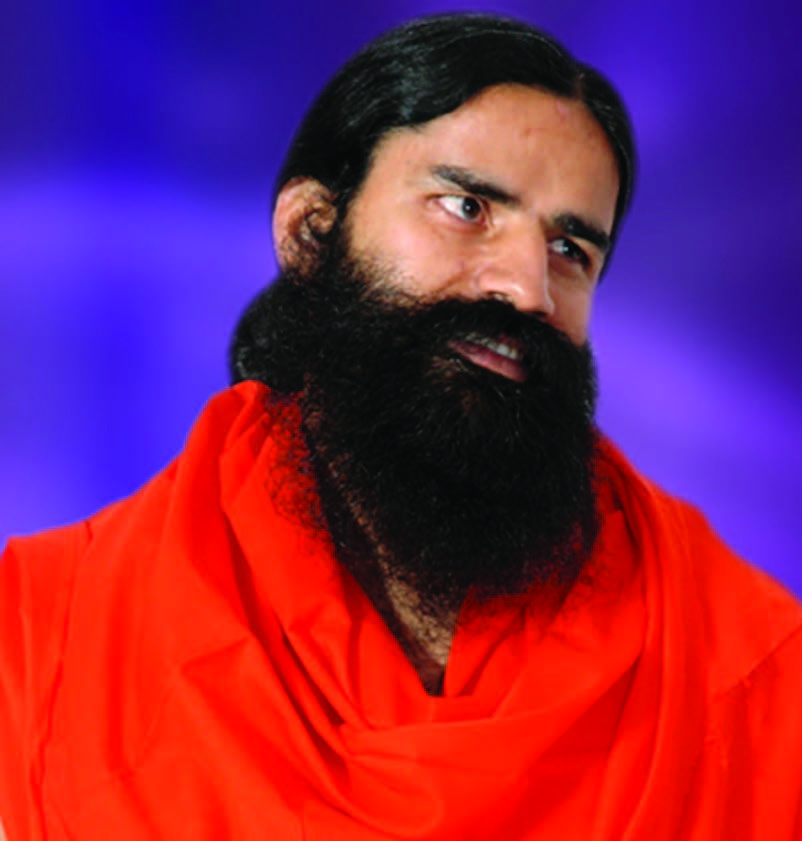
    NEW DELHI (TIP): With mounting criticism over the proposal to introduce a tax on bank deposits and abolish all other levies, yoga guru Baba Ramdev, who is one of the key proponents of the new regime, on Thursday tweaked the plan and suggested separate slabs for salaried as well as industries, while suggesting a tax amnesty scheme as a pre-cursor. Suggesting that the reform proposal will take a year, “provided there is political will”, Ramdev said that in the first phase the government will need to develop banking infrastructure, do away with currency notes of Rs 500 and Rs 1000 and also introduce a tax amnesty scheme, something that the Supreme Court has frowned upon.

    Although he recognized that getting states on board may be a tough task, he suggested that states and the Centre should get 40% each of the mop up, while local bodies will have a share of 18-19% and the rest will go to banks that collect the tax. Ramdev said that his proposal is different from the one being pushed by ArthaKranti, a Pune-based think tank, which has suggested a 2% levy. “You need slabs for it to be successful and equitable. The tax rate can be 0.1 or 0.2% to 30%, with a higher levy on alcohol and tobacco and an exemption for farmers and labourers,” he said in a bid to deal with criticism from BJP leaders like Arun Jaitley. Some BJP leaders had initially backed the proposal to move to a new tax regime, but have now backed out saying that the proposal is flawed.

  • HCL Tech, CSC join hands to tap application modernisation market

    HCL Tech, CSC join hands to tap application modernisation market

    NEW DELHI (TIP): IT services rivals HCL Technologies and CSC have formed a strategic alliance to tap the market created by the customers’ move to modernise or digitise their applications and shift them to the cloud. Both entities plan to create an application modernisation delivery network to help clients shift from their legacy applications to a cloud-enabled platform.

    Three pillars
    The first such delivery centre will be carved out of their respective facilities in Bangalore and Chennai. These delivery centres will lower the risks and costs for clients transitioning to the cloud, both companies claimed. “We have joined hands with CSC on three core pillars – application modernisation, enablement of cloud platform and other technologies,” HCL Technologies President and CEO Anant Gupta said. CSC’s strong technology portfolio and client base coupled with HCL’s robust system integration capabilities will be a formidable combination in the application modernisation market, Gupta said.

    The alliance will be targeting the addressable market of $8-12 billion. “We are sharing people, revenues and costs,” said Mike Lawrie, CSC President and CEO on the alliance’s joint go-tomarket and delivery strategy. Both partners will share dedicated employees and technologies as well as production and development work. “Our intent is to build delivery centre on global basis,” Lawrie added. The HCL Tech-CSC alliance will focus on enterprise customers in verticals such as banking and telecom and has already bagged a client – AT&T.

    Competency centre
    The alliance will also set up competency centre in banking to be housed in CSC’s facility in the US. The competency centre will help banks and financial institutions modernise their applications and make them much more visible in cloud environment, Lawrie said. Lawrie said his familiarity with HCL Tech’s capabilities helped CSC forge this alliance and that the Nasdaq-listed IT firm did not consider any other Indian IT services vendor for the partnership. Lawrie said he had worked with HCL for 15 years.

  • Trivedis Pack New York Love to London

    Trivedis Pack New York Love to London

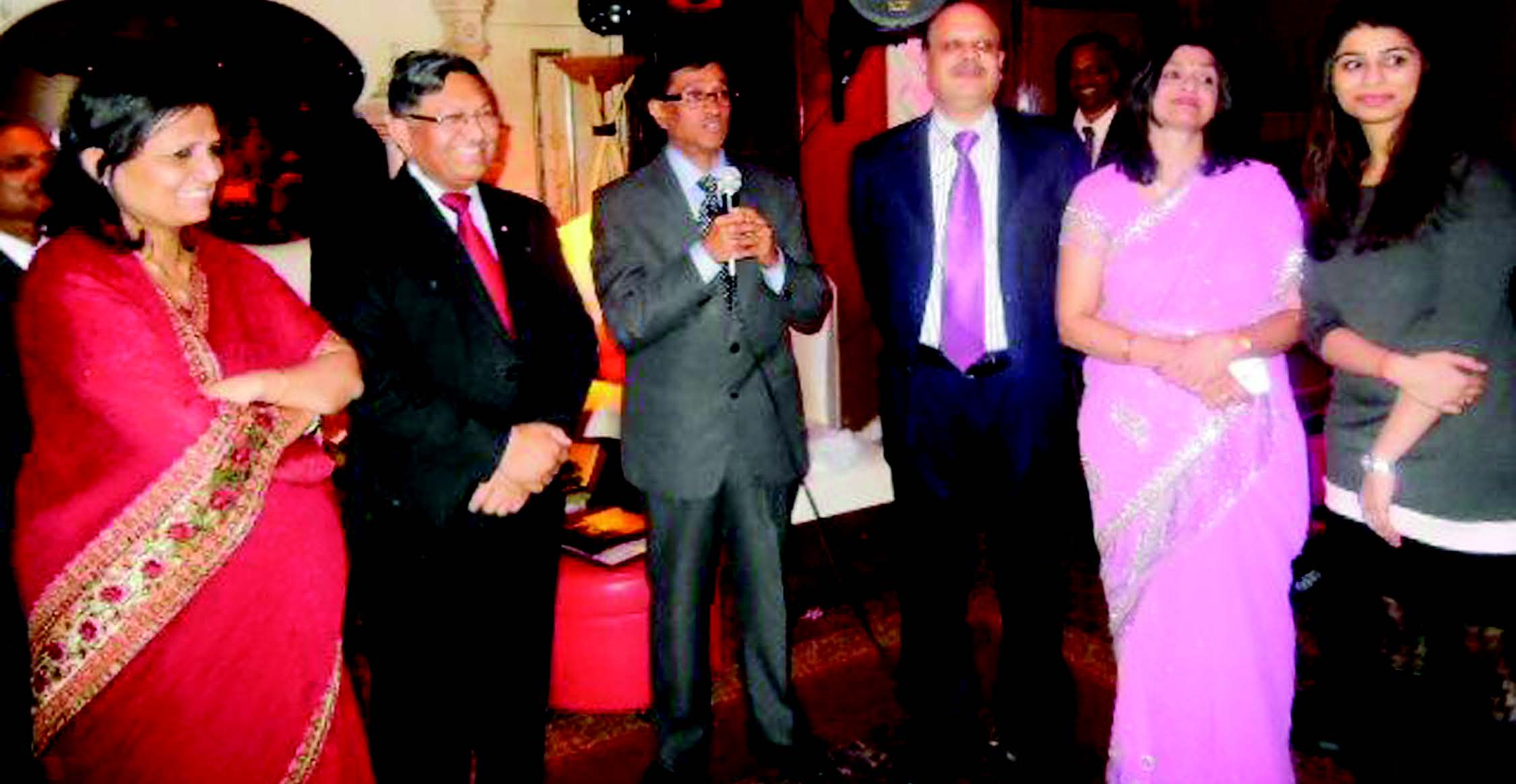
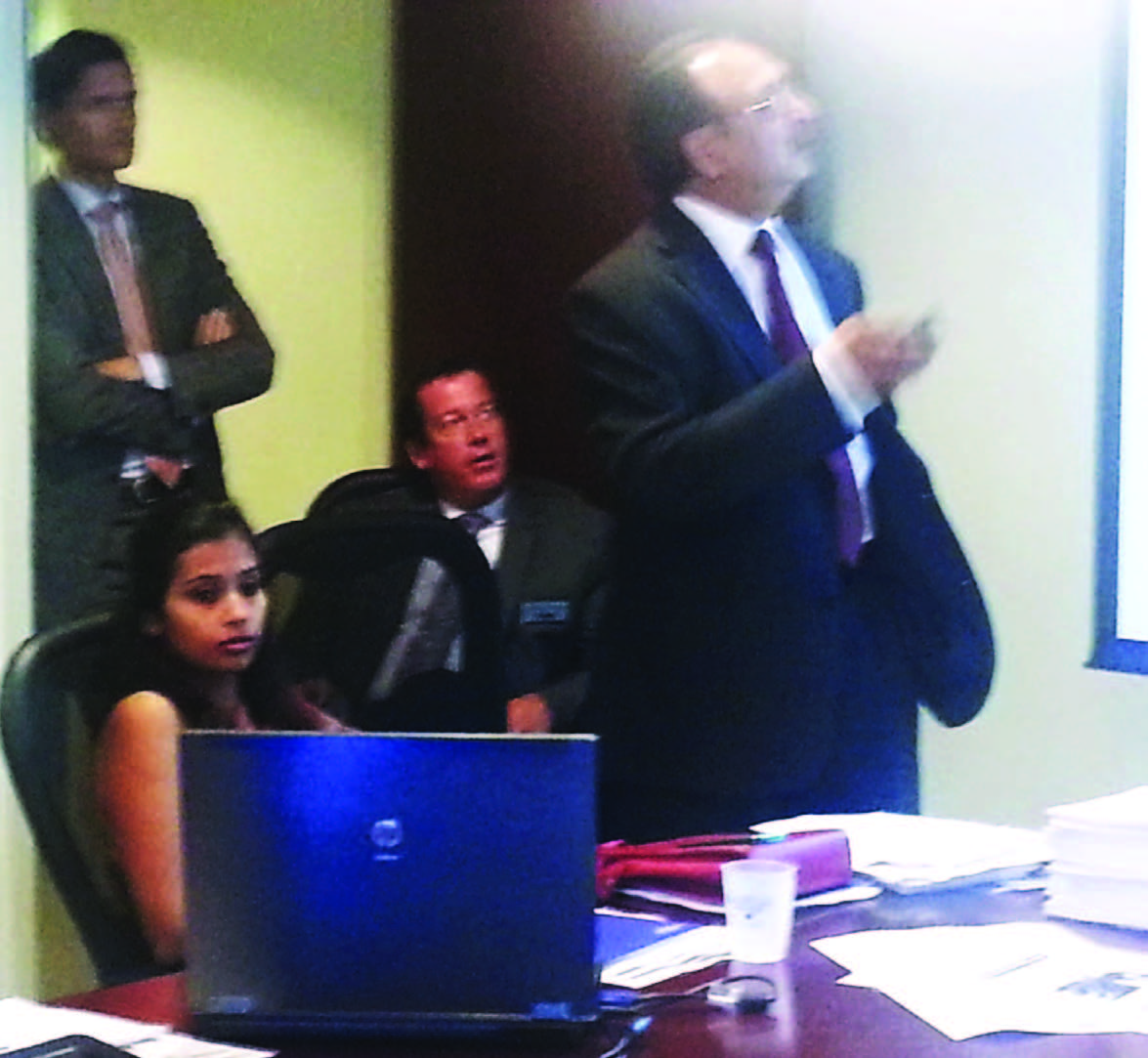
    NEW YORK (TIP): Bank of Baroda Chief Executive for US Operations, Mr. Dhimant Trivedi has been posted to London office as Chief of European Operations and leaves on November 30. He has been succeeded by Ashok Kumar Garg. Bank of Baroda, November 26, organized a get together to bid farewell to Mr. Dhimant Trivedi and the new incumbent Mr. Ashok Kumar Garg. The get together was attended by a large number that included Ambassador Dnyaneshwar Mulay, Consul General of India in New York, representatives of State Bank of India, Bank of India, Air India, clients of Bank of Baroda, many friends of the Trivedis, and, of course, the staff of Bank of Baroda. Company Executives come and go. There are usual receptions to welcome and bid farewell. But there are some who are not the treated to the “usual” reception alone.


    3

    Consul General Mulay joined Trivedis and their friends at a farewell dinner hosted by Prof. Indrajit S Saluja at the Mint in Manhattan. Seen in the picture (sitting, L to R): Ranju Batra, Priyanka Pattanaik, Sulochana Pattanaik, Yamini Trivedi, Swati Vaishnav (Standing L to R): Pramoda K. Pattanaik, Indrajit Saluja, Sudhir Vaishnav, Dhimant Trivedi, Sanal Kumar, Ambassador Mulay, Master Mohinder Singh, Ravi Batra, Atul Kumria, Jagdish Sewhaney, Rajeev Bhambri, Trilok Malik and Herman Singh.

    They are special and get the special treatment. Dhimant Pradyuman Trivedi, Chief Executive of Bank of Baroda for US Operations and his lovely wife Yamini, over a period of close to three years in New York, had endeared themselves to so many. They were admired, loved and sought after for the finest qualities of head and heart they have been endowed with. Mr. Trivedi, who has been known to be a hard taskmaster, was also loved by the staff of the bank for his simple way of life and his passion for taking bank to higher heights in USA. Bank of Baroda, during his tenure from September 24, 2010 when he took over from another wonderful person, Mr. K.D. Lamba, who incidentally was posted to London as Chief of European Operations, the post that Mr. Trivedi has now been posted to, made a remarkable progress. The overall business growth has been substantial, with internet banking facility introduced only recently. His efforts to have the Bank’s own residential property yielded results and his successor now has the privilege of staying in his own spacious apartment in New York City.

    The social life of Mr. Trivedi and Yamini Trivedi who, is a wonderful person with literary and artistic tastes, has rather been hectic. The fun loving and sociable couple has been part of the various social and cultural circles in New York. So, when the news of the transfer of Mr. Trivedi to London reached his friends, there was a clamor to have the family over farewell dinner. I have been to some of them. I managed to avoid some simply because it was proving to be a surfeit for me. I was lucky to have managed to get Trivedis’ assent to one that I hosted which was well attended. Mr. Dnyaneshwar Mulay, India’s Consul General and some of the close friends of Trivedis attended. Ravi and Ranju Batra hosted one. Yet another was hosted jointly by Kirti and Versha Bhatia and Nitin and Sangeeta Parikh at Bhatias’ home in Long Island which was marked by fun and dancing. There were a couple of others also who hosted farewell dinner for the family. The bank staff, of course, hosted one. It surely is an expression of love for a wonderful family which will be sorely missed. Also missed will be their lovely and talented daughter, Chandni, who as President of CORD, New York, a charitable organization, has been deeply involved in the rural education projects of the organization. The Indian Panorama wishes the Trivedis all health, happiness and luck in their new city of residence.

  • Country’s first bank by women, for women opens in Mumbai

    Country’s first bank by women, for women opens in Mumbai

    MUMBAI (TIP): Bharatiya Mahila Bank, India’s first women’s bank, was inaugurated by Prime Minister Manmohan Singh today. The bank’s chairperson Usha Ananthasubramanian said the institution would lend exclusively to women. “Our target customers are individual women, selfhelp groups and business establishment owned by women,” Ananthasubramanian said after the inauguration function. The bank has an all-women board of directors, including prominent bankers such as Nupur Mitra, former CMD, Dena Bank; Renuka Ramnath, formerly with the ICICI Bank; MBN Rao, ex-CMD Canara Bank; industrialist Tanya Dubash; Kalpana Saroj, CEO, Kamani Tubes; Chhavi Rajawat, a sarpanch from Rajasthan; and Priya Kumar, a government-nominee. Lauding the efforts of the finance ministry, Prime Minister Manmohan Singh, who inaugurated the Bharatiya Mahila Bank (BMB), hoped that the venture would help in improving the lot of the women.

    “It is an acknowledged fact that access to finance and banking not only helps to empower women, but also broadensthe social base of development,” Manmohan Singh said. The Prime Minister said the government was working hard to ensure safety and security of women. “We have strengthened the law to provide for harsher punishment for sexual offences against women, but much more needs to be done,” he said. Finance Minister P Chidambaram, who promised to set up the women’s bank in his budget speech, said he had fulfilled his promise. “The BMB was not just a symbol of women empowerment but the substance of empowerment and will provide services to women and self-help groups,” Chidambaram said. He noted that only 26 per cent of women in India have bank accounts. Per capita credit for women is currently 8 per cent lower than that for men.

    Chidambaram said it would be a universal bank offering all services like other commercial banks. “Bhartiya Mahila Bank will be a universal bank which will establish branches across India and in due course branches abroad,” he said. The bank would accept deposits and give loans with immediate effect. It will emphasise on funding for skill development to help in economic activity, according to the minister. The bank will have 25 branches by the end of this financial year is expected to open 39 branches by the time it completes one year of operations, officials said.

  • US hedge fund adviser pleads guilty to child porn charges

    US hedge fund adviser pleads guilty to child porn charges

    NEW YORK (TIP): Prominent hedge fund adviser Ezra Zask pleaded guilty to possession of child pornography in a New York court on Novmber 19, avoiding jail time for the charges. The founder of hedge fund consulting firm SFC Associates and author of numerous books on investing was arrested in his Manhattan apartment in July of last year after police, acting on a search warrant, found numerous illegal videos and images on his computer, the New York City police department said.

    Zask entered the guilty plea in front of New York Supreme Court Judge Larry Stephen and is scheduled to be sentenced in March. “The agreed upon sentence is one of probation,” Zask’s lawyer Alan Futerfas said. Zask formed SFC Associates in 1991 after he founded a fund managing more than $1 billion for institutional and individual investors, according to the company website. SFC associates senior principal Jean-Baptiste Carelus did not respond to a request for comment. The firm advises clients on asset allocation and risk management and Zask has served as an expert witness in dozens of banking industry cases. His resume also includes several university teaching positions and degrees from Princeton and Columbia.

  • Substantial Foreign Direct Investment in the United States: Report

    Substantial Foreign Direct Investment in the United States: Report

    WASHINGTON (TIP): The United States has been the world’s largest recipient of foreign direct investment (FDI) since 2006. Every day, foreign companies establish new operations in the United States or provide additional capital to established businesses. With the world’s largest consumer market, skilled and productive workers, a highly innovative environment, appropriate legal protections, a predictable regulatory environment, and a growing energy sector, the United States offers an attractive investment climate for firms across the globe.

    Foreign direct investment in the United States is substantial
    ● In 2012, net U.S. assets of foreign affiliates totaled $3.9 trillion. The United States consistently ranks as one of the top destinations in the world for foreign direct investment (FDI), with inflows totaling $1.5 trillion in FDI just since 2006. For 2012, FDI inflows totaled $166 billion.
    ● The U.S. manufacturing sector draws a considerable share of FDI dollars, led by pharmaceuticals and petroleum and coal products. Outside manufacturing, wholesale trade; mining; non-bank holding companies; finance and insurance; and banking receive the greatest shares of foreign investment.
    ● Investment flows into the United States come mostly from a small number of industrial countries. Since 2010, Japan, Canada, Australia, Korea, and seven European countries collectively have accounted for more than 80 percent of new FDI. Although still small, flows from emerging economies like China and Brazil are growing rapidly.

    Foreign direct investment benefits the U.S. Economy
    ● In 2011, value-added by majority-owned U.S. affiliates of foreign companies accounted for 4.7 percent of total U.S. private output.
    ● These firms employed 5.6 million people in the United States, or 4.1 percent of private-sector employment. About one-third of jobs at U.S. affiliates are in the manufacturing sector.
    ● These affiliates account for 9.6 percent of U.S. private investment and 15.9 percent of U.S. private research and development spending.
    ● In the 2008-09 recession and subsequent recovery, employment at U.S. affiliates was more stable than overall private-sector employment. As a result, U.S. affiliates’ share of total U.S. manufacturing employment rose from 14.8 percent in 2007 to 17.8 percent in 2011.
    ● Compensation at U.S. affiliates has been consistently higher than the U.S. average over time, and the differential holds for both manufacturing and non-manufacturing jobs. Looking ahead, the United States will remain an attractive destination for foreign investment, and this investment will help bolster our economy. However, we need to continue to nurture and build upon the underlying strengths of the U.S. economy that make firms want to invest here; including an open investment regime, a large economy, a skilled labor force, community colleges, world-class research universities, predictable and stable regulatory regime, adequate infrastructure, and new energy sources.

  • Kerry to Congress: ‘Calm down’ over Iran sanctions

    Kerry to Congress: ‘Calm down’ over Iran sanctions

    WASHINGTON (TIP): US Secretary of State John Kerry urged lawmakers to “calm down” on Wednesday over proposed new sanctions on Iran, warning they could scuttle diplomatic efforts to rein in Tehran’s nuclear drive. “The risk is that if Congress were to unilaterally move to raise sanctions, it could break faith with those negotiations and actually stop them and break them apart,” Kerry said. Washington’s top diplomat was speaking before beginning a closeddoor meeting with senators, many of whom are skeptical of the White House’s request for a freeze on new sanctions. The House of Representatives has already passed legislation that toughens already-strict sanctions on Iran, whose economy by all accounts is reeling from the punitive action. The Senate Banking Committee is mulling new sanctions too, and some key members of President Barack Obama’s own Democratic Party back a tougher stance despite the diplomatic opening. “What we’re asking everybody to do is calm down, look hard at what can be achieved and what the realities are,” Kerry told reporters.

    “Let’s give them a few weeks, see if it works,” he said, adding that there was “unity” among the six powers — UN Security Council permanent members Britain, China, France, Russia and the United States, plus Germany — negotiating with the Islamic republic. “If this doesn’t work, we reserve the right to dial back up the sanctions.” In that event Kerry said he would return to Capitol Hill “asking for increased sanctions. And we always reserve the military option.” Washington and Western allies allege Iran is trying to develop a nuclear weapon, a charge Tehran denies. Obama has vowed he will not allow Tehran to develop an atomic weapon. But last week’s Geneva negotiations between Iran and six world powers failed to reach an interim deal to halt its program. Kerry faces tough questions from Senate Republicans and Democrats who bristled when the White House warned Tuesday that toughening sanctions could trigger a “march to war.” The administration’s remarks marked a significant hardening of Obama’s stance towards Congress on sanctions as Washington prepares to resume talks with Iran on November 20. As he entered the meeting, Kerry addressed criticism that negotiations failed in Geneva, saying Iran would have jumped at the interim deal if it was to their benefit. “We have a pause because it’s a tough proposal, and people need to think about it, obviously,” Kerry said.

  • World’s 6th largest number of billionaires in India

    World’s 6th largest number of billionaires in India

    NEW DELHI (TIP): Indian billionaires, the sixth largest group in the rich world, have thrown up an interesting trend found nowhere else in the world — holding on to one’s roots. Despite popular notions of billionaires being jet-setting, cosmopolitan individuals, most Indian billionaires remain where they were raised. The World Billionaire Census 2013 released on Wednesday shows that 95% of Indian billionaires who currently have their primary business in India, also grew up there. The trend globally is very different. Around 23% or just 1 in 4 billionaires globally made their home city the city of their primary business. Only 39% of all billionaires globally have the same home state as the state of their primary business Billionaire hotspots such as Singapore, Switzerland and Hong Kong have emerged as favoured destinations for the ultra-rich. However, only 36, 34, and 25% of their billionaire populations respectively, grew up in these countries. Another significant finding is that not all these Indian billionaires have college degrees, let alone attending Ivy League for a degree in business management. Three of every 10 billionaires in India don’t even have a college degree.

    5.5% dip in India’s billionaire population
    India’s billionaire contingent (103- strong) is narrowly behind Russia (108). However India’s billionaire population has decreased by 5.5% and the total billionaire wealth has fallen by $10 billion since last year. Mumbai is among the top 5 billionaire cities in the world and the only Indian entry in the top 10 list and New York remains the business city of choice for the world’s billionaires. Asia takes eight out of the top 20 spots for billionaire cities, the most for any region in the world. Moscow accounts for more than two thirds of Russia’s billionaires. The total number of billionaires who are based in the top 20 cities is 661, representing 30% of the world’s billionaires. India is one of the few countries where finance, banking and investments are not the most significant industries. Instead, industrial conglomerates and pharmaceuticals are the first and second most significant industries for Indian billionaires. Only 3% of Indian billionaires are female, the joint lowest of any focus country. The majority of Indian billionaires are college-educated with 72% possessing at least a bachelor’s degree (Switzerland and the US are the only other two focus countries that have a higher proportion of universityeducated billionaires). The Wealth-X and UBS Billionaire Census 2013 showed that Asia is where the largest number of newly-minted billionaires is based — since July 2012, 18 new billionaires came up in Asia with a total wealth of $136 billion. Asia was followed by North America (11).

    Five of the top 10 countries with the highest percentage of self-made billionaires are from Asia. Every region increased in wealth terms, with Asia the fastest growing at 12.9%. The global billionaire population reached a record 2,170 individuals in 2013 and total billionaire wealth in Asia surged nearly 13% making it the fastestgrowing region. At current growth rates, the census, the first-ever comprehensive global study on this ultra-wealth tier, forecasts that Asia will catch up with North America in five years. Asia also saw the highest percentage rise in billionaire population (3.7% from 2012) and total wealth (13%) in 2013, suggesting that it is driving the tectonic shifts in wealth globally. The report also shows that 810 individuals became billionaires since the 2009 global financial crisis. The billionaire population’s combined net worth more than doubled from $3.1 trillion in 2009 to $6.5 trillion in 2013 — enough to fund the United States’s budget deficit until 2024, and greater than the GDP of every country except the US and China. Wealth-X forecasts that the global billionaire population will increase by 1,700 individuals to nearly 3,900 by the year 2020. Europe is home to the most billionaires (766 individuals). However, North America has the most billionaire wealth ($2,158 billion). Around 60% of billionaires are selfmade, while 40% inherited their wealth or grew their fortunes from inheritance. Only 17% of female billionaires are selfmade, while 71% gained their fortunes through inheritance.

  • Haryana CM Inaugurates INOC (I) Haryana Chapter

    Haryana CM Inaugurates INOC (I) Haryana Chapter

    NEWYORK (TIP): In an impressive ceremony at the Haryana Pradesh Congress Committee office in Chandigarh, the Chief Minister of Haryana Ch. Bhupinder Singh Hooda inaugurated the Haryana Chapter of Indian National Overseas Congress (I) The event was hosted by ChPhool Chand Mullana, President Haryana Pradesh Congress Committee to welcome the INOC (I) USA delegation led by its President ShudhParkash Singh. The Chairman of NRI Cell of HPCC BudhParkash Singh welcomed the Chief Minister and the delegates from USA. In his opening address, Phool Chand Mullana spoke in detail about the importance of the contribution of the NRI’s. He congratulated the newly appointed Chapter President, Sher Singh Madra and assured him of HPCC’s total support. ShudhParkash Singh spoke about the work being done by Indian National Overseas Congress (I). He said Indians living abroad felt proud of the State of Haryana. “We believe the present Chief Minister is doing an outstanding job”, he said.

    He thanked the CM for bringing the crime rate down and making Haryana a truly progressive State. He underscored the need to have greater FDI in India. As part of those efforts, as President of the INOC (I) he had asked skilled and able men, such as Madra, to join the INOC Overseas. Madra has the experience of being a banker for over 40 years and as a former Global Banking Head of Citigroup, he is more than able to help in that effort. Additionally, as the President of the NargisDutt Memorial Cancer Foundation he has been involved for many years in helping to fight cancer in India. Sher Singh Madra thanked ShudhParkash Singh for his appointment. He said it is a dream come true for him to be inaugurated by the Chief Minister himself in the presence of the state party President. Hooda appreciated the role of NRI’S for building India. He said new schemes will be implemented soon to facilitate the investments and charity work conducted by NRI’S. He lauded the hard work and dedication of ShudhParkash Singh and his team, the delegation of the INOC (I) that included Kanwal Sra, Ravi Chopra, Mohan Wanchoo and Edward Troy.

  • SENSEX HITS NEW RECORD HIGH OF 21,293.88, UP 129.36 POINTS

    SENSEX HITS NEW RECORD HIGH OF 21,293.88, UP 129.36 POINTS

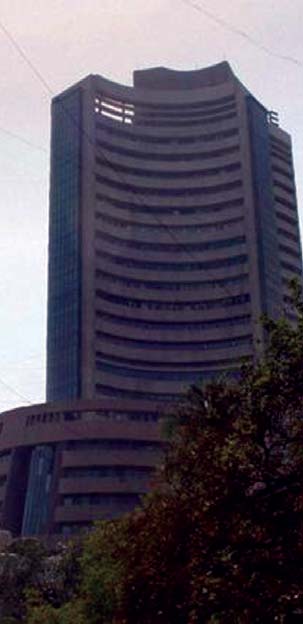
    MUMBAI (TIP): The BSE benchmark Sensex on November 1 hit a life-time high of 21,293.88 by gaining over 129 points in opening trade on sustained foreign fund inflows in banking, auto, metal and realty sectors. Rising for the fourth straight session, the Sensex rose 129.36 points, or 0.61 per cent, to trade at record high of 21,293.88 points, surpassing previous intra-day record high of 21,206.77 reached on January 10, 2008. It had rallied 594.24 points in the past three sessions. Stock brokers said sentiments remained bullish on continued foreign funds inflow and the RBI easing liquidity situation by cutting marginal standing facility (MSF) to 8.75 per cent in its monetary policy on Tuesday. The wide-based National Stock Exchange index Nifty rose by 33.45 points, or 0.53 per cent, to 6,332.60. A mixed trend in the Asian region also influenced the trading sentiment here, they said. The BSE realty sector index was trading 1.50 per cent higher to 1,363.65 as stocks of DLF moved up (1.58 per cent), followed by HDIL (3.05 per cent), Unitech (0.57 per cent).

  • TCS, Infosys, Wipro, HCL profits confirm IT sector turnaround

    TCS, Infosys, Wipro, HCL profits confirm IT sector turnaround

    NEW DELHI (TIP): If the first quarter of 2013-14 had set the pace, the second quarter results from July to September brought back confidence for Indian IT majors as the big four — Tata Consultancy Services (TCS), Infosys, Wipro and HCL Tech exceeded market expectations with their quarterly incomes. Analysts tracking the sector believe that the revenue stream will remain healthy as discretionary IT spends is back for US-based companies in the banking, financial services and insurance sectors. The discretionary IT spends offer a good barometre for a client firm’s IT spends pattern such that it ultimately translates into more number of outsourcing deals. This is important as US-based banking, financial services and insurance firms still account for more than half of revenues for Indian IT firms. “Apart from the US, the demand environment (for IT outsourcing deals) is looking positive in Europe as well,” said Ankita Somani, IT analyst at brokerage firm Angel Broking. An increase in discretionary IT spends augurs well for Indian IT firms, Somani added.

    Wipro chairman Azim Premji said there are positive indicators on the global economy that coupled with the client confidence is reflecting on the company’s performance. “We see the discretionary spend getting better every day. The market looks good and demand is robust and we feel that we have good opportunity,” said N. Chandrasekaran, CEO, TCS. Anant Gupta, chief executive officer, HCL Tech, said deals from both the US and Europe are very strong and well balanced. “We see good momentum across financial and manufacturing sectors in the US and Europe… and this continues to reflect in our portfolio.” Even Wipro and Infosys that had been struggling offlate managed to beat market expectations, wherein Wirpo reported its best profit growth in the last seven quarters and Infosys raised its revenue outlook by a notch. India’s largest software exporter, TCS, proved once again that fast growth is possible with a huge base as well. At `4,702 crore, the company’s net income rose 34% during the July-September quarter. And this high growth is expected to reflect on the hiring front as well. TCS has already announced that it would hire 5,000 more than its original plan. Infosys, Wipro and HCL Tech did not give specific numbers but said that hiring will be in sync with the demand environment.

  • Odisha man is Chief Executive of Bank of India’s US Operations

    Odisha man is Chief Executive of Bank of India’s US Operations

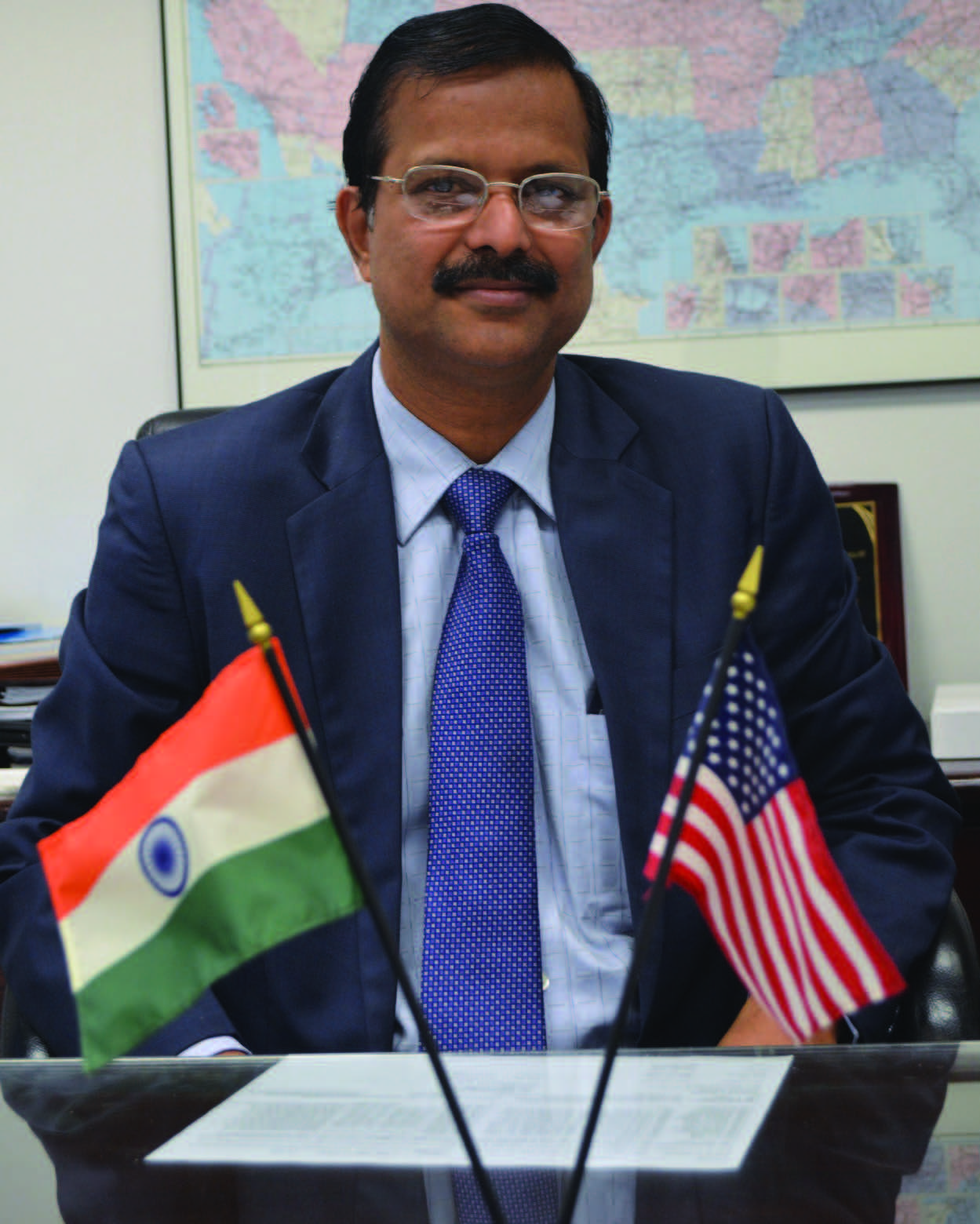
    NEW YORK, NY (TIP): Weeks after Bank of India Chief Executive of US operations B.B. Joshi who was transferred as Executive Director of Bank of Baroda in Mumbai, the new incumbent has finally taken over. He is P.K. Pattanaik from Odisha. Speaking about his priorities, he said he would address core issues to improve the profitability of operations. “Profitability of banks has come under severe strain following the global slowdown and there is a crying need to address the core customer base”, said Pattanaik. He would strive hard to improve and enforce systems and procedures for strict regulatory compliances. He said the bank has an independent compliance department with more than half a dozen officers and all efforts would be made to strengthen the department. Bank of India, New York branch and San Francisco Agency have been operating in the US since December 1978 and December 1977 respectively and are familiar, confident and comfortable doing business the American way.

    Bank of India has global assets of $ 39 Billion and has a network of over 2884 branches spread over the length and breadth of India. The bank which was set up in 1906 also has branches in international commercial centers like London, Tokyo, Singapore, Hong Kong, Paris, Antwerp, ShenZen (China) to name a few and is wellversed in international trade. Bank of India, New York and San Francisco has a team of banking professionals who have come from different parts of India and are well versed in Indiarelated trade and have good rapport with key personnel in the banking sector in India. In view of this, unlike any other bank, Bank of India is in a position to move things in India, should there be roadblocks. Pattanaik started his career as a probationary officer in the bank in 1981 and rose up to the level of General Manager. He served in various capacities in branches in his home state Odisha and also in Mumbai Metro as Chief Manager besides working in the corporate office in Mumbai. A postgraduate in agriculture from Orissa institute of Agriculture, he also worked as General Manager of the bank’s Nagpur Zone. A former chairman of Aryabhatt Grameen Bank in Lucknow, Pattanaik have intensive experience in priority sector credit and compliances. He also served as General Manager of Human Resources of Financial Inclusions in bank’s head office in Mumbai prior to his posting in New York.

  • India looks to the Diaspora with a lot of Expectations – BOB CMD Mundra

    India looks to the Diaspora with a lot of Expectations – BOB CMD Mundra

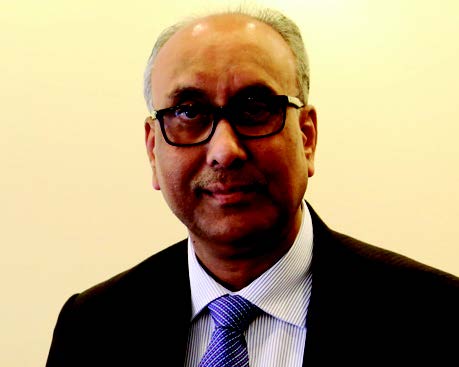
    Bank of Baroda Chairman and Managing Director, Mr. S.S. Mundra visited New York from September 16th to 18th. It was his first visit to New York after he took over as Chairman and Managing Director of the second largest public sector bank of India, second only to State Bank of India. Mr. Mundra met with customers and the Indian American community and also launched the internet banking. A reception to Mr. Mundra was hosted by the Indian Consulate where he met the Consul General Dnyaneshwar Mulay and a cross section of Indian American community.


    img49

    He also addressed the gathering and spoke about banking industry in general and, the Bank of Baroda operations in US in particular. He spoke about the synergy that can be developed through Bank of Baroda. Mr. S. S. Mundra was born on 18th July, 1954. After completing his Masters in Commerce, he joined Bank of Baroda as a Probationary Officer on 21st March, 1977. In his first stint in Bank of Baroda, he rose to the level of General Manager in 2007. During his illustrious career in Bank of Baroda, he held several challenging assignments which included a stint as Head of Bank’s Maharashtra & Goa Zone and Global Treasury Operations for over 5 years. During his overseas assignments, he served with Bank of Baroda (Uganda) Ltd. and was also Territorial Head of Bank’s European Operations, headquartered at London during the period 2008 – 2010.

    Mr. Mundra was elevated as Executive Director in Union Bank of India in September, 2010. During his tenure at Union Bank of India, he handled many important portfolios including Treasury, International, Large Corporate and Alternate Channels. On his elevation as Chairman and Managing Director on 21st January, 2013, he joined Bank of Baroda a premier Public Sector Bank (PSB) in India having a branch network of over 4000 branches including Bank’s overseas operations spread over 24 countries with a global business of over INR 8 trillion (USD 131 bn). Bank of Baroda is second largest Public Sector Bank of India only after State Bank of India in terms of Balance Sheet size.


    img51

    It has 100 branches/ offices outside India. He is on the Board of many national and international organizations which include EXIM Bank, National Institute of Bank Management (NIBM), Bank of Baroda (Uganda) Ltd., India International Bank Malaysia Bhd, Bank of Baroda (New Zealand) Ltd., BOBCARDS Ltd., India First Life Insurance, Baroda Pioneer Mutual Fund etc. He has remained Director on the Board of The Clearing Corporation of India Ltd. (CCIL), Central Depository Services (India) Ltd. (CDSL), MITCONConsulting and Engineering Services Ltd., BOB Asset Management Company, India Infrastructure Finance Corporation (UK) Ltd. (IIFCL), Star Union Dai-Ichi Life Insurance Company Ltd., National Payments Corporation of India Ltd (NPCI) and Bank of Baroda (Kenya) Ltd. He has also served on many Committees of RBI, IBA, NIBM, CII etc.

    He has also attended many training programs, seminar/ conferences both in India and abroad, in the area of Banking and Finance. He has widely traveled abroad. The countries he visited include UK, Belgium, France, USA, Japan, China, Hong Kong, Singapore, various African countries etc. With the blend of wide overseas and domestic banking exposure at top management level, he has immensely contributed to the improvement of policy framework of the banking industry. As recognition of his contributions in the field of banking, finance, industry and commerce, he has won many Awards and accolades, latest being his inclusion in the list of India’s top 100 CEOs in CD-ET (Corporate Dossier – Economic Times) Survey after a stringent process of selection while Bank of Baroda is also ranked as 20th Best Indian Brand by Brand Equity – Economic Times.

    The Indian Panorama chief editor Prof. Indrajit S Saluja interviewed Mr. Mundra. Here are excerpts from the interview.

    Q. You have launched internet banking. How does it help your customers?

    In today’s wired world, customers should have the right to have information in real time. At the moment, we are providing to our customers viewing facility. As of now, we are not providing transaction facility, which is a little complicated affair. However, there is no fee for the facility we are providing.

    Q. When, do you think, you will provide the real time transaction facility?

    There has to be an enhanced security level. Also, there has to be a higher comfort level for both the customers and the bank before we can go in for providing this facility. Q. Are there any legal or procedural difficulties in providing transaction facilities? Not so. Internet banking is an internationally accepted practice. There is no legal problem, as such. Yes, there could be procedural problems. There has to be a robust procedure that ensures the comfort level of customers. After all, the facility is meant to give comfort to customers.

    Q. What are your impressions of your meetings with customers here?

    I am glad our customers spoke highly of the services being provided by New York branch. All felt very happy with the staff and the cooperation they were getting.We look forward to long term relationship with our customers.We believe in making and cementing relationship. Of course, some suggested that we start retail banking. But then, there is no plan with the bank as of now.

    Q. We hear of banks in India committing irregularities and being pulled up. Did your bank ever face this kind of situation?

    We are a conservative bank, so to say.We are acutely compliant. There has never been a complaint about our not being compliant. However, there could some times be some small and inconsequential matters. But there always is room for improvement. Please remember, we are the second largest public sector bank, after State Bank of India.We have 42,000 employees and a customer base of 50 million. The total business of the bank, as on 31st march, 2013 , was 8 lac 50 thousand crore.

    Q. What do you think about the future of Indian economy?

    I believe the fundamentals of Indian economy are very strong. From a distance, the Diaspora may some times not be able to see the clear picture and have misgivings about the strength of the economy. But let me assure the Diaspora that Indian economy is strong and has the capacity to withstand knocks.

    Q. Your message to the NRIs?

    Indians abroad are doing very well. They are doing good to their genetic mother and also to their adopted mother. India is proud of them. And India looks up to them with great expectations.

  • Schneider Electric starts support facility for data centres

    Schneider Electric starts support facility for data centres

    HYDERABAD (TIP): Schneider Electric has commissioned a services bureau in Bangalore as a nerve centre and a support facility for data centres in India and the Asia-Pacific region. The French major, which provides energy management solutions, describes the new services bureau as a Centre of Excellence. This centre integrates information management systems, monitoring solutions, data science, technical and operational expertise. This bureau will address the requirement of its data centre services clients in verticals such as telecom, retail banking, healthcare, manufacturing. It has been set up to help customers optimise their infrastructure, senior company officials told Business Line.

    Philippe Arsonneau, Senior Vice-President APJ Schneider Electric, IT Business Unit said: “Data centres are becoming increasingly complex to manage and operate, as the business risks associated with failure of such critical infrastructure equipment is too significant to disregard. Schneider Electric through this bureau will help customers optimise their investments without any problems.”

  • Educating Tax Payers: a seminar on ‘US Tax Laws and Foreign Bank Accounts Reporting and Assets Protection’

    Educating Tax Payers: a seminar on ‘US Tax Laws and Foreign Bank Accounts Reporting and Assets Protection’

    NEW YORK, NY (TIP): The Law Offices of Anand Ahuja in association with the Private Client Reserve of US Bank organized a seminar on ‘US Tax Laws and Foreign Bank Accounts Reporting and Assets Protection’ on August 12, 2013, in Manhattan. Dr. Devyani Khobragade, Deputy Consul General of India in New York was the Chief Guest at the well attended event. In her opening remarks, she stated the importance of various tax reporting legislations both in India and the U.S.A., and problem of tax evasion in various countries. Commenting on United State’s role to check free flow of unreported income, and US’s initiative in entering into intergovernmental agreements with various countries to curb this menace, she mentioned that India has not signed inter governmental agreement with the U.S. so far, but may eventually consider signing it.

    She was, however, concerned about certain provisions in these agreements, specifically conflict of these provisions with certain privacy or banking secrecy requirements under Indian laws. She said that those issues will have to be taken into consideration, and possibly negotiated with the U.S. before India signs this agreement. Attorney Anand Ahuja emphasized that “Increased international mobility of both capital and labor in recent years has forced advanced countries to examine their fiscal policies from international perspective. In this age of globalization, cross-border matters have become of great concern to American politics. Citizen of other countries, at times, move to the USA or own assets here, and U.S. Citizens often move or own assets outside the United States. Therefore, any estate, gift or tax planning should be considered from international perspective than just domestically”. Further Attorney Anand Ahuja explained that the definition of a U.S. residence from U.S. tax laws is different from U.S. immigration laws.

    The United States taxes rules, for determining whether a person is subject to income tax or not, are based on two tests- (a) the permanent residence or citizen test, and (b) the substantial presence test. Therefore, besides U.S. Citizen and Green Card Holder (a/ka Lawful Permanent Resident), a person becomes U.S. resident from tax laws point view based upon his/her “substantial presence” in the United States. Attorney Ahuja stated that the U.S. government, therefore, imposes income tax, on its citizens, legal permanent residents (“LPR” or green card holders), legal non-immigrants (H1-B, L1, E, and O-1 etc.), illegal residents, and even foreigners visiting USA. Any person, while residing in the United States for certain number of days, even if is illegally, is a U.S. income tax resident and thus subject to his/her worldwide income to U.S. income taxation by virtue of meeting the “substantial presence” test. “It’s precisely for this reason that all U.S. residents, legal or illegal are supposed to file not only their annual income tax returns in time but also other tax reporting forms”, said Attorney Anand Ahuja. Exceptions, he said, however, apply in certain cases.

    For example, foreign government employees, employees of certain international organization, certain exchange visitors etc; are exempt. Attorney Ray Radigan discussed, in detail, about the importance of a will and proper estate planning, especially for immigrant community such as Indian with assets located in multi-jurisdictions. He emphasized that having a will ensures that state law will not dictate the distribution of your assets, the custody of your children, or the care of those under your responsibility with special needs. He stated, “A will also allows you to avoid having a court-appointed administrator and the associated costs”. Further, he discussed various forms of trusts and estate planning tools with the audience. The program was moderated by Kelly Imamura, of The Private Client Reserve of US Bank. Amongst the attendees of this highly informative and educational seminar were physicians from Indian community and bankers that included Mr. Hadrian A. Tucker, Senior Compliance Officer, US Operations, State Bank of India; Mr. G. V. Parmeswaran, Bank of Baroda and P. Ramakrishna Chowdary, Andhra Bank.

  • BOB Chairman & MD visiting New York

    BOB Chairman & MD visiting New York

    NEW YORK, NY (TIP): Bank of Baroda Chairman and Managing Director, Mr. S.S. Mundra will be visiting New York from September 16th to 18th. It is the first visit of Mr. Mundra to New York after he took over as Chairman and Managing Director of one of the largest public sector banks of India. Bank of Baroda Chief Executive for Americas, Mr. Dhimant Pradyumna Trivedi informed TheIndian Panorama that during his visit to New York Mr. Mundra would be meeting customers and the Indian American community besides launching internet banking. Mr. Trivedi said that a reception to Mr. Mundra is being hosted by the Indian Consulate on Monday, September 16th where he will be meeting the Consul General Dnyaneshwar Mulay and a cross section of Indian American community.

    He will also address the gathering and, while talk about banking in general, he is likely to speak about the synergy that can be developed through Bank of Baroda. Read below a brief biography of Mr. Mundra. Mr. S. S. Mundra was born on 18th July, 1954. After completing his Masters in Commerce, he joined Bank of Baroda as a Probationary Officer on 21st March, 1977. In his first stint in Bank of Baroda, he rose to the level of General Manager in 2007. During his illustrious career in Bank of Baroda, he held several challenging assignments which included stint as Head of Bank’s Maharashtra & Goa Zone and Global Treasury Operations for over -5- years. During his overseas assignments, he served with Bank of Baroda (Uganda) Ltd. and was also Territorial Head of Bank’s European Operations, headquartered at London during the period 2008 – 2010.

    Mr. Mundra was elevated as Executive Director in Union Bank of India in September, 2010. During his tenure at Union Bank of India, he handled many important portfolios including Treasury, International, Large Corporate and Alternate Channels. On his elevation as Chairman and Managing Director on 21st January, 2013, he joined Bank of Baroda a premier Public Sector Bank (PSB) in India having a branch network of over 4000 branches including Bank’s overseas operations spread over 24 countries with a global business of over INR 8 trillion (USD 131 bn). Bank of Baroda is second largest Public Sector Bank of India only after State Bank of India in terms of Balance Sheet size.

    It has 100 branches/ offices outside India. He is on the Board of many national and international organizations which include EXIM Bank, National Institute of Bank Management (NIBM), Bank of Baroda (Uganda) Ltd., India International Bank Malaysia Bhd, Bank of Baroda (New Zealand) Ltd., BOBCARDS Ltd., India First Life Insurance, Baroda Pioneer Mutual Fund etc. He has remained Director on the Board of The Clearing Corporation of India Ltd. (CCIL), Central Depository Services (India) Ltd. (CDSL), MITCONConsulting and Engineering Services Ltd., BOB Asset Management Company, India Infrastructure Finance Corporation (UK) Ltd. (IIFCL), Star Union Dai-Ichi Life Insurance Company Ltd., National Payments Corporation of India Ltd (NPCI) and Bank of Baroda (Kenya) Ltd. He has also served on many Committees of RBI, IBA, NIBM, CII etc. He has also attended many training programs, seminar/ conferences both in India and abroad, in the area of Banking and Finance. He has widely traveled abroad.

    The countries he visited include UK, Belgium, France, USA, Japan, China, Hong Kong, Singapore, various African countries etc. With the blend of wide overseas and domestic banking exposure at top management level, he has immensely contributed to the improvement of policy framework of the banking industry. As recognition of his contributions in the field of banking, finance, industry and commerce, he has won many Awards and accolades, latest being his inclusion in the list of India’s top 100 CEOs in CD-ET (Corporate Dossier – Economic Times) Survey after a stringent process of selection while Bank of Baroda is also ranked as 20th Best Indian Brand by Brand Equity – Economic Times

  • INTERVIEW

    INTERVIEW

    The Indian Panorama asked Mr. Rana Kapoor, MD & CEO of the Yes bank a couple of questions about the scenario with regard to NRI remittances, particularly in view of the depreciating rupee. Mr. Kapoor was kind enough to send reply to the questions asked. We give below excerpts from the interview.

    Do you see greater inflows of remittances from NRIs in the USA over the next few months following the sharp plunge of the rupee vis a vis the US dollar?
    We are already seeing higher inflows from the USA over the last few months aided by the depreciating Rupee and higher interest rates offered by Indian banks. With a series of steps taken by the RBI over the last fortnight, we expect the Rupee to stabilize around current levels and expect the flows to continue. We therefore see a majority of the Indian Diaspora in the USA, who were initially holding back their investments in India due to currency volatilities, to start remitting as the Rupee stabilizes. The long term growth outlook for India and the current level of interest rates still make it very attractive for NRIs to remit and invest in India on a medium to long term horizon.

    In case the Indian government has a new NRI bond scheme – to boost its foreign exchange reserves – do you expect a good response from USA based NRIs?
    We currently understand that the government is evaluating all options to shore up foreign capital over the short term. Issuing NRI bonds is one of the many options available. However NRI bonds may not be the first line of action in our view, considering the complexities involved in any such issuances. In the past three instances where such a bond was issued by India, it was very well received by the NRI community with a fairly large subscription coming from the USA. NRIs who had earlier invested in these bonds recorded handsome returns and we anticipate similar interest from NRIs in the USA, if the government plans to go ahead with the issuance.

    Given the current sharp depreciation of Rupee, customers are likely to bear huge losses on account of currency movement. In this case are you witnessing a trend where the customers are rolling over their maturing deposits? Are customers likely to move their balances into FCNR account to prevent further currency impact?
    With regard to depreciation of the Rupee, we have observed an increase in interest from NRIs to invest in INR deposits. Though, no specific trend has been observed with respect to rolling over of maturing deposits. Also, we have not seen NRI customers wanting to book FCNR (B) deposit from NRI deposits earmarking it to the current depreciation in Rupee.

    While most people are concerned about the depreciating rupee, one group of people are happy about it – non resident Indians (NRIs). Will they get more value out of their bank deposits?
    Bank deposits are highly liquid and give assured returns. At current interest rates, it is possible to lock into higher levels for longer periods in cases of Non Resident External (NRE) and Non Resident Ordinary (NRO) fixed deposits. Additionally, FCNR deposits can be used to insulate the deposit returns from currency fluctuations by keeping money in foreign currency.

    What is your comment on RBI deregulating the interest rate ceiling as far as the NRE/FCNR deposits are concerned. Do you think that is going to result in significant flows?
    The deregulation of NRE deposit rate, increase in FCNR deposit rate, and the CRR/SLR relaxation for banks for incremental NRI deposits is a significant and attractive move by the RBI. This will prompt banks to further mobilize funds under these schemes to take advantage of the current levels of exchange rate and interest rate.

    YES BANK, is a state-of-theart high quality, customer centric, service driven, private Indian bank catering to the “Future Businesses of India”, and is an outcome of the professional & entrepreneurial commitment of its Founder, Rana Kapoor, Managing Director & CEO. As the Professionals’ Bank of India, YES BANK has exemplified ‘creating and sharing value’ for all its stakeholders, and has created a differentiated Banking Paradigm.

  • U.S. to extend help to India in facing new security challenges

    U.S. to extend help to India in facing new security challenges

    WASHINGTON (TIP): Three months after the U.S.-India Homeland Security Dialogue in Washington, India is all set to send its officers to various agencies across American federal organizations to sharpen their skills and acquire new ones to fight terrorism. Indian officials and security officers would soon be visiting the U.S. for training in an array of courses – from cyber security, megacity policing and forensics, to critical infrastructure protection, financial terrorism and anti-terrorism intelligence.

    The U.S. government has agreed to give Indian officers access to its specialized agencies under the Department of Homeland Security, particularly the Georgia-headquartered Federal Law Enforcement Training Centers (FLETC), to help them deal with the changing face of international terrorism. “The dialogue between Union Home Minister Sushilkumar Shinde and U.S. Secretary of Homeland Security Janet Napolitano in Washington in May this year paved the way for this cooperation… Through these specialized training programs, India will gradually build an army of experts who can handle new technologies and mechanism to deal with various kinds of terrorism and antinational activities,” a senior Home Ministry official told The Hindu.

    The U.S. Department of Homeland Security, created after the 9/11 terror attack, along with the FLETC has fashioned several advanced courses. “We have identified around a dozen departments and organizations whose officials would take part in these programs… The U.S. has also agreed to help us in creating specialized training institutions to develop skills in various anti-terrorism measures. Sharing of technology for technical surveillance, capacity building and technology development will also be a part of the U.S.- India cooperation,” the official said. Broadly, the U.S. programs will deal with four aspects of terrorism – ‘Global supply chain, transportation, port, border and maritime security,’ ‘Megacity policing and sharing of information among federal, State and local partners,’ ‘Illicit finance, smuggling of cash, financial fraud and counterfeiting,’ and ‘Cyber security and critical infrastructure protection.’

    Indian officials who will participate in these programs will be drawn from various law enforcement agencies and government departments, including the National Security Council Secretariat, the National Investigation Agency, the Intelligence Bureau, the National Technical Research Organization, the Central Bureau of Investigation, the paramilitary and State police forces, the Customs, the Narcotics Control Bureau (NCB), the Enforcement Directorate, the Directorate of Revenue Intelligence (DRI), the Ministry of Telecom and Information Technology, the Coast Guard and the Bureau of Civil Aviation Security. “The list of training programs include ‘Land Transportation Anti-terrorism’; ‘Weapons of Mass Destruction’; ‘Seaport Security’; ‘International Border Interdiction Training’ and ‘International Sea Interdiction Training’ to check smuggling and trafficking; ‘Handling of equipment for screening men against radiological, chemical and explosive materials’ and ‘Handling of intrusive detection at airports and seaports.’ The NCB and the DRI officials will be trained on detection of narcotic drugs, currency, arms and ammunition and other contraband through canine squads. There is also a plan to set up a Customs Canine Training Academy,” the official said.

    Megacity policing With the growing population in cities and increasing threat perception, the U.S. has also offered India to help develop the concept of megacity policing, a step it has been promoting since the 9/11 attacks. “An advance course in surveillance, control room design and its operation by various security agencies and police authorities are key elements of this concept. A high-level workshop is being planned for senior police and intelligence officers from both sides in megacity policing. Similarly, various agencies involved in emergency services will also be trained on public safety and crisis management, while specialized Operation Security for Public Safety Agencies Counter Terrorism Training Program and Critical Incident Response Training Program jointly by the FLETC and the U.S. Border and Custom Protection are also being planned,” the official said.

    Another area of focus would be in cyber security and critical infrastructure protection, where training modules would comprise best practices in cyber security and cyber forensics, advance course in technical surveillance counter measures, control systems security program for endto- end network and systems security for servers, routers, switches, transmission and all information and communication technology (ICT) hubs and facilities. An ambitious collaboration plan for setting up an advance institute for master trainers in the area of encryption/decryption was also in the pipeline. For critical infrastructure protection, the programs planned are for sectors like ICT; oil and energy; telecom; banking and financial services; civil aviation and transport where technocrats and officials from concerned ministries will be trained.

  • Saleem Iqbal, President & CEO

    Saleem Iqbal, President & CEO

    On behalf of HAB BANK, I would like to extend our Independence Day greetings to Indian American community in the tri-state area. As we celebrate India Day this year, we can take pride in our achievements as a community despite the challenges that lie ahead. We have, in a short span of time, been able to establish ourselves as a community engaged at so many levels, culturally and economically, and determined to pursue our American dream of achieving success in our adopted homeland.

    HAB BANK, since is inception in 1983 as a New York State chartered bank, has played a vital role in nurturing communities through its network of branches in New York, New Jersey, and California. We are proud to be first bank in the U.S. solely focused on meeting and serving the banking needs of South Asian community working and living in the Tri-State and greater Los Angeles areas. We are honored to join in celebrating India’s independence celebration and reaffirm our Bank’s commitment to South Asian community in the U.S.

  • INDIA’S HIGHS AND THE LOWS

    INDIA’S HIGHS AND THE LOWS

    The transition of India from a British colony to a sovereign, secular, and democratic nation was indeed historical. It was a long journey of around two decades that started with the conceptualisation of the dream in 1930 to its actual realization in 1950. A look into the journey that led to the birth of Indian Republic will make our celebrations more meaningful.

    Lahore Session of the Indian National Congress The seeds of a republican nation were sowed at the Lahore session of the Indian National Congress at the midnight of 31st December 1929. The session was held under the presidency of Pt. Jawarhar Lal Nehru. Those present in the meeting took a pledge to mark January 26 as “Independence Day” in order to march towards realizing the dream of complete independence from the British. The Lahore Session paved way to the Civil Disobedience movement.

    It was decided that January 26, 1930 would be observed as the Purna Swaraj (complete Independence) Day. Many Indian political parties and Indian revolutionaries from all over the country united to observe the day with honour and pride.

    Indian Constituent Assembly Meetings
    The Indian Constituent Assembly, which was constituted as a result of the negotiations between the Indian leaders and members of the British Cabinet Mission, had its first meeting on December 9, 1946.The Objective of the Assembly was to give India a constitution, which would serve a lasting purpose and hence appointed a number of committees to thoroughly research the various aspects of the proposed constitution. The recommendations were discussed, debated and revised many times before the Indian Constitution was finalized and officially adopted three years later on November 26, 1949.

    Constitution came into force
    Though India became a free nation on August 15, 1947, it enjoyed the true spirit of Independence on January 26, 1950 when the Constitution of India finally came into force. The Constitution gave the citizens of India the power to govern themselves by choosing their own government. Dr. Rajendra Prasad, took oath as the first President of India at the Durbar Hall in the Government House and this was followed by the Presidential drive along a five-mile route to the Irwin Stadium, where he unfurled the National Flag.

    Ever since the historic day, January 26 is celebrated with festivities and patriotic fervor all around the country. The day owes its importance to the constitution of India that was adopted on this day. On this Republic Day, read what the great Constitution of India, that propounds liberal democracy, has in its store. Let’s also feel proud in pronouncing what the Preamble to our Constitution (External website that opens in a new window) says.

    1971 Indo Pak War As in the 1965 Indo-Pak War, the main battles in 1971 between armoured formations was relegated to Chamb and Shakargarh sectors – located in the Western Theatre. Sporadic tank battles took place in the East Theatre, but these were one-sided battles weighed heavily in India’s favour. No action had taken place in the Punjab sector, but the South-Western sector in Rajasthan did see much activity. An offensive by the Pakistanis was blunted here solely on the use of air power.

    The Indian Army had two armoured regiments and three independent armoured squadrons supporting Lieutenant General Jagjit Singh Aurora’s Eastern Command’s thrust into East Pakistan. India had one T-55 tank regiment in the northern sector supporting the XXXIII Corps’ offensive in the Hilli-Bogra area, with one PT-76 regiment in the western area supporting the II Corps’ thrust.

    Finally three independent armoured squadrons (one PT-76, one AMX- 13 and one Ferret armoured car) were supporting the IV Corps’ offensive from the east. Opposing them were a Pakistani armoured force of a regiment of M-24 Chafees in the Bogra area, countering India’s T-55 regiment and two squadrons of Chafeee tanks supporting the west and Dacca sectors.

    When full scale hostilities began, half the tanks were either knocked out or captured by the time the Indian troops were on the outskirts of Dacca. After which the rest of the tanks were finally accounted for, as part of the surrender deal. In it’s offensive, Indian losses were heavy. At least thirty PT-76 tanks were destroyed or damaged, another four T-55s had their tracks blown up over mines.

    The high loss rate among the PT-76 tanks was due to the fact that this type of tank had very thin armour plating to help assist its amphibious capabilities and was an easy target for mines. However all, but eleven, of the PT-76s were repaired after the war. The AMX-13s did not see much action and the Ferrets had no battle casualties. One very interesting situation, had the tank squadron of the 7th Light Cavalry recovering one of their own tanks lost to the Pakistan Army during the 1965 War, which was displayed at the East Bengal Regimental Center as a war trophy.

    The tank was then handed to the Army Ordnance Corps, which in turn handed it back to the East Bengal Regimental Center! The Battle of Basantar took place during the 1 Corps’ offensive in the Shakargarh Sector. India employed two armoured brigades to support its offensive by three infantry divisions and the Pakistani reaction was swift. On December 16th and 17th, when Indian infantry captured certain villages at the River Basantar, Pakistan sent in an armoured brigade.

    The 17 Poona Horse equipped with the Centurion tank, blunted the Pakistani armoured offensive. One particular action at Barapind saw one lone tank troop (three tanks) of the 17 Poona Horse – Indian Army take on an entire squadron of Pattons of the 13th Cavalry – Pakistan Army. When one of the tanks was hit & disabled and another tank’s gun was jammed, the troop commander, Captain V Malhotra gave the order for the last remaining tank to withdraw.

    But this tank led by Second Lieutenant Arun Khetarpal, stuck to its position and kept firing at the Pattons till the last moment when Second Lieutenant Khetarpal was hit and killed. These three tanks accounted for more than the ten tanks out of the squadron. So impressed were the Pakistanis with this action, that the Squadron Commander of Pakistan’s 13 Cavalry – Major Nissar came over to the Indian lines after the ceasefire to talk to the tank commanders who had blunted his offensive.

    At the end of which, 66 Pakistani tanks were claimed as destroyed. Indian casualties were about 23 tanks, however the efforts of the EME (Electrical & Mechanical Engineers) saw to that all, but 10 of the tanks, were back on the road again.

    Period of Liberalization
    The arrival of the East India Company in India caused a huge strain to the Indian economy and there was a twoway depletion of resources.The British would buy raw materials from India at cheaper rates and the finished goods were sold at higher than normal price in Indian markets. During this phase India’s share of world income declined from 22.3% in 1700 AD to 3.8% in 1952. Post Colonial Indian Economy: After India got independence from colonial rule in 1947, the process of rebuilding the economy started. For this various policies and schemes were formulated. First five year plan for the development of Indian economy came into implementation in 1952.

    These Five Year Plans, started by Indian government, focused on the needs of the Indian economy. If on one hand agriculture received the immediate attention on the other hand the industrial sector was developed at a fast pace to provide employment opportunities to the growing population and to keep pace with the developments in the world. Since then the Indian economy has come a long way.

    The Gross Domestic Product (GDP) at factor cost, which was 2.3 % in 1951-52 reached 6.5 in the financial year 2011-2012 Trade liberalization, financial liberalization, tax reforms and opening up to foreign investments were some of the important steps, which helped Indian economy to gain momentum. The Economic Liberalization introduced by Man Mohan Singh in 1991, then Finance Minister in the government of P V Narsimha Rao, proved to be the stepping-stone for Indian economic reform movements.

    To maintain its current status and to achieve the target GDP of 10% for financial year 2006-07, the Indian economy has to overcome many challenges. Challenges before Indian economy: Population explosion:The rising population is eating into the success of India. According to 2011 census of India, the population of India has crossed one billion and isgrowing at a rate of 2.11% approx. Such a vast population puts lots of stress on economic infrastructure of the nation.

    Thus India has to control its burgeoning population. Poverty:As per records of National Planning Commission, 36 crore people are living below the poverty line in India in 2012. Unemployment:The increasing population is pressing hard on economic resources as well as job opportunities. Indian government has started various schemes such as Jawahar Rozgar Yojna, and Self Employment Scheme for Educated Unemployed Youth (SEEUY). But these are proving to be a drop in an ocean. Rural Urban Divide:It is said that India lies in villages, even today when there is lots of talk going about migration to cities, 70% of the Indian population still lives in villages.

    There is a very stark difference in pace of rural and urban growth. Unless there isn’t a balanced development Indian economy cannot grow. These challenges can be overcome by the sustained and planned economic reforms. These include: Maintaining fiscal discipline Orientation of public expenditure towards sectors in which India is faring badly such as health and education. Introduction of reforms in labour laws to generate more employment opportunities for the growing population of India. Reorganization of agricultural sector, introduction of new technology, reducing agriculture’s dependence on monsoon by developing means of irrigation. Introduction of financial reforms including privatization of some public sector banks.

    Scams That Rocked India
    Ever since India has achieved her freedom, she has also been known as a corrupted land. The extend of corruption has increased to such an extend that, any person joining political parties does have an intention of making easy and fast money within the shortest period of time. If all the amounts that have been disclosed, for every scam till date is pooled up, I guess , India is most richest country and the power and strength She holds could not be compared with any other.

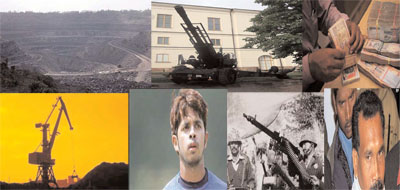
    However, since people are getting more and more selforiented, when it comes to progress and wiping away poverty, nobody is least bothered. A few of the top scams that have taken place since the year 1947 is discussed here, just to bring to the notice of the public where we stand and how things are working. Let us get from the latest to the oldest.
    1. The Indian Coal Allocation Scam: This is one among the latest scams that has occurred concerning the Indian government’s allocation of the nation’s coal deposits to public sector entries and private companies. According to the CAG (Comptroller and Auditor General of India), the Indian Government was accused of allocating coal blocks, in an in-efficient manner during the period 2004-2009.

    The reason for this allegation was because, the Government had the authority to check on the allocation of coal blocks by a process of competitive bidding, but they failed to do so, resulting in lower payment by the public sector enterprises and the private firms. According to the CAG report, an amount of near to Rs. 185,591 crore (USD $ 35.08 billion) was lost to the government because of this improper screening in procedures, which might have happened due to bribery is what studies says. Whatever it may be, loosing such a huge amount by the Government is a fall from the Governments side.
    2. The 2G Spectrum Scam: This scam was one which involved the politicians and government officials equally. The scam involved in issuing frequency allocation licenses by the telephone companies in re-creating 2G subscriptions for cell phones. When valued by the Comptroller and Auditor General ( CAG ) of India about the money composed from the 2G licenses , the defeat for the exchequer was Rs. 176,369 crore ( USD $ 39.16 billion ). The issuing of licenses began in 2008; however it came to public attention when the Indian Income tax Department conducted an investigation on the political campaigner Niira Radia.

    The Supreme Court on February 2012 declared cancellation of all licenses issued in 2008 during the tenure of A. Raja, who was the minister of telecom then. There were about 122 licenses that were cancelled. The actual plan for awarding the licenses was on a first come first served policy. However, A. Raja manipulated the rules and instead pf the first who applied for the licenses, it was first who tipped Raja got the license. 3.

    Commonwealth Games Scam:
    This was a scam that was harshly criticized by several well-known social activists and politicians as billions of dollars were being spent on sporting event, although the fact that we have the leading concentration of poor people. Some of the other major problems that was being highlighted was grave corruption by the games organizing committee, delay in the erection of the main Games venues, and infrastructural compromise. Indian businessman Azim Premji called the Commonwealth games a “drain on the public funds” and also said that hosting such an expensive game event was not the priority for India, and India had other priorities to look into like education, public health and infrastructure.

    4. Satyam Scam:
    In the history of the corporate, Satyam Computer Services Scandal is biggest ever and the chairman, Ramalinga Raju confessed that the company’s accounts were falsified. For near to a decade, Raju kept the accounts details in the dark by pumping up revenues and earning up figures of Satyam. He confessed that , as per the balance sheet of 30th September 2008, the company had exaggerated figures for cash and bank balances of Rs. 5040 crore ( USD $ 1.12 billion ) as next to Rs. 5361 Crore ( USD $ 1.19 billion ) in the book thus acquiring an interest of Rs. 376 Crore , which was not existing.This scam was in tune of near to Rs. 14000 Crore.

    5. Bofors Scam:
    This scandal is also known as the hallmark of Indian Corruption. This was a most important corruption during the 1980`s where the then Prime Minister Rajiv Gandhi and quite a few others which also includes a powerful NRI family named the Hindujas were accused of receiving bribe from Bofors AB for engaging a proposal to supply India’s 155 mm field howitzer. The scale of the corruption was so worse that it led to the crush of Gandhi’s ruling in the Indian national Congress party.

    It was hypnotized that the level of the scandal was tuned to be about Rs. 400 million. The middle man who was associated with this scandal was an Italian businessman named Ottavio Quattrocchi and who also represented the petrochemicals firm, Snamprogetti. Quattrocchi was very intimate to the family and emerged as a influential broker in the 1980`s between big business and the Government of India. Despite the controversy, the Bofor gun was used extensively during the Kargil War with Pakistan and gave India ‘an edge’ over Pakistan according to battlefield comrades.

    6. The Fodder Scam:
    This scam involved the misappropriation of about Rs. 950 crore (USD $ 179.55 million) from the government treasury, of Bihar. The scheme involved the manufacture of ‘vast herds of invented stock’ for which food, medicines and animal husbandry equipment was apparently acquired. In this scam even the Chief Minister of Bihar, Laloo Prasad Yadav was included then which finally led to his resignation. The scam had its origins in small scale by some government employees by submitting false expense reports, which grew in magnitude and drew additional elements over a period of time which ultimately led to the forming of a mafia. This scam still continues to be exposed by the media due to the widespread links between tenured bureaucrats, elected politicians and businesspeople involved.

    7. The Hawala Scandal:
    This was an Indian political scandal, which involved payments allegedly acknowledged by politicians through four hawala brokers, mostly the Jain brothers. It was about $ 18 million bribery humiliation. In an arrest linked to the militants in Kashmir is what gave way to the raid of the hawala brokers and the scandal through them, which revealed large scale payments to national politicians.

    8. The IPL Scam:
    Cricket is a game where lot of commotions occur and there hare many hurdles to cross over and the IPL (Indian Premier League) is no better at it. The BCCI (Board of Control for Crocket in India) has found itself in the middle of many conflicts with the coming of IPL. The IPL had set forth many terms at many occasions, which were not accepted and had to be terminated. There were conflicts with the Cricket Club of India, with the England and Wales Cricket board, with Cricket Australia and many more. The IPL chairman Lalit Modi was suspended in 2010 for alleged act of individual transgression by the BCCI. There was also spot fixing among the players during the IPL in 2012.

    9. Harshad Mehta Scam:
    Mehta was a famous stockbroker of his time. He was well known for his high record breaking profits from the stock market and trading and later was involved in the scandal worth Rs. 5000 crore ( USD $ 945 million) in Bombay Stock Exchange. He had a great way in convincing the public that through the banking system he could finance his buying. Two small and little known banks helped him in this and he made a great fraudulent price hikes in the stock markets. By the time the scandal came to limelight, many banks were left blank and in fact Managers from two reputed banks committed suicide.

    10. Kinetic Finance Limited Scam:
    In this scam, various banks lost about Rs. 200 crore (USD $ 37.8 million). The promoters of kinetic finance limited borrowed about Rs. 145 crore from an association of banks led by SBI, and Bank of Baroda. After borrowing the money, they used it for other purposes of the Kinetic group and eventually the promoters resigned and the firm was renamed in another name. A special Investigation Audit was conducted and based on the report it was found that about five banks filed criminal cases against the promoters.

    11. Adarsh Housing Scam
    In this scam, land was allotted to the war widows of Kargil war and also for the retired personal of The continued on page 48 Defense Services. Over a period of 10 years, the top politicians and bureaucrats bend several rules and commit various acts of commission and omission to have the building in order and finally they got themselves allotted with flats at the premium locality at a much cheaper cost. This scam is noticeable as it took keen planning and almost 10 years to execute this kind of brutality to the poor and left alone in the defense.

    12. Citibank Fraud:
    This was a fraudulent done by the bank employee by promoting false promises to the customers. Shivraj Puri, the Relationship manager of Gurgaon branch had convinced his customers to invest in a fake scheme that gave high interests. He made forged circulars from SEBI. He opened joint accounts in several names and made customers deposit into those accounts and he invested in places of his interests. This was bought to lime light when customers started complaining about being asked to invest in a scheme that was not available to the bank.

    13. Madhu Koda Scandal:
    Madhu Koda is the ex-chief Minister of Jharkhad. He was bought to limelight by the IT department by charging for laundering money for about Rs. 4000 crore and other disproportionate income. Almost five currency counting machines were seized from his residence. The amount was used to purchase hotels, mines, and companies, in foreign countries like Thailand, Liberia, Dubai and many other places. With this kind of laundering and investments, he builds an empire, but bigger to the most successful businessmen within a short period of time.

    14. Barak Missile Scandal:
    This is a case of alleged defense corruption which was related to the purchase of Barak 1 Missile Systems by India from Israel. The contracts have been signed by the Indian government to procure seven Barak systems at a total cost of Rs. 199.50 million. This was done despite objections raised by several groups, including members of the team that had actually visited Israel to observe the performance of the missile.

    15. Kargil Coffin Scam:
    This is one of a kind of scam, where even the coffins for the soldiers who died in the Indo-Pak war, were bought for low quality and at higher price. The government had paid about $2500 per coffin, which was earlier purchased for $172 per coffin. And moreover the quality was very poor. This led to range among the public and led to the resignation of the defense minister.

    16. Mining Scam in India:
    This scam is related to the ore-rich states of India and has generated controversies in India which spans encroachment of forest areas, underpayment of government royalties, and conflict with tribal regarding land-rights.

    17. Sukh Ram Telecom Scam:
    Sukh Ram is a former union communication minister in Indian National Congress Government. He was the telecom Minister during the P.V. Narasimha Rao`s cabinet. He was caught with allegations regarding irregularities in awarding a telecom contract. The CBI seized around Rs. 3.6 crores from his residence. He has been imprisoned for the fraud that he has done.

    18. SNC Lavalian Scam:
    This is a financial scam related to the government with a Canadian company. A loss of about Rs. 374.50 crores, for the renovation and modernization of the hydroelectric power stations at Pallivasal, Sengulam, and Panniar (The PSP Project as it is called) at the Idduki district in Kerala.

    19. Belekeri Port Scam:
    This scam relates to about 3.5 million of sequester iron ore that was exported illegally from Belekeri Port in Karnataka. This scam is said to be worth about Rs. 60,000 crore (USD $ 12 billion). The iron ore was illegally mined after giving a minimal pay to the government.

    20. Telgi Scandal: The Telgi scandal is after the great Abdul Karim Telgi who issued counterfeit stamp papers. Had appointed about 300 people as agents to sell these counterfeit stamp papers to bulk purchasers like banks, insurance companies, and share broking firms. The size of the scam is about 20,000 crores (USD $3.78 billion). In this scam, many high ranked governmental officials were also recorded.

  • Rupee Falls To Historic Low Of 62 Per Dollar, Sensex Plunges Over 400 Points

    Rupee Falls To Historic Low Of 62 Per Dollar, Sensex Plunges Over 400 Points

    MUMBAI (TIP): The rupee dropped to a historic low of 62.00 per dollar in late morning trade on August 16 on good demand for the US currency from banks and importers in view of sharp fall in equity market. The rupee resumed slightly higher at 61.35 per dollar as against the last closing level of 61.43 at the Interbank Foreign Exchange (Forex) Market.

    But, it fell sharply to an all-time low of 62.00 on good dollar demand from banks and importers in view of fall in equity market, before quoting at 61.90 per dollar at 1045 hours. It moved in a range of 61.32 and 62.00 per dollar during the morning deals. In global market, the US dollar seesawed against major rivals in the early trade, in line for further volatility as the week wraps up with more data to fuel Federal Reserve consideration of tapering monetary stimulus.

    Sensex snaps 4-session winning spree, tumbles 475 points The S&P BSE benchmark Sensex snapped 4-session rising spree, tumbling 475 points in late morning trade due to all-round selling from operators in view of fall in global markets amid depreciation of rupee value against the dollar. Shares of consumer durable, banking, realty, capital goods, metal, power and refinery sectors declined sharply.

    The BSE-30 share index, Sensex, resumed lower at 19,297.11 points and dropped further to a low of 18,852.40 before quoting at 18,892.86 at 1115 hours. It showed a sharp fall of 474.73 points, or 2.45 per cent, from its last close. It had gained by 702.71 points or 3.76 per cent in last four sessions. The NSE 50-share barometer Nifty also tumbled by 159.90 points or 2.78 per cent to 5,582.40 at 1050 hours.

    Major losers were – BHEL (4.59%), HDFC (4.44%), Maruti Suzuki (4.24%), Tata Power (3.73%), Icici Bank (3.59%), M&M (3.41%), Tata Steel (3.36%) and Larsen (3.19%). The market sentiment was also affected by RBI’s decision on Wednesday to reduce the limit for overseas direct investment (ODI) under automatic route for all fresh ODI transactions from 400 per cent of the net worth of an Indian party to 100 per cent of its net worth.

    Asian stocks stumbled on Wednesday after some weak earnings and worries that the Federal Reserve would soon pare its bond purchases slammed Wall Street. Key benchmark indices in China, Hong Kong, Indonesia, Singapore, South Korea and Japan were down by 0.51 to 1.35%.

  • Middle Class At Mercy Of Market Forces

    Middle Class At Mercy Of Market Forces

    KOLKATA (TIP): The lower interest rate cycle in India, which began in April last year, has probably lasted as long as the recent Australian first innings at Lords. As the rupee crumbles and a desperate government lurches from one crisis to another, the middle-class’ hopes of cheaper home and auto loans have quietly been snuffed out, leaving thousands of lower and middle-income households at the mercy of relentless market forces that are beyond control.

    YES Bank raised its base lending rate by 25 basis points to 10.75% and fixed deposit rates by 25-50 basis points, effective August 1. And Axis Bank, the third-largest private lender, raised deposit rates by up to 400 basis points for select maturities. Smaller banks such as Development Credit Bank and Ratnakar Bank have also raised deposit rates. 100 basis points equals 1 percentage point. YES Bank has led the sectoral reversal at a time lenders are battling high cost of short-term funds.

    For years, they binged on short-term money, taking advantage of benign rates. Unlike their bigger private and public sector peers, these banks did not have big branch networks that could attract cheap retail deposit money. But now the party is over. After the central bank squeezed liquidity and raised short-term rates last week, lenders have been forced to do what was considered unthinkable three months ago: Raise deposit rates to attract retail money. A recent report of India Ratings & Research said the Indian banking system’s dependence on short-term liabilities has grown to a point where refinancing pressures could hurt margins, unless rebalanced.

    It said deposits maturing in less than one year formed over 45% of total deposits in 2013, up from 33% in 2002. A significant part of these deposits had maturities less than six months and, for some banks, included a growing share of wholesale money market borrowings. “Banks that largely rely on wholesale and shortterm funding are affected the most and are forced to raise interest rates. Many of them have increased rates to attract retail depositors,” India Ratings & Research Senior Director Ananda Bhowmik said.

    YES Bank’s Deputy CFO & Group President for financial management Jaideep Iyer said the rate hike decision is in sync with the market, but denied dependence on short-term funding. “More than 86% of deposits come from individuals with ticket size of less than 0.2% of our deposit base. We have a lot of granularity and a sustainable funding profile. We do not have a strategy of relying on shortterm funding.” The bank said short-term corporate deposits constitute less than 10% of its total deposits and less than 6% of funding.

    Its current and savings account share is 20.2% as of June while public sector banks, which have extensive branch networks, typically enjoy a higher CASA ratio. Current and savings bank deposits are less costly for banks and hence a higher ratio means better profitability. An Axis Bank spokesperson was more guarded, but direct. “This increase in interest rates on term deposits has been carried out to take into account current money market conditions and to align it to prevailing market rates.”

  • Politically connected ex-Mutual Bank president barred from banking

    Politically connected ex-Mutual Bank president barred from banking

    CHICAGO (TIP): Amrish Mahajan, former president of failed Mutual Bank of Harvey and a major fundraiser for imprisoned former Gov. Rod Blagojevich, has been barred from future participation in the banking industry under a newly released regulatory order. Mr. Mahajan consented, without admitting or denying unsafe or unsound banking practices, to a May 1 order by the Federal Deposit Insurance Corp. prohibiting him from participating “in any manner” in the conduct of the affairs of any federally insured institution. Until early 2009, Mr. Mahajan ran Mutual Bank of Harvey, one of the most active lenders to Indian-Americanowned businesses in the Chicago area and an enthusiastic commercial real estate lender in Chicago and other markets around the country.

    The bank, which had $1.7 billion in assets at its peak, failed spectacularly in 2009, saddling the FDIC’s insurance fund with an estimated $917 million in losses, according to the latest FDIC account. That makes it the costliest Chicago-area bank failure since the beginning of 2009. Mr. Mahajan is a defendant in an FDIC lawsuit against former officers and directors of Mutual Bank seeking $130 million in damages. That suit, filed in October 2011, is pending and in discovery. In its order – you can read the document at the end of this story – the FDIC said it had “reason to believe” that Mr. Mahajan had engaged in unsafe or unsound banking practices and that “such practices and breaches of fiduciary duty demonstrate personal dishonesty and/or willful or continuing disregard for the safety and soundness of the bank.” Mr. Mahajan didn’t respond to a request for comment.

    A spokeswoman for the law firm representing him declined to comment. Mr. Mahajan was known for his political connections, particularly to Mr. Blagojevich. Mutual Bank briefly entered the realm of national politics after news surfaced of the bank’s role in financing the purchase of a lot next to the home of then-U.S. Sen. Barack Obama. The Obama family bought part of the lot from the wife of Blagojevich fundraiser Tony Rezko after Mutual Bank lent her $500,000 to purchase the property.Mr. Rezko is in prison on charges of fraud, among other things. Mr. Obama, during his initial run for president, acknowledged later that the deal was a mistake.

  • Indian American honored with Healthcare Visionary of the Decade Award

    Indian American honored with Healthcare Visionary of the Decade Award

    MUMBAI (TIP): Mukesh Hariawala, an Indian American Cardiac Surgeon has been honored with the prestigious Indian Healthcare Visionary of the Decade award. A Harvard trained and internationally acclaimed Surgeon and Healthcare Economist, Hariawala was acknowledged at a recent ceremony of the 4th Annual Business Leadership Conclave at Hotel Leela in Mumbai, reports Jagran Josh. In his Keynote speech, Hariawala discussed about a medical tourism opportunity for India, worth 100 billion dollar, which is a part of Patient Protection and Affordable Care Act (also known as Obamacare) by President Obama. Hariwala appreciated India for its highly skilled doctors and nurses and the healthcare infrastructure the country posses. According to him, marketing of services and lobbying with insurance companies in the US is really important to maintain constant flow of patients. Apart from benefiting the healthcare industry, the medical tourism plan will also help many other sectors such as hospitality, travel, lodging, food, tourism, banking, shopping etc, in terms of revenue. Ratan Tata and Mukesh Ambani, two prominent Indian industrialists were also felicitated at the function.