Tag: Banking

  • European Union leaders clinch deals on banks, budget

    European Union leaders clinch deals on banks, budget

    BRUSSELS (TIP): European leaders agreed on new steps to fight youth unemployment and promote lending to credit-starved small business on Thursday after deals on banking resolution and the long-term EU budget gave their summit a much needed lift. The 27 leaders resolved to spend 6 billion euros over the next two years to support job creation, training and apprenticeships for young people, and to raid unspent EU budget funds to keep the effort going thereafter.

    Critics say the money is a drop in the ocean with more than 19 million people unemployed in the EU, and more than half of all young people under 25 without a job in Spain and Greece. Leaders also approved plans for the European Investment Bank to lend hundreds of billions of euros to small and medium-sized enterprises (SMEs) particularly in southern EU states where bank finance has largely dried up due to the euro zone’s debt crisis. “The last 24 hours have been a great success,” European Commission President Jose Manuel Barroso told a news conference. “Today we have agreed the money to back up our words.” After late-night talks in Luxembourg, European Union finance ministers agreed how to share the cost of future bank failures among investors and wealthy savers as far as possible. Separately, negotiators for the European Parliament, the European Commission and EU member governments clinched a deal on a 960 billion euro ($1.25 trillion) seven-year budget for the bloc for the period 2014-20, ending months of squabbling.

    The leaders unanimously endorsed the agreement, EU Council President Herman Van Rompuy said, overcoming a last minute snag over Britain’s rebate, which will remain intact. The European Parliament must approve the deal next month so the new budget can take effect next January. The banking resolution agreement designed to shield European taxpayers from having to foot the bill for rescuing troubled banks will be implemented on a national basis from 2018. It lays the ground for a single system to resolve failed banks in the euro zone and the 27-nation EU, the second stage of what policymakers call a European banking union, meant to strengthen supervision and stability of the financial sector.

    The European Commission, the EU’s executive, will put forward proposals for a single resolution mechanism next week, but any deal on it is a long way off because EU paymaster Germany opposes taking any liability for other countries’ banks. German Chancellor Angela Merkel welcomed the EU budget breakthrough, saying it would allow new spending on everything from agriculture to research, roads, bridges and development aid to move ahead, promoting economic growth in Europe.

  • Customers Bancorp Inc to invest in Religare Enterprises

    Customers Bancorp Inc to invest in Religare Enterprises

    NEW DELHI (TIP): US-based Customers Bancorp Inc (CUBI) has agreed to invest $51 million (about Rs 300 crore) in various securities of banking licence aspirant Religare Enterprises Ltd. The investments will take place through a combination of primary and secondary market transactions. The transactions involve a secondary purchase of Religare Enterprises equity shares from its promoters for $22 million, investment of $28 million in compulsory convertible warrants to be issued by Religare on a preferential basis, and a $1-million investment in new equity shares to be issued by Religare.

    It is still not clear what Customers Bancorp’s eventual equity stake in Religare will be after these transactions. The CUBI Board has already cleared the transactions. Religare’s board has now approved Customers Bancorp’s investments in the company. Religare’s promoters — billionaire brothers Malvinder Mohan Singh and Shivinder Mohan Singh — had recently agreed to shed a 22 per cent stake to enable the company to set up a non-operative financial holding company, in line with RBI guidelines for licensing of new banks in the private sector. Of the 22 per cent, the transaction with CUBI will result in the promoters offloading about 2.2 percent, it is learnt. “We are delighted to have Customers Bancorp Inc. as an investor at Religare. CUBI’s management team expertise in global banking will be extremely supportive in our banking foray.We are confident that the proposed association will further strengthen Religare’s endeavour to create a distinctive and diversified financial services conglomerate that believes in the Indian market’s long term growth potential,” said Sunil Godhwani, CMD, Religare Enterprises, in a statemen.

  • Gold Drives Our Traditional Economy, Must Not Be Curbed

    Gold Drives Our Traditional Economy, Must Not Be Curbed

    An insightful note on the potential adverse effects of current policies on gold trade in India.

    India is one of the largest buyers of gold in the world. More than 90 per cent of this is for jeweler purposes. Indian demand is around 25 per cent of global consumption. Recently, the attraction of smuggling has come down due to liberalized import policy. Incidentally, domestic production of gold is very negligible, running into a few tons.

    The purchases made in Saudi Arabia and Gulf states is also mostly by people of Indian origin and to that extent the demand by ‘Indians’ is much larger. What is bought in Gulf states this year by the NRIs (non-resident Indians) will reach here may be in a year or so. At an average price of, say, Rs 30000 for 10 grams, we can estimate that more than Rs 258000 crore has been spent in buying gold last year by Indian households, which is much larger than the aggregate capital raised from the stock market.

    The purchase of gold by households is not treated as savings in our statistics. It is treated, as consumption by a household which is curious as households treat purchase of gold as ‘investments’ whatever the economists in the Government may think. The ‘experts’ are more or less unanimous that households, particularly women, are doing ‘unproductive’ investments in gold jewelry.

    They would rather households invested in Government bonds which can be used to pay salaries for Government employees (the most ‘productive’ activity). But why do households invest in gold? It is not for the return but for security. Gold is the major social security for large number of Indian households which do not have any social security at all. The OASIS (Dave Committee) report indicates that nearly 90 per cent of the India’s workforce, particularly the self-employed, is not covered by any retirement scheme that enables savings for economic security during old age.

    Transfer of ownership is also very easy. In the case of gold ornaments one can say that possession is ownership. In other words, if a mother removes her chain and gives it to her daughter then it belongs to the latter by tradition. One can get loan against gold by pledging it with a moneylender any time of the day or night, seven days of the week. In other words, gold represents the most liquid form of asset in India.

    One can also say that gold is the most politically correct metal which can be owned. In traditional Indian families, sometimes, shares or fixed deposits are disposed without the knowledge of the housewife. But gold is always sold with the concurrence of the housewife. The so-called superstition pertaining to not removing the Mangal Sutra till the death of the husband is an insurance protection to the woman against rapacious relatives and children.

    It is assumed that the gold ornaments will work as social security for her in case of major emergency or after the death of the head of the household. More importantly, gold is used as collateral in small businesses like retail trade and transport restaurant’s etc. the role of gold is not that of an idle asset as assumed by our central banker and Government economists. We find that the credit availability to small entrepreneurs in construction/trade/restaurant’s etc. has declined over period of time and more money goes to only big businesses.

    Actually small businesses are engines of our growth. One of the major reasons for the increased demand for gold more in the form of Coins and bars is the scarcity of credit from banking sector for small and tiny businesses. Actually coins and bars constituted more than 300 tons out of 864 tons consumed in 2012.As of today Gold alone is acceptable collateral for these enterprises for getting credit from money lenders.

    Unfortunately the role of gold as a social security and collateral for business is not understood by our Government economists and central bankers. On the one side, credit availability from organized banking sector to small and tiny businesses is declining and on the other hand every effort is made by RBI to make gold costlier and scarce for these tiny entrepreneurs. The increase in demand for gold and the resultant crisis in the current account deficit are linked to denial of credit to the growth engines in service and manufacturing sector.

    These are mostly proprietorship and partnership firm’s whose only collateral to money lenders is in the form of Gold ornaments or coins and bar. Further curbs on availability of gold will only encourage D company to become active in the smuggling of gold and do we want it again?

  • Right Step Towards Title Guarantee

    Right Step Towards Title Guarantee

    Real estate prices crucial for economy
    “As land prices are generally a significant component of house prices, reforms in this sector help in safety and stability of the financial system. After all, housing accounted for nearly 8 per cent of total banking credit or about 4 per cent of the GDP as of March 2012. And real estate prices are crucial for the economy as illustrated by the experience of the US”, say the authors.

    Recently two important bills relating to real estate were cleared by the Union Cabinet. While the Real Estate Regulatory Bill, 2012, garnered much attention, the amendments to the Registration Act, 1908, (RA) have been barely mentioned. In fact, RA has important implications for the monetary policy, through improved price discovery for asset prices, and through higher collection of stamp duty and capital gains.

    The objective of this amendment is to have better, more transparent, and highly digitized land market records which, according to earlier estimates by McKinsey (2001), could lead to an increase in India’s GDP by about 1.3 per cent. First, the present status, under which all transactions in immovable property in India have to be registered with the Department of Stamps and Registrations, and the registration deed is the only document indicating ownership rights.

    The Registrar, on the sale of property, collects requisite stamp duty, but does not assess or certify whether the sellers were genuinely the owners. The current registration system is, therefore, not a registration of title, but a registration of deed, primarily for the purpose of revenue collection. In the present arrangements, even the state cannot be held liable for incorrect registration records. The onus of due diligence to ascertain title rests on the buyer.

    Therefore, title is inferred from lack of contention rather than through a positive, documented identification of ownership. The current system of recordkeeping on immovable property is outof- date and unreliable, resulting in an opaque system prone to easy manipulation and festering corruption. In some cases, sale happens through the execution of power of attorney (POA) documents. Frauds abound, and a single property could be sold to multiple buyers in the absence of proper records.

    To avoid high stamp duty, often as high as 5 to 9 per cent of property value, mortgages/leases are not always registered; sometimes documents are registered to reflect lower transaction values. Also, when property changes hands multiple times before final purchase, counter-parties enter into unregistered sale agreements rather than registering sale deeds, to save on stamp duty. As is well-known, land records are incomplete, and land surveys are outdated: in some states last land surveys were undertaken in the pre-Independence period.

    The National Land Record Modernization program, 2008, has been rolled out to digitize all paperbased land records, but without any attempt to verify or update them. Land being a state subject, existing paper-based records follow a different pattern of maintenance and are in different languages which need to be standardized across the country. All these issues in registration make it impossible to ascertain the ownership of a property.

    The lack of ownership data is acute in the urban areas and, therefore, urban planning and governance are directly impacted. A number of infrastructure projects are delayed because of disputes in land titling. Inadequate management of land records results in protracted litigation putting pressure on the judiciary, and over 70 per cent of the land-related litigation relates to ownership titles, according to some estimates. In the private sector, many industrial projects are held up due to litigation over titles and inability to ascertain the correct market value of land.

    This implies both a loss of jobs and tax revenues. The government is mulling over the Land Titling Bill, 2011 (LTB), where titles to property will be guaranteed conclusively by the state, based on the Torren’s system. In the LTB land title guarantee would rest on the land register reflecting the complete rights and interest in a parcel of land, with an assured compensation by the government if errors are made by the Registrar of Titles.

    A robust registration process is, therefore, a prerequisite for a complete, up-to-date ownership records which can then be used to guarantee title. To enable this, record-keeping on immovable properties needs to be technologyenabled, updated real-time, with online search retrieval facilities, and digitally stored with backups. The recent amendments to the Registration Act (RA), 1908, propose to do just that.

    The current amendment to the RA allows for electronic registration of land sale deeds, making record-maintenance easier and increasing the transparency of land markets in the long term. The amendment has also expanded the categories of instruments for which registration is mandatory. States are also expected to frame rules for electronic presentation and registration of deeds. However, in some states, like Maharashtra, reforms on similar lines had been initiated earlier.

    These changes to the RA are expected to provide a single-window view to all types of encumbrances pertaining to land records, be it sale, lease or mortgages. This takes us a step forward towards the objectives of the Act, where “all manner of agreements relating to land or property need to be registered if they are to be considered as evidence in a court of law”. But there are challenges to implementing the amendment and achieving the desired results.

    Maintaining comprehensive land information is key and integrating land survey records with registration data using cadastral level mapping with unique property ID numbers would need to be considered. Reducing stamp duty at the same time as guaranteeing title will go a long way in encouraging the registration of land transactions. To stem the misuse of power of attorney (PoA) in transactions related to immovable property, a time limit on the currency of PoA agreements may have to be explored.

    Further, there may be a need to amend laws related to transfer of property and implementation of contract. As land prices are generally a significant component of house prices, reforms in this sector help in safety and stability of the financial system. After all, housing accounted for nearly 8 per cent of total banking credit or about 4 per cent of the GDP as of March 2012. And real estate prices are crucial for the economy as illustrated by the experience of the US.

  • IT INDUSTRY WILL GROW 13-14%: SOM MITTAL

    IT INDUSTRY WILL GROW 13-14%: SOM MITTAL

    CHENNAI (TIP): Software industry body Nasscom expects the country’s information technology (IT) services sector to grow 13-14 per cent in the current financial year and to touch $225 billion (Rs 13.22 lakh crore) by 2020. Speaking to reporters after addressing Nasscom’s EmergeOut Conclave here, the industry body’s president, Som Mittal, said the sector had been growing at a compound annual growth rate of 12-13 per cent till two years earlier, and reaching the $225 billion target was not impossible.

    The first main driver will be new geographies. At present, the US, the UK and other European markets contribute to around 90 per cent of the total business, while other markets, including India, China and Latin America, contribute the rest. “Only three per cent of the business we do in China and Japan, which shows there is plenty of opportunities in those markets,” said Mittal. Many small companies have now started focussing only on these markets. “Our estimate is that around 20 per cent of the business would come from new geographies by 2020,” said Mittal. The second driver will be new verticals.

    At present, banking, financial services and insurance, hi-tech and telecom and manufacturing contribute around 80 per cent of the business, while utilities, transport, health care and media and entertainment open up new opportunities. “Not that the existing verticals will have a setback. The growth will not be at the cost of others, it will be an an expansion,” said Mittal. The third driver will be new customers, especially small and medium business companies, said Mittal.

  • RAJASTHAN MINISTER INAUGURATES RAJASTHAN CHAPTER OF INOC (I)

    RAJASTHAN MINISTER INAUGURATES RAJASTHAN CHAPTER OF INOC (I)

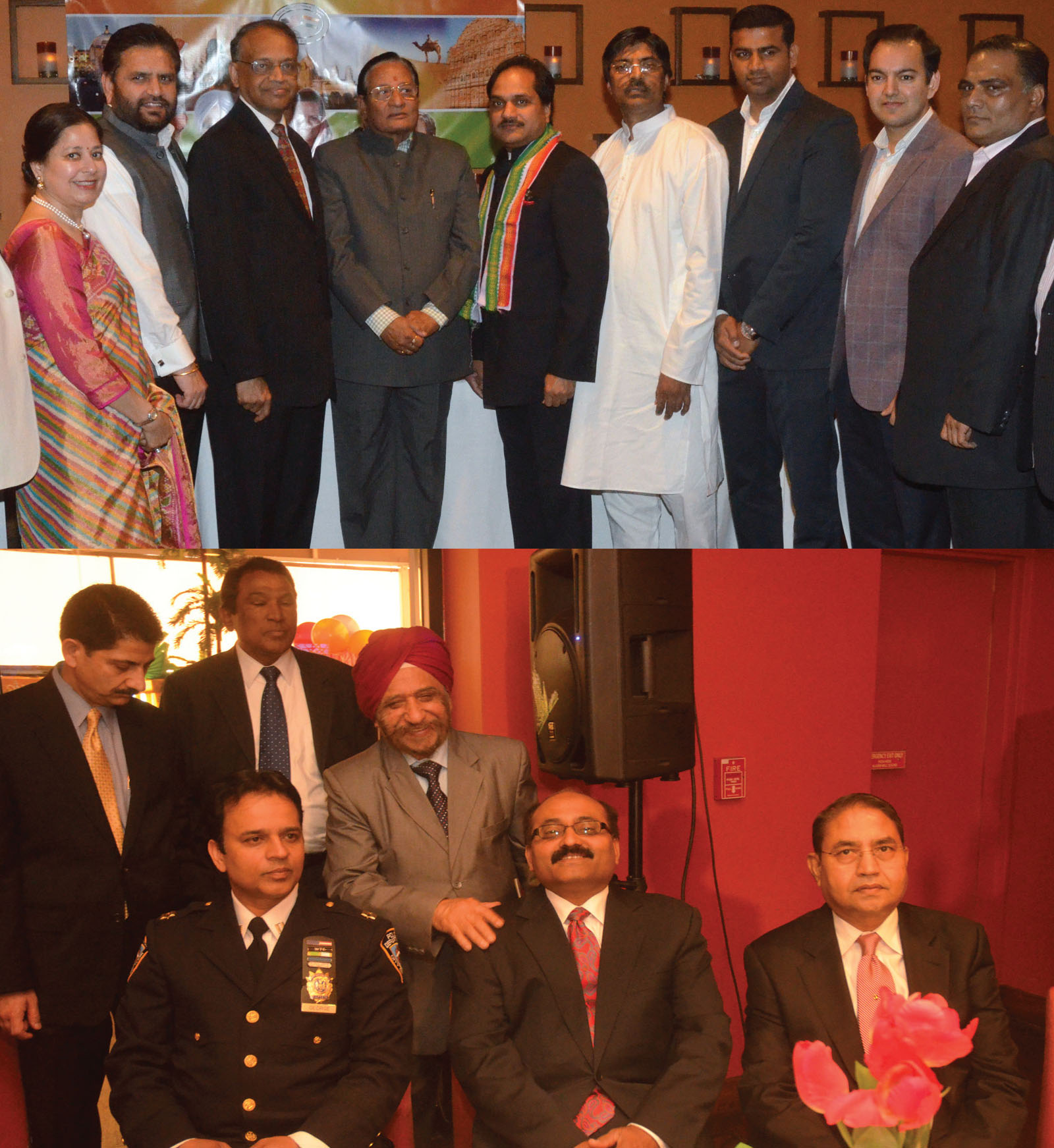
    NEW YORK (TIP): Rajasthan government Minister for Urban Development and Housing Shanti Dhariwal inaugurated on May 25 Rajasthan chapter of Indian National Overseas Congress (I) at Mint Restaurant in Long Island, New York. Inaugurating the chapter, the Minister said Rajasthan has been making all-round progress in many fields under the able leadership of Chief Minister Ashok Gehlot.

    He said the party is sure to return to power in view of numerous welfare measures undertaken by the Congress government. He took pains to describe various schemes undertaken for the weaker sections and the middle classes. Tom Suozzi, former Executive of Nassau County, in his remarks praised the role of Indian-Americans for their hard work and dedication in making Nassau County a better place to live.

    He introduced four of his running mates of which three are Indian-Americans and the other – an American with an Indian connection and who had worked with Mother Teresa in Kolkata. George Abraham, president of Indian National Overseas Congress (I) who presided over the function said that Rajasthan was the 12th chapter to be formed since the inception of INOC in 2000 and the INOC has become the voice of the Indian Diaspora. He said following the story of the massive victory in Karnataka will surely be repeated in the state elections to be held soon.

    The INOC-I will be playing its part to ensure the success, he said. Shudh Parkash Singh, senior vice president of INOC-I, said the Diaspora Indians will work hard to bring back the Congress to power in federal and state level elections. The Minister honored five prominent personalities – Jagdish Chandra, head of ETV Hindi and Urdu TV channels; Padam Mehta, chief editor and publisher of Manak; Capt. Stanley George of New York Police Department; Kanak Golia, a prominent businessman and Naveen C Shah, CEO of Navika Group of Companies.

    Stanley George was promoted to Captain of New York Police Department (NYPD) in 2007, the largest police department in the world. He is the first Indian Malayalee to reach the position and is currently the only captain of NYPD. After his graduation in Kerala, he migrated to the US and began his career as a civilian accountant in NYPD in 1989. He joined the Police Academy and graduated as police officer – he became Sergeant in 2000, Lieutenant in 2003 and Captain in 2007.

    He had worked in various units such as counterterrorism, criminal justice and patrol service bureau. He was recognized by President APJ Abdul Kalam in New York for his rescue and recovery service during the 9/11 tragedy. Kanak Golia is the president and CEO of Perfume Center of America, a multinational global company he founded in 1993. A wholesale distributor that prides itself on service, its clientele is worldwide.

    The company stocks over 4,000 major designer brands from France, Italy, Germany, Spain and the US. He has been distinguished as a recipient of the Top 10 Asian American Business Awards. Golia grew up in Johdpur, Rajasthan with his brother and three sisters. While managing his father’s business, he continued his academic career in accounting and law and served as Vice President of the Department of Law at the University of Rajasthan.

    Golia also serves as a Board of Trustee of New York Hospital for Queens; he and his wife Prabha Golia are instrumental in developing new cancer center and they were bestowed with Pacesetter Award, New York Hospital’s highest honor. They had established Kanak and Prabha Golia Foundation focused on women’s education, medical care for the disabled and orphanages. Naveen C. Shah is a prominent CPA and President and CEO of Navika Group of Companies, a premier commercial, real estate and hospitality enterprise in the US.

    He is also a partner of accounting and tax associates. Shah migrated to the US in 1982 and became a CPA in 1984. He has served as Board of Director of many professional and banking institutions and had been on the business banking advisory board of Wells Fargo and South Asian Business Advisory Board of Merrill Lynch. He is the founding member and past president of Rajasthan Association of North America (RANA); Indian Association of Long Island (IALI), Nargis Dutt Memorial Foundation to name a few.

    Shah founded Navika Capital Group LLC in 2005 with an objective to invest capital in commercial real estate and branded hotels in the US. Under his stellar leadership, the Navika Group has excelled in its performance and currently has substantial real estate and hospitality asset base under its ownership. It has an ownership stake in 43 prime real estate properties including 35 branded hotels in high value markets and is the direct result of Shah’s business acumen. Chandra Prakash Sukhwal, vice president of Rajasthan chapter, said Congress Party had made India a super power in the comity of nations and provided a strong and stable government in the center.

    He said a new slogan “Chalo Rajasthan, Jeeto Rajasthan” has been coined by Rajasthani non- residents to ensure the victory of Congress Party in Rajasthan. Sukhwal was a senior Congress leader who had worked with Indira Gandhi and Rajiv Gandhi before migrating to the US. Minister was presented Proclamations from Nassau County Chief Executive Edward Mangano and another from New York State Senate by Dilip Chauhan on behalf of the New York State Senator Toby Stavisky. Sushil Goyal, President of Rajasthan chapter of INOC-I welcomed the gathering. Sushma Kotahwala, Secretary, acted ably as emcee of the event.

  • Prominent Indian American neurosurgeon sentenced to probation for unreported offshore bank accounts

    Prominent Indian American neurosurgeon sentenced to probation for unreported offshore bank accounts

    MILWAUKI (TIP): On February 1, 2013, the U.S. District Court for the Eastern District of Wisconsin sentenced Arvind Ahuja, a Milwaukee neurosurgeon, to serve three years of probation and to pay a fine of $350,000 following his conviction by a federal jury of one felony count of willful failure to file a Report of Foreign Bank Account (“FBAR”) and one felony count of filing a false federal income tax return.

    According to the evidence presented at Ahuja’s August 2012 trial, Ahuja transferred millions of dollars from bank accounts in the United States to undeclared bank accounts located in India at HSBC bank. Ahuja invested the funds in these accounts in certificates of deposit, which earned more than $2.7 million in interest income during the years 2005 through 2009.

    Ahuja also maintained an HSBC bank account in the Bailiwick of Jersey, a British Crown dependency located in the Channel Islands off the coast of Normandy, France. Ahuja used credit and debit cards linked to this account to pay personal expenses while on trips to London. Ahuja managed his offshore accounts with the assistance of bankers who worked at an HSBC India representative office in New York.

    Ahuja’s sentencing is only the latest in a string of taxenforcement news that affects Americans with undeclared offshore bank accounts generally and Indian Americans with unreported non-resident Indian or “NRI” bank accounts specifically. Banks with operations in India offer high interest rates on NRI accounts, usually 9-10%. Unsuspecting account holders may not realize that although the interest income from NRI accounts is typically not taxable in India, it is taxable in the U.S.

    In addition to reporting the interest income and the existence of the account on a U.S. tax return, the account holder must separately disclose the foreign account by filing a FBAR. In December 2010, Vaibhav Dahake of New Jersey pleaded guilty to conspiring to defraud the United States. Sanjay Sethi, also of New Jersey, pleaded guilty on January 7, 2013 to the same charge. Californian Ashvin Desai faces trial on July 23, 2013 for tax evasion, aiding in the preparation of false tax returns, and willful failure to file FBARs.

    All of these Indian Americans are alleged to have maintained undeclared accounts at HSBC India. According to a court filing by the U.S. Department of Justice, there are 9,000 U.S. residents of Indian origin who have $100,000-minimum-balance accounts at HSBC India alone. Undoubtedly, there are many more whose account balances total less than $100,000. According to the DOJ, however, for calendar year 2009, the most recent year for which information is available, there were only 1,391 FBARs filed disclosing 1,921 accounts at HSBC India.

    On April 7, 2011, the U.S. District Court for the Northern District of California granted the IRS and DOJ’s request for a “John Doe summons” to force HSBC India to turn over the names of U.S. taxpayers “who at any time during the years ended December 31, 2002 through December 31, 2010, directly or indirectly had interests in or signature or other authority (including authority to withdraw funds; trade or give instructions or receive account statements, confirmations, or other information, advice or solicitations) with respect to any financial accounts maintained at, monitored by, or managed through The Hongkong and Shanghai Banking Corporation Limited in India (HSBC India).”

  • In FY13, NRI deposits climb 19%

    In FY13, NRI deposits climb 19%

    MUMBAI (TIP): Lured by higher returns offered by banks in their homeland, non-resident Indians (NRIs) placed deposits aggregating $14.18 billion in the financial year ended March 2013, an increase of 19 per cent over the previous year. In the previous year, NRIs parked deposits aggregating $11.92 billion with banks in India. NRIs placed deposits predominantly in non-resident (external) rupee account or NRE account. NRE deposits with the banking system jumped 85 per cent (rising by $15.81 billion in FY13 compared to $8.53 billion in FY12), according to Reserve Bank of India data. The attractiveness of NRE deposits lies in the fact that banks quote the same interest rate on these as on domestic deposits.

    For example, State Bank of India is quoting 8.75 per cent on NRE deposits of one- to 10-year duration. Also, the principal and interest are fully repatriable and the interest earned is exempt from Indian income-tax. “The rising trend in NRE deposits is an indication that the NRIs expect the rupee to appreciate down the line. So, the NRIs are not only gaining by way of interest rate but also on account of favourable exchange rate conversion factor,” said a banker. In FY13, the banking system’s NRO (non-resident ordinary deposits) shrunk by $1.8 billion (against an accretion of $4 billion). Since NRO deposits are nonrepatriable and require submission of tax-residency certificate and self-declaration, bankers say these deposits have become unattractive.

  • Tri-service commands for space, cyber warfare

    Tri-service commands for space, cyber warfare

    NEW DELHI (TIP): The armed forces are now finalizing the plan for creation of three new tri-Service commands to handle space, cyber and special forces, which will be “critical” in deploying capabilities for conventional as well asymmetric warfare in a unified manner. Contours of the Cyber, Aerospace and Special Operations Commands (SOC), after “a lot of spadework” over the past several months, are now being fine-tuned to ensure the “formal joint plan” can be presented to the government by end-July, say sources. “The Aerospace Command, for instance, can be based at Hyderabad because of the presence of ISRO, DRDO there.

    Similarly, the SOC can come up at Delhi since the C-130J `Super Hercules’ aircraft, which are customized for special operations, are based at Hindon airbase,” said a source. The chiefs of staff committee — headed by Air Chief Marshal N A K Browne and including General Bikram Singh and Admiral D K Joshi — as well as other forums of the top military brass have been mulling over the plan since last year, as was first reported by TOI. Though the “urgent need” for Army, Navy and IAF to “synergise” their efforts in tackling challenges in the domains of space, cyber and special forces is well-acknowledged, especially with China furiously developing counter-space and cyber weapons, there has been no final decision on who will “mother” which command.

    The experience of India’s only theatre command at Andaman and Nicobar islands (ANC), with its commander-in-chief (a three-star officer like Lt-General, Vice-Admiral or Air Marshal) being rotated among the three Services, has not been successful. “Turf wars ensure the Services are not very keen to part with their assets for ANC,” said the source. At present, each Service gets to head the three unified commands — ANC, Strategic Forces Command (SFC) and Integrated Defence Staff (IDS) — by rotation.

    “But it is felt one particular service should have stake in a specific command that can draw assets and manpower from all three but is steered by that Service,” he said. So, a view that has emerged is that while SFC, IDS and Cyber Command can continue to be “rotated”, ANC should be headed by Navy, Aerospace Command by IAF, and SOC by Army. “This fits in with the domain expertise of each Service. The government will of course have to take the final call on the new commands,” he said. India has floundered for long in setting up effective and unified structures to deal with threats in space and cyberspace as well as in strengthening its clandestine and “unconventional” warfare capabilities.

    The Aerospace Command, for instance, has been demanded by the armed forces in the past also but the government has kept it in cold storage despite China having an expansive military space programme that extends to advanced ASAT (antisatellite) capabilities with “directascent” missiles, hit-to-kill “kinetic” and directed-energy laser weapons. Cyber-warfare, too, is a frontline military priority for China. Cyberweapons can cripple an adversary’s strategic networks and energy grids, banking and communication, and even sabotage a country’s nuclear programme like Iran learnt after the Stuxnet software “worm” destroyed a thousand of its centrifuges a couple of years ago.

  • HSBC Fears’significant’ Penalty In NRI Tax Evasion Probe

    HSBC Fears’significant’ Penalty In NRI Tax Evasion Probe

    LONDON (TIP): Global banking major HSBC has said it may face “significant” penalties from the US authorities with regard to an ongoing probe into suspected tax evasion by the US-based clients of its Indian unit, among other cases. The US tax department is investigating possible evasion of federal income taxes by the American residents of Indian origin through use of their accounts with HSBC India.

    HSBC said in a regulatory filing last night that it is cooperating with the US Department of Justice and the Internal Revenue System (IRS) in their probes into whether certain HSBC companies and employees acted appropriately in relation to certain customers with US tax reporting requirements. The disclosure was made by UKbased HSBC as part of an update of the ongoing “regulatory and law enforcement investigations”, along with the bank’s first quarter results.

    About the case involving its Indian unit, the banking giant said that HSBC Bank USA in April 2011 had received a ‘John Doe’ summons from the IRS, directing it to produce records with respect to US-based clients of an HSBC Group company in India. “We have cooperated fully by providing responsive documents in our possession in the US to the IRS,” it added.

    In the US tax parlance, the ‘John Doe’ summons is one issued by the Internal Revenue Service to a third party to provide information on an unnamed, unknown taxpayer with potential tax liability. The unnamed person is addressed as ‘Jon Doe’ in such summons. About another case, HSBC said it had also received in April 2011 a subpoena from the US markets regulator SEC, directing HSBC Bank USA to produce records related to HSBC Private Bank Suisse SA’s crossborder policies and procedures and adherence to US broker-dealer and investment adviser rules and regulations when dealing with US resident clients.

    “HSBC Bank USA continues to cooperate with SEC,” it said. HSBC said that “based on the facts currently known in respect of each of these investigations, it is not practicable at this time for us to determine the terms on which these ongoing investigations will be resolved or the timing of such resolution or for us to estimate reliably the amounts, or range of possible amounts, of any fines and/or penalties.

    “As matters progress, it is possible that any fines and/or penalties could be significant,” HSBC added. Way back in 2011, the US Justice Department had said that the IRS was demanding from HSBC Bank USA about the US residents who may be using accounts at HSBC India “to evade federal income taxes”. Through the John Doe summons, IRS had asked HSBC USA to produce records identifying US taxpayers with accounts at HSBC India, many of whom were believed by the government to have hidden their accounts from the IRS.

  • Hp Eyes $1bn Sale Of Mphasis Stake M

    Hp Eyes $1bn Sale Of Mphasis Stake M

    MUMBAI (TIP): Hewlett Packard (HP) has formally started work to sell IT services firm MphasiS Ltd with Citigroup managing the process, said people directly briefed on the matter. HP’s move is said to attract the interest of buyout private equity funds like TPG Capital, Carlyle Group and Advent, they added. The PC maker owns 60% stake in Bangalore-based MphasiS, which is worth $900 million at current market value.

    HP would expect a premium to the prevailing price, pushing the deal value to over $1 billion, said sources cited earlier. Citigroup has been selected to run the sale process after HP had direct talks with a few private equity firms in recent months to ascertain their interest. TOI on March 25 reported that buyout funds have held conversations with MphasiS management after sniffing a deal. The management led by CEO Ganesh Ayyar would work with the successful acquirer.

    Private equity biggies like TPG and Advent are hungry for a large play in India’s off-shoring story, but have not clinched too many deals except for Apax Partners backing iGate’s Phaneesh Murthy to snap up Patni Computer Systems. A spokesperson for HP declined to comment, when contacted. Citigroup also declined to comment. Former Citibanker Jerry Rao founded MphasiS 15 years ago, which became part of HP after the latter’s $14 billion buyout of Electronic Data Systems (EDS) in 2008.

    HP wrote off $16 billion relating to its recent acquisitions, including EDS, last year. HP’s falling business to MphasiS and a lack of visibility on future contracts were concerns in a deal making, said a private equity executive on condition of anonymity. The fact that HP, which is faced with declining global revenues, has a competing technology services arm of its own complicated the matter, he added. But, bankers familiar with the process said HP would extend an assured long-term business contract to a potential buyer.

    “A multi-year contract will be offered though it’s not mentioned upfront right now,” added this source, who did not wish to be named. MphasiS shares closed marginally down at Rs 369 in a buoyant Mumbai market on Thursday, pegging the market capitalization at Rs 7,770 crore ($1.5 billion). MphasiS, battling declining orders from the parent, has seen share price slump 40% in the last two years. An analyst with a foreign brokerage, who tracks MphasiS, said a non-HP investor would be a big positive since the parent’s persisting global woes were the biggest overhang for the stock. MphasiS will see HP revenue drop below 50% of the turnover by April this year, down from 70% in October 2010.

    The company has chased non- HP revenues in banking, capital markets and insurance verticals, besides pushing inorganic growth to offset the drop in business from the parent. It acquired Digital Risk in US , a mortgage services firm for $200 million last year and insurance solution provider, Wyde Corp, in the US, for $30 million in August 2011. Earlier, it had acquired AIG’s captive software unit in India, to boost insurance business.

    MphasiS has about $384 million left in cash, after paying for recent acquisitions, and is seen adding $30-50 million every quarter. While free cash on books could comfort any buyer, one of the suitors said the company would need to spend big bucks to build marketing muscle to develop non-HP revenue. “That’s going to a pain point for any acquirer and MphasiS,” the source added.

  • India’s Ability To Articulate Has Always Been Very High ASOKE K. MUKERJI

    India’s Ability To Articulate Has Always Been Very High ASOKE K. MUKERJI

    Q. Can you tell us a few high and low points of your career in Foreign Service so far?

    I joined the Indian Foreign Service 35 years ago. We were young then. We didn’t realize how the would changed right after the Cold War. Whatever we have achieved after that was a collective effort. The Indian Foreign Service was a small team during those years. For me personally dealing with a part of the consequences of the Cold War was when I was posted in Russia. This was right after Russia broke into 15 independent countries. Five of those countries were directly in my charge. I was the only English-speaking diplomat in Central Asia. I had to establish the foundations of political and economic relations with each of these countries. This meant we had to pave way to negotiating treaties from the scratch. This was rather unusual for us because India inherited most of the treaties during 1947. But doing that part of my job was one of the most satisfying phases of my career. It was a real learning experience. Another moment of satisfaction was when I got the opportunity to work with the World Trade Organization (WTO). This was a body that not only negotiated our trade relations legally but also protected the economic and commercial interest of each participating region. WTO had a body within which was called the Dispute Settlement body. I represented India in 11 disputes that were heard by the court. This was an equally satisfying experience. We won some cases, we did lose my cases but that is how it goes in the court of law. When I was working in UAE as the Consul General, we pioneered the set up of a mechanism, which involved the community, the public sector and the government. This was called the Indian Community Welfare. I chaired the committee. We were able to reach out to 1 million Indian passport holders who live and work in those parts of UAE. Today, our government has taken that model and established it many missions across the world. Also in 2005, I was sent to Kazakhstan as Ambassador. Our main purpose was to get oil for ONGC. Even recently the President of Kazakhstan reiterated that to be able to draw a negotiation without any hassles of tenders or disputes is surely an achievement. This was possible only due to a transparent government-to-government dialogue. Each assignment has rewards. Of course, there are shortcomings too. But it is the reward that stays with you and you remember when you look back.

    Q. Can you also tell us a bit about the challenges that you faced during your service?

    Well, there have been many weak points but the one sole challenge for any diplomat is the way the world is changing. It is not only changing to something entirely new but it is also fast paced. So you need to keep up with it. You can never say that I know everything. You have to keep educating yourself. Yet, this kind of education does not come through books and periodicals. You get educated these days by meeting people, participating in events and attending informative seminars. I do all of them and I am very fond of learning in this manner. One of the challenges for us in the Foreign Service is how the world is adept at technology. The technological advancement is ever changing and cannot be contained. Everything is pursued through technology, be it communicating with your elected representatives, banking on mobiles or communication in general. For any Foreign Service or a diplomat technological advancement plays an important role. This can also affect diplomacy. Before coming here, I was involved in India’s cyber dialogue with many other countries. Each of these dialogues was about education as it is a completely new sector.

    Q. Do you see such similar challenges in your time as the Permanent Representative of India to the UN?

    Certainly. We have always felt that the changes that take place in the world must be reflected in the United Nations. Whether it was disarmament in 1950s or terrorism right now, we need to as a mission in the UN participate in a way that the international community responds to these challenges. All of us know about our views on the Security Council reforms. We are hopeful that the process that has been initiated and has faced 9 rounds of discussion, it will lead to reforms in Security Council. It is very difficult to implement reforms, if you do not have the tools to implement them. Tools are as important as the objective that is put forward. Implementation requires carrying the consensus of all member states towards a common objective. So if you have a common consensus among all participating countries, the chances are that implementing the objective will be easy. If you have objectives that are set outside the international community and are forced to be carried through UN, then chances of implementing these objectives are lower.

    Q. Where are we as far as Security Council reforms are concerned?

    I think we are significantly further down the road to reforming the SC. Initially even the idea of reforming the SC was not accepted. We have moved from that to a process of discussing groups. Within the groups and participating countries that have discussed this matter, there is now a larger consensus about reforms in SC. The next stage is how we put all these reforms into a document. Then we need to discuss this document and then how to execute the suggested reforms. We are currently at that stage. It has taken us 9 rounds of discussions to reach here. Of course, there are still several groups that have not consented to reforms maybe because they have not analyzed the benefits of these reforms in their own regions.

    Q. Can you hypothesize a time frame within which these reforms could be executed?

    Apart from the political will for reforms, we have to also keep in mind of the procedures of the UN through which the reforms are implemented. We have to focus on the reforms of the UN procedures as well. These were created at the end of World War Two. They have evolved in their own way. The time frame cannot be set in only one process.

    Q. Can you shed some light on how diplomacy can work in today’s age of spiraling conflicts around the world?

    Diplomacy is one side of the coin. The other side has traditionally been war. In the last 20 to 30 years there has not been wars but instabilities. Instability may not have been caused by states, but even non-state influencers like viruses, pandemics, etc. The way we achieve diplomacy cannot be conventional methods of stopping war anymore, but also in understanding that our issues of instabilities are not conventional and thereby our methods can’t be the same either. Today we are dealing with issues like poverty, terrorism, gender, cyber attacks and such issues. These are newer issues for diplomacy. That is why we must take a wider approach on how to do our job. Our biggest strength in Indian Foreign Service today is that we have large number of technically proficient members. This is certainly an advantage that we did not have during our time of Foreign Service. So we need to adopt newer means to combat today’s instabilities.

    Q. Diplomacy is straightjacket post. How would you like to win more admiration for India? How would you be able to take other nations along and meet the agenda that India has manifested and make it successful?

    I start from a very strong foundation. When we were elected to Security Council elections we had 187 votes out of 190. That itself is a manifestation of the regard in which India is held in the International community. How do we carry forward this momentum? I think the answer is in conveying the message and in emphasizing in the substance of your message. If we show that the challenges to the international community are challenges to everybody and that there is no one who is immune from it, then you make sure that there are more friends than foes. India’s ability to articulate has always been very high. We are a knowledge-based society. If we maintain this tradition, I don’t see why we cannot carry everyone along with us.

  • Bank of America Profits up in Q1, but Mortgage Income falls and EPS come up short

    Bank of America Profits up in Q1, but Mortgage Income falls and EPS come up short

    NEW YORK (TIP): Bank of America BAC -3.66% recorded net income of $2.6 billion in the first quarter, significantly above last year’s $653 million, on $23.7 billion in revenue. Earnings of 20 cents per share were short of estimates. Shares dropped 3.3% on the miss in pre-market trading, to $11.88. The bank reported an increase in deposits and a 57% increase in mortgage originations, though mortgage banking income was down from a year ago. As a result, net income in consumer and business banking declined slightly from 2012.

    Chief Executive Brian Moynihan lauded “Solid increases in loan growth to small businesses and middle-market companies, four straight quarters of steady growth in mortgage originations, record earnings in wealth management, and another quarter near the top in investment banking fees,” while CFO Bruce Thompson touted a $1 billion decrease in noninterest expenses year-over-year. BofA lowered its provision for credit losses in the quarter, as did rivals JPMorgan Chase JPM -1.11% and Citigroup C -1.91%, given improvements in the U.S. housing market and a slowly improving outlook for the economy at large. The firm won Federal Reserve approval to repurchase up to $5 billion in stock last month, which marks its first buyback since being propped up by the government during the financial crisis.

  • NRI deposits rise 37% on high domestic interest rates

    NRI deposits rise 37% on high domestic interest rates

    MUMBAi (TIP): Non-resident Indians (NRIs) are keeping faith with the returns their banks back home are giving them. In the first eleven months of FY13, NRI deposits in the banking system rose 37 per cent (by $13.379 billion against $9.733 billion in the year-ago period). The NRI deposit accretion was solely in the non-resident (external) rupee account or NRE account. In the reporting period, NRE deposits soared by a whopping 161 per cent at $15.271 billion ($5.854 billion in the year-ago period). NRIs may be pouring money into the NRE deposits because they fetch handsome returns (for example, SBI is offering 8.75 per cent interest on NRE deposits of 1-10 years). Another reason why NRIs may be parking money in NRE deposits is that they may be taking a view that the rupee will appreciate down the line, thereby enabling them to make gains at the time when the deposit matures, said a senior public sector bank official. For example, if NRIs place NRE deposits now then the dollars they remit will fetch them Rs 54.50 a dollar.

    However, if the rupee appreciates to (say) 50 to the dollar at the time of maturity of the deposit (say two years down the line) then the depositor makes a gain of Rs 4.50 a dollar. Besides, the possible exchange rate gain, he earns interest on the deposit. The other two components of NRI deposits — Foreign Currency (Non- Resident) or FCNR Account and Non- Resident Ordinary (NRO) Rupee Account — have seen outflows. NRO deposits saw an outflow of $1.732 billion (against an accretion of $3.926 billion). FCNR deposits declined $160 million (against a decline of $48 million).

  • Acting CG Highlights FM’s Focus During His Coming Visit To US

    Acting CG Highlights FM’s Focus During His Coming Visit To US

    NEW YORK (TIP): Acting Consul General Dr. Devyani Khobragade arranged a one-on-one meeting at the Indian Consulate in New York to welcome any inputs and suggestions that the Indian businesses set up in New York had preceding the Finance Minister’s visit. The event was attended by representatives of companies such as Wipro, ICICI, UBS, Incredible India, Andhra Bank, Kotak, Bank of Baroda, among others. Dr. Khobragade highlighted that the immediate focus of the Indian government in the next quarter is to attract investors from the US. She also explained that the FM’s visit will encourage investments from the sectors of sustainable development, energy, trade, education, health and nuclear power. Dr. Khobragade said, “This is the multifaceted dialogue that we are conducting with the US government. Our immediate focus will of course be to get investments and facilitate infrastructure deals.

    We plan to take all the problems that we face here in our business houses and highlight them to the US government, including requests to apply leniency in many regulations.” The attendees highlighted a few points that need to be included in the agenda for the FM’s visit. Sujata R. Thakur, Incredible India’s Regional Director for the Americas highlighted the adverse effects of the periodic travel advisories that United States publishes. “Most of them are released during October and that is our key tourist season. This has a very diverse effect on the number of tourists wanting to visit India.” B.B. Joshi, Chief Executive of US Operations at the Bank of India asked the CG to request the FM to review the role of regulations in the banking industry. “Our biggest concern is the FATCA regulation.

    And the Finance Minister’s visit is very timely in that matter. It will be very beneficial if this matter could be taken by the FM during his meetings with the US government.” Manish Mehta, President and CEO of Kotak International requested the Indian Consulate to overlook the portrayal of India in the international news media. “Ever since 2011, since India started to do badly, many major international publications have been carrying only negative stories about India. And the recent rape case also has tarnished the reputation further.We cannot risk investors coming in because of bad reputation.” Dr. Khobragade admitted to the situation but asserted the government’s limitation in managing the press. “We are not authorized to micromanage the press even at home.

    As far as the international media is concerned we cannot exert our rights there either.What we can do is convene a press address with the international media where we will get an opportunity to highlight some of the positives of our country and its economic situations.” The attendees also spoke for the review of H1B and Green Card laws meant for Indians. The Acting CG agreed to carry all the viewpoints forward and address them to both US and Indian governments respectively.

  • Fed Slaps Goldman, J.P. Morgan Over Dividends, Buybacks

    Fed Slaps Goldman, J.P. Morgan Over Dividends, Buybacks

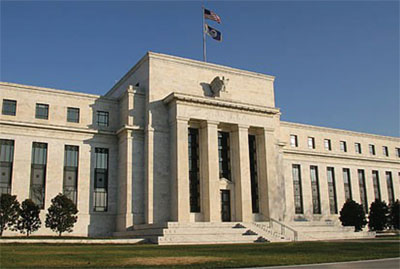
    NEW YORK (TIP): Nearly all of the nation’s largest banks won permission to return cash to shareholders Thursday, March 14 but the Federal Reserve imposed conditions on Goldman Sachs and JPMorgan Chase’s plans to raise dividends or buy back shares. Of the 18 big banks that the Fed reviewed, only auto lender Ally Financial and regional bank BB&T were denied permission to boost their payouts to shareholders.

    The 18 banks control 70% of the nation’s banking assets. BB&T said it would resubmit its plan, and noted that it has the strongest capital base of any traditional bank in the Fed’s stress tests. It raised its dividend 15% during this quarter. Goldman Sachs also said it would resubmit its plan.

    The Fed’s actions are a sign that the 2008 financial crisis is receding enough that banks can lend more freely and still return money to their shareholders, said Michael Rose, an analyst at brokerage firm Raymond James. “This not only signals that banks are healthier, but also that they are open for business,” Rose said. “The banks are highly capitalized, and earnings have rebounded.” Goldman and JPMorgan Chase, two of Wall Street’s biggest and most powerful banks, won approval subject to the requirement that they resubmit their plans by Sept 30. That condition is meant to force the banks to better demonstrate that they can forecast what will happen to them in the event of another severe recession, said a senior Fed official who would not allow his name to be used.

    Both banks appeared to have enough capital to meet the central bank’s standards, according to results released by the Fed. Shares of both banks dropped about 2.5% after the news was announced, but the dispute won’t prevent dividend increases, said Anthony Polini, another Raymond James analyst who follows JPMorgan. “The outcome shows that regulators overreacted, and shows what it’s like to be overregulated,” Polini said. “This isn’t going to slow them down.” Regulators want Goldman and Morgan to prove they can manage the risks posed by proprietary trading, or the buying and selling of securities the banks own themselves, rather than trading for clients, Polini said.

    The $6.2 billion loss that JPMorgan took last year on derivatives trades, which was the subject of a scathing Congressional staff report released Thursday, probably made the Fed more cautious, he said. The move immediately produced some signs of bigger returns to bank shareholders. Bank of America said it will buy back $5 billion of common stock and redeem $5.5 billion of preferred shares. JPMorgan will raise its quarterly dividend to 38 cents a share from 30 cents and buy back $6 billion of stock. Citigroup will buy back $1.2 billion of common stock. The Fed said banks have doubled their capital since late 2008, in part by slashing dividends. The banks paid 19% of their profits last year as dividends, about half of what they paid before the financial crisis.

  • Bharat Bandh: Nation-Wide Two-Day Trade Union Strike Hits Banking, Transport Services

    Bharat Bandh: Nation-Wide Two-Day Trade Union Strike Hits Banking, Transport Services

    NEW DELHI (TIP): Bharat Bandh:Nation-wide strike hit banking andtransport sector day two of nationwidestrike. While banking services were onFebruary 21 paralysed with ATMs runningout of cash in metro cities and publictransport disrupted during the Centraltrade unions sponsored strike whichevoked a mixed response in most statesbarring Kerala where normal life was hit.Life remained normal in West Bengalthough banking services were crippled withnationalised and private banks closed andATMs remaining non-functional.Transport services were normal andshops, markets and businessestablishments opened in the state.

    In the national capital, commuters facedhardships for the second consecutive day asmajority of auto-rickshaws and taxis stayedoff the road in support of the strike.Various industrial units and banks eitherremained closed or witnessed thinattendance while markets and commercialareas were open.In Maharashtra, majority of ATMs driedup in the financial capital Mumbai.”A majority of ATMs have dried up while(bank) branches are shut. Additionally,there has not been any cheque clearing aspersonnel from RBI too joined the strike. Itwill take at least 2-3 working days to clearthe backlog for banks”, said All India BankEmployees Association Vice PresidentVishwas Utagi.Suburban railway, the city’s life line,functioned normally and road trafficremained unaffected.

    In Kerala, normal life was paralysed dueto the strike with workers from mostsectors ranging from transport to bankingkeeping away from work.Reports from across the state said busesand taxis were off the roads and marketsremained shut. Train and air services werenot affected.Attendance in government offices wasthin and educational institutions remainedclosed as pro-Left service and teachersunions joined the strike. Universities havecancelled examinations scheduled for thelast two days.

    The unions have put forward a charter of10 demands such as urgent steps to controlprice rise, strict enforcement of labourlaws in all places of work, social securitynet for workers in the unorganised sector,end to disinvestment in PSUs and raisingminimum wage to Rs 10,000 a month.However, the strike had no major impactin most parts of Karnataka.Though banking services were hit, manybuses, taxis and autos plied and shopsremained opened. However, schools andcolleges were closed.Employees of banks and public sectororganisations in Andhra Pradeshcontinued their protests on the second dayof the strike.In Tamil Nadu, banking and postalservices remained affected while shopsremained open and transport services pliednormally.Members of the protesting trade unionsstaged demonstrations in various parts ofChennai.

    Though there were reports that somelabour unions representing employees ofMaruti Udyog at its plants in Manesar andGurgaon had joined the strike along withUnions of HeroMotoCorp, workers of thecompany attended duty in the state.According to Union representatives ofHyundai Motor India Employees and FordMotor India, which has manufacturingfacilities at Sriperumbudur andMaraimalai Nagar, they have decided toconduct a mass rally today in view of thestrike.Transaction of cheques worth of Rs 3000crore in Chennai were affected while mostof the ATMs of several banks have driedout due to lack of cash.In the north, public transport andbanking services continued to be affectedin Punjab, Haryana and Chandigarh due tothe strike.

    Reports pouring in from various placessuggest that majority of state owned busesplying on inter-state routes and inter-cityroutes in Punjab, Haryana and Chandigarhdid not ply.With bank employees observing strike,banking transactions were hit, causinginconvenience to customers.Industrial production in Punjab andHaryana was unaffected.A report from Hisar has said activists ofdifferent trade unions staged dharnas infront of their respective offices.Normal life was partially affected inseveral parts of Odisha due to the strike.People faced difficulties in commuting asbuses, taxis auto-rickshaws remained offthe roads, leaving a large number ofpassengers stranded at different places.

    Bank services in Mumbai hit
    Mumbai: Majority of ATMs have driedup in the financial capital of Mumbai andbanking operations across the city were hiton the second day of the general strikecalled by central trade unions for variousdemands.”A majority of ATMs have dried up whilethe (bank) branches are shut. Additionally,there has not been any cheque clearing aspersonnel from RBI too joined the strike. Itwill take at least 2-3 working days to clearthe backlog for banks”, said All India BankEmployees Association Vice PresidentVishwas Utagi.The strike witnessed near cent per centparticipation by employees from bankingand insurance sector in the financial hub,leaving their operations completelyparalysed.our demands, including the one for notallowing private sector participants intothe fray for which we are holding thebandh”, Utagi said.Suburban railway, the city’s life line,functioned normally and road trafficremained unaffected, though there werefewer passengers using public transport.Flight operations at the Mumbai airportwere also normal despite a section ofairport unions declaring their support tothe strike, an airport spokesperson said.

    AP: Bank, govt employees hold protests
    Hyderabad: Employees of banks andpublic sector organisations in AndhraPradesh today continued their protestson the second day of the two-day strikecalled by Central trade unions in supportof their various demands.The personnel of variousorganisations, who stayed away fromwork yesterday, began their protests inHyderabad and other places in AndhraPradesh.The employees of various PSU banksand workers in the unorganised sectortook out protest rallies in Hyderabad andother parts of the state.Services in banking and other PSUorganisations were badly affected on thefirst day of the 48-hour general strikeyesterday.AITUC state unit president and MLC P JChandrasekhar Rao had claimed that thestrike was being held in an unprecedentedmanner with staff of the state-run minerSingareni Collieries, Andhra Pradesh StateRoad Transport Corporation (APSRTC)joining the stir.He claimed that 75 per cent of RTC buses,the principal mode of public transport inAP, remained off the roads yesterday.

    Life unaffected in KarnatakaBangalore:
    The two-day nationwidestrike called by 11 Central trade unionshadno major impact in most parts ofKarnataka today.Though banking services were hit, manybuses, taxis and autos plied and shops andhotels remained opened here.However, schools and colleges wereclosed.No violence was reported from any partof the state, police said.Services at many hospitals in the citywere not hit, as also in IT companies.Several PSUs including HAL, BHEL andBEL, besides a host of other industrialunits in Bangalore were functioningnormally.There was improvement in attendance ingovernment offices, police said.There has been no impact on normal lifedue to the strike in Belgaum district,sources said.Visvesvaraya Technological Universitypostponed Mtech, MCA and MBAexaminations scheduled for today.

    Partial impact in Odisha
    Normal life was partially affected inseveral parts of Odisha today on the lastday of the two-day nation-wide strike calledby central trade unions.People faced difficulties in commuting asbuses, taxis auto-rickshaws remained offthe roads, leaving a large number ofpassengers, including women and children,stranded at different places.In the state capital here, some threewheelerswere seen plying in many areassince this morning, giving respite to thecommuters who had a tough time travellingon February 21.Shops, markets, business establishmentsand petrol pumps remained closed, whileeating joints and kiosks were found opentoday. Small traders and retailers alsoresumed their business operations, officialsources said.Banks remained closed with employeespicketing and demonstrating at differentplaces, while most educational institutions,including schools, were open.

  • Anna Hazare’s Magic Is Working!

    Anna Hazare’s Magic Is Working!

    CVC reports a 100 per cent jump in corruption complaints in 2012

    NEW DELHI (TIP: It’s a record thatwill bring a smile to the faces of AnnaHazare and likes. Their anticorruptionagitation might not havebrought down the level ofirregularities in the country, but itseems to have given people thecourage to report corrupt practicesthey witness or suffer in their dailylives.In 2012, the Central VigilanceCommission (CVC) received 37, 175complaints against “corrupt”individuals in powerful positions,more than 100 complaints a day.

    Thisis a jump of more than 100 per centfrom 2011 when 17,407 complaintswere received by the anti-corruptionwatchdog.The data compiled by the CVC inthe past four years indicate that moreand more people have decided to takeon the corrupt rather than obligingthem. Since 2008, the number ofcomplaints has increased almost fourtimes. But last year, the numbers roseenormously, courtesy the anticorruptionwave that gripped thecountry.Records with the commissionindicate that banking fraud makes forthe maximum number of corruptioncases. According to the data, almost 30per cent of the cases being monitoredby agencies like CBI are related toswindling of money in governmentbanks.

    The CVC monitorsinvestigation into cases referred by itto the CBI.Central Vigilance CommissionerPradeep Kumar said the increase incorruption complaints can also beattributed to the “increasingcredibility” of institutions. “More andmore people are willing to comeforward to expose corruption. Thepublic is more proactive and it’s agood sign. This has resulted in somebig corruption cases beinginvestigated,” he said.”Some initiatives by us like projectVijay that facilitates an individualmake a complaint by dialing a numberhas helped the people lodge theirgrievance without appearing inperson,” Kumar added.

    Many complaints received by theCVC are outside its purview. There area high number of cases where thecomplaints relate to corruption instate governments. Since the CVConly deals with corruption in centralgovernment, these are forwarded tothe states and departments concerned.”People are not always aware oftechnicalities and send theircomplaints here. We inform the stategovernments so that they can takeappropriate action,” the CVC added.”There seems to be an increase intrust that grievances will beresponded to. It shows more peopleare willing to report to agencies. Morereporting is a deterrent in itself,”former IPS officer and anti-corruptioncrusader Kiran Bedi, said.

    The pressure from the civil societyand the Supreme Court has pushedthe government to show an urgencyto grant prosecution sanctions togovernment officials. According toCVC data till 2012, there are only 22cases involving 40 centralgovernment officials where sanctionis pending for more than fourmonths.According to SC guidelines, aprosecution sanction should not bepending for more than four months.The number has come down by halfsince the end of 2010.

  • Bank Of India Cmd Meets With Us Clients

    Bank Of India Cmd Meets With Us Clients

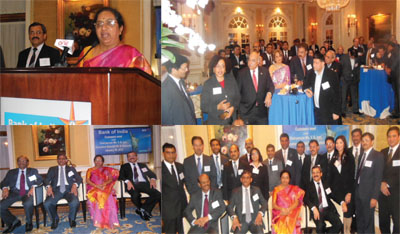
    NEW YORK, NY (TIP): Bank of India Chairperson & Managing Director Mrs. V.R. Iyer visited New York on Jan 30 and 31 and met US clients. She also attended an Investors’ Meet. She was accompanied by Executive Director N. Seshadri and General Manager(International)S.K. Datta. It was Mrs. Iyer’s first visit to NewYork after she took over as CMD ofBank of India on November 5, 2012.Speaking at the reception hosted by Bank of India US Operations Chief Executive B.B. Joshi, Mrs.Iyer appreciated the cooperation of US clients.

    She said the bank’s US operations were on a sound keeland that 31% of the bank’s international revenue came from US operations. She had a word of appreciation for Mr. Joshi and theUS team.Mrs. Iyer also spoke of plans tointroduce CORE banking technologyby the “end of the month” and thengo in for internet banking and retailbanking. The latter two needed tomeet some regulatory provisions ofthe US administration, she said.She also took a few questions.Mr. Seshadri also addressed thegathering and thanked the clientsfor reposing trust in the bank.

    He said the effort is to come up withservices to the maximumsatisfaction of the customers.The event was attended by bank’sclients, community leaders and themedia.Earlier in his brief welcomeaddress, Mr.Joshi extended welcometo visiting BOI officials Mrs.Iyer, Mr.Seshadri and Mr. Datta. He said thatthough Mrs. Iyer has visited USAearlier too, as BOI CMD it was herfirst visit and he was very happy towelcome her. He extended a word ofwelcome to the Executive DirectorMr. Seshadri and the GeneralManager Mr. Datta. He thankedguests for having come to thereception “despite inclementweather”.

  • ING Exits Life Insurance In India

    ING Exits Life Insurance In India

    MUMBAI (TIP): Dutch financial services group ING has exited its insurance business in India selling its 26% stake in ING Vysya Life Insurance to its joint venture partner Exide Industries in a deal that valued the company at Rs 1,100 crore. Exide is now looking for a foreign insurer who will buy the 26% stake. Although a minority shareholder, holding the maximum permissible 26% stake, ING group controlled the life insurance operations for over a decade even as Indian shareholding changed several hands. A statement issued from Amsterdam said that ING’s exit from the Indian life insurance joint venture is part of the previously announced intended divestment of ING’s Asian Insurance and Investment Management businesses.

    “The process for the remaining businesses is ongoing. Any further announcements will be made if and when appropriate. Subject to regulatory approvals, the transaction is expected to close in the first half of 2013,” said the statement. The valuation of the deal has surprised industry insiders. “Prima facie a valuation of Rs 1,100 crore seems to be less considering that this is a 10-year old company where the promoters have invested more than Rs 1,000 crore,” said an industry official. Industry officials also feel that the coordinated exit of financial investors gives an impression that these were structured investments where returns are not entirely market linked. However, industry persons also point out that in an exit deal the Indian partner is on a strong footing as partners have the right of first refusal.

    In a statement to the stock exchanges, Exide Industries said: “The company, currently owner of 50% of the equity capital of ING Vysya Life Insurance (IVL), has in-principle decided to acquire the remaining 50% of the equity capital of IVL (26% from ING group, 16.32% from the Hemendra Kothari group and 7.68% from the Enam group) for an aggregate consideration of Rs. 550 crore approximately, subject to regulatory approvals.” Hemendra Kothari and Enam had picked up stakes in the company as financial investors in recent years. ING is the third insurer to exit India after the opening up of the sector. Australian insurer AMP in a joint venture with Sanmar was the first to sell out to Reliance Life Insurance.

    Some years later American insurer Chubb exited its joint venture with HDFC following disagreement with its partner who later tied up with Ergo. Last year US insurer New York Life sold its stake in Max New York Life to Max which later sold its stake to Japan’s Mitsui. Following the global financial crisis, several insurers have tempered their expansion plans. At present, North American insurer Manulife and Samsung Life of Canada are actively pursuing a presence in India. ING, which has a presence in banking, will continue to retain its presence. “Today’s agreement does not impact ING Vysya Bank, a publiclylisted Indian bank in which ING has a 44% stake, nor ING’s fund management business in the country,” the statement added.

    Automotive battery manufacturer Exide is a Rajan Raheja group company and has a market capitalisation of over Rs 10,000 crore. The company got into the life insurance business by buying out GMR group. GMR group, which along with Vysya Bank, was the original partner of ING had acquired a majority stake after ING acquired controlling stake in Vysya Bank. Vysya Bank had gradually diluted stake in favour of GMR to avoid falling foul of regulation which did not permit foreign partners holding 26% to invest in their joint venture partners. Of the 24 life insurance players in the country, two companies— Life Insurance Corporation (LIC) and Sahara India Life Insurance Co—are running the business without foreign partners.

  • Bank of India CMD to meet US Clients

    Bank of India CMD to meet US Clients

    NEW YORK, NY (TIP): Bank of India Chairperson & Managing Director Mrs. V.R. Iyer, Executive Director Mr. N. Seshadri and General Manager (International) Mr. S.K. Datta, are scheduled to visit New York on January 30th and 31st to meet US clients and attend an Investors’ Meet.

    It will be Mrs. Iyer’s first visit to New York after she took over as CMD of Bank of India on November 5, 2012. Mrs. V. R. Iyer took over as Chairperson & Managing Director of the Bank of India on 5th November, 2012.

    Prior to this assignment, Mrs. Iyer was Executive Director of Central Bank of India from September 01, 2010 till she joined Bank of India. Mrs. Iyer, born on June 1, 1955 is a post-graduate in Commerce with CAIIB. She started her career in Union Bank of India in 1975. In her long career spanning 33 years, has had good stint in branch banking having worked in very large and extra large branches.

    She has extensive exposure in Credit Department, Credit Monitoring Department and has contributed significantly in setting up of Risk Management Department, rolling out CBS, alternate channels and various other e-initiatives. Mrs. Iyer served as Deputy General Manager (Information Technology) during 2006-07 before getting elevated as General Manager in January, 2008 and was holding the portfolios of Information Technology and Risk Management.

    Mrs. Iyer was elevated as Executive Director of Central Bank of India with effect from 1st September, 2010 where she looked after Credit, Treasury, Forex, IT, CBS, Risk Management and Inspection & Audit portfolios. Mr. N. Seshadri took over as Executive Director of Bank of India on 1st November, 2010. Earlier, he was General Manager at the Canara Bank. Born on 30th April, 1953, Mr. Seshadri joined Canara Bank as an officer in 1975. He has held several distinguished positions in the Bank’s hierarchy in a career spanning 35 years. MBA and a certified Associate of the Indian Institute of Bankers, Mr. Seshadri has worked extensively throughout the country and abroad

    About Bank of India in USA

    Bank of India, US Center is having three offices. New York Branch and San Francisco Agency are in operation since December 1978 and December 1977 respectively, whereas Cayman Island branch has been functional since September 1980. In U.S., Bank of India’s activities cover businesses related to Letter of Credit, issuing guarantee and offering advisory services, ECB loans, acquisition finance, trade finance Certificate of Deposit and effecting remittances. New York Branch is the main contributor for the business of the Center.

    The Branch is FDIC insured and offers various services as mentioned earlier. San Francisco Agency pursues trade finance and Wire Transfer as its main line of business. The US Center’s contribution was 6.45% in the total business mix of bank’s global operations. The Business mix increased by 32% in 2011-12, from USD 5.6 bn to USD 7.4 bn. The center contributed to 26% in the total business mix of bank’s foreign operations in the financial year 2011-12.

    FACTORS FOR SUCCESS
    Leveraging the India Advantage
    As is estimated, by 2025, India’s economy is projected to be the third largest in the world. This provides a huge potential for business growth.
    NRI Services The Bank has state of the art technology platform for NRI service and convenience. Funds from USA to India are remitted within one working day. Bank also provides free of cost remittances of funds to any of its branches for making various NRI deposits in India.
    Trade Finance/Credit
    This is the Bank’s major thrust area and contributes substantially to both revenue and profit growth. The bank facilitates trade finance and funds credit needs of India -based businesses both in and outside India.
    Technology
    With implementation of Straight Through Processing software in 2008 at US Center, Bank of India is offering hassle-free state of the art money transfer facilities with competitive charges.
    Strong parental support and strong local management
    Bank of India has a strong customer base in India. Over 106 years old, the Bank has a network of over 4000 branches in India and 50 Offices abroad across all the continents.

    All the branches of the Bank are fully computerized and domestic branches are under Core Banking network.
    Future Plan
    US Center has achieved a business growth of 24% in Customer Deposits and 23% in Advances during the three quarters of December 2012 over March 2012, and this robust growth is expected to continue in the coming years. In fact, American Continent is one of the priority areas for Bank of India. As part of the growth strategy in the Continent, Bank plans to open offices in Canada and Brazil and a Rep Office in New Jersey.
    Leading from the Front
    Bank Of India’s global operations are headed by the Chairperson-cum- Managing Director Smt. V.R. Iyer along with three Executive Directors Mr. N. Seshadri, Mr. M. S. Raghavan and Mr. B. P. Sharma. The US Center is making impressive strides under the able leadership of its Chief Executive Mr. Bhuwanchandra B. Joshi, who has been at the helm of US Center since June, 2012. An amiable person, he is always welcome in business, professional and social circles.

  • Obama Nominates Jack Lew as Treasury Secretary

    Obama Nominates Jack Lew as Treasury Secretary

    WASHINGTON (TIP): US President Barack Obama, in an effort to rejuvenate the battered US economy, on Thursday, January 10th, nominated his Chief-of-Staff and budget specialist Jack Lew to succeed Timothy Geithner as the next Treasury Secretary. Obama announced his nomination in the ornate White House East Room, flanked by Lew and outgoing Treasury Secretary Timothy Geithner. The two men and their backgrounds illustrate the nation’s changing economic landscape – Geithner a long time banking specialist with the Treasury and the Federal Reserve took office in 2009 at the height of the nation’s financial crisis and Lew, the budget expert as the government struggles with its debt and deficit challenges. Obama heaped praise on Geithner for addressing the Wall Street meltdown and shepherding an overhaul of financial regulations through Congress.

    “When the history books are written, Tim Geithner is going to go down as one of our finest secretaries of the Treasury.” Obama highlighted Lew’s past work on economic policy, from his days in the 1980s as an aide to then House Speaker Tip O’Neill to his work on the budget with President Bill Clinton. Obama said he felts “bittersweet” about losing Lew as his White House chief of staff but says “my loss will be the nation’s gain.”

    “I cannot think of a better person to continue Tim’s work at Treasury than Jack Lew,” Obama said, in a White House event announcing his nominations for the top cabinet jobs in his second term beginning January 20. “Jack knows that every number on a page, every dollar we budget, every decision we make, has to be an expression of who we wish to be as a nation,” Obama said. “So, I hope the Senate will confirm him as quickly as possible,” Obama said. “Jack Lew will bring an impressive record of service in both the public and private sectors for over three decades and economic expertise to this important role, and his deep knowledge of domestic and international economic issues will enable him to take on the challenges facing our economy at home and abroad on day one,” a White House official said, explaining the reasons behind Lew’s selection. “Throughout his career, Jack Lew has proven a successful and effective advocate for middle class families who can build bipartisan consensus to implement proven economic policies,” the official said.

    “As White House Chief of Staff, Jack Lew led the President’s team in tackling some of the toughest domestic and international economic challenges facing our nation in decades,” the official said, adding that that the challenges included strengthening nation’s recovery from the worst economic crisis since the Great Depression to dealing with serious fiscal matters and challenges in the global economy.” “He also led the Office of Management and Budget under President Clinton and President Obama, negotiating a historic agreement with Congress during the Clinton administration to balance the federal budget and leading the negotiations of the bipartisan Budget Control Act in 2011, which brought discretionary spending to historically low levels,” the White House official said.

    As Deputy Secretary of State for Management and Resources, in addition to managing the day-today operations of the Department, Lew managed the State Department’s international economic policy portfolio and travelled the world to advance our nation’s interest, said the official. “He also has a distinguished record leading private and public sector institutions and will bring strong relationships in the business community to his new role,” the official said.

    “At Citi, he was part of the senior internal management team of this global financial institution, serving as managing director and COO of Citi Global Wealth Management and then as managing director and COO of Citi Alternative Investments,” he said. A series of economic topics, including how to raise the USD 16.4 trillion federal borrowing limit to avert a first-ever default by the government and how to respond to China’s growing economic might, would await Lew at the Treasury Department, experts said.

  • 37-Year-Old Woman Is AIIMS First Full Body Donor

    37-Year-Old Woman Is AIIMS First Full Body Donor

    NEW DELHI (TIP): A 37-year-old woman from Uttarakhand who suffered irreversible brain damage in a haemorrhagic attack has become the first whole body donor at All India Institute of Medical Sciences this year. While her heart, liver and two kidneys have been used for transplant into needy patients, other organs like the cornea and bones are preserved for future use, Arti Vij, chief of the Organ Retrieval and Banking Organisation at the institute, said. She added, “Chandrakanta Rawat was admitted to AIIMS on January 2. She was declared brain dead by a team of doctors two days later. Her husband gave the consent for retrieval of the organs.” Vij said while the deceased’s heart was used for transplant at the institute itself, her two kidneys were sent to Sir Ganga Ram Hospital and the liver was used for transplant at the Institute of Liver and Biliary Sciences in Vasant Kunj.

  • Walking The Aisle; To The Altar!

    Walking The Aisle; To The Altar!

    When it comes to big-fat weddings – both in India and abroad, 2012 had quite a few to boast of. Several celebrities tied the nuptial knot this year. Ritesh Deshmukh and Genelia D’Souza rang in the year by embracing wedlock in February this year. The longtime sweethearts got married in a traditional Maharashtrian way and had a private Church wedding too. Telegu star Ram Charan Teja got hitched to Upasana Kamineni in a lavish wedding in the month of June, followed by a reception reminiscent of a royal one. Esha Deol exchanged wedding vows with her fiancé, entrepreneur Bharat Takhtani in a simple private wedding ceremony. The reception, hosted by father Dharmendra and mother Hema Malini, was an affair to remember! October ushered in the most-awaited wedding of the year – Saif Ali Khan and Kareena Kapoor’s. After a fiveyear long relationship, the two entered matrimony in a grand, royal ceremony. Actress Lisa Ray too got married to banking executive Jason Dehni in October. Her wedding and reception was attended by close friends and family. Vidya Balan and Siddharth Roy Kapur took their twoyear relationship to the next level by saying ‘I do!’ in December. Like the relationship, the Sangeet, Mehndi, Wedding and Reception were all private and attended by close friends and family of the couple.
    100 YEARS OF INDIAN CINEMA
    Indian cinema has come a long way since its birth and has entertained audiences even in the far reaches of the globe with an array of films that has been churned out every year. The year 2012 marked the 100th anniversary of Indian cinema. April 21, 2012 was the day Indian cinema completed its 100 years and the milestone was celebrated widely and how! FICCI commemorated the occasion; as did the Moroccan Film Festival and many other internationally held events.

  • UBS to Pay $1.5 Billion to Settle Libor Charges

    UBS to Pay $1.5 Billion to Settle Libor Charges

    NEW YORK (TIP): UBS AG became the second bank to settle accusations that it tried to rig benchmark interest rates, agreeing to pay roughly $1.5 billion in a deal with authorities in multiple countries that points to a broader manipulation scandal than previously known. As part of the deal, UBS acknowledged that dozens of its employees were involved in widespread efforts to manipulate the London interbank offered rate, or Libor, as well as other benchmark rates, which together serve as the basis for interest rates on hundreds of trillions of dollars of financial contracts around the world. UBS’s unit in Japan, where much of the attempted manipulation took place, pleaded guilty to one U.S. count of fraud.

    Authorities on Wednesday, December 19 painted a picture of “routine and widespread” attempts by UBS employees to rig Libor and the euro interbank offered rate, or Euribor. The U.K. Financial Services Authority said it had identified more than 2,000 such attempts between 2005 and 2010 with the participation or awareness of at least 45 UBS traders and executives. Regulators on Wednesday released a trove of internal UBS emails and other communications-many of them colorful and expletive-laden-in which bank traders, sometimes with the knowledge of their managers, sought to manipulate the rates in order to boost their trading profits or mask the Swiss bank’s mounting financial problems in 2008. Adding to the severity of the allegations, British and Swiss authorities said UBS engaged in collusive efforts with other financial institutions to rig the benchmarks.

    Among other things, the Swiss bank made “corrupt brokerage payments” to so-called inter-dealer brokers to reward them for helping to coordinate attempted manipulation among multiple banks, the FSA said. In September 2008, for example, an unidentified UBS trader told a broker that he wanted to “do one humongous deal with you,” according to the FSA. “I’ll pay you, you know, $50,000, $100,000…whatever you want…. I’m a man of my word.” UBS traders and outside brokers referred to each other by nicknames such as “Superman,” “Captain Caos” [sic] and “the three muscateers” [sic], the FSA said. Regulators said the extent of the collaboration between UBS employees and the outside brokers suggests that banks might have been successful in their attempts to manipulate Libor-as opposed to merely trying unsuccessfully to fudge the rate. UBS acknowledged the regulators’ findings.

    “We are disappointed to discover what happened,” UBS Chief Executive Sergio Ermotti said in an interview. “We are taking responsibility for what happened.” In the U.S., law-enforcement authorities on Wednesday are expected to arrest people with ties to UBS, likely representing the first time that anyone faces criminal charges stemming from the long-running rate-fixing investigation, according to people familiar with the case. The UBS settlement-which UBS reached with the U.S. Justice Department and Commodity Futures Trading Commission, the U.K. FSA and the Swiss Financial Market Supervisory Authority-is likely to be followed by a string of deals between big banks and regulators in coming months. Until Wednesday, only one other bank, Barclays BARC.LN +2.05% PLC, had settled charges that it tried to rig benchmark rates. Barclays last June paid roughly $450 million to resolve the investigations.

    An ensuing public furor over the scale of the wrongdoing and the involvement of senior bank executives, both of which Barclays acknowledged, led to the abrupt resignations of Barclays’s chief executive and his top deputy, as well as the bank’s chairman. UBS is paying a fine that is more than triple what Barclays paid, despite previously having reached partial immunity agreements with authorities in the U.S. and elsewhere. The penalty’s size partly reflects authorities’ conviction that the Swiss bank was near the center of the scandal, with employees helping to coordinate attempted rate-manipulation at other banks, according to people briefed on the investigation. Among other things, UBS was accused on Wednesday of trying to manipulate the Japanese yen iteration of Libor.

    As part of the settlements, UBS acknowledged on Wednesday that its employees repeatedly tried to manipulate multiple versions of Libor and Euribor. The FSA described the culture of rate manipulation as “pervasive,” noting that “the manipulation was conducted openly and was considered to be a normal and acceptable business practice by a large pool of individuals.” As a result of the fine, UBS said on Wednesday it expects to report a loss for the fourth quarter of up to 2.5 billion Swiss francs ($2.3 billion). Mr. Ermotti said that 36 people left the bank, most of them earlier this year, as the bank cleaned house after completing its internal investigation into the rate-rigging allegations. He said he doesn’t expect additional departures because nobody connected to the scandal remains at UBS. Mr. Ermotti added that he hopes the settlement closes a difficult chapter in the Swiss bank’s history.

    In the past 15 months, UBS has been battered by a $2.3 billion rogue-trading scandal, has been forced to exit large portions of its investment banking business, and now is caught up in the rate-rigging scandal. “It allows us to move forward,” he said. “I’m confident that we have identified over the last years the issues we need to address.” The guilty plea by UBS’s Japanese subsidiary is a milestone in authorities’ efforts to crack down on banks for improper behavior during the financial crisis. It is extremely rare for authorities to pursue criminal sanctions against large companies. Indictments are often regarded as a death sentence for institutions, especially those like banks that rely on market confidence and a steady stream of funding from potentially skittish investors. Ultimately, authorities decided on a compromise approach by charging UBS’s Japanese unit but not the Zurich-based parent company.

    In a sign of what authorities view as UBS’s centrality, one of the bank’s former Tokyo-based traders, Thomas Hayes, was arrested last week by British fraud prosecutors as part of their investigation into rate-rigging, according to people familiar with the case. Mr. Hayes hasn’t been charged with a crime, but U.K. authorities are examining whether he played a role coordinating attempted manipulation among multiple different banks, these people said. Mr. Hayes, who also worked at Citigroup Inc., C +0.79% hasn’t been available for comment. The investigations over banks’ attempted rate-rigging kicked off in April 2008, after articles in The Wall Street Journal raised questions about the reliability of Libor.

    Since then, it has mushroomed into arguably the marquee financial scandal of recent times. The day that the Journal’s first story was published, a UBS manager-in a communication to a trader documented in the settlement-referred to a “great article in the WSJ today about the Libor problem.” Two hours later, the FSA said, the manager asked the trader to boost the bank’s Libor submissions in an apparent effort to rig the rate. Libor, Euribor and their brethren are calculated every weekday by panels of banks. Each bank estimates what it would cost to borrow from fellow banks. Those estimates are compiled into an average, stripping out the highest and lowest figures. The result underpins interest rates on everything from residential mortgages to corporate loans to complex derivatives. Banks tried to manipulate the benchmarks for at least two reasons, according to regulatory filings in several countries.

    Barclays, for example, at times understated its borrowing costs during the financial crisis to assuage concerns that higher costs were a sign of financial distress. Separately, traders at UBS and Barclays, and possibly other banks as well, sought to manipulate rates to increase profits on their portfolios of derivatives and other products whose values are tied to the benchmarks. In addition to Barclays and UBS, more than a dozen other banks remain under investigation by authorities in the U.S., U.K., Switzerland, the European Union, Japan, Canada and other countries. In addition to Libor and Euribor, the Tokyo interbank offered rate, known as Tibor, also faces scrutiny. Royal Bank of Scotland Group RBS.LN +2.41% PLC is likely next in line to settle the allegations, with a deal expected early in 2013, according to people familiar with that investigation.