Tag: BJP

  • MINISTERS LOCK HORNS OVER CULLING

    MINISTERS LOCK HORNS OVER CULLING

    NEW DELHI (TIP): Union Minister Maneka Gandhi on June 9 hit out at the Environment Ministry for allowing state governments to kill animals.

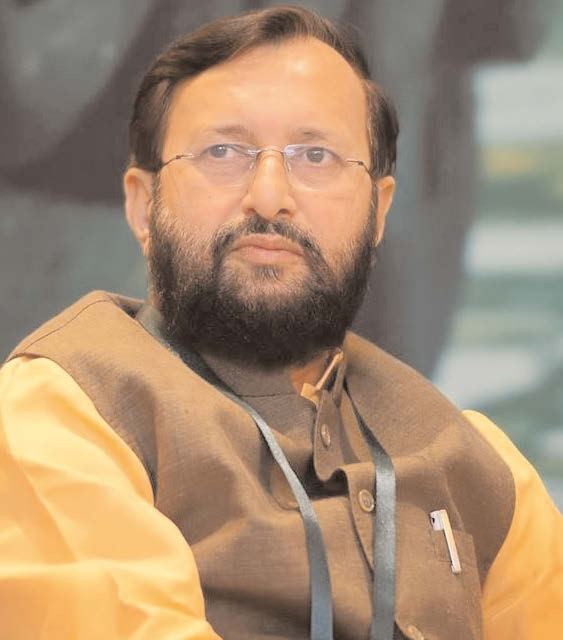
    Defending his ministry, Prakash Javadekar said, “Such permissions are given on the request of the state governments to protect crops.”

    Inspector General (Wildlife) S K Khanduri has issued a statement that no permission was given “to kill either deer, peacock or elephants”.

    The outburst, which is seen as an embarrassment to the Narendra Modi government, comes after 200 blue bulls (nilgai) were culled in Bihar in the last six days.

    However, Maneka, who is Women and Child Development Minister, charged that the Centre permitted the killing of nilgai in Bihar, elephants in West Bengal, monkeys in Himachal Pradesh, peacocks in Goa and wild boars in Chandrapur, Maharashtra, despite the respective wildlife departments saying they do not wish to kill animals.

    Maneka Gandhi
    Maneka Gandhi

    Maneka, who surprisingly did not criticise the states, described the mass shooting of the blue bulls as the “biggest-ever massacre” born out of “lust” for killing in the Environment Ministry. To defuse the controversy generated by Maneka, an animal rights activists, Khanduri pointed out that there are many complaints from MPs, people’s representatives, state governments and farmers about their crops being heavily damaged in certain parts of the country.

  • Feminine Divinity, Symbolism of Shakti and Women’s Empowerment in Contemporary India

    Feminine Divinity, Symbolism of Shakti and Women’s Empowerment in Contemporary India

    Since 1947, India has been somewhat isolated globally because it stands alone and is not part of any of the usual groups or clubs. India is not a white or western country, it is not an Islamic country, it is not an Arabic country, it is not a communist country and it is certainly not a military dictatorship. It was part of non-aligned movement which did not have any natural commonality in its members. India still remains isolated because it stands alone on many international fora owing to India’s unique ancient history. India was described as a “functioning anarchy” by a former US ambassador to India John Kenneth Galbraith. Break-up or disintegration of India has been ritually predicted and invoked by so many western analysts and thinkers. Numerous international conspiracies have been hatched since 1947 to materialize support for further partition of India. Some have even refused to accept the nation-hood or statehood of India in a geo-political sense. Others have erroneously credited the British colonial empire for bestowing the sense of nationhood on India as a unique colonial contribution.

    As India changes its direction and gathers some self-confidence, there has been resurgence of talk in the mainstream media and academia for the last two years about the threats facing the so-called “Idea of India”. The terms like “Idea of India” and “Intolerance” have been utilized as code-words or proxy to pillory Hindu traditions and Indian Renaissance. There seems to be an obvious nexus between Indian mainstream media and the western mainstream media in an exercise in bashing India, Indian tradition and Indian growth trajectory. Isolated incidents have been magnified. Indeed, the naysayers and the “Nattering Nabobs of Negativism” have predicted impending doom for India. Heinous crimes against women, though very unfortunate, have been given so much prominence in the media as if they were normative occurrence in India without taking into consideration the positive aspects of Indian society and Indian traditions. The movie “India’s Daughter” by Leslee Udwin was a prime example of this India bashing exercise. The western protagonists and their Indian acolytes, owing to an inherent Hindu-phobic and anti-India bias, have failed to take into consideration the frequency of such crimes in US or UK or elsewhere in the world presenting a very sensational and distorted picture of India. Powerful international and local forces are at work to portray our Hindu tradition as sexist, anti-women, misogynist and anti-feminist. India’s leftists, liberals, card-carrying communists, caste-ists, Islamists and feminists have built up a de facto “alliance of convenience” and a political “coalition of the willing” in conjunction with the western NGOs that funnel monies to these local groups. There is a method to this madness. Alliance of Indian feminists, nay, Femi-nazis with their western sponsors poses a real national security threat to the fabric of the Indian nation. Women are the real fabric of the nation. A nation can be defeated only if its women are subjugated by fraud, deception or brute force. While pillorying Indian (read Hindu) society as patriarchal, misogynist and anti-women, these groups fail to appreciate the plurality and the extreme diversity of Indian traditions with still prevalent matriarchal subcultures in the contemporary Indian society, e.g.; the Nairs in Kerala, some sections in Kinnaur, Himachal Pradesh and the Khasis in Meghalaya. People in Kinnaur, HP follow a matriarchal system; they also practice polyandry following the historical example of the Pandavas from Mahabharata times.

    Ancient India and Concept of Devi, the Divine Femininity:

    In this article we will recapitulate the venerable place, honor and respect given to women in the ancient Hindu tradition. We will also review the historical vicissitudes of the status of women in ancient, medieval, colonial eras and in modern India. We also delineate and emphasize those foreign factors that adversely influenced the status of women in the Indian society and subjugated them in the colonial era that lasted approximately one thousand years. We also discuss the very uniquely Hindu concepts of Devi (female divinity), Shakti and the veneration of Shakti as the ultimate mother and its symbolic use in women’s empowerment in the contemporary Indian society. Female divinity is unique to Hinduism. The word Devi in Sanskrit means the illuminated or the illustrious one. Like the holy trinity of Brahma, Vishnu and Mahesh or Shiva, there is divine female trinity of Saraswati, Lakshmi and Uma, all three equally holy, divine and worthy of worship in their own right. Woman always comes first in various Hindu traditions, be they Vaishnava, Shaiva, Tantra, Vama-marga, Vedanta etc. That is why we have expressions like Sita-Ram, Radhey-Shyam and Gauri-Shankar. It is never Ram-Sita, Shyam-Radha, Narayan-Laxami or Shankar-Gauri. Shakti comes first, and Shiva comes afterwards. Hindu Males always follow, venerate and vow to protect the females, as the divine mother who gives birth, as loving daughter to be given away as kanyadanam during marriage (the ultimate danam a Hindu male can do for the perpetuation of human race), as sister to be protected or as wives to be cherished as ardhangini. The concept of mother-goddess is so deeply enshrined in Hinduism that per Bhagwat Purana there are seven mothers: the one who gives birth (biological mother), wife of your teacher (gurupatni), wife of priest (brahmani), queen (rajpatni), cow (dhenu or gaumata), one who raises you (foster-mother or dhatri) and earth (Prithavi). There is a saying: mata prithavi, putroham prithivyam!

    All Hindu rituals are conducted primarily by women, men have to sit quietly and follow the women. Woman is the leader; man is the follower and the participant. A Hindu man is incomplete without his wife during religious rituals and yajanas just as even Rama was incomplete without Sita during the ashwamedha yajana!  He had to have a statue of Sita sit by his left side while performing the yajana. During the festival of Navaratras, the Devi, the feminine divinity, the Goddess is worshipped in her nine different forms! These nine different forms are Durga, the invincible mother, Bhadrakali, the mother of fortune and wealth, Amba, the universal mother, Annapoorna that feeds the world by providing Anna, Sarvamangala that brings peace and joy to the world, Bhairavi, the divine mother that brings good to good people & evil to bad people, Chandika, the fierce one, Saraswati, the goddess of learning & beauty, Bhavani, the Goddess of mercy, and Mookambika, the Goddess of Shiva and Shakti. The symbolism that woman comes first and the man just follows her becomes apparent when one watches the contemporary Hindi TV serials be it Kum Kum Bhagya, Pavitra Rishta, Suhasini or Woh Rahane Waali Mahlon ki! The female lead character always epitomizes the Hindu woman as Shakti, as a warrior princess or Durga who fights for her rights, defeats the evil and always protects the good but in that arduous, long-drawn journey, she also sacrifices her personal needs while nurturing others in her family!

    Let us make no mistake. There are enormous cross-cultural differences in the gender roles and gender behaviors in Indian society versus western societies. However, in Hindu context the women have traditionally exercised tremendous political power through their fertility, i.e. progeny unlike the West where women exercise their power and autonomy using their sexuality and art of seduction. Indian society has historically emphasized dignity and honor of women instead of a pseudo-equality and gender role substitutability. The concept of the divine mother as the originator of the srishti is so unique to Hinduism only. Invoking divine qualities in the mother Goddess gives a unique and special status to Hindu women who have attained motherhood and in no way diminishes them for exercising their fertility unlike so in Western societies. In fact, the suffix or the title Sreemati in Sanskrit literally means the lady who possesses wealth and prosperity!

    A famous quote from Manu Smriti, that has been demonized by the leftist cabal as anti-women, states:

    यत्र नार्यस्तु पूज्यन्ते रमन्ते तत्र देवता: ।

    यत्रैतास्तु न पूज्यन्ते सर्वास्तत्राफला: क्रिया: ।।

    Yatra Naryastu Pujyante Ramante Tatra Devata


    Yatraitaastu Na Pujyante Sarvaastatrafalaah Kriyaah

    Meaning: “Where Women Are Honored, Divinity Blossoms There; And Where They Are Dishonored, All Action Remains Unfruitful.”

    That is the essence of and epitome of the exalted status given to women in ancient Indian culture and Hindu tradition.

    Concept of Shakti in Hindu Tradition:

    Shaktism is the worship of the Supreme being as the Divine mother in the form of Shakti or Devi. Etymologically, the word Shakti in Sanskrit is derived from the “shak” dhatu or root which literally means “CAN DO”! Shakti literally means one who “CAN DO”! Shakti is the eternal supreme power. Shaktiman is the one who has Shakti, who is endowed with Shakti, i.e. energy! Shakti is the one who can accomplish victory over evil by the virtue of her creative energy force. In Hindu traditions, woman is the vessel of Shakti. The identification with Shakti stipulates woman as a fountainhead of both creative and destructive power. Each Hindu God has his Shakti, Brahma has Saraswati, Vishnu has Lakshmi and Shiva has Gauri or Parvati. Each is incomplete without his Shakti. Unlike Hinduism, in Christianity the myth has been created that Jesus was celibate and his historically acknowledged wife Mary Magdalene was a fallen woman. A prostitute who had merely become his disciple! In Islam, the woman has just one-fourth the value of a man in testamentary capacity! Shakti, the supreme energy force, is the personification of God in all the Indic traditions including Hinduism, Sikhism, Jainism and Buddhism. The Tibetan New Year Losar is essentially a celebration of Shakti. Even the 10th Sikh Guru, Govind Singh worshipped goddess Durga and named his fighting sword Chandi as a symbolism of Shakti.

    There are four Adi Shaktipeethas in Shakti tradition. Fifty-one Shaktipeethas are located all over the entire Indian subcontinent. In ancient Indian history and literature (carried through oral traditions), there are honorable mentions of women as Shakti, a divine feminine energy force or Urja. Examples are Mahishasur Mardini or Kali, Chandi, Durga a warrior goddess. There are other examples of women warriors in ancient Indian history. Kekayi, the youngest wife of King Dashratha obtained those infamous three boons from him by saving his life in the battlefield. Naturally, the question arises as to what Kekayi was doing in the battlefield except for combat!

    In tantric tradition, the woman is considered of higher status than the man. Tantra stipulates that mortal women are “life-itself” and Goddess-like because they embody the principle of Shakti. The institution of Bhairavi in Tantra and Vamamarga tradition does not suggest exploitation or anti-women attitude of Indian society. Bhairavi in Tantra tradition epitomizes the powerful feminine achievement by embarking a journey of supreme spirituality, sublime sensuality and symbiotic sexuality with her Bhairava who just follows her and is by her side, every step of the way, in her raising the kundalini energy! And yes, Bhairavi is not ashamed of her symbiotic sexuality because it is the ultimate life-force and she is the protagonist, she is the leader (and not the cheer-leader), she is initiator! Bhairavi, in that particular tradition, is neither repressed nor oppressed nor exploited!

  • Human Rights Abuses: a recurring alarm on Modi’s travels abroad

    Human Rights Abuses: a recurring alarm on Modi’s travels abroad

    As Prime Minister Modi arrives on his fourth visit to the U.S. in the last two years, U.S. lawmakers have sharply criticized India’s human rights record. In a speech in New Delhi, U.S. Senator Benjamin L. Cardin (D-MD), the ranking minority-party member of the Senate Foreign Relations Committee, called on India to “do better” to address issues of violence against women, government corruption, extra-judicial killings, human trafficking and outdated anti-conversion laws that are still in use. “A country must respond to these challenges,” he said.


    History teaches us that ultra-nationalism is a sentiment of superiority and aggression towards others or other countries. It is intrinsically connected to war and imperialism. Therefore, India as a pluralistic nation will be treading on dangerous waters with the ongoing nationalist campaign, and the Prime Minister has a great responsibility to set the right tone for the country.


    Modi faced similar criticisms and faced protest demonstrations from one group or another every time he has touched down on the American soil. However, these strident criticisms from prominent lawmakers on the eve of Modi’s address to a joint session of Congress reveals a deep-seated reservation by many in Washington of a leader who once was denied entry into the country based on his human rights record.

    At a Congressional hearing held a week ago in Washington, Bob Corker (Chairman of the Foreign Relations Committee R-Tenn.) and Timothy M. Kaine (D-VA) questioned State Department officials on India’s human rights issues, including its crackdown on nongovernmental organizations receiving foreign funding such as Greenpeace and Ford Foundation, rising intolerance and India’s recent decision to deny visas to the members of the U.S. Commission on International Religious Freedom who were planning to travel to India.

    Undoubtedly, the Indian American Community as a whole would like to see the bi-lateral relations between the U.S. and India strengthened and the progress achieved in the last decade or so to be consolidated between these two democracies. However, a strategic alliance is a partnership that would require trust and confidence in each other for a long term value creating relationship. There is no doubt that both of these nations need each other in the new world order, and the question is whether these two countries are at a point where they are ready to move forward with such a commitment.

    Therefore, it is pertinent to analyze the visit of the Prime Minister from that vantage point. If the objective of the collaborative relationship is to achieve success for both nations, how can one advance that notion while justifying the denial of visas to a U.S. government body that monitors the core tenets of both of these democracies: freedom and justice? The appropriate action ought to be in assisting each other to achieve these goals and together building a stronger relationship.

    For those who are advocating more reliable protection of religious freedom got a boost recently when Congress upgraded the ‘Frank Wolf International Religious Freedom Act’ giving Administration and the State Department new political tools in monitoring and creating watch lists. The legislation has also upgraded the office to Ambassador-at-large, who will be directly reporting to the Secretary of State. It includes a provision as well directing the President to focus sanctions on individuals who carry out or order religious restrictions. The impact of these rules will eventually be felt across the board while nations draft agreements ranging from Trade to environment and Defense purchases.

    President Obama’s speech in New Delhi, to great discomfiture of Modi, was a parting shot directed at his government to modify its behavior as regards respecting the pluralistic legacy of the modern India. He listed the relevant articles in the Indian Constitution to make his case. Despite the public posture, one could detect a chasm between these two leaders who seem to think and view things from different perspectives.

    I have been told that at a recent dinner party in Washington, a former official was standing in line to greet President Obama. While shaking hands, the official congratulated the President for the bold statement he made in New Delhi. Obama first smiled and let go his hands and ready to greet the next guest, but on second thought, leaned forward, tapped his shoulder and said ‘I meant every word of it.’ That says a volume of the thinking in Washington, especially with this White House.

    However, U.S. is dealing with a different India today that has gained stature as a growing economic power and a global player that has to be respected and may even be courted. For the U.S, the changing dynamics in Asia necessitates new alliances and reliable partnerships. A rising China has created new challenges for the U.S. in that part of the world and past agreements like the Indo-US civil nuclear deal point to a strategy of exploring ways to sustain their global engagement capability. Also, a 4 million strong Indian immigrant community in U.S. has become vocal supporters of close collaboration between these two countries, often lobbying with their Senators and Congressmen.

    Despite all these natural advantages, India seemed to have put in a lot of effort in convincing the U.S. authorities for this ‘state visit’ and the upcoming appearance before the joint session of Congress. There are unconfirmed reports of a quid-pro-quo as regards major defense purchases preceded by a veiled warning of India taking its defense purchases elsewhere if the same level of respect is not accorded to Modi as it was with Dr. Manmohan Singh, his predecessor. It is widely known that the sound of money garners a lot of mileage in Washington just as in any other capital around the world. Apparently, Modi is getting his requital by gaining an opportunity to bloviate before those who once denied him a simple entry visa to the country.

    However, if India has to gain genuine respect and be able to operate from a position of strength and moral clarity, it has to start dealing with some of the issues the lawmakers have raised. Last two years have witnessed growing intolerance in the country with attacks on places of worship of minorities, the murder of secular advocates and harassment of liberal thinkers. People are afraid that even their dietary habits like eating beef could cost them their lives. The HRD ministry has been converted to become a vehicle to promote the ‘Hindutva’ ideology across campuses by shutting down Dalit student organizations and applying sedition charges on students for mere sloganeering.

    BJP and its followers seemed to believe that they have a monopoly in defining what constitutes nationalism, and it has become a cause of confusion and conflict in many university campuses. History teaches us that ultra-nationalism is a sentiment of superiority and aggression towards others or other countries. It is intrinsically connected to war and imperialism. Therefore, India as a pluralistic nation will be treading on dangerous waters with the ongoing nationalist campaign, and the Prime Minister has a great responsibility to set the right tone for the country.

    Indian Diaspora in U.S. is much more a diverse community representing different regions, languages, cultures and faiths than what it is given credit for. According to latest statistics, 51% of the Diaspora consists of Hindus and the rest includes Muslims, Sikhs, Christians, Buddhists and other faiths. Indian Diaspora is primarily taking the shape of Hindu Diaspora due to the cultural identity, and most of the Indians including those who belong to other religions accept it as a practical matter. However, Rashtriya Swayamsevak Sangh (RSS branches outside of India) is becoming increasingly assertive in demanding unflinching patriotism and preservation of Hindu culture and continuing with their efforts to present a monolithic view of the Indian Diaspora to the American public. It is alleged that many of the Diaspora organizations are raising money under the cover of ‘charity’ and ‘development’ to support RSS and its affiliates to wage violence against religious minorities in India.

    There is little doubt that the RSS cadre is playing a prominent role in many of Modi’s visits around the globe, particularly wherever there is a significant Indian community. It is only laudable that the Diaspora is enthusiastic and heartwarming towards any visit of a Prime Minister from their motherland. However, when that community is used as political pawns by turning them into a weapon against those who want to express their grievances; it not only defeats the purpose and good will but rather pits one group against the other and imports the same level of polarization and divisions to the country of their adoption. The recent attempt by Sangh organizations to reserve all 25 grounds on the Capitol Hill on the day of Modi’s visit to address the joint session of Congress is a case in point. That ‘clever’ and calculated maneuver made it almost impossible for any other group to gather near the venue and air their dissenting point of view that is protected under the U.S. Constitution. It is quite obvious to any independent observer that the objective of such action is to stifle criticism and banish any dissent which is contrary to the spirit of democracy, and it is quite appalling to see it happening right here in U.S.

    It is time for the Prime Minister to be more assertive in addressing these concerns at home and abroad and speak out forcefully when human rights violations occur in India. Unless he can align the actions of the radical elements of his party in line with his lofty pronouncements abroad, the human rights issue will continue to cast a shadow on his trips abroad, especially to U.S. Alfred Whitney Griswold who once said the following: “Books won’t stay banned. They won’t burn. Ideas won’t go to jail. In the long run of history, the censor, and the inquisitor have always lost. The only weapon against bad ideas is better ideas”. Let freedom reign!

    (The author is a former Chief Technology Officer of the United Nations and Chairman of the Indian National Overseas Congress, USA)

  • Indian American Journalist to receive Rotary International Life Time Achievement Award

    Indian American Journalist to receive Rotary International Life Time Achievement Award

    CHENNAI (TIP): Rotary International will confer its highest award of Life Time Achievement to Dr Prakash M Swamy, a senior Indian-American journalist and former United Nations Correspondent at a gala investiture to be held in Chennai on June 11.

    The award will be presented by Dr A Surya Prakash, Chairman of Prasar Bharti in New Delhi. He will also bestow the Young Journalist Award to 20-year-old J. Vedhavalli Jagadeeshan, News Anchor, Puthiya Thalaimurai TV Channel in Chennai.

    Dr. Swamy served as a member of the historic Madison Square Garden Committee to welcome Prime Minister Shri Narendra Modi to New York and worked hard to make the event a global success. He was the United Nations Correspondent in New York for over a decade and former Judge of Emmy Awards panel in New York. He is also the current President of America Tamil Sangam. He has been a journalist for the past 35 plus years.

    The previous recipients of the Life Time Achievement Award of the Rotary Club of Madras North include Yashwant Sinha, Former Union Minister and senior BJP leader; Sakthi Kanta Das IAS, Secretary, Ministry of Finance, Government of India; Prof. P. Vanangamudi, Vice Chancellor of Tamil Nadu Dr. Ambedkar Law University and TM Veeraraghavan Senior Correspondent of CNN IBN in New Delhi among others.

    Ravi Sundaram President of the Club said Rotary Club of Madras North was chartered in 1969 and is one of the oldest clubs in Chennai. The Club donated land to the Government of Tamil Nadu to establish a school in Napalayam near Chennai. Over the last 35 years, the Club has contributed to the infrastructure of the school and has established the school as a premier institution in the area, he said.

  • Investment, security to be focus of PM

    Investment, security to be focus of PM

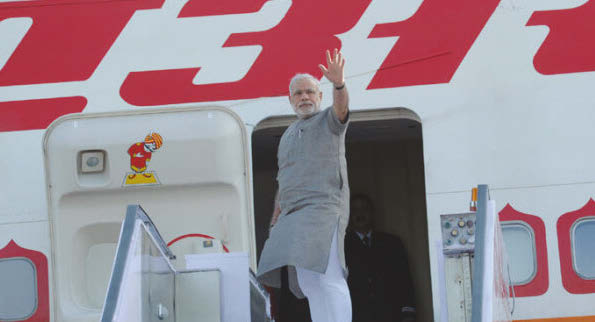
    NEW DELHI (TIP): After a lull of several months, Prime Minister Narendra Modi will be off to another whirlwind diplomatic tour starting next week. His first stop will be Afghanistan on June 4 to inaugurate the Salma Dam which has been built with Indian assistance.

    By end of the day Modi will be in Doha to return a visit by the emir, Sheikh Tamim bin Hamad Al Thani, who visited India on March 2015. Qatar is India’s largest source for natural gas and Modi is keen to encourage more investments from there.

    PM Modi in his two years in office has already visited 29 nations. He now has the distinction among all Prime Ministers of India to have visited the highest number of nations in first two years in office

    India and Qatar are expected to hold some intensive discussions on the security situation too. The Afghan Taliban was allowed to open an office in Doha, which is something India has frowned upon in the past.

    Announcing the visit, MEA spokesperson Vikas Swarup said, “Qatar is an important trading partner for us in the Gulf region with bilateral trade in 2014-15 exceeding $15 billion. It is our largest supplier of LNG requirements, accounting for 65% of our total imports in 2015-16. It was also one of our key sources of crude oil. Over 6,30,000 Indian nationals form the largest expatriate community in Qatar.”

    Modi will then stopover in Switzerland on June 6 to hold talks with Swiss President Johann Schneider-Ammann on technology and investments. Interestingly, he will be visiting Switzerland days after the country inaugurates the world’s longest tunnel, an engineering feat of sorts.

    On June 7-8, Modi will be in US, his fourth visit to the country. “The main objective of the forthcoming visit would be to consolidate the progress made in diverse areas such as economy, energy, environment, defense and security, and to intensify cooperation for the future,” Swarup said.

    Modi will also address a joint session of the US Congress, a rare honor. “He will be the first foreign leader to be given this honor in 2016. The USCongress has been a source of strength for India-US strategic partnership and the India Congressional Caucus is the largest such group in the US Congress. During the visit, PM will interact with CEOs of major US companies.”

    Modi will then pay an important visit to Mexico, which has seen a big increase in economic ties with India. It’s not yet clear whether PM will stop over at any other country on way back. Generally, Air India One, the PM’s plane stops over in Germany for refueling, but Modi could utilize this stop for another short bilateral. Last year, PM stopped over in Ireland for such a visit.

  • Rahul as Cong chief? Challenges he will face in the HOT seat

    Rahul as Cong chief? Challenges he will face in the HOT seat

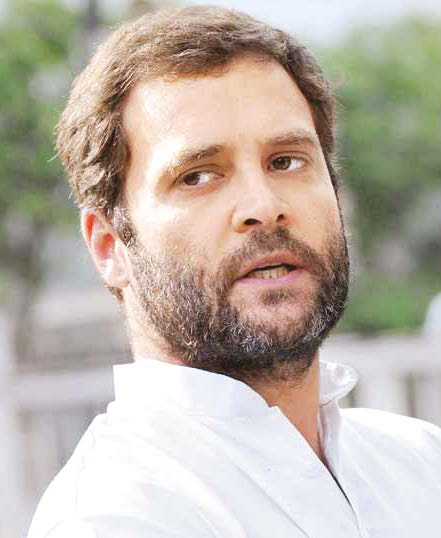
    NEW DELHI (TIP) : Congress circles are again abuzz with the possibility of Rahul Gandhi @OfficeOfRG taking over as the party president. If the change comes through in the coming days, as is being talked about but with little indication of the timings from the party, the 45-year-old will be elevated to the top rank at a challenging time.

    The Congress has suffered a series of poll setbacks that began with the 2014 Lok Sabha elections, which saw the party tally touch an all-time low of 44.

    Here are the five big challenges that await Gandhi in the hot seat.

    1. Back to winning ways: The Congress, which has ruled the Centre and also dominated the states for the larger part of its history, seems to be a declining force as the BJP expands its footprint. Though the party tasted success in Bihar as part of an alliance last year, its electoral base is fast depleting. If Gandhi takes charge in coming weeks, he will have limited time to prepare for the crucial assembly elections in Uttar Pradesh, Uttarakhand and Punjab due early next year.

    2. Party revamp: Arguably the biggest job — reshaping the party machinery to meet the aspirations of a young nation. He will have to tread carefully. His choices are limited and he will have to make the best use of them. A wholesale change or marginalisation of old guard may prove counter-productive.

    3. Rahul, the vote catcher: The Amethi MP was seen as the architect of the 2014 poll campaign, the outcome though was far from encouraging. But, it was Gandhi who in 2009 Lok Sabha elections won the party record number of seats in Uttar Pradesh, pushing the Congress tally to 206 seats that earned the UPA a second term.

    4. Strong state leaders: In party meetings, Gandhi often speaks about grooming strong leaders in states. He realises that without popular leaders like late YS Rajasekhara Reddy in Andhra Pradesh or Ibobi Singh in Manipur, the Congress has little chance of regaining lost ground. It is easier said than done. Historically, the party leadership has not encouraged strong leaders in states.

  • 2002 Gujarat communal riots: 24 convicted for massacre of Muslims

    2002 Gujarat communal riots: 24 convicted for massacre of Muslims

    Lack of evidence cited by judge for clearing 36 of involvement in communal violence in Ahmedabad in Gujarat state then led by present Prime Minister of India

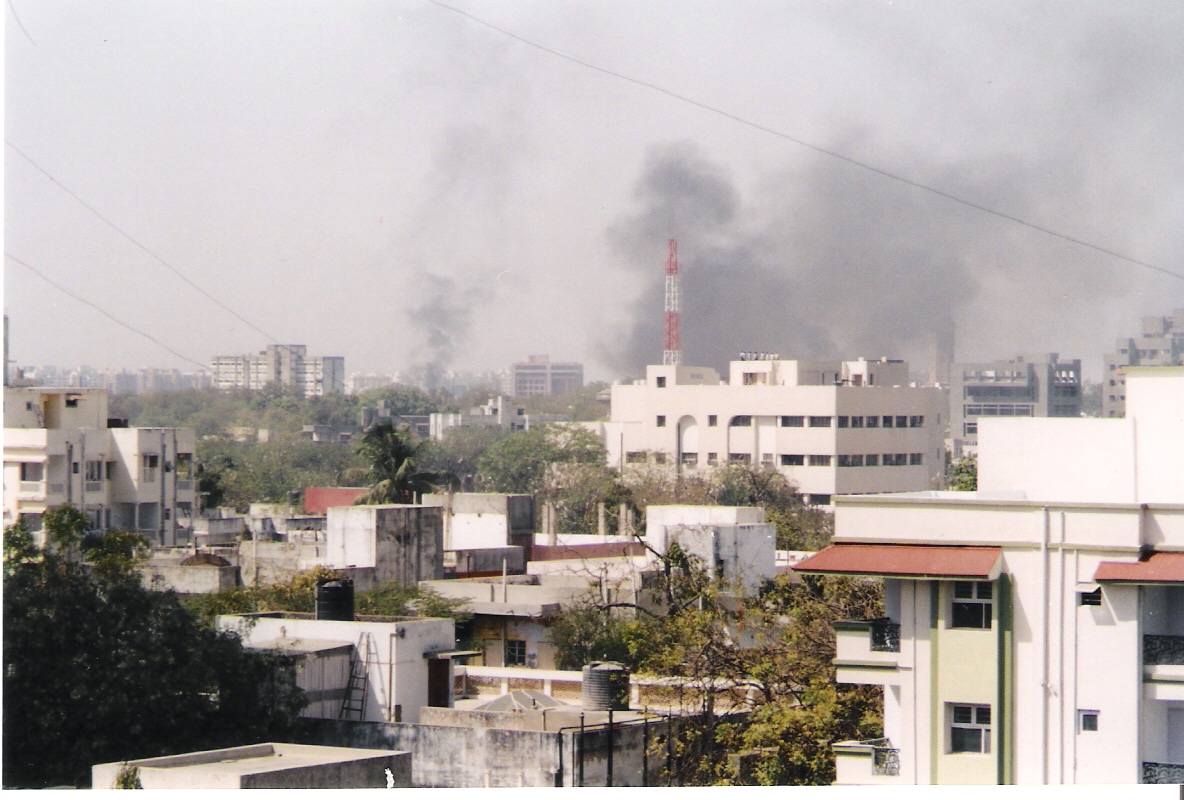
    NEW DELHI (TIP): 14 years after the horrendous massacre, 24 people were found guilty on Thursday, June 2, 2016 of brutal murder of 69 Muslims during the 2002 communal riots that ripped through Gujarat.

    Judge PB Desai acquitted 36 people for lack of evidence, including a police inspector and a midranking official in the Bharatiya Janata Party, led by Mr. Modi.

    Erda, the then police inspector of the Meghaninagar police station, was arrested in 2002 by a Supreme Court-appointed Special Investigation Team.

    He had been accused by survivors of not stopping the rioters from entering the Society.

    Among those also acquitted was sitting BJP Municipal official, Bipin Patel, who was also seen as one of the main antagonists when the massacre happened.
    Prosecutors were seeking life in prison for all accused.

    “I am happy 24 accused were convicted but sad that 36 others have been acquitted. This is incomplete justice and I will fight till the end,” Zakia Jafri, whose husband was killed in the massacre, told reporters.

    More than 300 witnesses gave evidence during the years-long trial, which began in 2009 but was delayed by legal challenges and several of the original accused died.

    Prosecutors had been seeking life in prison for all of the accused for storming the Gulbarg Society complex and killing the Muslims who were hiding there.

    Among those killed at the complex was former opposition Congress lawmaker Ehsan Jafri, whose widow, Zakia, claims he repeatedly called police for help but none came.

    The violence was triggered by the death of 59 Hindu pilgrims in a train fire on 27 February 2002 that was initially blamed on Muslims.

    Hindus bent on revenge rampaged through Muslim neighborhoods in some of India’s worst religious riots since independence from Britain and partition in 1947.

    More than 100 people have already been convicted over the riots, including one of Modi’s former state ministers who was jailed for instigating some of the killings.

    The trial over the massacre only began after the supreme court in 2009 ordered a reinvestigation into some of the worst incidents of the riots.

    But one year later the same court issued a stay on any final verdict from the trial after a petition was filed seeking an inquiry into whether Modi and others played a role in the violence.

    The court only lifted its order last year when a lower court upheld a rejection of the petition.

    The riots have long dogged Prime Minister Modi who was chief minister of Gujarat in 2002, and is still accused by rights groups of tacitly supporting the rioters. Even United States did not issue Travel Visa to Mr. Modi until he became the Prime Minister in 2014.

  • TWO YEARS OF MODI GOVERNMENT

    TWO YEARS OF MODI GOVERNMENT

    On May 26, two years back, President Pranab Mukherjee administered the oath of office to Prime Minister Narendra Modi and his Cabinet. The lavish ceremony was attended by Premiers of SAARC nations, several Chief Ministers, Opposition leaders, besides a host of celebrities, corporate honchos and religious heads.

    For the first time in 30 years, the BJP came to power with an absolute majority and the swearing-in ceremony gave a hint that Team Modi was ready with a game-changing plan for the country. Two years into governance, we look back at the Centre’s performance.

    HITS

    Yemen evacuation

    This was one of the biggest evacuations during the times of war, since the Gulf War I. MoS Gen. (Retd) V.K. Singh personally oversaw the operation. The External Affairs Minister headed by Sushma Swaraj earned laurels for helping the Indians living abroad, be it for rescuing Kerala nurses from war-torn Libya or bringing back differently-abled Geeta from Pakistan.

    Jan Dhan Yojana

    Anyone can now open an account in a bank, thanks to this financial inclusion scheme. Barely a fortnight after the launch, the yojana entered the Guiness Book of World Records for the maximum number of accounts opened in a week. The scheme is a big boost in moving towards direct subsidy transfer.

    LPG subsidy reforms

    Initially started as a ‘Give It Up’ campaign, the Petroleum and Natural Gas Ministry headed by Dharmendra Pradhan barred LPG subsidy to customers who earn more than Rs. 10 lakh per annum. The amount saved was used to give over five lakh new LPG connections to those who still use firewoods or kerosene stoves for cooking.

    TWO YEARS OF MODI GOVERNMENT1Swachh Bharat Mission

    A pet project of Mr. Modi, sanitation ministry’s Swachh Bharat mission got wide public support, especially on social media after celebrities joined the Clean India challenge. Not just stopping with cleaning the locality, the government has taken initiatives such as building more toilets, waste management and waste segregation. Real success, will however happen, when manual scavenging is completely eradicated.

    India-Bangladesh land boundary pact

    When India is facing boundary disputes with every neighbour, this agreement gives optimism that issues can be amicably solved over diplomacy. The people living in the enclaves that were recently annexed to India even exercised their franchise in the recently concluded West Bengal Assembly elections.

    Bankruptcy code

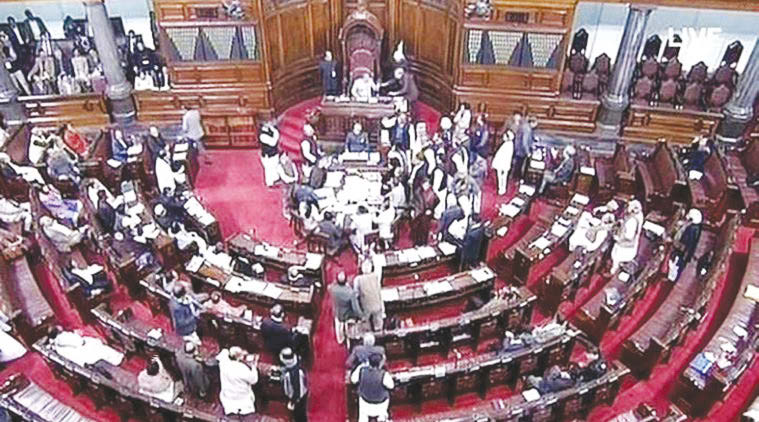
    At a time when bankers were grappling with huge rise in non-performing assets and government eyeing to create more entrepreneurs, the amendment of existing bankruptcy laws was necessary. With the support from Congress, the law was passed in Rajya Sabha during the Budget Session where the ruling party was short of numbers.

    Real Estate regulation

    Apart from making the process transparent and keeping checks and balances in the form of a Real Estate Regulatory Authority, the law drafted by Housing Ministry headed by M. Venkaiah Naidu gave confidence to home-buyers. When housing sector contributes to nine per cent of GDP, this law, if effectively implemented by the States, is a game-changer in the housing sector.

    Yoga Day

    India’s lobbying got success when the United Nations declared June 21 as International Yoga Day. The mass yoga performance at Rajpath, which was led by Mr. Modi himself, set the record of most number of people participating in such an event.

    Mann Ki Baat

    A first such initiative in India where a top leader addresses millions, that too periodically. The programme even featured U.S. President Barack Obama during his visit to India.

    Digital India

    This flagship programme of Ravi Shankar Prasad’s Communications Ministry aiming to create a knowledge economy and good governance is travelling in the right path. Every minister and every ministry is now on Twitter. A slew of e-governance measures like digital locker and feedbacks through mygov.in are some notable initiatives.

    MISSES

    Pathankot attack

    The attack at IAF air base, just few hours from the National Capital, is the first of its kind after the 26/11 Mumbai attacks. There were differences of opinion over the way in which the encounter was handled, Home Minister Rajnath Singh was kept out of key meetings at the time of attacks and to make things worse, there was confusion over the number if terrorists sneaked in to carry out the attack. The attack raised questions on the security-level at India’s military bases.

    Masood Azhar

    India’s efforts to add the name of Masood Azhar, the chief of JeM, in the UN list of proscribed terrorists failed as China raised objections to it. This is a major setback to India as Azhar is believed to be behind the Pathankot attack.

    India-Pak relations

    Much to the hype of Pakistan Prime Minister Nawaz Sharif attending the swearing-in ceremony or the saree diplomacy, both governments couldn’t re-start the dialogue process nor has the firing across the Line of Control came down. Mr. Modi’s surprise stop-over at Lahore too failed to cut the ice.

    India-Nepal relations

    Anti-India protests flared up in Nepal after trade movements through the border were not allowed for many days. Nepal called it ‘India’s blockade’ as it followed protests by Madhesis. All of these happened within a year of the Himalayan quake, when Nepal thanked India’s help in rescue and rehabilitation. Also, India couldn’t keep away Nepal from moving closer to China.

    TWO YEARS OF MODI GOVERNMENT2Dissidence in Central Universities

    Smriti Irani and the Union Ministry of Human Resource and Development was in news for all wrong reasons. The suicide of a Dalit Research Scholar at Hyderabad Central University, sedition charges against students of Jawaharlal Nehru University, the FTII students’ strike, decision of not to support off-campus centres of Aligarh Muslim University, closing down Ambedkar-Periyar Study circle in IIT-Madras, the list goes on. And some avoidable controversies such as competition for schoolchildren on Christmas or scrapping German being taught at CBSE schools.

    Blackmoney

    Bringing back money stashed in off-shore accounts was one of BJP’s poll promises. The government gave a three-month window for compliance, but only 644 declarations were made. Finance Minister Arun Jaitley once said the bulk of blackmoney is within India, but little has been done to contain the feeders of parallel economy – higher education, real estate and mining.

    GST Bill/Land ordinance

    The government is unable to pass the GST Bill in Rajya Sabha for the past two years. Touted as the biggest tax reform in Independent India, the government is unable to bring consensus. Same is the fate of land bill. Though the Centre took the ordinance route to clear the bill, it was re-promulgated twice and lapsed on August 31, 2015.

    Uttarakhand fiasco

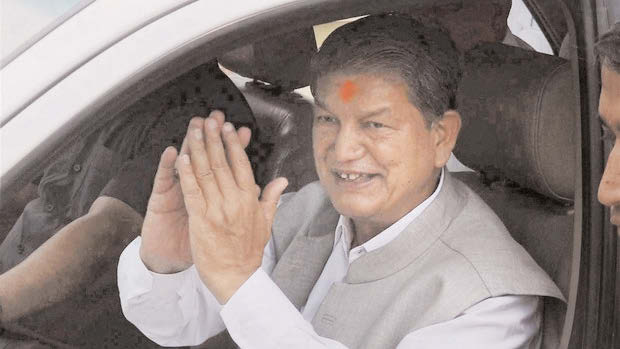
    The pre-mature imposition of President’s Rule in Uttarakhand, and victory of Harish Rawat in the Supreme Court-monitored floor test, is not only an embarrassment to the ruling government but also to the BJP, whose attempt to gain from dissidence in Uttarakhand Congress misfired.

    Silence on fringe right-wing groups

    Law and order could be a State subject. Murders of rationalists and attacks on minority community by fringe right-wing elements may not be limited to the BJP-ruled states. But the Centre as well as the Prime Minister’s refrains from condemning or making comments against such attacks didn’t go well with the public.

    Women’s Bill

    The bill seeking one-third representation for women in Parliament and State Assemblies is an almost-forgotten topic now. Cleared in Rajya Sabha in 2010, the Bill is pending in the lower House, in which the BJP front enjoys comfortable majority.

  • RAJNATH SINGH TO UP VOTERS: END BJP’S EXILE IN STATE

    RAJNATH SINGH TO UP VOTERS: END BJP’S EXILE IN STATE

    SAHARANPUR (TIP): Virtually kickstarting BJP’s poll campaign in Uttar Pradesh on the occasion of the government’s second year of completion of power today, Home Minister Rajnath Singh made a fervent appeal to the people of the state to “end BJP’s exile”.

    Addressing a massive gathering of its supporters here this evening, Singh invoked the 14-year exile of Lord Rama to say to the people of Uttar Pradesh, “Fourteen years of our exile from UP are coming to an end. I appeal to the people of the state to end our exile and help us form our government. Even Lord Rama’s exile had ended after 14 years.” He made the “end-BJP-exile” point noting that the saffron party was voted out of power in Uttar Pradesh in 2002 after which BSP and Samajwadi Party ruled the state between them. Assembly polls are due in Uttar Pradesh next year. Singh, who represents the Lucknow segment in Lok Sabha, said the hallmark of BJP government at the Centre was delivery and honesty.

    “We have been successful in bringing about transparency in our government in these two years of rule at the Centre. India’s image across the world has been enhanced under the leadership of Prime Minister Narendra Modi. No one can level any allegation against our PM. Our government has remained free of corruption and blemishes,” he told a gathering in the politically crucial Western UP belt.

    About Congress, the fourth player in the state apart from BSP, SP and BJP, he said the party was consistently losing its appeal and shrinking electorally.

    “Congress is shrinking across the country. In the plains it had been wiped out and in hills it has shrunk. I am sure it will be wiped out from the hills as well in the next elections,” Singh said in reference to the two Congress led governments in Himachal Pradesh and Uttarakhand.

    The former BJP President also spoke for the sugarcane farmers who dominate the Western UP area and promised to give them their dues if voted to power.

  • Modi’s Kashmir score card: Do  walk the talk

    Modi’s Kashmir score card: Do walk the talk

    Kashmir is a difficult and challenging terrain for any Prime Minister of the country. It builds personalities who seize opportunities and introduce appealing concepts of their respective brand of politics in a bold fashion- as did former Prime Minister Atal Behari Vajpayee who used the soil of Kashmir to extend a hand of friendship to Pakistan. It also is a graveyard of many a reputation -Manmohan Singh who started his innings with a commitment to build a “naya” or New Kashmir but ended with no grand results to show at the end of his decade-long tenure as Prime Minister.

    Prime Minister Narendra Modi had more than one opportunity to transform the political, psychological and economic landscape of all the three regions of the state, particularly the Valley, in the past two years. His biggest strength is the massive electoral mandate and the personality cult. Despite a mood of trepidation in this only Muslim majority state of the country there was also a hope that hemight chart a new course to givea real-time meaning to the three mantras of his illustrious predecessor Vajpayee who had envisioned a solution through insaniyat (humanity), jambhooriyat (democracy) and Kashmiriyat (a concept denoting the Valley’s composite culture) way back in 2000.

    Modi reiterated his commitment to follow Vajpayee’s path in 2014, 2015 and 2016 to reach out to the people of Kashmir, but the Valleyis waiting for these pronouncements to be translated into action on the ground. The wait is getting longer as there are no visible steps being taken by New Delhi to know what is wrong and how it can be rectified.

    Manmohan Singh pragmatically acknowledged the “internal and external dimensions” of the issue. His attempt was reflected in the five working groups that he had constituted to determine the extent of the problem at various fronts and to find out ways and means to address those. Simultaneously, he had opened channels of communication with Pakistan. As summed up by former Chief Minister Omar Abdullah in 2006, “There was a golden opportunity to resolve the K issue…” The internal situation in Pakistan in 2007, following the dismissal of Chief Justice Iftikhar Choudhary followed by 26/11 halted the process.

    Prime Minister Modi’s opening was stunningly remarkable. The South-Asian neighborhood appeared on his foreign policy horizon. Pakistani Prime Minister Nawaz Sharif was among the leaders who attended Modi’s swearing-in ceremony. That was a grand gesture and there was a rethink in some quarters in Jammu and Kashmir about the image and attitude of Modi toward Pakistan and what all he wanted to achieve by this approach. A hope had sprung up for them.

    A conspicuous part of Nawaz Sharif’s visit to Delhi was that Hurriyat leaders from Kashmir were neither invited, nor did they insist on talks with the visiting Pakistan Prime Minister. Back home, Nawaz Sharif had to face a lot of flak for this miss. But some Hurriyat leaders sensed a chance of success of a process between two countries and were willing to wait for their turn to express their viewpoint. Mirwaiz Umar Farooq feltthat if the two countries could make progress on their own, the Kashmir issue could be resolved with the involvement of leaders of Kashmir at some stage. He has been consistent in his belief that the process would lead to results and expectation of instant results could damage the process. Kashmir is a decades-old issue and it cannot be resolved overnight.

    Notwithstanding the Prime Minister’s endorsement of the PDP-BJP government in the state, the PDP-BJP government is stuck in its own contradictions. Its attempts to regain lost paradise are hobbled by the situation, skepticism and lack of adequate support on the ground. The PDP is unsure which side to tilt and the state’s BJP leadership is clueless about Kashmir because they have never stepped out of their cocoons in Jammu. And, the result is that the common Kashmiri feels distanced and hemmed in by the one-sided narrative in which either the idea of composite culture or the idea of India is missing.

    When Modi took over, there existed a breathing space for the idea of India in the Valley and forces of peace were visible. Radicalism had started appearing on the scene, but there were strong voices upholding the traditional values of Kashmir. The way he started visiting Jammu and Kashmir and unfolded the economic initiatives in the Railways, power and connectivity sectors, generated the hope of progress on the political front as well.

    But doubts surfaced after the Foreign-Secretary level talk were called off, following a meeting of the Hurriyat leaders with Pakistan High Commissioner Abdul Basit in August, 2014. The fierce exchange of fire on borders, coupled with the rhetoric of the Assembly election campaign, despite the fact that there was no mention about the abrogation of Article 370 in the BJP’s vision document, suspicion gained ground. The moment the BJP as a political party embarked on 44-plus mission Kashmir, the Muslims felt as if a tempest was about to hit their boat of identity. The BJP was more keen on securing a political victory than showcasing itself as Vajpayee’s party, announcements to that effect notwithstanding.

    In between, the Prime Minister had sounded a right note during the September 2014 floods, whenhe declared that the treasury of the Centre was open to provide relief to the marooned people in Jammu and Kashmir. But when things started moving at a snail’s pace in response to the state government’s plea for early release of the sum of money for the relief and rehabilitation, all those who stoked doubts had a field day. The announcement of Rs 80,000 crore in November 2015 could not succeed in damage control.

    Today, thealienation in Kashmir is “more than 100 per cent,” quipped a young journalist in his twenties. This statement or perception is enough to disturb the sleep. Hordes of villagers throngingto disrupt the Army’s operations against militants and thousands attending the funeral of militants is a picture to which one cannot shut one’s eyes. Two years have not made a difference the way people of Jammu and Kashmir were expecting. May be something really good happens in the third year.

    Author can be reached at ajoshi57@gmail.com
  • Modi keeps hope alive

    Modi keeps hope alive

    In the advertisement campaign unleashed on completing two years in office Prime Minister Modi claims: “My country is changing, moving forward”. Half the population of the country does not share his optimism, going by a survey by the Centre for Media Studies. While 49 per cent of those surveyed saw “no change” in their lives, 15 per cent complained of deterioration. Change is yet to happen in rural India. Bharat does not know how to cope with a drought. Business sentiment is lower than it was in 2014. Still, Modi enjoys a high approval rating (74 per cent). Credit for this goes to his successful strategy for marketing. With a clear majority and no coalition partners pulling in different directions, the Modi government could still have done a lot better.

    The BJP government enters the third year on a feel-good note. A good monsoon forecast has lifted the national mood. Drought and its mishandling would soon be forgotten as a bad memory. The Assam success has wiped out bad memories of Delhi and Bihar. Assam happened because after Modi-Shah arrogance took a hit, the duo recognized the worth of regional leaders. The Congress meltdown has enabled the BJP to stake claim to being a national party. That also brings on the national party a duty to conduct itself responsibly, rein in the fringe elements and avoid stoking communal fires in the run-up to the UP elections.

    The Western media has called Modi “a superb salesman”. He has dusted UPA initiatives and repackaged them brilliantly -something the UPA could never do. His own ideas have elicited a mixed response. “Swachh Bharat”, Digital India, smart cities and bullet trains are still at the slogan level but can be put on the ground. The Jan Dhan Yojana has delivered and Aadhaar will put subsidies in right pockets and plug leakages in the PDS and MGNAREGA. Toilets are coming up in schools. The thrust on low-cost housing will create not just shelter for the homeless but also jobs for the needy apart from lifting the fortunes of steel, plastic and cement industries. “Make in India” is still a work in progress.

    Despite opposition resistance the government has got a few things moving: a real estate regulator is in place, the Mauritious treaty will check tax evasion and a bankruptcy code has replaced the archaic solvency laws, making it easier for firms to close down. Modi has asserted that the GST will roll out on April 01, 2017. After a directionless first budget, Jaitley changed tracks and presented a pro-farmer, pro-rural India budget. He boasts of three things: sticking to the fiscal deficit, having an expenditure reforms commission and a monetary agreement with the RBI on inflation. Raghunath Rajan has uncovered bad bank loans which the government and banks had happily swept under the carpet. Banks need more money to lend and debt-ridden corporates have no extra capital to invest, which means growth and job creation will be largely driven by government spending with savings from oil.

    Modi has proved to be the most peripatetic PM. The chutzpah and verve that marked his touchdowns in Western capitals made him the best recognized Indian Prime Minister. While the fruits of the serenading in the West are yet to accrue, there are doubts whether Modi has been adroit in balancing this relationship with the other two powers, China and Russia. In the neighborhood he had a mixed record. He was unable to tame Pakistan, has antagonized Nepal and allowed the Maldives to drift. But Modi turned around ties with Sri Lanka, maintained harmony with Bangladesh and made Seychelles a part of India’s security periphery.

    Modi’s style of functioning has its admirers as well as critics. Arun Shourie says “President Modi runs a one-man show”. He has centralized decision-making and marginalized ministers. Decisions are taken in a hurry, leaving loose ends untied sometimes. Modi has abolished the Planning Commission without thinking through what NITI Aayog is to do. Abandoning his own slogan of “minimum government”, Modi has packed his large ministry with lightweights, barring a handful like Arun Jaitley, Suresh Prabhu, Piyush Goel and Dharmendra Pradhan.

    Greed for more power and political expediency earned Modi judicial rebuffs. The embarrassment over the NJAC (National Judicial Appointments Commission) as well as President’s rule in Uttarakhand was avoidable. The saffron agenda too had its consequences. With help from the Home Minister, the HRD Minister created trouble where none existed: Hyderabad Central University, JNU and the NIT, Srinagar. Taking u-turns is a defining feature of the government. There were flip-flops on issues like tax on EPF withdrawals, land acquisition, MGNREGA, capital infusion for banks, foreign travel details in income tax return forms, licensing for GM seed technology and ban on porn sites. Things are seen as happening, even if they sometimes go wrong. More than rhetoric, Modi needs to show results on the ground. He needs to work and behave more like a Prime Minister than a perpetual political campaigner.

  • India in Global Economy

    India in Global Economy

    Dr. Subramanian Swamy who was elected to the Rajya Sabha recently by the BJP gave an enlightening talk in the Capital on “India in Global Economy”. The program was organized by the Delhi Study Group (a socio-political-cultural NGO) led by President Vijay Jolly, Ex. Delhi MLA who in his welcome speech praised the fiscal policies of Prime Minister Modi during its 24 months of NDA rule in India. Dr. Swamy is a politician (a 6 time Member of Parliament) and economist and now again a Rajya Sabha MP. He was the President of the Janata Party until he merged on with Bharatiya Janata Party (BJP). He has served as a member of the Planning Commission of India and was a Cabinet Minister in the short-lived Chandra Shekhar government. Dr. Swamy attended Hindu College, University of Delhi, from where he earned his Masters Honours degree in Mathematics. He then took his master’s degree in Statistics from the Indian? Statistical Institute, Kolkata. He then went to study at Harvard University, where he received a PhD in Economics in 1965. In 1963, while he was a doctoral student at Harvard, he worked at the United Nations Secretariat in New York as an Assistant Economic Affairs Officer. He subsequently worked as a resident tutor at Lowell House at Harvard university.? His knowledge, expertise and experience in the economic, legal and educational fields along with his oratory skills have endeared him to audiences.? He often makes free, frank, fearless remarks and supports it with evidence without flaws. “India in Global Economy ” was the topic of the day. The program was attended by diplomats, journalists, bureaucrats and people from various walks of Life. He spoke eloquently as always. “India is the third largest GDP in the World and the second largest in population-the second largest GDP Country is China and the first largest is the United States. ” Dr. Swamy went on to elaborate “There are 2 ways for India to participate in the global economy.

    One way is the way the Chinese have-they have skilled, cheap labor so they took semi-processed goods from east Asia and added value to it, processed it and sold it to Europe and America. Earlier the East Asian countries like Taiwan, North Korea, Japan etc. used to directly export to the United states and Europe but their laborbecame expensive so they were looking for a “labor cheap country” and China was ready. So if we look at it China has a deficit with east Asia and a huge profit with Europe and America. That is how China’s economic growth has propelled.? One of India’s biggest strength is our Agriculture. Even today our agricultural products are the cheapest in the world. Rice, wheat, fruits, vegetables are all very cheap compared to international market prices. Why don’t we export all this? because of lack of infrastructure. We need to have good packaging and see that agricultural produce is packed hygienically then the transportation, freight and all this has to be very efficiently done. We lack infrastructure for all this. We produce in one acre of land? only 1/6th that of Japan -1 Indian cow produces only 200 liters of milk per year but 1 Israeli cow produces 1000 liters of milk per year. The plus with India is that India can do agriculture all 12 months of the year. America, Europe, China all have snowfall 5 months of the year but this country is god-gifted where we can produce all 12 months and grow 3 crops a Year.?120 million hectares are agricultural land – the largest in the world and on top of that we have the labor force which is young. 50% of our population is below the age of 20. But what is going to transform India is not more capital or more labor but the real thing we need in our country- and that is the lesson of economics- is innovation and how to overcome obstacles. So if one were to say what is the truth about India -it is this enormous potential and this enormous legacy that we were one of the most developed countries once upon a time. The average income of people from India abroad is more than the average American/ Japanese/South Korean and so on, because our professionals take to work “like ducks to water” and they are most sought after today. Google, Microsoft etc. now have Indian as their heads. So this huge human potential needs to be exploited and exploited and utilizedefficiently.” Sound economic perceptions and advice?perhaps- is anyone listening?


    (Sheila Chaman specializes in Media, Communication and Social service)

  • Delhi buses to have panic buttons; notification on June 2 | Women Safety

    Delhi buses to have panic buttons; notification on June 2 | Women Safety

    It will be mandatory for public transport buses to install emergency buttons, CCTV cameras and vehicle tracking devices to ensure safety of women commuters and the government will issue notification on these norms on June 2, Union Minister Nitin Gadkari said today.

    “To ensure safety of women after the unfortunate Nirbhaya incident, we have decided to make it mandatory for public transport buses to install emergency panic buttons, CCTV cameras and GPS-enabled vehicle tracking devices,” the Road Transport and Highways Minister said.

    After launching a pilot project under which Rajasthan State Road Transport Corporation will run 10 luxury and 10 ordinary roadways buses fitted with emergency buttons and CCTV cameras, Gadkari said that a notification to have such devices in all public transport buses across the country will be issued on June 2.

    “We are looking at installation of panic buttons, CCTV cameras and other devices at the manufacturing stage itself,” he said on the sidelines of the event.

    Bulk purchase of such items will bring down the cost of the devices, he added.

    The ministry had issued these draft rules earlier this month under the Motor Vehicles Act and had sought comments from stakeholders including vehicle manufacturers.

    Under the proposed notification, transport vehicles with a seating capacity of over 23 passengers will mandatorily have CCTV cameras that will be connected to the global positioning system and will be monitored by the local police control room.

    Gadkari said that in case of any untoward event a woman passenger would be able to press the emergency button which in turn will transfer the information to the nearest local police station via the GPS.

    Once the emergency signal is triggered, the CCTV cameras will start displaying live footage of the bus at the central control room. Besides, if a vehicle deviates from its prescribed route (monitored through the GPS devices), the system will start sending signals tracking its movement to the control room

  • Kiran Bedi appointed as Lieutenant Governor of Puducherry

    Kiran Bedi appointed as Lieutenant Governor of Puducherry

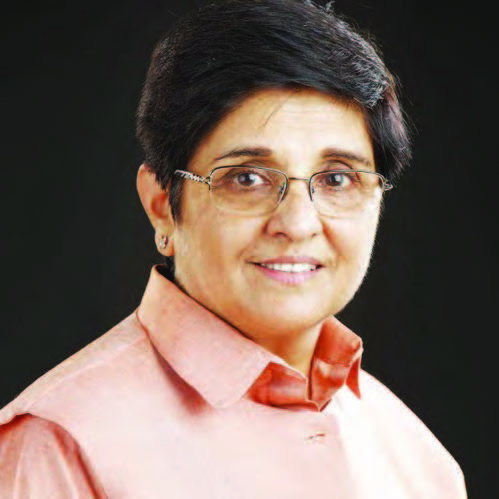
    BJP leader and former IPS officer Kiran Bedi was today appointed as Lt Governor of Puducherry, a post which was under the additional charge of Lt Governor of Andaman and Nicobar Island for nearly two years.

    A Rashtrapati Bhawan communique said “the President has been pleased to appoint Ms Kiran Bedi, to be the Lt. Governor of Puducherry with effect from the date she assumes charges of her office.”

    “I look forward to giving every bit of myself to the responsibility. I am there for the benefit of the country. I am here to give my best every day, each day. I am grateful for the government’s decision. They trusted me,” said 66-year-old Bedi, who is the country’s first woman IPS officer and who had led the BJP campaign for the 2015 Delhi Assembly polls without any success,

    The appointment came three days after the Congress-DMK alliance won 17 seats in the 30-member state Assembly. AIADMK, which contested the elections on its own, won four seats while BJP could not get even a single seat.

    The LG post in the Union territory had been lying vacant after the Narendra Modi Government had sacked UPA nominee Virendra Kataria on July 12 barely a year after he had been appointed. Lt Governor of Andaman and Nicobar Island Lt Gen Ajay Singh had been given additional charge of Puducherry.

    Born on June 9, 1949, Bedi had led the BJP campaign in the 2015 Delhi Assembly elections but had to face the worst defeat in her maiden political innings with Arvind Kejriwal-led AAP winning 67 of the 70 seats.

    An IPS officer of 1972 batch, Bedi had sought voluntary retirement from the service in 2007. She was then posted as Director General, Bureau of Police Research and Development.

    A sports lover and an author, Bedi is a recipient of Ramon Magsaysay Award as well as UN Medal for outstanding service. She was one of the pioneers of anti-corruption crusade in 2011 along with Anna Hazare and Kejriwal against the then UPA government.

    She also earned a law degree at Delhi University in 1988 and a PhD from IIT Delhi’s Department of Social Sciences in 1993.

  • SIX STATES LOST SINCE 2014, DOUBTS GROW OVER RAHUL’S LEADERSHIP

    SIX STATES LOST SINCE 2014, DOUBTS GROW OVER RAHUL’S LEADERSHIP

    NEW DELHI (TIP): Rahul Gandhi made no effort to suppress his glee when he strolled out to meet the media after BJP lost the Bihar election by a mile to the Nitish-Lalu-Congress grand alliance last November. This is a win, he said, for “bhaichara” and PM Modi should listen carefully to what the country is saying.

    On May 19 (Thursday), a reported bout of Chikungunya spared Rahul the trouble of having to offer a sound bite. Congress’s tally falling from 163 to 115 MLAs in five states with 824 MLAs speaks for itself. Even in Puducherry, the battle went down to the wire. Congress now has governments only in Karnataka, Uttarakhand, Himachal, Manipur, Meghalaya and Mizoram. The defeats in Assam and Kerala bring the debate over Rahul’s taking formal charge of Congress into sharp focus, reflecting an intense desire in the party rank and file, even among those not exactly enamoured of his political style, that he accept the party president’s mantle and be done with it.

    Barring Bihar, the question mark over Rahul’s leadership is getting bigger as Congress shows no signs of electoral revival two years after being reduced to 44 MPs in Lok Sabha. If Congress needed a firm signal from Rahul, this is the moment. Decisions to align with the Left in the ‘Bharat Mata’ debate and later in West Bengal polls failed to unsettle BJP or dent either regional rival Mamata Banerjee.

    While he did not take command, as was widely propagated by his confidants, after Congress landed on the winning side in the Bihar ‘grand alliance’, the pressure has only grown. After all, rebels like Himanta Biswa Sarma in Assam -a key player in BJP’s success in the northeastern state -left Congress in a huff, claiming that Rahul treated him shabbily and was more interested in playing with his dog than discussing issues of the state when the two had met in Delhi.

    Rahul’s political style seems to be a significant issue as he has been unable to work with opposition leaders. Allies like Sharad Pawar and Lalu Prasad would rather deal with Congress president Sonia Gandhi. His decision to follow “grassroots feedback” in allying with the Left has earned him the wrath of Trinamool Congress which he decided to spurn.

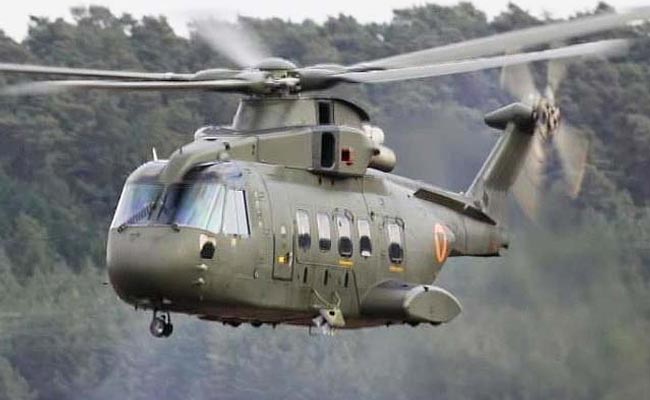
    In Tamil Nadu, G K Vasan, son of the late Congress grandee G K Moopanar, formed his own outfit. In Uttarakhand, the nine rebel MLAs who nearly brought the government down, felt slighted by the high command. In Punjab, veteran leader Amarinder Singh almost walked out of the party . As internal dissent mounted, Congress found itself under a massive onslaught over corruption in the AgustaWestland deal and the charge of framing Hindu accused in the Malegaon blasts.Under his directive, Congress stalled passage of the Modi government’s key reform, the GST bill, but slowly , the blockade is wearing thin.

    The truth is that Rahul is calling the shots in Congress. All decisions are taken by him have his imprimatur. The roping in of Nitish strategist Prashant Kishor for UP and Punjab elections is a big indicator, especially as the move has ruffled Congress functionaries. So far, AICC has clarified that Kishor will not decide organisational matters.There is no hiding the fact that Bhupinder Singh Hooda, was in the dark when Kuldeep Bishnoi’s Haryana Janhit Party was merged with Congress in Haryana. Bishnoi is the son of Bhajan Lal, who was a byword for Congress for decades. Rahul also put his foot down to ensure Tarun Gogoi stayed on as Assam chief minister even after BJP won seven of the state’s 14 Lok Sabha seats in 2014. The “old guard” had advised his replacement with Sarma, the man who ultimately ended up helping BJP win the assembly polls.

    Rahul also nudged Congress into stitching an alliance with the Left in Bengal despite entreaties from Trinamool not to do so. If, as he said when anointed vice-president in 2013, that power is a chalice of poison, then it is time to down it. Some in Congress see Rahul’s ascension as a case of noblesse oblige, but most agree the question needs to be settled either way soon.

  • Nehru row: Rajasthan says syllabus changed to evoke nationalism

    JAIPUR (TIP): The BJP government in Rajasthan changed “old and boring” school curriculum to evoke nationalism, education minister Vasudev Devnani said on Thursday amid a raging controversy over alleged attempts to black out Congress leaders from history books.

    The Congress has accused the Vasundhara Raje government of trying to “saffronise” education after references to the country’s first Prime Minister Jawaharal Nehru in textbooks were trimmed considerably.

    The government denies the charge. Devnani, however, accused the Congress of trying to “blacken history” by striking off “swadeshi” leaders such as Vinayak Savarkar and Deen Dayal Upadhay from textbooks when the party was in power.

    Devnani also named a long list of “swadeshi leaders” whose lives and times have been included in the new curriculum.

    “In the name of changing curriculum, the Congress removed mentions of freedom fighter Savarkar and humanist Deen Dayal. They even had issues with Ram Lakshman and they went to the extent of removing Mahatma Gandhi’s contribution. Even the battle between Akbar and Maharana Pratap was removed from books,” Devnani said.

  • NDA set to overtake UPA’s Rajya Sabha tally by June

    NDA set to overtake UPA’s Rajya Sabha tally by June

    NEW DELHI (TIP): The BJP’s big win in Assam will not immediately benefit the party in increasing its tally in the Rajya Sabha as there will not be any vacancy in the Upper House from the state until June, 2019. But, the AIADMK with its impressive show in Tamil Nadu would be able to increase its number by gaining one additional seat in the council of states after its biennial election next month.

    Similarly, the assembly election results of West Bengal, Kerala and Puducherry will not impact the position of any political party in the Rajya Sabha in near future as there will not be any vacancy in the Upper House from these three states this year.

    West Bengal will report six vacancies in August next year while Kerala will report three vacancies in July, 2018. Puducherry’s lone Rajya Sabha seat will be vacant in October, 2021.

    However, the NDA will for the first time cross the overall tally of the UPA with the BJP and its ally TDP together possibly getting seven additional seats in the June 11 biennial election.

  • RAJAN NOT ‘FULLY INDIAN’, SAYS SWAMY

    RAJAN NOT ‘FULLY INDIAN’, SAYS SWAMY

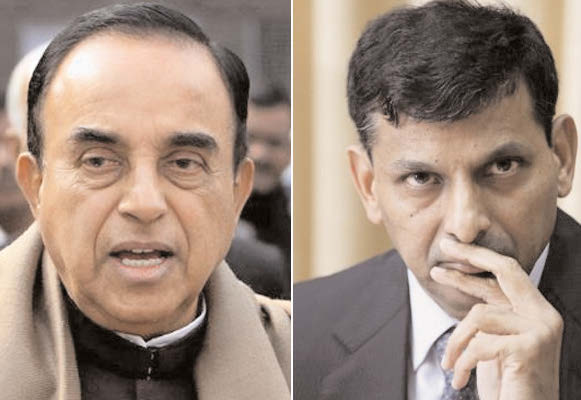
    NEW DELHI (TIP): In a fresh salvo at RBI Governor Raghuram Rajan, BJP MP Subramanian Swamy has written to Prime Minister Narendra Modi seeking immediate sacking of the former IMF Chief Economist while alleging he was “mentally not fully Indian” and has “wilfully” wrecked the economy.

    Following up his barb against Rajan at the end of Parliament session last week, Swamy yesterday wrote to Prime Minister seeking termination of Rajan’s services with immediate effect.

    “The reason why I recommend this is that I am shocked by the wilful and apparently deliberate attempt by Dr Rajan to wreck the Indian economy,” he wrote adding his concept of raising interest rates to contain inflation was “disastrous.”

    Also, bad loans with public sector banks has doubled to Rs 3.5 lakh crore in two years, he said.

    Rajan was appointed RBI Governor by the previous UPA government in September 2013 for a three-year term, which can be extended.

    “These actions of Dr Rajan lead me to believe that he is acting more as a disrupter of the Indian economy than the person who wants the Indian economy to improve.

    “Moreover he is in this country on a Green Card provided by the US government and therefore mentally not fully Indian. Otherwise why would he renew his Green Card as RBI Governor by making the mandatory annual visit to the US to keep the Green Card current?” he wrote.

    Swamy had last week stated that Rajan was “not appropriate for the country” as he had in the garb of controlling inflation raised interest rates leading to “collapse of industry and rise of unemployment in the economy.”

    “The sooner he is sent back to Chicago, the better it would be,” he had told reporters in Parliament House.

    Rajan is the on-leave Professor of Finance at the University of Chicago’s Booth School of Business. Rajan’s three-year term ends in early September and if an extension is denied, he will be the first RBI Governor since 1992 to not have a five-year term.

    His predecessors — D Subbarao (2008-2013), Y V Reddy (2003-2008), Bimal Jalan (1997-2003) and C Rangarajan (1992-1997) had five-year terms.

    After assuming charge as RBI governor in September 2013, Rajan gradually raised the short-term lending rate from 7.25 per cent to 8 per cent and had retained the high rates throughout 2014.

    He kept the rates high, citing inflationary concerns despite intense pressure from the Finance Ministry and the industry for softening them with a view to boosting growth. The Governor began the process of lowering the rates in January 2015 and since then it has come down by 1.50 per cent to 6.50 per cent.

    Swamy in the letter to Modi said the BJP came to power under his inspiring leadership. “I cannot see why someone appointed by the UPA Government who is apparently working against Indian economic interests should be kept in this post when we have so many nationalist minded experts available in this country for the RBI Governorship.”

    He urged Modi “to terminate the appointment of Dr Raghuram Rajan in the national interest.”

    Swamy, who was earlier this month nominated to Rajya Sabha by the BJP government, said Rajan’s concept of containing inflation by raising interest rates was
    “disastrous.”

    “When the Wholesale Price Index (WPI) started to decline due to induced recession in the small and medium industry, he shifted the target from WPI to the Consumer Price Index (CPI) which has not however declined because of retail prices. On the contrary it has risen.

    “Had Dr Raghuram Rajan stuck to WPI interest rates would have been much lower today and given huge relief to small and medium industries. Instead they are squeezed further and consequent increasing unemployment,” he wrote.

    Rajan, Swamy said, was “acting more as a disrupter of the Indian economy than the person who wants the Indian economy to improve.”

  • 2 Years of Modi Government Show We Should Be Worried

    2 Years of Modi Government Show We Should Be Worried

    When a new government takes over, people have a lot of expectations. The government’s success is measured in terms of initiatives it has taken to permanently alter the fundamentals in social, political and intellectual domains.

    Seeds of such changes are mostly sown in the first year of the assumption of power. Narasimha Rao ushered in economic reform by de-licensing industries in his first budget presentation, the results of which were far-reaching. Rajiv Gandhi brought in Sam Pitroda and created C-Dot. The present telecom revolution owes a lot to that initiative of Rajiv Gandhi. Barack Obama reached out to Muslims by giving a speech at Al-Azhar University, clearly making a policy statement that the US was no longer interested in continuing Bush’s foreign policy while hinting at the withdrawal of US forces from Iraq and Afghanistan.

    Narendra Modi is completing two years in the government and without any exception, making efforts which have the potential to permanently change the fundamentals of the Indian system and its value structures.

    The social system’s liberal tradition has been confronted with the one-dimensional behavior pattern led by RSS’s ideological zealots. The killing of Akhlaq in Dadri by BJP leaders because of his alleged eating habits is symptomatic of that assertion. Beef has been banned in Maharashtra despite protests by minority communities. The Kerala House in Delhi, which has been serving beef for decades, was raided by the Delhi police. Haryana Chief Minister ML Khattar has advocated that girls should not wear jeans. “Love Jihad” and “Ghar Wapsi” are excuses to stop Hindus and Muslims from inter-mingling. Aamir Khan and Shah Rukh Khan have been hounded for statements on intolerance.

    Activists Kalburgi and Pansare were killed by people who could not tolerate them speaking their minds. The social atmosphere has been so vitiated that the President of India, Pranab Mukherjee has publicly prodded the government many times about its responsibilities, but without any substantive results.

    On the political front, the Modi government has been ruthlessly pursuing the agenda of making India “Congress mukt (free)”, or rather, devoid of any opposition whatsoever. Two Congress governments were toppled without any constitutional validity. The Supreme Court still has to decide about the Arunachal case, but its decision on Uttarakhand is a slap on the face of the Modi government and a warning for any future misdemeanors. But the simple fact that such attempts were made despite protests from all corners is proof that other opposition-led states will bear the wrath of the Modi government in days to come.

    The Modi government has been rigorous in its pursuit of denigrating Nehru, not just as an individual, but also in the context of his legacy. Modi knows that the Congress derives its ideological sustenance and legitimacy from Nehru and his liberal thoughts. To permanently discredit the Congress, Nehru’s legacy has to be discredited. The legends of Subhas Chandra Bose, Vallabhbhai Patel, Baba Saheb Ambedkar and Bhagat Singh are being resurrected in an attempt to diminish the historical contributions of Nehru and erase him from the collective consciousness. The Rajasthan government has tried to remove Nehru from its school curriculum. The chairman of the Nehru museum has been replaced by a Nehru baiter.

    Modi also knows that one liberal political discourse should not be replaced with another. So along with the Congress, other liberal political formations also have to suffer. Therefore, the Arvind Kejriwal government and its leaders are targeted by central agencies because the Aam Aadmi Party brand has the power to grow into a national alternative. A very powerful Chief Minister confided in me that the plan was that by 2019, many senior leaders of opposition parties would be in jail and there would be no opposition to Modi.

    The JNU episode is probably the most important indicator that the third sector I spoke of – the intellectual domain – has to make way for the militant right. Let’s not forget that Modi is not an ordinary politician. He represents the historical ideological ambition of the RSS which wants to create militant Hinduism, take revenge for the past and to establish the rule of the “pure” Hindu Race. The RSS was born in 1925 as a revolt to the Gandhian philosophy which it perceived as making Hindus weak, and the reason for civilizational dominance of other faiths over Hindus. But after independence, the Gandhian discourse was replaced by the Left ideology thanks to Nehru and that dominatedoverwhelmingly till India was opened to the world market in 1991.

    Such was the dominance of the Left in the academic and intellectual universe in India that the RSS was relegated to the margins. JNU or Jawaharlal Nehru University in Delhi was the epitome of the Left’s intellectual prevalence. To establish Hindutva ideology, that has to be discredited, broken and replaced. The RSS and the BJP did not mince words in calling Left intellectuals “anti-nationals”, accusing them of colluding with terrorists, and describing universities like JNU and Jadavpur inBengal as dens of terrorists. These varsities are the knowledge leaders of the country, and very highly rated globally. They have to be demolished in order to stitch a new intellectual paradigm. Kanhaiya got caught in that cross fire. He is an accident of history.

    Many argue that Modi has not fulfilled the promises he made during the 2014 elections. That kind of yardstick is applied to measure the success and failure of mere mortals. Modi is not one. He thinks he is a special child of history with a civilizational project. Those who thought that he would change the course of the economy are disappointed. Despite India being the fastest-growing economy, job growth is at its lowest in the last six years, eight core industries are shrinking, inflation is down but export figures are discouraging, the rupee is highly stressed, and social conflict is growing. The Jat and Patidar movements have been examples of civil unrest, but the Modi government is oblivious. Modi is busy laying the foundations of a new ideological edifice. In communist parlance, once the base is solidified, the super structure will take care of itself.

    Two years of Modi in government tell a singular story which looks strange and intimidating to many, but for his supporters and ideological friends he is doing a good job. Paul Eldridge, famous writer, said, “Man is ready to die for an idea, provided that idea is not quite clear.” There were many, other than his ideological friends, who were willing to die for Modi in 2014; for them he was a refreshing idea. For many of them, that idea is now losing its sheen. Or maybe the idea is getting clearer.

    (Ashutosh, a well-knownjournalist, joined the Aam Aadmi Party in January 2014.)

  • BJP expands, Cong shrinks

    BJP expands, Cong shrinks

    Thursday’s assembly election results reveal an unmistakable trend: the BJP has expanded its footprint to Assam, while the Congress is on the retreat.

    After the Delhi and Bihar setbacks the Modi-Amit Shah duo has regained legitimacy for their autocratic leadership. A further debilitated Congress will add to the worries of Sonia Gandhi and Rahul Gandhi. For the leadership the challenge in UP and Punjab next year becomes more crucial.

    Despite odds, Mamata Banerjee and Jayalalithaa have regained power, beating anti-incumbency. For the CPM the loss is humiliating. The Left had compromised on its ideology and slept with an enemy. After MGR, Jayalalithaa becomes the second Tamil Nadu leader to occupy the CM’s chair twice consecutively.

    For Tarun Gogoi, however, anti-incumbency was too strong. A fourth term as Chief Minister was an uphill task. Kerala has kept the tradition of voting out a ruling party. The state is set to witness a leadership tussle between the old war-horse, VS Achuthanandan, who has scripted the LDF victory, and Pinarayi Vijayan, the preferred choice of the party rank and file. Puducherry is a small consolation prize for the DMK-Congress combine. Voter behavior defies logic. People ignore issues analysts tend to flag. Price rise was nowhere on the agenda. Nor unemployment. Corruption also seems to be an elite concern. Mamata Banerjee faced two scams: first Saradha in which poor villagers lost their savings in a Ponzi scheme, and then Narda, in which ministers and leaders of the Trinamool Congress were caught on camera accepting bribes. In Tamil Nadu the People’s Welfare Front (PWF) alliance tried to emerge as an alternative to the two “poisonous plants” – DMK and AIADMK – accusing them of making Tamil Nadu one of the most corrupt states. Yet voters did not buy the argument. Corruption figured in the mainstream media in Kerala. Yet despite his taint-free image, Chief Minister Oommen Chandy lost his job.

    Personalities matter prominently in polls. The BJP grabbed Assam by presenting Union Sports Minister and former Asom Gana Parishad (AGP) leader Sarbananda Sonowal as the chief ministerial face apart from tying with the AGP and the Bodo People’s Front. Cashing in on an anti-incumbency wave against Tarun Gogoi, the party also fanned the divisive anti-foreigner sentiment to its advantage. Maybe a younger CM face could have helped the Congress retain power. In West Bengal the election revolved around one personality: that of Mamata. It was to be her win, or her defeat. The Congress and the Left had no matching leader of stature and mass appeal. Buddhadeb Bhattacharya is a tired old horse unfit for a fierce race. Dubbed a party of oldies, the CPM and its ideology don’t seem to enthuse young Bengalis. In Tamil Nadu Karunanidhi’s age mattered as also his son, Stalin’s unreliability. In Kerala a 93-year-old veteran has got the comrades back in power. Badal can draw solace from him as Sukhbir can learn from Stalin’s mistakes.

    Local factors play a significant role. In Tamil Nadu the November floods’ mishandling did not spoil Jayalalithaa’s victory chances. Surprisingly, prohibition became a key issue -not unemployment, not a stagnant economy, not even an empty treasury and ballooning debt. Few discussed how liberal freebies they promise would be funded if prohibition is introduced. To woo women all parties promised to shut liquor shops, even though distilleries are run by AIADMK and DMK activists. In Kerala the UDF’s decision to stop liquor sales attracted women voters, but not enough to make it a win at the hustings. Chief Minister Chandy had focused on urban development, infrastructure and kick-started Kochi Metro. Yet all this did not get him a second term. On the other hand, under Didi development has suffered in West Bengal. The state has faced a slow industrial and agricultural growth and poor employment generation. There was a rise of “syndicates”, equivalent of the contract system run by CPM goons. But her pro-poor image, personal integrity and welfare programs like ‘Khadya Saathi’, ‘Konyashree’ and ‘Sabuj Saathi’ won her peasantry support and rural votes apart from the urban middle class.

    If a party wins, its dirty past gets white-washed. Jayalalithaa’s arrogance and inaccessibility, and Trinamool Congress leaders’ corruption are forgotten and forgiven. A winner is asked no questions. A loser, however, gets advice from all – do introspection, rectify mistakes. The Congress has become a party of part-timers from select, comfortably placed families who refuse to go out in the village and listen to people. It lost going solo (Assam) and also lost with alliances (West Bengal, Tamil Nadu, Kerala). The BJP has clever, focused, whole-time drivers with not many diversions. They know, and play, every trick of the trade.

  • Jaya, Mamata retain power, BJP storms Assam, Left surges in Kerala, Congress wanes

    Jaya, Mamata retain power, BJP storms Assam, Left surges in Kerala, Congress wanes

    NEW DELHI (TIP): The lotus bloomed in Assam for the first time as the BJP stormed to power, trouncing a 15-year-old Congress government on May 19 (Thursday) and two women chief ministers – Mamata Banerjee of West Bengal and J Jayalalithaa of Tamil Nadu – overcame anti-incumbency to register impressive victories.

    The Congress’ electoral downslide continued as its scandal-tainted coalition government lost to the Left in Kerala. The party which has lost six state elections since the 2014 Lok Sabha polls, however, picked up a consolation prize of sorts in Puducherry by defeating the regional All India NR Congress (AINRC). Broadly speaking, across five states, the Congress is looking to be a big loser, the BJP looks set to be a big gainer and the Left appears it will be left about even.

    Mamata BanerjeeMamata Banerjee’s TMC sweeped West Bengal despite being closely associated with two big corruption scandals, the Narada and the Sarada scams. The TMC has won 177 seats of the 294 Assembly seats in West Bengal. Including those wins, the TMC is leading in 212 seats. The Left’s alliance with the Congress was seen for what it exactly was – opportunism. The alliance has won a mere 60 seats and is ahead in 13, which puts it ahead in a paltry 73 seats.

    The Left-Congress combine’s projected chief minister Surjya Kant Mishra has actually lost his Narayangarh seat for the first time since 1991. Mishra was seen as one of the architects of the Congress-CPM alliance. The Left’s loss was the BJP’s gain. It has actually won 3 seats here and is ahead in 2 – in 2011 it didn’t win a single seat. Its vote share has actually gone up to 10% from 4% in the 2011 Assembly polls.

    Tamil Nadu: A vote against nepotism

    JayalalithaaAs for J Jayalalithaa’s AIADMK, it didn’t just buck incumbency, it made history by being the first party since 1984 to win two consecutive terms in Tamil Nadu. The AIADMK has won 92 seats and is ahead in 40 seats, giving it an unassailable lead of 132 seats. The DMK won 67 seats and was leading in 32 seats, putting it ahead in 99 seats.

    Jayalalithaa decided to go it alone while the DMK tied up with the Congress. In the end, though, the people of Tamil Nadu showed decisively how fed up they are of opportunism and more so, that that they’ve had just about enough of DMK supremo K Karunanidhi and his nepotism toward his large extended family.

    Assam: A vote against arrogance

    Assam threw out the three-term Congress government giving way to the BJP, that’s set to emerge a clear winner. This result can hardly be called anti-incumbency considering the BJP -registering its first footprint in the Northeast – has won in 67 seats and is ahead in 18 seats, thus putting it ahead in a whopping 84 of 126 seats. Consider this – in the last Assam Assembly elections, the BJP and its allies won just 27 seats.

    The BJP’s decision to field Sarabananda Sonowal as the chief ministerial candidate marked a big strategic shift for the party. The BJP has come to believe it lost last November’s Assembly elections in Bihar because it ignored strong local leaders. Its gambit worked. The three-time Congress CM Tarun Gogoi paid a price for his arrogance and his nepotism lost him a major ally, Himanta Biswa Sarna. When Gogoi introduced his son Gaurav to politics he alienated a big section of the Congress unit in Assam.

    Kerala: A Left Surge

    Kerala was, in fact, the only state where corruption and anti-incumbency played a role. The opposition CPM-led Left Democratic Front (LDF) won a cool 85 of 140 seats leaving the corruption-tainted incumbent, the Congress-led United Democratic Front (UDF) eating humble pie with a mere 46 seats.

    The BJP, here, got its first seat ever, O Rajagopal, the first BJP MLA in Kerala. The UDF was plagued by the bar bribery scam, the solar scam and an alleged sex scandal. It gave several tarnished candidates tickets in the election and is beset with factionalism. As well, despite what people within the CPM might think, VS Achuthanandan remains a huge draw.

    Puducherry: Consolation Prize for Cong, DMK

    And last but not least, in tiny Puducherry, the final results showed the Congress-DMK alliance winning the day, beating the incumbent All India NR Congress (AINRC). You could say this was a consolation prize for the Congress and the DMK – the latter having lost in Tamil Nadu and the Congress having been convincingly thrown out of Assam.

    Lucky pollsters?

    This time around, the pollsters didn’t have to hang their heads in shame like they had to after the Bihar assembly elections last November. The results of the five states’ Assembly polls were largely in line with Monday’s exit polls.

  • DIDI CALLS FOR A THIRD FRONT, BUT NOT ALL ‘FRIENDS’ ARE INTERESTED

    DIDI CALLS FOR A THIRD FRONT, BUT NOT ALL ‘FRIENDS’ ARE INTERESTED

    NEW DELHI (TIP): Soon after her emphatic return to power in West Bengal, CM Mamata Banerjee renewed talk of a third front by listing her non-BJP and non-Congress friends that “she could do business with”.

    “I have friends such as Nitish Kumar, Arvind Kejriwal, Naveen Patnaik, Mayawati, Jayalalithaa and some others. I would sit and talk to them,” the TMC chief said, drawing positive, as well as muted and disinterested responses from key regional players. Bihar CM Nitish Kumar said there was need for fresh alignment of political forces. “As Mamata-ji said, all like-minded parties should join hands like we did in Bihar.” His party spokesman K C Tyagi agreed, but also pointed out mutual differences among the third front. The Aam Aadmi Party said it was against any third-front idea. “There is undoubtedly a vacuum in terms of a worthy opposition to the BJP but we are not interested in joining hands with other parties,” said a party spokesman.

    Naveen Patnaik-led BJD in Odisha said a federal front of regional parties was a necessity, while BSP’s Ram Achal Rajbhar sounded dismissive, “The BSP will contest UP assembly polls on its own and win with absolute majority.”

    Samajwadi Party MP Naresh Agarwal did not clearly support Mamata but said in 2019 it would be a coalition of regional parties that would come to power at the Centre.

  • HARISH RAWAT BACK AS UTTARAKHAND CM

    HARISH RAWAT BACK AS UTTARAKHAND CM

    NEW DELHI (TIP): The Supreme Court on May 11 (Wednesday) put the Harish Rawat-led Congress government back in the saddle in Uttarakhand, allowing the central government to revoke President’s rule following Rawat’s victory in Tuesday’s floor test.

    A bench of Justice Dipak Misra and Justice Shiva Kirti Singh accepted Attorney General Mukul Rohatgi’s plea that the Centre wanted to withdraw the proclamation for President’s rule in the course of the day to enable Rawat to take charge as chief minister.

    As the AG submitted that Rawat had been successful in proving his majority on the floor of the House, the bench opened the results of the floor test, submitted by court-appointed observers, and declared that Rawat had secured 33 of the 61 votes.

    Late Wednesday night, a Home Ministry official confirmed that President’s rule had been lifted. “The President has signed the papers for lifting of President’s rule in Uttarakhand. The official notification is being issued,” the official said. While assembly polls in the state are scheduled for January-February next year, the Congress is learnt to be weighing the pros and cons of going for early elections to encash what it believes is a “sympathy wave” in favour of Rawat. There’s also nervousness about the state government counting on external support for its survival —it’s backed by the PDF of six MLAs.

    After the court order, Congress vice-president Rahul Gandhi said, “Hope Modiji learns his lesson. People of of this country and the institutions built by our founding fathers will not tolerate the murder of democracy. They did their worst. We did our best. Democracy won in Uttarakhand.” But the BJP tried to put up a brave front, saying that the Congress’s victory had been “purchased”. “This is not a victory, it has been purchased. This was a fixed match… They are trying to run a government by dadagiri. This is a crisis of their own making,” BJP spokesman Shrikant Sharma said. In court, modifying its previous order whereby the Centre was restrained from revoking President’s rule in the state, the bench said, “Keeping in view the prayer made by the learned Attorney General, we vary the order by granting liberty to the Union of India to revoke the proclamation of President’s rule in the State of Uttarakhand in the course of the day. Needless to say, after the Presidential rule is revoked, the first respondent (Rawat) can assume the office of the Chief Minister of Uttarakhand.” Minutes after the bench gave its nod, the Union Cabinet met briefly at Parliament House at 12.45 pm and recommended the revocation of President’s rule in Uttarakhand. The order of revocation has to be placed before the apex court on Friday. Rawat’s counsel Abhishek Manu Singhvi and Kapil Sibal appreciated the Centre’s stand on revocation of the proclamation. “It is a very fair stand and we appreciate the learned AG for making a statement on revocation of President’s rule,” said the lawyers.

    Harish Rawat rules out snap polls

    Back to power in Uttarakhand, the Congress is in no hurry to call fresh Assembl y elections in the state. It will focus on development of the state, which stands derailed since the Centre imposed President’s rule on March 26.

    Chief Minister Harish Rawat today ruled out snap polls in the hill state after he met Congress president Sonia Gandhi at her residence here this evening. His Cabinet colleagues accompanied him. They are back to the Cabinet with the revocation of President’s rule in the state last midnight after Harish Rawat won the floor test. “Our sole priority right now is development of the state which has been derailed on account of the two-month gap during President’s rule. We have to put the state back on track,” said Rawat after being asked if he discussed snap polls and Uttarakhand cabinet rejig with Sonia Gandhi.

    Asked if he planned to meet Prime Minister Narendra Modi and Finance Minister Arun Jaitley, the Chief Minister said he would meet anyone he had to in the interest of the state. He said his win in the floor test was in fact a win of people of the state, adding that he would not practise a politics of confrontation with the Centre.

  • 53 Rajya Sabha members retire on May 13; Cong biggest loser, BJP tally to rise

    53 Rajya Sabha members retire on May 13; Cong biggest loser, BJP tally to rise

    NEW DELHI (TIP): Rajya Sabha will see 53 members retiring on Friday, one of the biggest in recent times. Congress, with 65 seats, will be the biggest loser with 16 members retiring and chances of only a handful of them returning to the House.

    For BJP, majority in the upper House though looks elusive. Five ministers —Venkaiah Naidu, Piyush Goyal, Nirmala Sitharaman, Mukhtar Abbas Naqvi and YS Choudhry — retire and all will be re-elected. BJP will increase its tally but will still fall short of majority.

    It will gain in Rajasthan where the party has a massive majority. But successive losses in states will dent the strength of Congress.Among other parties, Samajwadi Party’s strength is likely to go up while BSP may lose its House power.

    Naidu is likely to be reelected from Karnataka where a vacancy has been created after Vijay Mallya resigned. Naidu can even come from his home state Andhra Pradesh provided BJP seeks help of ruling Telugu Desam Party. In AP, TDP is likely to get three seats while YSR Congress will get one. In case Naidu comes from AP, Sitharaman, whose two-year term from AP is getting over, will have to be elected from some other state. Naqvi is likely to make it from UP and Choudhry, a TDP member, from AP. Goel will come from Maharashtra.

    The Congress is likely to draw a blank from AP or Telangana. Jairam Ramesh, currently representing AP, is likely to make it from Karnataka since the party is in power there. P Chidambaram is also an aspirant from Karnataka. But other veterans like Hanumantha Rao and JD Seelam may not be so lucky. For Congress, Sushil Shinde, Gurudas Kamat and Mukul Wasnik are aspiring for the lone seat from Maharashtra. Former defence minister AK Antony’s return will depend on the outcome of Kerala assembly election. Congress will lose one seat in Punjab, since out of three members who are retiring, only two can come back.

    UP will see SP increasing its strength. Out of six retiring members of BSP, only two will make a comeback.This will include Mayawati’s confidant Satish Chandra Mishra. From Bihar, five JDU) MPs are retiring. The party will retain two seats, while RJD will get two and BJP one. From Rajasthan, BJP is likely to get all four seats.

  • AGUSTA SCAM: HAVE TO  PROTECT GANDHIS TO PROTECT MYSELF, SAYS  MIDDLEMAN

    AGUSTA SCAM: HAVE TO PROTECT GANDHIS TO PROTECT MYSELF, SAYS MIDDLEMAN

    NEW DELHI (TIP): Christian Michel, an accused in the VVIP chopper scam, said on Thursday that in a note he did describe Congress president Sonia Gandhi as the “driving force” behind the decision to buy helicopters for the use of politicians but clarified that his suggestion that she and other Congress leaders be lobbied by diplomats didn’t mean bribes were paid.

    “I have to protect the Gandhis to protect myself,” Michel said in an interview with NDTV. “I have to prove they are innocent to prove my innocence.”

    This came on a day when the CBI rejected his offer to depose via video-conferencing from the Indian consulate in Dubai. The investigating agency said on Thursday that Michel would have to come to India for questioning.

    In an interview with another news channel on Wednesday, Michel had offered to get “interviewed” from the Dubai consulate since he feared “getting arrested” on his arrival in India. “The CBI will take its probe in the VVIP choppers’ deal case to its logical conclusion. Christian Michel should join the probe in India,” an agency spokesperson said.

    On Thursday, the British national told NDTV that he visited India 180 times as he loved the country. He also spoke of his father’s connections with Congress leaders in 1980s but clarified that he had inherited neither his wealth nor his Congress connections. The alleged British middleman said he did not personally know Sonia Gandhi or Rahul Gandhi. He never met Sonia Gandhi or Ahmed Patel, he said.

    BJP MP Anurag Thakur had claimed that a senior Congress leader had flown to Dubai to meet Michel. But Michel denied that. Source: HT