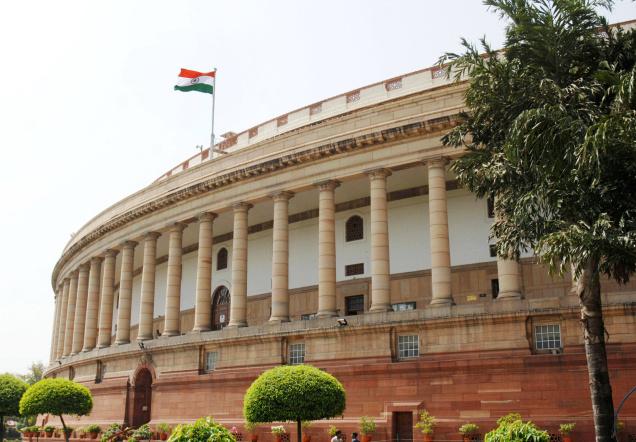
NEW DELHI (TIP): BJP and Congress MPs had an angry exchange over Nepal on May 11 after BJP member Nishikant Dubey mounted a sharp attack on the country in the Lok Sabha. Dubey said Nepal, a “small country which is dependent on India” is now seeking to “threaten” India after getting support from China. Congress members, led by Jyotiraditya Scindia, protested against Dubey’s remark, saying a neighbouring country should not be spoken about in such language. This led to counter protests by BJP, with Dubey alleging that it was the “wrong” policies pursued by former PMs Jawaharlal Nehru, Indira Gandhi and Rajiv Gandhi towards Nepal that had created the present problem. Raising the issue during zero hour, Dubey also made a strong pitch for erecting a fence along the Indo-Nepal border. Dubey said the porous border had turned Nepal into a “nerve centre” of anti-India forces, “which was also witnessed during the IC-814 hijack”. The attack came in the backdrop of a slide in Indo-Nepal ties in recent months.(PTI)
Tag: BJP
-

Degree Fake, says AAP; BJP says Degree is genuine; DU Registrar admits minor errors
NEW DELHI (TIP):The ghost of PM Modi’s Bachelor’s degree from Delhi University seems not to die. Amid claims and counter claims on the genuineness of the degree, a lot of players are having a free play.
Delhi University Registrar on May 12 once again reiterated that Prime Minister Narendra Modi’s degree released by the varsity is genuine and termed the alleged discrepancies as ‘minor errors’. Registrar Tarun Das said the university had checked its records and it found that the PM’s degree was authentic.
DU Registrar Tarun Das said, “PM Narendra Modi’s BA degree of 1978 is totally genuine. Minor mistakes are common during paperwork.” Tarun Das also disclosed the enrolment number of Narendra Modi as well as his examination number. “Modi’s enrollment number was CC5594/74 and examination roll number was 16594,” said the DU Registrar.
Highlighting the alleged “discrepancies” in the graduation degree and marksheets of the Prime Minister, AAP leader Ashutosh said the name and marks of the candidate were printed in Modi’s marksheets released by the BJP.
-

Raghuram Rajan unfit to be RBI governor, should be removed: Subramanian Swamy
NEW DELHI (TIP): BJP leader Subramanian Swamy on May 12, suggested that Reserve Bank Governor Raghuram Rajan be removed from the post as he was responsible for “unemployment and collapse” of industrial activity. ” In my opinion, RBI Governor is not appropriate for the country. I don’t want to speak much about him. He has hiked interest rates in the garb of controlling inflation that has damaged the country,” he told reporters in Parliament House.
The Governor’s actions have “led to collapse of industry and rise of unemployment in the economy”, he said. “The sooner he is sent back to Chicago, the better it would be.”

Raghuram Rajan Rajan is the on-leave Professor of Finance at the University of Chicago’s Booth School of Business. After assuming charge as RBI governor in September 2013, Rajan gradually raised the short-term lending rate from 7.25 per cent to 8 per cent and had retained the high rates throughout 2014.
He kept the rates high, citing inflationary concerns despite intense pressure from the Finance Ministry and the industry for softening them with a view to boosting growth. The Governor began the process of lowering the rates in January 2015 and since then it has come down by 1.50 per cent to 6.50 per cent.
-

AgustaWestland Probe: Top Defense Officers under Lens
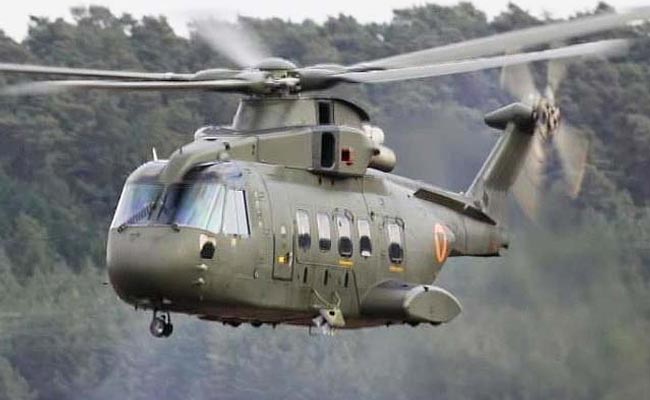
NEW DELHI (TIP): A day after the Enforcement Directorate (ED) sought “property details” of at least 10 senior officers of the defense ministry and the IAF, the CBI has asked the ministry of defense (MoD) to provide names, addresses and contact details of all senior officers, mostly above joint secretary rank, who served there between 2005, when the tender for 12 choppers was floated, and February 2010, when the contract was awarded to Anglo-Italian firm AgustaWestland for Rs 3,546 crore.
The CBI probe against MoD personnel is significant as the ministry, then under A K Antony, after an “internal examination” had said that “there was no wrongdoing on part of the ministry” and that “all laid procedures were followed as per the defense procurement procedure”.
A senior CBI official said, “We have written to MoD calling for all relevant records related to officers who took part in important meetings, handled important files and signed on them like AM (acquisition manager), JS Air (joint secretary air), DS (defense secretary) among others, who signed on the files and took the decision ultimately to award the contract to AgustaWestland.”
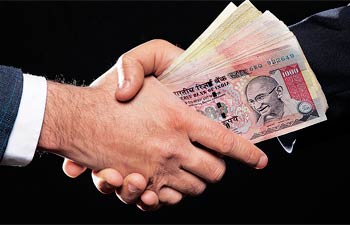
Designations of some senior ministry officials are mentioned against the bribe money allegedly paid by middleman Christian Michel, in a handwritten note which is part of an Italian court judgment. It is alleged that Indian officials, politicians and bureaucrats were paid Rs 360 crore in bribes for the deal.
The CBI is hoping to get a reply from MoD soon as the government has asked probe agencies to go into the root of the scam where bribes were allegedly paid up to the top level.
The Comptroller and Auditor General (CAG) had also slammed the defense ministry and said it modified some crucial parameters of operational requirements of the helicopters in 2005 to favor the Anglo-Italian consortium, which became the sole vendor as a result. The CAG had observed that in January 2006, when acceptance of necessity was granted, the projected cost was Rs 793 crore for 12 helicopters. The cost negotiation committee, however, recommended Rs 3,726.96 crore in February 2009, and a year later, the MoD concluded the contract with AgustaWestland and signed the deal for the same amount.
ED has written to the ministry seeking “property details” of at least 10 senior officers, the abbreviations of whose designations are mentioned in Michel’s note as ‘DCH’, ‘PDSR’, ‘DG Maintt’, ‘FTT’, ‘DS’, ‘JS Air’, ‘AFA Air’, ‘DG Acq’.The handwritten note, being treated as evidence by the CBI and the ED, mentions that 6 million euros were for AF (air force), 8.4 million euros for BUR (bureaucrats), 3 million euros for AP (alleged to be Ahmed Patel) and 15-16 million euros for the ‘Fam” (believed to be S P Tyagi’s family— cousins Sanjeev, Rajiv and Sandeep Tyagi). Source: TOI
No evidence to link politicians with AgustaWestland bribes: Italian judge
On a day that the BJP and Congress traded charges in Parliament regarding the controversial AgustaWestland deal, the Italian judge who delivered the verdict in the VVIP chopper said there was no ‘direct evidence’ linking any Indian politician with alleged kickbacks.
There is a “possibility or probability but there is no direct evidence,” Judge Marco Maria Maiga, who delivered the verdict against Italian middlemen and senior officials of the chopper company, told TV channels, as per reports.
Maiga, a judge of a Milan court, said this when he was asked whether he believed that bribes were offered to Indian politicians by Italian middlemen.
He maintained that his verdict was only against senior officials of the chopper company and middlemen who had paid bribes to some officials in India and that it was up to Indian investigators to follow the money trail.
“Identifying the (Indian) individuals was not in for judgment for Italian courts. Well, we have to clarify that the object of our judgment was on two Italian businessmen and their indictment,” he said, as per PTI.
-

NO EVIDENCE TO LINK POLITICIANS WITH AGUSTAWESTLAND BRIBES: ITALIAN JUDGE
On a day that the BJP and Congress traded charges in Parliament regarding the controversial AgustaWestland deal, the Italian judge who delivered the verdict in the VVIP chopper said there was no ‘direct evidence’ linking any Indian politician with alleged kickbacks.
There is a “possibility or probability but there is no direct evidence,” Judge Marco Maria Maiga, who delivered the verdict against Italian middlemen and senior officials of the chopper company, told TV channels, as per reports.
Maiga, a judge of a Milan court, said this when he was asked whether he believed that bribes were offered to Indian politicians by Italian middlemen.
He maintained that his verdict was only against senior officials of the chopper company and middlemen who had paid bribes to some officials in India and that it was up to Indian investigators to follow the money trail.
“Identifying the (Indian) individuals was not in for judgment for Italian courts. Well, we have to clarify that the object of our judgment was on two Italian businessmen and their indictment,” he said, as per PTI.
-

WHY THE BJP MATTERS
The question I have been asked most often over the last two months is this: what do you think of Donald Trump?
It is easy to answer: I do not think of Donald Trump. But the question I have been asked most often the last twenty years is far more difficult to evade: ‘What do you think of the BJP?’ Because I do think of the BJP (Bharatiya Janata Party) quite often, and I am afraid that what I think of the BJP is different from what both its Hindutva supporters and its Leftist opponents think of it.
While most Hindutva supporters celebrate the BJP as the epitome of ‘Hindu’ -which they then equate with ‘national’ -values, staunch Leftists critique the BJP as a proto-fascist party, or at least a party with fascist tendencies. On the other hand, I see the BJP as a collocation of conservative, capitalist, neo-liberal, cultural nationalist, religious and reactionary groups and tendencies. Some of these can assume a proto-fascist expression, but then so could communism, under people like Stalin.
The fact remains that the BJP has traditionally collected various groups, and what Leftists see as its ‘fascist’ face is still only an aspect of a vast collocation of political ideologies. True, all these ideologies are at least conservative and ‘Right-leaning’. But that cannot be used to dismiss the BJP because all modern democracies contain Left- and Right-leaning parties.
[inlinetweet prefix=”WHY THE BJP MATTERS” tweeter=”” suffix=””]Space for an alternative[/inlinetweet]
Actually, one can argue that, to an extent, the rise of a party like the BJP in postcolonial India was inevitable and necessary. That is so because Third World countries usually gained independence under a Leftist umbrella. This was partly historical: Leftist ideologies were ascendant in the period, c. 1940s to 1970s, when most of these Third World countries shook off the yoke of European colonization. This was also partly ideological: as the pre-Independence history of both ‘Hindu nationalist’ and ‘Islamic’ groups in India shows, Rightist parties were often complicit in colonial politics.
Hence, when the postcolonial nation -India, Turkey or Egypt – is born, it is born under a sky that rains modern ‘Leftist’ rhetoric. The realities on the ground might not be socialist or even Leftist, but the rhetoric always tends to be. This is very different from the trajectory of modern nations in the First World: these have almost always grown from a monarchical position to that of conservatism and economic liberalism, followed by socialist and Leftist critiques. The BJP in India was inevitable because a large political space – conservative, economically liberal, religious, reactionary -which existed, for better and for worse, had little open representation in the Indian Parliament.
Of course, the Congress was there and it was always a party of the middle – as Leftists and Rightists note, both in terms of accusation. Despite the Congress being a party of the middle, it retained a Leftist rhetoric. The BJP grew partly in response to this rhetoric, and partly because the rhetoric was often empty. But again, the matter is not as simple as my friends on the Left sometimes assume.
For instance, from the time of Indira Gandhi onwards, the Congress stopped being a cadre-based party. It became a top-heavy party, and has remained so. Various communist parties were cadre-based, but they either had limited following or took a turn towards violent revolutionary politics -which made their cadres disappear as a democratic force. In this light, it is difficult to deny that the BJP is the most obviously cadre-based party in India today.
The fact that the BJP has Narendra Modi as its face and the Congress has Rahul Gandhi is proof of this fact. It has become very difficult for party members to rise up the Congress hierarchy especially after Nehru, while this is relatively possible in the BJP. I recall Congress offices in small towns like Gaya even as late as the 1970s: they used to hum with activity and people. Today only BJP offices retain that atmosphere. In this sense again, it is problematic when the Left dismisses the only cadre-based national political party in India as ‘proto-fascist’.
[inlinetweet prefix=”WHY THE BJP MATTERS” tweeter=”” suffix=””]The enemies within[/inlinetweet]
And yet the dangers are there. The BJP is running the danger of suppressing its conservative, economically liberal and even culturally nationalist components in favor of a reactionary religious trend that can, and sometimes does, assume fascist dimensions. The current confrontations in certain national universities are an indication of this, as well as the tendency to resort to violence and threats against its opponents.
I have always believed that there was the need for a party like the BJP in India, because there is always a need, at least in the current phase of human history, for parties that espouse conservative, economically liberal, cultural nationalist and even religious perspectives. That is one side of the political divide, and on the other side there is just as much of a need for parties that are called Leftist – socialist, Marxist, culturally liberal, Green, etc. This is a necessary argument that can never be terminated – except by violence on one side or the other.
Today, some segments in the BJP are permitting this violence to take place, and hence they are targeting those essential hotbeds of free discussion, universities. This is a sad and dangerous trend. I can see why academics are worried: from Nazi Germany and Stalinist U.S.S.R. to Rightist Chile, Argentina, etc., the takeover of fascist groups from within otherwise legitimate ‘Leftist’ or ‘Rightist’ party positions always commenced with an attack on students, academics and universities.
If I were a BJP voter, I would be worried about the soul of my party. The condition of India in the near future might come to depend on the ability of the BJP to negotiate its own complex nature.
(Tabish Khair’s new novel, Jihadi Jane, will be published in India in June)
-

A Rebuff in the Hills | Nainital Bench corrects an aberration
In setting aside the Modi government’s March 27 decision to bring Uttarakhand under President’s rule, the Uttarakhand High Court has rolled back a blatant misuse of Article 356. In restoring the Harish Rawat government and directing a floor test on April 29 in the Uttarakhand Assembly, the High Court has, in effect, enunciated a sound jurisprudential principle: the courts cannot become legal enforcer of political illegalities. The imposition of President’s rule just a day before the Assembly was set to have a floor test was a brazen misapplication of Article 356. No one need be surprised if the Modi government chooses to challenge the High Court judgment in the apex court. The Modi government is too enamored of its political calculations to take a well-deserved rebuff lying down.
Besides quashing the presidential proclamation, Chief Justice KM Joseph has done the polity another good turn. He insisted on reiterating a fundamentally sound principle: the President has no absolute power. Chief Justice Joseph made it abundantly clear that any exercise of presidential authority under Article 356 is subject to judicial review. This was a principle well-settled in the Bommai case and it is inexplicable that the NDA government should have invented the argument of ‘political wisdom of the President’ to circumvent the Bommai case judgment.
The High Court should be complimented for seeing through the inherent jurisprudential mischief in the Centre’s argument. The President, in the constitutional scheme of things, has no ‘wisdom’ in such matters. All his ‘wisdom’ is circumscribed by the ‘aid and advice’ he receives from the Council of Ministers, headed by the Prime Minister. The decision to use – or, rather misuse – Article 356 in Uttarakhand was a political decision of the Modi government. The Thursday afternoon judgment also pre-empted the possibility of the Modi government revoking President’s rule before the High Court could rule on the constitutionality of the March 27 proclamation. Only a few months ago the BJP had first abused Article 356 to dismiss a Congress government in Arunachal Pradesh, impose President’s rule, and, then used the interregnum to maneuver to install a new government before Parliament would get a chance to vote it down. This was nothing but constitutional chicanery. The Thursday verdict needs to be applauded as politically fair and constitutionally sound.
-

UTTARAKHAND HC QUASHES PRESIDENT’S RULE
NAINITAL (TIP): In a historic decision, the Uttarakhand High Court, on April 21, set aside the proclamation of President’s rule in the state and revived the Harish Rawat-led Congress government, asking it to prove its majority on the floor of the Assembly on April 29.
In a scathing indictment of the Central Government, a Division Bench comprising Chief Justice
KM Joseph and Justice VK Bist ordered, on a petition filed by Rawat, that the imposition of President’s rule on March 27 under Article 356 of the Constitution was not in consonance with the law laid down by the SC in such cases.The judges dictated the ruling in the open court after the counsel for the Centre failed to give an undertaking that the government would not revoke President’s rule for a week till the court gave its verdict. The petitioner’s counsel had said there were apprehensions that the Centre would revoke President’s rule for forming a BJP-led government in the state.
The Bench made strong observations on the Centre resorting to Article 356 of the Constitution in the case. “Be it suspension or dissolution, the effect is toppling a democratically elected government. It breeds cynicism in the hearts of citizens who participate in the democratic system and also undermines democracy and the foundation of federalism,” the Bench said.
Allowing Rawat’s petition, the court restored status quo ante as prevailing on the day of imposition of Central rule. It also upheld the disqualification of nine rebel Congress MLAs by the Speaker and said their case, pending with a Single Bench, would be heard and decided without any prejudice.
The judges observed that that the material considered for imposing President’s rule had been found wanting. “When stakes are as high as this, should we throw out the petitioner on this ground? (of alleged suppression of fact that division of votes was sought after the Appropriation Bill was passed). What is at stake here is not just the petitioner’s government but democracy at large,” the Bench.
The Centre had argued that the petitioner had not disclosed the representation by BJP MLAs to the Governor seeking division of votes.
Ordering restoration of the Rawat government, the court said he must necessarily obtain a vote of confidence by holding a floor test on April 29.
“The present case, which was set into motion with March 18 as day one and saw a proclamation being issued in less than 10 days, brings to the fore a situation where Article 356 has been used contrary to the law laid down by the apex court. The material (considered for the proclamation) has been found wanting and justifies judicial review interfering with the proclamation.
“However, we must not be understood to have said that a solitary instance would not contribute for imposing Article 356,” the Bench said. It turned down an oral plea by the Centre’s counsel for a stay on the judgment to move the Supreme Court. “There is no President’s rule now. The government has revived. We had told you to give us time (to write the verdict). But you forced us to pronounce it today. We had said we will not allow (ourselves) to be taken for a ride. We have no objection to being overruled. You go to the Supreme Court and get it (judgment) stayed,” the court said.
Rejecting the government’s argument against the scope of judicial review of President’s decision in the case, the Bench said: “Attainment of collateral purpose, though it may appear to be to secure legitimate purpose, is inadmissible”. It said the issue must be seen on a larger canvas as India was a union of states with the Centre and states sovereign in their respective spheres and Article 356 must be used as a last resort with “greatest care.”
Earlier in the day, the High Court said it would be a travesty of justice if the Centre recalled its order imposing President’s Rule and allowed someone else to form government. With regard to Article 356, the Bench observed: “It is to be remembered that power under Article 356 came in for considerable misuse over the years. Incidentally, we must note that the party to which the petitioner belongs has not covered itself with glory with regard to its actions in the first 40 years of Independence which saw nearly 100 dissolutions.”
-

Punjab Foodgrain Scam: Grain vanishes from Punjab godowns
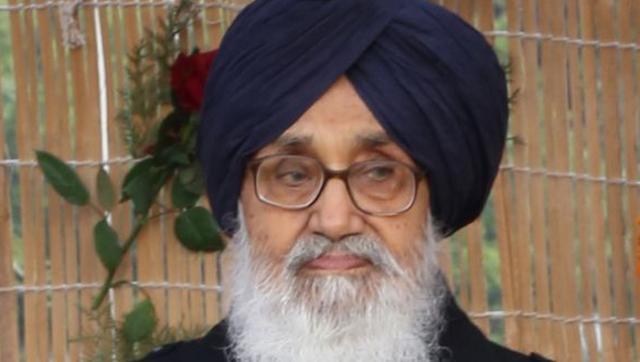
MUMBAI (TIP): And now another scam. This time it is foodgrain scam. And it is the Punjab government, a partner of BJP in Punjab and at the center which is involved in a massive scam which may cause a splotch of red ink on bank balance sheets. The scam is in the form of disappearing food stocks in Punjab godowns which threatens to burn a Rs 12,000-crore hole in the books of a cartel of 30 banks and embarrass the Parkash Singh Badal administration, reports say.
The Reserve Bank of India (RBI) has ordered all banks with exposure to the Punjab government’s food borrowing program to provide for potential losses after discovering that food grain supposed to have been bought with bank funds has vanished from godowns.
At least four people familiar with the matter said RBI’s directive has alarmed banks who now have to provide at least 15% of the loans, or a total of Rs 2,250 crore, in March and June quarters.
State Bank of India Chairperson Arundhati Bhattacharya said, April 18, the RBI has asked the top lender to make provisions for possible losses on account of the unfolding foodgrain scam in Punjab.
“Yes,” Bhattacharya told reporters when asked whether the regulator has asked the government-run bank to make provisions in the case. However, she did not elaborate.
Asked about the banks’ total exposure to the Punjab government, she said “I don’t have the exact numbers. We need to get those.”
Earlier in the day, Minister of State for Finance Jayant Sinha said the government is working to resolve the issue.
“We are working with the regulators as well as the banks and various other government agencies to ensure the matter with respect to the food stocks in Punjab is satisfactorily resolved,” Sinha told reporters.
Normally, all state government borrowings are sovereign and banks have been telling the regulator that there is no need to provide for potential losses. But the regulator has insisted on this move, underlining once again RBI Governor Raghuram Rajan’s take-no-prisoners approach when it comes to treating bad loans.“RBI does not agree,” one banker said. “It is not (convinced) about the recoverability of the receivables. Hence, it has asked banks to make provisions.”
The development, a bolt from the blue for the banking system, is also a huge embarrassment for the Badal government whose popularity is under pressure from a resurgent Aam Aadmi Party (AAP) and Congress. The state goes to polls in 2017.
The Akali Dal, a partner in the ruling NDA at the Centre, runs the state in alliance with BJP. The state government is believed to have told banks and RBI that there is no deficit and it would be able to repay the loans. An anguished banker told ET that his bank’s entire profit may be wiped out by the provisioning. “All the parties involved, state government, Centre and RBI, were aware of the deficiency — the stock versus the loan amount, but it is always the banks which have to pay the price. Why can’t the government set up an enquiry about the missing stock?”
Although the issue of ‘deficient stocks’ in Punjab’s granaries have been discussed for months, bankers did not think of provisioning as the loans were considered ‘zero-risk’ since they went into the state government’s books.
“There has been an issue of reconciliation between the Food Corporation of India (FCI) and Punjab state government, and till the matter gets resolved, RBI has told us to make 15% provision on the food credit given to Punjab government,” said a banker who preferred anonymity.
A mail sent to the Reserve Bank of India on April 20 evening did not elicit response. The central bank and commercial banks were shut for a national holiday on Thursday, April 21, When contacted over phone, FCI Chairman Yogendra Tripathi declined comment saying the Punjab government officials ‘will give a better clarity’.
The issue is being looked at, said an official at the state food, civil supplies and consumer affairs department who did not want to be identified. “There has been no siphoning off of grain stock. The money being stated is the compound interest of the past few years,” the official said.
Loans in the Indian banking system are divided into two broad categories — food credit and non-food credit. Food credit is mostly through FCI which is a canalizing agent for the states in buying grain from the market. While non-food credit is at Rs 71lakh crore, food credit is at Rs 1lakh crore, RBI data shows.
For food purchases, banks lend to FCI and foodgrain are stored in godowns in each state. The monitoring of the godowns and the payment of interest on the loans are done by the state government.
Meanwhile, Congress Party on Friday, April 22 demanded a high court-monitored, Central Bureau of Investigation (CBI) inquiry into the alleged foodgrain scam in Punjab.“The Akali Dal-BJP government in Punjab has the dubious distinction of first emptying the coffers of the state and now even foodgrains are disappearing from the state. This is a very serious situation as it is connected with the food security of the country,” said Congress spokesperson Manish Tewari at a press conference here.
“Punjab is a producing state from where procurement takes place, a large amount of storage takes place and if the reports of disappearance of foodgrain is true, it calls for a court-monitored CBI enquiry. This definitely calls for at least a HC-monitored CBI inquiry,” he added.
With inputs from Economic Times & PTI
-

A BABA FOR OUR TIMES
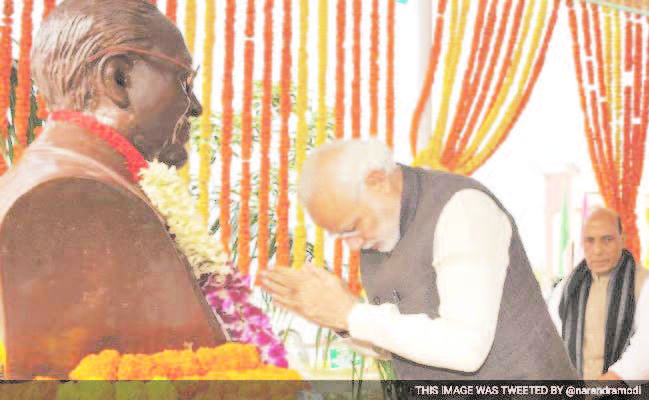
Yesterday, April 14, we did Baba Saheb. And did him copiously. The Prime Minister was at some place in Madhya Pradesh, leading the charge, converting the occasion, with his by now familiar flamboyance, into yet another “event”. The rest of the political crowd – from the Central Hall to Nagpur – too jostled, to be seen as paying tributes to Baba Saheb. Earlier, weeklies had pitched in with cover stories, newspapers had published learned articles, and Doordarshan had the obligatory discussion about Baba Saheb’s ‘relevance’. The whole shebang.
The ruling party is seen as keen on appropriating Baba Saheb. It has conspicuously failed to gain anything from resurrecting Sardar Patel – it begot only a Hardik Patel in Gujarat. Then, it shifted its attention to Netaji Subhas Chandra Bose – but, that sleight of hand, too, is not paying any dividends in West Bengal.
We are told that the ruling party is now run by superb super-managers, who are not encumbered by any kind of ideological hang-ups, and that they would pry loose the Dalit vote from the presumed stranglehold of Behen Mayawati and her Bahujan Samaj Party. After all, all roads and all calculations must lead to the battlefield of Uttar Pradesh. These managers, being the practical men that they are, would pretend to be deeply in love with Baba Saheb as long as it helps them breach that all-important Dalit vote-bank.
That is good, old-fashioned politics. The BJP’s rivals’ are free to accuse it of insincerity and worse. And, however clever the BJP bosses may be feeling about their cultivated cynicism, the great Mahar must be having a good laugh at this entire hullaballoo about him.
How things have turned around! It was not that long ago – in 1997, to be precise – that a leading BJP ideologue was made to feel encouraged to launch a skillfully vicious attack on Baba Saheb. Arun Shourie, the rising star in the BJP’s firmament, had produced a book titled “Worshiping False Gods – Ambedkar, and the facts which have been erased”. With his characteristic brilliant acidic pen, Shourie “exposed” Ambedkar as undeserving of any honor, leave alone national veneration. He bemoaned bitingly: “Indeed, no one is idolized these days the way he is. His statue is one of the largest in the Parliament complex. His portrait in the Central Hall of Parliament is larger than life. The Bharat Ratna has been conferred on him posthumously, a national holiday has been decreed in his honor. Postage stamps have been issued in his honor. Universities have been named after him. His statues – dressed in garish blue, holding a copy of the Constitution – have been put up in city after city: it is a fair guess that by now they far outnumber those of Gandhiji. Politicians, activists and other notables flock to these on several anniversaries of his – on the anniversary of his birth, on the anniversary of the day on which he converted to Buddhism, on the anniversary of his parinirvana, the term which must compulsorily be used now for his death.”
After this breathtaking assault on Ambedkar’s iconic reputation, Shourie was rewarded with a Rajya Sabha seatfrom Uttar Pradesh. He was immediately inducted into the Vajpayee government and became the Prime Minister’s most favorite minister. That was the time when the BJP strategy of electoral mobilization was predicated on an upper-caste consolidation. The party was still on a post-Babri Masjid demolition roll.
It is a delicious irony that the same party finds itself having to go out of its way to worship the same “false god.” And, pray, why not? As a party that wants to emerge as the pan-India alternative to the Congress, it has to necessarily break free of its self-preferred prejudices and preferences. And, there is no reason why the Dalit vote should be allowed to remain a captive of Ms Mayawati in perpetuity.
She has arguably performed her historic role, giving the Dalits a sense of empowerment, at least in Uttar Pradesh, and has forced every other political party, Manuvadi or not, to do business with her. She, in turn, was coopted by Vajpayee to campaign for the BJP in the Gujarat 2002 Assembly elections, after that horrible massacre of Muslims. Ever since, at least symbolically, the Dalits are being sought to be enlisted in the enduring violent confrontation with the Muslims.
Now, Bala Saheb must be enjoying a moment of satisfaction that he is being sought to be venerated by those who were not prepared to share power.
Even Organizer, the RSS mouthpiece, hails him as the “Ultimate Unifier”. The good doctor would be having a hard time making sense of his humbug on the Organizer cover: “Dr Ambedkar is erroneously projected as a divisive figure by certain vested interests but recognition of his contribution will finally prove to be unifier for Bharat.”
Maybe, we are firmly in the Modi era. The Prime Minister, we are told, is an unsentimentally practical man, unwillingly to be slowed down by any kind of conviction, ideological or otherwise, and is driven purely by the “only whatever works” mantra.
Glibness is not without its use in public life. But surely there will be life after the UP 2017 Assembly elections. And, surely the ugly realities of village India would not disappear just because the Prime Minister has visited Mhow. There remains that basic contradiction between democratic rhetoric and the fundamentally unequal nature of the Hindu social order. Even after sixty years of egalitarianism, this contradiction continues to gnaw at the vitality of our national endeavor.
On his part, Baba Saheb was as clear as he could be: “Hinduism does not appeal to my conscience. My self-respect cannot assimilate Hinduism.… Why should you live under the fold of that religion which has deprived you of honor, money, food and shelter?”
There is still no easy answer to that question. And, if he were making the same argument today, he would have added at least three stipulations: a political partnership, accommodation in the market place, and a social voice. He would have heartily endorsed Rohith Vemula’s mother’s decision to embrace Buddhism.
For the Sangh and its political affiliate, the BJP, this wooing of the Dalits is a game, as a part of consolidation of the “Hindus”. After all, only a consolidated “Hindu samaj” can confront the Muslims and their global Islamic inspiration. That is why the Rohiths and the Kanhaiya Kumars are to be deeply distrusted and de-legitimatized because they believe in the unity of the oppressed, the Dalits and the Muslims, and other underdogs. That is why the ABVP must confront the Ambedkar students’ associations on campus after campus.
The energies, imagination and creativity of the Dalit segment remain untapped. If the clever politician pretending to be in love with Baba Saheb makes promises, the consequences need not be unhealthy. Because concessions once made, claims once conceded, and consciousness once aroused, cannot be rolled back. Baba Saheb may still have the last laugh.
-

A tango with US
US Defense Secretary Ashton Carter’s visit had promised more than it delivered. Or so it appears from the publicly released outcomes of his visit. At the last moment, India appears to have hung back from inking an agreement to allow access to each other’s military bases. But the decade-long magnetism for each other in the security sphere remains undiminished. Plans remain on course to jointly develop an aircraft carrier, a Bill in the US Congress seeks to bring India on a par with NATO in the transfer of sensitive defense technology and equipment while South Block is weighing an American proposal to assemble fighter planes in the country. Defense trade also remains vibrant and Indian orders have helped keep the American military-industrial complex humming.
The defense agreements, the proposed legislation and plans to assemble American fighter planes in India add up to a sharp turn in India’s foreign policy. The implications of marching step-in-step with the Americans will resonate far and wide in India’s extended neighborhood. Moscow has already sent a warning shot by threatening to stop cooperation in nuclear submarines if the Indian tango with the US gets too intimate. China is already miffed with a US-India joint statement -the honorarium for Barack Obama gracing the Republic Day celebrations – that all but speaks of a lockstep by the two in South China Sea. As a result, Chinese plans for massive investment in India have disappeared in thin air.
While the US policymakers are forthcoming on their expectations of a quasi-military alliance with India, there is a deafening silence from the Indian side. Parliament should have dissected and analyzed the policy implications like the spirited debates that took place on the Indo-US nuclear agreement. The Congress and the BJP are convinced that Western help is indispensable for India to achieve big power status. They differ only on the extent of flexibility in such a partnership. A public debate and willingness to enlist the public endorsements would only deepen the sustainability of our security policies.
-

Strategist wants Priyanka as UP poll mascot
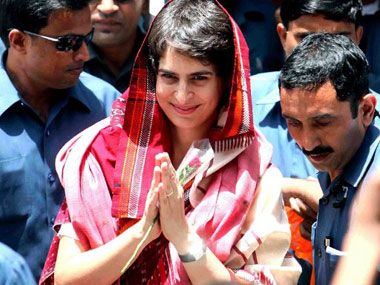
NEW DELHI (TIP): Backed by an internal survey that promised positive outcome, poll strategist Prashant Kishor held discussion with the Congress’s first family of Gandhis on the prospects of projecting Priyanka Gandhi Vadra as the face for 2017 UP polls.
About a fornight back, Kishore, hired by the Congress to work out a strategy for UP and Punjab elections after he delivered positive results for the JD-U in Bihar, he had a meeting with the Gandhi family in the national capital where Sonia and Rahul were also present. In that close door meeting, Kishore proposed the idea of pitching Priyanka in the elections as he felt that she would be bring good results for the Congress, said sources aware of the development.
Kishor, who had emerged as a backroom election manager after he aided Narendra Modi’s campaign, shared details of an internal survey with the Gandhis that indicated a ground swell for Priyanka. She is, however, reluctant to take the plunge into the electoral politics and is content with managing the constituencies of her mother Sonia Gandhi and brother Rahul in Uttar Pradesh. Sources said the Gandhis neither rejected nor gave their consent to an option of searching a credible face for the Congress that can be the joint mascot if the party decides to adopt Bihar model of having alliance to take on ruling Samajwadi Party and opposition BSP and BJP in a multi-cornered contest.
-

Jaitley targeted by Congress, AAP on Panama Papers leaks
NEW DELHI (TIP): Congress and AAP on April 7 targeted finance minister Arun Jaitley on the Panama Papers issue, demanding a judicial probe into the allegations about some Indians setting up offshore entities in a tax haven and asking him to “recuse” from dealing with the matter.
The parties made their demands arguing that otherwise there cannot be a fair probe into reports linking sports promoter Lokesh Sharma to alleged entities floated in the tax haven of British Virgin Islands (BVI).
The demands came in the wake of reports in the Indian Express based on an investigation by it as well as International Consortium of Investigative Journalists (ICIJ) alleging that Sharma had two companies “of his own” registered in BVI.
However, Sharma, managing director of sports management major Twenty First Century Media (TCM) Pvt Ltd, said, that the companies in question “have been set up legitimately with due processes as provided by the laws of India.”
Besides raking up Sharma’s case, Congress leader Jairam Ramesh alleged at a press conference that ICIJ had done another investigation a year ago alleging that Abhishek Singh, BJP MP and son of Chhattisgarh chief minister Raman Singh, was holding offshore assets, a charge denied by the MP.
Ramesh demanded that Singh and his son should quit their posts, citing the case of Iceland Prime Minister who has stepped aside after his name figured in the Panama Papers.
Stepping up the Congress offensive on the leakage of the Panama Papers linking some 500 Indians to entities in the tax haven, Ramesh demanded that Jaitley “recuse” himself from any probe into the matter in the wake of reports about Sharma, whose “closeness to some senior BJP leaders is well known”.
Arvind Kejriwal’s AAP, which has a running battle with Jaitley, latched on to the Panama Papers leak to target Jaitley and demanded his resignation.
Reacting to the charges levelled by Congress and AAP, Sharma said it was unfortunate that a political twist was being given to investments which were “completely personal, totally legal and declared by us in our reporting to statutory bodies”.
-

JD (U) – RLD MERGER EYES ALLIANCE WITH CONGRESS IN UP
NEW DELHI (TIP): The forthcoming merger of Ajit Singh’s RLD with Nitish Kumar-led JD(U) is just the beginning of a larger experiment that may see the JD(U) and Congress trying to replicate a Bihar-like grand alliance in UP for the assembly elections next year, according to leaders involved in behind-the-scene strategising.
While RLD’s merger with JD(U) will lead to Singh occupying a senior position in the merged party at the national level, his son and former MP Jayant Chaudhary may be the UP unit president of the party, sources said. There are a number of political factors and interests that make the coming together of the merged JD(U) and Congress to form an alliance for UP poll inevitable.
Both parties recognise their mutual need to pool their resources to take on entrenched rivals such as the SP, BSP and BJP. Further, after SP leader Mulayam Singh Yadav ‘spoiled’ the Janata Parivar merger attempts last year, Kumar, Singh and Congress share a political aversion to Yadav, who also fielded SP candidates against the grand alliance in Bihar.
Further, the traditional rivalry RLD and Congress share with BSP makes their coming together to form an anti-BJP platform inevitable, a source said. Incidentally, Kumar’s campaign strategist-turned-advisor Prashant Kishor is the campaign strategist of Congress in UP.
“The merger is meant to expand our party by reinforcing the combined interests of the two parties and position effectively in the UP polls by tapping the joint strength,” said Sharad Yadav, who is set to step down as JD(U) president. Explaining his decision to step down from the presidentship, Yadav said: “I have completed my third consecutive full term as JD(U) president. Last time the party constitution, which had fixed cap on two consecutive terms for party president, had to be amended to extend my term. I don’t want to amend the constitution again, therefore, have chosen to step down.
-

‘India for Hindus only? Leave religion out of it | Bombay High Court questions the agenda
Nagpur, April 6 | Expressing anguish over the move to recite “Hanuman Chalisa” at an AIDS awareness programme, the Bombay High Court has asked the BJP-ruled Nagpur Municipal Corporation if, according to it, “India is for Hindus only”.
The Nagpur Bench, while hearing a PIL, expressed strong reservations over the plan to recite “Hanuman Chalisa” at its AIDS awareness event, in association with Poddareshwar Ram Mandir Trust, here tomorrow.
“Why only recital of Hanuman Chalisa and why not from Quran, the Bible or other religious literature? What is the nexus of AIDS awareness and Hanuman Chalisa recital? Is it only Hindus who contract AIDS? Is chanting of Hanuman Chalisa the only remedy for eradication of this deadly disease?” a Division Bench said.
“If people can come for this event, they will also come for the recitation of the Quran and Bible,” they observed.
The Judges disposed of the PIL after both the NMC and event convener agreed to disassociate with the two events.
They asked for an hour’s gap between the AIDS awareness event and the recitation, which over 1.5 lakh people are expected to attend. — PTI
-

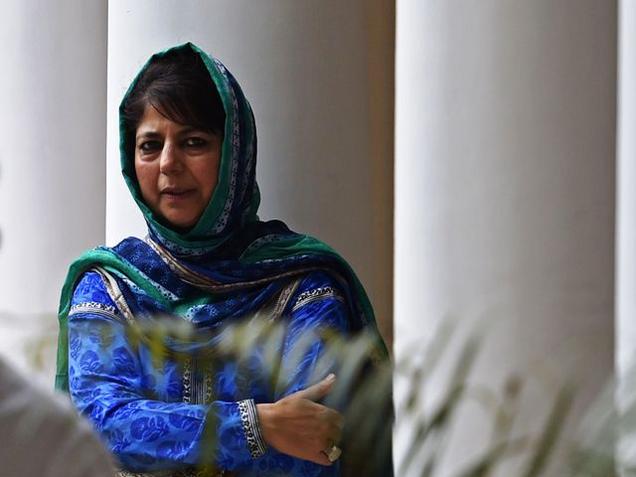
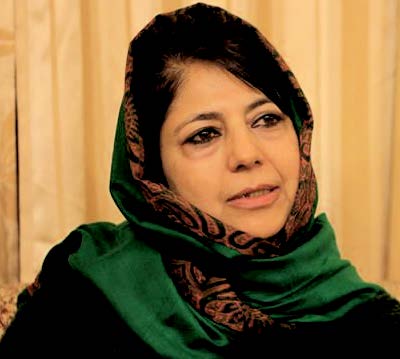
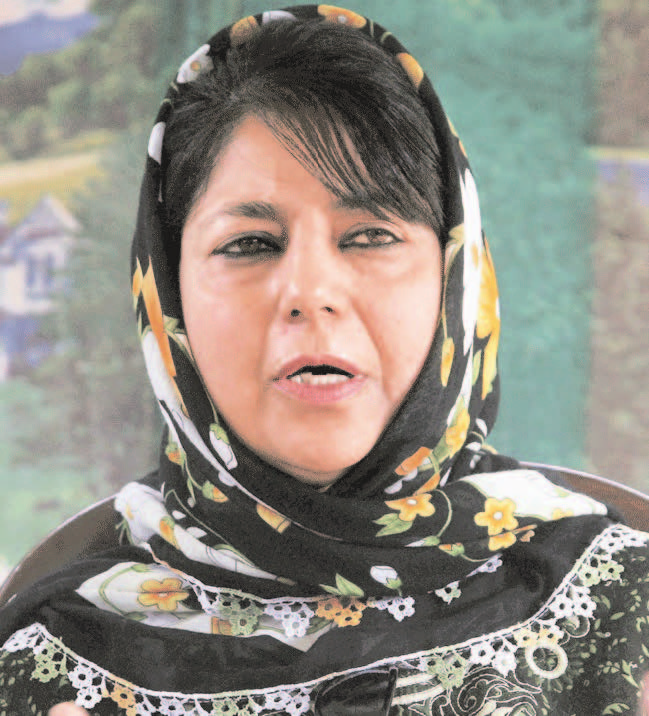
Mehbooba to be sworn in as first woman CM of J-K on April 4
SRINAGAR (TIP): PDP President Mehbooba Mufti will be sworn in as the first woman Chief Minister of Jammu and Kashmir on April 4, a party leader said.
“Mehbooba Mufti sahiba will be sworn in as Chief Minister of J-K on April 4,” PDP leader Amitabh Mattoo said here. Mattoo, who worked as an advisor to former chief minister Mufti Mohammad Sayeed, expressed the hope that 56-year-old Mehbooba would usher in a new era of peace and prosperity in the region.
Meanwhile, sources in PDP and its alliance partner BJP said they have also conveyed the mutually agreed date for the swearing-in ceremony to state Governor N N Vohra.
The date for the oath ceremony of the new cabinet was decided after deliberations between the leadership of both the parties, they said.
Asked whether there were any differences between the coalition partners which led to delay in the swearing-in ceremony, the sources said there were no differences but deliberations between alliance partners happen and they take time. PDP and BJP had staked claim for government formation on March 26, two days after Mehbooba was elected as PDP’s legislature party leader.
After the death of her father, who headed PDP-BJP coalition government for 10 months from March 1, last year until his death on January 7, this year, Mehbooba had been reluctant to take over as CM of the PDP-BJP coalition government.
-

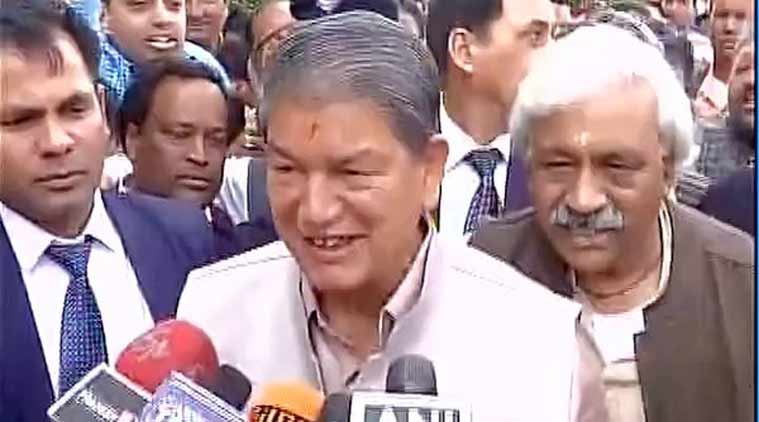
Ugly politics in Uttarakhand: No participant left with clean hands
In the unfolding Uttarakhand drama all participants emerge diminished. It was a problem borne of rebellion in the Congress. Apparently, Chief Minister Harish Rawat, now facing horse-trading charges, had lost majority with nine MLAs parting ways with the Congress. The Speaker did not agree to their demand for a division of votes on the appropriation Bill, claims the BJP and asks on what ground the MLAs were suspended by the Speaker. The floor test would have determined whether the Congress government enjoyed the majority. However, an impatient BJP leadership imposed President’s rule, which has invited all-round criticism and Arun Jaitley’s arguments just don’t add up.
If the Governor had evidence of a “breakdown of constitutional machinery”, as is made out to be, why would he call for a floor test? Where is the so-called “breakdown of constitutional machinery?” If the Speaker says the appropriation Bill has been passed, his ruling is final and it may be challenged subsequently. Whether a Bill is passed or not, whether a government enjoys a majority or not -these are questions which can be answered only on the floor of the House as has been decided by the Supreme Court in the SR Bommai case. Such issues cannot be settled in Delhi. When all interested parties play such dirty politics, the country looks up to the President to maintain the high standards his position demands. The President could have deferred the signing of the proclamation for Central rule and asked the BJP government to wait for the outcome of the floor test. However, he, disappointingly, did not rise to the occasion and spare the nation a few absurdities.
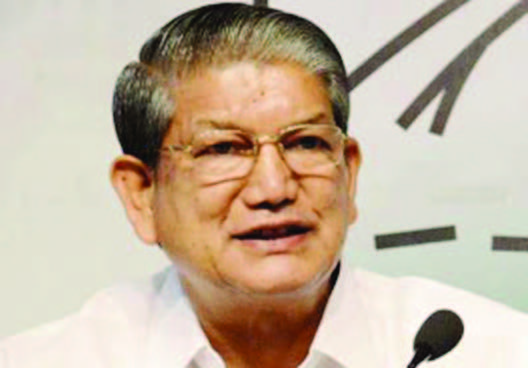
The sordid political drama could have been avoided if everyone had followed the rulebook. Now it has thrown up legal issues the High Court at Nainital is grappling with. While the single-judge Bench is right in asking for a floor test in keeping with the Supreme Court guidelines, whether he could interfere with a Presidential proclamation and revive a suspended government for a floor test is an open question which the Division Bench is expected to take up at the next hearing. The matter would end up in the apex court. Federal arrangements have suffered.
-

Mehbooba set to become first woman CM of J&K
JAMMU/NEW DELHI (TIP): Mehbooba Mufti was unanimously elected as PDP legislature party leader, with a senior leader saying that she is the PDP nominee for the Jammu and Kashmir Chief Minister’s post.
The 56-year-old PDP President was elected the leader of the legislature party at a meeting of PDP MLAs, MLCs and MPs at her residence in high-security Gupkar this evening.
Mehbooba is PDP’s nominee for the Chief Minister’s post, said senior party leader Muzaffar Baig after the meeting.
Mehbooba thanked the party legislators for showing faith in her leadership and electing her as the legislature party leader.
She also thanked PDP leaders and workers for their support to her during the nearly three-month-long stalemate over government formation in the state.
“Mehbooba Mufti is nothing without your support. I thank you for your support over the last three months,” she said.
Peoples Democratic Party (PDP) MLAs met in Srinagar today to take the final call regarding the formation of a new government in the state.
The meeting was to deliberate upon the continuance of the PDP’s alliance with BJP following party Chief Mehbooba Mufti’s meeting with Prime Minister Narendra Modi in New Delhi on Tuesday.
Soon after the meeting, Mufti had said that she would take a final decision regarding the government formation and PDP-BJP alliance after consulting her party MLAs in the legislature meeting.
Describing her meeting with the Prime Minister as positive, the PDP Chief had had expressed satisfaction about its outcome.
“I am satisfied after meeting Prime Minister Narendra Modi. It was a very positive meeting. A stalemate was going on for a long time. A final call will be taken after the legislature meet on Thursday,” Mehbooba told the media here.
Mufti met Prime Minister Modi at the 7 Race Course Road in a last ditch effort to renew a partnership between the PDP and the BJP to form government in Jammu and Kashmir.
Earlierb BJP said it was committed to the implementation of already agreed Agenda of Alliance. PDP is yet to come up with the reaction to the allegations of opposition parties.
State Governor NN Vohra has called separate meetings with PDP Chief and BJP State Unit President tomorrow.
Meanwhile BJP has clarified that it has not accepted any new condition from PDP for the formation of a new government in the state.
Talking to media persons in New Delhi, party General Secretary Ram Madhav said during her meeting with the Prime Minister thePDP Chief did not raise any demand.
-

ED attaches Rs 8 cr assets of HP CM Virbhadra Singh in money laundering case
NEW DELHI (TIP): Enforcement Directorate (ED) has issued orders for attachment of assets of Himachal Pradesh Chief Minister Virbhadra Singh worth about Rs 8 crore including a flat in a posh locality here, in connection with a money laundering probe case against him and others.
The agency issued a provisional attachment order here, under the Prevention of Money Laundering Act (PMLA), seizing a clutch of LIC policies, bank fixed deposits and two storeys of a building in south Delhi’s Greater Kailash-I area.
Official sources said the assets have been considered the “proceeds of crime” of money laundering and were created by using alleged tainted funds.
The agency, the sources said, has also issued prohibitory orders on these assets which are “valued at Rs 7.93 crore.”
An attachment order under PMLA is aimed at depriving the accused from obtaining benefits of their alleged ill-gotten wealth and the accused parties can appeal against the order before the Adjudicating Authority of the said Act within 180 days.
An unfazed Virbhadra Singh dubbed the ED order as a ” Holi gift” and that it was a “dirty political conspiracy of the BJP.”
“It is one more dirty political conspiracy by the BJP. Like the ED raid on the day of my daughter’s marriage, this is a gift on the occasion of Holi”, said on micro-blogging site Twitter.
Insisting that he is a fighter, Virbhadra said that he would continue to fight such politically motivated battles. “I have full faith in the judiciary of the country. Satyamev Jayate”.
Recently, the Delhi High Court had refused to grant any interim stay on money laundering proceedings initiated by the Directorate against the chief minister.
Justice Pratibha Rani had issued a notice to the ED seeking its response before May 31 on Virbhadra’s plea seeking stay on the proceedings and quashing of the money laundering case against him.
ED has filed a case under criminal provisions of money laundering laws after taking cognisance of a complaint filed by CBI in this regard in September last year.
It had also conducted searches in 2015 in the states of Delhi, Maharashtra and West Bengal.
The agency is working to investigate the allegation that Singh and his family members allegedly amassed wealth worth Rs 6.1 crore between 2009-11, disproportionate to his known sources of income, while serving as the Union minister of steel.
The CBI FIR had named Virbhadra Singh, his wife Pratibha Singh, LIC agent Anand Chauhan and Chauhan’s brother CL Chauhan and they were charged under the Prevention of Corruption Act.
-

It’s Delhi’s call on Kashmir -take it or fail
Peoples Democratic Party president Mehbooba Mufti has chosen a familiar-yet-uncertain terrain to test the qualities of her own leadership and her capacity to take over the state of Jammu and Kashmir at a particularly worrisome time. On Tuesday morning, aftermeeting Prime Minister Narendra Modi, she described the encounter as “very positive”. At that moment, she appeared like a young girl standing on the diving board, one who had been prodded by her guide to summon the courage to dive into the pool. Only this time the jump is into a whirlpool, ferocious and consuming. She took considerable start-up time to reach this decision, and her guide this time was the legacy of her late father Mufti Mohammad Sayeed.
In reality, it is for Prime Minister Modi to help her succeed. The most striking thing about this “Super Tuesday” was that this “positive” meeting placed more responsibility on the Government of India than on Mehbooba Mufti. It was essentially Delhi’s call and Delhi seems to have taken the call. Now it has to don the role of a friend, philosopher and guide to Mehbooba. She requires not only political, moral and diplomatic support from mandarins in New Delhi but also help to succeed against all the heavy odds that are placed against her in the state known for its unpredictable spasms.
Delhi has an opportunity. It must seize it in right earnest, if it wants Mehbooba to generate goodwill among the people of the state, where anti-India sentiment is on the rise. Pakistan is looking for newer ways to cause trouble, and the local youth pride themselves in seeing themselves on the side of the militants and protesters challenging Indian sovereignty. This phenomenon is spreading fast, infecting the psyche of the youngsters keen on excelling in academics but not averse either to picking up guns.
The average day-to-day problems have also assumed secessionist overtones. The problems like water scarcity, power outages and non-availability of adequate foodgrains at ration depots are being exploited by Pakistan-inclined separatists, who dub it as a deliberate attempt by the Government of India to inflict miseries on the people of Kashmir.
Mehbooba Mufti has an image of being a Kashmiri Muslim leader who has discovered the virtues of walking in lockstep with the elected representatives of the Jammu region, in a bid to respect the mandate of the people whofavored the BJP over other parties. She is being faithful to thetheory propounded by her father. Sidestepping one region’s mandate is a catastrophic situation. To avoid that he had gone in for the North-Pole-South Pole alliance, as the PDP and the BJP stood ideologically and politically apart from each other. She has to prove “the most-unpopular” decision of her father right by transforming the landscape. Neither the PDP nor the BJP or the alliance of the two parties can bring together this change, unless the Government of India blesses the new government byall that what the state requires to become politically stable, economically viable and, most importantly, generate a new hope and optimism in realistic terms for the youth from Leh to Lakhanpur via the Valley. This is a gigantic task and it has to be done.
It would be a terrible mistake to say that this is Mehbooba Mufti’s call to start working in the state in a new and untested capacity as the first woman Chief Minister. She has her role but that doesn’t mean that Delhi would stay a silent spectator. The Governor’s rule saw many of the much-needed initiatives like providing relief and rehabilitating flood victims and taming the Jhelum river that had spelled disaster in September, 2014. Other people-friendly initiatives, since the state came under Governor’s rule on January 8, were termination of services of 100 doctors and action against the violators of law. In the spirit of the civil-military liaison, follow-up action is underway. The soldiers’ footprints look brighter on borders. In the hinterland, security concerns have been taken care of. India is a democratic nation and not a military nation. Hence, it has to take certain steps in tune with the changing times. The clock cannot remain stuck at 1990 forever.
Mehbooba is tough and adept at seizing opportunities when they present themselves. She has to prove her mettle again. But she has also to shed an embedded impression among the people in the state that Delhi is an ATM with endless currency and it doesn’t ask for utility certificates for the cash withdrawn. The mainstream in Kashmir believes that Delhi’s blessings were necessary to have a stable government. Otherwise, Delhi does 1953, 1984 and 1990 and the political power through democratic measures means nothing.
This impression needs to be neutralized by concrete steps with a credible appeal to the minds of the people. Mehbooba will have to play that role for the self-respect of the people of her state. This is the role that she had been insisting on all along. It is in her interest that she puts in sincere efforts to create an environment of peace, stability and hope. That will help Delhi to take the call. Delhi must ensure that she succeeds. There is no scope for failure at this stage or at any stage.
-

Police horse’s leg amputated to save his life, BJP worker held
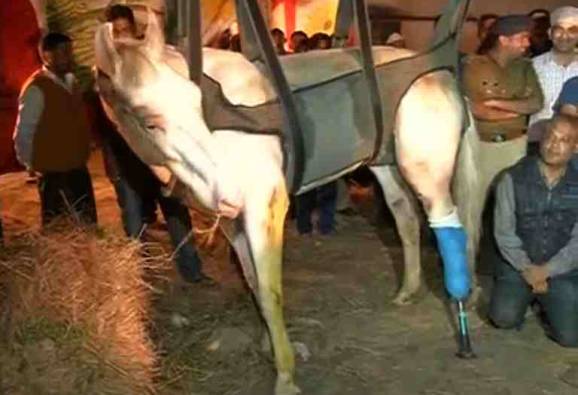
DEHRADUN (TIP): Police horse Shaktiman, which was subjected to a brutal attack during a BJP protest here on Monday, had his injured hind leg amputated in an emergency life-saving surgery on March 17 even as a party worker was arrested.
The surgery was conducted at a veterinary hospital here by a team of doctors led by surgeon Feroze Khambatta, hours after Army doctors from Pune opined that one of the hind legs of the horse that was fractured will have to be amputated as the animal might lose its life by tomorrow due to spread of gangrene from the wound.
“The surgery has gone as planned,” Uttarakhand DGP B S Sidhu said tonight after a limb of the horse, which was still in pain and could not stand on its feet, was removed, three days after the attack that sparked an outrage and led to an FIR being filed against BJP MLA Ganesh Joshi.
“The surgery was basically necessitated by the fact that the blood supply has ceased to the portion of multiple fractures and it was essential for saving the life of the animal. We got the best possible surgeon in the country to perform the surgery and we hope he will be able to survive,” Sidhu said.
Stating that Shaktiman will take a month to recover from the surgery, Sidhu said that in the meantime he will be given temporary prosthetic aid in the form of artificial legs which will be tailor made to his specifications.
-

Positions harden: Opposition, government spar as Bills await action
After the Opposition amendment to the motion of thanks to the President’s Address and the Prime Minister’s speech in the Rajya Sabha on Wednesday, hopes of Congress-BJP patch-up for passing crucial Bills pending in Parliament have further receded. The Prime Minister’s cursory appeals for Opposition cooperation and the withdrawal of the amendments proposed to the motion of thanks coupled with strident attacks on the Congress leadership indicate the government itself has given up all hope of seeing the GST and other Bills through.
For the second consecutive year the Opposition has embarrassed the Modi government in the Rajya Sabha, where it outnumbers the ruling alliance. This time, however, cracks appeared in Opposition unity. The BJD and BSP MPs staged a walkout, while the Trinamool Congress did not participate in the voting. The amendment, moved by the Congress, regretted the failure of the President’s Address to mention the government’s commitment to securing the right of all citizens to contest elections. Haryana and Rajasthan have laid down educational qualifications for contesting the panchayat elections – a controversial decision upheld by the Supreme Court. Since opinion is clearly divided on the issue, the Opposition only wanted to score a point and it did succeed in putting the government in its place.
Prime Minister Modi’s strategy is clear: divide the Opposition and isolate the Congress. Last month he blamed “Ma-Beta” for the Rajya Sabha logjam. He quotes Nehru, Indira Gandhi and Rajiv Gandhi to run down the present Congress leadership, including Dr Manmohan Singh. Nobody has ever accused him of being an economist, leave alone of the caliber of Dr Manmohan Singh. He is firm on his resolve on a “Congress-mukt Bharat”. Modi has a penchant for oratory but knows when to keep quiet. He has skipped the hot countrywide debate on nationalism and did not utter a word either on JNU or riots in Haryana. His battalion of warriors, joined lately by Anupam Kher, is busy dividing people into “national” and “anti-national”. Few expect Modi to control them. Divisive issues occupy the national center stage now. In this combative national mood, legislators indulge in theatrics and refuse to do the job on hand: pass the Bills.
-

India’s Supreme Court urged to set up panel to monitor hate speeches
NEW DELHI: A host of eminent citizens, including jurists, police officers, scientists and businessmen, have appealed to the Chief Justice of India and other judges of the Supreme Court to take sou motu action over “alarming and threatening” statements made by ministers and elected representatives, including the alleged ‘hate’ speech by junior HRD minister Ram Shankar Katheria.
The signatories to the letter, submitted to the Supreme Court on Friday, include former SC judge Justice P B Sawant, former Punjab top cop Julio Ribeiro.
It said the country was being pushed to the brink by such statements and urged the apex court to set up a permanent and sitting commission to monitor and oversee videos, records and documents related to such speeches to prevent “hate-driven” attacks on marginalised sections.
The letter states these statements have caused “fear and insecurity among citizens, marginalised sections, especially minorities, Dalits and Adivasis”.
Referring to the Agra incident, it said, “The minister, MP, MLA and all other culprits need to be punished for violating their Constitutional duty under Article 51 (to promote harmony and spirit of common brotherhood).”
At a condolence meeting for a slain VHP member in Agra, Katheria was alleged to have made a series of objectionable remarks against Muslims. Other references included MoS for external affairs Gen V K Singh, Sadhvi Niranjan and BJP MPs Yogi Adityanath and Sakshi Maharaj.
-

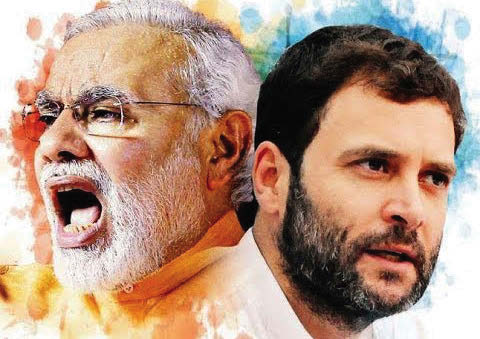
PM MODI IN GRIP OF AN ACUTE DISEASE ‘RAHUL PHOBIA’: CONGRESS
Congress has described Prime Minister Narendra Modi as being in grip of “Rahul phobia” and said he has made a “mockery of democracy” by making “petty-minded jibes” in his political speech on President’s address in Parliament, never done in the past. “Prime Minister Shri Modi seems to be in the grip of what I can describe as ‘Rahul phobia’. It is an acute disease. It has now attained the size of an epidemic as far as the BJP and the Prime Minister are concerned,” Congress spokesperson Abhishek Manu Singhvi said.
Singhvi said that the Prime Minister’s speech was “devoid of substance” as he lost the opportunity of clearing doubts of people that were raised through questions posed by Congress and Rahul Gandhi, which he never answered.
“In what has now become a characteristic habit of the Prime Minister, he again made a mockery of democracy and Parliament. In a response to President’s address, this kind of political petty-fogging, petty-minded jobs is neither the culture nor the occasion, nor the manner and style sanctified and hallowed in the almost 70 years of Indian Democracy,” he said.