Tag: BJP

  • 1971 Indo-Pak War hero Lt Gen Jacob dies

    1971 Indo-Pak War hero Lt Gen Jacob dies

    Lt Gen (Retd) J F R Jacob, who played a key role in the 1971 war which liberated Bangladesh from Pakistan, died here today at the age of 92 due to “old age complications”.

    Jacob, who was also Governor of Punjab and Goa, breathed his last at the Army Hospital here at around 8 am.

    He was admitted to the Army’s Research and Referral Hospital since January 1 after suffering from pneumonia. Prime Minister Narendra Modi condoled his demise and said India will always remain grateful to Jacob for his impeccable service to the nation. He also recalled his association with him.

    “RIP Lt Gen JFR Jacob. India will always remain grateful to him for his impeccable service to the nation at the most crucial moments.

    “Lt Gen JFR Jacob and I interacted often. Had a memorable interaction when he presented his autobiography to me,” he tweeted.

    Defence Minister Manohar Parrikar and BJP chief Amit Shah have also condoled his demise.

    Army chief Gen Dalbir Singh Suhag expressed his deepest condolences towards this great loss, a statement by the Army said.

    He said that Jacob was a pillar of military leadership and personified the best qualities of a soldier and a statesman who will always be remembered as one of the most prominent Leaders in the annals of Indian military history.

    Jacob had negotiated the surrender of Pakistani troops in Dhaka after the 1971 Bangladesh liberation war when, as Major General, he served as the Chief of Staff of Indian Army’s Eastern Command.

    Born in 1923 in Bengal Presidency under British India, Jacob joined the army at the age of 19 in 1942 and also fought in World War II and the Indo-Pakistan War of 1965 before he retired in 1978.

    Post retirement, he joined BJP and headed its ex-servicemen wing. He was appointed Governor of Goa during Vajpayee government and then Governor of Punjab. He was also the Administrator of Union Territory of Chandigarh.

    During his stint as Punjab Governor and UT Administrator, he would often conduct check in government offices unannounced.

    He authored two books – ‘Surrender at Dacca: Birth of a Nation’ and ‘An Odyssey in War and Peace: An Autobiography Lt Gen J F R Jacob’.

  • Shatrughan provokes BJP to take action

    Shatrughan provokes BJP to take action

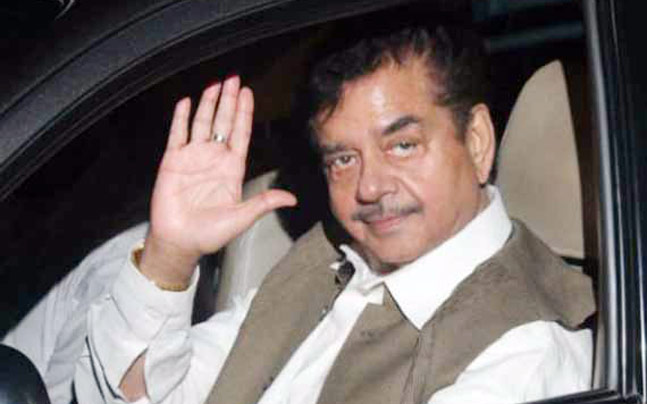
    New Delhi (TIP): Outspoken MP Shatrughan Sinha, in his just launched biography, virtually provoked the BJP leadership to take action against him despite accepting his “open dissidence” after he was sidelined during Bihar Assembly polls.

    In “Anything But Khamosh” launched on Wednesday, Sinha dubbed the BJP leadership “helpless” for it could not take disciplinary action against him for publicly speaking against the party and boasting that he could win elections even as an independent candidate given his equation with senior leaders from other parties.

    “One heard that they’d be taking action against Shatrughan Sinha after the Bihar elections. I said, I didn’t know my people were so helpless that they had to wait for an election to take action. That too against a man who had won with vote share percentage of more than 55 per cent which even our prime minister and Arvind Kejriwal didn’t reach; a man who could stand as an Independent and had the support of many, right from Nitish Kumar and Lalu Prasad to Rahul Gandhi,” Sinha wrote in the 7th chapter: “The Rough and Tumble Of a Life in Politics”. The party grudgingly overlooked repeated defiance from Sinha much before it decided to crack whip on Dharbhanga MP Kirti Azad, suspending him for taking on Union Finance Minister Arun Jaitley in the DDCA case. In a direct challenge, Sinha reiterated his earlier offensive comment in the biography:

    “That’s why I had made the statement, those who want to take action against me must remember Newton’s third law. Every action has an equal and opposite reaction”.

    He said that unlike his veteran seniors L K Advani and M M Joshi, who did not open  their mouths despite sitting outside, “SS was not one to exercise the RSS-style discipline or restraint”.

  • DDCA row: AAP, Kirti Azad intensify attack on Jaitley

    DDCA row: AAP, Kirti Azad intensify attack on Jaitley

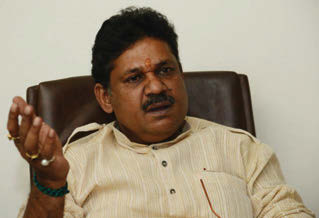
    NEW DELHI (TIP): Finance Minister Arun Jaitley, December 30, came under fresh attack over DDCA affairs with AAP accusing him of pressuring the then Police Commissioner to
    “close” investigation involving a cricket club of a bank in 2011 while suspended BJP MP Kirti Azad claimed the SFIO probe report had recommended his “prosecution”.

    In a related development, the DDCA said it has decided to file defamation case against Delhi Chief Minister Arvind Kejriwal and Azad besides other top AAP functionaries for making “wild and baseless” allegations of corruption against the cricket body.

    Continuing its offensive against him, AAP released two letters, purportedly written by Jaitley, to then Delhi Police Commissioner BK Gupta and then Special Commissioner Ranjit Narayan, requesting them to “fairly” deal with the matter and “close” the case since “DDCA has done no wrong”.

    The party also renewed its demand for Jaitley’s resignation in the wake of the “fresh disclosures”. The letter to Gupta is dated October 27, 2011 while the one written to Narayan is dated May 5, 2012.

    Senior AAP leader Ashutosh claimed that the letters “punctured” the Finance Minister’s repeated assertions that he was in no way connected with any wrongdoing in the Delhi and District Cricket Association, which he headed for 13 years till 2013.

    BJP dismisses allegations

    Reacting to the allegations, BJP spokesperson GVL Narsimha Rao asked as to what was wrong in Jaitley writing a letter to the police commissioner. “He was not even in power so the charge does not stick.”

    In the letter to Narayan, Jaitley is quoted as writing that “some persons have been repeatedly approaching Delhi Police with complaints in relation to the identity of the Syndicate Bank Cricket Club.

    “The complaints are completely unsubstantiated and do not disclose any offence. Certain office-bearers of the DDCA are feeling harassed by repeated questioning in this regard. I would request you to look into this matter so that it can be fairly dealt with and closed since the DDCA has done no wrong.”

    When contacted, DDCA said the club is under them and that it currently falls in the “institutional” category.

    “There are two types of clubs – institutional and private. While a private club receives a subsidy, an institutional does not and that is the broad difference between the two,” a DDCA official said.

    Azad, suspended by BJP for anti-party activities, claimed the Serious Fraud Investigation Office (SFIO) probe report had recommended “prosecution” of Jaitley in the DDCA affairs even as he targeted more politicians, including party MP and BCCI secretary Anurag Thakur.

    Azad also appeared to support Kejriwal’s allegation that a DDCA official had sought sexual favors from a woman if she wanted her son to be part of its cricket team, saying it was not a new thing and he had raised a similar issue in 2007.

    DDCA row-arunSFIO recommended ‘prosecution’ of Jaitley, claims Azad  

    At a press conference here, Azad quoted from the report of SFIO, which had gone into the Delhi cricket body affairs, to claim that it had recommended “prosecution” of Jaitley among others but it has not been done in the last three years.

    “Under the Companies Act, 1956, all the directors were to be assigned particular roles and if they are not, then the term (for action against them) is compounding. As many as 27 executive members, including Jaitley, were not assigned any role. Twenty-four of them, including Jaitley, did not compound.

    “So SFIO recommended that under Section 5 G of the Companies Act, the Registrar of Companies should prosecute them for not compounding. It shows the BCCI is above law. It has been three years since the recommendation but they have not been prosecuted,” he said.

    Hitting back at Jaitley who had called him a “Trojan horse”, Azad said, “these were the Trojan horses who did not let it come. Trojan horses in and outside the Cabinet. I hope it does come”.

    Asked to identify the politicians, he named Jaitley, Thakur, Rajeev Shukla, Jyotiraditya Scindia, Farooq Abdullah and Praful Patel. All of them were then, and most still are, involved in cricket administration except Patel, who is All India Football Federation president.

    Referring to Thakur, the three-time MP from Darbhagna said, “You cannot wear two caps. This is a conflict of interest. Either you are in Parliament or you are associated with a sports association.”

    Refuting the fresh allegations by Azad and AAP leaders, DDCA said it will sue them having “defamed” the organization.

    Addressing a press conference where all top DDCA officials were present, acting president Chetan Chauhan said that a lot of “false” charges have been leveled against the state cricket body and it was forced to take legal recourse against those spreading such disinformation.

    Treasurer Ravinder Manchanda said DDCA will file a defamation case against Kejriwal, Azad and others who made the allegations of corruption and financial embezzlement in the DDCA.

    Chauhan said three agencies were already probing the cases against the DDCA and there was no need for a fresh probe to be initiated by the AAP government which has appointed a one-member Commission of Inquiry for the purpose. (Source: PTI)


  • BJP in Chaos after Congress’s comeback in Gujarat

    BJP in Chaos after Congress’s comeback in Gujarat

    After years of being in the political wilderness, Congress made a spectacular comeback in Gujarat, taking control of the rural local bodies in a stunning blow to the BJP in an election seen as a referendum on the ruling party’s state and central leadership.

    The Grand Old Party won an impressive 22 of 31 district panchayats, a huge jump from the single panchayat it had won in 2010. It also won more than 50 per cent of the state’s 231 talukas or block-level panchayats. The Congress has been buoyed by these results and its leaders say that the outcome will benefit the party in the Assembly elections in 2017. The Congress has been out of power in Gujarat since 1995 while the BJP has ruled since then, barring a two year period when Shankarsinh Vaghela was the chief minister.

    The setback to the BJP in Prime Minister Narendra Modi and party president Amit Shah’s home state comes barely weeks after the party suffered an embarrassing defeat in the assembly polls in Bihar.

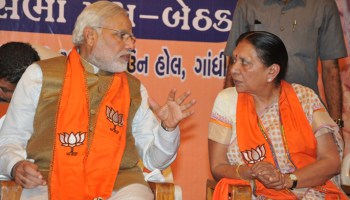
    These are the first elections in Gujarat on this scale after Narendra Modi moved from the state to Delhi and the first real popularity test for chief minister Anandiben Patel after she took charge of Gujarat last year.

    Anandiben Patel has faced major political trouble in the shape of a widespread agitation by members of the Patel community who want either want reservations in jobs for themselves or the quotas to completely be eliminated.

    Anandiben Patel could feel somewhat relieved at the BJP’s performance in urban areas. Her party won all six municipal corporations including Ahmedabad and Surat, though it faced resistance from the Congress in Rajkot.

    The BJP also won more than 40 of the 56 municipalities where elections were held, including in Viramgam, where 22-year-old politician Hardik Patel, leader of the Patel agitation hails. A call by Hardik Patel to vote against the BJP seems to have not had much impact.

    In the urban areas, the BJP retained control over Ahmedabad, Vadodara, Surat, Rajkot, Bhavnagar and Jamnagar municipal corporations, though the Congress put up a tough fight at several places.

    The BJP attributed its loss in rural areas to the Patidar agitation.

    “The BJP has done work in rural areas. But with the kind of social engineering done by the Congress of late, the results for the BJP are below expectations,” said the party’s state vice-president IK Jadeja.
    “This is an overall mandate in favour of the Congress. Even in urban areas, with increased number of seats, we can say the Congress has been widely accepted,” said Gujarat Congress president Bharatsinh Solanki.

    In Delhi, senior leader Ahmed Patel, who is political secretary to Congress president Sonia Gandhi, said the BJP government was on its way out in Gujarat after the results.

  • Why Modi Needs To Speak Out

    Why Modi Needs To Speak Out

    The attacks this year on rationalists by fundamentalist groups and right-wing religious groups are highly deplorable. It is obvious that all is not well in India. Something is going wrong, and it is clearly evident where the wrong is.

    But firstly, we need to analyze the political reasons for the current climate of intolerance in the country.

    PM Modi’s aggressive approach to economic development and prosperity has become a thorn for opposition parties in India. Some of the politicians within his own Bharatiya Janata Party (BJP) are envious of his growing international image and popularity. Additionally, some non-state actors and vested interests are creating the confusion in India, as to what is intolerant, who is intolerant and why.

    Why the government should rise up to the challenge.

    Authors Are Literary Soldiers

    As blood is important to flow in arteries for humans, ink is important to flow in pens for authors. Lack of freedom of expression stifles creativity. Authors are the soldiers of the literary world. As soldiers fight to defend and protect the country from external forces, authors are soldiers who fight for the protection of their freedom of expression from internal forces who endeavor to create a climate of terror and distrust in the society. Additionally, literature is the mirror of the society and writers are the soldiers. As the uniformed soldiers protect national boundaries the literary soldiers protect the internal system by voicing their views and opinions.

    Rabindranath Tagore returned the knighthood to the British government in the wake of Jallianwalabagh massacre as a mark of protest. Hence, protests create awareness in the society and correct the leaders to govern well as per the aspirations and expectations of the people. We must respect protests as they raise the irregularities in the democratic system. We must remember that it is not evil that causes destruction, but it is the tolerance towards evil that is the real culprit. Albert Einstein has rightly remarked, “The world will not be destroyed by those who do evil, but by those who watch them without doing anything.”

    Hence, authors, intellectuals, and philosophers must not remain as mute spectators to irregularities as they are the source of ideas and insights in any society. They play a crucial and constructive role to keep the societies in order. They are the bridge between the government and the people. They are the brain behind several revolutions in the history who provided direction to the rulers during crises. Because of these reasons, the intellectuals, philosophers and authors are included as advisories and consultants for various organizations and boards. The government also takes their services as advisories as and when required.

    The onus lies with the government to ensure freedom of expression and the right to dissent which are the hallmarks of democracy. It must not treat the present protest as a manufactured dissent. It must not suppress the views of people as they provide the right feedback to the government, not the political parties in opposition. Since the opposition parties have a political agenda and strategies to pull down the government, given the fact that they too want to come to power in the next election, the parties in power must listen to the pulse of the people and make decisions accordingly to ensure a vibrant democracy.

    Modi Must Rise To The Challenge

    Modi must not remain a mute spectator to the unprecedented protests and dissents in India. He must rise to the challenge to crush the forces of intolerance. He must reinvent his image from a Hindu leader to a people’s leader. People trusted him and gave him spectacular mandate which he must respect. He must walk his talk, which Mann Ki Baat just can’t do. He should not become a puppet in the hands of his own party members and dance to the tunes of the fundamentalist forces from RSS. If the present climate of intolerance goes unchecked, it will become a major problem for him and the Indian democracy. He must rise above petty party politics to send a stern message to the intolerant religious forces in the country. He must condemn attacks immediately. He must lead a hard path to set the house in order. He must implore the intellectuals and authors to take back their awards to create a climate of tolerance in India. He needs to speak out.

    Conclusion
    Indian culture teaches tolerance, preaches tolerance and practices tolerance. There are only a few disgruntled politicians and people with religious connections who are creating havoc in India currently. The leaders at the top must send their stern message to these disgruntled elements whenever any atrocities occur without any fear or favour. It helps check the climate of intolerance in the bud, and we can avoid the present spiraling of returning of awards by authors and intellectuals.

    Indian religious leaders must avoid their irresponsible utterances to create a climate of tolerance and goodwill. In a democracy, all citizens have the right to express their opinions, but not to indulge in violence. India’s greatest strength is to absorb criticism and evolve accordingly.

    To summarize, Indian democracy is very strong as it weathered several storms including the Emergency during Indira Gandhi era, riots on Sikhs in 1984, and the demolition of the Babri Masjid. India is a symbol of aspirations of more than a billion people and their aspirations can be accomplished only in a democratic society by celebrating diversity. Hence, all stakeholders must work hard to create a climate of tolerance to build a healthy democratic society and a strong nation. Jai Hind!

    “We need to give each other the space to grow, to be ourselves, to exercise our diversity. We need to give each other space so that we may both give and receive such beautiful things as ideas, openness, dignity, joy, healing, and inclusion.” — Max de Pree

  • Another ‘intolerant’ day

    New Delhi: ‘Intolerance’ – the dirty word of Indian politics has finally found its place in the parliamentary discussion.

    But as usual, to no avail. Even before the learned members of the parliament could dwell on the subject, the left party MP, Mohammad Salim struck a deep chasm with the Home Minister Rajnath Singh. Singh was so livid, he demanded an instant apology from Salim. When the dust settled down and the parliamentary discourse started again, nothing substantial seemed to emerge barring the opponent bashing by both the ruling and opposition benches. At end of day one of the debate on intolerance, we all just know what has already been reiterated by most political parties, nothing more. Then why waste 2.25 cr rupees per day to hold this debate?

    Since Bihar elections, “intolerance” has become the dirtiest word in politics. After 28 years of banning ‘The Satanic Verses’, the then home minister, P Chidambram, regretted the order issued by Rajiv Gandhi government. How one wonders, does this help the Congress today, which has been trying to use the “intolerance debate” to keep itself relevant in the current the political discourse?

    Did, Chidambram seek permission from Congress President, Sonia Gandhi prior to critiquing late PM Rajiv Gandhi’s decision. Or was he shooting from the hip as is the current norm in Indian politics. The party distanced itself and now we have no clue as to what is official and what is a comment in personal capacity. The veil of secrecy that has always been the hallmark of Congress engulfs all.

    Likewise, BJP, seems clueless. How does the party rein-in the Hindutava brigade, which has been vocal on its agenda, polices, aims and ultimate goal – one and only Hindu Rashtra. Can the party align itself with the proclaimed nationalists / hindu protagonists or is the party still committed to the plank of development which propelled the BJP to power in the face of Modi wave in 2014. The ruling party seems highly confused on its own agenda and goals to pursue.

    After all which BJP leader won’t desire, a Ram Mandir in Ayodhya, Uniform Civil code and abrogation of article 370 from the constitution? But then, votes were not sought on these issues. Votes were sought on the plank of corruption-free development which will truly reflect the economic might of Elephantine India.

    While the ruling elite are in a bind, the people seem to be the victims of ceaseless debate in newspapers, television and countless news portals.

    What to do is the Hobbesian choice…

  • INDIA HAS BETTER GROWTH PROSPECTS THAN CHINA, SAYS MARK MOBIUS

    INDIA HAS BETTER GROWTH PROSPECTS THAN CHINA, SAYS MARK MOBIUS

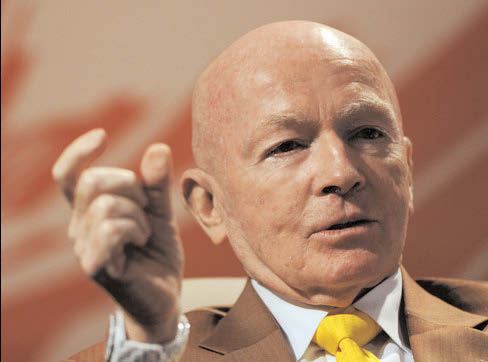
    MUMBAI (TIP): Emerging markets guru Mark Mobius said India could overtake China in the Templeton Emerging Markets group’s equity investments over the next five years, given the strong growth prospects of Asia’s third-largest economy and provided much-awaited reforms see the light of the day.

    Mobius, who is executive chairman of the Templeton Emerging Markets Group at Franklin Templeton Investments, said China accounts for 8% of the group’s equity investment, followed by India with a 3% share. But, he added, the gap could close in time to come.

    “If you look at where we are invested China is at the top of the list, followed by India and Thailand, will be the next two,” Mobius said in an interview on the sidelines of an event. “Going forward India is going to become more important, simply because it’s got better growth prospects,” said Mobius, adding that it was important that reforms went through as well.

    India’s economic growth accelerated to 7.4% in the second quarter of the current financial year, riding on a spike in manufacturing and a pickup in investment demand, government data showed on Monday.

    The ongoing reforms process was also key to Mobius’ rationale for investments in India. “The demographics are in favour. It’s a young population, and a growing population. Secondly, the reforms process is moving ahead. Modi has set an agenda for reforms,” he said. Although some people were concerned about the speed, he said, it was not as important as the direction of reforms.

    “These things (reforms) take time, but the direction is very clear,” added Mobius. The reforms process initiated by the government led by Prime Minister Narendra Modi was off to a slow start—compared with expectations—with a political logjam in previous Parliament sessions stalling the passage of crucial legislation. Hopes have risen now that things may move ahead better than expected from here on.

    Mobius does not expect the opposition Congress party to put barriers in the path of the ruling Bharatiya Janata Party (BJP) to get the reforms through. Last week, leaders of the BJP and Congress met at Modi’s residence, spurring hopes that the constitutional amendment bill to enable the goods and services tax (GST) will finally get Parliament’s nod. Modi invited Congress president Sonia Gandhi and former Prime Minister Manmohan Singh to discuss issues related to the winter session of Parliament, including the GST bill.

    Mobius said Modi’s performance as Prime Minister has been more or less in line with what he had expected, but added that he is capable of doing more.

    “I didn’t expect much more, (than what has happened), but I would say that in terms of what he could do, maybe we are talking about 75-80%,” said Mobius.

    According to him, investors could wait for another year for the government to deliver on reforms, and GST was the key reform. “If that’s delivered, that would be a watershed. That would be something.”

    The key risk to Indian markets was also deliveries on the reforms front, at this point.

    “Its really these reforms at the end of the day,” he said adding that rural electrification and reforms of the tax system were the big issues facing the Indian markets.

    There has been a debate on whether there is rising intolerance in the country, and the rising intolerance has dampened the sentiment for Modi, added Mobius.

    “It already is a hurdle. It is a problem for him, and it very difficult for him,” said Mobius. “I think his policy of not talking about it is probably a good one, because when it comes to religion, faith, class, these are emotional subjects.”

    “All these conflicts have their base in economics. When people don’t have jobs, if their standard of living is not good, and see what other people have and they don’t have it, they get angry,” he said.
    “So, I think it is definitely a problem for him but he is probably wisely trying to keep away from that and focus on his job at hand.”

    Mobius likes the consumer and infrastructure sectors in the Indian market, while he would avoid natural resources at this time. He expressed concern over state-owned banks, and emphasized that privatization was key.

    “They’ve got to get these state-owned banks out from under government control and put them on a stable basis with market-oriented policies, and that would be a giant step forward for not only for the banks, but also the government,” Mobius said.

    He said the recent outflows from emerging markets could reverse after the US Federal Reserve’s policy decision.

    “It is true that emerging markets have underperformed for the last three years and therefore a lot of investors have pulled money out of the emerging market funds,” said Mobius.

    “I believe that once the uncertainty caused by the Federal Reserve’s interest rate policy is out, then money will begin to flow again back in to emerging market.”

  • Indian American Appointed Advisor to Accessible India Campaign

    Indian American Appointed Advisor to Accessible India Campaign

    WASHINGTON (TIP): An Indian-American techie has been appointed as advisor to the
    ‘Accessible India’ campaign to be launched by Prime Minister Narendra Modi this week to make transport, public spaces and information and communication technology accessible to differently-abled people.

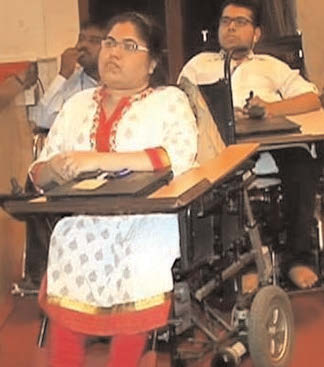
    Pranav Desai, a polio survivor, is vice president with a Global IT Services Company and had played a key role in inclusion of issues related to specially-abled people in the ruling BJP’s Vision 2020 document and its election manifesto.

    Mr Desai who had met the Prime Minister Modi when the latter toured Silicon Valley in September said the Accessible India Campaign (Sugamya Bharat Abhiyan) to be launched on December 3 would jump start transformation by creating massive awareness for disability sector.

    Mr Desai was appointed advisor to the ‘Accessible India’ campaign by the Ministry of Social Justice and Empowerment.

    He is the founder of non-governmental Voice of Accessible India (VoSAP) which has been working on multi-pronged approach as part of roadmap to achieve Vision 2020 such as providing policy inputs on assisting technologies, proposals to railways, finance and seven other ministries for adopting inclusive policy decisions, a media release said.

    Accessible India Campaign (AIC), he said, is now becoming countrywide reality and inspiration to other nations in the world as well.

    The campaign by the government, social leaders and media will help sensitise society at large and accelerate change/transformation, he added.

    Mr Desai said Art of Living Foundation of Sri Sri Ravi Shankar has also joined the campaign.

    “Today as India is taking great strides in the fields of technological advances, economic development and social transformation, Sri Sri would like that we all make a conscious effort to include the specially-abled people of India and their integration in our everyday life, make it a priority,” the statement said.

  • Pankaja Munde defends Maharashtra temple’s practice of barring women

    Pankaja Munde defends Maharashtra temple’s practice of barring women

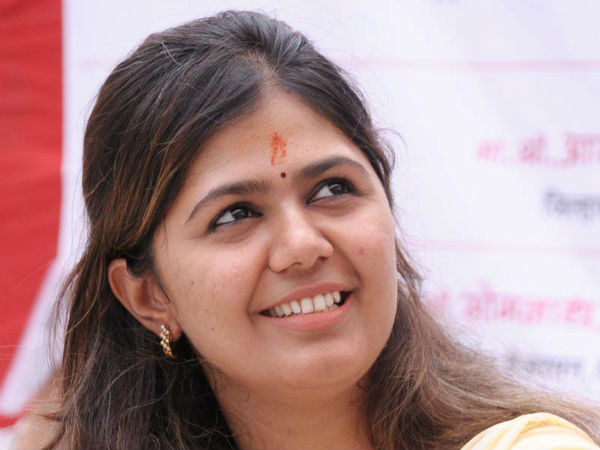
    MUMBAI (TIP): Defending the practice of not allowing women to perform ‘puja’ at Shani Shingnapur temple in Ahmednagar district, Maharashtra rural development minister Pankaja Munde said on Thursday traditional rituals cannot be “linked with insult” of women.

    Munde’s statement, which came in the wake of a woman offering ‘puja’ at the temple by breaching security, drew sharp reaction from opposition NCP.

    “These are traditions and cannot be linked with insult of women fraternity,” Munde said, defending the age-old ‘ban’ after a woman devotee’s action last week created a furore.

    “The outrage over the woman entering the Shani temple is a non-issue,” the BJP leader said.

    Chitra Wagh, women’s wing president of the state NCP, criticised Munde’s statement. “In a progressive state like Maharashtra, instead of appreciating the move to break the traditions that are against women, the BJP minister, by making such a statement, has taken state back to an era where women were not treated at par with men,” Wagh said.

    The temple, which attracts thousands of pilgrims daily, is devoted to Lord Shani and women are traditionally barred from offering prayers at the shrine, located about 250km from Mumbai.

  • INOC, USA APPLAUDS THE APPOINTMENT OF CAPTAIN AMARINDER SINGH AS PPCC PRESIDENT

    INOC, USA APPLAUDS THE APPOINTMENT OF CAPTAIN AMARINDER SINGH AS PPCC PRESIDENT

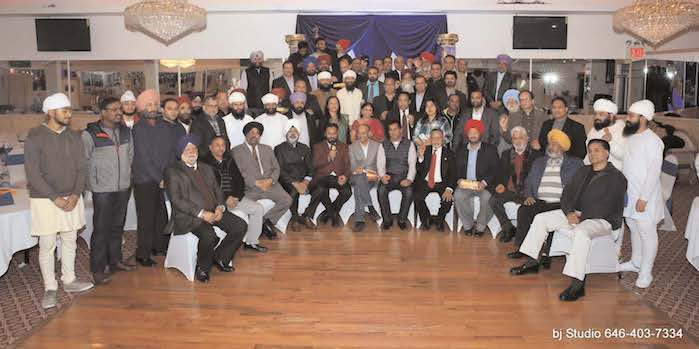
    NEWYORK (TIP): At a standing room crowd only gathering at the LibertyPalace in Richmond Hill, New York, hundreds of Congress loyalists cheered and distributed sweets to congratulate Captain Amarinder Singh as the Punjab Pradesh Congress Committee Chief on his appointment by the AICC President, Smt. Sonia Gandhi.

    In a resolution introduced on the floor, the meeting expressed its gratitude to Sonia ji for this bold decision at a critical time for the party in the state and congratulated Captain Amarinder Singh and wished him all the success in the future. Mr. Mohinder Singh Gilzian, President of INOC, USA, in his speech, touched upon the  state of affairs in Punjab with the mismanagement and corruption under the Badal government combined with the divisive politics of its ally BJP that is harming the interest of the common people.

    He cited the media reports saying that ‘Punjab continues to be on edge, and the outlook remains grim. The increasing grip of the Badal family over issues concerning Sikhs, both political and religious, coupled with incidents of sacrilege of the holy book, the Guru Granth Sahib, and multiple sets of problems faced by farmers, are reinforcing the impression of a State administration at a loss for initiatives to regain equilibrium. The State is already in the grip of drug abuse, falling agricultural output and farm debts. It has faced a farmers’ agitation for over two months now. The resentment in the cotton and rice belt reached such proportions that officials were scared to venture into the villages. In addition, dissidents are threatened to a point where the freedom of expression is at risk’.

    The meeting also celebrated the Constitution of India that provided stability and prosperity to the nation and saluted its architects Pandit Jawaharlal Nehru and B.R. Ambedkar. Meeting also expressed concerns about the growing intolerance in India and requested the Modi Government to uphold the constitution and respect the legacy of great leaders that paved the way for a democratic and secular nation. George Abraham, Chairman, in his speech, paid special tribute to Nehru for his great contribution in building strong institutions that have served the country well in the last six decades.

    Mr. Harbachan Singh, Secretary-General in his speech alluded to the Bihar election results and congratulated the State for its victory and pointed out that the Indian voter has already begun to draw his/her conclusions of the recent 18-month
    performance/experience with the Modi Government. ‘Captain Amarinder Singh’s appointment has rejuvenated the hopes and interests of Congress supporters and reinforced their determination to correct the mistakes of the past’ he further added.

    Mr. T.J. Gill, President of Punjab Chapter exhorted the participants to be more active in supporting good governance in the State and promised to do his very best in conveying the NRI sentiment to the Captain and the new leadership in that regard.

    Mr. Karamjit Dhaliwal, Vice-President Spoke about the need for the Congress cadre in Punjab to come together in unity as it will be facing the election in the near future.

    Among those who addressed the audience included Bawa Rajender Singh Lally, Babu Joginder Singh Miani, Mr. Satish Sharma, Mr. Sarmukh Singh, Mr. Sarbjit Singh Advocate, Mr. Rajesh Allahdad, Mr. Jaswinder Singh Bittoo, Mr. Jagjit Singh, Manmohan Singh Miani and Mr. Gurmit Singh. Mr. Jasvir Singh Nawanshahr expressed vote of thanks.

  • GET OUT, HARYANA MINISTER ANIL VIJ TELLS WOMAN COP AFTER SPAT

    GET OUT, HARYANA MINISTER ANIL VIJ TELLS WOMAN COP AFTER SPAT

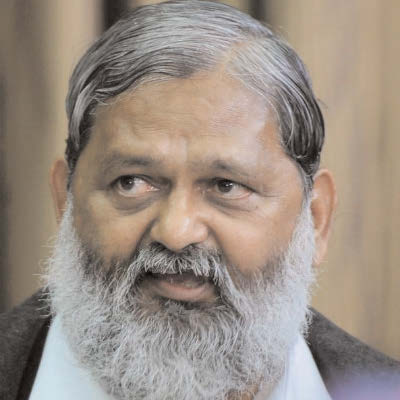
    CHANDIGARH (TIP): Haryana minister Anil Vij on Nov 27 asked superintendent of police (SP) Sangeeta Kalia to “get out” of a meeting in Fatehabad.

    But the IPS officer refused to leave, forcing a fuming Vij to walk out of the meeting in a huff.

    The ugly spat between the two took place in presence of several others at the meeting at Fatehabad district panchayat office.

    A video grab shows the minister getting agitated while asking Kalia about a complaint pertaining to unauthorized sale of liquor.

    On being asked about the steps being taken to check the illegal liquor sale, Kalia claimed around 2,500 cases were registered under the Excise Act in the past 10 months, which was a “record”.

    Vij was apparently not satisfied with the reply and as the two continued to argue before he asked her to “get out”.

    BJP workers and others at the meeting too left with Vij, who said he will take up the matter with the cabinet.

    Fatehabad deputy commissioner N K Solanki, who was at the meeting, tried to pacify Vij, but the minister refused to listen to him.

    Vij had taken up the liquor smuggling issue at the meeting after an NGO complained to him about it.

    “I will not attend the meeting till this SP is there in the district. She has behaved like this even in the past,” he said.

    “We had complaints from local residents and the NGO that they were not getting any help from police in curtailing liquor smuggling from the border villages of Punjab.”

    Kalia refused to comment while Congress’s state chief Ashok Tanwar said the BJP government has lost control over bureaucrats and official machinery within a year.

    “…even its ministers are yet to learn how to deal with officers and the system.”

  • PoK will remain with Pakistan and J-K with India, says Farooq Abdullah

    PoK will remain with Pakistan and J-K with India, says Farooq Abdullah

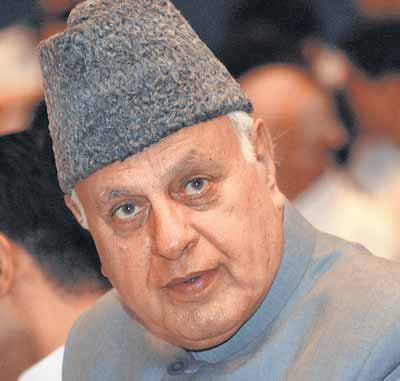
    JAMMU (TIP): PoK would remain with Pakistan and India should understand it, former Jammu and Kashmir chief minister Farooq Abdullah said on Nov 27, triggering a huge controversy.

    “The Pakistan-occupied Kashmir will remain a part of Pakistan and Jammu and Kashmir will remain a part of India. We need to understand it,” he said, adding dialogue was the only way forward for the two countries.

    Prime Minister Atal Behari Vajpayee favoured the arrangement and had also proposed it to Pakistan President Pervez Musharraf when he visited the neighbouring country in 1999, Abdullah said. His National Conference party was then a part of the BJP-led NDA government in which he was a minister.

    “I know when Vajpayee went to Lahore…he told me that he had proposed to Musharraf to take that part (PoK) and let us keep ours, and let us correct those lines…, but they did not agree to it,” the 78-year-old maverick leader said.

    “Today Pakistan is agreeing to accept it, but we have to start the dialogue,” Abdullah said. Vajpayee’s Lahore visit was hailed as a milestone in bilateral ties but within four months hostilities broke out after Pakistan soldiers captured Indian heights in the border state, leading to what has come to be known as the Kargil war.

    “Four wars have taken place between India and Pakistan and many lives have been lost without anybody’s gain. War is no solution and only dialogue can solve the problem,” the NC leader told mediapersons.

    The BJP reacted sharply. Abdullah’s statement was against the Constitution and the country would never accept it, senior leader and J&K deputy chief minister Nirmal Singh said

    “The 1994 Parliament resolution clearly states that the PoK is constitutionally a part of India and efforts will be made to get it constitutionally,” he said. “I don’t know what prompted him to issue such a controversial statement.”

    Former chief minister and Abdullah’s son Omar said the reactions to his father’s comments had taken him by surprise. “I am amazed that the channels are treating my father’s views as though they are something he’s never said before,” Omar tweeted. Senior Abdullah also came out in defence of actor Aamir Khan. “It’s media hype. I was there and he never said he intends to leave India,” he said. The 50-year-old actor had to face severe criticism from the BJP, Hindu groups and even a section of the film fraternity for his comments that rising communalism was a worry and his wife wondered if it was time to leave the country.

  • Aamir Khan speaks up | Voices of dissent need to be heard

    Aamir Khan speaks up | Voices of dissent need to be heard

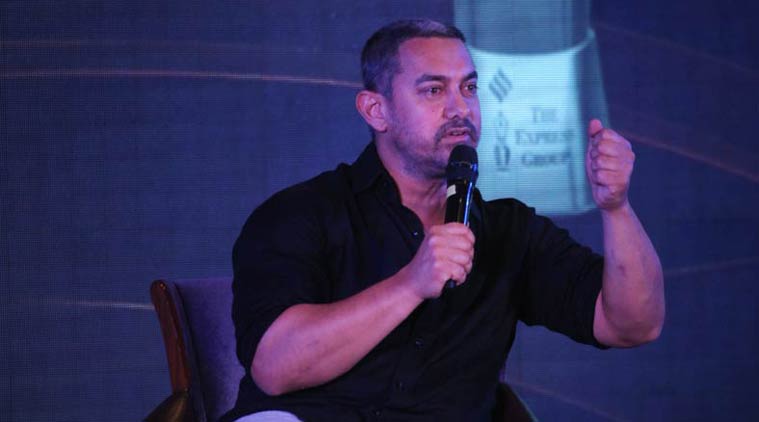
    The moment the poster boy of ‘Incredible India’ campaign, Aamir Khan, made a remark on
    ‘growing intolerance’, the sarkari brigade began questioning his credibility. The star, celebrated for handling social issues with sensitivity in his films and through highly popular TV show Satyamev Jayate, spoke on Monday of his wife, Kiran’s concerns over the safety of their child in an atmosphere of growing intolerance. His silence through the ‘award vapsi’ campaign by writers and his film fraternity was taken as an exception, for the actor is known to be vociferous to the extent of lending active support to social issues like Narmada Bachao Andolan and Anna Hazare’s movement against corruption.

    Aamir Khan’s comments should have been taken in the context they were made, as many other self-critical observations he has made through Satyamev Jayate on many ills afflicting Indian society. In the present context, these have been colored with communal connotations in the social media war waged between two factions: those who have reason to worry about threats to freedom and those who are just looking for an opportunity to jump on the bandwagon of establishing Hindutva supremacy.

    The tendency to reduce popular icons like Aamir Khan and Shah Rukh Khan to one community advocating a particular point of view by a handful undermines the tremendous concern they have shown for their country over the years with their body of work.

    The boorishly aggressive reaction from the Hindutva brigade is a reaffirmation of the very intolerance against which Aamir Khan and others have raised their voice. The BJP’s cultural warriors have raised a question over his deshbhakti. These new cultural vigilantes have unwittingly shown themselves to be lacking in respect for dissent and disagreement. No Aamir Khan needs a certificate of good conduct from the new intolerant Indian. The new itch to want to shut up any contrary voice or person is most unacceptable.

  • CBI BACK TO HAUNT LALU PRASAD WITH FODDER CASE

    CBI BACK TO HAUNT LALU PRASAD WITH FODDER CASE

    PATNA (TIP): Days after his party emerged as the single-largest entity in Bihar assembly trouncing the BJP-led NDA, the CBI has sought to put Lalu Prasad in the dock in a fodder scam case.

    The probe agency has requested the Supreme Court (SC) to revive corruption charges against the former Bihar chief minister in one of the several fodder scam cases registered against him and 33 other persons for allegedly withdrawing more than Rs 85 lakh from the Deoghar treasury.

    In an affidavit filed in the top court, the CBI asserted Lalu was incorrect in claiming that he could not be prosecuted for corruption in the Deoghar case because he was already convicted of similar charges in the Chaibasa case wherein he allegedly misappropriated Rs 37.70 crore from the treasury in 1994-95.

    Lalu was sentenced to a five-year jail term and is currently on bail since December 13, 2013.

    But his conviction led to his immediate disqualification from Lok Sabha and he became ineligible to contest polls for 11 years.

    CBI has filed an appeal before the SC against the Jharkhand HC’s order discharging Lalu under the Prevention of Corruption Act in the Deoghar case.

    Accepting Lalu’s contention, the HC had held he already stood convicted of similar charges in the Chaibasa case. It ruled that if Lalu continued to face prosecution, it would amount to double jeopardy that was impermissible under law.

    But, the HC had ordered continuation of proceedings against him under the IPC sections – for giving false information to cause disappearance and attempting to commit offences punishable with life imprisonment.

    The CBI told the top court that the HC overlooked the main idea of criminal conspiracy and that the two cases were distinguishable.

    The HC erred in breaking the chain of events, the CBI added.

  • Quota remark, Dadri incident led to Bihar defeat, says Ram Vilas Paswan

    Quota remark, Dadri incident led to Bihar defeat, says Ram Vilas Paswan

    NEW DELHI (TIP): NDA partner and Union minister Ram Vilas Paswan on Thursday spoke out on the Bihar election defeat for the first time since the verdict, saying the rival grand alliance benefitted from successfully convincing people that reservation for backwards would be withdrawn and minorities won’t be safe if the NDA came to office.

    Even though Paswan refrained from directly blaming RSS chief Mohan Bhagwat, he agreed that the quota remark and the Dadri incident were the two major reasons for votes moving away from NDA parties.

    Besides the two controversial issues, the decision of Bihar chief minister Nitish Kumar to shift a number of castes from OBCs to EBCs and from EBCs to SCs/STs also led to consolidation of votes in favour of the grand alliance, the LJP chief said at a press conference.

    Replying to a question on Bhagwat’s remarks on quota review, Paswan said, “I do not think that this was the only issue. But this is true that the grand alliance leaders were to a large extent successful in misleading people with the help of that statement. That became a major issue. They were able to convince people that if NDA comes to power, reservation will be done away with.”

    He added, “We were not successful in convincing voters from SCs and OBCs that it is not so, though all of us including Prime Minister Narendra Modi and BJP chief Amit Shah clearly said that there was no plan to undo reservation system.”

    He hastened to add that he was not in a position to say in what context Bhagwat had made the remarks or whether he was saying this in response to Hardik Patel’s stir for reservation for Patels in Gujarat.

    Besides, he spoke about the discomfiture in NDA over the lynching in Dadri on the beef issue and subsequent row. “The incident of Dadri was a law and order problem and the blame for it should have gone to Samajwadi Party, which rules Uttar Pradesh. It should have been treated as an issue concerning Mulayam Singh Yadav. Latching on to this incident, the opposition was also successful in convincing minorities in Bihar that they will not be safe if NDA came to power,” Paswan said.

  • Rahul accuses PM, dares govt to take action on citizenship row

    Rahul accuses PM, dares govt to take action on citizenship row

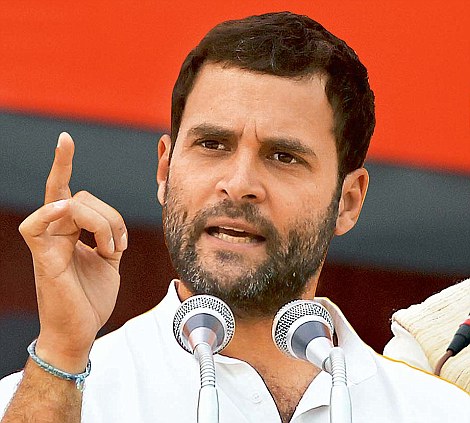
    NEW DELHI (TIP): Hitting back over BJP leader Subramaniam Swamy’s allegation questioning his nationality, Rahul Gandhi today accused Prime Minister Narendra Modi of “throwing mud” on him through his “cronies” and dared the government to “jail” him if he is guilty. Addressing a Youth Congress gathering on the occasion of the 98th birth anniversary of Indira Gandhi, he also accused the RSS and the BJP of throwing mud on his family members ever since he was a child, asserting that he is “not going to be scared” by such things and that he will continue to fight against BJP. “Ever since I was a child, I have been watching people from RSS and BJP throwing mud at my  grand mother, my father and even my mother. I want to say one thing. Modi ji is now the Prime Minister of India. Different kinds of allegations are levelled against me. There is not even an iota of truth in them.

    “Modi ji, it is your government. You have the agencies. Get a probe done against me and send me behind bars if you find something. Stop all this–the mud that you throw at me and my family through your cronies. You are not in opposition, you are in government now,” Gandhi said amidst cheers from the youth Congress activists adding he did not have an “iota of fear” on the issue. He did not direct refer to Swamy but was apparently referring to his allegations on the basis of documents purportedly showing that Gandhi had claimed himself to be a British national before the company law authorities in the UK for setting up a company.

  • Nitish Kumar takes oath as Bihar CM for fifth time

    Nitish Kumar takes oath as Bihar CM for fifth time

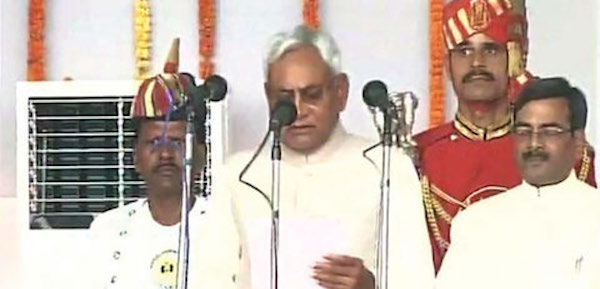
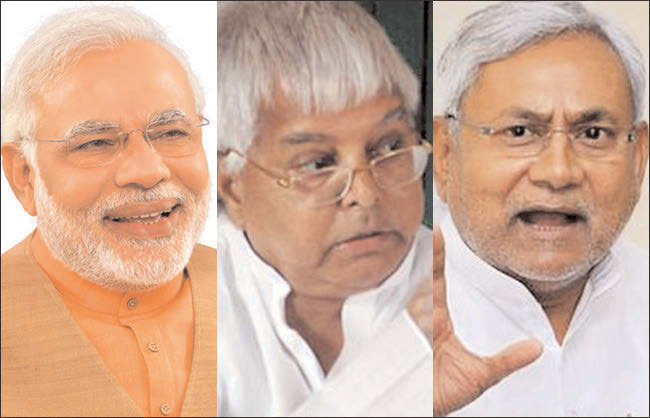
    PATNA  (TIP): JD(U) leader Nitish Kumar took oath on November 20 as Bihar’s 35th chief minister. Kumar took oath for the fifth time at Patna’s iconic Gandhi Maidan in the afternoon in the presence of many political leaders from across the country. The Grand Alliance bagged 178 out of the 243 seats in the just-concluded assembly polls, which was billed as a battle between Nitish Kumar and Prime Minister Narendra Modi, who had campaigned extensively for the BJP-led NDA.

    Former chief minister Lalu Prasad’s RJD pulled off a bigger surprise by emerging as the single-largest party, winning 80 seats while the JD(U) 71 and the Congress 27.

    As Prime Minister Narendra Modi declined to attend the event, the BJP was represented by party leaders and central ministers, including M. Venkaiah Naidu and Rajiv Pratap Rudy.

    Tens of thousands of Nitish Kumar and RJD leader Lalu Prasad supporters, besides nine chief ministers, Congress president Sonia Gandhi and vice-president Rahul Gandhi, NCP president Sharad Pawar, former prime minister H.D. Deve Gowda and leaders of several other political parties attended the event.

    The oath taking was attended by many political leaders from various parties.

  • RETURNING MEDALS AN INSULT TO NATION: MANOHAR PARRIKAR

    RETURNING MEDALS AN INSULT TO NATION: MANOHAR PARRIKAR

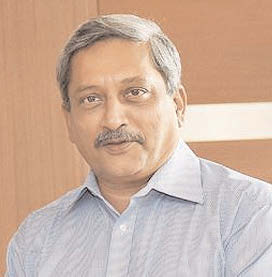
    NEW DELHI (TIP): The government is fast losing patience with military veterans who continue to protest against what they say is a “diluted” one rank, one pension (OROP). Holding that attempts by some to burn their medals was “an insult” to the nation, defence minister Manohar Parrikar put the onus on the ex-servicemen to prove there was no political motive behind their continuing agitation.

    “If I say anything, it will become an allegation. Let them prove that it is not political,” Parrikar said in response to queries if he saw any political linkage to the continuing agitation after the government first announced OROP on September 5 and then notified it on November 7.

    Speaking after dedicating the first squadron of P-8I long-range maritime patrol aircraft in Arakkonam in Tamil Nadu on Friday, Parrikar said medals were awarded to military personnel for bravery and recognition of their sacrifices for the nation. “Burning and returning them is an insult to the nation and the armed forces… I don’t appreciate it,” he said.

    Instead, the veterans should submit their grievances to the one-person judicial commission that was being set up to look into the anomalies arising out of OROP implementation. “We have given the maximum possible, and fulfilled the promise made by BJP during the elections,” he said.

    The OROP notified for the over 24 lakh ex-servicemen and six lakh widows in the country will entail an additional outgo of over Rs 8,000 crore every year. OROP basically means payment of uniform pension to personnel retiring in the same rank with the same length of service, irrespective of their date of retirement.

    But the veterans say the government has not resolved any of the seven main anomalies pointed out by them. They are particularly incensed that the government did not accept their case for “pension equalization or adjustment” every year, and instead notified that it will be done only at five-year intervals. This, the veterans say, will mean “one rank, five pensions” and not OROP as it has been consistently defined.

    An even bigger worry for the armed forces is the notification clause that serving personnel who now opt for premature retirement (PMR) or discharge will not get OROP benefits. “This is totally against the overarching aim to keep the armed forces young and fighting fit,” said a senior officer.

    “The entire cadre management of the forces, which have a steeply-pyramidal promotional structure, is dependent on hundreds of officers and thousands of jawans taking PMR every year after finishing their pensionable service. This ensures recruitment of young and fresh blood,” he added.

  • SGPC set the precedent to appont killer as jathedar

    SGPC set the precedent to appont killer as jathedar

    CHANDIGARH: It is not for the first time that a convicted killer has been ‘appointed’ as jathedar of the highest temporal body of Sikhs — the Akal Takht. Ironically, it was the Shiromani Gurdwara Parbandhak Committee (SGPC), which is now facing a similar situation, that had set the dangerous precedent in 1990.

    Serving life sentence for the murder of Nirankari sect leader Gurbachan Singh in 1980, Ranjit Singh was appointed as the Akal Takht jathedar in 1990 by the Shiromani Akali Dal-backed SGPC, then led by Gurcharan Singh Tohra. Though Parkash Singh Badal and Tohra were then on the same side, it was Tohra who had masterminded the move to get Akalis to group around him by proving his Jagtar Singh Hawara far-right credentials. In a curious replay of the earlier situation, former Punjab chief minister Beant Singh’s assassin Jagtar Singh Hawara has been declared as the Akal Takht “jathedar” by the radicals during their recent Sarbat Khalsa. Hawara, like Ranjit Singh then, is lodged in Delhi’s Tihar Jail and is serving a life sentence after his death penalty was commuted to life sentence by the Punjab and Haryana high court in October 2010. After appointing him as jathedar, Tohra, backed by the SAD and BJP, had lobbied hard for the release of Ranjit Singh and a petition seeking remission of his sentence was sent to then President KR Narayanan, who later signed the order commuting the remainder of Ranjit Singh’s sentence in November 1997 during the IK Gujral government at the Centre.

    Now, it’s the release of “jathedar Hawara” that is being sought by over 20,000 people through an online petition on the White House website seeking help of US President Barack Obama. The petition has been launched by US-based separatist group, Sikhs For Justice. However, unlike the 1990 precedent, now it is the SGPC which is at the receiving end of radicals’ religio-political move.

    Ranjit Singh was released after serving 13 years for murdering the Nirankari sect leader over a violent clash on Baisakhi day in 1978, when individuals at a Nirankari gathering in Amritsar had opened fire on protesters belonging to the fundamentalist Damdami Taksal led by Jarnail Singh Bhindranwale and the Akhand Kirtani Jatha led by Fauja Singh.

  • Tipu row: tension grips parts of Karnataka

    Tipu row: tension grips parts of Karnataka

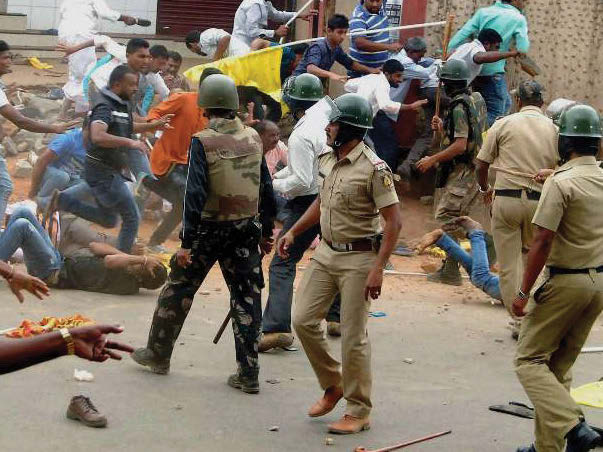
    BENGALURU (TIP): Three days after a VHP sympathizer was killed during violence in Madikeri, right-wing groups blocked roads in several parts of Karnataka and blocked traffic as part of a statewide protest. Skirmishes and stabbings were reported from several parts of the state on November 13.

    Chief minister Siddaramaiah ordered a magisterial inquiry by Mysuru deputy commissioner C Shikha into Tuesday’s violence that left two persons dead. AM Kunjappa, the stand-in Mysuru regional commissioner, had earlier been asked to probe the violence. Since a regional commissioner doesn’t have magisterial powers, the Mysuru DC, who is also a district magistrate, will conduct the investigation.

    Two stabbings were reported on Friday night from Mogaveerapatna and Ullal in Dakshina Kannada. The two persons injured in the attacks are stable. Police have arrested four persons for stoning a place of worship at Bunder. They have been identified as Manju, Sushanth, Guru and Nitin Shetty.

    Traffic on the Bengaluru-Mysuru highway was thrown out of gear as activists blocked it at different points. Protests were simultaneously held in Mandya, Srirangapatna, Maddur and other places. VHP and Bajrang Dal supporters disrupted traffic for an hour in Mysuru, Mangaluru, Tumakuru, Chitra durga, Shivamogga and Hassan districts, police said.

    Most parts of Kodagu, Chikkamagaluru, Hassan and Dakshina Kannada districts came to a standstill. Bike-riding miscreants stabbed a youth on his back and hands at Golithottu in the Uppinangady police limits around 3pm. His condition is said to be stable. The victim was returning home after offering prayers when he came under attack, police super intending SD Sharanappa said. A sub-inspector reportedly suffered injuries in a stone-throwing incident at Puttur. Dakshina Kannada deputy commissioner AB Ibrahim declared a holiday for schools and colleges on Saturday too, and extended the ban orders till 10pm on November 15. In Hassan, Sri Rama Sena chief Pramod Muthalik was arrested hours after a dozen people were injured in stone-throwing incidents in the town late Thursday night. The district administration has clamped prohibitory orders on Hassan town for four days.

    Forests minister B Ramanath Rai announced a Rs 5-lakh compensation to the kin of Harish, a resident of Sarapady, near Bantwal, who was killed by a car-borne gang on Thursday. In Bengaluru, rightwing groups staged a protest in front of Town Hall to protest the CM’s decision to celebrate Tipu Jayanti from this year. The celebration was held on November 10.

    The state BJP rejected the magisterial probe ordered by the CM. The opposition party demanded a CBI inquiry into the Madikeri violence, and a ban on Popular Front of India and Karnataka Forum for Dignity. The party said activists of these outfits were allegedly involved in the violence. “We will take up this issue in the legislature session starting next week,” said Jagadish Shettar. The CM blamed the BJP and RSS for the escalation of tension, and spiked suggestions of Kerala hitmen’s alleged involvement in the Madikeri violence.

    The current weather is a perfect foil to tourism in Kodagu, Chikkamagalur and Hassan, but tourists are having second thoughts on travel plans. Industry sources blamed it on Madikeri violence and traffic disruption.

  • Akhlaq’s son indirectly accuses BJP of Hate politics

    Akhlaq’s son indirectly accuses BJP of Hate politics

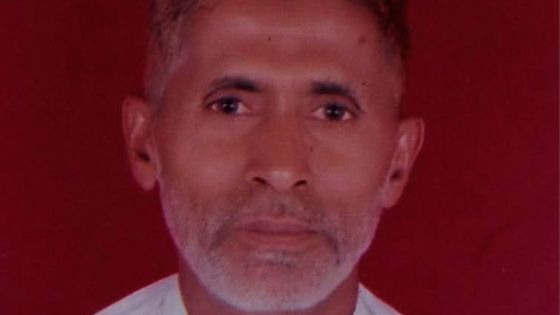
    As the Bihar poll results trickled icon Nov 08, residents of the Greater Noida village of Bisada, who had gathered around a TV set to follow the counting, spoke in one voice – that this was a verdict against the politics of hatred. Bisada is the village where Mohammad Akhlaq was lynched by a mob in September after a rumour that he had slaughtered a cow was circulated, has been living under a shadow since the attack.

    Sartaj, Akhlaq’s eldest son and a corporal in the IAF, said the Bihar verdict is a tribute to his father, that people had united against the gathering forces of communalism.

    “There’s no space for hate politics in our country. Today’s result is a tribute to my father, and against hate and communalism.

    People should realise there is no gain in fighting in the name of religion. I appeal to all politicians not to divide the country for the sake of power,” he said.

    There was a feeling of relief, as if BJP’s rout had exculpated the village of its collective guilt. Hate politics, several villagers said, had not worked in Bihar and wouldn’t in UP either.

    On normal days, Bisada gets power supply between 11 am and 3 pm and again between11 pm and 5 am. But with an unexpected power cut on Sunday, Nov 8 morning, most residents had crowded in houses of a few who have inverters or generators installed.

    An elated Bhoop Singh, 75, ex-pradhan of the village, said, “I was born, and I’ll breathe my last in this village. I’ve never experienced any communal tension in my village in all these years, as much as the recent tension after Akhlaq’s unfortunate death, which hurt me deeply.”

    He blamed politicians squarely for disturbing communal harmony. “If politicians had not visited our village, we were capable of dealing with the situation. But politicians need vote banks. The Bihar result is a slap on their faces.”

    Neighbour Om Mahesh nodded in agreement. “Killing Akhlaq was an unfortunate incident. There was no communal tension in the village even after Akhlaq’s death. But then, some politicians tried to disturb the harmony. We appeal all politicians to avoid visiting communally tense places,” he said.

    Another local Gulfaam said, “People of Bihar have given those who indulge in the politics of divide and rule a resounding defeat. Politicians are ready to put the country’s goodwill at stake for power. Such incidents dent the country’s image.”

    The obvious object of their scorn, BJP’s motormouth MLA from Sardhana, Sangeet Som, a key accused in the Muzaffarnagar riots who had visited Bisada in the aftermath of the lynching and issued several divisive statements, though, said BJP did not lose the Bihar polls due to his visit and controversial statements. “Bihar and UP differ in turfs and the people in temperament. I don’t believe my visit and statements in Bisada hampered BJP’s chances in Bihar,” he added.


  • Bihar Election Results | Grand Alliance Gets 2/3rd Majority

    Bihar Election Results | Grand Alliance Gets 2/3rd Majority

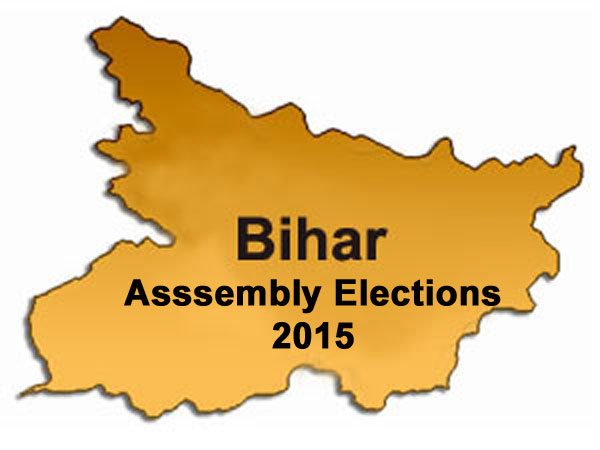
    In a huge setback to Indian Prime Minister Narendra Modi’s Bhartiya Janta Party (BJP), an opposition grand alliance ( Mahagathbandhan) led by chief minister Nitish Kumar has dealt a shocker to NDA by securing a landslide two-thirds majority in the legislative assembly of Bihar.

    bihar

    • The Bihar election results saw Grand Alliance decimate the BJP-led NDA in a bitterly-contested assembly polls.
    • The BJP-led NDA, for which Modi mounted an aggressive campaign addressing more than 30 rallies, bagged 58 seats.
    • For Modi, the Bihar results are seen as a personal setback.

    The alliance, comprising of Nitish Kumar’s Janta Dal (United), JDU, Lalu Prasad Yadav’s Rashtriya Janta Dal (RJD) and Congress, has won 178 seats while BJP-led National Democratic Alliance (NDA) has been reduced to 58 as per Election Commission website. Nitish Kumar thanked everyone in his tweet after trends showed clear majority to the Grand alliance.

    Prime Minister Narendra Modi, who had put up an aggressive campaign addressing over 30 rallies, called up Kumar to congratulate him on the poll victory.

    “Had a telephone conversation with Shri @nitishkumar & congratulated him on the victory,” Modi tweeted.

    Immediately thereafter, Kumar tweeted, “Just received a phone call from the Prime Minister congratulating me…thank you Modiji.”

    BJP chief Amit Shah also congratulated Kumar and Lalu on the massive victory.

    “Our good wishes to the new government to take Bihar on the path of development,” he said.

    “We respect the mandate of the people of Bihar… I congratulate Nitish Kumar and Lalu Prasad Yadav on their victory in Bihar Assembly elections,” the BJP chief tweeted.

    Initially, many television channels had projected the NDA to be in the lead. In the last assembly polls in 2010, the JDU had won 115 seats while BJP won in 91 when both parties had an alliance.

    Election Commission has released the final tally of Bihar Assembly elections results. Here’s the status of 243 constituencies:
    RJD: 80
    JD(U): 71
    BJP: 53
    Congress: 27
    Independent: 4
    CPI (Marxist-Leninist) (Liberation): 3
    LJP: 2
    RLSP: 2
    HAM(S): 1

    Screen Shot 2015-11-08 at 10.58.36 PM


  • Anupam Kher Leads March Against ‘Intolerance’ Protests

    Anupam Kher Leads March Against ‘Intolerance’ Protests

    Nov 07: Bollywood actor Anupam Kher today led a march to the Rashtrapati Bhavan to counter the protests by writers, artistes and others against “rising intolerance”,voicing concern over the “wrong projection” of India by those returning their awards.

    The protest was a counter protest against a host of writers, scientists, historians and filmmakers who have raised their voices against what they call “rising intolerance” under the BJP-led government, and have returned various government awards and honours.

    Kher, director Madhur Bhandarkar and painter Vasudev Kamath were among 11 members who handed over a memorandum to President Pranab Mukherjee.

    The memorandum is signed by 90personalities, including Kamal Haasan, Shekhar Kapur, Vidya Balan, Raveena Tandon and Vivek Oberoi besides, authors, former judges and musicians.

    “Any brutal killing is condemnable. We strongly condemn it and expect swift justice. But if it is used by some people to attempt to defame India at the international platform, then we should be worried,” Kher said while reading out their letterto the President.

    The actor said the protests, which began with writers returning their Sahitya Akademi awards, shows that rather thanaddressing their concerns through their respective fields, these people are using media to “hurt the spirit of India”.

    Taking a dig at Congress vice president Rahul Gandhi, Mr Kher said, “The leader that opposition party is trying to project does not inspire me. He reads out from prepared statements. Our former PM also used to do the same. The passion with which PM Modi talks about India at international platforms, no other PM has ever done that. No other PM has also visited Kashmir so many times. So, why shouldn’t I respect him?”

    Kher said no one has the right to call India intolerantand there is no country in the world, which is more tolerantthan India.


  • EXIT POLLS: ADVANTAGE NITISH AS BIHAR STARES AT CLIFFHANGER

    EXIT POLLS: ADVANTAGE NITISH AS BIHAR STARES AT CLIFFHANGER

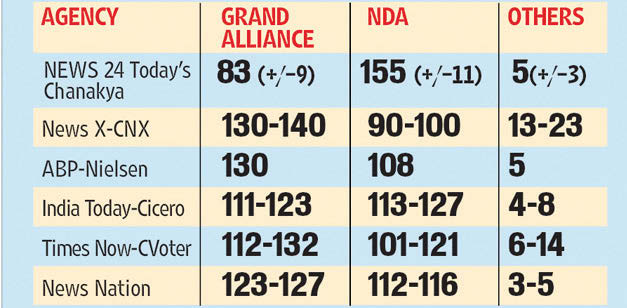
    NEW DELHI (TIP): The race for Bihar’s top job was too close to call with exit polls divided on November 5 on who will win a fierce battle for one of India’s most politically crucial states after nearly two months of bitter campaigning.

    Three exit polls — NewsX-CNX, ABP-Nielsen and News Nation — predicted chief minister Nitish Kumar could get a majority by a slender margin. Times Now- C Voter said a photo finish was likely with an edge for the Kumar-led Grand Alliance. India Today-Cicero forecast a hung assembly with the BJP ahead.

    Only News 24-Today’s Chanakya – which came closest to predicting the outcome of the 2014 Lok Sabha elections – said the BJP-led coalition was headed for a comfortable victory with 155 seats.

    But experts warned such exit polls regularly go wrong – as seen in the unexpected Aam Aadmi Party’s landslide victory in the Delhi polls in February – and chances of inaccurate surveys were increased by Bihar’s complex caste, religion and region-specific loyalties.

    Moreover, many of the exit polls didn’t fully factor in the final phase of voting for 57 seats on Thursday that saw the highest turnout of 60% in these elections. Overall, 56.8% of the 66.8-million-strong electorate voted in the five-phase polls. The votes will be counted on November 8.

    The predictions gave three clear indications.

    First, both alliances were able to hold on to their core base and the pivotal extremely- backward classes vote – that was aggressively wooed by both formations – appears to have been split.

    Second, no exit poll, barring one, reflected a personal anti-incumbency sentiment against Nitish Kumar who has been in power for 10 years with three different allies – first with the BJP for eight years and with the Congress and the RJD for the remaining period. The Grand Alliance had played up Nitish as its CM face, hoping to cash in on the goodwill.

    Third, it was largely a bipolar election which hardly gave any space to other players such as the Samajwadi Party, Left or Asaduddin Owaisi-led AIMIM. The SP broke ranks with the Grand Alliance after getting a raw deal and tried to form a third front but doesn’t seem to have made an impact. Even the likes of Owaisi who fielded candidates in Muslim-dominated areas and rebel RJD MP Pappu Yadav, a muscleman from Sahara, were largely ineffective.

    A Grand Alliance win would bolster opposition parties and may even boost Nitish Kumar’s stature as a national-level opponent to Modi. It would also tempt a belligerent Opposition to disrupt the NDA’s legislative agenda in Parliament, especially in the Rajya Sabha where the government doesn’t have the numbers to push through critical reform bills.

    An emphatic BJP victory, on the other hand, would be a huge blow to the Grand Alliance and efforts to merge six erstwhile socialist parties into the Janata Parivar. It would also be an embarrassment for two-term CM Nitish Kumar, who buried differences with arch-rival Lalu Prasad to prevent the BJP from wresting power.

    A saffron surge would not only give the BJP enough political leverage to stimulate the pace of reforms but also underscore the point that the Delhi loss was a mere blip, and Modi’s national popularity was intact.

    The third possibility of a hung assembly –with both alliances within touching distance of the majority mark of 122 in the 243-member house – will keep the hope alive on both sides with some help from independents.

    Minutes after polls closed on Thursday, a confident Lalu Prasad told reporters that the Grand Alliance was winning 190 seats. But the BJP insisted most exit polls got their numbers wrong.

    “There is no question of a photo-finish,” BJP in-charge for Bihar, Ananth Kumar said, claiming the NDA would end up with a two-thirds majority.

    One of India’s most impoverished states, Bihar was ruled by Lalu Prasad’s Rashtriya Janata Dal for 15 years but festering corruption and a poor development record paved the way for a Nitish Kumar win in 2005 in alliance with the BJP. The coalition ruled for the next eight years, till Nitish walked out of the 17-year-old alliance in 2013 over Modi’s elevation as the NDA’s chief campaigner for the 2014 general elections.

  • Threat to India from Intolerance

    Threat to India from Intolerance

    As we prepare to celebrate the festival of lights which signifies victory of good over evil, my thoughts go to India and our people there. I have seen the good times and the bad times that India has passed through during the last 50 years or so. I have been a witness to communal clashes, and the worst which I was a witness to, was the anti-Sikh riots in the wake of Indira Gandhi’s murder.

    I have also seen how Punjab and Punjabis suffered during the period of militancy in the 80’s. I have myself experienced some of the miseries that common man is subjected to in a police state. The memory is still crowded with many unpleasant experiences. They were fearsome and worrisome. I would not like to have another experience like the ones I had on several occasions. And, thank God, many years have passed since the last unpleasant one.

    But the recent incidents of intolerance- religious, communal, political- has me as also many Indians worrying. Protest is a democratic way of expressing one’s disagreement over an issue. But when the protest becomes violent or challenges the fundamental rights of others, it has to be viewed seriously.

    Ever since the BJP led government came in to power, one has witnessed polarization on many fronts. While political polarization is a part of politics and does not harm common people, nor challenges their fundamental rights, the religious intolerance is of the worst kind, since it is based on the principle of hatred. We have seen its manifestation in religiocommunal clashes and individual lynching and murders. We have seen how intolerance of other people’s faith and practices causes damage to the nation’s social fabric. The fundamentalist elements are always on the look out to foment trouble. Whoever they may be, they are not friends and well wishers of the nation.

    There can be no denying the fact that over the last two years or so India has become a playground for the fundamentalist elements. The fringe elements of political parties lose no opportunity to spit venom and create an atmosphere of distrust among communities.

    Instead of disciplining them, the bosses clog their ears, shut their eyes, and, worse, keep their mouths sealed. And the President of the Republic has to speak the mind of the people. Foreign agencies have to draw the attention of the Prime Minister to the growing threat to nation from these elements and the PM chooses to remain silent.

    India has certainly fallen on bad days. There can be no happy Diwali when the dark devil of intolerance stalks fearlessly and the guards choose not to challenge it.