NEW DELHI (TIP): Two months after it took over the investigation in the multi-layered Vyapam (Vyavsayik Pariksha Mandal) scam, CBI sleuths on Thursday conducted raids at around 40 places in Madhya Pradesh and Uttar Pradesh.
Searches were also conducted at the residences of MP’s former BJP minister Laxmikant Mishra; former Vyapam system analyst Nitin Mahindra; Dhanraj Yadav, former officer on special duty to MP Governor Ram Naresh Yadav, in Lucknow, alleged mastermind Jagadish Sagar and several others.
“We have conducted searches relating to Vyapam cases in around 40 places in Madhya Pradesh and Uttar Pradesh. In MP, the searches were conducted in the districts of Bhopal, Indore, Gwalior, Ujjain, Jabalpur and Rewa; the headquarters of Vyapam in Bhopal and in Sironj in Vidisha district. In Uttar Pradesh, the searches were conducted in Lucknow and Allahabad,” a senior CBI official overseeing the probe said.
The searches hinted at an alleged nexus between politicians and high-placed officials in receiving bribes from the job-seekers to clear Madhya Pradesh Professional Examination Board or Vyapam examinations. The Supreme Court, which had directed the CBI to take over the probe on July 9, has sought a status report by October 9.
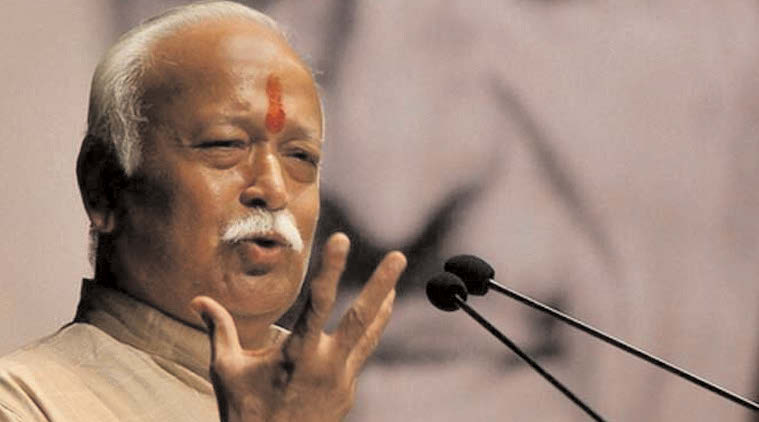
NEW DELHI (TIP): In what could trigger a fresh round of political slugfest in poll bound Bihar, Rashtriya Swayamsevak Sangh chief Mohan Bhagwat has disapproved of “special package” becoming political tool saying it leads to “unhealthy competition” between states whom he described as ‘integral parts of body politic”. Bhagwat’s word of caution in an interview for a special edition of RSS’ publication Organiser, comes at a time when the BJP is harping on the recently announced Rs 1.25 lakh crore package for Bihar and chief minister Nitish Kumar dismissing it as ‘packaging’ of old schemes.
The package is one of the main poll planks for the BJP in Bihar and it has found mention in hundreds of such posters put up in different cities of Bihar.
“Once special packages become a political tool and all other constituents feel that political blackmailing can take them forward then it leads to unhealthy competition. We need to logically justify and act for harmonious relations,” Bhagwat said in the interview. He was asked if integral humanism could address the strain in Centre-state relationship that is caused by issues like special package and identity.
“Emotional cordiality is the only solution to this. Both Centre and states are running governments for the nation. Unitary states are constituents of the nation, they are not separate. As hands, legs or brain cannot claim that they are independent; similarly states are also integral parts of body politic. Until, this bonding is there, everything will be in line,” Bhagwat added.
His interview to the weekly had earlier triggered a row with BJP’s rivals accusing Bhagwat of trying to do away with the reservation system. This was following his suggestion to set up a committee to decide which categories require reservation and for how long.
Our country is facing the destruction of the very idea of India as a great, multi-religious, multi-cultural civilization. We are facing the gravest danger we have faced since independence. Our freedom is not merely under threat, it is being ‘openly attacked’, says Nayantara Sahgal, niece of India’s first Prime Minister Jawaharlal Nehru, whose latest work, “Nehru’s India: Essays on the Maker of a Nation”, has just been released.
What is happening to the body politic of India in the short time since Shri Narendra Modi assumed power? Are the institutions of democratic strength and stability for six decades, which were built under the stewardship of eminent statesmen like Jawaharlal Nehru and B.R. Ambedkar proving to be weak and vulnerable?
If we listen to various pundits, there is a serious cause for concern to India’s vast democracy. Although the BJP government has come to power with only 31 per cent of the vote share, the Sangh Parivar with its misguided agenda and regressive policies has determined to transform India into its own liking. With civil society under threats and intimidation, the media’s eagerness to establish approval, and the survival mode of the opposition parties, the saffron brigade is not wasting any time.
On the eve of Shri Modi’s second visit to the United States, there is certainly a shift in the mood within the Diaspora as regards the intent and purposes of the BJP government. A letter signed by 124 members of faculty from leading Universities in USA questions the Prime Minister on well-publicized episodes of censorship and harassment in his critical policies; bans and restrictions on NGOs; ongoing violations of religious freedom; and a steady impingement on the independence of the judiciary.
The letter also talked about foreign scholars who have been denied entry in to India to attend International conferences, and the ongoing interference with the governance of top Indian Universities and academic institutions. It mentioned under-qualified or incompetent key appointments made to Indian Council of Historical research, the Film and Television Institute of India and the National Book Trust. In conclusion, the statement expressed serious concern for the political future of the country if these trends are allowed to continue.
In an interview with Times of India, Nobel Laureate Amartya Sen said, ” Government must understand that winning a Lok Sabha election does not give you permission to undermine the autonomy of academic institutions, or for that matter, the courts or the upper house of Parliament. Academic freedom is based on the government understanding the limits of its formal power as opposed to its actual power and what they are expected to do: they are expected to listen to the voice of the professoriate and the voice of the people in the University”.
Whether it is banning the documentary ‘India’s Daughter”; offloading Ms. Priya Pillai, a Green Peace activist from her flight to London, while she was on her way to address British Parliamentarians; banning the processing, selling or eating of the red meat in Maharashtra and in 4 other BJP-ruled states; the Rashtriya Swayamsevak Sangh (RSS) is stamping history with their regressive policies and divisive agenda.
The BJP Government so far has banned 69 Non-Governmental Organizations from receiving foreign funding, branding them as anti-national and accusing them of working at the behest of foreign governments. It includes organizations like Ford Foundation and Caritas International that provided much-needed help to communities in rural India in an effort to end poverty promote justice and restore dignity to a neglected segment of the population.
Ms. Teesta Setavald, a long-time critic of Mr. Modi on his handling of the 2002 Gujarat riots that killed more than 1000 people in Gujarat is currently being investigated by CBI. According to a New York Times report, the prosecutor branded her ‘a threat to India’s national security, so dangerous that she should be locked up while Modi’s Government investigates whether it was legal for her to accept funding from Ford Foundation’.
For the first time since it took charge, the NDA government has issued show-cause notices to ABP news, NDTV and Aaj Talk alleging that these three private channels showed disrespect to the judiciary in their coverage of the hanging of Mumbai blast convict Yakub Memon, asking them to explain within 15 days why action should not be taken against them for broadcasting such content.
These should not be regarded as isolated incidents but rather as a part of a grand strategy to intimidate civil society, and silence the media in order to advance the saffron agenda. All these incidents point to a growing intolerance to dissent, and the very concept of freedom that may ultimately prove fatal to the democratic and pluralistic framework that was created out of the visionary leadership of the founding fathers of modern India.
Asked to explain what prompted him to be a signatory on the faculty statement against Narendra Modi’s “Digital India Campaign”, Richard A. Falk, Professor Emeritus of Law at Princeton University said the following: “I and others on the list have questions about Narendra Modi’s record on religious tolerance, freedom of religion, and freedom of expression. Some of those who signed the letter have also been subject to a campaign of harassment from Hindu nationalist followers, which raises particular worries about academic freedom. “Digital India” as an initiative has enormous potential to affect positive social change, but it simultaneously poses dangers for abuse under the Modi administration that can make use of digitization to target members of minority communities or those who are critical of its policies. It is my impression that the Modi government has been particularly sensitive to criticism and unfriendly to critics, making our concern more credible”.
Mr. Falk’s statement sounds prophetic, as at the time of writing this article Mr. John Dayal, a member of the National Integration Council and Secretary General of All India Catholic Union and a foremost Human Rights defender was being hounded with abusive and threatening tweets along with his personal details. The abuses are also directed at the Catholic-Christian minority and are aimed at disturbing communal harmony. The country has just witnessed the murders of three well-known rationalists -Narendra Dabholkar, Govind Pansare and M.M. Kalburgi allegedly by religious extremists. These elements appear to be serious in their nefarious undertaking.
As the Indian entrepreneurs in the Silicon Valley are gearing up to give a grand reception to the Prime Minister, I hope they would also be cognizant of the fact that the freedom they enjoy here in the United States should empower them to enhance freedom elsewhere. As Mahatma Gandhi once said “Commerce (Business) without morality (ethics) and science without humanity could prove to be detrimental to everyone’s long term interests!”
(The author is a former Chief Technology Officer of the United Nations)
LUCKNOW (TIP): The Samajwadi Party (SP) on September 17 joined hands with the Nationalist Congress Party (NCP) and two other outfits and announced the formation of a ‘Third Front’ for the Bihar assembly elections.
Party general secretary Ram Gopal Yadav announced the alliance and said that other than the SP and NCP, former Lok Sabha speaker P.A. Sangma’s National People’s Party and Samajwadi Janata Dal (Secular) would also be the constituents of the front.
The SJD (Secular) was formed by Devendra Prasad Yadav, who parted ways with Hindustani Awam Morcha of former chief minister Jitan Ram Manjhi.
Yadav said that the candidates of the new front for the first phase of Bihar polls would be announced on Friday.
Earlier, senior Rashtriya Janata Dal leader Raghunath Jha joined the Samajwadi Party and said that RJD leader and former chief minister Lalu Prasad had ditched him.
“It was I who made him the chief minister and now he has deserted me… the only real socialist leader after Ram Manohar Lohia is Mulayam Singh Yadav,” Jha said.He said the Third Front would be a force to reckon with in the coming Bihar elections. Meanwhile, Ram Gopal Yadav trained his guns on Lalu Prasad and Chief Minister Nitish Kumar and said that he had seen through their nefarious design in time and severed his party’s relations with the grand alliance. “At the centre of the matter was our party symbol. Had they succeded in usurping our (election) symbol, the Samajwadi Party would have been finished,” he added.
No CM face for BJP
The Bharatiya Janata Party (BJP) has decided not to project a chief ministerial candidate for the Bihar assembly polls because of fears of a caste backlash but its list of potential leaders for the post has kept growing.
Veterans in the BJP, who have served the party in different capacities at the Centre and in the state, feel they should be named as the chief ministerial candidate.
Leading the pack of hopefuls is Sushil Kumar Modi, who served as deputy chief minister in the JD-U-NDA government headed by chief minister Nitish Kumar.
Modi is considered the frontrunner for the top job if the NDA comes to power because of his experience as leader of opposition in the state legislature and his varied administrative experience.
As the deputy chief minister, he handled nine portfolios, including finance in fund-starved Bihar, and headed the GST panel of chief ministers. Modi also has the blessings of top RSS leaders since he had served the organisation as a full-time member from 1977 to 1986.
But there are others like Nand Kishore Yadav, the current leader of opposition in the Bihar assembly and a prominent Yadav face. As convenor of the NDA, he rendered yeoman service in ironing out differences between alliance partners.
NEW DELHI (TIP): Election expenses of several candidates did not match their party’s expenditure declaration according to an analysis by Association for Democratic Reforms (ADR). Among those whose election expenses were either more or less than the expense declaration made by the party included PM Narendra Modi, senior BJP leader L K Advani, Cabinet minister Kalraj Mishra, LJP’s Ramvilas Paswan, NCP’s Supriya Sule, Congress MPs Deepender Singh Hooda and K V Thomas among others.
Also, around 70 parliamentarians including speaker Sumita Mahajan, ministers Uma Bharati, Maneka Gandhi and Jayant Sinha claimed to have received party funds though the party has not declared any expenses towards their campaign.
Out of 342 MPs from national parties, 263 claimed they received poll funds to the tune of Rs 75.58 crore from their parties while the parties declared that they had given a much lower amount of Rs 54.73 crore to only 175 MPs. The analysis is based on election expenditure statements submitted to the Election Commission by the parties and individual candidates. The discrepancy in data, according to ADR, points to lack of scrutiny of election expenses by the EC.
The discrepancy is most pronounced in BJP where the party declared that it had provided aid to 159 parliamentarians allocating a total of Rs 47.03 crore. Of these, 18 MPs claimed to have received less than the party declared as expenses towards their campaign. They included PM Narendra Modi whose affidavit claimed the party gave him Rs 32.53 lakh while the party expenditure statement declared Rs 40 lakh as the fund amount. Similarly, Advani declared Rs 33.88 lakh as opposed to the party declaration of Rs 41 lakh.
About 35 BJP MPs declared that they received more than the party expense statement. They include minister Kalraj Mishra who claimed party aid of Rs 55 lakh though the BJP statement listed only Rs 15 lakh. Maharashtra MP Poonam Mahajan declared expenses of Rs 42.07 lakh while the party claimed it had spent Rs 32.60 lakh.
In another case of mismatch, 70 MPs declared receiving funds while the party did not allocate any funds for them. They included Speaker Sumitra Mahajan who declared Rs 11 lakh and ministers Uma Bharati (Rs 40 lakh), Maneka Gandhi (Rs 20 lakh) and Jayant Sinha (Rs 45 lakh). Poll expense declaration by 105 MPs matched the amount the party declared.
In the Congress, 11 MPs claimed to have received aid though only seven were listed in the party’s expense statement. Among those who claimed to have received funds are Mullapally Ramachandran (declared Rs 31.50 lakh), K V Thomas (Rs 20 lakh), Anto Antony (Rs 15.67 lakh) among others. Former Maharashtra CM Ashok Chavan declared he had received Rs 65 lakh while the party said it gave him Rs 40 lakh. A senior EC official id that the commission has taken note of the ADR findings on discrepancies between MPs’ declaration of lumpsum amount received from parties and that declared by their respective parties. “We will examine the ADR report and take an independent view on any such discrepancies, before deciding our next course of action,” the official said.
15 years ago, this month, a prime minister of India had traveled to the United States for the annual United Nations General Assembly mela. During that visit, he found time to attend a Vishwa Hindu Parishad event in Staten Island where he declared himself a swayamsevak – yes, as in the Rashtriya Swayamsevak Sangh. This was music to the ears of the Nagpur Gharana. A prime minister who all along was pretending to have little to do with this Hindu outfit suddenly got into a confessional mood.
Back in New Delhi, Atal Behari Vajpayee’s exuberance did not last long. The conflict between the demands the RSS would make on a prime minister and his constitutional oath was too palpable to permit any kind of meaningful jugalbandi. Though Vajpayee continued to mark his token attendance at the annual guru dakshina rites, he was not afraid to antagonize the Nagpur crowd. After the 2002 anti-Muslim riots in Gujarat, it was simply not possible for Vajpayee to maintain any civilized conversation with these comrades among the swayamsevaks. The gurus never forgave Vajpayee for wanting to draw outside the lines.
And, again, 10 years ago, July 2005 to be precise, three designated gurus of the Nagpur Gharana traveled to Delhi to tell the then BJP president, LK Advani, to put in his papers. Advani had committed the solecism of saying something vaguely in praise of Muhammad Ali Jinnah. All the top leaders of the BJP held their collective peace as the “unknown, unelected, unaccountable” Nagpur-empowered busybodies roughed up Advani as if he was just a taluka-level politician. Advani was rendered hors de combat. By the end of the year, he was gone as the party president. The Nagpur bosses wanted to reaffirm the first principle: No BJP leader would be allowed any deviation. They had had enough of Vajpayee and his liberal tantrums.
And, last week, it was this very first principle that was re-asserted when the Sarsanghchalak summoned Prime Minister Modi and his ministers. Well, if you are a swayamsevak, you do respond to summons from the superior in the hierarchy. Period. That is the code of the saffron brotherhood. Admitted, Sushma Swaraj is not an RSS bhakt. Nor is Arun Jaitley. Unless, he has managed to keep this fact away from his “moderate and decent” friends in Delhi. But neither of them had any choice.
Why are the liberal souls losing their shirt just because the Prime Minister and his ministerial colleagues had all chosen to put in an appearance before the RSS chief and his advisers? After all, the Modi-RSS connection is not new.
It was no secret that it was the RSS’s unequivocal endorsement of Modi that proved decisive in the BJP making him its prime ministerial mascot. Nor was the RSS’s involvement on behalf of Narendra Modi in the 2014 electoral process a secret affair. It was open and fairly well documented.
From his Gujarat days, Modi has written the blue book on how to look after the RSS and its functionaries. Modi is smarter – which is not the same thing as being wiser – than Vajpayee. He has shrewdly sized up the small men and their small needs.
To be fair, Modi never kept anyone in the dark about his RSS links. Yet, if the best and the brightest among the New Delhi-based intellectuals and others ‘thought leaders’ chose to be taken in by the ‘vikas’ mantra, it is their problem – not Modi’s.
Instead of having the buyer’s regret, every moderate voice should welcome this national-level seduction of the RSS. There is no dark side to it.
Look at what has already happened: The RSS, which has arrogated to itself the role of the sole arbiter of moral values, is now wasting its breath on explaining the excesses and aberrations of the BJP chief ministers – Shivraj Singh Chouhan in Madhya Pradesh and Vasundhara Raje in Rajasthan. It would be instructive to find out how that fly-by-night entrepreneur, Lalit Modi, is described in the morning shakha meetings in Jaipur. Just as it would be revealing to know what explanation the swayamsevaks in Bhopal offered regarding the horror of a scandal called Vyapam.
Indeed, none seems to have noticed that the RSS has reduced itself to being a BJP spokesperson.
Its two other chief ministers – in Haryana and Maharashtra – both proud products of the Sangh brain-washing factory system – have turned out to be such poor advertisements for good governance or for the RSS brand. Apart from exhibiting a new willingness to provoke -Manohar Lal Khattar’s absurd infatuation with Baba Ramdev and Devendra Fadnavis’ with petty preoccupations with bans – these two have hardly enhanced the reputation of the RSS.
More interestingly, the BJP apologists have cockily explained Modi and his ministers’ attendance at the Sangh Shivir as not very dissimilar to some Congress ministers and Prime Minister Manmohan Singh’s response to the Sonia Gandhi-led National Advisory Council.
Never mind that the NAC was a government-constituted, gazetted body; it has now been easily done away with. Never mind that Sonia Gandhi is the head of a legally recognized political party, which enters the electoral fray with its own symbol. Yet any suggestion of a moral equivalence between Sonia Gandhi and Mohan Bhagwat should not be resented.
Perhaps, it should even be a matter of some satisfaction that the RSS has come out of its bogus pretence of being just a cultural organization. The democratic forces should welcome it and demand that it should be brought within the ambit of the Right-to-Information regime.
Nonetheless, a matter of grave concern is the new attempt aimed at an intellectual hegemony. For instance, the culture minister in the Modi government.
Mahesh Sharma, a black-belt saffronite, has argued that by voting for Modi and the BJP, the voters have given a mandate for “saffronisation” of education, culture and other institutions. With just 31 per cent of the votes, the Modi sarkaar would like to believe that it has been given a license to operationalize the RSS agenda?
This is an anti-democratic argument and is laced with morally unpleasant smells. Whatever obedience the Prime Minister and his ministers may choose to render to the Sarsanghchalak, they need to be reminded that they are still governed and bound by something called the Constitution of India. India is still a constitutional democracy and its rulers, irrespective of the number of seats in the Lok Sabha, are still answerable to a robust Parliament and an independent judiciary.
On both sides of the India-Pakistan border, columns were written after the aborted National Security Advisers’ meeting. Most retired Indian diplomats and analysts argued that flip-flops on Pakistan betrayed the absence of coherence and strategy. Journalist-apologists of the government dismissed these as laments of those without post-retirement sinecures – a familiar approach, commonly used by twitter “trolls”, to attack the person rather than his argument.
In Pakistan, retired diplomats reflected known proclivities ranging from India-baiting by Munir Akram to balanced analysis by former high commissioner to India, Ashraf J Qazi, or rare brutal self-examination by Husain Haqqani, victimized by the Pakistan military when posted as the Pakistan ambassador to the US. Haqqani reminded Pakistan that the last resolution by the UN Security Council on Kashmir was in 1957 and that today it would be impossible to get any support for a fresh resolution for plebiscite in Kashmir. His sage advice is that Pakistan should stop living in the past, trapped in a Kashmir-is-ours narrative, while India too must not rub Pakistan’s “nose in the ground”.
The Modi government has undertaken two cycles of PM-level India-Pakistan engagement culminating in bickering and last-minute cancellation of scheduled meetings, i.e. Foreign Secretary-level meeting in August last year and now those of the NSAs a year later. The government’s defenders aver that this is actually calculated relaying of new red-lines. This claim needs examination.
The first red-line is strict bilateralism, implying Pakistan would not provocatively consult Hurriyat before high-level talks. The second one is that India-Pakistan parleys will first focus on terror. Once India is satisfied of Pakistani cooperation, the old composite dialogue, or any new variant, may be revived. Pakistan’s de facto foreign minister Sartaj Aziz told Indian television that as a politician, if he met Indian Prime Minister on the sidelines of his talks with NSA Ajit Doval, he could not be constrained to only discuss terror without enquiring about “modalities” to resume dispute resolution.
Sartaj Aziz’s argument carries weight as such specificity can be prescribed if the meeting was of Additional Secretaries heading the Anti-Terror Mechanism, as the writer did in 2006-07. It could also be if the Home Secretaries of the two countries met. Once talks are ramped up to the political level, the discussions perforce will be wider. In the Ufa statement, the words that “all issues connected to terrorism” will be discussed left a loophole for Pakistan to introduce Kashmir, as according to them it is the root cause of terror.
The two other operative parts of the Ufa joint statement relate to confidence-building measures for maintaining peace at the Line of Control/International Border and the release of fishermen. Regarding the first, progress depends on Pakistan army’s cooperation, which uses ceasefire violations to convey unhappiness over its own government’s India policy or to facilitate infiltration or simply defy perceived Indian dominance. The recurring fishermen issue is a factor of unresolved maritime boundary due to the non-settlement of the Sir Creek issue.
The tripod on which the Pakistan polity rests is the army, political parties and radical Islamic groupings – political or jehadi. A decade of Pakistan playing the US counter-terrorism game in the Af-Pak area has complicated relationships amongst the three. Some former jehadi protégés have turned enemies of the Pakistan state while others have diversified their own lateral links to Afghan/Al-Qaeda groups. The Death of Taliban leader Mullah Omar will exacerbate the jostling for space amongst the entire jehadi fraternity, further complicated by the ISIS seeking adherents.
What then should be the Indian strategy to deal with this complex and evolving situation?BJP/RSS spokesmen on television hint at a Doval doctrine of retribution. One even claimed that the Indian NSA has warned Pakistan that it would lose Baluchistan if there is another 26/11. Such rash statements are providing Pakistan ammunition to prove Indian meddling, which globally none has so far taken seriously. It also neutralizes Indian moral advantage built over decades, alleging Pakistan’s complicity in abetting terror in India.
Contrariwise following can be the contours of India’s Pakistan policy. Firstly, India must not push Pakistan’s elected government, however ineffective in controlling their army, into the army-jehadi corner. It is in India’s long-term interest to have any elected government be less and not more dependent on that combine.
Secondly, Pakistan’s Punjab is losing mental space to the trans-Indus jehadi/Wahhabi hybrid of Islam which is alien to centuries of diverse and inclusive Islamic precept and practice. De-radicalization in Pakistan would need the Punjabi heartland to rediscover its historic roots, which it shares with Indian Punjab. Bangladesh, under PM Sheikh Hasina, is combating radicalization by rooting itself in the composite Bengali culture and not by espousing an anti-India Islamic construct. For this, it is necessary to revive incrementally cultural, travel and youth links between the two Punjabs -through which ran ancient arteries linking Central and South Asia.
Maharaja Ranjit Singh – first indigenous ruler since Rajput rule (647-1192) to govern Punjab (1799-1839) – wove a Muslim majority area with a significant Hindu and Sikh population into a Punjabi citadel of composite culture against Pashtun interference from trans-Indus regions. Sikh troops hunted down Syed Ahmad, self-proclaimed Amir ul-Momineen, a title that Taliban leader Mullah Omar assumed, in 1831 at the Battle of Balakot.
Thirdly, the Composite Dialogue, conceived in 1997 in Male by Prime Ministers Nawaz Sharif and IK Gujral, is flawed as confidence-building measures (CBMs) and disputes are tackled simultaneously. Pakistan holds back progress on CBMs to force progress on Kashmir, Siachen, etc. This is absurd as CBMs are meant to create the environment for dispute resolution and must precede the latter. Special representatives must be appointed to deal with disputes, out of public view, via a back channel. Meanwhile, the Foreign Secretaries/Ministers can quickly finalize CBMs that are mature for delivery. Terror issues can be handed over to the intelligence chiefs of the two nations.
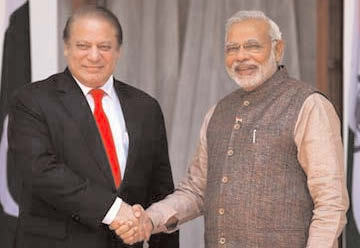
September-end, the two PMs will be in New York. They have an opportunity to break the logjam. PM Nawaz Sharif must refrain from playing to the international gallery. PM Modi needs to retrieve his Pakistan policy from the intelligence-security lobby for a safer South Asia.
(The author, a career diplomat is a former Secretary, Ministry of External Affairs, Government of India)
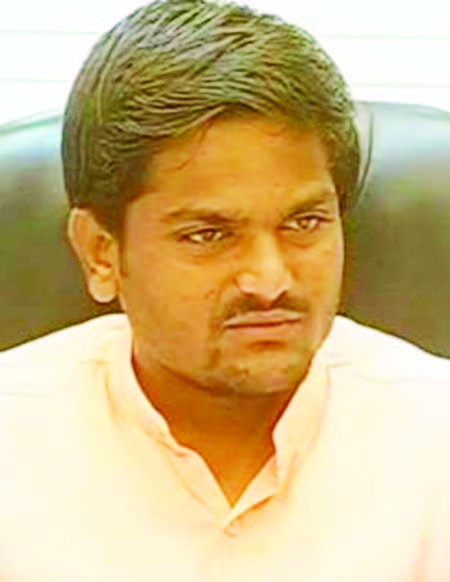
Twenty one year old Hardik Patel is emerging as the unlikely new leader from Gujarat, the home state of Prime Minister Narendra Modi.
He has built up a new fan following, comprising of people in the age group of 15 to 70, and has been organizing huge rallies much to the envy of most political leaders. His claim to organize a rally of 40 lakh people on August 25 in Gujarat is not being taken lightly by the state government as well as the Centre.
He has taken up the leadership of the influential community of Patels who constitute a population of 14 per cent in the state but have a significant political clout. So much that the Anandiben government has no less than six ministers from the Patel community. Modi has replaced Keshubhai Patel as the state chief minister in 2001. Till lately octogenarian Keshubhai Patel was the undisputed leader of Patels and the mantle has now shifted to someone one fourth of his age.
Hardik Patel does not even look like a copybook neta. He prefers a shirt and jeans to the ubiquitous kurta pyjama of Politicians. He does not mind himself to be compared to the best known Patel – Sardar Vallabhbhai Patel – called the Loh Purush of India.
For the last couple of months, the influential Patel community has hit the streets demanding reservation in government jobs and in admissions to schools and colleges. Hardik Patel is leading the protest and says they are affiliated to no political party, though his father is a member of the ruling BJP.
Interestingly he has also uploaded a video on YouTube which shows him posing with a rifle, a sword and a pistol. A banner on the video says “Jai Sardar”, an apparent reference to Gujarat icon Sardar Vallabhbhai Patel. “If need be we can also follow the footsteps of Bhagat Singh”, he says.
Hardik had launched the Patidar Anamat Sangathan as a college movement to protect the interests of the Patel community when he was a 17-year-old student of commerce in an Ahmedabad college. He has not looked back since then.
Hardik who graduated in commerce, hails from a middle class business family and runs a small business of supplying water in Viramgam about 64 kilometers from Ahmedabad.
He said what prompted him to lead the struggle was the concerns of the youth from the community who did not get jobs or admission in government educational institutions due to the reservation policy.
This despite the general perceptions about the Patels, who belong to the Patidar community, that they are a rich and prosperous community.
Hardik has been drawing crowds in both urban and rural areas. His following has forced the state government to appoint a six minister panel, headed by Health Minister Nitin Patel, to look into the demand.
NEW DELHI (TIP): Senior BJP leader and former foreign minister Yashwant Sinha on Thursday called for declaring Pakistan high commissioner as persona non grata for
“crossing all lines” of diplomatic etiquette by indulging in provocative activities such as inviting Kashmiri separatist leaders ahead of India-Pak talks.
The former Union minister also demanded that the upcoming NSA-level talks should be immediately called off, accusing Pakistan of “vitiating” the atmosphere.
“This is not the appropriate occasion for talks. From the time of Vajpayee government it has been our policy that terror and talks cannot go together. This is the consistent policy of BJP as well … The talks should be called off,” he said while citing spurt in terror attacks, ceasefire violations as compelling reasons to do so.
Pakistan has used opportunities given by such meetings with India for grandstanding, he said and added that the neighbouring country will come with an counter-argument for every argument put forth by India and a counter-dossier for every Indian dossier on terror, he said.
“If anything, incidents of terror have increased of late, especially after Ufa declaration. A new dimension to the situation has been added by the complete violation of ceasefire along line of control and International Border.
“Fresh provocation has been provided by Pakistan with its high commissioner inviting Hurriyat leader to meet its NSA,” he said.
He recalled that Centre had decided to call off foreign secretary-level talks last year after a similar invite to Hurriyat leaders was sent before they were to be held.
“There is complete defiance and complete lack of concern shown by Pakistan, especially their high commissioner, of Indian sentiments and sensitivities. The atmosphere has been completely vitiated by Pakistan. If these talks are held they will obviously have opposite effect of peace,” he said.
NEW DELHI (TIP): Security agencies have warned about a possible 26/11 style influx of terrorists from the sea and an attack on BJP offices, asking the forces to remain alert on the occasion of Independence Day to thwart any such attempt.
The Home Ministry has also cautioned that the terrorists might use the air route to strike using a para gliders to attack and has asked the security forces to remain vigilant against any such attempt to sabotage, especially targeting high risk dignitaries.
The advisory said that recent terror attack in Gurdaspur, several terror incidents in the past including serial blasts in Patna in 2013 targeting election rally of Narendra Modi indicated that threat emanates from Pakistan based terrorist groups and their Indian affiliates like the Indian Mujahideen and members of ex-SIMI to possible targets like
Lotus Temple, Malls in Noida, Metro Stations, Red Fort and Political Personalities.
In a communication to all the forces and state police the Ministry has cited an April 16 input suggesting that Al Qaeda in the Indian Sub-Continent (AQIS) was actively engaged in planning attack against India at Indian Naval facilities and other unsecured waterfronts as potential target.
“In this regard the Southern Naval Command in Kochi (INS Venduruthy), Western Naval Command in Mumbai and the Naval base in Karwar (INS Kadamba) could be targeted,” it said adding that Gujarat may also be targeted.
The communication said an input received in September last year claims that AQIS has been planning to target BJP offices, commercial, tourist, religious, aviation and railway infrastructure in various states.
“To counter threat from remote pilotless vehicles, remote controlled aircraft, para gliders and hang gliders, open grounds and spaces, abandoned air strips etc allowing lift off or launching pads for these flying objects need to be identified and suitably secured by patrolling and deploying of security forces.
“Checks of flying/gliding clubs may be carried out to rule out use of aero modules by hostile elements,” it said . According to another uncorroborated input the ISI has “plan to hijack/explode Air India flights operating in Kabul-Delhi sector as they are being used by senior Indian officials.”
NEW DELHI (TIP): Congress on July 30 scrambled to disown the controversial remarks of its party leaders Digvijaya Singh and Shashi Tharoor over the hanging of Yakub Memon.
With finance minister Arun Jaitley pouncing on what he called “irresponsible” remark of Singh where he seemed to contrast the “urgency” shown in Yakub Memon’s case with the the soft-peddaling of other terror accused, a harried Congress distanced itself from the remarks of the party general secretary as well as those of Tharoor.
In a series of tweets, Tharoor also questioned the death sentence. “Saddened by news that our government has hanged a human being. State-sponsored killing diminishes us all by reducing us to murderers too”, said Tharoor, while terming hanging
“unworthy of a government” and questioning its effectiveness as a deterrent against terrorism.
The twin comments triggered a row, especially Singh’s sentiment being seen as a bid to compare the Yakub hanging with other terror accused including those involving Hindu terrorists. “No individual, howsoever big, can change the stand of a political party,” AICC spokesman Randeep Surjewala said as the party tried to douse the controversy.
Congress said the comments of individuals were their personal opinion, citing senior BJP leader and MPs Shatrughan Sinha and Ram Jethmalani who signed the petition in favour of mercy for Yakub, owning the argument that he was innocent in Mumbai blasts. “What Sinha and Jethmalani say do not become the BJP stand,” Surjewala said.
Congress questioned BJP’s track record on terror while arguing that it had lost two prime ministers among other leaders to the menace while the saffron party had only released terrorists when it has been in power.
Surjewala said, “Jaitley and BJP leaders should not lecture Congress and the country on terror. From Punjab to North-East, we faced terror and also ended it. Congress lost Indira Gandhi and Rajiv Gandhi, a chief minister in Punjab, to terrorists and top leaders in Chhattisgarh to naxals.”
He said BJP’s track record on terror was questionable as it released top terror merchants led by Masood Azhar to Afghanistan in the Vajpayee government while in the coalition government led by VP Singh, terrorists were released in exchange of Rabaiyya Sayeed. Also, when PM Vajpayee went to Pakistan on a bus, Pakistan captured the Kargil heights and hundreds of soldiers had to sacrifice their lives to win back the territory.
After Tharoor’s remarks were slammed by BJP and a section of netizens, the Congress leader noted in an article on a website that he had joined the public debate by expressing his sadness that the government has hanged a human being, whatever his crimes may have been. “I stressed that I was not commenting on the merits of this or any specific case: that’s for the Supreme Court to decide. My problem is with the principle and practice of the death penalty in our country,” he said in a blog.
The GOPIO-Metropolitan Washington is very sad to learn of the passing away of Professor A. P. J. Abdul Kalam. It expresses heartfelt condolences on the demise of President Kalam.
Dr. Kalam-an extraordinary visionary and embodiment of the new India, and former President of India (2002- 2007) was affectionately known as the People’s President. He loved being a professor and sharing his knowledge with students. While delivering a lecture on “Livable Planet Earth’” at the Indian Institute of Management Shillong, he suffered a severe heart attack at around 6:30 p.m. local time. He was rushed to the Bethany Hospital in a critical condition; despite efforts to revive him, he died of cardiac arrest at 7:45 p.m. Monday, July 27, 2015. He was born on 15th October 1931 in Rameswaram, Tamil Nadu.
Dr. Kalam was honored with many national and international awards, including Bharat Ratna–the highest civilian honor bestowed upon by the Government of India. Kalam’s 79th birthday was recognized as World Student Day by the United Nations. He has also received honorary doctorates from 40 universities from all over the world. He is considered the main architect of India’s nuclear program. He also contributed in the development of a low cost coronary stent, named the “Kalam-Raju Stent” with cardiologist Soma Raju and rugged tablet computer for health care in rural areas, which was named the “Kalam-Raju Tablet.” An author of more than 20 technical books, he has left a legacy that will keep his contributions remembered for a long time.[/vc_column_text][/vc_column][vc_column width=”2/3″][vc_column_text]
Dr. APJ Abdul Kalam was a President of Uncritical Devotion
By Stephen Gill
Dr. APJ Abdul Kalam, 11th president of India, collapsed while delivering a speech at a seminar of Indian Institute of Management in Shillong, India. He died of cardiac arrest at Bethany Hospital in the capital of Meghalaya province on July 27, 2015 in the evening.
He was born in a poor Muslim family of a boatman in a rural area of Tamilnadu, South India. It was his education and hard work which led him to success. He was selected by the BJP Government in 2002 to be the president of India not because of his politics but because of his achievements as a missile scientist. He wrote inspirational poems for children, and led a simple life. It is clear that he was a child of the multicultural nature of Indian heritage.
Dr. Kalam will be remembered for his life of a harmonious marriage between art and knowledge. His ceaseless struggle in the narrow alleys of the bumpy orbits of bigotries to raise a stage for the goddess of peace to dance has set an example. This is an uncommon phenomenon at least in India, where he
cultivated a crop of the palpitation of human groans and a glory that is the essence of more than five thousand years old culture. He was respected by the majority as well as by the minority groups. He was easily approachable by the youth.
He is rightly known as “people’s president.” At this time, when India needs a citizen of uncritical devotion, the legacy of Dr. APJ Abdul Kalam shall remain alive for a long, long time.
(Stephen Gill is a celebrated poet and writer, based in Canada)
The kind of man he was, who loved India with an intense passion, beyond measure, will never be born again.
By Shahnaz Husain
It seems like the end of an era……Dr Abdul Kalam, President of India, from 2002 till 2007, also known as the Missile Man, is no more. India has lost yet another precious jewel, who dedicated his life to his country. We all know how he rose from a simple childhood to be one of India’s greatest minds and occupy the highest position of President of India……and yet, he never lost his humility.
Shahnaz Husain receives Padma Shri from President Kalam
The news of his passing evoked memories of the times I had met him. What struck me most was his simplicity. I remember the day when I received the Padma Shri Award from President Abdul Kalam at the Rashtrapati Bhavan. It was an added honour for me to receive it from the Missile Man. He congratulated me for the work I was doing in my effort to popularise India’s ancient Ayurvedic heritage. He said, “You are doing great work but you must document it.” The next time when I met him was at Rashtrapati Bhavan, when he was kind enough to launch my book, “Absolute Beauty.” Surprisingly, he remembered and said “Have you started documenting your work?”
Dr. Kalam was so right when he said, “You have to dream before your dreams can come true.” He also said, “Excellence is a continuous process and not an accident.” These struck a real chord within me, because I know how true and profound his sayings are. They will inspire generations to come.
Indeed, Dr. Abdul Kalam will always be remembered for his phenomenal mind and also as a great human being. The void he has left in the world of science and in our hearts will never be filled. Today, let us celebrate his love for India and his humble brilliance.[/vc_column_text][/vc_column][/vc_row][vc_row full_width=”” parallax=”” parallax_image=””][vc_column width=”2/3″][vc_separator color=”black” align=”align_center” border_width=”3″][vc_column_text]
Down the Memory Lane
By Prof. I.S. Saluja
In March, 2008, Dr. APJ Abdul Kalam visited New York. The PIO & NRI Community of Greater New York was exultant and keen to see him, speak with him and honor him, in whatever way they could. I was one of them. I spoke with Lal Motwani, who had organized a function to honor Dr. Kalam, to get me a few minutes with one of the best known scientists of India. The most popular epithet that stuck Dr. Kalam was “the Missile Man of India”.
Well, Lal did not disappoint me. I began with my questions and Dr. Kalam, as quick as a missile, answered them. When I asked him about his idea of “India by 2020”, he seemed to travel far, probably in to future, having his vision of India in 2020, and then turned to me and said, “It means perfect vision; 20/20 is the best vision”.
It was a long talk. He talked about his passion for teaching. H said he always wanted to return to teaching after his term as President. He spoke at length about his experiments in education in Tamil Nadu which had given miraculous results, with the consequence that not only the illiteracy rate went down but also young people aspired to go in for college and university education. He said he had faith in the youth of India. While he said that he added, rather proudly, that India was a nation of the young people and they are going to transform the country. The power of education and the strength of the young people were the two subjects that he emphasized on in my meeting with him . I did carry then the interview with him in The Indian Panorama, and with a couple of pictures, too but it makes me sad that I do not have a trace of it, since the computer crashed and all went with it.
I do not have the report that I published when he was honored by the PIO and NRI community at the Hindu Temple in Flushing, a favorite place with Indian Americans for holding cultural and social events. But from the cover of a souvenir then published, I arrived at the correct date which was March 25. [/vc_column_text][/vc_column][vc_column width=”1/3″][vc_column_text]
Here are some pictures from the event which have been provided by Lal Motwani who was at the helm in organizing the reception to honor Dr. Kalam in New York on March 25, 2008.
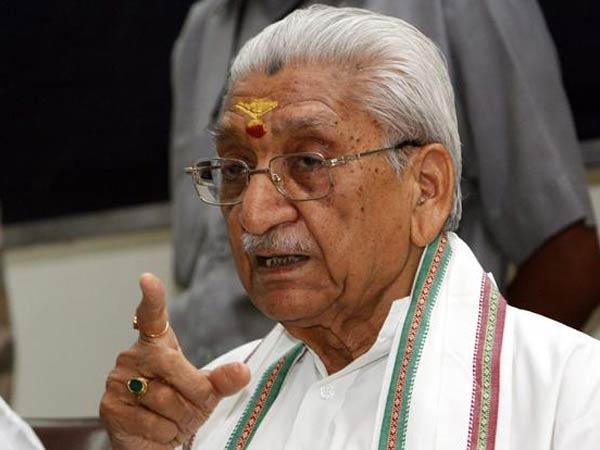
NEW DELHI (TIP): The VHP has put the NDA government in a tight spot with its patron Ashok Singhal on Saturday declaring that India will be a Hindu nation by 2020, following the BJP’s victory in the 2014 polls.
Singh described the 2014 general elections as a “revolution” in the country. “I was at the Sai Baba Ashram where Sai Baba told me by 2020 the entire country will be Hindu by 2030 the entire world will be Hindu. I feel that revolution has started,” he said at a function to mark the release of a book on the life and work of former RSS chief K S Sudarshan, who died in 2012.
The VHP leader said the BJP’s electoral win ended 800 years of “slavery” and “this is not a modest revolution. It will not remain confined to India but present a new ideology before the world”. “Sudarshan ji was not only a saint but a visionary who had predicted that a revolutionary change in the country will begin in 2012 and ultimately that happened in 2014,” he said, alluding to the BJP-led alliance’s victory in the 2014 Lok Sabha polls. External Affairs Minister Sushma Swaraj, who took part in the function, spoke about the role of Sudarshan who, she said, had genuine concern for the development of the country and advocated the “swadeshi” model of development.
Singhal’s remarks came after a break in controversial statements by the Sangh hotheads, who were asked by the RSS leadership to fall silent.
Modi and the BJP chief had complained that rows created by them were aiding the opposition to divert attention from the work of the NDA government, which was keen to revive the economy and bring much needed investment in infrastructure and other sectors.
Modi, who avoided the controversies initially, was later forced by the opposition to break his silence in February over religious freedom. Since then, he has spoken a number of times on protecting the rights of minority communities, with the latest one being in June, when he told Muslim leaders that he doesn’t believe in politics that divides people on communal lines.
NEW DELHI (TIP): “In one year, Parliament runs for eighty days during sessions. Each day, business in both Houses are transacted for around six hours. If we take into account the total annual expenditure on Parliament, then for each minute of running the House costs Rs. 2.5 lakh,” the author of this statement could be the Parliamentary Affairs Minister of the Modi Government after the continued logjam in Parliament.
However, ironically, this statement was made by a former Parliamentary Affairs Minister Pawan Kumar Bansal to the Opposition as the monsoon session of Parliament was almost completely washed out in 2012 over the controversy on coal block allocations with BJP insistent on Prime Minister Manmohan Singh’s resignation.
Pawan Kumar Bansal, who later had to resign as the union Railways minister, went on to say that Parliament will lose its relevance and significance if only disruptions take place in the House. He added that “77 % of the session’s business time in Lok Sabha and 72 % in Rajya Sabha was lost due to disruptions in this session and asked the Opposition to realize that “enough is enough”.
According to official estimates, Parliament meets on an average 100 days in a year. The total budgeted cost of running Parliament is around Rs 600 crore per year which translates in to Rs six crore every day.
The BJP had on several occasions in the past declined to let Parliament function and is now finding itself in a similar situation. The current Minister of State for Parliamentary Affairs Mukhtar Abbas Naqvi had this to say for the current impasse: We pray for wisdom to the protesting Congress and other opposition members to help allow smooth functioning of Parliament….. We hope better sense prevails upon Congress and other members.
The conflict between the treasury benches and the opposition stems from the fact that while the opposition is demanding resignation of external Affairs minister Sushma Swaraj and Madhya Pradesh chief minister Shivraj Chauhan, the treasury benches assert they are willing to discuss and debate the issue but the ministers shall not resign. The government has also ruled out a statement by Prime Minister Modi, as demanded through a notice in Rajya Sabha, to speak on the issue.
As the left leader Sitaram Yechuri put it, Parliament is not an investigative agency and , therefore, a debate on the issue would not serve the purpose. He said that as per tradition, and the law, the accused must be placed under suspension till the investigation in to the allegations are complete as there is a chance of the investigations getting hampered by the accused in office. He said discussion was no substitute for investigations.
Given the adamant stand on both the sides, it is unlikely that the House would be allowed to function and important legislations awaiting Parliament’s nod – like the GST Bill and amendments to the land acquisition Bill, are not likely to be passed.
Political experts point out that though brief disruptions had taken place in parliament over the years but there were leaders would fund a way through discussions or involve neutral senior parliamentarians to sort out the issues. However, with stakes high and with Rahul Gandhi trying to assert himself, there is little possibility of an early resolution of the situation. With the elections to the critical Bihar Assembly looming large, it has become a prestigious issue for the rival parties to hold on to their stand despite the high cost of the functioning of parliament and wastage of public resources in the process. Perhaps there would be lesson for them in the outcome of the Bihar elections.
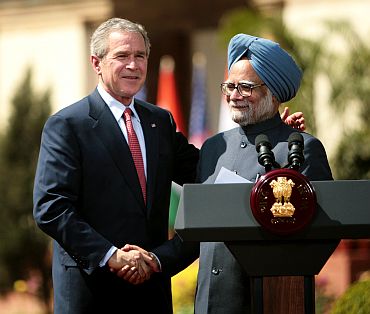
Ten years ago a historic, though unexpected, announcement was made in Washington after a meeting between the then US President George Bush and the then Indian Prime Minister Dr Manmohan Singh. It said that the US would “work with friends and allies to adjust international regimes to enable full civil energy cooperation and trade with India”. The deal, which had significant international ramifications, lifted the 30 year American-led moratorium on nuclear trade with India and paved way for transforming relations between the two largest democracies of the world.
While a conference was organized in Washington on the 10th anniversary of the deal, where some of the top leaders who were associated with the process participated in discussions, the anniversary went off largely unnoticed in India. The current dispensation in the Congress perhaps did not wish to credit Dr Singh with the achievement, perhaps his crowning glory as PM, the BJP too did not wish to credit the Congress for the deal in this season of acrimony between the two parties. However, both the BJP and the Congress governments in the past deserved to be patted for the deal. As Dr Sanjay Baru, former media advisor to Dr Singh noted in his book, The Accidental Prime Minister, Dr Singh met Vajpayee on his return from the US and told him that he had only culminated the process which Vajpayee had started as the PM.
One reason for the rather lukewarm response to the 10th anniversary of the deal is the fact that there has not been any significant gain at the ground level as far as setting up of civil nuclear reactors are concerned. In fact the first civil nuclear plant after the deal slated to come up in Haryana is still not even on a take off stage. Land for the plant has been acquired after dealing with opposition from the residents of the area but even the civil engineering work has not started as yet. However, the availability of fuel for the existing nuclear plants has made a major difference. At the time of the deal, India’s nuclear reactors were running out of fuel due to international sanctions. As per official figures, 11 of the country’s 17 nuclear power reactors were operating below capacity and the overall capacity utilization for the country’s nuclear power plants was just about 50 per cent which has now shot up to over 80 per cent after receiving fuel supplies from abroad. The lifting of sanctions has rescued the country’s nuclear program from a serious crisis.
Still, it is the other benefits of the deal that have opened up many vistas not only with the US but with other countries as well who had placed a moratorium on trade with India at the instance of the US after the 1998 tests.
The deal had marked a recognition by the US of the growing role of India in the international stage and its ability to act as a responsible regional and emerging global power. For India it was an end to its mistrust that the US had been “biased” and for the recognition that it was being considered a responsible partner in the process of development across the world.
Experts say that two developments came in the way of the full realization of the deal. One was the failure of the UPA 2 in getting Parliamentary approval for the original civil nuclear liability bill that was drafted in 2010. The opposition demanded redrafting the bill which was subsequently done but with several amendments. The other was the Fukushima disaster in Japan that increased the cost of building nuclear power plants and revived the global anti-nuclear campaign, including in India.
Yet the deal had laid the foundation to build a substantially broader partnership. It is mainly as a fallout of the deal that the US is now India’s largest trade partner in goods and services. It has also emerged as one of the major supplier of defense equipment to India. The majority of US advanced technology exports to India now do not require a license. On the other hand the US imports of high technology from India has more than doubled and exports to India have almost tripled since the deal was signed.
The Obama Administration in its first term, as well as Manmohan Singh government in his second term, did not make much progress and did not seize the opportunity to take it forward. However, there has been some course correction in the last one year and the fillip in the strategic partnership between the two governments led by Obama and Narendra Modi has moved towards a closure on the civil nuclear deal.
NEW DELHI (TIP): The Madhya Pradesh Professional Examination Board (MPPEB) scam also known commonly by its Hindi acronym as the “Vyapam scam” hits headlines on and off throughout the year. Last week a reporter with Aaj Tak news channel collapsed while interviewing kins of victims, reports say post-mortem does not indicate foul play, but viscera reports are awaited. ext day , the dean of a college from Jabalpur who was assisting the Special Task Force in the investigations was found dead at a hotel in New Delhi. Activists say that the English media has not reported the scam as extensively as they should have.
But what is the Vyapam scam?
One of the first complaints were registered way back in 2000, but it was only by 2007 that the scam came to fore as a full fledged professional racket. Investigations and arrests started in 2013 after new details emerged.
The MPPEB has been responsible for conducting entry into professional courses like the Pre-Medical examinations for the state since 1982. Complaints of irregularities while conducting the examinations first surfaced in 2009, and the scam blew over in 2013. The Vyapam scam pertains to manipulation in the selection process for government jobs conducted by MPPEB which came to light after a report by the Madhya Pradesh Local Fund Audit office for 2007-08 found alleged financial and administrative irregularities, including unauthorized disposal of application forms, worth crores of rupees by the MPPEB. In July 2013, the crime branch at Indore arrested 20 people, 17 from Uttar Pradesh for impersonating MPPMT candidates. The lid blew over what was apparently an entirely rigged system.
A list containing names of 317 candidates was confiscated from Dr Jagdish Sagar, considered to be the mastermind of the scam. He was arrested by the Indore police on July 12, nine days before the PMT counselling.
Modus operandi
Impersonation: In this, all the detail is in the admit card, including name, date of birth, and roll numbers, of the candidate who is applying for the seat. However, the photograph is of the impersonator. An impersonator is one who writes an exam on behalf of someone else. In such cases, they are brilliant students who can score very high marks. The concerned officers on the examination board change the photograph back to that of the original candidate after the exam.
Engine and bogie system: A person is fixed by people on the board whose work is like that of an engine. He/She is seated strategically between two other candidates who want a seat. The engine helps them copy from his/her own paper. The examiners are usually bribed to fix the seating arrangements.
OMR sheets: The select candidates are advised to leave their answer sheets blank. They are randomly given high percentages after the exam. They then fill in the answers in the OMR booklet according to the marks they have already been given.
Arrests and accusations
In December 2013, the Special Task Force investigating the scam under the supervision of SIT formed by the Madhya Pradesh High Court produced a supplementary charge-sheet against the 34 accused in the Indore district court. The charge-sheet ran into 23,000 pages and 30 out of the accused were the parents of children.
In April next year, 27 students of MGM College were expelled for fraudulently clearing PMT-2012. These were only those who could be identified, the total number of fraudulent candidates was 286 that year. In June 2014, the STF said that the police had arrested close to 100 medical candidates in connection with the scam. On the 16th of the same month, the former technical education minister in the BJP govt in the state, Laxmikant Sharma was arrested for his involvement in the contractual teachers scam. Those arrested in connection with the impropriety also include MPPEB’s exam controller Pankaj Trivedi, MPPEB’s system analysts Nitin Mahendra and Ajay Sen and state PMT’s examination in-charge C. K. Mishra.
MUMBAI (TIP): A major political row erupted in Maharashtra with the BJP-Shiv Sena alliance government deciding to derecognise madrasas which are engaged in imparting religion-based education.
The issue is all set to compound into a major political controversy ahead of the monsoon session of the Maharashtra Legislature. The Congress, Samajwadi Party and the Hyderabad-based Majilis-e-Ittehadul Muslimeen (MIM) have opposed the decision.
The issue has to be seen in the backdrop of the burning demand for reservations to the Muslim community which has got into legal tangles and the enactment of the Maharashtra Animal Preservation (Amendment) Act, 1995, popularly known as beef ban law.
According to ministers in the Devendra Fadnavis government, registered madrasas not teaching primary subjects will be classified by the Maharashtra government as “non-schools” and children studying in them will be considered “out of school” students, .
The chief minister, who is currently on an official tour of the US, has not commented on the issue.
“We want to bring everyone into mainstream education,” said Maharashtra Minister of State for Minority Affairs and Social Justice Dilip Kamble.
Minister for Primary Education, Higher and Technical Education and Medical Education Vinod Tawde said the issue has to be seen in perspective.
“We want to bring subjects like science, social science and maths to madrasas with no interference in their religious education,” said Tawde.
“How is that anti-Muslim. We want to do this for their betterment,” he said, pointing out that under the Right to Education Act, children who are not taught under the national school curriculum are considered out of school.
However, the move invited widespread criticism and Opposition parties came down heavily on the saffron alliance government for what they said was Hindutva and RSS agenda.
MIM president Asaduddin Owaisi questioned the rationale behind the decision and asked whether students being imparted vedic studies will also be considered “out of school” children.
“There are many madrasas that are teaching maths, English and science. Many madrasa students have gone ahead and cracked the civil services exams,” he said, adding that the government is trying to “stigmatise” madrasa education.
“The government has not accorded them recognition, so where’s the question of derecognising them? Such statements will have no impact and the good education imparted in madrasas will continue unhindered,” said Congress leader and former Minority Affairs Minister Nassem Khan, who had unveiled a plan to modernise madrasas during the Democratic Front regime.
JAIPUR (TIP): Actress and BJP MP Hema Malini’s driver was on July 2 detained and an FIR filed against him for rash driving and causing death by negligence in connection with last night’s accident in which a four-year-old girl was killed and five others including the actress were injured.
Ramesh Chand, who was driving Hema’s Mercedes that collided with another car, has been detained for interrogation at Kotwali Thana, SHO Dilip Singh said.
Hanuman Mahajan, who lost his daughter in the accident in Dausa, 60 km from here, and was among the four injured, filed an FIR with the Kotwali police station there against Ramesh.
FIR was lodged against the driver, who hails from Vrindavan, under various sections of IPC including 279 (rash driving) and 304 (A) (causing death by negligence) in the wee hours, SHO said.
He said both the vehicles were seized and a probe was on. “It is to be ascertained how the accident occurred and who was at fault,” he said, adding there were three persons in Mercedes– BJP MP from Mathura Hema Malini, her PA and driver, while five persons including two children, two women and the complainant Hanuman Mahajan were in the other car. Sonam, four-year-old daughter of Hanuman, succumbed to injuries on way to hospital in Dausa, while four others Hanuman, his wife Shikha (35), Somil (5), and Seema (40), were shifted to Jaipur’s SMS hospital, the SHO said.
The 66-year-old actress was undergoing treatment at Fortis hospital here.
“She suffered a cut near an eyebrow, some problem in nasal bone, injury on forehead and had body ache,” Rajasthan Minister Rajpal Singh Shekhawat, who visited her late last night, told reporters.
Shekhawat said she went through CT scan and other tests as a matter of precaution. Plastic surgeons were examining her face and wounds.
A number of other specialists including Anoop Jhurani, bone replacement expert, also attended to the actress, a senior doctor said. Hema was proceeding from Mathura via Bharatpur to Jaipur when the mishap occurred on Agra-Jaipur National Highway- 11 near Dausa in Rajasthan around 9 PM yesterday.
SRINAGAR (TIP): Union home minister Rajnath Singh on July 2 ruled out revocation of the draconian Armed Forces Special Powers Act (AFSPA) from Jammu & Kashmir, saying the situation was not conductive for it.
“The situation should be such and I pray to the Almighty that AFSPA should not be needed anywhere in the country. We will need cooperation of one and all to achieve this goal,” Singh told reporters after praying at the Amarnath cave shrine in South Kashmir Himalayas.
Singh ruled out talks with the Kashmiri separatists as well. “We are ready to listen (and) talk to anyone but anti-national activities should be opposed and boycotted.”
The home minister said he had no reason to believe the PDP-BJP state government would not last its full term due to differences.
He said the Centre was sensitive to Jammu & Kashmir’s problems and assured maximum possible assistance to the victims of last year’s floods that killed 300 people and affected over a million.
“I want to assure the state government of maximum possible assistance for relief and rehabilitation,” Singh said.
NEW DELHI (TIP): The Delhi government has come under fire for setting aside Rs 526.74 crore for information and publicity in the budget. With an outlay of Rs 41,129 crore for the current financial year, the opposition calls the advertising budget
“ridiculous”, especially since the government has trimmed its outlay for infrastructure work like road repair.
Deputy CM Manish Sisodia justified the allocation, saying that with media largely showing negative stories about the government, it needed a platform “where it could show the real picture”.
Leader of opposition Vijender Gupta said the allocation was 2,200% more than the previous year’s allocation. “The AAP government wants to present its leader Arvind Kejriwal as a messiah.
While Rs 526.74 crore has been earmarked for information and publicity, Rs 338 crore has been allocated for SC/ST/EWS welfare, Rs 350 crore for nutrition, Rs 208 crore for labour and employment and Rs 400 crore for development of slums,” said Gupta.
Sources said the allocation for publicity in 2014-15 was Rs 23.7 crore, Rs 25 crore in 2013-14, Rs 24.9 crore in 2012-13 and Rs 27.6 crore in 2011-12.
DPCC chief Ajay Maken said while there was no money for infrastructure development, the government had earmarked such a huge amount for glorification of the CM.
The government has already received severe criticism for a television ad that showed a housewife struggling with day-to-day work while her husband sat around watching TV. Sources said the campaign cost the state exchequer about Rs 1.5 crore.
A government spokesperson denied the figures put out by BJP and Congress for previous years, saying no department had ever given a proper budget for advertising undertaken by them. “This is the first time ever that Delhi government has opened itself to scrutiny and put out an exact figure earmarked for advertising. This is a consolidated figure for all departments for advertisements, public outreach programmes and information outflow” he said.
It defies logic that a country that is considered as our most serious adversary and whose policies in our region has done us incalculable strategic harm should have been accepted as India’s strategic partner during Manmohan Singh’s time. Such a concession that clouds realities serves China’s purpose and once given cannot be reversed. Pursuant to discussions already held during the tenure of the previous government, the Chinese announced during Xi’s visit the establishment of two industrial parks in India, one in Gujarat and the other in Maharashtra, and the “endeavour to realise” an investment of US $ 20 billion in the next five years in various industrial and infrastructure development projects in India, including in the railways sector. The Chinese Prime Minister’s statement just before Modi goes to China on May 14 that China is looking for preferential policies and investment facilitation for its businesses to make this investment suggests that the promised investment may not materialise in a hurry. While the decision during Xi’s visit to continue defence contacts is useful in order to obtain an insight into PLA’s thinking and capacities at first hand, the agreement, carried forward from Manmohan Singh’s time, to explore possibilities of civilian nuclear cooperation puzzles because this helps to legitimise China’s nuclear cooperation with Pakistan.
Even as Modi has been making his overall interest in forging stronger ties with China clear, he has not shied away from allusions to Chinese expansionism, not only on Indian soil but also during his visit to Japan. During his own visit to US in September 2014 and President Obama’s visit to India in January 2015, the joint statements issued have language on South China Sea and Asia-Pacific which is China-directed. A stand alone US-India Joint Vision for Asia Pacific and the Indian Ocean Region issued during Obama’s Delhi visit was a departure from previous Indian reticence to show convergence with the US on China-related issues. India has now indirectly accepted a link between its Act East policy and US rebalance towards Asia. The Chinese have officially chosen to overlook these statements as they would want to wean away India from too strong a US embrace. During Sushma Swaraj’s call on Xi during her visit to China in February 2015 she seems to have pushed for an early resolution of the border issue, with out-of-the-box thinking between the two strong leaders that lead their respective countries today. Turning the Chinese formulation on its head, she called for leaving a resolved border issue for future generations.
It is not clear what the External Affairs Minister had in mind when she advocated
“out-of-the-box” thinking, as such an approach can recoil on us. That China has no intention to look at any out-of-the-box solution has been made clear by the unusual vehemence of its reaction to Modi’s visit to Arunachal Pradesh in February 2015 to inaugurate two development projects on the anniversary of the state’s formation in 1987. The pressure will be on us to do out-of-the-box thinking as it is we who suggested this approach. China is making clear that it considers Arunachal Pradesh not “disputed territory” but China’s sovereign territory. This intemperate Chinese reaction came despite Modi’s visit to China in May. The 18th round of talks between the Special Representatives (SRs) on the boundary question has taken place without any significant result, which is not surprising in view of China’s position on the border. The Chinese PM has recited the mantra a few days ago of settling the boundary issue “as early as possible” and has referred to “the historical responsibility that falls on both governments” to resolve the issue, which means nothing in practical terms. As against this, India has chosen to remain silent on the China-Pakistan Economic Corridor (CPEC) which will traverse territory that is legally Indian, and which even the 1963 China-Pakistan border agreement recognises as territory whose legal status has not been finally settled. The CPEC cannot be built if China were to respect its own position with regard to “disputed” territories which it applies aggressively to Arunachal Pradesh. Why we are hesitant to put China under pressure on this subject is another puzzle.
Modi’s visit to Seychelles, Mauritius and Sri Lanka in March 2015 signified heightened attention to our critical interests in the Indian Ocean area. The bulk of our trade- 77% by value and 90% by volume- is seaborne. Modi was the first Indian Prime Minister to visit Seychelles in 34 years, which demonstrates our neglect of the Indian Ocean area at high political level and Modi’s strategic sense in making political amends. During his visit Modi focused on maritime security with agreement on a Coastal Surveillance Radar Project and the supply of another Dornier aircraft. In Mauritius, Modi signed an agreement on the development of Agalega Island and also attended the commissioning of the Barracuda, a 1300 tonne Indian-built patrol vessel ship for the country’s National Coast Guard, with more such vessels to follow. According to Sushma Swaraj, Modi’s visit to Seychelles and Mauritius was intended to integrate these two countries in our trilateral maritime cooperation with Sri Lanka and Maldives.
In Pakistan’s case, Modi too seems unsure of the policy he should follow- whether he should wait for Pakistan to change its conduct before engaging it or engage it nevertheless in the hope that its conduct will change for the better in the future. Modi announced FS level talks with Pakistan when Nawaz Sharif visited Delhi for the swearing-in ceremony, even though Pakistan had made no moves to control the activities of Hafiz Saeed and the jihadi groups in Pakistan.
The Pakistani argument that Nawaz Sharif was bold in visiting India for the occasion and that he has not been politically rewarded for it is a bogus one. He had a choice to attend or not attend, and it was no favour to India that he did. Indeed he did a favour to himself as Pakistan would have voluntarily isolated itself. The FS level talks were cancelled when just before they were to be held when the Pakistan High Commissioner met the Hurriyet leaders in Delhi. Pakistan’s argument that we over-reacted is again dishonest because it wanted to retrieve the ground it thought it had lost when Nawaz Sharif did not meet the Hurriyet leaders in March 2014.
Modi ordered a robust response to Pakistani cease-fire violations across the LOC and the international border during the year, which suggested less tolerance of Pakistan’s provocative conduct. We have also been stating that talks and terrorism cannot go together. Yet, in a repetition of a wavering approach, the government sent the FS to Islamabad in March 2015 on a so-called “SAARC Yatra”. Pakistan responded by releasing the mastermind of the Mumbai attack, Lakhvi, on bail and followed it up by several provocative statements on recent demonstrations by pro-Pakistani separatists in Srinagar, without any real response from our side. Surprisingly, in an internal political document involving the BJP and the PDP in J&K, we agreed to include a reference to engaging Pakistan in a dialogue as part of a common minimum programme, undermining our diplomacy with Pakistan in the process.
Pakistan believes that it is US intervention that spurred India to take the initiative to send the FS to Pakistan, which is why it feels it can remain intransigent. Pakistan chose to make the bilateral agenda even more contentious after the visit by the FS by raising not only the Kashmir cause, but also Indian involvement in Balochistan and FATA. On our side, we raised the issue of cross border terrorism, the Mumbai terror trial and LOC violations, with only negative statements on these issues by Pakistan. Since then the Pakistani army chief has accused India of abetting terrorism in Pakistan. The huge gulf in our respective positions will not enable us to “find common ground and narrow differences” in further rounds of dialogue, about which the Pakistani High Commissioner in Delhi is now publicly sceptical.
Even though one is used to Pakistan’s pathological hostility towards India, the tantrums that Nawaz Sharif’s Foreign Policy Adviser, Sartaj Aziz, threw after President Obama’s successful visit to India were unconscionable. He objected to US support for India’s permanent seat in the UNSC and to its membership of the Nuclear Suppliers Group (NSG). He castigated the Indo-US nuclear deal, projecting it as directed against Pakistan and threatened to take all necessary steps to safeguard Pakistan’s security- in other words, to continue to expand its nuclear arsenal.
Chinese President Xi’s April 2015 visit to Pakistan risks to entrench Pakistan in all its negative attitudes towards India. The huge investments China intends making through POK constitutes a major security threat to India. China is boosting a militarily dominated, terrorist infested, jihadi riven country marked by sectarian conflict and one that is fast expanding its nuclear arsenal, including the development of tactical nuclear weapons, without much reaction from the West. President Ashraf Ghani’s assumption of power in Afghanistan and his tilt towards Pakistan and China, as well as the West’s support for accommodating the Taliban in Afghanistan with Pakistan’s help will further bolster Pakistan’s negative strategic policies directed at India. Ghani’s delayed visit to India in April 2015 has not helped to clarify the scenario in Afghanistan for us, as no change of course in Ghani’s policies can be expected unless Pakistan compels him to do by overplaying its hand in his country. Modi is right in biding his time in Afghanistan and not expressing any undue anxiety about developments there while continuing our policies of assistance so that the goodwill we have earned there is nurtured.
Prime Minister Modi, belying expectations, moved rapidly and decisively towards the US on assuming office. He blindsided political analysts by putting aside his personal feelings at having been denied a visa to visit the US for nine years for violating the US law on religious freedoms.
PATNA (TIP): Bihar chief minister Nitish Kumar on July 2 began JD(U) campaign for upcoming assembly elections through a programme called “Har Ghar Dastak” to seek feedback about the work done by the state government in the past.
As part of the programme, the chief minister knocked doors of 10 households in Pachim Darwaza, represented by BJP leader Nand Kishore Yadav, in Patna city area falling under Patna Sahib assembly seat.
The interactive programme with people was formally launched by state JD(U) president Basistha Narayan Singh at party headquarter in the capital. JD(U) MPs Pavan Varma, RCP Singh and Harbansh were also present on the occasion.
Starting the programme after offering prayer at Badi Patandevi temple, Kumar knocked the first door of one Krishna Sahu near Paschim Darwaza.
The house members were excited to find him at their doorstep.
Kumar talked to the family members if they were satisfied with the work done by his government in the past 10 years and also sought views about work the government should do in the future.
After coming out of Krishna Sahu home, Kumar knocked doors of nine other homes in the vicinity and talked to the family members.
Kumar told reporters that he as a disciplined soldier of JD(U) had started the “Har Ghar Dastak” programme after it was launched by state party chief.
He said efforts would be made to reach out to one crore homes under the programme.
State JD(U) spokesman and MLC Sanjay Singh said “Har Ghar Dastak” programme would run in two phases from July 2 to July 11 and from July 21 to July 31.
He said 10,000 party workers would knock doors of one crore homes and have a “direct conversation” with people on the functioning of the state government.
Minister for food Shyam Rajak said he had started the programme in his consituency Phulwarisharif and knocked doors of 10 homes each in Raniganj and Haroon colony.
“The people appeared satisfied with the functioning of the government,” Rajak claimed.
NEW DELHI (TIP): A parliamentary panel has pitched for 100 per cent hike in salary and daily allowances of MPs and 75 per cent raise in the pension of ex-MPs apart from facilities for their “companions” in place of “spouses”.
In far-reaching recommendations, the panel, headed BJP MP Yogi Adityanath, has sought doubling of the existing Rs 50,000 salary of MPs and favoured increasing the pension of former parliamentarians from Rs 20,000 to Rs 35,000.
The panel has also recommended that the daily allowance of MPs of Rs 2,000 for attending the House during Parliament sessions should be doubled to Rs 4000.
It is learnt that some ex-MPs, who appeared before the panel rued that while they are given a First Class Ticket to travel on train, their companions, even if it is the spouse, can travel only second class.
NEW DELHI (TIP): Those with undisclosed overseas wealth have another 90 days to come clean with the government opening the compliance window on July 1.
Under the one-time officer, the compliance scheme will be open till September 30, with time till December-end to pay the 30% tax, and another 30% penalty. The scheme was announced along with the stringent black money law – which provides for jail of up to 10 years and penalty of up to 90%, along with 30% tax — in the budget. In its March 1 budget edition.
“It is meant to provide a last opportunity to persons with undisclosed income and assets abroad before the stringent provisions (of the new law) apply. It is not meant to be a revenue mobilizing measure,” revenue secretary Shaktikanta Das said.
For the Narendra Modi administration, mopping up undisclosed funds, especially those kept abroad, is a key focus area as the prime minister had made it a major poll issue last year and promised to get funds back into the country. A day after it assumed office in May 2014, the government announced a Special Investigative team on black money and has since followed it up with the stringent black money law.
While the details of the scheme will be made public on Thursday, sources said that those looking to tap the window will have to fill up the prescribed form and submit it to a principal commissioner of income tax in Delhi, who for the moment will remain the only designated authority for disclosures. “For the scheme to be monitored directly by the board we are designating only a limited number of officers to ensure its integrity,” Das said. An official added that if the volume increases, a principal commissioner in Mumbai will also be designated to deal with the disclosures.
The rules will clearly stipulate that no action will be taken against those coming clean, unless the money is related to drugs, corruption or terrorism. The tax department will separately release FAQs over the next few days to address the queries that it has received over the past few months. This is for the first time since the Voluntary Disclosure of Income Scheme (VDIS) in 1998 that the revenue department has offered an opportunity to people to come clean, although the BJP government insists that the compliance scheme is not the same as the amnesty launched 17 years ago.
DHAKA (TIP): Some 30,000 Indian soldiers guarding the border with Bangladesh have a new mandate under Prime Minister Narendra Modi’s government this year — stop cattle from crossing illegally into the Muslim-majority neighbour.
Roughly every other night, troops armed with bamboo sticks and ropes wade through jute and paddy fields and swim across ponds to chase ageing bovines, and smugglers, headed for markets in Bangladesh.
The crackdown is one of the clearest signs yet of how Indian policies are having an economic impact on neighbouring countries.
About 2 million head of cattle are smuggled into Bangladesh annually from India. The $600 million-a-year trade has flourished over the past four decades and is considered legal by Dhaka.
Modi’s government wants to put an end to it.
Union home minister Rajnath Singh travelled this spring to the frontier with Bangladesh, calling on the Border Security Force (BSF) to halt cattle smuggling completely so that the “people of Bangladesh give up eating beef”, media reported at the time.
“Killing or smuggling a cow is equivalent to raping a Hindu girl or destroying a Hindu temple,” said Jishnu Basu, an RSS spokesman in West Bengal, which shares a 2,216km (1,375 miles) border with Bangladesh.
Beef prices up, exports down
So far this year, BSF soldiers have seized 90,000 cattle and caught 400 Indian and Bangladeshi smugglers.
Bangladeshi traders who operate auctions to facilitate the sale of cattle to slaughter houses, beef processing units, tanneries and bone crushing factories estimate the industry contributed 3 percent to the country’s $190 billion economy.
The hit to GDP from India’s policies is not yet known. But HT Imam, a political adviser to Bangladesh Prime Minister Sheikh Hasina, said there was “absolutely no doubt” that the beef trade and leather industry were suffering.
Syed Hasan Habib of Bengal Meat, Bangladesh’s top beef exporter, said it had to cut international orders by 75 percent. The company exports 125 tonnes of beef a year to Gulf countries.
He said the price of cows had gone up by 40 percent over the past six months because of India’s move, and they had been forced to close two processing units.
Habib plans to import cows from Nepal, Bhutan and Myanmar to meet domestic demand, but he said Indian cows had better quality meat and raw hide.Bangladesh Tanners Association president Shaheen Ahmed said 30 of 190 tanneries had suspended work due to lack of hides, and about 4,000 workers were jobless.
A senior official in India’s home ministry said Bangladesh should find new sources of beef because India would stick to its stance.
Cow protection force
India is home to 300 million cattle and is the world’s largest beef exporter and fifth-biggest consumer.But since Modi’s Bharatiya Janata Party (BJP), which is closely linked to the RSS, came to power last year, the rhetoric on cow protection and the beef ban has increased.
Critics say tougher anti-beef laws discriminate against Muslims, Christians and lower-caste Hindus who rely on the cheap meat for protein. Butchers and cattle traders, many of them Muslim, say the push threatens thousands of jobs.
The rhetoric has also emboldened vigilante cow protectors.
“I was chained to a tree and beaten by members of the cow protection force. They forced me to recite a Hindu prayer,” said Mohammed Tarafdar, who was caught smuggling two calves near the Bangladesh border in April.
“My religion permits me to eat and sell beef, so why should Hindus have a problem?” said Tarafdar, sitting in a crammed prison cell in Basirhat district. Some BSF soldiers said they could not understand why they were chasing cows. Some animals are caught and auctioned by the BSF, only to be bought and smuggled again.
Two soldiers were killed by a gang of Bangladeshi smugglers, while three dozen have been injured by the animals.
Signup to our Newsletter!
Don’t miss out on all the happenings around the world