Tag: BJP

  • Statue of Shivaji in Arabian Sea by 2019- Maharashtra CM Phadnavis

    Statue of Shivaji in Arabian Sea by 2019- Maharashtra CM Phadnavis

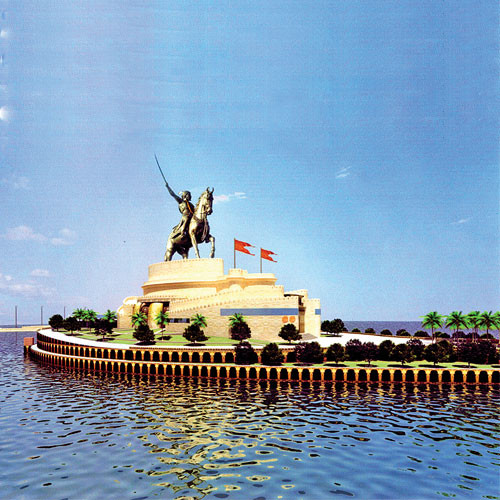
    NEW YORK (TIP): Chhatrapati Shivaji’s statue, off the coast of Mumbai in Arabian Sea will come up by 2019. Devendra Phadnavis, Maharashtra Chief Minister, disclosed it to The Indian Panorama Chief Editor Prof. Indrajit S Saluja in a meeting the latter had with him in New York on June 29.

    Phadnavis visited June 29 the Liberty Island to see the Statue of Liberty, a colossal neoclassical sculpture in New York Harbor, to commemorate liberty, fraternity and equality. Maharashtra will have, by 2019, a colossal statue of Shivaji in the Arabian Sea, off the coast of Mumbai, to commemorate the golden period of rule of the Maratha King, who had fought relentlessly against the attempts of the Mughal emperors to enslave the people of Maratha region. Shiva Ji is regarded as a great warrior in the true Indian tradition and is ranked with the greatest heroes of Indian history, like Maharana Pratap and Guru Gobind Singh. The height of the latest tribute to the Maratha king will be 200 meter, making it taller than the Statue of Liberty, which is 93 meter.

    The Congress-led Democratic Front government in Maharashtra had first made an announcement on Shivaji memorial in 2004. The decision to install the statue was taken by the Congress government in August, 2009. It was to come up on a 16-hectare bedrock in the Arabian Sea. The Navy had opposed the project citing restrictions on construction in the Coastal Regulatory Zone.

    Planned on the lines of the Statue of Liberty in New York and the Swami Vivekananda Rock Memorial in Kanyakumari, the Shivaji statue is to be located off the Marine Drive. The government had then approved the design submitted by Bensley Design Studios, Thailand and Team One Architects, Mumbai. The government had also approved   a sum of INR50 crore for the memorial in 2009-10 and budgeted INR300 crore more the next year. A museum of the Maratha king is to be a part of the project.

    The then Chief Minister of Maharashtra Prithviraj Chavan had claimed that the statue would be the world’s tallest, twice the size of the Sardar Patel statue championed by Prime Minister Narendra Modi in Gujarat. However, the project had remained dormant in view of environment ministry sitting over it.

    When the BJP led NDA government came to power at the center in 2014, the project was expeditiously cleared. The Environment ministry okayed, on December 4, 2014 Shivaji statue in Arabian Sea. Union Minister of State for Environment and Forest Prakash Javadekar said the clearance has been given and a notification for the same would be out soon. “The issue of having a statue of Shivaji Maharaj, which was pending for the last few years, has been sorted out. The chief minister of Maharashtra (Devendra Phadnavis) had discussion with me a few days back and I had assured him to expedite the process soon.

    “We have given clearance for the issue and a notification would be out by Friday night,” Javadekar had then told a news conference in New Delhi.

  • Drinking liquor a fundamental right claims BJP MP Home Minister Babulal Gaur

    Drinking liquor a fundamental right claims BJP MP Home Minister Babulal Gaur

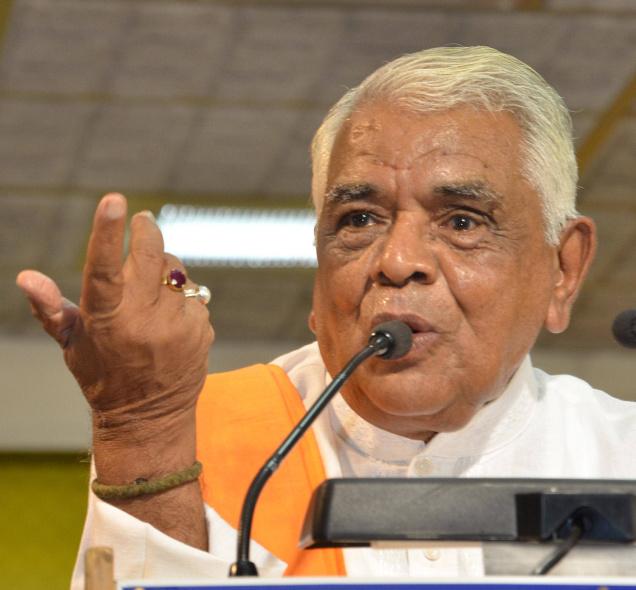
    Madhya Pradesh Home Minister Babulal Gaur fuelled another controversy with his remarks that drinking liquor is a “fundamental right” and that it is a status symbol too.

    “Alcohol does not increase crime. People lose their consciousness after consuming alcohol and that’s how it causes crime. The person who drinks within control does not cause crime,” he said, adding, one should not over drink. It is one’s fundamental right. Drinking is a social status symbol these days.

    He was asked by reporters on Sunday for his reaction to extending the timing for sale of alcohol in Bhopal from 10 pm to 11.30 pm.

    Mr. Gaur had previously said that sexual crime in Chennai is low as women wear “full clothes”.

    “Women in Tamil Nadu wear full clothes and hence the crime rate is lower there as compared to other States,” he said.

    Congress Hits Back

    In a strong reply to Babulal Gaur’s comment on Vyapam Scam accused deaths, Congress general secretary Digvijaya Singh on Monday questioned the Madhya Pradesh government’s decision not to probe into the death of the two accused in the MPPEB scam.

    “Babulal’s comments were callous.How can it be a natural death and how can Madhya Pradesh government give clean chit even before post-mortem. We have no faith in the High Court Ordered SIT probe..we are hence appealing to supreme court” Said Singh

  • Congress files complaint against Parrikar for lying on FIR in affidavit

    Congress files complaint against Parrikar for lying on FIR in affidavit

    NEW DELHI/PANAJI (TIP): Congress on June 25 accused defence minister Manohar Parrikar of concealing an FIR in his election nomination papers, urging the central election commission to initiate action against him.

    An FIR was filed against Parrikar in Goa in 2006 for alleged financial misappropriation while creating infrastructural facilities for the international film festival of India (iffi) in 2004 when Goa for the first time hosted the mega film festival. The complaint was filed against Parrikar who was chief minister in 2004 by Congress MLA Mauvin Godinho based on the observations in a Comptroller and Auditor General (CAG) of India report.The Congress stuck to its stand saying “This is a serious issue and has to be taken to its logical conclusion. It is a case of concealment of fact. Voters should have known this fact about Parrikar since the FIR is under the Prevention of Corruption Act,” Congress legal cell chief KC Mittal said, adding that AICC would pursue the case with the EC. Asked for his comment, Goa Pradesh Congress Committee president Luizinho Faleiro told TOI that the complaint has been filed by AICC legal cell before the Election commission of India.

    Sources close to Parrikar dubbed the Congress move as infructuous. They said candidates have to file details of a case only if they have been chargesheeted, which was not the case in the said FIR.

    After the FIR was filed in 2006 by the Congress government led by then chief minister Pratap Singh Rane, the case was transferred to the CBI in December 2006. In August 2011, the CBI closed the case on the grounds that the allegations made in the FIR couldn’t be substantiated.

    As then chief minister, Parrikar held the finance portfolio in addition to being the chairman of Goa state infrastructural development corporation (GSIDC) – the special purpose vehicle appointed agency appointed as the nodal agency for iffi projects. He also headed the core committee set up by the government for taking policy decisions for iffi.

    The works executed then included construction of a multiplex (now Inox theatre complex), upgradation and restoration of facilities at Kala Academy (which was the main festival theatre) and improvement of roads and other related projects including beautification works. Besides, the third Patto bridge was constructed along the River Mandovi – all costing around Rs 150 crore.

    GAG in its report of 2004-05 had pointed out that the “tendering process suffered due to lack of transparency and that tender evaluation procedure was faulty.” In its analysis, it also said that “there were cases of excess payments/wasteful expenditure and over dependence on consultants on all the major works.”During the investigation, Parrikar, then opposition leader, was quizzed in 2009. In 2011, the CBI filed a closure report in the court saying the allegations made in the FIR couldn’t be substantiated. Congress was ruling then both in the state and the centre. The complaint was filed months after BJP lost power in 2005.

  • Uddhav mocks BJP, says fake degrees now a political trend

    MUMBAI (TIP): Shiv Sena President Uddhav Thackeray took potshots at the BJP and said that it has become a trend to display fake degrees.

    “It has become a trend in politics to display fake degrees. Simply do the right thing. Why run behind false things,” Thackeray said, without naming anybody including Maharashtra Education Minister Vinod Tawde or Union HRD Minister Smriti Irani, at a book launch function in suburban Dadar.

    However, a senior Sena leader said that Uddhav Thackeray’s remarks were also aimed at Union HRD Minister Smriti Irani, whose fake degree case has reached court.Incidentally, the book launched by Uddhav Thackeray at the function today evening, was written by former Maharashtra Chief Minister and Sena leader Manohar Joshi.Thackeray also said that corruption allegations against Maharashtra Women and Child Welfare Minister Pankaja Munde were “grave” but did not comment further on the
    issue.”Allegations against Pankaja Munde are serious but the Maharashtra Chief Minister should take a decision on it,” he told reporters.

  • BJP BLEEDS: Lalitgate and now Advani Emergency Remark

    BJP BLEEDS: Lalitgate and now Advani Emergency Remark

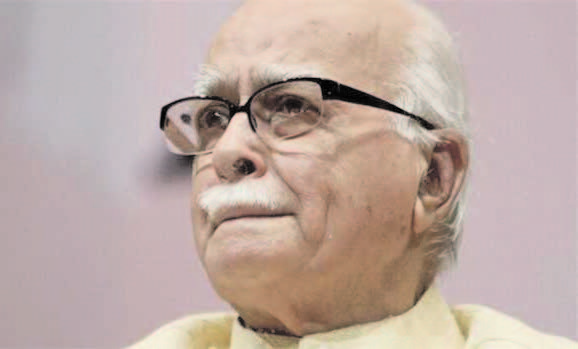
    NEW DELHI  (TIP): As if the pain of Lalitgate involving Sushma Swaraj and Vasundhara Raje Scindia was not enough , Advani chose to inject a little more of it with his emergency remarks.

    Already in the line of opposition’s fire over the Lalit Modi issue, the ruling BJP on Thursday, June 18, was further driven to a corner over remarks of party senior L.K. Advani that he did not rule out another Emergency-like situation in the country.

    As the Congress continued its attacks on the Bharatiya Janata Party over the help provided to “fugitive” former IPL commissioner Lalit Modi by External Affairs Minister Sushma Swaraj and also allegedly Rajasthan Chief Minister Vasundara Raje, other opposition parties like AAP, the JD-U, the RJD and the CPI-M also attacked the party on Advani’s remarks, terming them a veiled swipe at Prime Minister Narendra Modi. The BJP however denied it.

    In an interview to the Indian Express ahead of the 40th anniversary of the Emergency, during which he had been jailed, Advani had said that “forces that can crush democracy” (in the country) were stronger and that there were “not enough safeguards in India in 2015” to prevent an Emergency-like situation.

    “Advani ji is correct in saying that Emergency can’t be ruled out. Is Delhi their first experiment,” Delhi Chief Minister Arvind Kejriwal tweeted. Besides Kejriwal, Advani found another supporter in Bihar Chief Minister Nitish Kumar of the Janata Dal-United, who told media persons in Patna, that the BJP veteran was “right to a large extent”. Rashtriya Janata Dal chief Lalu Prasad tweeted: “Already there is undeclared emergency as authoritarian & Hitlerian tendencies prevailing in country since May14.” “Advani Ji proved that our concerns regarding anti-democratic elements & activities being sponsored & promoted by union government are correct.”


    Congress spokesperson Tom Vadakkan said it is not only his party which is questioning the government “but even senior BJP leadership is raising questions on the efficacy of the government”, while his colleague Sanjay Jha, tweeted: “A totalitarian system is gradually overwhelming India; Advani Ji’s warnings confirm our worst apprehensions.”

    Aam Aadmi Party leader Ashutosh also tweeted that Advani’s interview is first
    “indictment of Modi’s politics” and that Advani indicated “democracy is not safe, emergency is not far, under Modi’s leadership”.”

    Slamming the NDA government at the centre over a host of issues, veteran Communist Party of India-Marxist leader Biman Bose too expressed apprehension that an emergency may be proclaimed to stifle democracy as Modi’s “aachhe din (good days)” promise had fallen flat. “So, unable to solve all these problems, there may come a situation, when to stifle democracy, these people may resort to emergency,” he told media persons in Kolkata. BJP spokesperson M.J. Akbar said that Advani may have been referring to institutions rather than individuals. Internal emergency was imposed on the country by then Prime Minister Indira Gandhi on June 25-26, 1975 and lasted 19 months.

    The Congress on Thursday also demanded a “decisive” reply from Prime Minister Modi on the Lalit Modi controversy while clarifying that it was not mulling any legal recourse against the government as of now. “The silence of the prime minister is deafening. He must tell the people of India about his views,” Congress leader C.P. Joshi told the media, also asking him to clarify whether Sushma Swaraj decided to give the go-ahead for travel documents for Lalit Modi as an individual minister or on behalf of the entire government. “He (the prime minister) should give a quick reply. He should put forward his views in a decisive manner,” he said. The former union minister from Rajasthan also sought the resignation of Vasundhara Raje and asked the RSS to clarify its stand on her, noting it had spoken for Sushma Swaraj but was silent on the state chief minister. “We request BJP president Amit Shah to sack her immediately,” he added.

    The external affairs minister as well as the Rajasthan chief minister are facing flak for their association with former IPL chief Lalit Modi, who is wanted by the Enforcement Directorate for alleged financial impropriety in the money-spinning IPL, and currently living in London. In Hyderabad, Minister of State for External Affairs V.K. Singh defended his senior cabinet colleague saying that matters were being blown out of proportion. “What is happening is, many things are being blown out of proportion. Lot of noise is being made. For example, it was said that because Sushma-ji’s daughter is Lalit Modi’s lawyer, so something is fishy…. Chidambaram’s wife is a lawyer in Sardha scam. Should he come under scanner for that? I leave this question to you,” he told reporters.

  • AMID LALITGATE ROW, RAJE CANCELS ANANDPUR SAHIB AVOIDS MEETING AMIT SHAH

    AMID LALITGATE ROW, RAJE CANCELS ANANDPUR SAHIB AVOIDS MEETING AMIT SHAH

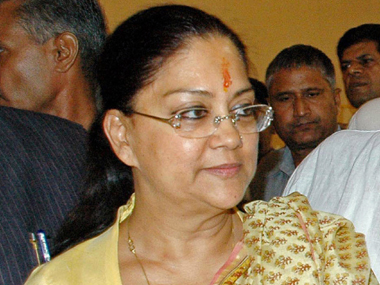
    JAIPUR (TIP): Amid raging Lalitgate row, Rajasthan chief minister Vasundhara Raje on June 19 cancelled her visit to Punjab where she would have come face-to-face with BJP president Amit Shah for the first time since the damaging revelations.

    “Due to back pain, the chief minister’s doctor has advised her to take rest so she has cancelled her visit to Punjab today,” Raje’s press advisor said.

    Raje, who is embroiled in a controversy over allegedly favouring tainted IPL chief Lalit Modi’s immigration plea in London, was scheduled to share the dais with BJP chief Amit Shah and Union home minister Rajnath Singh at the function in Anandpur Sahib celebrating 350 years of the key Sikh shrine. Significance was being attached to the meeting as none of the BJP central leaders or the government have come to her defence since the issue came out in public.

    Raje had spoken to Shah over phone on Wednesday to explain her position.

    Congress has been demanding her immediate resignation along with that of external affairs minister Sushma Swaraj, saying they have no right to continue in office after helping the former IPL chairman who is facing money laundering and other charges.

    However, Rajasthan health minister Rajendra Rathore rejected demands for Raje’s resignation, saying the entire national BJP and party MLAs were with her.

    “The entire BJP be it at the Centre or the state are with her. She has been leading us and will continue to do so. The entire legislature party is standing strongly with her. Our leadership is standing by her. The question of her resignation does not arise,” he had said.

  • Indian Americans Should Contribute to India’s Progress

    Indian Americans Should Contribute to India’s Progress

    WASHINGTON, UNITED STATES:  Having excelled in America in their respective fields, there are tremendous opportunities for Indian-Americans to contribute to the development of India and its ties with the US, India’s envoy in Washington has said.

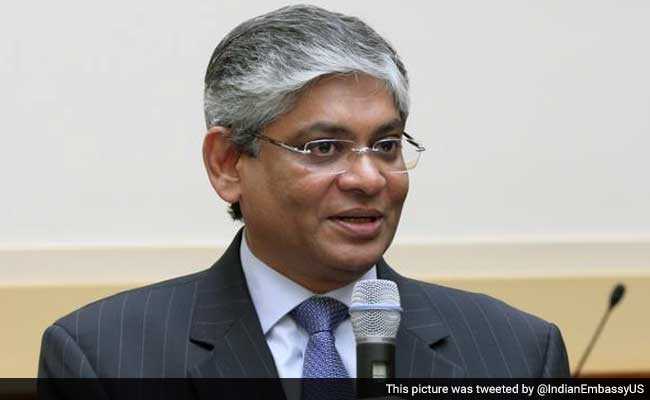
    “The relationship between India and the US is very strong across a whole range of sectors in the economic field, in technology and in the defence where we are making tremendous progress,” Indian Ambassador to the US Arun K Singh told members of the Indian Diaspora at a reception in Washington.

    “I believe, there is opportunity for all of you, who have excelled after coming to the United States to now also engage with the processes in India and make contribution not just to the US but also to the India-US relationship,” Mr Singh said at the reception hosted in his honour by the Indian American communities of the Greater Washington Area.

    Addressing the gathering, Noble laureate Kailash Satyarthi hoped India-US relationship would strengthen further during Singh’s tenure as the Indian Ambassador in America.

    Senior BJP leader Kiran Bedi, who is visiting the US to attend a family wedding, said about Mr Singh, that Prime Minister Narendra Modi, has sent his best diplomat to the US.

    It is time to strengthen hands of the Prime Minister.

    Some 400 eminent Indian-Americans from Greater Washington Area were present at the reception for Mr Singh.

  • Centre keen on evolving political consensus on labour reforms

    Centre keen on evolving political consensus on labour reforms

    NEW DELHI (TIP): After burning its fingers with the land bill, the NDA government has signalled it will try to build a wide political consensus instead of rushing through the much-awaited labour reforms that will affect a 48.7-crore domestic workforce.

    An inter-ministerial panel headed by finance minister Arun Jaitley will negotiate with trade unions and other stakeholders while senior BJP managers are expected to reach out to Congress, SP and Trinamool among other parties, in a marked shift with the government earlier preferring the ordinance route, which the Opposition called “bulldozing tactics”.

    Sources say the Centre has lined up sweeping amendments in labour laws to woo investments with changes aimed at drastically curbing rampant strikes, diminishing the influence of trade unions and making the labour market more flexible.

    Plans are also afoot to create simpler norms for small scale industries to boost Prime Minister Narendra Modi’s ambitious “Make in India” manufacturing campaign.

    But the ruling dispensation has decided to be cautious. “These reforms are in the proposal stage, and tripartite discussions are on. We are not in a hurry,” union labour minister Bandaru Dattatreya had said after announcing the panel last month. As the confrontation between the government and the Opposition escalated over the land ordinance, the passage of the real estate and Goods and Services Tax bills got blocked. The land ordinance also drew flak from NDA allies and RSS-affiliated labour and farmer bodies. The Modi government enjoys an overwhelming majority in the Lok Sabha but is likely to remain in minority in the upper House till 2019. The government’s excessive use of ordinances earned it a word of caution from the President.

    “We have several plans and proposals for bringing structural changes in the labour sector but how and when to push them, would be a political call,” said a senior government official.

  • Man responsible for Vajpayee govt’s fall set to join BJP

    NEW DELHI (TIP): Former Odisha CM Giridhar Gamang, whose controversial vote during the 1999 no-confidence motion had contributed to the fall of Atal Bihari Vajpayee-led NDA government after thirteen months in office, on June 12 decided to join BJP.

    In fact, both BJP and Gamang put the past behind and embraced each other as the former Congress leader met BJP chief Amit Shah at the party headquarters. Gamang said he likes BJP’s “political strategy”. He had quit Congress on May 30.

    Gamang was caught up in a controversy in Parliament on April 17, 1999, when the 13-month Vajpayee government fell as he voted despite having become the chief minister of Odisha by then. Since Gamang, who was then MP from Koraput, had not resigned from Lok Sabha even two months after becoming CM, it was left to his conscience to decide whether to vote. He voted, much against protests from BJP MPs.

    However BJP tried to bury the issue saying Gamang voted against the BJP-led NDA government and then he was part of Congress. On his part, Gamang had argued that it was National Conference’s Saifuddin Soz whose cross-voting led to the NDA’s defeat on the floor of the House. He also recalled that Mayawati’s BSP, which had five members in Lok Sabha, made a last minute change in stand and instead of abstaining, voted against the government. The BJP leadership is to formally welcome the 72-year-old tribal leader in Bhubaneshwar. The party hopes Gamang’s entry will strengthen its base in Odisha.

    “I have decided to join the BJP, but I will join formally soon. It will be decided by the state unit soon. I had met the Amit Shah today and made my plea which has been accepted by the party leadership,” Gamang said.

  • Suit Boot Ki Sarkar Versus Soojh Boojh Ki Sarkar

    Suit Boot Ki Sarkar Versus Soojh Boojh Ki Sarkar

    NEW DELHI (TIP): After his return from the nearly two-month-long political sabbatical on April 16, Congress vice-president Rahul Gandhi has been unsparing in his attacks on Prime Minister Narendra Modi and his government over issues concerning farmers, landless laborers, netizens, middle-class home buyers, fishermen, ex-servicemen, Dalits and now sanitation workers.


    This appears clearly to be part of a grand strategy to reach out to different sections, that once comprised the support base of the Congress but which gradually shifted their loyalties to different parties, in a desperate bid to revive the party’s sagging fortunes after its worst ever electoral defeat in 2014 Lok Sabha elections.


    In the case of striking sanitation workers in Delhi, Gandhi attacked the ruling Aam Aadmi Party (AAP), which had eaten into the Congress vote-bank in the assembly elections early this year. The Congress is desperately seeking to regain its space in Delhi from the AAP.


    The new-found aggression by taking different communities into account has given a fresh lease of life to the Congress after a series of electoral setbacks. It appears to have regained some ground at least in Parliament where its aggressive tone on various issues, especially plight of farmers and the land acquisition bill, has put the BJP-led government on the defensive.


    While Congress president Sonia Gandhi had led the Opposition from the front in the first part of the budget session, the second half saw a combative Rahul launch stinging attacks on the Modi government.


    The Congress has already launched a countrywide agitation against the NDA government’s policies on farm, land and labor reforms, issues the party hopes will help reconnect with its eroding traditional support base. The party has maintained its opposition to the land bill was non-negotiable and it would go to any extent to ensure it is withdrawn and provisions of the original UPA law restored. It has vowed to champion the cause of tribals and forest dwellers both in Parliament and on the streets.

    Rahul, too, has plunged headlong into the battle since his return with a countrywide padyatra that he launched from Vidarbha in Maharashtra on April 30 to support the cause.


    His advocating net neutrality was seen as an attempt at an image makeover as Rahul had so far chosen to stay away from all forms of

    social media. Similarly, after the middle class completely deserted the Congress, Rahul’s assurance to fight for their cause is clearly an attempt to seek rapprochement. Sonia had on many occasions in the past stressed the need to address the aspirations of the middle class.


    The Dalit outreach has been planned in order to win back the support of the community which has shifted its allegiance to the Bahujan Samaj Party for years now. However, a major chunk of the Dalit vote bank both in Uttar Pradesh and Bihar gravitated towards the BJP in the 2014 Lok Sabha elections. A buoyed BJP is now eyeing Bihar, where assembly elections are due in September-October this year, and has stepped up its efforts to woo the Dalit and Mahadalit communities.


    Also, Rahul’s repeated “suit-boot ki sarkar” barbs at the Modi government has prompted many senior ministers to return the fire. Finance minister Arun Jaitley hit back, saying there is a “difference between a national duty and disappearance for a jaunt” and that theirs is a “soojh-boojh ki sarkar” (a wise government).

  • US lawmakers push for export of natural gas to India

    WASHINGTON (TIP): Influential American lawmakers have pushed for removing of restrictions on export of natural gas to India and sought to implement the civil nuclear deal to meet the country’s ever-growing energy needs.

    Referring to fast tracking of economic reforms and acceleration of development by India, Chairman of powerful House Foreign Relations Committee Ed Royce said nuclear energy is important to have uninterrupted power supply.

    Speaking at a Congressional briefing on India-US nuclear trade organized by the US-India Political Action Committee, Royce and other Congressmen hoped that the remaining hurdles in the implementation of the civil nuclear trade would soon be removed so that the full potential of nuclear energy could be realized by India.

    Congressman Mike Honda exuded confidence about the optimistic future of civil nuclear co-operation.

    The lawmakers also pushed for export of natural gas to India.

    “Export of liquefied natural gas would have a very important impact on India,” said Congressman Ami Bera, the only Indian-American lawmaker in the current Congress.

    Excited about the prospects of increase in energy trade with India, Congressman Pete Olson hoped that before this year end the first ship with American natural gas would be shipped to India.

    Olson said the US has energy and technology to ensure that every Indian has the electricity they need. “I am committed to improve India US relationship,” he said.

    Congressman Ted Poe from Texas also batted for export of natural gas from the US to India.

    Calling for expediting the process of exporting natural gas to India, he said he has introduced legislation in this regard.

    In his remarks, BJP Lok Sabha MP Udit Raj said that the relationship between India and the US is not only important for the two countries, but also for the entire world. Transfer of nuclear technology would help India in many ways, he said.

    Referring to the speeches by US lawmakers, Raj said they are very enthusiastic to strengthen relationship with India. -PTI

  • Govt tries to avoid ‘core’ BJP issues

    NEW DELHI (TIP): The BJP-led NDA government at the Centre is attempting to play down contentious issues like Ram Mandir and beef ban while projecting development as its priority.

    At a press conference on May 29 to talk about Modi government’s one year in office, Union Home Minister Rajnath Singh too chose to avoid controversial topics. He described himself as “swayamsevak” of the RSS but did not give a direct reply on whether the Sangh fountainhead was interfering in governance.

    The controversial “ghar wapsi” programme, campaign on love jihad and communal remarks by Union ministers and BJP MPs had put the government on the back foot in the recent past.

    Singh was cautious on BJP’s eyebrow raising issues. “All issues are important. We have to decide on our priorities. Now, development is the priority. The Ram Mandir issue is subjudice. No talks as of now. If a solution comes, there will be nothing better. Otherwise, people of the two communities should can sit together and discuss,” he said.

    He was responding to a question on whether the BJP has put Ram Mandir and revocation of Article 370 that gives special status to Jammu and Kashmir on the back burner. BJP president Amit Shah had said that the party-led government could not decide on contentious matters like Ayodhya or Article 370 as it does not have the numbers.

    A question on beef ban was also posed to him against the backdrop of controversial comment by Union Minister Mukthar Abbas Naqvi that beef-eaters should go to Pakistan. Singh’s junior minister Kiren Rijiju, who was also present at the conference, had also objected to Naqvi’s comments.

    “Those who belong to India will stay in India only,” Singh rebuffed Naqvi.

    Singh’s statement also echoed Union Finance Minister Arun Jaitley’s disapproval of Naqvi’s comments and Shah ruling out a countrywide ban on beef while leaving it to states to decide.

    He also sought to downplay the Sangh affiliates’ joining a strike on September 2 called by opposition trade unions, saying these are autonomous outfits and it was not proper to link them to the party.

  • PM’s pledges can’t be implemented in a year

    PM’s pledges can’t be implemented in a year

    The media is being flooded with assessments of the Prime Minister’s “first year”in office. Has he taken the bull by the horns or has he been gored by an untamed beast?

    Fashionable as these exercises are, they beg the question: What’s so sacrosanct about one year -come to think of it, nothing really. One year or birthdays are different according to the lunar and solar calendars, both prevalent in India. Then again, if you are born in a leap year, you have a longer stretch of time before your birthday arrives. And monarchs have their official birthdays. Leaving these complications aside, substantive issues plague us. Reforms the PM has promised can’t succeed or fail and be abandoned in a year. They can come in two forms, often complementing one another: Either they occur slowly but gather speed defined by the democratic process that sets up roadblocks identified centuries ago by Niccolo Machiavelli when he argued: “There’s nothing more difficult to take in hand… or more uncertain… than to take the lead in the introduction of a new order of things…The innovator has for enemies all those who’ve done well under the old conditions and lukewarm defenders in those who may do well under the new.”

    Today we say more pointedly that old ideas resulting in policies we wish to dismantle, now that our ideas have changed, run into difficulties as democratic leaders try to navigate around institutions built around old policies (the licensing system under the defunct brand of socialism) and interest (lobbies) that prospered under old policies (businessmen who enjoy monopoly rents in sheltered markets).

    Thus, while PM Narasimha Rao and his FM Manmohan Singh understood reforms such as the defanging of the counterproductive industrial licensing system starting 1991, and opening of the economy to imports, they could only start a long-term process of reduction of trade barriers that went on for almost 15 years. Any hastening of that process would have led to a revolt by business lobbies and a reversal of the process: As policy economists say, if you try to kick a door open, it will likely rebound shut. So, as of today, Indian trade barriers have come down hugely: “Gradualism”worked where excessive speed would have undermined the reform.

    So, we must give PM Modi full credit for the accretion of important reforms, steadily moving India in desired directions, since he assumed office. These include his reforms in the factor markets for labor and land, in each using the brilliant tactic of letting states initiate these reforms (just as Gujarat under his leadership used openness to trade and inward foreign investment to demonstrate their efficacy). Thus, MP and Rajasthan have undertaken important labor market reforms which should lead to diffusion through emulation of success.

    Modi has shown ingenious resilience using Ordinances to get around legislative obstructionism by the defeated Congress, especially in Rajya Sabha. This parallels President Obama’s resort to executive action to get around Republican obstructionism in the US Congress. While progressive constitutional lawyers in the US generally support Obama, some “committed”Indian constitutional lawyers fault the PM; but they’re best dismissed as ideologically blinkered.

    The PM succeeded in turning the economic situation back from the brink where UPA II had led it, increasing social spending while the revenue intake had fallen. The resulting inflation, which hurt the poor, has been tamed. GDP growth has been turned around; and India is now regarded as a good prospect by investors.

    The Economist had run a cover story about India in its February 2127, 2015 issue with the title: “India’s Chance to Fly”, correcting its earlier approach which had flown in the face of growing evidence that Modi would win and then indeed fly . Now, it seems, this illustrious magazine has regained its perspective and joins the many that see India as a growing economic success that may even better China’s performance.

    Despite the ill-informed ideological contention by left-wing Indians that Modi has enriched the rich and immiserized the poor, evidence shows that Indian poverty has declined significantly as growth accelerated after the 1991 reforms and the same is promised by the accentuation of these reforms since Modi took power.

    Perhaps the most impressive aspect of Modi’s performance to date is on the social side. There has been no communal violence in his Gujarat in recent years when it was commonplace for decades; and the recent allegations that Modi and BJP were persecuting Christians has been exposed as a canard that was unfortunately bought into by unsuspecting Christians: a small minority that is much beloved in India, like the Parsis.

    (Jagdish Bhagwati is a professor at Columbia University and Pravin Krishna is a professor at Johns Hopkins
    University)

  • The Black Money Bill is like a ‘Medu Vada’

    The Black Money Bill is like a ‘Medu Vada’

    The government has used the extended session of parliament to pass a new bill in the Lok Sabha as part of its efforts to persuade the nation that it is serious about tackling the problem of “black money”.

    Assuming it is soon enacted – which it will be, since it has been deemed to be a “money bill” and so the Rajya Sabha can do nothing about it but discuss it and return it to the Lower House – we will soon have a law on the books to punish Indians who have undeclared accounts or other assets abroad. Any undeclared amount above Rs.5 lakhs will incur a 120% penalty and result in a stiff jail term for the offender. But before the righteous pop the champagne corks to celebrate the prospect of the cells of Tihar Jail overflowing with well-heeled elites, a few sobering demurrals are in order.

    None of us disagrees, obviously, that black money is a serious problem. The Congress Party has made it very clear that we would support any serious effort by the Government to bring back black money to this country. But this Bill has four fatal flaws. Though my party did support the bill, we did not do so blindly. It has some real limitations we would have liked to have seen improved.

    [quote_box_center]Also Read: Rs 6,400 crore deposited in 339 accounts by Indians in Swiss bank, SIT tells SC[/quote_box_center]

    The first is that this Bill rests on the premise that foreign assets and foreign accounts are the principal problem in black money. They are not. Of course, no one has any real idea of the scale of the problem. The Ministry of Finance says that there is no official estimate of black money abroad, and they are right. A number of figures were advanced during the Lok Sabha debate, with the highest, from a more objective source than Baba Ramdev – the US-based agency Global Financial Integrity – placing the sum of illicit transfers out of India at about Rs. 28 lakh crore. But that figure still doesn’t amount to the 15 lakhs per Indian that the BJP promised to put into every citizen’s account; it actually works out to under Rs. 25,000 per Indian in black money outside the country. So, first of all, the scale of the problem is much smaller than the public has been led to assume.

    The fact is that domestic black money is a much bigger figure (some say it may be almost as much as the entire official economy) and is a much larger problem. Yet, domestic tax evasion remains a civilian offence whereas this Bill criminalizes foreign assets. Let’s face it: this Bill is a pure political diversion by the BJP to distract the people from the Government’s failure to actually tackle black money generation within India.

    In fact, even black money generated abroad is brought back to India as FDI through so-called round-tripping, especially via investment havens like Mauritius (from which$4.9 billion dollars came into India during the last financial year). In other words, there’s much more black money here than abroad, including black money that was once abroad.

    So, if this Bill is indeed as ambitious as the Minister says, the ambition seems to consist of scratching the tip of the iceberg. The second fatal flaw is that there is no mechanism to actually retrieve information on the defaulters, which requires agreements with foreign governments. There are governments with which we have concluded agreements within the UPA era. Are there any new governments that have come on board to give us information?

    How many governments are willing to cooperate with us in this effort?

    We know that foreign countries are just not waiting to hand over information to us about Indians holding black money in their countries. The fact is that their domestic laws and International Treaty obligations will prevail. For example, the Swiss Government will not reveal information on Swiss Bank deposits, and cannot reveal them under their own laws, until we provide the names of individuals we are investigating, the names of the banks where they have their money, and evidence of criminality in the acquisition of this money. The Swiss government has said that they will not support any “fishing expedition” by the Indian government looking for Indian names in their banks. The government of India has announced harsh punitive measures in today’s Bill, but how will punitive measures alone promote compliance when the Government has no way of knowing who has assets  abroad, or of getting information that will inculpate people?

    ***This is why I joked in Parliament that the Finance Minister, who once used to enjoy good South Indian food, has given us a medu vada Bill – a Bill with a big hole in the middle of it*** [emphasis added]. That big hole is the lack of means of obtaining information about those whom the government actually wants to prosecute. You can announce threats of jail and hefty fines, but you cannot fine or jail “persons unknown”.

    The third flaw is, paradoxically enough, that this Bill gives unbridled powers to the tax authorities, assessing officers, Enforcement Directorate, CBDT and others, while overlooking the great failures of tax administration in our country. The Bill essentially recreates the Inspector Raj of the pre-liberalization days. It does so by giving the taxman judicial powers, powers to scrutinize files for 16 years, levy penalties, make people criminally liable, and more.

    This is all the more ironic since this is a government that has disempowered most of its Ministers and bypassed most bureaucrats except the ones who are in the PMO. The only people who are gaining power now in this government are the taxmen. If these powers are exercised and abused, the Government will drive people away from India: there is already a surge of inquiries about becoming NRIs. There are no safeguards for protecting the innocent. Those who provide inadequate information in good faith will still be punished. The bigger worry is that this kind of tax tyranny will drive away businesses as well. It does not square with the government’s vaunted determination to improve India’s ease of doing business. Worse, the Bill completely overlooks the very poor quality of tax administration in this country. There are real questions about the integrity of our tax process. There are also capacity issues, including a large number of vacancies in the Enforcement Directorate.

    One concrete example of the system’s limitations is that the Government missed its deadline of 31st March, 2015 for prosecuting black money holders abroad under the existing Income Tax Act, 1961. Out of 427 actionable cases in the HSBC list, the Special Investigation Team has prosecuted only 200 of them. If the Government does not have the capacity even to go after the names which it already has, what is it going to do with the ones it doesn’t know about under this new Bill?

    The fourth and final flaw is a fundamental one — this Bill is not part of an overall strategy. An overall strategy should focus on controlling the generation of black money, which will need a comprehensive approach that includes serious tax reforms and rationalization; reforming real estate practices (and there are a whole series of things which need to be done there); improving the quality of education so that black money does not come into the education system; tackling black money in politics, which we never talk about in Parliament, though every MP knows that politics is awash in black money; and taking action against hawala networks. No such larger comprehensive strategy has been articulated by the Government. Instead, it has offered a Bill that, like modern dating, offers short-term gratification without long-term commitment. This Bill is an attempt to look tough and to seem to be taking decisive action, but it is not anchored or integrated into such a sensible strategy.

    We need a comprehensive approach to black money. This isn’t it.

  • Let Women Decide : Guest Comment

    Let Women Decide : Guest Comment

    The manner in which leaders arrogate to themselves the right to tell women how many kids they should have is a uniquely “affirmative” action, cutting across communities. Remember the motherhood cult when fertile mothers were awarded along with frontline troops, Honor Cross of the German Mother? It was a bronze for more than four children, a silver for more than six and a gold for more than eight. The wartime slogan was “I have donated a child to the Führer.” The overt aim behind pronouncements now is to outbreed other communities. Never mind that we are in the 21st century, our Napoleon Bonaparte clones think they can rightfully define a woman’s reproductive role.

    BJP MP Sakshi Maharaj had announced Hindu women should have four children, give one to the Army, another to religious leaders and teachers. Another MP declared five was the magic number if the community were to thrive. A separatist leader from Jammu and Kashmir asked Muslims (the well-to-do ones) to marry more than once and have as many children as possible. This would preserve the Muslim-majority character of the state. The latest to jump on to the babies’ bandwagon is the Jathedar of Akal Takht, Giani Gurbachan Singh. His view is that Sikh women should have four children to counter the dwindling population and be a support for parents.

    Insensitivity is not an exclusively Indian trait. Way back in 2007, Japan’s then health minister had commented on Japan’s low birthrate: “Because the number of birth-giving machines and devices is fixed, all we can ask for is for them to do their best per head.” Surely we in India can factor in women’s health and population control before thinking of kids merely as part of an electoral arithmetic. Lest we should forget, it is a woman’s body. So why not let her decide when and how many children she should have or not have. It is a personal choice. Do not make it a political option.

  • US panel: Minorities under attack in India

    US panel: Minorities under attack in India

    NEW DELHI (TIP): A US government panel tracking international religious freedom has said in its latest report that religious minorities in India were exposed to “derogatory” comments by leaders of the ruling BJP as well as “violent attacks and forced conversions by the RSS and VHP” since the Modi government took over last year.

    It also slammed the “ghar wapsi” campaign and accused “Hindu nationalist groups” of offering monetary inducements to Muslims and Christians for converting to Hinduism but also to Hindus who carried out such
    “forced” conversions.

    Even as the United States Commission on International Religious Freedom (USCIRF), a federal government panel that makes policy recommendations to the US President and the Congress, welcomed Prime Minister Narendra Modi’s February 17 statement assuring protection to the minorities as a “positive development”, it added a sting to the compliment.

    The panel said his assurance was notable “given the long-standing allegations that, as chief minister of Gujarat in 2002, Modi was complicit in anti-Muslim riots in that state”. Recalling how Modi’s tourist visa was revoked by the US for “severe violations of religious freedom”, the USCIRF underlined that the Indian PM “remains the only person known to have been denied a visa based on this provision”.

    The findings in the USCIRF annual report- 2015, largely based on the accounts of minority leaders and NGOs based in India, have led it to place India on its Tier 2 list of countries for the seventh year in a row.

    Alleging that incidents of “religiously-motivated and communal violence” had reportedly increased for “three consecutive years”, the USCIRF report said religious minorities in India frequently accused RSS, VHP and other Hindu nationalist groups and individuals of intolerance, discrimination and violence against them. It even alleged that the local police seldom provided protection to the minorities, refusing to file complaints and rarely investigating them.

    Slamming the “ghar wapsi” campaign, the USCIRF noted that Hindu nationalist groups were not only paying off Christians and Muslims to convert to Hinduism but also reportedly offering money to Hindus to convert Christians and Muslims to Hinduism.

    “In December 2014, Hindu nationalist groups announced plans to forcibly reconvert at least 4,000 Christian families and 1,000 Muslim families to Hinduism in UP on Christmas Day… the Hindu groups sought to raise money… noting that it cost nearly Rs 2 lakh (nearly $3,200) per Christian and Rs 5 lakh ($8,000) per Muslim,” the report said. However, it added that domestic and international criticism led “Mohan Bhagwat, a RSS leader” to postpone the programme.

    The report also referred to the alleged mass ceremony held in Agra in December last year to forcibly reconvert Muslims to Hinduism.While noting that nearly half-a-dozen states in India had laws against forced conversions, the US panel alleged these were “one-sided, only concerned about conversions away from Hinduism but not towards Hinduism”.

    Also faulting India on protection of Muslims, the USCIRF report said the community had to face significant hate campaigns by Hindu nationalist groups and local and state politicians, “that includes widespread media propaganda accusing Muslims of being terrorists, spying for Pakistan, forcibly kidnapping, converting and marrying Hindu women, and disrespecting Hinduism by slaughtering cows”. The panel noted that the minority community also complained about some Indian states violating their religious freedom by banning cow slaughter, “which is required for Eid-al-Adha”. This, however, may not be true as the animal traditionally sacrificed for Eid-al-Adha in India is the goat.

    Regarding the religious freedom of Sikhs, the USCIRF report claimed that Sikhs were being denied benefit of reservation available to other religious minorities and Scheduled Castes. It also alleged that Sikhs were harassed and pressured to reject religious practices such as unshorn hair and carrying of kirpan. Indian commentators, however, refute these allegations saying the Scheduled Castes among Sikhs are eligible for reservation benefit and free to follow their religious preferences.

    The panel noted that prosecution and trial of communal cases was slow in India. “The Indian courts are still adjudicating cases stemming from large-scale Hindu-Muslim communal violence in Uttar Pradesh in 2013 and in Gujarat in 2002,” it said.

  • Indian Americans mobilize support for Nepal quake victims

    WASHINGTON (TIP): Indian Americans from across the country are mobilizing support for the victims of the devastating earthquake in Nepal, with a large number of organizations raising funds for the people of the quake-ravaged country.

    Organizations like Aim for Seva, BAPS Charities, ISKCON – Food for Life, India Development and Relief Fund (IDRF) and SEWA International are contributing in numerous ways — from providing recovery assistance and urgent medical care to healthy meals and temporary shelter, a media release said.

    “This devastating earthquake was centered in Nepal’s Kathmandu valley whose effect was strongly felt deep inside India. Nearly 4,000 people are dead and counting. Several thousand people were displaced and lost everything,” Chandrakant Patel, president of Overseas Friends of BJP-USA, said urging Indian Americans to make generous contributions to the cause.

    Another organization, The United Sikhs said that their relief team has reached Nepal to carry out work in those areas where aid is most critically needed.

    “Our medical team of doctors will arrive by Friday equipped with medical supplies to assist the injured,” added the US-based organization.

    American India Foundation said 100 per cent of its donations would go to the Nepal quake victims.

    “This fund will support the rehabilitation of lost livelihoods for communities across Nepal, to rebuild and provide a new life filled with dignity, opportunity, and hope,” said M A Ravi Kumar, CEO of American India Foundation.

    Meanwhile, Congresswoman Grace Meng announced to have co-sponsored the legislation that grants Temporary Protected Status to Nepalese citizens presently in the United States who have been impacted by the devastating earthquake that struck their country on Saturday.

    The Temporary Protected Status Act of 2015 would protect citizens of Nepal from deportation or detainment so that they are not forced to return to unsafe conditions in their homeland.

    “The US and international community must continue to assist with much needed relief and recovery efforts, and this legislation would help as well by ensuring that citizens of Nepal are not forced to return to the dangerous and disastrous conditions that the earthquake has caused in their country,” said Meng, a member of the House Foreign Affairs Committee and its Subcommittee on Asia and the Pacific.

    Congresswoman Yvette D Clarke, in a statement, extended her condolences to the victims of the earthquake in Nepal and their families.

    “In such times of tragedy, as when an earthquake devastated Haiti in 2010 or when the United States was attacked by terrorists on September 11, 2001, the people of Brooklyn have been involved in relief efforts as volunteers and contributors, offering their prayers and their donations and their talents for assisting people who are suffering and supporting their efforts to rebuild,” she said.

    “Our thoughts are with the people of Nepal and their families. My heart sank when I heard about the 7. 8-magnitude earthquake and its unthinkable devastation,” Congresswoman Suzan DelBene said while speaking on the floor of the US House of Representatives.

    The International Food Policy Research Institute, an agricultural research centre, said the devastating earthquake, which has affected more than eight million people, will strike a blow to the country’s already fragile food security and nutrition situation.

    It also urged national and international organizations to provide immediate aid to ensure adequate access to nutritious food for everyone in the country.

  • Govt likely to delay land bill

    Govt likely to delay land bill

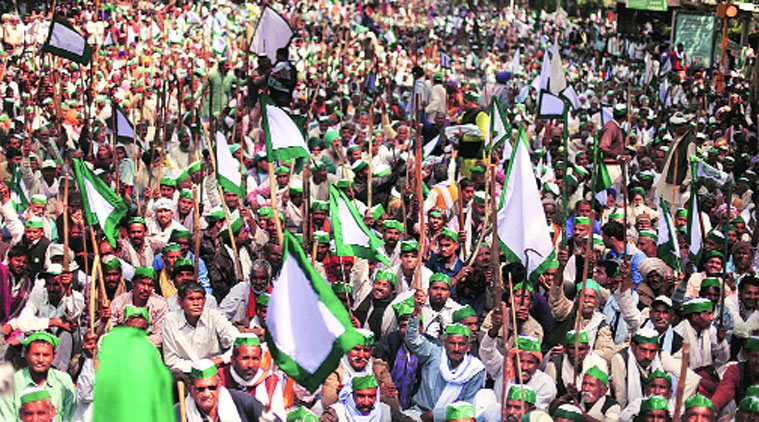
    NEW DELHI (TIP): The government is taken aback by events following the suicide of a farmer at the Aam Admi Party (AAP) rally.

    The Opposition in Parliament squarely blamed the “anti-farmer” policy of the Narendra Modi government  for  driving farmers to take the drastic step.

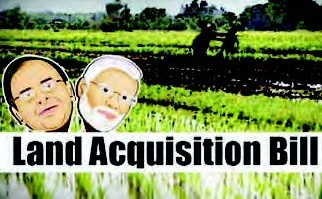
    Consequently, there is perceptible worry among BJP ministers and MPs that it could cast shadow on the government’s plans to legislate a bill to replace the land acquisition ordinance, which had to be re-promulgated. The government did not place the bill in the Rajya Sabha because it does not have majority there.

    There is every possibility that the bill will not be allowed to come up in the Upper House again, said BJP floor managers.

    Given the political atmosphere following the suicide episode, the government itself could decide not to bring the bill to replace the ordinance until the fag end of the session, which ends in the second week of May.

    As yet, however, there is no indication that Modi will back down on his resolve on the matter though he may want more safety measures to end the distress of farmers.

    In fact, shortly before he addressed the Lok Sabha on Thursday, Modi met seniors ministers Rajnath Singh, Arun Jaitley, Venkaiah Naidu and Nitin Gadkari to formulate the government’s response. The PM’s line was that the issue of farmer suicides should not be allowed to be mixed up with the issue of amending the land acquisition law passed by the UPA, which is blamed for hurdles in acquiring land for key infrastructure project.

    In keeping with the PM’s statement that “we have to find a way and we can’t leave farmers helpless”, the government might re-examine relief package for agriculturists, which have been announced from time to time. An all-party meet could also be called on the subject. As a counter measure, the BJP has blamed Congress for the suicide, saying misrule by the previous Congress-led UPA is responsible to present situation. Over 3,000 farmers have committed suicide in the past three years and nearly three lakh farmers took their lives since 1995, according to the National Crime Research Bureau.

    The five worst-hit states are Maharashtra, Andhra Pradesh, Karnataka, Madhya Pradesh and Kerala. Maharashtra alone has recorded over 10,000 suicides between 2011 and 2013. Its Marathwada region has seen over 200 suicides in three months.

    “It should be our determination to find a solution to this problem. The issue has been there for long, we will take all good suggestions: For years the issue of farmers committing suicide is a matter of great concern,” Modi said on April 23.

  • Masarat Alam put under preventive detention again

    Masarat Alam put under preventive detention again

    SRINAGAR (TIP): The Jammu & Kashmir government on April 23 ordered separatist Masarat Alam’s preventive detention under the stringent Public Safety Act (PSA) and shifted him from the Valley to a Jammu jail.

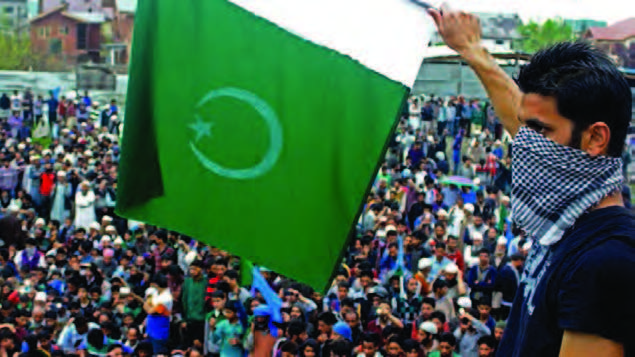
    Alam was arrested on April 17 for seditious activities two days after he was booked for Pakistani flag waving at a rally he had organized to welcome separatist Syed Ali Geelani upon his return from Delhi.

    The government can put a detainee under arrest without trial as per PSA’s provisions for three months. The detention can later be extended for six months.

    Alam was earlier released on March 7 after over four years under preventive detention for organizing 2010 street protesters against the civilian killings. Over 120 people were killed in security forces firings on protesters throughout the summer of 2010

    Alam’s detention under PSA came a day after he moved a local court for bail citing a 1983 high court verdict saying waving Pakistani flag was not an offence.

    The court had heard arguments and counter-arguments about the bail application and fixed April 25 for verdict on Alam’s application.

    Alam’s lawyer, Shabir Ahmad Bhat, said his client challenged sections under which he was arrested on April 17.

    Bhat cited the 1983 high court verdict and said Alam cannot be held or detained under any offence.

    The prosecution opposed the bail saying Alam’s offence amounted to waging war against the country.

    “As such Section 479 (1), Criminal Procedure Code (CrPC), clearly restricts the powers of the court to release the accused on bail,” the prosecution said.

    The prosecution described Masarat a habitual offender, against whom 28 cases were registered.

    It said his activities were against the security, peace and sovereignty of the state while arguing the investigation in the case was at the preliminary stage and Alam’s custodial interrogation was needed.

    Geelani separately called for a shutdown against Alam’s detention under PSA on Saturday and asked people to protest the government’s action. He said Alam faced threats to his life as the atmosphere was “very hostile for the azadi loving people” citing killing of Pakistani prisoner Sanaullah in the Jammu prison.

    “There is no moral or legal justification in arresting and slapping of PSA upon Masarat Alam. Indian TV channels ran a media trial against him and under pressure Mufti (Mohammad Sayeed) led government surrendered before the BJP and detained Masarat Alam Jail under the black law — PSA,” Geelani said in a statement.

  • India’s Land Acquisition Act: Bonanza for Rulers & their Financiers

    India’s Land Acquisition Act: Bonanza for Rulers & their Financiers

    India has a long history of its ruler’s fascination with farm land. Whether it was ancient Kings or Moghuls or British invaders turned rulers as well as the current rulers after independence; every one has been robbing the farmers of their land in broad daylight by claiming that they are doing it for the sake of development.

    Let us have a close look at the largest democracy of the world. India is a country of 1.35 billion, where 665 million practice open defecation against 37 million doing so in China. India has the world’s largest army of 85 million child labor out of 830 million poor living in extreme poverty. India’s elite, world famous billionaires, part of the 56 million rich Indians, live side by side with almost a billion poor and treat them as sub humans who are viewed as burden for the country.

    A former diplomat, politician, author and thinker Pavan Varma wrote in his book “Being Indian” that in the Indian elite “there is a remarkable tolerance for inequality, filth and human suffering”. He adds that “concern for the deprived and the suffering is not a prominent feature of the Indian personality. The rich in India have always lived a life, quite oblivious to the ocean of poverty around them”. Less than 10-15 minutes from every slum in any major city of India there are very expensive heavily guarded residential areas with mini palaces costing from a few million dollars to $1 billion Mukesh Ambani’s Palace. One city: two universes.

    India’s Land Acquisition Act was enacted in 1894 by British rulers. It gave unlimited power to the government to acquire any land. The Act allowed governments all over India to acquire land from the public. After independence India adopted the same Land Acquisition Act and no one bothered to make any changes in it because it was an easy way for the politicians and corporations to make money. The only person who lost money and livelihood was the individual and his family whose land was acquired. In 1985, an amendment made it easier for politicians and corporate to take over land at throw away prices. “Whenever it appears to the [appropriate Government] the land in any locality [is needed or] is likely to be needed for any public purpose [or for a company], a notification to that effect shall be published in the Official Gazette [and in two daily newspapers circulating in that locality of which at least one shall be in the regional language], and the Collector shall cause public notice of the substance of such notification to be given at convenient places in the said locality.” Practically for 66 years, from 1947 to 2013, every political party and at the center as well as all the states chose not to do anything and has been using this law as a source to generate black money to fight elections. It was only in 2013, the Congress led United Progressive Alliance (UPA) brought in “The Right to Fair Compensation and Transparency in Land Acquisition, Rehabilitation and Resettlement Act 2013. Although this also has some major flaws but it was the first time that some one thought of protecting the farmers, tribals and landless poor. However, UPA could not implement this law as it lost power and in 2014 a new government under Modi was installed at the center by the corporate world.

    Corporations and politicians all these years, in daylight robbery, after taking over farm land at throw away prices, have been getting the “land use” changed overnight and land becomes 1,000 to 10,000 times more its original price. Then the scam of acquiring Panchayat land or Shamlat land that is owned by the entire village marked for animal grazing especially for marginal farmers and landless owners of a few animals has been going on for over a century. This is done by the prospective buyer with bribes to revenue officials, from Patwari, Gram Panchayat members, Nayab Tehsildar, Tehsildar, District Collector, to ministers and judges, in case if a petition against an allotment is made for stay and, of course, the Chief Minister of the State who gets his/her share before any one else and only then a green signal is issued to go ahead with the project. Now after acquiring the farm land, to get its “land use” changed the buyer once again pays bribes to Chief Minister of the State, the District Collector, the Minister concerned, never forgetting the judicial officials in case a petitioner approaches the court for stay. The buyer also pays the usual development charges as per the rules.

    Farm Land has always been the biggest black money source for every ruling party in every state. If a serious investigation is done one can find how the real estate companies came into existence and some of the famous 5 star hotels, resorts, malls, luxury farm houses and residential complexes were built on farm land as well as Shamlat or Panchayat Land. The worst part is the farmers and their family members who used to own this land are now working as help- gardener, watchman, cleaner, cook and drivers on these properties.
    The forest land on which millions of people specially tribal and landless villagers depend for their survival by collecting minor wild oil seeds, herbs, fruits and flower, is much easier to acquire. Bribe all the concerned politicians, bureaucrats, Judges and environmentalists and get the land for a paltry sum per year on a per yard lease for 99 years. There is absolutely no need to buy and spend money on stamp papers etc.! And, in the long rum, have it to yourself, almost for free.
    Every central and state government in India believed that it owned the country’s resources. That is the reason we had numerous scams under Congress, Janata Party and BJP governments and their allies. But this time BJP that has come to rule the country at the Center as a single party with a massive majority for any party, after 30 years, has gone a step forward. It is openly sending a message that they own the resources. BJP must understand that “Country’s resources belong to the people and the land owned by farmers must remain with the farmers.” Let them decide what is to be done with the resources in the best interest of the country. Let the issue be decided by the majority of India’s citizens, not by the 1% that own the politicians and are trying to take over the country.
    Governments in India have always advanced the argument that the land is required for public use. That, it is required to build infrastructure- roads, bridges, power plants etc. That the land is required for the vital defense projects. For each of these projects that go in to private sector, the players get their profits. Even in case of government projects, governments get to recover the cost through various taxes. Where is the need to provide land at subsidized rates to any of them? The Indian industrial houses -Reliance, Adani, Tata, Jindal, Ruia etc have unprecedented political access and power. All these corporations, unlike East India Company, do not have their private army but soon will be making all kinds of warheads, missiles, helicopters, airplanes, ammunition and other sophisticated military gadgets because BJP’s Finance Minister Arun Jaitley has increased the FDI limit to 49% from 26% for defense industry. Just a few days before the budget the institution of Lobbyist ( Middleman) has been legalized in India for deals with the government, including defense deals. Now there won’t be any shortage of Radias openly operating in the corridors of power to influence law makers for favors for their corporate clients. Do these multi-billionaires really need to be given land at a subsidized rate?
    Even after Congress party’s catastrophic defeat in 2014 due to rampant corruption and massive scams the country’s crony capitalists are unlikely to suffer as a result. The nexus between business and politics, today under BJP rule, is as tight as it has ever been. BJP spent Rs 32,000 crore to bring Narendra Modi to power with massive corporate donations. BJP is estimated to have spent at least Rs 6,200 crore on print and broadcast advertising alone. Of these donations, around 90% comes from unlisted corporate sources who will be rewarded when the times comes. May be, under Land Acquisition Act it is pay back time for BJP to its financial supporters with cheap land besides the Rs. 62,398.6 crore for 2014-2015, the revenue government is expected to forego because of exemptions and deductions given to corporates.

    Modi’s Finance Minister Arun Jailey is bringing down the Corporate Tax from 30 per cent to 25 per cent in the next four years. In USA where the corporate Tax is 35% according to CAG ; US Corporation’s effective rate of tax was 12.1% in 2011 that is 40 years low. If the effective rate in USA is 12.1% in India it has to be under 10% or in some cases 0 because Indian Corporations are more innovative; they get subsidized loans, land, electricity, break on all kinds of taxes including custom, excise, dividend tax and can book their profits in foreign countries by over invoicing or under invoicing and route it back through government approved Mauritius route. Besides with the plethora of credits and deductions in tax code they buy super luxury cars, luxury homes & farm houses, air planes, yachts and expensive holidays abroad in their corporation’s name for their personal, family, executive and for the use of politicians and top bureaucrats. Interestingly, the bigger the corporate the more deductions and exemptions they take.!
    PM Modi has been going to every country in the world and telling investors: ‘Come to India; make in India; we will give you cheap land and labor’. PM Modi is certainly not lying. After robbing the farmers of their land, the farmers and their family members will have no choice but to become cheap laborers for his financial supporters- the MNC’s and the local industrial houses.
    (The New Jersey based author is a regular contributor to The Indian Panorama. He can be reached at davemakkar@yahoo.com)

  • Separatist leader Masarat Alam Bhat arrested

    Separatist leader Masarat Alam Bhat arrested

    SRINAGAR (TIP): Buckling under pressure from alliance partner BJP, the PDP-led government in Jammu and Kashmir on April 17 arrested separatist leader Masarat Alam Bhat in connection with the raising of Pakistani flags during a rally here on April 15.

    “Bhat has been arrested in the case registered in police station Budgam in connection with the provocative actions during the rally on Wednesday,” a senior police officer said.

    Masarat Alam Bhat
    Masarat Alam Bhat

    The 45-year-old hardline separatist leader, who was placed under house arrest late last night, was arrested from his home in Habbakadal area of the city early this morning and taken to police station Shaheed Gunj, the officer said.

    As he was being led away by police, Bhat said his arrest was nothing new as “Jammu and Kashmir is being ruled on the might of power.”

    “Raising of Pakistani flags and chanting pro-freedom slogans is nothing new in Jammu and Kashmir. It has been happening since 1947,” he said.

    The arrest comes hours ahead of Hurriyat Conference chairman Syed Ali Shah Geelani’s call for a march to Tral area of Pulwama district where two youth were killed in an anti-militancy operation on Monday. While the local residents allege that the duo were killed in fake encounter, the army is maintaining that they were militants and killed in a gunbattle.

    Police had registered a case against several separatist leaders including Bhat and Geelani for provocative activities including hoisting of Pakistani flag.

    “An FIR has been registered against Geelani, Bhat, Bashir Ahmad Bhat alias Peer Saifullah and other separatist leaders for provocative activities and hoisting Pakistani flag in Hyderpora,” a police spokesman said.

    “FIR No 92/2015 under sections 13 Unlawful Activities Prevention Act, 120-B (criminal conspiracy), 147
    (rioting), 341 (causing injury), 336 (attacking govt employee), 427 (mischief causing damage to the amount of Rs 50 or more) of RPC was registered in Police Station Budgam and investigation into the matter has been taken up,” he said.

    Bhat, who was released by the PDP-led government last month after spending over four years in jail under Public Saftey Act, said there has been no change in the policy of the state government despite a change in the regime.

    “I had said at the time of my release that there is no change in policy with the change in regime. This is the way they curb peaceful protests,” he added.

    Alam’s release had created a furore across the country and the issue had even figured in Parliament proceedings with Prime Minister Narendra Modi making a statement on the floor of the house.

    The waving of Pakistani flags and chanting of anti-India slogans at the rally orgainsed to welcome Geelani on Wednesday renewed calls for Bhat’s rearrest by the BJP, coalition partner of PDP in the state government.

    Meanwhile, police officials said they will not allow any march to Tral town in order to maintain law and order in the area.

  • Ban this, ban that – Intolerance growing in BJP-RSS regime

    Ban this, ban that – Intolerance growing in BJP-RSS regime

    Days after Prime Minister Modi warned the judiciary of dangers posed by five-star activists, the Union Home Ministry cut off foreign funding to Greenpeace for “campaigning against government policies” and “obstructing India’s energy plans”. Among the reasons cited for the ban is Greenpeace activists “holding talks” with the Aam Aadmi Party. Foreign money is welcome for pollution-causing industries but not for raising a voice to protect the forests, the environment or human rights. Swift green clearances for projects are seen as an achievement by the minister who is tasked with safeguarding the country’s environment and natural resources.

    Take Maharashtra. Union Minister of State for Agriculture Mohanbhai Kundaria told the Rajya Sabha recently that 135 farmers killed themselves in the first 58 days of this year in the state’s Aurangabad division.  That is not what worries the BJP government. It is devoting its time and resources to enforcing a ban on beef and promoting Marathi films. Most Indians do not approve of cow slaughter and will like the government to provide for adequate cow sheds. Cows become a financial liability once they stop yielding milk. What should farmers, barely making two ends meet, do? And those who survive on beef business? The state high court rightly asked the government how it could extend the ban to other states by stopping people from eating beef produced there. The Devendra Fadnavis government not only wants to decide what people should eat but also what films they should watch. Multiplexes have been forced to show Marathi films at prime time. When writer Shobhaa De protested against such “dadagiri”, cultural extremists ganged up to gag her.

    As if the censor board was not giving enough trouble to filmmakers, the SGPC has started demanding bans on films it disapproves of. Fanatics want to decide what people should wear, watch, read and even which religion they should follow, threatening in the process the very foundations of a secular, liberal India. Intolerance is growing in Modi raj and targets are clear. Anyone who opposes what the government is doing or the religious/cultural agenda it is patronising puts himself at risk.

  • VIRASAT-E-KHALSA: A Wasat-e-Khalsa:  A Museum of Sikhism

    VIRASAT-E-KHALSA: A Wasat-e-Khalsa: A Museum of Sikhism

    A masterpiece of rich Sikh culture and religious history, the `Virasat-e-Khalsa` was dedicated to the nation in the Sikh holy city of Anandpur Sahib, the birthplace of the Khalsa, amidst an elaborate religious ceremony , on November 25, 2011. 

    Punjab Chief Minister Prakash Singh Badal honors world renowned architect Moshe Safdie who has designed Virasat-e-Khalsa, at the function to dedicate the monument to humanity at Sri Anandpur Sahib, on November 25, 2011
    Punjab Chief Minister Prakash Singh Badal honors world renowned architect Moshe Safdie who has designed Virasat-e-Khalsa, at the function to dedicate the monument to humanity at Sri Anandpur Sahib, on November 25, 2011

    The Rs.300 crore project was opened by Punjab Chief Minister Prakash Singh Badal in the presence of Bharatiya Janata Party (BJP) president Nitin Gadkari, Art of Living founder Sri Sri  Ravi Shankar and others. 

    VIRASAT-E-KHALSA- Wonder in the Making Inner ImageConceived as a repository of the rich heritage of the `Khalsa`, showcasing the history and culture of Punjab, the heritage complex has been built to emphasize the eternal message of the Sikh gurus. 

    Called the Khalsa Heritage Complex (KHC), it is touted as a landmark monument of one of the youngest religions in the world. 

    The project, announced in April 1999, was originally expected to be completed by September 2004 to coincide with the celebrations of the 400th year of the Golden Temple. However, the project got delayed for one or the other reason, better known to the authorities concerned. The monument dedicated is incomplete and only the first phase of the whole KHC project. 

    Being built on a 100-acre site at Anandpur Sahib, 85 km from Chandigarh, KHC stands at a site that is the birthplace of the Khalsa Panth, the present day Sikh religion. The second holiest Sikh shrine, Takht Keshgarh Sahib, is located here. 

    It was here in 1699, on the day of Baisakhi, that the 10th Sikh master, Guru Gobind Singh, founded the Khalsa Panth and baptized the `Panj Piaras` (the first five baptized Sikhs known to be the loved ones of the guru). 

    Boston-based Israeli-architect Moshe Safdie has designed the complex, which is shaped like open hands offering prayers. The monument is termed as a “wonder in the making”. 

    Tribute to tradition VIRASAT-E-KHALSA- Wonder in the Making Inner Image 1

    The project, which has been shaped like hands offering prayers, unfolds Sikh history and tradition -like never before. 

    People working on the project claim that a museum like this has never been built before in the country. It has got no precedent, no comparison. 

    Made up of building materials from all over India, the project is an architectural miracle and the world’s foremost, comprehensive Sikh heritage centre.

    Moshe Safdie, the internationally acclaimed Boston-based Israeli architect, has designed the Khalsa Heritage Complex. Punjab Chief Minister Prakash Singh Badal handpicked Safdie, during one of his visits abroad in mid ’90s.

    VIRASAT-E-KHALSA- Wonder in the Making Inner Image 2The project houses a museum, which will have souvenirs related to Sikh history comprising all 10 Sikh Gurus, Guru Granth Sahib and Sikh rulers like Maharaja Ranjit Singh. The museum will also have scriptures written by Guru Gobind Singh.

    The museum is conceived by Amardeep Behl, a Delhi-based designer running AB Design Habit, who is also working on restoration of Sri Harmandar Sahib.

    The project has two main complexes, which are joined with a connecting ceremonial bridge. The canopy on this bridge is an architectural experiment and is situated in the opposite direction of the sun and does not provide any shade.

    The western complex houses an auditorium with a seating capacity of 400. It will have temporary exhibition galleries and a library, housing all journals, magazines, books and periodicals on Sikhism.

    The eastern complex has a north wing also known as flower building. It has another part, which is called boat building or heritage building.

    The roof of the flower building is shaped in form of five petals – depicting Panj Piaras of Guru Gobind Singh. Each petal will house an exhibit tracing the life history of all gurus from birth to attaining salvation/ martyrdom. These will be permanent exhibits. The petal at the highest altitude will have information and exhibits on Guru Granth Sahib.

    The rooftops of all petals have been covered with special stainless steel sheets. At night the entire building will be illuminated with its large silhouette being reflected in seven acres around. It will also illuminate the night skyline of the historical city of the birth of the Khalsa.

    Exhibit galleries

    At the entry of the museum, permanent exhibits, depicting Punjab before birth of Guru Nanak, have been placed. These will showcase the climate, culture and life of pre-Guru Nanak times. The ceiling of this heritage building has been made of glass and its floor will be covered with water. The aim of this exhibit is to make the visitor introspect his life.

    Thematic carpets will adorn walls of this part of building for which weavers from Mirzapur have been roped in. Next the visitor is greeted with the thought-provoking concept of Ek Onkar – this mool mantra will echo all around this exhibit. This exhibit, with special sound effects, is situated in a drum-like building where lights will create an image of Ek Onkar and an audio message will highlight core principles of Sikhism.

    Then starts a mesmerising journey into the lives of first five Gurus in the five petals of the flower building. These five petals tell tales from Guru Nanak Dev to Guru Arjan Dev.

    The first petal will have the milieu of the times Guru Nanak Dev was born in, tracing his life with travels (udasi) undertaken. Further there will be galleries depicting achievements of Guru Angad Dev and Guru Amardas. One of the galleries is divided into two, by recreating a baoli in the middle, to highlight gurus contribution. It will have leather and shadow puppets with painted murals in background.

    The gallery in the fourth petal contains exhibits on the contribution of Guru Ram Das, including the construction of the city of Ramdaspur, adding 11 ragas to existing corpus of Gurbani and the Lavan. The city of Ramdaspur has been recreated in an embroidered creation.

    The gallery in the fifth petal showcases key events in history of Sikhism: construction of Harmandar Sahib and writing and installation of Adi Granth. A pathway leading to the gallery will have a replica of Harmandar Sahib. The gallery also has an ethereal, glowing representation of Prakash Sthal – the place of the Adi Granth in Harmandar, in the centre. Around this central installation are shown stories related to the establishment of Adi Granth. Four doorways around it recreate different scenes describing the life and times of Guru Arjan Dev.


    There is another gallery depicting Guru Arjan Dev’s martyrdom in the form of a sculpture on the terrace.

    Here, the events of martyrdom have been narrated in an evocative manner without showcasing horrendous scenes, usually associated with Sikh museums.

    There is also an exhibit, which will suggest coming together of five elements – fire, earth, water, air and space.

    Petals in the crescent building will cover lifespan of Guru Hargobind, Guru Har Rai, Guru Harkrishan, Guru Teg Bahadur, Guru Gobind Singh and Gurta Gaddi. The galleries at the lower level will chronicle the trials, tribulations and triumphs of the Khalsa from Banda Bahadur to immediately after Partition, when Sikh dynamism transformed Punjab with its `E9lan, energy and resilience.

  • IB snoop on Netaji’s kin kicks up row

    NEW DELHI (TIP): A political row broke out over reports on declassified intelligence files suggesting that the government of India’s first prime minister Jawaharlal Nehru snooped on freedom struggle icon Netaji Subhash Chandra Bose’s family for about 16 years.

    The surveillance reportedly began in 1948, three years after he is supposed to have died in a plane crash.

    The declassified files show that the Intelligence Bureau heavily tailed Bose’s family, secretly read their personal letters, including those having references to his Austrian wife Emilie Schenkl.

    Nehru and Bose shared a good rapport before the latter quit the Congress in 1939, due to differences with the former prime minister, to float his own party. The documents have been handed over to the National Archives by the Home Ministry so that they can be accessed by the public.

    The ruling BJP lapped up the reports to express its “shock” and “surprise” on Nehru putting the firebrand freedom fighter’s family under intense surveillance and targeted the Congress for making snooping a habit. On the other hand, the Congress denied the charges and attributed the reports to the NDA government’s “sinister propaganda of selective leaks and half truths” to malign Nehru.

    “The BJP today is definitely taking a stand that this is really surprising and shocking. Already on the dimension of snooping, research that has come out, I certainly feel that till 2010-11 snooping has become a part of Congress’ DNA…We express our concern,” Union Minister Nirmala Sitharaman told reporters. Bose’s extended family, too, was dismayed over the reports but insisted that the Narendra Modi government should make the files public.

    During the last Lok Sabha polls, the BJP had demanded making public secret files to unravel the mystery behind Bose’s death. But after Modi came to power, the Prime Minister’s Office refused to reveal contents of 39 secret files on the ground that it would compromise diplomatic relations – a position the previous UPA regime took to keep the sensitive issue under wraps.

  • When will Rahul return, asks BJP; Soon, says Sonia

    When will Rahul return, asks BJP; Soon, says Sonia

    NEW DELHI (TIP): The BJP on Thursday took a dig at Congress vice president Rahul Gandhi wondering when he will return but Congress chief Sonia Gandhi asserted that he will soon be back among the people.

    BJP spokesperson Shahnawaz Hussain on April 2 took a jibe at Rahul Gandhi, wondering if he was really set to return and attend the April 19 rally of his party against the new land acquisition law.

    “We do not know if reports about the date are true…Is his vacation finally over,” asked Hussain.

    Sonia Gandhi however asserted that Rahul Gandhi will come back soon.

    “He will come back soon and will be among people,” she said to questions on her son’s return after her visit to Neemuch in Madhya Pradesh to meet farmers whose crops have been damaged in the recent untimely rains.

    Rahul Gandhi had gone on “leave of absence” ahead of the budget session of parliament and there has been recurring speculation about the date of his return.

    The party had initially said that he had gone on two weeks’ leave but the period has extended to over a month now.

    Senior party leader Digvijaya Singh had indicated earlier this week that Rahul Gandhi is likely to attend a farmers’ rally being held by the party in the capital on on April 19.

    Noting the rally will be attended by all senior leaders, he said that “when I say senior leaders, it includes Rahul Gandhi as well.

    The Congress meanwhile said it had no specific information of Rahul Gandhi’s date of return.

    “I have no official intimation in this regard,” party spokesperson Meem Afzal said.