Tag: BJP

  • Finance, fertilizers and petroleum ministries to seek subsidy cuts

    Finance, fertilizers and petroleum ministries to seek subsidy cuts

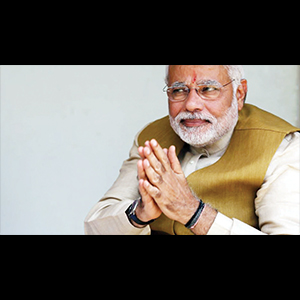
    NEW DELHI: A swathe of ministries — from finance to fertilizer and petroleum — are going to make a case for a reduction in subsidies before Narendra Modi, a move that will push up your monthly expenditure but is expected to help the government cut wasteful spending and revive investment. Sources said the three ministries are identifying subsidies as a key constraint in their presentations that secretaries will make before Modi, starting next week.

    The interaction with the new prime minister is also expected to help the ministries get a fix on the government’s stance on subsidies given that BJP, when in opposition, had repeatedly protested against increase in prices of cooking gas and diesel, while backing the Food Security Act that offers supply of subsidized grains. The petroleum ministry is backing an immediate increase of around Rs 250 a cylinder for subsidized cooking gas, even as the monthly diesel price hike has been resumed so that the gap of Rs 4.40 paise a litre is bridged.

    With the rupee appreciating against the dollar, the gap is expected to narrow to around Rs 3-3.50 a litre and the ministry is in favour of deregulating prices in one go. In addition, it has backed resumption of the direct transfer of cooking gas subsidy to bank accounts and reducing the number of subsidized cylinders given to households from the current level of 12. Although the fertilizer department is not stating a demand to reduce subsidies, it is going to make a pitch for a new urea pricing policy, which will automatically result in a reduction in doles.

    The UPA government had postponed the decision for months.Sources said the twin moves also enjoy the finance ministry’s backing as North Block believes that subsidy reduction will lower the government spending, and cut the level of market borrowings, freeing resources for the private sector to revive investment. “In India, the growth story has always been driven by private sector investment and the only way to do it this time is to reduce the subsidy bill by better targeting the payments to the poor and the needy,” said a source, who did not wish to be identified.

    Lower government borrowing is also expected to pave the way for Reserve Bank of India to cut interest rates, which will again help investment by the private sector. Although UPA ministers such as P Chidambaram were keen on lowering subsidies, the Congress leadership prevented them from initiating such measures. In fact, under pressure from Rahul Gandhi, Manmohan Singh had increased the annual cap on subsidized cylinders to 12 from nine earlier.

    Among all the ministries, the allocation for the petroleum ministry had seen the third highest growth between 2004-05, when UPA took charge, and 2013-14, thanks to the huge spurt in subsidies. An analysis of the latest numbers shows that subsidies as a percentage of total central government spending have increased from a little over 9% in 2004- 05 to almost 14% in the interim budget estimates for 2014-15.

    While fertilizer subsidy has risen four-fold to close to Rs 68,000 crore (interim budget estimate for this year), food subsidies have gone up four-and-a-half times to Rs 1.15 lakh crore. It is subsidies on cooking gas and diesel that have driven up fuel subsidy bill 18 times to almost Rs 63,500 crore. And, this does not include the liability that public sector oil companies — from ONGC to IndianOil — have borne, crippling their financial position.

    Overall, the subsidy bill on the three major items has growth over five-fold, while central government spending has increased three-and-a-half times, necessitating the demand for a change in spending pattern.

  • JITAN RAM MANJHI SWORN IN AS BIHAR CHIEF MINISTER

    JITAN RAM MANJHI SWORN IN AS BIHAR CHIEF MINISTER

    PATNA (TIP): Makhdumpur MLA Jitan Ram Manjhi was sworn in on May 20 as Bihar’s 23rd chief minister. Governor D Y Patil administered the oath of office and secrecy to Manjhi and 17 ministers, including the two new faces of Dulalchand Goswami and Vinay Bihari. Manjhi, 68, was SC/ST welfare minister under former CM Nitish Kumar who resigned owning responsibility for the poor performance of JD (U) in the parliamentary polls.

    He is the third dalit chief minister of Bihar after Bhola Paswan Shastri and Ram Sunder Das, but first from the Musahar caste. All the ministers of Nitish cabinet have been retained. Dulalchand and Vinay Bihari, the two independent MLAs who supported the JD (U) government in writing, have been inducted as cabinet ministers. The ministers who took oath are Vijay Kumar Chaudhary, Bijendra Prasad Yadav, Narendra Singh, Brishen Patel, Ramai Ram, Bhim Singh, Damodar Raut, Narendra Narayan Yadav, P K Shahi, Shahid Ali Khan, Shyam Rajak, Nitish Mishra, Awadhesh Prasad Kushwaha, Gautam Singh, Lesie Singh besides Goswami and Bihari. While Manjhi chaired his first cabinet meeting as CM after the swearing-in ceremony, former CM Nitish denied the opposition charges that the new CM would be remote controlled by him.

    “This government will run directly, and not through remote control,” he said. He said the new CM would work according to his wisdom and fulfill the targeted projects. “I will keep an eye on his working,” Nitish said and reiterated that he would now work among the people. Hitting out at BJP, he said the party was in rumour mongering business and was lying that 50 JD (U) MLAs were in their contact.

    Some BJP and RJD leaders were also present at the swearingin ceremony. The former CM said attempts would be made to create problems for the new government, but it would work with firm commitment. He took pains to explain that it was a big challenge for him to convince the legislators about the reasons behind his resignation.

  • THIS PM IS NOT ‘SAHEB’ FOR FRIENDS

    THIS PM IS NOT ‘SAHEB’ FOR FRIENDS

    AHMEDABAD (TIP): “For you, I will always be Narendrabhai, not PM,” PM-designate Narendra Modi told a sea of BJP leaders and supporters who had gathered at the Ahmedabad airport to welcome him after he was appointed prime minister by the President. Modi’s childhood friends say that this humility was not for show -Modi in fact never liked them calling him ‘saheb’; he rather insists on being called Narendra by his buddies. Sudhir Joshi, 64, who studied with Modi from class 5 to class 11, says that Modi has prohibited him from calling him ‘saheb’.

    “After he became the CM, I used to meet Narendrabhai for dinner at least once a year. Initially, I called him ‘saheb’ but he immediately corrected me: ‘Did you call me saheb when we were in school? Please call me Narendra’,” Joshi recalls. Joshi, who is the son of Modi’s family physician in Vadnagar, says that he is proud of his friend becoming the PM and that he had an inkling way back in 2010 that Modi would become the PM. “In 2010, Narendrabhai told me just like that, ‘Sudhir, your friend is marching towards Delhi.

    I will not stay in Gujarat for long’,” says Joshi. Another childhood friend, Shyamal Modi (63), says Modi has remained humble with them and never made them feel about his growing stature in national politics. Shyamal who lives in Vadnagar was a businessman until recently . “When he was elected CM, I told him, ‘You have become Krishna and I am mere Sudama’. Then Modi told me never to say this again and said: ‘A friend is always a friend. He does not become big or small’,” recalls Shyamal, who had caught baby crocodiles with Narendra Modi and took them to Modi’s mother.

    Nagji Desai, another childhood friend who studied with Modi in Vadnagar, recalls: “Once when I called him ‘saheb’, he asked, ‘Have you become so highly educated that you are addressing me as Sir?’” The childhood friends have remained close to Modi despite his meteoric rise in politics. They wish him well now that he has left for New Delhi. “We will go and meet Modi in New Delhi once a year, and keep our old ritual alive,” said Joshi.

  • VETERANS MAY GET PLUM PORTFOLIOS IN MODI GOVT

    VETERANS MAY GET PLUM PORTFOLIOS IN MODI GOVT

    NEW DELHI: The lack of experienced players in NDA ranks seems to have opened up the prospect of BJP veterans landing important portfolios in the incoming Modi government. Sources said while there was uncertainty about the chances of former party president Murli Manohar and leader of opposition in the outgoing LS Sushma Swaraj getting ministries which are part of the Cabinet Committee on Security, the situation has perked up somewhat because of what is being referred to as BJP’s “poor bench strength”.

    Sources said while Swaraj could be considered for the ministry of external affairs, Joshi may be entrusted with the crucial defence portfolio. BJP chief Rajnath Singh and leader of opposition in Rajya Sabha Arun Jaitley continue to be seen as the frontrunners for the two other CCS ministries — home and finance, in that order. Party circles also expect former telecom and disinvestment minister Arun Shourie to get an important portfolio.


    24
    Rajnath Singh

    There are indications that in keeping with his thrust on “lean” government, Modi may begin with a mid-sized team. Party sources said a smaller team will be adequate, given the PM’s plan to reduce the size of the government by clubbing ministries with overlapping responsibilities and by even doing away with those which seen as edundancies. Even as odds seemed to have improved for Swaraj and Joshi to get important portfolios, uncertainty continued to hang over whether L K Advani, another veteran who opposed Modi’s anointment as PM candidate, will get to be Speaker.


    25
    Sushma Swaraj

    BJP sources said Advani had expressed interest in the constitutional post which is supposed to be autonomous of the political executive and, therefore, not a subordinate to the PM. However, the leadership is yet to make up its mind, with the experience of the resistance to Modi from Advani partisans only rendering the call that much more difficult.

  • TEAM RAHUL UNDER ATTACK AS CONGRESS LEADERS WANT ‘RUTHLESS INTROSPECTION’

    TEAM RAHUL UNDER ATTACK AS CONGRESS LEADERS WANT ‘RUTHLESS INTROSPECTION’

    NEW DELHI (TIP): Congress should opt for ‘ruthless introspection’ and only those experienced in field work should be given leadership roles, party leaders said on May 22.

    Congress leader Milind Deora, who had on May 21 said that Rahul Gandhi’s advisers did not have their “ears to the ground” and those with “no electoral experience” were “calling the shots”, today stuck to his guns, saying his comments are borne out of deep loyalty to the party and pain due to its performance in the polls.

    “My comments are out of emotions of deep loyalty to the party, pain of our performance and a sincere desire to see us bounce back. Nothing more,” Deora said on Twitter. In another tweet, he said, “Field party work & electoral battles are key to comprehend ground realities.

    This should form the basis for leadership posts in Congress.” His remarks are significant as there are murmurs in the party that a number of people having no electoral experience and novices in politics were given key roles in shaping up the decisions of the leadership on issues like campaigning and alliances. Field party work & electoral battles are key to comprehend ground realities.

    This should form the basis for leadership posts in Congress. AICC secretary Priya Dutt, who met Congress president Sonia Gandhi today, also talked of a “disconnect” of the party leaders with the people. Deora lost from South Mumbai to Shiv Sena’s Arvind Sawant while Dutt lost to BJP’s Poonam Mahajan. Senior party leader Satyavrat Chaturvedi appeared to be in agreement with the views expressed by Deora and hoped that an “honest and ruthless introspection” is carried out to rectify the problems.

    Chaturvedi said that while whatever Deora stated might not be fully correct but “large portion of what he said is correct” and called for “ruthless introspection”. “I wish an honest and ruthless introspection goes on … I sincerely hope that we are able to identify mistakes and we have to correct them. Responsibility must accompany accountability,” he said.

    On Deora’s remarks, Chaturvedi said that they were an attempt to introspect what went wrong and that the young leader had expressed his views as a Congress leader. After her meeting the Congress President, Dutt maintained that there was a “lot of criticism” and that “we have to look at where we have gone wrong in last ten years”.

    Holding that UPA had done very good work in last ten years, she said that it has not been able to project it and cash on it. “So obviously there have been a lot of faults,” she said. Both Deora and Dutt are considered to be part of Rahul Gandhi’s team. Deora’s assertions in the past on some issues were also followed up by action taken by the Congress vice president.

  • Cong allowed Modi wave to sweep country: Jyotiraditya

    Cong allowed Modi wave to sweep country: Jyotiraditya

    BHOPAL (TIP): Day after former Union minister Milind Deora blamed AICC vicepresident Rahul Gandhi’s advisers for the party’s decimation in the Lok Sabha polls, former Union minister Jyotiraditya Scindia said on May 22 the “Congress Party is responsible for allowing the Modi wave to sweep the country”. Scindia was on a two-day trip to Gwalior, Guna and Ashoknagar to thank voters of his constituency for his victory.

    Speaking to reporters in Ashoknagar, Scindia said, “The space for Modi was created by Congress. In the past five years, there was lack of communication with the people. The government introduced welfare policies, but failed to convince voters about its intention. And this is where BJP stepped in.” Scindia argued there was also a huge communication gap between the government and the party.

    “To fill this gap, the party will have to introspect and project a new leadership at the Centre and in the states,” he said. Not just Scindia, former Congress MP from Dewas, Sajjan Singh Verma,who lost the poll, claimed UPA-Centre had introduced various welfare policies, but the gains were booked by BJP governments. Verma, a staunch follower of senior Congress leader Kamal Nath, said, “UPA was hit by scams, but governments in states are embroiled in bigger scams, but the party failed to communicate this to the people.”

    Verma also said Modi had mobilised a youth brigade to build his brand. But Congress leaders made no such effort for Rahul Gandhi. “Congress got wiped out because our leaders failed to realise that elections are won by propaganda and media management,” he said.Verma also said the first major blow to Congress came from Anna Hazare’s Lokpal movement against corruption.

    “Our party president Sonia Gandhi was extremely unwell and Rahul accompanied her to the US for treatment. But as soon as he returned, Rahul should have walked up to Anna Hazare and accepted his demand for Lokpal Bill. The people would have got the message,” Verma said.

  • Pause and think: AAP needs to decide what battles to fight

    Pause and think: AAP needs to decide what battles to fight

    Being in the news for the wrong reasons has dented Arvind Kejriwal’s image in the past and he seems to have learnt no lessons. His choice of jail over bail in a defamation case may get him media attention but it shows him in poor light – a promising leader frittering away his energy on non-issues.

    Few would shed tears for his portrayal of himself as a victim. He has made a serious allegation of corruption against BJP leader Nitin Gadkari and the onus is on him to convince the court with evidence. Otherwise, he faces the legal consequences. The subsequent protest by AAP workers, unwarranted as it was, led to traffic jams and inconvenienced commuters. Such mindless agitations can only further alienate people from AAP.

    Instead of sitting together to assess the crushing defeat, finding out what went wrong and formulating a comeback strategy, AAP leaders are back on the road. Kejriwal’s illconceived attempt to revive an AAP government in Delhi backfired as the Congress rebuffed him. His apology to the people of Delhi for the sudden resignation of his 49-day government lost its impact as Kejriwal was back to theatrics which even many of his admirers disapprove of. People found it hard to accept a chief minister sitting in dharna or threatening to violate the law over an issue of questionable merit.

    By taking up needless battles, the AAP leadership would do itself no good. Despite winning only four of the 432 Lok Sabha seats it contested, AAP has some positives to build on. Even in Delhi, where it could not win a single seat, the party has got four lakh more votes than it did in the assembly elections, gaining at the cost of the Congress.

    Its national vote share is higher than that of established parties like the Shiv Sena, DMK, NCP, RJD and the JD(U). What AAP lacks is an organizational network in states and that is what the leadership should focus on instead of indulging in gimmicks.

  • US Immigration Bill S – 744 set to damage Indian Business Interests: Shalabh Kumar

    US Immigration Bill S – 744 set to damage Indian Business Interests: Shalabh Kumar

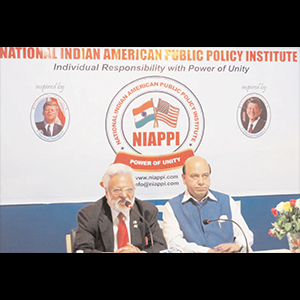
    NEW YORK (TIP): Shalabh Kumar, Chairman Indian American Advisory Council of House of Republican Conference of US Parliament & NIAPPI expressed grave concern over the US Immigration Reform Bill S-744 as a prominent NRI based in Chicago, US. The Border Security, Economic Opportunity & Immigration Modernization Act – 2013 or S744 was a bill drafted with the aim of reforming the immigration system in United States, stated Kumar at a press conference in New Delhi, India.

    Chairman NIAPPI Shalabh Kumar stated that S744 was introduced in US Senate on 16th April 2013. This bill was prepared by a bipartisan group of eight senators known as “gang of eight” comprising of Senator John McCain, Charles, Lindsey Graham, Richard Durbin, Marco Rubio, Robert Menendez, Jeff Flake and Michael Bennet. This bill was passed in the US Senate on 27th June 2013, which is controlled by Democratic Party headed by President Barak Obama. Now the bill is pending in US House of Representatives awaiting consideration. Once it is approved, the bill will become a law.

    Kumar stated that this bill shall damage Indian business and IT industry in India. It shall affect around 5 Lakh engineers from India. This bill shall cause loss to the tune of Rs. 1.875 Lakh crore in Indian exports to United States on a yearly basis. It shall have adverse restrictions on Indian H1B & L1 visa holders. It shall break the back bone of Indian export industry alleged US based NRI Shalabh Kumar.

    If the bill is passed then Indian firms will be forced to cut down on sending their employees from India. It shall reduce the GDP of India and its dollar reserves almost to the tune of 1 to 1.5% of Indian GDP. Kumar termed this bill as a major challenge for the newly elected Indian govt. US NRI Shalabh Kumar noted with appreciation the efforts of Vijay Jolly Convener OFBJP Global Affairs for voicing the strong opposition of Bharatiya Janata Party (BJP) on the anti-Indian provisions of the bill. Jolly had recently written a letter to the US Ambassador in India demanding that US House of Representative should not approve the anti-Indian S744 bill.

  • Anandiben Patel is Gujarat’s first woman CM

    Anandiben Patel is Gujarat’s first woman CM

    AHMEDABAD (TIP): Anandiben Patel took over as Gujarat’s Chief Minister on May 22 afternoon. She was administered oath by the state’s Governor Kamla Beniwal. On stage, was her predecessor Narendra Modi, who will be the country’s next prime minister. The entire BJP top line of leaders like party president Rajnath Singh, LK Advani, MM Joshi and Arun Jaitley were also present as the 72-year-old Anandiben took oath at a packed Mahatma Mandir in Gandhinagar. She is Gujarat’s first woman Chief Minister.

    CONTINED FROM PAGE 1 After Modi resigned as the Chief Minister, a position he had held for 13 years, his party’s legislators elected Patel to be their leader. Modi’s close aide Amit Shah, who does not share the warmest vibes with Ms Patel, was among those who endorsed her name for the chief minister’s post. In Gujarat, Shah and Patel have often been described as Modi’s “left and right arms.” Like Shah, Anandiben Patel is said to enjoy Modi’s complete trust.

    During his long election campaign, while Amit Shah helped Mr Modi script his massive victory, Ms Patel, the revenue minister, held fort in Gujarat as the head of a group of ministers set up to run the state government. She is known to be a very able administrator and has a tough, nononsense image. Dabbing discreetly at her eyes yesterday, as she was elected, an emotional Patel said, “Today when our beloved leaders are going to Delhi, there are tears in one eye and happiness in the other.

    Happiness because they are going to Delhi to wipe the tears of millions of Indians. I wish Narendra Modi all the best.” Handing over, Modi assured Patel that “no files in the chief minister’s office are pending”, and said, “she is a very hardworking minister and has been a performer and am sure Gujarat will continue to move forward on path of growth.”

    Patel has stood by Modi for many years even before he took over as Gujarat chief minister, including when in the mid 1990s, he was banished from state politics after a confrontation with other state leaders. The senior BJP leader was elected to the state assembly in 2012 from Ghatlodiya in Ahmedabad by a margin of 1.10 lakh votes. Her biggest limitation, her colleagues say, is her lack of connect with the party’s grassroots level workers and her inaccessibility.

  • BIHAR CHIEF MINISTER NITISH KUMAR RESIGNS

    BIHAR CHIEF MINISTER NITISH KUMAR RESIGNS

    PATNA (TIP): A day after his party JD (U)’s poor show in the Lok Sabha elections, Bihar chief minister Nitish Kumar resigned on Saturday. The JD (U) had managed to get just 2 seats out 40 Lok Sabha seats in the state. Kumar has submitted his resignation to governor D Y Patil. Kumar’s resignation has come amid reports of dissent in the party following the poor show in the general elections.

    “He has taken responsibility for the loss, we decided to seek a fresh mandate,” JD (U) leader Ali Anwar said. The resignation comes just hours after LJP chief Ram Vilas Paswan asserted that the Nitish Kumar government would fall within two to three months and mid-term assembly polls would be held in October-November this year.

    “Nitish Kumar government will not last long,” Paswan said had said on May 16 after results of general elections were announced. “Nitish Kumar should resign soon on moral grounds after the major debacle of his party in the polls,” LJP parliamentary board chairman Chirag Paswan had told media persons.

    The CM’s resignation that was on card since the reports of his party’s near washout started coming on Friday. The CM remained inside his official residence throughout the day and in the evening posted a one line post on Facebook: “I respect the people’s verdict.” BJP leaders who were in highly upbeat mood over the unexpected victory had started demanding CM’s resignation. Sushil Modi said Nitish should quit on moral grounds.

  • Assam CM Tarun Gogoi to resign within a week

    Assam CM Tarun Gogoi to resign within a week

    GUWAHATI (TIP): Attributing a bit of “arrogance and complacency” within himself and the Congress for the party’s poor show in the the Lok Sabha elections in Assam, Tarun Gogoi on Saturday said he would resign with a week as its chief minister. Gogoi, however said, “I will not leave politics and will continue to work for recovering the party from the current position.” He had said yesterday that he would send his resignation to Congress president Sonia Gandhi. “When you win three terms as chief minister, some amount of arrogance and complacency set in.

    This was of course the case with me as well as the party. We thought nobody could defeat us. We forgot that we had lost earlier,” Gogoi told a press conference here. Among other reason for Congress drubbing in the polls, he said, “This is the first debacle since I am here. Probably there was a communication gap with the people. Our campaign was probably not up to the mark. Our publicity did not fulfill our agenda.”

    Gogoi also claimed that “Modi’s marketing was very good and in today’s time, marketing is very important”. He congratulated Modi and BJP for their spectacular win and hoped the new government would fulfill the aspirations of the people of the state. “I expect Modi will give new projects and schemes to Assam.

    Also, I hope to get some incentives and concessions as Assam is not a producing state. I hope he will be able to control the rising inflation,” he added. He accepted that he failed to judge the Modi wave and the under current and the party probably failed to communicate with the people who were unhappy with the Congress.

  • Canadian PM congratulates Modi, praises Indian democracy

    Canadian PM congratulates Modi, praises Indian democracy

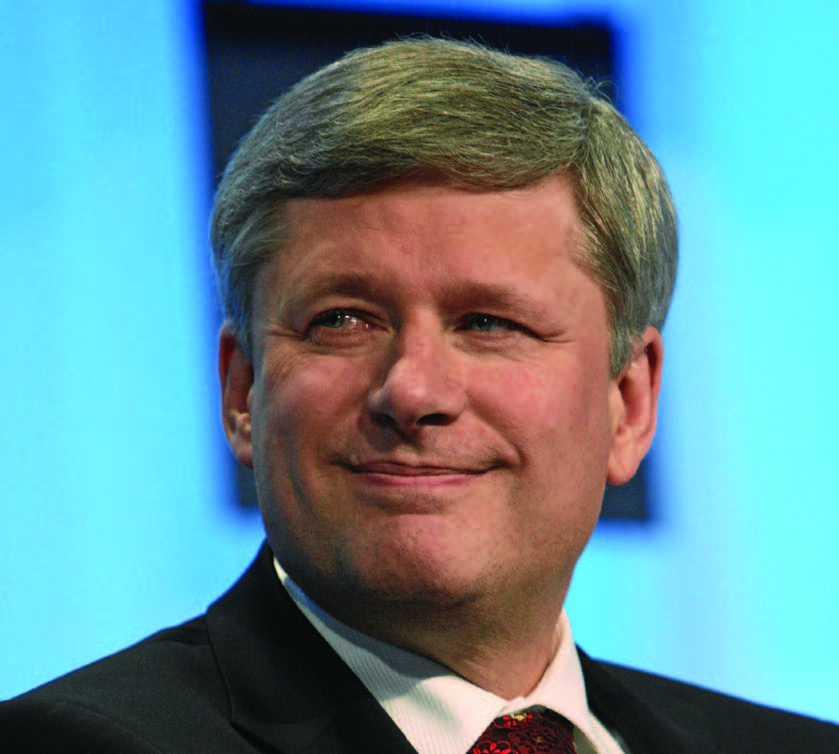
    OTTAWA (TIP): Congratulating India’s prime ministerelect over his victory, Canadian Prime Minister Stephen Harper says he is looking forward “to working with Mr. Modi and the new government of India to further strengthen our social and economic partnership to the benefit of our citizens.” In an official statement, he commended “550 million Indian citizens who peacefully exercised their right to vote.

    The unprecedented scale of these elections emphasizes both the vitality and strength of India’s democracy.” Canada, Harper emphasized, “is proud to share with India the values of freedom, democracy, human rights and the rule of law.” Deepak Obhrai, parliamentary secretary to the foreign minister and for international human rights, congratulated Modi and the BJP on their electoral success.

    “These elections clearly illustrate that Mr. Modi’s message of economic revival resonated with the Indian electorate. Under the leadership of Mr. Modi, India is poised to reach greater heights.” “These elections highlight the maturity and strength of India’s democracy and I can say we rejoice with the people of India as they embark on a new direction under the leadership of Mr. Modi,” Conservative MP Kyle Seeback said in the House of Commons May 16.

    He also referred to Modi’s achievements during his term as chief minister of Gujarat: “As Chief Minister of Gujarat, Mr. Modi made it (Gujarat) one of India’s bestperforming states economically.” Obhrai, an Indo-Canadian, said “our government congratulates Mr. Modi on his win. We look forward to working with Mr. Modi to strengthen the existing social and economic partnership that exists between Canada and India.”

    “A clear majority for the BJP enables the new government to take measures aimed at boosting growth and investment, removing regulatory bottlenecks and restoring fiscal balance. If implemented, these will restore investor confidence and lead to a resurgence of growth creating new opportunities for Canadian business.” said Peter Sutherland, President & CEO of the Canada-India Business Council and former Canadian High Commissioner to India.

    “One of the big criticisms of the Congress-led United Progressive Alliance (UPA) government was that it delayed the implementation of key reforms, seen by many as key to long-term growth,” this pre-eminent business organization stated. Modi, they noted, refocused the BJP party platform on a commitment to make India “globally competitive” and to reclaim India’s role as a global trading power.

  • BJP MAKES INROADS INTO NEW AREAS

    BJP MAKES INROADS INTO NEW AREAS

    The party has increased vote shares in states that are not its strongholds

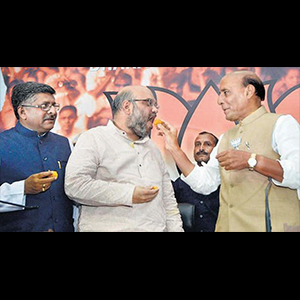
    NEW DELHI (TIP): Announcing the BJP’s historic victory, party president Rajanth Singh quoted former Prime Minister Atal Bihari Vajpayee’s famous lines, “Andhera Chatega, Suraj Nikalega, Kamal Khilega [the darkness will dissipate, the sun will shine and the lotus will bloom]” and with unmistakable pride added: “Aaj kamal khil chuka hai aur asha ki nayi subah ho gayi hai [the lotus has bloomed and there is a new dawn of hope].”

    What the party has accomplished in Uttar Pradesh, Rajasthan and Madhya Pradesh is not as is its performance in States such as Tamil Nadu (5 per cent of votes polled), Odisha (21 per cent) , Jammu and Kashmir (32 per cent), Assam (36 per cent), and West Bengal (16 per cent). By winning Ladakh in Jammu and Kashmir for the first time, it has also stormed into the Congress and the National Conference bastion.

    This improved performance in areas that were not BJP strongholds is being attributed to the acceptance of Narendra Modi as a national leader and Prime Minister. “This is the love of the people from across the country that reflects in the increased vote share even in areas like the North East, East and South. Mr. Modi’s leadership converted the mood in these areas to a pro-BJP wave,” said senior leader Ravi Shankar Prasad. He said the “political witch-hunt” and “motivated campaigns” against Mr. Modi were not enough to block his ascend.

    “His promise of good governance attracted people to him. He was seen as the embodiment of hope and change.” The BJP’s revised election strategy in the Lok Sabha polls had been to cover the last mile. Extensive campaigns were undertaken in distant parts of the country and people were promised employment, development, security and growth. Separate manifestoes were drafted for each of the North-Eastern States and at rallies in the region Mr. Modi focused on development, protection of border areas, illegal immigration and even the ecology.

    For instance, in Manipur, where the party has a vote share of 11 per cent, construction of arterial roads has been promised, the contentious issue of the Armed Forces (Special Powers) Act, 1958 has been touched upon and decentralisation of administration has been spoken of. In West Bengal, between the Left and the Trinamool, it has managed to carve out a space for itself. Here again, the promise is of growth and a better economy.

    The BJP may not have bagged seats, but by securing 16 per cent of the votes it has made a beginning. Similarly, with a vote share of 10 per cent in Kerala, 32 per cent in Jammu and Kashmir, 36 per cent in Assam, 21 per cent in Odisha, eight per cent in Meghalaya and 11 per cent in Manipur, the BJP is no longer confined to the North, West and Central India and is staking its claim as a true national party.

  • BJP SWEEPS ALL 7 SEATS IN DELHI

    BJP SWEEPS ALL 7 SEATS IN DELHI

    swept the parliamentary elections here with the party candidates registering victory with handsome margins in all the seven Lok Sabha seats on May 16. The last time the BJP won all the seven seats in Delhi was in 1999 when the National Democratic Alliance led by the BJP came to power at the Centre.

    The electoral outcome also bucked predictions of almost all the exit polls that gave the Aam Aadmi Party two to three seats in Delhi. However, the Arvind Kejriwalled party gave the BJP a close fight with party candidates securing second position in all the seven constituencies even as the Congress was relegated to the third place. The Congress had won all the seven seats in 2009 general elections.

    However, four of the seven sitting Congress MPs including Union Minister Krishna Tirath, J.P. Agarwal, Ramesh Kumar and Mahabal Mishra lost their security deposit this time round. Other big Congress names who bit the dust included Union Minister Kapil Sibal, AICC general secretary Ajay Maken and the former Chief Minister Sheila Dikshit’s son, Sandeep Dikshit

  • India votes for political stability, development and good governance

    India votes for political stability, development and good governance

    The days of political instability in India should be over, with the people of India clearly preferring the BJP to lead the country. India has chosen, after almost three decades, a government that can function without pulls and pressures, which in other words means, political blackmail, to which the nation has been a helpless witness during the last two decades.

    In a house of 543, where a party needed 272 to have a simple majority, BJP has got 282 seats, 10 more than required to form a government on its own. With its alliance partners in the NDA-Shiv Sena, TDP, SAD, LJP and others, it commands an imposing majority, with 336 seats. It could well lead to an Indian Renaissance. Indubitably, there has been a “tectonic shift in the Indian politics”.

    How one could, otherwise, explain the total decimation of the Congress and its allies in the UPA and the meteoric rise of the BJP. Indians have been waiting for the promised millennium but found, to their chagrin that it was an endless wait for Godot. Their patience was running out. Promises and pledges were made to be broken, not kept, seemed to be the belief of the ruling UPA.

    The result: 44 seats for the Congress Party and a total of 59 for the UPA. The impatience of the people with the government that was steeped in corruption led to protests against corruption and misgovernance. Indians cannot in their honesty deny that the movement against corruption and for a Lok Pal Bill launched by Anna Hazare dented the Congress image.

    Arvind Kejriwal, taking a more hostile opposition to the corruption in the UPA government, launched a frontal attack on the UPA government and the Congress leaders and exposed a number of corruption cases. These movements enjoyed people’s support. The image of the Congress party and its allies in the UPA got sullied, with people openly expressing their disapproval of the functioning of the government.

    Look at the Delhi assembly elections. The Congress party was nearly routed, with just 8 seats, after having ruled the state for 15 years, trailing behind BJP (32) and the fledgling AAP (28). Apart from the exposure of the Congress led UPA government corruption and misdeeds, what hurt it the most was its inability to control inflation. The common man suffered from ever increasing prices which made his life miserable.

    The regular backbreaking price rise of essential commodities made him think of a change. See how Delhites fell to the AAP promises of cheaper water and electricity supply and gave a few months old political party, the massive support to rule. It was another matter that AAP government could not last.

    Other factors that contributed to people’s disenchantment with the Congress party included growing unemployment, failure of law and order machinery to protect the honor of women, and the ruling party’s attitude of indifference towards people’s problems. People wanted a change. As when one medication does not work, one tries another hoping it will work; so, the people of India, oppressed by the ruling party’s indifference to their woes, decided to go in for a change.

    Their vote for the BJP is, in fact, a voteagainst nonperformanceand misperformance of the UPA government. BJP, today, is in a position to deliver. With its comfortable majority, it can shape its policies, without being pressurized, as in a coalition. Narendra Modi has been harping on development during election campaign which he so successfully led from the front. Mr. India would like to get a slice of it.

    If he does not, he knows what to do. History repeats itself. Not long ago, a Kejriwal in Delhi was a cynosure of the common man’s eye and a few months later, he was dumped because he could not deliver. It has happened with the Congress Party. It could as well happen with the BJP. Indians are looking for results from the BJP. They are not going to wait long. First of all, they would like the government to control the killing price rise. Next, they would like to see the law and order machinery protect their lives and property. They want a judicial system which does them justice.

    They would like to be rid of everyday harassment in government offices where everybody seems to be out to reach in to their pockets. They would like to be treated with respect due to a human being. For long, India has followed the colonial system in many ways.

    One, which is more disturbing and destabilizing, is the large presence of the privileged and the non-privileged sections of society. The feudal system which the laws ended a long time ago is still going strong. The mai baap, sarkar, huzoor, VIP culture is doing no good to the nation. And then, we do not want to give up status symbols. One fails to understand why a lawmaker or an official of the government requires security and a fleet of vehicles.

    Who pays for it? Why should the people of India pay for the idiotic notions of the privileged few? Modi’s charisma has worked with the people of India and we would hope it works with the governments of the world. The Modi government must ensure cordial relations with neighbors and friendly nations. In particular, relations with USA, China and Pakistan will need extra care and attention. Over the years, India has diligently built up certain alliances which will need to be strengthened.

    In international relations, change of government does not mean abrupt changes in alliances. It may be remembered that such alliances exist between nations, not between governments. Indians are glad to see a star politician in Modi. They would be happier to see a statesman in Modi. Only time will tell whether or not Modi can graduate from a politician in to a statesman. One hopes, BJP will live up to the expectations of people of India who have placed their trust in the party’s promise of giving good governance – “Sushashan”.

  • BJP crushes rivals in UP

    BJP crushes rivals in UP

    LUCKNOW (TIP): The manner in which the ruling Samajwadi Party, the Bahujan Samaj Party and the Congress have been swept aside in Uttar Pradesh clearly indicates that the “BJP versus the rest” in the Lok Sabha polls has been a no-contest. SP chief Mulayam Singh and BSP president Mayawati campaigned vigorously for their parties, little knowing that the voters had other plans. But the BSP drew a blank.

    In 2009, the BSP won 20 seats with a 27.42 per cent vote share. It can be said that while Ms.Mayawati’s core Dalit support base has remained more or less intact, the Other Backward Classes, the Most Backward Classes and the Brahmins have deserted her. The SP, which won 23 seats in 2009 with a vote share of 23.26 per cent, has won only five seats in the State, all by members of Singh’s family in Azamgarh, Mainpuri, Kannauj, Budaun and Firozabad. The BJP appears to have gained from the switchover of the SP’s Yadav and OBC votes, while the fight between the ruling party and the BSP has proved disastrous for both.

    In a nutshell, the BJP, with a projected vote share of 42.3 per cent, has reaped the dividends of the consolidation of Hindu votes. The Muslim vote appears to have been divided between the SP, BSP and the Congress, with no benefit for any party. For the Congress, which won 21 seats in 2009 with a vote share of 18.25 per cent, it has been a great fall in 2014.

    While Congress president Sonia Gandhi has retained Rae Bareli by a margin of over 3.4 lakh votes, her son and Congress vicepresident Rahul Gandhi won Amethi by a reduced margin. For Yadav, the verdict in U.P. has turned out to be a huge disappointment. His Third Front chant has been rejected by the voters and now he is faced with the more challenging task of keeping his son Akhilesh Yadav’s government stable in Uttar Pradesh.

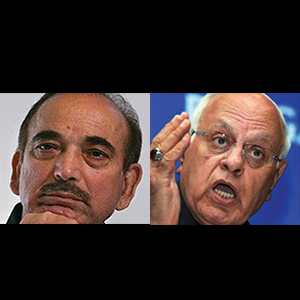
  • Ghulam Nabi Azad, Farooq bite the dust

    Ghulam Nabi Azad, Farooq bite the dust

    Omar takes blame
    Chief Minister and National Conference’s acting president Omar Abdullah owned responsibility for the coalition’s reverses. “I accept, unequivocally, the responsibility for this defeat. A lot of introspection & soul searching, personally & professionally, needed,” he said on Twitter. “Victory & defeat are part of any contest but if lessons aren’t learnt from defeat victory becomes an impossible task. I will learn from this.”

    SRINAGAR (TIP): In the most surprising electoral results for several decades in Jammu & Kashmir, Farooq Abdullah’s National Conference (NC) has been wiped out by Mufti Mohammad Sayeed’s People’s Democratic Party in the Lok Sabha. The PDP, which is strongly placed with control over 12 of the 16 Assembly segments in South Kashmir, bagged not only Anantnag but also both the remaining seats of Srinagar and Baramulla. The PDP also trounced the NC in the strongest of its bastions in Kangan, Charar-e- Sharif, Noorabad, Handwara, Kupwara and Sumbal.

    While the PDP established a lead in as many as 39 Assembly segments, the NC maintained the edge in just the five segments of Khanyar, Amirakadal, Habbakadal, Gurez and Uri. Independents Engineer Rashid and Salamuddin Bajad stood first in Langet and Handwara, respectively. PDP president Mehbooba Mufti defeated the NC’s incumbent Mehboob Beg in Anantnag with a margin of 44,735 votes. She polled 1,42,237 against Beg’s 97,502.

    Ms Mufti had won her first Lok Sabha election in the same constituency in 2004, but Beg was returned in 2009. In Srinagar, the PDP’s Tariq Hamid Karra defeated Union Minister and former Chief Minister and NC’s patriarch, Farooq Abdullah, with a margin of 42,280 votes. With this, NC has for the first time, lost its impregnable bastion in the Valley. Karra polled 1,57,923 votes and Dr. Abdullah 1,15,643. PDP’s Muzaffar Hussain Baig defeated Shariefuddin Shariq of the NC with a margin of 29,219 votes in Baramulla. Baig polled 1,75,277 against Mr. Shariq’s 1,46,058 votes.

    The separatist-turned-mainstream People’s Conference-sponsored Salam-uddin Bajad polled 71,154 votes while the independent MLA Engineer Rashid secured 22,090 votes. In Ladakh, the BJP’s Thustan Chhewang defeated independent candidate Ghulam Raza with a paltry margin of 36 votes. Chhewang got 31,111 and the Imam Khomeini Memorial Trust-sponsored Raza 31,075 votes.

    The BJP also won both seats in the Jammu province where its MLA Jugal Kishore polled a huge 6,19,995 votes, defeating the Congress’ Madan Lal Sharma with a margin of 2,56,950 votes in Jammu. In Udhampur, the BJP’s debutant Jitendra Singh defeated the Congress’s high-profile candidate and Union Cabinet Minister Ghulam Nabi Azad with a margin of 60,976 votes. While Dr. Singh polled 4,87,369 votes, Azad trailed with 4,26,393.

  • Congratulating BJP on election victory, Indo- Americans hope for India’s economic revival

    Congratulating BJP on election victory, Indo- Americans hope for India’s economic revival

    Indo-Americans have congratulated Bharatiya Janata Party (BJP) and its leader Narendra D. Modi on landslide victory in India’s parliamentary elections. Indo-American statesman Rajan Zed, in a statement in Nevada (USA) today, commended Modi’s statement that he would rule for all Indians. Zed, who is Chairperson of Indo-American Leadership Confederation, expressed hope that the new Indian government would take India to the next level, bring its past glory back, revive India’s stalled economy, and make it an economic powerhouse and major cultural influence.

    Rajan Zed further hoped that the new government would skillfully capitalize India’s many strengths to move India forward; end poverty and endemic corruption; bring development to rural areas; successfully handle economic, environmental and social issues; and strengthen India-US relations. Zed also congratulated multi-lingual India for successfully completing world’s biggest exercise in electoral democracy with about 814 million eligible voters.

  • BJP Victory- an Electorate Revolution

    BJP Victory- an Electorate Revolution

    Prakash Waghmare, Community Leader and “OFBJP” PR-Coordinator, in a statement to The Indian Panorama wrote, “This absolute victory of BJP is not only a new dawn in Democratic history of India , but more importantly, an electorate revolution for the entire country.

    There is no doubt in anybody’s mind that it was triggered by Modi’s personal charisma and his awe-inspiring developmental track record with uninterrupted peace and prosperity for his own state, Gujarat. He personified people’s aspirations, hopes and frustrations to have good governance and clean, scandal-free government. In every sense, this is a victory of the People, by the People for the People”

  • India Delivers Clear Mandate to Bhartiya Janta Party

    India Delivers Clear Mandate to Bhartiya Janta Party

    Narendra Modi to be sworn in as Prime Minister on May 21
    Manmohan resigns bringing to an end his 10-year tenure

    NEW DELHI (TIP): Addressing a euphoric crowd Friday, May 16 afternoon, Narendra Modi rallied the public to join him in taking on challenges of a vast scale. He has floated the idea of building “a hundred new cities,” of extending a high-speed rail network across the subcontinent and undertaking the herculean task of cleaning the Ganges River. He has been inspired by China’s model of high-growth, topdown development.

    But the country he will govern is India: messy, diffuse, and democratic. Modi’s Hindu nationalist Bharatiya Janata Party won a historic mandate in the country’s general election Friday, emerging with 282 of 543 parliamentary seats, more than enough to form a government without having to broker a postelection coalition.

    For months, Modi’s advisers had focused on crossing such a threshold, which they regarded as a signal that the country was behind an agenda of radical change. The nature of that change has never been clear, though. Voters are seeking immediate economic opportunities.

    The party has proposed pro-business legislation like the easing of labor or landacquisition laws. Modi, 63, is drawn to largescale building and infrastructure projects, which he pursues with a single-minded – critics say dictatorial – style. “He has a fairly clear idea of what he wants to accomplish, and he does not look for ratification from the market,” said Eswar S. Prasad, a Cornell University economist who has consulted informally with Modi’s economic team.

    “One could argue that in a country where there are far more words than actions thrown around, that this is far more preferable: a man who acts.” Modi’s planned economic reforms are certain to encounter obstacles once he takes power, among them a federal system that puts essential functions like land acquisition in the hands of state leaders. Entrenched national-level functionaries will resist efforts to strip their authority by eliminating red tape, a goal that was central to Modi’s plan to attract investors to the state of Gujarat.

    Changing tax policy or labor and land laws would require the support of the upper house of Parliament, which the Bharatiya Janata Party does not control. Meanwhile, voters’ expectations of immediate economic improvement are perilously high, setting the stage for rapid disappointment if Modi is seen as not delivering. But Friday’s enormous victory will give Modi “a much freer hand than the typical leader of such a large democracy,” Prasad said.

    The reasons Modi’s party succeeded in defeating the Indian National Congress, which has controlled India’s government for nearly all of its postcolonial history, will be studied for years. But they clearly reflect a rapid change in Indian society as urbanization and economic growth break down old voting patterns. For decades, the Congress party’s trademark initiatives have been redistributive, and the party introduced a package of major subsidies for the poor before the election.

    Voters, however, proved to be more captivated by Modi’s promise to create manufacturing jobs, which he has done quite successfully in Gujarat, the state he has governed since 2001. Modi, the son of a provincial tea-seller, prides himself on being an outsider amid New Delhi’s elite, and he recently promised in an interview with Open magazine that he would “break the status quo.”

    He was profoundly imprinted by his years as a full-time activist for the Rashtriya Swayamsevak Sangh, a right-wing Hindu organization, and his earliest and most frequent trips as an elected official were to other countries in Asia, which shaped his vision of India as a manufacturing power. A cultural conservative, he is no admirer of the liberal intellectuals who traditionally support the Congress party.

    Swapan Dasgupta, a journalist who supports Modi, said Delhi elites were worried – justifiably – that the space for their work would shrink when the new government settles in. cannot say what the contours of the future political elite or political class will look like,” he said. “He has brought in lots of people who have risen from local politics, less of those people who are traditional dynasts. A new sort of people, perhaps a little technocratic. People not from the Anglophone elite, maybe.”

    The mood at the Congress party’s headquarters on Friday was funereal. Top officials had prepared for a loss, but not for the crushing defeat they faced; according to final results from the Election Commission, the party had secured only 44 seats, a surprisingly low number for the party that was integral to India’s founding narrative. The president of the Congress party, Sonia Gandhi, and her son, Rahul, made a brief appearance at the headquarters late in the afternoon, when celebratory firecrackers could be heard from BJP headquarters nearby.

    Rahul Gandhi, who has never appeared comfortable in his role as the party’s standard-bearer, kept an odd, fixed smile on his face, acknowledging that the party had “done pretty badly.” His mother, who reinvigorated the party after her husband, Rajiv, was killed by a suicide bomber in 1991, conceded defeat without mentioning Modi or the BJP. “We believe that in a democracy winning and losing is part of the game,” Sonia Gandhi said.

    “This time the mandate is clearly against us. I accept the mandate with humility. I hope that the incoming government will not compromise with the interests of society.” A Congress-led coalition won a solid majority of seats in 2009 parliamentary elections, but the term was tarnished by corruption scandals and a slowing economy. Party workers, dully flipping through television news channels in a room with portraits of four generations of Nehru- Gandhi politicians on Friday, complained that the party’s grass-roots workers no longer had contact with Rahul Gandhi and his advisers, and had failed to identify shifts among young voters.

    Rajendra Pal Singh, a clerk with the party for more than 30 years, sadly recalled a time when the party faithful streamed in and out of the party’s bungalow as if it were “a place of worship.” “Gone are the days of the Gandhis,” Singh said. “We have not seen people coming here to hug Rahul for the past decade on any of those festivals. That culture is dead and long gone, like the Congress party now.”

    Addressing a euphoric throng in the city of Vadodara after votes were counted Friday, Modi was forced to pause repeatedly as he waited for the audience to stop chanting his name. Modi, normally an intensely solitary man, draws visible pleasure from his interactions with crowds, and he seemed Friday to enlist their support for vast undertakings. “Brothers and sisters, you have faith in me, and I have faith in you,” Modi said. “This is the strength of our confidence – that we have the capacity to fulfill the common man’s aspirations.

    The citizens of this country have done three centuries of work today.” His supporters celebrated. Drummers, stilt-walkers and women in colorful saris converged at BJP headquarters in New Delhi, where party workers had laid out 100,000 laddoos, the ball-shaped sweets that are ubiquitous at Indian celebrations. Among the revelers was Surinder Singh Tiwana, 40, a lawyer. “I can equate my jubilation today, probably, to my mother’s on the day I was born,” Tiwana said. “This is a huge change for our country, a change of guard. A billion plus people have announced their mandate in no uncertain terms.”

  • Congress has good chance of forming government with allies: Chidambaram

    Congress has good chance of forming government with allies: Chidambaram

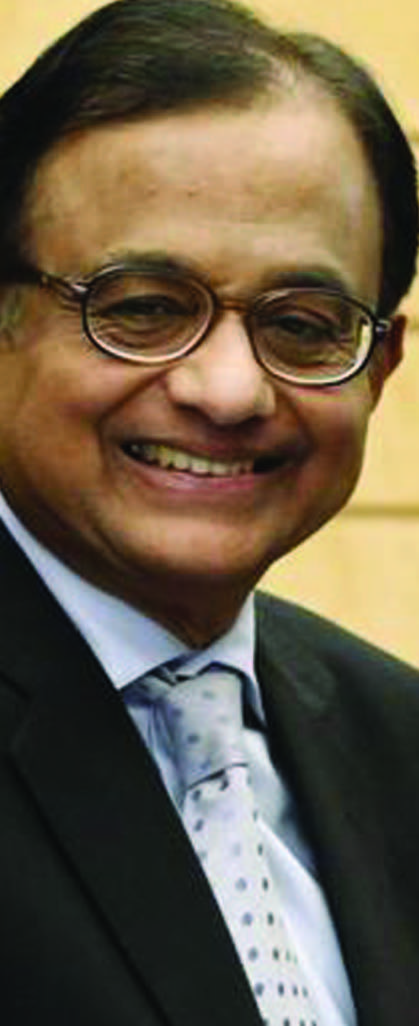
    NEW DELHI (TIP): Congress has a “very good chance” of forming a government under its leadership with some allies, finance minister P Chidambaram said on Thursday amid growing chorus of an “enlarged” UPA-III to stop Narendra Modi from coming to power.

    Talking to reporters at the AICC headquarters, Chidambaram also insisted that the political scenario this time is vastly different from the one after the 1989 polls when Rajiv Gandhi chose to sit in the opposition despite getting some 190 seats. He said Congress has a “very good chance” of forming the government “under its leadership” with some allies.

    “Whichever party is in a position to form a stable government should come forward and it must discharge its responsibility. You cannot run away from responsibility. This country cannot afford an election every three months. “If Congress is in a position to form a government, it will come forward, I believe it will come forward,” Chidambaram said in clear indication so far that Congress has not given up its intention to form a government even if its numbers are reduced.

    He said the scenario in 2014 polls has changed from 1989 and this time the Lok Sabha poll is not one election but election of various states. “We have to see the final tally of various parties,” he said but refused to predict how many seats the Congress will get. “I don’t make predictions of election outcomes. Every party goes into elections with the belief that it will win the election and form the government. I also believe that Congress will win the election and form the government”.

    Chidambaram’s remarks came a day after a senior party leader floated the idea of an “enlarged” UPA-III taking on board new allies and keeping open the issue of leadership to stop Modi from becoming the Prime Minister. “All options are on the table and all options are off the table. It all depends upon the numbers we get and the BJP gets and the margin between them,” a senior party leader, who declined to be identified, had said. Chidambaram, however, refused to get into comparisons on whether the poll outcome for Congress could be described as a rating of Rahul Gandhi’s leadership just as it can be said in case of Narendra Modi.

    “That’s a very subjective view,” he said, adding that it was not possible to conclude elections in this for and against manner and hence he can give “anecdotal” answers to “anecdotal” questions. Replying to a question in a lighter vein whether he believes that good days are going to come (Narendra Modi’s poll jingle), the finance minister said he had always been optimistic and believes that good days will come in future with Congress forming government.

    A senior party leader had earlier maintained that the shape of things to come depended upon what kind of mandate is received by regional parties and which of them get more seats as there are some among them which cannot join hands with Modi in any eventuality. At the same time, a sizeable section in the party is insisting that the Congress should participate to give the government not only stability but also strength and expertise.

    The leader was of the view that the last 25 years or so have witnessed Congress and BJP together bagging some 300-odd seats while the rest have gone to regional parties. There is also a section in the party which wants the Congress to sit in the opposition if it does not have respectable numbers to form the government. Rejecting the idea of extending outside support to a Third Front to form government to stop Modi from coming to power, Congress general secretary Digvijay Singh had earlier said that the “tail cannot wag the body.” Rahul Gandhi has also disapproved of any such idea.

  • INDIA’S ELECTION: Gujarat Model of Development Vs. Nation’s Conscience

    INDIA’S ELECTION: Gujarat Model of Development Vs. Nation’s Conscience

    The author is saddened at the turn of events in the 2014 elections. He fears the
    heterogeneity of the nation will receive a hard kick if Narendra Modi led BJP came to power.

    “It is India’s heterogeneity that has earned the admiration of the world and has received the label “mother of all civilizations”. The existence of multiple religions, cultures, languages, social groups have enabled the country to enjoy the boons of “unity in diversity” making it intriguing to the outside world as well as conducive to an egalitarian society”, says the author.

    Priyamvada Gopal, in the faculty of English at the University of Cambridge, writing in Independent stated that if Modi won the election, India would have crossed a moral Rubicon, a reference to the river Rubicon in north-eastern Italy, which means to pass a point of no return. It refers to Julius Caesar’s crossing of the river in 49 BC, which was considered an act of war, because crossing it with an army was forbidden by the Roman Senate.

    The writer appears to give a stern warning that India is at the crossroads where the electorate may soon decide whether the country that has been a functioning democracy with pluralist and inclusive agenda will remain the same or give way to installing Narendra Modi, as prime minister, thereby “crossing a blood-soaked moral Rubicon”. Many also fear that this election could fundamentally transform India to the point of no return beyond an open society, where all citizens, regardless of whether they belong to a majority or minority community, are treated equally before the law.

    While the BJP might have earned the right to pursue their agendas through the traditional process of democratic governance, do they need to radically alter the face of the nation? However, if they are to pursue the radical nature of their goals, there will be consequences, the first of which would be to divide the nation based on religion, caste and region. It is India’s heterogeneity that has earned the admiration of the world and has received the label “mother of all civilizations”. The existence of multiple religions, cultures, languages, social groups have enabled the country to enjoy the boons of “unity in diversity” making it intriguing to the outside world as well as conducive to an egalitarian society.

    Moreover, India is known as the land of spirituality and philosophy. It was the birthplace of three world religions: Hinduism, Buddhism and Jainism. Our great sages attained extraordinary scholarship; mastered power of meditation; and lived simple and sacrificial lives advocating punishment for the wicked and protecting the poor and weak. Fast forward to 2014 and listen to an average Indian on the street or an NRI who is on an overseas assignment. They tend to make very similarsound bytes as this Indian woman from Detroit: “Even if Narendra Modi was involved in Gujarat riots, I don’t care. His economic work wins out.

    I will vote for him.”One wonders as to what happened to our age old civilization that emphasized good over evil? As I was thinking of writing this article two images came to mind. One is that of Dr. Manmohan Singh, the current Prime Minister and the chief architect of India’s new economy. He has taken a centrally planned, inward looking, public-centered economy and reversed its direction. What he has accomplished is just phenomenal. Actually this dramatic change paints a picture of a man who is some sort of a revolutionary. If India entered the 21st century, the current Prime Minister has a lot to do with it. Take a look and see how fellow Indians perceive himnow and many of whom appear to be repeating every word ofthe western critics calling him an ‘under achiever’ or ‘a complacent leader’.

    The opposition party leaders even label him as the ‘weakest Prime Minister ever’! It is quite astounding thatmany Indians look at this brilliantman of integrity and honorwith almost disdain. On the contrary, Mr. Narendra Modi, has presided over a pogrom in Gujarat; ran an autocratic administration that instilled fear in people for the past 13 years; silenced the opposition while putting potentialrivals in their place; and ran a propaganda campaign on Gujarat model of development based on falsehoods.

    Yet, Indians appear to be in awe of this man who is being heralded as a Messiah of the nation! Are we missing something here? What happened to our value system that once promoted positive attributes in behavior and glorifiedcompassion and empathyfor fellow human beings? It is indeed a dramatic shift that is taking place in India though many are stillvery judgmental on the western materialism and its narcissist lifestyle. Modi’s campaign has been tremendously successful in creating a positive narrative and cultivatingthe mindset of the majority community. The campaign incites that the majority isincreasingly at a disadvantage in India, as minorities are raking in all the benefits and even occupying the higher echelons of power. This notion is sinking in and the Congress party, so far, has been unable to counter it.

    As someone who has visited Gujarat right after the riots, my perspectives are shaped by what I have witnessed in many refugee camps and affected villages. I was part of a NRI Sadhbhavana Mission team headed by Mr. Shrikumar Poddar to promote peace and harmony in a state torn by religious and sectarian violence in 2002. We were accompanied by Nishrin Jafri Hussain, daughter of former Congress Member of Parliament Ehsan Jaffri who was killed during the riots. Gulbarg Society, a complex of 18 bungalows and two apartment blocks once occupied by upper-middle-class Muslims in the largely Hindu neighborhood of Chamanpura, is now a cluster of door-less burned shells where at least 35 Muslims were hacked and burned to death, including Nishrin’s father Ehsan Jafri.

    In a recent New York Times report, Roopa Mody, who was a witness to this attack recalled the final minutes of the onslaught on this complex by the mob. “When the mob grew restive, attempting to knock down a wall of the compound, Mr. Jafri made a final call to Mr. Modi, the chief minister. “All he got in return were abuses,” Roopa said in an interview, reiterating what she said in deposition before the Supreme Court. “We prepared ourselves to die.Everyone says that Modi is a good leader who built roads and bridges, these roads are built on dead bodies.”

    Thane Richard, founder of the Dabba, an independent digital radio station poses this poignant question “Has India become so desperate for rapid economic growth, so blinded by the promise of prosperity, that she has forgotten basic humanity? It seems that, in the race towards higher GDP, the majority of India is willing to inject itself with steroids of bigotry or ruthlessness. Ethics be damned.”

  • TATA-AIRASIA GETS LICENCE FROM DGCA

    TATA-AIRASIA GETS LICENCE FROM DGCA

    NEW DELHI (TIP): Indian flyers are soon going to be spoilt for choice and low fares may make a comeback. The Tata Sons’ JV budget airline with Malaysia’s AirAsia got the licence to fly from the directorate general of civil aviation (DGCA) on Wednesday.

    This clearance, however, is subject to the judicial ruling in this regard as BJP leader Subramanian Swamy has moved court against forming startup airlines using FDI from foreign airlines route. The JV, AirAsia India Pvt Ltd (AAIPL), will be India’s seventh airline and aims to start flying anywhere between one to three months from now. Its CEO Mittu Chandilya says the new low-cost carrier will offer “35% lower fares” from current fare levels.

    “As of now we have one Airbus A- 320 and we will induct one aircraft every month. We will like to begin operations with a fleet of three planes. While three network options have been worked out, the first flight could be out of Chennai (the airline’s hub). Initially, our network will be all the metros except Mumbai. We may fly to Delhi as leaving the national capital out of the network does not seem feasible for a national airline like AAIPL,” Chandilya said after getting the air operator’s permit from DGCA chief Prabhat Kumar.

    Prabhat Kumar said: “We have granted the Air Operator’s Permit (AOP or flying licence) to AirAsia India, subject to the final decision of the high court and that is, under the directions of the Supreme Court.” The airline marks the re-entry of the Tatas into airline business after several decades. They had tied up with Singapore Airlines (SIA) in the late 1990s to acquire a stake in Air india but due to opposition from some players in the airline business and political interference, the move fizzled out.

    Once UPA-II allowed FDI by foreign airlines into Indian carriers, the Tatas came back with a bang. While Tata-AirAsia has been cleared to take off, the DGCA is in the process of granting licence to a Tata-SIA JV full service airline that should also start flying this year. AirAsia CEO Tony Fernandes tweeted: “History has been made today in Aviation. Everything has been hard for Airasia but we never give up.

    Today AirAsia India has got APPROVAL….. Our CEO @MittuChandilya with Air Operators permit. What a battle that was. Proud day for me and all AirAsia stars.” Chandilya also tweeted: “Boom! 1815hrs(IST) today AirAsiaIndia was born. So, proud of my team. Who is ready to revolutionize Air Travel in India.” But, not everyone was happy. Swamy, who is opposing the Tata JVs, ‘condemned’ the move and said it was done “reckless disregard of the rules and regulations”.

  • DAY AFTER POLLS, NAVJOT SINGH SIDHU ARRIVES IN AMRITSAR FOR RELIGIOUS CEREMONY IN HIS HOUSE

    DAY AFTER POLLS, NAVJOT SINGH SIDHU ARRIVES IN AMRITSAR FOR RELIGIOUS CEREMONY IN HIS HOUSE

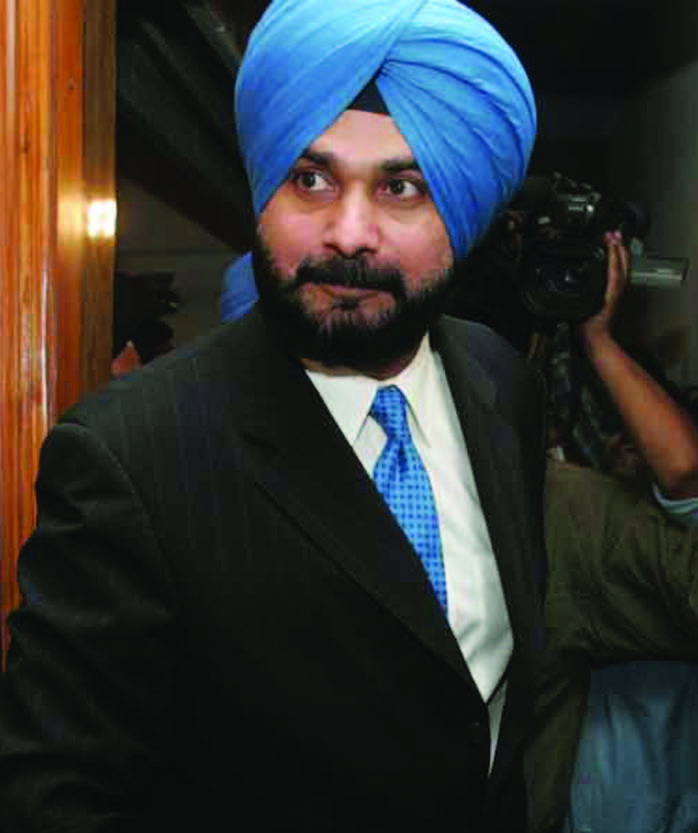
    AMRITSAR (TIP): A day after polling for Lok Sabha elections, outgoing Amritsar MP Navjot Singh Sidhu reached the Holy City on Thursday for installation of Guru Granth Sahib and Shivalingam at his newly-built house.

    Sidhu had remained absent from his constituency during election campaign of his mentor and senior BJP leader Arun Jaitley who had replaced him as party candidate in the Amritsar parliamentary constituency. Wearing a brown suit, a red turban and a striped tie, Sidhu was received by handful of his supporters at Sri Guru Ram Das Ji international airport.

    He refused a direct reply when asked why he did not come to campaign in favour of Jaitley. He said that he had come to visit his house and install Guru Granth Sahib and Shivalangam on the pious occasion of Akshyatritiya. “This is the same Shivalingam, which was installed at my house in Patiala,” he said. Sidhu said that he was not new to Amritsar and had been living here for the past 10 years.

    “Eih meri karam bhoomi hai tae main hamesha wastay eithay natmastak rahanga (this is my work field and I will always stay here with my head bowed in reverence),” he said. Later, Sidhu along with his wife Dr Navjot Kaur Sidhu, who is MLA from Amritsar East assembly segment, performed pooja at their house situated on the outskirts of Amritsar.

  • LOK SABHA POLLS: PHASE 7 SEES 66% VOTER TURNOUT

    LOK SABHA POLLS: PHASE 7 SEES 66% VOTER TURNOUT

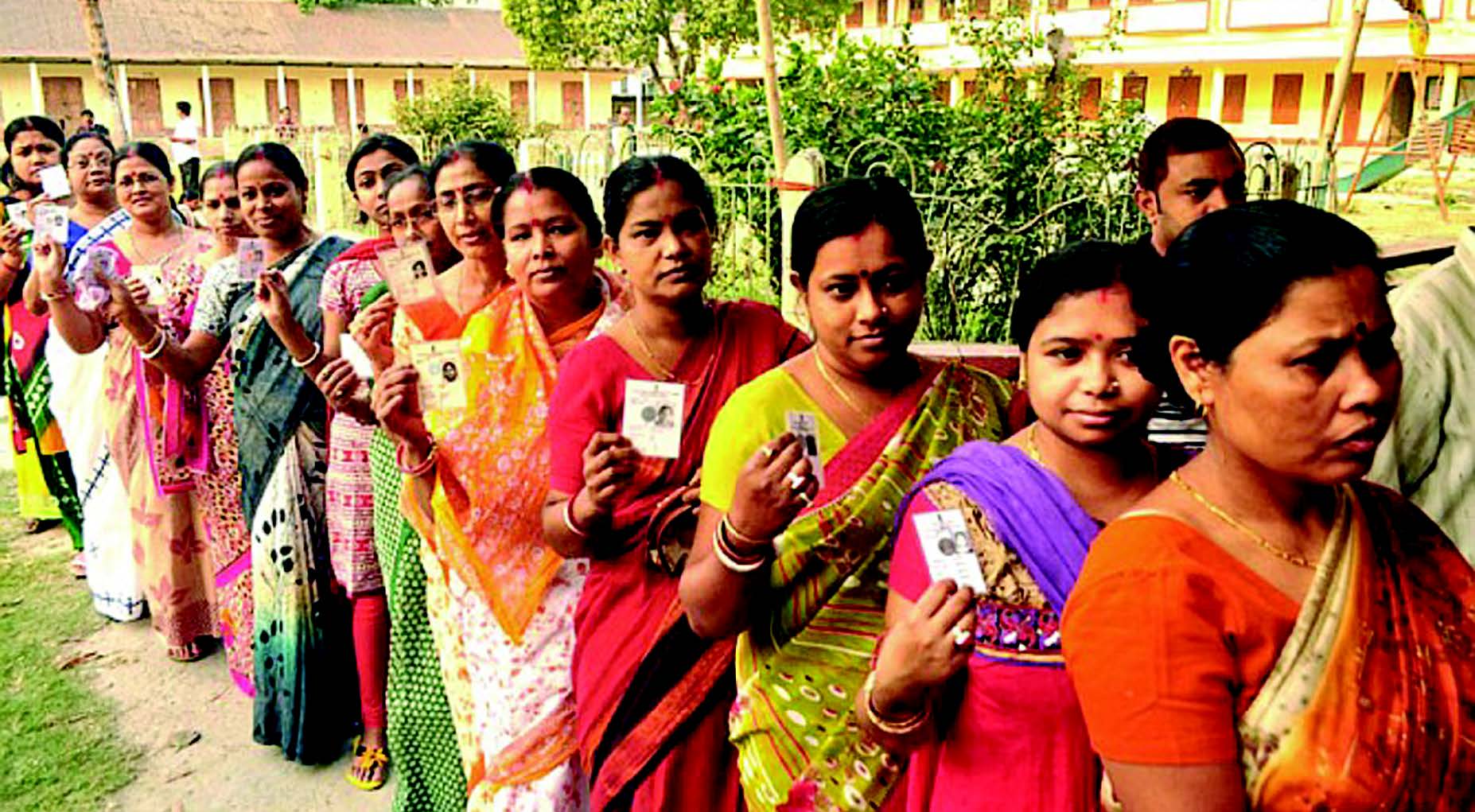
    NEW DELHI (TIP): Nearly 66% of the electorate exercised its franchise on Wednesday in the seventh phase of the 16th general election, in line with the heavy turnout that marked the earlier rounds of voting. More than 139 million people were eligible to cast their votes in the phase that decided the electoral fortunes of political heavyweights including the Bharatiya Janata Party’s (BJP) prime ministerial candidate Narendra Modi and his senior colleagues Rajnath Singh, L.K. Advani, M.M. Joshi and Arun Jaitley, besides Congress party president Sonia Gandhi.

    The day also marked what Modi claimed was the first police complaint registered against him in his life. The first-information report (FIR) was registered against him at the behest of the Election Commission. The BJP is eyeing at least 62 of the seats up for grabs in Wednesday’s voting, by the end of which elections were completed in 438 of the 543 Lok Sabha constituencies. Elections to the remaining 105 constituencies will he held on 7 May (64 seats) and 12 May (41). The results will be declared on 16 May.

    The 438 Lok Sabha constituencies where voting has taken place so far have witnessed a 66.2% voter turnout, compared with 57.6% in 2009. Some 62.4% polling was recorded in Gujarat, where all 26 Lok Sabha constituencies in the state went to the polls on Wednesday. Vadodara, where Modi is in the electoral fray, had witnessed a high turnout of 70% well before polling ended. “There is a phenomenal increase in the voter turnout in Gujarat…,” said Akshay Rout, director general of the Election Commission. “The voter turnout for the state in the 2009 general election was 47.8%.” In the last five Lok Sabha elections, the average voter turnout in Gujarat was less than 50%.

    The turnout is expected to be higher this time around following a voter awareness drive carried out by the Election Commission and with Modi being selected the BJP’s prime ministerial candidate, political experts said. After casting his vote in Gandhinagar constituency, Modi told reporters that this was the end of India’s “mother-son government”—a reference to Sonia Gandhi and her son, Congress vice-president Rahul Gandhi. Modi said the Congress appeared to have accepted defeat after signalling it may support a Third Front (non-Congress, non- BJP) government at the Centre to keep Modi out.

    “The Congress has accepted defeat as it is now saying that it will support the Third Front to keep me out of the race. The Prime Minister, the finance minister and other senior ministers are not in the contest. Tall leaders of the Congress are running away from the elections,” Modi said. “Now, some are trying to save their chairs, some are trying to save themselves and some are trying to save prestige of the Congress party,” he added. Modi suffered a setback, with the Election Commission asking the Gujarat state authorities to register two first FIRs against him for holding a media briefing outside a polling station in Gandhinagar and also holding the BJP’s symbol, the lotus, while talking to reporters.

    “Tone and tenor of the address made by Narendra Modi and the statements made by him, the manner in which the symbol lotus of the BJP was being displayed by him, it is evident that the address was in the nature of political speech intended and calculated to influence and affect the result of elections in the constituencies going to polls today, not only in Ahmedabad but also in all other constituencies in Gujarat and elsewhere in the country,” the poll watchdog said in a statement. Addressing a rally in Tirupati, Modi referred to the FIR. “I will never forget 30 April. Today was the first time an FIR was registered against me,” he said.


    28

    Modi claimed he had never violated the law hadn’t even got a parking ticket in his life. Gujarat is considered to be a bastion for the BJP and the party is looking to make a clean sweep in the state this time around. Modi is also contesting from Varanasi in Uttar Pradesh. In the 2009 Lok Sabha election, the BJP won 15 seats and the Congress 11. The BJP increased its tally in by-elections—in the outgoing Lok Sabha, the BJP has 17 seats while the Congress has nine. On Wednesday, Punjab also recorded its highest-ever turnout at 73%. The voter turnout was 76% in Daman and Diu, 81.35% in West Bengal, 73% in Punjab, 59% in Uttar Pradesh, 70% in the Telangana region of Andhra Pradesh, 60% in Bihar, 85% in Dadar and Nagar Haveli, and 25% in Jammu and Kashmir.

    Telangana vote
    Andhra Pradesh’s Telangana region, which will become India’s 29th and newest state on 2 June, also went to the polls on Wednesday. The region recorded a turnout of 59.3% as of 3pm. Medak (65%) had recorded the highest polling while Hyderabad district (51%) recorded the lowest, a bulletin by the state election commission showed. About 28.1 million voters in Telangana were registered to elect candidates to 17 Lok Sabha and 119 state assembly seats at 30,000 polling stations.While 265 candidates were in the fray for parliamentary constituencies, 1,669 candidates were in the race for the state assembly.

    Voters in Telangana are simultaneously electing representatives to the Lok Sabha and to what will become the Telangana state assembly. The other part of Andhra Pradesh will exercise its mandate a week later on 7 May. The 294-member Andhra Pradesh state assembly will be divided according to constituencies once Telangana becomes a state. The main parties and groupings in the race to form the first government of Telangana are the Telangana Rashtra Samithi (TRS), and two alliances—one between the Congress and the Communist Party of India and the other between the Telugu Desam Party (TDP) and the BJP. The winner in the 119-member Telangana assembly has to get a simple majority of at least 60 seats to form the new government in the would-be state.

    Polling was not devoid of incidents. Actorpolitician K. Chiranjeevi landed himself in an embarrassing position when a youngster objected to him skipping the queue at a polling booth. Chiranjeevi, who is chairman of the Andhra Pradesh Congress Committee, then beat a hasty retreat and stood at the end of the queue. TDP chief N. Chandrababu Naidu, too, landed himself in an embarrassing position when he revealed who he cast his ballot for. “Due to our pre-poll arrangement, I cast both my votes for lotus symbol (of the BJP),” Naidu told waiting media.

    The state election commission did not take kindly to this. “Secrecy of vote has to be maintained by every voter,” Andhra Pradesh chief electoral officer Bhanwar Lal said. As a result, the returning officer of the polling booth will declare Naidu’s vote ineligible. “He should act responsibly,” Lal said. “If we don’t delete that (ballot), action will be taken against us.”