Tag: Canada

  • Centenary of KOMAGATA MARU TRAGEDY

    Centenary of KOMAGATA MARU TRAGEDY

    The younger generation of Indians may not have heard about Komagata Maru. And the older one may have a faded recollection of one of the historic events in India’s struggle for independence. Inder Singh who has been associated with the foundation in USA to preserve history of Komagata Maru, here recounts the hundred year old event and speaks about how important it is not to forget our shining history. –EDITOR

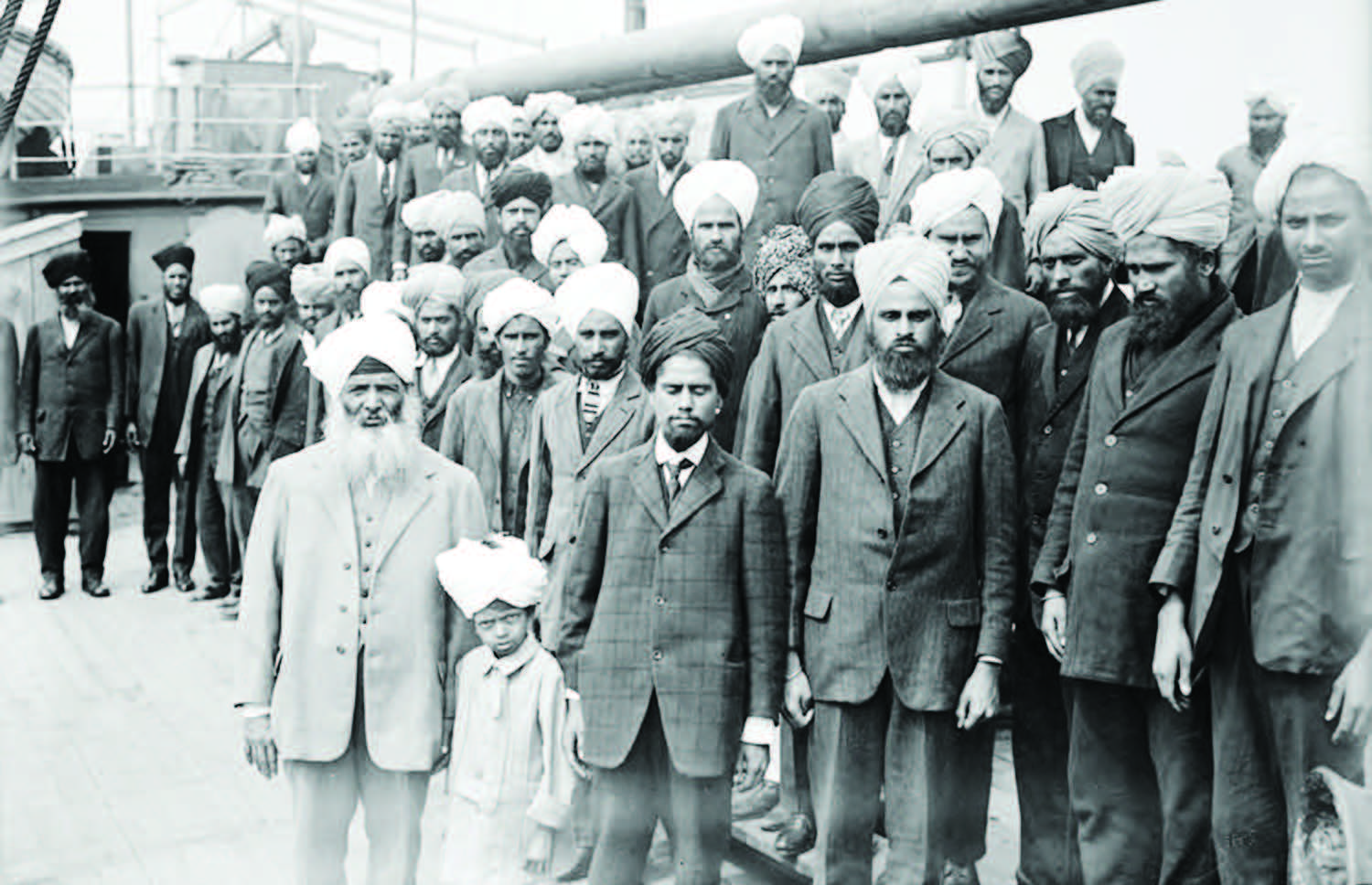
    Komagata Maru was a ship that took 376 Indians to Canada in 1914 to challenge the racist Canadian law. The passengers had taken the voyage in search of economic opportunities. They were connected neither with the Gadar Party nor with any other freedom movement. On reaching Vancouver, they were not allowed to land and were forced to stay on the ship for two months, sometimes without food and water. They were unhappy, some even rebellious at the unjust verdict of the highest Canadian justice court. The British Indian Government considered the passengers not as opportunity seekers but anti-British freedom fighters. On their return journey, they were not allowed to land in Hong Kong, Singapore or Shanghai, from where they started their voyage.


    6


    Majority of the passengers wanted to find work and make some money before going to their villages. They paid heavy price for dreaming to improve their economic situation, some spent part of their lives in jail, many were confined to their villages and eighteen of them lost their lives. Indians started coming to Canada from 1904 for economic opportunities. They had an easier access to Canada as both India and Canada were British colonies. The new immigrants were willing to do any kind of manual job and found work on farms, in factories, mills and lumberyards.


    7


    They were paid lower wages and worked for long hours. Some Canadian employers considered India as a source of cheap labor and publicized the economic and job opportunities available in Canada to attract more workers. By the end of 1907, number of Indian immigrants had reached over 5000, comprising mostly of Punjabi military veterans, farmers and unskilled laborers. As the number of immigrants increased, the white workers felt threatened that the Indians would take over their jobs. Fear of labor competition led to jealousy, racial antagonism and demands for exclusionary laws for foreign workers.


    8


    The local press carried many scare stories against the Asians and “Hindu Invasion.” The Government of Canada came up with two new laws to curb Indian immigration to Canada. One law required Indians to carry $200 in cash upon landing in Canada and the other, the “Continuous Passage” Act 1908, required immigrants to come to Canada via direct passage from their point of origin. These restrictions were very unreasonable. There were no ‘through’ ships from India to Canada and $200 was a significant amount of money, considering an average daily wage of 10 Cents of an Indian worker at that time.

    Thus, Indian immigration to Canada literally came to an end. The restrictive legislation led to discontent and anti-colonial sentiments within the Indian community. The Canadian immigration policy was exclusionist, based on race and nationality. Public and political sentiments were racist also. Over 2 million Europeans were welcomed from 1906 to 1915, while the number of Asian immigrants admitted during the same period was only about 50,000. Chinese immigrants had also to pay head tax on arrival, which was increased to $500 in 1904. Japanese government, by a gentleman’s agreement, was limited to issue only 400 passports for their nationals immigrating to Canada.

    Indians, although British subject like Canadians, were prohibited in 1908 to land in Canada because of the “Continuous Journey” law. Many Indians in Hong Kong, Singapore, Shanghai and other places were keen to come to Canada. But Steamship companies were not allowed to sell tickets to Indians for Canada. An enterprising and resourceful Indian in Singapore, Gurdit Singh, chartered a Japanese vessel Komagata Maru to challenge the racist Canadian law.

    He obtained clearance from the British Colonial secretary in Hong Kong to sail to Canada. He renamed the ship as Guru Nanak Jahaz in a prayer meeting and left Hong Kong with 165 passengers on April 4, 1914. He got 111 passengers at Shanghai and 85 more passengers joined at Moji, Japan. At Moji, Bhai Balwant Singh, head priest of Vancouver Sikh Temple, who was on a return journey to Vancouver, met with the passengers and explained them the attitude of the Canadian government. At Yokohama, Gyani Bhagwan Singh met with the passengers and told them the story of his deportation from Canada in November, 1913. Maulvi Mohammad Barkatullah, a renowned revolutionary who had lived in New York, also met with the passengers.

    Both, Bhagwan Singh and Barkatullah, were involved with India Independence Movement, started in America and known as Gadar Movement. They brought latest issue of weekly Gadar magazine and other revolutionary literature for passengers to read. The ship arrived in Vancouver on May 23, 1914 with 376 passengers, all British subjects (340 Sikhs, 24 Muslims and 12 Hindus). British Columbia Premier Richard McBride, one day prior to the arrival of the ship, made statement that the Komagata Maru passengers would not be allowed to disembark. The passengers, however, thought that as British subjects, they had the right to enter Canada.

    The Canadian public and political sentiments were against Indians getting permission to land. Canadian media in Vancouver was unsympathetic to the arriving passengers. Inflammatory articles in Vancouver newspapers helped to ignite and promote anti- Indian sentiments. The Sun newspaper called the passengers “Hindu Invaders.” Only an Indian newspaper, The Hindustanee welcomed the passengers.

    The immigration officials did not allow the passengers to land in Vancouver. Indians in Canada and the USA were outraged. The local Indians rallied in support of the passengers and organized protest meetings against the racist policy of the government. They formed a shore committee to help the passengers with food, provisions and legal challenges. The last installment for chartering the ship was due. Neither Gurdit Singh nor the passengers had money to pay. The shore committee organized a meeting of local Indians to raise funds for making installment payment and for legal fee and other expenses.

    In 1913, 38 Sikhs who had come by Panama Maru ship, were refused immigration. They challenged the continuous journey law in the court and were allowed to stay in Canada. The Government amended the Immigration law in January 1914 to plug loopholes and face any challenges. The shore committee hired an attorney to fight a test case against Canadian government’s refusal to allow Komagata Maru passengers to land in Canada. Unfortunately, the Court gave a unanimous judgment that it had no authority to interfere with the decisions of the Department of Immigration and Colonization. Only 20 returning passengers, and the ship’s doctor and his family were given permission to leave the ship.

    All the other passengers were ordered to leave the Canadian waters. The passengers had endured incredible hardships on the ship for two months and refused to leave without provision for their journey back to India. The government brought a navy cruiser to intimidate the passengers into leaving. However, the last minute negotiations averted confrontation. On receipt of provisions for the return journey, Komagata Maru left the harbor on July 23, 1914. The action of the Canadian Government created bitterness, frustration and vengefulness among the passengers as also among Indians in Canada and the US.

    Many passengers had boarded the Komagata Maru ship to Canada at Hong Kong, Singapore and Shanghai. On return journey, several of them wanted to land from where they had started their voyage but were refused permission to disembark. On September 5, 1914, before Komagata Maru reached India, the British authorities had enacted a new law, “Ingress into India Ordinance”, which empowered the Punjab Government to check the people entering India. The Government also had power to confine their movements to their villages or imprison them without trial. On reaching Budge Budge, near Calcutta, on September 29, 1914, the British Indian Government asked the passengers to board the train for Punjab.

    Except 62 passengers, all others wanted to stay in Kolkata and find employment there. The passengers had the Holy Sikh Scriptures, Guru Granth Sahib which they wanted to deposit at the Sikh temple, Kolkata. They proceeded in a procession to go to the temple but the police did not want them to go. In the scuffle between the police and the passengers, the police opened fire resulting in the death of twenty-three people – eighteen passengers, two innocent Begalis, two European officials, and one Punjab police official. Several suffered injuries and were hospitalized. Gurdit Singh and forty five of the passengers escaped.

    The police arrested two hundred and two passengers and put them in prison or confined them to their villages in Punjab for several years. (Harish Puri, The Ghadar Movement, 100) The brutal treatment of the returning passengers generated a wave of resentment against the British government. The Komagata Maru incident encouraged new converts to the Gadar cause, from not only North America but also Indians from all over the world and gave impetus to the movement for India’s independence. Jawala Singh had undertaken a simple business enterprise to transport his compatriots to Canada. But the venture ended with political implications. After evading arrest in Kolkata, he stayed in hiding for seven years.

    Finally, he surrendered to the police at the birth anniversary celebration of Guru Nanak Dev, at Nankana Sahib on November 15, 1921. He spent five years in jail for violating no laws. He joined Congress and in 1937, contested Punjab Legislative Assembly election. Unfortunately, he lost to the Akali candidate, Partap Singh Kairon who later joined Congress and was Punjab Chief Minister from 1952 to 1964. In 1951, Jawala Singh requested Prime Minister Jawahar Lal Nehru to build a memorial at Budge Budge in memory of the martyrs of Komagata Maru. On January 1, 1952, Mr. Nehru unveiled the completed monument which is popularly known as the “Punjabi Monument”. (www.rangandatta.wordpress.com/2013/01/30/ komagata-maru-memorial-budge-budge-24- parganas-south/) Indian community in Canada did not forget Komagata Maru tragedy. Baba Gurdit Singh, his colleagues and the ship have become an integral part of the history of Canada.

    A giant-sized mural of Baba Gurdit Singh and others in the ship, adorns the front wall of the Senior Citizen Housing Unit in Surrey, near Vancouver. A plaque commemorating the 75th anniversary of the departure of the Komagata Maru was placed in the Sikh temple in Vancouver on July 23, 1989. A plaque commemorating the 80th anniversary of the arrival of the Komagata Maru was placed in the Vancouver harbor in 1994.

    The first phase of the Komagata Maru Museum was opened in June 2012 at the Khalsa Diwan Society, Ross Street Temple, Vancouver. A monument in remembrance of the Komagata Maru incident was unveiled on July 23, 2012. It is located near the steps of the seawall near Convention Centre West in Vancouver. The Canadian government provided funding for both the monument and the museum. A stamp commemorating the 100th anniversary of the arrival of the Komagata Maru was released by Canada Post on May 1, 2014. On August 3, 2008, Canadian Prime Minister Stephen Harper appeared at the 13th annual Gadri Babiyan Da Mela (festival) in Surrey to apology for the Komagata Maru incident.

    In response to the House of Commons motion calling for an apology by the government, he said, “On behalf of the government of Canada, I am officially conveying as prime minister that apology.” On May 23, 2008, the Legislative Assembly of British Columbia unanimously passed a resolution “that this Legislature apologizes for the events of May 23, 1914, when 376 passengers of the Komagata Maru, stationed off Vancouver harbor, were denied entry by Canada.

    The House deeply regrets that the passengers, who sought refuge in our country and our province, were turned away without benefit of the fair and impartial treatment befitting a society where people of all cultures are welcomed and accepted.” The Government of India has decided to commemorate the centenary of Komagata Maru incident. The inaugural function of the yearlong centenary commemoration was organized on September 29, 2014 by Union Ministry of Culture. Three granddaughters of Baba Gurdit Singh – Ms. Harbhajan Kaur, Ms. Satwant Kaur and Ms. Balbir Kaur were honored by the Culture Minister Shri Shripad Naik on the occasion. A set of commemorative coins of denominations of ?100 and ?5 was released to mark the occasion. The government also decided to build a memorial at Budge Budge port.

    The National Film Development Corporation of India (NFDC) would make a film on the tragedy. A postal stamp would be issued in commemoration of the centenary. The Government of India has constituted a National Implementation Committee which has planned a number of programs such as national and international conferences, publications, development of digital archives and preparation of films and documentaries, etc. The Committee shall hold a week-long function at Vancouver from 23rd May to 30th May, 2015 which would include cultural events, seminars and exhibitions besides honoring the descendants of the Komagata Maru passengers as well as non-Indians including Canadians who rendered assistance both financially and legally to the cause of Komagata Maru passengers.

    The Punjab government would commemorate the centenary of Komagata Maru tragedy by installing a replica of the steamship Komagata Maru at the Azadi Memorial at Kartarpur in Jalandhar. A statue of Gurdit Singh shall be installed in Amritsar. His small house at Sarhali village in Amritsar shall be renovated and preserved. The government would also organize a state level function in February 2015. A brochure on Komagata Maru tragedy would be published.

    The book, Voyage of Komagata Maru, a translation of Gurdit Singh’s Zulmi Katha, edited by Darshan Singh Tatla and Prithipal Singh Kapur, shall be reprinted. A special library section is planned to house documents relating to Gadar and Komagata Maru in Punjabi University, Patiala. A play on Komagata Maru would be written, staged and video graphed for showing in colleges. This would be financed by Union ministry of Culture.

    (The author regularly writes and speaks on Indian Diaspora. He is the author of The Gadar Heroics – life sketches of over 50 Gadar heroes. He is Chairman of Global Organization of People of Indian Origin (GOPIO) and was president of GOPIO from 2004-2009. He was Chairman of National Federation of Indian American Associations (NFIA) from 1992-96, and president from 1988-92. He was founding president of Federation of Indian Associations in Southern California. He is Chairman of Indian American Heritage Foundation which has been awarding scholarships for excellence to top Indian students in Southern California since 1987. He can be reached at indersingh usa@hotmail.com)

  • Qadri returns to Pakistan with ‘new strategy’ against govt

    Qadri returns to Pakistan with ‘new strategy’ against govt

    ISLAMABAD (TIP): Pakistan’s fiery cleric Tahir-ul-Qadri on November 20 returned to the country with a “new strategy” against the government, nearly a month after he went abroad abruptly ending protest against Prime Minister Nawaz Sharif here. The Pakistan Awami Tehreek (PAT) chief arrived at the Allama Iqbal International Airport in Lahore this morning concluding his visit to the US, Canada and the UK. He reportedly visited these countries for medical check up as well as reorganising his party.

    Carrying balloons, flowers and party flags, hundreds of PAT supporters gathered to welcome him. Giving details of his “new strategy to frustrate the government”, the Canadabased cleric said he has now decided to take his sit-ins to other parts of the country. “Our struggle is no more confined to a single sit-in but will be transformed into a nationwide movement of sit-ins,” he was quoted as saying by Express Tribune. He announced to hold rallies in Bhakkar, Sargodha, Sialkot, Mansehra and Karachi on November 23, December 5, 14, 21 and 25 respectively.

    The cleric had left the country in October last week after abruptly ending his over two-month long antigovernment protest in the Pakistani capital leading to speculation that had struck a deal with Prime Minister Nawaz Sharif. The cleric, however, denied any deal with the government and announced to relaunch his country-wide protest demanding Sharif’s ouster. He also dismissed reports of a rift with Pakistan Tehreek-i-Insaf chairman Imran Khan, saying he has no differences with him and the leaders of their parties were in contact even when he was away from Pakistan.

  • Ebola vaccine running into patent cover in Canada?

    Ebola vaccine running into patent cover in Canada?

    NEW DELHI (TIP): A Canadian patent protection may be blocking an Ebola vaccine even as the world is struggling to stop the spread of the deadly virus. Almost a decade ago, Canada developed probably the world’s most promising vaccine to prevent spread of Ebola virus disease. However, the Canadian government shielded the vaccine with patent rights, limiting its further development for use in other countries, it is learnt. The Canadian government licenced the vaccine in 2010 to Bioprotection Systems Corporation, a subsidiary of NewLink Genetics, allowing the firm sole rights to develop and commercialize it. The profit-driven arrangement between the Canadian government and the firm has attracted criticism worldwide. Critics said since patenting a vaccine in such circumstances is affecting public health, the Canadian government should put it out in public domain in larger interest. The vaccine which was developed by a Canadian scientist, is based on a live attenuated vesicular stomatitis virus and has several known advantages as compared to other vaccine candidates in clinical trials.

  • CIA tweets ‘Argo’ errors on Iran crisis anniversary

    CIA tweets ‘Argo’ errors on Iran crisis anniversary

    LOS ANGELES (TIP): The CIA on Friday good naturedly highlighted the inaccuracies in Oscar-winning Iran hostage drama “Argo,” in a series of tweets to mark the anniversary of the 1979 crisis. The 2012 film tells the story of a bold Central Intelligence Agency (CIA) operation to rescue six US diplomats trapped in the Canadian ambassador’s residence in Tehran. It is well known that the movie takes liberties with the facts, including a white-knuckle airport runway chase at the end, and the significant underplaying of Canada’s role in resolving the crisis and rescuing the diplomats. But just in case anyone had forgotten, the CIA gave a blow-by-blow account on their Twitter feed, under the keywords “reel” (cinema) and “real” (genuine).

    Here are some excerpts: Reel #Argo: “When the US Embassy is overtaken the 6 US diplomats go right to the Canadian ambassador’s residence to live for the 3 months.” Real #Argo: “5 of them went to many different places until they ended up at the homes of the Canadian Ambassador & the Dep. Chief of Mission.” Reel #Argo: The CIA officer and the six diplomats go into town to scout locations. – Real #Argo: They never went to the marketplace to scout a location. The six hid in the Canadian’s homes for 79 days.

    Reel #Argo: Airline tickets are not waiting at the counter and have to be rechecked before the tickets are authorized and confirmed. Real #Argo: The Canadians had already purchased the tickets for the Americans. There were no issues at the counter nor the checkpoints. Reel #Argo: The Americans are detained at the airport by security guards & a call is made back to “Studio Six” to verify their identity. Real #Argo: It didn’t happen. An early flight was picked so airline officials would be sleepy & Revolutionary Guards would still be in bed. Reel #Argo: The plane clears Iranian air space and the Americans cheer and celebrate.

    Real #Argo: That happened; there was even a round of celebratory Bloody Marys. #ThankYouCanada. When “Argo” was released the Canadian ambassador, Ken Taylor — who is now 80 years old — made his views clear about regarding some aspects of the movie’s accuracy. “The movie’s fun, it’s thrilling, it’s pertinent, it’s timely,” he told the Toronto Star. “But look, Canada was not merely standing around watching events take place. The CIA was a junior partner,” he said. The US embassy was stormed on November 4, 1979, triggering a crisis which lasted 444 days and is widely credited with ending any re-election hopes president Jimmy Carter might have had.

  • MEXICO CANCELS BULLET TRAIN DEAL WITH CHINA

    MEXICO CANCELS BULLET TRAIN DEAL WITH CHINA

    BEIJING (TIP): Mexico has suddenly canceled a $3.75 billion contract to buy bullet trains from China. This is a major blow to the Chinese railway manufacturing industry, which is trying to sell high-speed trains to India and other countries. Justifying the decision, Mexican president Enrique Pena Nieto said he wanted to avoid “any doubts about the legitimacy and transparency” of the bidding process. The cancellation came within days of the contract being signed on November 3. Earlier, two other Latin American countries, Brazil and Argentina, postponed their own high-speed rail projects.

    The Nieto government came under pressure from local politicians and lawmakers, who said China Railway Construction Corp. has been favored in the deal. The country’s transport ministry said a new auction for the contract would be held soon. The decision, which came soon after the deal was signed, would mean new opportunity for rivals like Germany’s Siemens, Canada’s Bombardier and France’s Alsthom. Japan’s Mitsubishi also expressed an interest in the contract. Reports said their requests for more time to make submissions were refused. Only CRCC and its Mexican partners had submitted a joint proposal by the 15 October deadline.

    The issue may come up during discussion when the Mexican president visits Beijing next month. Work on the new line was due to begin in December but it might be delayed now. The project involves building a 210- kilometer high-speed line to connect the capital, Mexico City, with the growing industrial hub of Queretaro to the north by 2017. The goal is to cut travel time from about two and a half hours to less than an hour, with trains traveling at a maximum of 300 km/h.

  • THE BIRTH AND GROWTH OF AN IDEA

    THE BIRTH AND GROWTH OF AN IDEA

    Every big idea has a small beginning. Gift of Life has been no exception.

    In 1974, Rotary District 7250 brought a little 5-year old named Grace Agwaru on an intercontinental voyage from Uganda to New York. Grace suffered from a hole between the two lower chambers of her young but strong heart. On November 15, 1974 surgeons at Saint Francis Hospital in Roslyn, New York successfully operated on little Grace. A big idea was born that day. The Gift of Life now includes Rotarians from all over the world, with independent chapters in countries as far away as Korea and India.

    Today, the Gift of Life is a worldwide Rotary International Service Program responsible for approximately 5000 heart surgeries for children from over 30 countries. The Gift of Life has gone global. Every good idea grows exponentially. In 2001, PDG of District 7250 Eileen Gentlecore had a simple conversation with a friend of hers and related the altruistic vision of the Gift of Life. Her friend, Past District Governor Ravishankar Bhooplapur, with the assistance of Past RI Director Sushil Gupta – Trustee of Rotary Foundation , Dr. Rajan Deshpande and many other devoted Rotarians, AC Peter, PDG Rajendra Rai, Rtn OP Khanna, DGE Kamlesh Raheja, took up the challenge to provide critical heart surgeries for the children of India.

    PDG Ravishankar Bhooplapur still serves as Honorary Chairman of Gift of Life, India today. Is it not amazing what can come of a conversation? The sole purpose of the Gift of Life, India is to secure life saving heart surgery for children in desperate need regardless of race, creed, color or country of origin. The Gift of Life, India is a not-for-profit, tax-exempt corporation with no administrative costs. All of our team members work voluntarily; all of the monies are generously donated by caring donors and through the numerous matching grants disbursed by the Rotary Foundation.

    Gift of Life program in New York has the unique distinction of bringing children from all over the world to the New York Metro Area and providing free heart Surgeries to them. These children are housed in Ronald McDonald house which is specifically given to us for this purpose. Rotarians have significantly contributed to build the Ronald McDonald house and continue to give financial support on the local level in exchange our children are accommodated pre & post-operative their surgeries. The Gift of Life still grows. We reach more children in more countries than ever before. We would like to reach more. There is no limit to this idea as long as we remain committed to saving children’s lives.

    Mission:

    To further the cause of world peace and understanding by facilitating free medical services to children suffering from heart disease regardless of race, creed, sex or national origin and who otherwise lack access to such services.

    “A Crusade of the Heart”

    The Gift of Life is a crusade of the heart, touching children in peril. An idea born in 1975 to a group of Rotarians from Manhasset, Long Island, NY, is today a global effort. We reach out to many children, who would otherwise die, and heal their failing hearts with the miracle of cardiac surgery. Our outreach spans the world, nurtured by compassion for young victims we alone can cure. Each child whose future we restore is a tribute to humanity and love, helping build bridges of friendship and peace among people everywhere.

    History

    The lives of more than 10,000 children from countries throughout the world have been saved through the miracle of open-heart surgery, in medical centers throughout the U.S. and in participating Gift of Life hospitals in Russia, Israel, Malaysia, China, Ukraine, India, Dominican Republic and the Philippines. Dedicated surgeons and nurses donate their skill to the cause. American families assist Rotarians as hosts and interpreters, bringing warmth and comfort to children and their escorts.

    Board of Directors and Officers

    Gift of Life is a dynamic program of Rotarians of Brooklyn, Queens and Nassau in partnership with the Rotary members and physicians worldwide who evaluate children for treatment in our country. Foreign doctors may also receive technical training on these shores and return to help children in their own lands. We have since opened pathways to Korea, Poland, the Russian Republics, China, Caribbean Nations and to places as distant as Mongolia, medically screening many thousands of children for lifesaving surgery.

    The spirit of the Gift of Life ignores borders. Medically advanced countries are being encouraged to do as we do – to open their own hospital doors to imperiled youngsters from developing nations. With the Gift of Life as an international model, cardiac medicine will extend its power to save many who were unreachable before. The Gift of Life has also become more of a public presence through our fund raising program Save-A-Child. In addition we hold four annual fundraisers: the Crusade of the Heart Kick-Off Dinner and black tie Gala, the Agnes T. Funk Kids for Kids Memorial 5K Walk, and our new skydiving event Jump for Life.

    Partnering Hospitals

    The following hospitals support the Gift of Life program:

    ● Loma Linda University Medical Center, Loma Linda, California

    ● Maria Fareri Children’s Hospital at Westchester Medical Center Valhalla, New York

    ● St. Francis Hospital, The Heart Center Roslyn, New York

    ● The Children’s Hospital at Montefiiore Medical Center Bronx, New York

    ● The Hospital for Sick Children Toronto, Canada

    ● The Steven and Alexandra Cohen Children’s Medical Center of New York New Hyde Park, New York

  • US, Canada air defences on alert after Ottawa shooting

    US, Canada air defences on alert after Ottawa shooting

    WASHINGTON (TIP): US and Canadian air defenses were put on heightened alert on October 23 following a shooting in Canada’s parliament, and the American embassy in Ottawa was placed on lockdown, officials said. The North American Aerospace Defense Command (NORAD) “is taking appropriate and prudent steps to ensure we are adequately postured to respond quickly to any incidents involving aviation in Canada,” said a US defense official, who spoke on condition of anonymity.

    The move came as a precaution after a gunman suspected of killing a Canadian soldier guarding a war memorial in Ottawa stormed the Canadian parliament, before being shot dead by police. NORAD spokesman Captain Jeff Davis declined to provide details but said steps had been taken to ensure defenses were “adequately postured.” State Department deputy spokeswoman Marie Harf confirmed the US embassy in the Canadian capital was on lockdown, and staff movements had been restricted.

    Just outside the US capital at Arlington National Cemetery, military commanders “authorized additional security to be implemented at the Tomb of the Unknown Soldier” as a precautionary measure.President Barack Obama spoke by telephone with Canadian Prime Minister Stephen Harper, while Secretary of State John Kerry was also briefed as he flew home from a visit to Germany. “Our thoughts and prayers are with the victims and their families,” Harf said, adding all US embassy staff had been accounted for.

    While the shooting incident in Ottawa raised fears of a potential link to extremists, NORAD’s Davis said there were no signs of possible hijackings or imminent threats to aviation.”We’re not aware of any current, specific threats against the aviation system,” he told AFP. US intelligence officials were not immediately available to comment as to whether there were any suspected links to extremists in the shooting in Canada. NORAD, founded during the Cold War, is a combined US and Canadian military command designed to safeguard the air space over the two countries, with its headquarters at Peterson Air Force Base in Colorado.

  • 16 cabin crew of Pak airline disappear in Canada

    16 cabin crew of Pak airline disappear in Canada

    KARACHI (TIP): At least 16 cabin crew members of Pakistan’s national carrier have disappeared in the last five months in Canada after going there on international flights. Four cabin crew of Pakistan International Airlines (PIA) last month failed to show up for their return flights after disappearing from the hotel in which the flight crew members were staying, Ary News channel reported. The channel said that a spokesman of the PIA had confirmed that in the last five months women cabin crew members had slipped away after flying to Canada on PIA flights.

    “Disciplinary departmental action against those who have slipped away has been initiated by PIA while these staffers will also have to face action under international aviation laws,” the channel quoted the spokesman as saying. The cash-strapped airline has some 17,000 employees but just 36 aircraft, and 10 of them are grounded due to a lack of spare parts. Two Boeing 737-800 (180-seater) aircraft yesterday reached Karachi which have been acquired by the national airlines from Turkish airlines on a wet lease programme. Sources in the airlines said the slipping away of the PIA cabin crew highlighted the lack of discipline in the airlines and proper training. Last month, customs officials detained cabin crew members of the national airlines after they returned from an international flight and tried to smuggle new iPhone 6 models in their personnel baggage.

  • Nepal closes trekking route after 38 die in storm

    Nepal closes trekking route after 38 die in storm

    KATMANDU (NEPAL) (TIP): Nepalese officials closed a section of a popular Himalayan trekking route on October 20 after rescuers, overwhelmed with last week’s snowstorms that killed 38 hikers, had to bring to safety new climbers who set out on the same mountain trails where the blizzards struck. The dead from the blizzards and avalanches that hit the upper section of the Annapurna Circuit in northern Nepal included foreign trekkers, local guides and villagers.


    Most among the hundreds of trekkers who had been stuck in the snow have been brought to safety, and government official Yama Bahadur Chokhyal said rescue helicopters were winding down flights. As the weather cleared, new climbers were already making their way up the same trail despite obvious dangers, prompting the government to close the route, Chokhyal said. “Our rescuers and helicopters ended up having to bring down these new people while we were still trying to reach the ones who were stranded by the blizzard,” he said. “It was burdening and confusing the rescuers so they had to be stopped,” he said. The route was deemed unsafe and invisible in many sections because of the snow dumped by the blizzard.


    The death toll from last week’s disaster — the worst in Nepal’s recent history — went up Saturday after a rescue helicopter spotted nine more bodies. Ram Chandra Sharma of the Trekking Agents Association of Nepal, who is also coordinating the rescue operation, said there were no immediate plans to retrieve the bodies believed to be of Nepalese porters at the Shanta pass area, located at an altitude of 5,100 meters (16,730 feet).


    The steep terrain made it impossible for the helicopter to land to pick up the bodies, said Yadav Koirala from the Disaster Management Division in Katmandu. So far, 25 of the fatalities have been identified, including those from Canada, India, Israel, Slovakia, Poland and Japan. Eight of the dead were Nepalese. Thirteen others have not yet been identified, The snowstorms were whipped by the tail end of a cyclone that hit the Indian coast a few days earlier. The blizzards swept through the Annapurna trekking route and hikers were caught off-guard when the weather changed quickly.

  • Canada to raise surveillance after attack on parliament

    Canada to raise surveillance after attack on parliament

    OTTAWA (TIP) : Canadian Prime Minister Stephen Harper pledged more surveillance and detention powers for security forces in Canada on october 23 after a gunman killed a soldier and rampaged through parliament before being shot dead. Addressing the house of commons just metres away from where the gunman, a reported convert to Islam, was shot dead on Wednesday, Harper said lawmakers would expedite new powers to counter the threat of radicals.


    “The objective of these attacks was to instill fear and panic in our country,” Harper said. “Canadians will not be intimidated. We will be vigilant, but we will not run scared. We will be prudent but we will not panic.” Harper also pledged to speed up a plan already under way to bolster Canadian laws and police powers in the areas of “surveillance, detention and arrest.” The killing of the Canadian soldier was the second this week with a possible link to Islamist militants. A convert to Islam on Monday ran over two Canadian soldiers with his car, killing one, near Montreal, before being shot dead by police. US President Barack Obama has condemned the shootings and offered assistance.


    “We are all shaken by it, but we’re going to do everything we can to make sure that we’re standing side by side with Canada during this difficult time,” he said. The attacks in Ottawa and Quebec took place as the Canadian government prepared to boost the powers of its spy agency, the Canadian Security Intelligence Service. Public safety minister Stephen Blaney said last week the new legislation would let the agency track and investigate potential terrorists when they travel abroad and ultimately prosecute them.At the start of parliament’s session on Thursday, the guard credited with killing a gunman in Canada’s parliament received a prolonged standing ovation, reopening debate in the house of commons dressed in his usual ceremonial garb and struggling to maintain.

  • Terrorists attack Canada

    Terrorists attack Canada

    OTTAWA (TIP): An unarmed Canadian military guard was shot in Ottawa Wednesday, October 22 morning by Michael Zehaf-Bibeau, a convert to Islam and a selfdeclared jihadist whose alleged photo was posted hours after the shooting on Islamic State social media.

    The killer then entered the Canadian Parliament presumably with the intention of massacring lawmakers inside their caucus rooms. Zehaf-Bibeau was shot by the Parliament’s sergeant of arms, who became a citizen soldier for that particular moment. Canadian authorities launched a counterterrorism operation to track other possible gunmen at the same location. Forty hours earlier, another member of the Canadian military was killed by an indoctrinated convert, identified as Martin Rouleau, in the province of Quebec.

    Weeks before, threats issued by the Islamic State included directives to their members and supporters to strike – in any way they can – against the United States and its allies, including Canada, in retaliation for Coalition airstrikes against jihadi forces in Iraq and Syria. But years before this episode, Al Qaeda and other jihadists tried to commit bloodshed in Canada, including a plot to behead the prime minister – also in Ottawa. The jihadists’ justification is that Canada is participating in the airstrikes, but this represents only a part of the greater conflict.

    For years there have been attempts to hit Canadian citizens, cities and military. Wednesday’s shooting in the country’s capital was the most shocking, but not very surprising. The question is why Canada is being attacked by jihadists (if indeed the shooters are committed to this ideology or linked to any of these movements). Canada has a strong record of promoting human rights around the world. It maintained relations with Iran when Tehran cut its ties with the United States in the 1980s. Ottawa protected the rights of Canadian Islamic militant citizens when they were about to be remitted to the Syrian regime half a decade ago. All in all, Canada has not been in the forefront of fighting the jihadi terrorists but joined the international campaigns inasmuch as Saudi Arabia, the UAE, and Egypt did.

    So why would a jihadist single out our northern neighbor? In the jihadist ideology, there are no good infidels and bad infidels; there are only infidels. Canada happens to be outside the ISIS “caliphate” and belongs to an Atlantic alliance led by the most dangerous infidel power, the United States. Like Sweden, which was hit years ago, Canada is considered a “permissible” recipient of violence. But the ideological argument is not the primary reason it is in the crosshairs of ISIS and Al Qaeda or a target for local jihadists. We know that the Islamic State and Al Qaeda have called on their members and sympathizers to strike U.S. military personnel at will and by any means necessary.

    And while we know there is a specific instruction to target military personnel, among others, Canada is targeted because the jihadists are waging a war in the Middle East to establish a caliphate with control over lives, oil and territory. The terrorists unleashed in the West, lone wolves or jihadi packs, are extensions of the Islamic State – and possibly its Al Qaeda cousins. They are enemy combatants striking in a war that the West, and Washington in particular, has refused to name. Canada is hit because it is part of the alliance, not because of an internal issue. The response should be collective, not individual. Solidarity with Canada must be the first order of the day in the United States and the rest of the free world.

  • Fund to fight Ebola has $100,000 in bank: UN chief

    Fund to fight Ebola has $100,000 in bank: UN chief

    UNITED NATIONS (TIP): Secretary general Ban Kimoon said that a trust fund he launched to provide fast and flexible funding for the fight against Ebola has only $100,000 in the bank. UN spokesman Stephane Dujarric said the trust fund is part of a nearly $1 billion U.N. appeal for humanitarian needs in Liberia, Sierra Leone and Guinea, the three countries hardest-hit by the deadly virus.

    Secretary-General Ban urged the international community to respond to the appeal immediately, which he said will enable the United Nations “to get ahead of the curve and meet our target of reducing the rate of transmission by Dec. 1.” The World Health Organization said Thursday that the Ebola death toll will reach more than 4,500 this week, from among 9,000 people infected by the deadly disease. It has projected that there could be between 5,000 and 10,000 new cases a week in early December without urgent action.

    Dujarric said donors may choose to give directly to a UN agency or a specific country, or they may channel their contribution through the trust fund which will allow the UN to allocate the funds where they are most urgently required at the time. The secretary-general said the trust fund had received about $20 million, but the United Nations later clarified that the $20 million has been pledged, and only $100,000 has actually been received. As of Thursday, Dujarric said the wider $1 billion UN appeal had received $376 million in pledges, about 38% of the amount sought. “Ebola is a huge and urgent global problem that demands a huge and urgent global response,” Ban told reporters.

    He said dozens of countries “are showing their solidarity,” singling out the US, Britain, France, Canada, Germany, Poland, Japan, South Korea, Cuba and China. But he said it’s time that countries that have “the capacity” — which he didn’t identify — provide support. The secretary general said he liked the idea of greater public support for the fight against Ebola, including the possibility of a fundraising concert promoted by someone like U2 singer Bono.

  • Indians join the wave of investors in condos and homes in US

    Indians join the wave of investors in condos and homes in US

    WASHINGTON (TIP): Arun Kumar owns three apartments in New Delhi, where he has carved out a comfortable life as part of India’s rapidly expanding middle class. Not long ago, he also became a global landlord, picking up an inexpensive three-bedroom house and a duplex nearly 8,000 miles away, in St. Louis.

    For Kumar and other affluent Indians, US real estate is a security blanket. Faced with what some have considered a bubble in real estate prices in major Indian cities and a sometimes jittery Bombay Stock Exchange, they are joining a wave of buyers from other countries who see the recovering US housing market as one of the best places to put their money these days.

    The wealthy elite from China, Latin America and elsewhere have bought pieds-a-terre in glassy towers in Manhattan, luxury condos in Miami and homes along the West Coast. Law enforcement investigations have found that some foreign investors are using US real estate holdings, at least in part, to hide cash and other assets from authorities in their home country.

    But many less-than-superrich foreign investors just want a safe place to put extra savings, and their investments tend to be much less grandiose than the trophy properties that have drawn most of the attention. And for Indians in particular, who long trusted in gold to protect their wealth, US real estate offers a “very, very attractive destination,” said Subir Gokarn, director of research at Brookings India in New Delhi.

    Jed Kolko, chief economist at Trulia, an online marketplace for residential real estate, said the most popular property searches for people from India were in and around Silicon Valley, where technology firms heavily recruit from India; in the Boston and Philadelphia areas near universities that have numerous students from India; and in suburban areas of New Jersey and in Queens, where there are established Indian-American communities.In an echo of the late 1980s, foreign investment in US real estate has taken off again. A survey from the National Association of Realtors estimates that from April 2013 to March of this year, total sales to international clients were about $92.2 billion, a 35 percent increase over the previous 12 months. The figure includes purchases by recent immigrants. Foreign buyers now make up 7 per cent of total existing-home sales of $1.2 trillion, according to the survey. Of those, Indians represent 6 per cent of the purchases, spending $5.8 billion, up from $3.9 billion over the same period a year ago and on par with buyers from Britain. Canadians have long bought US property and still do so in big numbers, with purchases centered for the most part in Arizona, Florida and more recently in Las Vegas. Canada still accounts for the largest share of buyers, but China is the fastest-growing source of clients, according to the Realtors’ group.

    And Chinese buyers are bigger spenders. Their real estate purchases in the United States nearly doubled from last April to last March, increasing to $22 billion from the previous period. They accounted for nearly a quarter of all international sales in the current period.

    “Most people who can come here, they are pretty wealthy,” said Grace Tian, a broker with Realty Mark Associates in Philadelphia who often works with Chinese clients. In contrast, buyers from India are a more eclectic group. These include parents living in India who buy apartments for students attending college, making sure the units have concierge service and an extra bedroom so they can visit for extended periods, several real estate agents said. After the students leave college, the parents often keep the apartment and rent it out.

  • INDIA’S FARM SOPS UNDER LENS AT WTO

    INDIA’S FARM SOPS UNDER LENS AT WTO

    NEW DELHI (TIP): The United States and Pakistan have questioned several of India’s farm trade policies, including its land holding laws and the subsidy mechanism at the World Trade Organization, which is the latest assault being faced by the country after it raised the red flag over domestic support to farmers in Bali.

    Since the Bali ministerial meeting last December, WTO members have repeatedly put the lens on India’s farm sector policies, especially those related to exports and the scrutiny has only gone up since the BJP government blocked a deal on trade facilitation this July, arguing that it will not back it till concerns over domestic support for public stockholding are sorted out.

    In a document released by WTO on Wednesday, Australia and Brazil’s attempts to get some answers to their concerns over the export subsidy for sugar once again come through. In a detailed questionnaire, they not only asked about the support that is provided, but Australia has reiterated that the subsidy is not compatible with WTO rules.

    Similarly, the US and Canada have expressed concern over India exporting subsidized wheat and the Americans have even given a detailed cost analysis, which includes calculations from Comptroller & Auditor General’s report. The government has, however, parried the questions and did not disclose the data, arguing that the tender process was underway.

    In fact, several countries have blocked India’s attempts to push through the plan to allow limitless minimum support price (MSP), arguing that it will help it export subsidized grains into the world market, and distort the price. The government has been exporting excess stock of wheat to reduce the burden on overflowing silos, raising fears that subsidized grains are being sold in the international markets.

    Pakistan – which was part of the coalition that was pushing the food subsidy proposal at the WTO but walked out at the last minute – has also alleged that India is following a “double subsidization” process, which means that subsidized inputs such as power and fertilizer are given to farmers along with MSP to offer an assurance to buy the rice and wheat. While India countered it by saying that the policies were in line with the WTO agreement on agriculture, the US and Pakistan have sought detailed data, arguing that India is the largest rice exporter in the world.

    For the US, even the farm holdings and land laws in India are a big area of concern as data released by India has showed that between 2000-01 and 2010-11, there was a spurt in the proportion of land with marginal and small farmers, while the population of those with large farms went down. India has responded by saying that this is due to an increase in the holdings or population with existing hereditary laws.

  • GM recalls 221,558 sedans for fire risk

    GM recalls 221,558 sedans for fire risk

    DETROIT (TIP): General Motors is recalling 221,558 Cadillac XTS and Chevrolet Impala sedans because the brake pads can stay partially engaged even when they’re not needed, increasing the risk of a fire.

    The recall involves Cadillacs from the 2013-2015 model years and Impalas from the 2014 and 2015 model years. There are 205,309 vehicles affected in the U.S.; the rest of the vehicles are in Canada and elsewhere.

    GM says the electronic parking brake arm that applies pressure to the back of the brake pads may not fully retract after use. If the brake pads stay partially engaged with the rotor, excessive brake heat may result in a fire.

  • India Home to World’s Second-Longest-Running Nuclear Reactor

    India Home to World’s Second-Longest-Running Nuclear Reactor

    Unit 5 of RAPS becomes world’s 2nd longest running reactor

    RAWATBHATA , RAJASTHAN (TIP): India’s nuclear power program today, September 6, reached a new milestone after Unit 5 of the Rajasthan Atomic Power Station become the second longest running reactor in the world by being in operation for 765 days continuously. The Unit 5 of the Rajasthan Atomic Power Station (RAPS), a 220 MW Pressurized Heavy Water Reactor (PHWR), in Rawatbhata has been in uninterrupted operation since August 2, 2012 and it has been operating at full power with a capacity factor of 105 per cent.

    The plant, commissioned in February 2010, has been running at the capacity of 98.5 per cent and until now generated 8,663 million units of electricity. Speaking on the occasion, Department of Atomic Energy (DAE) Secretary Ratan Kumar Sinha, said the development was bigger than the Kudankulam Nuclear Power Station (KKNPP) unit 1 reaching its criticality as the success was an outcome of India’s indigenously developed PHWR technology and it has sent an important message of “India’s superiority”.

    “This is not only an emotional moment, but a moment of pride. There are only 10 reactors in the world that have crossed 500 days of uninterrupted operation.We can now tell the world that we are second in the world… and now numbers speak about this,” Sinha said. The DAE Secretary said in 1970 they would often make 3-4 trips in a month to RAPS because of the grid failure.

    “People would then ridicule whether the power station actually works. At that time units 1 and 2 of RAPS were very new. India then developed the technology and mastered it,” he said. The Unit 5 of RAPS would be shut for maintenance, a mandatory procedure which is to be followed. Unit 7 of Canada’s Pickering nuclear plant holds the world record of running the largest operating plant that ran continuously for 894 days.

  • Bopanna to get Davis Cup Commitment Award

    Bopanna to get Davis Cup Commitment Award

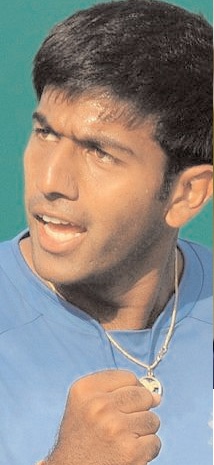
    BANGALORE (TIP): Indian tennis player Rohan Bopanna will be presented the Davis Cup Commitment Award during the World Group play-off tie against Serbia which begins here tomorrow. The International Tennis Federation (ITF) will present the Awards through its national associations during the Davis Cup World Group and Zone Group matches on Saturday.

    Former Grand Slam champions Lleyton Hewitt of Australia and Gustavo Kuerten of Brazil will also be awarded after their respective games. “The Davis Cup Commitment Award reflects the dedication by players for more than a century to represent their country in this prestigious competition.

    These players have continued to rise to the unique challenge of competing in a team environment in front of their home fans, and we believe that it is fitting to recognise their efforts,” said ITF President Francesco Ricci Bitti.

    List of players to be awarded: Australia: Lleyton Hewitt, Brazil: Carlos Kirmayr, Gustavo Kuerten, Luiz Mattar, Cassio Motta, Jaime Oncins, Canada: Frank Dancevic, Chinese Taipei: Ti Chen, France: Pierre Darmon, India: Rohan Bopanna Romania: Victor Hanescu, Russia: Andrei Chesnokov, Andrei Olhovskiy, Thailand: Sanchai Ratiwatana, Sonchat Ratiwatana, Danai Udomchoke, Ukraine: Sergiy Stakhovsky.

  • A Benevolent Law Abused

    A Benevolent Law Abused

    Racketeers use SIJS to make big money

    By I.S. Saluja & The Indian Panorama Investigative Team

    Number of Undocumented Children Who Cross U.S. Border Alone Has Tripled

    (The Pew Charitable Trusts: May 9, 2013)

    Each year, thousands of unaccompanied alien children (UACs) risk harrowing journeys and travel alone to seek refuge in the United States. These children come from all over the world for many reasons, including to escape persecution in their home countries, to reunify with family members and to look for a better life. In recent years, the U.S. government has had roughly 6,000-8,000 of these children in its care and custody each year. While these children may be as young as infants, most (approximately 70 percent) have been between the ages of 15 and 17. – Women’s Refugee Commission

    (The Migrationist: August 8, 2013)

    Hundreds of thousands of youth (under age 18) attempt to enter the U.S. every year. Some come with their families, others alone, either of their own will seeking jobs, protection and family reunification or they are smuggled into the country for sweatshop labor or sexual exploitation. The exact number of children who attempt to enter the country is unknown. In 2005, the U.S. granted legal permanent resident (LPR) status to 175,000 children under 14 years of age and to 196,000 youth ages 15 to 24. Twenty thousand youth ages 17 and under were accepted as refugees and 2,000 were granted asylum in the same year. Customs and Border Protection (CPB) apprehended almost 122,000 juveniles in the U.S. in 2004. Of this total, 84.6 percent were released back to Mexico, or in rare cases to Canada.

    (National Juvenile Justice Network)

    It has been said the crooks will always find creeks to enter any system in the world. And when the system is welcoming and benevolent, the infiltration is much easier. Special Immigrant Juvenile Status law (Please read the article below by eminent attorney Anand Ahuja) was enacted with a humanitarian objective to provide protection to these minors who are victims of domestic abuse.

    Over the years, the law stands abused. It has become a booming business in many countries to push young boys and girls, mainly boys (77%), in to the United States territory and make them take advantage of SIJS.

    The Indian Panorama Investigative team came across quite a few people in Queens and Long Island in New York who are part of the thriving racket to smuggle in young boys and girls from India. The reports received by us indicate that it is a big business in many South Asian countries, in particular, India, Sri Lanka and Pakistan as also in many other countries across the world.

    We were taken for a shock to get to know how elaborate the racket’s dragnet is, which involves agents in countries from which the young people are sent, agents at the Mexican side of the US border who help them cross over in to the United States, agents in the US who manage a guardian for the boy/girl and so on so forth. All this involves huge money. In India, the price to send a young boy or a girl in to USA is anywhere between $80,000 to $100,000.

    Another shocking revelation was the involvement of church in this racket. During our talk with some who are involved in the racket told us, on condition of anonymity, that at least, one priest from a Christian Church in New York and a Sikh priest from a Sikh Gurudwara in Arizona are actively involved in running the racket. The authorities do not suspect the priests of any wrong doing and the latter take advantage of it.

    Our source told us that the Christian Priest who is based in New York and comes from Punjab, India, visits his home state in India to “recruit” the youth who want to come to USA. It was pointed out to us that the pries has been making regular trips for the job. He arranges the incoming youth’s stay and finds him a guardian. Interestingly, all the young people who come here and come to have guardians, work and stay elsewhere, not necessarily with their guardians.

    The person agreeing to be a guardian to a youth is offered a payment of between $5000.00 to $10,000. The attorney’s fees is anywhere between $3000.00 and $5000.00. We were also told about two attorneys whose services the priest utilizes regularly. Also, there are some attorneys who specialize in such cases. The gentleman who offered to be guardian to a young man confided in us that the young man had disappeared and that he had to report the disappearance to the court.

    The malaise is much deeper and goes beyond simple monetary racket. It has serious implications for America’s security. With ISIS and Al Qaeda stepping up recruitment of young people from all over the world, USA is threatened as never before because of such soft laws which allow easy infiltration in to the country. Our source, on condition of anonymity, told us that he had come to know that the enemies of USA are all set to push in young people in to USA to carry out their agenda in America, which is to harm the country in every way.

    A thorough investigation by the US administration agencies concerned in to the racket and the possible infiltration of enemies of USA in to the country, taking advantage of the benevolent soft humanitarian laws needs to be done sooner than later. And the earlier, the better.

    Special Immigrant Juvenile Status

    Throughout its history, the United States has been a refuge for oppressed people from around the world. The Pilgrims, the Quakers, the Amish, and countless others came to this country in centuries past, while in the more recent past immigrants have been Cubans, Jews, Southeast Asians, and others.What those diverse people shared was a belief that America could offer them refuge from government oppression. The United States has always been at the forefront of protection issues, and traditionally has granted sanctuary to victims of human rights abuses from around the world.

    This refuge or protecting in the USA, however, is not limited to victims of political oppression but also is available to those who are victims of domestic violence and abuse specially minors.With an objective to provide protection to these minors who are victims of domestic abuse, Congress, in 2008, enacted a new statute, the William Wilberforce Trafficking Victims Protection Reauthorization Act of 2008, (TVPRA 2008).

    The statute expands the definition of Special Immigrant Juvenile so that more children can qualify for the status, provides greater protections from aging out, removes additional grounds of inadmissibility to lawful permanent residence, and requires the US government to process the cases within 180 days for those undocumented youth who qualify for SIJS.

    The Trafficking Victims Protection and Reauthorization Act has expanded the definition of Special Immigrant Juvenile Status (SIJS) to allow undocumented immigrant youth to petition for legal status based on abuse, neglect, or abandonment by one or both parents. SIJS waives unlawful entry, working without authorization, status as a public charge, and certain immigration violations. Once a minor receives SIJS, he/she will be able to adjust his/her status to that of a lawful permanent resident, obtain work authorization, and eventually apply for U.S. citizenship.

    To be eligible under SIJS, one must be (a) under 21 at the time of filing, (b) Currently must be unmarried, and (c) Must be present in the United States. Further, SIJS visa program is different from other types of visas in that it requires coordination with a state family or Surrogate court. Special Immigrant Juvenile Status has two prong tests. First, the minor has to engage in a custody/adoption proceedings in the Family or Surrogate’s Court in the county where he/she resides.

    As part of this proceeding, the court is to find minor’s eligibility for SIJS. Besides a guardianship petition, it is also possible to file a petition requesting an order though a custody, neglect, adoption, permanency hearing for children in foster care etc., proceeding. An order from a Family Court or Surrogate Court granting custody/adoption is a pre-requisite to applying for SIJS status. On February 5, 2014, the New York Appellate Division, Second Department, stated that New York State Family Courts do in fact have the authority to appoint a natural parent to be the guardian of his or her own children.

    The court explained that under the Surrogate’s Court Procedure Act, any person may petition for guardianship of an infant. SCPA §1703. Therefore, the court reasoned that since the statute does not impose any limitations, appointment of guardianship may also be granted to a natural parent. The court’s reasoning was based upon prior decisions involving contests for guardianship between a natural parent and a relative or nonrelative of a child, where the natural parent has been named as the guardian or co-guardian of the child.

    Matter of Revis v. Marzan (100 AD 3d 1004); Matter of Justina S. (180 AD 2d 641). One is to keep in mind that a state Family court and/or Surrogate court that grants custody/adoption petition does not make any immigration decision. After receiving this order from the Family or Surrogate’s Court, one has to go through the second stage, i.e., the one is to then apply to the United States Citizenship and Immigration Service (USCIS) for SIJS. Though USCIS one will get SIJS that would bestow upon the child lawful permanent residence and work authorization.

    Whether one receives one’s special immigrant juvenile visa and green card concurrently or applies for an adjustment of status after your SIJ application is approved, one generally receives most of the same rights and privileges as other lawful permanent residents. If the petition is approved and the child becomes a lawful permanent resident, he or she will have access to financial aid for college, be able to work legally, be eligible for some public benefits, and be able to apply for US citizenship five years after becoming a permanent resident.

    However; one is to keep in mind that the granting of SIJ status is based on allegations of abuse, abandonment or neglect by the applicant’s parents, a person who receives a green card or even ultimately citizenship through the SIJ program cannot petition for a green card on behalf of those parents. Moreover, SIJ program participants cannot petition on behalf of their siblings until they become U.S. citizens through naturalization. “Immigration law is extremely complicated-and with children, more so,” says Lenni Benson, a New York Law School professor and director of Safe Passage, a nonprofit that provides legal assistance to immigrant children in the state.

    Since expertise in both the family law and immigration law is required for SIJS, therefore, it’s better to retain the services of a competent attorney for these cases.

    (The author, an Attorney at Law, is licensed to practice law in the States of New York, Connecticut, Virginia, United States Court of Appeals for the Federal Circuit, U.S. Tax Court, U.S. District Court; Southern District of NY, U.S. District Court; Eastern District of NY. He works as an attorney with Anand Ahuja Associates, Attorneys at Law and International Business Consultants, 76 North Broadway Suite # 2000, Hicksville, NY 11801. He can be reached at anandesq@hotmail.com or on phone nos. (516) 502-3262, and (718) 850-1952. )

  • BJP Global Convener, Overseas Affairs Vijay Jolly calls upon Indian Americans to extend a tumultuous welcome to Modi

    BJP Global Convener, Overseas Affairs Vijay Jolly calls upon Indian Americans to extend a tumultuous welcome to Modi

    I.S. Saluja

    Vijay Jolly, BJP Global Convener, Overseas Affairs was on US Tour from August 18 to 30 to drum up support for Modi’s reception in New York on September 28. He visited, in all, 12 locations in Canada and USA. The US locations included Los Angeles, Dallas, Atlanta, Chicago, New York, New Jersey and Washington He was accompanied on the visit by Rajyavardhan Rathore, Member of Parliament.


    11
    Vijay Jolly and Rajyavardhan Rathore with Ambassador Mulay and members of Indian American community at the lunch hosted by the Consul General in honor of the visiting leaders L to R: Pam Kwatra, Vijay Nahata, Jagdish Sewhaney, Prof. Indrajit S Saluja, Vijay Jolly, Rajyavardhan Rathore, Ambassador Dnyaneshwar Mulay, Chandrakant Patel, Atma Singh, Harry Bolla


    One of his engagements in New York on August 26 was a meeting over lunch with India’s Consul General Dnyaneshwar Mule at the latter’s residence where I was also invited as were some more members of the Indian American community. Since we have known each other for some time now, there was an air of informality between us when I asked him for an interview for The Indian Panorama. I must thank him for his appreciation of the publication which he said he read on line every week. When asked the purpose of his visit to Canada and USA, he said, it was to galvanize the overseas units to work for the success of the civic reception planned for Modi in New York on September 28.

    To my question as to what he thought was the response of the Indo Canadian and Indo American community to Modi’s visit to USA, he said people were excited and keen to come to New York to see him. He added, “However, we know the place (Madison Square Garden) cannot hold beyond 18,000 and feel sorry for many who may not be able to get the tickets to come in”. Asked what he felt was the implication of Modi’s visit at the invitation of President Obama, he said, the visit of Prime Minister of India to the United States at the invitation of President of USA signifies a lot.


    12
    Vijay Jolly (center) and Rajyavardhan Rathore, M.P. (Right) with Ambassador Dnyaneshwar Mulay


    To put in a few words, it signals the desire of the United States to have friendly and close ties with India. Vijay said he was sanguine the meeting between India’s Prime Minister and US President will strengthen the already strong ties between the two nations and lead to greater cooperation in various fields. As Vijay Jolly was leaving, he turned to me and said, “Mark my words. Modiji will get a tumultuous welcome in USA, the kind of which was never accorded to a Prime Minister of India in USA”.

  • UN says $600 million needed to tackle Ebola as deaths top 1,900

    UN says $600 million needed to tackle Ebola as deaths top 1,900

    WASHINGTON/CONAKRY (TIP): The United Nations said $600 million in supplies would be needed to fight West Africa’s Ebola outbreak, as the death toll from the worst ever epidemic of the virus topped 1,900 and Guinea warned it had penetrated a new part of the country. The pace of the infection has accelerated, and there were close to 400 deaths in the past week, officials said on Wednesday.

    It was first detected deep in the forests of southeastern Guinea in March. The hemorrhagic fever has spread to Liberia, Sierra Leone, Guinea, Nigeria, and Senegal, and has killed more people than all outbreaks since Ebola was first uncovered in 1976.

    There are no approved Ebola vaccines or treatments. An experimental Ebola vaccine that Canada said it would give to the World Health Organization for use in Africa was as of Wednesday still in the lab that developed it as officials are puzzled over how to transport it. Ottawa said on Aug. 12 that it would donate between 800 and 1,000 doses of the vaccine, being held at Canada’s National Microbiology Laboratory in Winnipeg.

    “We are now working with the WHO to address complex regulatory, logistical and ethical issues so that the vaccine can be safely and ethically deployed as rapidly as possible,” Health Canada spokesman Sean Upton said in a statement. “For example, the logistics surrounding the safe delivery of the vaccine are complicated.” Upton said one of the challenges was keeping the vaccine cool enough to remain potent.

    Human safety trials are due to begin this week on a vaccine from GlaxoSmithKline Plc and later this year on one from NewLink Genetics Corp. The US Department of Health and Human Services said on Tuesday a federal contract worth up to $42.3 million would help accelerate testing of an experimental Ebola virus treatment being developed by privately held Mapp Biopharmaceutical Inc. Dr David Nabarro, senior UN Coordinator for Ebola, said the cost of getting the supplies needed by West Africa countries to control the crisis would amount to $600 million. That was higher than an estimate of $490 million by the WHO last week.

    Moving workers and supplies around the region has been made difficult by restrictions by some countries on air travel and landing rights as they try to control Ebola’s spread. “We are working intensively with those governments to encourage them to commit to the movement of people and planes and at the same time deal with anxieties about the possibility of infection,” Nabarro said.

    He said the president of Ghana has agreed to allow an airbridge, or route, through the country to affected regions to move people and supplies. Ivory Coast, which closed its borders with Liberia and Guinea last month, said on Tuesday it would open humanitarian and economic corridors to its two western neighbors.

    Epidemic gains, evacuation eyed for doctor Dr. Margaret Chan, director-general of the World Health Organization (WHO) told a press conference in Washington, “This Ebola epidemic is the longest, the most severe and the most complex we’ve ever seen.” Chan said there were more than 3,500 cases across Guinea, Liberia and Sierra Leone.

    In Liberia, Dr Rick Sacra, a 51-yearold Boston physician infected with Ebola could be medically evacuated as soon as Thursday, according to staff at the hospital where he worked. Two other Americans recovered from the virus after being taken to the United States for treatment last month. Amid shortages of equipment and trained staff, more than 120 healthcare workers have died in West Africa in the Ebola outbreak.

    The Liberian government has begun offering a $1,000 bonus to any healthcare workers who agreed to work in Ebola treatment facilities. Guinea, the first country to detect the virus, previously said it was containing the outbreak but announced that nine new cases had been found in the prefecture of Kerouane, some 750 km (470 miles) southeast of the capital Conakry.

  • INDIAN TRICOLOR LIGHTS UP NIAGARA FALLS

    INDIAN TRICOLOR LIGHTS UP NIAGARA FALLS

    NEW YORK (TIP): For the first time in the history, the world-famous and most visited tourist spot Niagara Falls was illuminated with Indian tricolor thanks to Indian-American physicians of Rajasthan Medical Alumni Association of North America (RAJMAAI). The Silver Jubilee celebrations of RAJMAAI was held between Aug 14 and 17 at Hotel Marriot Gateway on the Falls in Ontario, Canada in which over 300 physicians and their families attended all over from the US.

    Thanks to the efforts of the RAJMAAI, the Niagara Falls Parks Commission decided to illuminate the Falls with Indian Tri Color for 15 minutes on the night of India’s Independence Day – August 15- perhaps for the first time in the history, according to RAJMAAI President Dr. Shashi Shah. “We deem it as a singular honor for our motherland as the world-famous Niagara Falls was illuminated so that tourists from the American and Canadian side could view this spectacular display.


    5
    Leaders of AAPI and RAJMAAI at the convention

    Buildings may have been illuminated in the past to mark the occasion but this is the first time that the national pride of the US honored India with this gesture,” said Dr Ajay Lodha, vice president of American Association of Physicians of Indian Origin (AAPI) and RAJMAAI convention committee chair. The Indian Tricolor was illuminated vertically as the Parks Commission had no provision to illuminate vertically.

    In 1997 and 1998, new fixtures replaced the outdated lamps and fixtures at the Illumination Tower, doubling the intensity of the lights on the Falls without doubling the hydro bills. Currently a total of twenty-one xenon lights, each with a 76-cm (30 in) diameter, are used to illuminate the Falls in a rainbow of colors. Eighteen are located at the Illumination Tower, beside the Queen Victoria Place and three are located below street level in the gorge opposite the American Falls.

    Each of the xenon spotlights produces more than 390 million peak beam and has a brilliance of 250 million candlepower. The grand sponsor of the celebrations was Dr Samin Sharma, world-renowned cardiac surgeon of New York City. The physicians discussed how to pitch in help the State of Rajasthan in providing best medical care, opening and training of trauma centers across the state, continuing medical education programs, opening of book banks to name a few. Noted Bollywood singer Kailash Kher entertained the guests and authentic Rajasthani cuisine was served. Dr. Ravi Jahagirdhar, President of AAPI, Dr Ajeet Singhvi, Chair, Board of Trustees of AAPI, Dr Om Ganda and Prof. P.C.Dandiya attended the convention as honored guests.

  • US LOSING TAX REVENUES AS FOOD, BEVERAGE FIRMS FLEE ABROAD

    US LOSING TAX REVENUES AS FOOD, BEVERAGE FIRMS FLEE ABROAD

    WASHINGTON (TIP): It’s a deal that’s left everyone unhappy, except perhaps the few corporate honchos who executed it. Americans are upset that Burger King, their beloved fast food franchise, is decamping to Canada. Canadians are appalled that the American chain is swallowing up its cherished coffee chain Tim Horton’s.

    The US government too is mad as hell that Burger King is fleeing north, suspecting it is doing so because of lower taxes there. And Canadian politicians, who are constantly trying to get their country out of the American shadow (Al Capone once joked he doesn’t even know which street Canada is on), want to know what’s in it for Canadians, besides additional tax dollars. Things haven’t been this bad between the neighbors since the War of 1812, when the two countries last had a scrap.

    They may be the world’s largest trading partners and they may be sharing the world’s longest border, but when it comes to certain things, the ‘twain shall never meet – like coffee and doughnuts, as Canadians spell it (Americans have shortened it to Donuts). Canadians have their Tim Horton’s, Americans have their Starbucks, and that’s the way they like it.

    But Burger King has broken the unwritten compact by agreeing to merge (a euphemism for takeover) with Tim Horton’s in a deal valued at $11 billion, in effect making it a sort of American McDonald’s plus Canadian Starbucks. The merger is expected to create the world’s third largest fast food company after McDonalds and Subway, enabling the rather more insular Canadian chain to be introduced to the nearly 100 countries where Burger King operates, while giving the American giant relief from high US corporate tax.

    Apparently, BK took to heart a quip by the late Robin Williams that “Canada is like a loft apartment over a really great party,” a gag that justifies the Canadian complaint that while they may be suffering from paranoid schizophrenia, Americans have a bad case of megalomania.

  • Vijay Jolly calls on US Congressmen & Chairman Foreign Affairs Committee Mr. Edward R. Royce

    Vijay Jolly calls on US Congressmen & Chairman Foreign Affairs Committee Mr. Edward R. Royce

    LOS ANGELES (TIP):
    OFBJP Global Convenor Vijay Jolly arrived here August 20th, from Vancouver to a rousing welcome at LA Int’l Airport. OFBJP US President Chandra Kant Patel, LA Convenor P. K. Nayak along with a large contingent of BJP supporters received OFBJP leader Jolly with bouquets. Vijay Jolly drove to the residence of US Congressmen & Chairman Foreign Affairs Committee Edward R. Royce here. Both leaders had a 45 minutes long meeting on Indo-US relations.

    They also discussed the forthcoming US visit by Indian Prime Minister Narendra Modi latter in the month of Sep 2014. Edward Royce is also the Chairman of India Caucus in US. Congressman expressed a keen desire to meet & welcome PM Modi along with Foreign Affairs Committee members in Washington D.C. Jolly promised to convey this to the Indian officials arranging the PM’s US visit. Jolly also extended an invitation to the Congressman to attend the Sunday 28th September public program organized by Indian American Community Foundation for NAMO Swagatam at Madison Square Garden, New York. He accepted the invite with a smile & warm handshake.

    Vijay Jolly also visited the LA Chino Hills located BAPS Swami Narayan Temple and offered floral greetings on behalf of BJP President Amit Shah. Swami Sarv Darshan, head of the BAPS temple blessed the OFBJP leader and his mission in US. Latter in the evening a grand public program organized in support of NAMO’s September visit was addressed by Jolly in downtown Los Angles. Jolly attended a successful OFBJP Vancouver, Canada program celebrating 68th India Independence Day at Surrey in British Columbia .

    The Indian Consul General Ravi S. Aisola attended the program. A book in Punjabi language on PM Modi was released by Jolly at a crowded public program. A large contingent of Indians led by Aditya Tawatia, OFBJP President Vancouver and owner of Radio India Maninder Gill pledged to participate in the NAMO program in US on 28th September, 2014 in New York.

  • Vijay Jolly, BJP Global Convener, Overseas Affairs on US Tour

    Vijay Jolly, BJP Global Convener, Overseas Affairs on US Tour

    NEW YORK (TIP):
    Vijay Jolly, BJP Global Convener, Overseas Affairs is on US Tour from August 18 to 30. During this period he will be crisscrossing the US, visiting Los Angeles, Dallas, Atlanta, Chicago, New York, New Jersey and Washington. Here is his proposed itinerary.

    Aug 18 Mon: Canada to Los Angeles, CA
    o Leaving Vancouver, Canada and reaching Los Angeles, CA, USA
    o Dinner meeting with Karyakartas in LA

    Aug 19 Tue: Los Angeles, CA
    o Luncheon meeting with corporate leaders
    o Quick city tour of LA
    o Dinner and Community out-reach program

    Aug 20 Wed: LA to Dallas, TX
    o Leaving LA and reaching Dallas by evening
    o Dinner meeting with Karyakartas in Dallas
    o Press conference in Dallas

    Aug 21 Thu: Dallas, TX
    o Luncheon meeting with corporate leaders
    o Tour of Kennedy assassination site
    o Dinner and Community out-reach program

    Aug 22 Fri: Dallas to Atlanta, GA
    o Leaving Dallas in the morning and reaching Atlanta by Afternoon
    o Coca Cola plant tour
    o Dinner meeting with Karyakartas

    Aug 23 Sat: Atlanta to Chicago, IL
    o Luncheon meeting with FIA and Community out-reach program
    o Early evening flight to Chicago, IL
    o Dinner meeting with Karyakartas

    Aug 24 Sun: Chicago, IL
    o Luncheon meeting with community leaders
    o Press Conference
    Dinner and Community out-reach program

    Aug 25 Mon: Chicago to New York, NY
    o Leaving Chicago for NY – JFK airport
    o Luncheon meeting with corporate leaders of NY
    o Evening press conference with snacks in NY
    o Dinner with top-notch community leaders of NY

    Aug 26 Tue: New York to New Jersey
    o Show the venue Madison Square Garden in NY
    o Meeting with Indian Consul General in NY
    o Dinner meeting with Karyakartas in New Jersey

    Aug 27 Wed: New Jersey
    o Luncheon meeting with corporate and community leaders of NJ
    o Possible meeting with Congressman Frank Pallone or Senator Bob Menendez
    o Dinner and Community out-reach program

    Aug 28 Thu: New Jersey to Washington DC Metro
    o Leaving NJ to DC BWI airport station by Amtrak
    o Luncheon meeting with Think-Tank groups: Heritage Foundation, Cato Institute, and CAP in DC
    o Meeting with India’s Ambassador and Dy. Ambassador in DC
    o Dinner meeting with Corporate and Community leaders of DC

    Aug 29 Fri: Washington DC Metro
    o Meeting with US lawmakers
    o Press conference with ethnic print media and US print media
    o TV interviews
    o Dinner with Karyakartas and Sangh leaders

    Aug 30 Sat: Washington DC to Delhi, India
    o Any remaining meetings

  • Pakistani court bars Imran, Qadri from holding march

    Pakistani court bars Imran, Qadri from holding march

    LAHORE (PAKISTAN (TIP):
    A Pakistani court on August 13 restrained a cricketerturned politician and a Canada-based populist cleric from launching a march on Islamabad in an unconstitutional way, a lawyer said. The Lahore high court’s order came as authorities blocked almost every entry point to Islamabad on Wednesday, with more than 20,000 police and paramilitary forces deployed to try to thwart a major anti-government rally.

    “Pakistan Tehreek-e-Insaf (PTI) and Pakistan Awami Tehreek (PAT) are restrained from launching a march/sit-in in Islamabad in any unconstitutional way keeping in view sensitivity of independence day and current uncertain situation in the country,” PTI’s lawyer Ahmad Owais said in Lahore quoting from a short order by a three-judge panel headed by Justice Khalid Mehmood.

    Major roads were barricaded with shipping containers and police used excavators to dig up smaller roads in Islamabad, a day before two opposition protest marches are due to converge on the capital. Imran Khan and Canada-based preacher Tahir-ul-Qadri, who heads PAT, plan to march on the city on Thursday, Pakistan’s independence day, to demand Prime Minister Nawaz Sharif resign and call fresh elections. Both Khan and Qadri, who led mass demonstrations in Islamabad early last year to urge electoral reform, allege that the May 2013 general election was rigged.

    By late Wednesday afternoon only the highway to the airport remained open and even there shipping containers were on standby ready to be moved into place. The heavily-guarded “red zone”, home to parliament, the president and prime minister’s residences and foreign embassies, was already sealed with containers, barbed wire and concrete blocks. Mobile phone services were shut down in the red zone on Wednesday — a common practice on sensitive occasions in Pakistan aimed at stopping militants using cell phones to detonate bombs.

    In front of the five-star Serena hotel, the road was blocked with several containers guarded by around 50 to 60 policemen. The city streets were largely deserted on Wednesday, with almost all offices and shops closed. The government on Wednesday asked the Supreme Court to set up a panel of judges to investigate claims of rigging in last year’s general election — a move announced by Sharif late on Tuesday to try to ease political tension.

    The judicial probe was a key demand of Khan, who leads the country’s third largest party, but he rejected Sharif’s proposal and demanded he step down. Sharif’s landslide general election victory in May 2013 saw Pakistan’s first ever handover of power from one civilianled government to another after a full term, in polls that local and foreign observers called credible.

    In his television address on Tuesday, the 64-year-old prime minister said economic progress had been made under his government but the opposition groups’ protests would reverse the gains. and Qadri, who says he is struggling for an “interim national government” consisting of technocrats and experts, have announced they will merge their marches.

    Tension has gripped parts of the country since last week, with running clashes between police and supporters of Qadri in the eastern city of Lahore over several days leaving at least one protester dead.The government for its part has rejected the allegations of vote-rigging and accuses the opposition groups of attempting to obtain by force what they could not achieve through democratic means.Punjab provincial law minister Rana Mashhood told AFP that more than 1,000 Qadri and Khan activists had been detained in recent days on suspicion of inciting or perpetrating violence.