ISLAMABAD (TIP):
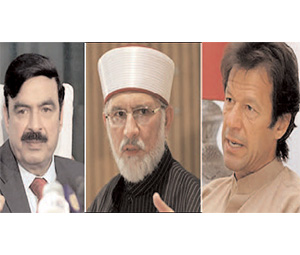
Pakistan’s government has deployed thousands of security personnel and put up barricades to deny entry to protesters who want to march into Islamabad. Cricketer-turned-politician and Pakistan Tehreek-e-Insaf chief Imran Khan and Pakistan Awami Tehreek chief and Canada-based preacher Tahir-ul-Qadri plan to march on the city on Thursday, Pakistan’s independence day, to demand Prime Minister Nawaz Sharif’s resignation.
Both leaders allege the government was formed as a result of rigged elections in May 2013. Khan has given the call for an ‘azadi’ (independence) march and Qadri for an ‘inqilab’ (revolution) march. On Wednesday, Islamabad’s inspector general of police told Khan that security for his long march won’t be assured due to the imposition of section 144 (restriction on gathering of more than four persons) in the capital city.
He warned Khan about the possibility of a terror attack in the wake of military operations in the North Waziristan tribal region. Despite shipping containers having been placed on all roads in and outside Islamabad, ruling PMLN sources said the government was uncertain about the success of its efforts to stop the protesters on the periphery of the capital city
Tag: Canada
-

Pakistan seals capital ahead of protests
-

India’s Lawmakers need to get rid of Feudal Mindset
India has long lived with the remnants of a feudal system which is in total opposition to the democratic system in the civilized world. Our members of Parliament and ministers behave more or less like the privileged members of the royal families of the past, demanding special privileges and preferential treatment.
They had better look at the democratic world around. In Canada, a member of Canadian Parliament will stand in a queue at a restaurant. He will carry his bag himself. He gets no security guard. He gets no chauffeur. He gets no government vehicle to drive in. He gets no government accommodation.
All he gets is his salary. Will members of Parliament look to the civilized world for inspiration?
Readers Write -

Sri Lanka President Skips CWG 2014 Citing Poor Security in Glasgow
COLOMBO (TIP):
Sri Lanka’s president decided to stay away from the Commonwealth Games despite being chair of the bloc because Colombo was unhappy with Britain’s security arrangements, a minister said on July 31.Information minister Keheliya Rambukwella said Mahinda Rajapakse wanted to attend the Games in Glasgow but was concerned about being targeted by ethnic Tamil protesters who accuse him of war crimes. Asked if the government was unhappy with the level of protection offered by the British authorities, Rambukwella said: “Of course. it happened (not enough security) last time also.
” Rambukwella said Rajapakse had an “unpleasant experience” when angry Tamils protested outside his hotel in London when he attended Queen Elizabeth II’s Diamond Jubilee in June 2012.”Security (of the president) is of utmost importance,” Rambukwella told reporters in Colombo. “If the president’s security (unit) is concerned about his safety, we take that advice seriously and he won’t go.
“Rajapakse’s office previously denied he stayed away because of the threat of demonstrations, saying no visit had been scheduled.Rajapakse hosted a summit of Commonwealth leaders last November and took over the rotating office-in-chair of the 53- nation bloc. Canada suspended its funding to the Commonwealth for the two years that Rajapakse is in charge over the country’s war crimes allegations.
Sri Lanka is accused of killing at least 40,000 Tamil civilians in the final stages of the decadeslong war between the military and Tamil rebels fighting for a separate homeland.Sri Lanka denies it killed civilians during the conflict that ended in 2009. Despite the military’s emphatic victory, Colombo maintains that Tamil diaspora groups still pose a serious threat. Former Sri Lankan president Ranasinghe Premasdasa was assassinated by a Tamil suicide bomber in May 1993 while president Chandrika Kumaratunga was wounded and lost her right eye in a suicide bombing in December 1999. -

India holds its ground, WTO fails to reach $1 trillion deal on customs rules
GENEVA (TIP): The World Trade Organization failed on July 31 to reach a deal to standardise customs rules, which would have been the first failed global trade reform in two decades but was blocked by India’s demands for concessions on agricultural stockpiling. “We have not been able to find a solution that would allow us to bridge that gap,” WTO director-general Roberto Azevedo told trade diplomats in Geneva just two hours before the final deadline for a deal. “Of course it is true that everything remains in play until midnight, but at present there is no workable solution on the table, and I have no indication that one will be forthcoming.”
The deadline passed without a breakthrough. WTO ministers had already agreed the global reform of customs procedures known as “trade facilitation” last December, but it needed to be put into the WTO rule book by July 31. Most diplomats saw that as rubberstamping a unique success in the WTO’s 19 year history, which according to some estimates would add $1 trillion and 21 million jobs to the world economy, so they were shocked when India unveiled its veto.
Trade experts say on Thursday’s failure is likely to end the era of trying to cobble together global trade agreements and to accelerate efforts by smaller groups of likeminded nations to liberalise trade among themselves. India has been vocal in opposing such moves, making its veto even more surprising. “Today’s developments suggest that there is little hope for truly global trade talks to take place,” said Jake Colvin at the National Foreign Trade Council, a leading US business group.
“The vast majority of countries who understand the importance of modernizing trade rules and keeping their promises will have to pick up the pieces and figure out how to move forward.” Some nations have already discussed a plan to exclude India from the agreement and push ahead regardless, and the International Chamber of Commerce urged officials to “make it happen.” “Our message is clear. Get back to the table, save this deal and get the multilateral trade agenda back on the road to completion sooner rather than later,” ICC secretary general John Danilovich said.
US secretary of state John Kerry, on a visit to New Delhi, had earlier said he was hopeful that differences between India and much of the rest of the world could be resolved. But after Azevedo’s speech, US ambassador to the WTO Michael Punke was downbeat. “We’re obviously sad and disappointed that a very small handful of countries were unwilling to keep their commitments from the December conference in Bali, and we agree with the Director- General that that action has put this institution on very uncertain new ground,” Punke told reporters.
India had insisted that, in exchange for signing the trade facilitation agreement, it must see more progress on a parallel pact giving it more freedom to subsidise and stockpile food grains than is allowed by WTO rules. It got support from Cuba, Venezuela and Bolivia. India’s new nationalist government has insisted that a permanent agreement on its subsidised food stockpiling must be in place at the same time as the trade facilitation deal, well ahead of a 2017 target set last December in Bali. Kerry, whose visit to India was aimed at revitalising bilateral ties but was overshadowed by the standoff, said the United States understood India’s position that it needs to provide food security for its poor but India would lose out if it refused to maintained its veto.
Deal without India?
Diplomats say India could technically attract a trade dispute if it caused the deal to collapse, although nobody wanted to threaten legal action at this stage. The summer break will give diplomats time to mull options, including moving ahead without India. Technical details would still have to be ironed out, but there was a “credible core group” that would be ready to start talking about a such a deal in September, a source involved in the discussions said.
“What began as a murmur has become a much more active discussion in Geneva and I think that there are a lot of members in town right now that have reached the reluctant conclusion that that may be the only way to go,” he said. An Australian trade official with knowledge of the talks said a group of countries including the United States, European Union, Australia, Japan, Canada and Norway began discussing the possibility in Geneva on Wednesday afternoon. New Delhi cannot be deliberately excluded, since that would mean other countries slowing down containers destined for India, but if it becomes a “free-rider” it will add another nail in the coffin of attempts to hammer out global trade reform.
Trade diplomats had previously said they were reluctant to consider the idea of the allbut- India option, but momentum behind the trade facilitation pace means it may be hard to stop. Many countries, including China and Brazil, have already notified the WTO of steps they plan to take to implement the customs accord immediately. Other nations have begun bringing the rules into domestic law, and the WTO has set up a funding mechanism to assist.
But WTO head Azevedo said he feared that while major economies had options open to them, the poorest would be left behind. “If the system fails to function properly then the smallest nations will be the biggest losers,” he said. “It would be a tragic outcome for those economies — and therefore a tragic outcome for us all.” -

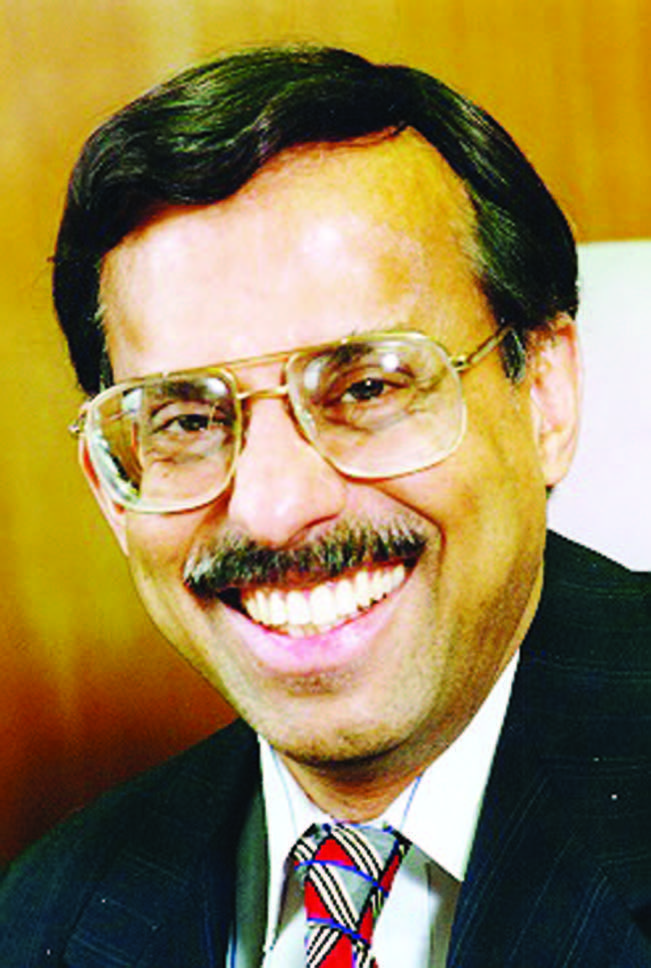
Mr. Sampat Poddar
Excellence in the field of Gems Stones & Jewelry
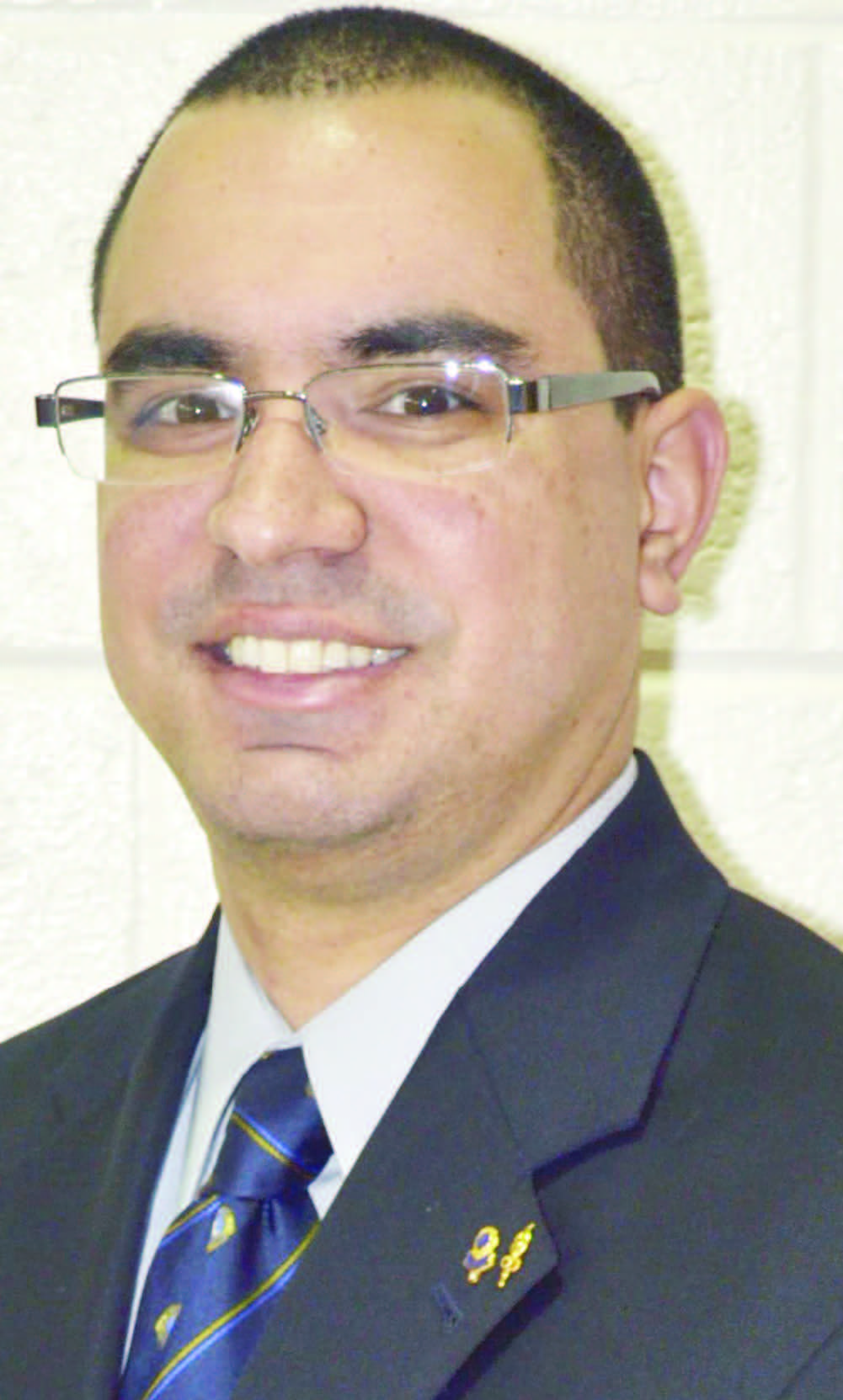
Mr. Sampat Poddar is the founding president and CEO of Byrex Gems Inc. He built the company from its inception to a major supplier of precious stones and jewelry to the jewelry industry in Canada. Its current office locations include Montreal, New York, Hong Kong, Bangkok and Jaipur (India) with over 50 employees. He was also a Senior Tax Advisor, Tax Policy, Government of Alberta, Edmonton and developed various tax and royalty incentive programs to promote Oil and Gas Exploration and Development activities in Alberta.
He is the Treasurer of the Diamond Bourse of Canada and a Board Member of the IDCA Board of Directors. For his untiring efforts and for his philanthropic investments in social innovations, Mr. Poddar was awarded the Queen Elizabeth Diamond Jubilee Medal in 2012. Mr. Poddar graduated from the University of Rajasthan in 1974 with a Master’s Degree in Economics and also holds an MBA in Business Finance from McMaster University. He has dedicated the better part of his life to spiritual advancement, philanthropy and increasing the prominence of the Indian business community in Canada. Through his charitable trust, Mr.Poddar has made the commitment and is in the process of improving access to health care, education and spirituality with focus on initiatives in Rajasthan and Canada.
-

GOPIO’s 25th Anniversary Jubilee Convention a historic success
PORT OF SPAIN (TIP): The Global Organization of People of Indian Origin (GOPIO International) concluded its 25th Anniversary (Jubilee) Convention 2014 in Port of Spain in Trinidad & Tobago, with a memorable and highly successful celebration from 27th May through 30th May, 2014 coinciding with the 169th anniversary of Indian Arrival Day commemoration in Trinidad & Tobago.
The convention was a historic event in the Indian Diaspora attended by delegates from several countries where GOPIO is prominent and where persons of Indian origin reside in substantial numbers and even small numbers. Countries include: Australia, New Zealand, Fiji, Malaysia, Mauritius, Sri Lanka, India, South Africa, Netherlands and other countries of the European Union (EU), UK, Canada, USA, and the Caribbean region: Guyana, Trinidad & Tobago, Suriname, Belize, St. Vincent, Guadeloupe, Martinique, Grenada and St Lucia.
Among the many events of the convention, some of the notable highlights include: Welcome reception at the Diplomatic Centre residence of Hon. Kamla Persad-Bissessar, Prime Minister of Trinidad & Tobago, GOPIO’s elections for new officers, all-day academic conference, special guests at cultural performances held at National Cultural of Indian Culture (NCIC), and unveiling of arrival monument marking the first arrivals of indentured Indian laborers in Trinidad.
A significant highlight of GOPIO’s 25th Anniversary Jubilee Convention was the special welcome reception of GOPIO delegates at the Diplomatic Centre residence of the Hon Prime Minister Kamla Persad Bissessar on 28th May. The reception was hosted by Ministry of National Diversity and Social Integration with Minister Dr Roger Samuel making the initial remarks, followed by GOPIO International president Ashook Ramsaran and presentation of gifts.

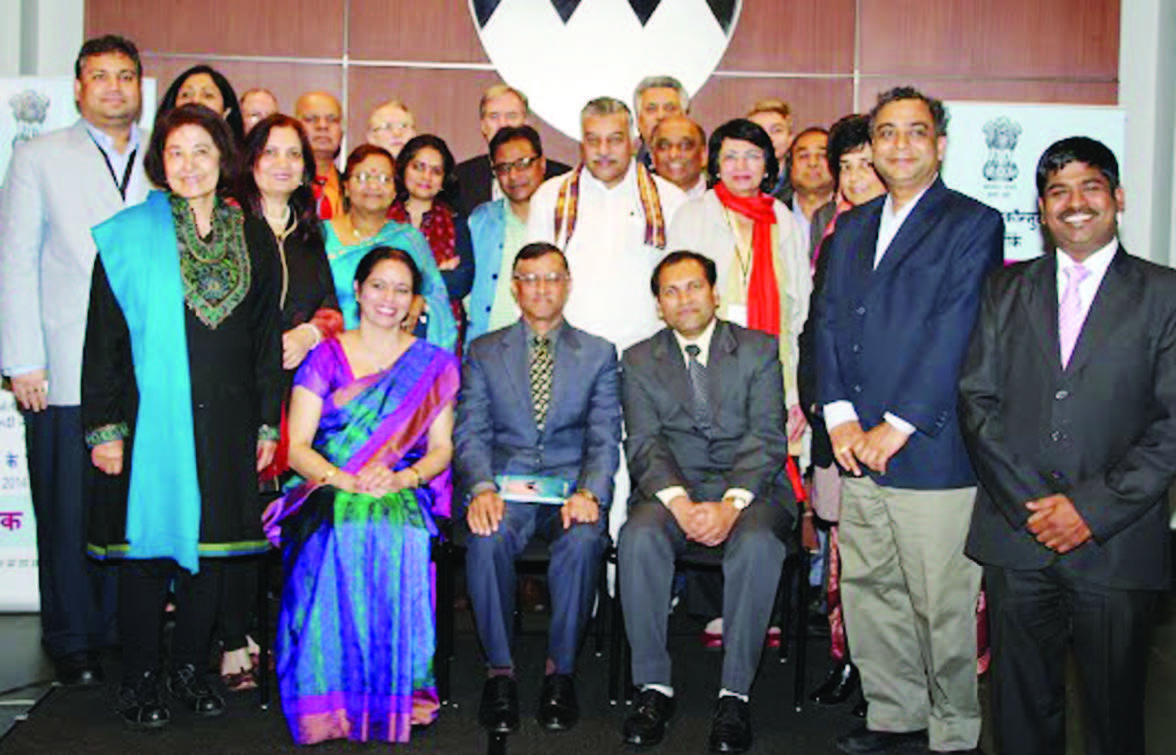
GOPIO Jubilee Recognition Recipients with GOPIO officials, Indian High Commissioner G. Gupta,Trinidad & Tobago’s Minister Dr. Vasant Bharath MP and Minister Ramona Ramdial MP.
Hon Prime Minister Kamla Persad Bissessar formally welcomed GOPIO’s delegates, recounted GOPIO’s special reception/dinner during the visit to the Kolkata Memorial on 12th January, 2012 and thanked GOPIO for holding its 25th Anniversary Jubilee Convention in Trinidad & Tobago. In attendance were several ministers and members of parliament of the Government of Trinidad & Tobago as well as the Indian High Commissioner HE Gauri Gupta. The evening included a special celebratory treat of Caribbean and Indian music with delegates joining in dancing. On 28th May, a Business-to-Business seminar featuring prominent scholars and business leaders was held at the Radisson Hotel.

Some of the Legacy Generation Residents of Trinidad & Tobago with GOPIO officials, Indian High Commissioner HE Gauri Gupta, With Trinidad & Tobago’s Min. Dr. Suruj Rambachan, Min. Ramona Ramdial, Counselors Abdool & Seepersad, Couva Regional Chairman Henry Awong. Unveiling of Indian Arrival Monument at Waterloo-by-the-Sea
It was sponsored by Trinidad & Tobago’s Ministry of Trade & Investment. Sessions include: Investment & Trade Opportunities in Trinidad & Tobago; Investment & Trade Opportunities in St Vincent & Grenadines; Investment & Trade Opportunities in Guyana; Success Stories of Doing Business in the Caribbean; Free Enterprise, Market Economy and Business Successes; The Growth of Education and Medical Services for Bi-Lateral Trade; Media as Marketing Tool in Emerging Economies The Academic Conference segment of the convention was a full 1-day event held on 29th May at the Radisson Hotel.
There were several sessions designed round the convention theme of “Indian Diaspora Today & Tomorrow” The chief guest at the Inaugural Session was Indian High Commissioner HE Gauri Gupta and the keynote speaker Dr Mahin Gosine, Professor of Sociology and Anthropology at SUNY, New York, USA. Prof Kumar Mahabir, Assistant Professor at University of Trinidad and Tobago, concluded the session. Other sessions with prominent and suitably qualified speakers from several countries were: Global & Regional Diaspora Investments & Economic Opportunities; The Indian Diaspora: Issues, Challenges & Opportunities; Diaspora’s Youth, Children, Gender & Inter-Generational Issues; Multi- Cultural Diversity & Inter-Ethnic Cooperation in the Indian Diaspora; Education, Science & Technology as Significant Assets in the Indian Diaspora; Health, Wellness, Lifestyle & Nutritional Factors in the Indian Diaspora; GOPIO’s 25th Anniversary Resolutions; Wrap-up & Conclusion. Elections were held by GOPIO International Council for several positions in GOPIO at the international level.
The following officials were elected by unanimous vote: President – Ashook Ramsaran; Executive Vice President – Sunny Kulathakal; Senior Vice President – Dr. Piyush Agrawal; International Coordinator North America – Dr. Renuka Misra; and International Coordinator Caribbean, Dr. Arnold Thomas. Chairman Inder Singh was elected for another term. The Jubilee Recognition Gala was another highlight of GOPIO’s 25th Anniversary (Jubilee) Convention 201, held on 29th May, 2014 in the Grand Ballroom at the Radisson Hotel in Port of Spain. In attendance was Indian High Commissioner HE Gauri Gupta, Trinidad & Tobago’s Minister of Trade & Investment, Dr. Vasant Bharath; and Min. Ramona Ramdial, Minister in the Ministry of Environment & Water Resources. The event was emceed by prominent radio and television host Zelisa Boodoosingh.
GOPIO’s Jubilee Recognition for outstanding achievements in selected categories were awarded to several persons “who contributed to the betterment of people of the Indian Diaspora. The Jubilee Recognition recipients achieved significant and prominent levels of stature and recognition in their respective fields of endeavor and have served interests of people in their respective countries of domicile and others as well, in addition to generating pride and respect among the Indian Diaspora and others in country of birth or domicile”. Posthumous: Henri Sidambaron (Guadeloupe); Dr. Najma Sultana (USA); Baleshwar Agrawal (India); Lall Paladee (Trinidad & Tobago). Friend of GOPIO: HE Dr. Ralph Gonsalves, Prime Minister of St. Vincent & Grenadines.
Professional, Civic, Culture, Entrepreneurship, Media, Philanthropy: National Indian Cultural Centre (Trinidad & Tobago); John Barath (Trinidad & Tobago); Brenda Gopeesingh (Trinidad & Tobago); Dr. Hans Hanoomansingh (Trinidad & Tobago); Sattaur Gafoor (Guyana); Dr Yesu Persaud (Guyana); Chief Justice Carl Singh (Guyana); Dr. C. Baidjnath Misier (Netherlands); Dr. Lakshmi Persaud (United Kingdom); Ishwar Ramlutchman (South Africa); Nicole Vaitylingon (Guadeloupe); Dr. Vivian Rambihar (Canada); Dr. Parmatma Saran (USA); Dr. Sudhir Parikh (USA); TV Asia H R Shah (USA); India Abroad (USA); Kedar N. Gupta (India); Israel Khan (Trinidad & Tobago); Ashok Motwani (India). In addition to recognition of those who contributed to GOPIO’s formation in 1989 as well as all previous life members, GOPIO recognized the newest life members since 6th January, 2014 in attendance: Yamonee Barbaro (USA); Balkrishna Naipaul (Canada); Deo Gosine (Trinidad & Tobago); Sasenarine Sankar (Guyana); Claude Sheikboudhou (Guadeloupe); Elie Shitalou (Guadeloupe); Shaji SM Alex (India); Shaji Baby John (India). The National Council of Indian Culture (NCIC) hosted GOPIO delegates at its major events held at its Diwali Nagar in Chaguanas.
NCIC president Dr. Deokinanan Sharma and Mr Surujdeo Mangaroo graciously welcomed GOPIO delegates as special guests. Special events were: 27th May: Concert — famous Bhojpuri singer, Kalpana Patowary from Assam, India; 29th May – Indian Arrival Day commemoration with a special treat of music, songs, dances, recitals and authentic Caribbean and Indian foods. GOPIO 25th Anniversary Jubilee souvenir brochure is 112-page bound, elaborate keep sake publication distributed at no cost to all convention delegates and visitors, as well as mailed subsequently to worldwide officials, businesses, organizations.
The brochure messages of congratulations and well wishes, articles, program details, convention and international team, facts about GOPIO, its formation and history, as well as an extensive photo gallery. The convention team organized around the GOPIO chapter in Trinidad & Tobago, working diligently with dedicated and focused efforts to plan, coordinate and hold a magnificent GOPIO milestone convention in a country distant from the other regular venues which GOPIO has used over the years for its major events. Convention Convener: Ena Maraj, president of GOPIO International chapter of Trinidad & Tobago; General Convener: Dr. Arnold Thomas, GOPIO International Coordinator Caribbean; several chapter members serving in various capacities. The convention was endorsed and supported by a wide cross section of public and private sectors as well as civic and cultural organizations, academicians and academic institutions, media and others.
In addition, prominent persons of Indian origin and several Pravasi Samman Awardees also participated in the convention. HE Shri Gauri Gupta, Indian High Commissioner to Trinidad and Tobago, provided unwavering support and participated as chief guest in several major events of the convention. The National Council of Indian Culture (NCIC) provided meeting facilities during the planning stages. Special support by various ministries of the Government of Trinidad & Tobago, as well as National Council of Indian Culture (NCIC). Grand patrons: Deo Gosine (Labidco Port Services Ltd, Trinidad & Tobago); Dr. Chandrikaersad Baijnath Misier (Surichange NV, Netherlands). Indian Arrival Monument at Waterloo-by-the- Sea The Indian Arrival Monument at Waterloo-bythe- Sea was unveiled on 30th May 2014, the 169th anniversary of Indian Arrival Day in Trinidad & Tobago, another significant and historic marker of the journey of Indian migration to other lands for better livelihood.
The monument is another commemorative milestone marker in honored tribute and well deserved recognition of the first arrivals of indentured Indian laborers in Trinidad & Tobago. This unveiling was attended by Trinidad & Tobago’s Ministers Dr. Suruj Rambachan MP, supporter Mininister Ramona Ramdial, Counselors Abdool and Seepersad, Couva Regional Chairman Henry Awong, among many others officials. GOPIO International President Ashook Ramsaran and Indian High Commissioner HE Gauri Gupta unveiled the monument in the presence of hundreds of people including several “legacy generation” persons, a few over 100 years old.
This was followed by an authentic Indian lunch served Caribbean style. The inscription, patterned after the Kolkata Memorial in India and Indian Arrival Monument at Highbury in Guyana, read as follows: In honour of Indian indentured labourers whose arrival in Trinidad and Tobago began on 30th May 1845. In recognition of their pioneering spirit, sacrifices, endurance and determination to seek better livelihoods for themselves and their descendants.
In gratitude for their invaluable contribution to the social, spiritual, cultural, economic and political development of Trinidad and Tobago”. Remarked GOPIO International Chairman Inder Singh, “this is the best GOPIO convention since its formation in 1989”. GOPIO International President Ashook Ramsaran added that, “this silver jubilee convention is unparalleled in historical significance, with the special welcome, warmth and hospitality of the people of Trinidad & Tobago”. For more information, please contact GOPIO International at +1-718-969-8206, Email: ramsaran@aol.com. (Based on a press release).
-

Motor Vehicle Bill to be Upgraded to International Standards, Says Nitin Gadkari
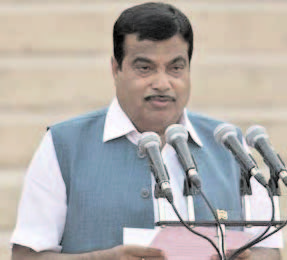
New Delhi (TIP): Shaken by the untimely death of union rural development minister Gopinath Munde in a road accident on Tuesday, the Centre today said it will amend the Indian Motor Vehicle (Amendment) Bill to upgrade it to the level of international standards. “The old legislation is not acceptable to me. It has many clauses that are practically not possible. The draft bill will be ready within a month.
We’ll then elicit views on its provisions,” union road transport, highways and shipping minister Nitin Gadkari told reporters. The new bill, according to Mr Gadkari, is likely to include measures such as the proposal to install CCTV cameras at all traffic signals, redesigning of heavy vehicles and a centralised data to check misuse of driving licences. “In a month’s time, we will re-draft the Motor Vehicle (Amendment) Bill in sync with six advanced nations – USA, Canada, Singapore, Japan, Germany and the UK,” he said.
The draft-Bill will be placed in a month’s time before the National Road Safety Council, where Prime Minister Narendra Modi will be invited. Views of various stakeholders will also be woven in. It will then be introduced in Parliament. The Union Minister cited statistics to suggest that the road safety track-record in the country was grim. “In 2012, there were 4.90 lakh accidents, which claimed the lives of 1.38 lakh people.
The data was similar in 2013. There are various reasons behind accidents,” Mr Gadkari pointed out. “Black spots for accidents will be identified across the nation in coordination with state governments and other stakeholders,” Gadkari observed, adding, “People don’t respect law here. After the passage of the new law, advanced CCTV cameras would be installed at all traffic signals and anyone violating the law will be issued challan in the next 24-hours.”
The existing Motor Vehicles (Amendment) Bill, which had been introduced and passed in the Rajya Sabha in May 2012, proposes hefty penalty for traffic rule violations and drunken driving. Earlier in the day, the road transport minister had chaired a high-level meeting with the officials of his ministry, Delhi Police and other departments to dwell on improving road safety measures. Road safety experts though also say that mere plans won’t help make a difference unless citizens are actively involved in the process.
When well-known comedian Jaspal Bhatti died in a road accident in Jalandhar, while he was on his way for a film promotion, doctors had said, had he strapped on his seat belt on the impact could have been much lesser. Two days after Union Minister Gopinath Munde’s fatal car accident it is hard not to feel a sense of deja vu as doctors, including Health Minister Dr. Harsh Vardhan, point out once again that a seat belt could have saved his life.
-

‘Rambo’ kills 3 in Canada, updates FB while on run
Amanhunt is under way in the Canadian city of Moncton after a gunman shot dead three members of the Royal Canadian Mounted Police and left two others injured. Residents of Moncton, a city of about 69,000 people around 95 miles (150 kms) northeast of St. John, New Brunswick, have been warned to stay inside and lock their doors after a man identified as Justin Bourque, 24, went on a shooting rampage shortly before 19.20 local time (22:20 GMT). The Royal Canadian Mounted police tweeted an image of the suspect wearing military camouflage and wielding two guns. Police in New Brunswick also confirmed on their Twitter feed that three officers had been killed and that two others had sustained “non-life threatening” injuries.
Dramatic footage of what appears to be the shooting has also appeared on Thursday showing residents hiding in their houses as they watch a gunfight between police and the shooter. People are shown shouting and screaming as shots ring out on the street outside. Police road blocks have been set up in the area and drivers told to stay away. In a macabre twist to the story a Facebook page, which appears to belong to the suspect, was active shortly before and during the city-wide manhunt. A post written 11 hours ago by Justin Bourque from Moncton featured the lyrics to the Megadeth song ‘Hook in Mouth’.
“Don’t try to fool us, we know the worst is yet to come. / I believe my kingdom will come,” the Facebook user wrote. The account profile features a picture of two men holding rifles and standing in a wooded area and posts on the site make repeated reference to the right to bear arms and weaponry. Bizarrely the Facebook user appears to have added two new friends to his account whilst on the run from police.
Meanwhile, a former colleague of the alleged gunman has described how he “wanted to go out with a bang and bring people with him”. Caitlin Isaac, who according to Business Insider, worked with Bourque at Walmart said Bourque wanted to “give people something to remember him for”, and “always had a problem with authority”. She claims he was fired from his job for “attitude related issues”.
-

Patiala cops nab Abohar NRI in Rs 300 crore drug scam
CHANDIGARH (TIP): Another mega synthetic drug racket, believed to be part of Rs 6,000 crore ring run by kingpin Jagdish Bhola, was busted on June 5 after the arrest of two masterminds, including an Abohar-based pharamaceutical businessman Varinder Sandhu, from Chandigarh. Sandhu’s aide Bikramjit Singh alias Pappi was arrested from Ropar by Patiala cops in a 72-hour operation that began on Tuesday.
The two were sent to 5-day police custody by the judicial magistrate, RPS Cheema, at a Patiala court. TOI had reported on June 4 that Punjab cops were on the trail of Rs 200-crore synthetic drug racket. Sandhu’s factories in Baddi in Himachal Pradesh where precursor chemicals were manufactured were also raided and chemicals seized. Police did not disclose the amount of drugs seized from Sandhu’s factories., but it is estimated to be Rs 300 crore. According to the FIR, a copy of which is with TOI, Sandhu holds a Canadian passport.
He, along with one Sandeep Singh Sidhu alias Soni and Nagendra Singh of Bathinda, were synthesising chemicals used to make party drug ICE, known as crystal meth or Speed. These drugs were being sent to Canada, Australia and England. “A hotel called Royal Castle on Bhawanigarh-Patiala road was used to collect drugs for delivery to different locations,” the FIR said. “Most of these people have passports of Canada, Australia, America, England to enable them to travel easily to other countries,” the FIR said.
-

Somasundaran appointed by US/ EPA to its Board of Scientific Conselors
NEW YORK (TIP): Professor P. Somasundaran has been appointed by the U.S. Environmental Protection Agency. to serve as a member of its Board of Scientific Counselors and to chair the ‘combined BOSC Subcommittees for Chemical Safety for Sustainability and Human Health Risk Assessment research program” and as such to the Board’s Executive Committee effective April l 28, 2014.
Board members of this committee must have shown extraordinary accomplishments in the field to be invited to serve The committee’s mission is to provide advice and recommendations on science and engineering research programs, plans, labs, and research management practices; the use of peer review to promote sound science; the development and progress of plans of the EPA’s R&D office; the quality of technical products; and human resources planning. Somasundaran is an expert in surface and colloid science, enhanced oil and coal recovery, nanoparticles, biosurfaces, and biosensors.
He is the author of 15 books and more than 700 scientific publications and patents.. Somasundaran, La von Duddleson Krumb Professor at Columbia University, is the founding Director of Langmuir Center for Colloids & Interfaces, and director of the National Science Foundation Industry/University Cooperative Research Center for Particulate and Surfactant Systems.
His work strives toward designing greener surfactant systems for an environmentally conscious market. Author and editor of 22 books and 700 scientific publications, Somasundaran is a 1985 inductee of the National Academy of Engineering, highest honor for an engineer at that time, and subsequently of the corresponding academies of China, India, Russia, and the Balkan Academy of Sciences/MT and the sole 2012 foreign member of the Royal Society of Canada,.
Somasundaran has been honored with many awards, including the Ellis Island Medal of Honor (1990), Gaudin Award (1982), Mill Man of Distinction Award (1983), Publication Board Award (l980), Richards Award(l987), Taggart Award for best paper (1987), Henry Krumb Lecturer of the Year (1989), Distinguished Member of SME (1983), “Most Distinguished Achievement in Engineering” award from AINA (1980), Distinguished Alumnus (1989 sole award) and the first Brahm Prakash Chair from the Indian Institute of Science (1990), Engineering Foundation’s Aplan award (1992), AIME Mineral Industry Education Award (2006), Columbia Alumni Association and the ACAA Distinguished Achievement Award (2007), MEANA Engineer of the Year Award (2007), Fellowship of theAmerican Institute of Chemical Engineers (2009), the Leadership Citation from the New Jersey Senate in 1991, and the title of Pan American Advisor for Mines, Metallurgy and Materials.
He was awarded Padma Shri(among the highest civil award by the Government of India) by the President of India 2010. He is the author/editor of 15 books and close to 700 scientific publications and patents the Honorary Editor-inchief of the international journal “Colloids and Surfaces,” the Editor-in- Chief of “The Encyclopedia of Surface and Colloid Science” and has served on many international, national and professional committees and National Research Council Panels, NSF research and advisory panels, DOI Advisory Panel and university research advisory panels.
He served in the Congress’ 28th Environmental Advisory Committee. He was the Chairman of the Board of the Engineering Foundation (1993-95) and has served on the board of the SME/AIME (1982-85). In the community, he served as member of the Piermont Planning Board and Citizen Advisory Committee and currently as a member of the Zoning Board of Appeals and Board of the Volunteers in Service to Education in India.
-

Canadian PM congratulates Modi, praises Indian democracy
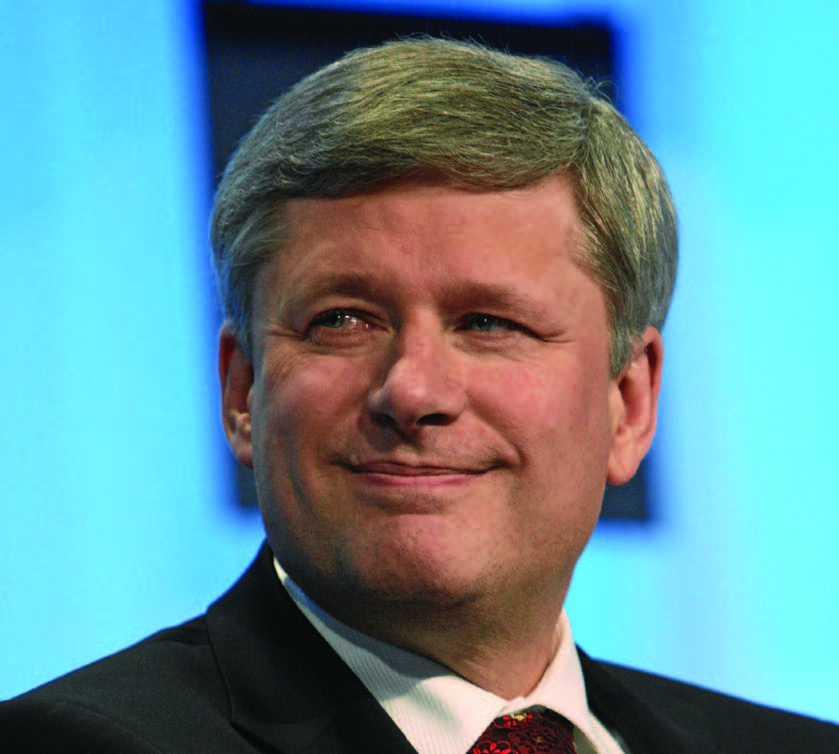
OTTAWA (TIP): Congratulating India’s prime ministerelect over his victory, Canadian Prime Minister Stephen Harper says he is looking forward “to working with Mr. Modi and the new government of India to further strengthen our social and economic partnership to the benefit of our citizens.” In an official statement, he commended “550 million Indian citizens who peacefully exercised their right to vote.
The unprecedented scale of these elections emphasizes both the vitality and strength of India’s democracy.” Canada, Harper emphasized, “is proud to share with India the values of freedom, democracy, human rights and the rule of law.” Deepak Obhrai, parliamentary secretary to the foreign minister and for international human rights, congratulated Modi and the BJP on their electoral success.
“These elections clearly illustrate that Mr. Modi’s message of economic revival resonated with the Indian electorate. Under the leadership of Mr. Modi, India is poised to reach greater heights.” “These elections highlight the maturity and strength of India’s democracy and I can say we rejoice with the people of India as they embark on a new direction under the leadership of Mr. Modi,” Conservative MP Kyle Seeback said in the House of Commons May 16.
He also referred to Modi’s achievements during his term as chief minister of Gujarat: “As Chief Minister of Gujarat, Mr. Modi made it (Gujarat) one of India’s bestperforming states economically.” Obhrai, an Indo-Canadian, said “our government congratulates Mr. Modi on his win. We look forward to working with Mr. Modi to strengthen the existing social and economic partnership that exists between Canada and India.”
“A clear majority for the BJP enables the new government to take measures aimed at boosting growth and investment, removing regulatory bottlenecks and restoring fiscal balance. If implemented, these will restore investor confidence and lead to a resurgence of growth creating new opportunities for Canadian business.” said Peter Sutherland, President & CEO of the Canada-India Business Council and former Canadian High Commissioner to India.
“One of the big criticisms of the Congress-led United Progressive Alliance (UPA) government was that it delayed the implementation of key reforms, seen by many as key to long-term growth,” this pre-eminent business organization stated. Modi, they noted, refocused the BJP party platform on a commitment to make India “globally competitive” and to reclaim India’s role as a global trading power.
-

International Regional Hindi Conference 2014 held
NEW YORK, NY (TIP): The Consulate General of India in association with ‘Yuva Hindi Sansthan’ and New York University organized the International Regional Hindi Conference 2014 in New York during 25-27 April 2014. The theme of the Conference was “The Hindi Language in the 21st Century Global World”.
Under this, discussions were held on two sub-themes – “Hindi as the Language of the Indian Diaspora” and “Hindi Education”. On 25 April 2014, a welcome reception and dinner was held at the Consulate for all the experts and participants during which ‘Prayog Hindi Manch’, USA, staged the play “Andhon Ka Haathi” written by famous Hindi writer the late Sharad Joshi. On 26 April 2014, the Conference commenced with the lighting of lamp.

Staging of play “Andhon Ka Haathi” written by Late Sharad Joshi
Addressing the participants present, Consul General of India, Dnayaneshwar M. Mulay expressed his good wishes for the success of the Conference. The Conference was inaugurated with the telecast of Ambassador of India to the USA, Dr. S. Jaishankar’s message. This was followed by a Keynote address by the Chairman of Yuva Hindi Sansthan, Dr. Surendra Gambhir of University of Pennsylvania on the subject “America’s Vision of Building a Multi-lingual Society: A Golden Period for Hindi”.
During the Conference experts from the US, Canada and India discussed about the efforts made, difficulties faced, various experiments, use of technology, etc. in teaching Hindi. The second day of the Conference ended with a Kavi Sammelan in which poets from the US, Canada and India participated. A number of proposals were put forth during the Conference – setting up of a Hindi Center in the US, holding the Conference annually, making resources for learning/teaching Hindi available online, collaborating with the Resource Centers in India, etc.

Ambassador of India to the US, Dr. S. Jaishankar’s video inaugural address
The experts and participants wholeheartedly supported these proposals. In the Closing Session of the Conference on the afternoon of 27 April 2014, Prof. Gabriela Nik. Ilieva of New York University presented the Conference Review. Following this Deputy Secretary (Hindi), Ministry of External Affairs of India, Smt. Suniti Sharma addressed those present.
In this Closing Address, Consul General of India, Dnyaneshwar M. Mulay extended his congratulations on the successful conclusion of the Conference and expressed the hope that a similar Conference would be organized soon. He presented Certificates of Recognition to all the experts who had made presentations during the Conference. The Conference concluded with a vote of thanks by the Chief Coordinator of the Conference, Sugandh Rajaram.

Consul General of India, Dnyaneshwar M. Mulay’s closing address
-

MOTHER’S DAY: A CELEBRATION OF BOND OF LOVE AND AFFECTION
Mother’s Day is a celebration of bond of love and affection between a mother and a child and it celebrates the spirit of motherhood. Find out the history behind the celebrations surrounding Mother’s Day.Bringing up a child through giving birth, and helping him or her growing up into an adult is considered to be the essence of motherhood. It is a challenge in itself, as she has to go through countless hardships in the process.
Mother’s Day is an occasion where the child and society remembers and acknowledges the essence and the effort that goes into giving birth and rearing a new life. This is a special day for children as well as the mothers and they get an opportunity to relish the everlasting bond of love and affection between them.
The Day
It is usually the second Sunday that comes in the month of May that Mother’s Day is observed by countries like America, Australia and Canada. There are two particular individuals that require special mention – Ms. Anna Jervis and Ms. Julia Ward Howe. Their efforts have brought us to acknowledge Mother’s Day in this world. US president, Woodrow Wilson signed the resolution that Mother’s Day would be celebrated hereon from 1914 on 8th March every year.
The Background of Celebrations
A celebration surrounding Mother’s Day or commemorating and honouring motherhood actually dates back to the Mother of Gods, Rhea, an occasion that merges with the springtime. This is according to the Greek mythology. In later history, we find that Mothering Sunday used to be celebrated in the United Kingdom as a traditional feast where people visited the church for being baptized.

The Symbols Associated With the Occasion
Our due appreciation and respect for our mothers and mother figures in life are symbolised by many ways. Anna Jarvis, who is regarded as one of the founders of Mother’s Day as it is today, called for white carnations to mark the day. There is also this International Mother’s Day shrine in a museum in Grafton, West Virginia, US. The spirit of motherhood is celebrated here.
The Celebration Today
Mother’s Day is celebrated all over the world through various occasions and presenting gifts to mothers and mother figures. It’s more about cards, flowers, jewelleries and visiting restaurants or gifting vacations. Although gifting our mothers as a note of thanks for their undoubtedly devoted love is quite appreciable, but there are critics who opine that this has now resulted in a commercialisation of the occasion and the real essence of it is somewhere getting subdued and lost.
Commemorating The Mother’s Day is more about expressing our gratitude than piling on material gifts. It is very essential for the progress and preservation of human society that we give due respects to our mothers through fulfilling our duties towards them in reality and not build a facade out of it. Mothers give birth and rear their kids out of pure love and affection and they deserve the same from their kids as they grow older and responsible human beings.
Showering cards, flowers, chocolates, and other gifts are surely enjoyed by women, who are mothers or mother figures as regarded by many, but they would be even happier to be loved, cared and respected for their selfless efforts as well. If we look deep into the concept of Mother’s Day, we will realise like many others that each and every day ought to be a Mother’s Day.

They are relentlessly performing their duty towards ensuring and working towards the well being of their children day-in and day-out, without fail, and without break. So we as children need to be more sensitive and grateful for this fact and thank them every moment of our lives, for the sacrifice that they have been performing for us.
M-O-T-H-E-R
“M” is for the million things she gave me,
“O” means only that she’s growing old,
“T” is for the tears she shed to save me,
“H” is for her heart of purest gold;
“E” is for her eyes, with love-light shining,
“R” means right, and right she’ll always be,
Put them all together, they spell “MOTHER,”
A word that means the world to me.
–Howard Johnson (c. 1915)When we speak of mothers, we are talking about an entity perhaps far greater than God itself. Mothers are the most reverend of humans who make us what we are, help us visualize things in a broader way and, above all, understand us like no one else can! It is but to thank them that we celebrate Mother’s Day.
With cakes, cards, chocolates, flowers, photo-framed memories and even jewellery, we try to thank our mothers for the innumerable sacrifices they did, sleeping very little at nights, being by our bedside when we were sick, giving us their best at all times and for instilling in us the belief that we are capable of achieving whatever we want.
“Thank you” seems like a very small word in front of Mothers who not just help us dream, but help us realize them step by step. Life wouldn’t be so beautiful if it was without our angels, our mothers! For a man, or even a father, it is not possible to understand the feeling of carrying a part of your own life in your womb. Motherhood begins there and continues until the death of the mother.
That is a period longer than any person’s job. However, so selfless is a mother that she asks for nothing in return. Our happiness, contentment and success are what she relishes as her rewards. Every woman in the world likes to be a mother.
The feeling of giving birth is nothing less than heavenly. For to-be-mothers, the world revolves around that tiny bump which carries their hopes, aspirations and wishes for the future. Mother’s Day is a token of the entire humanity’s gratitude to all mothers because of whom we have a planet worth living.
-

G7 ministers say talked about Ukraine’s financing needs
WASHINGTON (TIP): Top finance officials from the Group of Seven developed nations said they discussed Ukraine’s financing needs and the international response at an informal meeting on April 10.
“The discussions covered the major and recent developments in the global economy,” the G7 said in a brief statement. “This included a discussion of the situation in Ukraine, its financing needs and the international response.”
The meeting of finance ministers and central bankers from the G7, which comprises the United States, Canada, Japan, Italy, Britain, Germany and France, was held just ahead of the formal launch of spring meetings of the International Monetary Fund and World Bank.
-

International Regional Hindi Conference in New York on April 25-27, 2014
NEW YORK (TIP): A three-day International Regional Conference on Hindi is being organized by the Consulate General of India in New York is on April 25-27, 2014. Making this announcement at a press Conference held at the Consulate on Friday, March 28, 2014, Ambassador Dnyaneshwar Mulay, Consul General of India in New York said that the Conference will provide a unique opportunity for language experts, educators and policy makers from different parts of the USA, Canada, and the Caribbean along with experts from India to share their views on opportunities and challenges for the advancement of the Hindi language in North America and the Caribbean region.
“This Conference is continuation of the efforts of Government of India which organized the World Hindi Conference in New York in 2007. We want the dialogue to continue for assessing and promotion of India’s language and culture in this region of the world”, Consul General pointed out.
Consul General expressed his gratitude towards supporting organizations including New York University and Yuva Hindi Sansthan in organizing the Conference. Sugandh Rajaram, Chief Coordinator of the Conference and Consul, Consulate General of India, Prof. Gabriela Nik Ilieva of New York University and Ashok Ojha of Yuva Hindi Sansthan also briefed the media on the various aspects of the Conference. More details can be seen on the Conference website: http:// www.hindiconferenceamericas.com.
-

SIKHS IN US ARMY
India welcomes lawmakers’ backing
WASHINGTON (TIP): Indian ambassador S. Jaishankar has welcomed US lawmakers plea to end US defence department’s presumptive ban on Sikh Americans serving in the US military with their beards and turbans. Over 100 members of Congress from both Democratic and Republican parties made the plea in a March 10 letter to the US defence secretary Chuck Hagel to promote inclusion of Sikhs in the US armed forces by updating their appearance regulations.
The major bipartisan push for change was led by Joe Crowley, democratic vice chair of the Democratic Caucus in the house, and Rodney Frelinghuysen Republican chairman of the House Defence Appropriations Subcommittee. In a statement on the letter’s release, Jaishankar said: “The Congressional initiative is an important step towards upholding the cultural rights of the Sikh community in the United States.”
“The large number of signatories to this letter testifies to the important role played by the Sikh community in the United States and its various walks of life.” “The Sikh community’s success in the United States is a source of pride for India and a pillar of the India-US partnership,” he said.
Speaking of the contributions of the Sikh community in India, Jaishankar noted, “India takes pride in being the cradle of Sikhism. The Sikh community is an intrinsic part of India’s multi-religious and pluralistic fabric.” “Sikhs have made India proud with their sacrifices, achievements and leadership,” he said.
“India’s Sikh sons and daughters have held the highest offices in the land and have served at the highest ranks including at four star ranks in the Indian military.” “The tremendous progress and prosperity they have achieved, and their enormous contribution to their motherland, speak volumes about their indefatigable spirit of enterprise and diligence,” Jaishankar said.
In the last 30 years, only three Sikh Americans – Major Kamaljeet Singh Kalsi, Captain Tejdeep Singh Rattan and Corporal Simran Preet Singh Lamba – have been granted an accommodation, or permission, to serve in the US Army while maintaining their articles of faith. Such accommodations are neither permanent nor guaranteed, and must be renewed after virtually every assignment, the lawmakers noted.
In their letter to Hagel, the lawmakers wrote: “Given the achievements of these soldiers and their demonstrated ability to comply with operational requirements while practicing their faith, we believe it is time for our military to make inclusion of practicing Sikh Americans the rule, not the exception.”
Sikhs have served in the US army since World War I, and they are presumptively permitted to serve in the armed forces of America’s Nato allies Canada and the United Kingdom, as well as key partner India. Notably, the current chief of army staff of the Indian Army is a turbaned and bearded Sikh, the lawmaker noted.
-

US lawmakers urge Pentagon to end ban on Sikhs serving in army
WASHINGTON (TIP): A group of 105 US lawmakers has urged the Pentagon to lift the presumptive ban on the Sikhs serving in the military by easing restrictions on beard, turbans, and other religious accoutrements.
“Given the achievements of these soldiers and their demonstrated ability to comply with operational requirements while practising their faith, we believe it is time for our military to make inclusion of practicing Sikh Americans the rule, not the exception,” the lawmakers said in a letter to US defence secretary Chuck Hagel.
Led by Congressmen Joe Crowley, vice-chair of the Democratic Caucus, and Rodney Frelinghuysen, Chairman of the House Defence Appropriations Subcommittee, the 105 members of the US House of Representatives requested that the US armed forces update their appearance regulations to once again allow Sikh Americans to serve while abiding by their articles of faith, such as wearing a turban or beard.
They said the Sikhs have served in the US army since World War I, and are permitted to serve in the armed forces of Canada and the UK, as well as key partner India. The three Sikh Americans who have been granted individualised accommodations to serve in the US army wear turbans and maintain beards in a neat and conservative manner, both in accordance with operational requirements and their Sikh religious beliefs.
They are also able to wear protective equipment, including helmets and gas masks, in conformity with safety requirements. Sikh Coalition applauded lawmaker’s move calling for an end to the presumptive ban on devout Sikh service in the US military. “Today’s letter from Congress is a big step forward in our campaign to ensure equal opportunity for Sikh Americans in the US military,” said Rajdeep Singh, director of Law and Policy for the Sikh Coalition. “Sikhs have proven time and again around the world that they are excellent soldiers. It’s time for the Pentagon to realise that Sikh Americans are here to stay and that policies of exclusion are inevitably going to fail,” Singh said.
-

US attorney probes Mt. Gox, bitcoin businesses
NEW YORK (TIP): Manhattan attorney Preet Bharara has sent subpoenas to Mt. Gox, other bitcoin exchanges, and businesses that deal in bitcoin to seek information on how they handled recent cyber attacks, a source familiar with the probe said on Wednesday.
In the attacks — known as distributed denial of service attacks — hackers overwhelmed bitcoin exchanges by sending thousands of phantom transactions. At least three exchanges were forced to halt withdrawals of bitcoins on February 7, including Mt. Gox, which was the largest at the time. Mt. Gox never resumed service before going dormant on Tuesday, leaving customers unable to recover their funds.
The Tokyobased company’s chief executive, Mark Karpeles, said earlier on Wednesday that he is working with others to solve the problems. “As there is a lot of speculation regarding Mt Gox and its future, I would like to use this opportunity to reassure everyone that I am still in Japan, and working very hard with the support of different parties to find a solution to our recent issues,” Karpeles said in a statement posted on the Mt. Gox website.
A spokesman for Bharara declined to comment. Bitcoin, a form of electronic money independent of traditional banking, relies on a network of computers that solve complex mathematical problems as part of a process that verifies and permanently records the details of every bitcoin transaction that is made. At current prices, the bitcoin market is worth about $7 billion. Investors deposit their bitcoins in digital wallets at specific exchanges, so the Mt. Gox shutdown is similar to a bank closing its doors — people cannot retrieve their funds.
While proponents of bitcoin hail its anonymity and lack of ties to traditional banking, regulators have become increasingly interested in the digital currency due to its usage by criminal elements and its volatile nature. It has been a rough month for bitcoin investors, with cyber attacks on several exchanges, a sharp fall in bitcoin’s value, and rising pressure from regulators. Bitcoin’s price varies by exchange, but the losses were most dramatic on Mt. Gox, where it fell to about $135 from $828.99 before February 7. “Mt Gox has been broken and it was obvious there was something really bad going on there for nearly a year.
They were processing withdrawals very slowly and generally being very opaque about what was going on there,” said Mike Hearn, a bitcoin developer in Zurich, Switzerland. A second source familiar with the case said US federal law enforcement is investigating Mt. Gox. A third source said the US Federal Bureau of Investigation was monitoring the situation. Japan’s finance ministry and police are also looking into the abrupt closure of Mt. Gox, according to the Japanese government’s top spokesman.
MALLEABILITY
Bitcoin has gained increasing acceptance as a method of payment and has attracted a number of prominent venture capital investors, including Andreessen Horowitz and Union Square Ventures. The digital currency has also caught the eye of hackers. The recent cyber attacks exploited a process used by some bitcoin exchanges that introduced “malleability” into the code governing transactions, experts said. Simply put, this allowed hackers to slightly alter the details of codes to create thousands of copies of transactions.These copies slowed the exchanges to a crawl, forcing them to independently verify each transaction to determine what was real and what was fake. A document circulating on the Internet purporting to be a crisis plan for Mt. Gox, said more than 744,000 bitcoins were “missing due to malleability-related theft,” and noted Mt. Gox had $174 million in liabilities against $32.75 million in assets. It was not possible to verify the document. If accurate, that would mean approximately 6 percent of the 12.4 million bitcoins minted would be considered missing.
Developers are working on fixes to bitcoin’s software to guard against cyber attacks, though many larger service providers have already implemented such changes, according to Gregory Maxwell, one of the bitcoin software’s core developers. He said some malleability in the software protocol was necessary — for example, in transactions where multiple people can put in money, but the transaction is not valid until enough funds are contributed. “None of these fixes are especially complicated, but because the correctness of the software is important we use a conservative release process that avoids rushing anything out,” Maxwell said, adding that the bulk of the recent work on the software is being done by four people.
BITSTAMP
Jacob Dienelt, who trades bitcoins and sells paper bitcoin wallets, said people he knows in the bitcoin community in New York stopped using Mt. Gox when the exchange halted dollar withdrawals several months ago and said all withdrawals had to be in bitcoin. Dienelt said has not been subpoenaed. With Mt. Gox’s shutdown, Bitstamp has handled the most volume in the last two days, with more than 165,000 US dollar transactions, according to Bitcoincharts. Bitstamp had temporarily halted customer withdrawals earlier this month, citing “inconsistent results” and blaming a denial-ofservice attack.The price of bitcoin was lately at $588 on Bitstamp, up about 7% on the day. “Right now is a sweet buying opportunity. I don’t think you’re going to see bitcoin go this low for awhile — if ever again,” said Jordan Kelley, chief executive of Robocoin, which launched the world’s first Bitcoin ATM in Vancouver, Canada, in the fall. “The more that bitcoin is on the front pages, the more that people are discussing it and educating one another, the better for the currency.” Kelley said Robocoin has not been subpoenaed in the US regulatory probe; nor has New York-based exchange Coinsetter, according to a spokesperson. Bitstamp did not respond to requests for comment.
-

Challenges in India-US ties
Inconsistencies mark Obama Administration’s approach
“… the US is becoming increasingly strident in its economic relations with India on issues ranging from sanctions on sections of our pharmaceutical industry and our civil aviation facilities, while demanding changes in our policies on solar panels and equipment and placing restrictions on the movement of IT personnel. It is, however, not India alone that is the recipient of such measures from the US!”, says the author
Traveling across the US as the winter Olympics in Sochi commenced, one was saddened to witness how India’s international credibility had been shaken when television audiences across the world saw three forlorn Indian athletes marching without the national flag. India faced this disgrace, thanks to the avariciousness and nepotism of an internationally disgraced Indian Olympic Association.
Sadly, this was accompanied by charges of corruption, nepotism, match fixing and worse involving the President of the BCCI. Many Indian friends in the US asked in anguish: “Is there no section of national life left in India which is free from corruption and venality?” The mood in Washington, where one had an occasion to meet a cross section of senior officials, business executives, analysts and scholars, was quite different.
In marked contrast to the earlier years, I found widespread criticism of the conduct of foreign and security policies by President Obama. The Administration had not just botched up its healthcare program, but was seen as indecisive and weak in dealing with challenges in West Asia, Afghanistan and the provocations of a jingoistic and militaristic China. President Obama, in turn, is acutely conscious of the mood in the country which wants an end to foreign military entanglements. More significantly, as the US moves towards becoming a net exporter of energy, thanks to the expanding production of shale gas and oil, the country’s geopolitics are set for profound change.
Using its leadership in areas of productivity and innovation, the US now appears set to the stage for increasing domination of the world economic order. From across its eastern shores, the US is negotiating comprehensive trade and investment partnerships with its European allies. Across its western shores in the Pacific, the Americans are negotiating transpacific partnerships with Australia, Brunei, Chile, Canada, Japan, Malaysia, Mexico, New Zealand, Peru, Singapore, South Korea and Vietnam as negotiating partners. While China has informally indicated an interest in joining this partnership, the US will use its influence to ensure that China is not admitted till American political and economic pre-conditions are met.
There is naturally interest in Washington in the forthcoming general election in India. The assessment appears to be that the ruling Congress is headed for a drubbing in the polls. Not many tears will be shed in Washington or elsewhere about this inevitability as the only questions which well-wishers of India ask are how India landed itself in its present morass of corruption and whether a new dispensation, which may be fractious, will be able to restore India to a high growth path. Speaking informally, a senior official recalled that President Obama had described the US-India partnership as “one of the defining partnerships of the world”.
The official noted that “every meaningful partnership between powerful nations encounters setbacks”, adding that such setbacks should be minor compared to the benefits of the relationship and the magnitude of what the two could accomplish together. The Khobragade episode was a defining event in India-US relations. The Americans found Indians across the political spectrum united in the view that insults to India’s national dignity would not be acceptable.
It is important that in future negotiations by the Task Force set up to address such issues, India should make it clear that it will not tolerate events like Mrs. Sonia Gandhi being threatened with prosecution while undergoing medical treatment in New York, or the supercilious attitude adopted towards Mr. Narendra Modi, who is a constitutionally elected Chief Minister. We should not accept a situation where Americans believe that they can behave high-handedly towards our elected politicians because of their domestic lobbies. The US should also be left in no doubt that on such issues, including consular and diplomatic privileges, India will firmly adhere to a policy of strict reciprocity.
The Obama Administration has messed up its relations with President Karzai in Afghanistan, dealing with him in a manner that showed scant regard for his position as the elected Head of State of Afghanistan. Worse still, by its actions, the US has clearly given the impression that despite its protestations it was clandestinely dealing, behind Mr. Karzai’s back, with the Taliban. While the US-Afghanistan Strategic Partnership speaks of joint determination in eliminating the “al- Qaida and its affiliates,” the US now speaks only of eliminating al-Qaida and not is affiliates like the Taliban, the Islamic Movement of Afghanistan, Lashkar-e-Taiba and Jaish-e- Mohammed.
There are naturally concerns in Afghanistan that the US, which needs Pakistan’s assistance for withdrawing its military equipment from Afghanistan, will seek to appease the Pakistanis by giving them a lessthan- healthy role in determining the future dispensation in Afghanistan and the role of the Taliban in such a dispensation. While there is an evident congruence of interests in working with the US, Japan and others in the face of growing Chinese military assertiveness, New Delhi and Tokyo cannot ignore the reality that there have been many flipflops and inconsistencies in the approach of the Obama Administration to China.
Moreover, the US is becoming increasingly strident in its economic relations with India on issues ranging from sanctions on sections of our pharmaceutical industry and our civil aviation facilities, while demanding changes in our policies on solar panels and equipment and placing restrictions on the movement of IT personnel. It is, however, not India alone that is the recipient of such measures from the US! Despite these challenges, India cannot ignore the reality that the US is the pre-eminent power in the world.
Moreover, it will remain so in the coming years, primarily because its innovative and technological strengths are going to be reinforced by its energy surpluses, together with the energy potential of its neighbors like Canada, Mexico and Argentina. It will, moreover, remain the foremost power in the manufacture of high-tech equipment, particularly in defense and aerospace. It is for India to fashion industrial policies to leverage its strengths and potential to secure high levels of investment and partnership in crucial high-tech industries.
I was advised in Washington that contracts currently secured with US companies enable us to import 5.8 million metric tons per annum of shale gas from the US annually. According to oil industry sources, these contracts alone provide us more gas than we could obtain from the controversial Iran-Pakistan-India pipeline. But, for all this to fructify, the new dispensation in New Delhi will have to replace economic populism and accompanying fiscal irresponsibility with a quest for accelerated growth.