Tag: Canada

  • Judge puts temporary hold on Trump’s latest ban on Harvard’s foreign students

    Judge puts temporary hold on Trump’s latest ban on Harvard’s foreign students

    WASHINGTON, D.C. (TIP): A federal judge has temporarily blocked a proclamation by President Donald Trump that banned foreign students from entering the U.S. to attend Harvard University.

    Trump’s proclamation was the latest attempt by his Republican administration to prevent the nation’s oldest and wealthiest college from enrolling a quarter of its students, who account for much of its research and scholarship.

    It’s the second time in a month Harvard’s incoming foreign students have had their plans thrown into jeopardy, only to see a court intervene. Alan Wang, a 22-year-old from China who is planning to start a Harvard graduate program in August, said it has been an emotional roller coaster. “I cannot plan my life when everything keeps going back and forth. Give me some certainty: Can I go or not?” Wang said.

    Wang was born and raised in China but attended high school and college in the U.S. He’s now in China for summer vacation. Recently he has been exploring options in countries with more appealing immigration policies, including Canada, Australia and New Zealand. Harvard filed a legal challenge on Thursday, asking for a judge to block Trump’s order and calling it illegal retaliation for Harvard’s rejection of White House demands. Harvard said the president was attempting an end-run around a previous court order.

    A few hours later, U.S. District Judge Allison Burroughs in Boston issued a temporary restraining order against Trump’s proclamation. Harvard, she said, had demonstrated it would sustain “immediate and irreparable injury” before she would have an opportunity to hear from the parties in the lawsuit.

    Collin Binkley has covered Harvard for nearly a decade – most of the time living half a mile from campus.

    Burroughs also extended the temporary hold she placed on the administration’s previous attempt to end Harvard’s enrollment of international students. Last month, the Department of Homeland Security revoked Harvard’s certification to host foreign students and issue paperwork to them for their visas, only to have Burroughs block the action. Trump’s order this week invoked a different legal authority.

    A court hearing is scheduled for June 16 to decide if the judge will extend the block on Trump’s proclamation.

    If Trump’s measure were to survive the court challenge, it would block thousands of students who are scheduled to go to Harvard’s campus in Cambridge, Massachusetts, for the summer and fall terms. It would also direct the State Department to consider revoking visas for Harvard students already in the U.S.

    “Harvard’s more than 7,000 F-1 and J-1 visa holders — and their dependents — have become pawns in the government’s escalating campaign of retaliation,” Harvard wrote Thursday in a court filing.

    While the court case proceeds, Harvard is making contingency plans so students and visiting scholars can continue their work at the university, President Alan Garber said in a message to the campus and alumni.

    “Each of us is part of a truly global university community,” Garber said Thursday. “We know that the benefits of bringing talented people together from around the world are unique and irreplaceable.”

    Trump’s proclamation invoked a broad law allowing the president to block “any class of aliens” whose entry would be detrimental to U.S. interests. It’s the same basis for a new travel ban blocking citizens of 12 countries and restricting access for those from seven others.

    In its challenge, Harvard said Trump contradicted himself by raising security concerns about incoming Harvard students while also saying they would be welcome if they attend other U.S. universities.

    “Not only does this undermine any national security claim related to the entry of these individuals, it lays bare the Proclamation’s true purpose: to punish Harvard as a disfavored institution,” the school wrote.

    Harvard has attracted a growing number of the brightest minds from around the world, with international enrollment growing from 11% of the student body three decades ago to 26% today.

    Rising international enrollment has made Harvard and other elite colleges uniquely vulnerable to Trump’s crackdown on foreign students. Republicans have been seeking to force overhauls of the nation’s top colleges, which they see as hotbeds of “woke” and antisemitic viewpoints.

    Garber says the university has made changes to combat antisemitism. But Harvard, he said, will not stray from its “core, legally-protected principles,” even after receiving federal ultimatums.

    Trump’s administration also has taken steps to withhold federal funding from Harvard since it rejected White House demands related to campus protests, admissions, hiring and more. Harvard’s $53 billion endowment allows it to weather the loss of funding for a time, although Garber has warned of “difficult decisions and sacrifices” to come.
    (Source: AP)

  • Trump dangles Golden Dome for Canada: Join US, enter  $175B defense plan for free

    Trump dangles Golden Dome for Canada: Join US, enter $175B defense plan for free

    WASHINGTON, D.C. (TIP): US President Donald Trump on Tuesday, May 27, invited Canada to join his proposed USD 175 billion ‘Golden Dome’ missile defense system for free — on the condition that it becomes the 51st state of the United States. “I told Canada, which very much wants to be part of our fabulous Golden Dome System, that it will cost $61 Billion Dollars if they remain a separate, but unequal, Nation, but will cost ZERO DOLLARS if they become our cherished 51st State,” Trump wrote on his Truth Social network.

    “They are considering the offer!” the president claimed in his post.

    Last week, President Donald Trump unveiled plans for the Golden Dome missile defense program — a USD 175 billion, multilayered system that will put US weapons in space for the first time. Speaking from the Oval Office, Trump said he expects the system to be fully operational by 2029 and capable of intercepting missiles “even if they are launched from space.”

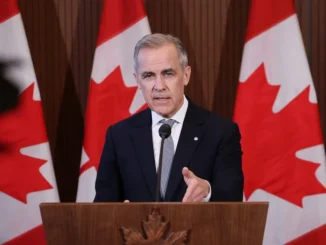
    Canadian Prime Minister Mark Carney has acknowledged that his government is in talks with the US regarding participation in the Golden Dome program. “Is it a good idea for Canada? Yes, it is good to have protections in place for Canadians,” Carney said during a press conference last week. “We cooperate if necessary but not necessarily cooperate,” he added.

    However, Canada has yet to officially respond to the statehood claim. Earlier this month, Carney has made it clear in Trump’s presence that Canada’s sovereignty is “not for sale.” On May 6, Carney met Trump for the first time since being elected as Canada’s Prime Minister. Their meeting in the Oval Office quickly took an unexpected turn when Trump reiterated his proposal for Canada to join the US as its 51st state.

    “It would really be a wonderful marriage,” Trump said in the presence of reporters.

    In response, Carney promptly turned down Trump’s offer and said, “It’s not for sale, it won’t be for sale – ever.” “Never say never, never say never,” Trump responded.

    The Golden Dome missile defense system is designed to integrate ground- and space-based capabilities to counter missile threats at all four critical stages of an attack: preemptively neutralizing missiles before launch, intercepting them in their early flight phase, disrupting them midcourse, and blocking them in the final moments before impact.
    (Source: India Today)

  • Canada Post workers poised to strike Friday, May 23

    Canada Post workers poised to strike Friday, May 23

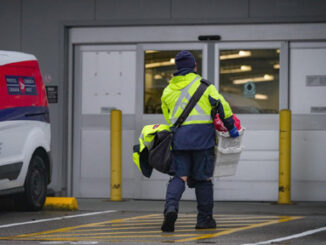
    TORONTO (TIP): Canada Post received a strike notice Monday, May 19, from the union representing more than 55,000 postal workers, with operations poised to shut down by the end of the week — for the second time in six months.

    The union informed management that employees plan to hit the picket line starting Friday morning at midnight, the Crown corporation said. A work stoppage would affect millions of residents and businesses who typically receive more than two billion letters and roughly 300 million parcels a year via the service.

    No new items would be accepted until the strike ends, while those already in the system would be “secured” but not delivered, Canada Post said. A 32-day strike during peak shipping season ahead of the winter holidays last November and December left millions of letters and parcels in limbo and a massive backlog to sort through.
    (Source: The Albertan)

  • Should a retiring Prime Minister get two pensions?

    Should a retiring Prime Minister get two pensions?

    • Justin Trudeau to collect two pensions, $104K in severance
    • The former PM is entitled to one pension for his nearly 17 years as a Member of Parliament and a second for his decade as Prime Minister
    By Prabhjot Singh

    “Should a retiring Prime Minister get two pensions?,” is the subject of an animated debate that has been set in motion by the Canadian Taxpayers Federation (CFT) as it released its calculations about the estimated pension and severance payments to be paid to 110 Members of Parliament who were either defeated or did not see re-election to the 45th House of Commons.

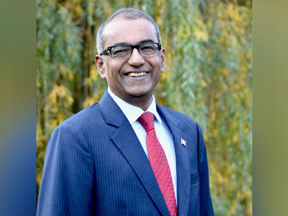
    At least six members of the outgoing House of Indian descent who either lost the April 28 elections or decided not to seek re-election are among the beneficiaries. They are  Chandra Arya, George Chahal, Kamal Khera, Harjit Singh Sajjan, Jagmeet Singh and Arif Virani.

    While Chandra Arya, Harjit Singh Sajjan and Arif Virani did not contest, the remaining three – Jagmeet Singh, Kamal Khera and George Chahal – were defeated in the last federal elections held on April 28.

    While releasing its calculations, the CFT  said that “defeated or retiring MPs will collect about $5 million in annual pension payments, reaching a cumulative total of about $187 million by age 90. In addition, about $6.6 million in severance cheques will be issued to some former MPs.

    “Former Prime Minister Justin Trudeau will collect two taxpayer-funded pensions in retirement. Combined, those pensions total $8.4 million, according to CTF estimates. Trudeau also takes a $104,900 severance payout because he did not run again as an MP.

    “The payouts for Trudeau’s MP pension will begin at $141,000 per year when he turns 55 years old. It will total an estimated $6.5 million should he live to the age of 90. The payouts for Trudeau’s prime minister pension will begin at $73,000 per year when he turns 67 years old. It will total an estimated $1.9 million should he live to the age of 90,’ the CFT said in its statement.

    Going by the statement, it not only gave details of all 110 Members of Parliament who will no longer sit in the House of Commons but has also raised a pertinent question as to whether a retiring Prime Minister should be entitled to two pensions or the government should promulgate a law to end the second pension for all Prime Ministers.

    “Taxpayers shouldn’t feel too bad for the politicians who lost the election because they will be cashing big severance or pension cheques,” said Franco Terrazzano, CTF Federal Director. “Thanks to past pension reforms, taxpayers will not have to shoulder as much of the burden as they used to. But there is  more work to do to make politicians pay affordable for taxpayers.”

    “Taxpayers need to see leadership at the top, and that means reforming pensions and ending the pay raises MPs take every year,” Terrazzano said. “A Prime Minister already takes millions through his/her first pension, he/she should not be billing taxpayers more for his/her second pension.

    “The government must end the second pension for all future prime ministers.”

    There are 13 former MPs who will collect more than $100,000-plus a year in pension income. The pension and severance calculations for each defeated or retired MP can be found.

    Going by the CFT statement, four of the six members of the outgoing House of Indian descent, will be entitled to severance payments varying between Can $74000.00 and Can $ 1,54,000 besides getting a pension between  Can $ 45000 and Can $ 77000.

    George Chahal, who lost the election, would get a severance payment of Can $ 1,04,900. Kamal Khera, who was a federal minister and lost the April 28 election, would get the highest severance payments among MPs of Indian descent as she would be entitled to draw Can $ 1,54,850 as a severance payment.

    Harjit Singh Sajjan, who also remained a federal minister in Justin Trudeau’s government, would draw the lowest severance payment as his entitlement has been worked out to be Can $ 74000.

    Only MP of Indian descent to head a national party, Jagmeet Singh, who lost the April 28 election from Burnaby Centre in British Columbia, would get a severance payment of Can $ 1,40,300.00. Another federal minister in Justin Trudeau’s government, Arif Virani, would get a severance payment of Can $ 1,04,900.00.

    Chandra Arya, whose candidature as Liberal candidate from Nepean was revoked, would now draw a pension of Can $ 53000, while pension of Jagmeet Singh will be Can $ 45000. The pension is calculated on the number of years a Member has served. Former federal ministers – Kamal Khera (Can $ 68000), Harjit Singh Sajjan (Can $ 77000) and Arif Virani (Can $ 66000) would also get pensions as former MPs.

    Jagmeet Singh’s pension remained a subject of regular debates in the House of Commons when it took up no-confidence motions moved by the Conservatives against the minority Liberal government headed by Justin Trudeau. NDP led by Jagmeet Singh twice bailed out the government while the House took up no-confidence motions moved by the Leader of the Opposition, Pierre Poilievre, Incidentally, Pierre Poilievre, was also among the 110 MPs who either lost or did not contest the April 28 elections.

     (Prabhjot Singh is a Toronto-based award-winning independent journalist. He was celebrated by AIPS, the international body of sports journalists, for covering ten Olympics, at its centennial celebrations held at UNESCO Centre in Paris during the 2024 Olympic Games. Besides, he has written extensively  about business and the financial markets, the health industry, the public and private sectors, and aviation. He has worked as a political reporter besides covering Sikh and Punjab politics. He is particularly interested in Indian Diaspora and Sikh Diaspora in particular. His work has also appeared in various international and national newspapers, magazines, and journals. He can be reached at prabhjot416@gmail.com)

  • Anita Anand scripts history as six South Asians join Mark Carney’s new Council of Ministers

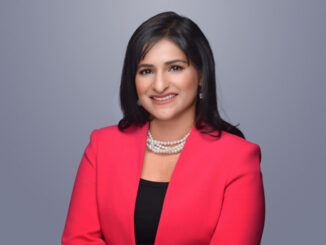
    Anita Anand scripts history as six South Asians join Mark Carney’s new Council of Ministers

    By Prabhjot Singh

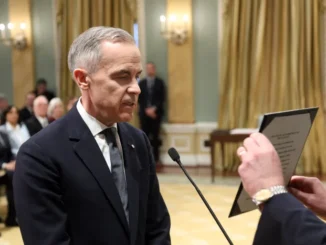
    For 25 members of the House of Commons of South Asian descent, the swearing in of the new Council of Ministers headed by banker-turned-politician Mark Carney marked a new beginning.

    The community could not have asked for more, as six of its members—four as Cabinet Ministers and two as Secretaries of State—have been inducted into Carney’s new Council of Ministers.

    Prime Minister Carney has also tried to maintain gender equity by naming 14 men and an equal number of women in his Cabinet, excluding himself. Six of his Secretaries of State are men, and the remaining four are women. Besides Anita Anand, Ruby Sahota is the other woman of South Asian descent to figure in the new Council of Ministers.

    Mark Carney preferred Anita Anand as Minister of Foreign Affairs to her predecessor  Melanie Joly, who has now been named as Minister of Industry and Minister responsible for Canada Economic Development for the Quebec regions, and Registrar General.

    Maninder Sidhu, on elevation as Cabinet Minister, becomes Minister of International Trade.

    Ruby Sahota will be Secretary of State for combating crime, and Randeep Serai has been named Secretary of State for International Development.

    Other than Anita Anand, Mark Carney named five other South Asians, including  Gary Anandasangaree,  Shafqat Ali, Maninder Sidhu, Ruby Sahota and Randeep Serai in his new Council of Ministers. Ruby Sahota and Randeep Serai would not sit in Cabinet meetings but would hold charge as Secretaries of State in different departments.

    Shafqat Amanat Ali was born into a Punjabi Muslim family in Lahore, to noted classical singer, Ustad Amanat Ali Khan and his wife Almas Amanat Ali Khan, on 26 February 1965, making him the seventh generation of the Patiala Gharana, which was founded in the mid-late 19th century by his great-grandfather. He has made a name in the Real Estate industry in the Greater Toronto Area.

    Anita Anand has been the toast of ceremonies, for she continues to be in the top echelons of Canadian politics.

     58-year-old lawyer, academician and accomplished politician, Anita Anand has been going through her most eventful year of her career. She was the first Hindu to become a federal minister in Canada when Prime Minister Justin Trudeau named her the first woman Defense Minister of the country. Later in her previous term, she was also the President of the Treasury Board and the Transport Minister.

    After Deepak Obhrai, the longest-serving Member of the House of Commons representing the Canadian Hindu Community, Anita Anand has been holding the fort for the present without ever getting involved in partisan politics. Deepak Ubhrai represented Alberta in the House of Commons for seven successive terms.

    Incidentally, the new Canadian Prime Minister was elected from a riding in Nepean, in the capital city of Ottawa, after the candidature of another sitting Hindu MP, Chandra Arya, was revoked.

    In December last year, when internal strife started rocking the minority Liberal Government, Prime Minister Justin Trudeau offered to quit both as Leader of the Liberal Party and Prime Minister of Canada.

    Anita Anand was considered one of the front runners as a replacement for Justin Trudeau. She, however, preferred to stay aloof. Instead, she announced that she would prefer to go back to academics and take a break from politics.

    Chandra Arya was among the first to announce his candidature for the Liberal Party leadership. The election committee of the Liberal Party, however, did not proceed with his candidature on technical grounds.

    Since Mark Carney holds Anita Anand in high esteem, he reportedly persuaded Anita Anand to change her mind and contest again. She agreed and returned to retain her seat in the House of Commons to become the Foreign Minister.

    More about Anita Anand

    Suave, sober and assertive Anita Anand has done Canada’s South Asian community proud. On Wednesday, May 14, she was sworn in as Canada’s first Hindu Foreign Minister to add yet another feather to her distinct cap.

    Anita Anand was first elected as the Member of Parliament for Oakville in 2019. She was re-elected in 2021. She served most recently as Minister of Innovation, Science and Industry and has previously served as Minister of Transport and Internal Trade, President of the Treasury Board, Minister of National Defense, and Minister of Public Services and Procurement.

    As Minister of Public Services and Procurement, Anita led contract negotiations to secure vaccines, personal protective equipment, and rapid tests for Canadians during the height of the COVID-19 pandemic. Later, as Minister of National Defense, she spearheaded initiatives to tackle sexual misconduct and bring about cultural change in the Canadian Armed Forces. She also led Canada’s efforts to provide military aid and personnel to train Ukrainian soldiers following Russia’s illegal invasion of Ukraine.

    As President of the Treasury Board, Anita spearheaded a government-wide spending review and worked to reduce red tape for small businesses and entrepreneurs. Her time at Transport Canada yielded Canada’s first-ever high-speed rail project and historic progress in eliminating interprovincial trade barriers.

    In her latest portfolio, Anita has been focused intently on protecting Canadian workers and industries in the face of President Trump’s unjustified trade war.

    Anita is a scholar, lawyer, researcher, and mother of four children. Born and raised in rural Nova Scotia, she moved to Ontario in 1985. She holds a Bachelor of Arts (Honors) in Political Studies from Queen’s University, a Bachelor of Arts (Honors) in Jurisprudence from the University of Oxford, a Bachelor of Laws from Dalhousie University, and a Master of Laws from the University of Toronto. She was called to the Bar of Ontario in 1994.

    Anita and her husband, John, raised their four children in Oakville. She is a devoted leader with a proven record of service. In her Oakville community, she has served on the Board of Directors of the Lighthouse Foundation for Grieving Children, Oakville Hospital Foundation, and Oakville Hydro Electricity Distribution Inc.

    Incidentally, it is the 75th anniversary of South Asians in Canadian politics. In 1950 Giani Naranjan Singh Grewal had made a triumphant entry in Canadian politics when he was elected as a member of the Mission City Council in British Columbia. Since then, the community has come a long way.

    Anita Anand’s appointment also becomes significant as Canada’s relations with India are far from cordial. Both India and Canada have to discard acrimony to restore the bonhomie that the two nations once enjoyed.

    For the immigrant community, the most important portfolio is that of the Minister of Immigration, Refugees and Citizenship. Mark Carney has named Lena Metlege Diab as the new Minister of immigration, Refugees and Citizenship. The immigrants would be looking forward to new and favorable changes in the immigration policies after several radical changes were made in the last six months of the previous Liberal government.

    (Prabhjot Singh is a Toronto-based award-winning independent journalist. He was celebrated by AIPS, the international body of sports journalists, for covering ten Olympics, at its centennial celebrations held at UNESCO Centre in Paris during the 2024 Olympic Games. Besides, he has written extensively  about business and the financial markets, the health industry, the public and private sectors, and aviation. He has worked as a political reporter besides covering Sikh and Punjab politics. He is particularly interested in Indian Diaspora and Sikh Diaspora in particular. His work has also appeared in various international and national newspapers, magazines, and journals. He can be reached at prabhjot416@gmail.com)


  • Canada Freezes US Travel as Major Canadian Airlines Slash Routes to US Cities to Tap the European Market

    Canada Freezes US Travel as Major Canadian Airlines Slash Routes to US Cities to Tap the European Market

    OTTAWA (TIP): Canada is rapidly reshaping its aviation ties with the US as declining travel demand, rising diplomatic tensions, and shifting consumer preferences drive major airlines—Air Canada, WestJet, Porter, and Flair—to slash routes to key U.S. cities including San Francisco, Miami, New York, and Washington. With a significant drop in both leisure and business travel from Canada to the U.S., carriers are now reallocating capacity toward Europe, where demand remains strong and political conditions are more favorable.

    Cross-Border Travel in Decline

    In recent months, both business and leisure travel from Canada to the United States have seen a dramatic downturn. Data from the U.S. Customs and Border Protection (CBP) shows that entries from the northern border fell by 12.5% in February and a further 18% in March, indicating sustained contraction in cross-border movement. This retreat comes amid growing discomfort among Canadian travelers, fueled by strict U.S. border enforcement, electronic device inspections, and political rhetoric painting Canada as “the 51st state.”

    Further compounding this decline, Flight Centre Travel Group Canada reported that Canadian business travel to the United States plummeted by 40% in the early months of 2025. Tourism Economics forecasts a 15.2% decline in international visitors to the U.S. this year alone, a downturn echoed by decreased arrivals from key European markets like Germany and Spain—down 30% and 25%, respectively, in March.

    Political Fallout Behind the Travel Freeze

    The downturn in U.S.-bound travel from Canada coincides with an atmosphere of political friction. While President Donald Trump dismissed concerns in an April 27 media exchange—calling the tourism slowdown “not a big deal”—his rhetoric and policy decisions have sent ripples through bilateral travel flows. Two days after denying the downturn, Trump stated in an ABC interview that “tourism is way up,” a claim that was fact-checked and corrected live on air.

    Meanwhile, Canada has issued updated travel advisories cautioning citizens about “strict enforcement” at U.S. borders and warning of increased scrutiny of electronic devices. Similar advisories have been issued by France, Belgium, Finland, Portugal, and the United Kingdom, reinforcing the perception of heightened tension and risk when entering the United States.

    Air Canada Leads Pullback from the U.S.

    Air Canada has taken the most prominent steps to scale back its U.S. operations. In 2024, the airline had ramped up transborder service, including frequent flights between Montréal–Trudeau International Airport (YUL) and San Francisco International Airport (SFO), with up to three daily rotations during peak summer months. However, facing reduced demand, the airline will now revert to a single daily flight, cutting previously scheduled frequencies.

    These cuts follow earlier reductions to routes linking Vancouver International Airport (YVR) with Miami, Houston, and Washington. Mark Galardo, Air Canada’s Executive Vice President of Revenue and Network Planning, noted that the airline is proactively “moving capacity into other sectors where we see strength,” referring specifically to the European market.

    WestJet Cancels More US Routes

    WestJet, another major Canadian airline, has also made decisive cuts to its U.S. schedule. The airline recently canceled its planned Vancouver–Austin route, which was set to launch in May 2025, citing a “downward shift in demand.” This follows previous cancellations of routes from Calgary to New York-LaGuardia and from Edmonton to Orlando.

    Rather than attempting to revive faltering U.S. services, WestJet is pivoting to Europe. The airline plans to increase its footprint across popular transatlantic destinations, anticipating stronger seasonal demand and more favorable geopolitical conditions.

    Porter Airlines Cuts Frequencies and Refocuses on Canada

    Porter Airlines, a growing player in Canada’s mid-size market, has implemented “targeted frequency reductions” on select U.S. routes due to softening demand. At the same time, the airline is expanding its domestic Canadian network, increasing capacity from 75% to 80%. Interestingly, while still maintaining some Canada–U.S. service, Porter has paused marketing campaigns aimed at promoting U.S. travel, reflecting traveler hesitation and internal reassessment of brand priorities amid current conditions.

    Despite the cuts, Porter’s overall Canada–U.S. capacity remains 25% higher than last year, showing the airline’s continued interest in maintaining strategic corridors even as broader retrenchments occur.

    Flair Airlines Retreats and Reshuffles

    Flair Airlines, Canada’s low-cost carrier, has reduced more than a third of its U.S. flights in response to what executives describe as a significant drop in bookings. The airline is redirecting its operations toward more stable domestic and international markets. While the United States was once a key target for affordable getaway options, Flair now sees better opportunities in intra-Canada routes and possibly new destinations outside North America.

    European Destinations Rise in Priority

    The strategic repositioning of Canadian carriers isn’t just about pulling back from the U.S.—it’s about chasing growth where it exists. Across all four airlines, a clear trend is emerging: growing investment in European routes.

    Air Canada has announced additional frequencies and new seasonal routes to major European destinations, including Paris, Rome, and Frankfurt. WestJet has expanded its transatlantic operations with new service to London Gatwick and Dublin. These routes have historically performed well in the summer months and are viewed as high-potential markets, especially as post-pandemic travel demand rebounds strongly across the continent.

    The trend aligns with what many analysts now call a “transatlantic rebalancing,” where airlines reallocate limited fleet resources to higher-yield, lower-friction travel corridors.

    Economic Costs of the Decline

    The U.S. Travel Association warns that even a 10% drop in Canadian tourism could cost the U.S. economy over $2.1 billion and result in the loss of more than 140,000 jobs. Given the current trajectory, the actual decline may exceed that threshold. Cities like San Francisco, Miami, New York, Orlando, Houston, and Washington—which have traditionally benefited from steady Canadian visitor traffic—are already seeing fewer arrivals, empty hotel rooms, and reduced spending in restaurants, attractions, and retail.

    The impact extends to airlines as well. U.S. carriers that once enjoyed strong demand from Canadian cities are now seeing softer load factors on incoming flights. Codeshare partnerships with Canadian airlines are also being re-evaluated, and some U.S. airlines have begun to reduce marketing campaigns targeting Canadian customers.

    Traveler Sentiment and Safety Concerns

    Beyond economics and schedules, the freeze in travel is also psychological. Canadian travelers increasingly cite discomfort with political instability and unpredictable border interactions as reasons for deferring U.S. trips. The Canadian government’s advisory, which highlights increased scrutiny at ports of entry—including searches of electronic devices—has only amplified these concerns.

    Europe, by contrast, is perceived as safer, more welcoming, and culturally enriching, particularly for leisure travel. The absence of political hostility, coupled with efficient entry policies and strong tourism recovery plans, makes Europe an attractive pivot point for Canadian travel planners and airlines alike.

    Canada is freezing air travel links to the US as Air Canada, WestJet, Porter, and Flair slash routes to major cities like San Francisco, Miami, New York, and Washington in response to political tensions, falling demand, and strict US border scrutiny. Redirecting capacity to Europe, the airlines are capitalizing on rising transatlantic travel interest and more favorable market conditions.

    A Restructured Future for Canada–US Air Travel?

    The sharp reduction in flights from Canada to the U.S. by four major airlines—Air Canada, WestJet, Porter, and Flair—signals a significant shift in travel priorities for 2025. While the move reflects short-term market conditions and geopolitical tensions, it may also indicate long-term structural change. Airlines are proving more agile in capacity planning, ready to pivot to new markets in response to volatility.

    Unless political relations improve and traveler confidence is restored, Canada–U.S. air travel may not return to previous highs anytime soon. In the meantime, Europe stands to benefit from the realignment as Canadian carriers tap into surging demand across the Atlantic.

    Canadian airlines are not just adjusting routes—they are signaling a new era in international air strategy. Faced with declining demand and mounting political tensions, Air Canada, WestJet, Porter, and Flair have opted to freeze expansion into the U.S. and reroute their focus toward the robust, receptive skies of Europe. The ripple effects will be felt across both continents—changing the way Canadians travel, the cities they connect with, and the airlines that shape their global journeys.

    (Source: Travel & Tour World)

  • War of attrition for political supremacy is getting murkier

    By Prabhjot Singh

    “As Canada approaches its federal election on April 28, 2025, the two leading contenders, Prime Minister Mark Carney of the Liberal Party and Conservative leader Pierre Poilievre, are under increased scrutiny. Carney, who succeeded Justin Trudeau, faces allegations of plagiarizing parts of his 1995 Oxford University thesis, with claims of uncredited use of work by scholars like Michael E. Porter. His previous role at Brookfield Asset Management has also drawn attention due to the firm’s use of tax havens. Poilievre, known for his populist approach, has been criticized for his past support of the 2022 Freedom Convoy protests and alleged foreign interference in his 2022 leadership campaign. These controversies add complexity to an election already influenced by U.S. President Donald Trump’s trade policies and annexation threats.”

    Liberal Mark Carney  (Photo: Liberal International)
    Liberal Mark Carney (Photo: Liberal International)

    The war of attrition for political supremacy is getting murkier with allegations and counter-allegations flying high with each of the main political players trying to woo voters with promises of cutting down the cost of living and making life more affordable.

    Led by rookie Mark Carney, the ruling Liberals face an uphill task in countering the well-orchestrated campaign of the main Opposition party, the Conservatives.

    After two terms of running minority governments, the Liberals are fighting with their backs to the wall. The change of leadership weeks before the electoral battle may have augured well for Marc Carney and his party. But that alone may not be enough to prevent the Conservatives from achieving their single-point agenda of wresting back the power they lost to Justin Trudeau and his Liberals in 2019.

    Though Liberals have been rallying behind Marc Carney,  he continues to be the target of all Opposition criticism and attacks. He has been accused of plagiarism in his Ph.D. thesis. A  national daily came out with a startling revelation in this regard.

    A report in the National Post has accused him of taking other people’s ideas as his own in the federal election campaign.

    “It isn’t new,” the report said.

    The newspaper obtained a copy of Carney’s 1995 thesis for his doctorate in economics from Oxford University titled “The Dynamic Advantage of Competition.” It showed 10 instances of apparent plagiarism, according to the judgment of three university academics who reviewed the material.

    The newspaper report further says that in several sections of his thesis, Carney used full quotes, paraphrases, or slightly modified quotes from four previous works without proper acknowledgement or attribution.

    “He’s just directly repeating without quotations. That’s what we call plagiarism,” said Geoffrey Sigalet, an assistant professor and member of UBC Okanagan president’s advisory committee on student discipline, which handles plagiarism cases for the university.

    The National Post provided the 10 examples to Carney’s campaign team. He was sworn in as prime minister on March 14, and is currently running in an election that will be held on April 28.

    Marc Carney heaved a sigh of relief as some academicians came to his rescue. “I believe you are mischaracterizing this work. As an academic of nearly 40 years, I see no evidence of plagiarism in the thesis you cited nor any unusual academic practices,” said American economist Margaret Meyer, Official Fellow of Economics at Nuffield College, in the provided statement.

    “Mark’s thesis was evaluated and approved by a faculty committee that saw his work for what it is: an impressive and thoroughly researched analysis that set him apart from his peers,” added Meyer.

    Besides the plagiarism controversy, power seekers – Liberals and Conservatives – are sparing no opportunity to convince an average Canadian of their policies and programs through which they promise to make life affordable by cutting down costs of groceries, house rent and taxes.

    Conservative Party Leader Pierre Poilievre gestures after speaking at a campaign event in Toronto on April 2, 2025 (Photo: Cole Burston / The Canadian Press)

    Liberals, NDP and Bloc Québécois have been accusing  Pierre Poilievre of benefiting from “external” support in his leadership run a couple of years ago. The accusing fingers point towards India. They have been mounting an attack on the Conservative Leader and Prime Ministerial candidate for refusing to go for security checks that enable the national leaders to get confidential security briefings.

    One of the major issues facing Canada is its future relationship with its big brother, neighbor and biggest trade partner, the US, besides trying to rein in immigration and making housing affordable.

    Excitement of the immigrant communities in general and the Indo-Canadians can be judged from the number of candidates they are putting up for the April 28 polls.

    The response of the Indo-Canadian community is massive. Going by the lists of the contestants makes interesting revelations. Of all political parties, the largest number of candidates of Indian origin are being fielded by the Conservatives. It reveals a visible and significant shift from the Liberals to the Conservatives.

    Three of the long-standing members of Indian descent who will be missing from the next house are Harjit Singh Sajjan, Arif Virani (both were Cabinet Ministers in Justin Trudeau’s government) and Chandra Arya, an ardent supporter of India.

    While Harjit Singh Sajjan and Arif Virani decided to give a miss to the next election, the candidacy of Chandra Arya was revoked by the Liberal Party. Earlier, his candidature for the leadership race, too, was rejected.

    (Prabhjot Singh is a veteran journalist with five decades of experience covering a wide spectrum of subjects and stories. He has covered  Punjab and Sikh affairs for more than four decades, besides covering 10 Olympics and several major sporting events and hosting TV shows. For more in-depth analysis, please visit probingeye.com  or follow him on Twitter.com/probingeye)

  • Indian-origin woman attacked on crowded railway platform in Canada, video goes viral

    Indian-origin woman attacked on crowded railway platform in Canada, video goes viral

    CALGARY (TIP): A disturbing video of an Indian-origin woman being brutally attacked on a crowded railway platform in Calgary, Canada, has gone viral.

    The woman was standing on the south side of the Third Street S.E. CTrain station, located at 310C Seventh Ave. S.E., confirmed the Calgary Police in their X post.

    The footage shows the man grabbing the woman’s jacket and repeatedly shaking her. He then grabbed her water bottle, splashed water on her face, slammed her into the transit shelter walls and demander her to give him her phone.

    He fled the scene without the phone allowing the woman to call the police.

    “Thanks to the support of witnesses in the area & to the swift actions of our members, we were able to make an arrest within 25 minutes of this incident,” says Calgary Police Service District 1 Inspector Jason Bobrowich. The man has been identified as Braydon Joseph James French.

    The video has gone viral and sparked outrage and allegations of racism.

  • Canada intel agency says India, China intend to meddle in poll: ‘Hostile state actors will use AI’

    OTTAWA (TIP): China and India are likely to try to interfere in the Canadian general election on April 28, while Russia and Pakistan have the potential to do so, the country’s spy service said on Monday, March 24 The Canadian Security Intelligence Service made its comments at a time when Ottawa’s relations with both India and China are chilly. Beijing and New Delhi have denied previous allegations of interference.

    Canada was slow in responding to efforts by China and India to interfere in the 2019 and 2021 elections but their outcomes were unaffected by the meddling, an official probe concluded in a final report released in January.

    Vanessa Lloyd, deputy director of operations at CSIS, told a press conference that hostile state actors were increasingly leveraging artificial intelligence to meddle in elections.

    “The PRC (People’s Republic of China) is highly likely to use AI enabled tools to attempt to interfere with Canada’s democratic process in this current election,” she said.

    The Indian diplomatic mission in Ottawa was not immediately available for comment. Russia and Pakistan could potentially conduct foreign interference activities against Canada, Lloyd added.

    “It’s often very difficult to establish a direct link between foreign interference activities and election results …

    Nevertheless, threat activities can erode public trust in the integrity of Canada’s democratic processes and institutions,” she said.

    Meanwhile, quoting unnamed sources, The Globe and Mail alleged Tuesday, March 25, that agents of India and their proxies meddled in the 2022 election of Pierre Poilievre, a Conservative Party leader.

    Quoting a source with “top-secret clearance”, it said that the CSIS learned that Indian agents were involved in raising money and organizing within the South Asian community for Poilievre during the leadership race, which he won.

    The relations between India and Canada plummeted to a new low after former Canadian prime minister Justin Trudeau alleged in September 2023 that India was behind the killing of Khalistani leader Hardeep Singh Nijjar.

  • India takes center stage ahead of Canada’s federal elections on April 28

    India takes center stage ahead of Canada’s federal elections on April 28

    By Raveen Thukral

    TORONTO (TIP): With federal elections in Canada scheduled for April 28, the intersection of domestic politics and Indian influence is once again at the forefront. Recent controversies surrounding Chandra Arya, an Indian-origin MP from Nepean, and Conservative Party leader Pierre Poilievre highlight the complex dynamics of Canada’s relations with India, diaspora politics, and national security concerns.

    Chandra Arya’s political trajectory has been notably turbulent in 2025. After announcing his candidacy for the Liberal Party leadership following Justin Trudeau’s decision to step down, Arya faced rejection from the party’s election committee. Citing Section 4(c)iii of the Liberal Party’s national leadership rules, the committee deemed him “manifestly unfit for the office of Leader of the Party.” Though specific reasons were not disclosed, speculations pointed towards his outspoken stance against Khalistani extremism, and his perceived connections with India and Prime Minister Narendra Modi. Arya’s subsequent removal from candidacy for re-election in Nepean further fueled debates about the party’s internal policies and its handling of sensitive international affiliations.

    Arya, who has represented the Nepean riding in Ottawa since 2015, suffered another setback earlier this month when his nomination to re-run from the riding was revoked. He shared this information on social media along with the letter he had received from the Liberal Party’s national campaign director, Andrew Bevan. While the party has again given no explanation for rejecting his re-run, it has been widely speculated that this time around, too, he has been ‘axed’ for his alleged ties with India and his vocal stand against Khalistani sympathizers. This has been reported by several local newspapers though Arya, in a statement to The Globe and Mail firmly denied any improper influence from India or a special relationship with the Modi government.

    To quote Arya, “As an MP, I have engaged with numerous diplomats and heads of government, both in Canada and internationally. Not once have I sought – nor been required to seek – permission from the government to do so.” He also maintained that no federal government official had raised concerns about his meeting with Modi in August 2024. He termed his meeting with Modi as “personal”.

    Arya attributed the Liberal Party’s decisions to his outspoken stance against Sikh Khalistani extremism and his advocacy for Hindu-Canadian issues, rather than to his ties to India. “The sole point of contention with the Liberal Party has been my outspoken advocacy on issues important to Hindu Canadians, and my firm stance against Khalistani extremism,” he said.

    In parallel developments, Conservative Party leader Poilievre is also once again feeling the heat because of allegations of Indian interference in his election as the party leader. Though these allegations had first surfaced last year, they are back in the news ahead of the approaching elections. According to reports in the Canadian media, Canadian Security Intelligence Service (CSIS) found that “Indian agents and their proxies” were involved in raising money and organizing support within the community for Poilievre’s campaign. It was also alleged that Indian agents had attempted to undermine Poilievre’s rival, Patrick Brown, who was disqualified from the race in July 2022 over alleged financial irregularities.

    On his part, Poilievre has maintained that he won the leadership “fair and square”. Only a day ago, he reiterated his stance as questions were raised on his refusal to obtain a national security clearance. The clearance prevents CSIS from briefing him directly on the interference allegations. Poilievre has defended his decision on grounds that the security clearance would limit his ability to speak freely and hold the government accountable on various issues.

    These two controversies underscore the delicate balance between domestic politics and international influences, particularly Canada’s relations with India. The allegations and political maneuverings not only highlight the complexities of diaspora dynamics and national security but also raise significant questions about party transparency and accountability. The ball eventually falls in the court of the voters, who will play a critical role in determining how these issues shape Canada’s political landscape and its approach to foreign relations in general and India in particular in the years to come.
    (Source: TNS)

  • Will Canada’s federal polls in April end the era of minority governments?

    Will Canada’s federal polls in April end the era of minority governments?

    By Prabhjot Singh

    TORONTO (TIP): After Justin Trudeau decided to step down as leader of the ruling (though minority) Liberal Party and Prime Minister, Canada decided to go for a snap poll. On the recommendation of Mark Carney, the Governor-General ordered the next federal elections to be held on April 28 in a bid to end the impasse of minority governments in the country.
    Canada already had 13 such minority governments in a little more than the last 100 years. The incumbent Liberal government, incidentally, had the longest tenure in office. In the current centennial, it was Paul Martin (Liberals), who presided over a minority government from 2004 to 2006, followed by another minority government between 2006 and 2008, led this time by the Conservative leader Stephen Harper. Stephen Harper headed his second minority government between 2008 and 2011. Since 2019, the present minority Liberal government has been in office.
    Besides fighting a tough “tariff” war with its big brother and largest trade partner, the US, Canada is witnessing an interesting ideological war that will determine its political future. The new Prime Minister, Mark, faces the arduous task of leading the Liberals in the battle of political survival with the Conservatives breathing heavily down their necks. Though in the outgoing House of Commons, the Liberals, after earning the distinction of heading the longest-serving minority government in the country, had 153 members, it now wants to browse the majority target of 170, in the House of 337.
    Conservatives (120), Bloc Québécois (33), NDP (25), Independent (4), and Green (2) were the other major players in the dissolved House. After taking over from where Justin Trudeau left, Mark Carney, a financial wizard, promised, set upon himself the arduous task of restructuring the Canadian economy that has been on the brink ever since Donald Trump, after taking command for the second innings, rolling out new policies and “tariff” plans that are proving detrimental to Canadia in general and its manufacturers and exporters in particular.
    After wresting the initial advantage that saw a steep rise in its popularity in opinion polls, the Liberals have started showing signs of cracking under pressure from the Conservatives, and in their desperation to surge ahead, have unleashed a powerful campaign attacking Mark Carney for shirking to make his asset disclosures and other issues. Mark Carney has also made some announcements to woo the voters, including relief for domestic consumers on the carbon fund, besides a slew of other benefits. The battle lines have been drawn for a rare battle of the ballot in April. Technically speaking, the election becomes due in October. The new Prime Minister, facing his first-ever electoral test, has decided to contest from Nepean in Ottawa after revoking the candidature of sitting MP Chandra Arya, who was incidentally among the first to declare his candidature and get rejected in the Liberal Party leadership race. Now, he has lost his riding to the new Prime Minister. Ruby Dhalla, like Chandra Arya, who was also a candidate in the Liberal Leadership run, came out in support of Chandra Arya after the revocation of his candidature.
    Ruby Dhalla, a former Liberal MP, and Chandra Arya were the only candidates of Indian origin in the run to become Canadian Prime Minister. Both were disqualified on technical grounds by the election and expense committees of the Liberal Party. Ruby Dhalla’s protest was rejected as she accused the party leadership of creating a “sham” for electing a new leader, as she maintained that it was all planned for the “coronation of Mark Carney”. What Canadian voters have to say about their political future will be known by the evening of April 28 when results of the next federal elections start pouring in.
    (Prabhjot Singh is a Toronto-based senior journalist. He can be reached at Prabhjot416@gmail.com)

  • Is Canada heading for a snap poll by end of April?

    Is Canada heading for a snap poll by end of April?

    By Prabhjot Singh

    TORONTO (TIP): Prime Minister Mark Carney looks set to avoid the embarrassment of facing a no-confidence motion in less than a fortnight of assuming the office. He is expected to call on the Governor-General this Sunday to recommend the dissolution of the House of Commons and the holding of fresh federal elections either on April 28 or May 5.

    His 23-member Cabinet has endorsed his proposal of holding a snap poll before the prorogued House resumes its sitting on March 24.

    Mark Carney has yet to decide the riding from where he would love to contest the ensuing election.

    Two of the three major Opposition parties had been gunning for the Liberal government even after the change of its leadership from Justin Trudeau to Mark Carney.

    The Canadian media has been agog with the speculations that Mark Carney will make the final call this weekend, with a snap election slated as early as April 28. The alternate date for the poll could be May 5. The federal elections are otherwise scheduled for the end of October.

    Should that happen, Carney, on return from a trip to Europe, is expected to visit the Governor General and request the dissolution of Parliament. The election campaign lasts for a minimum of 36 days and usually around 40 days.

    This will be Canada’s 45th federal election. Immediate factors behind the current thinking in the Mark Carney Government recommending a snap poll are the rapidly changing economic developments following U.S. President Donald Trump’s trade policies and rhetoric that have fueled a rise in Canadian nationalism, strengthening the Liberals’ prospects.

    After change of the command, the Liberal’s graph has shown upward movement narrowing the gap with the main Opposition party, the Conservatives. Until the turn of the year, the Conservati9ves were far ahead of the Liberals.

    However, with the change in the leadership of the Liberal Party and the tough stand taken by the minority government against the US tariff war threats, the recent opinion polls conducted by different organizations have shown that Liberals have surged ahead of the conservatives.

    The Liberals want to capitalize on this surge rather than lose the advantage by facing the ignominy of a no-confidence motion, its third in the last five months.

    The latest poll shows the federal Liberals have surged to 42 per cent, five points above the Conservatives and leader Pierre Poilievre. Three months ago, the Liberals were polling at a near-all-time low of just 16 per cent.

    Carney was sworn in as Canada’s new prime minister on March 14. The opposition Conservatives wanted the elections with Justin Trudeau still as Prime Minister. The popularity of Justin Trudeau had been on a downward trend following rising living and housing costs besides growing unemployment and immigration surge.Immediately after taking over on March 14, Mark Carney held his first Cabinet meeting where among other decisions was the elimination of consumer carbon tax to undo Trudeau’s signature climate policy. He called his government “Canada’s new government” to distance himself from Trudeau.

    “We will never, in any way shape or form, be part of the United States,” Carney said. “America is not Canada. We are very fundamentally a different country.”

    Mark Carney has already declared that he was ready to meet US President Donald Trump provided he shows respect for Canadian sovereignty. This week, he made his first trip abroad, visiting France and the U.K. before stopping in Iqaluit.

    The Canadian and US media have been quoted saying that Donald Trump has expressed his preference for a Liberal victory under Carney over the opposition Conservatives. However, many political pundits have said it’s believed to be posturing by the current U.S. President, who regularly referred to Trudeau as “Governor Trudeau.”

    Trump had announced 25 per cent tariffs on Canada’s steel and aluminum besides threatening sweeping tariffs on all Canadian products on April 2. He has threatened economic coercion in his annexation threats and suggested the border is a fictional line.

    The U.S. trade war and Trump’s talk of making Canada the 51st U.S. state have infuriated Canadians, who are booing the American anthem at NHL and NBA games.

  • USA halts Canada’s progress in the  Women’s T20 World Cup 2026 Americas Qualifier

    USA halts Canada’s progress in the Women’s T20 World Cup 2026 Americas Qualifier

    By Prabhjot Singh

    BUENOS AIRES (TIP): Buenos Aires and women’s cricket! Amazing! Isn’t it? Until a few years ago, it would have sounded only like a fantasy.

    Argentina is better known for its soccer and field hockey in team sports. Cricket was till the turn of the century an unknown entity in this South American nation.

    Last year, the USA  and West Indies jointly organized the ICC Men’s T20 World Cup.

    But things have changed. International Cricket  is a reality now. Buenos Aires organized the ICC Women’s T20 World Cup 2026 American Qualifier. USA prevailed in a winner-takes-all matchup on the final day. The win  against traditional rivals and neighbors Canada sees them claim the top spot and a place in the next stage – the ICC Women’s T20 World Cup 2026 Qualifier

    A dramatic final day saw a rampant USA snatch the top spot and a place in the next round,  thanks to a commanding 78-run victory over Canada.

    Eight days of competitive action preceded the top-of-the-table clash. Both the USA and Canada knew that victory would advance them to the ten-team Qualifier, which would lead to the final stage on the road to England and Wales in 2026.

    Electing to bat first after winning the toss at the St Albans Club Ground, the USA started its innings brightly. Young openers Disha Dhingra (16) and Chetna Pagdyala (35) saw off Canada’s opening attack to set the foundations, with Ella Claridge (20) and skipper Anika Kolan (34) also chipping in with valuable run-a-ball scores.

    A sharp 17 from 12 balls by Isani Vaghela helped the USA add to its competitive total. Despite the efforts of Terisha Lavia (two for 19),  USA closed its innings at  131 for six from 20 overs – the second-highest total recorded during the competition.

    In response, Canada stuttered in the early overs and never recovered. Falling to 20 for three by the fifth over, a slight reprieve in the form of a partnership between top-scoring Achini Perera (19) and Kainat Qazi helped them stabilize to 36 for three before Qazi’s wicket at the hands of Saanvi Immadi heralded a brisk collapse.

    More wickets from Player of the Tournament Ritu Singh and the introduction of Chetnaa Prasad were the catalysts for the finale, with Prasad blitzing through the lower order to record figures of four for five from her two overs, including the wicket of Mannat Hundal to secure the 78-run victory amid jubilant scenes in the Argentine capital.

    USA captain Kolan, said: “I’m incredibly proud of the team for our dominant victory in the ICC Women’s T20 World Cup Americas Qualifier. This win reflects the hard work, resilience, and unity we’ve built as a squad. Every player stepped up, and we showcased the growing strength of women’s cricket in the USA.

    “Securing America’s representative spot in the global qualifiers is a huge step forward, and we’re excited for the journey ahead.”

    The ICC Women’s T20 World Cup 2026 in England and Wales will see a greater number of competing teams (12) and matches (33) than ever before.

    Eight teams that have already gained automatic qualification to the event are  England as hosts, Australia, India, New Zealand, South Africa and the West Indies by their performances at the 2024 edition, plus Pakistan and Sri Lanka, who were the two next highest ranked teams on the ICC Women’s T20I rankings table on 21 October 2024.

    The four remaining spots will be determined through the ten-team Qualifier, comprising Scotland, Bangladesh, USA and subsequent teams that advance from regional pathway events held in Africa, Asia, Europe and the East Asia-Pacific in 2025.

    Scores in brief

    USA 131 for six from 20 overs (Chetna Pagdyala 35, Anika Kolan 34; Terisha Lavia 2 for 19)

    Canada 53 all out in 16 overs (Achini Perera 19; Chetnaa Prasad 4 for 5, Ritu Singh 2 for 12)

    USA won by 78 runs

    (Prabhjot Singh is a Toronto-based award-winning independent journalist. He was celebrated by AIPS, the international body of sports journalists, for covering ten Olympics, at its centennial celebrations held at UNESCO Centre in Paris during the 2024 Olympic Games. Besides, he has written extensively about business and the financial markets, the health industry, the public and private sectors, and aviation. He has worked as a political reporter besides covering Sikh and Punjab politics. He is particularly interested in Indian Diaspora and Sikh Diaspora in particular. His work has also appeared in various international and national newspapers, magazines, and journals. He can be reached at prabhjot416@gmail.com)


  • Can Mark Carney reverse the party’s cratering support and beat Conservative Leader Pierre Poilievre in the upcoming general election?

    By Prabhjot Singh

    Mark Carney never accepted any interim political position in the jinxed Justin Trudeau government. Instead, he chose the hard way of bagging the party leadership position through an open, transparent and democratic election process that lasted less than two months. At the end of it, he overcame symbolic resistance from “bigwigs” of his predecessor’s government, like his Deputy and Finance Minister, Chrystia Freeland, and the Leader of the House, Karina Gould. But the overwhelming vote and support from the registered party delegates – 85.6 percent – was indicative of the choice the party made – putting their faith in a financial wizard rather than those with proven political acumen.

    Chrystia Freeland may have tackled the threats and challenges US President Donald Trump may have posed during his first term in the office, but things, including geopolitics the world over, have changed dramatically. There are major unresolved conflicts, including the Russia- Ukraine war and the Israel – Hamas attrition.

    Mark Carney has not only to see Donald Trump eye-in-eye but also handle Canada’s global standing that got some severe hits in the recent years.

    Canada’s role in the Indo-Pacific region, its political and trade relations with China and bilateral relations with India have been the subject of considerable debate in the recent past.

    What options does Mark Carney have to see Canada through its current international crises? How is he going to handle the imminent challenge of the main Opposition parties in the House of Commons who have been sharpening their scalps for a feast on the minority Liberals with no-confidence motions?

    Political circles are agog with speculations that Mark Carney would avoid a no-confidence motion in the House of Commons that is scheduled to resume its sitting on March 24 after a long recess.

    Instead, he, as a new Prime Minister, may walk to the office of Governor-General with a recommendation to dissolve the House of Commons and order fresh federal elections.

    Ever since Justin Trudeau announced his decision to quit both as Leader of the Liberal Party as well as the Prime Minister of Canada, the party graph has started moving up the curve.

    Pollsters predict that a shorter election campaign would be beneficial for Mark Carney on his first major political battle of ballot as the main Opposition party, the Conservatives, under Pierre Poilievre have been trying desperately to take advantage of their popularity graph that had till the turn of the year put them “far ahead” of all others in the ensuing federal elections.

    Things are changing and changing rapidly. The ball is in the court of Mark Carney. How he conducts himself as the new Prime Minister in the first 10 days will determine not only his future but also that of the Liberals, as well as of Canada.

    For the strong Indo-Canadian community, Mark Carney got instant acceptability. Not only were most of the sitting Liberal MPs supportive of his leadership campaign, but various socio-cultural institutions of South Asian communities also backed him.

    Business tycoon Baljit Singh Chadha of Montreal, for example, was among the first to host an interaction with leaders of business and trade with Mark Carney. Sikh Gurdwaras and Hindu Temples, too, lapped up the opportunity to declare their support for him in the leadership run-up campaign.

    When he constitutes his new team – Cabinet and Parliamentary Secretaries – though for a short period, he may give the Indo-Canadian community its due as was done by his predecessor.

    Time is a great factor. Between March 14 and March 24 lays hidden the future of Canada and its politics!

    (Prabhjot Singh is a Toronto-based award-winning independent journalist. He was celebrated by AIPS, the international body of sports journalists, for covering ten Olympics, at its centennial celebrations held at UNESCO Centre in Paris during the 2024 Olympic Games. Besides, he has written extensively about business and the financial markets, the health industry, the public and private sectors, and aviation. He has worked as a political reporter besides covering Sikh and Punjab politics. He is particularly interested in Indian Diaspora and Sikh Diaspora in particular. His work has also appeared in various international and national newspapers, magazines, and journals. He can be reached at prabhjot416@gmail.com)


  • Mark Carney takes over as the 24th PM of Canada; He may give up his British and Irish citizenships

    Mark Carney takes over as the 24th PM of Canada; He may give up his British and Irish citizenships

    By Prabhjot Singh

    OTTAWA (TIP): Mark Carney, who was sworn in as Canada’s 24th Prime Minister on Friday, has three citizenships: Canada, Ireland, and Great Britain. He has already initiated steps to renounce the last two. Earlier, Justin Trudeau resigned as the 23rd Prime Minister of Canada. Born in Fort Smith, NWT, and raised in Edmonton, the 59-year-old renowned banker is an economist who attended Harvard and Oxford. He has led two countries’ central banks: Canada’s from 2008 to 2013 and Britain’s from 2013 to 2020.

    His wife, Diana Fox Carney, is a British economist. They first met at Oxford and have four daughters: Sophia, Amelia, Tess, and Cleo. Has never run for Parliament but is known to many people in the Liberals who held key portfolios in the Trudeau government.

    Interestingly, one of his Oxford friends married Chrystia Freeland, who was Justin Trudeau’s finance minister. Catherine McKenna, the former environment minister, and Anita Anand, the current Transport Minister, are also counted among friends of the new Prime Minister.

    The role he played in weathering the 2008 financial crisis in Canada and the 2016 Brexit shock in Britain made him a sought-after expert on another emergency, the pandemic. It led to his installation as an informal adviser on COVID-19 economic strategy.

    He became so indispensable that Justin Trudeau toyed with the idea of making him finance minister in place of Chrystia Freeland. However, the move created ripples. Chrystia Freeland surprised everyone with her resignation hours before she was to present the fall Financial Report in the House of Commons. It also helped trigger the leadership race that brought Mark Carney the top job. Chrystia Freeland has known Mark Carney for years, as has her husband, Graham Bowley, who studied with him at Oxford.

    In his run for the Liberal Party leadership, Mark Carney maintained that he would retaliate dollar for dollar against U.S. tariffs and help Canada weather the shock by reducing its internal trade barriers and exploring new international markets. He also declared that he would phase out carbon pricing at the consumer and business level but not the industrial level.

    Before his carnation, Mark Carney has divested all assets, other than cash and real estate, into a blind trust, a spokesperson told media without divulging how much those assets were worth, so it was not clear how wealthy the former corporate executive was before entering politics.

    Going by indications, he is likely to call a snap election within days, setting up a fierce battle of ballots between his Liberals and Pierre Poilievre’s Conservatives in late April or early May for political supremacy in Canada for the next four years. Soon after assuming office, he is expected to travel to London and Paris for talks, including with British Prime Minister Keir Starmer, as Europe and Canada have much to discuss to retaliate against steel and aluminium tariffs by the United States.

    Meanwhile, before relinquishing office, Justin Trudeau posted a goodbye video to social media, saying he leaves the prime ministership “proud to have served a country full of people who stand up for what’s right.”

    After braving two no-confidence motions in November and December last year, Trudeau announced his decision to step down as Prime Minister after his party had chosen his successor this past weekend. Mark Carney, as expected, downsized his Cabinet, while retaining Mélanie Joly in Foreign Affairs, David McGuinty in Public Safety, and Dominic LeBlanc in Finance so that they continue to concentrate on the Canada-U.S. trade dispute. In January, the Governor-General had, at Justin Trudeau’s request, prorogued Parliament until March 24, suspending all House business that could bring the minority government down while the leadership race was in progress.

    The new Prime Minister has the option to call a snap election before the House of Commons resumes its sitting. He may do this the week before the prorogation ends.

    Political circles are agog with speculations that April 28 or May 5 may be election dates under consideration, giving parties just more than a month on the campaign trail, a fairly standard length for federal elections.

  • PIOs make a satisfactory start to electoral battles

    By Prabhjot Singh

    TORONTO (TIP): The Indo-Canadian community has every reason to feel satisfied with the performance of its candidates in the first electoral battle of 2025 by retaining all the seats they held in the outgoing Ontario Provincial Parliament (Assembly). While Hardeep Grewal, Prabhmeet Singh Sarkaria, Amarjot Sandhu, Deepak Anand and Nina Tangri ( all representing the ruling Progressive Conservatives from various ridings of Brampton) retained their seats, other candidates of the South Asian origin – Adil Shamji (Don Valley East), Vijay Thiagarajan (Scarborough Rouge Park), Dolly Begum (NDP) (Scarborough Southwest), and Chandra Pasma (NDP – Ottawa West) – also retained their seats. In all, candidates of South Asian origin ended with nine seats.

    Other candidates in the contest performed well, as elections were called more than a year ahead of the scheduled recorded 45.4 percent turnout. Incidentally, after more than 140 years, elections were organized in the wintery conditions of February after a series of snowstorms had impacted the biggest province of Canada.

    Timing and weather failed to dampen the spirit of the ever-growing Indo-Canadian community that put up candidates not only for major political outfits – Progressive Conservatives, New Democrats, Liberals, Greens – but also for a new entity – New Blue Party – besides a few Independents.

    Looking back at the performance of unsuccessful candidates of Indian origin, several finished second, and a few placed third, thus raising hopes that they can improve their acceptability and vote share in the coming times. In several ridings, especially in Brampton, Mississauga, and Scarborough, the votes of the South Asian community were divided because of the multiplicity of community candidates.

    One of the most interesting ballot battles involving the Indian community was in Brampton East, where it captured the first three positions. The sitting legislator, Hardeep Grewal, retained his seat by polling 14,795 votes, against Vicky Dhillon of the Liberals, who received 8519 votes, and third-placed Martin Singh of the NDP, who polled 3106 votes.

    In Brampton Centre, Williams Charmeins of the Progressive Conservatives won, Sukhamrit Singh of the NDP finished third, and Kamal Preet Kaur of the New Blue Party placed fifth. In adjoining Brampton North, Ranjit Singh Bagga of the Liberals, with 9270 votes, finished second to Graham McGregor of the ruling PC.

    In Brampton South, incumbent Prabhmeet Singh Sarkaria defeated three candidates of Indian descent – Bhavik Parikh (Liberals – 9324 votes), Rajni Sharma (NDP – 2410 votes) and Rajinder Boyal (Greens – 911 votes).In the fifth riding of Brampton area (West), Amarjot Sandhu of the ruling PC defeated, among others, a candidate of Indian descent – Pushpek Sidhu (Independent).

    In Niagara Falls riding, new face Shafoli Kapur, contesting on the Liberal ticket, finished third with 3398 votes, while in Markham Unionville, another first-timer, Jagbir Dusanjh put up a good fight to finish second by polling 10,158 votes.

    In Oshawa, where there were two candidates in the run, Viresh Bansal of the Liberals finished third with 3891 votes. His candidature remained mired in controversy over the comments he had made against the Sikh community. He apologized for his utterings before the polling after the Liberal leader Bonnie Crombie threatened to strip him of the Liberal party tag. Another candidate of Indian origin in the run was Rahul Padmini Soumian, an Independent, who ended sixth with 142 votes.

    In Parkdale-High Park, Rimmy Riarh, representing the Communists, also had a sixth-place finish with 283 votes.

    Another first-timer, Gurwinder Dusanjh, contesting on a Liberal ticket, was placed third with 3038 votes.

    Among the Green Party candidates of Indian origin, Mini Batra gave one the best performance by polling 1302 votes in Pickering Uxbridge to finish fourth.

    Another candidate of Indian origin, Vandan Patel (Liberal), was placed third with 2918 votes in the Haldimand-Norfolk riding.

    Pit Goyal, who contested on the Ontario Progress Party ticket from Willowdale, ended fifth in the contest as he got 217 votes.

    Scarborough that has emerged as a new center of people of South Indian descent, saw Anita Anandarajan (Liberal – 8316 votes) and Naveenethan Thadsa (NDP – 2496 votes) making their political debut in the Scarborough North riding. From Scarborough South, Sonali Chakraborty (NDP) ended third with 2628 votes.

    From Ottawa-Vernier, Rishab Bhatia, a candidate of the New Blue Party, was placed sixth with 495 votes. From neighboring Ottawa South, Nira Dookeran (Green) ended fourth with 1214 votes, while Maria Dsouza of New Blue Party was placed fifth from Ottawa Centre.

    Gurwinder Dusanjh (Liberal) was placed in the number three slot after polling 3038 votes in Sault Ste. Marie riding.

    Raymond Bhushan, who contested from Richmond Hill riding, finished third with 1771 votes.

  • Snap winter election a challenge, but Elections Ontario says it is ready for a freezing voting day

    Snap winter election a challenge, but Elections Ontario says it is ready for a freezing voting day

    • Prabhjot Singh

    TORONTO (TIP): When Shafoli Kapur, an immigration consultant, moved to Canada in 2009, she couldn’t have imagined that she would be running for a seat in the Ontario Provincial Assembly in 2025. Her journey to becoming a dedicated community leader and advocate is rooted in her strong educational foundation and relentless drive to make a positive impact on the lives of others.

    It is after 143 years that provincial elections are being held in February. Incumbent Conservative Premier Doug Ford called the election on January 28, launching a 31-day campaign with voting on February 27. It is also more than a year early. Ford already had a commanding majority and had time until June 2026 to hold the polls.

    The short campaign and the wintery weather have thrown wrenches into election planning. Still, Dave Allston, returning officer for Ottawa Centre and a veteran Elections Ontario employee, says the province is ready for election day.

    Ontario in general and GTA in particular witnessed unprecedented snowstorms last week. The weather has tossed another curveball thanks to the snowiest February in Ottawa in nearly a decade. The snow has made it difficult to put up election signs, so candidates have chosen to zip-tie signs to fences and poles. City bylaw officers and Elections Ontario workers must use wire cutters to remove signs that have been placed illegally, particularly those that were too close to advance polling stations.

    “We were going out today buying salt. My biggest worry was snow on election day, but now it’s looking like two or three days of thaw followed by a flash freeze,” says Dave Allston.

    “Then there are the stations themselves. We will have 2,000 people walking through with slush on their boots that create a slipping hazard. We’re hiring extra people to clean.”

    Snowbanks and narrow streets might also cause parking woes around some polling stations, “but that’s not something Elections Ontario can control,” he said. Fortunately, in urban ridings like Ottawa Centre, no one should be more than five or six blocks from their polling station.

    The weather has failed to dampen the spirit of the contestants. Despite a fall in several contestants and the ongoing tariff war with the neighboring US – Donald Trump has once again deferred the new tariffs until the first week of April – the battle of the ballot involving four major political parties, including the ruling Conservatives, New Democrats, Liberals and Greens, there are new entrants to the political scenario, including New Blue Party.

    Nearly three dozen candidates of Indian descent are in the fray. If Shafoli Kapur is representing Liberals, who are trying to wrest back a major share in the political domain of the biggest province of Canada, young Indo-Canadians are representing all major political parties. A few of them are contesting as Independents as well.

    After completing her degree in Electrical Engineering, Shafoli Kapur embraced the entrepreneurial spirit and, over the past 12 years, has built a thriving business from the ground up.

    As a successful business owner and a respected regulated Canadian immigration consultant, Shafoli has worked closely with newcomers, witnessing first-hand how immigrants strengthen local economies and enrich communities. Her deep understanding of the challenges they face—coupled with her expertise in guiding them toward success—has fueled her commitment to policies that foster inclusion, economic growth, and opportunity for all.

    In addition to her work in business, Shafoli is an unwavering advocate for women’s rights, mental health awareness, and social justice. She has dedicated much of her time to volunteering with women’s shelters, supporting survivors of abuse, and advocating for accessible and effective mental health resources. She is deeply committed to addressing the stigma surrounding mental health and ensuring that all individuals, regardless of their circumstances, have access to the support they need to live fulfilling lives.

    Her belief in the power of advocacy extends to her role on the Parent Involvement Advisory Committee (PIAC), where she fought for greater inclusion of families from diverse cultural backgrounds. As a strong voice for many families, she worked tirelessly to ensure their concerns were reflected in school decision-making processes, helping to create a more equitable and inclusive educational environment for all students.

    Beyond her advocacy work, Shafoli is a passionate mentor and community leader. She has provided guidance to small business owners and entrepreneurs, empowering them to overcome challenges and achieve their goals. Recognizing the vital role that small businesses play in local economies, she has dedicated herself to fostering an environment where entrepreneurs can flourish, create jobs, and contribute to the prosperity of their communities.

    As an immigrant, entrepreneur, and advocate, Shafoli symbolizes accomplished new immigrants and understands the importance of building strong, inclusive communities where everyone—regardless of their background—has access to the opportunities and resources they need to succeed. As MPP, she is committed to ensuring that Niagara Falls remains a place where residents can access high-quality healthcare, affordable housing, and economic opportunities.

    With a deep understanding of the economic and social forces that shape communities, Shafoli is ready to be a strong voice for Niagara Falls at Queen’s Park. She will work tirelessly to improve healthcare, make life more affordable, and support small businesses so the region can thrive. With her leadership, determination, and passion for real change, Shafoli is prepared to build a prosperous, inclusive, and sustainable future for all.

    And in the February 27 Ontario Provincial elections, she will have several others, including first and second-generation immigrants of Indian descent in the fray.

    If Shafoli represents the new generation of immigrants, then Ranjit Singh Bagga, also a Liberal candidate, is a dedicated long-time resident of Brampton and a successful Canadian businessman with over 30 years of experience in the hospitality, entertainment, recreation, and leisure sectors. As the owner and operator of a successful chain of 10 golf courses, he has created countless jobs and made significant contributions to the local economy.

    Another candidate of Indian descent is Vicky Dhillon who is a business professional with an abundance of personal and political experience in serving the public.

    He served his community of Wards 9 and 10 for eight years as a City Councilor in Brampton. During his time as a Councilor, Vicky played a pivotal role in policy development which included Brampton’s budget approvals and long-term planning. He was the Chair of Community Services, Vice-Chair of Planning Design and Development, and was elected by his colleagues to represent the City of Brampton at the Federation of Canadian Municipalities. Vicky consistently worked hard on behalf of his constituents and advocated for the issues that mattered most.

    He has deep roots in the community where he works, raises his family and continues to proudly call Brampton East his home for over 15 years.

    Gurwinder Dosanjh, a Liberal candidate for Sault Ste. Marie, is another candidate of Indian descent. He is deeply committed to addressing the pressing concerns of his community, including healthcare access, housing affordability, and economic development. As the owner and operator of a gas station and convenience store, he transformed them into award-winning establishments, enhancing local services and contributing to economic revitalization.

    Recognizing the critical housing shortage in his area, where homelessness has risen by over 72% since 2021, Gurwinder established Pioneer Park. This land-lease community offers modular homes with essential services, providing affordable housing options and addressing the community’s urgent needs.

    In his role as a senior customer service representative for BMO Financial Group, Gurwinder has honed his expertise in financial services and customer relations, equipping him to navigate complex economic challenges. His decade-long commitment to his riding is evident through his service as Vice-President of the Algoma University Students’ Union and as a Walk-Safe attendant on campus. He has actively participated in initiatives such as the Kiwanis Pancake Breakfast and founded the Algoma Sikh Association, leading charitable efforts like One-Billion-Rising donations to Women-in-Crisis Algoma and Pauline’s Place.

    Representing NDP is Martin Singh. He is a licensed pharmacist and a partner in the Precision Health Group company which has over 300 employees and owns care facilities in Ontario and Nova Scotia. In terms of his education, Martin has four university degrees in chemistry, chemical engineering, pharmacy, and a Master’s in Business Administration.

    Martin has a strong history of supporting environmental protection and reproductive rights at the national level where he was a board member for the Sierra Club of Canada and Planned Parenthood Federation of Canada. Martin is very active in Brampton where he works to improve the opportunities for Brampton youth. Martin is the former Commanding Officer of the 557 Lorne Scots which is Brampton’s only army cadet corps with approximately 220 cadets. During his time in command, the 557 Lorne Scots were the largest Duke of Edinburgh award center in all of Canada. For this achievement, Martin received a Commanding Officer’s Commendation from the Army General in charge of all cadets in Canada.

    Martin also works to get the cadets in the 557 Lorne Scots their First Aid qualification as well as keeping them physically fit with a long-distance hiking program on the Bruce Trail. Most recently, Martin has been nominated for King Charles III’s Coronation Medal. Other awards and recognition include being a delegate from Canada for the International Planned Parenthood Federation Conference in Mexico City in 2008 and the Nova Scotia Department of Health Award of Recognition for the Community Medication Management Program that Martin designed and implemented.

    Another NDP candidate Sukhamrit Singh is a graduate of the University of Waterloo and is currently studying law at the University of Western looking to pursue a career in union-side labor law fighting for working people.

    “I have seen and lived the struggle that afflicts working people in Brampton. Whether from inadequate healthcare or ever-increasing housing/rental prices, the people of Brampton deserve better,” he says.

    Sukhamrit Singh has served the community of Brampton through his time at Seva Food Bank and Credit Valley Conservation, but recently through his service as a reservist with the Canadian Armed Forces.

    (Prabhjot Singh is a Canada based senior journalist. He can be reached at prabhjot416@gmail.com)

  • Ontario elections: Will the Indo-Canadian community improve its tally in the February 27 polls?

    Ontario elections: Will the Indo-Canadian community improve its tally in the February 27 polls?

    TORONTO (TIP) : Of the two ensuing elections  – the new leader of the Liberal Party and next Prime Minister of Canada and the provincial elections of Ontario – the impact of the ongoing tariff war and widening gulf in bilateral trade and people-to-people relations with neighboring United States is apparent. Average Canadians in general and Ontarians in particular have been watching with tremendous interest day-to-day developments as their future is closely hinged on the outcome of this unprecedented war of attrition.

    Mounting tensions notwithstanding, battle lines have been drawn for the February 27 Ontario Provincial Assembly elections. Similarly, the fight for the Liberal Party leadership and the next Prime Minister of Canada is also inching towards its climax. All six candidates have stepped up their campaigns to woo the party MPs and delegates who will vote on March 9 to make their final choice.

    The results of both elections will be watched with tremendous interest in Canada and the immediate neighborhood. One thing that stands out in the advanced Ontario Provincial elections is a significant drop in the number of candidates and political outfits.

    The Indo-Canadian community, too, will await the results of the February 27 polls with bated breath. It looks forward to improving the best tally of 11 legislators.

    Compared to 900 candidates who fought in the last provincial polls in 2022, the number has dropped to 768, showing a 14.6 per cent decrease. Similarly, the number of political parties in the run for power this time is 20 against 25 in the last battle of the ballot.

    Interestingly, there is no let-up in the political enthusiasm of the candidates of Indian descent vying to grab seats in the next Assembly of the biggest province of Canada. In all, there are 37 candidates of Indian descent in the run. They include all sitting members of the outgoing Assembly. Foremost of them have been Prabhmeet Singh Sarkaria, Amarjit Singh Sandhu, Hardeep Grewal, Nina Tangri and Deepak Anand who held key positions in the Doug Ford government.

    Another redeeming feature for the growing Indo-Canadian community is the growing number of new faces entering the province’s political arena. Of many first-timers are Shafoli Kapur, an immigration consultant, and Ranjit Singh Bagga, who owns and runs several golf courses in the Greater Toronto Area.

    New Blue Party, one of the recent additions to the political horizon of Ontario, has also fielded some candidates of Indian descent while the Greens have once again put their confidence in four candidates of Indian descent.

    The best performance by the Indo-Canadian community in provincial elections has been 11 wins that were spread to three major political parties. Will the ensuing election see the Indian community get past its previous best? Only the results on the evening of February 27 will tell.

    Here is the complete list of candidates of Indian descent in the fray representing all major political parties and independents:

    Progressive Conservatives

    Deepak Anand – Mississauga-Malton

    Hardeep Grewal – Brampton East

    Logan Kanapathi -Markham-Thornhill

    Prabhmeet Singh Sarkaria – Brampton South

    Nina Tangri -Mississauga-Streetsville

    Amarjot Sandhu – Brampton West

    Vijay Thanigasalan – Scarborough-Rouge Park

    New Democrats

    Sonali Chakraborty – Scarborough Centre

    Raymond Bhushan – Richmond Hill

    Thadsa Navaneethan – Scarborough North

    Rajni Sharma -Brampton South

    Martin Singh – Brampton East

    Sukhamrit Singh – Brampton Centre

    Liberals

    Anita Anandrajan – Scarborough North

    Ranjit Singh Bagga – Brampton North

    Nirmala Armstrong – Markham-Thornhill

    Viresh Bansal – Oshawa

    Vicky Dhillon – Brampton East

    Jagbir Dosanjh – Markham-Unionville

    Shafoli Kapur – Niagara Falls

    Bhavik Parikh – Brampton South

    Vandan Patel – Haldinand-Northfolk

    Adil Shamji – Don Valley East

    Gurwinder Dosanjh – Sault Ste. Marie

    New Blue Party

    Darryl Brothers – Mississauga-Streetsville

    Maria Dsouza – Ottawa Centre

    Kamalpreet Kaur – Brampton Centre

    Rishab Bhatia – Ottawa-Vernier

    Green

    Mini Batra – Pickering-Uxbridge

    Rajinder Boyal – Brampton South

    Nira Dookeran – Ottawa South

    Sanin Zeco – Durham

    Communists

    Rimmy Riarh – Parkdale-High Park

    Progress Party Ontario

    Pit Goyal – Willowdale

    Independents

    Pushpek Sidhu – Brampton West

    Azad Goyat – Brampton East

    Rahul Padmini Saumian – Oshawa

    (Prabhjot Singh is a Toronto-based senior journalist. He can be reached at prabhjot416@gmail.com)

  • Canadian Olympic medalists awarded cash incentives, thanks to the Malaviya Foundation

    Malviya Foundation, run by Sanjay Malaviya, a Canadian healthcare tech entrepreneur of Indian descent, contributed upwards of $1.4 million towards the Team Canada Podium Awards to support Canadian medalists at Paris 2024 and Milano-Cortina 2026.
    By Prabhjot Singh

    OTTAWA (TIP): All 50 Canadian athletes, who won medals in the 2024 Paris Olympic Games, have been awarded cash incentives of $ 5000 each, thanks to a generous donation by the Malaviya Foundation, an organization run by Sanjay Malaviya, a Canadian healthcare tech entrepreneur of Indian descent.

    The Canadian Olympic Foundation announced that all Team Canada Olympic medalists from the Paris 2024 Olympic Games have been awarded $1.75 million through donor support and the Canadian Olympic Committee’s Athlete Excellence Fund.

    In May last year, the Canadian Olympic Foundation and the Paralympic Foundation of Canada announced the Team Canada Podium Awards to support Canadian medalists at Paris 2024 and Milano-Cortina 2026. The Malaviya Foundation contributed upwards of $1.4 million.

    It was announced that under the Team Canada Podium Awards, the Canadian Olympic Foundation and the Paralympic Foundation would award the Paris 2024 and Milano-Cortina 2026 medalists a $5,000 grant per medal earned. Additionally, $100,000 will go to Olympic and Paralympic Next Generation Initiatives, helping to fund the highest priority needs of the Canadian Olympic Foundation and the Paralympic Foundation of Canada.

    Jacqueline Ryan, Chief Executive Office of the Canadian Olympic Foundation and Chief Brand and Commercial officer of the Canadian Olympic Committee acknowledged the gesture, saying “The Malaviya Foundation’s generous commitment to Team Canada athletes is invaluable. Despite our very best efforts, athletes still don’t have all the resources to compete at the highest levels. We are so grateful for the Malaviya Foundation’s continued leadership ahead of Paris 2024 and Milano-Cortina 2026, at a time when athletes need it the most. We hope this gift inspires Canadians to support Team Canada this summer and beyond.”

    “The funding support that the Malaviya Foundation has granted the Paralympic Foundation of Canada over the years has been instrumental in creating opportunities and achieving greater equity for Paralympic athletes to fulfil their full potential,” Dean Brokop, Executive Director of the Paralympic Foundation of Canada and Chief Philanthropic Officer of the Canadian Paralympic Committee, had also welcomed the donation. “We are truly thankful.”

    This gift follows the Malaviya Foundation’s $1.2 million donation to the Canadian Olympic Foundation and the Paralympic Foundation of Canada in 2022, which celebrated Team Canada’s medalists at the Tokyo 2020 and Beijing 2022 Olympic and Paralympic Games.

    “Canadian sport catalyzes uniting the nation and bringing communities together,” Sanjay Malaviya, the Canadian healthcare tech entrepreneur behind the Malaviya Foundation, said in a statement while announcing the donation. “Team Canada athletes are inspirational in many ways and it’s an honor to be able to support and celebrate them as they represent our country at the highest level of competition.”

    The Team Canada Podium Awards are in addition to the funding that Olympians and Paralympians receive for winning a medal from the Canadian Olympic Committee’s Athlete’s Excellence Fund and the Paralympic Performance Recognition Program, which was established in part by a gift from the Malaviya Foundation in January 2024.

    The medalists received a combined $935,500 through donor support in recognition of their podium performances at the Paris 2024 Olympic Games, marking the highest amount ever granted through donor support to celebrate medalists’ achievements. This funding has been made possible through the Team Canada Podium Awards, funded by the Malaviya Foundation, and the Tania Esakin Fund.

    Each Team Canada medalist from Paris 2024 has received $5,000 per medal earned through the Team Canada Podium Awards, and $13,210 each from the Tania Esakin Fund.

    Malaviya Foundation has been regularly funding the Canadian Olympic Foundation since 2022 as earlier donations were used to celebrate Team Canada medalists at the Tokyo 2020 and Beijing 2022 Olympic and Paralympic Games.

    Additionally, the Malaviya Foundation donated $200,000 in 2024 to Olympic and Paralympic Next Generation Initiatives in support of up-and-coming Canadian athletes. The Team Canada Podium Awards will also be granted to Team Canada’s medalists from the Milano Cortina 2026 Olympic Winter Games.

    The distributed grants also came from the Tania Esakin Fund, established through an estate gift to the Canadian Olympic Foundation from Cecile Esakin. At his wishes, the fund was divided equally among Canadian medalists from Beijing 2022 and Paris 2024. In addition to donor funding, $815,000 was also granted to Team Canada’s Paris 2024 medalists from the Canadian Olympic Committee’s Athlete Excellence Fund, a support and reward program that provides Canadian athletes with performance awards of $20,000, $15,000 and $10,000 for winning Olympic gold, silver, or bronze medals, respectively.

    The Athlete Excellence Fund also provides funding of $5,000 for performances at World Championships (or equivalent) during non-Olympic years, to support living, training, and competition expenses.

    Looking ahead to Milano Cortina 2026 and Los Angeles 2028, the Canadian Olympic Foundation looks to build on the increased momentum of donor support in helping Team Canada athletes reach their Olympic potential and in celebrating their achievements at the Olympic Games.

  • Tariff War: Former Prime Ministers want Canadians to fly Maple Leaf on Saturday  as Premiers land in Washington

    Tariff War: Former Prime Ministers want Canadians to fly Maple Leaf on Saturday as Premiers land in Washington

    By Prabhjot Singh

    While Canadian premiers landed in Washington in a historic solidarity effort to convince US lawmakers, business groups, and lobbyists to oppose President Donald Trump’s plans for devastating duties, five former Prime Ministers have asked Canadians to fly Maple Leaf flags on Saturday to express their solidarity.

    It is the first time all 13 premiers have travelled to the American capital together. Ontario Premier Doug Ford, chair of the Council of the Federation, appealed to members of the U.S. Chamber of Commerce on Tuesday to send a message to Trump that tariffs would hurt the American and Canadian economies. Incidentally, Doug Ford had called early provincial elections on February 27. He has taken time out of his hectic election schedule to plead for the withdrawal of tariffs on Canadian exports to the US. Since his return to the White House last month, Trump has rapidly implemented tariffs to reshape global trade and American foreign policy. This has surprised the world, as some trade-partnering nations have announced counter-tariffs.

    Donald Trump signed executive orders on the first day of the week to impose 25 per cent levies on all steel and aluminum imports into the United States, including Canadian products, starting March 12.

    The imposition of new duties was announced one week after Donald Trump agreed to a month-long pause on his plan to slap Canada with 25 per cent across-the-board tariffs on imports, with a lower 10 per cent levy on Canadian energy. As a pause was announced, five Prime Ministers, while cutting across their political affiliations, want all Canadians to fly the maple leaf on Saturday to stand up to Trump as this weekend marks 60 years since the flag was first raised on Parliament Hill. All of the country’s living former prime ministers are asking Canadians to fly the red maple leaf this weekend in a huge display of national pride as the country stares down U.S. President Donald Trump’s threats to its economy and sovereignty.

    Joe Clark, Kim Campbell, Jean Chrétien, Paul Martin and Stephen Harper have jointly written an open letter, telling Canadians to “show the flag as never before” as the country contends with “threats and insults from Donald Trump.”

    “Let’s fly our flag with pride. Let’s show the world that we are proud of our history and proud of our country,” the former first ministers write.

    “We’ve had our share of battles in the past. But we all agree on one thing: Canada, the true north, strong and free, the best country in the world, is worth celebrating and fighting for.”

    Canada observes Flag Day on February 15 every year to mark the raising of the red and white maple leaf flag on Parliament Hill in 1965 for the first time to replace the Canadian Red Ensign.

    The five former prime ministers said in their joint message that they have “witnessed a surge of Canadian pride and patriotism” in the wake of Trump’s threats and they are heartened to see so many people “come together to express their love for our country and their determination to defend Canada’s values and our independence.”

    Since his installation on January 20, Trump has repeatedly mocked Canada’s economy and military and has threatened to use “economic force” to somehow convince Canadians to join the U.S. as the 51st state. Polls show Canadians are overwhelmingly against the idea.

    Just last weekend, Trump said Canada was “not viable as a country” without U.S. trade, and warned that the founding NATO member can no longer depend on the U.S. for military protection.

    After brokering a trade war pause with Prime Minister Justin Trudeau last week, Trump announced Monday he is going ahead with punishing 25 per cent tariffs on Canadian steel and aluminum in March.

    U.S. tariff threats and the possibility of a trade war are already having an impact on how some Canadians spend their money, with many saying they’re boycotting American products and buying Canadian.

    Several social media groups have emerged urging Canadians to buy Canadian products besides urging them to boycott the American goods.

    Feeling the people’s pulse, former Premiers Clark, Campbell, Chrétien, Martin and Harper have taken the lead in asking Canadians to put the country’s national symbols on display as a show of strength.

    All six candidates in the run for the Liberal Party leadership – Mark Carney, Chrystia Freeland, Ruby Dhalla, Karina Gould, Frank Baylis and Jaime Batiste – also issued a joint statement urging Canadians to fight the Tariff war unitedly.

    Mark Carney welcomed the “show of unity and leadership” in the wake of Trump’s abuse, holding “Canada is so much bigger than our politics.”

    Conservative Leader Pierre Poilievre is planning a “Canada First” rally in Ottawa on Saturday where participants would be encouraged to wear red and white in honor of the nation’s flag.

    In a letter of her own to Canadians, Heritage Minister Pascale St-Onge said it’s important “this year, more than ever” to celebrate the flag and “remind ourselves what it represents: our values, our resilience and our sovereignty.”

    St-Onge said there will be a special ceremony in Ottawa on Friday where officials and youth will unfurl the flag along the historic Rideau Canal. “This national emblem represents the values we all cherish — generosity, openness, respect and equality. A flag that could not be mistaken for any other, it connects us to our national identity, to our Canadian pride and to each other,” she said.

    St-Onge also encouraged people to cheer for Team Canada at Saturday’s much-anticipated Four Nations Face-Off hockey game. Flags will be on display as Canada, led by captain Sidney Crosby, plays the U.S. in Montreal.

  • Montreal Sikh businessman endorses Mark Carney

    Montreal Sikh businessman endorses Mark Carney

    By Prabhjot Singh

    TORONTO (TIP): After the closing of nominations for the Liberal Party leadership, all aspirants for the top political post have stepped up their campaigns to reach out to the maximum number of party members.

    The contestants will traverse through the length and breadth of the country in the coming weeks before a successor to incumbent Justin Trudeau is named in March, a fortnight before the prorogued House of Commons resumes its sitting on March 24.

    Endorsements from members of the Cabinet, the Liberal caucus and party members who are Canadian citizens or permanent residents are some of the initial steps that can decipher the success of one of the seven contestants. The contestants of the Liberal leadership race are Chrystia Freeland, Mark Carney, Karina Gould, Chandra Arya, Ruby Dhalla, Jamie Battiste and Frank Bylis. They have taken to their social media handles to enlarge their reach and to regularly update their accounts.

    Hardcore supporters of the candidates, too, have been in the super active mode. Captains of industry, trade, businesses, financial institutions and others are working overtime to ensure the success of their respective candidates.

    Diplomatic spats between India and Canada notwithstanding, the election of a successor to Justin Trudeau has been generating lot of interest back home in India as two of the contestants – Chandra Arya and Ruby Dhalla – are of Indian descent.

    Some of the members of the Liberal caucus, including Sukh Dhaliwal, Parm Bains, Randeep Serai, George Chahal, and Harjit Singh Sajjan, have endorsed Mark Carney. Justice Minister Arif Virani has thrown his weight behind Chrystia Freeland.

    Though dominated by the second largest Opposition party, Bloc Quebecois, Quebec, which has produced or supported a substantial number of Prime Ministerial candidates in the past, has been witnessing a beehive of political activity for the ensuing Liberal Party leadership race.

    One of the frontrunners for the top post, Mark Carney, launched his campaign from Edmonton, Alberta, and has garnered substantial support from the South Asian community.

    In Montreal, a leading businessman, Baljit Singh Chadha hosted a reception for 100 businessmen at his residence for what he described as “the soon-to-be new Prime Minister of Canada, Mark Carney.”

    It was Mark Carney’s first meeting in Quebec during his campaign. Baljit Singh Chadha, who immigrated to Canada from Mumbai in the early 70s, shared details of the meeting he organized for the “future Prime Minister of Canada” with his friend back home and former Rajya Sabha member Tarlochan Singh.Baljit Singh Chadha, a leading captain of business in Montreal, has no political affiliations. As a philanthropist, he has established a Sikh Gallery in Montreal Museum.He is President and founder of Balcorp Limited, an international trade and marketing firm and a leader of the Sikh community in Canada. Mr. Chadha immigrated to Canada in 1973 from India to study Business Administration.

    His grandfather Sardar Sahib Sardar Mehar Singh Chadha, his father Sardar Jagjit Singh Chadha and his brother Sardar Dilmohan Singh Chadha of San Francisco, USA, have been devoted Sewadars of Darbar Sahib (Golden Temple), Amritsar.

    Born in Bombay (Mumbai) in 1951, Mr. Chadha obtained his undergraduate science degree (B.Sc.) at the University of Bombay before immigrating to Canada. He obtained a Diploma in Business Administration (DBA) at the Richard Ivey School of Business at the University of Western Ontario and a Master of Business Administration (MBA) from Concordia University in Montreal. He also holds corporate director certification (ICD.D) from the Institute of Corporate Directors.

    Beginning with just a rented desk and 100% borrowed capital, Mr. Chadha founded his own business, Balcorp Limited, in Montreal in 1976, later opening offices in Bombay and New Delhi.

    Balcorp is now an international marketer of a broad range of products and services. Mr Chadha is known for his depth of knowledge and expertise in international trade and strategic planning, both within his own company and across the breadth of his growing global business interests.
    In 2003, the then Prime Minister Jean Chrétien named him to the Security Intelligence Review Committee, and also to the Queen’s Privy Council of Canada.

    (Prabhjot Singh is a Toronto-based award-winning independent journalist. He was celebrated by AIPS, the international body of sports journalists, for covering ten Olympics, at its centennial celebrations held at UNESCO Centre in Paris during the 2024 Olympic Games. Besides, he has written extensively about business and the financial markets, the health industry, the public and private sectors, and aviation. He has worked as a political reporter besides covering Sikh and Punjab politics. He is particularly interested in Indian Diaspora and Sikh Diaspora in particular. His work has also appeared in various international and national newspapers, magazines, and journals. He can be reached at prabhjot416@gmail.com)

  • The Indian Diaspora is in a piquant situation

    The Indian Diaspora is in a piquant situation

    By Prabhjot Singh

    TORONTO (TIP): Notwithstanding its political clout, the Indian diaspora is locked in a piquant situation. Starting last year, when an unprecedented and unpleasant diplomatic spat erupted between the country of its origin (India) and the country of its present domicile (Canada) over “foreign interference,” the nearly two-million-strong community has landed in political and economic wilderness. Its problems have been aggravated further by the change of administration in the neighboring United States and a political upheaval in Canadian federal politics.

    Thriving strongly for more than a century on people-to-people bondage without much political support from either of the countries, it now faces an uncertain future as special schemes and incentives, including express entry, free flow of student visas, and family reunification programs, have either been suspended or their provisions made tougher to remain attractive. Changes are bound to impact people-to-people bondage.

    Its political clout too has been blunted as the only candidate of Indian descent in the Liberal party leadership run, Chandra Arya, has been declared ineligible for the top political position in Canada. His exclusion, leaving six candidates in the contest, has sparked controversy and questions regarding the transparency and legitimacy of the Liberal Party’s leadership election process. The only other candidate of Indian descent left in the contest is Ruby Dhalla, a former Liberal MP from Bampton-Springdale. The Liberal caucus has 16 members of the Indian descent.

    Two of them – Anita Anand and Harjit Singh Sajjan – who have enjoyed the privilege of becoming the first politicians of South Asian descent to head the sensitive Ministry of Defense have made public their intent not to contest the 2025 federal elections. Most of the other members of the Liberal Party of South Asian origin, including Sukh Dhaliwal, Parm Bains, Randeep Serai, George Chahal, and Gary Anandasangaree – have thrown their weight behind former Governor of Bank of Canada, Mark Carney, in the Liberal party leadership race. Harjit Singh Sajjan has come out supporting Mark Carney, but Anita Anand has kept her cards close to her chest.

    Another contender and Foreign Minister Melanie Joly not only pulled herself out of the leadership run but also decided to support Mark Carney, an acclaimed financial or economic wizard, who has been promising to pull Canada out of its present debt-torn fragile economy.

    None of the South Asian MPs in the Canadian House of Commons has supported other candidates in the leadership run, including former Deputy Prime Minister and Finance Minister Chrystia Freeland, Leader of the House Karina Gould.

    In the present House of Commons, Liberals have the largest number of MPs of South Asian descent followed by the official Opposition Party, the Conservatives, and the fourth largest party, New Democrats. Liberals have 16, Conservatives four and the NDP one in its leader Jagmeet Singh. The third largest party, Bloc Quebecois, is not represented by the community.

    Among those representing the South Asian community in the present House of Commons include Anju Dhillon, Bardish Chagger, Ruby Sahota, Kamal Khera, Sonia Sidhu, Anita Anand, Chandra Arya, Parm Bains, Randeep Serai, Sukh Dhaliwal, George Chahal, Iqwinder Ghaheer, Arif Virani, Gary Anandasangaree Maninder Sidhu, (all from Liberals), Tim Uppal, Jasraj Singh Hallan, Arpan Khanna and Shuvaloy Majumdar (all Conservatives) and Jagmeet Singh (NDP).

    With all three opposition parties clearly on the warpath to bring down the minority Liberal government at the first available opportunity and the threatened tariff war by the United States hanging looking imminent, the new Liberal Prime Minister will be daunted by an unspecified tenure in office that could extend from a few weeks to a couple of months as the federal elections are due in October. A no-confidence motion can bring the government to an abrupt end anytime it resumes its sitting on March 24.

    How many of the sitting MPs of South Asian descent will find their place back in the next House of Commons depends largely on the choice of the new leader-cum-Prime Minister and the way the Government takes on the Donald Trump Administration-II. Challenges are mammoth.

  • Canadian Premiers to visit US on February 12

    Canadian Premiers to visit US on February 12

    TORONTO (TIP): The threatened tariff stand-off between Canada and the US notwithstanding, premiers of various Canadian provinces will give it a try to keep the trade relations between two neighbors and traditional partners alive.

    Ontario Premier Doug Ford, as Chair of the Council of the Federation, will lead a joint mission of Canada’s Premiers to Washington, D.C. on February 12.

    Doug Ford, who was the first to react to the US President-elect Donald Trump’s proclamation that the first thing he would do after assuming power for his second term in the Oval Office of White House would be to levy 25 per cent tariff on all imports from both Canada and Mexico. Doug Ford had threatened to snap power supply to the US. He, however, relented and started advocating for sustaining the strong bilateral trade relations with the US.

    The Canadian Premiers will meet with key members of the new Administration, Congress, and business leaders to advocate for maintaining strong Canada-U.S. relations by addressing shared issues such as jobs and the economy, energy, critical mineral supply chains, border security and immigration.

    The U.S. sells more goods and services to Canada than it sells to China, Japan, and Germany combined. Our economic partnership is worth more than a trillion dollars annually and supports millions of jobs on both sides of the border.

    “Americans and Canadians are like family. We’ve been allies for generations,” said Premier Doug Ford, Chair of the Council of the Federation. “By working together, the U.S. and Canada have an enormous opportunity to grow our economies and bring good jobs back home on both sides of the border. Now more than ever, Canada’s Premiers are best positioned to carry this message and work alongside U.S. lawmakers and business leaders.”

    In addition to the joint mission on February 12, some Premiers will also travel to Washington during the annual meeting of the National Governors Association from February 20 to 22.

    The Council of the Federation comprises all 13 provincial and territorial Premiers. It enables Premiers to work collaboratively, form closer ties, foster constructive relationships among governments, and show leadership on important issues that matter to Canadians.

    (Prabhjot Singh is a Toronto-based award-winning independent journalist. He was celebrated by AIPS, the international body of sports journalists, for covering ten Olympics, at its centennial celebrations held at UNESCO Centre in Paris during the 2024 Olympic Games. Besides, he has written extensively about business and the financial markets, the health industry, the public and private sectors, and aviation. He has worked as a political reporter besides covering Sikh and Punjab politics. He is particularly interested in Indian Diaspora and Sikh Diaspora in particular. His work has also appeared in various international and national newspapers, magazines, and journals. He can be reached at prabhjot416@gmail.com)

  • Will Canada be represented at Donald Trump’s coronation?

    Will Canada be represented at Donald Trump’s coronation?

    By Prabhjot Singh

    OTTAWA (TIP): Notwithstanding recent visits of federal ministers, political delegations, and premiers of the provinces to Mar-a-Lago in Florida, the question of whether Canada would be represented at Donald Trump’s coronation on January 20 continues to elude an answer.

    Going by the media reports, there is no indication of the US President-elect Donald Trump soliciting the presence of any of the political bigwigs of Canada or Mexico, the two immediate neighbors that he has threatened with extra 25 per cent tariffs over the contagious issue of cross border smuggling of both drugs and illegal aliens.

    No official word has been said about whether or not the White House has extended any special invite to Ottawa’s Parliament Hill. The silence of the minority Liberal government caught in its political turmoil is understandable.

    Justin Trudeau, who has already announced his decision to quit the leadership, was in the United States some days ago to attend the funeral of former President Jimmy Carter. During his two-day visit to Washington, he also met some US business leaders and gave an interview to a news channel.

    This was his second visit to the US since November when he accompanied by some of his Cabinet members and other officials visited the US President-elect Donald Trump at his Mar-A-Lago resort in Florida where he was embarrassed when his host mocked for the first time saying Canada would better become 51st state of the United States and Justin Trudeau its Governor. It took more than six weeks for the outgoing Canadian PM to issue a rejoinder to the repeated mocks of Donald Trump.

    Since the process to elect Justin Trudeau’s successor has already started, the country and the rest of the world have to wait till March 9 to know who the next Prime Minister of Canada will be. When Donald Trump assumes office for his second term in the Oval Office of the White House, Canada will still be under the command of a Prime Minister who has remained a subject of continuous mocking by Trump.

    Some senior Canadian ministers, including Foreign Minister, Melanie Joly, and the new Finance Minister, Dominic LeBlanc, also made trips to the US in recent days as they still maintain a role in responding to the tariffs. They have maintained that they will not join the leadership race.

    The recent statement of Donald Trump that it was not dependent upon Canada for any of its requirements aggravated the situation. Canada retaliated by quoting recent bilateral trade figures between the two nations.

    Traditionally, the coronation ceremony of the President is treated as a “domestic” event with little or no participation of heads of friendly nations. But recently, invites were sent to some select heads of state. This time some heads, including those of Argentina and Italy besides China, were stated to be on the official invite list. Canada and Mexico, the two largest trade partners of the US, did not figure on that list.

    From the Canadian side, the most talked about visit has been of the Alberta Premier Danielle Smith. She visited Donald Trump at his Mar-a-Lago resort in Florida on January 11, as well as at his golf club the following day.

    Smith, who appears with Trump and Canadian entrepreneur and “Shark Tank” investor Kevin O’Leary in photos she posted on social media from the visit on Jan. 12, said she talked about the importance of the Canadian energy sector to the United States.

    “We had a friendly and constructive conversation during which I emphasized the mutual importance of the US-Canadian energy relationship, and specifically, how hundreds of thousands of American jobs are supported by energy exports from Alberta,” she said.

    She said she also met with “key allies” of the incoming Trump administration during her visit, adding that she was “encouraged to hear their support for a strong energy and security relationship with Canada.”

    Smith said that both countries need to maintain their independence while strengthening their partnership. Trump has said on different occasions that he wishes for Canada to become part of the United States, and that he may use “economic force” to merge Canada with his country.

    “The United States and Canada are both proud and independent nations with one of the most important security alliances on earth and the largest economic partnership in history,” Smith said. “We need to preserve our independence while we grow this critical partnership for the benefit of Canadians and Americans for generations to come.”

    After giving a miss to the President’s coronation, a delegation of Canadian premiers will visit Washington on February 12 to discuss the issue of trade.

    In response to the tariffs, Ottawa has announced a $1.3 billion plan to strengthen border security, which includes creating special task forces, and deploying more helicopters and drones and other tools. Finance Minister and former Public Safety Minister Dominic LeBlanc, who still maintains a role in responding to the tariffs, has said he will not join the leadership race to focus on his role, as has Foreign Affairs Minister Melanie Joly.

  • Anita Anand and Melanie Joly say they are not in the federal Liberal leadership race

    Anita Anand and Melanie Joly say they are not in the federal Liberal leadership race

    By Prabhjot Singh

    Transport Minister Anita Anand – have opted out of the federal Liberal leadership race, the election process of which was formally made public last week. Of the four senior women members of the Liberal caucus, only two—former Deputy Prime Minister and Finance Minister Chrystia Freeland and leader of the House Karina Gould—initially tipped as strong contenders are still considered in the running after both Anita Anand and Melanie Joly clarified that they are not in contention for the Prime Ministerial post. Another woman candidate in the running is the former Premier of British Columbia, Christie Clark. After Justin Trudeau announced his decision to step down as leader of the ruling Liberal Party, the Liberal Party has now set in motion the process to choose a replacement for him. The new leader would be named on March 9.

    Chandra Arya, MP from Nepean, was the first to declare his candidature for the top political post even before the details of the election process were made public.

    The new election procedure shows many changes from the process when the last election process to name the party leader was held in 2013. After a frenzy of formal and informal meetings last week, the Liberal Party’s national council decided to complete the process by March 9, ahead of March 24, the date on which the House of Commons, now prorogued, would resume its sitting.

    In the election programme announced, the party has increased the entry fee for potential candidates from $ 75,000 it had set in 2013 to $350,000 — a significant jump. Candidates will have to declare their intention to run and pay the entry fee by January 23. Party followers can register to vote in the leadership race until January 27.

    The party has also formalized the eligibility criteria for who can vote in the leadership contest. Canadian citizens and permanent residents, above the age of 14 shall be eligible to vote, contrary to the eligibility criteria for the general elections where the voting age is 18. In Canada, parties can set their age restrictions. The Conservatives allowed people 16 years or older to vote during their last leadership contest in 2022.

    Previously, non-Canadian residents were allowed to vote in Liberal Party riding nomination and leadership contests. This was called a “gateway” for foreign interference, an issue that dominated the proceedings of the current session that was adjourned for holiday break on January 18. A growing number of Liberal MPs have urged the party executives to heed those warnings.

    A number of cabinet insiders — including Innovation Minister François-Philippe Champagne, Natural Resources Minister Jonathan Wilkinson and Employment Minister Steven MacKinnon — have said they are considering running for the top job, but said they want to see the rules first.

    Former central banker Mark Carney has also said he is interested. Former finance minister Chrystia Freeland, former B.C. premier Christy Clark and House Leader Karina Gould are said to be gathering supporters, too.

    Besides Chandra Arya, a former Montreal MP, Frank Baylis, is also in the running.

    Whoever is chosen to take over for Trudeau, will have a tight timeline before the House of Commons returns. The possibility of the new Prime Minister running into a no-confidence motion immediately after the House resumes its sitting looks imminent as two of the main parties, including the official Opposition party, the Conservatives and the New Democrats, who had been bailing out the Trudeau government throughout, have declared the intent to bring down the government at the first possible opportunity.