OTTAWA (TIP): The New Year did not augur well for those hoping to reunite with their wards in Canada in the next couple of years. After slashing down the immigration quotas and discontinuing LMAI points in the Express Entry scheme, the Government of Canada has delivered yet another blow to parents and grandparents of immigrants. It has now decided to suspend the application process for sponsoring parent and grandparent permanent residency.
The latest directive published in the Canada Gazette reiterates that the government remains committed to family reunification but will not accept any new applications under the scheme. Instead, it will focus on processing applications received last year.
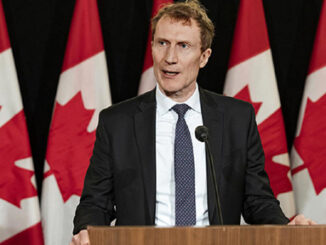
The suspension of the application process, says the directive, corroborates Immigration Minister Marc Miller’s opinion that this will “best support” the government’s goals around immigration and family reunification.
It is not only the family reunification, other immigration streams, too, have seen new sponsorships paused to help clear the existing backlog.
Recent changes have met with mixed responses from politicians, social scientists, economists and immigration specialists. Mayors of some of the smaller towns in Ontario and British Columbia have been voicing their concerns over the changes and want the Federal Government to reconsider them. They have argued that while they have been encountering negative population growth, they have no takers for the jobs they have to offer. In addition, new immigrants contribute immensely to the local economies. They insist that the federal government should abide by its original immigration levels.
The recent changes, however, see an overall decrease in immigration over the next three years. Since the government has been under immense pressure from the Opposition parties and various other organizations, it has been constantly reviewing its plans and targets. Under the family reunification scheme, especially in cases relating to parents and grandparents, the goal was to admit more than 24,000 people through this stream this year.
The new directive says a maximum of 15,000 applications made in 2024 through the family reunification program will be processed thus leaving a huge gap. Under the parent and grandparent program, 35,700 randomly selected people were invited to submit applications in 2024, to accept 20,500 applications. According to the 2024 annual report to Parliament on immigration, tabled by Miller, there were more than 40,000 parent and grandparent permanent residency sponsorships in the inventory as of the end of 2023. The report puts the average processing time for a sponsorship application at 24 months.
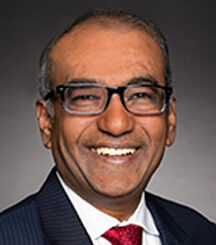
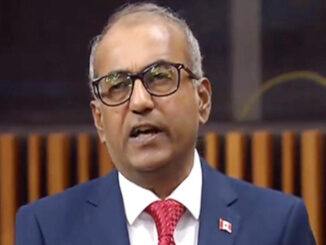
TORONTO (TIP): Chandra Arya, Liberal MP from Nepean, sprang a surprise on Friday, January 10 by declaring his candidature for the position of Prime Minister of Canada.
In a social media post, Arya announced his candidature, holding that he was “ready to lead a small, more efficient government to rebuild our nation and secure prosperity for future generations.”
While the process to choose a successor to Justin Trudeau is still to be formally initiated, he has become the first candidate to make public his intent. He is known for his “pro-India stance” as he has been openly opposing any proposals or motions brought up on the floor of the House in support of Sikh separatism or “anti-India campaigns.”
Justin Trudeau often faced criticism by the Government of India for not taking any action against those performing “anti-India activities carried out from the Canadian soil.”
When Deputy Prime Minister and Finance Minister Chrystia Freeland sprang a major surprise by sending a stunning resignation letter to Justin Trudeau on December 17, hours before she was to present her fall Financial Statement in the House of Commons, Chandra Arya was the first member of the Liberal caucus to declare his support to her as replacement of Justin Trudeau.
He was also the first Liberal MP of South Asian descent to ask Justin Trudeau to step down as he claimed he had a “difference of opinion” with the Prime Minister on various contagious issues. He posted a letter on his social media handles within a few hours after Justin Trudeau rejigged his Cabinet following Chrystia Freeland’s resignation.
“I am running to be the next Prime Minister of Canada to lead a small, more efficient government to rebuild our nation and secure prosperity for future generations. We are facing significant structural problems that haven’t been seen for generations and solving them will require tough choices.
“I have always worked hard for what is best for Canadians, and for the sake of our children and grandchildren, we must make bold decisions that are necessary. If elected as the next Leader of the Liberal Party, I offer my knowledge and expertise to do so. We have a perfect storm: many Canadians, especially younger generations, face significant affordability issues.
“The working middle class is struggling today, and many working families are retiring directly into poverty. Canada deserves leadership that is not afraid to make the big decisions. Decisions that rebuild our economy, restore hope, create equal opportunities for all Canadians, and secure prosperity for our children and grandchildren.
“Bold political decisions are not optional—they are necessary. With prudence and pragmatism as my guiding principles, I am stepping forward to take on this responsibility and lead Canada as its next Prime Minister. Join me in this journey. Let us rebuild, revitalize, and secure the future. For all Canadians, for generations to come,” he said in his social media post.
He said that more details, including his policy proposals, were in the statement next in the thread. You can also visit my website http://AryaCanada.ca which will be operational later today,” he concluded.
(Prabhjot Singh, is a Toronto-based award winning independent journalist, He was celebrated by AIPS, the international body of sports journalists, for covering ten Olympics at its centennial celebrations held at UNESCO Centre in Paris during the 2024 Olympic Games. Besides, he has written extensively about business and the financial markets, the health industry, the public and private sectors, and aviation. He has worked as a political reporter besides covering Sikh and Punjab politics. He is particularly interested in Indian Diaspora and Sikh Diaspora in particular. His work has also appeared in various international and national newspapers, magazines and journals)
India’s foreign policy in 2024 showcased a bold stance, with India asserting its influence not only in its immediate neighbourhood but also on the global stage. External Affairs Minister S. Jaishankar in December highlighted a decade-long shift toward prioritizing economic diplomacy, a trend that continued to define India’s strategic engagements this year.
As per Jaishankar, India’s foreign policy today is based on three principles. “Active engagement with countries, nation’s interests first under any circumstance and humanitarian approach with ethics”.
Here’s how India flexed its global power muscles in 2024:
India stares down China
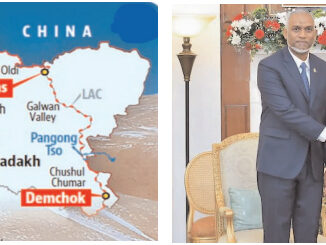
It took India and China 21 rounds of Corp Commander-level talks on disengagement to end the military impasse that plagued the relationship for five years. While military disengagement had been achieved earlier at four points, the same remained elusive in Depsang and Demchok, the two friction points.
China maintained that the impasse in these areas were legacy issues that predated the 2020 standoff and should not be allowed to block resumption of normal bilateral exchanges. However, India too steadfastly maintained there couldn’t be any progress in ties till the time disengagement is completed in the remaining areas, calling it an essential basis for peace in the border areas.
Patient and persevering diplomacy helped clinch the disengagement agreement with China, Jaishankar said.
Both the countries agreed to return to the patrolling agreements along the Line of Actual Control (LAC) in eastern Ladakh that were in place before the Galwan clashes in 2020 after several negotiations.
Chabahar port powerplay
India’s agreement with Iran in May to manage the strategic Chabahar Port for the next decade marked a significant milestone, as it was the first time India assumed management of a port overseas and that too amid Iran’s tensions with the US and Israel. This move underscores Prime Minister Narendra Modi’s emphasis on using strategic ports to bolster regional connectivity and influence.
Chabahar port is a vital link in India’s efforts to enhance connectivity with Afghanistan, Central Asia, and the broader Eurasian region. It also serves as a counterbalance to Pakistan’s Gwadar Port and China’s expansive Belt and Road Initiative.
The pact with Iran was signed despite the looming threat of US sanctions. Although the sanctions were never imposed, External Affairs Minister S. Jaishankar addressed concerns raised by the US about the “potential risk” to companies involved in the India-Iran joint venture. Jaishankar stressed that India would “work at” explaining Chabahar’s importance as a project serving the region’s broader interests.
Maldives comes back
India’s relationship with Maldives faced turbulence after Mohamed Muizzu, known for his pro-China and anti-India stance, assumed office as president. Mere hours after his swearing-in, Muizzu demanded the withdrawal of Indian military personnel stationed to operate three aviation platforms gifted by India. Following negotiations, the Indian military personnel were replaced with civilian operators.
Tensions escalated further when three Maldivian deputy ministers made controversial remarks about India and Prime Minister Modi on social media. The Maldivian Foreign Ministry swiftly distanced itself from the comments, leading to the suspension of the three junior ministers.
Amid these strained ties, President Muizzu made his first bilateral visit to India in October, as Maldives grappled with an economic crisis. The financial challenges facing his country were likely a key topic in discussions with India. Before the visit, Muizzu adopted a conciliatory tone, stating that he has never opposed India and acknowledging that New Delhi was aware of Maldives’ financial difficulties and willing to assist.
Sri Lanka sides with India
Sri Lankan President Anura Kumara Dissanayake on his inaugural foreign visit since taking office in September assured Prime Minister Modi that Sri Lanka would not permit its territory to be “used in any way that is detrimental to the interest of India.
The assurance from Sri Lankan president came at a crucial point as China is intensifying its presence in the Indian Ocean region, particularly targeting Indian interests.
China’s control over Hambantota Port, acquired through Sri Lanka’s debt default, has enabled Beijing to station vessels like the Yuan Wang 5, a 25,000-tonne satellite and missile tracking ship. This development concerns India due to Sri Lanka’s geographical proximity.
Despite India’s initial objections in August 2022, Sri Lanka eventually permitted Chinese vessels to dock for ‘replenishment’ at Hambantota. Meanwhile, Chinese surveillance vessels keep on patrolling the Indian Ocean region and using the Hambantota port.
China secured a 99-year lease on Hambantota port after Sri Lanka struggled with loan repayments. The $1.7 billion project, with phase one completed in 2010, required annual payments of $100 million, which Colombo failed to meet.
The Canadian challenge
India in October this year expelled six Canadian diplomats and announced withdrawing its high commissioner and other targeted officials from Canada after strongly dismissing Ottawa’s allegations linking the envoy to a probe into the killing of Sikh extremist Hardeep Singh Nijjar, in a major downturn in already frosty ties between the two nations. India’s decision to recall High Commissioner Sanjay Verma and some other diplomats came shortly after the Canadian Charge d’Affaires Stewart Wheelers was summoned to the Ministry of External Affairs (MEA). Wheelers was bluntly told that baseless “targeting” of the Indian envoy and other officials was “completely unacceptable”.
India is not neutral in Russia-Ukraine war
Despite opposition of the West, India has managed to find a middle way on the Russia-Ukraine conflict while also constantly underlining its strong relations with Russia. During the BRICS summit in October, when Prime Minister Modi visited Russia, President Vladimir Putin remarked that he believed Modi would understand his comments without translation, highlighting the strong relationship between the two nations. Modi responded with a hearty laugh. India’s approach to the Russia-Ukraine conflict has been shaped by its steadfast commitment to peace, dialogue, and diplomacy. This year, Modi visited Ukraine and met with President Volodymyr Zelenskyy, reaffirming India’s stance. During the meeting, Modi emphasized that India has never been neutral in the conflict but has consistently sided with peace.
India’s role in the conflict has drawn international attention. Italian Prime Minister Giorgia Meloni, after her meeting with Zelenskyy, pointed out the potential roles India and China could play in resolving the crisis. Following his visit to Kyiv, Modi telephoned Putin to share his perspectives. Apart from the BRICS summit visit, Modi visited Russia in July, holding extensive talks with President Putin. While India has not proposed a peace formula like those of Brazil or China, it has maintained contact with all stakeholders, advocating for negotiations and emphasizing the importance of Russia’s involvement in peace summits for a sustainable resolution to the conflict.
Diplomatic win in Qatar
In a significant diplomatic win for India in February, eight former Indian Navy personnel, who were initially sentenced to death in Qatar on charges of spying, were released, marking a crucial turn of events in a case that had garnered international attention and led Modi critics to make it a test case for his global diplomatic clout.
India’s diplomatic efforts led to the commutation of the capital punishment to extended prison terms for the eight veterans, who had been facing severe charges in Qatar. This decision came after sustained diplomatic intervention by India, showcasing the effectiveness of bilateral engagements in resolving complex legal matters. Expressing gratitude for the release of the Indian nationals, the Indian government welcomed the decision made by the Amir of the State of Qatar to facilitate their return. The swift resolution of this sensitive issue underscores the significance of diplomatic dialogue and cooperation between nations in addressing challenges faced by their citizens abroad.
From national politics and international affairs to environmental concerns and advances in science and technology, here are the top issues that captured everyone’s attention this year
The year 2024 has been a whirlwind of significant events across the globe, spanning politics, science, technology, culture, and natural phenomena. From breakthroughs in artificial intelligence to groundbreaking diplomatic agreements, here’s an in-depth look at the events that shaped the world in 2024.
Iran-Israel Conflict
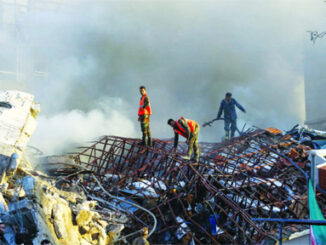
On April 14, Iran launched hundreds of drones and missiles towards Israel in retaliation for an Israeli attack on its consulate that occurred in Damascus, Syria, on April 2. This attack became the immediate cause of the escalating conflict between Iran and Israel.
Although Iran and Israel have a long history of bitter conflict and covert military actions against each other, this was the first time Iran has launched a direct attack of this scale aimed at targets within Israel.
Heatwaves
Higher daily peak temperatures and longer, more intense heatwaves are becoming increasingly common worldwide. This summer, India also experienced the impact of more frequent heatwaves, which have had devastating effects on human health and the environment.
According to the India Meteorological Department (IMD)- A heatwave is a period of abnormally high temperatures, more than the normal maximum temperature that occurs during the summer season in the North-Western parts of India. Heatwaves typically occur between March and June, and in some rare cases even extend till July. The extreme temperatures and resultant atmospheric conditions adversely affect people living in these regions as they cause physiological stress, sometimes resulting in death.
Misuse of Deepfakes
In the General Elections of 2024, the widespread misuse of deepfakes significantly complicated the battle against misinformation. A deepfake video featuring actors Ranveer Singh and Aamir Khan purportedly endorsing a particular political party went viral during the elections. Earlier, a video that supposedly shows actress Rashmika Mandanna entering an elevator sparked a major controversy online. What initially appeared to be genuine was, in fact, a deepfake of the actress. The original video featured a British Indian girl, whose face was morphed to replace Mandanna’s.
Deepfakes constitute fake content — often in the form of videos but also other media formats such as pictures or audio — created using powerful artificial intelligence (AI) tools. It is an amalgamation of the words “deep learning” and “fake” and it means fabricated videos generated from existing face-swapping techniques and technology.
They are called deepfakes because they use deep learning technology, a branch of machine learning that applies neural net simulation to massive data sets, to create fake content. It employs a branch of artificial intelligence where if a computer is fed enough data, it can generate fakes that behave much like a real person.
Bangladesh Political Upheaval
The political upheaval in Bangladesh in August 2024 resulted in the ouster of former Prime Minister Sheikh Hasina and the establishment of an interim government led by Nobel laureate Muhammad Yunus. This event is considered a significant turning point in Bangladesh’s history and has introduced new dynamics in regional politics.
India and Bangladesh share a unique relationship rooted in a common cultural heritage, shared principles, and values. However, recent regime changes in Bangladesh are affecting this relationship, particularly with the rising concern over atrocities against Hindus in Bangladesh, which has become a significant challenge in their bilateral relations.
India-Canada Diplomatic Row
In mid-October 2024, the sharp escalation of the diplomatic row between India and Canada, a first-of-its-kind situation in India’s diplomatic relations with the West, raised concerns about potential ripple effects in a range of areas, including trade and people-to-people ties.
Notably, the diplomatic tension between India and Canada escalated on October 14, when India ordered the expulsion of six Canadian diplomats while also announcing its decision to withdraw the Indian High Commissioner to Canada and “other targeted diplomats,” citing security concerns after Ottawa identified them as “persons of interest” in its investigation into the killing of Khalistan separatist Hardeep Singh Nijjar.
The bilateral ties between India and Canada are long-standing and significant. Canada is home to a high percentage of Sikhs. However, the two countries’ bilateral relations have been affected by various issues, such as Khalistani separatism and Canada’s position on human rights in India. These issues have led to increased tensions and have impacted diplomatic interactions.
Political Upheaval in Syria
The Syrian civil war saw major developments in December this year. The government of President Bashar al-Assad, who has ruled the Middle Eastern country since 2000, faced sudden and intense attacks from the rebel group Hayat Tahrir al-Sham. On December 8, the group reached the capital, Damascus, and celebrated the fall of Assad’s regime.
Notably, New Delhi was preparing to revive its political and economic ties with Damascus late last month. On November 29, India and Syria held Foreign Office Consultations in New Delhi. India has been a keen developmental partner for Syria and is also actively involved in the capacity-building of the Syrian youth
The Syrian civil war began around the “Arab Spring” of 2010, dubbed so as many countries in the Middle East and North Africa saw uprisings against authoritarian governments that had been in power for decades. Foreign governments, such as the United States and Russia, also engaged with the conflict based on their respective strategic interests.
The Arab Spring also echoed in street protests in Syria. But Assad put it down with force unleashing a harsh crackdown on those opposing the regime. This set off a civil war, with the US backing the rebels while Russia, Iran and Hezbollah backing Assad.
One Nation, One Election Debate
The discussion on simultaneous elections has been a prominent topic throughout the year. Recently, the Union Cabinet approved the Constitution (One Hundred and Twenty-Ninth Amendment) Bill, 2024, along with the Union Territories Laws (Amendment Bill), 2024. This has reignited the debate over “One Nation One Election” (ONOE). Some believe that simultaneous elections would benefit the citizens, while others argue that it would undermine the basic structure of the Constitution of India.
Notably, the high-level committee headed by former President Ram Nath Kovind has recommended that the government take a “one-time transitory measure”, which would require the Union government to identify an “appointed date” immediately after a Lok Sabha election and all state assemblies that go to poll after the said date would have their terms expire with the Parliament.
Simultaneous elections, popularly referred to as “One Nation, One Election”, means holding elections to Lok Sabha, all state Legislative Assemblies, and urban and rural local bodies (municipalities and panchayats) at the same time. Currently, all these elections are held independently of one another, following timelines dictated by the terms of every individual elected body.
Trump comes back to power
Donald Trump won the election in the US to become the 47th President of the United States of America. Trump got 312 electoral college votes, while his rival, Kamala Harris from the Democratic Party could manage only 226. Trump’s victory in the US is likely to ensure the revival of ‘America First’ as well as America pulling back from several international organisations, which Trump thinks drain American taxpayers’ money.
PM Modi gets third consecutive term
In India, Narendra Modi’s Bharatiya Janata Party (BJP) won the general elections for the third consecutive term, defeating the alliance, dubbed INDIA. The election victory of PM Modi is slated to propel India towards strategic autonomy, meaning India will be able to make decisions that are best suited to its national interests, regardless of what major powers in the world want India to do.
South Korean President imposes emergency, impeached
South Korean President Yoon Suk Yeol declared an “emergency martial law” on December 3, accusing the opposition of controlling the parliament; however, within some hours, it was lifted. Following this, the South Korean leader was impeached by the parliament. Notably, the president had survived the first vote after members of his ruling People Power Party boycotted the vote.
German chancellor loses confidence vote
German Chancellor Olaf Scholz lost a confidence vote in the Bundestag, the German federal parliament. Scholz got only 207 in the 733-seat lower house against 394 voting against him while 116 abstained. The no confidence vote followed after the chancellor fired his finance minister in a long-running dispute over how to revitalise Germany’s stagnant economy. This saw Scholz’s three-party government collapsing in Germany.
Labour Party wins in the UK
UK’s Labour Party won the election in the UK on July 5TH, which dramatically reshaped the political landscape in the country. Keir Starmer became the Prime Minister defeating the Conservative Party’s Rishi Sunak, ending the Tories’ 14-year continued control of the British parliament.
India-China reach border consensus
In October, both India and China confirmed that they reached an agreement to end the standoff between both the Asian giants. After the Galwan clash in 2020, the agreement melted the ice as relations between both countries stooped to very low. In December, China and India reached a six-point consensus to address border issues during crucial talks between National Security Advisor (NSA) Ajit Doval and Foreign Minister Wang Yi.
Vladimir Putin gets presidency again
In Russia, Vladimir Putin cemented his position by winning the election. Putin will leave Josef Stalin behind if he completes his current six-year term. Putin got 87 per cent of the total votes polled.
Five nations join BRICS
Egypt, Ethiopia, Iran, Saudi Arabia, and the United Arab Emirates joined BRICS in 2024. This will see a major portion of the world get represented in one of the most prominent non-western groups.
Bitcoin’s meteoric rise
Bitcoin’s meteoric rise to over $100,000 is reminiscent of previous post-election surges. Notably, the cryptocurrency had already hit $81,000 shortly after Donald Trump’s victory in the US presidential elections earlier this year. Historically, Bitcoin’s price has shown a pattern of significant gains following the US presidential elections, which often coincide with its halving cycles – events that reduce its supply and drive up prices.
Pakistan general election
Pakistan also went to the polling booths in 2024, in February, to elect members of the 16th National Assembly. But the election was anything but fair. Pakistan Tehreek-e-Insaf (PTI), led by Imran Khan, was not allowed to contest the elections, due to which its leaders appeared as independent candidates on the ballot.
Despite this and alleged rigging by the military, PTI-backed independents defied the odds and emerged as the largest bloc. However, they were not allowed to form the government, and a last-minute coalition of PML-N, PPP, MQM and others was given the green light.
Vinesh Phogat’s Olympic Disqualification
Indian wrestler Vinesh Phogat was disqualified from the Paris 2024 Olympics after being found 100 grams overweight for the women’s 50kg category just before her gold medal bout. After defeating top contenders, including defending Olympic champion Yui Susaki, Phogat was on the cusp of gold, only to see her dreams shattered at the mandatory weigh-in.
This disqualification ended her bid to become the first Indian woman to win an Olympic gold in wrestling. Despite an appeal to the Court of Arbitration for Sport, the decision stood, leaving India reeling from a missed Olympic medal. A dejected Phogat soon announced her retirement, marking a tragic conclusion to her career.
India’s Triumph in the T20 World Cup
India clinched their second T20 World Cup title after a 17-year hiatus, defeating South Africa by seven runs in a thrilling final. Captain Rohit Sharma made history by becoming the first-ever captain to win 50 T20Is, further solidifying his legacy in the sport.
Expansion of Cricket in the United States
The 2024 T20 World Cup featured matches in the United States, including a high-profile India vs. Pakistan game held at a pop-up stadium in Long Island. This initiative was part of the ICC’s broader strategy to globalize cricket and tap into new markets, marking a pivotal moment in the sport’s history.
Typhoon Yagi (Enteng)
In early September, Typhoon Yagi struck parts of East Asia, leading to approximately 844 deaths. The typhoon brought torrential rains and strong winds, causing severe flooding and landslides.
Enga Landslide in Papua New Guinea
On May 24, a catastrophic landslide in the Enga Province of Papua New Guinea resulted in a tragic loss of life, with estimates ranging from 670 to over 2,000 fatalities. The disaster buried entire villages, making rescue operations challenging.
The Indian diaspora is one of the largest and most diverse global communities, with an estimated 32 million people of Indian origin living across the world. From the shores of the Caribbean islands to the bustling cities of North America, Europe, the Middle East, Southeast Asia, and beyond, Indians have built thriving communities that are often key to the economic, social, and cultural fabric of their host nations. Over the past few centuries, the Indian diaspora has experienced remarkable growth, playing an influential role in shaping the world’s geopolitical landscape, global markets, and cultural exchanges. This article aims to explore the rise of the Indian diaspora, their historical journey, the factors contributing to their migration, and their diverse and substantial contributions to their host countries and to India itself.
Historical Background of Indian Emigration
Early Waves of Migration
Indian migration has a rich history that spans centuries. The earliest recorded instances of Indian emigration occurred during the ancient and medieval periods, with Indians settling in Southeast Asia, Africa, and the Arabian Peninsula. Traders, scholars, and missionaries often traveled across the Indian Ocean, leaving behind traces of Indian culture and religion.
During the British colonial period (18th–20th centuries), however, emigration from India significantly increased. The indentured labor system, implemented by the British after the abolition of the transatlantic slave trade, became the primary mechanism for the large-scale migration of Indians. Millions of Indians were transported to various colonies such as Mauritius, Fiji, the Caribbean islands, and South Africa to work on sugar plantations, railways, and in other industries. This wave of migration laid the foundation for the development of vibrant Indian communities in these regions, some of which still maintain strong cultural ties to their Indian roots.
Post-Independence Migration
After India’s independence in 1947, migration patterns began to shift. Many Indians sought better economic opportunities abroad, especially in Western countries such as the United States, the United Kingdom, Canada, and Australia. The 1960s and 1970s saw the rise of skilled Indian professionals, including doctors, engineers, and IT specialists, migrating to meet labor shortages in these nations. By the 1980s and 1990s, the expansion of India’s global footprint, coupled with economic liberalization, further accelerated the migration of professionals seeking better opportunities in growing economies.
Factors Driving Indian Migration
Economic Opportunities
The most significant factor driving Indian migration has been the search for better economic prospects. As India’s population grew and its economic landscape evolved, many Indians faced limited opportunities for career advancement, education, and financial stability at home. Countries with burgeoning economies and labor shortages, such as the Gulf states, the United States, Canada, and the United Kingdom, offered higher wages, better living standards, and improved career prospects.
In the post-1991 liberalized economy, India’s economic growth allowed many to take advantage of international opportunities. The rise of the Indian information technology (IT) sector also played a crucial role in facilitating the migration of highly skilled professionals to countries like the United States and Canada.
Educational Pursuits
The pursuit of education has also been a driving force for migration. Indian students have flocked to institutions abroad for higher education, particularly in fields like engineering, medicine, management, and the sciences. The United States, United Kingdom, Australia, and Canada remain top destinations for Indian students, who not only benefit from quality education but also gain exposure to international networks, knowledge, and skills.
Political and Social Factors
In some cases, migration was driven by political instability, persecution, or limited opportunities in India. For example, during the period of political turmoil in India during the 1970s and 1980s, large numbers of people sought refuge or better prospects abroad. In countries like Uganda, Fiji, and Kenya, political events (such as Idi Amin’s expulsion of Indians from Uganda) forced many to leave.
Additionally, factors such as religious intolerance, caste-based discrimination, and economic inequalities led to waves of migration from certain regions within India to more developed countries, where better social mobility and opportunities were available.
Indian Diaspora’s Contribution to Global Economies
Economic Impact and Remittances
One of the most important contributions of the Indian diaspora has been in the form of remittances. According to the World Bank, India has been the largest recipient of remittances globally, receiving over $87 billion in 2020 alone. Remittances sent by Indian expatriates to their families back home have been a vital source of income for millions, contributing significantly to poverty alleviation, education, healthcare, and overall economic growth.
The economic footprint of the Indian diaspora extends beyond remittances. Indian entrepreneurs and professionals have made substantial investments in their host countries, contributing to the growth of industries ranging from technology to real estate, hospitality, and retail. The Indian diaspora has played a key role in the global technology boom, especially in sectors like software development, finance, and telecommunications.
Business and Entrepreneurship
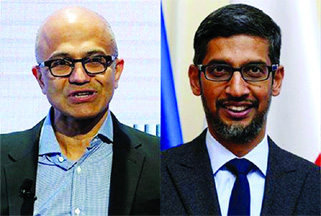
Indians have been instrumental in the development of several industries worldwide. In countries like the United States, the United Kingdom, Canada, and Australia, Indian entrepreneurs have built successful businesses that employ thousands of people. In Silicon Valley, Indian-origin entrepreneurs have become some of the most prominent figures in the tech industry, with individuals like Sundar Pichai (CEO of Google), Satya Nadella (CEO of Microsoft), and Vinod Khosla (co-founder of Sun Microsystems) leading major global tech firms.
In the United States, Indian immigrants have made their mark in the healthcare sector, particularly in the fields of medicine and biotechnology. Indian-origin doctors, researchers, and health professionals are highly respected for their expertise and have contributed to the development of cutting-edge medical technologies.
Indian businesses have also flourished in the Gulf states, where large communities of Indians work in construction, retail, and hospitality. Moreover, successful Indian businesspeople, such as Lakshmi Mittal, who heads ArcelorMittal, the world’s largest steel producer, and Mukesh Ambani, the chairman of Reliance Industries, have become global symbols of entrepreneurship.
Contributions to Culture and Society
Cultural Diplomacy and Soft Power
The Indian diaspora has been a powerful vehicle for the spread of Indian culture across the globe. Whether through Bollywood films, traditional dance forms like Bharatanatyam and Kathak, or global cuisine, the Indian diaspora has brought India’s rich cultural heritage to the forefront of global consciousness. Cultural festivals, such as Diwali and Holi, are celebrated by communities of Indian origin in many countries, fostering a greater understanding of Indian traditions and values.
In countries like the United States, the United Kingdom, Canada, and Australia, the Indian diaspora has been at the center of intercultural dialogues, promoting diversity, tolerance, and understanding. The popularity of yoga and meditation in the West is also largely attributed to the Indian diaspora’s efforts in sharing these practices with the world.
Philanthropy and Social Causes
Indian diaspora communities have also made significant contributions to charitable causes and social development, both in their host countries and in India. Many members of the Indian diaspora have been involved in philanthropy, supporting causes such as education, healthcare, and disaster relief.
The Indian diaspora has also been active in promoting educational initiatives, providing scholarships to students in need, and supporting schools and universities in India. The contributions of Indian-origin individuals to international organizations such as the United Nations and the World Health Organization further highlight the global impact of the Indian diaspora.
Political Influence and Advocacy
Engagement in Host Country Politics
The Indian diaspora’s political engagement has grown significantly over the years. In countries like the United States, the United Kingdom, Canada, and Australia, Indian-origin individuals have been elected to high political offices, contributing to the political landscape of their respective nations. Notable figures include Kamala Harris, the Vice President of the United States, and Priti Patel, the Home Secretary of the United Kingdom, both of whom have Indian heritage.
Indian-origin politicians have advocated for the interests of the diaspora, building bridges between their home country, India, and their adopted nations. In the United States, for example, Indian-Americans have emerged as a significant voting bloc, influencing political campaigns, policy decisions, and international relations.
Strengthening India’s Global Presence
The Indian diaspora has also played a crucial role in strengthening India’s global influence. By acting as a bridge between their host countries and India, the diaspora has contributed to enhancing India’s diplomatic, economic, and cultural ties with the world. Indian-origin politicians, business leaders, and community organizers have often acted as ambassadors for India, lobbying for greater trade and investment, fostering bilateral partnerships, and promoting India’s interests on the global stage.
The Future of the Indian Diaspora
As the world becomes increasingly interconnected, the role of the Indian diaspora is expected to grow even further. In the coming decades, the Indian diaspora will continue to be a critical factor in fostering India’s global standing. The rise of India as an economic powerhouse, along with its expanding influence in global politics, will provide new avenues for the diaspora to contribute to their home country’s growth.
Moreover, as the Indian diaspora becomes more integrated into the societies in which they live, their contributions will likely become more visible and impactful. The focus will likely shift from simple remittances and labor to more complex forms of collaboration, such as joint ventures, innovation partnerships, and global research initiatives.
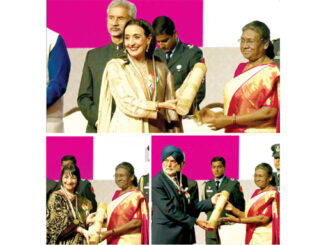
Pravasi Bharatiya Samman Award (PBSA) is the highest honor bestowed on Indians residing abroad. The President of India bestows this honor as part of the Pravasi Bharatiya Divas (PBD) Conventions, which were held in 2003 as declared by India’s President.
The Pravasi Bharatiya Samman Award (PBSA) is the highest honor conferred by the Government of India upon individuals of Indian origin or Indian diaspora for their exceptional contributions in various fields. Instituted in 2003, the award recognizes achievements in the following domains:
– Philanthropy and Charitable Work
– Community Service
– Science, Technology, and Education
– Commerce and Industry
– Healthcare
– Arts and Culture
– Public Service
– Bringing Honor to India and their Countries of Residence
The award is presented during the Pravasi Bharatiya Divas (PBD) convention, held biennially since 2015 (previously annual). Awardees are selected by a committee constituted by the Government of India.Key Details:First Edition: 2003, marking the first PBD conference in New Delhi.Recipients Since Inception: Over 200 awardees from various countries.Award Components: A medallion, a citation, and a certificate.Some Notable Recipients:2003: Sir Anerood Jugnauth (Mauritius) – Former Prime Minister of Mauritius.2019: Dr. Rajendra Joshi (Switzerland) – Contributions in science and education.2021: Dr. Mohan Kaul (United Kingdom) – Leadership in business and public service.
Here is a year-by-year summary of the Pravasi Bharatiya Samman Award (PBSA) recipients and notable achievements since its inception in 2003. This list highlights just a few notable awardees.
2003 (First Edition)
– Sir Anerood Jugnauth (Mauritius): For public service and strengthening India-Mauritius ties.
– Basdeo Panday (Trinidad and Tobago): Former Prime Minister of Trinidad and Tobago.
– Lakshmi Mittal (UK): For contributions to global steel production.
– Dr. Krishna Guha (USA): Contributions to science and education.
2004
– Gopalkrishna Gandhi (South Africa): Contributions to Indian diaspora welfare.
– Dr. Lenny Saith** (Trinidad and Tobago): Contributions to public service.
2005
– Shyamala B. Cowsik (Canada): Contributions to community service and diplomacy.
– Sabeer Bhatia (USA): Co-founder of Hotmail, contributions to technology.
2006
– Dr. Ranjan Mathai** (USA): Contributions to healthcare.
– Sir Shridath Ramphal** (Caribbean): Public service and law.
2007
– Dr. Hafiz Shamsuddin** (Malaysia): Contributions to healthcare.
– Dr. Abraham Verghese** (USA): Renowned author and physician.
2008
– Sam Pitroda (USA): Technology innovation and contributions to India’s telecommunications.
– Lord Bhikhu Parekh** (UK): Contributions to academia and philosophy.
2009
– Lord Karan Bilimoria (UK): Founder of Cobra Beer, contributions to business and industry.
– Dr. Kalpana Chawla (Posthumous, USA): Astronaut and inspiration for the Indian diaspora.
2010
– Dr. Navin Nanda (USA): Eminent cardiologist, contributions to healthcare.
– Tan Sri Ravindran Menon (Malaysia): Infrastructure development and philanthropy.
2011
– Dr. Rajendra K. Pachauri (USA): Contributions to climate science and sustainable development.
– Anil Agarwal (UK): Founder of Vedanta Resources, contributions to business.
2012
– Dr. Krishna Udayasankar** (Singapore): Acclaimed author and professor.
– Dr. Subrahmanyam Jaishankar** (China): Public service and diplomacy.
2013
– Bharat Ratna Dr. A. P. J. Abdul Kalam (India): For global contributions to science and innovation.
2014
– Satya Nadella (USA): Contributions to technology and leadership at Microsoft.
– Dr. Mahesh Mehta (USA): Community service and philanthropy.
2015
– Dr. Kamlesh Lulla (USA): NASA scientist and contributions to space research.
– Ashok Kumar Mago (USA): Contributions to India-USA relations.
2017
– Dr. Raghunath Mashelkar (India): Global contributions to science and patents.
– Dr. Bhaskar Dasgupta (UK): Community service and healthcare.
2019
– Dr. Rajendra Joshi (Switzerland): Education and healthcare.
– Dr. Prathap C. Reddy (India): Founder of Apollo Hospitals, contributions to healthcare.
2021 (Virtual Due to COVID-19)
– Dr. Mohan Kaul (UK): Business and public service.
– Joginder Singh Saluja (Mexico): Community service and cultural promotion.
2023
– Prof. Jagadish Chennupati (Australia) – Contributions to Science and Technology/Education.
– Dr. Alexander Maliakel John (Brunei Darussalam) – For his work in Medicine.
– Dr. Vaikuntam Iyer Lakshmanan (Canada) – Recognized for Community Welfare.H.E.
– Dr. Mohamed Irfaan Ali (Guyana) – For Politics and Community Welfare.
– Mr. Piyush Gupta (Singapore) – Contributions to Business.
– Dr. Archana Sharma (Switzerland) – For achievements in Science and Technology.
– Mr. Chandrakant Babubhai Patel (United Kingdom) – Recognized for contributions in Media.
– Mr. Rajesh Subramaniam (USA) – Contributions to Business.
The 18th PBD Convention will be held from 8 – 10 January 2025 in Bhubaneswar, Odisha. The theme of the 18th PBD Convention is ‘Diaspora’s Contribution to a Viksit Bharat’
The Pravasi Bharatiya Divas (PBD), or Non-Resident Indian (NRI) Day, is celebrated annually on January 9th to honor the contributions of the Indian diaspora to the progress of India and to recognize their role in strengthening India’s ties with the global community. This day highlights the connection between the nation and its overseas citizens, celebrating the spirit of Indian identity, culture, and development worldwide.
The origins of Pravasi Bharatiya Divas are deeply rooted in the larger context of India’s relationship with its global diaspora. The history behind this celebration is tied to India’s historical emigration patterns, the struggles faced by early Indian migrants, and the efforts to bring attention to their contributions to both their host countries and India. This article explores the history, significance, and origins of Pravasi Bharatiya Divas, looking at how this day evolved, its relevance today, and the broader context of the Indian diaspora.
January 9 commemorates the return of Mahatma Gandhi from South Africa to India in 1915. To mark this day, the tradition of celebrating the Pravasi Bharatiya Divas (PBD) started in 2003. 1st PBD Convention was organised on 9 January 2003 to mark the contribution of the overseas Indian community to the development of India.
Since 2015, under a revised format, the PBD Convention has been organised once every 2 years.
The 17th Pravasi Bharatiya Divas Conventions have been organised till date. 17th PBD was held from 8 – 10 January 2023 in Indore, Madhya Pradesh. The theme of the 17th PBD Convention was “Diaspora: Reliable Partners for India’s Progress in Amrit Kaal”.
The 18th PBD Convention will be held from 8 – 10 January 2025 in Bhubaneswar, Odisha. The theme of the 18th PBD Convention is “Diaspora’s Contribution to a Viksit Bharat”.
Historical Background of Indian Emigration
Indian migration has a long history, dating back centuries. The earliest known waves of Indian emigration can be traced to the traders, scholars, and laborers who moved across the Indian Ocean to places like Southeast Asia, the Arabian Peninsula, Africa, and beyond. However, the large-scale movement of Indians to other parts of the world began during British colonial rule.
Indentured Labor System and Colonial Migration
The most significant migration wave in the 19th and early 20th centuries was due to the British colonial administration’s establishment of the indentured labor system. This system saw millions of Indians sent abroad to work on plantations in places like the Caribbean, Fiji, Mauritius, and South Africa. As indentured laborers, these individuals faced harsh conditions but contributed significantly to the economic development of their respective host countries.
In the early 20th century, a new wave of emigration occurred when skilled workers, professionals, and traders began to migrate to countries such as the United States, Canada, and the United Kingdom. This migration, especially after India gained independence in 1947, continued and saw an increase in the number of educated professionals from India seeking better opportunities abroad. Over time, the Indian diaspora grew into a global community that contributed to their host countries’ economies, cultural diversity, and political spheres.
The Role of the Indian Diaspora
Post-Independence
After India’s independence, the Indian government sought to establish strong ties with its citizens abroad. The global Indian diaspora, despite being physically distant, played a key role in shaping India’s political and economic landscape. They helped raise awareness about India’s development and played an instrumental role in remittances, which became one of the primary sources of foreign exchange for the country.
The Indian diaspora, spread across continents, helped build strong links between India and the world. They continued to make significant contributions to the development of their host countries, excelling in various fields like business, education, politics, and technology. Notable figures in the global Indian community include Dhirubhai Ambani, Sundar Pichai, Indra Nooyi, and many others who have not only succeeded in their respective fields but have also helped foster a better understanding of Indian culture and values globally.
The Birth of Pravasi Bharatiya Divas
The idea of celebrating the Indian diaspora on a national level was first proposed during the 2003 Pravasi Bharatiya Divas Convention. The idea to create a day to celebrate the Indian diaspora came from the efforts of the Indian government to recognize the contributions of NRIs and Persons of Indian Origin (PIOs).
The First PBD in 2003
The first Pravasi Bharatiya Divas was held in January 2003 in New Delhi, under the leadership of then-Prime Minister Atal Bihari Vajpayee. It was organized by the Ministry of Overseas Indian Affairs (MOIA), which was created in 2004 to specifically cater to the concerns of the Indian diaspora. The first convention aimed to provide a platform for members of the diaspora to interact with the Indian government, business leaders, and intellectuals. It was a way to acknowledge their contributions to India’s development and global standing.
The year 2003 also marked the centenary of the return of Mahatma Gandhi to India from South Africa, where he had first developed his ideas of non-violence and social justice. In 1915, Gandhi had returned to India after being part of the Indian diaspora for over two decades. His return signaled the start of a larger movement against British colonial rule and for Indian independence. As a result, January 9th was chosen as the official date to commemorate this event, making the day even more significant. Thus, Pravasi Bharatiya Divas, which was initially conceptualized as a way to recognize the Indian diaspora, was also designed to mark the legacy of Indian leaders like Gandhi and their connection to the global Indian community.
The Significance of January 9th
The choice of January 9th as the date for Pravasi Bharatiya Divas is deeply symbolic. This date is significant because it commemorates the return of Mahatma Gandhi to India from South Africa. Gandhi’s experiences in South Africa had a profound influence on his methods of resistance and his eventual leadership of the Indian freedom struggle.
Gandhi’s return to India from the diaspora marked the beginning of his pivotal role in the fight for independence. His return was seen as a powerful moment in Indian history, as it symbolized the strong link between India and its diaspora. By choosing this date, Pravasi Bharatiya Divas also honors the historical connection between the Indian diaspora and the Indian independence movement.
Objectives and Purpose of Pravasi Bharatiya Divas
The primary objective of Pravasi Bharatiya Divas is to acknowledge the contributions of NRIs and PIOs to India’s progress in various fields. The day provides a platform for the government of India to engage with the Indian diaspora, allowing them to discuss issues that affect their lives abroad and explore ways to contribute to India’s growth.
Key Objectives of PBD
– Recognition of the Contributions of NRIs and PIOs: Pravasi Bharatiya Divas serves as an occasion to acknowledge the positive impact that members of the Indian diaspora have had on their host countries and on India’s economy, culture, and political landscape.
– Strengthening Ties Between India and the Diaspora: It provides a venue for dialogue between the Indian government and the diaspora, discussing critical issues such as remittances, legal and social protections for emigrants, and the promotion of Indian culture abroad.
– Facilitating Collaboration: The event fosters collaboration between the Indian government, businesses, and overseas Indians, encouraging investment in India, promoting tourism, and strengthening the global reach of Indian companies.
– Cultural Exchange and Promotion: PBD encourages cultural exchange, making the world more aware of India’s rich heritage and traditions.
Subsequent Developments and the Global Outreach
After its inception, the Pravasi Bharatiya Divas became an annual event, attracting thousands of NRIs and PIOs from across the globe. The government organized a series of seminars, discussions, and networking sessions during PBD to facilitate knowledge exchange and foster collaborations.
In subsequent years, the event became increasingly inclusive, encompassing a wider range of issues important to the global Indian community, including topics related to education, healthcare, and the professional development of diaspora communities. PBD also saw the introduction of the Pravasi Bharatiya Samman Awards, which were presented to individuals and organizations that made significant contributions to India’s development or to the Indian diaspora.
These awards became a key feature of PBD, as they not only celebrated individual and collective achievements but also showcased the diverse and vibrant contributions of the Indian diaspora across various domains, including science, business, and social activism.
Challenges
While Pravasi Bharatiya Divas has been a platform for celebration and recognition, there have been criticisms regarding its effectiveness in addressing the concerns of the diaspora. Some members of the Indian community have raised issues about the lack of concrete action taken by the Indian government in relation to the challenges faced by NRIs, such as immigration issues, legal matters, and the protection of their rights in host countries. Furthermore, there have been concerns about the focus on celebratory events rather than practical steps toward improving the living conditions of the diaspora.
The Future of Pravasi Bharatiya Divas
As India continues to develop as a global power, the role of the diaspora becomes increasingly important. The Indian government has made substantial efforts to reach out to NRIs and PIOs, particularly in areas such as trade, investment, and diplomacy. With the Indian diaspora becoming more prominent in global politics and business, Pravasi Bharatiya Divas is likely to continue evolving into a more significant event that not only honors their contributions but also acts as a catalyst for further cooperation between India and the world.
The future of Pravasi Bharatiya Divas will likely see the development of new initiatives and programs that focus on strengthening the bonds between India and its diaspora. It may also serve as an opportunity to address the concerns of the global Indian community and promote a more inclusive, sustainable, and prosperous relationship.
Pravasi Bharatiya Divas is a unique celebration that honors the global Indian community, recognizing their contributions to both India and the countries they have made their homes. From its origins in 2003, the day has evolved into a significant event that fosters dialogue, promotes cultural exchange, and celebrates the diverse achievements of Indians abroad. Through its various initiatives, PBD continues to serve as a bridge between India and its diaspora, helping to shape a stronger, more connected global Indian community.
2024 turned out to be a tumultuous year for Canada. Nothing went right. Acknowledged as one of the best countries to live in, Canada slid into one of the worst years in recent history. Its bilateral relations with India touched a new low. Before the end of the year, its long-time ally and biggest trade partner and neighbor, the USA, threatened a 25 per cent import tariff on anything Canadian.
To top it all, the minority Liberal government was rocked by internal strife and external pressure to quit and pave the way for an advanced federal election.
Who could better describe the country’s situation than its own Prime Minister?
In his Christmas message Justin Trudeau gave vent to his spleen saying “For you, the holidays may be a time of big family gatherings and feasts, of gifts and celebrations. But maybe it is a very hard time. If you are grieving, worried, or alone, this can be the toughest time of the year. It can be the loneliest. So let us all check in on the people in our lives who have not had an easy time this year, and who may need us more than we know.
“As we reflect on the past year and look to the future, let us continue to show love and kindness – to ourselves and to those in need. Let us also take a moment to thank those who give so much of themselves to make Canada the place we are proud to call home, including the brave members of our Canadian Armed Forces, the dedicated first responders and essential workers, and the countless volunteers. Thank you, to all of you.”
How true? How precisely did he put his inner feelings in a message that normally is delivered to join festivities on the sacred occasion as he said at the beginning of his message “This is such a special time of year. It is a time to gather with loved ones, to celebrate the spirit of the season, and to give thanks for all that is good in the world.
“For Christians, it’s a time to celebrate the birth of Jesus Christ and think about his story of kindness, forgiveness, and faith. The lessons of his life are universal, and they inspire and comfort people every time they’re told – and retold.”
It was not at the far end of the year. Troubles for Justin Trudeau and his minority Liberal government started much earlier. He survived three no-confidence motions, thanks to unrelenting support from the fourth-largest party in the House of Commons, the New Democrats.
Chaos in immigration, growing inflation, unemployment, rising bank rates, homelessness, longer queues outside foodbanks, an alarming increase in gun violence and continuous loss in popularity as revealed by by-elections held during the year virtually cornered Justin Trudeau and his government midway in the year. The situation was further aggravated by the accompanying political turmoil, more so after ally New Democrats Party led by Jagmeet Singh tore down its Supply and Confidence Agreement (SACA) putting the minority government in limbo.
Things started turning sour for Justin Trudeau after the killing of a Sikh leader Hardeep Singh Nijjar outside a Gurdwara in Surrey. Since the Liberals led by Justin Trudeau never had good times with India ever since coming to power in 2015, the killing of Hardeep Singh Nijjar, which saw Justin Trudeau raising accusation fingers at India, brought to thaw the bilateral relations.
India and Canada have enjoyed for more than a century strong people-to-people relations. These relations did not match the bilateral relations the two countries always aspired to have over the years, including good times. Instead, this unfortunate development, the killing of a Canadian on Canadian soil, suspected at the instance of a foreign hand, led to a diplomatic spat. Sizes of the diplomatic corps were shrunk leading to the temporary suspension of the counsellor and other services. Accusations and counter-accusations flew high.
Though Prime Ministers of Canada and India met on the sidelines during various international summits, their conduct was more remorse than friendly sending wrong signals to people back home. As the issue snowballed into a controversy, Canada’s Royal Canadian Mounted Police (RCMP) came out with startling revelations suggesting the involvement of the government of India agents in the assassination of Hardeep Singh Nijjar. Better sense prevailed after an initial flare-up as both sides took to caution than aggression to gradually push the issue to the side-lines.
As relations with India receded to the background, Canada had yet another nightmare unfold. The election of the US President, which was watched with considerable interest the world over, put the Canadians under stress. President-elect Donald Trump got into offensive mode, and his first promulgations made Canadians scurry under cover. Donald Trump accused Canada as a source of both Fentanyl and human smuggling. How serious are these problems?
Donald Trump spared no opportunity to bash Canada for its porous borders that paved the way for the smuggling of synthetic Fentanyl. He wanted his immediate neighbors – Mexico and Canada – to act fast and stop smuggling, both Fentanyl and illegal aliens.
Gauging the gravity of the Fentanyl accusations by the US, the leader of the Opposition in the Canadian House of Commons, Pierre Poilievre, moved a resolution urging Prime Minister Justin Trudeau to “protect our people from dangers of drugs”. Though the motion was defeated 210-121, it did evoke an animated debate before it was put to vote. The Conservative Leader held that after nine years, the NDP-Liberal Government’s radical hard drug liberalization has spread death and disorder across Canada. Since Justin Trudeau became Prime Minister, 47,000 Canadians have died of drug overdoses, representing a 200 per cent increase since 2016.
The Common Sense Conservatives had put forward a motion in the House of Commons, calling on Trudeau to protect people from dangerous drugs. The motion also wanted to reverse the catch-and-release Bill C-5, which eliminated mandatory jail time for certain violent offenders. It also advocated for longer jail sentences for drug kingpins, besides demanding a ban on the importation of fentanyl precursors. The government should stop buying dangerous opioids which were diverted to teenagers and other vulnerable Canadians, the motion said, demanding that Canadian ports be secured against fentanyl by buying high-powered scanners and putting more boots on the ground there to stop fentanyl and its ingredients from coming into our country.
In the 12 months ending September this year, Pierre Poilievre said, US border agents seized about 11,600 pounds of drugs entering the United States from Canada. Seizures of fentanyl doses more than tripled between 2023 and 2024, rising from 239,000 doses to 839,000. A year ago, CSIS told Trudeau that they had identified more than 350 organized crime groups actively involved in the domestic illegal fentanyl market. And just last month, the RCMP uncovered a “super lab” operating in rural British Columbia that was capable of producing 95 million lethal doses of fentanyl. Incidentally, the kingpin of this lab has been a person of South Asian descent.
The tirade of opposition campaigns apart, attacks from within the Liberal party started mounting on the Prime Minister. A section of the Liberal caucus revolted against him asking him to go. Trudeau, however, managed to put aside the dissensions on the plea that in spite of tough resistance from the Opposition that wanted cuts on all programs, including dental care for seniors, saying he and his party were committed to working for Canadians.
His pleas did not cut ice with many of the party dissenters. Some announced that they would not contest the ensuing election to the House of Commons, and a few others quit even their Cabinet positions to express their resentment.
Internal strife climaxed when the Deputy Prime Minister and Finance Minister Chrystia Freeland, in her stunning resignation letter hours before she was to present her Fall Financial Report, shook the shaky Trudeau Government to its bones. The report was tabled. Left with no choice, the Prime Minister named a new Finance Minister and ordered a reshuffle of his Cabinet.
Since Liberal MPs of South Asian descent stood by Justin Trudeau throughout his tough times, he inducted Brampton MP Ruby Sahota, to raise the number of South Asians in the 38-member Cabinet to six. She was named Minister for Democratic Institutions and Minister Responsible for the Federal Economic Development Agency for Southern Ontario.
Within a few hours of the reshuffling of the federal Cabinet, Chandra Arya, Liberal MP from Nepean, fired a salvo asking Prime Minister Justin Trudeau to quit. He is the first Liberal MP of South Asian descent to express his dissent in the leadership of Justin Trudeau.
Besides, four Conservative MPs of Indian descent, including Tim Uppal, Jasraj Singh Hallan, Arpan Khanna, and Shuvaloy Majumdar, who have been part of three non-confidence motions, Jagmeet Singh, Leader of the New Democrats, became the first MP of South Asian descent to ask Justin Trudeau to quit. And for the ruling Liberals, Chandra Arya is the first South Asian from the Liberal caucus to revolt against Trudeau’s leadership.
While time and fate will decide the future of Justin Trudeau and his Liberal Government in 2025, it is the 2-million-strong South Asian community continues to await difficult and uncertain times ahead.
Will the turn of the year bring back cheers to members of the community who proudly acclaim themselves to be “Canadians”? only time will tell.
Meanwhile, I wish all Canadians a Happy New Year.
(Prabhjot Singh, is a Toronto-based award-winning independent journalist, He was celebrated by AIPS, the international body of sports journalists, for covering ten Olympics at its centennial celebrations held at UNESCO Centre in Paris during the 2024 Olympic Games. Besides, he has written extensively about business and the financial markets, the health industry, the public and private sectors, and aviation. He has worked as a political reporter besides covering Sikh and Punjab politics. He is particularly interested in Indian Diaspora and Sikh Diaspora in particular. His work has also appeared in various international and national newspapers, magazines and journals.)
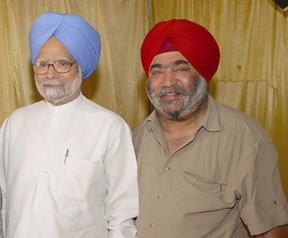
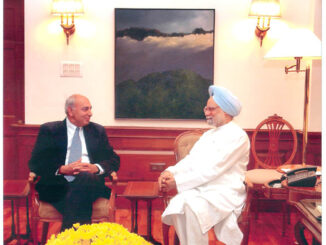
It was in July 2009. Dr Manmohan Singh, the then Prime Minister of India, had come to Jalalabad in Ferozepur district, on an electioneering campaign. I was assigned to cover his rally.
Since I had been interacting with him for a long time, I had requested the organizers for an interview with him. The request was granted. Before he went to address the rally, I was escorted to a makeshift tent on a side of the main dais where a couple of chairs and a table were organized to facilitate the interview.
I was already seated in the tent when Dr Manmohan Singh came. “Hello Prabhjot, how are you?”
I was pleasantly surprised by the way he greeted me. I was overwhelmed to hear my name from Dr Singh as he still remembered my name as I had not met him after he became the Prime Minister in 2004. A down-to-earth man, his simplicity and his respect for others always impressed me.
“Sir, I am fine. How about you? You just had a heart procedure,” I asked him.
“It went very well. I am fine. How is Mr Dua? How is The Tribune doing?” were his next questions before the start of the interview. Mr H K Dua was at that time Editor-in-Chief of The Tribune group of newspapers.
Dr Manmohan Singh had the best of relations with all Editors of The Tribune, including Mr H.K. Dua and his predecessor, Mr Hari Jaisingh. After covering the rally when I returned to Chandigarh, the first thing Mr Dua asked me was whether I was able to talk to him.
“Yes, sir, I did. I had a brief interview with him as he had to address a couple of other election rallies also,” I told him before I got busy with my copy. I was conscious that Dr Singh would look for The Tribune and my interview with him the next morning.
Dr Manmohan Singh was often quoted saying that the first thing he wanted with his morning cup of tea was the latest edition of The Tribune. Besides The Tribune, he was in love with Chandigarh where he worked as a Professor of Economics at Panjab University and had a house close to the Panjab University campus.
Besides Panjab University, he loved to be at CRRID to participate in various programs related to rural development. He was close to the then Director of CRRID, Dr Racchpal Malhotra, who also had served Panjab University earlier.
Dr Singh visited the Sector 19 Centre for Research in Rural and Industrial Development (CRRID) in Chandigarh. Invariably, I was assigned to cover his events and interview him.
In 2004 he became the Prime Minister. But our interactions continued. Though he did not belong to the typical genre of politicians, he was an academician, a world class economist, who led the country for 10 long years or two consecutive terms. He demonstrated his political acumen by heading a coalition government and survived a no-confidence motion, thanks to a dissident Akali MP SS Libra from historic Sri Fatehgarh Sahib.
After assuming office as Prime Minister, my interactions were considerably reduced. Besides Jalalabad, I got another chance to interact with him when he came to Paonta Sahib in Himachal Pradesh. Again, he was on an electioneering campaign. Though Dr Manmohan Singh could never become a member of Lok Sabha, the lower House of Parliament, he represented the Upper House, Rajya Sabha, till he retired as a Parliamentarian in April this year after a stint that lasted more than three decades.
Herb Dhaliwal, the first MP of Indian descent to become a federal minister in Canada, was joined by some of his contemporaries in eulogizing India’s one of tallest Prime Ministers, Dr Manmohan Singh, who left for his heavenly abode early this week. Herb Dhaliwal, who lives in Vancouver, says that among various things he shared with Dr Singh was “our retirement from politics”.
“I am personally feeling very saddened by the loss of my good friend, Dr Manmohan Singh. Beginning in the late 1990s I had the distinct privilege of becoming acquainted with this wonderful gentleman. I met him several times during his terms of office, first as Finance Minister and then as Prime Minister, as well as since he and I both left politics.
“India has lost an icon, a distinguished past Prime Minister highly respected by his world leader peers. He was a humble, long-standing career official who rose to make an indelible mark as an inspirational economic visionary. His dynamic policies on deregulation changed many sectors, opening India to foreign investment and the prosperity resulting.
“Manmohan Singh was the first Sikh in history to occupy the Lok Kalyan Marg (Prime Minister’s official residence). He also was a man whose legacy includes, although with his characteristic soft voice, being outspoken on behalf of India’s less fortunate.
“May he rest in peace, remembered for having been a kind human being, one who brought India forward to becoming a modern economic marvel among the community of nations,” Dhaliwal said in his message.
Gurbaksh Malhi, who was also elected to the House of Commons along with Herb Dhaliwal in 1993, condoled the death of Dr Manmohan Singh. He was the second Indian Prime Minister after Mrs Indira Gandhi to visit Canada.
When Dr Manmohan Singh came to attend the 2010 G 20 Summit in Toronto, said Mr Gurbaksh Malhi, recalling his meeting with him. At that time, all Canadian MPs of Indian descent called on him and submitted a memorandum to him highlighting the problems members of Indian Diaspora faced back home.
“He was a thorough gentleman, soft-spoken, with an open mind. He evinced keen interest in the issues we raised with him. He promised to look into all those demands mentioned in our memorandum. “
“I also had a few other opportunities to meet him. During my visits to India, both as a part of the Canadian delegations and my personal or private visits, I would make sure to call on Dr Manmohan Singh. And he was always warm and receptive. He would enquire about the strong Indo-Canadian community in general and the Canadian Punjabis in particular.
“He was not only an upright politician but also a great human being. He lived a simple and Inspirational life. I remained a great admirer of Dr Manmohan Singh,” Gurbaksh Malhi said. “I had several opportunities to meet and interact with Dr Manmohan Singh, says Gurmant Grewal, also a former Canadian MP of Indian descent.
“I accompanied a delegation of Canadian Parliamentarians to India with Preston Manning, the then Chief of Reform Party. We wanted the sanctions Canada had Imposed on India following its nuclear explosion under the BJP regime to be lifted. We met him. And he was very open. Friendly and receptive to our suggestions. He was a giant. He was not only a world-class economist but also a wonderful human being, known for his integrity and simplicity. His connectivity to people at the grassroots level made him a most revered politician not only in India but worldwide.
“He ushered in several people welfare programs, the word appreciated. I always looked forward to meeting him for exchanging Ideas on issues facing the world. He was not only well aware but also very clear in his ideas,” says Gurmant Grewal, who frequented India mostly as part of Canadian delegations, more so when Stephen Harper was the Prime Minister.
Gurmant Grewal also says that Dr Manmohan Singh had a soft corner for Canada. “He was always ready to do anything to promote bilateral relations between India and Canada as the two nations enjoy a very strong people-to-people bonding,” he added. All MPs of Indian descent who had a chance to meet or interact with him were infatuated by his warmth, simplicity and clarity. They all have been full of praise for Dr Manmohan Singh. They have joined the global Indian community in paying rich tributes to him.
TORONTO (TIP): Continuous mocking by US President-Elect Donald Trump of Canadian Prime Minister Justin Trudeau has set in motion an animated debate over the future of US-Canada relations.
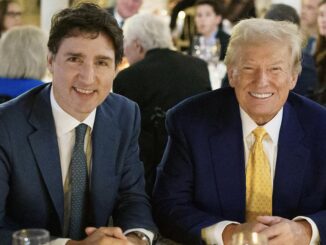
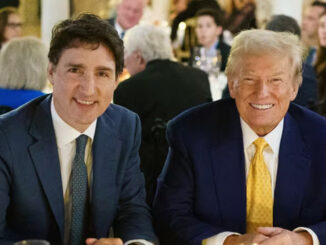
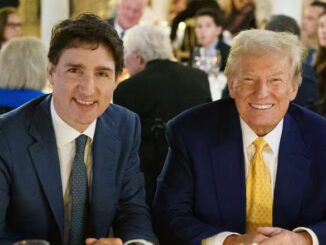
Since the last week of November when Donald Trump joked for the first time to suggest in a lighter vein at a dinner meeting he held with Justin Trudeau that why not Canada become the 51st State, he has repeated his joke several times, the last of which was revealed through his December 10 on his Truth Social Platform.
Politicians and social scientists are wondering at the intent of his continuous “mocking”.
“It was a pleasure to have dinner the other night with Governor Justin Trudeau of the Great State of Canada,” said Donald Trump in his December 10 post on his Truth Social platform. He went on to add that “he is looking forward to seeing the ‘Governor’ again to continue their in-depth discussion about tariffs and trade. “The results of which will be truly spectacular for all!” added the U.S. President-elect.
Donald Trump had in a subsequent Meet the Press programme organised by a major media channel on December 8 said “If we’re going to subsidize them, let them become a state [of the U.S.],” while jokingly threatening that the U.S. should stop “subsidizing” Canada. His repeated comments have evoked mixed reactions from Canadian politicians and social scientists.
The latest post describing Justin Trudeau as a “governor” went public hours after Justin Trudeau spoke at a Halifax Chamber of Commerce event. Justin Trudeau was quoted as saying that Canada would retaliate against the 25 per cent tariffs threatened by Trump.
It was Donald Trump who set the ball rolling with his Truth Social post on November 25 declaring his intent to impose tariffs on Canada and Mexico if they refuse to tighten their border security. Donald Trump was referring to large-scale infiltration into the US of “illegal aliens” from both Canada and Mexico besides the smuggling of drugs, including Fentanyl. Though the Canadian Prime Minister maintained that smuggling of both illegal immigrants and Fentanyl from Canada was inconsequential compared to the figures of Mexico and promised to strengthen the borders to effectively control the smuggling, the US President-elect mocked him.
After his November 25 announcement threatening to impose a 25 per cent duty on all imports from Canada and Mexico, Justin Trudeau accompanied by a delegation, including a member of his Cabinet, flew to Florida to meet him at his private Mar-a-Lago club to discuss trade and border security. This is when Trump reportedly joked for the first time about Trudeau becoming the governor of a 51st U.S. state if the Canadian economy cannot survive despite its trade surplus with the United States.
“Let us not kid ourselves in any way, shape or form: 25% tariffs on everything going to the United States would be devastating for the Canadian economy,” Trudeau said. He added that Canada will “respond to unfair tariffs in several ways, and we’re still looking at the right ways to respond, but our responses to the unfair steel and aluminium tariffs were what ended up lifting those tariffs last time.”
After the recent post, some members of the Liberal caucus, including Cabinet ministers, were questioned by the media about the continuous tirade, though jokingly, launched by Donald Trump.
“I am so proud of our country. I am so proud of the true north, strong and free,” said Deputy Prime Minister Chrystia Freeland during a press conference in Ottawa. “I also want to say to Canadians that our government is determined to defend the national interest.”
Freeland would not comment on whether she takes Trump seriously on comments of making Canada a U.S. state. “That is a question really for the president-elect,” she said.
Another Cabinet Minister to comment on the recent developments was Transport Minister and President of the Treasury Board, Anita Anand.
While talking to media persons, she said “We have to continue to remember that Canada is a sovereign country.” Truth Social should not be used as a source for public policy, remarked Immigration Minister, Marc Miller.
Health Minister Mark Holland said, “We cannot react to everything, we need to focus on being mature as a country and taking responsibility for the things for which we have control.” (Prabhjot Singh is a Toronto, Canada-based senior journalist. He can be reached at prabhjot416@gmail.com)
TORONTO (TIP): Canadian Prime Minister and members of his delegation who had a closed-door meeting with the US President-elect Donald Trump last Friday, November 29, were reportedly stunned when, during the deliberations on the 25 per cent import tariff, the host surprised everyone by suggesting that Canada should become the 51st state of the US.
According to media reports, Donald Trump said in a lighter vein that if Justin Trudeau did not like the tariff, perhaps Canada could become the 51st state and Trudeau could serve as its governor. Trudeau laughed nervously at the apparent joke, the media reports said.
Yesterday, when the House of Commons resumed its sitting, the issue of border security was raised by the Leader of Opposition, Pierre Poilievre, saying that his party had been asking the Prime Minister to wake up and regain control of the order but he continues to do the opposite. Pierre said that in 2015, the number of unprocessed asylum claims was under 10,000. Today, there were over 260,000.oration with provincial police forces to crack down on the human trafficking, illegal entry, drug production and trafficking.
These are the issues because of which the US President-elect Donald Trump had been threatening to impose 25 per cent duty on items imported from Canada and Mexico.
After talking to Donald Trump on the phone early last week, the Canadian Prime Minister accompanied by some senior functionaries of his Government, air dashed to Florida last weekend. The Canadians met Donald Trump and his team over a dinner meeting that reportedly lasted three hours. It was during this meeting that Donald Trump made that comment of suggesting Canada to become 51st state.
Media reports quoting an insider who was at the meeting said :“We are told that when Trudeau told President-elect Trump that new tariffs would kill the Canadian economy, Trump joked to him that if Canada cannot survive without ripping off the U.S. to the tune of $100 billion a year, then maybe Canada should become the 51st state and Trudeau could become its governor”.
Media reports further said that someone at the table noted that a Canadian state in the U.S. would be liberal, prompting Trump to say that the territory could be divided into two states, one liberal and one conservative. That reportedly drew more laughter.
Donald Trump’s humor-veiled bombast last weekend was somewhat reminiscent of his wish during his term of Presidency. At that time he had made public his wish to purchase Greenland.
While responding to issues raised by Pierre Poilievre, Canadian Minister Dominic LeBlanc, who was with Justin Trudeau in the meeting with Donald Trump, the previous weekend, said that the Canadian delegation had had a very cordial and constructive conversation with our American partners on Friday evening. “We talked about security at the Canada-U.S. border over the decades and the integration of Canadian police forces with their American partners. We talked, for example, about the important work that the RCMP is doing in the fight against fentanyl, which has led to drug seizures and significant arrests, often in partnership with our American allies.
Another Conservative MP, while joining the debate in the House of Commons, said that President-elect Trump just asked the Prime Minister to do something. “We have been asking for the same thing over here for nine years. We are calling for additional measures to stop gun smuggling, drug trafficking and auto theft. He never listened. Gun smuggling and auto theft are a scourge in Quebec. We have suggested enhanced surveillance at the Port of Montreal and at the border, but nothing has changed.
Dominic LeBlanc retorted back, saying “we have worked with our law enforcement. We have invested more to reverse the cuts made by the former Conservative government. If my colleague is serious about our country’s national security, I suggest that he encourage his boss to obtain the security clearance needed to access information that will help protect his political party and caucus. For example, when it comes to India’s foreign interference, it might be a good idea for the Leader of the Opposition to do that.
TORONTO (TIP): Patrick Brown, mayor of Brampton and one of the candidates in the run, says there was no foreign interference in the Conservative Leadership election in 2022.
Appearing before a Parliamentary Committee looking into allegations of foreign interference in the Canadian Conservative Leadership election in which the incumbent Leader of the official Opposition Pierre Poilievre won by 68 per cent of the first vote, Patrick Brown firmly held that foreign interference did not play a role in the 2022 election.
The Parliamentary committee had convened to investigate allegations of foreign interference in Canadian politics, focusing on the 2022 Conservative leadership race.
An earlier report from a national security committee had hinted at possible Indian involvement in influencing the leadership campaign. However, Brown, who initially refused to appear before the committee, addressed these concerns during his testimony while firmly rejecting the idea that foreign meddling impacted the final results of the race.
“I don’t believe foreign intervention affected the outcome of the Conservative leadership race,” Brown stated in his testimony on Thursday, December 5. Stressing the importance of protecting Canadian politics from foreign influence, he held that he did not want to be dragged into partisan disputes in Parliament.
When the Committee asked him early this week to give his testimony as he was a part of the leadership race, Patrick Brown took to social media to comment on the committee’s summons. He maintained that he had no new evidence to contribute to the inquiry and reiterated that the ongoing public inquiry into foreign interference was the appropriate venue for addressing such allegations.
In his testimony, he also clarified that no representatives from the Indian government contacted him or his campaign during the leadership race. Despite the claims of foreign interference, Brown maintained that his campaign faced no external pressures.
The public inquiry into foreign interference, which concluded its hearings earlier this fall, is expected to release a final report in the coming months. Brown, however, was not called as a witness during the inquiry.
Intriguingly, Patrick Brown’s leadership bid in 2022 was marred by allegations related to campaign financing, which led to his disqualification from the race under the Canada Elections Act. The Election Commission decided early this year not to continue with its investigation against Patrick Brown. Patrick Brown, however, continues to advocate for impartial investigations and transparency into the issue as it was both sensitive and important holding that Canada’s political processes must remain free from external influence.
OTTAWA (TIP): After losing the first two battles to bring down the minority Liberal government, Conservatives, the Official Opposition Party, tabled its third successive no-confidence motion in the penultimate week sitting of the House of Commons. The House of Commons will adjourn for holiday break at the end of next week. Unmindful of the earlier failed attempts to topple Justin Trudeau’s Government and force an early election to the House of Commons, Conservative Leader Pierre Poilievre tabled his motion before the House of Commons on Thursday.
Structuring its no-confidence motion on the past criticisms, especially the quotes from the statements the NDP leader Jagmeet Singh made while tearing down the supply and confidence agreement with the Liberals.
Earlier no-confidence motions moved by Conservatives in September and October failed. The minority Liberals are likely to survive the third no-confidence motion as well as the NDP leader had already declared that his party would not play Pierre Poilievre’s game. The Liberals need the support of one of the other parties – Bloc Quebecois or NDP – in the House of Commons to continue in the saddle in the New Year. Voting on the no-confidence motion will take next week when the House of Commons resumes its sitting on Monday.
While introducing the motion on Thursday afternoon, Pierre Poilievre said he was presenting this motion in the “spirit of non-partisanship.”
The language of the motion refers to a statement the NDP Leader Jagmeet Singh made when he announced in September that his party was pulling out of the supply-and-confidence agreement with the Liberal government.
Pierre Poilievre said, “I rise today in the spirit of non-partisanship, put our differences aside and take a good idea and a good perspective no matter where it comes from.” He further commented, “Too often in this place, we refuse to accept ideas or input from other people and so I thought I would remedy that by taking the words and the message of the leader of the NDP and putting them in a Conservative motion so that all of us could vote for the very wise things that he said.”
“Whereas the NDP Leader said, ‘the Liberals are too weak, too selfish and too beholden to corporate interests to fight for people,’” the motion states in the preamble and continues to ask that: “Therefore, the House agrees with the NDP Leader and the House proclaims it has lost confidence in the Prime Minister and the Government.”
The motion further includes Singh’s comment criticizing the Liberal government for imposing binding arbitration to end the railway shutdown in August.
The minority Liberals are likely to survive the third no-confidence motion as the NDP leader had already declared that his party would not play Pierre Poilievre’s game.
As the debate on the motion started, the Conservatives held that the next federal election would be an axe Carbon tax election that would bring face-to-face the Conservatives vs the rest – the Liberals, NDP, Bloc Quebecois and Greens. Pierre Poilievre while moving the motion held that Labour Minister Steven MacKinnon’s order to impose binding arbitration on railway workers violated their right to strike. In a debate that followed the tabling of the motion, MacKinnon accused Poilievre of backing anti-union bills.
“On the other hand, Mr. Speaker, Liberals have been there for workers from day one. On this side of the House, we stand on our record, not an empty slogan,” MacKinnon said.
Since the NDP leader Jagmeet Singh was not at the debate, NDP MP Matthew Green criticized Poilievre’s stance on workers’ rights. “Despite all this cosplay we see in front of us … has this member ever once in his life visited a picket line?” he asked. To which Poilievre responded: “Yes, Mr. Speaker.”
Early this week, when the Conservative leader revealed the content of the next no-confidence motion, Jagmeet Singh reacted by saying he won’t play Conservative Leader Pierre Poilievre’s games. He maintained he was not going to vote non-confidence and trigger an election as he believed Pierre Poilievre would cut programs the NDP fought for, like dental care and pharma care.
“I am not going to be playing Pierre Poilievre’s games. I have no interest in that. We are frankly not going to allow him to cut the things that people need. I want to have dental care expanded, I want people to start to benefit from the pharma care legislation we passed,” Singh said.
Another two Conservative motions would be heard Monday, December 9 and Tuesday, December 10, with both set for a vote on Tuesday, December 10, barring changes to those plans.
(Prabhjot Singh is a Toronto based award-winning senior journalist. He can be reached at prabhjot416@gmail.com)
SACRAMENTO (TIP): Days after a Hindu temple in Canada was attacked by alleged Khalistani activists, Indian-Americans in Silicon Valley held a ‘Hindu Sikh Unity Interfaith’ event honoring the sacrifice of Sikh guru Tegh Bahadur.
Hosted by Gurudwara Sant Nagar in Sacramento over the weekend, the event was attended by more than 200 members of Hindu, Sikh and other communities. Prominent among those who attended the event were Elk Grove City Mayor Bobby Singh-Allen, Commissioner of City of Elk Grove Bhavin Parikh, Council member of City of Rocklin Jill Gayaldo, Vice Mayor of Elk Grove Rod Brewer, and member of Interfaith Council of Sacramento Akram Keval.
“Religious intolerance is plaguing our society. A few are dividing us and we must reject it. We gathered here to celebrate oneness. It is just the beginning; we have to show a better way. An attack on one is an attack on all of us,” said Singh-Allen.
In his keynote address, Narinderpal Singh Hundal of Sant Sagar Gurdwara said, “We should all uphold the message of unity that Guru Tegh Bahadur Sahib gave by sacrificing himself to protect religion, and by obeying his command, maintain mutual brotherhood and love, and try to further propagate this mission.”
Parikh said the guru’s sacrifice has a message that hate doesn’t have any place in this world. He said Sikhism teaches equality, humility and respect.
“We all need to learn to appreciate and embrace other cultures and learn from them,” he added.
Rewa Kaul, a Kashmir Pandit born in Srinagar and a resident of Bay Area, talked about how Guru Tegh Bahadur’s sacrifice defended the religious freedom of Kashmiri Pandits and Hindus who faced brutal oppression and were forced to convert to Islam under Mughal emperor Aurangzeb. She reminded the attendees to stay united.
Two turbaned Sikhs were among the three candidates of South Asian descent declared successful in the Saskatchewan Provincial Assembly elections. Bhajan Singh Brar and Tajinder Singh Grewal, both of the New Democratic Party (NDP), thus became the first turbaned Sikhs to sit in the Saskatchewan Assembly.
After the preliminary round of vote counting, Bhajan Brar (Regina Pasqua) and Tajinder Grewal (Saskatoon University-Sutherland) were declared successful. Noor Burki, also of NDP (Regina Coronation Park), was the third candidate of South Asian descent to be declared successful.
In all 14 candidates of South Asian descent were in the field. The ruling Saskatchewan Party, led by incumbent Premier Scot Moe, won a majority, bagging 34 seats in a House of 61. In the outgoing Assembly, the Saskatchewan Party had 48 seats, while the NDP occupied the remaining 13. This time, the NDP, led by Carla Beck, put up a splendid fight, taking its tally to 27.
The NDP virtually made a clean sweep as it won all 12 seats in the Regina region and 13 of the 14 seats in the second major urban area of Saskatoon.
In 2020, Gary Grewal became the first Canadian of Indian origin to sit in the Saskatchewan Provincial Assembly. He decided not to seek re-election this time.
Bhajan Brar
Both Bhajan Brar and Tajinder Grewal, not only won with impressive margins over their rivals from the ruling Saskatchewan Party but also scripted history. They join the select band of Canadian politicians of Punjabi descent who would sit in the Assembly sporting their turbans. Never before any Sikh wearing a turban has sat in the Saskatchewan Provincial Assembly.
Bhajan Brar is a community leader, a father and a grandfather. He contested the Saskatchewan Provincial Assembly elections for the second successive team. In 2020 he lost narrowly. Bhajan Brar has been a dedicated volunteer, having worked with numerous organizations throughout Regina. Bhajan has been trained as an engineer and has spent time working as both a journeyperson electrician and a power engineer. He says he is devoted to ensuring a brighter future for all people in Saskatchewan.
Tajinder Grewal with NDP leader Carla Beck
Tajinder is a renowned scientist and a devoted community leader. He represented the Saskatchewan NDP as its candidate in Saskatoon University-Sutherland. Tajinder Grewal has had a profound impact on the scientific and cultural landscapes of Saskatchewan, holding significant roles at SGS Canada Inc., the University of Saskatchewan, the Saskatchewan Research Council and the Punjabi Cultural Association of Saskatchewan. A dedicated volunteer and board member, he has served on many foundations and community organizations. Tajinder says he has dedicated his life to public service.
The third successful candidate of the South Asian community is Noor Burki who also won the NDP ticket and he defeated Riaz Ahmed of the ruling Saskatchewan Party.
Other candidates of South Asian descent who contested on various party tickets were unsuccessful. They include Parminder Singh, Rahul Singh, Khushdil (Lucky) Mehrok, Jaspreet Mander, Mohammad Abushar, Mumtaz Naseeb, Liaqat Ali, Mohammad Riaz, Caesar Khan, and Riaz Ahmad.
After Conservatives now Bloc Quebecois threatens to bring down the minority Liberal government
By Prabhjot Singh
OTTAWA (TIP): It was free for all as the House of Commons witnessed a rowdy question hour before turning down no-confidence motion 211-120 for a reprieve for the minority Liberal Government. Marred by acrimonious verbal exchanges between those supporting and opposing the motion, Speaker Greg Fergus asked Conservative Leader Pierre Poilievre to leave the House after he refused to withdraw the “unparliamentary language he had used against the Prime Minister.
Pierre Poilievre tried to bring down the government with a non-confidence motion. It failed when all Bloc, NDP, Green MPs, and two Independents voted against it.
“Today, we will vote to trigger a carbon tax election between the costly carbon tax coalition of NDP-Liberals … or common-sense Conservatives who will axe the tax, build the homes, fix the budget and stop the crime,” Poilievre said, making his case to the Commons in question period. “Again with the clever little performance, with the slogans he has memorized, without any solutions for Canadians,” Trudeau shot back.
“He does not care about Canadians, he cares about his political self-interest. Little performances, little rhymes and slogans — no solutions,” Trudeau said as he returned to the House today after his official visit to the United States where he attended the general assembly session of the United Nations
The speaker called it a “remarkable question period” after MPs from all sides yelled at each other and called each other names.
“There are a couple of things that are going on here today that are not acceptable,” Fergus said.
Poilievre’s day-long suspension from the House followed his calling Prime Minister Justin Trudeau a “wacko” for supporting B.C.’s past policy of decriminalizing some hard drugs in an attempt to reduce the number of overdose-related deaths.
Poilievre maintained it was a “wacko policy” backed by “this wacko prime minister.” When Speaker Fergus asked him to withdraw the “unparliamentary language,” he refused, saying that he would replace “wacko” with “extremist” or “radical.” Poilievre’s refusal prompted Fergus to remove him.
Once the Leader of Opposition was ordered out of the House, the Conservative caucus left the Commons chamber en masse, following Pierre Poilievre.
Speaker also ordered Conservative MP Rachael Thomas to withdraw from the House of Commons for ‘disregarding the authority of the chair.’ Thomas was heard saying ‘The chair is acting in a disgraceful manner.’
It was not Pierre Poilievre alone who was cautioned by the Speaker. Even the Prime Minister was also mentioned. During question hour, Justin Trudeau said at one point that Poilievre was a “spineless” leader. This remark did result in a rebuke from Fergus. The Speaker told Trudeau not to make comments that “call into question the character of an individual member of Parliament.”
“Poilievre is trying to earn votes through personal attacks”, Trudeau said, after the Conservative leader raised Trudeau’s past episodes of wearing blackface.
As the verbal tirade continued, Trudeau accused Poilievre of courting “white nationalist groups” with his visit to an anti-carbon tax protest camp in the Maritimes earlier this month.
Another issue that snowballed into another exchange of barbs was the Trudeau accusing Conservatives of making homophobic comments during rowdy question hour.
Speaker Greg Fergus was asked by the Treasury Benches to investigate whether a Conservative MP made homophobic comments involving the prime minister on the floor of the House.
The incident that turned question hour into an all-out yelling match, started with a question from Conservative Leader Pierre Poilievre about the government’s controversial purchase of a luxury apartment for its consul general in New York.
While listing off features of the condo, including “a handcrafted copper soaking tub,” Poilievre asked Prime Minister Justin Trudeau if he visited Consul General Tom Clark at the new residence on his recent trip to the U.S.
Speaker wanted that no one should speak out of turn, Trudeau quipped, “We are used to casual homophobic comments from the other side of the House.” It led to an uproar as the Opposition benches started shouting to demand that the prime minister be kicked out for unparliamentary language.
Fergus said he heard a comment but could not tell who made it. While pleading with MPs to “treat each other with the presumption of honor and respect,” he asked Trudeau to withdraw his comment.
“Standing up to bullies requires us to call them out on their crap sometimes and that’s what I will do,” Trudeau responded.
“I will happily withdraw my comment if the member who suggested that I was sharing a bathtub with Tom Clark stands up, and takes responsibility.”
After another round of yelling and calls to “kick him out,” Trudeau withdrew what he characterized as his “comment about defecating.”
Fergus then allowed Trudeau to continue with his response to the original question.
PM Justin Trudeau fielded a few more questions from Bloc and NDP MPs before he left the House after the fracas.
When the vote was taken, the result 211-120 was on the expected lines as the Liberals, NDP, Bloc Quebecois, Green and two independents voted against the motion.
Bloc Québécois Leader Yves-François Blanchet laid out a list of demands Wednesday that he said the government must fulfil by the end of October if it wants to avoid the risk of an early election.
Speaking to the media, Blanchet said the Bloc wants the government to push through a bill, C-319, that would hike Old Age Security (OAS) payouts by 10 per cent for seniors between the ages of 65 and 74. The government topped up OAS payments for seniors aged 75 and older in 2022.
Blanchet also said he wants the government to agree to pass a Bloc private member’s bill, C-282, that exempts the supply-managed farm sectors — dairy, poultry and eggs — from any future trade negotiations.
He said those demands must be met by October 29. If they are not, he said, the Bloc will start negotiations with the Conservatives and the NDP on toppling Prime Minister Justin Trudeau’s government.
The Liberal government may not fall even if the Bloc pulls its support. Trudeau could convince the NDP to back him up again. The Conservatives are eager to go to an election as soon as possible and have threatened to table more non-confidence motions in the coming weeks to trigger a vote.
The Liberals hold 153 of the 338 seats in Parliament. To get to a majority of 169 MPs without Conservative support, the Liberals need either the NDP (25 MPs) or the Bloc (33 MPs) to stand with them.
The Conservatives (119 MPs) and the Bloc voting together wouldn’t be enough to bring down the government. They need the NDP’s support as well to get the no-confidence motion through.
(Prabhjot Singh, is a Toronto-based award-winning independent journalist, He was celebrated by AIPS, the international body of sports journalists, for covering ten Olympics at its centennial celebrations held at UNESCO Centre in Paris during the 2024 Olympic Games. Besides, he has written extensively about business and the financial markets, the health industry, the public and private sectors, and aviation. He has worked as a political reporter besides covering Sikh and Punjab politics. He is particularly interested in Indian Diaspora and Sikh Diaspora in particular. His work has also appeared in various international and national newspapers, magazines and journals.)
OTTAWA (TIP): Canada has reduced dozens of its Indian staffers posted in its missions in India, months after New Delhi forced Ottawa to downsize its diplomatic presence. A Canadian high commission spokesperson on Friday said the slashing of the size of Indian staff was necessary given the reduction of Canadian staff in the country.
The Trigger
In Sept last year, Canadian PM Justin Trudeau’s alleged ‘potential’ involvement of Indian agents in killing of separatist Hardeep Nijjar
Rejecting charge, India then asked Ottawa to downsize its diplomatic presence in the country to ensure parity.
“I can confirm that the government of Canada has implemented some staff reductions across our network of missions in India,” the official said. “The decision to implement reductions across our network of missions in India was sadly necessary given the reduction of Canadian staff available to effectively manage and maintain in-country operations.”
The spokesperson said the high commission expressed its sincere gratitude for the resilience, dedication and service of its local staff in India. “Canada will continue to deliver core services to Canadians in India. We also confirm that Canada’s visa application centers in India are operating as normal,” the spokesperson added.
The ties between India and Canada came under severe strain following Canadian PM Justin Trudeau’s allegations in September of a “potential” involvement of Indian agents in the killing of Khalistani separatist Hardeep Singh Nijjar on June 18 in British Columbia. New Delhi had rejected the charge.
(Source: PTI)
LONDON (TIP): More than 600 British jurists, including three retired judges from the U.K. Supreme Court, are calling on the government to suspend arms sales to Israel, piling pressure on Prime Minister Rishi Sunak after the deaths of three U.K. aid workers in an Israeli strike.
In an open letter to Mr. Sunak published late Wednesday, April 3, the lawyers and judges said the U.K. could be complicit in “grave breaches of international law” if it continues to ship weapons.
Signatories, including former Supreme Court President Brenda Hale, said Britain is legally obliged to heed the International Court of Justice’s conclusion that there is a “plausible risk of genocide” in Gaza.
The letter said the “sale of weapons and weapons systems to Israel … falls significantly short of your government’s obligations under international law.”
Britain is a staunch ally of Israel, but relations have been tested by the mounting death toll, largely civilian, from the war. Calls for an end to arms exports have escalated since an Israeli airstrike killed seven aid workers from the aid charity World Central Kitchen, three of them British.
Israel says the attack on the aid workers was a mistake caused by “misidentification.”
The U.K.’s main opposition parties have all said the Conservative government should halt weapons sales to Israel if the country has broken international law in Gaza.
Several senior Conservatives have urged the same, including Alicia Kearns, who heads the House of Commons foreign affairs committee.
Mr. Sunak has not committed to an arms export ban, but said Wednesday, April 3, that “while of course we defend Israel’s right to defend itself and its people against attacks from Hamas, they have to do that in accordance with international humanitarian law.”
British firms sell a relatively small amount of weapons and components to Israel. Defiance Secretary Grant Shapps has said that military exports to Israel amounted to 42 million pounds ($53 million) in 2022.
Other allies of Israel are also facing calls to cut off the supply of weapons and to push for a cease-fire in the conflict, which has killed more than 32,000 Palestinians, according to health authorities in Gaza.
In February, Canada announced it would stop future shipments, and the same month a Dutch court ordered the Netherlands to stop the export of F-35 fighter jet parts to Israel. The Dutch government said it would appeal.
Other countries, including Israel’s two biggest arms suppliers, the United States and Germany, continue to allow weapons sales.
Peter Ricketts, a former U.K. National Security Advisor, said suspension of U.K. arms sales would not change the course of the war, but “would be a powerful political message.”
“And it might just stimulate debate in the U.S. as well, which would be the real game-changer,” he told the BBC.
The Sikh community witnessed a deplorable incident that struck a dissonant chord—heckling directed at Mr. Taranjit Singh Sandhu, the Indian Ambassador to the US, by some Khalistani individuals. Their accusations, tied to the assassination of Nijjar in Canada and alleged involvement in a conspiracy against Gurpatwant Pannu of Sikhs For Justice, unfolded in a religious shrine. Such actions, regardless of political motives, exhibit poor taste and fail to resonate within the Sikh community who have rightly condemned the hecklers.
The act of heckling within a religious setting not only violates the sanctity of the shrine but also contradicts the principles of respect and harmony deeply ingrained in Sikh values. Instead of garnering support or sympathy for their cause, these Khalistani hecklers inadvertently caused harm. Their actions alienated potential supporters and detracted from the credibility of their aspirations for an independent Khalistan.
It is crucial for any movement or cause to win hearts and minds within its community. However, the recent conduct of the Khalistani hecklers exemplifies a counterproductive approach. Rather than fostering solidarity and unity, their actions sowed seeds of discord and disapproval among the Sikh populace.
Ambassador Taranjit Singh Sandhu’s family history bears testament to their invaluable contributions to the Sikh community. His father, Sardar Bishan Singh Samundri, remains revered as a distinguished educationist and the founding Vice Chancellor of Guru Nanak Dev University, a beacon of academic excellence in India. Additionally, his grandfather, Sardar Teja Singh Samundri, played a pivotal role in the Gurudwara Reform movement, earning recognition with the naming of Teja Singh Samundri Hall within the Golden Temple complex in Amritsar.
The legacy of such remarkable individuals deserves utmost reverence and admiration. Criticism and dissent can be expressed in civil and respectful ways without resorting to demeaning or vilifying the heroes and their families who have significantly contributed to the Sikh community’s growth and stature.
It’s paramount for those advocating the Khalistan cause to understand that their actions reflect upon the movement as a whole. By engaging in disrespectful behavior, they not only tarnish their image but also undermine the credibility and legitimacy of their objectives.
Respect for differing opinions and adherence to ethical conduct form the bedrock of any movement’s success. Therefore, the recent incident serves as a cautionary tale, emphasizing the importance of upholding decorum, dignity, and respect in pursuing one’s beliefs and aspirations.
The Sikh community, known for its rich history and strong values, should prioritize unity and inclusivity. While advocating for political demands, it’s imperative to avoid actions that divide or disparage the community’s esteemed figures.
The actions of the Khalistani hecklers, while driven by political fervor, have detracted from their cause. Respect, decorum, and reverence for Sikh heroes and their families are essential tenets that must be upheld, fostering unity rather than division within the community. It’s time for introspection and a recalibration of strategies to garner genuine support and respect for the Khalistan cause.
Thanksgiving Day is annual national holiday in the United States and Canada celebrating the harvest and other blessings of the past year. This year, the day falls on Thursday, November 23. Americans generally believe that their Thanksgiving is modeled on a 1621 harvest feast shared by the English colonists (Pilgrims) of Plymouth and the Wampanoag people. The American holiday is particularly rich in legend and symbolism, and the traditional fare of the Thanksgiving meal typically includes turkey, bread stuffing, potatoes, cranberries, and pumpkin pie. With respect to vehicular travel, the holiday is often the busiest of the year, as family members gather with one another.
Plymouth’s Thanksgiving began with a few colonists going out “fowling,” possibly for turkeys but more probably for the easier prey of geese and ducks, since they “in one day killed as much as…served the company almost a week.” Next, 90 or so Wampanoag made a surprise appearance at the settlement’s gate, doubtlessly unnerving the 50 or so colonists. Nevertheless, over the next few days the two groups socialized without incident. The Wampanoag contributed venison to the feast, which included the fowl and probably fish, eels, shellfish, stews, vegetables, and beer. Since Plymouth had few buildings and manufactured goods, most people ate outside while sitting on the ground or on barrels with plates on their laps. The men fired guns, ran races, and drank liquor, struggling to speak in broken English and Wampanoag. This was a rather disorderly affair, but it sealed a treaty between the two groups that lasted until King Philip’s War (1675–76), in which hundreds of colonists and thousands of Native Americans lost their lives.
The New England colonists were accustomed to regularly celebrating “Thanksgivings,” days of prayer thanking God for blessings such as military victory or the end of a drought. The U.S. Continental Congress proclaimed a national Thanksgiving upon the enactment of the Constitution, for example. Yet, after 1798, the new U.S. Congress left Thanksgiving declarations to the states; some objected to the national government’s involvement in a religious observance, Southerners were slow to adopt a New England custom, and others took offense over the day’s being used to hold partisan speeches and parades. A national Thanksgiving Day seemed more like a lightning rod for controversy than a unifying force.
Thanksgiving Day did not become an official holiday until Northerners dominated the federal government. While sectional tensions prevailed in the mid-19th century, the editor of the popular magazine Godey’s Lady’s Book, Sarah Josepha Hale, campaigned for a national Thanksgiving Day to promote unity. She finally won the support of President Abraham Lincoln. On October 3, 1863, during the Civil War, Lincoln proclaimed a national day of thanksgiving to be celebrated on Thursday, November 26.
The holiday was annually proclaimed by every president thereafter, and the date chosen, with few exceptions, was the last Thursday in November. President Franklin D. Roosevelt, however, attempted to extend the Christmas shopping season, which generally begins with the Thanksgiving holiday, and to boost the economy by moving the date back a week, to the third week in November. But not all states complied, and, after a joint resolution of Congress in 1941, Roosevelt issued a proclamation in 1942 designating the fourth Thursday in November (which is not always the last Thursday) as Thanksgiving Day.
As the country became more urban and family members began to live farther apart, Thanksgiving became a time to gather together. The holiday moved away from its religious roots to allow immigrants of every background to participate in a common tradition. Thanksgiving Day football games, beginning with Yale versus Princeton in 1876, enabled fans to add some rowdiness to the holiday. In the late 1800s parades of costumed revelers became common. In 1920 Gimbel’s department store in Philadelphia staged a parade of about 50 people with Santa Claus at the rear of the procession. Since 1924 the annual Macy’s parade in New York City has continued the tradition, with huge balloons since 1927. The holiday associated with Pilgrims and Native Americans has come to symbolize intercultural peace, America’s opportunity for newcomers, and the sanctity of home and family.
Days of thanksgiving in Canada also originated in the colonial period, arising from the same European traditions, in gratitude for safe journeys, peace, and bountiful harvests. The earliest celebration was held in 1578, when an expedition led by Martin Frobisher held a ceremony in present-day Nunavut to give thanks for the safety of its fleet. In 1879 Parliament established a national Thanksgiving Day on November 6; the date has varied over the years. Since 1957 Thanksgiving Day has been celebrated in Canada on the second Monday in
October.
Thanksgiving is the most popular and well-known American holiday. Each year on the fourth Thursday of November, Americans gather to eat a traditional meal of turkey and pies, and spend time with family and friends. In fact, the Wednesday before Thanksgiving is the biggest travel day of the year in the country, as Americans drive and fly to go meet family.
The holiday has become so much more than a simple day of thanks. With parades, TV specials, and more, Thanksgiving is seen as the kickoff of the holiday season. The Friday following the holiday has been dubbed “Black Friday” – a day that shoppers lineup early in the morning to get the best sales and discounts for their holiday shopping.
Thanksgiving Day food
Turkey has become all but synonymous with the holiday. According to the National Turkey Federation, nearly 90 per cent of Americans eat the bird — whether roasted, baked or deep-fried — on Thanksgiving Day. Other traditional foods include stuffing, mashed potatoes, cranberry sauce and pumpkin pie.
Pardoning of turkey ceremony
Since the beginning of the mid-20th century, the president of the United States has “pardoned” one or two Thanksgiving turkeys each year, sparing the birds from slaughter and sending them to a farm for retirement.
Other countries that celebrate Thanksgiving Day holiday
Canada has its own Thanksgiving Day, on the second Monday in October, and Liberia celebrates Thanksgiving on the first Thursday of November.
Black Friday sale
A month-long shopping season for the winter holidays begin after Thanksgiving, with Black Friday kicking off the season.
At my age 93+ I keep thinking and dreaming about India and the Indian Americans. Though born in India and lived there only 24 years I love India and the Indian Americans. I am getting intoxicated sometimes hearing the extraordinary success of Indian Americans in all fields. I studied Business at Columbia and I have been following the outstanding leadership of Indian Americans in leading Business schools and major corporations (including two trillion dollars). I have been shocked at Harvard selecting an Indian as its Dean, who served for more than a decade. Harvard has selected another Indian to succeed him. This guy received all his education in India!
HBS is the No.1 leading Business school in the world. It manufactures CEO’s. Does this not show that Indian Americans are geniuses in Business. Though Indian business success is nowhere near America’s, Indians are excelling. India and the Indian Americans have not honored these outstanding Deans of the world. These Deans are highly influential. The main responsibility of the Harvard Dean is to raise funds and select the topnotch faculty and create the most successful environment for students at HBS.
POLITICS
In politics for a tiny population, we have made our mark. We elected two Governors, one Vice President, ten to Congress, Many Indian Americans have been appointed as Judges at all levels including Appellate courts. Some have been identified for the Supreme Court.
So far, three Indian Americans have competed for the President of the USA. Two governors – Nikki Haley, Bobby Jindal and a businessman, Ramaswamy. Whether they win or not, they are competing with a small number of Presidential aspirants. Indian Americans stand out.
TECHNOLOGY
We are leaders. America has graduated thousands of Indian Americans in Electrical Engineering and other Engineering disciplines
I can state that without the input of Indian American engineers. the U.S. could not have made this much progress. Americans have become poor in mathematics and science because of failed public schools run by the unions. How many can qualify for admission to Bronx School of Science or Stuyvesant High School? Indians dominate in these schools.
We have achieved with a very tiny population of 4 million Indian Americans, slightly above 1% of the US population. Hoping this trend continues, what will be the impact of Indian Americans 10, 20, 50 or 100 years? All the three Presidential candidates were born and buttered in the USA — second generation Indian Americans.
We have beaten all ethnic groups in income year after year. I came to the USA in 1954, almost 70 years ago when there were only 3000 Indians, all Foreign Students. The phenomenal progress of the Indian Americans has shocked me pleasantly. Will this trend continue?
If it does, the US will certainly elect an Indian American as President in the future and that will create a huge impact. The U.K., Ireland, Portugal, Singapore, Trinidad and Tobago, Guyana, Fiji Island, have been headed by Indian origin people. I think No.2 in Canada is an Indian. It is therefore possible the Indian American leaders could influence International Relations and Foreign Policy.
India is the youngest country in the world. I am getting the impression the young Indians are adventurous and want to live in various parts of the world. There is a tremendous interest and urge to immigrate to the USA. If and when the US chalks out a wise immigration policy it should attract millions of Indians to the USA in the future. Who can predict the influence of Indian Americans in the future?
It is quite possible that the Indian Americans will pretty soon have as much influence as the tiny Jewish community has.
I think Indian Americans should start formulating policies and strategies to solve major problems of the USA: Open Border; Immigration; Dealing with Minorities especially the Blacks and Latinos; Poor quality of Public Education; Foreign Policy taking into account the major blunders of the past: Vietnam, Iraq, Afghanistan, Breaking of Yugoslavia, Iran, neglecting South America, etc.
Honorees- Mrs. Mandeep Kaur Gill, Mrs. Harpinder Kaur, Subedar Major Sukhdev Singh, CHM Gurcharan Singh, Havildar Jaswinder Singh and Havildar Jaspal Singh. Each of them was honored by Consul General Randhir Kumar Jaiswal. In attendance were Deputy Consul General Dr. Varun Jeph and Saragarhi Foundation President Dr. Gurinderpal Singh Josan.
NEW YORK CITY (TIP): Solemn Words of Homage were offered to the 21 Sikh Braveheart-Martyrs, on the Sacred 126th Anniversary of the Epochal Battle of Saragarhi, as they were honoured at the Indian Consulate-General of New York, on the 12th of September 2023, by Saragarhi Foundation, in active collaboration with the Consulate-General of India. The Welcome Address was presented by Ambassador Randhir Jaiswal, Consul General of India, New York, as he so very graciously offered to Honor and Cherish the Sacred Memory of this unparalleled act of gallantry, on an annual basis.
Mrs. Varinder Kaur Khas was the M.C., who conducted the proceedings with elan, is the General-Secretary of Saragarhi USA Chapter. She was awarded a Citation.
A documentary on the historic battle was screened on the occasion, wherein one scene depicted the actual battle-site, where Dr. Gurinderpal Singh Josan, Founder of Saragarhi Foundation, hoisted the Khalsa-Sikh insignia Nishaan Sahib, for the 1st time on the 8th of July 2019. Up to the time of the battle, the British Union Jack was fluttering there. At the battle-site, Dr. Josan offered an ‘Ardaas of Shukraana’ (Prayer of Gratitude) to ‘Akaal-Purakh’ (The Almighty Majesty) and to Guru Sahibji, for the Blessed Gift of unfathomable fortitude bestowed upon the 21 Sikh Warriors, who outright refused to surrender, preferring to die fighting, despite receiving such an option/offer of safe-passage, from the Afghan enemy rank & file.
Last year, Saragarhi Foundation and about 25 Sikh families of the region inaugurated the 1st Gurdwara Saragarhi Singh Sabha, at Hangu.
The M. C., then, requested the attendees to rise, for offering a thirty second homage to the Brave Martyrs. Similarly, a two-minute standing ovation to the Sacred Memory of the Martyrs was offered in the British Parliament, soon after the battle in 1897. She said this is the only Indian Embassy or Consulate in the world, which has taken up the initiative of hosting such a paramount event and so she expressed the Sikh community’s utmost gratitude towards Shri Randhir Jaiswal ji, for his immense support and enthusiastic fervor. Earlier, this year, the Consulate also hosted a British Army Delegation invited by Saragarhi Foundation.
Ambassador Jaiswal honoured Dr. Gurinderpal Singh Josan with a shawl and a signed coffee-table book from the Prime Minister of India. Dr. Josan addressed the invitees and gave a brief description of his endeavors, pertaining to the revival of the Spirit of Selfless Service & Supreme Sacrifice, epitomized by 21 Sikh Martyrs in the Line of Duty.
Prof. I. S. Saluja, the Chief-Editor of Indian Panorama Weekly, made an emotional speech recalling the Spirit of Sacrifice inculcated by Guru Gobind Singh Sahibji, in the Sikhs, by setting a uniquely Divine precedent of sacrificing all four of his illustrious sons, all of whom were aged under 17. The Golden-Chain of 10 Gurus, spanning 239 years : Guru Nanak Rai Sahibji (circa 1469-1539) through Guru Gobind Singh Sahibji (1666-1708) practiced and preached humility along with fearlessness, thereby presenting the model of an egalitarian and empowered society. The 5th Guru Arjan Sahibji and the 9th Guru Tegh Bahadur Sahibji embraced Martyrdom, bearing the brunt of intense tortures but refused to be cowed down by tyrannical rulers. Prof. Saluja said Guru Gobind Singh Sahibji epitomized the Saint-Soldier image, leading from the front, to face the mighty oppressive Mughal-Dynastic regime of India.
Mrs. Mandeep Kaur Gill, the 5th generation of Havildar Ishar Singhji and the President of Canada Chapter of Saragarhi Foundation made an address.
Mrs. Harpinder Kaur, the 4th generation of Shaheed Sahib Singhji addressed the audience.
3 Veteran Soldiers from 4 Sikh Battalion of the Indian Army (erstwhile 36 Sikh Regiment of the British Army) were honoured
Subedar Major Sukhdev Singh, CHM Gurcharan Singh, Havildar Jaswinder Singh and Havildar Jaspal Singh were honoured and Sukhdev Singh ji addressed the invitees. S. Harbans Singhji special representative from Gurdwara Guru Nanak Darbar Hicksville NY was also present. Media personnel from Jus Punjabi of Penny Sandhu, TV Asia and official media team of Consulate deserve special appreciation for the event-coverage.
Manjit Kaur NYPD volunteer for 5k NY marathon; Harjinder Kaur Jammu is Punjab State level marathoner; Punjit Singh is a marathoner and a sky-diver. S. Onkar Singh
Community Activist was also honoured. All of them received Citations.
Ms. Gurkirat Kaur, S. Meharjot Singh, Ms. Pahuljot Kaur and Ms. Angelina Kaur Uppal the four winners of the essay competition on Saragarhi were presented trophies, by Ambassador Jaiswal and Dr. Varun Jeph, the Deputy Consul General. Vote of thanks was presented by S. Akashjot Singh from Canada, who is the 6th generation of Shaheed Sahib Singhji. He profusely thanked the Consul-General for the great hospitality and the special food service for the guests and audience.
(Report prepared by Amarjit Singh Anand, New York)
Winners of the essay competition on Saragarhi – Ms. Gurkirat Kaur, S. Meharjot Singh, Ms. Pahuljot Kaur and Ms. Angelina Kaur Uppal were awarded by Consul General Randhir Kumar Jaiswal. Also seen in the picture are Deputy Consul General Dr. Varun Jeph and Saragarhi Foundation President Dr. Gurinderpal Singh Josan.
Rahul Gandhi gets a warm reception on arrival at the San Francisco airport on May 30, 2023. Seen among others is IOC USA President Mohinder Gilzian in white turban (Photo / PTI
I.S. Saluja
NEW YORK (TIP): On his first visit abroad after being disqualified from the Lok Sabha, Rahul Gandhi spoke candidly on a number of national and international issues at a number of events which included a National Press Club appearance in Washington, D.C. , meetings with students at universities, and with the public in California and Washington D.C.
On a six-day visit to the US, Rahul Gandhi was in California on May 30 and 31 on the first leg of his tour where he spoke at the ‘Mohabbat Ki Dukaan’ event organized by Indian Overseas Congress USA in Santa Clara on Tuesday, May 30.
On May 31, he held interactions with Silicon Valley AI experts and startup entrepreneurs.
Rahul Gandhi was in Washington, D.C. on June 1 and 2 where he appeared at a number of events including the National Press Club appearance , held meetings with students, business and trade representatives, the Indian Diaspora organizations and with US lawmakers.
He would arrive in New York on June 3 on the last leg of his tour where the Indian Overseas Congress USA has planned a huge public meeting at the Javits Center in Manhattan on Sunday, June 4, and before that, on June 3, a dinner has been organized where Rahul Gandhi will meet people in an informal setting.
During his stay in New York, he will be meeting with representatives of various organizations and have interactions with a number of delegations . He will also speak to students.
Indian Overseas Congress chairperson Sam Pitroda said Gandhi’s visit is aimed at promoting shared values and a vision of “real democracy”.
“The purpose of his (Gandhi’s) trip is to connect, interact and begin a new conversation with various individuals, institutions and media, including the Indian diaspora that is growing in numbers in the United States and abroad to promote the shared values and vision of the real democracy with a focus on freedom, inclusion, sustainability, justice, peace and opportunities world over,” Pitroda said in a statement on Sunday, May 28. The Indian Panorama brings you below the media coverage of Rahul Gandhi’s visit to the US from May 30 to June 2, 2023.
BJP can be defeated if Opposition is ‘aligned properly’: Rahul Gandhi
@RahulGandhi Interacts with activists, academics and civil society at University of California, Santa Cruz (Twitter photo)
SANTA CLARA, CA (TIP): The ruling BJP can be defeated if the Opposition is “aligned properly” and the Congress party is working towards it and it is “coming along very nicely”, Rahul Gandhi has told Indian Americans here, citing his party’s emphatic victory in the recent assembly elections in Karnataka.
Responding to questions from the moderator and the audiences at an event at the Silicon Valley Campus of the University of California in Santa Cruz on Tuesday, Gandhi said he can clearly see “vulnerabilities” in the BJP.
“As a political entrepreneur, I can clearly see vulnerabilities in the BJP… The BJP can be defeated if the Opposition is aligned properly,” he said.
“If you look at the Karnataka elections, the general sense is that the Congress Party fought the BJP and defeated the BJP. But what is not well understood is the mechanics that we used,” he said.
The Congress party used a completely different approach to fighting an election and building a narrative, Gandhi said, adding that elements of what happened in Karnataka came out of the ‘Bharat Jodo Yatra’.
In the May 10 elections to the 224-member Karnataka Assembly, the Congress won 135 seats, while incumbent BJP and the former prime minister H D Deve Gowda-led Janata Dal (Secular) got 66 and 19, respectively.
Gandhi said in the Karnataka elections, the BJP spent 10 times more money than the Congress party.
He said the country needed an alternative vision to defeat the ruling Bharatiya Janata Party (BJP), in addition to having a united Opposition in the 2024 general elections.
“On the matter of opposition unity, we are working towards it and it is coming along very nicely. But I think in order to defeat the BJP, you need more than just opposition unity. Just opposition unity, in my opinion, is not going to be enough to do the job. I think you need an alternative vision to the BJP,” he said.
“Part of Bharat Jodo Yatra was the first step in proposing such a vision. It’s the vision that all opposition parties are aligned with. No opposition party would disagree with the idea of the Bharat Jodo Yatra,” he said.
Bharat Jodo Yatra (Unite India March) was a Gandhi-led mass movement aimed at uniting India. The yatra began on September 7 from Kanyakumari, passed through 12 states and culminated in Jammu and Kashmir on January 31. During the course of the yatra, Gandhi, 52, addressed 12 public meetings, over 100 corner meetings and 13 press conferences. He had over 275 planned walking interactions and more than 100 sitting interactions.
“So, I think bringing the opposition together is important, but also aligning the opposition and making the people of India understand that there is not just a group of opposition parties that have combined but a proposed way forward for the country. And we’re working on those things,” Gandhi said.
The ex-Wayanad MP said it is the president of the Congress party who will decide the prime ministerial candidate.
“We believe that everybody in India, regardless of who they are, whichever part of the society they come from, they should have a voice that voice should be respected, to be listened to be appreciated. And I think that voice is an asset,” he said.
In his address, Gandhi also took a dig at the ruling BJP government, saying it is “threatening” the people and “misusing” the country’s agencies.
“The BJP is threatening people and misusing government agencies. The Bharat Jodo Yatra started because all the instruments that we needed to connect with the people were controlled by the BJP-RSS,” he said.
“We were also finding that in some way, it had become quite difficult to act politically. And that’s why we decided to walk from the southernmost tip of India to Srinagar,” he said.
Gandhi said the yatra carried the spirit of affection, respect and humility.
“If one studies history, it can be seen that all spiritual leaders — including Guru Nanak Dev ji, Guru Basavanna ji, Narayana Guru ji — united the nation in a similar way,” he said.
Gandhi said India is not what is being shown in the media which likes to promote a political narrative that is far from reality, asserting that there is a “huge distortion”.
“It was very clear to me in the Yatra that it’s in the media’s interest to project these things, it helps the BJP. So, don’t think that everything you see in the media is the truth,” he said.
“India is not what the media shows. The media likes to show a particular narrative. It likes to promote a political narrative that is actually not what is going on in India,” he said.
The Congress leader arrived here on Tuesday, May 30 on a three-city US tour during which he will interact with the Indian diaspora and meet American lawmakers.
He had a first-hand experience of the American immigration system as he had to wait for about two hours along with his other co-passengers on the Air India flight because of the common shortage of staff at the US airports.
People were seen taking selfies with him and asking him questions. He was seen interacting and mingling with other traveler’s at the San Francisco airport.
(Source: PTI)
Rahul Gandhi says PM Modi thinks he knows more than God, calls him ‘specimen’
SANTA CLARA, CA (TIP): There are people in India who think they know more than God and Prime Minister Narendra Modi is “one such specimen”, Congress leader Rahul Gandhi has said.
Speaking at the ‘Mohabbat Ki Dukaan’ event organized by Indian Overseas Congress USA in Santa Clara in the US state of California on Tuesday, May 30, Gandhi said these people are “absolutely convinced” that they know everything and can explain history to historians, science to scientists and warfare to the army.
“The world is too big and complicated for any person to know everything. That is the disease…There is a group of people in India who are absolutely convinced they know everything. They think they know even more than God.
“They can sit with God and explain to him what’s going on. And of course, our prime minister is one such specimen. If you sat Modiji with God, he would explain to God how the universe works and God will get confused about what have I created,” he said, evoking peals of laughter from hundreds of his Indian American supporters.
“They think they can explain history to historians, science to scientists and warfare to the army. But at the core of it is mediocrity. They’re not ready to listen!” he said.
Gandhi’s event was attended by community members not only in Silicon Valley but also from Los Angeles and Canada. Gandhi told the Indian Americans that the idea of India was under attack and is being challenged.
He applauded the Indian Americans for holding up the Indian flag in America, showing the American people what it means to be an Indian by respecting their culture and learning from them while also allowing the Americans to learn from them.
“You make us all proud. When we think of our country, you are all our ambassadors. When America says Indian people are extremely intelligent. Indian people are masters of IT, Indian people are respectful. All these ideas that have come, they’ve come because of you and because of your actions and your behaviors,” he said.
(Source: PTI)
Rahul Gandhi says his disqualification from Lok Sabha has given him huge opportunity
Congress @INCIndia Scenes from @RahulGandhi ji’s interaction with the Indian diaspora in San Francisco, California, in the United States. Twitter photo
SAN FRANCISCO (TIP): Congress leader Rahul Gandhi has said that he did not imagine his disqualification from Lok Sabha was possible when he joined politics but asserted that it has given him a “huge opportunity” to serve the people.
Gandhi, who is in the US for a three-city US tour, made the remarks on Wednesday, June 31 night in response to a series of questions from Indian students at the prestigious Stanford University Campus in California.
The Wayanad (Kerala) Member of Parliament was disqualified from Lok Sabha earlier this year after he was convicted by a Surat court in a 2019 criminal defamation case over his “Modi surname” remark.
In his remarks, Gandhi said that when he joined politics in 2000, he never imagined this is what he would go through. What he sees is going on now is way outside anything that he had thought when he joined politics.
Referring to his disqualification from Lok Sabha as a Member of Parliament, Gandhi, 52, said he didn’t imagine that something like this was possible.
“But then I think it’s actually given me a huge opportunity. Probably much bigger than the opportunity I would have. That’s just the way politics works,” he said.
“I think the drama started really, about six months ago. We were struggling. The entire opposition is struggling in India. Huge financial dominance. Institutional capture. We’re struggling to fight the democratic fight in our country,” he said, adding that at this point in time, he decided to go for the ‘Bharat Jodo Yatra’.
“I am very clear, our fight is ours fight,” he said. “But there is a group of young students from India here. I want to have a relationship with them and want to talk to them. It’s my right to do it,” he said during his interaction with Indian students and academicians of Indian origin at the University here.
He also emphasized in his frequent foreign trips like this, he is not seeking support from anybody.
“I don’t understand why the prime minister doesn’t come here and do it,” Gandhi asked amidst applause from the audience who had packed the entire auditorium at Stanford.
The moderator said that the Prime Minister is welcome to come to Stanford anytime and interact with the students and academicians.
Some of the students were denied entry as the auditorium was packed. Students started queuing up two hours before the event started. In the last one and a half years, several Indian ministers have interacted with Indian students.
(Source: PTI)
Rahul Gandhi holds interactions with Silicon Valley AI experts, startup entrepreneurs
SUNNYWALE, CA (TIP): Congress leader Rahul Gandhi Wednesday, May 31 spent the first half of his day with Silicon Valley-based startup entrepreneurs, known for doing path-breaking work in the field of Artificial Intelligence and cutting-edge technologies.Sitting in the front row of the Plug and Play auditorium along with Indian Overseas Congress chairperson Sam Pitroda and some other key aides who have been travelling with him from India, Gandhi was seen engrossed in the panel discussion of experts on various aspects of artificial intelligence, big data, machine learning and their implications on mankind in general and on issues like governance, social welfare measures and also disinformation and misinformation.
Based out of Sunnyvale in California, the Plug and Play Tech Centre is one of the largest incubators of startups. According to its CEO and Founder Saeed Amidi, more than 50 per cent of the startups founder at Plug and Play have been Indians or Indian Americans. Amidi told PTI after the event that Gandhi has shown a deep understanding of the IT sector and his knowledge of the latest and cutting edge technologies are quite impressive.
Participating in a fireside chat with Amidi and Shaun Shankaran, founder of FixNix Startup, Gandhi tried to link all the technologies with the impact this would have on the common man in the remote villages of India.
“If you want to spread any technology in India, you have to have a system where power is relatively decentralized,” he said in response to a question and then went on to share with the select group of invited entrepreneurs about his personal experience of drone technology and its regulation, which, according to him, “faced massive bureaucratic hurdles”.
Data, Gandhi said, is the new gold and countries like India have realized the real potential of it. “There is need to have appropriate regulations on data safety and security”. However, on the issue of Pegasus spyware and similar technologies, Gandhi told the audience he is not worried about it. At one point of time he said he knows his phone is being tapped. And jokingly said, “Hello! Mr Modi” on his iPhone.
“I presume my iPhone is being tapped. You need establish rules with regard to privacy of data information as a nation and also as an individual,” he said.
“If a nation state decides that they want to tap your phone, no one can stop you. This is my sense,” he said. “If the nation is interested in tapping phone, then this is not a battle worth fighting. I think whatever I do and work, is available to the government,” he claimed.
Shankaran, who hosted Gandhi for the AI event at Plug and Play, said he is very much impressed about the knowledge he has shown about the latest developments in technology.
(Source: PTI)
India, China relationship is going to be ‘tough’, says Rahul Gandhi
Rahul Gandhi speaks at a gathering during his US visit (Photo / ANI)
SAN FRANCISCO (TIP): Congress leader Rahul Gandhi has asserted that India cannot be pushed around by China as he underlined that the relationship between the two neighbors is going to be “tough” and not an easy one.
Gandhi, who is in the US for a three-city US tour, made the remarks on Wednesday, May 31 night in response to a question from Indian students at the Stanford University Campus in California.
“How do you see the India-China relationship evolving in the next 5-10 years?” he was asked.
Gandhi replied, “It’s tough right now. I mean, they’ve occupied some of our territory. It’s rough. It’s not too easy (a relationship).” “India cannot be pushed around. That something is not going to happen,” Gandhi said.
India and China are also locked in a lingering border standoff in eastern Ladakh for three years.
The bilateral relationship came under severe strain following the deadly clash in Galwan Valley in eastern Ladakh in June 2020.
India has maintained that the bilateral relationship cannot be normal unless there is peace in the border area.
During his interaction at Stanford University, Gandhi supported New Delhi’s policy of having its relationship with Russia in the context of the Ukrainian war, despite the pressure it feels from the West.
“We have a relationship with Russia, we have certain dependencies on Russia. So, I would have a similar stance as the Government of India,” Gandhi said in response to a question when asked does he supports India’s neutral stance on Russia. At the end of the day, India has to look for its own interest. India, he said, is a big enough country whereby it generally will have relationships with other countries.
It’s not so small and dependent that it will have a relationship with one and nobody else, he added.
“We will always have these types of relationships. We will have better relationships with some people, evolving relationships with other people. So that balance is there,” the former Congress president said.
Supporting a strong relationship between India and the United States, Gandhi underscored the importance of manufacturing and both countries collaborating in emerging fields like data and artificial intelligence. Simply focusing on the security and defense aspect of this bilateral relationship is not enough he said.
(Source: PTI)
BJP will be ‘decimated’ in the next three-four assembly elections: Rahul Gandhi
WASHINGTON, D.C. (TIP): Rahul Gandhi has said that the BJP will be “decimated” in the next three-four assembly elections by the Congress, emphasizing that they have the basic requirements that are needed to defeat the ruling party which do not have the support of the vast majority of the Indian population.
These remarks were made by Gandhi, who is in the US for a three-city US tour, on Thursday, June 1, at a reception hosted for him by eminent Indian American Frank Islam.
“There is a tendency of people to believe that this sort of juggernaut of the RSS and the BJP is unstoppable. This is not the case. I’ll make a little prediction here. You will see that the next three or four elections that we fight directly with the BJP will be decimated,” Gandhi said in response to a question at the reception.
“I can give it to you right now, that they’re gonna have a really tough time in these assembly elections. We’ll do to them the very similar stuff that we’ve done in Karnataka. But if you ask the Indian media that’s not going to happen,” he said.
The Congress secured a comfortable majority and ousted the BJP from power in Karnataka in the May 10 assembly elections. The visiting leader told the invited group of Indian Americans, members of the think-tank community and lawmakers that the Indian press is currently giving a highly favorable version of the BJP.
“Please realize that 60 per cent of India does not vote for the BJP, does not vote for Narendra Modi. That’s something you have to remember. The BJP has the instruments of noise in their hand, so they can shout, they can scream, they can distort, they can yell, and they are much better at doing that. But they do not have the vast majority of the Indian population (supporting them),” he said.
Responding to another question, Gandhi said that he is convinced that the Congress will be able to defeat the BJP.
Assembly elections will be held in five states — Madhya Pradesh, Chhattisgarh, Rajasthan, Telangana and Mizoram — later this year, setting the stage for the crucial general elections in 2024.
“Rebuilding the democratic architecture is not gonna be easy. It’s gonna be difficult. It’s gonna take time. But we are absolutely convinced that we have the basic requirements that are needed to defeat the BJP,” the 52-year-old former Congress party President said.
“You will hear from the media that Modi is impossible to defeat. A lot of it is exaggerated. Modi is actually quite vulnerable. There’s huge unemployment in the country, a massive increase in prices in the country, and these things in India, pinch people, very, very quickly and very hard,” he said.
“But it’s been a very interesting time for me to see how this process plays out. I would’ve never imagined that this is how democracy is attacked. This is the method of attacking a democracy. It has been very good for me,” he said responding to a question on his disqualification as an MP.
The Wayanad (Kerala) Member of Parliament was disqualified from Lok Sabha earlier this year after he was convicted by a Surat court in a 2019 criminal defamation case over his “Modi surname” remark.
“These are good things for me because they teach me and they crystallize exactly what I’m supposed to do and how I’m supposed to do it. I thank all of you for your support, your love and affection. It means a lot to me, especially coming to the United States and seeing that there are many, many people who are ready to fight for Indian democracy and protection,” he said.
(Source: PTI )
Indian democracy is a ‘global public good’; its ‘collapse’ will have an impact on world says Rahul Gandhi
Rahul Gandhi at the National Press Club in Washington D.C. Photo / PTI
WASHINGTON, D.C. (TIP): Asserting that Indian democracy is a “global public good”, Congress leader Rahul Gandhi has said that its “collapse” will have an impact on the world and is not in America’s national interest.
At the same time, Gandhi, who is currently on a six-day tour of the United States, said in multiple settings that the issue of democracy is an internal matter of the country, and he is committed to fighting against it.
“It’s our job, it’s our business, and it’s our work to fight the battle for democracy in India. “And it’s something that we understand, we accept, and we do,” he told reporters at a news conference here at the National Press Club on Thursday, June 1.
“But the thing to remember is that Indian democracy is a global public good. Because India is large enough that a collapse in democracy in India will affect…will have an impact on the world. So that is for you to think about how much you have to value Indian democracy. But for us, it’s an internal matter, and it’s a fight that we are committed to, and we are going to, we are going to win,” Gandhi said. He gave a similar answer to questions on democracy at a reception hosted for him by eminent Indian American Frank Islam.
Responding to a question, Gandhi said that there is a need to broaden the India-US relationship and it should not be restricted to just defense relationships alone. “India has to do what’s in its interest. And that’s what will guide us… So, I am not entirely convinced about the sort of autocratic vision that is being promoted. I think that it’s very important that democracy is protected on the planet. So, India has a role there. India, of course, has its view on things, and I think that that view should be put on the table, but I don’t think one should think about these things as the center of things. I think that’s, that would be arrogant,” he said.
“We understand the strengths that we bring to the table: democratic values, data, these are some of the things that technology, a highly educated, technically educated population. These are our strengths. I think we have to chart our course based on these strengths,” he said in response to a question on the India-US relationship.
During an interaction with the media at the National Press Club, Gandhi said that “the US and India have synergies, that if they come together can be very powerful. What we are facing is a particular vision of the world, the Chinese vision of the world that offers productivity, and prosperity, but under a non-Democratic field.”
“That’s not acceptable to us, because we simply cannot thrive under non-democratic. So, we have to think about productive production and prosperity in a Democratic field. And I think that’s where the bridge between India and the United States can play a very important role for us and for you,” he said.
Responding to a question on China, at a dinner reception, Gandhi said the Chinese system offers prosperity, but under a non-democratic system. “I feel that an alternative vision needs to be put on the table. I think that’s the real challenge facing the United States and India and other democracies. What exactly does a countervailing vision look like and what are the core elements of that vision?” he said.
“I think we are in the midst of a number of transitions. We are in the midst of a transition in mobility, a transition in energy, a transition in communication. How do we, how do we think about those transitions? I think those are really the big questions. Of course, uh, with regards to the United States, we have cooperation on defense, and that’s very important, but I think it’s equally important to widen the relationship and make it broader so it’s more secure,” Gandhi said.
China is occupying Indian territory, the former Congress party chief claimed.
“It’s an accepted fact. I think 1,500 square kilometers of land the size of Delhi is occupied by them. It’s absolutely unacceptable. The Prime Minister seems to believe otherwise. Maybe he knows something that we don’t know,” he said at the National Press Club.
(Source: PTI)
Signup to our Newsletter!
Don’t miss out on all the happenings around the world