Tag: Canada

  • Indian-origin Ranj Pillai elected and will take oath as premier of Canada’s Yukon province

    Indian-origin Ranj Pillai elected and will take oath as premier of Canada’s Yukon province

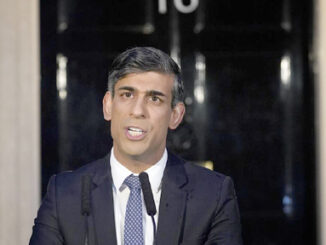
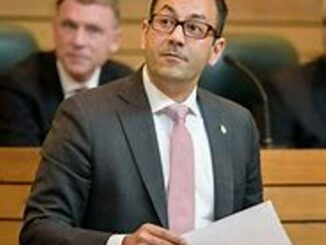
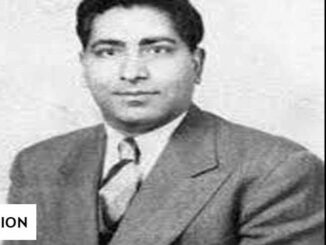
    WHITEHORSE (TIP): Indian-origin cabinet minister Ranj Pillai is set to be sworn in as the tenth Premier of the Canadian province of Yukon. He will be the second Premier of Indian descent to take oath after Ujjal Dosanjh who became the Premier of Canada’s British Columbia province between 2000 and 2001.

    A deputy in Premier Sandy Silver’s government, Pillai was elected as the leader of the Yukon Liberal Party unopposed. “I am honored and humbled to be acclaimed as the leader of the Yukon Liberal Party. We have so much to be proud of and I’m very excited for what the future of the Yukon holds,” Pillai said in his campaign statement. “I am committed to working hard, seeking common ground, acting strategically and to fiercely defending the interests of the Yukon. I look forward to serving all Yukoners as our dedicated team continues to make this territory one of the best places to call home,” he added.

    Pillai, who hails from Kerala, was first elected to the Legislative Assembly as MLA for Porter Creek South in November 2016 and was inducted into the Cabinet as Deputy Premier and Minister of Energy, Mines and Resources, and Economic Development.

  • Navinder Oberoi

    The year 2022was the year of tiger according to Chinese calendar. Very sharp and aggressive with lots of ups and downs like roller coaster rides

    The circle of 365 (2022)days is just about to complete and very soon we will see the beginning of the first point of another cycle of the year 2023 with great hopes of prosperity and good health around the globe.

    How comfortable we all were in 2022 and where do we want to see ourselves in 2023 ?

    Expectations and disappointments are the most important characteristics of human nature but how we take this, that’s more important. The economy, stock market, jobs, real estate, banking industry , health sector, education etc.. Were the major issues we been fighting with throughout the year in 2022 because right after the pandemic  two year of suspension of our life, almost every public and private sector destroyed and many people lost their job but again life always rotates on our personal predictions and I am not a economist who can predict but based on my personal experience in my opinion I can’t see any major breakthrough in the year 2023 in any sector but like always real estate sector is the biggest shareholder because this sector alone provide jobs to many manufacturing sectors but the success of this sector is dependent upon banking interests rates if the mortgage rates remain same or going up and up in 2023 then I can’t see any difference in 2023.  I am not the one who decides the fate of billions of people it is the government who decides every moment of our life that how we are going to live in coming year

    We can learn so many lessons from past year failures but can also improve ourselves by not repeating those mistakes in the coming year and I wish all  readers a very Happy New Year 2023 .

    Navinder Oberoi

    (Navinder Oberoi is a businessman based in Abbotsford, Canada)

  • RANA honors Indian diaspora for selfless services; raises $1.3 million at the annual gala

    At Ganesh Vandana. Seen among others are Padma Bhushan DR Mehta, Prem Bhandari, CJI Randhir Jaiswal, KK Mehta.
    D R Mehta giving award and flowers to Dr Subha Jain on behalf of Dr Vijay Arya Deep Chopra, BOD RANA, and her son.
    Prem Bhandari giving flowers to LP Pant, national head, Dainik Bhaskar.
    Consul General of India, New York, Randhir Jaiswal, givinga plaque to Dr Raj Bansal, Mrs Raj Bansal. RANA joint treasurer Dr Sharad Kothariis giving flowers to Mrs Raj Bansal.
    Dr Sadhna Joshi from Canada being awarded by Dr Varun Jeph, Deputy Counsel General of India, New York.
    Rakesh Goenka of Canada being honored by Rashi Bajaj, Canada RANA President.
    RANA President Prem Bhandari noted the importance of unity among various diaspora communities and organizations in the US andsaid “it is important that all are united in raising their voices against discrimination and hate crimeslike vandalism of the Gandhi statue at the Hindu temple in Queens. He alsopledged to continue his efforts to bring together all Rajasthanis living in different parts of the world.
    Nidhi Ladda and Krupa Patel performed Ganesh Vandana and Mahishasur Mardini.
    Founder of Bhagwan Mahaveer Viklang Sahayata Samiti (BMVSS) Padma Bhushan D.R. Mehta is seen in attendance among other honorable guests.
    Actor Prashantt Guptha, who acted in Neerja Tashkand Files among others, hosted the Gala Event.

    NEW YORK (TIP): The Rajasthan Association of North America (RANA) held its annual gala event in Long Island, where it honored community leaders from the Indian diaspora for their selfless service and contributions to society. The Indian diaspora in the US has risen to the occasion time and again, in the direst circumstances. Some of the community leaders have led by example by giving selflessly for the welfare of fellow diaspora and beyond in need. The Rajasthan Association of North America (RANA),one such organization that has been a reliable source of help, organized an annual gala in Long Island to honor the community members from the Indian diaspora for their service and contributions to society.

    At the grand event, RANA also raised a generous $1.3 million from various community leaders in contribution to various charitable causes such as Jaipur Foot. Founder of Bhagwan Mahaveer Viklang Sahayata Samiti (BMVSS), which is the parent organization of Jaipur Foot USA, Padma Bhushan D.R. Mehta attended the event as the special guest alongside Consul General of India in New York Randhir Jaiswal, IFS, who was the chief guest, Deputy Consul General Varun Jeph as well as prominent members of the Indian-American community, particularly those hailing from Rajasthan. Dr. Samin Sharma, a noted interventional cardiologist at Mt Sinai, was the guest of honor at the event. At the event, D.R. Mehta spoke at length and gave a power point presentation about the charitable work of Jaipur Foot, which is a prosthetic limb provider to the differently-abled for free of cost. With BMVSS at the helm, Jaipur Foot camps have benefitted millions in India and abroad through various camps.

    As a way to show their support and appreciation, many diaspora members made generous contributions to Jaipur Foot USA and other charitable purposes. K K Mehta and Chandra Mehta announced a contribution of $1 million from their family trust and $100,000 in scholarships. KK Mehta was also the first NRI to donate Rs 1 crore on the first day PM Narendra Modi announced the PM CARES Fund, which was at the peak of the COVID-19 pandemic in India. RANA president and Jaipur Foot USA Chairman Prem Bhandari, who is also the family trust advisory board chairman, said BMVSS chief patron D.R. Mehta will be advising the trust with respect to utilizing the contribution in the best way possible. Bhandari also praised KK Mehta and Chandra Mehta for offering the Times Square Hotel to Air India pilots and crew members during the second phase of the Vande Bharat mission amid the COVID-19 pandemic. He also hailed the generosity with which 100 rooms were given to distressed Indian students for free at the request of the Indian consulate in NY request during the peak of COVID. Demonstrating yet another peak of generosity, Dr. Raj Bansal pledged to sponsor one Jaipur Foot camp in the memory of his late father. Besides this, Dr. Shubha Jain, a noted philanthropist from California, announced a contribution of $100,000 to RANA for charity purposes, and Anil Jain and Jugal Kishore Ladda also announced contributions of $50,000 each for Jaipur Foot.

    RANA posthumously honored Dharamchand Hirawat, and former RANA presidents Dr. Ajay Lodha and Rajiv Garg with the Lifetime Achievement Award “for their memorable contribution towards society.”

    The association also felicitated prominent diaspora members Dr. Raj Bansal, Dr. Sadhna Joshi, Dr. Shubha Jain and Rakesh Goenka for their contribution to the community over the years, including during the pandemic.

    Bhandari noted the importance of unity among various diaspora communities and organizations in the US. He pointed out that there are many state and community-specific organizations like RANA, Telugu Association of North America (TANA) and Bihar Jharkhand Association of North America (BJANA) GANA Gujrat Association of North America and diaspora organizations like FIA and Associations of Indians In America (AIA). But it is important that all are united in raising their voices against discrimination and hate crimes, he said highlighting the incident of vandalism of the Gandhi statue at the Hindu temple in Queens. “We are all Indians first,” Bhandari said, adding that he will continue efforts to bring together all Rajasthanis living in different parts of the world. On the sidelines of the gala event, Prem Bhandari praised International Business Times and said that “IBT is not like other international newspapers that are unable to digest India’s progress under the leadership of Prime Minister Narendra Modi.” He condemned such international news outlets while criticizing their efforts to “spoil India’s image by the means of fake news.” The RANA gala turned out to be an engaging event, complete with cultural performances showcasing Rajasthan’s heritage as well as songs by prominent artists from India. A group of RANA members’ wives also performed Rajasthan’s traditional Ghoomar dance at the event, which enthralled the audience. Nidhi Ladha and Kripa Patel did Ganesh Vandana and performed the Mahishasura Mardini dance.

    At the event, a Hindi newspaper and a TV channel were also awarded for their coverage of social concerns, COVID-19 updates, the Ukraine crisis, and issues related to immigrants. The entire event was hosted by the talented Prashantt Guptha, a Rajasthan-origin actor, producer and writer. He kept the proceedings of the event interesting, keeping the audience occupied in the most fun and entertaining way.

    (Based on a press release by RANA)

  • Canada, India Out of FIFA U-17 Women’s World Cup

    Canada, India Out of FIFA U-17 Women’s World Cup

    By Prabhjot Singh

    TORONTO (TIP)- The hosts and debutants India and Canada have made their exit from the FIFA U-17 Women’s World Cup. Columbia, Spain (defending champions), Japan and African debutants Tanzania have qualified for the last eight rounds. In the last round of the pool matches, Spain edged out China by a solitary goal while Columbia got the better of Mexico 2-1 in an all-American encounter. Canada played a 1-1 draw with Tanzania to bow out of the competition while Japan, the only Asian team left in the contest recorded an impressive 2-0 win over  France.

    Led by Ruiqi Qiao, China pushed Spain back in the early stages, though the reigning FIFA U-17 Women’s World Cup champions created better chances as the first half wore on. First, Chen Liu parried Lucia Corrales’s cross-shot, with the rebound falling to Carla Camacho, who fired the ball against the bar. Vicky Lopez then engineered an opportunity from the edge of the box, the keeper again doing well to keep her fierce drive out. The second half began how the first ended, as Spain retained the initiative. The only goal of the game came just after the hour mark, when Marina Artero headed home a corner from the left. China later celebrated an equalizer, only for Video umpire (VAR) to rule it out. The win kept Spain’s hopes of defending its title alive, while China fell once again in the group phase, beyond which it has never advanced.

    With all four sides in the section tied on three points at the start of the day, it was no surprise to see a cagey start to the game between the two American teams. Mexico had more of the ball but failed to create any clear-cut chances. It paid the price when Juana Ortegon’s fine strike from outside the box put the Colombians ahead four minutes from half-time. Linda Caicedo made it 2-0 with another long-range effort after the break, and though Mexico pulled one back when the Colombian star put through her own goal, Mexico could not find an equalizer, despite applying some late pressure.

    The three points took Colombia into the quarterfinals for the first time in its history, while the 2018 runners-up Mexico went out.

    “I’m so happy,” said Caicedo. “Luck didn’t come into it. It was a process and a job really well done. We hope to keep going and do more than make history. We want to fulfil this big dream that we have.” Japan wasted no time showing why it had won their first two matches, creating two excellent chances in the opening minute. The pressure eventually told on the French, as Momoko Tanikawa fired home from outside the box to give the Japanese the lead in the 29th minutes. Fiona Liaigre did her best to unsettle the Asians down the left flank and haul her team level, but the half ended with the French trailing to that Tanikawa strike.

    After missing a succession of chances, Japan was eventually rewarded for its second-half pressure when Sayami Kusunoki scored in injury time to seal top spot for her side and ensure France’s elimination.

    “I think we did well against Japan, but we have a lot of regrets after the games against Canada and Tanzania,” said France midfielder Lucie Calba. “Like our coach said, we should have been playing for first place in the group today, not for qualification. “We’ve experienced other cultures here, other styles of football, and we’ve learned a lot. We’ve learned that when it comes to World Cups you need to play every match with intensity.”

    Having already broken new ground by becoming the first side from their country to contest a FIFA competition in any age category, Tanzania began the game intent on achieving even greater things and struck the bar from a corner. It was the Canadians who opened the scoring with Amanda Allen converting a penalty after 14 minutes.

    Tanzania pulled level thanks to another corner, with Veronica Mapunda popping up inside the box to force home an opportunistic equalizer.

    Canada did all it could after the restart to score the goal that would have taken it into the next round. The pioneering Africans had other ideas and held on to check into the quarterfinals against all odds.

  • ‘The Legend Of Maula Jatt’ sets global opening weekend record

    ‘The Legend Of Maula Jatt’ sets global opening weekend record

    Bilal Lashari’s epic, The Legend of Maula Jatt, has set a global opening weekend record for a Pakistani-made and Punjabi-language film. The action-fantasy movie, which is a reboot of the 1979 cult Punjabi classic, Maula Jat, was released on October 13. As confirmed in a recent article by Deadline, The Legend of Maula Jatt has broken box office records with its weekend opening. The film took in just over half a million dollars in Pakistan. Across seventy-nine locations in the United Kingdom, it picked up $355,000, earning its place as No. 9 on the chart. In the United States and Canada, the film grossed $290,000 and $235,000 respectively, and in Australia, grossed $160,000. In both Canada and Australia, the film entered at No. 6 on the chart, and reached No. 1 in The United Arab Emirates raking in over $515,000. The film opened in twenty-five markets worldwide, including Norway, Germany, Netherlands, Spain, and South East Asia. Overall, the film brought in $2.3 million globally (equal to approximately PKR 51cr). In comparison, IMDb records the 2018 Pakistani Urdu-language Nadeem Beyg-directed comedy, Jawani Phir Nahi Ani 2 (Youth Won’t Come Again 2), previously held the record when it took in $331,048 globally at the box office. The filmmakers revealed that demand has led exhibitors to add further screenings throughout the week.
    Producers of the film have expressed their delight at its success so far. “I’m beyond overwhelmed by the love the film has received from audiences and critics alike the world over,” Lashari said. The film’s director, co-writer, editor, cameraman, and producer admitted he is thrilled that his work has further opened up Pakistan-based films to the world. “We are so proud that The Legend of Maula Jatt has been instrumental in putting Pakistan-made cinema on the global map as it continues to win over hearts in theaters across the world,” he said. Fellow producer Ammara Hikmat is also glad to see his film appreciated by critics and viewers worldwide, particularly in light of pandemic-based difficulties. “The Legend of Maula Jatt has been our labor of love for a number of years. The pandemic came and returned but we knew we had to hold out for a theatrical release, as the film is undoubtedly a big screen experience,” Hikmat said. “We’re so delighted that our film has broken previous records and set a new benchmark for Pakistan-made cinema, loved and lauded not only domestically but by audiences and critics globally.” Source:Collider.com

  • Migrants in Canadian Politics: Naranjan Grewall was the trend setter

    Migrants in Canadian Politics: Naranjan Grewall was the trend setter

    By Prabhjot Singh

    Seventy-two years ago, a young man from Punjab set a new trend in Canadian politics. He became the first ever South Asian to get elected to a public office. Now more than a hundred migrants of Punjabi descent are in the fray for Municipal elections in  five Canadian provinces in October/November this year.

    Municipal elections are due in British Columbia (October 15), Northwest Territories (October 17), Ontario (October 24), Manitoba (October 26) and Prince Edward Island (November 7).

    Municipalities in these provinces will not only elect Mayors and Councillors but also Regional Councillors and School Board Trustees. Those in the run now include Canada born young professionals who have now opted for life in the public domain. The municipal elections are for a term for four years.

    “Thank you all citizens of Mission City. It is a credit to this community to elect the first East Indian to public office in the history of our great dominion. It shows your broad-mindedness, tolerance and consideration, ” read a public notice (advertisement) given by Niranjan Grewal in a local newspaper in Mission in British Columbia in 1950.

    Known in his friends circle as “Giani”, Naranjan Grewall was the first Indian ever elected to any political office in North America. Born in Dhudike,  “Giani”  moved to British Columbia in 1925. In 1941, he made Mission City  in Fraser Valley as his hometown. Grewall worked as a millwright at Fraser Mills and was elected a union official.

    He owned and operated six sawmill companies  to emerge as one of the largest employers and most influential business leaders in British Columbia. In 1950, he decided to run for a political office in his home city. He entered into an electoral battle  against six other contestants  in  the board of commissioners election in Mission city.

    Popular as he was, “Giani”  finished at the top. Two years later, he was elected for his second successive term during which he was unanimously chosen chairman of the board by his fellow commissioners for the year 1954.

    When Mission City went to polls in 2018, it elected two Councillors – Ken Herar and Jag Gill. Now when it goes to polls again in October this year, there will be  no candidate of Punjabi origin in the line to become Mayor of the City of Naranjan Grewal. Though Mission may not have a Punjabi Mayor in 2022, many other municipalities in British Columbia, Ontario and Manitoba will witness candidates of Punjabi origin running for Mayoral posts.

    Trend set in motion by Naranjan Grewall in British Columbia has been carried forward by Jyoti Gondek (Calgary) and Amarjeet Sohi (Edmonton) who both were elected Mayors in October last year.

    Jyoti holds Doctorate in Urban Sociology while Amarjeet Sohi had an interesting political journey starting his career as a Bus Driver. He remained a Councillor as well as MP. He served as Federal Minister, both for Infrastructure and Communities as well as Minister of Natural Resources.

    Jyoti Gondek also happens to be the first woman Mayor of Calgary and first woman of Indian origin to hold this position. The growing enthusiasm of the Indo-Canadian community in municipal politics is reflected by the number of community candidates in the Mayoral run.In Toronto, there are three candidates of Indian origin in the fray. They are Sandeep Srivastava, Knia Singh and Arjuna Gupta.

    In Brampton, the Canadian Punjab, there are four candidates of Indian origin in the fray for Mayor’s post. Vidya Sagar Gautam, Nikki Kaur, Prabh Kaur Mand and Bob Singh will oppose the incumbent Patrick Brown in the October 24 election. Bob Singh who had earlier filed his nomination as a Councillor in Mississauga is now a Mayoral candidate.

    In Mississauga, another city with a substantial South Asian migrant population, there are at least  two candidates of Indian origin in the Mayoral run. They are Derek Ramkissoon and Jayesh Trivedi.

    In Vaughan, it is Parveen Bola, a trained Nurse, who will be opposing former Ontario Liberal leader, Stephen Del Luca. Also in the fray is Robert Gulassorian, a real estate agent.

    Besides Param Singh in Ottawa, another Indian migrant contesting as Mayor is Rajiv Dhawan from Milton.

    (Prabhjot Singh is a veteran journalist with over three decades of experience covering a wide spectrum of subjects and stories. He has covered  Punjab and Sikh affairs for more than three decades besides covering seven Olympics and several major sporting events and hosting TV shows. For more in-depth analysis please visit probingeye.com  or follow him on Twitter.com/probingeye)

  • CIFF MARKS 18TH EDITION

    Weckuwapok (The Approaching Dawn) (Photo: pointsnorthinstitute.org)By Mabel Pais

    Featuring

    • SHAUNAK SEN’S All That Breathes
    • GEETA GANDBHIR & SAM POLLARD’S Lowndes County And The Road To Black Power
    • NEHAL VYAS’S Dapaan
    • SOHIL VAIDYA’S Murmurs Of The Jungle
    • SHRUTIMAN DEORI’S My Courtyard (Ne Sotal)
    • KAVITA PILLAI’s Weckuwapok (The Approaching Dawn)

    The Camden International Film Festival (CIFF) for its 18th edition presents feature and short films and documentaries. The festival takes place in person from September 15-18 at venues in Camden and Rockland, Maine, and online from September 15-25 for audiences across North America.

    A program of the Points North Institute, CIFF remains widely recognized as a major platform championing the next generation of nonfiction storytellers and one of the hottest documentary and industry festivals on the festival and awards calendars. This year’s edition is the most international and formally adventurous to date and includes 34 features and 37 short films from over 41 countries. Over 60% of the entire program is directed or co-directed by BIPOC filmmakers and this is the 6th consecutive program the festival has reached gender parity within the program and across all competitions. Nearly half of the feature program will be US or North American premieres, including several new titles fresh from Venice, Locarno, and TIFF premieres, alongside award-winning films from Sundance, Rotterdam, Cannes, and Visions du Reel.

    This year’s program celebrates the diversity of voices and forms in documentary and cinematic nonfiction,” says Ben Fowlie, Executive and Artistic Director of the Points North Institute, and Founder of the Camden International Film Festival. “These films help us make sense of an ever-changing world, and do everything we expect from great art – they ask provocative questions and interrogate the form. This year’s program emphasizes the international that represents the ‘I’ in CIFF, and reminds us time and again of the limitless creative potential and potency of the documentary form. Just as we have been for each of the past seventeen years, we are grateful to the filmmakers who have made these works of art and shared these stories.”

    CIFF 2022 FEATURES

    5 DREAMERS AND THE HORSE

    Dirs: Aren Malakyan & Vahagn Khachatryan | Armenia, Georgia, Germany |

    US Premiere

    A COMPASSIONATE SPY 

    Dir: Steve James | USA, United Kingdom

    AFTER SHERMAN

    Dir: Jon-Sesrie Goff | USA

    ALL OF OUR HEARTBEATS ARE CONNECTED THROUGH EXPLODING STARS

    Dir: Jennifer Rainsford | US Premiere

    ALL THAT BREATHES

    Dir: Shaunak Sen | India, USA, UK

    BURIAL

    Dir: Emilija Škarnulytė | Lithuania, Norway | US Premiere

    COWBOY POETS

    Dir: Mike Day | UK, Scotland, US | World Premiere

    CROWS ARE WHITE

    Dir: Ahsen Nadeem | Japan, Ireland, USA

    DAY AFTER…

    Dir: Kamar Ahmad Simon | Bangladesh, France, Norway

    DESCENDANT

    Dir: Margaret Brown | USA

    DETOURS

    Dir: Ekaterina Selenkina | Russia, Netherlands | US Premiere

    DOS ESTACIONES

    Dir: Juan Pablo González | México, with France, USA

    EAMI

    Dir: Paz Encina | Paraguay, Argentina, Mexico, USA, Germany, France, The Netherlands | North American Premiere

    FORAGERS

    Dir: Jumana Manna | Palestine | North American Premiere

    GEOGRAPHIES OF SOLITUDE

    Dir: Jacquelyn Mills | Canada

    Dir: Carlos Pardo Ros | Spain | North American Premiere

    HERBARIA

    Dir: Leandro Listorti | Argentina, Germany | North American Premiere

    I DIDN’T SEE YOU THERE

    Dir: Reid Davenport | USA

    IN HER HANDS

    Dirs: Tamana Ayazi, Marcel Mettelsiefen | USA, Afghanistan | US Premiere

    IT IS NIGHT IN AMERICA (É Noite na América)

    Dir: Ana Vaz | Italy, Brazil, France | North American Premiere

    LOWNDES COUNTY AND THE ROAD TO BLACK POWER

    Dirs: Geeta Gandbhir, Sam Pollard | USA

    MATTER OUT OF PLACE

    Dir: Nikolaus Geyrhalter | Austria | North American Premiere

    MY IMAGINARY COUNTRY (Mi País Imaginario)

    Dir: Patricio Gúzman | Chile, France | Sneak Preview

    NOTHING LASTS FOREVER

    Dir: Jason Kohn | USA

    POLARIS

    Dir: Ainara Vera | Greenland, France | North American Premiere

    REWIND & PLAY

    Alain Gomis | France, Germany

    All That Breathes. (Photo: pointsnorthinstitute.org)

    Dir: Chris Smith | USA

    SUBJECT

    Dir: Jennifer Tiexiera, Camilla Hall | USA

    TERRANOVA

    Dirs: Alejandro Alonso & Alejandro Pérez | Cuba | North American Premiere

    THE AFTERLIGHT

    Dir: Charlie Shackleton | UK

    THE TERRITORY

    Dir: Alex Pritz | Brazil, Denmark, USA

    THIS MUCH WE KNOW

    Dir: Lily Frances Henderson | USA | World Premiere

    WHAT WE LEAVE BEHIND (LO QUE DEJAMOS ATRÁS)

    Dir: Iliana Sosa | USA, Mexico

    CIFF 2022 SHORTS

    ARALKUM

    Dirs: Daniel Asadi Faezi, Mila Zhluktenko | Germany, Uzbekistan |

    North American Premiere

    THE ARK

    Dir: Amira Louadah | Algeria, France | North American Premiere

    THE ARTISTS

    Dirs: Noah David Smith, Elizabeth L. Smith | USA | World Premiere

    BELONGINGS

    Dir: Alex Coppola | USA

    BIGGER ON THE INSIDE

    Dir: Angelo Madsen Minax | USA | Sneak Preview

    BRAVE

    Wilmarc Val | France | US Premiere

    CALL ME JONATHAN

    Dir: Bárbara Lago | Argentina | US Premiere

    CONGRESS OF IDLING PERSONS

    Dir: Bassem Saad | Lebanon, Germany

    CONSTANT

    Dir: Beny Wagner, Sasha Litvintseva | Germany, United Kingdom

    DAPAAN

    Dapaan. (Photo: pointsnorthinstitute.org)

    Dir: Nehal Vyas | USA

    DEERFOOT OF THE DIAMOND 

    Dir: Lance Edmands | USA | World Premiere

    ECHOLOCATION

    Dir: Nadia Shihab | USA

    EVERYTHING WRONG AND NOWHERE TO GO

    Dir: Sindha Agha | USA, United Kingdom | World Premiere

    THE FAMILY STATEMENT

    Dir: Grace Harper, Kate Stonehill | USA

    FIRE IN THE SEA

    Dir: Sebastián Zanzottera | Argentina | North American Premiere

    THE FLAGMAKERS

    Dirs: Cynthia Wade, Sharon Liese | USA | World Premiere

    LA FRONTIÉRE (THE BORDER)

    Dirs: Katy Haas, Megan Ruffe | USA, Canada | Sneak Preview

    HANDBOOK

    Dir: Pavel Mozhar | Germany, Belarus

    IRANI BAG

    Dir: Maryam Tafakory | Iran, Singapore, United Kingdom

    LA FRONTIÉRE

    Dirs: Katy Haas & Megan Ruffe | USA |  work in progress

    LIFE WITHOUT DREAMS

    Dir: Jessica Bardsley | USA, France

    LUNGTA

    Dir: Alexandra Cuesta | Mexico, Ecuador | North American Premiere

    MASKS

    Dir: Olivier Smolders | Belgium | North American Premiere

    MOUNE 

    Dir: Maxime Jean-Baptiste | Belgium, French Guiana, France

    MURMURS OF THE JUNGLE

    Dir: Sohil Vaidya | India

    MY COURTYARD (NE SOTAL)

    Dir: Shrutiman Deori | India | North American Premiere

    NAZARBAZI

    Dir: Maryam Tafakory | Iran

    ONE SURVIVES BY HIDING

    Dir: Esy Casey | USA, Philippines

    PACAMAN

    Dir: Dalissa Montes de Oca | Dominican Republic

    PARADISO, XXXI, 108

    Dir: Kamal Aljafari | Palestine, Germany | North American Premiere

    SEASICK

    Dir: João Vieira Torres | Brazil, France | North American Premiere

    SOLASTALGIA

    Dir: Violeta Mora | Cuba, Honduras | North American Premiere

    SOMEBODY’S HERO

    Dir: Morgan Myer | USA

    THE SOWER OF STARS (EL SEMBRADOR DE ESTRELLAS)

    Dir: Lois Patiño | Spain | US Premiere

    SUBTOTALS

    Dir: Mohammadreza Farzad | Poland, Germany, Iran | North American Premier

    SWERVE

    Dir: Lynne Sachs | USA

    UNSINKABLE SHIP

    Dir: Lamia Lazrak, Josie Colt | USA | North American Premier

    WECKUWAPOK (THE APPROACHING DAWN)

    Dirs: Jacob Bearchum, Taylor Hensel, Adam Mazo, Chris Newell, Roger Paul, Kavita Pillay, Tracy Rector, and Lauren Stevens | USA

    WECKUWAPASIHIT (THOSE TO COME) Weckuwapasihtit (Those Yet to Come)

    Weckuwapok (The Approaching Dawn) (Photo: pointsnorthinstitute.org)

    Dir: Geo Neptune, Brianna Smith | USA

    WHEN THE LAPD BLOWS UP YOUR NEIGHBORHOOD

    Dir: Nathan Truesdell | USA

    TICKETS

    For Tickets and Passes, visit pointsnorthinstitute.org/ciff/box-office

    Online registration for pass holders began on September 1. General tickets for screenings will open on September 8.

    POINTS NORTH INSTITUTE

    To learn about the Points North Institute, visit pointsnorthinstitute.org.

    (Mabel Pais writes on Social Issues, The Arts and Entertainment, Health & Wellness, Cuisine and Spirituality.)

  • Death toll from Pakistan floods reaches 1,186

    Death toll from Pakistan floods reaches 1,186

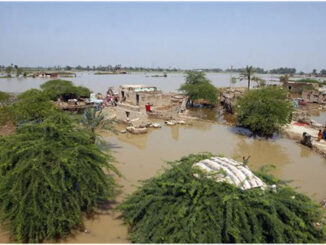
    Islamabad  (TIP): The death toll from flash floods triggered by record monsoon rains across much of Pakistan reached 1,186 on September 1, as authorities scrambled to provide relief materials to tens of thousands of affected people. Record monsoon rains in the last three decades triggered floods which inundated one third of the country, including most of Balochistan and Sindh provinces.

    “So far 1,186 people have died and 4,896 injured while 5,063 kms of roads damaged, 1,172,549 houses partially or completely destroyed and 733,488 livestock killed,” said the National Disaster Management Authority (NDMA), the main body dealing with calamities.

    On Thursday, the army said that some 50,000 people have been evacuated since rescue efforts began.

    Foreign Office spokesperson AsimIftikhar Ahmed said that more than 33 million people have been affected due to “colossal scale of devastation”.

    During a media briefing here, he said Pakistan mounted coordinated rescue and relief operations mobilising all possible resources but the sheer scale of the calamity “stretched our resources and capacities to the limit, thus necessitating support from the international community”.

    The cash-strapped Pakistan government on Tuesday teamed up with the United Nations to issue a flash appeal for USD 160 million to deal with the disaster in the country that has become the “ground zero” of global warming.

    “The Flash Appeal launch was well attended by Member States both in Islamabad and Geneva, Heads of UN agencies in Pakistan, representatives of international organizations, among others. Participants offered condolences and expressions of solidarity, and assured continued support for Pakistan,” the spokesman said.

    He also said that Pakistan faced a “climate-induced calamity” because the monsoons were not ordinary, “as the UNSG termed them ‘monsoons on steroid’.” UN Secretary-General Antonio Guterres will be visiting Pakistan on September 9-10 on an important visit to “express solidarity and international community’s support for Pakistan at this difficult time,” he said.

    Talking about the outpouring of relief supplies, he said till last night, Pakistan received flood relief goods through 21 flights notably from Turkey, UAE and China.

    He said a large number of countries and international organisations pledged to support and are extending cash or in-kind assistance including Australia, Azerbaijan, Canada, China, EU, France, Iran, Japan, Kazakhstan, Kuwait, New Zealand, Norway, Palestine, Qatar, South Korea, Saudi Arabia, Singapore, Turkiye, the UAE, United Kingdom, the United States, Uzbekistan, along with various international organisations including World Bank, Asian Development Bank and other UN Agencies. He said Pakistan on Wednesday signed the Green Framework Engagement Agreement with Denmark in Copenhagen, which marks the first step in creating stronger collaboration in areas such as climate change mitigation and adaptation, and a just and sustainable green transition.

    Separately, Prime Minister Shehbaz Sharif while addressing lawmakers of his Pakistan Muslim League-Nawaz asked them to visit the flood victims with relief goods. The prime minister said that he had never seen such a calamity before. “Water has wreaked havoc everywhere,” he said.

    He also asked Finance Minister Miftah Ismail to devise a plan to give relief to the flood-affected people with electricity bills. Army chief General Qamar JavedBajwa visited the Rohjan area of Punjab and met flood victims whom he assured that the Pakistan Army will help them to overcome their problems in these difficult times, the army said.

    He also directed ground troops to “take this responsibility as a noble cause and spare no effort to lessen the burden of flood-affected brothers and sisters”.

    Advisor to the Prime Minister on Kashmir and Gilgit-Baltistan Affairs Qamar Zaman Kaira said that Prime Minister Sharif would visit Gilgit-Baltistan on Friday and announce a relief package for the flood victims.

    Separately, the United Nations International Children’s Emergency Fund (Unicef) said in a statement that more than three million children were in need of humanitarian assistance in Pakistan and at increased risk of waterborne diseases, drowning and malnutrition due to flooding.

    “These floods have already taken a devastating toll on children and families, and the situation could become even worse,” the statement quoted Unicef representative in Pakistan Abdullah Fadil as saying.

    To add to worries, the Pakistan Meteorological Department (PMD) has forecast more rain in September, saying that La Nina conditions — responsible for recent spells of flood-triggering deluge in the country — would persist in September but become less intense.

    “Tendency for normal to above normal precipitation is likely over the country during September,” the Met Office said, predicting above-normal rainfall in northeastern Punjab and Sindh. (PTI)

  • Canada to ban handgun import until gun control law is cleared

    Canada to ban handgun import until gun control law is cleared

    Ottawa (TIP): Canada said on August 5 it would temporarily ban the import of restricted handguns from August 19 in a move designed to indirectly achieve goals of a gun control legislation proposed in May. The import ban would stay in place until a national freeze on handguns comes into force, the Canadian government said in a statement. Prime Minister Justin Trudeau’s ruling Liberal government introduced bill C-21 in May to fight gun violence.

    The gun control package, which includes a national freeze on the sale and purchase of handguns among other measures, is yet to be implemented. The Canadian parliament is currently on summer break until September. Canadians rushed to buy guns after the freeze was announced and the government now wants to prevent gun sellers from restocking their inventory with this import ban, Foreign Minister Melanie Joly told reporters at a briefing. The foreign ministry has the authority to deny trade permits.

    “The import ban announced today will help to keep guns stay off our streets as we work towards implementing Bill C-21, reducing gun violence in the immediate term,” Joly said. Canada has much stricter gun laws than the United States, but Canadians are allowed to own firearms providing they have a license. Restricted or prohibited firearms, like handguns, must also be registered. “Given that nearly all our handguns are imported, this means that we’re bringing our national handgun freeze into effect even sooner,” said Canadian Public Safety Minister Marco Mendicino, speaking alongside Joly. While Canada’s gun homicide rate was a fraction of the rate in the United States in 2020, it is still higher than the rates of many other rich countries and has been rising, according to data from Statistics Canada. Official data show that handguns were the main weapon used in the majority of firearm-related violent crimes between 2009 and 2020. Reuters

  • CELEBRATE INDIA@75 AT ERASING BORDERS DANCE FEST

    Performing Artists              (Photo: iaac.us)

    By Mabel Pais

    “Erasing Borders” dance performances are part of the Indo-American Arts Council’s (iaac.us) ongoing celebrations of the 75th anniversary of India’s Independence, August 15. The celebration will feature two live performances, August 6 & 7 at the Ailey Citigroup Theatre, and a virtual August 8th streaming with artists from India, Canada, Singapore and the U.S.

    PROGRAM

    Program A: live, Saturday August 6, 7 pm

    Program B: live, Sunday August 7, 7 pm

    Venue: Ailey Citigroup Theater, 405 West 55 Street, NYC

    Program C: virtual, Monday August 8

    India@75

    Program A: Saturday August 6, 7 pm

    Featuring

    Sanjib Bhattacharya and Lagannath Lairenjam in

    Manipuri-Pung Cholom (Drum Dance)

    Kavya Ganesh in contemporary Bharatanatyam

    Bhavana Reddy in Kuchipudi with introductions by the legendary Raja Reddy.

    India@75

    Program B: Sunday August 7, 7 pm

    Featuring

    Jin Won in Kathak with live music

    Ailey II in “Saa Magni”

    Mythili Prakash in contemporary Bharatanatyam

    Erasing Borders Dance Festival-virtual

    Program C: Monday August 8, premiers at 7 pm.

    Streaming is available until August 22

    featuring choreography by

    Tanya Saxena

    Tanveer Alam

    Liz Lea and danced by Subastian Tan and Shahrin Johry

    Mythili Maratt Anoop

    Deepali Salil with Nilava Sen, Shubhamani Chandrashekar, Athul Balu

    India@75

    Saturday Aug 6, 2022,  7-9PM

    1. Sapta, Manipuri-Pung Cholom (drum dance)

    Performed by Sanjib Bhattacharya and Jagannath Lairenjam

    Sapta, meaning seven, is an attempt to paint the canvas of time, using 3 sets of 7 beats.

    12 minutes of time is celebrated through three ornate sets of 7 matras (beats), each set depicting a significant tradition of Manipuri Classical Dance.

    1. ‘Time the Elusive Friend,’ contemporary Bharatanatyam

    Choreographed and performed by Kavya Ganesh

    Music courtesy- Smt. Rama Vaidyanathan

    Music composition- GS Rajan

    Mentored by Smt. Rama Vaidyanathan

    External time is a linear dimension-ticking along in a constant, singular rhythm. What about the internality of time? In this work, time has been conceptualized as sakhi (friend).

    1. ‘Solo Kuchipudi’ by Bhavana Reddy with introductions by Raja Reddy

    Narasimhavataram

    This is a story of one of Vishnu’s avatars that of Narasimha. Hiranyakashyapu, a demon king worshipper of Shiva, sought a boon from Brahma, to be unvanquishable by any weapon, by any man or animal, inside or outside, by day or by night.

    Nijagadha sa yadu Nandane (Jayadeva’s ashtapadi)

    ‘Jathiswaram’ is a tapestry of rhythm and melody which are given visual form with dance on the brass plate.

    India@75

    Sunday Aug 7, 2022

    Alvin Ailey Citigroup Theatre, 7-9PM

    1. ‘Andaaz’ – an immersive exploration of Rhythm and dance, by Jin Won, kathak, with tabla by Mike Lukshis and Electric Viola by Martha Mooke.

    A sonic and visual endeavor alternating between two different Rhythm cycles, 5 and half beats / 16 beats, “Andaaz” explores the subtle movements through contemporary and traditional dance forms of Kathak to portray a beautiful visual canvas.

    1. Alvin Ailey II, Saa Magni Alvin Ailey II will be joining Indian dancers to celebrate the 75 years of Indian independence. They will be performing Saa Magni in the spirit of hope, celebration and dance.

    Saa Magni is choreographed by Yannick Lebrun and performed by Meagan King and Christopher Taylor to music by Oumou Sangaré from the album Ko Sira, published by World Circuit Records.

    1. ‘Poo | Poo’ (Contemporary bharatanatyam) Performed and choreographed by Mythili Prakash

    Polarity. Co-existence. Singularity.

    Lingering between past and present, global and local, sacred and worldly, stylized and pedestrian, structure and fluidity, Poo | Poo (flower in Tamil |shit in America) negotiates the weight of past and tradition through the freedom of our bodies and voices today in the re-imagining of a traditional myth–the dance-off between Shiva and Kali.

    India@75

    Erasing Borders Dance Festival

    Monday August 8, 2022, premiers at 7 pm.

    Streaming is available until August 22 on Indo American Arts Council Facebook https://www.facebook.com/iaac.us and Youtube https://www.youtube.com/user/IAACEvent

    Introduction by Subhalakshmi Amjad Ali Khan

    1. Bindu

    Choreographed and performed by Tanya Saxena (bharatanatyam)

    Sound Design and Mixing: Ananda Gupta

    Music: Rajat Prasanna

    ‘Bindu’ (the originary dot) is a movement film inspired by artist S.H. Raza, made in collaboration with the Raza Foundation.

    1. Leher (Wave) choreographed and performed by Tanveer Alam (kathak)

    ‘Leher’ emerged as a quiet response to this time and context of massive change that we have all experienced since the pandemic. The work, in vilambit taal (slow tempo) is patient, intimate, and looks at the effects of decelerating in time.

    Music: Gurumurthy Vaidya

    Dramaturgy: Harikishan S. Nair

    Mixing and mastering: Roshin Shabu

    Videography and editing: Aman Chandak

    Supported by: Sadhana Project Residency (Anandam Dancetheatre), The Canada Council for the Arts, Ontario Arts Council, Toronto Arts Council.

    1. ‘Terra’

    Choreographed by Liz Lea

    Danced by Subastian Tan and Shahrin Johry.

    Music by TaikOz

    A contemporary dance with influences from movement techniques of Singapore and India.

    1. ‘Bird of Time’

    Inspired by Sarojini Naidu’s poem, ‘The Bird of Time’ this work presents an assortment of life’s dramatic moments which ultimately ends in silence.

    1. ‘Animals’ (excerpted from Looking Within Looking Around) The excerpt “ANIMALS” is choreographed and performed by bharatanatyam dancers from all over India. It is conceptualized by Deepali Salil. Choreographed and performed by Bharatanatyam dancers Nilava Sen as Gazelle; Shubhamani Chandrashekar as Orca; Athul Balu as Hyena; Deepali Salil as Sarus Crane.

    Original music composition – Sanchit Choudhary

    In our excerpt film “Animals” we seek to renew the connection with our animal kingdom. The only way forward is together. Conserving and living sustainably needs to become a lifestyle.

    To learn more about each performer/artist, visit iaac.us/erasing-borders-dance-festival-2022

    TICKETS

    For Tickets, visit eventbrite.com/cc/festival-of-india75-605699

    For reservations, contact Audrey Ross at audreyrosspub@aol.com or 929 222 3973.

    (Mabel Pais writes on The Arts and Entertainment, Social Issues, Health & Wellness, Cuisine and Spirituality)


  • THE INDO-AMERICAN ARTS COUNCIL PRESENTS  “ERASING BORDERS” and “INDIA @ 75” DANCE FESTIVAL

    THE INDO-AMERICAN ARTS COUNCIL PRESENTS “ERASING BORDERS” and “INDIA @ 75” DANCE FESTIVAL

    NEW YORK (TIP): The Indo-American Arts Council has announced the always eagerly anticipated dance performances this year,  including special events to celebrate the 75th anniversary of India’s Independence Day, August 15. The celebration will feature two live performances, August 6 & 7 at the Ailey Citigroup Theatre, and a virtual August 8th streaming with artists from India, Canada, and the U.S. Since its founding 15 years ago, the Indo-American Arts Council has distinguished itself with its presentations dedicated to furthering the knowledge and living practices of the arts of the Indian sub-continent.

  • Canada to slap warning labels on sugary, salty and fatty foods

    Ottawa (TIP): Foods high in sugars, sodium and saturated fat will come with clear warning labels in Canada starting in 2026, the federal government said on June 30, in an effort to promote healthier eating choices and reduce chronic health risks.

    “We know that it’s not always easy to make healthy choices,” Health Minister Jean-Yves Duclos told reporters. “We need a quick and easy way of knowing exactly what options are the healthiest.” Under the new rules, a magnifying glass label will be required on all packaged foods with high levels of sugar, salt and saturated fat, along with text to make clear what “nutrients of concern” a food contains, Health Canada said. Manufacturers will have more than three years to prepare for the changes, with the rules set to go into force on January 1, 2026, the agency added. The policy will not apply to certain foods, such as plain milk and whole eggs, due to their health value. It will also exclude raw fish and meat, whether whole cut or ground. Those exemption will come as a relief to Canada’s meat industry, which lobbied against an earlier proposal that would have seen ground beef slapped with a warning label.

     (Reuters)

  • Indian American Tech Giant Bakul Patel to lead Google’s global digital health strategy

    Indian American Tech Giant Bakul Patel to lead Google’s global digital health strategy

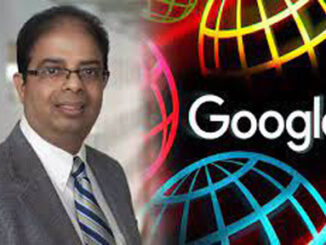
    MOUNTAIN VIEW, CA (TIP): Tech giant Google has hired Bakul Patel, a former Indian American Food and Drug Administration (FDA) leader as its new senior director of global digital health strategy and regulatory.

    Patel spent over a decade at the FDA and most recently was the chief digital health officer of global strategy and innovation. “I am excited to announce that I am joining Google Health to be part of an incredible mission – ‘To Help Billions of People Be Healthier,’” he wrote in a LinkedIn post Monday, May 16,  announcing the move.

    “I am looking forward to learning from the teams in health across Google and Alphabet and helping build a unified digital health and regulatory strategy,” Patel added.

    Indian American CEO Sundar Pichai led Google has pushed further into health and healthcare over the past few years. Its ambitions range from mining big data for algorithms to developing disease-detecting tools to pumping wearables full of health features.

    “As a ‘technology person’ first (before becoming a policy wonk @FDA) working on leading-edge solutions has been a key focus throughout my career,” Patel wrote.

    “This technology-oriented mindset has continued to guide my efforts towards helping turn digital health from a hopeful concept to a reality,” he said. “Throughout my tenure at FDA, my biggest northstar has been to make digital healthcare accessible and equitable for all.”

    Patel said he had talked often about the potential of digital health to be a gamechanger in heralding a new era for healthcare generally—one that is ubiquitous and poised to deliver care to all individuals, including preventing and predicting disease and keeping people healthy and out of the hospital.

    “We are in the early stages of this journey, and there is a lot of work ahead,” he wrote. “But the potential of applying technology to improve health at scale can mean better health for everyone in our lifetime. The power of technology, when coupled with a unified digital health and regulatory approach, promises to transform people’s lives.”

    Patel said he wanted to continue to build a world in which we use technology to engage individuals, caregivers and communities globally in care delivery, enabling us to reach populations that have long been overlooked, marginalized and underserved. “A world where we use digital information and technology to identify and predict the onset of disease before symptoms appear, literally changing, improving, and protecting people’s lives,” he wrote.

    Patel said Google’s commitment to help billions of people be healthier aligns with his goal to move digital healthcare and technology forward together.

    “This means building upon the work Google has already done in health—from providing authoritative Covid-19 information during the pandemic, to using AI and machine learning to build and provide solutions for caregivers and communities to tackle the world’s toughest health challenges.”

    Patel said he was “thrilled and excited to continue furthering my mission to improve healthcare for all and be part of an organization that is committed to delivering products and services to help people along their health journey.”

    Prior to joining FDA, Patel held key leadership positions in the telecommunications industry, semiconductor capital equipment industry, wireless industry and information technology industry.

    His experience includes Lean Six Sigma, creating long and short-term strategy, influencing organizational change, modernizing government systems, and delivering high technology products and services in fast-paced, technology-intensive organizations. Patel earned an MS in Electronic Systems Engineering from the University of Regina, Canada, and an MBA in International Business from The Johns Hopkins University.

  • HRWFF RETURNS WITH 33RD EDITION

    By Mabel Pais

    The Human Rights Watch Film Festival (HRWFF), now in its 33rd year, will present a hybrid full edition of 10 groundbreaking new films, available both in-person and online nationwide in the U.S., from May 20 to 26, 2022.

    For the first time in two years, the New York festival will be back with a full program of in-person screenings at Film at Lincoln Center and IFC Center, with in-depth discussions with filmmakers, film participants, activists and Human Rights Watch researchers. The festival will continue to offer the opportunity to watch all 10 new films online across the U.S. with a full digital edition of the film festival.

    This year’s edition highlights activism and features courageous individuals around the world standing up to powerful forces and demanding change. John Biaggi, Director of the Human Rights Watch Film Festival, said, “We are thrilled to be back in theaters after two years away, bringing our audience a full slate of powerful films tackling urgent human rights issues including China, Russia, the climate crisis and reproductive rights.” Lesli Klainberg, President of Film at Lincoln Center said, “History has shown that film not only empowers understanding, but also ignites urgent public dialogues about how to help the most vulnerable.” John Vanco, Senior Vice President and General Manager at IFC Center said, “IFC Center is proud to continue our partnership with the Human Rights Watch Film Festival and support their mission to use cinema to shine a light on important issues.”

    FILM LINEUP

    REBELLION – OPENING NIGHT

    U.S. Premiere

    Dirs: Maia Kenworthy & Elena Sanchez Bellot l 2021 l UK, Poland l Eng l Doc l 1h 22m

    Opening Film (Photo / www.ff.hrw.org, 2022.)

    “Rebellion” brings viewers behind-the-scenes with Extinction Rebellion (XR), as the group confronts the climate emergency – reminding the world there is no time to wait. Emerging as action on climate change dangerously slipped from the political agenda, XR took bold steps to break through the deadlock: mass civil disobedience. It worked. “Rebellion” reminds viewers to question white Western environmentalism and push back against a fight that ignores structural racism and oppression.

    In-person screening:

    Friday, May 20, 7:00pm, Film at Lincoln Center, Walter Reade Theater

    THE JANES – CLOSING NIGHT

    Dirs: Tia Lessin & Emma Pildes l 2022 l USA l Eng l Doc l 1h 41m

    Grand Jury Prize Documentary Nominee, Sundance Festival, 2022

    Closing Film. (Photo / www.ff.hrw.org, 2022.)

    Seven women were part of a clandestine network that built an underground service for women seeking safe, affordable abortions in the pre-Roe v. Wade era. They called themselves “The Janes.” This galvanizing documentary tells the story of the past and, potentially, the future.

    In-person screening:

    Thursday, May 26, 7:00pm, IFC Center

    CLARISSA’S BATTLE         

    World Premiere

    Dir: Tamara Perkins l 2022 l USA l Eng l Doc l 1h 30m

    Single mother and organizer Clarissa Doutherd is building a powerful coalition of parents fighting for childcare and early education funds, from her own experience of losing childcare and becoming unhoused, desperately needed by low-and middle-income parents and children across the United States. “Clarissa’s Battle” offers an insight into an erupting movement, as communities across the country follow Clarissa’s successes, setbacks and indomitable resilience.

    In-person screenings:

    Saturday, May 21, 8:00pm, Film at Lincoln Center, Elinor Bunin Munroe Film Center

    Sunday, May 22, 5:15pm, Film at Lincoln Center, Elinor Bunin Munroe Film Center

    DELIKADO          

    New York Premiere

    Dir: Karl Malakunas l 2022 l Philippines, Hong Kong, Australia, USA, UK l Eng, Filipino l Doc l 1h 34m

    Official Selection, Hot Docs 2022

    A small network of environmental crusaders, Bobby, Tata and Nieves – a charismatic lawyer, a former illegal logger and a fearless politician – are three magnetic leaders fighting to stop corporations and governments seeking to plunder increasingly valuable natural resources in Palawan in the Philippines.

    In-person screenings:

    Sunday, May 22, 8:00pm, Film at Lincoln Center, Elinor Bunin Munroe Film Center

    Tuesday, May 24, 9:00pm, IFC Center

    ETERNAL SPRING     

    U.S. Premiere

    Dir: Jason Loftus l 2022 l Canada l Eng, Mandarin Chinese l Doc l 1h 26m

    In March 2002, members of the outlawed spiritual group Falun Gong hijacked a state TV station in China. Their goal was to counter the government narrative about their practice. In the aftermath, police raids sweep Changchun City, and comic book illustrator, Daxiong (Justice League, Star Wars), a Falun Gong practitioner, is forced to flee.

    In-person screenings:

    Monday, May 23, 6:15pm, Film at Lincoln Center, Elinor Bunin Munroe Film Center

    Tuesday, May 24, 6:30pm, IFC Center

    MIDWIVES     

    New York Premiere

    Dir: Snow Hnin Ei Hlaing l 2022 l Myanmar, Germany, Canada l Rohingya, Rakhine, Burmese l Doc l 1h 31m

    Winner, World Cinema Documentary Special Jury Award: Excellence in Verité Filmmaking, Sundance 2022

    Hla is a Buddhist and the owner of an under-resourced medical clinic in western Myanmar, where the Rohingya (a Muslim minority community) are persecuted and denied basic rights. Nyo is a Rohingya and an apprentice midwife who acts as assistant and translator at the clinic. Risking her own safety daily by helping Muslim patients, she is determined to become a steady healthcare provider and resource for the families who desperately need her.

    In-person screenings:

    Saturday, May 21, 5:15pm, Film at Lincoln Center, Elinor Bunin Munroe Film Center

    Monday, May 23, 6:30pm, IFC Center

    THE NEW GREATNESS CASE

    World Premiere

    Dir: Anna Shishova l 2022 l Finland, Croatia, Norway l Russian l Doc l 1h 32m

    In “The New Greatness Case” with hidden camera footage, and an intimate relationship with the protagonists, the director, Anna Shishova, shows the complete repression of present-day Russia, and how young, free-thinking people are seen as a threat to the government.

    In-person screenings:

    Tuesday, May 24, 9:00pm, Film at Lincoln Center, Elinor Bunin Munroe Film Center

    Wednesday, May 25, 6:30pm, IFC Center

    NO U-TURN

    New York Premiere

    Dir: Ike Nnaebue l 2022 l France, Nigeria, South Africa, Germany l Eng, Igbo, French, Nigerian Pidgin l Doc l 1h 34m

    Special Mention, Documentary Award, Berlinale 2022

    In his first documentary, “No U-Turn,” Nigerian director Ike Nnaebue retraces the life-changing journey he made over 20 years ago. Overlaid with a powerful poetic commentary, this self-reflective travelog hints at the deep longing of an entire generation for a better life.

    In-person screenings:

    Tuesday, May 24, 6:15pm, Film at Lincoln Center, Elinor Bunin Munroe Film Center

    Wednesday, May 25, 9:00pm, IFC Center

    UP TO G-CUP

    World Premiere

    Dir: Jacqueline van Vugt l 2022 l Netherlands l Kurdish, Arabic l Doc l 1h 20m

    Northern Iraq’s first lingerie store not only sells underwear, but also acts as a meeting place where women connect to their bodies and sensuality after overcoming the traumas of oppression, war, and conservative morality. Director Jacqueline van Vugt captures intimate stories about love, sex, shame, and war.

    In-person screenings:

    Monday, May 23, 9:00pm, IFC Center

    Wednesday, May 25, 9:00pm, Film at Lincoln Center, Elinor Bunin Munroe Film Center

    YOU RESEMBLE ME

    New York Premiere

    Dir: Dina Amer l 2021 l  France,Egypt,USA l Arabic, French l Drama l 1h 31m

    Who was Hasna Aït Boulahcen? After the November 2015 Paris bombings, she was labelled “Europe’s first female suicide bomber.” Director Dina Amer, in this nuanced drama shows what happens when society fails to protect a child, and how discrimination, poverty, and abuse facing young people can allow radicalization to plant roots and grow, with devastating impact on the wider community.

    Digital Screenings:

    DIGITAL SCREENINGS for each film are available to watch at your own pace, any time between May 20-26, 2022 on the festival’s digital streaming platform.

    TICKETS

    TICKETS can be purchased at the IFC Center, Film at Lincoln Center and Human Rights Watch. In-Theater tickets are available online or at the Film at Lincoln Center (FLC) and the IFC box offices. For individual film tickets or a Festival Pass at a discounted price, visit ff.hrw.org/newyork, filmlinc.org or ifccenter.com. The entire Festival can be rented on the festival streaming site May 20, 9 a.m. EDT until May 26, 11:59 PST. For more information and accessibility options for each digital presentation, visit ff.hrw.org.

    HUMAN RIGHTS WATCH FILM FESTIVAL

    For Details and Program updates, visit ff.hrw.org. For more information and accessibility options for each digital presentation, visit ff.hrw.org.

    FESTIVAL IN-PERSON SAFETY PROTOCOLS

    For Festival disclaimers, and other Safety Protocols, visit ff.hrw.org

    (Mabel Pais writes on Social Issues, The Arts and Entertainment, Cuisine, Health & Wellness and Spirituality)

  • Indo-Canadians are emerging as a strong political entity

    Indo-Canadians are emerging as a strong political entity

    By Prabhjot Singh

    Indo-Canadian politicians after establishing their credibility at the community level, and now, on the basis of their track record, are  emerging as a strong political entity  with their growing presence on the provincial and federal stage.  When Ontario goes to polls in first week of June, they will be  major  playmakers,  says Prabhjot Singh, holding  their past record since their entry in provincial politics in British Columbia in 1986 has been a success story that every immigrant community across the globe should emulate.

    After making  a dent in the political scenario of the province of British Columbia in Canada in the early 80s when they sent Moe Sihota to the state legislature as an elected MLA on the New Democratic Party ticket, South Asian politicians have come a long way. They have not only scripted a success story but are a vibrant and rapidly growing political entity that has  successfully spread its wings  as  both federal and provincial  lawmakers.

    Born in Duncan, Moe  – Munmohan Singh – Sihota has been the second generation politician of Indian origin who served on the BC Cabinet in different capacities before heading the BC NDP. “Immigrants  from South Asia take more interest in politics back home than flex theirpolitical sinews in the new countries of their domicile. They, somehow, do not get assimilated in their new political environments.” This observation, made by one of the scholars-cum-writers on the Indian diaspora about 30 years ago, now needs to be revised.

    The South Asian politicians are now more into Canadian politics at all levels – from municipal to federal – than remaining involved in politics back home.  Their diminishing interest in politics back home was evident from their token presence in the just concluded Punjab Vidhan Sabha elections that gave a landslide win to the Aam Aadmi party with 92 of 117 seats.

    South Asian immigrants now not only occupy 20 odd seats in the House of Commons but also have one of them as the leader of a major federal party, the NDP. It is this leader, Jagmeet Singh, who earlier sat in the Ontario Provincial Parliament for nearly two terms, signed an agreement with the minority Liberal Government of Justin Trudeau to keep it in office till the completion of its term in 2024, for getting important demands of NDP, including free dental care, accepted.

    What started as a single seat in the British Columbia Provincial Parliament in October 1986 has now spread to five Provincial Parliaments that have South Asian politicians as members. The latest on the list is Saskatchewan that had in 2020 elected its first ever Indo-Canadian Gary Grewal from Regina.

    The South Asian politicians in general and Indo-Canadians in particular will now be sending 50-odd candidates for the ensuing elections to the Ontario Provincial Parliament in the first week of June. Besides representing the ruling Conservatives, they will also be contesting under the banners of Liberal, NDP, Green and other parties.

    Interestingly, most of these candidates are not only second generation Canadians but are also well qualified professionals, including lawyers, teachers, nurses, engineers and social activists with degrees from top universities in Canada. Only a handful of first generation politicians will be in fray for the June polls. The growth  of Indo-Canadian politicians has been phenomenal. Fourteen years after Moe Sihota was elected to British Columbia Provincial Parliament, Ujjal Dosanjh earned the distinction of becoming the first Indo-Canadian to take oath as Premier of British Columbia. The Indo-Canadian community, especially Punjabis, have, since then, not looked back.

    Though initial political successes came in British Columbia under the banner of NDP, the South Asian politicians jumped on the Liberal bandwagon for rapid strides in Canadian politics.

    The 1990 Calgary Convention of the Liberal Party, leading to the election of Jean Chretien as its leader, was a milestone, for it formed a solid, loyal voting block for the future Prime Minister of Canada. It was the first time the community organized itself as a political force. Some still believe that the events back home in 1984 was a strong factor that mobilized a small but highly vociferous community into a political group.

    Now 30 years later, the Indo-Canadian community not only boasts of  Indo-Canadian as Defense Ministers of Canada in Harjit Singh Sajjan or Anita Anand  or a Punjabi as the first woman Leader of the House of Commons in Bardish Chagger or first Punjabi Premier of British Columbia in Ujjal Dosanjh but  also  several  ministers  starting with Herb Dhaliwal, Navdeep Bains,  and Amarjit Sohi ; Gurbax Malhi, the first turbaned Sikh as Member of the House of Commons for five successive terms; and Grewals, Gurmant and wife Neena, as the first Punjabi couple in Parliament, but also several Punjabis sitting in Provincial Parliaments of Ontario, British Columbia, Manitoba, Alberta and Saskatchewan.

    In Ontario , Raminder Gill, who represented the Conservative Party, was  one of pioneers of Punjabi politicians  to be elected as  a Member of the Provincial Parliament. Since then, the number of  Punjabi politicians  as MPPs (Members of Provincial Parliament or MLAs in common parlance) has been growing with every election.

    Dr Gulzar Cheema has the distinction of sitting in both Manitoba and British Columbia Provincial Parliaments.

    Besides the 1990 Calgary convention of the Liberals, the emergence of this new phenomenon of ethno-politics in Canada is  also linked more to the election of three Indo-Canadians to the House of Commons in 1993 — Herb Dhaliwal, Gurbax Singh Malhi and Jag Bhaduria — it has been gradually gaining ground to what the Canadian media used to  describe as the “apna factor”, symbolizing a movement that was gaining strength using the “block voting” technique.

    Arguments given in favor of the “apna factor” and “block voting” techniques were substantiated by the fact that most of the political success stories, for example in Ontario,  came from the suburbs of major  cities like Brampton, Mississauga and Scarborough of the Greater Toronto Area. It is true that not many politicians of South Asian origin have won from the main cities. But things are changing.

    Late Deepak Obhrai, who won from Calgary East for a record number of times, used to attribute the influence of the Indo-Canadian community to a passion for politics that he believed was rooted in a movement that led to India’s Independence from Britain in 1947.

    It is pertinent to mention here that Kamagata Maru or the Ghadar Movement, too, took off from the shores of British Columbia in Canada, the region from where the battle for political recognition began. The then Indo-Canadians or Indian immigrants worked as lumberjacksand participated in development projects, before getting together and heading homewards to get their motherland freed.

    It was argued  that the freedom movement galvanized the whole nation as every cross-section of society was involved. It infused Indians with an intense interest in politics that is still palpable in the Indo-Canadian community, which has been called the “most politically active ethnic group in Canada now.”

    Interestingly, the Indo-Canadian community mostly  supported the NDP inBritish Columbia in provincial elections.  It  also ensured that  Sukh Dhaliwal now and HerbDhaliwal  earlier retained their  seat in the House of Commons as  Liberals. In Alberta, the Indo-Canadian community, though small in number, elected more Reform or Conservative  MPs. In Ontario,  initially they used to go  with Liberals in Federalelections  but gradually started supporting Conservatives also. It has supported both Liberals and Conservatives in the provincial elections.

    That diversity of view is seen at the elected level, where there are MPPs or MPs with the Reform, Liberals, NDP and Conservative parties. Some former Canadian MPs of Punjabi origin, including Gurbax Malhi, used to attribute the success of Indo-Canadian politicians totiming rather than to the “apna factor”. They argued  that Indo-Canadian politicians had spent many years establishing their credibility at the community level, and now on the basis of their track record, they are getting widespread voter support to jump to the provincial or federal stage.

                                                                                 (To be concluded)

    (Prabhjot Singh is a veteran journalist with over three decades of experience covering a wide spectrum of subjects and stories. He has covered  Punjab and Sikh affairs for more than three decades besides covering seven Olympics and several major sporting events and hosting TV shows. For more in-depth analysis please visit probingeye.com  or follow him on Twitter.com/probingeye. He can be reached at prabhjot416@gmail.com)


  • The world in 2022: Another year of living dangerously

    The world in 2022: Another year of living dangerously

    On the brink of a new year, the world faces a daunting array of challenges: the resurgent Covid-19 pandemic, the climate emergency, the struggle between democracy and authoritarianism, humanitarian crises, mass migration, and trans-national terrorism. There is the risk of new inter-state conflicts, exacerbated by the breakdown of the rules-based international order, and the spread of lethal autonomous weapons. All in all, for most people on Earth – and a handful in space – 2022 will be another year of living dangerously.

    Middle East

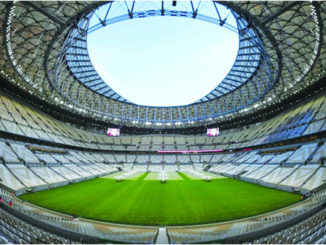
    Events in the Middle East will make global headlines again in 2022 – but for positive as well as negative reasons. A cause for optimism is football’s World Cup, which kicks off in Qatar in November. It’s the first time an Arab or a Muslim country has hosted the tournament. It is expected to provide a major fillip for the Gulf region in terms of future business and tourism – and, possibly, more open, progressive forms of governance.

    But the choice of Qatar, overshadowed by allegations of corruption, was controversial from the start. Its human rights record will come under increased scrutiny. Its treatment of low-paid migrant workers is another flashpoint. The Guardian revealed that at least 6,500 workers have died since Qatar got the nod from Fifa in 2010, killed while building seven new stadiums, roads and hotels, and a new airport.

    Concerns will also persist about Qatar’s illiberal attitude to free speech and women’s and LGBTQ+ rights in a country where it remains dangerous to openly criticise the government and where homosexuality is illegal. But analysts suggest most fans will not focus on these issues, which could make Qatar 2022 the most successful example of “sports-washing” to date.

    More familiar subjects will otherwise dominate the regional agenda. Foremost is the question of whether Israel and/or the US will take new military and/or economic steps to curb Iran’s attempts, which Tehran denies, to acquire capability to build nuclear weapons. Israel has been threatening air strikes if slow-moving talks to revive the 2015 nuclear deal fail. Even football fans could not ignore a war in the Gulf.

    Attention will focus on Turkey’s authoritarian president, Recep Tayyip Erdogan, whose neo-Islamist AKP party will mark 20 years in power in 2022. Erdogan’s rule has grown increasingly oppressive at home, while his aggressive foreign policy, rows with the EU and US, on-off collusion with Russia over Syria and chronic economic mismanagement could have unpredictable consequences.

    Other hotspots are likely to be Lebanon – tottering on the verge of becoming a failed state like war-torn Yemen – and ever-chaotic Libya. Close attention should also be paid to Palestine, where the unpopular president, Mahmoud Abbas’s postponement of elections, Israeli settler violence and West Bank land-grabs, and the lack of an active peace process all loom large.

    Asia Pacific

    The eyes of the world will be on China at the beginning and the end of the year, and quite possibly in the intervening period as well. The Winter Olympics open in Beijing in February. But the crucial question, for sports fans, of who tops the medals table may be overshadowed by diplomatic boycotts by the US, UK and other countries in protest at China’s serial human rights abuses. They fear the Games may become a Chinese Communist party propaganda exercise.

    The CCP’s 20th national congress, due towards the end of the year, will be the other headline-grabber. President Xi Jinping is hoping to secure an unprecedented third five-year term, which, if achieved, would confirm his position as China’s most powerful leader since Mao Zedong. There will also be jostling for senior positions in the Politburo and Politburo standing committee. It will not necessarily all go Xi’s way.

    Western analysts differ sharply over how secure Xi’s position truly is. A slowing economy, a debt crisis, an ageing population, huge environmental and climate-related challenges, and US-led attempts to “contain” China by signing up neighbouring countries are all putting pressure on Xi. Yet, as matters stand, 2022 is likely to see ongoing, bullish attempts to expand China’s global economic and geopolitical influence. A military attack on Taiwan, which Xi has vowed to re-conquer by any or all means, could change everything.

    India, China’s biggest regional competitor, may continue to punch below its weight on the world stage. In what could be a symbolically important moment, its total population could soon match or exceed China’s 1.41 billion, according to some estimates. Yet at the same time, Indian birth rates and average family sizes are falling. Not so symbolic, and more dangerous, are unresolved Himalayan border disputes between these two giant neighbours, which led to violence in 2020-21 and reflect a broader deterioration in bilateral relations.

    The popularity of Narendra Modi, India’s authoritarian prime minister, has taken a dive of late, due to the pandemic and a sluggish economy. He was forced into an embarrassing U-turn on farm “reform” and is accused of using terrorism laws to silence critics. His BJP party will try to regain lost ground in a string of state elections in 2022. Modi’s policy of stronger ties with the west, exemplified by the Quad alliance (India, the US, Japan, Australia), will likely be reinforced, adding to China’s discomfort.

    Elsewhere in Asia, violent repression in Myanmar and the desperate plight of the Afghan people following the Taliban takeover will likely provoke more western hand-wringing than concrete action. Afghanistan totters on the brink of disaster. “We’re looking at 23 million people marching towards starvation,” says David Beasley of the World Food Programme. “The next six months are going to be catastrophic.”

    North Korea’s nuclear brinkmanship may bring a showdown as Kim Jong-un’s paranoid regime sends mixed signals about war and peace. The Philippines will elect a new president; the foul-mouthed incumbent, Rodrigo Duterte, is limited to a single term. Unfortunately this is not the case with Scott Morrison, who will seek re-election as Australia’s prime minister.

    Europe

    It will be a critical year for Europe as the EU and national leaders grapple with tense internal and external divisions, the social and economic impact of the unending pandemic, migration and the newly reinforced challenges, post-Cop26, posed by net zero emissions targets.

    More fundamentally, Europe must decide whether it wants to be taken seriously as a global actor, or will surrender its international influence to China, the US and malign regimes such as Vladimir Putin’s Russia.

    The tone may be set by spring elections in France and Hungary, where rightwing populist forces are again pushing divisive agendas. Viktor Orbán, the authoritarian Hungarian leader who has made a mockery of the EU over rule of law, democracy and free speech issues, will face a united opposition for the first time. His fate will be watched closely in Poland, the Czech Republic, Slovenia and other EU member states where reactionary far-right parties flourish.

    Emmanuel Macron, the neo-Gaullist centrist who came from nowhere in 2017, will ask French voters for a second term in preference to his avowedly racist, Islamophobic rivals, Marine Le Pen and Éric Zemmour. Polls put him ahead, although he also faces what could be a strong challenge from the centre-right Republicans, whose candidate, Valérie Pécresse, is the first woman to lead the conservatives. With the left in disarray, the election could radicalise France in reactionary ways. Elections are also due in Sweden, Serbia and Austria.

    Germany’s new SPD-led coalition government will come under close scrutiny as it attempts to do things differently after the long years of Angela Merkel’s reign. Despite some conciliatory pledges, friction will be hard to avoid with the European Commission, led by Merkel ally Ursula von der Leyen, and with France and other southern EU members over budgetary policy and debt. France assumes the EU presidency in January and Macron will try to advance his ideas about common defence and security policy – what he calls “strategic autonomy”.

    Macron’s belief that Europe must stand up for itself in a hostile world will be put to the test on a range of fronts, notably Ukraine. Analysts suggest rising Russian military pressure, including a large border troop build-up and a threat to deploy nuclear missiles, could lead to renewed conflict early in the year as Nato hangs back.

    Other trigger issues include Belarus’s weaponising of migration (and the continuing absence of a humane pan-European migration policy) and brewing separatist trouble in Bosnia-Herzegovina and the Balkans. The EU is planning a China summit, but there is no consensus over how to balance business and human rights. In isolated, increasingly impoverished Britain, Brexit buyers’ remorse looks certain to intensify.

    Relations with the US, which takes a dim view of European autonomy but appears ambivalent over Ukraine, may prove tense at times. Nato, its credibility damaged post-Afghanistan, faces a difficult year as it seeks a new secretary-general. Smart money says a woman could get the top job for the first time. The former UK prime minister Theresa May has been mentioned – but the French will not want a Brit.

    South America

    The struggle to defeat Jair Bolsonaro, Brazil’s notorious rightwing president, in national elections due in October looks set to produce an epic battle with international ramifications. Inside Brazil, Bolsonaro has been widely condemned for his lethally negligent handling of the Covid pandemic. Over half a million Brazilians have died, more than in any country bar the US. Beyond Brazil, Bolsonaro is reviled for his climate change denial and the accelerated destruction of the Amazon rainforest.

    Opinion polls show that, should he stand, Luiz Inácio Lula da Silva, the former president who was jailed and then cleared on corruption charges, would easily beat Bolsonaro. But that assumes a fair fight. Concern is growing that American supporters of Donald Trump are coaching the Bolsonaro camp on how to steal an election or mount a coup to overturn the result, as Trump tried and failed to do in Washington a year ago. Fears grow that Trump-style electoral subversion may find more emulators around the world.

    Surveys in Europe suggest support for rightwing populist-nationalist politicians is waning, but that may not be the case in South America, outside Brazil, and other parts of the developing world in 2022. Populism feeds off the gap between corrupt “elites” and so-called “ordinary people”, and in many poorer countries, that gap, measured in wealth and power, is growing. In Cuba, Nicaragua, Haiti and Venezuela, supposed champions of the people have become their oppressors, and this phenomenon looks set to continue. In Chile, the presidential election’s first round produced strong support for José Antonio Kast, a hard-right Pinochet apologist, though he was ultimately defeated by Gabriel Boric, a leftist former student leader, who will become the country’s youngest leader after storming to a resounding victory in a run-off.

    Argentina’s president, Alberto Fernández, faces a different kind of problem in what looks like a tough year ahead, after elections in which his Peronists, one of the world’s oldest populist parties, lost their majority in Congress for the first time in nearly 40 years. Mexico’s president, Andrés Manuel López Obrador, will face ongoing tensions with the US over trade, drugs and migration from Central America. But at least he no longer has to put up with Trump’s insults – for now.

    North America

    All eyes will be on the campaign for November’s mid-term elections when the Democrats will attempt to fend off a Republican bid to re-take control of the Senate and House of Representatives. The results will inevitably be viewed as a referendum on Joe Biden’s presidency. If the GOP does well in the battleground states, Donald Trump – who still falsely claims to have won the 2020 election – will almost certainly decide to run for a second term in 2024.

    Certain issues will have nationwide resonance: in particular, progress (or otherwise) in stemming the pandemic and ongoing anti-vax resistance; the economy, with prices and interest rates set to rise; and divisive social issues such as migration, race and abortion rights, with the supreme court predicted to overrule or seriously weaken provisions of the landmark 1973 Roe v Wade decision.

    The Democrats’ biggest problem in 2022 may be internal party divisions. The split between so-called progressives and moderates, especially in the Senate, undermined Biden’s signature social care and infrastructure spending bills, which were watered down. Some of the focus will be on Biden himself: whether he will run again in 2024, his age (he will be 80 in November), his mental agility and his ability to deliver his agenda. His mid-December minus-7 approval rating may prove hard to turn around.

    Also under the microscope is Kamala Harris, the vice-president, who is said to be unsettled and under-performing – at least by those with an interest is destabilising the White House. Pete Buttigieg, the transportation secretary who sought the Democratic nomination in 2020, is a man to watch, as a possible replacement for Harris or even for Biden, should the president settle for one term.

    Concern has grown, meanwhile, over whether the mid-terms will be free and fair, given extraordinary efforts by Republican state legislators to make it harder to vote and even harder for opponents to win gerrymandered congressional districts and precincts with in-built GOP majorities. One survey estimates Republicans will flip at least five House seats thanks to redrawn, absurdly distorted voting maps. This could be enough to assure a Republican House majority before voting even begins.

    Pressure from would-be Central American migrants on the southern US border will likely be a running story in 2022 – a problem Harris, who was tasked with dealing with it, has fumbled so far. She and Biden are accused of continuing Trump’s harsh policies. Belief in Biden’s competence has also been undermined by the chaotic Afghan withdrawal, which felt to many like a Vietnam-scale humiliation.

    Another big foreign policy setback or overseas conflagration – such as a Russian land-grab in Ukraine, direct Chinese aggression against Taiwan or an Israel-Iran conflict – has potential to suck in US forces and wreck Biden’s presidency.

    In Canada, Prime Minister Justin Trudeau is expected to push new policy initiatives on affordable childcare and housing after winning re-election in September. But in 2021’s snap election his Liberals attracted the smallest share of the popular vote of any winning party in history, suggesting the Trudeau magic is wearing thin. Disputes swirl over alleged corruption, pandemic management, trade with the US and carbon reduction policy.

    Africa

    As befits this giant continent, some of 2022’s biggest themes will play out across Africa. Among the most striking is the fraught question of whether Africans, still largely unvaccinated, will pay a huge, avoidable price for the developed world’s monopolising of vaccines, its reluctance to distribute surpluses and share patents – and from the pandemic’s myriad, knock-on health and economic impacts.

    This question in turn raises another: will such selfishness rebound on the wealthy north, as former UK prime minister Gordon Brown has repeatedly warned? The sudden spread of Omicron, first identified in South Africa, suggests more Covid variants could emerge in 2022. Yet once again, the response of developed countries may be to focus on domestic protection, not international cooperation. The course of the global pandemic in 2022 – both in terms of the threat to health and economic prosperity – is ultimately unknowable. But in many African countries, with relatively young populations less vulnerable to severe Covid harms, the bigger problem may be the negative impact on management of other diseases.

    It’s estimated 25 million people in Africa will live with HIV-Aids in 2022. Malaria claims almost 400,000 lives in a typical year. Treatment of these diseases, and others such as TB and diabetes, may deteriorate further as a result of Covid-related strains on healthcare systems.

    Replacing the Middle East, Africa has become the new ground zero for international terrorism, at least in the view of many analysts. This trend looks set to continue in 2022. The countries of the Sahel, in particular, have seen an upsurge of radical Islamist groups, mostly home-grown, yet often professing allegiance to global networks such as al-Qaida and Islamic State.

                    Source: Theguardian.com

  • Tradition of Happy Holidays in the US

    Tradition of Happy Holidays in the US

    The Christmas season, also called the holiday season (often simply called the holidays), or the festive season, is an annually recurring period recognized in many Western and other countries that is generally considered to run from late November to early January.

    It is defined as incorporating at least Christmas Day, New Year’s Day, and sometimes various other holidays and festivals. It also is associated with a period of shopping which comprises a peak season for the retail sector (the “Christmas (or holiday) shopping season”) and a period of sales at the end of the season (the “January sales”).

    Christmas window displays and Christmas tree lighting ceremonies when trees decorated with ornaments and light bulbs are illuminated are traditions in many areas.

    In the denominations of Western Christianity, the term “Christmas season” is considered synonymous with Christmastide, which runs from December 25 (Christmas Day) to January 5 (Twelfth Night or Epiphany Eve), popularly known as the 12 Days of Christmas, or in the Catholic Church, until the Baptism of the Lord, a Christmas season which can last for more or fewer than twelve days.

     As the economic impact involving the anticipatory lead-up to Christmas Day grew in America and Europe into the 19th and 20th centuries, the term “Christmas season” began to become synonymous instead with the liturgical Christian Advent season, the period observed in Western Christianity from the fourth Sunday before Christmas Day until Christmas Eve. The term “Advent calendar” continues to be widely known in Western parlance as a term referring to a countdown to Christmas Day from the beginning of December, although in retail the countdown to Christmas usually begins at the end of the summer season, and beginning of September.

    Beginning in the mid-20th century, as the Christian-associated Christmas holiday and liturgical season, in some circles, became increasingly commercialized and central to American economics and culture while religio-multicultural sensitivity rose, generic references to the season that omitted the word “Christmas” became more common in the corporate and public sphere of the United States, which has caused a semantics controversy that continues to the present.

    By the late 20th century, the Jewish holiday of Hanukkah and the new African American cultural holiday of Kwanzaa began to be considered in the U.S. as being part of the “holiday season”, a term that as of 2013 had become equally or more prevalent than “Christmas season” in U.S. sources to refer to the end-of-the-year festive period. “Holiday season” has also spread in varying degrees to Canada; however, in the United Kingdom and Ireland, the phrase “holiday season” is not widely synonymous with the Christmas-New Year period, and is often instead associated with summer holidays.

    Happy Holidays compared to Merry Christmas

    While “Merry Christmas” has been a largely common greeting during the holiday season, many have begun to transition to a new phrase, “Happy Holidays.” There are many different holidays that fall during the month of December such as: Hanukkah, Kwanzaa, New Years and Christmas. The adjustment to “Happy Holidays” has been done out of respect for those celebrating holidays besides Christmas.  The term “Happy Holidays” has become more popular in use to promote a more inclusive culture, although the transition has caused friction and added to the “War on Christmas” debate. “The idea of a “War on Christmas” has turned things like holiday greetings and decorations into potentially divisive political statements. People who believe Christmas is under attack point to inclusive phrases like “Happy Holidays” as (liberal) insults to Christianity,” according to The New York Times.

    Each holiday celebrated during the month of December has its own traditions, celebrations and principles. There are over 320 million people in the U.S. that celebrate different holidays and partake in different traditions.

    Hanukkah is an eight-day Jewish celebration beginning this year the evening of Dec. 22 and ending Dec. 30. The holiday celebrates the overthrow of the Syrian Greeks, as well as the rededication of the Second Temple of Jerusalem. After the overthrow of the Syrian Greeks, the Jewish citizens attempted to relight the menorah. In every home, on each night of the eight nights of Hanukkah, a new candle is lit on a menorah. It is celebrated with holiday songs, games, gift-giving and food.

    A popular game played during the celebration is dreidel, which involves the spinning of a four–sided dreidel, winning and losing pennies, raisins, chocolate pieces, or whatever is chosen to be put in the “pot”. The food prepared during the holiday consists of fried food, another reminder of the lasting oil. Fried potato latkes and sufganiyot are popular items commonly seen in Jewish households during the holiday.

    Kwanzaa is a holiday that is reflective of African cultures and begins on Dec. 26 and lasts until Jan. 1. The holiday is a celebration of family, community, and culture. Kwanzaa was created by Doctor Maulana Karenga in 1966, after the Watts riots in Los Angeles as an attempt to unite African American communities. Each night of the seven celebratory days, a candle is lit on the Kinara (candleholder). After the candle is lit, the family gathers to discuss one of the seven principles Kwanzaa is based around.

    Each household celebrates Kwanzaa in their own way, usually involving songs, dances, storytelling, poetry reading and a large feast on the sixth day.

    Another holiday celebrated during the winter is Chinese New Year. Chinese New Year is celebrated in January and is known as the most important Chinese holiday. The holiday goes by many names including Lunar New Year or Spring Festival. Jan. 25 is the first day of the first month on a traditional Chinese lunisolar calendar. This calendar is different than the Gregorian Calendar because it uses both the phase of the moon and the solar calendar. In order to “catch up” with the solar calendar, an extra month is added every few years. This makes the Chinese New Year fall on a different day every year.

    Typical celebrations are done beginning on New Year’s Eve and last around 15 days. The celebrations include: decorations, dinners with family, fireworks, and public ceremonies with dragon dances and imperial performances. Red is the main color for the festival because it is said to bring good luck. It can be seen on every building and decoration. The New Year’s “reunion dinner” is said to be the most important meal of the day celebrated with family. The common foods that are considered good luck and eaten during the meal include fish, dumplings, and rice cakes.

    Christmas is celebrated on Dec. 25, to commemorate the birth of Jesus Christ. The holiday is celebrated by exchanging gifts, putting Christmas trees in the home, decorating with lights, caroling and hanging stockings. Modern traditions for Christmas also include, visiting and receiving gifts from Santa Claus, hanging of the Mistletoe and ringing bells.

    The reasoning behind the evergreen tree was introduced by Martin Luther, explaining they were a symbol of eternal life. Candles during the holiday reason represent a picture of Christ being the light of the world. Holly is another symbol used around Christmas time, showing the thorns in Jesus’s crown. The color red is a large staple in Christmas traditions as well, representing Christ’s blood and death.

    With all the different holidays celebrated during the month, “happy holidays” is an all-encompassing greeting that covers holidays celebrated throughout many different cultures.

  • Woman now thought to be Afghanistan’s last Jew flees country

    Woman now thought to be Afghanistan’s last Jew flees country

    Jerusalem (TIP): For years, Zebulon Simentov branded himself as the “last Jew of Afghanistan,” the sole remnant of a centuries-old community. He charged reporters for interviews and held court in Kabul’s only remaining synagogue. He left the country last month for Istanbul after the Taliban seized power. Now, it appears he was not the last one. Simentov’s distant cousin, Tova Moradi, was born and raised in Kabul and lived there until last week, more than a month after Simentov departed in September. Fearing for their safety, Moradi, her children and nearly two dozen grandchildren fled the country in recent weeks in an escape orchestrated by an Israeli aid group, activists and prominent Jewish philanthropists. “I loved my country, loved it very much, but had to leave because my children were in danger,” Moradi told The Associated Press from her modest quarters in the Albanian town of Golem, whose beachside resorts have been converted to makeshift homes for some 2,000 Afghan refugees.

    Moradi, 83, was one of 10 children born to a Jewish family in Kabul. At age 16, she ran away from home and married a Muslim man.

    She never converted to Islam, maintained some Jewish traditions, and it was no secret in her neighbourhood that she was Jewish.

     “She never denied her Judaism, she just got married in order to save her life as you cannot be safe as a young girl in Afghanistan,” Moradi’s daughter, Khorshid, told the AP from her home in Canada, where she and three of her siblings moved after the Taliban first seized power in Afghanistan in the 1990s.

    Despite friction over her decision to marry outside the faith, Moradi said she stayed in touch with some of her family over the years.

    Her parents and siblings fled Afghanistan in the 1960s and 1980s. Her parents are buried at Jerusalem’s Har Menuhot cemetery, and many of her surviving siblings and their descendants live in Israel.

    But until this week, she had not spoken to some of her sisters in over half a century.

     “Yesterday, I saw my sisters, nieces and nephews after around 60 years through a video call. We spoke for hours,” Moradi said. “I was really happy, I saw their children and they met mine.”

    “They said it’s like she came back from the grave,’” Khorshid said.

    During the first period of Taliban rule, from 1996 until the 2001 US-led invasion, Moradi tried to maintain a low profile.

    But she risked her life by hiding Rabbi Isaak Levi, one of the few remaining Afghan Jews, from the Taliban.

    Levi and Simentov lived together for years in the decrepit synagogue in Kabul but famously despised one another and fought often.

    The Taliban usually left them alone, but intervened during one such dispute, arresting them, beating them and confiscating the synagogue’s ancient Torah scroll, which went missing after the Taliban were driven from power.

    . AP

  • Indian Origin group in Brampton holds Tiranga rally in support of farm laws

    Indian Origin group in Brampton holds Tiranga rally in support of farm laws

    BRAMPTON, CANADA (TIP): Indian diaspora in Canada organized a Tiranga rally in Brampton on Sunday, February 28, calling for stronger India-Canada ties. Several videos of the rally, which were making the rounds on the Internet, saw the participation of multiple cars and was seen as a show of strength against the Khalistani fringe elements in Canada. This comes after India last week had requested the Canadian authorities to ensure the safety and security of its citizens following reports that threats have been given by Khalistani groups to the Indian community after they held a “Tiranga rally” in support of farm laws.

    “We have come across threats and intimidation of some members of the Indian community in Canada. These threats have come from certain fringe elements in Canada and we have taken this up with the Canadian authorities both in Ottawa and Delhi,” said Ministry of External Affairs (MEA) spokesperson Anurag Srivastava in a weekly briefing after a question on threats from the Khalistani groups to the Indian community.

    “We have requested them to take steps to ensure the safety of Indian citizens in Canada. We advise Indian nationals to report any such incidents to the local Canadian police and also bring to the immediate attention of the High Commission of Ottawa and as well as our consulates there,” the MEA spokesperson had said.

    Criticizing the recent attacks on the Hindu minorities in Canada, people of Indian origin last week called on Jagmeet Singh, MP from Riding (seat)of Burnaby, to “protect all Canadian citizens including Hindu-Canadians” instead of supporting the Khalistani movement.

    While protesting against Jagmeet Singh, the Canadians of Indian origin said, “The discourse against the Indian Government is being weaponized (by the separatist Khalistani groups) for political gains with incendiary rhetoric that stigmatizes and dehumanizes Hindus in Canada who are a visible minority in Canada.”

    They also sent flowers to the MP to remind him of the “value of peace and that you are an MP of Canada who needs to protect his own people first”.

  • Canada Based Sikh dance teacher performs bhangra in freezing cold, gives special message on Covid through a Video

    Canada Based Sikh dance teacher performs bhangra in freezing cold, gives special message on Covid through a Video

    YUKON,CANADA (TIP):  Yet another video of Canada based Sikh dance teacher Gurdeep Pandher performing bhangra in freezing temperature has become an internet sensation.  This time, however, Pandher was not giving bhangra tips, but was spreading “hope and positivity” after receiving a shot of Covid-19 vaccine. While posting the video, he wrote: “Yesterday evening, I received my Covid-19 vaccine. Then I went to a frozen lake to dance for joy, hope and positivity, which I’m forwarding across Canada and beyond for everyone’s health and wellbeing.”

    In no time, the video racked up millions of views. Pandher can be seen teaching bhangra steps in freezing snowscapes of Yukon, a wild, mountainous, and sparsely populated territory in Canada.

    Earlier also, his videos have gone viral on social media, where he hosted bhangra classes for some members of Yukon’s French community in freezing temperatures while it is snowing, providing a lovely view.

  • Canada puts Proud Boys on terror list, cites active security threat

    Canada puts Proud Boys on terror list, cites active security threat

    Ottawa (TIP): Canada named the far-right Proud Boys a terrorist entity on Wednesday, saying it posed an active security threat and played a “pivotal role” in last month’s attack on the US Capitol that left five people dead.

    Although the Proud Boys have never mounted an attack in Canada, Public Safety Minister Bill Blair said domestic intelligence forces had become increasingly worried about the group.

    “There has been a serious and concerning escalation of violence — not just rhetoric but activity and planning — and that is why we have responded as we have today,” he told a news conference. He did not give details.

    The group’s assets can now be frozen by banks and financial institutions, and it is a crime for Canadians to knowingly deal with assets of a listed entity. Anyone belonging to the group can be blocked from entering Canada.

    Canada’s Public Safety Minister Bill Blair announces that the Proud Boys and other groups have been listed as terrorist entities, in a still image from a remote video call in Ottawa, Ontario, Canada, on February 2, 2021. Office of the Minister of Public Safety and Emergency Preparedness/Handout via REUTERS.

  • Global Covid cases top 104.8mn: Johns Hopkins

    Global Covid cases top 104.8mn: Johns Hopkins

    Washington (TIP): The total number of global coronavirus cases has topped 104.8 million, while the deaths have surged to more than 2.28 million, according to the Johns Hopkins University.

    In its latest update on Friday, Feb 5, morning, the University’s Center for Systems Science and Engineering (CSSE) revealed that the current global caseload and death toll stood at 104,832,983 and 2,281,608, respectively.

    The US is the worst-hit country with the world’s highest number of cases and deaths at 26,673,780 and 455,657, respectively, according to the CSSE. India comes in second place in terms of cases at 10,790,183. The other countries with more than a million confirmed coronavirus cases are Brazil (9,396,293), the UK (3,903,706), Russia (3,874,830), France (3,310,496), Spain (2,913,425), Italy (2,597,446), Turkey (2,508,988), Germany (2,265,536), Colombia (2,135,412), Argentina (1,961,635), Mexico (1,886,245), Poland (1,533,511), South Africa (1,466,767), Iran (1,445,326), Ukraine (1,275,334), Peru (1,158,337), Indonesia (1,123,105), Czech Republic (1,013,352) and the Netherlands (1,007,268), the CSSE figures showed. Brazil currently accounts for the second highest number of Covid-19 fatalities at 228,795, followed by Mexico (161,240) on the third place and India (154,703) on the fourth. Meanwhile, the nations with a death toll above 20,000 are the UK (110,462), Italy (90,241), France (77,743), Russia (74,005), Spain (60,802), Germany (60,067), Iran (58,256), Colombia (55,131), Argentina (48,700), South Africa (45,605), Peru (41,538), Poland (38,344), Indonesia (31,001), Turkey (26,467), Ukraine (24,429), Belgium (21,216) and Canada (20,486).

  • Indian–Origin Canadian Sikh Minister Navdeep Bains quits Justin Trudeau govt.

    Indian–Origin Canadian Sikh Minister Navdeep Bains quits Justin Trudeau govt.

    TORONTO (TIP): Canadian PM Justin Trudeau has made a former astronaut his new foreign minister in a Cabinet reshuffle sparked by the sudden resignation of high-profile Indian-origin Canadian Sikh minister Navdeep Bains.

    He is unlikely to run in the next election.

    According to reports, Navdeep Bains, who is considered to be a strong supporter of the Khalistan movement, stepped down as Minister of Innovation, Science, and Industry claiming that he wanted to ‘spend more time with his family’. However, in reality, Navdeep Bains, who played a key role in Justin Trudeau’s first term since 2013, was forced to resign from the cabinet after he was exposed to a massive corruption scandal in Canada. The resignation of Bains is being seen as an attempt by the ruling Liberal Party to save itself from frequent embarrassments on corruption charges.

    In November 2018, a Canada-based media outlet had exposed the news of corruption involving Navdeep Bains. According to the report, an irregularity had occurred land deal concerning a piece of land measuring 20-acre between Navdeep Bains and another liberal MP Raj Grewal. The expose had shocked Canada after a brazen corruption scandal involving lawmakers surfaced. Subsequently, the local authorities had ordered a third-party investigation into the matter and sent its details to the Royal Canadian Mounted Police (RCMP).

    The case of corruption in the land deal is itself an interesting one highlighting how two liberal MPs had indulged in act of corruption without any fingers pointing at them. The pro-Khalistan Navdeep Bains and another Liberal MP had purchased that specific piece of land from the Ontario Province and then sold it to the Brampton City at a much higher price than what the City was planning to offer initially.

    The land the city was planning to purchase for an amount of $3.3 million, eventually was sold to them by Bains $4.4 million – an extra $1.1 Million on accounts of the public exchequer. Interestingly, the company involved in the land deal was Goreway Heaven and one of its directors, Bhagwan Grewal, accompanied Prime Minister Trudeau to his infamous trip to India in 2018. Besides, about half of its directors have been making handsome donations to the Liberal Party. Reportedly Grewal is a former MP, was a history-sheeter in corruption and has been practicing it on a blanket basis at various levels.

    Navdeep Bains, a pro-Khalistan sympathizer and member of World Sikh Organization

    Reportedly, Navdeep Bains is considered to be one of the aggressive Khalistani sympathizers within the Canadian government. Bains has been groomed by the pro-Khalistani radical outfit World Sikh Organization (WSO), which is accused of radicalizing the Sikh community and making efforts to divide it.

    Canada-based World Sikh Organization (WSO), a body of Sikhs formed in July 1984 post-Operation Bluestar, has been openly raising the demand for Khalistan. In fact, the Sikh diaspora in Canada has themselves labeled WSO an extremist organization.

    Not just in Canada alone, but across North America and Europe, radical Sikh elements belonging to WSO have used the political climate in their respective countries to build up a political support base for their ideology. Along with another pro-Khalistan terror group Sikh for Justice (SFJ) the World Sikh Organization and Sikhs for Justice has been funding the Khalistan movement and also does social media propaganda to revive the Khalistan cause.

    Incidentally, Navdeep Bains’s father is also a prominent leader of the WSO and is also associated with the Dixie gurdwara — an epicenter of anti-India activities. Bains also has direct connections with Khalistan terrorists as his father-in-law Darshan Singh Saini was listed by the Canadian authorities as a witness for investigating the 1985 Air India bombing case. In fact, during a debate on anti-terrorism legislation in the House of Commons in February 2007, the then Canadian PM Stephen Harper highlighted the connection of Bains’ father-in-law with the Air India bombing in which 329 people were killed including Canadian, British, and Indian citizens.

    The then PM Harper had said that the opposition of the anti-terrorism legislation by Bains was a tactic to protect his father-in-law from appearing in before the RCMP as the Conservatives argued about using the law to use it for investigating the Air India 1985 bombing case. Earlier, the Vancouver Sun had reported that Bains’ father-in-law was on the list of potential witnesses in the bombing case.

    Bains was also targeted by Punjab Chief Minister Captain Amarinder Singh for what he termed as their “well known for their leanings towards the Khalistani movement”. Apart from Canadian defense minister Harjit Singh Sajjan and Former Sikh MP Raj Grewal, the Punjab CM had also referred to Navdeep Bains as a Khalistani sympathizer in 2018.

    Bains involved in illegal immigration from India

    Apart from sponsoring the Khalistani terror network, Bains is involved in several other alleged corrupt deals. Navdeep Bains’s name emerged in the infamous Fort Erie gurdwara scam last year as well. The gurdwara has sponsored three religious preachers from India and got them special visas from the Ottawa administration.

    Later, it was revealed that the gurdwara was not operational at all and was used as a cover by Bains and his associates to sneak in immigrants illegally from India to Canada. Since then, the Canadian authorities have not able to find the traces of three Indian priests sponsored by Navdeep Bains as they have now disappeared after landing in Canada. According to locals, Bains had forged details of a gurdwara on papers to bring in immigrants illegally under the cover of religious activities, which in turn, make huge financial profits. The gurdwara is controlled by Bains through his father Balwinder Bains and is seemingly a money-making machine for the family. An investigative report had suggested that Fort Erie gurdwara was nothing but a long-abandoned motel surrounded by scrubland overgrown with weeds.

    The Liberal leader has also been using other institutional structures of the Sikh community to his advantage. Father of Bains, who enjoys a stronghold over the administration of gurdwaras, had appointed men close to him as the directors of Fort Erie gurdwara, a prominent Mississauga gurdwara that is in the constituency represented by Bains. Most importantly, the Bains family has been allegedly making massive amounts of money through corruption in Sikh institutions in Canada for ages now. It is alleged that Bains is making a lot of money by not sparing even the Gurdwaras. Locals highlight that Bains and his father run an immigration nexus consisting of IELTS coaching centers in India and colleges and gurdwaras in Canada.

    he father-son duo used to facilitate illegal immigration by offering seats to students in these institutions, most of which only exist on paper.

    Telecom lobbying and favored Chinese companies in Canada

    Bains is also accused by Canadian civil society groups of favoring certain telecom groups while serving as a minister. He is facing allegations of favoring the telecom companies to hike internet prices. Bains is also accused of siding with the big telecom companies on their appeal to the lowered wholesale rates.

    During his tenure as a minister in Trudeau’s government, Navdeep Bains had given the green signal to multiple Chinese companies with a dark track record and connections to the CCP, without proper national security review. Bains is also believed to be providing back support before allowing Chinese telecom giant Hytera to enter Canada without a proper national security review as well.

    Furthermore, the Canadian leader has also been allegedly involved in corruption in the procurement of public goods. Bains is accused in a public procurement irregularity worth $200 million. Bains is facing charges of providing the tender to a company that did not have a manufacturing facility at all.

    Shockingly, the pro-Khalistani Canada leader Navdeep Bains had also expressed his solidarity with the protestors in India, who have now camped on the streets of Delhi to oppose farm reforms initiated by the Modi government. It is a known fact today that the so-called ‘farmer’ protestors have been hijacked by the Khalistani elements, who are trying to incite the protestors to fight against the Indian government.

    For Jatin

    Categories: Front Page, Breaking News, Indo Canadian , Indian Abroad, Indian Origin, India, Politics

    Tags: Justin Trudeau, Canada, Liberal Party, Sikh Minister, Khalistan, Corruption

  • Mohinder Kaur files plaint against Kangana

    Mohinder Kaur files plaint against Kangana

    Bathinda (TIP): Mohinder Kaur of Bahadurgarh Jandian village here, who hit the headlines after Kangana Ranaut tweeted her picture claiming that she was the same “Dadi” who was part of the Shaheen Bagh protest, has filed a complaint against the actress. The complaint has been filed in a court here and a hearing has been fixed for January 11. In the complaint, filed though advocate Raghubir Singh Behniwal, Mohinder Kaur claimed that due to Kangana’s false tweet, she suffered grave mental tension, agony, botheration, harassment, humiliation, loss of reputation, defamation in eyes of her family members, relatives, co-villagers and public in large. Further, she also claimed that due to the allegation, she had fallen in her own estimation and also in the eyes of protesting farmers. The complaint also said Kangana had not apologised to her or farmers.

  • GENERAL DOUGLAS MacARTHUR & CHURCHILL ARE NEEDED IN 2021

    GENERAL DOUGLAS MacARTHUR & CHURCHILL ARE NEEDED IN 2021

    By Ravi Batra

    The world has not seen a weapon that without a bomb launched or a bullet fired could devastate economies of all nations on earth in one fell swoop, and render their citizenry dead or fearing for life itself.

    2020, to paraphrase FDR, is a year that will live in infamy, and it is also the year when Neville Chamberlain reigned supreme. Indeed, no less than President Trump – who has stood taller than any before him, including, Richard M. Nixon, when he was a Communism-buster up until prior to his 1967 abdication in Foreign Affairs’ pages with a quid pro quo op-ed entitled “Asia After Viet Nam” – called the Virus the “China Virus,” yet, then incredulously declared: that we are fighting “an invisible enemy.” No, we are not Mr. President. The Virus isn’t our enemy, just as on December 7, 1941 the Japanese bombs and bullets weren’t the enemy; Imperial Japan was, by attacking us at Pearl Harbor, in Hawaii. Then, FDR, after sentencing that day “to live in infamy,” unleashed the indominatable General Douglas MacArthur. The same General, who when first expelled from Philippines, left written messages for the people of Philippines:  “I shall return.” And, return he did. Promise made; promise kept. Indeed, a short few years later on September 2, 1945 there was a Surrender Ceremony. A visit to the USS Missouri website proudly shows that the infamous history started at Peral Harbor was in-fact stopped, and a new history of American Freedoms, for all, was made to wit:

    “On the teak decks of USS Missouri, WWII finally came to an end on 2 September 1945. The Surrender Ceremony, which formally brought an end to the bloodiest conflict in human history, lasted a mere 23 minutes. It began at 0902 with a brief opening speech by General Douglas MacArthur. In his speech, the General called for justice, tolerance, and rebuilding. After MacArthur’s speech, Foreign Minister Mamoru Shigemitsu, representing the Emperor of Japan, signed the Instrument of Surrender. He was followed by the Chief of the Army General Staff, General Yoshijirō Umezu, who signed for the Japanese Army. After this, General MacArthur signed the Instrument of Surrender as the Supreme Allied Commander with 6 pens. Of these pens, he gave two to former POWs Lt. General Jonathan Wainwright and Lt. General Lt. General Arthur E. Percival. Following MacArthur, other allied representatives followed in this order:

    Fleet Admiral Chester W. Nimitz signed for the United States; General Xu Yongchang for the Republic of China; Admiral Sir Bruce Fraser for the United Kingdom; Lt. General Kuzma Derevyanko for the Union of Soviet Socialist Republics (USSR); General Sir Thomas A. Blamey for the Commonwealth of Australia; Colonel Lawrence Moore Cosgrave for the Dominion of Canada; General Philippe Le Clerc for the Provisional Government of the French Republic; Lt. Admiral Conrad E. L. Helfrich for the Kingdom of the Netherlands;Air Vice Marshal Leonard M. Isitt for the Dominion of  New Zealand.

    5-Star General MacArthur’s Remarks – that day – on the deck of the USS Missouri are illuminating, and hence, worthy of reproduction so we may escape, even belatedly, History’s “curse of repetition” upon those who forget the past, while cuddling up to happy-amnesia:

    “We are gathered here, representatives of the major warring powers, to conclude a solemn agreement whereby peace may be restored. The issues involving divergent ideals and ideologies have been determined on the battlefields of the world, and hence are not for our discussion or debate. Nor is it for us here to meet, representing as we do a majority of the peoples of the earth, in a spirit of distrust, malice, or hatred.

    But rather it is for us, both victors and vanquished, to rise to that higher dignity which alone befits the sacred purposes we are about to serve, committing all of our peoples unreservedly to faithful compliance with the undertakings they are here formally to assume. It is my earnest hope, and indeed the hope of all mankind, that from this solemn occasion a better world shall emerge out of the blood and carnage of the past — a world founded upon faith and understanding, a world dedicated to the dignity of man and the fulfillment of his most cherished wish for freedom, tolerance, and justice. The terms and conditions upon which surrender of the Japanese Imperial Forces is here to be given and accepted are contained in the Instrument of Surrender now before you. As Supreme Commander for the Allied Powers, I announce it my firm purpose, in the tradition of the countries I represent, to proceed in the discharge of my responsibilities with justice and tolerance, while taking all necessary dispositions to insure that the terms of surrender are fully, promptly, and faithfully complied with. I now invite the representatives of the Emperor of Japan and the Japanese government and the Japanese Imperial General Headquarters to sign the Instrument of Surrender at the places indicated.”

    [After the Instrument of Surrender was executed by all, he concluded with:]

    “Let us pray that peace be now restored to the world, and that God will preserve it always. These proceedings are closed.” (Emphasis added)

    InWWII – we were united with USSR and China (not today’s Chinese Communist Party’s (CCP’s) People Republic of China (PRC)), but the Republic of China (ROC) – today, known as Taiwan, when General Chiang Kai-shek was head of ROC.  I cite the above snippet of history to document the gross geopolitical malpractice of leaders, here at home and abroad, since 1945. Indeed, CCP’s brilliant Chairman Mao, who had originally joined under the leadership of General Chiang, revolted, caused a civil war, and finally expelled him in 1949 from Mainland China to a mere island, Formosa, aka Taiwan. CCP’s China is a new world order – different from feudalism, communism, socialism, corporate-capitalism and our cherished Bill of Rights embedded in our Separated Powers regime – as it is an amalgam of all. Indeed, there are 99 million members of CCP – think corporate governance and the now-disappeared “Avon Lady.” Everybody in China is directly and intimately known by a CCP Member.

    From Chiang Kai-shek, to Harry Truman, to Pandit Nehru, and above all others, to Richard Nixon who rolled out the red carpet for CCP’s China and gifted the critical multi-polar Permanent Seat on the United Nations Security Council – after unilaterally amending History and taking it away from ROC – the world could not, and sadly did not, see the slowly moving tortoise of CCP-China as a threat greater than the fast-moving Adolf Hitler.

    We are at the Third Act of CCP’s “rejuvenation” of the Ming Dynasty’s Tribute System. Indeed, President Xi has honestly stated his China Policy to be “rejuvenation” – almost with as much delight as Edgar Allen Poe had in writing the Purloined Letter.  What former National Security Advisor H.R. McMaster warned about in The Atlantic on May 19, 2020 – “What China Wants” – but left off at, I have continued – as I must warn as Paul Revere did – that our “Emperor wears no clothes,” to metaphorically assert without doubt, that our China Policy – created and effectuated by our Deep State and Executive and Legislative Leaders – is both a misdiagnosis, and a mistreatment that embraces de facto, if not de jure, impotent Chamberlain while rejecting the necessary Churchill, who to them is truly “invisible,” let alone “necessary.” Giving us governmental malpractice that is both decrypt, as it is impotent.

    The world has not seen a weapon that without a bomb launched or a bullet fired could devastate economies of all nations on earth in one fell swoop, and render their citizenry dead or fearing for life itself. Coronavirus, with its transplanted from Bats’ “Spike Glycoprotein (S)” – which I wrote about in my Open Letter to President Trump on April 14, 2020, and the next day United States opened its then-Preliminary Investigation of China – is now the very piece of protein that Pfizer and Moderna’s mRNA-based vaccines now – in error – implant in every patient, and after the initial 2-shots, require a booster shot every 3 months, for life. Result: the enemy get refreshed, while our body’s “T cell” get exhausted or run out. Indeed, Merck’s CEO Kenneth C. Fraizer has correctly said: we don’t even understand the Virus yet, let alone treat it. How right he is. This vaccine frenzy is nothing short of a global clinical trial – worse than if you signed up for one – for now, as a patient, you don’t get paid, and if you suffer a severe reaction, you can’t sue as they have a liability shield, courtesy of Operation Warp Speed that didn’t have to do 10 years of public health studies to identify its efficacy, but its side effects. Risks vs Benefits. A patient with a migraine headache would never accept decapitation as a solution; yet, now, we are to accept this vaccine with a public health study over 10-years of time. Yes, we need a vaccine; but, we need the raw truth about the creation of SARS-CoV2, its escape from the Wuhan lab, its variations, etc., before we can figure out the correct cure.

    Kompromat – is a term used to suggest Russia’s ability to control another person or nation through some act or knowledge that the target would not like exposed. Blackmail. In our social media-connected world, with data that documents one’s hallucinations as if “fact,” our exceptional separated powers regime is sadly checkmated. As 2021 is the Year of Hope, like never before, I end with a wish that just as the Ming Dynasty voluntarily gave up its Tribute system, so does President Xi Jinping; and, instead, he joins in transparent disarming of SARS-CoV2 and dismantles his Jaws of War (which I have previously described). Otherwise, let Churchill be re-born as an American – worthy of everyday hardworking Americans who toil to achieve the American Dream, as merit alone can – and uphold our Flag high and free, as those who died doing so in 1814 at Fort McHenry and caused lawyer-poet Francis Scott Keys to be so moved by their undying courage and national pride to write “The Star-Spangled Banner.”

    (Ravi Batrais a senior attorney and  advisor to many governments. Twitter @RaviBatra)