Tag: Chief Justice of India (CJI)

  • Love jihad row: Supreme Court restores Hadiya’s marriage

    Love jihad row: Supreme Court restores Hadiya’s marriage

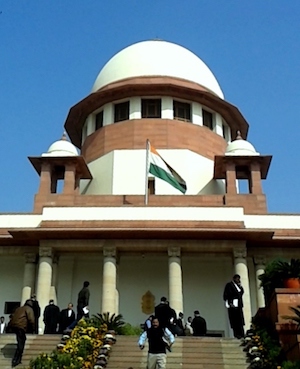
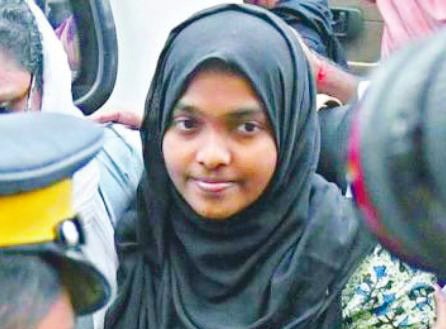
    NEW DELHI (TIP): The Supreme Court (SC) on March 8 restored the marriage between Akhila aka Hadiya and Shafin Jahan – a couple at the centre of a ‘love jihad’ row – but made it clear that the NIA can continue with its probe to find out if any criminality was involved in the wedlock.

    Setting aside the May 24, 2017 judgment of the Kerala HC which quashed the marriage, a bench headed by Chief Justice Dipak Misra said Hadiya is “free to pursue her future endeavors according to law” and no court can interfere in the marriage between two consenting adults.

    But the bench, which took the NIA probe report into record, added: “We clarify that the investigations in respect of any matter of criminality may continue in accordance with law.”

    The judges, acting on a petition filed by Jahan challenging the HC order, said they were reviving the marriage convinced after the interaction with Hadiya on November 27 last year in open courtroom during which she admitted the marriage and indicated that she had exercised her free consent.

    The Kerala HC had observed that Hadiya seemed to be mentally indoctrinated and needed her parents’ involvement in order to make such an important decision.

    It also found merit in her father KM Asokan’s statement that his daughter had been recruited by Islamic State’s mission in Syria and Jahan was “only a stooge who had been assigned to play the role of going through a marriage ceremony”.

    The father and the NIA raised this argument in the SC too. Significantly, the HC had also directed ‘comprehensive’ investigation into cases of ‘love jihad’ and has incidents of forced conversion probed thoroughly.

    Asokan and NIA vehemently argued that the marriage was part of a well-oiled machinery prevailing in Kerala to indoctrinate vulnerable youth to embrace Islam and lure them away to countries like Syria but the bench was not inclined to accept the argument and said “when two consenting adults marry we cannot get into correctness, justness.. its not fair”.

    “Shafin Jahan is a radicalised man, a stooge of the ISIS who was trying to wean away Hadiya to Syria under the pretext of marriage which is only a guise to take her away from the jurisdiction of her parents and any court,” Shyam Diwan, senior advocate who appeared for Asokan told the SC.

    The order also came on a day when Additional Solicitor General Maninder Singh for NIA said that it had issued look-out circulars for two witnesses F Musthafa and S Shahana who “initiated” Hadiya into Islam.

    Singh urged the court not to take the case lightly saying it was “not a one-off case, there was a common pattern and modus operandi for luring vulnerable girls to convert to Islam by feigning love and the same group of people, who have been identified by the NIA, was behind it”.

    The NIA referred to “psychological kidnapping” too and said that an indoctrinated person like Hadiya may be incapable of giving free consent. Singh said: “Investigation is almost complete except two persons who left abroad.

    The CJI retorted: “you can continue with your investigation, lodge FIRs, make arrests, do whatever you want . But we cannot touch the marriage. If the marriage is a disguise to commit an offence then you can proceed against the offender”.

  • Form panel to assign important cases, four SC judges tell CJI Dipak Misra

    Form panel to assign important cases, four SC judges tell CJI Dipak Misra

    NEW DELHI (TIP): The four senior judges of Supreme Court who criticised Chief Justice (CJI) Dipak Misra for his administration of the court, including allocation of cases to judges, have recommended the creation of a committee of senior judges that will assign sensitive and important cases, according to people familiar with the matter.

    The proposal is being discussed not just by them and the CJI but also, in terms of seniority, judges who stand a chance to be a future CJI, the people familiar with the matter added.

    However, the talks remained inconclusive, they said, because the CJI was reluctant to concede to the demands as it would lead to the dilution of the chief ’s power as the master of the roster.

    The four judges, the senior most in the Supreme Court after the CJI – justices J Chelameswar, Ranjan Gogoi, MB Lokur and Kurien Joseph – met the CJI for the second time this week and put forth their proposal for a just and transparent system to allocate cases.

    Three judges, who, in order of seniority, stand a chance of becoming the CJI were asked by Justice Misra to be present during the talks because the issue raised by the four judges relates to the administrative function of the office of the CJI, the people explained.

    Currently, cases are marked as per the roster notified by the Supreme Court registry. This is done once the CJI approves it. Though the marking is computer-generated, the CJI has a say when the registry informs him about a sensitive matter in advance. As the administrative head the CJI can either retain the matter, let it be heard by the bench as per the roster or send it to another bench .

    It is this discretionary power which the four judges have attacked; their claim is that senior judges were being overlooked when it came to hearing sensitive cases.

    Thursday’s meeting between the judges lasted for around 20 minutes, from 10 to 10:20 am after which the judges dispersed to their respective courts.

    The people familiar with the matter said the CJI expressed his inability to accept the proposal because it would compromise the Chief Justice’s power, a matter on which a five-judge constitution bench recently ruled.

    Justice Misra headed the bench that gave the verdict on November 10, 2017.

    Justice Misra is also understood to have cited another SC judgement that in 1997 declared chief justice as the master of the roster. The impasse is likely to continue as Justice Chelameswar left the city on a private visit and i.e. expected back on Sunday night.

    If the talks between the senior judges fail then the CJI may have to convene a full court meeting to end the stalemate, one of the people familiar with the matter said. Source: HT

  • Indian Judiciary in Turmoil

    Indian Judiciary in Turmoil

    ‘No Your Honour!’: An earnest plea to save India’s faltering democracy  

    By George Abraham
    Many of these actions by CJI have created dissension in the ranks that may point to not only selective justice for the powerful and well-connected, but are instances when the very lives of justices are placed on line. Although some may question the rationale for an open news conference, these four judges are known for their impeccable integrity and impartial judgments. It is also apparent that the Supreme Court is currently lacking any mechanism to evaluate the inner workings of the court or streamline the process to resolve deficiencies resulting from wrong decision making, says the author.

    Many newspapers in India on Saturday, January 13th carried the story of disarray in the Supreme court of India with a beaming headline ‘No, Your honour!’.  India has indeed witnessed an extraordinary news conference by four members of the Collegium revealing the skew in the allocation of work and lack of transparency by Dipak Misra, the Chief Justice of India (CJI).

    It has been reported that this is the first time in history that four senior judges – Jasti Chelameswar, Ranjan Gogoi, Kurian Joseph and Madan B. Lokur brought the inner workings of this revered institution to the forefront of the public debate.  The most notable aspect of this development is that these four judges have asserted that they have done this to preserve democracy for India.

    According to Justice Chelameswar, the second senior most judge, “we tried to persuade the CJI to take steps but failed. Unless the Institution of Supreme Court is preserved, democracy won’t survive in this country”. He also added that they were left with no choice and did not want people to accuse those 20 years later that they did not take care of the Institution.

    To the keen observers of the recent political dynamics in the country, this development may not come as a huge surprise. The traditions and protocols that preserved the independence of the Supreme Court have been under siege lately like many other Institutions in the country. For those who are concerned about the very concept of equal justice under law, the Supreme Court in India is found to be their last refuge. If that Institution is also interfered with or politicized, India would join the ranks of banana republics and would effectively cease to be a constitutional democracy.

    The recent turn of events was triggered by the actions of the Chief Justice who started allocating cases of far-reaching consequences without transparency, indicating selective assignment of cases to preferred judges. One of those cases involved the murder of CBI judge B H Loya who was hearing the Sohrabuddin Sheikh Murder trial in which BJP President Amit Shah was accused. He appeared to have mysteriously died in 2014. CJI on Friday allotted a petition seeking independent inquiry into the death to Justice Arun Mishra who is 10th in seniority.

    Then there was the medical admission scam involving sitting and retired High Court judges. They permitted private medical colleges to admit students to MBBS despite Supreme Court bar. Justice Chelameswar set up a bench to hear it, but CJI sent that to another bench saying he alone has the right to draw up the roster. There was also a procedural fight over the norms to appoint HC and SC judges, and CJI sidelined the five-member constitutional bench from such a critical decision making by selecting a small three-judge bench headed by himself.

    Many of these actions by CJI have created dissension in the ranks that may point to not only selective justice for the powerful and well-connected, but are instances when the very lives of justices are placed on line. Although some may question the rationale for an open news conference, these four judges are known for their impeccable integrity and impartial judgments. It is also apparent that the Supreme Court is currently lacking any mechanism to evaluate the inner workings of the court or streamline the process to resolve deficiencies resulting from wrong decision making.

    Although the Modi Government at first declared that the crisis in the Judiciary is an internal problem for their own to resolve, on the following day, the media got the glimpse of Prime Minister’s Principal Secretary Nripendra Misra at the residence of the Chief Justice Misra. However, the report also stated that the gates were not opened. At this point, one can only speculate the role the Government has played muddying the water that could pose a higher risk to the integrity and the independence of the Judiciary.

    It has been quite evident from the recent pronouncements by various BJP/RSS leaders that they are quite unhappy with the current constitution that identifies itself as secular. The Union Minister Ananthkumar Hegde speaking at the meeting of Yuva Parishad said: “I will be happy if someone identifies as Muslim, Christian, Brahmin, Lingayat or Hindu, but trouble will arise if they say they are secular”. Although he later offered a reluctant apology for strategic reasons, he may have been speaking from the mindset of those who are in power today.  They are very well aware of the reality that not only they would require 2/3 majority to change the constitution but also a friendly Supreme Court in case of a judicial review.

    There are growing indications that the Modi government which came to power under the guise of a development agenda is busy laying the foundation for a transformed India based on Hindutva ideology. To accomplish their long-cherished goal of total transformation, they either have to change the Institutions that stand in their way or entirely wreck it.

    Supreme Court is not the only the Institution that is under siege in today’s India. Prime Minister Narendra Modi’s ill-advised demonetization program shed light on the stress and strain that the Reserve Bank of India was placed under along with its Governor Urjit Patel. At one point, tensions have boiled over between India’s central bank and the government over the monetary policy as the country was facing its weakest growth after its much-heralded demonetization policy.  Former Prime Minister Manmohan Singh has often pointed out about the danger to the Banking System due to its constant modification of policies and procedures.

    Another Institution that has come under considerable scrutiny is the Election Commission of India. The so-called delay to hold the election in Gujarat on time appeared to have given a lot of flexibility to BJP to suit its political ends. The ongoing complaints about the EVM machines, though not substantiated, have cast a pall over the integrity of the voting system and the legitimacy of the election itself.

    There are those who fear that the freedom of expression itself is in danger as many in the top leadership of the BJP seem to de-emphasize its importance. Arun Jaitley, the Union minister, is on record saying that freedom of expression should be subordinate to upholding the sovereignty of the nation. There is little doubt that threats to freedom of speech have intensified as right-wing student unions associated with BJP started attacking student assemblies on campuses and supporting the government’s effort to criminalize normal political activity as seditious. The independent media has taken a share of hits as well as in the case of NDTV which was raided in an investigation over bank fraud charges by CBI.

    If democracy has to survive the public has to gain a better understanding of the importance of an independent judiciary, impartial prosecutors and unbiased law enforce enforcement system that can ensure the rule of law and effective protection of fundamental rights and freedoms for every citizen regardless of color, caste, creed or religious affiliations.

    Undoubtedly, Jawaharlal Nehru with the help of other eminent leaders of the independence movement built many of these institutions that stood the test of time. The emerging nations during that period such as Yugoslavia, Egypt, and Ghana failed in this regard, and results are quite evident for all of us to see. Nehru’s vision and leadership were critical in shaping India as we know it today. For BJP, many of these independent institutions remain as stumbling blocks in pushing their agenda through. Only time will tell the fate of many of those revered institutions which form the edifice upon which India stands. In the meantime, I pay homage to those four Jurists whose courage and commitment to preserve our venerable institutions may have given us a ray of hope and probably, few reasons to cheer!

    (The author is the vice-chairman of the Indian Overseas Congress, USA. He can be reached at gta777@gmail.com)