Tag: Chrystia Freeland

  • aHouse of Commons: Finance Ministers, past and present, hold the sway in Canadian politics on day 2

    aHouse of Commons: Finance Ministers, past and present, hold the sway in Canadian politics on day 2

    By Prabhjot Singh

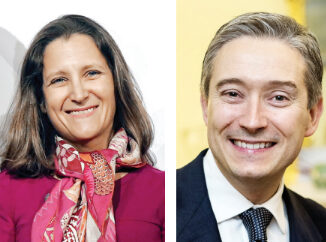
    OTTAWA (TIP): While former Deputy Prime Minister and Finance Minister Christina (Chrystia) Alexandra Freeland made public her exit from Federal Politics within hours of the new Finance Minister François-Philippe Champagne announcing that the new Liberal government under Mark Carney will table its first federal budget on November 4.

    Early in the day, Chrystia Freeland announced her departure from federal politics, confirming she will step down from Cabinet and not seek re-election.

    In a letter to constituents she expressed gratitude for the trust placed in her over five terms representing University–Rosedale riding in Greater Toronto Area. She thanked both Prime Ministers Justin Trudeau and Mark Carney for the opportunity to serve in Cabinet, as well as her colleagues, staff, and family for their support.

    It was her resignation on the day in December last year she was to present her fiscal report during the previous Liberal Government under Justin Trudeau, that rocked the federal politics. She had then resigned both as Deputy Prime Minister and Finance Minister.

    She joined the race to head the Liberal Government after Justin Trudeau quit but lost it to the incumbent Prime Minister Mark Carney. She contested the last federal elections on April 28 and won comfortably.

    Interestingly, while the Leader of Opposition Pierre Poilievre, after losing the April 28 elections, made a triumphant entry to House of Commons by winning a byelection from Alberta, Chrystia Freeland, made public her decision to quit federal politics.

    Incidentally, she has been appointed international envoy to Ukraine and will help as an envoy in its reconstruction.

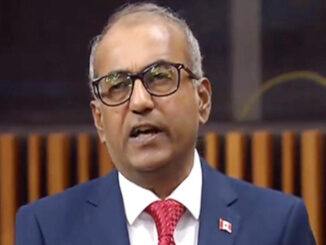
    After she quit Justin Trudeau’s Cabinet, a Liberal MP of Indian origin, Chandra Arya, became the first member of the Liberal caucus to propose the name of Chrystia Freeland for the Prime Ministers’ office. Interestingly, he himself became the first candidate to join the race for the party leadership. However, the party high command rejected his credentials for the leadership race.

    It did not end there. Subsequently, his nomination as a Liberal candidate from Nepean riding in Ottawa was also turned down. Instead, it is Mark Carney, the Prime Minister, contested successfully from there. It may be just a coincidence that in the current House of Commons, both Chandra Arya and Chrystia Freeland, would be missing from members’ list.

    Freeland highlighted key accomplishments during her tenure, including trade negotiations with Europe, the renegotiation of NAFTA, economic protections during the pandemic, infrastructure investments, and Canada’s support for Ukraine.

    Explaining her decision, Freeland said the demands of public office had become too great and that she wishes to dedicate more time to her family. She emphasized her pride in serving Canadians and expressed confidence in the country’s resilience.

    “Canada has faced great challenges, but it will emerge stronger than ever,” she wrote.

    When she quit in December last year, she called out her own government’s economic stewardship and “costly political gimmicks.” Her exit escalated caucus pressure on Trudeau to resign, triggering a leadership race that she ran in, but that ultimately made Mark Carney leader. The Liberals would go from 20 points behind the Conservatives to a comeback win in April’s election.

    She’s attracted ire from Trump, who called her “toxic,” and from Russia, which sanctioned her back in 2014.

    Sources say Canada-U.S. Trade Minister Dominic LeBlanc will absorb Freeland’s internal trade duties and government House leader Steve MacKinnon will take on transport.

    Meanwhile, Finance Minister François-Philippe Champagne announced that the Liberals would table the federal budget on November 4.

    The Opposition has been criticizing the Liberals for delaying the budget. Even on the first day of resumption of Parliament, the Conservatives mounted attacks that instead of much delayed budget, it was now being shifted to November instead of October.

    The long-awaited spending plan will be the federal Liberals’ first under Prime Minister Mark Carney.

    It will also be the first budget as finance minister for Champagne, who announced the date during question period Tuesday.

    He billed the plan as a “generational investment” in Canada’s future.

    “We’re going to present a great budget in this house on the fourth of November, mister speaker,” he said.

    “We’re going to build this country, mister speaker, we’re going to protect our communities, we’re going to empower Canadians.”

    Carney has billed the budget as one of both cost-cutting and investment as Ottawa looks to protect Canada’s economy against U.S. trade disruption.

    The federal budget typically arrives in the spring but the Liberals delayed it until the fall.

    The minority Liberal government will need support from at least one other party to pass the budget in the fall session of Parliament.

    Carney has announced a series of big-ticket spending items since the spring election, including billions of dollars in new spending on defense and infrastructure.

    The federal government also cut personal tax rates in the lowest tax bracket by a percentage point as of July and has announced an expenditure review to trim day-to-day spending across the public service.

    Many fiscal observers are expecting the federal deficit to balloon in the fall budget. Carney has pledged to balance the operating side of the budget within three years even as capital spending is expected to grow.

    (Prabhjot Singh is a Toronto-based senior journalist)

  • Chandra Arya declares his candidacy for Prime Ministership

    Chandra Arya declares his candidacy for Prime Ministership

    By Prabhjot Singh

    TORONTO (TIP): Chandra Arya, Liberal MP from Nepean, sprang a surprise on Friday, January 10 by declaring his candidature for the position of Prime Minister of Canada.

    In a social media post, Arya announced his candidature, holding that he was “ready to lead a small, more efficient government to rebuild our nation and secure prosperity for future generations.”

    While the process to choose a successor to Justin Trudeau is still to be formally initiated, he has become the first candidate to make public his intent. He is known for his “pro-India stance” as he has been openly opposing any proposals or motions brought up on the floor of the House in support of Sikh separatism or “anti-India campaigns.”

    Justin Trudeau often faced criticism by the Government of India for not taking any action against those performing “anti-India activities carried out from the Canadian soil.”

    When Deputy Prime Minister and Finance Minister Chrystia Freeland sprang a major surprise by sending a stunning resignation letter to Justin Trudeau on December 17, hours before she was to present her fall Financial Statement in the House of Commons, Chandra Arya was the first member of the Liberal caucus to declare his support to her as replacement of Justin Trudeau.

    He was also the first Liberal MP of South Asian descent to ask Justin Trudeau to step down as he claimed he had a “difference of opinion” with the Prime Minister on various contagious issues. He posted a letter on his social media handles within a few hours after Justin Trudeau rejigged his Cabinet following Chrystia Freeland’s resignation.

    “I am running to be the next Prime Minister of Canada to lead a small, more efficient government to rebuild our nation and secure prosperity for future generations. We are facing significant structural problems that haven’t been seen for generations and solving them will require tough choices.

    “I have always worked hard for what is best for Canadians, and for the sake of our children and grandchildren, we must make bold decisions that are necessary. If elected as the next Leader of the Liberal Party, I offer my knowledge and expertise to do so. We have a perfect storm: many Canadians, especially younger generations, face significant affordability issues.

    “The working middle class is struggling today, and many working families are retiring directly into poverty. Canada deserves leadership that is not afraid to make the big decisions. Decisions that rebuild our economy, restore hope, create equal opportunities for all Canadians, and secure prosperity for our children and grandchildren.

    “Bold political decisions are not optional—they are necessary. With prudence and pragmatism as my guiding principles, I am stepping forward to take on this responsibility and lead Canada as its next Prime Minister. Join me in this journey. Let us rebuild, revitalize, and secure the future. For all Canadians, for generations to come,” he said in his social media post.

    He said that more details, including his policy proposals, were in the statement next in the thread. You can also visit my website http://AryaCanada.ca which will be operational later today,” he concluded.

    (Prabhjot Singh, is a Toronto-based award winning independent journalist, He was celebrated by AIPS, the international body of sports journalists, for covering ten Olympics at its centennial celebrations held at UNESCO Centre in Paris during the 2024 Olympic Games. Besides, he has written extensively about business and the financial markets, the health industry, the public and private sectors, and aviation. He has worked as a political reporter besides covering Sikh and Punjab politics. He is particularly interested in Indian Diaspora and Sikh Diaspora in particular. His work has also appeared in various international and national  newspapers, magazines and journals)

  • Will Canadian woes end by the year 2024?

    Will Canadian woes end by the year 2024?

    By Prabhjot Singh

    2024 turned out to be a tumultuous year for Canada. Nothing went right. Acknowledged as one of the best countries to live in, Canada slid into one of the worst years in recent history. Its bilateral relations with India touched a new low. Before the end of the year, its long-time ally and biggest trade partner and neighbor, the USA, threatened a 25 per cent import tariff on anything Canadian.

    To top it all, the minority Liberal government was rocked by internal strife and external pressure to quit and pave the way for an advanced federal election.

    Who could better describe the country’s situation than its own Prime Minister?

    In his Christmas message Justin Trudeau gave vent to his spleen saying “For you, the holidays may be a time of big family gatherings and feasts, of gifts and celebrations. But maybe it is a very hard time. If you are grieving, worried, or alone, this can be the toughest time of the year. It can be the loneliest. So let us all check in on the people in our lives who have not had an easy time this year, and who may need us more than we know.

    “As we reflect on the past year and look to the future, let us continue to show love and kindness – to ourselves and to those in need. Let us also take a moment to thank those who give so much of themselves to make Canada the place we are proud to call home, including the brave members of our Canadian Armed Forces, the dedicated first responders and essential workers, and the countless volunteers. Thank you, to all of you.”

    How true? How precisely did he put his inner feelings in a message that normally is delivered to join festivities on the sacred occasion as he said at the beginning of his message “This is such a special time of year. It is a time to gather with loved ones, to celebrate the spirit of the season, and to give thanks for all that is good in the world.

    “For Christians, it’s a time to celebrate the birth of Jesus Christ and think about his story of kindness, forgiveness, and faith. The lessons of his life are universal, and they inspire and comfort people every time they’re told – and retold.”

    It was not at the far end of the year. Troubles for Justin Trudeau and his minority Liberal government started much earlier. He survived three no-confidence motions, thanks to unrelenting support from the fourth-largest party in the House of Commons, the New Democrats.

    Chaos in immigration, growing inflation, unemployment, rising bank rates, homelessness, longer queues outside foodbanks, an alarming increase in gun violence and continuous loss in popularity as revealed by by-elections held during the year virtually cornered Justin Trudeau and his government midway in the year. The situation was further aggravated by the accompanying political turmoil, more so after ally New Democrats Party led by Jagmeet Singh tore down its Supply and Confidence Agreement (SACA) putting the minority government in limbo.

    Things started turning sour for Justin Trudeau after the killing of a Sikh leader Hardeep Singh Nijjar outside a Gurdwara in Surrey. Since the Liberals led by Justin Trudeau never had good times with India ever since coming to power in 2015, the killing of Hardeep Singh Nijjar, which saw Justin Trudeau raising accusation fingers at India, brought to thaw the bilateral relations.

    India and Canada have enjoyed for more than a century strong people-to-people relations. These relations did not match the bilateral relations the two countries always aspired to have over the years, including good times. Instead, this unfortunate development, the killing of a Canadian on Canadian soil, suspected at the instance of a foreign hand, led to a diplomatic spat. Sizes of the diplomatic corps were shrunk leading to the temporary suspension of the counsellor and other services. Accusations and counter-accusations flew high.

    Though Prime Ministers of Canada and India met on the sidelines during various international summits, their conduct was more remorse than friendly sending wrong signals to people back home. As the issue snowballed into a controversy, Canada’s Royal Canadian Mounted Police (RCMP) came out with startling revelations suggesting the involvement of the government of India agents in the assassination of Hardeep Singh Nijjar. Better sense prevailed after an initial flare-up as both sides took to caution than aggression to gradually push the issue to the side-lines.

    As relations with India receded to the background, Canada had yet another nightmare unfold. The election of the US President, which was watched with considerable interest the world over, put the Canadians under stress. President-elect Donald Trump got into offensive mode, and his first promulgations made Canadians scurry under cover. Donald Trump accused Canada as a source of both Fentanyl and human smuggling. How serious are these problems?

    Donald Trump spared no opportunity to bash Canada for its porous borders that paved the way for the smuggling of synthetic Fentanyl. He wanted his immediate neighbors – Mexico and Canada – to act fast and stop smuggling, both Fentanyl and illegal aliens.

    Gauging the gravity of the Fentanyl accusations by the US, the leader of the Opposition in the Canadian House of Commons, Pierre Poilievre, moved a resolution urging Prime Minister Justin Trudeau to “protect our people from dangers of drugs”. Though the motion was defeated 210-121, it did evoke an animated debate before it was put to vote. The Conservative Leader held that after nine years, the NDP-Liberal Government’s radical hard drug liberalization has spread death and disorder across Canada. Since Justin Trudeau became Prime Minister, 47,000 Canadians have died of drug overdoses, representing a 200 per cent increase since 2016.

    The Common Sense Conservatives had put forward a motion in the House of Commons, calling on Trudeau to protect people from dangerous drugs. The motion also wanted to reverse the catch-and-release Bill C-5, which eliminated mandatory jail time for certain violent offenders. It also advocated for longer jail sentences for drug kingpins, besides demanding a ban on the importation of fentanyl precursors. The government should stop buying dangerous opioids which were diverted to teenagers and other vulnerable Canadians, the motion said, demanding that Canadian ports be secured against fentanyl by buying high-powered scanners and putting more boots on the ground there to stop fentanyl and its ingredients from coming into our country.

    In the 12 months ending September this year, Pierre Poilievre said, US border agents seized about 11,600 pounds of drugs entering the United States from Canada. Seizures of fentanyl doses more than tripled between 2023 and 2024, rising from 239,000 doses to 839,000. A year ago, CSIS told Trudeau that they had identified more than 350 organized crime groups actively involved in the domestic illegal fentanyl market. And just last month, the RCMP uncovered a “super lab” operating in rural British Columbia that was capable of producing 95 million lethal doses of fentanyl. Incidentally, the kingpin of this lab has been a person of South Asian descent.

    The tirade of opposition campaigns apart, attacks from within the Liberal party started mounting on the Prime Minister. A section of the Liberal caucus revolted against him asking him to go. Trudeau, however, managed to put aside the dissensions on the plea that in spite of tough resistance from the Opposition that wanted cuts on all programs, including dental care for seniors, saying he and his party were committed to working for Canadians.

    His pleas did not cut ice with many of the party dissenters. Some announced that they would not contest the ensuing election to the House of Commons, and a few others quit even their Cabinet positions to express their resentment.

    Internal strife climaxed when the Deputy Prime Minister and Finance Minister Chrystia Freeland, in her stunning resignation letter hours before she was to present her Fall Financial Report, shook the shaky Trudeau Government to its bones. The report was tabled. Left with no choice, the Prime Minister named a new Finance Minister and ordered a reshuffle of his Cabinet.

    Since Liberal MPs of South Asian descent stood by Justin Trudeau throughout his tough times, he inducted Brampton MP Ruby Sahota, to raise the number of South Asians in the 38-member Cabinet to six. She was named Minister for Democratic Institutions and Minister Responsible for the Federal Economic Development Agency for Southern Ontario.

    Within a few hours of the reshuffling of the federal Cabinet, Chandra Arya, Liberal MP from Nepean, fired a salvo asking Prime Minister Justin Trudeau to quit. He is the first Liberal MP of South Asian descent to express his dissent in the leadership of Justin Trudeau.

    Besides, four Conservative MPs of Indian descent, including Tim Uppal, Jasraj Singh Hallan, Arpan Khanna, and Shuvaloy Majumdar, who have been part of three non-confidence motions, Jagmeet Singh, Leader of the New Democrats, became the first MP of South Asian descent to ask Justin Trudeau to quit. And for the ruling Liberals, Chandra Arya is the first South Asian from the Liberal caucus to revolt against Trudeau’s leadership.

    While time and fate will decide the future of Justin Trudeau and his Liberal Government in 2025, it is the 2-million-strong South Asian community continues to await difficult and uncertain times ahead.

    Will the turn of the year bring back cheers to members of the community who proudly acclaim themselves to be “Canadians”? only time will tell.

    Meanwhile, I wish all Canadians a Happy New Year.

    (Prabhjot Singh, is a Toronto-based award-winning independent journalist, He was celebrated by AIPS, the international body of sports journalists, for covering ten Olympics at its centennial celebrations held at UNESCO Centre in Paris during the 2024 Olympic Games. Besides, he has written extensively about business and the financial markets, the health industry, the public and private sectors, and aviation. He has worked as a political reporter besides covering Sikh and Punjab politics. He is particularly interested in Indian Diaspora and Sikh Diaspora in particular. His work has also appeared in various international and national newspapers, magazines and journals.)