Tag: Cuba

  • First Woman Added To Fbis Most Wanted Terrorists List

    First Woman Added To Fbis Most Wanted Terrorists List

    WASHINGTON (TIP): The FBI has put a woman on its most wanted terrorist list for the first time, announcing a reward of USD 1 million for information leading to her arrest. Joanne Chesimard, a member of the extremist group Black Liberation Army, was convicted of killing a New Jersey state trooper 40 years ago during a routine traffic stop. She has been on the run since 1979 when she escaped from prison in Clinton, New Jersey, where she was serving a life term for murder. The state has added its own USD 1 million on top of the million dollars already offered by the FBI for her capture. The FBI said yesterday that on May 2, 1973, Chesimard and two accomplices were stopped for a motor vehicle violation on the New Jersey Turnpike by two troopers with the state police. At the time, Chesimard was wanted for her involvement in several felonies, including bank robbery. Chesimard and her accomplices opened fire on the troopers. “One trooper was wounded and the other was shot and killed execution-style at point-blank range.

    Chesimard fled the scene, but was subsequently apprehended. One of her accomplices was killed in the shoot-out and the other was also apprehended and remains in jail,” the FBI said. Four years later, Chesimard was found guilty of first degree murder, assault and battery of a police officer, assault with a dangerous weapon, assault with intent to kill, illegal possession of a weapon, and armed robbery. She was sentenced to life in prison. On November 2, 1979, Chesimard escaped from prison and lived underground before being located to Cuba in 1984. Among others listed in this most wanted terrorists list include the Tehrik-e-Taliban Pakistan (TTP) leader Hakimullah Mehsud.

  • Charismatic, Tough Leader Chavez Did Much, Had Many Detractors

    Charismatic, Tough Leader Chavez Did Much, Had Many Detractors

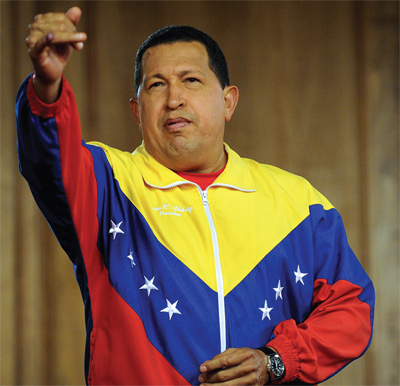
    SON of schoolteacher parents, Hugo Chavez was the man who became the President of Venezuela for a record four terms. His reforms had a major impact on the lives of the poor of his nation, although his socialistic ideals did nothing to endear him to the capitalists. His criticism of the US administration earned him the wrath of the most powerful nation in the world, and brought him acclaim from many in developing countries.

    It was a failed military coup that brought Chavez into the limelight, even though he got thrown into prison for his efforts. However, upon his release, he successfully donned a political avatar and challenged the political elite of the oil-rich nation. He won the elections and as President used oil as a weapon to build bridges abroad, especially with Cuba, the land of his mentor, Fidel Castro.

    His television and radio shows gave him a platform with the help of which he remained in touch with the common people. As often happens with strong leaders, Chavez leaves behind a mixed legacy. He has left his mark on Venezuelan society. He could not eradicate poverty as much as he wanted to, but he spent much on education and health sectors, thereby improving the lot of most sections of society. However, infrastructure needs more focus, as does industry. He also came in for criticism for trying to control the media and interfere in judicial processes.

    There is no denying the improvement in the overall lifestyle of common people during his tenure. Even as Venezuela mourns the death of its charismatic leader, the challenge before Nicolas Maduro, his handpicked successor, would be to tap into the undeniable public adoration of his processor while trying to improve the law and order situation and the rise in inflation which is affecting common people in Venezuela. Hugo Chavez has ensured that his presence will loom large over his people long after his demise

  • Ah! Chavez

    Ah! Chavez

    NAME: Hugo Rafael Chávez Frías
    OCCUPATION: World Leader
    BIRTH DATE: July 28, 1954
    DEATH DATE: March 05, 2013
    EDUCATION: Venezuelan Academy of Military Sciences

    CARACAS (TIP): Venezuela president Hugo Chavez died on 6th March, 2013. He was 58 and was suffering from cancer since a couple of months. With the death of Chavez, the future of Latin America is now uncertain.

    The news of death of Chavez was announced by Vicepresident Nicholas. He spoke to the television reporters from Caracas military hospital. Chavez was seen as a populist leader by the supporters. His critics called him neo fascist. He was an engaging speaker and charismatic personality.

    Hugo Chavez was admitted into the hospital on 18th February, 2013. It was decided to continue the chemotherapy treatment. Earlier, he was operated for cancer in Cuba. That was the fourth cancer surgery he underwent since June, 2011. Hugo Chavez was the president of Venezuela for 14 years.

    He became the symbol of Latin America. In December 2012, he went to Cuba and was out of public sight. There were many rumors about his health. A few photos were released in January which showed him on the bed in a hospital. He was looking at his two daughters who were beside him. Chavez was the favorite leader for poor. He spent the country’s revenue earned from oil on building houses for poor, health, food and education of them. Other Latin America leaders who followed Chavez have lost a good friend with the death of Chavez. Chavez’s body is kept in the military academy for people and other leaders to visit.
    Biography
    Born in Sabaneta, Venezuela, on July 28, 1954, Hugo Chávez attended the Venezuelan military academy and served as an army officer before participating in an effort to overthrow the government in 1992, for which he was sentenced to two years in prison.

    Chávez became president of Venezuela in 1999. Early into his presidency, he created a new constitution for the country, which included changing its name to the Bolivarian Republic of Venezuela. He later focused his efforts on gaining control of the state-run oil company, which stirred controversy and led to protests, strained relations with the United States and other nations, and Chávez briefly being removed from power. His actions included selling oil to Cuba and resisting efforts to stop narcotic trafficking in Columbia. In 2006, Chávez helped create the Bolivarian Alternative for the Americas, a socialist free-trade organization. He died on March 5, 2013, at age 58, following a long battle with cancer.
    Failed Coup Attempt
    Born Hugo Rafael Chávez Frías on July 28, 1954, in Sabaneta, Venezuela, Hugo Chávez was the son of schoolteachers. Before becoming known for his reform efforts and strong opinions as president of Venezuela (1999-2013), Chávez attended the Venezuelan Academy of Military Sciences, where he graduated in 1975 with a degree in military arts and science. He went on to serve as an officer in an army paratrooper unit.

    In 1992, Chávez, along with other disenchanted members of the military, attempted to overthrow the government of Carlos Andres Perez. The coup failed, and Chávez subsequently spent two years in prison before being pardoned. He then started the Movement of the Fifth Republic, a revolutionary political party. Chávez ran for president in 1998, campaigning against government corruption and promising economic reforms.
    Venezuelan President
    After taking office in 1999, Chávez set out to change the Venezuelan constitution, amending the powers of congress and the judicial system. As a part of the new constitution, the name of the country was changed to the Bolivarian Republic of Venezuela. As president, Chávez encountered challenges both at home and abroad.

    His efforts to tighten his hold on the state-run oil company in 2002 stirred up controversy and led to numerous protests, and he found himself removed from power briefly in April 2002 by military leaders. The protests continued after his return to power, leading to a referendum on whether Chávez should remain president. The referendum vote was held in August 2004, and a majority of voters decided to let Chávez complete his term in office.

    Hostility Towards the U.S.
    Chávez was known for being outspoken and dogmatic throughout his presidency, refusing to hold back any of his opinions or criticisms. He insulted oil executives, church officials and other world leaders, and was particularly hostile with the United States government, which, he believed, was responsible for the failed 2002 coup against him. Chávez also objected to the war in Iraq, stating his belief that the United States had abused its powers by initiating the military effort. He also called President George W. Bush an evil imperialist.

    Relations between the United States and Venezuela have been strained for some time. After taking office, Chávez sold oil to Cuba-a longtime adversary of the United States-and resisted U.S. plans to stop narcotics trafficking in nearby Colombia. He also helped guerrilla forces in neighboring countries. Additionally, during his presidency, Chávez threatened to stop supplying oil to the United States if there was another attempt to remove him from power. He did, however, donate heating oil to help the victims of Hurricane Katrina and Hurricane Rita, which destroyed numerous fuel-processing facilities.
    International Collaboration
    Regardless of the state of Venezuela’s relationship with the United States, while in office, Chávez leveraged his country’s oil resources to form connections with other nations, including China and Angola. In 2006, he helped create the Bolivarian Alternative for the Americas, a socialist free-trade organization joined by Fidel Castro, president of Cuba, and Evo Morales, president of Bolivia. Chávez was also an active member of the Non-Aligned Movement, a group of more than 100 countries, including Cuba, Iran and several African nations.
    Declining Health and Death
    Chávez discovered that he had cancer in June 2011, following a surgery to remove a pelvic abscess, and from 2011 to early 2012, he underwent three surgeries to remove cancerous tumors. Prior to his third surgery, in February 2012, Chávez acknowledged the severity of the operation as well as the possibility of not being able to continue his service as president, and subsequently named Venezuelan Vice President Nicolas Maduro as his successor.

    Due to his declinging health, Chávez was prevented from being inaugurated for a fourth term in January 2013. Following his years-long battle with cancer, Hugo Chávez died on March 6, 2013, at age 58, in Venezuela. He was survived by his wife, Maria Isabel Rodriguez, and five children: Rosines, María Gabriela, Rosa Virginia and Hugo Rafael.

  • Bin Laden’s son-in-law captured, charged in US with conspiring to kill Americans

    Bin Laden’s son-in-law captured, charged in US with conspiring to kill Americans

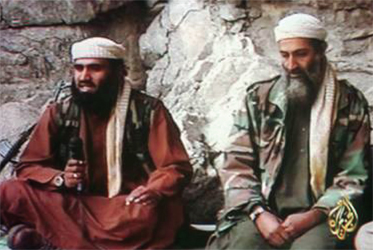
    NEW YORK (TIP): A top Al Qaeda spokesman who is the son-in-law of Osama bin Laden has been captured overseas and charged in the United States with conspiracy to kill Americans, according to an indictment unsealed Thursday, March 7. Sulaiman Abu Ghaith appeared alongside bin Laden in a 2001 video in which they took responsibility for the 9/11 attacks and warned of more, before he dropped out of sight for more than a decade before his arrest.

    According to the officials, who spoke on condition of anonymity, Turkish officials captured Abu Ghaith in the capital Ankara, where a court ruled he had entered the country illegally with a fake passport. The Turkish government then ostensibly deported Abu Ghaith to his birthplace Kuwait, but arranged for him to transit through Jordan where he was ultimately taken into custody by U.S. law enforcement, the officials said. Jordanian sources confirmed that Abu Ghaith was sent by Turkey via Jordan to Kuwait, and intercepted in Jordan and brought to the U.S. “I commend our CIA and FBI, our allies in Jordan, and President Obama for their capture of al-Qaeda spokesman Sulaiman Abu Ghaith,” said Rep. Peter King, R-N.Y., a member of the Homeland Security Committee, who first announced the news.

    “I trust he received a vigorous interrogation, and will face swift and certain justice,” added King, who is also chairman of the Sub-Committee on Counterterrorism and Intelligence. Prosecutors say from at least May 2001 to around 2002, Abu Ghaith served alongside bin Laden, appearing with him and his then-deputy Ayman al-Zawahiri, speaking on behalf of the terrorist organization and in support of its mission, and warning that attacks similar to those of September 11, 2001 would continue. The government says around May 2001, Abu Ghaith urged individuals at a guest house in Kandahar, Afghanistan, to swear allegiance to bin Laden. On the evening of Sept. 11, 2001, after the terrorist attacks on the United States, bin Laden summoned Abu Ghaith and asked for his assistance. He agreed to provide it.

    On the morning of Sept. 12, 2001, Abu Ghaith appeared with bin Laden and Zawahiri, and spoke on behalf of al-Qaeda, warning the United States and its allies that “[a] great army is gathering against you” and called upon “the nation of Islam” to do battle against “the Jews, the Christians and the Americans,” the court document says. Also, after the September 11, 2001 terrorist attacks, Abu Ghaith delivered a speech in which he addressed the then-U.S. Secretary of State and warned that “the storms shall not stop, especially the Airplanes Storm,” and advised Muslims, children, and opponents of the United States “not to board any aircraft and not to live in high rises.” Abu Ghaith arranged to be, and was, successfully smuggled from Afghanistan into Iran in 2002, where he spent most of the decade, U.S. officials said. Even as government officials applauded the arrest of Abu Ghaith, his transport to the United States stirred controversy among lawmakers who were apparently caught by surprise by the news. “We believe the administration’s decision here to bring this person to New York City, if that’s what’s happened, without letting Congress know is a very bad precedent to set,” said Sen. Lindsey Graham, R-S.C., who held a press conference with Sen. Kelly Ayotte, R-N.H. “And when we find somebody like this, this close to bin Laden and the senior al- Qaeda leadership, the last thing in the world we want to do, in my opinion, is put them in civilian court. This man should be in Guantanamo Bay,” Ayotte said. “So we’re putting the administration on notice,” said Graham. “We think that sneaking this guy into the country, clearly going around the intent of Congress when it comes to enemy combatants, will be challenged.” Earlier, House Intelligence Chair Mike Rogers, R-Mich., strongly criticized the administration for bringing Abu Ghaith to the United States. Rogers, a former FBI agent, said that Mirandizing a top al-Qaeda suspect and bringing him to the United States for trial creates a host of problems – instead of sending him to the facility at Guantanamo Bay, Cuba, which was built to handle high value prisoners. “Al-Qaeda leaders captured on the battlefield should not be brought to the United States to stand trial,” Rogers said. “We should treat enemy combatants like the enemy.

    The U.S. court system is not the appropriate venue.” The Obama administration has been trying to clear out Guantanamo and not bring any new prisoners there. Sen. Charles Schumer, D-N.Y., said it’s fine with him if Abu Ghaith is put on trial in New York because key state and city officials had been consulted in advance, unlike in the case of terror suspect Khalid Sheikh Mohammed. “Unlike with KSM, Kelly and others had been consulted ahead of time about this and they gave the green light to do it. As you know, (Police Commissioner) Ray Kelly, Mayor (Michael) Bloomberg and I opposed the trial of (Mohammed) in New York and we successfully made sure that didn’t happen,” said Schumer. “On issues like this, I defer to Commissioner Kelly, and I think the mayor does as well. And he thinks it’s OK to do it here, and I’ll go by that,” Schumer said.

  • As I See It : When The Us Fails, Others Suffer

    As I See It : When The Us Fails, Others Suffer

    Nuclear’ Iran is getting to be a bigger botherfor the US and the rest of the world thanmany had assumed in the earlier stages. It isfallacious to argue that Tehran will become a stablepartner in global peace by having a nuclear arsenal.Iran will either get ‘the’ bomb or get bombed. Whatthis means regionally is anyone’s guess since thereare too many variables surrounding these twopossibilities.

    One thing that is invariable though, isAmerica’s dogged adherence to icons and dogmaswhich ensures that only the extremes are possible.As the situation stands, no one, not even theRussians and the Chinese, doubt in private that Iranis accelerating its efforts to build a bomb. In public,though, there are two narratives – the first is of thecrazy suicidal mullahcracy so rabidly obsessed withkilling Jews that another holocaust is on the horizon.The other, less printed, argument is that a nuclearIran would actually bring a greater level of stabilityto what is a highly volatile region. Both of course arehyperbolic, but they dominate print and broadcastopinions in one variant or the other.

    The former needs no serious refutation. The latteris true to a certain extent in that it alleviates Iran’sacute conventional inferiority vis-à-vis its neighbors,but this is only half the story. As the experience ofPakistan and North Korea has shown, nuclearweapons provide revisionist states with a shield for awhole new paradigm of provocations like Mumbai26/11 or the sinking of the South Korean warship,The Cheonan. Nuclear weapons, therefore, provide acertain strategic stability in that it prevents all-outwar, but then introduce great levels of subconventionalinstability either by covert actions or bynon/sub/quasi state actors.

    The problem here is, the proponents of the theorythat a nuclear Iran will bring stability have veryfrequently lost credibility either because theymisdirect their fire, obfuscate the nuance or engagein hyperbole – all aimed at exculpating the UnitedStates. Take for example Kenneth Waltz arguing thatIran is attempting to balance the 40-year-old Israeliarsenal. This ignores the fact that the prime ‘sabrerattler’and major nuclear power in the Middle Eastis, in fact, the United States that has already regimechangedtwo of Iran’s neighbors – Afghanistan andIraq, has Iran completely encircled and has skewedthe conventional balance by reckless arms sales toIran’s arch rivals.

    To blame Israel for the situation isas incredulous as Iranian President MahmoudAhmadinejad holding the Elders of Zion responsiblefor Iran’s travails.The prime mover of a nuclear Iran was in fact theUnited States spearheaded by arch neo-cons DonaldRumsfeld, Dick Cheney and Paul Wolfowitz in the 70s -ostensibly to buttress Iran’s position vis-à-vis theUSSR. Though suitably couched in terms of energy,the deal would have ensured that Tehran receivedboth enriched uranium and plutonium – all butproviding for the existence of a latent arsenal. Iran’s’policies’ in those days, of course, were directed in thepursuit of US policy.

    William Blum, for example, inhis book, Killing Hope: US Military and CIAInterventions since World War II, lists howAfghanistan was deliberately destabilized by Iran todrag the Soviets in. Today Iran’s ‘mischief’ is directed- largely by default – against the Unites States’interests.It is of course quite natural for any country toadopt double standards; no country on earth has adouble standard-free foreign policy. But what isworrying about the United States is how theinformation and the intelligence loops form a closedcircuit that filters out any divergent opinion – wherethe Government actually starts believing its ownspin, and sadly the academia tends to buttress this.Take for example Saddam Hussein’s use of nerveagents in Halabja in the 80s.

    Till the invasion ofKuwait, most US experts were keen to emphasize that”doubts existed” over who had resorted to usingmustard gas and in some form or another and it wasimplied that Iran had done it. Similarly, in spite ofoverwhelming evidence that Georgia had disruptedthe status quo in South Ossetia and Abkhazia, mostUS ‘experts’ on television went out of their way toeither claim that the evidence wasn’t clear.This pattern of self-delusion continues to buttressUnited States rigidity on Iran and revolve around fivemain points.

    First, the United States actually seems tothink the sanctions on Iran are smart and shouldhumanitarian concerns arise, they will be suitablymodified.

    Second, that sanctions are still an effectivetool that will achieve results.

    Third, no geopoliticalconcessions need to be made to Iran – or as Americansclaim “the world has moved on from spheres ofinfluence driven politics”.

    Fourth, the only ‘carrots’Iran needs to be offered are economic – likemembership of the World Trade Organization at somedistant point in the future.

    And fifth, Mr.Ahmadinejad’s statement on wiping Israel off the mapis proof of Iran’s diabolical designs.

    As far as one can remember, images of horriblydeformed Iraqi children did nothing to change the UShard line on the causative sanctions for 13 long yearsafter which the Washington, DC solution was toinvade. That sanctions can be effective has beendiscounted time after time. Anybody who bothersstudying Myanmar and Libya knows that the former’scompliance had more to do with a series of complexissues and the latter’s compliance with Gaddafi’ssuccession plans. The notion that somehow Iran willsit pretty and accept the fall of its allies like SyrianPresident Bashar al-Assad, the crushing of the Shiasand its conventional inferiority is laughable at best.As for the world moving on from spheres of influenceone would like to see how the United States reacts to aChinese announcement of setting up a nuclearmissile base in Venezuela or Cuba.

    The naïveté in believing that a country that hasendured severe sanctions and embargos for the betterpart of the last 30 years will be tempted by WTOaccession boggles the mind. Finally, it is curious thatthe United States does not accept at face value theabsence of homosexuality in Iran given that PresidentAhmadinejad claims just this, but his pronouncementson wiping out Israel are of course gospel truth.Between rigid dogma and iconoclastic hyperbole, theonly thing that gets reinforced is the United States’sense of infallibility and the consequences foreverybody else – paying the price for America’s failures.

  • Ailing Chavez Misses Own Inauguration Bash

    Ailing Chavez Misses Own Inauguration Bash

    CARACAS (TIP): With cancer-stricken President Hugo Chavez hospitalized in Cuba, thousands of flag-waving Venezuelans in red shirts filled the streets of Caracas on Thursday to inaugurate his new term without him. Bands played anthems from street-side stages as people poured out of buses to make their way on foot toward the Miraflores presidential palace for a symbolic swearing-in of the people in place of Chavez, who is too sick to take the oath of office. “I love the president,” said Pedro Brito, a 60-year-old law professor, in a red T-shirt with slogan “I am Chavez.” “He has done a lot for poor people, the ones who had no place to sleep or food to eat. He has shown us how to love the country.”

    Vice President Nicolas Maduro hosted a meeting of leftist Latin America presidents and other foreign representatives who have come to show support for the Chavez government in a period of deep uncertainty. The supreme court cleared the ailing Chavez to indefinitely postpone his swearing-in and said his existing administration could remain in office until he is well enough to take the oath. It was the last legal hurdle to a government plan for resolving the vacuum created by Chavez’s illness that met fierce resistance from the opposition, which had argued it was unconstitutional.

  • India’s Olympic Dreams Quashed

    India’s Olympic Dreams Quashed

    Indian sports received a huge setback and a major embarrassment when the International Olympic Association decided to suspend the Indian Olympic Association due to Government interference. This decision was on the cards after IOA decided to go ahead with the elections under the government`s Sports Code, defying the IOC`s order to hold the polls under the Olympic Charter. The suspension means that the IOA will not receive IOC funding and its officials will be banned from attending Olympic meetings and events. India`s athletes will also be barred from competing in Olympic events under their national flag, but they can participate under the IOC banner. Sports Minister Jitendra Singh said that The Indian Olympic Association is to blame for the current crisis as the ministry had told the IOA many times to amend its constitution and be compliant with the international rules.

    INDIA AT LONDON OLYMPICS:
    LOWS Despite the fact that India put up a much improved performance in the London Olympics there were also a few major disappointments.
    HOCKEY DEBACLE
    The biggest disappointment came in hockey, a sport that has brought glories to the country in the quadrennial extravaganza like no other event. Led by Bharat Chettri and under the guidance of coach Michael Nobbs, India succumbed to one defeat after another, losing all of their matches at the Olympics. They finished 12th – last among the participating teams, which also happened to be their worst ever performance at the event.

    ARCHERS MISS THE MARK
    On the hallowed turf of Lord’s, Indian archers were expected to script history. The presence of world No. 1 archer Deepika Kumari among the contingent was reason enough to harbour hopes of a rich medal haul. Despite the hype, in stark contrast, both the men and women’s team disappointed us. The story was repeated in the individual events too as they returned empty handed with the biggest casualty being 18-year-old Deepika. She was stunned by Amy Oliver 2-6 in the opening round. She was the last of the six archers to bow out, and with her ended India’s unsuccessful campaign in archery.

    BINDRA FAILS TO DEFEND HIS TITLE
    To say a medal was expected from Abhinav Bindra would be an understatement. In fact, he was the favourite to don the yellow metal again in the 10m Air Rifle event after his historic gold medal in Beijing. As luck would have it, Bindra failed to even qualify for the finals. His score of 594 out of 600 wasn’t enough to merit him a final SAINA NEHWAL Ace shuttler Saina Nehwal added another feather to her cap by winning a bronze medal in the women’s singles category to create history. Nehwal didn’t face any stiff competition on her way to the semi-final. It was there where she met the No. 1 seed Yihan Wang of China. She lost the match 13-21, 13-21. However, she still had a chance to fight for the bronze with Xin Wang of China. Luck was on her side as her opponent withdrew from the contest owing to a knee injury. Saina was trailing by a game and 0-1 in the contest but the injury meant that she would bring home the first medal for India in Olympic badminton.

    MARY KOM
    Women boxing made its debut in the 2012 London Olympics and Indian hopes were resting on MC Mary Kom to bring home a medal. The 23-year-old was a favourite to win gold on the back of her five world championship titles. The Manipuri began her quest in style defeating Karolina Michalczuk of Poland 14-19 and then outclassed Maroua Rahali of Tunisia 15-6 to seal a medal. She made it to the semifinal where she lost to the eventual gold medallist Nicola Adams. However, her semi-final appearance meant that she had already clinched a historic bronze medal. SUSHIL KUMAR AND YOGESHWAR DUTT Within 45 minutes, Yogeshwar Dutt fought three bouts that won him a bronze medal in the Men`s wrestling 60kg freestyle category. The 30-year-old wrestler from Haryana was making his third Olympic appearance and had lost his second round bout to Besik Kudukhov of Russia. He then defeated Franklin, Masoud and Jong Myong Ri to clinch the bronze. On the final day of the Games, Sushil Kumar created history by becoming the first ever Indian to win two individual Olympic medals. He had won a bronze medal in the 2008 Beijing Games and he bettered it by clinching a silver after losing the final to Tatsuhiro Yonemitsu of Japan. berth and he finished a dismal 16th out of the 47 competitors in the qualifying round.

    BOXERS KNOCKED OUT
    The Indian boxing team failed to win any medal save for Mary Kom who secured a historic bronze in the women’s category. Several decisions were marred by controversy with the highlight being Vikas Krishan’s bout. Krishan had won his match against Errol Spence of USA; the referee later overturned the decision to announce the latter as the winner. The poster boy of Indian boxing, Vijender Kumar’s run came to an end in the quarterfinal as he too returned home without a medal.

    INDIA AT OLYMPICS: HIGHS
    The Indian Olympic contingent returned home with its best ever performance at the quadrennial event with six medals. GAGAN NARANG Gagan Narang opened the medal account for India with a bronze medal in the 10m air rifle event on the second day. The ace marksman was one of the contenders for the medal and he did not disappoint his fans. He shot 103.1 in the final to take his tally to 701.1 ahead of Chinese rival Wang Tao finishing third.

    VIJAY KUMAR
    Army man Vijay Kumar made his country proud after clinching a silver medal in the 25m Rapid Fire Pistol event at the London Olympics. The unknown shooter from Himachal Pradesh shot 32/40 finishing ahead of Chinese rival Feng Ding while Leuris Pupo from Cuba took the gold with 34/40. His was the second medal for India at the event.

  • Venezuela’s Chavez Still Has ‘Severe’ Respiratory Problem

    Venezuela’s Chavez Still Has ‘Severe’ Respiratory Problem

    CARACAS (TIP) Venezuelan President Hugo Chavez is still suffering a “severe” respiratory infection that has hindered his breathing as he struggles to recover from cancer surgery in Cuba, the government said on January 3 .

    The 58-year-old socialist leader has not been seen in public nor heard from in more than three weeks. Officials say he is in delicate condition after his fourth operation in just 18 months for an undisclosed form of cancer in his pelvic area. “Comandante Chavez has faced complications as a result of a severe lung infection,” Information Minister Ernesto Villegas said in the latest official update on the president’s condition. “This infection has caused a breathing insufficiency that requires Comandante Chavez to comply strictly with medical treatment,” the communique added, giving no further details. Vice President Nicolas Maduro had earlier returned to Venezuela on Thursday after visiting Chavez in hospital as rumors swirled that the president could be close to death.

    Flanked by senior government figures including Diosdado Cabello, the head of the National Assembly, Maduro toured a coffee production plant in Caracas – the type of visit that the president made frequently before he fell ill. “He is conscious of the battle that he’s in, and has the same fighting spirit as always, with the same strength and energy as always, with his confidence and security,” Maduro said. “We’re going to be alongside him with the same strength and the same energy.” Maduro said Cabello, Oil Minister Rafael Ramirez and Chavez’s elder brother Adan, among others, had all been with the president in the Havana hospital. Venezuelan bonds rallied to five-year highs earlier on Thursday on rumors that Chavez’s health had taken a turn for the worse.

    Foreign investors generally hope for a more business-friendly government in Venezuela, and its assets have rallied in recent months on news of his illness. In scenes that recalled Chavez’s hourslong televised visits to building sites, hospitals and oil refineries, Maduro told workers at the nationalized Fama de America factory that there was no “transition” taking place in the country.

    “The only transition in Venezuela is the transition to socialism,” he said in comments carried live by state television. “It began six years ago, ordered by Comandante Hugo Chavez as chief and president, elected, re-elected and ratified, much as it pains the bourgeois hucksters and the right, who have done so much damage to our fatherland.” Chavez’s abrupt exit from the political scene would be a huge shock for the South American OPEC nation. His oil-financed socialism has made him a hero to the poor majority but critics call him a dictator. His condition is being watched closely by Latin American allies that have benefited from his help, as well as investors attracted by Venezuela’s lucrative and widely traded debt.

    ‘MAKE NO MISTAKE’
    Chavez is still set to be sworn in on January 10, as spelled out in the constitution.

    If he were to die or had to step aside, new elections would be held within 30 days, with Maduro running as the ruling Socialist Party (PSUV) candidate. While the constitution gives January 10 as the start of a new presidential term, it does not explicitly state what happens if a president-elect cannot take office on that date. Top PSUV officials have suggested that Chavez’s inauguration could be postponed – while the opposition says any delay would be just the latest sign the former soldier is not fit to govern.

    Cabello said the “Chavismo” movement was in pain but remained resolute, and he issued a warning to the opposition: “Make no mistake about these people or this revolution. It is going to cost you very, but very, dearly,” he said. On Saturday, Cabello will likely be reelected as head of the Chavista-dominated National Assembly, a key post that could see him assume Chavez’s role temporarily while new elections are called should the president have to step down.

    In the past Cabello has been considered as a rival of Maduro, but the pair have been at pains to deny that. Their appearance side-by-side at the coffee factory on Thursday looked to be the latest effort to project a unified front. Last year, Chavez staged what appeared to be remarkable comeback from the disease to win re-election to a new six-year term in October despite being weakened by radiation therapy. But he returned to Cuba for more treatment within weeks of his win.

    Officials have said he suffered unexpected bleeding and then a respiratory infection after a six-hour operation on December 11. That respiratory infection caused further complications, they have said, without giving more details.

  • Recovering After Operation, Chavez May Miss Swearing-In

    Recovering After Operation, Chavez May Miss Swearing-In

    CARACAS, VENEZUELA (TIP): Somber confidants of President Hugo Chavez say he is going through a difficult recovery after cancer surgery in Cuba, and one close ally is warning Venezuelans that their leader may not make it back for his swearing-in next month. Information minister Ernesto Villegas said on Dec 12 that Chavez was in “stable condition” and was with close relatives in Havana. Reading a statement, he said the government invites people to “accompany President Chavez in this new test with their prayers” . Villegas expressed hope about the president returning home for his Janurary 10 swearing-in for a new sixyear term, but said in a written message on a government website that if Chavez doesn’t make it, “our people should be prepared to understand it” .

    He said it would be irresponsible to hide news about the “delicateness of the current moment and the days to come.” He asked Venezuelans to see Chavez’s condition as “when we have a sick father, in a delicate situation after four surgeries in a year and a half.” Moving to prepare the public for the possibility of more bad news, Vice President Nicolas Maduro looked grim when he acknowledged that Chavez faced a “complex and hard” process after his latest surgery. At the same time, officials sought to show a united front amid the growing worries about Chavez’s health and Venezuela’s future. Key leaders of Chavez’s party and military officers appeared together on television as Maduro gave updates on Chavez’s condition.