Tag: David Cameron

  • UK records a fall in non-EU migrant arrivals

    UK records a fall in non-EU migrant arrivals

    LONDON (TIP): New figures showing an annual rise in net migration to the UK have provoked fierce debate but many myths persist about the effects of immigration.

    Here are some of the most common misconceptions:

    MYTH 1: Migration is higher than ever before

    Annual net migration actually dipped in the year till September’15 which stands at 3,36,000 as compared to the record-setting figures on the 12 months to June’15 which was 3,23,000.

    Although the latest number is still a rise from 2014, only 2,000 more people immigrated to the UK in the latest period analysed.

    “The latest increase in net migration was not statistically significant compared with 2014,” a spokesperson for the Office for National Statistics (ONS) said.

    “This net increase was the result of a decrease in emigration…and immigration being at a similar level to the previous year.”

    Net migration from the EU, 1,72,000, saw a slight increase on 2014 and the figure for non-EU citizens was also slightly up at 1,91,000.

    In real terms, EU immigration was up from 2,46,000 to 2,57,000, while non-EU immigration was down from 289,000 to 273,000.

    The ONS said the changes were “not statistically significant” for either group, although a 15,000 jump in immigration from countries like Romania and Bulgaria, was notable.

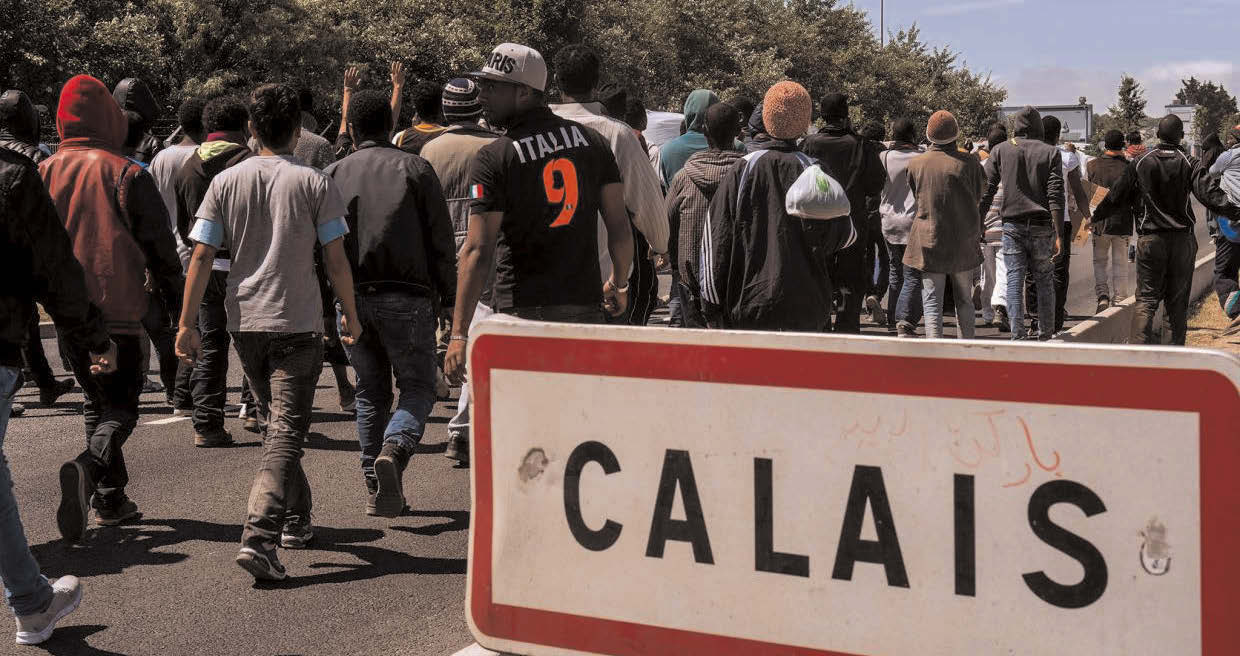
    MYTH 2: The refugee crisis is pushing immigration out of control

    As stated above, the main cause of the rise in net migration is not immigration itself but a drop in emigration.

    Asylum applications also rose for the fifth successive year in the UK according to the ONS, but the increase is negligible in light of the arrival of more than 1 million refugees in Europe.

    The number of applications lodged in the year to September 38,878, an annual increase of 20 per cent, the figure is nowhere near the UK’s 2002 peak of 1,03,000.

    Germany, by contrast, had taken more than 3,53,000 applications in the year to October, while Hungary was on 2,04,000 and Sweden on 94,000.

    The rate of asylum seekers per million people in the UK was 185, lower than Ireland, Iceland and Switzerland.

    Most refugees arriving in Britain last year came from Eritrea, followed by Iran, Pakistan, Sudan and Syria.

    An additional 1,200 Syrians granted humanitarian protection under the Government’s resettlement scheme, which was introduced after David Cameron refused to sign up to EU quotas, were not counted in the figure.

    Rates for granting applications varied widely across different nationals, with almost 90 per cent of Syrians being accepted as refugees compared to just a fifth of Pakistani nationals.

    One of the most frequently raised allegations about immigrants entering the UK is that they aim to exploit the national welfare system, despite numerous studies showing European migrants pay more in taxes than they receive in benefits.

    David Cameron once called public concern about benefits tourism “widespread and understandable” but research has not found a statistical foundation for the fears.

    Recent immigrants have made a net contribution of £20 billion to the UK over the last ten years, according to a UCL study, and foreigners are barred from several types of benefits without having permanent residency in the UK, unlike those on work visas, students and asylum seekers don’t qualify.

    In 2013, a spokesperson for the European Employment Commissioner said the British Government had “completely failed to come up with any specific evidence” to show that its welfare system was being abused and that EU nationals pay more in tax and other contributions than they receive in benefits.

    In that same year, a European Commission report showed that unemployed EU migrants made up less than 5 per cent of migrant claimants across the bloc and that fewer than 38,000 were claiming Jobseeker’s Allowance.

    A leaked Home Office document later admitted that the Government keeps no figures on how many EU nationals claim welfare payments.

    A study by University College London estimated that migrants coming to the UK since 2000 have been 43 per cent less likely to claim benefits or tax credits compared to the British-born workforce. “Immigrants, especially in recent years, tend to be younger and better educated than the UK-born and less likely to be unemployed,” the Centre for Economic Performance at LSE concluded in a separate report.

    MYTH 3: Immigrants are taking our jobs

    The latest ONS statistics show that employment rates for arriving migrants are high.

    Of the 2,90,000 people who immigrated for work in the year to September 2015, almost 60 per cent had already secured a job and the share rose to two thirds for Romanians and Bulgarians.

    Around 1,65,000 EU citizens came to the UK for work-related reasons, with 96,000 arriving to a “definite job” and 69,000 looking for work.

    Around two million non-British EU nationals are currently working in the UK, as well as 1.2 million non-EU nationals and 28.3 million Brits, according to the latest statistics from the Labour Force Survey.

    Visas granted for skilled work and other working visas were on the rise but those for study fell slightly following policy restrictions brought in by the Conservative government.

    But the figures do not necessarily mean new arrivals are “taking British jobs”, experts have cautioned.

    In its 2015 General Election briefing, the Centre for Economic Performance at the London School of Economics observed: “There is still no evidence of an overall negative impact of immigration on jobs, wages, housing or the crowding out of public services.

    Its research found that immigrants tend to be better educated and younger than their UK-born counterparts, while their share of the market for new jobs has remained “broadly the same”.

    Jonathan Portes, the Director of the National Institute of Economic and Social Research, suggested employment fears may stem from the fact that areas with high immigration, such as London, also tend to be where the job market moves more quickly

    “It’s fairly obvious that wages are generally higher and jobs easier to come by in areas of high immigration like London, while many low migration areas have relatively depressed labour markets,” he added.

    “It’strue that, if an immigrant takes a job, then a British worker can’t take that job, but it doesn’t meant he or she won’t find another one that may have been created, directly or indirectly, as a result of immigration.”

    “Any negative impacts on wages of less skilled groups are small. One of the largest impacts of immigration seems to be on public perceptions.”

    MYTH 4: Migration causes crime

    Anti-immigration groups have used fears of criminality as a key focus, particularly following the sex attacks in Cologne and reports of increased crime rates in areas of Europe being directly affected by the refugee crisis.

    A report by LSE in 2013 found that crime actually fell significantly in areas that had experienced mass immigration from eastern Europe, with rates of burglary, vandalism and car theft down since 2004.

    The research concluded that there was “no causal impact of immigration on crime; contrary to the ‘immigration causes crime’ populist view expressed in some media and political debate”.

    Brian Bell, a LSE research fellow, told the Guardian: “The view that foreigners commit more crime is not true. The truth is that immigrants are just like natives: if they have a good job and a good income they don’t commit crime.”

    A 2008 report for the Association of Chief Police Officers found that national crime rates have continued to fall despite rising net migration over a number of years.

    The research found that offending rates among Polish, Romanian and Bulgarian communities were in line with the general population.

    MYTH 5: It puts a strain on public services, hospitals and schools

    UCL’s Centre for Research and Analysis of Migration at University College London found that European immigrants to the UK pay more in taxes than they receive in benefits, effectively subsiding public services.

  • Britain to hold EU referendum on June 23: Cameron

    Britain to hold EU referendum on June 23: Cameron

    LONDON: British Prime Minister David Cameron on Friday set June 23 as the date for a historic referendum on Britain’s EU membership, a day after securing a summit deal for European Union reforms in Brussels.

    Speaking outside his 10 Downing Street residence after a two-hour cabinet meeting, Cameron said the vote would be “one of the biggest decisions this country will face in our lifetimes”.

    He argued that Britain would be “safer, stronger and better off” in the EU and said the concessions he negotiated with other EU leaders on Friday gave the country “the best of both worlds”.

    “The choice goes to the kind of country we want to be,” he said, warning that proponents of a British exit from the EU were offering “a risk at a time of uncertainty, a leap in the dark”.

    “Leaving Europe would threaten our economic and our national security,” he said.

    The date of the referendum still has to be formalised by parliament, where Cameron will deliver a speech on Monday.

  • British Parliament is Sovereign over European Union Laws: David Cameron

    British Parliament is Sovereign over European Union Laws: David Cameron

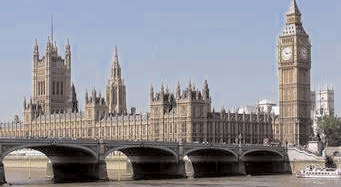
    LONDON (TIP): Prime Minister David Cameron said on February 4 he would seek to assert the sovereignty of the British parliament over European Union laws as he concludes his renegotiation of ties with the bloc.

    Cameron is trying to finalise the details of a set of reforms he hopes will be backed by other EU leaders at a summit on Feb 18-19, though Britain’s largely eurosceptic press and some lawmakers in his ruling Conservative party say he has sought far too little.

    It is unclear how such a declaration of sovereignty would work and how it would be received in the EU, though British media said it could bring London Mayor Boris Johnson, a potential successor to Cameron, behind the ‘in’ campaign.

    Replying to a question from Johnson, who has refused to say whether he will campaign for Britain to remain in or to leave the EU in a planned referendum, Cameron said: “Asserting the sovereignty of this House is something that we did by introducing the European Union Act 2011.”

    “I am keen to do even more to put it beyond doubt that this House of Commons (the lower house of parliament) is sovereign. We will look to do that at the same time as concluding the negotiations.”

    In an interview with the BBC, Cameron refused to answer directly whether ministers were working on a law that would assert the sovereignty of the British parliament and be published alongside a possible EU deal.

    “We already have asserted that parliament is sovereign,” Cameron said.

    (Reuters)

  • PRIME MINISTER MODI’S VISITS ABROAD

    PRIME MINISTER MODI’S VISITS ABROAD

    One of the most  talked about subjects in India has been the foreign visits of India’s Prime Minister Narendra Modi  who  visited  35 odd countries in  about two years. Not that other Prime Ministers  did not go on foreign tours. What  was remarkable in the case of Modi has been the quick succession in which he went abroad, as if at the drop of the hat.  Also,  public reception to him by the Indian community abroad  was a distinguishing feature of his visits abroad.

    Russia – December

    Prime Minister Narendra Modi was on a two-day visit to Russia on Dec 23 for annual summit talks with President Vladimir Putin. India was looking at deeper engagement in Russia’s oil and coal sector besides stepping up cooperation in some other areas like diamond trade and agro-business. India is also likely to push for a Free Trade Agreement with the Eurasian Economic Zone and is sharing details of a study it conducted in this regard.

    Singapore – November

    PM Modi addressed the Indian diaspora there on a two-day visit to Singapore. He said the government is laying thrust in generating power from clean and renewable sources like solar, nuclear, wind and biomass with the target of 175 gigawatts, and in turn, reduce dependence on coal.

    Malaysia – November

    PM Modi visited Malaysia on a two-day visit and discussed with his counterpart Nazib Razak on ways to ramp up bilateral cooperation in a range of areas including defence and security and take the strategic ties to a new level. Combating terrorism was also one of the key issues. Modi also visited Ramakrishna mission and also inaugurated a statue of Swami Vivekananda.

    United Kingdom – November

    PM Modi struck 27 deals in 3 days during his UK visit. From technology transfer in defence to going after the Lashkar-e-Toiba, from cyber security to tackling online child pornography – a new joint statement on defence and security has emerged as a major takeaway from the meetings between Prime Minister Narendra Modi and his British counterpart David Cameron.

    United States – September

    PM addressed a summit on the agenda of Sustainable Developmental Goals at UN. He also attended a summit on peacekeeping forces hosted by Barack Obama. In San Jose, Modi attended a digital dinner with who’s who of the tech world. he also joined in for a Townhall Q&A hosted by Facebook CEO Mark Zuckerberg.

    PM Modi at Facebook Headquarters with its CEO Mark Zuckerberg.
    PM Modi at Facebook Headquarters with its CEO Mark Zuckerberg.

    UAE – August

    Prime Minister Narendra Modi’s visit to the United Arab Emirates has scored big on three fronts – terror, trade and outreach to the blue-collared Indian expatriate community. While substance was evident in these three counts, his symbolic outreach to Muslims – in his maiden visit to an Islamic country – by visiting the Sheikh Zayed mosque and praising the inherent tenets of Islam was music to many.

    Central Asia – July

    Modi was the first Indian PM to visit the five Central Asian nations in one trip. The focus during the trip will be on enhancing trade, cooperation in energy and security. PM visited Uzbekistan, Kazakhstan, Tajikistan, Russia and Turkmenistan.

    Russia – July

    Prime Minister Narendra Modi travelled to Russia to participate in the 7th BRICS summit and SCO summit in Ufa in a bid to give an impetus to strategic, economic and energy ties.

    Prime Minister Narendra Modi with Russian President Vladimir Putin
    Prime Minister Narendra Modi with Russian President Vladimir Putin.

    Bangladesh – June

    As India extended a $2 billion Line of Credit (LoC) to Bangladesh to develop its infrastructure and signed 22 agreements, Prime Minister Narendra Modi almost took a leaf out of former PM Manmohan Singh’s book to address Dhaka’s concerns on Teesta and trade imbalance. On the issue of trade imbalance, Modi said he was “conscious” of the huge trade imbalance and will do everything India can to bridge the deficit.

    China – May

    Prime Minister Narendra Modi asked China to take advantage of the “winds of change” in India with a much more transparent, responsive and stable regulatory regime even as leading firms from the two sides signed deals worth USD 22 billion.

    Modi at TerracottaWarriorsMuseum in Xi’an, the hometown of Chinese President Xi Jinping.
    Modi at TerracottaWarriorsMuseum in Xi’an, the hometown of Chinese President Xi Jinping.

    Mongolia – May

    India announced a credit line of USD 1 billion to Mongolia to expand its economic capacity and infrastructure, as they decided to upgrade their relationship from Comprehensive to “Strategic Partnership”. Narendra Modi, the first Indian Prime Minister to visit Mongolia, held wide-ranging talks with his counterpart Chimed Saikhanbileg here following which the two sides inked 14 agreements covering defence, cyber security, agriculture, renewable energy and health sector.

    South Korea – May

    India and South Korea seven agreements, including on avoidance of double taxation and formalising consultations between National Security Councils of the two nations, to boost bilateral ties.

    France – April

    India asked France to supply 36 Rafale fighter jets in “fly-away” condition “as quickly as possible”. This is under a government-to-government deal, unlike the tender currently being negotiated by the Ministry of Defence with Dassault, Rafale’s manufacturer.

    Germany – April

    PM Modi and Angela Merkel spoke in favour of a free trade agreement between the European Union and India. PM Modi said that this was important for the expansion of India as a manufacturing hub. The joint statement by both countries recognized the establishment of a working group on urban development. The two countries said stronger educational exchanges will be encouraged along with collaborations between universities.

    Canada – April

    Modi became the first PM to arrive in Canada in a stand-alone bilateral visit in 42 years.

    Both countries signed an agreement for long-term supply of Uranium to India. Harper and Modi agreed to increase collaboration in the fields of energy efficiency, oil and gas development and renewable energy.

    Seychelles, Mauritius, Sri Lanka – March

    PM Modi’s visit to the three island countries was against the backdrop of China’s increasing focus on the Indian Ocean region. Modi renewed India’s commitment to the ocean economies where India envisages its role as a net security provider. Modi’s visit to Sri Lanka was the first standalone Prime Ministerial visit to the island nation since 1987.

  • A REVIEW OF 2015

    A REVIEW OF 2015

    2015 has been another phenomenal year. Always threatened by man and Nature alike, world has managed to survive. There have been natural calamities which brought huge suffering to earthly inhabitants. Tsunamis, floods, earthquakes, outbreak of diseases- all made human life miserable. But more than that , it is the human wantonness that has ravaged parts of the human world. The Middle East and West Asia are the regions that have been on the boil for decades now, with no sign of solution to the vexed Palestinian problem. Then there are localized conflicts between nations which threatened to blow up in to bigger conflagrations but for the wise counsel of other nations. Add to it the emergence of a
    militant ISIS. The emergence of all kinds of terrorist groups all over Asia and Africa have deeply scarred the human world . A Charlie Hebdo and a terrorist attack in France; a massacre by radicalized Muslims in San Bernardino in USA; series of terrorist strikes in India indicate the reach and power of terrorists. Obviously, the phenomenon has worried the United Nations and its members.

    JanuaryJan. 1: Thirty five people die in a stampede during a New Year celebration in Shanghai’s historic waterfront area, the worst disaster to hit one of China’s showcase cities in years.
    Jan. 2– The Italian air force rescues hundreds of migrants stranded on a ship apparently abandoned in rough seas by smugglers in the Mediterranean.
    Jan. 3– Boko Haram extremists kidnap about 40 boys and young men and kill scores of soldiers in a bold attack on a multinational military base in northern Nigeria.
    Jan. 4– Pope Francis names 156 new cardinals, selecting them from 14 countries, including far-flung corners of the world, to reflect the diversity of the Roman Catholic church and its growth in places like Asia and Africa.
    Jan. 5– The price of oil plunges again and falls below $50 a barrel for the first time since April 2009 as evidence mounts that the world will be oversupplied with the commodity this year.
    Jan 6– A suicide blast targeting Iraqi security forces and subsequent clashes with Islamic State extremists killed at least 23 troops and pro-government Sunni forces in the country’s embattled western province of Anbar.

    Police inspect damage after a collision between police cars at the scene after a shooting at the Paris offices of Charlie Hebdo, a satirical newspaper, January 7, 2015.
    Police inspect damage after a collision between police cars at the scene after a shooting at the Paris offices of Charlie Hebdo, a satirical newspaper, January 7, 2015.

    Jan 7-9: FRANCE – Seventeen people are slaughtered in attacks in Paris on the satirical magazine Charlie Hebdo and a Jewish supermarket two days later.

    Jan 26: SYRIA – The Islamic State (ISIS) jihadist group is driven out of the Syrian town of Kobane on the Turkish border after more than 4 months of fighting by Kurdish forces backed by US-coalition airstrikes.


    February
    Feb 12: UKRAINE – The Ukraine government and rebels agree to a “Minsk II” peace roadmap, backed by France, Germany and Russia, but the truce remains fragile. A second truce is signed on September 1. Clashes intensify in early December.

    March
    Mar 13: VANUATU – Cyclone Pam hits Vanuatu. The cyclone, the most intense in the southern hemisphere for the year, leaves 15-16 people dead.
    Mar 17: ISRAEL/PALESTINIAN TERRITORIES – Israeli Prime Minister Benjamin Netanyahu’s Likud wins legislative elections. Settlement-building continues and a stalemate in the peace process prompts renewed violence with stone throwing, stabbings, car-ramming attacks and clashes with security forces.
    Mar 18: TUNISIA – An attack on the Bardo Museum in Tunis kills 21 foreign tourists and a Tunisian policeman. On June 26 an attack at a holiday resort kills 38 foreign tourists, most of them British, while on November 24 the bombing of a presidential guard bus kills at least 12 people. All the attacks are claimed by ISIS.
    Mar 23: SINGAPORE – Lee Kuan Yew, Singapore’s founding leader who led the country to prosperity, dies after a long ilness. Lee, one of post-colonial Asia’s most towering political figures, was 91.
    Mar 24: FRANCE – An Airbus owned by German budget airliner Germanwings crashes in the French Alps with all 150 people on board declared dead. Investigators says co-pilot Andreas Lubitz deliberately crashed the plane.
    Mar 26: YEMEN – Jets from a Saudi-led coalition bomb Huthi Shiite rebels in Yemen in support of President Abedrabbo Mansour Hadi. The conflict has since left some 6,000 dead.

    April Apr 2: KENYA/SOMALIA – At least 148 people, mostly students, are massacred when Somalia’s Shebab Islamist group attacks Kenya’s Garissa university.

    A 7.8 magnitude quake killed around 8,900 people and destroyed about half a million homes in Nepal.
    A 7.8 magnitude quake killed around 8,900 people and destroyed about half a million homes in Nepal.

    Apr 25: NEPAL – A 7.8 magnitude quake kills around 8,900 people and destroys about half a million homes. A massive aftershock with a magnitude of 7.3 follows in May, killing dozens more.

    Apr 26: BURUNDI – Deadly protests break out against President Pierre Nkurunziza’s ultimately successful bid for a third term. Hundreds of people are killed in the following months.

    MayMay 7: UNITED KINGDOM – Prime Minister David Cameron’s Conservatives win a general election victory that opens the door to a national referendum on EU membership.
    May 23: IRELAND: Ireland becomes the first country in the world to legalize same-sex marriage through popular vote.
    May 29: NIGERIA – Muhammadu Buhari, elected president in March, vows to wage an intense offensive against Boko Haram Islamists, linked to ISIS. The insurgents murder more than 1,500 people since then, however, also carrying out attacks in the neighbouring countries of Cameroon, Chad and Niger.

    JuneJun 1: CHINA – A Chinese cruise ship capsizes on the Yangtze river in central China, killing 442 of the 454 people on board.

    Jun 17: UNITED STATES – A white gunman kills 9 black people at a historic black church in Charleston, South Carolina. The killings follow a series of incidents of police violence against blacks, reviving racial tensions in the United States.
    Jun 26: UNITED STATES – The US Supreme Court rules that gay marriage is a right in all US states.
    Jun 28: INDONESIA – The 2015 southeast Asian haze crisis begins, with the first reported incident in Indonesia’s Riau province. The crisis would persist for months, with the haze spreading across the region.

    JulyJul 1: UNITED STATES/CUBA – The US and Cuba agree a historic deal to re-establish full diplomatic relations, severed 54 years earlier during the Cold War.
    Jul 13: GREECE – After protracted negotiations, Greek Prime Minister Alexis Tsipras accepts a 3-year, 86-billion-euro ($93 billion) EU bailout that saves it from crashing out of the eurozone. On September 20 his ruling radical left party Syriza wins new legislative elections.
    Jul 14: IRAN – Iran and major powers reach an historic deal aimed at ensuring Iran does not obtain the nuclear bomb after 18 straight days of talks.
    Jul 14: SPACE – Pluto is seen up close for the first time, thanks to a close flyby of the New Horizons spacecraft.

    AugustAug 12: CHINA – Massive explosions at a chemical storage facility in Tianjin, one of China’s biggest cities, kill at least 165 people.

    Aug 17: THAILAND – A bomb blast at the popular Erawan shrine in the Thai capital Bangkok, ripping through a crowd of worshippers at the Hindu shrine close to 5-star hotels and upscale shopping malls. Twenty people, mostly foreigners, were killed.

    SeptemberSep 2: EUROPE –

    The picture of a 3-year-old Syrian boy's body, washed ashore on a Turkish beach, focuses attention on Europe's worst migration crisis since the end of World War II.
    The picture of a 3-year-old Syrian boy’s body, washed ashore on a Turkish beach, focuses attention on Europe’s worst migration crisis since the end of World War II.

    The picture of a 3-year-old Syrian boy’s body, washed ashore on a Turkish beach, focuses attention on Europe’s worst migration crisis since the end of World War II.

    Sep 3: GUATEMALA – Guatemalan President Otto Perez resigns after Congress strips him of immunity over corruption allegations and a warrant is issued for his arrest.
    Sep 18: UNITED STATES/GERMANY – Auto giant Volkswagen is hit by its biggest scandal ever owing to revelations that it cheated on US pollution tests.
    Sep 19-22: CUBA – Pope Francis makes a historic visit before going on to the United States. The pontiff also travelled to Kenya, Uganda and the Central African Republic from November 25-30.
    Sep 24: SAUDI ARABIA – A stampede at the Hajj pilgrimage leaves 2,236 dead at Mina, near Mecca.
    Sep 28: SPACE – Scientists announce proof of presence of liquid water on Mars.
    Sep 30: SYRIA – Russia launches air strikes on Syria, saying its intervention is against the ISIS, while Turkey and its allies say it is targeting moderate opponents of President Bashar al-Assad’s regime.

    OctoberOct 3: AFGHANISTAN – A US raid on a hospital in the northern city of Kunduz kills 42 during a Taliban offensive on the city. Washington says it is keeping thousands of soldiers in the country beyond 2016 as Afghan forces can not stand up to the Taliban on their own.
    Oct 19: CANADA – Liberal leader Justin Trudeau, son of a popular former prime minister, wins a general election.
    Oct 23: MEXICO – Hurricane Patricia, the most intense hurricane ever recorded in the Western Hemisphere, hits Mexico’s Pacific coast.
    Oct 29: CHINA – Beijing announces the end of its hugely controversial one-child policy.
    Oct 31: EGYPT/RUSSIA – A Russian passenger jet is downed on its way from Egypt’s Sharm el-Sheikh resort to Saint Petersburg, killing all 224 on board. ISIS claims responsibility for what Russia says was a bombing; Egypt says it has no evidence there was a “terror” attack.

    NovemberNov 1: TURKEY – The Justice and Development Party (AKP) of President Recep Tayyip Erdogan scores a stunning electoral comeback against a backdrop of renewed Kurdish violence and jihadist attacks. They include two suicide bombings on a peace rally in October that killed 103 people — the bloodiest in Turkey’s modern history.

    Nov 7: CHINA/TAIWAN – The presidents of China and Taiwan exchange a historic handshake and warm words in the first summit since the two sides split in 1949.
    Nov 8: MYANMAR – Democracy icon Aung San Suu Kyi’s party wins elections by a landslide after decades of military domination.

    Devastating condition of Chennai due to floods and rains.
    Devastating condition of Chennai due to floods and rains.

    Nov 8: INDIA – Heavy monsoon rains cause massive floods in the states of Tamil Nadu and Andhra Pradesh. The city of Chennai is the worst hit. More than 400 people die in the floods.
    Nov 13: FRANCE – An unprecedented string of jihadist shootings and suicide bombings at France’s national sports stadium, a concert hall and bars and restaurants in Paris leave 130 dead and hundreds injured. ISIS claims responsibility.
    Nov 18-19: PHILIPPINES – Manila hosts 21 leaders from the Pacific rim in the annual Asia Pacific Economic Cooperation (APEC) summit.
    Nov 20: MALI – A siege at a luxury hotel in the capital Bamako leaves at least 20 people dead. The attack is claimed by an Al-Qaeda affiliate.
    Nov 24: TURKEY/RUSSIA – NATO member Turkey shoots down a Russian fighter jet on the Syrian border, saying it had violated Turkish airspace, sparking a bitter diplomatic row between the two countries.

    DecemberDec 2: UNITED STATES – A radicalised couple massacres 14 people in San Bernardino, California, before they are killed in a shootout with the police.
    Dec 3: SOUTH AFRICA – South African amputee sprinter Oscar Pistorius, who shot dead his girlfriend in 2013, is convicted of murder after an appeal by prosecutors. He is freed on bail before sentencing, and plans to appeal. 6: VENEZUELA – A center-right coalition wins the first opposition parliamentary majority in 16 years amid an economic crisis in the oil-rich nation.
    Dec 12: ENVIRONMENT – 195 nations approve a historic accord to stop global warming.
    Dec 12: SAUDI ARABIA – At least 20 women win seats for the first time in municipal polls, though many restrictions on women remain in the ultra-conservative kingdom.
    Dec 14: FILM – The highly anticipated Hollywood premiere of Star Wars: The Force Awakens takes place, with some fans camping out for days seeking autographs and pictures.
    Dec 16: US – The US Federal Reserve raises its main interest rate for the first time in more than 9 years.
    Dec 18: SYRIA – The UN Security Council unanimously adopts a resolution endorsing a peace process to put an end to the nearly five-year war in Syria, without touching on one of the most contentious issues in the peace effort: the fate of Bashar al-Assad.
    Dec 18: RWANDA/CONGO – Rwanda votes to change the constitution to allow President Paul Kagame to potentially rule until 2034. In late October in the Republic of Congo, a controversial referendum enabled President Denis Sassou Nguesso to extend his 31-year rule.
    Dec 21: FOOTBALL – World body FIFA bans president Sepp Blatter and vice president Michel Platini for eight years for suspected corruption, the latest development since seven officials were arrested in a dawn raid in Zurich on May 27.
    Dec 21: A TALIBAN attacker rams a bomb-laden motorcycle into a joint NATO and Afghan patrol near the Bagram Airfield, killing six Americans in the deadliest attack on foreign troops since August
    Dec 22: AVIATION – The Falcon 9 rocket becomes the first rocket to successfully be launched into space and return to the ground upright. The launch and landing, operated by the firm SpaceX, is a first in aviation and space engineering.
    DEC. 22: MIGRATION experts say more than a million people driven out of their countries by war, poverty and persecution have entered Europe in this record-breaking year.
    DEC. 23: THE AFGHAN military rushes reinforcements to a besieged southern district threatened for days with takeover by the Taliban, the country’s defense minister says as he appealed for stepped-up NATO assistance and military support.
    Dec. 24: Christian faithful from around the world descend on the biblical city of Bethlehem for Christmas Eve celebrations as an outburst of Israeli-Palestinian violence dampens the typically festive mood.
    DEC. 25: POPE FRANCIS, in his Christmas Day greeting from the loggia of St. Peter’s Basilica, encourages U.N.-backed peace deals for Syria, Libya, praises those who welcome migrants.

  • UK Government ‘recognizes’ anger at Donald Trump comments

    UK Government ‘recognizes’ anger at Donald Trump comments

    The government has responded to a petition calling for presidential hopeful Donald Trump to be banned from the UK after he proposed a temporary halt on Muslims entering the US.

    More than 500,000 people have signed the parliamentary e-petition.

    In response, the government said it recognized the strength of feeling against Mr Trump’s comments, the cross-party Commons petitions committee is due to meet next week to decide whether to hold a parliamentary debate on the petition to ban Mr Trump.

    Given the number of signatures, there is a presumption it will be debated.

    Ministers previously criticized his remarks but disagreed with banning him.

    Any petition with more than 10,000 signatures on the parliament website gets a government response, and if one gets more than 100,000 signatures it is automatically considered for debate in Parliament.

    In its response, the government said it did not comment on individual immigration and exclusion decisions.

    “The home secretary may exclude a non-European Economic Area national from the UK if she considers their presence in the UK to be non-conducive to the public good,” it said, adding that Theresa May had said coming to the UK was “a privilege and not a right”.

    “Exclusion powers are very serious and are not used lightly” and would only be used “based on all available evidence”, it said, adding: “The government recognizes the strength of feeling against the remarks and will continue to speak out against comments which have the potential to divide our communities, regardless of who makes them.

    “We reject any attempts to create division and marginalization amongst those we endeavor to protect.”

    Prime Minister David Cameron has labelled Mr Trump’s comments “stupid” but said he did not support a ban, telling MPs the tycoon would “unite us all against him” if he visited the UK.

  • UK Supreme Court rules against Trump over wind farm

    UK Supreme Court rules against Trump over wind farm

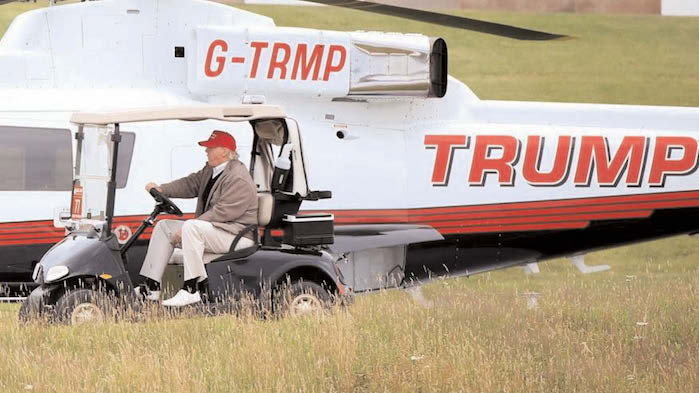
    LONDON (TIP): Britain’s Supreme Court on Wednesday ruled unanimously against tycoon and U.S. presidential contender Donald Trump in his pitched battle to stop an offshore wind farm near his upscale Scottish golf resort.

    Trump claims the 11-turbine project, approved by the Scottish government in 2013, will spoil the view from his golf course near Aberdeen in eastern Scotland. He has vowed to stop further development of the resort if the wind farm goes ahead.

    Two Scottish courts had previously ruled against Trump, who had claimed the Scottish ministers had no power to authorize the wind farm.

    The Trump Organization said the verdict is “extremely unfortunate” for all residents of the Aberdeen area and will “completely destroy the bucolic Aberdeen Bay and cast a terrible shadow upon the future of tourism for the area.”

    The organization said it will continue to fight the proposed wind farm “on every possible front.”

    Scottish Energy Minister Fergus Ewing said the Supreme Court ruling will make it possible to “test and demonstrate new technologies” to reduce energy costs, and help Aberdeeon develop renewable offshore energy sources.

    The decision comes amid a storm of criticism in Britain over Trump’s campaign comments about Muslims. The Scottish government has revoked Trump’s status as an unpaid business ambassador with its GlobalScot network, and Robert Gordon University revoked his honorary degree.

    A record number of Britons last week “signed” an electronic petition calling for Parliament ban Trump from entering the United Kingdom after he called for a temporary ban on Muslims entering the United States.

    Prime Minister David Cameron told the House of Commons that Trump’s comments about Muslims are “divisive, stupid and wrong,” but he opposed banning Trump from coming to Britain.

    “If he came to visit our country, I think he’d unite us all against him,” Cameron said.

    (AP)

  • UK Parliament approves air strikes on ISIL targets in Syria

    UK Parliament approves air strikes on ISIL targets in Syria

    LONDON(TIP): Britain has carried out its first airstrikes in Syria, hours after MPs voted overwhelmingly to authorize military action in Syria against ISIL. A British Ministry of Defence spokesman confirmed Four RAF Tornado jets were seen taking off from the Akrotiri base in Cyprus early on Thursday, December 3, morning and the Ministry of Defence later confirmed they had carried out the “first offensive operation over Syria and have conducted strikes”.

    The jets “employed Paveway IV guided bombs to conduct strikes against six targets within the extensive oilfield at Omar, 35 miles (56km) inside Syria’s eastern border with Iraq,” the statement said. The strikes come just hours after UK Prime Minister David Cameron successfully passed a motion authorising strikes in Syria, with 397 MPs voting in favour, and 223 voting against. Cameron was backed by dozens of Labour MPs who broke ranks with leader Jeremy Corbyn, who is opposed to the military intervention.

    Addressing parliament on Wednesday, December 2, Cameron said high-precision, laser-guided Brimstone missiles attached to the Tornado GR4 bombers would help to make a real difference by hitting the ISIL capital of Raqqa and its oil-trading business. France and the US are already bombing the fighters in Syria, while Russia has bombed mainly other armed groups battling the forces of Syrian President Bashar al-Assad.

    Cyprus, which lies about 100km away from Syria, is the closest European Union member state to turmoil in the Middle East. The RAF jets carry a range of munitions including Paveway IV guided bombs and precision-guided Brimstone missiles. The strikes were focused on six targets in an Isis-controlled oilfield in eastern Syria, the BBC reported. The British defence secretary, Michael Fallon, confirmed that eight more jets – two Tornados and six Typhoons – were being sent to Akrotiri to join the attacks. Fallon said the raids targeted the Omar oilfield in eastern Syria, dealing a “real blow” to the financing of Isis and confirmed that he personally approved the targets in the Omar oilfield.

  • UK SWINGS AUSTERITY AXE BUT SPARES KEY WELFARE SCHEME, POLICE

    UK SWINGS AUSTERITY AXE BUT SPARES KEY WELFARE SCHEME, POLICE

    LONDON (TIP): Britain announced a fresh round of deep cuts to public spending Wednesday, but dropped a plan to reduce welfare payments for the poorest and spared the police from savings after the Paris attacks.

    Unveiling a budget update, finance minister George Osborne said the government, which is borrowing £73.5 billion (105 billion euros, $110 billion) this year, is on track to balance its books by 2019-20.

    This will be achieved through the most significant belt-tightening in a generation, which includes reducing welfare by £12 billion and the cutting budgets of some government departments by up to 37 percent.

    However, Osborne, Prime Minister David Cameron’s de facto deputy, avoided a succession of political landmines as he announced his plans to a packed House of Commons.

    He dropped a plan to reduce tax credits — a benefit payment for low-income working families — after the House of Lords voted last month against the move in a humiliating defeat for the government.

    Opponents of the cuts, including many within his own Conservative party as well as the main opposition Labour party under Jeremy Corbyn, said it would have left over three million families worse off.

    “I’ve listened to the concerns. I hear and understand them,” Osborne told lawmakers.

    “Because I’ve been able to announce today an improvement in the public finances, the simplest thing to do is not to phase these changes in, but to avoid them altogether.”

    Protecting the police

    Treasury sources indicated that the full £12 billion of planned welfare savings would still be carried out through reductions to other types of state benefits. Experts said the spending plan helped position Osborne — a likely prime ministerial contender when Cameron steps down by 2020 — and the Conservatives in the political centre ground.

    Finance minister since Cameron took office in 2010, Osborne said his spending plan was affordable because of projections that tax revenues were set to increase.

    The 44-year-old also sprung a surprise by announcing that police funding would not be cut, defying a widespread expectation among senior officers and commentators.

    “Now is not the time for further police cuts,” Osborne told the Commons. “The police protect us and we’re going to protect the police.”

    In England and Wales, the number of police has fallen nearly 12 percent since 2010 and senior police figures had warned that a further reduction could hit their ability to prevent a major Paris-style attack in Britain.

    Britain’s official economic growth forecast was held at 2.4 percent for 2015, but revised up to 2.4 percent for 2016 from 2.3 percent.

    Debt was predicted to be 82.5 percent of national income this year, down from 83.6 percent at the time of Osborne’s annual budget in July.

    Economists sceptical

    The finance minister also lowered his borrowing forecasts to £73.5 billion this year and to £49.9 billion next year.

    But some analysts questioned how Osborne’s figures added up, raising doubts over the forecasts on which his spending plan was based.

    “Looking at the big picture, we continue to doubt that the public finances will heal as swiftly as the official forecasts expect,” said Samuel Tombs of Pantheon Macroeconomics.

    Royal Bank of Scotland economist Ross Walker said forecasts seemed “rose-tinted” and that the spending plan’s politics seemed “more assured than the economics”, while asset management firm Schroders predicted lower growth and a tax revenue shortfall.

    Labour spokesman John McDonnell, a key ally of left-winger Corbyn, accused Osborne of taking too long to eliminate the deficit.

    “The reality is this: after five years, the deficit has not been eliminated and this year it is expected to be over £70 billion,” he said.

    Osborne sweetened the cuts by announcing an affordable house building programme amid complaints that only the wealthiest can now afford to buy properties, particularly in southeast England.

    The government will build 400,000 affordable homes in the “biggest house building by any government since 1970s”, with extra support for London, Osborne added.

  • Why it’s silly to link FDI and Intolerance

    Why it’s silly to link FDI and Intolerance

    “Those making a connection between an intolerant India and FDI are widely off the mark. Democracies by definition are tolerant and nobody is claiming that we are abandoning our democratic system……….At the heart of the controversy is Prime Minister Narendra Modi’s silence – specifically on the beef-linked murder of a Muslim – and his inaction in not reining in fringe elements of his party voicing communal views. His general statements against such acts and discourse which detracts from his development agenda are not considered sufficient to clear the air”, says the author.

    Many believe that rising intolerance in India is becoming an issue in our foreign relations, to the point that foreign investment flows into the country may be affected.

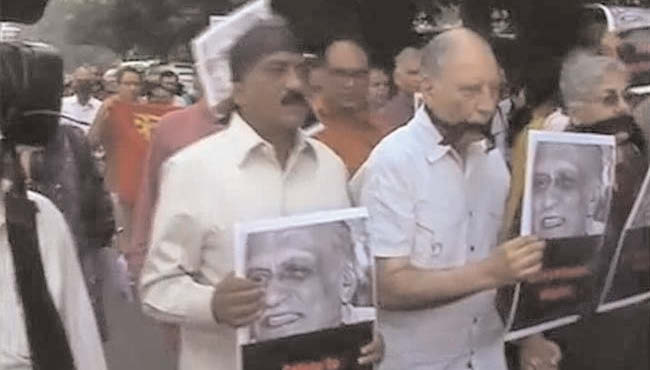
    The murder of a Muslim for allegedly stocking beef in one state, those of a couple of Dalits in another, the killing of a ‘rationalist’ in still another state, and some statements by BJP members inconsistent with our secular ethos are seen as instances of a dramatic surge in intolerance in India.

    This has been enough for writers, artists, historians and scientists to return awards, and others of public standing to express concern.

    The media has, of course, amplified the controversy, with denunciatory columns in some newspapers and unbridled TV debates.

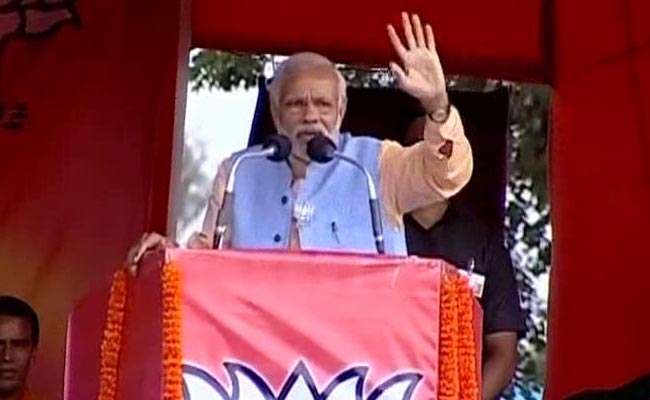
    At the heart of the controversy is Prime Minister Narendra Modi’s silence -specifically on the beef-linked murder of a Muslim – and his inaction in not reining in fringe elements of his party voicing communal views.

    His general statements against such acts and discourse which detracts from his development agenda are not considered sufficient to clear the air.

    Debate

    Naturally, such an intensive debate in the country will be followed by local diplomatic missions – western in particular – and their assessment reports will reach their capitals.

    Foreign correspondents will inevitably follow the domestic sparring over the issue and publish articles without being too rigorous in their analysis, as their target is newspaper readership and not policy-makers.

    Indian or Indian-origin correspondents writing for foreign media are often inclined to write negative stories to make themselves more credible with head offices, besides catering to the biases of a few established US/UK newspapers who traditionally put the spotlight on some darker aspects of India’s social reality.

    The NGOs, domestic and foreign-funded, focused on community issues will be drawn into the debate on rising intolerance as part of civil society’s increasing political activism.

    Indian scholars and Western ones involved in India studies are networked and influence each other on the choice of issues to study and analyse and shaping perspectives on them.

    Some foreign scholars get unusually large space in our papers for airing views on sensitive subjects, which reinforce the impression of foreign concern about unwholesome developments at home.

    In addition, sections of India-origin populations, principally in some Western countries, have grievances against India which find sympathetic echoes in political, academic, media and religious circles there for a variety of reasons, including electoral.

    Incidents relating to minorities in India especially draw negative attention.

    The debate on rising intolerance in the country is closely linked to Modi’s rise to power, the political legitimacy that the Hindutva ideology is seen to have acquired as a result, and – what is anathema to devout secularists – the expanding influence of the RSS.

    Intolerance

    Those mounting a campaign against rising intolerance have been in their large majority always politically opposed to Modi and the Hindutva ideology.

    Despite the judicial process through which Modi has been wrung for years, this group has not forgiven him for the 2002 Gujarat riots – and it is this entrenched prejudice that found echo in the questions posed to him by the BBC and The Guardian journalists at his joint press conference with UK PM David Cameron during his London visit.

    Modi’s opponents at home and India-baiters in the US/UK establishment in particular are complicit in denigrating the Indian PM, and both feed on each other’s prejudices.

    +1

    The leadership of the Congress has begun to target Modi personally for the reprehensible crimes that have been lately in the news, holding him responsible for allowing an atmosphere to be created which has encouraged such acts.

    Such accusations, made recklessly in the context of domestic politics, do not serve India’s interests abroad as they give a handle to India’s opponents there to project a picture of India that is actually far from reality.

    Freedom 

    To say that dissent or freedom of expression in India is being suppressed overlooks the rampant criticism of the government in the media and the constraints that the judiciary has put on the power of the government and Parliament too.

    Attempts to impose some constraints on the social media as part of counter-terrorism efforts have failed because of public opposition.

    The government cannot even implement crucial parts of its economic reforms agenda because of political opposition.

    Those making a connection between an intolerant India and FDI are widely off the mark.

    Democracies by definition are tolerant and nobody is claiming that we are abandoning our democratic system.

    Most countries in the world are not democratic, and so by definition they should not be attractive for foreign investment.

    China has received vastly greater amounts of FDI than India and continues to do so, despite its open rejection of democracy and Western values and active suppression of dissent at home.

    The Gulf countries are not paragons of tolerance, but corporate heads and governments too do not seem to hold back investments there for this reason.

    Western businessmen are now thronging in Iran for economic opportunities.

    Singapore’s authoritarianism is actually an explanation for its economic success. Our own investments abroad, especially in the oil sector, are not contingent on tolerance or lack of it in the countries concerned.

    We can be our worst enemies.

    As an extension of domestic politics we want to leverage external forces to make a democratically elected government of a country of 1.25 billion inhabitants accountable for few sporadic crimes.

  • Bihar elections debacle will test PM Modi’s foreign policy 

    Bihar elections debacle will test PM Modi’s foreign policy 

    The debate within the country on the wider implications of the election results on Prime Minister Narendra Modi’s personal image and his ability to pursue his political and economic agenda has also been of interest to our major external partners seeking economic opportunities in a rising India and working with us on regional and global challenges.

    Just as the Bihar elections have been followed with interest in India-related foreign circles, Modi’s ascension to power too had received attention abroad.

    The apprehensions raised domestically about a Modi victory by all those opposed to him and the BJP, often viscerally, affected views outside, especially as those attacking him belonged to sections of our society in contact with foreign diplomats, interest groups, academicians, journalists and so on.

    Modi’s impressive electoral victory and state interests of foreign countries, however, made them engage the new Indian leader without reservations, even as domestic opponents continued to politically assault him.

    For them, after years of weak coalition governments, the country had now a single-party majority government in Delhi, which raised hopes of a decisive leadership and revival of the stalled economic reforms agenda.

    Modi’s dynamism on the foreign policy front reinforced his image externally as an energetic, self-confident, ambitious, reform-minded leader with innovative ideas for India’s development, even as domestic critics carped at his frequent foreign travels and the personal publicity they garnered for him.

    The rapturous welcome he received from the Indian diaspora during his visits abroad attested to Modi’s personal popularity and that of his ideas, which raised his profile as a leader even more, causing still more anguish to his opponents at home. The electoral battering of the BJP in the Delhi state elections did not have much external impact, barring raising some speculation about whether the BJP could be worsted in the election in Bihar and the implications of that in terms of governance at the Centre and the implementation of the government’s promise to ease of doing business in India and introduce other policy and procedural reforms. For our external partners, India’s economic opening is of critical interest, not the electoral ups and downs in state level elections that do not threaten the survival of the Union government.

    For them, the question, therefore, was whether a setback to the BJP in Bihar might mean a derailment of the government’s economic agenda, a slowing down of reforms, more populist policies, a loss of political will, more focus on domestic political management and diminished external ambitions.

    They are aware that the government does not have a majority in the Rajya Sabha and, therefore, cannot pass the legislation it wants, as in the case of the Land Acquisition Bill and the GST.

    In that context, the outcome of the Bihar elections in view of their impact on the prospects of the BJP obtaining in due course a majority in the Upper House, would have been of interest to foreign governments and investors.

    The electoral bludgeoning of the BJP in Bihar will no doubt be a subject of analysis by foreign diplomats in Delhi for the benefit of their respective foreign offices, not to mention the foreign media, especially in our neighborhood.

    Those neighboring countries apprehensive of a strong Indian government at the Centre, especially a BJP government, would welcome the BJP’s defeat in Bihar as this might, in their view, turn the government’s attention inwards, cause some loss of confidence and give these countries greater room to challenge India’s interests. For others, it would not be very material in terms of bilateral ties.

    Barack Obama lost majority in both houses of the US Congress and in many ways his domestic agenda ran aground because of lobbies and legislative opposition, but that has not affected the momentum of India-US bilateral ties.

    François Hollande of France has seen his domestic popularity fall precipitously without affecting our bilateral relations in any domain.

    Nawaz Sharif has been considerably weakened domestically without any material impact of that on the substance of US policy towards Pakistan.

    Whether David Cameron was prime minister in a coalition government earlier and now rules on his own has not changed India- UK equations.

    Many such examples can be given.

    Relations: All this implies that whatever course correction Modi and the BJP may undertake domestically because of Bihar, our external relations are on a different track. The economic expectations of our foreign partners can be met substantially by the government through policy measures and administrative action.

    Clean India, Clean Ganga, Digital India, Skills India, Start-Up India, Make in India, Smart Cities — the various Modi campaigns can be progressed irrespective of the shrillness of the Opposition.

    Perhaps faster progress in implementing the developmental agenda would be more productive politically for later state-level elections.

    The BJP’s poor performance in Bihar, one hopes, will not make elements of our society even more reckless in opposing Modi.

    Their hyped-up campaign against rising intolerance and suppression of dissent, the return of awards by literary figures, historians, scientists, etc, the vastly disproportionate reaction to a couple of reprehensible criminal incidents of a local nature, seems to be a concerted effort to denigrate him by distorting reality and, in the process, undermining national interest by giving foreign lobbies a specific agenda, a handle to beat India with.


  • Paris comes under terrorist attacks

    Paris comes under terrorist attacks

    PARIS (TIP): Terrorists, in the form of masked suicide bombers and gunmen, November 13 evening, launched a series of terror attacks in and around Central Paris which left over 160 people dead across six sites, including at least eight attackers with unknown motivations. Death toll reports varied in the confusion of the immediate aftermath of the attacks.

    This was on a night when thousands of Paris residents and tourists were reveling and fans were enjoying a soccer match at Stade de France between France and world champion Germany before being ripped by coordinated attacks, leaving a nation in mourning and the world in shock.

    The map shows locations of terrorist strikes
    The map shows locations of terrorist strikes

    After the attacks, President Hollande declared a state of emergency and announced that he was closing the country’s borders. Hollande, who had to be evacuated from the stadium when the bombs went off outside, said in a televised address that the nation would stand firm and united.

    An estimated 100 people were killed inside Le Bataclan, a concert hall in the 11th arrondissement, after a trio of terrorists armed with AK-47’s detonated explosive vests during a show by the American rock band Eagles of Death Metal. The suicide bombing followed a hostage standoff between the attackers and French police stationed outside the venue, with the madmen executing hostages one by one inside.

    One eyewitness inside the Bataclan told the New York Times that one of the gunmen blamed the French president, yelling in French, “This is because of all the harm done by Hollande to Muslims all over the world.”

    The Paris prosecutor Francois Molins’ office said that eight attackers were dead after a string of attacks around the French capital, seven of them in suicide bombings. The eighth attacker was killed by security forces when they raided the Bataclan.

    Barrack Obama called Hollande to offer the condolences of the American people, the White House said.

    “The President reiterated the United States’ steadfast, unwavering support for the people of France, our oldest ally and friend, and reaffirmed the offer of any necessary support to the French investigation,” the White House said.

    British Prime Minister David Cameron who was hosting Indian PM Modi, said in a message on Twitter: “I am shocked by the events in Paris tonight. Our thoughts and prayers are with the French people. We will do whatever we can to help.”

    Prime Minister Narendra Modi condemned the deadly terrorist attacks in Paris that has killed at least 160 people, saying that the “news from Paris is anguishing and dreadful”.

    “News from Paris is anguishing & dreadful. Prayers with families of the deceased. We are united with people of France in this tragic hour,” Modi tweeted soon after the attacks.

    Russian leader Vladimir Putin sent his condolences to Hollande and the people of France. “Russia strongly condemns this inhumane killing and is ready to provide any and all assistance to investigate these terrorist crimes,” he said.

    France has been on edge since Islamic extremists attacked the offices of the satirical newspaper Charlie Hebdo and a kosher grocery store early this year. Twenty people, including three attackers, were left dead in the slaughter.

    ISIS has claimed responsibility for the attacks, according to some media reports & eye witness accounts.

    A witness told BFM television that he heard rounds of automatic rifle fire and someone shouting

    “it’s for Syria” and “Allahu Akbar” – the Arabic for “God is great” – before slaughtering around 100 music fans at a concert hall.

    The attacks came just hours after British ISIS butcher Jihadi John was said to have been killed by a US drone strike in Syria.


  • Indian Prime Minister Modi on 3 day visit to  UK to strengthen bilateral ties

    Indian Prime Minister Modi on 3 day visit to UK to strengthen bilateral ties

    LONDON (TIP): Indian Prime Minister Narendra Modi arrived in London, November 12 on his three-day maiden visit to the United Kingdom. “My visit to UK is the first Prime Ministerial visit in almost a decade. I have had the opportunity to meet Prime Minister David Cameron at various international forums and our meetings have been productive. Prime Minister Cameron is a good friend of India’s, and we in India have had the privilege of welcoming him thrice during his first term as Prime Minister,” Modi had written in a Facebook post ahead of the visit.

    At the start of Modi’s visit, Cameron promised to “set this relationship free” from its colonial past, referring to the complex ties between the two nations dating back to Britain’s time as colonial ruler until the mid- 20th century. Cameron said relations between the two countries, once “imprisoned by the past,” were now a “modern, dynamic partnership” between the world’s fifth-largest economy – Britain – and India, which could soon rank third. Cameron said he wanted to create “a stronger economic partnership, a stronger defense partnership and a stronger global partnership.”

    Cameron said the two countries were expected to sign 9 billion pounds ($14 billion, 12.7 billion euros) worth of deals during the visit, including a plan for London’s financial district to become a center of offshore rupee bonds. Other agreements expected to be signed during the visit covered financing for Indian infrastructure, cooperation in nuclear energy, and joint research in new technology.

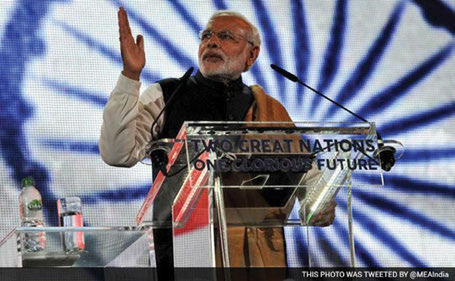
    Hailing billions in new business deals and investments between the India and the UK, British Prime Minister David Cameron and Indian Prime Minister Narendra Modi vowed to modernize India, the world’s largest democracy. Modi remarked that the visit was “a huge moment for our two great nations.”

    Putting economic engagement at the centrestage of their relations, India and the United Kingdom said Thursday that they will sign commercial deals of 9.2 billion pounds over the next three days as Prime Minister Narendra Modi began the first bilateral visit to the country by an Indian prime minister since 2006. New Delhi promised a new “fast-track mechanism” as the two sides firmed up at least 27 deals, covering sectors ranging from banking to energy, skill development to environment. The UK said it plans to invest in three Indian smart cities and the two sides also announced the signing of a civilian nuclear agreement.

    Modi’s three-day trip is not an official state visit since Modi is not a head of state, but he was nevertheless welcomed with great honors, including a fly-past by the Royal Air Force Red Arrows and a lunch with Queen Elizabeth II at Buckingham Palace.

    Prime Minister Narendra Modi on November 13, 2015 arrived at the Buckingham Palace where he was received by Queen Elizabeth II for lunch on the second day of his three-day visit to Britain.

    “Her Majesty The Queen with PM
    @narendramodi at Buckingham Palace,” PMO India tweeted.

    “Building on the bonds of history. PM
    @narendra Modi calls on Her Majesty Queen Elizabeth II,” tweeted Vikas Swarup, spokesperson for the ministry of external affairs.

    After his lunch with the Queen, Mr Modi was shown a collection of items from the palace’s stores including a shawl given to the Queen by Mahatma Gandhi in 1947 as a wedding present.

    In an exchange of gifts, Mr Modi gave the Queen photographs of her visit to India in 1961 and a gift box including Darjeeling tea from West Bengal and silk Tanchoi scarves from his parliamentary constituency of Varanasi.

    In return, Mr Modi was presented with a silver dish and signed photos.

    Earlier, the Duke and Duchess of Cambridge announced they would go on tour of India next spring.

    Prior to this, Modi, along with British Prime Minister David Cameron, attended a meeting of the UK-India CEO Forum at Lancaster House. The two countries have sealed £9bn worth of commercial deals in the retail, logistics, energy, finance, IT, education and health sectors, which No 10 said had created or safeguarded 1,900 jobs.

    Speaking at an event marking the Indian diaspora’s contribution to the UK, he said it was “a historic day for a great partnership between two great nations”.

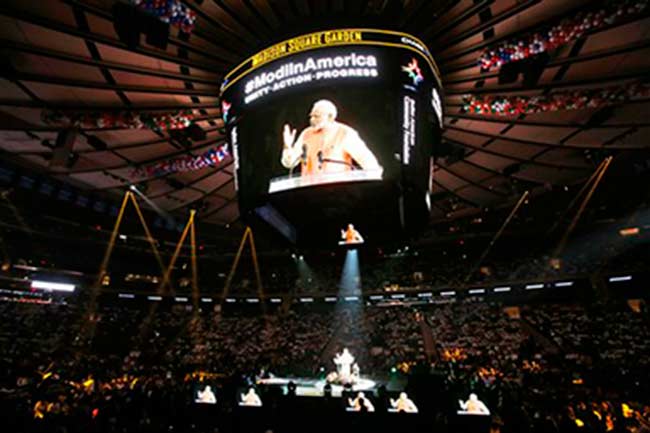
    He had been greeted by huge cheers from the 60,000-strong crowd as he arrived on stage with UK PM David Cameron.

    At the start of his speech in London, Mr Modi said: “I would like to ensure you that the dreams you have dreamt – and the dreams every Indian has dreamt – India is capable of fulfilling these dreams. There is no reason for India to remain a poor country.” He also mentioned the need for FDI in India and equated it as FDI = First Develop India.

    Mr Cameron introduced his Indian counterpart to the stage, he said the UK-India relationship was “about our potential”, and said both countries were “united by the scale of our ambition”.

    “Team India, team UK – together we are a winning combination,” he added.

    The crowds applauded when he said it would not be long before there was a British Indian prime minister in Downing Street.

    Asserting that Narendra Modi has proved his critics wrong, British Prime Minister David Cameron today said that his Indian counterpart has worked tremendously after forming the government in New Delhi and said ‘acche din zaroor aayega’.

    Cameron, who was addressing the Indian diaspora at the Wembley stadium here, said that Modi had rightly said ‘acche din aane wale hain’ prior to the elections in the country.

    “They said a ‘chai wala’ would never govern the largest democracy, but he proved them wrong. He rightly said ‘acche din aane wale hain’. But with his energy, with his vision, with his ambition. I will go on further and say ‘ acche din zaroor aayega’,” he said amid a thumping applause from the crowd.

    Mr Modi, who greeted the gathered crowd with a “Namaste”, gave his speech mainly in Hindi, aside from a short welcoming opening in English.

    It is worth noting that Modi  has spent one in every eight days overseas since his election last year.

  • Sorry for Parisians

    Sorry for Parisians

    Paris has long been the city of the best in the world. It has been home to the most refined and cultured people. It has been the cradle of the finest art and literature. It has given to the world the most eminent people in various fields. Parisians are a class by themselves.

    It was a shock to find the City of Paris  being subjected  to a brutal terrorist attack, The attack on Friday, November 13 evening left more than 160 dead.

    Parisians had not yet forgotten the madmen’s attack on the offices of the satirical newspaper Charlie Hebdo and a kosher grocery store early this year. Twenty people, including three attackers, were left dead in the slaughter.

    Ironically, just a few hundred miles away, in London, Indian Prime Minister Narendra Modi and British Prime Minister David Cameron, had in a joint press conference declared their resolve to combat terrorism together and had called upon all nations to come together to  tackle the ever growing terrorism in the world.

    The world needs to not only talk of combating terrorism; it needs to come together and combat the devil more effectively and resolutely. Be it any terrorist organization, anywhere in the world, it should be treated as enemy of humanity and neutralized with utmost force. It is time to say enough is enough.

    Meanwhile, we feel sorry for Parisians for having to go through the shock and the tragedy. May those who died in the attacks rest in peace!

  • Indian-Origin Campaigner Awarded by David Cameron for Charity Work

    Indian-Origin Campaigner Awarded by David Cameron for Charity Work

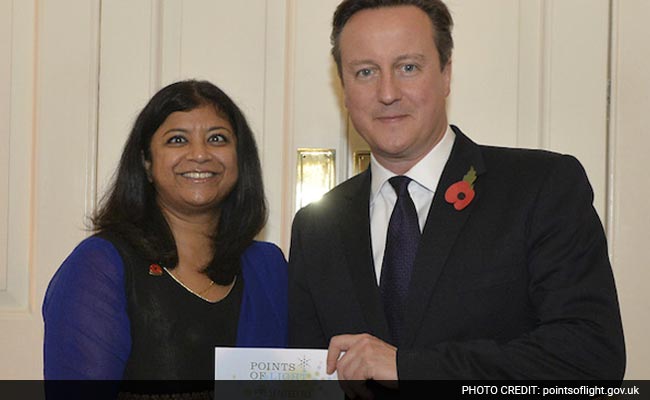
    LONDON:  A 46-year-old Indian-origin community campaigner in the UK has been named “Point of Light” by British Prime Minister David Cameron for her “fantastic” charity work and empowering young people, including women.

    Muna Chauhan was recognised for her work as a children’s charity fundraiser and for empowering hundreds of women and young people to get involved with their community as volunteers.

    “Muna has not only dedicated her time to raise a fantastic amount of money for the causes she supports, she has also empowered over 200 young people and women to get involved in volunteering and seeing the difference they make,” Cameron said.

    “By inspiring others to take action Muna has had an impact in more than just her own community, and I am delighted to recognise her as the UK’s 387th Point of Light,” he added.

    The award has been developed in partnership with the hugely successful Points of Light programme in the US. It honours outstanding examples of individual volunteering across the US and the UK.

    Apart from encouraging others to volunteer, Ms Chauhan has helped raise over 5 million pounds for various international development charities and NGOs.

    “I have always been passionate about women empowerment and youth development and strongly committed to supporting the development of unrepresented people and helping them to gain valuable life experience through volunteering activities,” Ms Chauhan said.

    “My greatest guiding influence in life has been Mahatma Gandhi, in particular his world famous quote: ‘be the change you want to see in the world’,” she said.

  • UK may deport Indians languishing in British jails

    UK may deport Indians languishing in British jails

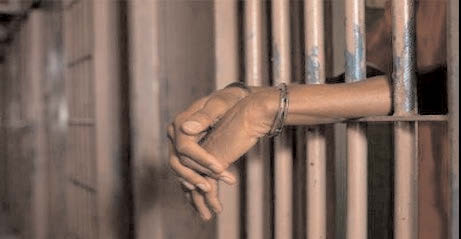
    LONDON (TIP): With Indian PM Narendra Modi’s maiden visit to UK slated this November, Britain has said it will negotiate with New Delhi “on every opportunity” to pack off Indian prisoners serving time in their jails.

    PM David Cameron’s Indian diaspora champion Priti Patel told TOI that UK and India share a voluntary prisoner transfer agreement. “We have foreign criminals housed in jails for breaking our laws. They however should not be housed in our prisons at the expense of the British taxpayer.” This should worry New Delhi as prisons in India are already packed to the seam. Almost one in every five Asian prisoners held in jails across England and Wales are Indians.

    Latest data shows Indians (407) make up the second highest number of prisoners among Asians, after those of Pakistani (509) origin.

    British jails at present harbour 11,127 prisoners of foreign nationality of which 2233 are Asians. UK recently has decided to pack off 300 Jamaican prisoners serving time in its jails back to Jamaica to serve their sentences. Britain says deporting them would also mean unclogging British prisons which the government says is “quite full”.

    Cameron recently said, “It is right that foreign criminals who break our laws are properly punished but this shouldn’t be at the expense of the taxpayer. That’s why this agreement is so important. The agreement provides for the transfer of prisoners who have received sentences of 4 years or more and who have 18 months or more left to serve in custody.”

    The average annual cost of a prison place in the UK is £25,900. Britain’s ministry of justice says in the last 10 years, the number of foreign nationals in prison has doubled and represents over 14% of the total prison population in England and Wales. (Source: TNN)

  • Chinese media laud Xi’s Britain visit

    Chinese media laud Xi’s Britain visit

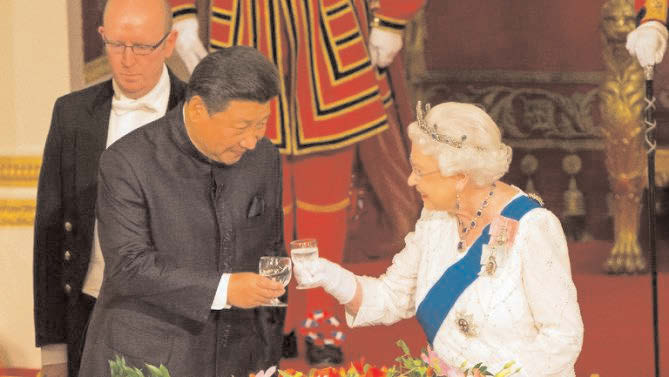
    BEIJING (TIP): Chinese media on Oct 22 trumpeted President Xi Jinping’s visit to Britain, running triumphant coverage of the trip at odds with Western accusations that London has sold out to the Asian giant. Editorial pages in the United States and Britain have lambasted Downing Street for abandoning human rights concerns in favour of improved trade relations with the world’s second largest economy, but Chinese state media praised British “pragmatism”.

    Front pages across the country featured glamorous pictures of President Xi Jinping and first lady Peng Liyuan with British politicians and royalty, opulently illustrating what the governments have described as a “new golden era” between the nations. The “ultra-state visit” put on for Xi featured the best of everything, according to a breathless commentary in the overseas edition of the People’s Daily, the Communist Party’s official mouthpiece, which portrayed the trip as the start of a beautiful friendship. Britain is seeking increased trade, investment and international influence from its relationship with China, it said, and “the two countries should eliminate all disturbances, and seize the moment to deepen the development of their bilateral relations”.

    It suggested that London may in the future even support Beijing on the UN Security Council.

    British business deals with China, including in such sensitive sectors as nuclear power, should set an example for other countries, according to an editorial in the Global Times, which is close to the ruling party.

    Meanwhile reports speculated on the benefits of merging the two “cultural great powers”, showing Chinese-made electric black cabs and arguing that improved relations might raise the level of Chinese footballers a pet project of Xi, who has called for the country to win a World Cup.

    The tone is dramatically different to Chinese media declarations when relations soured after Prime Minister David Cameron met the exiled Tibetan spiritual leader the Dalai Lama during a 2012 visit to London.

    That tete-a-tete “hurt the feelings of the Chinese people”, Beijing said, and the chairman of China’s legislature, Wu Bangguo, abruptly cancelled a trip to Britain. The high-level freeze lasted for over a year. When Prime Minister David Cameron travelled to China in 2013 hoping to patch up relations, an editorial in the Global Times mocked Britain for being “an old European country”, useful only for “travel and study”.

  • A British Teenager is on the List of the World’s Most Wanted Terrorists

    A British Teenager is on the List of the World’s Most Wanted Terrorists

    LONDON (TIP): A teenager from Cardiff, Wales has been added to a UN banned list of the world’s most wanted terrorists at the request of Prime Minister David Cameron.

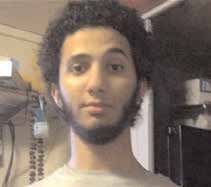
    Aseel Muthana, who was 17 when he traveled to Syria in 2014, was hit with the international sanction, along with four other prominent British jihadists. It is reportedly the first time a government has requested that its own citizens be added to the UN banned list in the fight against Islamic State.

    Aseel Muthana has boasted of his willingness to “die for the cause” and promoted the jihad lifestyle in media interviews since fleeing Wales last year with his brother Nasser, whose name is also on the list of banned jihadists. The sanction will see Muthana’s financial assets frozen and ban him from international travel, meaning the teenager will face deportation should he attempt to leave Syria.

    According to Downing Street sources, the group was targeted because they are currently plotting terrorist attacks both in Britain and abroad, and are active recruiters for Islamic State. Other extremists added to the UN list include Sally-Anne Jones, known as “Mrs. Terror”; Omar Hussain, dubbed the Supermarket Jihadi because he worked at Morrisons; Aqsa Hussain, who fled Glasgow two years ago; and Muthana’s brother, Nasser.

    A senior government official said the “notorious fighters” posed a “real threat” to the innocent public. Speaking of the list, the official stated the ban sends the “very clear signal
    [that] we will absolutely take action against those people who have gone to fight for Isil and will threaten our country.”

  • Greece news live: EU leaders summit cancelled as ministers say ‘not possible’ to do deal today

    Greece news live: EU leaders summit cancelled as ministers say ‘not possible’ to do deal today

    A summit of all European Union members planned for Sunday has been cancelled as “very difficult” talks over a third bailout deal for Greece continue.

    All 28 leaders, including David Cameron, had been expected to attend Sunday’s meeting in Brussels, but now talks will be confined to politicians from the eurozone countries.

    “I have cancelled EUCO (European Council summit) today,” Tusk tweeted.

    “Eurosummit to start at 1600 (1400 GMT) and last until we conclude talks on Greece,” he said.

    Tusk had said a meeting of Eurogroup leaders would continue on Sunday and “last until we conclude talks on Greece”, BBC reported.

    Dutch Finance Minister Jeroen Dijsselbloem, who heads the Eurogroup of finance ministers, said: “We have had an in-depth discussion of the Greek proposals, the issue of credibility and trust was discussed and also of course financial issues involved, but we have not concluded our discussions.”

    Without a deal, there are fears that Greek banks could collapse within days, and the country forced to make the “Grexit” out of eurozone.

    The move came after divided eurozone finance ministers held ‘very difficult’ talks on Greece late into the night on Friday.

    The European Central Bank is providing emergency liquidity to keep Greek banks running, but has frozen the limit.

    Saturday’s Eurogroup talks centred around a third bailout for Greece worth over 80 billion euros ($89 billion).

    Some eight hours of talks failed to make a breakthrough, with eurozone nations citing a lack of trust in Greece’s radical Syriza government implementing the austerity measures promised in exchange for a third bailout.

    Fresh proposals, submitted by Greek Prime Minister Alexis Tsipras, including pension cuts and tax increases that had been rejected by Greeks in a referendum last week, were approved by the nation’s parliament in the early hours of Saturday.

  • Oxford gets its first-ever female vice-chancellor

    Oxford gets its first-ever female vice-chancellor

    LONDON (TIP): The oldest university in the English speaking world has got its first ever female head.

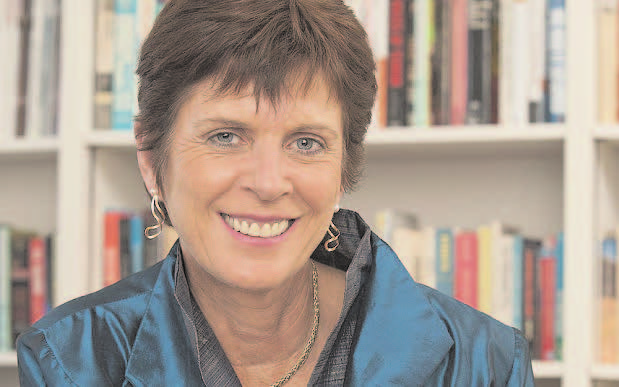
    Professor Louise Richardson, currently the principal and vice-chancellor of the University of St Andrews, has been nominated as the next VC of the University of Oxford.

    The first women’s colleges were founded in the 19th century and women became full members of the University in 1920.

    Five all-male colleges – Brasenose, Jesus College, Wadham, Hertford and St Catherine’s – first admitted women in 1974.

    St Hilda’s College which was originally for women only was the last of Oxford’s single sex colleges. All colleges have admitted both men and women since 2008.

    Oxford currently has 11 female heads of house – the Rector of Exeter; the Principals of Lady Margaret Hall, Mansfield, St Hilda’s, St Hugh’s, and Somerville; the Provost of Oriel; the Master of Pembroke; the Warden of St Antony’s and the Presidents of St John’s and Wolfson.

    Oxford has been the alma mater of the who’s who of the world.

    Twenty-six British prime ministers have been educated at Oxford University. The list includes present PM David Cameron, Tony Blair, Margaret Thatcher, Harold Wilson and Edward Heath.

    Oxford has educated Indians since 1871. Since then, some of the most famous Indians, including two of India’s PMs – Indira Gandhi and Manmohan Singh have studied here.

    Indians have also held academic posts here including former president of India, Dr Sarvepalli Radhakrishnan, Nobel Laureate Amartya Sen and India’s Chief Scientific Advisor and Bharat Ratna recipient Professor C N R Rao. Professor Richardson with a distinguished academic career in the study of terrorism and security issues has led St Andrews for more than six years. Prior to joining St Andrews in 2009, Professor Richardson lived and worked in the US where she was executive dean of the Radcliffe Institute for Advanced Study at Harvard University.

    Professor Richardson said of her nomination “Oxford is one of the world’s great universities. I feel enormously privileged to be given the opportunity to lead this remarkable institution during an exciting time for higher education. I am very much looking forward to working with talented, experienced, and dedicated colleagues to advance Oxford’s pre-eminent global position in research, scholarship, and teaching.”

    Subject to the approval of Congregation, the University’s parliament, professor Richardson will succeed the current VC Professor Andrew Hamilton on Jan 1, 2016.

    The first woman to be appointed to a full professorship was Agnes Headlam-Morley, who became Montague Burton professor of International Relations in October 1948.

    In 1973 Balliol was the first of the traditional all-male colleges to elect a woman as a fellow and tutor. In 1993 Professor Marilyn Butler, former Rector of Exeter, became the first female head of a former all-male college at either Oxford or Cambridge.

  • More taxes for UK businesses with foreign labour: Queen

    LONDON (TIP): The British Queen on May 27 announced at the opening of the UK parliament session that businesses that employ foreign labour will have to pay a new visa levy which will be used to fund apprenticeship schemes for British workers.

    The scheme will not be rolled out right away.

    The Queen said that a consultation will be carried out first on the possibility of funding apprenticeship schemes for British and EU workers using the funds raised through the new visa levy.

    The Queen also announced plans to set up a new enforcement agency that would crack down on businesses employing illegal immigrants or smuggling people into Britain with the promise of work.

    She said, “It is not right that unscrupulous employers can exploit workers, luring them here with the promise of a better life.”

    A new single agency will have the scale and powers to stop this, she said.

    Britain has already started charging Indians for health care which was free till now. Indian students coming into UK now to study are paying an additional “health surcharge” over their visa fees.

    According to the new rule, from April 6, nationals from outside of the European Economic Area (EEA) coming to live in the UK for longer than six months will be required to pay the ‘health surcharge’ in order to gain access to the UK’s National Health Service (NHS).

    Indians have to pa an additional £200 per year (Rs 19,000) as health surcharge. But students have to pay £150 per at the time of applying for their visa. Visa applicants will need to pay up-front for the total period of their UK visa.

    Till April 6, non-EEA nationals coming to work, study or join family members received free medical treatment under NHS in the same way as a permanent resident.

    The Queen said the new immigration bill will also require all foreign offenders released on bail to be tagged, “So we always know exactly where they are. This will prevent absconding and increase the number of criminals deported”.

    British Prime Minister David Cameron recently made it mandatory for all banks in Britain to check their bank accounts against databases to confirm that their clients are not n UK illegally. This was reiterated by the Queen on Wednesday.

    It is also being made mandatory for landlords to check whether their tenants are here legally.

    Earlier, the UK had floated the idea of controversial plan to impose a £3,000 immigration bond on visitors from “high-risk” countries like India. The fee would have been over and above the existing visa costs. The bond was a part of the government’s intention to reduce the number of immigrants to less than 100,000 per year. An applicant would have to forfeit the amount unless they left when required.

    Outrage from India – the third largest investor in the UK-made Britain drop the idea.

  • Indian-origin Keith Vaz appointed Labour party vice-chairman

    LONDON: One of Britain’s longest-serving Indian-origin member of parliament, Keith Vaz, has been appointed as vice-chairman of the Labour party.
    The Party does not have a leader at present with Ed Miliband resigning after the recent election debacle. 
    This effectively makes 58-year-old Vaz the top man in the party at the moment. Vaz has been an MP since 1987 was re-elected from his Leicester East stronghold at the May 7 general election. 
    He received 61% of the votes. Vaz was first elected MP in June 1987 and has been re-elected as a MP six times. 
    Born to Goan parents in Aden, Yemen, Vaz who also serves as the chair of the influential home affairs select committee in the House of Commons was educated at Cambridge University where he studied law and then became a solicitor. 
    Vaz has his roots in Anjuna. His sister Valerie Vaz is also a Labour MP.
    Vaz said “I am delighted to have been appointed as vice-chairman of the Labour Party. After coming through a difficult election, it is time for the party to regroup and bring fresh new ideas to the table. Playing a part in that process is a source of great pride for me”. 
    Vaz has been appointed by acting leader of the opposition Harriet Harman. 
    His appointment clearly follows Labour’s interest in garnering the all-important Indian origin support in the future. 
    The Indian community has been growing in prominence year by year. In 1987, there were only two members of Indian origin in both the houses of parliament. Today, there are over 25 – over 10 times. 
    Recent data showed that up to a million ethnic minority votes helped put David Cameron back into Downing Street.
  • Indians Second-Largest Migrant Group in UK

    Indians Second-Largest Migrant Group in UK

    LONDON:  Indians are the second-largest group of migrants coming to the UK after Chinese, according to latest figures.

    In 2013, 46,000 Chinese migrants entered Britain for study and work reasons followed by 33,000 Indians.

    India is tied at second place along with Spanish migrants from within the European Union, also at 33,000, according to the Office of National Statistics (ONS) International Passenger Survey (INS).

    Around 29,000 migrants came from Australia, 27,000 from Poland, 22,000 from France and 20,000 from the US.

    Three-quarters of immigrants to the UK are people migrating to work or study, ONS found as part of a research on long-term international immigration.

    On the reverse side, most British expats who had emigrated out of the country are also coming back to the UK for work-related reasons, with 46,000 doing so last year.

    “Generally, immigration of British citizens remains relatively stable, both in terms of the overall level and the main reasons for immigrating,” the ONS notes.

    The flow of immigrants into Britain is set to remain an emotive issue in the UK as Prime Minister David Cameron’s Conservative-led government struggles to control the figures.

    He had reiterated his determination to not “cave in” on tough immigration targets as part of a speech yesterday when ONS figures revealed that net migration rose by 50 per cent to 318,000 last year with a total of 641,000 people moving to the UK in 2014.

    The Conservatives had pledged before the 2010 election to reduce numbers to less than 100,000, a target they acknowledge they have failed to meet.

    “There is the approach of just give up, cave in and forget about it. But that’s not my approach,” he said as he pledged tougher rules to crack down on illegal workers in the country.

  • Cameron unveils new laws to fight terror

    LONDON (TIP) : In his first major policy announcement since winning last week’s general election, British PM David Cameron on Wednesday announced new laws to combat a “poisonous Islamist ideology”.

    He gave out plans for a new Counter-Extremism Bill at the first meeting of the new National Security Council in Downing Street. The new legislation will include introducing banning orders for extremist organizations that seek to undermine democracy or use hate speech in public places, new extremism disruption orders to restrict people who seek to radicalise young people and powers to close premises where extremists seek to influence others.

    It also includes strengthening the powers of the Charity Commission to root out charities that misappropriate funds towards extremism and terrorism, further immigration restrictions on extremists and a strengthened role for Ofcom to take action against channels which broadcast extremist content.

    “For too long, we have been a passively tolerant society, saying to our citizens: as long as you obey the law, we will leave you alone,” Cameron said. “It’s often meant we have stood neutral between different values. And that’s helped foster a narrative of extremism and grievance. This government will conclusively turn the page on this failed approach. It means confronting head-on the poisonous Islamist extremist ideology. Whether they are violent in their means or not, we must make it impossible for the extremists to succeed.”

  • Indian-origin MP Priti Patel gets Cabinet rank in David Cameron’s Conservative team

    Indian-origin MP Priti Patel gets Cabinet rank in David Cameron’s Conservative team

    LONDON (TIP): One of Britain’s most prominent Indian-origin MPs, Priti Patel has been appointed minister of state for employment in British Prime Minister David Cameron’s new cabinet.

    Ms Patel was re-elected from Witham in Essex with a big majority in the May 7 general elections.

    The London-born mother of one, Indian origin Priti Patel, is a minister of state in David Cameron’s new cabinet.

    The 43-year-old replaces another female MP in the Cabinet, Esther McVey, who lost her seat at the polls.

    “A real privilege to be appointed as Minister of State for Employment at the Department for Work and Pensions,” Ms Patel said in a Twitter message.

    The London-born mother of one has been given a Cabinet rank as a promotion from her previous role as Exchequer Secretary to the Treasury.