Tag: David Cameron

  • UK House to discuss growing Indian clout

    LONDON (TIP) : Britain’s House of Lords is all set to debate one of the most prominent new trends in British politics – the growing clout of the Indian vote as seen in the recently concluded British parliamentary elections.

    Eminent political theorist of Indian origin Lord Bhiku Parekh will chair the first debate on May 27, since the historic results of the general elections on May 8 that saw the David Cameron led Conservative Party embarrass every known electoral poll to come back into power with a majority.

    The 6.94 lakh strong Indian-born population was the largest foreign-born group in the country that voted.

    Experts believe that one of the major reasons for Conservatives’ dream run was the crucial India vote.

    For the first time ever, many believe that Indians living in the UK who were traditional Labour Party supporters swung in the favour of the Conservatives.

    Lord Parekh told TOI “We want to use the elections as a mirror of deeper political trends among the British Indian community. We want to address questions like how many Indians voted, who they voted for, why they voted in such large numbers and what pushed them to decide on their candidates. In UK, around 66% of those registered voted”.

    The panellists will include senior policy makers of the British government, newly election Indian origin MPs, academics and political commentators.

    He added “We want to understand the political engagement of the Indian community here in British politics. We saw significant new trends this elections – more Indians voted for the Conservative Party than ever before, David Cameron went all out to woo the Hindu community who are fast moving away from the Labour Party”.

    One of the speakers at the debate will be eminent publisher and editor of Asian Voice C B Patel. He told TOI “We saw a renewed interest in politics among the British Indian community in the recent election. Even the

    Conservative Party took notice and actively wooed the voters of Indian origin. We will discuss the role the ethnic Indian community in Britain will now play post the election results”.

    The Indian diaspora in Britain did play king maker in the elections.

    Almost 4 million voters – about one in 10 of the entire electorate in England and Wales – have been found to be born abroad. Indians emerged the largest chunk with as many as 615,000 possible voters.

    In 2010, 68% of black and minority ethnic voters supported Labour, whilst the Conservatives and Liberal Democrats received 16% and 14% of the vote share respectively.

    A recent British Election Study said that the number of Indian voters identifying with the Labour party has fallen from 77% in 1997 to just 18% in 2014.

    The migrant vote was largest in London – 19 of the top 20 seats with largest migrant voter shares, and over 40 of the top 50 seats, are in the capital.

    As many as 13 major candidates for the Conservative party were of Indian origin which excluded the party’s four top leaders in parliament- Alok Sharma who is MP from Reading West, Shailesh Vara who is MP from North West Cambridgeshire, Paul Uppal MP from Wolverhampton South West and Priti Patel from Witham. Labour fielded 14 candidates.

  • David Cameron returns to 10 Downing St

    David Cameron returns to 10 Downing St

    LONDON (TIP): David Cameron has returned to Downing Street as Prime Minister, after an extraordinary election night in which the Tories outperformed even their own expectations and Labour and the Liberal Democrats suffered painful losses.

    As results continued to come in Friday, 8th May morning, Mr. Cameron appeared within striking distance of a working majority in the House of Commons

    Even if he ends up leading a minority government, it would be strong enough to survive a no-confidence motion, and likely to pass most, if not all of his legislative program, according to BBC predictions of how the last few seats would fall on Friday.

    Mr. Cameron would also have the option of forming a stable majority coalition, or a confidence-and-supply deal with the Northern Irish DUP.

    As results came in on Friday morning, they confirmed a shock exit poll that predicted a strong Conservative showing as the largest party.

    The Tories gained seats mainly by eviscerating their former coalition partner, the Liberal Democrats, who lost several senior MPs and now face an existential crisis and a near-certain change of leadership. Labour failed to win most of its target seats, and was stunned by a surge of support for the Scottish Nationalists in Scotland. The party will likely be looking for a new leader as well, after its worst performance since 1987.

    An ashen-faced Ed Miliband, speaking after retaining his own seat, said it had “clearly been a very disappointing and difficult night for the Labour Party. In Scotland we have seen a surge of nationalism overwhelm our party.”

    He said he was “very sorry” for the losses in Scotland, and the next government had a “huge responsibility in facing the difficult task of keeping our country together”.

    He will now travel to London to face his colleagues. He did not indicate whether he would offer his resignation as leader.

    The Scottish Nationalist Party wins -going from 6 to 56 of Scotland’s 59 MPs in Westminster – leave the union politically fractured, and threaten a renewed push for the northern nation’s independence.

    On Friday morning David Cameron said it had clearly been a strong night for the Conservatives, though it was too early to know the final result. He said there had been “a positive response to a positive campaign” and now his government would have a chance to build on the foundation laid in the last five years.

    In a nod to the political change in Scotland, he said his aim was “to govern for everyone in the United Kingdom”. The government he would like to lead was that of “one nation, one United Kingdom”, he said.

    Pre-election polls had predicted a tight race. However exit polls, and early results, suggested either a big failure in polling methodology, or a change of heart at the last minute as British electors stood in the polling booths.

    One seat in particular told the story of the night. In Scotland, the man in charge of his party’s campaign, Labour shadow foreign secretary Douglas Alexander, was defeated by a 20 year-old student for the SNP. Mhairi Black will reportedly be the youngest MP to sit in the House of Commons since 1667. She was only two when Tony Blair won power in 1997. In the same seat, the Lib Dems received their lowest number of votes in any seat since 1859.

    Lib Dem chief secretary to the Treasury Danny Alexander, and Scottish Labour leader Jim Murphy also lost their seats to the SNP.

    “The Scottish lion has roared,” the SNP’s Alex Salmond said after winning his own seat of Gordon from the Lib Dems. He called the result in Scotland an “extraordinary statement of intent” that no government would be able to ignore.

    In the south, senior Lib Dem minister, business secretary Vince Cable, lost his seat to the Conservatives.

    Party leader Nick Clegg survived. Mr Clegg said it had been “a cruel and punishing night for the Liberal Democrats”. He said he would have more to say about the party, and whether he would continue as leader, later on Friday.

    The result would technically be enough to give the Conservatives and Liberal Democrats, together, a return to government.

    However political scientist Professor Patrick Dunleavy said it would be very unlikely the Liberal Democrats would agree to a coalition after taking such a drubbing.

    Shadow treasurer Ed Balls said the result meant “David Cameron’s ability to hang on in Downing Street is on a knife edge… the right of centre majority has disappeared”.

    Another of the night’s big losers – in terms of seats – was Nigel Farage’s UK Independence Party. Despite gathering more than 3 million votes, more than twice that of the SNP, and a million more than the Lib Dems, at the time of writing UKIP could claim only one seat.

    The election result could trigger years of uncertainty over Britain’s  position in Europe and the world – and its own identity.

    David Cameron will be under pressure to deliver on his promise for a referendum on Britain’s  membership of the European Union, as early as next year.

    But a vote to leave the EU would likely trigger a new referendum In Scotland, one the nationalists would be in a very strong position to win.

    Even if Britain  votes to stay in the EU, a Scottish electorate so significantly at odds with the rest of the country could increase calls for a new independence referendum.

    There were indications on Friday that Mr Cameron would have to quickly make a “significant gesture” towards Scotland in order to keep the peace.

    Newly-elected MP Boris Johnson, a possible future Tory leader, predicted “some kind of federal offer”.

    If no party commands a clear majority of to 650 MPs, then Mr Cameron would stay on as a prime minister.

    The firm political convention is that the Queen will choose a prime minister who is most likely to command the confidence (that is, a majority of support) in the House of Commons.

    The command of the house will be tested, if necessary, after the Queen’s Speech on May 27, traditionally a ceremonial event in which the Queen sets out her government’s program for office. The program is then debated over several days, then voted upon.

  • Cameron reprises Modi slogan for reelection

    Cameron reprises Modi slogan for reelection

    LONDON: British Prime Minister David Cameron appears to have discovered a new electoral language: Hindi. Speaking to a TV correspondent on April 30 while crisscrossing UK in a frenetic election campaign, Cameron was asked if there was anything he’d like to tell voters of Indian origin.

    “I’ll try,” said Cameron. “Phir ek baar, Cameron Sarkar.” It was a take-off on his Indian counterpart Narendra Modi’s successful poll mantra last year that went ‘Abki baar, Modi Sarkar’. Cameron also described Modi’s 3D holograms used during the election campaign as “very impressive”.

    “I’ve seen the holograms. Britain is the oldest democracy but a small country. We haven’t used the hologram yet, but who knows we might in the next 12 days?” said Cameron.

    The British PM’s remarks came a day after the Conservative party, released a song in Hindi: Aasman Neela Hai (the sky is blue). He also spoke about British ethnic voices finding increasing space in parliament, police and other wings of governance, and that more will be done in these directions in the weeks and months ahead.

    Saying he expects Modi in UK before long, Cameron said Britain takes India very seriously, evident in the deepening of bilateral relationship. “You’ve got a government with a clear plan. We take the same approach here. The key is to run the country and the election campaign at the same time.”

    British Asian votes would be a significant factor during May 7 elections and Cameron’s outreach is seen as recognition of the importance of Indian votes to the Conservative party.

  • British PM David Cameron’s Party Woos Indian-Origin Voters with Hindi Song

    British PM David Cameron’s Party Woos Indian-Origin Voters with Hindi Song

    Britain’s Conservative Party has launched a new campaign song in Hindi aimed at wooing Indian-origin voters in the run up to the May 7 general elections.

    Prime Minister David Cameron led party, which heads the current coalition government in the country, launched ‘Neela Hai Aasma (Blue Sky)’ today in reference to the symbolic blue colour of the party.

    The catchy tune set to Indian beats encourages the British Indian community to join hands with the British PM in taking the UK forward with a chorus repeating the name ‘David Cameron’.

    “The Conservative Party has the largest number of British Indian parliamentary candidates standing for election including four incumbent MPs – Shailesh Vara (Minister of Justice), Priti Patel (Exchequer Secretary to the Treasury and Indian Diaspora Champion), Alok Sharma (Vice-Chairman of the Conservative Party and Member of the Treasury Select Committee) and Paul Uppal (Member of No.10 Policy Board) together with 14 new candidates of British Indian origin,” the Conservative Friends of India (CFI) group, which commissioned the ditty, said in a statement.

    The Bollywood-style campaign song is reflective of the Indian tradition of election propaganda, which often relies on popular film beats to praise key candidates.

    “Your dreams will be fulfilled; He’ll keep his commitments; The job which David has started; He’s determined to finish,” are among the lyrics of the song performed by British artists of South Asian origin such as Navin Kundra, Pandit Dinesh and Rubayyatt Jahan.

    The CFI, which seeks to build stronger links between the Conservative Party, the British Indian community and India, said: “Over the last five years, the Prime Minister has consistently engaged with the British Indian community across a series of high profile political, business, social, religious and cultural events.”

    He visited the Swaminarayan Hindu Mandir in Neasden and the Sikh Gurdwaras in Leamington Spa and Gravesend as well as the Golden Temple in Amritsar. He unveiled the Encyclopaedia of Hinduism last year as well as attending the Asian Business Awards, it said.

    Last month, David Cameron joined Indian Finance Minister Arun Jaitley and Bollywood Actor Amitabh Bachchan, to unveil a statue of Mahatma Gandhi in Parliament Square alongside statues of Winston Churchill and Nelson Mandela, it said.

    A video accompanying the song presents a snapshot of some of these key India-related highlights in Cameron’s career.

    “David Cameron has done more than any other British Prime Minister since World War II to help build a strong and positive relationship with India and engage actively with the British Indian community. The Conservatives are also the only party to have made specific commitments in their manifesto about India, including pushing for an ambitious EU-India trade deal and supporting India’s bid for permanent representation on the UN Security Council,” the CFI added.

    The Indian diaspora is estimated as 1.5 million strong and forms a crucial vote-bank for each of the major parties – Conservative and Labour – in the UK elections.

  • Indian-Origin Schoolgirl Stumps British PM With Her Question

    Indian-Origin Schoolgirl Stumps British PM With Her Question

    LONDON:  It was not any of the hard-nosed journalists or politicians but a 10-year-old Indian-origin schoolgirl that has stumped the British Prime Minister David Cameron on the campaign trail.

    Reema, a student from the northern England city of Salford in Greater Manchester, asked a question regarding his favorite politician apart from himself in BBC’s children’s programme ‘Newsround’ as part of a series on the upcoming General Election on May 7.

    “If you could pick one politician apart from yourself to win who would it be and why?” 10-year-old asked Mr Cameron. 48-year-old Prime Minister looked visibly rattled and failed to come up with an answer.

    “Wow. If I could pick a politician? Would they have to be living or dead?”

    “If I thought someone else should win the election I would not be standing myself, so I can’t really answer the question about who else I would like to win,” he said.

    “There are lots of candidates around the country I am very enthusiastic about.”

    “I am afraid it is too difficult to say I would like someone else to win other than me or I wouldn’t be here, and I am quite keen on winning,” he added.

    “Top question – it is the best one I have been asked all election campaign,” Mr Cameron said when he was leaving.

    Mr Cameron answered other questions on topics such as immigration, what it’s like to be Prime Minister, and how much it now costs to go to university.

    He was also quizzed on the noisy behaviour of MPs in the British Parliament. ‘Newsround’ is interviewing leaders from all major parties in the lead up to next month’s polls.

  • Jeremy Clarkson, Top Gear host, sacked by BBC

    Jeremy Clarkson, Top Gear host, sacked by BBC

    LONDON (TIP): The BBC has dropped one of its most popular presenters, “Top Gear” host Jeremy Clarkson, two weeks after he was suspended over an altercation with a producer, reports said on March 25.

    The controversial star of the motoring show, which draws more than 350 million viewers around the world, will not have his contract renewed when it expires at the end of the month, The Guardian newspaper reported.

    Sky News also said that Clarkson had been sacked, while The Daily Telegraph newspaper reported that he was expected to be let go on March 25.

    The BBC said Clarkson was suspended after a “fracas”, reported to be a verbal and physical assault on show producer Oisin Tymon after the star failed to receive a hot meal after a day’s filming.

    The suspension sparked nationwide debate, with Prime Minister David Cameron among those weighing in on Clarkson’s side and more than one million signing an online petition calling for him to be reinstated.

    According to the Telegraph, an internal investigation found that Clarkson verbally abused Tymon for 20 minutes, before launching a 30-second physical assault on him.

    “There can’t be one rule for talent and one rule for ordinary human beings,” a source told The Guardian.

    A BBC spokesman told AFP: “We’ve got nothing further to add on this. We’ll let people know when we have something to announce.”

    Any decision to drop Clarkson could have major financial ramifications for the BBC.”Top Gear” earns around £50 million ($75 million, 70 million euros) each year for the broadcaster’s commercial arm, BBC Worldwide.

    But Clarkson was already on his last warning from the BBC, for whom he has worked since 1988, after drawing fire over a string of inflammatory remarks.

    Most damaging for Clarkson have been accusations of using the N-word while reciting an old nursery rhyme in leaked footage, something the presenter denied.

    He was also accused of making a racially offensive comment about an Asian man.

    “Top Gear” has regularly been criticized over its depiction and jokes at the expense of Albanians, Romanians and Germans among others.

    Last year, the team fled Argentina after residents hurled stones at a Porsche Clarkson was driving whose licence plates appeared to make reference the Falklands War.

    The BBC was also forced to apologized to Mexico after the show described Mexicans as “lazy” and “feckless”.

  • Jihadi John aka Mohammed Emwazi – UNMASKED: ‘JIHADI JOHN’ IS  IT PROGRAMMER FROM LONDON

    Jihadi John aka Mohammed Emwazi – UNMASKED: ‘JIHADI JOHN’ IS IT PROGRAMMER FROM LONDON

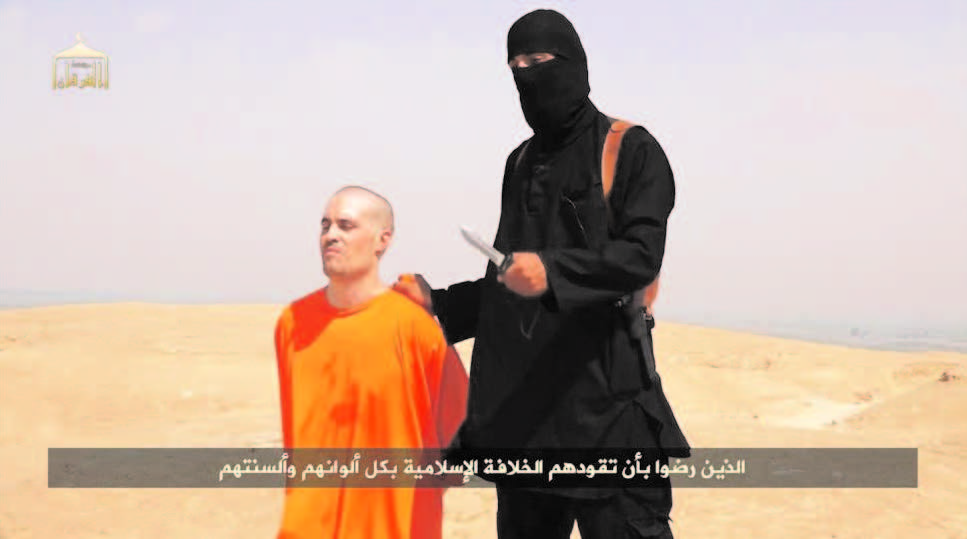
    LONDON (TIP): One if the world’s most wanted terrorist, code named “Jihadi John”, has been identified as a British national, a resident of west London. The masked ISIS killer, who has featured in several beheading videos of Western hostages, is Mohammed Emwazi.

    A Washington Post report citing friends, a leading think tank researching foreign jihadists and a British security official quoted by the New York Times identified Emwazi as being the executioner. The Guardian and the BBC in Britain also named him without citing sources. The International Centre for the Study of Radicalisation at King’s College in London said it believed the identity “to be accurate and correct”. But London’s Metropolitan Police dismissed the reports as “speculation” and said it was “not going to confirm his identity”.

    In his mid-20s, Emwazi is of Kuwaiti decent, and is believed to have been known to the British security services. He was a student of computer programming at the University of Westminster and was revealed to have been a regular at a mosque in Greenwich. The university confirmed that Emwazi had left six years ago, adding, “If these allegations are true, we are shocked and sickened.”

    He first appeared in a video in August 2014 when he beheaded American journalist James Foley. He was later thought to have played a major role in the beheadings of US journalist Steven Sotloff, British aid worker David Haines, British taxi driver Alan Henning and American aid worker Abdul-Rahman Kassig. He also appeared in a video with the Japanese hostages Haruna Yukawa and Kenji Goto, shortly before they were killed.

    In the videos posted online, he appears dressed all in black with only his eyes exposed, and wields a knife while launching tirades against the West.

    UK had earlier claimed that “Jihadi John” had been seriously injured in an air strike by US. He is named after Beatle John Lennon due to his British background.

    PM David Cameron had earlier said that he is keen to get his hands on “Jihadi John”. He said he wants “Jihadi John” alive, to “face justice for his crimes rather than be killed.”

    The Post quoted friends of Emwazi as saying they thought he had started to become radicalized after a planned safari in Tanzania following his graduation. They said Emwazi and two friends — a German convert to Islam named Omar and another man, Abu Talib — never made it to the safari.

    On landing in Dar es Salaam, in May 2009, they were detained by police and held overnight before eventually being deported, they said.

  • CAMERON CONDEMS CIA’S BRUTALITY

    CAMERON CONDEMS CIA’S BRUTALITY

    LONDON (TIP): America’s closest allies – Britain has strongly condemned the Central Intelligence Agency’s (CIA) use of brutality and deception to interrogate “terror suspects” post-9/11 attacks as made public by a Senate Intelligence Committee report. US president Barack Obama’s close friend – British prime minister David Cameron reacted strongly against the report in which committee chair Dianne Feinstein said the techniques used by the CIA were “far more brutal than people were led to believe”. Cameron said, “Let’s be clear: torture is wrong. Torture is always wrong.

    Those of us who want to see a safer, more secure world, who want to see this extremism defeated, we won’t succeed if we lose our moral authority, if we lose the things that make our systems work and our countries successful. So we should be very clear about that.” Cameron added: “Now, obviously after 9/11 there were things that happened that were wrong, and we should be clear about the fact that they were wrong. In Britain we have had the Gibson Inquiry, and that inquiry has now produced a series of questions that the Intelligence and Security Committee will look at.

    But I’m satisfied that our system is dealing with all of these issues, and I as Prime Minister have issued guidance to all of our agents and others working around the world about how they have to handle these issues in future. So I’m confident this issue has been dealt with from the British perspective, and I think I can reassure the public about that. But overall, we should be clear: torture is wrong.” Britain also expressed concern over the harsh CIA interrogation tactics which included threats and torture as detainees were forced to stay awake for over a week at a time, while several detainees suffered from “hallucinations, paranoia, insomnia and attempts at selfharm and self-mutilation”.

    The report revealed that two contract psychologists devised the CIA’s enhanced interrogation techniques and played a central role in the operation, assessments, and management of the CIA’s Detention and Interrogation Program. By 2005, the CIA contracted with two psychologists to develop, operate, and assess its interrogation operations. The psychologists’ prior experience was at the US Air Force Survival, Evasion, Resistance and Escape (SERE) school. Neither psychologist had any experience as an interrogator, nor did either have specialized knowledge of al-Qaida, a background in counterterrorism or any relevant cultural or linguistic expertise.

    On the CIA’s behalf, the contract psychologists developed theories of interrogation based on “learned helplessness” and developed the list of enhanced techniques that was approved for use against Abu Zubaydah and subsequent CIA detainees. The psychologists personally conducted interrogations of some of the CIA’s most significant detainees using these techniques. In 2005, the psychologists formed a company specifically for the purpose of conducting their work with the CIA. Shortly thereafter, the CIA outsourced virtually all aspects of the program. In 2006, the value of the CIA’s base contract with the company formed by the psychologists with all options exercised was in excess of $180 million; the contractors received $81 million prior to the contract’s termination in 2009. To produce the report, the Committee spent five years reading and analyzing more than 6.3 million pages of CIA documents.

    The review produced a more than 6,000 page review that was condensed into a 525-page summary the committee released on Tuesday. A glimpse of techniques details how the CIA employed sleep deprivation to wear down victims: keeping them awake for 180 hours usually standing or in stress positions. Other techniques included rectal rehydration, ice water baths and threatening detainees with threats to harm detainees’ families, including threats to “sexually abuse the mother of a detainee”. The Committee however concluded that the use of the CIA’s enhanced interrogation techniques was not an effective means of obtaining accurate information or gaining detainee cooperation.

  • In blow to PM Cameron, Britain’s anti-EU UKIP party wins second parliamentary seat

    In blow to PM Cameron, Britain’s anti-EU UKIP party wins second parliamentary seat

    GILLINGHAM (TIP): Britain’s anti-EU UKIP party won its second seat in parliament on November 21, defeating Prime Minister David Cameron’s Conservatives in a special election six months before what is shaping up to be a closely-fought national vote. Mark Reckless, the candidate for UKIP, the UK Independence Party, was a Conservative lawmaker until he defected in September. He won 16,867 votes or just over 42 percent of the vote in the south-eastern English constituency of Rochester and Strood. The Conservative candidate came second with 13,947 votes. Labour came third with 6,713 votes. The overall turnout was 50.67 percent.

  • HONG KONG PROTESTERS PLAN TO OCCUPY BRITISH CONSULATE

    HONG KONG PROTESTERS PLAN TO OCCUPY BRITISH CONSULATE

    HONG KONG (TIP): Hong Kong students plan to occupy roads surrounding the city’s British consulate in anger at a lack of support from London for their pro-democracy movement, as authorities ramp up pressure on protesters to go home. The new plan emerged as President Barack Obama said the United States had played no role in Hong Kong’s mass demonstrations, despite Chinese accusations that foreign forces are involved.

    The city’s government has urged protesters to leave the main rally sites that have brought parts of Hong Kong to a standstill for more than six weeks, with police authorised Monday to back up bailiffs charged with clearing barricades. Activists say they want to show their anger at Britain for not standing up to China over “breaches” of the agreement the two countries made before Hong Kong was handed back to China by Britain in 1997, designed to protect Hong Kong’s social systems and way of life. “We are angry at the way that the British government has for many years denied that China has actually breached the declaration by interfering with Hong Kong politics,” Anna-Kate Choi, the coordinator for the Occupy British Consulate group told AFP.

    “They have the responsibility to make sure that the joint declaration has been implemented properly and that democracy and the high degree of autonomy of Hong Kong has been protected,” Choi said. She said she hopes for a turnout of hundreds and “maybe even thousands”. The group is a new offshoot of the protest movement, Choi added, with around 10 organizers from all walks of life including a secondary school student. Protesters in Hong Kong are demanding fully free leadership elections for the semi-autonomous city in 2017. But Beijing has refused to back down on its insistence that candidates must be vetted by a loyalist committee.

    Bailiffs are expected to start a clearout operation in the next few days, with thousands of officers put on standby over the weekend, according to local media. But seemingly undaunted, activists have put up large posters around the protest areas announcing the consulate occupation on November 21 and a Facebook page for the event has more than 700 likes. The British consulate said they had no comment. President Obama met Chinese President Xi Jinping for talks in Beijing on Wednesday. “I was unequivocal in saying that the US had no involvement in fostering the protests that took place in Hong Kong,” Obama told reporters at a joint press conference. Xi said that the Occupy Central movement is illegal and that Beijing “firmly supports” the Hong Kong authorities in their efforts to control the situation. “Law and order must be maintained in any case, not only in Hong Kong but everywhere in the world,” he said.

    Hong Kong residents enjoy rights not seen on the mainland, including freedom of expression and assembly. However there are signs some of those rights are being curtailed, including physical and cyber-attacks on Hong Kong-based journalists critical of Beijing. Activists say a policy “white paper”, published by China in June, backtracked on the joint declaration by warning the city not to overstep the boundaries of its autonomy. Britain and China are signatories of the 1984 Sino-British Joint Declaration, an agreement that enshrines the “one country, two systems” principle and states that until 2047 “the current social and economic systems in Hong Kong will remain unchanged.” British Prime Minister David Cameron said he was “deeply concerned” about escalating protests in the former British colony after police used tear gas on protesters at the end of September. But activists feel that Britain is turning a blind eye and that China is eroding Hong Kong’s freedoms. Posters for the British consulate occupation bear the slogan: “China breaches the joint declaration, UK government respond now” with the prodemocracy movement’s umbrella symbol emblazoned with the British flag.

  • How internet is helping the ‘Islamic State’

    How internet is helping the ‘Islamic State’

    The ISIS has turned the internet into the most effective propaganda tool ever. Propaganda war of Islamic extremists is being waged on Facebook and internet message boards, not mosques

    Ever since the Pentagon started talking about Isis as apocalyptic, I’ve suspected that websites and blogs and YouTube are taking over from reality. I’m even wondering whether “Isis” – or Islamic State or Isil, here we go again – isn’t more real on the internet than it is on the ground. Not, of course, for the Kurds of Kobani or the Yazidis or the beheaded victims of this weird caliphate.

    But isn’t it time we woke up to the fact that internet addiction in politics and war is even more dangerous than hard drugs? Over and over, we have the evidence that it is not Isis that “radicalises” Muslims before they head off to Syria – and how I wish David Cameron would stop using that word – but the internet. The belief, the absolute conviction that the screen contains truth – that the “message” really is the ultimate verity – has still not been fully recognised for what it is; an extraordinary lapse in our critical consciousness that exposes us to the rawest of emotions – both total love and total hatred – without the means to correct this imbalance. The “virtual” has dropped out of “virtual reality”.

    Dangerous forum

    At its most basic, you have only to read the viciousness of internet chatrooms. Major newspapers – hopelessly late – have only now started to realise that chatrooms are not a new technical version of “Letters to the Editor” but a dangerous forum for people to let loose their most-disturbing characteristics. Thus a major political shift in the Middle East, transferred to the internet, takes on cataclysmic proportions. Our leaders not only can be transfixed themselves – the chairman of the US House Committee on Homeland Security, for example, last week brandishing a printed version of Dabiq, the Isis online magazine – but can use the same means to terrify us.

    Laptop and jihad

    Stripped of any critical faultline, we are cowed into silence by the “barbarity” of Isis, the “evil” of Isis which has – in the truly infantile words of the Australian Prime Minister – “declared war on the world”. The television news strip across the bottom of the screen now supplies a ripple of these expressions, leaving out grammar and, all too often, verbs. We have grown so used to the narrative whereby a Muslim is “radicalised” by a preacher at a mosque, and then sets off on jihad, that we do not realise that the laptop is playing this role.

    In Lebanon, for example, there is some evidence that pictures on YouTube have just as much influence upon Muslims who suddenly decide to travel to Syria and Iraq as do Sunni preachers. Photographs of Sunni Muslim victims – or of the “execution” of their supposedly apostate enemies – have a powerful impact out of all proportion to words on their own. Martin Pradel, a French lawyer for returning and now-imprisoned jihadists, last week described how his clients spent hours on the internet with a preference for YouTube and other social networks, looking at images and messages marketed by Isis. They did not – please note – go to mosques, and they drew apart from family and friends.

    A remarkable AFP report tells of a 15-yearold girl from Avignon who left for the Syrian war last January without telling her parents. Her brother discovered she led parallel lives, with two Facebook accounts, one where she talked about her normal teenage life, another where she wrote about her desire to go “to Aleppo to help our Syrian brothers and sisters”. Mr Pradel said the “radicalisation” was very quick, in one case within a month. It reminds me horribly of the accounts of American teenagers who lock themselves on to the internet for hours before storming off to shoot their school colleagues and teachers.

    Publicity for a caliphate

    Online, Dabiq – named after a Syrian town captured by the jihadis which will supposedly be the site of a future and apocalyptic (yes, that word again) battle against the Western crusaders – is a slick venture. But print it up and bind it – I have such a copy beside me as I write – and it appears very crude. There are photographs of mass executions which look more like pictures of atrocities on the Eastern Front in World War II than publicity for a new Muslim caliphate. There is the full text of poor James Foley’s last message before his beheading which – on paper – is deeply saddening. “The Dabiq team (sic) would like to hear back from its readers,” the editors say at the end, providing email addresses and advice to be “brief” because – they add, with perhaps unintentional humour – “your brothers are busy with many responsibilities and therefore will not have the time to read long messages.” But that’s the point, isn’t it? Be brief. Keep the length down. No aimless arguments or the letter may be “modified” (that’s the word the editors actually use in English).

    Failure of mainstream press

    I will not dwell here on the failure of the West’s “mainstream” press – another word I loathe – in defining Isis; Dabiq’s publishers have cleverly mimicked many of its faults. But those who are gripped by the messages of the internet – pictures of the chemical gas victims in Damascus last year have clearly had a tremendous influence – are not going to be swayed by us journos any more. In this new world, we can lose our heads, literally. But remember the internet. Clearly, Isis has.

    (The author is an English writer and journalist from Maidstone, Kent. He has been Middle East correspondent of The Independent for more than twenty years)

  • Anti-EU UKIP party wins first elected seat in British parliament

    Anti-EU UKIP party wins first elected seat in British parliament

    CLACTON-ON-SEA, ENGLAND (TIP): Britain’s anti-EU UK Independence Party won its first elected seat in parliament on October 9 by a wide margin. In the English seaside town of Clacton-on-Sea, UKIP candidate Douglas Carswell won 21,113 votes or 60 percent of the vote, giving him a majority of 12,404. Carswell, formerly the sitting parliamentarian from Prime Minister David Cameron’s Conservative party, had triggered the by-election by defecting to UKIP. Cameron’s party came second with 8,709 votes or 25 percent of the vote. Labour came third with 3,957 votes. Turnout was 51 percent. UKIP’s success highlighted the threat it poses to Cameron seven months before a national election and its ability to split the mainstream Conservative party’s vote casting a cloud over its re-election prospects in 2015.

  • BRITAIN’S PRIME MINISTER ON SURPRISE VISIT TO AFGHANISTAN

    BRITAIN’S PRIME MINISTER ON SURPRISE VISIT TO AFGHANISTAN

    KABUL (TIP): Britain’s Prime Minister David Cameron on October 3 pledged support for Afghanistan’s newly sworn-in president and the country’s new unity government, saying during a surprise visit to Kabul that Britain is committed to helping Afghans build a more secure and prosperous future.

    Cameron was the first of world leaders to meet Ashraf Ghani Ahmadzai, Afghanistan’s second elected president, since his inauguration on Monday. The two had a meeting in Kabul on Friday morning and later held a joint press conference.

    “Britain has paid a heavy price for helping to bring stability to this country,” Cameron said, paying tribute to the 453 British servicemen and women who died while serving in Afghanistan.

    “An Afghanistan free from al-Qaida is in our national interest — as well as Afghanistan’s,” he said. “And now, 13 long years later, Afghanistan can — and must — deliver its own security.”

    But, “we are not leaving this country alone,” he added. “In Britain you will always have a strong partner and a friend.”

    Cameron arrived a day after visiting British pilots in Cyprus who are taking part in air strikes on Islamic State group targets in Iraq. British warplanes have been conducting combat missions over

    Iraq since Saturday, after Britain joined the US-led coalition of nations that are launching air strikes against the militants.
    “The work of defeating Islamist extremist terror goes on elsewhere in the world,” Cameron said in Kabul. “And because this threatens us at home, we must continue to play our part.”

    Ghani Ahmadzai thanked the British for their sacrifices in Afghanistan, especially the families who lost loved ones in the war. “They stood shoulder to shoulder with us and we will remember,” he said.

    Ghani Ahmadzai’s inauguration this week marked the start of a new era for his country, with a national unity government poised to confront a resilient Taliban insurgency.

    A day after he was sworn in, his administration signed a security agreement allowing the United States to keep about 9,800 troops in the country to train and assist Afghan national security forces.

    A separate agreement was signed with Nato, outlining the parameters of 4,000 to 5,000 additional international troops— mostly from Britain, Germany, Italy and Turkey — to stay in a non-combat role after Nato’s combat mission ends on Dec. 31.

    Former President Hamid Karzai had refused to approve the deal, and the results of a June presidential runoff to replace Karzai took months to resolve, finally coming to a conclusion with Ghani Ahmadzai’s swearing in and the establishment of a national unity government.

    Ghani Ahmadzai’s former rival for the presidency, Abdullah Abdullah, was appointed the country’s new chief executive, a post akin to prime minister.

    Cameron lauded both Afghan men, saying they put national interests ahead of “personal power” when they struck a power-sharing deal. “I look forward to working with both of you in the years ahead,” he said. Ghani Ahmadzai also praised his former rival, saying the two of them “have managed a first, which is really rare in the Muslim world — a democratic transfer of authority, not power.”

  • SCOTLAND REFERENDUM: In a Close Vote Scotland Rejects Independence from Britain

    SCOTLAND REFERENDUM: In a Close Vote Scotland Rejects Independence from Britain

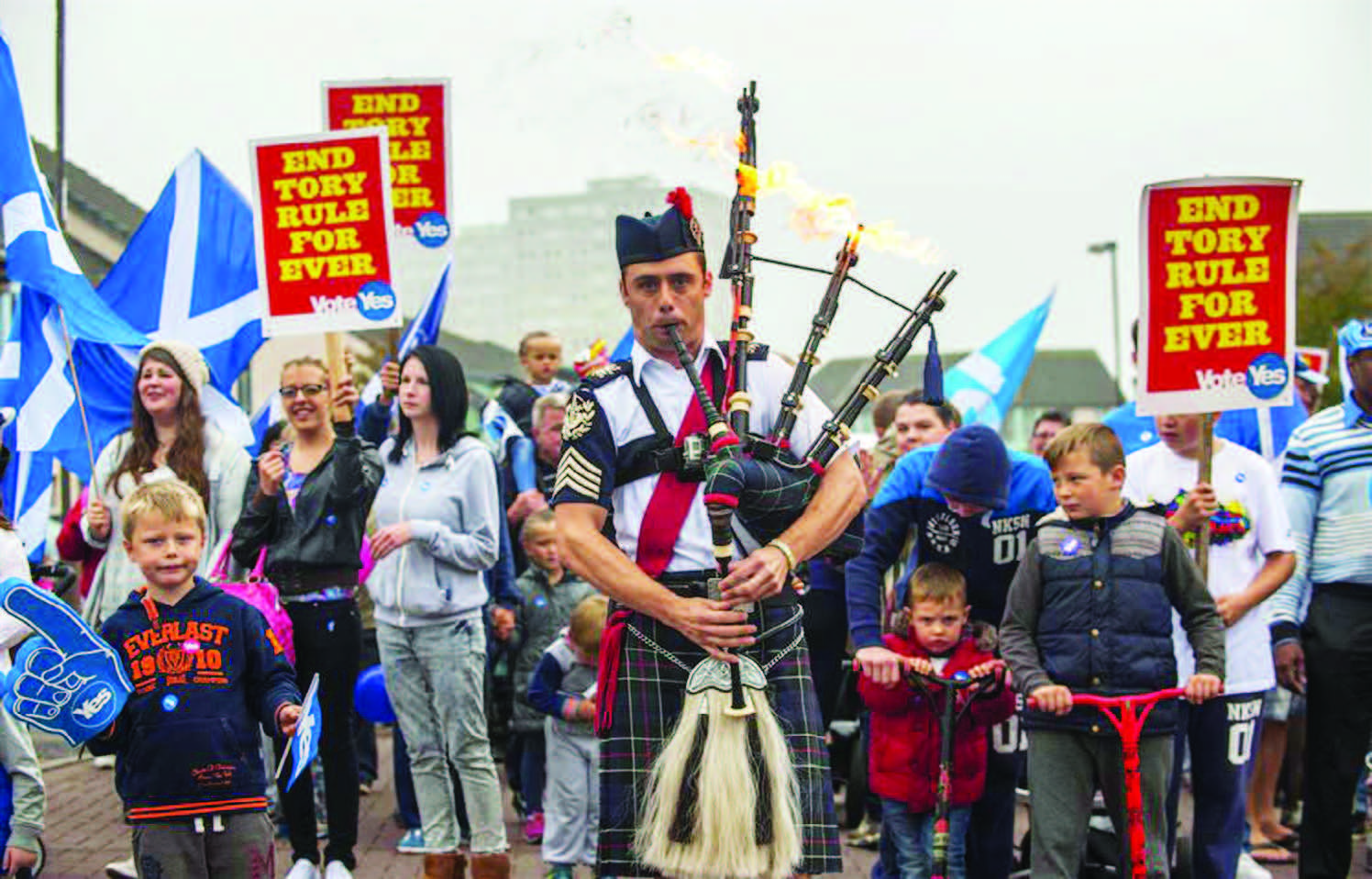
    EDINBURGH (TIP): Voters in Scotland rejected independence from Britain in a referendum that had threatened to break up a 307-year union, according to projections by the BBC and Sky early Friday, September 19. The outcome was a deep disappointment to the vocal, enthusiastic pro-independence movement led by the Scottish first minister, Alex Salmond, who had seen an opportunity to turn a centuries-old nationalist dream into reality, and forced the three main British parties into panicked promises to grant substantial new power to the Scottish Parliament.

    The decision spared Prime Minister David Cameron of Britain a shattering defeat that would have raised questions about his ability to continue in office and diminished his nation’s standing in the world. But while the result preserved a union molded in 1707, it left Mr. Cameron facing a backlash among some of his Conservative Party lawmakers. They were angered by the promises of greater Scottish autonomy that he and other party leaders made just days before the vote, when it appeared that the independence campaign might win.

    Some lawmakers called for similar autonomy for England itself, and even the creation of a separate English Parliament. The outcome headed off the huge economic, political and military imponderables that would have flowed from a vote for independence. But it also presaged a looser, more federal United Kingdom. And it was unlikely to deter Scottish nationalists from trying again. The passion of the campaign also left Scots divided, and Mr. Salmond was expected to call later on Friday for reconciliation after a vibrant exercise in democracy that had episodes of harshness and even intimidation.

    President Obama had made little secret of his desire that the United Kingdom remain intact. Indeed, Britain had long prided itself on a so-called special relationship with the United States, and Britain’s allies had been concerned by, among other things, Mr. Salmond’s vow to evict Britain’s nuclear submarine bases from Scotland, threatening London’s role in Western defenses.

    As the vote approached, the margin between the two camps narrowed to a few percentage points, and at one point, the “yes” campaign seemed to have the momentum. That was enough to alarm Britain’s political leaders from the three main parties in the Westminster Parliament in London. In a rare show of unity, they promised to extend significant new powers of taxation to Scotland, while maintaining a formula for public spending that many English voters saw as favoring Scots with a higher percapita contribution.

  • Leaders: US, UK will ‘not be cowed’ by militants

    Leaders: US, UK will ‘not be cowed’ by militants

    NEWPORT, WALES (TIP): Faced with a mounting militant threat in the Middle East, US President Barack Obama and British Prime Minister David Cameron declared on Thursday that their nations will “not be cowed” by extremists who have killed two American journalists. “We will be more forthright in the defense of our values, not least because a world of greater freedom is a fundamental part of how we keep our people safe,” the leaders wrote in a joint editorial in the Times of London.

    Their comments come as world leaders gather at a golf resort in Wales for a high-stakes NATO summit. While the official agenda will focus on the crisis in Ukraine and the drawdown of the NATO combat mission in Afghanistan, the rise of the Islamic State group in Iraq and Syria will dominate discussions on the sidelines of the summit. The militants have claimed responsibility for murdering two American journalists, releasing gruesome videos of their beheadings.

    Both the US and Britain are deeply concerned about the potential threat to their homelands that could come from the foreign fighters who have joined the violent Islamic State group. Cameron on Monday proposed new laws that would give police the power to seize the passports of Britons suspected of having traveled abroad to fight with terrorist groups. Obama and Cameron appear to suggest that NATO should play a role in containing the militants, but were not specific in what action they would seek from the alliance.

    The two leaders were to visit with students at a local school Thursday morning before joining their counterparts from France, Germany and Italy to discuss the crisis in Ukraine. New Ukrainian President Petro Poroshenko was also to join the discussion in a show of Western solidarity with his embattled nation. Ukraine and Russia have been locked in a standoff for months, with pro- Moscow forces stirring instability in eastern Ukrainian cities. On the eve of the NATO summit, Russia and Ukraine said they were working on a deal to halt the fighting, but Western leaders expressed skepticism, noting it wasn’t the first attempt to end the deadly conflict.

    NATO leaders are expected to agree this week on the creation of a rapid response force that would set up in nations in the alliance’s eastern flank to serve as a deterrent to Russia. Baltic nations and others in the region fear Moscow could set its sights on their borders next. “We must use our military to ensure a persistent presence in Eastern Europe, making clear to Russia that we will always uphold our Article 5 commitments to collective self-defense,” Obama and Cameron wrote.

    Under Article 5 of the NATO charter, an attack on one member state is viewed on an attack on the whole alliance. Obama reiterated his support for that principle Wednesday during a visit to Estonia, one of the newer NATO members set on edge by Russia’s provocations.

  • UK to not give in to ISIS demands: Cameron

    UK to not give in to ISIS demands: Cameron

    LONDON (TIP): UK Prime Minister David Cameron on September 3 announced his plans to build a coalition for a full-fledged military-led intervention against ISIS in Iraq even as the group threatened to kill a British hostage. Cameron said, “A country like ours will not be cowed by these barbaric killers.” ISIS said the Briton who has family in Scotland would be killed unless US air strikes in Iraq were halted.

    Relatives have asked the media not to name him. Britain’s foreign secretary Philip Hammond said the seizure of the British hostage did not make airstrikes on the militants more likely, but said he wasn’t ruling that option out. “It doesn’t make any difference at all to our strategic planning,” he said. “If we judge that airstrikes could be beneficial … then we will certainly consider them.

    But we have made no decision to do so at the moment.” Making a statement in the House of Commons, Cameron said: “If they think we will weaken in the face of their threats, they are wrong. It will have the opposite effect. We will be more forthright in defence of the values – liberty, under the rule of law, democracy and freedom – that we hold dear.” Cameron said, “I am sure the whole House and the whole country will join with me in condemning the sickening and brutal murder of another American hostage and share our shock and anger that it again appears to have been carried out by a British citizen.

    All our thoughts are with the British hostage and his family. Their ordeal is unimaginable.” “Let me be very clear: this country will never give in to terrorism. Our opposition to ISIS will continue, at home and abroad. It is important that we are clear about the nature of the threat we are facing. It makes no distinction between cultures, countries and religions.

    There is no way to appease it. The only way to defeat it is to stand firm, and to send a very straightforward message,” he added. “I think what has happened to the two hostages so far and what may happen again in the future is utterly abhorrent and barbaric. These people need to understand we will not waver in our aim of defeating terrorism,” the PM said

  • Nigerial singer offers her virginity in exchange for abducted girls

    Nigerial singer offers her virginity in exchange for abducted girls

    A total of 276 girls were taken from the Christian northeastern town of Chibok by the rebels in April. The majority of the schoolchildren remain missing, despite international pressure for their safe return — including the celebrity-endorsed #BringBackOurGirls social media campaign backed by Michelle Obama and David Cameron, among others. However, the 23-year-old musician and actress from the country’s Imo State, who is also a UN Ambassador of Peace, took the protest to the next extreme.

    “It is just unfair. They are too young. I wish I could offer myself in exchange,” she told Nigerian publicationVanguard. “They are between 12 and 15 year old girls for Christ sake. I am older and more experienced,” she said. “Even if 10 to 12 men have to take me every night, I don’t care. Just release these girls and let them go back to their parents,” the singer added. Her comments received a mixed reaction via social media. Some fans praised her offer as “brave” and branded her a “hero”. Others, however, interpreted her bold statement as an opportunistic publicity stunt.

  • UK’S INQUIRY ON IRAQ WAR “UNBLOCKED”

    UK’S INQUIRY ON IRAQ WAR “UNBLOCKED”

    LONDON (TIP): The long-delayed results of Britain’s inquiry into the Iraq war came a step closer to publication on May 29 after a deal was reached on how to use notes and phone call records between then Prime Minister Tony Blair and US President George W Bush. The investigation, called the Chilcot Inquiry, was set up by former Prime Minister Gordon Brown to learn lessons from the 2003 US-led invasion of Iraq and its aftermath. It started its work in 2009. The inquiry had hoped to deliver its verdict by the end of 2011 or in early 2012.

    However, five years after it was launched it has yet to report because of problems related to the release of confidential documents. On Thursday, the inquiry announced a deal had been reached between it and the British government on the disclosure of communications between Blair and Bush, previously cited as one of the big stumbling blocks to publication of its report.

    The inquiry’s interest in their communications focuses on how openended Blair’s support for Bush and the war was. Blair, who has repeatedly denied blocking the release of the communications, has said that he stands by his actions. “Agreement has been reached on the principles that will underpin disclosure of material from Cabinet-level discussions and communications between the UK prime minister and the president of the United States,” the inquiry said in a statement.

    “Detailed consideration of material requested by the inquiry from communications between the prime minister and the president of the United States has now begun. It is not yet clear how long that will take.” Gists and quotes The material that the inquiry has requested covers “gists and quotes” from 25 notes from Blair to Bush and more than 130 records of conversations.

    The inquiry is not seeking to use material that reflects Bush’s views, it said. As Britain comes closer to a national election in May 2015 contested by David Cameron’s Conservative party and the opposition Labour party — once led by Blair — the timing of the report’s release has become increasingly politically charged. Anticipating that it could be critical of Blair and hence taint the party he led to three election victories by association, some Labour supporters are uncomfortable about the prospect of it coming out before the election.

    The inquiry heard from senior politicians including Blair, who appeared twice, as well as former diplomats and military commanders. When it does report, much of the focus will be on its conclusions about Blair’s decision to commit 45,000 British troops to the invasion and on the legitimacy of a war in which 179 British soldiers were killed. Critics have long argued Blair deliberately misled the public over the reason he gave for war — former Iraqi President Saddam Hussein’s illegal weapons of mass destruction — which were never found.

  • UK teen with cancer dies after raising $5m

    UK teen with cancer dies after raising $5m

    LONDON (TIP): A British teenage cancer sufferer who raised more than $5 million for charity after his fundraising campaign went viral on social media has died, his family said on May 14. Stephen Sutton, 19, died in his sleep on May 14 morning, his mother Jane said on Facebook. Sutton, who was first diagnosed with bowel cancer four years ago, raised the money for the Teenage Cancer Trust charity and won the support of numerous celebrities and politicians, including PM David Cameron. “My heart is bursting with pride for my courageous son who passed away peacefully in his sleep,” Jane Sutton wrote to her son’s 900,000 followers on Facebook.

  • At 7 Race Course Road, PMO, it’s time to pack, catalogue

    At 7 Race Course Road, PMO, it’s time to pack, catalogue

    NEW DELHI (TIP): There is a lot of activity at the Prime Minister’s Office (PMO) and at 7, Race Course Road these days, albeit of a different kind. “We’re busy in packing,” said an official at the PMO, with eight days left for Prime Minister Manmohan Singh to demit office.

    Books, gifts and other articles are being carefully sorted, catalogued and packed away … “When the prime minister demits office, he wants to leave everything in proper order for his successor,” a PMO official said. Prime Minister Manmohan Singh had announced his retirement earlier this year.

    At 7 Race Course Road, which has been the official residence of Prime Minister Manmohan Singh for a decade, the family members are busy in packing articles to be moved to his new retirement residence at 3 Motilal Nehru Marg, where former Delhi chief minister Sheila Dikshit used to stay. All gift items received by the Prime Minister or members of the PMO, like wall hangings, paintings, vases, and other artifacts and a large number of books are being systematically catalogued and put away.

    The gifts the Prime Minister received, including many from foreign dignitaries, are to be catalogued and kept at the ‘toshakhana’, or treasury. The list would be available on the ministry of external affairs website. Among the articles that Prime Minister Manmohan Singh received is a bat gifted by British Prime Minister David Cameron. While handing the bat to Manmohan Singh, Cameron said it was a memento of their friendship. “You will not remain in power, and nor will I remain in power.

    This will be a rememberance of our frienship,” Cameron had said smilingly as he handed over the gift, the PMO source recounted. “All books at the prime minister’s house are being catalogued. He received hundreds and hundreds of books … What he wants to take and what he wants to leave behind at the PMO are all being catalogued,” the official added, saying Manmohan Singh, who never stopped being an academic, was giving particular attention to the books he was going to take with him to read. Among the gifts are also six tea sets received as gifts from abroad. They were used to serve tea to guests at the prime minister’s residence. The tea sets will remain with the PMO.

  • Court rules against gag on ‘frank’ letters from UK’s Prince Charles

    Court rules against gag on ‘frank’ letters from UK’s Prince Charles

    LONDON (TIP): The possible publication of potentially embarrassing letters written by British heir-to-thethrone Prince Charles moved a step closer on March 12 when a gagging order on them was declared unlawful by a court.

    The 27 letters were written by Charles to members of the previous Labour government and have been described by Attorney General Dominic Grieve as “particularly frank.” The 65-year-old prince has long held strong views in areas like the environment and urban planning and has been criticised for apparently using his unelected position to persuade ministers to change official policies through private letters, nicknamed “black-spider memos” because of his scrawled handwriting.

    Grieve, the government’s chief legal adviser, has blocked an attempt by the left-leaning Guardian newspaper to have the letters made public under freedom of information laws. He has said that any perception that Charles had disagreed with the previous government of Tony Blair “would be seriously damaging to his role as future monarch because, if he forfeits his position of political neutrality as heir to the throne, he cannot easily recover it when he is king”.

    On March 12 the Appeal Court ruled that Grieve’s ban on publication was unlawful but gave him permission to appeal to the Supreme Court. Grieve’s office confirmed it would indeed be appealing. “We are very disappointed by the decision of the Court,” it said in a statement. “We will be pursuing an appeal to the Supreme Court in order to protect the important principles which are at stake in this case.”

    Prime Minister David Cameron is backing Grieve’s efforts to ban publication. “It is important to preserve confidentiality of communications between the monarch and the heir to the throne,” his spokesman said on Wednesday. “(Cameron) very much supports the case the government has been making in the courts and we shall continue to make that case.” The Guardian welcomed Wednesday’s ruling, adding in a statement: “The public has a right to know if the heir to the throne is advocating policy or promoting causes to government ministers.” A spokesman for Prince Charles declined to comment.

  • After floods, 160kmph gales lash Britain

    After floods, 160kmph gales lash Britain

    LONDON (TIP):
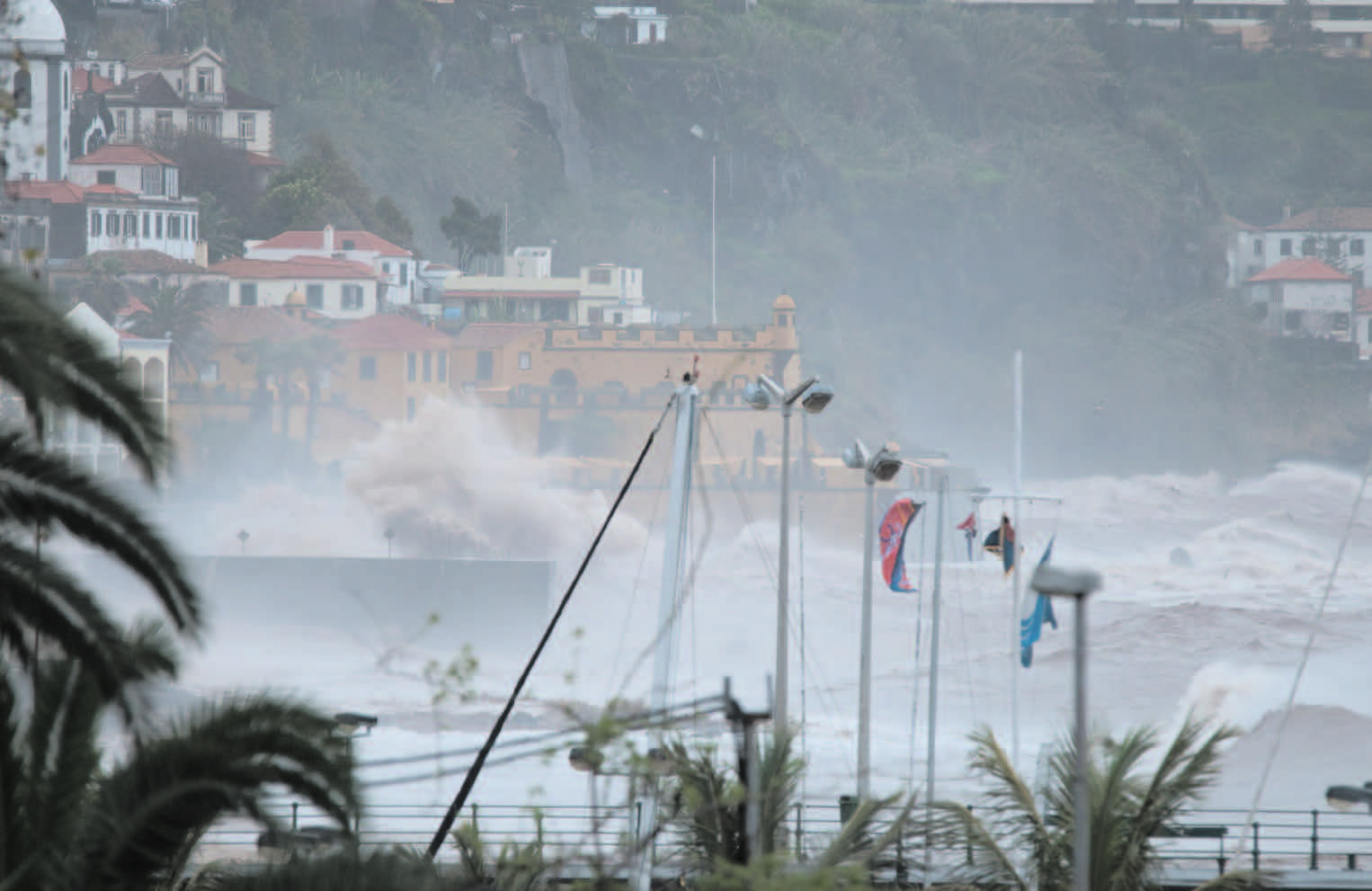
    Britain has announced a “red warning” – informing public and emergency responders of “severe or hazardous weather which has the potential to cause danger to life or widespread disruption”. Large sections of the country are flooded and the Met Office on Wednesday announced that winds to over 100mph have been recorded as a huge storm batters the UK. Over 16 fresh flood warnings have already been issued for Berkshire, Surrey and Somerset. The Met Office said a wind gust of 108mph was recorded at Aberdaron, North Wales – the strongest in recent storms. The Met Office said, “Winds of this strength can cause widespread structural damage, bringing down trees and also leading to loss of power supplies.”

    They advised people to change their travel plans during the storm-force winds. Strong winds have left 21,000 people without power. The Environment Agency warned that the Thames was set to rise in places to its highest levels in more than 60 years causing severe disruption to communities in Windsor, Maidenhead and Surrey. The Environment agency said, “Windsor, Maidenhead and communities in Surrey are warned to expect severe disruption as Thames is expected to rise in places to highest levels for over 60 years. With further rainfall forecast for today and on Friday and Saturday, the risk of flooding is likely to increase over the next few days.

    There are currently 14 severe flood warnings in force for the Thames Valley area.” “Around 50 homes along the Thames Valley were flooded overnight bringing the total number of homes flooded since Friday 29 January to 1,135. During this time over 181,000 homes have been protected and over 200,000 homes have been sent a flood warning following the wettest January since 1766,” it added. Prime Minister David Cameron announced a comprehensive package of new measures to help businesses and farmers hit hard by the deadly floods.

    The measures include £5,000 repair and renew grant for all affected homeowners and businesses, 100% business rate relief for 3 months for all businesses affected by the flooding, £10 million fund for farmers suffering water-logged fields to help restore it to farmable land as quickly as possible and a total commitment in excess of £750 million from the major banks to provide financial support to business and individual customers affected by the floods.

    The PM toured some areas most affected by floods and storm damage. British environment minister Eric Pickles said December saw the highest surge on the East Coast for 60 years while January has been the wettest since George III was on the throne. “There is damage to transport infrastructure and sea defences, including the railway line at Dawlish, as well as to power networks,” he said.

    John Curtin from the Environment Agency said, “Following the wettest January on record for England successive bands of heavy rain are forecast, lasting into the weekend. With further river and coastal flooding expected this week we have teams working around the clock to protect homes and communities and over 122,600 properties have been protected over the past three days.”

  • Britain deploys Royal Marines to help with floods

    Britain deploys Royal Marines to help with floods

    LONDON (TIP): Britain deployed Royal Marines on Thursday to help with devastating floods after what officials said was likely the worst winter rainfall in 250 years.

    Around 40 marines were helping reinforce flood defences near Taunton in Somerset in southwest England, parts of which have been under water for a month. Local police said the marines would stack nearly 1,000 sandbags along a 1-2 kilometre stretch of wall near the River Tone, which has been swelled by heavy rain — more of which was expected overnight.

    Prime Minister David Cameron’s government has faced criticism for its handling of a crisis that has left swathes of the country under water, with a key railway line washed away. Several people had to be rescued from deluged homes on February 6.. More storms are expected this weekend.

    Britain’s Communities Secretary Eric Pickles said the government would make an extra £30 million ($48 million, 36 million euros) available for emergency repairs, on top of £100 million announced by Cameron on Wednesday. Pickles said the winter was the wettest since King George III was on the throne, from 1760-1820, and the flood victims had “literally been through hell and high water”.

    The Meterological Office confirmed in a statement that for southern England, “regional statistics suggest that this is one of, if not the most, exceptional periods of winter rainfall in at least 248 years”. Parts of the region received five months of rainfall between December 12 and January 31.

    The rainy winter has set records tumbling, being the wettest combined period for December and January across the United Kingdom since 1910, the Met Office said. It was also the windiest December since 1969, based on the occurrence of winds over 111 kilometres per hour (69 miles per hour). For England alone it was the wettest December to January since 1876-1877 and the second wettest since rainfall records began in 1766.

    “Nothing happened for so long” Firefighters in Somerset and the neighbouring county of Devon rescued 14 people from homes and stranded vehicles late Wednesday and early Thursday. Rescuers in inflatable boats reached four adults and three children from one house after a river burst its banks in Stoke St Gregory, a village that Prince Charles visited on Tuesday, a fire brigade spokesman said. The heir to the throne said on his trip that the “tragedy is that nothing happened for so long”.

    Cameron personally took charge of the government’s response on Wednesday after facing a growing tide of criticism for being too slow to aid stricken communities. “The Environment Agency has ordered specialist pumping equipment to clear roads, in addition to the extra pumps we have already sent, and they will keep looking at all options for pumping and dredging,” Cameron said after chairing a meeting of the government’s emergency response committee Cobra.

    Across the English Channel, France’s western tip jutting out into the Atlantic was placed on highest alert for flooding as tides wreaked havoc. Finestere, a department of coastal Brittany, was placed on red flooding alert and braced for two of its rivers, the Morlaix and the Laita, to burst their banks as a result of heavy rain forecast. The warning was issued by Meteo- France shortly after the agency placed 29 departments from Brittany to the Paris region on a second-tier orange alert.

    Recent days have seen huge waves, gale-force winds and torrential rains combine to batter sea defences from the Basque country on France’s border with Spain. The storms sent a Spanish cargo ship crashing into a sea wall at the French port of Bayonne on Wednesday, splitting it clean in two. In Spain, roofs were torn off and planes overturned as 130km/h winds and eight-metre waves battered the northern coast, causing millions of euros worth of damage.

  • BRITAIN SAYS IT ADVISED INDIA ON 1984 OPERATION BLUE STAR

    BRITAIN SAYS IT ADVISED INDIA ON 1984 OPERATION BLUE STAR

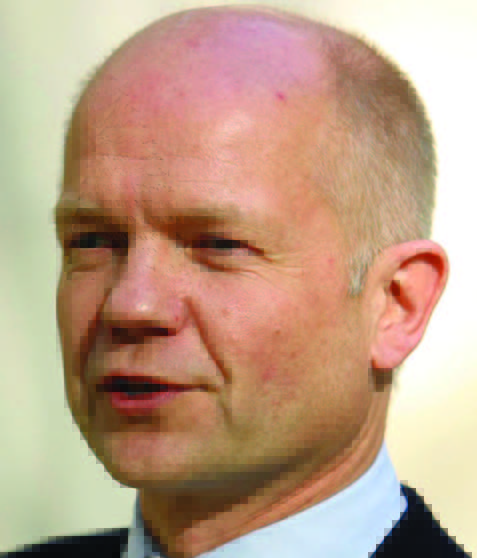
    LONDON (TIP): British military’s role in the 1984 Operation Blue Star was “limited” and “purely advisory”, UK’s foreign secretary William Hague told parliament. Hague said the UK played no role in the actual operation that took place at the Golden Temple in Amritsar.

    In a statement on the conclusion of an inquiry into alleged British assistance provided by then British Prime Minister Margaret Thatcher, Hague said, “The report concludes that the nature of the UK’s assistance was purely advisory, limited and provided to the Indian government at an early stage in their planning.”

    An analysis of nearly 200 files and 23,000 documents has confirmed that a “single British military adviser” travelled to India between February 8 and 19, 1984, to advice Indian intelligence services on contingency plans that they were drawing up for operations in the temple complex, including ground reconnaissance of the site.

    “The cabinet secretary’s report includes an analysis by current military staff of the extent to which the actual operation in June 1984 differed from the approach recommended in February by the UK military adviser. Operation Bluestar was a ground assault, without the element of surprise, and without a helicopter-borne element,” Hague said. “The cabinet secretary’s report concludes that the UK military officer’s advice had limited impact on Operation Blue Star.

    This is consistent with the public statement on 15th January this year by the operation commander, Lt Gen Brar, who said that ‘no one helped us in our planning or in the execution of the planning’,” he said. Hague said this conclusion is also consistent with an exchange of letters between former Indian Prime Minister Indira Gandhi and Thatcher on June 14 and 29, 1984, discussing the operation.

    While admitting that some military files covering various operations were destroyed in November 2009, as part of a routine process undertaken by the ministry of defence at the 25-year review point, copies of at least some of the documents in the destroyed files were also in other departmental files. The report by cabinet secretary Jeremy Heywood includes the publication of the relevant sections of five extra documents that shed light on this period, but which would not normally have been published, the minister told MPs.

    “The adviser had made clear that a military operation should be put into effect only as a last resort when all attempts of negotiation had failed. It recommended the inclusion in any operation an element of surprise and the use of helicopter forces in the interests of reducing casualties and bringing about a swift resolution,” Hague said. “This giving of military advice was not repeated…and the cabinet secretary found no evidence of any other assistance such as equipment or training,” he added.

    British Prime Minister David Cameron had ordered the inquiry after documents released under the 30-year declassification rule here implied British SAS commanders had advised the Indian government as it drew up plans for Operatio Blue Star in February 1984. Sikh groups in the UK have criticised the scope of the inquiry and claim it focuses on a very “narrow period”.

    http://articles.timesofindia.indiatimes.co m/images/pixel.gif Britain’s only Sikh MP, Paul Uppal, spoke in the Commons on Tuesday to stress that the report makes clear that the UK played no “malicious” role in Operation Blue Star and called on the government to work with Sikh groups and the Indian High Commission in the UK to work towards a “process of truth and reconciliation so that the community can finally begin to feel a sense of justice”.

    A few months after Operation Blue Star, then Indian Prime Minister Gandhi was assassinated by her Sikh bodyguards in an apparent revenge attack. The row over how much the British knew and helped in the incidents 30 years ago threatens to derail Conservative party attempts to attract Sikh voters, who could play a major role in marginal seats in London and Leicester in any election. Hague updated MPs on the extent of Thatcher’s involvement in helping plan the operation.

    Sikh groups in the UK criticised the scope of the inquiry into Britain’s role in the operation. In a letter to Cameron, Sikh Federation UK chairman Bhai Amrik Singh said: “We are dismayed the terms of the review were only formally made available almost three weeks after the review was announced and only days before an announcement of the results of the review are expected in parliament.

  • Raj links: British PM’s ancestry traced to Kolkata

    Raj links: British PM’s ancestry traced to Kolkata

    LONDON (TIP): British PM David Cameron’s ancestry has been traced to India, specifically Kolkata. This comes just months after Prince William was found to have Indian blood in him and a direct descendent of an Indian woman.

    An exhaustive analysis into the Cameron’s ancestry has revealed that he and comedian Al Murray are cousins connected through William Makepeace Thackeray, the author of Vanity Fair. William was born in Kolkata on 18 July 1811. He was sent to England in 1815 after the death of his father.

    Speaking exclusively to TOI, Myko Clelland, family historian said, “Documents from the British Raj that were made available online on Wednesday by the British Library shows that both Cameron and Murray’s family were very high up in the East India Company and for generations the two families administered India. Records then show that they inter married and the blood lines mixed making Murray and Cameron distant cousins.”

    Records published online by leading family history organization “Findmypast” shows that Cameron is William’s first cousin five times removed through his direct ancestor John Talbot Shakespear. Murray is William’s great great great grandson. Shakespear is Cameron’s great great great great grandfather and William’s uncle. He was a senior civil servant with the East India Company. William wrote about East Indian civil servants and colonial adventurers.

    “His characters may have been inspired by Cameron’s relatives,” the experts said. His father Richmond Thackeray was born in South Mimms, Hertfordshire and travelled to India in 1798 aged 16 to work as a writer (civil servant) with the East India Company. He later rose to the position of secretary to the Board of Revenue. His mother Anne Becher was the second daughter of John Harman Becher who was also a secretary (writer) for the East India Company.