Tag: e-Commerce

  • Business leaders urge G20 to push digital economy, e-commerce

    ISTANBUL (TIP): An influential group of business leaders have urged the G20 to improve the global trade system for the emerging digital economy as well as focus on reforms to ensure strong and sustainable growth.

    The group known as B20, met in Turkey on the sidelines of the G20 sherpas meeting and discussed the recommendations which would be finalised for the G20 leaders meeting in November. It called for eliminating data flow restrictions and softening regulations on data privacy to decrease the cost of doing business. It said customs regimes must be harmonized to ensure that bottlenecks to e-commerce are minimized and transactions are made more predictable.The G20 comprises the largest and emerging economies, which account for 85% of global GDP and 75% of world trade. It comprises the US, the UK, the European Union, India, Argentina, Australia, Brazil, Canada, China, France, Germany, Indonesia, Italy, Japan, South Korea, Mexico, Russia, Saudi Arabia, South Africa and Turkey.

    “Harmonize customer protection rules, specifically on core issues relating to purchase processes, to better facilitate e-commerce efforts and eliminate costs and administrative difficulties,” it said in its draft recommendations.

    According to estimates, the digital economy is expected to contribute $4.2 trillion or more than 5% of GDP for the G20 countries in 2016 and is growing at 10% annually. Cross border e-commerce accounts for 10-15% of total e-commerce volumes, depending on the region. By 2025, annual global cross-border e-commerce revenues could swell to between $250 billion and $350 billion-up from about $80 billion now, according to Mckinsey Global Institute and BCG analysis. The B20 has six task forces on infrastructure and investment, trade, financing and growth, anti-corruption, employment and small and medium enterprises and entrepreneurship. Each of the task forces made specific recommendations to improve business prospects within the G20, which would help lift GDP growth.

    It called for reaffirming the commitment to rollback of existing protectionist measures, particularly non-tariff barriers and said the G20 must start taking distinct actions by eliminating localization barriers to trade as a first step. Numerous reports show that G20 governments are not adhering to their standstill and roll back commitments with regards to regular tariff barriers, the B20 said.

    “Non-tariff barriers can have a much greater negative impact on GDP growth than tariffs. The benefits of reversing all barriers introduced between 2008 and 2013 is at least $460 billion increase in global exports, a $423 billion increase in global GDP and 9 million jobs supported worldwide,” it said. The B20 strongly backed the creation of an enabling environment for increased flow of private funds into more sustainable infrastructure. It said there is a need to increase the number of projects developed through public-private partnerships (PPPs) and build capabilities of governments to deliver PPPs.

  • It’s Flipkart, Snapdeal vs Amazon, eBay

    It’s Flipkart, Snapdeal vs Amazon, eBay

    NEW DELHI (TIP): The government on Thursday began consultations on FDI in B2C e-commerce amid a sharp divide between Indian and foreign players. While domestic companies such as FLIPKART and Snapdeal opposed FDI during a meeting by commerce and industry minister Nirmala Sitharaman, foreign players such as Amazon and eBay made a strong case for it.

    “We have always maintained that opening up this sector to FDI will be good for consumers and Indian businesses as it will allow us to partner with local manufacturers to source products not carried by other sellers on the marketplace, and support the Make in India vision,” said an Amazon India spokesperson.

    Around 60 players from the industry, including representatives of Amazon India, Snapdeal, Ikea, Japan Plus, eBay and FLIPKARTattended the meet.

    Domestic e-tailing companies fear it will allow global giants such as Amazon to bring its inventory-based model here, which works on the principle of buying goods in bulk at a low price from small businesses and selling them at a discount to consumers. Currently, e-tailers operate through a marketplace model where independent sellers use their websites to reach out to customers.

    “FDI in e-commerce will not have a good impact on the Make in India model. It will allow Amazon to squeeze and manipulate small businesses and flood the mar mar Chinese goods. The e-commerce industry has already received around $9 billion FDI. It has created thousands of jobs. What is the point of changing the policy now,” said an executive with a large Indian e-tailing company.

    At present, 100% FDI is allowed in B2B e-commerce space, which helps global retailers such as Walmart operate cash-and-carry business. A Snapdeal spokesperson said, “The government must tread this issue with caution to ensure that there is no adverse impact on the growth of MSMEs in the country.”

    A CII spokesperson said, “E-commerce in India is at relatively nascent stage and the market is yet to attain full maturity level. While CII is favourably inclined towards 100% FDI in B2C route, the sector should be given some time to come to a level where it can compete globally.”

    FLIPKART also flagged tax issues at the meeting, where Sitharaman said it was only the first in a series of consultations and it will take more such meetings to come to a conclusion about FDI in B2C e-commerce.

  • Indian tech start-ups woo talent back from America – Offer massive perks

    Indian tech start-ups woo talent back from America – Offer massive perks

    India’s IT industry has long been seen as a back-office backwater, even by its own engineers who started moving abroad in their droves in the 1970s. After losing top engineering talent for years to America’s tech heartland of Silicon Valley, India is luring them back as an e-commerce boom sparks a thriving start-up culture, unprecedented pay, and perks including free healthcare for in-laws.

    The e-commerce sector, led by companies such as Flipkart and Snapdeal, attracted more than $5 billion of investment last year, Morgan Stanley says, compared with less than $2 billion in 2013.

    That growth is fuelling the hunt for talent to drive the next stage of expansion – for many, an initial public offering or a push into overseas markets.

    “The appetite for finding engineering talent … is great,” said George Kaszacs of Silicon Valley-based headhunters Riviera Partners, who helps Indian startups scout for potential hires.

    India’s biggest e-commerce company, Flipkart (IPO-FLPK.N), recently hired two senior executives from Google Inc (GOOGL.O) in California, both engineers of Indian origin, for its headquarters in Bengaluru in southern India.

    Flipkart did not disclose their pay, but headhunters say remuneration packages can reach $1 million over 3-4 years.

    Headhunter Kaszacs said several factors are drawing Indians back home, including the chance to join a fast-growing start-up. Joining bonuses, stock options and other perks were also helping.

  • MOODY’S UPGRADES INDIA RATING OUTLOOK TO POSITIVE

    MOODY’S UPGRADES INDIA RATING OUTLOOK TO POSITIVE

    MUMBAI (TIP): Moody’s ratings revised India’s sovereign rating outlook to “positive” from “stable” on Thursday as it expects the actions by policymakers will enhance the country’s economic strength in the medium term.

    Moody’s also said that it expected structural advantages, supported by relatively benign commodity prices and liquidity conditions globally, will keep India’s growth above its peers over the rating horizon.

    The outlook revision was announced before Indian markets opened on Thursday. Analysts said they expected bank stocks to rise and the rupee to strengthen on the upgrade.

    The investor-friendly Narendra Modi government, which came to power last May promising faster growth, more jobs and quick clearances, has taken measures to fast-track clearances for investment projects, boost infrastructure investment and remove policy uncertainty in mining and coal sectors.

    The government has also relaxed foreign investments in sectors such as defence, insurance, e-commerce, railways and eased steps to allow businesses to acquire land and set up factories.

    “India’s policymakers are establishing a framework that will likely allow India’s growth to continue to outperform that of its peers over medium term and improve India’s macro-economic, infrastructure and institutional profile,” Moody’s said in its statement. However, Moody’s stopped short of raising the sovereign credit rating due to relative weakness in fiscal, inflation, infrastructure and poor asset quality among Indian banks.

    Constrained credit profile 

    “Recurrent inflationary pressures, occasional balance of payments pressures, and an uncertain regulatory environment have contributed to periods of volatility in growth, and have exposed India to external and financial shocks, constraining its credit profile,” Moody’s said.

    Moody’s has a Baa3 rating on India 

    After a recent revision in the methodology of measuring gross domestic product, which raised a lot of scepticism from policymakers including government and central bank officials, India registered growth of 7.5 per cent in the December quarter, higher than China’s.

    Under this new method, the Reserve Bank of India expects India to growth at 7.8 per cent for 2015/16, lower than the government’s estimate of 8.0-8.5 per cent.

    The government has been pitching to rating agencies to improve India’s credit rating, citing reforms, and on Thursday officials were to quick to welcome Moody’s improved outlook.

    “Upgrade of outlook proves government is moving in the right direction … it validates India’s commitment on fiscal discipline,” India’s chief economic adviser Arvind Subramanian said on news channel CNBC TV18.

  • MUTUAL FUNDS APPROACH SEBI WITH 50 NFO PROPOSALS

    NEW DELHI (TIP): Aiming to tap into the upbeat investor sentiment, mutual fund houses have filed draft papers with market regulator Sebi to launch over 50 New Fund Offers.

    Since the beginning of the year, draft documents for 53 NFOs have been submitted with the Securities and Exchange Board of India (Sebi).

    Of these, 21 draft offers have been filed so far this month, while 19 papers submitted in February and the other 13 were filed in January.

    Some of the NFOs have already been launched after getting regulatory clearances.

    ICICI Prudential MF, IDBI MF, SBI MF, Edelweiss MF and HSBC MF are among the fund houses that are offering NFOs to investors.

    A large number of these schemes are aimed at investment in equity and equity-related securities. Besides, they are offering schemes like ‘Fixed Maturity Plan’.

    Manufacturing, retirement, economic recovery, resurgence of the business cycle and e-commerce are some of the themes that are attracting mutual fund houses.

    A number of fund houses are expected to come up with more schemes that will invest in equity and equity-related securities to take benefit from the rising stock markets.

    According to market participants, MF houses are rushing to Sebi to launch new schemes on account of good response received from investors in the recent fund launches.

    Besides, they said the NFO market has picked up as investors’ confidence about equity markets is back and participation from retail investors is also on the upswing.

    According to an estimate, mutual fund sector had launched 75 NFOs in the equity segment during the calendar year 2014.

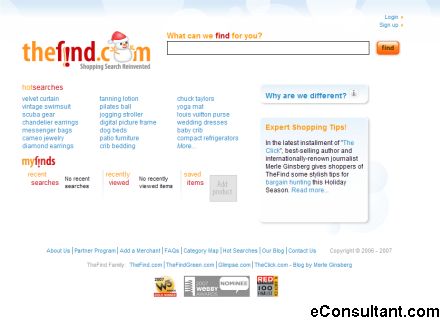
  • e-commerce firm “THE FIND” founded by Indian Americans acquired by Facebook

    e-commerce firm “THE FIND” founded by Indian Americans acquired by Facebook

    Facebook had been in-talks with ‘The Find’ for the past few weeks and the deal was finally done this week for an undisclosed amount. 

    e-commerce firm “TheFind” was co-founded in 2006 by Indian American CEO Siva Kumar and CTO Shashikant Khandelwal, both with Indian Origin.

    In its webpost, TheFind said many of its employees would be joining Facebook and work on improving the relevance of the social network’s advertising. TheFind added that its search engine will go offline “in the next few weeks.”

    Facebook has been testing a “buy” button since July 2014 that lets users purchase goods directly. Now, with TheFind, it would be able to add additional shopping tools to its service. 

    Facebook and TheFind cast the acquisition as a way to lift the digital advertising business of Facebook, which with $12.6 billion in annual ad sales last year, is unquestionably a dominant player in the industry.   “Together, we believe we can make the Facebook ads’ experience even more relevant and better for consumers,” Facebook said in a statement about the deal.  


  • Godrej to roll-out customised colour, design selection

    Godrej to roll-out customised colour, design selection

    KOLKATA (TIP): Consumer appliance company Godrej and Boyce (GBMCL) will soon roll out customised colour and design selection for online buyers across its product range keeping at par with the global trends, a company official said.

    “Internationally there are companies who are offering customized selection of colours and designs. By mid 2015, we will come up with this feature too at a little extra cost,” the company’s executive vice president and business head Kamal Nandi told media persons here.

    The company, previously had undertaken the same initiative for the World Series appliances printing customised decals for the consumers. However, it did not pick up well due to physical limitations.

    “This is the first time we are doing it on the digital platform and to my knowledge there isn’t anybody who is doing is,” said Nandi.

    He said online sales in the appliances industry has picked up by seven to eight percent over the last ten years and this trend will continue.

    “Online sales comprises approximately two percent of our revenue and is expected to grow by seven to eight percent. By middle of 2015, we will come up with a new e-commerce website which will offer product customizations in colour and design,” he said.

    The company will be piloting the customisation project in April this year and by June it expects to complete a study for the project post which it will be rolled across.

    Besides, the company is keen to target the premium segment and is coming up with new refrigerators to take on competition from South Korean companies which are its major competitors.

    “We are keen to enter the premium segment and will be coming up with new products this year. There will be toughened glass doors replacing steel in refrigerators and other features as well,” said Nandi.

    Besides, the company has also planned an array of other refrigerator launches in the coming three months.

    Nandi said the market size of premium refrigerators comprises 15 percent of the total size where the company is absent. The air-conditioner premium market is five percent of the total size.

    “We do not have products above 400 litres (in fridges)”, he said.

    GBMCL will focus on washing machines and air-conditioners for the mass market this year and expects to increase revenues from these by 17-18 percent in the coming fiscal year.

    The company is expecting to close the current fiscal at Rs.3,000 crore revenue.

    “Until now in the current fiscal, our growth has been 43 percent by value and 35 percent by volume,” he said. The northern market contributes nearly 40 percent of its turnover while it has grown exponentially in the eastern markets which contributes 15 percent to the revenue. Its main income source is from urban and metro areas which contributes 65 percent across 35 major cities and towns while 35 percent of the remaining revenue comes in from tier 2 cities and towns.

  • Textile major Arvind to step into footwear business

    Textile major Arvind to step into footwear business

    AHMEDABAD (TIP): Textile major Arvind is looking to go beyond its core businesses. Riding high on e-commerce wave, textiles and apparels company Arvind Ltd is readying to foray into the Rs 30,000 crore Indian footwear market in a big way. The company will launch its own footwear brand in coming days.

    “Footwear will be a mix of own brands, acquired, licensed and joint ventures. Initially we will have footwear items from our brands such as Arrow, Tommy Hilfiger and Calvin Klein among others,” said Sanjay Lalbhai, chairman and managing director, Arvind Ltd, which aims to bring in national and international brands under its portfolio and retail them mostly through the online platform. The Arvind group has already forayed into the realty market.

    As per latest estimates of Council for Leather Exports, India is the second largest global producer of footwear after China, accounting for 13% of global footwear production of 16 billion pairs. Interestingly, 95%of its production goes into meeting domestic demand.

  • BENGALURU STANDS TALL WITH $2.6-BILLION VENTURE CAPITAL

    BENGALURU STANDS TALL WITH $2.6-BILLION VENTURE CAPITAL

    BENGALURU (TIP): India’s IT hub, Bengaluru, came in fifth in a list of cities globally that received the most venture capital in 2014, an indication of the growing vibrancy of its startup ecosystem.

    San Francisco led the list with $13 billion of VC investments, followed by Beijing ($6.4 billion), New York ($5.7 billion), Palo Alto ($3.2 billion) and Bengaluru ($2.6 billion). The list has been put together by Crunchbase, a global startup ecosystem database.

    Among countries, India received the third highest VC funding ($4.6 billion) after the US ($58.9 billion) and China ($8.9 billion).

    Ravi Gururaj, chairman of the Nasscom Product Council, says India enjoyed record VC investments in the second half of 2014, and the wave shows no sign of slowing down. “This was kicked off by the historic election results which boosted investor confidence tremendously. Additionally, private equity investors worldwide, particularly those that missed out on the meteoric rise in Chinese startup valuations, flocked to high performing Indian consumer startups determined not to miss out on a fast ride on the India Startup Express.”

    Sanjeev Aggarwal, co-founder of Helion Venture Partners, says Bengaluru’s lead position is because of its ability to attract tech talent. “The cycle kicked in with Infosys and Wipro, followed by global companies coming in large numbers. Engineers employed with companies like Google and Yahoo wanted to experiment with new ideas, and that has spawned a startup culture. Mobile apps and cloud have reduced entry barriers to build companies,” he told TOI.

    CrunchBase does not give a breakup of the investments in each city. In Bengaluru’s case, a significant portion of the $2.6 billion would likely be on account of Flipkart’s two rounds of funding that happened last year. The e-commerce company received an estimated $1.7 billion.

    Parag Dhol, MD of Inventus Advisors India, believes Bengaluru’s startup ecosystem is beginning to have a multiplier effect. “You have an ecosystem where companies have gone public, there are good product startups, and new-age entrepreneurs are turning into angels. In that sense, success begets success. Venture capitalists are looking at India with a fresh set of eyes,” he adds.

    Aggarwal notes that capital is going particularly to the leaders who are building companies in large under-served markets, and to companies like Flipkart, Snapdeal and Ola. “Investors are paying a leadership premium,” he says.

    Japanese internet giant Softbank invested $627 million in Snapdeal and $210 million in Ola Cabs last year.

  • MAKE IN INDIA

    MAKE IN INDIA

    The Prime Minister’s call for making India a manufacturing hub and creating jobs should boost small and medium enterprises as well

    By Charan Singh Prime Minister Narendra Modi’s ‘Make in India’ campaign is creating waves both in India and abroad. Given the government’s intention to boost domestic manufacturing and create new jobs, its proposal to introduce a new policy for Micro, Small and Medium Enterprises (MSMEs) deserves a closer look. While Mr. Modi’s invitation to international companies to make investments has been receiving a lot of attention, the government’s close interaction with industry associations from different regions and sectors within India to discuss specific problems inhibiting domestic enterprises deserves equal consideration. India’s MSME sector has recorded more than 10 per cent growth in recent years despite the economic slowdown. MSMEs contribute nearly eight per cent to the national GDP, employing over eight crore people in nearly four crore enterprises and accounting for 45 per cent of manufactured output and 40 per cent of exports from India. Thus, the focus of the government on MSMEs at this juncture is justified given their potential for providing growth and employment.

    Significant initiatives In view of the significance of the sector, the government had announced a number of measures in its first budget. Some of the significant initiatives were setting up of Rs.10,000 crore of venture capital fund and establishing a nationwide, district-level incubation and accelerator program for encouraging entrepreneurship. Other important budgetary announcements included establishing a network of Technology Centers; revising the definition of MSMEs for providing higher capital ceiling, friendly legal bankruptcy framework to enable easy exit, a program to facilitate forward and backward linkages with multiple value chain of manufacturing and service delivery to be put in place, and launching the Skill India movement for youth with an emphasis on employ ability and entrepreneurship. A committee was also proposed to examine the financial architecture with a view to removing bottlenecks and creating new rules and structures for the sector.

    The government recently inaugurated a holistic, innovative and low-cost National Small Industries Corporation’s online e-commerce shopping portal for buying and selling of products produced by MSMEs. MSMEs are mainly classified as manufacturing and service enterprises. There is a specific stipulated limit on investment in plant and machinery for each of the respective micro, small and medium segments in manufacturing with a maximum limit of Rs.10 crore, and for equipment in service enterprises with a maximum limit of Rs.5 crore. MSMEs with 94 per cent of units unregistered are highly diverse in terms of their size and the level of technology employed. The production in the sector ranges from output of grass-root village industries and auto components, to microprocessors, electronic components and electro-medical devices. Since 1948, successive governments have been making intense efforts to encourage MSMEs but the sector continues to be under stress. The office of Development Commissioner for MSMEs was set up in 1954 and a dedicated Ministry for MSMEs in 1999. The Small Industries Development Bank of India (SIDBI), established in 1990, is the principal financial institution for promotion, financing and development of the MSMEs in addition to commercial banks, State financial corporations, and State industrial development corporations. Despite such efforts, some of the key problems faced by MSMEs continue to be related to availability of technology, infrastructure and managerial competence, and limitations posed by labor laws, taxation policy, market uncertainty, imperfect competition and the skill level of the workforce. The problems faced by MSMEs need to be considered in a disaggregated manner for successful policy implementation as they produce very diverse products, use different inputs and operate in distinct environments. In general, there is need for tax provisions and laws that are not only labor-friendly but also entrepreneur-friendly. More importantly, there is need for skill formation and continuous upgrade both for labor and entrepreneurs. While the government has to strengthen the existing schilling efforts for labor, there is an urgent need for managerial skill development for entrepreneurs running MSMEs – an area that is considerably neglected. These programs for entrepreneurs could be offered in a structured way in Industrial Training Institutes and management schools to include modules on management, labor laws, accounting, financial markets, procurement and marketing skills. Further, the government could consider dedicated television and radio programs, similar to agriculture, to help educate entrepreneurs running small businesses. Consumer tastes have been evolving as greater integration with global markets takes pace. In order to keep pace with changing tastes, large corporate firms have made substantial investment in extensive research and developing suitable product ranges. However, due to shortage of office space and financial resources, many micro and small enterprises are unable to invest in R&D and develop new products, and perish as a result. Therefore, government support in undertaking research to help develop new products that are being produced by MSMEs could be very helpful, similar to what agriculture universities do. Similarly, to encourage products manufactured by MSMEs, India could illustratively showcase and promote their products such as phulkari of Punjab, bamboo works of Assam and West Bengal, and cotton weaving of Tamil Nadu via galleries and museums.

    Credit crunch Issues related to credit, like adequacy, timely availability, cost and mortgages continue to be a concern for MSMEs. Consequently, 93 per cent of units in the MSME sector are dependent on self-finance. Profit margins are extremely thin due to stiff competition and the small size of firms. The government drive for financial inclusion could benefit MSMEs. The government could consider dedicating specialized financial schemes for addressing difficulties in assessing and providing credit for the MSMEs, as also providing line of credit to firms which are under financial stress. Given the grand financial inclusion initiative, maximum employment and growth with minimum difficulty to the entrepreneur will augur well for the country. (Charan Singh is RBI Chair Professor of Economics, IIM Bangalore.)

  • Narayana Murthy invests in realty, Azim Premji to follow suit

    Narayana Murthy invests in realty, Azim Premji to follow suit

    BANGALORE (TIP): Property has always been a major investment avenue of the rich. Now, some of the people one would expect to focus on enterprising ventures are also looking at rent-yielding property. Infosys co-founder NR Narayana Murthy’s family office has bought high-end luxury apartments in Bangalore and Mumbai, said sources familiar with the development. Catamaran Ventures, which manages part of Murthy’s wealth, has previously invested in e-commerce, FMCG and education ventures.

    Another source said that Premji Invest, the family office of Wipro chairman Azim Premji, is also scouting for real estate assets in metros. A couple of years ago, Premji, in his personal capacity, had picked up a few properties in Mumbai that were subsequently rented out, sources in the real estate industry said. Sources said Catamaran Ventures, which manages Rs 600 crore of funds, had invested at the pre-launch phase, providing scope for steep appreciation once the projects are completed.

    TOI couldn’t ascertain whether Catamaran is also considering investment in commercial real estate. An email sent to Catamaran remained unanswered at the time of going to press. Murthy’s colleague and former Infosys CEO S D Shibulal’s penchant for real estate has been much reported. His family office, Innovations Investment Management, has property investments in the US, including in New York and Seattle, as also in Germany and India. In Seattle, it has a portfolio of over 700 apartments.

    The real estate investments, managed by a professional team, comprise both residential and commercial assets. Another Infosys co-founder NS Raghavan, through his family office Nadathur Estates, manages an investment portfolio of multiple asset classes, including hospitality and real estate. “Residential real estate does not bring the highest yields globally, but it is a reliable source of rental revenue coupled with capital appreciation and relatively better monetizing potential than commercial real estate,” said Anuj Puri, country head of real estate consultancy JLL India. While A-grade commercial office space gives a annual yield of 10% in India, residential properties give an average yield of 3%-4%.

    In some luxury residential properties, the yield could touch 7%. “Residential properties sit well on balance sheets and in inheritances, too. Not surprisingly, it is a preferred investment class for Indian HNIs with global reach and business interests,” said Puri. J Vishnu Shankar, founder of real estate consultancy firm Crorepati Homes, said that much of the investment action by family offices has been happening in top dollar markets like Mumbai and New Delhi. “My guess is that Bangalore has a limited number of properties that cost Rs 20 crore upwards, which is the typical asset class that interests such high-profile buyers,” he said.

  • Top Senator proposes first 100 days action plan for India-US

    Top Senator proposes first 100 days action plan for India-US

    WASHINGTON (TIP): A powerful American Senator has proposed “100 days action plan” for the Modi government and the Obama administration to “refresh” the India-US relations. Senator Mark Warner, who is the Democratic co-chair of the Senate India Caucus, has suggested the Modi government to modify the defense-offset regime, agreeing to build community colleges in India, lifting the foreign direct investment caps in some of the sectors, and announcing a new electronic payment systems.

    In the first 100 days of the Modi government, Waren has proposed to the Obama administration to name a senior official for defense trade, review tourist visa policies and access to high skill visas. Among other action plans for the first 100 days, he has advised the Modi government and the Obama administration to announce a joint energy project, convene a meeting of India-US strategic dialogue, hold bilateral talks on Afghanistan, restart negotiations to achieve a bilateral investment treaty (BIT), re-launch the defense policy group, and establish a publicprivate working group on infrastructure investment.

    “I believe we have an opportunity, in the early days of the new Indian administration, to refresh the US-India relationship and work cooperatively to make progress that will benefit both of our countries,” Warner said in a fourpage 100-days action plan. As a co-chair of the US Senate India Caucus for several years,Warner has been working with US and Indian government officials and business leaders to address important issues for both countries, including education, skills development, infrastructure and energy.

    “However, over the last 18-24 months, the relationship lacked a catalyst.With this month’s historic Indian election, we can harness the enthusiasm of the Indian people to boost our partnership. “We can use the first 100 days to move from dialogue to action and build a path forward for more ambitious cooperation,” he said. “There are many areas where a partnership between our countries would serve goals on both sides, and if the respective administrations choose just two or three deliverables to shoot for in the first 100 days, we could provide the business community on both sides a new optimism that we can work together and get things done,” Warner added.

    In his action plan,Warner has proposed that the India-US Strategic Dialogue this year be held in New Delhi, instead of Washington DC as originally scheduled. “Since the new Indian government will just be getting started, holding the Dialogue in Delhi will be less disruptive to organizing meetings and will provide both sides the opportunity to meet and get to work early in the term on joint initiatives,” he said. India and the US have meandered through several rounds of stop and start negotiations about how to proceed with BIT, he said.

    “Announcing that both sides will sit down and negotiate a framework would boost confidence that a BIT is possible. A BIT would provide important protections for investors, help unleash needed investment, and provide a level playing field for both countries,” he added. The Obama administration, he said, should name a senior-level official who reports directly to the secretary of defense to lead the defense trade and technology Initiative.

    “Under Ash Carter’s leadership this was one of the most successful programs and helped shepherd billions of dollars of defense deals through the pipeline as well as clearing out inefficiencies on both sides of the US-India defense trade to make defense trade simpler, more responsive, and more effective,” Warner said. Warner said the US should conduct a review of visa policies with an eye toward further opening of global entry and trusted traveler programs for frequent travelers, including business leaders and investors.

    “A review of policies for high-skill employees would help ensure companies in both countries have access to talent to help US companies and the American economy grow and innovate and encourage more joint research and cooperation between universities,” he said. An agreement to increase travel and tourism between the two countries would increase more people to people interaction, he argued. For the Modi government, he said lifting FDI caps in some of the sectors that have been under discussion for years would be a positive signal to foreign firms that India was again “open for business.”

    Specifically, defense, insurance, railways, e-commerce and banking sectors are ripe for reform, he said. Warner said India and the United States share a unique bilateral relationship. “As the world’s oldest and largest democracies there are many areas in which our strategic interests combine, and when we find ways to cooperate and work together both of our countries benefit,” he said. “The historic and sweeping election that has made Narendra Modi Prime Minister of India is a testament to a thriving democracy and a signal that the people of India are ready for economic growth and productivity,” he added.

  • FLIPKART BUYS OUT MYNTRA FOR $300 M

    FLIPKART BUYS OUT MYNTRA FOR $300 M

    BANGALORE (TIP): Putting an end to months of speculation about what is being termed as the biggest acquisition in the Indian e-commerce business, domestic e-retailer Flipkart announced that it has acquired rival and leading fashion e-tailer Myntra.com.

    The move is widely being read as a response to global e-commerce leader Amazon’s ramp up of its year-old India operations, and the narrowing gap between Flipkart’s sales and that of fast-growing rival Snapdeal. No details on the deal size or structure were shared, and analyst speculation pegging the buy out at over $300 million remained unconfirmed by both companies.

    Both companies will be run independently, with no immediate plans to merge the fashion business on the two portals or even join forces in terms of content or go-to market. Myntra CEO Mukesh Bansal joins Flipkart’s board, and will head the fashion vertical at Flipkart and Myntra. They also announced that while Myntra employees would “remain in current positions”, they would be offered stock options in Flipkart.

    Flipkart co-founder Sachin Bansal insisted that this was a “completely different acquisition story” as it was not “driven by distress”, alluding to a plethora of small e-commerce players either having wound up or been bought over in the past two years.

    Together, both company heads claimed, they were scripting “one of the largest ecommerce stories”. $100 m investment in fashion vertical Mukesh Bansal said that on its own Myntra.com held 30 per cent of the market share, but together the two companies would account for 50 per cent of the online fashion market. “We hope to take this figure to about 60-70 per cent in the long-term,” he said. Mr. Sachin Bansal added that Flipkart would invest $100 million in its own fashion vertical in the near-term.

    While the electronics vertical is the largest revenue generator at Flipkart (and will continue to be even after the acquisition), Mr. Bansal hoped that in the near-term fashion would be the “largest sales category for Flipkart”. Flipkart started fashion as a shopping category on its site two years ago.

  • SAMSUNG LAUNCHES GALAXY S5 IN INDIA

    SAMSUNG LAUNCHES GALAXY S5 IN INDIA

    NEW DELHI (TIP): Smart phone manufacturer Samsung Electronics, on March 27, introduced Galaxy S5 in the domestic market. The features include a 16-megapixel camera, fast 3G speeds at 42Mbps and Octa-core processor capable of operating all eight cores at the same time, said a company release.

    It has a perforated pattern on the back cover, and is being offered in charcoal black, shimmery white, electric blue and copper gold, and is IP67 dust and water resistant. It has a finger scanner and biometric screen locking feature. Galaxy S5 also introduces S Health 3.0, a fitness application. “Galaxy S5 offers the world’s fastest auto focus speed up to 0.3 seconds and advanced high dynamic range (HDR)”, the release said.

    Samsung Galaxy S5 is priced between Rs.51,000 and Rs.53.000. Samsung also announced three wearable devices — Gear Fit, Gear 2 and Gear 2 Neo. These devices will be available across the country through Samsung’s retail stores and e-commerce sites from April 11 onwards. Galaxy Gear 2 is priced at Rs.21,900 and both Galaxy Gear 2 Neo and Galaxy Gear Fit are priced at Rs.15,900.

    Asked if the pricing was slightly on the higher side, Samsung India Country Head (IT and Mobile Division) Vineet Taneja said people would not mind paying for a quality product. “I think the Rs.50,000 barrier got broken when we launched the Galaxy Note 3, for which we have got a good response. People are looking for value and for a quality product, they don’t mind paying,” Taneja said. He said the company would offer customers buyback and EMI schemes. “Our financing options make the device really affordable,” Taneja said.

  • EBAY LAUNCHES 2ND DATA CENTRE IN BANGALORE

    EBAY LAUNCHES 2ND DATA CENTRE IN BANGALORE

    BENGALURU (TIP): US-based e-commerce major eBay Inc on September 19 inaugurated a new global development centre in India. The development centre, the company’s 16th such centre globally, is spread across 1,50,000 sq ft. “We have continued to expand our footprint across strategic areas,” said Ken Moss, vice-president (technology and science), eBay Marketplaces. “We are looking to tap into the large pool of software engineering talent in Bangalore…We are committed to India as a technology hub and see India’s software engineering talent as a critical driver for our long-term success.” In 2007, the company had set up a 2,50,000-sq-ft development centre in Chennai. That centre currently employs around 2,000 people. As is the case with the Chennai centre, the Bangalore facility would house eBay employees, as well as those of its wholly-owned subsidiary PayPal.

    Through the next three years, the company plans to hire 700 employees for its Bangalore facility. This would raise the company’s Bangalore staff strength to 1,000. Ram Narayanan, general manager, eBay Product Development Centre, said both fresh graduates and experienced professionals would be hired for the new date centre, which would undertake jobs across functions, including product management and analytics. eBay said it had invested “significantly” into the development centre. It however, did not disclose the exact investment. “We invest heavily in the career development of our people. We are hiring technologists with strong product development experience across functions, including platform and application development, architecture, quality engineering, product management, marketing and product analytics, user experience and design and information security,” Moss said. Meanwhile, Karnataka Information Technology and Biotechnology Minister S R Patil said the government expected the first phase of the Bangalore information technology investment region to be commissioned by 2020. The Karnataka government is setting up a 10,500-acre ITIR near the Bangalore international airport, with an estimated investment of about Rs 1 lakh crore. The ITIR is expected to generate direct employment for 12,00,000 and indirect jobs for 28,00,000 people. “It (the ITIR) would be commissioned in two phases. The first phase would be commissioned in 2020 and the second by 2032,” Patil said.

  • China Moving Towards Greater Economic Openness, US Official Says

    China Moving Towards Greater Economic Openness, US Official Says

    WASHINGTON (TIP): The United States on July 11 said China agreed to drop certain exceptions before restarting negotiations on a bilateral investment treaty between the two countries. The move is an encouraging sign that the world’s second largest economy is willing to open up more sectors to foreign competition, a US treasury official told reporters on the sidelines of USChina economic talks in Washington.

    China also plans to establish a Shanghai Free Trade Zone pilot program and permit foreign firms to compete in certain services sectors, including e-commerce, the official said, speaking on condition of anonymity. The United States also expects to see more progress on China’s move towards a freelyfloating exchange rate in coming weeks, the official said.

  • India beats China on Internet user additions

    India beats China on Internet user additions

    New Delhi (TIP): A report by industry body Assocham along with independent research firm comScore said that among the Brazil, Russia, India and China (BRIC) nations, India has been the fastest growing market adding over 18 million Internet users during the last one year.

    The report said the Internet users’ base in the country is growing at an annual rate of 41 per cent to reach 124 million users in July. The time spent has increased by 33 per cent over the past one year with the user base spending 48 billion minutes online in a month. The consumption of content has grown to 70 billion pages a month from 54.6 billion pages in July 2011.

    This is expected to be a continuing trend in coming years, given the age distribution in India. The top five popular categories accessed online are social networking, e-commerce portals, search, entertainment and news sites, the study titled ‘State of e-Commerce in India’ said. In comparison, China added over 14 million users to reach 336 million Internet users by July-end, followed by Russia and Brazil with 10 million and 3.1 million additions, respectively.
    According to Assocham, the e-Commerce revenues in India will increase from $1.6 billion in 2012 to $ 8.8 billion in 2016.