Tag: Perspective Opinion EDITORIAL

  • Pakistan in dire straits

    Pakistan in dire straits

    Faces political uncertainty, economic bankruptcy and Taliban violence

    “Pakistan is presently fully engrossed in avoiding bankruptcy and focusing on talks with the IMF. Islamabad has been forced to accept some very tough conditions before international financial institutions like the World Bank, Asian Development Bank, and the oil-rich Arab countries step in again to bail it out. Pakistan will hopefully realize that a rapidly progressing India has the potential to further strengthen relations with both the US and Russia. It has lost the proposed Russian economic assistance on oil supplies by inexplicably supplying military hardware to Ukraine. Rawalpindi will also have to remember that terrorism and meaningful talks with India cannot go hand in hand.”

    By G Parthasarathy

    Pakistan finds itself today in an unenviable position as its economic situation worsens and its foreign exchange reserves fall below $2 billion. Desperate, it has sought assistance from the IMF, international banks and donors to escape total bankruptcy. In the meantime, verbal warfare continues between Imran Khan and the Shehbaz Sharif government. Pro-US General Bajwa has arranged for one of his proteges, Lt Gen Syed Asim Munir, to succeed him. The army will continue to court the US. Even as the country was engrossed in a bid to avoid bankruptcy, the Islamabad High Court ordered an investigation into corruption charges against the former President, Gen Pervez Musharraf, for allotting military lands arbitrarily. Musharraf, who had been ailing, died amidst the political turmoil, at a hospital in the UAE. His burial in Karachi, with full military honors, was not attended by a single prominent political leader.

    In the meantime, Imran Khan, who shows little interest on addressing the country’s serious economic crisis, has asked President Alvi to order an inquiry against his bête noire, Gen Qamar Javed Bajwa. He accused Bajwa of conspiring to oust him from office. Pakistan’s politicians have, however, never showed the inclination or ability to get together in dealing with radical Islamic groups, including the Taliban. Pakistan is paying the price for the support it rendered to radical Islamic groups in Afghanistan, and even within its own borders. Moreover, even after it was known that Pakistan was working hand in glove with the Taliban, the US looked the other way, and ultimately left Afghanistan ignominiously. Imran Khan is popularly known in Pakistan as ‘Taliban Khan’.

    The Afghan Taliban has for long worked in concert with its Pakistani counterpart, Tehreek-e-Taliban-e-Pakistan, which now aspires to seize control of north-western Pakistan. In keeping with its long-term policy of helping the people of Afghanistan, India has moved to provide its people with wheat and medicines. Pakistan, on the other hand, is waging a war on its territory against the Tehreek-e-Taliban, which enjoys the support of its Pashtun brethren in Pakistan’s Khyber Pakhtunkhwa province. Many in the US and Russia will be amused to observe the Pakistan army engrossed in fighting its erstwhile Taliban proteges that the ISI had used for over two decades in their battles against Russian and US forces in Afghanistan. The ISI even used Taliban assistance during the hijacking of IC 814 to Kabul.

    The sustained economic and educational assistance that India provided to Afghanistan before the Taliban takeover is widely appreciated across all sections of its people. However, now India has to route essential supplies to Afghanistan by air or through the Iranian port of Chabahar. India’s Afghan friends are, however, said to be disappointed that even elderly Afghans requiring visas for life-saving medical treatment in India are denied visas. This should be addressed positively. In the meantime, differences are clearly growing between Taliban’s supreme leader Haibatullah Akhundzada and ISI’s favorite Taliban leader, Sirajuddin Haqqani. There are indications that disputes between Pakistan and the Taliban could flare up across the Durand Line.

    The recent demise of Musharraf has revived interest in what transpired in his days as President. He collaborated closely with the Taliban during the hijacking of IC 814. But his attitude towards India changed with the passage of time, especially after his visit to India in 2005. What followed was serious ‘back channel’ negotiations between Special Envoys of the two countries on the issue of J&K. The Indian delegation was led by the late Satinder Lambah, who was earlier India’s High Commissioner to Pakistan. India rejected any process that did not guarantee an end to terrorism, with both sides respecting the sanctity of existing borders. The then PM, Manmohan Singh, had asserted: ‘Borders cannot be redrawn.’

    While there have been statements by eminent Pakistanis like former foreign minister Khurshid Kasuri, supporting the broad agreement that the two sides reached on J&K, there have been no comments on the contents of that dialogue by India. There have, however, been reports that the understanding reached was premised on an end to support for terrorism by Pakistan. The visit of PM Modi to Lahore in December 2015 to attend a family wedding hosted by PM Nawaz Sharif raised optimism about progress on bilateral issues and an end to terrorism. These hopes were shattered by the Pathankot airbase terror attack a week later; subsequently, terrorists from the ISI-backed Jaish-e-Mohammed (JeM) attacked a convoy of CRPF personnel in 2019, killing 40 Indian security personnel. While the perpetrator of the suicide attack was also killed, India-Pakistan standoff followed. On February 26, 2020, India retaliated with an air strike on a training camp of the JeM in Balakot, across the LOC.

    There is little prospect of any meaningful dialogue with Pakistan anytime soon. Whether Pakistan will abide by what was agreed to in the back-channel talks remains to be seen. Moreover, Pakistan is presently fully engrossed in avoiding bankruptcy and focusing on talks with the IMF. Islamabad has been forced to accept some very tough conditions before international financial institutions like the World Bank, Asian Development Bank, and the oil-rich Arab countries step in again to bail it out. Pakistan will hopefully realize that a rapidly progressing India has the potential to further strengthen relations with both the US and Russia. It has lost the proposed Russian economic assistance on oil supplies by inexplicably supplying military hardware to Ukraine. Rawalpindi will also have to remember that terrorism and meaningful talks with India cannot go hand in hand.

    (The author is Chancellor, Jammu Central University & former High Commissioner to Pakistan)

  • Between BBC, Boeing and Airbus, PM Modi sets terms of engagement with the West

    Between BBC, Boeing and Airbus, PM Modi sets terms of engagement with the West

    Modi has repeatedly referred to three Ds – Democracy, Demand, and Demography – as factors that make India an attractive place for the West to engage and do business with

    “Mr. Modi has repeatedly referred to three Ds – Democracy, Demand, and Demography – as factors that make India an attractive place for the West to engage and do business with. When Mr. Modi began talking about 3D in 2014, the U.S. was happily doing business with China. In the years that followed, U.S. relations with China nosedived, and Russia invaded Ukraine. The Biden administration now wants to frame international politics as a fundamental ideological cleft between democracy and autocracy.”

    By Varghese K George

    As it happened, on the same day the Tata Group-owned Air India announced orders for 470 aircraft from American manufacturer Boeing and French manufacturer Airbus, Indian Income Tax authorities dropped by at the offices of the BBC. Just as Prime Minister Narendra Modi spoke about deepening strategic partnerships with the U.S. and France, BJP functionaries, including Union ministers, accused the BBC of running an anti-India agenda with the support of Opposition parties. Mr. Modi had French President Emmanuel Macron on a video call, and U.S. President Joe Biden on an audio call to celebrate the aircraft deal, while U.K. Prime Minister Rishi Sunak, whose country is also a beneficiary of the deal in which Rolls-Royce will be making the engines for Airbus aircraft, tweeted out his ebullience. All this taken together reflects the terms of engagement that Mr. Modi wants to set with the West — a “Hindutva strategic doctrine” for India’s engagement with the world.

    Mr. Modi has repeatedly referred to three Ds – Democracy, Demand, and Demography – as factors that make India an attractive place for the West to engage and do business with. When Mr. Modi began talking about 3D in 2014, the U.S. was happily doing business with China. In the years that followed, U.S. relations with China nosedived, and Russia invaded Ukraine. The Biden administration now wants to frame international politics as a fundamental ideological cleft between democracy and autocracy.

    On Tuesday, Mr. Modi invited western companies to use the opportunities of India’s expanding civil aviation market. On the first D, western governments murmur occasional protests, but they cannot hide their excitement when it comes to the second D. The Air India order was Boeing’s third largest sale of all time, in dollar value, and it is second of all time in quantity.

    “This purchase will support over 1 million American jobs across 44 states, and many will not require a four-year college degree,” U.S. President Joe Biden said, according to a White House release.“ This announcement also reflects the strength of the U.S.-India economic partnership. Together with Prime Minister Modi, I look forward to deepening our partnership even further as we continue to confront shared global challenges.” According to Mr. Sunak, the aircraft order will create “better-paid jobs and new opportunities in manufacturing hubs from Derby to Wales,” which will help the U.K. to “grow the economy and support our agenda to level up”. Mr. Macron was described by Mr. Modi as a friend, and both hailed the “strategic partnership” between the two countries. The lure of the Indian market, powered by its demography, seems stronger than that of the second D – Democracy.

    While the British government has so far remained silent on IT action on BBC, U.S. State Department Spokesperson Ned Price did not want to make a judgment other than declaring the importance of free media in a democracy. On whether the action went against democratic values, Mr. Price said, “I couldn’t say. We’re aware of the facts of these searches, but I’m just not in a position to offer a judgment.” The BJP’s position is that the BBC is not free media, but a foreign agent that is working with an anti-India agenda. That is a familiar logic for western democracies actually. The U.S. and EU have imposed a range of restrictions on Russian media on the same grounds.

    The Modi government had reminded the Biden administration of the rioters at Capitol Hill when it was questioned about police action against protesting farmers running amok in New Delhi, in January 2021. There are many contradictions in the narrative about a global contest between democracies and autocracies, and the turmoil within democratic countries is significant, undermining any claims of western superiority on this front. The Hindutva strategic doctrine seeks western support and cooperation for its nationalist ambitions. Hence, western technology and investment are solicited, but there is stiff resistance to western prescriptions on domestic political questions. On the other side, when required to choose between a tangible commercial opportunity and an abstract moral objective, western governments have never been confused.

  • Adani issue puts Opposition unity to test

    Adani issue puts Opposition unity to test

    The Opposition cannot function as a cohesive entity sporadically, especially a year before the next Lok Sabha polls, if it is to take on the BJP/NDA. Bringing the parties together into a front seems impossible now because it entails swaps and trade-offs, which the Congress is not willing to transact with the regional forces.

    “Apart from assailing Modi for his alleged nepotism, the Opposition picked on the money invested by the Life Insurance Corporation of India and the State Bank of India — two traditional sources of financial security for the middle class — in the Adani group as examples of ‘cronyism’ at the cost of jeopardizing the interests of the vulnerable salaried sections. The stress on the middle classes was significant, considering that they formed a strong support base of the BJP. Indeed, the Union Budget was billed as a bonanza for the middle-income groups. It has to be seen if the Congress and the Opposition sustain the momentum they generated in Parliament in the interregnum before the next leg of the Budget session.”

    By  Radhika Ramaseshan

    Bofors was the last major financial shell game with profound implications for the country’s security to shake up and eventually unseat a powerful ruling party, the Congress, and its leader Rajiv Gandhi. The over three years between the signing of the Rs 1,437-crore deal on March 24, 1986, with AB Bofors, a Swedish arms manufacturer, for the supply of 400 155-mm Howitzer guns for the Army and the Congress’s downfall in November 1989 were bestrewn with dramatic developments which foreshadowed the denouement.

    On April 16, 1987, a Swedish radio channel alleged that kickbacks were paid to sweeten the deal. That was enough of a spur to an Opposition — that had been squeezed into one corner of the Lok Sabha after the Congress earned a record mandate in the 1984 elections — to go for the jugular with whatever resources it had. The Opposition persistently clamored for a joint parliamentary committee (JPC) to investigate the charges.

    Then Prime Minister Rajiv Gandhi was unyielding to begin with and on April 20, 1987, he informed Parliament that no bribes were paid and no middlemen were involved. On August 6, 1987, the government relented and set up a JPC under former Union minister B Shankaranand. In February 1988, Indian investigators landed in Sweden to probe the issue. On July 18, 1989, the JPC submitted its findings. Soon thereafter, the CAG drilled the final nail in the Bofors coffin, questioning the process of selection and purchase of the gun. The last straw for Rajiv Gandhi came when Opposition MPs, including those from the BJP and the Left, resigned en masse, prompting Socialist leader Madhu Dandavate to indulge in hyperbole. “Now we need Comrade Vajpayee and Pandit Namboodiripad to work together to oust Rajiv,” Dandavate remarked.

    It is useful to chronicle the Bofors saga from a political perspective because the events proved that even a thundering popular mandate could wound a party irreparably and claim its leader. Maybe 1989 was a black swan event, like that of Indira Gandhi’s ouster in 1977.

    The Congress and Rahul Gandhi tried hard to implicate the Narendra Modi government in the purchase of 36 Rafale multi-role fighter aircraft from French manufacturer Dassault Aviation before the 2019 elections, but the charge of receiving huge bribes came unstuck. The Congress stood isolated in its campaign against Modi because there were no takers in the Opposition.

    There are harbingers that the Gautam Adani-Hindenburg issue — which principally concerns the alleged and overt patronage extended by the Modi government to Ahmedabad-based industrialist Adani whose spectacular rise and entry into the global club of who’s who provoked the West’s attention, interest and investigation — could regroup the Opposition in Parliament.

    Two factors have apparently catalyzed the situation. One, even regional parties that were considered ‘pro-Centre’ and ‘pro-Modi’, notably the Bharat Rashtra Samithi (BRS), find themselves pitted on their turfs against a rejuvenated BJP. In Telangana, for example, the BRS has Modi as its principal adversary and not a regional BJP leader or the Congress even in the Assembly election this year. Likewise, Mamata Banerjee, no friend of the BJP, is pitted against Modi in West Bengal. As much as Rahul and the Congress, provincial leaders, too, have looked for an opportune moment to corner Modi and they believe that the Adani case has given them the context to launch a campaign against the PM.

    Two, Rahul Gandhi, in a vastly amended — and some say refurbished — version of his old self after his Bharat Jodo Yatra, played his cards in Parliament tactfully. He ensured that Congress president and Rajya Sabha Opposition leader M Mallikarjun Kharge mobilized the Opposition parties before and during the now-adjourned Parliament session and stayed in the background so that nobody could call him an ‘entitled legatee’. However, he articulated the Congress’s views on Adani-BJP in his speech in the Lok Sabha and asked searing questions on the businessman’s alleged close relations with Modi that went unanswered. It appeared as though the Opposition, including the BRS and the Aam Aadmi Party, otherwise antagonistic towards the Congress, was happy to pass the baton of the attack on the BJP and Modi to Rahul. There were no suggestions that Rahul was feckless and inattentive towards Parliament. Of course, the question of allowing the Congress and him to helm an Opposition front closer to 2024 is another matter and one riddled with complications.

    Apart from assailing Modi for his alleged nepotism, the Opposition picked on the money invested by the Life Insurance Corporation of India and the State Bank of India — two traditional sources of financial security for the middle class — in the Adani group as examples of ‘cronyism’ at the cost of jeopardizing the interests of the vulnerable salaried sections. The stress on the middle classes was significant, considering that they formed a strong support base of the BJP. Indeed, the Union Budget was billed as a bonanza for the middle-income groups. It has to be seen if the Congress and the Opposition sustain the momentum they generated in Parliament in the interregnum before the next leg of the Budget session.

    The Opposition cannot function as a cohesive entity sporadically, especially a year before the next Lok Sabha polls, if it is to take on the BJP/NDA. The endeavor of bringing the parties together into a front seems impossible right now because it entails swaps and trade-offs, which the Congress is not willing to transact with the regional forces.

    The outcome of the elections that follow this year will demonstrate if the political messaging from the Adani controversy has percolated down to people the country over or if Modi and the BJP have retained popular goodwill and support.

    (The author is a senior journalist)


  • BBC on Income Tax Radar

    Prove Wrongdoing to Dispel Notion of Vindictive Action

    The Income Tax Department’s survey at the offices of the British Broadcasting Corporation (BBC) in Delhi and Mumbai has not only triggered a war of words between the ruling BJP and the Opposition but also subjected the Indian Government’s actions and motives to international scrutiny. The survey, dubbed by some political parties as an assault on the freedom of the Press, comes weeks after UK’s national broadcaster telecast a controversial documentary, ‘India: The Modi Question’, on the 2002 Gujarat riots. The Centre had been quick to dismiss it as a ‘propaganda piece’ designed to push a ‘discredited narrative’ and had even tried to restrict access to it. The government had remarked that the BBC’s ‘bias, lack of objectivity and continuing colonial mindset are blatantly visible.’

    According to the I-T authorities, the survey is aimed at delving deep into issues regarding international taxation and transfer pricing of BBC’s subsidiary companies. There are allegations that the broadcaster has been heavily diverting its profits and has dealt evasively with past notices served by the department. With questions being raised about the timing of the survey, I-T officials must thoroughly probe all aspects of the matter; if concrete evidence of any wrongdoing is found, it should be made public at the earliest so as to dispel the notion that this entire operation is vindictive.

    The misuse of Central agencies to punish dissenters or detractors is not uncommon in present-day India. At stake here are the country’s democratic credentials, which will take a huge hit if the I-T department is unable to establish a convincing case against the BBC. It’s no secret that the British broadcaster has often taken a jaundiced view of post-colonial happenings in the subcontinent; the charges of financial irregularities, if proved, will have a bearing on its credibility and transparency. The developments are significant for Indian media houses too. The I-T survey, in case it is retaliatory, will be construed as a warning to them: remain pliant or face the consequences. The prospect of being targeted by one agency or the other for taking an anti-establishment line has grave implications for journalistic freedom in the country.

    (Tribune, India)


  • Honor of office: On new Governors of States appointed by the Center

    Those required to stay away from partisan politics in current role must not be made Governors

    A former judge of the Supreme Court of India and a former Indian Army commander are among the new Governors of States appointed by the Centre on Sunday. The Governors of several States and the Lieutenant-Governor of a Union Territory were also shuffled. In recent years, Governors have sought to play a political role in States such as Jharkhand, Kerala, Tamil Nadu and West Bengal, creating a train of controversies. Judiciary reasons, the roles of the military and the judiciary too are topics of interest, particularly with regard to their relationship with the political executive. The executive government’s eagerness to control judicial appointments, besides the debate on the collegium system of judges appointing judges, is evident. It has selectively delayed and accelerated appointments recommended by the collegium, effectively exercising powers that it does not have in appointing judges. The Bharatiya Janata Party (BJP) has also faced charges of using the armed forces to further its political narratives. Earlier too, retired police and intelligence officers went on to occupy Raj Bhavans, but it was the appointment of a retired Chief Justice of India (CJI) as a Governor in 2014 that created a new precedent. Another retired CJI was nominated to the Rajya Sabha, in 2020, raising eyebrows.

    The institution of the Governor is a legacy of the British imperial governance structure. The legitimacy of a nominated Governor in a democracy was the topic of a heated debate in the Constituent Assembly, but it was carried on into the new republic nevertheless. The Governor was to act as a dynamic link between the Centre and the State, but the makers of the Constitution were clear that the posts must remain ornamental, except in very narrowly defined situations in which they were allowed discretion in decision-making. Over the decades, the overreach of Governors has become a serious question in Centre-State relations and democracy in general. The dominance of the BJP at the Centre since 2014 has added fresh tensions with the States. The BJP has a vision of national unity that causes anxiety among regional interest groups. The office of the Governor was to be embellished by the personalities of those who would occupy it. Opening it as a post-retirement possibility for those who are required to stay aloof from partisan politics in their current roles, lowers the dignity of the offices that they leave behind and what they go on to occupy.

    (The Hindu)

  • Post-retirement appointments: a danger to judicial independence

    Justice S. Abdul Nazeer. (Photo Credit/ The Hindu)

    Post retirement, the judicial community should take a concerted decision not to accept any job stemming from political patronage

    Justice Y.V. Chandrachud had said that the greatest danger to the judiciary lies within. Members of the judiciary cannot compromise judicial independence by trading it for a plum post-retirement sinecure. When one becomes a judge, one signs up to fulfil a promise of ensuring a fair and independent judiciary; this promise cannot be compromised at any cost. Our judges need to be gently reminded of this unwritten contract they have with the Indian people.

    By A.P. SHAH

    Within a month of retiring from the Supreme Court of India, Justice S. Abdul Nazeer has been appointed Governor of Andhra Pradesh. Like many others, I believe it is no coincidence that he was a part of the Constitution Bench that decided the Ayodhya Ram Mandir land issue. In the tenure of the Narendra Modi-led government since 2014, he is the third Supreme Court judge who has received a high-profile political appointment soon after retirement, the other two being Justice P. Sathasivam (who was appointed Governor of Kerala), and Justice Ranjan P. Gogoi (who was appointed member of the Rajya Sabha).

     These appointments are all signalling on the part of the government, letting the members of the higher judiciary know that they will be suitably rewarded if they issue favorable decisions. Dangling such a proverbial carrot is akin to corrupting the judges, and encouraging a culture of sycophancy even, as we are increasingly seeing among some judges in the apex court. Worse, this also makes the public have less faith in the judiciary itself. In 1980, Justice V. D. Tulzapurkar had said that “if judges start sending bouquets or congratulatory letters to a political leader on his political victory, eulogizing him on assumption of high office in adulatory terms, the people’s confidence in the judiciary will be shaken.”

    Chipping away at judiciary

    While a Governor’s position may seem largely ceremonial, it is in fact a squarely political appointment. In any event, this appears to be a part of the ruling party’s strategic mission — a long game, if you will — to destabilize the judiciary, chipping away in small and big ways at various aspects of its functioning. If you step back and observe, the judiciary is slowly but surely being subtly weakened.

    To be fair, this is not the first government that has ventured so far as to corrupt the judges in this fashion. Congress-led governments, notably under Indira Gandhi and Rajiv Gandhi, have done it too. But it is a cowardly defense that the Opposition party was equally guilty, and past precedent does not justify present transgressions. The larger objective, for any reasonable executive, should be to ensure the independence of the other arms of the governing mechanism, and that democratic values are preserved in all circumstances. However, a conclusively majoritarian mandate can make one heady with power, and compel the exploration of creative ways in which that power can be maintained and consolidated further. This is entirely the case with the Indian government today.

    Hypocritical behavior

    The government’s behavior is also hypocritical for it is deliberately paying no heed to its own manifesto articulated by its late leader, Arun Jaitley, that such post-retirement judicial appointments should be avoided. In fact, ‘inducing the judges’ by such appointments was a specific allegation directed by the Bharatiya Janata Party (BJP) against the Congress-led coalition.

     The judiciary is no less culpable in this situation. Ideally, I would like to believe that Indian judges are made of stronger stuff, and not ones to be seduced thus. Judges should show moral responsibility and character, as Justice Akil Kureishi most recently did. After being unceremoniously disregarded for elevation, and shoved across the country to various High Courts, upon retirement, he said that the government’s stated ‘negative perceptions’ about him were a ‘certificate of independence’, and he was leaving the judiciary with ‘his pride intact’.

    Judges must recognize that handouts from the government, in the form of such political appointments, are not one-way: there is a giver and there is a receiver. The Indian judiciary must distinguish between political favors and other post-retirement employment opportunities.

    Demarcation of roles

    There needs to be a demarcation between roles where the presence of a judicial authority is clearly valuable and even necessary, such as in a tribunal or a commission, and where it is not. Justice Gogoi, upon his appointment to the Rajya Sabha, had famously proclaimed that he intended to bridge the gap between the judiciary and the legislature, but his attendance record and public participation in parliamentary affairs suggest nothing of the sort. Similarly, Justice Sathasivam had said he had wanted to serve the people in his role as Governor, but surely, he could have achieved the same objective through other appointments, that would be more befitting of someone who had held the office of the Chief Justice of India.

     Ideally, the judicial community should take a concerted decision on this, say, in the Chief Justices’ conference. The plenary should agree that judges should not take up any appointments upon retirement stemming from political patronage (with the nature of such appointments being clearly defined). Additionally, a cooling period of about two years should be considered a mandatory minimum before a judge agrees to take on any post-retirement adjudicatory role, in any case.

    Justice Y.V. Chandrachud had said that the greatest danger to the judiciary lies within. Members of the judiciary cannot compromise judicial independence by trading it for a plum post-retirement sinecure. When one becomes a judge, one signs up to fulfil a promise of ensuring a fair and independent judiciary; this promise cannot be compromised at any cost. Our judges need to be gently reminded of this unwritten contract they have with the Indian people.

     (A.P. Shah is former Chief Justice, Delhi High Court and Former Chairperson, Law Commission of India)

  • State of affairs: On Joe Biden’s second State of the Union address

    • United States President Joe Biden knows he must focus on both the U.S. economy and global challenges

    In his second State of the Union address, U.S. President Joe Biden tried to articulate several messages under one big theme — his administration was committed to rebuilding America’s economy while standing up to its challenges abroad. Much of the 72-minute speech was on the domestic agenda, particularly his economic optimism. The speech saw self-appreciation, ideas and rhetoric — he took pride in his economic policies, emphasizing the low unemployment rate and easing inflation, repeated the calls for taxing the super rich and bringing down prices of essential drugs, promised not to cut Social Security and Medicare and declared that democracies have become stronger and autocracies weaker.

    While there was no major policy shift, the 80-year-old President repeated the phrase “finish the job”, indicating that he needed more time to build on what he has already done — seen as a pitch for his re-election campaign. Mr. Biden also referred to Russia and China as key foreign policy challenges — the Ukraine invasion as “a test for America”, and that America “will act to protect our country” if its sovereignty is threatened, an indirect reference to the balloon incident.

    If Mr. Biden used the speech to defend his legacy and lay his vision, it also laid bare his administration’s critical challenges. To be sure, the unemployment rate fell to the lowest level since 1969 — to 3.4% in January 2023 — and inflation continued to ease in the month. Still, most Americans (58% as in a recent survey), burdened by high energy prices and slow growth in wages, remain unhappy with his handling of the economy. The President may have plans for re-election, but only 37% Democrats back him. Mr. Biden will also face growing resistance to his policies from Congress in a Republican-controlled House.

    On foreign policy, the U.S. has so far stood resolutely behind Ukraine, but, as the war grinds on, there are rising questions about a possible endgame. A bigger challenge for Mr. Biden is how to handle ties with China at a time when the two superpowers compete for global influence. The balloon incident suggests that it is not an easy task. Half of Mr. Biden’s first term is over. As the election season is heating up, time is running short and his task is cut out — he has to act more decisively on the economic front if he wants to build a fair order of competition and opportunities, work towards ending the war in Ukraine without compromising on America’s standing in Europe, and put in place stronger guardrails in U.S.-China relations to check an escalation in tensions and deterioration in ties.

    (The Hindu)

  • Chinese eye in sky

    • ‘Spy balloon’ underlines need for constant alertness

    Days after a US Air Force fighter jet shot down a Chinese surveillance balloon — which the US claimed was a ‘spy balloon’ — off the South Carolina coast, it has been reported that China operates a fleet of such balloons and has targeted several countries, including India and Japan, in the past. A US media report, quoting several unnamed defense and intelligence officials, alleged that the spy balloon project has been operating for several years, and ‘has collected information on military assets in countries and areas of emerging strategic interest to China including Japan, India, Vietnam, Taiwan and the Philippines’. Senior US officials are reported to have briefed ‘nearly 150 foreign diplomats across 40 embassies’ in the US and Beijing, explaining its action of shooting down the balloon, presenting reasons why it was not a ‘civilian’ weather balloon, as China claimed, but an intelligence-gathering device.

    It seems counterintuitive to use an apparently low-tech method such as a balloon for intelligence-gathering when high-resolution satellite images of the earth’s surface are easily available, but such debates are best left to techint experts. Also, China keeping a spying eye on its neighbors and adversaries is not a significant point — it’s a fact that all countries engage in intelligence-gathering, or spying, even if not one would admit it publicly. What is really remarkable about the Chinese balloon is that if it were indeed spying, it was doing so in a very brazen manner; and if it indeed was a ‘civilian airship’ intended for ‘meteorological research’, China’s secretiveness about it is quite inexplicable.

    One takeaway for India from this episode is that it must keep its eyes open — it’s not quite a new lesson but the reinforcement of one, because China’s increased aggressiveness at the borders during the last few years has already underlined the need for India to always keep its guard up. For the countries that are concerned over China’s hegemonistic ambitions, it is imperative to share technology and intelligence in order to not be outsmarted and outmaneuvered in geopolitical games.

    (Tribune, India)

  • Defend Constitution against predatory politicians

    Defend Constitution against predatory politicians

    “The issue of the ‘basic structure’ of the Constitution is a fight about the fundamental rights included in Part III of the Constitution. The Kesavananda Bharati case also shows that there is no conflict between the fundamental rights of Part III and the directive principles of state policy of Part IV, and that fundamental rights do not have to give way to create an egalitarian polity. The Preamble eloquently states the ideals of justice, liberty, equality and fraternity. The legal hair-splitting over the status of the Preamble, whether it is part of the Constitution or not seems unnecessary. The Constitution has served as a torchbearer of democratic freedoms in the last 72 years, and it is necessary to defend the Constitution against predatory politicians.”

    By Parsa Venkateshwar Rao Jr.

    Addressing the 83rd Presiding Officers’ Conference in Jaipur last month, Vice-President and Rajya Sabha Chairman Jagdeep Dhankhar said the legislature’s autonomy could not be encroached either by the judiciary or the executive. And it is in this context that he questioned the ‘basic structure’ doctrine that the Supreme Court had expounded in the 1973 Kesavananda Bharati case.

    Without offending the constitutional status that he holds as the Chairman of the Rajya Sabha, it seems that Dhankhar has misunderstood the intent and purport of the Kesavananda Bharati case, which spelt the ‘basic structure’ of the Constitution principle, and sought to make it into a criterion for reviewing the constitutional amendments passed by Parliament. It is not about the courts coming in the way of legislature and restricting the scope of the legislatures to enact laws. It is not about Parliament pitted against the judiciary or the other way round. It might sound like a doctrine, but it is not one. It is a thumb rule evolved by the Supreme Court for purposes of judicial review.

    The Kesavananda Bharati case also did not set out a new principle of interpretation. It was following the distinctions made in the earlier pronouncements of the Supreme Court in the cases of Sankari Prasad Deo vs Union of India and State of Bihar (1952), Sajjan Singh vs State of Rajasthan (1965), and the definitive direction laid down in the IC Golaknath vs State of Punjab (1965) case. The issue was whether Parliament can amend the fundamental rights of Part III of the Constitution. There were no unanimous answers from the court. While some of the judges felt that that powers of Parliament to amend the Constitution given in Article 368 were unrestricted, and that Parliament can abridge, and even abrogate, fundamental rights, there were others who felt that the fundamental rights should remain inviolable.

    It is necessary to remember that all these cases arose from challenges to the land reforms legislation in different states, and these laws were passed by the state legislatures, and these were protected by the constitutional amendments brought in by Parliament.

    Article 31, which was about the right to property, and which was part of Part III or fundamental rights, was removed from the section through the 44th Amendment of the Constitution in 1978, but the questions that came up before the court in the above cases were related to the ‘right to property’. The courts discussed it in terms of fundamental rights and not specifically about the right to property.

    In the Sajjan Singh case of 1965, then Chief Justice PB Gajendragadkar, who wrote the majority judgment, said: “The power conferred by Article 368 includes the power to take away the fundamental rights guaranteed by Part III…The fundamental rights guaranteed by Part III could not have been intended to be eternal, inviolate and beyond the reach of Article 368 for, even if the powers to amend the fundamental rights were not included in the Article, Parliament can by a suitable amendment of the Article take those powers.” It would seem that Gajendragadkar and the court were concerned about the social and economic challenges faced by a government in a developing country, and the view was that necessary social and economic reforms should not be obstructed by taking shelter behind fundamental rights. It was a dangerous position that the Gajendragadkar court had adopted. Fundamental rights were not just about the right to property.

    It is in the Golaknath case that the court of Chief Justice Koka Subba Rao took a firm position on the issue of fundamental rights, or was it confined to the issue of the right to property? The majority statement delivered by Subba Rao is crystal clear on the issue: “Our Constitution accepted the theory that the right to property is a fundamental right though perhaps it was an error to do so if socialization was desired. It treated property rights as inviolable except through law for public good and payment of compensation….As there is apprehension that the erosion of right to property may be practiced against other fundamental rights, it is necessary to call a halt. An attempt to abridge or take away fundamental rights by a constituted Parliament even through an amendment of the Constitution can be declared void. The court has the power and the jurisdiction to do so. The opposite view expressed in the Sajjan Singh’s case is wrong.”

    In the Kesavananda Bharati case, Chief Justice Sikri reiterated the essential point of the Golaknath case that fundamental rights are important and though Parliament has extensive powers to amend the Constitution, it cannot encroach upon the fundamental rights of the people. Sikri delivering the majority judgment wrote: “On a careful consideration of the various aspects of the case, we are convinced that Parliament has no power to abrogate or emasculate the basic elements or fundamental features of the Constitution such as the sovereignty of India, the democratic character of our polity, the unity of the country and the essential features of the individual freedoms secured to the citizens. Nor has Parliament the power to revoke the mandate to build a welfare state and egalitarian society. These limitations are only illustrative and not exhaustive.”

    Between Golaknath and Kesavananda Bharati judgments, it is the Golaknath judgment that underscores fundamental rights as the raison d’etre of a democratic polity in an unambiguous language. Indians will have to choose between Gajendragadkar who had argued that fundamental rights are not eternal and not inviolable on the one side, and Subba Rao and Sikri on the other who had underlined the importance of democratic rights of people against the potential political tyranny of parliamentary majorities.

    The issue of the ‘basic structure’ of the Constitution is a fight about the fundamental rights included in Part III of the Constitution. The Kesavananda Bharati case also shows that there is no conflict between the fundamental rights of Part III and the directive principles of state policy of Part IV, and that fundamental rights do not have to give way to create an egalitarian polity. The Preamble eloquently states the ideals of justice, liberty, equality and fraternity. The legal hair-splitting over the status of the Preamble, whether it is part of the Constitution or not seems unnecessary. The Constitution has served as a torchbearer of democratic freedoms in the last 72 years, and it is necessary to defend the Constitution against predatory politicians.

    (The author is a senior journalist)

  • China may play spoilsport

    China may play spoilsport

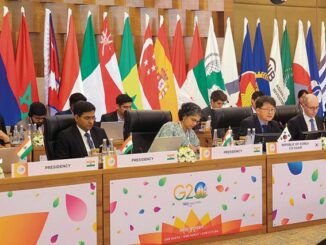
    • India prepares to host G20, SCO summits amidst regional rivalries

     “The G20 Summit will be bringing together leaders of countries which constitute two-thirds of the world’s population, while providing 90% of global GDP and 80% of global trade. The year 2023 is set to become the most complex and busy period in India’s diplomatic history. It is also going to be a period when the country’s logistical and organizational strengths will be tested. The forthcoming summits will test our ability in bringing countries together in a constructive and harmonious cooperation at the highest level. The summits are coming in the wake of tensions arising from the military standoff in Arunachal Pradesh.

    The issue of special interest will be whether Xi Jinping will participate in the forthcoming summits in the background of the current state of Sino-Indian ties.”

    By G Parthasarathy

    India’s foreign policy and national security establishments are going to be deeply tied up this year in meetings with members of the Shanghai Cooperation Organisation (SCO) and the G20 grouping. They will have to meticulously prepare for the summit meetings which India will be hosting later this year. The SCO includes eight members, six ‘Dialogue Partners’, and four ‘Observer States’. The G20 Summit will be bringing together leaders of countries which constitute two-thirds of the world’s population, while providing 90% of global GDP and 80% of global trade. The year 2023 is set to become the most complex and busy period in India’s diplomatic history. It is also going to be a period when the country’s logistical and organizational strengths will be tested. The forthcoming summits will test our ability in bringing countries together in a constructive and harmonious cooperation at the highest level. The summits are coming in the wake of tensions arising from the military standoff in Arunachal Pradesh.

    The issue of special interest will be whether Xi Jinping will participate in the forthcoming summits in the background of the current state of Sino-Indian ties.

    There are a few points that New Delhi should bear in mind. It will enjoy unstinted support in the conferences from virtually all members of the G20 and Quad. Both Pakistan and China will be present in the SCO. Pakistan is now engrossed in dealing with its collapsing economy. It also has serious problems with Taliban-ruled Afghanistan, and its own jihadis, the Tehreek-e-Taliban, across its 2,600 km border with Afghanistan and Iran. Given Afghanistan’s strategic location abutting Central Asia, China is keen to secure access to its mineral resources and keep in touch with its radical Islamist Taliban regime, especially in the light of its own tensions with its disaffected Uighur Muslims.

    Chinese President Xi Jinping has displayed continuing hostility towards India. China is focusing attention on the joint production of its much-touted JF-17 fighter aircraft in Pakistan and in strengthening the Pakistan navy. The Gwadar Port in Balochistan has a growing Chinese presence, but Pakistan has more serious problems to deal with, with its dwindling foreign exchange resources. In the meantime, the IMF is insisting on stringent conditions before international assistance can flow in. Even Saudi Arabia and the UAE, which have always been more than generous in bailing out Pakistan, are now making it clear that they will open their purse strings only after Pakistan fully meets IMF conditionalities. Across the world, many governments are recognizing that the economic mess that Pakistan is now in flows from its own blunders.

    There has, meanwhile, been a growing feeling in India that much of the tensions with China flow from deliberate actions of the Xi Jinping government, despite India having rolled out the red carpet during his India visit. It has been interesting to see a comprehensive assessment of India’s policies by Liu Zongyi of the Shanghai Institute of International Studies. Liu is one of China’s most prominent experts on South Asian studies. He has visited both India and Pakistan. In a recent article, which has received due attention in academic circles in our eastern neighborhood, he has bluntly spelt out what China thinks about India and its policies. Senior scholars in China do not speak out of turn. They are a convenient medium to convey the thinking of the country’s Communist Party and government.

    His study, titled ‘India’s Rising Great Power Strategy’, is multifaceted. On India’s domestic political issues, it alludes to the ascendancy of ‘Hindu nationalism’. On economic issues, he describes the ‘Make in India’ strategy as an effort to take over China’s place in the global supply chain. India’s strategy, according to him, will be to target China by building bases in Indian Ocean states, advancing the integration of India’s armed forces and improving border infrastructure, including in the Andaman and Nicobar Islands. It also includes building military bases by India in small Indian Ocean islands.

    In his conclusion, he notes: ‘Thus, the biggest divide between India and China is no longer related to border issues. In fact, border issues have now been instrumentalized. For the Indians, the biggest issue between India and China is the battle for the regional and global order. It is a geopolitical conflict, because India is a country that places a lot of emphasis on the idea of spheres of influence.’ Regarding India hosting the G20 and Quad summits, he notes: ‘Ultimately, the G20 Summit cannot be a success without China’s active participation. Even though the West lavishes praise on India, and even though India presents itself as the so-called poster child of developing countries, and the leader of the South, it will most certainly not succeed without China’s support.’ One cannot think of this as anything but a warning, bordering on threat.

    Liu betrays an obsession with the growth of India-US relations. He avers that it is India’s strategy to work with the US to undermine and counter China’s Belt and Road Initiative to prevent the emergence of a ‘China led’ regional order. This is accompanied by his strong justification of recent Chinese military intrusions in Ladakh and Arunachal Pradesh. Liu expresses serious concerns about India’s relations with the US and its involvement in groupings like Quad and I2U2. He conveniently forgets how China has been deliberately seeking to undermine India’s relations with neighbors across South Asia, notably with Sri Lanka, Bangladesh, Nepal and the Maldives. He even forgets the impact of China’s continuing and growing military relations with Rawalpindi, including its transfer of nuclear weapons and missile capabilities to Pakistan.

    Under these circumstances, the issue of special interest in the coming months will be whether Xi Jinping will participate in the forthcoming summits in the background of the current state of Sino-Indian relations, and the widespread concerns in India about his assertive policies.

    (The author is Chancellor, Jammu Central University & Former High Commissioner to Pakistan)

  • Education: Private vs  foreign universities and changing concepts of higher education

    Education: Private vs foreign universities and changing concepts of higher education

    There has been a phenomenal growth of education infrastructure in the country in general and Punjab in particular. The number of private universities, including technical universities, have multiplied many times. The State is dotted with medical, dental, engineering, education and engineering colleges.

    By Prabhjot Singh

    Education has it all. The simple test for gauging the progress of a state or a nation. is to look at its education standards. From Kindergarten to higher education, it is a single continuous process that chat while responding to societal and national requirements changes rapidly. From curriculums to methodology, from classroom teaching to use of technology and from textbooks to on training have all been part of the changing face of education. Today, education has become global as regional, territorial or geographical boundaries have become irrelevant in transfer and transmission of learning procedures and technologies.

    The concept of tie-ups between local, regional and national institutions on one hand and foreign universities has become the trend of the day. A part of your degree course can be in the educational institution on your home turf while the other half or part of it can be in an overseas institution.

    For many, education has grown beyond the sanctity of a sacred profession and become more of a business especially in the domains of providing quality education in sophisticated air-conditioned environs of lavishly built high rise or multistoried modern complexes.

    While developing nations are facing a major problem of brain drain, the developed and advanced nations appear to be instant beneficiaries. Last week, the Indian Parliament was told that the number of students going abroad for post-secondary or higher education has been rising rapidly.  The number has almost doubled in the last one decade.

    There has been a phenomenal growth of education infrastructure in the country in general and Punjab in particular. The number of private universities, including technical universities, have multiplied many times. The State is dotted with medical, dental, engineering, education and engineering colleges.

    Intriguingly, a large number of seats in these privately run or managed institutions remain vacant. The disturbing trend is that the number of these vacant seats has been increasing year after year.

    Almost all major prestigious Boys Colleges in the State had to shed their “gender” to remain operational. They are now co-educational institutions with more than 50 per cent of their seats going to girl students. The exclusive girls colleges are doing well though their admissions, too, have come down over the years.

    Though existing institutions and established universities are fighting a losing battle, private institutions and universities have shown phenomenal growth. Examples of Lovely Professional University, Chandigarh University or Chitkara University are all before us.

    What is wrong with the State sponsored education system? Why is it losing out fast?

     The reasons may be many.

    After a long debate, the Union Government has given its nod for elite foreign universities to set up their Indian campuses. It has met with mixed responses. Some have hailed it while others have gone all out to assail this change in policy as a direct invasion of core educational values of the traditional Indian education system. The debate continues unabated.

    Convinced  that education is a flourishing business, many States, including Punjab, Haryana, Himachal Pradesh and even Union Territory of Chandigarh came out with the concept of Education Cities by providing the adequate basic infrastructure.

    Besides major private players as mentioned above, a few others, claiming themselves to have pioneered quality education in the country, too, are spreading their network. Narsee Monjee Institute of Management and Amity University  are among them.

    Narsee Monjee Institute of Management (NMIMS)  has set up  its first campus in the country’s northern belt. Set up in Chandigarh, the first private deemed university in Chandigarh in 2021, it has been trying to make a name for itself with its state-of-the-art infrastructure, highly qualified staff, and unique pedagogy and curriculum in line with NMIMS.

    The campus, says Dr Jaskiran Kaur,  its Director, has brought new opportunities to the region by  setting a new standard in higher education. It offers a variety of programs, including Commerce, Law, and Engineering, with the mission to prepare students to be lifelong learners through thoughtful mentoring, assuring their success.

    NMIMS University’s one-of-a-kind approach to education is enhanced by its efficient multi-campus coordination, leading to seamless content delivery to improve students’ skills by harnessing their potential. The profound impact of learning at the University leaves such an indelible mark on the students that even after they leave the campus precincts, they continue to carry the legacy and culture of the institute.

    Aligning with the University’s philosophy of holistic development, the campus also provides students with clubs and societies to participate in co-curricular activities, furthering their overall development and preparing them for the future.

    The fee charged by NMIMS may be on a slightly higher side with an average of Rs 2.1 to Rs 2.5 lakh a year.

    Dr Jaskiran Kaur emphasizes the overall development of its students that encompasses physical, intellectual, ethical, and philosophical enhancement. “India has always been at the forefront of quality education. This philosophy has been followed by India since the days of yore. At the Chandigarh campus, we believe in bringing the Indian ethos of teaching by following indigenous teaching methodology ingrained in our DNA,” she says.

    Dr. Jaskiran Kaur expressed her pride in the rapid progress made by the campus and its standing as a leading higher education institution in Chandigarh.  “Since its inception in the academic year 2021-22, it has made rapid progress, with a focus on employability rather than employment. Our faculty members are outstanding scholars in their respective disciplines, and the curriculum is developed through industry and academic integration. We are committed to continuing the more than 41-year-old legacy of NMIMS and its focus on providing quality education and excellence in technological and management research through our ever-evolving pedagogy. We believe in providing our students with the best resources and opportunities to help them succeed and become the leaders of tomorrow.”

    Established in 1981, the Narsee Monjee Institute of Management Studies (NMIMS) is today recognized as a globally reputed university with strong industry linkages. It has duly earned every coveted accreditation and top ranking over the years, making its credibility unshakeable. It offers multiple disciplines across eight campuses that consist of 17 specialized schools, more than 17,000 full-time students, and about 800+ full-time faculty members, including ten faculty members with the Fulbright and Humboldt Scholarships for post-doctoral research.

    (The author is a senior journalist)

  • India’s Budget : Boost to capex & pvt consumption, infra push, green growth

    India’s Budget : Boost to capex & pvt consumption, infra push, green growth

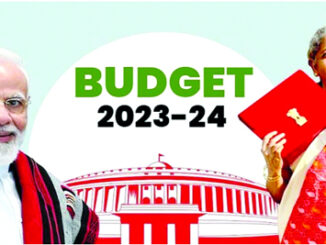
    The Union Budget 2023-24 has tried to strike a balance between the imperatives of fiscal consolidation and boosting growth. The twin boosters of higher capex outlay and moderation in income taxes for the middle class are big positives at a time when global headwinds are expected to slow down growth. This has been done without losing sight of fiscal consolidation. Impetus towards tourism, housing and urban infrastructure in small towns will help in generating employment opportunities. On the expenditure front, while the rationalisation in food and fertiliser subsidy is a welcome development, the cut in the allocation for the rural jobs guarantee programme may require an increase in the coming months.

    Boost to capital expenditure

    The allocation of Rs 10 lakh crore for capital expenditure is a welcome move at a time when private investment recovery is still uneven. With this enhancement, capex outlay has reached 3.3 per cent of GDP. This is also reflected in the quality of expenditure. The share of capital expenditure (including grants in aid for creating assets) in the total government expenditure is budgeted to increase to 30.4 per cent in 2023-24 from 25.2 per cent in 2022-23.

    In another boost to infrastructure, the budget has proposed an urban infrastructure fund of Rs 10,000 crore. The fund will be managed by the National Housing Bank and will be used for the development of urban infrastructure in tier 2 and 3 cities. This will indirectly support employment generation in small cities.

    States have also been incentivised to boost capital spending. The 50-year interest free loans to states has been continued for one more year with an enhanced outlay of Rs 1.3 lakh crore. While the central government has been fast-tracking capital expenditure, states are seen to be slow in capital spending. In addition to enhanced allocation, they need to step up their administrative capacity to expedite capital spending.

    Steps to spur domestic consumption

    The budget aims to spur domestic consumption at a time when external demand is likely to remain muted due to the global headwinds. This has been done through rationalisation and simplification of  the personal income tax under the new tax regime.

    The new tax regime was introduced in 2020 with six tax slabs. The rebate on personal income tax has been raised to Rs 7 lakh from Rs 5 lakh. Thus, persons in the new tax regime, with income up to Rs 7 lakh will not have to pay any tax. The Finance Minister has now proposed to reduce the number of slabs to five and increase the tax exemption limit to Rs 3 lakh. The maximum tax rate has also been reduced from 42.7 per cent to 39 per cent.

    The changes are aimed to make the new tax regime the default one. No changes have been made to the old tax regime. However taxpayers who have parked funds in social security contributions, insurance premiums and are committed to housing loan repayments may continue with the old tax regime.

    Fiscal consolidation backed by realistic revenue estimates & expenditure compression

    The government has reaffirmed its commitment to adhere to the fiscal consolidation roadmap.

    The government expects to achieve this year’s target of 6.4 per cent of GDP. For the next year, the fiscal deficit target is fixed at 5.9 per cent of GDP. The deficit on the revenue account is projected to fall from 4.1 per cent of GDP in the current year to 2.9 per cent of GDP in the next year.

    The targets for revenue receipts are broadly conservative and reflect the slowdown in nominal GDP growth which is expected at 10.5 per cent next year. Gross tax revenue is expected to grow at 10.4. per cent in 2023-24 as compared to 12.3 per cent in the current year.

    The government has projected a lower growth in its expenditure. It projects its expenditure to grow at 7.5 per cent, lower than 10.4 per cent in 2022-23. The bulk of the compression in expenditure is coming from revenue expenditure. Revenue expenditure growth is pegged at a meagre 1.2 per cent for the next financial year, assuming that the unanticipated shocks that rocked the economy in the current year would not re-appear next year.

    The allocation on both food and fertiliser subsidy has been slashed sharply in 2023-24. While the reduction in subsidy will provide the necessary fiscal space for capital expenditure, the cut in the allocation on the Mahatma Gandhi National Rural Employment Guarantee Scheme (MNREGS) is puzzling.

    This year, the government had to increase the allocation on the scheme. It might have to increase the allocation over the coming months if the demand for work remains elevated.

    The net market borrowings are expected to be Rs 11.8 lakh crore for the next financial year. Market borrowing, though elevated is in line with market expectations. As an outcome, the yield on the benchmark ten year bond did not see a jump post the announcement of budget. Going forward, however borrowings need to see a dip for a material decline in the central government’s debt-GDP ratio. This is important as almost 24 per cent of the expenditure of the central government goes towards interest payments.

    Noteworthy initiatives for tourism and green growth

    The Budget’s focus on tourism is a positive move and will help in generating employment opportunities. The proposal to set up Unity Malls for promotion and sale of their one district, one product, GI products and other handicraft products will give an impetus to local handicrafts and help in boosting income and employment.

    The emphasis on green growth is welcome. The various measures announced in the budget including an allocation of Rs 19,000 crore for the National Hydrogen Mission will help in reducing the carbon footprint of the economy and will help in moving towards the ultimate goal of net zero emissions by 2070.

    The scrapping of old vehicles by the Centre and States is not only environment friendly but will also give a boost to the automobile sector.

                    Source: The Print

    (Author Radhika Pandey is Senior Fellow at National Institute of Public Finance and Policy).

    What gets expensive, what’s cheaper

    Costlier

    –              Cigarettes

    –              Kitchen chimney

    –              Imported bicycles and toys

    –              Fully imported cars and Electric Vehicles

    –              Imitation jewellery

    –              Compounded rubber

    –              Silver dores

    –              Naphtha

    Cheaper

    –              Domestically-manufactured TV sets

    –              Shrimp feed

    –              Fish lipid oil used in manufacturing aquatic feed

    –              Seeds for lab-grown diamonds

    –              Capital good

    –              Machinery for manufacturing lithium ion cell to be used in electric vehicles.

    ‘NO Roadmap to Build India’s Future’: Rahul Gandhi

    Hitting out at the Modi government, Congress MP Rahul Gandhi tweeted, “Mitr Kaal Budget has: NO vision to create Jobs. NO plan to tackle Mehngai. NO intent to stem Inequality. 1% richest own 40% wealth, 50% poorest pay 64% of GST, 42% youth are unemployed- yet, PM doesn’t Care! This Budget proves Govt has NO roadmap to build India’s future.”

    ‘Nothing for the Poor People’: Congress chief Kharge

    Hitting out at Modi government, Congress President Mallikarjun Kharge said, “Budget was presented by Modi govt keeping in view the upcoming Assembly polls in 3-4 states… There’s nothing in the budget for poor people & to control inflation. No steps for jobs, to fill govt vacancies & MNREGA.”


    ‘This Budget will Touch 140 Crore Indians’:  Piyush Goyal

    Praising the government, Union Commerce Minister Piyush Goyal said, “This budget will touch 140 crore Indians & will impact their lives for a better future & prepare India to enter into Amrit Kaal with great confidence as a country which is working to a plan to make India a nation where everybody grows as the economy grows.”

    ‘Earlier Punjab was Missing From Republic Day, now Missing From Budget’: Punjab CM

    Hitting out at the government, Punjab CM Bhagwant Mann said, “Earlier Punjab was missing from Republic Day, now Punjab is missing from the budget. As a border state, we demanded Rs 1000 cr for BSF’s upgradation, modernisation, anti-drone system, but nothing has been talked about in the budget.”

    ‘Disappointing Budget’: DMK MP Dayanidhi Maran

    DMK MP Dayanidhi Maran termed the budget as disappointing. He said the schemes announced for the states, but they have been asked to take care of themselves.

    ‘This budget will increase inflation’: Arvind Kejriwal

    Delhi CM Arvind Kejriwal has slammed the Union Budget 2023 and said it does provide any relief from the increasing inflation. The AAP chief in a tweet said, “There is no relief from inflation in this budget. On the contrary, this budget will increase inflation There is no concrete plan to remove unemployment. Unfortunate to reduce education budget from 2.64% to 2.5% Reducing health budget from 2.2% to 1.98% is harmful.”

  • Will Prime Minister Modi Restore Investors’ Confidence in Indian Markets and Regulatory Mechanism, Investigate Adani Group?

    Prime Minister Narendra Modi and Gautam Adani
    The handshake with Gautam Adani need not prevent PM Modi from doing his duty to the nation.

    Since 2014 under PM Modi, it has become a fashion and accepted norm in India that if you are a criminal and you belong to RSS family of organizations; you can hide behind “Fake Nationalism” or behind a false cry of “Hinduism is in Eminent Danger”. Under this magic formula, your every crime will go away and you can become a Central or State Minister or Chief Minister or member of legislative bodies in the center or state, or a State Governor. If you do not belong to RSS family of organizations and you are a rapist, murderer, bomb maker , terrorist, money launderer, drug dealer, mine mafia, arms dealer etc. by joining any of the RSS family of organizations; you can become sin aka crime free and now you are called Sanskari aka person of Good Character!

    Disgustingly Adani Group founded by Gautam Adani, it’s CFO Jugeshinder Singh has gone one step ahead of the above time tested Magic Formula used by criminals supported by RSS family of organizations; has found a new way to cover his Boss Gautam Adani’s crimes. He has draped his boss, his family members and Adani Group’s crimes behind the National Flag of India. No one from RSS family of organizations and their Godi Media has raised any objections or has said a word that it is an insult to every Indian, Indian National Flag and Mother India. Can the PM Modi’s Government or RSS family of organization’s top officials explain if the Indian National Flag is Adani Group’s Corporate Logo?

    This happened when Gautam Adani aka Adani Group though its CFO Jugeshinder Singh in a video for Media, defended himself against the accusations — leveled by US-based short sellers Hindenburg Research — that it had “engaged in a brazen stock price manipulation, stock parking, accounting fraud, round tripping of cash, Import-Export scams, money laundering through 38 offshore shell companies etc. over the course of decades,” the choice of décor was more persuasive than the denial of frauds.

    Nationalism is not to be abused.

    CFO Singh stood in front of a giant Indian flag that made him look more like a very high level government official than an embattled company executive. His message was clear: If you are a “foreign entity” coming after Gautam Adani or Adani Group, you’re coming after India.

    No, sir; it’s not an attack on India.

    CFO Singh while defending Gautam Adani aka Adani Group also said, “It does not surprise me. In Jallianwala Bagh, only one Englishman gave an order, Indians fired on other Indians. So am I surprised by the behavior of some fellow Indians? No.”

    Shamelessly CFO Singh has equated frauds committed by Gautam Adani aka Adani Group exposed by Hindenburg Research with the martyrs fighting for Indian independence from the British. At the same time, he is giving an open warning to every Indian if they believe in Hindenburg Research report and question Gautam Adani or Adani Group, they will be called traitors aka anti-Nationals.

    Then on Jan 29th, 2023 Adani group in its 413-page written rebuttal, denounced Hindenburg’s report as “baseless” and “malicious,” and accused the firm of having an “ulterior motive” for publishing the “missive.” “This is rife with conflict of interest and intended only to create a false market in securities to enable Hindenburg, an admitted short seller, to book massive financial gain through wrongful means at the cost of countless investors.”
    It said Hindenburg’s actions represent a “calculated attack on India, the independence, integrity, and quality of Indian institutions, and the growth story and ambition of India.”

    Same day on Jan 29, 2023, Hindenburg Research replied, “Fraud cannot be obfuscated by Nationalism or a bloated response that ignores every key allegation we raised.
    Adani has stoked a nationalist narrative, claiming pour report amounted to a “calculated attack on India.” In short, the Adani Group has attempted to conflate its meteoric rise and the wealth of its Chairman, Gautam Adani, with the success of India itself.

    We disagree. To be clear, we believe India is a vibrant democracy and an emerging superpower with an exciting future. We also believe India’s future is being held back by the Adani Group, which has draped itself in the Indian flag while systematically looting the nation.

    Hindenburg investigation speaks of Adani Group’s shell companies.

    We also believe that fraud is fraud, even when it’s perpetrated by one of the wealthiest individuals in the world.

    In terms of substance, Adani’s ‘413 page’ response only included about 30 pages focused on issues related to our report.

    The remainder of the response consisted of 330 pages of court records, along with 53 pages of high-level financials, general information, and details on irrelevant corporate initiatives, such as how it encourages female entrepreneurship and the production of safe vegetables.

    Within one week of the Hindenburg Research report, Adani Group companies have lost $108 Billion in Market Cap, one of the biggest wipeouts in India’s history. Gautam Adani himself lost $48 Billion in personal wealth and now ranks 16TH in the Index of World’s Richest from 3rd rank on Jan. 23, 2023. On Feb. 1, 2023 Credit Suisse stopped accepting Bonds of Adani Group collateral for margin loans to private banking clients. Citigroup Inc’s (C.N) wealth arm also stopped accepting securities of Gautam Adani’s group of firms as collateral for margin loans.

    Hindenburg report speaks of fraud by Adani GroupHindenburg

    Adani Enterprises Ltd (AEL) late on Feb. 2, 2023 decided to withdraw its Rs 20,000 crore ($2.5 Billion) follow-on public offering (FPO), India’s biggest such issue after claiming over subscription on Feb. 1, 2023 and announced that investors money will be returned. Sajjan Jindal and Sunil Mittal subscribed the Adani FPO in a last-minute push from their personal funds and do not involve listed businesses that they head like JSW Steel Ltd. and Bharti Airtel Ltd. FPO offering price band was Rs 3,112-3,276 per share while it was trading below Rs 3,000.00 in the market. The closing price of Gautam Adani’s Flagship company closed at Rs 1,565.25 at BSE on Feb. 2, 2023 that is 52 weeks low from its high of Rs 4,190.00
    The decision to withdraw the FPO issue came right after Forbes flash news that “there’s evidence of wrongdoing that the Adani Group likely bought into its own $2.5 Billion Share sale. It must be noted that despite the FPO being oversubscribed, its retail portion was subscribed only 0.12 times (12%) with investors bidding for only 2.74 million shares as against the quota of 22.9 million shares. The non-institutional investor category was over-subscribed 3.32 times while that of qualified institutional buyers (QIB) was also oversubscribed 126%.

    Post Hindenburg Report , Value of LIC investment in Adani Group shares have fallen from ₹77,000 CR to ₹53,000 CR- loss of ₹23,500 CR. Also, LIC shares have lost ₹22,442 CR. SBI share’s “market cap” has declined by a whopping ₹ 54,618 CR. The Loan Exposure of SBI and other Banks to Adani Group is ₹ 81,200 CR. SBI alone has $2.6 billion or Rs 21,000 crore  of loans to Adani Group.

    Indians wish they opened their eyes for the sake of India and the Indians.

    On Feb. 2, 2023, India’s parliament was adjourned for the day after pandemonium broke out when the upper house chair rejected opposition lawmakers’ demand for a debate on Billionaire Gautam Adani’s dispute with a US short seller Hindenburg Research. They were demanding an investigation into accusations of “brazen stock manipulation and accounting fraud” made against Adani Group by the Hindenburg Research. Later Mallikarjun Kharge, president of the Indian National Congress party and leader of the opposition, told reporters, “We want either a joint parliamentary committee … or a committee headed by the chief justice of the Supreme Court to investigate this matter and release the day-to-day report.”

    It is a well-known fact that current Indian PM Narendra Modi and Gautam Adani are close friends for over 2 decades and both have helped each other in their respective professions. Adani from Diamond sorter became the 3rd richest person in the world. That position he held till the Hindenburg Research made disclosures of serious frauds by Adani Group. Despite having no apparent experience or expertise; he is in every field of India; right from ports, airports, military hardware, railways, mining, cement, power, real estate, fresh & processed food etc. mostly due to government favors.

    Modi from menial RSS worker became its Pracharak aka “Messenger of RSS’s misguided Hindutva and Hindu Rashtra Philosophy” to became the face along with L K Advani in the Rath Yatra for Ram Mandir, later to become the CM of Gujarat in 2001. So many independent Indian and foreign bodies hold CM Modi responsible for ethnic cleansing of Muslims in Gujarat riots in 2002. There was “widespread rape of Muslim women” and killing of Muslims. “Muslim businesses, including businesses partially owned by Muslims and their properties were systematically targeted and destroyed. “This was followed by calls for an economic boycott of Muslim owned businesses, denial of jobs, rentals & forcible sale of their properties in Hindu localities.” As per official figures 1,044 dead, 223 missing, and 2,500 injured. Of the dead, 790 were Muslim and 254 Hindu. The Concerned Citizens Tribunal Report estimated that as many as 1,926 Muslims may have been killed. Over 140,000 people were displaced in the violence, of which 100,000 were Muslims. “Conditions in refugee camps were extremely poor for Muslims” and initially compensation offered by the Modi’s Gujarat government was “discriminatory”: Rs 200,000 for Hindu victims, and Rs 100,000 for Muslims. This was later modified “at the request of the Central government in Delhi”. Still Modi remain Chief Minister of Gujarat till 2014 to become the Prime Minister of India by invoking fake nationalism. misguided Hindutva and his support to make India a Hindu Rashtra.

    The loyalty to Gautam Adani should not deter the Prime Minister of India from doing his duty to the nation.

    If PM Modi’s government has an iota of shame, care for international reputation of India, and even 0.1% faith in Democratic norms and love for India as per the Hinduism they swear by; Adani Group’s founders, family members, top executives and enforcement agencies’ top officials must be investigated. If they are found guilty, they must be given exemplary punishment to deter future financial crimes like this by anyone, including persons belonging to richest club or bureaucrats or politicians of India. In the meantime Adani Group’s Chief Financial Officer  Jugeshinder Singh must be arrested immediately for insulting Indian National Flag, Indians and Mother India. Singh should be arrested on non-bailable warrants and must do minimum 6 months rigorous imprisonment with regular criminals with no privileges for being a rich or highly educated man or a foreign national. Being a highly educated and ex-Indian citizen, he was fully aware of the rules and protocols about using the Indian National Flag by a common citizen. He cannot hide behind the fact by saying that he is an Australian citizen and gave up his Indian citizenship to give lectures on Indian Nationalism!

    Adani Group: How The World’s 3rd Richest Man Is Pulling The Largest Con In Corporate History
    Published on January 24, 2023

    Adani Group: How The World’s 3rd Richest Man Is Pulling The Largest Con In Corporate History

    ADANI RESPONSE TO HINDENBURG RESEARCH:
    (413 PAGES)
    JAN. 29, 2023
    https://www.adani.com/-/media/Project/Adani/Invetsors/Adani-Response-to-Hindenburg-January-29-2023.pdf

    HINDENBURG’s REPLY TO ADANI’s RESPONSE:
    JAN. 29, 2023
    Fraud Cannot Be Obfuscated by Nationalism Or A Bloated Response That Ignores Every Key Allegation We Raised

    Our Reply To Adani: Fraud Cannot Be Obfuscated By Nationalism Or A Bloated Response That Ignores Every Key Allegation We Raised

    (The special report has been compiled by Dave Makkar for The Indian Panorama. Mr. Makkar is a social activist based in New Jersey)
    The Indian Panorama welcomes readers’ comments which will be published in the next weekly editions.

  • Taking the middle path

    • Kickerline: Budget combines fiscal prudence with populism

    In its last full Budget before the 2024 General Election, the NDA government has attempted to strike a balance between economic and electoral considerations. With nine states going to the polls this year (including three this month), followed by the bigger battle for the Lok Sabha, the government has reached out to various sections — be it farmers, the salaried, tax-harried middle class or the poorest of the poor. The country’s resilient recovery from the pandemic has offered an opportunity to make all engines of growth press ahead at full steam. The government has again reposed faith in capital expenditure, whose outlay has been increased by 33 per cent to reach Rs 10 lakh crore. The focus is on greater spending and making India more attractive for investors in the post-Covid period.

    Amid a global slowdown, India has emerged as the world’s fastest-growing major economy, and it is imperative to maintain the momentum. The government is hopeful that investments and job creation will go hand in hand. However, the situation on the ground is not so promising. The national unemployment rate has hovered around 7-8 per cent during the past 12 months. It’s obvious that various job generation schemes, including the one that links production with incentives, need regular monitoring and better implementation.

    The Budget has listed seven long-term priorities — inclusive development, reaching the last mile, infrastructure and investment, unleashing potential, green growth, youth power and the financial sector. The proposed creation of the agriculture accelerator fund to help agri startups shows that the Centre is heavily banking on the time-tested farming sector for economic dividends. The allocation of Rs 35,000 crore for the transition to green fuels is welcome, but the challenge will be to ensure a smooth switchover with adequate reskilling and redistribution of the workforce. The 66 per cent jump in allocation for the Pradhan Mantri Awas Yojana can help improve housing facilities for migrant workers, while the highest ever capital outlay of Rs 2.4 lakh crore for the Railways is another step that will keep growth on the right track. All in all, the Budget has something for everyone, in a large measure or small.

    (Tribune, India)

  • Hindenburg allegations

    • Imperative for Adani Group, India to shore up investor trust

    The turmoil in the stock markets, largely caused by the sell-off of the Adani Group shares since late last week, has brought into sharp focus India’s regulatory framework, apart from the necessity of robust accounting practices. Investor sentiment suffered following the release of a report by New York-based Hindenburg Research — an investor research firm that positions itself as an investigator-activist — which alleged that the Adani Group had engaged in ‘a brazen stock manipulation and accounting fraud scheme over the course of decades.’ Even as it lost tens of billions of dollars in valuation, the Adani Group denied the accusations, calling them ‘selective misinformation and stale, baseless and discredited allegations’, and ‘a calculated attack on India.’ The report also raised questions over the group’s high debt levels and accused it of using shell companies based in tax havens. In the past, analysts have pointed at large investments in the Adani Group by entities such as the LIC and several public sector banks.

    The allegations made by Hindenburg may be insufficient to prosecute Adani, but it’s imperative that regulators such as SEBI and the Reserve Bank of India address the issue swiftly and decisively. This is important because at stake is India’s reputation as an investment destination — India’s is the fifth-largest economy in the world and many investors now look at the country as a more attractive option than China and other emerging economies. The episode also focuses the spotlight on audit firms — across the world, the unscrupulous among these have been known to help big companies mislead investors by manipulating accounts. Just in the current century, many observers blamed audit firms for the collapse of Enron in 2002 and Lehman Brothers in 2008.


    To shore up investor trust, the Adani Group and regulatory institutions must dispel fears of auditing fraud or any other malpractice. Probity in accounting safeguards institutional and individual investments, helping investors make informed decisions. The regulatory authorities and the government must ensure that the interests of the average investor are protected, and the country’s reputation as an investment destination is not sullied.
    (Tribune, India)

  • G.E.O.R.G.E. Package

    By Josh Lafazan

    “Make lemonade out of lemons” is a saying ingrained from an early age in students across the country to teach perseverance in the face of adversity. In essence, when faced with a bad situation, navigate the current circumstances to imagine a positive outcome.

    When it comes to George Santos, it’s far easier to imagine a steady stream of lemon juice squirted directly into our eyes rather than heeding such an elementary maxim.

    Each new day seems to bring a new lie with it, one more outrageous than the next. From a fake resume, to a fake address, to a fake religion, and more, George Santos remains defiant as ever in the face of his masterpiece: the most sophisticated web of lies ever created in the history of American politics.

    The good news is that people of good conscience all across NY’s 3rd District, irrespective of partisan affiliation, are exasperated by the “Talented Mr. Santos” and have had enough. Calls for Santos to resign ring out from the headquarters of both the Nassau Democrats and the Nassau GOP. But being outraged is not a sufficient enough solution to our George Santos problem.

    Yes, George Santos is an issue for the nation, but he’s also a problem of our local creation. And therefore the burden lies with us here in NY-03 not just to destroy Frankenstein’s monster, but to ensure that the next George Santos is barred from ever putting their name on the ballot.

    And what George Santos, the long-lost brother of fake German heiress Anna Delvey, has shown us is that guardrails to prevent charlatans and liars from running for office simply don’t exist in the 21st century.

    That’s why I’ve proposed the G.E.O.R.G.E. PACKAGE here in Nassau County, an eponymous series of laws named for Mr. Santos: Get Egregious Officials Removed from Government Elections.

    This package includes several law proposals to safeguard against individuals like Mr. Santos from ever getting elected in the first place. They include:

    Mandatory background checks for all candidates, just like every other employee is subjected to.

    Barring anyone with an open foreign arrest warrant from holding office.

    Making it a misdemeanor to lie about a candidate’s education, employment history, address, and income sources.

    The G.E.O.R.G.E. PACKAGE is not a guarantor against politicians lying to get elected. Rather it offers peace of mind to residents that they have an honest choice between two candidates, and gives insurance to voters that if candidates don’t play by the rules, they, like us, will also be held accountable.

    When James Madison authored the Constitution, never in the wildest dreams of our Founders did they envision needing laws like the G.E.O.R.G.E. PACKAGE on the books. But so as the Constitution is a living document, our governments also must continue to evolve with the times.

    And in the age of George Santos, where politicians take an “ends justify the means” approach to elevate lies over the truth and perpetrate fraud against the voters in order to win elections, these safeguards are needed now more than ever to protect our democracy.

    My hope is that versions of the G.E.O.R.G.E. PACKAGE pass in Mineola, in Albany, and in Washington. Therefore all across this state voters can breathe a collective sigh of relief that no matter which candidate wins, at least someone as morally reprehensible as George Santos won’t be representing them.

    After all, while Santos may be the lemons, the G.E.O.R.G.E. PACKAGE is our lemonade. Let’s drink up.

  • Allow it to reign Supreme

    Allow it to reign Supreme

    • A ‘committed judiciary’ would spell the end of checks & balances in a democracy

    “The SCC system, like the proposed NJAC, or the systems now prevalent in advanced democracies can never be perfect, but it is the best in the circumstances. The judges, at least, are not political, though they have their own preferences. A constant criticism of the SCC system is that it is opaque. Only the five senior-most judges who constitute the Collegium can tell why one candidate has been selected and the other rejected, but when the SCC decided to meet that criticism by placing the papers before the public, Rijiju took offence at this unexpected move and pleaded that inputs by the IB and other Central Intelligence agencies should never be made public.”

    The Collegium system, like the proposed NJAC, or the systems now prevalent in advanced democracies can never be perfect, but it is the best in the circumstances.

    By Julio Ribeiro

    Indira Gandhi was a born leader. Narendra Modi is a born leader. Indira wanted a committed judiciary. Modi wants a committed judiciary. Indira went about superseding judges who she knew would not support her policies if those policies crossed the line drawn by the Constitution. Modi is more subtle in achieving his goal. He has Kiren Rijiju, his Law Minister, to ensure that all judges raised to the Bench in High Courts and the Supreme Court come to heel!

    The Collegium system, like the proposed NJAC, or the systems now prevalent in advanced democracies can never be perfect, but it is the best in the circumstances. Rijiju had done well in the sports and other ministries he was heading, but in the law and judiciary portfolio, he continues to convince, unsuccessfully so far, the Chief Justice and his brother judges of the Supreme Court to shift the balance of power to appoint High Court and Supreme Court judges from the Supreme Court’s Collegium (SCC) into the hands of the government.

    In Dr DY Chandrachud, he has met a doughty opponent who cannot be taken for a ride. Every few days, Rijiju tries a new tack. He has to prove himself to the ‘one who decides his future’. I wish him well but not at the cost of the people. The citizens of the Republic must be assured of an independent judiciary. A ‘committed judiciary’ would spell the end of checks and balances that a democracy needs to be assured of a modicum of justice. If the judiciary is enslaved like some other institutions that have already succumbed or about to succumb (some against their wishes), this country will be on its way to become an autocratic state. We are already being told what we should wear, what we should eat and who we should love. If the judiciary ceases to think like it should — according to the law and the Constitution — our very life and liberty will be at stake.

    Justice Madan Lokur, formerly of the SC, has in an essay in an online publication titled , ‘The Government Wants a Committed Judiciary — And Could be Close to Getting One’, spelt out various untruths that Rijiju has been guilty of in the course of his campaign to malign the SCC system.

    The SCC system, like the proposed NJAC, or the systems now prevalent in advanced democracies can never be perfect, but it is the best in the circumstances. The judges, at least, are not political, though they have their own preferences. A constant criticism of the SCC system is that it is opaque. Only the five senior-most judges who constitute the Collegium can tell why one candidate has been selected and the other rejected, but when the SCC decided to meet that criticism by placing the papers before the public, Rijiju took offence at this unexpected move and pleaded that inputs by the IB and other Central Intelligence agencies should never be made public.

    Well, he cannot have it both ways. If he wants to hide the reasons for the government’s distrust of certain nominees, it would help the government to say that it had rejected the nomination for reasons spelt out by the IB. That would dispel the popular understanding that the government wants only judges who toe its line and not those who are fair and just. Obviously, the government does not want to be told that its Intelligence agencies are also eager to toe its line! The disclosures that the SCC has now made because of its spat with the Law Ministry show that the objections voiced in the Intelligence reports are on the lines required by the government.

    Ever since Justice Chandrachud became the CJI, the Law Ministry, with Rijiju to guide it, has become particularly hostile. Any recommendation that is reiterated after reconsideration on the government’s urging has to be accepted in toto, according to rules. The government has been dragging its feet, making it abundantly clear that certain independent-minded legal luminaries are ‘persona non grata’.

    Justice Lokur has mentioned the case of Aditya Sondhi, who withdrew his consent when his appointment to the SC Bench was kept in cold storage for more than a year. The inter-High Court transfers of Chief Justices are also kept in cold storage if the government frowns on certain judges, like Justice Muralidhar, whose only fault was that he insisted on FIRs against a minister and other BJP bigwigs when they made hate speeches quite openly and brazenly in Delhi before the riots began three years ago.

    Justice Lokur also mentioned about the case of legal luminary Gopal Subramanium, who withdrew his consent to serve as a judge of the Supreme Court after the government stalled his appointment by blatantly splitting the recommendation of the SCC, accepting one name and keeping quiet over the other, thus making it known that the government did not want a judge who was not in sync with its policies.

    Justice Lokur proved through his dissertation that Rijiju’s argument that India was the only country in the world where the government had no part to play in the selection of judges was totally false and misconceived. The examples he quoted proved the fact that the government was, in fact, neck and shoulders involved in the entire exercise. Moreover, said Justice Lokur, the procedure laid down for the appointment of judges to the High Courts and the Supreme Court clearly shows that the government has its fingers immersed in the pie at various stages and there is no question of keeping them out. In fact, the final word is with the Law Ministry itself because by sitting over the recommendations of the SCC in many inconvenient (to the government) appointments and expediting others, it has proved that the final say is of the government, and the government alone.

    The government obviously does not want independent-minded judges and it is only the present CJI and his senior colleagues, now in the SCC, who are effectively ensuring that this last bastion of democracy does not capitulate during their term in office.

    (The author is a former governor and a retired IPS officer)

  • Founding ideals: On President Murmu’s first Republic Day address to the nation

    Adherence to basic principles of the Constitution is what unifies India

    In her first and customary Republic Day address to the nation, President Draupadi Murmu reiterated the founding ideals of the Republic on the eve of the 74th anniversary of the adoption of its Constitution. As the first tribal woman to occupy the highest office in the country, the 15th President of India is emblematic of the Republic’s continuing journey of democracy, pluralism and empowerment of the weaker sections. The values of fraternity and democracy that its founding leaders etched into the genetic makeup of the modern nation were derived from the learnings of an ancient civilization. Ms. Murmu underscored this quality of the Republic — the amalgamation of the old and the new, the traditional and the modern. A unified and unifying struggle against British imperialism, as the President noted, was “as much about winning Independence as about rediscovering our own ideals”. Ms. Murmu laid emphasis on the “essence of India” — which is profound and predictable at once. “We have succeeded… because so many creeds and so many languages have not divided us, they have only united us.” A commitment to this creed has sustained the modern nation, and the long and ancient civilization that evolved and reformed over millennia.

    It can be argued that the Republic is continuously in formation, as thoughts and ideas emerge. As new ambitions inspire the country, some foundational principles must remain the timeless codes for survival and success. Ms. Murmu’s address reiterated those, while celebrating India’s successes in various fields, particularly the economy. While noting India’s emergence as an influential leader in global affairs, she underscored the principles of Sarvodaya and Atmanirbhar Bharat — uplift of all, and self-reliance — which are guiding the government as they have the earlier ones. Oppression and debilitating poverty continue to shackle vast sections, and India must constantly remember this fact, and certainly on occasions when it reflects on its progress. At various points, challenges to the ideals of the Constitution and the national movement arose in the form of political authoritarianism, sectarian extremism, and separatism, but India overcame them — a reason for satisfaction but also a call for constant vigil. Ms. Murmu’s reiteration of the founding principles of the Republic, and her reassurance to fellow citizens come at a time when the sanctity of the Constitution is under attack. While debate about the Constitution is also part of the democracy it establishes, adherence to its basic principles is what unifies the people of India. Ms. Murmu made that point.

    (The Hindu)

  • Big Tech layoffs: Chance to turn adversity into opportunity

    Thanks  to the enormous balance sheets, Big Tech has historically been a resilient industry, absorbing most of the economic shocks. It is also considered a bellwether for decisions on corporate spending and hiring. As the growth-oriented technology industry confronts one of its worst contractions, with mass layoffs over the span of a few months, there is a sense of panic and anxiety. The shakeout is being viewed as an instance of social contagion — companies imitating what others are doing. Facing criticism, the tech giants are projecting the staff sackings as a course correction following a period of aggressive scaling up and bolstering of workforce during the pandemic. Amid predictions of a recession and a severe economic downturn in the West, the belt-tightening, it is argued, sends a message to shareholders of putting the brakes on any needless spending. The jury is out on whether the approach is prudent or myopic.

    When the world’s most valuable and cash-rich firms resort to large-scale job cuts, worries of a ripple effect are inevitable. Knock-on consequences are expected in the consulting, marketing, advertising and manufacturing spaces. The developments are also bound to have an impact on India’s export prospects, especially in the information technology sector. The consolation, if any, is that most people losing jobs are highly employable professionals, given their education and work experience credentials. Salaries may deflate, but the tech industry is still a big employer. Competitive re-hiring may be back with a vengeance sooner rather than later.

    There are calls in the US Congress to offer assistance to immigrants who have been laid off. As things stand today, it’s a grim scenario, but adversity can be turned into opportunity. For the Indian techies bearing the brunt abroad and the firms based in the country, it’s a chance to explore new beginnings and collaborations. It’s an opportune time to attract the talent back home, offer a slew of incentives and gain an impactful foothold in the global tech space.

    (Tribune, India)

  • A betrayal of the very idea of the Mahatma

    A betrayal of the very idea of the Mahatma

    The principles Gandhiji stood for represent an ideal that is being weakened every day by those in power who are pushing their agenda of bigotry

    “The contradiction is mirrored in the attitude of the Hindutva-inspired Bharatiya Janata Party (BJP) government of Prime Minister Narendra Modi. Mr. Modi was schooled, like other Rashtriya Swayamsevak Sangh (RSS) pracharaks, in an intense dislike of Mahatma Gandhi, whose message of tolerance and pluralism was emphatically rejected as minority appeasement by the Sangh Parivar, and whose credo of non-violence, or ahimsa, was seen as an admission of weakness unworthy of manly Hindus. Hindutva ideologue V.D. Savarkar, whom Mr. Modi has described as one of his heroes, had expressed contempt for Gandhiji’s ‘perverse doctrine of non-violence and truth’ and claimed it ‘was bound to destroy the power of the country’. But Prime Minister Modi, for all his Hindutva mindset, his admiration of Savarkar and his lifetime affiliation to the Sangh Parivar, has embraced Gandhiji, hailing the Mahatma and even using his glasses as a symbol of the Swachh Bharat campaign, linking it to a call to revive Gandhiji’s idea of seva through the recent ‘Swachhata Hi Seva’ campaign.”

    By Shashi Tharoor

    This year marks the 75th anniversary of Mahatma Gandhi’s assassination (January 30, 1948) by a Hindu fanatic who thought the Mahatma was too soft on Muslims. The momentous anniversary comes at a time when his legacy, the very idea of Gandhi, stands challenged by the prevailing ideological currents. At a time when the standing of his historic detractors, whose descendants now form the ruling dispensation in the country, is at an all-time high, Gandhiji has been criticized for weakness, for having bent over too far to accommodate Muslim interests, and for his pacifism, which is seen by the jingoistic Hindutva movement as unmanly.

    The Mahatma was killed, with the name of Rama on his lips, for being too pro-Muslim; indeed, he had just come out of a fast he had conducted to coerce his own followers, the Ministers of the new Indian government, to transfer a larger share than they had intended of the assets of undivided India to the new state of Pakistan. Gandhiji had also announced his intention to spurn the country he had failed to keep united and to spend the rest of his years in Pakistan, a prospect that had made the government of Pakistan collectively choke.

    But that was the enigma of Gandhiji in a nutshell: idealistic, quirky, quixotic, and determined, a man who answered to the beat of no other drummer, but got everyone else to march to his tune. Someone once called him a cross between a saint and a Tammany Hall politician; like the best crossbreeds, he managed to distil all the qualities of both and yet transcend their contradictions.

    Explaining a contradiction now

    Hinduism and Hindutva, as I have argued in my book Why I Am a Hindu, represent two very distinct and contrasting ideas, with vitally different implications for nationalism and the role of the Hindu faith. The principles Gandhiji stood for and the way in which he asserted them are easier to admire than to follow. But they represented an ideal that is betrayed every day by those who distort Hinduism to promote a narrow, exclusionary bigotry.

    The contradiction is mirrored in the attitude of the Hindutva-inspired Bharatiya Janata Party (BJP) government of Prime Minister Narendra Modi. Mr. Modi was schooled, like other Rashtriya Swayamsevak Sangh (RSS) pracharaks, in an intense dislike of Mahatma Gandhi, whose message of tolerance and pluralism was emphatically rejected as minority appeasement by the Sangh Parivar, and whose credo of non-violence, or ahimsa, was seen as an admission of weakness unworthy of manly Hindus. Hindutva ideologue V.D. Savarkar, whom Mr. Modi has described as one of his heroes, had expressed contempt for Gandhiji’s ‘perverse doctrine of non-violence and truth’ and claimed it ‘was bound to destroy the power of the country’. But Prime Minister Modi, for all his Hindutva mindset, his admiration of Savarkar and his lifetime affiliation to the Sangh Parivar, has embraced Gandhiji, hailing the Mahatma and even using his glasses as a symbol of the Swachh Bharat campaign, linking it to a call to revive Gandhiji’s idea of seva through the recent ‘Swachhata Hi Seva’ campaign.

    This may, or may not, represent a sincere conversion to Gandhism. The Prime Minister is hardly unaware of the tremendous worldwide reputation that Mahatma Gandhi enjoys, and is too savvy a marketing genius not to recognize the soft-power opportunity evoking Gandhiji provides, not to mention the global public relations disaster that would ensue if he were to denounce an Indian so universally admired. There may, therefore, be an element of insincerity to his newfound love for the Mahatma, as well as a shrewd domestic political calculation.

    But the ambivalence speaks volumes: when many members of Mr. Modi’s BJP call for replacing Gandhiji’s statues across the country with those of his assassin, Nathuram Godse, the Prime Minister seeks to lay claim to the mantle of his fellow Gujarati for his own political benefit. At the same time, there is also a tangible dissonance between the official governmental embrace of Gandhiji and the unofficial ideological distaste for this icon, that is privately promoted by members and supporters of the present ruling dispensation, some of whose members have not hidden their view that his assassination was, in their eyes, a patriotic act.

    The vision of the Mahatma

    It is a well understood reality that the vision of Gandhiji, an openly practicing Hindu, differed greatly from that of Veer Savarkar and M.S. Golwalkar, the principal ideologues of the Hindu Mahasabha and its more militarized alter ego in the post-Independence era, the R SS and eventually, the BJP (formerly the Jana Sangh).

    Gandhiji embodied the central approach of Advait Vedanta, which preached an inclusive universal religion. Gandhiji saw Hinduism as a faith that respected and embraced all other faiths. He was profoundly influenced by the principles of ahimsa and satya and gave both a profound meaning when he applied them to the nationalist cause. He was a synthesizer of cultural belief systems: his signature bhajan of ‘Raghupati Raghava Raja Ram’ had another line, ‘Ishwara Allah Tero naam’. This practice emerged from his Vedantic belief in the oneness of all human beings, who share the same atman and, therefore, should be treated equally.

    Such behavior did not endear him to every Hindu. In his treatise on ‘Gandhi’s Hinduism and Savarkar’s Hindutva’, the social scientist Rudolf C. Heredia places his two protagonists within an ongoing debate between heterogeneity versus homogeneity in the Hindu faith, pointing out that while Gandhi’s response is inclusive and ethical, Savarkar politicizes Hinduism as a majoritarian creed.

    But Gandhiji’s own understanding of religion, in Heredia’s words, “transcended religiosity, Hindu as well as that of any other tradition. It is essentially a spiritual quest for moksha but one rooted in the reality of service to the last and least in the world”. Unlike Savarkar, who believed in conformity, Gandhiji was a synthesizer like no other who took care to include Indians of other faiths in his capacious and agglomerative understanding of religion. He took inspiration from not just Advaita Vedanta but also the Jain concept of ‘Anekantavada’ — the notion that truth and reality are perceived differently by different people from their own different points of view, and that, therefore, no single perception can constitute the complete truth. This led him to once declare that ‘I am a Hindu, a Muslim, a Christian, a Parsi, a Jew’.

    Hinduism and Hindutva, as I have argued in my book Why I Am a Hindu, represent two very distinct and contrasting ideas, with vitally different implications for nationalism and the role of the Hindu faith. The principles Gandhiji stood for and the way in which he asserted them are easier to admire than to follow. But they represented an ideal that is betrayed every day by those who distort Hinduism to promote a narrow, exclusionary bigotry.

    (The author is a  former senior UN official and a senior Congress leader)

  • Constitution as ‘North Star’

    Constitution as ‘North Star’

    CJI turns spotlight on issues critical to democratic endurance of Indian State

    “In a democracy, the winning of elections is not a license to dispense with the rule of law. Nor does it mean rule by the majority, because then this would violate the principle of equality before law. Secularism is part of the basic character of the Constitution, because ours is a multi-religious country and only secularism can ensure equality, irrespective of religious beliefs. Fraternity, which is a principle enshrined in the Preamble to the Constitution, is also part of its basic character, because without empathy and sense of togetherness, how can there be national unity and solidarity?

    “The framers of the Indian Constitution acknowledged the diversity of India but sought to build a united country, not by suppressing its multiple identities but by transcending them in a larger and overarching brotherhood of equal citizenship. This is why we have individual-based rights which cannot be abridged by community identities. The temptation to appeal to communal identities for political and electoral gain can only undermine democracy in the long run by fragmenting society. Fraternity is as key an attribute of democracy as are liberty and equality. It is also the basis of national unity.”

    By Shyam SaranShyam Saran

    It  was reassuring to hear the Chief Justice of India, DY Chandrachud, unreservedly defend the ‘basic structure’ of the Indian Constitution as the ‘North Star’ which ‘guides and gives direction to its interpreters and implementers, when the path is convoluted’. This rejects the argument that Parliament, which itself is a creature of the Constitution, has the authority, by virtue of being representative of the people’s will through popular elections, to alter, amend and modify the Constitution in any manner it deems fit.

    As India is celebrating 75 years of Independence, it is a good time to reflect upon the many triumphs of our democracy and its vulnerabilities as well.

    I derived three key takeaways from his remarks: One, that the Constitution is supreme and the three organs of the State — the legislature, executive and judiciary — each derives its status and authority from the Constitution. Two, that while the Constitution could be amended through the procedure laid down in its various provisions, its ‘basic character’ could not be infringed. The basic character derives from the nature of the Indian State as a secular democracy assuring justice, liberty, equality and fraternity to all its citizens; and three, that only an independent judiciary can uphold the basic character of the Constitution.

    These are important remarks by the Chief Justice and should put to rest the ongoing controversy over whether the notion of ‘basic character’ of the Constitution has any validity and the related question of the role of the executive in judicial appointments, which may compromise the independence of the judiciary. The notion of the basic character of the Constitution has become the bastion of citizens against a constant erosion of her fundamental rights by both the legislature and the executive. In a democracy, the winning of elections is not a license to dispense with the rule of law. Nor does it mean rule by the majority, because then this would violate the principle of equality before law. Secularism is part of the basic character of the Constitution, because ours is a multi-religious country and only secularism can ensure equality, irrespective of religious beliefs. Fraternity, which is a principle enshrined in the Preamble to the Constitution, is also part of its basic character, because without empathy and sense of togetherness, how can there be national unity and solidarity?

    The Constitution has assured its citizens certain fundamental rights, such as right to freedom of expression and association, equality, religion and privacy. Since the Constitution came into force in 1950, there have been repeated attempts by successive political dispensations to limit, if not, erase these rights, either in the purported pursuit of social or economic goals or in the name of national security or defense. The notion of the basic character evolved to check this attempted erosion of the rights of citizens against a predatory state.

    Justice Chandrachud’s remarks were made in a speech honoring the memory of one of India’s great jurists, Nani Palkhivala.

    Palkhivala was a passionate defender of the fundamental rights of citizens, and to him goes the credit for the doctrine of the basic character of the Constitution becoming an accepted legal principle. In his arguments in favor of the doctrine, Palkhivala pointed to the post war constitutions of both Japan and Germany, which had made fundamental rights of citizens, eternal, inalienable and inviolable. This was done, he pointed out, to prevent in future the ‘extreme amendments’ which had enabled the snuffing out of democratic institutions and processes, for example, in Nazi Germany. Another eminent former judge of the SC, Justice Rohinton Nariman, had in a speech a few years ago, given an example of the danger of similar ‘extreme amendment’ in India. When the Emergency was declared by Indira Gandhi in 1975, she proposed a constitutional amendment which would have made the President, PM and Speaker of Lok Sabha exempt from any judicial proceedings for their lifetime by virtue of the office they occupied. A later version added Governors to this list. While these were dismissed as being incompatible with the principle of equality before law, one can see how this danger to democracy is always lurking.

    What is heartening is that though there have been several instances when India’s democracy has been under threat, there were eminent political, legal and civil society figures who emerged as sentinels of the rights of our citizens. Palkhivala was one of them. If PM Modi is able to rightfully proclaim India as the ‘mother of democracy’ today, the credit must also go to the brave defenders of the constitutional order.

    We live in a globalized world where the density of engagement and interaction among people of different ethnicities, speaking different languages, adhering to different religious and cultural identities and professing different ideologies, is unprecedented. The future will belong to societies that are able to handle immense diversity, which celebrate plurality and possess an innate cosmopolitan temperament. India is one such society and its success in managing diversity is inseparable from its democratic dispensation.

    The framers of the Indian Constitution acknowledged the diversity of India but sought to build a united country, not by suppressing its multiple identities but by transcending them in a larger and overarching brotherhood of equal citizenship. This is why we have individual-based rights which cannot be abridged by community identities. The temptation to appeal to communal identities for political and electoral gain can only undermine democracy in the long run by fragmenting society. Fraternity is as key an attribute of democracy as are liberty and equality. It is also the basis of national unity.

    India is celebrating 75 years of its Independence. This is a good time to reflect upon the many triumphs of our democracy and its vulnerabilities as well. We should thank the Chief Justice for turning the spotlight on issues which are critical to the democratic endurance of the Indian State.

    (The author is Former Foreign Secretary and Senior Fellow, Centre for Policy Research)

  • Punjab has to move on to a New Model

    Punjab has to move on to a New Model

    “Multinational companies like Hindustan Lever that had a major industrial complex in Rajpura conveniently moved all its manufacturing to Baddi and Nalagarh. A number of major hosiery companies, instead of expanding in Punjab, looked for green pastures elsewhere where the hilly States, supported by BJP-led coalition government to reeled out a wholesome package offering a plethora of concessions, including relaxation in central duties and income tax. It wreaked havoc with industry in Punjab. The governments of those times did protest but were not strong enough to persuade the Centre to adopt at least “even play field for all” policy so that it could prevent flight of industrial houses to their new hilly abodes.”

    By: Prabhjot Singh

    Change, they say, is the only thing that is permanent. And to usher in change, it needs a lot of courage, initiative and planning. Only those who are bold  and ready to take challenges of tomorrow progress.

    Punjab Chief Minister Bhagwant Mann has shown those traits of courage and initiative to put the State firmly back on its rails. His recent visit to Mumbai and interaction with three leading industrial houses – Mafatlals, Hindustan Lever and Mahindra and Mahindra – besides the young and enterprising cyber security icon  Trishneet Arora – look steps in the desired direction.

    Besides seeking their patronage and lavish investments in the State, he has extended to them personal invitations for the INvestPunjab conclave scheduled to be held in Mohali next month.

    Punjab, once the most progressive and number one State in the country, has been grappling  for a long time with serious social and economic problems. Its agrarian model of economics has been blunted, reminding one of an old machines that eats up a lot of money in repairs and upkeep rather than serving the master as his earning tool.

    Debates over reviving the sagging economy have been both animated and inconclusive. The State has to take some hard decisions to open new vistas of development and economic prosperity. One most quoted and accepted argument has been to move at a firm and affordable pace from agrarian model to mixed model of economics. It would need all-out support not only from the government of the time but also from the populace as the future lies only in economic viability.

    If Punjab is at fiscal crossroads, it is primarily because of  two reasons. First and foremost has been its failure to keep its industry firmly  rooted. And the second it also failed to read what was written on the wall – change its economic model to changing needs of time.

    It goes without saying that agriculture will remain the mainstay of Punjab. To sustain it, it needs firm and solid support from the industry.

    Besides the flight of the industry, the State is caught in a quagmire situation..  It is faced with endless brain and brawn drain. Hundreds of thousands of young men and women are heading for advanced Western nations for secure their future.

    When young Trishneet Arora,  founder and Chief Executive Officer of TAC security, a US-based company with offices in Mumbai, Mohali and other places, met Chief Minister Mann during his recent visit, bonhomie marked their interaction. Bhagwant Mann profusely hugged him and invited him to the 2023 Mohali Invest Punjab summit. It was not invitation alone but the earnest desire of the Chief Minister to seek help and guidance of one of the youngest Cyber security experts to help his home State not only to check brain and brawn drain but also suggest alternatives, especially in the IT and cyber sectors that can gainfully employ the youth.

    Convinced that the future of the State lies in its rapid industrialization, the Chief Minister Bhagwant Mann, has been frequenting industrial hubs, both within and outside the country, to convince captains of the industry to invest in Punjab. Working in earnest, he was in Mumbai early this week to speak to top executives  of select industries that suit best to the needs of the State.

    If the State has abundance of Cotton in its Malwa belt, it wants big cotton giants to set up their milling units in Fazilka and adjoining areas. It is unfortunate that efforts to set up ginning and spinning units in the cotton belt in the post State’s Reorganization period did not get or produce the results expected of them. There were limitless reasons for the public sector undertaking Spinfed  to be wound up. A couple of other big names in the textile industry also chose to say goodbye to the State rather than struggle through the troubled times for problems well known to everyone.

    CM Bhagwant Mann called on Arvind Mafatlal of the Mafatlal group to consider setting up a cotton mill in Fazilka by promising him all out support of the State Government. No industry can survive in the present competitive times without the support of the State.

    Punjab was once known as the home of power presses, agricultural implements, motor parts, bicycles and bicycle parts, machine tools and hosiery. Since the state struggled through a dark phase of terrorism, it lost most of its industry to neighboring States, including Haryana,  and Himachal Pradesh.

    Multinational companies like Hindustan Lever that had a major industrial complex in Rajpura conveniently moved all its manufacturing to Baddi and Nalagarh. A number of major hosiery companies, instead of expanding in Punjab, looked for green pastures elsewhere where the hilly States, supported by BJP-led coalition government to reeled out a wholesome package offering a plethora of concessions, including relaxation in central duties and income tax. It wreaked havoc with industry in Punjab. The governments of those times did protest but were not strong enough to persuade the Centre to adopt at least “even play field for all” policy so that it could prevent flight of industrial houses to their new hilly abodes. Bhagwant Mann met top executives of Hindustan Lever to assure them that tomatoes needed for the ketch up processing industry in Nabha would now onwards be supplied by farmers of the State. At present, the unit is getting its raw material – tomatoes – from Nashik in Maharashtra.

    Punjab has a huge potential for promoting tourism in general and pilgrimage tourism in particular. It is why Bhagwant Mann made it a point to call on the top brass of Mahindra and Mahindra for taking some initiative in the tourism sector in Punjab. Mahindra and Mahindra run a massive holiday homes service that creates and provides accommodation to holiday revelers at reasonable rates.

    Besides, Mahindra and Mahindra is also all set to roll out tractors from its new manufacturing and assembly line in Lalru, near Chandigarh. The company executives wanted the Chief Minister to be guest of honor at the launch ceremony. In return, the Chief Minister solicited Mahindra and Mahindra participation in the INvestPunjab conclave.

    The Mumbai visit needs a close and sincere follow up. The hype so created has to be converted into opportunities that can help Punjab to get back into the lead role as both industrial and agricultural leader in the country.

    (Prabhjot Singh is a veteran journalist with over three decades of experience of 14 years with Reuters News and 30 years with The Tribune Group, covering a wide spectrum of subjects and stories. He has covered Punjab and Sikh affairs for more than three decades besides covering seven Olympics and several major sporting events and hosting TV shows.)

  • India is the fastest growing economy: Ambassador Jaiswal

    India is the fastest growing economy: Ambassador Jaiswal

    The Indian Panorama Editor Indrajit Saluja interviewed Ambassador Randhir Kumar Jaiswal, Consul General of India at New York. This is the fifth and concluding  part of the interview.

    Consul General of India at New York Mr. Randhir Kumar Jaiswal, a few days after joining the present position on 19th July 2020  in an interview with The Indian Panorama, had spelt out  in brief  his  priorities which included nourishing and  strengthening the already strong bonds between India and the US, and exploring  new areas of cooperation and relationship in diverse fields of  economy, trade, technology, and   culture etc. Ambassador Jaiswal added  that serving the Indian Diaspora remained the primary focused concern of  the Consulate. The strengthening of multi-stake holders relationship will be another priority, he said.

    The Indian Panorama interviewed him a couple of times, and each time, Mr. Jaiswal was forthcoming on all issues raised ,and questions asked.

    Three days to the end of the year 2022, Mr. Jaiswal agreed to sit with the editor of The Indian Panorama to share for the readers of the publication his thoughts. It was a long interview in which Ambassador Jaiswal touched upon all the aforementioned areas.

    In the first of the interview published two weeks ago, Ambassador Jaiswal focused on the vibrant Indian American community and its contribution. In the second part of the interview, we brought  to readers Ambassador’s perspective on Indian students as a powerhouse of knowledge, catalysts of  national integration, and promoters  of Indian arts, culture and values.

    In the third part of the interview, Ambassador Jaiswal spoke  about promoting economic relations between the two nations as one of the important functions of the Consulate, besides reiterating what he had said in the first part of the interview that the Consulate is “committed to public service”.

    In the  fourth part of the interview, Ambassador Jaiswal outlined the big events planned in the year 2023.

    In this fifth and concluding part of the interview, Ambassador Jaiswal speaks of the growth of India at a fast pace which will enable the nation to become the third largest economy in the world.

    Here are some excerpts from the interview.

    “I’m sure with the kind of support we have from our friends here, partners here, we  will continue on  that path and soon will become the third largest economy in the world overtaking Germany  and Japan. So that will be a huge change, huge impact. It will have a huge impact globally. And finally,  to all your readers: stay healthy, stay together. stay united. Let’s think as one,  for therein lies our welfare, our wellbeing. The  motto of India’s G 20  presidency is  ”One World, One Family, One Future”.  Let’s live  it together.”- Ambassador Jaiswal

    TIP: Do you think you would be doing something special on the coming August 15th?

    Ambassador:15th August will be special one way or the otherbecause it will be  culmination of the 75th year of Independence.

    TIP: What else is on the calendar?

    Ambassador:  We have Holi coming up in early March. It’s a popular festival of colors. Don’t miss out on 21st June International Yoga Day. Each time we do a huge celebration at Times Square. And we also use that occasion to promote a more sustainable and  healthy way of living. We promote a lot of Indian products. We have a  one district one product project, and a  lot of superfoods,  a lot of wellness products are available  on the side of the yoga sessions that we hold. We will try to do International Yoga Day in style this time.  Apart from Times Square, we’ll also look for some other innovative ways of celebrating International Yoga Day. We want to reach out and do International Yoga Day in universities so that we can bring the youth closer to yoga. Yoga is something which is helpful to everybody.  We are It helps you to look inside. All your senses are directed outwards. Yoga helps to you to look inwards, and that is a harmony that brings greater happiness and bliss in life.

    Yoga at Times Square, June 21, 2022. Indian Consulate senior staff leads. Front row, from L to R: Consul (Pol & PIC) Vipul Dev, Mrs. Dev, Mrs. and Ambassador Jaiswal, Deputy Consul General Varun Jeph, Head of Chancery Suman Singh, Mrs. Jeph. (TIP Photo)Suman Singh, Mrs. Jeph.

    TIP: I was in Guatemala. It was a pleasant surprise to find Yoga being taught and practiced. India’s ambassador Manoj Mohapatra had me witness one of the Yoga sessions. Later on, I am told a Yoga camp with 5000 was held successfully. This speaks for acceptance and popularity of Yoga in many parts of the world.

    Ambassador:So, you know, today yoga has a true global embrace. Everybody understands the benefits of Yoga. It’s an attraction for people and it has helped them. And, for that reason, we have, regular classes on yoga, because we want  to connect with the yoga community here. Look  at the number of Yoga Studios. You  go to any gym in New York,  or any part of the United States , or any  part of the world, there  will be a session on yoga on a daily basis.

    TIP: I wish you all the best,  sir, I wish India all the best  in the coming years and we have seen how the graph of India has been rising across the world in terms of politics, in terms of diplomacy, in terms of economy, in terms of invention, in almost every field, and hopefully we will have better news in 2023 from you again, and with that only one last thing as we always do. We would like you to give a message to readers of the Indian Panorama.

    Ambassador: Before  I give the message I would like to highlight four data points. One, India is the fastest growing major economy in the world. We should be signing off the year at  6 to 7% .  . Vaccination of  2.2 billion.  14 million bank accounts.  60 million get cleantap water connections, and  so on so forth. Second data point.  40% of digital payments globally is happening in India. That itself will tell you the kind of vibrancy that is there. Third  data point. We have seen a huge expansion as far as connectivity is concerned both on the physical and digital  sides- Roads, expressways. But just to give you an example, in 2014 or thereabout we had 70 airports. Today we have doubled that capacity. We  are looking at around 440  airports in India’s  huge expansion. Fourth data point. Recently, India has become the fifth largest economy in the world, overtaking UK . I’m sure with the kind of support we have from our friends here, partners here, we  will continue on  that path and soon will become the third largest economy in the world overtaking Germany  and Japan. So that will be a huge change, huge impact. It will have a huge impact globally.

    And finally,  to all your readers: stay healthy, stay together. stay united. Let’s think as one,  for therein lies our welfare, our wellbeing. The  motto of India’s G20 presidency is  ”One World, One Family, One Future”.  Let’s live  it together.

    CONCLUDED…

  • The Year 2023 will be a “big year” of activities: Ambassador Jaiswal

    The Indian Panorama Editor Indrajit Saluja interviewed Ambassador Randhir Kumar Jaiswal, Consul General of India at New York. This is the fourth part of the interview.

     Consul General of India at New York Mr. Randhir Kumar Jaiswal, a few days after joining the present position on 19th July 2020  in an interview with The Indian Panorama, had spelt out  in brief  his  priorities which included nourishing and  strengthening the already strong bonds between India and the US, and exploring  new areas of cooperation and relationship in diverse fields of  economy, trade, technology, and   culture etc. Ambassador Jaiswal added  that serving the Indian Diaspora remained the primary focused concern of  the Consulate. The strengthening of multi-stake holders relationship will be another priority, he said. The Indian Panorama interviewed him a couple of times, and each time, Mr. Jaiswal was forthcoming on all issues raised ,and questions asked.

    Three days to the end of the year 2022, Mr. Jaiswal agreed to sit with the editor of The Indian Panorama to share for the readers of the publication his thoughts. It was a long interview in which Ambassador Jaiswal touched upon all the aforementioned areas.

    In the part 1 of the interview published two weeks ago, Ambassador Jaiswal focused on the vibrant Indian American community and its contribution.

    In part 2 of the interview, we brought  to readers Ambassador’s perspective on Indian students as a powerhouse of knowledge, catalysts of  national integration, and promoters  of Indian arts, culture and values.

    In this third part of the interview, Ambassador Jaiswal spoke  about promoting economic relations between the two nations as one of the important functions of the Consulate, besides reiterating what he had said in the first part of the interview that the Consulate is “committed to public service”.

    In this  fourth part of the interview, Ambassador Jaiswal outlines the big events planned in the year 2023.

    Here are some excerpts from the interview.

    TIP: It is wonderful to know  the good things and the great things you have been doing. Hopefully you will  continue with them in 2023. Do  we have any specific events which are worth mentioning that you have planned for 2023?

    Ambassador:There’ll be a big 2023. As far as India is concerned, we will be taking over the presidency of G20. So that’s a big occasion for us. India will be leading the world in a sense. 20 countries of the world, big countries of the world, they account for 85% of the GDP, will have the meetings, which, in fact, have already started.  India will have the summit meeting somewhere in Septemberor  in the middle of the  year or thereabout. So that will be a big occasion for us to welcome leaders from across the world , and show them how it can contribute to inclusive growth, how it can contribute in solving the challenges of the world, how it can contribute to peace and security of the world,  how it can contribute to making the world a more progressive place for one and all, you know issues like inclusive growth, how we have dealt with public digital goods, which is a huge example. India’s  success is a huge example everywhere today. 40% of digital payments worldwide having made in India utilize technology platform and digital economy and digital platforms to pull out public services. And everybody has much to say about it. India’s FinTech platform, UPI is a major success and a global talking point today. The  approach we have on women empowerment, for example, the President of India is  an inspirational figure. Today, India counts for the highest number of women pilots in the world in terms of percentage, 12 and a half percentage. So,  all these good stories we want to tell. Even in a startup ecosystem, large number of them are led by women directors, women founders, very good story to tell. We want to tell  how we can contribute to the  World meeting Sustainable Development goals,  the world meeting climate change challenge, etc. We have much to contribute. We will see all this happening next year, as  India leads the G 20 as its president.

    Consul General Randhir Kumar Jaiswal.  (File photo)

    Then next year we have is International Year of Millets what we call mota anaj in  our country. We piloted a resolution in the United Nations. It was India’s initiative. And thereafter now the United Nations will be celebrating International Year of Millets  across the world. The  Food and Agriculture Organization which is based in Rome will take the lead.  All our embassies and consulates will take lead and of course in India you will have functions throughout the year. The idea behind promoting millet is that millets  are  useful health wise and water wise. So, while it helps you being healthy,  at the same time,  it helps you in  taking climate change action. You know with less water you can produce more. And then of course,  there are several other benefits. There are benefits for farmers also.If you create a market for small and marginal farmers, they will get more income in their hands. So, it helps everybody. Thirty or forty years back everybody in India was given to eating millets, but somehow because of various factors, people moved away from eating them. But millets are back. If  you go to Indian restaurants in  Manhattan, there is something of millet which is available. So, we’ll try to do our best to promote consumption of millets.  In today’s world of sustainability and climate change action everybody is looking for a healthy diet. And, there are so many things that India has to offer, that  will promote trade from India. It will also promote sustainability in general.

    TIP:That  was at the national level. What have you planned here at the Consulate in 2023?

    Ambassador:There are a lot of activities  that we have definitely planned.  26th  January, of course. We will have  the reception after two years of COVID induced routine that we had, for which  we could not hold the reception to celebrate India’s Republic Day. Hopefully we’llhave no problem and we will celebrate India’s Republic Day and we’ll celebrate it with Indian  color,  Indian twist and with Indian millet dishes.

    We have SwamiVivekananda birthday on 12 January coming up. We’ll have a program on Swami Vivekananda’s birth anniversary. He visited United States in 1893.  American people’s attitude towards India changed the way he spoke about Indian philosophy and thought. People in America were able to better appreciate his thoughts because he  spoke their  language- the language which is universal. So the universality of India, the universalism of Indian thought was brought to the audience here. What he was also able to make an impact on is  the way modernity was defined here. He brought spirituality,  spiritual understanding to be part of  modernity.  I think his legacy and his wisdom and his guidance will help us go forward. The first Vedanta society he established was  here in New York, even before it was established in India. So, he has a huge imprint on the city. So,  we have a busy calendar.  We have Republic Day. We have the international year of millets. We will have several food festivals during the food festival year.

    TIP:Is there a date?

    Ambassador:No. It is  the whole year.  We will have top shows on millets we’ll be giving gifts  made of millets-biscuits for example, and such stuff. Then, we want to promote Indian coffee here. Indian coffee exports have seen a significant jump. We want to promote coffee coming from Karnataka. Coffee has a big  market.. We have  had programs to promote  Indian coffee before but we will have several new programs. We want to promote our superfoods. We also promote Indian wellness products. Wellness products are doing very well internationally. We also have a plan to promote tiles, tile exports from India. There are three or  four countries which are our major competitors-  Spain, Italy, China, etc. We have a presence here in the United States. But we can compete with the best. Indian tiles are doing very well in the Middle East and other markets. We have a presence here but we want to expand the presence. We also want to strengthen collaboration between startup ecosystem here in the US and in India.

    TIP:So,  apart from what you have said just now there are so many more. One question about the celebration of days of various States and their language and culture. Have  you drawn up a plan for 2023?

    Ambassador: Yes. We have several programs lined up as part of the languages series.We also have  the states that we celebrate here -Gujarat Day,  Maharashtra Day, Punjab Day,  Bihar Day etc.

                                                                                       (To be Concluded…)

  • Not by GDP Alone

    I am more inclined  to think as a common man rather than come out with a scholarly and pedantic analysis. I shall not go in to the nitty gritty of figures or make a presentation through graphs to exhibit gains and losses because these have only confounded the common man. I will not speak of when India will be a 5 trillion or 7 trillion economy.  I will  not make comment on  the growth of GDP. Nor  would I make any guesses about the fortunes of an Adani or an  Ambani.  I leave that to a Narendra Modi or a Nirmala Seetharaman. I shall be more interested in talking about where India stands when it comes to the people of India and their rights as human beings.

    For every Indian it was a bliss to be alive on 26th January 1950 when the Constitution of Secular India came in to being. For him it was a day when he was promised certain fundamental rights. Readers may please look into the Preamble to the Constitution of India. It is a day when every Indian felt he was going to see a new sunrise. It is a day that promised every single man, woman and child in India end of inequality and exploitation. It is a day that held the prospect of an end to bigotry. It is the day that spoke of an end of illiteracy. It is a day our leaders described as the day of a new awakening. It is a day of new life of liberty and freedom-the most cherished goals of every human being anywhere in the world. Indians bowed their heads in gratitude before the framers of the Constitution, led by the brilliant Dr. Bhim Rao Ambedkar. They felt they were just about to enter the Promised Land.

    Behind the veil of all external growth, all seeming progress, there is decadence in India. To the common people, equality is a word in Dr. Ambedkar’s Constitution of India, not the practice. How can one claim there is equality in India when the majority still is caught in the grinding machine of illiteracy, ignorance and poverty? How can one feel proud of the growing economic stature of the country (India will be a 5 Trillion economy by 2024 and an economic super power by 2050 or even earlier) when one does not get two square meals, is without a home and has neither a present nor a future?

    73 years of Republic and we  have still not been able to ensure justice to our people. “Might is Right” holds true in the land of the Buddha, Nanak and Gandhi. From far flung hamlets to the city, it is the might that rules. Even the politicians who are supposed to act as the custodians of the Constitution subscribe to the dictum. Dalits and minorities are at the receiving end. A case in point is the 1984 anti-Sikh riots in Delhi and elsewhere in India. Ten thousand Sikh men, women and children were butchered in cold blood then. Thousands of Sikh women became widows. Thousands of children became orphans.

    Look at all the cases being reported every day of  rape of dalit women, the police brutality, the gangsters’ reign, the highhandedness of government officials, the loot the politicians engage in day in and day out. Law seems to have taken leave of the country.

    A fresh case is of the top Indian wrestlers who have been forced to gather in Delhi to protest the sexual harassment of players by Brij Bhushan Sharan Singh, the President of Wrestling Federation  of India and his colleagues. Brij Bhushan Sharan Singh should have been arrested and interrogated, if the law had respect in the country, but  he will not be touched, because he belongs to the ruling party, and, on top of it, he is a “Bahubali”. Those who speak of Ram Rajya are the ones who do not practice Ram Rajya.

    The Non-resident Indians have been voicing similar concern at the lawlessness in the country when many pointed out that their property in India was being grabbed by unscrupulous elements and many had been framed in false criminal cases. They pointed the accusing finger at the police and civil officials who connived with criminals to rob the NRI’s of their legitimate property. How can government of India expect the NRI’s to come forward to invest in the country when they feel insecure? Law is on leave, probably a long leave.

    Where is Equality promised in the Constitution of the Republic of India? Where is Freedom? Where is Justice?

    Let us on this Republic Day ask ourselves these questions, for the sake of the Republic of India.

    SATYAMEV JAYATE!