Tag: Perspective Opinion EDITORIAL

  • The Neoliberal Looting of America

    The Neoliberal Looting of America

    The private equity industry, which has led to more than 1.3 million job losses in the last decade, reveals the truth about free markets.

    By Mehrsa Baradaran

    An examination of the recent history of private equity disproves the neoliberal myth that profit incentives produce the best outcomes for society. The passage of time has debunked another such myth: that deregulating industries would generate more vibrant competition and benefit consumers. Unregulated market competition actually led to market consolidation instead. Would-be monopolies squeezed competitors, accrued political power, lobbied for even more deregulation and ultimately drove out any rivals, leading inexorably to entrenched political power. Instead of a thriving market of small-firm competition, free market ideology led to a few big winners dominating the rest.


    And we can move beyond the myths of neoliberalism that have led us here. We can have competitive and prosperous markets, but our focus should be on ensuring human dignity, thriving families and healthy communities. When those are in conflict, we should choose flourishing communities over profits.

    “It’s hard to separate what’s good for the United States and what’s good for Bank of America,” said its former chief executive, Ken Lewis, in 2009. That was hardly true at the time, but the current crisis has revealed that the health of the finance industry and stock market are completely disconnected from the actual financial health of the American people. As inequality, unemployment and evictions climb, the Dow Jones surges right alongside them — one line compounding suffering, the other compounding returns for investors.

    One reason is that an ideological coup quietly transformed our society over the last 50 years, raising the fortunes of the financial economy — and its agents like private equity firms — at the expense of the real economy experienced by most Americans.

    The roots of this intellectual takeover can be traced to a backlash against socialism in Cold War Europe. Austrian School economist Friedrich A. Hayek was perhaps the most influential leader of that movement, decrying governments who chased “the mirage of social justice.” Only free markets can allocate resources fairly and reward individuals based on what they deserve, reasoned Hayek. The ideology — known as neoliberalism — was especially potent because it disguised itself as a neutral statement of economics rather than just another theory. Only unfettered markets, the theory argued, could ensure justice and freedom because only the profit motive could dispassionately pick winners and losers based on their contribution to the economy.

    Neoliberalism leapt from economics departments into American politics in the 1960s, where it fused with conservative anti-communist ideas and then quickly spread throughout universities, law schools, legislatures and courts. By the 1980s, neoliberalism was triumphant in policy, leading to tax cuts, deregulation and privatization of public functions including schools, pensions and infrastructure. The governing logic held that corporations could do just about everything better than the government could. The result, as President Ronald Reagan said, was to unleash “the magic of the marketplace.”

    The magic of the market did in fact turn everything into gold — for wealthy investors. Neoliberalism led to deregulation in every sector, a winner-take-all, debt-fueled market and a growing cultural acceptance of purely profit-driven corporate managers. These conditions were a perfect breeding ground for the private equity industry, then known as “leveraged buyout”  firms. Such firms took advantage of the new market for high-yield debt (better known as junk bonds) to buy and break up American conglomerates, capturing unprecedented wealth in fewer hands. The private equity industry embodies the neoliberal movement’s values, while exposing its inherent logic.

    Private equity firms use money provided by institutional investors like pension funds and university endowments to take over and restructure companies or industries. Private equity touches practically every sector, from housing to health care to retail. In pursuit of maximum returns, such firms have squeezed businesses for every last drop of profit, cutting jobs, pensions and salaries where possible. The debt-laden buyouts privatize gains when they work, and socialize losses when they don’t, driving previously healthy firms to bankruptcy and leaving many others permanently hobbled. The list of private equity’s victims has grown even longer in the past year, adding J.Crew, Toys ‘R’ Us, Hertz and more.

    In the last decade, private equity management has led to approximately 1.3 million job losses due to retail bankruptcies and liquidation. Beyond the companies directly controlled by private equity, the threat of being the next takeover target has most likely led other companies to pre-emptively cut wages and jobs to avoid being the weakest prey. Amid the outbreak of street protests in June, a satirical headline in The Onion put it best: “Protesters Criticized For Looting Businesses Without Forming Private Equity Firm First.” Yet the private equity takeover is not technically looting because it has been made perfectly legal, and even encouraged, by policymakers.

    According to industry experts, 2019 was one of the most successful years for private equity to date, with $919 billion in funds raised. The private equity executives themselves can also garner tremendous riches. Their standard fee structure involves collecting around 2 percent of the investor money they manage annually, and then 20 percent of any profits above an agreed-upon level. This lucrative arrangement also lets them tap into the very favorable “carried interest” tax loophole, allowing them to pay much lower capital gains tax rates on their earnings, rather than normal income taxes like most people.

    An examination of the recent history of private equity disproves the neoliberal myth that profit incentives produce the best outcomes for society. The passage of time has debunked another such myth: that deregulating industries would generate more vibrant competition and benefit consumers. Unregulated market competition actually led to market consolidation instead. Would-be monopolies squeezed competitors, accrued political power, lobbied for even more deregulation and ultimately drove out any rivals, leading inexorably to entrenched political power. Instead of a thriving market of small-firm competition, free market ideology led to a few big winners dominating the rest.

    Take the banking sector. For most of American history, banks were considered a public privilege with duties to promote the “best interest of the community.” If a bank wanted to merge or grow or offer new services, the regulators often denied the request either because a community could lose a bank branch or because the new product was too risky. During the neoliberal revolution of the 1980s and ’90s, Congress and bank regulators loosened the rules, allowing a handful of megabanks to swallow up thousands of small banks.

    Today, five banks control nearly half of all bank assets. Fees paid by low-income Americans have increased, services have been curtailed and many low-income communities have lost their only bank. When federally subsidized banks left low-income communities, vulture-like fringe lenders — payday, title, tax-refund lenders — filled the void. As it turns out, private equity firms are invested in some of the largest payday lenders in the country.

    Faith in market magic was so entrenched that even the 2008 financial crisis did not fully expose the myth: We witnessed the federal government pick up all the risks that markets could not manage and Congress and the Federal Reserve save the banking sector ostensibly on behalf of the people. Neoliberal deregulation was premised on the theory that the invisible hand of the market would discipline risky banks without the need for government oversight. Even a former Fed chairman, Alan Greenspan, the most committed free market fundamentalist of the era, admitted in the understatement of the century, that “I made a mistake.”

    We can start fixing the big flaws propagated over the last half century by taxing the largest fortunes, breaking up large banks and imposing market rules that prohibit the predatory behaviors of private equity firms.

    Public markets can take over the places that private markets have failed to adequately serve. Federal or state agencies can provide essential services like banking, health care, internet access, transportation and housing at cost through a public option. Historically, road maintenance, mail delivery, police and other services are not left to the market but provided directly by the government. Private markets can still compete, but basic services are guaranteed to everyone.

    And we can move beyond the myths of neoliberalism that have led us here. We can have competitive and prosperous markets, but our focus should be on ensuring human dignity, thriving families and healthy communities. When those are in conflict, we should choose flourishing communities over profits.

    (Mehrsa Baradaran (@MehrsaBaradaran) is a professor of law at the University of California, Irvine, and author of “The Color of Money: Black Banks and the Racial Wealth Gap.”)

    (Courtesy New York Times)

  • A chill in U.S.-China relations

    A chill in U.S.-China relations

    A binary choice between the U.S. and China is likely to test India’s capacity to maintain strategic and decisional autonomy

    By Vijay Gokhale
    Both sides are acutely aware how closely their economies are tied together: from farm to factory, the U.S. is heavily dependent on supply chains in China and the Chinese have been unable to break free of the dollar. If Mr. Trump’s wish is to disentangle China’s supply chains, Mr. Xi is equally determined to escape from the U.S. ‘chokehold’ on technology. To what extent the de-coupling is possible is yet to be determined, but one thing is inevitable, India will become part of the collateral damage.”

    A slew of recent announcements on China by U.S. President Donald Trump is a clear indication that the competition between the U.S. and China is likely to sharpen in the post-COVID world. On May 29, the Trump administration said it would revoke Hong Kong’s special trade status under U.S. law. The administration also passed an order limiting the entry of certain Chinese graduate students and researchers who may have ties to the People’s Liberation Army. The U.S. President has also ordered financial regulators to closely examine Chinese firms listed in U.S. stock markets, and warned those that do not comply with U.S. laws could be delisted.

    Complicit in China’s rise

    Americans have had a strange fascination for China ever since the early 1900s when Protestant missionaries decided that it was God’s work to bring salvation to the Chinese. Books like The Good Earth by Pearl S. Buck and Red Star Over China by Edgar Snow in the 1930s romanticized the country. Even after the Chinese communists seized power, the Americans hoped to cohabit with Mao Zedong in a world under U.S. hegemony. The Chinese allowed them to believe this and extracted their price. U.S. President Richard Nixon gave China the international acceptability it craved in return for being admitted to Mao’s presence in 1972; President Jimmy Carter terminated diplomatic relations with Taiwan in order to normalize relations with China in 1978; President George H.W. Bush washed away the sins of Tiananmen in 1989 for ephemeral geopolitical gain; and Bill Clinton, who as a presidential candidate had criticized Bush for indulging the Chinese, proceeded as President to usher the country into the World Trade Organization at the expense of American business. All American administrations since the 1960s have been complicit in China’s rise in the unrealized hope that it will become a ‘responsible stakeholder’ under Pax Americana.

    Disguising its real purpose

    The Chinese are hard-nosed and unsentimental about the U.S. They have always pursued America with a selfish purpose, albeit couched in high principle. They have spoken words that the Americans wanted to hear — anti-Soviet rhetoric during the Cold War and market principles thereafter — to disguise their real purpose of thwarting U.S. hegemony. Ever since Cold Warrior John Foster Dulles spoke in 1958 of weaning China and other “satellites” away from the Soviets through regime change, known as “peaceful evolution”, every Chinese leader from Chairman Mao to President Xi Jinping has been clear-eyed that the U.S. represents an existential threat to the continued supremacy of the communist regime. Mao put it best, when he told high-ranking leaders in November 1959, that the “U.S. is attempting to carry out its aggression and expansion with a much more deceptive tactic… In other words, it wants to keep its order and change our system.” (Memoirs, Chinese leader Bo Yibo). The collapse of the Soviet Union only reinforced this view and strengthened China’s resolve to resist by creating its own parallel universe. China is building an alternate trading system (the Belt and Road Initiative); a multilateral banking system under its control (Asian Infrastructure Investment Bank, New Development Bank); its own global positioning system (BeiDou); digital payment platforms (WeChat Pay and Alipay); a world-class digital network (Huawei 5G); cutting-edge technological processes in sunrise industries; and a modern military force. It is doing this under the noses of the Americans and some of it with the financial and technological resources of the West.

    Voices of caution have been few and far between, among them political scientist John Mearsheimer, who wrote in 2005 that the rise of China would not be peaceful at all, but the world chose to believe General Secretary of the Communist Party of China Hu Jintao’s assurances about “peaceful rise”. When satellite evidence showed that China was building military installations in the South China Sea, China’s Southeast Asian neighbors and the U.S. preferred to believe assurances to the contrary given by Mr. Xi on the lawns of the White House in 2015.

    It is only under Mr. Trump that the Americans are finally acknowledging the uneasy fact that the Chinese are not graven in their image. He has called China out on trade practices. He has called China out on 5G. It was Mr. Trump’s 2017 National Security Strategy document that, perhaps for the first time, clubbed China along with Russia as a challenge to American power, influence and interests. His recent China-specific restrictions on trade and legal migration are, possibly, only the beginning of a serious re-adjustment.

    A full-spectrum debate on China is now raging across the U.S. Former White House Chief of Staff Steve Bannon declared that the U.S. is already at war with China. Others like diplomat Richard  Haass and former president of the World Bank, Robert Zoellick, warn that a new Cold War will be a mistake. Scholar Julian Gewirtz, in his brilliant essay, ‘The Chinese Reassessment of Interdependence’, talks about a similar process under way in Beijing. Both sides are acutely aware how closely their economies are tied together: from farm to factory, the U.S. is heavily dependent on supply chains in China and the Chinese have been unable to break free of the dollar. If Mr. Trump’s wish is to disentangle China’s supply chains, Mr. Xi is equally determined to escape from the U.S. ‘chokehold’ on technology. To what extent the de-coupling is possible is yet to be determined, but one thing is inevitable, India will become part of the collateral damage.

    The Hong Kong question

    Will Hong Kong become a game-changer in the post-COVID world? China’s decision to enact the new national security law for Hong Kong has been condemned in unison by the U.S. and its Western allies as an assault on human freedoms. Why is this significant? The points of divergence, even dispute, between them have so far been in the material realm. With Hong Kong, the U.S.-China rivalry may, possibly, be entering the ideological domain. For some time now there are reports about Chinese interference in the internal affairs of democracies. Countries in the West have tackled this individually, always mindful of not jeopardizing their trade with China. Hong Kong may be different. It is not only a bastion for Western capitalism in the East, but more importantly the torchbearer of Western democratic ideals. Think of it as a sort of Statue of Liberty; it holds aloft the torch of freedom and democracy for all those who pass through Hong Kong en route to China. This is an assault on beliefs, so to speak.

    This comes on the back of not unreasonable demands that China should come clean on its errors of omission in the early days of COVID-19, when greater transparency and quicker action might have prevented, or at least mitigated, the pandemic. In the months ahead, more information may become public, from sources inside China itself, about the shortcomings of the regime, that will further fuel a debate on the superiority of the Chinese Model as an alternative to democracy. Will this form the ideological underpinning for the birth of a new Cold War? That will depend on who wins in Washington in November; on whether profit will again trump politics in Europe; and on how skillfully the Wolf Warriors of China can manipulate global public opinion. The lines are beginning to be drawn between the Americans on the one side and China on the other. A binary choice is likely to test to the limit India’s capacity to maintain strategic and decisional autonomy.

    (The author is a former Foreign Secretary of India and a former Ambassador to China)

  • Why India is not the first choice

    Why India is not the first choice

    The state of our infrastructure and logistics is way behind China’s

    By Subir Roy

    It is idle to think that global companies will shift out of China to India just on Donald Trump’s say-so. They will do so only if the state of India’s infrastructure and logistics is better than China’s. Right now, it is way behind, says the author.

    India’s economy has just received not one but several blows. First, in the just ended quarter (Q4 2019-20), GDP grew by a mere 3.1 per cent, the lowest in any quarter since 2004. Consequently, in the whole year, the economy grew by 4.2 per cent, down from 6.1 per cent in the previous year.

    The second blow is that this is not a freak quarter. The quarterly growth rate has been falling for over two years now, not having recovered from the twin blows dealt to it by the confusion resulting from demonetization and introduction of GST thereafter.

    It is crucial to ask why factories shifting out of China have till now been going to Vietnam, and, in the case of garments, Bangladesh.

    The third blow is that things are going to get much worse. The last quarter figures included just one week of lockdown. In the current quarter, at least two of three months have been totally washed out by the lockdown. It is only now being slowly relaxed and there is no knowing when or how fast the economy will pick up. The RBI has predicted that the economy will contract in the current year and Goldman Sachs has put a number on the contraction — 5 per cent.

    The only positive indication is that agriculture will hold out and grow by around the trend rate. Perhaps the best news is that the monsoon has hit Kerala right on time and look robust. The only two sectors that held forth in the last quarter were agriculture and government spending, and this is likely to be the pattern in the current year.

    Private consumption, which has been severely hit by loss of income because of the lockdown, will recover very slowly. It will be the same story with private investment, which will not be forthcoming unless demand picks up, and that will not happen unless the government spends more and banks lend more.

    The government can, and plans to, rev up public investment, which is the right thing to do. The US got its highway network, when in the 1930s, the government spent to get the economy out of the Great Depression. But the government is also in a great mood to disinvest and keen to use private initiative as the enabler of growth. Right now, it will be tough getting private investment into infrastructure, even on a PPP basis.

    Additionally, the government is obsessed with maintaining its fiscal deficit at conservative levels. This, when a cross-section of economists has been exhorting the government not just to spend (give quick help to small businesses) but actually give cash to migrant workers trudging across the country, so they do not starve. The high demand for MGNREGS work must be met and quickly paid for.

    But let us assume the best. The coronavirus pandemic will die down, with people maintaining social distancing, and hopefully, a vaccine will be ready by the year-end. That will take us back to where we were for the most part of last year.

    The key issue before us is how to get back to the high growth phase unleashed by the economic liberalization and briefly interrupted by the financial crisis of 2008. That helped reduce poverty rapidly and brought India into the middle-income group of countries.

    One positive development is the reforms that the government promised while delivering the stimulus package. Particularly noteworthy are the reforms for agriculture that have been described as Indian agriculture’s 1991 moment. If all goes well, agricultural efficiencies will go up, better marketing of agricultural produce will reduce the farm gate-to-fork markup and nutrition levels may well go up without people having to spend much more on food.

    But good agricultural performance will not be sustainable if water deficiency is not addressed. A fresh set of reforms is needed to change farm practices so that the outdated water and energy guzzling Green Revolution is discarded for a new model of sustainable agriculture.

    But there is no scope for being similarly optimistic about manufacturing. ‘Make in India’ is a good slogan but for higher domestic value addition in manufacturing, India has to go up the global competitiveness league table by reducing the cost of doing business and critically improving workers’ skills. It is necessary to ask why factories shifting out of China have till now been going to Vietnam, and, in the case of garments, Bangladesh.

    What will not help is upping tariff barriers which a nationalist-minded government has been doing in response to pressure from domestic business lobbies that are part of its constituency. You become competitive by having to survive against cheap and easy imports, not by keeping them out. It is idle to think that global companies will shift out of China to India just on Donald Trump’s say-so. They will do so only if the state of India’s infrastructure and logistics is better than China’s. Right now, it is way behind.

    That leaves us with services which account for around half of the value added in India’s GDP. The services sector rides on the rest of the economy and India’s services sector is already efficient. To get services to contribute more on their own, hope must rest on sectors like software doing even better. Plus, healthcare and education can, and should, grow much faster.

    It is difficult to see how the economy can get back to high growth even if coronavirus imposes only a one-time cost.

    (The author is a senior economic analyst)

  • Future of U.S.  Economy

    Future of U.S. Economy

    By Ven Parameswaran

    The stock market is a leading indicator of American economy. After President Trump was elected in 2016, the Dow Jone’s Average has jumped from 18,000 to almost 30,000. Because of Coronavirus and subsequent locked-in, the market plunged back to 18,000 by March 23, 2020. From March 23, 2020 to May 27, 2020, the Dow Jone’s has recovered 7540 points in a matter of two short months. This kind of rapid recovery has been unprecedented in the history of the stock market.   This is highly remarkable and a very significant factor to gauge future economy. The NASDAQ dominated by trillion-dollar technology companies (Microsoft, Apple, Amazon, Google) have performed even better than the Dow Jone’s. The Nasdaq is now only 5% from its all-time high reached in February before the Coronavirus.

    Never before, the stock market has performed breaking all past records. President Trump and his policies have been credited by the investors and all Americans who have their pension funds invested in the market (401-K). Once the market performs, nobody can challenge because all Americans believe in higher wages and prosperity. Americans are wondering how the market could go up so big and so rapidly when the economy has been shut and the unemployment has exceeded historical record of over 20%. How can the market go up when the business of travel, restaurants, retail sales, manufacturing, and others have been stopped because of locked-ins?

    The Federal Reserve cut the interest rate to zero per cent. The Federal Reserve is an independent agency. But President Trump pressured its Chairman Powell to lower the interest rate to zero. Now he has asked him to lower it further into negative interest rate so that it will grow the economy.   The Federal Reserve has flooded the financial markets, commercial and investment banks, asset management firms, and large hedge funds with approximately 7 trillion dollars. What the Fed has done is unprecedented. Powell, the Fed Chairman has assured the captains of the industry that the Fed will employ all tools available in its hand to help the economy grow.   With generous tax cuts and heavy deregulations by President Trump, potential for corporate profits have expanded.   In addition, President Trump’s recommendation to the Congress to approve $3 trillion in fiscal support to all Americans, small businesses, and other businesses in distress have helped enormously in recovery of the economy.   Generous unemployment compensation of $1200 per week has created unbelievable security and is perking the economy.

    Americans received $1200 each and the government postponed filing of tax returns to July from April 15. Proof of climbing retail sales is the result of President Trump’s fiscal support. President Trump and the Congress are working on issuing second installment of $2000 each to drum up the economy.

    The combined support from the Fed Reserve and the Congress is equal to 50% of America’s annual GDP of 20 trillion dollars.   I would speculate that a substantial amount from this has gone into investing in stocks. Can we not ask how can the stocks skyrocket like this when the economy has been shut down and more than 40 million are unemployed?   When the real economy is not generating any income based on productivity, how can the stock go up?     President Trump has said that the economy he created is a solid and sound economy. Therefore, when the locked in is over, the economy will rebound and the stock market will go up like a rocket. Proof of the pudding lies in the eating of it. It appears now that President Trump’s prophesies are coming true.

    Has the Fed Chairman Powell succeeded in playing magic? Or, is this artificial? Who knows? Let me analyze the comments of some vehement Democrats, economists, and industry captains.

    JPMorgan Chairman, Jamie Dimon, a staunch Democrat and a candidate for the Secretary of the Treasury in Biden administration stated that the government has been pretty responsive, big companies have the means, hope we keep the small companies alive.” “growing stocks” from the Fed Reserve had helped small business. He said the U.S. economy could see a rapid recovery in the 3rd quarter.   He said: “you can already see the positive effects of the current opening, at least for the economy.”   The same Jamie Dimon has been highly critical of President Trump just for political purposes. But when his own company and stocks of major banks and financial firms go up, he cannot but tell the truth.

    Michael Darda, MKM Partners Chief Market Strategist and Chief Economist said: “The market has been making a V-pattern upward and there has been a tremendous amount of skepticism around that but we are just starting now to see some evidence in the data turning some better than expected Housing numbers. As reopening gets underway, virtually all states now we are starting to see activity bounce off of very low levels.”

    On Wednesday, May 27, the Mortgage Bankers Association reported a sixth straight weekly rise in mortgage applications. Data released Tuesday showed NEW HOME SALES in April topped estimates. Sales of new U.S. SINGLE FAMILY HOMES increased by 623,000 in April, beating estimates of 490,000.

    Wharton School of Business Professor Jeremy Siegel told that new stock market highs this year is a ‘REAL POSSIBILITY’.   Absent a second wave of Coronavirus later in the Fall, it is “even a likelihood that we will reach “fresh record highs.”     This kind of over optimism from conservative and liberal economists is unprecedented.

    “One of the unfortunate things about the lockdown is we have actually improved the prospects of the very companies in the stock markets.” Siegel added.     “In fact, given no serious second wave, which could mean just effective therapeutics without even a universal vaccine, my feeling is it is even a likelihood that we will reach fresh record highs.” Siegel said.

    (The author is a former President & CEO, First Asian Securities Corporation, NYC. His successful trading strategies on the day of 1987 stock market crash was highlighted by the WSJ. He lives in Scarsdale, N.Y. He can be reached at vpwaren@gmail.com)

  • Keeping Peace Alive: A Tribute to UN Peacekeepers

    Keeping Peace Alive: A Tribute to UN Peacekeepers

    By Ambassador Asoke Kumar Mukerji

    The human cost of UN peacekeeping has been high. Deployed under the Blue Flag of the United Nations, UN peacekeepers have operated under volatile conditions. However, in recent years, these peacekeepers have themselves become victims of violence, making the supreme sacrifice to safeguard their mandate, and the principles of the UN Charter.

    A total of 110,000 UN peacekeepers are currently deployed across the world in 13 missions, funded by a peacekeeping budget of $6.5 billion.

    India is justifiably proud of her contributions to UN peacekeeping. She has sent the largest number of troops for UN peacekeeping from among the 193 member-states of the United Nations, with more than 200,000 troops deployed in 49 out of the 71 peacekeeping operations mandated so far by the UNSC.

    On the International Day of UN Peacekeepers, we remember with respect the supreme sacrifice made by 3925 troops from UN member-states.

    29 May 2020 is being commemorated as the International Day of UN Peacekeepers. It was on this day in 1948 that the United Nations Security Council (UNSC) attempted to innovate a mechanism to keep the peace by deploying a small number of UN military observers to monitor the Armistice Agreement between Israel and its Arab neighbors.

    Since then, UN peacekeeping has been used extensively by the UNSC over the past seven decades to provide stability in conflict situations for implementing peace agreements between member-states of the United Nations, and to stabilize conflict situations within the UN’s member-states.

    The human cost of UN peacekeeping has been high. Deployed under the Blue Flag of the United Nations, UN peacekeepers have operated under volatile conditions. However, in recent years, these peacekeepers have themselves become victims of violence, making the supreme sacrifice to safeguard their mandate, and the principles of the UN Charter.

    India is justifiably proud of her contributions to UN peacekeeping. She has sent the largest number of troops for UN peacekeeping from among the 193 member-states of the United Nations, with more than 200,000 troops deployed in 49 out of the 71 peacekeeping operations mandated so far by the UNSC.

    Indian women peacekeepers in Liberia from 2007 when they first landed there.

    On the International Day of UN Peacekeepers, we remember with respect the supreme sacrifice made by 3925 troops from UN member-states.

    India has suffered the largest number of casualties in UN peacekeeping among the troop-contributing member-states, with 170 fatalities in 25 peacekeeping missions. Of these, as many as 39 Indian UN peacekeepers were killed during their deployment in the Congo as part of ONUC in 1960-64.

    At its 70th anniversary in 2015, the UN convened a Leaders’ Summit on Peacekeeping to take stock of the contribution made by UN peacekeeping to maintaining international peace and security. Addressing the gathering of world leaders, India’s Prime Minister Shri Narendra Modi conveyed India’s commitment to participate proactively in implementing the peacekeeping mandates given by the UNSC. He also referred to the UN General Assembly’s unanimous decision to build a Commemorative Wall in honor of the fallen UN peacekeepers from all countries and said “it would be most fitting if the proposed memorial wall to the fallen peacekeepers is created quickly”.

    A total of 110,000 UN peacekeepers are currently deployed across the world in 13 missions, funded by a peacekeeping budget of $6.5 billion. As many as 54,000 troops serve in just four peacekeeping missions in Africa – MONUSCO in the Democratic Republic of Congo (annual budget $1.01 billion), UNMISS in South Sudan (annual budget $1.18 billion), MINUSMA in Mali (annual budget $1.13 billion) and MINUSCA in the Central African Republic (annual budget $ 1.2 billion).

    India is a major contributor to two of these four operations, with 1864 troops as part of the 16,215 military personnel deployed on the ground in MONUSCO in the Democratic Republic of Congo and 2343 troops on the ground as part of the 13,795 contingent troops in UNMISS in South Sudan.


    The increasing challenges being faced by UN peacekeeping are compounded by the growing resistance of some major powers represented as permanent members in the UNSC to contribute financial resources to sustain UN peacekeeping operations. In April 2019, the UN Secretary General Antonio Guterres had reported that over $250 million were owed to troop contributing countries, among which India was owed $38 million, the highest for any member-state.

    As the United Nations prepares to mark its 75th anniversary later this year, it is time to look to the future of UN peacekeeping. Two issues are relevant in this context.

    First, it is time to augment the effectiveness of UN peacekeeping by enhancing the role played by UN women peacekeepers. 2020 marks the 20th anniversary of the landmark UNSC resolution on “women, peace and security”. India was the first UN member-state to deploy an all-women’s peacekeeping unit in Liberia in 2007. The impact of UN women peacekeepers from India in performing their mandate, as well as acting as force multipliers to sustain the resilience of national governance structures during a period of volatile conflict, has been acknowledged by President Ellen Johnson Sirleaf of Liberia, who was the first elected female head of state in Africa. Building on this experience, India has deployed her women UN peacekeepers as part of UNMISS in South Sudan, where the challenges posed by violent conflict (and their impact on women in particular) are greater.

    Major Suman Gawani of the Indian Army has been given the UN Military Gender Advocate Award for 2020

    It is a fitting tribute to India’s women UN peacekeepers that the UN Military Gender Advocate Award for 2020 has been given to Major Suman Gawani of the Indian Army. The UN highlighted that Major Gawani mentored over 230 UN Military Observers on conflict-related sexual violence and ensured the presence of women military observers in each of UNMISS’ team sites. She also trained South Sudanese government forces.

    The second issue is the long overdue reform of the decision-making process of the UNSC, which decides on the mandates to deploy UN peacekeepers. This reform, mandated by world leaders 15 years ago at the 60th anniversary Summit of the United Nations, must be completed urgently if the UN is to be seen as an effective multilateral institution for maintaining international peace and security. The unprecedented challenges facing the UN today due to the Covid-19 pandemic prioritize the need to break the current deadlock in inter-governmental negotiations in the UN General Assembly. Polarization among the permanent members of the UNSC and their resistance to UNSC reform cannot be allowed to paralyze or compromise the effectiveness of the Security Council, especially when millions of lives of people caught in conflicts where UN peacekeeping missions are deployed are at stake.

    (The author is a former Indian diplomat and writer. He was Permanent Representative of India to the United Nations from April 2013 to December 2015. He can be reached at 1955pram@gmail.com)


  • Reforming the UN system after Covid-19

    Reforming the UN system after Covid-19

    By Ambassador Asoke Mukerji

    The current global crisis demands global leadership. This is a major opportunity for India, together with a coalition of member-states whose national aspirations in a post-Covid19 world depend on effective international cooperation, to rise to the challenge.

    When the United Nations (UN) was conceptualized during the Second World War to “save succeeding generations from the scourge of war”, its two major objectives were to secure and to sustain international peace and security. Among the six principal organs of the UN, the UN Security Council (UNSC) was mandated by all signatory states of the UN Charter with the “primary responsibility” for securing international peace and security. The Economic and Social Council (ECOSOC) of the UN General Assembly (UNGA) was entrusted with sustaining international cooperation to achieve socio-economic progress, including upholding human rights and fundamental freedoms for all. As the UN commemorates the 75th anniversary of its establishment in September 2020, it is apparent that the implementation of this holistic vision of the UN Charter has been fragmented. That is the basis for calls for reform of the UN.

    On the positive side, the ECOSOC and the UN General Assembly have succeeded in responding to the single biggest change in international relations since the end of the Second World War. Decolonization enabled hundreds of millions of people in former colonies to be integrated into the UN system based on freedom and equality. Their aspirations have become the focus of the work of the UN and its specialized agencies.

    In the past four decades, these two organs of the UN have succeeded in creating a vibrant framework for upholding human rights. They have converged the twin objectives of climate change and accelerated development into Agenda 2030, with its 17 Sustainable Development Goals. Adopted unanimously by world leaders in September 2015, Agenda 2030 is the first multi-stakeholder universally agreed global framework for socio-economic progress. The adoption of Agenda 2030 signaled an awakened hope in ordinary people for better health, education, infrastructure, employment, and equality of opportunity.

    A crucial sentence in the Preamble of Agenda 2030 encapsulates the inter-linked nature of the global challenges of the 21st century. World leaders unanimously agreed that “there can be no sustainable development without peace and no peace without sustainable development”. This can only be ensured if there is a supportive global environment of peace and security, which requires an effective UNSC.

    However, the UNSC’s ineffectiveness in responding to challenges to international peace and security has become a major factor behind the fragmentation of international cooperation. Such challenges include the increased recourse to unilateral policies by its five permanent members (China, France, the Russian Federation, the United Kingdom and the United States of America, known as the P5), the increasing number of intra-state conflicts within UN member-states, the unfettered activities of designated terrorist entities and individuals, and the lack of a coherent political direction by the UNSC to support the UN’s response to global challenges, including the current Covid-19 pandemic. More than 70 million people across the five continents are currently impacted by the breakdown of international peace and security. This is the largest such number since the Second World War ended. The responsibility for this disaster lies squarely with the UNSC.

    The main reason for the UNSC’s ineffectiveness is the ‘veto’ provision of the P5 applied to decision-making by the Council. Although used in public as a measure of last resort during voting on a UNSC resolution, the P5 have consistently leveraged their ‘veto’ power to pursue their increasingly narrow self-interest. Most recently, China used this power during its Presidency of the UNSC in March 2020 to prevent any discussion on the impact of Covid-19 on international peace, security, and sustainable development. The United States used this power to prevent the adoption of a UNSC resolution supporting an all-of-UN response to Covid-19 on 8 May 2020.

    Fifteen years ago, at the 60th anniversary of the UN in 2005, world leaders had unanimously agreed that a malfunctioning UNSC needed to undergo early reform. They mandated such reform to make the UNSC “more broadly representative, efficient and transparent and thus to further enhance its effectiveness and the legitimacy and implementation of its decisions.” In 2007, the UNGA unanimously agreed to establish an inter-governmental negotiating platform to implement this mandate. In 2008 the UNGA unanimously agreed on five specific areas for reform of the UNSC including the question of the veto. In 2015, the UNGA unanimously agreed to use written proposals by over 120 member-states on these five areas to negotiate a resolution to amend the UN Charter.

    Since then, the momentum in the negotiations has been stymied by the P5, led by China. At the core of the status quo position of the P5 is their shared interest in keeping intact the provision of Article 27.3 of the UN Charter that confers on each of them the power to ‘veto’ substantive decisions of the UNSC. Historically, the ‘veto’ provision was agreed upon between the United States, United Kingdom and USSR at Yalta in February 1945. Despite calls to discuss this provision during the San Francisco Conference held between April-June 1945, the permanent members resisted any attempt to reopen the Yalta agreement on the veto.

    Participating countries at the San Francisco Conference eventually acquiesced with the P5’s veto provision in the expectation that this would ensure a supportive framework of peace and security for their reconstruction and development after the war. Their view was facilitated by the understanding, contained in Article 109 of the UN Charter, that the provisions of the treaty would be reviewed ten years after the Charter was ratified (i.e. by 1955) by a General Conference of the UN.

    Despite this provision, such a General Conference has never been convened. The last major opportunity for the UN to do so was following its 60th anniversary Summit in 2005. In the Summit declaration, world leaders had unanimously agreed to amend provisions of the UN Charter to delete references to “enemy state” (Germany, Japan and Italy), the Trusteeship Council (which had “no remaining functions”) and UNSC reforms.

    Since 2005, the UN has undertaken significant activities which need to be integrated into the provisions of its Charter. These include the establishment of the UN Human Rights Council (2006), the creation of UN Women for gender equality and the empowerment of women (2010), the agreement on Agenda 2030 on Sustainable Development (2015), a coordinated approach to countering terrorism through a Global Counter-Terrorism Strategy (2006) and Office of Counter-Terrorism (2017), and the ongoing impact of digital technologies on peace, security and development. Only a General Conference can enable a review of the provisions of the 1945 UN Charter to bring these initiatives into the context of making the UN “fit for purpose” in the 21st century.

    During the last decade, any initiative to implement Article 109 of the UN Charter and convene a General Conference has been deflected by pointing to the ongoing inter-governmental negotiations on UNSC reforms, which were expected to result in amending provisions of the UN Charter. Today, the hard reality is that these inter-governmental negotiations on UNSC reform are deadlocked with no end in sight.

    World leaders meeting at the UN’s 75th anniversary Summit on 21 September 2020 therefore must address this paradoxical situation, which holds the key to any reform of the UN. To do so, they must agree to convene the General Conference provided for in Article 109 of the UN Charter. Any proposal to hold such a Conference can be put on the agenda of the UNGA “if so decided by a majority vote of the members of the General Assembly and by a vote of any seven members of the Security Council.”

    The current global crisis demands global leadership. This is a major opportunity for India, together with a coalition of member-states whose national aspirations in a post-Covid19 world depend on effective international cooperation, to rise to the challenge.

    (Ambassador Asoke Mukerji served in the Indian Foreign Service for more than 37 years, retiring as India’s Ambassador and Permanent Representative to the United Nations in New York in December 2015)

  • Migrant crisis may help plan viable roadmap

    Migrant crisis may help plan viable roadmap

    By BL Vohra

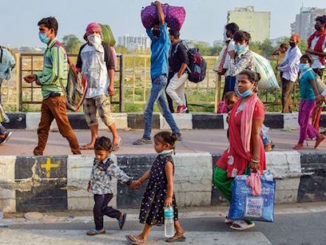
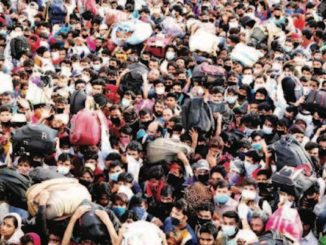
    Since the beginning of the nationwide lockdown due to the Covid-19 pandemic, India and the world have seen on TV channels disturbing pictures of thousands of migrant workers — including women and children — walking on foot or some other means of transport, to reach their home states hundreds of miles away from the places where they have been working for a livelihood. We have also seen the images of protests by those wanting to go home at railway stations at many places.

    More technocrats should head senior positions. By chance, we do have a doctor as the Health Minister but the officials working in the ministries and at the cutting-edge level are not medicos. It’s important to have technocrats in such positions because today it is a health problem, tomorrow it can be a problem in space or cyber fields.

    Since the beginning of the nationwide lockdown due to the Covid-19 pandemic, India and the world have seen on TV channels disturbing pictures of thousands of migrant workers — including women and children — walking on foot or some other means of transport, to reach their home states hundreds of miles away from the places where they have been working for a livelihood. We have also seen the images of protests by those wanting to go home at railway stations at many places.

    Such images continue even today. Heart-wrenching stories of their misfortune in not getting shelter or food and being stopped every now and then with some brutality at times at the hands of the police disappoint a lot. Some of them have lost their lives in accidents. Though trains and earlier buses have been used to ferry them, their number is too big. Besides, many of them don’t have money to buy tickets though most of the bill is being footed by the government. This has sullied the image of India even though they had been advised by the government against moving like this, and shelter and food is being provided to most of them by the state and Central governments, and by NGOs, corporates and well-meaning individuals.

    The Prime Minister announced a sum of Rs one thousand crore from the PM Cares Fund for these migrants recently. And the Union Finance Minister has announced free distribution of ration to them for two months; more work under MGNREGA once they are back to their villages etc. But basically, their demand now is psychological — to reach home come what may. But this problem has also given a lot of ammunition to the Opposition, who are criticizing the Centre for not looking after these people. This has also given a cause to many activists who have been approaching the Supreme Court, trying to get directions to the Central government to look after these migrant workers, financially and otherwise, helping them in reaching home, while accusing it of being insensitive to the needs of the poor folk.

    In the process, the rosy picture of India emerging as a superpower has taken a beating. It won’t be fair to lay the entire blame on the doorsteps of the Central government and its leadership for this situation. After all, it was a sudden calamity, not only for India but the whole world. Many powerful countries with less population and rich economy and much better healthcare systems have fallen by the wayside. The government had to respond quickly and rightly leading to a lockdown which has caused this hardship to millions of migrant workers.

    The way forward should be to ease their pain as much as possible and learn lessons so that we’re better prepared in the future when such situations arise. The two examples of sudden demonetization and lockdown leading to hardships are sufficient for us to learn lessons and plan a roadmap. Some of the suggested steps are as follows:

    First, there should be no sudden announcements as far as possible. Of course, in a war-like situation, such sudden action can’t be ruled out.

    Secondly, there should be careful planning to ensure that the poor don’t suffer from hardships. The Central and state governments should prepare contingency plans based on past experience in India and abroad, and about an unlikely situation like the coronavirus. It should include possible situations in areas like defense, warfare of different kinds including those in space and cyber fields, internal security, medical situations, severe natural disasters and many more. Such a planning will help. I recall today with satisfaction that as the Director General, Civil Defence, Government of India, I had formulated the proposal of raising the NDRF in 2003, considering the necessity which fructified and now we have this force doing a great service.

    Thirdly, for putting every plan in action, there should be SOPs and rehearsals as per these like it is done in disaster management situations or war exercises.

    The lost childhood

    Fourthly, where a large-scale movement of the working class is inevitable, plans should be prepared to keep the movement to the minimum and take care of their comfort. The lessons learnt during the current Covid crisis will be a good foundation to work on these plans.

    Fifthly, there should be heavy investment in education and healthcare. Had it been done earlier, migrant workers would have behaved differently, and we wouldn’t have been struggling to put up a healthcare system to match the current need. Luckily, we haven’t failed because the problem is not that big in India so far.

    Sixthly, and very importantly, the bureaucracy has to be more nimble-footed. As per the general perception, it hasn’t covered itself with glory during this recent tragedy. For these, large-scale changes are required, from recruitment to training and attitude etc. The PM must give a push to this like Margaret Thatcher, the then British PM, had done during her tenure in the UK. It is also suggested that senior bureaucrats should be hired or employed for a ten-year period and their tenure getting extended for the next ten years should depend on their performance during the first term. In all, there should be two extensions, i.e. they shouldn’t serve for more than 30 years. It should apply to all services.

    Seventhly, more technocrats should head senior positions like secretaries and joint secretaries. In the recent case, we do have a doctor by chance as the Union Health Minister but the officials working in the ministries and at the cutting-edge level are not medicos. It’s important that we have technocrats in such positions because today it is a health problem, tomorrow it can be a problem in the space or cyber field. So, those knowledgeable in such areas will do a much better job.

    Next, the wages and other facilities or service conditions of the technocrats and others like the police should be at par with the top civil service to acknowledge their contribution. Today, even though the technocrats are more qualified, they serve under non-technical persons and have a lower position in society.

    Also, departments like the police, health, space and others should be reporting directly to the ministers rather than through the senior bureaucracy.

    Lastly, political parties need to be more sensitive to the needs of the country and society. Politicking should be avoided. The good of the nation and showing unity to the world in adversity should be the aim of parties. It doesn’t mean that they shouldn’t find fault with each other for the wrongs that are being done in their assessment, but the tools used to criticize should be decent. They shouldn’t oppose always for the sake of opposing.

    India is great and so are Indians. Nobody can stop our march to being a super-power in the current century, but for that, a lot of hard work is required, and specially to acquire competency in dealing with sudden situations for which we should be well prepared.

    (The author is a former DGP, Tripura)

  • Pathways to a more resilient economy

    Pathways to a more resilient economy


    By Arun Maira

    The redesign of economies, of businesses, and our lives, must begin with questions about purpose. What is the purpose of economic growth? What is the purpose of businesses and other institutions? What is the purpose of our lives? What needs, and whose needs, do institutions, and each of us, fulfil by our existence?

    Machines do not have the capacity for emergence. Once built, their capabilities inevitably reduce with increasing entropy. On the other hand, living systems evolve and acquire new capabilities over time. Fritjof Capra and Pier Luigi Luisi point out in The Systems View of Life: A Unifying Vision that among all living species, humans have a special ability. Only humans consciously develop new concepts, new scientific ideas, and new language in their search for new visions. Institutions of governance are human inventions for directing human endeavors and for providing stability. Thomas S. Kuhn explained in The Structure of Scientific Revolutions why new ideas are invariably resisted by prevalent power structures in societies. The scientific establishment determines which ideas are worthy of admission. The King’s advisers do not want outsiders to dilute their influence in the court. The Establishment resists change. Therefore, fundamental reforms of ideas and institutions in human societies are always difficult, until a crisis.

    Challenging principles

    The COVID-19 catastrophe has challenged the tenets of economics that have dominated public policy for the past 50 years. Here are seven radical ideas emerging as pathways to build a more resilient economy and a more just society.

    i) “De-Growth”. The obsession with GDP as the supreme goal of progress has been challenged often, but its challengers were dismissed as a loony fringe. Now, Nobel laureates in economics (Joseph Stiglitz, Amartya Sen, Abhijit Banerjee, Esther Duflo and others) are calling upon their profession to rethink the fundamentals of economics, especially the purpose of GDP. A five-point ‘de-growth’ manifesto by 170 Dutch academics has gone viral amidst the heightened Internet buzz during the lockdown. Goals for human progress must be reset. What should we aspire for? And how will we measure if we are getting there?

    ii) Boundaries between countries are good. Boundary-lessness is a mantra for hyper-globalizers. Boundaries, they say, impede flows of trade, finance, and people. Therefore, removing boundaries is good for global growth. However, since countries are at different stages of economic development, and have different compositions of resources, they must follow different paths to progress. According to systems’ theory, sub-systems within complex systems must have boundaries around them, albeit appropriately permeable ones, so that the sub-systems can maintain their own integrity and evolve. This is the explanation from systems science for the breakdown of the World Trade Organization, in which all countries were expected to open their borders, which caused harm to countries at different stages of development. Now COVID-19 has given another reason to maintain sufficient boundaries.

    iii) Government is good. Ronald Reagan’s dictum, “Government is not the solution… Government is the problem”, has been up-ended by COVID-19. Even capitalist corporations who wanted governments out of the way to make it easy for them to do business are lining up for government bailouts.

    iv) The “market” is not the best solution. Money is a convenient currency for managing markets and for conducting transactions. Whenever goods and services are left to markets, the dice is loaded against those who do not have money to obtain what they need. Moreover, by a process of “cumulative causation”, those who have money and power can acquire even more in markets. The “marketization” of economies has contributed to the increasing inequalities in wealth over the last 50 years, which Thomas Piketty and others have documented.

    When complex systems come to catastrophes, i.e. critical points of instability, they re-emerge in distinctly new forms, according to the science of complex systems. The COVID-19 global pandemic is a catastrophe, both for human lives and for economies. Economists cannot predict in what form the economy will emerge from it.

    Justice and dignity

    v) “Citizen” welfare, not “consumer” welfare, must be the objective of progress. In economies, human beings are consumers and producers. In societies, they are citizens. Citizens have a broader set of needs than consumers. Citizens’ needs cannot be fulfilled merely by enabling them to consume more goods and services. They value justice, dignity, and societal harmony too. Economists’ evaluations of the benefits of free trade, and competition policy too, which are based on consumer welfare alone, fail to account for negative impacts on what citizens value.

    vi) Competition must be restrained: Collaboration is essential for progress. Faith in “Darwinian competition”, with the survival of only the fittest, underlies many pathologies of modern societies and economies. From school onwards, children are taught to compete. Companies must improve their competitive abilities. Nations too. Blind faith in competition misses the reality that human capabilities have advanced more than other species’ have, by evolving institutions for collective action. Further progress, to achieve the Sustainable Development Goals for example, will require collaboration among scientists in different disciplines, and among diverse stakeholders, and collaboration among sovereign countries. Improvement in abilities to share and govern common resources have become essential for human survival in the 21st century.

    vii) Intellectual property belongs to the public. The earth’s resources must be conserved. We are living in an era of knowledge. Just as those who owned more land used to have more power before, now those who own knowledge have more power and wealth than the rest. Intellectual property monopolies are producing enormous wealth for their owners, though many were developed on the back of huge public investments. Moreover, powerful technologies can be used for benign or malign purposes. It is imperative to evolve new institutions for public ownership of technologies and for the regulation of their use.

    Purpose of enterprises 

    The paradigm shift necessary after the crisis will not be easy. There will be resistance to shifts in social, economic, and political power towards those who have less from those who have more within the present paradigm.

    The financial crisis of 2008 was a crisis of liquidity in the system. Recovery was achieved by putting more fuel into the system. The system then moved on; in basically the same shape it was before. COVID-19 has revealed structural weaknesses in the global economy. Putting fuel in the tank will not be sufficient. The vehicle must be redesigned too. While global attention understandably is focused on relief and recovery, this is the time to design for resilience.

    The economic system cannot be redesigned by domain experts devising solutions within their silos. Such as, trade experts recommending new trade policies, intellectual property experts recommending reforms of intellectual property rights, and industry experts recommending industry policies. All the pieces must fit together. Most of all, they must fit into the new paradigm, which will be very different to the one in which the experts had developed their domain knowledge.

    Innovations are required at many levels to create a more resilient and just world. Innovation is essential in the overall design of the economy. Innovations will be required in business models too, not just for business survival but also to move businesses out of the 20th century paradigm that “the business of business must be only business”. Changes will also be necessary in our life patterns, our work and consumption habits, and in our personal priorities.

    The redesign of economies, of businesses, and our lives, must begin with questions about purpose. What is the purpose of economic growth? What is the purpose of businesses and other institutions? What is the purpose of our lives? What needs, and whose needs, do institutions, and each of us, fulfil by our existence?

    (The author is a Former Member, Planning Commission and the author of ‘Redesigning the Aeroplane While Flying: Reforming Institutions’)

  • A plan to revive a broken economy

    A plan to revive a broken economy

    By Jayati Ghosh, Harsh Mander, Prabhat Patnaik
    A combination of wealth and inheritance taxation and getting multinational companies to pay the same effective rate as local companies through a system of unitary taxation will garner substantial public revenue. They will also reduce wealth and income inequalities which have become horrendous. A 2% wealth tax on the top 1% of the population, together with a 33% inheritance tax on the wealth they bequeath every year to their progeny, could finance an increase in government expenditure to the tune of 10% of GDP.

    An estimated 12.2 crore Indians lost their jobs during the coronavirus lockdown in April: CMIE

    There are clear, implementable steps the Centre can take in fiscal terms to revive the economy and support livelihoods

    The Prime Minister has just announced Lockdown 4.0. Despite some resulting increase in economic activity, vast numbers of working people will remain without their regular incomes. He also announced a package of ₹20 lakh crore, but this includes already allocated money of ₹6-lakh crore and monetary policy directives to banks and non-banking financial companies. The announcements by the Finance Minister thus far involve no additional public spending, even though this is urgently required to revive the economy and prevent further contraction. Here we discuss what the government should do immediately in fiscal terms for reviving the economy and supporting livelihoods.

    Food and cash transfers first

    The immediate need is to provide free food and cash transfers to those rendered incomeless. Providing every household with ₹7,000 per month for a period of three months and every individual with 10 kg of free food grains per month for a period of six months is likely to cost around 3% of our GDP (assuming 20% voluntary dropout). This could be financed immediately through larger borrowing by the Centre from the Reserve Bank of India. The required cash and food have to be handed over to State governments to make the actual transfers, along with outstanding Goods and Services Tax compensation.

    This is easily doable for several reasons. First, food grains are plentiful, as the Food Corporation of India had 77 million tons, and rabi procurement could add 40 million tons. Second, because of the lockdown restrictions, the multiplier rounds of such expenditure are heavily truncated at present and would not generate as much demand as in normal times. Third, cash transfers in many spheres will only enable current demand to continue (such as payment of house rent to continue occupancy) and not create any fresh demand. Fourth, when greater normalcy finally allows pent-up demand to surface, output could also expand because of resumed economic activity. Finally, putting money in the hands of the poor is the best stimulus to economic revival, as it creates effective demand and in local markets. Hence, an immediate program of food and cash transfers must command the highest priority.

    Revamp MGNREGA work

    But the post-lockdown world will be different for several reasons. First, millions of migrant workers have endured immense hardships to trudge back home, and are unlikely to return to towns in the foreseeable future. Employment has to be provided to them where they are, for which the Mahatma Gandhi National Rural Employment Guarantee Scheme (MGNREGS) must be expanded greatly and revamped with wage arrears paid immediately. The 100-day limit per household has to go; work has to be provided on demand without any limit to all adults. And permissible work must include not just agricultural and construction work, but work in rural enterprises and in care activities too.

    The revamped MGNREGS could cover wage bills of rural enterprises started by panchayats, along with those of existing rural enterprises, until they can stand on their own feet. This can be an alternative strategy of development, recalling the successful experience of China’s Township and Village Enterprises (TVEs). Public banks could provide credit to such panchayat-owned enterprises and also assume a nurturing role vis-à-vis them.

    The second change is the palpable unsustainability of the earlier globalization, which means that growth in India in the coming days will have to be sustained by the home market. Since the most important determinant of growth of the home market is agricultural growth, this must be urgently boosted.

    The MGNREGS can be used for this, paying wages for land development and farm work for small and medium farmers; apart from government support through remunerative procurement prices, subsidized institutional credit, other input subsidies, and redistribution of unused land with plantations. Agricultural growth in turn can promote rural enterprises, both by creating a demand for their products and by providing inputs for them to process; and both these activities would generate substantial rural employment.

    The Urban focus

    In urban areas, it is absolutely essential to revive the Micro, Small and Medium Enterprises (MSMEs). Simultaneously, the vast numbers of workers who have stayed on in towns have to be provided with employment and income after our proposed cash transfers run out. The best way to overcome both problems would be to introduce an Urban Employment Guarantee Program, to serve diverse groups of the urban unemployed, including the educated unemployed. Urban local bodies must take charge of this program and would need to be revamped for this purpose.

    “Permissible” work under this program should include, for the present, work in the MSMEs. This would ensure labor supply for the MSMEs and also cover their wage bills at the central government’s expense until they re-acquire robustness. It should imaginatively also include care work, including of old, disabled and ailing persons, educational activities, and ensuring public services in slums.

    These measures are in direct contrast to those that seek to entice private investors by easing labor laws. The humanitarian crisis of the lockdown reveals the imperative for more, not less labor protection. Such measures, far from reviving investment or employment, would also further reduce domestic demand.

    96% migrant workers did not get rations from the government, 90% did not receive wages during lockdown: survey

    The ‘care’ economy

    The pandemic has underscored the extreme importance of a public health-care system, and the folly of privatization of essential services. The post-pandemic period must see significant increases in public expenditure on education and health, especially primary and secondary health including for the urban and rural poor.

    The “care economy” provides immense scope for increasing employment. Vacancies in public employment, especially in such activities, must be immediately filled. Anganwadi and Accredited Social Health Activists/workers who provide essential services to the population, including during this pandemic, are paid a pittance and treated with extreme unfairness. We must improve their status, treat them as regular government employees and give them proper remuneration and associated benefits, and greatly expand their coverage in settlements of the urban poor.

    These could easily come within the total package announced by the Prime Minister, which could be financed by printing money. But in the medium term, public revenues must be increased. This is not because there is a shortage of real resources which, therefore, has to be taken from other existing uses through taxation. Rather, since much unutilized capacity exists in the economy, the shortage is not of real resources; the government has to just get command over them.

    A combination of wealth and inheritance taxation and getting multinational companies to pay the same effective rate as local companies through a system of unitary taxation will garner substantial public revenue. They will also reduce wealth and income inequalities which have become horrendous. A 2% wealth tax on the top 1% of the population, together with a 33% inheritance tax on the wealth they bequeath every year to their progeny, could finance an increase in government expenditure to the tune of 10% of GDP.

    It would be argued that this might cause large financial outflows, which the country can ill-afford. Contrarily, even foreign capital is more likely to be attracted to a growing economy than one in sharp decline because of lack of stimulus. Also, a fresh issue of special drawing rights by the International Monetary Fund (which India has surprisingly opposed along with the United States) would provide additional external resources.

    These additional resources, we estimate, would suffice to finance the institution of five universal, justiciable, fundamental economic rights: the right to food, the right to employment, the right to free public health care, the right to free public education and the right to a living old-age pension and disability benefits. The broken economy must be rebuilt in ways to ensure a life of dignity to the most disadvantaged citizen.

    (Prabhat Patnaik is Professor Emeritus, Centre for Economic Studies and Planning, Jawaharlal Nehru University (JNU), New Delhi. Jayati Ghosh is a professor of economics at JNU. Harsh Mander is a human rights worker, writer and teacher)


  • Impeachment Hearing  Helped  President Trump Make Significant Political Gains in Electoral College States

    Impeachment Hearing Helped President Trump Make Significant Political Gains in Electoral College States

    By Ven Parmeswaran

    The Constitution has made the President of the United States Chief of the Executive Branch, Commander-in-Chief and the most powerful official in charge to protect and defend the United States.  Therefore, President of the USA, though not above the law, has every right to initiate and conduct foreign relations as he deems fit.   I have reviewed the history of American Presidents from Franklin D Roosevelt to Donald J Trump.  Whatever President Trump has done in respect of Ukraine has many precedents.  Every President has used foreign policy as a weapon and based on quid pro quo.  President Trump decided to suspend military aid to Pakistan to pressure them to withdraw their support of Taliban in Afghanistan and curb the home-grown terrorists of Pakistan such as Lashkar-e-Taiba and others.    Pakistan has not delivered and therefore is has been deprived of military aid.  I can cite many examples.  Trump is succeeding in trade negotiations because of quid pro quo. 

    Fortunately, for President Trump, the US economy is very robust with unemployment at 3.5%, 50 year low, wages are going up, and the minorities – blacks, Latinos, and the Asians all have a record employment.

    President Trump’s national average approval is now at 45%, a gain of 5%.  In electoral college States of Pennsylvania, Wisconsin, Michigan, Ohio he is scoring from 48% to 52%, again a significant gain.   This must be read with the national polls against impeachment at 51%.

    All the leading contenders for the Democratic Party Presidential race were beating President Trump before the impeachment hearings.  Now Trump is beating all of them including Joe Biden, Sanders, Warren and others by a margin of 5%.     Polls are changing fast daily in favor of President Trump because of impeachment.

    The question is -Why?

    The two articles for impeachment have no basis.  The Democrats have failed to marshal evidence. It is a political impeachment which is  strictly partisan.   Not a single Republican or Independent is in favor of impeachment.   Impeachment of Nixon and Clinton was bipartisan and provided tangible evidence.

    Another reason, the process has been called a sham because Adam Schiff, Chairman, Intelligence Committee held a secret proceeding and did not allow the Republicans to call witness or participate fairly giving equal time.   Whistle blower was misused by Adam Schiff.  He and or his staff had been consulting with the Whistleblower and concocting an artificial basis for impeachment.  Thus, Adam Schiff having first relied on the Whistleblower to start the impeachment has abandoned that source without giving any reasons.

    The Constitution has made the President of the United States Chief of the Executive Branch, Commander-in-Chief and the most powerful official in charge to protect and defend the United States.  Therefore, President of the USA, though not above the law, has every right to initiate and conduct foreign relations as he deems fit.   I have reviewed the history of American Presidents from Franklin D Roosevelt to Donald J Trump.  Whatever President Trump has done in respect of Ukraine has many precedents.  Every President has used foreign policy as a weapon and based on quid pro quo.  President Trump decided to suspend military aid to Pakistan to pressure them to withdraw their support of Taliban in Afghanistan and curb the home-grown terrorists of Pakistan such as Lashkar-e-Taiba and others.    Pakistan has not delivered and therefore is has been deprived of military aid.  I can cite many examples.  Trump is succeeding in trade negotiations because of quid pro quo.

    The Democrats and the holdovers from Obama administration have been leaking secrets to the media.  In the name of investigations, Trump administration has been forced to share secrets with the investigators and the Congress, who have been leaking to the media. Unlike the conventional Presidents, Trump has been slow in planting his own loyal political appointees as ambassadors . Adam Schiff has selected junior level bureaucrats disloyal to President Trump to give testimony.    These witnesses have no credibility.  Secondly, they testified in secret. There was no witness who had direct contact with Trump. In other words, Adam Schiff was manufacturing alleged abuses of Trump administration.

    Trump in his telephone communication with the Ukraine President was seeking a favor for the United States and not for himself personally.  He did not say “Do me a favor”.   Adam Schiff has twisted this and misquoted him.  Adam Schiff read a made up of Trump’s phone transcript.

    Before the United States extend military aid to Ukraine, President Trump has every right to investigate corruption in Ukraine to make sure our aid is not wasted.  In fact, Obama had delegated his V.P. to investigate corruption in Ukraine long before the 2016 election.  His son was given a job with a salary of almost a million dollars per year because of Biden’s official position as Vice President.  In 2016, Biden was not a candidate for election.  He started running for the Primaries in 2019 and nobody knows he would be a candidate.   Kamala Harris was running but she is no longer a candidate. Therefore, accusing Trump that he was trying to get dirt on Biden is wrong.    As soon as the hearings started in public, public opinion changed in favor of Trump.     Biden’s son himself has admitted on  TV  during an interview that he was able to get such a highly paid job because of his dad’s position.   So, Trump is trying to prove that Biden and his son are involved in the corruption in Ukraine.

    Ever since Trump became duly elected President, he has not been allowed to function and discharge the duties of the President of the United States.  He has been hampered 24/7 by the mainstream media orchestrating against him with the Democrats using the leaked information.   I have been an eyewitness to American history from President Eisenhower to present.  No President has had to go thru what President Trump has been subjected to from day 1 because of non -stop investigations.  When the Democrats failed to catch Trump in Mueller investigations they  resorted to political impeachment!

    PRESIDENT TRUMP HAS BEEN EMPEROR WITHOUT CLOTHES

    The Democrats and their mainstream media have succeeded in exposing the Presidency of the United States.  This has created a serious national security problem for President Trump.   American people and the voters cannot be fooled.   Now because of the public hearing, public opinion is favoring President Trump.    No head of the foreign governments will have confidence and trust in President Trump because of the fear that their communications would be leaked.   The Democrats have succeeded in arrest  of foreign policy making.    President Reagan ended 50- year cold war with the Soviet Union. Now the Democrats have forced Trump to start a cold war with Russia. Why?

    SPEAKER PELOSI COMPROMISES WITH PRESIDENT TRUMP BY GIVING SUPPORT FOR TRUMP’S USMCA TRADE PACT REPLACING NAFTA.  WHY?

    Nancy Pelosi is concerned that she may not be able to woo all the Democrats to vote for impeachment. Those new Democrats elected from Trump’s 2016 constituencies are not fully sold on the impeachment because it is 100% partisan and even some Democrats had voted against inquiries for impeachment.  To pacify them and curry their favor, it became politically expedient for Nancy Pelosi to compromise with Trump although it would help Trump politically.  Thus, politics has come to gutter level!     In as much as the national poll is going against impeachment, Nancy Pelosi is not sure today how the 2018 elected democrats would vote.

    If the present trend continues, it is possible that Trump’s approval rating will keep going up steadily and he could become a very formidable opponent in 2020.  The trials in the Senate chaired by Supreme Court Chief Justice Roberts will also result in giving Trump frost on his cake. Fortunately, for President Trump, the US economy is very robust with unemployment at 3.5%, 50 year low, wages are going up, and the minorities – blacks, Latinos, and the Asians all have a record employment.     The problem for the Democrats today is they have not yet been able to identify a winning candidate.   Hillary Clinton wants to run again because she claims she is more popular and superior to all the current candidates. There is so much uncertainty in the Democratic camp. But, surely, no such thing with Trump.

    (Ven Parameswaran, Scarsdale, N.Y. was President & CEO, First Asian Securities Corporation, NYC. His email: vpwaren@gmail.com)


  • In the name of a majority

    In the name of a majority

    By Anupama Roy

    The reality of imposing a national order of things, through a CAB and an NRC, in non-national spaces will unfold in future but Assam has given us adequate evidence of the risks involved. It can only be hoped that the judiciary and civil society are able to restore constitutional and democratic politics through an exercise of counter-majoritarian power in a context where electoral gains have determined political choices.

    The Citizenship (Amendment) Bill (CAB), passed in both Houses this week, promises to give the protection of citizenship to non-Muslims who fled to India to escape religious persecution in Pakistan, Bangladesh and Afghanistan. While religious persecution is a reasonable ground for protection, the problem with the CAB is that it does not include all communities that suffered religious persecution, and explicitly excludes Muslims who suffered persecution in the specified countries and other non-Muslim majority countries like Myanmar.

    This majoritarian notion of religion-based citizenship, although intrinsic to the Bharatiya Janata Party (BJP)’s idea of India, is not shared by the majority of people in this country. In addition, such a view is alien to the constitutional consensus which emerged in 1950, embodying the idea of a people who committed themselves — and those governing on their behalf — to a constitutional order. Those in support of the CAB have rallied around the argument that it is non-discriminatory and its objectives are justifiable. In doing so, they have often invoked the moral imperative of correcting a perceived past wrong — in this case the Partition. In the process, the CAB changes completely the idea of equal and inclusive citizenship promised in the Constitution.

    Changes in citizenship law

    The CAB cannot, however, be seen in isolation. It must be seen in tandem with the National Register of Citizens (NRC) and other changes in the citizenship law, which have preceded it. The Home Minister and the Law Minister have clarified that the CAB and the NRC are distinct — the NRC protects the country against illegal migrants and the CAB protects refugees. This, however, is incommensurate with the election speeches made by BJP leaders. For instance, speaking in Kolkata earlier this year, Amit Shah had promised an NRC in West Bengal, but only after the passage of the CAB to ensure that no Hindu, Buddhist, Sikh, Jain and Christian refugee is denied citizenship for being an illegal immigrant. In a triumphal note after the passage of the CAB in Lok Sabha, Mr. Shah declared that a nationwide NRC would follow soon.

    Despite their seemingly disparate and adversarial political imperatives, the CAB and the NRC have become conjoined in their articulation of citizenship. Indeed, the two represent the tendency towards jus sanguinis in the citizenship law in India, which commenced in 1986, became definitive in 2003, and has reached its culmination in the contemporary moment. In 2003, the insertion of the category ‘illegal migrants’ in the provision of citizenship by birth became the hinge from which the NRC and the CAB later emerged.

    The Citizenship (Registration of Citizens and issue of National Identity Cards) Rules of 2003 made the registration of all citizens of India, issue of national identity cards, the maintenance of a national population register, and the establishment of an NRC by the Central government compulsory. Under these rules, the Registrar General of Citizen Registration is to collect particulars of individuals and families, including their citizenship status, through a ‘house-to-house enumeration’. In an exception to the general rule, Assam has followed a different procedure of ‘inviting applications’ with particulars of each family and individual and their citizenship status based on the NRC 1951 and electoral rolls up to the midnight of March 24, 1971. The purpose of the NRC is to sift out ‘foreigners’ and ‘illegal migrants’, who were referred to at different points as ‘infiltrators’ and ‘aggressors’, and a threat to the territory and people of India.

    Exempting minority groups

    The second strand emerging from the 2003 amendment has taken the form of the CAB, which exempts ‘minority communities’, Hindus, Sikhs, Buddhists, Jains, and Christians, from three countries — Bangladesh, Pakistan and Afghanistan — from the category of ‘illegal migrants’. The CAB brings the citizenship law in line with exemptions already made in the Passport Act 1920 and Foreigners Act 1946 through executive orders in September 2015 and July 2016. It sets a cut-off date of December 31, 2014 as the date of eligibility of illegal migrants for exemption.

    It must be noted that a PIL filed by the Assam Sanmilita Mahasangha pending before the Supreme Court has contested the deviation in the cut-off date set for Assam by the Citizenship Amendment Act 1986, March 24, 1971, from the date specified in Article 6 of the Constitution, i.e., July 19, 1948, which applies to the rest of the country. The CAB is applicable to entire India and takes the cut-off date forward by several years.

    The claim that the CAB does not violate the Constitution is reflective of the recommendations of the Joint Parliamentary Committee (JPC). The JPC was advised by constitutional experts to use a broader category, ‘persecuted minorities’, to protect the Bill from the charge of violating the right to equality in Article 14. The CAB uses the category ‘minority communities’ and goes on to identify them on the ground of religion. The notifications of September 2015 and July 2016, which changed the Passport and Foreigners Acts, had mentioned the term ‘religious persecution’. The consideration of religious persecution for making a distinction among persons, the JPC argued, could not be discriminatory, because the distinction was both intelligible and reasonable — satisfying the standards laid down in the Supreme Court judgment in State of West Bengal vs. Anwar Ali Sarkarhabib (1952) to affirm adherence to Article 14.

    Test of reasonableness

    The JPC appears, however, to have overlooked the substantive conditions that the Supreme Court laid down in the same verdict. These require that the criteria of intelligibility of the differentia and the reasonableness of classification, must satisfy both grounds of protection guaranteed by Article 14, i.e., protection against discrimination and protection against the arbitrary exercise of state power. In 2009, the Delhi High Court judgement in Naz Foundation vs. Government of NCT of Delhi referred to “a catena of decisions” to lay down a further test of reasonableness, requiring that the objective for such classification in any law must also be subjected to judicial scrutiny. The restraint on state arbitrariness, according to the judgment, was to come from constitutional morality, which as B.R. Ambedkar declared in the Constituent Assembly, was the responsibility of the state to protect.

    It remains a puzzle as to why the government wishes to change the citizenship law to address the problem of refugees. The JPC refers to standard operating procedures for addressing the concerns of refugees from neighboring countries. In the case of refugees from the erstwhile West Pakistan who deposed before the JPC in favor of a CAB, the standard operating procedure was the grant of long-term visas leading to citizenship. One wonders how these refugees will benefit from a law which will put them through an arduous process of proving religious persecution. Immediately after Partition, ‘displaced persons’ constituted an administrative category, and citizenship files of 1950s tell us how district officials expedited their citizenship in the process of preparation of electoral rolls.

    The focus in the recent parliamentary debates, for various reasons, was the eastern borders. States in the region have resisted the CAB, and simultaneously asked for an NRC. West Bengal has been an exception. The reality of imposing a national order of things, through a CAB and an NRC, in non-national spaces will unfold in future but Assam has given us adequate evidence of the risks involved. It can only be hoped that the judiciary and civil society are able to restore constitutional and democratic politics through an exercise of counter-majoritarian power in a context where electoral gains have determined political choices.

    Anupama Roy teaches at the Centre for Political Studies, Jawaharlal Nehru University)

  • Little hope for these banks

    Little hope for these banks

    By Subir Roy

    What the public sector needs is ‘space’ to overhaul functioning

    A banking system is an act of faith. It survives only for as long as people believe it will. — Michael Lewis

    Whatever be the shortcomings of Shaktikanta Das, RBI Governor, it is not the inability to call a spade a spade when it comes to describing what ails India’s public sector banks which account for 60 per cent of the banking sector. In a recent detailed address outlining the highlights of half a century of nationalized banking, he has said of all the ‘internal challenges’ facing them, their ‘governance’ is a central concern. It is the ‘elephant in the room’.

    This is because some of them have not been led by independent boards whose job it is to ‘foster a compliance culture’ through ‘proper systems of control, audit and distinct reporting of business and risk management’. This, in turn, is because there is an inability to understand risks from a business perspective as there is a ‘skills’ and ‘competency’ gap in the bank boards.

    What the banks need is a ‘strong corporate governance culture’ focused on ‘transparency and accountability’ which has to ‘percolate from a strong board which sets the example by leading’, says the RBI Governor. Through this act of self-indictment (if there is lawlessness then that is ultimately the fault of the policeman and the RBI is the regulator for the banking sector), the RBI is also implicitly telling the government that it has tied its hands when it comes to policing public sector banks. The RBI has limited supervisory and legal powers to structure the management of these banks. For privately owned banks, the RBI’s writ in this regard runs deeper.

    But in this Das is on a somewhat weak wicket. Is he the sort who can stand up to the government in a battle to get the regulatory turf the RBI needs? He has come in after two governors with international reputation and academic experience left because of their inability to see eye to eye with the government.

    Raghuram Rajan, an internationally recognized economist with a record of predicting the global financial crisis which began in 2008, first initiated the process of getting state-owned banks to recognize a non-performing asset by declaring it so, and not carrying on evergreening it through restructuring (grant a fresh loan to pay the interest due and technically repay the loan with the borrower not bringing in any fresh funds). This was followed by the ‘prompt corrective action’ regime under which banks that did not meet certain criteria were barred from further lending. At one time as many as 11 public sector banks were under this straitjacket which converted them into virtual deposit takers.

    Rajan was replaced by Urjit Patel who was a less flamboyant personality and more of an academic, but he also failed to get along with the government. There were two specific points of friction. Growing fiscal tightness prompted the government to seek a hefty dividend payout from the RBI which would deplete its reserves, needed to work proactively to quell instability in either the domestic or the external sector (for example, the need to ease pressure on the rupee).

    The other was the government’s feeling that the RBI should ease monetary policy in order to address the emerging slowdown in economic activity and gradual fall in the growth rate. Patel failed to deliver on both these issues, and so had to exit.

    Temperamentally, Das is the opposite of both his predecessors. A career civil servant, he is clear that at the end of the day it is the government that lays down policy not just for itself, but for the RBI, too, in terms of the statute under which it functions. Das has obliged the government on both counts. The RBI under him has paid a hefty dividend and monetary policy has been eased, with the policy rate being systematically lowered over time. The strict controls on the functioning of several banks have also been eased, though it can be argued that this is because their numbers have improved over the last year.

    Now let us come to the issue of governance of public sector banks. The government was well aware of this problem which it had inherited from the previous government, and so fairly early in its first term it set up the Banks Board Bureau to both improve the quality of banks’ top managements by overhauling their selection process, and also creating a buffer to protect managements which sought to do a professional job from political interference.

    To show that it meant business the government put at the head of the bureau a high-profile personality, former CAG Vinod Rai whose penetrating reports had exposed the crony capitalism that has prevailed earlier in areas like allocation of airwave spectrum and mining leases. But most unfortunately, the many thoughtful recommendations that the bureau made to the government under the leadership of Rai were ignored and he made a quiet exit at the end of his term. The bureau thereafter became one more faceless cog in the huge government machinery.

    Das is dead right in pointing out that it is lack of proper governance that lies at the root of all the ills of public sector banks. But he is not the sort of person who will fight with the government for the space to properly regulate the banks and overhaul their governance. The culture that defines India’s political class, across party lines, makes it inevitable for politicians and senior civil servants to interfere in the running of state-owned banks. And the present political class has shown no signs that it is changing that culture.

    (The author is a senior economic analyst)

  • Nehruvian consensus under siege

    Nehruvian consensus under siege

    By Bhupesh Baghel

    Jawaharlal Nehru’s stature and moral authority, now under attack, were the guarantors for modern India’s social contract

    The mention of Jawaharlal Nehru evokes strange reactions these days, but for Congressmen such as me it is a matter of faith and symbolic of all that we hold dear to our hearts. He was the closest we could imagine of reaching our leader Gandhiji and, therefore, was the manifestation of the unmanifested. As his heir Nehru taught us, the post-Independence generation, both the ideas and their praxis, of the values of the national movement. Summable as the constitutional values, we know of them as Nehruvian values, which he called Indian or Gandhian philosophy.

    A frame under strain

    We have grown up under a huge pantheon (both religious and historical) which has inculcated in us a tolerance and receptivity of/for a multitude of perspectives, and an anticipation of newer ones. Today as we live through an intolerant regime and discourse, I realize what its absence leads to. The frantic attempt to appropriate some and deride others from ours is resultant of their inner emptiness.

    Today the values of our national movement, duly canonized as the Constitution, are being threatened not only by a spiteful government but also through a majoritarian discourse and its progeny; a mob emboldened to declare itself the nation and law. Our institutions are under severe stress mainly because there is an apprehension that the Constitution may not be able to protect them from this onslaught. Yet we need to look back and see how in far more difficult times our leadership had held on to their values; yes, we miss them today.

    Continuing the fight

    I recall how Panditji and Sardar Patel missed Gandhiji in those difficult times. In a letter in 1950 to K.G. Mashruwala talking of the problems emanating from East Pakistan and West Bengal, Panditji says that “ merely to preach goodwill irritates people when they are excited. Bapu might have done it, but we are too small for this kind of thing.” But his faith in the people of this country and their values helped him tide over such tragedies. He proudly declared that the revered ‘Bharat Mata’ was none other than the teeming millions populating this land. It was the same belief that Gandhiji had in the poor and illiterate masses in this country, who held on to their civilizational values of truth, non-violence and tolerance. This is what led Gandhiji to pronounce him his inheritor, and at a session where he had passed a resolution questioning ‘doctrinaire nonviolence’; Gandhiji declared, “When I am gone, he will do what I am doing now.”

    Yes, Gandhiji died fighting the communal mania and Panditji continued the fight constitutionally when on April 13, 1948, the Constituent Assembly adopted a resolution that “for the proper functioning of democracy, and the growth of national unity and solidarity… no communal organization should be permitted to engage in any of the activities other than those essential for the bonafide religious, cultural, social and educational needs of the community.”

    Seen together with the conditions Sardar Patel had before lifting the ban on the Rashtriya Swayamsevak Sangh, we can say that he was just implementing the mandate of the Constituent Assembly and that what we are witnessing today is a betrayal of the Constitution. He had said in 1933 that the communalism of the majority resembles nationalism. But the test of its true nature is its relation to the national struggle, and also that laying stress on communal problems instead of national ones is obviously anti-national. These are the two litmus tests we need to always remember and they remove any iota of doubt about the nature of nationalism being put forth by the current regime.

    This came from a person deeply rooted and secure in the knowledge and practice of his culture and traditions. His writings, especially The Discovery of India, is a reflection of his efforts at forging a relation of both transcendence and immanence with his nation and culture. His conviction in the enlightened middle path of the Buddha was reflected in both Non-alignment and the Panchsheel, as well as his faith in a mixed economy. Not to forget were his reaffirmation of the Buddha’s and Gandhiji’s non-violence.

    In his last will (June 1954), Nehru invokes the Ganga, calling her the ‘river of India’. He further writes, “Smiling and dancing in the morning sunlight, and dark and gloomy and full of mystery as evening shadows fall; a narrow, slow and graceful stream in winter, and a vast roaring thing during monsoon, broad-bosomed almost as the sea, and with something of the sea’s power to destroy, the Ganga has been to me a symbol and a memory of the past of India, running into the present, and flowing on to the great ocean of the future.”

    The power of science

    The firmly secure culturalist was also a radical progressive and the greatest champion of science and scientific temper. Ever since setting up the National Planning Committee in 1938 along with Netaji Subhas Chandra Bose, he had developed a deep longing for science and its use to solve national problems. He started attending almost all the annual sessions of the Indian Science Congress. He believed that inculcating a scientific temper was the greatest challenge faced by man, individually and collectively. We still see Prime Ministers addressing the sessions of the Indian Science Congress, but talking of plastic surgery of lord Ganesha. Not surprisingly Nehru is still the most vilified leader in the country because his name is synonymous with what is called the ‘Idea of India’, for his stature and moral authority were the guarantors for modern India’s social contract. It has since been rightly called the ‘Nehruvian Consensus’. Till this legitimizing presence of Nehru’s legacy pervades, the reactionary and revisionist discourse can never gain any foothold in the country. Therefore, the worst of the propaganda machinery is deployed on a leader who has been dead for 55 years.

    The internationalist ‘Messenger of Peace’, who was often the last hope of the world when all machinations had failed and peace looked fragile, was both a recognition of India as well as the heir of Gandhi. This was evident in U.S. President Dwight D. Eisenhower’s letter to Panditji (April 30, 1958) telling him not to retire as the world needed him. He knew that great fame awaited him but was ready for its travails. In 1937, he reminded himself through his article “We want no Caesars”. But how prophetic his words prove today when he said, “He might still use the language and slogans of democracy and socialism, but we all know how fascism has fattened on this language and then cast it away as useless lumber.”

    (The author  is the Chief Minister of Chhattisgarh)

  • The way around China

    The way around China

    By G Parthasarathy
    We have ignored the spiritual strength of shared beliefs in Buddhism, to welcome Buddhist pilgrims and visitors from our eastern neighborhood. There are 460 million Buddhists across and beyond our eastern land and maritime frontiers. The Buddhist population of China alone is estimated at around 244 million. Japan, Thailand, Myanmar, Vietnam, Myanmar, Sri Lanka and others also have millions of Buddhists. Nepal should be given special place in this effort by including Lord Buddha’s birthplace Lumbini as an important destination.

    India is moving ahead more successfully to balance power but must focus on economy

    The ASEAN Summit in Bangkok posed new economic and strategic challenges for India. The challenges posed by China, from the days India sought ASEAN membership, continue. Chinese opposition to India’s admission, and then to ensure that India remained marginalized in ASEAN, failed. India soon secured membership as a full-dialogue partner of the then fast-growing economies of ASEAN. Virtually all members have found Indian participation constructive. Within a few years, an assertive China resorted to coercion to enforce its untenable maritime border claims. Beijing often militarily seized, or threatened to seize, small islands within the maritime frontiers of neighboring countries, including ASEAN members.

    China has resorted to such aggressive behavior with South Korea, Japan, Taiwan, Vietnam, the Philippines, Malaysia, Brunei and Indonesia. It has ignored the provisions of international law by disregarding the adverse verdict of the International Tribunal on the Law of the Sea, after it seized an island belonging to the Philippines. It is presently deploying warships on the southern shores of Vietnam. China has successfully coerced, or brought around, virtually all ASEAN members with whom it shares maritime borders, except Vietnam and Indonesia. Even Malaysia’s PM, Mahathir, who loudly echoes Pakistan’s views on J&K, acknowledges that China is too powerful to be challenged by his country.

    India rightly backs the collective views of ASEAN on regional issues. But given their fears of China, many members remain silent on its aggression. India is, however, quite clear about its views on international maritime issues, stating categorically that the UN Convention on Law of the Seas determines boundaries. As an example, India cites the case of its maritime borders with Bangladesh, where it respected the ruling of an international tribunal to hand over a disputed island to Bangladesh. Japan and India are on the same page on the issue.

    These differences between a hegemonic China and India are bound to continue. China has become unusually aggressive with India on a number of issues after the scrapping of Article 370. China had taken the position that the J&K issue has to be resolved bilaterally between India and Pakistan, ever since the visit of then Chinese President Jiang Zemin to Pakistan and India in 1996. The Chinese position changed drastically when Beijing went out of its way to back Pakistan’s stand in international forums. India has retaliated by publicly referring to the disputed border area of Aksai Chin as a part of the UT of Ladakh. Interestingly, this claim, which was supported by the Buddhist majority of Ladakh, caused consternation there.

    There are sound economic reasons for India’s reservations to join the proposed Regional Asian Free Trade Agreement during the Bangkok summit without credible safeguards. India’s trade deficit with China is around $59 billion. The deficit with South Korea grew from $5 billion to $12 billion last year. Likewise, over the past decade, India’s trade deficit with ASEAN has increased from virtually nil to $14 billion. We are justified in finding fault with China’s mercantilist practices. We cannot, however, deny the reality that the growth of our exports has been dismal, and we are losing our competitive edge all across our eastern neighborhood. Our textile industry is unable to compete with textile exports of Bangladesh and Vietnam. The government has still to enunciate any clear export promotion strategy to deal with this malady.

    We are now moving ahead more successfully to balance Chinese power across our Indo-Pacific neighborhood. Maritime cooperation is being increased with the US, Japan, Australia, France and a number of ASEAN countries, notably Vietnam and Indonesia. During the Bangkok summit, a number of ASEAN members were keen on finding ways to ensure that India remained actively involved in the region diplomatically, economically and militarily. New Delhi will now have to more actively take measures to ensure that the country becomes more competitive economically in the region and globally too.

    India has used conventional measures like trade, investment and cultural exchanges for promoting friendship in its Act East policies. It has, however, ignored using the most significant asset it has, to promote its ties not just with ASEAN, but with others like Japan and South Korea. We have overlooked our immense tourism potential. India is not perceived as ‘tourism friendly’. We have ignored the spiritual strength of shared beliefs in Buddhism, to welcome Buddhist pilgrims and visitors from our eastern neighborhood. There are 460 million Buddhists across and beyond our eastern land and maritime frontiers. The Buddhist population of China alone is estimated at around 244 million. Japan, Thailand, Myanmar, Vietnam, Myanmar, Sri Lanka and others also have millions of Buddhists. Nepal should be given special place in this effort by including Lord Buddha’s birthplace Lumbini as an important destination.

    We need to formulate a master plan on how to improve connectivity to a vast Buddhist tourism circuit across states like Bihar, UP, MP, Maharashtra, Gujarat, Ladakh, Odisha and Andhra Pradesh. This effort can best be taken forward if we give China, Japan and Thailand, apart from immediate neighbors like Myanmar and Sri Lanka, a role in promoting the effort. Japan, China and Thailand could be invited to invest in and develop this project. Spiritual ties and tourism should become an integral and important part of our Act East policies.

    (The author is Chancellor, Jammu central university, & former high commissioner to Pakistan)

  • For now, a sense of ease

    For now, a sense of ease

    By G Parthasarathy

    Modi can derive satisfaction from the fact that despite Chinese actions and Sino-Pakistan collusion, India has successfully ridden the storm of external pressures after the revocation of Article 370. New Delhi can now move ahead to fulfil its commitment to maintain the country’s strategic autonomy.

    The Mamallapuram Summit between President Xi Jinping and PM Modi appears to have cleared the air for improving ties. This followed the less-than-friendly approach of China in international forums on the issue of J&K in recent days. India and China, however, now appear committed to enhancing mutually beneficial cooperation, bilaterally, regionally and internationally. One can look forward to closer cooperation in forums like BRICS, G20, East Asia Summit hosted by ASEAN, and even in the UN, on issues ranging from global trade to climate change. The Wuhan Summit, last year, had led to an agreement on de-escalation of tensions in the Doklam sector. India and China also agreed in Mamallapuram, to strengthen measures to ensure that tensions do not arise, or get out of hand, across our land borders.

    China will, hopefully, take note of the fact that it damaged its own credibility by acting at the behest of Pakistan to internationalize the Kashmir issue. Beijing found itself isolated in the UNSC. Not a single member backed Beijing’s ill-advised move to involve the Security Council in the issue. The British, however, played their characteristically duplicitous role. Chinese efforts to back Pakistan on the Kashmir issue in the UNHRC met a similar fate. Merely three of the 193 members of the UNGA — China, Malaysia and Turkey — voiced their support for Pakistan.

    The recent summit was cordial. There was agreement on the path for addressing differences, promoting cooperation in areas like trade and investment, and managing differences that arise periodically across the undemarcated border. There is, however, nothing to suggest that there is going to be any change in China’s efforts to undermine Indian influence across its land borders and in its immediate Indian Ocean neighborhood. China quietly, but continuously, interferes in the internal affairs of all of India’s neighbors, from the Maldives and Sri Lanka to Myanmar and Nepal. We will have to monitor how China behaves in the prelude to the presidential elections in Sri Lanka next month.

    There should be no doubt about continuing military, economic and diplomatic Chinese support for Pakistan. The growing economic woes compel Islamabad to hold out its begging bowl to even distant lands and multilateral aid organizations across the globe. Militarily, however, its navy is set to receive the latest Chinese frigates and submarines.

    What seems to be upsetting China presently is not so much India’s relationship with the US, but its blossoming relationship with Moscow. China did not anticipate that defying US sanctions, India would move ahead to acquire S400 air defense missile systems from Russia. Moreover, both Rawalpindi and Beijing did not expect that Russian foreign minister Sergei Lavrov would bluntly tell his bumptious Pakistani counterpart, Shah Mehmood Qureshi, that Moscow would resolutely oppose any move by Pakistan to raise the Kashmir issue in the UNSC. Modi’s visit to eastern Russia and his offer of $1 billion for Indian investment in this sensitive region bordering China, where the Soviet Union and China had a bloody conflict in 1969, has raised concerns in Beijing.

    Referring to Modi’s visit to eastern Russia, Chinese government mouthpiece Global Times noted: ‘The advance of India-Russia ties will push the multi-polarization of international relations and reinforce India’s role in Asia. It will also add the leverage of Russia to counter western pressures on diplomacy and security, empower Russia to effectively resist western countries’ strategic blockade and defend its strategic and economic interests in South Asia. However, stronger Russia-India ties, especially their military-technical cooperation, would have a negative impact on China’s national security. Consolidating and developing ties with Russia implies India’s strategic intention to contain China’s rise. It would pile more geopolitical pressure on China and increase instability in China’s periphery.’

    Both China and India have misgivings about many policies of the Trump administration. Beijing realizes that after getting a brief respite from Trump’s trade sanctions, there is little more they can expect by way of Trump easing the remaining sanctions he imposed earlier. New Delhi is also not taken in by Trump’s recent bravado in backing the Afghan government, while claiming he would not negotiate with the Taliban. He did this largely due to pressure from both the Pentagon and State Department to stand by the Afghan government. But shortly after the Taliban (obviously under pressure from Pakistan) indicated that it was ready to make peace in Afghanistan, Trump’s envoy Zalmay Khalilzad rushed to Islamabad to get the Taliban to observe a ceasefire and resume talks.

    Trump is also appeasing anti-war sentiments in the US by withdrawing US forces from Syria. He hopes that Imran Khan will help him get a face-saving withdrawal by persuading the Taliban to agree to a ceasefire. He will then claim that he has pulled out US troops from all unproductive military engagements abroad by ensuring they are all safely home, well before the election day — November 3, 2020. How all this plays out, in the midst of impeachment proceedings that Trump is facing in the opposition-dominated House of Representatives, remains to be seen. If Imran Khan thinks that the US will be eternally grateful for helping them, he would be seriously mistaken.

    Modi can derive satisfaction from the fact that despite Chinese actions and Sino-Pakistan collusion, India has successfully ridden the storm of external pressures after the revocation of Article 370. New Delhi can now move ahead to fulfil its commitment to maintain the country’s strategic autonomy. The recent measures for improving the daily lives of people in Kashmir by the restoration of telephone links will hopefully be suitably followed up by further measures to restore normalcy in the Valley.

    (The author is Chancellor, Jammu Central University & former high commissioner to Pakistan)

  • India Diaspora Integrated in Modi’s New Style of International Diplomacy

    India Diaspora Integrated in Modi’s New Style of International Diplomacy

    By Ven Parmeswaran

    Modi succeeds but Foreign Office and diplomats fail to deliver

    In Public Relations, P stands for Performance.  R stands for Reporting.   Though Prime Minister Modi performs at his highest levels, his diplomats and bureaucrats are failing India.  Is there a brief fact sheet on Kashmir?  If so, was it handed  personally to each and every elected official ?    Does the Indian Embassy’s  P.R. wing provide the American and Indian American media with material on Indian issues? Is there a White Paper on Kashmir?

    While Modi succeeds in his personal diplomacy, his diplomats fail in their duties, disappointing Modi, the Indian Diaspora and India.   And Pakistan has capitalized on the failure of Indian  foreign office and its diplomats.    

    Prime Minister Modi provides a refreshing contrast to International Relations during the Nehru dynasty era.  Modi has mastered the art of high-level diplomacy.  His diplomatic skills and personality have transformed India’s foreign policy fulfilling the self-interest of India.  In building close relations with the heads of states , he has formulated his personal strategy to work with the leaders of the Indian diaspora in the USA, Canada, U.K., Japan, Singapore, Australia,  South Africa and the Middle Eastern countries. Though the Indian diaspora are loyal to the countries they are  settled in they have time and again displayed their  love of India and  its Prime Minister.  The “Howdy Modi” spectacular event drawing 50,000 Indian Americans in Houston became an epoch-making event because Modi invited President Trump as his guest. The Indian diaspora organized rallies for Modi in various locations of the world and through their loyalty and political strength, Modi was able to create his own style of diplomacy.  As a result, the diplomats in foreign embassies were just onlookers or honored guests at these Indian diaspora sponsored events.

    We have seen how Prime Minister Modi has been highly successful in initiating, developing and nurturing personal relationships with the heads of states.  The photographs showing the body language are a testament to his personality and likeability.   Thus, he is creating not only his personal image but also reinforcing the image of India and the Indians through the Indian  diaspora.  What Modi has achieved is quite novel because this was never done before.

    While Modi succeeds in his personal diplomacy, his diplomats fail in their duties, disappointing Modi, the Indian Diaspora and India.   And Pakistan has capitalized on the failure of Indian  foreign office and its diplomats.    One may like to know how.  Pakistan succeeded in planting an op ed column by Prime Minister Imran Khan of Pakistan in the New York Times, just a week before the U.N. General Assembly session in New York and the “Howdy Modi” event in Houston on September 22, 2019.  This article was a propaganda piece condemning India based on misstatement of facts on Kashmir.  When such a column appears, it is customary for the NYT to publish a counter column by India.  Unfortunately no column was written and published by Prime Minister Modi or Foreign Minister Jayashankar or Indian Ambassador to the USA Shringla.  I am sure if a counter column  had been written and sent to the NYT, it would have published it.

    It must be pointed out that Pakistan’s diplomacy and public relations are more efficient than India’s.  Failure of Indian Foreign Office to follow up on the goodwill and friendship created by Prime Minister Modi has created opportunity for Pakistan to make propaganda against India.  The Washington Post and the New York Times have been writing editorials and columns against India’s policies in Kashmir.   These two important media keep on publishing dispatches from India against India’s policies in Kashmir.     India has adequate resources to employ a topnotch Communications and Public Relations firm to handle its publicity.  It is important they engage one immediately because the NYT and the Washington Post continue to publish anti-India articles on Kashmir.  I recall Indian Ambassador Naresh Chandra was on all TV channels for several days consecutively to educate Americans on India’s testing of nuclear bomb in 1998.

    Failure of Indian diplomacy and lobbying have resulted  in anti-India resolution by the U.S. House of Representatives . It was reported that Foreign Minister Jayashankar stayed in Washington D.C. after the “Howdy Modi” event to attend India-US Strategic Partners meeting.  Failure of Indian diplomats to convince Indian American Congressman Khanna of California made him  join the Pakistan caucus in the Congress.  Indian Americans are protesting.    This is disgrace for India and very disappointing. Khanna along with Congresswoman Jayapal  of Washington State ganged up and convinced the Congress to sponsor and adopt resolution against India on Kashmir.     There are approximately 100 Indian diplomats in the USA working in Washington D.C and elsewhere in  San Francisco, New York, Chicago, Houston, Atlanta and the Indian Mission to the U.N.   These diplomats should be cultivating every elected official to the U.S. House of Representatives and  the U.S. Senate.   Dinners and cocktail parties are no substitutes to educating and tutoring India’s policies to the elected officials.

    In Public Relations, P stands for Performance.  R stands for Reporting.   Though Prime Minister Modi performs at his highest levels, his diplomats and bureaucrats are failing India.  Is there a brief fact sheet on Kashmir?  If so, was it handed  personally to each and every elected official ?    Does the Indian Embassy’s  P.R. wing provide the American and Indian American media with material on Indian issues? Is there a White Paper on Kashmir?

    If the Indian Embassy headed by its Ambassador had provided better leadership in educating each and every elected official, I am sure the Congress would not have ventured into sponsoring an anti-India resolution.  This is the first of its kind since I arrived here in 1954.

    Modi is the conductor for his diplomatic orchestra and India can succeed only if all his foreign office officials and the diplomats play their instruments in unison. Modi’s personal diplomacy and foreign policy should be played like an orchestra.   Now, of course, Prime Minister Modi has brought in  the Indian diaspora.  President Bush, Obama and Trump have credited the Indian Americans as an important factor in U.S.—India relations.  The Indian American leadership has been making its contributions to foster Indo US relations to oppose military aid to Pakistan; to take action against Pakistani terrorists who attacked Mumbai and the Indian Parliament, and  in support  Civil Nuclear Deal, etc.

    I was with the Permanent Mission of India to the U.N. from 1954 to 1964, first as Private Secretary to V. K. Krishna Menon, Defence Minister and Chairman of Indian Delegation to the U.N. and later as Adviser, Security Council, Economic and Social Council, and the General Assembly.   I recall, Krishna Menon put the Indian Mission on a war footing for three days and all officials and the staff worked 24/7 to produce a 300-page document as annexure to his 7-hour speech on Kashmir in 1957.   Pakistan had the political support and wanted a plebiscite in Kashmir in accordance with the U.N. resolution.  Krishna Menon argued and reiterated that Kashmir’s accession to India is full, final and complete.  He pointed out that the resolution on Kashmir had three operative paragraphs. Therefore, the first step in the process is for Pakistan to vacate its aggression in Kashmir.  Unless and until Pakistan vacates its aggression and normal conditions of peace exist, no steps can be taken towards processing plebiscite.     The Mission was lean and mean with three First Secretaries and an Ambassador, but everyone worked creatively and hard.   The Indian Delegation was the most active delegation amongst 60 members at that time. India made huge contributions in solving major political issues – Korean War; Suez War; Decolonization of the world; creation of International Atomic Agency, etc.

    India has highly qualified and experienced diplomats and I respect them.    The purpose of this article is  to serve as a reminder to Indian Foreign Minister Jayashankar and Indian Ambassador to the USA, Shringla that they have to make sure they educate all elected officials on major Indian issues, be it Kashmir or Investment or others.    Failure of Indian diplomats to compete with Pakistan’s diplomats has  resulted in an anti-India resolution in the Congress. All planning and steps should be taken to make sure such major mistakes are not repeated.  I do not think there is any excuse for not planting an OPED column by Prime Minister Modi in the NYTimes immediately after Prime Minister Imran Khan published his.

     (The author  came to the USA in 1954  on Mrs.Vijayalakshmi Pandit Scholarship. He is a Senior Adviser to the Imagindia Institute, a think tank in New Delhi; Chairman, Asian American Republican Committee (founded  in 1988); former President & CEO, First Asian Securities Corporation, NY.  Lives in Scarsdale, NY.  He can be reached at vpwaren@gmail.com)

  • Why India and the World Need Gandhi

    Why India and the World Need Gandhi

    By Narendra Modi

    The great leader envisioned a world where every citizen has dignity and prosperity

    Originally published in New York Times

    https://www.nytimes.com/2019/10/02/opinion/modi-mahatma-gandhi.html?smtyp=cur&smid=tw-nytopinion

     Upon reaching India in 1959, the Rev. Dr. Martin Luther King Jr. remarked, “To other countries I may go as a tourist, but to India I come as a pilgrim.” He added, “Perhaps, above all, India is the land where the techniques of nonviolent social change were developed that my people have used in Montgomery, Alabama, and elsewhere throughout the American South. We have found them to be effective and sustaining — they work!”

    The guiding light whose inspiration got Dr. King to India was Mohandas Karamchand Gandhi, the Mahatma, the Great Soul. On Wednesday, we observe his 150th birth anniversary. Gandhi Ji, or Bapu, continues to give courage to millions globally.

    Gandhian methods of resistance ignited a spirit of hope among several African nations. Dr. King remarked: “When I was visiting in Ghana, West Africa, Prime Minister Nkrumah told me that he had read the works of Gandhi and felt that nonviolent resistance could be extended there. We recall that South Africa has had bus boycotts also.”

    Nelson Mandela referred to Gandhi as “the Sacred Warrior” and wrote, “His strategy of noncooperation, his assertion that we can be dominated only if we cooperate with our dominators, and his nonviolent resistance inspired anticolonial and antiracist movements internationally in our century.”

    For Mr. Mandela, Gandhi was Indian and South African. Gandhi would have approved. He had the unique ability to become a bridge between some of the greatest contradictions in human society.

    In 1925, Gandhi wrote in “Young India”: “It is impossible for one to be internationalist without being a nationalist. Internationalism is possible only when nationalism becomes a fact, i.e., when peoples belonging to different countries have organized themselves and are able to act as one man.” He envisioned Indian nationalism as one that was never narrow or exclusive but one that worked for the service of humanity.

    Mahatma Gandhi also epitomized trust among all sections of society. In 1917, Ahmedabad in Gujarat witnessed a huge textile strike. When the conflict between the mill workers and owners escalated to a point of no return, it was Gandhi who mediated an equitable settlement.

    Gandhi formed the Majoor Mahajan Sangh, an association for workers’ rights. At first sight, it may seem just another name of an organization but it reveals how small steps created a large impact. During those days, “Mahajan” was used as a title of respect for elites. Gandhi inverted the social structure by attaching the name “Mahajan” to “Majoor,” or laborers. With that linguistic choice, Gandhi enhanced the pride of workers.

    And Gandhi combined ordinary objects with mass politics. Who else could have used a charkha, a spinning wheel, and khadi, Indian homespun cloth, as symbols of economic self-reliance and empowerment for a nation?

    Who else could have created a mass agitation through a pinch of salt! During colonial rule, Salt Laws, which placed a new tax on Indian salt, had become a burden. Through the Dandi March in 1930, Gandhi challenged the Salt Laws. His picking up a small lump of natural salt from the Arabian Sea shore led to the historic civil disobedience movement.

    There have been many mass movements in the world, many strands of the freedom struggle even in India, but what sets apart the Gandhian struggle and those inspired by him is the wide-scale public participation. He never held administrative or elected office. He was never tempted by power.

    For him, independence was not absence of external rule. He saw a deep link between political independence and personal empowerment. He envisioned a world where every citizen has dignity and prosperity. When the world spoke about rights, Gandhi emphasized duties. He wrote in “Young India”: “The true source of rights is duty. If we all discharge our duties, rights will not be far to seek.” He wrote in the journal Harijan, “Rights accrue automatically to him who duly performs his duties.”

    Gandhi gave us the doctrine of trusteeship, which emphasized the socio-economic welfare of the poor. Inspired by that, we should think about a spirit of ownership. We, as inheritors of the earth, are responsible for its well-being, including that of the flora and fauna with whom we share our planet.

    In Gandhi, we have the best teacher to guide us. From uniting those who believe in humanity to furthering sustainable development and ensuring economic self-reliance, Gandhi offers solutions to every problem.

    We in India are doing our bit. India is among the fastest when it comes to eliminating poverty. Our sanitation efforts have drawn global attention. India is also taking the lead in harnessing renewable resources through efforts like the International Solar Alliance, which has brought together several nations to leverage solar energy for a sustainable future. We want to do even more, with the world and for the world.

    As a tribute to Gandhi, I propose what I call the Einstein Challenge. We know Albert Einstein’s famous words on Gandhi: “Generations to come will scarce believe that such a one as this ever in flesh and blood walked upon this earth.”

    How do we ensure the ideals of Gandhi are remembered by future generations? I invite thinkers, entrepreneurs and tech leaders to be at the forefront of spreading Gandhi’s ideas through innovation.

    Let us work shoulder to shoulder to make our world prosperous and free from hate, violence and suffering. That is when we will fulfill Mahatma Gandhi’s dream, summed up in his favorite hymn, “Vaishnava Jana To,” which says that a true human is one who feels the pain of others, removes misery and is never arrogant.

    The world bows to you, beloved Bapu!

    (Narendra Modi is the prime minister of India. He can be reached  at Narendramodi1234@gmail.com)


    https://www.nytimes.com/2019/10/02/opinion/modi-mahatma-gandhi.html?smtyp=cur&smid=tw-nytopinion

  • A Display of  Nurtured Relationship between India and the USA Courtesy Indian Americans

    A Display of Nurtured Relationship between India and the USA Courtesy Indian Americans

    By Ven Parmeswaran
    The Indian American leadership deserves credit and praise because this single event has transformed USA-India relations to a new high.   It should not be forgotten that the Indian Americans played a key role in the Civil Nuclear Deal offered by President George W Bush.  That deal lifted the 30-year sanctions against India.  Contrast that with Trump’s offer of 100% transfer of all U.S. technologies to India.

     First, I wish to congratulate the leadership of the Indian Americans who organized the Modi-Trump event in Houston attracting 50,000.  This is the largest rally that Trump and Modi have attended in the U.S.A.  When the audience chanted ‘USA-USA’ Trump was pleased and we showed our patriotism to the USA.    The Indian American leadership deserves credit and praise because this single event has transformed USA-India relations to a new high.   It should not be forgotten that the Indian Americans played a key role in the Civil Nuclear Deal offered by President George W Bush.  That deal lifted the 30-year sanctions against India.  Contrast that with Trump’s offer of 100% transfer of all U.S. technologies to India.

    Prime Minister Modi and President Trump seized the opportunity.  Inspired and motivated by the most disciplined and respected Indian Americans, they offered each other unstinted support.  President Trump’s speech characterized India as “CLOSE ALLY” and offered cooperation in economy and defense.     4.6 million Indian Americans, though small in numbers, are the highest educated and the highest earners.  In the 2010 census, Indian Americans ranked No.1 in education and income, making Jewish Americans the runners up.   Both Modi and Trump are aware of the growing strength and unlimited potential of Indian Americans in all levels of society.

    MODI DEMONSTRATED POLITICAL SKILLS AND LEADERSHIP

    Modi has met Trump several times since he was elected Prime Minister in 2014.  We were able to see only the photographs of all their previous meetings showing body language including embrace, handshake, handholding, smiles and facial expressions.   But the meeting in Houston created opportunities for Modi and Trump to capitalize on their personality and leadership.  Modi as a host to Trump in the USA felt highly confident and was enthusiastic to introduce Indian Americans as his family to Trump.  Trump was no doubt excited and impressed with the love of the Indian Americans to Modi and Trump.

    It is not easy to develop deep friendship with President Trump, who has had a rough going even with his close allies such as Canada, U.K., France, Germany and Australia.  Trump demonstrated his respect and deep friendship to Modi and India.   In international relations such personal relations will go a long way to fostering security and peace.

    ISLAMIC TERRORISM AND BORDER SECURITY – MOST IMPORTANT FOR TRUMP

    When President Trump spoke vehemently against Islamic terrorism and defending sovereignty and border security, the Indian Americans cheered enthusiastically.    This is an indirect message to Pakistan and China.  Pakistan should stop cross border terrorism.  China must respect sovereignty of India and territorial integrity.    USA and India have been signing several military deals that also include sharing in sophisticated communications and intelligence. India never enjoyed such a high trust since its independence in 1947.

    MODI’S SKILLS IN STATECRAFT AND DIPLOMATIC RELATIONS SHOULD BE APPLAUDED

    The big question is how Modi has been able to develop good relations with the USA without compromising his relations with others.  Modi has developed excellent relations with Japan, France, Russia, Australia, Germany, Canada, and the countries in the Middle East.  Modi has also excellent working relationship with China.   Contrast this with the policy of Nehru dynasty that first practiced neutralism.  Later, nonalignment, though aligned with the Soviet Union/Russia.  Modi has made a big change of India in the world.  Of course, Trump has also made a big change in America’s foreign policy in Asia. This is the first time the USA is using India to balance against China.  China is now the second superpower racing for the first.  Trump is calculating that if India can modernize fast, it may have better potential to compete with China.  Therefore, it is possible that the leadership of the future world may belong to the oldest and the largest democracies – USA and India.

    The world is watching.


    (Ven Parameswaran, is Senior Adviser, Imagindia Institute, New Delhi;  Chairman, Asian American Republican Committee; Former President & CEO, First Asian Securities Corporation, NYC. He can be reached at  vpwaren@gmail.com)

  • Another Chance in Afghanistan

    Another Chance in Afghanistan

    By Happymon Jacob
    India’s best bet in Afghanistan would be a negotiated withdrawal of foreign troops from Afghanistan, for this would check the Taliban’s proclivity to engage in trouble- making outside Afghan territory.
    Donald Trump’s calling off Taliban peace talks is to India’s advantage; an outreach to the outfit could secure it.

    It is perhaps for the best that the U.S.-Taliban talks were called off earlier this month. The Taliban leadership’s proposed visit to Camp David in the United States would have led to a slew of significant geopolitical changes with implications for the region and beyond.

    Perhaps the Taliban became far too greedy and impatient, or the U.S. President has pulled out what he thinks is the Trump card to gain a negotiating advantage especially given that the American establishment is not too happy with the deal. There were misgivings about the deal that the chief U.S. negotiator to Afghanistan, Zalmay Khalilzad, was about to ink with the Taliban.

    Back to square one

    The Taliban, having fought against and displaced the powerful coalition forces over the past 18 years, has the luxury of time on its side, even as it is steadily increasing its political legitimacy within Afghanistan. Recall that this is not the first time U.S.-Taliban talks are breaking down, and every time the Americans have had to come around to negotiating again. Mr. Donald Trump on the other hand may not have the luxury of time. As for the international community, it has grown tired of the Afghan story.

    In any case, we are back to another season of heavy fighting in Afghanistan with devastating attacks being mounted by the Taliban far more frequently than before.

    What implications does the cancellation of U.S.-Afghan talks have for the volatile South Asian region in general and for India in particular?

    Implications for Afghanistan

    The direct fallout of the American pullout from the negotiations is more bloodshed in the country. The gloves are now off (not that the Taliban was greatly restrained earlier) and the Taliban has already started carrying out major attacks with the American troops fighting back. However, the current dispensation in Afghanistan, led by President Ashraf Ghani, might not be too displeased with the outcome. The September 28 elections are likely to go ahead, and Mr. Ghani has a chance to continue as President without having to share power with the Taliban — a prospect Kabul has been uneasy about for a long time — to the extent that he actively discouraged all talks with the Taliban that did not involve Kabul. The Ghani government will also be pleased with the fact that U.S. troops are likely to continue in the country, for if left alone the government will not survive long.

    The larger question that should concern the Afghan people is whether the Taliban is a changed lot or not. The Taliban has been making direct and indirect assertations about how they are a much-evolved group on the question of girls’ education, treatment of women and minorities, among others. But these are claims at best and that is precisely why a deal with the Taliban should include commitments on its domestic behavior.

    What it means for India

    Even with a properly negotiated deal, the ascent of the Taliban in Afghanistan would have meant a certain amount of regional uncertainty and geopolitical recalibration. Pakistan, for instance, has been counting on the return of the Taliban in Afghanistan which it deeply believes gives it strategic depth vis-à-vis India. Pakistani triumphalism in the context of Afghanistan would have meant pinpricks for India. Now that there is no deal between the Taliban and the U.S., there is likely to be more violence internally within Afghanistan while the external implications would be more or less contained. This calculus might change if and when the Taliban returns to power and foreign troops withdraw.

    India’s best bet in Afghanistan would be a negotiated withdrawal of foreign troops from Afghanistan, for this would check the Taliban’s proclivity to engage in trouble- making outside Afghan territory.

    A non-negotiated withdrawal of U.S. forces would be the worst-case scenario for India even though that is unlikely to happen. This will mean little check on the Taliban’s behavior at home and in the neighborhood. It will also enhance Pakistan’s ability to control elements of the Taliban for tactical or strategic anti-Indian uses.

    Once the Taliban returns to power in Afghanistan, on its own or as part of a power-sharing arrangement, Indian civilian assets and interests in Afghanistan could come under increased pressure. Today, with the Pakistani side up in arms against India, thanks to New Delhi’s Kashmir decision, the possibility of the Taliban going against Indian interests is much higher, if we were to assume Pakistan to be a major influence on the Taliban’s actions.

    The Kashmir question

    Kashmir in many ways will continue to be at the center of how the emerging geopolitical situation in Afghanistan will impact India. While it is true that a repeat of the late 1980s, when scores of unemployed Afghan fighters turned up in Kashmir at the behest of the Pakistani agencies, is unlikely to happen today for a number of reasons, including due to physical barriers and the amassing of Indian troops on the border, some presence of the Taliban fighters cannot be ruled out. More significantly, however, if a non-negotiated withdrawal of the U.S. forces takes place, it could lead to an open season for Taliban’s regional engagement which could potentially be influenced by Pakistan’s strategic calculations. Even if there is a deal between the U.S. and the Taliban, the fact that the Taliban will have “forced” the Americans out of Afghanistan would provide a shot in the arm to Pakistan, and young Kashmiris who are willing to take up arms against the Indian state. “If a superpower like the U.S. can be pushed out of Afghanistan by the Taliban with help from Pakistan, would it be too difficult to beat India?” is the argument doing the rounds among sections of aggrieved Kashmiri youth.

    The manner in which talks between the Taliban and the U.S., were being conducted would have led to negative consequences for New Delhi. To that extent, the breakdown of the Trump-Taliban talks is advantage India. The U.S. and the international community, while picking up the threads of negotiations in the days ahead, will need to ensure that there are enough guarantees built into a deal to disincentivize undesirable external behavior by the Taliban.

    India, on its part, needs to reach out to the Taliban, not to recognize it but to engage with it, in its own national interest. In fact, we are already pretty late in this game, and with the Chinese, Pakistanis and even the Russians converging on the importance of the return of the Taliban to the Afghan scheme of things, one wonders whether India will ever be able to make inroads into the higher echelons of the Taliban. In any case, any outreach from the Indian side would make the government in Kabul led by Mr. Ghani, unhappy. This leaves India in a difficult situation. Hence, such an outreach will also need to be carefully calibrated and discreetly executed.

    (Happymon Jacob teaches at the Jawaharlal Nehru University, and is the author of ‘Line on Fire: Ceasefire Violations and India-Pakistan Escalation Dynamics’)

  • Modi Visit will further Strengthen India-US Ties

    Modi Visit will further Strengthen India-US Ties

    Prof. Indrajit S Saluja

    Prime Minister Narendra Modi’s first visit to the US after his party’s landslide victory in elections in last May is being viewed as an affirmation of the friendly relations between the  two nations . To add to it is the decision of President Trump to attend the reception being accorded to Modi by the 50,000 strong  gathering of Indian Americans,  in Houston on Sunday, September 22 which has brought in to focus the personal friendly relationship between President Trump and Prime Minister Modi.

    However, besides the optics of the presence of the two leaders together , there is  much more to Modi’s visit and the presence of Trump at Houston. It is believed the two leaders will focus on certain very important global issues , one of  which may be  the latest attack on oilfields in Saudi Arabia for which US is laying blame at the door of Iran. The heightened tensions between US and Iran have rung alarm bells all over the world. Surely, the world does not want a new zone of conflict in the Middle East. President Trump may well seek Modi’s cooperation in tightening the noose around Iran’s neck. Already, Trump  has ordered stiffer sanctions against Iran.

    President Trump may also discuss with Modi the situation in Afghanistan and his plans to withdraw forces from that country. Modi may update Trump on situation in Kashmir and try to dispel any doubts in Trump’s mind about human rights violations in Kashmir Valley.

    The  exchange of views on various global issues just a few days before they address the UN General Assembly will help them calibrate their responses. However, on the issue of global warming, they will be poles apart. Modi is passionately supportive of environmental protection and firmly believes in threats of global warming while  Trump simply scoffs at the idea, much to the chagrin of  environmentalists and  a whole range of nations.

    The two leaders will surely be seeking to enhance trade and commerce between their two countries.  India will be looking forward to restoration of the most favored nation status. On the cards may be oil and natural gas exports from US to India, besides a whole range of issues.

    Indians all over the world, in particular, the Indian American community, will watch with interest the outcome of Prime Minister Modi’s visit to the US.

  • Meaning and Impact of Trump-Modi Axis

    Meaning and Impact of Trump-Modi Axis

    The author feels confident that Trump-Modi axis and “Close ally” relationship between US and India  will blossom for the benefit of  both countries and  promote world peace and security.

    By Ven Parmeswaran

    One wonders why Trump goes out of the conventional diplomacy and protocol to woo Modi and Indian Americans.   For Trump, the single most important goal is to get reelected in 2020. Trump will do anything to add every vote from the Indian Americans.   By demonstrating his “Close ally” relationship  and reinforcing it in front of 50,000 Indian Americans, Trump wants to advertise that he is a true friend of India .   Although the majority of Indian Americans are Democrats, Trump’s friendly gesture and support of Modi and India will definitely influence  Indian Americans.

    On Sunday, September 22, 2019, President Trump will travel to Houston, Texas to underscore the important ‘Close ally” partnership between the USA and India.  History will be made when President Trump appears with Prime Minister Modi, who will address a gathering of over 50,000 Indian Americans.

    This will be the first time, American TV networks, especially Fox Cable will cover Indian Prime Minister because of the presence of President Trump.  This is a huge benefit to Modi and India and an opportunity to communicate to all Americans.  I hope Prime Minister Modi will find it fit to speak in English to capitalize on the opportunity.

    WHAT IS THE MEANING AND IMPACT OF TRUMP-MODI AXIS?

    President Trump and Prime Minister Modi met recently in Japan.  This was followed by the G-7 meeting in France, where Modi was invited by the French President.   When Modi told Trump that he was visiting Houston to address the Indian Americans, Trump expressed interest in attending and Modi invited him.

    Modi has had several meetings ever since Trump was elected President in 2016.  So far, all their meetings were friendly and cordial. If one only observed the body language contained  in the photographs covering their rather frequent encounters, bear hugs, smiles, handshakes and hand holdings one cannot but conclude that they represent true friendship and love between the USA and India.

    WHY TRUMP WOOS INDIAN AMERICANS?

    One wonders why Trump goes out of the conventional diplomacy and protocol to woo Modi and Indian Americans.   For Trump, the single most important goal is to get reelected in 2020.  Trump will do anything to add every vote from the Indian Americans.   By demonstrating his “Close ally” relationship  and reinforcing it in front of 50,000 Indian Americans, Trump wants to advertise that he is a true friend of India .   Although the majority of Indian Americans are Democrats, Trump’s friendly gesture and support of Modi and India will definitely influence Indian Americans.   Trump-Modi meeting in Texas will definitely have far reaching ramifications in India and the USA.  This meeting could be a footnote of all future US-India relations!

    Thus, it is now well established that the Indian Americans are  an important factor in US-India relations.  They played an important role in George W Bush giving India Civil Nuclear Deal and lifting  30-year technology sanctions.   Contrast this with Trump’s new policy of allowing India to transfer 100% of all US technologies.

    Trump and Modi will be speaking before the United Nations General Assembly next week.  It is also customary for the US President to meet with important leaders.  Therefore, Trump will be meeting Modi once again after his meeting in Houston.  For effective diplomacy and close friendship frequent meetings create opportunities.

    U.S.—CHINA RELATIONS

    President Trump has called on the American businesses to find an alternative to China.  China has violated intellectual property rights. Negotiations on trade have not been going well.  There is a tug of war with China.  One could even say there is some kind of Cold War between the US and China.

    This is a great opportunity for India to capitalize.    India has a comparative advantage over China and the USA.  India has an oversupply of professionals and skilled labor.  Indian has a never- ending supply of engineers, MBA’s, biotechnologists, and other professionals.   Modi is confronted with the problem of huge unemployment.    American economy has been lagging due to shortage of engineers and technologists. India can solve this problem of America, even as providing jobs to Indians.

    Geopolitically, India is the only country that can replace China in population and location. India is the largest English-speaking country in the world.  This is one of the reasons why there are more than 25 CEO’s of Indian origin in Fortune 500 corporations including Microsoft, Google, Fedex and others.  Apart from the CEOs, almost every major US .corporation has several Indians occupying senior management positions immediately below the CEO.

    AFGHANISTAN

    President Trump has been seeking India’s help in stabilizing Afghanistan.  India has told Trump that unless and until Pakistan withdraws its full support of Taliban, no progress could be made.  India has also convinced Trump that Pakistan must imprison the leaders of various terror organizations including LeT, JeM, JuD responsible for attacks on the city of Mumbai  and Indian Parliament.   President Trump has been pressuring Pakistan, but Pakistan so far has failed to arrest and imprison the terror leaders that the U.N. has identified.    Once Pakistan withdraws its full support to  Taliban, India should be able to help in the stability of Afghanistan.  India should be even able to send its army to help Afghanistan maintain peace and stability.

    MODERNIZATION OF INDIA

    President Trump has allowed Lockheed Martin, United Technologies, Boeing and others to start manufacturing sophisticated military hardware in India.  Such a venture could bring down the cost of production of military hardware for American and world consumption.   If Modi cooperates and creates favorable environment for foreign private investment, the Indian GDP could easily go up from under 6% now to 10 to 12%.   India cannot solve the unemployment problem without creating export-oriented industries. If India were to emulate what China did in 1979, India could easily modernize within the next 5 to 10 years.

    I feel therefore confident that Trump-Modi axis and “Close ally” relationship will blossom for the benefit of Trump-Modi axis and “Close ally” relationship between US and India will blossom for the benefit of both countries and  promote world peace and security.

    (Ven Parameswaran, Senior Adviser, Imagindia Institute, New Delhi ; Chairman, Asian American Republican Committee.  He can be reached at  vpwaren@gmail.com)


  • Modi, Trump at Houston will be all about quid pro quo

    Modi, Trump at Houston will be all about quid pro quo

    By Robinder Nath Sachdev

    Why would Trump travel to Houston? Surely not to only attend the community event with Modi. It will have to be for something far more than this. Though by attending the event, Trump could well stand to gain political mileage with the Indian American community, or is Trump doing a favor by joining the event?

    When Modi roars “Howdy America”, it will be answered by a resounding “Howdy, Modi” by Trump. Quid pro Quo. Hello, Houston, we have a deal.

    The ducks seem to be lining up for President Donald Trump to join Prime Minister Narendra Modi at the Indian American community event slated to be held on September 22 at Houston.

    Modi will take the megaphone to address the Indian American community at the 50,000-capacity NRG Stadium, at an event titled as “Howdy America”. Now imagine that Trump is also at the event. Optopolitics of the rarest kind will emanate and follow from the combination.

    Will both leaders enter together, walk through the aisles, waving at the crowds, and reach the stage together? Will Modi start his address, and Trump sit and listen to the 40-60 minutes of Modi’s speech? And then, will Trump address the audience for 20-30 minutes? Chances are slim for this scenario to play out, for many reasons.

    Rather, some alternative version will be on display. One efficient option can be that Modi addresses the audience, and just as he is ending the address, Trump walks in, shouts out a “Howdy Modi!”, and joins and hugs Modi on stage, to rousing cheers. And then, Modi and Trump together, hand in hand, exit the reception, as the crowd keeps cheering to the roof. Trump comes to take his friend Modi, and they together go for a summit meeting.

    The optics and politics of Trump at the community event will be powerful. Why would Trump travel to Houston? Surely not to only attend the community event with Modi. It will have to be for something far more than this. Though by attending the event, Trump could well stand to gain political mileage with the Indian American community, or is Trump doing a favor by joining the event?

    Or, Trump could please the crowds by making a short announcement that he will soon be visiting India? A visit by Trump to India in next 3-4 months is of high importance, perhaps as chief guest to the pageantry of the Republic Day Parade at New Delhi on January 26, 2020.

    In any case, remember that there will also need to be some nimble political choreography on site at the community event to keep the messaging on track. After all, majority of the Indian American crowd is not very enthusiastic about Trump, and many of the US lawmakers who will be there to welcome Modi are no supporters of Trump.

    With the community event done, both leaders will move to hold the summit meeting. This is where the next quid pro quo will unfold. Will it be a mega oil and energy deal between the United States and India? Houston being the oil capital of the world, it will make sense as a venue to announce such a deal. If India does so, then what is the quid pro quo that the United States will offer to India?

    Or, will it also be about large-scale shifting of American companies to India from China, with some marquee announcements? What about a strong signal from America for an FTA (Free Trade Agreement) deal? India is worryingly short of what to do to tackle its current economic slowdown. A green flag on FTA will push US investments into India, away from China, and will therefore be a significant confidence building measure for the Indian market, and economy. If the US does this signaling, then what is the quid pro quo offered by India?

    In any case in matters of trade, there are several items outstanding – ranging from trade deficit, tariffs, market access, to intellectual property rights, and many more. Moving forward on these, in the spirit of quid pro quo and some exchange of favors, moving towards a roadmap for an FTA could, therefore, be a logical path and outcome of the summit.

    What else can be a bold, innovative exchange between the two leaders, at Houston? On defense? Though there can be some large deal on defense, there, however, cannot be a clean break by India in favor of the United States with the total exclusion of Russian supplies in future. The US seems to be realizing this, and India also seems to be doing some introspection in this matter.

    On Afghanistan? This is one area, where both leaders could do some major innovation. India could provide boots on the ground in Afghanistan – to ring fence and protect the US camps and troops remaining in Afghanistan after the drawdown ordered by Trump. If decided by India, this can be a quantum game changer.

    Right now, India may be at a stage where the geostrategic interests might weigh in favor of such a step by India. If India decides so, then the quid pro quo from the US must be something that India gets in exchange that is similarly ground-breaking, and with commensurate value for India. What can be this value that India might demand?

    Of course, there are a host of other topics too, equally important, that shall be discussed, like counter terrorism, Pakistan behavior in the Af-Pak, PoK, and Kashmir, and a range of other bilateral, regional, and global issues, including reform of world bodies, like the United Nations and WTO.

    Surprisingly, one big ticket area, which has seen silence so far is related to 5G and Huawei. After the Osaka G-20 summit, Ivanka Trump had made a short announcement about the topics discussed. In that announcement, she had said that the two countries have decided to work together in a big way to develop 5G technologies. This can be a game changer.

    If the two countries collaborate on 5G it will be a massive exercise in R&D, finance, talent, entrepreneurial and vendor eco-system, market adoption and success in the face of competition from Huawei and the Europeans. Will the US shepherd billions of dollars in the 5G sector to India, so that the latter stays away from Huawei, and the products developed via the US-India collaboration be used in the Indian, US, and other world markets, too?

    All the above can be discussed at New York, or in Washington DC, where again there is supposed to be a bilateral between Trump and Modi. What was the need for a separate, additional summit at Houston? Or, is it that the Houston rendezvous will piggy-back on the momentum of the community event, announce one mega-deal on oil, announce a state visit by Trump to India, and the rest will be taken up in New York or Washington?

    When Modi roars “Howdy America”, it will be answered by a resounding “Howdy, Modi” by Trump. Quid pro Quo. Hello, Houston, we have a deal.

    (Robinder Nath Sachdev is President of The Imagindia Institute. The views expressed here are personal)

  • Reaffirming the UN’s collective “faith to multilateralism”

    Reaffirming the UN’s collective “faith to multilateralism”

    By Asoke Kumar Mukerji

    “India is expected to be a key partner for the new President of the UNGA in achieving progress on his priorities. As a country increasingly dependent on international cooperation for her growth (with her international trade contributing as much as 40% to her GDP), India’s national interests today are aligned with multilateralism. Her foreign policy is active on a multi-polar level, balancing the demands of India’s accelerated national development with the over-riding requirement for peace and security”, says the author.

    India’s Prime Minister Shri Narendra Modi is expected to visit New York twice towards the end of September 2019. First, he is scheduled to participate in the special Climate Action Summit of the UN Secretary General on 23 September 2019. The Prime Minister initiated a visionary platform for Climate Action during the 2015 Paris Conference on Climate Change, which has resulted in the establishment of a 121-country International Solar Alliance in India. India’s leadership in the use of renewable energy to mitigate the adverse effects of Climate Change will be underscored by the inauguration of a solar panel system for supply of energy to the UN Headquarters Building in New York during the Summit.

    Prime Minister Narendra Modi is expected to return to the United Nations in New York on Friday 27 September 2019 for his address to the UN General Assembly (UNGA). During his absence from the High-Level Segment of the UNGA debate between 2016-2018, the international situation has become more polarized. One of the biggest challenges to the principle of international cooperation which drives multilateralism in the United Nations is from growing unilateralism, especially among the major powers.

    In response to this challenge, the 193 member-states of the UNGA adopted on 14 June 2019 a unanimous resolution reaffirming their collective “faith to multilateralism” as the theme of the 75thAnniversary of the United Nations next year. The newly elected President of the 74thSession of UNGA, Professor Tijjane Muhammad-Bande of Nigeria, was given the mandate to appoint two co-facilitators to “lead and conclude inter-governmental negotiations on the declaration” to be adopted by the 75thanniversary UN Summit scheduled for 21 September 2020.

    Professor Tijjane Muhammad-Bande visited India in the first week of September this year. He called on Prime Minister Shri Narendra Modi, had discussions with External Affairs Minister Dr Subrahmanyam Jaishankar, and interacted with Indian policy makers in renewable energy, technology and sustainable development. He delivered a lecture at the prestigious Indian Council of World Affairs in New Delhi, during which he focused on the priorities ahead of him during his Presidency of the UNGA.

    Reaffirming the relevance of the UN, and focusing on eradication of poverty, quality education, inclusion and partnerships to overcome global challenges, were among his top priorities. Each of these areas will play a critical role in reaffirming the mandate of the UNGA to respond to challenges to multilateralism today. At the heart of this activity will be the need for effective international cooperation.

    India is expected to be a key partner for the new President of the UNGA in achieving progress on his priorities. As a country increasingly dependent on international cooperation for her growth (with her international trade contributing as much as 40% to her GDP), India’s national interests today are aligned with multilateralism. Her foreign policy is active on a multi-polar level, balancing the demands of India’s accelerated national development with the over-riding requirement for peace and security.

    To meet this requirement, India needs to catalyze an early conclusion to the decades-long inter-governmental negotiations in the UNGA on reforming the primary UN organ responsible for peace and security, which is the UN Security Council. The objective of the reform is to make the Security Council more equitable in decision-making, more transparent and more representative, so that it can respond more effectively to challenges to international peace and security.

    India’s decades-long experience of confronting threats to peace, security and sustainable development from cross-border terrorism drives her objective to work within the legal committee of the UNGA to make it obligatory under international law for UN member-states to either prosecute, or extradite for prosecution, alleged terrorists. This is the heart of the proposed Comprehensive Convention on International Terrorism or CCIT, which has been gridlocked in the legal negotiations of the UNGA for many years, despite India having provided a first draft of a possible CCIT in 1996. An early harvest of the CCIT also impacts on India’s reported interest in hosting a global counter-terrorism conference during the coming months.

    However, the heart of India’s engagement with the United Nations remains the creation of a responsive multilateral framework for eradicating poverty and accelerating socio-economic development for the transformation of India. She is therefore expected to provide critical support for the UNGA to operationalize the commitments made during the negotiations of Agenda 2030 on Sustainable Development, adopted unanimously by world leaders during Prime Minister Modi’s last visit to New York in September 2015. Foremost among these commitments is support for financial flows from multilateral financial institutions, and a functional technology facilitation mechanism.

    The UN Secretary General’s ambitious High-Level Report on Digital Cooperation, issued on 10 June 2019, will play an important role with respect to the use of technology for sustainable and inclusive development. With her own ambitious Digital India program for empowerment and development, India is well placed to bring the calls for increased multilateralism and international cooperation through multi-stakeholder partnerships contained in the Report into the UNGA’s preparations for the 75thanniversary Summit of the UN in September 2020.

    (The author is a former Permanent Representative of India to the United Nations , and Distinguished  Fellow, Vivekananda International Foundation)


  • A U.S.-Iran detente could be on the cards

    A U.S.-Iran detente could be on the cards

    By Mohammed Ayoob

    The exit of John Bolton, and Israel’s diminished influence on Washington, signal a possible reduction in tensions.

    Israel and John Bolton have been the two major obstacles to a direct encounter between the two Presidents as a prelude to a possible rapprochement between the U.S. and Iran. Mr. Trump, despite his close relationship with Prime Minister Benjamin Netanyahu, seems to have concluded that the Israeli leader is too dependent on the U.S. and especially on Mr. Trump to attempt to block such a meeting if he decides to go ahead with it. Mr. Netanyahu seemed to confirm this understanding this week when he stated: “Obviously, I don’t tell the U.S. President when to meet or with whom.

    If it is not Afghanistan, then it must be Iran. U.S. President Donald Trump desperately needs a dramatic foreign policy breakthrough before the 2020 elections to establish his reputation as a strategist who can shape afresh the contours of American foreign policy. His lovefest with Kim Jong-un has petered out without producing any noticeable reduction in North Korea’s nuclear arsenal or any curbs on its ballistic missile program. His attempt to get the Taliban to accept a ceasefire so that he could begin withdrawing American troops from Afghanistan, and thus fulfil the promise he had made during the 2016 election campaign, has also stalled because of Kabul’s opposition and the Taliban’s unwillingness to stop military action before a settlement is announced.

    This leaves Iran as the only arena where Mr. Trump can demonstrate his diplomatic dexterity even if it means returning to the status quo that had existed when President Barack Obama left office. However, Mr. Trump would like to add a dramatic flourish to turning the clock back.

    Some of Mr. Trump’s closest associates, especially the recently sacked National Security Advisor John Bolton, have been promoting a policy that amounted to advocating a regime change in Iran, even if by force. However, Mr. Trump is fundamentally averse to leading the U.S. into an open-ended war with Iran. This stance is prompted largely by his attachment to his campaign promise of bringing American soldiers home that garnered a significant number of votes for him in the last election. He, therefore, abhors the idea of sending more of them to the volatile West Asia.

    Zarif’s visit to Biarritz

    These instincts were on display at the recently concluded G7 meeting in France following an unscheduled visit by Iranian Foreign Minister Mohammad Javad Zarif to Biarritz for talks with the French President Emmanuel Macron  announced at the conclave that a Trump-Rouhani meeting was likely to take place in the “coming weeks”.

    Mr. Trump said that he had no intention of imposing regime change on Iran and declared that under the right circumstances, he would certainly agree to a meeting with Mr. Rouhani.

    In a speech hours earlier, Mr. Rouhani had also signaled that he was willing to talk with Trump. He has since qualified his positive response by adding that he would meet Mr. Trump only after Washington lifted the sanctions re-imposed on Tehran after Mr. Trump pulled the U.S. out of the nuclear deal in 2018. But the signal that Iranian leaders are not averse to talking with their American counterparts has been sent by Tehran and received in Washington. In turn, Mr. Trump reciprocated by stating that he has no problem meeting with President Rouhani. “It could happen. It could happen. No problem with me,” he said earlier this week.

    Israel and John Bolton have been the two major obstacles to a direct encounter between the two Presidents as a prelude to a possible rapprochement between the U.S. and Iran. Mr. Trump, despite his close relationship with Prime Minister Benjamin Netanyahu, seems to have concluded that the Israeli leader is too dependent on the U.S. and especially on Mr. Trump to attempt to block such a meeting if he decides to go ahead with it. Mr. Netanyahu seemed to confirm this understanding this week when he stated: “Obviously, I don’t tell the U.S. President when to meet or with whom.”

    Differences with Israel

    Nonetheless, this relative softening of their respective stands by the U.S. and Iran have worried the Israeli establishment. This is why, of late, Mr. Netanyahu has once again been making shrill noises about Iran’s nuclear weapons capability. He has even gone to the extent of identifying a nuclear facility near Isfahan that, according to him, the Iranians destroyed after he had made its existence public. In response Iranian Foreign Minister Javad Zarif promptly tweeted: “The possessor of REAL nukes cries wolf — on an ALLEGED ‘demolished’ site in Iran.” It is clear that there is a fundamental disjuncture between American and Israeli objectives regarding Iran and recent events have begun to bring the fissures in American Israeli approaches to this issue into the open.

    Mr. Bolton, an outspoken foreign policy hawk, has been the standard bearer of the hard line vis-à-vis Iran and is directly or indirectly responsible for many of the harshest measures adopted by the Trump administration in regard to Iran. He was also strongly opposed to the deal that Zalmay Khalilzad had worked out with the Taliban in order to begin an orderly withdrawal of American forces from Afghanistan. Mr. Bolton’s virulent opposition to any deal with Iran short of complete denuclearization and regime change, both objectives beyond the realm of possibility, had angered Mr. Trump, especially because it ran counter to his instinctive antipathy toward getting involved in overseas military conflicts.

    However, the firing of John Bolton, when combined with the visible diminishing of Israeli influence on U.S. policy toward Iran, signals that Washington is interested in easing tensions with Tehran. This is confirmed by the Secretary of State Mike Pompeo’s statement on September 10 that it was possible that a meeting between Mr. Trump and Mr. Rouhani could take place this month on the sidelines of the UN General Assembly session in New York. Such a meeting, even if it does not immediately resolve all the contentious bilateral issues, could form the beginning of a de-escalatory process that is likely to benefit both Washington and Tehran in the long run.

    (The author  is University Distinguished Professor Emeritus of International Relations, Michigan State University, and Senior Fellow, Center for Global Policy, Washington, DC)

  • Banking on the banks for expansion

    Banking on the banks for expansion

    By Pulapre Balakrishnan

    Presently, we are witnessing an interesting strategic interaction. The government accepts that the economy needs more growth but insists that this can only come via private investment and the private sector awaits an improvement in growth before deciding whether to invest. It is not clear whether the basis of the government’s insistence on private investment alone is ideological or based on fiscal considerations. Whatever it may be, it is clear that if it does not get proactive now, it could be left waiting for a private investment that may not be forthcoming.

    The government accepts that the economy needs more growth but could end up paying for its inaction.

     In 2005, a Nobel laureate in economics claimed that the “… problem of depression-prevention has been solved”. He was exulting over an innovation in economic theory according to which fiscal policy, associated with profligacy, had no role whatsoever. Just a few years later, following the North Atlantic financial crisis, the U.S. fiscal deficit had to be raised three-fold, he responded, “I guess everyone is a Keynesian in the foxhole”, implying that in the face of an impending crisis it is alright to rely on fiscal policy after all. A similar pragmatism is absent from economic policymaking in India today.

    By meeting industrialists for policy inputs so soon after the Budget for the year had been presented and then, via a press conference held a few weeks later rolling back some of the tax proposals in it, the government revealed its anxiety about the state of the economy. This is only to be expected of a party that came to power promising to transform it. Far from having significantly improved the performance of the economy in its first term in office it has been presiding over an economy in which growth has been declining for close to two-and-a-half years by now. So what did the Finance Minister offer in her press conference? And can we expect it be game-changing?

    Three sets of announcements pertain to concessions impacting upon the automobile sector, proposals for the banking sector and a change in a practice of the Income-Tax Department. Of the first it may be said that addressing the problems of any one sector when several are equally stressed is not fair governance. There have been reports of severe stress in the packaged foods industry for instance and we have long been aware that the agricultural sector has been troubled after demonetization.

    Of the revision of the procedure adopted for issuing an IT notice, it can be said that it does address the issue of tax terrorism, but only a thorough social audit of the processes adopted by the tax authorities can establish whether it would be sufficient to ensure that honest firms are not be hounded and that the government receives all the revenue due to it. Industrialists are under pressure to not speak out against high-handedness, and the compulsory retirement of income tax personnel for malpractice recently point to not everything being well within that department. That leaves us with the proposals for the banking sector. Of these it can be said right away that some of them are quite sound; but if the government’s intention was to reverse the slowing of growth, they are unlikely to make much of a difference.

    Infusion without reforms

    Most significant among the measures related to banking is the infusion of capital up to ₹70,000 crore into the public sector banks. This is expected to contribute to a potential ₹5 lakh crore expansion of credit. With this the government has frontloaded a provision already announced in the Budget. This transfer is now going to be made right away. This is a major step in the direction of taking the banking sector to a more solid foundation. There is also a proposal to ensure that loan decisions taken by bankers are treated as economic decisions and not as instances of corruption when a loan goes awry.

    Public sector banking has been hobbled by the colonial attitude that India’s public servants cannot be trusted, leading to a continuous surveillance that is not conducive to their exercising initiative in lending. At the same time, the present non-performing assets crisis points to the role of political pressure on banks in the past. Without addressing both these issues we can never transit to a strong banking sector. So the capital for the long-term infusion should have been accompanied by governance reforms that both enforce honest behavior and ring-fence the public banker from political pressure.

    Policy rate cuts

    Finally, there was the announcement that public sector banks will pass on more of the policy rate cuts that the Reserve Bank of India (RBI) has effected in several rounds by now. The government’s frustration at this not having happened is easily imagined but is the proposal for a near automatic adjustment sound by itself? It is tantamount to the lending rate of banks being determined by the RBI’s actions. There is after all the risk premium that banks tack on to their prime lending rate, which itself depends on factors other than the policy rate. Overall, the move towards having commercial bank rates move in tandem with the repo rate by fiat is not advisable. The decision should be left to the banks.

    Let us, however, assume for a moment that lending rates are set to be lowered whatever be the mechanism. Will this revive the economy? It is apparent from the Finance Minister’s press conference that the government thinks this will happen. Generally, the potency of monetary policy in reversing sluggishness in the economy is considered to be weak. The belief among economists is that while a rise in the rate of interest can hold back a decision to invest by raising the cost of finance, an interest rate reduction can do little in the absence of an urge among investors to commit capital. A lack of understanding of the factors governing investment is evident in the suggestion often seen in the press that the government must ‘revive animal spirits’ in the economy. Animal spirits were originally imagined as the spontaneous urge to either undertake investment or hold back from it. The expectation of future profits is the key element here for potential investors. The government can have a role only if it can affect long-term profit expectations. Certainly not by lowering interest rates.

    Focus on private investment

    Presently, we are witnessing an interesting strategic interaction. The government accepts that the economy needs more growth but insists that this can only come via private investment and the private sector awaits an improvement in growth before deciding whether to invest. It is not clear whether the basis of the government’s insistence on private investment alone is ideological or based on fiscal considerations. Whatever it may be, it is clear that if it does not get proactive now, it could be left waiting for a private investment that may not be forthcoming.

    Our experience of the five years of very high growth over 2003-08, when the economy grew at its fastest ever, tells us that three factors had played a role in it. These were unusually high rates of agricultural growth, record levels of public investment and buoyant exports. The package announced by the Finance Minister on August 23 did not relate to any of these. Of course, exports depend to an equal extent on factors beyond India’s control but the government could have addressed the other two factors. Notably, it had nothing for the rural sector which clearly needs attention. For a start an expansion of the Mahatma Gandhi National Rural Employment Guarantee Scheme, with attention paid to building assets that most strongly impact agricultural output, may be considered. As for public investment, it is the elephant in the North Block. The government is reluctant to step it up, harping on fiscal space, but fiscal space is for a smart government to make up. Instead this one shrunk the space for public investment by introducing an income scheme exclusively meant for farmers just before the elections and then expanding it soon after it returned to power. It was a case of rewarding political support rather than attending to the needs of an economy known to be slowing. When in the foxhole you imagine that you are on a mountain top, you end up paying for your fancy.

    (The author is Professor, Ashoka University, Sonipat and Senior Fellow, IIM Kozhikode)