“Prospects and potentials for India are unlimited. It is up to Prime Minister Modi how he takes advantage of the opportunity”, says the author.
The Sino-USA economic and trade war has reached its climax for the worst. President Trump has ordered all American corporations doing business in China to quit and relocate to an alternate country. While I am writing this, the news has come in that Apple is pulling out of China.
The tug of war has been going on between the USA and China on trade and China’s currency devaluation. It appears that Trump-Xi summitry is not working. Trump has almost declared a cold war with China when he asked publicly that American corporations in China must quit and find an alternative location.
INDIA MUST SEIZE THE OPPORTUNITY
India is the only alternative and it must seize the opportunity.
India has the human resources required. Half of India’s population is under 25, two-thirds under 35. India has an oversupply of labor, engineers and other professionals.
India is the largest English-speaking country in the world, making it easier for Americans to operate in India. IBM is the second largest private employer in India after Tatas, employing 150,000. IBM has more employees in India than in any other location including its headquarters in New York.
India has a comparative advantage over China.
President Trump has branded India as CLOSEST ALLY OF THE USA on a par with the U.K. He has allowed India to transfer 100% of U.S. technologies without restriction. China never enjoyed this advantage and they were caught stealing.
To cite an example, President Trump has authorized Lockheed Martin to manufacture F-16, 18 planes in India. He has also encouraged Boeing, United Technologies, Raytheon to set up manufacturing in India. India has a huge comparative advantage over the USA in manufacturing most expensive and sophisticated military hardware.
When the U.S. went to China in 1980, China had nothing. Its economy was far behind that of India’s. Dung Sha Ping was a practical ruler. He decided to move closer to the USA. President Reagan offered help and full cooperation if China opened its economy and created necessary environment for investment and business.
There is no reason why India cannot liberalize and open the Indian economy to the USA. Such a bold move will create millions of new jobs year after year for the next twenty years. India’s GDP, now less than 7% , could grow @10 to 12% if both countries cooperate in modernizing India.
“Prime Minister Modi must schedule a State visit for President Trump as soon as possible, preferably this year. I am sure Trump will take with him a delegation of 100 Fortune 500 corporations. Finally, India will be able to build the required infrastructure it has been talking about for 25 years. Modi will create an economic revolution that will create 20 million new jobs every year for the next 20 years.”
GOLDEN OPPORTUNITY FOR INDIA – PRIME MINISTER MODI MUT CAPITALIZE NOW
Prime Minister Modi must schedule a State visit for President Trump as soon as possible, preferably this year. I am sure Trump will take with him a delegation of 100 Fortune 500 corporations. Finally, India will be able to build the required infrastructure it has been talking about for 25 years. Modi will create an economic revolution that will create 20 million new jobs every year for the next 20 years. Prospects and potentials for India are unlimited. It is up to Prime Minister Modi how he takes advantage of the opportunity.
(The author is a senior advisor to Imagindia Institute, New Delhi . He can be reached at vpwaren@gmail.com)
“If there is one place on the face of this earth where all the dreams of the living men have found a home from the very earliest days when man began the dream of existence, it is India”.
Romain Rolland, French Philosopher (1886-1944)
“Prime Minister Modi has been re-elected with a huge majority. He has the extraordinary mandate to transform India into a modern nation”.
“India has the potential to become the third big economic power in the short span of time , and the second big by 2035. “
“Will Prime Minister Modi start the economic revolution based on capitalism to deliver Indian dream to every Indian?”
On August 15, 2019 India celebrated its 73rdyear of independence from Britain. The British ruled India from 1858 to 1947. The East India Company ruled India from 1757 to 1858. Therefore, the East India Company and the British government together colonized and ruled India for 190 years. Failure of Indians (mostly Hindus) to defend India against Muslim terrorism and invasion resulted in Muslim rule for approximately 300 years prior to the British rule.
India should be thankful to the United Kingdom for two gifts it gave to India:
English language
The U.K. got rid of Muslim rule of India
Today, India is the largest English-speaking country in the world with 400 million Indians speaking English. Because of this advantage, Indians earn leadership positions overseas. There are more C.E.O.’s of Indian origin than any other national origin in the U.S.A. Indian Americans are leaders and dominate in American colleges and universities. To cite some examples, Harvard, Cornell, MIT, Carnegie Mellon, University of Chicago, Kellogg School of Business, Northwestern U, have selected Indian Americans as their dean.
The Prime Minister of Ireland and the President of Portugal are of Indian origin. The new Prime Minister of the U.K. has appointed several Indians for important portfolios of his cabinet. Similarly, Canada has several Indians in the cabinet including the Defense Minister. President Trump has appointed several Indian Americans to important positions in the U.S. government.
On Independence Day, we can be proud that the Indian Americans are the highest educated and they make the highest income. Indian Americans rank No.1 in both. Indian Americans started immigrating to the USA in big numbers only from 1965, but their leadership is outstanding in every level of American society.
Like Americans, India should be most optimistic. Like American dream, India should have Indian dream. India has the capability and the capacity to achieve anything it wants. Let us not forget that once upon a time, India was the most civilized, educated and affluent country in the world. The proof of it is in the Mohenjo Daro and Harappa civilizations we all have studied about.
Consider the inventions and the achievements of India.
* India invented the Number System. Zero was invented by Aryabhatta.
*The place value system, the decimal system was developed in India in 100 B.C.
* Algebra, Trigonometry and Calculus came from India.
*The value of pi was first calculated by Budhayana, and he explained the concept of what is now known as the Pythagorean Theorem. British scholars have officially published in 1999 that Budhayana’s works dates back to the 6thcentury, which is long before the European mathematicians.
Bhaskaracharya calculated the time taken by the earth to orbit the sun hundreds of years before the astronomer Smart. Time taken by earth to orbit the sun (5thcentury)365.258756484 days
*According to the Forbes magazine, Sanskrit is the most suitable language for computer software.
*Navigation was born in the ancient India 6000 years ago. The word Navigation is derived from the Sanskrit word NAVGATIH. Navy is also derived from Sanskrit word.
*Chess (Shataranja or AshtaPada) was invented in India. It is mentioned in the Mahabharata.
*Sushruta is the father of surgery. In the ancient India, he and health scientists of his time performed surgeries like cesareans, cataract, brain, urinary stones and even plastic surgery and usage of anesthesia was well known in the ancient India. Over 125 surgical equipment were used by Sushruta.
*Ayurveda was invented 2500 years ago
*The world’s first university was established in Takshila in 700 B.C. More than 10, 500 students from all over the world studied more than 60 subjects.
*The University of Nalanda built in the 4thcentury B.C. was one of the greatest achievements of ancient India in the field of education.
*Kautilya wrote the first book on Arthasastra (Science of Polity). His book was followed by Aristotle’s The Politics. It is possible Aristotle got all the ideas for his book from Chanakya (Kautilya) thru Emperor Alexander on his return from India.
Indian Dream, like American Dream is possible because India has made many achievements already.
To reinforce my thesis , I am giving below comments of some of the world-renowned leaders and philosophers on India.
“Many of the advances in the sciences that we consider today to have been made in Europe were in fact made in India, centuries ago”.
Grant Duff British Historian of India
“We owe a lot to the Indians, who taught us how to count, without which no worthwhile scientific discovery could have been made.”
Albert Einstein-Scientist
“India was the motherland of our race and Sanskrit the mother of Europe’s languages. India was the mother of our philosophy, of much of our mathematics, of the ideas embodied in Christianity…of self-government and democracy. In many ways, Mother India is the mother of us all.”
Will Durant – American Historian 1885-1981.
“If there is one place on the face of this Earth where all the dreams of living men have found a home from the very earliest days when Man began the dream of existence, it is India.”
Romain Rolland – French Philosopher (1886-1944)
“India is the cradle of the human race, the birthplace of human speech, the mother of history, the grandmother of legend, and great grandmother of tradition. Our most valuable and most constructive materials in the history of man are treasured up in India only.”
Mark Twain American novelist
“India conquered and dominated China culturally for 20 centuries without ever having to send a single soldier across her border.”
Hu Shih, former Ambassador of China to the USA
India and Indians should be rightfully proud of their inventions. What is more, they should be proud of what the world-renowned philosophers and scientists have recognized- the wisdom of India. It may be a good idea for India to advertise India’s inventions and the quotes of world philosophers at India’s international airports and the public places of India. All students should be taught about India’s inventions.
WHAT SHOULD BE THE “INDIAN DREAM”? JOBS, JOBS, JOBS.
Every Indian should be employed. Holding a job creates respect, dignity of labor, and of course income. Prime Minister Modi must move the earth and the heaven to create 20 million new jobs. Modernizing India will create millions of jobs.
Every Indian should be able to own his own shelter.This requires India builds millions of apartments and houses. This will create millions of jobs.
Clean drinking water should be available 24/7 to all Indians. Creating this should create millions of jobs.
Garbage must be removed and treated on a systematic basic throughout India. This should create millions of jobs.
Every household must have toilets. This should be supported by modern sewerage systems to eliminate and treat waste. This will create jobs.
Every village/town must have schools of learning – Elementary; High School. This will create jobs.
Every village/town must have medical clinic.This will create jobs.
Every village/town must have minimum facilities to play sports – cricket, soccer (football), badminton, volleyball, field hockey, swimming, etc. This is very necessary to qualify Indians for international tournaments. India has been unable to qualify for World Cup Soccer due to lack of training and organization. This will create jobs.
India needs to build largescale factories to manufacture millions of pieces of consumer products for export to the USA and the world. India does not have to invent a new wheel. Just emulate what China has done. Even Vietnam is catching up fast. India has 500 million unskilled labor looking for jobs. The factories can absorb them by creating millions of jobs.
Indians living metropolitan cities must have efficient and fastest mass transit system. For example, the mass suburban railroads in Mumbai built during the British must be modernized in a hurry. This activity will also create millions of jobs in various cities of India.
Presently in India, there are several million qualified professionals – engineers, managers, technologists looking for jobs.India’s modernizing process will create plenty of jobs for all these professionals.
This is not the time to criticize past administrations. India cannot afford to miss the bus because time is of essence. Once India formulates a new bold policy to modernize India and deliver the INDIAN DREAM to every Indian, the execution will create millions of jobs year after year. India is the youngest country in the world because half of its population is under 25, two thirds under 35. No other country can match this great advantage India has. India is overpopulated with 1.2 billion. But a developed population is a great asset.
By embarking aggressively on the economic revolution to modernize India, India should be able to wipe out its poverty of 300 million living in villages. Once they are employed, they will be an asset.
India can raise financial resources by privatizing 150 public sector corporations, maybe to the tune of over a trillion dollars. India’s credit is good. Therefore, India can float 50 or even 100-year Development Bonds that could be traded 24/7 in all leading financial markets of the world.
Prime Minister Modi has been re-elected with a huge majority. He has the extraordinary mandate to transform India into a modern nation.
India has the potential to become the third big economic power in the short span of time , and the second big by 2035.
Will Prime Minister Modi start the economic revolution based on capitalism to deliver Indian dream to every Indian?
(The author, former CEO, First Asian Securities corporation, NY and Senior Advisor, Imaginindia Institute, a New Delhi Think Tank, lives in Scarsdale, NY. He immigrated from India 65 years ago. He can be reached at vpwaren@gmail.com)
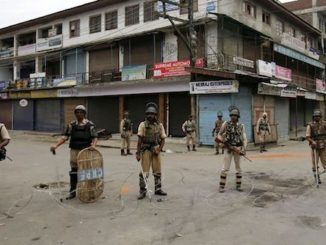
“The BJP government’s move has, however, not only completely swung the pendulum but is also antithetical to the very idea of inclusivity. By turning J&K, especially the Valley, into a virtually open air prison, with a full clampdown and information blackout, the message is clear: that New Delhi alone will decide the political future of the people of J&K with no room for any consultative process and no space for dissent.”
The Kashmir move affects the robust nature of Indian democracy in addressing internal conflicts and alienation
The recent abrogation of Article 370 ending the special status of Jammu & Kashmir (J&K) in the Indian Constitution along with the Jammu and Kashmir Reorganisation Bill, 2019, bifurcating the State into two Union Territories (J&K and Ladakh), have delivered a knock-out blow to the long-drawn-out peace process in Kashmir.
These moves also herald a paradigm shift in the fundamental premises and parameters of India’s approach towards the Kashmir issue, with long-term implications for its political strategy of tackling such internal conflicts. There are three cardinal principles which successive political regimes have hitherto followed in addressing internal conflicts and seeking political reconciliation with alienated segments of the populace. These in turn have bolstered the robust and resilient nature of Indian democracy. The future, however, appears much more uncertain. Here is why.
Accommodative parameters
The first principle entails adhering to the letter and spirit of the Indian Constitution. Its far-sighted and malleable nature has stood the test of time. Since 1947, India has faced a wide-ranging nature of political demands ranging from secession, to the creation of a separate State for Jammu, Union Territory status for Ladakh and others seeking affirmative discrimination for the Dogri language, Scheduled Tribe status for Gujjars and Paharis and so on.
In response, the central leadership has tried finding ways and means within the overarching parameters of the Indian Constitution and have rarely been disappointed. In view of the difficult circumstances under which the Dogra Maharaja Hari Singh had acceded to India, Article 370 itself offered an excellent example as to how the special needs and political aspirations of the people of J&K could be politically and constitutionally accommodated by India’s Constitution makers.
Decades later, when Ladakhi Buddhists launched an agitation in 1989, demanding Union Territory status, the Indian Constitution once again made space for political experimentation by introducing intermediate state structures — the creation of two autonomous hill councils for Leh and Kargil.
Weakening federalism
Against this backdrop, it is for the first time in independent India’s history that the Bharatiya Janata Party government has used constitutional provisions for opposite ends: to undermine and weaken India’s federal character by downgrading a State and territorially dividing it into two Union Territories without the consent of the people of J&K.
The method adopted to execute this decision is of special concern because by equating or replacing the Constituent Assembly of J&K (which was dissolved in 1957) with the Legislative Assembly of J&K, and Parliament appropriating the latter’s powers since the State is under President’s rule, the Central government has acted unilaterally to reorganize the State of J&K.
This rests not only on legally shaky ground but also flies in the face of constitutional norms and propriety. If this passes judicial scrutiny, it can then be done to any State in India, with drastic implications for its federal character.
The second principle pertains to the maxim of ‘inclusivity’, that is, a political demand being made must be inclusive in terms of representing the interests of all those in whose name it is made. This supported bridge building and coalition-making among different communities certainly helped in shaping the peace process, in turn bolstering India’s deeply diverse and plural character.
In J&K’s context too, it has also proven to be a critical common factor helping to explain the failures and successes of various political demands. The Kashmiri idea of self-determination in a multi-ethnic, multi-religious and multi-lingual society, for instance, was to call for a plebiscite as mandated by the UN resolutions of 1949 or seek an independent and sovereign State of J&K, but this was not the approach taken by other communities such as the Dogras, Kashmiri Pandits, Gujjars, Bakkarwals, and Ladakhi Buddhists. In the 1950s, as indeed in the 1990s, the demand by Kashmiri Muslims for a right to self-determination or azadi was politically checkmated by these communities as their political choices were very different; time and again, an exclusively Valley-focused approach has doomed the prospects of the peace process.
Demographic impact
The BJP government’s move has, however, not only completely swung the pendulum but is also antithetical to the very idea of inclusivity. By turning J&K, especially the Valley, into a virtually open air prison, with a full clampdown and information blackout, the message is clear: that New Delhi alone will decide the political future of the people of J&K with no room for any consultative process and no space for dissent.
The decision to divide the State is particularly fraught with the risk of deepening regional and communal fault lines. While Ladakhi Buddhists, for instance, are now celebrating the fulfilment of their long pending demand for Union Territory’s status, the voices of Kargilis who are still under a strict curfew are yet to be heard. They may not support this decision because ‘a Union Territory without a legislature’ not only negates the idea of decentralization of power to the grassroots (the undergirding principle of the autonomous hill council) but could well lead to a shifting of the loci of power to Leh, resulting in losing whatever gains they have assiduously made over the years.
The celebrations by Kashmiri Pandits are anticipated because of the gross injustice and displacement they have suffered since their forced exodus from the Valley in the early 1990s. It remains to be seen whether the abrogation of Article 370 by itself, would facilitate their return to the Valley without the support of local Kashmiri Muslims and rising violence.
Instead of making all communities equal stakeholders in the peace process, the BJP government’s decision may well end up pitching one community against the other. A deepening of societal fissures and communal fault lines do not go hand in hand with the agenda of peace-making.
The third principle refers to a promise and the practices of holding a dialogue process and sharing political power with opponents of all hues. In Kashmir, successive Central governments have until now never shut the door of dialogue in the face of political opponents who have ranged from the Sheikh Abdullah-led Plebiscite Front in the 1960s to the Muslim United Front in the 1980s to the Hurriyat leadership since the 1990s. This also holds true for militant groups.
While the bottom line of Congress governments has been a commitment by their opponents to abjure the path of violence and abide by the Indian Constitution, the erstwhile Vajpayee-led National Democratic Alliance (NDA) regime was even more generous in offering the broad framework of ‘insaniyat, jamhooriyat and Kashmiriyat’.
The Modi government faces an uphill task in identifying credible local partners in ushering in peace to the Valley, which may well end up in facing yet another impasse.
Political fallout
In a significant point of departure, the present government is pursuing a hard, top-down approach. The Home Minister has categorically ruled out any dialogue with militants and the Hurriyat and has even castigated the mainstream regional political leadership of the National Conference and Jammu and Kashmir Peoples Democratic Party for being corrupt, promoting family rule and fomenting separatism and violence. This move has nullified the very idea of a process of dialogue and runs the risk of discrediting the mainstream politicians and obliterating the middle ground between the militants and mainstream politicians.
The Prime Minister in his recent address to the nation, expressed hope that new leadership in Kashmir would emerge from grass-roots politics. It is important to note that in 1,407 out of 2,135 halqas or village clusters, there was no voting at all in the panchayat elections that were held in 2018. This does not lend credence to youth being optimistic about joining mainstream politics especially after the abrogation of Article 370, a move which is only likely to deepen the alienation. The Modi government faces an uphill task in identifying credible local partners in ushering in peace to the Valley, which may well end up in facing yet another impasse.
(Navnita Chadha Behera is the author of ‘Demystifying Kashmir’ and ‘State, Identity and Violence: Jammu, Kashmir and Ladakh’)
On August 5, 2019, the government of India took a historic step, executed in an elegant manner, to reorganize the governance of the Indian state of Jammu & Kashmir, into a Union Territory of Jammu & Kashmir, with a far-reaching vision of peace and beautiful ecology in the vales and rooftops of the Himalayas. To students of history, governments and policies, and international relations, this is a landmark step in the chronicles of India about which historians shall write a hundred years hence. Whereas in the now and present, over 1.3 billion people of India are feeling as if a burden of the past has been lifted, with a new dawn in the one-ness of India. No doubt there are also some voices within India that disagree with this decision of the Prime Minister Narendra Modi government. But that is the strength, beauty, and challenge that any democracy must navigate. By reasonable estimates this step and way forward has more than overwhelming goodwill in India, and the few dissenting voices will always be welcome to contribute to a healthy argument and debate which will help shape a more perfect Union of India.
The Opening Gambit
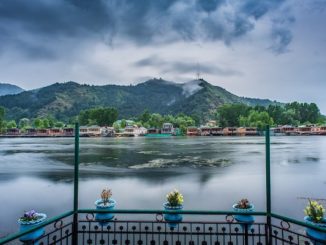
Above being said, what none should doubt is that this gambit by India has opened the gateways to peace and prosperity for the people of Kashmir, and for the people of India to contribute and participate in the harmony and its dividends, as within any territory of India. The next 6-12 months are critical and important as the security blanket in Kashmir is slowly lifted and life returns to normalcy. As the routine of lifestyles and business kicks back into gear, the challenge for the Modi government will be to deliver a seamless and smooth transition concurrent with an economic take-off in the Kashmir region. Within one-year Kashmir should be vibrant with peace, culturally colorful with life, and Mother Nature’s vast and gorgeous abundance of the region being shared by Indian and foreign tourists, nature enthusiasts, and seekers of calm and spirituality, minus its image as a region of “bombs-bombs-bombs”, that President Donald Trump talked about in his presser couple weeks ago.
The entire might of India, strategic, and military, is now applied to ensuring the success of Kashmir as a peaceful, culturally vibrant, and the most beautiful of Himalayan region as captured in the simple words of the German philosopher F. Max Muller when he said that if there is a heaven anywhere on this earth – then it is only, and only, in Kashmir.
The Business Opportunity for the Trump World Top Resort in Kashmir
Based upon the expectation that positive scenario as above shall unfold, and that the alternative scenario of bombs and violence in Kashmir will be a thing of the past, this column proposes creative thinking and an unprecedented business opportunity for top investors of India.
Though the chances of what we propose are slim, yet it must also be remembered that when ideas, audacity, and the universe align, then the returns on investments are beyond imagination and shape the tomorrow of history and generations. It is also well acknowledged that the project may be a non-starter due to the nuances and vagaries of geo-political and security issues, and the associated financial risk.
Therefore this opportunity that we suggest is squarely and aimed at only such Indian investors and promoters who have accumulated significant corporate and personal wealth, and who are nationalist in their worldview, and would like to bring positive change in Kashmir, and, who will be patient and long term in their returns. So, what are we proposing? As a new age think tank and incubator that has seeded and succeeded in pioneering out-of-the-box initiatives over the past 20 years between countries globally, and including experience of over 40 years in investment banking deals on Wall Street, we believe that the historic opportunity in Kashmir can also be converted into a business opportunity.
The Trump World Top Resort at Kashmir
Nestled in the high woods and forests of the Himalayas, a vast estate that sprawls over the mountains, with its own airport and helipad, green and clean energy, conventions, conferences, festivals and arena facilities, hotel and villas, golf course, wellness and relaxation centers, lakes, rivers and springs, adventure sports, skiing and hiking trails, flower and herbal gardens, organic farms, art and cultural fairs, horse-riding, and more, the resort can be marketed very well as a destination for the upper income and rich of the world, and for world summits, global and national conferences, meetings, and retreats.
A combination of Indian investment and the Trump brand, situated in one of the most exquisite locales virtually on the roof-top of the world, with savvy networks for worldwide promotion, coupled with unparalleled comfort, luxury and service.
Some readers of this column may have visited the Trump International Hotel in Washington, DC. There is no hotel in this world which can compare to the luxury, service, and experience – the large reception and lounge area, rooms and beds are better than best of anywhere in the world.
Of course, part of reason that the Trump International Hotel makes sense for visitors in DC to stay is that for businessmen and diplomats this is the best place to collect intelligence and make contacts. No need to make an appointment – you may run into a senior administration official at the bar, or at the lobby, or while sitting down for dinner. Liberally sprinkled with glamour of music, beauty, and dance shows that are unparalleled, this is where the elite and rich of America confabulate and shape the America and world of tomorrow.
While the Trump International is famous for its excellence in luxury and networking with mere mortals, the Trump World Top Resort will be famous for the luxury and joy of living in the clouds of Himalayas. The Trump World Top Resort can truly be and become the elusive Shangri-La up in the Himalayas that the world travelers have been searching.
And if not the Trump brand, then why not an Indian brand, with Indian promoters?
(Robinder Nath Sachdev is president of The Imagindia Institute and Ven Parameswaran is Senior Advisor of Imagindia. The views expressed are those of the authors)
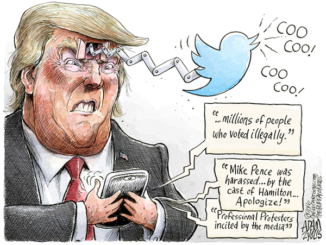
“Twitter was initially his mode of communication in domestic politics, during his bitterly fought presidential election campaign against Hillary Clinton. It has now become his favorite instrument to chastise America’s foes and friends alike, ranging from China and Iran to neighbors like Canada and Mexico, apart from allies like the EU and partners like India.”
Governments across the world and most notably the US use instruments of state power like military pressures, diplomatic isolation, travel bans and economic sanctions as instruments of persuasion. President Trump has, however, devised a new instrument of state coercion to express his displeasure and announce his proposed actions. This 21st century diplomatic innovation by Trump is his ‘Twitter handle’.
Twitter was initially his mode of communication in domestic politics, during his bitterly fought presidential election campaign against Hillary Clinton. It has now become his favorite instrument to chastise America’s foes and friends alike, ranging from China and Iran to neighbors like Canada and Mexico, apart from allies like the EU and partners like India. American friends, however, aver that Trump uses this unique method of addressing foreign rulers, primarily to cheer up his domestic base, apart from informing the world of his late-night thoughts!
Trump has excelled himself before, when he took on an exceptional target — his country’s most loyal ally — the UK. He poured scorn on and ridiculed the serving British ambassador in Washington, Kim Darroch, who regards himself as the prima donna of Washington’s diplomatic corps. Trump also hit out at British PM Theresa May, now resigned, for allegedly mishandling the Brexit negotiations to fashion a ‘soft exit’.
His epithets included a description of Darroch as Britain’s ‘wacky ambassador’, a ‘very stupid guy’ and a ‘stupid fool’. May received her share of abuses for her ‘failed Brexit negotiation’. He described her diplomacy as ‘badly handled’ and accused her of going ‘her own foolish way’, while leading her country into a ‘disaster’. True to form, his tweet ended with inevitable boasting about American military and economic might! All this followed leaks of confidential reports Darroch had sent to Whitehall, which were highly uncomplimentary about Trump’s qualities of head and heart.
Only Israel and Saudi Arabia appear to be free from any ‘Trump tirades and tantrums’. Many in Washington aver that this arises from the closeness of the Saudi and Israeli leadership to Jared Kushner, Trump’s son-in-law. Kushner was recently in Bahrain, trying to sell his solution for Middle East peace to Arab leaders. The Kushner ‘solution’ required the Palestinians to renounce all claims to Jerusalem and the West Bank, in return for petrodollars from oil-rich Arab countries. The proposals were received coldly in Bahrain, with even Saudi Arabia making it clear that its approach to the Palestinian issue was distinctly different. Trump’s approach to crucial contemporary issues enjoys little international support. Even NATO allies differ with him on important issues like climate change and sanctions on Iran.
Trump’s desire to target India on trade issues became evident when Indian steel and aluminum products were hit with import duties of 25% and 10%, respectively, in March 2018. India’s exports of steel to the US of $761 million have fallen by 46% since. Trump also abolished the preferential duties that India was getting as a developing country. Trump’s tariff increases substantially hit India’s exports of mechanical and electrical machinery, chemicals, steel and auto parts. India retaliated in a measured manner, just over a month ago, targeting industries and agricultural products produced by Trump’s political/electoral supporters. They included new tariffs on imports ranging from almonds and walnuts to steel products.
The two sides decided to resolve these differences bilaterally, following the Modi-Trump summit in Osaka. Preliminary talks were held recently in New Delhi, with a visiting US delegation. India should, however, bear in mind that it is not the US alone that is unhappy with what it sees as growing Indian protectionist measures. The problems India faces from Trump’s policies pale in comparison to the impact of enhanced US duties on China’s exports. India’s annual exports to US amount to around $54.3 billion while China’s exports to the US amount to $539.67 billion annually. Recent restrictions curb China’s easy access to US high-tech products. The impact is being increasingly felt by China, whose remarkable industrial and technological transformation has been largely facilitated by access to US technology.
Resolving these issues is going to be more difficult than dealing with the protectionist restrictions that India faces now. While India’s exports to China have shown signs of rising, New Delhi has to devise strategies on how it could best utilize Chinese 5G networks and encourage Chinese investments in its industrial sector, at the same time ensuring that its national security is not compromised.
India is going to face other challenges which are the creation of the US Congress. The most important of these are the prospects of sanctions flowing from India’s acquisitions of Russian arms. India has let it be known that it has no intention of buckling under US pressure.
Banking and financial measures to bypass US sanctions were discussed during President Putin’s visit to India. They have since been put in place. While the US has threatened Turkey with sanctions for acquiring S-400 missile systems by ending the proposed supply of F-35 fifth-generation fighters, India has wisely stayed away from attempting to acquire such equipment from the US. The US Indo-Pacific strategy is premised on receiving support from Japan, South Korea, Vietnam, Indonesia and India — a strategy which would have little relevance without the participation of India.
The US uses the dollar in international finance to coerce others by resorting to threats of financial sanctions, without securing international approval. The time has come to counter this coercive use of power by increasing the use of euro and Chinese renminbi for global transactions. The EU is not too happy at being tied up by unilateral US sanctions on Iran, despite Iran abiding by all provisions of an agreement the EU signed, together with Russia, China and the Obama administration.
India needs to thoroughly explore Pakistan’s recent behavioral pattern against the back of its extraordinary victory in the four-decades-old Afghan civil war that is finally sailing into view — after so much of trials and tribulations, risking Pakistan’s internal stability.
Shock and awe in the world of politics work in unpredictable ways. They could have disastrous consequences or could have a salutary effect on the protagonists involved and have a chastening influence, leading to something good.
The shock and awe that the then US President George W Bush hoped to administer to Iraq by invading that country destroyed that country and led to mayhem.
In comparison, the shock and awe that the then Soviet leader Nikita Khrushchev gave to his American counterpart John Kennedy in 1962 by dispatching radars and missiles to Cuba had the desired effect. Khrushchev prevailed upon the US to remove the nuclear missiles deployed in Turkey as a reciprocal step for his willingness to not press ahead with the planned deployment of the Soviet missiles on the Caribbean island-state.
The invocation of such poignant slices of modern history helps to underscore that the shock and awe of the imminent specter of the return of the Taliban to the mainstream political life in Afghanistan — and Pakistan’s success in bringing it about — need not necessarily be taken as defeat from the Indian point of view.
Henry Ford, the great American industrialist who founded the iconic motor company, once said, “Failure is simply the opportunity to begin again, this time more intelligently.”
The clue almost always lies in humility, which keeps out hubris. There was no rationale for waging a proxy war with Pakistan on the tragic Afghan turf, since no matter how anyone tried, Pakistan wouldn’t have caved in, given the high stakes involved. If nothing else, the 2,200-kilometre long open border with Afghanistan alone could have motivated Islamabad to seek a friendly government in Kabul that is receptive to its core concerns and vital interests of national security.
A former Director General of Pakistan’s Inter-Services Intelligence (ISI) once told this writer that if an Afghan had a toothache, he got it fixed by a dentist in Peshawar.
India can and should learn to live with the emerging reality in our region — Taliban’s ascendancy to power in Kabul, Pakistan’s reasonable success in ensuring that the future power brokers on the northern side of the Durand Line are friendly and cooperative, and, third, Afghanistan’s inexorable transformation as a regional hub of China’s Belt and Road Initiative.
The time has come to address India-Pakistan tensions, which is fundamental to regional security and stability. Signs are looking good that Pakistan is in the least interested in triumphalism. Three most recent trends must be noted. One, the guns have fallen silent on the border and incidents of infiltration sharply declined. Two, Pakistan bowed to make concessions on the Kartarpur Sahib pilgrimage. And, three, Pakistan has unceremoniously reopened its airspace, bringing much relief to Indian travelers.
What lends enchantment to the view is that these nascent trends appeared as the countdown began for the verdict by the International Court of Justice (ICJ) at The Hague in the case of Kulbhushan Jadhav, who is on death row in a Pakistani jail.
A consensus ICJ ruling is usually arrived at through candid discussions, which the plaintiff and the defendant are privy to, informally. Quite obviously, such a fair denouement may provide the exit door for both Islamabad and New Delhi to move on, and it is entirely conceivable that both countries are in a chastened mood today over an a priori history that is best laid to rest.
Surely, this is where the most recent ‘goodwill gesture’ by Pakistan over the Kartarpur Sahib pilgrimage assumes particular significance. The differences between the two countries dramatically narrowed once Pakistan assured India without caveats that it will not allow pro-Khalistan activists to use the ‘Peace Corridor’ to indulge in anti-India activities. Indeed, very little time is left before the 550th birth anniversary of Guru Nanak in November.
It is often the case in life that others may open the doors, but you must enter by yourself. To be sure, India needs to thoroughly explore Pakistan’s recent behavioral pattern against the backdrop of its extraordinary victory in the four-decades-old Afghan civil war that is finally sailing into view — after so much of trials and tribulations and after committing such massive resources in men and material, risking Pakistan’s own internal stability.
The recent Pakistani stance vis-a-vis India is devoid of any traces of triumphalism. The time has come for the Indian leadership to take a big leap forward to begin a serious conversation with Pakistan. The heart of the matter is that a rare opportunity may be at hand for the two countries to discuss the rites of passage to a new era based on a moratorium on asymmetrical or proxy wars. This needs to be done at the leadership level.
An improvement in the India-Pakistan relationship will provide an open sesame to the emerging regional security scenario to turn it into an opportunity for India’s development. It will require that India jettisons its notions of the Taliban being a creature of darkness and a reset of regional policies that puts in perspective the tumultuous period that followed the Saur Revolution in 1978, which is breaking loose and drifting into history books. Importantly, the normalization of the India-Pakistan ties — and making them predictable — is the sine qua non for a steady enhancement of India’s partnership with China to make it strategic, which Prime Minister Narendra Modi has set his eyes upon as a historic legacy of his leadership.
Till about a decade ago, India and the US were talking to each other on 38 platforms. Now they are talking at one another. Such difficulties have been compounded by a tendency in India to run down Trump and view him as a bull in the global diplomatic China shop. But there is hope as the new External Affairs Minister, S Jaishankar, does not believe in demonizing Trump.
At the root of most of the gripe in recent weeks about the state of relations between New Delhi and Washington is a long-standing popular expectation since the demise of the Soviet Union that as India and the US got closer, the latter would become a substitute for Russia.
It is an expectation that is shared in India not merely at the popular level, but in the media, sections of which plug this line as their wishful thinking. Because of the heavy American influence on the think tank community and non-governmental organisations (NGOs), the public discourse on Indo-US relations has also fostered such an expectation.
Policymakers within successive Indian governments since then Prime Minister PV Narasimha Rao — during whose tenure the Soviet Union collapsed — have mostly had serious reservations about such a perception. Unfortunately, their American counterparts have both publicly and privately encouraged the policy line that with the fall of the Berlin Wall and with the East bloc gone, all that was needed was for India and America to consummate their marriage that was made in heaven and ordained by their horoscopes matched by the constellations of democracy, English language, the rule of law and so on.
Additionally, after the George W Bush-Manmohan Singh nuclear deal, which ended India’s long nuclear winter, Americans at every level of strategic thought, both within their administrations and outside, nursed a sense of entitlement about India. When Sanjaya Baru, then PM’s Media Adviser, handed over the first consignment of Alphonso mangoes to then US Secretary of State Condoleezza Rice in June 2007 at the annual meeting of the US-India Business Council, a senior State Department official standing next to this writer loudly exclaimed: “We give India the nuclear bomb and all we get in return is a basket of mangoes.”
This official’s reaction was patently an exaggeration, but it reflected the strong feelings within the Washington establishment then — as also now. His reference was to the historic nuclear deal which ended a three decade-old ban on India’s trade in nuclear material and technology, initially with the US and eventually with the rest of the world. Till 2007, mangoes — like many other Indian agricultural products — could not be exported to the US despite New Delhi’s strenuous efforts because of stringent US regulations.
In May 2006, Boeing invited Indian journalists based in Washington to visit the company’s highly secure and heavily restricted Integrated Defense Systems headquarters in St Louis, Missouri, where its modern military aircraft were being designed and developed. Word had been out then that India was about to order 126 medium multi-role combat aircraft (MMRCA), the biggest military aviation deal in history. The invitation was meant to familiarize the Indian public with US defense capabilities. Indo-US defense trade had not picked up in 2006 to anywhere near what it is today.
Pin-stripe-suited Boeing senior executives, who flew down to St Louis to smoke exquisite cigars and sip premium cognac with the journalists at the Ritz Carlton’s Cigar Club, were smug in their belief that the MMRCA deal would go to US companies which were preparing to bid as soon as the tendering process was set in motion by the Congress-led government. When this writer told an executive that a deal as big as the one for 126 planes would take at least five years to be negotiated, he dismissed that view with contempt. “We have been told that in six months everything would be completed once the process begins,” he said confidently.
In the end, it took a decade to sign an agreement for partial purchase of the original 126 planes and the deal did not go to American companies. This anecdote is worth narrating because it is just one of the many examples of how companies in the US have little idea of how to do business in India and are ill-equipped to cope with the peculiarities of decision-making in the Indian government.
Just as US administrations want to send Indian-Americans as Ambassadors to India in the belief that they can swing things for them in New Delhi, US companies and lobbying groups hire retired bureaucrats from Lutyens’ Delhi whose contacts are from a bygone era. Sadly for economic and trade relations between the two countries, there are many instances where these men and women have given wrong advice to their principals back in America. But when things go wrong, the blame is on India, as many Americans in the Donald Trump administration and outside are doing now.
After the thick ice between Washington and New Delhi caused by the 1998 nuclear tests melted through the most comprehensive dialogue in their history between then PM Atal Bihari Vajpayee’s confidant Jaswant Singh and then President Bill Clinton’s troubleshooter Strobe Talbott and bilateral relations eventually took off, 38 working groups came into being to catalyze Indo-US relations across the board.
But six months after Hillary Clinton became Secretary of State, she found these 38 groups to be mere talking shops. During a visit to New Delhi in July 2009, she persuaded her Indian counterpart SM Krishna to scrap these working groups. In their place, Clinton and Krishna created the lofty sounding ‘five principal pillars’ of their relationship: strategic cooperation; energy and climate change; education and development; economics, trade and agriculture; science, technology, health and innovation.
In retrospect, this was a mistake. When there were 38 working groups, there was constant toing and froing between the two sides and they were in constant and unbroken dialogue offering numerous windows to understand differences and disputes. India and the US were talking to each other then on 38 platforms. Now they are talking at one another.
Such difficulties have been compounded by a tendency in India to run down Trump and view him as a bull in the global diplomatic China shop. But there is hope because the new External Affairs Minister, S Jaishankar, does not believe in demonizing Trump. When he was Foreign Secretary, within a month of Trump’s inauguration as President, Jaishankar began advising those in India who practice diplomacy and engage in strategic thought. “Do not demonize Trump, analyses Trump. He represents a thought process. It is not a momentary expression” what Trump is saying, has been Jaishankar’s approach. If Trump is re-elected President next year, India will have to follow this advice in letter and spirit or give up on India’s most important foreign policy priority.
“Four score and seven years ago our fathers brought forth on this continent, a new nation, conceived in Liberty, and dedicated to the proposition that all men are created equal.
Now we are engaged in a great civil war, testing whether that nation, or any nation so conceived and so dedicated, can long endure. We are met on a great battlefield of that war. We have come to dedicate a portion of that field, as a final resting place for those who here gave their lives that that nation might live. It is altogether fitting and proper that we should do this.
But, in a larger sense, we cannot dedicate — we cannot consecrate — we cannot hallow — this ground. The brave men, living and dead, who struggled here, have consecrated it, far above our poor power to add or detract. The world will little note, nor long remember what we say here, but it can never forget what they did here. It is for us the living, rather, to be dedicated here to the unfinished work which they who fought here have thus far so nobly advanced. It is rather for us to be here dedicated to the great task remaining before us — that from these honored dead we take increased devotion to that cause for which they gave the last full measure of devotion — that we here highly resolve that these dead shall not have died in vain — that this nation, under God, shall have a new birth of freedom — and that government of the people, by the people, for the people, shall not perish from the earth.”— Abraham Lincoln, November 19, 1863
To truly celebrate America, one has to know who we are, where we came from, where we are now, where we are going, and that well-intentioned Communism and its light-weight sibling, Socialism, are wholly inconsistent with American Exceptionalism. And then there is the many “I”s coming together to be “We”: E Pluribus Unum.
Time has come for all of us to better comprehend who and what we are, after all “the voice” of the “Silent Majority, albeit, pretty loud on its own, has its loudspeaker in our POTUS – President Trump – who is incessantly causing – by Tweet and act – an “American Spring” cleaning (with results akin to “Arab Spring” a la conservatism) – and our institutions are waking up to be lawful & robust – as if anew. I fear that some Americans don’t really understand America, ignore as they do history’s nuanced journey and impossibly impose present-day mores on yesteryears, and many well-meaning folks who took “compassion” to heart, are violating laws in a nation of laws. So, a look back is wise, as it’s timely.
Celebrating the Declaration of Independence on July 4 is an American tradition, but it took a while for that tradition to develop.
“We the People” are the beginning “words” of American Exceptionalism’s second of two founding documents – our hallowed Constitution. Of course, the Declaration Of Independence, written by my hero Thomas Jefferson, created the “right” to do so. The Constitution has it’s embedded Separated Powers regime – structural separation, to force an ad hoc joinder – thereby squeezing more public good from power by discord. America is at her best when we are divided on policy, but united as a nation. America First, then, is a predicate to legitimate argument.
One-half of us love Donald J. Trump and one-half of us can’t get rid of him fast enough. That’s our America since 2016 – even without foreign meddling – especially President Putin’s return “gift” to Hillary for her meddling in his prior re-election; and Putin won despite her. Hillary lost by cheating Bernie Sanders of a “fair fight,” and got the wrath of his ardent supporters and Trump’s supporters voting in lockstep to elect “The Donald,” to be president of these United States of America.
Magna Carta. While “Richard the Lionhearted” was off in the Middle East fighting the Crusades, the Barons got King John to limit the King’s unlimited sovereign rights, thereby sharing some of the King’s sovereign powers with the hordes of landed gentry. This was a seismic event diluting the power of Kings. Independently of the Normans, a prior Saxon, Thomas Becket, as Archbishop of Canterbury, succeeded in imposing, with his death, “Separation of Church & State.” This is embodied in our Bill of Rights.
American Exceptionalism
Fast forward several centuries to 1776 – 3 years after the American Revolution started in Boston with the Indian Tea “bopping” in its harbor during the “Boston Tea Party.” Well, “We the People” were all landed gentry, and excluded ordinary everyday people, such as indentured servants. Of course, it excluded slaves – our Original Sin – our fellow Americans were “3/5″ of a person.
Gettysburg Address: Recipe of honest governance – “for the people.”
Fast forward once again – and it took the Civil War and a Republican Yankee President Abraham Lincoln to remove the Constitutional soulful damnation of the 3/5th of a person, aka our Original Sin, and “We the people” was now “wholesome”: 1 for 1, for each and every one of us, landed gentry or not, counted! Gettysburg Address is the everlasting test of legitimacy of our government and our leaders, as only if it helps “the people,” are they legitimate.
But what ails us is that we – and almost all of us grew up after WWII – and saw the great American Middle class as a permanent feature, rather than the unintended consequence of the GI Bill: free education for the returning victorious GIs. Well, the GI Bill ran out, and with it the Great American Middle Class. Congress, are you listening?
During Reagan’s time we were the greatest creditor nation in the comity of nations. Sadly, today, the world’s greatest debtor nation. Every president between Reagan and Obama is responsible for this debacle. Enter Donald Trump – an errant candidate for president running to run, not win. That’s why he had as much fun as he did. But he connected to lots of people who wanted to say “Merry Christmas,” or “I want White Power in a White-majority country” or “when I order coffee or a burger, I want to hear English, not Spanish or some other language, like Hindi. Remember Charlottesville. All those who came to America, was because we loved what America was and wanted to live and blossom here. We did not come to change her, even as we have the duty of citizenship to protect her from enemies foreign and domestic. Immigrants come to embroider America, not conquer her.
“MAGA” became a battle-cry – that I embraced as a Democrat, who honors Senator John McCain as an American Hero – because I had been issuing a warning since Bill Clinton days in the 1990’s, as I saw the American Dream in the Intensive Care Unit, and objected to Indian Call Centers – as they took away jobs from single or divorced American mothers whose main skill was speaking and connecting well to their neighbors. Well, my warnings were ignored on the altar of profit, until Trump harnessed the anger, and unexpectedly mined it all the way to the presidency.
No Conspiracy; Obstruction; and Senate Refusing to Convict
Watching the events in real time, I was repeatedly struck by most of Trump’s lawyers being carnival-worthy – leaving aside criminal-fixer Michael Cohen. Had candidate-Trump and POTUS had real lawyers, he would not need “loyalty oath” from then-FBI Director Jim Comey. He would know he can’t be guilty of “conspiracy” without an express or a tacit in-line-Of-sight “nod & a wink”; which were not present, even if fantasied. No need to bash Jeff Sessions’ proper Recusal, no need to dangle pardons, and surely no need to fire Mueller. Indeed, cooperating with Mueller was the path to disinfectant sunshine and proven patriotism. Same cooperation was good for Russia – indeed, I so requested publicly. Instead, obstruction of justice – interfering in legal process is obstruction – now haunts. Given our almost evenly divided nation, the Senate will not convict. Wacky result of legal malpractice of the highest order, damning a presidency that otherwise has disrupted the world to get more for America. Yes – improve our balance sheet – even as Trump engages with our “enemies” head-on. DPRK’s Chairman Kim is an example. Europe paying more for NATO, another. Pacific Fleet renamed Indo-Pacific, China finally challenged to be “fair” – as they have been unfairly ripping us off since 1971, and engaging with Russia’s Vladimir Putin – not like Barack’s secretive “hot mike” – “I will have greater flexibility after the election,” but in broad daylight being friendly and jovial, while in private tough and sanctioning.
The state of our union is very strong, and reflected in many facets. Of singular importance is our military’s condition – and it is awash in cash, being rebuilt and expanded, including a Space Force. One can almost see “Star Trek” as NASA’s next project; I hope they find Captain Kirk and Spock. As for our “Ballot Box,” the core keeper of our sovereignty, we need to make it hack-proof, and social media Meddling-Free. Congress are you listening?
Our 2020 presidential sweepstakes are on, and socialism or communism – like in the 1920’s and 1930’s – is trying to make a comeback – even as the USSR, and now Russia have abandoned both! Let me state, what to me is obvious: No Democrat running can win and become POTUS – even after Bob Mueller’s Testimony – if s/he embraces socialism or communism. Oh, to my 2016-favorite Joe Biden, knock it off with the dead-on-arrival “apology tour.” If it had been me, as then chair of Senate Judiciary, I’d be proud of giving Anita Hill the witness seat – as that was the maximum power of Judiciary Chairman. Biden was not her lawyer, not her judge, and the Senate wasn’t a trial. Meekness is not deliberative; appeasement is not a policy; and Americans can’t stand a wuss! Even Congresswoman Alexandria Ocasio-Cortez, now a legal force to reckon with in New York, no one can ever accuse of being a “wuss.” Worth remembering for all candidates: President Trump is a New Yorker, and a As Frank Sinatra said: If you can make it in New York, you can make it anywhere.
At the heart of the American Dream is the Declaration’s merit-based “pursuit of happiness” – not guaranteed being happy like everyone else – as in communism or it’s lighter sibling, socialism. The “pursuit of happiness” was intended as an eternal journey for each future generation to undertake, not as a “dead-end” destination as Communism and Socialism cause. Dead ends are inconsistent with American Exceptionalism.
Dreamers protest
We have the greatest nation in human history – we call “home.” We need to make our friends and family love and honor America. We need to treat America as our home: windows open, and door closed. Only those we want to come in, are allowed in. Compassion is a “safety valve” that ought to be used sparingly when the “law” becomes “an ass”. DACA is an example. Congress, are you listening?
Happy Birthday America! We love you…
(The author is an eminent attorney based in New York. He can be reached at ravi@ravibatralaw.com)
By Sandeep Chakravorty Photo:-Jay Mandal/On Assignment
“Water is essential to life, yet 844 million people in the world – 1 in 9 – lack access to it. According to a report by the World Economic Forum, the water crisis is the #4 global risk in terms of impact to society.
Access to safe water can protect and save lives, just because it’s there. Access to safe water has the power to turn time spent into time saved, when it’s close and not hours away. Access to safe water can turn problems into potential: unlocking education, economic prosperity, and improved health.
In India, “Six times the population of the United States lives without a household water connection. These people, in particular women and children, must spend time to get water, instead of working or going to school or caring for their families”. (Water.org)
The author is sanguine that the creation of ministry of Jal Shakti by Prime Minister Narendra Modi will address the problem of inadequate access to safe water, removing the “extreme water stress felt by 600 million people in India”.- Editor
The biggest disruptor in the new government of Prime Minister Narendra Modi for India is by far the creation of a ministry of Jal Shakti. The merger of the ministries of water resources, river development, Ganga rejuvenation, and drinking water and sanitation brings about a much-needed integrated approach for India’s water issues. Water will be the limiting factor to India’s growth. According to a 2018 NITI Aayog report, 600 million Indians face high to extreme water stress and about 200,000 people die every year because of inadequate access to safe water. By 2030, the country’s water demand is projected to be twice the available supply, implying severe water scarcity for millions and an eventual 6% loss in the country’s gross domestic product (GDP). However, if the Jal Shakti ministry, the one ministry on which the future depends, achieves its objectives, all that will change.
Addressing an election rally before the 2019 Lok Sabha polls, Prime Minister Modi said, “After constructing toilets and giving dignity to women, I will focus my next term on ensuring clean drinking water.” The creation of the Jal Shakti ministry and the adoption of an integrated approach to water issues formed part of the Bharatiya Janata Party’s vision. Gajendra Singh Shekhawat, the minister of Jal Shakti, has hit the ground running, adopting an inclusive approach by spelling out his vision of partnership with states. In his interview with India Today on 8 June, Shekhawat saw India’s water challenge as an opportunity to involve stakeholders. He is keen on the use of India’s traditional water conservation knowledge whose neglect has brought us to the precipice of a water disaster. He also promised “nirmal” or clean Ganga in two years.
“Nal se Jal” (tap water) for everyone by 2024 is a delayed yet essential goal for India to break into the middle-income league and become a global economic power. It is not difficult to imagine how much economic activity this goal-setting will engender, potentially contributing billions to India’s GDP through the construction/rehabilitation of reservoirs, their linking, the laying of pipes and construction of tanks, among other civil works. Its impact on the nation’s health will also be transcendental, as most diseases in India are water-borne. Nal se Jal is also a natural companion of Swachh Bharat and the National Toilet Mission, which cannot be sustained without water availability in every household. The National Democratic Alliance government has achieved ambitious goals before, be it the 72 million Ujjwala connections, taking electricity to every village and 20 million households, constructing 92 million toilets in less than five years, and the opening of more than 300 million Jan Dhan accounts. Making piped water reach every household is daunting, but the ability to achieve it is there. It is absolutely “Mumkin hai” (possible). If not now, when?
Only 4% of the available water in India is used for drinking, whereas 80% is used for irrigation with rampant inefficiencies. About 4,000 liters of water is used in Punjab to produce 1 kg of rice, though 300 liters is sufficient. The first charge of India’s water must go to drinking water, followed by crop and then industrial production. Furthermore, placing water on top of the conservation pyramid automatically leads to conservation of soil and forests, and forests make water. The mantra of water conservation is age-old and simple: hold it where it falls, in pits, wells, trenches, reservoirs or ponds. This prevents run-off and soil erosion, recharges aquifers and replenishes sub-soil moisture, critical for plant growth and survival. I speak from my experience in the early 1990s when I spent five years of my youth in rural India espousing soil and water conservation.
Living in New York, I marvel at the city’s water supply system, which provides the world’s best potable water. Even restaurants serve tap water. The city has a network of conservation watersheds, reservoirs and aqueducts with almost 95% water supplied by gravity, conserving energy. Institutional frameworks exist for every aspect, be it conservation of the watershed, reservoirs, distribution and pricing. Watershed conservation is the central principle for providing drinking water. Even corporate water bottlers such as Poland advertise the watersheds they protect to promote their products. It is not a pipedream to expect such a reality in India.
Many states have already undertaken path-breaking work. Telangana’s Bhagiratha project is worth emulating across India. Maharashtra’s Jalyukt Shivar Abhiyan has undertaken water conservation work in 16,522 villages. Unfortunately, rainfall has been poor this year, so the impact of the work is not felt. However, this is bound to change in the coming years when real water harvesting kicks in.
There is also a great synergy between bringing water to all households and the socio-cultural-spiritual movements gaining ground in India around saving the rivers, spearheaded by people such as waterman Rajinder Singh and Jaggi Vasudev. As Vasudev recently said, “Jal Shakti is a landmark step for revitalization and conservation of our rivers and water bodies.” They are opinion makers and have far reaching influence on people. The merger of their objectives with national priorities augurs well for India. On the lines of the International Solar Alliance that India pioneered, we may lead the world on water conservation from Jal Shakti to Bharat Shakti to Vishwa Shakti.
(The author is an Indian career diplomat, presently posted as Consul General of India in New York. He can be reached at cg.newyork@mea.gov.in)
This article originally appeared in Live Mint and has been reprinted, with some additions, with the permission of the author.
What we have witnessed following the strike , from the Government and the BJP leaders would not only sully the image of India but also the nation’s credibility through overt politicization of this conflict, as the country is preparing itself for a critical election.
By George Abraham
Ever since the attack in Pulwama by a suicide bomber killing 42 of India’s security personnel, the country has been on the edge, fearing an all-out war with Pakistan. Any civilized person could view the barbarity of this dastardly terrorist act only with disgust and rage. However, a confrontation between these two nuclear powers is neither in the interest of these two nations nor does it bode well for the future of this turbulent region. Pakistan has been waging a proxy war with India over the Kashmir issue from the time of Independence, and a final solution to this crisis is not within sight.
Some would argue that this is the time of war and everyone should keep their apprehensions about its conduct or any other questions they may have close to their chest. However, a massive intelligence failure of this magnitude over the Pulwama tragedy should not be missed. How did a young man in his twenties, who was already on the radar of the Security personnel, come to possess, pack & conceal, and then drive 300KG explosives towards a military convoy undetected? Reports from the region suggest that a police advisory was already in effect a week before this, stating that the Central Reserve Police Force deployment would be targeted. Where is the accountability on these massive security lapses?
A recent New York Times report paints a scathing image of India’s vintage military equipment and its impact on military readiness. “India’s armed forces are in alarming shape. If intense warfare broke out tomorrow, India could supply its troops with only 10 days of ammunition, according to government estimates. And 68 percent of the army’s equipment is deplorably old. It is officially considered ‘vintage’”. A swollen bureaucracy together with lack of funding obviously rendered these procurement and training processes anything but cumbersome.
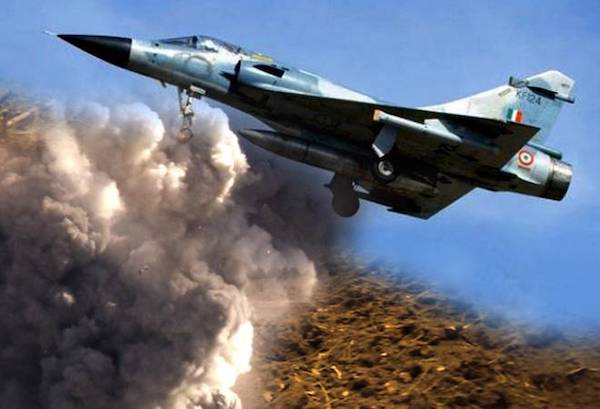
Nevertheless, India was left with no choice but to retaliate. Pakistan has been aiding and abetting Jaish-e-Mohammed and its leader Masood Azhar for long despite the pressure from the U.N. and other international bodies. The Air Force was tasked to strike the terror targets in Balakot region: an order that was carried out despite bad weather conditions. The Indian Military has been known for its professionalism and respect for civilian leadership in a democratic setup. Air Chief Marshal B.S. Dhanoa refused to give a casualty count saying “IAF doesn’t count the number of dead” and the “casualty figure in an air strike on Balakot camp will be given by the government,” referring to the air strike it had carried out on February 26, 2019.
Another shameful spectacle that is unfolding in India today is the blatant display of jingoism by the media and their networks to propel a wider war. Instead of bringing together the nation at a time of crisis, some of these news channels are creating divisions, promoting hate and sowing discord.
However, what we have witnessed following the strike , from the Government and the BJP leaders would not only sully the image of India but also the nation’s credibility through overt politicization of this conflict, as the country is preparing itself for a critical election. First, the leaked information from sources to the media put the casualty count at 300 to 350. Western intelligence sources and the International press immediately cast severe doubt on these numbers, and some reports directly from the ground characterized the damages as minimal.
However, in public speeches, Amit Shah, the President of the ruling party BJP, talked about 250 terrorists being wiped out. Other BJP leaders like BS Yeddyurappa said that his party would win 22 seats in Karnataka after the strike. It is as if BJP leaders are relishing these moments of war and salivating about the prospects of riding to victory in the fog of a protracted fight between the two nations. It boggles one’s mind to believe that after the Pulwama attack, the terrorists associated with Jaish-e-Mohammed just gathered together to sleep in one place, making an easy target of themselves for the IAF!
Anyone who questioned the veracity of the BJP leaders’ claims is called an anti-national and accused of doing Pakistan’s bidding. “At a time when our army is engaged in crushing terrorism, inside the country and outside, some people within the country are trying to break their morale, which is cheering our enemy,” Modi said at an election rally. “I want to know from Congress and its partners why they are making statements that are benefiting the enemies”, he added. Modi is apparently absent from the capital in managing the conflict. Instead, he is entirely taking advantage of the ongoing battle on his campaign trail, vilifying the opposition and questioning their patriotism for political advantage.
Another shameful spectacle that is unfolding in India today is the blatant display of jingoism by the media and their networks to propel a wider war. Instead of bringing together the nation at a time of crisis, some of these news channels are creating divisions, promoting hate and sowing discord. They broadcast manufactured news; shamelessly appropriate nationalism; and designate a segment as enemy’s allies. Many of them have become vassals of special interests mostly controlled by crony capitalists aligned with the ruling party.
It is also sad to hear that there is an atmosphere of fear and intimidation created for Kashmiri students across the country, as Sangh Parivar forces target them for revenge attacks. “It is no secret that the Bajrang Dal and the student wing of the Sangh were foremost in fomenting trouble against Kashmiri students in various parts of India. This was done keeping in mind the upcoming general election”, Omar Abdulla, former Chief Minister of Kashmir said. “It is obvious that BJP sees an advantage in such environments. It helps them paper over Modi’s mistakes like demonetization, joblessness, India’s poor economic growth and the distress faced by the country’s agricultural sector” he added.
We collectively admire the bravery and sacrifice of our armed forces. They are fighting to keep all Indians safe and protect the sovereignty of the nation from terrorists and a country that provides haven to them. Moreover, they are fighting to safeguard our democratic traditions and way of life. As Sashi Kumar, a commentator eloquently put it recently, “they are not fighting for this or that political party; they are not fighting for the electoral gains of the ruling party or of the opposition. However, they are, if anything, fighting the religious fundamentalism of one kind but not to replace it with the rampant religious fundamentalism of another kind, even of the majoritarian variety”.
The BJP’s strategy appears to be clear and straightforward: playing up Hindu nationalism; linking Kashmiri youth and Jihadi terrorists supported by an enemy, Pakistan; and providing ‘red meat’ to a large segment of the voting public, who are so disappointed with Modi’s failure to deliver his campaign promises. However, this is all at the risk of endangering India’s democratic and pluralistic values, and accelerating animosity between two armed nuclear neighbors, which may even put them on a path to potential disaster!
(The author is a former Chief Technology Officer of the United Nations and current Vice-Chairman of the Indian Overseas Congress, USA)
WILL INDIA CAPITALIZE ON “USA-INDIA CLOSE ALLY” STATUS?
WILL INDIA SEIZE THE OFFER OF THE USA TO TRANSFER 100% OF US TECHNOLOGY?
WHAT LESSONS INDIA LEARNED AFTER THE AIR SKIRMISHES WITH PAKISTAN ON 26th and 27th FEBRUARARY?
“Prime Minister Modi must take full advantage of ‘CLOSE ALLY’ relationship and start doing business with the USA that will benefit both. China opened its economy in 1979 and within 20 years it became the second economic power in the world. India has excellent credit and therefore India can mobilize resources needed for modernizing India and its defense. India must embrace capitalism as China did, and not continue to fool around with socialism”.
At the outset, I must say that this is the first time India received worldwide support since its independence in 1947.During the end of Harry Truman’s Presidency, Pakistan aligned with the USA by signing a Mutual Security Agreement. President Trump changed this after his election. He canceled aid to Pakistan and gave ultimatum to Pakistan to get rid of all terrorist organizations, including Jaish-e-Mohammed and Lashhar-e-Taiba .These two major Pakistan’s homegrown terror organizations with the implied support of Pakistan’s military and the I.S.I. (intelligence agency) attacked the Indian Parliament in 2001. In 2008, they tried to seize Mumbai and thru terror tactics killed 165 Indians and foreign nationals. Since then, various governments of Pakistan refused to mete out justice to the assailants, the leaders of Jaish-e-Mohammed and Lashkar-e-Taiba. Pakistan’s military and the I.S.I. have been ruling Pakistan. The military has installed Prime Minister Imran Khan. The so-called civil government and its parliament are mere window-display.
PAKISTAN HAS BEEN VIOLATING THE LINE OF CONTROL BETWEEN INDIAN KASHMIR AND PAKISTAN OCCUPIED KASHMIR
Pakistan has been violating the Line of Control systematically resulting in thousands of deaths of Indian soldiers during the past two decades. On 14th February, Pakistan used Jaish-e-Mohammed as its proxy and killed 41 Indian military police. Prime Minister Modi said, “Enough is Enough. India cannot and will not tolerate.” And he ordered his military to take action.
USA-INDIA CLOSEST ALLY STATUS IN PLAY
Before India took military action, India created a favorable political atmosphere in the world that pumped out political support from the sole superpower, the USA. The National Security Adviser, John Bolton and the Secretary of State, Pompei extended vehement support. This was followed immediately by discussion in the U.S.Congress. Several leaders of the U.S.Senate and the House of Representatives accused Pakistan and offered their overwhelming support to India. There was a general consensus that Pakistan must take action to get rid of all terrorists. The leadership of the USA was followed by the European Union, Australia, Japan, Canada and many countries. The United Nations discussed the matter and asked Pakistan to get rid of Jaish-e-Mohammed and Lashkar-e-Taiba. I am explaining to show that India did not act hastily and alone. It even had the implied support of China.
INDIA NEUTRALIZED CHINESE SUPPORT OF PAKISTAN
It must be pointed out that China chose not to support Pakistan against Indian attacks. Instead, China appealed to both India and Pakistan to use restraint and settle the differences. But China emphasized that Pakistan must get rid of its terrorists. It is also important to note that China refused to intervene or support Pakistan in 1971, when India used force to liberate East Pakistan and created Bangladesh. This is in spite of the historical fact that India and China had fought in 1962 on territorial differences.
Pakistan had banked on Chinese support and was disappointed. Significantly, China did not even mention the territorial violation of Pakistan by India. Equally, Pakistan was furious that the U.N. was silent when India attacked Pakistan’s airspace and violated its sovereignty.
It is interesting that India’s Foreign Minister, Sushma Swaraj timed her strategic meeting in Peking during the crisis, and she told her counterpart:
“No military installations were targeted. The limited objective of the preemptive strike was to act decisively against the terrorist infrastructure of Jaish-e-Mohammed in order to pre-empt another terror attack on India. India does not wish to see further escalation of the situation. India will continue to act with responsibility and restraint.”
LESSONS LEARNED FROM THE AIR SKIRMISHES WITH PAKISTAN
INTELLIGENCE: On the 26th attack on Balakot, Pakistan, Indian intelligence failed to target the right place for bombing.
TECHNOLOGY: On the 27th dogfight, the Indian pilot, Abhinandan Varthaman, was downed because his MIG-21 was no match to Pakistan’s F-16. Even the latest MIG-35 is no match to F-16. Thus, superior technology matters.
PUBLIC RELATIONS: Public Relations is also very important. P stands for Performance and R stands for Reporting. Indian bureaucrats failed to report. The media and the public wanted to know when and where F-16 plane was downed and how. The speculation is the Indian pilot before he was downed also inflicted damage to the F-16 forcing its pilot to go down. Also, when India failed to identify the target in Balakot, India claimed it had destroyed the Jaish-e-Mohammed’s training camp of 300.
RECOMMENDATIONS FOR ACTION TO CAPITALIZE ON “INDIA-USA CLOSE ALLY” RELATIONSHIP
India must take bold steps to make its economy modern and grow its GDP @10% minimum for the next decade.This will create multi millions of jobs badly needed by the unemployed.
Liberalize and open the economy.Make it most business friendly and create most favorable environment for foreign investment.
Modern warfare is won using sophisticated technologies and superior intelligence.India must be prepared to make dynamic changes in its military preparedness. India must once and for all decide to buy the best and most superior military hardware from the USA. India should be prepared not to depend on Russia. Indian factories that make Russian MIGs are outmoded and should be closed. What is the use of buying cheap or paying in rupees if you cannot win the war?
China’s defense budget is $175 billion, India’s is $45 billion Out of India’s budget, $28 billion is allocated for salaries and pensions, leaving only $17 billion for military hardware. To protect India’s sovereignty and its international standing, India has no choice but to increase its defense budget to $175 billion.
India has ammunitions to last only for 10 days of war.This is precarious and not acceptable.
India should immediately allocate $100 billion to buy sophisticated military hardware, especially, quantity fighter planes to defend against China and Pakistan.
NEXT STEP: Prime Minister Modi should make a definite schedule for President Trump to visit India for at least three days. He will be accompanied by a large delegation of Fortune 500 corporations, investment banks etc. During the visit Prime Minister Modi could discuss with President Trump, India’s requirements to build its economy and defense. Instead of India negotiating to buy directly from American military hardware manufacturers, President Trump could negotiate as he is good at cutting the price to the bottom. He helped Vietnam finalize purchase of planes from Boeing during the North Korean summit held in Hanoi.
President Trump’s grand strategy is to balance against the aggressive and growing Chinese influence in Asia. He is interested in replacing China with India as a source for consumer and industrial goods. However, today India does not have the necessary infrastructure to manufacture on large scale. India must deliver water and energy to all for 24/7. India has a large supply of engineers and managers. India has a comparative advantage with China . India must privatize its public sector corporations and release resources. Lockheed Martin, United Technologies, Boeing, Raytheon and others are ready and willing to manufacture in India. Making weapons in India has a comparative advantage especially with an oversupply of professional engineers and managers.
Prime Minister Modi must take full advantage of ‘CLOSE ALLY’ relationship and start doing business with the USA that will benefit both. China opened its economy in 1979 and within 20 years it became the second economic power in the world. India has excellent credit and therefore India can mobilize resources needed for modernizing India and its defense. India must embrace capitalism as China did, and not continue to fool around with socialism.
(Ven Parameswaran, MBA, Columbia University, lives in Scarsdale, N.Y. He is a Senior Adviser to Imagindia Institute, a think tank in New Delhi)
“Modi can strike and inflict casualties, allow continued conflict and win elections on the one hand, or give Imran a week’s time to handover the trio of Salahuddin, Masood and Hafeez, dismantle all camps and a genuine agreement on the three critical issues, and then strike as per plan, if Imran Khan is unable to deliver. This would deprive him of the alibi that he would have, if given a chance.”
Recently, in response to the tough call for a strong action against the perpetrators of the Pulwama, Jammu and Kashmir terrorist attack on the CRPF convoy by an explosive laden, vehicle borne, suicide bomber of Jaish e Mohammed, a Bahawalpur, Pakistan based terrorist organization, leaving 33 of the CRPF men martyred, Imran Khan, the Pakistani Prime Minister has appealed to India to give peace a chance.
India has been more than fair, transparent and patient in so far as giving a chance is concerned over the past almost three decades
In doing so, India has repeatedly given information about numerous incidents carried out by the various terrorist organizations based in PoK and Pakistan, viz the Hizbul Mujahideen, the Lashkar e Taiba and the Jaish e Mohammad and sought necessary legal action against the named wanted persons as well as moved the UN Security Council to declare them as wanted/banned terrorist persons/ organizations, but due to denial by Pakistan and being supported by China not much success was achieved resulting in continued terrorist attacks and thousands of innocent civilian and security forces persons losing their lives.
The incidents conducted by these organizations have been evidently clear cases of terror as seen in the incidents carried out by the terrorists belonging to these organizations at Akshardhaam, Mumbai, Bengaluru, Indian Parliament in New Delhi, Pathankot, Uri and Pulwama. In fact when evidence was sought by Pakistan, India gave sufficient, well documented dossiers of evidence especially for the Parliament attack and Mumbai attacks. In these cases India went to the extent of giving both technical evidence and documentary evidence some of it being sourced from neutral third country.
In case of Pathankot incident the Modi Government went beyond all past precedents across the world, to invite Pakistani investigation teams to the site of incident for early onsite evidence collection from an Air Force base, a confidential layout location, at the cost of inviting criticism by the civilian population and certain quarters of the Security forces, under the hope that Pakistan would honor its commitment and demonstrate fair and transparent legal action against the perpetrators of that attack, however, such hopes were bellied.
On the other hand it was more than evidently clear that the responsibility for all these terrorist attacks lay across Indian borders as the leaders and headquarters of all those terrorist organizations carrying out terror attacks in India were on Pakistani side.
Moreover those organizations had repeatedly themselves claimed responsibility of such terror attacks justifying them as jehadi actions. Pervez Musharraf and other leaders on numerous occasions had admitted having raised, financed, trained and armed these terrorist organizations. In fact they claimed them as strategic assets.
The tasking, coordination and monitoring of the terrorist actions of these organizations by the Pakistani ISI and well established support to them by the Pakistani Army in housing them at their border outposts both before and after infiltration as well as fire support and bombardment to assist their infiltration into Indian side and exfiltration back was admitted and confessed by both the terrorists and the Pakistani forces on number of occasions and has been well known.
The visit by Pakistani senior Army officers including the self-confessed visit by Pervez Musharraf in Kargil before occupation by them prior to the Kargill conflict if 1999 is well documented.
That Azhar Masood, the Chief of Jaish e Mohammed was a terrorist and was in Indian jail, and was sought to be released by the terrorist hijackers of the Indian aircraft was enough proof of him being an important terrorist leader and that after release he-established Jaish e Mohammad and continues to engage in masterminding terror attacks in India, most of which were self claimed by his organization are enough evidence of his continued terrorist activities at large scale using the Pakistani soil repeatedly, a violation of assurance given to India by Pakistani Government. A similar trend continues to be followed by the Lashkar e Taiba and Hizbul Mujahideen.
Even after the Pulwama attack, almost on every day basis the terrorist attacks as well as incidents of cross border firing from Pakistani side towards Indian side are continuing even while Imran Khan is pleading for a chance for peace. This dilutes his credibility and genuineness on one hand and his ability to control either his Armed Forces, Pakistani ISI or the terrorist organizations.
His actions to take control of the Bahawalpur camp of Jaish e Mohammad on the pretext of providing safety to so called students further dents his credibility and genuineness of his actual intentions.
Imran Khan has a very critical and onerous duty to perform and that is to honestly weigh avoidable suffering to his millions of innocent population who may become victims of violence inadvertently on one hand and protect the rogue elements whose time has come in any way.
The world opinion is against terror, it is against mass killings by terror groups operating out of Pakistani soil, the irreversible clamor for retribution among the billions of Indian populations is evident, numerous influential countries and the opposition has been taken into confidence, the intent to take a decisive action has been reiterated by Prime Minister Narendra Modi, hence Indian action is about to come. Where, when, how much and how will be known as it happens.
In the very narrow keyhole opportunity for reconsideration, the leaders on both sides have that extremely critical opportunity to rise above the normal, usual, common stance and emerge as a global statesman and leader who could take the highest degree of risk of personal indulgence.
Modi can strike and inflict causalities, allow continued conflict and win elections on the one hand, or give Imran a week’s time to handover the trio of Salahuddin, Masood and Hafeez, dismantle all camps and a genuine agreement on the three critical issues, and then strike as per plan, if Imran Khan is unable to deliver. This would deprive him of the alibi that he would have, if given a chance.
Imran has a choice to offer the trio, destruction of camps and a genuine agreement on critical issues, which may earn him the wrath of his people and the Army but give Pakistan a lasting solution and an opportunity to improve the health of its economy and the wellbeing of its population or be guided by the past and by its Army Commanders and risk heavy casualties of both Armed forces, terrorists and may be some innocent civilians, which will eventually earn him ridicule by history certainly. His position is precarious as he is between the devil and deep sea, something like that of Lt. Gen AAK Niazi in East Pakistan in 1971. Niazi earned the reputation of a person who surrendered but earned the blessings from the families of more than a lakh families. We wish both leaders the best and hope that they emerge as leaders of substance and not rhetoric. Remember my dictum “Nation First Character Must”.
Let the Nation win not the people and let posterity remember you respectfully as Statesman of Global order.
I, as a veteran, have volunteered to rejoin and serve my motherland in a manner desired out of me by my leaders. Jai Hind.
(The author, a former Additional Director General of Rashtriya Rifles, has served six tenures in counter terrorist areas, commanded two Counter Terrorist Battalions and is the only officer to have received three citations . He holds unbroken record for academic and operational excellence as well as long term planning for the Indian Army)
“The misguided Pakistani military escalation against India was meant to cloak Pakistan’s continued inability to fulfil its obligations to counter terrorism under international law. It is worth noting that all three neighbors of Pakistan–India, Afghanistan and Iran-have in recent weeks expressed their deep concern at Pakistan’s ineffectiveness to counter terrorism emanating from its soil or from territory controlled by it.”
In the early hours of 26 February 2019, India struck the biggest training camp of the terrorist group Jaish-e-Mohammed (JeM) in Balakot, located in Pakistan. The JeM had claimed responsibility for the Pulwama terrorist attack of 14 February 2019, in which 40 Indian policemen had been killed. India took this robust counter-terrorist action after repeatedly urging Pakistan to act against the JeM, as obliged under United Nations Security Council Resolution 1267. It may be recalled that the United Nations had proscribed the JeM as a terrorist organization and called for enforcing sanctions on its members since 2001.
India’s action against the JeM has been endorsed by the major powers. The United States Secretary of State Mike Pompeo had spoken with Indian Minister of External Affairs Sushma Swaraj to emphasize the close security partnership and shared goal of maintaining peace and security in the region. He also spoke to Pakistani Foreign Minister Qureshi to underscore the priority of de-escalating the current tensions by avoiding military action, and urged Pakistan to take meaningful action against terrorist groups operating on its soil. He expressed to both Ministers that Washington encourages India and Pakistan to exercise restraint and avoid escalation at any cost. He further encouraged both Ministers to prioritize direct communication and avoid further military activity.
The meeting between the Foreign Ministers of India, China and Russia was held in Wuhzen, China. External Affairs Minister Sushma Swaraj used this occasion to convey that “this was not a military operation. No military installations were targeted. The limited objective of the pre-emptive strike was to act decisively against the terrorist infrastructure of JeM in order to pre-empt another terror attack in India.” The Joint Statement issued by the three Foreign Ministers after their meeting “stressed that terrorist groups cannot be supported and used in political and geopolitical goals.”
Instead of heeding calls for avoiding military action, Pakistan decided to launch an “unprovoked act of aggression” on 27 February 2019 when Pakistani military aircraft violated Indian air space and targeted Indian military posts. However, these aircraft were intercepted by Indian Air Force fighter aircraft which thwarted their plans. In the aerial combat that ensued one F-16 of Pakistan’s Air Force was shot down by an Indian Air Force MiG-21 Bison. The Indian Air Force lost one MiG-21 in the aerial engagement. The pilot of this plane ejected safely, but his parachute drifted into Pakistan Occupied Jammu and Kashmir, where he was taken into custody by the Pakistan Army as a prisoner-of-war. In keeping with the Geneva Convention, the pilot of the Indian aircraft is being returned to India. It may be recalled that after the 1971 Bangladesh war, India had repatriated 93,000 Pakistani soldiers taken as prisoners-of-war to Pakistan without any conditions.
The misguided Pakistani military escalation against India was meant to cloak Pakistan’s continued inability to fulfil its obligations to counter terrorism under international law. It is worth noting that all three neighbors of Pakistan–India, Afghanistan and Iran-have in recent weeks expressed their deep concern at Pakistan’s ineffectiveness to counter terrorism emanating from its soil or from territory controlled by it.
The position of the UN Security Council on terrorist attacks emanating from Pakistan against India, Afghanistan and Iran has been consistent and unanimous. In each of these cases, “the members of the Security Council underlined the need to hold perpetrators, organizers, financiers and sponsors of these reprehensible acts of terrorism accountable and bring them to justice and urged all States, in accordance with their obligations under international law and relevant Security Council resolutions, to cooperate actively with the Governments of the three countries and all other relevant authorities in this regard.” Now it is for the Security Council to find the political will to enforce its decisions under the provisions of Article 41 of the UN Charter to compel Pakistan to fulfil its obligations to counter terrorism.
(The author is a former Permanent Representative of India to the United Nations)
As the number of Punjabis swelled to over a million in Canada. Air Canada decided to start Toronto – New Delhi flight on all seven days of the week. Who advised Air Canada to take this decision is not known. The fact remains that more than 80% load of Air Canada Toronto – New Delhi flight originates from areas around Amritsar International Airport. Long ago, Air Canada could shun Amritsar Airport on the grounds that Amritsar had no five star hotel. Now both Taj Swarna and Hyatt Regency are truly 5 star hotels. There are other hotels also almost in the same category. Now Air Canada has no excuse to shun Amritsar International Airport. This airport has a 12001 foot long runway, which was recently strengthened to take heaviest planes. There are at least 15 fully functional parking spots for planes and the finest taxi-ways. This airport has the latest instrument landing system ILS CAT 3, which enables planes to land with 50 meter visibility and take off with 125 meter visibility. Now all flights coming from Europe and North America can land at Amritsar during poor visibility at New Delhi Airport.
It is the paramount duty of all modes of transportation, including the railways, airways and road transportation to serve the customers as conveniently as possible. Punjabis are settled in Canada since early 1900s. They started with a few hundred landing in small numbers in Vancouver area prior to World War I and their numbers kept swelling in later years. Most of them were from the districts of Lyallpur, Montgomery, Lahore, Amritsar, Jalandhar, Hoshiarpur and Kapurthala. After the 1947 partition of Punjab, most of the immigrants from Lahore, Lyallpur and Montgomery moved to the districts of Ferozepur, Amritsar, Gurdaspur, Kapurthala, Ludhiana, Jalandhar and Hoshiarpur. All this area is served by Amritsar Airport, the oldest in East Punjab, in operation since 1944.
After independence of India, the Canadian immigration laws were made more liberal and during the 1950s, the numbers of Punjabis swelled to over 100000 in whole of Canada, most of them were clustered around the city of Vancouver in the British Columbia Province. When air travel picked up steam, during the 1960s, the Ontario Province, which was geographically closer to the United Kingdom and India, started getting more Punjabi immigrants from Great Britain and the Indian Punjab. Toronto, being the largest city in Canada and its surrounding areas started getting bulk of the immigrants of Punjabi origin both from England and India. Vancouver got most of the rest.
When I reached the USA in 1980, the number of Indian Punjabis in Canada had exceeded half a million, the majority of them were in British Columbia. Ontario had the second biggest concentration, followed by Alberta and Quebec. Air India, in a business savvy decision, around early years of 2000s, decided to fly to Toronto. They already had a service from Amritsar to Birmingham. It was wiser on their part to extend the Air India service to Toronto. For a few years the Amritsar – Birmingham – Toronto service of Air India was running with a load factor of 80 to 90%. Very high for Air India compared to other flights. Turkmenistan Airlines also had a successful operation between Birmingham – Ashgabat – Amritsar and they were running in decent profit.
Sensing success of Amritsar – Birmingham – Toronto service of Air India, a newly emerging company Jet Airways also started a six days per week service to London (Heathrow). It was also running with a passenger load of 80 % to 90%. Air India had three slots per day (21 slots per week) at the most sought after Heathrow Airport in metropolitan London. They were operating one flight every day from Bombay and New Delhi to London. For quite some time, their third slot was not being used. Heathrow, being too much in demand, decided to cancel the third slot. Air India did not want to lose this costly slot. So they decided to skip Birmingham and route their Toronto flight through London Heathrow. This move temporarily reduced the load of Jet Airways. In a jiffy, Jet Airways decided to cancel their Amritsar – London operation. After sometime, GMR built a new terminal at New Delhi Airport called T-3. Somehow Air India decided to fly first thrice weekly from New Delhi via London to Toronto and subsequently they started New Delhi – London – Toronto daily flight. Changing gear quickly, they started flying on Amritsar – New Delhi – London route daily and commenced a new service to Toronto from New Delhi. Subsequently Amritsar was dropped from the route to the dismay of all Punjabis.
As the number of Punjabis swelled to over a million in Canada. Air Canada decided to start Toronto – New Delhi flight on all seven days of the week. Who advised Air Canada to take this decision is not known. The fact remains that more than 80% load of Air Canada Toronto – New Delhi flight originates from areas around Amritsar International Airport. Long ago, Air Canada could shun Amritsar Airport on the grounds that Amritsar had no five star hotel. Now both Taj Swarna and Hyatt Regency are truly 5 star hotels. There are other hotels also almost in the same category. Now Air Canada has no excuse to shun Amritsar International Airport. This airport has a 12001 foot long runway, which was recently strengthened to take heaviest planes. There are at least 15 fully functional parking spots for planes and the finest taxi-ways. This airport has the latest instrument landing system ILS CAT 3, which enables planes to land with 50 meter visibility and take off with 125 meter visibility. Now all flights coming from Europe and North America can land at Amritsar during poor visibility at New Delhi Airport.
Of late Air Canada has started another non-stop service from Vancouver to New Delhi. For this flight too, 80 to 90% load comes from Amritsar region. Who advised Air Canada to take this step beats my imagination? More over Amritsar is the home to the most sacred shrine of the Sikh community, the Golden Temple, where every Punjabi likes to bow his/her head on arrival as well as at the time of departure. Things have changed for the better at Amritsar International Airport.
Amritsar is very well connected to the Middle – East. There are three daily flights to Dubai and one to Doha. Amritsar has three flights per/day to Mumbai, which connect Amritsar to Manchester (UK) too. Birmingham is served thrice a week from Amritsar by Air India and four times a week by Turkmenistan Airlines. The European community had barred Turkmenistan from operations over the European Union. But they have hired other planes to continue their operations unhindered.
The Punjabi diaspora living in all major cities of Australia, including Sydney, Melbourne, Perth, Gold Coast, Adelaide and Brisbane is served very well by one Singapore based Scoot Airlines and two Kuala Lumpur based companies Malindo Airlines and Air Asia X. They pick up passengers daily from Amritsar and transfer them to the Australian flights. Scoot now serves Auckland in New Zealand too. Similarly all the Pacific rim countries are served by flights from Kuala Lumpur and Singapore. Now the Punjabi origin passengers bound for South East Asian countries and Australia/New Zealand do not have to travel to New Delhi for seven to eight hours by cars and buses.
The story of Canada is totally perplexing. This great nation has the largest contingent of high level elected officials of Punjabi origin, including MPs. Tanmanjeet Singh Dhesi, the member of parliament from Slough (London) is single-handedly toiling hard to connect London with Amritsar. But none from the nearly two dozen MPs of Canada is even making a well meaning attempt to directly connect Punjabi diaspora living in Canada with Amritsar International Airport.
All that the diaspora wants is direct Air Canada flights from Vancouver to Amritsar and from Toronto to Amritsar. Can’t they hold meetings with Air Canada to exert pressure to start these flights. We have very fine hotels in Amritsar at half the prices compared to New Delhi and Mumbai. Amritsar has been adjudged as the fastest growing large airport in India for the year 2018.
The “Amritsar Vikas Manch” and its offshoot “Fly-Amritsar Initiative” spearheaded by Professor Mohan Singh and assisted by Manjit Singh Saini, Kulwant Singh Ankhi, Charanjit Singh Gumtala, Er. D.S. Kohli, Sameep Singh Gumtala, Yogesh Kamra and Michael Raul among others have launched a signature campaign to connect two major cities of Canada and London (UK) with Amritsar by direct flights. This campaign is in full steam, already about 20000 signatures have been obtained. It will be submitted to Air Canada and other organizations for action. Hopefully something positive will emerge.
(The author can be reached at harjapaujla@gmail.com)
Re : The recent piece of mine on Gurduara Troubles in Glen Cove, New York that you kindly published in the Indian Panorama just days ago.
True that it was not the first of my opinions on our dysfunctional gurduara management, but very deliberately and carefully in the past I NEVER identified by name any of the persons involved in any altercations. Why? Because shaming people was never my intent NOR is it now.
The note that you published under my name identified some of the responsible people and that created unforeseen problems. This note was NEVER intended for publication and general distribution. It was intended for only a limited audience to spur them to use discretion and good sense in an effort towards working for an amicable resolution for the greater good.
For this reason I had NOT submitted this note to you for publication. Apparently, someone from one side or the other, sent it to you perhaps hoping to shame people into better sense. Unfortunately shaming did what it usually does – it makes them aggressively self-defensive.
I witnessed firsthand the unfortunate result today. At an unrelated function loyalist of both sides accosted me. They were offended for having been named in print. In the melee, the intent of my piece was lost. My theme was that the gurduara is not meant to divide our community into “Friends and Foes” but to create an ambience where we transform a divided people into collaborators and allies that work towards the common good of the community despite our differences.
The public shaming from seeing their names in print very likely kills any incentive for peace and for that I offer regrets — a sincere Mea Culpa.
It is for India to take advantage of a sea of US goodwill
By Ven Parmeswaran
The US has recommended that India must get rid of Jaish-e-Mohammed and Lashkar-e-Taiba thru surgical strikes. It is implied that once India decides, both the U.S. and India would jointly formulate military strategy and execute it.
Pakistan sponsored Jaish-e-Mohammed, a terrorist organization, killed 41 Indian para military personnel on February 13th. Immediately upon hearing the news, a chain of successive events took place in Washington D.C. The Secretary of State and the National Security Adviser issued statements of strongest support to India. This was followed by discussion on the situation in the U.S. Senate and the U.S. House of Representatives. All important and leading senators and congressmen/women condemned Pakistan and extended political support to India. The Chief of the US Central Command, General Joseph Votel gave his assessment to the Congress and offered support to India.
The US has recommended that India must get rid of Jaish-e-Mohammed and Lashkar-e-Taiba thru surgical strikes. It is implied that once India decides, both the U.S. and India would jointly formulate military strategy and execute it. Indian Ambassador Shringla said: “The designation of India as a Major Defense Partner was also codified into law by the US Congress in the National Defense Authorization Act of 2017, thanks to the unstinted support of the members of the India Caucus.”
President Trump has been demanding that Pakistan dismantle all terror cells and organizations inside Pakistan. He is the first US President to cancel military aid to Pakistan. Prime Minister Imran Khan of Pakistan has been wanting to meet President Trump to seek support for loans from the I.M.F. President Trump has told him that unless he gets rid of all terror outfits and terrorists from Pakistan, he would not support Pakistan’s request.
Pakistan was defeated by India in three conventional wars. India defeated Pakistan in its third war and Pakistan lost East Pakistan. Since then, Pakistan has been using the homegrown terrorist organizations, such as Jaish-e-Mohammed; Lashkar-e-Taiba; and others as proxy to fight India. This resulted in attacks on the Indian Parliament, , New Delhi shopping mall, and the City of Mumbai that killed 165 Indians and foreigners.
Pakistan is controlled by its military and the I.S.I., its intelligence agency. The military has selected its Prime Minister and therefore the Parliament is a joke. Because India so far has not retaliated, Pakistan has taken advantage and continues to use the terrorists to attack India.
India’s new Ambassador to the U.S.A., Harsh Vardhan Shringla after presenting his credentials to President Trump was given the most enthusiastic reception at the Capitol Hill. This was attended by more senators and congressmen/women than ever before. The grand reception given to Ambassador Shringla is a reflection of India-US relations, with India now branded as “CLOSEST ALLY”. The chain of events in Washington after Pakistan’s attack in Kashmir reinforces President Trump’s new policy towards South Asia. India should be pleased because the “CLOSEST ALLY” status has bipartisan support. It is time for India to take full advantage of the US support and draw up a plan to end the scourge of terrorism from inside Pakistan.
(The author, in the U.S. for 65 years, lives in Scarsdale, N.Y. He is a Senior Adviser to Imagindia Institute, New Delhi, a think tank. He can be reached at vpwaren@gmail.com)
It is for India to take advantage of a sea of US goodwill
By Ven Parameswaran
The US has recommended that India must get rid of Jaish-e-Mohammed and Lashkar-e-Taiba thru surgical strikes. It is implied that once India decides, both the U.S. and India would jointly formulate military strategy and execute it.
Pakistan sponsored Jaish-e-Mohammed, a terrorist organization, killed 41 Indian para military personnel on February 14th. Immediately upon hearing the news, a chain of successive events took place in Washington D.C. The Secretary of State and the National Security Adviser issued statements of strongest support to India. This was followed by discussion on the situation in the U.S. Senate and the U.S. House of Representatives. All important and leading senators and congressmen/women condemned Pakistan and extended political support to India. The Chief of the US Central Command, General Joseph Votel gave his assessment to the Congress and offered support to India.
The US has recommended that India must get rid of Jaish-e-Mohammed and Lashkar-e-Taiba thru surgical strikes. It is implied that once India decides, both the U.S. and India would jointly formulate military strategy and execute it. Indian Ambassador Shringla said: “The designation of India as a Major Defense Partner was also codified into law by the US Congress in the National Defense Authorization Act of 2017, thanks to the unstinted support of the members of the India Caucus.”
President Trump has been demanding that Pakistan dismantle all terror cells and organizations inside Pakistan. He is the first US President to cancel military aid to Pakistan. Prime Minister Imran Khan of Pakistan has been wanting to meet President Trump to seek support for loans from the I.M.F. President Trump has told him that unless he gets rid of all terror outfits and terrorists from Pakistan, he would not support Pakistan’s request.
Pakistan was defeated by India in three conventional wars. India defeated Pakistan in its third war and Pakistan lost East Pakistan. Since then, Pakistan has been using the homegrown terrorist organizations, such as Jaish-e-Mohammed; Lashkar-e-Taiba; and others as proxy to fight India. This resulted in attacks on the Indian Parliament, , New Delhi shopping mall, and the City of Mumbai that killed 165 Indians and foreigners.
Pakistan is controlled by its military and the I.S.I., its intelligence agency. The military has selected its Prime Minister and therefore the Parliament is a joke. Because India so far has not retaliated, Pakistan has taken advantage and continues to use the terrorists to attack India.
India’s new Ambassador to the U.S.A., Harsh Vardhan Shringla after presenting his credentials to President Trump was given the most enthusiastic reception at the Capitol Hill. This was attended by more senators and congressmen/women than ever before. The grand reception given to Ambassador Shringla is a reflection of India-US relations, with India now branded as “CLOSEST ALLY”. The chain of events in Washington after Pakistan’s attack in Kashmir reinforces President Trump’s new policy towards South Asia. India should be pleased because the “CLOSEST ALLY” status has bipartisan support. It is time for India to take full advantage of the US support and draw up a plan to end the scourge of terrorism from inside Pakistan.
(The author, in the U.S. for 65 years, lives in Scarsdale, N.Y. He is a Senior Adviser to Imagindia Institute, New Delhi, a think tank. He can be reached at vpwaren@gmail.com)
Just days ago, Gurduara Glencove held not one but two meetings of the general body on the same day, Sunday; the second meeting immediately followed the first.
Believe me, this incredible matter is not a typographical oversight or slip. It is absolutely true. It is important to note that despite Constitutional requirements for periodic meetings no general meeting had been held for many years.
It is not that people did not want any meetings but their earlier requests – and there were several — were summarily ignored or rebuffed. And now there were two, on the same day, one directly on the heels of the other.
Clearly, the state of the Gurduara at Glencove is not as it ought to be, and that’s the most charitable way that I can put it. The divisions are sharp and hard edged.
Of the two meetings, the first was run and controlled by the existing management of the gurduara and reluctantly held in response to the continuous wish of a sizeable segment of the community. The second meeting held by members of the sangat followed minutes after the first concluded was by members of sangat. It is important to note that no member of the management attended the second meeting.
This short note today is not to castigate or scold either side but to focus a lens on fundamental premises and logic that were pushed and highlighted by the existing management to justify their atrocious reasoning and decision making.
Now for my two cents worth on the mess:
Via a letter the current management dismissed the sangat’s right to a meeting as both irrelevant and contrary to any legal requirements. Their rationale almost took my breath away. They attached a letter framed by their lawyers. It appeared to assert that since no general body meeting had been held for several years, the sangat had obviously abrogated its rights, if any, to a meeting. Hence none was necessary, and none may be held.
With me others, too, will find such reasoning absolutely untenable, if not atrocious. Why?
Think a moment: The British ruled India for about 200 years (and Punjab for about one century). Could one argue that since, for much of the time, Indians did not unceasingly and single mindedly ask for independence, they had lost their right to demand it any further? Or look at our new home – The United States: For centuries racial discrimination was legal and widely practiced. Women’s rights were severely curtailed. For instance, women did not have the right to vote until 1920, 150 years after the country was founded. Should they have been told that since they accepted the reality for so long, they no longer had the option to protest or demand a change? Every day now, discriminatory practices that existed for centuries are giving way to changing realities and new attitudes and much still needs attention. For example, until about 40 years ago women were accepted into medical schools in the United States with great difficulty, if at all. Now that’s no reason to continue to curtail their rights.
I also offer you a potent example of what I would term atrocious reasoning that surfaced at the meeting by the current management that I am alluding to. The Chairman, Maninder Singh Sethi, offered that he would embrace the idea of retiring from his position at the gurduara’s helm but was determined to stay in command until he could identify a suitable person to whom he would hand the reins and control.
I confess that I am absolutely shocked and flabbergasted. Words almost fail me. The gurduara is an institution, not private property for which any one individual, no matter, how brave, honest, wise, dedicated, capable or respected can appoint or anoint a successor. Good institutions are governed by procedures, principles, priorities, practices and the shareholders that live and die for them.
The sangat and the membership constitute the shareholders of a gurduara. A respected leader deserves reverence, and respect, but never absolute dictatorial control.
Mr. Chairman: This is absolutely not your prerogative, nor that of any one person. The least you can do is to assure the people that this was never your intent and that you misspoke. The decision rests with the sangat.
A gurduara is not to be used to divide the world into friends and foes but to see if we can transform them into allies and collaborators.
Looks like the halcyon days of Supreme Court justices like William J. Brennan Jr., Thurgood Marshall, Earl Warren, Potter Stewart, William O Douglas, Felix Frankfurter are permanently over, or at least for a very long time.
This is what happens when economic prosperity heads full speed towards a brick wall as is increasingly happening to the US as it begins its irreversible long slide down.
This is the court of Brett Kavanaugh, John Roberts, of late Antonin Scalia disguised but intensely opinionated, conservative, fundamentalist, (bigoted?) Catholic / Christian judges.
It’s why as NYT wrote in a long and thoughtful piece about 10 years ago that the world has now stopped reading or giving credence to the opinions of SCOTUS. It is too right wing, too biased, (Christian parochialism?) to be worthy of universal respect as in past eras. It is the Supreme Courts of Canada, New Zealand, South Africa and India (alas, now increasingly of slavishly westernized and deracinated from Indic cultural ethos and pandering to western sensibilities) which are respected and regarded.
SCOTUS on narrow technical grounds just denied an American Muslim the right to last rites by a Mullah / Maulvi in the judgment on Dunn v. Ray. Domineque Ray, was executed Thursday evening by the State of Alabama. Mr. Ray did not contest the state’s power to kill him, he simply asked that Alabama permit his spiritual adviser to be in the execution chamber to comfort him as the state extinguished his life. Ray is a Muslim, and the prison’s policy allowed him to be attended by a Christian chaplain but not by a Muslim imam.
“Religious liberty for me, but not for thee”.
The word “empathy,” it should be noted, does not mean “sympathy.” Sympathy implies a kind of partisanship — to be sympathetic to a party is to be favorable to their claims. Empathy means something else. It is the ability to place yourself in someone else’s shoes and to understand their perspective even if you have not shared their experiences. It is a white Christian man’s ability to see that the world sometimes operates differently for an African-American Muslim.
It should have been an open-and-shut case. As Justice Elena Kagan noted in a dissenting opinion, “the clearest command of the Establishment Clause is that one religious denomination cannot be officially preferred over another.” If Alabama allows Christian inmates to be attended by a clergy member of their faith, then it must offer the same accommodation to people of other faiths.
Neal Katyal, a former acting Solicitor General of the United States who, by virtue of the fact that he practices before the Supreme Court, must be careful about criticizing its judges too harshly, compared the Ray decision to notorious decisions such as “Dred Scott, Plessy v. Ferguson, Korematsu, and the Chinese Exclusion Act cases.” The National Review’s David French labeled Ray “a grave violation of the First Amendment.”
Nearly a hundred years ago the Ramakrishna Mission Vedanta Society in California was gifted a huge property by a wealthy devotee in her will. Her family filed suit. The openly and blatantly racist and religiously bigoted judge (there are scads of them even in federal courts of the Confederate South) set aside the bequest on totally specious grounds and awarded the property to the family. It looks like SCOTUS under Trump is rapidly returning to the Dred Scott days of viewing slaves as property.
Failed foreign policy, Mounting Unemployment, Economic Woes for many Sections, and Hindutva pose a challenge to Modi
By Ven Parmeswaran
Prime Minister Modi has failed to capitalize on US-India closest ally relationship. Modi must display and reciprocate friendship to the USA thru developing systematic communications through diplomatic channels and also thru regular Press Conferences. New Delhi has failed to make international headlines because Prime Minister does not speak to the international media.
President Trump is the first President to make India its “closest ally” on a par with the U.K. By this policy decision, the U.S. has agreed to the 100% transfer of US sophisticated technology to India. The “closest ally” status also enabled India to access U.S. strategic and defense intelligence, especially on China. Any military moves by China will be closely monitored by the U.S Intelligence and shared with India. President Trump is also the first President critical of Pakistan and he has been applying pressure on Pakistan to get rid of all terrorist organizations including Lashkar-e-Taiba responsible for attacks on Mumbai, that killed 165 people. He has also allowed Lockheed Martin to manufacture in India sophisticated defense aircrafts.
Prime Minister Modi has not embraced “closest ally” status with enthusiastic support. He was more concerned with concluding defense deals with Russia and buying aircrafts from France. He also wanted to be able to import oil from Iran, sanctioned by the US. President Trump cooperated with Modi and allowed him to finalize the deal with Russia and France. He also agreed to exempt sanction so that Iran could export to India.
President Trump has visited all major countries in the world except India. Prime Minister Modi should have invited President Trump and given him an enthusiastic reception. He invited Trump for the Republic Day event knowing fully well January is the busiest month for any U.S. President. He could have used the U.S. support to negotiate with Pakistan to mete out justice to the leaders of Lashkar-e-Taiba, responsible for attacks on Mumbai. Modi failed to apply diplomatic pressure on Pakistan. He has no roadmap.
Prime Minister Modi has failed to liberalize India’s economy and create favorable environment for foreign investment. He has failed to privatize several public sector corporations, most of them are inefficient and running at a loss such as Air India and others. With 100% transfer of U.S. technology, India does not still have a blueprint of industrial and military products it intends to manufacture.
U.S. WARNS MODI AGAINST PANDERING TO HINDU NATIONALISTS
Dan Coats, Director of National Intelligence in his written testimony of the intelligent community’s assessment of worldwide threats in 2019 to the Senate Select Committee on Intelligence on January 29, said:
“Parliamentary elections in India increase the possibility of communal violence if Indian Prime Minister Modi’s BJP stresses Hindu nationalist themes. BJP policies during Modi’s first term have deepened communal tensions in some BJP governed states, and Hindu nationalist state leaders might view a Hindu-nationalist campaign as a signal to incite low level violence to animate their supporters,” he said.
Coats predicted, “increasing communal clashes could alienate Indian Muslims and allow Islamist terrorists groups in India to expand their influence,” ahead of general election. In his written statement, Coats also said it was unlikely that there would be any modus vivendi between India and Pakistan before India’s election in May and the strained relations between India and Pakistan would persist.
“We judge that cross-border terrorism, firing across the Line of Control (LoC), divisive national elections in India, and Islamabad’s perception of its position with the U.S. relative to India will contribute to strained India-Pakistan relations at least through May 2019, the deadline for the Indian election, and probably beyond,” Coats said.
Coats also said militant groups supported by Pakistan would continue to conduct terrorist attacks in both India and Afghanistan and contended that Islamabad’s “narrow approach to counterterrorism cooperation-using some groups as policy tools and confronting only the militant groups that directly threaten Pakistan—almost will frustrate US counterterrorism efforts against Taliban.
Prime Minister Modi has thus failed to capitalize on US-India closest ally relationship. Modi must display and reciprocate friendship to the USA thru developing systematic communications through diplomatic channels and also thru regular Press Conferences. New Delhi has failed to make international headlines because Prime Minister does not speak to the international media.
CORRUPTION IN INDIA
Ram, Chairman of The Hindu wrote a column that was published in The Washington Post recently. He wrote, “Corruption in India is pervasive, omnipresent and multifarious, especially in the nexus between politics and business. As India heads toward its general elections, expected to be held in April and May, the Prime Minister Narendra Modi finds himself embroiled in controversy around one of the country’s largest arms purchase contracts: a murky 7.8 billion Euro weapons deal to purchase 36 Rafale fighter planes from France.”
Modi’s arbitrary decision to reduce the number of Rafale planes purchased to 36 from 126 raised the price by 41%. Rafale planes are manufactured by Dassault Aviation. Dassault Aviation agreed to invest 50% of the 7.8 billion euro Rafale contract in India to manufacture airplane components with offset partners, chief among whom would be the Indian billionaire Anil Ambani’s Reliance Defence. The deal is expected to help generate up to 1.9 billion euros in new revenues for Ambani – the younger and much less successful brother of Mukesh Ambani, India’s richest man – who has no experience in manufacturing fighter jets.
Ram concludes: “The devastating effects of Modi’s demonetization on the working poor and small and medium businesses and widespread distress in rural India could do more damage to his electoral prospects, but a credible corruption narrative, backed even with incomplete evidence, can bring focus and emotional power to the electoral campaign. It can be a catalyst for change. The election is coming.”
(Ven Parameswaran, MBA, Columbia University Business School, was President and CEO, First Asian Securities Corporation, New York; Senior Advisor to Imagindia Institute, a think tank in New Delhi. He can be reached at vpwaren@gmail.com)
The January 2019 MOTN predicts that if an election were held now, the NDA tally would drop by 100 seats from the 336 seats it got in the 2014 election. The BJP would be the single largest loser in the alliance with the number of seats dropping as much as 80 from 282 in 2014 to 202 now.
By Ven Parmeswaran
I wrote on December 19, 2018 that the next general election in India may result in a hung parliament. As things stand today, one can predict no party will be able to win a majority. A hung Parliament looks imminent as both the ruling NDA and challenger UPA fail to reach the majority mark of 272 by a distance. The NDA remains the biggest political alliance, with the BJP emerging as the single largest party. This is the stunning conclusion of the India Today Group-Karvy Insights biannual Mood of the Nation (MOTN) survey conducted between December 28, 2018, and January 8, 2019. This MOTN is significant as it comes barely four months before the general election.
It must be pointed out that it is the first time since Modi came to power in May 2014 that an MOTN poll is predicting that the NDA will not cross the majority mark. It confirms the declining trend in its fortunes that these surveys have recorded in the past two years with the NDA and the BJP progressively losing ground.
The January 2019 MOTN predicts that if an election were held now, the NDA tally would drop by 100 seats from the 336 seats it got in the 2014 election. The BJP would be the single largest loser in the alliance with the number of seats dropping as much as 80 from 282 in 2014 to 202 now. In such an eventuality, the NDA would have to scout for other partners to garner a majority and there could also be doubts about Modi emerging as the consensus candidate to head the coalition government.
While the opposition may rejoice at having put the NDA and Modi on the mat, the survey also reveals that neither the Congress-led UPA nor any other Opposition alliance will be in a position to form the government on their own. The UPA is likely to multiply its tally by three times, according to this survey, from 59 in 2014 to 166. That is still 106 shy of a majority. And the rest of the opposition, that includes the Samajwadi Party, Bahujan Samaj Party, the AIDMK (Tamil Nadu) and dozen others, will get the remaining.
For many voters, such a fractured mandate and the political uncertainty it spells is a disconcerting scenario. That is why Modi and the BJP have been hammering home the need for voters to give them a full majority or, as they warn, the country could be plunged into chaos.
THE SINGLE BIGGEST FAILURE OF MODI IS HIS INABILITY TO CREATE ADEQUATE NUMBER OF JOBS.
Lack of jobs rank 34%; Rising prices 20%; Demonetization 14%; Farm Subsidies 7%; Ineffective Implementation of GST 7%; Agrarian distress 5%; and Crisis in the CBI 2%.
THE VOTERS WILL BE ASKING: “Is India better off today than 5 years ago?”
Failure of Prime Minister Modi to create 10 million new jobs per year has changed the public opinion against his government.Modi could have done what the Congress failed to do, that is to emulate China. Modi failed to liberalize India’s economy to attract sizeable foreign private investment. Modi could have built modern infrastructure and built large scale factories to produce consumer and industrial goods for export. President Trump, after winning the election offered India “closest ally” status on a par with the U.K. India has a comparative advantage over China and if India had the capability and the capacity to produce consumer goods, the US was ready to replace China. Failure of Modi to embrace President Trump’s offer may cost him in the coming election.
Modi by overemphasizing Hindutva and not being fair to the minorities,has invited severe opposition of Christians, Muslims, Sikhs. In addition, 300 million Dalits are unhappy , giving a great political opportunity to the leader of BSP, Mayavati. Killing of cows and serving beef in restaurants were banned, but India is the largest exporter of beef meat in the world to the tune of $5 billion.
The Demonetization created severe hardships to the vast majority of Indians living from hand to mouth with cash economy.
Modi failed to privatize public sector corporations.He has failed even to sell the most inefficient Air India which is running at a heavy loss.
On his inauguration, Modi invited the heads of all neighbors, signaling development of better relations. That was just a photo opportunity. His foreign policy towards India’s neighbors failed miserably. China capitalized on the opportunity. China has almost taken over Nepal, and its influence in Sri Lanka, Maldives, Bangladesh, Sikkim, and Bhutan is a huge setback for India. Modi also failed to deal with Pakistan, which has refused to mete out justice to the terror organizations Lashkar-e-Taiba and its leaders. Though President Trump requested India to influence and help Afghanistan, Modi has nothing new to show.
Today, the public opinion is against Modi’s government on the administration of coming elections. There have been reports of computer tampering, manipulating computers to suit the goals of BJP and other irregular methods. The public has lost confidence in Modi government in running a fair and just election.
The Achilles’ heel of Modi and the NDA, though, lies in the widespread farmer unrest, rural distress and the perceptible lack of jobs.
The UPA and the other opposition partners, especially BSP (Mayavati) are bound to push the knife deeper in o these three big issues. Large sections of people have been pushed to the margins by a series of blows dealt to the economy, including demonetization and GST. This will determine the course of the coming election.
If Rahul Gandhi and his party have surged ahead in the ratings, it is because he has successfully mobilized public opinion on these issues. The recent wins of Congress in the Hindi heartland states of Rajasthan, Madhya Pradesh and Chhattisgarh are an indication of the traction Rahul has been able to get. But the Congress President will not be able to win by just running down Modi’s performance. He will also need to come out with a convincing enough vision of how he plans to put the nation on a high grown path, apart from maintaining peace and harmony.
U.P. being the largest State with 80 parliamentary seats, is surely more important than other States. Mayavati has already formed coalition with Samajwadi Party. Thus, this coalition should be able to challenge Modi’s B.J.P. The Congress and the Muslims are also challenging Modi. The result may be shocking on for . BJP which may have to to accept a very small number of seats from U.P.
I am getting the impression that almost all parties are opposed to Modi except BJP ruled states. West Bengal with the leadership of Mamata Banerjee; Tamil Nadu; Karnataka; Kerala; Andhra Pradesh and other States could mount a formidable opposition to Modi.
In a hung Parliament, the President will be forced to accept any leader who can attract enough coalitions to create a majority. Although Modi may try, he has severe competition from Mayavati and other non-Congress leaders. The big question between now and the general election is : can Modi do anything to turnaround the precarious situation he is in?
(The author is a Senior Adviser to Imaagindia Institute, a think tank in New Delhi. He lives in Scarsdale, New York. He can be reached at vpwaren@gmail.com)
The country was once the heartbeat of leftist assertion. But with change in the Americas, matters are now complex
By Vijay Prashad
Thus far, the government of Mr. Maduro remains in power, and the military has pledged its fealty to the re-elected president. It is unlikely that the Venezuelan Opposition — controlled by the old oligarchy — will be able to engineer a coup from within the country. It tried such a political maneuver in 2002, which failed. This time it has failed again.
The fulcrum of geopolitical tension sits on Caracas, the capital of Venezuela. An attempted coup on January 23 has failed. The U.S. decided to recognize a member of the Opposition, Juan Guaidó, as the President of Venezuela. U.S. officials called upon the military to rise up against the government of President Nicolás Maduro. This was against the charters of the United Nations and of the Organisation of American States (OAS). None of that mattered. The drumbeats sounded from Washington to Caracas. There was a minor drum playing from many Latin American capitals, those whose governments had joined the Lima Group — set up in Peru in 2017 to overthrow the government of Venezuela.
There is little respite for the country, where tension sits heavily from one end to another. Thus far, the government of Mr. Maduro remains in power, and the military has pledged its fealty to the re-elected president. It is unlikely that the Venezuelan Opposition — controlled by the old oligarchy — will be able to engineer a coup from within the country. It tried such a political maneuver in 2002, which failed. This time it has failed again.
Venezuela’s Foreign Minister Jorge Arreaza, 45, has been understandably busy on the day after the attempted coup. The U.S. tried to isolate the Maduro government. The OAS met in Washington DC, where the U.S. government tried to get it to unanimously vote against Mr. Maduro. Even that meeting could not go as scripted. A veteran activist from Code Pink, Medea Benjamin, sneaked into the room and chanted slogans against the attempted coup. Many Latin American states, despite intense pressure from the U.S. government, either voted against the OAS motion or abstained. Mr. Arreaza watched these
When I asked him about the coup, he went back to 2017, the last time that the oligarchy tried to wrest control of the government from the socialists. The socialists, led by Hugo Chávez, came to power in 1999. After the U.S. attempted to overthrow Chávez and the socialists in 2002, things calmed down. Oil prices rose and the U.S. was distracted by events in Iraq and Afghanistan. For a decade, Venezuela was able to lead a regional process of integration on an anti-imperialist foundation. But, when Chávez died in 2013, the experiment began to unravel. Oil prices fell dramatically, and the U.S. had already turned its attention to Latin America. A coup in 2009 overthrew the democratically elected government of Honduras. The gunsights turned toward Venezuela. The oligarchy, backed fully by the U.S., attempted to foment trouble in 2017.
Mr. Arreaza recalled one man, Orlando Figuera, 21, who was going through an Opposition stronghold in May 2017. “He was accused of being a government supporter and brutally beaten by masked protesters who then soaked him in gasoline and set him on fire,” Mr. Arreaza told me. He brought up this story to offer an illustration of the character of the Opposition. Mr. Arreaza called this a ‘violent fascist movement’. He wanted to make it clear that the coup attempt was a part of that movement — one that is less interested in democracy and more interested in power and wealth.
Venezuela is in trouble. No one doubts that. Oil prices have fallen to half of what they were at the highpoint of Chávez’s government. Since the treasury of Venezuela is almost entirely replenished by the incomes from oil sales, the collapse of oil prices means the collapse of Venezuela’s public finances. Unable to borrow easily, the country faces serious economic difficulties. Sanctions by the U.S. and the seizure of refining sites in the Caribbean put the country into a situation of great crisis. No wonder that people are leaving the country, fleeing their homeland as it is suffocated for political purposes by the U.S. and its Latin American allies in the Lima Group.
Colombia’s Iván Duque and Brazil’s Jair Bolsonaro are both right-wing politicians who control the governments of Venezuela’s neighbors. They have committed themselves to the overthrow of the Venezuelan government. Mr. Arreaza and others in Venezuela told me that Mr. Duque, Mr. Bolsonaro and U.S. President Donald Trump have overplayed their hands. After the attempted overthrow in 2017, the Venezuelan government tried to deepen public participation by the formation of a Constituent Assembly. It is true that the oligarchy hated this idea and that the western press amplified its views about this being anti-democratic. But, as many Venezuelans say, the Constituent Assembly and the many elections for candidates and referendums that came before 2017 have sharpened their political consciousness. It will be hard to befuddle them with talk of dictatorship.
The isolation of Venezuela is remarkable. Not long ago, the country was the heartbeat of the leftist assertion in the hemisphere. Now, with the emergence of right-of-center governments in Latin America and with an explosive energy for regime change in Washington, matters are more complex. Mr. Arreaza said that Mr. Maduro had invited the UN High Commissioner for Human Rights, Michelle Bachelet, to visit Venezuela. She has not yet come. Mr. Maduro, he said, wanted the UN to host a dialogue with the Opposition to restore some balance to the politics in the country. No such assistance has been provided. A hand is outstretched from Caracas, Mr. Arreaza said. It is waiting for someone to take hold of it.
(The author is Executive Director, Tricontinental: Institute for Social Research)
“In America, given our cherished Bill of Rights, “Flag burning” by an American is both emotionally offensive and legally protected political speech. Desecration, when devoid of political speech, however, is a crime. Indeed, being upon one’s knee in NFL games is in the same genre, albeit, less offensive.
What SFJ – an American-born & accredited entity is seeking to do, however – is to burn the flag of another nation – and here is the critical part – as part of a campaign, allegedly, as an unregistered foreign agent engaging in terrorist activities in India. The First Amendment has limits, and India’s laws, no less implicated, about flag-desecration, let alone terror and foreign agency, are the calculus of this calculated act to evoke, provoke and injure the sovereignty of a core American ally, India.”
India is celebrating 70thRepublic Day. What a day! Congratulations!
Indians celebrate the Constitution of India- the most well written Constitution in the world, it is said. There is a plethora of rights and guarantees for all citizens of a wonderful country, gifted with Nature’s bounty. God’s own country, one may as well say. And Indians are legitimately proud of the work done by Dr. Bhimrao Ambedkar and his colleagues in giving them a wonderful Constitution.
India has a political system which has weathered all kinds of storms. India has a system of governance which can be functional under any person and party. India is growing in numbers, in wealth, in influence in the world. India truly is progressing. And Indians must be proud of the achievements India can boast of.
India has some of the world’s wealthiest people. Indians have the best brains. They may not have opportunities in India. But they are all over the world. Some of them head the largest companies in the world. Some are the top scientists. Some others are the best-known academics. Name any profession, they are among the top.
But then how it is that India is hungry, 73 years after independence, and 70 years after becoming a Republic? When you have the manpower, intellectual power, wealth and all kinds of means in your armor, how is it that there is so much poverty in India? In 2012, the Indian government stated 22% of its population is below its official poverty limit. The World Bank, in 2011 based on 2005’s PPPs International Comparison Program, estimated 23.6% of Indian population, or about 276 million people, lived below $1.25 per day on purchasing power parity.
According to Global Wealth Report 2016 compiled by Credit Suisse Research Institute, India is the second most unequal country in the world with the top one per cent of the population owning 58% of the total wealth. And this gap is widening, day by day.
On this Republic Day, I will like our political and thought leaders to please put their heads together and find ways to end poverty, and, next the unjust economic inequality, in the interest of the great nation that India is and the equally great people that Indians are.
As an “original” founder-member of the United Nations, India has not hesitated to respond to the calls of the UN to contribute troops for maintaining international peace and security. In 1950, soon after India’s independence, the 60 Parachute Field Ambulance of the Indian Army was sent to provide medical cover to U.S./R.O.K. and UN forces engaged in the Korean War. The unit served in Korea for a total of three and a half years (November 1950- May 1954), the longest single tenure by any military unit under the UN flag.
India’s contributions to UN peacekeeping operations (UNPKOs) have been underscored by the experience and professionalism of India’s armed forces. Speaking at the September 2015 Leaders’ Summit in New York on UN Peacekeeping, Prime Minister Shri Narendra Modi had said: “The foundations of the United Nations were laid by the brave soldiers on the battlefields of the Second World War. By 1945, they included 2.5 million men of the Indian Army, the largest volunteer force in history.” India today is the largest contributor of troops to UNPKOs. More than 200,000 Indian troops have served in 49 of the 71 UNPKOs deployed so far.
As an “original” founder-member of the United Nations, India has not hesitated to respond to the calls of the UN to contribute troops for maintaining international peace and security. In 1950, soon after India’s independence, the 60 Parachute Field Ambulance of the Indian Army was sent to provide medical cover to U.S./R.O.K. and UN forces engaged in the Korean War. The unit served in Korea for a total of three and a half years (November 1950- May 1954), the longest single tenure by any military unit under the UN flag.
From 15 November 1956 to 19 May 1967, eleven infantry battalions from India served by rotation in the UN Emergency Force (UNEF 1) to ensure the withdrawal of France, U.K. and Israel from Egyptian territory and to sustain the peace between Israel and her Arab neighbors. 27 Indian UN peacekeepers lost their lives in this operation.
In 1960, the Congo requested for deployment of UN peacekeepers to counter secession and re-integrate the country after Belgian rule. Between 14 July 1960 and 30 June 1964, two Indian brigades participated in ONUC UNPKO. The rules of engagement were modified to cater for use of force in defense of the mandate, in carrying out humanitarian tasks, and in countering mercenaries. 39 Indian personnel lost their lives in the operation. Captain Gurbachan Singh Salaria became the only UN peacekeeper to receive the Param Vir Chakra, India’s highest military award, for laying down his life in defense of the UN mandate in the Congo.
India’s participation in the initial UNPKOs resulted in a growing pool of Indian military officers seconded to the UN whose professionalism and experience have contributed to UN peacekeeping doctrine. The contribution of Major-General
I.J. Rikhye, appointed as the first Military Adviser to the UN Secretary General between 1960-1967, was seminal in this context. The three core principles of effective UN peacekeeping were identified based on the experience of UNPKOs on the ground. These are deployment with the consent of the parties, impartiality in operations, and non-use of force except in self-defense and defense of the mandate.
Subsequent contributions to UN peacekeeping doctrine by Indian military officers have built on this, both at UN Headquarters (where two Indian Generals have served as Military Advisers in recent years) and in the field (where 15 Indian Generals have acted as Force Commanders with distinction).
The end of the Cold War resulted in a mushrooming of crises. More than 20 new UNPKOs were deployed between 1989-1994 alone. India’s contributions to these new operations rose significantly. Three broad areas have emerged where India’s contributions have made a difference.
The first area is in making use of UN peacekeeping across the world to ensure a political transition to peace. Such UNPKOs include UNPROFOR in the former Yugoslavia, whose first Force Commander was India’s Lt. General Satish Nambiar; UNTAC in Cambodia; ONUSAL in El Salvador; ONUMOZ in Mozambique; UNOSOM in Somalia; UNAVEM in Angola; UNAMSIL in Sierra Leone; UNMEE in Ethiopia-Eritrea; and UNMIT in East Timor.
The second area is in augmenting peacebuilding activities by encouraging and mentoring the strengthening of national governance institutions. UNTAG saw Indian peacekeepers assist in the creation of the institutions of an independent Namibia. India became the first country to demonstrate the effectiveness of women as UN peacekeepers in peacebuilding with the deployment of the first all-female formed police unit (FFPU) to the UNPKO in Liberia (UNMIL) in 2007. When UNMIL was wound up in February 2018, President Sirleaf of Liberia commented: “The contribution you have made in inspiring Liberian women, imparting in them the spirit of professionalism and encouraging them to join operations that protect the nation, for that we will always be grateful.”
The third area is in leading the ground level response to new challenges, while the UN Security Council remains ineffective in implementing its decisions, due to reasons set out unanimously by world leaders at the 2005 UN World Summit which mandated reforms of the Security Council. The protection of civilians caught in intra- state conflicts is one issue where India’s UN peacekeepers have made a positive difference, especially in complex UNPKOs like MONUSCO in the Democratic Republic of Congo and UNMISS in South Sudan. Going beyond the call of duty, Indian UN peacekeepers have volunteered medical services, including veterinary support, and engineering services, in these UNPKOs, which has contributed to sustaining the livelihood of conflict-impacted local communities.
The challenges faced by India’s troops contributed to UNPKOs today include terrorist threats to the UN by non-state actors. In UNDOF, deployed on the Golan Heights of Syria, Indian UN military officers were the first to confront such challenges by the Jabhat al-Nusra terrorist group which took UN peacekeepers hostage in 2014.
A bigger challenge for troop-contributing countries like India is the denial by the permanent members of the Security Council to participate in “decisions of the Security Council” concerning the deployment of her troops, as provided for in Article 44 of the UN Charter.
3802 troops from UN member-states have given their lives defending the UN Charter between 1948-2018. The highest number (164) are from India. India has launched a virtual wall of remembrance for her peacekeepers. The UN General Assembly has approved constructing a Memorial to all fallen UN peacekeepers. As Prime Minister Shri Narendra Modi has emphasized: “It would be most fitting if the proposed memorial wall to the fallen peacekeepers is created quickly.”
(The author, a retired diplomat,is a Former Permanent Representative of India to the United Nations)
Signup to our Newsletter!
Don’t miss out on all the happenings around the world