Tag: Perspective Opinion EDITORIAL

  • INDIAN AMERICANS HAVE THE HIGHEST EDUCATION AND INCOME. WHAT IS THE SECRET OF THEIR SUCCESS?

    INDIAN AMERICANS HAVE THE HIGHEST EDUCATION AND INCOME. WHAT IS THE SECRET OF THEIR SUCCESS?

    CBS 60 MINUTES ANCHOR LESLIE STAHL (see video on internet) travelled to India to  interview IIT students and the faculty, to get first hand impression.  She came to the conclusion that a degree from IIT is equal to combined degrees from Harvard+Princeton+MIT.

    New York Times Executive Editor Rosenthal said that Indians have high native intelligence, and they are intrinsically very sharp and smart people.  If you transfer them to the best environment in the world with unlimited opportunities for knowledge and research, that is the USA, they will be No.1.

    By Ven Parameswaran

    If the present trend continues I could dare to predict that within the next decade Indians will head 100 corporations, says the author.

    According to the US Census, Indian Americans rank No.1 in education and income.  The Jewish Americans were downgraded to the 2nd rank. The Anglo-Saxon whites had maintained the No.1 lead for centuries till the Jewish outperformed them.  Perfect conclusions are more difficult to make in Social Science, unlike Physical Science.  However, let me try and reason out why Indian Americans  are No.1.

    1. SPELLING B CONTEST

    Until 1965, the U.S. allowed only 100 immigrants from India.  With the elimination of national origin criterion and preference for the  highly educated, Indians started immigrating.  In 20 years, that is by 1985, US had  400,000 Indians.   For the first time in 1985, Balu Natarajan won the Spelling B contest.  For the past 12 years, Indian American has been the champion on a consecutive basis.   Spelling B test is the test of one’s memory power.   The Indian youth under 13 are highly disciplined, ambitious and determined to succeed.  Therefore, they studied hard and learnt how to spell most uncommon words.  Strong family values and self-esteem make them most competitive.  Their brain is like a computer that stores information, which they are able to recall any time.

    1. INDIAN INSTITUTE OF TECHNOLOGY (IIT)

    The IIT undergraduates apply for admission to topnotch universities in the USA.  All of them qualify and are accepted because of their superior credentials.  These students and many others who have studied in U.S. high schools score 100% in SAT, CAT,  GMAT, GRT, and other competitive tests for admission to undergraduate and graduate schools.      The IIT is the most outstanding college of technology in the world.    In India, for a class of 250 freshmen, 250,000 apply, signifying the stiffest competition in the world.

    CBS 60 MINUTES ANCHOR LESLIE STAHL(see video on internet) travelled to India to  interview IIT students and the faculty, to get first hand impression. She came to the conclusion that a degree from IIT is equal to combined degrees from Harvard+Princeton+MIT.  When she made her broadcast, India and the IIT were proud that the intrinsic capabilities and capacities of IIT students were discovered.  Nobody advertised IIT as CBS 60 Minutes did. The IIT, India and the overseas Indians are ever grateful to Leslie Stahl and the CBS.  The method of instruction in IIT is rote learning. There is not much discussion in the class like in the US colleges.  Rote learning and mastering the fundamentals are very important.  Like the Spelling B students, the IIT engineers have the brain of a computer.  The Wall Street firms used to say that if they receive a resume from any IIT graduate, they must hire immediately even without any interview.  “Send the stretcher and get him/her over here” was the expression!

    1. A.M.ROSENTHAL, EXECUTIVE EDITOR, N.Y.TIMES

    Rosenthal started his career in India after a brief span at the U.N.  At his request he was assigned to India as its Foreign Correspondent and Head of the NYT Bureau, New Delhi.  He liked India and fell in love with the country.  He liked the  food, dress and the multicultural character of India. I interviewed him in 1970 for an article in Transindia, a weekly published from N.Y.City.    I asked him why Indian Americans are more successful in the USA than in India.  Rosenthal said that Indians have high native intelligence and they are intrinsically very sharp and smart people.  If you transfer them to the best environment in the world with unlimited opportunities for knowledge and research, that is the USA, they will be No.1.

    1. 25 CEO’S OF INDIAN ORIGIN IN FORTUNE 100 CORPORATIONS, INCLUDING MICROSOFT AND GOOGLE

    There are more CEO’s of Indian origin than any other nationality, including the Chinese.  Many of them have degrees from the IIT and MBA from Harvard, Wharton, Stanford, Columbia, MIT.  They are selected after exhaustive, intensive and most competitive search.  The observations made by CBS Leslie Stahl and NYTimes A.M. Rosenthal seem to be convincing based on the sheer performance of Indian Americans.

    Microsoft and Google rank amongst the top four corporations based on market capitalization.  Outstanding vision and performance of Satya Nadella of Microsoft and Sundar Pichai of Google have resulted in doubling the value of their companies within a year of their appointment as CEO!

    If the present trend continues I could dare to predict that within the next decade Indians will head 100 corporations.

    1. Academia

    The Deans of Business Schools of Harvard, Cornel, Chicago, Kellogg/Northwestern and others are of Indian origin.  The Deans of Engineering at MIT, Harvard Undergraduate Arts and Science, NYU, and several others are of Indian origin.   These top universities train tomorrow’s leaders of the industry and finance.

    1. GOVERNMENT AND POLITICS

    Politically also, Indian Americans shoot for the highest position.   Nikki Haley, 46, was elected and re-elected Governor of South Carolina. Later, she was appointed Ambassador to the United Nations.  She could very well be elected President of the USA one day.   Bobby Jindal was elected and re-elected Governor of Louisiana. He already ran for President of the USA in 2016.   Kamala Harris is the U.S.Senator from California and she is most likely to run for President in 2020.    Indian Americans have raised 26 million dollars to help 20 candidates running for the U.S.Congress in 2018 midterms. Congress  already has 4 Indian Americans.

    1. MUSIC AND MEDICINE:

    Zubin Mehta was the Conductor of N.Y.Philharmonic Opera.  Parameswaran is the Conductor of Cleveland  Orchestra.  Dr.Krishnamoorthy served as Surgeon General of the U.S.A.

    1. Dr. S. RADHAKRISHNAN, FORMER VICE PRESIDENT OF INDIA:

    Columbia University, New York invited Dr.Radhakrishnan to deliver speech as a distinguished statesman. As a former diplomat for India at the U.N., I was helping Dr.Radhakrishnan.  I remember vividly that Dr.Radhakrishnan prepared his speech. It was typed, and copies were made for the media with the caption: CHECK AGAINST DELIVERY.   Dr.Radhakrishnan did not use any teleprompter.  He spoke extempore.  He spoke every word as he wrote his speech.  There was not even a single word change.   Everyone wondered how that was possible. Outstanding Indians have the brain of a computer.

    Dr. Satyamoorthy of Chennai was a scholar in the U.K.  He was selected to speak extempore on a subject that would be announced only in public in front of his audience.  He was asked to speak on ‘NOTHING’. He spoke for six hours ex tempore!

    1. BILL GATES, FOUNDER OF MICROSOFT and JACK WELCH, FORMER CEO, G.E.: On his first visit to India, Bill Gates was highly impressed with the Indians he met and predicted that Indians will be the leaders of future technology.  At that time, he never dreamt that Microsoft would be selecting Satya Nadella as its Chairman and CEO.  Jack Welch was also high impressed with the intrinsic strengths of Indians.  Both these outstanding leaders got to know Indians only after they visited India.    Warren Buffet has selected Ajit Jain, who runs his Reassurance business, as a possible successor to him along with another person.  Warren Buffet made this comment on Ajit Jain, who has an IIT degree and MBA from Harvard: “Ajit insures risks that no one else has the desire or the capital to take on.  His operation combines capacity, speed, decisiveness and most important, brains in a manner unique in the insurance business.”

    1. INDIA INVENTED ZERO AND MATHEMATICS. Albert Einstein said that we cannot have a computer without zero.  It was also mentioned that Sanskrit is the ideal language for computer, internet, software!

    1. HISTORY OF IMMIGRATION: One could say that  most immigrants came to the USA without higher education.  Many like Irish, Italian, Eastern Europeans, Jewish came with no education.  They had to work hard physically to make both ends.  First generation Indians beginning in 1965  came  with Masters or higher  degrees.  It is said that the cream of the crop from India comes to the USA for higher studies.

    Of late, discrimination against Indian students at  Harvard University was in focus. Harvard University  was  challenged legally on their Admission policy  of Asian students.  Asian Americans have charged Harvard with discrimination because they are better than all others.  The case is being contested in Boston Courts.  Harvard Dean of Admissions is defending by characterizing the personality of Asians on a subjective basis.  He is arguing that Asians do not have the suitable personality for leadership compared to the whites.

    I can assert he is totally ignorant and wrong.  Anyone can prove that Asian Americans, especially Indian Americans are leaders because of their personality.  How else can one explain the outstanding success of Indian Americans in different fields?  One cannot be a successful Governor or CEO without an agreeable personality.   I am sure if the case ever goes to the Supreme Court, the judges will do justice to the Asian American students.

    (The author is an  MBA from  Columbia Business School; Chairman, Asian American Republican Committee (founded in 1988); and a Former President & CEO, First Asian Securities Corporation, New York. He can be reached at vpwaren@gmail.com)


  • Justice Brett Kavanaugh and Supreme Court of India Sabarimala rulings

    Justice Brett Kavanaugh and Supreme Court of India Sabarimala rulings

    By George Abraham

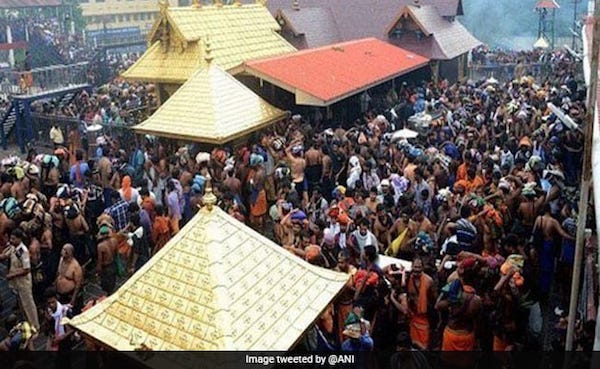
    While the Kavanaugh Saga was unfolding in Washington, the Supreme Court of India has made some historic rulings that may have upended some traditional beliefs and customs. According to a new ruling led by the Chief Justice Dipak Misra, women of all ages will be allowed to enter India’s Sabarimala Temple, one of Hinduism’s holiest sites, overturning a centuries-old ban.

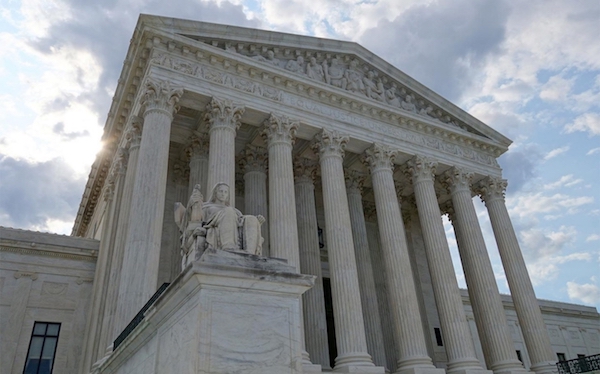
    At the outset, one may wonder what Brett Kavanaugh’s appointment to the U.S. Supreme Court has anything to do with the recent rulings by India’s Supreme Court allowing women between ages of 10 and 50 entry into the Sabarimala temple. It may not have a direct linkage concerning geography or jurisprudence. However, it speaks volumes on how the underlying principles involved in these dramas could evoke these spectacles of emotions of raw anger in countries that are separated by Oceans.

    As we all have learned throughout the history, elections have its consequences, and President Trump has indeed followed through his pledge of appointing judges to the courts that he termed as ‘strict constructionists.’ The judicial philosophy of the conservatives in this country is that courts should not make laws but to uphold the constitution and laws of the land and interpret them. On the contrary, liberals and progressives love an activist court that creates laws especially in the social arena that may have a transformational impact on the society.

    Mark Levin, a conservative author makes a good case for a strict constructionist in his book titled “Liberty and Tyranny’. He has defended the importance of original intent when interpreting or adjudicating the constitution. Levin appeared to have made a genuine effort in illustrating the fine points in the ongoing debate between the strict constructionists and those who want the Constitution to be a “living, breathing evolving” document.

    Alexander Hamilton, in Federalist 78, stated that judges have a duty to “guard the Constitution and rights of individuals,” and above all, to be impartial. He was known to have argued that in cases where laws and statutes clash with the Constitution, it is the constitution that must prevail, and the Supreme Court has to side with the Constitution.

    Liberals and many moderates sincerely believe that the Court’s swing to the right might jeopardize decades of landmark gains on issues from abortion to affirmative action and same-sex marriage. To some legal experts, the addition of Justice Kavanaugh to the Supreme Court could have profound consequences on issues ranging from Women’s reproductive health to LGBT rights.

    In today’s high-octane environment, it has become increasingly difficult to reconcile these differing points of view. However, to an independent observer, the Supreme Court relies greatly on precedent that is a principle or rule established in a previous legal case that becomes a basis or reasons for future decisions. Therefore, the Court may yet find it difficult in overturning many of those landmark decisions that have long become the laws of the land.

    While the Kavanaugh Saga was unfolding in Washington, the Supreme Court of India has made some historic rulings that may have upended some traditional beliefs and customs. According to a new ruling led by the Chief Justice Dipak Misra, women of all ages will be allowed to enter India’s Sabarimala Temple, one of Hinduism’s holiest sites, overturning a centuries-old ban.

    The five-member constitutional bench struck down the religious ban on women aged 10 to 50 from entering the temple, ruling it to be discriminatory and arguing that women should be able to pray at the place of their choice. “It is the constitutional morality that is supreme. Prohibition can’t be regarded as an essential component of religion” said the Judge’s ruling. Sabarimala temple is thought to be 800 years old and is considered spiritual home of Lord Ayyappa.

    This issue is very complex and multi-layered, however, touches the very core of faith and tradition. That is the reason why this verdict has invoked so much anger and resentment pitting one community against another often inflaming the communal passion waiting to be exploited by the political parties and their narrow interests. For a democratic country that has Secularism written on its preamble of the constitution, India should accord autonomy to religious orders and religious groupings and prevent state interference. It is a matter of pure faith, and the State has a responsibility to stay neutral unless it violates the fundamental rights or causes injury to its citizenry.

    If we carefully examine, a severe crisis was created when the Supreme Court took up this issue, and its subsequent ruling has indeed challenged an age-old tradition. Although it is embarrassing to argue about the merit of this tradition in these modern days, the purity of women in their menstrual years, it was a dormant issue for so long that people paid only scant attention. The question then is should the court give rulings on issues that have profound social implications as well as a transformational impact on society?

    In a democratic process, it is the people through their representatives in the Legislature who make laws mostly reflecting the will of the majority. That is often done with debating the merit of the legislation with utmost scrutiny from all opposing sides. If the country has followed such a course, we could have avoided this tragic turn of events unfolding before our eyes today.  As much as we value the Supreme Court as a vanguard to protect our rights, it would have been prudent to leave these sensitive issues of faith and tradition to the legislatures rather than to the judiciary.

    Many Indian Americans, who abhor several of the progressive decisions of India’s Supreme Court in the last few weeks often overturning their beloved traditions, beliefs, and customs, may need to reconsider their stand on an activist court. They generally cheer on legislating from the bench in the U.S. by activist judges and have long enjoyed common ground with progressive forces opposing the appointment of Judges whose philosophy of judicial restraint that is similar to that of Justice Kavanaugh.

    As the adage goes, ‘we cannot have the cake and eat it too’! It is time to take a consistent stand in opposing legislating from the bench that often fails to take into account the sentiment of the local people whose tradition, faith and religious practices they hold dear to their heart and supporting the strict constructionist view of the constitution and laws of the land. We have long learned from history that it is judicious to have limited interventions in these matters by the courts given the inexorable relationship in India between religion and public life.

    (The author  is a former Chief Technology Officer of the United Nations. He can be reached at gta777@gmail.com)


  • Taking “MeToo” Past the Confines of Social Media

    Taking “MeToo” Past the Confines of Social Media

    By Flavia Agnes

    Why now? At that time, there were no internal complaints committees and the idea of approaching the police was scary. Does this mean that the incidents did not occur? The lesson learnt is that women have to stake a claim. They will not be given their rights on a platter. They have to snatch them from a patently patriarchal system of corporate governance.

    So, finally it has happened. The Minister of State for External Affair, MJ Akbar, had to step down from his official position.  Whether it was his decision or whether he was pressured by the party bosses to do so, we will never know.  Whatever may be the reason, it is a welcome move.

    It is a moment of triumph not only for the 20 senior journalists who came out strongly against him in a joint statement and to those who graphically described the extent of their abuse which they suffered as his subordinates, but a landmark victory for the women’s movement in India.

    The message has gone out loud and clear. A Union Minister cannot hold office when such allegations of sexual misconduct are piled up against him.  This is a message that has gone out globally.

    It was a litmus test for the government which has been flaunting its pro-women programs, such as “beti bachao, beti padhao” and “ujwala”, and the more recent ordinance criminalizing triple talaq, to save the “poor Muslim women”.

    The government took its own time. There was no statement from women like Sushma Swaraj under whose ministry MJ Akbar worked. The Prime Minister and the party bosses kept mum and even allowed him to remain in office until he filed a case of criminal defamation against the first person who had accused him, using his political clout in an uneven court battle. As an anchor in a TV talk show commented, 97 lawyers against one individual. But as Priya Ramani, against whom the case is filed, said, ‘truth is the defense’.

    This will open up the doors for more women to come out against their bosses and seniors at the workplace and hopefully will lead to a healthier workplace environment ensuring dignity of women.

    The lesson learnt is that women have to stake a claim. They will not be given their rights on a platter. They have to snatch them from a patently patriarchal system of corporate governance. But it is possible to dent this structure; it is possible to bring in fresh air. It is possible to bring in gender equality and protect women‘s dignity at the workplace.

    Yes, they were strong women. Yes, they occupy influential positions today. Yes, a poor woman working as a contract labor will not be in a similar position to resist the even more blatant sexual overtures from her supervisor. Yes, it is possible for women to file such cases and tarnish the image of their bosses without due process. Yes, even accepting all the limitations, we need to rejoice this moment.

    The 1997 Vishaka guidelines issued by Justice JS Verma were historical but its impact was marginal on corporates. Even within government offices most women did not register complaints as the complaints committees were non-functional, or it was very easy to gang up against the employee when a senior boss was involved.  The private corporates did not bother to set up complaints committees.

    Then in 2013 we got the Sexual Harassment at Workplace Act. Even this did not have the desired impact. But now hopefully these committees will begin to function.  They will invite an external member, an NGO person or an expert on the issue, to be part of this committee. And if there are lapses, the #MeToo movement will still be around to expose the lapses. These are the concrete gains of this campaign.

    The storm, which started with Tanushree Dutta’s allegations against Nana Patekar three weeks ago has turned into an avalanche. While denting the patriarchal base of our industries, institutions and public offices, it has spilled into the legal and political domains. We cannot predict what the legal battle will entail and how long it will go on from one court to the other. All eyes will be on the court and many legal issues will have to be gone into.

    It was obvious that the #MeToo movement could not stay confined within the comfort zone of social media, of ‘naming and shaming’ with first person narratives of violations. However, we cannot undermine it as it was a bold step, as a woman who exposes her violator with the intimate details of the abuse which may involve naming body parts and graphically describing the type and extent of abuse in the social media, have more to lose than the person named. The courage of their convictions led many to lend their voice to the steadily galvanizing movement which created ripples in the placid waters of several of our institutions, and touched even the NGO sector.

    There are signs that some changes will be brought about within the film industry.  The big banners are in the process of hurriedly setting up internal complaints committees (ICC) (which they should have done a long time ago). Many women directors have come out with a statement that they will not work with actors who have been accused of sexual misconduct. The comedy group AIB has decided to de-list every video featuring a former member, Utsav Chakraborty, who is accused of sexual harassment by several women. Some Bollywood projects such as “Housefull 4” and “Mogul” are facing an uncertain future with their stars making a public statement that they will not work with those accused of sexual harassment.

    Media houses were the worst hit and heads began to roll. After women complained against the Resident Editor of the Times of India in Hyderabad, K.R. Sreenivas and the Hindustan Times journalist Prashant Jha, they had to step down. While some rubbished the allegations, Chetan Bhagat and Rajat Kapoor issued an apology.

    Why did they not complain earlier? Why are they coming out now two or three decades later? The answer is simple. As one journalist succinctly stated, “At that time, in early nineties when many of these incidents had taken place, awareness about sexual harassment was lacking. There were no internal complaints committees. The idea of approaching the police was scary.  We did not even have the backing of our families.  Does this mean that the incidents did not occur?”

    The naming and shaming device is a result of the failure of our criminal justice system to redress their grievances. The women will be asked for proof. But as the law on sexual harassment at the workplace stipulates clearly, it is not the acts of the abuser but the perception of the violated that is relevant. And it is here the graphic details contained in the personal narratives posted in the social media will come to their aid.

    (The author is a women’s rights lawyer and pioneer of the women’s movement in India focused on issues of gender and law reforms)

  • Pakistan’s Nuclear Arsenal more worrisome than North Korea’s

    Pakistan’s Nuclear Arsenal more worrisome than North Korea’s

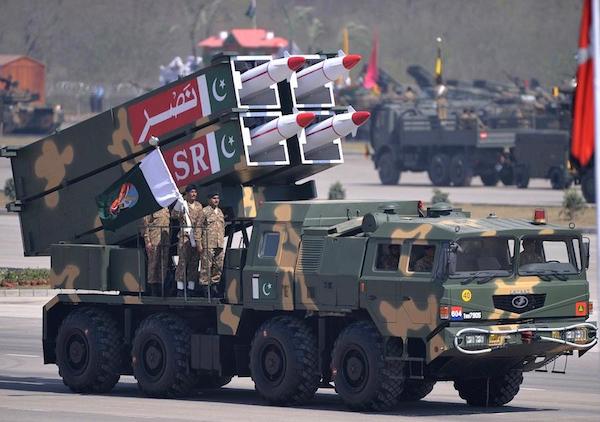
    Pakistan is more dangerous than North Korea as it does not have a centralized control on its nuclear weapons, making them vulnerable to theft and sale.

    By Ven Parmeswaran

    9/11 happened because Pakistan supported the Taliban and the Al Qaeda.  We discovered that Pakistan was the epicenter of global terrorism.  Almost all terrorists emanated from Pakistan and committed terrorism in the U.S.A. and Europe.  President George W Bush sent his Secretary of State, Gen. Collin Powell to Pakistan, with whom the USA had a Mutual Security Pact from 1954.  Powell met Gen. Musharraf of Pakistan and made a deal. Pakistan agreed to cooperate fully with the USA and provide all help in finding Osama bin Laden and other leaders of Al Qaeda.    

    President Obama had intelligence that Pakistan was hiding and protecting Osama Bin Laden in one of military cantonments.  In 2011, that is 10 years after 9/11, the U.S. secretly got rid of Osama Bin Laden. The Pakistani doctor who confirmed the identity of Osama Bin Laden has been held in jail by Pakistan.  Thus, Pakistan betrayed its ally, the U.S.A.  For ten years, Pakistan was trying to use Osama bin Laden’s leadership to stage terrorism in India.  The mutual trust between the USA and Pakistan was broken.  However, President Obama chose not to punish Pakistan.

    WAKE UP CALL BY PRESIDENT TRUMP

    President Trump is the first U.S. President to challenge Pakistan.  He wrote in his tweet: “The U.S. has foolishly given Pakistan more than 33 billion dollars in aid over the last 15 years, and they have given us nothing but lies, deceit, thinking of our leaders as fools.”   President Trump withdrew military aid and gave an ultimatum to Pakistan to stop supporting the Taliban in Afghanistan and to dismantle all terror organizations and terrorist sanctuaries in Pakistan.

    PAKISTAN’S ECONOMY IN SHAMBLES WITH NO FOREIGN EXCHANGE

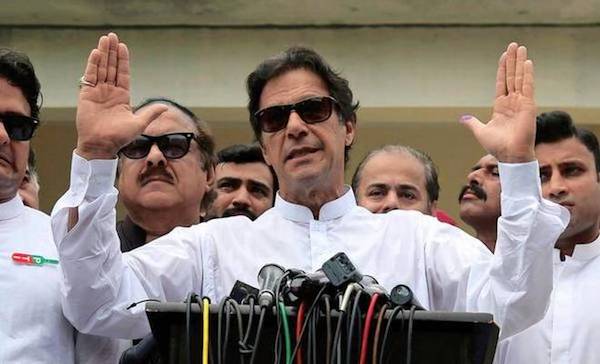
    Mr. Imran Khan, the new Prime Minister of Pakistan has been elected with the tacit support and help of Pakistan’s military.  For his survival his first loyalty is to the military.   Pakistan is negotiating with the I.M.F. for a $12 billion loan.  The U.S. has leverage in the IMF being the largest investor.  The IMF cannot approve the loan without consent from the USA.    Pakistan has been devoting its scarce resources to keep on producing nuclear bombs.

    PAKISTAN’S NUCLEAR WEAPONS ARE VULNERABLE TO THEFT AND SALE

    Pakistan is more dangerous than North Korea as it does not have a centralized control on its nuclear weapons, making them vulnerable to theft and sale, former Senator Larry Pressler warned, describing both the nations as rogue states.    He feared that Pakistan’s nuclear weapons might be used against the US, warning of the possibility of someone buying these nuclear weapons from generals.    “The weapons could be transported to the US fairly simply.  Just as 9/11 was a very simple operation run by 20 or 30 people,” he said.  “The Pakistani nuclear bombs are not controlled.  They are subject to sale or stealing and they could be easily gotten out of Pakistan to just about anywhere in the world,” he said speaking at an event sponsored by The Hudson Institute, a top American think-tank.    The former top American Senator, however, said he does not think that Pakistan’s nuclear weapons are going to be used against India. I do not agree.   The Senator said “I think what North Korea needs is just a lot of attention and hand-holding.  Pakistan Is a different thing because you don’t really have one person in-charge.  I think Pakistan is more dangerous to the US,” he reiterated in response to a question.

    “We should declare Pakistan a terrorist state.  We should put certain sanctions on Pakistan,” he said.

    PAKISTAN’S GROWING ARSENAL WITHOUT CENTRAL CIVILIAN CONTROL IS THREAT TO GLOBAL SECURITY

    Why does Pakistan need to keep on increasing the number of bombs?  There are thousands of nuclear weapons in the world today.  According to the latest count from the Federation of American Scientists, the 5 original nuclear powers have a combined 15,465 nuclear weapons between them, most of which are divided amongst the US and Russia. Yet, the fastest growing arsenal in the world is not included in this number.  While Pakistan has a range of 100-120 nuclear weapons in its possession—a figure that pales in comparison to the US or Russia—Islamabad has devoted a tremendous amount of its military budget to growing its arsenal and producing the associated delivery systems that are needed to launch them.

    More alarming than Pakistan’s current stockpile is the projected growth of its arsenal over the next decade.  In a wide ranging report for the Council on Foreign Relations, professor Gregory D Koblentz of George Mason University assessed that Pakistan had enough highly enriched uranium to increase its stockpile to 200 nuclear weapons by 2020 if fully utilized.  Percentage wise, this would mean that Pakistan could have as many nuclear weapons as the U.K. by 2020.  Moreover, Pakistan falls outside the purview of the Nuclear Nonproliferation Treaty.

    To guarantee the ability to rapidly expand their stockpile, the Pakistani military is investing in reprocessing plutonium in addition to enriching uranium.  In January 2015, the Institute for Science and International Security reported that the Pakistanis opened up their fourth plutonium facility at Khushab, which provides Islamabad with an additional channel to construct nuclear bomb material in a relatively short period of time.  “Its expansion appears to be part of an effort to increase the production of weapons-grade plutonium,” the ISIS report (Pakistan’s intelligence agency) reads:  “Allowing Pakistan to build a larger number of miniaturized plutonium-based nuclear weapons that can complement its existing highly enriched uranium nuclear weapons.”

    PAKISTANI NUKES A MAJOR U.S. INTELLIGENCE PRIORITY

    To say that the U.S. Intelligence community is closely monitoring the development of Pakistan’s nuclear weapons program would be an understatement.  The U.S. government is doing more than just monitoring:  they are actively preparing for a terrible catastrophe and engaging Pakistani officials in the hopes that they will stop pouring resources into the expansion of their program.  The last thing Washington wants or needs is a nuclear crisis flashpoint in a dangerous and unpredictable region filled with an alphabet soup of Islamist terrorist groups.  The US government under both George W Bush and Barack Obama has been trying to prevent such a crisis scenario from occurring.

    THE BOTTOM LINE

    Despite all the attempts from the nuclear nonproliferation community, Pakistan will continue to develop and strengthen its nuclear deterrent as long as the high brass in the Pakistani military continues to have an India-centric mindset in its defense policy. India and Pakistan have fought three wars since independence in 1947, and in each case, the Pakistanis were either the losers or forced into a stalemate before acceding to a ceasefire (1971 breakaway of East Pakistan was an especially embarrassing defeat for the Pakistanis).  Islamabad has not forgotten these cases ever since.  And for the Pakistanis, the lessons of these past conflicts are all the same: we cannot repeat history.

    PRESIDENT TRUMP’S NEW WORLD ORDER: INDIA AND THE USA HAVE SIGNED A DEAL THAT MAKES THEM CLOSEST ALLIES ON A PAR WITH THE NATO MEMBERS

    The US and the IMF have told Pakistan that it cannot use IMF loan to repay China or divert the resources to increasing its nuclear arsenal.  President Trump, unlike George W Bush or Obama, is challenging Pakistan to behave.  In effect, Trump is saying that he will not tolerate Pakistan to betray again.  Trump is also anxious to withdraw from Afghanistan and he knows Pakistan is the bottleneck.  Based on his tough negotiations and policies towards his close allies, be it Canada or Western Europe, Trump means business.  Therefore, it is to be hoped that the U.S. will not allow Pakistan to mess up with international security.   I think President Trump is giving clear messages to Pakistan’s new Prime Minister and its military/ISIS leaders.

    (Scarsdale, New York based Ven Parameswaran is Chairman, Asian American Republican Committee founded in 1988)

  • Elections Matter, Our Republic, Boiling Senate, Senator Susan Collins, Dr. Ford and Godspeed Justice Kavanaugh.

    Elections Matter, Our Republic, Boiling Senate, Senator Susan Collins, Dr. Ford and Godspeed Justice Kavanaugh.

    Ravi Batra

    We need to save our Republic, to remain “Exceptional” and “American.” If we do that, harness SM to spread equality and fairness, then the politicians who weaponize mere majorities will fall, and the Supreme Court will not be called upon to settle Political or Societal disputes, and merely abstain as it gloriously did for almost two centuries, says the author.

    Elections matter; Lindsey Graham is right about that observation. The party that controls the White House gets to nominate; and the party that controls the Senate, the “Cooling Saucer” as George Washington then-correctly noted, gets to “Advise and Consent,” an act between Constitutional “partners.” Only in times when a single party is controlling both White House and Senate, that Separated Powers’ dissent-benefit is reduced – as in President Obama’s First Term and now in President Trump’s First Term.

    It’s on Harry Reid and Barack Obama that the Senate Rule of 60 for judicial confirmation was abandoned, and by so doing hyperpartisianship was allowed to affect the noble bench as the Senate became the “boiling pot” it now is, kept red hot by the disintermediating Social Media (SM) and each party having its own opinion-supporting media outlets. That, perhaps, is the worst of all: as the SM & Partisan Media-Genie may never go back in the bottle!

    We are now a nation sharply divided, as we were before the Civil War – but for very different reasons; one structural (SM), and the other temporal: economic (as for too many Americans, the American Dream has become impossible to achieve). Dealing now only with the structural – our representative form of government – aka a Republic – its very structure was designed to cool off, at each circuit breaker-level, “hot” public sentiment and prevent induced-Mob Rule. Mob Rule doesn’t mean the guillotine during the French Revolution, but rather to avoid the insufferable tyranny of simple majority – something tried and failed over 2000 years ago in the City-State of Athens during the time of Socrates. As termites can destroy the wooden structure of a house, social media is destroying our Republic, with each side fueled by their own media, and converting our Constitutionally-cool “representatives,” be it the president, senators or representatives, into “warriors. “Representatives” are expected to sit, talk, deliberate, and together make bipartisan deals as our Constitution was designed to do with the Separated Powers regime & cherished-Dissent, enshrined in the First of all Amendments and core of American Exceptionalism. Political “Warriors” have weaponized politics, make war and bipartisan coming together for the greater public good be damned. We all just saw in horror the Kavanaugh Confirmation, a scandal worse than what occurred 30-plus years ago or the emotional self-defense by a nominee to the most powerful bench in history, let alone its most powerful swing seat.

    What happed between then-teenagers, Dr. Ford and Justice Kavanaugh only a trial, without a statute of limitations’ bar, could have proven – with presumption of innocence and cross-examination, the perfectly balanced Ying and Yang core of American Rule of Law. What we just witnessed was the grant and imposition of Presumptive Innocence without grant of the Constitutional full & free right to Cross-Examine – before an independent & impartial jury and judge. Senator Collins’ historic confirmatory speech contains a core farce – as no Prosecutor could ever win a single case in similar setting, as the accused and his supporters imposed a straight-jacketed on the Prosecutor/Accuser by denying their Constitutional right to cross-examine and present all witnesses – let alone before an independent jury and judge. Transplanting “Presumption of Innocence,” without granting right to Cross-Examination and presentment of all relevant witnesses, and that too without an impartial Judge deciding what is relevant, and a verdict to be rendered by an impartial jury: believe 100% certain Accuser-Ford or 100% certain Accused who denies. Before a doctor transplants a heart, there has to be a full body into which the transplanted heart can beat. Here, the “heart” was made to beat without a body that included an impartial judge and jury.

    While the Senate isn’t a trial, as it lacked both an impartial & independent jury and judge, but their grant of presumptive innocence while denying the Prosecutor/Accuser right to cross-examine and present all witnesses was fundamentally un-American and fatally unjust.

    That said, I supported J. Brett Kavanaugh – as what he was alleged to have done with Ford & Ramirez, his own age group as over-zealous frolicking students can (very different from a fiduciary-Priest sexually assaulting a child), is perhaps of no moment to him and unworthy of memory; while the same event had a very different effect on the “girl.” A point made sharply by the different effect on Ford, as compared to Ramirez from two different allegations: in high school and at Yale. This is a societal issue for all of us together to be address: sensitizing our children (and adults) against Sexual Assault.  I expect Justice Kavanaugh in his opinions will rise to champion survivors of sexual abuse. It would be poetic justice.

    On September 20th, I tweeted: “Dr. Ford do NOT become Anita Hill – UNFAIR2 daughters/mothers; reject @Chuck Grassley KindOffer. It’s a fair4some: J. Kavanaugh ought not be held2TeenError.”

    The 50-48 Confirmation by a boiling, not cooling saucer, Senate is our larger problem as it robs us all – both sides – of what since 1776 we have rightfully claimed to be the very best in Humanity – well past the Magna Carta.

    Upon his confirmation, I tweeted: “Godspeed Mr. Justice Brett Kavanaugh – we wish your better angels to help guide you to find true & compassionate justice with logic for most of the distance and faith for the balance; and deliver on Lincoln’s Gettysburg Covenant of Govt FOR the People”

    We need to save our Republic, to remain “Exceptional” and “American.” If we do that, harness SM to spread equality and fairness, then the politicians who weaponize mere majorities will fall, and the Supreme Court will not be called upon to settle Political or Societal disputes, and merely abstain as it gloriously did for almost two centuries.

    (The author is a New York based attorney. He can be reached at ravibatralaw@aol.com)


  • Time to stand up for a free press:  We’re not the enemy

    Time to stand up for a free press: We’re not the enemy

    By Layne Bruce

    Enough already.

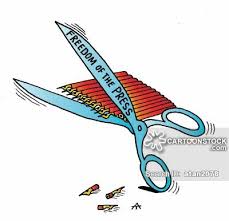
    The last couple of years have been an unending barrage against the freedom of the press and the practitioners of this noble trade.

    From being called “liars,” “fake,” and “sick” by irate politicians to enduring capricious and punitive tariffs that are an existential threat to newspapers, the landscape for journalists today may be as inhospitable as it has ever been in the 242-year history of this great union of ours.

    All this while the public at large seems unable to break free of the social media echo chamber. We retreat there to endlessly bicker with those who don’t agree, or to bolster the confidence of our own positions by seeking solace from those who do.

    We’ve devolved into a nation of people who simply don’t want to hear it.

    And that’s incredibly dangerous.

    The bipartisan testimony of 20 members of Congress last month before the International Trade Commission in opposition to tariffs on Canadian imported newsprint is a good indicator a lot of talk about journalists being “enemies of the people” is utter hogwash. These men and women know the importance of community newspapers and their imperiled status in modern culture where too many marketers prefer digital analytics and too many readers prefer daily affirmation.

    They know the men and women who work at the local paper are most definitely not the enemy — nor the problem.

    But in a society where talk of the wicked media is hurled relentlessly on Twitter or cable “news” channels, all of us who take part in the honorable, constitutionally protected trade of reporting news and ferreting truth get amalgamated into a cynical act of political theater that’s threatening to the very fabric of democracy.

    And that’s what this Is really about.

    We’re arguing over political philosophies and cultural divides — not about whether news is biased. I bet you a week’s pay and a dozen doughnuts the people who use the argument that news is “fake” don’t any more believe that than they think the Space Force is coming soon to a quadrant near us.

    But the damage is being done. We as a nation are beginning to give a collective shoulder shrug the fundamental freedoms in the Bill of Rights.

    And we’ve got to snap out of it.

    We’ve got to accept that not all news is happy or affirming. We’re not always

    going to get what we want. I vaguely remember being taught that as a preschooler.

    Aaron Blake, a correspondent for The Washington Post, asked in a recent column if the media should go to war with the President.

    “Trump seems to want a war with his ‘enemy,”‘ Blake wrote. “But should the mediaoblige him? And if it doesn’t, isn’t it unilaterally disarming?”

    No, we should not go to war with the President. But It’s long past time to end the navel gazing and stand up for what we do. It’s our job to provide the best obtainable version of the truth and to champion the freedoms of the First Amendment.

    Thomas Jefferson — who had a notably tempestuous relationship with the press — was a president who still often rose to defend it.

    He once wrote while serving in Paris as Minister to France: “The people are the only censors of their governors, and even their errors will tend to keep them true to the principles of their Institution…

    “Were it left to me to decide whether we should have a government without newspapers or newspapers without a government, I should not hesitate a moment to prefer the latter. But I should mean that every man should receive those papers and be capable of reading them.”

    If we’re unwilling to accept news that upsets us, or if we’re indifferent to differing views simply because we don’t want to deal with them, we’re essentially giving up on the notion we can ever truly be “one Nation under God, indivisible, with liberty and justice for all.”

    I know it’s ironic, but l don’t believe we’ve given up because I don’t want to believe it.

    (The author is executive director of the Mississippi Press Association)

  • Ambassador Nikki Haley Capitalizes on her Resignation and Builds Political Capital

    Ambassador Nikki Haley Capitalizes on her Resignation and Builds Political Capital

    By Ven Parameswaran

    Kathleen Parker, a columnist for The Washington Post wrote: “In decades of writing about politics, I have run across few with Haley’s innate talents.  She is a natural with people, whether crouching with children on the ground in Africa—reminiscent of Princess Diana on similar travels—speaking to leaders in the tense theater of the United Nations.

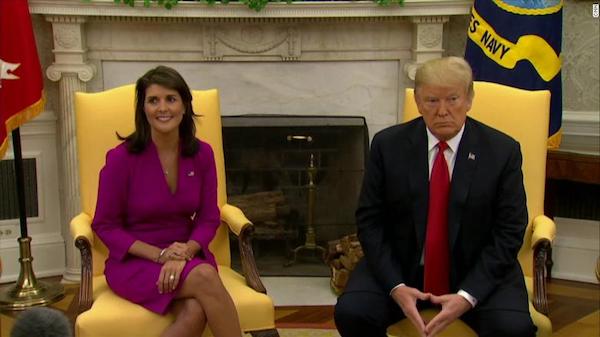
    Ambassador Nikki Haley sitting by President Trump in the White House oval office announced her resignation.   The event was followed by a press conference.  The story was a stunt and received the widest media coverage for a couple of days.  First, I must congratulate Nikki Haley for her modus operandi and political skills in getting President Trump and the public to listen to her story from the oval office.  Never before, a resignation of a cabinet official has received such importance.   The exchange Nikki Haley had with Trump proved that they have the best rapport and cordial and professional relationship.  Perhaps, having refined her diplomatic skills at the United Nations, she emulated them at the White House.

    Nikki Haley, 46 started her political career 14 years ago as State Senator in South Carolina.  At the end of her third term, Nikki Haley ran as a Primary candidate for the Governor of South Carolina.  This was a tough fight and she won.  She won the Governor’s race with a wide margin.  Her performance as Governor enabled her to win her second term in 2014.   President Trump appointed her as Ambassador to the U.N. in 2017.   Thus, Nikki Haley became a durable political timber and unchallenged national leader.

    PERFORMANCE AT THE U.N.

    P stands for Performance and R stands for Reporting in Public Relations. Nikki Haley’s performance as Ambassador was extraordinary and outstanding.  When she took up the job, everyone underestimated her and she prove them wrong.  Nikki Haley developed the  best diplomatic relations with China and Russia.  This helped her to get their consent when the U.S. imposed severe sanctions against these countries and also Iran and North Korea.  She represented the USA and President Trump admirably and commanded the highest respect at the United Nations.

    She came to the UN post without previous foreign policy experience.  The position often thrust her into the spotlight and enabled her to win favor among conservatives for her staunch defense of Israel and sharp criticism of Iran and Russia.

    For a time at the UN, diplomats saw her as the face of U.S. foreign policy, noting differences between Trump and then Secretary of State Rex Tillerson. She made a point at the UN to project the impression that she was close to Trump and that she “had his ears,” one diplomat said.

    WHY DID NIKKI HALEY RESIGN?  IS SHE SHOOTING FOR THE PRESIDENCY AFTER TRUMP?

    In 14 years, Nikki Haley has accumulated substantial political experience by representing South Carolina as a State Senator and Governor, and as Ambassador to the U.N.  She has proven legislative and executive  experience.  Everyone is speculating about her future potential, that is unlimited.  Nikki Haley is very popular.  Quinnipiac Poll gave her 75% approval rating by Republicans and 55% by Democrats.  President Trump sent her to Sudan and other African countries and India.  Ambassador Haley was well respected and received by one and all.  When Secretary of State Rex Tillerson’s resignation was imminent there was speculation that Trump was considering her for the Secretary of State.    When the reporters asked Haley whether she would be running for President in 2020, she said she would not be running but would be supporting Trump.    As a conservative Republican woman with seasoned experience one can say she has the necessary credentials to run for President in 2024.   There is speculation that Trump may fire Attorney General Sessions after the Mid Term elections and was considering Senator Graham of S.C. If so, there is a possibility that Nikki Haley could be tapped to finish the term of Senator Graham till 2020, and get reelected.  Senator Graham may also be interested in the U.N. Ambassador’s job.  There is also speculation that Trump may want a woman as his running mate in 2020 and could offer the V.P. slot to Nikki Haley.

    There is also a report that Nikki Haley may be interested in private industry.  Her personal finances are not that strong and she could very well serve as C E O of a Fortune 500 corporation.  Such an assignment could give her multimillion dollar salary.    Thus, she is in demand.

    Kathleen Parker, a columnist for The Washington Post wrote: “In decades of writing about politics, I have run across few with Haley’s innate talents.  She is a natural with people, whether crouching with children on the ground in Africa—reminiscent of Princess Diana on similar travels—speaking to leaders in the tense theater of the United Nations.  As Governor, she led the legislature to remove the Confederate battle flag from the statehouse grounds, while also guiding South Carolina through the shock and grief of the 2015 church massacre in Charleston.    It won’t  serve her presidential aspirations well to stay out of politics for long, as Haley surely knows.  Thus, the burning question—what is next?—has only one certain answer:  WHATEVER SHE WANTS?”

    The New York Times editorial wrote: “Ms. Haley, who is expected to pursue the presidency one day, may eventually find herself having to defend facilitating some of President Trump’s worst policies and instincts.  But she will also be able to point to more constructive roles she played. Indeed a replacement in her mold may be the best to hope for from Mr.Trump.”

    (The author based in Scarsdale, N.Y is Chairman, Asian American Republican Committee (founded in 1988). He can be reached at  vpwaren@gmail.com)


  • Is India ready for Advanced Plastics?

    Is India ready for Advanced Plastics?

    Dr Aniket Vyas with 3 D Printer
    The author says that the market for polymer and plastic products is growing steadfastly in India. Yet, India seems to be lagging in accepting new inventions and products for a variety of reasons.

    After studying nanocomposite polymer system during PhD at university of Cincinnati, the first opportunity I had with product development in real life applications was coatings to support 3D printing. It was an independent invention at the end of my doctoral studies in collaboration with another graduate student in lab across hallway, Brad Ruff, an expert in mechanical engineering who introduced me to the world of 3D printing along with problems it faced. I was excited to be part of this entrepreneurial project as 3D printing is one of the latest advancements in material science still in its infancy and India is yet to catch up in this application. The problem was that the first layer of any object should stick to a surface while it is being 3D printed, but once the object is made, it should be easily released. There was no such product till 2014 that was made specifically for this application, and a deep understanding of polymers is necessary to innovate such a product as adhering and releasing are two opposite phenomena that should be exhibited by a single product. Once we had porotypes’, we went live on Kickstarter with our coated substrate plate “Geckotek” for 3D printers which was successful with initial seed funding raised to $60,000.

    As the product began to be sold commercially, I obviously took this product to India to share with various companies involved with 3D printing. Although the product received a great appreciation yet there was hesitation to adapt such technology. The first road block was the pricing and currency exchange rates as production was being done in USA. Secondly, production in India would not make it cheap as ingredients used in making Geckotek coating were highly specialized and engineered that were not available in Indian market and had to be imported from USA or European countries. Thirdly, Indian 3D printing manufacturers are focused on making big production scale 3D printers for mass manufacturing while in USA there is big group of 3D printer hobbyists who love to try new designs and products. The first generation of Geckotek coatings was not meant for manufacturing scale 3D printers and was more for hobbyists or small scale jobs, but the bigger picture was that Indian Entrepreneurs were not interested in spending resources on developing a new substrate for large scale 3D printers, as they were content with conventional way of 3D printing such as ABS slurry of kepton tape which are often inefficient or unsafe. While Geckotek coatings were appreciated and well received in American market, it was perceived mostly as a “geeky” innovation in India. That made me realize how these two countries operates so differently when it comes to market for materials. In spite of having cutting edge research Institutes like ICT and IITs we often are not able to launch new products due to non-willingness of market to change which in turn is due to mindset of end consumers and restricted spending habits (which is good in a way).  On the other hand, in USA, not only resources are available for research, but market is also open to try new ideas and test new concepts. Thus, one can make a co-relation, for any country to be technologically advanced, an open market provides fertile conditions where new inventions and innovated products are accepted.

    Another important application for polymeric material is baby diapers which is a huge global market and India is one of the fastest growing markets in baby care while USA is approaching stagnation. With the help of polymeric materials, we have come a long way for baby diapers from using milkweed leaf, animal skin, moss, linens and other natural resources to cloth diapers and to super absorbent breathable disposable diapers.

    The most important properties for baby diaper users are leakage prevention and design features that enhance the fit and perceived comfort of baby diapers. Most of the ground-breaking research occurred in USA as evident by numerous patents issued to American companies.  Scientists worked diligently on several aspects of diapers manufacturing to ensure that a) the back sheet does not leek but is porous enough to allow passage of air b) elastic tab should be stretchable just enough to fit baby’s waist without being very tight, and they should have strength to survive in case mother over stretches them, c) A lot of non-woven are used in diapers which are again polymer coated fibers to provide comfort and softness to baby’s skin.

    All of above-mentioned research took place primarily in USA because the consumers were ready to accept a new product decades ago while Indian consumers at the time were not ready to spend money on something like diapers and the practice was to stick to traditional ‘langot’ type diaper made of cloth. According to report published by Research and Markets in Indian Diapers Market, 2021 “In India, of late, the hygiene industry is experiencing an unprecedented growth as hygiene products are being adopted into the lifestyle of the masses. With the increased awareness and increasing purchasing power, customers are fast shifting from cloth nappies to baby diapers. Consumers today are looking for baby diapering solutions that go beyond the basic benefits of dryness and go the extra mile to incorporate value-adding features such as softness and caring for their baby’s delicate skin.”

    The market for polymer and plastic products is growing steadfastly in India. Plastic industry is usually associated with non-biodegradable material that is not good for environment, but it is equally important to understand that plastics are making extraordinary human achievements possible through applications in aerospace and satellites due to light weight designs. They are making everyday life better by preventing food wastage through applications in Food Industry for packaging and preserving. Plastics are the most sought out material for production as the processing of these material is highly efficient and sustainable requiring less energy and natural resources and generates fraction of greenhouse gas emission compared to alternative materials – metals or ceramics. It also increases efficiency for transportation and freight due to light weight vehicles in ground transportation and aviation. Moreover, with the advancement in polymer technology, these materials can be designed to have desired properties that has added convenience and luxury to our modern life.

    However, at the same time the non-biodegradable waste that is associated with single-use plastic also needs to be addressed. Plastic pollution has emerged as a global phenomenon over the decades of accumulation that requires global and comprehensive solution. India is visibly one of the countries that is affected badly by plastic pollution in spite of having lower per capita consumption of plastic compared to other developed countries. About 300 million tons of plastic is produced globally each year, out of which roughly 6% is produced in India. Out of total plastic produced in India, 80% is discarded as waste, and due to lack of awareness and proper protocols to discard plastic waste for recycling, most of it goes into landfills and oceans. Govt. is taking strong steps to reduce plastic pollution for example banning of single use plastic in Maharashtra, but this is not going to be enough as plastics are used almost everywhere from a wallet in pocket, wrist watch and eye glasses, plastic bottles and packaging material to bikes and cars. Moreover, the consumption of plastic is increasing at a drastic rate in India due to increased buying power of middle class.  With increasing demand and consumption of plastics, there need to be more cognizance about proper disposal of plastic waste for efficient recycling. It is a responsibility not only for the government but also the plastic manufacturers and eventually end consumers to spread awareness and tackle plastic pollution strategically and boldly. Else our luxury today will become a burden for our future generations.

    (The author is a Polymer Scientist, earned his Doctorate in Material Science from University of Cincinnati, Ohio. He is co-inventor of Geckotek, a specialty coating that is used in 3D printing. He is active researcher in application of polymeric material in health and hygiene sector.)

     Disclaimer – The views, thoughts, and opinions expressed in the text belong solely to the author, and not necessarily to the author’s employer, organization, committee or other group or individual.

  • Is Democracy dying?

    Is Democracy dying?

    By David Frum

    America’s Slide Toward Autocracy

    Democracy has taken a beating under President Trump. Will the midterms make a difference?

    Restoring democracy will require more from each of us than the casting of a single election ballot. It will demand a sustained commitment to renew American institutions, reinvigorate common citizenship, and expand national prosperity. The road to autocracy is long—which means that we still have time to halt and turn back. It also means that the longer we wait, the farther we must travel to return home.

    Twenty-one months into the Trump presidency, how far has the country rolled down the road to autocracy? It’s been such a distracting drive—so many crazy moments! —who can keep an eye on the odometer?

    Yet measuring the distance traveled is vital. As Abraham Lincoln superbly said in his “house divided” speech: “If we could first know where we are, and whither we are tending, we could then better judge what to do, and how to do it.”

    Let’s start with the good news: Against the Trump presidency, federal law enforcement has held firm. As of this writing, Special Counsel Robert Mueller’s inquiry is proceeding despite the president’s fulminations. The Department of Justice is ignoring the president’s Twitter demands to prosecute his opponents. As far as we know, the IRS and other federal agencies are not harassing Trump critics. In July, a police department in Ohio retaliated against a Trump adversary, the porn actress known as Stormy Daniels, by arresting her on now-dismissed charges that she touched undercover officers while performing at a strip club. But evidence indicates that this was entirely a local initiative.

    Trump sometimes wins in court, as he did on his Muslim ban. He loses more often, as he did on separating immigrant children from their parents at the southern border. Politically charged cases are advancing through the legal system in traditionally recognizable ways.

    More generally, Trump has been noticeably constrained by his unpopularity. He inherited a strong and growing economy. Casualties from America’s military actions have remained low. A more normal president, facing the same facts, might expect approval ratings like those of Bill Clinton during his second term: mid-50s or higher. Instead, Trump scrapes by in the low 40s.

    In June, Gallup asked Americans to assess 13 aspects of Trump’s personality. Only 43 percent of respondents thought he cared about people like them. Only 37 percent found him honest and trustworthy. Only 35 percent said they admired him. Clearly, his erratic and offensive behavior, his overt racial hostility, and his maltreatment of women have taken a toll.

    The bulk of this magazine issue is given over to questions about liberal democracy’s long-term viability. Around the world, democracy looks more fragile than it has since the Cold War. But if it survives for now in America, future historians may well conclude that it was saved by the president’s Twitter compulsion. Had he preserved a dignified silence for a few consecutive months, he might have bled less support and inflicted more damage on U.S. institutions. Then again, a Donald Trump with impulse control would not be Donald Trump.

    Trump has built the worst-functioning White House in living memory, and its self-inflicted errors have slowed him down almost as much as his personality has. He traveled to Saudi Arabia, but never visited forward-deployed U.S. troops in the region. Potentially positive moments, like North Korea’s release of three detainees on May 10, 2018, are regularly squashed by stupidities, like the leak that day of a White House aide’s denigration of John McCain (“It doesn’t matter; he’s dying anyway”).

    Yet even as Trump ties his own shoelaces together and lurches nose-first into the Rose Garden dirt, he has scored a dismaying sequence of successes in his war on U.S. institutions. In this, Trump is not acting alone. He is enabled by his party in Congress and its many supporters throughout the country. Republican leaders and donors have built a coping mechanism for the age of Trump, a mantra: “Ignore the weird stuff, focus on the policy.” But the policy is increasingly driven by the weird stuff: tariffs, trade wars, quarrels with allies, suspicions of secret deals with the Russians. The weird stuff is the policy—and it is transforming the president’s party in ways not easily or soon corrected. Maybe you don’t care about the president’s party. You should, because a liberal democracy cannot endure if only one of its two major parties remains committed to democratic values.

    Here are the three areas of most imminent concern:

     ETHICS

    President Trump continues to defy long-standing ethical expectations of the American president. He has never released his tax returns, and he no longer even bothers to offer specious reasons, like a supposed audit. His aides shrug off the matter as something decided back in 2016.

    Meanwhile, the president continues to collect payments from people with a vested interest in decisions made by his administration, from foreign governments looking to influence U.S. policy, and even from his own party. Those who seek the president’s attention know to patronize his hotels and golf courses. Authoritarian China has fast-tracked trademark protections for his family’s businesses. Trump’s disdain for ethical niceties has infected his Cabinet and his senior staff. It’s no longer much of a story when his commerce secretary is revealed to have filed false financial disclosures or when his top communications aide turns out to have worked to intimidate alleged sexual-harassment victims at Fox News. Or when his son-in-law is shown to have sought financing for business ventures from investors in Qatar and the United Arab Emirates at the same time that he was participating in the administration’s discussion about which of those countries to back in a military confrontation. If one gauge of authoritarianism is the merger of state power with familial economic interests, the needle is approaching the red zone.

    SUBORDINATION OF STATE TO LEADER

    At a July 20, 2018, ceremony, CEOs gathered in the White House to offer personal job-creation pledges to the president. Watch the video if you have not already; the scene recalls a rajah accepting accolades from his submissive feudatories.

    Perhaps the most defining characteristic of modern autocrats such as Recep Tayyip Erdoğan, Viktor Orbán, and Vladimir Putin is the way they seek to subsume the normal operations of government into their cult of personality. In a democracy, the chief executive is understood to be a public employee. In an autocracy, he presents himself as a public benefactor, even as he uses public power for personal ends.

    Apparently to punish the Washington Post owner and Amazon CEO Jeff Bezos for his paper’s reporting, Trump has pressed the Postal Service to raise Amazon’s rates—thus warning other business leaders to be careful what they say. He has conscripted NFL team owners into his war against black football players who kneel during the national anthem to protest racism and police brutality.

    Trump’s tariffs personalize power too. They enable him to privilege some industries and hurt others. Some losers—farmers, say—may be compensated; others, such as aerospace manufacturers, will be disregarded. All economic sectors must absorb the new truth that executive action can send their profits soaring (in July, not long after Trump imposed new tariffs on steel and aluminum, America’s largest steelmaker reported its highest second-quarter profits ever) or tumbling (shares of Molson Coors, which relies on cheap aluminum to make its beer cans, dropped 14 percent this spring after Trump’s tariffs were announced).

    When Trump refers to “my” generals or “my” intelligence agencies, he is teaching his supporters to rethink how the presidency should function. We are a long way from Ronald Reagan’s remark that he and his wife were but “the latest tenants in the People’s House.”

    ALTERNATIVE FACTS

    Trump is hardly the first president to lie, even about grave matters. Yet none of his predecessors did anything quite like what he did in July: Travel to a U.S. Steel facility and brag that, thanks to his leadership, the company would open seven wholly new facilities. In reality, the company was reopening two blast furnaces at a single facility. You’d think his audience would know better, but the assembled employees cheered anyway.

    Trump may not be much of a manager or developer, but he is a great storyteller. He has substantially shaped his supporters’ worldview, while successfully isolating them from damaging news. The share of Republicans with a positive opinion of the FBI tumbled from 65 percent in early 2017 to 49 percent this past July. In the past three years, Vladimir Putin’s approval rating among Republicans has almost tripled, to 32 percent.

    To protect the president—and themselves—from the truth about Russia’s intervention in his election, Republican members of the House Intelligence Committee have concocted (and the conservative media have disseminated) an elaborate fantasy about an FBI plot against Trump. The party’s senior leaders know that the fantasy is untrue. That’s why they squelch attempts to act on the fantasy by opening a special-counsel investigation into the bureau. But they cheerfully allow their supporters to believe the fantasy—or to believe it just enough, anyway, to get revved up for the midterm elections.

    Many Americans want to believe that Democratic victories in November will reverse the country’s course. They should be wary of investing too much hope in that prospect. Should Democrats recover some measure of power in Congress, their gains could perversely accelerate current trends. As Republicans lose power in Washington, Trump will gain power within his party.

    Today, Republicans queasy about Trump can look to House Speaker Paul Ryan or Senate Majority Leader Mitch McConnell as alternative sources of power or patronage in Washington. But if the party loses hold of Congress, congressional Republicans’ clout will dwindle. Power will be divided in Washington between Trump and the Democrats. If legislative success becomes a vanishing possibility, the White House may begin testing the limits of its authority more aggressively.

    Trump will face more hearings, more investigations, and generally more trouble than he faces today. Partisan loyalties will be engaged as Republicans rally around their embattled leader. The conservative pundit M. Stanton Evans quipped, “I didn’t like Nixon until Watergate.” A joke then describes reality today. Among Trump supporters, “No collusion!” has already evolved into “Collusion is not a crime,” with “Collusion is patriotic” perhaps soon to follow. Trump supporters have no exit ramp. Party affiliation has hardened since the 1970s into a central aspect—in many ways the central aspect—of personal identity. If Trump is exposed and repudiated, his supporters will be discredited alongside him. If he is to survive, they must protect him.

    In an ultra polarized post-November environment, the Republican Party may radicalize further as it shrivels, ceasing to compete for votes and looking to survive instead by further changing the voting system. Donald Trump is president for many reasons, but one is the astonishing drop in African American voter participation from 2012 to 2016. It’s not surprising that Hillary Clinton inspired lower black voter turnout than Barack Obama did in 2012. It is surprising that she inspired lower black turnout than John Kerry did in 2004. But in the intervening years, the rules were changed in ways that made voting much harder for non-Republican constituencies, particularly black people—and the rules continue to be changed in that direction.

    You may know the story of American democracy as a series of suffrage extensions, culminating in the reforms of the 1960s and ’70s. But voting rights have just as often been rolled back at the state and local levels—the literacy tests and poll taxes of the Jim Crow South are the best-known examples. Since 2010, that history of state-pioneered ballot restrictions has repeated itself, and if Republican power holders feel themselves especially beset after 2018, the rollbacks may continue.

    We cannot blame democracy’s troubles in the United States or overseas on any one charismatic demagogue. Many of today’s authoritarians are notably uncharismatic. They flourish because they command political or ethnic blocs that, more and more, prevail only as pluralities, not majorities. So it is with Trump.

    Free societies depend on a broad agreement to respect the rules of the game. If a decisive minority rejects those rules, then that country is headed toward a convulsion. In 2016, Trump supporters openly brandished firearms near polling places. Since then, they’ve learned to rationalize clandestine election assistance from a hostile foreign government. The president pardoned former Sheriff Joe Arpaio, convicted of contempt of court for violating civil rights in Maricopa County, Arizona, and Dinesh D’Souza, convicted of violating election-finance laws—sending an unmistakable message of support for attacks on the legal order. Where President Trump has led, millions of people who regard themselves as loyal Americans, believers in the Constitution, have ominously followed.

    Once violated, democratic norms are not easy to restore, as Rachel Kleinfeld of the Carnegie Endowment for International Peace has observed. In the wake of Silvio Berlusconi’s corrupt tenure as prime minister, Italy is now governed by a strange coalition of extremist parties. Nominally of the right and the left, they share a dislike of the European Union, affinity for Putin’s Russia, and distrust of vaccines. Fate struck down the demagogic Louisiana governor Huey Long, but his family bestrode the state’s politics for decades after his death. Argentina, emerging from neo-Peronism, has stumbled on its way back to legality.

    Weakened institutions will be challenged from multiple directions: We are already hearing liberals speculating about 1930s-style court packing as a response to Trump’s cramming of the judiciary. The distrust of free speech on campus is being carried by recent graduates into their jobs and communities. We see in other countries, especially the United Kingdom, the rise of an activist left nearly as paranoid and anti-Semitic, as disdainful of liberal freedoms and democratic institutions, as the so-called alt-right in the U.S.

    It could happen here. Restoring democracy will require more from each of us than the casting of a single election ballot. It will demand a sustained commitment to renew American institutions, reinvigorate common citizenship, and expand national prosperity. The road to autocracy is long—which means that we still have time to halt and turn back. It also means that the longer we wait, the farther we must travel to return home.

    (The author is a staff writer at The Atlantic and the author of Trumpocracy: The Corruption of the American Republic. In 2001 and 2002, he was a speechwriter for President George W. Bush)

    (Source: The Atlantic)

  • The voice that is great within us

    The voice that is great within us

    By Ananya Vajpeyi

    The crises in Indian democracy and in global politics send one immediately to consult Gandhi.

    Truth, Satya, was the central axis of the Gandhian system of thought and practice. For Mohandas Karamchand Gandhi, everything turned on Truth — satyagraha, swaraj, ahimsa, ashram, brahmacharya, yajna, charkha, khadi, and finally, moksha itself. In a fine introduction to a new critical edition of the Mahatma’s An Autobiography or The Story of My Experiments with Truth, Tridip Suhrud, closest to Gandhi among all contemporary scholars, lays out the intricate web of ideas arranged around the axial principle of Truth: “Truth is not merely that which we are expected to speak and follow. It is that which alone is, it is that of which all things are made, it is that which subsists by its own power, which alone is eternal.”

    In a recent interview, Mr. Suhrud points out that Indians today continue to have “the need that he should always be available to us. When there is a crisis in our collective life, we expect Gandhi to provide an answer.” Both of Mr. Suhrud’s insights — that Truth is the key to Gandhi’s philosophy, and that we rely on Gandhi even decades after his death and long after his supposed lapse into political irrelevance — are essentially correct. I started making a note of the crises in Indian democracy and in global politics that sent one immediately to consult Gandhi.

    For Mohandas Karamchand Gandhi, everything turned on Truth — satyagraha, swaraj, ahimsa, ashram, brahmacharya, yajna, charkha, khadi, and finally, moksha itself.

    Truth alone triumphs?

    The ongoing controversy in the United States about the proposed appointment of Federal Judge Brett Kavanaugh to the U.S. Supreme Court as the nominee of the Republican Party, even as he stands accused of sexually assaulting Christine Blasey Ford, in 1982, when they were both teenagers, hinges exactly on the truth of her testimony versus his defense. Only one can be true. As became clear in the Senate hearings on September 27, the palpable veracity of Professor Ford’s account over Judge Kavanaugh’s denial would likely still not change the Republican Party’s nomination of him (the outcome of the proceedings, including an FBI investigation, is pending as this article goes to press).

    Effectively, the U.S. appears on the verge of replacing Truth with perjury as an acceptable value, even in the apex court of the criminal-justice system, shaking the very bedrock of American constitutionalism. When Truth is rendered negotiable and dispensable, the balance of justice — in this case, between genders and between political parties — is disastrously upset. The scales tip wildly without any kind of mechanism to orient men and women or Democrats and Republicans back into an equitable relationship with one another within a shared political context that ought to be egalitarian and fair.

    Like other democratic institutions in the Donald Trump presidency, the U.S. Supreme Court seems poised on the verge of destruction. Arguably Americans, too, could have recourse to Gandhi, though perhaps not in the way that we in India might. Mr. Suhrud describes how Gandhi strained to hear the “small, still voice” within himself, the voice belonging to one he called “antaryami”, “atma” or “God” — an inner prompt, the self as a guide and a compass – so that he could keep moving ever closer to Truth.

    It was this voice that he followed, sometimes to the bafflement of others who could not hear it. This was the voice that made him undertake life-threatening fasts his health wouldn’t permit; withdraw from active politics at the most crucial junctures of India’s anti-colonial struggle; leave factual errors and narrative inconsistencies in texts he wrote after readers had pointed out obvious mistakes; and, most difficult to understand, embark on life-long ordeals of a sexual nature, involving not just his own celibacy and asceticism, but also that of his wife Kasturba, his fellow Ashramites, and his sons and their families.

    Even close and loyal associates like Jawaharlal Nehru and Vallabhbhai Patel were often confounded by Gandhi’s actions and decisions; more skeptical and antagonistic peers like M.A. Jinnah and B.R. Ambedkar couldn’t make sense of his motivations at all. In his monumental new history, Gandhi: The Years that Changed the World, 1914-1948, Ramachandra Guha delves deep into these knotty episodes, where the voice of the Mahatma’s interior conscience and the compulsions of nationalist politics pull in opposite directions, and no power on earth is able to steer Gandhi away from his self-charted path towards Truth.

    Mr. Guha calls Gandhi’s move to have his young grand-niece Manu sleep next to him, as he travelled through ravaged Hindu and Muslim settlements in Bihar and Bengal during the height of communal violence on the eve of Partition, “the strangest experiment”. No matter what the reactions of his colleagues, for Gandhi it was not strange, precisely because it was one of his ‘experiments with truth’ (in Gujarati, satya na prayogo).

    Home and the world

    Of late, many musicians in south India have faced vicious attacks from rightwing Hindutva groups for singing hymns and psalms, thereby allegedly hijacking “Hindu” Carnatic music for “Christian” evangelical aims. This despite the fact that the violin, central to the Carnatic system in modern times, is a European gift to Indian music, and both Christian and Muslim religious lyrics and poetry have been a constitutive part of the Carnatic repertoire throughout the 20th century, if not before.

    Gandhi made great use of the Bible in his prayers, teachings, writings and Ashram liturgies. He was often accused of being a crypto-Christian. However, he flatly refused to give preference to the Vedas over the Bible. Mr. Suhrud quotes from Vol. 31 of the Collected Works: “He is no Sanatani Hindu who is narrow, bigoted and considers evil to be good if it has the sanction of antiquity and is to be found supported in any Sanskrit book.”

    Outside India but not far from it, Indologist David Shulman has been reporting consistently on the brutal violence of hardline Zionist settlers as well as the Israeli army against unarmed Arab shepherds and villagers in the Jordan Valley. Mr. Guha delves into Gandhi’s difficult correspondence with philosopher Martin Buber and the intellectual J.L. Magnes in 1938-1939, just before the Kristallnacht. Gandhi advised European Jews to relocate to Palestine and make it their homeland only with the cooperation and goodwill of native Arabs, and not otherwise. This appalled even sympathetic Jews like Buber and Magnes, who had admired and supported Gandhi at the time of the Salt March in 1930, before the Nazi takeover of Germany.

    How could Gandhi oppose the Zionist project, with Jews being sent to death camps in Hitler’s murderous regime? But now the tables are turned, and a rightwing Israeli state under Benjamin Netanyahu seems hell-bent on exterminating the Palestinians. Gandhi’s counter-intuitive Truth informs the civil disobedience, passive resistance and non-violent protest of both Arab and Jewish activists who oppose the continuing occupation and takeover of dwindling and defenseless Palestinian territories by bellicose Israeli forces.

    The multilingual translator, editor and interpreter Suhrud (who works in all three of Gandhi’s languages, Gujarati, English and Hindustani, and has earlier produced a critical edition of Hind Swaraj), and the historian and biographer Guha (who has already written two other massive books in the past decade, about Gandhi in the first phase of his life, and about postcolonial India, “after Gandhi”), have together provided ample materials this year — leading up to the 150th anniversary of Gandhi’s birth in October 1869, and the 70th anniversary of his assassination in January 1948 — that we can continue to consult Gandhi on all manner of issues that may trouble our individual or collective conscience. It might have been “small” and “still” in his own perception, but even today, Gandhi’s is the voice that is great within us.

    (The author is a Fellow at the Centre for the Study of Developing Societies, New Delhi).


  • A Nationalism That’s Anti-National

    A Nationalism That’s Anti-National

    By Yogendra Yadav

    What the RSS needs is an exposure to Indian culture and a deeper understanding of Hinduism itself

    The RSS was among the few organizations in independent India that refused to honor some of the key symbols of the Indian republic: the national flag, the national anthem and, of course, the Constitution of India. It speaks volumes that the head of the RSS has to clarify, nearly seven decades after the promulgation of the Constitution, that his organization believes in it, something explicitly contradicted by his predecessor. Notwithstanding its recent claims to the contrary, the RSS does not quite subscribe to any of the key tenets of the Constitution: socialism, secularism, federalism and, indeed, democracy.

    The recent outreach by the Rashtriya Swayamsevak Sangh (RSS) at Vigyan Bhavan in Delhi seems to have succeeded in its principal objective: an image makeover for a niche audience. Thanks to an obsequious media and a commentariat ever willing to suspend disbelief, the event has yielded the soft, liberal gloss the RSS needed and desired. Sadly, the critics limited themselves to questions that the RSS anticipated, indeed wanted: Does the RSS exercise influence on this government? Is the RSS anti-Muslim?

    It is time we asked a harder and deeper question: Is the RSS anti-national?

    Theory and practice

    On the face of it, this is an odd question. Nationalism, Indian-ness and Hindutva are very much the calling card of the RSS. This is not put on. I have known the RSS from inside and outside. Having met hundreds of swayamsevaks and many pracharaks, I know that an average RSS volunteer carries this nationalist self-image. I can also attest that just like the communists or old-time socialists, an average RSS worker tends to be more honest and idealist than a run-of-the-mill political leader. I am aware that on more than one occasion, the RSS has done exemplary rescue and relief work during national disasters. If anything, its critics accuse it of being ultra-nationalist. Thus, to question its nationalist credentials might appear outrageous.

    Yet this question needs to be debated in all seriousness and all fairness. Given the salience of the RSS in our national public life today, this is a pressing question. We worry, rightly so, about the impact of Islamic fundamentalist groups and Maoist insurgents on our nation. We debate, as we should, the challenge posed by separatism in Kashmir and Nagaland to our nationhood. But we no longer debate with any seriousness the challenge posed by the RSS and its associates to the project of nation-building the Indian nation. The question is about the theory and practice of the RSS as an organization and its relation to the Indian nation, its past, present and future.

    The nation and the past

    Let’s begin with some indisputable facts about its past. Right from its inception in 1925, the RSS was not in any way active during the national movement. In fact, its associates such as the Hindu Mahasabha actively opposed the national movement. It is also a well-documented fact that V.D. Savarkar, whose ideology inspired the RSS’s founders and who remains its icon, was released from Cellular Jail in the Andaman and Nicobar Islands after he wrote four mercy petitions to the Viceroy pledging loyalty to the British empire. After his release, he lived off a stipend from the British government and obeyed faithfully the conditions it had imposed on him. Shyama Prasad Mookerjee, another Hindu Mahasabha leader, actively collaborated with the British during the Quit India movement while the RSS kept aloof from this biggest anti-colonial uprising. The two-nation theory was propagated by Hindu nationalists, much before the Muslim League. And it is no secret that Nathuram Godse was once an RSS member and was very much a part of its extended family when he murdered Mahatma Gandhi. Bluntly put, the RSS made zero, if not negative, contribution to the national struggle. But that is not sufficient to dub it anti-national today.

    The role of the RSS after Independence is more relevant here. How did the RSS contribute to the project of nation-building? Sadly, the answer is again in the negative. The RSS was among the few organizations in independent India that refused to honor some of the key symbols of the Indian republic: the national flag, the national anthem and, of course, the Constitution of India. It speaks volumes that the head of the RSS has to clarify, nearly seven decades after the promulgation of the Constitution, that his organization believes in it, something explicitly contradicted by his predecessor. Notwithstanding its recent claims to the contrary, the RSS does not quite subscribe to any of the key tenets of the Constitution: socialism, secularism, federalism and, indeed, democracy.

    The secessionists challenge the territorial integrity of India. The left-wing extremists challenge the writ of the Indian state. The challenge posed by the RSS is much deeper: it challenges the very idea of India, the swadharma of the Republic of India. If this is not anti-national, what is anti-national?

    In practice, far from being a part of the solution, the RSS was always a part of the problem that India faced in its difficult journey of nation-building. The legacy of Partition and the challenge of bringing together immense diversities posed an unprecedented challenge to the nascent Indian nation. During this delicate phase, the RSS was at best an irresponsible denominational pressure group for the Hinduisation of the Indian state, opposing any and every concession to minorities and advocating a hawkish foreign policy. At worst the RSS became a fulcrum of organized subversion of the constitutional order, as in the demolition of the Babri Masjid in 1992. If constitutional patriotism is the heart of national political life, the RSS has repeatedly stood in opposition to the nation.

    More than anything else, it is the theory and practice of its nationalism that shows the RSS to be a European import, out of sync with Indian nationalism. The RSS subscribes to the now outdated European model of nation-state which assumed that the cultural boundaries of a nation must match the political boundaries of a state. In Europe it meant a uniform race, religion, language and culture as the defining features of a nation. In India it meant Hindu-Hindi-Hindustan, the slogan coined by Savarkar. India’s home-grown nationalism challenged this European model and its futile and bloody quest for matching cultural and political boundaries. Instead, Indian nationalism was about creating political unity in conditions of deep diversity of culture, religion and language.

    Paradox of its workings

    Today, as a rapidly diversifying world seeks to learn from the Indian model, the RSS clings on to an alien, borrowed and fractious understanding of nationalism. Worse, its model of separatism of the majority is clearly the biggest obstacle for Indian nationalism. Isn’t it odd that an organization that claims to work for national integration has, or has had, little time and energy for an amicable resolution of some of the issues that challenge our national unity? These include intractable regional disputes (the Karnataka-Tamil Nadu and Punjab-Haryana water disputes), intra-regional tensions (demand for Telangana or Vidarbha), language issues (Punjabi-Hindi, Kannada-Marathi) or differences with racial and ethnic dimensions (violence against migrants from the Northeast in Bengaluru, Hindi speakers in Mumbai).

    The RSS version of nationalism comes into play only when there is a religious angle to any issue. It is not that they care for Hinduism either. The RSS ideologues have little knowledge of or interest in Hindu traditions. In fact, the version of Hinduism that it seeks to impose is itself a parody of orthodox Islam and orthodox Christianity and against the basic spirit of Hinduism, let alone the spirit of humanism that informs all religions. Unfortunately, the principal focus of the RSS has been to foment Hindu-Muslim differences, division and hatred. Since Hindu-Muslim violence poses the biggest single threat to national unity today, those who work for the exacerbation of Hindu-Muslim tension must be seen as anti-national, and guilty of treason.

    The secessionists challenge the territorial integrity of India. The left-wing extremists challenge the writ of the Indian state. The challenge posed by the RSS is much deeper: it challenges the very idea of India, the swadharma of the Republic of India. If this is not anti-national, what is anti-national?

    I am not for a ban on the RSS. Its theory and practice represent a cultural-political malady that needs a deeper cure rather than a ban. It originates in an inferiority complex of a modern Hindu, made worse by a westernized, deracinated form of our secularism. This might sound odd, but what the RSS needs is exposure to Indian culture and its multiple traditions, greater appreciation of culturally more confident Indians such as Tagore and Gandhi and a deeper understanding of Hinduism itself. If it introspects rather than hold an outreach at Vigyan Bhavan, I am sure its Sarsanghchalak would recommend to the RSS what Gandhiji suggested to the Congress party: dissolve itself.

    (The author is National President of Swaraj India and a psephologist/academic formerly with Lokniti, Centre for the Study of Developing Societies, New Delhi)


  • The Albatross Around Pakistan’s Neck

    The Albatross Around Pakistan’s Neck

    The problem with religious laws is that they are easy to enact but difficult to amend or repeal

    By Anees Jillani

    This is the problem with religious laws. They are easy to enact but very difficult to amend or repeal. Consequently, one should move extremely cautiously while introducing a feature in the legal system which has religious connotations. It may earn one brownie points with the religious community in the short term but is not good for maintaining religious harmony in the long run. They become a tool in the hands of criminal-minded persons who start using them to embroil their opponents in highly questionable litigations that get so controversial during the course of trial that it becomes almost infeasible to decipher the truth.

    More wars have been fought in the name of religion than anything else in the history of our world. In other words, more people have been killed for causes that supposedly espouse peace. It is thus always advisable if one wishes to achieve peace and harmony to lower the religious sentiments. Ironically, this conflicts with the fact that it is always easier to exploit people’s feelings in the name of religion and attain popularity and what one wishes to gain politically or otherwise.

    I was in China a couple of years ago and was surprised when the youth I was talking to, gave me a blank expression when I raised the subject of God. They had absolutely no idea about it. There are few places left on our planet now where this is the case. Almost all communities have religions and they have to live together despite all their attempts to maintain homogeneity. Hindus, perhaps, have always been in majority in the Indian subcontinent, but Jains and Buddhists have lived along with them. The Muslims invaded India and most of the Muslim rulers had a liberal, if not totally secular approach towards other religious communities. However, the Muslims in India are now paying the price for some of the follies committed by them. The British brought Christianity and a set of laws and a system which continues to exist in all of their colonies. The Indian Penal Code 1860, which is called the Pakistan Penal Code across the border, is one such law that continues to remain in force despite a lapse of 157 years. Its Section 295 says:

    “Whoever destroys, damages or defiles any place of worship, or any object held sacred by any class of persons with the intention to thereby insulting the religion of any class of persons or with the knowledge that any class of persons is likely to consider such destruction, damage or defilement as an insult to their religion, shall be punished with imprisonment of either description for a term which may extend to two years, or with fine, or with both.”

    Section 295-A was added to the Penal Code by the British in 1927 to avert outraging of religious feelings of any community. It states: “Whoever, with deliberate and malicious intention of outraging the religious feelings of any class of the citizens of India, by words, either spoken or written, or by visible representations, insults or attempts to insult the religion or the religious beliefs of that class, shall be punished with imprisonment of either description for a term which may extend to ten years, or with fine, or with both.”

    As luck would have it, in 1986, when General Zia-ul-Haq was the President and a civilian government led by PM (Mohammad Khan) Junejo was in power, human rights activist Asma Jehangir, in a press conference, commented on the educational status of Prophet Muhammad. It led to a huge controversy and the government in panic inserted Section 295-C in the Penal Code which read as follows:

    “Whoever by words, either spoken or written, or by visible representation, or by any imputation, innuendo, or insinuation, directly or indirectly, defiles the sacred name of the Holy Prophet Muhammad (peace be upon him) shall be punished with death, or imprisonment for life, and shall also be liable to fine.”

    There was no looking back. The Federal Shariat Court, another creation of General Zia, in a subsequent ruling held that the words “or imprisonment for life” be deleted from this provision; it now carries the mandatory death penalty. At the time of addition of Section 295-C, the Criminal Procedure Code 1898 was also amended to state that an accused under this Section or under 295-B (dealing with defiling of the Koran), again inserted by General Zia, can be held without warrant, and that the court of session trying a case under Section 295-C must be presided over by a Muslim.

    In 2011, governor of Punjab province Salman Taseer and the Federal Minister for Minorities, Shahbaz Bhatti, were killed simply because they had talked of amending the above sections in the Penal Code.

    The governor was killed by his own guard and only a few dozen dared to attend his funeral prayers. As opposed to this, hundreds of thousands attended his assassin’s funeral after he was hanged. The judges in the present environment rarely feel secure to dispense justice; and they can hardly be blamed, particularly after the fate of Justice Arif Iqbal Hussain Bhatti, who was assassinated in October 1997 in Lahore. What was the judge’s fault? He had acquitted Salamat (a 14-year-old), Rehmat and Manzoor Masih, from the blasphemy charge in 1995. The judge who convicted the governor’s assassin had to leave the country for a couple of years.

    This is the problem with religious laws. They are easy to enact but very difficult to amend or repeal. Consequently, one should move extremely cautiously while introducing a feature in the legal system which has religious connotations. It may earn one brownie points with the religious community in the short term but is not good for maintaining religious harmony in the long run. They become a tool in the hands of criminal-minded persons who start using them to embroil their opponents in highly questionable litigations that get so controversial during the course of trial that it becomes almost infeasible to decipher the truth. No doubt more Muslims are tried under these laws than minorities but most of the convicted ones belong to the religious minorities. In other words, the laws have become a tool in the hands of a section of the population to crush the religious minorities; if the latter gets into any kind of dispute whatsoever with a Muslim, the easiest way to punish the adversary is by accusing him or her of blasphemy. The state machinery takes care of the rest.

    (The author is a lawyer in the Supreme Court of Pakistan)


  • Where Goes the Rupee?

    Where Goes the Rupee?

    By Bhaskar Dutta

    There are several moderate but effective instruments available to the government to help the rupee find an equilibrium, says the author.

    The travails of the rupee have dominated newspaper headlines over the last fortnight. Its value has fallen precipitously against the dollar and is now hovering around the 72 level; it was just under 64 at the beginning of the year. There is now intense debate in the media on whether the Reserve Bank of India (RBI) should step in and take steps to defend the dollar.

     The U.S. honeypot

    Finance Minister Arun Jaitley has rightly observed that external factors are the cause. In particular, global capital and perhaps currency speculators have been flocking to the American economy. This is not really surprising because the U.S. economy has become a very attractive option. Some months ago, U.S. President Donald Trump announced a massive decrease in corporate tax rates. More recently, the U.S. Federal Reserve has also increased interest rates. The icing on the global investors’ cake is the booming U.S. economy.

    Not surprisingly, the dollar has appreciated sharply against practically all other currencies too. For instance, it has moved up against both the euro and the pound. Developing economies are typically even harder hit since global portfolio investors tend to withdraw from these markets, perhaps because their economic or political fundamentals are relatively more unstable. Countries such as Turkey and South Africa have experienced significantly higher rates of devaluation than India.

    A long time ago, the ‘standard’ or textbook prescription for countries with severe balance of payments deficits was to devalue their currencies. The underlying rationale was that devaluation decreases the price of exports in foreign countries and so provides a boost to exports by making them more competitive. Correspondingly, imports become more expensive in the domestic economy, in turn reducing the volume of imports. Unfortunately, this seemingly plausible reasoning does not always work. For instance, if several countries are devaluing at the same time — as it seems to be happening now — then none of these countries benefit from their exports being cheaper abroad. In other words, there may not be any surge in Indian exports following the current round of devaluation. Neither will there be a huge fall in imports. Crude oil is by far the biggest item in the list of Indian imports, and this is price-inelastic. Imports from China now constitute a tenth of overall imports. Since the yuan has also depreciated against the dollar, there is not much reason to believe that Chinese imports will be costlier than earlier.

    Ripple effects

    Fortunately, the RBI has a huge stock of foreign exchange reserves and so the balance of payments situation is not (at least in the immediate future) the main cause of anxiety for the steady decline in the value of the rupee. What must concern policy-makers is that the slide in the rupee can have adverse effects on the domestic economy. For instance, the surge in the landed price of crude oil has already resulted in a steep rise in the prices of petroleum and diesel. Diesel price hikes increase the cost of transportation of goods being transported by road. Unfortunately, many food items fall in this category. Obviously, any increase in food prices must set alarm bells ringing in the Union Finance Ministry. The devaluation will also increase prices of imported inputs, particularly those for which there are no alternative domestic sources of supply. This can have some effect on output expansion. Many domestic companies that have taken dollar loans will also face significantly higher servicing costs.

    Corrective options

    What are appropriate policy responses in such a situation? Should the monetary and fiscal authorities sit tight, hope and pray that self-correcting mechanisms will gradually cause the rupee to appreciate against the dollar? Or should the RBI and the government come out with guns blazing? Certainly, neither the government nor the RBI can afford the option of inaction. The other extreme of knee-jerk, overkill options must also be avoided. Luckily, there are several moderate but effective instruments available to the government.

    Consider, for instance, the problems caused by the spiraling prices of petroleum products. Both the Central and State governments earn huge revenues from excise duties and value-added tax (VAT) on petrol and diesel. In fact, excise duties were raised in the recent past by the Central government when crude oil prices were low, merely as a revenue-gathering device. Now that the rupee cost of crude has shot through the roof, the Centre should certainly lower duties. Rates of VAT should also be lowered by State governments. A small reduction in VAT may even be revenue neutral since VAT is levied as a percentage of price paid by dealer. Some State governments have done so. However, the Centre and most States are busy passing on the buck, because no one wants to part with tax revenue.

    The RBI has several policy options. It could, of course, take the most direct route — of offloading large amounts of dollars. This would increase the supply of dollars and so check the appreciation of the dollar, but at the cost of decreased liquidity. Clearly, this weapon has to be used with caution. Of course, the RBI does intervene in the foreign exchange market from time to time to manage a soft landing for the rupee, and this has to continue.

    The Central bank now has an explicit inflation target of 4%, a level that is almost certain to be breached if the rupee remains at its current level. This is very likely to induce the Monetary Policy Committee (MPC) of the RBI to raise interest rates again in order to dampen inflationary tendencies. But, the MPC must moderate any rate increase. Any sharp increase has an obvious downside risk to it — any increase in interest rates can have an adverse effect on growth. This can actually backfire if profitability of companies goes down. Any ‘big’ negative change in profitability may make foreign portfolio investors pull out of Indian stocks and actually exacerbate the rupee’s woes.

    The NRI route again

    Perhaps the best option for the government would be to borrow from non-resident Indians (NRIs) by floating special NRI bonds that have to be purchased with foreign exchange, and with maturity periods of at least three years. Interest rates have to be attractive, and investors must of course be protected from exchange rate fluctuations. Since interest rates in countries like the U.K. and even the U.S. are quite low, the promised interest rate does not really have to be very high by prevailing Indian levels.

    This has been tried before, the last time being in 2013 when too the rupee was under stress. It worked then and there is no reason why it should not work again.

    Hopefully, the storm will pass over and the rupee will soon find an equilibrium. In the near future, the rupee is unlikely to return to anything below 70 to the dollar. This should not be cause for much concern because the economy will adjust to the lower value of the rupee. What must be avoided is any sharp fluctuation in the exchange rate — in either direction. Much will depend on whether the economy can continue to grow at a reasonably high rate, for this will steady the nerves of portfolio investors and prevent them from pulling out of the Indian stock market.

    (The author is Professor with Ashoka University. He can be reached at bhaskar.dutta@ashoka.edu.in)


  • Leveraging China vis-a-vis Uncle Sam

    Leveraging China vis-a-vis Uncle Sam

    By G Parthasarathy

    It would be naive to infer any change in China’s efforts to undermine India’s influence across its Indian Ocean neighborhood or moderate its support for Pakistan and terrorist groups like the Jaish-e-Mohammed. But it does indicate that China would not like Doklam-like tensions again. Also, it gives India more space to deal with Trump’s US., says the author.

    While public attention was focused on the highly publicized 2+2 Dialogue between the Foreign and Defense Ministers of India and the US, two interesting developments took place in India’s relations with China. The first was a remarkably warm meeting that Prime Minister Modi had with the visiting Chinese Defense Minister, General Wei Fenghe, on August 21. The Prime Minister appreciated that differences between the two countries were being handled with “sensitivity and maturity”, which was evident from the prevailing peace along the China-India borders. He also welcomed the growing cooperation between the two countries, including in areas of defense and military exchanges.

    Unlike its earlier behavior, which resulted in three million people being stranded and 130 killed in floods in Assam last year, China provided India information on the rising levels of the Brahmaputra, this year well in advance. This enabled India to deal with the flood situation effectively. It would, however, be naïve to infer that these developments signal any change in China’s efforts to undermine India’s influence across its Indian Ocean neighborhood, or moderate its economic, diplomatic and military support for Pakistan and terrorist groups like the Jaish-e-Mohammed. But it does indicate that after the Modi-Xi Jinping summit in Wuhan last year, China would not like tensions like those witnessed in Doklam last year, to arise again, in the near future.

    These developments give India more diplomatic space to deal with Trump’s US, which has offended friends and foes alike. The Trump Administration has unilaterally renounced many past American bilateral, regional and global commitments, with its “America First” policies. It is an Administration that has offended and dealt arbitrarily, even with long-term allies like Canada, Germany and Japan. India needs to be totally realistic in dealing with the Trump Administration. Even before commencing discussions with New Delhi, the Trump Administration filed a complaint against India in the World Trade Organization challenging our export programs. Ironically, this move came at a time, when the US had levied heavy duties on India’s exports of steel and aluminum.

    The Americans are indicating a desire for an early, face-saving exit, from Afghanistan. The Afghan armed Forces will, hopefully, continue to be armed, equipped and financed to meet challenges posed by the Pakistan-backed Taliban. A far more active engagement by India, with parties that respect the Constitution in Afghanistan, is imperative, so that the Afghans can ensure that Pakistan does not lead the Americans up the garden path, with a promise of good behavior, by the Taliban. Russia and China, for different reasons, now have a cozy relationship with the Taliban. They evidently hope that the Taliban will join them in taking on the Islamic state. Neither the Russians nor the Chinese, however, have a past record of understanding Afghanistan and its people objectively. China will also inevitably face the consequences of brutal suppression of its Muslim population in Xinjiang, bordering Afghanistan.

    Military cooperation between India and the US received a boost during the Pompeo-Mattis visit, with the establishment of formal links between India’s Western Naval Command and the American Fifth Fleet, based in Bahrain. Maritime cooperation with this Fleet would be very helpful, in events affecting the safety and security of over six million Indians, living in the Gulf region. Moreover, the Communications and Security Agreement signed during the recent talks would give India access to valuable intelligence information that Americans could provide. The US and India have shared concerns about growing Chinese assertiveness across the Western Pacific and Indian Oceans. These include Beijing seeking the establishment of a “string of pearls” across sea-lanes, from Kyaukpyu in Myanmar, to Djibouti. India, the US and Japan have been carrying out tripartite naval exercises. These exercises should now be extended across India’s west coast.

    Recent US legislation, popularly alluded to as CAATSA, enables it to impose sanctions on countries, which have “significant transactions” with Russian arms industries. These would adversely affect all banks having dollar transactions, which virtually all major Indian banks have. After strong lobbying by India, the Trump Administration got the legislation amended to enable it to exempt countries like India, Indonesia and Vietnam from its provisions. India has also been affected by recent sanctions imposed by the Trump Administration on oil purchases from Iran, a major supplier, after the Obama Administration revoked UN sanctions. With the reintroduction of sanctions on Iran by the Trump Administration, New Delhi would have to get a sanctions waiver from President Trump, for oil imports from Iran, after November.

    China escapes the effect of these sanctions, because it has a largely balanced trade with Iran and Russia and no dollar transfers are required. India has trade deficits and cannot arrange payments through bilateral settlement mechanisms, with either Russia or Iran. These are the two most crucial issues, affecting India-US relations presently. But what is interesting is that not a word was uttered officially about these crucial issues, by either side, after the recent 2+2 Dialogue. The American move, imposing sanctions on purchase of Russian arms, are obviously as motivated by a desire to promote its own arms sales, as by geopolitical considerations, to pressurize Russia. India will lose face internationally if it backs off from getting crucial S400 air defense missiles from Russia, for which negotiations have been completed.

    India could consider devising measures to modify its arms relationship with Russia, to one linked to its “Make in India” program. Payments will, of course, be made easier, if the Russians import more from India, by resorting to rupee trade, like the Soviet Union did. While US sanctions are not likely to be applied for India’s Chabahar port project in Iran, New Delhi will inevitably have to progressively reduce oil imports from Iran, after persuading the US not to oppose dollar payments, for a specified time, beyond November.

    In a long-term perspective, international cooperation has to be sought, if the US is to be prevented from acting in an arbitrary manner. Even its allies like Germany, which could face US sanctions for gas imports from Russia, may not be averse to considering such actions, to end the dominance of the US dollar, in international transactions.

    (The author is a former Indian diplomat.)

  • Much must change in Kerala

    Much must change in Kerala

    After the devastating floods, Kerala society as a whole now needs to reorient its relationship with nature

    By Pulapre Balakrishnan
    Kerala society as a whole now needs to reorient its relationship with nature. However inclusive this development may have been — and there is reason to believe that some of the claims made are exaggerated — that by itself does not ensure that the assault on nature will now end, says the author.

    In a national calamity, people look towards a leader to extend them empathy, a sense of somebody being in charge and a route to a more secure future. By any measure, Pinarayi Vijayan, the Chief Minister of Kerala, has lived up to expectation on the first two aspects and may be expected to play a role in identifying the third after the State has had to face its biggest disaster in a century in the form of floods. He has reflected gravitas, displayed pragmatism and expressed a willingness to take assistance from any source. The last is a necessary corrective at a time when false pride, standing in the way of accepting the hand of friendship extended from the outside, is projected as a desirable nationalism. At the very same time, it is necessary to acknowledge the extraordinary outpouring of humanity and material assistance towards the people of Kerala from the rest of India. It is difficult to recall something on this scale as a response to a calamity in a distant corner of the country in recent times.

    Natural capital and progress

     Now that the Chief Minister has affirmed that the “last person has been rescued”, rehabilitation is progressing, and plans are afoot to rebuild Kerala, it is hoped that the last will be approached with an open mind. This would be a mindset that recognizes that much must change in Kerala’s civil society, which in turn would trigger change at the level of governance. Indeed, a paradigm shift, being a profound change in the perception of progress, is needed. The central element in this new perception must be that a continuous decline of a society’s natural capital cannot be seen as compatible with progress. Kerala has justifiably been identified as having carved out a niche, and not just in India but globally, as a society with high human development at a relatively low level of income. While it may be pointed out that globally, many other societies, particularly to the east of India, have achieved the same in terms of some standard social indicators, it must be remembered that, as a part of India, it had also to deal with an ossified social structure in the form of caste and the inequalities it perpetuated. Social stratification was far less in east Asian societies making it easier for them to transform. For Kerala to have overcome this burden through a non-violent political revolution is a considerable achievement.

    At times though, stories of our success relayed across the world may lead us to be somewhat swayed by praise. This may have happened to the leadership of Kerala society which extends beyond the political class to its intellectuals. While focusing on certain aspects of a society, external observers could miss others that are just as crucial in evaluating its development. Laudatory evaluations of Kerala have masked the decline in natural capital and associated ecosystem services that have accompanied the rise in income. The decline in natural capital has ranged from deforestation that contributes to rainwater run-off contributing to landslides, to sand-mining that leads to rivers over-flowing their banks and building on the flood plains that were meant to provide a cushion. All of these contribute to flooding.

    Too much consumption

    When we have it upon the word of Madhav Gadgil — who may be considered India’s ecological voice and has studied the Kerala topography and its alteration — that human action may have exacerbated the consequences of the unusually heavy rain this year, we would be advised to hear the message. We know exactly the corrective actions necessary to reverse, possibly only at a glacial pace at that, the accumulated man-made factors responsible for this. At the center of it is consumption. In relation to the ecological damage that it can wreak, Kerala consumes too much. At the center of this consumption is luxury housing and commercial holiday resorts, of course luxurious. Structures much larger than necessary cover the soil with concrete, heightening rainwater run-off, and through their weight increase subsidence. Houses here have historically been built with sand mined from rivers. Once this source got exhausted, river sand has been replaced by manufactured sand which is a by-product of quarrying. Large-scale quarrying has meant loping off the top of hills and allowing water to seep into them, making them unstable. So, at the back of much of the human factor that has exacerbated the flooding by changing the landscape is luxury housing. It is significant too that some of this housing is not even used or has very few persons living in them. This is hardly a rational use of a scarce resource such as land, especially when it has known catastrophic consequences.

    Unsustainable trajectory

    Altogether, Kerala’s much-acclaimed development trajectory is unsustainable as demonstrated during the recent floods and needs a change. The needed change is radical, and the reality is that its past cannot be a guide to its future. This past has been one of human development, but Kerala society as a whole now needs to reorient its relationship with nature. However inclusive this development may have been — and there is reason to believe that some of the claims made are exaggerated — that by itself does not ensure that the assault on nature will now end. Only the State’s civil society can guarantee its future on this score. Political parties are loathe to speak the language of responsible consumption for fear of losing out on votes.

    While, going forward, a path-breaking environmental movement in Kerala’s civil society is necessary, it does not mean that governance in Kerala should be left unaccountable out of concern for peaceability. Even in a past that has witnessed progress in the form of an elimination of social barriers, government in Kerala has remained unaccountable with respect to the economy. Malayalis have had to migrate in large numbers, leaving their families behind, to keep the home fires burning. Now with the new challenge of ecological sustainability arising, government — by which is meant the entire public sector — needs to assume accountability for the depletion of natural capital. Someone has to take responsibility for the pattern of land use in Kerala, the pathologies of which extend to building resorts on hillsides, turning every public space into a refuse dump for used plastic, and the continuous alienation of agricultural land, all of which may have had a role in exacerbating the floods. It is by now clear that the decentralization of government has been unable to prevent these developments. Land use in the State needs review at the level of the State government.

    Calling for a public review

    Mr. Vijayan has been statesmanlike in saying that he will take material assistance from every quarter. He must now extend this approach to listening to independent voices on the rebuilding of Kerala. The obvious place to start would be to institute a public review of the dams in Kerala and how they are operated, focusing in particular on how their operation may have affected the flooding. Such a demand has been made by a section of Kerala’s legislators. Even a conservative body such as the World Bank had instituted an independent review of the Sardar Sarovar Project in the 1990s and tailored its policy accordingly. Considerations of both transparency and confidence of the people in the functioning of the government machinery demand that such a review be instituted at the earliest.

    (The author is Professor of Economics, Ashoka University and Senior Fellow, Indian Institute of Management, Kozhikode)


  • Why These Trade Talks with Canada are getting so Tough

    Why These Trade Talks with Canada are getting so Tough

    By A.D. Amar

    By far, the biggest contributor to its export income has been the USA. Seventy-five percent of its exports are to America. Because of this enormity of its exports to America that bring in many billion dollars into the Canadian economy (about $50 billion just for selling cars to the USA), if American exports are interrupted, Canada will face huge economic and social problems. That is why, it is understandable that Canada is going to fight tooth and nail to keep its exports to America going unhindered, while not importing goods to protect its local producers and to preserve its cash. Ironically, American political and business leaders, because of Canada’s influence on American politics and business, want the status-quo to continue.

    Watching the currently going US-Canadian trade talks will make anyone understand why no US president in decades, spanning both political parties, dared to get into renegotiating America’s trade deals that had been sealed and practiced for so, so long ago, even though unfair.

    The deal with Canada, or NAFTA on a broader scale, is not an isolated case of a trade deal that is unfair to America. Almost all American trade deals are unfair, and that is why, American Presidents decided to stay away from them. They knew that the reopened trade talks will open tough issues that had been so negotiated that America had to open its borders to the other country such that it could export to America unabated, whatever and how much it wanted to export. However, when it came to importing from America, the other country, according to the deal, could engage in protectionism in whatever form it wanted. Take, for example, Canada’s imposition of a 300% tariff on all dairy products imported from America. And America tolerated this. In essence, basically, America always became the only free market in every deal. There was no laterality.

    Through the kind of trade deals described above, for the last more than seventy years, America has made the whole world wealthy, whether it had been the countries in Asia, Europe, or North America, including Germany, Japan, China, South Korea, Canada, and Mexico, to name just a few. The trade agreements that they signed legitimized the unfair trade practices against the USA. The outcome had been a constant outflow of wealth from the United States to other countries. Consequently, during the ensuing decades, America fell from holding the top position in almost every measurable economic or social indicator to the bottom of its heap. And, the previously named are the countries among those that replaced America. Since it had been going on for so long, these nations had gotten used to exporting to America to earn cash to pay for imports for their needs from other countries who sold them at the lower prices, or they did it to fulfill their obligations of the deals they signed with the other countries who traded with them. They treated their trade deal with the USA as an entitlement. Because of the effort needed to conduct these negotiations afresh, and the low probability of an outcome that would satisfy the populations involved had the American presidents maintain their status-quo.

    Let us, again, take the case of Canada. By rank, it is the 38th country in the world by population size, but 10th when it comes to exports, making it a very powerful, global exporter. Until 2007, it was America’s largest trading partner (lost that position to China). By far, the biggest contributor to its export income has been the USA. Seventy-five percent of its exports are to America. Because of this enormity of its exports to America that bring in many billion dollars into the Canadian economy (about $50 billion just for selling cars to the USA), if American exports are interrupted, Canada will face huge economic and social problems. That is why, it is understandable that Canada is going to fight tooth and nail to keep its exports to America going unhindered, while not importing goods to protect its local producers and to preserve its cash. Ironically, American political and business leaders, because of Canada’s influence on American politics and business, want the status-quo to continue.

    Now, let’s take the other side of Canadian foreign trade. While America takes in 75% of Canadian exports, America is not Canada’s largest trading partner. No surprise, it is China. And, do not wonder; that is the case in almost all America’s trading partners. That is how, America did not have well-paying jobs for its population, and had to fund its budgets by taking loans, mostly from its trading partners.

    The above given analysis provides us enough to accept that, in spite of exporting so much to America, mostly America’s trading partners do not import enough from the US to help balance the bilateral trade. Each of these countries uses its export dollars earned from America to buy more from China, European Union and other countries, leaving for America an annual trade deficit that was $566 billion in 2017. This is the problem that the Trump Administration is attempting to rectify through these, so called, the new NAFTA negotiations. The situation is exactly the same when we look at almost all of America’s major trade deals. The toughest and the largest one of them all is the trade deals with China. And only Trump has the understanding, desire and the stamina to take on these trade fights, simultaneously, to halt the outflow of these many, many billion American dollars every year that we could use to bring back to the top of the global ranks the standard-of-living and quality-of-life of our population.

    (The Author is Business Professor at Seton Hall University. His areas of expertise are strategy, knowledge, and operations. He can be reached at AD.Amar@shu.edu; Tel: (973) 761 9684)          

  • PRIME MINISTER MODI’S PERFORMANCE AND POTENTIAL IN THE NEXT GENERAL ELECTION

    PRIME MINISTER MODI’S PERFORMANCE AND POTENTIAL IN THE NEXT GENERAL ELECTION

    “Modi has failed so far.  It is possible that between now and the election, Modi will wake up and execute political skills of Kautilya.    I must say it is too early to make any predictions.  In six months, there could be big changes.  Will Modi use his vision and modernize India?”


    By Ven Parameswaran

    “However, I would give him only B for his government”, says the author.

    Prime Minister Modi will be facing voters in India’s General Election six months from now. It is therefore timely to evaluate his success and failure and give him a suitable grade.  Modi started off with new energy and enthusiasm.  Though BJP alone received only 31% support, he was able to convince others to join him.  Thus, he was able to form the government with a large mandate from the people.  The expectations were high, and the results speak for themselves.   However, I would give him only B for his government.

    MODI’S POLITICAL SKILLS ARE A+ IN CAMPAIGNING AND GETTING ELECTED

    Modi has charisma. His political skills have delivered him huge success in the elections and delivered mandate.    Unfortunately, he has not been able to transform his success to governing.  One gets the impression that he is operating in a vacuum.  We also get the impression that the all powerful Indian bureaucracy retains control and fails to implement his policies.  Modi has failed to beef up the Office of the Prime Minister, equivalent to the White House in the USA.   Will Modi take action to win the corrupt and powerful bureaucracy.   I must point out that the Indian bureaucracy is very powerful, and no Prime Minister can govern and rule India without its cooperation.  Nehru, Indira Gandhi and Vajpayee had powerful and most competent Principal Secretary to Prime Minister.  P.N. Haksar delivered Bangladesh to Indira Gandhi.  Brajesh Mishra emboldened the Office of Prime Minister Vajpayee.  He was the architect behind the nuclear test, that was kept as secret even from the C.I.A.  He also established a direct pipeline with the Bush White House.  If Modi selects a topnotch bureaucrat with reputation and competence, it will go a long way to streamline Modi’s policies.

    MODI’S ACHIEVEMENTS

    It was reported last week that India’s GDP is growing at 8.2%.  This is a great news on the eve of the general election.  Indian stock market has gone up from 25000 to 38000.  390 million have access to internet. India is fortunate that 50% of its population is under 25 and 2/3rds under 35.  This is a huge asset for India.   When every major country is getting older and older, India is the only country getting younger and younger.  Educated and developed population is an asset.  Modi must capitalize on this strength.   India has invested $15 billion in the USA and continue to invest.  But the US has invested in India only $20 billion during the same period.  India must deregulate and encourage foreign private investment.    Modi has enabled issuance of visas online helping the tourists and businessmen. These days we do not hear of complaints from visa/passport applicants in the USA – Modi changed it for better.

    FAILURE TO MODERNIZE INDIA

    India has been unable to deliver water and electricity for 24/7 to all its people.  It has failed to build mass transportation in Mumbai, Hyderabad, Chennai.   New Delhi metro system seems to be working efficiently.  It is taking too long to build mass transportation in Bangalore.  The subway system in Calcutta is inadequate.  India has built most modern airports in New Delhi, Bombay, Hyderabad, Bangalore, and Calcutta.

    There is no system in India to remove garbage.  Modi delivered toilets but there is no sewerage system.

    There are more vehicles than the roads everywhere.  As a result, the traffic does not move.  This contributes to economic waste of valuable time.  Time is money.

    The courts have too many backlogs resulting in justice delayed or denied.

    Failure to build modern infrastructure has impacted on manufacturing, shortage of housing, and loss of export business.  India is unable to accept orders to deliver 100 million under wears unlike China.

    MODI’S RELATIONS WITH THE MINORITIES NOT LAUDABLE

    The Sikhs and the Christians may be small in number.  But they are highly educated and economically well to do.  They are also a source of foreign exchange.   Modi has failed to develop satisfactory relations with these minorities.    The U.A.E. offered $200 million to Kerala victims of floods, but Modi government rejected it. Why?  Is he not spiting Kerala, not governed by BJP?

    India has the second largest Muslim population in the world.  Indian Muslims are peace loving.  The BJP has not treated them with the respect they command.  Beef is banned from the restaurants.  Muslims are punished for killing cows.  But India is a leading exporter of meat, primarily buffalo meat, deriving $5 billion in foreign exchange.  If it is o.k. to slaughter cows for export why it does not apply for domestic consumption.

    MODI MAKES GOOD IMPRESSION ON FOREIGN LEADERS BUT FAILS TO TRANSFORM THE RELATIONSHIP

    Modi visited the USA, UK, Canada, Australia and others and created most favorable relationships.  He addressed huge rallies of Non-Resident Indians.   On his return to India, he has been unable to transform the goodwill and solid relationship into meaningful policies.   Because he has no link with the mighty Indian bureaucracy, nothing gets implemented.  Lack of strong Principal Secretary to Prime Minister is the main cause of his failure.

    FAILURE TO FOLLOW KAUTILYA’S PRINCIPLE – KING MUST BE FEARED AND LOVED.

    Modi is not feared. Modi has been unable to formulate dynamic and meaningful political and foreign policy strategies.   He started off well by inviting the heads of all South Asian neighbors including Pakistan.  Here again, there was no follow up.  During Modi’s term, China has encircled India by dominating its power and influence in Nepal, Maldives Islands, Sri Lanka, Bhutan, Sikkim and Bangladesh.  India should not have allowed China to interfere in the coastal waters of India – Indian Ocean, Arabian Sea and Bay of Bengal.  The US, Japan, Australia, S. Korea had offered joint naval exercises, but India has not taken full advantages.  Instead, India has joined naval exercises with China, Pakistan and Russia!

    INDIA NEEDS ACCESS TO LATEST TECHNOLOGIES. WILL MODI EMBRACE TRUMP’S OFFER?

    Technology is the ultimate weapon that wins modern wars, not large army.  India was shut off from the Western technology for over 30 years till President George W Bush gave India civil nuclear deal.  The US Secretary of State and the Secretary of Defense are now in India for 2+2 talks.  Trump has offered India relationship on a par with its closest allies.  The offer was made six months ago and if Modi were a master strategist and followed Kautilya he could have solidified the closest strategic relationship with the superpower, USA.  Modi is forgetting that relations with others such as Russia and Iran should be secondary.  Hope Modi will not miss the big picture and conclude the deal with the Americans.   Agreeing to close strategic relationship with the USA will prevent China from its adventures in South Asia.  The US also has decided to support and finance several developing countries to prevent domination by China.

    WHAT ARE THE CHANCES FOR MODI TO GET REELECTED?

    In U.P. Modi’s performance was par excellence grabbing almost 100%.  But in his own Gujarat, BJP barely won, and this was shocking.  Why did this happen?  The Congress Party gave him a shock.   Modi is not in power in many important States – West Bengal, Punjab, Karnataka, Tamil Nadu, Andhra Pradesh, Kerala and others.  Modi has failed to privatize public sector corporations. He has not sold even the loss-stricken Air India.  Skilled politician should be able to negotiate with the opposition be it Rajya Sabha or important States where his party is not in power.   The fact remains that has failed in 4-1/2 years to consolidate and influence.  Who influences whom, when, where and how is the essence of politics.  Modi has failed so far.  It is possible that between now and the election, Modi will wake up and execute political skills of Kautilya.    I must say it is too early to make any predictions.  In six months, there could be big changes.  Will Modi use his vision and modernize India?

    (The author is Diplomat-in-Residence and Senior Adviser to Imagindia Institute, New Delhi; Chairman, Asian American Republican Committee, Scarsdale, N.Y. He can be reached at vpwaren@gmail.com)

  • Pride and foreign aid

    Pride and foreign aid

    By Happymon Jacob

    “Whichever way one plays it, New Delhi’s unwillingness to accept foreign aid reflects poor judgment, is bad optics, and goes against the spirit of cooperative federalism. Moreover, this decision, when read with the National Democratic Alliance government’s adversarial attitude towards foreign-funded NGO activism in the country, suggests a sense of insecurity and paranoia that hardly befits a rising power”.
    By Happymon Jacob

    New Delhi’s unilateral decision to not let humanitarian assistance reach a needy State also does not befit the federal character of the country as the spirit of federalism demands that such crucial decisions be taken after consultations with the stakeholders. The Union government should consult the affected federating units, which have large populations to care for, before crucial decisions of this nature are taken, says the author.

    The Central government’s decision to decline offers of humanitarian aid from the United Arab Emirates and other concerned countries for Kerala, in the aftermath of the worst flood in the State in close to a century, is unfortunate. Whichever way one plays it, New Delhi’s unwillingness to accept foreign aid reflects poor judgment, is bad optics, and goes against the spirit of cooperative federalism. Moreover, this decision, when read with the National Democratic Alliance government’s adversarial attitude towards foreign-funded NGO activism in the country, suggests a sense of insecurity and paranoia that hardly befits a rising power.

    While the government itself has been very cryptic in its response to the recent foreign aid offers, those in support of the government’s informal decision have essentially made five sets of arguments to justify the government’s decision. Let’s examine their merit.

    Policy precedent

    The strongest argument by far for refusing foreign aid flows from past policy and practice. It is argued that there is a policy in place since 2004, enunciated by the then Prime Minister, Manmohan Singh, to not accept foreign aid in times of natural disasters. Dr. Singh had stated in the wake of the tsunami in December that year, “We feel that we can cope with the situation on our own and we will take their help if needed.” The practice thereafter has been to shun foreign aid during natural calamities because the government has been confident of “coping with the situation” using internal sources.

    However, it is important to note that the 2004 statement by Dr. Singh was a political articulation, not a legal directive or policy document. In any case, his statement did not close the door to external aid (“we will take their help if needed”). Does Kerala need help? Yes, it desperately does. Former National Security Adviser Shivshankar Menon, in a recent tweet, explained the 2004 decision in the following words: “If memory serves, the 2004 decision was to not accept foreign participation in relief but accept it for long term rehabilitation case by case.”

    In any case, since 2004, various policy documents have explicitly and implicitly suggested that the government may accept foreign aid during emergencies. The 2016 National Disaster Management Plan states: “…if the national government of another country voluntarily offers assistance as a goodwill gesture in solidarity with the disaster victims, the Central Government may accept the offer.” Similarly, the National Policy on Disaster Management of 2009 and the Disaster Management Act of 2005 are both positively inclined to coordinating with external agencies and institutions for disaster relief. The 2009 document even argues — thoughtfully so — that “disasters do not recognize geographical boundaries.”

    In short, while the 2004 policy says that foreign aid can be accepted if need be, the 2016 policy document states that the government “may” accept foreign aid. The question is whether the situation in Kerala can persuade the Centre to operationalize the word “may” in a generous manner.

    National pride

    The second argument against accepting foreign aid seems to flow from a sense of national pride: that India is a not a poor country any longer and hence it doesn’t need anyone’s charity. There was a time we were forced to go abroad with a begging bowl, but those days are over, and we can look after ourselves, goes the argument. Despite its powerful emotional appeal, this argument is misplaced at several levels. For one, it is misleading to say that only poor states accept foreign aid in times of natural disasters. For instance, India’s offer of aid was accepted by the U.S. in the wake of Hurricane Katrina in 2005, and by China after the 2008 Sichuan earthquake. The reality is that countries reeling under natural calamities routinely accept emergency aid from other countries irrespective of how rich or poor they are.

    Self-sufficiency

    The third argument is that India is self-sufficient and hence does not need relief material to deal with natural disasters. Here, it is important to make a distinction between foreign aid during normal periods and emergency humanitarian and reconstruction assistance. Besides, in the case of Kerala, by providing only a fraction of the emergency and reconstruction assistance requested by the State government despite repeated appeals, the Central government seems to have implicitly indicated that there aren’t sufficient funds available. Although New Delhi has taken the line that “in line with the existing policy, the government is committed to meeting the requirements for relief and rehabilitation through domestic efforts,” its actions so far fly in the face of this tall claim. So, if New Delhi is unable to heed Thiruvananthapuram’s urgent requests, shouldn’t it let Kerala take help from outside?

    Aid with strings

    Then there is the argument that foreign aid comes with strings attached. Yes, it has in the past, especially developmental assistance from Western nations or the World Bank. Aid and loans often came with demands of economic restructuring or resetting governance priorities, and an occasional sermon on human rights. But there is again a fundamental difference between such funding and humanitarian assistance. Hence the argument that UAE’s disaster relief to Kerala would come with strings attached is ludicrous. Abu Dhabi’s rationale for offering aid to Kerala is straightforward: the Malayali population in UAE has been crucial in its development, and the aid offer is a recognition of that bond.

    A related issue is the paranoia displayed by successive governments in New Delhi about the ‘foreign hand/s’ constantly trying to undermine the Indian state. This has increased over the years, particularly under the current regime: consider the manner in which it cancelled the Foreign Contribution (Regulation) Act (FCRA) licenses of thousands of NGOs, including Greenpeace and Amnesty, depriving them of foreign funding.

    Ironically, even as New Delhi vows to continue the policy of not allowing foreign humanitarian aid, and of restricting the activities of foreign-funded NGOs, it recently amended the FCRA to allow foreign funding of Indian political parties.

    Money won’t bring relief

    The fifth argument is that airdropping monetary aid doesn’t help in the absence of pre-existing administrative capacity for proper distribution, reconstruction and governance. In fact, some would argue that monetary aid without a focus on governance capacity building is useless or could even make the situation worse. While there is some merit in such an argument, this holds little relevance to the case of Kerala which happens to be one of India’s best governed States. What Kerala requires at the moment is monetary assistance, not lessons in governance.

    New Delhi’s unilateral decision to not let humanitarian assistance reach a needy State also does not befit the federal character of the country as the spirit of federalism demands that such crucial decisions be taken after consultations with the stakeholders. The Union government should consult the affected federating units, which have large populations to care for, before crucial decisions of this nature are taken.

    The argument here is not that India should seek/ receive regular foreign aid, but that it should accept foreign aid in times of humanitarian emergency, as do several countries, including the U.S., China and Japan. Moreover, there is an urgent need to evolve sensible, practical and empathetic guidelines on receiving emergency aid for the federal units in times of dire need.

    (The author teaches Disarmament and National Security at the School of International Studies, JNU, New Delhi)

  • The freedom to differ

    The freedom to differ

    Space for a rational and responsible debate on ideas and religion is shrinking

    By Swami Agnivesh

    I can understand that my advocacies and interventions are provocative to the Parivar.  But the hallmark of the democratic mindset is the freedom to differ in a rational and responsible manner. In our tradition, differences in ideas and beliefs are to be addressed through dialogues — shaastrarths — and not by violence and intimidation. We have always believed that the preference for violence is a sign of weakness, not of strength, says the author.

    that spirituality is the light of life. But my idea of spirituality has been, from the beginning, different from its pietistic version. The goal of spirituality is to build a dharmic society, wherein all human beings can attain growth, freedom and dignity. If so, a world-denying, escapist religiosity is clearly unacceptable. So, I developed for myself the vision of Vedic socialism and applied spirituality.

    In this, I have been inspired by the teachings of Maharshi Dayanand. The nine principles of Arya Samaj, as formulated by him, have been my guiding light. I became deeply convinced that his endeavor to re-instate reason in the sphere of religion, and his relentless battle against religious obscurantism and superstitions of all kinds, is the way forward for India. I left academics and plunged into spiritual activism under the world-transforming vision of Dayanand, convinced that it was the cause for which I was to live, for the rest of my life.

    So, my sanyas is a relentless pursuit to seek the light of truth and to make it prevail in the life of our country. The shaping discipline of my life is ‘to doubt, to debate and, if need be, to dissent’. It is not an option for me, hence, to be coopted into anybody’s myths, make-believe or partisan agenda. My spiritual discipline obliges me to satisfy my conscience that what I embrace is in full harmony with the light of truth. I have taken a stand against the indoctrination and communal conditioning by religions, using the arsenal of blind faith, of humans from infancy onwards. I have no doubt that this is an atrocity on freedom and is clearly violative of rights. Every form of conditioning, especially the conditioning that begins from birth, militates against the right to choose, which is basic to religious freedom. To me, freedom to choose where I should stand and which cause I need to support, based on a free and informed application of reason, is the essence of the religion I wish to practice and is, hence, the essence also of religious freedom.

    Dayanand’s campaigns against blind faith and religious obscurantism is an aspect of his commitment to make justice and human dignity prevail in our society. Merely attacking superstition is an academic exercise. I resist and question this evil as part of my commitment to make truth prevail. My reading of history convinces me that blind faith — and the suppression of free and rational thinking it brings about — is the main weapon that agents of injustice, exploitation and oppression use. My spiritual calling and conviction make it incumbent on me to resist this aberration.

    I state the above, to alert my countrymen that the attacks launched on me, which can no longer be glossed over as stray instances, are assaults on the freedom of religion that I am entitled to under Article 25 of our Constitution. The right to practice, preach and propagate my religious vision does not mean, as I understand it, the right to convert anyone. It envisages the freedom to express my spiritual convictions in the public sphere. It protects me from the need to toe the line drawn by some muscular outfits and ideologies.

    I see the present trend not only as a personal threat, but also as a dangerous social and national malady. As a sanyasi in the Arya Samaj tradition, I feel that the Samaj itself is under attack. In this respect two strategies are used. First, that of penetration and colonization. RSS elements have penetrated the Arya Samaj in several areas and, with the help of weak and willing collaborators, hollowed out its innards. The crucial distinction between the RSS and the Arya Samaj stands blurred in such pockets.

    The orchestrated physical attacks on me signal the inauguration of the second strategy: that of intimidation and coercion. The message is clear: the Arya Samaj will be allowed only a shadowy existence in the backyard of Hindu triumphalism as spearheaded by the Sangh Parivar. Any attempt to articulate the authentic spiritual vision of the Samaj will be crushed.

    The RSS and the Arya Samaj are opposites. The one stands for authoritarian, top-down regimentation. It is a threat to social justice and the fundamental values of our Constitution. It scorns the universal vision of the Vedas and espouses a jingoistic and casteist idea of India, which is intolerant and narrow-minded. It replaces truth with violence, especially the violence of blind faith. It swears by hierarchical stratifications that discriminate against women, Dalits and adivasis. The Arya Samaj, in contrast, insists on the freedom of religion based on the primacy of reason. It has a creedal commitment to gender equality and social justice. It dreams of establishing a society of the noble (arya).

    I can understand that my advocacies and interventions are provocative to the Parivar.  But the hallmark of the democratic mindset is the freedom to differ in a rational and responsible manner. In our tradition, differences in ideas and beliefs are to be addressed through dialogues — shaastrarths — and not by violence and intimidation. We have always believed that the preference for violence is a sign of weakness, not of strength.

    What are the options available to me at the fag end of my life? To be silenced by the agents of aggression or to be coopted by them into an agenda that I am totally convinced is a peril to the country? Or, to soldier on, for as long as I retain my breath, and uphold the relevance of the spiritual vision of Maharshi Dayanand to our times? As for me, this does not present a personal dilemma. It poses a challenge; a challenge significant for the country as a whole.

    (The author is an Arya Samaj scholar and social activist)


  • Rebooting the system for a skills upgrade

    Rebooting the system for a skills upgrade

    There needs to be a road map to rescue private Industrial Training Institutes from their weak state

    The only way to mobilize adequate resources the right way is to do skills training and have equipment and tools that keep pace with changing needs and ensure that employers have skin in the game.

    Small shops, basements, tin sheds and godowns. These are not random workplaces but places where private Industrial Training Institutes (ITIs) are running in the country (India). Disturbing facts such as these come from the report of the Standing Committee on Labour (2017-18) headed by Bharatiya Janata Party MP Kirit Somaiya, on the “Industrial Training Institutes (ITIs) and Skill Development Initiative Scheme” of the Ministry of Skill Development and Entrepreneurship (MSDE). It was submitted to Parliament few months ago.

    Explaining the scale-up

    The ITIs were initiated in the 1950s. In a span of 60 years, until 2007, around 1,896 public and 2,000 private ITIs were set up. However, in a 10-year period from 2007, more than 9,000 additional private ITIs were accredited.

    What explains this huge private sector scale-up? The committee says that it is not efficiency but a disregard for norms and standards. However, the ITIs are not alone. The National Skill Development Corporation (NSDC) today has more than 6,000 private training centers. Since it has short-term courses and its centers open and close frequently, it is all the more prone to a dilution of standards. Private training partners have mushroomed at the rate of five a day (mostly with government support) and it is clear that the government has been unable to regulate private institutions for quality. Private sector engagement in skill development has been taken up by standalone private training partners and not employers. The latter could have made the system demand-driven. Meanwhile, the lack of a regulator for skill development, with teeth, has led to poor quality affiliation, assessment and certification.

    The Somaiya committee report is scathing in its tone and specific in details. It outlines instances of responsibility outsourcing, no oversight, connivance and an ownership tussle between the Central and State governments.

    Private-ITI accreditation troubles started when the Quality Council of India (QCI), a private body, was hired due to “high workload of affiliation and shortage of [government] staff”. The QCI did not follow accreditation norms created by the National Council for Vocational Training (NCVT) and it appears that neither scale nor standard was achieved, but only speed. ‘Speed’ now risks the future of 13.8 lakh students (on an average, 206 students per ITI) studying in these substandard ITIs, which can be closed any time.

    The ITIs have a unique functioning set-up. While they were formed under the government’s Craftsman Training Scheme, their day-to-day administration, finances and admissions are with State governments. The NCVT performs an advisory role. The ITIs often run into issues with no one to take ownership. A case in point is the examination process — the question paper is prepared by the NCVT, but administered and evaluated by instructors of the State Councils for VT. The NCVT is just a stamp with no role in actually assessing quality. How can quality outcomes be expected without quality assessments?

    The parliamentary committee has shed light on the ITIs. If the same exercise were extended to other skill development schemes, the picture would be grimmer. There are 183 cases pending in High Courts on non-compliance of norms by the ITIs. However, the short-term training programs of the Ministry evade any scrutiny and action. For example, the Standard Training Assessment and Reward scheme spent ₹850 crore in 2013-14 with no norms for quality. There were no Aadhaar checks, attendance requirements and batch size limitations. Private training operators have made a profit with no court cases.

    The report also reinforces disturbing findings of a national survey by the research institute (NILERD) of the Planning Commission in 2011 about private ITIs: they offered training in less than five trades (in government ITIs it is less than 10); had fewer classrooms and workshops for practice; and their teachers were very poorly paid.

    A starting point

    So, what can we do systemically? A good point to start would be the Sharda Prasad Committee recommendations.

    We need better oversight, with a national board for all skill development programs. The core work (accreditation, assessment, certification and course standards) cannot be outsourced. Like every other education board (such as the CBSE), a board is required in vocational training that is accountable. Since we have the NCVT as a legacy, it should be used as a kernel to constitute the board. We should also have a mandatory rating system for the ITIs that is published periodically. A ranking of the ITIs on several parameters such as the one done by the National Assessment and Accreditation Council in tertiary education can be replicated.

    There should be one system, with one law and one national vocational education and training system. The silos in which vocational training happens in India is unfortunate. We need to create a unified national vocational system where the ITIs, NSDC private vocational trainers and vocational education in schools, and the other Central ministries conducting training gel seamlessly and can learn from, and work with each other. A unified legal framework can facilitate such a unification. The absence of a law has only weakened regulation and monitoring. What we need is a national vocational act that replaces all scattered regulations — recommended in the 12th Five Year Plan.

    Micro-institutional reforms

    The ITIs have many internal issues such as staffing and salaries that need attention, as the NILERD nationwide survey in 2011 had found. There is also a critical need to reskill ITI teachers and maintain the student-teacher ratio. Since technology obsolescence is a continuous challenge, financial support envisaged through the NSDC should be extended to the ITIs.

    The primary reason for hiring the QCI and the mess that followed was this: “huge workload of affiliation and shortage of staff”. This is true even today. It is unlikely that without fixing this, the QCI mistake will not be repeated. There has been a tremendous push by the government for private sector talent in government; perhaps it is worth considering talent from the open market to fill up higher posts in skill development.

    Institutional reforms such as moving the office of the Directorate General of Employment (the arm that has all data on employment) from the Ministry of Labour to the MSDE would help. It would also complement the Directorate General of Training already under MSDE.

    Employers and financing

    This is the last but perennial challenge. Given the scale of our demographic challenge, a belief that financing from corporate social responsibility, multilateral organizations such as the World Bank, and the government will meet the financial needs for skill development is wishful thinking.

    The only way to mobilize adequate resources the right way is to do skills training and have equipment and tools that keep pace with changing needs and ensure that employers have skin in the game. This is possible through a reimbursable industry contribution (RIC) — a 1-2% payroll tax that will be reimbursed when employers train using public/private infrastructure and provide data. RIC, which is implemented in 62 other countries, was recommended in the 12th Plan and is an idea whose time has come. An estimate by the first author of this article indicated that such a tax would generate ₹17, 000 crore per annum for skilling in India — which is several multiples of State/Union governments’ current annual budget for skilling.

    Finally, while there is so much talk of skills for the future and the impact of artificial intelligence and automation, data show that 13.8 lakh students in the ITIs are suffering due to poor institutional accreditation. Placement in NSDC training has been less than 15%. Maybe if we take care of the present, we will be better prepared for the future.

    (Santosh Mehrotra is Professor of Economics, Centre for Labour, Jawaharlal Nehru University, a member of the Prasad Expert Committee on Sector Skill Councils, and a lead author of the National Skills Qualification Framework. Ashutosh Pratap works on skills and jobs issues and has worked with the Expert Committee)


  • Reflections of Readers of The Indian Panorama on India’s 72nd Independence Day

    Reflections of Readers of The Indian Panorama on India’s 72nd Independence Day

    After 71 years of independence, India is a highly developed country with developing country problems

    Dr. VK Raju, Eye Foundation of America
    Dr. V.K. Raju

    Barbara Wootten, one of the greatest champions of higher education for women died at the age of ninety-one. Her autobiography, entitled” In a World I never made” is a fascinating book. She observed “the laughable idealism of one generation evolves into the accepted common place of the next.” She lived to see the truth of her dictum proved right time and again, particularly in the field of female education.

    When Lee Kuan Yew was asked on the BBC as to what attributed the phenomenal success of Singapore, his answer was “education”.

    Education has been (correctly) defined as the technique of transmitting civilization. It is unfortunate that the country with the oldest and greatest civilization should be lackadaisical about the technique of transmitting. Education has never been a high priority item in any Indian political party’s manifesto though there were some changes in the recent years. But still there are enormous gaps between the promises and execution.

    It is only through female education at all levels and the private initiative of well educated women, that India will be of our dreams and will ever be transformed into what our constitution intended it to be. The criminalization of politics and the deplorably low moral tone of our public life may be the direct consequences of the failure to impart value-based education. India ranks very high in innate intelligence, but low in wisdom. (what the ancient Rishis called “Buddhi”). Today India has islands of excellence in a sea of mediocracy or even worse.

    May I end by saying that I am an eternal optimist, but when I learn that of the girls under five years: 48% are stunted, 19% are wasted, 70% are anemic (moderate progress was made during the last few years), how can they learn? This is totally unacceptable in a country that sent a mission to Mars in the first attempt. And any country that ignores almost half of its population will fail to reach its true place in the modern world

    Finally, to quote Nani Palkhivala “To my Countrymen”:

    -who gave unto themselves the constitution but not the ability to keep it.

    -who inherited resplendent heritage but not the wisdom to cherish it

    -who suffer and endure in patience without the perception of their potential.

    We need only one change: the MINDSET!

    India has abundant natural resources and all the man-power she needs. Then what is the problem? Real problem? In India, power is in one group and knowledge is in another group.

    Dr. V.K. Raju, M.D., F.R.C.S, F.A.C.S.

    Founder & President, Eye Foundation of America,

    Morgantown, WV

    vkrajumd@gmail.com

    ————————————

    A Mixed Bag for India in 72 Years
    Actively involved in various organizations, including Rajasthan Association of North America, Jain Center of America, Vegetarian Vision, Indian Association of Long Island
    Anu Jain

    India completes 72 years of independence on August 15, 2018. But when we look back on what we have achieved or lost in these years, it is difficult to point out a single achievement or failure. There are countless achievements in many different fields, whether it’s science, technology, medicine, society, or culture, our country has witnessed a tremendous transformation and progress.

    One of our biggest achievements is our progress in technology. Today economic growth in the last twenty-five years has made India a super power. Information Technology being at the heart of our education system has created large pool of global entrepreneurs. India will soon become a technological and economic powerhouse for the world with a billion people achieving an improved standard in day to day life.

    But still in certain areas there is no change, for example; religious diversity has been a defining characteristic of India’s population for centuries. Religion continues to play a central role in India in daily life through its temple ceremonies, festivals, pilgrimages, and family religious traditions among others. Religion is taken far more seriously in India than it often is in the West and by virtually the entire population across India.

    Another popular link is the ideas of songs and dances in Indian movies, people enjoyed then also, and they are still enjoying. Mostly there are no movies without songs and dance

    Our biggest failure is corruption because this is one thing, which has caused maximum damage to our country. We could have done much better if our political system had not been as corrupt as it is today. Another concern or failure is the growing gap between the rich and poor which has not been reduced.

    If India has to progress, deliver inclusive growth and lift many more millions out of poverty, the government needs to prioritize on a comprehensive educational policy and healthcare system to fast track the country’s growth. The nation suffers from inadequate infrastructure and deep skills deficit. Without jobs the demographic dividend of youthful population can turn into a massive social and economic problem. India doesn’t need nationalistic rhetoric and mere promises of prosperity. It needs real and faster development and a society that’s just, peaceful and equal, which the country’s leaders had promised at the time of independence. Otherwise, despite the boom years, India will continue to remain a struggling country.

    Anu Jain

    New York

    Jainanu2005@gmail.com

    —————–

    India’s greatness lies in its respect for diversity
    Zafar Iqbal, Ph. D

    On this auspicious day of 15th August, when we are celebrating the independence of India from British occupiers, let us also remember the sacrifices of Azadi movement heroes. The Ghadar Movement was an important episode in India’s freedom struggle. A group of a few dedicated people comprising of Hindus, Muslims, Sikhs, and other communities started the Ghadar Party and launched the movement. Most of them were hanged publicly by the British government. The movement gained strength and thousands of freedom fighters were subjected to capital punishment for their participation in the movement. Let us also not forget the contributions of Mahatma Gandhi, Subash Chandra Bose, Jawaharlal Nehru, Sardar Patel, Maulana Azad, Rajendra Prasad, and many others who piloted post-independence India to an established democracy. Let us vow to maintain the secular nature of the constitution where people of all faith, caste, and color have equal rights. India is the largest democracy in the world and we need to work hard to become a world-leading democracy. Let us hope appropriate steps are taken to maintaining an independent judiciary, participation of all communities in sharing the power, and freedom of the press with an expectation that they would fulfill their role of a watchdog.

    Jai Hind, Hindustan Zindabad.

    Zafar Iqbal, Ph.D., Washington, DC

    Raabta.india@gmail.com

    ———

    India’s Unity in Diversity
    Gunjan Rastogi

    I am extremely proud of collaboration among the community organizations and believe it is a testament to the national pride we all feel for India. It is only fitting that we all unite to celebrate our beloved country’s 72nd Independence Day. We need to recognize esteemed Indians of four major religions (Hindu, Muslim, Sikh and Christian) and other community leaders from other regions of India with the main goal of bringing the community together. As we all know, India is a beautiful mosaic of different regions which have different languages, dressing style, dance, music, regional festivals, customs and traditions, yet we all are united to celebrate our national holiday and show unity in diversity.”

    Mrs. Gunjan Rastogi

    President

    India Association of Long Island, New York

    Gunjan.p.rastogi@gmail.com

    _________________

    India needs to unite to exploit its full potential
     Ven Parameswaran

    I am very proud of India for many reasons.  India was the most civilized and affluent country in the world.  Mohan Jo Daro civilization demonstrates this.  India invented zero, fraction, decimal algebra and geometry including the theorem that was renamed as Pythagoras theorem by Greece. Kautilya’s Arthasastra was the first book on Political Science.  Aristotle and Machiavelli published their books based on Arthasastra.   I am proud the largest capitalized corporations — Microsoft and Google are headed by Indians.  I am proud the Dean of Harvard Business School is an Indian.  I am proud Ireland and Portugal are headed by Indians.  I am also proud America elected two Indian American Governors.   India needs to unite to exploit its full potential.

    Ven Parameswaran

    Chairman, Asian American Republican Committee, Scarsdale, New York

    Former President & CEO, First Asian Securities, New York

    vpwaren@gmail.com

    ___________________

    Stay vigilant and never take freedom for granted
    Priya Mukhi

    August 15th represents a plethora of positive and joyous feelings of pride for all Indians, as it represents the date that more than 200 years of British colonial rule came to an end. Since that day in 1947, Indians around the world gather each year to celebrate and honor the freedom fighters who dedicated their lives to the independence of this great, beautiful nation.

    The Indian Independence Day is a meaningful event for everyone, an opportunity for people of all ages and from all different parts of India to unite and celebrate the diversity and strength of our nation. The holiday gives younger ones the chance to learn more about their culture and connect in various ways with the earlier generations. In my personal experience, I have learned how much my grandparents and their parents coped and survived living under the rule of a foreign power.  I have come to appreciate even more the benefits of living in a free country. Everyone who has endured the hardships and seen or heard about the independence struggles has a story, and I encourage everyone to listen and pass these stories down. These memories of suffering and privation should not be forgotten, as history teaches us integral lessons, such as a nation must stay united to retain its strength, as divided we fall.

    Independence Day is celebrated in various ways across the globe. In India, there are numerous flag hoisting and patriotic presentations throughout different states, and the main event takes place at the Red Fort in New Delhi where India’s first prime minister, Jawaharlal Nehru, unfurled the Indian flag to officially mark the nation’s independence. Every year since then on Independence Day, the Prime Minister hoists the beautiful tricolor flag and presents a speech on the history and progress of the country. In other parts of the globe, parades, flag hoisting events, and kite flying festivals are held to celebrate the holiday.

    On this festive occasion, the freedom fighters are also honored. Leaders such as Sarojini Naidu, Mahatma Gandhi, Rajendra Prasad, the Rani of Jhansi and many more are remembered and celebrated for their efforts to bring peace and sovereignty to India. Arya Samaj leaders such as Swami Dayananda Saraswati, Swami Shraddhanand, Lala Lajpat Rai, and Bhagat Singh also took part in the great struggle for India’s freedom. In fact, Swami Dayanand wrote one of the most influential works of the movement, Satyarth Prakash.

    In midst of celebration for this joyous holiday, it is important not to forget the significance and message of the freedom movement that took place over 71 years ago. We must look forward, stay vigilant, and never take freedom for granted. As Pandit Nehru said just before midnight on August 15th, 1947, “At the stroke of the midnight hour, when the world sleeps, India will awake to life and freedom. A moment comes, which comes but rarely in history, when we step out from the old to the new, when an age ends, and when the soul of a nation, long suppressed, finds utterance. It is fitting that at this solemn moment we take the pledge of dedication to the service of India and her people and to the still larger cause of humanity.” And surely, as freedom rung, and the nation progressed, India has become a power to be reckoned with on the world stage.

    Priya Mukhi

    Youth Leader of Arya Samaj of Long Island, New York

    aryasamajoflongisland@yahoo.com

    Time for India and Pakistan to move forward
    Tajuddin Ahmad

    Let forget all differences of the past and resolved all issues on table, as new elected government coming into effect led by former cricketer Imran Khan as new Prime Minister taking oath on August 18th, 2018 in the capital Islamabad. Both leaders Modi and Imran are known by both nations for years and it’s time now to move forward and bring peace in the regions.

    Tajuddin Ahmad

    tajahmad717@yahoo.com

    _____________

    Let us work together for a progressive and clean India
                                                                                                                                                                                                                            Indu Jaiswal

    On August 15 Indians will celebrate its 72 ND Independence Day. We remember and Salute the people who fought for the freedom of India. We feel the pride that we are from such a glorious Land.  With Freedom in the mind, faith in the words, pride in our souls, let us all salute the Nation on Independence Day. May the nation’s Tricolor always fly high and wishing our dreams of anew tomorrow, Progressive and Clean India come true for us. Happy Independence Day

    Naye Daur mein Likhenge Mil Kar Nai kahani

    HUM HINDUSTANI HUM HINDUSTANI

    JAI HIND and VANDE MATRAM

    Indu Jaiswal RDN CDN

    Chair Indian American Forum

    New York

    indu@jaiswal.net

    ————–

    Nothing stops India from becoming a golden sparrow again
    Rajiv Khanna

    India has made progress since independence. Yet its potential is largely unexploited. If only India moved from its 100th position on ease of doing business to the top 20, it would open floodgates of investment and prosperity. Nothing stops India to be the golden sparrow again, expect India itself. It is time to correct this grave injustice that the Indian bureaucracy inflicts on India!

    Rajiv Khanna

    New York

    rkhannany@gmail.com

    ———-

    Observance of 71st Anniversary of India’s Independence
    Ashook Ramsaran

    The Indian Diaspora Council International (IDC) and its global affiliates, on the occasion of the 71st anniversary of India’s independence, extend warm and special congratulations to people of India and Indians living in other countries who take much pride in this annual celebration.

    Indians sacrificed for many years with struggle and lives in attaining their hard-fought and wrenching freedom from Britain on 15th August 1947. They used various independence movements, in particular, nonviolent resistance led by Mahatma Gandhi, to become free and independent. The partition with Pakistan resulted in violent riots, mass casualties and dislocation of millions of people.

    Despite many initial difficulties, India has made enormous strides and progress since independence from dependency to becoming a major entity in the global arena.

    A nation’s culture resides in the hearts and in the soul of its people. Freedom is never dear at any price. It is the breath of life – Mahatma Gandhi

    We end today a period of ill fortune and India discovers herself again. The achievement we celebrate today is but a step, an opening of opportunity, to the greater triumphs and achievements that await us. Are we brave enough and wise enough to grasp this opportunity and accept the challenge of the future? – Jawaharlal Nehru

    “Freedom is not given; it is taken” – Subhas Chandra Bose

    “India’s stature in the world is rising. Our India is at the door of great achievements. New India must include that integral humanist component that is in our DNA, and which has defined our country and our civilization. New India must be a society rushing towards the future, but also a compassionate society. Gone are the days when people gave up all hope from the government”, Hon. PM Narendra Modi ‘2017.

    Ashook Ramsaran

    New York

    ashookramsaran@gmail.com

    __________________

    Remember those who sacrificed their lives for India’s freedom
    Gobind Bathija

    On the 72nd celebration of India Independence Day, on behalf of our Asamai Hindu temple and myself, I want to extend my sincere best wishes to our community as well Mr. Indrajit Saluja and The Indian Panorama Newspaper. We must remember those who sacrificed their lives to obtain independence. May India always enjoy freedom and continue to flourish and prosper.

    Gobind Bathija

    Founder, P. President, trustee and Board mem

    Asamai Hindu Temple, Flushing and Hicksville, NY USA

    Gobind.bathija@gmail.com

    _________________

    72 Years of Independence has bought India to where it is today
    Devraj Aiyar

    As much as we ought to be proud, lets us not take our Freedom and Independence for granted. Many have sacrificed their breath for this to happen. We must celebrate this true spirit of Freedom by giving back to society as much as we could.

    India is a country of rich diversity in culture, religion, arts and every field we can think of.

    As we rally together, behind our great leader Narendra Modi, we pray that the next decade will witness the India that we dream of.  India whose richness will filter down to every single state, every city, every home.

    I take this opportunity to congratulate and thank the Chief editor of Indian Panorama, Prof Indrajit Saluja and his entire team for their outstanding effort in bringing the Indian community closer.

    Devraj Aiyar

    CEO, Indo American Quartz LLC

    New Jersey

    dev@indoameriacanstone.com

                                              ______________

    Indian Diaspora has contributed much to India’s growth
    Paul Sihota

    It was a Mahatma Gandhi in South Africa who led the movement for India’s independence. It was a whole lot of Indians abroad who struggled and suffered for India’s freedom from British rule. In independent India’s history, again, it is the Indians abroad who have contributed significantly to India’s growth. It is not just the remittances and investments; they introduced a culture which led to India’s modernization characterized by a scientific temper which changed the face of India. I am glad, India has recognized the contribution of Indian Diaspora. However, much more needs to be done by government of India to attract their fullest cooperation. One, for example, is a right to them to contest elections to legislative bodies and get involved in governance of India. I hope, this demand from the Indian Diaspora will be met soon.

    Paul Sihota

    Fresno, CA

  • Whose independence is it anyway?

    Whose independence is it anyway?

    By George Abraham

    The ultimate goal of the agenda is to transform the pluralistic and democratic India to a Hindu nation where the majority religion will have the pre-eminence and minorities are relegated to subservient role probably being denied equal protection or opportunities, that too, to a substantial segment of the population.

     As the Diaspora is celebrating 72nd Independence Day of India, one of the questions that arises in minds across the globe is whose independence and freedom is actually being celebrated on August 15, 2018. Obviously, it is not the freedom of Akbar Khan, who was lynched by a mob in Rajasthan on suspicion of cattle smuggling,  or Gauri Lankesh, a journalist who was shot by a Hindutva fanatic who brazenly stated that “she was anti-Hindu and had to be killed” , or Rohit Vemula, a Dalit Scholar who was driven to commit suicide because of the entrenched anti-Dalit mindsets and practices still prevalent across the nation.

    In the case of Akbar Khan, instead of immediately rushing him to the hospital, the police appeared to have given priority in arranging the transportation of the cattle to a cow shelter and thereby denying him timely medical care that could have saved his life. It only appears to have given fodder to those who believe that it is safer to be a cow in India than a human being. What happened to their right to life and liberty? Why has the state once again failed to protect their rights as equal citizens? Who empowered these marauding thugs to conduct street-level justice to promote a sectarian ideology? What is happening to the soul of Indian democracy?

    After four years of BJP rule, lynching has become the national pastime, mobocracy rules the day. The latest attack in Rajasthan came days after India’s Supreme Court requested the government to enact new legislation to end an increase in mob violence and lynching that have reportedly killed more than dozen people accused of cattle theft or eating beef.

    ‘The basis for democracy is Liberty,’ said Aristotle. However, today, the Institutions that were built to safeguard that principle are under duress. India is one of the most diverse nations in the world. The country has its population 80% Hindu, 14 % Muslim, Sikhs, and Christians about 2 % each. It has Castes and sub-castes, many languages and dialects and varying customs and traditions including different dress codes and dietary habits. That is the crossroad where India is today with Narendra Modi in power disregarding the aspirations of the minorities and diminishing the power structures that provided political and social equilibrium in the last seven decades or more.

    Despite these variances, India has not only survived but prospered as a nation under a Nehruvian vision and the constitutional umbrella engineered by the great B.R. Ambedkar. Together, they have built Institutions that guaranteed life and property of every Citizen regardless of their background or circumstances, providing an opportunity to climb up the ladder of success and economic prosperity. Thanks to the economic liberalization policies initiated by Rajiv Gandhi and Manmohan Singh, former Prime Ministers, India has surpassed France as the sixth largest economy in the world. What we should have witnessed is a continuum of those policies and practices resulting in more openness and tolerance, and yet the opposite seems to have taken place.

    In this week, we may witness widespread celebrations of India’s independence that will be held in many cities across the country. However, one may hear very little in regard to whether the hard-fought freedom by the founding fathers of modern India is in danger of being extinguished!

    The Cultural and Religious organizations that provide forums for these events appear not to be concerned about the ever-diminishing freedom of India’s citizens or weakening of its institutions. They rather keep repeating the same narrative of India’s history and heritage and remind everyone on a regular basis of our noble ancestry. Compounding that, many of these same leaders may not only fail to mention the opportunities and privileges they were accorded here in their adopted land but often make even derisive comments about the ‘decadent culture’ of the west as if we were forced to migrate to this part of the world.

    In these days, Embassies and Consulates of India have been utilized as propaganda machinery for the ruling party in India. In the name of promoting soft power, they have been forced to underwrite programs with intrinsic religious themes or one that would fit their nationalist agenda. Even English is often being banished at official functions to the dismay of the attendee population that always include non-Hindi speaking people or the people who are born and brought up in this country.

    Indians have done well with the open electoral process in the US having elected four of their own to the House of Representatives and another one to the Senate. Although most of them ascribe to policies considered far left of the center and often very strident on issues dealing with Civil Rights, Social Policies or Immigration, they rarely criticize the Government of India for any similar wrongdoings such as violations of human rights or religious freedom and seem reluctant even to raise these issues when meeting with the Prime Minister or other officials.

    Many of the Desi civil rights organizations in this country that would make loud protests, justifiably so, at the slightest discrimination or physical attack on an Indian, remain largely silent to any level of atrocities committed on vulnerable groups in India. Some of them act as if they are mouthpieces of the BJP regime often defending actions that would violate the basic values and principles of the democracy where we all live. As a minority, we demand equal opportunities and protection from the U.S. government, however, most, remain reluctant to hold Modi regime accountable to the same standard! It is quite a paradox!

    Many liberal critics of the Modi regime sincerely believe that his administration is run by a political dogma inspired by the RSS ideology. That ideology is based on a common thread promoted by the Sangh Parivar organizations and is called the ‘Hindu Nationalist agenda of BJP.’ The ultimate goal of the agenda is to transform the pluralistic and democratic India to a Hindu nation where the majority religion will have the pre-eminence and minorities are relegated to subservient role probably being denied equal protection or opportunities, that too, to a substantial segment of the population.

    The constitution’s framers created a democratic system wherein the legislature would make laws, the executive would implement laws and be accountable to parliament, and an independent judiciary would interpret the laws. They also put in a system of checks and balances among these three organs of the state. However, over the years, these three organs of the state have pushed the boundaries of their relationship with one another. NDA has the majority in the Lok Sabha where they pass ordinary bills and then pass it on to Rajya Sabha as Money bills to circumvent their numerical impairment in that body. They also have shown utter disregard to deliberate on essential bills bypassing various parliamentary committees.

    Agencies such as India’s Central Bureau of Investigation (CBI), the Enforcement Directorate of the Finance Ministry, the Tax authorities and even local police forces are often accused of doing Government’s bidding. The opposition has charged that their leaders have often been targeted for harassment which they consider as a political vendetta for expressing their opinions critical of the government.

    India has witnessed an extraordinary news conference by four members of the Collegiums revealing the skew in the allocation of work and lack of transparency by Dipak Misra, the Chief Justice of India. According to Justice Chelameswar, recently retired, “we tried to persuade the CJI to take steps but failed. Unless the Institution of Supreme Court is preserved, democracy won’t survive in the country”. There is indeed a cloud still casting a pall over the recent verdicts on Loya and Mecca Masjid cases.

    Since the Narendra Modi government came to power, access to information through the Right to Information (RTI) Act has diminished greatly, according to the annual report of the Central Information Commission (CIC) for 2014-15. “Every Indian deserves to know the truth, and the BJP wants to hide the truth. The BJP believes the truth must be hidden from the people and they must not question people in power. The changes proposed to the RTI will make it a useless Act,” Rahul Gandhi said recently on the Twitter.

    Shiv Sena, a member of the NDA coalition has recently dubbed the election commission as a ‘Tawaif’ (Mistress) of a political party. Coming from an ally, it only amplifies the long-held suspicion by many that the election commission has become a tool increasingly in the hands of the BJP government. “People are losing faith in the voting system,” Shiv Sena spokesperson Sanjay Raut told ANI.

    Freedom of Conscience is fundamental to all other freedoms. It is innate and God-given. It is guaranteed under the Indian Constitution. However, it is open season on those who freely exercise it. Professor M.M Kalburgi and Govind Pansare were active in combating the organized mysticism and cultures of gullibility widespread at the “popular” level. Their professed independence and determined efforts to alert the common man from the hideous agenda of the so-called religious godmen cost them their lives.

    Media is dubbed as the fourth estate and has a vital role to play in a vibrant democracy. However, they are increasingly fearful for their existence if they do not toe the line of the Government. Many of these media outlets are bought out by the crony capitalists and have become the cheerleaders of the BJP agenda.

    Academia has become another favorite target of the Modi Government. BJP and its ilk have always hated Institutions like JNU where the free flow of ideas flourished, and lively debates on the pros and cons of contemporary issues were the order of the day. Today, the students and faculty in these revered institutions are intimidated, harassed and called anti-national for failing to toe Hindutva agenda line and are even charged with sedition. Modi Government has been openly hostile to civil society groups. It repeatedly denounces human rights and environmental activism as “anti-national” – a phrase that carries connotations of treason.

    Religious freedom in India continued on a downward trend in 2017, said the United States Commission on International religious freedom’s annual report released recently. It said that although government statistics have indicated that communal violence has decreased over the past two years, during the year, Hindu-nationalists groups sought to “saffronize” India through violence, intimidation, and harassment against non-Hindus and Hindu Dalits” although Indian Constitution guarantees freedom of religion through article 25 and 26. Since the ascendance of Modi as the Prime Minister, tensions between Muslims and Hindus have increased in many parts of the country. Modi’s rise has further pushed Muslims towards marginalization.

    Christians who constitute around 2% of the population are also under severe stress with many of their places of worship under attack, increased re-conversion efforts by Hindu fundamentalist organizations, removal of Christmas Day and Easter Day from the National Calendar and by the cancellation of FCRA of thousands of Christian charities effectively putting them out of business, the Saffron brigade appears to be questioning the very India ness of every Christian in India.

     “Democracy is under threat in India with “artists, writers and rationalists” being attacked in some form or the other, says acclaimed actress and filmmaker Nandita Das who feels conservatives and right-wing groups are increasingly becoming country’s moral police citing the effort to block the release of the movie ‘Padmavati.

    Since the ascension of BJP to power, there is one in a series of incidents that has revealed the mindset of a party, on the one hand, urging Dalits to unite under the flag of Hindutva but on the other, setting up a delimiter to what extent they can be included; first, the ban on the Ambedkar-Periyar Study circle of IIT Madras, then the burning alive of Dalit children in Haryana and finally General VK Singh allegedly referring to them as animals.

    The Bharatiya Janata Party’s victory in the Lok Sabha elections of 2014 has ushered in an unprecedented attack on India’s democracy and injected new elements of intolerance and authoritarianism into the lives of people living in the country. Martin Luther King Jr. once said: Our lives begin to end the day we become silent about things that matter’. The question is: will the Diaspora continue its long-held silence!

    (The author is a former Chief Technology Officer at the United Nations and Vice-Chairman of the Indian Overseas Congress, USA)

  • HINDUISM & OTHER RELIGIONS ARE THE TWO WINGS OF THE SAME BIRD CALLED INDIA

    HINDUISM & OTHER RELIGIONS ARE THE TWO WINGS OF THE SAME BIRD CALLED INDIA

    By Dave Makkar
    It is very unfortunate that misguided, dishonest, corrupt, semi or not educated at all Hindus, Muslims, Christians and Sikhs that do not understand Hinduism or Islam or Christianity or Sikhism or humanity at all have become top political & religious leaders and are pushing India towards a civil war in the name of religious supremacy.
     Indians can learn from America. It is an open and diverse society; all of its members are equal with the right to identify themselves with America’s “Founding Fathers and Freedom Fight Heroes”. An African-American Barack Obama, son of a Kenyan Muslim immigrant and native white American mother, can speak with pride of George Washington, the father of the nation and Hero of the American Revolution/ War of Independence against the British Rulers. Obama, a Democrat, also has the right to speak with pride about Republican Abraham Lincoln who enacted the Emancipation of Declaration ending Slavery which later paved the way for Equal Rights for Blacks in America.

    Iam a Hindu & living in America since 1996 and I always say I am proud to be an American first, then Hindu. When I look at the statistics I find 72% of Americans are proud to be American and in India only 18% are proud to be Indian. In America people understand, respect and honor that America quote unquote is a Christian nation, but at the same time it is a Muslim Nation, a Jewish nation, a Hindu nation, a Buddhist nation, a Sikh nation, a Mormon nation and a nation of non-believers also.”

    No one including the state or federal government has forced me or other Americans to be proud of being an American, then why after 70 years of Independence majority Indians are not nationalist and are not proud to be Indians? Why they are Hindus, Muslims, Christians, Sikhs, Jains, Buddhist etc?

    Unfortunately, India lacks an identity that supersedes caste, ethnicity, religion and region, which can unify all its citizens as equal members of a shared Nation with a shared destiny reached through common goals. The multi-fractured nature of Indian society goes beyond the healthy human disagreement and debate inherent to a healthy democracy; instead prompting the question whether India’s 1.33 billion citizens; Hindu, Muslim, Sikh, Buddhist, Jain and Christian further sub-divided into more factions Punjabi, Gujratis, Maratha, Jat, Ahir, Shia, Suni, Tamil, Kannad, Bhapey, Lubaney, Digambari, Shevetambari – actually want to be “Indians’.

    Most pathetic are Hindu’s with 72% of the population; they are Bengali, Gujarati, Punjabi, Tamil, Kannad, Bihari, Maratha, Haryanvi, Himachali etc. Then they are Arya Samajis, Vaishnavas, Brahmins, Kshatriyas, Vaishyas, Dravidians, Jats, Ahirs, Yadavas, Khasi, Dhogra, Kurmi, Dalits etc. None of them want to stand on one platform or have one identity – “Hindu” -and prior to calling themselves Hindu, that they are Indians first. Dalit Hindus that are almost 20% of the total Indian population do not want to be associated with upper caste Hindus or Hinduism as defined by them because for centuries Dalits have been treated inhumanly by upper caste Hindus. Even a great majority of the upper caste Hindus are not with the Hindus that want to redefine Hinduism and its history.

    If one combined Muslim, Christian, Sikhs & Buddhist, Scheduled Castes and Scheduled Tribes together they are 25% of India’s population. On the other hand, upper caste Hindus that believe in Hindutva invented by the likes of Savarkars and Golwalkars are less than 30%. Their numerous religious organizations like RSS, VHP, Hindu Mahasabha, Bajrang Dal, Ram Sena etc. and political wings mainly BJP & Shiv Sena- all believe that they can tolerate Sikhs, Buddhists & Jains because India is the birth place of these religions. But they are not willing to accept followers of, especially Islam and Christianity as Indians because these religions were born outside of India. How these misguided, less than 30% Hindus can dictate that India should be governed under their Hindutva when more than 70% Indians do not agree with them?

    The largest minority “Muslims” with 18% of the population, are Shia, Sunni, Wahabi etc and none of them wants to stand on one platform or are Indians first. The worst is they believe in the interpretation of Islam as being done by Muslim feudal lords and dictators of Middle East & other Islamic countries. Then the Savarkar/Golvalkar type Hindus and their religious & political organizations have alienated them more by destroying a disputed Ram Janma Bhumi/ Babri Masjid in 1992 and by killing Muslims in Gujarat under CM Modi in 2002. Now Modi is PM of India and has never shown any remorse for the organized killing of Muslims. The worst is those that did the organized killing were let go free or are on bail and have not been punished even 16 years after the reprehensible crime.

    Christians, the 2ndminority with 6% population are also divided in different sects and hardly feel that they are Indians first. The reason being the believers of Hindutva, not Hinduism, and their leaders keeps on reminding Christians that they don’t belong here; they are foreigners.

    The 3rdminority- Sikhs with 2% population are constantly reminded by Hindutvawadis that they can tolerate them because Hindus and Sikhs share some common ancestry, and for Sikhism being born in India. Though caste system is forbidden in Sikh Holy Scripture “Sri Guru Granth Sahib Ji”, Sikhs are known as Sainis (Kshatriyas), Rajputs, Ramgarhiyas (artisans), Ahluwalias (formerly brewers), Kambojs (rural caste), Lubana (merchants), Kumhars and the 2 Dalit castes- Majhabis and Ravidasias. Of the nearly 27 million Sikhsworldwide, approximately 83 percent live in India. Majority of the Sikhs living outside India, and a substantial population living in India, do not consider themselves as Indians and want their own sovereign nation- Khalistan- to be carved out of India. The blame for this squarely lies with the preachers of Savarkar / Golwalkar Hindutva that instigated Sikh genocide in 1984 when Indian PM Indira Gandhi was shot dead by her Sikh bodyguards. Till today, 34 years after the people responsible for this genocide have not been punished and Sikhs are still waiting for justice.

    It is very unfortunate that misguided, dishonest, corrupt, semi or not educated at all Hindus, Muslims, Christians and Sikhs that do not understand Hinduism or Islam or Christianity or Sikhism or humanity at all have become top political & religious leaders and are pushing India towards a civil war in the name of religious supremacy.

    The current ruling party BJP, and the followers of Savarkar/Golvalkar should be aptly named” Bharat Jalao Party” (Burn India Party) for spreading misinformation, fabricating history, inciting hate for minorities including Dalit Hindus. The Hindutva they want to impose has nothing to do with Hindu religion. Its top leaders mostly uneducated are telling especially Hindu women what to wear, how many children to produce, they cannot marry a non-Hindu and a marriage for them is a contract of slavery with husband controlling their life. For vote politics they are inciting violence in the name of Cow in majority of the states of India, killing people or instigating mob lynching of suspects of eating or carrying beef. In north eastern states & Goa they are assuring the residents cheap and steady supply of beef! They are also denying the fact that today India is the number one beef exporter in the world and 95% of the slaughter houses for export are owned by upper caste Hindus.

    Hindu, Muslim, Christian and Sikh leadership representing the largest, second largest, third & 4thlargest sections of the society; must understands that all the religions of India are the two wings of the same bird called “Indian Public”. Why don’t they stop killing this bird in the name of Ram or Allah or Christ or Waheguru whatever they believe in? Why they want to impose ill-defined radical Hinduism or Islam or Christianity or Sikhism on India when majority of the Indians do not want that? None of them has ever thought about integrating all individuals of different religions, regions and factions of Indian origin on one Indian platform as “Nationalist Indians”?

    Indians can learn from America. It is an open and diverse society; all of its members are equal with the right to identify themselves with America’s “Founding Fathers and Freedom Fight Heroes”. An African-American Barack Obama, son of a Kenyan Muslim immigrant and native white American mother, can speak with pride of George Washington, the father of the nation and Hero of the American Revolution/ War of Independence against the British Rulers. Obama, a Democrat, also has the right to speak with pride about Republican Abraham Lincoln who enacted the Emancipation of Declaration ending Slavery which later paved the way for Equal Rights for Blacks in America. The people of America elected Obama as its first African-American President by ignoring the race factor. This is the definition of a Democratic nation; multi-cultural and multi-racial. Here a person joins it by acquiring citizenship by birth or naturalization and from that moment on is the heir to all its cultural and social history. May be, Indians can learn something from American experience.

    Every Indian Leader Religious, Political and Business and the intelligentsia must unite to put an end to human sufferings of the millions of Indians rather than spreading hatred in the name of religion invented or misinterpreted by them. Theymust pay attention to the vast majority of Indians whose voice they are ignoring. They are the sane and rational Indians with their hopes for better future, looking for progress, prosperity along with peace and harmony among all citizens.

    (Dave Makkar is a community activist and author, based in New Jersey. He can be reached at davemakkar@yahoo.com)


  • The house that Naipaul built

    The house that Naipaul built

    It is not his travel writing that makes him one of the greatest writers of the 20th century, it is his fiction

    By Tablish Khair
    Naipaul knew that our house is not perfect and that it is ludicrously incomplete, but he preferred living ironically in it to pulling it down. Who, honestly speaking, can claim that he was entirely wrong? Who, in any case, with a roof over his head?

    The joke, considered by some to be factual, runs like this. An Englishman, an admirer of the descriptive writing of the blind Ved Mehta, goes to a literary party in London in the 1980s because he has heard that Mehta would be there. The Englishman suspects that any writer who is so good at description cannot be truly blind. On arriving, he asks the hostess if Mr. Mehta is in the room. She says, yes, I think he is sitting on a sofa at the back of the hall. The Englishman navigates his way through the crowd and reaches the back. He spots an Asian sitting alone on a sofa. Sneaking up, the Englishman waves his hands in front of the Asian’s face. No response. The Englishman pulls faces. No response. Just then the hostess passes by, so the Englishman turns to her and whispers, “You know, Mr. Mehta there is really blind”. “But that is not Mr. Mehta,” she replies. “That is V.S. Naipaul.”

    Like all good jokes, there are elements of truth in this one. V.S. Naipaul, or Sir Vidia as he was called after receiving his knighthood, winner of the Nobel Prize for Literature, was a man who did his own stuff, and seemed to be blind to those who pulled faces at him. This was misleading: he could see them and was often highly conscious of what they were doing. But he would not condescend to respond to them, except indirectly in his writing. This was an indication of his greatness as a writer.

    Naipaul’s hurt

    Born on a small Caribbean island to a family of Indian origin, Naipaul made himself a major writer with a rare single-mindedness of purpose. He also brought this concentration, this ability to observe without seeming to be moved, to the best of his works. Of course, this ability was misleading. “Mad Ireland hurt you into poetry,” W.H. Auden wrote of W.B. Yeats. The madness of the world was also essential to Naipaul’s oeuvre. But while Yeats, the poet influenced by a Romantic sensibility, wore his hurt on his literary sleeve, Naipaul kept it deeply hidden. That is why Yeats’s hurt translates into beautiful, lyrical poetry with little humor in it, and Naipaul’s hurt translates into humorous, ironic or satirical fiction at its best.

    Despite the fact that Western critics focus inordinately on it, it is not Naipaul’s travel writing that makes him one of the greatest writers of the 20th century, it is his fiction. His travel writing comes across as hasty at times. I suspect the reason so many Western journalists do not see this is that, at a far higher level of accomplishment, Naipaul’s travel books move through the non-West with something of the burden of received opinions and impatience that Western journalists often display in their incursions.

    But even here, there is a difference. Naipaul’s highly accomplished non-fiction was flawed not as much by what he saw critically and impatiently in other cultures, for these insights were often acute despite being politically unsavory, but what he chose not to see in them — and in himself. This had to do with his hurt; his, at times, desperate trajectory from the margins to the center, and its consequences.

    The hurt that Naipaul does not easily show — or shows only as criticism, humor, satire — is revealed in the nature of the two of his greatest books, which are among the greatest ‘novels’ of the 20th century: A House for Mr Biswas (1961) and The Enigma of Arrival (1987). In very different ways, both occupy that particularly fruitful space between fiction and memoir. A House for Mr Biswas, with a story inspired by Naipaul’s father’s warped intellectual struggles in a discouraging postcolonial environment, is one of those rare recent novels in which the protagonist is basically conservative and yet gains the reader’s sympathy. The Enigma of Arrival is the story of the writer V.S. Naipaul, told by the writer V.S. Naipaul: a memoir dressed up as a novel, or a novel dressed up as a memoir, depending on how you choose to look at it. Selecting deceptively from actual autobiographical facts, this ‘novel’ (which is what Naipaul chose to call it) is correctly read by critics as examining the ambiguities of leaving or arriving ‘home’.

    But what also needs to be recalled is that the place where Naipaul arrives, or fails to arrive, in this novel is next to Stonehenge, the very heart of England, so to say. This trajectory remains central to any understanding of Naipaul as a person and a writer. It relates to the hurt I have mentioned, which is primarily that of a great artist seeking to escape — and all artists seek this, consciously or not — the whirlwind of time. This might also mean escaping the lesser storms of ugliness, pettiness, disorder. For writers who feel, as the younger Naipaul obviously did, caught on the margins of history, to be ‘post’ not just the colonial but also at times the sensible, this hurt assumes compulsive force. It is an index of Naipaul’s artistic greatness that he shaped it into highly honed creativity and did not allow it to seep, as it often does in postcolonial circles, into insistence, rhetoric, bitterness and resentment.

    Contested politics

    Naipaul’s politics, especially but not only in his non-fiction, has been often indigestible to many, including, at times, me. This does not detract from his stature as a writer, especially a writer of fiction. But it cannot be ignored. In Naipaul’s defense, one has to add that he often seemed to operate with a basic assumption that was anathema to the Left but that is largely justified. The Left (much more so in the past) operates on the assumption that if only the poor and the deprived could assume power, we would overcome the problem of power being abused. In all his writing, indirectly but clearly, Naipaul scoffs at this idea. For him, the fact that you are poor is no guarantee that you will be just if you assume power; the fact that you were deprived does not mean that, given a chance, you won’t deprive others.

    Hence, while acutely aware of the abuse of power within any conservative status quo, finally Naipaul prefers a coherent status quo to radical or revolutionary change. This explains his sympathy for extant English and (to a certain extent) Brahminical-centric tendencies over radical religious, social and political ideologies. Perhaps like Mr Biswas in his long-sought and finally half-achieved house, Naipaul knew that our house is not perfect and that it is ludicrously incomplete, but he preferred living ironically in it to pulling it down. Who, honestly speaking, can claim that he was entirely wrong? Who, in any case, with a roof over his head?

    (The author is a novelist and academic who works in Denmark)


  • Engaging Naya Pakistan

    Engaging Naya Pakistan

    Imran Khan offers a chance to deal with Pakistan’s deep state, but no outcome is likely before the Lok Sabha polls

    By Happymon Jacob

    The victory of Imran Khan’s Pakistan Tehreek-e-Insaf (PTI) in the recent general elections in Pakistan poses both challenges and opportunities for India. The challenge would be to engage a newly minted Pakistani Prime Minister who is yet to reveal his way of conducting diplomacy. The opportunity, even so, lies in the fact that the rise of Mr. Khan will enable India to deal with the Pakistani ‘deep state’ more effectively.

    Mr. Khan’s ‘victory speech’ had several well-meaning and conciliatory references to India which, if logically followed up, could potentially yield long-term benefits for the two countries. But it may be unrealistic to expect much movement in bilateral ties till India’s own general elections are concluded.

    A popular leader

    Despite allegations of a rigged election in Pakistan in which the army is said to have enabled Mr. Khan’s victory, it is widely recognized that there was a major groundswell of support for him. The fact that his PTI left the rival Pakistan Muslim League (Nawaz) far behind in terms of seat share, and that the PTI, until recently a provincial party, made stunning inroads in all of Pakistan’s provinces shows that the big story is also the rise of a charismatic Pakistani political leader seen as incorruptible and visionary by young voters.

    More significantly, despite concerns in India, religious parties have once again failed to convert their street power into political outcomes, which goes to highlight the sheer lack of mass base for terror outfits and their affiliates in Pakistan, and the moderate nature of its polity. This is not to say that Mr. Khan has a clean record: he has been a supporter of Pakistan’s blasphemy law and has in the past flirted with rightwing parties and terror outfits in Pakistan, which earned him the moniker ‘Taliban Khan’.

    The central Indian concern, and a legitimate one, about Mr. Khan’s victory is whether he can independently navigate a sustained policy process with New Delhi. India fears that the Pakistani deep state, i.e. the army and the Inter-Services Intelligence (ISI), will decide the India policy, and Mr. Khan will merely carry it out, if he is kept in the loop at all. A related concern is that the Pakistani deep state is not keen on a dialogue process with New Delhi. While it is difficult to predict the nature of the evolving relationship between an extremely popular Mr. Khan with the Pakistani deep state, let’s assume, for argument’s sake, that Mr. Khan will be subservient to the Pakistan army with regard to the country’s security policy. Whether that is desirable for the Pakistani state and its democracy is not a question that should detain us here.

    The question that should bother us is whether Mr. Khan being a puppet in the hands of the Pakistan army is detrimental to Indian interests or not. India’s grievance in regard to civil-military relations so far has been three-fold: one, the Pakistani deep state has a nefarious agenda vis-à-vis India; two, dialogue with the Pakistani political establishment has often not been successful since the Pakistani security establishment is often not on board the dialogue process; three, New Delhi’s desire for peace becomes a casualty in the turf war between Pakistan’s deep state and its political establishment.

    Logically then, one could argue that the only way India can have a steady dialogue process with Pakistan is when there is agreement between Pakistan’s deep state and its Prime Minister on what the country’s India policy should be. If so, Mr. Khan’s closeness to the Pakistan army should be viewed as an opportunity to have a fruitful dialogue with the Pakistani deep state without New Delhi’s message to Rawalpindi getting lost in Islamabad. New Delhi, while engaged in a dialogue with Islamabad, would not need to second-guess Rawalpindi’s intentions.

    Does the Pakistan army desire peace with India? Pakistan’s Army Chief, General Qamar Javed Bajwa, has on several occasions spoken of the need to build peace with India, underscoring that bilateral dialogue can lead to peace and stability in the region. There is, of course, no need to take it at face value. However, if the Pakistan army proposes dialogue and if the new Prime Minister is assumed to be on board such an objective, wouldn’t it suit Indian interests?

    This begets more questions. Can this new-found civil-military equation in Pakistan withstand the force of Mr. Khan’s personality traits and Pakistan’s political dynamics in the days ahead? Will Mr. Khan’s relationship with the deep state continue as expected or will his unpredictable temperament create more confusion? One would have to wait and watch.

    The China question

     Yet another angle that needs to be factored in while engaging Naya Pakistan is the rising regional influence of China and the further strengthening of China-Pakistan ties. Both the Pakistan army and the political class in Pakistan are upbeat about the China-Pakistan Economic Corridor (CPEC) and Chinese investments in Pakistan, notwithstanding Mr. Khan’s initial reservations about China. It is possible that China could pacify some of Pakistan’s revisionist tendencies towards both Afghanistan and India. In Wuhan, Prime Minister Narendra Modi and Chinese President Xi Jinping agreed to carry out joint projects in Afghanistan. This is perhaps the opportune time to implement them. If (and that’s a big ‘if’) Beijing can get the Pakistan army to agree to a reconciliation process in Afghanistan, and if New Delhi and Beijing can collaborate in Afghanistan, we may witness some move towards regional stability. This would be helped by Mr. Khan’s desire to improve Pakistan-Afghanistan relations.

    The Kashmir hurdle

    In this plausible scenario, Kashmir is likely to be the wild card. Two lessons stand out from earlier India-Pakistan negotiations: talks with Pakistan are unlikely to succeed if Kashmir continues to be a domestic challenge for India; and talks with Kashmiri separatists will not get anywhere without a parallel process with Pakistan. In other words, unless New Delhi reaches out to Kashmiri separatists and to Pakistan in parallel, a dialogue process with Pakistan is unlikely to succeed. Given that the Bharatiya Janata Party — after having pulled out of a difficult coalition with the Peoples Democratic Party in Jammu and Kashmir — is gearing up to use the Kashmir issue in the upcoming elections, there is unlikely to be much appetite in New Delhi to open a serious dialogue with Kashmiris, and Pakistan.

    In any case, Mr. Modi might not want to take a chance with Pakistan at this point since a failure to show anything substantive from a peace process with Pakistan could have domestic political implications, especially if ceasefire violations and terror attacks continue to take place.

    Therefore, notwithstanding the positive statements from Mr. Khan and Mr. Modi’s gracious phone call to him, we might not witness much progress in bilateral ties in the short term. The interlude between the general elections in Pakistan and India is a period of extreme caution and careful domestic calculations, and hence not conducive for bold foreign policy initiatives, especially on something as fraught as India-Pakistan relations.

    (The author is Associate Professor of Disarmament Studies at JNU, New Delhi)