Tag: Perspective Opinion EDITORIAL

  • The Speaker’s court: On the Maharashtra Assembly Speaker’s ruling

    Maharashtra example shows why power to disqualify should be in independent hands

    The Maharashtra Assembly Speaker Rahul Narwekar’s ruling on the disqualification petitions filed by rival factions of the Shiv Sena demonstrates why the adjudicatory function under the anti-defection law should not be in the hands of Presiding Officers in the legislature. In a matter that many thought would decide the survival of the Eknath Shinde regime, the Speaker has ruled that there was no case to disqualify members of the Eknath Shinde faction, or 14 members in the Uddhav B. Thackeray (UBT) group. The ruling is based mainly on the finding that loyalists of Eknath Shinde, the Chief Minister now, constituted the ‘real political party’ when rival Shiv Sena factions emerged on June 21, 2022. Mr. Narwekar’s verdict conveniently draws upon some aspects of the Supreme Court’s final verdict of May 11, 2023, in which a Constitution Bench ruled that the Governor was wrong in asking the then Chief Minister, Uddhav Thackeray, to undergo a floor test and that the Speaker was wrong in recognizing the Shinde faction’s appointee as the party’s whip. In contrast to the Court ruling, the Speaker has declared that Sunil Prabhu, an appointee of the UBT faction, ‘ceased to be the duly authorized whip’ from June 21, 2022, and that Bharat Gogawale of the Shinde group was “validly appointed” as the whip. As a result, Mr. Narwekar found no reason to sustain the charge that the Shinde loyalists violated any whip. He also ruled that there was no proof that the UBT group violated the other side’s whip as no such whip was served on them.

    The Uddhav Thackeray group may approach the Supreme Court again, possibly on the ground that the Speaker’s ruling contradicts key conclusions of the Bench. While acknowledging the split in the Shiv Sena Legislature Party, the Court had said: “… no faction or group can argue that they constitute the original political party as a defence against disqualification on the ground of defection”. The Speaker has also referred to the Shinde faction’s “overwhelming majority” (37 out of 55 MLAs of the original party). On the other hand, the Court had observed that the percentage of members in each faction is irrelevant to the determination whether a defence to disqualification is made out. However, the Court had conceded that the Speaker may have to decide on which faction is the real party when adjudicating a question of defection. It favored reliance on a version of the party constitution and leadership structure submitted to the Election Commission before rival groups emerged. It is these observations that the Speaker has utilized to determine which group is the real party. As long as defection disputes are in the hands of Speakers, and not any independent authority, political considerations will undoubtedly cast a shadow on such rulings.

    (The Hindu)

  • Bilkis Bano case : Supreme Court rightly cancels remission of convicts

    Righting a horrible wrong, the Supreme Court has quashed the Gujarat government’s decision to grant remission to 11 convicts in the Bilkis Bano case. A pregnant Bilkis was gangraped and seven of her family members were murdered during the 2002 riots in the state. Sentenced to life imprisonment for committing these heinous crimes, the convicts had been released, ironically, on Independence Day in 2022. The state government had gone by the 1992 remission policy, which was in force when the conviction took place in 2008, and not the 2014 policy, which forbids the release of rape-murder convicts.

    According to the court, the rule of law was breached as the state government usurped power not vested in it. Calling this an instance of abuse of power, the SC said it was the government of Maharashtra, where the trial and sentencing took place, that was competent to take a decision on the remission plea of the convicts. The ruling is a major embarrassment not only for the Gujarat government but also the Centre. In October 2022, the state government had told the apex court that it had decided to release the convicts primarily due to three reasons: they had completed 14 years or more in prison; their conduct was found to be good; and the Centre had conveyed its ‘concurrence/approval’ regarding their premature release. They had been freed despite the CBI’s contention that the offences committed were ‘heinous, grave and serious’ and hence ‘no leniency may be given’ to them.

    Adding insult to injury, the convicts had been greeted with garlands after they walked out of the Godhra sub-jail. The court verdict is a stern reminder to the state and Central governments that they can’t make a mockery of law and justice and get away with it.

    (Tribune, India)

  • Rift within INDIA

    TMC-Congress tussle bodes ill for the bloc

    Two major constituents of the Opposition’s INDIA bloc, the Congress and the Trinamool Congress (TMC), are at loggerheads over seat-sharing in West Bengal for the Lok Sabha elections. Reacting to reports that the TMC would spare only two seats for the Congress, state Congress president Adhir Ranjan Chowdhury has said that the grand old party would not ‘beg for seats’. His statement has elicited a sharp response from the Mamata Banerjee-led TMC, which has asserted that ‘badmouthing alliance partners and seat-sharing can’t go hand in hand’.

    In the 2019 Lok Sabha elections, the TMC bagged 22 seats and was followed closely by the BJP (18). The Congress, which had won two seats, now wants a bigger piece of the pie. The party needs to adjust its aspirations to the ground reality. The Congress had drawn a blank in the 2021 West Bengal Assembly elections, which saw the Trinamool retaining power with a thumping majority. In March last year, the Congress had won the Sagardighi bypoll; Left-supported candidate Bayron Biswas had stormed the ruling party’s bastion. The victory had prompted Chowdhury to comment that the Trinamool and Banerjee were not invincible in the state. However, Biswas had later switched over to the TMC. The INDIA bloc was formed a few months after the bypoll, but the Congress and the TMC continue to work at cross-purposes.

    The Congress’ apparent reluctance to take its allies along was cited as a major reason by the TMC for the former’s poll debacle in the Hindi heartland states last month. The Congress might be the biggest party within INDIA in terms of Lok Sabha seats, but its shrinking national footprint in recent years has considerably weakened its standing. The party should engage pragmatically with its partners to finalize seat-sharing at the earliest. Prolonged bickering and one-upmanship will only play into the hands of the BJP.

    (Tribune, India)

  • Israel at a crossroads after apex court verdict

    Israel at a crossroads after apex court verdict

    Israeli observers don’t feel that the court judgment would end the present domestic turmoil.

    By Vappala Balachandran

    Four developments, directly or indirectly related to the Israel-Hamas war, have taken place this week. On New Year’s Day, Israel’s Supreme Court pronounced the long-awaited judgment on the amendment passed by the parliament on July 24, 2023. In an 8-7 verdict, the court struck down the Netanyahu cabinet’s amendment to the ‘basic law’ that had removed the court’s power to declare the government’s decisions as ‘unreasonable’. This amendment had triggered 10-month-long protests and created unprecedented fissures within the Israeli society before the brutal Hamas attack of October 7, 2023.

    On January 2, Israel assassinated Saleh al-Arouri, deputy head of the political bureau of Hamas and co-founder of its military wing Izzedine Al-Qassam Brigades, in a drone attack while he was holding a meeting in Beirut. Some other high-ranking Hamas members were also killed. This made Lebanese Prime Minister Najib Mikati condemn the strike as an ‘Israeli crime’ aimed at dragging Lebanon into a “new phase of confrontations” in the present war. Al-Arouri was second only to Hamas chief Ismail Haniyeh and was the operational link with Hezbollah leader Hassan Nasrallah. Yahya Sinwar and Al-Arouri were reportedly leading the present phase of the war in Gaza.


    Israel is considering contesting South Africa’s suit at the International Court of Justice, filed on December 29, 2023, for an urgent order declaring that Israel had breached its statutory obligations under the Genocide Convention during its war in Gaza. The Netanyahu government is particularly sore with South Africa for comparing the plight of Palestinians with that of the Blacks in South Africa during the apartheid era. Israeli paper Haaretz reports that the name of American lawyer Alan Dershowitz is being considered for the hearing.

    The fourth development is the reported decision by the US authorities to reduce their naval presence in the region by the withdrawal of US aircraft carrier Gerald Ford and its task force from the West Asian seas, leaving only one carrier, Dwight D Eisenhower, there. Israeli media has attributed this setback to the ‘tense’ Biden-Netanyahu exchanges on the Gaza war, his ‘dismissive’ attitude towards the Palestinian Authority (PA) and the statements of Netanyahu’s right-wing colleagues about the future management of Gaza by excluding PA.

    The January 1 court judgment must be studied in the peculiar background of Israel not having a written Constitution, although United Nations Resolution 181 on the partition of Palestine (November 1947) and Israel’s declaration of independence (May 1948) had envisaged the drafting of a Constitution. This was not done due to many reasons. Firstly, the draft prepared by Shalom Zvi Davidowitz, an American rabbi living in Israel, contained many references to God which were opposed by the ‘secular’ lobby.

    According to historian Anita Shapira, discussions in 1949-50 did not settle anything and reached a deadlock. Hence, the first Knesset decided on a compromise resolution by Israeli politician Yizhar Harari that instead of a single document, a series of ‘basic laws’ would be written by the future Knessets. This was called the ‘Harari Resolution’. As a result, 11 ‘basic laws’ were written between 1958 and 1992. Israel is guided by these laws.

    Shapira also quoted Israel’s founding father David Ben-Gurion, a ‘lifelong’ socialist, who spoke against having a written Constitution due to a peculiar reason — that Israel did not have its ‘Aliyah’ (migration) yet. She also felt that Ben-Gurion was trying to avoid internal quarrels, especially with religious parties.

    Suzie Navot, Vice-President of Israel Democracy Institute, quoted Ben-Gurion: “Let them come, let them make Aliyah, and then we’ll see. If all of them come from America, we will have a Constitution like America’s. If all of them come from Russia, perhaps we will have a different Constitution.” She added that the religious parties felt that they already had a “Constitution, the Torah, and there was no need for another one written by human beings”.

    Israeli observers do not feel that the court judgment would end the present domestic turmoil. They quote Netanyahu’s statement (July 28, 2023) that Israel would enter ‘uncharted territory’ if the court struck down his amendment to the highly contentious ‘reasonableness’ law. When asked whether he would abide by the court ruling to strike it down, he refused to say anything. But his party Likud said it was “unfortunate that the court decided to issue a ruling at the heart of the societal disagreement in Israel when IDF soldiers from right and left are fighting and endangering their lives”.

    The Times of Israel (January 2) said the country could “plunge into a full-scale constitutional crisis”. Justice Minister Yariv Levin, the main force behind this legislation, defiantly said that the court judgment would not “stop PM Netanyahu’s coalition from responding”. He did not say how the government would respond. However, Benny Gantz, who joined the government on a wartime, emergency basis, called for the court’s decision to be respected.

    Others were more specific. While one group of Israel watchers felt that Netanyahu’s all-out war against Hamas, despite international opprobrium over civilian deaths in Gaza, was meant to revive his domestic popularity, which was badly scorched by the protests, others said that he was already in the campaign mode. The Jerusalem Post, in an op-ed written before the court verdict, said Netanyahu “has made little secret of his plan to remain in office after the war”. The latest ploy is to declare that only he could stop another Oslo process —he is the only leader who can prevent the Americans (Biden) from imposing the ‘two-state’ solution.

    As such, his campaign pitch to the ‘rightist’ lobby would be that if it votes for someone else, such as Yair Lapid, Benny Gantz, Naftali Bennett or Yossi Cohen, it will get ‘another Oslo’. His argument would be that only he can stop that from happening.

    (The author is a former Special Secretary, Cabinet Secretariat, Government of India)

  • Civil society under siege, in India

    Civil society under siege, in India

    ‘Our findings suggest that organizations that were actively fighting against communalism were the most significantly under attack’

    By Rahul Mukherji & Aditya Shrivastava

    A free civic space regulated under constitutionally guaranteed principles is the essence of democracy. India is lucky to have an unusually diverse and vibrant civil society. However, constitutional freedoms are themselves under siege. It will be important to recognize and protect these freedoms by social and political forces who repose their faith in the Constitution. The anti-communal and progressive civic space is under the most serious attack by the state. This is also the section of society that will unite against Hindu nationalism under any party that offers the prospect of secularism, interpreted assarva dharma sama bhava (equal respect for all religions), and citizen well-being with economic growth.

    The scale of attack
    We explored the range of instruments deployed by the state to limit the civic space of 15 organizations, small and big, relying on domestic and foreign donations. These organizations include the well-known ones that have been attacked such as Amnesty International, the Centre for Equity Studies, Citizens for Justice and Peace, Lawyers Collective, Centre for Promotion of Social Concerns and Act Now for Harmony and Democracy (ANHAD), among significant others, who will remain unnamed.

    The organizations we studied were viewed as being either neutral, moderate, or strong regarding their views on minority rights, Dalit rights, Adivasi (tribal) rights and equity promotion.

    Our findings suggest that organizations that were actively fighting against communalism were the most significantly under attack. We coded the attacks on a scale where a high level of attack has occurred on organizations that have not only run out of funds but also whose leaders have either been sent to prison or have charges that can potentially incarcerate them. These would include organizations such as Citizens for Justice and Peace (CJP), Amnesty India, Oxfam, Centre for Equity Studies and Lawyers Collective.

    Moderately attacked institutions are those whose activities have been severely curbed because of multiple attacks by the state. These organizations have almost come to a grinding halt. They include the Centre for Policy Research (CPR) and a significant non-governmental organization (NGO) with American funding working in the non-communal space. Moderately attacked institutions also include fiercely anti-communal NGOs such as ANHAD. Some of the organizations in this area are even neutral on the anti-communal issue. An analysis of the moderate section in our scale suggests that the civic space has shrunk to such an extent that the Indian state is not even leaving a non-communal organization such as the CPR alone. The current chair of the Economic Advisory Council to the Prime Minister and the Deputy Chairman of the NITI Aayog chaired by the Prime Minister are both from the CPR. One of the allegations against the CPR appears to be that it had some connections with Adivasi rights movements that impacted the mining interests of the tycoon Gautam Adani.

    Institutions that have been impacted by relatively low levels of attacks are generally not active in the anti-communal area, even though they may be pursuing significant human rights causes. These are institutions that have been attacked by just one instrument. The woes of organizations such as Navsarjan, which is a leader in Dalit rights, and Save The Children’s work on child rights are less compared to the ones that have been hit moderately or at a high level. We also found that the disciplining instruments deployed by the state can impact organizations. Greenpeace, for example, has transitioned from one that faced high intensity attack to one that now faces a low level of attack by our definition.

    In the process, Greenpeace had to change its identity from one that was strong on its rights-based mobilization towards advancing environmental concerns and Adivasi rights to one that has become much more lukewarm in that regard.

    A range of instruments
    We now turn to the variety of instruments that are being deployed. Attacks with penal consequences that can lead to imprisonment are charges of money laundering and investigations. We have not included the Unlawful Activities (Prevention) Act in our analysis and restricted ourselves to actions that largely afflict NGOs. The amendments, in 2019, to the Prevention of Money Laundering Act, 2002, brought through the Finance Act enabled the Department of Revenue to work with a broader definition of proceeds of crime. This has resulted in the now well-known attacks on NGOs and Opposition politicians by the Enforcement Directorate.

    The Emergency-era law from 1976, the Foreign Contribution (Regulation) Act, 2010 (FCRA), was made stringent in 2010 under the United Progressive Alliance government, and again under the Bharatiya Janata Party (BJP) government in 2020. The BJP has used both the 2010 and 2020 provisions to take the right of NGOs to access foreign funds away from about 18,000 organizations between 2015 and 2022. Curiously enough, the FCRA’s impact on foreign funding of political parties has been considerably weakened over time. But the same instrument has now been deployed with lethal effect on NGOs. Apart from the FCRA provisions, foreign donors are also intimidated by a Prior Reference Category List of around 80 internationally reputed donors who are monitored and intimidated for pursuing any human rights related causes.

    Under the FCRA, the Central Bureau of Investigation (CBI) too is empowered to investigate NGOs and their personnel with lethal impact. For example, the CBI has filed a supplementary charge sheet against Amnesty India and its chair of the Board, Aakar Patel. Such an action can have penal consequences. And the tedious process itself is punishment.

    Domestic funding of non- and anti-communal NGOs is also under siege. Sections 12A and 80G of the Income-Tax Act provide tax exemptions for NGOs and donors, respectively. The 2020 amendments now make renewals of 12A and 80G certificates mandatory every five years. And donor data including their PAN card numbers must be made available to the Ministry of Finance. These provisions enable the state to intimidate domestic donors who wish to fight communalism and crony capitalism.

    When the state has no excuse to penalize NGOs, it uses income-tax surveys as a way of collecting data that can be used to further escalate and institute more cases either by the CBI or the Tax Department.

    Building on the Opposition’s stand
    The last bastion and ray of hope for India’s democracy is its civic space. It is under serious threat. In the 2023 Assembly elections, the Congress’s leaders (and now Chief Ministers) Siddaramaiah (Karnataka) and A. Revanth Reddy (Telangana) both took a clear secular position alongside welfare pledges that mobilized the anti-communal civic space against the BJP. Picking strong regional leaders will be critical for INDIA. Whether it was the “Eddelu Karnataka” (Wake-up Karnataka) or similar social movements in Telangana, they had one thing in common. Secular and progressive social and political forces came together in both these States. The Opposition INDIA bloc will not only need to fight like a single party. It will also need to mobilize the anti-communal and progressive civic space in its favor to save democracy.

    (Rahul Mukherji is Professor and Chair, Modern Politics of South Asia, South Asia Institute, Heidelberg University, Germany. Aditya Shrivastava is German Chancellor Fellow, South Asia Institute, Heidelberg University, Germany)

  • The See Saw called 2023, some sparkles and some tears

    The See Saw called 2023, some sparkles and some tears

    The century will be infamously remembered for the 2 devastating wars….Russia-Ukraine & Israel- Hamas. Their ripple effects have been game changing for the world both geopolitically & geoeconomically. Energy & food security and its weaponization, dedollarization, terrorism, wars are factors that have reshaped the world dynamics in the last 2 years.

    By Priti Prakash

    Time is all powerful. It is said to be a healer, and so I believe. It’s never possible to talk of all what happened in the fleeting year in this small space but amplifying what have become memories will surely play some small role in glorifying them in the pages of history.

    As I pen down my year roundup, everything blurs in before the humanitarian crisis unfolding with the war in West Asia. On the very Christmas eve Israel carried out the deadliest of attacks on the refugee camps killing 100 people. It’s nothing but a massacre carrying on for the last 3 months. As the world celebrates the new year this part of humanity is crying, weeping over the loss of their loved ones, running to save their lives amidst the disaster and destruction spread around them. It’s hell broken loose there. With the rest of the world reduced to spectators, with a few failed efforts against the adamancy of the Israeli PM Netanyahu, the conflict is dangerously engulfing the entire West Asian region. Every day is an evolving condition, each day the conflict has a new development.

    The century will be infamously remembered for the 2 devastating wars….Russia-Ukraine & Israel- Hamas. Their ripple effects have been game changing for the world both geopolitically & geoeconomically. Energy & food security and its weaponization, dedollarization, terrorism, wars are factors that have reshaped the world dynamics in the last 2 years.

    Domestically, Indians had their share of moments of pride and also of misfortunes. I am not a pessimist but human sufferings do tend to disturb and take precedence. Manipur was in flames and human rights were violated, on the other hand India successfully landed on the Moon. Sadly, our women wrestlers protested for days against a predator public representative to finally see themselves only resigning from a bright career which any sportsperson takes years and endless hard work to build. They were so helpless that they decided to give up their medals and awards. That for ‘respect of women’ and games.

    The recently concluded assembly elections in 4 states were an equal shocker. Much to the surprise of Congress and psephologists BJP won the 3 main Hindi belt states of Rajasthan, Chhattisgarh and Madhya Pradesh having only lost in Telangana in the South. These 3 states hold the key to 2024 general elections that have now sealed BJP’s incumbency at the national level next year as India goes to polls.

    Delhi had its fair share of limelight as pollution like every season broke a record high with AQI touching 400+. Living a healthy life is a huge ask in these modern times when with all the technological advances stubble burning the conventional way isn’t going anywhere. Sprinklers or no sprinklers.

    Speaking of tech, ChatGPT and AI were the new discovery and challenges too. AI is a two-edged sword that stands to benefit as well as put mankind to severe threats and disadvantages. Humans can be replaced with AI involving much lesser cost. As the threats are equally serious in nature the world is finding ways and laws to regulate its free and uncontrolled effects.

    What we need to seriously worry is Climate Change. Much touted at various international fora and matter of global discourse it’s more of lip service detached from tangible outputs. Paradoxically, the developed countries that are responsible for the climate crisis unfolding in the underdeveloped and developing countries that are bearing the brunt of drastic climate downside like floods, torrential rains, quakes, droughts and acute temperature fluctuations. Wonder if it’s now late enough to reverse the change nature is manifesting.

    It was India’s moment with G20 this year. New Delhi hosted the mega event and delivered a successful G20 Joint Statement with full consensus of all countries and inclusion of Africa in the group. The clout of India was on display when US President along with his European and Gulf countries counterparts displayed exceptional bonhomie. G20 was also an opportunity to give a major infrastructural boost to the country as various other meetings were held in different states showcasing their culture and boosting tourism too.

    How did India fare on the world stage! The last months have seen some tensions between India -Canada and India- US relations relating to the cases of the alleged killing of Khalistani terrorist Hardeep Singh Nijjar on Canadian soil and a plan to kill Gurpatwant Singh Pannun on US soil. Canada -India relations saw a setback with dismissing additional diplomats that took a hit on the consular services of both countries. With China, 15 rounds of border talks haven’t yielded any result and China refuses to retreat from occupied Indian territory, although trade continues to flourish between both the countries.

    India’s relations with its neighbors have seen ups and downs. Sri Lanka was visited by Chinese Research Ship with India resisting. New Delhi was visited by Bangladesh, Nepal Prime Ministers. With a pro-China govt in Maldives, Indian troops have been ordered to leave Male that has the possibility of India – Maldives relations growing sour. With political unrest in Myanmar how will India respond will be seen particularly with the problem of refugee influx from Myanmar into Indian border states staring in our face. Bhutan has approved building a 1000 km border village at its border with India that will facilitate a buffer with India countering China. In Pakistan, with the return of Nawaz Shariff and likelihood of his being the economically battered country’s next leader, the future might hold some glimpse of better times. Afghanistan having the Taliban in power and its embassy in India not formally functional as such, despite Taliban sources claiming normalcy, we wonder if Indian government’s stand on recognizing the terror outfit will see any change in 2024.

    Meanwhile, the Indian Navy officials languishing in Qatar jails have got a little respite with their death sentence being commuted to life imprisonment. Expecting a pardon from the Qatari Emir, a usual practice of pardoning prisoners on Qatar’s National Day, the families of these officials are waiting in hope. It’s a test of India’s clout and PM Modi’s personal capital with the Gulf’s richest nation’s leader. I am sure we are not asking for too much.

    It would be amiss if the state of Press is not mentioned here. The fourth pillar of democracy, the vigil keepers, the messengers, as they are called, have had their share of rough rubbings with the govt. 2023 saw journalists being rounded up, harassed, threatened, killed and the news organizations raided, access to Parliament curtailed for reporting facts and ground reality. Newsclick being one of the targets to be silenced, its Editor still is behind bars, their computers, digital gadgets and cameras confiscated and charges fabricated against them. The takeover of major media houses by corporate has changed media landscape totally. Mass job losses, contractual working and the sword of recently passed 3 criminal bills has announced the death knell of press freedom. Wonder how long will the few independent digital platforms or journalists survive, come 2024 elections. The G model says use media for winning elections and dump them once you are there.

    A few months to go for General Elections 2024 and the stage is set for India to witness a mega event of the inauguration of the magnificent Ram temple at Ayodhya. This will set the agenda for 2024 elections. With the BJP win in the 3 Hindi heartland states its already half work done. The numbers will decide the power of the opposition and other parties that have come together to fight BJP and its Hindutva agenda in 2024.

    Right now, people need employment, poverty alleviation, respite from inflation, jobs and social security. Hope, the year 2024 brings in the much-needed balm. Let’s be the change makers.
    (The author is a Journalist / Blogger / Travel enthusiast)

  • Shaping a Harmonious 2024: A Call for Global Unity and Empathy

    As we embark upon the threshold of another new year, the year 2024, it’s crucial to ponder the image we wish to paint upon the canvas of the future. Do we aspire to witness a world embroiled in relentless conflicts, plagued by divisions between the privileged and the disenfranchised? Or do we collectively yearn for a world where unity reigns supreme, where the resonance of shared humanity echoes louder than the discord of disparity?

    The responsibility to shape the world we yearn for lies squarely in our hands. Let us fervently strive to erect a world where the ethos of one global family, as espoused by the ancient Indian wisdom—’Vasudhaiva Kutumbakam’ (the whole world is one family)—is not merely an ideal but a lived reality. But where do we commence this monumental undertaking? It commences from the grassroots—the underprivileged, the impoverished, the marginalized, and the ailing individuals who are in dire need of attention, support, and compassion.

    One of the cardinal pillars of nurturing a more equitable world rests on bridging the gaping chasm between the affluent and the impoverished. It is imperative that those blessed with financial stability and governmental influence extend their hands in support of those grappling with adversity. Only when this disparity is alleviated can we envisage a world with reduced conflict and enhanced livability.

    The task at hand necessitates a collective readiness and unwavering commitment. We stand at the crossroads of history where the echoes of past conflicts reverberate in our collective consciousness. The devastation wrought by world wars and the ongoing conflicts in regions like Europe and the Israeli theater stand as stark reminders of the catastrophic toll of discord. It is our solemn duty to ensure that the pages of history are not marred by similar tragedies in the future.

    Imagine a world where the resonance of unity drowns out the cacophony of conflict. A world where the basic needs of every individual are met with dignity and where compassion serves as the guiding light for every decision. This is the world we should strive to build—one where disputes are resolved through dialogue and empathy rather than through violence and animosity.

    This transformation necessitates a paradigm shift—a shift from self-interest to collective welfare, from division to unity, from indifference to empathy. Governments, organizations, and individuals must collaborate synergistically, pooling their resources and expertise to uplift the downtrodden and pave the path for a more harmonious coexistence.

    Let us commit ourselves to a world where diplomacy triumphs over aggression, where compassion supersedes apathy, and where the downtrodden are uplifted through collective efforts. Each one of us holds the power to contribute towards this vision, whether through philanthropy, advocacy, volunteering, or simply fostering a culture of understanding and inclusivity in our communities.

    The canvas of 2024 remains blank, awaiting strokes of benevolence, unity, and empathy. As we step into this new year, let us pledge to paint a picture where humanity stands united, where conflicts are relegated to the annals of history, and where the indelible colors of compassion and solidarity illuminate our shared journey ahead. The world of our dreams is within reach—let us seize this opportunity to transform it into a tangible reality. Let us welcome, in this spirit, the New Year 2024.

  • Shielding SEBI: On Supreme Court’s ruling and SEBI probe

    SC should have pushed it to do more while not reviewing policy actions

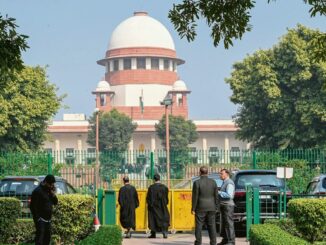
    The Supreme Court of India’s ruling on a batch of petitions, filed in the wake of a U.S.-based short seller’s allegations of malfeasance including stock price manipulation at the Adani group of companies, has squarely tossed the ball back to the markets regulator’s court. The Court has opted to subordinate petitioners’ entreaties to protect larger public interest to its chariness to substitute “its own wisdom over the regulatory policies” of the Securities and Exchange Board of India. In its 46-page order, the Bench headed by Chief Justice of India D.Y. Chandrachud is emphatic in observing that “SEBI has prime facie conducted a comprehensive investigation” that “inspires confidence”, and that “the facts of this case do not warrant a transfer of investigation from SEBI” given that “prima facie no deliberate inaction or inadequacy” was found in the regulator’s conduct of its probe. Strikingly, the Bench has completely skirted the fundamental questions that the Court-appointed Expert Committee in its May 2023 report had opted to leave as a ‘matter between SEBI and the Court’ — the determination of possible violations pertaining to minimum public shareholding and related party transactions. The Bench has instead seized upon prayers urging the Court to direct SEBI to revoke its amendments to the Foreign Portfolio Investors Regulations and Listing Obligations and Disclosure Requirements — amendments that were at the heart of petitioners’ submissions of regulatory failure — and roundly denied them on grounds that there was neither “any illegality”, nor were the norms “capricious, arbitrary or violative of the Constitution”.

    The ruling has also done little to assuage investors’ concerns about SEBI’s approach to getting to the bottom of the allegations raised by Hindenburg Research in its January 2023 report. Without elaboration on any of the regulator’s findings, the Court has blandly observed that “SEBI has completed 22 out of the 24 investigations into the Adani group” and that completion of the remaining two “are pending due to inputs being awaited from foreign regulators”. The Bench has directed SEBI to complete these “expeditiously”. While the Court’s reluctance to review the policy actions of a ‘specialized regulator’ is understandable, the decision to leave the crucial question of SEBI’s perceived tardiness in investigating allegations of corporate malfeasance and market manipulation by a large conglomerate back to the remit of the very same watchdog hints at a degree of judicial abstinence that may only undermine the larger public good. The Court is surely aware of past instances where it has found SEBI wanting in alacrity of enforcement, a facet flagged by the experts’ panel appointed in this case as well. After all, ‘justice must not only be done, but it must also be seen to be done’.
    (The Hindu)

  • Yearning for peace

    Yearning for peace

    When will we learn that there are no victors in war. Ultimately, we are all losers. I pray that peace returns to the embattled war zone

    “Israel has weaponized its memories of the Holocaust so deeply that it has now raised an army of heartless avengers who have no compassion for those who had no role to play in the Nazi pogrom that exterminated their brethren decades ago. How long will they carry this legacy of revenge? Despite the severe criticism of their determination to reduce Palestine to dust, which has now shaped into unacceptable war crimes, Israel has not let up its hunting of Hamas. Not even after appeals from the WHO and the UN. When will we learn that there are no victors in war; ultimately, we are all losers. I pray that peace returns to this embattled war zone and that the true spirit of Christmas inspires them to restore peace and goodwill among men.”

    By Ira Pande

    This is that special year that will end on a Sunday so that the new year will literally start on a fresh slate. Be that as it may, as I sit down to write my last column for 2023, my mind goes over some landmark events that have changed our world forever. Equally, it is a time to remember those dear souls who we will miss as we step into 2024 and those wars and strife that have scarred this year but will hopefully find resolution in the coming one.

    All around me are the familiar scenes of X-mas celebrations: brightly lit streets, shopping arcades and shops. Fake fir trees garlanded with fairy lights and cheery Christmas decorations with a star or angel on its crown. Yet, is it not ironic that Bethlehem, Jerusalem and Palestine in general, where Christianity was literally born, are today drowning in darkness and death? A few years ago, on a visit to Israel, we attended the Midnight Mass in Bethlehem’s Church of Nativity. In this bitterly divided territory, Bethlehem is still zealously controlled by Palestine. However, since Christmas is a season for peace and goodwill, it allows access to Jews and pilgrims from countries across the world to its part of the Holy Land. Long lines of believers wait patiently to enter the birthplace of Christ the Redeemer. Even non-believers are moved by the carols that sing: ‘Away in a manger, no crib for a babe/The little child Jesus lay down his sweet head’ and that famous hymn, ‘Silent night, holy night’, acquires a different timbre when it is sung at that time of the year. The term ‘heavenly peace’ acquires a significant dimension if you hear it in Bethlehem, believe me.

    However, what we have seen in this land lately are flying missiles, drones bombing homes and settlements. Even hospitals have not been spared, nor children, women and the innocent citizens who are not Hamas. As I see news clips beamed from there, my eyes well up when I see terrified children, many who have lost their parents, grandparents and siblings in one day, running away from the rubble that was once a home. I cannot understand how those who carry out instructions to kill can bring themselves to destroy hospitals and kill children. If this is not the opposite of the spirit of peace and goodwill among men, what do you call it? Words fail me for even terms like dystopia cannot convey the horror of such bestial behavior.

    Israel has weaponized its memories of the Holocaust so deeply that it has now raised an army of heartless avengers who have no compassion for those who had no role to play in the Nazi pogrom that exterminated their brethren decades ago. How long will they carry this legacy of revenge? Despite the severe criticism of their determination to reduce Palestine to dust, which has now shaped into unacceptable war crimes, Israel has not let up its hunting of Hamas. Not even after appeals from the WHO and the UN. When will we learn that there are no victors in war; ultimately, we are all losers. I pray that peace returns to this embattled war zone and that the true spirit of Christmas inspires them to restore peace and goodwill among men.

    From there, let me turn to an incident that gave me such joy that I must share it with my readers. Every month or so, I do a story-telling session in our club for little children between the ages of four and 10. For an hour, I am alone with them and instead of reading ‘good’ stories from the classics, such as the Panchtantra, I make up characters and adventures that ignite their imagination. So the children become storytellers (you will be surprised when you hear how hilarious their suggestions are). Logic and reality are happily dispensed with as they join me in adventures that take them to forests where trees speak, owls and monkeys share their knowledge and where doing all the things forbidden to them by parents and teachers are allowed. I have always known that children love other naughty children for in making up stories about them, they are able to sublimate their hidden wishes. So, when they hear of a naughty chap called Agdum Bugdum, they giggle when they learn he wears his chaddis over his pants, eats from a chair while seated on a table and walks backwards when going to school.

    By the end of the session, they were making up scenarios where Chunnu-Munnu smuggle a monkey into their home and teach their pet to steal mangoes from the garden of the crusty uncle next door. Or how the owl they meet one night in the forest outside their house has a friendly ghost who waits to serve them all kinds of goodies when they visit him. I have to confess that by the end of the session, the kids had taken over the storytelling and I was rocking with laughter at the improbable tales they thought up.

    In our ‘normal’ world, there is a shrinking space for innocent fun. Parents are more concerned about their children learning how to sing, dance, play games and what have you. Remember what children love above all else is having fun with other children and being naughty. Keep moral lessons for later.
    (The author is a columnist)

  • Bumpy ride ahead

    Bumpy ride ahead

    Despite promises of how the AI sector would boost economic development, India’s problems won’t disappear solely through GDP growth.

    “To divert attention from the subdued economic growth, Prime Minister Modi has unveiled a new vision: India becoming a developed economy by the time Independent India turns 100 in 2047. In many of his public statements, he emphasises this goal, seemingly looking beyond the quarterly and annual growth rates, immediate inflation rates and immediate roadblocks. This is perfectly suited to fighting an election away from the irritants of what is really slow economic growth despite being much more than other countries in the world. As a matter of fact, there is an unstated caveat. A World Bank report had said India is the fastest-growing economy among its peers in the emerging market economies (EMEs) to avoid the false inference that India is growing faster than the US and China — the two top economies. China’s GDP is six times that of India, and that of the US eight times. It would not make much sense to claim that India’s growth is faster than that of the US and China.”

    By Parsa Venateshwar Rao Jr.

    For much of 2022, Prime Minister Narendra Modi, Finance Minister Nirmala Sitharaman and many of the economists in the government had harped on the theme that India was the fastest-growing large economy in the world in the post-Covid period, and that this was no mean achievement. And it was also implied that if the country was the fastest-growing economy, then it cannot be the case that anything can be seriously wrong with the economy. But soon the little warts hidden by the big picture came to the forefront. The first issue of concern to emerge was that of inflation.

    The Reserve Bank of India (RBI), which had been taking a fuzzy view of the economy, began to realise that inflation was getting to be a problem. This was something that could not be downplayed any more. And the RBI, which had wanted to keep interest rates low to boost the Covid-hit economy, had to make the hard decision to increase interest rates. This went unnoticed as attention shifted to the prospect of many businesses leaving China — an after-effect of the pandemic — and relocating to India. The narrative envisioned India emerging as the global hub of manufacturing, poised to assume the role previously held by China, the engine of global economic growth. But this did not turn out to be so in a big way. It was hoped that the Production-Linked Incentive (PLI) would be the magic wand to turn manufacturing around but it did not have the significant impact expected. The only sector that was growing in a way that translated into export earnings was the services, but it was still a modest growth because the global economy was stuttering.

    To divert attention from the subdued economic growth, Prime Minister Modi has unveiled a new vision: India becoming a developed economy by the time Independent India turns 100 in 2047. In many of his public statements, he emphasises this goal, seemingly looking beyond the quarterly and annual growth rates, immediate inflation rates and immediate roadblocks. This is perfectly suited to fighting an election away from the irritants of what is really slow economic growth despite being much more than other countries in the world. As a matter of fact, there is an unstated caveat. A World Bank report had said India is the fastest-growing economy among its peers in the emerging market economies (EMEs) to avoid the false inference that India is growing faster than the US and China — the two top economies. China’s GDP is six times that of India, and that of the US eight times. It would not make much sense to claim that India’s growth is faster than that of the US and China.

    The RBI has paused the interest rate hike at 6.5 per cent, and it hopes that the rate hike effected through 2022 would have a disinflationary impact, but the apprehension of volatile food prices and its effect on inflation remains. Though the inflation rate had stood at 4.9 per cent in October this year, it is expected to rise. The success that the Modi government had in the run-up to the 2019 Lok Sabha elections will not be there for the next summer’s General Election. Economists who had been supporting the government boasted of his achievement on the economic front of high growth and low inflation in the period between 2014 and 2018. The GDP growth rate in 2014 was 7.4 per cent and the inflation rate was 6.67 per cent; in 2015 the GDP grew at 8 per cent and the inflation rate was down to 4.91 per cent; in 2016 the GDP grew at 8.3 per cent and the inflation rate was 4.95 per cent; in 2017 the GDP growth rate was 6.8 per cent and the inflation rate 3.33 per cent; and in 2018 the GDP grew by 6.5 per cent and the inflation rate stood at 3.94 per cent. It is evident that in 2015 and in 2016, the growth rate was a respectable 8 per cent, and the inflation was just below 5 per cent. It is in 2017 and 2018 that the GDP growth rate moderated quite significantly, and the inflation rate was much below the 4 per cent range. The last five years have been bad in more ways than one. In 2019, the GDP growth rate was 3.87 per cent and the inflation rate was 3.73 per cent.

    In the Covid year of 2020, the economy plunged; the GDP growth rate was – 5.8 per cent and the inflation stood at 6.62 per cent. In 2021, the economy bounced back, partly due to the low base effect, reaching 9.1 per cent growth, while inflation decreased to 5.13 per cent. And in 2022, the GDP growth rate was 7 per cent and the inflation rate was 6.7 per cent. The RBI projection for the GDP growth rate is pinned at 6.5 per cent, and there is uncertainty over the inflation rate. The central bank hopes that it will remain under 6 per cent in the mandated 2 per cent to 6 per cent range. But an inflation rate of 5 per cent and a GDP growth rate of 7 per cent cannot be termed a happy scenario. It could be that in the next five years, the situation could change, but 2024 does not promise to be the inflection point.

    The global economy will continue to grapple with the challenge of regaining momentum lost in the post-pandemic period, amid the ongoing conflicts in Ukraine and Gaza that cast a grim shadow over the political outlook. It’s not surprising that Prime Minister Modi is directing attention towards the Ram temple in Ayodhya, providing free ration to 80 crore people for the next five years and distributing thousands of government appointment letters, given the less-than-promising job growth in the manufacturing sector. Then there are promises aplenty of how the AI (artificial intelligence) sector would boost economic growth in India, and the prospect of India rising to be the third largest economy in the world. India’s economic problems would not vanish by the growth of the GDP size. Double-digit growth, which could bring about perceptible change in the lives of the people, seems a distant dream.
    (The author is a senior journalist)

  • Sense of consensus eludes INDIA

    Sense of consensus eludes INDIA

    At core of predicament is Congress’s inability to mold itself into a leader of a heterogeneous bloc

    “What do the circumstances portend for the Opposition’s coalition? The constituents of INDIA met in New Delhi on December 19, apparently to clear the air of disunity that had begun to cloud the coalition after its earlier sessions and following the differences over seat-sharing between the Congress and the Samajwadi Party, Janata Dal (United) and the Rashtriya Lok Dal before the recent state elections. A sense of cooperation and consensus among the parties —which included a Shiv Sena faction headed by Uddhav Thackeray, the Mandalised bloc from Uttar Pradesh and Bihar, the DMK and its allies and the Aam Aadmi Party — continued to be elusive. It still isn’t clear if the participants were out to score an own-goal by flagging issues that were earlier deemed as ‘irrelevant’ or quite happy to articulate their contradictions.”

    By Radhika Ramaseshan

    To see the glass as half full or half empty depends on how buoyant or cynical an observer is. Since its inception in June, the Indian National Developmental Inclusive Alliance (INDIA), comprising 28 parties, has envisaged roping in as many Opposition forces as it can mobilize in a joint front to fight the BJP in the 2024 General Election. The formation of the bloc, in which the Congress is as important an investor as the regional parties, was an admission on the part of the Gandhis that their political legacy was no longer remarkable enough to take on the BJP single-handedly. The series of meetings INDIA held iterated the Congress’s position as an equal and not a first among equals. It still isn’t clear if the participants were out to score an own-goal by flagging issues that were earlier deemed as ‘irrelevant’ or quite happy to articulate their contradictions.

    Ideally, recent events ought to have underscored the need for such a front even more deeply, especially for the Congress, because the favorable atmospherics that prevailed during INDIA’s first congregation at Patna had dissipated. Seven months before that, there was a sense of hope. Rahul Gandhi had completed his marathon Bharat Jodo Yatra, which went some way in reimagining popular perception of the leader who had been seen as a reluctant and naive politician. The Congress scored an impressive win over the BJP in Karnataka and decimated the Janata Dal (Secular), which went on to seek refuge in the NDA’s fold.

    With 2023 nearing its end, the scenario has turned depressing for the Opposition. The BJP swept the elections in three states in the Hindi heartland in a direct faceoff with the Congress. The Congress now exists in slivers in this region. In the ongoing winter session of Parliament, the BJP has reasserted its near-hegemonic position amid projections of a comeback in 2024. It has pulverized the Opposition, which had sought a statement from the government regarding the security breach in Parliament but was rebuffed. Not only did the government reject the suggestion of being accountable to elected MPs, it also passed Bills with far-reaching implications for data security and amendments in the criminal laws without debate and discussion. After the mass suspension of MPs, the Opposition’s presence in the Lok Sabha and Rajya Sabha has shrunk alarmingly. The picture which both Houses presented marked the culmination of a long-cherished RSS project to install an overbearing Centre with the states orbiting around it like satellites.

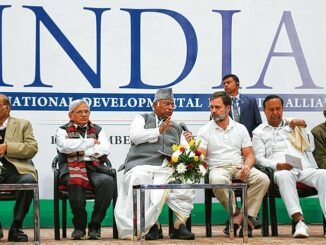
    What do the circumstances portend for the Opposition’s coalition? The constituents of INDIA met in New Delhi on December 19, apparently to clear the air of disunity that had begun to cloud the coalition after its earlier sessions and following the differences over seat-sharing between the Congress and the Samajwadi Party, Janata Dal (United) and the Rashtriya Lok Dal before the recent state elections. A sense of cooperation and consensus among the parties —which included a Shiv Sena faction headed by Uddhav Thackeray, the Mandalised bloc from Uttar Pradesh and Bihar, the DMK and its allies and the Aam Aadmi Party — continued to be elusive. It still isn’t clear if the participants were out to score an own-goal by flagging issues that were earlier deemed as ‘irrelevant’ or quite happy to articulate their contradictions.

    Mamata Banerjee of the Trinamool Congress and AAP’s Arvind Kejriwal proposed Congress president Mallikarjun Kharge’s name as INDIA’s prime-ministerial candidate. It seemed as if they had only discussed the matter among themselves, believing they could persuade their associates that the time was ripe to raise the pitch for India’s first Dalit PM and counterbalance the BJP’s strategy of consolidating the Other Backward Classes (OBCs). Although JD(U) leader and Bihar CM Nitish Kumar consistently maintained that he did not aspire for the PM’s post, his latent ambitions surfaced through statements by his colleagues in the past. A structured discussion on the PM candidate never took off, especially after Kharge scotched the idea, although some reports quoted him talking about his long years in public service and his conduct as a ‘fighter’ to mean that he was not averse to handling the Mamata-Kejriwal googly. Uddhav stressed that the question of electing a PM arose only if the coalition brought in enough MPs and what INDIA needed immediately was a convener to hold the grouping together.

    Certain red lines, accentuating the existence of a regional cleave and intra-state pinpricks, were drawn. When TR Baalu, a senior DMK representative, sought a translation of Nitish’s speech, he was snubbed by the Bihar CM, who demanded that Baalu should learn Hindi, a ‘national’ language. By juxtaposing the north-south divide that was displayed in Tuesday’s meeting with the BJP’s persistent attempts to shed the tag of being a Hindi-belt party, visible in Prime Minister Narendra Modi’s overtures to Tamil Nadu and Kerala, it becomes clear who — the NDA or INDIA — has the big picture in front and what correctives need to be made.

    While there was a general agreement that the seat-sharing process should be completed by the year-end, where do things stand now? Samajwadi leader Ram Gopal Yadav made it clear that his party would quit INDIA if there was a proposal to accommodate the Bahujan Samaj Party. As Mamata pitched for a year-end deadline, there was no indication from her of wanting to forge a broader alliance involving the TMC, the Left Front and the Congress. Given the mutual antagonism on the ground, it seems unlikely the idea would take off. In Maharashtra, it appears that while Uddhav’s Sena and Sharad Pawar’s Nationalist Congress Party have their terrain mapped out, the Congress is in a quandary over its strong areas, if indeed there are any.

    At the core of the predicament faced by INDIA is the Congress’ inability to mold itself into the leader of an admittedly heterogeneous formation, struggling for a helmsman and a narrative. While everybody conceded the need for a shared agenda and holding collective meetings that didn’t seem unwieldy, the question is: Who will hold the baton for INDIA?
    (The author is a senior journalist)

  • Questions aplenty over security breach

    Questions aplenty over security breach

    Need to thoroughly probe what prompted the intruders to cause a ruckus in the House
    “Is unemployment now a major factor in India and did the youth involved feel that they had to highlight the plight of the unemployed before those empowered by the voters to make laws? Was this the sole motive for the doomed escapade? Or was it something sinister? Could an Opposition party or the entire INDIA bloc be behind this parody? Remember also that the pro-Khalistan founder of Sikhs for Justice, Gurpatwant Singh Pannun, had threatened to strike back when he learnt from the disclosures made public by the US authorities that the Indian government or one of its accredited operatives was involved in a conspiracy to murder him. Pannun had threatened that December 13, the anniversary of the 2001 Parliament attack, would be the ‘day of reckoning’.”

    By Julio Ribeiro

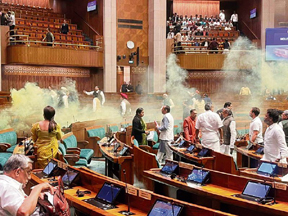
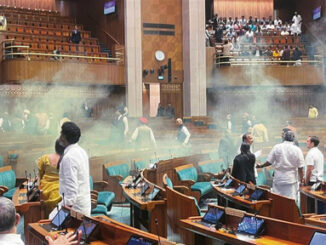
    What motivated Sagar Sharma and Manoranjan D to descend from the visitors’ gallery to the floor of the House and release smoke from canisters to cause a commotion? Both young men and their co-conspirators who protested outside the Parliament building had one thing in common — they were educated but unemployed. It is gracious of the Speaker to assume responsibility for what went wrong. The people, of course, may not appreciate these niceties.

    One of them had repeatedly appeared before Army and police recruitment boards, but failed to make the cut. A woman among them is well into her 30s. Though armed with academic degrees and certificates, she could not land a job as a primary or secondary school teacher. So, she took part in the farmers’ protest outside Delhi in 2020-21 and, later, in the sit-in organized by medal-winning women wrestlers protesting against a BJP MP, who was then the president of the Wrestling Federation of India.

    Is unemployment now a major factor in India and did the youth involved feel that they had to highlight the plight of the unemployed before those empowered by the voters to make laws? Was this the sole motive for the doomed escapade? Or was it something sinister? Could an Opposition party or the entire INDIA bloc be behind this parody? Remember also that the pro-Khalistan founder of Sikhs for Justice, Gurpatwant Singh Pannun, had threatened to strike back when he learnt from the disclosures made public by the US authorities that the Indian government or one of its accredited operatives was involved in a conspiracy to murder him. Pannun had threatened that December 13, the anniversary of the 2001 Parliament attack, would be the ‘day of reckoning’.

    There could be many reasons why these four desperate young people from different parts of the country, ranging from Haryana to Maharashtra, were brought together by Lalit Jha, who is also unemployed. All five youths had come to know each other through a Facebook group called ‘Bhagat Singh Fan Page’. Jha was arrested in Kolkata and is being questioned.

    Home Minister Amit Shah has not made a statement in the House about the obvious breach of security. The Opposition had demanded such a statement from him. It was to be followed by a discussion in the House. It could be that Shah is waiting for the outcome of Jha’s interrogation, but he has not specified that reason. Shah is reported to be sheltering under the Lok Sabha Speaker’s stand that he (Speaker) is the final arbiter on whatever occurs in the precincts of Parliament and the authorities have to act on his orders.

    Is the security of the Parliament House and its occupants, the MPs and officials, not the responsibility of the government of the day? Did then Home Minister not give a statement after the 2001 attack and the BJP, then in the Opposition, not condemn the shoddy security arrangements? It is the first time that citizens have been informed that even security in Parliament is the responsibility of the Speaker! The officials and the police were unaware of this new interpretation. It is gracious of the Speaker to assume responsibility for what went wrong and deflect it away from the Home Minister. The people, of course, may not appreciate these niceties.

    A question needs to be asked: How did Sharma and Manoranjan, who procured visitors’ passes from the BJP MP from Mysuru, manage to enter with smoke canisters hidden in their shoes? It is learnt that the young men ‘modified’ their shoes to accommodate a canister each! That would surely make it awkward for them to walk even a few steps! The bulging shoes should have immediately attracted the attention of the security personnel on duty.

    A media report states that leaflets carried by the intruders and thrown in the well of the House were also hidden in the shoes. How many leaflets can be carried in this fashion? The ‘modified’ shoes would have been spotted by other visitors to the Lok Sabha gallery, even if the security men were inattentive. There is a lot of explanation to do.

    The other sensational news in the past week was that the family of Nikhil Gupta, the man arrested in the Czech Republic at the behest of the US government for being involved in a conspiracy with an Indian government official to assassinate a US citizen (Pannun), has moved India’s Supreme Court. The family has pleaded that he should not be extradited to the US as he has not committed the crime in question. The Czechs are more likely to pay heed to the US government’s demand than submit themselves to the jurisdiction of an Indian court. I mentioned this ticklish matter in my column last week. I had wondered how our powerful and astute Prime Minister would pull India out of this mess. After the G20 summit, he is a global figure with clout on the world stage, but it is not enough to defy edicts or demands of a powerful country like the US. That country’s judicial system rotates on a different plane from ours. The judges there are presumably independent of the political executive. Gupta may run out of options if the facts disclosed by the Americans have a leg to stand on.

    Pannun has a following among some expatriate Sikhs. His views have cut no ice with Sikhs in India, particularly Punjab. But with this narrative of being targeted, he may gain some adherents among unemployed Sikhs.

    Prime Minister Modi’s economic policies have greatly benefited the ‘haves’ in our land. Since his party’s well-oiled propaganda machine and the absence of a credible Opposition leader have made a third term for him a near certainty, he can afford to reduce his own role in electioneering to concentrate on the economic needs of those at the bottom of the ladder. There are many states in the country over which unemployment looms large.

    (The author is a highly decorated retired Indian Police Services (IPS) Officer, and a former governor)

  • Honoring the Unparalleled Sacrifice of Sahibzadas: A Historic Time for the Sikh Community

    As December unfolds, the Sikh community commemorates a pivotal chapter in their history, a poignant moment that resonates with the spirit of sacrifice and valor. These upcoming days hold profound significance, marking the tribute to the supreme and unparalleled martyrdom of Sahibzadas, the revered sons of Guru Gobind Singh Ji. Their sacrifice remains etched in the annals of time, an indelible testament to unwavering faith and unparalleled bravery.

    The legacy of Sahibzadas—Sahibzada Ajit Singh, Sahibzada Jujhar Singh, Sahibzada Zorawar Singh, and Sahibzada Fateh Singh—echoes through generations, inspiring millions with their unyielding commitment to righteousness and fearlessness. Their story isn’t just a chapter in history; it is a beacon of courage that continues to guide and uplift humanity.

    Guru Gobind Singh Ji, the tenth Sikh Guru, imbued his sons with principles of valor, selflessness, and devotion to justice. During a tumultuous period, these young souls fearlessly embraced their father’s teachings, standing unwavering against tyranny and oppression. Their sacrifice wasn’t merely a loss for the Sikh community; it was a profound statement against injustice and tyranny.

    The commemoration of their martyrdom is not just an event but a spiritual journey for Sikhs worldwide. It’s a time for reflection, introspection, and rekindling the values that Sahibzadas exemplified. Their unwavering commitment to their faith and principles, even in the face of extreme adversity, remains an awe-inspiring tale of courage and resilience.

    Sahibzadas’ sacrifice wasn’t confined to their individual selves; it symbolized a larger struggle for righteousness and freedom. Their unwavering resolve in upholding truth and righteousness against oppressive forces serves as an eternal reminder of the fight against injustice.

    In commemorating their sacrifice, the Sikh community gathers in prayer, reflection, and service, reinforcing the teachings espoused by Guru Gobind Singh Ji. It’s a time not only to honor their martyrdom but to emulate their virtues in everyday life—selflessness, bravery, and unwavering commitment to truth.

    The stories of Sahibzadas’ martyrdom transcend religious boundaries, serving as a testament to the resilience of the human spirit in the face of adversity. Their sacrifice is a beacon of hope, inspiring people worldwide to stand up against injustice and uphold the values of righteousness and compassion.

    As the Sikh community observes these historic days, it’s a reminder to humanity of the need for unity, compassion, and courage in the face of challenges. It’s a time to remember that the spirit of sacrifice and righteousness, exemplified by Sahibzadas, remains eternally relevant and serves as a guiding light for all.

    In essence, the commemoration of Sahibzadas’ supreme sacrifice isn’t just a historical event—it’s a timeless narrative of valor and selflessness that resonates with the core of human existence. It’s a reminder that their martyrdom shall forever remain etched in the collective consciousness, urging generations to uphold truth, justice, and humanity above all.

    As we pay tribute to the unparalleled martyrdom of Sahibzadas, let us ensure their legacy lives on by embodying their teachings and perpetuating their ideals of courage, compassion, and unwavering faith in the pursuit of righteousness.

  • Trump’s White House comeback plans hit Colorado hurdle

    The Colorado Supreme Court has ruled that former US President Donald Trump, the frontrunner for the 2024 Republican nomination, is not eligible to return to the White House because of his role in the attack on the US Capitol in 2021. The court has ordered the exclusion of his name from the state’s Republican presidential primary ballot. The 4-3 ruling came on a lawsuit that challenged Trump’s eligibility under Section 3 of the 14th Amendment, which deems former office-holders ineligible from running again if they have engaged in ‘insurrection or rebellion’ against the US despite having taken an oath to uphold the Constitution.

    The verdict, which will inevitably be reviewed by the US Supreme Court, is not applicable outside the state. And Colorado is not a high-stakes state for Trump as he had lost by a big margin there in the 2020 presidential election. Nevertheless, the judgment can have a bearing on the decisions of courts on petitions seeking Trump’s disqualification in ‘more competitive’ states. It will also buttress the Democrats’ argument that the January 6, 2021, riot was an insurrection bid carried out at Trump’s behest.

    The anarchic assault on the US Capitol had disgraced the much-vaunted American democracy. Trump allegedly resorted to brazen incitement to violence in a bid to prevent the US Congress from certifying the result of the 2020 election, which he had lost to Joe Biden. The Colorado court has rightly observed: ‘President Trump’s direct and express efforts, over several months, exhorting his supporters to march to the Capitol to prevent what he falsely characterized as an alleged fraud on the people of this country were indisputably overt and voluntary.’ Even though opinion is divided over whether a lawsuit is a fair method for determining Trump’s eligibility, he undoubtedly deserves no leniency for riding roughshod over constitutional norms. While Trump is again playing the victim card, the Colorado judgment has the potential to queer his presidential pitch.
    (Tribune, India)

  • Suspension spree

    Govt must reach out to the Opposition

    The indiscriminate suspension of 141 Opposition MPs — 78 on Monday, 49 on Tuesday and 14 last Thursday — has left parliamentary democracy in shock. The Congress has accused the BJP-led government of carrying out a purge to ensure the passage of ‘draconian’ Bills without a meaningful debate in Parliament. The two sides are locked in a bitter war of words over the December 13 security breach. In a newspaper interview published on Sunday, PM Modi admitted that it was a very serious incident. However, the Opposition’s demand that Home Minister Amit Shah make a statement in the House regarding the episode has not been taken seriously by the government.

    Parliamentary Affairs Minister Pralhad Joshi struck a discordant note when he accused the protesting MPs of being frustrated over the Assembly election results in the Hindi heartland. This is clearly a bid to obfuscate the key issue — the security breach — which warrants a detailed discussion in both Houses. Equating vociferous protests by Opposition lawmakers with attempts to disrupt House proceedings is uncalled for. The government owes an explanation to the nation over the lapses that led to the December 13 pandemonium. Maintaining an intransigent position and arbitrarily chucking out MPs from Parliament won’t absolve it of its responsibility.

    Only the lawmakers who were guilty of gross misconduct in the House should have been suspended. With the Lok Sabha and Rajya Sabha being adjourned repeatedly, the winter session is heading for an ignominious end. Unfortunately, the brand-new Parliament complex, which hosted its inaugural session in September, is making news for the wrong reasons. Animus and intolerance are precluding dialogue and debate. The government must reach out to the Opposition to save democratic discourse from becoming a casualty of highhandedness.
    (Tribune, India)

  • There is no alternative to green industrial strategy

    There is no alternative to green industrial strategy

    • Inclusive green industrial strategies belong neither to the left nor the right. They are about creating an economy that serves people and conserves the natural world on which we all depend

    “Equally important, the green transition will succeed only if it is also a “just transition.” To support the necessary shift of workers from brown to green jobs, governments can require businesses that receive public benefits to align their operations with climate goals, adopt fair labor policies, and reinvest profits in worker training and research and development. Moreover, policymakers should incentivize brown sectors to reduce their environmental footprint, and to mitigate the risk of stranded assets.”

    By Mariana Mazzucato and Greg Clark

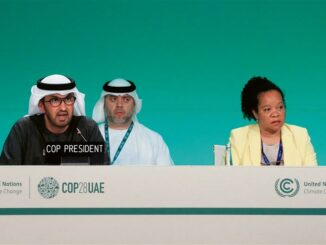
    With the COP28 climate summit now wrapped up, the spotlight remains firmly on the global financing gap. It is estimated that achieving the 2030 Sustainable Development Goals (SDGs) will require a staggering $5-7 trillion per year. But not only must we urgently secure the necessary capital; we also must ensure that long-term patient investments are strategically directed toward ambitious goals. That means coordinating inter-sectoral responses across different supply chains, which in turn requires a robust industrial strategy. Countries around the world are doubling down on plans to revitalize their industrial sectors. It is critical that Britain does not lose ground to them. Earlier this year, Chancellor of the Exchequer Jeremy Hunt outlined an ambitious plan to position green industries as the engines of long-term growth. Strongly encouraging green businesses to ramp up their investments, he set an optimistic tone. Conservatives and Labour must act to ensure investors’ confidence in the stability of UK policy, so that projects with a life of decades are not vulnerable to uncertainty.

    The United Kingdom will need a clear, comprehensive vision for sustainable industrial development if it is to reap the economic opportunities presented by a world that is increasingly committed to achieving net-zero emissions. As the Independent Review of Net Zero warns, inconsistent policy approaches are bad not only for the planet, but also for business. After all, green industries could be worth more than $10 trillion globally by 2050.

    Industrial strategy thus holds a dual promise: helping to address climate change and revitalizing industry so that it can compete in the twenty-first century. We need not accept environmental protection as a trade-off against economic progress. The two can go hand in hand if green policies are deployed to fuel growth and innovation, and if sustainable practices are woven into the fabric of how we consume, move, invest, and build.

    We had the honor of working together on a UK industrial-strategy blueprint back in 2018, when one of us (Clark) was Secretary of State and the other (Mazzucato) was co-chair of University College London’s Commission for Mission-Oriented Innovation and Industrial Strategy. That work took a sector-based strategy (focused on automobiles, aerospace, finance, life sciences, and creative industries) and applied it to outcomes such as clean growth, healthy ageing, sustainable mobility, and an inclusive data economy.

    The point is not to pick winners or only to fix market failures, but to work with firms (from whatever sector) that are willing to join forces to solve problems and to create and shape new markets. Just as the original moon landing required innovation in domains ranging from aerospace to nutrition, electronics, materials, and software, today’s climate-related challenges call for innovation in multiple sectors – not just renewable energy.

    A mission-oriented approach leads to more than just completing the mission. The innovations it catalyzes can lead to a multiplier effect – with initial investments crowding in private investment and generating spillovers that amplify the impact on GDP. Through the process of solving smaller problems on the way to the moon, we created the technologies for today’s camera phones, foil blankets, baby formula, and a broad range of software applications.

    Public and private actors need to work well together. Reorienting public agencies around ambitious missions requires evaluation metrics to capture dynamic economy-wide spillovers. It will not do to continue obsessing over often spuriously precise cost-benefit calculations (which would have stopped the moon mission from ever getting off the ground).

    Equally important, partnerships between the public and private sectors should be symbiotic, and public funding should come with conditions to maximize public value by steering investments in an inclusive and sustainable direction. For example, conditionalities can require recipients to reduce the material content of their products and create greener supply chains.

    We know that such measures work. The German steel industry’s progress in adopting a climate-friendly circular-economy model owes much to that country’s industrial strategy. Public policies encouraged low-carbon processes among steel manufacturers and established markets for carbon-efficient steel, materials, and green hydrogen. All countries need broad, coherent plans to align public investments with commitments to decarbonize transportation and supply chains across the economy.

    Equally important, the green transition will succeed only if it is also a “just transition.” To support the necessary shift of workers from brown to green jobs, governments can require businesses that receive public benefits to align their operations with climate goals, adopt fair labor policies, and reinvest profits in worker training and research and development. Moreover, policymakers should incentivize brown sectors to reduce their environmental footprint, and to mitigate the risk of stranded assets.

    Inclusive green industrial strategies belong neither to the left nor the right. They are about creating an economy that serves people and conserves the natural world on which we all depend. The question is not whether we can afford to implement such policies; it is whether we can afford not to. British political leaders – Conservative and Labour alike – must recognize the profound potential that such strategies hold. — Project Syndicate

    About authors
    Mariana Mazzucato, Founding Director of the UCL Institute for Innovation and Public Purpose, is Chair of the World Health Organization’s Council on the Economics of Health for All. Greg Clark, a former UK secretary of state for business, energy, and industrial strategy, is a member of parliament for Tunbridge Wells and Chair of the Science and Technology Select Committee.

  • Revision sans vision: On the three Bills that replace the body of criminal laws in India

    New laws have positive features, but bring no path-breaking change in system

    Law-making in the absence of a significant number of Opposition members does not reflect well on the legislature. The three Bills that replace the body of criminal laws in India were passed by Parliament in its ongoing session in the absence of more than 140 members. Even though the revised versions of the Bharatiya Nyaya Sanhita (BNS, which will replace the IPC), the Bharatiya Nagarik Suraksha Sanhita (which will replace the CrPC) and the Bharatiya Sakshya Bill (instead of the Evidence Act) were introduced after scrutiny by a Parliamentary Standing Committee, they still required legislative deliberations in the full chambers, given their implications for the entire country. Many concerns that the Bills gave rise to could not be raised in Parliament as a result. A conspicuous aspect of the new codes is that barring reordering of the sections, much of the language and contents of the original laws have been retained. However, Union Home Minister Amit Shah’s claim that the colonial imprint of the IPC, CrPC and the Evidence Act has been replaced by a purely Indian legal framework may not be correct, as the new codes do not envisage any path-breaking change in the way the country is policed, crimes are investigated and protracted trials are conducted.

    The improvements in the BNS include the removal of the outdated sedition section, as exciting disaffection against the government or bringing it into hatred and contempt is no more an offence, and the introduction of mob lynching (including hate crimes such as causing death or grievous hurt on the ground of a person’s race, caste, community, sex, language or place of birth) as a separate offence. Another positive feature is the government ignoring the panel’s recommendation to bring back adultery, struck down by the Supreme Court, as a gender-neutral offence. However, it is questionable whether ‘terrorism’ should have been included in the general penal law when it is punishable under special legislation. Grave charges such as terrorism should not be lightly invoked. On the procedural side, some welcome features are the provision for FIRs to be registered by a police officer irrespective of where an offence took place and the boost sought to be given to use of forensics in investigation and videography of searches and seizures. A significant failure lies in not clarifying whether the new criminal procedure allows police custody beyond the 15-day limit, or it is just a provision that allows the 15-day period to spread across any days within the first 40 or 60 days of a person’s arrest. Revisions in law cannot be made without a vision for a legal framework that addresses all the inadequacies of the criminal justice system.
    (The Hindu)

  • More grave than the attack 22 years ago

    More grave than the attack 22 years ago

    This time, the delinquents managed to reach the virtual heart of Parliament while the proceedings were going on in the Lok Sabha.

    “Officially, the new building’s five-tier security is foolproof: Visitors’ entry is through the ‘reception’ near the Rail Bhavan. Also, verification of credentials is done at the security post on Raisina Road before they reach the ‘reception’. There is a stipulation that before entering, all electronic gadgets, bags and wallets must be deposited in a designated cloak room. The visitors are screened at the reception, their passes are verified again, and they are checked again near the entry gate of the new building. The visitors are then grouped into those going to the Lok Sabha or the Rajya Sabha and checked again at two gates. Before entering the respective visitors’ galleries, they are checked once more.”

    By Vappala Balachandran

    There is an important difference between the Pakistan-sponsored terror attack on Parliament on December 13, 2001, and the intrusion into the new Parliament building by miscreants on December 13, 2023. This time, the delinquents managed to reach the virtual heart of Parliament while the proceedings were going on in the Lok Sabha. That makes the incident much more serious than the one in 2001, when terrorists could not enter the building. In 2001, the terrorists were fortuitously intercepted by an alert security officer in charge of the escort vehicle of the Vice-President, whereas on Wednesday the security staff was blissfully unaware of the intruders’ presence, putting the onus of resistance on the MPs. Remarkably, the security personnel were not spotted when the miscreants started spraying gas from canisters hidden in their shoes.

    Also, the intruders seemed to have taken advantage of the layout of the complex, jumping into the Lok Sabha hall quite easily from the visitors’ gallery. The distance between the gallery and the hall seems to have been reduced in the new building, going by what some MPs said immediately after the incident. Another important point revealed by them was that the new system of entry into the building through a single access point as against three or four entry points in the old building seemed to have burdened the security apparatus.

    That perhaps might have been the reason why the miscreants could hide the canisters in their shoes despite the much-touted five-tier security system in the new building. We can only imagine the horror that could have happened had they carried grenades instead of gas canisters. This incident was somewhat like what happened at Raj Ghat on October 2, 1986. Several VIPs, including the President, the Prime Minister and MPs had been saved, not by their security staff, but only because Karamjit Singh — an assailant who had hidden himself in tree branches despite a prior intelligence alert — possessed only a primitive muzzle-loading gun. Like in 1986, we cannot depend on providence for our VIP security.

    In 2001, according to the Supreme Court’s records, a white Ambassador car with a red beacon on top entered the Parliament complex around 11:30 am and arrived at the point where the convoy of the Vice-President was waiting near Gate No. 11. Inside the car were persons dressed in some sort of uniform. Since the escort vehicle was blocking its way, the suspect car turned away. This made the ASI in charge of the Vice-President’s escort vehicle suspicious and he told the car driver to stop.

    Instead, the driver reversed the vehicle and tried to move away. In the process, it hit the Vice-President’s car. The ASI and the Vice-President’s driver ran towards the suspect car and caught hold of the driver by the collar. Five Pakistani terrorists then got out of the car and started laying wires and detonators.

    Seeing this, the ASI fired a shot, hitting the leg of one of the terrorists. The terrorist fired back, injuring the ASI in his right thigh. This exchange of fire alerted the police and special forces in the Parliament complex and a gunbattle started. The terrorists went from gate to gate within the complex, firing at the security men, and the latter returned fire.

    Then BJP MP Ram Naik had told the media that there were three gates: Gate No. 12, through which the Vice-President — who is also the Rajya Sabha chairman — entered; Gate No. 1, from where the MPs usually came in; and Gate No. 5, from where the Prime Minister entered. He said the terrorists fired at all these three gates but could not enter the building as CRPF constable Kamlesh Kumari Yadav had closed the main entrance. According to reports, she died after being hit by 11 bullets.

    None of this happened on Wednesday. The entry of the offenders was smooth. After the incident, several complaints were made by Opposition members: the Joint Parliamentary Committee on Security has not been constituted during the 17th Lok Sabha; there is ‘political bias’ in issuing visitor passes; there is increased presence of private security guards, who have allegedly replaced official parliamentary security guards and Central police forces in the new building.

    Officially, the new building’s five-tier security is foolproof: Visitors’ entry is through the ‘reception’ near the Rail Bhavan. Also, verification of credentials is done at the security post on Raisina Road before they reach the ‘reception’. There is a stipulation that before entering, all electronic gadgets, bags and wallets must be deposited in a designated cloak room. The visitors are screened at the reception, their passes are verified again, and they are checked again near the entry gate of the new building. The visitors are then grouped into those going to the Lok Sabha or the Rajya Sabha and checked again at two gates. Before entering the respective visitors’ galleries, they are checked once more.

    None of this prevented the entry of these determined intruders. This audacious security breach, which comes weeks after Sikhs for Justice founder Gurpatwant Singh Pannun’s threat to Air India, speaks very poorly of the overall security of our sensitive institutions. Did our security managers assume that only Air India needed to be protected after that threat?

    Any student of terrorism history would know that terrorists often change tactics to cause confusion. After the 26/11 attacks in 2008, we were getting ready to face fidayeen strikes while the terrorists reverted to improvised explosive devices and killed 21 people at three places in Mumbai in July 2011.
    (The author is a former Special Secretary, Cabinet Secretariat, government of India)

  • Challenge for India to align policies with COP28 outcomes

    Challenge for India to align policies with COP28 outcomes

    • The key existential need is to move away from coal to renewables. To be able to do so, developing nations will need finance that must not add to their debt burden.

    “The final outcome, thrashed out during the conference which went into overtime, does, however, represent a small step forward that needs to be noted. The unanimous decision at the conference was to begin reducing the global consumption of fossil fuels and achieve net-zero by 2050, the first such binding decision ever taken. This signals the eventual demise of the age of fossil fuels — coal, oil and gas. It, thereby, sends a key signal to policymakers, including those in India, who have been somewhat brazenly continuing with policies to support investment in coal, to change tack. It also sends signals to coal investors to get out as quickly as they can and make no further commitments, irrespective of any contrary signals from policymakers.”

    By Subir Roy

    How useful has COP28, the Conference of the Parties held in Dubai, been in taking forward the initiative which began with the 2015 Paris Agreement to address climate change, its mitigation and adaptation and securing the finance needed for the whole process? Typically, a lot of the right kind of noises have been made, as also promises to deliver, while seeking to leave commitments as open-ended as possible so that short-term national imperatives can be addressed even while working on and swearing allegiance to the overall goals.

    The final outcome, thrashed out during the conference which went into overtime, does, however, represent a small step forward that needs to be noted. The unanimous decision at the conference was to begin reducing the global consumption of fossil fuels and achieve net-zero by 2050, the first such binding decision ever taken. This signals the eventual demise of the age of fossil fuels — coal, oil and gas. It, thereby, sends a key signal to policymakers, including those in India, who have been somewhat brazenly continuing with policies to support investment in coal, to change tack. It also sends signals to coal investors to get out as quickly as they can and make no further commitments, irrespective of any contrary signals from policymakers.

    The member countries also reached a historic agreement to triple renewable energy capacity globally by 2030, again a decision which has run counter to the Indian position. The timeline, barely seven years away, is important as India and China, the two large economies with rapidly rising emission levels, had decided early during the conference to stay out of such an agreement to mitigate present climate trends by tripling the world’s renewable energy output and doubling energy efficiency by that date. This is despite 118 countries agreeing to join the pact.

    The International Energy Agency says the tripling is needed to keep in sight the goal of driving down the demand for fossil fuels and keeping global warming to 1.5°C above pre-industrial levels by the end of the century. The focus of action will be on phasing out coal-fired power plants and curbing the use of oil and gas.

    Should Indian policymakers see these outcomes as somewhat excessively binding, they have reason to be happy about one key decision which emerged early during the two weeks over which the conference lasted. A ‘loss and damage’ fund to help vulnerable countries cope with the impact of climate change will be created. This is the right thing to do, but the giveaway is the size, albeit initial, of the fund — a mere $475 million, with the US commitment being just $17.5 million. This needs to be set against the $525 billion combined loss that the 55 most vulnerable countries have suffered from climate change in the last 20 years. The loss will reach $580 billion by 2030.

    Of course, further contributions will come as the work of the fund, to be initially overseen by the World Bank, progresses. It will help poor countries cope with the cascading effects of climate change, such as rising sea levels, floods, droughts and cyclones. The moral justification for asking for such a fund is that the rich countries, whose industrial growth since 1850 resulted in greenhouse gas accumulation, global warming and the climate crisis, should now help the poor countries, who are the most vulnerable victims, combat it.

    India’s approach so far has been that without making any fresh commitment, it wishes to abide by the nationally determined targets it has already announced. In journeying towards that, a sea change will come in sectors like steelmaking, vehicles design and manufacturing, building design and construction processes, not to speak of cookstoves used by households. The drive towards using more clean energy will affect businesses of all sizes, ranging from micro, small and medium enterprises to large corporates.

    What is critical is that the investment to enable this energy transition needs to be forthcoming. At present, investment in the fossil fuel sector continues to outstrip that directed towards promoting a clean economy. An advisory panel for COP28 has recommended that a two-pronged strategy be adopted — tax polluting activities and cut fossil fuel subsidies. One area where carbon taxes can be introduced relatively smoothly is transportation — maritime and aviation. But overall, cutting subsidies where they are deeply entrenched will be politically challenging. Farmers will not like fertilizer subsidy to be cut and it will need a brave state government to go back on supplying free a minimum load of electricity to every household.

    A particular culprit, a term the panel did not explicitly use, is large oil and gas companies which have made windfall profits from the quick rise in energy prices as a result of the Ukraine war. But it will be difficult to put a punitive tax on them as many of them are either state-owned (like Coal India, NTPC and West Asian giants) or have political clout, like those in the US.

    Overall, the key global existential need is to move away from coal to renewables. Rich countries that have moved away from coal to natural gas are balking at helping the rest of the world do so. Hence, coal is the whipping boy, but it is also the fuel used by countries which have not moved to gas, which is somewhat cleaner. To be able to do so, developing countries will need finance that must not add to their debt burden.

    What are the corrective measures that Indian policymakers will have to take in view of the conference’s outcomes? They will have to speed up the creation of greater capacity of renewable energy like solar and wind power. There is much talk about producing hydrogen of various hues, but it is worth remembering that the only hydrogen which passes muster is green hydrogen that is made from renewable energy itself. Besides, huge battery banks will have to be set up and transmission lines strengthened so that wind and solar power can be transmitted from areas where they can be produced to those which are deficient in the necessary climatic and geographical requirements.

    COP28 has forged a global consensus on the path the planet must take to save itself. This has posed a double challenge for a country like India, which has to both grow rapidly to overcome poverty as also do away with an abundant natural source of energy like coal. If India’s politicians do not rise to this challenge, they risk pulling both themselves and the country down.
    (The author is a Senior economic analyst)

  • Seal of approval on Art 370 abrogation

    Seal of approval on Art 370 abrogation

    Various stakeholders should make efforts to rebuild J&K as a full-fledged state
    “The verdict is historic as it aims to rectify past blunders, such as appointing Lord Mountbatten Chairman of the Defense Committee at the start of the 1947-48 Kashmir war, when the Army Generals on both sides (India and Pakistan) were British; referring the matter to the United Nations; accepting a ceasefire when the Indian Army was in a winning position; and finally, accepting a plebiscite proposal on Mountbatten’s advice. Article 370 was in continuation of these blunders. Even though the Article was inserted as a temporary provision to enable full federalization on a par with other states, the provision was kept alive, leading to calls for a settlement with Pakistan and the involvement of the Hurriyat Conference. And in this backdrop, terrorism took root. It was on August 5, 2019, that the Modi government scrapped Article 370; this led to litigation challenging the constitutional validity of the decision.”

    By Rakesh Dwivedi

    In a landmark verdict, the Supreme Court upheld the Centre’s decision to abrogate Article 370 of the Constitution. The judgment put the judicial seal of approval on the proclamations issued by the President over four years ago that not only de-operationalized Article 370 but also applied provisions of the Constitution to Jammu and Kashmir as are applicable to other states. It also affirmed the proclamation under Article 356 and the creation of the UT of Ladakh. The court allowed the UT of Jammu and Kashmir to continue as such for some time in view of the Solicitor General’s statement that withdrawal of statehood was a temporary measure.

    Justice Kaul has recommended the constitution of a Truth and Reconciliation Commission for giving a hearing to the people of J&K. The lead judgment was authored by Chief Justice of India (CJI) DY Chandrachud on behalf of himself, Justice Surya Kant and Justice BR Gavai. Justice Sanjay Kishan Kaul and Justice Sanjiv Khanna concurred with the judgment.

    The verdict is historic as it aims to rectify past blunders, such as appointing Lord Mountbatten Chairman of the Defense Committee at the start of the 1947-48 Kashmir war, when the Army Generals on both sides (India and Pakistan) were British; referring the matter to the United Nations; accepting a ceasefire when the Indian Army was in a winning position; and finally, accepting a plebiscite proposal on Mountbatten’s advice. Article 370 was in continuation of these blunders. Even though the Article was inserted as a temporary provision to enable full federalization on a par with other states, the provision was kept alive, leading to calls for a settlement with Pakistan and the involvement of the Hurriyat Conference. And in this backdrop, terrorism took root. It was on August 5, 2019, that the Modi government scrapped Article 370; this led to litigation challenging the constitutional validity of the decision.

    A major issue was whether Article 370 was permanent and could not be abrogated. One contention was that it was the result of a formal compact. The court negated the contention and held that in view of its locus in the Constitution and the marginal note, Article 370 was a temporary provision. Its objective was to gradually bring J&K on a par with other states. The court referred to a series of previous orders issued by the President to apply more and more provisions of the Constitution to J&K and said that those orders also supported the inference that Article 370 was temporary.

    Another major contention was that Maharaja Hari Singh, while acceding on three subjects, had reserved residuary sovereignty, and the J&K Constitution was a product of a sovereign J&K Constituent Assembly; hence, the President’s order could not abrogate Article 370 so as to annul the J&K Constitution. This, too, did not find favor with the court. The CJI stated that after the execution of the Instrument of Accession and the issuance of the proclamation of November 1949, the state of J&K became fully integrated with India and was part of its territory; thus, no sovereignty was left with Yuvraj Karan Singh. The J&K Constitution was held to be subservient to the Constitution of India and would, therefore, automatically get erased upon abrogation of Article 370. Justice Kaul accepted that there was some internal sovereignty left with J&K, but agreed that this would stand terminated upon the issuance of the proclamation by the President under Article 370(3). This provision does not require any consultation with the J&K government, and the proviso about the recommendation of the J&K Constituent Assembly ceased after its dissolution. But the cessation of the Constituent Assembly did not have the effect of taking away the power of the President in the main part. So, the President validly issued the impugned constitutional orders (272 and 273). He could order the application of all provisions of the Constitution to J&K.

    The court also upheld the proclamation under Article 356, while accepting that it was subject to judicial review on the grounds mentioned in the SR Bommai case. The court noted that none of the proclamations could be said to be issued mala fide. The court, however, struck down paragraph 2 of constitutional order 272, which sought to amend the proviso to Article 370 by substituting the Legislative Assembly of J&K for the Constituent Assembly, saying that such an amendment was not permissible. This would have no impact on the abrogation proclamation as that was sustainable under Article 370(3) itself.

    Citing Article 3 of the Constitution, the court upheld the creation of the UT of Ladakh, but it left open the question of law about the conversion of a state in view of the basic features of federalism and representative democracy, even as the Solicitor General stated that the deprivation was temporary and statehood of J&K would be restored soon. The court directed holding of elections by September 2024 and restoration of statehood at the earliest.

    Justice Kaul, who hails from J&K, wrote an interesting epilogue recommending the constitution of a Truth and Reconciliation Commission on the pattern of South Africa or some such mechanism, wherein people of J&K could be given a hearing in order to resolve their grievances. This was a recommendatory observation, which was not echoed by other judges.

    It is hoped that various stakeholders would accept the new situation and move on to rebuild J&K as a full-fledged state like the others, with citizens enjoying constitutional rights.
    (The author is a Senior Advocate, Supreme Court of India)

  • Principled shift: On India’s stand on Gaza

    • India must take a more vocal position on Gaza with Israel

    Two months after Israel’s bombardment of Gaza residents in retaliation for the October 7 terror attacks by Hamas began, India joined its voice to the global call to stop the bombing, voting in favor of a resolution at the UN General Assembly (UNGA) along with 152 other nations. The resolution demanded an immediate humanitarian ceasefire, an observance of international humanitarian law, the unconditional release of all hostages, as well as “ensuring humanitarian access”. India’s vote was a shift from its previous vote at the last such UNGA resolution on October 27, when despite the death of 8,000 Gazans, India had decided to abstain from voting for a resolution that called for a ceasefire. The government and the MEA explained this to be a matter of principle, as part of India’s “zero-tolerance” approach towards terrorism, as the earlier resolution did not contain an “explicit condemnation” of the October 7 attacks. However, while the UNGA resolution passed on December 12 bears no direct mention of the terror attacks, India has voted in favor. Although the government has yet to detail the rationale, there could be several reasons: casualty figures have risen relentlessly, with 18,000 dead and the highest such toll of nearly 90 journalists. More than 80% of the entire population is homeless. Even the U.S., Israel’s biggest ally, estimates that nearly half of the 29,000 air-to-ground munitions deployed by Israel thus far are “unguided” or indiscriminate missiles. Second, Israeli Defense Forces have gone far beyond their original mandate of eliminating Hamas capacity and freeing the hostages to a large-scale flattening of Gaza and forced occupation of more territory. More than 100 Israeli hostages remain in Hamas custody. Third, global opinion, including Indian public opinion, has moved decidedly from sympathy with Israel, to horror at the unfolding aftermath, and New Delhi could not have been immune to entreaties by Palestine and the Gulf States to take a relook at its vote, even as India stood isolated in South Asia and the Global South for its previous abstention.

    It may be too early to see India’s UNGA vote as a reversal of its earlier position and a reversion to its original position in the conflict, where it has traditionally called for peace. Much will depend on the role India chooses for itself in ensuring the ceasefire is effected and holds, given that Israel has already rejected the UNGA resolution. Having proven its credentials as a friend to Israel following the terror attacks, as well as the odium of enabling the civilian deaths, the Modi government must be more vocal in helping the Netanyahu government out of the strategic cul de sac it has bombarded its way into, one which could cause regional instability and insecurity for decades.
    (The Hindu)

  • Fund crunch : Centre must liberally aid Punjab in its drug fight

    At the first National Conference of Heads of Anti-Narcotics Task Force of States and Union Territories held in April, Union Home Minister Amit Shah outlined the broad set of strategies to achieve the goal of making India drug-free by 2047. Among the impressive plans, the need for all states to fight the battle in a coordinated manner, rising above politics, stood out. Towards this end, he advised the states to optimally use not only the central funds available for narcotics control but also those from the police modernization kitty to carry out narco-related upgradation of forensic science laboratories.

    However, the ground reality points to disparity in the grant of funds in the past five years. Punjab, Delhi and Chhattisgarh — all non-BJP-ruled states — were deprived of grants for narcotics control during this period, as per data shared in Parliament. Haryana and Himachal Pradesh got substantial amounts to tackle the drug menace, even though Punjab, being a border state, is more vulnerable to narco-terror. This is amply clear from the grim statistics of 2022 — after Kerala, Punjab saw the second highest number of arrests under the Narcotic Drugs and Psychotropic Substances (NDPS) Act.

    Punjab should step up efforts to secure its due share of the central funds, while the Centre must loosen its purse strings for this endeavor. It will give a much-needed boost to the multi-pronged fight against the menace. The combat encompasses a slew of activities, ranging from catching the drug lords to rehabilitating the unfortunate youth addicted to substance abuse and scientifically disposing of the huge amounts of drugs seized by various agencies. Funds are the key to the success of any anti-drug campaign.
    (Tribune, India)

  • Security breach: Take exemplary action against MP, House staff

    Less than three months after hosting its first House session, the new Parliament complex witnessed a major security breach when two intruders jumped into the Lok Sabha hall from the visitors’ gallery and opened smoke canisters. Even more shocking was their audacity to cause chaos in the House on the 22nd anniversary of the 2001 Parliament terror attack, which had claimed the lives of nine securitymen and staff. The Lok Sabha Secretariat has suspended eight security personnel for lapses, even as a probe has been initiated on the orders of the Ministry of Home Affairs. The intruders and their accomplices have been arrested and booked under the anti-terror law UAPA (Unlawful Activities Prevention Act).

    The incident has glaringly exposed the vulnerability of the parliamentary security system, which needs to be dismantled and replaced with a professional force. The intruders had gained access to the gallery through visitor passes arranged by BJP MP Pratap Simha. Parliamentarians invariably entertain requests for such passes from members of their constituencies. As per the Parliament rulebook, the MP has to certify that ‘the visitor is my relation/personal friend/known to me personally and I take full responsibility for her/him’. It is apparent that due diligence was not exercised by the MP and his personal staff while processing applications.

    That the duo managed to sneak in smoke canisters shows criminal laxity. The security gaps, if not plugged at the earliest, can be exploited by terror groups and other anti-India elements — to the detriment of national security. The entry of visitors needs to be tightly regulated, even as all MPs and their staff must closely scrutinize every application they receive. There should be zero tolerance to any lawmaker’s irresponsible conduct that imperils Parliament’s physical or digital security. Trinamool Congress MP Mahua Moitra was recently expelled from the Lok Sabha for sharing her parliamentary login with an unauthorized person. Exemplary action should be taken against Simha as well.
    (Tribune, India)

  • It’s back to the drawing board for the Congress

    It’s back to the drawing board for the Congress

    The Congress needs to go beyond the current focus on the negative aspects of the ruling dispensation or its perceived faultlines

    “The Congress can build on this base, but to take this process forward, it needs to project a clear ideological narrative and articulate its own politics. For a start, it shouldn’t try to outdo the BJP as a ‘more Hindu’ party, particularly when voters have the option to go for the real thing. The ideological counter must reflect a different model of development with an emphasis on rights-based welfare, especially employment guarantees interlaced with social harmony. In sum, the Congress has to reboot its political discourse by foregrounding something substantive, which is best done by advocating a positive agenda that can galvanize the electorate and goes beyond the current focus on the negative aspects of the ruling dispensation or the perceived faultlines within it and the politics it has promoted.”

    By Zoya Hasan

    The Congress’ remarkable victory in Telangana was overshadowed by its devastating defeat in the Hindi heartland in the just-concluded Assembly elections. The Congress has suffered a big blow as it lost all three states — Madhya Pradesh, Rajasthan and Chhattisgarh — it had won in 2018. The Bharatiya Janata Party’s (BJP) comprehensive victory was backed by support across most regions in these states and a strong showing in urban areas. But the Congress, despite its defeat, has managed to retain its vote share — Madhya Pradesh (40.4 per cent), Rajasthan (39.5 per cent) and Chhattisgarh (42.23 per cent). The BJP has gained mostly at the expense of others in the fray. With these triumphs, the BJP has expanded its dominance of a key region ahead of the 2024 General Election. However, the Congress vote share holds considerable significance in the run-up to the Lok Sabha elections.

    The Congress tried to highlight issues such as joblessness and caste discrimination in the hope that it would appeal locally in the state elections and nationally in the General Election. But its two-pronged plank of welfare schemes and social justice was upstaged by the subtext of Hindu nationalism and communal politics. The BJP’s victories highlight the consolidation of Hindu nationalism and the great resonance it enjoys in the heartland states. The use of state machinery, ample financial resources and the party’s organizational framework, buttressed by RSS cadres, have helped it promote itself as a champion of a strong nation, development and welfarism as well as of Hindu interests and the Hindu religion.

    From the outset, the BJP’s campaign pivoted on Prime Minister Narendra Modi, relegating established state leaders to the sidelines. The party decided not to nominate a chief ministerial candidate for any of the states going to the polls. This meant that even popular state leaders of the Congress like Ashok Gehlot and Bhupesh Baghel were not pitted against their local BJP rivals, but against Modi himself. The PM’s huge popularity in north and central India neutralized the public acceptance of these leaders.

    Taking a cue from its experience in Karnataka, where the visibility and prominence of local leaders paid off, the Congress projected state leaders, who were given a free hand. However, the infighting and overweening ambitions of its leaders in Rajasthan and Chhattisgarh put paid to this strategy. Factionalism and divided state leadership, which have been the undoing of the Congress in many states, was on full display throughout its term in office in these two states. Leaders were attacking each other until a few months before the elections, which sent a message to voters that this was a party that couldn’t keep its house in order. A settlement was forged between the warring leaders in both states, but it was a case of too little, too late.

    Apart from factionalism, there was no accord or concord between the state leadership and the high command. The Congress campaign lacked coherence; it appeared disjointed, with powerful state satraps unwilling to countenance any interference on their turf. In contrast, the BJP’s campaign was intensive and focused and the party spoke in one voice. This is not surprising, as the contemporary BJP is a highly centralized party, while the Congress, in a departure from the past, is relatively decentralized.

    To make matters worse, there was no agreement between the Congress and its allies in the state elections. The 28-party INDIA grouping led by the Congress, which came together to fight the BJP, did not feature in the state polls due to inter-party rivalries. Opposition parties should have negotiated state-specific alliances and seat adjustment in a spirit of give-and-take. This is easier said than done. Seat-sharing didn’t happen, which hurt the Congress as well as the INDIA bloc, which the voters saw as a divided house. The fate of the Congress and other parties in this election makes it clear that they can tackle the BJP only when they are united against it.

    A caste-based census was the big battlecry of the Congress to undercut the BJP’s support among the OBCs, but it turned out to be a ‘no-ball’. This call had little traction on the ground, with the issue not paying dividends — the BJP’s share of OBC votes has increased. In any case, it is doubtful that the demand for a caste census is an inspiring or effective counter to Hindu identity politics, which holds much greater appeal for subaltern groups in the current conjuncture. Caste politics and ideas of social justice were not enough without a clear political plank to serve as a counterpoint to the BJP’s politics in these states or effective campaigning, ideological clarity and organizational cohesion to communicate its message.

    There is limited evidence of a correlation between state and national elections. Yet, there’s little doubt that the Congress’ decisive defeat at the hands of the BJP in straight contests has undermined its credibility and is bound to demoralize it at a crucial time when the Lok Sabha elections are just five months away. However, all is not lost as the majority of the voters have opted for non-BJP parties in these critical states.

    The Congress can build on this base, but to take this process forward, it needs to project a clear ideological narrative and articulate its own politics. For a start, it shouldn’t try to outdo the BJP as a ‘more Hindu’ party, particularly when voters have the option to go for the real thing. The ideological counter must reflect a different model of development with an emphasis on rights-based welfare, especially employment guarantees interlaced with social harmony. In sum, the Congress has to reboot its political discourse by foregrounding something substantive, which is best done by advocating a positive agenda that can galvanize the electorate and goes beyond the current focus on the negative aspects of the ruling dispensation or the perceived faultlines within it and the politics it has promoted.
    (The author is Professor Emerita, Centre for Political Studies, JNU)

  • Multidimensional Poverty Index reduction under the NDA is flawed

    Multidimensional Poverty Index reduction under the NDA is flawed

    • The Multidimensional Poverty Index exaggerates the National Democratic Alliance’s success in fighting deprivation

    “If we go by our estimates of MPI, the reduction between 2015 and 2019-21 is considerably lower than the official estimate: 4.7 percentage points compared with 9.89 percentage points. Our selective review of MPI estimates shows that poverty rose in India’s most populous State, Uttar Pradesh, by over seven percentage points. Of the States that went to the elections in November (Chhattisgarh, Madhya Pradesh, Mizoram, Rajasthan and Telangana), we find that the MPI fell in Chhattisgarh (by over six percentage points), in Rajasthan (by two percentage points) and, most strikingly, in Madhya Pradesh (by about eight percentage points).”

    By Radhika Aggarwal, Vani S. Kulkarni, Raghav Gaiha

    Samuel Johnson, a profound literary critic and essayist, wrote, “Poverty is a great enemy to human happiness; it certainly destroys liberty, and it makes some virtues impracticable, and others extremely difficult.” In sharp contrast, conventional measures of poverty in terms of income are limited and narrowly focused on scarcity of resources to eke out a bare subsistence. But there is much more to poverty than a bare subsistence, as emphasized by Johnson and others.

    Nobel Laurate Amartya Sen pioneered a rich, innovative and broader perspective on well-being, focusing on capabilities and functionings. While capabilities are abilities to do this or that in a free and fair environment, functionings reflect achievements. An ability to live a healthy life, for example, is not necessarily related to affluence as it could result in obesity and vulnerability to non-communicable diseases. Achievements such as being healthy, on the other hand, require a nourishing diet and physical exercise. Professor Sen has, however, resisted aggregation of concepts such as capabilities into an overall measure of well-being as he believes that each capability is important in itself.

    The MPI story
    Unfortunately, the United Nations Development Programme (UNDP) seized upon capabilities to construct an overall measure of human development with uniform weights of the three components: health, education and standard of living and their sub-indices. Following this methodology, NITI Aayog and the UNDP released recently a National Multidimensional Poverty Index/MPI: A Progress Review 2023, also replicated in the UNDP Report, Making Our Future: New Directions for Human Development in Asia and the Pacific, released on November 7, 2023 . Hence, these reports suffer from the same flaws as the UNDP human development index: aggregation with uniform weighting. But, the MPI story is further distorted, as elaborated on below.

    Astonishingly, the MPI 2023 estimates show a near-halving of India’s national MPI value and a decline from 24.85% to 14.96% between 2015-16 and 2019-21. This reduction of 9.89 percentage points implies that about 135.5 million people have exited poverty between 2015-16 and 2019-21. Besides, the intensity of poverty, which measures the average deprivation among the people living in multidimensional poverty, reduced from 47.14% to 44.39%.

    But these estimates — especially the rapid reductions in MPI — cannot be taken at face value for various reasons. Indeed, these are misleading and ill-informed. First, the MPI relies upon the National Family Health Survey (NFHS) 4 and 5, which are not detailed enough for its estimation. Moreover, NFHS 5 is blocked as its estimate of open defecation contradicted exaggerated official claim of its complete elimination. In fact, an eminent demographer, who led NFHS 5 was suspended. Intriguingly, while the survey was blocked for its alleged unreliability, NITI Aayog and the UNDP had no qualms about using it. Ideally, NFHS 4 and 5 should have been combined with the 75th Round of the NSS on household consumption expenditure. Unfortunately, this was abandoned too, as leaked poverty estimates indicated a rise.

    What casts further doubts is the havoc caused by the COVID-19 pandemic in 2020-21. Millions lost their livelihoods, thousands died in reverse migration and from a lack of access to vaccines and medical care. In fact, as a consequence of this epidemic, there was a huge economic shock from which the Indian economy has been struggling to recover. To illustrate, GDP growth has declined from 8% in 2015-16 to 3.78 % in 2019-20 and slumped -6.60 in 2020-21, as also per capita income. Not just bare subsistence turned into a daunting challenge for millions but, equally seriously, public funding for maintenance and expansion of health and education and social safety nets suffered an irreparable blow.

    Focus on covariates
    Our recent analysis focuses on covariates of the MPI that include per capita state income, its square, share of criminals among State MPs, share of urban population, and health and education expenditure and unobserved state fixed effects (e.g., how progressive a State is). If we compare elasticities of MPI with respect to each covariate (i.e., proportionate change in MPI due to a proportionate change in a covariate such as State per capita income), the largest reduction in MPI is due to higher State per capita income. But since income decreased drastically, MPI spiked. The next in order of importance is urban location. A 1% increase in urban location results in a 0.90% increase in MPI. This is not surprising as rural-urban migration is associated with growth of slums and sub-human living conditions. However, reverse migration during COVID-19 may explain why the effect on MPI is less than proportionate. Both health care and education expenditure are associated with lower MPI — the elasticity of the latter is higher (in absolute value), implying that a 1% increase in the latter reduces MPI more than the same increase in the former. As State-level estimates suggest a decline in educational expenditure, a rise in MPI is likely. Although State-level health expenditure rose to combat COVID-19, it fell far short of what was needed. If the share of Members of Parliament with criminal cases in total State MPs exceeded 20%, the higher was the MPI. This is not surprising as criminal Members of the Legislative Assembly and MPs are notoriously corrupt and siphon-off funds allocated for social safety nets and area development programs. Indeed, what is alarming is their rising share — 24% of the winners in the Lok Sabha election in 2004 had a criminal background; it rose to 30% in the 2009 general election, 34% in the 2014 election, and 43% in the 2019 election.

    If we go by our estimates of MPI, the reduction between 2015 and 2019-21 is considerably lower than the official estimate: 4.7 percentage points compared with 9.89 percentage points. Our selective review of MPI estimates shows that poverty rose in India’s most populous State, Uttar Pradesh, by over seven percentage points. Of the States that went to the elections in November (Chhattisgarh, Madhya Pradesh, Mizoram, Rajasthan and Telangana), we find that the MPI fell in Chhattisgarh (by over six percentage points), in Rajasthan (by two percentage points) and, most strikingly, in Madhya Pradesh (by about eight percentage points).

    In conclusion, not only does the MPI exaggerate the NDA’s success in fighting deprivation but also perhaps more seriously obfuscates conventional measures of it which may unravel a contradictory story of poverty.

    (Radhika Aggarwal is a doctoral student at Faculty of Management Studies, University of Delhi. Vani S. Kulkarni is Research Affiliate at the Population Studies Centre, University of Pennsylvania, U.S. Raghav Gaiha is Research Affiliate at the Population Studies Centre, University of Pennsylvania, U.S.)