Tag: Perspective Opinion EDITORIAL

  • BJP on a roll, Opposition needs to regroup

    BJP on a roll, Opposition needs to regroup

    • The least resilient among the INDIA members are in danger of disappearing from the political scene

    “PM Modi’s most urgent task is to lift millions of his countrymen from the poverty in which they are mired. The affluent are certainly much better off since 2014. The stock market is booming. Those who have invested in stocks will become even richer if he is re-elected in 2024. The freebies now given away to the rural poor will eventually have to be stopped. The youth of those poor households, belonging mainly to the lower castes, must be equipped with skills to enable them to fend for themselves. Industrialists and entrepreneurs, who have prospered in the last 10 years, should be motivated to enter less-profitable segments of the economy so that jobs are created for our unemployed youth.”

    By Julio Ribeiro

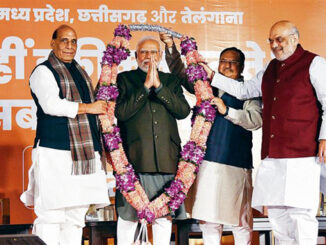
    I write this piece as a member of a minority community — just 2 per cent of the country’s population. In a ‘first past the post’ system of electing people’s representatives, the BJP has swept the Assembly polls in the Hindi heartland. The Congress lost the tribal and women’s votes. The shift in votes from the Congress to the BJP catapulted the latter to power in Madhya Pradesh, Rajasthan and Chhattisgarh.

    ‘Sabka Saath, Sabka Vikas, Sabka Vishwas’ needs to be put into practice instead of being merely parroted every now and then.

    The difference in the overall vote share of the BJP and the Congress was roughly 2 percentage points in Rajasthan and 4 in Chhattisgarh. It was 8 percentage points in Madhya Pradesh, where the winner garnered 48 per cent of the votes as against 40 per cent by the Congress.

    It was a resounding victory for the BJP and Modi in particular. Not even his bitterest critic can say that he is not the most popular and charismatic of all political leaders in the country. It looks certain that he will be elected for a third term. The Hindi heartland is with him and that should tilt the scales in his favor. The South is not with him, but the West is his for the taking. What is in store for the country after the 2024 Lok Sabha elections? In the past decade, India has been divided on communal lines. The consolidation of the Hindu vote was what the Hindutva forces strived for. It succeeded to the extent of ensuring the BJP’s poll victories. Muslims and Christians together make up just 16 per cent of the population. The Sikhs account for less than 2 per cent.

    After the 2024 polls, the forward castes in the Hindu fold will be the chosen ones, like the Christian Brahmins and Kshatriyas were in Goa during the Portuguese rule. The BJP under Modi, influenced by the RSS, will placate the OBCs and the Scheduled Castes/Scheduled Tribes, counting them within the 80 per cent whose pride in being Hindu has to be ‘created’.

    The Muslims were in the doghouse in Modi’s first two terms. Beef-related lynchings, ‘love jihad’ accusations and the fear generated by the CAA-related NRC had stifled their quest for equality as citizens of India. Now, I envisage that they and the Christians, who are next in line on the extremists’ hit list, will have to adjust to second-class citizenship like Hindus and Christians in Pakistan have done in that religion-influenced country.

    Delivering his victory speech at the BJP’s headquarters in Delhi, PM Modi mentioned ‘appeasement’, besides corruption and dynastic politics, as the evils that he has been fighting. I do not know what he means by ‘appeasement’. If he is referring to the Muslims, it is only the mullahs who were appeased by the Congress, and that too in religious matters. That is not the mandate of a democratically elected government. Muslims should be ‘appeased’ like all poor communities, such as the Scheduled Castes and the Scheduled Tribes, in terms of education and healthcare. Religious issues should be sorted out by the community itself or by the courts.

    Extremist elements in the Hindutva camp have consistently railed against the Muslim minority. There have even been calls to exterminate Muslims and boycott their traders selling vegetables and fruits in Hindu localities. Modi should rein in these extremists by ordering penal action against them as ordained by law. He hesitates to do that for fear of losing their support. They, in turn, misinterpret this silence as tacit approval.

    PM Modi’s most urgent task is to lift millions of his countrymen from the poverty in which they are mired. The affluent are certainly much better off since 2014. The stock market is booming. Those who have invested in stocks will become even richer if he is re-elected in 2024. The freebies now given away to the rural poor will eventually have to be stopped. The youth of those poor households, belonging mainly to the lower castes, must be equipped with skills to enable them to fend for themselves. Industrialists and entrepreneurs, who have prospered in the last 10 years, should be motivated to enter less-profitable segments of the economy so that jobs are created for our unemployed youth.

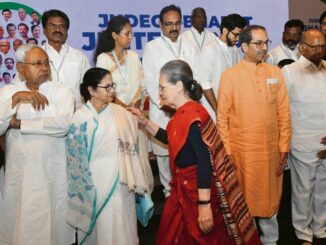
    The possible re-election of Modi and the BJP in 2024 will consolidate the right-wing economic trend in the country. All left-of-center parties, like the Congress, TMC and the AAP, should come together to form an effective Opposition. If they fail to do so, the least resilient among the INDIA members are in danger of disappearing from the political scene. Many leaders of those parties, such as Arvind Kejriwal, will find themselves targeted by the ED, the CBI and other Central agencies with ruthless precision just before the elections.

    Nearly a century ago, writer-philosopher Aldous Huxley, in his futuristic work Brave New World (1932), prophesied: “By means of ever more effective methods of mind manipulation, the democracies will change their nature; the quaint old forms — elections, parliaments, Supreme Courts and all the rest — will remain. The underlying substance will be a new kind of non-violent totalitarianism. Democracy and freedom will be the theme of every broadcast and editorial… Meanwhile, the ruling oligarchy and its highly trained elite of soldiers, policemen, thought-manufacturers and mind-manipulators will quietly run the show as they see fit.” Does that ring a bell? An Opposition-mukt democracy is no democracy.

    PM Modi has often stated: “India is the mother of democracy.” If he really believes what he says, we, members of the minority in our own land, will be reassured if ‘Sabka Saath, Sabka Vikas, Sabka Vishwas’ is put into actual operation instead of being merely parroted every now and then.
    (The author is a highly decorated Indian Police Service (IPS) Officer and a former governor)

  • Congestion Pricing: Balancing Revenue and Traffic Management

    Congestion pricing has emerged as a contentious yet promising solution to alleviate traffic gridlock in bustling urban centers. New York City, known for its perpetual traffic snarls, has contemplated this strategy as a means to mitigate congestion while boosting revenue. However, the effectiveness of congestion pricing remains an uncertain terrain, leaving many questioning its practicality versus its idealistic aspirations.

    At its core, congestion pricing aims to dissuade vehicular entry into designated areas during peak hours by imposing tolls or fees. In the context of New York City, despite existing tolls at bridges and tunnels and substantial parking charges, the influx of vehicles into the heart of the city persists. The fundamental question lingers: Will a nominal additional charge deter drivers from bringing their vehicles into the city?

    Critics of congestion pricing argue that the proposed marginal fees might not serve as a strong deterrent for those determined to drive into the city. For individuals reliant on their vehicles for daily commute or transportation of goods, a few extra dollars might not significantly alter their behavior. Additionally, the socio-economic impact of this pricing strategy on lower-income individuals must be considered. Will they be disproportionately affected by these charges, limiting their access to the city center?

    However, proponents highlight the potential financial windfall for New York City. The prospect of substantial revenue generation through congestion pricing cannot be understated. The influx of funds could be channeled towards crucial infrastructure development, public transportation enhancement, or environmental initiatives, thereby benefiting the city as a whole.

    Nonetheless, the success of congestion pricing hinges on multifaceted factors beyond mere fiscal gains. Behavioral changes take time, and the effectiveness of this strategy might evolve gradually. Studies from other cities that have implemented similar schemes—such as London and Stockholm—show initial skepticism followed by gradual acceptance and subsequent positive impacts on traffic congestion.

    Moreover, successful implementation relies heavily on complementary measures. Strengthening public transportation, improving alternative mobility options, and offering incentives for carpooling or adopting eco-friendly modes of transport are pivotal components for congestion pricing to yield desired outcomes.

    The road ahead for congestion pricing in New York City is a complex one, laden with uncertainties and potential pitfalls. The success or failure of this policy will depend not only on its ability to generate revenue but also on its capacity to effect behavioral changes among commuters. As the policy unfolds and its impacts become apparent, only time will unveil whether congestion pricing in New York City is a pragmatic solution or a lofty ideal.

  • Gaza ceasefire: Security Council must act on UN chief’s appeal

    Two months after Hamas attacked Israel, triggering a fierce retaliation, UN chief Antonio Guterres has invoked the rarely used Article 99 of the United Nations Charter to appeal to the Security Council to facilitate a humanitarian ceasefire in Gaza. The Article states that ‘the Secretary-General may bring to the attention of the Security Council any matter which in his opinion may threaten the maintenance of international peace and security.’ Guterres has warned that the situation in Gaza is fast deteriorating into a catastrophe with ‘potentially irreversible implications’ for Palestinians as well as for peace and security in the region.

    According to Gaza’s Health Ministry, over 16,000 people have lost their lives in Israeli military action during the ongoing war. About 1,200 Israelis were killed when Hamas and other Palestinian armed groups carried out lethal strikes on October 7. Around 240 people had been taken hostage, of whom more than half are still in captivity. A Qatar-brokered truce, which saw Hamas release dozens of hostages in exchange for hundreds of Palestinian prisoners and Israel allowing humanitarian assistance to flow into Gaza, had raised hopes of a de-escalation and an early end to the war. However, the truce lasted just a week and Israel has intensified its attacks since then.

    Even as Qatar has claimed that it is making efforts to bring about a comprehensive ceasefire, the Security Council needs to pay heed to the UN Secretary-General’s fervent plea to avert a humanitarian catastrophe. The UN has been under fire for its failure to prevent the situation from spinning out of control. It remains to be seen whether Guterres’ invocation of Article 99 — which was last mentioned in a report by then UN chief U Thant amid the India-Pakistan war of 1971 — will make any visible difference of the ground.
    (Tribune, India)

  • Time for the Congress party to reach out and work together for a united front to save democracy and the nation

    George Abraham, Vice-Chair of IOCUSA

    I salute the victory in Telangana while blaming overconfidence and infighting for the losses in the other three states!
    Telangana stands out as the shining light for the Congress party in the unfortunate defeats elsewhere in the just concluded state elections. Yet, the Congress Party should not give up the fight but rather garner all the energy and strengthen the INDIA alliance for the ultimate prize fight in 2024,” said George Abraham, Vice-Chairman of the IOCUSA and Global coordinator of the IT & Social media for IOC.
    Instead of engaging in the so-called introspection exercise, the leadership should quickly move to clean up the INC Secretariat and engage people who might bring contrasting perspectives that would enrich the debate and arrive at well-thought-out solutions to resolve various issues confronting the party. Keeping Shashi Tharoor at arms-length or removing him as the chairman of the Professional Congress right in the middle of an election is not an intelligent strategy. It is not only a united leadership that may win an election but also using modern strategy and employing the latest technologies that make a difference.
    There must be zero tolerance for groupism all across the party if it wishes to come back to power at the center again. The recent victory in Karnataka may have made some in the leadership a little cocky to the point where the ongoing talk on the INDIA alliance almost appeared to have come to a halt. Congress needs to be cognizant of the fact that fighting the Modi behemoth machine alone would not suffice; Congress may have to take a step back and reach a consensus. The ultimate aim for the next election must be the defeat of Modi but not the debate of who would be the Prime Minister.
    A change of leadership in many state units with young and dynamic individuals with a new vision would go a long way for the party. The victory led by Mr. Revanth Reddy in Telangana is a case in point. The appetite for corruption is still quite rampant in some party circles, and it ought to be seriously checked. In Rajasthan, the simmering leadership dispute should have been brought to an end a long time ago. In Chhattisgarh, a tribal community was driven out of their own homes on allegations of conversions, and the state government closed its eyes for political expediency; in Madhya Pradesh, the leadership appeared to have been practicing soft-Hindutva rather than championing the Nehruvian vision and Ambedkar’s constitution. Why would anybody opt for duplicates when the original BJP, which practices Hindutva ideology, is readily available? It is also time to check the EVMs and make sure the systems are performing well and fulfilling its constitutionally assigned responsibilities.
    It is time for the Congress party to reach out and work together for a united front to save democracy and the nation.
    (The opinion expressed above is strictly personal)

  • Lessons from Hitler’s 1923 Munich putsch

    Lessons from Hitler’s 1923 Munich putsch

    Ironically, the victims of the Holocaust are now spurring another genocide and this time it’s the Palestinians in the midst of the second Nakba.

    In the last 50 years, has the world progressed on matters of constitutional democracy, or are we stalled — or even moving backward? Are democracies sliding into a cold-blooded sectarianism that borders on repression that can little bear other religions or ways of life? Racial intolerance has indeed raised its ugly head far more starkly than ever before. Innumerable Munichs around the world transmute from liberal diverse societies into cities of discrimination and violence.

    “We must realize that we live in an era of recrudescent nationalism and jingoism. It, therefore, becomes important to remember that “Those who forget history are doomed to repeat it”, as stated by Spanish-American philosopher George Santayana. The case is before us particularly at this juncture of the revival of ethno-nationalist politics across the world, and particularly in Russia and Israel. The leadership in Israel has begun, like the Nazi party, to wear the crest of a star on their lapel with the words ‘Not Again’ written on it. Ironically, the victims of the Holocaust are now spurring another genocide and this time it is the Palestinians in the midst of the second Nakba.”

    By Shelley Walia

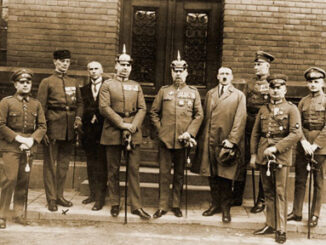
    November 8 is an ominously historic day. On this day, 100 years ago, 34-year-old Adolf Hitler, inspired by Benito Mussolini’s march on Rome in October 1922, accompanied 2,000 armed volunteers to reach Bürgerbräukeller, a beer hall in the Bavarian city of Munich. Apparently, his intention was to seize power in the Bavarian capital to destroy the German federal government, a democratically established Weimar Republic, and supplant it with a dictatorial establishment unswerving in its ideology of violence and rabid anti-Semitism. Dismissing all Jews in the government service and executing anyone assisting Jews were to be his priorities. His plan was to establish a government to oversee the creation of a unified Greater German Reich.

    From the Munich bar, Hitler moved his troops on November 9 to Odeonsplatz, where the Bavarian forces successfully resisted the putschists, killing a few. A bullet missed him by an inch. The history of the world would have been different had Hitler died that morning. But the future Führer survived. Undaunted by the defeat at the hands of the police, he would return to the same spot as Chancellor of Germany 10 years later, with his following having swelled to thousands, and the manifesto in his pocket that would end the very idea of democracy in Germany.

    Surrounded by adoring crowds, there was complete silence when he bowed his head in remembrance of those who had sacrificed their lives for the love of their country. The most damaging political programme in European history was underway. His coming to power reveals a resounding lesson for humanity: if the institutions of liberal democracy are shaken and weakened, even a disorganized mutiny in a beer pub may not remain a failure for long. Moreover, his entry into Munich must also shake up those credulous enough to fall into the trap of contrived lies and make an unquestionable commitment to forces that silently work towards genocidal politics and the wearying of the fabric of constitutional democracy.

    The understanding of the putsch’s significance is relevant to the future of our ideas of democracy, justice and freedom. Pausing for a moment on the genesis of Nazism, we can go to the heart of the crisis of the current damage to democracy and the rule of law with an overriding vision that prescribes a fearsome struggle for the survival of the values and ideals that remain dear to the freedom-loving people dreaming of peaceful coexistence.

    We must realize that we live in an era of recrudescent nationalism and jingoism. It, therefore, becomes important to remember that “Those who forget history are doomed to repeat it”, as stated by Spanish-American philosopher George Santayana. The case is before us particularly at this juncture of the revival of ethno-nationalist politics across the world, and particularly in Russia and Israel. The leadership in Israel has begun, like the Nazi party, to wear the crest of a star on their lapel with the words ‘Not Again’ written on it. Ironically, the victims of the Holocaust are now spurring another genocide and this time it is the Palestinians in the midst of the second Nakba.

    Understandably, right-wing populism leading to modern-day tribalism is rising again around the world, and it is hard not to look for lessons in the nightmare of Nazism. Albert Speer, Reich Minister of Armaments and War Production for Nazi Germany, underscored Hitler’s notion of “personal unhappiness caused by the breakdown of the economy”, which he tactfully replaced “by a frenzy that demanded victims”. He turned history “into a reservoir of resentments”. With the Mark having sunk to an abysmal low in the 1920s, Germany experienced the first instance of hyperinflation in a modern industrial state. The conditions were ripe for a civil war and Hitler waited in the wings to take the reins of the most brutal tyranny that the world had ever seen. Paramilitaries from the anti-democratic south were taking up arms against working-class soldiers and pro-democratic forces from the more liberal north. Germany was smoldering in a state of civil war.

    Hitler’s return to Munich following the armistice to his calamitous putsch in 1923, therefore, demonstrates why the city’s transformation is crucial for understanding the Nazi era and the tragedy of the Holocaust. The conservative government of Bavaria systematically identified Jews with left-wing radicalism and spearheaded racist attacks on the basis of religion, thereby setting up a fertile breeding ground for the establishment of Nazism and an anti-Semitic ideology. Munich became a hotbed of right-wing extremism, with synagogues under attack and Jews battered in the streets. It was here that Hitler established the Nazi movement and developed his anti-Semitic ideas. Bavaria’s capital city became the decadent laboratory for Nazism and the Final Solution.

    The Reich government would soon pass the Enabling Act of 1933 that gave autocratic powers to the governing party to bypass Parliament. This legislation gave the underlying impetus to Nazism, thereby buttressing its narrative of challenging a ‘Jewish-Bolshevik global conspiracy’. Hitler and his followers began to terrorize Munich’s Jews and were aided by politicians, judges, police and ordinary residents. The Jews, in turn, responded to the anti-Semitic backlash in different ways — by declaring their loyalty to the state, by avoiding public life, or by abandoning the city altogether.

    To think of the centenary, therefore, might help impede the continuing collapse of democracies across the world. Liberal democracies across the world are germinating into absolutism, and unbridled racism spurs the rise of a political elite, making way for populist demagogues. It is surprising that what took place in Munich and Nazi Germany is repeating itself in many democratic countries, which deem themselves to be egalitarian.

    At such a time, it is important to ask: In the last 50 years, has the world progressed on matters of constitutional democracy, or are we stalled — or even moving backward? Are democracies sliding into a cold-blooded sectarianism that borders on repression that can little bear other religions or ways of life? Racial intolerance has indeed raised its ugly head far more starkly than ever before. Innumerable Munichs around the world transmute from liberal diverse societies into cities of discrimination and violence.
    (The author is Professor, Dept of English and Cultural Studies, Panjab University, Chandigarh, India)

  • Cleanse the system

    Cleanse the system

    “If business interests are to be kept away from the political system, another method of financing political parties and their election campaigns has to be evolved. It could entail state sponsorship as well as allowing individuals to donate to the party of their choice. Transparency has to be the key in formulating any such system. The present scheme of electoral bonds lacks this basic element. It tried to shift from siphoning off unaccounted funds into campaign chests but failed to fulfil the other basic criteria of providing transparency to the general public. It is difficult to sustain the argument that purchases of bonds are kept confidential to ensure voters’ privacy. In the case of institutions or business organizations especially, this defense is not adequate. Shareholders, for instance, are surely entitled to know the way in which the company’s resources are being utilized. Similarly, consumers need to know as it could influence purchasing decisions.”

    By Sushma Ramachandran

    Financing of political parties has always been a problematic issue. For many decades, there was tacit acceptance of the fact that illicit money would be used in this process. The image of the politician receiving wads of cash in suitcases has defined the concept of electoral funding. Despite much debate over the need for electoral reforms as well as a system of campaign funding, there was little interest among the political class in changing the status quo. It thus seemed like a breath of fresh air when then Finance Minister Arun Jaitley, during a speech in Parliament in 2017, argued for reforming the structure of electoral funding. This paved the way for several legislative amendments and the introduction of the now-controversial electoral bond scheme.

    It is this scheme that has now gone up for consideration by the apex court. The bonds themselves are a relatively simple concept. These are interest-free banking instruments that function like promissory notes and can be bought by an individual or institution. They can be redeemed within 15 days in the bank account of a registered political party. The aim of creating this instrument was ostensibly to shift from the anonymous cash system to one that used recognized banking channels instead. In other words, avoiding the use of illicit funds or what is termed as ‘black money’.

    The fatal flaw in the scheme is the anonymity given to the donor in this process. The information about the donor’s name is confined to the public sector bank concerned and such data is available for access by the Central Government. The general public, thus, remains in the dark about the donors to various political parties. This has been justified on the grounds of enabling voters to maintain secrecy over their electoral preferences.

    Such an argument is possible for individuals but certainly not for corporates donating to political parties. Industrial houses have traditionally been agnostic as far as ideologies are concerned though there is always a preference for political parties that could represent stability. This is primarily because the fate of investments and the progress of business interests depends largely on a stable and peaceful political environment. Given the all-pervasive role of the government in determining economic policies right from Independence, it has also always been in the best interests of corporates to maintain a close and harmonious relationship with the government of the day. A reflection of this is the unstinted praise of government policies by chambers of commerce even if decisions taken in the annual Budget, for instance, are privately termed as onerous or unsettling.

    In a bid to hedge bets prior to an election also, there has been a tendency for business houses in the past to provide financial support to political parties across the spectrum. It is learnt that sometimes several contestants in a particular constituency have been provided funds. Companies, therefore, cannot be compared with individuals in terms of voter preferences.

    The situation has now altered considerably as the government and thus the ruling party are aware of the source of purchasers of electoral bonds. Such knowledge is bound to make corporates wary of supporting Opposition parties and thus creates a skewed political landscape. The data is revealing. According to the Association for Democratic Reforms, the Bharatiya Janata Party received Rs 5,271.9 crore from electoral bonds from 2016-17 to 2021-22 compared to Rs 1,783.9 crore for all other national parties combined. In the case of direct corporate donations, the BJP received Rs 3,299 crore, followed by the Congress with Rs 406 crore.

    In this backdrop, the argument can be made that corporates should not be allowed to give donations to political parties. An article in the Harvard Business Review (January 2022) delved deep into this issue. It concluded that in the US, as in India, allowing direct corporate donations to political parties implied that such funds were meant to elect candidates that would do the industry’s bidding or support specific causes. It contended it also went against shareholders’ interests as most were generally unaware of the nitty-gritty of corporate operations, including donations to political parties. This is also true of Indian companies, where shareholders have extremely limited knowledge about firms in which investments have been made.

    Doing away with corporate financing, however, would mean that a more transparent process of funding needs to be established as part of electoral reform. It cannot be carried out in a vacuum. In this context, one has to recall the ban imposed on corporate donations to political parties imposed in 1969 by then Prime Minister Indira Gandhi. The only effect this 16-year ban had was to drive campaign funding underground and enhance the role of black money.

    If business interests are to be kept away from the political system, another method of financing political parties and their election campaigns has to be evolved. It could entail state sponsorship as well as allowing individuals to donate to the party of their choice. Transparency has to be the key in formulating any such system. The present scheme of electoral bonds lacks this basic element. It tried to shift from siphoning off unaccounted funds into campaign chests but failed to fulfil the other basic criteria of providing transparency to the general public. It is difficult to sustain the argument that purchases of bonds are kept confidential to ensure voters’ privacy. In the case of institutions or business organizations especially, this defense is not adequate. Shareholders, for instance, are surely entitled to know the way in which the company’s resources are being utilized. Similarly, consumers need to know as it could influence purchasing decisions.

    The onus of devising a transparent system of political financing lies with the political class as well as the Election Commission of India. The present government took a bold step in 2017 by bringing funds meant for election campaigns into the light of day. It needs to complete the process of reforms. If it seeks to stick to electoral bonds, then it has to bring in transparency in terms of giving out the source of donations to the public. If it truly seeks to cleanse the system, however, it should be more ambitious and keep big business out of politics.
    (The author is Senior Financial Journalist)

  • Promises, populism and welfare politics at play

    Promises, populism and welfare politics at play

    Kickerline: South India has a history of populism in which the prelude to polls is signified by unrolling expensive freebies such as white goods

    “Doubtless, the crowning stroke was Prime Minister Narendra Modi’s announcement while campaigning in Madhya Pradesh and Chhattisgarh that the Centre would continue handing out free foodgrains to the targeted beneficiaries under the National Food Security Act, 2013, for the next five years. The declaration was intended to counter the munificence held out by the Congress in its manifestos. The PM’s proclamation was expectedly denounced by the Opposition. While the Congress alleged that the scheme mirrored “the continuing high level of economic distress and growing inequalities”, the Trinamool Congress maintained that the timing and the occasion were meant to “influence the electorate ahead of the elections and defeat the idea of a level playing field”. Ironically, had a Congress dispensation introduced such a scheme, it’s doubtful that it would have called it off midway citing improved economic standards.”

    By Radhika Ramaseshan

    It’s that time of the year when Santa Claus descends from his north Finland abode on a reindeer-powered sleigh, bearing a sackful of gifts for the hopefuls after prudently assessing who gets what and how much so that no soul is left disgruntled on Christmas Eve. The mythical correlative comes close to explaining the milieu prevailing in the five states voting this month. The ‘horn of plenty’ is overflowing with plentiful populist promises, even as the governments voted to power five years ago on copious pledges are being held accountable for the unfulfilled or partially realized ones, showing the hollowness of a ritualistic enactment in the election season.

    Doubtless, the crowning stroke was Prime Minister Narendra Modi’s announcement while campaigning in Madhya Pradesh and Chhattisgarh that the Centre would continue handing out free foodgrains to the targeted beneficiaries under the National Food Security Act, 2013, for the next five years. The declaration was intended to counter the munificence held out by the Congress in its manifestos. The PM’s proclamation was expectedly denounced by the Opposition. While the Congress alleged that the scheme mirrored “the continuing high level of economic distress and growing inequalities”, the Trinamool Congress maintained that the timing and the occasion were meant to “influence the electorate ahead of the elections and defeat the idea of a level playing field”. Ironically, had a Congress dispensation introduced such a scheme, it’s doubtful that it would have called it off midway citing improved economic standards.

    However, the Opposition justifiably questioned Modi’s frequent use of the term revdi politics to run down the non-BJP parties when pre-poll promises were unrolled. As long as he was the Gujarat CM, doling out freebies was ruled out. In the 2012 Uttar Pradesh Assembly elections, when the Samajwadi Party was voted in on the back of a slew of avowals that included an unemployment dole and free laptops to students, those close to Modi asked if such sops would not undermine the confidence of young people by creating a ‘parasitic’ order. Now, the parasites are acceptable to the BJP.

    Ostensibly inspired by the success of its five mantras in Karnataka, the Congress reprised the incantation in its campaign, notably in Telangana, where it is playing for high stakes as part of a larger game plan to retrieve its southern base. The Congress is up against the ruling Bharat Rashtra Samithi (BRS), which honed populism to a fine political skill to overcome anti-incumbency in 2018. The south has a history of populism in which the prelude to the polls is signified by unrolling expensive freebies such as white goods that are later gifted away.

    Other factors such as the creation of Telangana out of Andhra Pradesh, caste equations and personalities will count in the elections, but populism has been a hallmark of the south. Sonia Gandhi took it upon herself to unspool six guarantees at a rally in Telangana’s Tukkuguda, covering the entire social gamut from women, peasantry, the homeless, households, freedom fighters to students and pensioners. There was something substantial, at least notionally, for everyone. The BRS, riddled with corruption insinuations against its first family and patchy governance, must rely on its foundation of welfare politics to win a third term. Hence, its slew of sops and doles, included 5 kg of fortified (not normal) rice through the public distribution system, a life insurance cover for those below the poverty line with the government paying the premium, enhanced amounts for virtually every section and a raise in the flagship Aarogyasri health insurance scheme. Enough for a measure-for-measure play against the Congress? It’s a tough call.

    Populism panned out differently in the states, because objective circumstances shaped its play. In Madhya Pradesh, a traditional BJP stronghold since the Bharatiya Jana Sangh era, Hindutva has always cast a long shadow over electioneering. The BJP trumpeted the completion of the Ram temple in Ayodhya, the Congress’s predicament over its ally DMK’s in-your-face remarks on Sanatan Dharma and the development of religious corridors in MP’s pilgrim centres, while the Congress exhibited its own form of Hindutva, manifest in its CM candidate Kamal Nath’s recall of then PM Rajiv Gandhi’s decision to unlock the gates of the Babri mosque and allow Hindus to worship the Rama idol ensconced in the ‘sanctum sanctorum’.

    The spotlight on Hindutva did not preclude the significance of populism in the MP polls. The welfare agendas of the BJP and the Congress are undergirded on gender justice, targeting women. The BJP’s CM, Shivraj Singh Chouhan, unveiled several measures for women, including 35 per cent reservation in government jobs and 50 per cent of teaching positions, not to forget the string of Ladli schemes, encompassing women of all age groups. As a counter, the Congress listed a slew of promises for women in its manifesto, which includes Rs 1,500 monthly assistance, LPG cylinders at Rs 500, loans, housing for rural women and free travel on city buses, following the Karnataka template.

    The Congress did not lose sight of the changing demography reflected in the aspirations of the young. Its manifesto promised an MP IPL team, an artificial intelligence center and a dole for the jobless.

    Like Telangana, the Congress governments in Rajasthan and Chhattisgarh, led by Ashok Gehlot and Bhupesh Baghel, respectively, have had to battle perceptions of anti-incumbency, not necessarily against the CMs but their legislators, corruption and an uneven spread of their welfare programs. The answer to welfare is a heavier dose of welfare and Rajasthan and Chhattisgarh have not fallen short of promising the moon to the voters. The joust on welfare boils down to finessing the details. In Chhattisgarh, if the Congress vowed to waive farm loans, offer a higher paddy price and free higher education, the BJP wrapped its manifesto under the title of ‘Modi ki guarantee 2023’ and resolved to offer annual financial help to married women and LPG cylinders at Rs 500 each.

    The question remains: can manifestos help parties reach the finish line first?
    (The author is a senior journalist)

  • Defection business: On party-hopping as a feature of Indian politics

    Party-hopping seems set to stay as parties choose candidates with resources

    Even as party campaigns are in full swing and candidates are announced in poll-bound Chhattisgarh, Madhya Pradesh, Mizoram, Rajasthan and Telangana, one development that seems to be common to these elections and those held recently is the last minute defection of leaders from one party to another. Elections in India have become expensive and most parties, except those from the Left, tend to field candidates not just based on their dint of work or popularity but, increasingly, on their abilities to mobilize resources for campaigns. So, electoral politics has thrown up a set of politicians who are in it to build a career more out of patronage and less out of ideological conviction. This allows for a large degree of malleability in party affiliation for this set, many of whom engage in party-hopping as they have a good sense of the way electoral winds are blowing. Joining them too are incumbents who do so if not given another chance by their parties, and also rebels. The politics of patronage can be frowned upon as being less representative of interests and demands in a constituency and more of a transaction between the candidate and the voter — the voter gets goods and services from the winning candidate for voting in favor while the legislator uses the post to create an elaborate spoils system, usually to benefit from it as well. This system of patronage can also be seen as an outcome of the larger democratization of the polity itself, as it throws up representatives catering to specific demands of voters, making the process meaningful for them, bypassing the party structure.

    The by-product of this system is the presence of careerist politicians who are in it more for transactional purposes than principled or ideological reasons. A reason why the Congress has lost out to the Bharatiya Janata Party (BJP) in pre-eminence nationally is because of large-scale defections to the BJP, which has managed to articulate a clear ideological stance of right-wing conservatism through its leadership while providing a platform for those seeking to use the electoral system for patronage. As the Congress tries to rejuvenate itself, the party has sought to distinguish itself from the BJP not just in terms of what it represents in secular terms but also as a vehicle of welfare through electoral guarantees. This has allowed itself to play host to last-minute defectors from the BJP and regional parties in Madhya Pradesh, Rajasthan and Telangana, but this also throws up a challenge in retaining these malleable legislators. Alas, defections will remain a feature of Indian politics unless voters punish the defectors for repeated party-hopping and see no longer term interest in choosing a representative with tenuous ideological affiliation.
    (The Hindu)

  • Embracing the True Spirit of Diwali – Victory of Good over Evil

    In the radiant glow of a thousand lamps and the resounding echoes of joyous celebrations, Diwali, the festival of lights, brings together people from diverse cultures and backgrounds. Beyond the dazzling fireworks and opulent feasts, there lies a profound message that transcends borders and resonates with the very essence of humanity – the triumph of good over evil.

    Diwali, deeply rooted in Hindu mythology, symbolizes the victory of light over darkness, knowledge over ignorance, and righteousness over wrongdoing. It is a celebration that extends far beyond the boundaries of religion, inviting everyone to reflect on the universal theme of conquering the forces of malevolence with the power of virtue.

    In a world often marred by conflicts, it becomes crucial to recognize the authentic spirit of Diwali. This festival encourages us to introspect and question the wars we wage, both on a personal and global scale. Are these battles truly aimed at upholding the principles of good over evil, or do they inadvertently perpetuate a cycle of dark evil ?

    Wars fought in the name of justice or righteousness sometimes lose sight of their initial noble intentions, turning into instruments of oppression and injustice. The pursuit of power, wealth, and dominance often overshadows the quest for a just and equitable society. In these instances, the very essence of Diwali, the celebration of good triumphing over evil, seems to be forgotten.

    Take, for instance, the numerous conflicts that have scarred our history. While some wars may have been waged with the intention of establishing justice and order, the means employed to achieve these ends have often been tainted with corruption, violence, and exploitation. The collateral damage inflicted upon innocent lives raises the question: Can the victory achieved through such means truly be considered a triumph of good?

    Diwali beckons us to examine the motivations behind our actions and the methods we employ to achieve our goals. It urges us to seek a path that aligns with the principles of justice, compassion, and integrity rather than succumbing to the allure of power and dominance. True victory lies not in the subjugation of others but in the elevation of the collective human spirit.

    In the pursuit of genuine goodness, it becomes imperative to foster understanding, tolerance, and empathy. Diwali encourages us to illuminate the darkest corners of our hearts and minds, dispelling the shadows of hatred and prejudice. It challenges us to find common ground amidst diversity, recognizing that true unity arises from the celebration of our shared humanity.

    Also, Diwali invites us to consider the impact of our actions on the environment and the world at large. The extravagant displays of fireworks, while visually stunning, contribute to air and noise pollution, posing a threat to the well-being of the planet. Embracing the true spirit of Diwali involves celebrating responsibly, with an awareness of the ecological consequences of our festivities.

    As we light the lamps to dispel dark without, let us remember that the true essence of Diwali lies in dispelling the dark forces of hatred and bigotry within us, and look upon the entire humanity as one, as the Sikh Gurus rightly preached and practiced.
    Happy Diwali!
    Happy Bandi Chhod Divas!

  • Cease fire: On the danger of Israel turning Gaza into an open prison on fire

    From being a victim of terrorism, Israel has turned into a ruthless aggressor

    Israel’s bombing of Gaza is entering its second month, and the tiny Mediterranean strip of 2.3 million people has been turned into what the UN has called a “graveyard for thousands of children” and “a living hell for everyone else”. According to the Gaza Health Ministry, at least 10,000 people, many of them women and children, have been killed in Israel’s onslaught, which began after Hamas’s October 7 cross-border raid, killing at least 1,400 Israelis. Israel’s attack has also displaced some 1.5 million people. Israel ordered more than a million Gazans to move south and then continued to bomb the enclave. High-rises have been levelled and northern Gaza’s neighborhoods turned into rubble. Refugee camps, schools, hospitals and ambulances are not being spared, which led to frantic calls from the UN Secretary-General António Guterres for a ceasefire and respect for international humanitarian laws. According to the UN, 89 UN aid workers were among those killed in Gaza in four weeks, the highest “in any comparable period in the history of our organization”. The war has also triggered massive protests across the world, especially in the Arab street. But Israel’s Prime Minister, Benjamin Netanyahu, has rejected calls for even a humanitarian pause, let alone a ceasefire.

    Israeli troops have now encircled Gaza city, a densely populated Hamas stronghold, and are involved in street battles with militants. The objective appears to be to topple the Hamas government, kill its commanders, destroy its military infrastructure and rescue the hostages seized by Hamas on October 7. In the past, Israel had taken quick victories against conventional armies in the region, but its track record in asymmetric wars is mixed. It has lost at least 30 soldiers, and once the fighting enters Gaza city, it is expected to be bloodier. If Israel presses on, turning the rest of Gaza into an open prison on fire, it can have disastrous consequences for West Asia. Yemen’s Houthis have already launched attacks against Israel. The Israeli-Lebanese border remains tense with Hezbollah saying all “options are open”. The only country that can rein Israel in is its patron, the U.S. But unfortunately, the Biden administration, despite all its rhetoric about rights and a rules-based order, is yet to act. This is an opportunity for the U.S. to show the moral leadership which it always preaches about. It should tell Israel, and use pressure if needed, that it cannot continue to kill Palestinian civilians in the name of its right to defend itself. Israel must be made to cease fire immediately.
    (The Hindu)

  • Women’s Reservation Bill wrapped in uncertainties

    Women’s Reservation Bill wrapped in uncertainties

    The question is: will the Bill ensure equity in representation or will upper-class/caste women continue to have inherent advantages over the others?

     “As the BJP expediently shoved the sub-quota issue to a later date, will the celebrated Bill impact women voters in the impending state elections as well as the 2024 battle? The Congress and the BJP have worked hard to cultivate a gender vote bank through targeted programs in the states they rule. However, the atrocities against women and the manifest failure of the administration and the police to nail the criminals often detracted from the cutting-edge benefits of publicized schemes such as MP’s Ladli Laxmi and Ladli Behana Yojana, Rajasthan’s Udan scheme, Swavalamban Yojana and Mahila Nidhi and Chhattisgarh’s Saraswati Bicycle Scheme and Godhan Nyay Yojana.”

    The polemical battle between Hindutva and Mandal — Mandal-Kamandal, as it was termed — which dominated the north’s political landscape in the 1990s looks settled in favor of Hindutva. Many believed that caste identity would trump religious polarization, but faith has taken precedence, at least in the present phase.

    By Radhika Ramaseshan

    The deed is done, but the deal hangs mid-air, wrapped in uncertainties which a future government will need to unravel as and when the Act is implemented. The Constitution (108th Amendment) Bill, 2008 — popularly known as the Women’s Reservation Bill or the Nari Shakti Vandan Adhiniyam, as christened by the Narendra Modi government to emphasize the underlying message of gender empowerment — sailed through both Houses in the just-concluded special session of Parliament. While seeking to set aside one-third of all seats for women in the Lok Sabha and legislative Assemblies, the Act is riddled with complexities, not the least being its linkage to the delimitation exercise, whose fate itself is unknown. The coupling of the Act with delimitation raises the question — when can women expect to get the political representation they have been seeking for decades?

    The other issue is the demand for a separate sub-quota for women from the Other Backward Classes (OBCs) and minorities, both of which were raised mutedly, the latter more so in the pervading socio-political milieu. The Bill set aside the statutorily mandated quota for SC and ST women from the overall 33 per cent.

    The call for an OBC sub-quota had scuppered attempts to pass the Bill in the past. It was a hangover of the Mandal era, which ushered in a new phase of OBC empowerment — or re-empowerment of the economically empowered — in the Hindi heartland. The southern states, pushed by social reformers and political radicals such as Nalvadi Krishnaraja Wodeyar and D Devaraj Urs in Karnataka, Narayana Guru in Kerala and EV Ramasamy Naicker (Periyar) and CN Annadurai in Tamil Nadu — accepted the sub-quota demand as an inevitability, but joined their colleagues from the north as and when it figured in Parliament.

    Lalu Prasad Yadav, Mulayam Singh Yadav and Sharad Yadav, the leading lights of post-Mandal politics, championed the ‘cause’ of the OBC sub-quota for women. The Congress distanced itself since its then president Sonia Gandhi resolutely pushed for the Bill’s passage in its existing form, but the BJP was in a pickle and conflicted over its stand. In principle, BJP leaders stressed that they wanted the Bill, but in reality, the bloc of powerful OBC leaders it nurtured to catch up with the Manualized socialists was second to none in supporting the sub-quota demand. Those were the days when the writ of the BJP’s top brass didn’t necessarily prevail over its rank and file. Uma Bharti, backed by the male OBCs in her party, led the clamor for an OBC sub-quota.

    Remarkably, when the Bill was finally passed, the sub-quota bugbear was submerged in the all-party enthusiasm over its passage and the celebrations which ensued once it was done. The Mandalites, especially those from the Samajwadi Party and the Rashtriya Janata Dal, were muted in their response. The only note of dissent was struck by the All India Majlis-e-Ittehadul Muslimeen (AIMIM), but nobody associated with its two MPs who voted against the Bill.

    It appears as though Mandal politics might have run its course as its stormy petrel is no longer around in Parliament. Their successors, mostly legatees, are less caste-obsessed than their fathers. They look to enlarge their social alliances and engage with the upper castes by minimizing the scope for combat. The BJP has an OBC Prime Minister and a covetable bench strength of OBC MPs who seem least concerned about caste politics.

    The polemical battle between Hindutva and Mandal — Mandal-Kamandal, as it was termed — which dominated the north’s political landscape in the 1990s looks settled in favor of Hindutva. Many believed that caste identity would trump religious polarization, but faith has taken precedence, at least in the present phase.

    Strangely, the Congress doubled down on the demand for an OBC sub-quota after a long and uneasy relationship with the OBCs and Mandal. It appeared as though the party hoped that its carefully nurtured social equation of Brahmins-Muslims-Dalits in the heartland would endure even when politics entered a new chapter.

    There was a Rip Van Winkle feel to the Congress, as though it had sleepwalked when the forces unleashed by Vandalization and Hindutva battled one another. The Congress’s ‘discovery’ of the OBCs is an afterthought, but to be fair, it tried to catch up by appointing two OBC CMs in the heartland — Ashok Gehlot and Bhupesh Baghel.

    As the BJP expediently shoved the sub-quota issue to a later date, will the celebrated Bill impact women voters in the impending state elections as well as the 2024 battle? The Congress and the BJP have worked hard to cultivate a gender vote bank through targeted programs in the states they rule. However, the atrocities against women and the manifest failure of the administration and the police to nail the criminals often detracted from the cutting-edge benefits of publicized schemes such as MP’s Ladli Laxmi and Ladli Behana Yojana, Rajasthan’s Udan scheme, Swavalamban Yojana and Mahila Nidhi and Chhattisgarh’s Saraswati Bicycle Scheme and Godhan Nyay Yojana.

    Certainly, the BJP packaged the Bill with the Centre’s other gender-oriented projects, such as the Ujjwala gas, toilets in villages, Beti Bachao Beti Padhao, extended maternity leave from 12 to 26 weeks and paid tap connections, to reinforce Modi’s ‘commitment’ to improving the quality of life for women.

    With or without the new Bill, women have emerged as vote blocs. The notable examples are Bihar, where women voted Nitish Kumar massively after he brought in prohibition, and West Bengal, where they rooted in a big way for Mamata Banerjee when she was pilloried and heckled by the BJP. In Gujarat, women are among the BJP’s biggest supporters since 2002, when Modi led the party’s election campaign.

    The question that needs to be asked is: will the legislation ensure equity in representation or will the upper-class/upper-caste women continue to have inherent advantages over the others?

    (The author is a Senior Journalist)

  • The need for quiet diplomacy to clear the air

    The need for quiet diplomacy to clear the air

    Indian and Canadian leaders and diplomats have never really engaged; rather, they have talked passed each other. This is occurring today too

     “Indian frustrations with Canada on the Khalistan issue go back more than four decades. The Canadian Security Intelligence Service (CSIS) was established in 1984. As many CSIS officers were taken from the police, they were aware of Khalistani activities which, as Stewart Bell notes in his work Cold Terror, began in 1969 when the Khalistan Commando Movement led by Jagjit Singh Chauhan “declared unilateral independence for Punjab” and set up “consulates” in Vancouver, Winnipeg, and Toronto. The Canadian authorities did not take these seriously even when it became apparent in the 1980s that Khalistani supporters were willing to use terror. Tragically, Air India’s Kanishka bombing in June 1985 did not lead to a determination in Canada that terrorism was a universal threat. The threads of Khalistani terror go back to India’s western neighbor. India has given evidence on this score but if Canada and other countries wish to have a quiet dialogue on any of these aspects, India should be willing to have one.”

    By Vivek Katju

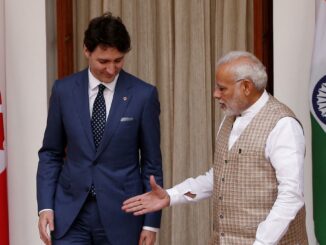
    Indian and Canadian leaders and diplomats have never really engaged; rather, they have talked passed each other. This is occurring today too. For decades, India has felt that Canada has shown scant respect for its interests, especially on the Khalistan issue. On the other hand, Canada believes that India displays little understanding of its laws and governance system, which prevents it from taking actions that India wants. These differing perceptions have been accumulating over the years and a trigger was needed to publicly bring them out. The Nijjar case has been just that.

    Significantly, Canadian Prime Minister Justin Trudeau said, “Canada has shared the credible allegations that I talked about… with India. We… are there to work constructively with India and we hope that they engage with us so that we can get to the bottom of this very serious matter”. The operative words here are “constructively” and “engage”. For India, the problem is that Canada has never shown a willingness for a constructive engagement on its concerns.

    Differing perceptions

    At the UN headquarters on September 21, Mr. Trudeau emphasized that Canada is a country based on the rule of law, and on the need for the global community to uphold a rules-based world order. Canada has obviously made the murder of Hardeep Singh Nijjar a test case for upholding such an order. Implicit in its approach is the proposition that whatever may be the grievances of a country against Canada, the causing of harm to any its nationals is unacceptable. Canada’s allies — the U.S., the U.K., and Australia — are clearly endorsing this proposition by asking India to cooperate with Canada in the investigation. The Indian government has called Mr. Trudeau’s accusation “absurd” and “motivated,” but has offered to look into Canadian concerns if it is given specific evidence.

    For India, national laws cannot become a shield for calling for secession and staging protests which glorify murder. If there is an absence of such laws, then it is necessary for a country to enact them. What Canada is currently doing is condemning Khalistani propagandists involved in hate speech, but not taking legal action against them. There is also a deeper issue. The Canadian law enforcement system does not seem to trust the Indian system. Otherwise, what can be the reason for Khalistani supporters, accused of violence and murder in India, not being sent back to face the law? The principle of ‘constructive engagement’ that Canada wants demands a quiet engagement on the entire gamut of legal processes and practices of both countries so that all grievances can be satisfactorily addressed.

    This is especially so because a strong body of Indians believes that Canadian approaches to governance systems of countries like India is colored, if not racist. For them, the intrusive questions raised by Canada of Indian visa seekers who belong to the security services are unacceptable, for example. They ask if U.S. and British security or defense services personnel who have served in the world’s troubled spots or are accused of torture are asked similar questions. It is the sovereign right of states to give or deny visas, but it is clearly an infringement of the global rules-based order to seek answers that violate a country’s laws and rules. A full bilateral engagement is needed on this issue too.

    The Khalistan issue

    Indian frustrations with Canada on the Khalistan issue go back more than four decades. The Canadian Security Intelligence Service (CSIS) was established in 1984. As many CSIS officers were taken from the police, they were aware of Khalistani activities which, as Stewart Bell notes in his work Cold Terror, began in 1969 when the Khalistan Commando Movement led by Jagjit Singh Chauhan “declared unilateral independence for Punjab” and set up “consulates” in Vancouver, Winnipeg, and Toronto. The Canadian authorities did not take these seriously even when it became apparent in the 1980s that Khalistani supporters were willing to use terror. Tragically, Air India’s Kanishka bombing in June 1985 did not lead to a determination in Canada that terrorism was a universal threat. The threads of Khalistani terror go back to India’s western neighbor. India has given evidence on this score but if Canada and other countries wish to have a quiet dialogue on any of these aspects, India should be willing to have one.

    This background is necessary to recall because it has contributed to Indian responses to Canada’s recent charges. Besides, it would have been wiser for Mr. Trudeau to have sought “constructive engagement” in the Nijjar case in his remarks to the Canadian Parliament; instead, he used harsh language. Mr. Trudeau should have also refrained from expelling a senior Indian diplomat. That would have elicited a more measured Indian response. The Indian tradition of calmly but firmly responding to diplomatic situations has given way to ‘giving it back’. This is popular but is it wise? Measured language is an attribute of strength.

    Canadian officials have publicly refused to divulge the exact nature of the intelligence they possess. They have leaked to the media though that they have human and signals intelligence of India’s involvement in Nijjar’s murder. Naturally, all this has to be converted into evidence which will stand judicial scrutiny. Is this likely even if Canadian allies with Khalistani populations have made it known that they helped Canada gather intelligence in the case? Mutual recriminations are never helpful, especially in resolving issues in important bilateral relationships. Quiet and mature diplomacy is required to clear the air on the Nijjar case and on old but continuing issues.

    (The author is a former Indian diplomat)

  • Democrats need to shove Menendez off the stage

    Democrats need to shove Menendez off the stage

    “Democrats, the only party still adhering to minimal standards expected in a democracy, should not stand by Menendez silently. Sure, Republicans have refused to force out Rep. George Santos (R-N.Y.), the epic fabulist who is facing a 13-count indictment, including for fraud and money laundering, to which he has pleaded not guilty. Yes, Republicans are rallying around Trump (despite the 91 charges he faces in four indictments, all of which he is contesting). But that is precisely why Democrats need to shove Menendez off the political stage. If they want to be the guardians of democracy, the rule of law and truth-telling, they cannot mimic Republicans’ partisan hackery.”

    By Jennifer Rubin

    Sen. Robert Menendez (D-N.J.) is only two indictments short of four-time indicted former president Donald Trump. Previously indicted in 2015 on federal corruption charges, Menendez was spared by a hung jury in 2017. His new indictment, even in 2023, still manages to shock.

    The Post reports, “Sen. Robert Menendez (D-N.J.) and his wife Nadine have been indicted on bribery charges, Justice Department officials announced Friday, detailing what officials said was a corrupt scheme involving gold bars, stacks of cash and using the senator’s powerful position to secretly benefit the Egyptian government.”

    Some choice details from the indictment: “Over $480,000 in cash — much of it stuffed into envelopes and hidden in clothing, closets, and a safe — was found in the home,” in addition to more than $70,000 in the safe-deposit box of Menendez’s wife. And in the sort of tidbit one usually gets only on TV shows, prosecutors say some of the envelopes had the fingerprints or DNA of co-defendant and real estate developer Fred Daibes “or his driver.”

    Although Menendez’s indictment compelled him under Senate rules to step down as chairman of the Senate Foreign Relations Committee, he remains on the committee despite the indictment’s alleging he “provided sensitive U.S. Government information and took other steps that secretly aided the Government of Egypt.” Staying on the committee is untenable. In a statement that, frankly, sounded Trumpian in its grievance and grandiosity, Menendez lashed out at prosecutors and shamefully played the discrimination card. (“Those behind this campaign simply cannot accept that a first-generation Latino American from humble beginnings could rise to be a U.S. Senator and serve with honor and distinction.”) His outrageous accusation ignores five other Latino Americans in the Senate.

    The Democratic senator’s indictment refutes the GOP’s enraged allegations — on full display Wednesday in House Republicans’ interrogation of Attorney General Merrick Garland over the indictment of Hunter Biden — that the Justice Department has been “weaponized” against Republicans.

    Yet this is a moment of choosing for Democrats. Unlike their GOP counterparts, they should not feel compelled to cover their eyes and ears when one of their own appears to be caught red-handed.

    Democrats, the only party still adhering to minimal standards expected in a democracy, should not stand by Menendez silently. Sure, Republicans have refused to force out Rep. George Santos (R-N.Y.), the epic fabulist who is facing a 13-count indictment, including for fraud and money laundering, to which he has pleaded not guilty. Yes, Republicans are rallying around Trump (despite the 91 charges he faces in four indictments, all of which he is contesting). But that is precisely why Democrats need to shove Menendez off the political stage. If they want to be the guardians of democracy, the rule of law and truth-telling, they cannot mimic Republicans’ partisan hackery.

    Let him fight the charges, as he clearly intends to, but not from a perch on Capitol Hill.

    Democrats have risen above partisanship before. During the early stages of the #MeToo movement, Senate Democrats pushed out Sen. Al Franken (Minn.), who resigned in 2017 over conduct that was much less egregious and certainly noncriminal, than that alleged against Menendez. They felt obliged to uphold a standard that Republicans would not. One could argue that they acted too hastily with regard to Franken, but at least they understood that partisanship can be too high a price to pay. If Franken was considered unfit for the Senate, surely they cannot countenance keeping Menendez in their midst. Even if Menendez does not follow Franken’s example and resign under pressure, Democrats should publicly urge him to get out. Fortunately, New Jersey Democratic Gov. Phil Murphy wasted little time calling for Menendez to step down since the allegations are “so serious they compromise the ability of Senator Menendez to effectively represent the people of our state.”

    And to be politically crass, there is zero downside for Democrats to insist Menendez go. Murphy would appoint a successor, and the deep blue state would surely elect a Democrat to fill the seat in 2024, when Menendez’s term is up anyway. Why not do the right thing now, and gain some credibility with voters?

    By late Friday afternoon, a batch of Democrats had called on Menendez to resign, In addition to Murphy, at least two House Democrats, Andy Kim (N.J.) and Dean Phillips (Minn.), have called on Menendez to resign. Phillips told CNN: “I’m appalled. Anybody who pays attention, I don’t care your politics, Democrat or Republican, you should be appalled. A member of Congress who appears to have broken the law is someone who I believe should resign.” A group of New Jersey Democratic congressmen and state politicians soon followed.

    This is one of those times when doing the right thing is good politics. Other Democrats should follow the lead of Murphy, Kim and Phillips.

  • Journalism can’t leave the climate crisis to Netflix and Billie Eilish

    Journalism can’t leave the climate crisis to Netflix and Billie Eilish

    With a few exceptions, mainstream media groups still don’t cover climate as they should. That must change.

    In much of what we see, hear, and read the climate crisis has become inescapable.

    “In 2019, the media’s climate silence began to break, and in the past four years, we have seen encouraging successes. In the United States, major outlets, including The Washington Post, now treat climate change as a subject to cover every day, and not solely as a weather story. Telemundo 51, a Spanish-language TV station in Miami, is pursuing an “all of newsroom” approach that encourages reporters on every beat to talk about climate change, including its solutions.”

    By Mark Hertsgaard and Kyle Pope

    On Netflix, Don’t Look Up spent weeks as the most-streamed movie ever. Pop star Billie Eilish sings about hills burning in California. At the bookstore, climate fiction has become a genre of its own, while Jeff Goodell’s The Heat Will Kill You First, a harrowing nonfiction account of what life on a warming planet will mean, is entering its second month on the New York Times Best Sellers list.

    But where is journalism in all of this? Despite our living through the hottest summer in history, as well as wildfires, tropical storms and crazy-hot oceans, the news media continue to be outdone by the rest of popular culture when it comes to covering the most urgent story of our time.

    Inexplicably, climate change remains a niche concern for most mainstream news outlets. In the United States, most TV coverage of this summer’s hellish weather did not even mention the words “climate change”, much less explain that the burning of oil, gas, and coal is what is driving that hellish weather. Too many newsrooms continue to see climate as a siloed beat of specialists. There are, of course, notable exceptions. The Guardian newspaper, the AFP news agency, and Al Jazeera itself are three news organizations that have long delivered science-based, abundant, comprehensive coverage of the climate crisis as well as its solutions.

    But as excellent as they often are, they are among the outliers; much of the rest of media — particularly television, which, even in today’s digital era, remains the leading source of news globally for the largest number of people — struggle to find their climate footing. We wish it were otherwise. As founders of Covering Climate Now, a global journalism collaboration formed to break the “climate silence” that long prevailed in the media, we have been working to help our colleagues throughout the news business amp up their coverage of the climate story.

    In 2019, the media’s climate silence began to break, and in the past four years, we have seen encouraging successes. In the United States, major outlets, including The Washington Post, now treat climate change as a subject to cover every day, and not solely as a weather story. Telemundo 51, a Spanish-language TV station in Miami, is pursuing an “all of newsroom” approach that encourages reporters on every beat to talk about climate change, including its solutions.

    Overseas, France Televisions (France’s counterpart to Britain’s BBC) has jettisoned traditional weathercasts in favor of a daily “weather-climate bulletin” where viewers can track global warming in real time as an eight-digit electronic counter shows how much today’s temperatures exceed the preindustrial average.

    Yet while dramatic changes in climate have made increased news coverage of extreme weather unavoidable, explaining the climate connection to extreme weather is a different task. Linking changes in the weather to the decisions being made by industries and governments that have overheated the planet is where news coverage needs to end up. As journalists, we have to do better. The broad, general public needs to understand what is happening, why it matters, and, above all, that they can fix it — for example, by voting, by not buying unsustainable products, and by talking to friends and family about doing the same.

    Journalism is at its best when it effectively explains and connects the dots between seemingly disparate events. That means, for instance, learning lessons from how the media covered COVID-19, also a sprawling, complicated story dictated by science. Nobody in the media debated the need to dedicate resources to helping audiences understand COVID-19 and then playing the story big.

    Most outlets ran multiple stories every day, which helped even casual news consumers understand that something important was happening. Journalists grounded our coverage in science, but we did not silo it on the science desk: We covered the pandemic as a health story, a politics story, a business, education and lifestyle story. And we talked not only about the problem but also about its solutions, whether masking and social distancing or vaccinations.

    Climate coverage could take the same approach. In every newsroom in every community, climate change needs to be thought of not as a beat, but as a through line involving everything we do. No corner of the newsroom is exempt — not business or culture, not sports or city hall. On the national level, journalism has to figure out how to make climate change central to our politics coverage. Next year will bring elections in the US, the United Kingdom, the European Union, India, Indonesia, Mexico and Egypt that will have profound effects on the prospects for global climate action.

    Can politics reporters and editors scale back their fixation on horserace coverage and instead provide the kind of coverage that voters need to make informed choices?

    Election coverage should help audiences understand what the candidates will do about the climate crisis if elected, not just what they say. It should hold candidates accountable by asking them not — as Fox did at the first US Republican debate last month — whether they believe in climate change but rather, “What is your plan to deal with the climate crisis?”

    Overall, we also need much more and better coverage of climate solutions. Our colleagues at the Solutions Journalism Network have rightly criticized news coverage that only talks about what is wrong. Telling the whole story also requires examining how that problem might be fixed. What else does “more and better” climate coverage mean?

    We expect some answers to emerge this week at “Climate Changes Everything: Creating a Blueprint for Media Transformation,” a conference at the Columbia Journalism School in New York cosponsored by Covering Climate Now; our founders, the Columbia Journalism Review and The Nation; our lead media partner, The Guardian; and the Solutions Journalism Network. Reporters and editors from news outlets around the world — large and small, commercial and non-profit — will chart a course for how journalists everywhere can tackle the climate story in ways that drive attention and impact and highlight solutions and justice.

    The assembled journalists will draw lessons and inspiration from some of the best climate coverage of the past year, as exemplified by winners of the 2023 Covering Climate Now Journalism Awards, which were just announced. (The conference will be livestreamed and recordings will remain available.)

    With the planet on fire, more and better news coverage is itself an essential climate solution. Only when the general public understands what is happening, why, and what needs to be done can large enough numbers of people compel governments and corporations to change course.

    Many news outlets have made significant progress in recent years. But the news industry as a whole is still not matching the scale of the crisis with the kind of coverage that is required.

    Until that happens, journalism is letting down our readers, viewers, and listeners — and letting Netflix and Billie Eilish handle a job that is ours. (Mark Hertsgaard is Co-founder of Covering Climate Now and environment correspondent of The Nation. Kyle Pope is Co-founder of Covering Climate Now, editor and publisher of Columbia Journalism Review)
    (Source: Al Jazeera)

  • Political red herring: On the move to impeach Joe Biden

    The attempt to impeach Biden might backfire against the Republicans

    The recent announcement by the U.S. House of Representatives Speaker, Republican Kevin McCarthy, that the lower chamber of Congress would move to impeach President Joe Biden is likely to be along expected lines as far as Democrats are concerned. With the next presidential election in a little more than 13 months, the Republicans have much to gain by muddying the waters and distracting voters from the fact that the U.S. economy has rebounded from the pandemic-years slowdown. Amidst a dearth of obvious political targets within the Democratic machinery, Mr. McCarthy has chosen to go after the President’s son, businessman Hunter Biden, training his guns on his business dealings that allegedly resulted in benefits accruing to the senior Mr. Biden during his term as Vice President in the Obama administration. The House majority case against the Biden clan appears to be tenuous. With regard to the August memorandum of the House Oversight Committee, which alleged that Mr. Biden and his associates were paid more than $20m by “foreign sources”, the Chair of the very same Committee, Republican James Comer, conceded recently that a scrutiny of bank records did not yield evidence. Similarly, allegations that the Biden “brand” was used to peddle influence in business matters to the favor of Mr. Biden do not appear to be standing up to scrutiny, according to a report from the Congressional Integrity Project, a Democrat-aligned watchdog group. Finally, claims based on an “unverified FBI tip”, that Mr. Biden paid off prosecutors to end an inquiry into Burisma, a Ukrainian energy firm on whose Board Hunter Biden had a seat, have also failed to unearth a smoking gun; so too allegations, based on the testimony of two whistle-blowers that the Justice Department “intentionally interfered in a multi-year investigation into Hunter’s tax return”.

    Even if Mr. McCarthy manages to drag Mr. Biden through a full impeachment, the 46th President will be acquitted in the Senate. The elephant in the House is the double impeachment of former U.S. President Donald Trump. Perhaps in a bid to seek a false equivalence to that dubious record and in the hope of dampening voter support for Democrats next year, Mr. McCarthy is attempting to simultaneously win favor with Mr. Trump and shore up his own wobbly support base in the House. Whatever his motivations, Mr. McCarthy’s proposed public spectacle risks a serious voter blowback in next year’s election, as Democrats may rally to Mr. Biden’s cause in greater numbers, and the all-important independent voters may associate this maneuver with unproductive partisanship and Mr. Trump’s long shadow over the Republican Party.
    (The Hindu)

  • Legislating change: On the passage of the women’s reservation bill in the Lok Sabha

    The Women’s Reservation Bill must be passed in its current form without further delay

    The passage of the women’s reservation bill in the Lok Sabha almost three decades after it was first tabled in Parliament is a welcome move that can finally shatter a political glass ceiling. With women Members of Parliament comprising only about 15% of the strength of the Lok Sabha, the gender inequality in political representation is stark and disturbing. The 128th Constitution Amendment Bill, or the Nari Shakti Vandan Adhiniyam, seeks to amend this by reserving a third of the seats in the Lok Sabha and legislative Assemblies for women. It has a 15-year sunset clause for the quota, that can be extended. Considering the fraught history of the struggle for women’s reservation, and several false starts despite the Rajya Sabha passing it in 2010, it is laudatory that the first Bill to be introduced in the new Sansad Bhavan has been passed in the Lok Sabha. But its implementation will be delayed as it has been tied to two factors, delimitation and the Census, and therein lies the rub. It is unfortunate that implementation is being linked to delimitation, for the principle of having a third of seats reserved for women has nothing to do with the territorial limits of constituencies or the number of Assembly or Lok Sabha constituencies in each State.

    Women will thus not have access to 33% reservation in the 2024 general election. The Bill also mandates that as nearly as one-third of the seats reserved for Scheduled Castes and Scheduled Tribes will be set aside for women. The Opposition is demanding an internal quota for women of Other Backward Classes, but this should not be used as a ruse to delay implementation. In the meantime, proposals should be fine tuned to ensure that when it becomes an Act, it is not mere tokenism for women’s political representation. It is a fact that local bodies are better represented, with the share of women in panchayati raj institutions well above 50% in several States. Lessons must be imbibed on how women at the grassroots level have broken all sorts of barriers, from patriarchal mindsets at home to not being taken seriously in their official duties, and made a difference. Women struggle on so many other counts: they have uneven access to health, nutrition and education, there is a lack of safe places, women are also falling out of the workforce — among the G-20 countries, India’s female labor force participation is the lowest at 24%. India, which gave women voting rights at the very outset, should not falter when it comes to ensuring better political representation for women. For growth, and instituting change in key areas, women need to have their say.
    (The Hindu)

  • Challenge for INDIA to craft a narrative

    Challenge for INDIA to craft a narrative

    Parties well aware that a third term for Modi could wipe them off the national political landscape

    Indeed, this year’s Assembly polls will shed light on where INDIA stands vis-a-vis the BJP on a host of issues.

    “However, the biggest challenge for INDIA is to craft a narrative. At every step in the march towards electioneering, the BJP has stumped the Opposition by drawing upon various manifestations of the Hindutva discourse that are loaded with the potential to polarize the polity. If Rahul Gandhi strove to answer the BJP’s provocation by drawing a distinction between the Hindu religion and the political Hindutva espoused by the Sangh, the Congress’s ally, the DMK — a valuable INDIA constituent — took the debate to another level, questioning the basic tenets of Hinduism. On his ongoing European tour, where he has met parliamentarians and academics, Rahul described the Opposition’s battle against the BJP as a “fight for the soul of India” and maintained that based on his reading and understanding of Hindu religious texts, nowhere did the faith advocate terrorizing and harming people weaker than the oppressor. “So, this idea, the word Hindu nationalism, this is a wrong word,” he stated.”

    By Radhika Ramaseshan

    The Union Government’s grandiose mission to reaffirm India’s primacy in the global order gained momentum with Chandrayaan-3’s insertion into the lunar orbit and successfully culminated in the G20 summit last week in New Delhi before Prime Minister Narendra Modi handed over the presidency baton to Brazilian President Luiz Inacio Lula da Silva. This year’s Assembly polls will shed light on where INDIA stands vis-a-vis the BJP on a host of issues.

    The overwhelming ‘Vishwaguru’ honorific was affixed to Modi in 2022 itself, before the Uttar Pradesh elections. Among the themes then running through the BJP’s campaign was a depiction of the PM as a world leader whose ‘strong’ mediation in the Russia-Ukraine conflict thwarted the outbreak of the third World War. The claim gained currency in the political chatter heard even in UP’s boondocks. The success of the G20 summit — with its key takeaways being the please-all New Delhi Declaration which refused to condemn Russia’s invasion of Ukraine, the announcement of an ambitious economic corridor connecting Europe, West Asia and India, and the induction of the African Union — is bound to enhance Modi’s larger-than-life persona in the run-up to this year’s state polls and the 2024 Lok Sabha battle.

    Where does the build-up leave the Indian National Developmental Inclusive Alliance (INDIA), encompassing as it does a wide swath of the Opposition, the Congress included, that has banded together for sheer survival? The parties in the alliance are cognizant of the possibility that a third term for a Modi-led BJP could wipe them off the national political landscape.

    Hope, even in slivers, sometimes comes from unexpected quarters. On the day the summit began with the expected fanfare and extravaganza, the results of seven bypolls across six states were announced. These were the first to be held after INDIA’s formation. While the bloc’s leaders did not go as far as to claim that the outcome would be a referendum on the coalition, INDIA constituents won four seats, including Ghosi (Uttar Pradesh) and Dumri (Jharkhand). Ghosi was held by the Samajwadi Party since 2022, but a by-election was necessitated when its legislator Dara Singh Chauhan resigned and joined the BJP. The SP retained the seat with a huge margin (for an Assembly byelection) of over 40,000 that was brought about not by a carefully wrought caste equation but by the pooling of votes of all representative castes and Muslims. Even Dalits voted for the SP possibly because the BSP had not put up a candidate. BSP chief Mayawati’s directive to her voters was to go for NOTA but few, if any, heeded her order.

    What did the bypolls portend for the Opposition bloc? Akhilesh Yadav, the SP president, who lost the 2014 and 2019 Lok Sabha polls, apparently realized the criticality of putting up a joint front against the BJP because he did not appropriate the credit for the Ghosi victory. “It is a victory for positive politics and a defeat for negative communal politics. It is Bharat starting towards INDIA’s victory,” he said. This despite the marginal role the Congress played in the by-election. INDIA stands as a durable coalition in Jharkhand, helmed by the Jharkhand Mukti Morcha, unlike its neighbor Bihar, where Chief Minister and JD(U) chief Nitish Kumar’s subjective reactions to events and developments cause unwanted conjectures about his intent. In Maharashtra, NCP chief Sharad Pawar’s periodic meetings with his supposedly estranged nephew Ajit Pawar (now the deputy CM in a BJP-forged coalition government) prompted the Congress and the Uddhav Thackeray-helmed Shiv Sena faction to pencil a ‘Plan-BJP’ without the NCP.

    The existing political dynamics rule out a non-BJP alliance in West Bengal and Kerala, while the Left Front might be forced to seek the Congress’s hand in Tripura, where it has been steadily marginalized by the BJP.

    However, the biggest challenge for INDIA is to craft a narrative. At every step in the march towards electioneering, the BJP has stumped the Opposition by drawing upon various manifestations of the Hindutva discourse that are loaded with the potential to polarize the polity. If Rahul Gandhi strove to answer the BJP’s provocation by drawing a distinction between the Hindu religion and the political Hindutva espoused by the Sangh, the Congress’s ally, the DMK — a valuable INDIA constituent — took the debate to another level, questioning the basic tenets of Hinduism. On his ongoing European tour, where he has met parliamentarians and academics, Rahul described the Opposition’s battle against the BJP as a “fight for the soul of India” and maintained that based on his reading and understanding of Hindu religious texts, nowhere did the faith advocate terrorizing and harming people weaker than the oppressor. “So, this idea, the word Hindu nationalism, this is a wrong word,” he stated.

    DMK scion Udhayanidhi Stalin’s remarks against Sanatan Dharma were rooted in the Dravidian ideology, which was founded on the premise of weeding out Brahminism that was equated with Hinduism and Sanatan Dharma. While Stalin junior’s speech, delivered at a ‘Sanatan abolition’ conclave in Chennai, served the DMK’s political intent, it put the Congress in a quandary after the BJP demanded answers and clarifications from its leaders. Some took a safe middle path and steered clear of giving a straight reply, while former CM Kamal Nath, who unabashedly advocates Hindutva in his fight to wrest Madhya Pradesh from the BJP, repudiated Udhayanidhi.

    Indeed, this year’s Assembly polls will shed light on where INDIA stands vis-a-vis the BJP on a host of issues.

    (The author is a senior journalist)

  • India-led G20 makes headway on sustainable development

    India-led G20 makes headway on sustainable development

    Demonstrating concrete action on climate change, a Global Alliance for Biofuels was announced by India.

    “For India, the wording on global net zero is a reclamation of significant policy space in the climate domain along with a clear recognition of its view that not just countries but the people — the poorest and most vulnerable — should not be forgotten in multilateral negotiations. Recognizing the need for action on fossil fuels, the declaration underlined action on inefficient fossil fuel subsidies that encourage wasteful consumption and the need to expand cleaner technologies, including small modular nuclear reactors, triple renewal energy capacity globally and green hydrogen. Furthermore, demonstrating concrete action on climate change, a Global Alliance for Biofuels was announced by India.”

    By Manjeev Puri

    India  has emerged as a shining star in the global firmament with the success of the G20 summit, demonstrating its ability to become a bridge between the developed and the developing worlds and also a voice of the Global South. The leadership of Prime Minister Narendra Modi and the deft diplomacy of India’s Sherpa Amitabh Kant as well as the External Affairs Ministry team have earned high praise, and rightly so.

    For many, the big achievement was bringing the G20 to a consensus on the Delhi Declaration, especially on the contentious matter of the Ukraine war on which the group faltered in Bali last year. India began by suggesting a completely new text that recalled the Bali Declaration but dropped condemnation of Russia. In a smart move, India co-opted other emerging powers — Brazil, South Africa and Indonesia — and their combined efforts forged a ‘deal’ that Russia could live with and the West found expedient to accept.

    True, the Ukrainians have aired their disappointment, but that is really addressed to their Western supporters, who will have to explain their G20 stance to their people and opposition parties. Basically, though, for them (the West), the continued relevance of the G20 was an imperative, more so as the Chinese gave an impression of undermining the grouping by the absence of their President. Moreover, the West, and indeed most of the world, clearly recognizes India by itself as very important — both as a huge and growing market, including for defense equipment, and as a bulwark against Chinese hegemony, especially in the Indo-Pacific.

    With the ‘resolution’ on Ukraine in place, it was prudent for the Chinese to lift reservations on India-suggested ideas such as LiFE (Lifestyle for Environment), women-led development, digital public infrastructure, etc., given that the Delhi Declaration sought to push the agenda of the Global South. The inclusion of the African Union as a member of the G20, at India’s instance, led to a changed approach, along with the fact that accelerating progress on Sustainable Development Goals, where the world is well behind the target, was a major objective of the declaration.

    While focusing on the Delhi Declaration’s pronouncements on sustainable development, climate change and energy, it needs to be highlighted that the G20 is about impacting rule-making by the relevant de jure body, be it the UN, the UN Framework Convention on Climate Change (UNFCCC), WTO or the IMF/World Bank. And this has been done in a major manner in Delhi and should raise optimism among activists who point to the fact that no large-scale funds have been specifically committed for climate action, including the loss and damage fund, or even resolving debt issues.

    Monies, obviously, are the key resource. Therefore, perhaps, most important is the commitment to reorient multilateral development banks (MDBs) to poverty eradication and prosperity in a sustainable world. Actions as per this template should tackle capital adequacy at the MDBs and help them move private flows in a significantly enhanced manner to developing countries through de-risking. Indeed, a major outcome of the proposal by Prime Minister Modi of a virtual G20 event in November-end could be a report on MDB reforms by a high-level expert group co-led by Prof Larry Summers of the US and NK Singh of India. All of this was also underscored in a declaration involving India, the US, Brazil and South Africa — along with World Bank President Ajay Banga — issued on the sidelines of the G20 summit.

    The declaration itself center-staged the huge sums required for climate action, moving the needle from billions to trillions of dollars. Specifically, it noted “the need for $5.8-5.9 trillion in the pre-2030 period required for developing countries as well as the need for $4 trillion per year for clean energy technologies by 2030” for net-zero emissions by 2050.

    Secondly, it has forced the developed world to set a New Collective Quantified Goal, which is ambitious, transparent and trackable, for its assistance to developing countries (recall $100 billion a year pledged in Copenhagen, 2009, which is still to be realized) and double the collective provision for adaptation finance. Of course, it would have been good had a push been given in Delhi for the setting of a global goal for adaptation at COP28 in Dubai in November-December this year.

    Net zero (GHG emissions) has been an objective of the global community since the UNFCCC meeting in Glasgow in 2021. Interestingly, the Delhi Declaration is unambiguous that this is a global goal and that the mid-century global goal does not imply peaking in all countries within a similar timeframe. Hopefully, this will push the developed countries to recognize that they need to achieve this milestone well before 2050 as a show of intent and their commitment towards the Paris Agreement’s principle of equity and common but differentiated responsibilities (CBDR) and respective capabilities.

    For India, the wording on global net zero is a reclamation of significant policy space in the climate domain along with a clear recognition of its view that not just countries but the people — the poorest and most vulnerable — should not be forgotten in multilateral negotiations. Recognizing the need for action on fossil fuels, the declaration underlined action on inefficient fossil fuel subsidies that encourage wasteful consumption and the need to expand cleaner technologies, including small modular nuclear reactors, triple renewal energy capacity globally and green hydrogen. Furthermore, demonstrating concrete action on climate change, a Global Alliance for Biofuels was announced by India.

    (The author is a former Ambassador and Distinguished Fellow, TERI)

  • The G-20 should abolish itself

    The G-20 should abolish itself

    Eliminating G-20 meetings would free up the leaders’ time to focus on real issues, not diplomatic niceties

    “Consider what gave real impetus to the annual G-20 process, the 2008 financial crisis. In November 2009, with his history a little shaky, incoming European Council President Herman Van Rompuy (a former Belgian prime minister) proclaimed 2009 to be “the first year of global governance, with the establishment of the G-20 in the middle of the financial crisis. The climate conference in Copenhagen is another step toward the global management of our planet.” One can only imagine how many Americans remain unaware of the G-20’s role in global governance, much less agree that there should be global governance or a G-20 role in it.”

    By John R. Bolton

    The annual Group of 20 festivities, this year in India, are now concluded. It is appropriate to ask exactly what these gatherings accomplish. For the process-obsessed, every international meeting among heads of state or diplomats is positive, regardless of whether anything concrete is achieved. The G-20 exemplifies this misconception. Mountains of final communiqués, joint statements and outcome documents have contributed to global deforestation but little else.

    Moreover, leaders’ summits are preceded by endless cabinet-level meetings: foreign ministers, treasury ministers and environmental ministers, all producing rivers of deathless prose. Who remembers, though, the ringing declarations of last year’s G-20 gathering in Bali, much less those of previous years?

    Consider what gave real impetus to the annual G-20 process, the 2008 financial crisis. In November 2009, with his history a little shaky, incoming European Council President Herman Van Rompuy (a former Belgian prime minister) proclaimed 2009 to be “the first year of global governance, with the establishment of the G-20 in the middle of the financial crisis. The climate conference in Copenhagen is another step toward the global management of our planet.” One can only imagine how many Americans remain unaware of the G-20’s role in global governance, much less agree that there should be global governance or a G-20 role in it.

    Van Rompuy’s job helps explain the global-governance mind-set, which infects the G-20 and other international “institutions.” The European Council consists of European Union heads of state or government. Its presidency once rotated every six months among the members, until the Treaty of Lisbon created a 30-month presidential term, renewable once. Van Rompuy was the first president so elected, making him in E.U. eyes equivalent to the president of the United States. Fancy that. No wonder he was qualified to speak of global governance.

    Many originally saw the G-20 as a broader alternative to the global West’s Group of Seven, comprising the world’s largest industrial democracies. The G-7 itself has had its ups and downs. For example, it became a G-8 by adding Russia, but Moscow’s inconvenient 2014 Ukraine invasion resulted in its expulsion. It was the G-7’s weak response in 2014 and later, reflecting the West’s collective failure to punish Russia, that undoubtedly emboldened Moscow to invade Ukraine even further last year. The attack galvanized the G-7, surprisingly, more than anything in several decades.

    By contrast even to the G-7 herd of cats, the G-20 has been feckless. Because the group includes Russia and China, its final joint statement in India contained only an anodyne comment on Russia’s unprovoked aggression against Ukraine, even weaker than its 2022 statement. Every G-20 member holds veto power over a consensus leaders’ statement, so it should be no surprise that nothing much happened this weekend in New Delhi, as in the United Nations Security Council, where Russia and China also hold veto power.

    When asked to justify the G-20, supporters invariably say it provides a useful platform for members to confer bilaterally outside the larger meeting. It is true the G-20 enables this diplomatic version of speed dating, but so do any number of other forums, not least the U.N. General Assembly’s opening next week in New York. The real question is whether endless rounds of brief encounters have any measurable utility.

    President Biden’s Friday meeting with Indian Prime Minister Narendra Modi derived nothing from being attached to a G-20 gathering. The meeting could have important consequences, as could Biden’s announcement of new rail and shipping connections among India, the Middle East and Europe. But it could just as easily have taken place, and perhaps with even greater media coverage, during a stand-alone visit by the U.S. president. Biden’s second stop on this trip, Vietnam, was also strategically correct — and was enhanced by his not being surrounded in Hanoi by a small mob of other world leaders.

    Many observers correctly noted that the absences in India of Russia’s Vladimir Putin and China’s Xi Jinping gave Biden a solo opportunity to make America’s case on key issues. But there is substantial reason to think China and Russia simply don’t value the G-20 as much as other forums. Putin hasn’t attended since the 2019 G-20 in Japan (2020 being a virtual summit for all because of the pandemic). Xi skipped 2021 (beaming in only by video) as well as this year. If the G-20 were so important, it is inexplicable that Xi chose not to make even a brief appearance, especially in India, where his absence is being taken as a slap in the face.

    It takes nothing away from India, and its extensive preparations for this G-20, to emphasize how evanescent these meetings are. In international affairs, pretending is not a sound basis for policy. Eliminating G-20 meetings would free up the leaders’ time to focus on real issues, not diplomatic niceties.

    (John R. Bolton served as national security adviser under President Donald Trump and is the author of “The Room Where It Happened: A White House Memoir.”)

    (First published in Washington Post)

  • Dog whistle for caste mobilization

    Dog whistle for caste mobilization

    In Tamil Nadu’s backward-caste electoral politics, Sanatan Dharma is a phrase to abuse Brahmins

    “So, Periyar’s politics suited the upsurge of backward-caste pride and empowerment, as it turned electorally insignificant Brahmins into a racial ‘other’. The Congress had a considerable number of Brahmin leaders, and in all probability, it was to attack the Congress and Mahatma Gandhi that Periyar turned Sanatan Dharma into a catchphrase of abuse. His pro-British leanings were evident in his opposition to the freedom movement and his refusal to accept freedom in 1947. It was this pro-British, anti-Brahmin politics that laid the intellectual framework for Tamil secessionism, which has cost the nation the lives of many, including that of former Prime Minister Rajiv Gandhi — the LTTE leadership of Sri Lanka always relied on the extremist Dravidar Kazhagam cadre for intellectual succor on the mainland.”

    At the national level, the Stalins’ attack on Sanatan Dharma has embarrassed the INDIA coalition no end. And therein lies the irony of Indian politics — what is a dog whistle for caste mobilization in one state can turn into a communal own-goal alarm in another. When all is said and done, here is a request to these great progressive leaders — please don’t stigmatize diseases like HIV and leprosy by turning them into metaphors of hatred.

    By Rajesh Ramachandran

    Sanatan Dharma means eternal values. Then, why should the DMK leadership have any quarrel with everlasting virtues, leave alone abuse it in the vilest possible terms by equating them with deadly diseases? Herein lies the dog whistle of the so-called Dravidian politics. In Tamil Nadu’s backward-caste electoral politics — otherwise known as Dravidian ideology, which has no currency in other South Indian states — Sanatan Dharma is a code word or phrase to abuse and demean Brahmins.

    If Periyar used the attack against Sanatan Dharma to delegitimize Congress, the tactic is being used by the Stalins to paint the BJP as a Brahminical enterprise out to disempower TN’s backward castes.

    For the backward-caste politicians of Tamil Nadu and their voters, Sanatan Dharma symbolizes Brahminical hegemony, ritualism, superstition and feudal overlordship of the Brahmins. Just as a Hindutva politician may use the dog whistle of the Muslim ‘other’, the backward-caste politicians of Tamil Nadu use Sanatan Dharma to whip up anti-Brahmin sentiments and mobilize their own caste brethren. In fact, EV Ramasamy Naicker — famous as Periyar — had packaged hatred for Brahmins into an ideology, terming the platform Dravidar Kazhagam.

    Intriguingly, both RSS and Dravidar Kazhagam were formed in the same year, 1925, and both have been accused by their detractors of being British stooges. Periyar, when he was the Madras Presidency Congress Committee chief, had an epiphany to fight the Brahmins instead of the British and joined hands with the pro-British Justice Party, led interestingly by a Nair (for Periyar, all non-Brahmins were oppressed, however big landlords they were). Then, Dravidian politicians are mostly from the middle castes, though technically categorized as backward or most backward castes. Most of those who claim Chola and Pandya lineage are now beneficiaries of backward-caste quotas in Tamil Nadu.

    So, Periyar’s politics suited the upsurge of backward-caste pride and empowerment, as it turned electorally insignificant Brahmins into a racial ‘other’. The Congress had a considerable number of Brahmin leaders, and in all probability, it was to attack the Congress and Mahatma Gandhi that Periyar turned Sanatan Dharma into a catchphrase of abuse. His pro-British leanings were evident in his opposition to the freedom movement and his refusal to accept freedom in 1947. It was this pro-British, anti-Brahmin politics that laid the intellectual framework for Tamil secessionism, which has cost the nation the lives of many, including that of former Prime Minister Rajiv Gandhi — the LTTE leadership of Sri Lanka always relied on the extremist Dravidar Kazhagam cadre for intellectual succor on the mainland.

    All this would have been fine had it not been for the inherent hypocrisy. Now, the Brahmins are a defeated, minuscule minority in Tamil Nadu, fleeing their homeland in search of prosperity. The old Brahmin hegemony over temples and the community at large is a thing of the past. And the sweetest irony is that the Dravidian cadres are great believers and temple-goers. Since Sanatan Dharma is for them only a term of racial abuse against Brahmins, the DMK voters do not see a dichotomy in their contempt for Brahminism and their belief in Hinduism or temples.

    Tamil Nadu Chief Minister MK Stalin’s son Udhayanidhi Stalin, thus, can afford to read out a written speech seeking the ‘eradication’ of Sanatan Dharma because it is now being equated with the politics of Hindutva and the Sangh Parivar, thereby very significantly drawing a parallel between Brahminism and the BJP, delegitimizing the Hindutva party as an organization that perpetuates Brahminical hierarchy in society. If Periyar used the attack against Sanatan Dharma to delegitimize the Congress, the tactic is being used by the Stalins to paint the BJP as a Brahminical enterprise out to disempower the backward castes of Tamil Nadu.

    This is politics of caste hatred nuanced as electoral messaging which the speaker and the listener understand. And it doesn’t mean anything more than that. For, it was only last month that Durga Stalin, Udhayanidhi’s mother, offered a gold crown to the deity of the famous Guruvayoor Krishna temple in Kerala, where daily prayers are done according to Vedic rituals. Only the most devout make the trip to Guruvayoor or an astrologer ought to prescribe it as a remedy for some dosha. Either way, Durga wouldn’t have made this expensive gift had it not been to seek Lord Krishna’s blessings for her husband and son.

    Worse hypocrisy is to explain Sanatan Dharma in terms of casteism and untouchability. For, terrible caste discrimination exists in established TN Christian churches and even in village tea shops, where the two-tumbler system prevailed for long — one for forward/backward castes and the other for the Dalits. Why, even Periyar is accused of not having visited the site of the massacre of 44 Dalits at Keezhvenmani in 1968.

    A Dalit activist-writer has quoted Periyar’s magazine Viduthalai, in which he is alleged to have spoken thus about Keezhvenmani: “The Communists are pretending to help you. They give promises of a pay hike and a better life. But a wage hike is not possible through political agitations. It is only possible from the market value of the commodities. Instead of teaching you (Dalits) how to live peacefully with the wages you get, they want to create riots in the state and they want to get the DMK government disturbed.”

    The landlord of Keezhvenmani, prime accused Gopalakrishna Naidu, belonged to Periyar’s caste. Not surprisingly, the DMK government till today is in the dock for having made the police mute spectators to the massacre and then later letting Naidu get acquitted after an appeal. So, the DMK’s anti-caste talk should be tempered with the understanding of anti-Dalit atrocities, just as all talk of Dravidian rationalism should be counterpoised with the donation of a gold crown to Lord Krishna by the first family.

    At the national level, the Stalins’ attack on Sanatan Dharma has embarrassed the INDIA coalition no end. And therein lies the irony of Indian politics — what is a dog whistle for caste mobilization in one state can turn into a communal own-goal alarm in another. When all is said and done, here is a request to these great progressive leaders — please don’t stigmatize diseases like HIV and leprosy by turning them into metaphors of hatred.

    (The author is editor-in-chief of Tribune group of publications)

  • For an expanse of blue, with air so clean 

    For an expanse of blue, with air so clean 

    On International Day of Clean Air for Blue Skies (September 7), there is urgent need to address risks posed by pollution

    • By Benno Boer, Srishti Kumar, Neha Midha

    “The world is not just grappling with climate change, but also with another silent killer — air pollution. Global health statistics reveal a disturbing scenario with lung cancer claiming 10 million deaths worldwide in 2020, as stated in the World Health Organization (WHO) factsheet published in 2023. This could soar by another 3.2 million by 2050 according to a report, ‘Mapping of global, regional and national incidence, mortality and mortality-to-incidence ratio of lung cancer in 2020 and 2050’, by the Indian National Institute of Health. South Asia, home to two billion people, is also home to nine of the world’s 10 most polluted cities, including Delhi, where the air quality continues to pose a perilous long-term threat putting its inhabitants at risk each day. While policy measures have led to statistical improvements in the Air Quality Index (AQI), the health risks associated with Delhi’s polluted air persist. Delhi is knocked to its knees every winter facing hazardous levels of air pollution.”

    Youngsters around the world are taking charge of environmental advocacy, running marathons, and tracking real time data of air quality, creating environmental awareness. But the absence of a specific Sustainable Development Goal (SDG) for ‘Clean Air to Breathe’ indicates a lack of global attention.

    Dr. Benno Boer

    According to UN Secretary-General António Guterres, the earth has entered the era of global boiling. Scorching heatwaves, devastating floods and erratic weather patterns are stark reminders for an urgent need to address the triple-planetary crisis of biodiversity loss, climate change and pollution.

    The world is not just grappling with climate change, but also with another silent killer — air pollution. Global health statistics reveal a disturbing scenario with lung cancer claiming 10 million deaths worldwide in 2020, as stated in the World Health Organization (WHO) factsheet published in 2023. This could soar by another 3.2 million by 2050 according to a report, ‘Mapping of global, regional and national incidence, mortality and mortality-to-incidence ratio of lung cancer in 2020 and 2050’, by the Indian National Institute of Health. South Asia, home to two billion people, is also home to nine of the world’s 10 most polluted cities, including Delhi, where the air quality continues to pose a perilous long-term threat putting its inhabitants at risk each day. While policy measures have led to statistical improvements in the Air Quality Index (AQI), the health risks associated with Delhi’s polluted air persist. Delhi is knocked to its knees every winter facing hazardous levels of air pollution.

    Lung cancer, cardiovascular disorders, respiratory ailments, and mental health issues continue to destroy lives. Delhi’s air, a lethal mix of SO2 (sulphur dioxide) and NOX (nitrogen oxides), along with high particulate matter concentrations (2.5 or even 10µg/m3), carbon monoxide and ozone, deprive over 30 million residents of their human right to breathe clean air.

    The air pollution toll is troublesome especially for immunocompromised individuals, pregnant women, children, and the elderly. As per a Lancet Report, 1.67 million pollution-related deaths were attributed to air pollution in India in 2019, accounting for a staggering 17.8% of the total deaths in the country.

    Efforts to combat this crisis are already being made. State governments, research institutions, and NGOs are pioneering solutions such as the PUSA Decomposer, developed by the Indian Agricultural Research Institute (IARI), employing biotechnology to address agricultural pollution. State-level policies such as GRAP 3 (Graded Rapid Action Plan), monitoring air quality in hotspots, and establishing Green War Rooms, have shown some potential. Many innovative startups involving young entrepreneurs are turning agricultural waste into valuable products.

    Viable solutions

    Acknowledging the existence of air pollution remains the primary step towards solutions. Next comes a debate on viable solutions and actions, many of which are already known. Eventually, these best practices need to be implemented. Without implementation, the best laid out plans will not lead to any improvement. Globally, cities such as Ljubljana (Slovenia), Accra (Ghana), Seville (Spain), Bogota (Colombia), Medellin (Colombia), epitomize the power of prioritizing human health and environmental sustainability. Car-free zones, green spaces, smart urban designs, electrified public transportation, nature-based solutions, and innovative biotechnology demonstrate positive results. China’s shift to clean energy and e-mobility after battling severe pollution, Indonesia’s project on ‘Carbon Efficient Farming’ assessing biomass to reduce CO2 emissions, Thailand and Vietnam undertaking measures to reduce open straw burning, are all gleams of hope.

    UNESCO’s initiatives to combat air pollution include implementing an internal carbon tax on all flight tickets, and investing in emission reduction measures. The World Air Quality Project allows residents to make informed decisions by real time Air Quality data. In collaboration with UNEP, environmentally conscious practices have been introduced such as digital working via the ‘Virtual Meetings’ project. Clean-Air-For-Schools is spreading education among all for clean air. Other laudable activities include switching to electric vehicles, replacing lighting systems to greener LED arrangements, implementing solar powered offices, protecting historical sites by developing strategies to curb air pollution, and effective green solutions ( urban forests, parks, green corridors).

    Youngsters around the world are taking charge of environmental advocacy, running marathons, and tracking real time data of air quality, creating environmental awareness. But the absence of a specific Sustainable Development Goal (SDG) for ‘Clean Air to Breathe’ indicates a lack of global attention.

    However, in 2019, laying emphasis on the interest of the international community for clean air, and the need to improve air quality, the UN General Assembly decided to designate September 7 as the International Day of Clean Air for Blue Skies. Nevertheless, clean air remains a long stride in many mega-cities and other places. We hope that a concerted action to systematically improve the air quality including in Delhi will receive priority attention. The problem has been caused by people, so it should be people who will find and apply solutions, supported by innovative adequate air quality policies and action plans. As we inhale the consequences of our actions, the ultimate question beckons: are we the torchbearers of change for the future of our planet or will we be silent bystanders who let pollution script a tragic ending?

    (Benno Böer is the Chief of the Natural Sciences Unit, UNESCO Multisectoral Regional Office for Bangladesh, Bhutan, India, Maldives, Nepal and Sri Lanka. Neha Midha is the National Programme Officer, UNESCO Multisectoral Regional Office for Bangladesh, Bhutan, India, Maldives, Nepal and Sri Lanka. Srishti Kumar is a UNESCO Natural Sciences Intern. UNESCO is a member of Team UN in India, together helping deliver on the Sustainable Development Goals)

  • Playing out a farce: On government and legislature functioning in Manipur

    The Manipur Assembly disregards duty by adjourning sine die at a time of crisis

    Given what transpired on Tuesday, it is difficult not to term the functioning of the government and the legislature in conflict-ridden Manipur a farce being played out in the State. The Assembly met just before the stipulated six months after the last session on March 3. Article 174(1) of the Constitution mandates that sittings have to take place within six months of the end of the previous session. Incomprehensibly, the session was adjourned sine die just 48 minutes after it began; there was barely 11 minutes of business with 10 MLAs of the Kuki-Zo community also absent. Chief Minister N. Biren Singh had reportedly invited the absentee Kuki MLAs to the House, by guaranteeing their security, but they denied having spoken to him and refused to buy the guarantee by pointing to the law and order situation in the Imphal valley. This reiterates the breakdown of trust between legislators of one community and the government’s leadership despite a sharing of party affiliations. The session was originally set to convene on August 21, but the Governor, Anusuiya Uikey, had, inexplicably, not issued the notification summoning the House, despite the Cabinet’s advice to her on August 4. That legislative functions have been so poorly conducted when there are pressing issues related to the rehabilitation of displaced residents, the recovery of looted weapons, the persisting ethnic divide leading up to “economic blockades” and the sporadic violence, indicate the failure of a government that commands an electoral majority in the House.

    The Manipur Assembly is no stranger to controversy. In its previous iteration, little heed was paid to parliamentary conventions, as it was marked by rampant defections, exemplified by the case of Congress MLA T. Shyamkumar, who became a Minister in the Bharatiya Janata Party-led government and later stripped of his office by the Supreme Court which had lost patience with the Speaker’s inaction after his blatant violation of the anti-defection law. This time around, the BJP regime suffers a severe legitimacy deficit — in its inability to bring about a turnaround in the deterioration of ethnic relations following the May 3 violence and to conduct proper legislative sessions to at least discuss a way out. Ethnic conflicts present complex problems, but the use of constitutional means is a must to enable workable solutions. As things stand, the two sparring communities in the State are veering towards positions that are becoming even more intractable as the government continues to flounder. The BJP is mistaken if it continues to believe that its ham-handed approach to retain the status quo in leadership will yield a breakthrough in the State.
    (The Hindu)

  • J&K poll process

    With the Centre telling the Supreme Court that elections can be held in Jammu and Kashmir ‘anytime now’, there is reason enough to hope that the state-turned-UT will finally witness the restoration of electoral democracy. Asserting that it is ready to conduct the elections, the Central Government has put the onus on the Election Commission of India and the UT election panel to decide which poll will take place first. In the Centre’s scheme of things, J&K elections will have three tiers — panchayats, municipal bodies and the legislative Assembly.

    Since the revision of the voters’ list is set to be completed in a month or so, it is expected that at least one election would be held before the year-end — if all goes well. Going by the Centre’s contention that terror-related incidents have gone down by 45 per cent since 2018 and instances of infiltration have dropped by 90 per cent, expediting the poll process is the need of the hour. At the same time, the Central Government and the UT administration need to pre-empt attempts to disrupt the electoral exercise. Forces inimical to peace and stability in J&K will inevitably resort to violence and propaganda in the coming months. Security and surveillance must be beefed up in order to instill confidence in the voters.

    Once the elections are held in a free, fair and peaceful manner, the restoration of statehood ought to be the next logical step. Though the Centre has repeatedly stated that J&K’s UT status is a temporary measure, it has stopped short of specifying a time frame for undoing the downgrading that was done four years ago. J&K last witnessed Assembly elections in 2014. Now, a golden opportunity has arrived to begin a new chapter in the troubled region. It should not be frittered away.
    (Tribune, India)

  • After moon, the sun

    ISRO eyes another milestone mission

    When the unmanned Chandrayaan-3’s lander Vikram touched down on the unexplored south pole of the moon last week, it marked a milestone in India’s ambitious but low-budget space programme. The Indian Space Research Organisation (ISRO) is in a mission mode as it eyes another watershed feat. The launch of the country’s first space-based observatory to study the sun is scheduled for September 2. Aditya-L1 is set to lift off aboard ISRO’s heavy-duty rocket, the Polar Satellite Launch Vehicle or PSLV. It will be placed in a halo orbit around Lagrange Point 1 (L1) of the sun-earth system. The solar probe vehicle would take about four months to travel to its observation point, a distance of about 1.5 million km from earth.

    A Lagrange Point is a spot in space where the nearest celestial entities’ gravitational forces cancel each other out. This helps an object remain in equilibrium. A spacecraft put in orbit around the L1 point gets a continuous clear view of the sun. NASA and the European Space Agency have previously placed probe vehicles into the solar orbit to study the sun. This would be the first such mission for India. Aditya-L1 will study the solar characteristics and their impact on earth as well as the overall space weather conditions. Studies will be undertaken to observe solar flares as well. The observatory will carry seven payloads. A succession of successful missions is expected to bolster India’s reputation, providing a certification of space readiness that could prove to be transformational for ISRO and associated firms. The low-cost model and an abundance of highly skilled engineers are also likely to work to India’s advantage. A joint mission with Japan is planned to send another probe to the moon by 2025 and an orbital mission to Venus within the next two years. ISRO is on a roll.
    (Tribune, India)

  • ISRO’s achievement is India’s too

    ISRO’s achievement is India’s too

    Chandrayaan-3’s success will motivate many young boys and girls to become space scientists

    “Most people I spoke to, even those belonging to what is known as the working class, seem to be aware that our space programme began soon after Independence. Homi Bhabha and Vikram Sarabhai, both pioneers in the field, had set up a rocket launching station at Thumba in Kerala in 1963. The land belonged to Latin Catholics of Kerala. Priest Fr Fernandes took the permission of his parishioners to give up the land for a national cause in a markedly patriotic gesture. As a co-religionist, I am proud of them. The Thumba station was thus born. India’s first rockets were launched from there.”

    By Julio Ribeiro

    The brilliant Chandrayaan-3 feat of Indian Space Research Organisation (ISRO) scientists was reflected in the joy on the faces of Indians in the country and abroad. Having served briefly as India’s Ambassador to the former Eastern Bloc country of Romania, I know that my country’s men and women were suspected of illegal migration not to Romania, but through that poor country to the UK, Germany, France or any other developed nation of Europe. The moon landing will change this perception, at least temporarily.

    Many Indians would attribute the feat to PM Modi and he was certainly aware of what that would mean for a third term in office.

    India and Indians will now be more respected abroad. An Indian passport used to arouse the suspicion of immigration officers who manned the desks at airports abroad. After twiddling their thumbs, consulting their seniors and generally conveying the message that you were an unwelcome guest, they finally and reluctantly let you in. That, too, I hope will change, though in view of some of our compatriots trying desperately for a better life in western Europe, North America or Australia, I have my doubts if the Indian passport will finally spell ‘welcome’.

    But whatever this superb scientific feat means for Indians going abroad, its effect on fellow Indians based in their own country has been electrifying. Like most proud Indians, I watched the Chandrayaan-3 lander make a soft landing on the moon. I heard the thunderous clapping of thousands of pairs of hands at the ISRO headquarters in Bengaluru and, of course, I saw images of our omnipresent Prime Minister being relayed from Johannesburg, where he was attending the BRICS summit.

    PM Modi spoke to the ISRO fraternity and to the nation on this happy occasion. The sense of achievement and triumph that coursed through every Indian’s veins at the moment of landing would have been felt by him to a much higher degree because many Indians would attribute the feat to him and he was certainly aware of what that would mean for a third term in office.

    Most people I spoke to, even those belonging to what is known as the working class, seem to be aware that our space programme began soon after Independence. Homi Bhabha and Vikram Sarabhai, both pioneers in the field, had set up a rocket launching station at Thumba in Kerala in 1963. The land belonged to Latin Catholics of Kerala. Priest Fr Fernandes took the permission of his parishioners to give up the land for a national cause in a markedly patriotic gesture. As a co-religionist, I am proud of them. The Thumba station was thus born. India’s first rockets were launched from there.

    Thumba was located relatively close to the line that marks the Equator. It was ideal for the experiments and research needed to be carried out by ISRO. It was only later that the launching pad in Sriharikota, which is in Andhra Pradesh, was established. Chandrayaan-3 was launched from Sriharikota, but some of ISRO’s earlier launches were from Thumba.

    Narendra Modi is a natural-born leader. Blessed with good health, defined by a spartan lifestyle and the practice of yoga, he works 16 to 18 hours a day. He is accustomed to being fresh and alert with only four hours of sleep and a frugal diet. He is constantly on the move, addressing friendly gatherings which lap up every word of his. He is in the peak election mode. That mode will continue till April-May when the Lok Sabha polls are likely to be held.

    Talking of next year’s General Election and the Assembly elections in Rajasthan, Madhya Pradesh, Chhattisgarh, Telangana and Mizoram later this year, let’s turn our attention to the Election Commission. That institution had been held in very high regard and esteem both in India and abroad, right from the days of the martinet TN Seshan to SY Quraishi. Alas, in the past few years, the commission has lost its foothold on that high pedestal and has been accused of favoring the party in power in a myriad of small ways.

    Its aura of impartiality and its image of a neutral umpire have been battered — and this is an unmitigated disaster. The commission is a statutory body which cannot be influenced by any party, including the one in power. Even if Modi or Amit Shah cross the lines laid down by the commission itself, it is incumbent on the commission to act against the offender. Even a caution or a warning, publicly issued, would serve the purpose.

    Surendra Nath, a retired IAS officer, had reminded the commission in a letter that the EVM count had to be reconciled with the VVPAT count. In case of any discrepancy, the results had to be decided as per the paper slip count. Such discrepancies were noted during the 2019 Lok Sabha vote counting. Despite undertaking to give an explanation for the discrepancies, the ECI has not replied to letters of the Law Ministry. This important matter that pertains to the people’s confidence in the commission’s neutrality and impartiality has been kept dangling midair.

    Any Prime Minister on whose watch the ISRO pulled off a Herculean task would take vicarious credit for the achievement. Modi cannot be faulted for doing so. In fact, he does motivate persons who work for the government or for him in his immediate circle, the PMO, to excel. But it is also incumbent on him as a leader to ensure that the Election Commission (and also other government entities such as the Enforcement Directorate, the CBI and NIA) do their allotted tasks impartially and honestly. For, finally, the buck stops at his desk.

    Coming back to the moon mission, I would have thought that ISRO’s Director and Project Director would find their pictures on the front pages of newspapers on August 25. They deserved the limelight that as scientists they had shunned or were just not bothered about. But I also got to read about Kalpana K, the Associate Project Director, and the 100-odd women who contributed to the success of the project. We are proud of our women and of our scientists.

    Many young boys and girls in schools and colleges across the country will be motivated to become space scientists and join ISRO in its journey to gain international recognition and respect.
    (The author is a former governor, and a highly decorated retired Indian Police Service (IPS) officer)