Tag: Perspective Opinion EDITORIAL

  • Punjabi is the second largest Mother Tongue of Canadian Farm Immigrant Population

    Punjabi is the second largest Mother Tongue of Canadian Farm Immigrant Population

    Immigrants contribute to the ethnocultural diversity of the farm population. This is important because a diversified farm population provides a broad range of skills, experiences, perspectives and cultural influences that can boost the potential for increased productivity within the agricultural sector.

    By Prabhjot Singh

    Punjabi is the second largest mother tongue of Canada’s immigrant farm population, says the latest report of the Statistic Canada released on Friday. According to the report 18.5 percent of total immigrant farm population has Punjabi as its mother tongue. German tops the list with 23 percent while Dutch comes a close third with 18.2 percent.

    The Report has listed five top mother tongues of the Canadian immigrant farm population. They are German (23 percent), Punjabi (18.5 percent), Dutch (18.2 percent), Mandarin (4.5 percent) and Italian (2-9 percent).

    It further says that the share of the immigrants in the total farm population of Canada in 2021 was 6.9 percent. Incidentally, 23.1 percent of total population of Canada was of immigrants.

    As of 2021, the total farm population was 5,90,710. It comes to 1.6 percent of the total population of Canada.

    In 2001, immigrant farm population was 6.8 percent of the total farm population.

    The report further says that Canada’s farm population comprises farm operators (people responsible for the management decisions in operating a farm) and the individuals in their households. In 2021, the farm population (590,710 people) represented 1.6% of the total population in Canada.

    Results from the “Agriculture–Population Linkage” show that the face of Canada’s farm population is changing. Farm households are becoming more diverse and becoming smaller. Additionally, greater percentages of farm households are living in urban areas, while their income continues to outpace that of the total population. The immigrant farm population plays a role in shaping Canadian agriculture.

    Immigrants contribute to the ethnocultural diversity of the farm population. This is important because a diversified farm population provides a broad range of skills, experiences, perspectives and cultural influences that can boost the potential for increased productivity within the agricultural sector.

    In 2021, immigrants made up 6.9% of Canada’s total farm population, up slightly from 6.8% in 2001. By comparison, the proportion of immigrants in Canada’s total population increased from 18.7% in 2001 to 23.1% in 2021. Another revelation of the Statistics Canada report is that under 4% of people in the farm population are part of a racialized group. In 2021, individuals from racialized groups accounted for 3.7% of the total farm population in Canada. Meanwhile, individuals from racialized groups made up more than one-quarter (26.6%) of Canada’s total population.

    Among the 21,910 people in the farm population who self-identified as being from a racialized group, over half (53.0%) were South Asian, followed by Chinese (15.8%). Black (5.9%) and Latin American (5.9%) were tied as the third-largest racialized group.

    Another important aspect of the report has been about the increasing percentage of the Indigenous farm population. In 2021, 2.8% (16,705 people) of the farm population self-identified as Indigenous. This was slightly higher than the percentage reported in 2001 (2.3%). Meanwhile, 4.8% of Canada’s total population self-identified as Indigenous in 2021.

    Métis (11,225) remained the largest group among the Indigenous farm population in 2021, accounting for over two-thirds (67.2%) of the total. The second-highest group was First Nations people (4,825), who made up 28.9% of the Indigenous farm population in 2021.

    Incidentally, the farm population has a higher percentage of men and older people than the total population. In 2021, over half (52.5%) of the farm population were men, whereas just under half (49.4%) of the total population were men.

    The farm population also has a higher percentage of older people. In 2021, over 4 in 10 men (40.3%) in the farm population were 55 years and over, compared with 31.2% in the total population. Meanwhile, 41.0% of women in the farm population were 55 years and over, compared with 33.5% for the total population.

    Conversely, the farm population had smaller proportions of men and women under 35 years when compared with the total population. In 2021, 38.2% of men in the farm population were under 35 years, compared with 42.8% for the total population. Meanwhile, 34.4% of women in the farm population were under 35 years, compared with 40.1% for the total population.

    Another finding of the report has been that the farm population is more likely to report a religious affiliation than the total population. In 2021, nearly three-quarters (72.5%) of the farm population reported a religious affiliation, whereas 65.4% of the total population reported a religious affiliation.

    Among the farm population that reported religious affiliations, the most frequently reported religion in 2021 was Catholic (39.3%), followed by Christian, Not Otherwise Specified (NOS) (14.6%) and the United Church (13.8%). This differs from the total population, where Catholic (45.8%), Christian, NOS (11.6%) and Muslim (7.5%) were the three most frequently reported religions among those who reported religious affiliations.

    Farm population and farm household trends reflect decreasing farm numbers, the report said. Farms have become increasingly sophisticated operations that harmonize automation and modernization advancements. This has corresponded with declines in the number of farms and the farm population in Canada. In 1971, 1 in 14 Canadians was a member of the farm population. By 2021, that number decreased to 1 in 61 Canadians. Overall, from 1971 to 2021, the farm population declined by 62.2% to 590,710 people.

    The decrease in the size of households in Canada is a widespread societal trend, and farm households are no exception. In 1971, the average size of a farm household was 4.3 people. By 2021, it decreased to 2.8 people. By comparison, the average household size of the total population in 1971 was 3.5 people. By 2021, it fell to 2.4 people.

    Total income of a farm household includes income from all of its members, regardless of whether their income sources are related to farming or not. In 1970, the median income of farm households was $36,511 (in constant 2020 dollars). This was 34.0% lower than the median income of households within the total population.

    In the past two census periods, the median income for farm households has been higher than that of households within the total population. In 2015, the median income of farm households was $89,230, 17.3% higher than the median household income of $76,048 in the total population. By 2020, the median income of farm households was $95,142, 14.6% higher than the median household income of $83,000 in the total population.

    The diversification of income sources within the farm population, says the report, has evolved over time. In 1970, within the farm population, the average annual self-employed person’s non-farm income was $845 (in 2020 constant dollars). By 2020, it had increased 71.4% to $1,448. This increase in non-farm income suggests that the farm is not the sole contributor to farm household income.

    Against the backdrop of the COVID-19 pandemic, the proportion of farm households reporting other sources of income as their major source of income increased from 23.7% in 2015 to 29.0% in 2020. This percentage increase may have been impacted by other income from government sources, such as federal government emergency benefits received during the pandemic, which is included as other sources of income.

    Private retirement income is also a component of other sources of income that increased. In 2020, private retirement income made up 7.4% of farm household income, up from 6.0% in 2015. This reflects an aging farm population where more members of the farm household are reaching retirement age.

    As was also the case in 2015, wages, salaries and commissions were the most frequently reported major source of farm household income in 2020, with 45.9% of farm households reporting this as their major source of income. However, this was lower than what was reported in 2015 (48.9%)

    The report also established that a greater percentage of the farm population is living in urban areas. More of the total population is living in urban areas, and the same is true for the farm population. In 1971, 7.5% of the farm population resided in urban areas. By 2021, that figure grew to nearly one-quarter (24.5%), up from 16.1% in 2016.

    The proportion of the farm population living in urban areas differs widely by province, with the highest proportion reported in Newfoundland and Labrador (42.2%), followed by British Columbia (37.8%) and Alberta (28.3%).

    In 2021, just over 4 in 10 people (40.8%) in the farm population connected to farm operators working on fruit and tree nut farms and vegetable and melon farms resided in urban areas.

    The farms primarily situated in rural areas have a demand for large areas of agricultural land for growing field crops and grazing livestock. In 2021, almost three-quarters (72.2%) of the farm population that comprises farm operators working on oilseed and grain farms lived in rural areas.

    In 2021, the vast majority (93.6%) of farms classified as dairy cattle and milk were reported in rural areas. On average, these farms reported the third-largest acreage in Canada compared with other types of farms. Dairy cattle and milk farms require frequent supervision and intervention (e.g., milking twice per day), implying that farm operators, and consequently their household members, would likely live close to the farm.

    (Prabhjot Singh is a veteran journalist with over three decades of experience of 14 years with Reuters News and 30 years with The Tribune Group, covering a wide spectrum of subjects and stories. He has covered Punjab and Sikh affairs for more than three decades besides covering seven Olympics and several major sporting events and hosting TV shows.)

  • Tier-two people, first-rate engineers

    Tier-two people, first-rate engineers

    • India thrives in its small towns where the miracle of human capital happens

    The tier-two towns are building the new India. Their vast reserves of human capital remain unappreciated and even unmapped.

    “Brilliant scientists of international repute such as Sarabhai, Satish Dhawan, Brahm Prakash and APJ Abdul Kalam and lesser-known ones like AE Muthunayagam have over the decades built up the edifice which has now become a beacon of India’s hope and self-assurance. But what makes ISRO stand out is that it succeeded where many projects initiated by the nation-builders failed or struggled to stay afloat. In the last 30 years, after the Narasimha Rao government opened up the country to unfair competition, dismantling the structures that were painstakingly built over decades, most of the crown jewels of the nation were either sold off to comprador bourgeoisie or made valueless. Why, even the famed steel frame of the government started rusting and breaking under overbearing political interference.”

    By Rajesh Ramachandran

    Shashi Tharoor, Member of Parliament from Thiruvananthapuram, has in a smart alec social media post made his constituents feel good by pointing out that while IITians went to Silicon Valley, the CET (College of Engineering, Trivandrum) alumni took India to the moon. There are quite a few engineers from CET in the team that made the moon mission a success. Of course, Tharoor also acknowledges the Indian Space Research Organisation (ISRO) Chairman’s alma mater in the neighboring district, Kollam. Tharoor’s wisecrack has a great sociological truth in it. The tier-two towns are building the new India. Their vast reserves of human capital remain unappreciated and even unmapped. The only prayer to our politicians is not to reduce universities and other institutions of higher education to their political fiefs.

    S Somanath, the ISRO head, did his BTech in mechanical engineering from Thangal Kunju Musaliar College of Engineering (TKMCE) from the same batch as that of my brother and some of my closest friends. Then, most of my family, friends and neighbors went to TKMCE; and nobody held much in store for those like me who didn’t make it. Such was the veneration for this college, which those outside the state would not even have heard of. Almost every small town in India holds one such mystery — a college or an institution that lets its children soar, literally to the heavens.

    For Kollam, this mystery was an unlettered man who made millions selling cashew nuts. He actually turned this town into a global hub of cashew trade. And he put his hard-earned money in a newspaper, which folded up, and also two colleges. While hailing Somanath’s success, one has to pay homage to philanthropist Thangal Kunju Musaliar, who invited the President of India to lay the foundation stone to build Kerala’s first private engineering college in 1956 with his own money and threw it open to meritorious students. And Somanath was a TKMCE topper who walked into Vikram Sarabhai Space Centre in Thiruvananthapuram for a low-paying sarkari job.

    Chandrayaan-3’s project director P Veeramuthuvel is from a similar small town, Villupuram, in Tamil Nadu. Veeramuthuvel first did a diploma from a local private polytechnic before joining an engineering college to get a degree in mechanical engineering. Sure, it would be unfair for a few newbies to lay claim to ISRO’s success. It was indeed the grand vision of the country’s founding fathers that led to this success, no doubt. Amongst our foreign-educated nation-builders Gandhi, Nehru, Bose, Patel and Ambedkar should be counted Homi Bhabha and Vikram Sarabhai, too. And a grateful ISRO has rightly named the space vehicle that landed on the moon Vikram; Sarabhai’s dreams indeed touched down on the moon.

    Brilliant scientists of international repute such as Sarabhai, Satish Dhawan, Brahm Prakash and APJ Abdul Kalam and lesser-known ones like AE Muthunayagam have over the decades built up the edifice which has now become a beacon of India’s hope and self-assurance. But what makes ISRO stand out is that it succeeded where many projects initiated by the nation-builders failed or struggled to stay afloat. In the last 30 years, after the Narasimha Rao government opened up the country to unfair competition, dismantling the structures that were painstakingly built over decades, most of the crown jewels of the nation were either sold off to comprador bourgeoisie or made valueless. Why, even the famed steel frame of the government started rusting and breaking under overbearing political interference.

    It is in this context that these sarkari engineers from tier-two towns need to be lauded. Their accents give away the regional-language medium schools they went to. But their success bears testimony to the bottomless small-town talent pools. There may not be many institutions like ISRO that had to bear the brunt of public scrutiny, ridicule and derision. Initially, the space scientists and engineers were laughed at for their regular, repeated failures. Thumba Equatorial Rocket Launching Station was the first such facility to be set up in the country in 1963 and anybody who worked there would always be asked: does any of your rockets ever go up?

    Then came the ISRO spy scandal in the 1990s — a false case foisted by the local police in Kerala and a couple of Intelligence Bureau officials. Even the families of ISRO employees were not spared by ugly mobs, which even hurled stones at the space station’s buses ferrying scientists and engineers. Still, these young engineers did not lose heart. Even by the normal standards of measuring merit, they were not the best in the country. Toppers, obviously, were the IITians with their own Bombay-Delhi-Madras hierarchy, who would not count these poor cousins as even second best. So, with no glamour, no vanity degree from foreign shores, these poorly paid engineers were left to fend for themselves with the worst possible budget allocation in the world of space exploration.

    Now, it has become a self-deprecatory joke for ISRO engineers to say that since they live frugally on government salaries, they can carry out space missions on shoestring budgets. But this austerity is not just about government pay and perks; it’s also about a tier-two attitude. While the best students after studying in elite colleges funded by Indian taxpayers enrich US Big Tech companies or some banker in Wall Street, it is left to the tier-two town boy or girl to conceive data localization or to reinvent the wheel to ensure that the Indian hardware industry does not get crushed by a Chinese embargo or western sanctions. All this has been happening without much help from our governments and the only prayer to our politicians is not to reduce universities and other institutions of higher education to their political fiefs. Otherwise, there won’t be any tier-two talent either.

    With some investment, autonomy and spirit of enquiry, the nation can reap rich dividends in tech advancements from the tier-two people. India thrives in its small towns, but the miracle of the Indian human capital is that it is not merely geographical, not just about small places, but also includes those deprived of opportunities in big cities.
    (The author is Editor-in-chief of Tribune Group of newspapers)

  • India’s Moon Milestone

    India’s Moon Milestone

    Besides technological and scientific goals, lunar missions have great geopolitical significance

    “Besides the technological and scientific goals, the moon missions have great geopolitical significance. The space race was mostly driven by political ambitions and the Cold War. After the USA won the first round by accomplishing a manned mission on the moon, the Soviets took to robotic missions for lunar exploration and pioneered rover and ‘sample return’ missions. Decades later, China joined the race and has executed lander and sample return missions; it plans to send a manned mission to the moon by 2030. Its Yutu-2 rover, which landed in January 2019, is still alive on the lunar surface. Russia revived its interest in lunar missions, as demonstrated by its latest lander-rover lunar mission which failed days ahead of India’s succeeded. An aggressive space programme being pursued by China, steady progress being made by India and new collaboration emerging between China and Russia have added new dimensions to the contemporary space race.”

    By Dinesh C. SharmaDinesh C. Sharma

    The Indian Space Research Organisation (ISRO) has executed one of its most complex missions till now. Chandrayaan-3 successfully landed on the surface of the moon on Wednesday. The lander, with the rover in its belly, descended on the moon as planned, and is expected to explore the lunar surface over the next 14 days. This is not only a scientific and technological landmark but also marks India’s entry into an exclusive club of spacefaring nations which have accomplished a soft landing on the moon. Since the beginning of the space age over half a century ago, only three countries have been able to achieve a soft landing on the moon — the USA, Soviet Union/Russia and China. This is not only a scientific and technological landmark but also marks India’s entry into an exclusive club of spacefaring nations.

    Chandrayaan-3 is India’s fourth deep-space mission (three lunar missions and one to Mars) and the second one designed to soft-land on the lunar surface. Indian space scientists began thinking of deep-space missions around 2000 as a logical next step after having launched several communication, remote sensing and earth observation satellites. The three lunar missions have had clear scientific and technological objectives. The overall objective is to develop and demonstrate end-to-end technological capability to design, fabricate, launch and operate deep-space missions. Chandrayaan-1, launched in October 2008, consisted of an orbiter and the Moon Impact Probe (MIP) that was designed to crash into the lunar surface (as opposed to landing softly). The orbiter was successfully placed around the moon to collect chemical, mineralogical and photo-geological data from the lunar surface using onboard scientific instruments. The MIP was crash-landed into the lunar surface near the Shackleton Crater on the lunar south pole.

    Chandrayaan-2, launched in August 2019, was an advancement over the first mission as it included a lander and a rover in addition to the orbiter. The lander and the rover were to be placed on the lunar surface through soft landing, unlike the MIP of Chandrayaan-1. While the orbiter was successfully placed in the lunar orbit and ejected the lander module, its soft landing on the lunar surface could not be achieved. The present mission, Chandrayaan-3, did not have an orbiter component. Its primary objective was to deploy the lander and the rover to carry out scientific experiments. Future missions will have to be designed to not only land on the lunar surface but also bring soil and rock samples back to Earth.

    The missions so far have yielded important scientific results. During its freefall, the MIP released by Chandrayaan-1 collected valuable data and the plume it produced after it hit the lunar surface suggested the existence of water in the lunar atmosphere. Subsequent analysis of data collected by instruments in the orbiter, such as the Moon Mineralogical Mapper, confirmed the presence of water-bearing molecules. The Chandrayaan-2 orbiter carried a camera of very high resolution (0.3 meters), providing data which proved to be of great value to the global scientific community. The orbiter has lasted much longer than its planned life of one year. The scientific payloads on the lander and the rover in the present mission are expected to yield new data about the chemical and elemental composition of lunar soil and rocks.

    The journeys to the moon have been rocky for ISRO. Chandrayaan-1 did not last its designed mission life of two years. It faced technical issues from November 2008 onwards due to the abnormally high heating of some of its instruments. After a few months, its orbit was raised from 100 km to 200 km to keep the onboard temperature at tolerable levels. Then, it suffered a sensor failure, which ultimately made the satellite inoperable. ISRO lost communication with Chandrayaan-1 on August 29, 2009. Chandrayaan-2 was a partial success as the orbiter was successfully transported and placed in the lunar orbit, but the lander failed to touch down as planned. Chandrayaan-3 was designed to achieve that task. Instead of an orbiter, it had a propulsion module to carry the lander and rover from the injection orbit till the 100-km lunar orbit.

    Besides the technological and scientific goals, the moon missions have great geopolitical significance. The space race was mostly driven by political ambitions and the Cold War. After the USA won the first round by accomplishing a manned mission on the moon, the Soviets took to robotic missions for lunar exploration and pioneered rover and ‘sample return’ missions. Decades later, China joined the race and has executed lander and sample return missions; it plans to send a manned mission to the moon by 2030. Its Yutu-2 rover, which landed in January 2019, is still alive on the lunar surface. Russia revived its interest in lunar missions, as demonstrated by its latest lander-rover lunar mission which failed days ahead of India’s succeeded. An aggressive space programme being pursued by China, steady progress being made by India and new collaboration emerging between China and Russia have added new dimensions to the contemporary space race.

    Chandrayaan-1 was a turning point for ISRO not only because it was its first deep-space mission but also because it attracted much wider public attention. The mission fired the public imagination in many ways. For instance, ISRO was flooded with applications from aspiring scientists and engineers wanting to work for it. All this made the agency realize the importance of public engagement. Then followed the Mars Orbiter Mission, which also garnered attention. In the run-up to Chandrayaan-3, the space agency aggressively leveraged social media platforms to reach out to the public with updates and images of the lunar surface taken by the lander module. For the first time, ISRO invited educational institutions to “actively publicize” the mission and organize live-streaming of the Chandrayaan-3 soft landing in schools and colleges. While ISRO reaching out to educational institutions is welcome, such engagement should go beyond publicity. Missions like Chandrayaan should be used to promote greater understanding of science and scientific temper. This is much needed at a time when pseudoscience is on the rise and scientific ideas are under attack.
    (The author is a Science Commentator)

  • Congratulations to ISRO scientists for the historic landing of Chandrayan-3

    ‘India has made tremendous strides in space exploration by landing the Chandrayaan-3 on the Moon’s south pole. It is a remarkable achievement for the scientific community in India that makes the whole nation proud of this pioneering effort.  We also owe a debt of gratitude to former Prime Minister Manmohan Singh, who started the Chandrayan program, and the current government that has taken the program forward,” said George Abraham, Vice-Chairman of the Indian Overseas Congress, USA.

    India’s space journey began on February 23, 1962, with the formation of INCOSPAR (Indian National Committee for Space Research), thanks to the vision of Homi Bhabha and Vikram Sarabhai with the crucial support and guidance by Jawaharlal Nehru, the first prime Minister of India. INCOSPAR was later renamed to ISRO (Indian Space Research Organization) in 1969. IOCUSA congratulates all scientists, technical staff, and others for their dedicated effort that has made history today.

    George Abraham,

    Vice Chairman, IOC USA

    New York

  • Kudos to ISRO for soft landing of Chandrayaan-3

    India  took a giant leap in the space domain on Wednesday as Chandrayaan-3’s lander module made a soft landing on the moon’s surface. Four years ago, it had been an agonizing case of ‘so near and yet so far’ as Chandrayaan-2’s lander ‘Vikram’ had crashed into the lunar surface minutes before the scheduled touchdown, even as its orbiter had been deployed successfully. Thanks to the tireless efforts of ISRO scientists, ‘Vikram’ landed without a hitch this time. The make-or-break ‘17 minutes of terror’ passed off smoothly as the lander fired its engines at the right time and the right altitude, using the right amount of fuel.

    Chandrayaan-2 might have been described as only partially successful, but its orbiter played a key role in easing the journey of Chandrayaan-3. Earlier this week, ISRO had established communication between the Chandrayaan-3 lander module and the Chandrayaan-2 orbiter. The latter’s ‘Welcome, buddy!’ message gladdened the entire nation, even as everybody kept their fingers crossed till the very end.

    Becoming the first country to reach the uncharted south pole of the moon is a major milestone in India’s space history. It comes almost four decades after Wg Cdr Rakesh Sharma became the first Indian to venture into space — with Soviet collaboration. The Mars Orbiter Mission, launched in November 2013, was an enormous feat for ISRO. Mangalyaan, which remained in the Martian orbit for around eight years, helped India join a select group of nations which had successfully explored the red planet. Up next is Gaganyaan, India’s maiden human space flight mission; the first test vehicle mission for the validation of the crew escape system is going to be undertaken shortly. There is no stopping India’s ambitious space programme. The joke is now surely on the New York Times, which had in 2014 published a cartoon of an Indian farmer, accompanied by a cow, knocking on the door of the Elite Space Club.

    (Tribune, India)

  • Concrete alliance: On the BRICS grouping and its expansion 

    BRICS found new purpose with its expansion, but also more contradictions

    If there was any doubt about the relevance of the BRICS grouping (Brazil-Russia-India-China-South Africa), which held its 15th Summit in Johannesburg this week, the massive global interest in its outcomes should have put those to rest. Ever since the grouping, set up as a coalition of emerging economies, said last year that it was open to new members, as many as 40 countries from the global south have evinced interest in joining, with at least 22 formal applications. The decision to more than double its membership overnight, from 5 to 11, by inducting four major middle eastern players, Egypt, Iran, Saudi Arabia and the United Arab Emirates, as well as Ethiopia and Argentina, from Africa and South America, respectively, is significant. The enthusiasm is obvious. BRICS has weathered several storms and is today seen, if not as any alternative, as a counter-narrative creator to the western-led G-7 club on diverse issues: from climate change commitments and UN reform to its rejection of unilateral western sanctions against Iran, Russia and Venezuela. By also creating the New Development Bank, which has funded nearly 100 projects so far, instituting a Contingent Reserve Arrangement, and other institutional mechanisms, the BRICS countries have also shown their ability to work on practical initiatives. While the grouping may not yet rival the wealth of the G-7, it does now rival its share of the global GDP (approximately 30% each), and represents a more equitable representation across 40% of the world’s population to the G-7 countries that make up just 10%. Once the new members join, six of 10 of the biggest global oil suppliers will be BRICS countries, giving BRICS a new heft in the field of energy.

    While the battle of proving its raison d’être may have been substantially won, the BRICS countries still fall short in showing a coherence of purpose, and are still mired by inner contradictions. The rivalry between India and China has no doubt slowed the grouping down and the induction of arch rivals Iran and Saudi Arabia-UAE, despite their recent détente, could well create similar issues for the group in the future. In addition, any overtly political, anti-western stance by BRICS will make India, and other countries in the grouping who walk a tightrope between the global powers, including Egypt, the UAE, Saudi Arabia and Brazil, uncomfortable. Russia’s invasion of Ukraine too has caused uneasiness, and BRICS members did not vote as a bloc on any of the UN votes; nor did any of the other members support Russia’s actions. Above all, any attempts by China to overpower the group with its strategic or economic vision will require a firm pushback if the foundational idea of BRICS, to assert the strategic autonomy of its members, is to be followed. Eventually it is the promise of shared prosperity and a more democratic model of global governance that attracts so many in the global south to the grouping, and will provide the mortar for an expanded line-up of BRICS countries.

    (The Hindu)


  • Another Year of Freedom:  Exploring the Flip Side and the Flop Side

    Prof. Indrajit S. Saluja

    The period between August 15, 2022, and August 15, 2023, has been characterized by a complex interplay of achievements and challenges for India. The flip side reflects the nation’s resilience, progress, and global influence in various spheres, including the economy, technology, renewable energy, and diplomacy. Despite the ongoing global challenges stemming from the COVID-19 pandemic, India’s economy showcased resilience and recovery. The GDP growth rebounded, fueled by increased industrial production and a revival in consumer spending. The government’s focus on self-reliance through initiatives like ‘Make in India’ contributed to the growth of domestic industries. India’s digital transformation continued at an impressive pace. The adoption of digital technologies across sectors led to increased efficiency and improved access to services. The expansion of digital payment systems, e-governance initiatives, and the proliferation of technology startups further cemented India’s status as a technology hub. India made significant strides in its commitment to renewable energy. The country witnessed the installation of large-scale solar and wind energy projects, contributing to its goals of reducing carbon emissions and increasing energy sustainability. India’s space agency, ISRO, achieved remarkable milestones during this period. The successful launch of advanced satellites for communication, navigation, and earth observation bolstered India’s reputation as a space-faring nation. India continued to strengthen its diplomatic ties with various nations. High-level visits, collaborations, and strategic partnerships showcased India’s role in global affairs. The successful hosting of international events like the BRICS Summit highlighted the country’s leadership on the world stage.

    However, the flop side highlights the need for ongoing efforts to strengthen public health infrastructure, control inflation, address environmental concerns, ensure inclusive education, and tackle social inequalities. While India’s response to the pandemic improved since the devastating second wave, gaps in the public health infrastructure remain. The need for better healthcare facilities, improved access to medical resources, and a robust healthcare system became more evident during the ongoing battle against COVID-19. Rising inflation posed challenges for India’s citizens, affecting the cost of basic goods and services. Addressing inflation and stabilizing the cost of living became critical to ensure economic stability and protect the purchasing power of the population. Despite strides in renewable energy, environmental challenges persist. Air quality concerns, water scarcity issues, and deforestation demand a comprehensive approach to environmental conservation and sustainable development. The pandemic continued to disrupt education, with uneven access to online learning and the digital divide affecting students’ educational experiences. Bridging this gap and ensuring quality education for all emerged as a priority. The year highlighted persisting social inequalities, including income disparities and unequal access to opportunities. Addressing these inequalities requires a multi-faceted approach that encompasses economic policies, social programs, and inclusive development strategies.

    As India continues its journey, it must harness its successes while simultaneously addressing its challenges. Strategic policies, innovative solutions, and a collective commitment to progress will be crucial in ensuring that the flip side remains dominant and the flop side transforms into opportunities for growth. By acknowledging both sides and working towards a balanced and holistic development approach, India can continue to rise as a vibrant and dynamic nation on the global stage.

  • CAG audit findings

    Need to probe irregularities in health scheme

    A performance audit of the Ayushman Bharat-Pradhan Mantri Jan Arogya Yojana (AB-PMJAY) by the Comptroller and Auditor General of India (CAG) has detected glaring irregularities and deficiencies in the implementation of the Union Government’s flagship scheme, which was launched in 2018 with the aim of reducing the out-of-pocket medical expenditure of the poor and vulnerable sections of the population. As per the CAG report, tabled in Parliament last week, Rs 6.97   ( 69.7 million)  crore was paid for the treatment of 3,446 patients who had earlier been shown as deceased in the AB-PMJAY database. No less shocking is the fact that around 7.5 lakh beneficiaries under the scheme were linked to one mobile number, 9999999999. A total of 1,285 beneficiaries were linked to Aadhaar number 000000000000!

    After the damning report was tabled, the government informed the Lok Sabha on Friday, August 18, that 210 hospitals had been de-empaneled and the licenses of 188 others suspended due to their involvement in activities non-compliant with the guidelines issued by the National Health Authority (NHA) or the state health authority. The NHA’s National Anti-Fraud Unit is tasked with the detection, deterrence and prevention of fraud and abuse under AB-PMJAY, but its efficacy is under a cloud in view of the audit findings.

    The CAG report comes as an embarrassment for the BJP-led government, which has repeatedly reaffirmed its commitment to eradicating corruption. It’s apparent that fake or ineligible beneficiaries are undermining this premier welfare scheme, which caters to around 55 crore (550 million) people in the country. An in-depth investigation is the need of the hour to unearth the nexus between hospital staffers, middlemen and government officials. The loopholes must be plugged on priority, failing which the fight against corruption — summed up by PM Modi’s famous promise, ‘Na khaoonga na khaane doonga’ — would suffer a big jolt, and that too in the run-up to the high-stakes Lok Sabha elections.

    (Tribune, India)

  • The anatomy of bulldozer justice

    The anatomy of bulldozer justice

    The state can’t let its animus against the minority community lead it to commit illegalities

    “The Division Bench of the Punjab and Haryana High Court has been scathing in its observations of the bulldozer’s use in Nuh. It noted that all the assets destroyed belonged to just one community and asked if the intention of the government was sinister. It also pulled up the government for not following its own rules before demolishing built-up structures. The most basic requirement is to give a written notice of its intention to demolish, which was not done!”

    By Julio Ribeiro

    The bulldozer was used in Haryana to mete out justice. It brought down houses, shops, hotels and restaurants, starting from the very first building on the road in Nuh along which a Hindu religious procession was organized by the VHP. Hundreds of buildings or shanties were razed by the state before a Division Bench of the Punjab and Haryana High Court intervened. The BJP’s goal of the consolidation of Hindu votes has succeeded to the extent that the party is now in the pole position in the electoral race.

    Dispensing bulldozer justice was the brainchild of Yogi Adityanath, the BJP Chief Minister of Uttar Pradesh. A known Muslim-baiter who has mellowed down, he conceived of ‘encounter’ justice to keep criminals in check. Since poverty is the recruiting ground for crime, he would kill two birds with one stone. It is because of poverty that many of the state’s criminals hail from the Muslim community.

    CM Yogi became vastly popular in UP with his directions to the police force to bring down notorious criminals. To his credit, it must be said that he tried not to discriminate between the two communities, especially in really bad cases. Vikas Dubey, who had a dozen or so policemen killed in an ambush, was himself shot by a police party.

    Yogi then thought about taming rioters who damaged public property. The bulldozer became the symbol of punishment. Those who were suspected of destroying property had their dwellings demolished. The legal explanation for ’encounter’ killings was self-defense. Since this excuse was not available when the bulldozer was brought into use, irregular construction was advanced as the reason for municipal or government action.

    The Division Bench of the Punjab and Haryana High Court has been scathing in its observations of the bulldozer’s use in Nuh. It noted that all the assets destroyed belonged to just one community and asked if the intention of the government was sinister. It also pulled up the government for not following its own rules before demolishing built-up structures. The most basic requirement is to give a written notice of its intention to demolish, which was not done!

    The rioting in Nuh started when the VHP took out a religious procession through a Muslim locality. The intention, of course, was to provoke the minority community to react, which it did. Was such a procession taken along that particular route before? Why was it permitted? Why was Mohit Yadav aka Monu Manesar, a known trouble-maker owing allegiance to the Bajrang Dal, and wanted for the murder of two Muslim cattle traders, allowed to circulate a video urging Hindus to join the VHP procession in large numbers?

    The entire episode of rioting in Nuh, which spread to Gurugram, a commercial hub where many big-ticket corporates have their offices, smacks of an organized attempt to stoke communal passions prior to the 2024 Lok Sabha elections. If my guess is correct, the next conclusion that can be drawn is that the Sangh Parivar is not sure of victory in 2024 and hence its recourse to division and provocation to nudge fence-sitters to join the majoritarian clamor.

    The two judges of the High Court must be complimented for standing up for what is right and just. How can the executive go about dispensing ‘bulldozer justice’ which is not sanctioned by law? Even the reasonable and normally law-abiding Chief Minister of Madhya Pradesh, Shivraj Singh Chouhan, has indulged in this monstrosity. No judicial authority had sanctioned demolition and yet it was effected!

    Municipal and local government bodies are empowered to demolish illegal constructions. But there is a procedure that has to be followed before the bulldozer is brought into play. If unauthorized construction is in progress, a ‘stop work’ order is first issued. In Nuh, the buildings were in existence for many years. How were they allowed to be built and who was responsible for stopping the illegality? Were the erring municipal or local government officials ever punished? If not, why was this particular occasion chosen to punish the occupiers without proof of their participation in the riots?

    If punishment to such offenders includes destruction of their homes and their sources of income, there should be a law passed to enable that to be done. There is no such law at present, which means that the state itself has turned rogue! The majoritarian state cannot let its animus against the minority community lead it to commit patent illegalities.

    Around 50 panchayats in Haryana have decided not to allow Muslims to trade in their respective jurisdictions. Such instructions offend the Constitution’s provisions. A legitimate source of livelihood cannot be denied to any citizen of this country, and certainly not because of his or her religion.

    I had a good friend who had settled in Ahmedabad after he retired as the head of the state’s police force. He was a devout Hindu who walked every day barefoot to the nearest temple. But he had no prejudices against people of other faiths. His privately employed driver was a Muslim. During the 2002 disturbances, VHP activists phoned him daily to get rid of his Muslim driver! Not only did he refuse to stoop to that level, but he also kept the man at his house for two months till the communal frenzy had abated. My friend had been Ahmedabad’s Police Commissioner and knew the VHP’s operatives who used to phone him.

    The BJP’s goal of the consolidation of Hindu votes has succeeded to the extent that the party is now in the pole position in the electoral race. It is time to revise the strategy now, lest the unity required for the country to progress is destroyed irreparably. Characters like Monu Manesar need to be reined in. That will require a signal from the PM or the Home Minister.

    (Author is a former Governor, and a highly decorated retired Indian Police Service (IPS) officer.)

  • Indian-Americans test the waters in run-up to US primaries

    Indian-Americans test the waters in run-up to US primaries

    In a nutshell, relatively richer Indian-Americans, as their number becomes bigger, may reflect the current US political landscape, which is more or less evenly divided between the Democrats and the Republicans.

     “Given the peculiarities of migration, the trend of Indian-Americans being represented in both parties will further solidify as more and more get citizenship. The struggle of other minority groups is not reflected in the lives of many relatively younger Indian-Americans, who were born to highly educated first-generation Indian-American parents. Backed by quality education, timing and the available ecosystem, the younger cohort has struck success in many financially lucrative professional fields.”

    By Luv Puri

    The  contest for the primaries is hotting up a year ahead of the US presidential election. A few Indian-Americans are vying to be the Republican Party’s presidential candidate.

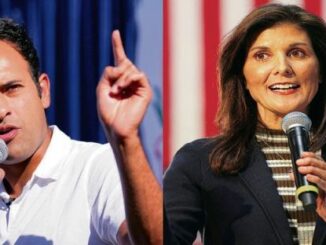
    Indian-Americans, with a population of four million, account for nearly 1.3 per cent of the US population. In the past decade, the US Congress reportedly has had five Indian-Americans. Former South Carolina Governor and US Permanent Representative to the UN Nikki Randhawa Haley is in the race to become the Republican nominee. She has a proven record in governance.

    The spotlight, however, is on 38-year-old entrepreneur Vivek Ramaswamy, who founded a successful biotech startup. Flush with money, a Midwest upbringing and Ivy League credentials, Ramaswamy has been profiled by leading media establishments. There is an element of exaggeration in terms of his narrative, though he has been impactful as he has a good understanding of the target audience and their soft spots.

    Ramaswamy’s messaging may be anathema to the larger Indian community in the US or other minority groups, who are overwhelmingly Democrat, as he speaks against diversity in workplaces, though cleverly adding that he favors diverse ideas. In a profile on him in The New Yorker, the author noted, “To Ramaswamy, such corporate do-gooderism — and especially environmental, social and governance investing, known as ESG — is a smoke screen designed to distract from the less virtuous things that companies do to make money.” He has proposed a constitutional amendment that would require citizens aged between 18 and 24 years to pass a civics test in order to vote. This is again cunning messaging, keeping in mind the disdain middle-aged Republican voters have for the younger population, which is largely Democrat.

    But none of the Indian-American contenders stands a chance against former President Donald Trump when it comes to getting the Republican Party nomination. Still, these trends have their own importance in the US landscape as to why Indian-Americans, who usually vote for the Democrats, are gaining spotlight in the Republican Party.

    This goes against the truism that the Democratic Party, with its progressive ideals, is a natural party for minority groups, who are victims of majoritarian politics and its consequent discriminatory policies. One needs to pay attention to particular aspects of migration of Indians to the US and the strata they are coming from. The first phase of migration of Indians, prominently from Punjab, started in the early years of the 20th century through the modern tech hub of San Francisco. The immigrants, marginal in number due to legal restrictions for Asians, looked for railroad, lumber or agricultural jobs. Even Congressman Dalip Singh Saund, who had got his doctorate from the University of California, Berkeley, in 1924, had to work as a farmer as he was denied citizenship till 1949. Born in Amritsar, he later became the first Asian-American, the first Indian-American and the first Sikh to be elected to the US Congress, from California in 1956 on the Democratic Party ticket.

    Then there is a pool of Indian-Americans who are the children of a very successful grouping who migrated after the immigration Bill was signed by then President Lyndon B Johnson on October 3, 1965, which removed stipulations on migration from Asian countries. This enabled highly educated Indians to study and work in the US. Many of them went there on scholarships. Journalist Anita Raghavan, in her book The Billionaire’s Apprentice: The Rise of the Indian-American Elite and the Fall of the Galleon Hedge Fund, made the expression ‘generation twice blessed’ famous as she described this group of immigrants. This group benefited from both the relaxation of US immigration laws and the enormous investment that India made in education following Independence, particularly in research and engineering institutes.

    The post-1995 migration was triggered by a sudden explosion in the demand for technological workers, including the Y2K migration project, coupled with an interest in India’s emerging markets, which opened avenues for many finance professionals as well. Equipped with a strong background in science, technology, engineering and mathematics and a functional knowledge of the English language, nearly 75 per cent of the H-1B non-immigrant visa programme applicants came from India and many who got the visa became American citizens in a decade or so. A number of them, who migrated after 2000 or in the past 10 years, are permanent residents and in the process of acquiring citizenship.

    Given the peculiarities of migration, the trend of Indian-Americans being represented in both parties will further solidify as more and more get citizenship. The struggle of other minority groups is not reflected in the lives of many relatively younger Indian-Americans, who were born to highly educated first-generation Indian-American parents. Backed by quality education, timing and the available ecosystem, the younger cohort has struck success in many financially lucrative professional fields.

    Some from the Generation Z or the Millennial generation will support policies such as lower income tax and a private healthcare system, and there may also be a general antipathy towards welfarism, unlike other minority groups — which is more or less the present-day mantra of the Republican Party. Indian-American political affiliations may not strictly be a derivative of our understanding of politics of other minority groups in the US. In a nutshell, relatively richer Indian-Americans, as their number becomes bigger, may reflect the current US political landscape, which is more or less evenly divided between the Democrats and the Republicans.

    (Luv Puri is journalist and author)


  • India Is on the Brink

    India Is on the Brink

    Under Mr. Modi’s government, the state monopoly on violence is being surrendered to extremists and vigilantes. Those targeted by the kind of mob violence that we are seeing in India may conclude that equal rights are no longer guaranteed, that political differences can no longer be peacefully reconciled or fairly mediated and that violence is the only way for them to resist.

    By Debasish Roy Chowdhury

    Indian social media is a brutal place, a window on the everyday hatred and violence that has come to colonize the country in the nine years since Prime Minister Narendra Modi’s government came to power. But the images from the northeastern state of Manipur that began circulating in July were shocking even by those low standards.

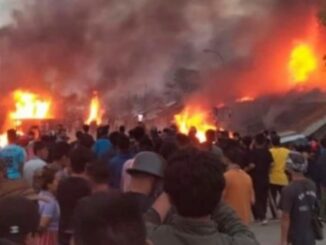
    A video clip showed two women being sexually assaulted as they were paraded, naked, by a crowd of men who later gang-raped one of them, according to a police complaint. The horrific scene was part of an explosion of ethnic violence since May that has turned the small state into a war zone, killing more than 150 people and displacing tens of thousands.

    The state has a long history of ethnic animosities that predate Mr. Modi’s rise. But the fuse for the current unrest in Manipur was lit by the politics of Hindu supremacy, xenophobia and religious polarization championed by his Bharatiya Janata Party.

    India is a diverse nation, crisscrossed by religious, ethnic, caste, regional and political fault lines. Since Mr. Modi took office in 2014, his ruling party has torn those asunder with dangerous exclusionary politics intended to charge up the party’s base and advance its goal of remaking India’s secular republic into a majoritarian Hindu state. The repugnant nature of this brand of politics has been clear for some time, but the situation in Manipur shows what’s ahead for India: The world’s most populous country is slowly degenerating into a conflict zone of sectarian violence.

    Under Mr. Modi’s government, the state monopoly on violence is being surrendered to extremists and vigilantes. Those targeted by the kind of mob violence that we are seeing in India may conclude that equal rights are no longer guaranteed, that political differences can no longer be peacefully reconciled or fairly mediated and that violence is the only way for them to resist.

    The targeting of minorities — particularly Muslims — by right-wing Hindu extremists is now a way of life in many states. Vigilante mobs, which often assemble provocatively in front of mosques, regularly assault Muslims as understaffed and underequipped police forces fail to intervene. Lynchings and open calls for genocide are common. India now ranks among the 10 countries at the highest risk of mass killings, according to Early Warning Project, which assesses such risks around the world.

    In Manipur, Christians are bearing the brunt as the state’s B.J.P. government stokes the insecurities of the majority ethnic Meitei, who are predominantly Hindu. State leaders have branded the Kuki who populate the hill districts and who are mostly Christian as infiltrators from Myanmar, blamed them for poppy cultivation intended for the drug trade and evicted some of them from their forest habitats. The specific trigger for the current violence was a court ruling in the state in favor of granting the Meitei affirmative action provisions and other benefits that have long been enjoyed by the Kuki and other tribes, which sparked a protest by tribal communities opposed to the ruling. The Manipur government this year also began a citizenship verification drive that infringes on the privacy of Kuki. A similar drive in neighboring Assam state targeting Muslims has already reportedly disenfranchised nearly two million people.

    Emboldened by the state government’s rhetoric, Meitei militias in Manipur have gone on a rampage of raping, pillaging, looting police armories and burning villages. More than 250 churches have been burned down. Those were Meitei men in the horrific 26-second video, sexually assaulting two Kuki women. (The video was shot in early May but came to light only in July, possibly delayed by a government internet ban imposed in the state in response to the violence.) Many similar attacks on Kuki women have been reported. Mr. Modi has called the rape incident “shameful” but has otherwise said little about the chaos in Manipur.

    Women hold a sit-in protest against spiraling violence in Manipur.

    The violent impact of his party’s polarizing politics is acutely felt in India’s heartland, too. The area near a tech and finance hub on the outskirts of New Delhi was rocked by violence last week as Hindu supremacists staging a religious procession clashed with Muslims. Mosques were attacked, an imam was killed, businesses were burned and looted, and hundreds of Muslims have fled.

    In tandem with the B.J.P.’s demonizing of India’s nearly 200 million Muslims, television, cinema and social media are deployed to radicalize the Hindu majority, pumping out a steady stream of Islamophobia and vile dog whistles. Extremist groups, at least one of which appears to have received the public support of the prime minister, run amok. Muslims have been arrested for praying, had their livelihoods and businesses destroyed and their homes razed. Bulldozers, used to demolish homes, have become an anti-Muslim symbol, proudly paraded by B.J.P. supporters at political rallies.

    As John Keane and I argue in our book “To Kill a Democracy: India’s Passage to Despotism,” it’s a signature tactic of modern-day despots: tightening their grip on power by redefining who belongs to the polity and ostracizing others. In the ultimate subversion of democracy, the government chooses the people, rather than the people choosing the government.

    India is already a complex federation of regional identities, many of which consider themselves distinct from Hindi-speaking north India, the power base of Mr. Modi’s party. This federal structure is held together by delicate bonds of social and political accommodation. But they are fraying fast under Mr. Modi, who has no appetite for either, shrinking the space for nonviolent political contestation. Some regional political parties see the Bharatiya Janata Party’s centralizing and homogenizing Hindu-first thrust as a cultural imposition from outside and are assailing it with the same divisive us-versus-them vocabulary.

    Because of its giant and growing population, India will become more important to the rest of the world geopolitically and economically, with the promise of its massive market. And so Western leaders like President Biden — who staged a lavish welcome for Mr. Modi on a state visit to Washington in June — engage with the prime minister, downplaying his government’s assaults on liberalism.

    But a political strategy of conspicuous humiliation and subjugation of ethnic and religious minorities that make up around one-fifth of the population is dangerously deluded. India can be either a conflict zone or an economic powerhouse — not both. It is increasingly clear which of those two destinies awaits the country

     (Debasish Roy Chowdhury (@Planet_Deb) is a Hong Kong-based Indian journalist and the author, with John Keane, of “To Kill a Democracy: India’s Passage to Despotism.”)

     ( First published in  The New York Times )

  • The dilemma of double-engine governments

    The dilemma of double-engine governments

    The rioting in Nuh and Gurugram reflects badly on the state government and the police force

    “The rioting in Nuh and Gurugram in Haryana reflects badly on the state government and its police force. Why has Monu Manesar, a notorious Bajrang Dal activist accused of kidnapping two Muslim cattle traders from Rajasthan in February and lynching them in Haryana, been allowed to remain at large? Instead, Monu and his associate, Bittu Bajrangi, circulated their video clips on social media, urging Hindus to join a religious procession organized by the VHP through the streets of Nuh. The BJP seems to have devised a novel method of dealing with the problem of communal strife. It allows the riots to occur and then selectively enforces bulldozer justice to teach the victims a lesson.”

    By Julio Ribeiro

    One of the first lessons I learnt as a young police officer was that communal clashes were to be put down with a heavy hand. If you needed to open fire, you were free to do so in case no other option was available. Of course, the rule of minimum force was always to be kept in mind.

    It’s not as if the police were not aware of Monu Manesar’s deep hatred of the Muslims and his intentions.

    The Chief Minister, whoever happened to be in that position at the time of the clash, was kept informed of the cause of the riot, the action taken by the police and the steps that were needed to be taken to prevent further mayhem. The compulsion of arresting or detaining the instigators on both sides of the divide was paramount on all such occasions. Every police officer was adept at dealing with communal friction and riots. The governments I served in Maharashtra never interfered in the process. On the contrary, they would pull you up if you failed.

    The first time I felt that the police had neglected their duty and responsibility to control a communal conflagration was in Gujarat in 2002. Since I had been chosen to restore normalcy in that state in 1985, I knew the officers there and they knew how I had gone about my task. So, when the 2002 riots happened, I decided to go to Ahmedabad to ascertain why the police leadership had failed.

    That was the first recorded instance that pitted the political executive’s interests against the standard operating procedures laid down in departmental orders. Detaining mischief-makers on both sides of the communal divide and using all the force required to put down the riots — all this just did not happen.

    The rioting in Nuh and Gurugram in Haryana reflects badly on the state government and its police force. Why has Monu Manesar, a notorious Bajrang Dal activist accused of kidnapping two Muslim cattle traders from Rajasthan in February and lynching them in Haryana, been allowed to remain at large? Instead, Monu and his associate, Bittu Bajrangi, circulated their video clips on social media, urging Hindus to join a religious procession organized by the VHP through the streets of Nuh. The BJP seems to have devised a novel method of dealing with the problem of communal strife. It allows the riots to occur and then selectively enforces bulldozer justice to teach the victims a lesson.

    It is not as if the police were not aware of Monu’s deep hatred of the Muslims and his intentions. Monu and his colleagues were cow vigilantes, who had been allegedly empowered by the state government to assist the police in enforcing cow protection laws. Because of the semi-official status accorded to him and his men, all owing allegiance to the Bajrang Dal and the VHP, strong-arm units of the Sangh Parivar, the police were intimidated into permitting this rabble-rouser to operate almost freely.

    The ploy of organizing religious processions through Muslim localities has been used in the past also to provoke Muslims. In my ancestral state of Goa, from where communal clashes had never been reported in colonial times right up to the days of the BJP government of Manohar Parrikar, an attempt to provoke Muslims by organizing a religious procession of Hindus through their locality near Vasco was tried sometime after Pramod Sawant was installed as the CM. Mercifully, the native Goan Muslims, who account for just 2 per cent of the state’s population, were not provoked but only amazed! They had never seen such a procession.

    In Nuh, it was the bounden duty of the police to disallow the procession that was obviously meant to provoke Muslims. That procession set off a chain reaction that crossed the boundaries of Nuh into Gurugram, where many blue-chip companies have set up their offices. If the government was complicit in the activities of its fellow travelers in the Bajrang Dal, it was short-sighted about their effect on the economy.

    The white-collar workers and executives of the blue-chip companies in Gurugram are not going to be amused by the arrival of the rioters on their doorstep. The Haryana Chief Minister should factor this in when he briefs the police chief on how to deal with Monu and his ilk. Of course, it depends on what his priority is. Is he more interested in consolidation of Hindu votes than the state’s and the country’s economic progress? From present accounts of what is happening in the country, consolidation of votes is uppermost on the Parivar’s agenda.

    After Narendra Modi was projected as the BJP’s PM face in the 2014 Lok Sabha elections, the party made gains as the votes of poorer Hindus came its way. This was enough to propel the BJP to power in the ‘first past the post’ method of electing legislators.

    In 2019, the BJP made bigger gains because of PM Modi’s charisma. That ensured the party 303 seats in the Lok Sabha with a share of 37.4 per cent of the total votes polled. It may not get so many seats in 2024, but because of the absence of a suitable alternative to PM Modi, it still may get more than half the seats in the Lower House. If he does get a third term, the PM has promised to make India a $5-trillion economy, which would be the third-largest economy in the world after those of the US and China.

    Every human heart beats with hope. Promises by politicians are never taken seriously, but they continue to make them and prosper. PM Modi had reportedly promised that every Indian would receive Rs 15 lakh in his/her bank account. He had also promised an end to corruption and black money with demonetization. People will continue to vote for him because the poor have nothing to lose except hope.

    The economic miracle PM Modi speaks about may or may not occur. But if at the end of his prospective third term, only the rich become richer and the poor continue to struggle, history may not be kind to him.

    On the social front, if Hindutva hotheads insist on going after the minorities, like they are now allowed to do, the hate they have sown will divide the country irretrievably and weaken it to such an extent that no amount of effort would be able to pluck India out of the morass in which it will slowly sink.

    (The author is a  former governor and a highly decorated retired Indian Police Service (IPS) Officer)

  • The G-20 Summit in India

    The G-20 Summit in India

    The 18th G20 Heads of State and Government Summit in New Delhi will be a culmination of all the G20 processes and meetings held throughout the year among ministers, senior officials, and civil societies.

    By Asoke Mukerji

    On 1 December 2022, India assumed the Presidency of the Group of 20 (G-20). The G-20 represents 19 major economies and the European Union, comprising 85% of global GDP, over 75% of global trade, and about two-thirds of the global population. The theme of India’s G-20 Presidency is “One Earth, One Family, One Future”, also encapsulated in Sanskrit by the phrase Vasudhaiva Kutumbakam. India’s holistic interdependent approach to global issues emphasizes effective and equitable global cooperation. By the time the G-20 Summit is held in India on 9-10 September 2023, about 200 meetings of the G-20 would have been hosted in over 50 cities in India to carry forward the G-20 workplan across 32 different workstreams. This provides a large canvas for global cooperation. India’s six declared priorities as the G-20 President are: climate change including climate action; inclusive and resilient growth; acceleration of progress on Sustainable Development Goals (SDGs); technological transformation and digital public infrastructure; women-led development; and reformed multilateralism.

    India’s endeavour is to make G-20 activities “human-centric”, with G-20 meetings held in India so far emphasising the participation of all relevant stakeholders, including large numbers of youth. The G-20 Bali Summit held in November 2022 reiterated that the G-20 remains “the premier forum for global economic cooperation”. India’s Presidency of the G-20 has consciously focused on greater global cooperation within this economic framework.

    The main challenges for global cooperation today come from the impact of armed conflicts and unprecedented disruptions like the Covid-19 pandemic on socio-economic development. Agenda 2030 on Sustainable Development with its 17 Sustainable Development Goals (SDGs) aimed at eradicating poverty represents the only universal framework for global socio-economic development. Two statistics illustrate the current grave human-centric dimension of the challenges facing Agenda 2030.

    According to the UN, about 60 million people world-wide were victims of armed conflicts when Agenda 2030 was adopted unanimously in September 2015. By 2022, that figure has risen sharply to 324 million people. In 2015, according to the World Bank, about 700 million people, mainly in sub-Saharan Africa and South Asia, were living below the poverty line. By 2022, about 685 people across the world were below the poverty line, with as many as 150 million, mainly in developing countries, pulled below the poverty line by the Covid-19 pandemic.

    In response, the priority for India’s G-20 Presidency has been to revive the momentum of global cooperation needed to achieve Agenda 2030 by its deadline of 31 December 2030. The identified SDGs subsume the six priorities identified by India during its Presidency. In the six areas that India has identified as its priorities, national initiatives taken by India have been shared with other G-20 countries, especially developing countries. India’s credentials for pushing greater global cooperation within the G-20 has strong foundations.

    Climate Change: The Climate Change pillar has been influenced significantly by India’s initiative to champion Climate Action. Two landmark proposals are adapting global Lifestyles for Environment (LiFE) and using renewable solar energy for development. A new multilateral intergovernmental organization based in India, the International Solar Alliance (ISA), has about 120 countries. The ISA aims to mobilize US$ 1,000 billion in investments in solar energy solutions by 2030, delivering energy access to 1,000 million people using clean energy solutions and resulting in the installation of 1,000 GW of solar energy capacity. During its G-20 Presidency, India has focused on the need for G-20 developed country members to contribute both financially and through non-restrictive transfers of environmentally friendly technologies to enhance the national capacities of developing countries to meet global environmental targets.

    Inclusive Growth: India’s flagship initiative for a global Coalition for Disaster Resilient Infrastructure (CDRI) made at the 2019 UN Climate Action Summit anchors the growing emphasis within the G-20 on the need to sustain economic growth and build resilient supply chains, particularly after the Covid-19 pandemic and a series of natural disasters attributed to climate change. By developing standards and regulations to make infrastructure resilient in confronting disaster and climate risks, the CDRI seeks to expand a multiple stakeholder approach to sustain growth through a two-way knowledge transfer between developed and developing countries.

    Sustainable Development: To assist developing countries to meet their national targets to implement Agenda 2030 and its SDGs, India and the UN created the India-UN Development Partnership Fund in 2017. With committed financial support of $150 million from India, the Fund has prioritized development projects in least-developed countries, landlocked-developing countries, and small island developing states. So far, 36 projects in 37 partner countries have been processed by the Fund.

    Technological Transformation: India’s successful experience in using digital technologies for governance and empowerment to accelerate development through a “whole of society” approach has made it a credible thought-leader in this area during its G-20 Presidency. In partnership with the UNDP, India has hosted a series of G-20 discussions to position India as a global hub for using open and interoperable standards to create a human-centric digital public infrastructure with lower implementation costs, especially for developing countries.

    Women’s Empowerment: India has prioritized women’s digital and financial inclusion through the use of digital technology. The current focus of G-20 meetings being held in India in this sphere includes effective outreach on education for women, greater participation by women in the workforce, larger representation of women in leadership positions, and the continued narrowing of the identified gaps on gender equality.

    Reformed Multilateralism: The Preamble of Agenda 2030 underscored that “there can be no sustainable development without peace and no peace without sustainable development”. India has taken the lead to implement this by pointing out that “this is not an era of war.” However, the ineffectiveness of existing multilateral institutions to ensure peace, security and development has highlighted calls for “reformed multilateralism.” The G-20 will need to give a major push to reform multilateral institutions like the UN and its Security Council, responsible under the UN Charter for maintaining international peace and security (where reforms mandated unanimously by world leaders in 2005 continue to be blocked by the five permanent members of the Security Council); the International Monetary Fund/World Bank, mandated by their Articles of Agreement to ensure global financial coordination for international reconstruction and development (where IMF quota and governance reforms agreed to in 2010 remain unimplemented till now due to delaying tactics by developed countries); and the World Trade Organization, created to ensure the primacy of multilaterally agreed trade rules based on non-discrimination (where reforms to enhance the organization’s integrity and effectiveness are being exploited since 2016 by the growing recourse of developed countries to unilateralism and protectionism).

    When India assumed the Presidency of the G-20 at the November 2022 Bali Summit, Prime Minister Narendra Modi declared that India’s “G-20 priorities will be shaped in consultation with not just our G-20 partners, but also our fellow-travellers in the Global South, whose voice often goes unheard.” On 12-13 January 2023, India hosted a virtual “Voice of the Global South for Human-centric Development” Summit. A measure of the importance of India’s initiative can be gauged from the fact that 125 countries responded to this initiative, including 47 from Africa, 31 from Asia, 29 from Latin America and the Caribbean, 11 from Oceania, and 7 from Europe. On 27 March 2023, developing countries in the UN voted overwhelmingly to adopt a resolution opposing unilateral sanctions due to their “extra-territorial” nature and adverse impact on the “right to development”.

    The deliberations of the G-20 under India’s Presidency will be carried forward through two processes. Within the G-20, three major developing countries (India, Brazil, and South Africa) will lead the G-20 during 2023-2025 creating a three-year window for implementing the priorities of the Global South. Outside the G-20, ongoing processes for enhancing international cooperation will come to a head with the UN’s SDG Summit in September 2023, followed by the UN’s Summit of the Future in 2024. These Summits are expected to result in the call for a General Conference to review the UN Charter, as recommended in April 2023 by the UN Secretary-General’s High-Level Advisory Board on Effective Multilateralism, to coincide with the UN’s 80th anniversary Summit in 2025. This represents a golden opportunity for India’s G-20 Presidency in consolidating a “human-centric” sustainable development paradigm, which will restore popular support for the principle of international cooperation upholding the functioning of the “world as one family”.

    (The author, a retired IFS officer, was Permanent Representative of India to the United Nations in New York between 2013-2015)

  • Freedom is fragile unless fiercely defended!  

    Freedom is fragile unless fiercely defended!  

    “Freedom is never more than one generation away from extinction. We didn’t pass it to our children in the bloodstream. It must be fought for, protected, and handed on for them to do the same, or one day we will spend our sunset years telling our children and our children’s children what it was once like in the United States where men were free.” – Ronald Reagan

     There is little doubt that the BJP’s role in the last nine years has ushered in an unprecedented attack on India’s democracy and people’s independence while injecting new elements of intolerance and authoritarianism. Martin Luther King Jr. once said that our lives begin to end when we become silent about things that matter. The question would be whether the Indian Diaspora could ill afford to continue its long-held silence on the current polarization that is ripping the country apart or its open defense of a regime that discriminates and punish the minorities in India! The thirty million-strong Diaspora may need to ponder our status as minority citizens across the globe and how we may be on the verge of undermining our own moral arguments in defense of freedom and justice.

    By George Abraham.

    After Prime Minister Modi’s much-celebrated visit to the United States, there was a growing debate as to the level of success compared to the previous visits by Modi himself or the former Indian prime Ministers. In an Economic Times report, various industrialists in India called it trend a setting or landmark visit. However, an article in Time magazine called the Biden-Modi meeting a failure for democracy. The truth is somewhere between these two assertions.

    Undoubtedly, Biden’s embrace of Modi was a significant endorsement by Washington that has made several of his allies in the progressive wing of the Democratic Party express deep concern about the state of affairs in India. About 75 Washington lawmakers, Senators, and Congressmen wrote to Biden in an open letter demanding that Biden discuss growing human rights violations in India. American mainstream media in general, decried Modi’s past complicity in rights violations and his current governance that discriminates religious minorities across India.

    It is to be noted that Modi was on a visit to the United States when one of the states in the union called, Manipur, was burning by ethnic clashes involving Hindu militants and Tribal Christians. Although the BJP propaganda machine has been eager to portray that as a dispute between two ethnic groups involving land rights, the burning of 243 churches in the Meitei heartland alone reveals the hidden agenda of the party in power. It is inconceivable that Mr. Modi hasn’t spoken about Manipur before or after his state visit to Washington.

    Washington’s Deep State’ might have embraced Modi, but the mainstream media’s stories tell altogether a different story about the situation in India. In a press conference held in Washington along with President Biden, Modi pretended to be surprised by the question about how India treats its minorities. Not long after that, the Muslim WSJ reporter who asked that question was threatened and trolled mercilessly by those faithful followers of the Prime Minister.

    There is little doubt in independent minds that Modi has been presiding over a period of rapid deterioration of human rights and religious freedom and the increasing criminalization of dissent. Civil Society, once vibrant in the country, is close to extinction as their voices are muted, and their financing channels are blocked. The media, by and large in India, has been taken over by the crony capitalists who have turned them into a Modi worship team. Investigative agencies have been weaponized to silence any organization, media outlet, or political party that would dare to challenge their deception and half-truths.

    As the country is about to celebrate its 77th Independence Day from colonialism, one wonders whose independence we will celebrate! It indeed is not the independence of those two women who were marched naked and allegedly gang-raped in Manipur at the beginning of the unrest. The video showed two women stripped naked, held, and groped by a mob of men and dragged to a field. Would a country that prides itself on being the largest democracy and of a great civilization treat its women this way? Moreover, the arbitrary Internet shutdown, another violation of the right to information, covered up this embarrassing news to the public before his impending arrival in the U.S.

    It is indeed not the independence of two Muslim men called Junaid and Nasir, from the Rajasthan-Haryana border, who were allegedly attacked and abducted by a mob that later set them ablaze, alive while they were inside their car. A gang of self-professed right-wing zealots appears to have taken control of what Indians should eat in that part of the country! A Bajrang Dal leader Monu Manesar is named as the gang leader as accused in the burning of Junaid and Nasir and still at large and probably is the latest provocateur in the Nuh, Haryana riots.

    It is indeed not the independence of those hundreds of Muslim families who were made homeless and destitute overnight by the actions of the state machinery that engaged in bulldozing homes of those who were allegedly accused of throwing stones at a march that appeared to have designed to enrage the locals due to the rumored presence of Monu Manesar. Nobody should condone the behavior of those who pelted stones; however, bulldozing their homes and shops that helped a community make a living is a crime against humanity. Don’t we have enough laws on the books to arrest and punish those culprits? Does the extra-judicial and collective punishment we might have copied from the Israeli occupation of Palestine appropriate for real democracy and the land of Mahatma?

    After nine years of BJP rule, lynching, burning of people alive, and ethnic cleansing are all assumed to have a sense of normality. However, the institutions that were built to safeguard the values of democracy are all under great duress. It is quite evident that the current government disregards the aspirations of minorities while actively diminishing the power structures that provided political and social equilibrium in the last 65 years or more. The great leaders who have fought for our independence from the British, like Gandhi, Nehru, and Patel, together with B.R. Ambedkar who, have built institutions that guaranteed life and property protection of every citizen regardless of their race, religion, or region, also provided the opportunity to climb up the ladder of success and economic prosperity. What we are witnessing today is not the pursuance of that dream but somewhat revisionist steps on a regressive path that would not bode well for the Republic.

    This week, we may witness widespread celebrations of India’s independence that will be held in many cities across the country in the U.S. However, you may not hear a word about whether the hard-fought freedom won by our founding fathers of modern India is in danger of being extinguished! The Indian community, by and large, remains silent on the ever-diminishing freedom or the weakening of its institutions. Five Congressmen of Indian origin are represented in the halls of Congress today, and we should be proud of that achievement. We must be grateful as well for the opportunities and privileges accorded in this great land of our adoption, where we can express our opinions freely and challenge the powers that be when we feel discriminated against. Yet not a single Congressman, who has taken an oath to uphold the American constitution and values, uttered a word when Manipur was burning, and the ethnic cleansing was in progress! They sat there in the joint session of Congress and clapped away, cheering the leader of the ‘mother of democracy’!

    There is little doubt that the BJP’s role in the last nine years has ushered in an unprecedented attack on India’s democracy and people’s independence while injecting new elements of intolerance and authoritarianism. Martin Luther King Jr. once said that our lives begin to end when we become silent about things that matter. The question would be whether the Indian Diaspora could ill afford to continue its long-held silence on the current polarization that is ripping the country apart or its open defense of a regime that discriminates and punish the minorities in India! The thirty million-strong Diaspora may need to ponder our status as minority citizens across the globe and how we may be on the verge of undermining our own moral arguments in defense of freedom and justice.

    (The author is a former Chief Technology Officer at the United Nations. He  is the Vice-Chairman of the Indian Overseas Congress, USA)

  • This is no longer my India that was the birthplace of my Religion & my Ancestors

    This is no longer my India that was the birthplace of my Religion & my Ancestors

    “Fraternity means a sense of common brotherhood of all Indians-of Indians being one people. It is the principle which gives unity and solidarity to social life” – and said what this means is that “if you attack the dignity of an individual – whether on the pretext of their ethnicity or language, religion or caste, sexuality or food habits or beliefs –  then you attack the very foundations of India.”               – Dr B.R. Ambedkar to   the Constituent Assembly in 1949

    “Ethnic violence is a regrettable aspect of any society, and it has no place in the teachings of Hinduism. In India, the perpetrators of such violence are using religion to instigate hatred and animosity among different communities. Unfortunately, under Modi their support base has expanded, and the worst is they have the protection from the state and Modi himself. As a Hindu, I condemn such acts and stand in solidarity with those affected by these tragedies. It is essential to remember that the perpetrators of ethnic violence do not represent the vast majority of Hindus who uphold the principles of love and harmony.”

    By Dave Makkar

    I am a Hindu and was born in India in Dec. 1956 to very religious parents in Delhi. While growing up I started realizing the wholescale corruption in public life, personality cult and few rich families controlling India’s commerce and politics. Since my adulthood, in my opinion India was never a Democracy to start with in 1947, rater it opted to be an elected autocracy by keeping the Moster & Slave, British Governance system. The elected representatives, bureaucracy, judiciary, and few rich families close to politicians has always behaved like master’s and   treated the common man as their slaves. On top of that upper class Hindus have always considered themselves to be more superior than a person from other religions as well as low cast Hindus.

    All my adulthood I spent fighting Congress rather Elected Aristocracy using the platform of Hindu organizations in the hope one day India will have real Democracy. I suffered financially, emotionally, and physically during the infamous emergency of Indira but that never forced me to stop fighting the Elected Aristocracy aka Congress. I became so disillusioned and decided to leave India in Dec 1996, with a hope that one day I will come back to India again to live with my family in a Democratic India. My hope was shattered by my own idol Atal Bihari Vajpayee of BJP that became Prime Minister of India in 1998. He started favoring Dhirubhai Ambani by selling National assets at throwaway prices and terms detrimental to India to wean him away from funding Congress. After that it was no u turn for India towards real Democracy when I realize BJP is worse than Congress and I took the Citizenship of USA in Nov. 2002.

    With the coronation of a known communal and criminal Narendra Modi as Prime Minister of India in 2014; financed by more corrupt and communal business families, now India has reached a point of no return even to the elected aristocracy. Now India in my opinion is an Elected Dictatorship financed and supported by Gangster Capitalist with money stolen from national resources purchased at throwaway prices with the help of leaders like Modi with the public money taken as low interest rate loans from the public banks.

    As a proud Hindu, I believe in the values of peace, compassion, tolerance, and coexistence that lie at the core of Hinduism. However, since 2014 under Modi as PM, there have been a steady increase in the instances of ethnic violence against minorities, denial of basic human rights to the critics of Modi regime, the rise of dictatorship, and the propagation of fundamentalist Hindutva ideologies in India. No one including the so-called Hindu billionaires, intellectuals, journalists, and religious leaders have tried to address these issues and make a clear distinction between the true essence of Hinduism and the actions of a few individuals and groups who seek to manipulate it for their own divisive agendas.

    The true essence of Hinduism: Hinduism is one of the world’s oldest religions and is known for its diversity and inclusivity. It promotes the idea of “Vasudhaiva Kutumbakam,” which means “the world is one family.” The principles of Hinduism advocate non-violence, respect for all living beings, and the acceptance of different paths to the divine. Hinduism encourages seekers to embrace spirituality and attain self-realization, transcending the barriers of caste, creed, or ethnicity.

    Ethnic violence is a regrettable aspect of any society, and it has no place in the teachings of Hinduism. In India, the perpetrators of such violence are using religion to instigate hatred and animosity among different communities. Unfortunately, under Modi their support base has expanded, and the worst is they have the protection from the state and Modi himself. As a Hindu, I condemn such acts and stand in solidarity with those affected by these tragedies. It is essential to remember that the perpetrators of ethnic violence do not represent the vast majority of Hindus who uphold the principles of love and harmony.

    The Dangers of Dictatorship: A democratic society is founded on the principles of freedom, equality, and justice for all its citizens. Unfortunately, PM Modi have openly displayed and is practicing authoritarian policies and undermining the democratic, moral and social fabric of India. Hinduism encourages righteous governance and upholds the importance of a leader’s accountability to the people they serve. Dictatorship contradicts the pluralistic values of Hinduism and erodes the democratic rights and freedoms of citizens.

    Fundamentalist Hindutva and its Detrimental Impact: Fundamentalist Hindutva is a political ideology that seeks to establish a Hindu-centric nation, promoting the dominance of Hindutva over other religions. This ideology, while claiming to represent Hinduism, actually distorts its essence. True Hinduism celebrates diversity and advocates unity among all faiths. The use of religion for political gains, divisiveness, and discrimination is contrary to the teachings of Hinduism.

    Respecting Pluralism and Secularism: The true spirit of India lies in its secular fabric, where people of different religions, languages, and cultures coexist harmoniously. As a Hindu, I believe in promoting interfaith dialogue, understanding, and respect for all religions. Hinduism teaches us to embrace diversity and recognize that different paths can lead to the same ultimate truth.

    As a Hindu, I firmly believe in the principles of love, compassion, and tolerance that are the bedrock of Hinduism. It deeply saddens me to witness the rise of ethnic violence, dictatorship, and fundamentalist Hindutva in India. It is essential for every Indian, regardless of their religious affiliations, to come together and reject any form of violence or divisiveness. They must reject divisive and communal leaders like Modi and those who are hurting India in the name of misguided Hindutva that has nothing to do with Hinduism.

    Indians must strive to build an India that embraces its pluralism, upholds its democratic values, and respects the diversity of its people. Only by recognizing and celebrating their differences while finding common ground they can create a brighter, more inclusive, and peaceful future for their beloved nation. This India will be a true reflection of the values taught by Hinduism and the essence of its timeless wisdom.

    (The author is a US based social activist)

  • For faster development of India, discard the other-worldly humbug

    Indian philosophy professes 200% life – full exploration and full flowering of the inner and outer worlds.   

    By Parveen Chopra

    India is on the path to development with alacrity since independence. But at this juncture, it will be worthwhile to point out that what kept India backward for a thousand years was not just foreign rule, but also the distorted understanding of the core of Indian philosophy as it manifested in the four dharmic traditions – Hinduism, Buddhism, Jainism and Sikhism.

    Unfortunately, the misconception gained ground somehow that this world is illusory, and renunciation is the way to achieve spiritual enlightenment and attain liberation from the cycle of life, death and rebirth. This when Hinduism clearly listed sanyas as the fourth and last station in human life. This when Vedas are replete with richas and rituals to invoke prosperity. And when you come to Sikhism, even their priestly class are enjoined to remain householders.  Truth be told, Indian philosophy professes 200% life – full exploration and full flowering of the inner and outer worlds.

    This was reinforced for me when I recently reconnected with Shri Virendra Qazi, a scholar and practitioner of Kashmir Shaivism, whose program I am arranging on Long Island next month. He explained to me the one difference this lesser-known darshan has with Vedanta. “The world is not mithya or illusory, but is also Divine. Kashmir Shaivism teaches total harmony in the material world with the highest techniques of Divine realization,” he said, pointing out that their saints don’t wear saffron.

    Living the 200% life is also the underpinning of my web magazine, ALotusInTheMud.com/ Launched at the Indian Consulate in New York in January this year, Lotus’ content not only presents wisdom from various religious and spiritual traditions but also DIY techniques and the latest from science on how to be productive and successful while staying healthy and happy. We at Lotus have no compunction, for example, in running an article headlined ‘Yes, money can buy you happiness’, of course, suggesting in the how part: invest in experiences, engage in prosocial spending, etc.

    Happy Independence Day!

     (Parveen Chopra is the founder of ALotusInTheMud.com, a wellness and spirituality web magazine. You can get their biweekly newsletter free in your inbox by subscribing for free at alotusinthemud.com/newsletter/. He can be contacted at 516 710 0508 ) 


  • SALUTE to INDIA on its 77th INDEPENDENCE ANNIVERSARY

    SALUTE to INDIA on its 77th INDEPENDENCE ANNIVERSARY

    India should explore opportunities and exert its position and influence for global good: Climate change, human rights and freedom of the press, national and regional security, peaceful resolution of conflicts, space exploration and skillful use of technology to advance medical solutions to diseases and vaccinations.  Moreover, India should secure its rightful position as a permanent member of the United Nations Security Council. 

    By Ashook Ramsaran

    Indians sacrificed for many years with continuing struggles on many fronts in attaining their hard fought and wrenching freedom from Britain on 15th August 1947. The Indian people used various independence movements, in particular nonviolent resistance led by Mahatma Gandhi, to become free and independent. The partition with Pakistan resulted in violent riots, mass casualties, wrenching dislocation of millions of people and lasting bitterness. The people of India and Indians of the Diaspora living in other countries take much pride in this annual celebration to validate their progress, confidence, commitment and resilience.

    The 77th anniversary of India’s independence is glorious celebration of a nation which has made enormous progress from its chaotic birth on August 15, 1947 to become a thriving economic and geo-strategic nation wooed by major world powers and regional partners for strategic and economic partnerships and alliances. India has made enormous strides and progress since its independence, from dependency to becoming a major geo-economic and strategic entity in the global arena.

    It is a pivotal moment and the dawn of a new era in Indian’s respectable standing in the world amidst a changing world order due in large measure to India’s enormous and sustained progress: Economic, military, geo-strategic, security, infra-structure, advances in education levels, medical and social improvements. It is a unique position of strength, independence and respectability, in combination with visionary long term strategic considerations.

    Indian’s Prime Minister Hon Narendra Modi ji said:  “We never lost our ambitions of being a free nation and India is indebted to all its freedom fighters but cannot forget the pains of partition. This is the can-do generation. All of our doctors, nurses, paramedical staff, sanitation workers, scientists developing vaccinations. Democracy is not just a structure; it is also a spirit. It is based on the belief that the needs and aspirations of every human being are equally important. India, despite the many global challenges, is the fastest growing major economy today. This itself is the best advertisement for democracy in the world”.

    “A nation’s culture resides in the hearts and in the soul of its people. Freedom is never dear at any price. It is the breath of life”, said Mahatma Gandhi. “Freedom is not given; it is taken”, said Subhash  Chandra Bose.

    India should explore opportunities and exert its position and influence for global good: Climate change, human rights and freedom of the press, national and regional security, peaceful resolution of conflicts, space exploration and skillful use of technology to advance medical solutions to diseases and vaccinations.  Moreover, India should secure its rightful position as a permanent member of the United Nations Security Council.

    While maintaining its independence and consideration of its own interests, India should strengthen its long established and unique partnership with the USA for necessity and geo-economic and geo-political reasons. The strengthening of this mutually beneficial partnership is crucial for India’s progress and standing in the world, for the USA continuing its position as a global influencer, and for the increasing and motivated Indian Diaspora in America: The world’s largest democracy and the world’s oldest democracy need each other’s commitment and respect as they continue to solidify this important bond that brings more stability and progress in the world.

    Areas of enhancing the India-USA partnership should include: Strategic alliance; Economic alliance; Reducing the impact of climate change; Peaceful resolution of global and border conflicts; Eradicating childhood diseases and child labour; Water and food security; Human rights, diversity and cultural integrity; Territorial integrity; Cultural preservation; Addressing the impact of migration from underdeveloped countries; Preparing for the next pandemic (vaccines and distribution); High technology solutions to medical and social problems; Guidelines of use of Artificial Intelligence (AI).

    As India continues its transformation and adaptation as it has done for centuries, there is significant advances in transparency, children’s and women’s rights, equitable treatment, infra-structure, economics, education and health. The future bodes well for continued progress beneficial to all Indians and the world. India’s enduring vitality is strong and vibrant.

     (The author is President, Indian Diaspora Council Inter

  • Thoughts on the 77th Independence Day of India

    As Indian Americans   celebrate the 77th  Independence Day of India with parades and festivities,   my thoughts go back to the days when India was struggling for freedom under the leadership of Mahatma Gandhi, who  the world recognizes as an apostle  of peace and non-violence. Throughout my life,  I have admired the great freedom fighters who sacrificed the comfort of their homes and  struggled to free the people of India from the foreign yoke.

    When India got freedom and the leaders at the helm of affairs of the nascent democracy plunged themselves into bringing India out of penury , ignorance and backwardness, I was filled with admiration for their work of  resurrecting  the nation.

    With liberalization in 1991, India began to make great leaps forward, and steadily but surely the wheels of economy started moving. Embracing science and technology, India made rapid strides in various fields. India came to be recognized as one of the fastest developing nations. I felt very proud of the achievements of India, and the numerous Indians in  India , and , more importantly, abroad who made a mark for themselves, and brought joy to both their country of adoption and their country of origin.

    India has a great future, going by the economic growth of the country. But  the fruit of the growth  must reach the poorest of the poor, which is yet to happen. Also, it must be remembered that India is a multi-religious and multi-cultural country , just as the US is, and they all have their rights under the Constitution of India which must not be trampled underfoot.

    The greatness of India since times immemorial has been a recognition of the commonality of Godhead, and this belief India must hold on to.  The noble ideas  of “ Vasudhaiva Kutumbakam” and “Sarve Bhavantu Sukhina, Sarve bhavantu niramaya” must not remain only the quotes to sing praises of the glorious traditions and values of India but continue to guide India on the road to becoming “vishwaguru”.

    Happy Independence Day of India!

  • Repealing sedition law: Move welcome, but substitute shouldn’t be draconian

    Often misused against activists and journalists, the archaic sedition law is all set to become history. Union Home Minister Amit Shah — who introduced three Bills in the Lok Sabha on Friday to replace the Indian Penal Code (IPC), the Criminal Procedure Code and the Indian Evidence Act — announced that the sedition law had been proposed to be removed. The decision comes as a pleasant surprise as barely two months ago, the

    Law Commission had recommended retention of Section 124A (sedition) of the IPC and enhancement of punishment for the offence. Citing its misuse and the resultant ‘chilling effect’, the Supreme Court had in May last year put the sedition law on hold, pending a review. Absent from the original IPC, which was drafted by Lord Macaulay and came into force in 1862, the sedition law was added in 1870. It was widely used to suppress the freedom struggle after its ambit was expanded in 1898. The Punjab High Court had in Tara Singh Gopi Chand vs The State (1951) declared Section 124A IPC unconstitutional, but the Supreme Court upheld its validity in Kedarnath Singh (1962), while restricting its scope.

    However, the Bharatiya Nyaya Sanhita, 2023 — which will replace the IPC — proposes to have a provision that punishes ‘acts endangering sovereignty, unity and integrity of India’ with life imprisonment or imprisonment up to seven years and a fine. One hopes it’s not the sedition law by another name. Doing away with this law is not a standalone measure. It’s part of an overhaul of the criminal justice system undertaken by the government, two decades after Justice VS Malimath Committee on Reforms of Criminal Justice System submitted its report to the Home Ministry. There is a lot that can be changed in procedural laws. But the government should tread cautiously while redrafting the substantive criminal law.

    (Tribune, India)


  • Communal punishment: On riots and demolitions

    The idea of inflicting collective punishment on the Muslim community soon after any riot or communal disturbance seems to be an ingrained part of governance in Bharatiya Janata Party-ruled States. The use of excavators to demolish houses, shops and other establishments has now spread to Haryana, after it was practiced with impunity in Madhya Pradesh, Uttar Pradesh and Delhi last year. The Punjab and Haryana High Court has done well to stop authorities from continuing with their demolition drive in Gurugram and Nuh, that witnessed communal clashes, leaving six dead. Taking suo motu cognizance of reports about the demolition activity, the Bench has minced no words in raising the question whether the action is a sort of “ethnic cleansing”, as buildings belonging to a particular community were being brought down “under the guise of a law and order problem”. It has been observed that there appears to be no order to demolish the buildings or prior notice to its occupants and that the law and order situation was just a ruse. Few would disagree with the court’s characterization of the action in Haryana. The same dubious and ambivalent messaging about the demolitions that one saw in other States is being witnessed in Haryana too. For legal purposes, officials will say the buildings are encroachments and are being removed as per law. For political purposes, it is made very clear that rioters are getting the treatment they deserve.

    It requires no special knowledge of the law to say the demolitions are inherently illegal in the absence of any process. It is not clear what evidence is being used to identify buildings belonging to alleged rioters or to ascertain whether those not involved are also using the premises. Reports suggest that personal belongings and inventory are not allowed to be removed before a building is razed. There is one example of a house that provided refuge to a family during the violence being demolished. Using communal violence as a pretext to impose extra-legal punitive measures will invariably lead to bias, as officials implementing such orders will have no choice except to portray the occupants of the buildings to be razed as encroachers to retain the fig-leaf of legal justification and as anti-social elements for moral justification. In any case, to escape the charge of ignoring encroachments all this while and waiting for a riot to take action, they will have to provide evidence of serving notices on the occupants and, if needed, backdate such notices. The judicial intervention should put an end to the pattern of using the state machinery to inflict misery on a section of the population.

    (The Hindu)

  • The road to 2024 is uphill for Trump

    The road to 2024 is uphill for Trump

    Republicans could well end up with a nominee who might have been convicted more than once
    The current Republican approach to the Trump issue seems to be to ignore his crimes and misdemeanors and argue that the responsibility for this outcome rests with the Democrats.

    “There is a kind of an auto-immune disease that has turned America against itself. Consider the likely candidate and possible future President Donald Trump. He will go on trial in May next year in the case pertaining to mishandling of classified documents. But this is only one of the several cases he will confront in 2024. The date for the criminal trial relating to the payment of hush money to cover up a sex scandal during the 2016 presidential campaign has been set for March. There is also an ongoing investigation into Trump’s efforts to reverse the election loss in Georgia. Finally, investigations into the charge that he attempted to overturn the 2020 election verdict through a conspiracy involving fake electors — which culminated in the January 6, 2021, attack on the Capitol.”

    By Manoj Joshi

    America’s brutal summer of 2023 is unrelenting. In many ways, it is symptomatic of the fevers, political and cultural, that are gripping the country, a little more than a year away from what is being called the most consequential presidential election in recent history.

    Clearly, the USA is undergoing change, but the process is not without its dangers, as exemplified by the politics of the Republican Party. There is a kind of an auto-immune disease that has turned America against itself. Consider the likely candidate and possible future President Donald Trump. He will go on trial in May next year in the case pertaining to mishandling of classified documents. But this is only one of the several cases he will confront in 2024. The date for the criminal trial relating to the payment of hush money to cover up a sex scandal during the 2016 presidential campaign has been set for March. There is also an ongoing investigation into Trump’s efforts to reverse the election loss in Georgia. Finally, investigations into the charge that he attempted to overturn the 2020 election verdict through a conspiracy involving fake electors — which culminated in the January 6, 2021, attack on the Capitol.

    The Republican process to choose its candidate will begin in January 2024 and could conclude even before various trials are over. The Republican Party could well end up with a nominee who might have been convicted more than once. The current Republican approach to the Trump issue seems to be to ignore his crimes and misdemeanors and argue that the responsibility for this outcome rests with the Democrats.

    Just how the Republican Party has gotten here is not clear. But from the party of ‘law and order’, it has become one which sees nothing unusual in the January 2021 riot. It now also wants to abolish the FBI. The party of high morality which cannot tolerate abortion is also the party that doesn’t care that its nominee has consorted with porn stars. Where their erstwhile leader Reagan led the campaign against the Soviet ‘Evil Empire’, their current leader is Putin’s best hope.

    The Democrats have their problems, not in the least being an unpopular Joe Biden seeking a second term. On paper, things are going well: the economy is flourishing, jobs are plentiful and expectations are that things will get better in the coming six months. The Republicans are trying to undermine Biden by threatening impeachment. They claim that the activities of Biden and his son Hunter involved corrupt practices, though as of now there is little evidence of wrongdoing by the President himself.

    Equally dramatic are the culture wars gripping the country. The biggest divide is, of course, abortion. After the US Supreme Court stripped away the constitutional protection for abortion rights, several Republican states have passed stringent laws prohibiting it and criminalizing abortion providers. This is despite the polls showing now, as they have in the past, that a majority of the Americans favor the right to abortion, with some restrictions.

    Last week, President Biden inaugurated the Emmet Till monument to memorialize a 14-year-old black boy who was abducted, tortured and killed in Mississippi in 1955 for allegedly whistling at a white woman. The murder and the acquittal of his killers triggered the civil rights surge of the 1960s. And in the last decade, we have seen the rise of the Black Lives Matter movement, an outcome of the persistence of racism in the US.

    Just how contemporary racism works is evident from the steps being taken by Florida Governor and Republican presidential hopeful Ron DeSantis to play down slavery to the point of inanity. Revised textbooks in the state claim that slaves actually benefited from their status since they picked up certain skills doing slave labor.

    And then there are wars over sex education, sexual orientation and gender identity. Building upon the successful efforts to establish gay rights, bisexual and transgender people are seeking to stake out their rights. According to opinion polls, almost 21 per cent of Gen Z — those born between the mid-1990s and around 2010 — identifies itself as lesbian, gay, bisexual or transgender (LGBT), as against 10 per cent of the millennials (born between early 1980s and mid-1990s).

    The arrival of Gen Z is affecting the country in other ways too. A Gallup poll has revealed that the share of young people (18-34 years) who say they are “extremely proud” to be American has plummeted from around 40 per cent in 2013 to just 18 per cent now. The political divide is deep. This year, some 75 Bills aimed at restricting LGBT rights were passed in legislatures across the US. Hate crimes based on sexual orientation have increased and demonstrations and counter-demonstrations have become a regular feature. The battleground includes school and university curricula as well. These so-called ‘culture wars’ are really an attempt by the conservatives to fight change. They project themselves as victims of liberalism run amok, with immigrants, gays, women, poor, black and other groups being given unfair privileges at their cost.

    Notwithstanding the noise, the road is uphill for Trump. According to one pollster, between 2016 and 2024, there will be an addition of 52 million more voters, younger and leaning towards the Democratic Party.

    Clearly, the USA is undergoing change, which by itself is not unusual. But the process is not without its dangers, as exemplified by the politics of the Republican Party under Trump. With the help of institutions such as the right-wing-dominated Supreme Court, they are attempting to maintain ‘white male dominance’ of the country. But that is simply not possible. Change is coming, like it or not.
    (The author is Distinguished Fellow, Observer Research Foundation)

  • A corporate takeover of the UN must be stopped

    A corporate takeover of the UN must be stopped

    The UN’s vision for the future involves giving corporate executives crucial say in decisions. That is too dangerous to be allowed.

    The secretary-general’s approach, called multistakeholder governance, would increase corporate influence over global governance, deepening the damaging consequences of prioritizing ‘return on investment’ above social and ecological needs. In a multistakeholder world, corporate executives and other founders bring together a friendly group of civil society organizations, governments, academics, UN staff, and other non-state organizations to take on a global governance role.

    By Harris Gleckman

    The United Nations needs a revamp. There can be little dispute about that. And the UN’s September 2024 Summit for the Future is an ideal opportunity for this upgrade. The people of the world expect a global form of governance that can confront the unique challenges of the 21st century. The UN’s creaking, post-World War II structures have been struggling to meet the challenges of the modern world for a long time. The many crises we face demand that the UN evolves to meet these challenges.

    But Secretary-General Antonio Guterres’s vision for that evolution – as set out in his report to the General Assembly, Our Common Agenda – is ill-conceived and underwhelming. Instead of expanding access to the UN system to communities of people impacted by today’s crises, it gives more influence and power to corporate actors who are most culpable of bringing us to the precipice of ecological and social disaster.

    The secretary-general’s approach, called multistakeholder governance, would increase corporate influence over global governance, deepening the damaging consequences of prioritizing ‘return on investment’ above social and ecological needs. In a multistakeholder world, corporate executives and other founders bring together a friendly group of civil society organizations, governments, academics, UN staff, and other non-state organizations to take on a global governance role.

    This would marginalize over two-thirds of the nations of the UN. Instead, a new vision and institutional arrangement that focus on people and the planet should be at the heart of the Summit for the Future.

    The role of national governments in the UN would be diluted by the addition of corporate-led bodies, which might soon take on more decision-making, managing everything from the oceans to financial markets. In this brave new world, a fossil fuel giant could have a privileged voice in decisions about providing important energy for all – conflicts of interest be damned. Do we really want the world’s biggest tech behemoths and profit-oriented Big Pharma firms ‘legislating’ global rules?

    Perhaps most worrying of all in this new vision of the UN is the absence of ideas for new intergovernmental negotiations to deal with current social, economic, environmental or gender debates. As it stands, governments, as representatives of their citizens, take the final decisions on global issues and direct international organizations to implement these decisions. This proposed new system would make ‘stakeholders’ the main players.

    But who exactly is a ‘stakeholder’ and why? There are countless possible stakeholder categories. At last year’s multistakeholder Food System Summit, organized out of the Office of the Secretary-General, for example, the ‘stakeholders’ were large agribusinesses, data management firms and commodity dealers, not the six billion people who actually need the food or their local representatives or civil society advocates.

    Much of this thinking stems from the 2012 Global Redesign Initiative report of the World Economic Forum (WEF), which proposed such a shift in global governance. According to the WEF (and now the UN secretary-general), nation-states and governments alone cannot solve the main issues of global governance, and other actors need to be involved. The best of those actors according to them in WEF are corporations.

    Indeed, we have already witnessed an increased role of the corporate private sector through their involvement in the implementation – or rather the non-implementation – of the Sustainable Development Goals.

    In 2021, the WEF and the Office of the Secretary-General concluded a memorandum of understanding on this, which, not incidentally, was never made publicly available by the UN nor submitted to the General Assembly.

    By displacing governments and states from decision-making, a brand-new parallel set of corporate-compromised institutions will sit with a voice and a de facto vote to decide on global policies that impact the planet and its people.

    For decades, the corporate world has fraudulently claimed greater efficiency than all others. This efficiency can be seen in the hollowed-out public services of the rich world, the crippling debt burdens of the poor world, and almost universal cultural impoverishment.

    Now, sweetening its proposition with insinuations of massive philanthropic financing, the corporate world – the only real beneficiaries of these proposed changes – has international decision-making in its sights.

    Where nongovernmental organizations were once the largest non-state entities attending UN system meetings, transnational corporations (TNCs) have grown to become the biggest players. Civil society organizations, educators, scientists, women and other social communities now have less space to influence the behavior of the UN and intergovernmental processes.

    This approach erodes sovereignty. When other actors are seen as equivalent to states, it undermines the longstanding concepts of state responsibilities, obligations and liabilities, as the new actors are unencumbered by any such legal requirements.

    Multistakeholder groups and their corporate participants get to choose which policy issues they want to participate in, picking and choosing the ones likely to generate a profit, reduce the rate of return or which may limit the continued acceptance of globalization. When they do get involved in the governance of a certain issue, they act in such a way as to narrow the range of policy decisions to only those that are compatible with a commercial return. Needless to say, this is not always aligned with the public good.

    Communities around the world already feel the international community is failing to solve problems. Multistakeholderism adds to this loss of trust by throwing up a smokescreen around conflicts of interest and proposing commercially viable ‘solutions’, which cannot address today’s major structural crises.

    Meanwhile, rich country governments get to side-step their funding promises, while multistakeholder groups pose as open wallets that can underwrite global public goods and development. But direct payments and loans from governments are very different from investment flows, discounts on technology licensing, negotiated tax payments and supply chain funding. Even linguistically, multistakeholderism is taking us in the wrong direction. Public services around the world have subtly shifted their language from talking about ‘citizens’ to talking about ‘customers’. The longstanding UN vocabulary speaks of ‘peoples’, ‘citizens’, ‘communities’, ‘constituencies’ and ‘nongovernmental organizations’. Now everyone is a ‘stakeholder’.

    This leads to absurdities such as equating the needs, interests and influence of huge corporations with those of governments or small economies or local nonprofit community organizations.

    The future at stake
    As the UN resets its agenda for the next 25 years, states from the Global South, represented by the G-77 at the UN, are pushing back against this dangerous new mission to quietly redefine how the UN works towards its mandate.

    They are making sure that their voices are heard in the September 2023 Sustainable Development Goals Summit and the September 2024 Summit for the Future.

    The UN Secretariat had originally proposed a September 2023 multistakeholder Summit of the Future, which was intended to solidify the secretary-general’s blueprint for reform.

    At the end of 2022, however, a coalition of developing countries intervened to shift planning and decision-making to the General Assembly and erased the proposed lead role for multistakeholderism – for now. They also chose to halt the event’s preparations until 2024, arguing that the UN must focus this year on implementing its existing and faltering Sustainable Development Goals. Thanks to effective lobbying and continuing pressure from activists and scholars, the G-77 is continuing to fight back against the preponderance of corporate-friendly language and policies, and the increased role of corporations in global governance. The secretary-general must take heed, reverse course and keep ‘nations’ and ‘peoples’ at the center of global governance. A possibly irreversible corporate takeover of the UN system must be prevented.

    (The author is Associate, Transnational Institute, and Senior Fellow at the Center for Governance and Sustainability, University of Massachusetts Boston)
    (Source: Al Jazeera)

  • Hello!… Manipur is still burning! Is there anyone in charge?

    Hello!… Manipur is still burning! Is there anyone in charge?

    By George AbrahamGeorge Abraham

    “Despite widespread destruction and human loss of lives, India’s Prime Minister Narendra Modi has kept a vow of silence until now while making several important state visits to various capitals around the world, including the United States. His primary constitutional duty is to protect the lives and property of every citizen of India, regardless of caste, religion, or region. Yet, this leader of a great nation, whose aim is to make India the Vishwaguru and would readily tweet if a cricketer is involved in an accident, found it convenient to close his eyes to a State ablaze under his premiership. On his foreign visits, he often asks foreign leaders, especially in Christian-majority countries, to protect Hindu shrines and safeguard their sanctity. Yet, he is pretty undaunted about the destruction of 300 or more Christian Churches under his watch. His External Affairs Minister S. Jaishankar who has specialized in propaganda, could always rationalize his thoughts in the name of traditions and culture, and even as he has redefined human rights, one that would fit the people of his stripes abroad and the other for the marginalized communities in his homeland.” It has been almost three months since the State of Manipur in India has been in flames. The latest news reports speak about 140 or more people killed, 50,000 or more people made destitute and homeless, many hiding in forests, 317 churches burned, and 6137 homes set ablaze. It is indeed a colossal human tragedy that is unfolding before our eyes, and the power centers in the State or at the Center seem to be cavalier in their approach to a resolution.

    The Godi media in India is spinning the story as an age-old rivalry between two ethnic groups, and many pundits have dismissed it as some tribal infighting that occurs relatively often. However, there is little doubt that since the 3rd of May, the Kuki-Zomi tribals have been at the receiving end of this horrible attack, which has all the designs of a well-orchestrated and planned campaign of ethnic cleansing. Kuki-Zomi forms about 16% of the population of Manipur, and the Meiteis, predominantly Hindus, make up about 53% of the State.

    There is a raging debate over whether this ongoing crisis has any religious undertones! There is no doubt that it all started with an effort by the State Government to empower the Hindu majority at the expense of the Scheduled Tribes (mostly Christians) as regards their land rights. A writ petition filed in the High Court by members of the Meitei Tribe Union towards that goal appeared to have produced a ruling in favor of Meities, triggering the current mayhem. These anti-tribal policies are increasingly put in place in various states by the BJP government. Fr. Stan Swamy is a victim of those disastrous initiatives supporting crony capitalists that have hurt the indigenous and tribal people across India.

    The attacks appeared to have been pre-meditated and well-planned. In the valley, the reports indicate the precision pinpointing of minority houses that were selected and burnt. The Hindu militants, who mostly belong to Arambai Tenngol and Meitei Leepun, appeared to have the tacit support of the Police and the law enforcement authorities. As per sources, it has now been revealed that over 4000 weapons, including sophisticated ones, have been looted from different locations in Manipur since the unrest began. These arms appeared to have played a critical role in exacerbating the violence. Using mortars against fleeing Kukis-zomi refugees to the forest to escape death and destruction may point to a higher-level conspiracy in aiding and abetting these militant groups.

    It is also a known fact that there are Christians among the Meities. According to Dominic Lumon, the Archbishop of Imphal, 249 churches belonging to the Meitei Christians had been destroyed within 36 hours since the start of the violence. He said, “The wonder is, amid the fight between the Kukis and the Meiteis, why did the Meitei mob burn down and destroy 249 churches in the Meitei heartland? How is it that there was almost a natural attack on the church in the Meitei localities itself, and how did the mob know where the churches were located if not previously planned”. He attributed these attacks to the revival of Sanamahism, and the emergence of groups like Arambai Tenggol and Meitie Leepun.

    Therefore, the theory that has been promoted by vested interests that there is hardly any religious angle to the whole unrest is quite suspect. BJP has long been critical of Northeastern states and blamed foreigners, especially missionaries, for their separatist tendencies. Although people in those states are apprehensive about the Hindutva agenda, they have given in to supporting the party because it allows proximity to state power and, more importantly, to central funds. After the BJP took control of the central government in 2014, political leaders in these states gradually switched loyalties to the BJP. Now, they are beginning to pay a heavy price for their wanton disregard for making crucial decisions.

    While looking back at recent BJP history, the initial grabbing of power in Manipur and the subsequent unrest and violence come directly from the BJP playbook. According to Human Rights Watch, a majority of the reported incidents of violence against Christians in 1998 occurred in the western State of Gujarat, the same year that the BJP came to power in the State. The year began with an unprecedented hate campaign by Hindutva groups and culminated with ten days of nonstop violence against Christian tribals and the destruction of churches and Christian institutions in the southeastern districts at the year’s end. Human Rights Watch investigated these attacks in Dangs district in southeastern Gujarat. The events were preceded by escalating violence throughout the State in which many police and state officials were involved. Biren Singh, the Chief Minister of Manipur, seems to be following the same model. Before the current crisis, his government bulldozed three churches in the name of an anti-encroachment drive, though some have existed since the early 70s in Imphal’s’ East district Tribal colony.

    Despite widespread destruction and human loss of lives, India’s Prime Minister Narendra Modi has kept a vow of silence until now while making several important state visits to various capitals around the world, including the United States. His primary constitutional duty is to protect the lives and property of every citizen of India, regardless of caste, religion, or region. Yet, this leader of a great nation, whose aim is to make India the Vishwaguru and would readily tweet if a cricketer is involved in an accident, found it convenient to close his eyes to a State ablaze under his premiership. On his foreign visits, he often asks foreign leaders, especially in Christian-majority countries, to protect Hindu shrines and safeguard their sanctity. Yet, he is pretty undaunted about the destruction of 300 or more Christian Churches under his watch. His External Affairs Minister S. Jaishankar who has specialized in propaganda, could always rationalize his thoughts in the name of traditions and culture, and even as he has redefined human rights, one that would fit the people of his stripes abroad and the other for the marginalized communities in his homeland.

    For astute political observers, Manipur is coming apart at its seams, and so does the rest of India. The politics of polarization championed by the Modi administration is taking its toll on human lives and personal properties. However, more than anything else, transforming trajectories are not only causing the alienation of its people and the dismantlement of its institutions but also destroying the moral underpinnings of a great country. The party that prides itself on nationalism has given the impetus to the extremist elements to tear the nation apart for the selfish pursuit of power regardless of its consequences. Who is anti-national now: is that someone who drives the country towards disintegration with odious policies using religion as a tool with disastrous results or who honestly criticizes the downward spiral of a nation under the current governance? This question remains to be answered!
    (The author is a retired Chief Technology Officer at the United Nations. He is Vice Chairman of IOC. He can be reached at gta777@gmail.com)

  • Nuh trigger : Police inaction led to communal violence

    The communal violence that erupted during the Brijmandal Jalabhishek Yatra organized by the Vishwa Hindu Parishad in Haryana’s Nuh district on Monday could have been avoided, had the district administration promptly taken pre-emptive measures, such as close monitoring of the movements of the Hindu processionists and the Muslim mob that allegedly attacked them. According to Deputy CM Dushyant Chautala, the organizers did not provide complete information to the administration, particularly regarding the estimated number of participants. The police, with no due diligence, granted permission for the procession following a mere assurance that the participants would not carry weapons. The fact that armed processionists managed to enter a communally sensitive area — a locality whose residents predominantly belong to the Muslim community — underlines serious lapses on the part of the authorities. It’s obvious that the standard operating procedure (SOP) for such situations was given the go-by, which apparently made it easier for the waiting mob to launch an all-out attack.

    The inflammatory videos doing the rounds on social media on the yatra’s eve — with members of both communities making provocative remarks — should have alerted the administration to the possibility of a physical confrontation. With Bajrang Dal’s cow vigilante Monu Manesar, an accused in a lynching case, mobilizing people to throng temples in Mewat, trouble was just around the corner. No lessons were learnt from the clashes that had taken place in Bihar and West Bengal (March-April this year) and in Delhi and Madhya Pradesh (April 2022) during Ram Navami and Hanuman Jayanti celebrations.

    Earlier this year, the Citizens and Lawyers Initiative, a civil society group, had brought out a report titled ‘Routes of Wrath — Weaponizing Religious Processions’. It presented a case-by-case analysis of the genesis and spread of communal riots and how processions taken out on religious occasions had become a platform for inciting hatred and violence. Taking cognizance of such reports, the authorities must exercise caution while granting permission for processions; subsequently, it should be ensured that the SOP is strictly adhered to. Troublemakers of both communities should be detained well in advance to prevent the situation from spinning out of control.
    (Tribune, India)

  • Supreme indictment: on Manipur crisis and the Supreme Court of India’s censure

    After the Supreme Court’s remarks on the Manipur crisis, the Bharatiya Janata Party must replace the Chief Minister

    The Supreme Court has pulled up the Manipur government for its “lethargic” investigations into the ethnic violence in the sensitive border State that began on May 3 and which has still not been doused. Pointing out that arrests have been “few and far between”, in the context of around 6,500 first information reports filed in relation to the violence, the apex court has asked for more details of the progress in police action, and ordered the personal presence of the Manipur Director General of Police during the next hearing on August 7. Questioning the State police’s capability to investigate these cases, the Court noted that there was a complete breakdown of law and constitutional machinery in the face of mob violence. Two women who were paraded naked and raped by a mob have pleaded their lack of trust in the investigation by the police and the Central Bureau of Investigation. It was the circulation of a video clip that captured the horrific violence these women were subjected to that prompted the Court’s intervention after weeks of unabated violence and the brazen partisanship of the Manipur government. More such cases have surfaced, and the Court has now proposed a Court-constituted investigation. Manipur Chief Minister N. Biren Singh has no leg to stand on after this censure by the highest court in the land, but continues to remain in office with a total lack of accountability because the Bharatiya Janata Party (BJP) is determined to protect him for political reasons.

    The history of communal clashes in India suggests that mob violence for a prolonged period is possible only with the connivance of the state. In the case of Manipur, it is more than evident. Bringing perpetrators to book is far more tedious and often a frustrating process compared to taking swift preventive police action at the first sign of trouble. In Manipur, far from a swift response to prevent escalation, the police allegedly facilitated the mob violence. Police personnel who failed in their duty or connived with mobs should face the full force of the law. Also, there must be a strong message from the country’s political leadership. Sadly, the attempt by the ruling BJP has been to deny the gravity of the Manipur situation by comparing it with isolated crimes in Opposition-ruled States. The Court has denounced that claim while underscoring the gravity of the situation in Manipur.
    (The Hindu)