Tag: Perspective Opinion EDITORIAL

  • Hate crime on train and Nuh’s riots expose majoritarian violence

    In a shocking instance of a hate crime, a Railway Protection Force constable shot dead his senior and three passengers on board the Jaipur-Mumbai Central Express near Palghar station in Maharashtra. In a video clip, the remorseless accused is seen standing beside a blood-soaked body and heard saying: ‘Pakistan se operate hue hain… inke aaqa hain wahan… Agar vote dena hai, agar Hindustan me rehna hai, toh mein kehta hoon, Modi aur Yogi, ye do hain, aur aapke Thackeray’ (They operate from Pakistan… their leaders are there… If you want to vote, if you want to live in India, then I say, Modi and Yogi, these are the two, and your Thackeray).

    The cruel irony is not lost on anyone: the passengers were gunned down by a member of a force entrusted with the protection of their lives and property. The hate-filled rant and the cold-blooded murders leave no room for doubt that the communal virus has deeply permeated our society. The chilling fact that the accused mentioned the names of the Prime Minister and the Uttar Pradesh Chief Minister while giving a blood-curdling warning to India’s Muslims lays bare the unwillingness of the political leadership to deal firmly with hate speech. The train horror comes just three months after the Supreme Court, while terming hate speech as a serious offence that could affect the country’s secular fabric, had directed states and UTs to suo motu register FIRs in such cases and proceed against offenders without waiting for someone to lodge a complaint.

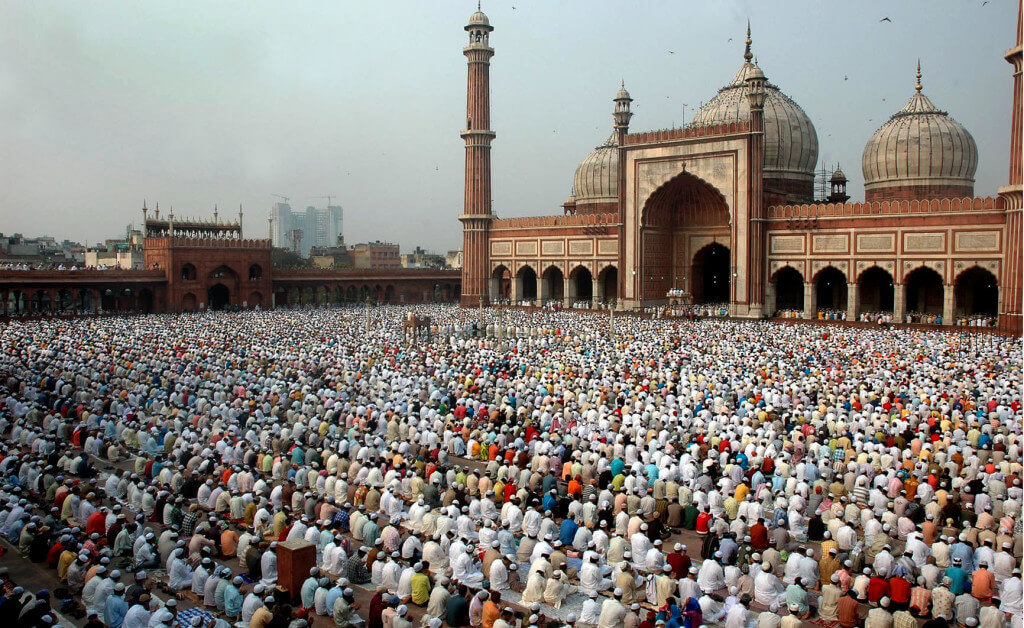
    Communal tensions have turned countless neighborhoods across India into a tinderbox that gets ignited by a mere spark — a remark inciting violence or a provocative show of strength in a minority-dominated locality. The clashes that erupted in Haryana’s Nuh over a religious procession are now scorching other districts of the state too. The onus is on the police to arrest and prosecute rioters and also those indulging in hate speech — else the government’s inaction would be read as its complicity.
    (Tribune, India)

  • Ukraine shadow set to loom large over G20 meet

    Ukraine shadow set to loom large over G20 meet

    Negotiators are falling back on ‘Plan B’, which banks on emphasizing India’s achievements during its presidency

    “While no G20 member is likely to challenge India’s version of a successful summit, the western press would take a rather different view. Its main interest will be the Ukraine war and the statements of western leaders on that war. They will also observe the approach taken by China — if President Xi Jinping participates in the summit, what he would say on Ukraine, and on his possible interaction with US President Joe Biden and other western leaders. It will also focus on the summit’s approaches to the concerns of developed economies. Naturally, if Russian President Vladimir Putin attends the summit, all attention will be on his presence and the reaction it evokes among his western peers. Thus, the yardstick by which the West will judge the summit will be radically different from the way India may like.”

    By Vivek Katju

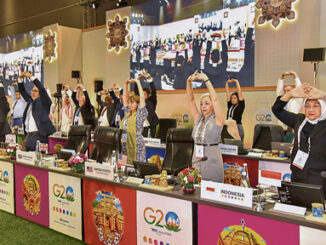
    The G20 summit is scheduled to be held in Delhi in a little more than six weeks. There is no doubt that India has the capability to ensure flawless and successful logistics for the summit. The government has also held numerous meetings in different parts of the country on various subjects and themes covered by the G20. It adopted this novel and unprecedented approach to ensure that most parts of the country get a sense of participation in India’s presidency of the group, even though it is only rotational in nature.

    The G20 summit is one of the most important multilateral events ever hosted by India. This is because this group of 20 —19 countries and the European Union — “represents around 85 per cent of the global GDP, over 75 per cent of the global trade and about two-thirds of the world population”, as India’s website on the summit notes. Modi would naturally be keen to do everything possible to have a memorable summit. The question, though, is what will actually constitute a successful summit.

    While such a question is germane to every multilateral summit, it becomes essential to ask it regarding the G20 summit because of the deep global divisions generated by the Russia-Ukraine conflict. There will inevitably be special attention on India, as the host country, for generally it is the host’s responsibility to find a way through the contentions to forge a consensus outcome document. If India is unable to do so, will this detract from the success of the summit?

    This question is also relevant because all previous G20 summits resulted in consensus documents. A Bali Declaration emerged from the last summit held in Indonesia in November 2022, following which India took over the group’s leadership. The declaration contained a paragraph dealing with the Russia-Ukraine conflict. It was carefully crafted. It referred to the statements already made by G20 members at the United Nations Security Council and General Assembly. It noted that the UNGA deplored Russia’s aggression against Ukraine. It also mentioned that most G20 members ‘condemned’ the Russian aggression against Ukraine. Thus, the paragraph was, all in all, critical of Russia.

    In all meetings at ministerial and other levels held under India’s presidency on different subjects, Russia and China have refused to endorse the Bali Declaration paragraph on Ukraine. To deal with their objections, India adopted a policy to issue ‘Outcome Document and Chair’s Summary’ for each of these meetings. While the ‘Outcome Document’ portion of the meetings’ reports relate to the agreements reached on the subjects under consideration in these meetings, the ‘Chair’s Summary’ is on the Ukraine conflict.

    The ‘Chair’s Summary’ repeats the Bali Declaration paragraph on Ukraine with a footnote that Russia and China did not agree with it. This stratagem has worked because India has the cover provided by the Bali Declaration but that will not be available for the Delhi summit declaration. A subsequent summit is naturally not bound by the formulations of previous summits. Till now, the negotiations led by Indian officials have not closed the gap on this difficult issue. If India adopts the ‘Chair’s Summary’ route at the Delhi summit, it has to ensure that its formulation is largely acceptable to all members. It cannot fly solo; it entails the risk of crashing and can lead to charges that the summit has failed.

    Indian negotiators are aware of the problems that the Ukraine issue will create, though they will try their best to find a language that is acceptable to all members. This process, howsoever difficult, cannot be ignored and will have to be undertaken at the next Sherpas’ meeting. Meanwhile, Indian negotiators are falling back on what can only be considered as ‘Plan B’. This banks on emphasizing India’s achievements during its presidency, especially giving primacy and voice to issues concerning the welfare of the Global South. It also involves making developed countries pay attention to the pressing problems relating to the debt burden of the Global South. In addition, India is keen to show how digital power can be harnessed for speedy development. The crowning part of ‘Plan B’ is India’s advocacy for the African Union becoming a member of the G20. There is a good chance that it will succeed in this endeavor.

    Thus, even if no consensus is reached on the Ukraine crisis, India will emphasize that its G20 presidency and the summit have been successful because it has emerged as the leading advocate of the Global South. This will be attributed to Modi’s international stature and the great position India has come to acquire globally under his nine-year stewardship of the country.

    While no G20 member is likely to challenge India’s version of a successful summit, the western press would take a rather different view. Its main interest will be the Ukraine war and the statements of western leaders on that war. They will also observe the approach taken by China — if President Xi Jinping participates in the summit, what he would say on Ukraine, and on his possible interaction with US President Joe Biden and other western leaders. It will also focus on the summit’s approaches to the concerns of developed economies. Naturally, if Russian President Vladimir Putin attends the summit, all attention will be on his presence and the reaction it evokes among his western peers. Thus, the yardstick by which the West will judge the summit will be radically different from the way India may like.

    Back in 1983, the Non-Aligned Movement (NAM) summit in India was overshadowed by the Iran-Iraq war. No consensus was reached on the paragraph on the war and a Chair statement was attached to the political declaration. But that Chair statement was acceptable to all and under Indira Gandhi’s stewardship, the summit was an acknowledged success. But those were different times for Indian diplomacy.
    (The author is a Former Secretary, Ministry of External Affairs, Government of India)

  • Questions for Manipur CM, DGP

    Questions for Manipur CM, DGP

    They must explain why it took the police so long to take action against perpetrators of May 4 crime

    It is not possible that the Chief Minister and the DGP did not know about the commission of this dastardly crime till a video clip of the incident went viral just before the start of the Monsoon Session of Parliament last week. It shows that patriarchy is deeply imbedded in the psyche of most BJP leaders. That is why champion women wrestlers were forced to come out on the roads to protest and why murderers and rapists in the 2002 Gujarat riot cases were released after only a few years in jail, though they were sentenced to life imprisonment.

    By Julio Ribeiro

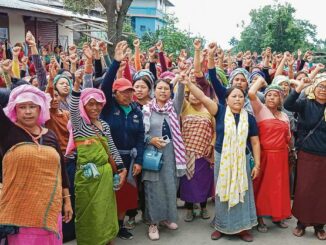
    Two Kuki women were sexually assaulted on May 4. The disturbances in Manipur had started a day earlier, after the High Court’s direction to the government regarding the Meiteis’ demand for Scheduled Tribe (ST) status.

    A communal angle is sought to be introduced into the tragedy that has befallen Manipur.

    The court order that led to the violence was only an excuse to kill and maim. The enmity between the Kukis and the Meiteis is as old as the hills where the Kukis reside. The Kukis (and other tribes) occupy 90 per cent of the landmass in the state. The Meiteis, who reside in the plains, occupy the remaining 10 per cent. But the Meiteis are more numerous and economically better off since political power has been in their hands since the state came into existence.

    Yet, like Oliver Twist in the Charles Dickens novel, they want more — hence, the demand to be classified as an ST so that the Meiteis become eligible for tribal land, which at present cannot be owned by anyone other than a tribal. The court ruled in favor of the Meiteis. But is it for courts to say who is a tribal? That should be left to the elected government. If while deciding on the issue the government ignores the rules on the subject, only then should the judiciary intervene. I do not know if that state had been reached.

    The Meiteis appear to be of Indo-Burman stock, like the Nagas, Mizos, Khasis and the Garos of Meghalaya and the Bodos of Assam. But they have been Hindu Vaishnavites for centuries. I learn that the Kukis originally wanted to be included in the Hindu fold, but were not welcomed because they were not born Hindus. In Hinduism, a caste can be assigned only by the accident of birth. If that test was applied, the Meiteis could not claim tribal status.

    Tribal communities were basically animists. Most Kukis converted to Christianity two centuries ago in colonial times. Some Meiteis are Christians, converted from Hinduism much later. I learnt of their existence only when worshippers in my church began praying for them and for peace to prevail. It was said that some 300-odd churches in the valley were burnt or destroyed. I thought it was truly amazing that so many churches were built when believers counted for just over a lakh! I presume that Kukis staying in the plains added substantially to that number. A communal angle is sought to be introduced into the tragedy that has befallen Manipur. I would have rejected that charge off-hand, knowing well that the Meitei-Kuki animosity preceded the conversions to Christianity. But the hate campaigns propagated by rabid extremist elements in the last decade sowed in me a seed of doubt.

    Rajat Kumar Sethi had been appointed to guide the inexperienced N Biren Singh when he was installed as the Chief Minister of Manipur. What has happened to him? We have not heard of him nor read about him in the media for some time now. The complaint against Biren Singh is that, firstly, he is incompetent (that is proved) and secondly, he has aggravated the dissensions and distrust between the Meiteis and the Kukis by utilizing religion as a tool (that sounds plausible).

    Our Prime Minister said he was surprised when during his travels abroad he was asked about the ill-treatment of Muslims in India. He blamed critics of his government for his embarrassment. I refuse to believe that he is not aware of the fear generated in Indian Muslim minds due to the divisive hate politics that has taken root in our land in the last decade. His interest in consolidating Hindu votes for electoral gains and the parallel RSS agenda of doing the same to create a Hindu Rashtra necessitated the denigration of the minorities, forgetting that a country centered purely on religion could soon deteriorate into a failed state like our neighbor to our west.

    The disrobing of the two Kuki women involved a mob of Meitei men, egged on by their womenfolk! The husband of one of the two women had served in the Army for 28 years. He was sorely disappointed that his own people had dishonored his wife and he was not there to protect her. He had seen action in Sri Lanka and Siachen and this was what he got in return.

    There are questions that Biren Singh and the DGP of Manipur must answer:

    1. The incident occurred on May 4 in the presence of the police. When did the police party make its report? What did the party say?

    2. If it did not report the ghastly incident of stripping of the two women and the subsequent rape of the younger woman, what action was taken against the policeman, especially as it is now alleged that it was the police who handed over the women to the mob?

    3. A zero FIR of the incident was registered on May 18 at a nearby police station. Were the facts brought to the notice of the higher police authorities at least then? If not, who failed to inform them?

    4. The zero FIR was finally transferred a month later to the police station under whose jurisdiction the crime was committed. Why did that take so long?

    5. Why did the police not arrest the culprits earlier? They only acted when the Prime Minister and the Chief Minister were compelled to issue statements to condemn the perpetrators. Does it require the permission of the Chief Minister to prosecute or arrest such law-breakers?

    It is not possible that the Chief Minister and the DGP did not know about the commission of this dastardly crime till a video clip of the incident went viral just before the start of the Monsoon Session of Parliament last week. It shows that patriarchy is deeply imbedded in the psyche of most BJP leaders. That is why champion women wrestlers were forced to come out on the roads to protest and why murderers and rapists in the 2002 Gujarat riot cases were released after only a few years in jail, though they were sentenced to life imprisonment.
    (The author is a former governor, and a highly decorated retired Indian Police Service (IPS) officer )

  • Why is the UN failing in its duties?

    Why is the UN failing in its duties?

    The UN’s failures in Nepal and the ongoing Russia-Ukraine war are indicative of its limited influence and resources. The UN’s efforts to prevent and resolve conflicts are often hindered by member states’ political agendas and lack of consensus. The UN must focus on addressing its shortcomings and strengthening its capabilities to maintain its relevance in today’s world. This includes addressing issues of inclusivity and representation, enhancing training and preparedness of peacekeeping missions, and finding innovative solutions to fund its operations. Once these parameters are fulfilled it is then a shared vision of international peace and security will materialize.

    By Sarbendra Khanal

    The United Nations, founded in 1945, was established with a vision to maintain international peace and security. It has played a critical role in addressing and resolving conflicts worldwide. However, despite its global influence and reach, the UN’s effectiveness in addressing conflicts has been widely debated. One such instance where the UN has failed to prevent a conflict is the ongoing Russia-Ukraine war. Additionally, the UN’s efforts in Nepal have also not been as robust as expected. With a staggering united front and with the participation of almost all the major nations of the world, why is the UN failing in its duties?

    The United Nations was instrumental in Nepal’s peace process, which ended the decade-long Maoist insurgency in 2006. The UN played a crucial role in monitoring the ceasefire agreement and overseeing the disarmament of the Maoist army. However, since then, the UN’s engagement in Nepal has been limited. The UN’s political mission in Nepal, established in 2007, was concluded in 2019, leaving behind a fragile political situation. The absence of the UN in Nepal’s political landscape has led to the government’s inability to address critical issues such as transitional justice, inclusion of marginalized communities, and governance. Despite the UN’s efforts, Nepal has been unable to establish a stable and democratic government.

    Similarly, the UN’s efforts to stop the Russia-Ukraine war have also been ineffective. The ongoing conflict between Russia and Ukraine had seeds sown back in 2014 when Russsia annexed Crimea. It also provided supprot to separatist rebels in eastern Ukraine. Since then, the conflict has claimed over 13,000 lives and displaced millions. The UN has been unable to stop the war and has been a mute spectator despite multiple resolutions and peacekeeping efforts. The UN’s inability to prevent the Russia-Ukraine war can be attributed to the veto power of the UN Security Council’s permanent members, including Russia. The UN’s limited influence and lack of consensus among member states have hindered its ability to resolve the conflict effectively. The UN relies on member states’ contributions to fund its operations, which can be unpredictable and insufficient. This limits the UN’s ability to provide essential services and support to countries facing conflict and instability. The UN’s peacekeeping missions have also been criticized for their lack of preparedness and inadequate training, leading to instances of sexual abuse and misconduct by peacekeepers.

    In many instances UN has not enforced its mandate whether it is article VI or article VII. UN has failed miserably to maintain peace and rule of law in countries like Rwanda, North and South Sudan although it has the executive mandate as a supreme international organization. Talking about my own experiences, the UN should avoid lengthy bureaucratic processes and be more assertive to keep the spirit of its objectives in the field. A lot needs to be done to cut red-tapism and make actionable changes on the ground.

    The UN’s failures in Nepal and the ongoing Russia-Ukraine war are indicative of its limited influence and resources. The UN’s efforts to prevent and resolve conflicts are often hindered by member states’ political agendas and lack of consensus. The UN must focus on addressing its shortcomings and strengthening its capabilities to maintain its relevance in today’s world. This includes addressing issues of inclusivity and representation, enhancing training and preparedness of peacekeeping missions, and finding innovative solutions to fund its operations. Once these parameters are fulfilled it is then a shared vision of international peace and security will materialize.

    The United Nations has been involved in Nepal’s humanitarian work since the Maoist insurgency, which ended in 2006. The UN has provided essential support to Nepal’s development and peace-building efforts. Its activities include humanitarian assistance, capacity building, human rights monitoring, and the promotion of inclusive and democratic governance. One of the UN’s significant engagements in Nepal is the Truth and Reconciliation Commission (TRC). The TRC was established in 2013 to investigate human rights violations committed during the Maoist insurgency and the conflict with the state. The UN has provided technical and financial support to the TRC. The UN’s involvement in the TRC aimed to ensure that the process was impartial, transparent, and credible.

    However, the TRC’s work has been slow, with limited progress made in the investigation and prosecution of those responsible for human rights violations. The TRC has been criticized for its lack of independence and transparency, which has led to mistrust and skepticism among victims and civil society groups. The TRC’s failure to deliver justice has also been attributed to the lack of political will and support from the government.

    The UN has been actively engaged in addressing these challenges and supporting the TRC’s work. The UN has advocated for the TRC’s independence and transparency, provided technical assistance and training, and facilitated dialogue among stakeholders. However, despite the UN’s efforts, the TRC’s progress remains slow, and justice for victims of human rights violations remains elusive.

    One of the reasons for the TRC’s slow work is the lack of political will and support from the government. The government has been criticized for its reluctance to address human rights violations and its failure to provide sufficient resources and support to the TRC. The TRC’s work has also been hindered by the lack of cooperation and information sharing from security forces, political parties, and other stakeholders.

    Another reason for the TRC’s slow progress is the complex nature of the conflict and the challenges of investigating human rights violations committed during the Maoist insurgency. Many victims and witnesses fear retaliation and intimidation, making it challenging to collect evidence and testimonies. The TRC also faces challenges in investigating crimes committed by the state, including the security forces, which enjoy immunity under the law.

    To be more robust and dynamic in Nepal, the United Nations (UN) must focus on addressing the country’s critical challenges and building on its strengths. The following are some ways the UN can be more effective in Nepal. Strengthening democratic institutions: The UN can support Nepal in strengthening its democratic institutions by promoting inclusive and participatory governance. This can include technical support for constitution-building, election monitoring, and capacity-building for political parties and civil society groups. Addressing social and economic inequalities: The UN can address social and economic inequalities in Nepal by supporting programs that promote access to education, healthcare, and economic opportunities for marginalized communities.

    The UN can also promote sustainable development initiatives that address poverty, inequality, and environmental degradation. Strengthening peace-building efforts: The UN can continue to support Nepal’s peace-building efforts by promoting conflict prevention, resolution, and reconciliation. This can include supporting community-based initiatives for conflict resolution, facilitating dialogue among stakeholders, and promoting transitional justice and reconciliation processes. Promoting human rights: The UN can promote human rights in Nepal by providing technical support for human rights institutions, monitoring and reporting on human rights abuses, and promoting accountability for perpetrators of human rights violations.

    Mobilizing resources, the UN can mobilize resources to support Nepal’s development and peace-building efforts by partnering with the government, private sector, and civil society groups. The UN can also encourage donor countries to increase their support for Nepal. Enhancing coordination: The UN can enhance coordination among its various agencies and programs in Nepal to ensure coherence and effectiveness in its work. This can include streamlining administrative procedures, sharing information, and promoting joint programming and resource mobilization.

    The UN’s engagement in Nepal’s humanitarian work and the TRC’s establishment demonstrate its commitment to supporting Nepal’s peace-building efforts. Stringent efforts for actionable changes are the need of the hour and Nepal is in dire need. The TRC’s slow progress highlights the challenges of addressing human rights violations in post-conflict societies, including political will, independence, and transparency. The UN must continue to support the TRC’s work, advocate for justice for victims, and promote inclusive and democratic governance in Nepal.

    (The author served as the 26th Chief of Nepal Police, holding a prominent position within the organization. In his professional journey, he contributed significantly to international peacekeeping efforts. At the United Nations headquarters in New York, he served as an Assessment Officer and Mission Manager in the Department of Peacekeeping Operations. Additionally, he demonstrated his leadership skills as a Formed Police Commander in Haiti. Moreover, his dedicated his expertise as a mentor and trainer to International Police Officers at the United Nations Mission in Bosnia and Herzegovina. Furthermore, he actively participated in the UNPROFOR mission in former Yugoslavia, fulfilling roles as a Police Monitor and Humanitarian Aid Officer)

  • Manipur incidents make Indians hang their heads in shame

    The horrifying & gruesome incident of Manipur has  put the whole nation to shame. The irresponsible  religious propaganda spread by media everyday will doom the whole nation one day. Society now has been brutally divided  in the name of religion to fulfill the vested interest of the ruling party. The insanity has reached its peak because of the hate messages being officially circulated on social media, which are turning us into intolerant human beings . If this continues,  after some time the whole country will be  sitting on the Time Bomb and anarchy will rule the Day. If we don’t stop here the results will be devastating. Tomorrow it can be one of us. It is high time we  recognize this game of dirty politics and refrain ourselves  from spreading hatred in the country. No one can manipulate us against our wish. So,  only the citizens of this country can stop the occurring of these incidents in future.  Let us stop ourselves from being fooled by dangerous politicians who are not even affected by the incident. Let the people suffer;  they are interested in their vote banks only. What goes out comes back, this is the law of nature. So, please spread love, affection and care and make India a place worth living in.

    Tript Kaur (Ludhiana)

  • Needless accommodation: On the judiciary and the term of the Enforcement Directorate head

    By allowing ED chief’s continuance, Supreme Court has undermined its own authority

    It comes no more as a shock or surprise if the Supreme Court is seen as deferring excessively to the government’s wishes. The order allowing Sanjay Kumar Mishra, head of the Enforcement Directorate (ED), to continue till September 15 at the Centre’s request is needlessly accommodative. It was only on July 11 that the Court declared illegal the extensions given to Mr. Mishra in 2021 and 2022. At the same time, he was permitted to continue till July 31 to ensure a smooth transition. Yet, without any submission that the process to select his successor has been set in motion, the Court has invoked an undefined “larger national interest” to allow him to go on up to September 15. It was a self-serving application in the first place. The ostensible reason that the government finds his services indispensable is that he is helming the country’s efforts to demonstrate its framework to counter money laundering and the financing of terrorism during a country review before the Financial Action Task Force (FATF). The multi-lateral body adopts a mutual evaluation system and India’s ongoing review will go on until June 2024, when the final evaluation report may be considered at a likely plenary discussion on its compliance status. The government sought an extension of his services until October 15, presumably because the country’s agencies and institutions may be ready by then for an on-site visit by an FATF delegation.

    As the agency that administers the law against money laundering, the ED may have a key role in preparing the country’s presentation, but it is difficult to believe that the process depends on one individual. Even if it were so, nothing prevented the government from utilizing Mr. Mishra’s services for FATF purposes alone, while leaving the directorate’s routine activities under his successor. In any case, various agencies and authorities are involved in framing the country’s policies on money laundering and terrorism financing. It is unfortunate that the Court did not countenance arguments that highlighted these points. It did raise questions as to how one person could be indispensable, but ultimately chose to allow him to continue for some more time. One can understand the argument that the country’s image depends on a positive FATF evaluation, but the claim that not giving Mr. Mishra an extension might result in a “negative image” is quite incomprehensible. India’s credentials will be evaluated on its laws, systems and compliance with global standards and not on who prepared the report. The Court’s permissiveness detracts from its resolve to hold the government to account for actions that it had itself declared illegal.

    (The Hindu)

  • Manipur & beyond

    Crisis imperils peace in entire North-East

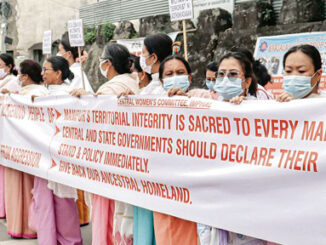
    The Manipur crisis, which has reached a crescendo due to the nationwide outrage over a video clip showing two women being paraded naked, is spilling over to other states in the North-East. Dozens of Meitei people, who were residing in Mizoram, have fled to Assam following an ‘advisory’ issued by the Peace Accord MNF Returnees’ Association (PAMRA), an ex-militants’ group. The Meiteis — the majority community in Manipur — find themselves under threat because a Meitei mob was allegedly responsible for the horrifying assault on Kuki-Zomi women in early May. Meiteis are leaving Mizoram despite the state government’s assurances about their safety and security, even as PAMRA ‘clarified’ that it had only asked them to exercise caution in the light of ‘public sentiments’ regarding the ethnic conflict in Manipur. Some Mizoram-based Meiteis have even taken refuge in Manipur. What has caused anxiety and insecurity among Meiteis is a call given by Mizoram’s civil society groups to hold statewide demonstrations today (July 25) in protest against the violence unleashed on members of the Kuki, Hmar, Mizo and Zomi communities in Manipur. Notably, the immediate trigger for ethnic clashes in Manipur was a ‘Tribal Solidarity March’ taken out on May 3 in protest against the Meitei community’s demand for Scheduled Tribe status.

    (Tribune, India)

  • Prelude to 2024 Lok Sabha battle

    Prelude to 2024 Lok Sabha battle

    Oppn has its task cut out if it is to cohere into a credible alternative to BJP-led NDA

    “After the Patna warm-up exercise, the Opposition took a few steps forward in Bengaluru. The most significant of these were christening the coalition ‘INDIA’ — an acronym for Indian National Developmental Inclusive Alliance (note the absence of the words ‘secularism’ and ‘socialism’, which used to be pet shibboleths), and drafting a resolution that addressed the concerns of each participant.

    From here to 2024, the Opposition has its task cut out if it is to cohere into a credible, convincing alternative to the BJP. As for the BJP, the fundamental question is: if its electioneering is going to center around Modi, as it surely will, what was the compulsion to revive the NDA?”

    By Radhika Ramaseshan

    Coalition politics, which dominated the Indian landscape from time to time, gradually receded from popular consciousness when the BJP got a majority on its own in 2014. The party did not need the allies which sailed alongside, hoping to be deal-makers and deal-breakers, as they had done in the past. In his thanksgiving speech in May that year, Prime Minister Narendra Modi had said that despite the BJP being comfortably cushioned against instability, he would take the constituents along and allow them to be part of his government. It was a statement that was condescending and yet a token acknowledgment of the times when BJP dispensations led by PM Atal Bihari Vajpayee depended critically on the support of their associates. It seemed as though Modi did not want the National Democratic Alliance (NDA) put together by Vajpayee to unravel because who knows when he would have to fall back on it again!

    It seemed as though the NDA relaunch was a quick response to the forum of 26 Oppn parties.

    The NDA, like other amalgams formed by a covenant of practicality and interdependence, mutated periodically. Some parties left when their leaders believed their political interests were threatened, while others departed in search of greener pastures. In 2014, Modi had 11 allies who were part of his dispensation and others who were out of it because they failed to open their accounts in the Lok Sabha polls, such as the Haryana Janhit Congress.

    In 2019, the BJP’s old friends such as the undivided Shiv Sena, the Shiromani Akali Dal (SAD) and the AIADMK remained with Modi. A fair-weather ally, the Janata Dal (United) — which quit the NDA before 2014 amid its leader Nitish Kumar’s bitter relationship with Modi — returned, sensing that there was little point in throwing his lot with the ‘secular’ spectrum and being relegated to the margins. By then, the BJP had found new partners in the North-East, a hitherto untrodden region it had set its eyes on. The elections that year marked a new high for the BJP and Modi as they won with a bigger majority that rendered the NDA virtually redundant. Increasingly, the BJP became the strong fulcrum on which power depended. Mere appendages to a powerful core, the NDA constituents could not exercise the leverage they had in Vajpayee’s somewhat wobbly governments.

    The difference between that period and the present one is that Modi never cared to set up a steering committee, while the NDA meetings became a thing of the past. Vajpayee made it a point to nominate the leader of a non-BJP party as the steering committee’s convener. Modi’s NDA was faceless. Its near-anonymity briefly broke over a contretemps between Chirag Paswan, son of Ram Vilas Paswan, and his uncle Pashupati Kumar Paras over who would claim Paswan Senior’s legacy after his death. The BJP drove a wedge in the Paswan clan and spirited away the uncle, who walked away with the MPs and MLAs of the Rashtriya Lok Janshakti Party (RLJP), leaving Chirag with nothing except his own Lok Sabha seat. Paras was the first ally who was inducted into Modi’s BJP-heavy Cabinet out of sheer expediency.

    The NDA’s then-and-now saga had an unexpected twist when BJP president JP Nadda proclaimed that 38 allies would participate in a meeting of the coalition in Delhi on July 18. Thirty-eight? Which were these parties? The Sena, one of the BJP’s oldest allies, was split into two, with the BJP getting the faction headed by rebel Eknath Shinde on its side. The faction helmed by Uddhav Thackeray, founder Balasaheb Thackeray’s heir, who had earlier snapped his ties with the BJP, became a part of the Opposition’s Maha Vikas Aghadi; Uddhav was the Maharashtra CM for a couple of years. Uddhav was outfoxed by the BJP’s machinations. The SAD broke away from the NDA in 2020, while the Janata Dal (United) returned to the Mahagathbandhan in Bihar last year.

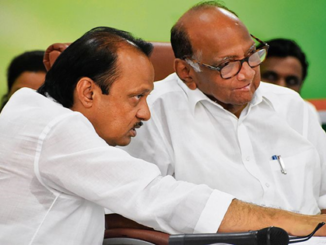
    Maharashtra, which experienced a tectonic shift in the form of the Sena split, was subjected to another seismic jolt when the Nationalist Congress Party (NCP), headed by strongman Sharad Pawar, broke. The mutineer was none other than Pawar’s nephew Ajit Pawar, who walked into the NDA. During Tuesday’s NDA show, the BJP got Chirag Paswan on board. Though the Telugu Desam Party did not get an invite for the meeting, it is also expected to return to the NDA fold.

    Modi was the centerpiece of the event as the leaders of each constituent vied to sing his praises. In his long speech, he trained his guns on another meeting which concluded shortly before the NDA members sat together.

    Over 2,000 km away in Bengaluru, the Opposition parties met in a gathering of the Congress’ steadfast friends such as the DMK, the Rashtriya Janata Dal and the Jharkhand Mukti Morcha and newer ones like Uddhav Thackeray’s Sena faction, Aam Aadmi Party, the JD(U), the Trinamool Congress and the Samajwadi Party-Rashtriya Lok Dal combine. This meeting was planned soon after the Opposition rallied around for its first congregation at Patna on June 23. It seemed as though the NDA relaunch was a quick response to this forum of 26 parties, as though it was a parallel demonstration of strength.

    After the Patna warm-up exercise, the Opposition took a few steps forward in Bengaluru. The most significant of these were christening the coalition ‘INDIA’ — an acronym for Indian National Developmental Inclusive Alliance (note the absence of the words ‘secularism’ and ‘socialism’, which used to be pet shibboleths), and drafting a resolution that addressed the concerns of each participant.

    From here to 2024, the Opposition has its task cut out if it is to cohere into a credible, convincing alternative to the BJP. As for the BJP, the fundamental question is: if its electioneering is going to center around Modi, as it surely will, what was the compulsion to revive the NDA?
    (The author is a senior journalist)

  • In impasse in wrestlers’ case, the loser is the rule of law

    In impasse in wrestlers’ case, the loser is the rule of law

    There is an all-round weakening of the rule of law in India, best exemplified by the impasse in the wrestlers’ sexual harassment complaint and the feeble administrative, judicial and political attempts to ensure justice.

    Police selectivity in the investigation became legally established when after over 40 days of investigation, the police filed its long report in two parts: a charge sheet relating to different sexual offences against the adult wrestlers, and a closure application (over 500 pages long) in connection with the POCSO Act offence. The closure application relied on an extra-legal withdrawal application by the minor, who is alleged to have made the first complaint, including a statement under Section 164 in a state of anger or dispiritedness.

    By B. B. PandeB. B. Pande

    The autonomy and the supremacy of the law cannot be taken for granted, because it is dependent on political commitment and a robust rule of law culture. Contemporary Indian society is passing through a phase of an all-round weakening of the rule of law, mainly on two counts: first, a trust deficit in the colonial model of the rule of law, and second, a faith-oriented majoritarian re-imagination of laws that locate their essence in the divine providence. The malaise of such weakening is best exemplified by the case of the Indian medal-winning wrestlers and their complaints of alleged sexual harassment, where there has been no resolution even after their long sit-in protest in the national capital.

    The airing of complaints
    For almost a decade now, women trainee wrestlers — this also includes award-winning sportspersons — have faced and put up with alleged sexual advances and grave indignities during their training. In January 2023, some of the wrestlers began their sit-in/dharna at Jantar Mantar, New Delhi. Despite the Sports Ministry referring the batch of complaints to an oversight committee, there was no concrete and satisfactory outcome.

    After being subjected to insensitive probings during the depositions, the wrestlers decided to resume the sit-in in late April. This time the protest appeared to be better organized; there was more public support and the survivors also approached the Supreme Court of India, where the Chief Justice of India passed orders relating to the registration of the First Information Report (FIR) under the relevant laws and providing security to the wrestlers.

    As a sequel to the orders of the Court, the Delhi Police registered two FIRs: the first, under Sections 354, 354A, 354D and 506 of the Indian Penal Code and the second, under the provisions of the Protection Of Children from Sexual Offences (POCSO) Act in connection with the minor wrestler’s allegations. With the registration of the two FIRs for the first time, the sexual harassment complaints came into the domain of criminal justice, making them the subject of police investigation as well as judicial oversight.

    Following this, the alleged perpetrator and his followers began a campaign to vilify the wrestlers following growing public and even some political support. The campaign of vilification even went to the extent of critiquing the very basis of the POCSO Act. Growing support for the wrestler’s cause and increasing social visibility of the issue pushed the Union Home Minister to try and resolve it politically by having a closed door meeting with the representatives of the protesting wrestlers in June, followed by a more exhaustive meeting with the Sports Minister; this also included ‘advising’ the protesting wrestlers who hold regular jobs to resume work. As a sequel to the talks and assured relief, the sit-in ended, with the wrestlers saying their fight would now continue in court.

    Slothful and selective investigation
    As a key criminal justice agency that occupies the top slot in the investigation of crime, the Delhi Police ought to have responded quickly when internationally acclaimed wrestlers levelled serious charges against the perpetrator/politician who also occupies a top position in the sports world.

    After the first sit-in, which also highlighted the murky goings-on in the Wrestling Federation Of India, the police could have acted as in Section 156(i) of the Code of Criminal Procedure (Cr.P.C.), i.e., “Any officer in charge of a police station may, without the order of a Magistrate, investigate any cognizable case which a Court having jurisdiction over the local area within the limits of such station would have power to inquire into or try under the provisions of Chapter XIII”, like the Magistrate under Section 190(c) of the Cr.P.C.

    The Delhi Police is also under legal obligation, under Section 166A(c) in the amended Penal Code of 2013, as in the amendment to the Penal Code, which makes the ‘non-recording’ of information about sexual offences an offence punishable up to two years imprisonment. Therefore, when the Solicitor General advised the Supreme Court on May 28 that the FIRs would be registered ‘if your Lordships so directs’ and the Court complied with the wish, both displayed unusual deference to the Delhi Police. The Delhi Police would have been better reminded of their obligation to follow the mandatory FIR registration, as laid down in the ruling in Lalita Kumari (2013).

    The Delhi Police has taken its own time in investigating the crime, with a focus on the credentials of the complainants and only cursory fact gathering as far as the accused persons are concerned. Despite an FIR that falls under the POCSO Act, the prime accused person has not been interrogated or subjected to any kind of restraint even as he continues with this campaign of vilification on social media in an attempt to mount pressure on and intimidate the witnesses.

    Police selectivity in the investigation became legally established when after over 40 days of investigation, the police filed its long report in two parts: a charge sheet relating to different sexual offences against the adult wrestlers, and a closure application (over 500 pages long) in connection with the POCSO Act offence. The closure application relied on an extra-legal withdrawal application by the minor, who is alleged to have made the first complaint, including a statement under Section 164 in a state of anger or dispiritedness.

    The rule of law course correction
    The credibility and endurability of the rule of law is critically linked to universal and equal applicability in all situations, which is ensured by the equality principle propounded by legal philosophers. In the context of the sexual harassment complaints and FIRs, the equality principle demands a free, fair and impartial investigation that ensures a just and expeditious disposition of the complaints. It appears that the legal course at the police level has been designed to be slow and selective and overly deferential to the main accused person.

    But that alone is not enough to tilt the scales for or against the accused, who is equally entitled to a ‘fair trial’. However, the journey of the rule of law is expected to continue without impediment; that is why the Bench in the Lalita Kumari case relied on the reason of keeping an efficient check on police powers and having the measure of ‘judicial oversight’ of the magistrate, the idea being to obligate the jurisdiction Magistrate to follow up on each of the FIRs. Such judicial intervention in investigation may arise from an application by the complainant directly under Section 156(3) of the Cr.P.C. or on a writ petition before the High Court. In addition, the appellate courts (High Courts and the Supreme Court of India) enjoy powers to take suo motu cognizance and call for an action taken report or direct the lower court to monitor the investigation.

    The Supreme Court, in Sakiri Vasu vs State of U.P. (2008), has already imbued the magistracy with implied/inherent powers to monitor an investigation in the event of any abuse of powers. Sadly, in the case before us, the survivors have, by and large, had a raw deal. Neither the Delhi police nor the judiciary appear to have considered it worthwhile to stem the rot. They have been protesting in the open — at the site and then on the streets of Delhi — for months now. But administrative relief and judicial vindication seem distant. For the political dispensation, the ‘delay’ may be part of a ‘smart’ strategy to let the complaints lapse with time, even as it is convenient to blame the ‘failing colonial model’ of the rule of law.

    But for all those who have a greater stake in upholding the basic ideas of the rule of law and ensuring fidelity to constitutional justice, the approach ought to be different. The need is to stand up and resort to course correction to save the soul of the rule of law. We are not alone in such a fight to save the rule of law, as in many other democracies across the world, the rule of law confronts similar threats. This appears to be why the Stockholm Criminology Symposium (June 2023), focused on the theme of ‘principled and equitable law enforcement’.

    (B.B. Pande is a former professor of law at Delhi University)
    (Source: The Hindu)

  • The authority of ED and usage of PMLA

    The authority of ED and usage of PMLA

    Of late, much of the ED’s powers have been discharged in effecting pre-trial arrests
    Unfortunately, of late, much of the ED’s powers have been discharged in effecting pre-trial arrests, which used to be the prerogative of the police investigating the predicate offence. In the past, the CBI was used to impart fear among political opponents. In the process, the agency received the condemnation of various courts and earned the nickname “caged parrot”. Whether the ED will go down the same path or reorient its approach will entirely depend on the intervention of the country’s constitutional courts.

    By Manuraj Shunmugasundaram

    The Prevention of Money Laundering Act (PMLA), 2002 vested a cadre of officers under the Directorate of Enforcement (ED) with powers to prevent money laundering, attach proceeds of crime, and confiscate assets. However, over the last few years, the ED has assumed powers akin to that of a policing agency and has often been accused of turning its gaze against political opponents of the Union government. These concerns were bolstered when the Union government granted ED Director Sanjay Kumar Mishra a third extension, which the Supreme Court struck down.

    The ED is not the police
    It has been repeatedly held that the PMLA is a sui generis legislation, enacted to tackle money laundering through white collar crimes. According to Section 3 of the PMLA, the act of projecting or claiming proceeds of crime to be untainted property constitutes the offence of money laundering. Under the Schedule to the PMLA, a number of offences under the Indian Penal Code and other special statutes have been included, which serve as the basis for the offence of money laundering. In other words, the existence of predicate offence is sine qua non to charge someone of money laundering. It is crucial to note that the investigation and prosecution of the predicate offence is done typically by the Central Bureau of Investigation (CBI) or the State Police.

    Section 50 of the PMLA provides powers of a civil court to the ED authorities for summoning persons suspected of money laundering and recording statements. However, the Supreme Court held that ED authorities are not police officers. It observed in Vijay Madanlal Choudhary v. Union of India (2022) that “the process envisaged by Section 50 of the PMLA is in the nature of an inquiry against the proceeds of crime and is not ‘investigation’ in strict sense of the term for initiating prosecution.”

    There are other dissimilarities between ED authorities and the police. While the police are required to register a First Information Report (FIR) for a cognizable offence before conducting an investigation, ED authorities begin with search procedures and undertake their investigation for the purpose of gathering materials and tracing the ‘proceeds of crime’ by issuing summons. Any statement made by an accused to the police is inadmissible as evidence in court, whereas a statement made to an ED authority is admissible. A copy of the FIR is accessible to the accused, whereas the Enforcement Case Information Report is seldom available.

    During the discussion on the PMLA Bill in the Rajya Sabha in 2022, the erstwhile Union Minister of Finance, Jaswant Singh, said that he was “not entrusted with the responsibility of acting as a policeman of the country or acting as a policeman on the economic morals of the country.” He added, “It is not… the intention of the Government to have a piece of legislation which can be used as a… disguise for political vendetta or political revenge-taking.”

    These words were likely in reference to the powers of arrest under Section 19 of the PMLA, which permits superior ED authorities to arrest any person whom they have “reason to believe” is guilty of money laundering based on the material in their possession. Combined with the stringent conditions for grant of bail under Section 45 of the PMLA, the specter of arrest by the ED is always real and present. However, the use of the phrase “reason to believe” indicates that the ED authorities must satisfy themselves of the need for arrest and that such belief must pass the reasonableness test. As such, this should be the test that courts assessing the necessity of remand must apply, but seldom do.

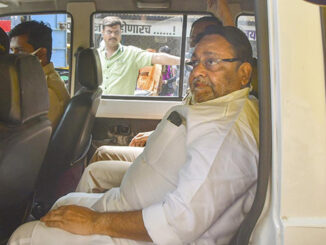
    Over the last year or so, the ED has arrested Ministers of the Delhi government, Satyender Jain and Manish Sisodia; former Minister from the Shiv Sena, Nawab Malik; former Principal Secretary to Kerala Chief Minister Pinarayi Vijayan, M. Sivasankar; Deputy Secretary to Chhattisgarh Chief Minister Bhupesh Baghel, Saumya Chaurasia; YSRCP MP Srinivasulu Reddy’s son, Magunta Raghava Reddy; and Tamil Nadu Minister, V. Senthil Balaji. In spite of such high-profile arrests, the ED has only filed charge-sheets after concluding investigation in only 1,142 cases out of the 5,906 cases registered since 2005. It is apparent that the majority of the focus is unduly spent on effecting pre-trial arrests and not thereafter. It is reported that 85% of cases registered against politicians involve those belonging to the Opposition parties.

    Role and purpose
    Political malice aside, this raises another fundamental question about the role and purpose of the ED. While the police investigating the predicate offence are empowered to arrest and seek custody of the accused, the ED is meant to focus on recovering the proceeds of crime in order to redistribute the same to victims. It is not clear whether the ED has managed to do this. Per contra, the Proceeds of Crime Act, 2002, the analogous legislation in the U.K., almost entirely concentrates on confiscation of assets through dedicated civil proceedings.

    Unfortunately, of late, much of the ED’s powers have been discharged in effecting pre-trial arrests, which used to be the prerogative of the police investigating the predicate offence. In the past, the CBI was used to impart fear among political opponents. In the process, the agency received the condemnation of various courts and earned the nickname “caged parrot”. Whether the ED will go down the same path or reorient its approach will entirely depend on the intervention of the country’s constitutional courts.

  • NDA vs INDIA: Challenge for Opposition to remain united

    The battlelines for the 2024 General Election are now clearly drawn, with 26 Opposition parties forming an anti-BJP front named INDIA, an acronym for the Indian National Developmental Inclusive Alliance. The Opposition now has a name, though it still doesn’t have a face. Congress leader Rahul Gandhi, who faces the prospect of being debarred from contesting next year’s Lok Sabha poll if the Supreme Court upholds his conviction and sentence in a defamation case, has declared that INDIA will unitedly fight Prime Minister Narendra Modi for the ‘idea of India’. PM Modi, in turn, said during a meeting of the National Democratic Alliance (NDA) that India had a long tradition of coalitions, but those formed on the basis of negativity had never succeeded. Notably, 38 parties attended the meeting of the BJP-led NDA, including the Shiv Sena and NCP factions led by Eknath Shinde and Ajit Pawar; respectively.

    The NDA’s parallel show of strength made it obvious that the BJP is not taking the Opposition lightly; the latter has already held two major meetings (in Patna and Bengaluru) in less than a month, with a coordination committee set to be formed at the next meeting in Mumbai.

    The all-important question is: do these parties have the firepower and cohesion to stop the BJP’s juggernaut in 2024? The 26 parties account for around 150 seats in the Lok Sabha, less than half the NDA’s current strength. The Congress, which is in power in Karnataka, Chhattisgarh, Rajasthan and Himachal Pradesh (besides being a junior member of the ruling alliance in Jharkhand), continues to be the premier Opposition party. Much will depend on whether the Congress and its INDIA partners such as AAP and the Trinamool Congress are able to rise above their differences. Going by the split in the Shiv Sena and the NCP, the BJP will stop at nothing to cripple the Opposition camp.
    (Tribune, India)

  • Your work is a testament to the positive impact journalism can have on our society

    By Dave Makkar

    Dear Prof. Saluja, I am writing to express my deepest admiration and gratitude for the exceptional work you have done in your recent issue of the Indian Panorama News exposing criminals in Indian politics. Your relentless pursuit of truth and your unwavering commitment to exposing the nexus between criminals and politicians in India have not gone unnoticed.

    In an era where journalism faces numerous challenges, your courage and integrity shine like a beacon of hope. By fearlessly bringing to light the actions of those who seek to undermine the very fabric of Indian democracy, you have demonstrated the true essence of responsible journalism.

    Your dedication to unbiased reporting and your willingness to tackle such sensitive subjects are truly commendable. You have proven that journalism is not just a profession but a mission to safeguard the principles of transparency and accountability in our society.

    Please know that your efforts have not only inspired me but have also motivated countless others who believe in the power of truth. Your work serves as a reminder that the pen is indeed mightier than the sword and that even in the face of adversity, the pursuit of justice must never waver.

    With due respect, I strongly feel based on the facts that the nexus between the criminals and politicians is entirely financed by the so-called world-renowned billionaires of India. The criminalization of politics is directly related to “Gangster Capitalism” that is being practiced in India since its independence in 1947. In India, politicians are selected & financed by the state created billionaires and voters play a part in the charade of voting for them! It was Congress in 1947 that started creating billionaires with public money and wealth to use them as their ATM’s during election time. BJP has gone too fat with the help of state created billionaires; they are buying elected representatives for couple of hundred crores for each in wholesale to form state governments even with 2 MLA’s by toppling non-BJP state governments.

    In 1990, BJP was also the part of the anti-India scam along with Congress and others to topple the VP Singh government just to save Dhirubhai Ambani from spending the rest of his life in Jail for crimes against India in 1990. Chandra Shekhar with 61 MP’s (out of 525-member lower house) from the breakaway group of Janta Dal was installed PM with the outside support of 195 Congress MPs under Rajiv Gandhi & 25 MPs of splinter groups by toppling the V P Singh government. The entire operation was financed by Dhirubhai Ambani from money stolen from Indian public. It was a turning point for Indian democracy with the demise of morality, ethics, honesty and patriotism in public life. After that Indian democracy turned to an “Elected Autocracy” and now under BJP’s Modi mostly financed by top billionaires; it is turning into a Dictatorship with Hinduism being turned into a fanatic religion with no space for minorities.

    The Indian billionaires along with the Politicians with big majority of them hardcore criminals they select; are the termites that have eaten up the public wealth along with the social and moral fiber of India. They are also responsible for acute poverty, illiteracy, un-employment, lack of basic civic & health care services and massive corruption at all levels of governance including judiciary & media in India. These billionaires are also promoting and financing “Hindu Rashtra” a communal agenda, call it a “Majoritarian Rule” where Upper caste Hindus are more equal even than the lower caste Hindus. No one can ignore how the minorities especially Muslims & Christians are being treated under Modi Rule since 2014. Unfortunately, history tells us that such countries rarely progress much. Retd. Admiral Arun Prakash in an interview has observed that under the current rulers, “India is prone to a Civil War in the very near future”.
    I request you to enlighten the Indian public with your thoughts on the issue of “Gangster Capitalist” financing criminals in Politics of India. I stand with you and your team, offering my support and encouragement in any way possible. If there is anything I can do to contribute to the cause of ethical journalism or assist you further, please do not hesitate to reach out.

    Once again, thank you for your unwavering commitment to truth and justice. Your work is a testament to the positive impact journalism can have on our society, and I eagerly await your future endeavors.
    With sincere appreciation and respect,
    Dave Makkar
    New Jersey

  • Loot, intransigence, and the darkening of a colonial blot

    Loot, intransigence, and the darkening of a colonial blot

    Mr. Trudeau’s Willy Brandt moment needs to find its British echo

    “We must understand that the return of stolen property is not a substitute for the trauma and the horrors caused by colonialism, because the agony suffered can never truly be removed through such belated restitution. The same holds for financial reparations, since the value of the human lives lost because of colonial indifference or brutality can never be accurately computed. The return of cultural artefacts is rather a moral obligation which the West owes to its colonies, just as reparations can be morally justified as the wealth and the economic success of these former colonial powers were built on the broken backs of their colonies. The return of cultural items offers a semblance of justice as well as expiates a legal and moral obligation which cannot and should not be ignored.”

    By Shashi Tharoor

    The recent news that the Netherlands will return 484 valuable artefacts it looted from Indonesia and Sri Lanka during the colonial period — it includes the fabled “Lombok treasure” of precious stones, gold and silver jewelry to Indonesia and the exquisitely-decorated bronze-and-gilt cannon of Kandy to Sri Lanka — once again puts the focus on an issue that will not go away. Should colonial countries continue to hold on to cultural artefacts and precious objects that were stolen during the period of imperial domination, or acknowledge their misappropriation and return them to their original homelands?

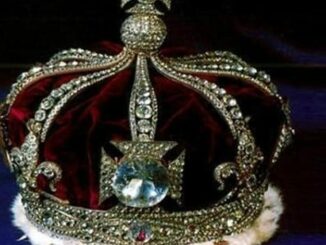
    The British have stubbornly refused for decades to return the so-called Elgin Marbles, a collection of classical Greek marble sculptures purloined by Lord Elgin from the Parthenon temple in Athens, or the Rosetta Stone taken from Egypt in 1802. But they had shown more generosity in repatriating some of the Benin Bronzes (looted by British forces in 1897) to Nigeria. Yet, when it comes to their extensive treasure trove of Indian artefacts, from the Kohinoor diamond to the sculptures from the Amaravati stupa, they dig in their heels, fearful of starting a hemorrhage that, in the words of former Prime Minister David Cameron, would soon leave the British Museum empty.

    We cannot blame the British for everything that is wrong in our country today; nor should we see the return of such looted items as a panacea to cure all the ills and wrongs of colonialism. One can even accept that there is a statute of limitations on colonial wrongdoings, but there is none on human memory, especially living memory, for as I have pointed out in my book, An Era of Darkness, there are still millions of Indians alive today who remember the iniquities of the British Empire in India. History belongs in the past; but understanding it, and doing whatever we can about it, is the duty of the present.

    A trauma that lingers

    Equally, we must understand that the return of stolen property is not a substitute for the trauma and the horrors caused by colonialism, because the agony suffered can never truly be removed through such belated restitution. The same holds for financial reparations, since the value of the human lives lost because of colonial indifference or brutality can never be accurately computed. The return of cultural artefacts is rather a moral obligation which the West owes to its colonies, just as reparations can be morally justified as the wealth and the economic success of these former colonial powers were built on the broken backs of their colonies. The return of cultural items offers a semblance of justice as well as expiates a legal and moral obligation which cannot and should not be ignored.

    The return of some of the treasures looted from India in the course of colonialism is also a much easier solution than financial reparations would be. The money exacted by the British from India in taxes and exploitation has already been spent, and cannot realistically be reclaimed. But individual pieces of statuary sitting in British museums could be, if for nothing else than their symbolic value. After all, if looted Nazi-era art can be (and now is being) returned to their rightful owners in various Western countries, why is the principle any different for looted colonial treasures?

    Flaunting the Kohinoor on the Queen Mother’s crown in the Tower of London is a powerful reminder of the injustices perpetrated by the former imperial power. Until it is returned — at least as a symbolic gesture of expiation — it will remain evidence of the loot, plunder and misappropriation that colonialism was really all about. Perhaps that is the best argument for leaving the Kohinoor where it emphatically does not belong — in British hands.

    Need for true atonement

    Of course, the process should not end with a few pieces of statuary or jewelry alone. I have argued for some time that the question of retrospective justice for colonialism is not answered by financial reparations alone, but by moral atonement.

    This, in my view, should take three forms aside from the (still improbable) return of looted colonial-era artefacts: teaching unvarnished British colonial history in schools in the United Kingdom, setting up with British tax money a museum to the horrors and iniquities of colonialism in the Imperial capital. And, above all, expressing an apology to the victims of colonialism.

    When Willy Brandt was Chancellor of Germany, he sank to his knees at the Warsaw Ghetto in 1970 to apologize to Polish Jews for the Holocaust. There were hardly any Jews left in Poland, and Brandt, who as a Socialist was persecuted by the Nazis, was completely innocent of the crimes for which he was apologizing. But in doing so — with his historic ‘Kniefall von Warschau’ (Warsaw Genuflection), he was recognizing the moral responsibility of the German people, whom he led as Chancellor. That is precisely why, when I released my book, Inglorious Empire, in the United Kingdom, I called for atonement, rather than financial or other compensation for India.

    What Britain could do

    While no British government of 2023 bears a shred of the responsibility for the horrors of colonialism, as a symbol of the nation that once allowed it to happen, the British government could atone for the past sins of the nation. That is also what Canada’s Prime Minister Justin Trudeau did in 2016 when he apologized on behalf of Canada for the actions of his country’s authorities a century earlier in denying permission for the Indian immigrants on the Komagata Maru to land in Vancouver, thereby sending most of them to their deaths. Mr. Trudeau’s Willy Brandt moment needs to find its British echo.

    It is unlikely to happen. Britain continues to persist in its intransigence. The U.K. is still well behind the Dutch on the issue of the restitution of colonial artefacts. It shelters behind de-accessioning laws that prevent anything currently in a British Museum from being returned to the place it was looted from. Since pretty much every museum in London is a chor bazaar, the British do stand to lose a lot, from the Elgin Marbles in the British Museum to the mechanical tiger devouring a British redcoat (commissioned by Tipu Sultan) in the Victoria & Albert Museum. It is safer to say no to everything than to return one item and unwittingly prise open the floodgates.

    But while they say no, they are not prepared to say sorry. An apology — an act of genuine contrition at, ideally, Jallianwala Bagh, like Mr. Trudeau’s over Komagata Maru — might work best as a significant gesture of atonement. And building a Museum of Colonialism would show a determination, in the metropolitan country, to learn the lessons of the Empire — to teach British schoolchildren what sources of loot, pillage and profit built their homeland, just as German children are shepherded to concentration camps to see the awful reality of what their forefathers did.

    If all this is done, then true atonement — of the purely moral kind, involving a serious consideration of historical responsibility rather than mere admission of guilt or payment of money — might be achieved. Is that really too much to hope for?

    (Shashi Tharoor is third-term Lok Sabha Member of Parliament (Congress) from Thiruvananthapuram, and the Sahitya Akademi Award-winning author of An Era of Darkness and of The Battle of Belonging. His most recent book is Ambedkar: A Life)

  • The spirit of the university under threat

    The spirit of the university under threat

    Suspension of teachers reflects the crisis emanating from the virus of ‘anti-intellectualism’

    “When I chose to join the vocation of teaching in 1990, I was guided by a very noble idea of the university. The university, I thought, should function as a vibrant and living community of students and teachers walking together, and learning and unlearning through engaged pedagogy, meaningful research and constant debate and dialogue on culture, politics, and diverse modes of resistance for creating a just and humane world. And the administration, I thought, should play only an enabling role so that students and teachers can flourish in an environment of openness and freedom. I know this ideal is likely to be laughed at and ridiculed by the techno-managers who run our universities these days. The reason is that the instrumental logic of neo-liberalism seeks to depoliticize the university and, instead, transforms it into a ‘brand’ that cherishes the market-driven mantra of ‘productivity’ and ‘efficiency’, and transforms students into consumers and teachers into service providers.”

    By Avijit Pathak

    The other day, when I read news reports about the suspension of four teachers at Delhi’s South Asian University (SAU), I was shocked, but not necessarily surprised. Well, these professors, as I know, are quite good in their respective fields of specialization. But then, instead of defining themselves as purely ‘value-neutral’ professionals, they, it seems, behaved like true teachers with a conscience — and in communion with their students. Not surprisingly, when their students were opposing the reduction of their monthly stipend and demanding representation in certain statutory committees, they urged the university administration to talk to the students and find a dignified way (instead of reducing the entire struggle to a ‘law and order’ problem to be handled by the police) to resolve the issue. Students who raise their voice are seen as disruptive elements. Teachers in touch with these students are bound to suffer.

    One of them visited the hospital where a student was admitted after falling severely sick during the agitation. In a good society, these teachers should have been appreciated for these qualities or virtues. However, we live in altogether different times that transform everything into its opposite: virtue into vice, compassion into non-professionalism, and scholarship into cold indifference. Hence, as I thought, their suspension was inevitable because the university administration could not tolerate their ‘misconduct’!

    Well, it is not difficult to understand that this sort of disciplinary measure on the part of the university conveys two messages to the teaching community: (a) As a teacher, you should know your boundaries; draw your fairly attractive salary, remain silent and don’t bring ‘politics’ into the classroom; otherwise, be prepared for punitive action; and (b) Don’t underestimate the power of the surveillance machinery; it is continually monitoring you, observing your every move and action, and even recording whether you are taking part in ‘radical’ forums like the ‘Marxist Study Circle’. In fact, these twin messages will further intensify the psychology of fear, and most of the teachers will play it ‘safe’, remain diplomatic or through their silence encourage the administration to become more and more coercive.

    When I chose to join the vocation of teaching in 1990, I was guided by a very noble idea of the university. The university, I thought, should function as a vibrant and living community of students and teachers walking together, and learning and unlearning through engaged pedagogy, meaningful research and constant debate and dialogue on culture, politics, and diverse modes of resistance for creating a just and humane world. And the administration, I thought, should play only an enabling role so that students and teachers can flourish in an environment of openness and freedom. I know this ideal is likely to be laughed at and ridiculed by the techno-managers who run our universities these days. The reason is that the instrumental logic of neo-liberalism seeks to depoliticize the university and, instead, transforms it into a ‘brand’ that cherishes the market-driven mantra of ‘productivity’ and ‘efficiency’, and transforms students into consumers and teachers into service providers. Under these circumstances, it is exceedingly difficult to retain the spirit of critical pedagogy that the likes of Paulo Freire and bell hooks embodied. Instead, a teacher/professor is supposed to be ‘value-neutral’. Politics is a diversion; she/he should only publish papers, keep in mind the mathematics of the ‘citation index’ and the ‘impact factor’, and enhance the ‘ranking’ of the university! And a student should think only of his/her utilitarian objectives. Possibly, SAU, too, is imitating this logic. No wonder the students who raise their voice are seen as disruptive elements; and as the suspension of four teachers indicates, if you are seen to be in touch with these ‘problematic’ students, you are bound to suffer. In a way, the teachers’ suspension cannot be seen in isolation.

    Furthermore, as India is fast moving towards some sort of electoral autocracy, we are witnessing a new kind of crisis emanating from the virus of ‘anti-intellectualism’. Don’t think critically. Don’t question the establishment. Accept the dominant discourse of development, nationalism and religion. Is it, therefore, surprising that even the slightest trace of dissent is criminalized? Everywhere in India, the university administration is becoming overly cautious; it would not allow any activity, be it pedagogic, cultural or political, that questions the ruling regime or encourages critical thinking and radical life-practice. Well, for quite some time, I thought that SAU — a joint initiative by the eight SAARC countries — was of a qualitatively different kind. In fact, I visited this university on many occasions; my interaction with young students from Bangladesh, Nepal, Afghanistan and India gave me immense satisfaction; and the presence of bright and young teachers was a matter of great joy. Is the SAU losing its autonomy, receiving signals from the government and behaving like yet another Indian university producing a bunch of conformists and depoliticized careerists, or even hyper-nationalists?

    My heart aches for these four teachers. What worries me further is that as the members of the upwardly mobile Indian middle class hesitate to take any ‘risk’, and prefer to live with their narrowly defined concerns — ‘my job, my career, my safety, my family, my car, my apartment, my EMI’ — these four victims are unlikely to get solid and sustainable emotional and political support from the larger teaching community. With their solitary struggle, they will suffer — financially and psychologically. However, I tend to believe that this turning point in their lives will further intensify their conviction, give them the strength to remain firm and help them emerge as sources of hope in these dystopian times.
    (The author is a sociologist)

  • India put its foot down at SCO summit

    India put its foot down at SCO summit

    Refusal to endorse resolution on Belt and Road Initiative sent stern message to China

    During the SCO summit, India responded swiftly and strongly by abstaining from a Chinese-sponsored resolution praising China’s much-touted Belt and Road Initiative (BRI), which runs through Pakistan-occupied Kashmir.

    By G Parthasarathy

    Playing a significant role in Central Asia has been a complex but interesting task for India. This is primarily because India shares no common maritime or land border with any of the powers in the region, which extends from the eastern borders of China to the western borders of Russia. The only convenient route for access to Central Asia from India currently lies through Iran. Nevertheless, following the end of the Cold War and the disintegration of the Soviet Union, India have realized the importance of maintaining and expanding ties with the erstwhile Soviet republics of Kazakhstan, Tajikistan, Uzbekistan (homeland of Mughal ruler Babar) and Kyrgyzstan. Difficulties in access has been a major factor limiting India’s ties, especially economic, with these Central Asian countries.

    India made it clear that firm action needed to be taken against states sponsoring terrorism.

    The Shanghai Cooperation Organisation (SCO) was set up on June 15, 2001, in Shanghai. It includes Russia, China, India, Pakistan and the four Central Asian republics. Much to India’s satisfaction, Iran has now become a member of the SCO. The Chabahar port, built with Indian collaboration, gives India and other countries direct access to Central Asia through Iran, while bypassing Pakistan. Islamabad has, not surprisingly, been delaying or denying India access for trade with Afghanistan and Central Asia. This had compelled India to take time-consuming and expensive trade routes to Central Asia.

    Russia still wields substantial influence over some SCO countries, where Russian remains a very widely spoken language. China is, however, steadily but surely increasing its influence in Russia’s neighborhood, given its capabilities to undertake complex construction and transportation projects. Beijing also has a keen interest in developing the vast mineral and oil resources of the Central Asia region. Moreover, while China and Russia may have a ‘bhai-bhai’ relationship as of now, Russia would certainly not relish predominant Chinese influence either in the Central Asian republics or in its easy access to the mineral and oil resources of the region. The SCO summit has clearly brought to light the direction in which Sino-Russian relations are moving.

    From India’s point of view, the recent SCO summit was useful in terms of organizational practice before it hosts the G20 summit in New Delhi in September. The latter will, according to present indications, be attended by all five permanent members of the Security Council, and the major economic powers from North and South America, Australasia, Africa and the Gulf countries, apart from the European Union. It would be an interesting occasion for the world to see Presidents Vladimir Putin and Xi Jinping alongside President Joe Biden and his EU allies, unless Xi chooses to depute someone else for the summit.

    During the SCO summit, India responded swiftly and strongly by abstaining from a Chinese-sponsored resolution praising China’s much-touted Belt and Road Initiative (BRI), which runs through Pakistan-occupied Kashmir. The very next day, Taiwan announced that it will be setting up an Economic and Cultural Centre (ECC) in Mumbai to add to its ECCs in New Delhi and Chennai. This was in response to the praise China sought and got at the SCO summit for the BRI. The Taipei Economic and Cultural Centre in Chennai also caters to Sri Lanka and Maldives, along with the states and union territories in south India. What New Delhi is really interested in is obtaining Taiwan’s immense knowhow and potential to enable India to expand its semiconductor industry.

    The outcome of the SCO summit meeting was predictable. Quite naturally, India made it clear that given Pakistan’s continuing support for terrorism, firm action must be taken against states sponsoring terrorism. Prime Minister Narendra Modi himself came out strongly against state-sponsored terrorism.

    Interestingly, China and Russia came together in giving precedence to the Chinese and Russian languages, ignoring English. India, nevertheless, stuck to its international practice of conducting its business in English, while PM Modi delivered his address in Hindi. This summit was not an earth-shaking event, but a reflection of China and Russia sparing no effort to ensure that their views prevail on all regional and international issues.

    The Ukraine conflict and the relentless American and NATO pressures on Russia are inevitably compelling Russia to go along increasingly with Beijing’s wishes, in what is a Central Asian grouping, jointly controlled by Russia and China. This is certainly a far cry from the days when China was warned by Moscow not to get involved in the Bangladesh conflict. China was then described as an ‘expansionist’ power by Moscow. Russia and other world powers now recognize that the economically fast-growing India of 2023 is very different from India of the past. Putin’s Russia has, meanwhile, been facing huge pressures from the US and its NATO allies because of the Ukraine conflict. Significantly, the joint statement of the summit gave the names of countries supporting the BRI. Naturally, India’s name did not figure on this list. This was inevitable, given India’s concerns about the Chinese initiative compromising its national security across its northern borders in Jammu and Kashmir.

    Just prior to the New Delhi summit, President Putin spoke to PM Modi about the Wagner Group mutiny which he had crushed. He hailed PM Modi as Russia’s ‘big friend’, while also expressing praise for his economic policies. It is clear that while Putin’s Russia is appreciative of the understanding that India has shown during the Ukraine crisis, it is also highly dependent on China for military, diplomatic and economic support in the face of unrelenting American pressures. There is also a concern that American readiness to provide an ever-expanding range of weapons to Ukraine could compel Moscow to respond with low-yield tactical nuclear weapons. One hopes that all parties involved in the Ukraine conflict understand this.
    (The author is Chancellor, Jammu Central University & former High Commissioner to Pakistan)

  • Criminals in Indian Legislatures: Alarming Figures Reveal a Deep-Seated Challenge to Democracy

    In a troubling revelation that raises serious concerns about the state of Indian democracy, recent figures have unveiled a distressing trend of criminals finding their way into the hallowed halls of the country’s legislatures. The infiltration of criminal elements into the political sphere poses a significant threat to the foundations of democratic governance and calls for urgent action to address this persistent issue.

    According to the latest available data, a shocking number of lawmakers in the Indian legislatures have criminal backgrounds. The figures, compiled from various sources, paint a grim picture of the growing influence of individuals with criminal records in the corridors of power. It is estimated that nearly one-third of Members of Parliament (MPs) and Members of Legislative Assemblies (MLAs) across the country have criminal cases pending against them.

    Of the 4001 MLAs in the country, 1,136 or 28% have serious criminal cases against them. These are the cases that would lead to conviction of 5 years or more. 47 MLAs have murder cases, 181 with attempt to murder, 114 with crimes against women, and 14 with rape charges. The ruling BJP has the highest number with 337 MLAs with serious charges, followed by Congress Party with 194. Between 32% to 43% MLAs in smaller parties have serious criminal cases. Over 120 MPs have serious criminal cases against them. The chances of a candidate with a criminal record winning are 4 times higher than someone with a clean record. Average assets of MLAs are worth Rs 13.63 crore. ( $1,660,750) (Source: ADR).

    The presence of such individuals in positions of power not only erodes public trust in the political system but also raises concerns about the effectiveness of legislative bodies in upholding the rule of law.

    One of the primary reasons behind this disheartening phenomenon is the nexus between crime and politics. Many criminals see politics as a means to acquire power, influence, and immunity from prosecution. They exploit the loopholes in the system, including slow judicial processes and inadequate scrutiny during elections, to establish themselves as political figures. Moreover, some criminal elements use their ill-gotten wealth to fund their election campaigns, thereby ensuring their entry into legislatures.

    The repercussions of having legislators with criminal backgrounds are far-reaching. Such individuals often prioritize their personal interests over public welfare and governance, using their positions to further their own criminal activities. They can manipulate laws, obstruct justice, and undermine the very foundations of democracy. This not only impedes the delivery of justice but also perpetuates a culture of impunity, where the rule of law becomes subservient to the whims and fancies of the powerful.

    Although the issue of criminalization of politics is not new, it demands urgent attention and comprehensive reforms. There have been sporadic efforts by the judiciary and civil society to curb this menace, but they have not been sufficient to address the scale of the problem. It is imperative for political parties, law enforcement agencies, and the judiciary to work in tandem to tackle this issue effectively.

    First and foremost, political parties need to adopt stricter internal screening mechanisms to ensure that candidates with criminal records are not given tickets to contest elections. They should set a precedent of ethical conduct and take proactive steps to dissociate themselves from individuals facing serious criminal charges.
    Simultaneously, law enforcement agencies must expedite the investigation and trial of cases involving legislators. Timely justice is crucial not only for holding criminals accountable but also for deterring others from entering politics with nefarious intentions.

    The establishment of special courts to handle cases against politicians could expedite the judicial process and instill confidence in the public. Furthermore, electoral reforms are essential to maintain the integrity of the democratic process.

    The Election Commission of India should collaborate with other stakeholders to devise stringent guidelines for candidates, including mandatory disclosure of criminal records and their sources of funding. Transparency and public awareness campaigns can play a vital role in empowering voters to make informed choices.
    The judiciary also has a crucial role to play in combating the criminalization of politics. It should take cognizance of the gravity of the situation and ensure speedy disposal of cases involving politicians. Additionally, the courts must actively monitor the progress made in electoral reforms and provide necessary guidance to the government and other concerned agencies.

    Addressing the issue of criminals in Indian legislatures requires collective action and unwavering commitment from all stakeholders. It demands a multi-pronged approach that encompasses political will, legal reforms, and public awareness. By eliminating the influence of criminal elements in politics, India can reclaim the sanctity of its legislative bodies and restore public faith in the democratic process.

    The time for decisive action is now. The survival of democracy hinges on the ability to rid legislatures of criminal elements, and failure to act swiftly and effectively could have far-reaching consequences for the nation’s governance and social fabric. It is high time for India to reaffirm its commitment to democratic ideals and ensure that its legislatures are sanctuaries of integrity, transparency, and public service.

  • No relief for Rahul

    Quantum of sentence raises vital questions

    With the Gujarat High Court dismissing Rahul Gandhi’s plea seeking a stay on his conviction in a criminal defamation case over his ‘Modi surname’ remark, the Congress leader is running out of legal remedies to stall his disqualification as a Lok Sabha MP and be eligible to contest the General Election next year. The High Court observed that the lower court’s order handing out a two-year jail term to Rahul was ‘just, proper and legal’. The HC’s decision has evoked contrasting political reactions: the BJP has welcomed upholding of the session court’s order, while the Congress has called it ‘a travesty of justice’.

    What’s contentious is the quantum of sentence. Rahul has been awarded the maximum punishment for defamation under Section 500 of the IPC. Any prison term of less than two years — say six months or one year — would have sufficed to meet the ends of justice and also saved the Congress MP from disqualification. Notably, the Kerala High Court had suspended the conviction and 10-year sentence of disqualified Lakshadweep MP Mohammed Faizal in an attempt-to-murder case, paving the way for the lawmaker’s reinstatement earlier this year.

    The fast-tracking of the proceedings in the trial court, followed by Rahul’s conviction and sentence, led to speculation that the whole exercise was aimed at ensuring his disqualification. Even as Rahul is set to approach the Supreme Court, he faces the prospect of being relegated to the sidelines of electoral politics if he fails to get relief. In due course, the apex court should take into account the implications that Rahul’s ‘disproportionate’ sentence would have for free speech in a democratic polity. The bigger issue of decriminalizing defamation also needs to be addressed by the judiciary and the lawmakers.
    (Tribune, India)

  • Thwarting Twitter: on the Karnataka High Court ruling

    Ruling in favor of blocking should not be the last word on social media law

    It is unfortunate that the petition by Twitter, Inc. challenging the validity of the spate of blocking orders passed by the Union government was rejected by the Karnataka High Court. While success in litigation involving the government’s power to restrict speech and expression on grounds permitted in Article 19(2) of the Constitution was always expected to be difficult, it is disconcerting that the court refused to countenance all arguments based on the absence of notice to users and the apparent lack of proportionality involved in large-scale suspension of accounts and posts that contained political content, especially dissenting views against the government’s farm laws and the farmers’ protests they sparked. There was some expectation that judicial review will temper the authorities’ zeal to go in for account-level blocking rather than ordering the removal of specific tweets, links or URLs that it deemed injurious to public order or national security. What is quite disappointing is that the court both ruled that Twitter cannot espouse the cause of its users who have voiced no grievance and discouraged an intervenor from among those who suffered account-level suspension. It ruled that a foreign entity such as Twitter could not invoke the constitutional guarantee of free speech and expression on behalf of users. In the ultimate rebuff to the platform, the court imposed costs of ₹50 lakh for indulging in much-delayed “speculative litigation” despite not complying with the blocking orders for a long period and then doing so only under protest.

    There is little doubt that social media content can degenerate into incitement, hate speech and hostile propaganda against the state or its instrumentalities. Laws exist in most countries to order intermediaries such as social media platforms and Internet service providers to remove any offending content, but it is a common principle that established democracies should frame policies and regulations rooted in fairness and natural justice, and not impose undue curbs on freedom of speech and expression. Section 69A of the IT Act, which sets out the power to issue blocking orders, was upheld by the Supreme Court in Shreya Singhal (2015) mainly on the ground that it came with adequate procedural safeguards. Twitter argued that lack of notice to the originators of content and the account users was in breach of that verdict. The court has ruled that issuing notice to users was not mandatory, especially when they may not be identifiable. Conclusions such as this, and the wide berth given to authorities to opt for account-level blocking may require reconsideration. A definitive verdict from the Supreme Court may be needed to clarify both the rights and obligations of large media companies in relation to user-generated content.
    (The Hindu)

  • Fact vs fake : Right to dissent must prevail

    The Bombay High Court’s observation on Thursday (July 7, 2023) that since the April amendment to IT Rules, 2021, though well intended, led to the violation of the Constitution and so it must go is commendable as it holds out hope for the right to dissent. The HC Bench was hearing petitions by stand-up comedian Kunal Kamra challenging the amendment that gives power to the government-appointed Fact Check Units (FCUs) to decide whether information about the Central government put online was fake or factual. If the FCU declares content as ‘fake’ or ‘misleading’, it would be incumbent upon the media site to remove it and the Internet service providers would have to block its URL if they wish to retain their ‘safe harbor’ (legal immunity against third-party content). The HC also put a question mark over the need for having FCUs, wondering if the Press Information Bureau was not adequate for this purpose.

    The print, broadcast and online media and the votaries of freedom of speech have predominantly been targeted over this rule. Various media representatives have moved court against it as this amounts to censorship by the government through its FCUs. Kamra’s counsel Navroz Seervai pertinently describes this high-handedness as the government declaring ‘it is my way or the highway’ and underestimating the people’s intellect by acting like a ‘nanny’, deciding what was good for the public.

    The government’s contention that the affected parties could move court does not hold water as the regularity with which state governments have been clamping down on those seen as criticizing them is worrisome. The latest instance is of the Kerala government filing a criminal case against Shajan Skariah, editor of a popular news portal, for making ‘false’ allegations against an MLA, and the police confiscating computers and barring employees from running the portal’s YouTube channel.
    (Tribune, India)

  • The depths to which politicians sink

    The depths to which politicians sink

    Ajit Pawar’s revolt has put the NCP and the Maha Vikas Aghadi on a sticky wicket

    “Interesting also will be how the two new components of the functioning government will adjust to the new dispensation. The BJP has long since given up its self-description as ‘a party with a difference’. It will now have to adjust to the proclivities of its newfound friends. Their itching fingers will soon be on display. That should prompt our Prime Minister to amend his boastful proclamation, ‘Na khaunga na khane doonga’. The second half of the slogan may have to go. Unless, of course, he does not care and repeats things to himself for his own satisfaction to make himself believe what he speaks.”

    Our Prime Minister dubbed India as the ‘mother of democracy’. He should take the lead to ensure that this ‘mother’ is given due respect. He can request the Election Commission to disqualify from holding office for five years all members of political parties who defect en masse mid-term. Only then will the ‘mother of democracy’ survive.

    By Julio Ribeiro

    In his Rubaiyat, Persian poet Omar Khayyam wrote: “And pity Sultan Mahmud on his throne.” That was centuries ago. I pity the young Maharashtra Chief Minister, Eknath Shinde, who now sits uneasily on his chair in Mumbai’s Mantralaya. He had one powerful deputy to consult and worry about. He now has two!

    If the NCP is not able to stand on its legs, it will topple, unless Pawar defies his age and offers resistance, which he is trying to do.

    Ajit Pawar, nephew of old warhorse and Nationalist Congress Party (NCP) chief Sharad Pawar, joined hands with the BJP on Sunday along with a bunch of fellow NCP MLAs. While Ajit was sworn in as Deputy CM at the Raj Bhavan, eight of his associates were made ministers in the ‘BJP-oriented’ Cabinet. Pawar’s confidant Praful Patel had got himself photographed next to the Governor at the swearing-in. Another Pawar protégé, Dilip Walse-Patil, and a third one, Hasan Mushrif, surprised everyone by defecting. Chhagan Bhujbal, who spent two years as an undertrial in jail before being released on bail, was among the turncoats. He is accused of siphoning off funds earmarked for the construction of Maharashtra Bhavan in New Delhi. When he was Home Minister in the then Congress-NCP government, there were numerous complaints against him of ordering transfers of police officers for cash. I had accused him in this regard in an article and taken up the issue with Pawar, his party boss at that time.

    When Devendra Fadnavis was the Chief Minister, he had kept a sword hanging over Ajit’s head in the irrigation scam case involving Rs 35,000 crore. Param Bir Singh was the Director of the Anti-Corruption Bureau when the case against Ajit was finally closed. The Governor was woken up at the crack of dawn in order to checkmate Uddhav Thackeray’s attempt to become the Chief Minister in November 2019. Fadnavis and Ajit were sworn in as CM and Deputy CM, respectively, and they were in office for just three days before Pawar announced that the prodigal nephew had returned to the fold. Within those three days, the corruption case was closed! Many still doubt the tale spun around that defection and the subsequent ‘mea culpa’. Was it Pawar’s sleight of hand, as the old man now wants us all to believe, or was Ajit really carried away by the lure of office?

    This time, though, it appears to be for real, though many old Pawar admirers think that the ‘wily Maratha’ will have the last laugh! My view is that this time there is no such chance. The array of NCP bigwigs, many of them with skeletons in the cupboard, who accompanied Ajit to the Raj Bhavan and the obvious fact that the nephew was smarting from the slight of having being downgraded in the NCP hierarchy by his uncle — all this smacks of revenge.

    How will these developments play out finally? Shinde will find himself weakened. He will have two deputies breathing down his neck. Both exude more power and heft than he does. Fadnavis is certainly more cerebral. Ajit hails from a more recognized Maratha family compared to Shinde. In the majority Maratha community Ajit is likely to be a bigger draw. This leaves Shinde nowhere to go.

    I do not know the reasoning behind this step the BJP has taken to further strengthen its party and weaken the Opposition. It would have been child’s play for the BJP to deal with Shinde, but Ajit will be a different kettle of fish. Of course, if the BJP is thinking of the Lok Sabha elections of 2024, it will be easier for the party to take on the Congress, the NCP (Sharad Pawar) and the Shiv Sena (Uddhav), with the NCP (Ajit) and the Shiv Sena (Shinde) being on its side. This contest is now wide open.

    Pawar was one of the anchors of the Opposition parties uniting to fight the next Lok Sabha elections on a common platform. Arvind Kejriwal’s AAP and Telangana’s K Chandrashekar Rao are pulling in different directions compared to the Congress and the others. The promised unity is unraveling. And now, with Ajit’s revolt, the NCP will be considerably weakened. If it is not able to stand on its legs, it will topple, unless Pawar defies his age and offers resistance, which he is trying to do.

    If this calculation of fortunes in the Lok Sabha elections is what motivated the BJP to shore up its strength with rebellious NCP legislators, the long-term scenario may not be to its liking. The ‘inter se’ relations between the two Deputy CMs and between the Chief Minister and his new deputy are very likely to sour sooner than later. How this will play out would be interesting.

    Interesting also will be how the two new components of the functioning government will adjust to the new dispensation. The BJP has long since given up its self-description as ‘a party with a difference’. It will now have to adjust to the proclivities of its newfound friends. Their itching fingers will soon be on display. That should prompt our Prime Minister to amend his boastful proclamation, ‘Na khaunga na khane doonga’. The second half of the slogan may have to go. Unless, of course, he does not care and repeats things to himself for his own satisfaction to make himself believe what he speaks.

    The NCP MLAs who have joined forces with the BJP could constitute the insurance cover for possible second thoughts in the Shinde faction. The reduction in numbers in the MVA tally will certainly make that political combination look like a scarecrow instead of a mighty Opposition force which it was. Analysts and pollsters had given the Maha Vikas Aghadi an edge over the BJP-Shiv Sena (Shinde) combine in the Lok Sabha elections. With Ajit’s defection, the equations will surely change. But taking into account the mercurial politics of Maharashtra, more developments are not only possible but probable. Our Prime Minister dubbed India as the ‘mother of democracy’. He should take the lead to ensure that this ‘mother’ is given due respect. He can request the Election Commission to disqualify from holding office for five years all members of political parties who defect en masse mid-term. Only then will the ‘mother of democracy’ survive.

    (The author is a former governor and a highly decorated retired Indian Police Service (IPS) officer)

  • Corrupt political funding makes all capitalists crony

    Corrupt political funding makes all capitalists crony

    Indian democracy runs on the proceeds of corruption

    “Why does dirty political funding enter the picture while discussing subjects such as corporate governance and lending decisions of banks? Both take place far removed from the mire that is politics as practiced in India, where the wholesale price of legislators rises faster than the summer price of tomatoes, distinct from politics as described in classrooms.

    This is because most Indians do not contribute a paisa to support any political party. They think their contribution to democracy is made when they vote, forward WhatsApp messages and feel proud to be a part of the world’s largest democracy. This leaves political parties to mobilize their funding from moneybags with the capacity to contribute in cash.”

    Political funding remains unreformed in India. This makes all capitalists crony, to a lesser or greater degree. It also makes corruption in India systemic, rather than opportunistic as in most other parts of the world. Indian democracy runs on the proceeds of corruption.

    By TK Arun

    It might seem a stretch to argue that corporate governance and bank asset quality depend on cleaning up India’s political funding. But it is not. It is simply the cold, hard truth. And since that reform is yet to happen, all talk of a robust financial sector and SEBI’s incremental success in reforming corporate governance is as hollow as the claim that India, long driven by caste hierarchy and grossly unequal distribution of social and cultural power, has democracy in its DNA.

    Why does dirty political funding enter the picture while discussing subjects such as corporate governance and lending decisions of banks? Both take place far removed from the mire that is politics as practiced in India, where the wholesale price of legislators rises faster than the summer price of tomatoes, distinct from politics as described in classrooms.

    This is because most Indians do not contribute a paisa to support any political party. They think their contribution to democracy is made when they vote, forward WhatsApp messages and feel proud to be a part of the world’s largest democracy. This leaves political parties to mobilize their funding from moneybags with the capacity to contribute in cash.

    Why talk about cash in these times of electoral bonds, you might ask. This is because politics is dirty in practice and that calls for payment in cash. If everyone, say nine candidates in a constituency, distributes booze to voters during elections, some even handing out wads of currency notes, can this expenditure be sourced from chaste donations entered into the party’s books, whether received by cheque or electoral bonds? If every MLA is paid, say Rs 20 crore, for crossing over to support the leader he or she had railed against during the election campaign, and you need to buy a couple of dozen MLAs, and repeat this operation in multiple states, that adds up to a tidy sum. Imagine an expenditure item in the party’s accounts submitted to the Election Commission, which says ‘Annual expenditure on buying Opposition MLAs’ with a footnote pointing to an annexure that gives details. Well, that money has to come from unaccounted sources.

    The fee paid to worshipful supporters who attend mammoth rallies of mass leaders varies from state to state. In prosperous states, it could be upward of Rs 1,500 per precious capita. Catch a party admitting that it paid to mobilize a crowd at a rally. The money has to be sourced in cash.

    Who pays this cash? Mostly owners of companies, big and small. The big guys do it expecting favors in return; the small ones pay up the way they pay protection racketeers in their town. Some consider it a part of their business transactions, if the business involves executing large state-funded projects and securing the contract means agreeing to share a part of the project cost with the minister in charge of the department implementing the project.

    How do companies get this unaccounted money in the first place, in this age of digital payments and wannabe Hindenburg’s sniffing around for a corporate scandal? When they raise loans from a bank for a new project, they exaggerate the project cost and secure a loan far in excess of what is actually required. The project is implemented by an assortment of companies, some of which are linked to the promoter. The money is siphoned out through these. Or else, when companies acquire other companies, the seller generously routes a part of the payment into a foreign bank account indicated by the promoter of the acquiring company. The acquiring firm, in effect, overpays.

    When inflated project costs are sanctioned and larger-than-warranted loans are disbursed, the groundwork is laid for potential default. To service that excessive loan before the project for which it was secured starts generating cash, the promoter starts a series of additional projects and secures loans for each one of them, using a portion of the loan proceeds to service the original loan.

    If everything goes according to plan, all projects come through and all loans are serviced. If, on the other hand, these plans are like the best laid plans of mice and men, the loans go awry and end up adding to the banks’ non-performing asset (NPA) burden.

    Political funding remains unreformed in India. This makes all capitalists crony, to a lesser or greater degree. It also makes corruption in India systemic, rather than opportunistic as in most other parts of the world. Indian democracy runs on the proceeds of corruption.

    The RBI’s recently released Financial Stability Report notes that gross and net NPAs have come down sharply, that the capital-to-risk-weighted asset ratio is in excess of 17 per cent, that provisioning against bad loans has risen sharply, and concludes, rather smugly, that the Indian financial system is relatively robust, with its principal threat coming from financial instability outside India.

    This ignores the fact that the formal financial sector does not lend to small and medium enterprises, which obtain at the most 25 per cent of their credit requirement from the banks. The rest comes from non-banking finance companies or informal channels such as chartered accountants who look after hordes of politicians and their financiers.

    Private infrastructure investment has collapsed since the pandemic because there are no lenders to private infrastructure developers. After the IL&FS, Dewan Housing and related frauds came to light, the RBI has cracked down on non-banking financial institutions (NBFCs) that lend for infrastructure projects. Now, minus infrastructure lenders, there is hardly any private infrastructure investment either. A vibrant market for corporate debt could fund infrastructure and MSMEs directly or via NBFCs that lend to these sectors. We have stunted the corporate debt market as well.

    The current state of wellness of the banking system is, in other words, a passing phase. When banks start lending aggressively again, given the absence of political funding reform, systemic forces would compel the creation of bad loans.

    (The author is a senior journalist)

  • Sobriety after the euphoria of the U.S. state visit

    Sobriety after the euphoria of the U.S. state visit

    India’s potential should be marshalled to act as a bridge between conflicting parties in the Indo-Pacific, in West Asia and in Europe. This could be the enduring legacy of the Prime Minister’s latest visit to the U.S., which has occasioned so much of interest not only in the U.S. and India, but across the world. It is for India to seize the moment and play its rightful role.

    By M K  Narayanan

    The euphoria stemming from Prime Minister Narendra Modi’s state visit to the United States in June is yet to subside. All of India continues to savor the images that marked this highly publicized visit. Those with long memories of U.S.-India relations in the past are, hence, left to wonder whether this is the same U.S. that had let India down in the past at crucial moments.

    Two U.S. Presidents in particular, Lyndon B. Johnson in 1963 and Richard Nixon in 1971, are still remembered for their infamous roles in this respect. Johnson for denying aid to India in the wake of China’s perfidious attack on India in 1962, and Nixon during the India-Pakistan conflict in 1971 for sending the U.S. Seventh Fleet steaming up the Bay of Bengal in a show of force intended to deter India from supporting the ‘liberation struggle’ in East Bengal, which ultimately led to the birth of a new nation, Bangladesh.

    This time, there was no room, whatsoever, to doubt in which corner the U.S. stands in relation to India. The promise of the transfer of technology in several areas, most conspicuously in terms of producing fighter jet engines for the Indian Air Force, and holding out the promise of the initiative on Critical and Emerging Technology (iCET) marks a remarkable turn in the American attitude. All this, and with the many more agreements on critical technologies on the anvil, could lead to a quantum jump in India’s military and aerospace capabilities.

    Many are bound to view this as an attempt by the U.S. to persuade India to accept an alliance status, vis-à-vis, the U.S. The fine print on the recent negotiations does not, however, indicate this as a possibility at this time. Strategic ties are certain to attain a new dimension, and the U.S. side certainly hopes it could lead to “a deeper, more effective, and more diverse defense partnership”. Yet, and despite India’s attractiveness to the U.S. as a huge market for goods, and increasingly as a destination for state-of-the-art military items, there are ‘miles to go’ before India is viewed as an alliance partner.

    Perceptions on what constitutes a successful visit often vary, but all things considered, the Prime Minister’s visit to the U.S. this time should be deemed a major success, and as enhancing India’s position as a prime defense technological partner of the U.S. It is certain to not only favorably impact India-U.S. relations but also India’s standing in the world.

    Indian visits then and now

    Every Indian Prime Minister is, of course, entitled to his or her place in the sun. A good visit to the U.S. by an Indian Prime Minister is generally viewed as one clear index of India’s standing in the comity of nations. It is, hence, tempting to compare Mr. Modi’s latest visit with that of other Indian Prime Ministers since Independence. There were visits by Jawaharlal Nehru (he met with Harry S. Truman, Dwight D. Eisenhower and John F. Kennedy), and Lal Bahadur Shastri’s visit never happened in the end), while Indira Gandhi’s visit to Washington as Prime Minister was a disaster of sorts, with both India and the U.S. having their own versions of what transpired. Prime Minister Rajiv Gandhi’s visit was by all accounts deemed a success, breaking many previous shibboleths. Admittedly, none of them matched the euphoria created by the visit of two latter day Prime Ministers, Manmohan Singh and Mr. Modi.

    Only the most foolhardy would possibly attempt a comparison between the visits of Prime Minister Manmohan Singh during his tenure, specially the one in 2005, and Mr. Modi’s latest endeavor. The question uppermost in everyone’s minds would be whether ‘ending nuclear apartheid’ (imposed on India after the 1974 nuclear tests ‘Buddha is smiling’), or the defense technological breakthroughs achieved during the recent visit are more significant for India’s future.

    The civil nuclear deal marked a shift

    Admittedly, the opening up of civil nuclear cooperation between India and the U.S. marked the beginning of a tectonic shift in global affairs at the start of the 21st century, unmatched before or since. Securing a waiver under the Nuclear Non-Proliferation Treaty, and obtaining the approval of the U.S. Congress for the iconic 123 Agreement that paved the way for an India-specific Safeguards Agreement with the International Atomic Energy Agency (IAEA) subsequently, were not merely unprecedented, but one time achievements, the like of which have few equals in the annals of world history. As a result, India today has the freedom to maintain a select number of reactors outside IAEA Safeguards, enabling it to utilize them for military purposes. The freedom India currently enjoys for reprocessing and enrichment are other critical outcomes that stemmed from the visit.

    What is also interesting to note is that all this was achieved despite the entire U.S. Establishment (with the sole exception of President George Bush) being opposed to these concessions — a testimony to the nature of the personal relationship that existed between then U.S. President George W. Bush and Prime Minister Manmohan Singh. Seldom has such a shift been witnessed in the global arena, due solely to the personal chemistry between leaders of two countries — a testimony to the civilizational attributes of the two leaders at the time.

    During Dr. Manmohan Singh’s state visit to the U.S. in 2009, the pièce de résistance was the exchanges between two of the world’s most cerebral leaders at the time, viz., U.S. President Barack Obama and Dr. Manmohan Singh. Mr. Obama’s remarks at the start of his private meeting with Dr. Singh, ‘You are My Guru’, says it all. What followed was an avalanche of results, and there was no obvious quid pro quo expected or sought for. Both in 2005 and in 2009, it was evident that it was India’s reputation as a civilizational entity that seemed to weigh with U.S. leaders at the time.

    Be cautious, look at history

    The United States of the 21st century is certainly different in many respects from the U.S. in the late 20th century. In the euphoria that exists following Mr. Modi’s visit, it is, however, desirable for India to be cautious and heed the lessons of history. India certainly is not, at least at this stage, the kind of ally that the U.S. seeks or demands. Moreover, U.S. politics is currently in a state of flux — more so than at most times in the past. The individual preferences of the U.S. President in office and the ‘swing factor’ in U.S. foreign policy are other aspects that foreign countries, India included, can seldom comprehend adequately. India again is not unfamiliar with the way the U.S. changes its priorities, and friends.

    Consequently, and despite the warmth of the reception accorded to Mr. Modi in Washington, India should realize that it cannot at any time, be the kind of ally that the U.S. seeks. Sober leaders on both sides must also understand that the current euphoria in relations notwithstanding, the situation has been dictated due to circumstance rather than conviction. This must not be lost sight of by India in particular. For instance, India cannot possibly be part of an arrangement such as the AUKUS Pact that binds the U.S. with the United Kingdom and Australia. The fundamentals underlying the Quad (India, Japan, Australia and the U.S.) and AUKUS are very different.

    India must, instead, use the outcome of the Prime Minister’s visit to skillfully function as a ‘bridge power’. It is eminently suited to play such a role, and should not be inveigled — through blandishments such as defense ties — to play the role of a subordinate to the U.S. in the politics of the Asia-Pacific.

    India’s potential should be marshalled to act as a bridge between conflicting parties in the Indo-Pacific, in West Asia and in Europe. This could be the enduring legacy of the Prime Minister’s latest visit to the U.S., which has occasioned so much of interest not only in the U.S. and India, but across the world. It is for India to seize the moment and play its rightful role.

    (M.K. Narayanan is a former Director, Intelligence Bureau, a former National Security Adviser, and a former Governor of West Bengal)

  • Manipur needs a political solution

    Manipur needs a political solution

    PM Modi must focus his attention on the troubled northeastern state

    The tinderbox will keep smoldering until a political solution is found. The Army, which has been in the state for long periods to fight insurgent groups that have been involved in an armed revolt for decades, has told the government that this time a military response alone is not going to help. The politicians will have to put on their thinking caps to come up with a political solution.

    “Modi’s majoritarian Hindutva politics and his gift of the gab have captivated a substantially large slice of the electorate, the core of which resides in Gujarat and Uttar Pradesh. But it is not only his dedicated supporters but also persons like me, who are critical of his doublespeak and autocratic tendencies, who appreciate his dignity, his carriage and his ability to hold his own when interacting with more powerful, and hence more arrogant, world leaders. Their intelligence agencies, like our own, must have given them a candid picture of the man with whom they were going to interact. But finally, it would be their national interests that would dominate their thoughts and words, just like those interests would be paramount in our PM’s calculations.”

    By Julio Ribeiro

    Last week belonged to PM Narendra Modi. For the people of India, his visit to the US was a resounding success. It was cleverly structured by the External Affairs Ministry to give our Prime Minister maximum exposure as well as the maximum scope to exploit his communication skills. Twenty years ago, Modi had been blacklisted by the US and other western democracies for failing to do what his own party chief at that time, Atal Bihari Vajpayee, termed his ‘Raj Dharma’. The tide turned when Modi rode into Delhi with a massive mandate from the people. The US and the rest of the world were forced to acknowledge his undisputed leadership of the Indian nation.

    Modi’s majoritarian Hindutva politics and his gift of the gab have captivated a substantially large slice of the electorate, the core of which resides in Gujarat and Uttar Pradesh. But it is not only his dedicated supporters but also persons like me, who are critical of his doublespeak and autocratic tendencies, who appreciate his dignity, his carriage and his ability to hold his own when interacting with more powerful, and hence more arrogant, world leaders. Their intelligence agencies, like our own, must have given them a candid picture of the man with whom they were going to interact. But finally, it would be their national interests that would dominate their thoughts and words, just like those interests would be paramount in our PM’s calculations.

    The expanding markets in a rapidly developing country like ours and our geographic proximity to a resurgent and rapacious China, with its potential to unbalance the prevailing world order, will determine the thoughts and actions of the US, presently the leading world power. This world power unrolled the red carpet for Modi and we felt elated and honored.

    Not everyone in India nor in the US is blind to Modi’s doublespeak, as some critics term it. The US Congress published an open letter to President Biden, signed by 26 legislators — 13 each from the Senate and the Congress — asking him to remind Modi of the slippage in human, political and other rights during his nine years in office.

    Modi’s outreach to the Indian diaspora has been truly mind-boggling. It is something that no PM before Modi thought of doing. Indians of all creeds, castes and economic status flocked to the appointed meeting places at the appointed times. Even in Egypt, where the diaspora is small, Indians came to greet him. It warmed the cockles of Indian hearts at home and abroad.

    Former US President Obama felt that Modi had to improve on his country’s treatment of the minorities, especially Muslims. That remark upset Sitharaman and other BJP bigwigs, introducing the first real sour note into the outcome of the visit. The fact is that Muslims feel alienated under this regime and that is the truth.

    Modi’s trips to the US and Egypt will boost his support in the 2024 Lok Sabha elections. Unless, of course, the Opposition parties truly bury the hatchet and rise up as one to prevent further humiliation. With Rahul Gandhi and Arvind Kejriwal both adamant on leading the Opposition, the picture of unity is not only hazy but also warped. Arvind is a cleverer and more wily politician. Rahul is a better human being. Rahul’s party commands greater support in different corners of the country than AAP. The latter dominates only in Delhi and Punjab. In both places, it has displaced the Congress as the party of preference and that rankles with the Congress think tank. Sulking should not be an option. Smart thinking is what is needed.

    In Delhi, AAP has delivered on education and healthcare, the two core functions of any government worth its name. In Punjab, AAP has shown that grassroots corruption that hurts the common man can be tackled with political will and determination. Modi boasts of stopping corruption, but he only refers to big-ticket corruption by ministers and principal bureaucrats. Business houses are finding the atmosphere in the Central corridors of power easier to navigate, but the poorer citizens are still not rid of this perennial curse.

    The Modi government’s dislike for the Right to Information Act is being felt by RTI activists. Attempts to tinker with the Act by watering down its provisions or by delaying the appointment of Information Commissioners or, even worse, making wrong choices in their appointment should attract an immediate course correction. If Modi truly wants to include each and every Indian in the development paradigm, irrespective of caste or creed, as he himself often proclaims, he should ensure that the RTI Act is strengthened and enforced vigorously.

    After his triumphant return to his homeland from his US trip, Modi needs to apply his mind to Manipur. It’s known as that tiny piece of the North-East which produces some of India’s best sportspersons, prominent among them being boxer Mary Kom. She has been made an MP through nomination to the Rajya Sabha, though I doubt if she can pull her weight in that august House like she did in the boxing ring. If Mary could deliver a punch through her tongue, she would talk of the threat to life and property in her native state, posed by an incompetent government blessed by the BJP.

    The dispute between the plains people, belonging mainly to the Meitei tribe, and the hill people, hailing from Kuki and Naga tribes, is as old as the hills where they reside. The fire was lit a couple of months ago when the Manipur High Court told the state government to consider petitions on the Meiteis’ demand for the Scheduled Tribe (ST) status. Since this would eventually deprive the Kukis and Nagas of some of the seats reserved under the ST quota, the tinderbox was lit.

    The tinderbox will keep smoldering until a political solution is found. The Army, which has been in the state for long periods to fight insurgent groups that have been involved in an armed revolt for decades, has told the government that this time a military response alone is not going to help. The politicians will have to put on their thinking caps to come up with a political solution.

    An added complication is the factor of religion. The people in the plains are Hindus and have been Hindus for ages. The Kukis and the Nagas are Christians and have been Christians for two centuries since American Baptist missionaries converted them in colonial times. Many churches in the valley have been torched and the priests and their helpers killed or beaten. The communal twist could have been ascribed to Hindutva zealots, but the BJP, as a party, had won over the tribals in Nagaland and Meghalaya during this year’s Assembly elections. It should use that leverage with its own extremist elements to avoid further bloodshed.

    Above all, Modi needs to spend his personal capital and mediate.

    (Author is a former governor and a highly decorated retired Indian Police Service officer

  • Beleaguered community-being a Muslim in new India

    Beleaguered community-being a Muslim in new India

    Muslims have to wake up to a daily avalanche of hate on social media, political circles, and in real life

    To be a Muslim is to be voiceless in the new India. Almost all mainstream political parties refrain from using the word, Muslim, often preferring the euphemism of alpsankhyak or the minorities. The ruling Bharatiya Janata Party (BJP) fares worse. The party which abolished the Maulana Azad Fellowship for the minorities stands in denial of discrimination. Unsurprisingly, Prime Minister Narendra Modi claimed all was fair and fine in his media interaction at the White House on June 23. Responding to a question on the steps his government was taking “to improve the rights of Muslims and other minorities” in the country, he said, “We have always proved that democracy can deliver. And when I say deliver, this is regardless of caste, creed, religion, gender. There is absolutely no space for discrimination.” This denial came on the heels of former United States President Barack Obama expressing concern about the “protection of the Muslim minority in a Hindu majority India” in a televised interview.

    By Ziya Us Salam

    Mr. Modi side-stepped the systematic diminution in Muslim representation in all spheres of life. In the Karnataka Assembly elections in May, the BJP did not put up a single Muslim candidate in a House of 224 Members of the Legislative Assembly. It was the same in Gujarat; and before that, in Uttar Pradesh, Delhi and Bihar. At the Centre, for the first time since Independence, there is not a single Muslim Minister. The BJP is the first ruling party without a single Muslim parliamentarian. Of course, as Mr. Modi claims, it is not due to any discrimination.

    Pluralism is just talk

    The denial of representation to Muslims is not limited to the BJP. There is not a single Muslim Chief Minister in India today despite there being non-BJP governments in Himachal Pradesh, Punjab, Delhi, Rajasthan, Bihar, Jharkhand, Chhattisgarh, West Bengal, Odisha, Telangana, Andhra Pradesh, Tamil Nadu, Kerala, and now Karnataka. The parties talk of pluralism, but practice majoritarianism. A little before the 2019 Lok Sabha election when the seasoned (then) Congress leader, Ghulam Nabi Azad, complained of not being wanted as a campaigner by most candidates, it seemed to be the lament of a man yearning for his glory days. Subsequent events have proved him right, with the self-professed secular parties keen not to be seen aligning with either Muslim voters or leaders. They want their vote, but hush-hush, and furtively — like the Samajwadi Party leader, Akhilesh Yadav, did during the elections in Uttar Pradesh in 2022 where he minimized the appearance of Muslim leaders on stage.

    This deliberate anticivilization of Muslims is multi-pronged. Political parties that were vociferous in their condemnation of the lynching of Mohammed Akhlaq in Dadri, Uttar Pradesh, in September 2015, have now lapsed into silent mode when there are reports of the lynching of Muslim men, from Bihar, Jharkhand, Rajasthan and Maharashtra. What is being ignored is the fact that over 97% of the cases of lynching since Independence have been reported after 2014, with an overwhelming majority of victims being Muslims.

    Yet, no leader of any political hue has deemed it wise to visit the families of the dead. The absence of political noise over constant killings compelled the Jamiat Ulama-i-Hind to lead a delegation of Muslim leaders to meet the Union Home Minister in April. The Minister assured them of action within 72 hours if any specific instance was brought to his notice. The words rang hollow. Within hours of his assurance, cases of lynching were reported from Jharkhand and Haryana. The news was either ignored by the media or confined to a few sentences on the inside pages. The lynching of Muslims was reduced to a weather bulletin in the new India — pale and predictable.

    Harangued not long ago for refusing to say ‘Vande Mataram’ or ‘Bharat Mata ki Jai’, Muslims are now forced to shout ‘Jai Shri Ram’, the new slogan of the purveyors of hatred. Not long ago, some right-wing goons issued a warning at Jantar Mantar, barely a kilometer from Parliament: ‘Jab mulle kate jayenge, Jai Sri Ram chillayenge (When Muslims would be slaughtered, they would cry, Jai Sri Ram)’. When one of the participants surrendered to the police later, he did so sporting garlands while perched atop the shoulders of his supporters even as the policemen watched. He could have been an Olympic medal winner.

    Rise in hate speech

    Despite the Supreme Court of India’s order to the State governments to take suo motu action, there has been an exponential rise in hate speech targeted at the community. While the likes of Yati Narsinghanand and Kalicharan Maharaj have slandered not only Muslims but also the Prophet with impunity, we have had a Member of Parliament, Pragya Singh Thakur, urging Hindus to keep their knives sharpened at home. She has been at it for a long time.

    Recently, she attended the screening of The Kerala Story to tell the audiences that “they” are 32%, and if “they” become 40%, your daughters will not be safe. Similar bile was on display when The Kashmir Files released. There was a time when one looked forward to new cinematic offerings every Friday; now, many a venture comes wrapped with shades of Islamophobia. Gone are the days of a kind Khan Chacha or a pluralist Amar Akbar Anthony. The Kerala Story is the sign of the times.

    To be a Muslim today is to wake up to a daily avalanche of hate on social media, political circles, and in real life. The assaults at the very being of Muslims continue unabated. When film-makers are not producing their next pile of prejudice, politicians rename old towns to erase any association with Muslim rulers or Islam. Beyond the high-profile places such as Mughal Sarai and Aurangabad, we have had Islam Nagar and Ahmednagar being renamed in Madhya Pradesh and Maharashtra, respectively. There is a demand to rename Mohammadpur in Delhi too. Islam, Muhammad, Ahmed, all seem an anomaly in India today.

    More wounds

    It is the same with attacks on food, clothing and even sources of earning. During Navratri, a shopkeeper cannot sell meat nor can a consumer procure it in Delhi, Haryana or Uttar Pradesh, never mind if Navratri coincides with Ramzan. One faith is deemed superior to another. If in Karnataka, girls were barred from wearing the hijab to school, in Delhi, we had a Member of Parliament calling for the economic boycott of Muslims. He was playing catch up. A couple of years earlier, a party colleague had hit the political jackpot by insinuating that an entire community was full of traitors who deserved to be shot. Remember the hateful ‘Desh ke gaddaron ko….’? The young Member of Parliament understood what his boss wanted, and dished it out with relish.

    Add to this the annual attacks on mosques during Ram Navami and Hanuman Jayanti, and we have a picture of a beleaguered Muslim community, wounded, browbeaten and forsaken. The marginalized in the new India.

    (Author is an editor with The Hindu. He can be reached at ziya.salam@thehindu.co.in)

  • PM’s push for UCC: Code should be reformatory, not a Hindutva plank

    With less than a year to go for the Lok Sabha elections, Prime Minister Narendra Modi has made a strong pitch for the implementation of the Uniform Civil Code (UCC), even as he has accused Opposition parties of inciting minority communities against it. Hitting back at the PM, the Congress has said that a ‘divisive’ code cannot be forced on people by an ‘agenda-driven majoritarian government’. The UCC continues to be a key poll plank of the ruling BJP, which kept its core-agenda promises of abrogating Article 370 months after it won the 2019 General Election and is on course to get the Ram Mandir ready by early next year.

    The UCC envisages a common set of personal laws dealing with matters such as marriage, divorce, inheritance and adoption, applicable to all citizens of India irrespective of their religion. The Law Commission had on June 14 initiated the process of inviting views from stakeholders, including the public and recognized religious organizations, on the contentious issue. The BJP-ruled Uttarakhand is spearheading the UCC campaign, even as the Supreme Court had observed in January this year that state governments had the power to examine the feasibility of implementing the common code. The Constitution’s Article 44, which is one of the directive principles of state policy, says that ‘the State shall endeavor to secure for the citizens a uniform civil code throughout the territory of India’.

    The Union government faces the onerous task of building consensus on the UCC, even as AAP has extended ‘in principle’ support to the code. The perception that it would be Hindu-centric has triggered doubts and apprehensions among the minorities. The UCC can gain credibility and acceptability only if it encapsulates the spirit of Article 25, which guarantees freedom of religion, and is aimed at doing away with regressive practices in various religions. An ideal code ought to be reformatory. It’s hoped that the Centre will take into consideration the views of all stakeholders while drafting the UCC.
    (The Hindu)