Tag: Egypt

  • Rafale deal stuck in negotiations

    Rafale deal stuck in negotiations

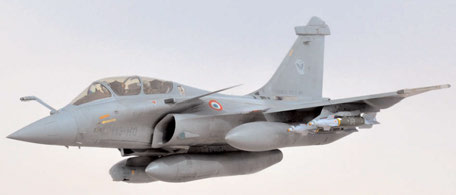
    NEW DELHI (TIP): Five months after India announced the deal to purchase 36 Rafale fighter jets “off the shelf” from France, much of the expectations from the big-ticket deal appears to have evaporated due to protracted negotiations that look set to continue for some more months

    While voices from both sides say there is hope for the deal being concluded by December this year, on the French side there is some frustration at the long-winded nature of the negotiations.

    The deal for purchase of the 36 Rafale jets, by Dassault Aviation, was announced during Prime Minister Narendra Modi’s visit to Paris in April. India decided to purchase the 36 jets from Paris in a flyaway condition in a government-to-government agreement.

    The Indian Air Force, which badly needs to replace its aging fleet of Soviet MIG aircraft, was looking forward to the new planes.

    However, the offsets clause that requires 50 percent of indigenous content in big-ticket defence contracts is believed to be a stumbling block, as also the pricing.

    The deal is estimated at $8 billion. While India and France are still involved in the sticky negotiations, Egypt has already welcomed three Rafale jets into the country in July -five months after inking a deal for 24 of the French jets.

    Egyptian President Abdel Fattah al-Sisi inked the contract for 24 Rafales in Cairo in February, in an estimated $5.6 billion deal. Qatar also inked a deal in March this year for purchase of 24 Rafale jets.

    According to reports, three twin-seat variant of the jet were delivered in Cairo on July 21. Egypt inked a deal to acquire 16 two-seaters and eight single-seaters Rafale fighters. France is also training Egyptian pilots to fly the Rafale.

    French Defence Minister Jean-Yves Le Drian visited Cairo a few days after France delivered the jets. He was to visit India on August 31 during which the deal was expected to be inked. Le Drian was in Malaysia to hardsell the Rafale and the Mistral warship.However, he flew straight on to Europe after it became known that the negotiations were not likely to be concluded soon.

    The Indian defence ministry had at the time refused to confirm his visit.

    According to French envoy Francois Richier, the defence minister had to fly to Europe to attend a EU defence ministers meeting. Richier said France is hopeful of concluding the negotiations soon.

  • Secret police detentions of activists on the rise in Egypt

    Secret police detentions of activists on the rise in Egypt

    CAIRO (TIP): The knock on the door came just before midnight, a group of plainclothes police demanding that 29-year-old Fatma el-Sayed, an activist with one of Egypt’s secular opposition groups, come with them. Her father pleaded to accompany her, but they took her away, alone.

    For the next four days, el-Sayed was kept in a cell in the security agency headquarters in her home town of Alexandria — off official records, essentially disappeared into Egypt’s labyrinth of detention facilities. She was interrogated without a lawyer and denied the injections she needed after recent surgery.

    “They tried to extract information from me,” she said — about fellow activists in the opposition group April 6, about the group’s call for a protest against the high cost of living, about any coordination with the Muslim Brotherhood.

    “I gave them nothing,” she said.

    Egyptian security agencies are increasingly detaining activists and students in secret, snatching them from homes or the street and holding them without official record of their arrest, as their families scramble to find them, activists and lawyers say.

    Activists have tracked more than 160 such suspected disappearances in police custody during the past two months — a sign of the renewed unchecked power of security agencies. It is a return to past practices under autocratic leader Hosni Mubarak, when detainees were held, sometimes for years, without trial under notorious emergency laws in effect for decades and lifted after his 2011 ouster.

    El-Sayed was lucky. After four days, police filed a record of her arrest and released her on bail. She has been charged with membership in April 6, a leading force in the anti-Mubarak uprising that is now banned. Other missing activists have reappeared days or even weeks later when police finally filed arrest reports.

    But the whereabouts of most remains unknown. Activists and lawyers fear they are abused during interrogation.

    At least one of the missing turned up dead. Islam Ateto was taken by security agents in May as he left a classroom at a Cairo university, according to student unions. Soon after, police announced that Ateto was killed in a gunbattle with security forces in the desert, alleging he was wanted for the assassination of a police officer.

    Government officials, including Prime Minister Ibrahim Mahlab, have repeatedly denied there are any extra-legal detainees in Egypt, saying those in custody are held either on a prosecutor’s order or were arrested during the act of a crime. With the recent spike in reports of missing detainees, government officials have largely ignored calls for an explanation. Repeated requests by The Associated Press to the spokesman for the Interior Ministry received no response. A senior security official dismissed allegations of disappearances and questioned how it could be proven that security agents took anyone away.

    However, another official said secret interrogations and detention were sometimes necessary when state security or intelligence agencies are pursuing terror cells that threaten national security. Both officials spoke on condition of anonymity because they were not permitted to speak to the media. The government has repeatedly touted its “war on terrorism” — a reference to its battle against Islamic militants carrying out stepped-up attacks and to a crackdown on Islamists following the military’s July 2013 ouster of Islamist President Mohammed Morsi. With the clampdown, many activists have gone into hiding, complicating efforts to determine who has been detained.

    When grilled by the father of a missing woman on a private television station last week, Interior Ministry spokesman Abu Bakr Abdel-Karim insisted that if she had been arrested, “legal procedures must have been followed.” The woman, Esraa el-Taweel, a 23-year old freelance photojournalist, was reported by her family to have been snatched on June 1 from a street in downtown Cairo, along with two male friends. Later, inmates got word to relatives that they had seen the two friends in a prison.

    El-Taweel finally surfaced Wednesday, when a visitor spotted her at a women’s prison near Cairo. On Thursday, she was brought for questioning before State Security prosecutors, who usually deal with terrorism cases, the first official acknowledgement of her detention.

    Lawyers say Islamists were frequently the targets of secret detentions over the past two years, and now the practice is increasingly being used against more secular activists.

    One activist group, Freedom for the Brave, has documented more than 160 cases since April. Of those, 66 have resurfaced.

    The Egyptian Coordination of Rights and Freedoms, a group of lawyers tracking missing suspected Brotherhood members, has recorded more than 210 cases as of May; one person has been missing since 2013.

    The London-based Human Rights Monitor recorded 31 cases of disappearance in May alone, in addition to 13 others from the two previous months. The group reported the cases to the U.N Working Group on Enforced Disappearance, which usually follows up on such reports.

    The National Human Rights Council, whose members are appointed by the state, has submitted 71 reported cases of missing people to the Interior Ministry and prosecutors’ office, said council member Nasser Amin. “In Egypt, there are plenty of cases of illegal detention,” a crime punishable by up to seven years in prison, he said. The council is working to determine if any missing cases reach the level of “enforced disappearance,” a crime against humanity under international law that involves a long period of disappearance, proof of an active government role and an exhaustive investigation to find the missing person. Amin said the United Nations has designated 13 cases of people missing since the turmoil in 2011 as likely enforced disappearances and has sought an explanation from the Egyptian government.

  • Two Indian cities at high risk of terror strike

    Two Indian cities at high risk of terror strike

    LONDON (TIP): Two Indian cities -Imphal (ranked 32) and Srinagar (ranked 49) have been named to be at “extreme risk” of a terrorist attack, mainly aiming to cause mass casualty and destroy public transport networks.

    According to an analysis of the terror risk to 1,300 commercial hubs and urban centres around the world, populations and businesses in 113 Indian cities have been identified to be at some risk – high, medium or low risk of facing terrorist attacks.

    The next major Indian city after these two that faces a terrorist threat is Chennai even though the risk quotient has been marked as medium risk.

    Bangalore is the fourth most prone city even though it is placed at 204th in the global threat list followed by Pune and Hyderabad at 206th and 207th respectively

    Cities like Nagpur (ranked 2010) and Kolkata (2012) have been found to face a higher risk of a mass attack by terrorists that the usually expected targets like Delhi (447) and Mumbai (298).

    Around 64 cities around the world are at “extreme” risk, with most in the Middle East and Asia – and three in Europe.

    London ranked as low as at 400 due to the lack of a terror incident since the 7/7 bombings while Paris has soared into the top 100 cities following the Charlie Hebdo shooting, according to Verisk Maplecroft’s new Global Alerts Dashboard (GAD).

    Arvind Ramakrishnan, head of Maplecroft India said “When it comes to Imphal and Srinagar, terrorist attacks aren’t on commercial targets as much as against the security forces. However n most of the other metropolitan cities, the targets are both to cause mass casualty and cripple its commercial hubs. Public transport networks in India are also prime targets”.

    Ramakrishnan added “The Mumbai attack in 2008 was the turning point for India. But lack of intelligence sharing among states is a big worry. Law and order is still a state subject in India and political rivalries across states leads to state intelligence agencies not sharing actionable data. Virtually all police forces in India lack modern equipment and adequate manpower to counter a terrorist threat. This brings down the overall morale of the force. India does not face threats from cross border terror organisations but also from home grown ones like the Indian Mujahideen”.

    Charlotte Ingham, head of security analytics at Maplecroft UK said in total, 64 cities are categorised as
    ‘extreme risk’ in an online mapping and data portal that logged analysed every reported terrorism incident since 2009.

    Based on the intensity and frequency of attacks in the 12 months following February 2014, combined with the number and severity of incidents in the previous five years, six cities in Iraq top the ranking.

    Over this period, the country’s capital, Baghdad, suffered 380 terrorist attacks resulting in 1141 deaths and 3654 wounded, making it the world’s highest risk urban centre, followed by Mosul, Al Ramadi, Ba’qubah, Kirkuk and Al Hillah. Ingham said “just because a city in India hasn’t seen a terrorist attack in a while does not mean it isn’t potentially facing one. The rankings are based on the frequency and intensity of attacks.

    Belfast has been named as the most dangerous city in Europe while Baghdad topped the list worldwide.

    Outside of Iraq, other capital cities rated ‘extreme risk’ include Kabul (13th most at risk), Mogadishu in Somalia (14th), Sana’a in Yemen (19th) and Tripoli in Libya (48th).

    However, with investment limited in conflict and post-conflict locations, it is the risk posed by terrorism in the primary cities of strategic economies, such as Egypt, Israel, Kenya, Nigeria and Pakistan that has the potential to threaten business and supply chain continuity.

    “An estimated 80% of global GDP is generated from cities,” states Ingham. “Visibility of the sub-national differences in terrorism levels should be an imperative for multinational organisations looking to understand and price the risks to assets, employees and supply chains”.

    As Africa’s largest economy, Nigeria’s role as a commercial hub is central to economic growth across the region. Because of Boko Haram 13 out of the 24 Nigerian cities experienced a significant increase in the intensity and frequency of terrorist attacks compared to the previous quarter.

    Paris (97th and ‘high risk’) has experienced one of the steepest rises in the ranking, reflecting the severity of the terrorist attack in January 2015 that left 17 people dead. The risk level in Paris is representative of a wider trend for Western countries, including Belgium, Canada and Australia, where the level of risk in key urban centres is substantially higher than elsewhere in the country”.

  • Shell to buy BG for $70bn, take on Exxon

    Royal Dutch Shell agreed to buy smaller rival BG Group for 47 billion pounds ($70.2 billion) in the first major energy industry merger in more than a decade, closing the gap on market leader ExxonMobil after a plunge in prices.

    Anglo-Dutch Shell will pay a mix of cash and shares that values each BG share at around 1,350 pence, the companies said. This is a hefty premium of around 52% to the 90-day trading average for BG, setting the bar high for any potential counter-bid by a company like Exxon, which has said it would also use the oil markets downturn to expand. The third-biggest oil and gas deal ever by enterprise value will bring Shell assets in Brazil, East Africa, Australia, Kazakhstan and Egypt, including some of the world’s most ambitious liquefied natural gas (LNG) projects. Shell is already the world’s leading LNG company and it would get BG’s capacity in LNG logistics—complex infrastructure that includes terminals, pipelines, specialized tankers, rigs, super coolers, regasification facilities and storage points.

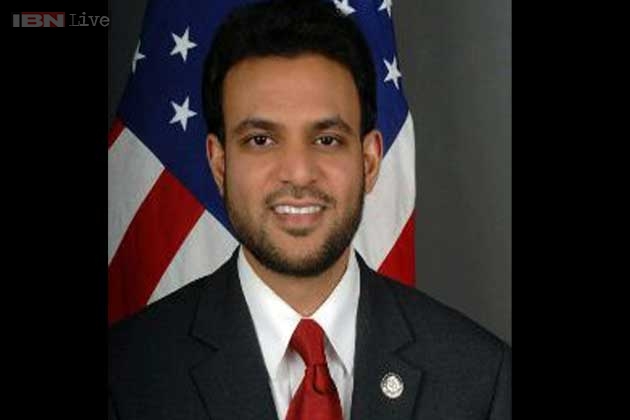
  • Indian-American Rashad Hussain appointed US Special Envoy and Coordinator

    Indian-American Rashad Hussain appointed US Special Envoy and Coordinator


    In 2009, Hussain worked with the NSC in developing and pursuing the New Beginning that Obama outlined in Egypt. Before joining the White House, he was a member of the legal staff for the Presidential Transition Team.

     
    Hussain received his Juris Doctor from Yale Law School, where he served as an editor of the Yale Law Journal. & He also earned his Master’s degrees in Public Administration (Kennedy School of Government) and Arabic and Islamic Studies from Harvard University. 
    Upon graduation, he served as a Law Clerk to Damon J Keith on the US Court of Appeals. He also served as a Trial Attorney at the US Department of Justice. Earlier in his career, he was a legislative assistant on the House Judiciary Committee, where he focused on national security-related issues.
     
  • Canadian Al-Jazeera journalist Fahmy released from prison

    Canadian Al-Jazeera journalist Fahmy released from prison

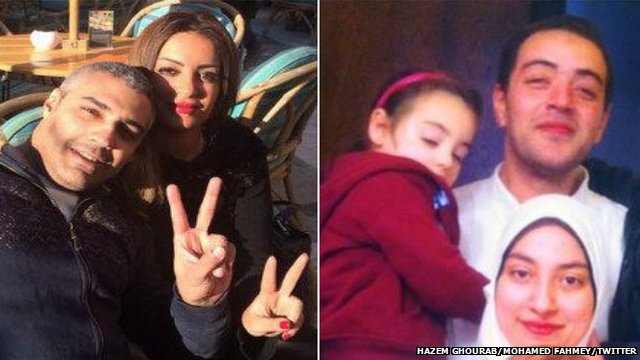
    CAIRO (TIP): Canadian Al-Jazeera journalist Mohamed Fahmy was released from an Egyptian jail on Friday, after spending more than a year in prison on terror-related charges in a case that was denounced as a sham by rights groups and the international community. He was let out pending a retrial.

    Fahmy’s brother tweeted that he posted $33,000 bail following a court decision that allowed him to walk free. It was not clear if Fahmy’s colleague, Al-Jazeera journalist Baher Mohammed, also was being released. A third co-worker, Australian Peter Greste, was released two weeks ago and deported to his home-country, Australia.

    Fahmy spent more than 400 days in detention after he was charged with terrorism for providing the Muslim Brotherhood, now declared a terrorist organization, with a platform. His next court hearing is Feb. 23 and he has to check in at a police station every day until then.

    Thursday’s decision indicated the court was moving ahead with a retrial of Fahmy and Mohammed. Still, it was greeted with tears of joy and relief by their relatives who attended the hearing in the Cairo courtroom.

    Al-Jazeera called the decision “a small step in the right direction” but said the court should dismiss “this absurd case” and release both journalists unconditionally.”

    The three journalists, who worked for Al-Jazeera’s English-language channel, were arrested in December 2013 and accused of belonging to the Brotherhood, which was branded a terrorist organization after the military ousted President Mohammed Morsi earlier that year.

    Since the ouster, Egypt has been cracking down heavily on Morsi’s supporters, and the journalists were accused of being mouthpieces for the Brotherhood and falsifying footage to suggest that Egypt faces civil war. They rejected the charges against them, saying they were simply reporting the news.

    The journalists were convicted by a lower court on terrorism-related charges and sentenced to at least seven years in prison. The Court of Cassation, the country’s highest appeals court, said in ordering a retrial that their conviction was based on “flawed evidence” and that the trial was marred by violations of the defendants’ rights, according to details of its ruling made public this week.

    President Abdel-Fattah el-Sissi had rejected calls from the United States and other Western governments to pardon or commute the sentences. In July, he acknowledged that the heavy sentences had a “very negative” impact on his country’s reputation and that he wished they had never been put on trial.

    Cairo has signaled it wants to resolve the case and end the criticism ahead of a major economic conference next month to drum up international investment. Egypt’s ties with Qatar have thawed, and Al-Jazeera’s Egyptian affiliate was shut down.

    But officials have never said outright that the controversy would be worked out, insisting on the independence of the courts — and keeping Fahmy and Mohammed’s fate murky.

    Several outcomes are possible in the retrial. It could eventually throw out the case, acquit them, convict them but sentence them to time served, or impose more prison time, with the possibility of a pardon from el-Sissi.

    The journalists and their families say they were caught in the bitter feud between Egypt and Qatar, the Gulf nation that owns Al-Jazeera and is the main backer of the Muslim Brotherhood.

  • ISIS EXPANDING ‘INTERNATIONAL FOOTPRINT’

    ISIS EXPANDING ‘INTERNATIONAL FOOTPRINT’

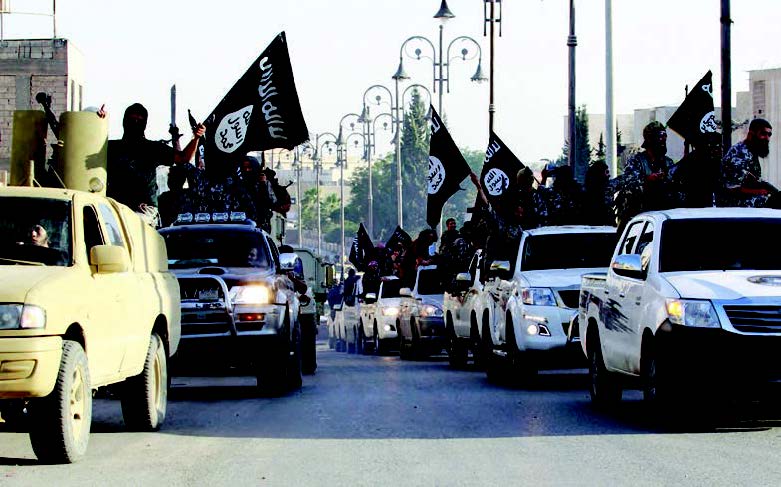
    The Islamic State, despite being driven by Kurdish fighters from its one-time Syrian stronghold in Kobani last week, nevertheless is extending its reach well beyond Iraq and Syria, military officials and analysts warn — represented, by some estimates, in nearly a dozen countries.

     ISIS History

    The Islamic State, despite being driven by Kurdish fighters from its one-time Syrian stronghold in Kobani last week, nevertheless is extending its reach well beyond Iraq and Syria, military officials and analysts warn — represented, by some estimates, in nearly a dozen countries.


    Lt. Gen. Vincent Stewart, director of the US Defense Intelligence Agency, delivered a grim assessment earlier this week in testimony to the House Armed Services Committee, as he described how the group was surfacing in North Africa.


    “With affiliates in Algeria, Egypt, Libya, the group is beginning to assemble a growing international footprint that includes ungoverned and under governed areas,” Stewart said.


    ISIS continues to hold a wide swath of territory, bigger than the state of Pennsylvania, in its home base spanning parts of Iraq and Syria, propped up by more than 20,000 foreign fighters from at least three dozen countries. But the terror network’s tentacles, as Stewart indicated, are creeping into other nations; largely those with fragile governments.


    “ISIS, like Al Qaeda, has thrived in the failed states where there is a vacuum of power,” said James Phillips, Middle East senior research fellow with the Heritage Foundation.


    A key worry is the group’s potential ambitions in Afghanistan, where the U.S. combat mission just ended and Afghan security forces are in control.


    Defense secretary nominee Ashton Carter, who had his confirmation hearing Wednesday, told Congress he is aware of reports that ISIS may try to expand into Afghanistan, and vowed to work with coalition partners to stop the group. He said he would consider changing plans for withdrawing the remaining 10,600 U.S. troops from Afghanistan by the end of 2016 if security conditions further deteriorate.


    The Islamic State’s ambitions do not stop at Afghanistan, the so-called Graveyard of Empires. Militant groups in Pakistan, the Philippines, Israel and the Gaza Strip, Lebanon, Indonesia and Jordan, among other areas, reportedly have pledged formal support for ISIS. New York Magazine, in a recent report, wrote, “Think of them as ISIS’s self-appointed foreign bases.”


    It’s impossible to know precisely how many members are involved in these groups, but analysts say the biggest groups generally are still affiliated with Al Qaeda, while others are starting to stand with ISIS – and execute attacks.


    An ISIS-tied group in Egypt, for instance, claimed responsibility for a series of coordinated attacks on Jan. 30 that killed at least two dozen security officers in restive Sinai.


    The Caliphate Soldiers Group in Algeria, which pledged loyalty to ISIS in September, kidnapped and beheaded a French tourist the same month. Terrorists posted a video of the beheading, saying it was in response to French airstrikes in Iraq. Algerian Special Forces killed the terror leader late last year, which analysts say dealt a morale blow to the small group.


    In Libya, the Islamic State’s Tripoli Province took credit for a hotel attack on Feb. 1 which killed nine people, including an American.


    Published reports tie other groups to ISIS including The Jundallah militant group and the Tehreek-e-Khilafat groups in Pakistan; the Philippines’ Abu Sayyaf group; Sinai Province in Egypt; Lebanon’s The Free Sunnis of Baalbek Brigade; Indonesia’s Jama’ah Ansharut Tauhid; and Sons of the Call for Tawhid and Jihad in Jordan.


    The Heritage Foundation’s Phillips said it’s not just groups like these that have declared loyalty. “There are an unknown number of self-radicalized militants in many different countries that may self-identify with ISIS and carry out ‘lone wolf ’ terrorist attacks in its name, without necessarily being members of the group,” he said. He cited the hostage crisis in Sydney, Australia, last December as an example.


    ISIS continues to get pounded by coalition airstrikes in Iraq and Syria, where Kurdish forces recently took back the vital city of Kobani. Those strikes are likely to increase following the brutal execution of a captured Jordanian pilot (though the coalition is down a member, with the United Arab Emirates having suspended airstrikes after the pilot’s capture in December.)


    Phillips said the purpose of the group’s grisly propaganda videos – including of the Jordanian pilot being burned alive in a cage — is to change the subject, from recent setbacks in Kobani as well as some areas in Iraq, through “jihadist pornography.” He said the point is to show the group as an
    “invincible army,” psychologically attractive to European teenagers who might join the fight.


    Raymond Stock, a Shillman-Ginsburg writing fellow at the Middle East Forum, argued the message carries more weight with Muslims worldwide than most realize. He told Fox News the propaganda videos are “so well-produced and so well-targeted –extremely effective. We have nothing counteracting that.”


    Stock, who spent 20 years living in Egypt, sees the group’s ambitions as limitless and argues it is a mistake to believe the Islamic State is an organization seeking to control limited territory.


    He also suggested Al Qaeda and ISIS are not necessarily direct competitors. He cited an Arabic proverb, which he translates as: “Me and my brother against my cousin; me and my cousin against the outsider.”


    In Senate Armed Services Committee confirmation hearing for defense secretary, Sen. John McCain, R-Ariz., pressed Carter on the need to have a strategy against ISIS.


    “I believe I understand our strategy at this time,” Carter explained. “I also have the intention, again if confirmed, to make it my first priority to go there, to talk to our military leaders there, to confer with you …I think a strategy connects ends and means, and our ends with respect to ISIL needs to be its lasting defeat.”


    McCain retorted: “Well, it doesn’t sound like a strategy to me, but maybe we can flesh out your goals.”


    (Source: AP)

  • 27 killed in attacks in Egypt’s North Sinai, Suez

    27 killed in attacks in Egypt’s North Sinai, Suez

    CAIRO: Twenty-seven people were killed in four attacks in Egypt’s North Sinai and Suez, security and medical sources said, in some of the worst anti-state violence in months and after commemorations around the anniversary of the 2011 uprising turned deadly this week.


    Egypt’s government faces an Islamist insurgency based in Sinai and growing discontent with what critics perceive as heavy handed security tactics.


    Thursday’s first attack was a bombing of military buildings in the capital of North Sinai province, that killed 25 and wounded at least 58, including 9 civilians, security and medical sources said.


    The flagship government newspaper, al-Ahram, said its office in the town of Al-Arish, which is situated opposite a military hotel, headquarters and base that security sources said were the intended targets, had been “completely destroyed”.


    Later, suspected militants killed an army major and wounded six others at a checkpoint in Rafah, followed by a roadside bomb in Suez city that killed a police officer, and an assault on an army unit south of Al-Arish that wounded four soldiers, security sources said.


    Sinai-based militants have killed hundreds of security officers since president Mohamed Mursi of the Muslim Brotherhood was removed from power following mass protests against his rule.


    The military said in a statement on its Facebook page that the attacks were the result of a successful campaign to pressure the militants.


    Tensions have risen across Egypt this week with protests, some of them violent, marking four years since the uprising that ousted longtime autocrat Hosni Mubarak from power.


    Earlier on Thursday, a group of women protested in Cairo over the death of activist Shaimaa Sabbagh and around 25 others said to have been killed by security forces at rallies commemorating the 2011 uprising.


    Sabbagh, 32, died on Saturday as riot police were breaking up a small, peaceful demonstration. Friends said she had been shot, and images of her bleeding body rippled out across social media, sparking outrage and condemnation.


    “The Interior Ministry are thugs!” chanted around 100 women protesters at the site of Sabbagh’s death. Some held up signs with the word “Murderer” scrawled over the face of Interior Minister Mohamed Ibrahim.


    The protesters were defying a law that severely restricts protests. “People are here at incredible risk to themselves. But it’s a way of standing against the fear they have instilled,” said activist Yasmin el-Rifae.

  • Charlie Hebdo sells out as 5 million print run is announced

    Charlie Hebdo sells out as 5 million print run is announced

    Charlie Hebdo is fetching $600 asking prices on eBay as millions hope to get their hands on the commemorative edition, the first to come out after eight staffers and four others were slaughtered.

    PARIS (TIP): A defiant Charlie Hebdo went on sale Wednesday, January 14, in five languages and in more than 20 countries, splashing a cartoon purporting to be Mohammed on its front cover a week after jihadist gunmen stormed the satirical weekly’s offices killing 12 people.

    The newspaper normally prints 60,000 copies a week. This week’s print run will be five million (up from three million announced on Tuesday), distributed over the next two weeks.

    It is a record for any French newspaper, with versions being printed in Spanish, Arabic, Italian, Turkish and English for the first time.

    Across Paris on Wednesday, even at 6am, many shops and kiosks had already sold out.

    At Belleville in Paris’s 19th arrondissement (district), the newspaper kiosk at the metro station had sold its 150 copies within minutes of opening at 6am.

    The paper’s front cover shows a turbaned man (not explicitly the Prophet Mohammed) shedding a tear and declaring that he too “is Charlie” – “Je suis Charlie” was the slogan of a huge outpouring of grief and solidarity in France in the days that followed the attacks. The front-page figure adds that “all is forgiven”.

    Global response

    The global attention following last week’s attacks – which saw another gunman kill four hostages in a Jewish supermarket in Paris -has seen demand for Charlie Hebdo explode as far away as India and Australia.

    While the front page had been widely shared online ahead of publication, many newspapers in both Muslim countries and in the West refrained from printing the cartoon because of blasphemy laws and also sensitivity over reproducing an image of the Prophet, which is considered offensive by Muslims.

    Charlie Hebdo’s front page was not reproduced by the mainstream media in the US, where any kind of religious satire is frowned upon, although the White House reaffirmed its “absolute support [of the] the right of Charlie Hebdo to publish things like this”.

    In Egypt, the chief imam at the al-Azhar mosque, an institution widely-seen as the centre of the Sunni Muslim faith, condemned Charlie Hebdo’s decision to lead its latest issue with a cartoon of the Prophet, calling it an “incitement to hatred”.

    The Dar al-Ifta, which represents Egyptian Muslims, called the new front page a “provocation”, while in Shiite-dominated Iran, conservative news site Tabnak accused Charlie Habdo of “once again insulting the Prophet”.

    Islamophobia and France’s far right
    Paradoxically, Charlie Hebdo is one of France’s loudest voices against racism, whose principal target of abuse has always been France’s far-right National Front (FN, whose founder Jean-Marie Le Pen has been convicted numerous times of racism and anti-Semitism). The FN is widely seen as virulently Islamophobic.

    But the newspaper’s decision in 2006 to re-print cartoons of Mohammed published in Danish daily Jyllands-Posten brought so much ire on Charlie Hebdo that its editors decided to publish regular cartoons lampooning radical Islamists as well as depictions of Mohammed himself, who, in one case, is shown lamenting the difficulty of being “followed by complete idiots”.

    Inevitably, Charlie Hebdo became the focus for widespread disapproval in France’s large Muslim community, and the two French-born gunmen who entered the newspapers offices last Wednesday, murdering 12 people, ran out shouting that they had “avenged the Prophet”.

    The survivors of the attack have defended their caricatures of Islam and Mohammed.

    “The Mohammed we have portrayed is a much nicer character than the version of Mohammed brandished by the attackers,” said one member of the weekly’s editorial staff.

    “And if we can get our ideas read across the world, it is we who are the ultimate winners,” added Charlie Hebdo’s editor-in-chief Gérard Biard.

    On Tuesday, French Prime Minister Manuel Valls set out the government’s updated response to terrorism, following last week’s murderous assault on the magazine and a Jewish supermarket.

    But he insisted that “blasphemy does not feature in the laws of France, and it never will”.

  • Egypt sets parliamentary poll dates as Sisi cements grip

    Egypt sets parliamentary poll dates as Sisi cements grip

    CAIRO (TIP): Egypt said January Thursday it is to hold parliamentary elections from March 21 but analysts said the new legislature will offer no meaningful opposition to President Abdel Fattah al-Sisi’s iron-fisted rule.

    The elections, which will be held in phases culminating on May 7, will be the first since Sisi overthrew his Islamist predecessor Mohamed Morsi on July 3, 2013.

    But with Morsi’s Muslim Brotherhood crushed in a crackdown that has left hundreds dead and even secular opposition groups hit by jail terms, the elections are likely to be dominated by Sisi loyalists.

    “It is difficult to see there being much in the way of opposition on issues relating to governance and human rights from within any new parliament in this current environment,” said H. A. Hellyer of Centre for Middle East Policy at the Brookings Institution.

    The vote will be held under a complex electoral system that was originally designed to produce as representative a parliament as possible.

    Some of the 567 seats will be contested on nationwide party lists. Others will be fought on a first-past-the post basis in individual constituencies, where second-round runoffs will be held where necessary.

    But critics say the process has been emptied of meaning now that the main opposition groups have been outlawed. The top leaders of the once dominant Muslim Brotherhood are all on trial on charges that could carry the death penalty. Even verbal expressions of support have been punishable by heavy jail terms since the movement was declared a terrorist organisation in December 2013.

    Tough restrictions on the right to protest have also seen several secular leaders of the Arab Spring uprising that toppled veteran strongman Hosni Mubarak in 2011 sent to prison.

    “The president has crushed his political opposition with military force and not political. We are witnessing a political scene that cannot produce any opposition to the president,” said Ahmed Abdel Rabu, professor of political science at University of Cairo.

    Sisi remains popular among the many Egyptians who applaud his pledge to restore order after four years of political turmoil and economic chaos.

    The Arab world’s most populous nation has been hit by a mounting wave of violence by jihadist groups since Morsi’s ouster that the former army chief has vowed to crush with a rod of iron.

    It is a rhetoric that most candidates are likely to emulate as they seek to win election to parliament on Sisi’s coattails.

    “The parliamentary hopefuls are already using the language of his regime, such as regaining the state’s prestige and war on terrorism,” said Abdel Rabu.

    But the polls are important to Sisi as he seeks to cement a thaw in relations with Western governments that had condemned his overthrow of Egypt’s first freely elected president.

    The United States delivered 10 Apache helicopters last month after lifting part of a freeze on aid as mounting turmoil across the region underlined Egypt’s importance as an ally.

    The United States annually allocates some $1.5 billion in aid to Egypt, including $1.3 billion in military assistance.

    That was frozen in October 2013 pending the enactment of democratic reforms.

    After ousting Morsi, Sisi announced a political roadmap that envisaged adopting a new constitution, to be followed by presidential and parliamentary elections, and Western governments have called on him to see it through.

    The new constitution, which expanded the powers of the military, was adopted in a January 2014 referendum with a 98 percent yes vote.

    The presidential election, which Sisi won with 97 percent of the vote on a 47 percent turnout, was held in May.

  • Political shadow boxing, threat & reality

    Political shadow boxing, threat & reality

    “The American invasion of Iraq cost the lives of millions of children. Whatever the changing definitions of terror, it is children that are so often the forgotten victims of conflict – regardless of the perpetrator”, says the author.

    Well, heaven preserve us: the most useless “peacemaker” on earth has just used an Arabic acronym for the greatest threat to civilisation since the last greatest threat. Yup, ol’ John Kerry called it “Daesh”, which is what the Arabs call it. It stands for the “Islamic State in Iraq and the Levant”. We prefer Isis or Isil or the Islamic State or Islamic Caliphate. Most journos prefer Isis because – I suspect – it’s easier to remember. It’s the name of an Egyptian goddess, after all.

    It’s the name of a university city’s river. Many an American scribe has questioned why Kerry should be using this goddam Arabic lingo – although we use Fatah for the PLO. It, too, is an acronym which, translated, means “the Party for Palestinian Liberation”. And in 2011, we called Tahrir Square in Cairo “Tahrir”, only occasionally reminding readers and viewers that it, too, meant “liberation”. None explained why the place was important: because this was the square mile of Cairo in which was based the largest British barracks and into which the Brits – during their much-loved occupation of Egypt – refused to allow any Egyptian to walk without permission. That’s why it was called Tahrir – liberation – when the Brits left.

    That’s why Hosni Mubarak’s attempt to prevent the protesters entering the square in 2011 placed him firmly in the shadow of Egypt’s former colonial masters. But why do we care what the great leaders of the West (or the East for that matter) actually say, when we all know it’s the kind of material that comes out of the rear end of a bull? Let me give you an example from Canada. Two years ago, the country’s Foreign Affairs Minister, John Baird, closed Canada’s embassy in Tehran because he feared his diplomats might be harmed. “Canada views the government of Iran as the most significant threat to global peace and security in the world today,” he quoth then – although CBC broadcasters have dug up a Foreign Ministry report which reported the biggest threat to the Tehran embassy was an geophysical earthquake.

    Since then, as the Toronto Star’s pesky columnist Thomas Walkom has pointed out, the Canadian Prime Minister Stephen Harper – whose pro-Israeli policies might earn him a seat in the Israeli Knesset -has discovered more threats. Russia under Vladimir Putin, Harper says, “represents a significant threat to the peace and security of the world”. The aforesaid Baird, taking his cue, no doubt from our own beloved Prince Charles, compared Putin’s Russia to Hitler’s Third Reich. More recently, Canada’s defence minister, Rob Nicholson, described the men of Isis (or Isil, or the Islamic State, or the Islamic Caliphate, or Daesh) as “a real and growing threat to civilisation itself”.

    The war against Isis/ Isil/ IS/ IC/ Daesh, he informed the people of Abu Dhabi, was “the greatest struggle of our generation”. Well, blow me down.Wasn’t Iran the greatest threat, ever since 1979? Wasn’t Abu Nidal, the Palestinian gun-for-hire? Wasn’t that British prime minister chappie, with the habit of saying “absolutely” and “completely” over and over again, convinced that Saddam was the greatest threat to our civilisation or generation, what with all his WMDs and links to Al-Qaida and tubes from Niger, and so on? For that matter, wasn’t Osama bin Laden’s Al-Qaida – the very bunch which morphed into Isis/ Isil/ IS/ IC/ Daesh in Iraq – the greatest threat to our civilisation/generation? Yet now, when the Iranian air force has joined the battle against Isis/ Isil/ IS/ IC/ Daesh alongside the US, Britain, Canada, Australia, old Uncle Tom Cobley and all, Kerry, in “Daesh” mode, tells us that the Iranian military action in Iraq (in any other circumstances, a ruthless assault on Iraq’s sovereignty) is “positive”. And Kerry, remember, was the fellow who told us last year that America was going to attack the regime of Bashar al-Assad, the greatest enemy of Isis/ Isil/ IS/ IC /Daesh – whom Obama reprieved in favour of bashing Isis/ Isil/ IS/ IC/ Daesh itself – with its ally Iran described by Canada’s Baird only two years ago as “the most significant threat to global peace and security in the world”.

    But what the hell … Don’t we live in a world where Save the Children (American branch only, you understand) gave an award to the same former British prime minister quoted above? Having given a prize to the man who encouraged George W Bush to embark on an Iraqi invasion which cost the lives of tens of thousands of children, surely this fine charity (again, the American branch only) must reinvent and re-name itself “Abandon the Children”. And by the way, one of the ex-PM’s supporters blandly told Channel 4 not long ago that our British “peace envoy” had travelled to the Middle East more than 160 times.Which means, doesn’t it, that our Middle East envoy had left his station in the Middle East more than 160 times! But again, what is a child’s life worth? In 2002, a Israeli missile attack on a Gaza apartment block killed a Palestinian militants but also 14 civilians, including several children.

    The Bush administration, draw in your breath here, folks, and grit your teeth, said that this “heavy-handed action” did not “contribute to peace”. Wow, now that was telling them. Killing kids is a bit heavy-handed, isn’t it? And I can see what the Bush lads and lassies meant when they said that eviscerating, crushing and tearing to bits a bunch of children didn’t really, well, “contribute” towards peace. It’s important, you see, to realise who our enemies are. Muslims, Iranians, Iraqis, Syrians, Russians, you name it. Not Israel, of course. Nor Americans. Think generational. Think civilisation. Think the most significant threat to global peace. Daesh. Isn’t that the name?

    (The author is an English writer and journalist from Maidstone, Kent. He has been Middle East correspondent of The Independent for more than twenty years, primarily based in Beirut) British English. (Source: The Independent)

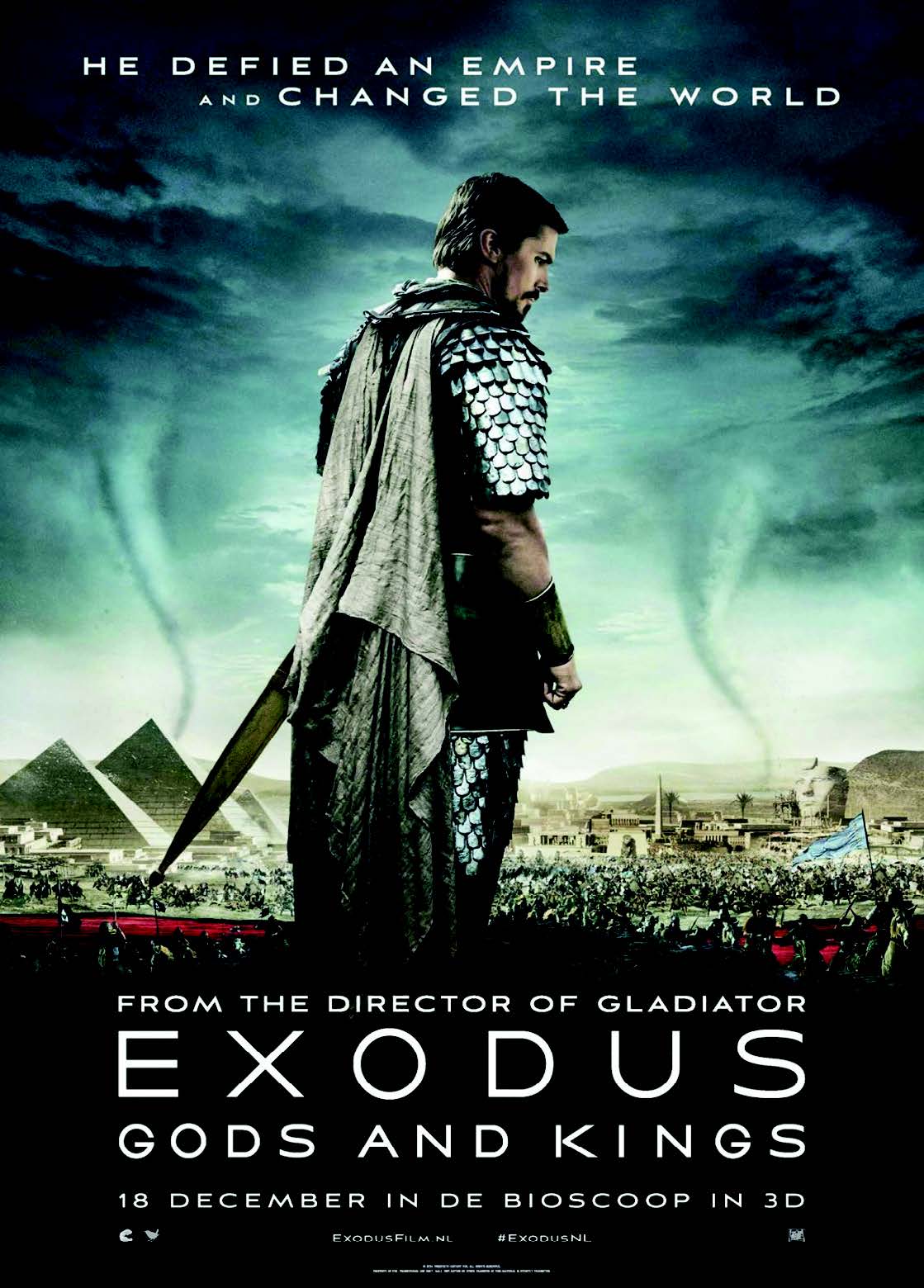
  • Exodus: Gods and Kings

    Exodus: Gods and Kings

    Cast: Christian Bale, Joel Edgerton, John Turturro, Ben Kingsley, María Valverde, Sigourney Weaver, Indira Varma
    Direction: Ridley Scott
    Genre: Action
    Duration: 2 hours 32 minutes

    Story: Moses (Bale) learns about who he really is and leads 400,000 Hebrew slaves out of enslavement in Egypt to faraway Canaan. While battling his own self-doubt, he must also escape the wrath of the furious Pharaoh Ramses.

    Review: We are introduced to a grown-up Moses (although his origins are helpfully explained to him later in the film) who lives in the palace of the Pharaoh Seti (Turturro) in the city of Memphis, along the River Nile. In this magnificent palace, where superstitions abound, Moses prefers pragmatism to ceremony. Moses is both brave and honest and Seti quite clearly favours him, even though Ramses (Edgerton) is actually Seti’s son by blood. Seti presents Moses and Ramses with two beautiful, ornate swords and tells them to look after one another on the battlefield as brothers would.

    Later, in the thick of battle against the Hittites, Moses saves Ramses’s life. Then, when Moses visits the city of Pithom on an assignment, an elder, Nun (Kingsley), tells a disbelieving Moses who he really is. Soon after he returns to Memphis, Ramses inherits the throne and Moses is exiled. He settles down in a faraway land and marries Zipporah (Valverde, absolutely stunning) before having to embark on his monumental mission. While the visuals can only be described using superlatives, some bits involving interpersonal relationships could have been more developed. However, scenes involving Moses and Ramses are often electrifying.

    So is the ‘burning bush’ sequence. The battles will take your breath away – crashing chariots, splintering spears, flaming arrows, metal against metal and more gore than you’d expect to see. Ramses’s cold-blooded disregard for human life is shocking. But then the Ten Plagues unleashed on the Egyptians by God as punishment are unrelenting in their devastation. The Nile runs blood red, overflowing with dead fish. Masses of flies spread dread and disease. Clouds of locusts ravage crops and a sinister shadow of death creeps across the accursed land like a cold hand. Exodus: Gods and Kings is ‘spectacle’ with a capital ‘S’ and in more ways than one, definitely epic.

  • Still want to evolve as a player, says Pankaj Advani

    Still want to evolve as a player, says Pankaj Advani

    BANGALORE (TIP): Ever since Pankaj Advani broke onto the scene as a precocious talent in 2003, he has made winning a habit. Having taken over as the torchbearer of cue sports from Geet Sethi, the 29-yearold, who won his first World title in 2003, added an unprecedented 12th World title in Leeds, England, on Wednesday night. The Bangalorean, who gave up his professional snooker card to strike a balance between billiards and snooker, spoke to TOI soon after his conquest. Excerpts:

    How does it feel to win a World title again?

    It’s been great, but I don’t have enough words to describe the feeling. A double title, it’s incredible.

    You are the first cueist to achieve a historic third double.

    It’s great because it’s such different formats (time and points). The approach required is different to each other. You are playing over a period of eleven days and you’ve got to keep at it every single day, every single match you have got to put in your 100 per cent. I have worked on my physical and mental strength and it has definitely paid off.

    You missed playing billiards for two years. Are you making up for lost time?

    (laughs) I want to improve as a player. I want to evolve as a sportsperson and a human being and go a level higher. I know that if I improve as a player the results will automatically follow. You don’t end up on the winning side every time, but this year has been a great year for me. I’ve been capitalizing on the momentum that I have.

    You have been on a roll since your first triumph this year at the 6-Red snooker Worlds in Egypt.

    I have just been in the mood this year. I’ve been consumed by the game, gone deeper into my profession. I want to achieve excellence as an athlete. That is my priority. And in the process of excellence, I have been winning quite often these days.

    You had a close call in the semis against David Causier, what happened?

    It took me over two hours to recover from that match. It was like life being taken out of you. I thought I had lost the match at one stage towards the end with just a minute and a half left. I was just let off the hook really and I felt that the one up there really wanted me to win. I really felt it was a kiss of death, bit I came back from the dead to win that match and then the title.

    You began the World bash on a losing note to Peter Gilchrist in your first big competitive billiards match after two years, what was going through your mind then?

    To be honest, I was speaking to my brother Shree about it and he was helping me to deal with pressure and so on. It didn’t affect me much.

  • Terrorists attack Canada

    Terrorists attack Canada

    OTTAWA (TIP): An unarmed Canadian military guard was shot in Ottawa Wednesday, October 22 morning by Michael Zehaf-Bibeau, a convert to Islam and a selfdeclared jihadist whose alleged photo was posted hours after the shooting on Islamic State social media.

    The killer then entered the Canadian Parliament presumably with the intention of massacring lawmakers inside their caucus rooms. Zehaf-Bibeau was shot by the Parliament’s sergeant of arms, who became a citizen soldier for that particular moment. Canadian authorities launched a counterterrorism operation to track other possible gunmen at the same location. Forty hours earlier, another member of the Canadian military was killed by an indoctrinated convert, identified as Martin Rouleau, in the province of Quebec.

    Weeks before, threats issued by the Islamic State included directives to their members and supporters to strike – in any way they can – against the United States and its allies, including Canada, in retaliation for Coalition airstrikes against jihadi forces in Iraq and Syria. But years before this episode, Al Qaeda and other jihadists tried to commit bloodshed in Canada, including a plot to behead the prime minister – also in Ottawa. The jihadists’ justification is that Canada is participating in the airstrikes, but this represents only a part of the greater conflict.

    For years there have been attempts to hit Canadian citizens, cities and military. Wednesday’s shooting in the country’s capital was the most shocking, but not very surprising. The question is why Canada is being attacked by jihadists (if indeed the shooters are committed to this ideology or linked to any of these movements). Canada has a strong record of promoting human rights around the world. It maintained relations with Iran when Tehran cut its ties with the United States in the 1980s. Ottawa protected the rights of Canadian Islamic militant citizens when they were about to be remitted to the Syrian regime half a decade ago. All in all, Canada has not been in the forefront of fighting the jihadi terrorists but joined the international campaigns inasmuch as Saudi Arabia, the UAE, and Egypt did.

    So why would a jihadist single out our northern neighbor? In the jihadist ideology, there are no good infidels and bad infidels; there are only infidels. Canada happens to be outside the ISIS “caliphate” and belongs to an Atlantic alliance led by the most dangerous infidel power, the United States. Like Sweden, which was hit years ago, Canada is considered a “permissible” recipient of violence. But the ideological argument is not the primary reason it is in the crosshairs of ISIS and Al Qaeda or a target for local jihadists. We know that the Islamic State and Al Qaeda have called on their members and sympathizers to strike U.S. military personnel at will and by any means necessary.

    And while we know there is a specific instruction to target military personnel, among others, Canada is targeted because the jihadists are waging a war in the Middle East to establish a caliphate with control over lives, oil and territory. The terrorists unleashed in the West, lone wolves or jihadi packs, are extensions of the Islamic State – and possibly its Al Qaeda cousins. They are enemy combatants striking in a war that the West, and Washington in particular, has refused to name. Canada is hit because it is part of the alliance, not because of an internal issue. The response should be collective, not individual. Solidarity with Canada must be the first order of the day in the United States and the rest of the free world.

  • ‘Imperative’ to resume Israel-Palestinian talks, John Kerry says

    ‘Imperative’ to resume Israel-Palestinian talks, John Kerry says

    WASHINGTON (TIP): US secretary of state John Kerry on October 16 called for a resumption of the Israel- Palestinian peace process, saying the talks were vital in the fight against extremism. “It is imperative that we find a way to get back to the negotiations,” Kerry said at a state department ceremony marking the Muslim festival of Eid al-Adha. Kerry has just returned from a tour of Europe and Egypt, where on Sunday he attended a conference on the reconstruction of Gaza, and where he told Israel and the Palestinians to return to the negotiating table.

    We need “to find a way to create two states that can live together side by side, two peoples, with both of their aspirations being respected,” Kerry added. “I still believe that’s possible, and I still believe we need to work towards it.” He said the unresolved Israel-Palestinian conflict was fueling recruitment for the Islamic State jihadist group.

    “There wasn’t a leader I met with in the region who didn’t raise with me spontaneously the need to try to get peace between Israel and the Palestinians, because it was a cause of recruitment and of street anger and agitation,” Kerry said. “People need to understand the connection of that. And it has something to do with humiliation and denial and absence of dignity,” he added. Kerry was the architect of the resumption of the Israeli- Palestinian peace process between July 2013 and April. Eid al-Adha, also known as the “Festival of Sacrifice,” celebrates the end of the Hajj pilgrimage.

  • Two conscripts killed in an explosion in North Sinai

    Two conscripts killed in an explosion in North Sinai

    CAIRO (TIP): At least two policemen were killed and 8 others injured in an explosion in Egypt’s restive Sinai peninsula, official said October 17. The explosion occurred in west Al-Arish city in north Sinai October 16. A bomb planted by unidentified militants along the international road went off, killing two policemen, as a military tank was passing. 8 others were in a critical condition, a medical source said.

    North Sinai has witnessed many violent attacks by militants since the January 2011 revolution that toppled the ex-president Hosni Mubarak. The militant attacks targeting police and military increased after the ouster of Islamist ex-president Mohamed Morsi last year. Over 500 security personnel have been reported killed since then. In July, militants attacked a military checkpoint in Al-Wadi Al-Gedid governorate in southern Egypt, killing 21 Egyptian border guards and injured four others.

    The military has launched security campaigns in the area, arrested suspects and demolished houses that belong to terrorists, including those facilitating tunnels leading to the Gaza Strip. At the same time, two home-made bombs exploded yesterday near a famous mosque in Tanta city injuring at least 11 people.

  • Commemorative Event hosted by India at the United Nations to mark the contribution of Indian soldiers in the First World War

    Commemorative Event hosted by India at the United Nations to mark the contribution of Indian soldiers in the First World War

    UNITED NATIONS (TIP):
    The Permanent Mission of India to the United Nations organized a Special Commemorative Event to highlight the sacrifices of Indian soldiers who lost their lives in the First World War. Ten other Missions to the United Nations including the Missions of Belgium, Egypt, France, Greece, Iraq, Jamaica, Kenya, Nigeria, South Africa and Tanzania joined as co hosts of the special event.

    The immense sacrifices and widespread destruction caused by the War resulted in the decision of the participants in the Paris Peace Conference of 1919 to establish the world’s first intergovernmental organization, the League of Nations. As a signatory of the Treaty of Versailles, India became a founder – member of the League of Nations, the precursor of today’s United Nations. The Event featured an audio visual presentation of the various War Memorials in Europe, West Asia and Africa where Indian soldiers are commemorated.

    On the occasion, the UN Secretary General H.E. Ban ki Moon and the President of the UN General Assembly H.E. John Ashe jointly released a publication “Indian War Memorials of the First World War”, which was conceived and edited by the Permanent Representative of India to the United Nations, Ambassador Asoke K Mukerji. Speaking on the occasion, Mr. Ban kimoon, UN Secretary General reminded the distinguished audience to “never forget the roll call of carnage” of the First World War.

    Quoting excerpts from an Indian Garhwali solider, the UNSG recounted the sacrifices of more than 60000 Indian soldiers who had given their lives, and stated “history often ignores such sacrifices”. Full text of his remarks at Ambassador John Ashe, President of the 68th UN General Assembly in his remarks highlighted the key lessons from the First World War, which had impacted on people across the world, primarily that of loss, and termed the war as being a “great tragedy”.

    Ambassadors of over 60 countries, senior UN officials, and members of civil society attended the Event, which was followed by a Photo Exhibition of the First World War Memorials attended by Mr. Jan Eliasson, Deputy Secretary-General of the United Nations.

    The Event was organized on the eve of the hundredth anniversary of Mahatma Gandhi’s historic letter of 14 August 1914 to the British Government in which Gandhiji had stated that India’s assistance to the War effort was guided by the idea “to share the responsibilities of membership of this great Empire, if we would share its privileges.”

  • Israel, Gaza violence defies truce ‘deal’

    Israel, Gaza violence defies truce ‘deal’

    GAZA CITY, Palestinian territories:
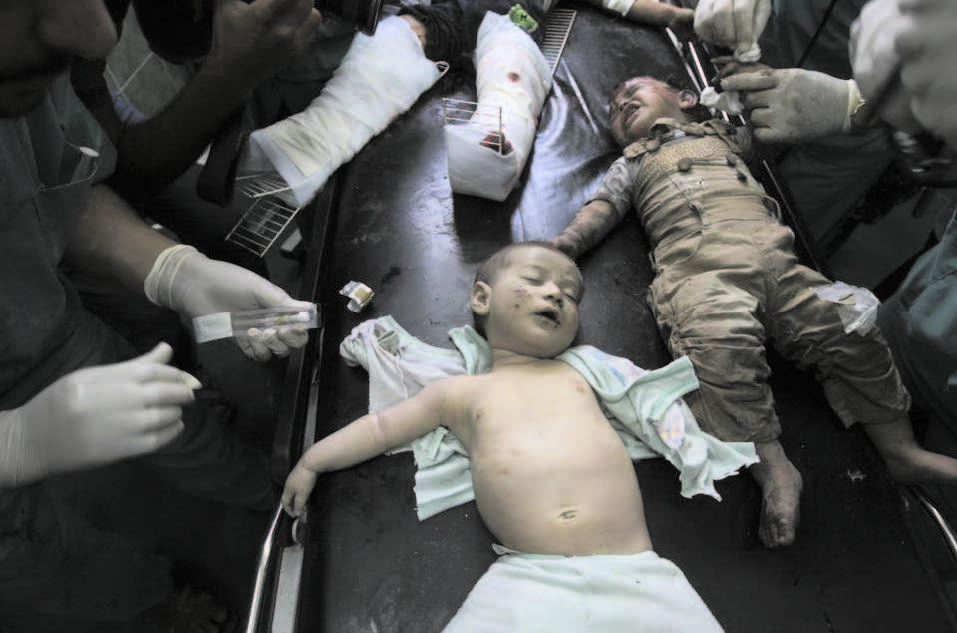
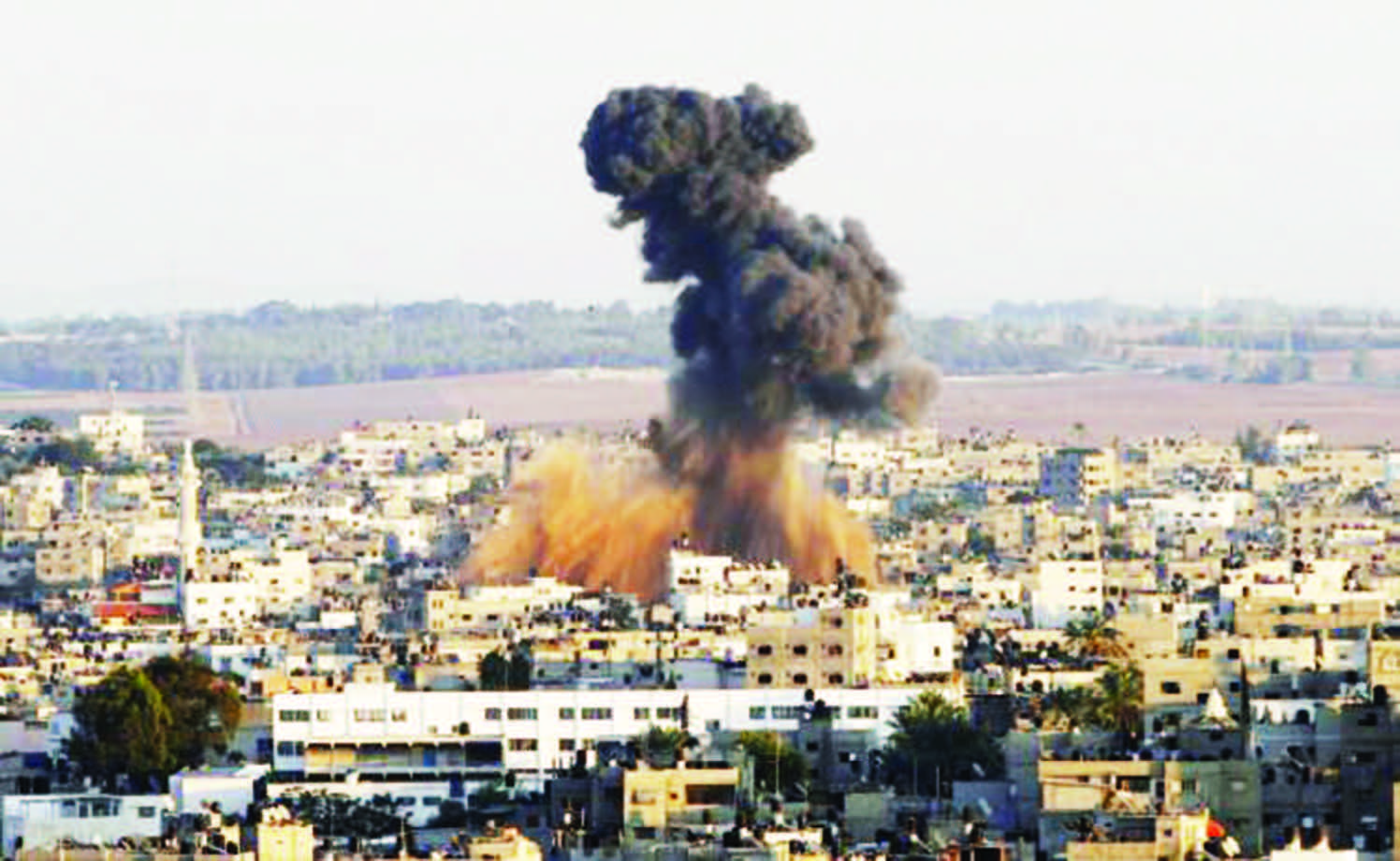
    Israeli jets bombed targets across Gaza on Thursday, retaliating to Palestinian rocket attacks in spiraling violence that left a truce extension teetering on the brink of collapse. The resumption of hostilities shattered nearly three days of calm over the skies of Gaza and southern Israel, raising fears that a new ceasefire announced in the Egyptian capital could quickly unravel.

    More than 1,950 Palestinians and 67 people on the Israeli side have been killed since July 8, when Israel launched an offensive to destroy Hamas rockets and attack tunnels burrowing under the Jewish state. After days of shuttle diplomacy, the agreement clinched by Egypt had appeared to secure the longest period of calm in the five-week conflict and allow more time for talks on the thorniest issues that separate the two sides, the Palestinians said. An official at the Palestinian interior ministry reported four air strikes over open ground about 30 minutes into the extension of a new truce, from midnight.

    Israel said it was targeting “terror sites across the Gaza Strip” in response to rocket fire. The military “will immediately respond to any threat to Israel,” it added. A spokeswoman for the Israeli army told AFP that Palestinian militants launched eight rockets towards Israel late Wednesday, six of which hit open areas and one of which was intercepted. At least two of the rocket attacks were reported after midnight, the expiry of the previous truce and the continuation of the other.

    Millions of people had banked on Egyptian mediators to avoid a resumption of the violence. A previous three-day truce collapsed in a firestorm of violence on August 7.The new truce will last five days, senior Palestinian negotiator Azzam al-Ahmed said in Cairo, adding that more time was needed to discuss “some” remaining disputes with Israel over a longterm truce.

    An official told AFP that Israel was willing to extend the lull by three days, but also sounded a note of caution, saying that the Palestinians were digging their heels in.”The way things stand now, it doesn’t look like it’s going to stay quiet,” he said before an Egyptian official announced an agreement.

  • Gaza militants resume rocket fire at Israel after truce expires

    Gaza militants resume rocket fire at Israel after truce expires

    GAZA/JERUSALEM (TIP): Palestinian militants in the Gaza Strip resumed rocket fire into Israel on Friday after Egyptian-mediated talks in Cairo failed to extend a 72-hour truce in a nearly month-long war. As police said rocket-warning sirens were sounding in southern Israel, the military’s “Iron Dome” interceptor system brought down a missile over the southern city of Ashkelon.


    A military spokesman said on Twitter: “After the 72- hour ceasefire, Hamas resumes indiscriminate rocket fire at Israel. At least 5 rockets launched – one intercepted over Ashkelon.” Israel had earlier said it was ready to agree to an extension as Egyptian go-betweens pursued talks with Israeli and Palestinian delegates in Cairo on ending the war that has devastated the Hamas-controlled enclave. A Hamas spokesman said Palestinian factions had not agreed to extend the truce, but would continue negotiations in Cairo. The Palestinians had wanted Israel to agree in principle to demands which include a lifting of a blockade on the Gaza Strip, the release of prisoners and the opening of a sea port.


    The armed wing of Hamas released a statement late on Thursday warning Palestinians negotiators not to agree to an extension unless Israelis offered concessions. There was no sign that Israel had made any such moves. Israel also made it clear that it would respond forcefully if attacked and a minister raised the prospect of re-taking control of the Gaza Strip to overthrow its Hamas rulers.


    “Israel will act with force if Hamas resumes its fire and to my mind we will have, this time, to seriously consider, although not with enthusiasm, the option of taking control of the Gaza Strip in order to topple the Hamas regime,” strategic affairs minister Yuval Steinitz said on Army Radio. Gaza officials say the war has killed 1,875 Palestinians, most of them civilians. Hamas said on Thursday it had executed an unspecified number of Palestinians as Israeli spies.


    Israel says 64 of its soldiers and three civilians have died in the fighting that began on July 8, after a surge in Palestinian rocket salvoes into Israel. Hamas refusal to extend the ceasefire could further alienate Egypt, whose government has been hostile to the group and which ultimately controls Gaza’s main gateway to the world, the Rafah border crossing. The Israelis described the ceasefire as a tradeoff of “calm for calm”. They have shown little interest in easing their naval blockade of Gaza and controls on overland traffic and airspace, worrying Hamas could restock on weapons from abroad. Israel withdrew its ground forces from Gaza on Tuesday, shortly before the truce began.

  • US snooping on BJP unacceptable, SUSHMA TELLS KERRY

    US snooping on BJP unacceptable, SUSHMA TELLS KERRY

    NEW DELHI (TIP):
    Alarmed by the disclosure last month that US authorities spied on BJP when it was not in power, foreign minister Sushma Swaraj raised the issue with visiting secretary of state John Kerry on July 31 saying this was totally unacceptable to India. India had registered a protest with senior US diplomats after the disclosure which was based on documents provided by whistleblower Edward Snowden but officials said Swaraj took up the issue with Kerry to drive home the point that there was anger in the country over alleged snooping by the National Security Agency (NSA). “I told Secretary Kerry that this was completely unacceptable to us as India and US are friendly countries.

    Friends don’t snoop on each other,” Swaraj told reporters after the 5th India-US strategic dialogue and what was also the first high-level engagement between the two countries after the Narendra Modi government took over. In his response, Kerry sought to assuage India’s concerns as he said President Barack Obama had undertaken a unique and unprecedented exercise to review all intelligence activities carried out by US agencies. He also said the US valued its relations with India and also the partnership between the two countries in counter-terror operations. “We don’t discuss intelligence matter publicly.

    But we value sharing of information regularly on counter-terrorism with India. US President Barack Obama clearly articulated that we fully respect and understand feelings expressed by Indian nationals,” Kerry said. The two leaders discussed all issues cutting across trade, energy, climate change, security and counter-terror operations. On the controversy over India’s stand at WTO over trade facilitation, Kerry expressed hope that a compromise deal would be worked out.

    According to documents leaked by Snowden, BJP figured in the list of non-US political parties — along with Lebanon’s Amal which has links with Hezbollah, Egypt’s Muslim Brotherhood and the Pakistan Peoples Party — which were spied on by the NSA after an official authorization by the US government. In fact, Swaraj’s predecessor Salman Khurshid too had mentioned the issue of snooping on the Indian embassy in the US to Kerry last year but later seemed to defend it saying it was actually not snooping and that such information was used by the US to prevent serious terror strikes.

    It was also discovered last year that India was the fifthmost- tracked country by US agencies which used a clandestine “data-mining programe” to monitor worldwide internet data. A joint statement issued later said that faced with a common threat from terrorism, including in South Asia, the two leaders committed to intensify efforts to “combat terrorism, proliferation of WMDs, nuclear terrorism, cross-border crime and address the misuse of the internet for terrorist purposes, in compliance with respective laws.”

    On terrorism, the two leaders reiterated their condemnation of terrorism in all its forms and reaffirmed their commitment to eliminating terrorist safe havens and infrastructure, and disrupting terrorist networks including al-Qaida and the Lashkar-e-Taiba. “The leaders called for Pakistan to work toward bringing the perpetrators of the November 2008 Mumbai attacks to justice,” said the statement. The two leaders welcomed the continuation of the Counter-Terrorism Joint Working Group process, sustained exchanges of senior experts, and the upcoming meeting of the Working Group in 2014.

  • LEARNING WITH THE TIMES: Gaza blockade — Over $100m in aid stuck

    LEARNING WITH THE TIMES: Gaza blockade — Over $100m in aid stuck

    Why does war keep breaking out in Gaza?
    Under the 1993 Oslo Accords between the Palestine Liberation Organization (PLO) and Israel, a Palestinian National Authority (PNA) was set up to govern Palestinian areas of West Bank and Gaza. In 2005, Israel withdrew its forces and settlers from Gaza. In 2006, the fi rst Palestinian government was elected. While the main Palestinian group Fatah won in West Bank, radical Islamic Hamas won in Gaza. Hamas had its origins in Egypt’s Muslim Brotherhood. While carrying out welfare work among Palestinians and gaining popularity, Hamas was involved in violent strikes against Israelis. After this victory, a confl ict broke out between Fatah and Hamas leading to the ouster of Fatah from Gaza. Hamas became Gaza’s de facto ruling party. This was unacceptable to Israel because Hamas was strongly opposed to it.

    Why did Israel blockade Gaza?
    Responding to Hamas victory in Gaza and its belligerence, Israel imposed a land, air and sea blockade in 2007, controlling the fl ow of essentials and regulating entry and exit of Palestinian workers. Export of produce was stopped and electricity supply cut. Gaza slid into poverty. It’s largely dependent on international aid channelized through UN agencies, and smuggling through tunnels. Even UN aid must be cleared by Israel and according to a recent UN statement, over $100 million worth of aid is blocked because of a 10-month delay in Israeli clearance. Israel carried out a series of assassinations of key Hamas functionaries. Angered at the blockade and Israeli attempts to destroy it, Hamas began fi ring rockets at Israel regularly. The Israelis retaliated and attacked Gaza.

    Why the current Israeli attack?
    After the 2012 attack, a ceasefi re was in place between Hamas and Israel. In April 2014 US-initiated peace talks on the Palestinian issue failed. In June, Hamas and Fatah reconciled and formed a Unity government, ending eight years of confl ict. Israel saw this unity between the two major Palestinian factions as a threat. Meanwhile, three young Israeli men were kidnapped and killed by a West Bank Palestinian family. Israel claimed this was Hamas’s work, although Hamas denied it. Israel carried out mass arrests of Palestinians and ratcheted up pressure. Hamas responded with rockets. Israel got the pretext to strike back.

    Have Israelis succeeded?
    There’ve been three major Israeli g ro u n d – c u m – a i r operations against Gaza. In these attacks, about 2,557 Palestinians and 52 Israelis have died. In intermittent clashes and air strikes, some 594 Palestinians and 41 Israelis have died. It doesn’t appear as if Hamas is getting weakened by these attacks and nether is the safety of Israelis getting better. Much more extreme Islamic groups, like Islamic Jihad, are fi nding a toehold in Gaza.

  • Devil’s Brew in Middle East

    Devil’s Brew in Middle East

    By S Nihal Singh

    America’s Receding Ability to Bring Peace

    “The major power in the region, the United States, is increasingly compromised by its total support of Israel, largely due to domestic factors, and its desire to reduce its footprint in the region. In hindsight as, many at that time suggested, the US was foolish to invade Iraq under false pretences. And on the Israel-Palestinian conflict, it is on the wrong side of history”, says the author.

    That the Middle East (West Asia of our description) is in a state of flux is crystal clear. We have a three-yearold civil war in Syria, an Iraq wracked by tribal and Shia-Sunni strife, Libya still fighting the post-Gaddafi dispensation and Israelis launching a disproportionate war on Palestinians, not for the first time. The common thread in these crises is the role of outside powers, both in creating crises in the first instance and in muddying the waters and the inability of local actors to make peace.

    In Syria, a minority Alwaite regime is seeking to retain its throne in a Sunni-majority country, with opponents of a bewildering variety of moderates and militants ranged on the other side. In Iraq, after all American troops left, Prime Minister Nouri al-Maliki, belonging to the majority Shia, has been interpreting his role primarily in terms of advancing the interests of his community.

    The Kurds are asserting their rights while the Sunni, dethroned from their ruling perch, have combined with Islamic militants to challenge the state. Both in Syria and Iraq the Islamists of the extreme variety, first under the rubric of the ISIS and later under the name of the Islamic State, have carved out an area in Syria and Iraq they rule, with President Bashar Assad’s regime in Syria and the Iraqi authorities unable to dislodge them. Superimposed on these dramatic events is the old Israel-Palestinian conflict, essentially caused by Israeli actions in occupying and colonising vast Palestinian lands and East Jerusalem on the strength of total American support extending to unprecedented military supplies and a generous annual financial subsidy.

    These actions nullify attempts at finding a twostate solution and the prospect is of one state with a growing Palestinian population living as second-class citizens. Regional powers belonging to the Sunni and Shia faiths have taken up positions determined in the first category by supporting the anti-Assad forces in Syria, more of them supporting the cause of the newly disenfranchised Sunni of Iraq. On the other side is Iran, the minority Assad regime in Syria and the Hezbollah movement of Lebanon.

    After the proclamation of the Islamic Caliphate in Syria and Iraq, the Sunni states led by Saudi Arabia have moderated their somewhat indiscriminate financial and military support for the Islamic militants fighting the Assad regime. Iran has been consistent in its support of President Assad and the Hezbollah. Turkey’s position has evolved over time, initially the leader of the regime change lobby for Syria, together with neighbours hosting large numbers of Syrian refugees.

    It is taking time to reconsider its options while deeply disappointed with US inaction in Syria while supporting the cause of the Muslim Brotherhood in Egypt and sympathetic to the plight of the Palestinians. One big change in the regional picture is the anti-Morsi coup that has eventually brought the Army under the guise of a civilian President Abdel Fatah el-Sisi to power. The Brotherhood is classed as a terrorist organisation, its leaders and hundreds of its followers are in prison. The new regime has closed the Rafah border with the Gaza Strip, a lifeline for besieged Palestinians and shut down most of their tunnels.

    Speculation is rife in this churning process, with extravagant scenarios of the break-up of Syria and Iraq and other countries essentially carved out by France and Britain out of the end of the Ottoman Empire. Two trends seem clear. The first is a sharpening Shia-Sunni conflict which is taking many forms. Second, the spreading cancer of 21st century Israeli colonization which lies at the heart of the historic Middle East conflict. There are no easy solutions to either of these problems. Any Shia-Sunni reconciliation assumes a measure of tolerance on the two sides. There are many actors inflaming passions, not least of all Iraqi Prime Minister Maliki.

    On the other side, proponents of the Islamic Caliphate are keeping the fires of intolerance burning. The major power in the region, the United States, is increasingly compromised by its total support of Israel, largely due to domestic factors, and its desire to reduce its footprint in the region. In hindsight as, many at that time suggested, the US was foolish to invade Iraq under false pretences.

    And on the Israel-Palestinian conflict, it is on the wrong side of history. What then can we expect from the devil’s brew, which is the Middle East in the coming days and months? There will no doubt be a ceasefire between Israelis and Palestinians even as Israel’s isolation in the world increases because of the scale of the carnage it has been inflicting on Palestinians, highlighted by the Human Rights Convention. But the problem will continue to fester because domestic factors compel US administrations to remain captive to the urges of Israeli colonialism.

    The other regional crises will run their course, with little prospect of millions of Syrian refugees in neighbouring countries and the internally displaced able to return home soon. In many instances, there is no home to go to. In Iraq, the virtual partition of the state into Shia, Sunni and Kurdish regions will take firmer shape. The new Egyptian regime, in terms of the Palestinian cause, is a tacit ally of Israel and will pose problems for Gazans.

    In this tangled mess, one crisis feeds on the other and the resulting picture is far from following a common pattern. The tragedy is that the sole mediator remains the United States and it is hamstrung by its own compulsions. In immediate terms, the future remains bleak. For the present, there is no countervailing force to take matters in hand.

    The East-West conflict represented by the growing antagonisms between Russia and the United States over Ukraine make a complementary Moscow initiative impossible. The only bright spot is that since things cannot get worse, they will take a turn for the better.

  • EGYPT SIDES WITH ISRAEL IN CONFLICT WITH HAMAS

    EGYPT SIDES WITH ISRAEL IN CONFLICT WITH HAMAS

    CAIRO (TIP): An echo of the anti-Hamas rhetoric coming from Israel during its conflict with Gaza is resonating from what many would consider a surprising corner since fighting erupted July 8: Egypt. A country whose leader just over a year ago had been a close Hamas ally is now one of its principal antagonists. It is stirring up public opinion against the militant group because Hamas is the Palestinian branch of the Muslim Brotherhood, which Egypt has outlawed. Normally, Egyptians would be decrying Israel for the Palestinian death toll in Gaza, which is at more than 750 and rising. But Abou Ahmed Shehab, 60, who sells scarves at a sidewalk stand in central Cairo, was quick to attack Hamas.

    “The reason for what’s happening to our Palestinian brothers is because of Hamas,” he says. “Hamas is an extremist group.” Last summer, the Egyptian military ousted Muslim Brotherhood leader Mohammed Morsi as president and jailed him. It branded the Islamist group a terrorist organization and threw thousands of its leaders and members in jail. Hundreds were killed as the Islamic movement became the focus of a security crackdown. Since then, a military-backed government that is now led by Abdel Fattah al-Sisi, who went from military strongman to elected president this past spring, has succeeded in stoking anti-Islamist sentiment among a large swathe of Egypt’s public. Both state-run and privately owned media have helped fuel the anti-Hamas attitudes.

    Hamas has “terrible policies and the outcomes of those policies are being felt by women and children,” said taxi driver Medhat Kamel, 40, about civilian deaths in Gaza. “They rely on violence and don’t use dialogue.” From a political standpoint, Hamas is criticized in Egypt for its “unwise ways” of managing the crisis with Israel, said Mustapha Al Sayyid, a political science professor at both Cairo University and the American University in Cairo. Last week, Hamas rejected an Egyptian cease-fire initiative, saying it wasn’t consulted and the proposal wouldn’t end an Israeli and Egyptian blockade of Hamas-ruled Gaza, which is suffering economically as a result.

    Egypt’s hostility toward Gaza may be one reason Hamas lamented last week that it feels “alone” in battling Israel without support from the Arab region. Today’s situation is different from 2012, the last conflict between Israel and Hamas. At the time, Morsi brokered a cease-fire that Hamas accepted. Two years later, the Egyptian government, which has accused Hamas of helping militants attack soldiers and police in Egypt, is doing little to help the Palestinians. It’s keeping its Rafah border crossing with Gaza closed, even preventing a humanitarian aid convoy from crossing.

    Khaled Fahmy, chair of the history department at the American University in Cairo, has observed a sea change in public discussion about Hamas recently. “There has been an alarming outpouring in the past two weeks, not only dumbing down and toning down criticism of Israel, but also – in fact – a very, very sharp increase in vitriolic, racist discourse against Palestinians and Hamas in particular,” Fahmy said. Last week, an Egyptian writer accused Hamas of militant violence in Egypt, and called on people in Gaza to rebel against the group. “We are not going to support you going forward or have sympathy for you unless you get rid of the Hamas gang, which puts you in conflict with the world, Israel and the Egyptians,” Adel Nouman wrote in an opinion piece for daily newspaper El Watan.

    “This is the stance of the Egyptian people.” Some went further, praising Israel’s assault on Gaza. “I’m telling the Israeli army, the Israeli people and the Israeli leaders: You are men,” media personality and staunch adversary of political Islam, Tawfiq Okasha, declared in a TV broadcast. Despite the Hamas bashing, support for Palestinians and hostility toward Israel have not disappeared from Cairo’s streets. Umm Youssef, 33, who was visiting from southern Egypt, said, “Egyptians and Palestinians are one people, one nation.

  • Foreign funding and the Maharajas among NGOs

    Foreign funding and the Maharajas among NGOs

    “At the heart of the dilemmas presented by the evolving situation is the kind of Middle East major regional and world powers want to see. More importantly, where will the present series of conflicts take the region, with the escalating Shia-Sunni conflict and the dislocation of millions, either internally displaced or living as refugees in neighboring countries?” the author wonders

    Behind the frenzied diplomacy over the future of Iraq are new assumptions taking shape. First, is the division of the country among its Shia, Sunni and Kurdish areas a matter of time? Second, how far will the Islamic State of Iraq and Syria (and its variant the Levant), collectively known as the ISIS, spread from its present swathe in Syria and Iraq? What is being debated is the future shape of the Middle East some hundred years after the French-British division of the spoils of the disintegrating Ottoman Empire.

    There are no clear answers because of the variety of regional and world powers pursuing differing policies. Of the regional actors, the most important are Saudi Arabia, Iran and Turkey. Here is a conflict not only between Sunni and Shia countries but the very different inflections of the two Sunni powers and Shia Iran’s interest in seeking the destruction of the ISIS as it protects its influence in Iraq, now being governed by the majority Shias.

    The United States has an obvious interest in seeking to check the onslaught of the ISIS and to save a scrap of investment in all that it put into Iraq starting with its invasion in 2003.

    But the ISIS represents a danger also to its vital interest in Israel’s security, with the present ruling dispensation there bent on colonizing the land of Palestine in perpetuity.

    The dilemma for President Barack Obama is that having won his election and reelection on the strength of ending America’s wars in Iraq and Afghanistan, he has been forced to re-introduce American military power in the shape of 300 military advisers and the threat of air strikes. Washington cannot allow a terrorist outfit of the shape of the ISIS to hold sway over Iraq.

    Here Iranian and U.S. interests coincide, despite their backing of opposite sides in neighbouring Syria. At the heart of the dilemmas presented by the evolving situation is the kind of Middle East major regional and world powers want to see.

    More importantly, where will the present series of conflicts take the region, with the escalating Shia-Sunni conflict and the dislocation of millions, either internally displaced or living as refugees in neighbouring countries? A few pointers can be tabulated. If the present crisis in Iraq continues to take its toll, what is being described as the soft partition of its three main regions is inevitable.

    Second, the Gulf monarchies led by Saudi Arabia will draw closer even as they have been disheartened by the hesitation shown by President Obama over effectively dealing with the Syrian crisis. It remains to be seen whether the vast differences that separate Iran and the US over resolving the Iranian nuclear portfolio can be bridged in the near future.

    But Tehran has been signaling for some time under the Presidency of Mr. Hassan Rouhani that it wants to play a constructive role in the region and beyond it. Future steps taken by President Obama and Iran, among others, will decide the shape of the region. Egypt, the traditional regional heavyweight, is too involved in its domestic transition and economic woes to be of much assistance in the immediate crisis facing the region.

    Indeed, we are entering a new phase in the affairs of the region and the Arab world. The days of the Arab Spring are but a distinct memory although the hopes of a better world will not die down for ever.

    The problem for the liberals and secular reformers is that they are in a minority and religion-based politics and the destructive uses of religion in its distorted forms have taken their toll. Basically, the peoples of much of the region are conservative and God-fearing in their outlook even as the younger generation, vast sections of whom are unemployed, are looking for work and the goodies promised in a television – and internet-generated age.

    Besides, it would be imprudent to forget after the Arab romanticism introduced by Gamal Abdel Nasser in Egypt, the dream was snuffed out and disillusionment set in, accentuated by the Arabs’ humiliating defeat in the 1967 war with Israel.

    Even as the Palestinians are seeking to recover some of their land and dignity, Israel shows no sign of obliging, enjoying as it does uncritical American support, thanks to the powerful American Jewish lobby. For the most part, the Arab world has been ruled by absolute monarchies or, as in Egypt’s case, by armed forces officers donning the lounge suit, as in the case of three decades of Hosni Mubarak rule, until his overthrow.

    Tunisia, the originator of the Arab Spring, is the only country that is trying to make a success of the spirit of the original revolution. Indeed, the prospects for the Arab world look gloomy but, as the old adage has it, time does not wait for people and countries and the question before the world is where the currents of history are taking the region. In installing another armed forces man in the shape of ex-Field Marshal Abdel el-Sisi as the new President, Egypt offers no solution.

    Nor can President Bashar al-Assad of Syria fighting a vicious civil war to safeguard his office and the rule of his minority Alawite rule offer a solution. In Algeria, an incapacitated President Abdelaziz Bouteflika has won yet another show election. If the region’s leadership does not provide the answer, where will the peoples and the world look for answers?

    For one thing, the ISIS has helped concentrate minds because this is one thing neither the majority in the region nor outside powers want. The threeyear savagery of the Syrian civil war first gave rise to it even as President Assad interested outside powers to help the fight for, or against, him. In Iraq, the rapidity of the ISIS’s advance was determined in part by Prime Minister Nouri al-Maliki’s marginalization of Sunnis and the disaffection of Kurds. But the question remains: Where does the Middle East go from here? (Courtesy The Tribune)

  • Egypt police crush pro-Morsi protests on anniversary

    Egypt police crush pro-Morsi protests on anniversary

    AIRO (TIP): Egyptian police swiftly quashed Islamist protests marking the first anniversary of the military ouster of president Mohamed Morsi on July 3, firing tear gas and arresting dozens of demonstrators. The protests are seen as a test of the Islamists’ strength, with the Muslim Brotherhood-led Anti Coup Alliance having issued an aggressive rallying cry demanding a “day of anger” to mark Morsi’s overthrow. Police closed off several main squares in Cairo and scoured neighbourhoods to prevent protests. In Cairo’s Ain Shams district, black-clad riot policemen fired tear gas and shotguns to disperse a few dozen protesters who burned tyres on a road. Police also dispersed other protesters elsewhere in the capital, security officials said.

    Thirty-nine wanted activists were arrested ahead of Thursday’s protests, and 157 suspected demonstrators were detained during the day, the interior ministry said. Morsi’s Muslim Brotherhood movement was listed as a terrorist group after his overthrow last July 3 and many of its leaders, including Morsi himself, have been jailed. The ex-army chief who toppled him, Abdel Fattah al- Sisi, has since replaced him as president. Security forces were also on high alert for further bombings, days after two senior policemen were killed when devices they were defusing outside the presidential palace exploded. Since Morsi’s ouster after a turbulent year in power, at least 1,400 people have been killed in street clashes and more than 15,000 have been imprisoned.

    Despite the crackdown, the Islamists have insisted on continuing their protests in the hope, they say, of making the country ungovernable for Sisi. Militants have launched scores of attacks that killed several hundred policemen and soldiers, mostly in the restive Sinai Peninsula. Rights groups say the crackdown has been the bloodiest seen in Egypt in decades. Among the Brotherhood leaders arrested was its supreme guide Mohamed Badie, who was sentenced to death in a speedy mass trial.

    “A surge in arbitrary arrests, detentions and harrowing incidents of torture and deaths in police custody recorded by Amnesty International provide strong evidence of the sharp deterioration in human rights in Egypt in the year since President Mohamed Morsi was ousted,” the Londonbased rights group said in a statement. The repression has further divided Egypt, a regional powerhouse and the Arab world’s most populous country, with a fast-growing population of 86 million stretching its dilapidated infrastructure. The military removed Morsi after days of huge protests demanding the resignation of the polarising Islamist.

    Almost 23 million voters went on to endorse Sisi in a May presidential election against a weak leftist candidate who garnered only several hundred thousand votes. Sisi’s supporters view him as a strong leader who can restore stability in the often tumultuous country. Yet the Brotherhood, which had won every vote since an uprising toppled veteran strongman Hosni Mubarak in 2011, still commands a loyal following. “Let us turn our wealth of revolutionary defiance into an overwhelming power,” the Anti Coup Alliance said in its statement on Wednesday. In violence, one man was killed overnight while apparently preparing an explosive device in an apartment south of Cairo, security officials said.

    In the capital itself, a small bomb went off inside a car near a military installation late Wednesday. Police arrested a man who was in the car, but another escaped. The government says the Brotherhood has been behind militant attacks, a charge the Islamist group denies.