- By Mabel Pais
“REMEMBRANCE IS RESISTANCE TO ERASURE” is the theme of the upcoming REMEMBRANCE Film Festival. As a response to the current climate of erasure and whitewashing of American history continues in the United States, the 15 th Annual Films of Remembrance film program presented by the Nichi Bei Foundation will take place in downtown Los Angeles and in Gardena, California on March 28 and March 29, 2026.
This carefully curated selection of 10 engaging and prolific films will shed light on this little-known chapter of American history while serving as powerful lessons for today’s assaults on civil liberties. The films will be presented together with inspiring discussions with the filmmakers following the screenings. The theme for this year’s showcase, REMEMBRANCE IS RESISTANCE TO ERASURE, is prevalent throughout the programming and feels more important now than ever before.
This annual multi-film event is the premier showcase of films commemorating the forced incarceration of more than 120,000 US citizens of Japanese descent in American concentration camps during World War II in the 1940s. Film selections range from creative animated or narrative shorts to impactful short and feature-length documentaries, including the Showcase Presentation of the award-winning Sundance Film Festival film “THIRD ACT” directed by the renowned local Los Angeles filmmaker Tad Nakamura. He will be in attendance to present the film and lead post screening discussions.
“At a time when the history of people of color is being sanitized, and celebrations of our experiences are being erased from federal government agencies, it’s all the more important that we remember the destruction of civil liberties during World War II and the lessons for today,” said Kenji G. Taguma, executive producer of Films of Remembrance and president of the presenting organization, the Nichi Bei Foundation . “In the face of such sanitization, remembrance is resistance to erasure. We cannot let our history be marginalized again. There’s just too much at stake.”
This sentiment is echoed by Koji Lau-Ozawa, Ph.D., a Films of Remembrance Committee member who teaches in the Anthropology Department at UCLA: “In over 17 National Parks across the nation, historical signs related to topics like slavery, Native American history, and climate change are being taken down,” says Lau-Ozawa. “The Films of Remembrance program is directly standing up against this kind of historical erasure.” He also serves on the Nichi Bei Foundation board.
“I feel that all of the films are important and relevant,” adds UC San Diego Ethnic Studies Professor Christen Sasaki, Ph.D., a Films of Remembrance Committee member. “In the classroom, I always tell my students that history is alive and occurring in the present. We can all learn so much about the present by learning about the past — from mass incarceration to community building and resistance.”
Films of Remembrance commemorates the signing of Executive Order 9066 by US President Franklin D. Roosevelt. Order 9066 put the wheels in motion to uproot a people, an active community of residents living in the United States.
According to California State University, Sacramento Ethnic Studies Professor Wendi Yamashita, Ph.D.: “Such films are more important now than ever, as President Donald Trump is invoking the Enemy Aliens Act of 1798 to justify his plans for mass deportation — the very act that was used to justify our incarceration. These films are always relevant because they document an important moment in U.S. history teaching us about the fragility of American democracy and civil rights. Today, we are seeing the violent erasure of history by the federal government, and these films refuse that erasure. They remember state violence and explore the lingering trauma of state violence in deeply personal and intimate ways.”
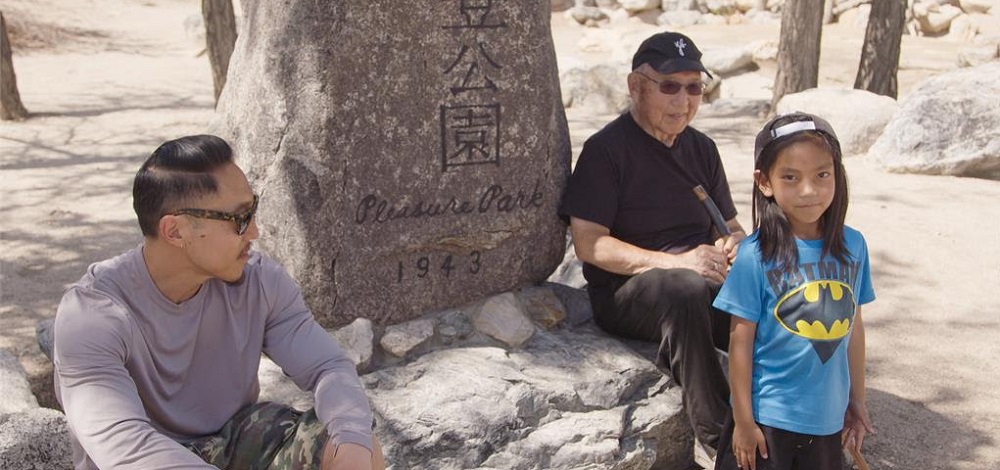
“I really loved ‘Kioku: Remembrance’ because it provided me with so much hope,” reflects Yamashita. “It was so powerful to see students of all ethnic backgrounds who were so passionate about preservation and Japanese American incarceration history in their hometown. I also appreciated ‘Yonsei’ and ‘Misadventures of a Nisei Week Queen’ for the way it explored our Japanese American girl/womanhood in relation to incarceration and identity. I really connect with these films.”
“I appreciate the fact that many of the filmmakers are expanding how we think about incarceration and its enduring impact through generations — as generational trauma but also generational healing,” adds Sasaki. “One of the films that I’m particularly looking forward to seeing is Tad Nakamura’s ‘THIRD ACT . ’ Having gone through the UCLA Asian American Master’s program and being a part of Asian American Studies, I’ve felt Bob Nakamura’s impact on the community.”
Event Venues in Southern California
Saturday, March 28, 2026, 11 a.m. to 7:30 p.m.
Tateuchi Democracy Forum (Japanese American National Museum), 100 N. Central Ave., Los Angeles’ Little Tokyo
Sunday, March 29, 2026, 11:30 a.m. to 7:15 p.m.
Gardena Valley Japanese Cultural Institute. 1964 W. 162nd St. (Main Hall), Gardena, CA.
For tickets and more information on the forthcoming event, visit the website –
www.2026.filmsofremembrance.org.
Mabel Pais writes on The Arts and Entertainment, Social Issues, Education, Business, Spirituality, Health and Wellness, and Cuisine.