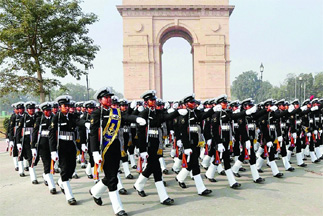
Indian Republic Day is a national festival of India that commemorates the enactment of the Constitution of India, which occurred on January 26, 1950. It is celebrated annually on 26th January and marks the day when the Constitution of India came into effect, making India a sovereign republic. While India gained independence from the British in 1947, but it wasn’t until 26 January 1950 that the Indian Constitution came into effect and India became a sovereign state, declaring it a republic. This day is celebrated with much pomp and fervour all over India, and in India’s capital Delhi, parades, tableaus and spectacular displays by the defense forces are showcased at Rajpath. The Indian flag is also hoisted all over the country.
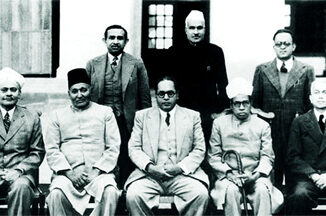
The historical context of Republic Day of India goes back to India’s struggle for independence. Though India gained independence on 15th August 1947, it did not yet have its own constitution. Instead, its laws and governance system continued to be based on a modified version of the Government of India Act of 1935. On 29th August 1947, a resolution was moved in the Constituent Assembly for the appointment of a Drafting Committee to draft a permanent constitution of India. Accordingly, the Drafting Committee was appointed under the Chairmanship of Dr. B.R. Ambedkar. The Committee introduced the final draft of the Constitution in the Constituent Assembly on 4th November 1948.
After many deliberations and some modifications, the Draft Constitution was declared as passed by the Constituent Assembly on 26th November 1949. A few provisions of the Constitution came into force on 26th November 1949 itself. However, the major part of the Constitution came into force on 26th January 1950. It was on that date that India truly became a sovereign republic.
The occasion on 26th January 1950 was marked by a salute of 21 guns and the unfurling of the Indian National Flag by Dr. Rajendra Prasad. Thereafter, 26th January was recognized as the Republic Day of India.
26th January was specifically chosen as the ‘date of commencement’ of the Constitution because it was on this day in 1930 that Purna Swaraj Day was celebrated, following the resolution of the Lahore Session (December 1929) of the INC.
Though Indian Republic Day is celebrated across the country, the main event takes place in the national capital – New Delhi. A series of events unfold as the celebrations proceed. These events are listed below chronologically:
Pre-Parade Events
Beginning The Republic Day Celebrations begin on 23rd January (Parakram Divas or the birth anniversary of Netaji Subhash Chandra Bose). Prior to 2022, the Indian Republic Day Celebrations used to begin on 24th January. However, in the year 2022, the government changed the start date to 23rd January to include the birth anniversary of Netaji as part of the Republic Day Celebrations.
Republic Day Speech: Just one day preceding the Republic Day, the President of India addresses the nation. This address, usually known as the 26 January Republic Day Speech, outlines the nation’s achievements, challenges, and vision for the future.
Wreath-Laying at the Amar Jawan Jyoti: Early morning on Republic Day, the Prime Minister pays homage at the Amar Jawan Jyoti war memorial. This marks a symbolic start to the day’s official commemorations.
The Unfurling of the National Flag: The President arrives at the Kartavya Path (formerly known as Rajpath) and unfurls the national flag. This is followed by the playing of the National Anthem a 21-Gun Salute.
The Republic Day Parade commences after the unfurling of the national flag and forms the main part of the Republic Day Celebrations. Some of the major highlights of the parade include:
– Marching contingents from the Indian Armed Forces and Paramilitary Forces.
– Motorcycle stunts by ‘Dare Devils’
– Vibrant tableaux representing different States/UTs of India as well as departments/ministries of the government.
– Folk dance troupes from various states.
– Mesmerizing fly-past by various aircraft of the Indian Air Force conclude the parade.
Post-Parade Events
Bestowing of Padma Awards and Gallantry Awards: On the evening of the Republic Day, the President of India confers prestigious Padma Awards and Gallantry Awards to the respective awardees.
Beating Retreat Ceremony and Conclusion: The Beating Retreat Ceremony is held on 29th January and marks the conclusion of the Republic Day Celebrations.
Themes of Republic Day Celebrations 2024
The themes of the 75th Republic Day 2024 are: ‘Viksit Bharat’ and ‘Bharat – Loktantra ki Matruka’.
These themes have been selected in line with the honorable PM Narendra Modi’s views that ‘India is truly a mother of democracy’.
These themes will be reflected in the tableaux presented by various states and government departments, showcasing India’s progress in various sectors like technology, infrastructure, and cultural heritage.
Chief Guest of the Republic Day 2024
The President of France, Emmanuel Macron, is the chief guest at India’s Republic Day Celebrations 2024. This is the 6th time that a French leader will be the chief guest on the Indian Republic Day.
Egyptian President Abdel Fattah el-Sisi was the chief guest at the Republic Day last year.
Tag: Facebook
-

The 75th Republic Day of India
-

The Constitution of India
The Constitution of India is the supreme law of India. It frames fundamental political principles, procedures, practices, rights, powers, and duties of the government. It imparts constitutional supremacy and not parliamentary supremacy, as it is not created by the Parliament but, by a constituent assembly, and adopted by its people, with a declaration in its preamble. Parliament cannot override it.
The world’s longest constitution is the Indian’s constitution. At its commencement, it had 395 articles in 22 parts and 8 schedules. It consists of approximately 145,000 words, making it the second largest active constitution in the world. Currently, it has a preamble, 25 parts with 12 schedules, 5 appendices, 448 articles, and 101 amendments.
History
The constitution of India was adopted on the 26th of November, in the year 1949. However, it came to effect on the 26th of January, 1950. 26th of January is celebrated as the Republic Day of India.
It was adopted by the Constitution Assembly. Dr. B. R. Ambedkar, the chairman of the Drafting Committee, is widely considered to be the architect of the Constitution of India. After, the adoption of the constitution, The Union of India became the contemporary and modern Republic of India.
Before 1947, India was divided into two main entities – British India which consisted of 11 provinces and the Princely states ruled by Indian princes under a subsidiary alliance policy.
The two entities merged to form the Indian Union, but many of the legacy systems in British India are followed even now. The historical underpinnings and evolution of the Indian Constitution can be traced to many regulations and acts passed before Indian Independence.
Indian democracy is a Parliamentary form of democracy where the executive is responsible to the Parliament. The Parliament has two houses – Loksabha and Rajyasabha. Also, the type of governance is Federal, ie there is a separate executive and legislature at the Center and States. We also have self-governance at local government levels.
All these systems owe their legacy to the British administration. Let us see the historical background of the Indian Constitution and its development through the years.
Regulating Act of 1773
The first step was taken by the British Parliament to control and regulate the affairs of the East India Company in India.
It designated the Governor of Bengal (Fort William) as the Governor-General (of Bengal).
Warren Hastings became the first Governor-General of Bengal. Executive Council of the Governor-General was established (Four members). There was no separate legislative council.
It subordinated the Governors of Bombay and Madras to the Governor-General of Bengal.
The Supreme Court was established at Fort William (Calcutta) as the Apex Court in 1774.
It prohibited servants of the company from engaging in any private trade or accepting bribes from the natives. The Court of Directors ( the governing body of the company) should report its revenue.
Pitt’s India Act of 1784
Distinguished between commercial and political functions of the company.
Court of Directors for Commercial functions and Board of Control for political affairs.
Reduced the strength of the Governor General’s council to three members.
Placed the Indian affairs under the direct control of the British Government.
The company’s territories in India were called “the British possession of India”.
Governor’s councils were established in Madras and Bombay.
Charter Act of 1813
The Company’s monopoly over Indian trade was terminated; Trade with India was open to all British subjects.
Charter Act of 1833
Governor-General (of Bengal) became the Governor-General of India.
The First Governor-General of India was Lord William Bentick.
This was the final step towards centralization in British India.
The beginning of a Central legislature for India as the act also took away legislative powers of Bombay and Madras provinces.
The Act ended the activities of the East India Company as a commercial body and it became a purely administrative body.
Charter Act of 1853
The legislative and executive functions of the Governor-General’s Council were separated.
6 members in the Central Legislative Council. Four out of six members were appointed by the provisional governments of Madras, Bombay, Bengal, and Agra.
It introduced a system of open competition as the basis for the recruitment of civil servants of the Company (Indian Civil Service open for all).
Government of India Act of 1858
The rule of the Company was replaced by the rule of the Crown in India.
The powers of the British Crown were to be exercised by the Secretary of State for India
He was assisted by the Council of India, having 15 members
He was vested with complete authority and control over the Indian administration through the Viceroy as his agent
The Governor-General was made the Viceroy of India.
Lord Canning was the first Viceroy of India.
Abolished Board of Control and Court of Directors.
Indian Councils Act of 1861
It introduced Indian representation in institutions like the Viceroy’s executive and legislative council (non-official). 3 Indians entered the Legislative Council.
Legislative councils were established in centers and provinces.
It provided that the Viceroy’s Executive Council should have some Indians as non-official members while transacting the legislative businesses.
It accorded statutory recognition to the portfolio system.
Initiated the process of decentralization by restoring the legislative powers to the Bombay and the Madras Provinces.
India Council Act of 1892
Introduced indirect elections (nomination).
Enlarged the size of the legislative councils.
Enlarged the functions of the Legislative Councils and gave them the power to discuss the Budget and address questions to the Executive.
Indian Councils Act of 1909
This Act is also known as the Morley- Minto Reforms.
Direct elections to legislative councils; first attempt at introducing a representative and popular element.
It changed the name of the Central Legislative Council to the Imperial Legislative Council.
The member of the Central Legislative Council was increased to 60 from 16.
Introduced a system of communal representation for Muslims by accepting the concept of a ‘separate electorate’.
Indians for the first time in the Viceroy’s executive council. (Satyendra Prasanna Sinha, as the law member)
Government of India Act of 1919
This Act is also known as the Montague-Chelmsford Reforms.
The Central subjects were demarcated and separated from those of the Provincial subjects.
The scheme of dual governance, ‘Dyarchy’, was introduced in the Provincial subjects.
Under the dyarchy system, the provincial subjects were divided into two parts – transferred and reserved. On reserved subjects, the Governor was not responsible to the Legislative council.
The Act introduced, for the first time, bicameralism at the center.
Legislative Assembly with 140 members and Legislative Council with 60 members.
Direct elections.
The Act also required that three of the six members of the Viceroy’s Executive Council (other than Commander-in-Chief) were to be Indians.
Provided for the establishment of the Public Service Commission.
Government of India Act of 1935
The GoI Act of 1935 provided for the establishment of an All-India Federation consisting of the Provinces and the Princely States as units, though the envisaged federation never came into being.
Three Lists: The Act divided the powers between the Centre and the units into items of three lists, namely the Federal List, the Provincial List, and the Concurrent List.
The Federal List for the Centre consisted of 59 items, the Provincial List for the provinces consisted of 54 items and the Concurrent List for both consisted of 36 items
The residuary powers were vested with the Governor-General.
The Act abolished the Dyarchy in the Provinces and introduced ‘Provincial Autonomy’.
It provided for the adoption of Dyarchy at the Centre.
Introduced bicameralism in 6 out of 11 Provinces.
These six Provinces were Assam, Bengal, Bombay, Bihar, Madras, and the United Province.
Provided for the establishment of the Federal Court.
Abolished the Council of India.
Indian Independence Act of 1947
It declared India as an Independent and Sovereign State.
Established responsible Governments at both the Centre and the Provinces.
Designated the Viceroy India and the provincial Governors as the Constitutional (normal heads).
It assigned dual functions (Constituent and Legislative) to the Constituent Assembly and declared this dominion legislature as a sovereign body.
Salient features of Constitution
Indian constitution, one of the utmost admired constitutions in the world was enacted after ‘ransacking’ all the known constitutions of the world at that time. This constitution that we have enacted has stood the test of times. Though provisions were borrowed from other constitutions, the constitution of India has several salient features that distinguish it from constitution of other countries
Some of its salient features are discussed below:
Lengthiest written constitution
Constitution can be classified into written constitution such as that of America or unwritten constitution such as that UK.
The constitution of India is a written constitution which happens to be the lengthiest written constitution in the world.
It is comprehensive, elaborate and a detailed document
The factors that have contributed to this phenomenon are: geographical factors (vastness of country and diversity), Historical factors (Influence of GoI, 1935), Single constitution for both centre and state and dominance of legal luminaries
Drawn from various sources
It has borrowed most of its provisions from the constitution of various other countries as well as from the Government of India act, 1935. Ex: structural part from GoI, 1935, independence of judiciary from USA, Fundamental Rights from USA etc
Though it is borrowed, the Indian constitution-makers made sure the borrowed features were made suitable to Indian conditions. Ex: Though we borrowed cabinet form of governance from UK, the cabinet is not all-supreme as in the case of UK.
Preamble of the constitution
The Preamble consists of the ideals, objectives and basic principles of the Constitution.
The salient features of the Constitution have developed directly and indirectly from these objectives which flow from the Preamble
It asserts India to be a Sovereign Socialist Secular Democratic Republic and a welfare state committed to secure justice, liberty and equality for the people and for promoting fraternity, dignity the individual, and unity and integrity of the nation.
The Preamble is the nature of Indian state and the objectives it is committed to secure for the people.
Democratic system
The authority of the government rests upon the sovereignty of the people. The people enjoy equal political rights.
Free fair and regular elections are held for electing governments
India is a republic
The Preamble declares India to be a Republic.
India is not ruled by a monarch or a nominated head of state. India has an elected head of state (President of India) who wields power for a fixed term of 5 years.
After every 5 years, the people of India indirectly elect their President.
Union of states
Article I of the Constitution declares, that “India that is Bharat is a Union of States.”
Fundamental Rights and duties
The Constitution of India grants and guarantees Fundamental Rights to its citizens.
The constitution of India confirms the basic principle that every individual is permitted to enjoy certain basic rights and part III of the Constitution deals with those rights which are known as fundamental right.The Six FR include- Right to Equality; Right to Freedom; Right Against Exploitation; Right to Freedom of Religion; Cultural and Educational Rights and Right to Constitutional Remedies (Art. 32).
The fundamental rights are justiciable and are not absolute. Reasonable constraints can be imposed keeping in view the security-requirements of the state.A new part IV (A) after the Directive Principles of State Policy was combined in the constitution by the 42nd Amendment, 1976 for fundamental duties.
Directive Principles of State Policy
A unique aspect of the Constitution is that it comprises of a chapter in the Directive Principles of State Policy.
These principles are in the nature of directives to the government to implement them to maintain social and economic democracy in the country.
Parliamentary System:
The Constituent Assembly decided to espouse Parliamentary form of government both for the Centre and the states. In Indian parliamentary system, distinction is made between nominal and real executive head.
The Council of Ministers is responsible before the Lok Sabha, The lower house of union parliament. There are close relations between executive and legislature.
Federal structure of government
A federal state is a state where a country is divided into smaller regions and the government is functioning at two levels
The Indian Constitution has envisaged a federal structure for India considering the geographical vastness and the diversity of languages, region, religions, castes, etc.
Written Constitution, supremacy of the Constitution, division of powers between Union and States, bicameral Legislature, independent Judiciary, etc. are the features of Indian federation.
Scholars describe India as a ‘Quasi-Federation’ (K.C. Wheare) or as ‘a federation with a unitary bias, or even as ‘a Unitarian federation.’
Universal adult franchise
All men and women enjoy an equal right to vote. Each adult man and woman above the age of 18 years has the right to vote.
All registered voters get the opportunity to vote in elections.
Single integrated State with Single Citizenship:
India is the single Independent and Sovereign integrated state.
All citizens enjoy a common uniform citizenship.
They are entitled to equal rights and freedoms, and equal protection of the state.
Integrated Judicial system
The Constitution provides for a single integrated judicial system common for the Union and the states.
The Supreme Court of India works at the apex level, High Courts at the state level and other courts work under the High Courts.
Independent Judiciary
It is necessary to secure the philosophical foundations of the rule of law and democracy
Firstly, the Constitution makers created a separate Judiciary independent of Legislature and Executive.
Secondly, the Constitution has ensured complete independence of Judiciary in the matters of administration and finances.
Amending the Constitution of India
Amending the Constitution of India is the procedure of making modifications to the nation’s fundamental law or supreme law.
The procedure of amendment in the constitution is laid down in Part XX (Article 368) of the Constitution of India.
This procedure guarantees the sanctity of the Constitution of India and keeps a check on uninformed power of the Parliament of India.
Judicial Review
The judiciary has significant position in Indian Constitution and it is also made independent of the legislature and the executive.
The Supreme Court of India stands at the peak of single integrated judicial system
It operates as defender of fundamental rights of Indian citizens and guardian of the Constitution.
Basic Structure doctrine
The basic structure doctrine is an Indian judicial norm that the Constitution of India has certain basic features that cannot be changed or destroyed through amendments by the parliament.
The basic features of the Constitution have not been openly defined by the Judiciary.
At least, 20 features have been described as “basic” or “essential” by the Courts in numerous cases, and have been incorporated in the basic structure.
In Indira Gandhi v. Raj Narayan case and also in the Minerva Mills case, it was witnessed that the claim of any particular feature of the Constitution to be a “basic” feature would be determined by the Court in each case that comes before it.
Secularism
In no other country of the world so many religions co-exist as in India. In view of such diversity the Constitution guarantees complete freedom of religion to all.
The citizens of our country are free to follow any religion and they enjoy equal rights without any distinction of caste, creed, religion or sex. -

People who helped draft the Constitution of India
- Dr. BR Ambedkar
A man who needs no introduction, Chairman of the Drafting Committee Dr. BR Ambedkar was arguably the greatest champion of socio-economic reform the country has ever seen. Ambedkar was a scholar, having received degrees from reputed universities in India and abroad. After his return to India having being called to Gray’s Inn as a Barrister, Ambedkar did not have enough money to register with the Bombay High Court. With a little help from his friends, he was able to pay the Rs 500 and begin practicing in Bombay in 1923.
As a result of his strong opinions on caste and class, Ambedkar’s law practice suffered. Despite this, he would go on to prove his worth in a number of cases involving issues regarded controversial at the time. Writer Raghunath Karve was charged with spreading vulgarity through his magazine Samajaswasthya, which frequently discussed taboo topics like birth control. Ambedkar would succesfully defend his right to spread awareness on sex-related issues.
Alladi Krishnaswamy Iyer
During his practice as a lawyer, Iyer was held in high regard by judges and fellow advocates alike. Dewan Bahadur Sir Alladi Krishnaswani Lyer was one of the main members of the drafting committee of the Constitution of India – an important member of the Constituent Assembly of India. Ayyar also served as an Advocate General of Madras State from 1929 to 1944.
Alladi Krishnaswami lyer was born in 1883 in the small village of Pudur in Madras State (now the Nellore district of Andhra Pradesh). He was born to Ekamra Sastry, who was a priest. He passed his matriculation examination in 1899 and entered the Madras Christian College to study History. Ayyar used his spare time to attend classes in law and passed the B.L exam and become one of the leading members of the bar. He was renowned as Dewan Bahadur in 1930.
KM Munshi
Kanhaiyalal Maneklal Munshi also known as K.M Munshi, or by his pen name, Ghanshyam Vyas, was an brilliant Indian independence movement activist, politician, writer and educationist from Gujarat. He was a lawyer by profession, he later became an author and politician. He was a well-known name in Gujarati literature. He founded Bharatiya Vidya Bhavan an educational trust in 1938. Before the independence of India he was a part of Indian National Congress and after independence, he joined the Swatantra Party and Bharatiya Jana Sangh.
Mohammad Saadulla
Sir Syed Muhammad Saadulla, was the Prime Minister of Assam (British India). He was also a Chairman of Gauhati Municipality in 1919 and minister in charge of education and agriculture for Assam from 1924 to 1934.
He got his education from the Cotton College, Guwahati and Presidency College, Calcutta. He was born on 21 May 1885 in Gawahati to an orthodox Assamese Muslim family.
The Assam Legislative Assembly elected Syed Muhammad Saadulla to the Constituent Assembly of India in 1947 and later he was elected in the drafting committee as well. He was also an integral part in preparing the Constitution of the Republic of India. Saadulla was the only member from the North East to be elected into the Drafting Committee.
B. L. Mitter:
B.L Mitter worked with the Dewan of Baroda. Mitter is said to have made significant contributions to integration of the Princely States with India. He was later replaced by Madhav Rao on the drafting committee, who was the legal advisor to the Maharaja of Vadodara.
D. P. Khaitan
D.P Khaitan, also known as Debi Prasad Khaitan, was the owner of Khaitan & co – one of the oldest working law firms in India. It had 530 fee earners and consultants including 115 partners and directors. Debi found this company in 1911 with the assistance of his brothers. He was a proficient member of the drafting committee including 6 others. -

India’s evolution in health sector
The trajectory of India’s development in health and well-being from 1947 to 2023 showcases a remarkable evolution. The nation’s endeavours to tackle some of the deadliest diseases and enhance the quality of life for its citizens reflect a story of transformation and growth.
A triumph in death rate reduction
One of the most remarkable accomplishments India has achieved post-independence is the substantial reduction in death rate. In 1947, the average life expectancy for an Indian citizen was a mere 32 years. Fast forward to 2023, and this figure has risen significantly to an impressive 70.19 years. This transformation, endorsed by the World Health Organization (WHO), underscores the progress in human development.
Infant mortality and child health: A
striking improvement
The United Nations’ data sheds light on India’s commendable strides in child health. The infant mortality rate, which stood at 145.6 per 1000 live births in 1947, has seen a remarkable improvement and dropped to 27.695 per 1000 live births in 2023. This splendid improvement underscores the nation’s commitment to ensuring a healthier start for its youngest citizens.
National initiatives and disease eradication
India’s post-independence journey has been punctuated by the initiation of numerous national-level campaigns aimed at combatting various diseases. From AIDS to tuberculosis and malaria, the Indian government has championed initiatives that have not only saved lives but also demonstrated the nation’s proactive approach to public health challenges.
Empowering health through
national schemes
The launch of transformative schemes such as the National Health Mission and the National Rural Health Mission has bolstered India’s commitment to enhancing child and maternal health. These initiatives have played a pivotal role in ensuring accessible healthcare services and reducing health disparities across different regions of the country.
India’s progress in the field of medical education is another testament to its journey of transformation. There were mere 28 medical colleges in the 1950s but the current count of 612 medical colleges speaks volumes about the nation’s dedication to nurturing a skilled healthcare workforce.
India’s evolution in the realm of health and development over the years serves as an inspiring example for developing nations across the globe.
Public healthcare
Public healthcare is free for every Indian resident.
The Indian public health sector encompasses 18% of total outpatient care and 44% of total inpatient care. Middle and upper class individuals living in India tend to use public healthcare less than those with a lower standard of living. Additionally, women and the elderly are more likely to use public services. The public health care system was originally developed in order to provide a means to healthcare access regardless of socioeconomic status or caste. However, reliance on public and private healthcare sectors varies significantly between states. Several reasons are cited for relying on the private rather than public sector; the main reason at the national level is poor quality of care in the public sector, with more than 57% of households pointing to this as the reason for a preference for private health care. Much of the public healthcare sector caters to the rural areas, and the poor quality arises from the reluctance of experienced healthcare providers to visit the rural areas. Consequently, the majority of the public healthcare system catering to the rural and remote areas relies on inexperienced and unmotivated interns who are mandated to spend time in public healthcare clinics as part of their curricular requirement. Other major reasons are long distances between public hospitals and residential areas, long wait times, and inconvenient hours of operation.
National Health Policy
The National Health Policy was endorsed by the Parliament of India in 1983 and updated in 2002, and then again updated in 2017. The recent four main updates in 2017 mention the need to focus on the growing burden of non-communicable diseases, the emergence of the robust healthcare industry, growing incidences of unsustainable expenditure due to healthcare costs, and rising economic growth enabling enhanced fiscal capacity. Furthermore, in the long-term, the policy aims to set up India’s goal to reform its current system to achieve universal health care. In practice however, the private healthcare sector is responsible for the majority of healthcare in India, and a lot of healthcare expenses are paid directly out of pocket by patients and their families, rather than through health insurance due to incomplete coverage.
Government health policy has thus far largely encouraged private-sector expansion in conjunction with well designed but limited public health programs.
Shortage of doctors in rural areas
Rural areas in India have a shortage of medical professionals. 74% of doctors are in urban areas that serve the other 28% of the population, leaving many with unmet medical needs.
This is a major issue for rural access to healthcare. The lack of human resources causes citizens to resort to fraudulent or ignorant providers. Doctors tend not to work in rural areas due to insufficient housing, healthcare, education for children, drinking water, electricity, roads and transportation.
Additionally, there exists a shortage of infrastructure for health services in rural areas. In fact, urban public hospitals have twice as many beds as rural hospitals, which are lacking in supplies. Studies have indicated that the mortality risks before the age of five are greater for children living in certain rural areas compared to urban communities. Due to these geographic barriers, limited healthcare infrastructure, and a shortage of healthcare professions, rural areas face unique challenges. Scholars believe that if healthcare providers are able to understand these cultural nuances, they may be able to provide culturally-sensitive services specifically tailored to the needs and preferences of these communities. Children face a myriad of health risks in relation to the healthcare challenges those in rural areas encounter. Across three different measuring points from 1992 through 2006, more developed states in India had a lower proportion of households with an underweight boy or girl than less developed states, which tend to contain more rural communities.
Full immunization coverage also varies between rural and urban India, with 39% completely immunized in rural communities and 58% in urban areas across India. Vaccine illiteracy remains a significant obstacle in the path towards greater immunization coverage, often due to misinformation, unreliable healthcare, a lack of awareness among parents, and other social factors. Inequalities in healthcare can result from factors such as socioeconomic status and caste, with caste serving as a social determinant of healthcare in India. One study showed more health disparities arise when comparing urban versus rural homes rather than between castes; using three rounds of the National Family Health Surveys, researchers calculated the Multidimensional Poverty Index, which is aimed at further elucidating the indicators and social determinants of health. Between urban and rural households, the headcount ratio difference was found to be 20-30% in 2005-2006, while between scheduled castes/scheduled tribes and other households the difference was only 10-15%. Other critical social determinants of health in India include sanitation/hygiene, environmental pollution, nutrition, and more. Across all states, less than 50% (and in some less than 25%) of urban homes had unimproved sanitation, compared to over 50% (and in some over 75%) of rural homes, according to the 2007-2009 District Level Household Survey. Sanitation and hygiene are directly linked to disease and overall rural health outcomes.
Similar with many other countries, often those in rural India rely on informal providers to deliver necessary medical care. Utilizing modern and traditional medical practices, such as allopathic medicines and herbal remedies, informal providers have varying degrees of skills and education, but usually no formal medical qualifications. Yet, they far outnumber the quantity of medical providers in India; a study from Madhya Pradesh found there to be 24,807 qualified medical doctors, compared to 89,090 informal providers. They are also the most common first call for those in rural areas requiring medical services. Due to the lack of accessible healthcare in rural India, informal providers respond to much of the resulting unmet medical needs, proving them integral to rural health infrastructure. -

Education in India: The challenges facing the system
Over the course of over seven decades, the education system of India has evolved gradually yet phenomenally. From a literacy rate of 18% in 1951, we have moved up to 73% as of 2011. Currently, the education system in India is the strongest and largest in the world hosting more than 315 million students.
The modern education system was introduced to India in 1830 during the British rule by Lord Thomas Babington, who brought English language syllabus to the country. The syllabus was then limited to common subjects like language, science and maths. Classroom teaching became prominent and the relation between a teacher and student evolved.
In the following years, the education system started getting influenced by various institutions. During the late nineteenth century, the Theosophical Society of India and Rama Krishna Mission started to merge the western ideals of education with the Indian roots to inspire the students and make them accepted universally. Intellectuals of various nationalities came together and helped shape the education system.
Post India gained its independence from the British colonial rule, the Indian education system, previously accessible only to the elite, became available for the entire society. The government’s Central Advisory Board established two committees – one for higher education and one for secondary education – to address the challenges of education, formulate comprehensive education policies and improve the overall education landscape of the country. Currently, Indian School System consists of four levels – pre-primary, primary, secondary and higher secondary.
As of 2019, India has the most number of students in a country. Compared to the tragic situation of 1947 when the country had merely 400 schools, 19 universities with a little over 5000 students, we have come a long way. Currently, India boasts of 1.5 million plus schools, 751 universities and 35 thousand plus colleges.
The Modern Learning Approach
To modernise the knowledge delivery ways according to the needs of the 21st century generation, schools and universities are adopting various unique practices. These methodologies and innovative pedagogies enable educational institutions to develop the skills of the learners in such a manner that they are able to become self-dependent and ambitious achievers. Some of these new age methods are:
– Experiential Learning: As it is evident by the name, experiential learning is the process of learning through doing or experience, and is more specifically defined as “learning through reflection on doing. Learning only produces good results when learners have the desire to absorb the knowledge. Therefore, experiential learning comprises a hands-on approach to education that goes beyond the theoretical aspect and a classroom and strives to bring a more involved way of learning.
– Peer Learning: Peer learning has become a part of an active learning strategy in a lot of Universities and B-Schools. This form of pedagogy encourages students to interact with their classmates/peers and learn from each other beyond classroom without any supervising authority. This creates an environment of open communication which is highly crucial for learning. Research has shown that students, who engage in an environment of free communication, perform better academically.
– The Rise of Ed-Tech: Starting from the past decade, the new generation of learner is looking for courses which are experiential and interactive in nature and facilitate authentic skill development. This is where the Edtech is making its mark. According to a report by Google & KPMG, Online education has the potential to touch $1.96 billion by 2021 as everyone, from school going students to MBA aspirants to CXOs of multinational corporations and entrepreneurs, is a potential learner.
Challenges facing the education system
The successes listed above are not only numerical but point to the narrowness of the base of beneficiaries in India. Of the 27 crore people who have registered on the e-Shram portal, 94% mention that they earn less than Rs 10,000 per month. The desperation among youngsters can be gauged when a person having a PhD, MTech and MCom degree applies for a peon’s job in Uttar Pradesh. No doubt a government job is preferable but one does not do an MTech to become a peon.
Clearly, a large number of people don’t get a job appropriate to their degree or skill acquired. It is reported that substance abuse has grown among youngsters and so has violence within families. Suicides by daily workers and self-employed have increased while they are still high among farmers. This reflects hopelessness.
While the number of educational institutions has increased, facilities by and large are inadequate due to a shortage of funds and corruption. This is mostly true of the private institutions also because of the managements’ desire to maximise their profits. No wonder, ASER reports since 2005 show that 50% of children in Class 5 in rural schools cannot read or write or do arithmetic of Class 2 level. So, effectively they have not acquired the basic skills, and drop out. Worse, they can only get menial jobs that pay little, and they will remain poor during their lifetime.
A degree has become a passport to a scarce job. So, the emphasis has shifted from learning to getting marks to get admissions and jobs. Cheating is the easiest way for this and it has become rampant in our public examinations. Fake degrees are another device to get this passport. It has also spawned the culture of coaching and tuition, which is narrowly focused on imparting the skill to do well by beating the system. Regular classroom teaching is mostly indifferent, so students are forced to opt for tuition. More importantly, this kills students’ interest in learning.
There is also growing commercialisation and privatisation of education on the ground of failure of the public systems and that is increasing the divide between the well-off and the poor. The democratising influence of education is on the wane. Consequently, the insensitivity towards the marginalised sections or the differently abled has aggravated.
In order to attract students, many private institutions promote malpractices – question paper leakage, fake degrees, etc. It has fostered paying courses in public institutions and children gravitating to applied courses away from the basic courses. The downgrading of the basic courses in educational institutions will pose challenges for research in the coming years. With education becoming a mass market and weakening teacher-student relationship, testing in public examinations is largely based on multiple choice questions (MCQ). CUET introduced for Central University entrance is a recent example. Not only does MCQ not test the child’s capacity to express and logically formulate answers, but it also lends itself to cheating and coaching. -

India: Extreme inequality in numbers
While India is one of the fastest growing economies in the world, it is also one of the most unequal countries. Inequality has been rising sharply for the last three decades. The richest have cornered a huge part of the wealth created through crony capitalism and inheritance. They are getting richer at a much faster pace while the poor are still struggling to earn a minimum wage and access quality education and healthcare services, which continue to suffer from chronic under-investment. These widening gaps and rising inequalities affect women and children the most.
Let’s look at the numbers
– The top 10% of the Indian population holds 77% of the total national wealth. 73% of the wealth generated in 2017 went to the richest 1%, while 670 million Indians who comprise the poorest half of the population saw only a 1% increase in their wealth.
– There are 119 billionaires in India. Their number has increased from only 9 in 2000 to 101 in 2017. Between 2018 and 2022, India is estimated to produce 70 new millionaires every day.
– Billionaires’ fortunes increased by almost 10 times over a decade and their total wealth is higher than the entire Union budget of India for the fiscal year 2018-19, which was at INR 24422 billion.
– Many ordinary Indians are not able to access the health care they need. 63 million of them are pushed into poverty because of healthcare costs every year – almost two people every second.
– It would take 941 years for a minimum wage worker in rural India to earn what the top paid executive at a leading Indian garment company earns in a year.
Healthcare as a luxury good
While the Indian government barely taxes its wealthiest citizens, its spending on public healthcare ranks among the lowest in the world. In the place of a well-funded health service, it has promoted an increasingly powerful commercial health sector. As a result, decent healthcare is a luxury only available to those who have the money to pay for it. While the country is a top destination for medical tourism, the poorest Indian states have infant mortality rates higher than those in sub-Saharan Africa. India accounts for 17% of global maternal deaths, and 21% of deaths among children below five years.
Extreme wealth and extreme poverty
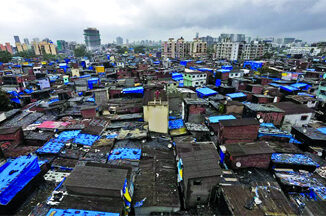
India is a country of extreme contrasts: there are booming centres like Mumbai, Delhi and Bangalore, with a growing number of enormously rich families, but there are also millions of people living in extreme poverty. Some 15 per cent of Indians are undernourished. One in three children under the age of five is stunted as a result of chronic undernutrition. Child mortality is higher in India than in its neighbours Nepal and Bangladesh, both of which are counted among the least developed countries (LDCs) in the world. The 2022 Global Hunger Index describes the situation in India as “serious”.
Public spending on education and health is still insufficient to meet the needs of the entire population. The quality of the services offered is often still inadequate. There are also shortcomings in the country’s infrastructure. A large proportion of the population have no or only inadequate access to basic services like water and sanitation, decent housing, waste disposal and transport. For example, about 30 per cent of India’s people do not have their own toilet.
India’s population has almost doubled over a period of 40 years. About a quarter of Indians are younger than 15 and nearly 45 per cent are younger than 25 years of age. This demographic development offers huge opportunities for economic growth and increased incomes – but only if India manages to actually make use of this potential by providing more education and more employment.
Right now almost 90 per cent of workers are employed in the informal sector, which means that they are not able to get occupational health insurance or any kind of wage compensation when they fall ill. Only a very small percentage of them are able to afford treatment by doctors outside the at times patchy basic health services provided by the public health system. There is also a lack of high-quality vocational training programmes that are accessible for all population groups and also have social recognition.
India among top countries with high income, wealth inequality: UNDP report
India has emerged among top countries with high income and wealth inequality but the share of the population living in multidimensional poverty fell from 25 to 15 per cent between 2015-16 and 2019-21, the UNDP said in a report.
The 2024 Asia-Pacific Human Development Report, launched on Monday, paints a qualified picture of long-term progress but also persistent disparity and widespread disruption, foreseeing a turbulent development landscape and urgently calling for new directions to boost human development.
This persistent wealth divide is driven by various factors. Globalization and technological advances have, for example, created new opportunities for some groups while leaving others behind. This typically results in the owners of capital getting a greater share of national income.
ILO data show, for example, that in Asia and the Pacific labour has a lower income share than the world average.13 As a result, workers have less income to save and invest, further worsening inequality. The most vulnerable in this vicious feedback loop include those working in the informal sector, particularly women. Inequality is further exacerbated by corruption, and weak tax policy and administration, as well as by the lack of effective social safety nets.
In India, between 2000 and 2022, per capita income soared from $442 to $2,389. And between 2004 and 2019, poverty rates (based on the international poverty measure of $2.15 per day) plummeted from 40 to 10 percent. Moreover, between 2015-16 and 2019-21, the share of the population living in multidimensional poverty fell from 25 to 15 percent.
Despite these successes, poverty remains persistently concentrated in states that are home to 45 percent of the country’s population but contain 62 percent of its poor. In addition, many other people are very vulnerable, hovering just above the poverty line. The groups at greater risk of falling back into poverty include women, informal workers, and inter-state migrants. Women are only 23 percent of the labour force.
Amidst rapid growth but persistent disparity, the income distribution has become more skewed. The top 10 percent of the population get 57 percent of national income and the top 1 percent get 22 percent – one of the most unequal income distributions. There are similar gaps in wealth: the top 10 percent of the population controls 65 percent of the nation’s total wealth. There is growing evidence of a strong rise in wealth inequality, mainly in the post-2000 period.
Titled ‘Making our Future: New Directions for Human Development in Asia and the Pacific’, the new report argues that unmet aspirations, heightened human insecurity, and a potentially more turbulent future create an urgent need for change.
Moreover, between 2015-16 and 2019-21, the share of the population living in multidimensional poverty fell from 25 to 15 per cent.
Despite these successes, poverty remains persistently concentrated in states that are home to 45 per cent of the country’s population but contain 62 per cent of its poor, the report pointed out. “In addition, many other people are very vulnerable, hovering just above the poverty line. The groups at greater risk of falling back into poverty include women, informal workers, and inter-state migrants,” the United Nations Development Programme (UNDP) said in its report.
Noting that women are only 23 per cent of the labour force, the report said that amidst rapid growth but persistent disparity, the income distribution has become more skewed.
“There is growing evidence of a strong rise in wealth inequality, mainly in the post-2000 period,” it said.
The report also pointed out that India is contributing significantly to the growth in the global middle class-encompassing those living between USD 12 and USD 120 a day. India is expected to contribute 24 per cent to the global middle-class growth (192 million people), it said.
While the Asia-Pacific region will account for two-thirds of global economic growth this year, income and wealth disparities are worsening, particularly in South Asia, where the wealthiest 10 per cent control over half of total income, the report said. -
India to remain fastest-growing major economy
India will remain the fastest-growing major economy this year and next, boosted by continued strong government spending, according to a Reuters poll of economists who also said inflation was unlikely to surge again. The world’s most populous country performed better than expected in the first two quarters of this fiscal year to end-March, as the government steps up already-strong spending to bolster growth momentum running into a national election due in May. Much of Prime Minister Narendra Modi’s government spending in recent years has gone into building infrastructure. Private investment and job creation have lagged, suggesting New Delhi will continue to play an outsized role in India’s economic growth.
The Jan. 10-23 Reuters poll of 54 economists predicted the economy will grow 6.9% this fiscal year, a small upgrade from 6.7% in a December poll. It was then forecast to expand 6.3% next fiscal year, the same as in the previous poll.
While inflation rose to the fastest pace in four months in December to 5.69%, driven by pressures from food prices, economists expect that to fade soon.
“We expect inflation to subside quite drastically in the short run, catching up to the downside with already-subdued core inflation,” said Miguel Chanco, chief emerging Asia economist at Pantheon Macroeconomics. “At the same time, though, these trends also reflect an enduring sluggishness taking hold in the economy, particularly with regards to private consumption, the most important aspect of growth.”
The survey showed consumer price inflation averaging 5.4% and 4.7% this fiscal year and next, with a majority of economists, 23 of 32, of the view the risk of a significant resurgence over the coming six months was low.
Consumer spending, which makes up 60% of Asia’s third-largest economy, has slowed. But a strong majority of economists, 25 of 28, said employment will improve in the next six months. Still, with job growth not matching the overall economic growth rate or the pace of millions of young people joining the workforce every year, the dip in consumption will likely take a toll.
“While the Indian economy is on a strong momentum…there are signs of a moderation on account of a weakness in private consumption demand,” said Suman Chowdhury, chief economist at Acuite Ratings and Research.
“But this will depend on the measures taken by the government to generate more employment and enhance the disposable incomes of a larger section of the population.”
The economy of India has transitioned from a mixed planned economy to a mixed middle-income developing social market economy with notable public sector in strategic sectors. It is the world’s fifth-largest economy by nominal GDP and the third-largest by purchasing power parity (PPP); on a per capita income basis, India ranked 139th by GDP (nominal) and 127th by GDP (PPP). From independence in 1947 until 1991, successive governments followed Soviet model and promoted protectionist economic policies, with extensive Sovietization, state intervention, demand-side economics, natural resources, bureaucrat driven enterprises and economic regulation. This is characterized as dirigism, in the form of the License Raj. The end of the Cold War and an acute balance of payments crisis in 1991 led to the adoption of a broad economic liberalization in India and indicative planning. Since the start of the 21st century, annual average GDP growth has been 6% to 7%. The economy of the Indian subcontinent was the largest in the world for most of recorded history up until the onset of colonialism in early 19th century.[54][55][56]
Nearly 70% of India’s GDP is driven by domestic consumption; country remains the world’s sixth-largest consumer market. Apart from private consumption, India’s GDP is also fueled by government spending, investments, and exports.
In 2022, India was the world’s 6th-largest importer and the 9th-largest exporter. India has been a member of the World Trade Organization since 1 January 1995. It ranks 63rd on the Ease of doing business index and 40th on the Global Competitiveness Index. With 476 million workers, the Indian labor force is the world’s second-largest. India has one of the world’s highest number of billionaires and extreme income inequality.
During the 2008 global financial crisis, the economy faced a mild slowdown. India endorsed Keynesian policy and initiated stimulus measures (both fiscal and monetary) to boost growth and generate demand. In subsequent years, economic growth revived. The period between 2004 and 2014 is referred to as India’s lost decade as India fell behind other BRIC economies.
In 2021-22, the foreign direct investment (FDI) in India was $82 billion. The leading sectors for FDI inflows were the service sector, the computer industry, and the telecom industry. India has free trade agreements with several nations and blocs, including ASEAN, SAFTA, Mercosur, South Korea, Japan, Australia, UAE, and several others which are in effect or under negotiating stage. The service sector makes up more than 50% of GDP and remains the fastest growing sector, while the industrial sector and the agricultural sector employs a majority of the labor force. The Bombay Stock Exchange and National Stock Exchange are some of the world’s largest stock exchanges by market capitalization.
India is the world’s sixth-largest manufacturer, representing 2.6% of global manufacturing output. Nearly 65% of India’s population is rural, and contributes about 50% of India’s GDP. India faces high unemployment, rising income inequality, and a drop in aggregate demand. India’s gross domestic savings rate stood at 29.3% of GDP in 2022. In recent years, independent economists and financial institutions have accused the government of manipulating various economic data, especially GDP growth. India’s overall social spending as a share of GDP in 2021-22 will be 8.6%, which is much lower than the average for OECD nations.
India could be $5 trillion economy by 2025
The Indian economy is poised to touch USD 5 trillion next financial year – 2024-25 – and capitalise to double to USD 10 trillion by the end of this decade, said Union Petroleum Minister Hardeep Puri. At present, the Indian economy is estimated to be about USD 3.7 trillion.
“I was somewhere told that we would be a USD 5 trillion economy by 2028. I told him that there is no need to wait until 2028; it will happen by 2024-25. We will then be a 10 trillion dollar economy by 2030,” Puri, who is also Urban and Housing Affairs Minister, said.
Global interest in India, he added, is increasing by the day, be it in digital infrastructure, the automobile market, energy or biofuels. “So, it (the Indian economy) is looking very good,” the minister said.
India’s Challenges
Prime Minister Modi is a Hindu nationalist leader. Many blame him for the violence against Muslims while he was governor of India’s Western region of Gujarat.
Modi is up against India’s bloated government bureaucracy. That makes the execution of any fiscal or monetary policy difficult. In August 2015, he was blocked from passing a bill to acquire land to promote infrastructure.
U.S. monetary policy has hurt India’s economy. For example, when the Federal Reserve began its quantitative easing program, the value of India’s rupee fell. The resulting inflation forced India’s central bank to raise its interest rates. This action slowed India’s economic growth, eventually resulting in what some called mild stagflation in 2013. India had 10.9% inflation for the year and a growth rate of 6.4%. Slow growth came from contractionary monetary policy to stem inflation. By 2017, inflation had slowed to 3.6%.
Investors backed off from India and other emerging markets when the U.S. Federal Reserve began tapering its quantitative easing program. When the dollar surged in 2014, it forced the value of the rupee and other emerging market currencies down.
Climate change threatens India’s attempts to improve its citizens’ standard of living. More than 600 million Indians face acute water shortages. Bangalore and New Delhi are two of the 21 cities that could deplete their groundwater in 2020. In July 2019, the city of Chennai ran out of groundwater. Over 200,000 people die from contaminated water. By 2030, 40% of the population will have no access to drinking water.
Most of India’s rainwater falls during the four-month monsoon season. It isn’t captured efficiently. Climate change will increase flooding from these monsoons.
The Indus River depends on water from the Hindu Kush-Himalaya glaciers. If nothing is done to reduce greenhouse gases, studies estimate that anywhere from 35% to 94% will melt by 2100. Sea level rise threatens India’s 4,660 miles of coastline. It threatens megalopolises like Mumbai, Chennai, and Kolkata, which are home to over 48 million people. Many of these cities are built on landfill. In Mumbai, seawater spills onto the main oceanside promenade during high tide. -

Perinatal depression linked to higher risk of death
Women who experience depression during or after pregnancy are more likely to die from both natural and unnatural causes, according to a recent study of childbirth in Sweden published in The British Medical Journal. The increased risk peaks in the month following diagnosis and remains raised for up to 18 years. Women who develop perinatal depression, which is to say depression during pregnancy or shortly after childbirth, are generally twice as likely to die of natural or, as in most cases, unnatural causes. They are six times more likely to commit than women without this form of depression. The increase in risk peaks in the 30 days following diagnosis but remains elevated for up to 18 years later.These are the results of a large cohort study that used data from the Swedish Medical Birth Register, which effectively contains all births in Sweden since 1973.
Basing their study on women who had live births between 2001 and 2018, the researchers compared over 86,500 women diagnosed with perinatal depression, during pregnancy or up to one year after childbirth, with over 865,500 matched controls of the same age who had given birth the same year.
“This is a cohort study, and although it can’t prove any causality, it’s the largest and most comprehensive study in its field,” says Qing Shen, affiliated researcher at the Institute of Environmental Medicine, Karolinska Institutet and one of the principal authors of the study. “I believe that our study clearly shows that these women have an elevated mortality risk and that this is an extremely important issue.”
The risk was highest for the women diagnosed with postpartum depression (depression after childbirth), corroborating the findings of previous smaller studies. Women diagnosed with antepartum depression (depression during pregnancy) have not been studied as much, so the knowledge base there is smaller. Dr Shen and her colleagues can now show that women with antepartum depression also have an elevated mortality risk, albeit not as high.
On comparing the mortality risk among women with perinatal depression who had had psychiatric problems even before pregnancy with women who had not had such issues, the researchers found that it was the same for both groups. “Our recommendation is therefore not to discontinue effective psychiatric treatment during pregnancy,” says Dr Shen.
The women who were diagnosed with perinatal depression tended to have been born in the Nordic region and have a shorter education history and lower incomes than women without such a diagnosis.
“One hypothesis is that these women seek help differently or were offered screening service postpartum not to the same extent, which means that their depression develops and is worse once it has been detected,” says last author Donghao Lu, assistant professor at the Institute of Environmental Medicine, Karolinska Institutet. “Our view is that these women are particularly vulnerable and should be the focus of future interventions.” Source: ANI -

Women who take diets rich in plant protein likely to stay healthy as they age: Study
Women who consume higher amounts of protein, particularly from plant-based sources, are less likely to develop chronic diseases and more likely to maintain good health as they age, a new study has said.
In the study published in The American Journal of Clinical Nutrition, the researchers analysed self-reported data from over 48,000 women and noted less heart disease, cancer, and diabetes, and cognitive and mental health decline, in those who included more protein in their diets from sources such as fruits, vegetables, bread, beans, legumes, and pasta, compared to those who ate less.
“Consuming protein in midlife was linked to promoting good health in older adulthood,” said Andres Ardisson Korat, a scientist at the US-based Human Nutrition Research Center on Aging (HNRCA) and lead author of the study.
“We also found that the source of protein matters. Getting the majority of your protein from plant sources at midlife, plus a small amount of animal protein seems to be conducive to good health and good survival to older ages,” he added.
Women who consume higher amounts of protein, particularly from plant-based sources, are less likely to develop chronic diseases and more likely to maintain good health as they age, a new study has said. In the study published in The American Journal of Clinical Nutrition, the researchers analysed self-reported data from over 48,000 women and noted less heart disease, cancer, and diabetes, and cognitive and mental health decline, in those who included more protein in their diets from sources such as fruits, vegetables, bread, beans, legumes, and pasta, compared to those who ate less. “Consuming protein in midlife was linked to promoting good health in older adulthood,” said Andres Ardisson Korat, a scientist at the US-based Human Nutrition Research Center on Aging (HNRCA) and lead author of the study. Source: IANS -
New smart insulin pill with sugar-free chocolate to manage diabetes
Researchers have developed a new way to supply the body with smart insulin, providing millions of people with diabetes worldwide new alternatives to syringes or insulin pumps. There are approximately 425 million people worldwide with diabetes and approximately 75 million of these inject themselves with insulin daily.
The new insulin can be eaten by taking a capsule or, even better, within a piece of chocolate, said the researchers from UiT The Arctic University of Norway.
In the research, published in Nature Nanotechnology, the team revealed when prescribed to 20 baboons, the smart pill lowered blood sugar.
The baboons were normal, healthy baboons, but the oral insulin has also been tested on mice and rats that actually have diabetes.
The mice and rats did not have low blood sugar events (hypoglycemia), gain weight, or fat accumulation in the liver, overcoming current challenges with injectables and other oral insulins, the researchers said.
Inside the pills are tiny nano-carriers in which the insulin is encapsulated. The particles are 1/10,000th the width of a human hair and so small that you cannot even see them under a normal microscope.
“This way of taking insulin is more precise because it delivers the insulin rapidly to the areas of the body that need it most. When you take insulin with a syringe, it is spread throughout the body where it can cause unwanted side effects,” said Professor Peter McCourt at UiT Norway’s Arctic University.
“We have created a coating to protect the insulin from being broken down by stomach acid and digestive enzymes on its way through the digestive system, keeping it safe until it reaches its destination, namely the liver,” added McCourt, who is a liver biologist.
The oral insulin has been tested on nematodes, mice, and rats and on baboons in the National Baboon Colony in Australia. -

Chickpea Curry
Ingredients
2 tablespoons vegetable oil, 2 onions, minced 2 cloves garlic, minced 2 teaspoons fresh ginger root, finely chopped 6 whole cloves 2 (2 inch) sticks cinnamon, crushed 1 teaspoon ground cumin 1 teaspoon ground coriander salt 1 teaspoon cayenne pepper 1 teaspoon ground turmeric 2 (15 ounce) cans garbanzo beans 1 cup chopped fresh cilantro.
Method
– Heat oil in a large frying pan over medium heat, and fry onions until tender.
– Stir in garlic, ginger, cloves, cinnamon, cumin, coriander, salt, cayenne, and turmeric.
– Cook for 1 minute over medium heat, stirring constantly. Mix in garbanzo beans and their liquid.
– Continue to cook and stir until all ingredients are well blended and heated through.
– Remove from heat.
– Stir in cilantro just before serving, reserving 1 tablespoon for garnish. -

Nuts that are a must for healthy and glowing skin
Nuts are the crunchy treats we all love to eat. They’re great sources of protein for vegetarians and vegans and are just delicious on their own. They are also packed with essential vitamins and minerals like zinc, vitamin A, vitamin E, vitamin C, copper, and essential fats. All of these compounds are necessary to give your skin that healthy glow and suppleness that is so prized. If you aren’t sure what nuts suit your tastes, fear not; below are several different nuts which each have their own powerful health benefits.
Walnuts
They may be slightly bitter in flavour, but they are known to have anti-inflammatory properties, thanks to the omega-3 fatty acids. A handful of these nuts can boost vitamin B levels that are particularly responsible for boosting your skin health by keeping age related fine lines and wrinkles at bay.
Almonds
Almonds are used almost everywhere, from savouries to snacks and desserts, afterall they are packed with essential fatty acids, protein, and fiber. Almonds also provide vitamin E that keeps the blood vessels dilated in order to keep the skin hydrated and further defend the skin against certain disorders like acne, eczema and dark spots.
Cashews
Cashews are known as acne-fighting nutrients. These nuts are high in selenium, which acts as an antioxidant with vitamin E, leaving a hydrated skin and reduced inflammation. The presence of zinc promotes immune function for healing and cell growth that can renew and replenish infected or damaged acne zones.
Pistachios
Pistachios are best known for weight control, but they are also filled with heart healthy fats that promote good cholesterol. The antioxidants in pistas help decrease acne growth by controlling blood sugar levels that circulate the acne-causing hormone androgen.
Brazil nuts
Power-packed with omega-3 fatty acids, these nuts are a great source of selenium, which is responsible for improving skin’s elasticity and relieving inflammation like pimples and acne. It also reduces the growth of free radicals and keeps the skin hydrated, thanks to the production of glutathione that is known to keep your skin healthy.
Add a handful of nuts or 30 grams of these delights every day in your diet and see your skin glowing naturally. -
Foods to include in your diet to manage oily skin
Oily skin can be a nightmare; it is one major cause for the ever-troubling acne and pimples. Your skin will also begin to lose its luster and suppleness when it becomes oily. The best way to combat this is to make sure your body is getting all the nutrients it needs. When your body lacks nutrients, it’s not able to properly remove toxins and irritations and they end up leaking out through your skin. Your skin also just begins to function less optimally. Don’t forget, your skin is an organ too, and needs all the extra care to function well. Your diet plays a major role in keeping your skin healthy and nourished. What you eat clearly reflects in your skin. Hydration is another important factor you need to count on. Always have a water bottle by your side, so you can sip water from.
Grapefruit
This fruit is the king of skin treatments. Actually, this fruit may be the skin treatment Ace. Just about everything about grapefruit has some type of positive benefit for your skin. You can eat it or apply it to your skin directly and your skin will benefit. Grapefruit has vitamin C which is full of antioxidants that can increase your skin’s PH balance and stimulate collagen growth. The fruit also helps to absorb excess oil in your skin and serves to keep it hydrated.
Kale
Kale is quickly taking the health food community by storm because it just does so much good. It has massive amounts of essential vitamins, including vitamin A and C. Your body uses vitamin A to produce sebum oil which is needed to ward off oily skin. This wonderous green vegetable also promotes healthy skin growth and protects against cancer causing free radical damage.
Cucumber
Cucumbers are another vitamin A powerhouse. Not only do cucumbers contain the very essential vitamin, it also has high-water content which serves to keep your skin hydrated and smooth. Cucumber also provide instant freshness to your skin.
Lentils
Lentils don’t treat your skin directly, but they do a lot to regulate your digestive system because they are basically composed of protein and fiber. If your digestive system is acting up, it can cause your skin to produce excess oils as a response. Easting a well-nourished balanced diet will help in keeping the skin clear from pimples and acne.
Avocado
Remember, good skin health depends on good over all nutrition. When your body is getting all the nutrients it needs, your skin will naturally reflect that. Avocadoes are great because they actually increase your body’s ability to absorb vital nutrients. They are also full of fiber which can help with digestion and the removal of toxins and impurities that may leak out through your skin. Source: Vaya.in -

Parineeti Chopra is officially making a foray into music as a singer
Actor Parineeti Chopra on Thursday, January 25, announced that she is officially making a foray into music as a singer. Chopra, who has a background in classical music, has signed up with Entertainment Consultant LLP, a renowned name in the entertainment world affiliated with TM Ventures Pvt Ltd and TM Talent Management. “Music, to me, has always been my happy place…I’ve watched countless musicians all over the world performing on the stage and now it’s finally my time to be a part of that world. “I feel so lucky, blessed and stressed about starting off a whole new chapter in my life and I honestly can’t describe how excited I am to embark on this musical journey. A journey that gives me the opportunity to have two careers at once! How fun (and chaotic). So here’s to embracing the unknown and facing all my fears and kicking off my singing debut,” Chopra wrote in a post on Instagram.
-

Dakota Johnson pokes fun at her viral moment ahead of ‘Saturday Night Live’
Actress Dakota Johnson joined in on the fun and joked about her viral ‘limes’ moment in a promotional clip for Saturday Night Live. Before the Madame Web actress’ SNL hosting gig on January 27, she made fun of her viral March 2020 Architectural Digest house tour, and then the revelation that she had lied about her love of the fruit in a promotional clip for the show.
In the brief clip, the actress, 34, takes viewers on a tour of the Studio 8H. Johnson peeks into Punkie Johnson’s dressing room where the SNL cast member and Devon Walker are furiously cooking for the actress. As the actress closes the door of the frantic dressing room, she stumbles on a bowl of limes. The actress grabs the bowl, looks at the camera and declares: “Oh, I love limes.” The SNL team captioned the post, ‘love limes’. -
How Deepika Padukone and Hrithik Roshan were convinced to show off abs in fighter
Hrithik Roshan and Deepika Padukone are among Bollywood A-listers, who keep inspiring fans with their fitness regime. Director Siddharth Anand, who is currently awaiting the release of his film Fighter and is busy promoting it, spoke to the media about how he convinced Hrithik and Deepika to show their chiselled physique. Refering to earlier reports stating Shah Rukh Khan was reluctant to flaunt his abs in the song Jhoome Jo Pathaan, he was asked if it was same with Deepika and Hrithik.
He responded saying, “It’s not easy to convince them, first of all. Honestly, it stems from the confidence that they have. They have confidence in themselves, in their appearance, about how good-looking they are. Just look at them. Inko kuch bolne ki zaroorat nhi padti hai”
“As I have said in other interviews, just see how gorgeous they are looking. Honestly, I don’t need to do anything. Just roll it at 48 frames and make them walk and put good music.” Replying to this, Hrithik said, “You can trust Sid,” to which Siddharth replied that they had worked very hard. “Jokes apart, it’s not easy to look like this. I think they put in a lot of effort, and the one word that I use is sacrifice. There’s a lot of sacrifice that goes into looking like this, and they are relentless. They know what to wear to the beach or while dancing. Imagine us dancing shirtless. Every part is going to be jumping. They are like rock; they are sculpted, and it’s a lot of effort that goes into it,” he added.
Deepika said the most important factor is having faith that the filmmaker will convey the material with the appropriate sensibility and style. Actors then try to have the conversation or maybe just let it happen, she said, adding, “You have faith in the director. She went on, “You know it will be presented properly; you trust his sense of style.”
With the discourse majorly around fitness, Siddharth added that Anil Kapoor also put a lot of effort into looking fit. “Does he look like 42? Can anyone say he’s 42?” To this, Anil responded, “Why are you underlining age?”
He added that he received a humorous response when he questioned Anil Kapoor about his plans for the New Year and his destination. “He (Anil Kapoor) says if he stays in the city, he will have to go attend parties, eat and drink, so he goes into a health farm or a health resort and does yoga there,” Siddharth Anand shared. Source: ANI -

Sarah Jessica Parker’s iconic Sex and the City tutu auctioned for $52K
The three-tiered tutu that Sarah Jessica Parker’s character Carrie Bradshaw’ wears in the opening credits of ‘Sex and the City’ sold $52K and its original cost was $5 (over Rs 415). The skirt was one of many iconic items included in Julien’s Unstoppable: Signature Styles Iconic Women In Fashion auction. It was also one of the biggest earners and featured items spanning ‘from the Golden Age of Hollywood to today’s trendsetting celebrities and influencers’. The tulle skirt, a white, three-tier tutu with a satin waistband, was topped only by a velvet cocktail dress worn by Princess Diana, and the Givenchy ensemble Grace Kelly wore to meet President John F. Kennedy and Jackie Kennedy, both of which sold for $325,000. The winning bid on Bradshaw’s skirt was one of the auction’s most shocking, as it was estimated to sell for $8,000 to $12,000, as SATC costume designer Patricia Field sourced the piece for just $5 before the HBO series’ 1998 premiere.
-
Jennifer Lopez set to produce Bob the Builder movie
Bob the Builder, the cheerful handyman who first appeared on CBBC 25 years ago, is getting a cinematic makeover by none other than Jennifer Lopez. The film will follow Roberto (also known as Bob) as he travels to Puerto Rico for a big building project, where he “takes on issues affecting the island and digs deeper into what it means to build”. According to reports, the film will “celebrate the vibrant and colourful textures of the Caribbean Latin nations and their people”.
The director is yet to be announced, but the script will be penned by Felipe Vargas, who previously wrote a horror short about a dark fairy who preys on children in an orphanage.
The voice of Bob will be provided by Anthony Ramos, who starred in both the stage and screen versions of In the Heights.
“For years, Bob the Builder’s characters have inspired young people around the world. A movie about friends working together, a celebration of a beautiful home they share, and how love can help to conquer any obstacle in your way. Can we fix it? Yes, we can!” He said. Ramos, who is also producing the film with Lopez, said that some aspects of the film were based on his own life experiences. Robbie Brenner, the president of Mattel Films, praised Ramos and Vargas for their “genius vision for the story” and said that they would capture the essence of the beloved character for both old and new fans.
History of Bob the Builder
Bob the Builder started as a cartoon about a bricklayer who, along with his co-worker Wendy and various talking machines, tackled different building tasks on the BBC’s children’s channels from 1999 to 2011. The show was a global hit, with minor changes in language and voice actors for different markets. Neil Morrissey, who voiced Bob in the original and had a UK No 1 hit with the song Can We Fix It?, was replaced by Greg Proops for most of the US version of the show. There was a rumor that Bob and his crew would get an extra finger for the Japanese version of the show, because having four fingers was associated with the yakuza, the Japanese mafia. However, this turned out to be false, and the four-fingered Bob remained unchanged. Postman Pat, another four-fingered character, also avoided this issue. Source: HT -

Anne Hathaway leaves Vanity Fair photoshoot
Anne Hathaway reportedly walked out of a Vanity Fair photoshoot on 23 January in solidarity with Condé Nast’s labour union strike. More than 400 staffers of Condé Nast – the parent company of publications including Vanity Fair, Vogue and GQ – staged a 24-hour walkout to protest the “unlawful handling of layoff negotiations and bad-faith bargaining”, according to CNN Business.
The 41-year-old actor was apparently not aware of the work stoppage when she initially arrived at the photoshoot in New York, Variety reports. However, once Hathaway’s team was notified by a staffer and advised to support the strike, she left.
“They hadn’t even started taking photos yet,” a source told Variety. “Once Anne was made aware of what was going on, she just got up from hair and makeup and left.” -

French President Emmanuel Macron, the chief guest at India’s 75th c celebrations
French President Emmanuel Macron is the chief guest at the 75th Republic Day celebrations that is taking place in all its glory today, January 26, 2024. A day earlier the French President arrived in India but his first stop was the Pink City of Jaipur in Rajasthan. Later at night, he arrived in the capital Delhi, where the grand Republic Day parade takes place. Macron’s visit marks a unique reciprocal exchange following Prime Minister Narendra Modi’s visit to France on its National Day in July 2023.
According to sources, in Delhi, the French President is staying at the luxury hotel ITC Maurya. He is reportedly staying on the Grand Presidential Floor of the hotel, where US Presidents Barack Obama and Donald Trump have also stayed in the past. According to hotel sources, French President Macron is extremely warm and has a friendly demeanour. Even though he arrived at the hotel late at night, he warmly greeted the hotel staff and was all smiles.
Earlier in the day, Macron called Prime Minister Narendra Modi a dear friend, Macron took to X to post, “My dear friend @NarendraModi, Indian people, My warmest wishes on your Republic Day. Happy and proud to be with you. Let’s celebrate!”
This is the sixth time (the highest for any country) that a French leader is participating in India’s biggest ceremonial event. This tradition began with President Jacques Chirac in 1976, followed by Valery Giscard d’Estaing in 1980, Nicolas Sarkozy in 2008, and Francois Hollande in 2016. PM Modi and President Macron have engaged in a series of high-profile meetings throughout 2023, underscoring the strength and depth of the bilateral relationship. Their interactions have spanned various global platforms, including the COP 28 Summit in Dubai, the G20 Leaders’ Summit, and the G7 Summit in Hiroshima. Notably, President Macron was also the Guest of Honour at the Bastille Day Celebrations in France in July 2023.
Emmanuel Macron was re-elected for the second term as the French President in 2022. He defeated his arch-rival Marine Le Pen by a significant margin. With his re-election to the office, he becomes the first French President to secure a second term for two decades.
Emmanuel Macron was born on 21 December 1977 in Amiens to Françoise Macron and Jean-Michel Macron. His father is a professor of neurology at the University of Picardy while his mother is a physician.
Macron did his schooling at Lycée la Providence in Amiens and Lycée Henri-IV in Paris. He holds a diploma in piano studies from Amiens Conservatory and a DEA degree in philosophy from the University of Paris-Ouest Nanterre La Défense. Macron obtained a master’s degree in Public Affairs from the Paris Institue of Political Studies and graduated from the École Nationale d’administration.
Emmanuel Macron was appointed as a deputy secretary-general by President François Hollande after he was elected in May 2012. In 2014, Macron was appointed to the French Cabinet as the Minister of the Economy, Industry and Digital Affairs by then Prime Minister Manuel Valls. During his two-year stint in the Cabinet, he launched several business-friendly reforms.
Emmanuel Macron resigned from the Cabinet in 2016 to run for the 2017 French Presidential election on En Marche! ticket. He won the presidential election with a 66.1% vote, thereby defeating arch-rival Marine Le Pen. He is the youngest President in the history of France.
He was re-elected for a second term by defeating Marine Le Pen in the 2022 France Presidential Election. With this, he became the first person in the history of France to be re-elected as the President.
During his stint as French President, Emmanuel Macron has brought about several reforms in labour laws, taxation, pensions and a transition to renewable energy.
He has led the response to the COVID-19 pandemic, and the vaccination drive. He has inked several bilateral treaties with countries such as Italy and Germany and called for reforms to the European Union. He oversaw the dispute between Australia and US over the trilateral AUKUS security pact.
Under his leadership, France continued its involvement in the Syrian civil war and is in solidarity with Ukraine to help Russian de-escalation.
Emmanuel Macron Wife and Children
Emmanuel is married to his former teacher Brigitte Trogneux. The two met at the theatre workshop where Trogneux was the trainer. At that time, Macron was 15-year-old while his teacher was 39-year-old. Macron’s parents initially attempted to separate the two by sending their ward to Paris for his final year of schooling. However, after his graduation, the couple reunited and hitched in 2017.
Brigitte Trogneux has three children from her previous marriage and Macron doesn’t have a child of his own. During the 2017 presidential campaign, Trogneux helped Macron in improving his public speaking skills. -

Remembering Mahatma Gandhi – A protagonist of non-violence
Mahatma Gandhi fondly referred to as Bapu, played an instrumental role in India’s independence movement. He is referred to as the Father of the Nation. He was a great leader who followed the principles of Ahimsa (non-violence) and Satya (truth). His death anniversary falls on January 30.
Even after Independence, Mahatma Gandhi continued to work toward peace between Hindus and Muslims at a time of discord between the two communities. Mahatma Gandhi was assassinated in Delhi on January 30, 1948, by Nathuram Godse.
Martyrs’ Day is observed on the death anniversary of Mahatma Gandhi, who successfully led his country to freedom from the British Empire. Born in the small town of Gujarat, Gandhi studied to become a barrister and lived a pretty austere life, until he made his first trip to South Africa, and everything changed.
Life in South Africa exposed him to the deep class divisions of society and the evils of inequality. Gandhi’s life experiences shaped his worldviews. The discrimination he suffered in South Africa inspired him to fight for equality, the pain of losing his first child at the age of 16 made him a furious opponent of child marriage, and so on.
During India’s struggle for freedom, Gandhi advocated for peaceful demonstrations and inspired everyone to lead by example. He negotiated many peace treaties with the Britishers, before giving them the final ultimatum of departure. As the Indian constitution came into ratification, Gandhi took on the impossible task of building a country out of many provinces and territories.
Gandhi was vehemently opposed to the idea of partition of India. Even after the declaration of independence, he held regular demonstrations to establish his resistance. Gandhi’s objection to the partition was met harshly with Hindu nationalists, who accused him of appeasing the Muslims. On the eve of January 30, Nathuram Vinayak Godse, a notorious Hindu nationalist, shot Gandhi three times at point-blank.
Gandhi’s lifelong quest for non-violence ended with a bullet in his chest. On Martyrs’ Day, Indians from all around the world come together to celebrate the legacy of a great hero and acknowledge the futile destruction caused by violent extremism.
Monhandas Karamchand Gandhi was born in the small town of Porbandar, on the west coast of India, on October 2 1869. He belonged by birth to the Vaishya, or trading caste. His father died when he was 15 years old, and apart from that time, his mother became the greatest influence in his life. Her spiritual teacher was a Jain devotee. Among the Jains in India the central doctrine is the “sanctity of all life,” or Ahimsa, which is often translated as “non-violence.” This teaching remained paramount with Gandhi.
In South Africa
When 19, he came to London, qualified as a barrister (being “called” at the Inner Temple), and, returning to Bombay in 1892, set up a practice.
In 1896 he went to the Transvaal to help a client in a legal suit. That visit changed the whole course of his life. Seeing the social and political disabilities of his fellow-countrymen in South Africa, he decided to stay and help them and soon he had become their political leader and adviser. Meanwhile a religious conflict was taking place in within him. He read Tolstoy and corresponded with him: the result was an experiment in the simple communal life conducted by a small band of enthusiasts whom he had gathered together. He became an ascetic of the most rigorous type, setting great store by fasting and every form of self-denial. To the end of his life he remained a devout Hindu, but declared if ever “untouchability” were made part of Hinduism he would cease to be a Hindu. Perhaps the greatest religious effort of his life was to break down “untouchability.”
He went on steadily preparing his followers in South Africa for the struggle which was to end the indignities under which they suffered. Three times he went to prison. Little by little, the Indians gained the respect of the Europeans in South Africa by the faith with which they obeyed their leader in his campaigns of passive resistance. The summer of 1914 brought victory for the cause, and in July of that year the Gandhi-Smuts Settlement was signed.
When the war of 1914-18 broke out he came to Britain to organise an Indian ambulance corps (he had done ambulance work in both the Zulu campaign and the Boer War), but was taken so seriously ill the doctors sent him back to India. He founded a religious retreat on Tolstoyan lines near Ahmedabad, the Viceroy conferred on him the Kalsar-Hind Gold Medal for distinguished humanitarian work in South Africa, and, by general consent, he began to be called by the name Mahatma, which means literally “Great Soul.”
Non-Co-operation
A series of events quickly following each other at the end of the war brought him back into political leadership. The first was the passing of the Rowlatt Act, the second the tragedy of the Punjab and Amritsar, the third was what was regarded in India as the betrayal of the Indian Moslems by the Treaty of Sevres. He launched a non-co-operation movement in September,1920, but the non-violence which he demanded from his followers was broken. Congress revolted against his authority and the government selected the moment for eliminating him from the political scene. He was arrested, brought to trial for promoting disaffection, and sentenced to six years imprisonment.
On his return to politics he found himself a stranger in the existing atmosphere of disillusioned realism. He yielded the leadership to C.R. Das and Motilal Nehru, and retired to hand-spinning and the editing of his weekly paper. He showed no desire to resume his old position as dictator, and for that reason his moral supremacy was recognised even by his political rivals. So when at the time of the Simon Commission the old Congress leaders found that the young men were heading for revolution they decided that the only remedy was to call him back.The last phase
The last phase
His internment ended in April, 1945. He was then 76 and though his hold over the country was unshaken, he allowed the leadership in policies to pass increasingly into the hands of Mr. Patel and Nehru. After the election of the Labour Government, Great Britain made absolutely clear that it would lay down its power in India, and the principal question was whether it should transfer power to a unitary India or to two separate Governments of Hindu and Moslem India. Mr. Gandhi was known to believe that the division of India would be a calamity. At one time in the negotiations between Congress and the British he seemed to acquiesce in division, as the price of freedom, but later he reverted to unqualified opposition. Opinion in the Congress Working Committee was, however, for division as the only solution, and Mr. Gandhi therefore stood aside and left the decision to the younger men, believing that they were taking a disastrous course, but believing too that the leadership must now be in their hands.
His last few months he spent in continuous and not unsuccessful attempts to restore peace in one area after another as communal hostility flared up into massacre and calamity after the withdrawal of the British power. With a number of disciples he made a progress through the disturbed parts of Bengal, awing the excited masses into peace by the prestige of his name and his asceticism. His reply to a renewal of violence in Calcutta in September was a complete fast from everything but water. After three days peace was restored and his fast was broken. Again early this month he met communal disturbances in Delhi with another fast – of five days – which had great moral effect and led to solemn assurances of consideration for the Moslem minority. Less than a fortnight later he was to meet his death while engaged in religious observances. -

Amid diplomatic row, Maldives Prez conveys greetings on Republic Day
Male (TIP) – Amid Male’s diplomatic row with New Delhi, Maldives President Mohamed Muizzu on Friday, January 26, wished India on the occasion of its 75th Republic Day, stressing that the two nations “nurtured by centuries of friendship, mutual respect, and a deep sense of kinship”.
Mohamed Muizzu’s greeting “from the Government and the people of the Maldives” to “the Government and the people of India,” came in the backdrop of a diplomatic tussle between the two countries over several issues that unfolded after China-leaning Maldives president took the oath of office in November last year.
Foreign minister Moosa Zameer and two former presidents Mohamed Nasheed and Ibrahim Mohamed Solih also wished India on the Republic Day on their social media platforms.
In the statement from Muizzu’s office, the president sent greetings and “good wishes to the President and Prime Minister of India on the occasion of the 75th Republic Day of India”.
“In separate messages to President Droupadi Murmu and Prime Minister Narendra Modi, President Muizzu conveyed greetings and extended his heartfelt felicitations on commemorating the 75th Republic Day of India,” the Maldives President’s office said in the statement.
“President Muizzu conveyed good wishes from the Government and the people of the Maldives to the Government and the people of India. He underscored the Maldives-India bond nurtured by centuries of friendship, mutual respect, and a deep sense of kinship. The President expressed hope for continued peace, progress, and prosperity for the Government and people of India for years to come,” the statement added.
Minister of foreign affairs Zameer congratulated his counterpart S Jaishankar and the people of India with “warmest greetings and sincere good wishes” and said. In a post on X (formally Twitter), Zameer said, “I am confident that the close bonds of friendship and cooperation between Maldives and India will continue to flourish in the years ahead.”
In a post on X, Nasheed said, “A very happy Republic Day to the Prime Minister and people of India! Maldives-Indian friendship is eternal, and we are very grateful to India, its people and personnel, for all the assistance provided to us over the years.”
Solih said may the unbreakable bonds of friendship that have long existed between Maldives and India go from strength to strength. -

Biden admin officials applaud Ambassador Taranjit Sandhu for his leadership in India-US relationship
WASHINGTON, D.C. (TIP): Applauding Taranjit Singh Sandhu for his leadership in strengthening the India-US relationship, senior Biden administration officials have said that the outgoing Indian ambassador has made the groundwork for a “thousand flowers to bloom” in the garden of bilateral ties.
A farewell reception hosted, on Monday, January 22, at the India House in honor of Sandhu, who will retire from the foreign service after more than three decades of a glorious career, later this month. The reception was attended by officials from the Biden administration and the think-tank community.
“Ambassador, you have served India well and have made the groundwork for thousands and more than a thousand flowers to bloom,” said Rahul Gupta, Director of the Office of National Drug Control Policy in the White House.
“Thank you for your leadership and accomplishment, and for setting the groundwork,” he said.
“I don’t think there is another ambassador in this city (like Sandhu) who has been as active and creative, as much up in our direct messages, signal and WhatsApp with new ideas to strengthen this relationship,” said the Under Secretary of State for Political Affairs Victoria Nuland.
“If you look at where we were, which was already a strong place before you started and where we are now, I think a huge amount of credit goes to Ambassador Sandhu,” she said.
“I think everybody in this room will agree. Not only that, but he’s just a delight to work with because he is always up. He is always looking to make the situation better. We’re going to miss you,” Nuland said.
Frank Kendall, US Secretary of the Air force, said Sandhu has played a key role in this relationship.
“Our friendship has grown over the years, as our relationship with our two countries has grown. We met when you were the deputy chief of mission here about 10 years ago. I was working with Ash Carter at the Pentagon at the time. I took over the leadership from him with the defense technology and trade initiative. We worked together to build that,” he said. “You talked about the garden. I think the garden has matured. It’s been well-attended. I think in addition to the pretty flowers, there are some fruits and vegetables that I think are very nourishing in that garden and are going to do as well going into the future,” Kendall said.
In his remarks, Sandhu said that the India-US relationship has now matured. “That’s the most satisfying part. It’s like a garden, a well-attended garden. There are always some challenges in the way, but at the end of the day, the flowers are blooming and increasing,” he said.
“Some of you who were here in 2016 will remember that when my prime minister addressed the US Congress, he used the words, we have overcome the hesitations of history… This relationship has grown, matured, and blossomed. So, it was apt when my prime minister came last year,” he said.
“And he said, I’m quoting him. ‘The scope of our cooperation is endless. The potential of our synergies is limitless, and the chemistry of our relations is effortless.’ I think if I look around the room, I can see so many people who have made it happen,” Sandhu said.
-

Indian community has been anchor of Indo-US relationship: Ambassador Sandhu
WASHINGTON, D.C. (TIP): The Indian-American community has been an anchor of the Indo-US relationship, India’s Ambassador to the US Taranjit Singh Sandhu has said, emphasizing that the diaspora has a great role to play in the development of India.
Sandhu was speaking at his farewell reception on Thursday, January 25, in a Maryland Suburb of Washington DC that was hosted by Indian-American organizations, including Sikhs of America, Overseas Friends of BJP USA, US India SME Council. “Indian community here has been an anchor of the fantastic relationship that has emerged,” Sandhu said. During the farewell reception, several members of the Indian-American community, particularly those from the Sikh Diaspora, urged him to do something for his hometown Amritsar and his home State of Punjab after his retirement.
In response, Sandhu speaking in Punjabi said that the Diaspora can do more for Amritsar.
He said that every time members of the diaspora go to Amritsar, they should spend an additional two days in the city and play a role in the development of the city and the state.
“The tourism of Amritsar is like that of Agra, no less,” Sandhu said.
Addressing the gathering, Jasdip Singh Jesse from Sikhs of America, said that Sandhu has made the community proud and has played a very important role in strengthening the India-US relationship.
Under his leadership, the embassy resolved several issues impacting the community.
Adapa Prasad, president of Overseas Friends of BJP USA, said that Sandhu has been the top Indian diplomat during whose tenure the bilateral relationship reached a new height.
He hoped that the country would continue to benefit from his services in one capacity or the other post-retirement. Elisha Pulivarti, president of the US-India SME Council, presented Sandhu with the “Modern Day Chanakya and Master Strategist” award on the occasion.
Sandhu, 61, retires from the foreign service after 35 years of diplomatic career this month.
(Source: PTI)