Tag: Facebook

  • Bengaluru CEO’s crumpled note written with eyeliner shows custody battle frustration: Cops

    Bengaluru CEO’s crumpled note written with eyeliner shows custody battle frustration: Cops

    A hand-written note found in Suchana Seth’s bag may serve as a major clue to the spine-chilling murder of the four-year-old son of the Bengaluru-based CEO. The Goa Police on Thursday said the note was written on tissue paper in English probably using eyeliner or a kajal pencil and then it was shredded and crumpled. The investigators pieced together the torn pieces of the note and said it offered an insight into Suchana Seth’s mental state that she was frustrated with the custody battle. Suchana Seth has been involved in a custody battle for their son with her husband P Venkat Ram.
    The recent court order allowed the father to meet the son on designated days which did not go down well with Suchana, reports said. The CEO also disclosed to close friends and family members that the son’s face reminded her of her husband’s face. The police have not disclosed the exact content of the note but said the note consists of five sentences written in English.

  • Modi begins special religious exercise for 11 days for Ram Temple ceremony

    Modi begins special religious exercise for 11 days for Ram Temple ceremony

    New Delhi (TIP) – Prime Minister Narendra Modi on Friday, January 12, began a special 11-day religious exercise ahead of the consecration ceremony at the Ram temple in Ayodhya on January 22. In a message, he said it is his good fortune that he will be a witness to this auspicious occasion. He said God has chosen him as an instrument to represent all Indians during the ‘Pran Pratishtha’ exercise and that he is undertaking the special religious exercise keeping this in mind. “I seek blessing from people,” he said on X.
    The prime minister posted an audio message, noting that it is difficult to articulate one’s sentiments at this time but he is making an attempt. “I am emotional. First time in life, I am experiencing such feelings,” he said.
    Officials said Modi will be following the arduous guidelines detailed in scriptures related to the ‘Pran Pratishtha’ ceremony.
    While counting himself as blessed to be representing all Indians when he enters the sanctum sanctorum of Ram temple on January 22, the PM said though he would witness the divine moment in person, all 140 crore Indians would be with him.
    “All Ram worshippers will be with me. That moment will be a moment of our collective realisation. I will carry with me the inspiration of innumerable people who sacrificed their lives for the Mandir, the inspiration of endless tales of nameless people and their valour and of the resilience shown over a long wait of 500 years,” Modi said, adding that he would enter the sanctum sanctorum of the temple with the energy of everyone and would feel their presence.
    The 11-day social and moral code of conduct the PM entered into on Friday is prescribed in Hindu scriptures as a mandatory exercise ahead of a task like consecration of an idol.
    The code of conduct involves a range of tasks, including fasting, and observance of a set of values. Called Yam Niyams, these codes are strict and require tremendous self-discipline.

  • Indore, Surat named cleanest cities, Maharashtra cleanest state

    New Delhi (TIP)- Indore and Surat were on Thursday, January 11, named the joint winners of the cleanest city award, while Maharashtra bagged the top spot among states in the Union government’s annual cleanliness rankings for urban areas. This was the seventh year in a row that Indore was named the cleanest city in the Swachh Survekshan Awards. Surat, which has been in second place behind Indore for the past three years, won the top award for the first time. Both cities had 100% door-to-door collection of waste, 98% segregation at source and 100% remediation of dumpsites, according to the Ministry of Housing and Urban Affairs’ Swachh Survekshan 2023 dashboard. Both cities were tied at the top place among cities with a population over 1 lakh.
    The rankings take into account door-to-door collection of waste, segregation at source, cleanliness of public areas, clean water bodies and citizens’ feedback regarding the cleanliness of their cities.
    Of the eight rounds of annual awards since 2016, this was the first time that two cities shared the top prize. Navi Mumbai was named the third cleanest city.
    With 89.24% door-to-door collection and 67.76% source segregation, Maharashtra was awarded the cleanest state. In second place, Madhya Pradesh has 90.59% door-to-door segregation and 54.1% source segregation.
    Chandigarh won the award for the city having the best safety standards for sanitation workers – Safaimitra Surakshit Shehar. Varanasi was named the cleanest ‘Ganga town’. Sasvad in Maharashtra was named the cleanest city among those with population below 1 lakh. Mhow Cantonment was named the cleanest cantonment in the country.
    On the other hand, Arunachal Pradesh, Mizoram, Rajasthan, Nagaland and Tripura were ranked the bottom five states.
    Starting with 73 cities in 2016, the number of cities covered in the annual ranking has increased over the years. The 2023 round covered 4,416 urban local bodies, 61 cantonments and 88 Ganga towns. According to the ministry, 1.58 crore online citizen feedback and 19.82 lakh face-to-face views were received as a part of the ranking.
    Distributing the awards at a ceremony here, President Droupadi Murmu highlighted the importance of creating wealth from waste. She said a large amount of urban land was buried under mountains of garbage, which had a harmful impact on health. She noted that the Swachh Bharat Mission was working to eliminate such legacy dumpsites.
    Housing and Urban Affairs Minister Hardeep Singh Puri said scientific processing of waste had increased from 15-16% in 2014 to almost 76% now. Housing and Urban Affairs Secretary Manoj Joshi said cities were working to achieve 100% processing of waste. He said there were still some instances of sanitation workers cleaning sewers manually, leading to accidents and deaths – something which must be “completely eliminated”.
    Top 10 big cities (over 10 lakh population)
    2023
    – Indore (same rank in 2022)
    – Surat (same rank in 2022)
    – Navi Mumbai (same rank in 2022)
    – Visakhapatnam (same rank in 2022)
    – Bhopal (rank 6 in 2022)
    – Vijayawada (rank 5 in 2022)
    – Greater Hyderabad (rank 10 in 2022)
    Pune (rank 9 in 2022)
    – Raipur (rank 11 in 2022)
    – Pimpri Chinchwad (rank 19 in 2022)

  • Indian passport 80th strongest, allows visa-free travel to 62 nations

    Indian passport 80th strongest, allows visa-free travel to 62 nations

    The Indian passport remains the 80th strongest in the world, the same as last year, according to the 2024 Henley Passport Index. However, the Indian passport now gives its holders visa-free access to 62 countries as against 57 in the 2023 Henley Passport Index. Two years ago, India was at the 87th spot.
    However, India has a lot of catching up to do as the average number of destinations travellers are able to access visa-free in the latest Index is 111. In 2023, the average number of destinations travellers were able to access visa-free was 109. The Henley Passport Index ranks all of world’s 199 passports to 227 travel destinations. Where a visa is required, a score of zero is given, and a score of one is given if the destination is a visa on arrival. Besides European countries, whose passports are much more powerful, several third world countries too have passports that allow visa-free entry to more countries than India. They include Malaysia (12th spot with visa free access to 182 countries) and South Africa (53rd place with visa-free access to 108 countries). Sanctions-hit Russia is in the 51st spot with visa-free access to 119 countries.
    Passport holders of Pakistan have access to only 34 countries and its passport is ranked 101. Six countries start 2024 with the world’s most powerful passport. The countries are France, Germany, Italy, Japan, Singapore and Spain, whose passport allows visa-free entry to 194 global destinations. Source: TNS

  • ‘Durga’ Indira Gandhi

    ‘Durga’ Indira Gandhi

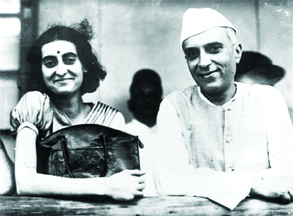
    Indira Gandhi represented strength. She epitomized sacrifice. She personified service. She was the Iron Lady of India whom Atal Behari Vajpayee called “Durga” (the Indian Goddess of Power). The first woman Prime Minister of India, she was a true Bharat Ratna. Her birthday falls on November 19
    Indira Priyadarshini Gandhi, born 0n 19 November 1917, was an Indian politician and stateswoman who served as the third Prime Minister of India from 1966 to 1977 and again from 1980 until her assassination in 1984. She was India’s first and, to date, only female prime minister, and a central figure in Indian politics as the leader of the Indian National Congress.
    Gandhi was the daughter of Jawaharlal Nehru, the first prime minister of India, and the mother of Rajiv Gandhi, who succeeded her in office as the country’s sixth prime minister.
    Furthermore, Gandhi’s cumulative tenure of 15 years and 350 days makes her the second-longest-serving Indian prime minister after her father. Henry Kissinger described her as an “Iron Lady”, a nickname that became associated with her tough personality since her lifetime.
    During Nehru’s premiership from 1947 to 1964, Gandhi served as his hostess and accompanied him on his numerous foreign trips. In 1959, she played a part in the dissolution of the communist-led Kerala state government as then-president of the Indian National Congress, otherwise a ceremonial position to which she was elected earlier that year. Lal Bahadur Shastri, who had succeeded Nehru as prime minister upon his death in 1964, appointed her minister of information and broadcasting in his government; the same year she was elected to the Rajya Sabha, the upper house of the Indian Parliament. On Shastri’s sudden death in January 1966, Gandhi defeated her rival, Morarji Desai, in the Congress Party’s parliamentary leadership election to become leader and also succeeded Shastri as prime minister. She led the Congress to victory in two subsequent elections, starting with the 1967 general election, in which she was first elected to the lower house of the Indian parliament, the Lok Sabha. In 1971, the Congress Party headed by Gandhi managed to secure its first landslide victory since her father’s sweep in 1962, focusing on issues such as poverty. But following the nationwide Emergency implemented by her, she faced massive anti-incumbency and lost the 1977 general election, the first time for the Congress party to do so. Gandhi was ousted from office and even lost her seat in parliament in the election. Nevertheless, her faction of the Congress Party won the next general election by a landslide, due to Gandhi’s leadership and weak governance of the Janata Party rule, the first non-Congress government in independent modern India’s history.
    Birth And Early Life
    On November 19, 1917, Indira was born into the family of Motilal Nehru, who was heavily involved in the time of independence. Indira’s father, Jawaharlal Nehru, was a well-known and well-educated lawyer who remained engaged for most of the time with Mahatma Gandhi in the Indian independence struggle. Indhira Gandhi has had a patriotic attitude since her youth, and India’s nationalist movement at that time included a protest of British foreign goods as part of its strategy. She was highly influenced by this movement. As a result, when Indira once encountered a foreign-built thing on the occasion of Holi, that led this 5-year-old Indira to burn her favorite doll.
    Education
    Indira completed her matriculation at Pune University and continued her studies in Shantiniketan in West Bengal before moving for further education to Switzerland at Oxford University’s Somerville College.
    Indira had spent several months in Switzerland with her unwell mother during her studies when her mother, Kamala Nehru, got Tuberculosis in 1936, and Jawaharlal Nehru was in an Indian prison when Kamala died.
    Marriage & Family Life
    After Indira Gandhi entered the Congress Party, she met Feroze Gandhi. At that time, Feroze Gandhi was a reporter and a significant member of the Youth Congress. Later, Indira Gandhi married Feroze Gandhi in the year 1941, against her father’s denial. Rajiv Gandhi was born first, followed by Sanjay Gandhi.
    Although Indira Gandhi was married to Feroze Gandhi, Feroze and Gandhi’s family were not related as per community. Although Feroze fought alongside Mahatma Gandhi in the fight for independence by the community, he’s been a Parsi. In contrast, Indira Gandhi was a Hindu, and untraditional marriage wasn’t usual at the time, and it was the reason why the pair wasn’t admired in public. Thus Mahatma Gandhi backed them in the tough time and issued a public declaration, including a message to the media, that he would like to invite all the people who are not happy to come and accept this marriage and bless the bride and groom, it is also said that Mahatma Gandhi was the person who advised Feroze and Indira to use the title “Gandhi” to keep their public influence clean in the political career ahead.
    Political Career
    Indira’s entrance into politics was neither extremely challenging nor shocking because the Nehru family was already there in India’s central government as a first contender. No one was then near them. Since Indira was a child, she watched Mahatma Gandhi come and go from his Allahabad home on several occasions for different reasons. Thus, she was attracted by the country and its democracy.
    Indira Gandhi held several electoral rallies for her husband Feroze and headed the campaign in his support during the Lok Sabha elections of 1951 and 1952. Feroze was competing for Rae Bareli at that time. Feroze quickly rose to prominence as a frontrunner in the fight against systemic corruption. He revealed many corruption cases and cronyism, including the identity of an investment company in the name of the finance minister of that time, TT Krishnamachari. At that time, Jawaharlal Nehru was generally viewed as a close friend of the finance minister.
    Feroze found his place in national politics, in this fashion, with a huge struggle at the initial phase, even though he maintained his campaign against people involved in the corruption from central government with a small group of followers. Unfortunately, he died due to a heart attack on September 8, 1960.
    Cong President and Political Involvement
    Indira Gandhi was appointed as a President of the INC, i.e., Indian National Congress, back there in 1959. Jawaharlal Nehru also chose her as a main advisory of the committee. Indira Gandhi preferred to be the contender in the very next election after the demise of Nehru on May 27, 1964, and she also won. And thus, she was handed the Ministry of Information and Broadcasting department in Lal Bahadur Shastri’s cabinet.
    Prime Minister of India
    Following Lal Bahadur Shastri’s death in Tashkent on January 11, 1966, she gained a majority of the vote in an interim election and became Prime Minister. The acceptance of the 1969 nationalization plans of India’s 14 major banks of that time, along with four major oil corporations, was among the most noteworthy achievements for her as Prime Minister. Apart from these achievements, India, under her tenure, made the first underground explosions in 1974 that led the country into the nuclear age. She also made productive moves to remove food scarcity from the country.
    Indo-Pak War
    In 1971, the fact was that Indira Gandhi had to deal with a major issue this year. And thus, it started with the conflict when West Pakistani soldiers entered Bengali East Pakistan to suppress their independence campaign. On 31st March 31, she spoke out against the terrible conflict, but opposition persevered, and thousands of migrants began pouring into India. And as a result, India started facing a severe shortage of resources for the caring of these migrants, which caused concern inside the country. Although India backed the freedom warriors who were fighting for their country’s independence, the issue became even more problematic when US President Nixon urged the US to take Pakistan’s side, while China had already been equipping Pakistan. And as a result, West Pakistan’s military continued to torture the civilians in East Pakistan, and mostly Hindus got targetted. Around 10 million East Pakistanis abandoned the nation and sought residence in India. Indira Gandhi got compelled by the massive number of refugees to encourage the Azami League’s fight for independence from West Pakistan.
    India gave military support as well as provided weapons to counter West Pakistan. Indira Gandhi acknowledged the necessity of Bangladesh’s independence after Pakistan bombarded India’s camp on December 3. She promised that she would grant safety to Bangladesh’s revolutionary warriors and back the country’s formation. US President Nixon ordered US warships to be dispatched to India on December 9, but Pakistan surrendered on December 16. The surrendered paperwork was signed by the West Pakistani Armed Forces in front of India, leading to the foundation of Bangladesh, a new country. And as a result, on December 16, 1971, the war between West Pakistan and East Pakistan in Dhaka ended.
    Imposition of Emergency
    Opposition leaders and social activists held a major protest against the central government led by Indira Gandhi in 1975 due to the growing prices, the horrible status of the economy of that time, and widespread corruption. Also, people’s resentment towards her continued to grow. In the following year, the Allahabad High Court declared that Indira had cheated during the previous election, which also helped trigger the present political chaos of that period. Indira was asked to quit her seat immediately. Instead of quitting on June 26, 1975, Indira Gandhi announced a state of emergency, claiming the country’s unstable political circumstances.
    J.P Narayan, a Gandhian socialist, and his followers hoped to restructure Indian culture by uniting youths, villagers, and labor groups in a “whole non-violent revolution.” But as a result, Narayan was soon apprehended and jailed. As the result of the emergency, the people’s constitutional rights were abolished, and thus she jailed all of her political rivals and put the media under severe control.
    Post Removal of Emergency
    During the Emergency, Indira’s youngest child Sanjay Gandhi tried to control the country with complete authority, ordering the dismantling of slum areas and a hugely controversial sterilization campaign, which turned Indira against the government. Indira Gandhi requested an election in 1977. As a result, the growing Janata Dal alliance, led by Morarji Desai and J.P Narayan, beat her even though she was confident that she would defeat the opponents.
    Return of Indira as a Prime Minister
    Indira Gandhi took full advantage of a rift among the Janata Party’s members. During their tenure, the ruling party’s government ordered to arrest Indira Gandhi by claiming some cause. Unfortunately, their method backfired for those individuals and helped Indira Gandhi gain some sympathy. Afterward, in the 1980 elections, the Congress won with a huge margin, and Indira Gandhi was re-elected Prime Minister of India. Also, the truth cannot be escaped that the Janata Party was not stable somewhere, which allowed Congressmen and Indira to gain benefits from it.
    Operation “Bluestar”
    In September 1981, a gang of Sikh terrorists demanded “Khalistan”, and as a result, the group managed to enter into the Golden Temple complex, Amritsar. To respond to the incident, Indira Gandhi ordered troops (Army) to proceed towards this religious place to implement Operations Blue Star even though she was aware of the information that thousands of innocent people were there in the temple premise. Although the government later claimed that they used tanks and other heavy weapons to reduce the terrorist threat, it resulted in the deaths of several innocent people. And thus, this Blue Star mission was regarded as a type of disaster in Independent India. The impact of the incident worsened the nation’s regional tensions. A few Sikhs resigned from military and civil executive roles, and some have even decided to return governmental honors. Indira Gandhi’s political identity somehow also got affected during all these incidents.
    In response to the carnage at the Savarna temple during Operation Blue Star, Gandhi’s bodyguards Bint Singh and Satwant Singh shot Indira Gandhi with 31 bullets on October 31, 1984. This event took place on New Delhi’s Safdarganj Road.

  • January 12 New York & Dallas E – Edition

    [vc_row][vc_column][vc_custom_heading text=”E-Edition” font_container=”tag:h2|text_align:center” google_fonts=”font_family:Istok%20Web%3Aregular%2Citalic%2C700%2C700italic|font_style:700%20bold%20regular%3A700%3Anormal” link=”url:https%3A%2F%2Fwww.theindianpanorama.news%2Fwp-content%2Fuploads%2F2024%2F01%2FTIP-January-12-E-Edition.pdf”][vc_single_image image=”157337″ img_size=”full” alignment=”center” onclick=”custom_link” link=”https://www.theindianpanorama.news/wp-content/uploads/2024/01/TIP-January-12-E-Edition.pdf”][/vc_column][/vc_row][vc_row][vc_column width=”2/3″][vc_custom_heading text=”Lead Stories This Week” google_fonts=”font_family:Istok%20Web%3Aregular%2Citalic%2C700%2C700italic|font_style:700%20bold%20regular%3A700%3Anormal” link=”url:https%3A%2F%2Fwww.theindianpanorama.news%2F”][vc_wp_posts number=”5″ show_date=”1″][/vc_column][vc_column width=”1/3″][vc_single_image image=”82828″ img_size=”medium” alignment=”center” onclick=”custom_link” link=”https://www.theindianpanorama.news/advertising-media-kit-portal-indian-panorama/ “][vc_single_image image=”82829″ img_size=”medium” alignment=”center” onclick=”custom_link” link=”https://www.theindianpanorama.news/advertising-media-kit-portal-indian-panorama/ “][/vc_column][/vc_row]

  • Middlesex County Board of County Commissioners host 2024 Reorganization Meeting

    Middlesex County Board of County Commissioners host 2024 Reorganization Meeting

    A look back at 2023 achievements and highlights of the new year

    MIDDLESEX COUNTY, NJ (TIP): The Middlesex County Board of County Commissioners held their annual Reorganization Meeting on Thursday, January 4, 2024, at the Middlesex College Performing Arts Center, with notable guests, including Governor Phil Murphy, Assembly Speaker Craig Coughlin, Congresswoman Bonnie Watson Coleman, and Congressman Frank Pallone. The event also marked the swearing-in of newly reelected County Commissioners Leslie Koppel and Charles E. Tomaro. Additionally, Commissioner Director Ronald G. Rios and Commissioner Deputy Director Shanti Narra were selected by their colleagues to serve in their roles once again. For event highlights including photos and video, please visit middlesexcountynj.gov/Reorg.

    Reflecting on the past year’s achievements, Middlesex County Commissioner Deputy Director Shanti Narra highlighted how the County is taking intentional and strategic steps to drive economic growth to ensure Middlesex County continues to be the best place to live, work, and play – year after year. Focusing on key areas such as education, transportation, and organizational strengths, the Board continues to build upon a strong and thriving community, by design.

    Emphasizing Middlesex County’s commitment to education and workforce development as a cornerstone to economic growth, County Commissioner Deputy Director Narra underscored the investments made inclusive of the Community, Innovation, and Opportunity (CIO) Strategic Investment Plan announced in November 2022, which has made significant headway.

    “Our accomplishments over the past year are deliberate and intentional through collaboration and strategic planning — and it’s all, by design,” said County Commissioner Deputy Director Shanti Narra. “Together in the new year we look forward to continuing to make meaningful investments and ensure progress, to serve Middlesex County’s diverse community.”

    County Commissioner Deputy Director Narra also highlighted progress in the area of transportation, including the renovation and construction of the New Brunswick Train Station and the North Brunswick Train Station. Once completed, both stations will help relieve congestion on our roadways and offer convenient commuting options for residents. The County will also launch a micro transit pilot program offering low-cost rides to locations within New Brunswick.

    Underscoring the County’s dedication to healthcare, particularly in addressing the behavioral health crisis, County Commissioner Deputy Director Narra also highlighted the County’s innovative approach to address the community’s growing needs and providing hope for individuals and their families. The County is offering resources such as the Behavioral Health Navigators; the Services Locator available on the County’s website; and upgrades to the Otlowski Center. Additionally, the County embarked on the Opioid Settlement Advisory Council and the Behavioral Health Roundtable in 2023, to strategically mitigate this crisis affecting the residents.

    Organizationally, Middlesex County continues to focus on diversity, equity, inclusion, and belonging (D.E.I.B.) to improve the County’s operations and its services ensuring equity in its policies and programming. The Board’s resolution to set aside 20% of the dollar value of county contracts for minority-, women-, veteran-owned, and small businesses exemplify their commitment to D.E.I.B.

    Collaboration and volunteerism were recognized as essential components of the County’s success, with gratitude extended to volunteers, board members, and county employees.

    “I am proud to join the Middlesex County Board of Commissioners in celebrating their incredible accomplishments over the past year, as well as welcome back County Commissioners Leslie Koppel and Charles Tomaro,” said Governor Phil Murphy. “Together, we’re continuing our work to build a stronger, fairer, and more affordable New Jersey and make Middlesex County a great place to live, work, and raise a family.”

    “Congratulations to Commissioners Leslie Koppel and Charles Tomaro on their reelection and swearing-in for another term on the Middlesex County Board of Commissioners. Middlesex County, led by Commissioner Director Ronald Rios and Deputy Director Shanti Narra, continues to be the shining example of our state for government in service of the people,” said Congressman Frank Pallone. “Residents do not have to leave the county to access the finest health care and higher education institutions or access to jobs in research and technology shaping the future of innovation. With primary and secondary education second to none, preservation of open space and recreational facilities across the county, Middlesex County truly is a great place to live, work, and raise a family. I am honored to continue to work with these dedicated public servants to serve the people of this great county.”

    “I want to congratulate Commissioners Koppel and Tomaro on their elections and appreciate the productive partnership between my office and Middlesex County leadership,” said Congresswoman Bonnie Watson Coleman. “It is my privilege to work alongside public servants who are as intentional in their work as they are committed to bettering the lives of Middlesex County residents. Last year, I was able to secure $2.6 million to ease traffic congestion in South Brunswick and brought in $750,000 to support the public library in East Brunswick. I’m proud of how much we’ve been able to accomplish, and I look forward to continuing the work in Middlesex County to ensure a thriving workforce and robust economic growth.”

    “It was an honor to join my local County Commissioners for their reorganization meeting. They have all been incredible partners with State government, always putting the needs of the community first,” said Assembly Speaker Craig Coughlin (D-Middlesex). “Their commitment to building a sustainable and vibrant future is paying off with transformational economic growth and support for education, transportation and health care — key elements of the quality-of-life that makes Middlesex such an attractive place for businesses and families. I’m looking forward to continued partnership with the commissioners in this new year.”

    For more information, please visit middlesexcountynj.gov/Reorg.

    MIDDLESEX COUNTY, NJ
    Middlesex County is home to numerous Fortune 500 companies, three universities, 19 park systems, and world-class healthcare and research facilities making it one of the nation’s most dynamic regions and a leader in technology, transportation, the arts, and food innovation. As one of the most diverse populations in the country, Middlesex County is home to over 860,000 residents living throughout 25 municipalities. The County’s award-winning Middlesex County Magnet Schools system and two-year Middlesex College uphold its position as #1 in the state for best schools, offering secondary and postsecondary education and workforce development programs that create a unique ecosystem where opportunities abound. Conveniently located between New York and Philadelphia, Middlesex County is a leading destination for businesses and residents alike to live, work, and play – and has been since the 17th century. For more information, visit middlesexcountynj.gov and find us on Facebook, Instagram, and LinkedIn.

  • At candidate forum, Suozzi goes solo while Pilip continues to hide

    At candidate forum, Suozzi goes solo while Pilip continues to hide

    GLEN COVE, NY (TIP): Earlier tonight, former Congressman Tom Suozzi participated in the Lakeville Estates Civic Association’s Meet n’ Greet in New Hyde Park. Suozzi was the singular participant in what was originally planned as a candidate forum featuring the two candidates for the NY03 special election on February 13.

    According to the organizer of the forum, Mazi Pilip originally agreed to participate but then abruptly canceled, citing “other appointments.” Suozzi accepted the invitation as soon as it was received and appeared at this evening’s event, fielding and answering questions submitted by the public (read: voters).

    The Lakeville Estates Civic Association represents 18,000 homeowners (read: voters) in communities such as New Hyde Park, Manhasset Hills, Herricks, and Garden City Park. “Mazi Pilip did a huge disservice to the voters who came out tonight to listen to the candidates,” said Suozzi. “Nobody knows who Mazi Pilip is or what she stands for, but instead of meeting with voters and taking their questions, she has stayed hidden.

    “She blew it.”

    During the hour-long forum, Suozzi answered several questions ranging from SALT to Social Security concerns to antisemitism and gun violence prevention. He touted his record of working across the aisle to deliver for Long Island and Queens, as well as talked about his 10-Point Plan that includes proposals for many of the questions posed to him during the event.

    “We have many challenging issues that we face in this country and here in Nassau and Queens,” stated Suozzi. “The only way we will solve the problems is if both Republicans and Democrats work together, find common ground, and start fixing things!”

    Suozzi’s campaign noted that as of today, there have been 14 news outlets or civic organizations that have sent invitations to both candidates to debate or participate in candidate forums. While Suozzi has accepted five debate invites and will likely accept more, Pilip has only accepted a single debate on News 12, exactly five days before the February 13th special election and exactly five days after early voting has begun, and not accessible to the Queens’ part of the Third Congressional District. This evening voters in NY03 witnessed firsthand what Suozzi has been saying all along, “Why is Mazi Pilip hiding?”

  • NEW YORK STATE ANNOUNCES TRAINING CENTER FOR BEHAVIORAL HEALTH PROVIDERS SERVING CHILDREN AND FAMILIES

    NEW YORK STATE ANNOUNCES TRAINING CENTER FOR BEHAVIORAL HEALTH PROVIDERS SERVING CHILDREN AND FAMILIES

    Unique Center Offers Free-of-Charge Training for Behavioral Health Care Providers to Implement Evidence-Based Practices; Improve Services for Children and Families

    NEW YORK (TIP): The New York State Office of Mental Health, on January 11, announced a new training center dedicated helping behavioral healthcare providers implement evidence-based practices free of charge so they can offer improved services to children and their families. Supported with a $4.3 million investment of state funding, the Center for Workforce Excellence will bring evidence-based behavioral health training and technical assistance to eligible community-based organizations serving youth and families, which will help reduce disparities for people served by smaller providers, such as in rural areas.

    “Given the cost of training and certification, implementing the best evidenced-based strategies for behavioral health care can be a costly endeavor for community-based organizations and can be difficult for them to achieve financially,” Commissioner Dr. Ann Sullivan said. “The Center for Workforce Excellence will support this training for eligible service providers, allowing these organizations to stay certified and up to date on the best evidence-based practices available to engage families and youth.”

    Operated by New York University’s McSilver Institute for Poverty Policy and Research, the Center will help raise the overall level of expertise for clinicians serving youth and families across a range of practices. The center will provide support and training activities for providers –including evidence-based practice certification, data management and evaluation –and improving the ability of clinicians to effectively diagnose children at an earlier age so they can receive appropriate services.

    “It is critical that behavioral health practitioners are given every available tool available to provide the best possible care for children and families,” said Dr. Michael A. Lindsey, dean of NYU’s Silver School of Social Work. “The center will help keep our community of providers and clinicians informed about the best practices available, ensuring their clients receive the help they need to live fuller, richer lives.”

    The training provided by the center is available free of charge to providers through an application process. Curriculum is advertised to providers and is available free of charge based on meeting eligibility for individual credentialing processes. Training courses include Parent-Child Interaction therapy, which utilizes play to facilitate healthy interaction between parents and young children. This therapy also decreases disruptive behaviors in young children while fostering prosocial behaviors.

    The Center is also providing Training for Functional Family Therapy, a new prevention and intervention program for at-risk youth to address a range of concerns – from emotional and behavioral issues, violence, drug abuse, gang involvement and family conflicts. The goal is to improve family interactions and provide services to support youth who are at-risk of out of home care, or involvement in the criminal justice or child welfare systems.

    Certifying these evidence-based practices these practices can be time-consuming and cost-prohibitive, meaning many community-based organizations are unable provide these therapists. The center provides this training and certification free of charge, in addition to providing ongoing support.

    “The Center is the latest demonstration of the outstanding relationship between the NYU McSilver Institute and the Office of Mental Health,” NYU McSilver Institute Executive Director Rose Pierre-Louis said. “Through this initiative, we will help set the bar for behavioral health service in New York State even higher by leveraging McSilver’s vast technical assistance know-how to bring evidence-based training and results to New York’s most in-need families and children.”

    “The center will provide an invaluable opportunity for our clinicians working on behalf of New York families across the state,” NYU McSilver Institute Deputy Executive Director Dr. Andrew Cleek. “The evidence-based skills and training we develop will translate to direct improvements in the lives of clients. This is an investment not only in a program, but in individuals, families, and communities. McSilver is proud of its work with OMH and is excited about the opportunities that lay ahead.”

  • Akshay Mathur appointed Senior Director of Asia Society Policy Institute, Delhi

    Akshay Mathur appointed Senior Director of Asia Society Policy Institute, Delhi

    NEW YORK (TIP): Akshay Mathur has been appointed Senior Director of the Asia Society Policy Institute’s Delhi office, a branch of Asia Society India established in 2006 and headquartered in Mumbai.

    Mathur will be responsible for the Institute’s policy mandate in India, leading a team that covers security, economics, and climate, leveraging Asia Society’s global network to connect India’s policies to the policy communities in the United States, Europe, and Asia. His expertise is geoeconomics, specifically international financial architecture, the global trading system, global economic governance and global digital governance.

    Welcoming him to the role, Inakshi Sobti, CEO of Asia Society India, stated: “We look forward to having Akshay as part of Asia Society India, continuing to build on our work at the intersection of business, arts, and policy to foster broader engagement of India and South Asia with the world.” C. Raja Mohan, who was the first to lead the Policy Institute’s work in Delhi, will continue with Asia Society as a Non-Resident Distinguished Fellow.

    “We are delighted to have Akshay lead the Asia Society Policy Institute’s work in India,” says Rorry Daniels, Managing Director of Asia Society Policy Institute. “His substantial expertise in geoeconomics complements our existing work on India’s security outlook and carbon market development. His experience steering research and programming for other leading institutions in India will be critical to expanding the impact and reach of the Asia Society Policy Institute Delhi office.”

    Akshay Mathur is concurrently a Non-Resident Senior Fellow with the Digital Economy Programme at the Centre for International Governance Innovation (CIGI) based in Canada

    Previously, he led Mumbai-based, business-supported, independent foreign policy think tanks Gateway House and Observer Research Foundation Mumbai.

    He has written columns for Indian and foreign news publications, led Indian government-supported Track Two dialogues with other countries, published research for various Indian and global think tanks, and convened and spoken at several Indian and global forums on international, domestic and local policymaking.

    He represented India at the inaugural cohort of the Asia Global Fellows program for mid-career leaders in the field of global policymaking hosted by the Asia Global Institute in Hong Kong in 2017 and the Georgetown University’s Young Leaders Forum in Qatar in 2012. He has advanced degrees in policy, business and technology, specifically an MPA from the John F. Kennedy School of Government at Harvard University as the Edward Mason Fellow, an MBA from Boston University’s Questrom School of Business with concentration in Finance and Business Analysis, and a BS in Computer Science from the Manning College of Information and Computer Sciences at the University of Massachusetts, Amherst.

  • Suozzi Holds Press Conference Highlighting Environmental Priorities

    Suozzi Holds Press Conference Highlighting Environmental Priorities

    Was joined and endorsed by representatives from prominent conservation and environmental organizations

    GLEN COVE, NY (TIP): Former Congressman Tom Suozzi, on January 11, held a press conference highlighting his lifelong commitment to preserving and protecting our environment and laying out his plan to continue to do so when he returns to Congress after the February 13th special election.

    At the press conference, held at a very cold and windy Sea Cliff Municipal Beach, Suozzi received enthusiastic and wholehearted endorsements from the New York League of Conservation Voters, the NRDC (National Resources Defense Council) Action Fund, and the Sierra Club Long Island Group.
    “I am grateful to the New York League of Conservation Voters Federal Fund, the League of Conservation Voters Action Fund, the NRDC Action Fund, and the Sierra Club Long Island Group for recognizing my three-decades-long commitment to preserve, protect, and clean our air, land, and water,” Suozzi said. “Just a few days ago, we celebrated the 50th anniversary of the Endangered Species Act, and on that day, I saw an eagle fly across the sky in my hometown of Glen Cove. The hard work of a lot of dedicated people can produce results!”

    Joining Suozzi and speaking at the press conference were Julie Tighe, President of the New York League of Conservation Voters; Al Fredericks, Chair of the Political Committee of the Sierra Club’s Long Island Group; Kevin Curtis, Executive Director of the NRDC Action Fund; Danielle Fugazy Scagliola, member Glen Cove City Council; and Delia DeRiggi-Whitton, Nassau County Legislator.

    When asked about the environment as a campaign issue, Suozzi emphasized his 30-year public service record of cleaning up pollution, dramatically reducing nitrogen, modernizing sewage treatment plants, remediating groundwater, and restoring shell fishing in our local waters.

    “I’ve been a champion of the environment for my entire career. My opponent, on the other hand, parrots the talking points of the Conservative Party, which rejects the Paris Climate Change Agreement, denying that climate change is even real,” said Suozzi. “Well, I know the people that live in this district very well, and they care about the environment. They want to make sure that we clean up pollution and that we protect our air, protect our land, and protect our water.”

    “Our environment is a big part of my 10-point plan,” said Suozzi, referring to his 10-point plan released in mid-December. “My opponent just put out a 10-point plan, which looks very similar to my 10-point plan, and there is nothing on it about the environment whatsoever.” Suozzi concluded the press conference by reiterating that his opponent is hiding and refusing to debate. “The voters need to know where she stands on the environment and every other issue. She refuses to tell us anything in detail, and she refuses to debate,” furthered Suozzi. “I give detailed policy descriptions and have a record of getting things done.”

  • Indian American Saratoga Springs Finance Commissioner Minita Sanghvi to run for New York state senate

    Indian American Saratoga Springs Finance Commissioner Minita Sanghvi to run for New York state senate

    NEW YORK (TIP): Saratoga Springs Finance Commissioner Minita Sanghvi, an Indian American Democrat, has declared her candidacy for the 44th State Senate District in New York’s Capital Region. The district, encompassing Saratoga County, Niskayuna, and the City of Schenectady, is currently represented by Republican incumbent Jim Tedisco, who transitioned to this district after redistricting.
    Sanghvi is tapping into the district’s shifting political landscape. While Republicans have historically represented the district, the tide is turning, with registered Democrats now outnumbering Republicans by nearly 6,000. President Biden secured a 12-point victory over Donald Trump in the 2020 election within the district.
    “I’m running for State Senate because we deserve better,” Sanghvi said in a press release on Monday. “We need a leader who will prioritize the needs of our community over partisan politics in Albany. I’m not a career politician; I’m a parent, a business educator, and a dedicated public servant committed to fiscal responsibility. My track record reflects my ability to listen to the people and collaborate with others to deliver tangible results.”
    Sanghvi, who was born in India, immigrated to the United States in 2001 after earning a degree in accounting and an MBA. She taught business at Skidmore College for nearly a decade. In 2021, she won the election to serve as the Saratoga Springs Finance Commissioner.
    “As the Commissioner of Finance in Saratoga Springs, I’ve delivered fiscally responsible results that have prioritized public safety and enhanced our quality of life for all residents,” Sanghvi said in the release. “Our achievements include funding a crucial third EMS and fire station, establishing a 24/7 low-barrier homeless shelter, and expanding essential infrastructure such as sidewalks, parks, and playgrounds. We’ve maintained our city’s AA+ credit rating while making critical investments.”
    If elected, Sanghvi would make history as the first openly gay woman and the first woman of color to represent New York’s 44th State Senate District, as well as the first openly gay woman in the New York Senate.
    She emphasized her commitment to safeguarding the rights and freedoms of all residents, regardless of their political affiliation, and advocated for women’s healthcare access, LGBTQ rights, and equal opportunities.
    Her opponent, incumbent Tedisco, has held political office in Albany for four decades. Sanghvi cited the need for new ideas and a fresh vision in a district that is evolving and diversifying.

  • Indian American president of the Rockefeller Foundation Rajiv Shah appointed to New York Fed Board of Directors

    Indian American president of the Rockefeller Foundation Rajiv Shah appointed to New York Fed Board of Directors

    NEW YORK (TIP): Dr. Rajiv Shah, the Indian American president of the Rockefeller Foundation, has been named to the Board of Directors of the Federal Reserve Bank of New York for a three-year term ending December 31, 2026. Shah, who has led The Rockefeller Foundation, a philanthropy whose mission is to promote the well-being of people around the world, since 2017, has been appointed a Class C director to represent the interests of the public, according to a media release.
    Prior to joining the foundation, Dr Shah was the founder and managing partner of Latitude Capital, a private equity firm focused on infrastructure and energy projects in Africa and Asia.
    From 2009 to 2015, Dr Shah served as head of the United States Agency for International Development (USAID). In that role, he served on the National Security Council, led the US responses to the 2010 earthquake in Haiti and the 2014 West African Ebola pandemic, and secured bipartisan support for the passage of the Global Food Security Act and the Electrify Africa Act.
    Before joining USAID, Dr. Shah served as chief scientist and undersecretary for research, education, and economics at the United States Department of Agriculture, where he created the National Institute for Food and Agriculture. Earlier in his career, Dr Shah was a director at the Bill & Melinda Gates Foundation, where he created the International Financing Facility for Immunization.
    Dr Shah is a graduate of the University of Michigan, the University of Pennsylvania School of Medicine, and the Wharton School of Business. He served as a distinguished fellow in residence at Georgetown University and has received the Secretary of State’s Distinguished Service Award and the US Global Leadership Award.
    The Federal Reserve Act of 1913 requires each of the Reserve Banks to operate under the supervision of a board of directors. Each Reserve Bank has nine directors who represent the interests of their Reserve District and whose experience provides the Reserve Banks with a wider range of expertise that helps them fulfill their policy and operational responsibilities.
    The nine directors of each Reserve Bank are divided evenly by classification: Class A Directors represent the member banks in the district; Class B Directors and Class C Directors represent the interests of the public.
    The directors of the Reserve Banks act as an important link between the Federal Reserve and the private sector, ensuring that the Fed’s decisions on monetary policy are informed by actual economic conditions, the release stated.

  • Indian origin doctor suspended by Singapore tribunal for improperly prescribing long-term sedatives

    Indian origin doctor suspended by Singapore tribunal for improperly prescribing long-term sedatives

    SINGAPORE (TIP): A 61-year-old Indian-origin doctor has been suspended from medical practice for three years by a Singaporean tribunal after he improperly prescribed long-term sedatives to his patients, according to a media report on Thursday.
    “An Indian-origin doctor named Dr Maninder Singh Shahi has been suspended from medical practice for three years by a Singapore disciplinary tribunal for improperly prescribed long-term sedative medication to seven patients from his clinic for more than a decade,” said the report.
    The family doctor with 35 years of experience also failed to document his reasons for repeatedly prescribing such medication to one patient.
    In its grounds of decision released on Tuesday, January 9, the three-member tribunal accepted the Singapore Medical Council (SMC)’s submissions for the suspension but rejected Dr Singh’s argument for a reduction in sentence due to a delay in prosecution.
    Dr Singh practiced at 81 Family Clinic located in Marine Parade Central at the time. It has since been renamed Legacy Clinic, the report said.
    He pleaded guilty before the tribunal to 14 charges of professional misconduct in relation to his actions from 2002 to 2016.
    “These charges included inappropriately prescribing benzodiazepines, zopiclone or zolpidem; failing to refer patients or refer them in a timely manner to a psychiatrist or medical specialist; and failing to maintain sufficient details in patients’ medical records,” the report said.
    Benzodiazepines treat a range of conditions such as insomnia and anxiety, while zolpidem and zopiclone are non-benzodiazepine drugs that treat insomnia. Dr Singh prescribed these medications to the affected patients for periods ranging from seven years to 13 years and eight months.
    The patient that Dr Singh treated the longest, only identified as P3, consulted him more than 300 times for insomnia.
    Under the SMC ethical code and guidelines, doctors are supposed to either prescribe these medications for intermittent use or short-term relief of between two to four weeks. They are also required to limit chronic benzodiazepine prescriptions where possible, said the report.
    “Disciplinary tribunals have repeatedly emphasized that the main sentencing principle in cases involving inappropriate prescriptions of benzodiazepines and non-benzodiazepine hypnotics is that of deterrence, given that such misconduct appears to be ever more prevalent,” it noted.
    In his mitigation, Dr Singh said that he was not motivated by profit or greed, but wanted to help his patients by prescribing hypnotics to them.
    According to Dr Singh, he also tried to refer three patients to a psychiatrist but they were not keen to do so.
    In that situation, he did not want to alienate them and felt it was important that they remained in his care, where he could continue to monitor their condition.
    (Source: PTI)

  • Indian American community wants cops to step up action after robberies in store

    Indian American community wants cops to step up action after robberies in store

    COLUMBUS, OHIO (TIP): An Indian-origin convenience store owner in the US state of Ohio has called for increased police action with robbers frequently targeting his shop despite a robust security system put up by him.
    Rakesh “Rocky” Patel has been selling beer, wine, and groceries at City Foods on East 12th Street and Chester Avenue in Cleveland since 2018, the media reported.
    Patel, who claims to have spent thousands of dollars to protect his store — from cameras to door locks, said one more security option could put him out of business.
    In one of the surveillance videos from December, seen by the news channel, a man is seen grabbing alcohol from a top shelf. An employee is thrown to the floor while trying to keep him from getting away with the bottles.
    “Before they used to cover their face and come, and now they don’t even have fear… It happened like three weeks in a row — one week continuously, like every day,” Patel said.
    “I’m working hard, paying taxes, and I feel sorry that I’m working hard. I work double so I can help college and everything for my son,” he told the media.
    Patel, who has had to rearrange store shelves and put the expensive stuff higher up, thinks it’s the same as two or three people who have been at it. “They were grabbing like four or five — those are like $40 bottles,” the store owner said, adding that he cannot afford to hire a security or off-duty police officer as the “cost goes so high I can’t even stay in business”. According to the police, the theft investigations are very active, and the area is under special attention until arrests are made. But Patel, who is also worried about his employees, wants more police patrols at night when the crimes are mostly happening.

  • Indian American Impact Fund endorses Suhas Subramanyam Congressional campaign

    Indian American Impact Fund endorses Suhas Subramanyam Congressional campaign

    VIRGINIA (TIP): The Indian American Impact Fund dedicated to ensuring Indian American communities’ representation in the country’s political leadership and enfranchising the growing Indian American electorate, has endorsed Suhas Subramanyam’s campaign for Congress in Virginia’s 10th District.
    “I am excited to have the support of the Indian American Impact Fund,” Subramanyam stated in a media release. “As the son of Indian immigrants whose parents instilled a lifelong value of service to others, I have been proud to represent a growing South Asian population and to be a champion for communities across Northern Virginia. I look forward to partnering with Impact to win this battleground House race.”
    Subramanyam’s campaign also announced that it raised over $270,000 in the fourth fundraising quarter, after only six full weeks in the race. The campaign will report over $240,000 in cash on hand headed into the new year.
    “I am honored by the immense grassroots support my campaign has received since our campaign launched in November,” said Subramanyam. “I am excited that my record of taking on the toughest fights to get real results for our community is resonating with Northern Virginian families, and I look forward to building on this momentum in the months ahead.”
    Subramanyam, who announced his candidacy on November 16, has vowed to break through the gridlock and dysfunction in Washington to take on prescription drug costs, gun violence, and price-gouging.
    In December, Subramanyam stood up to MAGA extremists, “defending reproductive rights despite Loudoun County Republican party’s calls to ban him from houses of worship in Northern Virginia over his pro-choice record.” Fourth quarter FEC fundraising reports will be publicly released by January 31, 2024.
    Virginia’s 10th District is one of the most diverse battleground House districts in the country and is home to over 125,000 AAPI Virginians.
    Subramanyam is the first Indian American, South Asian, and Hindu to be elected to the Virginia General Assembly. He was sworn in on the Bhagavad Gita. During his time in the General Assembly, Subramanyam has represented a large share of VA-10’s AAPI and South Asian communities.
    He co-founded the Virginia AAPI Caucus, serves on the Virginia Minority Business Commission, and successfully led legislation to establish Hindu Heritage Month in Virginia for the first time.
    The son of Indian immigrants, Subramanyam has also served as a Capitol Hill aide, advisor to the Obama White House, an elected official in Richmond, and as a volunteer EMT.

  • Indian American Neena Singh becomes first Sikh & Indian American Mayor in New Jersey

    Indian American Neena Singh becomes first Sikh & Indian American Mayor in New Jersey

    MONTGOMERY TOWNSHIP, NJ (TIP): Blazing a trail, Neena Singh has become the first Sikh and Indian American woman mayor in New Jersey with her election as Mayor of Montgomery Township.
    “Today is a historic moment for our community and our entire state,” Singh said at the Township Committee’s reorganization meeting last week, according to MyCentralJersey.com.
    “I am grateful to my fellow committee members for their support. I am also incredibly proud of our township for, once again, breaking barriers and showing our state what inclusive, transparent and forward-thinking governance looks like.” Singh was unanimously selected to serve as mayor by her fellow Township Committee members. Vincent Barragan was selected as deputy mayor, becoming Montgomery’s first Latinx deputy mayor.
    Singh and Barragan were both sworn into office by Rep. Bonnie Watson Coleman. Sending videotape congratulations to Singh were Sen. Cory Booker and Indian American state Sen. Vin Gopal.
    “For every young South Asian girl growing up not just in Montgomery but across New Jersey, they’re going to have a true role model to look up to,” Gopal said.
    State Sen. Andrew Zwicker sent videotaped congratulations, but also appeared in person to offer his congratulations, along with Rep. Andy Kim, Assemblyman Roy Freiman and members of the Somerset County Board of Commissioners.
    “I thank God my family and I ended up settling in beautiful Montgomery Township, a town that is representative of the American Dream,” Singh was quoted as saying.
    “If America is a melting pot, then Montgomery is a good example of its diversity,” she continued.
    “This country and this town have given me immeasurable opportunities and I’m immensely grateful,” Singh said.
    Among Singh’s priorities for 2024 are public safety and health.
    As Montgomery has grown, Singh said, the township has undertaken public safety initiatives, including measures to improve pedestrian safety.
    She also said she will sign the Mayor’s Wellness Campaign pledge.
    “There will be opportunities for our Health Department, recreation, schools, libraries, businesses and local community groups to collaborate on this important quality of life endeavor,” Singh said.
    “Our goal for 2024 is to ensure that our residents have the best possible resources, whether it’s community health, transportation, public spaces, municipal services or recreational activities,” she said.
    “We are also working on strategies to make our tax dollars go further,” the mayor said.
    Singh, who has lived in Montgomery for 24 years, has previously served as Deputy Mayor and Township Committeewoman. As an executive officer at STAND Central NJ, a grassroots non-profit, she worked not only on engaging and educating voters but also on empowering them to participate in the democratic process.

  • Indian American Praveen Madan named CEO and publisher of Berrett-Koehler

    Indian American Praveen Madan named CEO and publisher of Berrett-Koehler

    OAKLAND (TIP): Indian American strategy and transformation consultant Praveen Madan has been named as the new CEO and publisher of Berrett-Koehler Publishers (BK), described as a mission-driven publishing company, in place of David Marshall, who has retired.
    “I am deeply honored and grateful to have this opportunity to serve the global Berrett-Koehler community, which has been a source of profound learning and unwavering generosity,” Madan stated in a company press release.
    Madan envisions a new publishing model for BK that continues to deepen its roots as an author-friendly, mission-based book publisher and expands innovation and collaboration with partners, it said.
    After a successful career as a strategy and transformation consultant for leading companies, Madan moved to the book industry and has become a leader in developing a new model for next-generation community bookstores, the release stated.
    As CEO of Kepler’s Books since 2012, he has led a successful turnaround and reinvention of this legendary cultural institution.
    Madan’s innovative strategies, such as embracing the nonprofit model, implementing community financing and governance, developing new revenue streams, and raising wages to build a strong team, are being replicated by many bookstores around the US, according to the release.
    He says his learnings from the BK community have been critical to his success in the book industry.
    BK founder and senior editor Steve Piersanti stated, “Berrett-Koehler is wonderfully fortunate to welcome Praveen as our new CEO and publisher. Praveen brings the best of both outsider and insider experience through his business consulting career, followed by his dynamic independent bookselling leadership, combined with serving from 2009 to 2020 on the BK board of directors, including two years as board chair. Praveen brings intimate knowledge of BK’s business and culture along with fresh, innovative outsider perspectives.”
    Berrett-Koehler Publishers has been facing financial difficulties over the past year due to several factors, including the lingering effects of the pandemic and market pressures within BK’s areas of publishing. Madan’s vision and turnaround experience will guide the company through these challenges to emerge stronger than ever, according to the release.
    BK author and board chair Joyce Roché stated, “I have always believed that the right person shows up at the right time and that is the case with our selection of Praveen as Berrett-Koehler’s new CEO and publisher.”
    “Praveen has the brainpower, book industry experience, and passion for Berrett-Koehler that are needed at this challenging time in the company’s history. As BK moves forward with new leadership, we welcome support and involvement from anyone who wants to join us in the BK community’s mission of co-creating a world that works for all.”
    Madan said, “One of the reasons why I am accepting this challenge is the urgent necessity to reimagine the relationship between book publishers and bookstores. I would also love to see more publishers, bookstores, and authors adopt the human-first approach that Berrett-Koehler has pioneered. Our collective future is at stake.”
    Madan is a nationally recognized leader in reinventing bookselling and building literary communities. As CEO of Kepler’s Books since 2012, Praveen has been leading a community-sponsored initiative to transform Kepler’s into a model next-generation community bookstore.
    In 2021, he co-convened the Reimagining Bookstores movement with a mission to strengthen communities, deepen literacy, and pay living wages to people working in bookstores.
    Reimagining Bookstores’ inaugural conference attracted nearly 600 participants from all walks of the bookstore ecosystem and was reported by Publishers Weekly to be “one of the most invigorating gatherings on independent bookselling in a generation.”
    Madan is the former chair of the board of directors at Berrett-Koehler Publishers. He holds an engineering degree from the Indian Institute of Technology Delhi and an MBA from the University of Texas at Austin. Before moving to the book industry, he spent a decade working at Kearney, the global management consulting firm.

  • ‘We lost hope’: ravaged Gaza nears 100 days of war

    ‘We lost hope’: ravaged Gaza nears 100 days of war

    KHAN YOUNIS (TIP): Bombed-out neighbourhoods, mass graves dug in the sand, spreading hunger and disease — as the bloodiest ever Gaza war nears 100 days, besieged Palestinians have endured ever new horrors.
    More than three months of relentless Israeli bombardment since the October 7 Hamas attack have taken a gruelling toll on Gaza’s 2.4 million people, most of whom have had to flee their homes.
    “It has felt like 100 years,” said Abdul Aziz Saadat, who is among the flood of displaced Palestinians whose number the UN puts at 1.9 million, and who now lives in the densely crowded southern Gaza city of Rafah.
    “Some are living in schools, some on the streets, on the floors, others are sleeping on benches,” Saadat said in the city where many families now shelter in makeshift tents against the winter cold.
    “The war has not spared anyone.”
    Israel has vowed to destroy Hamas, the Islamist group that rules Gaza, after its militants broke through a high-tech security barrier and launched the worst-ever attack on Israel.
    The bloody onslaught of October 7 left about 1,140 dead in Israel, mostly civilians, according to an AFP tally based on official figures, and saw 250 hostages dragged back into Gaza.
    Israel’s relentless military response has caused massive destruction in the Gaza Strip, even by the grim standards of its four previous wars, fuelling anger across the Middle East and beyond.
    At least 23,357 people have been killed in the fighting, the majority of them women and children, according to the Hamas health ministry — or almost one per cent of the population.
    The war will reach the 100-day mark on Sunday, with no end in sight.
    Many thousands of strikes have rained down on the long-blockaded and densely populated Mediterranean coastal strip, cratering crowded urban areas and pancaking multi-storey residential buildings.
    Much of northern Gaza has been reduced to a dusty wasteland and largely depopulated as Israeli troops and tanks have churned through it in a ground invasion from October 27 in which 186 soldiers have been killed.
    Gaza hospitals, schools, universities and places of worship have been hit, as Israel has argued Hamas fighters are hiding among civilians and in a vast tunnel network below civilian infrastructure.
    Entire neighbourhoods that once bustled with people, cars and donkey-drawn carts have been devastated in large-scale bombing starkly revealed in aerial photography.
    “It’s just so widespread,” said Jamon Van Den Hoek, an associate professor at Oregon State University who has been mapping the impact through satellite radar.
    “It’s really unprecedented in the speed of the damage.”
    Between 45 and 56 percent of Gaza’s buildings had been damaged or destroyed by January 5, according to research he has conducted with Corey Scher at the City University of New York.
    “The extent of damage that we’ve recovered or detected in Gaza only compares to the most severely hit areas in Ukraine,” said Scher.
    The researchers said their figures may be higher than data from satellite imagery, as radar can pick up not just a bird’s eye view but also damage to the sides of buildings.
    A United Nations Satellite Center assessment, which covered just the first 50 days of the war, found around 18 per cent of Gaza structures had already been destroyed or damaged.
    The war has also taken a toll on Gaza’s ancient heritage, including centuries-old buildings in its historic centre, a web of narrow lanes which thrived with market traders and gold merchants before the war.
    UNESCO said it was “gravely concerned” and stressed that “cultural property is civilian infrastructure, and as such must neither be targeted nor used for military purposes”.
    ‘Blood, chaos and mayhem’
    now, the main battle for Gazans is just to survive.
    AFP journalists have seen mass graves dug in orchards, hospital yards and even a football field.
    Corpses retrieved from collapsed buildings have been transported by bulldozers and piled up in hospital morgues.
    Gazans have spoken of being unable to retrieve decomposing bodies from the streets for fear of being killed themselves.
    Hospitals are places of “blood on the floor, chaos and mayhem”, said Rik Peeperkorn, the World Health Organization’s representative for the Palestinian territories.
    Surgeons have operated without anaesthetic and by the light of smartphones.
    Of Gaza’s 36 hospitals, only 15 are still partially functioning, the latest UN figures show. Some have been raided by Israeli forces. (AFP)

  • Gabriel Attal is France’s youngest-ever and first openly gay prime minister

    Gabriel Attal is France’s youngest-ever and first openly gay prime minister

    PARIS (TIP): Gabriel Attal was named January 9 as France’s youngest-ever prime minister, as President Emmanuel Macron seeks a fresh start for the rest of his term amid growing political pressure from the far right. Attal, 34, rose to prominence as the government spokesman and education minister and had polled as the most popular minister in the outgoing government.
    He is France’s first openly gay prime minister.
    His predecessor Elisabeth Borne resigned Monday following recent political turmoil over an immigration law that strengthens the government’s ability to deport foreigners.
    Macron’s office announced the appointment in a statement. He will work with Attal to name a new government in the coming days, though some key ministers are expected to continue in their posts.
    ”I know I can count on your energy and your commitment,” Macron posted on X in a message to Attal. The president made a reference to Attal reviving the ”spirit of 2017,” when Macron shook up French politics and shot to a surprise victory as France’s youngest-ever president on a pro-business centrist platform aimed at reviving one of the world’s biggest economies.
    The 46-year-old president has shifted rightward on security and migration issues since then, notably as far-right rival Marine Le Pen and her anti-immigration, anti-Islam National Rally have gained political influence. Macron’s second term lasts until 2027, and he is constitutionally barred from a third consecutive term.
    Political observers also suggested that Macron, a staunch supporter of European integration, wants his new government to get ready for June’s European Union elections, where far-right, anti-EU populists are expected to increase their influence. (AP)

  • A non-traditional candidate resonates with Taiwan’s youth ahead of Saturday’s presidential election

    A non-traditional candidate resonates with Taiwan’s youth ahead of Saturday’s presidential election

    TAIPEI (TIP): With Taiwan’s high-stakes presidential election just days away, a nonconformist candidate has been resonating with the island’s youth, seemingly more concerned with the dearth of good jobs and affordable housing than the looming threat from China.
    First-time voters are overwhelmingly drawn to Ko Wen-je, an outspoken surgeon-turned-politician who previously served as the mayor of Taipei, the island’s capital.
    The 64-year-old has emerged as the third most popular candidate ahead of January 8 vote, behind those from Taiwan’s traditional opposing parties — the governing Democratic Progressive Party and the main opposition Nationalists, known as the Kuomintang or KMT.
    The DPP and the KMT have dominated Taiwan’s politics for decades and have largely taken turns governing since the 1990s, after decades of martial law following Taiwan’s 1949 civil war split from China.
    Beijing still claims Taiwan as its territory and threatens to take control over it by force, if necessary. In the face of that pressure, DPP has positioned itself as more independence-leaning while KMT has traditionally favored closer ties with Beijing.
    Ko, meanwhile, has promoted himself as the alternative, seeking a middle ground and advocating patience with China. He founded the Taiwan People’s Party, or TPP, in 2019 and talks about more economy and pragmatic issues, including the cost and quality of education.
    In a survey of its undergraduate students published last month, Soochow University in Taipei found that 33.9% of the respondents said they intended to vote for Ko, while 22.1% preferred William Lai, the DPP candidate and Taiwan’s vice president who is seen as the overall front-runner in the vote. About 5% favored KMT candidate Hou Yu-ih. The university said 12,119 students were polled from Oct. 30 to Nov. 3, though it did not say how the survey was conducted. No margin of error was given.
    Generational fault lines
    Part of Ko’s attraction to young voters is their perspective, analysts say.
    There is a generational gap between first-time voters and older residents in the way they see the island’s political landscape, according to Liu Wen, a researcher at Academia Sinica, a Taipei-based research institute.
    Older voters may remember the DPP as an up-and-coming party that challenged the once-entrenched KMT, Liu said. But those in their early 20s have come of age while the DPP was in power and see it as part of the political establishment.
    Ko has emerged as an alternative to the “blue-green” divide, Liu said, referring to KMT’s and DPP’s official colours.
    And having that third option “can be exciting for young people who want a more anti-establishment platform,” she said.
    Ko himself attributes his popularity among Taiwan’s youth to the generational divide. Older voters, he told The Associated Press in an interview last week, have supported the KMT or DPP for 30 years.
    “It is difficult for them to change,” Ko said. “But young voters are different.”
    “It is not because I appeared (on the political scene) that Taiwan has a third party,” Ko also said. “It is because young people in Taiwan were already sick of these two parties that I have had the opportunity to form a third.”
    Henry Su, a 19-year-old economics student at National Taiwan University in Taipei, said many of his friends are very pro-Ko and “they think he’s pretty good,” though he personally leans toward supporting Lai.
    However, Su said he is “disappointed” by the DPP’s emphasis on upholding Taiwan’s sovereignty in the face of China’s threats — as opposed to addressing young people’s more immediate concerns, such as housing and education.
    Fang Kai-hao, a 22-year-old studying biomechanical engineering at the same university, said he favours Ko for being more straightforward than the other candidates. Ko graduated from the medical school at the same university, “so the student community trusts him more,” Fang said.
    The China threat
    Beijing has described the election in Taiwan as a choice between war and peace and has blasted front-runner Lai as a separatist and a “destroyer of peace.” Chinese warships and military aircraft approach the island almost daily, despite Taiwan’s protests. Taipei accuses China of seeking to influence the vote through an array of pressures, from military harassment to politically motivated trade curbs. (AP)

  • Donald Trump defies judge on the  final day of New York civil fraud trial

    Donald Trump defies judge on the final day of New York civil fraud trial

    NEW YORK (TIP): Barred from giving a formal closing argument, Donald Trump still seized an opportunity to speak in court at the conclusion of his New York civil fraud trial Thursday, January 11, unleashing a barrage of attacks in a six-minute speech before being cut off by the judge. Trump spoke as the judge was trying to find out if the former president would follow rules requiring him to keep his remarks focused on matters related to the trial. Asked whether he would comply with the guidelines, Trump defied the judge and launched into his speech.

    “We have a situation where I am an innocent man,” Trump protested. “I’m being persecuted by someone running for office and I think you have to go outside the bounds.”

    Judge Arthur Engoron — who had denied Trump permission earlier to give a closing statement at the trial — let him continue almost entirely uninterrupted for what amounted to a brief personal summation, then cut him off and recessed for lunch.

    Trump, the leading contender for the Republican presidential nomination, has repeatedly disparaged Engoron, accusing him in a social media post Wednesday night of working closely with the New York attorney general “to screw me.”

    On Wednesday, Engoron had nixed an unusual plan by Trump to deliver his own closing remarks in the courtroom, in addition to summations from his legal team, after lawyers for the former president would not agree to the judge’s demand that he stick to “relevant” matters.” After two of Trump’s lawyers had delivered traditional closing arguments Thursday, one of them, Christopher Kise, asked the judge again whether Mr. Trump could speak. Engoron asked Trump whether he would abide by the guidelines he had laid out earlier, which included not trying to introduce new evidence or making a campaign speech.

    Trump then launched into his remarks.

    “This is a fraud on me. What’s happened here, sir, is a fraud on me,” Trump said. He later accused the judge of not listening to him. “I know this is boring to you.”

    “Control your client,” Engoron warned Mr. Kise.

    Engoron then told Trump he had a minute left, let him speak a little more, and then adjourned.

    Lawyers representing New York state were scheduled to give their closing remarks in the afternoon.

    The exchange took place hours after authorities responded to a bomb threat at the judge’s house. Police checked out the threat at Engoron’s Long Island home, which came a day after he denied the former president’s extraordinary request to deliver his own courtroom close, officials said. The proceedings were not delayed.

    At 5:30 a.m. on Thursday, hours before the trial’s final day was to begin, Nassau County police said they responded to a “swatting incident” at Engoron’s Great Neck home. Nothing amiss was found at the location, officials said. The false report came days after a fake emergency call reporting a shooting at the home of the judge in Trump’s Washington, D.C. criminal case. The incidents are among a recent spate of similar false reports at the homes of public officials.

    Taking the bench a few minutes late, Engoron made no mention of the incident at his home.

    Thursday’s court action featured the start of closing arguments in the trial over allegations that Trump exaggerated his wealth on financial statements he provided to banks, insurance companies and others.

    “Forty-four days of trial — not one witness came into this courtroom, your honor, and said there was fraud,” Kise said, contending his client “should get a medal” for his business acumen instead of punishment he deemed the “corporate death penalty.” New York Attorney General Letitia James, a Democrat, wants the judge to impose $370 million in penalties. Trump says he did nothing wrong. He contends outside accountants that helped prepare the statements should’ve flagged any discrepancies and that the documents came with disclaimers that shield him from liability.

    The former president had hoped to make that argument personally, but the judge — initially open to the idea — said no after a Trump lawyer missed a deadline for agreeing to ground rules. Among them, Engoron warned that Trump couldn’t use his closing remarks to “deliver a campaign speech” or use the opportunity to impugn the judge and his staff.

    “This entire case is a manufactured claim to pursue a political agenda,” Kise said in his closing argument. “It has been press releases and posturing but no evidence.”

    Lawyers from Ms. James’ office were to deliver their closing argument Thursday afternoon.

    Trump returned to court as a spectator Thursday despite the death of his mother in-law, Amalija Knavs, and the launch of the presidential primary season Monday with the Iowa caucus.

    Since the trial began October 2, Trump has gone to court nine times to observe, testify and complain to TV cameras about the case, which he called a “witch hunt and a disgrace.”

    He clashed with Engoron and state lawyers during 3½ hours on the witness stand in November and remains under a limited gag order after making a disparaging and false social media post about the judge’s law clerk.

    Thursday’s arguments were part of a busy legal and political stretch for Mr. Trump.

    On Tuesday, he was in court in Washington, D.C., to watch appeals court arguments over whether he is immune from prosecution on charges that he plotted to overturn the 2020 election — one of four criminal cases against him. Trump has pleaded not guilty.

    In New York, Ms. James sued Trump in 2022 under a state law that gives the state attorney general broad power to investigate allegations of persistent fraud in business dealings.

    Kise argued the case amounted to the “weaponization” of a consumer protection statute and, urging Engoron to consider his legacy as a judge, warned that a ruling in the state’s favor would have a chilling effect on every company doing business in the state. Engoron decided some of the key issues before testimony began. In a pretrial ruling, he found that Trump had committed years of fraud by lying about his riches on financial statements with tricks like claiming his Trump Tower penthouse was nearly three times its actual size. The trial involves six undecided claims, including allegations of conspiracy, insurance fraud and falsifying business records.

    Trump’s company and two of his sons, Eric Trump and Donald Trump Jr., are also defendants. Eric Trump was also in court for closing arguments. Besides monetary damages, Ms. James wants Trump and his co-defendants barred from doing business in New York.

    State lawyers say that by making himself seem richer, Trump qualified for better loan terms from banks, saving him at least $168 million.

    Kise acknowledged that some holdings may have been listed “higher by immaterial” amounts, but he added” “there’s plenty of assets that were undervalued by substantial sums.”

    Engoron said he is deciding the case because neither side asked for a jury and state law doesn’t allow for juries for this type of lawsuit. He said he hopes to have a decision by the end of the month.

    Last month, in a ruling denying a defense bid for an early verdict, the judge signaled he’s inclined to find Trump and his co-defendants liable on at least some claims.

    “Valuations, as elucidated ad nauseum in this trial, can be based on different criteria analyzed in different ways,” Engoron wrote in the Dec. 18 ruling. “But a lie is still a lie.”

  • South Africa accuses Israel of Gaza genocide at the World Court

    South Africa accuses Israel of Gaza genocide at the World Court

    Says 22,100 people killed between mid-October and January 3

    THE HAGUE (TIP): South Africa accused Israel on Thursday of subjecting Palestinians to “one of the most brutal aerial bombings in the history of human warfare” and called on the International Court of Justice to order an emergency suspension of its military operations to stop “the destruction of the population” of Gaza.

    South Africa has filed a complaint against Israel for “genocide” in Gaza with the ICJ, which is also popularly called the “world court”. The legal battle may last several years, but Israel’s immediate focus will be to prevent an interim order that could force a ceasefire in Gaza.

    The provisional measures requested by South Africa to cease hostilities, if taken by the ICJ, will be legally binding. US Secretary of State Antony Blinken is currently touring Israel’s neighboring countries in an attempt to take Israel off the ICJ’s hook. On the first day of hearing, South Africa’s advocate Tembeka Ngcukaitobi said the intent behind Israel’s aerial and ground offensive to destroy Gaza was nurtured at the highest level of state which included its Prime Minister Benjamin Netanyahu.

    “The evidence of genocidal intent is not only chilling, it is also overwhelming and incontrovertible,” he said while requesting for indication of provisional measures to stop Israel from deliberately imposing living conditions intended to bring about the physical destruction of Gazans as a group, and to allow access to humanitarian aid.

    Faced with a toll of more than 22,100 people killed between mid-October and January 3, South Africa invoked “its rights and obligations” to prevent genocide and “protect the Palestinians of Gaza from destruction”.

    Israel has rejected the accusations of genocide as “false and baseless” and accused South Africa of playing “advocate of the devil” in a reference to Hamas. An Israeli government spokesperson said the case “lacks both a factual and legal basis, and constitutes a despicable and contemptuous exploitation of the court”.

    Another case at the ICJ against Israel is already in progress and has been brought by the UN General Assembly.
    (With inputs from The Tribune)

  • Purity of electoral rolls remains a priority, says Chief Election Commissioner Rajiv Kumar

    Purity of electoral rolls remains a priority, says Chief Election Commissioner Rajiv Kumar

    VIJAYWADA (TIP): Chief Election Commissioner (CEC) of India Rajiv Kumar has said that firm directions have been given to all “formations of bureaucracy” to ensure free and fair elections in Andhra Pradesh.

    Briefing the media here on January 10, after the two-day review meetings organized on the preparations for the general elections, Mr. Rajiv Kumar called upon the people in cities and towns to give up the “urban apathy” so that the overall voting percentage, which was quite good in the State, goes up further.

    The Election Commission of India (ECI) had directed the enforcement agencies and the public administration at the district level to make a collaborative effort, rather than work in silos, to curb the flow of money and other forms of inducements, he said, and insisted that purity of electoral rolls remained a priority for the ECI.

    Deletion of voters
    As far as the complaints of large-scale deletion of voters were concerned, Mr. Rajiv Kumar said all deletions made since January 6, 2022, till August 30, 2023, were re-verified by the District Election Officers. Out of the 21 lakh deletions made, only 13,061 deletions (0.61%) turned out to be incorrect, he said, and added that they were since rectified. Mr. Kumar said the ECI was striving to provide best electoral experience to the voters and see that the political parties had a level-playing field. He did not mince words in saying that there had been a whopping 835% increase in seizures (cash and value of material allurements) in elections to the Legislative Assemblies of 11 States (not including Andhra Pradesh) from 2018-17 to 2022-23, from ₹366 crore to ₹3,427 crore, suggesting that influencing the voters continued to be a scourge being dealt by the ECI.

    As far as the cases of door numbers with more than 10 voters were concerned, a house-to-house verification was done for 1.57 lakh house numbers having 20 lakh-plus electors, and the number of such houses decreased to 65,964 with 9.49 lakh voters at the time of draft publication of the electoral rolls on October 27, 2023. Of them, 4.52 lakh voters migrated to other places and 26,679 were non-traceable, and others were staying in those house numbers. Ninety-nine percent of the cases were resolved with shifting of address of migrated voters and deletion of non-traceable persons. A total of 2.52 lakh households were identified as having door numbers with junk / zero characters, and 97% of them were corrected.

    Final rolls on Jan. 22
    The CEC further said the final electoral rolls would be published on January 22 and the total electors stood at 4.07 crore as on January 1, 2024. The numbers of female and male electors were 2.07 crore and 1.99 crore respectively.

    The State has 3,486 transgenders, 4.76 lakh persons with disabilities, 5.80 lakh voters aged above 80, 1,174 centenarians, 7.88 lakh first-time voters and 67,903 service electors.

    The electoral gender ratio in Andhra Pradesh was 1,036 (female electors present in electoral rolls against 1,000 male electors), Mr. Kumar added. Election Commissioners Anup Chandra Pandey and Arun Goel, Senior Deputy Election Commissioner Nitesh Kumar Vyas, and A.P. Chief Electoral Officer Mukesh Kumar Meena were among those present.

    One voter at one place
    Mr. Kumar said a person can be a voter only in a single place and making false declarations in that regard would be viewed seriously and appropriate criminal action taken against him or her.

    To be a voter at a particular place, a person should be ordinarily resident there in strict compliance with the relevant provisions of the Representation of People Act, he insisted.

    This was keeping in view the likelihood of people who voted in Telangana trying to cast the ballots in AP also.

  • United States objects to providing defense material to Nikhil Gupta in Pannun case till appearance in New York court

    United States objects to providing defense material to Nikhil Gupta in Pannun case till appearance in New York court

    NEW YORK (TIP): The US government has objected to providing defense materials to Indian national Nikhil Gupta, detained in a Czech prison on murder-for-hire charges in a foiled assassination attempt on a Khalistani extremist, saying it will provide the information only upon his appearance in a New York court and arraignment in the case. Gupta, 52, was charged by federal prosecutors here in an indictment unsealed in November last year with working with an Indian government employee in the foiled plot to kill Khalistani separatist Gurpatwant Singh Pannun, who holds dual US and Canadian citizenships, on American soil.

    Gupta was arrested in Prague, the Czech Republic, on June 30, 2023 and is being held there currently. The US government is seeking his extradition to America.

    Gupta’s attorney filed a ‘Motion to Compel Production of Discovery’ on January 4 in the US District Court, Southern District of New York, requesting the court to direct federal prosecutors to provide “the defense materials relevant to its ability to defend the instant charges”.

    US District Judge Victor Marrero had on January 8 given the government three days to respond to the motion filed by Gupta’s attorney. The government, in its reply filed with the district court on Wednesday, said Gupta’s motion asking for discovery material should be denied.

    “The government respectfully submits this letter in opposition to defendant Nikhil Gupta’s motion to compel discovery during the pendency of his extradition proceedings in the Czech Republic,” federal prosecutors said.

    They said that consistent with federal rules of criminal procedure, “the government is prepared to produce discovery promptly upon the defendant’s appearance in this district and arraignment on this case. Before then, however, the defendant is not entitled to discovery, and he identifies no good reason for the court to order it”.

    In the government’s response, US Attorney Damian Williams said that Gupta had identified no legal entitlement or justification for discovery at this time.

    “The government stands ready to provide discovery to him, like any other criminal defendant, promptly upon his appearance and arraignment in this district. His motion to compel discovery should be denied,” Williams said.

    Gupta’s counsel in New York Jeff Chabrowe has said in his motion that the attorney representing Gupta in Prague in his extradition proceedings states that “no evidence or documentation of any sort has been given to him other than the US indictment itself”. He said Gupta had been interviewed in Prague “by groups of senior US agents on several occasions and continues to be interviewed”.

    “An order compelling discovery is particularly appropriate here” as Gupta “is being subject to repeated interrogations by US officials without the presence of the counsel representing him in his criminal case,” the motion by Chabrowe said.

    “The defense counsel present in Prague has no evidence or other case materials, other than the bare indictment. Most critically, the defendant continues (to be) interrogated by US officials, after the indictment, where his uninformed counsel has no ability to secure his rights. Accordingly, this court should order the government to comply with the defense discovery request here,” the motion said.

    Gupta’s motion said a municipal court in Prague had initially recommended extradition, “but several layers of judicial review remain before any final extradition order is issued”.

    It added that in the interim, Chabrowe asked the US Attorney’s office to begin providing discovery but the US Attorney for the Southern District of New York “refuses to do so”.

    The government, in its motion, rejected Gupta’s assertion that he has been subjected to repeated interrogations by US officials without the presence of the counsel representing him in his criminal case.

    “In fact, he has met only twice with US law enforcement authorities, the second time in the presence of counsel, and on both occasions, he was advised of his rights. In the first meeting, immediately after his arrest, the defendant waived his rights verbally and spoke with law enforcement agents.”

    The government said that the second meeting occurred in the presence of Gupta’s counsel in the Czech Republic, and when he declined to be interviewed, the meeting concluded. India has already constituted a probe committee to investigate the allegations.
    (Source: PTI)