Tag: Facebook

  • Cristiano Ronaldo’s act wipes off $4 billion from Coca-Cola’s market value

    Cristiano Ronaldo’s act wipes off $4 billion from Coca-Cola’s market value

    A small gesture by star footballer Cristiano Ronaldo at a pre-match press conference — ahead of the Euro 2020 clash between Portugal and Hungary — has left a big dent in Coca-Cola’s market value.

    At the pre-match press conference, Ronaldo pushed aside a couple of Coke bottles that were kept in front of him. The 36-year-old moved the bottles out of the frame and then went on to display a water bottle in front of the press gathered for the conference.

    Ronaldo also said “agua” — which means water in Portuguese — after holding up the bottle of water as a sign of endorsement. His gesture soon went viral on various social media platforms and was shared widely across the globe.

    Hours later, Coca-Cola, which is one of the official sponsors of Euro 2020, saw its market value dip by a whopping $4 billion.

    Coca-Cola’s stock price dropped 1.6 per cent, down from $56.10 to $55.22 after the footballing star’s gesture. The market value of the popular beverage brand dipped $4 billion from $242 to $238 billion.

    Issuing a statement on the matter, Coca-Cola said, “Players are offered water, alongside Coca-Cola and Coca-Cola Zero Sugar, on arrival at our press conferences.”

    Coca-Cola further said “everyone is entitled to their drink preferences” and that everyone has different “tastes and needs”.

    It is no secret that Ronaldo, one of the greatest footballers in the world, follows a strict diet and avoids sugary drinks. Even at 36, the Portuguese captain can give younger players a run for their money on any given day.

  • 3 million jobs in Indian IT firms to be slashed by next year, says report

    With automation taking place at a much faster pace across industries especially in the tech space, domestic software firms that employee over 16 million are set to slash headcounts by a massive 3 million by 2022, which will help them save a whopping USD 100 billion mostly in salaries annually, says a report.

    The domestic IT sector employs around 16 million, of them around 9 million are employed in low-skilled services and BPO roles, according to Nasscom. Of these 9 million low-skilled services and BPO roles, 30 per cent or around 3 million will be lost by 2022, principally driven by the impact of robot process automation or RPA.

    Roughly 0.7 million roles are expected to be replaced by RPA alone and the rest due to other technological upgrades and upskilling by the domestic IT players, while it the RPA will have the worst impact in the US with a loss of almost 1 million jobs, according to a Bank of America report on Wednesday. Based on average fully-loaded employee costs of USD 25,000 per annum for India-based resources and USD 50,000 for US resources, this will release around USD 100 billion in annual salaries and associated expenses for corporates, the report says.

    “TCS, Infosys, Wipro, HCL, Tech Mahindra and Cognizant and others appear to be planning for a 3 million reduction in low-skilled roles by 2022 because of RPA up-skilling. “This is a USD 100-billion in reduced salary and other costs, but on the flipside, it offers a likely a USD 10 billion boon for IT companies that successfully implement RPA, and another a USD5 billion opportunity from a vibrant new software niche by 2022. Given that robots can function for 24 hrs a day, this represents a significant saving of up to 10:1 versus the human labor,” says the report.

    Robot process automation (RPA) is application of software, not physical robots, to perform routine, high-volume tasks, allowing employees to focus on more differentiated work. It differs from ordinary software applications as it mimics how the employee has worked instead of building a workflow into technology from ground up and thus minimising time to market and greatly reducing cost over the more traditional software-led approaches.

    Offshoring helped domestic IT sector to grow from around 1 per cent of GDP in 1998 to 7 per cent today, a highly strategic sector for its economy and has alsoc significantly outgrown their Western peers (mainly Accenture, Capgemini and Atos) with an annual revenue growth of 18 per cent between 2005 and 2019. Another key reason for the RPA-driven job loses is that many countries that had offshored their work in the past are likely to bring the jobs back to their own home markets.

              Source: PTI

  • Mandatory hallmarking of gold jewelry kicks in

    Marking a major change in India’s favorite investment option, “mandatory” hallmarking of gold jewellery kicked off on June 17 in a “phased” manner from 256 districts of the country.

    However, watches, fountain pens and popular style of jewelry such as ‘kundan’, ‘polki’ and ‘jadau’ are exempted from hallmarking. Small jewellers with less than Rs 40 lakh annual turnover are also exempted, BIS Director-General Pramod Kumar Tiwari said.

    Women having traditional and old jewelry can also sell without going through the process. Old jewelry can be hallmarked as it is, if feasible by the jeweler or after melting and making new jewelry, he said. Jewelry for international exhibitions and for government-approved B2B domestic exhibitions will also be exempted from mandatory hallmarking.

  • Exposure to common cold virus may protect from Covid-19: Study

    Exposure to common cold virus may protect from Covid-19: Study

    Exposure to the virus that causes common cold can protect against infection by the SARS-CoV-2 virus behind Covid-19, according to a study.

    The research, published on Tuesday, June 5,  in the Journal of Experimental Medicine, found that rhinovirus, the common respiratory virus, jump-starts the activity of interferon-stimulated genes.

    These genes trigger early-response molecules in the immune system which can stop reproduction of the SARS-CoV-2, the virus that causes Covid-19, within airway tissues infected with the cold, the researchers said.

    Triggering these defenses early in the course of Covid-19 infection holds promise to prevent or treat the infection, said senior study author, Ellen Foxman, assistant professor at the Yale School of Medicine in the US.

    One way to do this, Foxman said, is by treating patients with interferons, an immune system protein that is also available as a drug.

    “But it all depends upon the timing,” she said.

    Previous work showed that at the later stages of Covid-19, high interferon levels are associated with worse disease outcomes, and may fuel overactive immune responses.

    However, recent genetic studies show that interferon-stimulated genes can also be protective in cases of Covid-19 infection.

    The researchers wanted to study this defense system early in the course of Covid-19 infection.

    They decided to study whether rhinoviruses would have a beneficial impact against the SARS-CoV-2 virus. The team infected lab-grown human airway tissue with the virus and found that for the first three days, viral load in the tissue doubled about every six hours.

    However, the researchers found that reproduction of the Covid-19 virus was completely stopped in tissue that had been exposed to rhinovirus.

    If antiviral defenses were blocked, the SARS-CoV-2 could reproduce in airway tissue previously exposed to rhinovirus.

    The same defenses slowed down SARS-CoV-2 infection even without rhinovirus, but only if the infectious dose was low.

    Source: PTI

  • Benefits of hyaluronic acid on the skin

    Benefits of hyaluronic acid on the skin

    Hyaluronic acid is turning out to be one of the most talked-about and researched ingredients in skincare science, but what comes along with it are the most frequently asked questions revolving around the same. Hyaluronic acid is a sugar that occurs naturally in the body, including the skin, eyes, and joints. The primary function of hyaluronic acid is to provide moisture to these areas of the body. The reason that it is loved and recommended so much to everyone, lies in its seemingly magical ability to retain moisture. Hyaluronic acid is amazingly good at bonding with moisture, thereby making it a good treatment for someone with dehydrated skin which is the root cause of a huge amount of skin concerns and damages.

    –        Retains moisture: Hyaluronic acid helps replenish and hold cell moisture, leading to hydrated, plump skin.

    –        Reduces the appearance of wrinkles: Since dehydrated skin is one of the main causes of wrinkles, hyaluronic acid replenishes lost moisture and helps reduce the appearance of any fine lines.

    –        Fast absorbing: Unlike some skincare products, hyaluronic acid quickly absorbs into the skin, meaning you lose less product.

    –        Non-irritating: For the most part, hyaluronic acid is non-irritating and safe for use with all skin types.

    There is, however, a word of caution while using this treatment. You should avoid using it on completely dry patted skin, the skin needs to be slightly damp for it to work with full potency. If used on dry skin it can pull the moisture from deep within your skin, making it duller and more dehydrated. Additionally, if you are living in a dry/ less humid place because this ingredient is a humectant, it derives moisture from the environment to hydrate the surface of your skin, but if there isn’t sufficient moisture available in the environment, it will pull the moisture from deep within your skin, thereby making the problem worse. So just keep these two things in mind and you will be good to go.           Source: India.com

  • Early completion of disengagement in eastern Ladakh could pave way for de-escalation: MEA

    Early completion of disengagement in eastern Ladakh could pave way for de-escalation: MEA

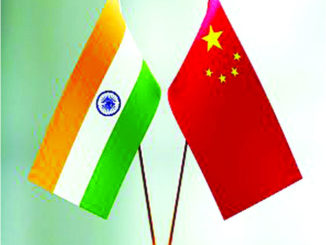
    New Delhi (TIP): India on Thursday, June 17,  said early completion of the disengagement process in the remaining friction points in eastern Ladakh could pave the way for both Indian and Chinese troops to consider de-escalation and ensure full restoration of peace and tranquillity in the border areas.

    At a media briefing, External Affairs Ministry spokesperson Arindam Bagchi said such a step could enable progress in bilateral relations between the two countries.

    “Early completion of disengagement in the remaining areas could pave the way for both sides to consider de-escalation of forces and ensure full restoration of peace and tranquillity, and thereby enabling progress in bilateral relations,” he said replying to a question.

    The 11th round of Corps Commander-level talks between the two sides was held on April 9 while the last edition of diplomatic negotiations under the framework of the Working Mechanism for Consultation and Coordination (WMCC) on border affairs took place on March 12.

    It is learnt that another round of WMCC talks could take place soon.

    India and China were locked in a military standoff at multiple friction points in eastern Ladakh since early May last year. However, the two sides completed the withdrawal of troops and weapons from the North and South banks of Pangong lake in February following a series of military and diplomatic talks.

    The two sides are now engaged in talks to extend the disengagement process to the remaining friction points.

    There was no visible forward movement in disengagement of troops in the remaining friction points as the Chinese side did not show flexibility in their approach on it at the 11th round of military talks.

    Last month, Army Chief Gen MM Naravane said that there can be no de-escalation without complete disengagement at all friction points in eastern Ladakh and that the Indian Army is prepared for all contingencies in the region.

    He also said that India is dealing with China in a “firm” and “non-escalatory” manner to ensure the sanctity of its claims in eastern Ladakh, and that it was even open to initiating confidence-building measures.

    India has been insisting on complete disengagement in remaining friction points to de-escalate the situation in eastern Ladakh.         Source:  PTI

  • Mehul Choksi remanded to state prison in Dominica, but to remain in hospital: His lawyer

    Mehul Choksi remanded to state prison in Dominica, but to remain in hospital: His lawyer

    New Delhi (TIP): A magistrate court in Dominica on Thursday, June 17,  moved businessman Mehul Choksi from police custody to a state prison, his lawyer in India said, but added that he would continue to remain in hospital as his medical condition “deteriorated”.

    “Yes, (Choksi’s) police custody has been changed to prison custody but he shall remain in hospital as his medical condition has deteriorated,” lawyer Vijay Aggarwal said.

    His legal team had submitted a medical certificate from doctors at the Dominica China Friendship Hospital, where Choksi is undergoing treatment, of “mental stress” and elevated blood pressure.

    The change in custody is being seen as a ray of hope for India which has approached the Dominica High Court seeking to be impleaded as a party in the case filed by lawyers of Choksi whose bail plea was earlier rejected.

    Choksi is wanted in India in a case of loan fraud worth about Rs 13,500 crore in the state-run Punjab National Bank.

    The CBI and the Ministry of External Affairs have sought to be impleaded in the habeas corpus matter, which seeks return of Choksi to Antigua and Barbuda, by filing two affidavits in the Dominica High Court, officials said here.

    The central agency is likely to focus on establishing criminal culpability of Choksi, fugitive status, pending warrants against him, Red Notice and charge sheets while the Ministry of External Affairs will argue that Choksi continues to be an Indian citizen, they said.

    The affidavits, if admitted by the high court, will pave the way for noted lawyer Harish Salve pleading India’s case in Dominica, they said.

    The fresh development seems to indicate that India stands a chance to be heard and make a legal attempt to bring the fugitive diamantaire back to the country and face a trial.

    The CBI had on Wednesday filed a supplementary charge sheet against him alleging him of having prior knowledge of the impending Enforcement Directorate (ED) enquiries against him in 2017 which triggered him to plan his escape from India and cover his tracks by concealing evidence.

    The CBI in its supplementary charge sheet has invoked Section 201 of the IPC among other charges which pertain to the destruction of evidence by a suspect as part of criminal conspiracy.

    Choksi has been admitted at the Dominica China Friendship Hospital since May 29 after being held by the authorities of the Caribbean island country for “illegal entry” on May 24, a charge denied by him.

    His lawyers in Dominica have contended that Choksi was removed from Antigua and Barbuda, where as a citizen he enjoys rights to approach the British Privy Council as the last resort in cases on his citizenship and extradition, to Dominica where these rights are not available to him.

    “The aim was to remove him from Antigua to Dominica was to diminish his protection under the law. Choksi has ongoing proceedings in Antigua in regards to attempts by the Prime Minister to remove his citizenship, the only citizenship that he possesses, and to extradite him to India,” his lawyer had said.

    India trying for early deportation: MEA

    The Indian government is actively engaged with Dominica to seek early deportation of fugitive diamond merchant Mehul Choksi and his handover to India, the Ministry of External Affairs (MEA) said.

    A Dominican magistrate court adjourned till June 25 the hearing into alleged illegal entry of Choksi into the Caribbean island nation, local media there had reported earlier this week.

    Asked about Choksi at an online media briefing, MEA spokesperson Arindam Bagchi said Choksi continues to be in the custody of authorities in the commonwealth of Dominica and legal proceedings are underway.

    “Government of India is actively engaged with the Dominican government to seek the early deportation and handover to India of Mehul Choksi to face justice in our country,” he said.

  • Global Covid caseload crosses 177-mn mark

    Global Covid caseload crosses 177-mn mark

    Washington (TIP): The overall global Covid-19 caseload has topped 177.3 million, while the deaths have surged to more than 3.84 million, according to the Johns Hopkins University.

    In its latest update on Friday, June 18,  morning, the University’s Center for Systems Science and Engineering (CSSE) revealed that the current global caseload and death toll stood at 177,355,602 and 3,840,181, respectively.

    The US continues to be the worst-hit country with the world’s highest number of cases and deaths at 33,508,384 and 600,933, respectively, according to the CSSE.

    In terms of infections, India follows in the second place with 29,700,313 cases. The other worst countries with over 3 million cases are Brazil (17,702,630), France (5,811,456), Turkey (5,354,153), Russia (5,203,117), the UK (4,616,616), Italy (4,249,755), Argentina (4,222,400), Colombia (3,859,824), Spain (3,753,228), Germany (3,727,668) and Iran (3,070,426), the CSSE figures showed.

    In terms of deaths, Brazil comes second with 496,004 fatalities.

    Nations with a death toll of over 100,000 are India (381,903), Mexico (230,624), the UK (128,209), Italy (127,190), Russia (125,853) and France (110,796).

  • UK trial finds Regeneron anti-viral therapy saves lives from Covid-19

    London (TIP): A new, experimental anti-viral treatment used for some worst-affected Covid-19 patients has been found to save lives, according to the results of a UK trial on Wednesday, June 16.

    In the ongoing Randomised Evaluation of Covid-19 Therapy (RECOVERY) trial, Regeneron Pharmaceuticals’ combination of drugs was found to benefit patients with severe symptoms of the virus who had not mounted a natural antibody response of their own.

    It not only cut down the numbers requiring a ventilator, among the 9,875 people who took part in the trial between September 2020 and May this year, but also reduced the duration of their hospital stay. Sir Peter Horby, Professor of Emerging Infectious Diseases in the Nuffield Department of Medicine, University of Oxford, and Joint Chief Investigator for the RECOVERY trial, declared the results as “very exciting”.

    “The hope was that by giving a combination of antibodies targeting the SARS-CoV-2 virus we would be able to reduce the worst manifestations of Covid-19. There was, however, great uncertainty about the value of antiviral therapies in late-stage Covid-19 disease,” said Horby.

    “It is wonderful to learn that even in advanced Covid-19 disease, targeting the virus can reduce mortality in patients who have failed to mount an antibody response of their own,’ he said.

    The treatment uses a combination of two monoclonal antibodies – casirivimab and imdevimab, known as REGEN-COV in the US – that bind specifically to two different sites on the coronavirus spike protein, neutralising the ability of the virus to infect cells. “We now know that this antibody combination is not only bad for the virus but it is also good for the sickest patients who have failed to mount a natural immune response of their own,” said Sir Martin Landray, Professor of Medicine and Epidemiology at the Nuffield Department of Population Health, University of Oxford.

  • NASA captures a stunning image of the spiral galaxy NGC 4680

    NASA captures a stunning image of the spiral galaxy NGC 4680

    NASA has shared a stunning image of the spiral galaxy NGC 4680 in all its glory. The image is said to have been taken by the Hubble’s Wide Field Camera 3. The NGC 4680 galaxy had earlier made news in 1997, as it played host to a supernova explosion known as SN 1997bp according to NASA. The supernova had been identified by Australian amateur astronomer Robert Evans who is said to have identified  42 supernova explosions.

    NASA states that the NGC 4680 is a tricky galaxy to classify. The space agency further states that this is because the galaxy is sometimes referred to as a spiral galaxy, but it is also sometimes classified as a lenticular galaxy.

    Lenticular galaxies are said to fall somewhere in between spiral galaxies and elliptical galaxies. The NGC 4680 galaxy is said to have distinguishable spiral arms that are not clearly defined, and the tip of one arm appears very diffuse.

    NASA says that Galaxies are not static, and their morphologies vary throughout their lifetimes. Over time, Spiral galaxies are believed to evolve into elliptical galaxies. NASA states that this is most likely due to the galaxies merging with one another, causing them to lose their distinctive spiral structures.

    Source: Indian Express

  • Google Insights tool now available for web creators

    Google Insights tool now available for web creators

    Google is rolling out a new Search Console Insights tool that provides creators with an overview of how their content is performing. The new feature makes it easier to understand how content resonates with readers. It is aimed at all levels of technical expertise with a user-friendly interface for understanding performance.

    The tool features high-level charts and cards showing stats for “Your new content” and “Google Search”. Google says it will help answer questions like what is your best performing content and which pieces of content are trending, how are your new pieces of content performing, how do people discover your content across the web, etc.

    The best Search Console Insights experience requires linking your Google Analytics account to a relevant property, the report said. Only Google Analytics Universal Analytics properties are currently supported, but Google Analytics 4 is coming soon, it added.

    This Insights tool — currently in beta — can be launched directly here or from the top of the Search Console’s Overview page. It is also coming to mobile directly in the Google app for iOS and Android from the menu that appears when you tap your profile picture.

    Source: IANS

  • WhatsApp: A look at 5 features that could launch soon

    WhatsApp: A look at 5 features that could launch soon

    WhatsApp is working on a number of features for both Android and iOS. The company recently confirmed that it will be expanding the Disappearing messages feature and will also add a ‘View Once’ option. It is also expected to add the calling feature to the Web version of WhatsApp. The company’s head Will Cathcart just recently revealed that the multi-device support will be arriving on the platform soon. Read on to know more about the upcoming WhatsApp features.

    Disappearing mode

    WhatsApp already offers a Disappearing Messages feature, and it is now planning to expand this ability. In an interview with WaBetaInfo, Facebook’s CEO Mark Zuckerberg confirmed that WhatsApp will introduce a disappearing mode, which will let you enable disappearing messages across all chat threads.

    Currently, you need to turn on the disappearing feature manually (for each chat). Once you enable it, it allows messages to be deleted after a set period of time. The company hasn’t provided details on whether users will get the timer option with the new disappearing mode.

    View Once feature

    Zuckerberg also confirmed that WhatsApp has plans to add a ‘view once’ feature, which will allow users to share media such as photos and videos that can be seen just once. This is similar to Instagram’s disappearing photo or video feature. So, when you send a photo to anyone and it will disappear from the chat when the recipient has seen it. This feature will not be turned on by default.

    Multiple device support

    WhatsApp has been testing multiple device support for months, and it finally confirmed it will be arriving soon. As per a report by WaBetaInfo, the support will be entering public beta “in the next month or two.” Facebook’s CEO also confirmed that the multi-device feature will not compromise the end-to-end encryption that the messaging app is offering all for personal chats.

    Once you receive this feature, it will let you log in to your WhatsApp account on more than one device at the same time. Once the same account is logged into another device, it automatically logs out of the first device, as per previous reports. Currently, users can log in to their WhatsApp account on a single device.

    Missed group calls

    WhatsApp is also said to be working on a feature that will let you join group calls that you might have missed. In simpler terms, if someone invites you to join a group call and you aren’t able to join in at that moment, then you will get the option to join later if the call hasn’t ended. The same feature was previously spotted on the beta version of Android in October 2020 and now, WhatsApp is testing it for iOS users.

    WhatsApp Read Later

    Lastly, the Facebook-owned company is also working on a ‘Read Later’ feature, as per a recent report by WaBetaInfo. The feature will replace the existing Archived Chats feature and will not bring back the archived chats on the top of the messaging app.

    Currently, when you archive any chat in WhatsApp, the app hides it in the archive section, and you don’t see it on the top of all the chats. However, when a new message arrives, the archived chat automatically pops up on the top of the screen. With the new Read Later feature, WhatsApp wants to eliminate these interruptions.

    Source: Indian Express

  • Truecaller adds Group Calling, Smart SMS features

    Swedish caller identification app Truecaller announced on Wednesday, June 16,  that it is rolling out new features to further augment the user experience, which include Group Voice Calling, Smart SMS and Inbox Cleaner.

    All of them are based on user feedback and are designed to cater to the evolving needs of the consumers, Truecaller said.

    “With Group Voice Calling, Smart SMS and Inbox Cleaner, I am hopeful that the consumers will be able to operate more effectively given the benefits of staying connected, using messaging service smartly to stay on top of important information,” Rishit Jhunjhunwala, MD India, Truecaller, said in a statement.

    Smart SMS offers a host of new features designed to make day-to-day communication more convenient, while Inbox Cleaner lets consumers free up space on their phones by removing unused messages. Inbox Cleaner also helps the user clear out all old and unwanted messages in just a few seconds.

    Group Voice Calling allows users to add up to eight participants to a call while retaining high voice clarity.

    Truecaller will also help identify spam users in the group if they are added without the user’s knowledge.

    Additionally, the feature offers a smooth dial back option from call logs, making it easy to manage the group—including adding or removing participants—when dialing them back.

    “We continue to remain focused on the evolving needs of our users and meet those needs with innovative solutions. These features get us closer to our mission to make communication safer and more efficient for everyone,” Jhunjhunwala said.          Source: IANS

  • Bread pakora

    Bread pakora

    By Tript Arora

    The sky was covered with black clouds since morning. It was a solace after 43 degrees of temperature in the past week. I was in my kitchen thinking what to cook for breakfast. Suddenly it started raining heavily. Guess What we always think of in the rainy season? Fried you said. Absolutely correct. I checked my provisions and found everything I needed for stuffed bread Pakora. First of all I washed potatoes and put them in the pressure cooker to boil. Meanwhile, I thought of sharing this recipe with you. The stuffed bread Pakoras with green coriander and mint chutney are my dear hubby’s favorite. Do you know why fried food is eaten in Monsoon, because food cooked at high temperatures is free from bacteria and is free from contamination. So there is a scientific reason behind the relationship between fried food and the rainy season. Without further delay let us start our today’s recipe of Bread Pakoda.  For this we need bread, potatoes and gram flour. We make a stuffing with boiled potatoes and paste it between two slices of bread. Coat this sandwich with a batter of gram flour and then deep fry it. These are served hot with tomato sauce or green chutney. Do try them today with a hot cup of tea. These are absolutely amazing.

    We Need

    8 Slices of Bread, 4 Tsp Tomato Sauce, 4 Tsp Green Chutney, Oil for Frying.

    For Stuffing: 500 gm boiled potatoes, 2 green chillies finely chopped, 1 Tsp. Salt, 1 Tsp Red Chilli Powder, 2 Tsp Coriander Powder, 1 Tsp Amchoor Powder( Dried Mango Powder),

    For Gram flour Batter: 1 Cup Gram flour, ½ Cup Water, 1 Tbsp Carom Seeds( Ajwain), 1 Tsp Turmeric Powder, 1 Tbsp Red Chilli Powder, 1 Tablespoon Whole Coriander Seeds. 1 Tsp. Salt

    Here We Go:

    –        Wash potatoes and put them in a pressure cooker. Cover them with water and close the lid. Cook them till three whistles. Let the pressure release on its own.

    –        Drain the water and when the potatoes cool down, peel them.

    –        Mash or grate the potatoes in a bowl. Add salt, coriander powder, red chilli powder , Amchoor powder and finely chopped green chillies. Mix well. This will be the filling between two slices. Keep aside

    –        Take a bowl and add gram flour to it. Add water to it and beat it smooth and fluffy. Add salt, turmeric powder, red chilli powder and carom seeds. Pound whole coriander seeds in a mortar and pestle and add to the batter. This will give a crunch to the bread pakoda.

    –        Take two bread slices. Spread Tomato sauce on one slice. Take 2 tbsp of stuffing and spread evenly on it. Now spread green chutney on another slice. Put one on top of the other. Thus making a sandwich .

    –        Heat oil in a pan for deep frying. Dip this Sandwich in gram flour batter . Cover the sandwich on all sides with batter. Deep Fry this sandwich in medium hot oil. Fry until golden brown on both sides.

    –        Cut it into half with a knife and serve hot with green chutney and sauce. Enjoy Bread Pakoras with a hot cup of tea.

    Preparation Time : 20 minutes

    Cooking Time: 10 minutes.

    Tips: Boil potatoes with skin. Don’t keep them long in water otherwise they will become mushy.

    You can also cut the sandwich into half and fry it .

  • UP police send legal notice to Twitter India MD

    The Uttar Pradesh Police have summoned Twitter India managing director Manish Maheshwari for questioning within seven days in connection with the posting and promotion on the microblogging site of an allegedly manipulated video of the assault of an elderly Muslim man in Ghaziabad.

    The summon was issued two days after Twitter, news website wire.in, journalists and Congress leaders were booked for “promoting enmity between religions” for posting and promoting the video amid conflicting narratives of the attack. The video purportedly showed the man being beaten up and his attackers cutting his beard.

    The 72-year-old man’s family and friends have said the man’s attackers forced him to chant “Jai Shri Ram” and chopped off his beard. The Uttar Pradesh Police have claimed there was no communal angle to the attack even as a?Samajwadi Party leader said that the police deliberately left out the alleged communal slogan chanting from the First Information Report filed in the case.

    Akhilesh Kumar Mishra, the investigating officer in the case, said the notice was issued to Maheshwari late on Thursday evening under the regular provisions of the Criminal Procedure Code (CrPC) and he has been asked to appear within seven days and record his statement. “The notice is served so that he appears to record statements under the CrPC’s Section 161.”

    The section empowers an investigating officer to seek the appearance of any person who appears to be acquainted with the facts and circumstances of a case.

  • Yoga as industry

    Yoga as industry

    The yoga industry has really come into its own in recent years. It’s benefited from numerous headwinds and complimentary trends, like the growth of boutique fitness and rise of athleisure. So, what’s next for the global yoga market and how can you tap into the (spoiler alert) rising tide?

    The yoga industry is worth over $88bn worldwide and expected to reach $215bn by 2025. That’s a compound annual growth rate (CAGR) of 11.7%! And that’s just studios, once you account for retreats, clothing, mats, blocks, and other accessories, the global yoga market is worth well over $130bn.

    There are 41,079 yoga studios in the USA, 4930 in the UK, and 3912 in Australia. But, as with other areas of the fitness industry, it’s the Asia Pacific region that’s expected to see the highest growth over the coming years.

    Let’s look at some of the yoga market sectors beyond traditional studios:

    –        Apparel – the yoga clothing market is worth $31.3bn globally and expected to grow at around 6% CAGR.

    –        Equipment – the yoga mat industry generates $13bn worldwide and continues to grow.

    –        Tourism – the wellness tourism market, which includes yoga retreats, is projected to reach $919 billion by 2022.

    Trends

    Yoga has a long and rich history but it’s not been left behind like other fitness trends. It continues to adapt and evolve, keeping pace with current times. According to Google data, new yoga trends include goat yoga, yin yoga, aerial yoga, and YouTube yoga.

    Yoga features consistently in the top 20 fitness trends compiled by the ACSM annually. However, it dropped to number 15 in 2021, down from 7 just two years previously.

    So, although the market research predicts that it’s a growth area, other exercise trends are currently proving more popular.

    The yoga pants trend and mainstreaming of athleisure looks set to continue, although at a slower pace than previously. Sportswear hit the height of fashion a few years back and is no longer as trendy as it once was. But the trend towards owning yoga pants in statement colours or bold patterns continues to drive sales.

    We’re also seeing the same yoga fashion trends impact the mat industry. This sector has exploded in recent years as these products increasingly become a style accessory and not just equipment. Mats are available in a huge range of colors, patterns, and even custom designs.

    It may seem like yoga is a wellness growth industry as it’s everywhere these days. But we’d argue that this growth is actually being driven by other trends – the rise of boutique fitness studios, athleisure, home workouts, and meditation are just a few.

    This Google trends graph shows that in the US, interest in yoga has actually decreased over the last five years. However, it’s been stable over the last 12 months which indicates that this decline is now plateauing. In case you’re wondering, those annual peaks are in January and driven by new years resolutions.

    However, when we look at the global interest, we can see that it looks pretty consistent. There are the same January peaks along with ones in June, most likely related to International Yoga Day.

    It’s also worth noting another peak in March 2020 indicating that coronavirus has spiked interest in doing yoga. This may be people looking at ways to stay healthy and active during the lockdown or deal with the generally stressful situation.

    One thing remains true no matter which month of the year it is – yogis spend a lot of money on their hobby. According to research by the Yoga Alliance, a typical yogi will spend $62,640 on classes, workshops, and accessories over their lifetime. This equates to about $90 per month, almost half of which is just on classes. There’s clearly a huge opportunity to serve this dedicated audience and generate a strong income in the process.

    How Will Coronavirus

    Affect The Industry?

    We don’t have a crystal ball, but here are our five predictions for how coronavirus may impact the yoga industry…

    –        Immediate effect – we’re already seeing increased interest in home yoga workouts driven by lockdowns around the world. This is likely to continue after restrictions are lifted, although with reduced demand compared to current conditions.

    –        Short-term – unfortunately, some studios will go out of business. This will be influenced by their financial situation, the amount of government support available to them, and whether they can secure agreements with their landlord, creditors, etc.

    –        Medium-term – customers will be hesitant to return to studios initially, due to concerns over catching the virus. People will be less willing to be in enclosed spaces or have physical contact than they previously were. They may also have less money to spend on memberships, clothing, and accessories, and so on due to the economic recession, loss of jobs, and reduction in disposable income.

    –        Long-term – yoga studios will bounce back. People visit them for an experience – like a spa on a budget. They enjoy the serene atmosphere, sandalwood scents, and minimalist decor. This isn’t something that can be replicated at home so studios shouldn’t fear that YouTube workouts will canabalise their sales.

    –        Longer-term – domestic yoga tourism will also recover as travel restrictions and underlying concerns mean more people seek to holiday in their home country. However, it’s unclear whether international yoga tourism will return to its previous growth trajectory, given predictions for the travel industry as a whole are looking downbeat.

    Source: www.wellnesscreatives.com

  • International Day of Yoga

    International Day of Yoga

    As the land of yoga, it is no brainer that India is leading global efforts to popularize its universal appeal and demonstrated health benefits. When the Indian Prime Minister Narendra Modi introduced the draft resolution to establish the International Day of Yoga in 2014 at the 69th session of the General Assembly, he stated that “yoga is an invaluable gift from our ancient tradition. Yoga embodies unity of mind and body, thought and action … a holistic approach that is valuable to our health and our well-being. Yoga is not just about exercise; it is a way to discover the sense of oneness with yourself, the world and nature.”

    No wonder, the resolution sailed through the United Nations (UN) with the support of a whopping 177 member states, including Indonesia. Consequently the UN unanimously adopted Resolution No 69/13 on Dec. 11, 2014  to proclaim June 21 as the International Day of Yoga (IDY).

    The first IDY was inaugurated on June 21, 2015 by the Prime Minister of India. Not only did the event create two Guinness World Records for the most number of people practicing yoga in a single sitting (35,985), but also for the most number of nationalities (84) participating across the globe. The event was recognized and celebrated across 170 countries including the USA, China and Canada. Since then, this day has been observed across the world by an ever increasing group of people who have embraced yoga and have acquired the character of a mass movement.

    This day serves as a reminder to the people of the world to make healthier choices in life by following yoga to foster good health and also a spirit of harmony. The observance of IDY has created opportunities for people across the globe not only to highlight the obvious health benefits that yoga  brings and the well being it generates, but also spreading goodwill and a spirit of brotherhood.

    Recognizing the obvious health benefits of yoga, the World Health Organization made a clarion call to all member states to encourage their citizens to follow yoga in their daily lives so that physical inactivity is reduced.

    The UN resolution on IDY calls upon all countries, international and regional organizations, as well as civil society and individuals, to observe the International Day of Yoga to raise awareness of the benefits of practising yoga. The observation of IDY has been structured to be in alignment with the UN resolution.

    Considering that yoga provides a holistic approach to health and well-being, the activities of IDY are designed in such a way that the interest of the participants in pursuing yoga does not end with the IDY, but sustains even beyond. It has been observed that a sizable number of people who start learning CYP in the spirit of participation in IDY continue to pursue yoga even beyond IDY. The IDY also presents an occasion for all the universities and schools to engage in yoga as part of their daily academic life.

    In India, the Ministry of AYUSH  (Ayurveda, Yoga, Unani, Siddha, and Homoeopathy) is the premier agency that is tasked with the development of education, research and propagation of indigenous alternative medicine systems in India. Yoga being part of this effort, AYUSH has introduced a 45 minutes Common Yoga Protocol (CYP) as a standard template to be used across the globe during IDY celebrations.

    The CYP has been uniquely designed to suit both yoga professionals and amateurs. It comprises an ideal assemblage of asanas (yogic postures) for inducting beginners to yoga. Designed meticulously for people from various age groups and all walks of life  to participate and reap the health benefits of yoga, the CYP protocol has emerged as a popular introductory yoga programme.

    IDY during Pandemic

    With the onset of the Covid-19 pandemic across the world,  a new approach was adopted in 2020 IDY celebrations which was a hybrid of digital and limited ground activity.

    The theme for 2020 IDY was aptly named  ‘Yoga at Home, Yoga with Family’. This year’s (2021) IDY theme is “ Be with Yoga, Be at Home”. Since the pandemic continues to loom large, the approach to IDY 2021 would be one of caution and care, but significant focus continues to be made on awareness and mobilization through digital media platforms. Depending on local conditions, the CYP, which is available on public domain, could be easily performed by everyone at their homes and at their convenience.

    International Yoga

    Day: 2021 theme

    2021 International Day of Yoga, to be observed on Monday (June 21), carries the theme “Yoga for well-being”, much relevant for our times in a society still recovering from the impact of the coronavirus disease (Covid-19) pandemic.

    The Covid-19 plight was not just a physical crisis, it also left lasting impacts on mental health, with many left in psychological suffering, depression, and anxiety dealing with the pandemic-necessitated restrictions and loss. Yoga can come to the help of people dealing with such crises, the United Nations explained on its website since the message of the practice is to promote both physical and mental health.

    “A growing trend of people around the world embracing Yoga to stay healthy and rejuvenated and to fight social isolation and depression has been witnessed during the pandemic. Yoga is also playing a significant role in the psycho-social care and rehabilitation of Covid-19 patients in quarantine and isolation. It is particularly helpful in allaying their fears and anxiety,” read the United Nations statement.

    The United Nations has been offering Yoga to its personnel as a means to deal with physical and mental health crises during the Covid-19 pandemic. The World Health Organization (WHO) has also recommended Yoga as means to improve health. Its various benefits include increased flexibility, fitness, mindfulness, and relaxation.

  • Eminent Yoga gurus

    Eminent Yoga gurus

    Yoga is an ancient practice is has been known for thousands of years for healing people. India is a country where this ancient practice was born 5,000 years ago and a place where lord Adiyogi shiva has started this practice and later on our great Indian masters has kept the lineages of traditional yoga alive and passed to their students and the rest of the world.  Those were the yoga teacher who has kept the tradition of yoga alive and spread the light of this ancient art and transformed the whole dimension of yoga teacher training courses in India with their teachings.

    All of these yoga gurus has followed the path of yoga but it all lead to one goal that was to spread the light of traditional yoga and connect them with their inner consciousness through the practice of yoga. Here are most insiring yoga gurus who has changed the whole dimension of yoga all over the globe:

    Tirumalai Krishnamacharya

    Infamous as father of modern yoga T. krishnamacharya was a prominent ayurvedic scholar, a yoga teacher and healer who revived the traditional art of hatha yoga. He was born on 18 November 1888 in Karnataka he developed the form of vinyasa yoga by combining breath and movement into the traditional hatha yoga. His teaching styles were based on patanjali yoga sutra and his disciples later on went on become some really influential yoga teachers.

    Swami Sivananda Saraswati

    Born in tamil Nadu sivananda saraswati is prominently known for combining karma yoga, bhakti yoga, jnana yoga and raja yoga. At the age of 40 sivananda saraswati came to rishikesh in the search of self realization with the rigorous practice of yoga and meditation. Later on he established siavananda ashram that follows the path of swami sivananda saraswati. He went on to spread the teaching of yoga all over the world and dedicated his life towards the learning scriptures, teaching yoga and spirituality.

    Maharishi Mahesh Yogi

    Maharshi Mahesh yogi was born in 12 January 1918 is famous to develop a deeper form of meditation that is known as transcendental meditation technique. It is a type of mantra meditation that produces deeper state of relaxation and promote a sense of sprirituality . He was later on become a spiritual guru of Beatles, beach boys and various celebrities. He encourages the studies to prove the benefits of yoga and meditation on the brain.

    Swami Rama

    Born in 1925 was the first Indian born yogi that was studied by the group of western scientist. He was born in Garhwal Himalaya and brought under the guidance of various sages. He later on established Himalayan International institute of yogic science and philosophy and become the yogi who claims to control his body process and become a holder of sakhya yoga tradition.

    B.K.S Iyengar

    BKS Iyengar or Bellur Krishnamacharya Sundararaja Iyengar was the founder of the famous Iyengar Yoga. He started on the path of yoga after suffering from various diseases throughout the childhood that made him very weak. He started his yogic journey under his brother in law T Krishnamacharya and played a pivotal role in spreading the teaching of hatha yoga in the west. Later on, he started experimenting with this ancient art and develop a new form that is what we have known today as Iyengar Yoga and turned into a popular international yoga teacher.

    Swami Kavalayananda

    Swami Kuvalayananda was born on 30 August 1883 was a prominent researcher and a yoga teacher, known for his research work in the yoga and its practices. He started working on yoga Mimansa that was his first scientific journal.

    Krishna Pattabhi Jois

    A Sanskrit scholar and a great Indian yoga master K Pattabhi Jois is one of the prominent names in the niche of yoga. Born in the Brahmin family he learned Sanskrit, Vedas and the art of yoga from childhood. A prominent disciple of T Krishnamacharya that later on developed Ashtanga yoga or ashtanga vinyasa yoga that was based on the teachings of ancient scripture yoga korunta.

    Jaggi Vasudev

    A mystic personality and popularly known as Sadhguru is a founder of Isha yoga; a foundation that provides various yoga programs all over the globe. He is well versed yogi and philanthropist that has spent his whole life in delivering the knowledge of yoga to the people and helps people through his foundation.

    Paramahansa Yogananda

    Yogananda was a first Indian yogi who is famous for introducing the teaching of kriya yoga to the west. He was the first yogi to teach yoga in the west and the author of the Autobiography of a yogi. A first yogi to settle in the west he travelled to spread the teaching of yoga and spirituality to the west.

    Dhirendra Brahmachari

    Also known as a controversial yoga guru; he was the yoga teacher of Indira Gandhi. He was a published author and the first one to use television to popularize yoga in India.

    Baba Ramdev

    Last but not the least, our very own Baba Ramdev a revolutionary who reached the masses and popularised “Kapalbhati” and “Anulom Vilom” amongst the commoners. His impeccable contribution in taking the ayurveda and yoga to the masses away from the realms of traditional set of beliefs through extensive campaigning and popularizing it worldwide cannot be left unnoticed. He is a dynamic personality in all aspects who has worked in spheres other than yoga and actively participated in business, politics and agriculture with the objective of social welfare and betterment of the masses including the poor and underprivileged. He is the founder of Patanjali Ayurveda Ltd.

    Rodney Yee

    Rodney Yee an American by nationality and the co-owner of a famous Yoga studio named Yoga Shanti. He is a prominent yoga instructor whose inclination towards the utilization of mind, body and soul all together led him to the land of yoga in early 1990’s which satiated his desires and the impact that his teachings and yoga practices have on the masses is remarkable.

    Alan Finger

    Alan Finger the son of Mani finger who hails from South Africa was very well acquainted with the yoga practices because of his father as he was a renowned yogi. He practiced Ishta Yoga and was much acclaimed as the Tantric and Kriya Yoga Master in his native place. He mixed different styles and came out with his unique form with a blend of Hath, Tantra and Ayurveda. He is now a yogi for more that 50 years.

  • Yoga styles, paths and types

    Yoga styles, paths and types

    ASHTANGA YOGA

    In Sanskrit “Ashta + anga” is ashtanga. “Ashta” means Eight and “Anga” is limbs so it means Eight Limb path, Ashtanga yoga is based on Yoga Philosophy of Patanjali. The asanas, Pranayamas or the dharana which we have studied earlier or the yam and niyam are based on the Yoga Sutras of Patanjali. Hence, we will acquaint ourselves with the fundamentals as stated by Patanjali first.

    Yoga has its roots about 5000 years BC as described in Vedic Philosophy and Tantras. Patanjali , great sage composed this path into a Darshan(Philosophy) in his Book Patanjal Yoga Sutra. In which he has formulated Yoga as a Eight Limbs or Eight Fold path.

    HATHA YOGA

    The term Hatha Yoga has been commonly used to describe the practice of asana (postures). The syllable ‘ha’ denotes the pranic (vital) force governing the physical body and ‘tha’ denotes the chitta (mental) force thus making Hatha Yoga a catalyst to an awakening of the two energies that govern our lives. More correctly the techniques described in Hatha Yoga harmonise and purify the body systems and focus the mind in preparation for more advanced chakra and kundalini practices.

    The Hatha Yoga system includes asana along with the six shatkarmas (physical and mental detox techniques), mudras and bandhas (psycho-physiological energy release techniques) and Pranayama (pranic awakening practices). Fine tuning of the human personality at increasingly subtle levels leads to higher states of awareness and meditation.

    JNANA YOGA

    Jnana Yoga is the process of converting intellectual knowledge into practical wisdom. It is a discovery of human dharma in relation to nature and the universe. Jnana Yoga is described by tradition as a means to obtain the highest meditative state and inner knowledge.

    Jnana literally means ‘knowledge’, but in the context of yoga it means the process of meditative awareness which leads to illuminative wisdom. It is not a method by which we try to find rational answers to eternal questions, rather it is a part of meditation leading to self-enquiry and self-realisation.

    MANTRA YOGA

    Japa Yoga, Requirements, State of Consciousness in Matra Yoga, Methods of Chanting, Effects of Mantra, How to Practice & Rules of Mantra Chanting)

    Mantra Yoga has its origin in Vedic Sciences and also in Tantra, in fact all the verses in Vedas are called mantras, it is said that any person who can chant or sing Vedas can achieve the ultimate salvation or union with supreme consciousness only by chanting the mantras, which is the aim Mantra Yoga.

    BHAKTI YOGA

    Bhakti is a Yoga of devotion or complete faith. This faith is generally in the God or supreme consciousness in any of the forms. It may be Lord Rama, Krishna, Christ, Mohammed, Buddha etc. It may be a Guru for his disciples.

    Important thing is the person interested in following this path should have very strong emotional bond with the object of faith. The flow of emotional energy is directed to this object. Mostly people suppress their emotions and that often reflects in the form of physical and mental disorders. This Bhakti Yoga releases those suppressed emotions and brings the purification of inner self.

    Continuous meditation of God or object of faith gradually decrease the ego of the practitioner, which further prevents new distractions, fickleness or even pain and induces strong bonds of love. Slowly the practitioner looses the self identity and becomes one with the object of faith, this is a state of self realization.

    KUNDALINI YOGA

    Japa Yoga, Requirements, State of Consciousness in Matra Yoga, Methods of Chanting, Effects of Mantra, How to Practice & Rules of Mantra Chanting)

    This system of Yoga is concerned with awakening of the psychic centers or chakras, which exists in every individual. (Please refer to the figure) There are six main chakras in the human beings.

    The mind is made up of different subtle layers. Each of these layers progressively are associated with the higher levels of consciousness. Each of these levels are related to the different chakra or psychic center located throughout the psychic body. There are no of other chakras apart from the six main, which are associated with planes below the human level. In all we have chakras that connect us to animal levels of mind, to the instinctive realms of being or to the sublime heights of consciousness.

    In Kundalini Yoga, higher-level chakras are awakened and also the activities associated with these higher psychic centers.The basic method of awakening involves deep concentration on these chakras and forcing their arousal. Asanas, pranayama, mudra and bandha and other forms of Yoga such as Mantra Yoga are also used to stimulate the awakening.

    KARMA YOGA

    Karma Yoga is a path of devotion to the work. One looses his identity while working, only selfless work remains. This state is very difficult to achieve. Generally some rewards or incentives or outcome follows the work and one is attached to this reward or incentive. This is not the Karma Yoga. Non-attachment with the work and becoming the perfect instrument of the super consciousness in this manifested universe is the ultimate aim of Karma Yoga.

    In the initial stages of Karma Yoga, individual possesses strong sense of ego and consciously or unconsciously he is attached to the fruits of his efforts or at least praise or recognition but by continuous involvement in the work and change in mental attitude, one can surely disassociate himself from the ego and his own personality. In this state the work becomes worship to the God, it becomes spiritual, also the individual becomes expert, skilled and Yogi. He achieves stability of mind in all conditions, he is not disturbed or excited or happy in any of the situations. He becomes divine & his actions represent God’s will.

    The essence of Karma Yoga as extracted from ‘Bhagvad Gita’ says: The world confined in its own activity except when actions are performed as worship of God. Therefore one must perform every action sacramentally and be free of your attachments to the results.

    KRIYA YOGA

    The word kriya means ‘activity’ or ‘movement’ and refers to the activity or movement of consciousness. Kriya also refers to a type of practical or preliminary practice leading to total union, the final result of practice. Kriya Yoga does not curb mental fluctuations but purposely creates activity and awakening in consciousness. In this way all faculties are harmonised and flower into their fullest potential.

    Kriya Yoga originated in antiquity and evolved over time through practise and experience. The full form of Kriya Yoga consists of over 70 kriyas out of which only 20 or so are commonly known.

    The kriya practices are inscribed in numerous tantric texts written in Sanskrit. To date only a few of these have been translated into other languages. The most authoritative magna opus on the subject of Kriya.

    The practices of Kriya Yoga were propagated by Swami Satyananda Saraswati from secret teachings described in the Yoga and Tantra Shastras. The kriyas, as taught by Satyananda Yoga?, are one of only two systems of Kriya Yoga recognized the world over, the other being that of Paramahamsa Yogananda.

    SWARA YOGA

    Swara is Sanskrit word, meaning sound or note. It is also a continuous flow of air through one nostril. Yoga means union, so Swara yoga is a science which is realization of cosmic consciousness through control and manipulation of breath.

    Swara Yoga is science which is a complete study, observations, control and manipulation of breath or Swara. Pranayama is only related to control of breath in various ways. In swara yoga, you will find association of breath in relation to activities of sun, moon, various seasons, physical and mental conditions of individuals etc. So Swara Yoga is more comprehensive in theory and practices related to breath.

    RAJA YOGA

    Raja Yoga usually refers to the system of yoga that is described in the Yoga Sutras of Sage Patanjali. In this ancient text Sage Patanjali describes eight stages of yoga which are known collectively as Raja Yoga.

    Raja Yoga is a comprehensive yoga system which deals with the refinement of human behaviour and personality through the practice of the yamas (restraint) and niyamas (disciplines); attainment of physical health and vitality through asanas (postures) and pranayamas (pranic breathing techniques); management of mental and emotional conflicts and development of awareness and concentration through pratyahara (sensory withdrawal) and dharana (concentration); and developing the creative aspect of consciousness for transcendental awareness through dhyana (meditation) and samadhi (absorption in the universal identity).

  • Yoga: Its origin, history and development

    Yoga: Its origin, history and development

    Yoga is essentially a spiritual discipline based on an extremely subtle science, which focuses on bringing harmony between mind and body. It is an art and scince of healthy living. The word ‘Yoga’ is derived from the Sanskrit root ‘Yuj’, meaning ‘to join’ or ‘to yoke’ or ‘to unite’.

    As per Yogic scriptures the practice of Yoga leads to the union of individual consciousness with that of the Universal Consciousness, indicating a perfect harmony between the mind and body, Man & Nature. According to modern scientists, everything in the universe is just a manifestation of the same quantum firmament. One who experiences this oneness of existence is said to be in yoga, and is termed as a yogi, having attained to a state of freedom referred to as mukti, nirvana or moksha.

    Thus the aim of Yoga is Self-realization, to overcome all kinds of sufferings leading to ‘the state of liberation’ (Moksha) or ‘freedom’ (Kaivalya). Living with freedom in all walks of life, health and harmony shall be the main objectives of Yoga practice.”Yoga” also refers to an inner science comprising of a variety of methods through which human beings can realize this union and achieve mastery over their destiny.Yoga, being widely considered as an ‘immortal cultural outcome’ of Indus Saraswati Valley civilization – dating back to 2700 B.C., has proved itself catering to both material and spiritual upliftment of humanity.Basic humane values are the very identity of Yoga Sadhana.

    A Brief History

    The practice of Yoga is believed to have started with the very dawn of civilization. The science of yoga has its origin thousands of years ago, long before the first religions or belief systems were born. In the yogic lore, Shiva is seen as the first yogi or Adiyogi, and the first Guru or Adi Guru.

    Several Thousand years ago, on the banks of the lake Kantisarovar in the Himalayas, Adiyogi poured his profound knowledge into the legendary Saptarishis or “seven sages”. The sages carried this powerful yogic science to different parts of the world, including Asia, the Middle East, Northern Africa and South America. Interestingly, modern scholars have noted and marvelled at the close parallels found between ancient cultures across the globe. However, it was in India that the yogic system found its fullest expression. Agastya, the Saptarishi who travelled across the Indian subcontinent, crafted this culture around a core yogic way of life.

    The Number of seals and fossil remains of Indus Saraswati valley civilization with Yogic motives and figures performing Yoga Sadhana suggest the presence of Yoga in ancient India. The phallic symbols, seals of idols of mother Goddess are suggestive of Tantra Yoga. Presence of Yoga is available in folk traditions, Indus valley civilization, Vedic and Upanishadic heritage, Buddhist and Jain traditions, Darshanas, epics of Mahabharat and Ramayana, theistic traditions of Shaivas, Vaishnavas, and Tantric traditions. In addition, there was a primordial or pure Yoga which has been manifested in mystical traditions of South Asia. This was the time when Yoga was being practised under the direct guidance of Guru and its spritual value was given special importance. It was a part of Upasana and yoga sadhana was inbuilt in their rituals. Sun was given highest importance during the vedic period. The practice of ‘Surya namaskara’ may have been invented later due to this influence. Pranayama was a part of daily ritual and to offer the oblation. Though Yoga was being practiced in the pre-Vedic period, the great Sage Maharshi Patanjali systematized and codified the then existing practices of Yoga, its meaning and its related knowledge through his Yoga Sutras. After Patanjali, many Sages and Yoga Masters contributed greatly for the preservation and development of the field through their well documented practices and literature.

    Historical evidences of the existence of Yoga were seen in the pre-Vedic period (2700 B.C.), and thereafter till Patanjali’s period. The main sources, from which we get the information about Yoga practices and the related literature during this period, are available in Vedas (4), Upanishads(108), Smritis, teachings of Buddhism, Jainism, Panini, Epics (2), Puranas (18) etc.

    Tentatively, the period between 500 BC – 800 A.D. is considered as the Classical period which is also considered as the most fertile and prominent period in the history and development of Yoga. During this period, commentaries of Vyasa on Yoga Sutras and Bhagawadgita etc. came into existence.This period can be mainly dedicated to two great religious teachers of India –Mahavir and Buddha. The concept of Five great vows – Pancha mahavrata- by Mahavir and Ashta Magga or eightfold path by Buddha – can be well considered as early nature of Yoga sadhana.

    We find its more explicit explanation in Bhagawadgita which has elaborately presented the concept of Gyan yoga, Bhakti yoga and Karma Yoga. These three types of yoga are still the highest example of human wisdom and and even to day people find peace by following the methods as shown in Gita. Patanjali’s yoga sutra besides containing various aspects of yoga, is mainly identified with eight fold path of Yoga.

    The very important commentary on Yoga sutra by Vyasa was also written. During this very period the aspect of mind was given importance and it was clearly brought out through Yoga sadhana, Mind and body both can be brought under control to experience equanimity.The period between 800 A.D. – 1700 A.D. has been recognized as the Post Classical period wherein the teachings of great Acharyatrayas-Adi Shankracharya, Ramanujacharya, Madhavacharya-were prominent during this period. The teachings of Suradasa, Tulasidasa, Purandardasa, Mirabai were the great contributors during this period. The Natha Yogis of Hathayoga Tradition like Matsyendaranatha, Gorkshanatha, Cauranginatha, Swatmaram Suri, Gheranda, Shrinivasa Bhatt are some of the great personalities who popularized the Hatha Yoga practices during this period.

    The period between 1700 – 1900 A.D. is considered as Modern period in which the great Yogacharyas- Ramana Maharshi, Ramakrishna Paramhansa, Paramhansa Yogananda, Vivekananda etc. have contributed for the development of Raja Yoga.This was the period when Vedanta, Bhakti yoga, Nathayoga or Hatha-yoga flourished. The Shadanga-yoga of Gorakshashatakam, Chaturanga-yoga of Hathayogapradipika, Saptanga-yoga of Gheranda Samhita, were the main tenents of Hatha-yoga.

    Now in the contemporary times, everybody has conviction about yoga practices towards the preservation, maintenance and promotion of health. Yoga has spread all over the world by the teachings of great personalities like Swami Shivananda, Shri T.Krishnamacharya, Swami Kuvalayananda, Shri Yogendara, Swami Rama, Sri Aurobindo, Maharshi Mahesh Yogi, Acharya Rajanish, Pattabhijois, BKS. Iyengar, Swami Satyananda Sarasvati and the like.

              The author, Dr. Ishwar V. Basavaraddi, is the Director of Morarji Desai National Institute of Yoga

  • Summer Solstice: The year’s longest day

    Summer Solstice: The year’s longest day

    The Summer Solstice is traditionally a festive day associated with the beginning of warmer months, longer days, early dawns, late sunsets and shorter nights in the Northern Hemisphere. In the southern half of the globe, it’s the beginning of the winter season. Summer Solstice is on June 21. This year Summer Solstice is just a day after Father’s Day on June 20. Celebrations and feasts on June Solstice are different in every country. The midsummer celebrations have a long history as well.

    Meaning of Solstice

    “Solstice” (Latin: “solstitium”) means sun-stopping. The point on the horizon where the sun appears to rise and set, stops and reverses direction after this day. On the solstice, the sun does not rise precisely in the east, but rises to the north of east and sets to the north of west, meaning it’s visible in the sky for a longer period of time.

    Although the June solstice marks the first day of astronomical summer, it’s more common to use meteorological definitions of seasons, making the solstice midsummer or midwinter.

    What is Summer Solstice?

    The Solstice is the beginning of the astronomical summer in the Northern Hemisphere. It ends with the autumn equinox on September 22. Solstice marks almost equal duration of day and night as the Sun crosses the Line of Equator and moves over the Northern Hemisphere. On June solstice, the Earth is positioned is a way that the North Pole tilts towards the Sun.

    Summer Solstice celebrations

    A number of ancient celebrations are associated with the June Solstice. People used the day to organize calendars and farmers marked the day with sowing or harvesting of crops. Many historians say, Stonehenge, a prehistoric monument in England, is an evidence of humans using June Solstice as a way of setting the time of the year. Even now, tourists and locals visit Stonehenge to watch the sunrise on Summer Solstice.

    According to the timeanddate.com, “In ancient China, the Summer Solstice was observed by a ceremony to celebrate the Earth, femininity, and the ‘yin’ forces. It complemented the Winter Solstice that celebrated the heavens, masculinity and ‘yang’ forces.”

    In Sweden, Denmark, Norway and Finland, Summer Solstice is a time of midsummer night festivities. This is the time when countries near the Arctic enjoy the Midnight Sun. People dance around the Maypoles and bonfires. Homes are lit up and decorated with violets and vanilla flowers.

    Signifying Changes

    A significant turning point during the year—the days start getting shorter and the nights longer—the June Solstice is often associated with change, nature and new beginnings.

    People around the world celebrate the day, which is also known as the Summer solstice in the Northern Hemisphere and the Winter solstice in the Southern Hemisphere, with feasts, bonfires, picnics, and traditional songs and dances.

    An Ancient Celebration

    Celebrations surrounding the June Solstice have a time-honored history. In ancient times, the date of the June Solstice was used to organize calendars and as a marker to figure out when to plant and harvest crops. Traditionally, this time of year was also popular for weddings.

    Stonehenge: An Ancient Calendar Organizing System?

    Some historians point to the Stonehenge, a prehistoric monument in Wiltshire, England as evidence of the fact that ancient humans used the June Solstice as a way to organize their calendars. Some believe that Stonehenge’s unique stone circle was erected around 2500 BCE in order to establish the date of the Summer Solstice. Viewed from its center, the Sun rises at a particular point on the horizon on day of the June Solstice. Some theories suggest that the builders of Stonehenge may have used the solstice as a starting-point to count the days of the year.

    Celebrating Femininity in China

    In ancient China, the summer solstice was observed by a ceremony to celebrate the Earth, femininity, and the “yin” forces. It complemented the Winter Solstice that celebrated the heavens, masculinity and “yang” forces. According to Chinese tradition, the shortest shadow is found on the day of the Summer Solstice.

    Midsummer Feasts

    In ancient Gaul, which encompasses modern-day France and some parts of its neighboring countries, the Midsummer celebration was called Feast of Epona. The celebration was named after a mare goddess who personified fertility and protected horses. In ancient Germanic, Slav and Celtic tribes, pagans celebrated Midsummer with bonfires. After Christianity spread in Europe and other parts of the world, many pagan customs were incorporated into the Christian religion. In parts of Scandinavia, the Midsummer celebration continued but was observed around the time of St John’s Day, on June 24, to honor St John the Baptist instead of the pagan gods.

    Modern Day Celebrations

    In northern European countries like Sweden, Denmark, Norway and Finland, Midsummer is a festive celebration. When the summer days are at their longest, and in the north it is the time of the Midnight Sun, festivals generally celebrate the summer and the fertility of the Earth. In Sweden and many parts of Finland people dance around Maypoles. Bonfires are lit and homes are decorated with flower garlands, greenery, and tree branches.

    In the Baltic states, Estonia, Latvia, and Lithuania, Midsummer is an occasion to travel to the countryside and connect with nature. Many people light bonfires and stay up all night drinking, singing, and dancing. There are many solstice observances held by New Age and Neopagan groups throughout the world. Thousands of people, including modern-day druids and pagans, usually gather at Stonehenge for this occasion.

    In some parts of the United States, events that focus on the theme of the Summer Solstice are held. These events include: local festivals featuring art or music; environmental awareness activities that focus on using natural sunlight as a source of energy; and family gatherings.

  • Akshay Kumar confirms Bell Bottom’s theatrical release on July 27

    Akshay Kumar confirms Bell Bottom’s theatrical release on July 27

    In a post on social media, Akshay Kumar finally announced the release of Bell Bottom in theatres on July 27, 2021. The film has been in the news recently amid rumours of it heading for a direct OTT release.

    Sharing the post, Akshay wrote, ” I know you have patiently waited for the release of #Bellbottom. Couldn’t be happier to finally announce the release of our film. Arriving on the big screens worldwide #BellBottomOn27July.”

    As soon as Akshay announced the theatrical release of the film, fans were left excited to see the actor back on the big screen. His last film, Laxmii with Kiara Advani, was released on an OTT platform. Bell Bottom was one of the first films to head for an international shooting schedule in 2020 right after the COVID 19 travel restrictions were lifted in India. Now, it will become one of the first films to be released in theatres after the second wave of COVID 19.

    The film stars Akshay, Vaani Kapoor, Lara Dutta, Huma Qureshi in important roles and happens to be a spy thriller. The film is directed by Ranjit M Tewari and produced by Pooja Entertainment and Emmay Entertainment.

  • Angelina Jolie reignites reunion rumors with ex-husband Jonny Lee Miller

    Angelina Jolie reignites reunion rumors with ex-husband Jonny Lee Miller

    After the Bennifer reunion, seems like a new reunion couple is going to make headlines soon. Oscar-winning actor Angelina Jolie was spotted leaving her ex-husband Jonny Lee Miller’s apartment on Friday night.

    Page Six reported that on the night of Friday, June 11, Angelina Jolie was clicked entering and exiting an apartment complex in Brooklyn, New York, where her first ex-husband Jonny Lee Miller resides.

    After the Bennifer reunion, seems like a new reunion couple is going to make headlines soon. Oscar-winning actor Angelina Jolie was spotted leaving her ex-husband Jonny Lee Miller’s apartment on Friday night.

    Page Six reported that on the night of Friday, June 11, Angelina Jolie was clicked entering and exiting an apartment complex in Brooklyn, New York, where her first ex-husband Jonny Lee Miller resides.

    The 46-year-old star was clad in a long tan trench coat and face mask. In the pictures, she is seen entering the entrance of the building carrying a Louis Vuitton purse and a bottle of Peter Michael wine, which typically cost a couple of hundred dollars.

    Page Six reported that Angelina left the USD 3 million home of her ex after three hours, around 10:30 p.m.

    The stars who headlined the 1995 movie Hackers, have not commented on the report or the photos yet.

  • Shah Rukh Khan hints at resuming ‘Pathan’ shoot

    Bollywood superstar Shah Rukh Khan on Friday treated fans with his charming selfie and also informed them that he’d soon be resuming work. The actor wished “safe and healthy days” to those returning to their jobs. “They say time is measured in days, months and beards… Time now for a trim and get back to work I guess…Wishing everyone who is getting back to a bit of normalcy…safe and healthy days and months of work ahead….love u all,” he wrote.

    Responding to the clip, SRK said Hiddleston was too “kind” to shower him with so much love. “You are kind, God of Mischief… hope there’s no mischief behind this claim though,” Khan wrote referring to Hiddleston’s MCU character of Loki aka God of Mischief.

    The 55-year-old actor said he is looking forward to binge-watch the English actor’s latest series “Loki”, which started streaming in India on Disney + Hotstar Premium on Wednesday, June 16.

  • Neena Gupta reveals ‘childish’ reason she married her first husband

    Veteran actor Neena Gupta, who was a student when she met her first husband Amlan Kusum Ghose, revealed the ‘childish’ reason she got married to him — she wanted to travel. The marriage lasted for less than a year.

    In her autobiography, Sach Kahun Toh, Neena Gupta wrote about her short-lived first marriage and the reason why it failed. She said that while Amlan Kusum Ghose expected her to ‘eventually settle down’ and focus on family, she was ‘a bit too ambitious’ and did not want to be tied down with domestic duties.

    Speaking to Brut India, Neena said that she married Amlan only to travel. “My mother was so strict that it was such a big thing to go out with boys for a trip. That was a very childish thing to do but I was childish,” she said.

    Though Neena admitted her decision was ‘childish’, she has no regrets. “I don’t regret. It was part of growing up. That was me and it was okay. It was a very stupid thing to do but at that time, everybody is stupid,” she said.At the launch of Sach Kahun Toh, Neena opened up about being dumped by a man she was set to marry. She told Kareena Kapoor Khan in an Instagram live that she was shopping for her wedding trousseau when she was broken up with, and added that she does not know why ‘till today’.

    “That happened. But what can I do? I moved on. I would have loved to get married to him. I had a lot of respect for his father, mother. I was living in their house. He’s going to read, he’s alive, he’s happily married. He has children,” she said.

    Neena is now married to Vivek Mehra, a chartered accountant by profession. They first met on a flight from London to Mumbai and have been together for over two decades. They got married in 2008 and spent the recent lockdown at their holiday home in Mukteshwar.       Source: HT