Tag: Facebook

  • Iran bans cryptocurrency mining for 4 months after blackouts

    Iran’s President Hassan Rouhani on Wednesday announced a four-month ban on all cryptocurrency mining, a day after his energy minister apologised for unplanned power cuts in major cities.

    Iranian officials have regularly blamed unlicensed cryptocurrency miners for using vast amounts of electricity.

    “Cryptocurrency activities and mining cryptocurrencies must be stopped” until September 22, Rouhani said in televised remarks.

    Power cuts in the peak summer months are not uncommon in Iran, but Tehran and several other major cities were hit by unplanned blackouts late last week, sparking complaints from consumers and businesses.

    Iran started rolling blackouts from Sunday to reduce the pressure on the national grid.

    Rouhani said “illegal” miners who usually have access to subsidised electricity consume between six and seven times more power than those with permits.

    Energy Minister Reza Ardakanian apologised to Iranians on Tuesday for “shortcomings and pressures” over the surprise blackouts. He said the national grid was overburdened due to a drought impacting hydropower generation and unexpectedly warm weather causing a surge in demand for air conditioning.

    National electricity company spokesman Mostafa Rajabi Mashhadi said on Saturday that licensed cryptocurrency-mining farms had already voluntarily shut down operations to ease the burden.

    Profitably creating, or mining, bitcoin and other cryptocurrencies requires masses of computers dedicated to solving deliberately complicated equations — an endeavour that globally consumes more electricity than entire nations.

    According to consultant and expert on cryptocurrencies Michel Rauchs, about five to 10 percent of world bitcoin mining can be traced to Iran.

  • PNB scam: Choksi’s immediate repatriation stayed by Dominica court

    PNB scam: Choksi’s immediate repatriation stayed by Dominica court

    A Dominica court has put a stay on the repatriation of fugitive Mehul Choksi after Choksi’s legal team in Dominica filed a habeas corpus petition and highlighted that he was denied legal rights and was not allowed to meet his lawyers initially, local media reported. The matter is expected to be heard again on May 28 at 9am local time. This comes after the acting police chief of Dominica Lincoln Corbette told Hindustan Times that the fugitive businessman, wanted in India in multicrore PNB scam, will be repatriated to Antigua and not to India.

    Currently, Choksi is in the custody of Dominica Police and is being investigated, police said.

    Under a habeas corpus petition, an arrested person has to be brought before a judge, especially to secure the person’s release “unless lawful grounds are shown for their detention”. Choksi’s Dominica lawyer Wayne Marshe said it is a “travesty of justice” as Choksi is entitled to legal representation — be it in Antigua or Dominica.

    Choksi’s lawyer in India Vijay Aggarwal said his client was picked up by various people from Jolly Harbour, where his car was found after his sudden disappearance, and then he was taken to Dominica.

    “I noticed that he was severely beaten, his eyes were swollen and had several burnt marks on his body. He reported to me that he was abducted at Jolly Harbour in Antigua and brought to Dominica by persons whom he believed to be Indian and Antiguan police on a vessel he described to be about 60-70 feet in length,” Choksi’s lawyer in Dominica Wayne Marshe told ANI.

    After Choksi was apprehended in Dominica, Antiguan Prime Minister Gaston Browne said he asked Dominica to hand Choksi over to India directly. But the legality of that in the absence of an extradition arrangement between India and Dominica was questioned.

    “Ultimately, it is the sovereign decision of the government of Dominica as to which country they repatriate Mehul Choksi unless the Court states otherwise,” Browne told ANI.

    Dominica is not among the 58 countries with which India has either extradition treaties or arrangements, while it has the same with Antigua and Barbuda. In such cases, the decision of where a fugitive will be repatriated depends on local authorities.

  • Cost of equity declined in India

    The India Cost of Capital Survey 2021 concludes that in line with the falling interest rates, the cost of equity in India has declined since EY’s last cost of capital survey in 2017.

    The EY-NSE report encapsulates views of around 200 respondents from the corporate India, spread across different sectors and company sizes. The survey concludes that in line with the falling interest rates, the average cost of equity in India has decreased since EY’s last cost of capital survey in 2017.

    While largely a measure of risk, the cost of equity is also a proxy for return expectation, and its decline with falling interest rates can be interpreted as signs of conservatism in return expectations from prospective investments. The survey findings say that India’s average cost of equity is 14 per cent; declined by 100 basis points since EY’s last cost of capital survey in 2017.

    Real estate, healthcare (including pharmaceuticals and life sciences) and renewables command the highest cost of equity, whereas chemicals, media and entertainment and FMCG, are at the lowest. The survey also found that start-ups or internet-age companies recorded higher cost of equity on an average.

    The Discounted Cash Flow (DCF) methodology is one of the key approaches for valuation analysis used and most companies typically consider a horizon of five years under this approach.

  • CONGRESSMAN ADRIANO ESPAILLAT ENDORSES ERIC ADAMS FOR MAYOR

    CONGRESSMAN ADRIANO ESPAILLAT ENDORSES ERIC ADAMS FOR MAYOR

    Assembly Member De La Rosa, Council Members Ayala & Feliz also endorse Adams

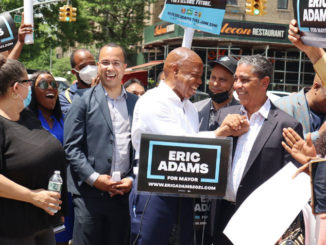
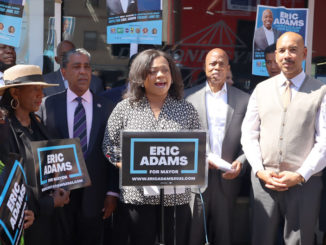
    NEW YORK (TIP): Rep. Adriano Espaillat endorsed, May 23, Eric Adams for mayor of New York City, outside the historic United Palace in Washington Heights, calling Adams “the leader for this moment.” Adams was also endorsed by a number of other elected officials and local leaders representing a diverse population of Dominican and Puerto Rican New Yorkers from Manhattan and the Bronx, including Assembly member Carmen De La Rosa, Council Members Diana Ayala and Oswald Feliz, six District Leaders, and State Committeewoman Maria Luna. Adams endorsed De La Rosa, Ayala, Feliz and Council candidate Shaun Abreu in their elections as well.


    “New Yorkers need a mayor who truly understands what they are going through—and can guide us through this recovery while repairing the inequalities that existed before COVID,” Congressman Espaillat said. “Eric Adams has lived the life of the people who need help right now and is the leader for this moment. Eric will unite this city and deliver the safer, healthier, more prosperous city all New Yorkers deserve.”


    “I am honored and moved that Congressman Espaillat believes I am the right candidate for this moment and the right person to lead this city forward,” Brooklyn Borough President Adams said. “Areas like Washington Heights were hit hard by COVID-19–and so many people of color and immigrants who were struggling are now struggling even more. I grew up facing the hunger, eviction and poverty that so many New Yorkers are facing now. Every day as mayor I will honor the trust Congressman Espaillat has placed in me to stand up for those struggling New Yorkers and provide them with what they need to thrive.”


    In addition to Rep. Espaillat, Assm. de la Rosa and Council Members Ayala and Feliz, Adams was endorsed by District Leaders Maria Morillo, Manny de los Santos, Norma Campusano, Peggy Morales, John Ruiz and Edward Gibbs.


    In addition to the elected officials endorsing today, Adams has also been endorsed by DC37, the Hotel Trades Council, 32BJ SEIU, UNITE HERE Local 100, the Uniform Fire Officers Association, CSEA Local 1000, OPEIU Local 153, TWU Local 100 and ATU Locals 1181, 726, 1056 and 1179, as well as more than 50 current and former elected officials, including Borough Presidents Ruben Diaz Jr. and Donovan Richards; Rep. Tom Suozzi; state Sens. Andrew Gounardes, Roxanne Persaud, James Sanders, and Diane Savino; Assemblymembers Peter Abbate, Rodneyse Bichotte Hermelyn, Inez Dickens, Erik Dilan, Alicia Hyndman, Jenifer Rajkumar, José Rivera, Clyde Vanel, and Jaime Williams; New York City Council Members Adrienne Adams, Alicka Ampry-Samuel, Justin Brannan, Selvena Brooks-Powers, Laurie Cumbo, Darma Diaz, Peter Koo, Farah Louis, Alan Maisel, I. Daneek Miller, Francisco Moya, and Ydanis Rodriguez; former State Comptroller Carl McCall; Reps. Charlie Rangel and Ed Towns; former Bronx Borough President Fernando Ferrer; and former Assembly Members Karim Camara and the late Aurelia Greene.


  • ASHLEY SHARPTON ENDORSES ERIC ADAMS FOR MAYOR

    ASHLEY SHARPTON ENDORSES ERIC ADAMS FOR MAYOR

    NEW YORK (TIP):  Prominent activist and community leader Ashley Sharpton, on May 27, endorsed Eric Adams for mayor outside the historic National Action Network headquarters in Harlem. “Eric Adams has been consistent in showing up and taking action against injustice no matter who it is. We are electing a mayor at a very crucial time in this city and in this country where we are coming out of a pandemic where so many New Yorkers are broken mentally, spiritually, financially, and physically. We need a visionary who is not afraid to take the necessary steps to revive New York back into the thriving city it can be,” said civil rights activist Ashley Sharpton. “From education, public safety, homelessness, mental health reform, and health and wellness, Eric Adams is the transformative leader who can execute his vision and implement change Borough by Borough. He has the courage, the work ethic, the strategy, the honesty, the record, the reach, the voice, and the heart to lead New York back to better, and he is the candidate who doesn’t just talk the talk, he walks the walk.”

    “Ashley is here endorsing me today because she knows that I am the only candidate in this race with the experience to keep New York safe and fight for justice–because I have been there and done it before,” Brooklyn Borough President Adams said. “As mayor I will continue this fight and uplift every New Yorker by looking out for their civil rights, their city, and their future.”

    Adams has also been endorsed by 32BJ SEIU; ATU Locals 726, 1056, 1179, and 1181; CSEA Local 1000; DC37; the Hotel Trades Council; OPEIU Local 153; PEF; TWU Local 100; the Uniform Fire Officers Association, and UNITE HERE Local 100, as well as more than 50 current and former elected officials, including Borough Presidents Ruben Diaz Jr. and Donovan Richards; Representatives Adriano Espaillat and Tom Suozzi; State Senators Joe Addabbo, Jr.,  Andrew Gounardes, Roxanne Persaud, James Sanders, and Diane Savino; Assembly Members Peter Abbate, Rodneyse Bichotte Hermelyn, Carmen de la Rosa, Inez Dickens, Erik Dilan, Charles Fall, Alicia Hyndman, Stacey Pheffer Amato, Jenifer Rajkumar, José Rivera, Clyde Vanel, and Jaime Williams; City Council Members Adrienne Adams, Alicka Ampry-Samuel, Diana Ayala, Justin Brannan, Selvena Brooks-Powers, Laurie Cumbo, Darma Diaz, Oswald Feliz, Peter Koo, Farah Louis, Alan Maisel, I. Daneek Miller, Francisco Moya, and Ydanis Rodriguez; former State Comptroller Carl McCall; former Representatives Charlie Rangel and Ed Towns; former Bronx Borough President Fernando Ferrer, as well as former Assembly Members Karim Camara and the late Aurelia Greene.

  • Senate Republicans block Jan. 6 commission in victory for Trump

    Senate Republicans block Jan. 6 commission in victory for Trump

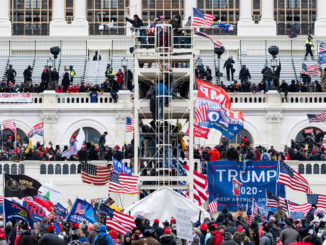
    WASHINGTON (TIP): Senate Republicans blocked legislation Friday, May 28, that would have launched a 9/11-style commission on the Jan. 6 attack at the U.S. Capitol, affirming they want to turn the page on the dark chapter in American history despite pleas for action from family members of a police officer killed in the riot, a Daily News report, May 28 said.

    The bill, which passed the House earlier this month with unusually broad bipartisan support, was derailed in a 54-35 procedural vote that would have cleared the way for the Senate to begin debate on the measure.

    Even though a majority of senators voted for the bill — including six Republicans — the chamber’s filibuster rule requires that most legislation receive the support of at least 60 members to succeed. The failed Jan. 6 commission vote marks the first GOP filibuster of Joe Biden’s presidency and is certain to ignite a debate over the need to abolish or reform the arcane rule.

    New York Sen. Chuck Schumer, the Senate’s Democratic majority leader, charged that the commission quashing makes the Republicans complicit in former President Donald Trump’s false insistence that Biden’s election was illegitimate — the same lie that spurred a far-right mob to storm the Capitol on Jan. 6.

    “What are you afraid of? The truth? Are you afraid Donald Trump’s big lie will be dispelled? Are you afraid that all of the misinformation that has poured out will be rebutted by a bipartisan, down-the-middle commission?” Schumer said on Senate floor before the vote. “This is about a democracy. This is about the future of our democracy. The big lie has eroded that democracy, and we must do everything we can to rebut it.”

     Kentucky Sen. Mitch McConnell, Schumer’s Republican counterpart, pushed his members to block the bill because he claimed Democrats would use the commission to trash talk his party ahead of the 2022 midterm elections.

    Despite McConnell’s criticism, the commission would have consisted of 10 members, evenly appointed by both parties, with the stated goal of making sure a tragedy like Jan. 6 could never happen again.

    The now-blocked bill was the product of bipartisan negotiations in the House between New York Rep. John Katko and Mississippi Rep. Bennie Thompson, respectively the top Republican and Democrat on the House Homeland Security Committee.

    To ensure its bipartisan nature, Thompson agreed to let the commission’s subpoena power be shared between the parties, which is unusual.

    Family members of Brian Sicknick, the U.S. Capitol Police officer who died after being attacked by Trump supporters on Jan. 6, pleaded with McConnell and his caucus this week to reconsider, even meeting with several Republican senators on Thursday, May 27.

    “It’s very disturbing that anyone would not want to support this. Why would they not want to get to the bottom of such horrific violence?” Sandra Garza, Sicknick’s partner, told reporters in between meetings Thursday. “Just boggles my mind.”

    (Source: Daily News)

  • Regulating digital media: Tightrope act over privacy, social orderd

    The tussle over an individual’s right to privacy vis-a-vis the state’s duty to identify and punish wrongdoers has taken an interesting turn. The management of WhatsApp, the messaging application used by 53 crore Indians, has gone to court against the Indian Government guidelines under which digital media companies are sought to be regulated. Citing user privacy, WhatsApp has taken the moral high ground. The new rules state, among other things, that digital media companies such as WhatsApp must disclose the identity of the ‘first originator of information’ when the government seeks it. WhatsApp contends that in order to comply with the new rules, it would have to break the end-to-end encryption that ensures user privacy, undermining people’s right to privacy.

    But there’s much more to the issue than just user privacy. The new user policy of WhatsApp, introduced earlier this year, allows it to share an individual’s information — generated when a user interacts with a business account on WhatsApp — with its parent company, Facebook, and other group firms. The idea is for Facebook to use this data to its financial benefit. In other parts of the world, such as Europe, users can refuse to allow WhatsApp to share their data — in India, this option is not given to the users. WhatsApp bends to the rules of the European Union because they have a data protection law in place there — in India, such a law has been in the works for two years, but it is yet to see the light of day. This has enabled WhatsApp to discriminate against Indian users.

    Over the last few years, after several cases of mob violence following rumors disseminated over WhatsApp, the company has attempted to arrest spread of misinformation. In a significant judgment in 2017, the Supreme Court ruled that individual privacy is a fundamental right, except when ‘legality, necessity and proportionality’ all outweigh it; digital media companies, thus, must disclose the identity of those causing or abetting crime through rumors or hate speech. Free speech advocates, however, fear that the government could use this provision to stifle dissent or criticism of its policies. Seeing the track record of the governments, it is a legitimate fear. Among these competing interests, a fair balance must be brought through debate, negotiation and a new law.

    (Tribune, India)

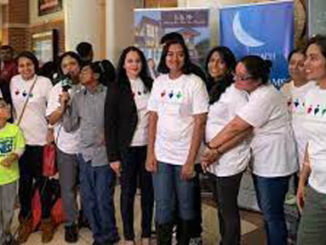
  • Indian Americans Founded “Pure Hearts of Georgia” is a support group for families with special needs children

    Indian Americans Founded “Pure Hearts of Georgia” is a support group for families with special needs children

    ATLANTA, GA, (TIP): Anandhi Jambunathan watched with much joy as her firstborn Krishiv met his first-year milestones such crawling, walking, and smiling at people. But around 17 months, Anandhi noticed that Krishiv maintained minimal eye contact and kept distancing himself from his parents and cried at the sight of friends and neighbors. Based in California at the time, her plans to engage Krishiv at her sister’s engagement in India did not help.

    When Anandhi noticed that Krishiv got more distant, spinning wheels of a toy car for hours, she began a web search. That was the first time she came across the word “Autism”. Most of the symptoms mentioned in the article matched Krishiv’s behavior.

    Autism spectrum disorder (ASD) is a developmental condition that affects a person’s ability to socialize and communicate with others. People with ASD can also present with restricted and/or repetitive patterns of behavior, interests, or activities. The term “spectrum” refers to the degree in which the symptoms, behaviors and severity vary within and between individuals.

    Based on CDC surveillance, an average of 1 in every 59 8-year-old children in the U.S. have ASD. Boys are four times more likely than girls to develop symptoms of ASD.

    1 in 5 people will experience mental illness over the course of their lifetimes. May, Mental Health Awareness Month is a time to raise awareness of those living with mental or behavioral health issues and to help reduce the stigma, provide support, educate the public and advocate for policies that support people with mental illness and their families.

    Mental Health Month was established in 1949 to increase awareness of the importance of mental health and wellness in Americans’ lives, and to celebrate recovery from mental illness. On April 30, 2021, the Biden administration released “A Proclamation on National Mental Health Awareness Month,” recognizing May as National Mental Health Awareness Month. In addition, 32 states, including Georgia have released similar proclamations, recognizing May as Mental Health Awareness Month statewide.

    “He looks normal,” the psychologist in India had told Krishiv’s parents. Anandhi however made an appointment with the pediatrician who referred her to a neurologist and a regional center where Krishiv was diagnosed with severe autism.

    Life, as they knew it, had changed for the Jambunathan family. Embarking on the rugged terrain of uncertainties and denial, the family forged ahead with countless therapies and interventions. Therapies such as ABA, speech and OT brought about significant difference in his awareness and understanding.

    “The first battle we faced was accepting the situation and getting out of denial,” says Anandhi. Challenges were many and from various avenues. “Why did you get a diagnosis?” “He doesn’t need one.” “He will speak soon; my brother’s child spoke late.” “Maybe you shouldn’t have eaten bananas during your pregnancy,” Such “Helpful” suggestions and curious questions only alleviated the family’s distress. Some even referred them to priests thinking Krishiv was possessed and needed exorcism! The Jambunathans were left with no choice but to keep away from such insanity. But it also isolated them socially.

    As Krishiv turned three, his dad’s job brought them to Georgia. Anandhi joined a Yahoo support group for special needs parents based out of north Fulton and found Indian names and sent them a personal email requesting information.

    Having personally met Indian families with special needs kids, Anandhi initiated one of her own, Georgia Indian Special needs Support Group, in which they shared information, references, opinions and held get togethers. With the advent of technology, the group moved over to WhatsApp. A modest beginning of five families has now enrolled over hundred families and counting. Apart from digital interactions, Anandhi and her husband have been hosting regular lunch / dinner gatherings for the past 10 years for parents with a recent diagnosis and have a few of the existing parents, “creating a welcoming network for the new parents”, as Anandhi puts it. They also hold P2P seminars and discussion groups for the parents. Anandhi discovered a private school and more therapies for Krishiv through many sources and kept continuing his interventions.

    “Imagine talking about bed wetting issues of 11-year-old or self-help skills of 14-year-old or sensory issues of kids with anyone outside the special needs group,” says Anandhi, highlighting the challenges of interacting with parents of neuro-typical children and necessity for parents of special needs kids to mingle with and share their stressful and typical days and sometimes find humor, even.  “Having a group helps to share ideas, suggestions and information about teachers, schools, therapies, approaches etc.,” she adds.

    With larger numbers, Anandhi realized a formal organization could be more impactful in helping these kids. Acting upon her instincts, Anandhi, with her best friends Chelvi Sivalingam and Annapoorna Kudikamaldi co-founded Pure Hearts of Georgia.

    “Our main goal is to spread awareness and acceptance of such individuals in the community,” says Anandhi, adding they also plan on training them with certain skills and provide a platform to showcase and opportunities to progress.  “We also have been serving as a bridge between typical volunteers who want to help us and our special families.”

    Various activities for the kids include yoga during weekends, exercise sessions 3 days a week, music therapy, creative fun, and Bollywood dance, among others. Most activities currently being digital, Anandhi says volunteers make activity folders for the kids as part of their summer or scout projects. For in person activities, they have parents of the kids along with volunteers. They usually explain to the volunteers about ways of working with the kids. While most kids are on the autism spectrum, they do have kids with challenges such as Cerebral Palsy and Downs syndrome in the group.

    “We here at Paramount Software strongly support Pure Hearts of Georgia. It is one of its kind organization that not only supports kids who have different needs but also guide, enrich and provide a strong support system to their respective families,” said donor and supporter, Pratima Sajja.

    Anandhi’s efforts to showcase the kids’ talents bore fruition with the Dream Show 2019, which featured a total of 54 kids who took to stage to perform dance, music, and fashion shows. “This was the most rewarding moment for us was when all our families and other audiences were in tears to see our kids performing on stage.”

    “Acceptance continues to be a major issue – first within the family and then in the community,” ruminates Anandhi, adding that expectation of a successful career poses a huge challenge and even impacts opportunities made available to the child to interact with the community. Having met a lot of families who are willing to help, awareness, she notes is also an issue. Saving significant one for the last, Anandhi observes, “Having an engaging meaningful life, not being isolated – having some friends and getting included in the community. After all, our children look for the same thing all of us look forward to – INCLUSION and LOVE.”

    “From being a mother who was looking for support to being a pillar of support to those who need, Anandhi has always remained positive,” compliments friend Sunita Nadella.

    Anandhi shares some of her experiences that have helped with Krishiv. Dance, she notes did not come naturally due to motor coordination. Introducing small steps and starting with a 2-minute dance, the tenacious mother had him perform Karagaatam, a folk dance from Tamil Nadu that requires a vessel with decorations to be balanced on the head while dancing, after yearlong practice. Exercise, Anandhi believes is key regulating mind and body and helps improve focus. Krishiv is now able to work out for close to 2 hours with an instructor, enjoys biking and skateboarding, tennis, table tennis, basketball and baseball. While he may not completely comprehend the rules, Anandhi is happy he knows how to use the bat and the ball. Her weekly zoom exercises are quite popular with the kids, as one parent, Harini Senapathy commented, “Pure Hearts of Georgia has been a true blessing that it has given me lot of friends including Anandhi. Having a group that understands what you are going through without being judgmental is a luxury and I am really lucky to be part of such a group. I have been able to get my son to exercise with me, which is really huge!”

    Anandhi also draws attention to Special needs Will & Trust, which she believes needs 3-4 families or individuals who can take care of the child after you. Underlining on the need to do it earlier than waiting till child turns 16, she stresses the need for the child to be comfortable with them. “Few of us have become tight knit support to a point, where we have written these friends as guardians in our will for Krishiv.”

    Cracking a myth around autistic kids that they are extremely talented in one area and parents need to discover it, Anandhi says that is hardly the truth.

    Are these kids able to work within public school system? Yes! Plenty of public schools have good programs, with most offering an Individualized Education Plan (IEP), that gives them specific goals that would be worked upon at school. In high school they even have programs to help them with supported employment, but that may not be applicable to all. But, as Anandhi notes, once they are out of high school, there aren’t many options for these kids.

    So, what happens when the yellow bus stops coming home? “There are also a lot of employers willing to employ individuals with autism as once trained, these individuals simply go about their work without much of a fuss,” says Anandhi. While that beneficial for some, kids like Krishiv, she notes, will find it very difficult to hold on to a job even for a couple of hours a day without supervision, and some who have no or minimal language.

    What lies ahead of public schools? Anandhi says there are very few daycare-like options and not enough to cater to this every increasing population. “I would like for my son and children like him to be mentally and physically engaged in a safe place and have some friends around too.” This, Anandhi says keep her awake in the night, “not out of worry but the drive to make it worthy for them.” Quoting Kalam, she adds, “Dream is not that which you see while sleeping, it is something that does not let you sleep. So, this is my dream for Krishiv and for children like him.”

    Now 16, Krishiv is a student at Johns creek high school special classroom and continues his therapies. But what the family draws strength from the support they found in the community and friends for Krish to play, dance and have sleepovers with.

    Recently Krishiv thought he got lost in PETCO, since he couldn’t find the person he came with. He decided to walk to Anandhi’s friend’s home (4 miles away) and was at her doorstep when JC cops found him. That the traffic noises, the heat from sun, and the long walk didn’t faze him, and had managed to use problem solving without panicking bears testament to the unwavering love and support Krishiv receives from family and friends.

    “Inspiration, mentoring, enabling and self-sustainable learning for others made a package; you are one of the greatest and best role models for the special need kids and their parents,” says friend Franklin Harris.

  • Alert Indian-origin driver stops train from hitting Asian man pushed onto tracks in New York

    Alert Indian-origin driver stops train from hitting Asian man pushed onto tracks in New York

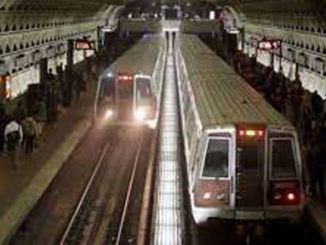
    New York (TIP):  An alert Indian-origin driver stopped his train and saved an Asian man who was pushed onto the tracks in an apparent hate crime incident, according to media reports.

    Tobin Madathil, 29, noticed a commotion as he was pulling into a station on Monday, May 24, and immediately took action. The quick-thinking subway operator was able to stop the train about 30 feet from the man.

    “Right when I was coming into the station people were waving at me, and that’s when I immediately placed the train into emergency mode,” Madathil told the New York Post.

    “I’m glad I was able to stop on time and didn’t hit the guy, thank God!” he said.

    Moments earlier, a crazed suspect had shoved the Asian male onto the tracks – the latest in a spate of attacks in the city’s subway system, the report said.

    Madathil, who has been a train operator for two years, said he “exited the train” and went to the bleeding victim before calling the subway control center for medical attention.

    The victim was treated for a cut on his forehead at Mount Sinai Medical Centre, and police are investigating the incident for possible bias.

    “I just try to stay focused at all times when I operate, just watch the tracks and platform, just be alert,” Madathil explained how he always tries to be ready for the unexpected.

    The suspected subway shover remained on the loose on Monday. During the attack, he said something to the victim, who did not understand him, the report quoted the New York Police as saying. The Hill website described Madathi as “heroic”.

    New York City has seen an uptick in hate crime incidents against Asians.

    Last week, US President Joe Biden signed legislation to address the sudden increase in hate crime against Asian-Americans in the aftermath of the Covid-19 pandemic and expressed hope that such crimes would now be more accurately counted and reported so that they can be ended.

  • MAYOR DE BLASIO ANNOUNCES PARTNERS AGAINST THE HATE (P.A.T.H.) FORWARD, PROVIDING $3M TO COMBAT HATE CRIMES IN NEW YORK CITY

    MAYOR DE BLASIO ANNOUNCES PARTNERS AGAINST THE HATE (P.A.T.H.) FORWARD, PROVIDING $3M TO COMBAT HATE CRIMES IN NEW YORK CITY

    The de Blasio Administration and the Office for the Prevention of Hate Crimes (OPHC) to partner with six anchor organizations, launching an innovative, community-based approach to hate crime prevention.

    NEW YORK (TIP): Mayor Bill de Blasio and Office for the Prevention of Hate Crimes (OPHC) Executive Director Deborah Lauter, on Thursday, May 27, announced the launch of the Partners Against the Hate (P.A.T.H.) FORWARD initiative to help combat bias-motivated incidents and hate crimes in New York City. P.A.T.H. FORWARD will provide funding and programmatic support to six anchor organizations selected by the City to promote community-based approaches to reduce hate crimes and to expand hate crime reporting and services for victims.

    “In New York City, we do not tolerate hate, violence, or bigotry in any form,” said Mayor Bill de Blasio. “As we drive a recovery for all of us, we must lift up the community leaders standing up against America’s hate epidemic. We are taking action to make sure the hate in our beloved city is eliminated—once and for all.”

     “There is not one way to stop hate: it takes a multi-pronged approach that includes strong laws and their enforcement, education to stop biases that fuel hate violence, and healthy community relations,” said Deborah Lauter, Executive Director of the Office for the Prevention of Hate Crimes. “Through the Office for the Prevention of Hate Crimes’s P.A.T.H FORWARD initiative, New York City is committing significant resources to support the diverse communities that are the most vulnerable to acts of hate. We are optimistic that this initiative will have a significant, long-term impact that ensures all New Yorkers feel respected and safe.”

    The P.A.T.H. FORWARD program includes $3 million in funding for distribution among the six anchor organizations the city has selected as partners in this initiative: the Anti-Violence Project, the Arab American Association of New York, the Asian American Federation, the Hispanic Federation, the Jewish Community Relations Council, and the 67th Precinct Clergy Council. The anchor organizations will work closely with OPHC and other city agencies to ensure a comprehensive, community-based approach to preventing hate crime.

    P.A.T.H. FORWARD anchors will also serve as judges in the awarding of OPHC Hate Crime Prevention Innovation Grants. These grants, which range from $5,000 to $20,000 to be distributed on a revolving basis throughout the year, will encourage individuals, organizations, and academic institutions to use their entrepreneurial skills to develop projects aimed at reducing hate violence and promoting community respect.

    Embedded in the Mayor’s Office of Criminal Justice (MOCJ) and the Mayor’s Community Affairs Unit (CAU), OPHC launched in September 2019 following its creation by Mayor Bill de Blasio and the New York City Council. The office takes a holistic approach to prevent and respond to hate crimes, develops and coordinates community-driven prevention strategies to address biases fueling such crimes, and fosters healing for victims and their communities.

    “Between March 2020 and March 2021, there were almost 1,500 bias incidents on Asian New Yorkers,” said Jo-Ann Yoo, Executive Director of the Asian American Federation.  “Sadly, our city has the highest number of reported anti-Asian bias incidents of any city in the entire nation.  As the bias attacks continue, the Asian New Yorkers are anxious and afraid.  We recognize that the solution to getting out of this situation crisis is to partner with other marginalized communities to defeat this latest manifestation of the age-old virus of racism and hate.  We thank the Mayor and the Office for the Prevention of Hate Crimes for this important first investment in strengthening our efforts to create safeguards that reassure our communities and bring them Hope Against Hate.  The way out of this is for ALL New Yorkers to come together and support each other.  It’s all of us against racism!”

    “As hate is again rearing its ugly and destructive visage we are excited to partner with this extraordinary team of community and faith-based organizations and their leadership to meet this challenge placed before us,” said Rabbi Bob Kaplan, Executive Director of the Center for Community Leadership. “It is the responsibility of all New Yorkers to stand together to make the statement, by their actions and words, that: “Hate, in any form, is utterly unacceptable.” The Jewish community, as it confronts an increase in the age-old scourge of anti-Semitism, will likewise partner with their fellow New Yorkers to defeat this societal epidemic. We thank the Mayor and the Office for the Prevention of Hate Crimes for this important tool in empowering leadership and the communities they serve to step forward to defeat this destructive force of hate that tears at the very fabric of our safety and social compact.”

    “This is a crucible time for our LGBTQ and HIV-affected communities – at AVP we have been doing community-based responses to hate violence for over 40 years,” said Beverly Tillery, Executive Director of New York City’s Anti-Violence Project. “We know that the best way forward is for many communities to be resourced to run community-based solutions that support survivors in building safety outside of the criminal legal system.”

    “While the last year has united many New Yorkers together as we have struggled through the COVID crisis together, it has also exposed the ugly fault lines around race that still exist in our city,” said Marwa Janini, Executive Director of the Arab American Association of New York. “The stresses and political tides of 2020 and 2021 have emboldened bigots to act on their hatred, with consequences that have altered, shattered, and ended lives. Today, we and our partners say ‘No More!’”

    “In this climate of heightened tensions and the rise of hate, clergy can transform the way victims of hate crimes and their families are handled and walk with them through the crisis, providing clergy care for all,” said Pastor Gil Monrose, President of the 67th Precinct Clergy Council (“The GodSquad”). “Within many of our Brooklyn communities, clergy have long played a significant and unique role in building and maintaining trusting relationships between our communities, District Attorney, and the NYPD, serving as bridges between residents and law enforcement agencies.  We will continue to play a leading role in the sharing of responsibility for public safety with police, community, social service agencies, and anti-hate violence organizations, as we serve the Black community and provide crisis response teams and community relations services.”

    “Hispanic Federation commends NYC leadership for establishing the P.A.T.H. FORWARD Initiative,” said Frankie Miranda, President and CEO of Hispanic Federation. “We share in the visceral reaction to the ongoing upsurge of xenophobic acts of violence. For far too long, our communities have carried the undue burden of relentless bigoted rhetoric in public disclosure towards communities of color. Hispanic Federation stands committed to defend our communities and to ensure our interconnectedness is the instrument that combats baseless intolerance and violence across the country and especially here at home.”

    ###

  • A Summer of Renewal for our Students

    OPEN LETTER

    By New York City Schools Chancellor Meisha Porter.

    This year has demanded that all New York City families and students do so many things differently—they’ve had to think differently, learn differently, and connect differently with teachers, peers, and the whole school community. At the Department of Education, we know we also have to think differently as we look towards the summer. For the first time ever, we are inviting all students to join us for a free, fun-filled, enriching summer program: Summer Rising.

    This year, we will serve any student in grades K-12 in July and August who wants to participate, and I am excited to be partnered with the Department of Youth & Community Development to reimagine what summer can be. Our children’s days will be filled with innovative academic support, social-emotional learning, and engaging enrichment activities. These programs will be designed by school teams in partnership with local community-based organizations and offered in hundreds of sites across all five boroughs.

    After all the trauma and disruptions caused by the pandemic over the past 15 months, our children need a chance to reboot their education in fun and supportive ways as we approach the full reopening of our schools in September. It is time to begin regaining what the pandemic took away. Summer Rising is an opportunity to do just that, creating spaces for students to learn, grow, play, and explore the City around them – from field trips to Central Park and museums to dance and art classes.

    Summer Rising will also provide an enormous relief to families by keeping children safe, supported, and productive this summer. After enduring months when so many of our students were isolated from their teachers and peers, the opportunity to rebuild those face-to-face relationships will do so much to support their healing process and prepare them for returning to school in the fall.

    All K–8 students participating in programs will have access to academic classes and enrichment programming, including field trips, arts activities and outdoor recreation. Students will also engage in daily community building and social emotional learning activities. We know some students with disabilities may require additional supports to participate in Summer Rising, and those supports will be provided as needed.

    In addition, Summer Rising is a chance for high school students to complete courses in progress, make up credits to march towards graduation, and participate in academic acceleration opportunities. They will also be able to engage in important work experience and internship opportunities, like the Summer Youth Employment Program.

    As always, health and safety remain a top priority. Summer Rising will follow the rigorous health protocols that succeeded in keeping our schools among the safest places in the city this school year. To support these efforts, parents will need to complete a testing consent form for their child so we can keep everyone healthy and safe!

    Summer Rising will be the start of revitalizing the powerful joy of learning together as we head toward a strong reopening of our schools and warm homecoming for our students in the fall. I strongly urge the families of every child who can join us over the summer to sign up now. To learn more about the options available for your child or to sign up, go to nyc.gov/summerrising. All programs are free, in-person, and have something to offer for everyone.

  • “Hansel and Gretel breadcrumbs for the Intel Investigation on Covid Origins”

    By Ravi Batra

    Applaud POTUS Biden – now a Bipartisan Investigation.

    “I heartily welcome and celebrate President Biden’s command to our intelligence community to investigate the origin of Covid19. Roots are important not only to Alex Haley, but to biochemists and epidemiologists the world over to understand the nooks and crannies of this pandemic virus so as to more perfectly vaccinate against it and to ultimately disarm it. This is a deadly Virus-ICBM, and a crime against humanity.

    Open Letter No. 1 to President Trump.

    A little more than a year ago, unaware how Covid19 would ravage humanity across the globe, as a lawyer seeking justice I thought only in terms of crime and punishment and wrote my first of three Open Letters to then-president Trump on April 14, 2020, via Deputy National Security Advisor Matt Pottinger and included therein my science I had identified to crack this case and determine that it was a lab-created Frankenstein of a virus. Indeed, I identified more than Spike Glycoprotein (s) as the transplanted “master key” to get past our immune system as a Trojan Horse; I also identified that the protein string of the earlier virus – including Patient Zero who was admitted on December 1, 2019, at the Wuhan Hospital – from the Fall of 2019 was different than the cover-up virus released at the Wuhan Wet Market on or about December 30, 2019. President Trump launched his preliminary investigation the next day on April 15, 2020. My thoughts were of us being Pearl Harbored by this Virus many times over.

    Open Letter No. 2 to President Biden.

    On April 13, 2021, the one-year anniversary, I wrote my second Open Letter to President Joe Biden. By this time, I knew that Sweden had experienced Covid19 cases in the Fall of 2019 – well before Patient Zero was admitted in Wuhan Hospital. And given the vaccines everyone was taking, to know the genome of all virus variants was critical to public health.

    Open Letter No. 3 to P. M. Modi – Embrace President Xi and Desmond Tutu’s TRC.

    Then Covid19 made a reappearance in India as a double mutation-variant and killed people as a lawn mower cuts grass: effortlessly.  The mutations were getting more lethal, not harmless as normal viruses do. This was more evidence of its clear origin of being created in the Wuhan Lab doing biowarfare gain-of-function research. This forced me to abandon the simple principles of tort law and crime and punishment as I foresee an out-of-control biowarfare agent self-perpetuating and become more lethal and vaccine-proof. So, my third and last Covid19 Open Letter of May 6, 2021, to PM Modi was to urge him to embrace China’s President Xi and get him to join in a Desmond Tutu’s Truth and Reconciliation Commission paradigm to get the Covid19-origin’s whole truth, the raw truth, the actual truth, so humanity may survive. Otherwise, President Xi who wants to rejuvenate the Ming Dynasty’s Tribute System and dominate the world would merely inherit the wind with no one to dominate.

    Edgar Allen Poe to assist DNI Avril Haines bypass Compromised Scientists, and how our Crispr gene-editing technology was used in Wuhan to create Covid19 biowarfare agents.

    Finally, I have the highest respect for our Intel community, especially Director of National Intelligence Avril Haines, to ferret out the truth. But, here, we have an Edgar Allen Poe problem well documented in the “Purloined Letter” – hiding in plain sight and still invisible. There is absolutely zero evidence of any zoonotic transmission – from animal to human – despite the forceful attempts by the WHO, China and even some of our own compromised scientists, who get federal tax dollars to play the Devil and create uncontrollable biowarfare agents, to mislead us all into believing Mother Nature did it. She didn’t. Bats biting humans don’t as a result transfer their Spike Glycoprotein to humans. This was done by using our Crispr gene-editing technology.  Even Charles Darwin’s evolution bars such corrupt pandering by compromised scientists to policymakers who know not what they are being told. Mumbo jumbo is being sold by corrupt scientists.

    Hope Humans Live

    Covid19 is lab created. We need to disarm it. Humanity’s future may depend on it. Let greed take a brief holiday and give safe passage to the whole raw truth of this Frankenstein that has exceeded its designed lethality. I trust President Xi will embrace the TRC paradigm to restore CCP’s China’s more-loved status globally.”

    (The author is an eminent attorney.  Twitter @ravibatra)

  • Biden Orders Intelligence Investigation into Origins of Coronavirus

    Biden Orders Intelligence Investigation into Origins of Coronavirus

    Ravi Batra Applauds Biden for the Initiative

    WASHINGTON (TIP): New York based attorney Ravi Batra appeared to feel vindicated after President Biden called for a 90-day sprint to understand the origins of the coronavirus pandemicwhich came after intelligence officials told the White House that they had a raft of still-unexamined evidence that required additional computer analysis that might shed light on the mystery, according to senior administration officials. Ravi Batra smelt a rat long ago and wrote an open letter to President Trump pointing an accusing finger at China being responsible for the leak of Coronavirus from Wuhan Laboratory, and asking for an investigation. After Biden took over, Ravi Batra wrote him an open letter repeating his accusation.

    When The Indian Panorama called Ravi Batra for his reaction to the investigation news, he said: “I heartily welcome and celebrate President Biden’s command to our intelligence community to investigate the origin of Covid19. Roots are important not only to Alex Haley, but to biochemists and epidemiologists the world over to understand the nooks and crannies of this pandemic virus so as to more perfectly vaccinate against it and to ultimately disarm it. This is a deadly Virus-ICBM, and a crime against humanity.” The New York Times which broke the story said that the officials declined to describe the new evidence. But the revelation that they are hoping to apply an extraordinary amount of computer power to the question of whether the virus accidentally leaked from a Chinese laboratory suggests that the government may not have exhausted its databases of Chinese communications, the movement of lab workers and the pattern of the outbreak of the disease around the city of Wuhan.

    In addition to marshaling scientific resources, Mr. Biden’s push is intended to prod American allies and intelligence agencies to mine existing information — like intercepts, witnesses or biological evidence — as well as hunt for new intelligence to determine whether the Chinese government covered up an accidental leak.

    Mr. Biden committed on Thursday, May 27, to making the results of the review public, but added a caveat: “unless there’s something I’m unaware of.”

    His call for the study has both domestic and international political ramifications. It prompted his critics to argue that the president had dismissed the possibility that the lab was the origin until the Chinese government this week rejected allowing further investigation by the World Health Organization. And, administration officials said, the White House hopes American allies will contribute more vigorously to a serious exploration of a theory that, until now, they considered at best unlikely, and at worst a conspiracy theory.

    The White House is hoping that allies and partners can tap their networks of human sources to find additional information about what happened inside the laboratory. While the United States has been rebuilding its own sources in China, it has still not fully recovered from the elimination of its network inside the country a decade ago. As a result, having allies press their informants about what went on inside the Wuhan Institute of Virology will be a key part of the intelligence push ahead. The inquiry has not reached a dead end, a senior Biden administration official said. Officials would not describe the kind of computational analysis they want to do.


    Administration and intelligence officials say it will be as much the work of scientists as spies in trying to unravel how the pandemic was unleashed. The Biden administration has been working to improve its scientific expertise on the National Intelligence Council. Senior officials have told the spy agencies that their science-oriented divisions, which have been working on the issue for months, will play a prominent role in the revitalized inquiry.

    The new inquiry will also tap the national labs and other scientific resources of the federal government that previously have not been directly involved in the intelligence effort, the senior administration official said.

    Like scientists and the broader public, the intelligence community remains uncertain about the origins of the coronavirus. No definitive intelligence has emerged, and some current and former officials expressed caution that much more can be gathered in 90 days. While the Office of the Director of National Intelligence will deliver a report before summer’s end, the inquiry will most likely have to be extended.

    Current officials say the central goal of the new intelligence push is to improve preparations for future pandemics. As a result, Mr. Biden’s message this week was calibrated to leave open the possibility of future cooperation with China.

    The White House’s frustration with China has risen after its announcement this week that Beijing would not participate in additional investigations by the World Health Organization. A Biden administration official said if the new inquiry failed to yield an answer, it would be because China had not been transparent.

    But the administration is not trying to isolate China, and instead attempting to walk a careful line between pressuring Beijing to cooperate and demonstrating that in its absence, the United States will intensify its own investigation.

    Administration officials also believe the new inquiry and Chinese obstruction of the World Health Organization will create the opportunity for stepped-up intelligence cooperation with allies.

    Allies have been providing information since the beginning of the pandemic, one official said. But some, including British intelligence services, have been skeptical of the lab leak theory. Others, including Australia, have been more open to it.

    In a statement on Thursday, Amanda J. Schoch, the spokeswoman for the Office of the Director of National Intelligence, said the intelligence agencies had come together around the two likely scenarios, but there were so far no high-confidence assessments of the virus’s origins.

    “The U.S. intelligence community does not know exactly where, when or how the Covid-19 virus was transmitted initially,” Ms. Schoch said.

    The intelligence community “continues to examine all available evidence, consider different perspectives, and aggressively collect and analyze new information to identify the virus’s origins,” Ms. Schoch said.

    (With excerpts from The New York Times)

  • Indian Economist Amartya Sen gets Spain’s topaward

    Indian Economist Amartya Sen gets Spain’s topaward

    LONDON (TIP): Indian economist and Nobel Laureate Amartya Kumar Sen has been conferred with Spain’s top Princess of Asturias Award in the social sciences category, the Spanish prize foundation announced on Wednesday, May 26. Sen, 87, was selected out of 41 candidates from 20 nationalities, the Princess of Asturias Foundation said. “His research on famines and his theory of human development, welfare economics and the underlying mechanisms of poverty have contributed to the fight against injustice, inequality, disease and ignorance,” it said. The award comprises a Joan Miro sculpture representing and symbolizing the award, a diploma, an insignia and a cash prize of 50,000 Euros. The award was announced via videoconference.

    (Source: PTI)

  • India’s External Affairs Minister meets U.S. officials, lawmakers in Washington

    India’s External Affairs Minister meets U.S. officials, lawmakers in Washington

    “Conveyed appreciation for U.S. solidarity in addressing the Covid challenge”, the Minister says.

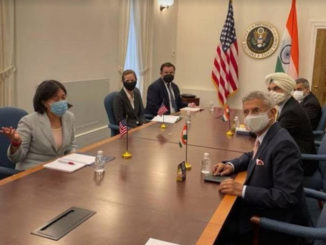
    WASHINGTON (TIP): External Affairs Minister S. Jaishankar has had a hectic day and a half in Washington DC, where he met government officials, including National Security Advisor Jake Sullivan and the U.S. Trade Representative (USTR) ambassador Katherine Tai, lawmakers, and the private sector.

    Mr. Jaishankar, who is on his first visit to the U.S. during the Biden administration, met with Mr. Sullivan on Thursday, May 27. Both sides indicated that there was a discussion on regional (Indo-Pacific) or global issues, with Mr Jaishankar specifying, via a tweet, that Afghanistan came up.

    “Conveyed appreciation for US solidarity in addressing the Covid challenge. India-US vaccine partnership can make a real difference,” the tweet said.

    The U.S. readout said Mr. Jaishankar and Mr. Sullivan “welcomed” cooperation that has resulted in the delivery of over $ 500 million in relief materials (state, federal and private sector sources) from the U.S. to India.

    “They agreed that people-to-people ties, and shared values are the foundation of the U.S.-India strategic partnership that is helping to end the pandemic, supporting a free and open Indo-Pacific, and providing global leadership on climate change,” it said.

    Mr. Jaishankar said he had “good discussions” with Ms. Tai, who recently announced that the Biden administration would support an India-South Africa initiative at the World Trade Organisation (WTO) to waive intellectual property protections for COVID-19 vaccines.

    “Our trade, technology & business cooperation are at the core of our strategic partnership. Enhancing them is vital to post-Covid economic recovery. Welcomed her positive stance on IPR issues & support for efficient & robust supply chains,” Mr. Jaishankar said on Twitter.

    The Hindu had reported that procuring vaccines and sorting out issues around this, such as early Emergency Use Authorization and liability are central to Mr. Jaishankar’s trip agenda, though officials have been keen to stress that this is not the focus of the visit and that discussions would cover a more comprehensive list of topics pertinent to the strategic relationship between the two countries.

    Mr. Jaishankar had breakfast and lunch meetings on Thursday, May 27, organized by advocacy and industry groups, the U.S. India Business Council (USIBC) and the U.S. India Strategic Partnership Forum (USISPF).

    The USIBC meeting included a discussion on how the private sector, working via a consortium of 40 companies called the ‘Global Task Force for Pandemic Response’, could “support India’s health infrastructure and further ways to continue relief efforts,” said Priyanka Sethi, a spokesperson for the group.

    Pfizer and Johnson and Johnson – both companies that manufacture COVID-19 vaccines of interest to India – are part of the Task Force. The group has sent 1,000 ventilators, 4,850 oxygen concentrators to India and convened the chief HR officers of close to 200 companies to help their employees and their families, Ms Sethi said.

    Representatives of pharmaceutical firm Abbot and courier and shipping firm FedEx were among the companies present at the USISPF meeting, industry sources told The Hindu.

    Mr. Jaishankar also spoke on the phone with the (Democratic) Chairman of the House Foreign Affairs Committee, Gregory Meeks and its ranking member (Republican) Michael McCaul. He also had a phone call with House India Co-Chairs Steve Chabot (Republican).

    Brad Sherman, the other co-chair, was among those present at a dinner for Mr. Jaishankar on Wednesday, at the house of Indian Ambassador Taranjit Singh Sandhu. Others present there, according to US official sources, included Virginia Senator Tim Kaine, Senator Michael Bennet from Colorado and Jon Ossoff, the new Senator from Georgia.

    On Friday, May 28, the Minister is scheduled to meet with Defense Secretary Lloyd Austin and Secretary of State Antony Blinken who has been on a trip to Egypt and West Asia since Monday.

    According to sources, the high-level (Minister level) meetings with the Treasury, Commerce and Energy Departments, US Agency for International Aid (USAID) and the National Science Foundation are likely to take place during Mr Jaishankar’s visit to Washington.

    (With inputs from PTI)

  • Israeli strikes in Gaza may be war crimes: UN Human Rights Chief

    Israeli strikes in Gaza may be war crimes: UN Human Rights Chief

    GENEVA (TIP): UN Human Rights Chief Michelle Bachelet said that Hamas’ indiscriminate rocketing during the conflict was also a clear violation of the rules of war.

    The UN rights chief said on Thursday, May 27, that Israeli forces may have committed war crimes in the latest, 11-day war with the militant group Hamas that rules the Gaza Strip.

    The remarks by Michelle Bachelet came as the UN’s top human rights body opened a one-day special session to discuss the plight faced by Palestinians in the fighting this month. She said that Hamas’ indiscriminate rocketing during the conflict was also a clear violation of the rules of war.

    The UN High Commissioner for human rights spoke to the Human Rights Council, chronicling the “most significant escalation of hostilities since 2014” that left devastation and death in the Gaza Strip before a cease-fire last week.

    “Air strikes in such densely populated areas resulted in a high level of civilian fatalities and injuries, as well as the widespread destruction of civilian infrastructure,” she said. “Such strikes raise serious concerns of Israel’s compliance with distinction and proportionality under international humanitarian law.” “Such attacks may constitute war crimes,” she added, if deemed to be indiscriminate and disproportionate in their impact on civilians.In an apparent allusion to tactics of Hamas, she said it was a violation of international humanitarian law to locate military assess in densely populated civilian areas, or to launch attacks from them.

    Hamas “rockets are indiscriminate and fail to distinguish between military and civilian objects, and their use, thereby, constitutes a clear violation of international humanitarian law,” she added. “However, the actions of one party do not absolve the other from its obligations under international law.” “Unless the root causes of the violence are addressed, it will certainly be a matter of time until the next round of violence commences with further pain and suffering for civilians on all sides”, she said. The day-long debate involved personal accounts from Palestinians – such as that of a young woman journalist from the Sheikh Jarrah neighborhood in east Jerusalem, an early flashpoint that led to the violence – as well as statements from the council’s 47 member states and also observer states.

    (Agencies)

  • Paul Ryan slams Trump in speech about future of Republican Party

    Paul Ryan slams Trump in speech about future of Republican Party

    LOS ANGELES(TIP): Paul Ryan, a former speaker of the House, sounded a pointed warning to the GOP in a speech about its future, arguing that voters will have little patience for a party built on fealty to former President Trump. He told conservatives gathered at the Reagan Library, in Simi Valley California, Thursday, May 27 night that they were at a crossroads.

    “If the conservative cause depends on the populist appeal of one personality, or on second-rate imitations, then we’re not going anywhere. Voters looking for Republican leaders want to see independence and mettle,” he said.And leaving no doubt about who he was talking about, though he did not name Mr. Trump, Ryan continued, “They will not be impressed by the sight of yes-men and flatterers flocking to Mar-a-Lago.”

    Among the Republican politicians who have spent time with Mr. Trump at his Florida resort and publicly stood by him is House Minority Leader Kevin McCarthy, who succeeded Ryan as the top House Republican when Ryan retired from the House in 2018.

    Ryan, who had his disagreements with Mr. Trump, also expressed deep dismay at the way his presidency concluded. “It was horrifying to see a presidency come to such a dishonorable and disgraceful end,” he said.

    But he did mention the former president by name in praising economic growth that took place during his presidency, prior to the pandemic and said, “To his credit, Donald Trump brought many new voters into our party.”


  • Rules and rulers: On social media curbs

    Rules and rulers: On social media curbs

    – Govt. must hear out the social media industry, and shed its arbitrary rule-making

    It does seem that most if not all global social media giants will miss complying with the new IT rules of intermediaries, which come into effect today. It would be unfortunate if this non-compliance were to trigger a further worsening of the already poor relationship between some social media players and the Government. The new rules were introduced in February. Among other things, they require the bigger social media platforms, which the rules referred to as significant social media intermediaries, to adhere to a vastly tighter set of rules within three months, which ended on May 25. They require these platforms to appoint chief compliance officers, in order to make sure the rules are followed, nodal officers, to coordinate with law enforcement agencies, and grievance officers. Another rule requires messaging platforms such as WhatsApp to trace problematic messages to its originators, raising uneasy questions about how services that are end-to-end encrypted can adhere to this. There are indeed many problems with the new rules, not the least of which is the manner in which they were introduced without much public consultation. There has also been criticism about bringing in a plethora of new rules that ought to be normally triggered only via legislative action. But non-compliance can only make things worse, especially in a situation in which the relationship between some platforms such as Twitter and the Government seems to have broken down. The latest stand-off between them, over Twitter tagging certain posts by BJP spokespeople as ‘manipulated media’, has even resulted in the Delhi Police visiting the company’s offices. Separately, the Government has been fighting WhatsApp over its new privacy rules. Whatever the back-story, it is important that social media companies fight the new rules in a court of law if they find them to be problematic. The other option, that of engaging with the Government, may not work in these strained times. But stonewalling on the question of compliance can never be justified, even if it is to be assumed that the U.S. Government has their back. Facebook, on its part, has made all the right noises. It has said that it aims to comply with the new rules but also needs to engage with the Government on a few issues. What is important is that the genuine concerns of social media companies are taken on board. Apart from issues about the rules, there have been problems about creating conditions for compliance during the pandemic. As reported by The Hindu, five industry bodies, including the CII, FICCI and the U.S.-India Business Council have sought an extension of 6-12 months for compliance. This is an opportunity for the Government to hear out the industry, and also shed its high-handed way of rulemaking.

    (Tribune, India)

  • Nassau Must Use Federal Action on Hate Crimes as Catalyst for Local Action

    Nassau Must Use Federal Action on Hate Crimes as Catalyst for Local Action

    DEAR EDITOR :

    I applaud President Biden for signing the COVID-19 Hate Crimes Act into law – an important, timely, and refreshingly bipartisan piece of legislation that will provide federal law enforcement agencies robust tools to push back against the alarming increase in senseless bias and violence that the Asian American/Pacific Islander (AAPI) community has endured throughout the COVID-19 pandemic. Furthermore, Senate Majority Leader Schumer – who spoke recently on the front steps of this Legislature about the importance of fighting this scourge – deserves our thanks for leading the Senate to a nearly unanimous vote in favor of the measure.

    Here in Nassau County, we have an obligation and a responsibility to add to that toolkit so that members of our local AAPI communities can once again regain the sense of security they deserve.

    Last month, I filed a proposed local law that would update the County’s Human Rights Law to specifically outlaw discrimination based on an actual or perceived relationship to the COVID-19 pandemic. This bill would empower victims of discrimination and the County Attorney to sue for compensatory and punitive damages, attorney’s fees and other relief deemed appropriate by the court. Individuals who violate the statute would furthermore face penalties of $5,000 to $25,000 per incident, which would be recoverable and payable to the aggrieved victim, as well as thousands of dollars in additional fines.

    I urge my colleagues in the Majority to bring this measure to the floor of the Legislature so that it can be debated and adopted unanimously. By doing so, we would send a clear message that we will aggressively defend the rights of all Nassau County residents to live lives free of fear, hatred, and bigotry.

    ARNOLD W. DRUCKER

  • What a proven coronavirus lab leak theory would mean

    What a proven coronavirus lab leak theory would mean

    By Aaron Blake

    Some degree of skepticism of the theory is still very much warranted, but if the theory were somehow proven, there would be a massive reckoning when it comes to just how much the scientific community knows what it’s doing — and how much it’s letting external factors such as politics cloud the certainty of its judgments.

    The mainstream media is engaged in some very warranted soul-searching when it comes to the possibility that the coronavirus leaked from a lab in Wuhan, China, rather than occurring naturally. Reporters often wrote about the theory dismissively, citing scientists who backed that up. There is still no real proof the theory is true, but scientists now regard it as increasingly plausible, as The Post’s Glenn Kessler detailed this week. And the Biden administration says it’s redoubling efforts to get to the truth.

    But beyond media accountability, it’s valid to ask: What’s really at stake here? If the theory were somehow proved, what would it change, including for the U.S. government, its top officials, including the current and former presidents, and China?

    A big part of the appeal of the theory right now — beyond the chance to apply egg to the face of the popular boogeyman (particularly on the right) that is the media — lies in how intriguing it is. A deadly worldwide pandemic originating from a lab accident — or worse — is basically a Hollywood script. That it would involve a nefarious and powerful foreign government that also happens to be communist is almost a bit too over the top.

    As for what it would mean for China’s culpability? We already know the virus came from China and that the Chinese government has been anything but transparent. This began on its watch, and its lack of transparency cost the world valuable time in preparing for and combating the spread of the virus. If the virus came from one of its labs, that would mean China was even more negligent (at best) than previously known and that its coverup was even worse. It’s possible that even the Chinese government might not truly know what happened. But regardless, it has balked at admitting outside scientists who might be able to shed light on this and many other subjects.

    Some have wagered that if such a theory proves true, it might turn China into something of a pariah state, given how angry other countries would be. There would be calls for extensive sanctions, particularly from the United States. But much of the world, including this country, relies upon trade with China, making such efforts fraught.

    It would also raise questions about just how it leaked from the lab. We know scientists engage in sometimes-controversial “gain of function” experiments on viruses, but the most severe theories go quite a bit further: They involve the idea that China was engaging in even more dangerous conduct and possibly experimenting with a deliberate bioweapon. Proving such a thing would be even more difficult than proving a lab leak, and there are many more reasons to doubt the bioweapon theory than the lab leak theory. But it would force some very tough conversations — and pressure — to determine just how it leaked from the lab and how negligent or potentially nefarious China’s actions were.

    The prospect of even greater Chinese culpability, of course, is a big reason this idea initially caught on in many parts of the American right. President Donald Trump’s and his party’s efforts to shift blame away from their own response and toward China was politically convenient, which led to too much initial skepticism of the lab leak theory. Trump also, as I noted earlier this week, engaged in plenty of conspiracy theorizing with little or no evidence to back it up. When you combine that with what scientists were saying at the time, it was easy — too easy, it turns out — to be overly dismissive of the lab leak theory.

    But is the increasing prominence of the lab leak theory suddenly proving Trump right? He certainly says so and has plenty of backup from his allies. In a statement earlier this week, he claimed: “Now everybody is agreeing that I was right when I very early on called Wuhan as the source of COVID-19, sometimes referred to as the China Virus. To me it was obvious from the beginning, but I was badly criticized, as usual. Now they are all saying, ‘He was right.’ Thank you!”

    The statement doesn’t actually cite the lab leak theory — everyone agrees the virus launched in Wuhan — but Trump’s meaning seems clear. As for whether he’s vindicated, that’s far less clear.

    For one, despite latching on to the lab leak theory in late April 2020, Trump actually initially vouched for China and its coronavirus response, including its transparency. This was despite other parts of his White House and his administration believing quite the opposite. Trump’s evolution on this particular issue came at an entirely convenient time, when the virus was emerging as a big liability for both his efforts to reopen the economy and his 2020 reelection bid.

    Trump also spoke with much more certainty about the issue than virtually anyone is professing even today. He said in late April that he had a “high degree of confidence” that the virus came from a Wuhan lab, contradicting an on-the-record statement from his own intelligence community which was more circumspect. The same week, then-Secretary of State Mike Pompeo said that “there’s enormous evidence that [the Wuhan lab] is where this began.”

    The problem is that evidence was never actually produced, nor was the “high confidence” label applied elsewhere — even though Trump had every incentive to produce it and generally showed little compunction about making such information public. Even in the administration’s final week, Pompeo’s State Department released a report raising the lab leak as a valid theory but not really leaning hard into it.

    It’s possible the media was too dismissive of the lab leak; it’s also possible that Trump and Pompeo had plenty of reasons to play this up beyond the evidence. And they also had months to try to back up their statements and/or push for a fuller accounting. That never arrived. Given the full year during which it could have taken place, that certainly raises questions about just how much they were going on, beyond wishful thinking and innuendo.

    This also has huge implications for two other players who are more relevant right now: President Biden and the scientific community.

    While such a revelation would surely reflect poorly on China, it would also create some very difficult decisions for Biden. Sanctions would be fraught for economic reasons, but a proven lab leak theory would be virtually impossible to ignore. It would also create the challenge of a potential worldwide response, a process that would consume much of the administration’s energy.

    Biden has very notably tried to talk tough about China, conspicuously raising it repeatedly as a very capable and determined, autocratic competitor in his speech to Congress last month. Imagine a situation in which China isn’t just responsible for the launch of the virus, but responsible for it through its own negligence — or worse. Nearly 600,000 dead Americans would seem to call for a much more serious response, and dealing with that situation would be a massive challenge for the administration.

    Perhaps the entity with the most at stake in all of this, though, is the scientific community. The media coverage of the lab leak theory was very skeptical in large part because the scientists who spoke to reporters expressed deep doubts. Many utterly dismissed the idea, pointing to the genome sequence of the virus as essential proof that it wasn’t something humans contributed to. Among those who dismissed the lab leak theories early on was Anthony S. Fauci, the government’s lead coronavirus expert. But he was hardly alone. Voices validating the lab leak theory were very few and far between around this time last year.

    Some degree of skepticism of the theory is still very much warranted, but if the theory were somehow proven, there would be a massive reckoning when it comes to just how much the scientific community knows what it’s doing — and how much it’s letting external factors such as politics cloud the certainty of its judgments.

    And that reckoning would probably involve more gusto from the conservative movement and others even than the campaign to question the media. Scientists such as Fauci, after all, have been turned into totems of all that is wrong with the scientific community guiding public policy on things like coronavirus mitigation and climate change. It would also have serious implications for what kind of research the United States chooses to fund and how much money would be sent to places like the Wuhan Institute of Virology, likely drawing many who aren’t currently so critical of the scientific community into the fight.

    The most frustrating aspect of all this is that the increasing focus on this theory doesn’t necessarily increase the likelihood that we will ever know the truth. At best, it’s creating pressure to get to the truth and to create much-needed accountability for plenty of those involved (including those currently covering this story). At worst, it’s fueling still-unproven theories that might well be false but won’t ever be disproven — and thus will live on as a political football for years to come.

    (Aaron Blake is a Senior reporterwith The Washington Post. Republished courtesy The Washington Post)

  • India in need of viable political alternative

    India in need of viable political alternative

    By Yogendra Yadav

    “In the seven years since he took oath, Modi’s government has never looked as shaky as it does today. Its aura of power is melting. For Modi sceptics, the botched-up handling of the second wave of the Covid pandemic — under-testing the patients and under-reporting the dead, lack of preparedness, unavailability of oxygen, and vaccine mismanagement — has confirmed its callousness bordering on cruelty. For many die-hard Modi believers, the absence of the government during this crucial period has punctured the myth of omnipotence built around the Prime Minister. They have begun to entertain a suspicion that the PM is not quite in control of things, and not as powerful as he appears.”

    “Mere Modi-bashing won’t lead to his defeat; the people look for an alternative before they can discard what they have. And let us face it: such an alternative does not exist, at least not on the menu that an ordinary person gets to see. Opposition unity is necessary, but not sufficient. The Opposition needs a glue that holds it together and a glow to radiate hope among the people. The creation of such a positive and viable alternative is the most pressing political task for those who believe in the idea of India, those who respect our constitutional values, those who despair at the erosion of democracy, and those who are committed to reclaiming our Republic.”

     The black flag protest by the farmers’ movement on the occasion of the seventh anniversary of the Narendra Modi government on Wednesday told us something about the need for political alternatives. It also offered a hint as to how such an alternative might come about. In the seven years since he took oath, Modi’s government has never looked as shaky as it does today. Its aura of power is melting. For Modi sceptics, the botched-up handling of the second wave of the Covid pandemic — under-testing the patients and under-reporting the dead, lack of preparedness, unavailability of oxygen, and vaccine mismanagement — has confirmed its callousness bordering on cruelty. For many die-hard Modi believers, the absence of the government during this crucial period has punctured the myth of omnipotence built around the Prime Minister. They have begun to entertain a suspicion that the PM is not quite in control of things, and not as powerful as he appears. The carefully designed image of the all-powerful PM is coming unstuck in the political arena too. The anti-CAA protests showed that a small but determined group could stand up to this government. The farmers’ movement has already demonstrated that this government can be pushed on the back foot. West Bengal has called the bluff of the electoral prowess of the PM and his party. After seven years of untrammeled exercise of power, the Modi government has to contend with a truth that troubles all authoritarian rulers: power corrodes, absolute power corrodes absolutely.

    Momentarily, the Modi government resembles the second innings of the Manmohan Singh government, whose countdown had begun in 2012. It might seem that the PM has lost his charm, that the government would collapse under the weight of the mountain of lies that it has spun to cover up its misgovernance and misdeeds. The Opposition has to just wait and watch, and possibly unite.

    Here lies the danger. The danger is in assuming that the Modi government’s countdown has begun, in believing that democracy’s self-correcting mechanisms will control the excesses of this government, that history will do the job for us.

    Nothing can be farther from the truth. At this moment, we are liable to over-read popular anger with the Modi government and under-estimate its reserve of popular support. There is certainly widespread discontent, disappointment and disaffection with the Modi government today, but it need not result in its popular rejection. There is a fairly large section that might back the incumbent irrespective of its governance record. For the rest, disappointment may not turn into disgust that leads voters to throw out the incumbent at all costs. In any case, the sight of all Opposition leaders holding hands together may not enthuse the voters; it might only reinforce the impression of one man against a gang.

    Besides, the Modi government is bound to come up with a counter-offensive. At this moment, we are liable to underestimate the sheer power of propaganda at the command of the ruling establishment. Its spin-doctors are waiting for the storm to blow over before they launch the usual games of deflecting the blame, distracting the public and delaying the encounter with the public. They are waiting for an opportune moment to launch a vicious attack on the challengers. Its stories would be amplified with the help of money, media and organizational machinery. One thing is for sure: Unlike Dr Manmohan Singh, PM Modi will not fade away without fighting to the finish, without exhausting all the vast means at his command, fair and foul.

    Let us be clear: Despite all his blunders, mere Modi-bashing won’t lead to his defeat; the people look for an alternative before they can discard what they have. And let us face it: such an alternative does not exist, at least not on the menu that an ordinary person gets to see. This is not to discount the existing Opposition parties, nor to dismiss the need for their unity. Opposition unity is necessary, but not sufficient. The Opposition needs a glue that holds it together and a glow to radiate hope among the people. As of now, it doesn’t seem to have either. This is why we need an alternative to supplement the existing Opposition. Such an alternative to Modi would need, first of all, a positive and believable message about India’s future. Beyond a point, people do not want to hear what has gone wrong in the past; they want to know how things can get better in the future. This time it cannot be fake dreams and jumlas. Having fallen for it once, the people now need something solid, something believable. The message must be universal, simple and inspire confidence. That message does not exist in the public domain today. It cannot be conjured up from the ideologies of the 20th century. The language of the old ideologies of the bygone era does not work with today’s India. A fresh message must involve a coming together of fresh ideas, a fresh combination of policies and positions.

    Once we have a positive and believable message, we need credible messengers. Their words must carry more weight than run-of-the-mill politicians. The Opposition is deficient in this respect too. We do not have a Jayaprakash Narayan with us today. At the same time, Indian public life is not bereft of leaders with proven track record of selfless public service, integrity and intelligence. Some of them must step forward to respond to this historic need.

    Finally, we need a powerful machine to carry this message across the country. This machine needs two parts: Organization and communication. Today, there is nothing in the oppositional space that can match the BJP on both these counts. Many of the Opposition parties have their cadre, no doubt. Therefore, bringing the existing Opposition parties on board is necessary for building an alternative. But it is not sufficient. A new alternative must involve a large-scale mobilization of citizens, mainly younger citizens, who have hitherto remained outside the political domain. Bringing this fresh energy into political life is a must to meet the current challenge. A powerful communication machine, with an IT team to match the BJP’s, must supplement the organization on the ground. India needs a Truth Army to take on the troll army of RSS-BJP.

    The creation of such a positive and viable alternative is the most pressing political task for those who believe in the idea of India, those who respect our constitutional values, those who despair at the erosion of democracy, and those who are committed to reclaiming our Republic.

    Would someone respond to this call of our times? If yes, how would this process unfold? We do not have answers. But Wednesday’s protest offers us a clue: the farmers’ movement took the lead, followed by trade unions and other organizations, before the political parties extended their support. Is that a model for the future?

    (The author is National president, Swaraj India)

  • The Maharashtra Model

    The Maharashtra Model

    By Aaditya Thackeray

    The Mumbai Model has been praised by the honorable Supreme Court and many more people for which we are grateful. But my message to all the citizens of Maharashtra, stay home, step out only if need be, mask up, the battle isn’t over. The praise is only a sign for us to be brave and fight harder, and that is our ethos! As the first case of Covid hit Maharashtra in Pune, around March 9 last year, a containment zone was immediately formed around the home of the index case and the patient was traced, tested and isolated. At the Vidhan Sabha we had just presented our first budget as the MVA government. I remember walking into the conference hall where Chief Minister Uddhav Thackeray, Deputy Chief Minister (and Guardian Minister of Pune) Ajit Pawar, and Revenue Minister Balasaheb Thorat were on an emergency video call with the administration of Pune. They were joined by a group of senior ministers and bureaucrats. Covid-19 was then too new to be fully comprehended. There had been varying opinions of its strength against the Indian climatic conditions, our so called innate-immunity and other such misleading information. As Pune was being sealed, the conference ended, and we knew that these cases weren’t the last we’d see of Covid in Maharashtra. There were many more. Estimates ranged from 700 to mind-boggling figures. It was a pandemic as officially declared by the World Health Organisation.

    We are very far from declaring any victory in this battle; we are still braving the second wave; we are preparing for the possibility of a third wave. Such battles respect no declaration of any win, only preparation, pro-activeness and continuous improvement.

    Here, I enlist some measures undertaken by the Government of Maharashtra against Covid-19.

    1) The Medical Task Force

    The first thing Chief Minister Thackeray put together was a medical task force consisting of 11 doctors. They interact and problem-solve with many others within Maharashtra and around the world, guide the state’s policy on the medical response to Covid-19. The administration swears by the advice of the Task Force and all administrative decisions pertaining to Covid-19, especially those taken during the peak, are based on it. The Task Force meets once a week, but is available to every doctor and administrator 24/7.

    2) Jumbo Centers and Triage Areas

    In what came to be known as “Jumbo Centers”, makeshift hospitals sprung up across Maharashtra in less than a month. The first was at NSCI, Dome: a dearth of space for beds in an environment of ever-increasing patients led us to place beds here. This center, coupled with a couple of volunteer doctors, gave us a new prototype and then the BKC Centre came up with rapid speed. The Jumbo Centre for Mumbai was initiated, as I remember, by MMRDA Commissioner RA Rajiv, on the request of Chief Minister Uddhav Thackeray on the day that the first case in Pune was isolated. The Chief Minister’s logic was simple: looking at the inflow of international passengers into Mumbai, the cases wouldn’t stop, we would have to learn from around the world and prepare for more cases.

    Each Jumbo Centre has a triage area, a concept institutionalized by the Task Force for most private hospitals as well. This serves as the holding space for all those patients who have Covid-like symptoms and are waiting for their reports from a lab. This is also where patients that come as emergencies can be kept overnight to stabilize before they are ascertained to be either Covid positive or negative. Nobody can turn away a patient before stabilizing her/him.

    Jumbo Centers also have special areas to put on and take off PPEs. Every frontline worker’s safety is paramount. Similarly, there are passages for patient inflow and outflow as also escalation beds and step-down beds for recovery. The wards are further divided into non-oxygenated beds (30%) and oxygenated beds (70%) as the first ward for primary treatment. An escalation of the infection would lead a patient to either an HDU or an ICU, depending on the severity of the case. Most Jumbo Centers have labs to handle RT-PCR tests and to carry out blood work, making them self-sufficient. Among the early and important experiments at the Jumbo Centers was the introduction of oxygen concentrators. This came about in my conversation with the Deputy Mayor of London, Rajesh Agarwal, while seeking his opinion on ventilators and their operations to handle Covid-19, in the last week of March last year. We called for one the next week and it worked magic for us in Worli; then we straight away pushed for more across the state.

    The Chief Minister’s instructions to create Jumbo Centers turned out to be a boon as in no time we increased from 400 isolation beds in Mumbai and Pune together, to more than 4,50,000 beds across the state.

    Along with Jumbo Centers across Maharashtra, we now have thousands of private nursing homes, and halls and schools manned and run by private organizations, with bed capacity from 10 to 150 in various localities. Covid treatment at government and civic/local self-government hospitals and Jumbo Centers has been free from Day One. And the administration has taken precautions to ensure medicines are procured and available to patients at the right time.

    3) Ward helplines and hospitals

    One of the most successful models is that of the Mumbai ward helplines. At a certain time in Mumbai, we had a few people in the central command center test positive and in isolation, which caused a mini collapse in the system for a few hours. So evolved the protocol in Mumbai to decentralize ward war rooms in early June 2020. Municipal Commissioner Iqbal Singh Chahal decided to distribute the workload of a central helpline to each ward war room.

    Each war room is managed by adequate staff with the ability to address people’s concerns, calm them done, convey bed allocation or escalate any emergency. These war rooms have helped us avoid chaos and collapse, and an active bed dashboard of their ward, and across Mumbai, have been very useful.

    We saw that hospitals were getting booked for beds that the patients did not require, and ICUs were falling short. Some beds were being booked in advance by people not infected by Covid in the anticipation that one may need it. In the protocol of open/self-booking by people, there was no clarity over the bed status and patients occupied beds for longer than needed. It was then that the BMC swung into action and mandated that no public or private hospital could allocate beds by themselves to pre-booked or walk-in patients. Even today, the bed allocations in Mumbai are done only through the ward war room helplines, irrespective of who calls: a politician, a corporate executive or anyone else, we serve all equally and the best we can.

    However, just like a bed cannot be allocated directly to anybody, no hospital can refuse a patient in an emergency, and has to stabilize the patient immediately in their triage area.

    There are also helplines that track the health of covid positive patients in isolation and home isolation every day and some helplines that monitor the health of those passengers in institutional quarantine across Mumbai.

    4) Tests

    A BMC health worker takes swab sample of a passenger for COVID-19 test at a railway station in Mumbai (Photo : courtesy PTI)

    With the inflow of the first cases of Covid-19, there was still confusion over the type of tests and who should do it and why. Initially, it was meant only for symptomatic cases with a doctor’s prescription. In no time, we realized that the tests had to be increased. In July 2020, RT-PCR tests were liberalized, and citizens were urged to get themselves tested at the first sign of a symptom or upon being in close contact of a Covid positive patient. No prescriptions or self-declarations were needed for RT-PCR tests.

    Private labs sprung up and the tests kept increasing day by day, so did cases. Doctors in local clinics and mobile clinics also started temperature checks and tests for other symptoms. The members of the cabinet give importance to testing, transparent reporting and accountability in our data points, as this isn’t a game of perception management. It is about pandemic management. Clean data helps us to have computed models and lets data analysts predict the next peak/fall and our response to it.

    5) Contact Tracing and Quarantine

    This was one of the most effective mechanisms used early, however, it is largely possible only in a hard lockdown. For every Covid case, the administration traced almost 20 high-risk contacts that may have come in contact with the case in the past seven days. It was natural for many of them to turn positive. Today, many homes, buildings are sealed for quarantine measures for the safety of all when a Covid positive case is found. Even today, testing and quarantining is considered to be the single-highest priority for the state, including for international passengers quarantined at various hotels across Mumbai.

    6) Lockdown

    The Maharashtra Model implemented by Chief Minister Uddhav Thackeray has been that of giving adequate signals before actually heading into a lockdown. A mindset has to be created. After the very first case in Maharashtra in 2020, the state went into a calibrated lockdown, first closing schools, colleges, theatres and malls. Then, non-essential service private offices, and so on, escalating the nature of the lockdown till the day of the ‘Janta Curfew’ and when the national lockdown that was announced. This meant people were not in shock, they had been given time to adjust to the new restrictions. In lifting the lockdown by the end of 2020, a similar staggered pattern was used.

    Even during lockdowns, agriculture and manufacturing industries, export import activities, financial offices, essential services and offices have been kept open, along with restaurants being allowed home delivery. The idea is to keep citizens safe at home, and thus break the chain of transmission, while helping the state to also advance its medical infrastructure.

    There may be debates on lockdowns and curbs, but even today, with the inadequate vaccine supply, uncontrolled mingling and non-symptomatic cases being super-spreaders, it is the only way to control the infection. The transmission drops immediately. Our first job at hand is to safeguard citizens, this is tough call but protects them.

    7) Disinfection drives

    We asked each urban local body and rural local body to carry out mass disinfection drives in public places at least once a week. Internationally proven disinfectants are used, and, in many cities, public transport used by essential service providers, is sanitized at regular intervals.

    Many elected representatives started disinfecting housing societies, colonies, slum societies, so all this became decentralized with each one taking up the responsibility of their own vicinity. However, even today, in cities like Mumbai, the BMC sanitizes the home and the floor of the person that has tested positive and seals the floor.

    8) “Majhe Kutumb, Majhi Jababdari”

    In September 2020, the state launched a massive data collection and analysis drive called “Majhe Kutumb, Majhi Jababdari” (My Family, My Responsibility) which led to most households being visited by state representatives who collected and collated health data. It also included a check on Covid symptoms, along with the data of any other health issue faced by the person. This gave us real-time insights into the true health of the state.

    9) Vaccination

    Covid vaccination (Photo / courtesy PTI)

    The State Cabinet decided to vaccinate all citizens from 18-44, which was mandated by the Union Government to be the responsibility of the state, without anyone having to compulsorily pay for it. The Chief Minister and his cabinet had requested the Centre to allow universal vaccination, and thus the below 45 age group was deregulated and mandated to the State.

    It is a matter of pride for the state that the citizens responded to the vaccination drive positively, making Maharashtra the leading state in the vaccination campaign. The state set a record of 500,000 persons vaccinated in a single day and we are ready to set new benchmarks soon.

    Another innovative move for vaccinations has been to start drive-in centers for senior citizens and differently abled citizens. They can be driven to a vaccination center, given the jab without stepping out of the car or an autorickshaw and park near the observation areas, seated in the vehicle all the while. The non-availability of vaccines remains a matter of worry and thus we scramble for more vaccines each day.

    However, we believe this shall be resolved as we continue to work with the union government and vaccine manufacturers who are permitted to supply directly to states.

    The Way Ahead

    While we focus on the vaccination drive, we must prepare for a possible third wave. Chief Minister Uddhav Thackeray indicated these preparations around mid-April, even as we were handling the second wave.

    The state has begun to work on a medical response, civic response and a corporate response to the possible third wave.

    The medical response includes creating more facilities with beds, ICUs, medicine and oxygen, but also focusing on the demography that hasn’t been affected by Covid as yet – children.

    Civic response draws us to a calibrated reopening and what would Covid-appropriate behavior would mean for vaccinated people and the arrival of new strains or mutations.

    Corporate response considers appropriate behavior in offices and industries to ensure that transmission, if at all, is at its bare minimal and the company doesn’t have to come to a halt each time a case is found in its staff.

    (The author is a cabinet minister in the Maharashtra government. He holds the environment, tourism and protocol portfolios. He’s also the president of Yuva Sena, the Shiv Sena’s youth wing.)

  • Kovalam : Beach lovers’ paradise

    Kovalam : Beach lovers’ paradise

    Kovalam is an internationally renowned beach with three adjacent crescent beaches. It has been a favourite haunt of tourists since the 1930s. A massive rocky promontory on the beach has created a beautiful bay of calm waters ideal for sea bathing.

    The leisure options at this beach are plenty and diverse. Sunbathing, swimming, herbal body toning massages, special cultural programmes and catamaran cruising are some of them. The tropical sun acts so fast that one can see the faint blush of coppery tan on the skin in a matter of minutes. Life on the beach begins late in the day and carries on well into the night. The beach complex includes a string of budget cottages, Ayurvedic health resorts, convention facilities, shopping zones, swimming pools, Yoga and Ayurvedic massage centres.

    LIGHTHOUSE BEACH

    So named because of the lighthouse perched on top of Kurumkal Hill, the southernmost beach of Kovalam—Lighthouse Beach—is one of the most stunning beaches in India. You’ll be tempted to spend a laidback afternoon at the beach but do make the effort of climbing up the spiral staircase of the red and white watchtower which will offer you the most spectacular views of the pristine waters and vast sandy stretch. The lifeguards here are quite alert and will give you pointers on which parts of the beach are safe to swim in on that particular day, as well as high-tide timings. The line of restaurants and shacks on the beach serve up fresh seafood, and there are a number of hotels (to suit every budget) on Lighthouse Road that leads up to the beach.

    VIZHINJAM ROCK CUT CAVE TEMPLE

    A small, 8th century rock cut temple, Vizhinjam Rock Cut Caves may not be grand enough, but patrons of ancient Indian architecture may appreciate the one-celled shrine with a loose sculpture of Vinandhara Dakshinamurthi in this granite sculpture. Located about 17 kilometres from the city of Thiruananthapuram, the cave remained nondescript for many years. It features Tripurantaka (Shiva) carrying a bow and arrow in two of his four hands and HIS divine consort Parvati. Visit it only if you have a serious thing for ancient temple architecture.

    VIZHINJAM MARINE AQUARIUM

    This gem of an aquarium is actually full of marine wealth such as fishes, corals and other aquatic fauna. Vizhinjam Marine Aquarium also boasts unique technique of Image Pearl production which involves embedding a pearl oyster into a mould of any shape, made of shell cement. After a couple of months, what you get is a lovely pearl shaped like the mould in which it was set. Find this spot at the busiest fishing harbours in Vizhinjam, near Theatre Junction.

    NAPIER ART MUSEUM & GALLERY

    Kovalam is a friendly city with a rich history. And, the Napier Art Museum, in Thiruvananthapuram, named after the erstwhile Governor of Madras, Lord Napier, has documented that for posterity very well. There’s plenty for all types of visitors to see, from ivory carvings, traditional ornaments, zoological garden etc. Make sure to hit the Shri Chitra Art Gallery, in the vicinity, to appreciate the works dating back to the Mughal and Rajputana times.

    PADMANABHAPURAM PALACE

    The Padmanabhapuram Palace, located near Thuckalay in Kanyakumari, continues to attract history buffs and connoisseurs of antiquity. Currently maintained for posterity by the Govt. of Kerala Archaeology Department, this palace was erected around 1601 AD by the ruler Iravi Varma Kulasekhara Perumal, and was rebuilt in 1750 by the founder of modern Travancore, King Anizham Thirunal Marthanda Varma (1706–1758). King Marthaanda Varma dedicated the kingdom to his family deity Sri Padmanabha, a form of Lord Vishnu and ruled the kingdom as Padmanabha dasa or servant of Lord Padmanabha.

    The features of this palace are especially noteworthy. The clock tower in the palace complex has a 300-year-old clock, which still keeps time. There’s large hall with a capacity to accommodate around 1000 guests, and it was once upon a time a space for holding ceremonial feasts on auspicious occasions. Interestingly, the palace has a secret passage, now blocked, through which the king, his immediate family members, and their entourage could escape to another palace, located several miles away in case of a serious threat. The palace complex also has old Chinese jars, all gifts by Chinese merchants, weapons, brass lamps, wood and stone sculpture, a variety of furniture, large mirrors made of polished metal, paintings portraying the history of Travancore and a wooden cot made of up to 64 wooden pieces of a variety of medicinal tree trunks.

    KARAMANA RIVER

    Karamana River, with its starting point near the southern point of the Western Ghats at Agastyar Koodam, flows westward to merge with the Arabian Sea at Panathura near Kovalam. In between, the river passes through a small, namesake suburb in Thiruvananthapuram called Karamana. You’ve got to appreciate the expansive green patches of tropical flora dotting the gorgeous lake. Karamana River has its own unique charm and ways to entertain tourists. Visit the Thiruvallam Boat Club located on the river bank, and buy a ticket or two for canoe rides, houseboat cruises, kayaking etc.

    VELLAYANI LAKE

    You’ve got to visit the lake that came into being due to the divine intervention of a holy sage. According to the local lore, once upon a time, a thirsty beggar visited a meditating saint in search of water. When the saint, however, saw that his vessel has only a few drops of water, not enough to quench the thirst of the humble seeker, he took the drops in his palm and threw them as far as he could with sacred intentions. Wherever the drops of water fell, turned into a vast lake and thus served the sage’s purpose. Vellayani Lake is located about 7 kms from Kovalam, and is a celebrated venue for holding the annual boat race event during Onam. Tourists always drop by here to enjoy a boat ride.

  • Tridevi – the three supreme Goddesses

    Tridevi – the three supreme Goddesses

    Tridevi, or three goddesses, is a term used in Hinduism to describe the three main female deities. These are Saraswati (who is linked to Brahma), Lakshmi (who is linked to Vishnu) and Parvati (who is linked to Shiva).

    Mahalakshmi – The Goddess of Wealth

    Sri Mahalakshmi or Lakshmi, as the Goddess is also referred to, is the Hindu Goddess of Wealth, auspiciousness, purity, prosperity and generosity. She also embodies charm, beauty and grace. Lakshmi is a very popular and powerful Goddess in Indian mythology. In fact, representations of Lakshmi, or Shri, are found also in Buddhist and Jain monuments. The earliest archeological representations of Devi Shri were found in Buddhist monuments.

    The name “Lakshmi” is derived from the Sanskrit elemental form “lakS,” meaning to observe or perceive. This is also synonymous with “lakSya,” meaning aim, goal or objective. Lakshmi is thus a Goddess who is regarded as the means to achieving several goals, importantly, becoming prosperous.

    Lakshmi, the Consort of Sri Maha Vishnu, also incarnates as Sita (during Vishnu’s avatar as Rama) and Rukmini and Radha (during Vishnu’s manifestation as Krishna). As Lakshmi, She is often depicted as an indescribably beautiful woman, seated on a full-bloomed lotus, holding lotus buds in two of her hands, a pot of gold in the third and benignly blessing all those who come to her for succour. She is flanked by elephants, which symbolizes her royal status. Lakshmi, being the Goddess of Wealth, is also depicted as dressed in rich red silk, fully ornamented from head to toe in gold and precious stones.

    Lakshmi’s four hands represent four spiritual virtues. The fully bloomed lotus she is seated on, represents the seat of Divine Truth. The aura of joy surrounding her depicts mental and spiritual balance. Peace and prosperity always exist around her.

    Sri Mahalakshmi is also depicted as being seated on the Adishesha (bed of snakes), along with her Consort, Vishnu. Vishnu lies in the Ananta Shayan (reclining) position and Lakshmi is seen pressing his feet.

    Parvati – The Goddess of Power

    Parvati devi, in Hindu mythology, is a representation of the ultimate female divinity, the Shakti. In spite of her being a gentle mother goddess, she is known for unleashing her true power and strength in times of crisis. The Shaktas consider her the ultimate Divine Shakti, the embodiment of the total energy in the universe. Parvati, the daughter of Himavan, the king of the Himalayas, is an incarnation of Sati, the first consort of Lord Shiva, and is the mother of Ganesha, the Elephant-Headed Lord and Kartikeya (Muruga or Skanda). The Devi is usually portrayed with two arms, seated on a lion or tiger. Generally benign, this goddess is also known to take on more powerful and fearful aspects such as Kali, Durga, Chandi and the Mahavidyas.

    Her other names include Lalita, Gauri, Girija, Girirajaputri and Shailaja. Yet other names include Shyamala (the dark one), Amba, Ambika, Bhairavi, Aparna and Uma. Legend has it that when Shiva teased her about her dark complexion, Parvati took offense and left him to undergo severe penance to acquire Brahma’s boon for a fairer skin color.

    Though Parvati does not make an appearance in Vedic literature, the Kena Upanishad talks about Uma-Haimavati, who manifests as Shakti, the feminine energy of the Supreme Brahman. She reveals the knowledge of Brahman to the Vedic trinity of Agni, Vayu, and Indra. The Ramayana and the Mahabharata talk of Parvati as Shiva’s consort.   Kalidasa (5th century) and the Puranas (4th through the 13th centuries) relate in detail stories of Sati-Parvati and Shiva with comprehensive details.

    Parvati’s earlier incarnation, Sati, self-immolates at her father, Daksha’s, Yagna (sacrificial ritual). Daksha not only refuses to accept Shiva as his son-in-law, but also insults Sati when she goes to visit the Yagna against her husband’s wishes. Shiva is furious when he learns about Sati’s death. Grief-stricken, he loses interest in worldly affairs and undertakes severe penance in the Himalayas. Sati is reborn as Parvati.

    Parvati falls for Shiva and wishes to reunite with him. She regularly visits the cave where he sits deep in penance, cleans up the place and offers puja to him everyday. When he does not even open his eyes to glance at her, however, she is terribly saddened and decides to undergo severe penance herself, in order to please him. She sheds her clothes, refuses food and water and proceeds to do penance in the harsh clime of the Himalayas. Shiva is pleased by her devotion to him and agrees to marry her. They move on from there to mount Kailas, Shiva’s abode.

    Saraswati – the Goddess of Learning and Knowledge

    Saraswati is the Hindu goddess of learning, knowledge, music and the Arts. Saraswati has also been identified with and likened to the Vedic Saraswati River. She is the consort of Brahma, the Hindu god of creation. Thus, with the goddesses Parvati and Lakshmi, she completes the set of the divine Tridevi (the three goddesses, just like the divine Trinity.

    According to Hinduism, Saraswati’s offspring are the Vedas. Saraswati is a very popular Indian goddess and is propitiated to attain knowledge and wisdom. Saraswati also prominently features in Mahayana Buddhism, where she initally manifests in the Golden Radiance Sutra of the late 4th or early 5th Century, in a Mahayana Sutra.

    Devi Saraswati is often portrayed as a beautiful, white-skinned woman, attired in pure white, seated on a white Nelumbo nucifera lotus. Her vahana or vehicle is the swan,  which symbolizes that she is founded in the experience of the Absolute Truth. Thus, she not only has the knowledge but also the experience of the Highest Reality. Saraswati is mostly associated with the color white, which signifies purity of true knowledge. Occasionally, however, she is also associated with the colour yellow, the colour of the flowers of the mustard plant, that bloom at the time of her festival in the spring. Unlike the goddess Lakshmi, Saraswati is not adorned heavily with jewels, gold and heavy silks, but is shown as attired very modestly, maybe symbolizing her preference of knowledge over worldly material pursuits.

    Saraswati is generally shown having four arms, which represent the four aspects of human personality in learning: mind, intellect, alertness, and ego. Alternatively, these four arms also represent the 4 vedas, the primary sacred books for Hindus. The vedas, in turn, represent the 3 forms of literature: Poetry – the Rigveda containing hymns and representing poetry; Prose – the Yajurveda containing prose; Music – the Samaveda representing music. Prose is represented by the book in one hand, poetry by the rosary of crystals, music by the veena. The pot of sacred water represents purity in all of these three, or their power to purify human thought.

    A white swan is often located next to her feet. The sacred swan, if offered a mixture of milk and water, is said to be able to drink the milk alone. The swan thus symbolizes discrimination between the good and the bad or the eternal and the evanescent. Due to her association with the swan, Goddess Saraswati is also referred to as Hamsa-vahini, which means “she who has a swan as her vehicle”.

    Sometimes a peacock is shown beside the goddess. The peacock represents arrogance and pride over its beauty, and by having a peacock as her mount, the Goddess teaches Hindus not to be concerned with external appearance and to be wise regarding the eternal truth.

  • Instagram updating ‘insights’ for video formats ‘Reels’ and ‘Live’ for creators

    Instagram updating ‘insights’ for video formats ‘Reels’ and ‘Live’ for creators

    Instagram creators have a reason to rejoice! The Facebook-owned photo-sharing platform on Monday announced that it is carrying out a few updates to the ‘insights’ feature of its video formats- ‘Reels’ and ‘Live’ that will help its content creators and businesses better comprehend and evaluate their performance on the platform.

    With the new update, Instagram will show the metrics including how many times the reels have been played, what is its reach, likes, comments and saves, just like it does for photos and normal video clips that users post on the platform. This will eventually help the creators evaluate what kind of content is famous and being appreciated by the common social media users. On its official blog post Instagram noted, “For Reels, we will be showing new metrics including Plays, Accounts Reached, Likes, Comments, Saves, and Shares. For Live, we will be showing Accounts Reached, Peak Concurrent Viewers, Comments, and Shares. We will also be including these metrics in Account Insights to provide a broader picture into how Reels and Live shape an account’s performance.”

    Additionally, Instagram launched new detailed information about reach in ‘Account Insights’. The platform has built new breakdowns that provide transparency into which types of accounts a creator is reaching and which content formats are the most effective at driving reach.