Tag: Facebook

  • Non-residents to be taxed in India if transaction value exceeds Rs 2 cr

    Non-residents to be taxed in India if transaction value exceeds Rs 2 cr

    New Delhi (TIP): Non-residents undertaking transactions with Indian parties will trigger taxability under the domestic law in India even if they do not have physical presence in the country and operate digitised businesses.

    The Central Board of Direct Taxes has notified new rules for operation of business by non-residents under which any transaction over Rs 2 crore (apex $27,100) in respect of any goods, services or property carried out by them with any person in India, including provision of download of data or software in India, will attract tax in India.

    The provisions of Significant Economic Presence (SEP) that become the base for taxability of non-residents in India will also apply if the number of users with whom systematic and continuous business activities are solicited (or who are engaged in interactions) exceeds 3 lakh. The provisions of SEP were introduced in the legislation in 2018 with intent to tax non-residents operating digitised businesses which function without a physical presence. It meant that SEP of a non-resident in India shall constitute a ‘business connection’ in India.

    These provisions were further amended vide Finance Act, 2020 which defined SEP as transaction in respect of any goods, services or property carried out by a non-resident with any person in India including provision of download of data or software in India, if the aggregate of payments arising from such transaction or transactions during the year exceeds a threshold or systematic and continuous soliciting of business activities or engaging in interaction with a defined number of users in India.

  • China suspends economic dialogue with Australia as relations curdle

    Beijing (TIP): China “indefinitely” suspended on Thursday all activity under a China-Australia Strategic Economic Dialogue, its state economic planner said, the latest setback for strained relations between the two countries.

    “Recently, some Australian Commonwealth Government officials launched a series of measures to disrupt the normal exchanges and cooperation between China and Australia out of Cold War mindset and ideological discrimination,” China’s National Development and Reform Commission (NDRC) said in a short statement on the decision.

    The commission did not say in the statement what specific measures prompted the action.

    The Australian dollar fell sharply on the news, and was as low as 0.7701 to the U.S. dollar from Wednesday’s $0.7747.

    Bilateral ties were strained in 2018 when Australia became the first country to publicly ban Chinese tech giant Huawei from its 5G network. Relations worsened last year when Australia called for an independent investigation into the origins of the novel coronavirus, prompting trade reprisals from China.

    Australian Trade Minister Dan Tehan said the decision by the commission was “disappointing” because the economic dialogue was “an important forum for Australia and China to work through issues relevant to our economic partnership”.

    “We remain open to holding the dialogue and engaging at the ministerial level,” he said in a statement. The last meeting was in Beijing in 2017, when Australia’s trade minister signed an agreement on cooperation on Belt and Road projects in third-party countries.

  • Doctors warn against ‘sunscreen contouring’

    As we start heading into the summer, it is more important that ever to protect your skin against sun damage and wearing always sunscreen to keep safe. However, a TikTok trend has caused some concern as doctors warn users that attempting this trend could lead to skin cancer. The trend was started by LA model Eli Withrow, who posted a video showing how she applied her sunscreen in order to ‘achieve snatched all summer’.

    “Haters will say it doesn’t work, but I am convinced that if you put a base sunscreen of SPF 30 on and SPF 90 on all the spots that you would put highlighter on, the sun will contour your face where you put bronzer and you will be naturally snatched all summer” she explained in the video, which has over 1 million views.

    However, experts have warned that there is “no safe or healthy way to get a tan” and by  and that by not using an SPF correctly and not covering your whole body, you could risk sunburn or damaging your skin.

    Speaking to MailOnline, Dr Simran Deo at Online Doctor, Zava, explained that you can use make up to achieve the contoured look, rather than damaging your skin.

    “Although using SPF to contour may lead to temporary tan lines in areas where you would usually use make-up to create the same effect, once those tan lines fade you can be left with more permanent skin damage, which presents at a later age and is not so easy to reverse” she said.

    “The harsh UVA, UVB and UVR rays of the sun can lead to early signs of ageing such as wrinkles and fine lines, areas of hyperpigmentation such as lentigo or deeper pigmentation known as melasma” she continued.

    “It can result in damage of the skin cells leading to skin cancer and pre-cancerous changes, as well as having an effect on your immunity”, she added.

  • Study links fish oil supplements with heart rhythm disorder

    Study links fish oil supplements with heart rhythm disorder

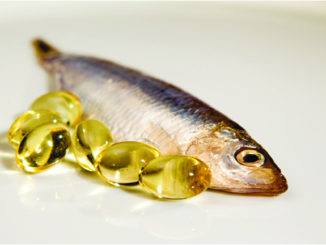
    According to a new analysis by the European Society of Cardiology, omega-3 supplements are associated with an increased likelihood of developing atrial fibrillation in people with high blood lipids.

    The findings were published in European Heart Journal — Cardiovascular Pharmacotherapy, a journal of the European Society of Cardiology (ESC).

    Author of the study, Dr Salvatore Carbone of Virginia Commonwealth University, US said: “Currently, fish oil supplements are indicated for patients with elevated plasma triglycerides to reduce cardiovascular risk.”

    “Due to the high prevalence of elevated triglycerides in the population, they can be commonly prescribed. Of note, low-dose omega-3 fatty acids are available over the counter, without the need for a prescription.”

    Some clinical trials have suggested that omega-3 fatty acids may be associated with an increased risk for atrial fibrillation, the most common heart rhythm disorder. People with the disorder have a five times greater likelihood of having a stroke.

    These studies tested different formulations of omega-3 fatty acids at different doses. The authors, therefore, performed a comprehensive meta-analysis of randomised controlled trials to answer the question of whether fish oils were consistently related to a raised risk for atrial fibrillation.

    The analysis included five randomised controlled trials investigating the effects of omega-3 fatty acid supplementation on cardiovascular outcomes.

    Participants had elevated triglycerides and were either at high risk for cardiovascular disease or had established cardiovascular disease. A total of 50,277 patients received fish oils or placebo and were followed up for between 2 and 7.4 years. The dose of fish oils varied from 0.84 g to 4 g per day.

    The researchers found that omega-3 fatty acid supplementation was associated with a significantly increased risk for atrial fibrillation compared to placebo with an incidence rate ratio of 1.37 (95 per cent confidence interval 1.22-1.54; p<0.001).

    Dr Carbone said, “Our study suggests that fish oil supplements are associated with a significantly greater risk of atrial fibrillation in patients at elevated cardiovascular risk.” “Although one clinical trial indicated beneficial cardiovascular effects of supplementation, the risk for atrial fibrillation should be considered when such agents are prescribed or purchased over the counter, especially in individuals susceptible to developing the heart rhythm disorder,” Carbone added.

    Source: ANI

  • Air pollution linked to high BP in children, young adults

    Air pollution linked to high BP in children, young adults

    Exposure to high levels of air pollutants during childhood increases the likelihood of high blood pressure in children and adolescents, and their risk for high blood pressure as adults, according to a meta-analysis of 14A studies.

    The findings showed that short-term exposure to PM10 was significantly associated with elevated systolic blood pressure (the top number on a blood pressure reading) in young adults.

    Long-term exposure to PM2.5, PM10 and nitrogen dioxide were also associated with elevated systolic levels as well as diastolic level (the bottom number on a blood pressure reading). The results are published in the Journal of the American Heart Association.

    “Our analysis is the first to closely examine previous research to assess both the quality and magnitude of the associations between air pollution and blood pressure values among children and adolescents,” said lead author Yao Lu, Professor of the Clinical Research Centre at the Third Xiangya Hospital at Central South University in Changsha, China.

    “The findings provide evidence of a positive association between short- and long-term exposure to certain environmental air pollutants and blood pressure in children and adolescents,” Lu said.

    This systematic review and meta-analysis pooled information from 14 studies and included data for more than 350,000 children and adolescents (mean ages 5.4 to 12.7 years). The team explored the impact of long-term and/or short-term exposure of ambient air pollution on blood pressure levels of adolescents and/or children in China, US and Europe.

    “To reduce the impact of environmental pollution on blood pressure in children and adolescents, efforts should be made to reduce their exposure to environmental pollutants,” said Lu.

    “Additionally, it is also very important to routinely measure blood pressure in children and adolescents, which can help us identify individuals with elevated blood pressure early,” Lu noted.           Source: IANS

  • Tomato Fish

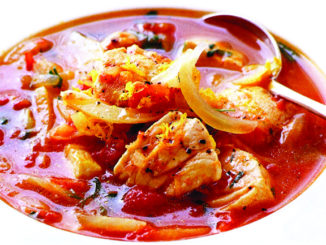
    Tomato Fish

    INGREDIENTS

    250 gm tomato, 1 large onion, 2 teaspoon turmeric, 2 teaspoon ginger paste, 1 teaspoon coriander powder, 1 pinch salt, 1 tablespoon coriander leaves, 500 gm fish, 2 tablespoon yoghurt (curd), 1 teaspoon red chilli, 1/2 teaspoon cumin, 1/2 teaspoon sugar, 3 tablespoon refined oil.

    Method

    –              Remove any pin bones from the fish fillets and cut into large chunks. Rub 1 ½ tsp turmeric powder and 1 tsp salt over the fish and set aside for 10 minutes.

    –              Boil water in a pan. Make a cross cut on the stem side of the tomatoes. Plunge the tomatoes in boiling water for 30 seconds and remove. Peel the tomatoes and chop them finely. Also, chop onions very finely.

    –              Heat oil in a large pan. Spread the fish pieces on the pan and fry till golden in color. Turn and fry on the other side as well. Remove with a slotted spoon and set aside.

    –              Add the onions to the same pan. Saute for 5-6 minutes till soft and cooked. Add the turmeric powder, red chili powder, cumin powder, coriander powder, ginger paste, sugar and chopped tomatoes. Mix well and cook for 4-5 minutes till the tomatoes are tender.

    –              Remove from fire, cool slightly and blend in a blender to get a coarse paste. Return the paste to the pan on the fire. Add 1 cup water and bring to a boil.

    –              Reduce the heat and allow to simmer for a minute. Whisk the yoghurt and add to the simmering curry.

    –              Add the fish pieces along with any juices and simmer for 4-5 minutes. Add the chopped coriander and mix well.

    –              Remove from fire and serve hot with rice or rotis.

  • John David Washington to star in Gareth Edwards’ True Love

    John David Washington to star in Gareth Edwards’ True Love

    Actor John David Washington is set to team up with Rogue One: A Star Wars Story director Gareth Edwards on the upcoming science-fiction film True Love.

    The movie will mark Washington’s another outing in the genre following Christopher Nolan’s Tenet.

    According to The Hollywood Reporter, the plot details on the New Regency film is being kept under wraps, but it is set in the near future and is from an original idea from Edwards.

    Edwards, whose directing credits also include 2014’s Godzilla, will write and helm the project.

    Washington was last seen in the romantic drama Malcolm & Marie.

  • Randeep Hooda joins Khalsa Aid to help Covid patients

    Randeep Hooda joins Khalsa Aid to help Covid patients

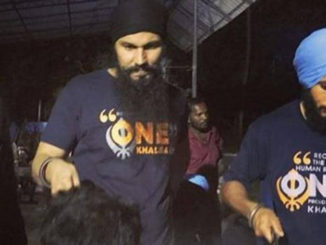
    Amid the pandemic situation going on in the country, people are coming out and offering help in all possible ways. Many celebrities have also joined the campaign and came forward to help common people. Celebrities like Priyanka Chopra Jonas are also trying to raise funds by joining other non-governmental organisations (NGOs). And to join the list is actor Randeep Hooda. He has joined hands with Khalsa Aid and will be providing oxygen concentrators to COVID 19 patients in the country. He shared a video on his official Instagram handle and urged people to come forward and help others. This is a difficult time and we all be needing everyone’s hand in handling this crisis. He wrote, “It’s your chance to save lives! With India facing the worst of the pandemic, people are dying due to lack of oxygen. Let’s come together to help the country fight #COVID and save precious lives. @khalsaaid_india is providing oxygen concentrators and we urge you to come forward and do you bit to help India breathe.”

  • Kangana Ranaut to make digital debut as producer

    Kangana Ranaut to make digital debut as producer

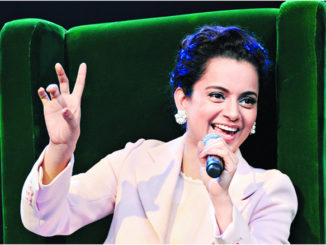
    Actress Kangana Ranaut is all set to make her digital debut as producer with the upcoming film “Tiku Weds Sheru”, a love story and a satire.

    Kangana will dive into web space with her production house Manikarnika Films, and launch its logo on Saturday.

    “With ‘Tiku Weds Sheru’, Manikarnika Films is venturing into digital space. It’s a love story and a satire with dark humour. In digital space, we will do more edgy, new-age and niche content,” she said.

    “We will also launch new talents and take risks with new concepts. We feel the digital audience is slightly more evolved than the regular cinema-going audience,” she added.

    Details related to the upcoming film are still under wraps.

  • Jacqueline Fernandez serves meals to the needy, Sunny Leone helps migrants

    Many are stepping up to help others in these difficult times of the pandemic, and Bollywood actor Jacqueline Fernandez is no exception. The actor, who has set up a foundation to ‘create and share stories of kindness’ called You Only Live Once (YOLO), on Thursday, May 6, took to her Instagram to share photos of herself as she helped cook and serve food for the needy. “Mother Teresa once said, ‘Peace begins when the hungry are fed.’ I was truly humbled and inspired to visit Mumbai @rotibankfdn today, which is run by former Mumbai police commissioner Mr. D Sivanandan. Roti Bank has prepared and distributed meals to millions of hungry people till date, even during the pandemic. They are the perfect example of what #kindnessbrigade aspires to do and I am honored to be of help to them during these times. We only live once! Let’s make this life worth it by helping others in need and sharing the #storiesofkindness of those around us!” read the complete caption of the actor’s recent post. Jacqueline had paid a visit to the kitchen of Roti Bank Foundation and tied up with them in order to serve meals to those in need. YOLO works in collaboration with several different non-profit organisations to cater to a variety of causes. Meanwhile, Sunny Leone is doing her bit by joining hands with PETA in order to extend support to the Delhi migrant workers. Sunny, in collaboration with PETA, has donated 10,000 vegan meals to the workers. “I’m delighted to join hands with PETA India again – this time, to get protein-packed vegan meals to thousands in need. We are facing a crisis, but together, with compassion and solidarity, we will come out ahead,” the actor said in a statement.

  • Black fungus found in Covid-19 patients but ‘no big outbreak’: NITI Aayog member

    Black fungus found in Covid-19 patients but ‘no big outbreak’: NITI Aayog member

    New Delhi (TIP): Mucormycosis, a fungal infection, is being found in COVID-19 patients and largely in cases of those who are diabetic but there is “no big outbreak”, Niti Aayog Member (Health) V K Paul said on Frida, May 7. The situation is being monitored and the treatment for mucormycosis is available, he said. This comes a day after a leading private hospital in Delhi flagged the rising number of COVID-triggered mucormycosis or black fungus cases. Addressing a press conference here, Paul said, “The fungal infection called mucormycosis is being found in patients of COVID-19 disease. It is caused by a fungus named mucor, which is found on wet surfaces. It, to a large extent, is happening to people who have diabetes. It is very uncommon in those who are not diabetic. There is no big outbreak and we are monitoring it.” “Mucor attacks people with uncontrolled sugar. Other than that, if the diabetes patient is taking immune suppressive medicines, steroids, or has cancer, then the impact of mucormycosis is more on that person. If these patients are exposed to wet surfaces, then the chances of getting this disease increases,” he said. Paul said drugs that suppress the immune system but are life-saving like dexamethasone, prednisolone, methylprednisolone, dexona etc., are already being used to treat COVID-19 patients. “All these are related compounds. When these are used, the immune system gets suppressed, even in persons who are diabetic, and this fungus attacks,” he said.

  • False alarm, says Jaishankar on Indian diplomats testing positive in London

    New Delhi (TIP): External Affairs Minister S Jaishankar returned to the country from London where he had self-isolated following reports that two diplomats from the team accompanying him had tested positive for Covid.

    Jaishankar suggested in a social media post that the reports of positive tests were a false alarm and said all the team members were back in the country.

    After the UK media had broken the story, Jaishankar had acknowledged that he was made aware of exposure to possible Covid positive cases. And, as a measure of caution and also out of consideration for others, “I decided to conduct my engagements in the virtual mode. That will be the case with the G7 Meeting today as well,” he had posted hours after an in-person meeting with US Secretary of State Antony Blinken and UK Home Secretary Priti Patel.

    “There is concern the EAM might have been exposed to the virus. We will go by the British health authorities’ tracking and testing system. We are concerned about our delegation. We are happy that none is unwell. I would not like to confirm the story,” sources here had then said.

    “It is not a straight-forward case. We are trying to work out with UK health authorities about the level of exposure. The travel plans of the delegation back to India will depend on exactly what the UK health authorities will say. The External Affairs Minister is well,” they had added.              Source: TNS

  • In second wave, Covid hits rural India; cases and deaths quadruple

    In second wave, Covid hits rural India; cases and deaths quadruple

    New Delhi (TIP): A disconcerting feature of the second wave of Covid-19 is the surge in cases in rural India. Compared with the first peak in September last year, the number of cases in India’s hinterland or backward regions has quadrupled, and so has the number of the dead.

    The districts covered by the Backward Region Grant Fund (BRGF) — 243 of the 272 for which data are available — had more than 39.16 lakh people infected with the disease as on May 5. This is more than four times the 9.5 lakh infections at the peak of the first wave on September 16, 2020.

    The burden of active cases in these districts is also much higher in the second wave, which is yet to peak. The active caseload right now is more than 4.2 times the peak active caseload in the first wave. More than 7.15 lakh people in these districts are currently infected with the disease, putting under extreme stress the sub-optimal healthcare infrastructure in rural districts.

    This is probably reflected in the larger number of deaths in these districts. By May 5, the 243 districts together had reported 36,523 deaths, almost four times the number of dead at the peak of the first wave last year.

    By September 16, 2020, those dead in these districts numbered 9,555.

    Almost 54 per cent of the 272 districts under BRGF belong to just five districts: Bihar – 38, Uttar Pradesh – 35, Madhya Pradesh – 30, Jharkhand – 23 and Odisha – 20. These states also provide much of the labour force or migrant workers that powers the urban centres in the country.

    While there is no urban-rural split of coronavirus cases directly available, an analysis of the case loads and deaths in BRGF districts gives an indication of the rural spread of the pandemic since these 272 districts are primarily rural and relatively less developed.

    In absolute terms, the number of infections in the 243 districts quadrupled between the first and second waves, but as a percentage of total infections in the country it has remained almost exactly the same at 18.6 per cent. But the contribution of deaths from these districts had risen significantly. By September 16 last year, deaths in these districts accounted for 11.5 per cent of the national death toll of 83,198. On May 5, however, this contribution had increased to 16 per cent.

    Most of these 272 districts provide only basic healthcare facilities. The new infrastructure being created by the states are mostly in bigger towns and cities. As a result, there is a large influx of patients from these districts to the nearest big town, which is adding to the burden on the already-stressed infrastructure in towns and cities.

    Over 15% positivity in 24 states

    Twenty-four states have reported a test positivity rate of more than 15 per cent for Covid-19 over the last week, the government said on Friday, May 7.

    At least 30 districts had showed “a steep upward trend” in cases over the last two weeks. The data were a “matter of great concern”, the Health Ministry said.

    Additional Secretary in the Ministry of Health Arti Ahuja said seven states had reported a very high test positivity rate of 30 per cent or more over the past week: Goa (48.5 per cent), Haryana (36.1 per cent), Puducherry (34.9 per cent), West Bengal (33.1 per cent), and Karnataka, Delhi, and Rajasthan (29.9 per cent each).

    “There are 12 states with more than 1 lakh active cases, and seven states with 50,000 to 1 lakh active cases. Case positivity is an important indicator that shows how the cases are spread across [the country]. There are only three states with less than 5 per cent positivity, and nine states have positivity between 5 and 15 per cent. Twenty-four states have more than 15 per cent positivity. The high positivity is the cause of concern for us and the country,” Ahuja said.

    Source: Indian Express

  • FIR filed against Kangana Ranaut for allegedly spreading hate propaganda in West Bengal

    FIR filed against Kangana Ranaut for allegedly spreading hate propaganda in West Bengal

    New Delhi (TIP): After being suspended on Twitter for violating their policies, a new FIR has been filed against Bollywood actor Kangana Ranaut for allegedly spreading hate propaganda and inciting communal violence in West Bengal. The complaint has been filed by an activist and spokesperson Riju Dutta who also alleged Kangana to have maligned the image of West Bengal’s Chief Minister Mamata Banarjee. In the letter, he has urged to take the necessary action against the ‘Queen’ actor. The complaint read, “Ms Ranaut has posted several posts from her verified official Instagram handle bearing url: httpa:// instagram.com/kanganaranaut?igshid=2yruw6zd7j in the ‘Story’ section. She has also distorted and maligned the image of the Hon’ble Chief Minister of West Bengal – Smt. Mamata Banerjee. Hence, she is to be charged against hate propaganda to incite violence in West Bengal.”

    The action comes after Kangana, reacting to the post-poll violence in Bengal, took a direct dig at the Chief Minister of Bengal, Mamata Banerjee. After her tweets, Kangana’s Twitter account was suspended, and then she started posting on Instagram.

    According to a Twitter spokesperson, Kangana’s account was constantly provoking anger and violence, which was diminishing the value of global public conversation on the platform.

    Meanwhile, on the work front, Kangana’s much-awaited project ‘Thalaivi’ which was slated to get a theatrical release on April 23, this year got postponed due to the rise in the number of COVID-19 cases in India. Apart from this she also has ‘Tejas’, ‘Dhaakad’, and ‘Manikarnika Returns: The Legend Of Didda’ in the pipeline.

    Kangana has also signed up to play the role of former Prime Minister Indira Gandhi in an upcoming political drama.                 Source:  ANI

  • TN Assembly has 2 Gandhis,  a Nehru and a Stalin

    Chennai (TIP): What is in a name?

    In Tamil Nadu, a name may be an indicator to one’s political leanings, nationalist passion or the ideology of the parents of the individual.

    After India’s independence, especially in southern Tamil Nadu, many were named ‘Bose’ after freedom fighter Subhas Chandra Bose.

    Similarly, the names of ‘Gandhi,’ ‘Nehru’ and ‘Jawahar’ are also common in the state, the objective being perpetuating the hallowed memory of freedom fighters.

    Also, pure Tamil names and those in memory of leaders of the Dravidian and Left movement are common.

    The subject of names is in focus again as the 16th Tamil Nadu Assembly has two ‘Gandhis’ one of them a Minister, a ‘Nehru’ who is also a Minister and a ‘Stalin’ who is the Chief Minister.

    As is well known, late DMK patriarch M Karunanidhi (1924-2018) named his son Stalin (Born March 1, 1953) after Soviet ruler Joseph Stalin who died on March 5, 1953.

    Though Joseph Stalin may have been a foreign premier and a dictator, Karunanidhi named his son out of his admiration for the Communist ideology.

    R Gandhi and K N Nehru, as Ministers for Handlooms- Textiles and Municipal Administration respectively would report to Stalin!

    Nehru, a party heavyweight in the Cauvery delta region won from Tiruchirappalli West and Gandhi from Ranipet segment in northern TN and BJP’s M R Gandhi, a veteran party leader emerged victorious in Nagercoil constituency in Kanyakumari district in the April 6 Assembly polls.

    Source: PTI

  • Journey of Bengal’s daughter to nation’s Didi

    Journey of Bengal’s daughter to nation’s Didi

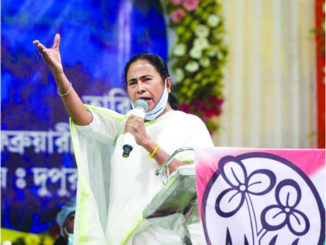
    All India Trinamool Congress (AITC) supremo Mamata Banerjee, also known as Didi (elder sister in the Bengali language), sworn in as the Chief Minister of West Bengal for the third term on 5 May 2021 after she pulled off a landslide victory in the West Bengal Assembly Elections 2021. Ahead of the oath-taking ceremony, she resigned as the Chief Minister of West Bengal at Raj Bhavan in the presence of Governor Jagdeep Dhankhar (as per the practice) and took the oath of the office and secrecy again. She lost the Nandigram Assembly Constituency to Suvendu Adhikari (BJP) in 2021.

    After her separation from the Indian National Congress, she founded the All India Trinamool Congress (AITC or TMC) in 1998. She spearheaded the AITC alliance to a landslide victory in the  2011 West Bengal Assembly Elections, defeating the 34-year-old Communist Party of India (Marxist). She was a member of the West Bengal Legislative Assembly from the Bhabanipur Assembly Constituency from 2011-2021.

    Apart from serving as the Chief Minister of West Bengal, she has held key positions in the Union Cabinet such as first female Minister of Railways, first female Minister of Coal, and Minister of Human Resource Development, Youth Affairs and Sports, Women and Child Development. She has served as the Minister of Railways on two occasions. Mamata Banerjee rose to prominence after opposing the erstwhile land acquisition policies for industrialisation of the Communist government in West Bengal for Special Economic Zones at the cost of agriculturalists and farmers at Singur.

    Throughout her political career, she has maintained a publicly austere lifestyle. She can be seen dressed in a traditional Bengali saree. Though many don’t know, she is a self-taught painter and a poet. Her 300 paintings were sold for Rs. 9 crores.

    Early life, and education

    Mamata Banerjee was born in Calcutta (present-day Kolkata), West Bengal to a Bengali Hindu family to Promileswar Banerjee and Gayetri Devi. She lost her father at the age of 17 due to a lack of medical treatment.

    She attended Deshbandhu Sishu Sikhshalay and completed her senior secondary studies in 1970. She earned her Bachelor’s degree in History from Jogamaya Devi College and received her Master’s degree in Islamic history from the University of Calcutta. She further earned a degree in Education from Shri Shikshayatan College and a law degree from Jogesh Chandra Chaudhuri Law College, Kolkata. She received an honorary doctorate from the  Kalinga Institute of Industrial Technology, Bhubaneswar and an honorary Doctorate of Literature (D.Litt.) from Calcutta University.

    At the age of 15, she became involved in politics and established Chhatra Parishad Union, the student wing of the Congress (I) Party, defeating the All India Democratic Students Organisation affiliated with the Socialist Unity Centre of India (Communist).

    Political career

    She started her political career with the Indian National Congress in the 1970s. She earned huge attention from the media after dancing on the car of socialist activist and politician Jayaprakash Narayan as a protest against him. From 1976-1980, she served as the General Secretary of the Mahila Congress, West Bengal. In the 1984 General Election, she became one of the youngest parliamentarians of India, defeating veteran Communist Party politician Somnath Chatterjee, to win the Jadavpur Parliamentary Constituency in West Bengal.

    In 1984, she became the General Secretary of the Indian Youth Congress. In the 1989 General Elections, she lost her seat to  Malini Bhattacharya of the Communist Party of India (Marxist). In the 1991 General Elections, she was re-elected from Calcutta South constituency and retained this seat in 1996, 1998, 1999, 2004, and 2009 General Elections.

    During P. V. Narasimha Rao administration from 1991-1996, she held key positions in the Union Cabinet. She was appointed the Union Minister of State for Human Resources Development, Youth Affairs and Sports, and Women and Child Development.

    After indicating her resignation and protesting at a rally against the Government’s indifference towards her proposal to improve sports in the country at the Brigade Parade Ground in Kolkata, West Bengal, she was discharged of her portfolios in the year 1993.

    In 1997, Mamata Banerjee parted ways with the Indian National Congress over the difference in political views with the then West Bengal Pradesh Congress Committee President Somendra Nath Mitra. In 1998, she along with Mukul Roy founded AITC which quickly became the opposition party to the Communist Government in West Bengal.

    On 11 December 1998, she held a Samajwadi Party MP, Daroga Prasad Saroj, by the collar and dragged him out of the well of the Lok Sabha, preventing him from protesting against the Women Reservation Bill.

    In 1999, she joined BJP led NDA Government and served as the Minister of Railways. She presented her first Railway Budget in 2000 where she introduced 19 new trains for the FY 2000-2001 and fulfilled many of her promises to her home state West Bengal.

    In early 2001, after Tehelka Magazine’s exposure of Operation West End, she walked out of the NDA and allied with the Indian National Congress for the 2001 West Bengal elections and also to register her protest against senior ministers of the government over the corruption charges levelled by Tehelka.

    In September 2003, she again allied with the NDA Government and served as a Cabinet Minister without any portfolio. On 9 January 2004, took charge as the Minister of Coal and Mines and held the portfolio till 22 May 2004.

    In the 2004 General Elections, her party aligned with the BJP but lost the elections. She suffered major setbacks when the sitting mayor Subrata Mukherjee defected from her party. Her party was defeated in the 2006 West Bengal Assembly Elections. On 4 August 2006, she hurled her resignation papers at the Dy. Speaker Charanjit Singh Atwal in Lok Sabha. Banerjee was provoked by Speaker Somnath Chatterjee who rejected her adjournment motion on illegal infiltration by Bangladeshis in West Bengal on the grounds of improper format.

    On 20 October 2005, she rose to prominence after opposing the erstwhile land acquisition policies for industrialisation of the  Buddhadeb Bhattacharjee government in West Bengal for Special Economic Zones at the cost of agriculturalists and farmers at Singur.

    In November 2006, she was forcibly stopped on her way to Singur for a rally against the proposed Tata Motors car project. She reached the West Bengal assembly, protested, addressed a press conference, and announced a 12-hour shut down by her party. The MLAs of AITC vandalized the West Bengal Legislative Assembly building and a major strike was called on 14 December 2006, but no gain was registered.

    In 2007, armed police personnel stormed the rural area of Purba Medinipur district to quash protest against the then Government of West Bengal. The Government had plans to expropriate 10,000 acres (40 km2) of land for a Special Economic Zone (SEZ) to be developed by the Indonesian-based Salim Group. As per the reports, at least 14 villagers were shot dead while over 70 were wounded, leading to a large number of people protesting on the streets.

    Soon after this incident, Mamata Banerjee wrote letters to the then Prime Minister Manmohan Singh and Union Minister Shivraj Patil to stop the violence in Nandigram which she termed as ‘State-sponsored violence’ promoted by CPI(M).

    Before the 2009 General Elections, her party forged an alliance with the Congress-led  United Progressive Alliance (UPA). After the elections,  Banerjee became the Union Minister of Railways.

    Upon becoming the Union Minister of Railways for the second time, she introduced a number of non-stop Duronto Express trains connecting large cities as well as a number of other passenger trains, including women-only trains.

    As a Chief Minister

    She spearheaded the AITC alliance to a landslide victory in the 2011 West Bengal Assembly Elections, defeating the 34-year-old Communist Party of India (Marxist). She assumed the position of Chief Minister of West Bengal and has been serving the position for the third term in a row.

    She is the first and to date the only female Chief Minister of West Bengal. Soon after assuming the office, she returned the 400 acres of land to Singur farmers, set up Gorkhaland Territorial Administration and brought in many reforms in the education and health sectors.

    In a bid to improve the law and order situation in the state, she created police commissionerates at Howrah, Barrackpore, Durgapur-Asansol and Bidhannagar. The total area of Kolkata Municipal Corporation was brought under the control of the Kolkata Police.

    On 16 February 2012, she received an appreciation letter from  Bill Gates of the  Bill & Melinda Gates Foundation for achieving a full year without any reported cases of polio, stating it as a milestone not only for India but for the world as well.

    In the 2016 West Bengal Assembly Elections, her party won 211 of 293 seats. She took oath as the CM of West Bengal for the second time.

  • Stalin takes oath as Tamil Nadu CM

    Stalin takes oath as Tamil Nadu CM

    Dravida Munnetra Kazhagam (DMK) leader MK Stalin took oath as the Chief Minister of Tamil Nadu on Friday, May 7, morning.

    Governor Banwarilal Purohit administered the oath of office and secrecy to 68-year old Stalin, for whom this would be the first stint as CM, in a simple ceremony at the Raj Bhavan.

    Along with the DMK chief, 34 ministers of his party also took oath to be appointed in the state cabinet.

    The names include 19 former ministers and 15 new faces. It has two women. Stalin’s son Udhayanidhi does not figure in the list of ministers.

    AIADMK top leader O Panneerselvam, leaders from alliance parties including Congress’s P Chidambaram, MDMK chief Vaiko and top state officials took part in the ceremony.

    DMK had fought the elections with its allies and got an absolute majority on its own by bagging 133 seats in the 234-member assembly.

    Stalin will hold several portfolios including Home, General Administration, Special Initiatives, Special Programme Implementation and Welfare of Differently -Abled Persons.

    While he has been branded as the ‘son who rose’, Dravida Munnetra Kazhagam (DMK) president MK Stalin cannot be called so anymore after ensuring his party’s victory in the 2021 Tamil Nadu Assembly election. Ever since his father, M Karunanidhi, passed away in 2018, Stalin has managed to consolidate the DMK.

    The party’s sweep in the 2019 Lok Sabha election was seen as his personal achievement. But the victory, which will make Stalin walk inside St. Fort George as Tamil Nadu’s chief minister, is the reward for his perseverance of over 50 years.

    As Stalin himself had recalled in a recent interview to India Today TV, he started his political career as a teenager at a barbershop.

    “We youngsters started an outfit called DMK Elaingar Mandram (DMK youth wing),” he had said. Stalin later campaigned for his uncle Murasoli Maran in the 1967 elections.

    During the Emergency, he was arrested under the Maintenance of Internal Security Act (MISA) for taking part in protests. MK Stalin came to the forefront when he was beaten up in police custody. C Chittibabu, a DMK leader, who was his cellmate died protecting him.

    Since then, Stalin eventually grew in the party and became secretary of its youth wing in 1982. In his own words, as Stalin told India Today, “They kept calling me heir. But, I came up in the party on my own, in a step by step process.”

    Stalin was first given a ticket to contest from the Thousand Lights constituency in Chennai but lost the election. However, he won from the same constituency in 1989.

    In 1996, MK Stalin became the Mayor of Chennai. This post, he has said several times, gave him “great experience”. His slogan of converting Chennai into ‘Singara Chennai’ (beautiful Chennai) became popular.

    Stalin went on to become Tamil Nadu’s Deputy Chief Minister in his father’s cabinet in 2009. The same year, when this journalist in an interview asked M Karunanidhi about Stalin’s next elevation, he said, “DMK is a democratic party. Every decision will be taken with consent of the general council.”

    Karunanidhi did not project MK Stalin as the chief ministerial candidate in 2016 even though he himself was unwell.

    A senior DMK leader said, “Kalaingar didn’t handover the position so easily to Stalin. He was made to wait for a really long time and his has been a long battle.”

    In 2014, MK Stalin was criticised by political analysts for not leading the DMK to victory in the Lok Sabha elections.

    “They said his strategy failed. But he didn’t wear out and continued to tour the state,” said the senior DMK leader on condition of anonymity.

    While dynasty politics has been an allegation levelled against MK Stalin by his opponents and critics, he also faced trouble from his brother MK Alagiri.

    Over the years, Stalin worked towards creating a niche for himself in the party. At one point, Karunanidhi was forced to handover powers of Tamil Nadu’s southern districts to MK Alagiri.

    Nevertheless, ‘Thalapathy’, as MK Stalin is called by his supporters, toured across Tamil Nadu to garner support.

    In his first interview to India Today TV (then Headlines Today) in 2013, said, “State autonomy is very important for DMK. We believe in self-rule in the state.”

    He had lashed out at then Chief Minister J. Jayalalithaa for not keeping up the promises made to the people. Stalin had spoken about his vision for Tamil Nadu and to strengthen the DMK.

    This was the time things went sour between Alagiri and his father Karunanidhi. After many struggles, Madurai which was seen as MK Alagiri’s bastion came under the wings of MK Stalin.

    The 2016 assembly election saw a close fight. Stalin was the one who had spearheaded DMK’s campaign and alliance strategies.

    After losing a closely fought battle, Stalin had to wait to live his dream of becoming the chief minister.

    But the massive victory in this election has finally paved way for the 68-year-old Stalin to occupy the chief minister’s chair.

    However, challenges are far from over for the chief minister elect. He is taking over the mantle in the midst of a raging pandemic and is inheriting the state’s financial burden from the previous government.

    Some AIADMK leaders have openly said in debates that it might not be easy for Stalin’s government to get help from the central government.

    For now, ‘Team Stalin’ is getting ready to decide the cabinet and handle the pandemic on priority, sources say.

    Governor Banwarilal Purohit appointed DMK president M K Stalin as Chief Minister of Tamil Nadu after he submitted a letter on his election as legislature party leader, the Raj Bhavan said on Wednesday. Stalin called on Purohit at the Raj Bhavan and “submitted a letter intimating of his election as the leader of the Dravida Munnetra Kazhagam Legislature party.”

    Governor Purohit appointed him as the Chief Minister of Tamil Nadu and invited him to form the ministry and to have the swearing-in ceremony on 7 May at 9 am at Raj Bhavan, an official release said.

    On Tuesday, Stalin was unanimously elected as legislature party leader of the Dravida Munnetra Kazhagam (DMK). “Party president @mkstalin was elected leader of the DMK legislature party,” the DMK said on its official twitter handle.

    The meet to elect him was held at headquarters ‘Anna Arivalayam’ and it witnessed participation of 133 newly elected MLAs, including eight from alliance parties like the Vaiko-led MDMK who fought the polls on DMK’s ‘Rising Sun’ symbol. A DMK release said Stalin was unanimously elected as the legislature party leader after his name was proposed by party general secretary Duraimurugan and seconded by principal secretary KN Nehru.

    The DMK has won 133 of the total 234 Assembly seats that went to polls on April 6. Some more seats were won by allies, including the Congress that bagged 18 constituencies.

    Garnering two-thirds of the 234 seats, the 68-year old Stalin, through his sustained campaign yet again ushered in a victory similar to that of the 2019 Parliamentary election win. The victory did not, however, land in Stalin’s lap and he worked towards it by reaching out to people systematically by targeting the Centre and state governments on many issues.

    Source: Live Mint, India Today and News 18

  • Kerala: Pinarayi Vijayan secures a historic second term

    Kerala: Pinarayi Vijayan secures a historic second term

    Kerala took a left turn again with Chief Minister Pinarayi Vijayan bucking the four-decade-old electoral trend of the state that sees power alternating between the two main groupings.

    Winning 98 out of 140 seats, the CPI(M)-led Left Democratic Front (LDF) has made history.

    For Vijayan, who led the coalition from the front, it is a personal victory that will strengthen his position (as well as that of the Kerala unit’s) in the party, said political observers. The CPI(M) has been left licking its wounds in West Bengal, but the party can take cheer in the fact that the only Communist government in the country bounced back to power.

    Party general secretary Sitaram Yechury lauded the people of the state for reposing faith in the government. “The country is facing twin dangers, livelihood issues arising out of pandemic and threat to secular and democratic values. People of Kerala gave us immense support and will uphold these values,” he said in New Delhi.

    Though the government faced many scandals and corruption charges, including the sensational gold smuggling case, arrest of party secretary Kodiyeri Balakrishnan’s son in drug and money laundering cases, and a controversy over alleged back-door entry in government services, the CM steered the coalition through the crises. His government also had to deal with two health crises (Nipah and Covid-19) and floods, which almost became an annual affair.

    Vijayan, political theorist and writer J Reghu said, has successfully managed to brand himself as a competent leader. The party has amplified this, he added, pointing out that much more than ideological, this victory is a personal one for the CM.

    Vijayan campaigned extensively in all 14 districts, denied seats to many senior leaders such as finance minister Thomas Issac, law minister A K Balan and public works department minister G Sudhakaran in the guise of instilling fresh blood, and saw off a factional feud following the retirement of his long-time party rival V S Achuthanandan.

    The Opposition Congress-led UDF said it accepts the people’s verdict with humility. “It was least expected. We will go through factors that led to our defeat and take corrective steps,” said opposition leader Ramesh Chennithala.

    Though party leader Rahul Gandhi, an MP from the state, and his sister Priyanka Gandhi campaigned for the UDF, they failed to control the Left’s surge. “It seems cosmetic changes in the form of young candidates and the campaign of the Gandhi family failed to help. The party will have to be restructured,” said G Pramod Kumar, a political analyst and former senior adviser of the United Nations Development Programme.

    The BJP-led NDA also drew a blank. It forfeited its lone seat in the outgoing house. “Metro Man” E Sreedharan, who was inducted into the party a month before election, and made the news more for his controversial statements than anything else, failed to retrieve the party’s fortunes. He was defeated in Palakkad by sitting legislator Shafi Parambhil of the Congress by a margin of over 3,000 votes.

    BJP remains distant third

    In red surge in Kerala on Sunday, May 2, the Bharatiya Janata Party (BJP) was washed out and it failed to save its lone seat Nemom in Thiruvananthapuram which the BJP often dubbed as ‘Kerala’s Gujarat’. But even in such a hostile climate, the wounded BJP is eyeing the space vacated by the Congress.

    Two years ago, the party had announced its grand plan of a “Congress Mukt Bharat” and often poached disgruntled leaders and allegedly toppled governments, the last time being in Puducherry.

    “It is a fact that before election, some leaders were approached. But the political climate in Kerala is unlike that of north India and other parts of the country. Let the party first save its depleting space before poaching on other parties,” said a senior Congress leader, who did not want to be named.

    Many senior Congress leaders have urged an overhaul in the party. Party workers took to social media to highlight this and sought elevation of Kannur strongman K Sudhakaran MP as PCC president to lift workers’ morale. Senior leader and former minister Thiruvanchur Radhakrishnan later endorsed it too.

    Out of 95 seats the Congress contested, it got 21 and the BJP drew a blank, losing all 113 seats it contested. A close look at the results shows that the BJP’s high-decible campaign that it is the only credible alternative in bipolar politics fell flat.

    What is more embarrassing for the party is that it roped in Metro Man E Sreedharan at the eleventh hour (he joined the party three weeks before the election) and projected him as the CM candidate and tried to highlight his “clean image and integrity”. Almost all national leaders descended onto the state, including Prime Minister Modi, and lauded the expertise of the 88-year-old civil engineer to curry favour but voters were least convinced. Before results, Sreedharan even opened an office of the legislator in Palakkad.

    Sreedharan did put up a spirited fight in Palakkad till the last round before admitting defeat at the hands of sitting Congress legislator Shafi Parambhil by over 3,000 votes. Party district president E Krishnadas said there was rampant cross-voting to block Sreedharan’s victory. “All teamed up to ensure his defeat. The CPI(M)’s total votes came down to 8,000,” he said.

    Though party candidates came second in eight seats, the vote share of BJP+ was 14% in comparison to that of Lok Sabha elections’ 15.3%, latest statistics show. It was aiming for a jump of 5% and a couple of seats but it failed. Its second big alliance partner the Bharatiya Dharma Jana Sena, a political outfit of backward Ezhavas, also failed to make a mark. In the last assembly elections, the BJP alone had 12. 6 % vote share which came down to 11.30% this time and BDJS vote share dipped from 3% to 1.75% this time.

    To add it its woes, party state president K Surendran lost in two constituencies– Mancheswaram in north Kerala and Konni in Pathanamthitta. He shuttled between two constituencies on a chopper which evoked much criticism. “There was only a single point agenda to prevent blooming of the lotus. Parties were in a race to ensure this. A big communal polarisation in favour of the ruling CPI(M) took place,” said Surendran.

    BJP national leaders had raised many issues like love jihad, Sabarimala temple issue, the gold smuggling case and arrest of party secretary Kodiyeri Balakrishnan’s son in drug and money laundering cases but they failed to enthuse voters.

    “Due to Kerala’s unique demography, it is difficult for the party to get a strong foothold. It tried its best to rake up the Sabarimala temple issue but results show it failed to make any impact. Infighting in the state unit also played its role,” said political commentator Sunnykutty Abraham, adding the party will remain a distant third in the state.

    Chief minister Pinarayi Vijayan also came down heavily on party’s belligerent campaign. “We promised to close the single account of the BJP and we managed it. Such forces have no place in a state like Kerala, which swears by communal harmony. It is better for its national leaders to understand it at least now,” he said in Kannur (north Kerala) on Sunday, reacting to the BJP’s performance.

                    Source: HT

  • Patent waivers alone may not lead to quick vaccine access, say experts

    Patent waivers alone may not lead to quick vaccine access, say experts

    The waiving off of patents alone is unlikely to help improve vaccine availability anytime soon, scientists, legal experts and pharma industry executives said, pointing to the complicated technical know-how, raw materials and infrastructure required to make vaccines while ensuring they are as safe and effective as the original developer intended it to be. Several countries, including the US, France and the European Union are considering backing efforts countries such as India and South Africa for a global waiver of coronavirus vaccine patents to boost supplies. While such a move could well be the first step in broadening access, patents alone do little to allow someone else to make biological therapeutics such as vaccines, unlike in the case of generic drugs, which are chemicals and can be replicated more easily with a recipe book of sorts. “Patents are a way of protection of your intellectual and commercial information, speaking from a legal point of view. But just by reading a patent, does not necessarily offer the ability to replicate the product or the process, because while a patent does share a lot of the generic information, it protects the specifics, and it is not a self-guide,” said Prabuddha Kundu, co-founder and managing director at Premas Biotech, which is working on an oral Covid-19 vaccine.

    To understand the challenge, consider the case of some coronavirus vaccines: AstraZeneca and J&J’s vaccines involve a bio-engineered adenovirus that expresses the Sars-Cov-2’s spike protein; Novavax’s vaccine consists directly of the spike protein that has been cultured and grown in moth cells in labs.

    “A chemical entity and a biological entity are very different. Even a simple protein, for example, is hundred times more complex or has more components than a drug like, say, paracetamol. There can be many ways to make paracetamol, and it would turn out to be exactly that but even if there were few ways to produce the protein, the final product varies in its final shape and form,” added Kundu.

    For that, he added, “you must understand the process so well, that every time you carry it out, you end up with exactly the same product. In many situations in biologics, the process is the product”.

    Legal experts in the pharma field said this constitutes know-how, which often is a trade secret. “There is a clear divide between a patent and a trade secret. The technical know-how is proprietary. TRIPS provides for protection of undisclosed information, which would not be found in patents,” said Dev Robinson, partner and head, Intellectual Property, at Shardul Amarchand Mangaldas.

    TRIPS refers to Trade-Related Aspects of Intellectual Property Rights agreement under the World Trade Organization (WTO), the specific framework that India and South Africa have sought waivers under.

                    Source: HT

  • A tragedy of errors: Lack of foresight caused Covid crisis

    A tragedy of errors: Lack of foresight caused Covid crisis

    As India’s coronavirus tally reached 21,892,676 on Saturday, the Covid-19 crisis in the country continues to grab global headlines. From featuring on the frontpage of newspapers around the world to being the centre of debates on television channels like the CNN, the coronavirus situation has been at the centrestage ever since the second wave of the pandemic hit the country.

    The surge in cases has battered its already feeble healthcare system and an acute shortage in supply of vaccines have hit inoculation drives in most states. Thousands of Covid patients have been scrambling to find hospital beds, oxygen cylinders and life-saving medication amidst an acute shortage of medical resources in the country. India is also the only country to record over 4 lakh daily cases since the start of the pandemic.

    At a time when India records over 3.5 lakh cases and 3,000 deaths a day, we take a look at how the international media has been reporting about the country’s crisis:

    India has been hit by the second wave of the pandemic like no other country and according to the New York Times, health experts and analysts blamed Prime Minister Narendra Modi’s “overconfidence” for it. “Independent health experts and political analysts say that Modi’s overconfidence and his domineering leadership style bear a huge share of the responsibility. Critics say his administration was determined to cast an image of India as back on track and open for business despite lingering risks,” the article read.

    ‘India desperate for oxygen, its politicians deny there’s a problem’: The Guardian

    In an opinion piece published in the Guardian, the writer says that at a time when the country scrambles to gather oxygen for its Covid-19 patients, many of whom have even died because of its shortage, there are political leaders who not only disregard the crisis but also threaten to take action against people who voice their opinion regarding it.

    “The chief minister of Uttar Pradesh has threatened legal action against anyone who complains of oxygen shortages because he insists there is no such shortage. He has recently threatened to seize the property of people complaining of the unavailability of oxygen because they are lying rumour-mongers, spreading panic,” the article read. Blaming the politicians of the country for the current scenario, the article added, “The Bharatiya Janata party’s chief minister of Uttarakhand (the Himalayan state bordering Uttar Pradesh) allows the largest riverside pilgrimage in the world, the Kumbh Mela, to gather right in the middle of the second wave, because astrologers rule that it has to happen a year ahead of schedule. His decision has the prime minister’s blessing.”

    ‘PM Modi could have prevented India’s devastating crisis, critics say. He didn’t’: CNN

    Attributing election rallies to the surge in Covid cases across the country, an article in CNN read, “On April 17, ahead of a state election, a maskless Prime Minister Narendra Modi boasted to a sea of cheering supporters: ‘I’ve never ever seen such huge crowds at a rally.’ His country was on the brink of a humanitarian crisis. That day, India recorded more than 261,000 new coronavirus cases — more than many countries have seen during the entire pandemic.”

    Stating that that responsibility for India’s second wave belonged “first and foremost” to the government, an expert CNN spoke to said, “People expect their governments to assure them that they are in charge and taking care of things … but the government is almost missing in action. Now that India is facing the worst crisis, in my lifetime, certainly, where is the Prime Minister?”

    ‘India Is What Happens When Rich People Do Nothing’: The Atlantic

    In an editorial, Vidya Krishnan stated that the Narendra Modi government did very little in the time it got between the first and second wave to help avert the current crisis.

    “After the virus landed on India’s shores, he imposed a brutal shutdown— one that largely hurt the poorest and most vulnerable — without consulting the nation’s top scientists, yet did not use the time to build up the country’s health-care infrastructure…and rather than taking advantage of low case counts in prior months, his government offered an air of triumphalism, allowing enormous Hindu religious festivals and crowded sporting competitions to go ahead. Modi’s ruling Hindu-nationalist party has been accused of hoarding lifesaving drugs, and has held mass election rallies cum super-spreader events that would make Donald Trump blush,” the article read.

    ‘More funeral pyres will burn unless Modi takes accountability’: Financial Times, UK

    In an article titled “The tragedy of India’s second wave”, the Financial Times warns that unless Modi takes accountability for his role in this crisis, “more funeral pyres will burn across his nation”.

    “With reports of people dying in the streets outside overwhelmed hospitals running short of oxygen, India today perhaps most closely resembles the worst-case scenarios painted when the virus was identified 16 months ago.  Like populists elsewhere, Modi will be reluctant to take actions that might imply his government’s earlier mistakes fuelled today’s outbreak. Unless he does, more funeral pyres will burn across his nation,” the article read.

    ‘Narendra Modi’s lack of foresight z

    caused the crisis’: Le Monde

    An editorial published in French newspaper Le Monde says that Modi’s “lack of foresight, arrogance, and demagoguery are evidently among the causes of a situation that now seems out of control”.

    “The Prime Minister, after having paralyzed and traumatized his country in 2020 by decreeing brutal confinement, abandoning millions of migrant workers, completely lowered his guard at the beginning of 2021,” it stated.

    ‘It isn’t just Modi, India’s media must also take responsibility for Covid-19 crisis’: Time Magazine

    The Time Magazine, in an opinion piece, has called out the Indian media over “exaggerating the government’s successes”, saying that it is this “lack of accountability” that led to the current crisis.

    “Many Hindi- and English-language news channels, as well as regional news outlets, are unabashedly pro-Modi. They have routinely exaggerated the government’s successes and either glossed over its failures or spun ways to pin them on Modi’s discontents: the opposition, liberals, Muslims, activists, leftists, protesters, NGOs, and other assorted anti-nationals,” the article read.

    It added, “The media protected Modi from any proper public scrutiny of his initial handling of the pandemic. He made repeated television appearances in which he said little of substance and offered no concrete plans to tackle the crisis. Instead, he called for festivals of sound and light, and ordered the armed forces to shower flowers on hospitals — all of it hyped up by doting anchors as proof of Modi’s strong leadership.”

                    Source: Indian Express

  • India logs 401,078 cases, 4,187 deaths as 2nd wave hammers country

    New Delhi (TIP): India on Saturday, May 8, recorded 401,078 new coronavirus disease (Covid-19) cases and 4,187 deaths in the last 24 hours, taking the caseload and death toll to 21,892,676 and 238,270 respectively, according to the Union health ministry’s dashboard.

    India is currently seeing a tsunami of cases and deaths under the deadlier second wave of the Covid-19 disease pandemic. According to the Union health ministry, 10 states including Karnataka, West Bengal, Tamil Nadu, Maharashtra, Delhi reported 71.81% of the new cases seen on Friday.

    Karnataka, which is the second worst hit state from the pandemic has recorded over 1.8 million cases so far. On Friday, Karnataka saw the highest single-day jump in daily deaths at 592 while 48,791 more people were found out to be positive for Covid-19. The state will be placed under a complete lockdown from from 6 am on May 10 to 6 am on May 24 to curb the spread of the disease, chief minister BS Yediyurappa announced on Friday.

    Maharashtra, meanwhile, witnessed a dip in its daily tally on Friday after 54,022 new cases were reported, taking the caseload to 4,996,758 including 74,413 deaths and 4,265,326 recoveries. The Centre pointed out on Friday that Maharashtra along with Delhi, Uttarakhand and other states is showing early signs of plateauing or decrease in daily infections.

    While the Indian government has so far resisted calls for another national lockdown, states have stepped up restrictions including localized lockdowns and curfews. But health-care experts are worried that the pandemic is now spreading into small towns and villages, where the health infrastructure is not advanced enough to support a surge in cases.

    The second wave began in February but cases rose at an alarming rate starting in April. The World Health Organization has said that the sharp rise in infections may be partly due to multiple mutated versions of the virus circulating in the country, including the local B.1.617 variant and the B.1.1.7 variant that was detected in the U.K.

    But, Prime Minister Narendra Modi’s government has drawn criticism for allowing large crowds to gather for religious festivals and election rallies throughout the country earlier this year and then leaving the bulk of responsibility for fighting the outbreak to state governments. India’s hospitals are overwhelmed and facing shortages of beds, medical oxygen and medication to treat Covid-19 patients.

    India’s Supreme Court reportedly told the central government to start preparing for an anticipated third wave of outbreak and revamp its formula to distribute oxygen across the country. That comes a day after the top court gave the government 24 hours to formulate a plan to meet Delhi’s oxygen requirement.

  • Mother’s Day: A tribute to mothers

    Mother’s Day: A tribute to mothers

    As the name suggests, Mother’s Day is a celebration of the mother of the family, of her relentless contributions towards the growth and well-being of her children. While one day is really not enough to pay tribute to, and honor the mother, the day encourages people to come out in support and acknowledgement of everything that a mother tirelessly does, day in and day out.

    The day is celebrated annually in many countries around the world. While the dates vary every year, it is largely celebrated on the second Sunday of the month of May every year. This year, it is being celebrated on May 9.

    History

    Arguably, the tradition of a day to celebrate mothers can be traced back to the times of the ancient Greeks, who held festivities to honor Rhea, the mother of the gods.

    Early Christians celebrated the fourth Sunday of Lent as a Mother’s festival to honor Mary, the mother of Christ.

    In the UK, the tradition of Mother’s Day is now very similar to its American counterpart, but its origins are different, as the day commemorates returning to your mother church on the fourth Sunday in Lent.

    The English colonists who settled in America discontinued the tradition of Mothering Sunday, as presumably, it would have been a bit of a trip to return to their mother church for the day.

    The American tradition

    For a holiday, that became popular in fairly recent times, we can still manage to find three originations for the day.

    A true American Mother’s Day was first suggested in the United States by Julia Ward Howe, writer of the Battle Hymn of the Republic. She suggested that the day be dedicated to peace. Starting in 1872, she organized Mother’s Day meetings in Boston every year.

    However, some would argue that Mother’s Day on the current date was almost accidentally set in motion by Mrs Juliet Calhoun Blakely. On Sunday 11 May 1877, Mrs Blakely’s birthday, her son who was the pastor of her Church, left the pulpit abruptly. Mrs Blakely then stepped to the pulpit and took over the rest of the service, calling for other mothers to join her.

    Mrs. Blakely’s two sons felt so moved by their mother’s actions that they vowed to return to their hometown of Albion, Michigan., every year to mark their mother’s birthday. In addition, the brothers urged others to honor their own mothers on the second Sunday of May.

    In terms of the holiday gaining its national status, undoubtedly the main driver was a Philadelphia schoolteacher called Anna M. Jarvis.

    In 1907, Miss Anna, began a movement to set up a national Mother’s Day in honor of her mother. Anna’s mother, Mrs Anna M. Jarvis, had been instrumental in developing “Mothers Friendship Day” which was set up to assist in the healing process after the Civil War. Miss Jarvis wanted to set aside a day to honor all mothers, living and dead.

    Miss Jarvis and her supporters began to write to ministers, evangelists, businessmen, and politicians in their crusade to establish a national Mother’s Day.

    The first Mother’s Day observance was a church service for the second anniversary of her mother’s death,on the second Sunday of May. Anna handed out her mother’s favorite flowers, white incarnations.

    The following year, Mother’s Day was also celebrated in Miss Anna’s own city of Philadelphia. By 1911, Mother’s Day had spread nationwide and was being celebrated in almost every state in the Union.

    In 1914, President Woodrow Wilson proclaimed the second Sunday in May as a national holiday in honor of mothers.

    Over the years, Mother’s Day became increasingly popular, and the current tradition of card and gift-giving increased. It is said that the commercialization of Mother’s Day angered Anna as she felt that the original sentiment of the day was being sacrificed at the expense of greed and profit.

    Mother’s Day is now one of the most commercially successful U.S. occasions. According to the National Restaurant Association, Mother’s Day is now the most popular day of the year to dine out at a restaurant in the United States. This year, consumers are expected to spend $21.2 billion on Mother’s Day, an increase of 5 percent from last year, according to a survey by the National Retail Federation.

    The Greeting Card Association estimates that more than 150 million Mother’s Day cards are exchanged in the U.S. every year, making Mother’s Day the third-largest card-sending holiday after Christmas and Valentine’s Day.

    How can we celebrate Mother’s Day at home?

    A midnight surprise

    Blow a few heart-shaped balloons and hang them in the room, just so she is blown off. You can also buy some helium balloons and put love notes on the loose ends of the strings for her to read.

    Bake a cake

    Nothing spells special like hand-baked items. If you’re unsure about your baking skills, there are numerous YouTube channels on bakery available online these days. You can follow some who can guide you on how to make cakes.

    Play a beautiful message

    Get family and friends to send birthday messages for her. Print them on colored papers put them in a jar and present them to her. If you want to add a personal touch, ask them to send a video message to surprise her with their presence virtually.

    Make a photo collage

    Alternatively, you can make a collage of the pictures and present it as either a soft or hard copy. This is sure to get you a big hug and a kiss! Collate all your pictures and make a touching slideshow presentation with all her favorite songs running in the background. Warning: This might bring some tears to her eyes.

    Plan well and assign an alphabet from H-A-P-P-Y B-I-R-T-H-D-A-Y to her loved ones (including you). You can either write down the alphabets or get them printed and ask each one of them to pose with it and send you the photo. Once all the pictures come in, make a collage, present it to her and see the glee on her face.

    Watch the latest movie

    Nowadays, you don’t have to check on theaters to watch the latest movie.OTT platforms like Netflix, Hotstar bring all the recent releases on your device. Make good use of it by watching with her and spending some quality time.

    Flip through a previous album

    You can sit along with her and refresh the memories and photographs of her. This will give both of you the flashback of good old times.

  • UP panchayat polls: SP emerges as frontrunner, BJP suffers setback in strongholds

    UP panchayat polls: SP emerges as frontrunner, BJP suffers setback in strongholds

    The Uttar Pradesh Panchayat Election Results, touted as the semi-final of a high-stakes assembly election next year, have set the alarm bell ringing with for the ruling Bharatiya Janata Party (BJP).

     Though the BJP leadership was claiming that their candidates have won in over 60 per cent of the seats, but the result declared in the districts shows a different scenario.

    Among the 3 tier panchayat polls the contest of the District Development Council (DDC) member was the crucial for the political parties in which BJP lagged in almost in majority of districts including PM’ s constituency of Varanasi, Ayodhya of Ram Temple, Krishna Janamsthan Mathura and in state capital Lucknow.

    However in Gorakhpur, the native of chief minister Yogi Adityanath, the BJP was successful in winning majority of seats. BJP president Swantra Deo Singh has claimed that party candidates have won over 918 DDC seats and were leading in 456 other places of the total 3050 at stake.

    However the ruling BJP would get an edge during the election of the DDC chairman, as several independents, who have won the polls, could support the BJP nominee.

     As no political party symbol were used in this poll it will also benefit the ruling party to rope in the winning candidates of the opposition.

    According to reports in the state capital Lucknow, of the announced 25 seats, 10 were won by Samajwadi Party (SP), 4 by Bahujan Samaj Party (BSP), 3 by BJP and Independent and others 8.

     In PM Narendra Modi’s, Varanasi district, seven DDC seats were won by BJP, 10 by SP, 4 by BSP, one of Congress, 2 by SBSP, 3 by Apna Dal (Sonelal) and 11 by Independents.

    In Ayodhya, of the 40 seats, 22 were won by SP, 8 by BJP, 4 by BSP and 6 by others.

    Of the 33 DDC seats announced in Mathura district, 12 were won by BSP, 9 by BJP, 8 by Rashtriya Lok Dal (RLD), one by SP and others 3.

    In Auraiya district, of the 23 seats announced 5 were won by BJP, 10 by SP, 4 by BSP and 4 by others. While in Kanpur Dehat district of the 32 seats announced, BJP, 12 by SP, 7 by BSP and 9 by others.

    In Shamli district of the 19 seats announced 4 were won by BJP, 2 by SP, 5 by RLD and 8 by others. In Hathras district, of the 24 seats declared 5 were won by BJP, 4 by SP, 2 by BSP, 3 by RLD and 10 by others.

    A report from Baghpat said RLD won 8 seats of the 20 followed by 4 of BJP, 4 of SP, one of BSP and 3 others.

    In Jalaun district, in the total 25 seats, 7 were won by BSP, 6 by BJP, 4 by SP, One by Congress and 7 by others.

    In Etawah district, of the 24 seats announced so far, 18 were won by SP, 2 by BJP, one by BSP and 3 others while in Balrampur district 6 were won by BJP, 9 by SP, 6 by BSP, one by Congress and 2 by others.

    In Mainpuri, 12 were won by SP, 8 by BJP one by Congress and 9 by Independents.

    What it means for BJP

    Considered mainly an urban party, the BJP had never directly entered panchayat polls and had rather avoided village polls. The setback comes after massive preparations including announcing the candidates list.

    In January, the BJP set up high-level committees for each of its six regions in the state, with each committee including a minister, a senior leader as in-charge and local office bearers. Chief Minister Yogi Adityanath, BJP in-charge of Uttar Pradesh Radha Mohan Singh and national general secretary Arun Singh themselves held reviews of the preparations.

    The party had announced that office-bearers willing to contest these polls would have to resign from their posts if elected. Many did so, hoping it would give them a better chance at upcoming Assembly elections.

    Yet the results included losses in most seats in even Ayodhya and Varanasi. This comes in the backdrop of claims that the BJP has started construction of Ram Temple and also released huge funds for overall development of Ayodhya and Varanasi.

    While the losses in the majority of the 3,050 zila parishad seats might not formally count as BJP defeats, it will have dented the party’s confidence ahead for Assembly polls. On the other hand, it will still look forward to the election of zila panchayat chairpersons, who enjoy huge administrative powers.

    What it means for SP

    Samajwadi Party leaders are talking about how they have defeated BJP candidates in large numbers, but are avoiding putting exact numbers to these victories. The party had not officially declared all candidates and left the decision to support candidates to local cadre; in many places there was more than one active party member willing to contest. While the SP has gained significantly, its next test would also be turn these numbers into victory for zila panchayat chairpersons.

    What next

    All parties will now focus on the election of 75 zila panchayat chairpersons posts and 826 block pramukhs. The BJP has announced that it would officially declare the list of candidates for these posts too. It is confident because most of the grassroots representatives traditionally go with the ruling party. Its next challenge would be to select right candidates. And the SP and the BSP will be expected to put up a tough fight.

    The independent winners include a large number of rebels of the BJP itself, who were not given tickets but won. The BJP will do all it can to woo such candidates back into the party fold ensure victory. Zila panchayat chairpersons have powers to approve and sanction proposals of gram panchayats, impose taxes and even frame or sanction bylaws for any gram panchayat.

  • Global Covid-19 caseload tops 156.4 mn

    Global Covid-19 caseload tops 156.4 mn

    Washington (TIP): The overall global Covid-19 caseload has topped 156.4 million, while the deaths have surged to more than 3.26 million, according to the Johns Hopkins University.

    In its latest update on Saturday, May8,  morning, the University’s Center for Systems Science and Engineering (CSSE) revealed that the current global caseload and death toll stood at 156,472,669 and 3,264,720, respectively.

    The US continues to be the worst-hit country with the world’s highest number of cases and deaths at 32,649,677 and 580,870, respectively, according to the CSSE.

    In terms of infections, India follows in the second place with 21,491,598 cases.

    The other countries with more than two million confirmed coronavirus cases are Brazil (15,082,449), France (5,808,421), Turkey (4,998,089), Russia (4,808,133), the UK (4,446,752), Italy (4,092,747), Spain (3,567,408), Germany (3,507,730), Argentina (3,118,134), Colombia (2,968,626), Poland (2,824,425), Iran (2,627,094), Mexico (2,358,831) and Ukraine (2,160,809), the CSSE figures showed.

    In terms of deaths, Brazil comes second with 419,114 fatalities.

    Nations with a death toll of over 50,000 are India (234,083), Mexico (218,173), the UK (127,858), Italy (122,470), Russia (110,735), France (106,262), Germany (84,498), Spain (78,792), Colombia (76,867), Iran (74,241), Poland (69,445), Argentina (66,872), Peru (62,976) and South Africa (54,687).

  • WHO validates China’s Sinopharm COVID-19 vaccine for emergency use

    The World Health Organization (WHO) validated on Friday the BBIBP-CorV COVID-19 vaccine developed by China’s Sinopharm for emergency use.

    “This afternoon, WHO gave emergency use listing to Sinopharm Beijing’s COVID-19 vaccine, making it the sixth vaccine to receive WHO validation for safety, efficacy and quality,” said WHO Director-General Dr. Tedros Adhanom Ghebreyesus at a press briefing.

    “This expands the list of vaccines that COVAX can buy, and gives countries confidence to expedite their own regulatory approval, and to import and administer a vaccine,” he said.

    In an official press release, WHO Assistant-Director General for Access to Health Products Dr. Mariangela Simao said that the addition of the Sinopharm vaccine has “the potential to rapidly accelerate COVID-19 vaccine access for countries seeking to protect health workers and populations at risk.” The vaccine produced by Beijing Bio-Institute of Biological Products Co Ltd, a subsidiary of the China National Biotec Group, is an inactivated vaccine with easy storage requirements, which makes it highly suitable for low-resource settings.

    It is also the first vaccine that will carry a vaccine vial monitor, a small sticker on the vaccine vials that change color if the vaccine is exposed to heat, letting health workers know whether the vaccine can be safely used.

    According to WHO’s Strategic Advisory Group of Experts on Immunization (SAGE), the Sinopharm vaccine is recommended for use in adults 18 years and older, in a two-dose schedule with a spacing of three to four weeks.

    Though few older adults over 60 years were enrolled in clinical trials and efficacy could not be estimated in this age group, WHO is not recommending an upper age limit for the Sinopharm vaccine, because reviewed data have suggested that the vaccine is likely to have a protective effect in older persons, according to the WHO press release.

    “There is no theoretical reason to believe that the vaccine has a different safety profile in older and younger populations,” said the WHO press release, which recommends that countries using the vaccine in older age groups conduct safety and effectiveness monitoring.