Tag: Facebook

  • Australia cites national interest for cancelling state accords on China’s Belt and Road

    Sydney (TIP): Australia said a decision to cancel two accords between Victoria state and China on the Belt and Road Initiative was taken to ensure consistency in foreign relations and was not aimed at any country. The Chinese embassy earlier criticised the move by Foreign Minister Marise Payne to veto two agreements signed by Victoria state as “provocative” and said it would further damage ties with Australia. Payne said on Thursday that Australia was a federation and states entering into agreements with foreign governments are now required to consult with the federal government.

    “This scheme is very focused on Australia’s national interest. It’s about ensuring consistency of our foreign relations across Australia and it’s most certainly not aimed at any one country,” she told ABC radio’s AM programme.

    Beijing had been notified of the decision before it was made public on Wednesday evening.

    Speaking to reporters in New Zealand after meeting with her counterpart Nanaia Mahuta, Payne said Australia sought a clear-eyed and practical engagement with China, particularly as the world emerged from COVID-19.

    “We also have to acknowledge that China’s outlook, the nature of China’s external engagement, both in our region and globally, has changed in recent years, and an enduring partnership requires us to adapt to those new realities,” she said.

    China is the largest trading partner of New Zealand and Australia.

    Mahuta on Thursday repeated comments that New Zealand valued the Five Eyes security alliance – which also includes Australia, Britain, Canada and the United States – but questioned whether it was the right platform for New Zealand to speak out on human rights issues. The comment, first made on Monday, has been widely interpreted as referring to recent Five Eyes joint statements criticising China. Payne said the Five Eyes was a vital strategic alliance and Australia sought to deepen cooperation with its partners, who are liberal democracies.

    In a joint written statement that did not mention China, Payne and Mahuta said they had “reaffirmed their intent to work together to preserve the liberal international order that has underpinned stability and prosperity in the region, and to foster a sustainable regional balance where all countries- large and small – can freely pursue their legitimate interests”. (Reuters)

  • Team led by Indian American Professor finds Covid-19 fighter human genes

    Team led by Indian American Professor finds Covid-19 fighter human genes

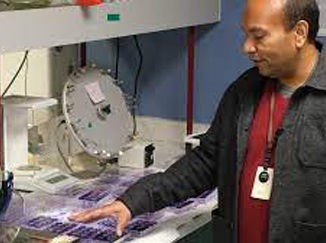
    NEW YORK (TIP): A team of US scientists led by Indian American professor Sumit K. Chanda have identified a set of human genes that fight SARS-CoV-2 infection, the virus that causes Covid-19.

    Knowing which genes help control viral infection can greatly assist researchers’ understanding of factors that affect disease severity and also suggest possible therapeutic options. The genes in question are related to interferons, the body’s frontline virus fighters, according to the study by scientists at Sanford Burnham Prebys published in the journal Molecular Cell, according to a media release. “We wanted to gain a better understanding of the cellular response to SARS-CoV-2, including what drives a strong or weak response to infection,” says Chanda, professor and director of the Immunity and Pathogenesis Program and lead author of the study.

    “We’ve gained new insights into how the virus exploits the human cells it invades, but we are still searching for its Achille’s heel so that we can develop optimal antivirals.”

    Soon after the start of the pandemic, clinicians found that a weak interferon response to SARS-CoV-2 infection resulted in some of the more severe cases of Covid-19, the release said.

    This knowledge led Chanda and his collaborators to search for the human genes that are triggered by interferons, known as interferon-stimulated genes (ISGs), which act to limit SARS-CoV-2 infection. Based on knowledge gleaned from SARS-CoV-1, the virus that caused a deadly, but relatively brief, outbreak of disease from 2002 to 2004, and knowing that it was similar to SARS-CoV-2, the investigators were able to develop laboratory experiments to identify the ISGs that control viral replication in COVID-19.

    “We found that 65 ISGs controlled SARS-CoV-2 infection, including some that inhibited the virus’ ability to enter cells, some that suppressed manufacture of the RNA that is the virus’s lifeblood, and a cluster of genes that inhibited assembly of the virus,” says Chanda.

    “What was also of great interest was the fact that some of the ISGs exhibited control across unrelated viruses, such as seasonal flu, West Nile and HIV, which leads to AIDS.”

    As a next step, the researchers will look at the biology of SARS-CoV-2 variants that continue to evolve and threaten vaccine efficacy.

    “It’s vitally important that we don’t take our foot off the pedal of basic research efforts now that vaccines are helping control the pandemic,” concludes Chanda. “We’ve come so far so fast because of investment in fundamental research at Sanford Burnham Prebys and elsewhere, and our continued efforts will be especially important when, not if, another viral outbreak occurs.”

  • Indian Americans Welcome New Simplified Rules on Overseas Citizens of India Cards 

    Indian Americans Welcome New Simplified Rules on Overseas Citizens of India Cards 

    WASHINGTON (TIP): Indian Americans have welcomed the Indian government’s decision to simplify the process of maintaining Overseas Citizens of India (OCI) cards, saying more overseas citizens will now opt for this form of residency. The OCI cardholders will now be required to get their document re-issued only once at the age of 20 instead of multiple times needed to be done currently, according to the Indian Union Home Ministry. “This will remove the confusion to many OCI cardholders on the process of renewing the card at the age of 20 and 50 and one doesn’t have to go through the whole OCI card renewal process again,” Dr Thomas Abraham chairman of the Global organization of People of Indian Origin (GOPIO) told PTI on Thursday.

    “This will also encourage more overseas Indians to become OCIs and it will benefit India, through their travel, business and investment in India,” he said. Highly popular among overseas Indians, the OCI card provides long term visa-free travel and stay in India and gives the cardholders a host of privileges normally not given to a foreign national. So far India has issued about 37.72 lakh OCI Cards. The previous provision of OCI card holders below 20 years of age and above 50 years of age requiring to re-apply for a fresh OCI card every time their passport was renewed was causing a lot of anxiety and travel turbulence to people of Indian origin. “With a view to facilitate the OCI cardholders, it has now been decided by the Government of India to dispense with this requirement,” the Union Home Ministry said in a statement on Thursday.

    A person who has got registration as an OCI cardholder prior to attaining the age of 20 years will have to get the OCI card re-issued only once when a new passport is issued after his/her completing 20 years of age, so as to capture his/ her facial features on attaining adulthood.

    If a person has obtained registration as an OCI cardholder after attaining the age of 20 years, there will be no requirement of re-issue of the OCI card. “With a view to update the data regarding new passports obtained by the OCI cardholder, it has been decided that he/she shall upload a copy of the new passport containing his/her photo and also a latest photo on the online OCI portal, each time a new passport is issued up to 20 years of age and once after completing 50 years of age. These documents may be uploaded by the OCI cardholder within 3 months of receipt of the new passport,” the government statement said. “OCI process simplification guidelines, issued today (Thursday), truly make OCI a life-long visa. Previously, it was just a long-term visa,” New York-based social activist Prem Bhandari said. “Travelers with valid OCI, but renewed passports were denied boarding. The excruciating difficulties NRIs have gone through due to the tedious OCI renewal process after getting a passport renewed, are resolved once for all,” Bhandari said.

    At the same time, the GOPIO urged the Indian government to take steps to address other issues of the overseas Indian community as well.

    “GOPIO strongly urges the government to treat OCI cardholders who have invested in the business and creating jobs in India at par with Indian citizens and they shouldn’t”t be termed as foreign nationals by various government agencies while doing business including manufacturing and research in India,” Dr. Abraham said

  • Indian-Origin Billionaire Issa Brothers Buy UK Fast Food Chain Leon 

    Indian-Origin Billionaire Issa Brothers Buy UK Fast Food Chain Leon 

    LONDON (TIP): Indian-origin billionaire brothers Mohsin and Zuber Issa have acquired a popular British fast-food chain, Leon, as part of what they described as their goal to grow their foodservice operations in Britain. The Issa brothers, whose parents moved to the UK from Gujarat in the 1970s, own the Euro Garages chain of petrol stations as part of their EG Group business. Last year, they acquired leading UK supermarket chain Asda from US owners Walmart as part of the strategy to expand their non-fuel business.

    Leon, Founded by John Vincent, Henry Dimbleby and chef Allegra McEvedy in 2004, pitches itself in the category of “naturally fast food” with a focus on creating a healthy menu that tastes good, in a sustainable way. The acquisition is said to be worth an estimated 100 million pounds.

    “Leon is a fantastic brand that we have long admired. As established entrepreneurs in the foodservice retail market ourselves, we have a huge admiration for the business that John and the Leon team have built over the years, and firmly believe that their culture and values closely align with our own,” said Mohsin and Zuber Issa, co-founders and co-CEOs of the EG Group.

    “The acquisition of Leon presents EG Group with a fantastic opportunity to further develop the menu offer, the various concession formats including drive-throughs, and will enable us to significantly build on the existing network by exploring opportunities across our own sites along with other strategic locations,” they said. With an extensive network of over 70 restaurants, Leon has 42 company-owned restaurants operated on leasehold locations, with a strong presence in London as well as other large cities across the UK.

    In addition, it has 29 franchised sites at key strategic transport hubs (mainly airports and train stations) across Britain and five other European markets, principally the Netherlands. Leon has also made itself accessible to consumers at home and generates significant revenue from its branded cookbooks, own brand groceries and provision of home delivery ready meals.

    “In some ways this is a sad day for me, to part company with the business I founded 17 years ago in Carnaby Street (London). But I have had the pleasure of getting to know Mohsin and Zuber across the last few years. They have been enthusiastic customers of Leon, going out of their way to eat here whenever they visit London,” said John Vincent.

    “They are decent, hard-working businesspeople who are committed to sustaining and further strengthening the values and culture that we have built at Leon, a business that has my dad’s name above the door.

    “Mohsin and Zuber will not just be superb custodians of the Leon brand, through EG Group they have the vision, investment appetite, foodservice expertise and network scale to take Leon to many more people and places,” he said, adding that he is confident the brand will “flourish” and expand its appeal outside of London under the new ownership.

    Prior to the addition of the Leon store network, EG Group said it already operates over 700 foodservice outlets in the UK and Ireland of which 310 operate from standalone premises.

    Despite the impact of COVID-19, the company said its foodservice business accounted for 46 per cent of the gross profit of the UK and Ireland division in 2020. The group’s foodservice brand portfolio includes other third-party brands such as Starbucks, KFC, Burger King, Greggs, Sbarro, Cinnabon and Subway.

    The Issa brothers added: “EG Group continues to identify innovative partnerships and acquisitions that complement our existing consumer offer and enable us to stay at the forefront of consumer trends, particularly in foodservice. “Our equity investment in Leon is to strengthen our own participation in the fast-growing contemporary foodservice segment. This acquisition aligns with our commitment to being a committed foodservice operator globally, delivers financial benefit to our underlying business, and supports broader commercial strategies to be able to better realize further growth opportunities.” Founded in 2001 by the Issa family, the EG Group employs over 44,000 people working across more than 6,000 sites across Europe, US and Australia. The brothers, Mohsin and Zuber, were each conferred with a CBE in the Queen’s Birthday Honors List 2020, for their contribution to business and charity.

  • Indian American mathematician working with cryptocurrency found floating in Hudson River

    Indian American mathematician working with cryptocurrency found floating in Hudson River

    NEW YORK (TIP): No foul play is suspected in the death of an Indian American mathematician working with cryptocurrency and artificial intelligence whose body was found floating in New York’s Hudson River. The dead man found off West 45th Street and 12th Avenue in Manhattan on Monday, April 19 was identified as Shuvro Biswas, 31, the media reported citing police sources and his “devastated” family. His body was found near a tourist area where a decommissioned aircraft carrier, USS Intrepid, that is now a museum is moored and there are piers for sightseeing boats.

    There were no immediately apparent signs of foul play, according to police sources. Biswas’ brother told the media that he and his family were gutted by the news, noting that they’d tried in vain to get Biswas help as he battled apparent mental illness. “We’re all extremely devastated,” said Biprojit Biswas, 34, when reached by phone by the media.  “There’s no words.” “He’s a really good guy. He’s brilliant,” he was quoted as saying. “He went to Bronx High School of Science. He went on to study applied mathematics. We’re still not sure where things went wrong.” Biswas told the media his sibling was self-employed and most recently working on a cryptocurrency security program, and online profiles show that the younger Biswas also dabbled in artificial intelligence. The family started to see changes in Biswas’ demeanor over the past year, but that he largely kept his struggles to himself, according to the deceased’s brother. “He was always a normal, healthy person, or so he led us to believe,” the elder Biswas said.

    “The changes started coming only in the past year. He would say things that didn’t make much sense from time to time. He had a girlfriend, and they had a bad breakup, but I don’t want to say that was the cause of everything. He didn’t really like to share much. He’s a private person.”

    Biswas said his family urged his younger brother to talk to someone. “We tried to convince him to the best of our abilities to seek professional help, but he always denied that he needed psychiatric help,” the elder Biswas said. “He was going to a neurologist, but he wouldn’t say for what.”

    In February, the management of the younger Biswas’ West 37th Street apartment building took him to Manhattan Supreme Court, seeking to evict him over a slew of alleged bizarre acts inside the building, including setting fires, openly brandishing a knife and smearing blood inside the elevator, the media reported citing court filings. “Defendant is a ticking time bomb who, just months into the Lease, has engaged in numerous incidents of escalating, offensive nuisance-type conduct that threatens the lives, health, safety and well-being of building staff, building residents and building property,” lawyers for the building wrote in one filing. The filing, according to the media reports, claimed that Biswas had intentionally set a mattress on fire in his unit — while leaving an open propane tank in the apartment. He also allegedly brandished a knife, smeared blood in the building elevator, illegally installed surveillance cameras and an alarm system, scattered bullets throughout the building. Biswas also filed multiple false reports of intruders with the police — one of which saw him greet responding officers by “brandishing [a] sword,” according to the filing. The elder Biswas said his brother had explained the arson allegation as a cooking fire. “There was a fire in his apartment. He said it was a cooking accident,” he told the media “The fire department came in and put it out. The department had some questions for him, but they never came back with the questions.” The city Medical Examiner’s Office will determine a cause of death, the report said.

  • Indian American engineer behind NASA’s Ingenuity’s historic Mars flight

    Indian American engineer behind NASA’s Ingenuity’s historic Mars flight

    HOUSTON (TIP): An Indian Institute of Technology (IIT), Madras trained Indian American robotics technologist Bob Balaram is the man behind Monday, April 19 history making flight of NASA’s Ingenuity Mars Helicopter on the Red Planet. The 19.3-inch-tall, 4-pound Ingenuity with no science instruments inside its tissue-box-size, fuselage became the first aircraft in history to make a powered, controlled flight on another planet on April 19. The solar-powered helicopter first became airborne at 3:34 a.m. EDT – 12:33 Local Mean Solar Time (Mars time) – climbing to its prescribed maximum altitude of 10 feet and maintained a stable hover for 30 seconds.

    It then descended, touching back down on the surface of Mars after logging a total of 39.1 seconds of flight, according to the Ingenuity team at the agency’s Jet Propulsion Laboratory in Pasadena, California. The US space agency hailed the achievement as “our Wright brothers moment.” Balaram, Ingenuity’s chief engineer, said the helicopter was in fine fettle following the maiden run.” ” She’s even healthier than she was before this flight — she shook off some of her dust that had been covering the solar panels and is in fact producing even more solar energy than before,” he said. The success of Mars helicopter “basically opens up a whole new dimension of exploring Mars,” Balaram said in February.

    In March, Balaram revealed for the first time that Ingenuity is carrying a small piece of cloth that covered one of the wings of the Wright brothers’ first aircraft that achieved the first powered flight on Earth at Kitty Hawk in 1903, to pay tribute to the milestone. For Balaram, who joined NASA in 1986 after getting a bachelor’s degree in mechanical engineering from the IIT, Madras and a master’s and PhD in computer and systems engineering from Rensselaer Polytechnic Institute, it was the culmination of a 35-year career as a robotics technologist.

    Balaram had his early education at Rishi Valley School founded by the philosopher Jiddu Krishnamurti. He is the second prominent engineer of Indian-origin to feature in Nasa’s Mars Mission after Swati Mohan, who is the lead operations engineer of the Mars Rover Perseverance.

    Recounting the saga of how it all began, Balaram told a NASA interviewer last year that “Everyone. All the time” told him that the rotorcraft that rode to the Red Planet aboard NASA’s Perseverance was a “crazy idea.”

    Although Balaram probably didn’t know it at the time, the seed for an idea like this sprouted for him in the 1960s Apollo era, during his childhood in south India.

    His uncle wrote to the US Consulate, asking for information about NASA and space exploration. The bulging envelope they sent back, stuffed with glossy booklets, entranced young Bob.

    His interest in space was piqued further by listening to the Moon landing on the radio. “I gobbled it up,” he says. “Long before the internet, the US had good outreach. You had my eyeballs.”

    In the 1990s, Balaram had proposed using a miniature airborne vehicle for Earth applications on Mars. The idea “sat on a shelf” for 15 years before he was asked to revive it by Charles Elachi, then director of JPL.

    Balaram and his team had eight weeks to submit a proposal. Working day and night, they met the deadline with two weeks to spare. Although it was not selected as an instrument, NASA decided to fund the helicopter for flight as a technology demonstration.

    Balaram describes the task of build a helicopter to fly on Mars as a perfectly blank canvas, but with restrictions.

    His physics background helped him envision flying on Mars, a planet with an atmosphere that is only 1% as dense as Earth’s.

    He compares it to flying on Earth at a 100,000-foot altitude – about seven times higher than a typical terrestrial helicopter can fly.

    Another challenge was that the copter could carry only a few kilograms, including the weight of batteries and a radio for communications.

    “You can’t just throw mass at it, because it needed to fly,” he says. It dawned on Balaram that it was like building a new kind of aircraft that just happens to be a spacecraft.

    And because it is a “passenger” on a flagship mission, he says, “we have to guarantee 100% that it will be safe.”

    Once it was built, Balaram says, the question was, “How do you test this beast? There’s no book saying how.” Because there is no easily accessible place on Earth with a thin atmosphere like the one on Mars, they ran tests in a vacuum chamber and the 25-foot Space Simulation Chamber at JPL. “Bob is the inventor of our Mars Helicopter. He innovated the design and followed up on that vision to its fruition as chief engineer through all phases of design, development and test,” says project manager MiMi Aung.

    “Whenever we encountered a technical roadblock – and we encountered many roadblocks – we always turned to Bob, who always carries an inexhaustible set of potential solutions to be considered. Come to think of it, I don’t think I have ever seen Bob feeling stuck at any point!”

    Balaram points out that in addition to the usual “seven minutes of terror” experienced by the team on Earth during a Mars landing, once the helicopter is on Mars and attempting to fly, “This is the seven seconds of terror every time we take off or land.”

    Does Balaram worry about all this, even a little? “There’s been a crisis every single week of the last six years,” he says. “I’m used to it.”

    Balaram sheds any stress that may crop up through backpacking, hiking and massage, according to the NASA article about him.

    There’s also his very supportive wife, Sandy, who bears a title within the team and her own acronym: CMO, or Chief Morale Officer.

    She has regularly baked cakes, pies and other goodies for Balaram to share with his colleagues for sustenance during the long process.

  • Indian Diaspora Council (IDC)in Solidarity with Earth Day 2021

    NEW YORK (TIP): The Indian Diaspora Council (IDC) joins in solidarity with its global affiliates and membership, other organizations, institutions, agencies, and individuals globally in supporting the international awareness of Earth Day and its 2021 campaign to Restore Our Earth.

    April 22 is Earth Day, an international event celebrated around the world to pledge support for environmental protection. The year 2021 marks the 51st anniversary of the annual celebrations. This year’s theme for Earth Day is ‘Restore Our Earth’. In 2009, the United Nations designated April 22 as ‘International Mother Earth Day’. Earth Day was first observed in 1970, when 20 million took to the streets to protest against environmental degradation. The event was triggered by the 1969 Santa Barbara, California oil spill, as well as other issues such as smog and polluted rivers.

    For over the next half century, Earth Day continued to play an important role in environmental activism. The landmark Paris Agreement, which brings almost 200 countries together in setting a common target to reduce global greenhouse emissions, was signed on Earth Day 2016.“Recovery from the COVID-19 pandemic is a chance to set the world on a cleaner, greener, more sustainable path,” said United Nations Secretary-General António Guterres in a statement. “Mother Earth is clearly urging a call to action. Let’s remind more than ever on this International Mother Earth Day that we need a shift to a more sustainable economy that works for both people and the planet”.

    “Education is the foundation for progress. We need to build a global citizenry fluent in the concepts of climate change and aware of its unprecedented threat to our planet. We need to empower everyone with the knowledge to inspire action in defense of environmental protection. Environmental and climate literacy is the engine not only for creating green voters and advancing environmental and climate laws and policies but also for accelerating green technologies and jobs”.

    Indian Diaspora Council International (IDC) Statement: “Earth sustains all life and must be protected in order for it to continue to provide viable means for sustainable life, health and well being of all its inhabitants, especially as the world population keeps on increasing. Over consumption and over population adversely affect the natural resources and earth’s climate with catastrophic consequences. It is an increasingly urgent call to action, a commitment of individual and collective responsibility, obligation and duty for environmental literacy and awareness from the early stages among children as well as among adults, professionals, businesses, institutions, agencies and officials. Our legacy is intimately linked to protection of earth and its environment for a sustainable future and that is undeniable and indisputable. While economic progress is important, it is vital that all sectors of society, as a collective partnership, make this collective commitment for earth’s sustainable future. We live and share in earth’s bounty of life sustenance and we have a responsibility to do that which we must to protect it as well.”

    For more information, please contact: Indian Diaspora Council president Ashook Ramsaran@ ashookramsaran@gmail.com

    Indian Diaspora Council International (IDC), established in 1997, is an international non-profit organization with global affiliates and membership in 21 countries with the objective to embrace, engage, and enhance the shared heritage, aspirations, and interests of persons of Indian origin with optimum inclusivity.

  • CURBSIDE COMPOSTING PROGRAM TO RESUME IN NY CITY: MAYOR DE BLASIO

    CURBSIDE COMPOSTING PROGRAM TO RESUME IN NY CITY: MAYOR DE BLASIO

    NEW YORK (TIP): Mayor Bill de Blasio announced April 22, Earth Day, that the City of New York will resume its world-leading Curbside Composting Program, which had been put on hold due to the budgetary impact of the COVID-19 pandemic. This new iteration of the program will be available to the 3.5 million New Yorkers who previously had curbside collection service, with buildings and residents able to voluntarily opt-in to receive free weekly curbside composting service. Enrollment will launch in August, with collection services set to begin in October and expand as more buildings opt in. Significant expansions of community composting, reuse, and hazardous waste disposal programs are included in the announcement as well.

    “Today is Earth Day, but New York City’s commitment to sustainability is year-round,” said Mayor Bill de Blasio. “No other municipality ran a compost program like ours, and this new citywide program will advance the cause of environmental justice in all five boroughs.”

    “When people think about the work of the Department of Sanitation, all too often they think it’s our job just to make trash disappear. But we are a sustainability organization – one of the largest municipal resource recovery operations in the world,” said Edward Grayson, Commissioner of the New York City Department of Sanitation. “I want to thank Mayor de Blasio for his commitment to this mission, and I’m excited to see brown bins back on the streets.”

    “Our students are the future leaders of New York City, and initiatives like our school composting program will empower them with the knowledge and resources to care for our environment,” said Schools Chancellor Meisha Porter. “We are thrilled for the return of curbside composting at our schools, and we’re grateful for our partners at DSNY for their continued commitment to educating our students on the importance of reducing waste and protecting our planet.”

    “Huzzah, the brown bins are back!” said Ben Furnas, Director of the Mayor’s Office of Climate and Sustainability. “Reducing emissions from our waste stream and making important actions like composting more accessible are key to the fight against climate change. Congratulations to the Department of Sanitation on the return of these nation-leading programs.”To allow the City to continue to devote resources to essential safety, health, shelter and food security needs, the City made a number of tough budget cuts in the spring of 2020, including those that affected the curbside composting program. Today’s announcement means curbside composting and seasonal leaf collections are being restored nearly a year ahead of schedule. In addition to the re-launch of voluntary curbside composting, the popular Food Scrap Drop-Off program will be significantly expanded, from over 100 community-based sites at present to more than 200 this fall. From September 2020 through February 2021, many food scrap drop-offs have broken participation records and have collected and diverted 1,300,000 pounds of material. Residents can find their closest site at nyc.gov/dropfoodscraps. Growth of this program will be achieved via a restoration of GrowNYC’s Greenmarket Composting program funding and an expansion of NYC Compost Project funding to support community-based drop-offs, composting and education. In addition, it will include a first-of-its-kind pilot of “smart bins,” in which New Yorkers use an app to access public food scrap drop-off bins, thus preventing cross-contamination and misuse. As part of this Earth Day announcement, School Curbside Composting service will also return in the 2021-2022 school year, and nearly 1,000 schools that had service prior to COVID-19 will resume curbside composting. Beyond composting, today’s announcement includes expansions or restorations of several other sustainability programs. SAFE Disposal Events, which collect Solvents, Automotive, Flammables, and Electronics products as well as other regulated waste, will expand from two per borough each year – a total of 10 – to nearly 60 per year, one for each community district. This six-fold expansion means fewer dangerous chemicals and products on our streets, in our waterways, or in landfills. Special Waste Drop-off locations, sites around the city where residents can drop off harmful materials that do not belong in household trash, will also be re-opening starting this July. These sites have been closed since March 2020.

    Finally, DSNY will begin offering Reuse Swap Events across the city to keep usable items out of landfills and help them find good homes. At these events, one person’s unwanted household goods can become another’s treasure. Manhattan Borough President Gale A. Brewer said “Composting was picking up steam before the pandemic and I am so pleased that it is now restored. It is a key component of our city’s recycling initiatives. Curbside organics collection for residential buildings and schools, along with drop-off food scrap locations, make this environmentally sound practice easier for all to do.”

    “With climate change already taking a toll on our city in terms of severe storms like Sandy, it is imperative that we leave no stone unturned in our fight to make New York City the greenest city in America — ensuring the long-term sustainability of our communities in the process,” said Queens Borough President Donovan Richards Jr. “The restoration and expansion of these programs are part of a greater puzzle we must solve to secure the safety of our families, and Queens is grateful to all involved for their commitment.”

    “I congratulate Mayor de Blasio and his terrific environmental and sustainability team for re-starting the best-in-the-nation curbside composting program and for the major expansions being made to the community composting, reuse, and hazardous waste disposal programs. For this Mayor to make this kind of bold commitment as the City is still emerging from COVID really speaks to the remarkable commitment to environmental leadership that Bill de Blasio has always shown throughout his career. This is a great day for NYC’s environment — thank you, Mr. Mayor!,” said Council Member James Gennaro.

    “I am thrilled to hear that curb side compost back!” said Council Member Brad Lander. “On Earth Day this is an important step for the City that will reduce the waste that sits rotting in our landfills and reducing as greenhouse gas emissions.”

    “Sustainability is at the core of who we are as New Yorkers committed to reducing our environmental and ecological footprints. With the continuation of composting and SAFE Disposal events, we are preserving the health and wellness of our communities by minimizing the amount of waste in our landfills and air pollution. The future of our planet depends on neighbors who compost, conserve, reuse, and recycle. I look forward to seeing our blocks lined with not only beautiful trees but brown bins working in tandem to protect our environment for future generations,” said Council Member Farah N. Louis. “The restoration of curbside composting and the expansion of SAFE disposal events is a welcome development as we celebrate Earth Day today. Many local residents have been eagerly looking forward to composting service resuming, and we are grateful that service will be restored ahead of schedule. We are also looking forward to holding a SAFE disposal site in our district again this summer and greatly appreciate the partnership with DSNY,” said Council Member I. Daneek Miller. “On Earth Day, we recognize how important it is to preserve our planet. Today, we are upholding a commitment to a city that’s greener and more sustainable every day. As we begin to recover from this pandemic, we have to prioritize the future of our city and the health of our earth. This is a good step. Thank you to the Mayor and Commissioner Grayson for the dedication to restore these programs,” said Council Member Keith Powers.

    “Composting is a vital part of green infrastructure that diverts waste from landfills, promotes environmental justice, and brings communities into our efforts to advance a green agenda locally. The return and expansion of these essential initiatives is going to create a healthier New York City, and I look forward on engaging with my constituents on ways they can take part as these programs are implemented and grow,” said Council Member Carlina Rivera.

  • On the Earth Day, Mayor Bill de Blasio commits to 100% electric school bus fleet by 2035 

    City will phase in 75 electric school buses over the next two years; To support citywide electric vehicle adoption, the administration will expand legislation that requires all new parking lots include EV charging infrastructure

    NEW YORK (TIP): Mayor Bill de Blasio doubled down on his commitment to reduce carbon and air pollution from vehicles by announcing that school buses in New York City will be electric by 2035. In partnership with the City, the NYC School Bus Umbrella Corporation (NYCSBUS), an independent non-profit that will manage school bus operations, is pursuing aggressive goal of having an all-electric school bus fleet by 2030 and becoming a model for electrified urban pupil transportation. Through a partnership with NYCSBUS, the City will purchase 75 accessible electric school buses in the next two years to advance this goal, and as part of the 960 buses they will manage.  The transition from a diesel school bus fleet to an all-electric fleet will have significant climate, health and cost-saving impacts: The new fleet will reduce 30% of carbon emissions from school buses, remove enough air pollution citywide to avoid two premature deaths each year, reduce asthma emergency department visits and respiratory and cardiac hospitalizations, and save about $18 million in health care costs.

    “Today(April 22- the Earth Day), we are doubling down on reducing air pollution and carbon emissions from our vehicles,” said Mayor Bill de Blasio. “The clean transportation future we need is being built right here, right now.”

    “For our kids’ sake, it’s time to leave the internal combustion engine behind,” said Ben Furnas, Director, Office of Climate & Sustainability. “Electrifying our school buses will give our schoolchildren cleaner air to breathe while confronting the climate crisis and accelerating the transition away from fossil fuels. Thank you to the Department of Education for your commitment to an all-electric school bus fleet and thank you to NYCBUS for leading the way!”

    This commitment builds on Executive Order 53 which mandates all 30,000 of the City’s non-emergency fleet vehicles will be electric vehicles by 2040.  When the NYC Clean Fleet commitment was made in February 2020, the school bus fleet servicing New York City public students was owned by private companies. Starting this year, the non-profit NYCSBUS will operate 960 school buses and work in partnership with the City to manage their school bus operations, targeting routes in environmental justice neighborhoods. Electric school buses are a burgeoning new technology, representing less than 1% of school bus production in 2019 nationally.  Long-term ownership costs are expected to be lower than their diesel counterparts. The new electric school buses will cost $30 million over the next two years, which includes purchasing the buses, as well as related infrastructure and staffing needs.

    Emissions from all cars, buses, and trucks make up about 30% of the city’s carbon footprint. The air pollution from that traffic contributes to 320 premature deaths and 870 emergency department visits annually, with the highest concentration of pollution occurring in low-income neighborhoods.  Reducing dependence on cars by utilizing alternative modes of transportation coupled with wide scale adoption of electric vehicles where cars are needed is a critical component of the City’s plan to reach carbon-neutrality by 2050 and deliver a just transition to a green economy.

    To support adoption of electric vehicles citywide and advance the City’s goal of ensuring EVs comprise 20 percent of new vehicle registrations by 2025, the City also announced plans to update to Local Law 130. The expansion will require all parking facilities to include electric vehicle chargers for at least 20 percent of parking spaces. Additionally, new parking lots will have electric service capacity at all parking spaces to add chargers without needing new conduit or to resurface the facility. We are also working towards having electric service capacity for at least 40 percent of parking spaces at existing parking facilities.

    Parking assets lasts decades and equipping these facilities with the infrastructure to support electric vehicles now is crucial to accelerate electric vehicle adoption. Access to electric vehicle charging is limited for the vast majority of New Yorkers who do not have access to a private garage or driveway where they can readily install their own charger. This barrier makes the need to create a robust charging network citywide to support electric vehicle adoption foundational to the City’s climate goals.

    “Our children deserve an environment that is cleaner, greener and brighter than how we left it, and this announcement brings us one step closer to that reality,” said School’s Chancellor Meisha Porter. “New York City is pioneering this important work to combat climate change and reaffirming our commitment to healthier school communities across the five boroughs.”

    “Thanks to Mayor de Blasio, the City of New York’s fleet is on the way to going all-electric by 2040,” said Keith Kerman, DCAS Deputy Commissioner and NYC Chief Fleet Officer. “The City operates over 2,800 plug-in electric vehicles and 1,040 charging stations today – both the largest programs in the state. We are excited that the City’s school buses will also go electric by 2040 and DCAS will continue to work closely with the Department of Education to get this done.”

    “Everyone can get on board for cleaner air,” said Health Commissioner Dr. Dave A. Chokshi. “An all-electric school bus fleet will help protect our youngest New Yorkers from developing serious health problems, because we know air pollution can exacerbate respiratory and cardiovascular diseases. As the City’s doctor, a parent, and the husband of an educator, I thank the Department of Education for this important step to keeping our city healthy.”

    “Accessibility is sustainability and they go hand in hand,” said Mayor’s Office for People with Disabilities (MOPD) Commissioner Victor Calise. “All of the 75 electric school buses that will be part of the initial purchase are wheelchair accessible, thereby ensuring that they serve all students including individuals with disabilities.”

    “As city agencies pursue ways to make our work cleaner and greener, mandating that the school buses that carry our kids be entirely electric will set a great national example,” said New York City Department of Transportation Commissioner Hank Gutman. “Here at DOT, we continue to pursue the Mayor’s environmentally-minded goals of reducing greenhouse gas emissions each day—including by building out electric-charging stations, adding electric vehicles to our fleet as well as overseeing an expanded on-street carshare system.”

    Matt Berlin, CEO, NYCSBUS said, “I thank Mayor de Blasio, Chancellor Porter, and Director Furnas for making this commitment that will have a lasting positive influence on the children and families we serve, and our environment. NYCSBUS is proud to be on the leading edge of this initiative and we look forward to working with our partners in the Administration, the City Council, and advocacy community to implement the Mayor’s ambitious vision.”

    “While we can’t control all of the vehicles coming in and out of our city, we can cut carbon emissions by insisting that those we can control switch to electric,” said Manhattan Borough President Gale A. Brewer. “This change in our school bus fleet will have a dramatic impact on our environment.  It is the right thing to do.”

    “This common-sense investment to reduce our carbon footprint and dramatically cut emissions that pollute our air will make an indescribable impact in the long-term health of our families and our city as a whole,” said Queens Borough President Donovan Richards Jr. “I look forward to the day when every vehicle in this city runs on electric power, while the days of fossil fuel consumption becoming nothing but a distant memory.”

    “Encouraging electric vehicle use to reduce carbon emissions and tackle climate change is great but without more places to charge up, it won’t work. I welcome the Mayor’s announcement that we’re going to significantly and dramatically increase charging equipment in garages, lots, and large buildings. Electric vehicles are one important way that we can adapt to climate change and build a more resilient city,” said Council Member Justin Brannan.

    “New York City has been trying its best to clean the school bus fleet for more than a generation, but it is this Mayor and his great environmental team that has today put the City on the path that will, for sure, get this done. This is an amazingly bold commitment, but the Administration has the vision and the will to finally get this done once and for all. Congratulations and thank you, Mr. Mayor,” said Council Member James Gennaro.

    Council Member Peter Koo said, “By committing to a 100% electric school bus fleet, our city is taking an ambitious step toward a more sustainable future. Reducing our carbon footprint is an essential solution for big cities where exhaust, smog and pollution contribute to record health disparities and high asthma rates. I’d like to thank Mayor de Blasio for committing to addressing this problem now and in the future.”

    “Moving the City’s school bus fleet to 100% electric by 2035 is a step in the right direction and will have an immediate positive impact on the environment. It’s so important that we protect the environment and set an example to our youth of how we care for the world around us,” said Council Member I. Daneek Miller.

    “The communities most vulnerable to COVID-19 are the same that are most affected by air pollution––Black, Latino and immigrant communities, and older adults. How we address the climate crisis is how we advance racial justice. And while there’s much work to be done, transitioning to an all-electric fleet is an important step that will have a positive impact on our health, on the climate, and the economy,” said Council Member Francisco Moya.

    “New York City has made bold strides in recent years with legislation to advance our climate goals and our leadership on resiliency among municipalities in the U.S. and abroad. With one of the largest vehicle fleets under its purview, the City rightfully must make these investments to reduce emissions as quickly as possible. I applaud the Mayor on taking this initial step and look forward to taking advantage of technological advancements over the next several years that can help us beat the environmental milestones we are setting along the way,” said Council Member Carlina Rivera.

    “The Mayor’s commitment to fully electrify the City’s new municipal school bus provider (NYCSBUS) by 2030 is a great step toward ensuring that New York City students, drivers, and attendants have a cleaner, healthier ride. The benefits also extend to environmental justice communities where most school bus depots are housed in close proximity to homes and schools.  For too long, our most vulnerable populations endured the most harm from old, dirty gas and diesel school buses—students with disabilities sitting on school buses for hours a day inhaling fumes; seniors and individuals with chronic respiratory illness (like asthma) inhaling fumes from school buses idling on the streets. We appreciate the City’s commitment to electrifying vehicles and hope that this effort continues toward a cleaner, greener New York,” said Jenny Veloz, Community Organizer, New York Lawyers for the Public Interest said.

    Julie Tighe, President of the New York League of Conservation Voters, said, “Children deserve to travel free of environmental toxins like diesel fumes. Just as Washington is prioritizing clean transportation, including electric school buses, as part of the American Jobs Plan, New York City is committing to clean up its school buses. This commitment will help reduce pollution and improve air quality, especially in environmental justice neighborhoods that are overburdened by dirty school bus depots and other climate impacts. Along with the rest of the NYC Clean School Bus Coalition, we applaud Mayor de Blasio for this commitment to clean school buses and look forward to making this long-time priority a reality.”

    “We are proud that our years of advocacy for the electrification of school buses have been heard. Electric school buses are a key piece of reducing emissions in New York City and creating healthier communities for students across our city. The fact is that children who ride diesel school buses remain one of the most vulnerable populations and stand to gain the greatest benefits as we eliminate these sources of pollution. We commend Mayor de Blasio for taking this leap forward that will ensure a transition to a full electric school bus fleet. We look forward to working with the administration and ensuring that there is dedicated funding to expand the electric school bus pilot program in this year’s budget. We must move us as aggressively as possible towards this goal,” said Maritza Silva-Farrell, Executive Director of ALIGN.

    “ElectrifyNY applauds New York City on its commitment to electrify city-owned vehicles and its success untangling school bus policy to make electrification part of our city’s clean transportation future. This, compiled with the changes to local laws requiring electric service capacity for charging stations in parking lots, shows the improvement that city policies will have on the air our neighbors breathe every day. We look forward to this momentum building to create an electric vehicle model that cities across the state and country can adopt for equitable urban electrification,” said Renae Reynolds, Transportation Planner at NYC-EJA and ElectrifyNY Coalition Coordinator.

    Miranda Nelson, New York Director at Jobs to Move America said, “We applaud the Mayor for committing to electrify our city’s school buses—starting with the city’s new, non-profit school bus fleet. This will mean healthier air for kids, school bus workers, and our communities. If we get this policy right, we can encourage the creation of good, inclusive jobs in school bus manufacturing and operations.”

    “350Brooklyn appreciates the mayor’s commitment to electrifying school buses and we urge NYCSBUS to advance the cause of environmental justice in our city by prioritizing the rollout of these vehicles in low-income and marginalized communities. Mayoral support paves the way for passage of Intro 455, the E-school Bus Bill, which has overwhelming support in the city council and must be enacted swiftly. The bill sets a schedule for phasing-out diesel buses and guarantees electric school bus implementation city-wide,” said Joanne Boger, 350Brooklyn.

    “We are thrilled that Mayor Bill de Blasio and the independent NYC School Bus Umbrella Corporation have made this bold commitment to investing in electric school buses to protect the health of our children and communities,” said Sonal Jessel, M.P.H., Director of Policy at WE ACT for Environmental Justice, and member of the New York City Clean School Bus Coalition. “And the Clean School Bus Coalition looks forward to working with the City to pass legislation that will phase out diesel school buses, which choke our children with their carcinogenic exhaust, so that every child can ride in a clean, healthy electric school bus. This is particularly important in the city’s low-income neighborhoods and communities of color, which bear a disproportionate burden of pollution from multiple sources, creating cumulative impacts that have resulted in some of the highest rates of childhood asthma in the nation.”

    Leslie Stevens, 350NYC and member of the New York City Clean School Bus Coalition said “We must prioritize legislation and actions that would mandate the quick retirement of dirty diesel school buses to reduce carbon emissions and pollution. We love our children and want them to be healthy and safe. We must give up these fossil fuel technologies that have viable alternatives.”

  • ‘Time to do the right thing’ on climate, Greta Thunberg tells U.S. Congress

    ‘Time to do the right thing’ on climate, Greta Thunberg tells U.S. Congress

    WASHINGTON (TIP): “I don’t believe for a second that you will actually do this,” she lectured the lawmakers of the House Oversight Committee’s environmental subcommittee. Swedish climate activist Greta Thunberg warned U.S. lawmakers Thursday, April 22 that history will hold them accountable for climate catastrophes if they do not stop subsidizing the fossil fuel industry before it is too late. Thunberg, 18, whose activism has inspired a global movement, testified virtually to a House of Representatives panel on the day President Joe Biden began a virtual two-day Earth Day summit pledging to slash U.S. greenhouse gas emissions in half by 2030. “The simple fact, and uncomfortable fact, is that if we are to live up to our promises and commitments in Paris, we have to end fossil fuel subsidies … now,” Thunberg said, referring to the international 2016 Paris Climate Change Agreement. The United States under Biden rejoined the Paris agreement in February, after former President Donald Trump pulled out. Thunberg, whose activism began at age 15 when she started skipping school on Fridays to protest outside the Swedish parliament for climate change, voiced pessimism. “I don’t believe for a second that you will actually do this,” she lectured the lawmakers of the House Oversight Committee’s environmental subcommittee. “You still have time to do the right thing and to save your legacies, but that window of time is not going to last for long,” Thunberg said. “We the young people are the ones who are going to write about you in the history books … So, my advice for you is to choose wisely.”

    The subcommittee chairman, Representative Ro Khanna, is pressuring Biden, a fellow Democrat, to keep a campaign promise to end fossil fuel subsidies such as tax breaks and regulatory loopholes. “We appreciate that President Biden ran on ending fossil fuel subsidies. But the details matter,” Khanna said in a statement released prior to the hearing.

    Khanna asked Thunberg if it would be a “gut punch” to the global environmental movement if fossil fuel subsidies are not eliminated in Biden’s current $2.3 plan to overhaul U.S. infrastructure.

    “Yes, pretty much, that’s a good description,” Thunberg replied.

    The senior Republican on the subcommittee, Ralph Norman, rejected “doomsday scenarios” about climate. He said children had been greatly affected by the fear of climate change, and asked Thunberg why she had said previously that she wanted people to “panic” about it. “By that I mean that I want people to step out of their comfort zones, and not just see the climate crisis as a distant threat, but rather as something that is impacting people already today,” Thunberg said.

    Thunberg, who was Time magazine’s person of the year in 2019 for her work on climate change, has denounced the “madness” of government subsidies for fossil fuel use. She says pledges by various countries to halve greenhouse gas emissions over the next decade are insufficient.

    Biden has called for replacing fossil fuel subsidies with incentives for clean energy production as part of his infrastructure plan, but the plan has not specified which tax breaks for fossil fuel companies would be targeted. Khanna listed some tax breaks he wants repealed, including one called intangible drilling costs, which allows producers to deduct most costs from drilling new wells.

  • Vanita Gupta scripts history as first Indian-American US associate attorney general

    Vanita Gupta scripts history as first Indian-American US associate attorney general

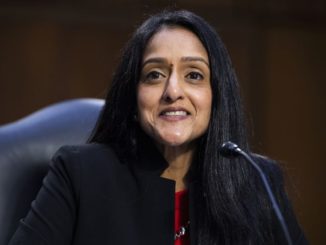
    WASHINGTON (TIP): Prominent Indian-American civil rights lawyer Vanita Gupta has been confirmed by the US Senate as associate attorney general, making her the first person of color to occupy the third highest position at the Department of Justice. Republican Senator Lisa Murkowski broke away from her party colleagues to support Gupta (46), giving the Democrats 51 votes to see her through the historic confirmation on Wednesday, April 21. The Senate voted 51-49 to confirm Gupta. Vice President Kamala Harris was present in the Senate to cast her vote in case of a tie. The two parties have 50 members each in the 100-seat United States Senate. “Congratulations to Vanita Gupta on making history as the first woman of color to serve as associate attorney general. Now, I urge the Senate to confirm Kristen Clarke. Both are eminently qualified, highly respected lawyers who are dedicated to advancing racial equity and justice,” President Joe Biden said.  Gupta is also the first civil rights lawyer to serve at one of the top three positions at the Department of Justice.

    Senate Majority Leader, Senator Chuck Schumer, who played a key role in her confirmation, said Gupta is the first-ever woman of color and civil rights attorney to serve in the role. “She will bring a long overdue perspective to our federal law enforcement agency,” he said. The daughter of Indian immigrants who was born and raised in the Philadelphia area, Gupta has had an illustrious career of fighting for civil rights. She received her Bachelor of Arts degree from Yale University and Juris Doctor from New York University.  At the age of 28, she started her career at the NAACP Legal Defense Fund where she successfully overturned the wrongful drug convictions of 38 Black Americans in Tulia, Texas. While at the American Civil Liberties Union (ACLU), she fought to end mass incarceration and secured a landmark settlement against the Immigration and Customs Enforcement (ICE) on behalf of immigrant children that led to the end of family detention at the facility. From 2014 to 2017, Gupta served as the assistant attorney general for civil rights under President Barack Obama, where she advanced criminal justice reform, prosecuted hate crimes, protected voting rights and fought against discrimination.

    Indian-American groups congratulated Gupta on her historic confirmation.

    (With inputs from PTI)


  • Sikh’s Ninth Master “Guru” Tegh Bahadur’s 400th anniversary: SGPC to telecast live

    Sikh’s Ninth Master “Guru” Tegh Bahadur’s 400th anniversary: SGPC to telecast live

    NEW YORK /AMRITSAR (TIP): The 400th Parkash Purb centenary celebrations were scheduled to be celebrated at Bhai Gurdas Ji Nagar, New Amritsar. But due to rise in Covid cases, these ceremonies will now be held at the Diwan Hall of Gurdwara Sri Manji Sahib at Golden Temple complex, said SGPC President Bibi Jagir Kaur, addressing media persons in Amritsar, April 21, 2021.

    Ms Kaur said, “There was a lot of enthusiasm among the sangat for the centenary celebrations but considering the prevailing situation due to the pandemic, no large gathering could be allowed. A series of events, scheduled at Gurdwara Guru Ka Mahal, the birthplace of ninth Guru in Amritsar, would be telecast live through various platforms so that the sangat all over the globe could get connected with the historic day celebration while sitting in their homes”, she said.

    During the centenary celebrations, the requisite web links would be provided to the channels for live telecast of the events scheduled from April 29 to May 1. “It would be open for any channel who wishes to do the live coverage”, she said. She said the decision was taken after holding discussion with the government officials. To cater the Covid patients exclusively, the SGPC has spared Sri Guru Ram Das Charitable Hospital at Chattiwind Gate. A total of 100 beds have been provided here and corona vaccination facility is also being provided free of cost. The SGPC has made arrangements for vaccination at Sri Guru Ram Das Medical College Vallah, Sri Guru Ram Das Charitable Hospital Amritsar, Baba Buddha Ji Hospital Bir Sahib and at Fuhara Chowk Amritsar.

    “Despite crisis being faced by the SGPC, it could never step down from performing its duties towards humanity. Our doctors and allied teams have been on job round the clock to treat Covid patients”, she said. Lately, the state government has recognized the services of SGPC-run Sri Guru Ram Das Medical College and included its image among the best medical treatment hospitals in the newspapers.

    However, showing concern over the shortage of oxygen cylinders and vaccines, she said “There is a shortage of oxygen supply for the treatment of Covid patients. Similarly, the availability of vaccine was inadequate. The SGPC had already deposited money in advance for the vaccine. The government should make steadfast mechanism to ensure uninterrupted supply of oxygen and vaccines. The matter has also been taken up with the Chief Secretary of Punjab”, she said.

    (With inputs from Tribune, Chandigarh)

  • U.S. will cut emissions by up to 52% by 2030, said Joe Biden at the ‘Leaders Summit on Climate’

    U.S. will cut emissions by up to 52% by 2030, said Joe Biden at the ‘Leaders Summit on Climate’

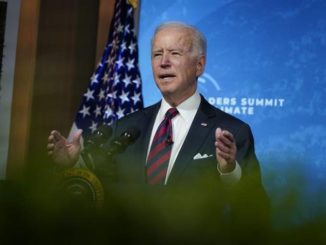
    NEW YORK (TIP): U.S. President Joe Biden announced that the U.S. would cut its greenhouse gas emissions by 50%-52% by 2030 relative to 2005 levels, in a clean break with the Trump administration policies on climate action. Mr. Biden also announced that the U.S. would double, by 2024, its annual financing commitments to developing countries, including a tripling of its adaptation finance by 2024. The President made the new target announcements at a ‘Leaders Summit on Climate’, which he is hosting on Thursday and Friday, April 22 and 23 — a summit to which 40 heads of state and government are invited — including Prime Minister Narendra Modi of India, President Xi Jinping of China, and President Vladimir Putin of Russia.

    The emissions targets — part of the Paris Agreement on climate — are non-binding and the details of how they will be achieved are not available. However, in announcing the targets, the Biden administration is hoping to encourage other countries to increase their commitments. It is also seeking to bring America back into a leadership role on climate action after Mr. Trump had withdrawn the country from the Paris Agreement.

    Mr. Biden’s financing announcements are part of a $100 billion a year commitment from developed countries to developing countries for the period 2020-25, “an investment that is going to pay significant dividends for all of us”, Mr. Biden said.

    The withdrawal of the U.S. from the Paris Agreement means it has not yet met its financing commitments either. The Obama administration had promised $3 billion to the Green Climate Fund (to help developing countries), only $1 billion has been paid.

    In selling climate action to the American public, which until recently was governed by an administration skeptical of the climate crisis, President Biden and his administration have linked climate action and clean technology to jobs and economic growth. On Thursday, Mr. Biden extended this message to other countries.

    “And meeting this moment is about more than preserving our planet. It’s also about providing a better future for all of us. That’s why, when people talk about climate, I think jobs. Within our climate response lies an extraordinary engine of job creation and economic opportunity ready to be fired up,” he said.

    “By maintaining those investments and putting these people to work, the United States sets out on the road to cut greenhouse gases in half — in half — by the end of this decade,” Mr. Biden said.

    “The signs are unmistakable. The science is undeniable,” he said. The first guests to speak at the summit were UN Secretary-General Antonio Guterres, Mr. Xi, Mr. Modi, Prime Minister Boris Johnson of the U.K. and Prime Minister Yoshihide Suga of Japan.

    (Agencies)

  • With more than 3 lakh cases, India records world’s highest single-day spike on April 21, 2021

    With more than 3 lakh cases, India records world’s highest single-day spike on April 21, 2021

    The country reported 3,15,660 infections and 2,091 deaths.

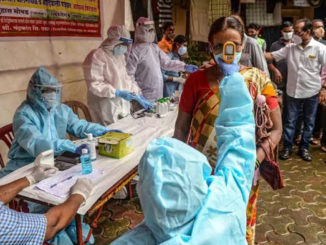
     NEW DELHI /NEW YORK (TIP): India set a world record of sorts on April 21 when it registered, for the first time, more than 3 lakh COVID-19 cases in a single day.As many as 3,15,660 cases and 2,091 deaths were recorded in the country as of 11.15 p.m. IST on April 21. No country has recorded more cases in a single day. The country has so far reported a total of 1,59,24,914 cases and 1,84,662 deaths. The figures do not include cases and deaths in Tripura. Ladakh, whose figures were released after this report was filed. The data is sourced from covid19india.org, an independent aggregator of daily COVID-19 figures. Maharashtra reported 67,468 infections (accounting for 22% of the new cases) on April 21, followed by Uttar Pradesh with 33,214 new infections and Delhi with 24,638 new cases. Maharashtra also recorded the maximum casualties (568) on April 21. Delhi followed with 249 new deaths, while Uttar Pradesh registered 187 new casualties.

    As many as 16,39,357 samples were tested in India on April 20 (results of which were made available on April 21), the highest-ever number of tests conducted on a single day in the country.

    This is the first instance when the number of daily tests crossed the 16-lakh mark.

    Prior to India, only the United States recorded more than 3 lakh cases in a single day. On January 2, 2021, the U.S. reported 3,00,310 new infections, its highest single-day spike. Other countries with significantly high single-day spikes are Brazil with 1,00,158 cases on March 25, 2021; the U.K. with 68,192 cases on January 8, 2021; and Turkey with 63,082 cases on April 16, 2021.

    The international figures have been collated from Our World in Data.During the peak of the first wave, India’s daily case tally did not cross the 1 lakh mark. On September 16, 2020, the country recorded 97,860 new infections, the highest single day rise for the first wave.

    Around 29.9 lakh of COVID-19 vaccination doses were administered in the 24 hours ending at 7 a.m. on April 21, which is about 2.86 lakh doses lesser than what was recorded in the previous 24 hours. However, it is about 3.44 lakh doses more than what was recorded in the same period one week before. The daily vaccination rate in India has declined in the past week. Between April 7-13, India administered an average of 34.43 lakh doses every day. However, one week later, as on April 20, the average daily doses given fell to 27.05 lakh.

  • Jury find Chauvin guilty of murder and manslaughter in Floyd’s death

    Jury find Chauvin guilty of murder and manslaughter in Floyd’s death

    MINNEAPOLIS (TIP): Former Minneapolis Officer Derek Chauvin was convicted on Tuesday, April 20, of murder and manslaughter for pinning George Floyd to the pavement with his knee on the Black man’s neck in a case that triggered worldwide protests, violence and a furious reexamination of racism and policing in the US. Chauvin (45) was immediately led away with his hands cuffed behind his back and could be sent to prison for decades. The verdict – guilty on all counts, in a clear-cut victory for Floyd’s supporters – set off jubilation tinged with sorrow around the city. Hundreds of people poured into the streets, some running through traffic with banners. Cars blared their horns. “Today, we are able to breathe again,” Floyd’s younger brother Philonise said at a joyous family news conference where tears streamed down his face as he likened Floyd to the 1955 Mississippi lynching victim Emmett Till, except that this time there were cameras around to show the world what happened. Another brother, Terrence Floyd, marveled, “What a day to be a Floyd, man.” The jury of six whites and six Black or multiracial people came back with its verdict after about 10 hours of deliberations over two days. The now-fired white officer was found guilty as charged of second-degree unintentional murder, third-degree murder and second-degree manslaughter. His face was obscured by a COVID-19 mask, and little reaction could be seen beyond his eyes darting around the courtroom. His bail was immediately revoked. Sentencing will be in two months; the most serious charge carries up to 40 years in prison. Defense attorney Eric Nelson followed Chauvin out of the courtroom without comment. President Joe Biden welcomed the verdict, saying Floyd’s death was “a murder in full light of day, and it ripped the blinders off for the whole world” to see systemic racism. But he warned: “It’s not enough. We can’t stop here. We’re going to deliver real change and reform. We can and we must do more to reduce the likelihood that tragedies like this will ever happen again.” At a park next to the courthouse, a hush fell over a crowd of about 300 as they listened to the verdict on their cellphones. Then a great roar went up, with many people hugging, some shedding tears. At the intersection where Floyd was pinned down, a crowd chanted, “One down, three to go!” — a reference to the three other fired Minneapolis officers facing trial in August on charges of aiding and abetting murder in Floyd’s death. Out of the thousands of deadly police shootings in the US since 2005, fewer than 140 officers have been charged with murder or manslaughter, according to data maintained by Phil Stinson, a criminologist at Bowling Green State University. Before Tuesday, only seven were convicted of murder. Juries often give police officers the benefit of the doubt when they claim they had to make split-second, life-or-death decisions. But that was not an argument Chauvin could easily make. Floyd (46), died on May 25 after being arrested on suspicion of passing a counterfeit USD 20 bill for a pack of cigarettes at a corner market. He panicked, pleaded that he was claustrophobic and struggled with police when they tried to put him in a squad car. They put him on the ground instead.

    The centerpiece of the case was the excruciating bystander video of Floyd gasping repeatedly, “I can’t breathe” and onlookers yelling at Chauvin to stop as the officer pressed his knee on or close to Floyd’s neck for what authorities say was 9 1/2 minutes. Floyd slowly went silent and limp.

    Prosecutors played the footage at the earliest opportunity, during opening statements, and told the jury: “Believe your eyes.” And from there it was shown over and over, analyzed one frame at a time by witnesses on both sides. In the wake of Floyd’s death, demonstrations and scattered violence broke out in Minneapolis, around the country and beyond. The furor also led to the removal of Confederate statues and other offensive symbols such as Aunt Jemima. In the months that followed, numerous states and cities restricted the use of force by police, revamped disciplinary systems or subjected police departments to closer oversight. The “Blue Wall of Silence” that often protects police accused of wrongdoing crumbled after Floyd’s death: The Minneapolis police chief quickly called it “murder” and fired all four officers, and the city reached a staggering US$ 27 million settlement with Floyd’s family as jury selection was underway.

    (Agencies)

  • Did Modi Government bungle the fight against Covid?

    Did Modi Government bungle the fight against Covid?

    By George Abraham

    “There is no doubt that India would have managed the Covid crisis better if the Government based its policies on the advice of health experts rather than relying on ancient traditions and beliefs. Banging of the thalis, lighting candles, and switching off lights at a certain time in the evening will not end this epidemic. It takes dedicated leadership that relies on science and depends on valuable advice from the country’s renowned epidemiologists. This is just another reminder to build more hospital facilities especially in rural areas to combat a sudden increase in demand in any future crisis. Building statues and other monuments may make us proud but will not substitute institutions that would serve people’s daily needs and their career aspirations.”

    ‘India is gasping for oxygen,’ said Rahul Gandhi, apparently referring to the shortage of oxygen flagged by several state governments as the country is once again fighting the Covid-19 in a second wave which many health experts have predicted. The seven-day average now stands at 264,838, which means that this new outbreak is the largest ever recorded in the world. There is little doubt that the country appears to be in a severe health crisis where patients are being turned away due to lack of oxygen, ventilators, or even beds.

    In early March, India’s health minister Harsh Vardhan declared that India was “in the end game” of this Pandemic and applauded Prime Minister Modi’s statesmanship in this regard. Soon, India started shipping millions of doses of vaccines to foreign countries. The optimism about India overcoming the deadly virus began to surface in early January among experts and policymakers. They were quite confident about bending the curve on the Covid infection rate. The country had already suffered enough, and the people were just eager to bring some normalcy to their lives.

    The election Commission of India soon announced key elections in five states where 186 million people were eligible to vote. Kerala was one of those states where election rallies were held without safety protocols or social distancing. Although on television, national leaders would occasionally appear to exhort the citizens of their solemn duty to cover their faces with masks, keep social distancing and maintain hygiene. However, in a campaign rally held by Modi in the constituency of Konni, Kerala, thousands of people were bused in from all over the neighboring districts into a crowded stadium where it was almost next to impossible to keep up with their own guidelines. It has happened with BJP rallies and every other political party in contravention to the Government’s stated advisories. Then there were cricket matches, religious festivals, and other crowded events that went on with the knowledge and consent of the authorities who miserably failed in their mission.

    Soon, it all began to unravel as India started breaking records averaging more than 100000 cases a day. Today, the social media is full of information and pictures on Covid funerals in crowded cemeteries, weeping relatives, long queues of ambulances carrying gasping patients, mortuaries overflowing with the dead, and two or more patients to a bed, and in corridors and lobbies fighting for services, tests, medicines, and even oxygen.  It has become a sad spectacle where the ordinary citizen once again has become the hapless victim of this continuing tragedy. Underlining Government’s responsibility to provide oxygen to medical facilities, the Delhi court, in a recent ruling, admonished the Administration by saying that “human lives are not important to… the State. We are shocked and dismayed that the Government is not seeing that reality… what is happening? Why is the Government not waking up to the reality?”

    What has gone wrong? We were supposed to vaccinate as many as possible to arrest this Pandemic. A country like Israel has shown the world that an effective way of prevention is a vaccination that would protect all, especially the vulnerable population. However, up until now, only less than 2% of India’s population have been fully vaccinated. In many cases, people are still waiting for their second shot. There have been vaccine shortages everywhere. While there was no countrywide vaccine strategy in place, the Modi government declared victory over Covid and started exporting them to the International market. Notwithstanding India’s obligation to the rest of humanity, Charity must begin at home. Modi administration’s callous behavior in this regard has undoubtedly contributed to the ongoing crisis. Moreover, official arrogance, hyper-nationalism, and bureaucratic bungling all might have played a part in the current fiasco.

    Addressing the nation on the latest crisis, Prime Minister Modi appears to have no answers. In the last month, the whole focus of the leadership has been on how to take Mamata Banerjee out in Bengal and take over that State for the saffron brigade. What a clever way it was to stagger the elections in Bengal in eight phases? Does one wonder what an insane idea it was to drag the polls for a month with huge rallies and other campaign-related activities in this Covid era? To the current leadership, the focus is not the governance but the power grab, whether it is overthrowing a duly elected government or buying of legislators. No wonder then, other than offering platitudes, Government appears to have no plans for aiding the poor or providing an immediate supply of oxygen or vaccines to the people of India. The United States, United Kingdom, Israel, Japan, and China are among countries that give free vaccines to their citizens.  However, States in India are told to leave it to their own devices! Total vaccination is the only way the world is going to eradicate this Pandemic. Undoubtedly, if money becomes the criteria, the well-to-do will get all the shots! Commenting on Modi’s speech on the second wave of Covid, noted journalist and social activist Yogendra Yadav wrote the following: ‘It was woefully short on everything people needed. People demanded answers; he offered none. People needed credible assurances; he offered empty words. People were angry at the criminal negligence of their elected Government; he trivialized their suffering by treating it as personal misfortune. It was not the speech of a democratically elected leader; it was an imperious ruler telling his subjects that all is well, they must trust him and his government”.

    There is no doubt that India would have managed the Covid crisis better if the Government based its policies on the advice of health experts rather than relying on ancient traditions and beliefs. Banging of the thalis, lighting candles, and switching off lights at a certain time in the evening will not end this epidemic. It takes dedicated leadership that relies on science and depends on valuable advice from the country’s renowned epidemiologists. This is just another reminder to build more hospital facilities especially in rural areas to combat a sudden increase in demand in any future crisis. Building statues and other monuments may make us proud but will not substitute institutions that would serve people’s daily needs and their career aspirations.

    Although the States were raising the alarm on the Pandemic, the central health ministry had it on record that Covid is not a concern for India. On the other hand, states like Gujarat have been vaccinating people above 18 years of age. Karnataka and Haryana started door-to-door campaigns and vaccination camps in Malls. However, when the Non-BJP States asked for the same, the requests were said to be denied. It is time to examine whether this Government treats all its citizens equally. There appears to be a communal or regional angle to everything they do. Addressing this disparity, Manmohan Singh, the former Prime Minister, asked the Government to be transparent about the supply of vaccines expected in the coming next six months and how they will be distributed to states. He further advised that “there are many things we must do to fight this epidemic, but a big part of this effort must be ramping up the vaccination program”. He also appealed to Modi to assist vaccine producers “with funds and other concessions” so that they expand their manufacturing facilities quickly.

    In an exclusive interview with PTI, Priyanka Gandhi, the Congress General Secretary, said constructive suggestions from opposition parties are dismissed as politicization rather than being accepted in the spirit that the nation is in crisis, every single life matters, and therefore, “all of us must stand together and do whatever we can to save lives regardless of our politics.” We have yet to see whether the Government would take heed or continue with championing of its electoral politics at the expense of India’s welfare!

    (The author is a former Chief Technology Officer, the United Nations, and Vice Chairman of Indian Overseas Congress. He can be reached at gta777@gmail.com)


  • 2 million more Economic Impact Payments disbursed under the American Rescue Plan; total reaches approximately 161 million as payments continue

    2 million more Economic Impact Payments disbursed under the American Rescue Plan; total reaches approximately 161 million as payments continue

    WASHINGTON(TIP): The Internal Revenue Service, the U.S. Department of the Treasury, and the Bureau of the Fiscal Service announced, April 22, they are disbursing nearly 2 million payments in the sixth batch of Economic Impact Payments from the American Rescue Plan. Today’s announcement brings the total disbursed so far to approximately 161 million payments, with a total value of more than $379 billion, since these payments began rolling out to Americans in batches as announced on March 12. The sixth batch of payments began processing on Friday, April 16, with an official payment date of April 21, with some people receiving direct payments in their accounts earlier as provisional or pending deposits. Here is additional information on this batch of payments:

    In total, this batch includes nearly 2 million payments with a value of nearly $3.4 billion. Nearly 700,000 payments, with a value of more than $1.3 billion, went to eligible individuals for whom the IRS previously did not have information to issue an Economic Impact Payment but who recently filed a tax return. This batch also includes additional ongoing supplemental payments for people who earlier this year received payments based on their 2019 tax returns but are eligible for a new or larger payment based on their recently processed 2020 tax returns. This batch included nearly 700,000 of these “plus-up” payments, with a value of nearly $1.2 billion. Another 600,000 payments went to Social Security beneficiaries and Supplemental Security Income recipients, including those with foreign addresses. Overall, this sixth batch of payments contains about 900,000 direct deposit payments (with a total value of $1.5 billion) and nearly 1.1 million paper check payments (with a total value of nearly $1.8 billion). Additional information is available on the first five batches of Economic Impact Payments from the American Rescue Plan, which began processing on April 9, April 2, March 26, March 19 and March 12. The IRS will continue to make Economic Impact Payments on a weekly basis. Ongoing payments will be sent to eligible individuals for whom the IRS previously did not have information to issue a payment but who recently filed a tax return, as well to people who qualify for “plus-up” payments.

    Special reminder for those who don’t normally file a tax return

    Although payments are automatic for most people, the IRS continues to urge people who don’t normally file a tax return and haven’t received Economic Impact Payments to file a 2020 tax return to get all the benefits they’re entitled to under the law, including tax credits such as the 2020 Recovery Rebate Credit, the Child Tax Credit, and the Earned Income Tax Credit.  Filing a 2020 tax return will also assist the IRS in determining whether someone is eligible for an advance payment of the 2021 Child Tax Credit, which will begin to be disbursed this summer. For example, some federal benefits recipients may need to file a 2020 tax return – even if they don’t usually file – to provide information the IRS needs to send payments for a qualifying dependent. Eligible individuals in this group should file a 2020 tax return as quickly as possible to be considered for an additional payment for their qualifying dependents.

    People who don’t normally file a tax return and don’t receive federal benefits may qualify for these Economic Impact Payments. This includes those experiencing homelessness, the rural poor and others. Individuals who didn’t get a first or second round Economic Impact Payment or got less than the full amounts may be eligible for the 2020 Recovery Rebate Credit, but they’ll need to file a 2020 tax return. See the special section on IRS.gov: Claiming the 2020 Recovery Rebate Credit if you aren’t required to file a tax return.

    Free tax return preparation is available for qualifying people. The IRS reminds taxpayers that the income levels in this new round of Economic Impact Payments have changed. This means that some people won’t be eligible for the third payment even if they received a first or second Economic Impact Payment or claimed a 2020 Recovery Rebate Credit. Payments will begin to be reduced for individuals making $75,000 or above in Adjusted Gross Income ($150,000 for married filing jointly). The payments end at $80,000 for individuals ($160,000 for married filing jointly); people with Adjusted Gross Incomes above these levels are ineligible for a payment.

    Individuals can check the Get My Payment tool on IRS. gov to see the payment status of these payments. Additional information on Economic Impact Payments is available on IRS.gov.

  • Treasury Department and IRS provide safe harbor for small businesses to claim deductions relating to first-round Paycheck Protection Program loans

    Treasury Department and IRS provide safe harbor for small businesses to claim deductions relating to first-round Paycheck Protection Program loans

    WASHINGTON (TIP): The Treasury Department and the Internal Revenue Service, on April 22, issued Revenue Procedure 2021-20 for certain businesses that received first-round Paycheck Protection Program (PPP) loans but did not deduct any of the original eligible expenses because they relied on guidance issued before the enactment of tax relief legislation in December of 2020. Under prior guidance, businesses that received PPP loans to cover payroll costs, interest on covered mortgage obligations, covered rent obligation payments, and covered utility payments could not deduct corresponding expenses. With the Dec. 27, 2020, enactment of the Consolidated Appropriations Act, 2021, businesses now may claim these deductions even though they received PPP loans to cover original eligible expenses. These businesses can use the safe harbor provided by this guidance to deduct those expenses on the return for the immediately subsequent year. More information on COVID-19 related tax relief for business can be found on IRS.gov

  • US warns against travel to 80% nations amid surge in Covid cases

    “If you must travel to India, get fully vaccinated before travel”: CDC

    WASHINGTON (TIP): The US has advised its citizens to reconsider travelling to 80 per cent of the world. It has also warned them against travelling to India, even if they are fully vaccinated as there is a ‘very high level’ of Covid-19 in the country. They have been asked The Centers for Disease Control and Prevention’s (CDC) released travel recommendations by destination. The CDC uses science-based Travel Health Notices to alert travelers about health threats around the world and advises on how to protect themselves. The CDC has a four-level system for Covid-19 and in that India is placed in ‘Level 4: Very high level of Covid-19’. The department noted that “the pandemic continues to pose unprecedented risks to travelers”. The CDC said: “If you must travel to India, get fully vaccinated before travel. All travelers should wear a mask, stay 6 feet from others, avoid crowds and wash hands.” The State Department said it would begin to update its travel advisories to more closely align with those from the CDC.

    The advisories, it said, also take into account logistical factors, including in-country testing availability and current travel restrictions for US citizens. “This update will result in a significant increase in the number of countries at Level 4: Do Not Travel, to approximately 80 per cent of countries worldwide,” the State Department said.

    Vaccinated too at risk

     The Centers for Disease Control and Prevention’s (CDC) uses science-based Travel Health Notices to alert travelers about health threats around the world and advise on how to protect themselves.

    The CDC has urged Americans to avoid all travel to India because of the current situation there, saying even fully vaccinated travelers may be at risk for contracting Covid.

  • U.S. House passes bill to make Washington, D.C., the 51st state

    U.S. House passes bill to make Washington, D.C., the 51st state

    By a vote of 216-208, the Democratic-controlled House approved the initiative with no Republican support.

    WASHINGTON (TIP): The U.S. House of Representatives on Thursday, April 22, narrowly voted, for the second time in less than a year, to make the District of Columbia the 51st state, sending it to the Senate where it faces stiff Republican opposition. By a vote of 216-208, the Democratic-controlled House approved the initiative with no Republican support. The population of Washington, D.C. is heavily Democratic. As a state, it likely would elect two Democratic senators, potentially altering the balance of power in the Senate, which now has 50 Democrats and 50 Republicans. Democrats, who have been advocating statehood for the capital of the United States for decades, hope to take advantage of last November’s election of President Joe Biden as well as control of the Senate and House to admit a new state for the first time since 1959, the year Alaska and Hawaii joined the union. Democrats argued statehood would fix a centuries-old wrong of “more than 700,000 Americans citizens who pay federal taxes, who fight and die in wars, who serve on our juries and yet have no vote in the Senate or the House of Representatives,” said Democratic Representative Jan Schakowsky. “That is the definition of taxation without representation.” The new state would be named “Washington, Douglass Commonwealth” after George Washington, the first U.S. president, and Frederick Douglass, a former enslaved person who became a famous abolitionist.

  • US jobless claims fall to 5,47,000, another pandemic low

    About 17.4 million people were continuing to collect unemployment benefits in the week that ended April 3

    WASHINGTON (TIP): The number of Americans applying for unemployment aid fell last week to 5,47,000, a new low since the pandemic struck and a further encouraging sign that layoffs are slowing on the strength of an improving job market. The Labor Department said Thursday, April 22, that applications declined 39,000 from a revised 5,86,000 a week earlier. Weekly jobless claims are down sharply from a peak of 9,00,000 in early January. At the same time, they’re still far above the roughly 2,50,000 level that prevailed before the viral outbreak ripped through the economy in March of last year. About 17.4 million people were continuing to collect unemployment benefits in the week that ended April 3, the latest period for which data is available, up from 16.9 million in the previous week. The overall job market is making steady gains. Last month, the nation’s employers adding 9,16,000 jobs, the most since August, in a sign that a sustained recovery is taking hold. The unemployment rate fell from 6.2 per cent to 6 per cent, well below the pandemic peak of nearly 15 per cent. Yet the still-high number of ongoing recipients shows that even as the economy has strengthened in recent weeks, millions of people – disproportionately low-income workers and people of color – continue to endure a loss of a job or income and have struggled to pay bills or rent. The weekly data on applications for unemployment benefits is generally seen as a rough measure of layoffs because only people who have lost their jobs through no fault of their own are eligible. But during the pandemic, the numbers have become a less reliable barometer. Many states have struggled to clear backlogs of unemployment applications, and suspected fraud has clouded the actual volume of job cuts. In addition, a supplemental USD 300-a-week federal jobless payment, on top of regular state unemployment aid, might have encouraged more people to apply for benefits.

    (Agencies)

  • Earth Day 2021 Is Set to Galvanize Climate Action

    Earth Day 2021 Is Set to Galvanize Climate Action

    UNITED NATIONS (TIP):  Earth Day, celebrated annually on 22 April, will again see more than 1 billion people participating in activities around the world to draw attention to the urgency of the climate crisis and environmental degradation and the need for immediate action. This year, it also presents a major opportunity for significant climate action announcements. Many important environmental events have happened on Earth Day since its inception in 1970, including the signing of the Paris Agreement in 2016. The theme for this year – the second Earth Day Live digital event – is: Restore our Earth. 22 April is also International Mother Earth Day, as proclaimed by the United Nations in 2009. In a statement to mark the Day, UN Secretary-General, António Guterres, called for decisive action to protect our planet from both the coronavirus and the existential threat of climate disruption: “Mother Earth is clearly urging a call to action. Let’s remind more than ever on this International Mother Earth Day that we need a shift to a more sustainable economy that works for both people and the planet,” he said.

    Several major climate-related events will take place in parallel on 22 April, including the Leaders’ Summit on Climate, hosted by the United States, and ‍an Exponential Climate Action Summit on Financing the Race to Zero emissions.

    US Leaders’ Summit

    As the US reenters the global climate fight, US President Biden is convening a virtual Leaders’ Summit on Climate from 22 to 23 April with the participation of 40 world leaders. The central aim of the Summit is to galvanize efforts by the world’s major economies to keep the vital Paris Agreement goal of limiting global warming to 1.5 degrees Celsius within reach.

    Major economies are expected to announce their new national climate action plans – known as Nationally Determined Contributions or NDCs.

    The Summit will reconvene the Major Economies Forum (MEF) on Energy and Climate, a US-led initiative that played a major role in delivering the Paris Agreement.  In addition to the major economies, leaders of countries that are key stakeholders in the climate fight will participate. These include countries that have demonstrated strong climate leadership, are especially vulnerable to climate impacts, or are charting innovative pathways to a net-zero economy.

    Financing the transition to net zero emissions

    UN Climate Change Executive Secretary, Patricia Espinosa, will be among the participants at the second virtual Exponential Climate action Summit – Financing the Race to Zero – where transformers, disruptors and enablers will focus on how to finance The Race to Zero carbon emissions by 2050.

    The Exponential Climate Action Summit is a collaboration between We Don’t Have Time, the world’s largest social network for climate action, communications technology firm Ericsson and The Exponential Roadmap Initiative, whose mission is to halve emissions before 2030 through exponential climate action and solutions.

    Upcoming installments of the series in 2021 are:” Sustainable Consumption” at Climate Week NYC in September and  “Exponential Solutions” at COP 26 in November.

    Earth Day is an opportunity for climate education

    Recognized as the planet’s largest annual civic event, Earth Day has spawned a range of environmental actions and campaigns, including the passage of landmark environmental laws and reforestation projects. Ahead of this year’s crucial United Nations Climate Change Conference in November in Glasgow, a Climate Literacy campaign has been launched, urging governments attending the conference to make climate literacy a core feature of school curriculums across the globe. It will also be an occasion for UN Climate Change and other UN agencies to explain how the Paris Agreement works, and for example what NDCs are and what the concept of net zero emissions is.

  • The Floyd verdict

    The Floyd verdict

    Mindsets must change to rein in police brutality, racism

    Nine minutes and 29 seconds — that’s how long Derek Chauvin, a White police officer, kept African-American George Floyd pinned under his knee on a pavement in Minneapolis on May 25 last year. Floyd was neither a terrorist nor a killer on the loose. All that he was accused of was using a counterfeit $20 note at a store. Yet, he was choked to death by the cop, with his last words being a desperate plea: ‘I can’t breathe.’ This abominable act of police brutality and racism shamed America and gave a new lease of life to the Black Lives Matter movement. On Tuesday, a federal grand jury found Chauvin guilty on all three counts of Floyd’s murder. Soon after the verdict, President Joe Biden candidly admitted that the killing had ‘ripped the blinders off for the whole world to see the systemic racism’ in the US.

    With Chauvin set to be imprisoned for a long term, justice appears to have been done in the Floyd case, and that too within one year of the incident. But is it the beginning of a new dawn in America, which has a long history of racial inequality and injustice? The House of Representatives has passed the George Floyd Justice in Policing Act, which is aimed at bringing about police reforms in the US, but it is yet to be adopted by the Senate. The biggest challenge is to catalyze a transformation in the hearts and minds of the law enforcers as well as the ordinary people. The recent massacre of Asian-Americans in Indianapolis is a grim reminder of the enormity of the task of changing mindsets. The US case has lessons for India, which is no stranger to police excesses and sectarian intolerance. All the custodial deaths, fake encounters and mob lynchings demonstrate blatant disregard for the rule of law. The frequent cases of instant justice point to the dwindling trust in the judicial system. The police-politician-criminal nexus is taking its toll on the dispensation of justice. What’s needed is earnest introspection, followed by course correction, so as to create an environment in which every Floyd can breathe freely and fearlessly.

    (Tribune, India)

  • Exiting Afghanistan: On U.S. troop pullout

    Exiting Afghanistan: On U.S. troop pullout

    By announcing that all U.S. troops would be pulled out of Afghanistan by September 11, President Joe Biden has effectively upheld the spirit of the Trump-Taliban deal, rather than defying it. In the agreement between the Trump administration and the insurgents in February 2020, U.S. troops were scheduled to pull back by May 1, in return for the Taliban’s assurance that they would not let terrorist groups such as al-Qaeda and the Islamic State operate on Afghan soil. When Mr. Biden ordered a review of the U.S.’s Afghan strategy, there was speculation that he would delay the pullout at least until there was a political settlement. But he chose an orderly pullout – the remaining troops (officially 2,500) will start leaving Afghanistan on May 1, with a full withdrawal by September 11. Besides the U.S. troops, the thousands of coalition troops under the NATO’s command are also expected to pull back along with the Americans. Mr. Biden’s push to revive the peace talks between the Afghan government and the Taliban has hit a roadblock. A U.S.-initiated, UN-led regional peace conference is scheduled to take place in Ankara, Turkey, on April 24. But the Taliban have made it clear that they will not participate in it and have threatened to step up attacks if the U.S. did not meet the May 1 withdrawal deadline. It is not clear whether the peace conference will go through without the Taliban’s participation and what it would achieve even if it goes through without the Taliban.

    This leaves the already shaky Ghani government in an even more precarious situation. After September, the government will be left with itself on the battleground against the Taliban. For now, Mr. Ghani has held together the powerful sections of the state and society against the Taliban at least in the provincial capitals. But once the Americans are gone, the balance of power in the stalemated conflict could shift decisively in favor of the Taliban. In the recent past, whenever the Taliban overran cities, U.S. air power was crucial in driving them back. The country is already witnessing a series of targeted killings of journalists, activists and other civil society members opposed to the Taliban. This does not mean that the government is on the verge of collapse. The U.S. has promised that it would continue remote assistance to the government. The role of regional players such as Russia, China and India, which have a shared interest in a stable Afghanistan, will also be crucial in deciding the country’s future. But one thing is certain: the U.S., despite all its military might, has lost the war and its withdrawal, without any settlement or even a peace road map, leaves the Taliban stronger and the government weaker. That is an ominous sign.

    (The Hindu)

  • WIPA CELEBRATES GALA: “MESSENGERS OF HOPE”

    By Mabel Pais

    HONOREES: JOHN C. DEBNEY, ROBERT MORRISON & ARTS ED NJ

    ANNUAL GALA

    APRIL 22, 2021 @ 7 PM EDT, FREE

    REPLAY AVAILABLE ON WHARTONARTS.TV

    The Wharton Institute for the Performing Arts (WIPA) holds its 13th Annual Gala: “Messengers of Hope,” virtually on Thursday April 22, 2021 at 7 p.m. EDT. WIPA celebrates Wharton’s thriving, life-changing performing arts education programs featuring performances by the New Jersey Youth Symphony (NJYS), Paterson Music Project (PMP), and Performing Arts School (PAS). The theme of the gala recognizes Wharton’s dedicated young musicians who continue to share the gift of music and bring positivity to their communities despite the challenges faced during the global pandemic.

    HONOREES 

    Honorees L to R: John C. Debney, Robert Morrison. (Photo : Courtesy Wharton Arts)

    LIFETIME ACHIEVEMENT AWARD

    Honoree John C. Debney, the Academy Award-nominated composer, receives the Wharton Institute for the Performing Arts Lifetime Achievement Award. This award distinguishes individuals who, during their lifetimes, have made creative contributions of outstanding artistic significance to the performing arts and represent a beacon of inspiration to Wharton Arts’ students.

    EDUCATION AWARD

    Robert B. Morrison and Arts Ed NJ receive the inaugural Education Award. Wharton Arts has established an inaugural annual Education Award that recognizes significant and important contributions to arts education in its communities as well as those who have shown exceptional commitment to the advancement of music education in general over their lifetimes. This inaugural award will honor Robert B. Morrison and Arts Ed NJ for their tireless advocacy of arts education in the Garden State of New Jersey.

     “On behalf of our Board of Trustees, I am so honored to announce that the Wharton Institute for the Performing Arts will be honoring John Debney, one of Hollywood’s most prolific composers, with its 2021 Lifetime Achievement Award,” said Executive Director Peter H. Gistelinck. “It has been great to see the enthusiasm of our students in preparing to perform selections of his work and we can’t wait to hear and see the result at our Annual Gala.”

    JOHN C DEBNEY

    John C. Debney is considered one of the most successful composers in Hollywood. His unique ability to create memorable work across a variety of genres, as well as his reputation for being remarkably collaborative, have made him the first choice of top-level producers and directors. Debney combines his classical training and a strong knowledge of contemporary sounds to easily adapt to any assignment. Debney’s work includes “Hocus Pocus,” “Liar Liar,” “The Princess Diaries,” “Iron Man 2,” “Chicken Little,” “Bruce Almighty,” “Sin City,” “Elf,” “Passion of the Christ,” and most recently, “Jingle Jangle” and “Come Away” amongst many others. For more information visit JohnDebney.com.

    BOB MORRISON

    “Under the leadership of Bob Morrison, Arts Ed NJ has played an important role in making New Jersey the first state to provide universal access to arts education for all public-school students. Throughout the global pandemic, Bob and Arts Ed NJ have shown tremendous leadership in advocating for arts education, and we are honored to present both with the inaugural Wharton Arts Education Award,” remarked Helen H. Cha-Pyo, Artistic Director and Principal Conductor.

    Robert B. Morrison has a long history as a supporter of music and arts education and is widely recognized as one of the nation’s leading researchers and advocates for arts education. Morrison is the founder and CEO of Quadrant Research, the nation’s preeminent arts education data analytics and market research firm. Morrison also serves as the Director of Arts Ed NJ, the statewide arts education policy group for the state of New Jersey. Through his amazing work, New Jersey has emerged as the leading state for arts education in the country. For more information about Morrison and Arts Ed NJ, visit artsednj.org.

    TICKETS

    To attend and support WIPA’s celebration of “Messengers of Hope,” visit WhartonArtsGala.org. Tickets for the event are free! If you cannot watch the gala live, you can still view the recording at WhartonArts.tv

    WIPA

    Wharton (WIPA) is New Jersey’s largest independent non-profit community performing arts education center serving over 1,500 students through a range of classes and ensembles including the 15 ensembles of the New Jersey Youth Symphony, which serve 500 students in grades 3 – 12 by audition. Beginning with Out of the Box Music and Pathways classes for young children, Wharton offers private lessons, group classes, and ensembles for all ages and all abilities at the Performing Arts School. Based in Paterson, New Jersey, the Paterson Music Project is an El Sistema-inspired program of the Wharton Institute for the Performing Arts (WIPA) that uses music as a vehicle for social change by empowering and inspiring children through the community experience of ensemble learning and playing.

    WIPA is located in Berkeley Heights, New Providence and Paterson, NJ and reaches students from 10 counties. All of Wharton’s extraordinary faculty members and conductors hold degrees in their teaching specialty and have been vetted and trained to enable Wharton’s students to achieve their personal best. To learn more, visit WhartonArts.org.

    ——————

    New Jersey Youth Symphony

    Video Auditions in 2021-22  

    NJYS musicians with Director Helen H. Cha-Pyo (Photo : Courtesy Wharton Arts)

    The New Jersey Youth Symphony (NJYS) is holding auditions by video submission for the 2021-22 season. Audition registration for New Jersey’s largest youth orchestra program, encompassing 15 ensembles including strings, winds, percussion, jazz, chamber music, and three full orchestras, is available online until April 30. For Audition requirements and more information, visit NJYS.org. Interested candidates with specific questions can also send an email to info@njys.org. Deadline for audition registration is Friday, April 30, 2021.

    “Come join us! The New Jersey Youth Symphony is more committed than ever to inspire and challenge our young musicians to achieve personal excellence through music in a supportive and inclusive environment. We will continue to find innovative ways to offer exceptional learning and performance opportunities for our students,” said Helen H. Cha-Pyo, Artistic Director and Principal Conductor.

    NJYS plans to return to a pre-pandemic season of in-person rehearsals and concerts with a continuation of its online offerings. Preparations are being made for the 2021-22 season encompassing exceptional performance opportunities, including a dozen public concerts by 15 ensembles; innovative educational experiences from online webinars and workshops to master classes by world-class guest artists; and service to the community through the gift of music. NJYS will continue to share the joy of music with older adult communities through its #StayHomeandPlay digital concert series as well as in-person live community concerts at local libraries, hospitals, and senior centers.

    NJYS

    The New Jersey Youth Symphony (NJYS), founded in 1979, is now in its 41st season. The NJYS is a program of the Wharton Institute for the Performing Arts. To learn more, visit whartonarts.org/njys

    Wharton is New Jersey’s largest non-profit performing arts education organization serving over 1,500 students of all ages and abilities through a range of classes and ensembles. In addition to the New Jersey Youth Symphony, programs include the Paterson Music Project and Performing Arts School. To learn more, visit whartonarts.org

    (Mabel Pais writes on The Arts and Entertainment, Social Issues, Spirituality, and Health & Wellness)