Tag: Facebook

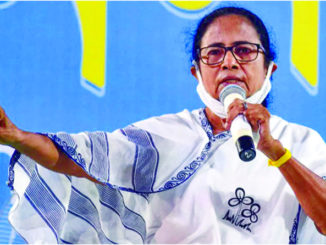
  • Why 5th phase of Bengal election is crucial for Mamata

    Why 5th phase of Bengal election is crucial for Mamata

    The West Bengal Assembly election is passing through its most crucial phase. Four of eight phases of the Bengal Assembly election are over. Altogether, voters have decided the fate of candidates in 135 of 294 seats. The remaining 159 will go to the polls between April 17 and 29.

    The fifth phase, polling for which will happen on Saturday, April 17, completes the most significant troika of election phases in Bengal — phases three to five for 120 seats.

    Here is how the Bengal election stands at the halfway mark:

    Phase 1: 30 seats

    Polling for the first phase took place on March 29, when 30 seats went to the polls. Of these seats, the Trinamool Congress (TMC) had won 27 in the 2016 West Bengal election. The Congress bagged two and the RSP (Left Front) one.

    The TMC had strengthened its position in 2016 over 2011 when it had won 19 of these 30 seats. The BJP drew a blank here in 2016. But it changed the election calculus in Bengal in the 2019 Lok Sabha polls. The BJP was leading in 20 of the 30 seats that voted in the first phase.

    Phase 2: 30 seats

    Another 30 seats went to the polls in the second phase on April 1. Of these seats, the TMC had won 21 in 2016, almost maintaining its 2011 figure of 22. The BJP had won one of these seats five years ago. The Congress-Left alliance bagged eight.

    In the 2019 Lok Sabha election, the TMC maintained its lead despite the BJP’s massive challenge. It took lead in 18 of the 30 constituencies that voted in the second phase of the West Bengal Assembly election. The BJP took the lead in 12.

    Nandigram voted in this phase. West Bengal Chief Minister Mamata Banerjee took a huge gamble by standing against local heavyweight and her former aide Suvendu Adhikari, who joined the BJP in December last year.

    Phase 3: 31 seats

    In the third phase, 31 seats went to the polls. This phase saw voting in areas where the TMC had enjoyed complete dominance in previous polls. In 2016, the TMC had won 29 of these seats. The Congress-Left alliance had won two, winning one seat each in Howrah and South 24 Paraganas.

    In 2011, the TMC had won 25 and the Congress-Left alliance five. The BJP drew a blank. Even in the 2019 Lok Sabha election, the TMC maintained its hegemony by taking lead in 29 of these 31 constituencies. The BJP, however, replaced the Congress-Left with lead in two other constituencies.

    The TMC’s performance in this phase and the next two phases would, to a large extent, decide whether Mamata Banerjee returns as the Bengal chief minister on May 2 or not.

    Phase 4: 44 seats

    Polling in the fourth phase of the Bengal election took place on April 10 for 44 seats. This was the phase in which Singur went to the polls. Along with Nandigram, Singur had played the catapulting role in the 2011 Bengal election in which the TMC defeated the Left Front.

    In 2011, the TMC had won 33 of these 44 seats. The party bettered its record in 2016 winning 39 of these seats. The Congress had won two and the Left Front eight.

    The BJP did not win any of these seats in 2011 but it got one in the 2015 Bengal polls. In the 2019 Lok Sabha polls, the BJP surprised the TMC in its stronghold by taking lead in 19 seats.

    The TMC was still ahead with a lead in 25 seats but it was a serious jolt to Mamata Banerjee’s party. The Congress and the Left had been pushed out of the race.

    Phase 5: 45 seats

    Bengal will vote for 45 assembly seats on Saturday. The fifth phase has the maximum number of seats going to the polls. This is a crucial phase of the 2021 Bengal Assembly election.

    The 45 assembly constituencies that vote in the next phase are the ones where the BJP collectively had more votes in the 2019 Lok Sabha election than the TMC. The BJP got nearly 45 per cent votes compared to the TMC’s 41.5 per cent. However, in terms of seats, the TMC led 23 and the BJP 22.

    In 2016, the TMC had won 32 of these seats — six more than 2011 — going to the polls in the fifth phase. The BJP drew a blank. The Congress and the Left combined won 10 seats.

    If the TMC does not crawl back to regain its lost foothold in this phase, Mamata Banerjee’s road to the Writers’ Building might be rough and bumpy.

    Phase 6: 43 seats

    Forty-three seats will go to the polls in the sixth phase. It is again a TMC-dominated region that will be voting on April 22. In 2011, the TMC had won 28 of these seats and improved its tally to 32 in 2016.

    The Congress-Left had won 11 of these seats in 2016. But the real fight is likely to be between the TMC and the BJP. They had taken a lead in 24 and 19 assembly segments, respectively during the 2019 Lok Sabha polls.

    Phase 7: 36 seats

    The final two phases of the Bengal election will see polling in 71 seats. Of the 36 seats that go to the polls on April 26 in the seventh phase, the TMC held 14 in 2016 and 17 in 2011.

    The Congress-Left alliance got the better of the TMC in 2016 on these seats as it won 22 seats here. In 2011, their combined share was 18.

    During the 2019 Lok Sabha polls, the BJP matched the TMC, sharing the lead in 16 constituencies each. In the remaining four, Congress was in the lead.

    Phase 8: 35 seats

    Among the 35 seats going to the polls in the eighth phase, the TMC had 14 in 2011 and 17 in 2016. The Congress-Left alliance won 16 of these seats in 2016 with the Congress winning 13 alone. In 2011, their combined share was 21. The Congress had back then won 14 seats.

    Of all the seats that will go to the polls in the last phase, the BJP won just one. But in 2019, the BJP secured a lead in 11 constituencies. The TMC was ahead in 19 and the Congress in five.

    Up next

    The 2019 Lok Sabha election brought a sharp change in the electoral dynamics of West Bengal.

    Going by the latest electoral output, the TMC has a tougher fight at hand in the last three phases of the Bengal election (phases 6,7 and 8). As per the trends seen in the 2019 Lok Sabha election, it led in 59 of the seats in these phases, while the BJP was close behind, leading in 46 seats. Source: India Today


    EC bars Bengal BJP chief for 24 hours for ‘inciteful remarks’

    The Election Commission of India (ECI) on Thursday, April 15,  banned Bharatiya Janata Party (BJP)’s West Bengal chief Dilip Ghosh from campaigning in the state for 24 hours for his “highly provocative and inciteful remarks” on the Sitalkuchi firing incident, in which four people were killed as polling was underway last week.

    A day after violence broke out during fourth phase of polling in Cooch Behar district on April 10, Ghosh had said at a rally in Baranagar in North 24 Parganas that “there will be Sitalkuchi in several places”.

    Four people were killed in firing by Central Industrial Security Force (CISF)?personnel in Sitalkuchi. While the ruling Trinamool Congress (TMC)?alleged the firing was unprovoked, the poll watchdog and central forces said it was in “self-defence”?as the security personnel at the polling booth were under attack by a mob.

    On Sunday, the TMC filed a complaint against Ghosh for his statement, prompting the ECI to seek his response.

    “The commission sternly warns Dilip Ghosh and advises him to desist from using such statement while making public utterances during the period when Model Code of Conduct is in force and imposes a ban of 24 hours…,” the ECI order said, adding that the “highly provocative and inciteful remarks” can “adversely impact law and order thereby adversely affecting the election process”.

    The ban for violating the Model Code of Conduct is applicable from 7pm Thursday till 7pm Friday, April 16, the order stated.

    Ghosh, when asked about the ban, said on Thursday he will take the time off campaigning to rest. “The ECI ordered whatever it thought was right. I will stay at home and take rest. I was not getting proper sleep and time to have a proper meal because of the campaigning,” he said.

  • Trust in J&J vax dips after pause over blood clot

    Trust in J&J vax dips after pause over blood clot

    Washington (TIP): Trust in the safety of Johnson & Johnson’s Covid-19 vaccine has plunged 15 percentage points among Americans after federal health agencies recommended a “pause” in its use following blood clot cases, according to a new poll. Adults who said they believed the single-dose shot was safe dropped from 52 per cent before the pause was announced on Tuesday to 37 per cent afterward, Xinhua news agency quoted the poll conducted by the global opinion and data firm YouGov along with The Economist.

    The poll was released on Thursday, April 15. Respondents who felt the Johnson & Johnson vaccine “unsafe” increased from 26 per cent to 39 percent.

    Americans broadly trusted the other two vaccines approved in the US, with 59 per cent of respondents saying they thought the Moderna vaccine was safe and 58 per cent trusting the safety of the Pfizer vaccine.

    The US Centers for Disease Control and Prevention and the Food and Drug Administration recommended halting the use of Johnson & Johnson’s Covid-19 vaccine on Tuesday, after rare blood clot cases emerged in six recipients.

    In these cases, a type of blood clot called cerebral venous sinus thrombosis was seen in combination with low levels of blood platelets.

    All six cases occurred among women between the ages of 18 and 48, and symptoms occurred 6 to 13 days after vaccination.

    3rd vax dose likely needed within 12

    months: Pfizer CEO

    Pfizer Chief Executive Officer Albert Bourla said people will likely need a third dose of the Pfizer/BioNTech Covid-19 vaccine within 12 months of getting fully inoculated.

    Bourla told CNBC News on Thursday that it is possible people will need to get vaccinated against the coronavirus annually, reports Xinhua news agency.

    “We need to see what would be the sequence, and for how often we need to do that, that remains to be seen,” he told CNBC.

    “A likely scenario is that there will be likely a need for a third dose, somewhere between six and 12 months and then from there, there will be an annual re-vaccination, but all of that needs to be confirmed. And again, the variants will play a key role,” he said.

    Pfizer said earlier this month that its Covid-19 vaccine was more than 91 per cent effective at protecting against the coronavirus, and more than 95 per cent effective against severe disease up to six months after the second dose.

    The data was based on more than 12,000 vaccinated participants.

    Researchers are still working on how long protection against the virus lasts once individuals has been fully vaccinated.

  • Global Covid-19 caseload tops 138.8mn

    Global Covid-19 caseload tops 138.8mn

    Washington (TIP): The overall global Covid-19 caseload has topped 138.8 million, while the deaths have surged to more than 2.98 million, according to the Johns Hopkins University.

    In its latest update on Friday, April 16, morning, the University’s Center for Systems Science and Engineering (CSSE) revealed that the current global caseload and death toll stood at 138,827,781 and 2,984,236, respectively.

    The US is the worst-hit country with the world’s highest number of cases and deaths at 31,495,164 and 565,283, respectively, according to the CSSE.

    In terms of infections, India follows in the second place with 14,074,564 cases.

    The other countries with more than two million confirmed coronavirus cases are Brazil (13,746,681), France (5,248,853), Russia (4,622,464), the UK (4,396,008), Turkey (4,086,957), Italy (3,826,156), Spain (3,396,685), Germany (3,095,016), Poland (2,642,242), Argentina (2,629,156), Colombia (2,602,719), Mexico (2,295,435) and Iran (2,168,872), the CSSE figures showed.

    In terms of deaths, Brazil comes second with 365,444 fatalities.

    Nations with a death toll of over 50,000 are Mexico (211,213), India (173,123), the UK (127,437), Italy (115,937), Russia (102,667), France (100,232), Germany (79,520), Spain (76,882), Colombia (67,199), Iran (65,680), Poland (60,612), Argentina (58,925), Peru (55,812) and South Africa (53,571).       Source: IANS

  • France’s Covid death toll surpasses 100,000

    France : France’s Covid-19 death toll passed the 100,000 mark on Thursday, April 15, and a further jump in intensive care (ICU) admissions was also reported in the past 24 hours, suggesting that the coronavirus continues to spread unabated.

    Government figures showed 296 new deaths in one day, bringing the total number of fatalities to 100,073, Xinhua news agency reported.

    The number of Covid-19 patients in intensive care units increased by 22 to 5,924 in total. The country initially had only 5,100 resuscitation beds. Some 30,668 people with Covid-19 remained hospitalized, down by 200 in a single day. Since the start of the pandemic, over 5.18 million people in France have been infected with the virus, with 38,045 new cases confirmed in the past 24 hours. As of Thursday, France has vaccinated nearly 12 million people (22.8 per cent of the adult population) with a first shot and 4.26 million with both shots.

    UK records another 2,672 coronavirus cases

    Another 2,672 people in Britain have tested positive for Covid-19, bringing the total number of coronavirus cases in the country to 4,380,976, according to official figures released on Thursday, April 15. The country also reported another 30 coronavirus-related deaths. The total number of coronavirus-related deaths in Britain now stands at 127,191. These figures only include the deaths of people who died within 28 days of their first positive test, Xinhua news agency reported.

    More than 32.4 million people have been given the first jab of the coronavirus vaccine, according to the latest official figures. Latest data have also revealed the number of people in England waiting to begin hospital treatment has risen to a new record high in February this year. Figures from National Health Service (NHS) England showed a total of 4.7 million people were waiting for routine operations or procedures at the end of February — the highest figure since records began in August 2007. Experts have warned that despite progress in vaccine rollout, Britain is “still not out of the woods” amid concerns over new variants and the third wave of pandemic in the European continent. Professor Kevin Fenton, London’s regional director of Public Health England (PHE), said Thursday that further genetic sequencing of positive tests had detected more cases in London of the variant that first emerged in South Africa.

  • India to import 50,000 MT medical oxygen amid COVID surge

    New Delhi (TIP): The government on Thursday, April 15,  said it would import 50,000 metric tonnes of medical oxygen to assure supplies to states even as it added that oxygen availability in the country was adequate. As hospitals reeled under oxygen shortages, the empowered group of officers addressing the issue met today and started mapping of oxygen sources for 12 high burden states of Maharashtra, Madhya Pradesh, Gujarat, Uttar Pradesh, Delhi, Chhattisgarh, Karnataka, Kerala, Tamil Nadu, Punjab, Haryana and Rajasthan.

    Medical oxygen is a critical component in the treatment of COVID affected patients and demands have been rising unusually in the high burden states.

    “There has been increasing demand for medical oxygen, especially from the 12 states with high burden of active COVID cases. While the demand in Maharashtra is expected to be beyond available production capacity of the state, Madhya Pradesh does not have any production capacity to meet their demand for medical oxygen. There is also a trend of increasing demand in other oxygen producing states such as Gujarat, Karnataka and Rajasthan,” the government said.

    After the meeting with manufacturers today, the government said 4880 MT, 5619 MT and 6593 MT have been assured and factored for 12 high burden states to meet their projected demand as on April 20, 25 and 30.

    The assured supply will be notified through a government order, sources said. The meeting also decided to import 50,000 MT of medical oxygen to be ready for the increasing demand.

    Health Ministry has been asked to finalise the tender and explore possible sources for import identified by the missions of MEA.

    Meanwhile 162 Pressure Swing Adsorption plants (plants manufacture oxygen and help hospitals become self-sufficient in their requirement for medical oxygen while also reducing the burden on the national grid for supply of medical oxygen) sanctioned under PM-Cares are being closely reviewed for early completion of 100 percent of the plants to enhance self-generation of oxygen in hospitals especially in remote areas.

    The empowered group asked the Health Ministry to identify another 100 hospitals in far flung locations for consideration of sanction for installation of PSA plants.

    The government said it was monitoring the situation to ensure uninterrupted supply of medical oxygen. India’s daily medical oxygen production capacity is 7127 MT. Current national oxygen stocks are 50,000 MT – more than daily consumption of 3842 MT but the government is readying for what it calls unusual surge in demand.

              Source: The Tribune

  • India has administered 117 million Covid doses till now

    India has administered 117 million Covid doses till now

    New Delhi (TIP): India had administered over 117 million coronavirus vaccine doses across the country by Thursday, April 15, evening even as the national Capital tightened curbs in its attempt to curb the surge in infections. In a boost to India’s vaccination drive, the national drug controller also assured that it will take just three days to process applications of foreign-made vaccines once they’ve been approved for emergency use in the country. In all, 117,096,037 vaccine doses have been given in the country till now. This includes 9,082,153 healthcare workers who have had their first dose and 5,633,982 who have got their second dose as well. As many as 10,290,850 frontline workers have had their first dose while 5,151,557 have got their second dose too. In the 45-59-year age group, 38,676,098 people have got their first dose and another 984,785 have had their second dose as well. In the 60+ category, 44,190,147 people have been administered their first dose while 3,086,465 have had their second dose as well. Source: HT

  • China-India border tensions remain high despite pullback from LAC: US intel report

    China-India border tensions remain high despite pullback from LAC: US intel report

    New Delhi (TIP): A United States intelligence report has said that despite some force pullback from the Line of Actual Control, the tension between India and China remains high as China seeks to use coordinated tools to demonstrate its growing strength and compel regional neighbours to acquiesce to Beijing’s preferences, including its claims over disputed territory.

    “China-India border tensions remain high, despite some force pullbacks this year China’s occupation since May 2020 of contested border areas is the most serious escalation in decades and led to the first lethal border clash between the two countries since 1975. As of mid-February, after multiple rounds of talks, both sides were pulling back forces and equipment for some sites along the disputed border” the Annual Threat assessment of the US intelligence community, by the office of the director of the national intelligence read.

    The report states that Beijing is increasing combining its growing military power with its economic, technological, and diplomatic clout to secure what it views as its territory and regional preeminence and pursue international cooperation at Washington’s expense.

    As per the US intelligence report, in the South China Sea, Beijing will continue to intimidate rival claimants and will use growing numbers of air, naval, and maritime law enforcement platforms to signal to Southeast Asian countries that China has effective control over contested areas. China is similarly pressuring Japan over contested areas in the East China Sea. “China will continue pursuing its goals of becoming a great power, securing what it views as its territory, and establishing its preeminence in regional affairs by building a world-class military, potentially destabilizing international norms and relationships. China’s military commitment includes a multiyear agenda of comprehensive military reform initiatives”, the report reads. The report suggests that China has been building a large and increasingly capable nuclear missile force that is more survivable, more diverse, and on higher alert than in the past, including nuclear missile systems designed to manage regional escalation and ensure an intercontinental second-strike capability.

              Source: News 18

  • 2020 Delhi riots: Court grants bail to Umar Khalid

    New Delhi (TIP): A Delhi court on Thursday, April 15,  granted bail to former JNU student Umar Khalid in a case related to the communal violence in northeast Delhi in February last year, saying that he cannot be made to incarcerate in jail for infinity.

    Further, the court said the investigation in the case has been completed and the charge sheet has been filed and it is the case in which Khalid was not physically present at the scene of the crime on the date of the incident.

    “The applicant is not visible in any CCTV footage/viral video(s) pertaining to the scene of crime on the date of the incident. There is no identification of the applicant either through independent public witness or any police witness of he being present at the scene of crime on the date of incident,” Additional Sessions Judge Vinod Yadav noted in the order.

    Khalid, however, will remain in jail as he is accused in some other cases, including one related to the criminal conspiracy lodged under stringent Unlawful Activities (Prevention) Act.

    The former JNU student leader was granted bail in the case in which the FIR was registered on the statement of Constable Sangram Singh, where he stated that on February 24, 2020 at about 2 PM, a large crowd gathered on the road in a locality in the northeast Delhi and started pelting stones in which he and other police officials got injured as they were thrashed by the mob.

  • Time has come for a woman Chief Justice of India: CJI SA Bobde

    New Delhi (TIP): Chief Justice of India SA Bobde on Thursday, April 15, said the time had come when a woman should be the Chief Justice of India. He also said there was no need for a change of attitude of the Collegium to ensure greater representation of women in the judiciary.

    A special bench of Chief Justice SA Bobde and Justices Sanjay Kishan Kaul and Surya Kant said, “Why higher judiciary. We think the time has come when a woman should be Chief Justice of India”.

    The bench said, “We have the interest of women in mind. There is no attitudinal change in it. Hopefully, they (women) will be appointed”. SA Bobde also said several women lawyers turned down proposals to accept judgeship citing domestic responsibilities.

    CJI SA Bobde said, “Chief Justices of High Courts have told me that there is a problem that when women lawyers are asked for appointment as judges, they often deny it saying that they have domestic responsibility or they have to take care of the studies of their children”.

    However, the CJI’s comment invited a strong response from women in the bar. “There are many men who refuse judgeship because they have a successful practice and do not want to take a cut in their earnings. But has that stopped the collegium from seeking more men and making them judges?” The Indian Express quoted Bombay-based advocate Veena Gowda as saying.

    The Delhi High Court Women Lawyers’ Forum also tweeted, “We are ready and more than happy to take this responsibility and serve the institution.”

  • FIR against Mamata Banerjee in Cooch Behar for ‘instigating’ people to gherao central forces

    FIR against Mamata Banerjee in Cooch Behar for ‘instigating’ people to gherao central forces

    Kolkata (TIP): An FIR has been lodged against West Bengal Chief Minister Mamata Banerjee at a police station here, alleging that she instigated voters to gherao central forces and that, in turn, led to the incident of firing in Sitalkuchi and the subsequent death of four persons.

    Siddique Ali Mia, the zilla president of BJP’s minority cell in Cooch Behar, cited the TMC supremo’s comments during a rally in Banerswar area as he filed a complaint on Wednesday claiming that her address provoked people to attack CISF personnel during the fourth phase of state elections.

    He attached a video clip of Banerjee’s speech in his complaint at Mathabhanga police station.

    Villagers, after being provoked by such provocative statements of Mamata Banerjee, tried to snatch fire arms of the deployed paramilitary forces, Mia said.

    “The said villagers including women launched attack upon the paramilitary forces with the intention of causing bodily injury, knowing it to be likely to cause death of the deployed paramilitary forces,” he wrote in the FIR, a copy of which is with the PTI. The BJP leader, when contacted, said he would launch a massive protest demanding the chief minister’s arrest, if the police “sit idle” on the FIR in the next few days. “She is solely responsible for the death of those four people. She is answerable to all the voters of our district,” Mia stated.

    At least four persons died outside a polling booth in Sitalkuchi assembly constituency on April 10 when CISF personnel opened fire in “self defence” allegedly after coming under attack from locals.

    The Election Commission had suspended the voting exercise at the booth following the incident.

    In its statement, the EC said, “The joint report of the two special observers has been received … wherein they interalia stated that recourse to open fire by the CISF personnel became absolutely necessary in order to save the lives of the voters lined up at the polling booth, those of other polling personnel and their own lives as the mob had attempted snatching their weapons.”

    The poll panel had also banned political leaders from entering the district for three days. Mamata Banerjee met the family members of those killed in the firing on Wednesday.

    Meanwhile, the Election Commission of India on Thursday said it has no plans as of now to club the remaining phases of the West Bengal Assembly election and hold polling for them together.

    The comment comes at a time when India is reeling under a raging second wave of Covid-19. On Thursday, the country for the first time reported more than 2 lakh Covid-19 cases in a day.

    There is no plan to club remaining phases of West Bengal elections. A meeting has been called by the Chief Electoral Officer of West Bengal to ask political parties to adhere to EC’s Covid-19 guidelines and ensure strict compliance, an EC official said. This time, election to the West Bengal Assembly is being held in eight phases. Polling for four phases have ended and for the fifth phase it will be held on Saturday. Polling for the sixth, seventh and the eighth phase will be held on April 22, April 26 and April 29, respectively. Votes for all the phases will be counted on May 2.

  • Former CBI director Ranjit Sinha passes away

    Former CBI director Ranjit Sinha passes away

    New Delhi (TIP): Former CBI director Ranjit Sinha died here on Friday, April 16,  morning in what is believed to be a COVID-19 related death, senior officials said.He was 68. It is understood that he was confirmed positive for coronavirus on Thursday night and breathed his last at 4.30 am on Friday, the officials said. Sinha, a 1974-batch officer of the Bihar cadre and who had cracked the coveted UPSC examination at the age of 21, had taken over as the CBI chief in 2012. He had previously headed the Indo-Tibetan Border Police (ITBP) force, the Railway Protection Force and served at senior positions in the CBI in Patna and Delhi during his four-decade-long career in police service. “DG and all ranks of ITBP express their deepest condolences on sad demise of Sh Ranjit Sinha, former DG ITBP today. He served the force from September 1, 2011 to December 19, 2012 as DG and earlier as ADG and will always be remembered for his professional acumen and exceptional leadership. May his soul rest in peace,” the ITBP said in a statement.

    An MPhil from the Indian Institute of Public Administration, Sinha was an avid reader and writer and a regular contributor on police-related issues in various journals and magazines.

  • London police charge man seen with axe near Buckingham Palace

    London (TIP): British police say they have charged a London man who was spotted carrying an axe near Buckingham Palace. The city’s Metropolitan Police force said private security guards working on The Mall, a main road outside the palace, detained a suspect on Tuesday evening after they were alerted to reports of a man carrying what appeared to be an axe. Police said 46-year-old Vladyslav Dryhval was charged Thursday with possessing an offensive weapon and a bladed article. Dryhval was remanded into custody and was due to appear at Westminster Magistrates’ Court later Thursday. The police force previously said there were no reports of injuries and that the incident was not being treated as terrorism-related. AP         

  • China protests Raisina Dialogue remarks

    Beijing (TIP): The Chinese embassy here has sought to counter remarks made against Beijing during the ongoing Raisina Dialogue by several western political and military leaders whose participation is high as this year’s version is fully digital.

    The Chinese embassy spokesperson Wang Xiaojian protested remarks made by US Indo-Pacific Command chief Admiral Phil Davidson and others about Xinjiang, Hong Kong and Taiwan, by describing happenings in these regions as China’s internal affairs. “Making baseless and irresponsible remarks is not acceptable. We are firmly opposed to interference in China’s internal affairs by any country or anyone under any pretext,” he said.

    Wang also objected to some western officials stating that ‘China does not share our values’. “China has being calling for upholding values of peace, development, equity, justice, democracy and freedom. Aren’t these the values that all of us should be committed to,” he asked. (TNS)

  • 20 killed, 3 injured when bus, truck crash in southern Egypt

    Cairo (TIP): A bus has overturned while trying to pass a truck on a highway in southern Egypt, causing a collision that killed at least 20 people and injured three others, authorities said on Wednesday. The bus was travelling from Cairo on Tuesday when it turned over and was hit by the truck on a road in the southern province of Assiut, 320 kilometers south of Cairo, Assiut Governor Essam Saad said in a statement.

    Both vehicles caught fire, it added.

    Photos released by the governor’s office showed a burned out bus, with rescue teams looking for survivors. The victims were taken to nearby hospitals, the statement said.

    Traffic accidents kill thousands every year in Egypt, which has a poor transportation safety record. Crashes are mostly caused by speeding, bad roads or poor enforcement of traffic laws.

    The country’s official statistics agency says around 10,000 road accidents took place in 2019, the most recent year for which statistics are available, leaving over 3,480 dead. In 2018, there were 8,480 car accidents, causing over 3,080 deaths. (AP)

  • Beijing skies turn yellow as sand, dust engulf Chinese capital

    Beijing (TIP) : The skies above Beijing turned yellow and air pollution soared to severe levels as a giant cloud of sand and dust particles rolled into the city, propelled by strong winds from the north of China. Beijing’s air quality index rose to 324 as of 4 p.m. local time (0800 GMT) on Thursday, mainly due to larger particles of sand and dust, municipal authorities said. It worsened in the evening, exceeding 1,300 in some parts of the city, according to the Swiss IQAir app. The particles originated from Mongolia and the Chinese region of Inner Mongolia, and high winds are expected to carry the pollutants to central and eastern China by Friday, the China Meteorological Administration said. Reuters

  • France asks citizens to leave Pakistan after violent protests

    France (TIP): The French embassy here on Thursday advised all French nationals in Pakistan to temporarily leave the country after violent protests by a radical religious group that has now been banned by the government.

    The Tehreek-i-Labaik Pakistan (TLP) took to streets on Monday to launch violent protests to force the government to expel the French ambassador over blasphemous caricatures published last year.

    Precautionary measure

    Though no French citizen was reportedly targeted so far, the embassy has urged all French citizens to leave Pakistan, apparently as a precautionary measure Though no French citizen was reportedly targeted so far but the embassy has urged all the French citizens to leave Pakistan, apparently as a precautionary measure. “Due to the serious threats to French interests in Pakistan, French nationals and French companies are advised to temporarily leave the country,” the embassy said in an email message to its citizens in Pakistan. It said that the departures will be carried out by existing commercial airlines. — PTI

  • Canadian lawmaker caught naked during video conference

    Canadian lawmaker caught naked during video conference

    Ottawa (Canada) (TIP): A Canadian Parliament member was caught stark naked in a virtual meeting of the House of Commons.

    William Amos, who has represented the Quebec district of Pontiac since 2015, appeared on the screens of his fellow lawmakers completely naked Wednesday. The pandemic has meant many Canadian lawmakers participate in sessions via video conference instead of in person.

    A screenshot obtained by The Canadian Press shows Amos standing behind a desk between the Quebec and Canadian flags, his private parts hidden by what appears to be a mobile phone in one hand. “This was an unfortunate error,? Amos said in a statement sent by email.” “My video was accidentally turned on as I was changing into my work clothes after going for a jog. I sincerely apologize to my colleagues in the House of Commons for this unintentional distraction. Obviously, it was an honest mistake and it won’t happen again.” Claude DeBellefeuille, a legislator for the opposition Bloc Quebecois party, raised the incident in a point of order after question period, suggesting that parliamentary decorum requires male Parliament members to wear a jacket and tie — and a shirt, underwear and trousers.

    Speaker Anthony Rota later thanked DeBellefeuille for her “observations” and clarified that while he had not seen anything, he checked with technicians and confirmed they saw something. He reminded lawmakers to always be vigilant when they are near a camera and microphone.

    Amos, the parliamentary secretary to Industry Minister Francois-Philippe Champagne, was visible only to Parliament members and staffers on an internal video conference feed. Because he was not speaking, his image did not show up on the public feed.

    Liberal Party colleague Mark Holland said Amos was “utterly mortified.” Holland said he was satisfied with the explanation from his colleague.

    “I don’t think there was any ill intent. It’s certainly an unfortunate circumstance,? Holland said.

    “This is a warning to everybody,” Holland added. “You’ve got to really always assume that camera is on and be very careful any time you wander anywhere near that camera that you’re dressed appropriately.?

    Asked if he will be issuing a warning to all Liberal lawmakers to that effect, Holland said: “Oh, big time!” AP

  • Myanmar security forces arrest key protest leader

    Myanmar security forces arrest key protest leader

    Yangon (TIP): Myanmar security forces arrested on Thursday one of the main leaders of the campaign against military rule after ramming him with a car as he led a motorbike protest rally, friends and colleagues said. Opponents of a February 1 coup that ousted an elected government led by Nobel peace laureate Aung San Suu Kyi have kept up their campaign against the military this traditional New Year week with marches and various other displays of resistance. “Our brother Wai Moe Naing was arrested. His motorbike was hit by an unmarked police car,” Win Zaw Khiang, a member of a protest organising group, said on social media. Wai Moe Naing, a 25-year-old Muslim, has emerged as one of the most high-profile leaders of opposition to the coup. Earlier, Reuters spoke to Wai Moe Naing by telephone as he was setting off to lead the rally in the central town of Monywa, about 700 km (435 miles) north of the main city of Yangon. — Reuters

  • Pakistan deploys paramilitary forces to quell deadly Islamist protests

    Pakistan deploys paramilitary forces to quell deadly Islamist protests

    Lahore (TIP): Paramilitary forces deployed overnight in the eastern Pakistani province of Punjab as police struggled to clear violent sit-ins by Islamists protesting against the arrest of their leader. Two police officers were killed and 125 policemen were hurt in clashes with protesters in Lahore, Punjab’s capital, the city’s police chief Ghulam Mehmood Dogar said on Wednesday during a visit to a hospital treating the injured. The protests were called by Tehrik-i-Labaik Pakistan (TLP), a hardline Islamist group that has made the denunciation of blasphemy against Islam its rallying cry. Their leader Saad Rizvi was arrested in Lahore on Monday ahead of the demonstrations.

    On Tuesday, Rizvi was charged with instigating the murder of a police constable, who authorities say was kidnapped by protesters and later beaten to death. Major roads across the country were blocked by the protesters on Monday and Tuesday, but by Tuesday evening police had been able to clear most of the crowds, except in Lahore.

    Local news outlets reported similar incidents of protesters overpowering police in other cities, as did videos shared on social media that Reuters could not independently verify.

    In one, a police officer with a bloodied face is frog-marched along a road by protesters. In another, a group of officers are seated on the ground surrounded by protesters, with one bleeding and appearing to be badly injured.

    The TLP group blocked one of the main roads into the capital late last year and called off their protest only after the government signed a deal with them, agreeing to endorse a boycott of French products.

    At the time, protests had broken out in several Muslim countries over France’s response to the killing of a teacher who showed cartoons mocking the Prophet Mohammad to pupils during a civics lesson.

    For many Muslims, depictions of the Prophet are blasphemous.

    The group’s agreement with the government was revised earlier this year, extending to April 20 the deadline for a parliamentary resolution to expel the French ambassador, when the group had plans to hold countrywide rallies.

    Pakistan’s parliament in October condemned the display of images in France of the Prophet Mohammad, urging the government to withdraw its ambassador from Paris. Reuters

  • Sri Lanka bans IS, 10 other groups

    Colombo (TIP): Sri Lanka has banned 11 hardline Islamist organisations, including the Islamic State (IS) and al-Qaeda. It warned that any person who conspires with them would be sentenced to prison terms between 10 and 20 years.

    President Gotabaya Rajapaksa in a special gazette notification issued on Tuesday proscribed the radical groups under the Prevention of Terrorism (temporary) Provisions Act. This has been done in good faith to ensure peace, the notification said. — PTI

  • 5 miners die, 4 missing in coal mine collapse in Afghanistan

    Kabul (TIP): A makeshift coal mine collapsed on Tuesday in northern Afghanistan, burying five miners and leaving four more missing, a provincial security official said.

    Jawed Basharat, a spokesman for the provincial police chief in northern Baghlan province said a rescue team is at the site in Nahrin district.

    Collapsing coal mines are happening more often in Afghanistan. There are no professional ways of mining and extraction in the country. Local workers use traditional techniques and put their lives at risk in remote areas.

    According to the US Geological Survey, Afghanistan has reserves of oil, gas, lithium, and other rare metals and minerals worth trillions of dollars, most of which remain untouched due to insecurity and violence in different parts of the country. AP

  • Five new animal species discovered in Tibet

    tibet (TIP): Five new animal species have been discovered in Tibet, including three kinds of frogs, one old-world monkey and a bushmaster snake, challenging the long-held view that the Himalayan mountains are a desolate and lifeless region.

    The discovery of the five new species was the result of an eight-year investigation of the terrestrial wildlife in the Tibet Autonomous region carried out by the regional forestry bureau, state-run Global Times reported on Monday. Covering an area of 6,346 sq kms, this was a second such investigation carried out by the bureau, the report said.

    The discovered species are: a type of macaque (a genus of gregarious Old World monkeys), bushmaster snake (venomous), and three kinds of frogs.

    The investigation also discovered 20 species that were not previously known to habitat in Tibet.

    PTI

  • Remembering the martyrs of the Jallianwala Bagh Massacre

    Remembering the martyrs of the Jallianwala Bagh Massacre

    On Jallianwala Bagh Massacre anniversary

    • 102 years ago, on April 13, the Vaisakhi Day, General Dyer of the British Government opened fire on peaceful protestors in Jallianwala Bagh in Amritsar, India. Killing 379 Indians, according to official sources.
    • Rabindranath Tagore renounced his knighthood as “a symbolic act of protest”.
    The Jallianwala Bagh in 1919, months after the massacre.
    Jallianwala Bagh well into which people jumped to save themselves from bullets
    British Genocide and Terrorism against unarmed civilians, including women and children.
    Bullet marked wall at Jallianwala Bagh.

    The Jallianwala Bagh massacre, also known as the Amritsar massacre, was a seminal event in the British rule of India. On 13 April 1919, a crowd of non-violent protesters, along with Vaisakhi pilgrims, had gathered in the Jallianwala Bagh garden in Amritsar, P unjab to protest the arrest of two leaders despite a curfew which had been recently declared.

    An hour after the meeting began as scheduled at 16:30, Dyer arrived with a group of sixty-five Gurkha and twenty-five Baluchi soldiers into the Bagh. Fifty of them were armed with .303 Lee-Enfield bolt-action rifles. Dyer had also brought two armored cars armed with machine guns; however, the vehicles were left outside, as they were unable to enter the Bagh through the narrow entrance. The Jallianwala Bagh was surrounded on all sides by houses and buildings and had few narrow entrances. Most of them were kept permanently locked. The main entrance was relatively wide but was guarded heavily by the troops backed by the armored vehicles. The people had no-where to go and were boxed in like caged animals.

    Dyer (without warning the crowd to disperse) blocked the main exits. He explained later that this act “was not to disperse the meeting but to punish the Indians for disobedience.” Dyer ordered his troops to begin shooting toward the densest sections of the crowd to inflict maximum damage. Firing continued for approximately ten minutes. Cease-fire was ordered only when ammunition supplies were almost exhausted, after approximately 1,650 rounds were spent.

    Many people died in stampedes at the narrow gates or by jumping into the solitary well on the compound to escape the shooting. A plaque, placed at the site after independence states that 120 bodies were removed from the well. The wounded could not be moved from where they had fallen, as a curfew was declared, and many more died during the night.

    The number of deaths caused by the shooting is disputed. While the official figure given by the British inquiry into the massacre is 379 deaths, the method used by the inquiry has been subject to criticism. In July 1919, three months after the massacre, officials were tasked with finding who had been killed by inviting inhabitants of the city to volunteer information about those who had died. This information was incomplete due to fear that those who participated would be identified as having been present at the meeting, and some of the dead may not have had close relations in the area. When interviewed by the members of the committee, a senior civil servant in the Punjab admitted that the actual figure could be higher. Since the official figures were probably flawed regarding the size of the crowd (15,000–20,000), the number of rounds shot and the period of shooting, the Indian National Congress instituted a separate inquiry of its own, with conclusions that differed considerably from the Government’s inquiry. The casualty number quoted by the Congress was more than 1,500, with approximately 1,000 being killed. The Government tried to suppress information of the massacre, but news spread in India and widespread outrage ensued. Yet, the details of the massacre did not become known in Britain until December 1919.

    The day after the massacre Kitchin, the Commissioner of Lahore as well as General Dyer, both used threatening language. The following is the English translation of Dyer’s Urdu statement directed at the local residents of Amritsar on the afternoon of 14 April 1919, a day after the Amritsar massacre:

    “You people know well that I am a Sepoy and soldier. Do you want war or peace? If you wish for a war, the Government is prepared for it, and if you want peace, then obey my orders and open all your shops; else I will shoot. For me the battlefield of France or Amritsar is the same. I am a military man and I will go straight. Neither shall I move to the right nor to the left. Speak up, if you want war? In case there is to be peace, my order is to open all shops at once. You people talk against the Government and persons educated in Germany and Bengal talk sedition. I shall report all these. Obey my orders. I do not wish to have anything else.

    I have served in the military for over 30 years. I understand the Indian Sepoy and Sikh people very well. You will have to obey my orders and observe peace. Otherwise, the shops will be opened by force and Rifles. You will have to report to me of the Badmash. I will shoot them. Obey my orders and open shops. Speak up if you want war? You have committed a bad act in killing the English. The revenge will be taken upon you and upon your children.”

    Brigadier Dyer designated the spot where Marcella Sherwood was assaulted sacred and daytime pickets were placed at either end of the street. Anyone wishing to proceed in the street between 6am and 8pm was made to crawl the 200 yards (180 m) on all fours, lying flat on their bellies. The order was not required at night due to a curfew. The order effectively closed the street. The houses did not have any back doors and the inhabitants could not go out without climbing down from their roofs. This order was in effect from 19 April until 25 April 1919. No doctor or supplier was allowed in, resulting in the sick, that were shot, being unattended and left to die in Jallianwala Bagh massacre.

    After General Dyer reported to his superiors that he had been “confronted by a revolutionary army”, Lieutenant-Governor Michael O’Dwyer wrote in a telegram sent to Dyer: “Your action is correct and the Lieutenant Governor approves.” O’Dwyer requested that martial law should be imposed upon Amritsar and other areas, and this was granted by Viceroy Lord Chelmsford.

    Both Secretary of State for War Winston Churchill and former Prime Minister H. H. Asquith however, openly condemned the attack. Churchill referring to it as “monstrous”, while Asquith called it “one of the worst outrages in the whole of our history”.

    Winston Churchill, in the House of Commons debate of 8 July 1920, said, “The crowd was unarmed, except with bludgeons. It was not attacking anybody or anything… When fire had been opened upon it to disperse it, it tried to run away. Pinned up in a narrow place considerably smaller than Trafalgar Square, with hardly any exits, and packed together so that one bullet would drive through three or four bodies, the people ran madly this way and the other.

    When the fire was directed upon the center, they ran to the sides. The fire was then directed to the sides. Many threw themselves down on the ground, the fire was then directed down on the ground. This was continued to 8 to 10 minutes, and it stopped only when the ammunition had reached the point of exhaustion.” After Churchill’s speech in the House of Commons debate, MPs voted 247 to 37 against Dyer and in support of the Government.

    Rabindranath Tagore received the news of the massacre by 22 May 1919. He tried to arrange a protest meeting in Calcutta and finally decided to renounce his knighthood as “a symbolic act of protest”. In the repudiation letter, dated 30 May 1919 and addressed to the Viceroy, Lord Chelmsford, he wrote “I … wish to stand, shorn, of all special distinctions, by the side of those of my countrymen who, for their so-called insignificance, are liable to suffer degradation not fit for human beings” Gupta describes the letter written by Tagore as “historic”. He writes that Tagore “renounced his knighthood in protest against the inhuman cruelty of the British Government to the people of Punjab”, and he quotes Tagore’s letter to the Viceroy “The enormity of the measures taken by the Government in the Punjab for quelling some local disturbances has, with a rude shock, revealed to our minds the helplessness of our position as British subjects in India …

    The very least that I can do for my country is to take all consequences upon myself in giving voice to the protest of the millions of my countrymen, surprised into a dumb anguish of terror. The time has come when badges of honor make our shame glaring in the incongruous context of humiliation…”

    Dyer was met by Lieutenant-General Sir Havelock Hudson, who told him that he was relieved of his command. He was told later by the Commander-in-Chief in India, General Sir Charles Monro, to resign his post and that he would not be reemployed.

    The British Lieutenant-Governor of Punjab, Michael O’Dwyerdied the kind of death he had brought upon many on April 13, 1921.

    On 13 March 1940, at Caxton Hall in London, Udham Singh, an Indian independence activist from Sunam who had witnessed the events in Amritsar and was himself wounded, shot and killed Michael O’Dwyer, the British Lieutenant-Governor of Punjab at the time of the massacre, who had approved Dyer’s action and was believed to be the main planner. Dyer himself had died earlier in 1927. We pay our tribute to those who lost their lives in Jallianwala massacre, and salute Udham Singh who avenged their death. A nation is known by its heroes and martyrs

    (With inputs from DiscoverSikhism.com and Center For Pluralism)


  • Kerala Elections: Will the power shift back to Congress?

    As I See It

    By George Abraham

    The author who hails from the State of Kerala is a keen observer of politics in his State. He was in Kerala, campaigning for the Congress candidates, many of whom are hispersonal friends. Fresh from the battlefield, he has made his assessment of the political situation and electoral fortunes of the political parties in the fray. The Indian Panorama requestedto   share his assessment, and we are glad, he obliged.  Here is the articlehe wrote exclusively for The Indian Panorama readers.

    Some predict a thumping victory for the UDF, while other left-leaning pundits keep believing that their governance in the last five years will be rewarded with continuity. BJP supporters are thinking of shock and awe for the rest of us. The truth is somewhere in between. The calculus from many quarters is that if BJP’s share of vote increases, it may hurt Congress more. Currently, the BJP share is around 15 %, and any decrease would assure UDF a stunning victory. 

    Elections in Kerala are over. Now it is a long wait. Unfortunately, the elections were not conducted towards the end of April; these EVMs are in storage until May 2nd anyway. We do not know anymore what factors drive the election commission to make these decisions on timings. However, there are ample speculations that decisions may have been borne out of travel conveniences of the political hierarchy more than an average voter’s wishes!

    When I landed in Kerala 3 weeks before the election, Pinarayi Vijayan, the Chief Minister of Kerala, was on billboards everywhere, guaranteeing success. Most of the media outlets have come out with their own surveys that predicted an LDF victory. Many of us felt that history is about to take place in the continuation of a ministry. Kerala has a tradition of alternating between these two fronts’ coalitions, UDF and LDF, as anti-incumbency always plays a role. However, the mood slowly began to shift as the election date neared. Many folks who have ignored those mushrooming scandals targeted by the opposition started to take a second look.

    The most compelling argument for many for a change is the underlying feeling that Congress Party may become irrelevant if UDF loses again. Kerala stands out as the last citadel against the BJP’s goal of ‘Congress Mukta Bharat,’ and people started to grasp that reality. In the absence of two fronts, UDF and LDF, BJP will likely begin to consolidate their hold in a secular Kerala and, at the minimum, may become the major opposition force in the State.

    The other factor is how people started perceiving Pinarayi Vijayan’s autocratic ways and a growing number of voters vary of a future where he may go unchallenged in another LDF victory. There are already rumblings inside CPM about arbitrary rulings and dictatorial ways the Government is being run, and more and more, the governance is growingly perceived to be a one-man show. There are rumors of hard feelings within the party cadre about denying tickets to popular leaders such as G. Sudhakaran, Thomas Issac, and Raju Abraham. There is a good possibility that Congress may even snatch at least two of those seats. Mr. Pinarayi, who is also dubbed as ‘Captain’ is fully in charge, and his unquestionable authority and arrogant attitude is a matter of discomfort to many.

    The lack of integrity and transparency by him and his colleagues in the Government are so evident when they tend to deny any charges of scandals first and then slowly acknowledge them piece by piece until it is full-blown upon their faces. The Deep-Sea fishing project, an NRI venture, is one such scandal where people of Kerala were totally deceived by this Government and repercussions have been indeed felt at the polling stations.

    Then again, CPM appears to be having the misconception that if they drive the Congress out of town, LDF would be better positioned as the lone ranger fighting for secularism and diversity with BJP as their main opposition, and given the demographics, they could continue to rule the State forever. They appear to have short memories and have forgotten already about their current dilemma in Bengal and Tripura! There were even rumors of secret collaboration between CPM and BJP to that effect, and BJP would be allowed to bag ten seats. The Lavlin case, a long-running scandal involving Pinarayi, is being postponed by CBI, and indecisions by many central authorities regarding various scams, mainly the Gold smuggling and Life mission, may have led many to believe that something rotten is happening behind the scenes.

    There is no doubt that Ramesh Chennithala looks more and more like a hero unearthing one scam after another. There is a realization among the people that credit should be given where credit is due. Whether he will be allowed to form the Government remains to be seen. However, nobody can deny the fact that he has kept the pressure on the Pinarayi government and a positive outcome in the elections may vindicate him as an effective Opposition leader. The other important factor that may have turned the fortune in favor of UDF was Rahul and Priyanka Gandhi’s effective campaigning across the State. Keralites appeared to have given thumps up how they have identified themselves with locals, whether it is jumping into the sea with the fishermen or sharing an Easter meal with the poor children in their habitat.

    BJP leaders are busy talking about their potential to win up to 35 seats in Kerala. Nobody I spoke to could attest to that possibility. There was no doubt that races in 43 constituencies on all three fronts were competitive. However, when senior BJP leaders continued to herald that possibility and a new entry like Metroman E. Sreedharan being talked about as a Chief Minister candidate, secular minded Keralites should start worrying about that prospect. Some even went as far as to speak about a hung assembly where BJP could be the broker. The recent tradition we have witnessed in the Kerala Elections is that other fronts will cross-vote and negate that possibility when BJP appears to be in the lead. Whether that would happen this time remains to be seen. People who are knowledgeable about the vulnerabilities of EVMs have expressed their concerns as well, and if something unexpected happens in Kerala, it may question the whole credibility of our election process, the EVMs in particular.

    There is no doubt that a few in the majority community tag Congress as a party of the minorities. Some of the policies that the last UDF government pursued may have contributed to such an indictment. Questions are being asked why the Muslim League, a coalition partner of the UDF, has a monopoly over certain portfolios covering a large chunk of the mandatory spending and why their ministers do not hire any non-Muslim in their staff. Suppose it is genuinely a secular party, except for tokenism, why they appear to be so reluctant to run female candidates or non-Muslim candidates for that matter. Some politicians like P.C. George and few Bishops from the Catholic Church amplified some of these issues like ‘Love Jihad’ and ‘minority benefits’ that created a chasm between Christians and Muslims.

    The Prime Minister himself, who has no time to meet with the protesting farmers, found time to hear the Bishops’ stories from the Jacobite Church, which continues to feud with the Orthodox, their sister church. There is no doubt that Modi is fishing in troubled waters, and BJP would like to see a Hindu-Christian consolidation as a short-term strategy to get their foot inside the door. It may be anybody’s guess what would happen once they have accomplished that goal. It is still fresh in our memory that BJP made an alliance with PDP in Jammu Kashmir that led to the President’s rule, abrogation of Article 370, and their former allies’ imprisonment.

    Some predict a thumping victory for the UDF, while other left-leaning pundits keep believing that their governance in the last five years will be rewarded with continuity. BJP supporters are thinking of shock and awe for the rest of us. The truth is somewhere in between. The calculus from many quarters is that if BJP’s share of vote increases, it may hurt Congress more. Currently, the BJP share is around 15 %, and any decrease would assure UDF a stunning victory. As everyone knows, it is the traditional Congress votes that flow towards BJP. Keralites are an intelligent electorate, and in the final analysis, they tend to believe that a change is necessary. Only on May 2nd may we learn the size of that mandate. Therefore, I remain cautiously optimistic.

    (The author is a former Chief Technology Officer, United Nations, and Vice Chairman of Indian Overseas Congress, USA. He can be reached at gta777@gmail.com)


  • Indian American cast of ‘Family Karma’ tackles culturally sensitive issues in Season 2

    Indian American cast of ‘Family Karma’ tackles culturally sensitive issues in Season 2

    NEW YORK (TIP): Despite Indian Americans being one of the fastest growing immigrant groups in the United States, it is not very often that one gets to see an all-Indian American storyline on mainstream television. While Indians as doctors, yoga practitioners or IT guys have been making their odd presence on US TV shows, it is perhaps for the first time that viewers got to see not one or two, but stories of no less than nine young Indian American friends on TV. Bravo’s docuseries, Family Karma, which completed a hit Season 1, was definitely unique in that aspect. Now, as it returns with a second season, there are more expectations of the series breaking newer grounds. And if the initial storyline progression is any indication, the upcoming season has plenty on offer. The trailer for the new season got dropped on Tuesday, April 13.

    There is a new entry that promises to add more to the show. A character named Monica gets introduced. Those who have been watching Family Karma would know that the new entry would make two characters named Monica in the series. Monica Vaswani, who has been playing the part from season 1, returns for this season. Other returning members of the cast from season 1 include Anisha Ramakrishna, Amrit Kapai, Bali Chainani and Shaan Patel. New actors joining in this season are Dillon Patel and Rish Karam. The critically acclaimed show, which explores the personal journeys of nine young Indian American friends trying to navigate life, friendship, careers, and family, continues to bring in new twists this season.

    The season would see Anisha making the decision of freezing her eggs. A culturally sensitive issue, it would be interesting to see whether her Indian family supports her decision or not.

    Amrit, along with his boyfriend Nicholas, plans to settle down in Miami but not before an important first step – seeking approval from Amrit’s family matriarch – another cultural taboo breaker in the series. But before you think that the new season is becoming more preachy – relax. There is a whole lot of fun as Brian discovers love again – this time again with a woman named Monica!

    Family Karma is produced for Bravo by Truly Original with Steven Weinstock, Glenda Hersh, Lauren Eskelin, Michelle Schiefen, Lucas Howe, Swaga Deb, and Michael Meinecke serving as executive producers. Westley Harris and Ariel Algus serve as co-executive producers.

    If you haven’t already, catch up on the series. It will give you a tantalizing peek into many layers of Indian American life.