Tag: Facebook

  • Guru Gobind Singh – the Saint-Soldier and the founder of the Khalsa

    Guru Gobind Singh – the Saint-Soldier and the founder of the Khalsa

    Guru Gobind Singh, born Gobind Rai (22 December 1666 – 7 October 1708), was the 10th Sikh Guru, a spiritual master, warrior, poet and philosopher.

     When his father, Guru Teg Bahadur, was beheaded for refusing to convert to Islam, Guru Gobind Singh was formally installed as the leader of the Sikhs at age nine, becoming the last of the living Sikh Gurus.

    Guru Gobind Singh was a man of great intellectual attainments. He was a linguist familiar with Persian, Arabic, and Sanskrit as well as his native Punjabi. He further codified Sikh law, wrote martial poetry and music, and was the reputed author of the Sikh work called the Dasam Granth.

    Guru Gobind’s  greatest achievement was his creation of the Khalsa in 1699. According to one tradition, one morning after services, he sat in meditation before a great number of Sikhs and asked if any would sacrifice himself for the faith. Finally one man stepped out. The Guru and his victim disappeared into a tent. A few minutes later Gobind Singh appeared with his sword dripping with blood, calling for another sacrificial volunteer. This ceremony continued until five men had volunteered. All five men then reappeared; according to one tradition the men had been slain but were miraculously restored to life, and according to another Gobind Singh had merely tested the men’s faith and slaughtered five goats instead. Initiated with amrit (sweetened water or nectar) and given the title pañc-piara (the five beloved), they formed the nucleus of the Khalsa. With the Khalsa as the guiding spirit of the reconstituted Sikh army, Gobind Singh moved against the Sikhs’ enemies on two fronts: one army against the Mughals and the other against the hill tribes. His troops were totally devoted and totally committed to Sikh ideals, willing to risk everything in the cause of Sikh religious and political freedom. He paid a heavy price for this freedom, however. In one battle near Ambala, he lost all four of his sons. Later the struggle claimed his wife, mother, and father. He himself was killed by a Pashtun tribesman in revenge for the death of his father.

    Gobind Singh proclaimed that he was the last of the personal Gurus. From that point forward, the Sikh Guru was to be the holy book, the Adi Granth. Gobind Singh stands today in the minds of Sikhs as the ideal of chivalry, the Sikh soldier-saint.

    His essential motto was ‘manas ki jaat sab ek hi pahnchanbo’ – all of humankind has one caste. The ‘panj piyares’ (five beloved ones) who were initiated by Guru Gobind Singh into the Khalsa and drank amrit (nectar) from one bowl belonged to different castes – one was a Brahmin, another was a Kshatriya and the other three belonged to the then so-called lower castes.This was a message of social equality – a highly symbolic ritual in which all castes became one again.

    The Guru born in Patna symbolises buoyant hope (carhdi kala) and an indefatigable spirit to wage a war for Dharam (righteousness). He was a spiritual leader and a prolific poet who gave a clarion call to embrace battle when the times demanded ‘shaheedi’ (the word has not been used by the Guru himself). That is the timelessness of his leadership – that is true ‘prakash’ (light). In his own words penned with reference to his father’s execution in Bichitra Natak:

    “Dharam het saka jin kiya,

    Sirr diya par sirarr na diya.”

    Loosely paraphrased: “He was martyred for upholding Truth and Righteousness. He gave his head, but not his determination.”

    Guru Gobind Singh’s contributions to the spiritual and theological lives of Sikhs in specific and Indians in general cannot be praised enough. At an intensely personal level, Guru Gobind Singh’s relevance stems from his valour and from the legitimacy he vested once again to war, to bravery and to giving up one’s life to uphold one’s Dharma (it is important to distinguish Dharma from religion). Love for all of humankind and destruction of oppressors can co-exist and do co-exist. Pacifism is not to be confused with cowardice; militancy spurred by malice or greed is not war for Dharma and raising of arms in the battlefield for the establishment of the fundamental principles of the Divine and humankind is not militancy. In our times, like in all of times when human beings have existed, raising of arms is both real and symbolic and wars are not waged for power and territory alone – they are also waged for change. India has always been a pacifist nation ready for war, we are capable of expounding the deepest of spiritual truths and also fighting the toughest of battles. That is the message which the life and teachings of Guru Gobind Singh reiterates.

    Gobind Rai, who would later be named as Guru Gobind Singh, was born to the ninth Guru of Sikhism, Guru Teg Bahadur and Mata Gujri at Patna Sahib or Takht Sri Patna Sahib (now in Patna).

    He was only nine when he became the Tenth Sikh Guru. He ascended after his father Guru Teg Bahadur accepted martyrdom in the hands of Mughal Emperor Aurangzeb to protect the Kashmiri Hindus.

    As a child, Guru Gobindh Singh learned many languages including Sanskrit, Urdu, Hindi, Braj, Gurmukhi and Persian. He also learned martial arts to become adept in combat.

    Guru Gobindji’s hometown was the city of Anandpur Sahib in the present Rupnagar disrict in Punjab. He left the town due to a scuffle with Bhim Chand and proceeded to Nahan, a place in the hills of Himachal Pradesh, following an invitation of Mat Prakash, the king of Sirmur.

    From Nahan, Guru Gobind Singh proceeded to Paonta, a town beside the river Yamuna in South Sirmur, Himachal Pradesh. There, he founded the Paonta Sahib Gurudwara and preached about the Sikh principles. Paonta Sahib remains an important pilgrim site for Sikhs. Guru Gobindji also wrote texts and had a substantial number of followers within three years, the time he spent there.

    In September 1688, at the age of 19, Guru Gobind Singh fought the Battle of Bhangani against an allied force of Bhim Chand, Garwal king Fateh Khan and other local kings of the Sivalik Hills. The battle lasted for a day and thousands of lives were lost. The Guru came out victorious. A description of the battle can be found in Bichitra Natak or Bachittar Natak, a part of the Dasham Granth, which is a religious text attributed to Guru Gobind Singh.

    In November 1688, Guru Gobind returned to Anandpur, which became known as Chak Nanaki, agreeing upon an invitation from the dowager queen of Bilaspur.

    After repeated conflicts with Garwali and Mughal leaders, Guru Gobind Singh wrote a letter to Aurangzeb in Persian, which was later famously named as Zafarnama or the Epistle of Victory, reminding him of the misdeed the Mughals had done to the Sikhs. He fought against the Mughals later in battle of Muktsar in 1705.

    After Aurangzeb’s death, Guru Gobind Singh no longer remained an adversary to the Mughals. The next Mughal emperor, Bahadur Shah was friendly with Guru Gobind at first. He even named the Guru as Hind Ka Pir or the Saint of India. But later on, Bahadur Shah was influenced by Wazir Khan, Nawab of Sirhind, to attack the Sikh community. Wazir Khan sent two Pathan assassins Jamshed Khan and Wasil Beg to attack the Guru during his sleep at Nanded, the Guru’s resting place. They stabbed Guru Gobind Singh in his sleep. The Guru killed Jamshed, the attacker, with his sword, while other Sikh brothers killed Beg. Guru Gobind Singh named Guru Granth Sahib, the religious text of the Khalsas and the Sikhs, as the next Guru of the two communities. He left his bodily form and on October 7 in 1708.

  • Vaisakhi special- Creation of the Khalsa

    Vaisakhi special- Creation of the Khalsa

    Khalsa, (Punjabi: “the Pure”) the purified and reconstituted Sikh community instituted by Guru Gobind Singh on March 30, 1699 (Vaisakhi Day; Khalsa Sikhs celebrate the birth of the order on April 13 of each year). His declaration had three dimensions: it redefined the concept of authority within the Sikh community; it introduced a new initiation ceremony and code of conduct; and it provided the community with a new religious and political vision. Khalsa is used to denote both the body of initiated Sikhs and the community of all Sikhs.

    The early Sikh community had been shaped by three levels of authority: the masands (“Guru’s deputies”) were responsible for local congregations; the Guru was the active central authority; and the revealed word as recorded in Sikh scriptural text served as the symbolic base. With the establishment of the Khalsa, the authority of the masands was eliminated. They were expected either to become members of the community on a par with all others or to leave the fold.

    Gobind Singh also introduced a new initation rite. More commonly called amrit pahul (“the nectar ceremony”) but also known as khande ki pahul (literally, “ceremony of the double-edged sword”), it was centred on a belief in the transformative power of the revealed word. The word was recited while water for initiation was stirred with a double-edged sword. Every Sikh who underwent the ceremony became a member of the Khalsa, was assigned the name Singh (“Lion”), and was expected to observe a rigorous code of conduct (rahit) symbolized by the wearing of five items: kes (long hair), kangha (a comb), kachha (a pair of shorts), karha (a steel bracelet), and kirpan (a sword). The names of these items begin with the Punjabi letter k and thus came to be known as the five Ks. The Singhs were also expected to forswear tobacco, alcohol, and certain types of meat.

    In its third aspect the Khalsa embodied a concrete political agenda: the pledge to realize the rule of the Sikh community (Khalsa Raj, “kingdom of God”) in  Punjab. These three interlocking dimensions have made the institution of the Khalsa perhaps the most powerful force in shaping Sikh identity during the past three centuries.

    Initially a male institution, it is now open to women (who take the name Kaur (Princess) as well.

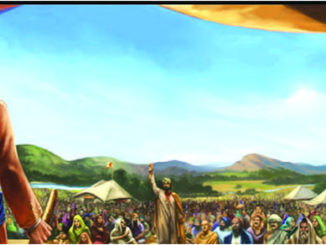
    On Vaisakhi day in  1699, Sikhs from far and near had gathered together at Anandpur Sahib to celebrate the New Year. However, the gathering was a bit different that day. This year Guru Gobind Rai had sent a message that every Sikh who could afford to come, must come to the annual fair. They should come to Anandpur with their hair and beard uncut; and that they should wear turbans instead of caps or scarves.

    By noon, well over twenty thousand Sikhs (eighty thousand by one estimate) had assembled in the fair ground at Anandpur to participate int he festivals of the Baisakhi Day. Everybody was excited and looked forward to meeting the Guru as if tis unusual ‘message’ was especially sent for him. Also, there was a large and richly festooned tent pitched on a hillock overlooking the extensive fair grounds.

    It was afternoon. Word went round that the Guru was in the marquee and he would be coming out soon to meet his Sikhs. All eyes were turned towards the tent and everyone was waiting patiently for Guru’s Darshan (appearance) and to receive his blessings. But it took a little longer than expected.

    At last their patience was rewarded. Guru Gobind came out of the tend clad in a strangely coloured uniform. It was saffron coloured from top to toe with a blue waist band. There was a long sword hanging from his left side. He walked briskly and came to a specially erected platfrom near the tent. The skies were clear and bright; and the Guru seemed to be standing so near, although he was actually at some distance from the people in the back. He had a strange smile on his face. Suddenly he stopped staring at the crowd, he pulled his sword out and raised it high with his right hand. There were a million voices and then a sudden hush.

    Now, like a thunder, the Guru spoke, “My dear Sikhs, I am glad to see so many of you here today. Today I have planned to offer you something special. but for this I need your help. Indeed, I need your head. I need the head of a Sikh who claims his faith in me.”

    There was a deadly silence all around. Everybody was too stunned to walk away or even whisper. Then the Guru flashed his sword again, raised his voice and repeated, “My Sikhs, I want a head and nothing less than a head. If anyone among you claims to be a true Sikh, then come forward and prove it.” He looked so fierce and blood thirsty.

    Before he had finished his last sentence, a tall lean Sikh was already moving forward towards the Guru on the platform. His name waas Daya Ram and he was from Lahore. Reaching the Guru, he folded his hands, bent his head forward and said, “O, Lord, the true Guru, I claim to be your humble Sikh. My head is ready for you. Please take it.”

    Hurriedly, the Guru held him by the arm and led him into the tent. Soon after the crowd inside heard the sound of a sword striking a body. They then heard a voice, Waheguru and then a loud thud. Then they saw the Guru coming out of the tent, looking even more fierce. Fresh blood dripped down his sword. The crowd was truly horrified. Nobody needed to be told what had happened inside the tent.

    Once again the Guru stood on the platform. Once again he raised his sword and addressed the crowd, “Well, my Sikhs! I want a second Sikh who would willingly offer his head to me.” This new demand made the people even more scared. But they dare not ask or challenge the Guru for his seemingly wrongful act. However, as he was repeating his strange call, another Sikh began to move forward. His name was Dharam Das, and he was from Delhi.

    Dharam Das stood before the Guru and said in a humble voice, “O, my true king, I offer my head to you, please take it, it is yours.” Now the Guru seemed pleased as he quickly took him inside the tent. This time again, the crowd heard a voice saying Waheguru and then a loud thud.Everyone gasped. They were sure that Dharam Das, too, had been put to death.

    Again the Guru emerged from the tent with a sword drenched in blood. He looked as fierce as before. With a terrifying look in his eyes he agains shouted to the crowd, “Come, come my Sikhs, who comes next. I still want some more. Now I want a third head. I want a Sikh who has faith in me.”

    The people were terrified. They thought perhaps the Guru had gone mad. He was asking too much. Now they were no longer spell bound by the events which had taken place just before. They could think. They began to move; they whispered with each other. They began to slip away from the crowd. Some just fled for their lives. In the meantime another Sikh named Mohkam Chand had reached the Guru on the platform. He was from Dwarka. With folded hands he requested the Guru to accept his head. The Guru did not wait or waste a minute, and did the same as he had done with the other two.

    For the fourth time, the Guru stood before the crowd and repeated his demand for yet another head. Now the crowd was even more restless. Some people were slinking away but most stood their ground. They all were really scared, and it did not take long before they saw yet another Sikh on the platform offering his head to the Guru. His name was Sahib Chand and he was from Bihar. The Guru dealt with him in the same way as with the other three before him.

    The crowd was getting thinner every moment. By the time the Guru came back and asked for a fifth head, only the very faithful had stayed behind. But there seemed to be no shortage of volunteers. Soon, another Sikh named Himmat Rai moved forward. He was, at once, led to the tent, but this time the Guru did not return quickly. The people outside began to wonder. Their horror began to change into hope. At least the Guru had stopped asking for more heads. They waited nervously and prayed ‘Waheguru’.

    Then the Guru appeared. He was followed by five other men. They, too, were dressed in saffron colour, with blue scarved tied round their waists and turbans. They looked very much like the Guru himself. All stood on the platform facing the crowd. Their faces beamed with joy and satisfaction.

    As soon as the people near them recognised that they were the same Sikhs who they thought had been killed by the Guru, they immediately started cheering them and saluted them with loud shouts of ‘Sat Siri Akal!’ Soon everybody joined in, and the whole atmosphere was vibrant with the deafening sounds Sat Siri Akal. Many people who had left the fair ground in fear and disappointment heard these cheers and rushed back to see what was happening. They could not believe their eyes. Everything had happened so fast. They could not understand. ‘Had the dead been brought back to life?’

    When the cheering crowd had stopped, the Guru spoke to the crowd, “My dear Sikhs; we all remember that when Guru Nanak gave a test to his Sikhs only one passed it. His name was Lehna, who then became Guru Angad. Now two hundred years after the first test, I have given you another final test. However this test was not for Guruship, but for the ‘nationhood’. I call it the Khalsa, the brotherhood of the pure at heart. You have witnessed the birth of the Khalsa. These Sikhs standing beside me are my Panj Piaray (five beloved ones). Each of them is a saint and a soldier in one. These five Sikhs are dedicated and daring enough to lead; and strong enough to support the edifice of the Khalsa.”

  • Easing lockdown could lead to 3rd Covid-19 wave in UK: Scientists warn govt

    London (TIP): British scientists have warned that the British government is risking a third wave of Covid-19 by easing the lockdown too soon, local media reported.

    “There are areas in West Yorkshire, the Black Country and other regions that still have high infection rates. However, many people there cannot afford to self-isolate. We need to tackle that issue urgently or the virus will come back again,” Leeds University medical school Associate Professor Stephen Griffin told the Observer on Sunday.

    “It’s worrying. There are far too many virus hotspots and not enough attention being paid to controlling infections that might spread from them,” said Griffin, Xinhua news agency reported.

    Professor Lawrence Young of Warwick medical school said: “The test, trace and isolate system that is supposed to contain outbreaks has not worked well, and even when people test positive, they are not isolating. We need a properly funded system for quarantining infected people. We don’t have that and that raises the risk we could head back into trouble again quite quickly.”

    The scientists made their remarks as Britain is poised to partly ease the current lockdown restrictions, the third of its kind since the start of the pandemic in the country, on Monday.

    From Monday, non-essential shops will reopen and pubs and restaurants will reopen outdoors at a time when Britain moves to step two of the roadmap out of the Covid-19 lockdown.

    Meanwhile, hairdressers and barbers as well as gyms can reopen, along with zoos, theme parks, libraries and community centres.

    Experts have warned that despite progress in vaccine rollout, Britain is “still not out of the woods” amid concerns over new variants and the third wave of pandemic on the European continent.

    More than 32 million people have been given the first coronavirus vaccine jab, according to the official figures.

    The estimated coronavirus reproduction number, also known as the R number, in England is unchanged at between 0.8 and one, according to the latest official data.

    It means that, on average, every 10 people who have coronavirus will infect between eight and 10 others.

    Government advisory scientists said the situation is too variable in some regions to produce a Britain-wide R rate, but the number is believed to be above one in some parts of the country, which means the outbreak could grow exponentially.

    To bring life back to normal, countries such as Britain, China, Russia, the United States as well as the European Union have been racing against time to roll out coronavirus vaccines.

  • Coronavirus variants spread leads to surge of new cases in Canada

    Toronto (TIP): The rapid spread of more contagious Covid-19 variants is believed to have driven a devastating third wave in Canada.

    As of Saturday, April 11,  afternoon, a total of 30,108 variant of concern cases have been reported across Canada, including 28,624 B.1.1.7 variants, 1,133 P.1 variants and 351 B.1.351 variants, according to CTV.

    As of Saturday afternoon, Canada reported 5,986 new cases of Covid-19, bringing the cumulative total to 1,051,246, including 23,282 deaths, according to CTV.

    “Although B.1.1.7, which is now confirmed in all provinces and two territories, continues to account for the majority of variants of concern in Canada and has likely replaced the original virus in some areas, there has been a concerning rise in P.1 cases in recent weeks,” Theresa Tam, Canada’s chief public health officer, said in a statement on Saturday, Xinhua news agency reported.

    “Early evidence suggests that the P.1 variant may reduce the effectiveness of vaccines, making it even more important to control its spread,” Tam added in the statement.

    The number of confirmed variant cases in Canada has skyrocketed in recent weeks, rising from about 2,000 a month ago to over 30,000 as of Saturday afternoon and counting, with more than 90 per cent of those being the B.1.1.7 variant first identified in Britain.

    The P1 variant first discovered in Brazil is also on the rise in Canada, with cases increasing to more than 1,100 as of Saturday afternoon, mostly in the populous provinces of British Columbia, Ontario and Alberta. Meanwhile, the B.1.351 variant first found in South Africa is also picking up steam, with more than 350 cases identified in the country.

    “The race between the vaccine and the variants is at a critical point,” Tam said. “It is clear that we need stronger control to combat variants of concern that are driving rapid epidemic growth in many areas of the country.”

    Younger Canadians are being impacted harder in the third wave, Tam said, with infection rates highest among those aged 20 to 39 and a rise in the number of hospitalizations and ICU admissions in those under 60.

    The fact is Canada’s third wave of Covid-19 is showing no signs of slowing down as the vaccine rollout gradually ramps up, meaning Canadians need to buckle down until more of us get a shot, Canadian experts said.

    They added that Canada’s slower vaccine rollout means our third wave could last into June.

    Altogether, 7,569,321 vaccine doses have been administered as of Friday, according to the Public Health Agency of Canada.

  • Global Covid-19 caseload tops 135.8mn

    Global Covid-19 caseload tops 135.8mn

    Washington (TIP): In its latest update on Monday, April 12, morning, the University’s Center for Systems Science and Engineering (CSSE) revealed that the current global caseload and death toll stood at 135,855,351 and 2,934,981, respectively.

    The US is the worst-hit country with the world’s highest number of cases and deaths at 31,196,121 and 562,064, respectively, according to the CSSE.

    Brazil follows in the second place with 13,482,023 cases and 353,137 fatalities.

    The other countries with more than two million confirmed coronavirus cases are India (13,358,805), France (5,119,585), Russia (4,589,209), the UK (4,384,610), Turkey (3,849,011), Italy (3,769,814), Spain (3,347,512), Germany (3,012,158), Poland (2,574,631), Colombia (2,536,198), Argentina (2,532,562), Mexico (2,280,213) and Iran (2,070,141), the CSSE figures showed. In terms of deaths, Mexico comes in the third place with 209,338 fatalities.

    Nations with a death toll of over 50,000 are India (169,275), the UK (127,331), Italy (114,254), Russia (101,282), France (98,909), Germany (78,425), Spain (76,328), Colombia (65,889), Iran (64,490), Poland (58,421), Argentina (57,779), Peru (54,669) and South Africa (53,322).

  • Farmer unions’ demands

    Farmer unions’ demands

    The farmer unions believe that the laws will open the sale and marketing of agricultural products outside the notified Agricultural Produce Market Committee (APMC) mandis for farmers. Further, the laws will allow inter-state trade and encourage hike electronic trading of agricultural produce. The new laws prevent the state governments from collecting a market fee, cess, or levy for trade outside the APMC markets; this has led the farmers to believe the laws will “gradually lead to the deterioration and ultimately end the mandi system” thus “leaving farmers at the mercy of corporates”. Further, the farmers believe that the laws will end their existing relationship with agricultural small-scale businessmen (commission agents who act as middlemen by providing financial loans, ensuring timely procurement, and promising adequate prices for their crop).[80] Additionally, protesting farmers believe dismantling the APMC mandis will encourage abolishing the purchase of their crops at the Minimum Support Price (MSP). They are therefore demanding the minimum support prices to be guaranteed by the government in writing.

    As of 8 April 2021, the farmers’ demands include:

    –           Convene a special Parliament session to repeal the farm laws.

    –           Make MSP and state procurement of crops a legal right.

    –           Assurances that conventional procurement system will remain.

    –           Implement Swaminathan Panel Report and peg MSP at least 50% more than weighted average cost of production.

    –           Cut diesel prices for agricultural use by 50%.

    –           Repeal of Commission on Air Quality Management in NCR and the adjoining Ordinance 2020 and removal of punishment and fine for stubble burning.

    –           Release of farmers arrested for burning paddy stubble in Punjab.

    –           Abolishing the Electricity Ordinance 2020.

    –           Centre should not interfere in state subjects, decentralization in practice.

    –           Withdrawal of all cases against and release of farmer leaders.

  • Farmers protest against 3 agri laws continues. What do they want?

    Farmers protest against 3 agri laws continues. What do they want?

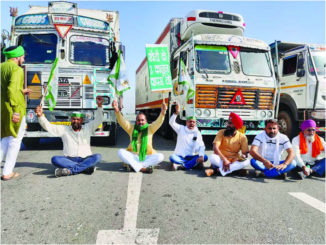
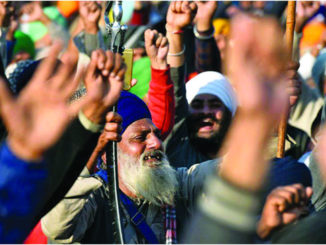
    Indian farmers, particularly from agrarian states of Punjab, Haryana, Uttar Pradesh and Rajasthan, are protesting since November 26, 2020, against three farm laws passed by Parliament of India in September 2020. According to Haryana Police, there are around 40,000 committed protestors sitting at Singhu and Tikri at the Delhi border.

    Farmer unions and their representatives have demanded that the laws be repealed and have stated that they will not accept a compromise. Farmer leaders have welcomed the Supreme Court of India stay order on the implementation of the farm laws but rejected the committee appointed by the Supreme Court. They have also rejected a government proposal, dated 21 January 2021, of suspending the laws for 18 months.

    Eleven rounds of talks have taken place between the central government and farmers represented by the farm unions between 14 October 2020 and 22 January 2021; all were inconclusive. On 3 February, farmer leaders warned of escalating the protest to overthrowing the government if the farm laws were not repealed. The stay order on the implementation of the farm laws remains in effect, and the Supreme Court appointed committee continues with its tasks related to the farm laws. Six state governments (Kerala, Punjab, Chhattisgarh, Rajasthan, Delhi and West Bengal) have passed resolutions against the farms acts, and three states (Punjab, Chhattisgarh and Rajasthan) have tabled counter legislation in their respective state assemblies. None of the counter legislation passed the respective state governors.

    The acts, often called the Farm Bills, have been described as “anti-farmer laws” by many farmer unions, and politicians from the opposition also say it would leave farmers at the “mercy of corporates”. The farmers have also demanded the creation of a Minimum Support Price (MSP) bill, to ensure that corporates cannot control the prices. The government, however, maintains that the laws will make it effortless for farmers to sell their produce directly to big buyers, and stated that the protests are based on misinformation.

    Soon after the acts were introduced, unions began holding local protests, mostly in Punjab. After two months of protests, farmer unions-mainly from Punjab and Haryana-began a movement named Dilhi Chalo (transl.?Let’s go to Delhi), in which tens of thousands of farming union members marched towards the nation’s capital. The Indian government ordered the police and law enforcement of various states to attack the protesters using water cannons, batons, and tear gas to prevent the farmer unions from entering into Haryana first and then Delhi.

    On 26 November 2020, a nationwide general strike of 250 million people, as per trade unions claim, took place in support of the farmer unions. On 30 November, an estimated crowd of 200,000 and 300,000 farmers was converging at various border points on the way to Delhi. On 21 March specific mention was made of Bengaluru, “….you (farmers) have to turn Bengaluru into Delhi. You will have to lay siege to the city from all directions”. Transport unions representing over 14 million truck drivers have come out in support of the farmer unions. On 26 January, tens of thousands of the farmers held a farmer’s parade with a large convoy of tractors and drove into Delhi. The protesters deviated from the pre-sanctioned routes permitted by the Delhi Police. The tractor rally turned into a violent protest at certain points as the protesting farmers drove through the barricades and clashed with the police.Later, protesters reached Red Fort and installed farmer union flags and religious flags on the mast on the rampart of the monument.

    While a section of farmer unions have been protesting, the Indian Government claims some unions have come out in support of the farm laws. By mid December, the Supreme Court of India had received a batch of petitions asking for removal blockades created by the protesters around Delhi. The court also asked the government to put the laws on hold, which they refused. On 4 January 2021 the court registered the first plea filed in favor of the protesting farmers. Farmers have said they will not listen to the courts if told to back off. Their leaders have also said that staying the farm laws is not a solution. The government offered some amendments in laws. On 30 December, the Indian Government agreed to two of the farmers’ demands; excluding farmers from laws curbing stubble burning and dropping amendments to the new Electricity Ordinance.

    Three agriculture laws

    In 2017, the central government released the Model Farming Acts. However, after a certain period of time, it was found that a number of the reforms suggested in the acts had not been implemented by the states. A committee consisting of seven Chief Ministers was set up in July 2019 to discuss the implementation. Accordingly, the central Government of India promulgated three ordinances (or temporary laws) in the first week of June 2020, which dealt with agricultural produce, their sale, hoarding, agricultural marketing and contract farming reforms among other things. These ordinances were introduced as bills and passed by the Lok Sabha on 15 and 18 September 2020. Later, on 20 and 22 September, the three bills were passed by the Rajya Sabha, where the government is in a minority, via a voice vote – ignoring the requests of the opposition for a full vote. The President of India gave his assent by signing the bills on 28 September, thus converting them into acts. The legality of the acts has been questioned since both agriculture and markets come under State list.

    These acts areas are:

    Farmers’ Produce Trade and Commerce (Promotion and Facilitation) Act: expands the scope of trade areas of farmers produce from select areas to “any place of production, collection, and aggregation.” Allows electronic trading and e-commerce of scheduled farmers’ produce. Prohibits state governments from levying any market fee, cess or levy on farmers, traders, and electronic trading platforms for a trade of farmers’ produce conducted in an ‘outside trade area’.

    Farmers (Empowerment and Protection) Agreement on Price Assurance and Farm Services Act: creates a framework for contract farming through an agreement between a farmer and a buyer before the production or rearing of any farm produces. It provides for a three-level dispute settlement mechanism: the conciliation board, Sub-Divisional Magistrate, and Appellate Authority.’

    Essential Commodities (Amendment) Act: allows for the center to regulate certain food items in the course of extraordinary situations like war or famine. Requires that imposition of any stock limit on agricultural produce be based on price rise.

    Bharat bandh

    Despite being ignored by the government, the Samyukta Kisan Morcha (SKM), the broad front which spearheads the protest and represents more than 500 farm organisations, has chartered a complete course of action for the months ahead. On March 26, the SKM called for a 12-hour Bharat bandh. The bandh was by and large peaceful, even though in some States, the police arrested and detained farmer activists. In Ahmedabad, the Gujarat police detained Bharatiya Kisan Union leader Yudhvir Singh while he was addressing a press conference about the bandh. According to the SKM, preventive detentions and arrests of farmer leaders were made in Bharatiya Janata Party (BJP)-ruled Karnataka, Gujarat and Uttar Pradesh. According to the farmers’ unions, the bandh was very effective in several districts of Bihar, Uttar Pradesh, Orissa, Maharashtra, Telangana, Haryana and Punjab. In Andhra Pradesh, the ruling Yuvajana Sramika Rythu Congress Party supported the call.

    The SKM has now announced a slew of programmes for April and May, including protests at Food Corporation of India godowns and a march to Parliament from all the border points. On March 31, the protests at the border points completed 125 days.

    The sit-ins at the five border points of Delhi began on November 26, 2020, and were allowed undisturbed amid the multiple layers of barricading by the police. The protests were kept alive in myriad forms, ranging from celebrations on March 8 (International Working Women’s Day) to paying tributes to martyrs on March 23, commemorated as Shaheed Diwas. They have gone on for so long for a variety of reasons, particularly the resentment at the police action on January 26 and the ill-conceived actions of the Modi government. A good number of farmers still continue to be in jail.

    On March 19, the Manohar Lal Khattar-led BJP government in Haryana enacted the Haryana Recovery of Damages to Property During Disturbance to Public Order Bill 2021. The law, similar to the one enacted by the U.P government, provides for a Claims Tribunal and purports to recover damages caused during riots, agitations and protests. It states that “any person leading, organising, planning, exhorting, instigating, participating or committing such incidents that lead to damages” will be made to pay compensation. The opposition in the Haryana Assembly argued that there were already laws in the Indian Penal Code to recover damages to property and for rioting.

    The farmers’ unions took all this in their stride and were by now adept at converting every setback into an advantage. One such opportunity, soon after the January 26 events, came through a nondescript player of the movement, Rakesh Tikait of the BKU, at the Ghazipur protest site on the Delhi-Uttar Pradesh border. On January 28, when a heavily armed police contingent, capitalising on the deflated morale of the protesters, tried to arrest farmer leaders and vacate the Ghazipur site, Rakesh Tikait went live on national television in a teary-eyed emotional speech that turned the entire nationalistic narrative on its head, revealing the farmers to be victims of a conspiracy hatched by the government. It resulted in a massive mobilisation of the peasantry from western U.P, Punjab and Haryana and infused a new energy that took the Central government completely by surprise.

    Kisan mahapanchayats

    Overnight, Rakesh Tikait became a hero and was in huge demand for all public meetings. The movement regained its lost sheen. The khaps and Jat caste councils got into action, convening huge mahapanchayats in villages in Haryana and U.P. Meetings were scheduled all over the country, including in southern States. Adopting a broader nomenclature, “khap panchayats” later gave way to the more accepted “kisan mahapanchayats”.

    Rakesh Tikait, BKU Haryana leader Gurnam Singh Chaduni and others went to West Bengal and held a meeting in Nandigram, exhorting people not to vote for the BJP. While their appeals may have had limited reach, the message went out loud and clear that the BJP was anti-farmer. It was therefore no surprise that in all the election campaigns of the BJP in the five State Assembly elections, there has hardly been any mention of the farm laws. The nationalistic hysteria that emanated post the tractor rally of January 26 gradually lost steam despite attempts by the BJP and its band of faithfuls in the media to keep the issue alive. On March 27, under the aegis of the All India Kisan Sabha, a 20,000-strong convention of farmers and fisherfolk was held at a coastal village in Kanyakumari, Tamil Nadu, which condemned the Adani group’s proposal to set up a port, citing environmental grounds.

    Since January 22, the day of the eleventh and last round of formal talks between the Central government representatives and the SKM, there has been little initiative by the government to break the logjam. On the contrary, the government went on an offensive, declaring its intent to hold meetings and outreach programmes explaining the benefit of the laws, that were received with much hostility in the States where they were convened. In Uttar Pradesh, Haryana and Punjab, representatives of the BJP faced angry protests when they attempted to hold meetings to publicise the farm laws. Angry farmers disallowed the entry of BJP leaders, including elected Members of Parliament in U.P such as Union Minister for Agriculture Sanjeev Balyan.

    The international attention on the protests has also not been liked by the government. The protest “toolkit” tweeted by celebrity environmental activist Greta Thunberg and the subsequent arrest of climate activists in India put the spotlight on the government as being extremely intolerant of criticism. The last straw on its back was when the United Kingdom Parliament decided to debate the protests along with press freedom in India. A dozen MPs cutting across parties had raised the issue of the “use of force” against the protesters. The High Commission of India in London called it a “one-sided discussion” which had many “false assertions”.

    In for the long haul

    The current challenge for the farmers is to keep the momentum and morale high. Rajvir Yadav, a BKU office bearer from U.P., told Frontline at Ghazipur that they were prepared for this. He explained: “We knew this was going to be a long haul, that this government would try to break us, tire us out, defame us. This government is of a different mindset altogether. So we were prepared. We fail to understand why they are so stubborn. Can any BJP leader say that they won elections without the support of the BKU? The government is under corporate pressure. They agreed to put the laws on hold for some months. Why would they say that if they felt there was something wrong with the laws? There is some power that is running the government with a remote. They cannot mortgage our lives. We are not against the government but against the policies. We supported this party before, helped them form government on three occasions. And today they are doing this to us.”

    Govt adamant

    Farmers’ unions claim that over 200 protesters have died since the protests started in November 2020. However, an end is still not in sight. Although the Indian Supreme Court has put the reforms on hold in view of the protests until an amicable solution is found, farmers’ representatives and government officials have had almost a dozen unsuccessful negotiation meetings. The government is adamant on not repealing the laws and the farmers want nothing more than for the laws to be completely repealed. However, as the human rights violations of those protesting continue, the pertinent question is: how many more deaths, baton charges, and deterioration in the living standards of those protesting will it take for the Modi government to view these protestors as concerned citizens rather than a crowd motivated by political gain? It seems this will not happen anytime soon, as on 8 February 2021, Prime Minister Modi shared his view of those protesting, stating that a new branch of protesters had come into existence, who, like “parasites[,] feast on every agitation”.

    Allegations of conspiracy

    The Union Minister for Food, Railway and Consumer Affairs, Piyush Goyal has described the protesting farmers as “Leftist and Maoist” and being “hijacked” by unknown conspirators. Former Rajya Sabha MP and vice-president of BJP in Himachal Pradesh, Kripal Parmar stated, “The protest is driven by vested interest of few anti-national elements.” Union Minister and BJP politician Raosaheb Danve has alleged an international conspiracy, claiming that China and Pakistan are behind the ongoing protests by farmers.[250] BJP MLA Surendra Singh said, “….this is a sponsored agitation by anti-national forces and has foreign funding.” BJP Uttarakhand chief Dushyant Kumar Gautam stated that the protests had been ‘hijacked’ by “terrorists” and “anti-national” forces. Several BJP leaders have blamed what they have called the ‘Tukde Tukde Gang’ – a pejorative term used by the BJP and its supporters, against anyone who disagrees with its politics, which implies that the person supports secession – as instigating the protests, and linked them to previous protests about India’s citizenship laws. Delhi BJP MP Manoj Tiwari has accused such unnamed conspirators of instigating the protests, as has Union Minister Ravi Shankar Prasad. In response to the BJP’s claims, Sukhbir Singh Badal, former Deputy Chief Minister of Punjab, claimed that the BJP was the real ‘Tukde Tukde Gang’ and trying to divide Punjab. BJP General Secretary Manoj Tiwari has also described the protesting farmers as “urban naxals”. Rajasthan BJP leader Madan Dilawar has accused protesting farmers of “conspiring” to spread avian influenza in India after reports of some cases of avian flu were made in January. Dilawar claimed that protesting farmers were spreading avian influenza by “eating chicken biryani and cashew nuts/almonds” although he did not clarify how these foods and avian influenza are connected.

    Opposition to the claims of conspiracy has been voiced from within the BJP and outside it. BJP leader Surjit Singh Jyani, who was part of a committee that negotiated with several farmers unions, vocally opposed the claims, stating, “This type of language should be avoided. We know many farmers groups are Left-leaning but branding them tukde tukde gang and anti-national will not end the deadlock.”Maharashtra Chief Minister and Shiv Sena leader, Uddhav Thackeray has voiced opposition to the labeling of protesters as “anti-national”, pointing to some confusion among BJP leaders about the source of the allegations of conspiracy.He stated, “BJP leaders should decide who farmers are – are they Leftist, Pakistani, or they have come from China.”[258] The conspiracy claims have also been opposed by Rajasthan Chief Minister and Congress politician, Ashok Gehlot, who urged the government to come to an “amicable solution” with protesting farmers “…instead of blaming gangs, anti-national elements for these protests.”

    International support

    Australia

    Victoria Member of Parliament Rob Mitchell and Russell Wortley were among the Labor leaders who spoke in support of the farmers’ protests, with Mitchell addressing the Victorian parliament on the subject after several protests were held in Australia by citizens.

    Canada

    Justin Trudeau, Prime Minister of Canada expressed concerns about the supposed mishandling of protests by the Indian government. He was the very first politician on international grounds to speak for the farmers. Trudeau stated that “Canada will always be there to defend the right of peaceful protestors” and expressed support for “the process of dialogue.”In response, the Indian Ministry of External Affairs summoned the Canadian High Commissioner to India, Nadir Patel, and issued a démarche, stating that Trudeau’s comments were “an unacceptable interference in our internal affairs”. Trudeau reiterated his statement despite the Indian Government’s warning that his comments threatened diplomatic relations between the two countries. On Saturday, 5 December, hundreds of supporters protested in downtown Toronto and Vancouver, gathering in front of the Indian consulate in both cities to show their support. Organized by members of the Sikh community, the demonstrators stood in solidarity with the farmers and their right to peacefully protest.

    Italy

    Indian Ambassador to Italy Neena Malhotra visited a gurdwara in Rome in December as part of an outreach effort by the Indian government to Sikhs amid the farm protests. Malhotra received backlash on social media when the Embassy claimed she had been well received during the visit. However, Malhotra was heckled by members of the gurdwara management committee while she spoke in favor of the new farm laws.

    New Zealand

    In early December 2020, 1,500 Indian New Zealanders protested in Auckland’s Aotea Square against the new agricultural laws.

    UK

    Several Labour MPs in the United Kingdom expressed support for the protests and raised concerns about the government response to protesters, including Tanmanjeet Singh Dhesi, Preet Kaur Gill, Claudia Webbe and John McDonnell. A few British MPs and cricketer Monty Panesar also tweeted in support of farmers. In December 2020, a group of 36 British MPs from the Labour, Conservative, Liberal Democrats and Scottish National Party asked the British Foreign Secretary, Dominic Raab, to raise their concerns with the Indian government. The British prime minister Boris Johnson, after being confronted with the issue, confused it with the India-Pakistan conflict, drawing criticism domestically and in India.

    United States

    Several Indian-American protests were held in support of the farmers, with rallies being held outside Indian consulates in San Francisco, Chicago, Indianapolis, New York City, Houston, Michigan, Atlanta, and Washington, D.C. A rally of over a thousand Indian Americans was also held in Detroit,[282] and a car rally was held in Fort Wayne. Several American Congressmen from both the Republican and Democratic parties voiced support for these protests, including Josh Harder, TJ Cox, Doug LaMalfa, and Andy Levin.In December 2020, seven Congresspersons wrote to the Secretary of State, asking him raise the issue of the farmers’ protests with India. The Congressional Research Service published a report on the farmer protests on 1 March. Bob Menendez and Chuck Schumer wrote a letter to the Biden government in relation to the protests, urging it to discuss the farmer issue with the Indian government.On 7 February, Sikh farmers in California’s Central Valley funded a 30-second ad which ran during Super Bowl LV in support of the protesters in India.[290] In February 2021, Trevor Noah ran a eight minute segment on the farm protests.

    UN

    António Guterres, secretary-general, called on the Indian government to allow the protests, affirming the right to voice opposition to the government, stating “…People have a right to demonstrate peacefully and authorities need to let them do so.”

    International Monetary Fund

    Gerry Rice, Director of Communications IMF, said that the agriculture reforms have the potential to represent a significant step forward for agricultural reforms in India. He contended that the bills will eventually reduce middlemen and improve efficiency. He also remarked that a “social safety net” should be there to protect “those who might be adversely impacted during the transition to this new system”.

    Human Rights Watch

    Human Rights Watch issued a statement on 2 February calling on the Indian government to drop “baseless criminal charges” against journalists covering the protests.

    Protest Toolkit

    On 3 February, Greta Thunberg uploaded a document on Twitter which allegedly guided protestors about protests and on how to mobilize people against India and target Indian interests/embassies abroad. It contained actions taken up to 26 January 2021, future actions to undertake, hashtags which trended and would trend, celebrities who would be sympathetic to these protests and solidarity videos etc. She soon deleted the tweet saying that the document was “outdated”, and uploaded another toolkit to support protests, sparking a further row.

    The Times of India reported that an initial probe by the Modi government, into the source of the toolkit that Thunberg posted, suggested that it was put together by a Canadian pro-Khalistan organization based in Vancouver, and that the toolkit had a plan to carry forward the “malign Indian campaign”, even if the government repealed the laws. According to one official, “This showed how sinister the entire campaign was”.

    39 cases registered against farmers between Sept-Dec

    Delhi Police have registered 39 cases between September to December last year against the farmers agitating over the three farm laws at various of the national capital, the Ministry of Home Affairs said.Farmers broke barricades to enter Delhi and indulged in vandalism across several parts of the national capital during their Kisan tractor rally against the Centre’s three new farm laws on January 26.

    Farmer unions’ demands

    The farmer unions believe that the laws will open the sale and marketing of agricultural products outside the notified Agricultural Produce Market Committee (APMC) mandis for farmers. Further, the laws will allow inter-state trade and encourage hike electronic trading of agricultural produce. The new laws prevent the state governments from collecting a market fee, cess, or levy for trade outside the APMC markets; this has led the farmers to believe the laws will “gradually lead to the deterioration and ultimately end the mandi system” thus “leaving farmers at the mercy of corporates”. Further, the farmers believe that the laws will end their existing relationship with agricultural small-scale businessmen (commission agents who act as middlemen by providing financial loans, ensuring timely procurement, and promising adequate prices for their crop).[80] Additionally, protesting farmers believe dismantling the APMC mandis will encourage abolishing the purchase of their crops at the Minimum Support Price (MSP). They are therefore demanding the minimum support prices to be guaranteed by the government in writing.

    As of 8 April 2021, the farmers’ demands include:

    –           Convene a special Parliament session to repeal the farm laws.

    –           Make MSP and state procurement of crops a legal right.

    –           Assurances that conventional procurement system will remain.

    –           Implement Swaminathan Panel Report and peg MSP at least 50% more than weighted average cost of production.

    –           Cut diesel prices for agricultural use by 50%.

    –           Repeal of Commission on Air Quality Management in NCR and the adjoining Ordinance 2020 and removal of punishment and fine for stubble burning.

    –           Release of farmers arrested for burning paddy stubble in Punjab.

    –           Abolishing the Electricity Ordinance 2020.

    –           Centre should not interfere in state subjects, decentralization in practice.

    –           Withdrawal of all cases against and release of farmer leaders.

  • History of farmer agitations

    History of farmer agitations

    The history of agrarian unrest can be traced back to the first quarter of 1920s. The rural sociologists have used various terms for peasant unrest. For some, the unrest is called as a peasant struggle, for some it is called as a peasant uprising and some others call it as a peasant revolution. Few other sociologists call it simply a movement. Let us have a detailed discussion on some of the important peasant movements.

    Champaran Satyagraha

    The Champaran peasant movement was a part of the independence movement. After returning from South Africa, Gandhiji made the experiment of non-cooperation by lead­ing the Champaran (Bihar) and Kheda (Gujarat) peasant struggles. The basic idea was to mobilize the peasants and make them attain their demands.

    The peasant movement of Champaran was launched in 1917-1918. The main aim was to create awakening among the peasantry against the European planters. These planters exploited the peasants without providing them adequate remuneration for their labor.

    The European planters resorted to all sorts of illegal and inhuman methods of indigo cultivation. The peasants were not only exploited by the European planters but also by the local zamindars. It was in such a situation that Gandhiji took up their cause and launched the movement.

    Important causes

    –           The land rent was increased enormously.

    –           The peasants were compelled by the European planters to grow indigo, which restricted their freedom of cultivation.

    –           The peasants were forced to devote their best part of land to cultivate crops according to the wishes of the landlord.

    –           The payment of wages was meager to the peasants, which was not sufficient to earn their livelihood.

    –           The peasants of Champaran were living under miserable conditions and were suffering from abject poverty.

    The peasantry of Champaran suffered a lot in the hands of European planters, landlords, and government officials. Gandhiji, who returned from South Africa at this time, wanted to practise his non-cooperation and Satyagraha in India. The people of Champaran also accepted his leadership.

    Unfortunately, in the end, the movement turned violent due to the incident of Chauri Chaura. Gandhiji was very unhappy with this incident. However, the Champaran struggle is considered part of the national movement. The Champaran Satyagraha took place in April 1917. In order to oppress the peasants of Champaran, the British government adopted very serious methods. The peasants were tortured for not paying the excess rents.

    Thus, the peasants of Champaran had to undergo severe suffering and misery. However, the movement has led to certain impor­tant outcomes. The Champaran Agrarian Act was assented by the Governor-General of India on 1 May 1918. The ideology of non-violence had given much strength to the peasants who participated in the movement. The movement also contributed to the growth of nationalism.

    Kheda Peasant Struggle

    The peasantry of Kheda consisted mainly of Patidars who were known for their skills in agriculture. The Patidars were well-educated. Kheda is situated in the central part of Gujarat and was quite fertile for the cultivation of tobacco and cotton crops.

    Important causes

    –           Reassessment of Kheda land was done by the government based on the cultiva­tion of crops. On the basis of such data, the government increased the tax, which was not acceptable to the peasants.

    –           There was a severe famine in Kheda, which resulted in the failure of crops. The government did not accept the failure of crops but was insistent on the collection of land tax, not taking the conditions of peasants into consideration. The peasantry made their inquiries and emphasized that the act of demand­ing the land tax in such famine conditions was not justified on the part of the government.

    The Gujarat Sabha, consisting the peasants, submitted petitions to the higher authorities of the province requesting the suspension of the revenue assessment for the year 1919. But the officials rejected, the demands of the peasants regarding the non-payment of the taxes. When the government refused to consider the demands of the peasants, Gandhiji encouraged the peasants to resort to Satyagraha.

    Thus, the Kheda Satyagraha was started in March 1919 under the leadership of Gandhiji, Sardar Vallabhbhai Patel, N.M. Joshi, and several others. This was a similar kind of experiment to Champaran based on non­violence. The government officials auctioned the peasants’ cattle, confiscated their houses and took away their movable property due to the non-payment of land tax. The peasants were issued notices of fines and penalties by the government.

    The movement was terminated owing to the acceptance of some of the prime demands of the peasantry.

    Achievements of the struggle

    –           It was decided that the rich Patidars peasants will pay up the land rent and the poor peasants were granted remissions. Due to this decision the small and poor peasants who are the majority were very satisfied.

    –           The movement also created an awakening among the peasants about their demands. The peasants also indirectly sought their participation in the indepen­dence struggle. The impact of success was also recognized among the peasants of Gujarat and in the neighboring states.

    Bardoli Movement in Gujarat

    During the British Raj, in the state of Gujarat, Bardoli Satyagraha of 1925 was a major episode of civil disobedience in the Indian Independence movement. In the year 1925, the taluka of Bardoli suffered from heavy floods and severe famine which affected the crops very badly. This situation led the farmers to face great financial troubles.

    At the same time, the Government of Bombay Presidency raised the tax rate by 30 per cent. Without taking into consideration the requests and petitions of the civic groups who explained about the calamities which occurred in the taluka, the Government refused to reduce the tax rate. The farmers were in a very pitiable state whereby they barely had anything enough to pay the tax.

    The activists of Gujarat such as Narahari Parikh, Ravi Shankar Vyas, and Mohanlal Pandya had a talk with the village leaders and sought the help of the prominent Gujarati freedom fighter Vallabhbhai Patel. Patel had earlier helped the Gujarati farmers in the Kheda Peasant struggle. He also served as the municipal president of Ahmedabad. He was respected by the common people of the state of Gujarat.

    The request made by Patel to reduce the taxes was ignored by the Governor of Bombay. He indeed reciprocated by announcing the dates of collection of the taxes. Patel then instructed the farmers of Bardoli to refuse to pay the taxes.

    Patel along with Parikh, Vyas, and Pandya divided the Bardoli into several zones each with a leader and volunteers. Patel also took the help of some activists of Gujarat who were close to the government in order to know the movements of the government officials.

    He instructed the farmers to be on non-violent path and not to respond to the aggressive actions of police and officials. He reassured them that the struggle would not come to an end until the cancellation of all the taxes for the whole year and return all the seized property and lands to their owners.

    The Government decided to crush the revolt. In order to terrorize and seize the property of the villagers, bands of Pathans from northwest India were gathered. The Pathans and tax inspectors intruded into the houses of the farmers and took away their property which also included cattle. The government started to auction the houses and the lands of the farmers. But no one from Gujarat or from entire India came forward to buy them.

    The volunteers who were appointed by Patel in every village used to keep watch on the officials who were coming to auction the property of the villagers. As soon as the officials were about to enter into the village, the volunteer would give a sign to the villagers who would then leave the village and hide in the jungles. When the officials entered the village they would find the entire village empty and would not able to make out who owned a particular house.

    The people and the members of the legislative councils of Bombay were very angry at the terrible treatment of the farmers. The Indian members also resigned from their offices and extended support to the protest of the farmers. Finally, an agreement took place by the initiation of a Parsi member of the Bombay government. According to it, the government agreed to restore the confiscated property and also cancel the revenue payment for the year and also cancelled the raise of 30 per cent until next year.

    All the credit for the success of Bardoli movement was given to Patel and he in turn gave credit to the teachings of Gandhiji and to the determination of the farmers. Patel for the first time was given the title of “Sardar” (which mean a “leader” or “chief” in Gujarati and in many other Indian languages) by Gandhiji and his fellow satyagrahis. It was only after the Bardoli Satyagraha that Sardar Vallabhbhai Patel became one among India’s important leaders.

    Moplah Rebellion in Malabar

    Moplahs were Muslim peasants settled in the Malabar region of Kerala. The social and economic background of the Moplahs was heterogeneous. Certain rich Moplahs earned their livelihood as traders and merchants.

    Rest of the Moplahs worked as small agricul­turists who were the tenants of the big landlords. These landlords belonged to the high- caste Hindus. The Moplahs acquired the status of warriors by adopting the traditional ways of Nayars. The Moplah Peasant Movement started in August 1921.

    During this time Malabar was under the British rule. The government officials in alliance with the Hindu landlords oppressed the Moplah peasants. The Moplah tenants agitated against the Hindu landlords and the British government. Most of their grievances were related to security of tenure, high rents, renewal fees, and other unfair exactions of the landlords.

    Causes

    –           The Moplah agitation was basically the struggle against the Hindu landlords who were called Jenmis. The relationship between the Moplahs and the Jenmis was quite unfriendly for a long time. The relationship was both economically and religiously antagonistic. The Hindu landlords began to suppress the Moplahs right from 1835.

    –           There was a lot of insecurity in relation to land tenure. The Moplahs were often expelled from their land without prior notice.

    –           The Jenmis fixed the renewal fee at an exorbitant rate, which was the immediate cause for Moplah agitation.

    –           The Jenmis collected very high exactions from the Moplah tenants. Moreover, the Moplah tenants were discriminated against the Hindu tenants.

    –           Another motivating factor, which caused the Moplah agitation, was the Khilafat move­ment. This movement took roots in Malabar also. The Moplahs actively took part in the Khilafat movement from which they got support for their peasant agitation. The British government was weakened as a result of First World War and it was not in a position to take military action at this moment. Taking advantage of this situation, the Moplahs increased their raids.

    The final break to the Moplah rebellion came when a Khilafat leader and a highly reputed priest Ali Musaliar was arrested. The police opened fire on the unarmed crowd and many were killed. This has resulted in a clash in which the government offices were destroyed, records burnt, and the treasury looted. The rebel­lion soon spread to all the strongholds of the Moplahs. Mostly, the targets of the Moplah attacks were the unpopular Jenmis, police stations, treasuries, offices, and the British planters.

    The Moplahs spared those Hindu landlords who maintained lenient relations with them. The Moplah rebels travelled several miles through the territory and attacked only the Hindu landlords. This gave a communal flavor to the peasant movement.

    The most important aspect of the Moplah peasant struggle is the communalization of peasant agitation. Due to such communalization the Moplahs lost their sympathy among the Malabar people. Soon the rebellion was crushed by the Britishers and by December 1921 all resistance was stopped.

    The main reason for the failure of the Moplah movement was that the movement took a communal flavor. The Moplahs took to violence as a method of agitation, which was another reason for the failure of the movement. The movement also did not motivate the neighborhood peasantry for the usage of arms against the peasantry. The only tragedy in this struggle was that the landlords were Hindus, which resulted in such communal riots.

    Peasant Revolt in Telangana

    This movement was started against the Nizam of Hyderabad. The agrarian structure fol­lowed the feudal system at this time. During this time, two kinds of land tenure systems were prevalent, namely, Ryotwari and Jagirdari. Under the Ryotwari system the peasants owned patta in their name and were the proprietors and registered occupants of the land.

    The actual cultivators were known as shikmidars. The lands of chieftains were known as Khalsa lands. The Deshmukhs and Deshpandes were the hereditary tax collectors for the Khalsa villages. The jagirdars collected the tax in the jagir villages. The jagirdars and Deshmukhs exercised immense power at the local level.

    The main commercial crops of the Telangana region were groundnut, tobacco, and castor seed, which were cultivated by the landowning Brahmins. The rise of Reddis and other peasant proprietors strengthened the higher castes. The urban groups especially the Brahmins, Marwaris, Muslims, and Vaisyas showed interest in gaining and acquiring the lands. This resulted in sliding down of the status of the peasant proprietors to that of tenants at will sharecroppers and landless laborers.

    Main causes

    –           The Jagirdars and the Deshmukhs were the intermediaries and were responsible for collecting taxes from the cultivators. The cultivators were oppressed and exploited by these intermediaries who were appointed by the Nizam. They collected high taxes, manipulated the records which resulted in the discontentment among the poor peasants.

    –           The Jagirdars and Deshmukhs exploited the small peasants and landless laborers. The Deshmukhs and the Jagirdars were called as “Dora”, which means the master of the village. In course of time, this exploitation was legitimized and was known as vetti system. Under this system, the landlord or a Deshmukh could force a family to cultivate his land, assign domestic or official works which was obligatory on the part of the peasant s family and was carried on from generation to generation.

    –           A system of slavery known as Bhagela was prevalent in the state of Nizams. Under this system, the tenants who have taken the loans from the landlords had to serve the landlord until the debt is repaid. Generally, the Bhagelas were expected to serve the landlords for generations as the landlords used to maintain records; which always showed that the Bhagelas are still indebted to them.

    –           The castes (Reddis and Kammas) who traditionally worked as traders and mon­eylenders wanted to pull down the domination of the Brahmins as agriculturists in the state.

    –           The cultivation of commercial crops largely depended on the irrigation facilities, which were very meager in the Telangana region. Though the Nizam provided the irrigation facilities, most of these facilities were utilized by the big farmers only.

    –           The frequency of land alienation increased between 1910 and 1940. The land possession among the non-cultivating urban people such as the Brahmins, Marwaris, and Muslims has increased which resulted in reducing the small and tribal peasants into mere landless laborers.

    The Telangana movement did not just erupt suddenly. There were many factors, which resulted in such insurrection. The condition of the peasants reached its saturation point by 1930. The agricultural economy also underwent many changes; it was transformed more into a market economy than a subsistent one. Such change did not improve the status of the tenants and sharecroppers.

    The major sources of discontentment among the peasantry were the modes of production and exchange, which were mostly pro-capitalist and semi-feudal. There was severe fall of wholesale prices after the Second World War, which provided an opportunity to the moneylenders to tighten their grip on the indebted small farmers and poor tenants.

    Due to the forces of change in the agricultural econ­omy, the number of agricultural laborers also increased. There was lot of discontentment among the peasantry and they were just waiting for a right opportunity to burst out and start a rebellion.

    Course of events

    –           The Communist Party of India initiated the Telangana Peasant struggle. The Communist Party started working in the Telangana region from 1936. Professor N.G. Ranga laid the regional level peasant organization that was affiliated to the All India Kisan Sabha, which was an organ of the CPI. The Communist activities increased in the districts of Hyderabad between 1944 and 1946. Therefore, a proper framework was all set to launch the peasant movement in Telangana.

    –           Severe famine struck the Telangana region in the year 1946. All the crops failed and there was shortage of the availability of food and fodder. The prices of food and other commodities increased. The year 1946 proved to be a crisis time for both the tenants and the sharecroppers. This year provided all the opportunities for launching a peasant struggle.

    –           The main objective of the Communist Party of India was to mobilize the peas­antry. In order to achieve this objective, it undertook a campaign to propagate the demands of the poor peasants. The propaganda covered up to 300 to 400 villages. Though the peasants showed resistance to the government orders, the movement was going at a slow pace. However, only the Telangana local peasants participated in the mobilization of the peasantry.

    –           After the second conference which was held in March 1948, there was a revolu­tionary turn to the Telangana peasant struggle, and the peasants turned into an army and on a few occasions also fought guerilla wars.

    –           Apart from the peasant agitation, a parallel para-military voluntary force was organized by Kasim Rizvi. The members of this organization were called Razakars. This organization worked against the peasants.

    –           The Indian army marched into the state of Hyderabad on 13 September 1948. The army was successful enough in suppressing the Nizam’s army and the Razakars. The police action taken by the newly framed Central Government was quick in putting down the peasant movement.

    The course of all these events resulted in the withdrawal of the peasant movement. The police action gave a death blow to the Telangana peasant movement led by the Communist Party. The movement suffered a lot due to this struggle. Around 2,000 peasants were killed while fighting with the Indian army and around 25,000 communists and participants were arrested. The number of detainees reached 10,000 by the end of July 1950. Thus, this gives a clear picture of the intensity with which the Telangana peasant struggle was fought.

    Consequences and outcomes

    –           The Telangana peasant struggle had a participation of mixed class of peasantry. The major achievement of this peasant struggle was that it brought together the tenants, sharecroppers and landless laborers for the first time. The movement secured the strength of the poor peasants especially the tribal peasants who were the victims of bonded labor. However, the Kammas and Reddy castes who were rich class peasants gained a lot from the movement.

    –           Another beneficiary from this movement was the Communist Party, which exer­cised its power over the whole state of Hyderabad for a long time. Though the party benefited from this struggle, there were certain losses also. The party got split into two groups due to differences in ideologies. While one group supported the struggle, the other group criticized it as a mere case of terrorism.

    –           The Telangana Peasant struggle was a failure as far as the demands of the poor peasant classes are concerned. There were few gains for the rich peasant class, but the benefits for poor peasants such as tenants and landless laborers were very few.

    Thus, the Telangana Peasant struggle can be said to be a handiwork of the Communist Party and did not come directly from the peasants. Not even one agrarian class took the initiative to start the movement. However, in spite of the failure of the Telangana move­ment it must be agreed that it served as a great inspiration to the Communists of the entire country.

    Tebhaga Movement in Bengal

    The word Tebhaga literally means three shares of harvests. It was a sharecropper’s movement, which demanded two-thirds for themselves and one-third for the landlord. Earlier, the sharecroppers used to give fifty-fifty share of the produce on their tenancy. The crop sharing system at that time was known as barga, adhi, bhagi, etc., and the sharecroppers were called as bargadars or adhiars.

    These sharecroppers seriously chal­lenged the custom of sharing crops between the bargadar and the landlord in 1946-1947. During the harvest of 1946, the sharecroppers of a few north and northeastern districts of Bengal went to fields and cut down the crops and thrashed them on their own.

    There were two reasons why this action led to the insurrection on the part of the sharecroppers. First, they demanded that the sharing of the produce into half was not justified. As the tenants made most of the labor and other investments and since the land owner’s partici­pation was very less in the production process the tenants believed that the latter should be getting only one-third of the crop share and not half of it.

    Secondly, the tenants were required to store their grains at the granary of the landlord and had to share the straw and other by products of the grains on half-sharing basis. The tenants were not prepared to follow this rule. The tenants took the stand that the stock of the harvests would be stored at the tenants’ compound and the landlord would not be getting “any” of the shares from the byproducts of the grains.

    The Berigal Provincial Krishak Sabha organized the movement of Tebhaga. The sharecroppers under the leadership of the sabha mobilized themselves against the land­lords. However, the leadership also came from among the peasants. The movement spread across the 19 districts of Bengal, but its intensity was more seriously felt in certain districts only. The landlords refused to accept the demands of the tenants and called the police. The police arrested the tenants and many of them were put behind the bars.

    This action made the tenants more furious and they started a new slogan to abolish the whole Zamindari system. The slogan also indicated that the rate of the rents which was raised by the peasants of the Tebhaga movement should be reduced.

    In few places of the Tebhaga movement the peasants declared their zones as Tebhaga areas and many Tebhaga committees were set up in order to govern the area locally. Under the pressure of Tebhaga activists most of the landlords had come to terms with the Tebhaga peasants and withdrew the cases filed against them.

    Such kinds of Tebhaga areas were established at the districts of Jessore, Dinajpur, and Jalpaiguri. Later on, the Tebhaga areas were established extensively at Midnapur and in other 24 paraganas. In early 1947, such developments led the government to introduce a bill in the Legislative Assembly. The bill proposed to reform the bhagi system of the country, which caused the agrarian unrest. However, due to certain other political developments in the country the government could not enact the bill into a law. Moreover, the promises of the new gov­ernment and the partition of Bengal led to the suspension of the Tebhaga movement.

    The Tebhaga movement, to an extent, was successful, as it has been estimated that about 40 per cent of the sharecropping peasants were granted the Tebhaga right by the landowners themselves. The illegal exaction in the name of abwabs was also abolished.

    The movement was, however, less successful in the East Bengal districts. In 1948-1950, there was another wave of Tebhaga movement in these districts. The government cred­ited this to be a handiwork of the Indian agents which the general public believed and abstained themselves from involving in the movement. However, the East Bengal State Acquisition and Tenancy Act of 1950 was passed due to the initiation of the movement.

                Source: Yourarticlelibrary

  • Agriculture & its importance

    Agriculture & its importance

    Agriculture is the primary source of livelihood for about 58% of India’s population. Gross Value Added (GVA) by agriculture, forestry and fishing was estimated at Rs. 19.48 lakh crore (US$ 276.37 billion) in FY20 (PE). Growth in GVA in agriculture and allied sectors stood at 4% in FY20. The agriculture, forestry and fishing gross value added (GVA) growth is likely to be 3% in the second quarter of FY21.

    The Indian food industry is poised for huge growth, increasing its contribution to world food trade every year due to its immense potential for value addition, particularly within the food processing industry. Indian food and grocery market is the world’s sixth largest, with retail contributing 70% of the sales. The Indian food processing industry accounts for 32% of the country’s total food market, one of the largest industries in India and is ranked fifth in terms of production, consumption, export and expected growth.

    Essential agricultural commodities export for the April-September period of 2020 increased by 43% to Rs. 53,626 crore (US$ 7.3 billion) over Rs. 37,397 crore (US$ 5.1 billion) in the same period last year.

    Market Size

    During 2019-20* crop year, food grain production was estimated to reach a record 295.67 million tonnes (MT). In 2020-21, Government of India is targeting food grain production of 298 MT.

    Production of horticulture crops in India was estimated at a record 320.48 million metric tonnes (MMT) in FY20 as per second advance estimates. India has the largest livestock population of around 535.78 million, which translates to around 31% of the world population. Milk production in the country is expected to increase to 208 MT in FY21 from 198 MT in FY20, registering a growth of 10% y-o-y.

    Sugar production in India reached 26.46 MT between October 2019 and May 2020 sugar season according to Indian Sugar Mills Association (ISMA).

    India is among the 15 leading exporters of agricultural products in the world. Agricultural export from India reached US$ 38.54 billion in FY19 and US$ 35.09 billion in FY20. The total agricultural export was US$ 10.40 billion between April and October 2020.

    The organic food segment in India is expected to grow at a CAGR of 10% during 2015-­25 and is estimated to reach Rs. 75,000 crore (US$ 10.73 billion) by 2025 from Rs. 2,700 crore (US$ 386.32 million) in 2015.

    Small and marginal farmers own just 47.3% of crop area, shows farm census

    Small and marginal farmers with less than two hectares of land account for 86.2% of all farmers in India, but own just 47.3% of the crop area, according to provisional numbers from the 10th agriculture census.

    In comparison, semi-medium and medium land holding farmers owning between 2-10 hectares of land account for 13.2% of all farmers, but own 43.6% of crop area, the survey showed.

    Overall, the survey showed that while Indian farms became more fragmented between 2010-11 and 2015-16, holdings continue to be inequitably distributed.

    During this period the proportion of small and marginal farmers grew from 84.9% to 86.2%, while the total number of operational holdings grew from 138 million to 146 million.

    The total area under farming, however, fell from 159.6 million hectares in 2010-11 to 157.14 million hectares in 2015-16.

    The existence of a large number of small and marginal farmers, close to 126 million according to the survey, means it is challenging for the government’s extension arms to reach them with new technology and farm support schemes.

    Further, these 126 million farmers together owned about 74.4 million hectares of land —or an average holding of just 0.6 hectares each—not enough to produce surpluses which can financially sustain their families, explaining the rising distress in Indian agriculture.

    Between 2010-11 and 2015-16, the number of small and marginal farms rose by about 9 million, the survey showed. For all farmers put together, the size of average land holding declined from 1.15 hectares in 2010-11 to 1.08 hectares in 2015-16.“The rise in the number of small and marginal farmers signifies that the rest of the economy is unable to absorb the surplus… India has to live with its small-sized farms for the next two decades and the way out is to provide them access to the best technology and markets, the way China did it,” according to Ashok Gulati, an agriculture chair professor at the New Delhi-based Indian Council for Research in International Economic Relations.

    State-wise data from the survey showed that Uttar Pradesh accounted for the largest number of operational holdings or farmers at 23.8 million followed by Bihar (16.4 million) and Maharashtra (14.7 million).

    Among operated or farmed areas, Rajasthan topped the list with 20.9 million hectares, followed by Maharashtra (19.9 million hectares) and Uttar Pradesh (17.45 million hectares).

    The survey also showed that the proportion of farms that are operated by women rose from 12.8% in 2010-11 to 13.9% in 2015-16, signifying that more women are managing farm operations.

    Deepening agrarian crises

    From 1951 to 2011, the percentage of India’s population dependent on agriculture to make a living reduced from over 70 percent to 48 percent. But at the same time, the number of families dependent on agriculture and the total number of holdings have increased. Between 2001 and 2011, the number of farmers reduced by 85 lakh, but the number of farm labourers increased by 3.75 crore, according to the State of Rural and Agrarian India Report 2020.

    For the census, the government classifies land holdings into five groups: marginal (with holdings of less than one hectare), small (1-2 hectares), semi-medium (2-4 hectares), medium (4-10 hectares), and large holdings of over 10 hectares. As per the agriculture census of 2015-16, the majority of land holdings in India — 86 percent — are small and marginal. They are less than two hectares in size, and these households’ incomes are already below what they spend on consumption expenditure.

    In Punjab, according to census data from 2015-16, 33.1 percent of land holdings are small and marginal, while 33.6 percent are semi-medium. In Haryana, 68.5 percent of holdings are small and medium.

    In India in 2015-16, 92.3 percent of operational land holdings held by scheduled castes were in small and marginal categories. In Punjab, like elsewhere, the upper caste Sikh Jat dominate farm land ownership with only 3.5 percent of private farmland (land titles) being owned by Dalits or scheduled castes. The majority, 57.8 percent of operational (including leased) land holdings held by scheduled castes, were small and marginal.

    According to the 2020 report, after the onset of the Green Revolution in the late 1960s, between 1970 and 2010, the area collectively under rice and wheat increased from 47.2 percent of the total cropped area to 80.3 percent in Punjab. Even small cultivators in Punjab and Haryana have switched from diverse crops, such as millets, to monocultures of paddy and wheat, marked by an increased reliance on chemical inputs, hybrid seeds, and an excessive extraction of groundwater.

    Over the years, the soil and water conditions have worsened. Between 1970 and 2005, there was a 75 percent decline in the yield of grain per nitrogen-phosphorus-potassium fertilisers used. There’s also been a decline of 0.33 metres per annum in the water table in Punjab, Haryana and Rajasthan. This impacts all categories of cultivators and has broadened the base of the agitation, argued Shreya Sinha, a postdoctoral researcher studying agrarian change, in the India Forum. The Zameen Prapti Sangharsh Committee, a union working for access of Dalit cultivators to reserved common lands, has also joined the agitation, reported Hindustan Times.

    Some farmers grow other crops, such as cotton and maize, in the kharif season, but with no public procurement of these crops at assured prices, they view paddy and wheat as the only crops where both markets and prices are assured. In 2019-20, the government procured 226.5 lakh tonnes of paddy and 201.1 lakh tonnes of wheat, according to the Indian Express, from Punjab and Haryana, worth close to Rs 80,293.2 crore.

  • Are government targets being met?

    In 2017, a government committee reported that incomes for farmers would need to grow by 10.4% each year from 2015 for them to double by 2022.

    That’s not been happening.

    It also said the government needed to invest 6.39bn rupees (£64bn; $86bn) in the agricultural sector.

    Data on both public and private investment shows it has been falling.

    In 2011-12, investment in agriculture as a percentage of total investment stood at 8.5%.

    It rose to 8.6% in 2013-14 and then fell, staying more or less flat at between 6% and 7% since 2015.

    Farmers sinking into debt

    An official government survey carried out in 2016 by the National Bank for Agriculture and Rural Development, found that in the three years up to this point, the average amount of debt that farmers were liable for had more than doubled.

    Reality check has previously looked at the plight of farmers facing high levels of debt and the political debate over whether they should receive debt relief.

    There have been attempts at federal and state level over the years to give farmers direct financial and other support, such as subsidies for fertilisers and seeds and special credit schemes.

    In 2019, the federal government announced a direct cash transfer scheme targeting 80 million farmers.

    Under the scheme, the government provides income support of 6,000 Rupees (£61; $81) per year.

    Six states in India already had their own state-run cash transfer schemes for farmers prior to that.

    Devinder Sharma says such schemes have helped raise farmers’ incomes.

    “The government brought in direct income support to farmers and it was a good step in the right direction.”

    But we don’t yet have the data to show if these schemes have worked or not.          Source: BBC

  • Plight of farmers in India: How rural incomes have struggled to keep up

    Plight of farmers in India: How rural incomes have struggled to keep up

    Indian farmers have been on the road since November last year, seeking repeal of three new farm laws and demanding minimum support prices for their produce. Leaders from the ruling Bharatiya Janata Party (BJP) say the new farms laws will double farmers’ income – a promise made by Prime Minister Narendra Modi in 2016.

    So is there any evidence that rural livelihoods have been improving?

    What’s happened to rural incomes?

    More than 40% of India’s workforce is engaged in agriculture, according to the World Bank.

    There are no official figures for rural household income in recent years, but there is data on agricultural wages (an important part of rural income) which shows the rate of growth slowing down between 2014 and 2019.

    And India has seen rising inflation in the last few years, with World Bank data showing that consumer price inflation grew from just under 2.5% in 2017 to nearly 7.7% in 2019.

    This has eaten into wage gains.

    India conducted surveys in 2013 and 2016 which showed an increase in farmers’ incomes in absolute terms of nearly 40% over that period.

    However, a report by the Organisation for Economic Co-operation and Development (OECD) in 2018 estimated that in real terms, farmers’ incomes increased by just 2% a year over those three years.

    The report also makes clear that these farmers’ incomes were just one-third of those for non-agricultural households.

    Agricultural policy expert Devinder Sharma believes farmers’ incomes in real terms have remained stagnant or even declined for several decades.

    “An increase of a couple of thousand [rupees] a month doesn’t make much difference if we account for inflation,” he says.

    He also points to the rising costs that farmers face, as well as the wildly fluctuating prices they receive for their produce.

    It’s also worth adding that in recent years, there have been periods of extreme weather such as droughts, which have seriously affected livelihoods.

  • Earthx Film 2021

    By Mabel Pais

    EarthxFilm’s 5th edition

    Anjali Nayar’s “District 15” among them

    Hybrid Screenings

    April 16-25, 2021

    EarthxFilm, in this year’s hybrid edition of the Dallas-based Environmental-Focused film festival, has ten days and nights of drive-in, outdoor and online screenings.

    The Festival continues its mission to showcase films and emerging media that explore science, conservation, climate change, and the environment while honoring the heroes working to protect our planet. EarthxFilm aims to turn awareness into action through education, art, and media.

    For updates regarding panels, music presentations, youth films, EarthXR and more, visit earthxfilm.org

    EarthxFilm 2021 Film Lineup

    OPENING NIGHT

    “PLAYING WITH SHARKS” – DRIVE-IN PRESENTATION

    DIR: Sally Aitken l Australia l 1h 35m

    “Playing With Sharks” captures Valerie Taylor’s enduring life-long passion to explore the beauty of sharks – forming a sought-after underwater cinematography team with her husband, Ron, and even shooting the real sharks in “Jaws.”

    Now in her 80s, Taylor reflects on her lifelong journey with the sea while sumptuous, remastered 16mm footage transports us to the mysterious deep and testifies to the richness of the ocean as it once was.

    If a Tree Falls: A Story of the Earth Liberation Front (2011)

    – VIRTUAL PRESENTATION

    DIR: Marshall Curry l USA l 1h 15m

    “If a Tree Falls: A Story of the Earth Liberation Front” explores two of America’s most pressing issues — environmentalism and terrorism — by lifting the veil on a radical environmental group the FBI calls America’s “number one domestic terrorism threat.” Daniel McGowan, a former member of the Earth Liberation Front, faces life in prison for two multimillion-dollar arsons against Oregon timber companies. What turned this working-class kid from Queens into an eco-warrior?

    CLOSING NIGHT

    “IF A TREE FALLS”: A Story of the Earth Liberation Front – 2011

    – DRIVE-IN PRESENTATION

    DIR: Marshall Curry l USA l 1h 15m

    If a Tree Falls: A Story of the Earth Liberation Front (see Opening Night for description).

    “Percy Vs Goliath” –VIRTUAL PRESENTATION

    DIR: Clark Johnson l USA l 2h

    “Percy Vs Goliath” follows events from a 1998 lawsuit where small-town farmer Percy Schmeiser challenges a major conglomerate when the company’s genetically modified (GMO) canola is discovered in the 70-year-old farmer’s crops. As he speaks out against the company’s business practices, he realizes he is representing thousands of other disenfranchised farmers around the world fighting the same battle. Suddenly, he becomes an unsuspecting folk hero in a desperate war to protect farmers’ rights and the world’s food supply against what they see as corporate greed.

    FEATURE FILMS

    “2040”

    DIR: Damon Gameau l USA l 1h 31m

    A scene from “2040” (Photo : Courtesy WildWorksPR)

     “2040” by award-winning director Damon Gameau embarks on a journey to explore what the future could look like by that year if we simply embraced the best solutions already available to us to improve our planet and shifted them rapidly into the mainstream. Structured as a visual letter to his 4-year-old daughter, Damon blends traditional documentary with dramatized sequences and high-end visual effects to create a vision board of how these solutions could regenerate the world for future generations.

    “Entangled”

    DIR: David Abel l USA l 1h 15m

    “Entangled” is an award-winning, feature-length film about how climate change has accelerated a collision between the nation’s most valuable fishery, one of the world’s most endangered species, and a federal agency mandated to protect both. The film won a 2020 Jackson Wild award, known as the Oscars of nature films. It also won Best Feature Film at the Water Docs Film Festival.

    “Making A Mountain”

    DIRS: Rikke Selin Fokdal & Kaspar Astrup Schröder l Denmark l 51m

    Following the process of a visionary project that combines waste management and

    infrastructure with spectacular architecture and a recreational urban space. Bjarke Ingels’ prestigious project Amager Hill – the waste-to-energy plant with a ski slope on top.

    “Okavango: River of Dreams”

    DIRS: Beverly & Dereck Joubert l Austria l 1h 34m

    Drawing on Dante’s “Divine Comedy”, the story is told as a journey from Purgatory into Paradise, a quest for truth, for the soul of this river, the Okavango in Botswana, seeing those who use her, as well as those who are victim to the changes she brings, used by her. It is also a symbol of hope against a backdrop of climate change that threatens every pristine landscape in the world.

    “The Last Horns Of Africa”

    DIR: Garth de Bruno Austin l South Africa l 1h 37m

    “The Last Horns of Africa,” with unprecedented access, is a gripping and intimate look at the current rhino poaching war raging across Africa. The film follows the covert operation endeavors of two conservation heroes who put their lives on the line to bring down South Africa’s most notorious rhino poaching syndicates.

    “There Is a Place On Earth”

    DIR: Ellen van den Honert l Netherlands l 1h 13m

    “There Is a Place On Earth” by Dutch Filmmaker Ellen van den Honert takes us on a beautiful and poetic journey around the world where we meet artists/conservationists who share extraordinary creative work and a commitment to the environment. In the process we experience a unique, intuitive connection to the wild – and the necessity to protect it.

    “Trans Pecos”

    DIR: Nicol Ragland l USA l 1h 4m

    “Trans Pecos” is a timely intervention weaving together the issues of land and water rights. It is a cautionary tale meant to inspire people from every walk of life to take action and work toward change that can happen if informed citizens and those in power hold oil and gas companies accountable.

    “We Are as Gods”

    DIR: Jason Sussberg & David Alvarado l Russia/USA l 1h 30m

    “We are as gods and might as well get good at it.” This is the audacious opening line of the Whole Earth Catalog, a compendium of wonderful tools compiled by counterculture legend Stewart Brand: a psychedelic experimenter, cyberspace pioneer, and environmentalist. Today, Stewart is using biotech to resurrect extinct species. He and a team of scientists travel to Siberia to collect ancient DNA in an effort to make a hybrid Woolly Mammoth.

    “Youth V Gov”

    DIR: Christi Cooper l USA l 1h 30m

    A scene from “Youth V Gov” (Photo:CourtesyWildWorksPR.)

    “Youth V Gov” is the story of America’s youth taking on the world’s most powerful government. Armed with a wealth of evidence, twenty-one courageous leaders file a ground-breaking lawsuit against the U.S. government, asserting it has willfully acted over six decades to create the climate crisis, thus endangering their constitutional rights to life, liberty, and property. If these young people are successful, they will not only make history, they will change the future.

    SHORT FILMS

    There are 18 short films from 3 minutes to 40 minutes in length. US Director Anjali Nayar’s “District 15” is among them. For more information, visit earthxfilm.org

    ABOUT EarthxFilm

    EarthxFilm showcases films and emerging media that explore conservation, climate change, and the environment while honoring the heroes working to protect our planet. Their mission is to turn awareness into action through art and media and achieve their goals by partnering with top environmental, film, and entertainment organizations across the globe. EarthxFilm presents year-round programs culminating in a 10-day festival, April 16 – 25, 2021.

    ABOUT EarthX

    To learn about EarthX, visit www.EarthX.org or follow them on @earthxorg on Instagram, Twitter, and Facebook.

    (Mabel Pais writes on Social Issues, The Arts and Entertainment, Spirituality, and Health & Wellness)

  • Indian American physician wins Oak Brook Trustee election

    Indian American physician wins Oak Brook Trustee election

    CHICAGO (TIP): Dr. Suresh Reddy, immediate past president of American Association of Physicians of Indian Origin (AAPI), has won Tuesday’s (April 6) election as a Trustee of Oak Brook, a small Illinois town of nearly 10,000 people.

    Dr. Reddy and his teammates, Laurence “Larry” Herman and James P. Nagle won all three positions for trustees being contested by six candidates in the election.

    The trio accumulated “the three highest unofficial vote totals with 100% of precincts reporting in the election for three four-year terms on the Village Board,” according to the Chicago Tribune.

    Dr. Reddy said he decided to run with Herman and Nagle because he believes the three of them can address the most critical issues impacting the village better than anyone else, each with their own unique skills.

    “I am grateful to the citizens of my hometown Oak Brook and to the key leaders of Oak Brook, including the sitting mayor and members of the governing body of Oak Brook for endorsing and supporting my candidacy to be a Trustee of Oak Brook,” Reddy said.

    “As a practicing physician, I will use my training and experiences to ensure that appropriate and effective health policies are approved by the board and implemented by our village staff,” he said. “There are many expert doctors and medical professionals in our community. I will find ways to engage them through informal work groups or more formal committees if needed to ensure the safety of our residents.”

    Oak Brook Mayor Dr. Gopal Lalmalani and Trustee Moin Saiyed of Oak Brook had endorsed his candidacy saying his leadership skills will benefit the residents of the suburban town in Illinois.

    Oak Brook’s neighbors include the communities of Villa Park, Elmhurst, Lombard, Oak Brook Terrace, Westchester, Westmont, Clarendon Hills, Downers Grove, and Hinsdale.

    Dr. Reddy, who grew up in the suburbs of Hyderabad, Telengana, India, is a financial conservative, who always had a passion for “uniting and bringing people together,” according to a media release.

    “It all started during my childhood with bringing neighborhood kids together to play ‘gully cricket’ and also bringing people together in college to organize events, demonstrations, and educational tours,” he says.

    “Bringing opposing parties to the table for resolving issues has always been my strength since my schooling days.”

    Not being satisfied with his achievements as a physician and leader of the Diaspora Physicians group, Dr. Reddy says, “I always had a strong passion for bringing a positive outlook and giving back to the community.

    “I got involved in several alumni activities and have facilitated to raise funds to build a million dollar alumni educational center for my Alma Mater.”

    Dr. Reddy completed his advanced medical training at Beth Israel Deaconess Medical Center/Harvard Medical School and has stayed on Harvard Faculty for more than a decade.

    After serving as Chief of Interventional Neuroradiology at Harvard, Dr. Reddy moved to the Chicago suburb. “Now that I call Oak Brook my home, I would like to contribute and serve my community by participating in public service,” he says.

    “My mantra is: If you don’t lead, someone else will lead you,” says Dr. Reddy on what motivates him to take on yet another challenging role for the betterment of the community.

    “If you don’t pick the right leader, the wrong leader will pick you, and as my good friend US Congressman Raja (Krishnamoorthi) says, and if you are not on the table, you will be on the menu,” he adds.

    As part of his community service, Dr. Reddy has facilitated and organized numerous health camps and workshops, with special emphasis on CPR training, obesity prevention in conjunction with Chicago Medical Society.

    During the Covid pandemic, he facilitated more than a 100 webinars and health awareness events. He also facilitated honoring of more than 10,000 nurses who work selflessly in the line of duty against Covid in over 100 hospitals in over 40 states including Alaska.

    His wife Leela, who was born and raised in Greenville, South Carolina was previously a Director of Network Health Boston, a HMO Health Plan in Boston.

    Their son, Rohun is currently doing his MBA and JD at Kellogg School of Management and Pritzker School of Law at Northwestern University.


  • Indian American Congressman raises concern over challenges being faced by democracies around world including US, India

    Indian American Congressman raises concern over challenges being faced by democracies around world including US, India

    WASHINGTON (TIP): Democracies around the world, including the US and India, are facing challenges, Indian American Congressman Raja Krishnamoorthi has said.

    “Today, one cannot escape the feeling that America’s democratic institutions are facing unprecedented threats,” he said on Wednesday, April 7, commemorating the ‘International Day of Conscience’, which was on April 5. He was referring to the January 6 attack on the US Capitol.

    “In response to the January 6th insurrection, Americans must rededicate ourselves to upholding the core principle of any secular democracy: that individuals of all races, religions and backgrounds can express their views freely and live in peace, with their rights and safety guaranteed,” Krishnamoorthi said.  The recent wave of violent attacks on Asian Americans, culminating in the mass shooting in Atlanta on March 16, underscores the urgency of defending the rights and security of all, he said.

    “Democracies around the world are facing similar challenges, including my birth country of India – the world’s largest secular democracy. Just as in the United States, Indian people of all religious and cultural backgrounds – Hindus, Muslims, Christians, Sikhs, and others, including members of all castes — must be able to flourish and live safely with the freedom to fulfill their full potential,” said the Indian-American Congressman.

    The issues that divide the Indian people and its institutions also threaten to hinder needed progress on common challenges, such as vaccinating the global population against the COVID-19 pandemic, confronting the threat of Chinese military aggression, and repairing the economy and allowing it to reach new heights, he asserted.

    “India is an essential ally of the US on critical challenges such as security issues and climate change. It is crucial that both of our democracies remain strong by remaining true to our shared highest principles, such as treating all people with dignity, fairness and respect,” Krishnamoorthi said.

    “In addition, in countries ranging from France to Germany, the UK, and other Western democracies, concerns are developing about the erosion of democratic norms and the ability of ethnic, religious, and cultural minorities to prosper. In both France and Germany, for example, recently collected data suggest there was a significant rise in hate crimes and violence against religious minorities in the last year,” he added.

    Krishnamoorthi said that the horrific events in Washington, DC and Atlanta have served as striking reminders that American democracy can never be taken for granted.

    “They also serve as important lessons for our fellow democracies around the globe that the rights and security of all people must always be protected and upheld. I hope this week as we celebrate the International Day of Conscience, we all reflect on how we can do more to promote the culture of peace with love and conscience,” he said.

  • Indian American lawmaker Pramila Jayapal leads push to end corporate personhood

    Indian American lawmaker Pramila Jayapal leads push to end corporate personhood

    WASHINGTON (TIP): Asserting that corporations are not people and money is not speech, 50 Members of US Congress led by Indian American Pramila Jayapal have introduced an amendment to the Constitution that would end corporate personhood. By specifying that the rights provided by the Constitution are for people — not corporations, the joint resolution introduced Tuesday, April 6, would reverse the Supreme Court’s Citizens United v. Federal Election Commission ruling, and “put power back into the hands of people.”

    The resolution co-sponsored among others by Indian American Rep. Ro Khanna also works to get big money and special interests out of politics after the most expensive election campaign in American history.

    Additionally, the joint resolution mandates that Federal, state, and local governments require that all political contributions and expenditures be publicly disclosed.

    “Corporations are not people and money is not speech,” said Washington Representative Jayapal in a press release.

    “After the most expensive election in American history in which special interests poured millions in dark money into campaigns across this country, the We the People Amendment finally returns the power to the people, ends corporate constitutional rights, reverses Citizens United, and ensures that our democracy is really of the people, by the people — not corporations.”

    Local and national groups including Move to Amend, the release said, endorse the us the People Amendment.

    As political spending by large corporations skyrocketed, the 2020 election easily became the most expensive in American history — more than doubling the total cost of the record-breaking 2016 election cycle, Jayapal noted.

    Spending for the presidential, House, and Senate races spiked to over $14 billion. While the presidential election drew nearly $6 billion, congressional races witnessed $8.7 billion in total spending.

    This resulted in nine of the 10 most expensive Senate races in history and half of the 10 most expensive House races in history occurring in the 2020 cycle, the release said.

    Additionally, the Center for Responsive Politics reported a shift to large donation strategies, with the top 10 donors contributing over $640 million during the cycle, mostly to independent PACs who are unbound by spending caps.

    There is extensive support for reining in campaign spending, the release said citing a survey saying more than 75% of people support limits on the amount of money individuals and organizations can spend on campaigns.

    This includes 71% of Republicans and Republican-leaning independents. Additionally, 90% of people say it is important that donors not have more influence than others in our political system.

    Meanwhile, in California, Democratic state Assembly members Alex Lee and Ash Kalra recently introduced AB-20, the Clean Money Act of 2021, which would outlaw candidates for state office from accepting campaign contributions from businesses, according to commondreams.org.

    Speaking Tuesday, April 6, at a Zoom press conference ahead of a San Francisco Board of Supervisors vote on a resolution backing AB-20, Kalra tied the bill to Jayapal’s proposed constitutional amendment, calling the measures “complimentary.”

    “Each individual should have an equal voice in the election process, but big corporate donations skew the narrative and creates a fracture in our democracy and hurts those of us who don’t have the resources to compete,” he said.

  • Indian Americans dominated Scripps National Spelling Bee season is back

    Indian Americans dominated Scripps National Spelling Bee season is back

    NEW YORK (TIP): The Scripps National Spelling Bee, America’s largest and longest-running educational program dominated for a dozen years by Indian Americans, is back this summer after a year of hiatus due to covid pandemic. Starting with the first round on June 12, the final rounds of this year’s Bee will be hosted in person at ESPN Wide World of Sports Complex at Walt Disney World Resort near Orlando, Florida, on July 8, the Bee announced Tuesday.

    The national finals of the program were cancelled in 2020 for first time since the World War II years (1943-1945), according to the Bee.

    The 2021 finals, featuring 10-12 accomplished spellers, will be broadcast live in primetime on ESPN2.

    The 10 to 12 finalists who will travel to Orlando will be determined by a series of virtual spelling rounds that will be held in the lead-up to the July 8 finals: the preliminaries, quarterfinals and semifinals.

    Each of the virtual rounds of the competition will be broadcast on ESPN platforms, beginning June 12 with the preliminaries and concluding June 27 with the semifinals.

    “It will be an excitement-building sequence for the spellers and the audiences watching at home as the action and suspense of ‘speller versus the dictionary’ plays out over several weeks of competition this year,” said Dr. J. Michael Durnil, executive director of the Bee.

    “Last year was challenging for so many as we learned to cope with the pandemic. Now, as pandemic guidelines across the country continue to evolve, we’ve charted a path for the 2021 competition and national finals activities by taking enhanced health and safety measures for the spellers, their families and the team of people who support and produce the Bee.

    “I’m proud of the program and our safety teams that have worked so diligently to give spellers an opportunity to show off their skills this year while promoting a fun and safe experience for all involved.”

    As the country continues to combat the Covid-19 pandemic, the in-person portion of the competition at ESPN Wide World of Sports Complex at Disney will follow protocols based on guidance from health authorities for social distancing and masking, the Bee said.

    Scripps also is reviewing its COVID-19-related health and safety measures with medical experts at Cincinnati Children’s Hospital Medical Center to help facilitate an environment that promotes the well-being of all, it said.

    The official Scripps National Spelling Bee live broadcast schedule:

    Preliminaries: Saturday, June 12, 10 a.m. – 6:30 p.m. ET on ESPN3

    Quarterfinals: Tuesday, June 15, noon-6 p.m. on ESPN3

    Semifinals: Sunday, June 27, 7-11 p.m. on ESPN2 (Play Along version on ESPNU)

    Finals: Thursday, July 8, 8-10 p.m. on ESPN2 (Play Along version on ESPNU)

  • Indian -origin couple found dead

    Indian -origin couple found dead

    •  US authorities are investigating the tragic death
    • Officials in the Indian Consulate in New York termed the incident as very tragic and said they were in touch with the family of the deceased

     NEW JERSY(TIP): Balaji Bharat Rudrawar, a 32-year-old IT professional and his wife Arati Balaji Rudrawar (30) were found dead at their apartment in the Riverview Gardens complex of North Arlington Borough in New Jersey.

    Officials in the Indian Consulate in New York termed the incident as very tragic and said they were in touch with the family of the deceased.

    Bergen County Prosecutor Mark Musella said in a statement that the North Arlington Police Department and the Bergen County Prosecutor’s Office Major Crimes Unit were investigating the deaths of the two individuals found inside an apartment located at 21 Garden Terrace, North Arlington.

    Musella said that on April 7, North Arlington Police responded to the apartment at 5:40 p.m. after receiving a 9-1-1 call from a concerned neighbor asking for a welfare check on the residents.

    “Officers forced entry into the apartment and found a deceased male and female,” the statement said.

    An investigation is being conducted by the Bergen County Prosecutor’s Office Major Crimes Unit under the direction of Chief Robert Anzilotti and the North Arlington Police Department under the direction of Chief Scott Hedenberg.

    Family sources said in India that neighbors saw the couple’s four-year-old daughter crying alone in the balcony of their house after which they informed the police.

    US media outlets said the couple died of an apparent stabbing in their North Arlington apartment. The husband apparently stabbed and sliced his wife in the abdomen as she unsuccessfully tried to fight him off in their living room, a US media report said.

    “The bodies were found on Wednesday after neighbors saw my granddaughter crying in the balcony and informed the local police who then entered the house,” Balaji’s father Bharat Rudrawar told PTI in Mumbai.

    “The local police there informed me of the tragedy on Thursday. There is no clarity yet on the cause of the death. The US police said they will share findings of the autopsy report,” Rudrawar said.

    He added that his daughter-in-law was seven months pregnant.

    “We had been to their house and were planning another trip to the US to be with them again,” he said.

    “I am not aware of any possible motive. They were a happy family and had lovely neighbors,” he said when asked if he suspected foul play.

    Rudrawar said his granddaughter is now with a friend of his son, who had several friends in the local Indian community.

    Balaji Rudrawar, an IT professional from Ambajogai in Maharashtra’s Beed district had moved with his wife to the US in August 2015 after they got married in December 2014, said his father, a businessman from the temple town, around 500 km from Mumbai.

    While Balaji was working there for a prominent Indian infotech company, his wife was a homemaker, Rudrawar said.

    (With inputs from PTI)


  • Indian American Rupa Ranga Puttagunta nominated as federal judge

    Indian American Rupa Ranga Puttagunta nominated as federal judge

    WASHINGTON (TIP): President Joe Biden has announced his intent to nominate Indian American Rupa Ranga Puttagunta as a federal judge among a slate of 11 “trailblazing” judicial nominees reflecting “the full diversity of the American people.”

    If confirmed by the US Senate, Puttagunta would be the first Asian American and Pacific Islander (AAPI) woman to serve on the US District Court for the District of Columbia, the White House said.

    Other “groundbreaking nominees” include three African American women chosen for Circuit Court vacancies and one who would be the first Muslim American federal judge in US history, it said.

    “This trailblazing slate of nominees draws from the very best and brightest minds of the American legal profession,” Biden said.

    “Each is deeply qualified and prepared to deliver justice faithfully under our Constitution and impartially to the American people — and together they represent the broad diversity of background, experience, and perspective that makes our nation strong.”

    “These highly-qualified candidates reflect the president’s deeply-held conviction that the federal bench should reflect the full diversity of the American people – both in background and in professional experience,” the White House said.

    Puttagunta, nominee for the Superior Court of the District of Columbia, currently serves as an Administrative Judge for the DC Rental Housing Commission.

    Prior to joining the Commission in 2019, Puttagunta was a solo practitioner from 2013 to 2019, representing indigent criminal defendants in trial and on appeal.

    Before opening her own practice, Judge Puttagunta practiced family and appellate law at Delaney McKinney, LLP from 2012 to 2013.

    While working on domestic relations matters in private practice, Puttagunta also provided hundreds of hours of pro bono legal services by volunteering at DC Superior Court’s Family Court Self-Help Center and Attorney Negotiator Program and representing victims of domestic violence in DC Superior Court.

    Puttagunta began her legal career as a law clerk for Judge William M. Jackson of the DC Superior Court from 2008 to 2010, as well as the Senior Judges of the DC Court of Appeals from 2010 to 2011.

    Puttagunta received her JD from Ohio State Moritz College of Law in 2007 and her BA. from Vassar College in 2002.

    Among the nominees announced Tuesday Zahid N Quraishi of Pakistani descent, who if confirmed by the Senate would be the first Muslim American federal judge in US history.

    Nominee for the US District Court for the District of New Jersey, Quraishi is currently Magistrate Judge in the same court since 2019.

    Prior to that Quraishi was a partner at Riker Danzig where he chaired the firm’s White Collar Criminal Defense and Investigations Group and served as his firm’s first Chief Diversity Officer.

    The South Asian Bar Association welcomed the nominations of Puttagunta and Quraishi, tweeting, “We are proud to see Judges Rupa Ranga Puttagunta and Zahid Quraishi on the list” of Biden’s judicial nominees.

  • Indian American Puneet Ahluwalia gets support from Indian cricket legend Kapil Dev for Virginia LG

    Indian American Puneet Ahluwalia gets support from Indian cricket legend Kapil Dev for Virginia LG

    VIRGINIA (TIP): Indian cricket legend Kapil Dev is batting for Delhi-born Indian American businessman Puneet Ahluwalia in the race for Lieutenant Governor of Virginia.

    Ahluwalia, 55, is seeking Republican nomination for the post at a hybrid party convention on May 8 “to bring diversity to America’s political landscape” amid a surge in violence against the Asian American community.

    If elected, he would be the first Indian American to hold the second highest position in the state, which over the last decade has seen a rapid expansion of cricket-loving South Asian Americans, especially in the Washington metropolitan area.

    “Wishing all the luck,” Kapil Dev said in a video posted on Facebook. “I hope, I can come and help you.”

    “Thank you to my friend Kapil Dev, one of the greatest cricket players ever, for these kind words of support,” replied Ahluwalia, a resident of McLean, just outside Washington DC.

    Kapil Dev’s endorsement is expected to give a boost to Ahluwalia’s campaign in Virginia which ranked seventh in terms of Indian American population in a US state in 2010.

    More than half a million Asian Americans called Virginia home in 2019, according to University of Virginia estimates.

    A Delhi Public School (DPS) alumnus, who immigrated to the US in 1990, Ahluwalia serves as a consultant to international businesses on client acquisition, marketing, and strategic affairs with The Livingston Group.

    “I came to this country with almost nothing, built a business, married a wonderful woman who also immigrated (from Afghanistan), and raised a beautiful family,” said Ahluwalia in a recent media interview.

    Like most people of color, he and his wife Nadia have occasionally faced bias and prejudice, said Ahluwalia. “But we’ve never lost sight of the blessings we’ve enjoyed by being citizens of this wonderful country,” he said.

    Ahluwalia said he was in the race for Lt. Governor “because I want to help every American share in the opportunity and blessing of America — no matter the color of their skin, the language they speak, or the country where they were born.”

    “I’m convinced our economic wellbeing and the future of our families depends on upholding the fairness and freedom that America stands for when it stands at its best,” he said.

    A Republican party veteran of 20 years, Ahluwalia says ‘Virginia needs new ideas and a business environment that will attract investment, jobs, growth and wealth.”

    “Virginia is in trouble right now, and we’re running out of time as Democrats offer the same old tired promises,” he wrote in a note to his supporters announcing his run last September.

     “Virginia needs to support its hard-working and courageous police, protect 2nd Amendment rights, and stand up for law and order.”

    “I am Pro-Life, Pro-Liberty, and Pro-Virginia First. We need to reopen our schools, reopen our economy, and get our lives back together.”

    “I wasn’t born an American, my wife and I are Americans by choice,” wrote Ahluwalia. “I am not a politician; I am a proud American living the American dream.”

  • Remembering the Sikh heroes: bearers of Nishaan Sahib Insignia’

    Remembering the Sikh heroes: bearers of Nishaan Sahib Insignia’

    By Amarjit Singh Anand

    “During the current global pandemic, the Divine Guru’s teachings of compassionate sharing, came to the fore, when millions of people were served with edibles, medicines, clothing, shelter and all essential services. As a collective, during the unprecedented lockdown, several governments officially requested the Sikhs to prepare food in Gurdwaras, to be served to individuals, as well as to be sent to hospitals and other institutions for the old and the infirm, orphans, and economically weaker sections.”

    Battle of Saragarhi,12 September 1897 when 21 Sikh soldiers fought 12,000 Afghan tribesmen.
    Serving free food during a calamity.

    Truth, contentment and kindness are the GUIDING LIGHTS that bless and prod the Sikhs towards living a Divine life, fighting invaders and tyrannical oppressive regimes, for the protection of the weak and the meek teeming millions.

    During these five centuries, hundreds of thousands of Sikh Martyrs have performed the supreme sacrifice of life, as defenders of Freedom of Religion, as protectors of their motherland, as saviors of the honor of women and as helpers of the oppressed classes.

     The Sikhs, whether in India or while living as law-abiding citizens and contributing significantly to the economic growth of their adopted nations of abode, have maintained strong connections with their land of origin. The foreign exchange remittances, to India, from the Sikhs are exemplary, in rejuvenating the Indian economy.  Wherever the Sikhs reside, they assimilate extraordinarily well, in the mainstream life of any nation, culturally, politically, socially, economically, lending a spiritual and ethically sublime touch to all that they are involved in or are called upon to do.   ALL the Role-Model Sikhs must utilize the affluence and influence, with an ever-enhanced sense and degree of responsibility towards the “good of all”. Material growth must be tempered with spiritual elevation and evolution.

    The global community of the Sikhs is built on the spiritually strong edifice of “treating death as a reality, verily as life”. Sikh role-models, globally, are the insignia bearers of Sikhism.

    The history of Sikhism starts from the Blessed Advent of Sree Guru Nanak Sahib, in circa 1469, in Talwandi region, then part of a much larger India. His Tenets include Truthful living, humility, liberty, equality, justice, compassion, honest earning, serving the needy selflessly and protecting the weak and the meek. All this, he said would be tantamount to a Divine Life and real, true, actual worship and attainment of God and fulfillment of the purpose of human-birth.

    For over a thousand years, this region was invaded by a small bunch of horse-rider marauders, from Mongolia, Persia, Afghanistan, and the like. Taimur, Ghazni, Ghori, Nadir Shah, Abdali are only a few of those invaders, who plundered Hindu Temples, looted gold, took women and children as slaves, killed everyone who crossed their path.

    And then appeared a man on earth, the likes of whom are seen, once in a millennium. Guru Nanak Sahib Jee confronted Babur, an invader who established his empire on Indian soil. Guru Nanak Ji’s Divine ambrosial words were adequate to transform a ruthless mass-murderer into one who fell at the Guru’s feet, pledging to rule with justice. Babur sought a boon of ruling for several generations and Guru Nanak Sahib Jee granted it and it came to fruition for seven generations, exactly during the lifetime of ten Divine Gurus.

    The Divine Preceptor of ONENESS of humanity traversed 27,000 miles, across various continents, in 25 years of his 70 years’ sojourn on this planet, during which he reformed several tyrannical rulers, vociferously advocated human rights and women’s rights, brought about social revolution, by speaking out against slavish mentality, superstitious belief system, hollow ritualistic practices, religious bigotry and suppression of the downtrodden social and economic classes.

    Guru Nanak Ji was the pioneer, enunciating the cause of Inter-Religious Peace and Harmony. Guru Arjan Sahib and Guru Tegh Bahadur Sahib attained martyrdom for the cause of Freedom of Religion and Interfaith acceptance and harmonious coexistence. Guru Gobind Singh Sahib, tenth Spiritual Master, sacrificed his entire family including four sons, all under 17, fighting the tyrannical regimes, bent upon annihilating the Freedom of Religion, Culture and Traditions. Martyrs include Bhai Mani Singh, Baba Deep Singh (valiant warrior) Bhai Taru Singh, Bhai Dayal Das, Bhai Mati Das, Bhai Jati Das, Bhai Sati Das.

    At this juncture, it is paramount to remember the supreme sacrifices made by noteworthy Hindu and Muslim supporters of the Gurus and Sikhs. They are Rai Bular Bhatti, Bhai Mardana ji, Sain Mian Mir, Pir Budhan Shah, Pir Bhikhan Shah, Raja Dewan Todar Mal, Moti Ram Mehra, Nawab Sher Khan of Malerkotla, Dr. Sir Gokul Chand Narang, Daulat Rai, Rabindra Nath Thakur (Tagore) Sri Aurobindo Ghosh.

    During these five centuries, hundreds of thousands of Sikh Martyrs have performed the supreme sacrifice of life, as defenders of Freedom of Religion, as protectors of their motherland, as saviors of the honor of women and as helpers of the oppressed classes. They have been in the forefront against marauding invaders and the oppressive British regime. The maximum number of those exiled from India or those executed by the British, after fake trials, were Sikhs.

    Illustrious Martyrs include Bhagat Singh, who instilled courage in the masses by kissing the gallows, as a reward for serving the cause of India’s freedom. Udham Singh, avenged the Jallianwala Bagh massacre perpetrated by the British, after twenty-one years, and was also hanged. Udham Singh, Kartar Singh Sarabha,

    Maharaja Ranjit Singh reigned over the Khalsa Empire for almost 50 years and his legendary General Hari Singh Uppal ‘Nalwa’ conquered regions in Afghanistan. Baba Banda Singh Bahadur established the first Sikh kingdom. Bhagel Singh, Jassa Singh Ahluwalia and Jassa Singh Ramgarhia are the valiant Generals, who vanquished Delhi (under Mughal Empire) Several notables include Nawab Kapur Singh, Akaali Phoola Singh ji. Maharaja Ripudaman Singh of Nabha, one of the few rulers of princely states who dared to defy the British, continues to inspire generations. Lieutenant General Harbaksh Singh (Vir Chakra) commanded the Indian Army and played a key role during the Indo-Pakistani War of 1965. For his role in the war, he was awarded the Padma Vibhushan.

    General Mohan Singh and Colonel Gurbaksh Singh Dhillon of the Indian National Army which fought the British colonial rulers.

    Hardit Singh Malik (CIE OBE) an Indian civil servant and diplomat. He was the first Indian High Commissioner to Canada, and then Indian Ambassador to France. He was the first Indian to fly as a pilot with the Royal Flying Corps in the First World War. He also played first-class cricket between 1914 and 1930. The role of the Sikhs in the Liberation of France is well recognized.

    Sikh regiments and battalions have served the United Nations Peace-keeping forces, worldwide, whether in war-torn countries or civil-wars, and in regions ravaged by natural calamities as famines, floods, droughts or earthquakes.

    Fighting in the World Wars, as part of the British Indian Army, the highest number of “exceptional gallantry” Awards from the British Empire were bestowed upon the Sikhs.

    The epic battle of Saragarhi witnessed the saga of twenty-one Sikhs attaining martyrdom facing ten thousand ferocious Tribal Afghans is unparalleled in world history.

    Today, the Sikhs reside in several countries and have made a mark for themselves, in various spheres of endeavor.

    The Sikhs, whether in India or while living as law-abiding citizens and contributing significantly to the economic growth of their adopted nations of abode, have maintained strong connections with their land of origin. The foreign exchange remittances, to India, from the Sikhs are exemplary, in rejuvenating the Indian economy.

    Whether the armed forces or politics, science and technology, business or various professions, the arts or sports, Sikhs have excelled unproportionately, in correlation to their very negligible percentage of the world populace.

    Revered Saint Bhagat Pooran Singhji, personally, served the residents in a leprosy-home which he established. Being an epitome of humility and selfless service, he refused to be nominated for the Nobel Prize.

    To name a few luminaries: Dr. Manmohan Singh (Prime Minister of India) Zail Singh (President of India) Air Marshal Arjan Singh, Lt. Gen. Jagjit Singh Aurora (effected the surrender of ninety thousand Pakistan army personnel) Bhai Mohan Singh (industrialist, Founder of Ranbaxy pharmaceuticals) Hukam Singh & Gurdial Singh Dhillon (both Speakers of Lok Sabha) Swaran Singh (Foreign Affairs Minister)

    Literary geniuses include the wise grand old man Baba Buddha Ji (who lived from Guru Nanak Sahib up to 6th Guru Hargobind Sahib) Bhai Gurdas ji, Bhai Vir Singh, Kahan Singh Nabha, Amrita Pritam (poet par excellence) Khushwant Singh, Manjit Tiwana, Surjit Patter.

    Other notables are The ‘Flying-Sikh’ Milkha Singh (Olympian sprinter) Ajaypal Singh Banga (CEO, Mastercard) Dr. Narinder Singh Kampany (inventor of fiber-optics) Capt. Tania Shergill, the youngest Adjutant and the only lady to become the Parade-Adjutant, on India’s Republic Day, 2020.

    Yogi Harbhajan Singh Khalsa was the Preacher of Sikhism in the Western Hemisphere, where the Sikh universal doctrine has been embraced by people from various races and those having different religious and cultural affiliations.

    There are many Sikh parliamentarians in various countries. Gurbax Singh Malhi, elected to the Canadian Parliament in 1992, created history, when laws had to be amended, to accommodate a turban- wearing member to sit in the Parliament. Jagmeet Singh Dhaliwal, political influencer and Tanmanjit Singh Dhesi (UK MP).

    In the scenario of the post 911 tragedy, several Sikhs were murdered and bore the brunt of hate crimes, due to the mistaken-identity syndrome, but succeeded through relentless endeavors, to enhance awareness about the Sikhs.

    During the current global pandemic, the Divine Guru’s teachings of compassionate sharing, came to the fore, when millions of people were served with edibles, medicines, clothing, shelter and all essential services. As a collective, during the unprecedented lockdown, several governments officially requested the Sikhs to prepare food in Gurdwaras, to be served to individuals, as well as to be sent to hospitals and other institutions for the old and the infirm, orphans, and economically weaker sections. And, then, came the farmers agitation, for the restitution of their rights. This peaceful agitation, soon, got transformed into a People’s Protest, gaining momentum with support from all segments of the society.

    Wherever the Sikhs reside, they assimilate extraordinarily well, in the mainstream life of any nation, culturally, politically, socially, economically, lending a spiritual and ethically sublime touch to all that they are involved in or are called upon to do.

    Sree Guru Nanak Sahib, The Divine Preceptor and his nine successors inculcated numerous Divine attributes like truth, humility, wisdom, bravery, perseverance, contentment, compassion, in the Sikhs. The valorous, chivalrous, industrious, Sikhs have, throughout their legendary history of five and a half centuries, been living life, in consonance with the DIVINE Tenets, as espoused by Sree Guru Nanak Sahib, The Exalted and Humble Prophet of ONENESS of humanity.

    Truth, contentment and kindness are the GUIDING LIGHTS that bless and prod the Sikhs towards living a Divine life, fighting invaders and tyrannical oppressive regimes, for the protection of the weak and the meek teeming millions.

    Guru Sahib opines that a Believer, a GOD-conscious aspirant would always practice kindness towards all, not just for friends but also to the soldiers in the enemy rank and file, just as Bhai Kanhaiyaa Jee, who was blessed by Guru Gobind Singh Jee, for performing such unique Divine deed of serving water and providing first-aid on the battlefield, sans any distinction or discrimination, whatsoever.

    The Soul-nurturing act of “GIVING” is a GODLY attribute, signifying GRATITUDE towards the GREATEST GIVER, our Omniscient Creator.

    The Great Gurus instilled the spirit of giving in the Sikhs, in consonance with which, every single Gurdwara provides food to all, irrespective of race, religion, caste, status, to every single person who walks in. At the Sanctum Sanctorum of Sree Harmandir Sahib, volunteers prepare and serve meals for 3000 people every half hour. Many Gurdwaras offer shelter to the visitors and send edibles and medicines to the shelters.

    Several Sikh organizations like Khalsa Aid, United Sikhs, SALDEF and Sikh Coalition are, proactively, engaged in global humanitarian relief endeavors during natural calamities or man-made tragic events. GIVING may include time, emotional support or physical assistance and not, necessarily, monetary help.

    Outside of India, history was made when Dalip Singh Saund was elected as the first US Congressman, of Indian descent. Today, Sikhs adorn the highest offices in Europe, the Americas, Australia, in diverse spheres of endeavor, including diplomatic assignments and parliamentary, administrative and judicial appointments.

    Not to forget the two World Wars and various occasions whereby high-ranking Sikh officers and soldiers have offered their exemplary services as the United Nations Peacekeepers.

    In North America Sikhs have added to the rich tapestry of the fabric of pluralism, as envisaged in the Constitution of the United States of America.

    The leadership role has been bestowed by the Great Guru Sahib, upon each Sikh, more so when The Tenth Spiritual Master, Guru Gobind Singh Jee blessed us with the unique identity of turban and beard, stipulating these as mandatory. This distinct appearance shall, verily, bear a tremendous exemplary impact upon the Sikh youth, motivating them to retain it. Such leadership role falls more upon those who have been blessed with the path-breaking success and accomplishments.

    ALL the Role-Model Sikhs must utilize the affluence and influence, with an ever-enhanced sense and degree of responsibility towards the “good of all”. Material growth must be tempered with spiritual elevation and evolution.

    ONLY then, commands SREE GURU NANAK SAHIB, shall every human attain the objective of a purposeful LIFE, by way of realizing and recognizing THE ALMIGHTY MAJESTY in ALL CREATIONS. “Gobind milan kee eh tairee bariyaa; Awar kaaj tairai kitai na kaam, mil Saadh Sangat bhaj kewal Naam”. The GOLDEN opportunity of human-frame must be availed to envision GOD in ALL. Such WORSHIP, as advised by the Benevolent Guru Sahib, would be acceptable to THE CREATOR. The responsibility to HEAL HUMANITY becomes incumbent upon those who have been blessed with abundance of Divine bounties. We are, all, the insignia bearers of the Vision & Mission of Sree Guru Nanak Sahib, and must continue striving and thriving to work in tandem, traversing the GOLDEN PATHWAY of DIVINITY in HUMANITY.

    (The author is a keen researcher of Sikhism and spirituality. A United Nations Ambassador of Peace, he has written extensively on various aspects of diverse faiths and has actively worked on the interfaith front. He can be reached at amar1ujagar1pritam@gmail.com)


  • Punjab: precariously perched, politically and economically

    Punjab: precariously perched, politically and economically

    By Gurmit Singh Palahi

    “On the plank of Punjabi Suba (State) and other issues, first the Akalis alone and later with support from BJP ruled the State. Parkash Singh Badal occupied the throne for a record five times, totaling a quarter century. During his tenure, millions and billions of governmental debt accrued. The mafia ruled the roost. Betraying the people who elected them, the Akalis treacherously yielded all power to BJP who had a field day. Rivers issue was dispatched to cold storage. Dynastic rule and nepotism became prevalent.”

    The Center is really adamant about the black laws and is desperately trying to demolish and malign the farmers’ agitation by deployment of nefarious tactics and arm-twisting. Entire Punjab is in the worst crisis. A divide has been created between the farmers and the wholesalers, due to introduction of online trading of the produce. GST and other financial aid have been stopped by the Center with the ulterior objective of crushing Punjab and Punjabis.

    The gigantic maladies impacting Punjab have been, and are, massive yet the endeavors towards discovering remedies have always been below expectations. Since India’s independence, there has been no political outfit, worth its name, which has ventured, responsibly, into the arena of exploring viable cure to various afflictions. Political games have been played against Punjab, to reduce the martial race of Punjabis into reclusive, forcing them towards total annihilation. Major events continued unabated, leaving a bruised Punjab and instead of providing the much-needed succor, mere lip-service was provided and publicized.

    Come 1947 and millions of Punjabis, on both sides of the border, were not only uprooted, killed or injured but their souls tormented at the turn of events. Then, 1984 became witness to an era of a massive communal divide and the rise of militancy and terrorist activities. Police atrocities were rampant with fake encounters and rapes. The misadventure codenamed Operation BLUESTAR was launched by the army, under orders from the powers that be. The Delhi Sultanate deprived Punjab and Punjabis of their due rights. The most recent misdeed is the enactment of the three draconian laws against the farming community. The Congress ruled Punjab for several decades, becoming a rubber stamp in the hands of the Center, thereby hurting the economic interests of Punjab. In a State that is primarily agriculture-based, there was no agro-industries which were established here. No emphasis was laid upon procurement, management and marketing of the produce, rendering the occupation of agriculture a totally unprofitable enterprise. Suicides became rampant due to the mounting debts.

    Punjab was bifurcated on the basis of language, but a bulk of Punjabi speaking populace was separated from Punjab, when Chandigarh was snatched away and labeled as a Union Territory under Central rule, which also exercised control of the waterways. Punjab Congress leaders remained mute spectators. The writing of the saga of economic bankruptcy had started under Congress reign.

    On the plank of Punjabi Suba (State) and other issues, first the Akalis alone and later with support from BJP ruled the State. Parkash Singh Badal occupied the throne for a record five times, totaling a quarter century. During his tenure, millions and billions of governmental debt accrued. The mafia ruled the roost. Betraying the people who elected them, the Akalis treacherously yielded all power to BJP who had a field day. Rivers issue was dispatched to cold storage. Dynastic rule and nepotism became prevalent.

    The current Akali leadership has abandoned the original Akali ideology and has surely sidelined the pioneering and brave leaders of Akali history, thereby becoming a puppet in the hands of the land and construction mafia, brokers and wholesalers. The Akali image was tarnished as of the Congress. They ruled by rotation and it became sort of an unwritten agreement between them. Great hype was given to projects of public welfare, but it all remained on paper due to rampant bureaucratic red tape and allied corruption.

    Health and education sectors became big casualties of these evil times. The overall environment became polluted, metaphorically as well as literally. Power came to be centralized with the throne of the Chief Minister, surrounded by an army of nominated advisors, police and bureaucratic administrators. Real leaders and elected representatives became obsolete and were ignored. Municipal Corporations, Village Panchayats, Block Committees and District Councils were rendered redundant bodies and absolutely marginalized.

    All rights were usurped by the bureaucracy.

    The 3rd and 4th Fronts were formed, from time to time, by leftist parties, Aam Aadmi party, People’s Party of Manpreet Singh Badal, Lok Bhalai Party of Balwant Singh Ramoowalia, Bahujan Samaj Party, Akali Party of Simranjit Singh Maan, Akali Party 1920 of Ravi Inder Singh and Lok Insaaf Party of Bains Bros. from Ludhiana, with all of these making sincere endeavors to provide an alternative with support from the public, who were fed up and desired change. Amarinder Singh has lost the public confidence due to unfulfilled promises. Akalis got maligned in the aftermath of the sacrilege of Guru Granth Sahib and other religious matters. BJP has been in the doldrums due to the three black laws against the farmers.

    Again, all of this is leading towards another major politico-economic crisis, all the new parties have failed to develop vote banks despite massive support from the Punjabi diaspora, worldwide.

    Today, a great vacuum is verily visible. The Center is really adamant about the black laws and is desperately trying to demolish and malign the farmers’ agitation by deployment of nefarious tactics and arm-twisting. Entire Punjab is in the worst crisis. A divide has been created between the farmers and the wholesalers, due to introduction of online trading of the produce. GST and other financial aid have been stopped by the Center with the ulterior objective of crushing Punjab and Punjabis.

    Now it’s only some months when Punjab is to go to the polls. All parties are vying to get votes of the farmers who have successfully kept all politicians, at bay from the agitation. The BJP finds itself at the lowest ebb in Punjab. So, the BJP may either compromise with the farming Unions or it may mend fences with the Dalits, OBCs and SCs by propping up their leader to become the face of the prospective CM or it may bring forward some prominent and popular Sikhs.

    The Akalis, AAP, Congress and BJP are all trying hard to woo the people. Sukhdev Singh Dhindsa, Ranjit Singh Brahmpura and BSP are toying with the idea of forming a 4th Front. Election manifestos, public rallies, leaders Confabulations andworkers conclaves are in full swing.

    However, the pertinent query remains whether any political outfit or any conglomerate is empowered enough to stabilize the crumbling economy of Punjab, thereby filling the vacuum due to which the youth is restless and flying abroad and farmers are looking for avenues to safeguard their identity and existence. Punjab is in the throes of the menace of land mafia and overall corruption.

    (The author is President Punjabi KalamnaveesPatarkarManch(Regd.),Punjab, India, and Chairman Punjabi Virsa Trust (Regd.), Phagwara, Punjab, India. He can be reached at gurmitpalahi@yahoo.com)

    (Translated from Punjabi into English by Amarjit Singh Anand)

  • No Roadmap to Double Farmers’ Income

    No Roadmap to Double Farmers’ Income

    By Yogendra Yadav

    So, the six years of grand national mission for raising the farmers’ real income by 100 per cent are likely to end with less than 30 per cent actual increase. That works out to about 4 per cent per annum against the target of 10.4 per cent. This is no different from the real increase in farmers’ income between 2002 and 2012.

    Finally, the bluff of doubling farmers’ income has been called. Not by any critic of the government, but by Dr Ramesh Chand, Member (Agriculture) of the Niti Aayog. No, it was not a confession. You don’t expect that from functionaries in the Narendra Modi government. Rather, the truth tumbled out in the course of a casual and disingenuous plea for the three farm laws. This is what the PTI copy of Chand’s interview reads: “I will say that if these three farm laws are not adopted immediately, then I don’t see that goal (of doubling farmers’ income by 2022) getting fulfilled.”

    Just chew on this one. The grand mission of doubling the income of farmers was announced in February 2016. The deadline for meeting this target is 2022. We are already in the fifth year. Now, the Modi government’s top expert on agriculture admits that the target may not be realized, neither because it was unrealistic to begin with, nor because of any failure on the part of this government, but because of non-adoption of the three laws that were introduced in course of the fifth year that have been stalled for the last three months. Weird logic? Well, you have not followed the story of the mirage called DFI — Doubling of Farmers’ Income.

    No homework

    Prime Minister Narendra Modi had made this announcement at Bareilly on February 28, 2016, a day before the Union Budget. This was not one of the manifesto promises of the BJP. So, you would imagine that some homework had gone into such a major declaration. Presumably, the government would know, first of all, what the farmers’ income was in 2016. It must have done some basic arithmetic on what it would take to double that income within six years. You hope that the government would have at least a rough roadmap of policies that help achieve that target. Finally, you would expect that regular monitoring and review of the farmers’ income follows such a major declaration. You are wrong on every single count!

    As soon as Finance Minister Arun Jaitley repeated the PM’s announcement in his budget speech, questions were asked about what was the farmers’ income at that time and what it would take to double it. No one had any answer. It took the government a few months to answer an elementary arithmetic question: was the calculation going to happen at constant price or current price? In other words, was the target of doubling going to discount inflation? Thankfully, the government finally acknowledged that the target was to double the real income of the farmers, controlling for inflation, and not just their nominal income.

    So, what would it amount to in rupee terms? Well, the government appointed a committee, six weeks after making the announcement to the country, to find this out. The Doubling of Farmers’ Income Committee (DFIC), headed by a sensible and knowledgeable civil servant, presented the basic arithmetic of doubling income in August 2017. The committee had to extrapolate from an old survey carried out by the National Sample Survey in 2011-12, as there was no other reliable source of data to benchmark the starting point. It estimated the annual income of a farm family in 2015-16 at Rs 96,703. That works out to about Rs 8,000 per month for a family of five or more. Mind you, this income included earning from non-farm activities like service, business or dairy. Doubling of farm income by 2022 would mean an annual family income of Rs 1,72,694 at the prices of 2015-16 (doubling of farm income, but not that of non-farm income of the farmer household), or about Rs 2.5 lakh at the expected prices in 2022. This would require income to grow at an annual rate of 10.4 per cent in real terms-something Indian farmers had never experienced before. We were already one and half years into a six-year mission by the time its starting point and the target was clearly identified.

    No policy roadmap

    What, then, should be the policies to achieve this unprecedented growth? It took the DFIC another year to submit its substantive report in September 2018. The 14-volume report 0is undoubtedly a comprehensive document on agriculture policies. By the time the report arrived, two and half years had passed and India was already in election mode. The government had no time to consider the report. The only major step that the BJP government took then, following its defeat in assembly elections, was something the DFIC had not recommended: a handout of Rs 6,000 a year to every farm family.

    So, at the halfway mark of this historic mission, the Modi government did not even have a plan on paper on how the farmers’ income was going to be doubled. None of the budgets of this government has made any separate allocation for this publicized programme. Indeed, we do not know, if this is a “vision” or a “mission” or a “scheme”. No one has ever clarified its official status. Yet, no BJP leader or spokesperson can speak for a minute on agriculture without mentioning the DFI. The most generous reading of the party’s claims would be that the DFI is not a separate plan or programme, but a vision to be realized through all the agrarian policies put together.

    No monitoring, no data

    In that case, what about monitoring and review? So far, there is none. In the last five years, the Modi government has not gathered or released a single piece of information about the increase in farmers’ income ever since the announcement of DFI. It has not commissioned any ground survey to check the progress of this national mission. In 2020, it announced an ‘empowered body’ to ‘review and monitor the progress’. It is yet to put out any document in the public domain. The closest, though not strictly comparable, survey carried out by the NSS in 2018 was junked by this government, apparently because it showed a decline in the real income in rural India. It is fair to assume that we don’t have data on farmers ’income because the government is not interested in bad news.

    The closest proxy for trends in farmers’ income during this period is the official data on Gross Value Addition (GVA) in agriculture and allied sectors. The latest official data in the Economic Survey of 2021 (https://www.indiabudget.gov.in/economicsurvey/doc/vol2chapter/echap07_vol2.pdf) shows that the average rate of annual growth of agri GVA during the seven years of the Modi government has been 3.3 per cent, compared to the average of 4.6 per cent during UPA-I and UPA-II. In the last five years, the agri GVA grew by a total of 24.5 per cent. Ramesh Chand expects a growth of 3.5 per cent in the coming year.

    So, the six years of grand national mission for raising the farmers’ real income by 100 per cent are likely to end with less than 30 per cent actual increase. That works out to about 4 per cent per annum against the target of 10.4 per cent. This is no different from the real increase in farmers’ income between 2002 and 2012.

    What, then, has the DFI achieved? Nothing for the farmers. Not to put too fine a point, it was a cynical propaganda devised to create positive vibes about the BJP government. Its success is to be measured not by cold agricultural statistics, but by airtime, TRPs and votes for the BJP. If there ever was a contest for super jumla of the century, doubling of farmers’ income would be among the top contenders.

    (The author is National President, Swaraj India)


  • Baisakhi Mubarak

    Baisakhi Mubarak

    By Nikky-Guninder Kaur Singh

    Memories are important for our personal and collective identity. We celebrate Baisakhi by remembering the phenomenal personality, life, and legacy of Guru Gobind Singh:

    Whether he was at Anandpur riding his handsome blue charger, his regal plume setting off his wiry and commanding figure, with a knightly body of devoted and daring Sikhs following him, or in the jungle of Machhiwara, barefoot and forlorn, his heart was constantly in harmony with the Divine, neither losing its qualities of love and compassion in one situation, nor giving way to despair in the other…. It is difficult to imagine a genius more comprehensive and versatile.

        –Professor Harbans Singh, Guru Gobind Singh (1966)

    We canpicture the Guru with his resplendent plume astride his royal-blue stallion, hear his valiant melodies, feel his intense spirituality, absorb his egalitarian ideals, value his arduous battles, and recognize his vast metaphysical worldview. The consequence? We are energized to put his message into practice.


    Historians often make a rupture between the “peace-loving” Guru Nanak and the “crusader-warrior” Guru Gobind Singh, which is not only erroneous, but also detrimental to Sikh psyche and society. These either-or binaries take away the multi-dimensionality of the Gurus and give a skewed sense of their ideology and praxis. The Tenth Guru as a natural successor to the First who challenged social hegemonies, criticized degrading and exclusive cultural norms, and validated heroism. Guru Nanak’s poignant protest against Babur’s invasion of India and his devastation of innocent people—both Hindu and Muslim, male and female— resonates throughout Guru Gobind Singh’s fight for freedom and justice. In his own voice we hear the Tenth’s awareness of his divine purpose: identifying himself with the founder Nanak, he commits to reverse the moral imbalance of his contemporary society, one in which the saints were being persecuted and the tyrants rewarded.

    The Guru spent his childhood in Patna where his parents Guru Tegh Bahadur (Nanak 9) and Mata Gujari were spending some time. Several stories of little Gobind are present in the Sri Gur Pratap Suraj Granth. As we all know stories may not be factual, but they exude enormous power as articulated by Muriel Rukeyser, “the universe is made of stories, not of atoms.” The childhood stories portray an enthusiastic, empathetic, wise, loving, and a happy Gobind. Professor Harbans Singh effectively conveys the youngster’s impact: “Its [Patna’s] air was intoxicated with the presence of so lovable a being. Its streets echoed with the prattle and mirth of Gobind Singh as he grew up and started ransacking the place with a group of playmates.” He would frequently overstay his playtime and return home late which would delay the evening liturgy. Interestingly, even today the tradition is maintained, for the evening Rahiras in the Patna Sahib Gurdwara is still read after the usual canonical hour. In one of the stories, little Gobind announced that he had found a second mother. When Mata Gujari asked how will one son play on two laps, the son responds most poetically: “Just as one moon plays simultaneously in two pools.” With his narrative flair, Professor Harbans Sing hdelineates a vivid portrait of the Guru which fosters not only a close relationship with the historical figure but also a deeper understanding of his adult psyche and subsequent accomplishments.

    Unfortunately, as the family is resettling in Anandpur in the Shivalik hills, the nine-year-old comes face to face with the tragic martyrdom of his father.  The son lost his father; the Sikhs, their spiritual leader. And the torture and the cruelty with which Guru Tegh Bahadur met his end in Delhi in 1675 was so agonizing. But the qualities embodied in the young Gobind we met earlier mature forcefully. He “remoulds the spirit in Anandpur” by converting the pain and distress of his father’s death into a bracing memory. His personal loss, pain, and anger are sublimated into a dynamic and creative mode of living. The hills around Anandpur begin to echo with the chanting of sacred verses and heroic ballads, and with the gallop of the young Guru’s horses. The elemental sounds pierced their depressed emotions and the anguished Sikh hearts began to beat with a new consciousness. His father’s death did not make him vindictive, a claim made by some scholars. Professor Harbans Singh describes the diverse ways in which Guru Gobind Singh diverted the minds of his Sikhs from thoughts of retaliation, and inspired a healthy and harmonious attitude. “His heart was constantly in harmony with the Divine, neither losing its qualities of love and compassion in one situation, nor giving way to despair in the other.” In fact, what his father was for him, the young Guru becomes for his community.

    The poetic genius of the Guru and his aesthetic sensibility must be remembered. With our single-minded attention on the Guru’s battles and daring deeds, we overlook his artistic brilliance. He was “a poet of deep spiritual insight” along with his various significant roles — that of a “prophet,” “kingly patron of learning,” “natural leader,” “soldier of unmatched military prowess and courage,” “social reformer,” “liberator,” “saint with a wide human sympathy,” and more. Actually, all his talents perfectly fuse in his poetic enterprise.

    And so sacred poetry vitally important from the very origins of the Sikh faith acquires an even more urgent impulse from the Tenth.  The first Guru identified himself as a sairu/shair, from the Arabic word for poetry al-shi’r, which the Islamic scholar S.H. Nasr traces to consciousness and knowledge. Clearly the Asian understanding of poetry is very different from “making” or “crafting” that underlies the Greek poesis. In the Sikh instance, the Gurus are so consumed by their awareness and love for the Divine that their words flow out instinctively. The first Sikh community in Kartarpur evolved around the founder Guru’s sonorous rhyme (bani). Sikh subjectivity is born from the Guru’s bani; Sikh subjectivity is nourished by Guru’s bani. For Guru Gobind Singh poetry was the means of revealing the divine principle, and concretizing the vision that had been vouchsafed to him. His popularly recited Jaap carries forward the first Guru’s Japu in breathtaking speed. It is a marvelous profusion of divine attributes that flashed on the tenth Guru’s artistic horizon. He ends at verse 199 rather than at a round figure to signify that there is no culminating point. The cascading terms saluting the infinite One are dynamic, their rhythm is speedy, a perfect proof of his spiritual lineage from Nanak 1.

    Through his verse the tenth Guru expressed the themes of love and equality, and a strictly ethical and moral code of conduct. Deprecating idolatry and superstitious beliefs and practices, Guru Gobind Singh evoked love for the singular Divine. His quatrains (savvaye), for instance, underscore devotion as the basis of religion. They reject all forms of external worship and cast Guru Nanak’s message of internal love in undulating rhythm — “jin prem kio tin hi prabhpaio” (those who love find the Transcendent). Rather than an impassive list of do-s and don’ts, these poetic rhythms hit us at a visceral level and reproduce spontaneous re-actions.

    Metaphysical poetry is also essential to his historic inauguration of the Khalsa. How did Guru Gobind Singh prepare the invigorating amrit drink that his five beloved sipped and spewed out all hegemonies of caste and class? The Guru churned water in a bowl with his double-edged sword — in the accompaniment of bani. The alchemy of iron intensified by the vigor of the Gurus’ hymns and sweetened by the sugar-puffs put in by Mata Jitoji was the revolutionary drink that the Khalsa consumed to fight against all forms of tyranny and oppression. By sipping amrit prepared in and with the sight and sound and touch of Guru Nanak’s Jap, Guru Gobind Singh’s Jaap, Swaiyyas, Chaupai, and Guru Amar Das’Anand, the Khalsa is born, and is thereafter daily nurtured. The nutrients physically taken inside the body become a part of the blood stream of the newly born members, and continue to feed them throughout their lives and that of their future generations. The five items of faith (bana) given by the Guru to his beloved five are made out of bani. The fusion of the devotional and the martial was the most important feature of the philosophy of Guru Gobind Singh and of his career as a spiritual leader and harbinger of a revolutionary impulse.

    On that historic Baisakhi of 1699 Guru Gobind Singh meaningfully retrieved his past, and set it in motion for the future. The Sikh religion is not static but a rich, ever-accumulating tradition. It is for us to keep the Guru’s dynamic momentum going. Celebrating Baisakhi at the Indian Consulate in New York City 2021 inspires us to be courageous, creative, empathetic, innovative, and loving. In our dangerously divided world, the Guru serves as a wonderful role model. We must follow his appeal

    manas kijatsabaiekaipahichanbo….

    ek hi sarupsabaiekai jot janbo (Akal Ustat: 85)


    Recognize: humanity is the only caste….

    Know: we are all of the same body, the same light.

    There is an urgency in the Guru’s tone as he voices the two imperatives “pahichanbo” (recognize) and “janbo” (know). He does not want us to be afraid of one another; he does not intend for people to merely tolerate one another with different colored eyes or complexions or accents or texture of hair. Such differences happen to be an effect of our different geographical regions and cultural locales: “Different vestures from different countries may make us different; nevertheless, we have the same eyes, the same ears, the same body, the same voice — niareniaredesankebhes ko prabhaohaiekainainekaikanekaidehekai ban” (Akal Ustat: 86). Our very birth and biology justify our human equality. The Sikh Guru makes it our responsibility to know (janbo) that we all have the same body (ek hi sarupsabai), and are formed of the same spiritual light (ekaijoti). We are urged to open ourselves, generate new potentialities, forge close relationships — build ourselves a rich and meaningful human community.

    Let us rejoice and sing together the felicitations from Bhai Vir Singh’s Gurpurab Gulzar:

                       Ajjkhushian mane khalsa

                       Mainundarastere di lalsa

                       Kar darshan nalnihal

                                 Ajj aa mil kalgivaliah

                       Auhkalgianvala aa gia

                       Mainuncarnanvicsamalia

                       Hun vicchurnamelanvalia

                                 Rahu milia kalgivalia


    The Khalsa rejoices today

    How I long to have a vision of you

    Show me yourself, fill me with joy

    O plumed one, come meet me today!

    O here comes the plumed one

    Caresses me tenderly around his feet

    You who attached me, do not leave

    O plumed one, now stay with me!

    The citations in this essay are from my father Professor Harbans Singh’s biography Guru Gobind Singh, published in 1966 for the 300th birth centennial of the Guru. It has been republished by the Bhai Vir Singh Sadan (New Delhi).  Not only was the book translated into most Indian languages, its Sanskrit translation won the coveted Sahitya Akademi award.

    (The author is Crawford Family Professor & Chair of the Department of Religious Studies, Colby College, Waterville, ME. 04901, USA


  • FARMERS MOVEMENT A STRUGGLE TO SAVE INDIA

    FARMERS MOVEMENT A STRUGGLE TO SAVE INDIA

    The Farm Bills are designed to benefit the rich corporations. Farming in India is a Rs 4 Lac Crore Industry that employs 42% of the population. If Modi’s draconian & ill-conceived farm laws are not repealed there will be mass poverty, hunger & unemployment in India.

    Except Modi and his supporters, no sane person around the world has ignored that the millions of Farmers are protesting practically all over India since Nov. 2020 against Modi’s anti-farmer laws to favor the rich. This protest is joined by millions of farmers across caste, creed, religion and region to fight for their rights and their livelihood. Rather, it has become a mass movement to restore democratic republic character of the nation that is being eroded under Modi’s watch.

    Indian farmers have been exploited for centuries and, even after independence in 1947, the successive regimes never provided them support and facilities that are available to farmers in other democracies of the world. It is a shame that even after 73 years of independence there is hardly any investment made on irrigation and flood control facilities to save farming lands and the farmers. Instead of improvingtheir lot, in 2015, Modi   made it easier for politicians and corporate to take over Farmer’s land at throw away prices in his Farmland Acquisition Act. Now he has come up with another scam by calling it ‘Reforms in Agriculture”.

    Modi has pushed through what he calls, long pending reforms in agriculture, in the form of three Farm Acts without any due consideration of the ground realities and comments from the stakeholders – the “Indian Farmers”.

    (1) The Farmers’ Produce Trade And Commerce (Promotion And Facilitation) Act, 2020

    (2) The Farmers (Empowerment And Protection) Agreement On Price Assurance And Farm Services Act, 2020

    (3) The Essential Commodities (Amendment) Act, 2020

    Farmers are not against private Agriculture Produce Marketing Committee (APMC) aka Mandis. They are mainly fighting for Minimum Support Price (MSP) for their crops and Modi administration does not want to make it mandatory for the private buyer to pay the MSP.

    The farmers want that it should be made a criminal offense for the buyer if they pay less than the MSP. The other thing they want is access to Courts in case of dispute in “Contract Farming”. In Modi laws the final decision is with the bureaucrats that can be influenced easily by big Corporates especially when they are running the government by proxy by influencing the Ruling Class of India.

    Modi is forgetting that the backbone of economic activities in India is closely linked to development of agriculture and allied sectors for its significant links with food and nutritional security. How can he forget that there are more than 42% Indians directly involved in agriculture?

    How can Modi ignore the plight of farmersin Bihar- a State which abolished APMC and madeMSP a talking tool only in 2006 by CM Nitish Kumar supported by his party-theBJP?

    Modi has access to a 2019 report authored by a team led by Professor Sanjib Pohit of the National Council of Applied Economics Research (NCAER), which studied in detail, the impact of Bihar’s farm policies on ground. It clearly states that not only did prices of farm produce crash, but unregulated middlemen and traders forced farmers to pay for their crops to be offloaded and sold.

    Economist Abdul Qadir said, “Before the scrapping of the APMC Act, farmers would sell their produce to the market committees where minimum price was guaranteed. But after the repeal of this system, they indulged in distress sale lest their produce would go to waste because they had no storage facility.” He further added that farming has turned out to be a non-viable profession in Bihar over time. “Farmers from Bihar have now been working as laborers in Punjab and Haryana.”

    Another Economist DM Diwakar,the former director of Patna-based AN Sinha Institute of Social Studiessaid: “The Modi government says the new farm bills won’t adversely impact the farming community. Given the logic, the financial condition of 94 per cent of farmers in Bihar — who didn’t go to mandis or were not covered under minimum support price (MSP) — should have improved in the past 14 years. But their condition has deteriorated.”Paddy was sold for Rs 900-1,000 a quintal in Bihar, almost half the Rs 1,868 fixed by the Centre as MSP. He further alleged, “nearly half the farmers can’t even recover their investments.”

    “In 1968-69, wheat was sold at Rs 76 a quintal while the salary of a schoolteacher was Rs 70-80. That meant a teacher would not be able to buy a quintal of wheat from his one-month salary. In the past five decades, a teacher’s salary has climbed to average Rs 70,000, but wheat price is only around Rs 2,000 a quintal.”

    Since 2014 PM Modi has been going to every country in the world and telling investors: ‘Come to India, we will give you cheap land and labor’. PM Modi is telling the truth to them after robbing the farmers of their land, the farmers and their family members have no choice but to become cheap laborers for his financial supporters aka MNC’s and local industrial houses.

    Modi’s farm laws will make majority of the Indian farmers bonded labor of rich corporations. The Indian farmer is refusing to be marginalized any more. Their protest has become a historic & largest ever protest in the world that is being supported by non-farmers in India as well as across the world. It has gained wide international support from Farmer Unions, Labor Unions, Human Rights organizations, Celebrities & Politicians.

    According to Modi & his supporters; there is nothing wrong if only 4-5 Companies, or just Ambani& Adani control the India’s Food Supply Chain.India with 80% poor & 42% population engaged in agriculture, cannot be compared with USA. There are more than 150 million farmers in India that directly own land and use it for farming. The fact is every country supports its farmers. In2019, USA gave $22 billion in subsidies to 1.3% population (2.6 million) employed in agriculture & India gave a paltry $11 billion to42% population (590million), employed in agriculture. On top of that majority of the subsidy went to Corporations for seeds & fertilizers.

    Modi & his supporters must stop preaching what is good for USA; when Farming laws are concerned; it is good for India also. If Modi wants to do that then first, he should come up with similar farming subsidies like USA along with Social Safety Net for farmers like Social Security, Medicare, Financial Aid for students, Unemployment, Food Stamps, Rent and Utilities Assistance for the poor families. Modi & his supporters should know that 40 years ago when Farming was opened for Corporates the Social Safety Net was already in place and marginal farmers could find a job in manufacturing. Where are the jobs in India?

    Manufacturing generated 17.4 percent of India’s GDP and employed 26.2% of the population whereas Service sector employs 32.3% with a share of 31% in GDP. Agriculture is the Indian economy’s backbone with 19.9% share in GDP and the largest employer. In 2019 India’s Global Share in manufacturing was 3% vs China’s 28.4% being the biggest manufacturing hub in the world. Has Modi done anything to improve Agriculture or Manufacturing or Service Sector? The answer is big “No”. In the last 7 years Modi has done nothing but killed the Indian economy, jobs and the worst is he has been killing the communal harmony of India for a “Hindu Rashtra” that is nothing but a bonehead idea to disintegrate India.

    A new Pew Research Center analysis in Feb. 2021 finds that the middle class in India is estimated to have shrunk by 32 million in 2020.  Meanwhile, the number of people who are poor in India (with incomes of $2 or less a day) is estimated to have increased by 75 million. Now India has 850 million poor, the largest in the world. 3,700 PhD’s, 28,000 Postgraduates& 50,000 Graduates applied for 62 Peons post in UP, India in Feb. 2021. This is the extent of job crisis in India today that was never seen before since 1950’s.

    The demonetization & GST with multiple slabs was done to benefit rich Corporates so that they can control the retail & wholesale food industry. In the same way, theFarm Bills are designed to benefit them. Farming is a Rs 4 Lac Crore Industry that employs 42% of the population. If Modi’s draconian & ill-conceived farm laws are not repealed there will be mass poverty, hunger & unemployment in India.

    The American experience of Big Agriculture should be a lesson for India. Did monopoly power reduce food prices in USA? In the past 40 years, average food prices in America have shot up by more than 200%, while the earnings of the bottom 90% have increased by less than 25%. Joe Maxwell, who leads a campaign group called Family Farm Action, said about entrenched rural poverty, child hunger, and food-insecure homes. Not what you’d expect to hear about the most powerful nation. Today, rural America feels abandoned, its dignity stripped away. As we drove home, one thing had become clear to us: far from being a panacea, the opening up of US agriculture, the elimination of MSP-like parity schemes, and the rise of contract farming has been a lose-lose proposition for everybody other than Big Agriculture.

    “This is an eye opener for the majority of India’s middle class who are being fed the narrative that “Big Agriculture” is the panacea for Indian farmers’ difficult situation, and especially for small farmers. BJP’s late Arun Jaitley had argued against Congress initiative bringing in corporate investment to farming by quoting American farmers’ plight! Why are we still so adamant to bring in these new farm lawsthat will only bring mass poverty, hunger & unemployment in India?

    Modi must answer.

    (Compiled & edited by Dave Makkar, from various sources on the internet. The author can be reached at  davemakkar@yahoo.com)


  • Kaanji: The Indian pro-biotic drink

    Kaanji: The Indian pro-biotic drink

    By Tript Arora

    In the month of February when you visit the vegetable market, you will see these dark purple color carrots. Fermented in the Sun with water, salt and mustard powder, these carrots make an excellent probiotic drink. In India it is called Kaanji. It is rich in antioxidants, dietary fibre, vitamin C , potassium & magnesium. It also boosts your digestion thereby boosting your immune system. Kaanji is the miracle health drink. Easy to prepare and full of health benefits. What else one can ask for ? All you need is black carrots, Black salt, mustard seeds, red chillies and water. In the absence of Black carrots you can use ¾  part red carrots and ¼ part beetroot for that beautiful colour. But I prefer black carrots any day since they taste good as well as produce a very vibrant colour. These are all mixed with water and fermented in the Sun for 4 to 5 days. You can strain it after five days and drink immediately or keep it in a fridge. The carrots in the kaanji can be used as pickle and tastes awesome with khichdi or rice. Always  use glass or terracotta pots for the fermentation process. The benefit of using terracotta pot is that it will cool in a natural way and there is no need for refrigerating the Kanji. My mother used to make it in a big terracotta pot and keep it in the sun. It is pungent in taste so as a kid I didn’t relish it so much. But my mother made it compulsory to drink this because of its health benefits. But as I grew up I started relishing it as well as preparing it myself. It has the balance of sourness and sweetness. So enjoy this super healthy, gut friendly drink. It is like Kamboocha made in your own home.

    We need

    6 Black Carrots, 2 Tbsp Mustard Powder (rai), 2 Tbsp Black Salt, 1 Tsp Red Chilli Powder or Black pepper powder, 7 glasses of Water

    Here We go

    –              Cut carrots in thin strips.

    –              In a glass jar drop carrots slices, black salt, red chilli powder, mustard powder.

    –              Fill with seven to eight glasses of water.

    –              Cover it with a lid.

    –              Keep it in the Sun and let it ferment for 4 to 5 days . Stir it daily.

    –              Strain and Enjoy this gut friendly Kaanji with or without ice.