Tag: Facebook

  • Indian American Businessman Running for Virginia Lt Governor

    Indian American Businessman Running for Virginia Lt Governor

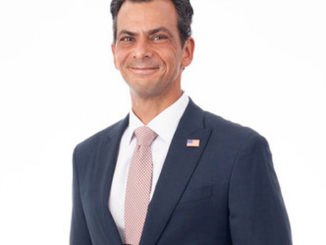
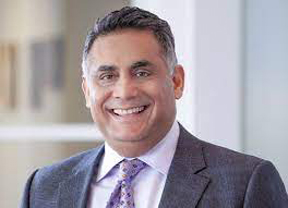
    WASHIMGTON (TIP): Indian American businessman and community leader Puneet Ahluwalia, who is running for the powerful office of the Virginia Lieutenant Governor, is seeking to bring diversity in the country’s political landscape at a time when there is a sudden national surge in violence against the Asian-American community.

    The Republican Party is slated to pick its nominee for the Lieutenant Governor at a hybrid convention on May 8.

    “I came to this country with almost nothing, built a business, married a wonderful woman who also immigrated, and raised a beautiful family,” Ahluwalia told PTI ahead of the convention.

    “Nadia (his wife who is an Afghan-American) and I have had our struggles along the way – as every family does. And, like most people of color, we’ve occasionally faced bias and prejudice, but we’ve never lost sight of the blessings we’ve enjoyed by being citizens of this wonderful country,” Ahluwalia said.

    Over the past several months, he and his team of volunteers have been crisscrossing the entire state of Virginia campaigning on his platform to create jobs and economic book of Virginia.

    “Now, I’m running for Lieutenant Governor. One reason is because I want to help every American share in the opportunity and blessing of America – no matter the color of their skin, the language they speak, or the country where they were born,” he said.

    A successful businessman, Ahluwalia has been with the Republican Party for 20 years.

    “I’m convinced our economic wellbeing and the future of our families depends on upholding the fairness and freedom that America stands for when it stands at its best. We are a country of law and order,” he said.

    He noted that his party has not been able to reach out to other ethnic and religious minorities in the state.

    “The tone matters. The conditioning matters. It’s a matter of reaching out to them. This is not a matter of policy,” he said, adding that the Republican Party’s policy perfectly fits with the immigrant community, the ethnic communities like Asian-Americans.

    Ahluwalia said there has been a great support to his candidacy not only from the rural Virginia, but also from the ethnic communities, be it the Indian-Americans, Afghan-Americans, Vietnamese-Americans or Korean-Americans.

    During his campaigning, Ahluwalia said he finds that there has been an outpouring of support.

    “It was only a matter that we have not reached out to them earlier. There is a need for our leadership to engage with them,” he added. More than 3,000 incidents of abuse against Asian Americans were reported between March and December 2020, according to Asian American advocacy groups. There were only 216 reported cases in 2019, according to FBI statistics.

  • No Roadmap to Double Farmers’ Income

    No Roadmap to Double Farmers’ Income

    By Yogendra Yadav

    At the halfway mark of this historic mission, the Modi govt did not even have a plan on paper on how the farmers’ income was to be doubled. None of the budgets has made any separate allocation for this publicised programme. The most generous reading would be that the DFI is not a separate plan or programme, but a vision to be realised through all the agrarian policies put together.

     Finally, the bluff of doubling farmers’ income has been called. Not by any critic of the government, but by Dr Ramesh Chand, Member (Agriculture) of the Niti Aayog. No, it was not a confession. You don’t expect that from functionaries in the Narendra Modi government. Rather, the truth tumbled out in the course of a casual and disingenuous plea for the three farm laws. This is what the PTI copy of Chand’s interview reads: “I will say that if these three farm laws are not adopted immediately, then I don’t see that goal (of doubling farmers’ income by 2022) getting fulfilled.”

    Just chew on this one. The grand mission of doubling the income of farmers was announced in February 2016. The deadline for meeting this target is 2022. We are already in the fifth year. Now, the Modi government’s top expert on agriculture admits that the target may not be realised, neither because it was unrealistic to begin with, nor because of any failure on the part of this government, but because of non-adoption of the three laws that were introduced in course of the fifth year that have been stalled for the last three months. Weird logic? Well, you have not followed the story of the mirage called DFI — Doubling of Farmers’ Income.

    No homework

    Prime Minister Narendra Modi had made this announcement at Bareilly on February 28, 2016, a day before the Union Budget. This was not one of the manifesto promises of the BJP. So, you would imagine that some homework had gone into such a major declaration. Presumably, the government would know, first of all, what the farmers’ income was in 2016. It must have done some basic arithmetic on what it would take to double that income within six years. You hope that the government would have at least a rough roadmap of policies that help achieve that target. Finally, you would expect that regular monitoring and review of the farmers’ income follows such a major declaration. You are wrong on every single count!

    As soon as Finance Minister Arun Jaitley repeated the PM’s announcement in his budget speech, questions were asked about what was the farmers’ income at that time and what it would take to double it. No one had any answer. It took the government a few months to answer an elementary arithmetic question: was the calculation going to happen at constant price or current price? In other words, was the target of doubling going to discount inflation? Thankfully, the government finally acknowledged that the target was to double the real income of the farmers, controlling for inflation, and not just their nominal income.

    So, what would it amount to in rupee terms? Well, the government appointed a committee, six weeks after making the announcement to the country, to find this out. The Doubling of Farmers’Income Committee (DFIC), headed by a sensible and knowledgeable civil servant, presented the basic arithmetic of doubling income in August 2017. The committee had to extrapolate from an old survey carried out by the National Sample Survey in 2011-12, as there was no other reliable source of data to benchmark the starting point. It estimated the annual income of a farm family in 2015-16 at Rs 96,703. That works out to about Rs 8,000 per month for a family of five or more. Mind you, this income included earning from non-farm activities like service, business or dairy. Doubling of farm income by 2022 would mean an annual family income of Rs 1,72,694 at the prices of 2015-16 (doubling of farm income, but not that of non-farm income of the farmer household), or about Rs 2.5 lakh at the expected prices in 2022. This would require income to grow at an annual rate of 10.4 per cent in real terms — something Indian farmers had never experienced before. We were already one and half years into a six-year mission by the time its starting point and the target was clearly identified.

    No policy roadmap

    What, then, should be the policies to achieve this unprecedented growth? It took the DFIC another year to submit its substantive report in September 2018. The 14-volume report 0is undoubtedly a comprehensive document on agriculture policies. By the time the report arrived, two and half years had passed and India was already in election mode. The government had no time to consider the report. The only major step that the BJP government took then, following its defeat in assembly elections, was something the DFIC had not recommended: a handout of Rs 6,000 a year to every farm family.

    So, at the halfway mark of this historic mission, the Modi government did not even have a plan on paper on how the farmers’ income was going to be doubled. None of the budgets of this government has made any separate allocation for this publicised programme. Indeed, we do not know, if this is a “vision” or a “mission” or a “scheme”. No one has ever clarified its official status. Yet, no BJP leader or spokesperson can speak for a minute on agriculture without mentioning the DFI. The most generous reading of the party’s claims would be that the DFI is not a separate plan or programme, but a vision to be realised through all the agrarian policies put together.

    No monitoring, no data

    In that case, what about monitoring and review? So far, there is none. In the last five years, the Modi government has not gathered or released a single piece of information about the increase in farmers’income ever since the announcement of DFI. It has not commissioned any ground survey to check the progress of this national mission. In 2020, it announced an ‘empowered body’ to ‘review and monitor the progress’. It is yet to put out any document in the public domain.

    The closest, though not strictly comparable, survey carried out by the NSS in 2018 was junked by this government, apparently because it showed a decline in the real income in rural India. It is fair to assume that we don’t have data on farmers’income because the government is not interested in bad news.

    The closest proxy for trends in farmers’ income during this period is the official data on Gross Value Addition (GVA) in agriculture and allied sectors. The latest official data in the Economic Survey of 2021 (https://www.indiabudget.gov.in/economicsurvey/doc/vol2chapter/echap07_vol2.pdf) shows that the average rate of annual growth of agri GVA during the seven years of the Modi government has been 3.3 per cent, compared to the average of 4.6 per cent during UPA-I and UPA-II. In the last five years, the agri GVA grew by a total of 24.5 per cent. Ramesh Chand expects a growth of 3.5 per cent in the coming year.

    So, the six years of grand national mission for raising the farmers’real income by 100 per cent are likely to end with less than 30 per cent actual increase. That works out to about 4 per cent per annum against the target of 10.4 per cent. This is no different from the real increase in farmers’ income between 2002 and 2012.

    What, then, has the DFI achieved? Nothing for the farmers. Not to put too fine a point, it was a cynical propaganda devised to create positive vibes about the BJP government. Its success is to be measured not by cold agricultural statistics, but by air-time, TRPs and votes for the BJP. If there ever was a contest for super jumla of the century, doubling of farmers’ income would be among the top contenders.

    (The author is National President, Swaraj India)


  • Trump enters FB via daughter-in-law’s Page, kicked off again

    SAN FRANCISCO (TIP): Facebook has kicked off former US President Donald Trump for the second time from its platform as he tried to evade the ban by posting an interview via a Facebook Page in the name of his daughter-in-law Lara Trump.

    Lara is married to Eric Frederick Trump, the third child and second son of Donald Trump.

    Facebook said in a statement to The Verge on Wednesday, March 31, that the company has removed content from Lara Trump’s Facebook Page that featured former President Donald Trump speaking.

    “In line with the block we placed on Donald Trump’s Facebook and Instagram accounts, further content posted in the voice of Donald Trump will be removed and result in additional limitations on the accounts,” the company added.

    Lara later posted screenshots of emails that appear to be from Facebook, saying that a video of the interview was removed because it featured “the voice of Donald Trump,” along with a warning that posting further content would result in account limitations. Donald Trump has been banned from Facebook since the January 6th attack on Capitol Hill. The independent Facebook Oversight Board is asking the public to submit their feedback on whether the decision by the social network to suspend former US President Donald Trump’s accounts for an indefinite period after the Capitol chaos on January 6 was right. The two Trump posts in question include the one-minute video he posted to his account on January 6 as rioters were still present in the Capitol and backup law enforcement personnel were en route. Facebook removed the video and took down the post. It later banned Trump from its platform and Instagram for 24 hours and then extended it indefinitely.

  • PNB fraud: Warrant against Nirav Modi’s sister, brother-in-law kept in abeyance

    PNB fraud: Warrant against Nirav Modi’s sister, brother-in-law kept in abeyance

    Purvi was arraigned as an accused in the case, where multiple chargesheets have been filed by the ED and the Central Bureau of Investigation (CBI)

    NEW DELHI (TIP): A special PMLA court on Thursday, April 1, kept in abeyance the warrant issued against the sister and brother-in-law of fugitive diamond merchant Nirav Modi till further orders.

    Modi’s sister Purvi and her husband Maiank Mehta had “turned approvers” in the USD 2 billion PNB fraud case, in which Modi and his uncle Mehul Choksi are the prime accused.

    The couple had approached the court in February for cancellation of non-bailable warrants (NBWs) issued against them, on the grounds that they had turned approvers in the case.

    Modi, who is currently lodged in a UK prison, Choksi and others are being probed by the Enforcement Directorate (ED) in the Punjab National Bank (PNB) money laundering case since 2018.

    Purvi (47) is a Belgian national, while her husband is a British citizen, and the couple, who are stated to be based abroad, have never joined the probe in the case.

    Purvi was arraigned as an accused in the case, where multiple chargesheets have been filed by the ED and the Central Bureau of Investigation (CBI).

    (Source: PTI)


  • President Biden Unveils What He Calls A ‘Once-In-A-Generation’ Infrastructure Proposal

    President Biden Unveils What He Calls A ‘Once-In-A-Generation’ Infrastructure Proposal

    The measure, called the American Jobs Plan, includes big infrastructure fixes

    PITTSBURGH (TIP): President Biden on Wednesday, March 31, unveiled a sprawling, ambitious infrastructure proposal that, if enacted, would overhaul how Americans get from Point A to Point B, how their electricity is generated, the speed of their Internet connections, the quality of their water and the physical makeup of their children’s schools. The measure, called the American Jobs Plan, includes big infrastructure fixes that both major parties — as well as a majority of Americans — consistently say they want to see, including upgrades to bridges, broadband and buildings.

    The $2 trillion proposal includes:

    • $115 billion to repair and rebuild bridges, highways and roads.
    • $100 billion to expand high-speed broadband across the entire country.
    • $100 billion to upgrade and build new schools.
    • $100 billion to expand and improve power lines and spur a shift to clean energy.

    Embedded within the plan are efforts to build out U.S. clean energy infrastructure that, by itself, would rank as one of the most ambitious initiatives ever by the federal government to lower the country’s greenhouse gas emissions, along with efforts to address racial inequalities and advance the U.S. economy to compete with China.

    That’s if the measure is signed into law.

    Democrats have a slim House majority and control the Senate only because of Vice President Harris’ tiebreaking vote. With Republicans already voicing concerns about the proposal’s cost and corporate tax hikes, Democrats may once again have to force major legislation through complicated Senate procedures that could drastically narrow its scope. The party would also have to stick together on a historically expensive effort that has some moderates balking, while some high-profile progressives call for even higher spending levels.

    What Biden announced in Pittsburgh on Wednesday is the first part of a larger plan to overhaul the economy. Additional proposals for spending on education, childcare and other social programs the administration calls “human infrastructure” are expected in the coming weeks.

    Addressing climate and racial inequities

    The initial package includes two environmental ideas Biden regularly talked about when running for president: creating a New Deal-inspired Climate Conservation Corps to work on conservation projects and environmental justice efforts, as well as catalyzing an irreversible shift from gasoline-powered to electric vehicles.

    Biden wants to spend billions on rebates and tax incentives to encourage Americans to purchase electric vehicles, and he proposes paying for the transition of thousands of transit and school buses from diesel to electric. At the same time, he wants incentives for state and local governments to build electric vehicle charging stations to power those new cars and buses.

    Altogether, Biden is proposing $174 billion in spending on boosting the electric vehicle market — more than the plan would spend on highway and bridge repairs.

    The proposal would also try to speed up private investments in clean energy such as wind and solar by expanding investment and production tax credits and funding existing state and local projects that already do the same.

    Biden has repeatedly said that addressing historic racial injustice is one of the top goals of his administration. Attempts to fix decades of racial inequity run through the various efforts in the infrastructure proposal. The president’s plan would replace all of the country’s lead pipes and service lines — dangerous infrastructure flaws that predominantly affect communities of color such as Flint, Mich. It would spend $85 billion improving and expanding mass transportation, the main mode of transportation for many people of color.

    Biden’s plan even includes a $20 billion proposal to reconnect urban neighborhoods cut off, bulldozed and blighted by highways planned and built with little to no regard for the people who lived along their routes.

    Biden’s just-passed $1.9 trillion American Rescue Plan relied entirely on deficit spending. This time, the administration is proposing tax hikes — with several directed at corporations.

    The White House wants to raise corporate taxes to 28% — halfway between the current top corporate rate of 21% set by former President Donald Trump’s 2017 tax law and the 35% rate before it was enacted. Biden’s measure would also raise the global minimum tax for U.S. multinational corporations, attempting to stop the shifting of profits to tax havens.

    The infrastructure proposal does not mention raising individual tax rates, including on wealthy Americans.

    While the bulk of the proposal’s $2 trillion in spending would come over the coming eight years, the administration says the increased revenue would pay for all of the projects over a timespan nearly twice as long: 15 years.

    But there’s another fiscal argument many Democrats are starting to make.

    “Don’t get hung up on this concept that we need to find a way to pay for it dollar for dollar because infrastructure is one of those issues that pays for itself,” said Zac Petkanas, a senior adviser to Invest in America, a progressive group formed in January that advocates for an expansive infrastructure package.

    The Biden plan points to lots of potential job creation that would generate tax payments and efficiencies, such as saving money in the power grid. But Republicans are certain to raise questions about those promises.

    Seeking bipartisanship

    President Biden campaigned on restoring bipartisanship and unity but has increasingly made it clear that he views that benchmark via the broader popularity of his proposals, not whether any Republican lawmakers actually vote for them. As with the American Rescue Plan, the main immediate political question is whether any Republicans would support the proposal. Biden campaigned on restoring bipartisanship and unity to Washington, D.C., but has increasingly made it clear that he views that benchmark via the broader popularity of his proposals, not whether any Republican lawmakers actually vote for them.

    A bipartisan measure would eliminate the need to tailor details to fit the nebulous rules of what can and cannot be considered in bills passed via the Senate’s reconciliation rules, which bypass the chamber’s filibuster procedures.

    Historically, spending is an area where Democrats and Republicans in Congress collaborated, and there is a widespread acknowledgment now of a huge backlog that needs to be addressed.

    Former Sen. Heidi Heitkamp, D-N.D., says what can make infrastructure an easier sell is that there’s something tangible for every lawmaker to tell their constituents about.

    “You get a bridge! And you get a bridge! And you get a bridge! And you get a road! And you get a hospital! It’s the Oprah of infrastructure,” she said, adding that moderate Democrats may make a big show about demanding the spending be targeted, as Republicans certainly will. “If people see that it is an advancement of infrastructure and not like a Christmas tree bill for every other priority, I think that that will get a lot of traction.”

    Indeed, many Republicans are already making it clear that they see Biden’s infrastructure proposals as far too broad and far too expensive.

    “A transportation bill, I think, needs to be a transportation bill. Not a Green New Deal. It needs to be about roads and bridges,” Missouri Rep. Sam Graves, the top Republican on the House Transportation and Infrastructure Committee, warned Transportation Secretary Pete Buttigieg during a recent hearing.

    Many Democrats seem resigned to the fact that this will likely be another party-line process. John Podesta — who coordinated climate policy during the Obama administration, in addition to advising both Bill and Hillary Clinton — trailed off and laughed when trying to make the case for how Republicans would support the climate aspects of the measure.

    Jamal Raad, who co-founded the climate advocacy group Evergreen Action, argues that the Biden administration should proceed through reconciliation right off the bat or persuade Senate Democrats to vote to eliminate filibuster rules.

    “I believe there is Republican support for certain investments in infrastructure,” he said. “Certain investments in their community for jobs. Even in clean energy. But I do not think there will be anywhere close to 10 Republican votes for the scale, the scope, of the challenge we need to meet.”

    It’s a path that, despite decades in Washington as an aisle-crossing deal-cutter, Biden has now made clear he’s willing — perhaps even eager — to take as he sets out to transform the country.

    (Agencies)

  • John Kerry to visit New Delhi, U.A.E and Dhaka

    John Kerry to visit New Delhi, U.A.E and Dhaka

    Will hold consultations on increasing climate ambition ahead of President Biden’s Leaders Summit on Climate April 22-23

    WASHINGTON (TIP): The U.S.’s Special Presidential Envoy for Climate, John Kerry, will travel to New Delhi, Dhaka and Abu Dhabi during April 1-9, the State Department announced on Wednesday, April 31. The purpose of the travel is for “consultations on increasing climate ambition ahead of President Biden’s Leaders Summit on Climate April 22-23 and the 26th Conference of the Parties (COP26) to the United Nations Framework Convention on Climate Change later this year,” a State Department statement said. Countries party to the 2015 Paris Agreement on climate are expected to announce new Nationally Determined Contributions (NDCs) – emissions targets – before the COP26 meeting in Glasgow in November. The U.S. is expected to announce its new 2030 targets soon. “What we do in the realm of climate, of course, has implications for the broader globe because, of course, we are one of the world’s largest emitters. But we also set an example, and we are seeking to raise that climate ambition by not only asking countries to make these commitments themselves, but also to lead by example. And I suspect in the coming weeks you will hear more about the example we intend to set …” State Department Spokesperson Ned Price said on Wednesday in response to a question on what the U.S. was planning to do to curb its emissions.

    (Source: The Hindu)


  • Indian IT professionals likely to benefit as Biden lets Trump era H-1B visa ban expire

    Indian IT professionals likely to benefit as Biden lets Trump era H-1B visa ban expire

    WASHINGTON (TIP): US President Joe Biden on Thursday, April 1, let the ban on foreign workers visa, H-1B, lapse as the notification issued by his predecessor Donald Trump expired, a move which is likely to benefit thousands of Indian IT professionals. Amidst a national lockdown and the COVID-19 crisis, Trump in June last year issued a proclamation that suspended entry to the US of applicants for several temporary or “non-immigrant” visa categories, including H-1B, arguing that these visas presented a risk to the US labor market during the economic recovery. On December 31, Trump extended the order to March 31, 2021, noting that an extension was warranted as the pandemic continued to disrupt American lives, and high levels of unemployment and job loss were still presenting serious economic challenges to workers across the US.

    Biden did not issue a fresh proclamation for the ban on H-1B visas to continue after March 31.

    He had promised to lift the suspension on H-1B visas, saying Trump’s immigration policies were cruel.

    The H-1B visa is a non-immigrant visa that allows US companies to employ foreign workers in specialty occupations that require theoretical or technical expertise. Technology companies depend on it to hire tens of thousands of employees each year from countries like India and China.

    The expiry of the Trump’s proclamation would now result in the issuing of H-1B visas by American diplomatic missions overseas that would result in US companies bringing in talented technology professionals inside the country.

    No new proclamation was issued by Biden till Wednesday midnight, resulting in the automatic end to the ban on issuing of fresh H-1B visas.

    The Wall Street Journal reported that the White House would not renew a ban on H-1B, and other work-based visas imposed last year in response to the COVID-19 pandemic that is set to expire on Wednesday.

    Meanwhile, a Republican Senator from Missouri on Wednesday urged Biden to issue a fresh proclamation to continue with the H-1B visa ban.

    “I write today to urge you to extend the freeze on temporary foreign worker entries into the United States that, without intervention, will expire today,” Senator Josh Hawley wrote in a letter to Biden.

    “The presidential proclamation suspending entry of certain temporary workers into the US has protected Americans suffering from the pandemic-induced economic crisis. With millions of struggling Americans out of work – and millions more desperate to make ends meet – now is not the time to open the floodgates to thousands of foreign workers competing with American workers for scarce jobs and resources,” he wrote.

  • The American way

    Build social & political consensus on legalizing marijuana

    New York has become the 15th American state to legalize the use of marijuana by adults, while Virginia intends to allow possession of small quantities of the drug from July onwards. A new law will bring relief to many people previously charged with marijuana crimes in New York, even as the state is expecting that the cannabis programme will fetch $350 million annually in tax collection and create 30,000 to 60,000 jobs. In India, the issue of legalizing weed — which has been consumed in one form or the other since time immemorial — continues to be contentious. ‘Soft’ drugs such as poppy husk, marijuana and opium fall under the ambit of the Narcotic Drugs and Psychotropic Substances (NDPS) Act, 1985. Licit cultivation of opium is carried out in tracts notified by the Centre in the states of Madhya Pradesh, Rajasthan and Uttar Pradesh. Uttarakhand and UP let their farmers grow cannabis, but only for medicinal/industrial purposes, even as Himachal Pradesh is reported to be framing a policy in this regard.

    With drug abuse being a major social evil, politicians in general prefer to tread warily rather than address the root cause of the problem. Among the exceptions are former MP Dr Dharamvira Gandhi, who wants poppy husk, opium and marijuana to be made legally available in order to rein in the drug mafia, while claiming that the NDPS Act has largely failed to achieve its UN-mandated goals. His argument: in view of the prohibition of the common man’s ‘recreational’ substances, addictive and potentially lethal synthetic drugs are swamping the market, wreaking havoc on users and their families.

    Legalizing cannabis production has benefited not only farmers but also the pharma industry in Uttarakhand and UP. Such experience should spur other states to create conditions conducive for cultivators and investors. The procedure of granting licenses to the stakeholders should be eased, but there is also a need for a foolproof mechanism to deter unscrupulous elements. Such moves, if properly monitored and regulated, are worth a try. Above all, it’s imperative to build social and political consensus on amending the law so as to decriminalize weed.

    (Tribune, India)

  • IRS, Treasury disburse more Economic Impact Payments under the American Rescue Plan; total tops 130 million with more to come

    IRS, Treasury disburse more Economic Impact Payments under the American Rescue Plan; total tops 130 million with more to come

    WASHINGTON (TIP): The Internal Revenue Service, the U.S. Department of the Treasury and the Bureau of the Fiscal Service announced, April 1, they are disbursing several million more payments in the third batch of Economic Impact Payments from the American Rescue Plan. This brings the total disbursed so far to more than 130 million payments worth approximately $335 billion.

    As announced on March 12, Economic Impact Payments continue to roll out in batches to millions of Americans. The third batch of payments began processing on Friday, March 26, with an official payment date of March 31, with some people receiving direct payments in their accounts earlier as provisional or pending deposits. Here is additional information on this batch of payments:

    This batch includes the first of ongoing supplemental payments for people who earlier in March received payments based on their 2019 tax returns but are eligible for a new or larger payment based on their recently processed 2020 tax returns. These “plus-up” payments could include a situation where a person’s income dropped in 2020 compared to 2019, or a person had a new child or dependent on their 2020 tax return, and other situations. The payments announced today also include payments for people for whom the IRS previously did not have information to issue a payment but who recently filed a tax return and qualify for an Economic Impact Payment.  Payments to this group — and the “plus-up” payments noted above — will continue on a weekly basis going forward, as the IRS continues processing tax returns from 2020 and 2019.

    In total, this third batch includes more than 4 million payments, with a total value of more than $10 billion.

    This batch of payments contains more than 2 million direct deposit payments (with a total value of more than $5 billion) and approximately 2 million paper check payments (with a total value of nearly $5 billion).

    For the first two batches of payments (which began processing on March 12 and March 19), payments were primarily sent to eligible taxpayers who filed 2019 or 2020 returns. People who don’t typically file a return but who successfully used the Non-Filers tool on IRS.gov last year were also sent payments in these first two batches, either as a direct deposit or by paper check or an EIP Card, a prepaid debit card.

    Starting Friday, a large set of payments will begin going to Social Security and other federal beneficiaries who didn’t file a 2020 or 2019 tax return and didn’t use the Non-Filers tool last year. These payments will go to Social Security retirement, survivor or disability (SSDI), Supplemental Security Income (SSI), and Railroad Retirement Board (RRB) beneficiaries. As announced previously, these payments will begin to be issued this weekend, with the projection that the majority of these payments will be sent electronically and received on April 7.

    No action is needed by most people to obtain this round of Economic Impact Payments. People can check the Get My Payment tool on IRS.gov on to see if their payment has been scheduled. The IRS notes that the Get My Payment tool on IRS.gov will not be updated until the weekend of April 3-4 with information for Social Security and other federal beneficiaries expecting payments next week.

    The IRS continues to review data received for Veterans Affairs (VA) benefit recipients and expects to determine a payment date and provide more details soon. Currently, the IRS estimates that Economic Impact Payments for VA beneficiaries who do not regularly file tax returns could be disbursed by mid-April. VA beneficiary payment information will be available in the Get My Payment tool at a future date.

    Special reminder for those who don’t normally file a tax return

    Some federal benefits recipients may need to file a 2020 tax return, even if they don’t usually file, to provide information the IRS needs to send payments for any qualified dependent. Eligible individuals in this group should file a 2020 tax return to be considered for an additional payment for their qualified dependent as quickly as possible. People who don’t normally file a tax return and don’t receive federal benefits may qualify for these Economic Impact Payments. This includes those experiencing homelessness, the rural poor, and others. For those eligible individuals who didn’t get a first or second Economic Impact Payment or got less than the full amounts, they may be eligible for the 2020 Recovery Rebate Credit, but they’ll need to file a 2020 tax return. See the special section on IRS.gov: Claiming the 2020 Recovery Rebate Credit if you aren’t required to file a tax return.

    Free tax return preparation is available for qualifying people.

    The IRS reminds taxpayers that the income levels in this new round of Economic Impact Payments have changed. This means that some people won’t be eligible for the third payment even if they received a first or second Economic Impact Payment or claimed a 2020 Recovery Rebate Credit. Payments will begin to be reduced for individuals making $75,000 or above in Adjusted Gross Income ($150,000 for married filing jointly). The payments end at $80,000 for individuals ($160,000 for married filing jointly); people with Adjusted Gross Incomes above these levels are ineligible for a payment.

    Individuals can check the Get My Payment tool on IRS.gov to see the payment status of these payments. Additional information on Economic Impact Payments is available on IRS.gov.

  • AAPI urges government to prevent attacks on Asian Americans

    AAPI urges government to prevent attacks on Asian Americans

    CHICAGO (TIP): Expressing deep concern and anguish about recent attacks against Asian Americans, the American Association of Physicians of India Origin (AAPI) has urged the federal, state and local Governments to make all out efforts to protect them. “AAPI wants to express our deep concern and anguish about the violence the nation has witnessed against people of Asian origin,” AAPI President Dr. Sudhakar Jonnalagadda, stated condemning such incidents. “We at AAPI, the largest ethnic medical organization in the nation, urge the federal, state and local Governments to make all the efforts possible to prevent violence against Asian Americans and all those innocent people around the nation who continue to suffer due to violence, harassment and discrimination.”

    “We strongly condemn this ongoing violence. And we want immediate action against the culprits, who have been carrying on these criminal acts,” Jonnalagadda stated.

    A coalition tracking reports of racism and discrimination against Asian Americans says it has received at least 3,795 firsthand complaints since last year, AAPI noted. Stop AAPI Hate began tracking violence and harassment against Asian Americans and Pacific Islanders in March last year.

    From then through the end of 2020, Stop AAPI Hate received a total of 3,292 complaints from all 50 states and Washington, DC, according to a Stop AAPI Hate news release.

    There were at least 503 anti-Asian hate incidents reported between January 1 and Feb. 28 according to the group’s latest report, released last week.

    Quoting the UN Universal Declaration of Human Rights, Dr. Sajani Shah, Chair of AAPI Board of Trustees, said, “AAPI recognizes that all human beings are born free and equal in dignity and rights and that everyone is entitled to all the rights and freedoms set out therein, without distinction of any kind, in particular as to race, color or national origin.”

    “All human beings are equal before the law and are entitled to equal protection of the law against any discrimination and against any incitement to discrimination.”

    Recognizing the pain and sufferings of the people impacted by the increasing violence and harassment against Asians and Asians Americans, especially in the past few months, Dr. Anupama Gotimukula, President-Elect of AAPI stressed the need for education.

    “We stand in solidarity with peaceful protestors across the nation condemning the increasing violence and harassment against some minority groups,” said Dr. Ravi Kolli, Vice President of AAPI.

    “As immigrants to the US, our families may not always understand this history, but we join in solidarity with the minority communities and call for justice and peace.”

    “We are saddened by the divisive rhetoric and racial tensions that seem to be getting worse each day. AAPI supports the Bills introduced by two Democratic lawmakers in the House and the Senate calling for the expedited review of hate crimes related to the pandemic,” said Dr. Amit Chakrabarty, Secretary of AAPI.

    Rep. Grace Meng of New York, who sponsored the bill in the House, said she hopes the legislation tackles the “disgusting pattern of hate” that Asian Americans are facing since the start of the pandemic.”

    “We thank and applaud President Joe Biden for condemning the hate and discrimination that Asian Americans have faced,” said Dr. Satheesh Kathula, Treasurer of AAPI.

    “We support his call to do what we all as a nation can do to save lives, working with each other, preventing vicious hate crimes against Asian Americans, who have been attacked, harassed, blamed and scapegoated,”

  • First Asian Ajay Data gets Elected Unopposed Chairman of UASG

    First Asian Ajay Data gets Elected Unopposed Chairman of UASG

    Yash Goyal in Jaipur

    LOS ANGELES /JAIPUR (TIP):  In a very keenly watched election for the Chair of Universal Acceptance Steering Group (UASG) which is supported by the International Internet Body (ICANN) at LA (USA), Jaipur’s Dr Ajay Data, Chief of Indian IT Firm Data Xgen has been declared elected at a recently held poll at LA (USA). Dr Ajary remains the first Asian to occupy this prestigious post, according to a statement here on Weekend. UASG is financially supported by Internet Corporation for Assigned Names and Numbers (ICANN) here, over 600 global IT companies including representatives from Microsoft, Google, Apple, XgenPlus, Yandex, THNICetc.

    Dr. Ajay was elected chairman after defeating Richard Madinger, VP of GoDaddy in 2019 and now after completing two years nominations were asked and no one opposed the nomination of Dr. Ajay as chair.

    After two years of remaining chair as UASG, Nominations were asked on 25th Feb 2021 to elect Chair of UASG which is an Internet community initiative and tasked with undertaking activities that will effectively promote the Universal Acceptance of all valid domain names and email addresses.

    “I am thankful to all 600 + members of UASG to elect me as share of Universal Acceptance Steering Group.  It’s also a proud moment to lead this group which is working to break the language barriers to bring billions online,” Dr Ajay reacted when contacted by TIP.

  • CDC director gives emotional warning of ‘impending doom’

    WASHINGTON (TIP): Thousands of cases of the B.1.1.7 strain have been reported across the United States, and experts fear the variant could drive another Covid-19 surge as states race to get ahead and vaccinate. The strain, first spotted in the United Kingdom, isn’t just more contagious than the original novel coronavirus. It appears to be deadlier as well. B.1.1.7 has been wreaking havoc in parts of Europe, and health experts the US could be next if Americans don’t take precautions. “In the Upper Midwest, we’re starting to see lots of younger adults getting sick and going to the hospital from Covid because of the B.1.1.7 variant,” said Dr. Peter Hotez, dean of the National School of Tropical Medicine at Baylor College of Medicine. “So, remember that the B.1.1.7 variant is different from past types of Covid infections that we’ve seen — more serious and possibly more severe disease among younger people.”

    Where B.1.1.7 is thriving

    The US Centers for Disease Control and Prevention has reported more than 11,500 cases of B.1.1.7 infections. But those were just the ones caught by genomic sequencing.

    The actual number may be much higher, since not every Covid-19 case is sequenced.

    The highest B.1.1.7 case counts are in Florida, which has welcomed packed crowds of spring breakers — many of whom are unvaccinated and maskless.

    Michigan has the next highest number of B.1.1.7 cases. Officials there say another surge is well on its way.

    “We’ve got a high proportion of variants, and that means coronavirus spreads faster,” Michigan Gov. Gretchen Whitmer said. “These are much more contagious, and we’re seeing that whether it is at youth sports or it is the re-engagement of some of our restaurants.”

    Whitmer said the disturbing trend is fueled by new variants, pandemic fatigue and more travel.

  • Midlife loneliness may up dementia, Alzheimer’s risk

    Midlife loneliness may up dementia, Alzheimer’s risk

    Being persistently lonely during midlife appears to make people more likely to develop dementia and Alzheimer’s Disease (AD) later in life, a new study finds.

    The study, published in the journal ‘Alzheimer’s & Dementia’, also indicated that people who recover from loneliness appear to be less likely to suffer from dementia.

    “Whereas persistent loneliness is a threat to brain health, psychological resilience following adverse life experiences may explain why transient loneliness is protective in the context of dementia onset,” said researcher Wendy Qiu from the Boston University School of Medicine.

    Loneliness is a subjective feeling resulting from a perceived discrepancy between desired and actual social relationships. Although loneliness does not itself have the status of a clinical disease, it is associated with a range of negative health outcomes, including sleep disturbances, depressive symptoms, cognitive impairment, and stroke.

    For the study, the team examined data involving cognitively normal adults. Specifically, they investigated whether persistent loneliness more strongly predicted the future development of dementia and AD than transient loneliness.

    They also wanted to see whether this relationship was independent of depression and established genetic risk factors for AD, such as the Apolipoprotein e4 (APOE e4) allele.

    After taking effects of age, sex, education, social network, living alone, physical health and genetic risk into account, persistent loneliness was associated with higher risk, whereas transient loneliness was linked to lower risk of dementia and AD onset after 18 years, compared with no loneliness.

  • Add these vitamins, supplements to your routine to reduce anxiety

    Add these vitamins, supplements to your routine to reduce anxiety

    Ashwagandha

    A powerful Indian herb with potent adaptogenic qualities, it is great for those facing stress issues resulting from emotional, as well as physical issues. Athletes also use this to help reduce the stress-induced by intense exercise and helps in a significant drop in cortisol — the stress hormone post-consumption.

    Omega 3

    Maintaining brain health is important to ensure you can process your thoughts in the most efficient manner possible. One of the ingredients that promote a healthy nervous system is omega 3 fatty acids.

    Owing to the fact that the brain comprises almost 80 per cent fat, this ingredient has proven to not only promote brain health, but studies have also shown to reduce symptoms associated with disorders like Alzheimer’s. Adding this to your daily routine can definitely help reduce inflammation on a physical level and enhance the blood supply and nutrition required for your brain.

    B complex vitamins

    This set of 8 vitamins have been proven to help improve symptoms of stress such as mood and energy levels by lowering the homocysteine levels in the blood.” This results in lesser work-induced stress symptoms when this supplement is consumed regularly.

    L-Theanine

    Commonly referred to as green tea extract, this has been used for its ability to promote relaxation without causing any sedative-like effects. “Numerous studies have denoted that people consuming green tea that is rich in L-Theanine have experienced reduced anxiety symptoms and improvements in memory and attention. Supplementing with L-Theanine has successfully helped in lowering cortisol levels much like ashwagandha.

  • Skincare tips before and after Holi celebrations

    Skincare tips before and after Holi celebrations

    As the most colourful festival is finally here, it is important to keep skincare in mind as Holi celebrations go beyond dry colours and flower petals. There are synthetic elements in certain colours and of course, we end up using other materials that can have a damaging impact on skin and hair. It is important to keep certain tips in mind to protect the skin and hair before and after the colourful celebrations. It is crucial to keep your skin and hair safe so here are a the top 5 useful and easy tips for pre and post Holi celebrations.

    Moisturise

    Keeping your skin moisturised is the most important step. Apply a gentle moisturiser that keeps you protected from the hazardous effects of colours and the synthetic elements in it. Pick a moisturiser that suits your skin type and helps retain moisture.

    Hydrate

    You can go for a good water based toner to maintain the nourishment level for your skin. You can either go for a clinically recommended toner or a herbal one is also a good choice.

    Oiling

    Applying oil to your skin and hair before the Holi celebration begins is always a good idea as it helps in getting rid of the colours post celebrations in a much easier way.

    Scrub

    Before the final cleanse regime, go for some homemade scrubbing as it will help in getting rid of the dead skin and the remaining colours post the festivities.

    Cleanse

    -Finally, use a good cleaner to complete the skincare. Go for a natural mild cleanser and complete the process and thereafter, apply some mosturiser and you are good to go. If there is any eruptions and boils due to any sensitivity, wash it properly and consult a skincare specialist.

  • Bread cutlet

    Bread cutlet

    By Tript Arora

    Crispy and tasty bread cutlets with a hot cup of tea make an excellent evening snack. My family enjoys them for breakfast as well. Boiled potatoes and veggies, rolled in bread and are then coated with bread crumbs. You can either shallow fry them or deep fry them. Choice is yours. In this recipe I am doing a deep fried version. You can use brown, white, wheat or any other type of bread for this recipe. Serve them hot with coriander and peanut chutney (recipe for chutney is towards the end). Enjoy bread cutlet or any other snack with this healthy and tasty dip.

    We Need

    8 slices of Bread, 500 gm Boiled Potatoes, 100 gm boiled peas, 1 onion chopped finely, 2 green chilies chopped finely, 1 Tbsp of grated Ginger, 2 Tbsp chopped Coriander leaves, 1 Tbsp Salt or to taste, 1 Tbsp of Red chilli powder, 1 Tbsp of Coriander powder, 1 Tbsp dried Mango powder, 1 Tbsp roasted Cumin powder, 2 Tbsp Corn flour, 1 cup Breadcrumbs for coating, Any vegetable Oil for frying.

    Here We Go

    –              Mash boiled potatoes. Add chopped onions, boiled peas, chopped green chillies, chopped coriander, grated ginger, mango powder, salt, red chilli powder,  coriander and cumin powder.

    –              Mix everything together to form a dough.

    –              Cut the sides of the bread slices and keep aside.

    –              Take ½ Cup water in a bowl. Add ¼ tsp of salt to this. Take a slice of bread and wet the surface of the slice in this water. Wet the slice from both sides by turning each side. Now by pressing in between your palms squeeze out extra water.

    –              Make a ball of potato mixture and keep in the middle of the wet slice. Cover this potato mixture with the slices and press it gently from all sides shaping it into cutlet. Make all the cutlets and keep aside.

    –              Mix 2 Tbsp of cornflour in water. Now dip each cutlet in this mixture and roll it in breadcrumbs covering all sides. Coat all cutlets in cornflour mixture and roll in breadcrumbs. Keep aside.

    –              Heat oil in a pan for frying. Keeping the flame on medium, fry all cutlets till golden brown and crisp.

    –              Drain on a paper towel to absorb extra oil.

    –              Serve hot with coriander and peanut dip. Enjoy them in evening snacks or morning breakfast.

    Coriander & Peanut Dip:

    –              In a grinder jar, add 1 cup coriander stems/leaves , ¼ Cup roasted peanuts, 2 green chillies, salt, juice of one lemon and 1 Tbsp grated ginger. Add ½ Cup of water and grind to a fine paste. Take out in a bowl and serve it with any snack.

    –              Preparation Time :  15 min

    –              Cooking Time : 30 minutes.

    Tips

    –              Avoid over boiling the potatoes as they will become soft & mushy.

    –              Immediately take out water from potatoes after boiling as they soak water and will become soft and pulpy thereby making it difficult to hold shape.

  • Pierce Brosnan joins Dwayne Johnson’s ‘Black Adam’ as superhero

    Pierce Brosnan joins Dwayne Johnson’s ‘Black Adam’ as superhero

    Former James Bond Pierce Brosnan has something exciting up his sleeve as the dashing actor has now been roped in for his first role as a superhero. The actor will now play the role of Dr Fate in DC and New Line’s ‘Black Adam’ feature alongside Dwayne Johnson who will play the titular role in the feature.

    Pierce Brosnan’s Dr Fate is also known as Kent Nelson, founding member of the Justice Society who gains superpowers through putting on the magical Helmet of Fate.

    Meanwhile, the casting has now been complete with the addition of Brosnan as Black Adam now comprises Aldis Hodge playing Hawkman, Noah Centineo as Atom Smasher and Quintessa Swindell taking on Cyclone.

    ‘Black Adam’ follows the story of the anti-hero of the same name, played by Dwayne Johnson. The character of Black Adam first appeared in DC Comics in the 1940s as a power-corrupt villain, and slowly became an anti-hero by the 2000s, known for his disregard of rules and conventions.

    ‘Black Adam’ is directed by Jaume Collet-Serra, who also directed Johnson in Disney’s ‘Jungle Cruise’.

    It’s being produced by Dwayne Johnson, Dany Garcia and Hiram Garcia of Seven Bucks Productions with Beau Flynn of FlynnPictureCo.

  • ‘Send them home happy’: Congress to Centre on farmers’ protest

    ‘Send them home happy’: Congress to Centre on farmers’ protest

    New Delhi (TIP):  Opposition Congress on Wednesday, March 24,  urged the government to agree to the demands of farmers who are protesting against the agri laws and “send them home happy”, warning that “making fun” of them would prove very costly to it. Initiating the debate on the Finance Bill in Rajya Sabha, Congress member Deepinder Singh Hooda questioned the government over its promise of doubling the income of farmers by 2022, alleging that instead of increasing the minimum support price of crops, it was trying to snatch the MSP. Hooda also demanded that the government express condolences over the “death of over 300 farmers during their agitation” and announce an economic package for their families along with job opportunities. He also accused the government of following wrong economic policies leading to a decline in economic growth. He said it was the farmers who saved the country and kept the economy alive during the coronavirus pandemic. Hooda said that in 2015-16, the income of farmers was estimated at Rs 8,000 per month, and by 2022 it should be around Rs 16,000 per month, but it seems to be going down as input costs especially on diesel have risen substantially. “I urge the government to hear out farmers and show some compassion and sensitivity towards them and send them home happy after agreeing to their demands. The government should announce an economic package for families of those who died during the protests and provide them with employment opportunities. Send the farmers back home happy. “I urge you with folded hands not to make fun of farmers, as this would prove very costly to you. Please allow farmers to happily return home,” he said.Hooda said farmers are sitting in protest for over four months now and 300 farmers have died. “Farmers expected that you would fulfil the promise of doubling their incomes, but what has happened is that you have reduced the agriculture budget by 8.5 percent,” he said. “You promised to double farmers’ income. Instead of doubling MSP rates, you are trying to snatch it away from farmers. You have attacked the MSP itself and farmers are now fighting to save it,” he also said.

  • Why House panel wants govt to implement one farm law

    Why House panel wants govt to implement one farm law

    The Standing Committee on Food, Consumer Affairs and Public Distribution has asked the government to implement in “letter and spirit” the Essential Commodities (Amendment) Act, 2020, one of the three farm laws against which the farmers are protesting at the borders of Delhi for the last 116 days.

    What is the law?

    The Essential Commodities (Amendment) Act, 2020 is one of the three contentious farm laws. It was enacted on September 26, 2020 by amending the Essential Commodities Act, 1955. Under the amended law, the supply of certain foodstuffs — including cereals, pulses, oilseeds, edible oils, potato — can be regulated only under extraordinary circumstances, which include an extraordinary price rise, war, famine, and natural calamity of a severe nature. In effect, the amendment takes these items out from the purview of Section 3(1), which gave powers to the central government to “control production, supply, distribution, etc., of essential commodities.”

    Through the Essential Commodities Act, 2020, the government has inserted sub-section I(A) in the Section 3 of the Essential Commodities Act, 1955. The new sub-section states, “the supply of such foodstuffs, including cereals, pulses, potato, onion, edible oilseeds and oils, as the Central Government may, by notification in the Official Gazette, specify, may be regulated only under extraordinary circumstances which may include war, famine, extraordinary price rise and natural calamity of grave nature…”

    The new law also specifies conditions when the stock limits can be imposed.

    The Parliamentary Standing Committee on Food, Consumer Affairs and Public Distribution, headed by TMC member Sudip Bandyopadhyay, has recommended to the government to implement, “in letter and spirit,” the Essential Commodities (Amendment) Act, 2020. In its report on ‘Price Rise of Essential Commodities- Causes and Effects,’ the committee has given reasons for the implementation of the law.

    “The Committee note that although the country has become surplus in most agricultural commodities, farmers have been unable to get better prices due to lack of investment in cold storage, warehouses, processing and export as entrepreneurs stated to be get discouraged by the regulatory mechanisms in the Essential Commodities Act, 1955,” says the report of the committee.

    How is an ‘essential commodity’ defined?

    There is no specific definition of essential commodities in The Essential Commodities Act, 1955. Section 2(A) states that an “essential commodity” means a commodity specified in the Schedule of the Act. The Act gives powers to the central government to add or remove a commodity in the Schedule. The Centre, if it is satisfied that it is necessary to do so in public interest, can notify an item as essential, in consultation with state governments. According to the Ministry of Consumer Affairs, Food and Public Distribution, which implements the Act, the Schedule at present contains seven commodities — drugs; fertilisers, whether inorganic, organic or mixed; foodstuffs including edible oils; hank yarn made wholly from cotton; petroleum and petroleum products; raw jute and jute textiles; seeds of food-crops and seeds of fruits and vegetables, seeds of cattle fodder, jute seed, cotton seed.

  • Farmers prepared to continue protest till November, says BKU leader Rakesh Tikait

    Farmers prepared to continue protest till November, says BKU leader Rakesh Tikait

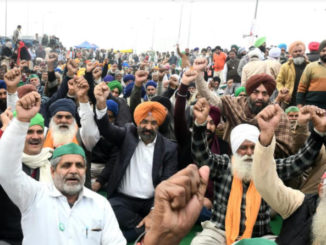
    Farmers agitating against the Centre’s farm laws are prepared for a long haul, BKU leader Rakesh Tikait said on Thursday. Tikait, who is at the helm of the farmers’ protest in Ghazipur, was addressing a mahapanchayat at Assandh in Haryana’s Karnal district. Asserting that protesting farmers will not relent unless the laws are repealed, Rakesh Tikait said, “We have made preparations till November-December.” Spokesperson of the Bharatiya Kisan Union (BKU), Rakesh Tikait reiterated his demand for withdrawal of the agriculture reform laws and the provision of a legal guarantee on MSP. Referring to his late father Mahender Singh Tikait, Rakesh Tikait said, “Tikait sahib used to say that when Haryana stands in support of an agitation, government shivers.”

    Farmer leader Tikait went on to say that the Centre’s farm laws will have an adverse impact not just on farmers but also on other sections. “This fight is not just of farmers but it is also for the poor, small traders,” he said.

    During his speech in Karnal on Thursday, Rakesh Tikait also said that the central government tried to break the agitation by dividing it on the lines of Punjab and Haryana. That did not work, he said adding that the protesting farmers have shown that they can look after their crops and the agitation at the same time.

    “There is the possibility that in the name of corona, restrictions may be imposed but our agitation will go on. We will follow all the guidelines, but we will not end our dharnas,” Rakesh Tikait said.

  • Delhi-Dhaka ties move beyond symbolism, seek to power growth and connectivity

    Delhi-Dhaka ties move beyond symbolism, seek to power growth and connectivity

    New Delhi (TIP): Prime Minister Narendra Modi laid the foundation for his neighbourhood visit well before he took oath on May 26, 2014 when he asked Ajit Doval, the then director of Delhi-based think tank Vivekananda International Foundation, to request leaders of Saarc countries to attend the swearing-in ceremony at the Rashtrapati Bhavan forecourt. Prime Minister Sheikh Hasina couldn’t make it. She had a scheduled visit to Japan at that time and conveyed through her interlocutors that Bangladesh Parliament Speaker Shirin Sharmin Chaudhury would represent Dhaka at the event. As PM Modi landed in Dhaka on Friday to begin a two-day visit to remember ‘Bangabandhu’ Sheikh Mujibur Rahman, the father of the nation of Bangladesh, and celebrate the golden jubilee of the 1971 liberation war, India’s ties with Bangladesh has gone way beyond symbolism. It is part of an integrated vision of PM Modi for the development of eastern India, particularly the North-East with the help and support of Bangladesh. What started with a historical 2015 Land Boundary Agreement (LBA) to settle legacy issues with Bangladesh has developed into a close partnership with India making it a priority to supply Covid-19 vaccine to Dhaka under the “Vaccine Maitri” initiative. PM Modi has made it clear to all that Bangladesh, like Bhutan, Nepal and Myanmar, occupy a special place in Indian diplomacy and all help should be extended to them for mutual growth and security. Since 2014, the bilateral relationship with Dhaka has achieved the following milestones:

    –              Land Boundary Agreement

    –              Restoration of pre-1965 rail links with India. Five out of six have been completed.

    –              Reviving the protocol on inland water and trade transit.

    –              Agreement on the use of Chittagong and Mongla ports for trade and transit.

    –              Building of the Maitree Bridge on the Feni river.

    –              Agreement to export power including building a transmission line from Berhampur in India to Bheramara in Bangladesh

    –              Supply of diesel to Bangladesh from Numaligarh refinery.

    While Bangladesh is the key to connectivity to north-eastern India, it also fits into the calculus of trans- Asian highways that will link India to Vietnam by road and could become an economic engine for growth in Myanmar, Thailand, Cambodia, Laos and Vietnam.

    The development and growth of India’s eastern flank will not only contribute to its GDP with tourism holding a vast potential in North-East but also politically stabilise the region with the Bharatiya Janata Party is a major political force on the eastern front.

    The development of ties with immediate neighbours is also a priority with PM Modi, now that legacy issues like Article 370 and 35 A have been resolved and Kashmir is no longer the permanent stick for adversaries to beat India. When PM Modi becomes the first foreign leader to visit the Bangabandhu mausoleum at Tungipara tomorrow, he will be taking the next steps to cement ties with Dhaka under Sheikh Hasina’s leadership.          Source: HT

  • Caste-based reservations may go, but it’s for Parliament to decide: SC

    New Delhi (TIP): All caste-based reservations may go and only those meant for Economically Weaker Sections (EWS) may remain, the Supreme Court said on Thursday, March 25,  even as it clarified that it was a radical idea and a policy matter to be decided by the government and Parliament. On the ninth day of hearing on revising the 1992 Mandal case, advocate Shriram P Pingle submitted before a five-judge Constitution Bench led by Justice Ashok Bhushan on behalf of SCBC Welfare Association that an endeavour should be made to remove caste-based reservations in a phased manner because the issue was getting politicised. “That is for Parliament and the legislature to consider. It is a welcome idea… When the Constitution was enacted, the object was a caste-less, egalitarian society…Your thoughts are very radical and good. But it is for the government to take a decision that caste and reservations should go,” the Bench said.

    It said, “Mr Pingle you may be right. This may be a beginning, all reservations may go and only EWS (reservation) may remain. But these are policy matters,” it noted. Noting that affirmative action was not limited to reservation alone, the top court had on Monday said states should take additional steps to promote education and establish institutions for the upliftment of socially and educationally backward classes (SEBS). “Why can’t other things be done. Why not promote education and establish more institutes? Somewhere this matrix has to move beyond reservation. Affirmative action is not just reservation,” it had noted. Source: TNS

  • 2 die in Mumbai covid centre fire, 70 patients rescued

    2 die in Mumbai covid centre fire, 70 patients rescued

    Mumbai (TIP):  At least two persons have reportedly perished and around 73 evacuated after a major fire engulfed the Sunrise Hospital located within the Dreamz Mall in Mumbai’s Bhandup, early on Friday, March 26, officials said. The blaze was noticed around midnight on the first floor and quickly spread to the two upper floors of the 3-storied mall which houses the Covid-19 hospital on the top floor. Mumbai Fire Brigade and disaster teams rushed to combat the blaze and to rescue and transfer the Covid patients to other hospitals in the vicinity. While the BMC said that there were no casualties, a hospital statement said early today that there were bodies of 2 Covid-19 patients in the premises, and further details of the same are awaited. At least 10 fire-tenders were battling the blaze till this morning and top officials including Additional Municipal Commissioner Suresh Kakani, top fire brigade, police and civic officials rushed to the spot.

  • Budget session curtailed due to state polls; LS output 114%

    Budget session curtailed due to state polls; LS output 114%

    New Delhi (TIP): Parliament was on March 25 adjourned sine die with the Budget session cut short by 14 days in view of the Assembly elections in West Bengal, Assam, Tamil Nadu, Kerala and Puducherry. The second leg of the session, which began on March 8, was scheduled to end on the April 8. Members of the Lok Sabha and the Rajya Sabha had urged the government to curtail the session keeping in view of state elections. The demand had become stronger after Lok Sabha Speaker Om Birla tested positive for Covid-19. After Question Hour in the Lok Sabha, Congress MP Ravneet Singh said, “The Budget session is going on… the entire country is watching. Should we meet the PM in a West Bengal rally?” Even as Minister of State of Parliamentary Affairs Arjun Ram Meghwal was telling Ravneet Singh that this was “not correct as the PM had been attending” the proceedings, PM Modi walked into the House. Congress leader Rahul Gandhi and several Cabinet ministers were also present on the occasion. In his valedictory speech, presiding officer Bhartruhari Mahtab said 18 Bills were passed and 17 introduced in the House. The productivity of the Lok Sabha stood at 114 per cent during the Budget session and 146 MPs participated in the discussion on the Union Budget, he said. Rajya Sabha Chairman M Venkaiah Naidu said the Upper House functioned for 104 hours as against the total scheduled time of 116 hours. “Against a total of 33 sittings scheduled, from January 29 to April 8, we are concluding it after having 23 sittings,” he said. The Budget session provided the members of this House an opportunity to deliberate on issues concerning economic growth and recovery, particularly in the post-Covid phase, he said. In a media briefing, Parliamentary Affairs Minister Pralhad Joshi said the Budget session remained highly productive due to the cooperation of parliamentarians from all parties. The Rajya Sabha on Thursday passed the Bill for setting up the National Bank for Financing Infrastructure and Development (NaBFID). Union Finance Minister Nirmala Sitharaman said despite remaining out of purview of the “3Cs” (CBI, CVC and CAG), it would not be beyond oversight. It would submit its audited reports to both Houses of Parliament besides being duty-bound to submit these as and when sought by the government, she said.                 Source: TNS

  • Ana de Armas fuels rumors she’s back with Ben Affleck, then shuts them down

    Ana de Armas fuels rumors she’s back with Ben Affleck, then shuts them down

    Actor Ana de Armas on Sunday fuelled rumours that she’d gotten back together with Ben Affleck. She took to Instagram Stories and posted a picture of herself wearing a necklace she used to wear when she was reportedly dating Affleck last year. They were said to have split up earlier this year. The picture shared by her showed the actor wearing a beige top, and a half-heart pendant. Fans were quick to notice that it was one half of the matching pendant she used to wear with Affleck. However, the actor seemingly dismissed the rumours almost immediately when she posted a follow-up story, which was simply a collection of stickers that said ‘nope’ and ‘I don’t think so’. “Ana de Armas really said: thank you, next,” one fan wrote in a tweet. Another person tweeted, “Omg it’s March 2020 all over again. We’re in the middle of a global pandemic. Barchie isn’t getting together after getting my hopes up. And Ben Affleck and Ana de Armas might be dating again.” A third person commented, “Ben Affleck and Ana de Armas are still dating which means 2020 never ended.” “Ben is no longer dating Ana. Their relationship was complicated. Ana does not want to be Los Angeles based and Ben obviously has to since his kids live in Los Angeles,” a source told People magazine earlier this year.