Tag: Facebook

  • Pakistani jailed for 13 years for Facebook post

    Pakistani jailed for 13 years for Facebook post

    LAHORE (TIP): A Pakistani man was sentenced to 13 years in prison on Thursday for allegedly posting religiously offensive material on his Facebook page, lawyers in the case said.

    Rizwan Haider, 25, was convicted in an anti-terrorism court of three charges including promoting sectarian hatred, after he supposedly published a post referring to Prophet Mohammed.

    “This case… was registered against Haider, who is a Shiite Muslim by faith, in January for posting objectionable material against the belief of Sunni Muslims,” Adeel Chattah, public prosecutor in the case, told AFP.

    He was also fined 250,000 rupees ($2,500), Chattah said, adding that he denied the charges and has the right to appeal.

    His lawyer dismissed the accusations.

    “He only liked it and did not post it on the page,” Shameem Zaidi said.

    Pakistan tightened its hate crime laws as part of a campaign to combat extremism after a Taliban attack at a school in Peshawar in December 2014 killed 153 people, mostly children.

    Authorities have arrested and sentenced several religious clerics, mostly from hardline Sunni sects, for hate speech in recent months.

    But Haider’s case is one of the few in which a Shiite Muslim has been jailed for such a crime.

    A Pakistani anti-terrorism court jailed another Shiite man for 13 years in November 2015 after he also posted what it deemed sectarian hate speech on Facebook. Rights activists condemned the ruling as “extremely concerning”. Pakistan has been gripped by sectarian violence since the 1980s, with thousands killed in clashes triggered by religious tensions.

    Most of the violence is committed by Sunni militants against Shiites, who make up roughly 20 percent of Pakistan’s 200 million people.

    (AFP)

  • To post or not to post: Defiant Pakistani teens’ growing dilemma

    To post or not to post: Defiant Pakistani teens’ growing dilemma

    ISLAMABAD (TIP):: A pretty 15-year-old girl strikes a pose and pouts at the camera on her phone, so far so Generation Z, but unlike her teenage counterparts in the West, she stops short of posting the photo on social media, restricted in part by Pakistan’s social mores.

    It is a confusing time for the nation’s youth — the arrival of 3G and 4G in Pakistan in 2014 and a massive surge in the sale of smartphones has seen social media use surge, making information about largely taboo subjects such as love, dating, even sex more accessible than ever.

    Young people can communicate online in relative freedom, and the country even has a Kim Kardashian type figure— Qandeel Baloch, who has become famous through her tireless self-promotion and suggestive “selfies” posted on social media, amassing tens of thousands of followers.

    But for the many in the deeply conservative Muslim nation, strict religious and familial controls still dictate behaviour — the “duck-face” selfie shot, which is almost ubiquitous on the social media pages of teens in the West, can present a hazard in Pakistan.

    “In my pictures, I cannot pout anymore, I’ve stopped doing that, because otherwise people judge,” the young girl said on condition of anonymity.

    “You cannot post a picture outside with your friends, because your relatives, or friends, or teachers will criticise you. They will say: ‘You look like a slut. Why are you smiling?’,” she explained.

    “So now, I barely change my profile picture anymore. When I started using social media, I thought I’d be a pretty girl with a lot of friends online. But I’m just an awkward girl with five friends.”

    The story is echoed by some of her classmates at a middle-income private school in Islamabad, where teenage boys and girls spoke candidly to AFP about their online experiences, but declined to be named.

    “It all comes back to religion. We are in an Islamic state. People here will judge you because Islam doesn’t encourage girls to show their legs, or arms, and it doesn’t encourage boys and girls to interact,” said one 14-year-old boy who described being scolded by relatives after posting a picture of himself with a girl.

    Globally the perils women face online are well-documented but Pakistan’s teenage girls face multiple issues — not only can their behaviour be judged as tarnishing the families’ reputation or honour, there are rising incidents of cyber-misogyny and harassment.

    “When I post pictures I get these creepy stalkers who send me creepy pictures. It really messes you up,” said the 15-year-old girl, adding she no longer talks to boys online because of this.

    A male classmate agreed: “I don’t like selfies. And it’s not safe for girls, because it can attract some boy stalkers.”

    But there is also a sense of growing defiance in the country, where around two-thirds of the population — roughly 180 million people — is believed to be under the age of 30.

    On Valentine’s Day, social media starlet Baloch donned a plunging scarlet dress and posted a message defying the country’s president, who had issued a stern warning against the “Western” holiday.

    “They can stop people from going out, but they can’t stop people from loving,” she declared in a Facebook video, going on to branding politicians “idiotic and disgusting”.

    Baloch is derided and feted in equal measure in Pakistan, but the message appeared to tap into the frustrations of many young people tired of being told how to behave — the footage has been viewed more than 830,000 times, and garnered 7,000 likes and counting.

    She shot to fame in Pakistan in 2014 after a video of her pouting for the camera and asking “How em looking?” went viral.

    “People are going crazy — especially girls. I get so many calls where they tell me I’m their inspiration and they want to be like me,” she told AFP.

    Cyberspace can turn society’s rules upside down, said one 13-year-old boy.

    “Online, guys write to girls ‘hey baby, let’s hook up,’” he said to a roar of laughter from his classmates. Once, he admitted to more scandalised giggles, it was the other way around.

    (AFP)

  • India produces 27 new billionaires in 2015: Hurun Report

    India produces 27 new billionaires in 2015: Hurun Report

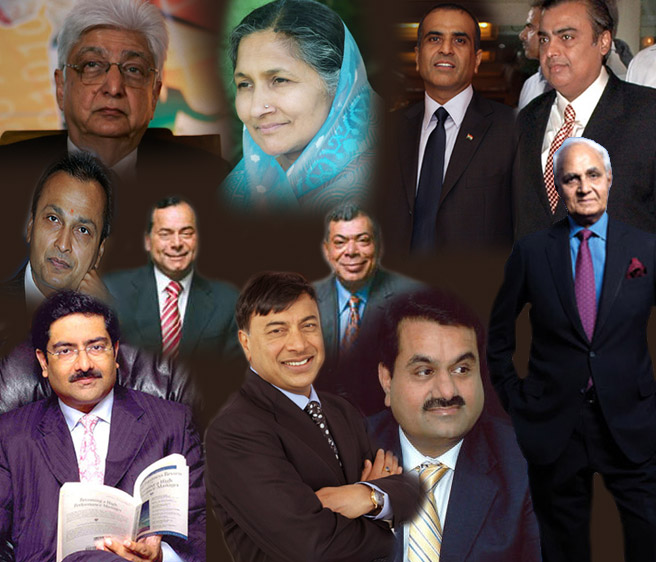
    India added 27 new billionaires and consolidated its position at number three on the list of billionaires, behind China and the United States, according to the Hurun Report 2016. India has 111 billionaires, compared to China’s 568 and the United States’ 535.

    The combined wealth of India’s billionaires went up 25 per cent to $308 billion (Rs 211 lakh crore) as compared to last year. Mukesh Ambani, India’s richest man, and Cyrus Poonawalla of Serum Institute added $6 billion and $4 billion to their wealth, respectively.

    The manufacturing, pharmaceuticals and technology sectors produced 22, 20 and 15 billionaires, respectively. Mumbai remained the headquarters of most Indian billionaires.

    “Despite its slowdown and falling stock markets, China minted more new billionaires than any other country in the world last year, mainly on the back of new listings. Growth in billionaires for the rest of the world was held back by a slowdown in the global economy, the strengthening of the US dollar and the drop in oil prices. The number of billionaires, however, has jumped 50 per cent since 2013,” Rupert Hoogewerf, chairman and chief researcher of Hurun Report, said.

    The richest Indians list did not throw up many surprises with Mukesh Ambani topping the list with a wealth of $26 billion, followed by Sun Pharma’s Dilip Shanghvi ($18 billion) and Pallonji Mistry ($13 billion) at number three. The data is till January 15.

    The Hurun Global Rich List 2016 ranked 2,188 billionaires from 68 countries, up 99 from last year, in another record-breaking year for the world’s billionaires. The total wealth increased by nine per cent to $7.3 trillion, more than the gross domestic product of Germany and the UK combined and close to half of the US.

    According to the list, 729 individuals saw their wealth decrease while 102 dropped out of last year’s list. Russian billionaires lost $130 billion, on the back of a further 19 per cent drop in the Russian Rouble and with lacklustre performance of mining, metals and energy. The average age of billionaires remained the same at 64 years, while 69 per cent were self-made. 31-year old Mark Zukerberg of Facebook was the youngest billionaire among the top 10.

  • Silicon Valley Wants ‘Dramatic Expansion’ Of H1-B Visa: Top American CEO

    Silicon Valley Wants ‘Dramatic Expansion’ Of H1-B Visa: Top American CEO

    WASHINGTON:  With IT firms struggling to find quality and right number of professionals, a top American CEO has called for a “dramatic expansion” of the H-1B visa scheme popular among Indian tech firms to meet the growing demand.

    “The entire Silicon Valley believes that the H-1B visa policy needs to be dramatically expanded,” Bill Coleman CEO of Veritas told news agency PTI in an interview.

    “We can’t hire enough good people. They are just not available here. The salaries here are going through the roof, because everybody is competing to hire from everybody else,” he said.

    Mr Coleman, a former chairman of Silicon Valley Leadership Group, is involved with the Silicon Valley for about 40 years.

    Early this month, he became the CEO of Veritas, which has re-emerged as a newly-independent company after its purchase by The Carlyle Group for USD 7.4 billion on January 29.

    Soon headed to India, where Veritas has about 1,700 people working for it with Pune being a major centre, Mr Coleman said he plans to migrate some of his facilities to India from Florida.

    “That is a priority,” he said. The H1B visa is designed to allow US employers to recruit and employ foreign professionals in speciality occupations within the US. But in a blow to Indian IT firms, the US has imposed an additional fee of up to USD 4,500 for certain categories of H-1B visa.

    Amidst revival of the US economy wherein the unemployment rate has hit below 5 per cent, Mr Coleman referred to the huge shortage of quality IT professionals the Silicon Valley faces.

    “In Silicon Valley you go to Apple, Facebook or Google, open their websites, you will find thousands of open jobs. One of the biggest problem here is that everybody is trying to hire from everybody else. As they can’t find enough good candidates what they are doing is pushing the salaries through the moon,” he said.

    Referring to a conversation he recently had with Alphabet chairman Eric Schmidt, Mr Coleman described a “crazy” incident when the hiring-salary of a data scientist skyrocketed.

    “I know this is a very very extreme example. I was talking to Eric Smith a while ago. He was telling me that they had a really really top machine learning data scientist who they were trying to recruit. They ended up getting him, but with a USD 10 million sign on bonus. That’s crazy,” he said.

    Mr Coleman said the number of H-1B visas should be based on market demand and the programme’s expansion is one of the top priorities for the Silicon Valley.

  • Indian American Teenager Found Dead in Texas Apparent Suicide

    Indian American Teenager Found Dead in Texas Apparent Suicide

    DALLAS (TIP): Ritu Sachdeva, 17, an Indian American teenager was found dead Jan. 31 in her Murphy, Texas home, on the same day a school friend’s body was found in nearby woods. Ritu died of an overdose of multiple medications, Murphy Police Chief Arthur Cotten told media. Sachdeva’s parents found her dead body in her bedroom and called police, said Cotten. Within several hours, the remains of Hillary Kate Kuizon, 17, were found by Murphy officers. Kuizon died by hanging in an apparent suicide, said Cotten.

    Both girls attended Plano East Senior High and knew each other, said the police chief, noting that investigators are still trying to determine if there is a connection between the two deaths. Sachdeva’s parents gave no indication as to what might have occurred before their daughter died, said Cotten, adding that police had not previously been called out to the home. Both deaths continue to be an open investigation, pending final reports from the medical examiner.

    No evidence of foul play has been detected in either case, said Cotten. “Our thoughts and prayers are with the two families,” said the police chief in a press statement. “We are treating these two cases with the care and compassion they deserve, and will continue to seek answers for the families.”

    Prachi Sachdeva, Ritu’s mother said she was not yet ready to talk about her daughter’s death. The family has set up a Facebook memorial page and will hold a memorial service for Ritu on Feb. 7, 2 p.m., at Charles W. Smith and Sons Funeral Home in Sachse, Texas.

    “Everyone loved Ritu so so so much,” Suchi Sachdeva, Ritu’s older sister, wrote on her Facebook page. “She was so bright, beautiful, quirky, and just all around amazing, inside and out. Gone too soon, only 17 years young.”

    “It’s going to be extremely difficult to move on from this tragic loss. Nothing is going to be the same; her birthday, holidays, going to restaurants, going on family vacations, etc. I’ll always be thinking of her when doing anything good,” said Suchi Sachdeva.

    Autumn Hinze, a friend of Sachdeva’s, has set up a $2,000 gofundme.com page called “Flowers for Ritu,” with the aim of filling Sachdeva’s home with flowers and aiding a suicide prevention organization. A sum of$1,926 had been raised in a single day.

    “Ritu Sachdeva changed all of our lives. Her bold, beautiful personality infiltrated our hearts and now we are all feeling her loss. I know I can’t process her being gone and I’m sure many feel the same,” said Hinze.

    “Even if you didn’t know her that well, you probably know how her personality could fill a room and how she could make a joke about anything. She was a vital member of every group she was ever in and it will take us a very long hard time to feel normal again,” she said.

    In 2014, Sachdeva won an honorable mention in the Medicine and Health sciences division for her entry at the Beal Bank Dallas Regional Science and Engineering Fair.

    Teen suicide is on the rise in the Asian American community. One out of every ten children struggles with mental health issues, reports the National Alliance on Mental Health, noting that Asian American teenage girls have the highest rates of suicide of any U.S. population. (IW, July 10, 2013)

    While there is a lack of data related to depression in the South Asian American community, a study released by the Asian and Pacific Islander American Health Forum reported that a higher percentage of South Asian Americans, especially between the ages of 15 to 24, tested positive for symptoms of depression. However, South Asian Americans are the lowest users of mental health services because of the perceived cultural stigma attached to mental health issues, noted the APIAHF report.

    (Source: Agencies)

  • Facebook’s ‘Free Basics’ gets Banned by Indian Government

    Facebook’s ‘Free Basics’ gets Banned by Indian Government

    SAN FRANCISCO — India’s government has essentially banned a Facebook program that sought to connect with low-income residents by offering free access to a limited version of the social network and other Internet services.

    The ruling is a major setback for Facebook CEO Mark Zuckerberg, who had lobbied hard for the program as part of a campaign to expand Internet access in developing countries. It’s a victory for critics who argued that Facebook’s “Free Basics” program gave an unfair advantage to some Internet services over others.

    Facebook has introduced “Free Basics” in partnership with wireless carriers in dozens of emerging nations, where the company hopes to get more people online. The service provides free access to a stripped-down version of Facebook and certain other Internet sites — including some that provide essential information like weather forecasts, health education and job listings.

    But the program has sparked debate in some countries, particularly India, where critics contend that “Free Basics” effectively steers users toward Facebook and its partners, while making it harder for other Internet services — including homegrown startups — to build their own audiences.

    In a much-awaited decision Feb. 8, Indian regulators said telecommunications providers may not charge different or “discriminatory” rates for delivering different kinds of Internet content.

    The ruling essentially bans programs like “Free Basics” that are based on what’s known as “zero rating” in industry jargon, because they don’t charge for downloading certain kinds of data. In a policy memo, Indian regulators warned that such programs raise the risk that users’ “knowledge and outlook would be shaped only by the information made available by those select offerings.”

    The regulators said their decision was guided by the principles of net neutrality, or the concept that all Web sites and apps should be treated equally by Internet access providers. Net neutrality advocates contend that charging different rates based on content is unfair both to consumers and to Internet services that are competing for consumers’ attention.

    U.S. regulators endorsed net neutrality in rules enacted last year, but those rules don’t specifically ban carriers from exempting some services from data limits. The Federal Communications Commission is now studying the zero-rating issue.

    Facebook said in a statement that it’s disappointed with the ruling but will continue its efforts to increase Internet access. “Our goal with Free Basics is to bring more people online with an open, non-exclusive and free platform,” the company said.

    Zuckerberg had campaigned hard for the program, making personal visits to India and publishing an open letter in at least one newspaper there. Facebook also responded to critics of “Free Basics” last year by creating a new platform for outside developers to contribute apps for the program.

    Facebook has about 130 million users in India. But like other U.S.-based Internet companies, it sees a huge opportunity to expand by reaching the estimated 1 billion Indians who don’t have Internet access.

    “Free Basics” is part of a broader effort, dubbed Internet.org, in which Facebook has also tried to work with phone-makers on designs that reduce data usage and extend battery life. In addition, the company is working on long-range projects to develop drones and satellites that deliver Internet service to remote areas.

    While Zuckerberg has acknowledged Facebook’s business would benefit from gaining more users around the world, he’s also argued that Internet access is a powerful tool for economic development in low-income regions.

    “Connecting India is an important goal we won’t give up on, because more than a billion people in India don’t have access to the internet,” Zuckerberg wrote Feb. 8 in a post on Facebook. “We know that connecting them can help lift people out of poverty, create millions of jobs and spread education opportunities. We care about these people, and that’s why we’re so committed to connecting them.”

    ___

    AP

  • On Independence Day, Lanka lifts unofficial ban on Tamil national anthem

    On Independence Day, Lanka lifts unofficial ban on Tamil national anthem

    COLOMBO (TIP): Lifting an unofficial ban, Sri Lanka’s national anthem was on Thursday sung in Tamil at a ceremony here to mark the the country’s independence day, in an effort to achieve reconciliation with the ethnic minority community.

    School children rendered the Sinhala and Tamil versions of the national anthem at a celebration to mark the 68th anniversary of Sri Lanka’s independence from Britain. The move, despite opposition from some quarters, is being seen as an effort by the government to reach out to the Tamil minority after the nearly 26-year war with the Liberation Tigers of Tamil Eelam (LTTE) that ended in 2009. About 100,000 people were killed during the civil war.

    “A new journey begins by reinstating the singing of the national anthem in Tamil,” said deputy minister for public enterprise development Eran Wickramaratne.

    Deputy foreign minister Harsha de Silva in a Facebook post said: “A first in my lifetime. After many years the Independence Day celebrations came to a close with the national anthem sung in Tamil.” President Maithripala Sirisena since becoming President in 2015 has begun several actions to win back the Tamils in the reconciliation process.

  • Jihadis kill activist for anti-IS posts on social media

    Jihadis kill activist for anti-IS posts on social media

    ISTANBUL (TIP): Islamic State (IS) jihadis hijacked the Facebook account of a captured female activist in Raqqa in a bid to lure other opponents into a trap, according to a member of Syria’s most prominent anti-IS resistance group.

    It has emerged that Ruqia Hassan Mohammed, a vocal IS opponent with a dry sense of humour, was killed by the jihadis three months ago in punishment for her outspoken social media posts. But they continued to operate her social media accounts until very recently.

    She is thought to have been detained in Raqqa, IS’s de facto capital, in July and killed some time in September. A citizen journalist from the group Raqqa is Being Silently Slaughtered, which works to document and publicise life under IS, said that, since then, IS has accessed her social media profile and used it in an attempt to flush out other critics.

    “Her Facebook account remained open in order to entrap friends who communicated with her,” said the activist, who uses the pseudonym Tim Ramadan to hide his real identity.

    He said that, about a week ago, IS was still using her account to send messages to other users claiming that she was alive. The claim was echoed by the Arabic language site al-Aan. (AP)

  • UNT student dies after being shot in the head in suspected road rage incident

    UNT student dies after being shot in the head in suspected road rage incident

    DALLAS (TIP): A 20-year-old University of North Texas junior died Friday, January 1 night after she was shot in what police suspect was a road rage incident.

    Denton officers found Sara Mutschlechner about 2 a.m. near a car that had smashed into a utility pole in the 1700 block of North Elm Street by Texas Woman’s University.

    Witnesses reported that she was shot in the head after a dark-colored or black Toyota or Lexus SUV carrying five or six men drove up next to her car.

    People in the SUV exchanged words with the passengers in Mutschlechner’s vehicle, police said. As the two vehicles crossed University Drive, someone in the SUV fired multiple shots at her car.

    Mutschlechner’s car struck another vehicle before crashing into the pole.

    Witnesses said she had been a designated driver for her companions on New Year’s Eve and had not been drinking.

    One of her four passengers sustained minor injuries and was treated and released from Denton Regional Medical Center.

    Mutschlechner also was taken to the medical center, where she remained on life support for most of Friday before she died, police said.

    The junior from Martindale studied radio, television and film at UNT, according to her Linkedin profile.

    “Growing up I was entranced by the beauty of cinema and as an avid movie-goer I one day decided that this — this beautiful thing I so enjoyed watching — was what I wanted to dedicate my life to,” she wrote. “I want to inspire change just as much as I want to inspire future filmmakers, like myself, to continue creating beautiful and original works of art.”

    Jordan Wright, president of the Short Film Club, said she attended classes with Mutschlechner.

    “Sara was a very sweet person, always friendly, and talented in the Media Arts program and Short Film Club organization on campus,” Wright said in an email Friday. “Nobody could have been prepared for what happened early this morning … we are all still having trouble registering the events that have taken place so rapidly and tragically.”

    According to Mutschlechner’s Facebook page, she was also a member of the Zeta Tau Alpha sorority.

    Thank you so much to everyone in our community for your support during this time. Our thoughts and prayers are with Sara and her family ❤️ — North Texas ZTA (@unt_zta) January 1, 2016

    “Thank you so much to everyone in our community for your support during this time,” a message posted to the sorority’s Twitter page said Friday. “Our thoughts and prayers are with Sara and her family.”

    Mutschlechner’s family could not be reached for comment Friday.

    UNT spokeswoman Margarita Venegas expressed condolences to Mutschlechner’s family and friends.

    “It’s a very sad for thing for us whenever we lose a member of the university community,” she said.
    A candlelight vigil will be at 8 p.m. Saturday at the university’s Greek Life Center, according to the Student Government Association.

    Police provided no physical description of the men in the SUV except that they were black, but witnesses told police that at least two of them had been at a New Year’s Eve party on Crisoforo Drive overnight.

    The DJ at the party, Denis McInerny, said he saw no fights or other disturbances at the party, though there might have been a scuffle outside.

    “The whole shooting thing caught me off-guard judging by the crowd that was there,” he said. “I didn’t think the events were related in any way.”

    Police said about 60 people attended the New Year’s Eve party.

    Anyone who attended the party or has information about the case may call investigator Eric Beckwith at 940-349-7974 or eric.beckwith@cityofdenton.com. Police also are looking for anyone who may have pictures or videos from the party.

    (Source: Dallas Morning News)

  • NESTLE EYES DOUBLE DIGIT GROWTH FOR MAGGI NOODLES

    NESTLE EYES DOUBLE DIGIT GROWTH FOR MAGGI NOODLES

    BAI: In the aftermath of the Maggi crisis, Nestle India is aggressively trying to increase the consumption of its flagship instant noodles brand eying double digit growth, a top company executive said.

    It is also sharpening focus on digital media and pushing other products so that all categories contribute almost equally to the company’s overall revenue.

    “Results for the last two quarters of 2015 have been impacted by the Maggi Noodles issue. However, we are committed towards double digit (growth) that is triggered by actual volume consumption increase,” Suresh Narayanan, chairman and managing director, Nestle India told PTI.

    The Swiss major had taken a hit of Rs 450 crore including destroying over 30,000 tonnes of the instant noodles since June when it was banned because of alleged excessive lead content.

    Maggi, which was relaunched in November after a 5-month ban, is currently available in over 700 towns and sold by 3 lakh small and large shopkeepers, the company said.

    “We are investing significantly in the re-launch, and we will be ensuring that the consumer is aware that Maggi Noodles are safe to consume,” Narayanan said.

    The company is now simultaneously pushing growth in other categories such as milk products and chocolates, along with the relaunch of Maggi.

    “We want to grow our business so that each category and brand contributes in more or less equal measure to the overall revenues of the firm. We are aggressively pushing growth in other categories such as milk products and chocolates,” he said.

    The company is engaging actively in social media, and is building a strong digital presence to strengthen the Maggi brand. Along with TV and print campaigns the company is engaging with customers via Facebook and Twitter.

    “Digital and social media is central to our brand-building process. We believe that big things happen for brands when these two are in synergy,” he said.

    The company is leveraging all the sales channels and had tied up with e-commerce player Snapdeal to push online pre-orders, which saw an offtake of 60,000 units in the first five minutes.

    Nestle India sold 3.3 crore units of Maggi in the first 10 days of its relaunch.

    The company has a digital acceleration team, which was responsible for the ‘We Miss You Too’ Maggi campaign and has also set up 24×7 toll-free consumer services in order to address consumer concerns.

    “For us, the concept is not just digital media, but of competing in a digitally-connected age,” he said.

  • Do Muslims and Christians worship the same god? College suspends professor who said yes.

    Do Muslims and Christians worship the same god? College suspends professor who said yes.

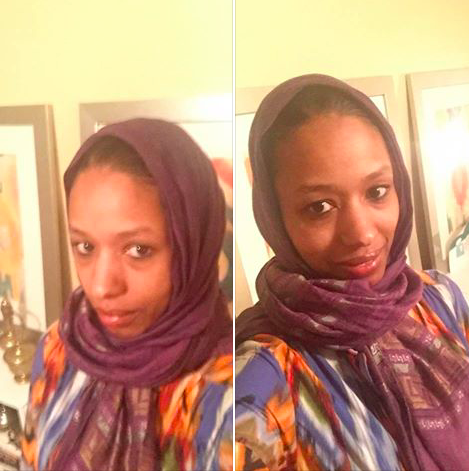
    Wheaton College, a prominent evangelical school in Illinois, has placed a professor on administrative leave after she posted on Facebook that Muslims and Christians “worship the same God.”

    The official school statement about associate professor of political science Larycia Hawkins’s suspension said Wheaton professors should “engage in and speak about public issues in ways that faithfully represent the College’s evangelical Statement of Faith.”

    Following a protest and sit-in of about 100 people on campus, President Philip Ryken and later Provost Stanton Jones said they would not be lifting the suspension. It wasn’t clear how long Hawkins was suspended for, but some of the student leaders who had been involved in talks with administrators said it was through the spring semester.

    The school’s communications office on Dec 16 declined to comment to The Washington Post.

    Protesters chanted “Reinstate Doc Hawk,” “We love Wheaton!” and some evangelical women wore hijabs in solidarity.

    In her Dec. 10 Facebook post, Hawkins was also wearing a hijab, explaining she planned to do so through the entire Christian season of Advent to show “human solidarity” with Muslims. She didn’t state why in her piece and did not return requests for comment to The Post, but this fall has seen anti-Islam rhetoric rise sharply in the public square, including by GOP presidential candidates. Hundreds of people liked her post and more praised her intensely in comments.

    “I stand in human solidarity with my Muslim neighbor because we are formed of the same primordial clay, descendants of the same cradle of humankind,” she wrote. “I stand in religious solidarity with Muslims because they, like me, a Christian, are people of the book … But as I tell my students, theoretical solidarity is not solidarity at all. Thus, beginning tonight, my solidarity has become embodied solidarity.”

    She linked to a Christianity Today interview with Yale theologian Miroslav Volf on the topic. In the piece, Volf said that “all Christians don’t worship the same God, and all Muslims don’t worship the same God. But I think that Muslims and Christians who embrace the normative traditions of their faith refer to the same object, to the same Being, when they pray, when they worship, when they talk about God. The reference is the same. The description of God is partly different.”

    About 40 students had drafted a letter asking Ryken to reconsider the suspension.

    The letter quotes a coalition of concerned students and alumni. “We believe that there is nothing in Larycia Hawkins’ public statements that goes against the belief in the power of God, Christ, or the Holy Spirit that the Statement of Faith deems as a necessary component to Wheaton’s affiliation,” it reads. It had asked that she be reinstated.

    Hawkins, according to students at the meeting, is the only tenured black female professor at Wheaton.

    A Wheaton staff member who spoke on the condition of anonymity said the suspension “sets a precedent for what professors can post on their Facebook page. If Dr. Hawkins is being used as a scapegoat, that will send a message to those of us who are employed full time.”

    The suspension took place less than a week after Wheaton College student leaders published an open letter in their student newspaper denouncing recent controversial comments by Liberty University President Jerry Falwell. Speaking to thousands of students about terrorism, Falwell urged them to arm themselves, saying it would “end … those Muslims.” He later said he meant only violent radicals.

    The Wheaton administration later issued a statement praising that open letter, saying school leaders agree with students’ effort to “address our nation’s challenges through respecting the dignity of all people, rejecting religious discrimination, and pursuing the peace that triumphs over hostility.”

    Screen Shot 2015-12-30 at 4.12.01 PM


  • Racism Hits a New Low | 12-Year-Old Sikh Boy Arrested in a Joke

    Racism Hits a New Low | 12-Year-Old Sikh Boy Arrested in a Joke

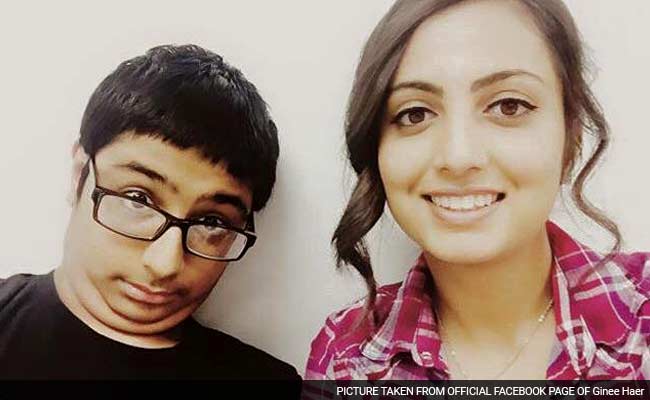
    “A bully in class thought it would be funny to accuse him (Armaan Singh Sarai) of having a bomb, and so the principal, without any questioning, interrogation, or notification to his parents, called the police,” Armaan Sarai’s cousin Ginee Haer wrote on Facebook (post below).

    Armaan Singh Sarai, a student at Nichols Junior High School in Arlington with a heart condition, was arrested and jailed for three days based on a bully’s accusation that he had a bomb in his backpack. Nichols principal Julie Harcrow immediately called police, who searched Armaan’s backpack and determined there was no bomb. Despite that fact, Armaan was detained for three days at a juvenile detention facility. Neither police nor the school informed Armaan’s parents where he was being held.

    Armaan’s parents got worried about him last Friday when he did not return from school. They approached police in the area and came to know that he was sent to a juvenile facility, she said.

    However, according to the Arlington police, Armaan told his bully that he had a bomb in his backpack, which police say he later admitted to falsely claiming.

    “People have got to learn they cannot make these types of threats which cause alarm, which cause evacuations,” Arlington Police Department spokesman Lt. Christopher Cook told the Dallas Morning News. “Just because you say it’s a joke, it doesn’t get you out of trouble.”

    He was released on Monday, Ms Haer wrote in the post shared by thousands of people.

    “Armaan was born and raised in Texas by a loving Sikh family. In his spare time, he loves spending time with his family, watching tv, and playing video games,” the post read.

    “In his family are his mom, dad, two sisters and a brother who love him more than life, after all he’s the baby in the family,” said the post.

    “His family moved to Dallas, Texas about three to four months ago, and being the new kid wasn’t that easy for him. It made it especially hard since he is not able to get out much, due to a heart condition he was born with,” Armaan’s cousin wrote.

    He cannot do a lot of extra-curricular activities. But his love for family and friends has always been enough to keep his heart filled. They would describe him really funny, nice, and a caring human being, she informed.

    This goofball on the left in this picture is my 12 year old cousin, Armaan Singh Sarai. He was born and raised in Texas...

    Posted by Ginee Haer on Tuesday, December 15, 2015

  • ASIA’S BLEEDING HEART

    ASIA’S BLEEDING HEART

    The Heart of Asia Conference (HOAC) in Islamabad last week was bookended by two devastating attacks in Kandahar and Kabul. As Afghan President Ashraf Ghani was being honoured with a 21-gun salute in Islamabad, the Taliban were in the midst of a 20-hour-long assault on Kandahar airport that killed at least 54. And before the ink dried on the HOAC pledges, the Taliban penetrated the relatively secure diplomatic enclave in Kabul in a brazen attack on the Spanish embassy in which eight people died. The Afghan High Peace Council called it a slap in the face of the peace process. The Taliban is clearly sticking to the fight-talk-fight strategy even in winter. That the Taliban chose a key peace conference to shed blood is the jihadist group’s way of painting the Afghan government as weak and it’s the harbinger of yet another bloody spring and summer.

    The HOAC has been underway since 2011, but has not been able to evolve into a tangible mechanism to deliver peace. Ghani’s speech alluded to this shortcoming and called for verifiable mechanisms to counter the jihadist threat. He was careful in choosing his words in Islamabad, but not when giving interviews to the German and French media earlier, when he clearly said, “Pakistan was in a state of undeclared war against Afghanistan” and “a major trust deficit” exists between the two. Whether one conference can bridge that mistrust seems unlikely, Ghani’s optimism notwithstanding.

    Afghan officials attribute the HOAC’s “success” to several factors: One, Pakistani PM Nawaz Sharif acknowledging Afghanistan’s sovereignty, its central government and constitution; two, the US and China acting as guarantors for the peace negotiations with the “reconcilable” Taliban and opposing the irreconcilable ones; three, the commitment to a high-level meeting in early 2016 to draw a region-wide counter-terrorism and security strategy.

    To Afghan officials, the litmus test of Pakistan’s seriousness and sincerity would be whether it’s willing to restrain the Taliban from conducting largescale attacks. Kandahar and Kabul appear to have already betrayed the newfound Afghan trust in the capacity, if not the will, of the Pakistani security establishment. The chief of the Afghan National Security Directorate (NDS), General Rahmatullah Nabil, took to Facebook to post a scathing critique of not just Pakistan but also Ghani, chiding the latter for letting “the 5,000-year-old Afghan history kneel before a 60-year-old Pakistan”. Nabil followed this with a resignation. Needless to say, Ghani accepted it promptly. This led to the media asking if he was fired at Pakistan’s behest. A visibly upset Ghani formally denied the charge but the die has been cast.

    The Afghan media then reported Ghani conceded way too much in Islamabad. A leaked report was cited that Pakistan has apparently demanded that Ghani act against the Tehrik-e-Taliban Pakistan, restrain “anti-Pakistan rhetoric and individuals”, accept the Durand Line as the formal border, limit Indian influence, and deny support to Baloch separatists and Pashtun nationalists. This litany of Pakistani demands means we are back at square one in the bilateral relationship. Islamabad’s demands have put the onus of securing peace wholly on Kabul.

    That fits well with the pattern of Pakistan’s peace pledges to Afghanistan, which start before the first snow and melt away with the first thaw, making way for the Taliban’s attacks. Pakistan has never been keen on a political solution. The closest it came to a political partner was the fundamentalist warlord Gulbuddin Hekmatyar. What’s at stake isn’t just military gains but also the future of Ghani’s government. He is bound to face a backlash when Pakistan reneges on its pledges. The opposition is wary of Ghani putting all his eggs in Pakistan’s basket again. His attempt in May to have the NDS surreptitiously sign an MoU with the ISI had backfired badly.

    The difference now is that Ghani has almost no political capital to squander. The November protests in Kabul, after the Islamic State’s massacre of Hazaras, showed Ghani is on thin ice. This is not lost on Pakistan and the Pakistan-backed Taliban, who would love to plunge Kabul into political chaos at a time of their choosing. International guarantors can certainly play a major role. But they and the principles of non-interference were hallmarks of the May 1988 Pak-Afghan Geneva Accords. Yet, Afghanistan has been the bleeding heart of Asia since.

  • Indian American Senior Executive At Twitter To Quit

    Indian American Senior Executive At Twitter To Quit

    NEW YORK: Baljeet Singh, Twitter’s product lead in charge of video, will quit the company early next month, a media report said quoting a Twitter spokesperson.

    Mr Singh, who works as a senior product director, joined Twitter two years ago after working with video sharing platform YouTube for more than five years, Re/code tech website reported on Wednesday.

    Mr Singh will be the latest product leader to leave Twitter after Glenn Brown, an ad executive who was handling Twitter’s video ad push and left the company in October.

    Twitter has recently been jolted by the departure of several top executives over the past six months, highlighted by the departure of three key product executives in June.

    Video has been an important tool in the social media realm. Facebook and Snapchat are building their businesses around video.

    Many content creators go to YouTube and Facebook to share their work.

  • Now an app from ISIS to promote terror

    Now an app from ISIS to promote terror

    In the past, extremist groups have used tools and forums which were available: Rallies, pamphleteering, and marching in parades were the primary means used for recruitment and spreading their message.

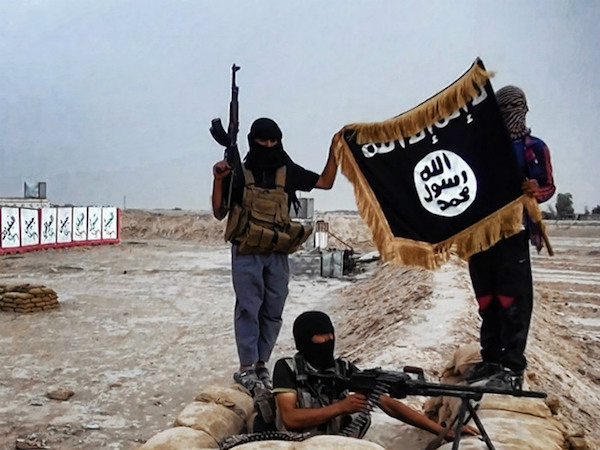
    Now, the Islamic State (IS a.k.a ISIS or ISIL) terrorist group has reportedly launched an android app that features news and videos showing executions and battlefield victories and propagates its agenda, the media reported.

    Discovered by the hacking collective Ghost security group, the app called “Amaq News” is designed to “streamline access” to the terrorist group’s “propaganda”.

    According to a Fortune report, the Android-based app is essentially a news portal run by the Amaq News Agency — a group believed to be tied to IS.

    When users start the app, it displays a scrolling news feed and icons to play videos. It also has options for users to have the feed automatically check for new posts.

    “It can even be automatically updated whenever the app’s developers send out new versions of the programme,” the report added.

    The app, however, may not work in regions outside the IS control.

    According to Ghost security group, the app is not available as a download in a marketplace like Google Play store.

    Instead, a link to the download is shared between IS members through Telegram app and other encrypted communication methods.

    Telegram is an app that can be set up on almost any device and allows messages to be sent to users with utmost privacy.

    Users can then download “Amaq News” in an Android device, the report said.

    IS has also created its own social network for jihadists called “Kilafahbook” to get around social media bans by Twitter, Facebook and YouTube.

    For IS, social media is prominent in formulating recruitment strategies.

    According to theconversation.com, Facebook is a key platform to gather young fans, supporters and recruits to incite them to acts of violence by the means of propaganda and the use of Islamic grievance.

    When it comes to real-time orchestrating of terror strikes, IS network works with encrypted messaging applications — including Kik, Surespot, Wickr and Telegram — that are very difficult to hack.

    Ghost security group is a hacking collective similar to Anonymous that focuses solely upon counter-terrorism.
    It claims to have “terminated over 100,000 extremist social media accounts” used by militant groups to recruit members.
    Earlier, Hacker group Anonymous declared December 11 as “International IS Trolling Day” to poke fun at IS militants, using memes and cartoons.

    Members of the hacking group also posted images on social media mocking the IS.

  • East Texas town’s police chief, others urge citizens to arm themselves

    East Texas town’s police chief, others urge citizens to arm themselves

    HUGHES SPRINGS, TX (TIP): A Texas police chief who warns President Barack Obama in a social media video that trying to disarm Americans would “cause a revolution in this country” is the latest law enforcement official to urge citizens to arm themselves in the wake of mass shootings.

    Randy Kennedy, longtime chief in the small East Texas town of Hughes Springs, about 120 miles east of Dallas, says in the video posted this week on his personal Facebook page that the Second Amendment was established to protect people from criminals and “terrorists and radical ideology.”

    “It’s also there to protect us against a government that has overreached its power,” Kennedy says in the video. “You are not our potentate, sir. You are our servant.”

    He warned people in his town to prepare themselves: “Be ready when the wolf comes to the door, because it’s on its way.” Law enforcement officials in Arizona, Florida and New York also have recently prompted citizens to arm themselves – some using similar comments aimed at terrorism. Kennedy said his call to arms was the result of his disappointment with Obama’s Oval Office speech Sunday in which the president vowed the U.S. will overcome a new phase of the terror threat that seeks to “poison the minds” of people here and around the world. The police chief told The Associated Press on Wednesday that he’s not asking residents to turn into vigilantes or “become super action heroes.”

    He said feedback on his video has been supportive for the most part. “There have been a few extremely nasty comments, calling me basically a backwoods redneck hick creating monsters that don’t exist,” he said.

    Wayne Ivey, the sheriff in Brevard County, Florida, said in a video post on the department’s Facebook page over the weekend that political leaders appear more interested in being politically correct than protecting people. He urged residents to arm themselves as a first line of defense against an active shooter.

    “The only thing that stops a bad guy with a gun is a good guy with a gun,” Ivey said.

    Another Florida sheriff, Steve Whidden in Hendry County, this week encouraged more people to carry weapons because “we as a nation are under attack by radical Islamic terrorists.”

    Maricopa County Sheriff Joe Arpaio in Arizona issued a statement Tuesday asking “legally armed citizens to take a stand, and take action during a mass shooting/terrorist event until law enforcement arrives.”

    And last week, Ulster County Sheriff Paul Van Blarcum in upstate New York called for licensed gun owners in his county to arm themselves when leaving home, citing mass shootings in Paris and San Bernardino, Calif.

    John Moritz, spokesman for the Combined Law Enforcement Associations of Texas, said he assumes the comments from Kennedy, the Texas chief, reflect the views held in his community. But Moritz said caution should be used when giving such instructions to people who have no law enforcement training.

    “Most times citizens are going to be best served and best protected by calling trained law enforcement officers whenever they feel their lives or property are in danger,” Moritz said.

    The FBI said last week that it processed a record number of firearms background checks on Black Friday, the busy shopping time the day after Thanksgiving. The agency processed 185,345 background checks – roughly two per second – the same day that three people were killed and nine others wounded in an attack at a Planned Parenthood office in Colorado.

    The previous record for the most background checks in a single day was Dec. 21, 2012, about a week after 20 children and six adults were shot to death in a Connecticut elementary school. The week following the massacre at Sandy Hook Elementary saw the processing of 953,613 gun background checks.

  • 2nd South Asian film fest kicks off in Dallas (DFW)

    2nd South Asian film fest kicks off in Dallas (DFW)

    DALLAS, TX (TIP): The 2nd annual DFW South Asian Film Festival kicks off its programming
    from February 19th to 21st, 2016, at locations in downtown Dallas and Plano. The opening night film, Miss India America, will screen on Friday, Feb. 19th at the Hoglund Foundation Theater of the Perot Museum of Nature and Science, followed by a red carpet and cocktail reception at the T. Boone Pickens Life Then and Now Hall (4th floor of the Perot Museum). The rest of the specially-curated line-up will be showcased at the Angelika Film Center in Plano (Shops at Legacy) on Feb. 20th and 21st, followed by panel discussions with attending filmmakers, after-parties and networking events, all taking place in Plano.

    JINGO Media, a Dallas and NYC-based, public relations and events management boutique firm, produces the annual festival of South Asian independent cinema in North Texas. The second iteration of the festival boasts more than a dozen curated shorts, documentaries and feature films that focus on issues affecting the South Asian (India, Pakistan, Nepal, Bangladesh and Sri Lanka) sub-continent, as well as explore the lives and stories of the South Asian Diaspora in the United States.

    “In our second year, we are stepping up our game,” said JINGO Media Principal/CEO Jitin Hingorani. “Our team of curators has spent the year traveling to other South Asian film festivals around the world, including Toronto, New York, Chicago, Los Angeles and Goa, India, to secure the most meaningful and relevant programming for North Texas audiences. We are certain that our community will leave these films entertained, elated and educated.”

    The festival’s opening night film is the Texas premiere of wife/husband creative team Meera Simhan (actor/co-writer) and Ravi Kapoor’s (director/co-writer) award-winning, cross-cultural comedy Miss India America. Set against the backdrop of the Indian beauty pageant world in Los Angeles, the film stars Texas native Tiya Sircar and Hannah Simone (of television series New Girl fame), along with a supporting cast of talented South Asian actors. Produced by Megha Kadakia and Saurabh Kikani, the film “establishes an authentic tone that pays respect to Indian cultural norms, while poking gentle fun at these traditions,” raves The Hollywood Reporter.

    In addition to the opening night, centerpiece and closing night films, the festival will also showcase thought-provoking, edgy shorts and docs, along with women’s programming, men’s programming, LGBT programming and family programming. “All-access” festival passes, which provide admission to all of the films, networking events and after parties, are currently available on www.dfwsaff.com for the early-bird price of $125 before January 15th, after which the price increases to $150. Individual screenings are $15 per person, but limited tickets will be available at the theater. Every week starting in December, ONE film from the line-up will be revealed on the festival’s Facebook page and the entire festival lineup will be available by mid-January on the festival’s web site.

  • Pakistan trained students to use social media for JuD, LeT Terror propaganda

    Pakistan trained students to use social media for JuD, LeT Terror propaganda

    WASHINGTON (TIP): Students of an elite military-run university in Pakistan have been trained to use social media sites in support of banned terrorist groups like LeT and JuD which have been protected and supported by the ISI, according to US national security sources.

    Less than a week after the US visit of Pakistan’s army chief General Raheel Sharif who met top officials of the Obama administration including Vice President Joe Biden, sources in the national security establishment here said they have fresh evidence of the ISI training people to engage in a social media war on behalf of these banned terror groups on Facebook and Twitter.

    Speaking on condition of anonymity, the sources shared a recently prepared document which provides such a link between the Pakistani establishment and those indulging in propaganda on social media for terror organizations like Lashkar-e-Tayaba (LeT) and its wing Jamaat-ud-Dawa (JuD).

    The document was prepared based on publicly available sources on the Internet.

    For instance, Malik Salman Javed, director of the recently formed Stratagem magazine is a graduate of the National Defence University’s (NDU) national security workshop.

    Javed, who on his website writes that he is a NDU-Pakistan alumni, has been posting pro-JuD content on Twitter for the past several years.

    “In addition to PKKH (Pakistan Ka Khuda Hafiz), Fortress and NDU, there is strong circumstantial evidence that at least some Stratagem members have a strong affinity for, if not direct membership in Jamaat-ud-Dawa (JuD),” according to the US dossier, a part of which was seen by PTI.

    Notably PKKH, a strategic policy institute, has a history of collaboration with JuD since at least 2010 when PKKH launched “Mere Log” – a disaster relief operation to provide food and shelter to victims of that year’s deadly floods.

    “Mere Log” was conducted under the supervision of JuD and the Pakistan Army, the brief report said.

    In the first issue of Stratagem magazine, author M Zainulbedin Ameer used JuD’s Maulana Hamza as an example of people working to protect Islam.

    The dossier said that Ameer’s Facebook page also regularly features JuD propaganda that suggests he has a close affinity if not membership of the group.

    Now in existence for more than six months, Stratagem contents confirm to a right-wing Pakistani national ideology based in certain fundamental premises that “democracy is a failure” in Pakistan, India is “determined” to destroy Pakistan, its military is both faultless and invincible and that Pakistan and Islam are under attack from internal as well as external forces, the dossier said.

  • 4 Persons of Indian Origin Named in Foreign Policy Magazine’s List of 100 Leading Global Thinkers

    4 Persons of Indian Origin Named in Foreign Policy Magazine’s List of 100 Leading Global Thinkers

    WASHINGTON (TIP): Four persons of Indian origin are featured in Foreign Policy magazine’s list of 100 Leading Global Thinkers who have generated ideas that could promise humankind a better future.

    Featured among ‘Innovators’ whose work has advanced “progress in global health, human rights, security, and more” is Nina Tandon, co-founder of Epibone, New York City, “For healing broken bones by growing new ones.”

    Typically, to reconstruct bone, surgeons must take bone either from somewhere else in a patient’s body, necessitating a double surgery, or from an outside source, such as a prosthesis or a donor.

    But Nina Tandon has created a third way: Growing new bones. A patient’s stem cells are placed in a bone-shaped mold, which is then put into a special chamber that simulates the body’s temperature, nutrient composition, and other conditions.

    After three weeks, the cells have essentially formed a new bone. This method requires only one surgery and avoids implanting foreign materials, thereby reducing pain and complications, Foreign Policy noted.

    EpiBone has successfully replaced the jaw of a pig and is gearing up to start its first clinical trials, to be held within two years.

    Among the ‘Moguls’ who have “showed that progress is possible, whether in corner offices or on factory floors” are Rajan Anandan, managing director of Google, Southeast Asia and India, and Ayesha Khanna, founder of the Civic Accelerator, an investment fund for socially conscious enterprises.

    While Sri Lanka-born Rajan Anandan is included “For lobbying on behalf of the unconnected”, Ayesha Khanna gets in “For nudging women into the corner office”.

    Mr Anandan “has used his stewardship of Google in India to greatly improve tech access for the poor by successfully lobbying Indian manufacturers to launch low-cost phones, pushing carriers to bring down the prices of data plans, and increasing the translation of Google products into many Indian languages.”

    “Beyond that, he’s also one of the country’s most active tech investors: Between January 2014 and June 2015, he was the most prolific, according to Quartz, investing in 15 start-ups.”

    “Anandan’s work simply proves that good business doesn’t have to be at odds with good citizenry,” FP said.

    In November 2014, Ayesha Khanna and Shannon Schuyler, head of corporate responsibility at PricewaterhouseCoopers (PwC), pooled resources to help women gain access to capital.

    This spring, with PwC funding, Civic Accelerator’s cohort of 13 US start-ups -all of which had at least one female founder, and 11 of which were started entirely by women – participated in a 10-week boot camp to test ideas and connect with investors.

    Ayesha Khanna and Shannon Schuyler have pledged that at least half of future Accelerator-supported ventures will be owned by women.

    Featured among ‘Challengers’ who have “proved that even sacred cows can be toppled” is India-born Zainab Ghadiyali “For cracking the STEM ceiling.”

    In Menlo Park, California, Ghadiyali and Erin Summers, both engineers at Facebook, are running “wogrammers,” a movement to end the “brogrammer” stereotype and highlight the technical accomplishments of their peers.

    In its first year, wogrammers highlighted 50 female engineers from around the globe.

  • Pakistan trained students to use social media for JuD, LeT Terror propaganda

    Pakistan trained students to use social media for JuD, LeT Terror propaganda

    WASHINGTON: Students of an elite military-run university in Pakistan have been trained to use social media sites in support of banned terrorist groups like LeT and JuD which have been protected and supported by the ISI, according to US national security sources.

    Less than a week after the US visit of Pakistan’s army chief General Raheel Sharif who met top officials of the Obama administration including Vice President Joe Biden, sources in the national security establishment here said they have fresh evidence of the ISI training people to engage in a social media war on behalf of these banned terror groups on Facebook and Twitter.

    Speaking on condition of anonymity, the sources shared a recently prepared document which provides such a link between the Pakistani establishment and those indulging in propaganda on social media for terror organisations like Lashkar-e-Tayaba (LeT) and its wing Jamaat-ud-Dawa (JuD).

    The document was prepared based on publicly available sources on the Internet.

    For instance, Malik Salman Javed, director of the recently formed Stratagem magazine is a graduate of the National Defence University’s (NDU) national security workshop.

    Javed, who on his website writes that he is a NDU-Pakistan alumni, has been posting pro-JuD content on Twitter for the past several years.

    “In addition to PKKH (Pakistan Ka Khuda Hafiz), Fortress and NDU, there is strong circumstantial evidence that at least some Stratagem members have a strong affinity for if not direct membership in Jamaat-ud-Dawa (JuD),” according to the US dossier, a part of which was seen by PTI.

    Notably PKKH, a strategic policy institute, has a history of collaboration with JuD since at least 2010 when PKKH launched “Mere Log” – a disaster relief operation to provide food and shelter to victims of that year’s deadly floods.

    “Mere Log” was conducted under the supervision of JuD and the Pakistan Army, the brief report said.

    In the first issue of Stratagem magazine, author M Zainulbedin Ameer used JuD’s Maulana Hamza as an example of people working to protect Islam.

    The dossier said that Ameer’s Facebook page also regularly features JuD propaganda that suggests he has a close affinity if not membership of the group.

    Now in existence for more than six months, Stratagem contents confirm to a right-wing Pakistani national ideology based in certain fundamental premises that “democracy is a failure” in Pakistan, India is “determined” to destroy Pakistan, its military is both faultless and invincible and that Pakistan and Islam are under attack from internal as well as external forces, the dossier said.

    Source: PTI

  • Indian American Group Express Support to Journalist VP Rajeena

    Indian American Group Express Support to Journalist VP Rajeena

    WASHINGTON: An Indian-American Muslim group has called for an internal but independent and transparent assessment by community leaders in India into claims by woman journalist VP Rajeena who recently described instances of alleged sexual abuse of children in a Madrasa.

    Ms Rajeena, who works for a Malayalam newspaper, posted on Facebook about her childhood experiences at a Madrasa, where an “ustad” (teacher) allegedly engaged in alleged sexual exploitation of children.

    “We support Rajeena’s right not only to speak up about past abuse but also warn the community about the potential for such abuse, that would victimize innocent children,” Umar Malick, president of Indian American Muslim Council (IAMC).

    In a statement, IAMC called for an internal but independent and transparent assessment by credible community leaders, leading up to an investigation by law enforcement in all instances where there are grounds to believe the law has been violated.

    “Unfortunately, instead of taking the journalist’s revelations with the seriousness they deserve, many Muslims questioned her motives or launched a harassment campaign online including threats and hateful remarks,” IAMC said.

  • Indian-American Anita Datar Killed in Mali Terrorist Attack

    Indian-American Anita Datar Killed in Mali Terrorist Attack

    WASHINGTON:  An Indian-American woman is among at least 27 people killed during a deadly siege of a Mali hotel by Islamic extremists.

    Anita Ashok Datar, 41, is the sole US citizen to have been killed in the attack yesterday, State Department Spokesman John Kirby said.

    “We mourn American Anita Datar and all those lost in Mali Attacks,” US Secretary of State John Kerry said in a tweet yesterday.

    “We extend condolences to family & friends and stand with the Malian people,” he said.

    In a statement released through the US State Department, Ms Datar’s family said that they are devastated by the news.

    “We are devastated that Anita is gone-it’s unbelievable to us that she has been killed in this senseless act of violence and terrorism,” the family said.

    Anita Dater lived in Takoma Park in Maryland, a suburb of Washington DC.

    “Anita was one of the kindest and most generous people we know. She loved her family and her work tremendously,” the statement said.

    As word spread among friends and colleagues, Datar’s death touched off a wave of mourning that on Saturday reached from colleagues in Washington and neighbors in Maryland to the front-runner for the Democratic presidential nomination.

    “The world is a darker place without your light,” one stunned friend wrote on Datar’s Facebook page Saturday. “I am praying for your little boy.”

    Her family issued a statement Friday voicing similar devastation.
    “It’s unbelievable to us that she has been killed in this senseless act of violence and terrorism,” her brother Sanjeev Datar said in the statement. “Anita was one of the kindest and most generous people we know. She loved her family and her work tremendously.

    Everything she did in her life she did to help others – as a mother, public health expert, daughter, sister and friend.”

    Ms Datar was born in western Massachusetts and grew up in northern New Jersey.

    She earned an MPH and MPA from Columbia University’s Joseph Mailman School of Public Health and School of International and Public Affairs.

    She worked in Senegal for two years with the Peace Corps (1997-1999) and spent much of her career working to advance global health and international development, with a focus on population and reproductive health, family planning and HIV.

    She was a senior manager at Palladium Group and a founding member of Tulalens, a not-for-profit organisation connecting underserved communities with quality health services.

    Armed extremists stormed Radisson Blu hotel in Mali’s capital town locking in 170 people, killing at least 27 of them. Twenty captured Indians were evacuated without any harm.

  • INDIA’S LARGEST PAYMENT PLATFORM LAUNCHES MONEY TRANSFER IN THE USA

    INDIA’S LARGEST PAYMENT PLATFORM LAUNCHES MONEY TRANSFER IN THE USA

    CAMBRIDGE, MA (Oct. 28, 2015) – Oxigen USA, Inc. is happy to announce the launch of Money Transfer to India with the best exchange rate guaranteed. Indian-Americans can now send money from New Jersey and Florida to their loved ones in India at an effective rate of 70 Rupees per Dollar for a limited time only.

    “I am excited to be associated with Oxigen services, which is at the threshold of exponential growth”, says Sachin Tendulkar, Oxigen’s Brand Ambassador. The Cricket Legend Sachin Tendulkar will be in New York in early November and Oxigen customers can win a chance to meet Sachin in person. They can simply register on Oxigen.com, join Oxigen’s Inner Circle and initiate a money transfer by November 3, 2015.

    Oxigen.com brings to the US market a new way of transferring funds to India that is far more efficient and hassle-free. Oxigen.com offers several unique features such as 2-click payments, a shopping cart experience that allows multiple types of transfers to multiple recipients in a single check out, and the highest True Exchange Rate (net of fees) guaranteed, enabled by a daily comparison to competitor exchange rates. You can pay your family’s monthly phone, Internet, TV, and utility bills instantly from your US credit card.

    Senders can use the Oxigen Happiness Meter to track the “happiness levels” of their loved ones based on how much value they have transferred over time, advancing their recipients through four stages of happiness, with happiness regression for forgetting to send happiness.

    Oxigen USA’s Chief Happiness Officer Amir Alexander Hasson said,  “As the Diwali gifting season approaches and Oxigen Brand Ambassador Sachin Tendulkar comes to New York for the All Star Cricket Series, it’s hard to think of a better time to launch Oxigen’s US money transfer service”.

    For information on Oxigen, visit Oxigen.com/the-inner-circle and Facebook.com/OxigenUSA

  • Pakistan military expands its power, and is thanked for doing so

    Pakistan military expands its power, and is thanked for doing so

    ISLAMABAD (TIP): The most popular man in public office in Pakistan does not give speeches on television, rarely appears in public and rejects news interviews.

    He is Gen. Raheel Sharif, the Pakistani army chief, who has presided over the country’s armed forces at a time when they are riding high after curbing domestic terrorism and rampant political crime.

    Aided by a new-media publicity campaign, the military command’s popularity has helped it quietly but firmly grasp control of the governmental functions it cares about most: security and foreign affairs, along with de facto regulatory power over the news media, according to interviews with Pakistani officials and analysts.

    In a country with a long history of military coups, the current command has gotten what it wants, edging aside the civilian government of Prime Minister Nawaz Sharif, who is not related to Raheel Sharif, without the messiness or the international criticism a complete takeover would bring. And it is being thanked for doing it.

    “I wouldn’t describe it as a soft coup, but I would definitely say the civilian leadership has yielded space to the military — for their own survival and because there were major failures on their part,” said Talat Masood, a retired lieutenant general and military analyst.

    Raheel Sharif, known as Gen. Raheel here, took over the military command late in 2013. He was appointed to the post a few months after the new civilian government was inaugurated, and the country was in trouble. There were suicide bombings, political party killings, rampant crime and violence in its big cities, and assassinations of political leaders. Some politicians were calling for negotiations with the Pakistani Taliban as military efforts to set the militants back appeared to have stalled.

    Then the Pakistani Taliban carried out a cruel attack on a school for army families in Peshawar last December, killing 145 people — including 132 schoolchildren methodically gunned down in their classrooms. Supported by a huge public backlash against terrorism, the army ramped up its crackdown on some of the militant groups sheltering in the country’s northwestern tribal areas, especially in North Waziristan.

    Capital punishment was restored, and the military was handed new power, starting its own counterterrorism court system alongside the badly backlogged and compromised civilian justice system.

    This year, the Pakistani Taliban have managed to carry out only a single major suicide bombing. The army’s success against the Taliban emboldened it to take on violent political parties and criminal gangs in the country’s biggest city, Karachi, through a paramilitary group known as the Sindh Rangers. Despite complaints of human rights abuses in Karachi, and millions of internally displaced people from the tribal areas, most Pakistanis were simply relieved to see the violence hugely reduced.

    Through it all, Sharif’s public appearances have been less ostentatious than those of some of his predecessors. But at the same time, his face has become ubiquitous on social media, after giving a free hand to the officer commanding the Inter-Services Public Relations office, the military’s media arm, to modernize that service.

    The office, known as ISPR, had long been headed by lower-ranking officers, and it remained decidedly lodged in the analog era. But by this year, the leader of the office, Asim Saleem Bajwa, had been promoted to lieutenant general — a three-star rank normally reserved for corps commanders — and his agency had become an impressively slick machine.

    Bajwa’s Twitter account has more than 1.5 million followers, and the agency’s Facebook account has more than 2.8 million likes. A film division is pumping out offerings for television, as it had long done, but it has added short videos tailored to YouTube-style platforms.

    The social media accounts show in daily detail the commander’s movements— visiting the front lines in Waziristan or reviewing troops. Video links showed army units in combat, sometimes the same day it occurred, and troops helping earthquake victims. Professionally produced martyr-style videos show, for instance, a mother mourning a son killed in the field, who returns from the dead to present her with his beret.

    The ISPR declined to comment for this article unless a draft of it were submitted to the office for advance review, according to a spokesman for the agency.

  • India steps up surveillance on ISIS propaganda: over 150 Indians under the scanner

    India steps up surveillance on ISIS propaganda: over 150 Indians under the scanner

    NEW DELHI (TIP) : Nearly 150 Indians are on the radar of intelligence agencies for actively following Islamic State propaganda and engaging on social media with pro-IS elements, according to government sources.

    A majority of those under surveillance are from the southern states, sources said.

    Though agencies are not planning any action or crackdown on the youth who may be showing a more-than-keen interest in pro-IS websites or social media posts, the tracking is meant to pre-empt the possibility of their becoming indoctrinated enough to join the IS. As and when those under surveillance show signs to radicalization, an intervention may be made to alert their families and facilitate their counseling, if need be.

    Online tracking of pro-IS websites, Twitter handles and Facebook accounts is a key part of India’s counter-IS strategy. Agencies, with the help of experts from the National Technical Research Organization (NTRO), track online traffic related to IS across the country, and constantly flag any unusual trend or activity.

    Sources in the security establishment told TOI that 23 Indians, including about a dozen from the diaspora, had joined the IS and traveled to Iraq-Syria for ‘jihad’. These include four youth from Kalyan, one of whom Areeb Majeed returned to India and is now in custody here, a Kashmiri based in Australia, a Singapore-based Indian, an Oman-based man and one person each from Karnataka and Telangana and a journalist from Kerala.

    Of the six Indian recruits believed to have got killed in IS territory are three Indian Mujahideen cadre including Bada Sajid and Sultan Ajmer Shah who joined the outfit from Pakistan, two from Maharashtra and one from Telangana.As many as 30 Indians, including a woman based in Delhi, have been prevented from joining the IS. Besides, around 8-10 Kerala-origin men and an alleged woman recruiter, Afsha Jabeen, were recently deported by the UAE after they were found to be in touch with active IS members.

    A senior government officer said there was threat of an Indian IS recruit indulging in a “lone wolf” attack here upon return from Iraq-Syria. “Unlike other countries that strip their citizens who join and fight for IS of their passports, we have no such plan. We’d rather let them return and intercept them here,” said the officer.

    In an advisory sent on Monday, the home ministry had warned of the possibility of an IS-sponsored terrorist action on Indian soil. “Though the IS has not been able to establish any significant presence in India, its success in radicalizing some youth, attracting certain sections of the local population or the Indian diaspora to physically participate in its activities or the possibility of piggy-backing on terrorist groups operating in India have opened up the possibility of IS-sponsored terrorist action on Indian territory,” said the advisory issued to all the states and Union Territories.