Tag: Facebook

  • Two Indian-Americans among richest entrepreneurs under 40

    Two Indian-Americans among richest entrepreneurs under 40

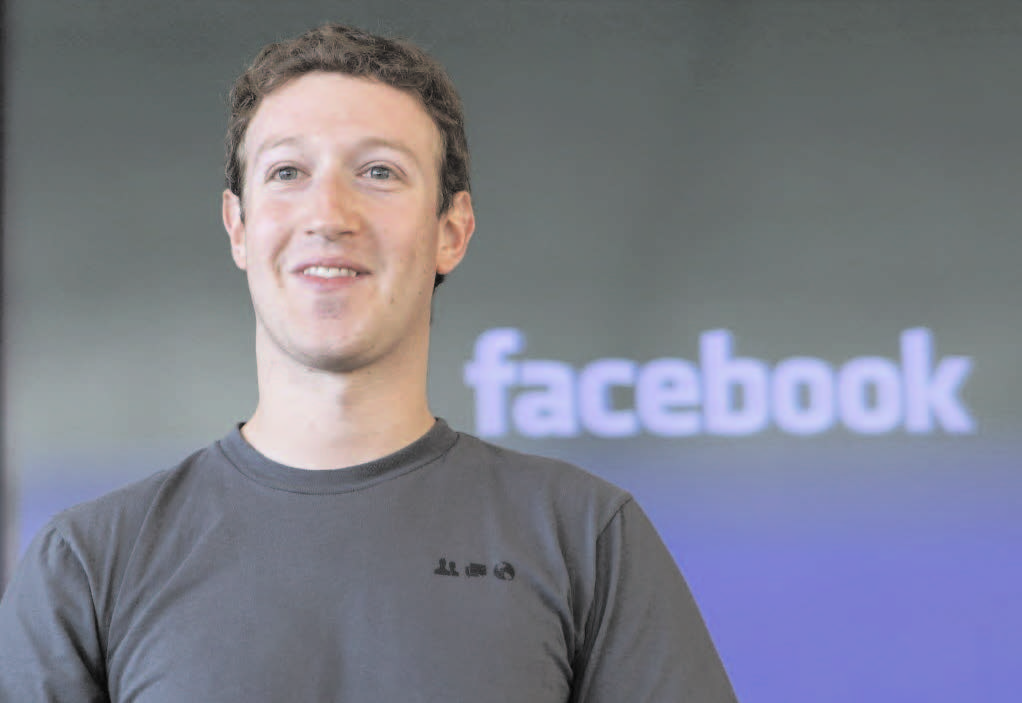
    Two Indian-origin businessmen have been ranked by Forbes magazine among the richest entrepreneurs in America under the age of 40, a list that has been topped by Facebook CEO Mark Zuckerberg.

    Vivek Ramaswamy
    Vivek Ramaswamy

    Vivek Ramaswamy, 30, a former hedge fund manager, has been ranked 33rd on the list with a net worth of $500 million. Forbes said his source of wealth is investments.

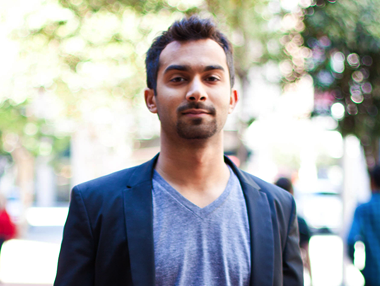
    On the 40th spot is 29-year old Apoorva Mehta, the founder and CEO of Instacart, the web-based grocery delivery service.

    Mehta’s net worth is $400 million.

    Zuckerberg leads the pack with a net worth of $47.1 billion, more than four times as much as the second person in the ranks, his cofounder and college friend Dustin Moskovitz.

    At number three is Jan Koum, who came to America at age 16.

    He started WhatsApp, now the world’s biggest mobile messaging service with 800 million users in 2009 and sold it to Facebook for about $22 billion in cash and stock in 2014.

    Forbes said California techies dominate the first ever list of the nation’s 40 most successful young entrepreneurs under the age of 40, “reaffirming the American Dream and proving yet again that there is no better way right now to get rich fast than to go west and convince venture investors to back your most ambitious ideas.”

    Elizabeth Holmes is the only woman to make the ‘America’s Richest Entrepreneurs Under 40’.

    Holmes quit Stanford at age 19 to start blood testing company Theranos.

    However recently in a setback, the FDA told Holmes that her company was using an unapproved blood collection device.

    All of the young entrepreneurs in the list have net worths of $400 million or more and 34 made their money in the tech sector.

    Twenty-one are billionaires and many either created or work for some of the hottest tech companies, including Uber, AirBnB, Fitbit, GitHub, Instacart and Pinterest.

    The list’s youngest member is Palmer Luckey, who was just 21 years old when he sold his virtual reality equipment company, Oculus, to Facebook for $2.3 billion in July 2014.

    Luckey’s net worth is $700 million and is one of half a dozen in the ranks who are still in their 20s, Forbes said.

  • Five dead in alleged Palestinian attacks in Tel Aviv and West Bank

    Five dead in alleged Palestinian attacks in Tel Aviv and West Bank

    JERUSALEM (TIP): A Palestinian fatally stabbed two people in a Tel Aviv office building and three other people were killed in an attack in the occupied West Bank on Thursday, Israeli police and the army said.

    In the latest attack near the Gush Etzion settlement bloc in the West Bank, a police commander said a Palestinian drove along the shoulder of the main road and shot at crawling traffic, killing three people and wounding others.Police spokesman Micky Rosenfeld said the attacker’s car stopped when it hit another vehicle and the driver was seized. He said an American citizen was one of three people killed. The others were a Palestinian and an Israeli.

    At least seven other people were wounded, a medical source said. The attack brought to 18 the number of Israelis and others who have died, along with 80 Palestinians, in a wave of violence over the past seven weeks.

    The American was identified as Ezra Schwartz, 18, who was studying in Israel, according to a Facebook post by the American Jewish Committee. CBS’s Boston affiliate said Schwartz was from Sharon, Massachusetts.In the Tel Aviv attack, a police spokeswoman said the assailant who had attacked worshippers gathered for afternoon prayers in a shop that sells Jewish religious items in the building was apprehended and a third person was wounded.Police say 49 of the 80 Palestinians killed in recent weeks died at the scene of attacks on Israelis and most of the rest died in violent protests in the occupied West Bank and near the Gaza border.

    Palestinian allegations that Israel was trying to alter the religious status quo at a Jerusalem holy site, known to Muslims as the Noble Sanctuary, where al-Aqsa mosque stands, and to Jews as Temple Mount, have partly fueled the violence.

    Non-Muslim prayer is banned around al-Aqsa and Israel has said it will not change that. But more visits in recent years by Jewish religious activists and ultra-nationalist Israeli politicians to the complex, where two biblical temples once stood, have done little to convince the Palestinians.

    Earlier on Thursday, three 15-year-old Palestinian girls attempted to infiltrate an Israeli military post in the West Bank, the military said.

    Soldiers apprehended them, and the military said three knives were found in their possession. (Source: Reuters)

  • Cop delays telling children of parents’ death, takes care of them on Halloween

    Cop delays telling children of parents’ death, takes care of them on Halloween

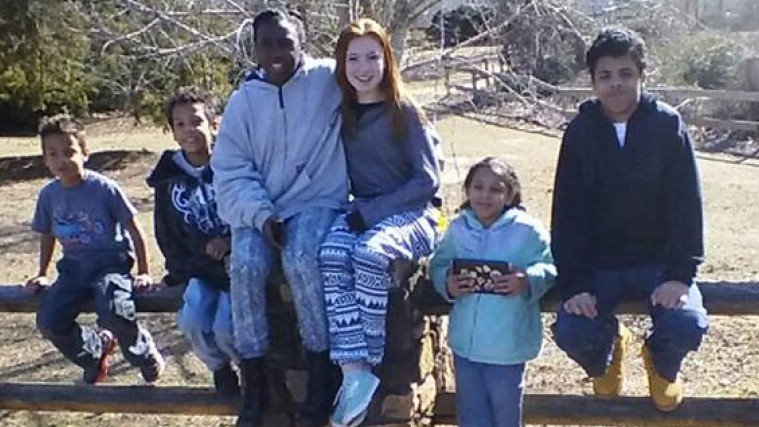
    After responding to the scene of a car crash on Halloween, Oct 30, a young Georgia state trooper realized the couple killed in the crash had left behind four young children — who were home alone, wearing their costumes and waiting for their parents.

    Nathan Bradley
    Nathan Bradley

    Faced with the tough task of informing the children that their parents are no more, the big-hearted Nathan Bradley, 25, opted to do things a little differently.

    Rather than just announce the devastating news there and then, Bradley decided to take the costume-clad kids under his wing for the evening and allow them to enjoy Halloween. He also started an online #GoFundMe campaign and helped raised over $150,000 to help the family .

    Bradley has recounted the heartbreaking moment when he and two other officials arrived at the family home in Morgan County to deliver the news.

    “The door hesitantly opened and there behind the locked screen door stood four children in full costume — a 13-year-old Freddy Krueger, 10-year-old daughter of a Dracula, 8-year-old wizard and a 6-year-old that appeared to be a firefighting ninja turtle,” he wrote on the GoFundMe page he set up.

    He and his colleagues were speechless. They’d hoped to find an adult among the family members in the house, but the eldest boy, Justin Howard, told them no one was home.

    “My parents went to the store to get more face paint. They told us not to open the door for anybody, but they should be back soon,” he told the officials, according to Bradley.

    ‘I wanted to preserve these kids’ Halloween’

    The officials found out that the closest relative of the dead parents, Donald and Crystal Howard, was the children’s paternal grandmother, who lives seven hours away in Florida.

    Bradley says he couldn’t bear the thought of the kids being told they were orphans and then having to spend the rest of Halloween waiting in a county jail for their grandmother to arrive. So he put the distressing announcement on hold.

    “I wanted to preserve these kids’ Halloween and the ones to come,” he wrote in the GoFundMe statement, which was also shared on Facebook by the Georgia Department of Public Safety.

    He took the children to get burgers, fries and milkshakes before giving them a tour of the troopers’ post. Other people who had heard what happened brought over candy, toys and Disney movies to watch.

    The children were put to bed in rooms at the post, still uninformed of the terrible news.

    “You turned an F-Minus day into an A-Plus night!” the little girl told him at bedtime — words he found difficult to take in.

    Their grandmother arrived just before dawn and agreed with Bradley and others that it would be better to tell the children what had happened the following day.

    “We hoped that they would then relate the tragedy to November 1st, rather than Halloween,” Bradley wrote.

    Fundraiser soars above initial goal

    On Tuesday, Nov 3, he said he heard from the eldest son that the transportation of the parents’ remains and other funeral costs would amount to $7,000. That’s when he decided to set up the fundraising page, with any additional money going toward the children’s future education.

    Thanks to a huge response, the amount raised has soared far above his initial goal, with other offers of help pouring in. By early Thursday, Nov 5, the GoFundMe had raised more than $150,000 from thousands of people.

    “I’m am astonished by the support of this family,” Bradley wrote as the donations flooded in. “You all are responsible for this success. The family wants to thank each and every one of you.”

    Still in his early 20s, the trooper says he plans to stay in touch with the four children.

    “I care a lot about them and I want to watch them succeed,” he said, according to CNN affiliate WSB. “I don’t want this tragedy to shadow the rest of their lives.”

    The Georgia Department of Public Safety praised his efforts.

    “Compassion is a core value of our Department,” it said in a Facebook post. “Trooper Bradley is a true example of that value.”

  • Mark Zuckerberg Talks Net Neutrality at Meet With Lawmakers, India Inc Leaders

    Mark Zuckerberg Talks Net Neutrality at Meet With Lawmakers, India Inc Leaders

    NEW DELHI (TIP): Facebook founder and CEO Mark Zuckerberg today hosted a luncheon meeting with political and industry leaders to discuss various matters, including the controversial issue of net neutrality and zero-rating.

    Those present at the meeting included DIPP Secretary Amitabh Kant, Parliamentary Standing Committee on IT Chairman Anurag Thakur, Department of Telecom Secretary Rakesh Garg, Trinamool Congress MP Derek O’ Brien, Member of Parliament Rajeev Chandrasekhar and FICCI Secretary General A Didar Singh.

    “Amongst the issues that were discussed were the role of technology, regulation and policy in accelerating access to the internet… Specific issues and concerns relating to Net Neutrality and Zero Rating, as well as Internet.org and Free Basics (were also discussed),” Mr Singh said.

    He added that discussions also revolved around social media and eGovernance.

    Facebook and Free Basics (earlier called Internet.org), an initiative by the company to provide free basic Internet access to the developing world, has faced backlash with activists alleging that it violates net neutrality.

    The principle of net neutrality states that no priority should be accorded to an entity in Internet traffic flow on account of payments to service providers like telecom companies.

    “Mark Zuckerberg responded to most of the queries while expressing his deep commitment to India and to the issue of affordable access for the next billion citizens, nearly 250 million of which will come from India,” Mr Singh said.

    India is home to 300 million Internet users but also has the largest “unconnected” population (one billion) (without access to internet).

    “He (Zuckerberg) stated that, amongst all the countries in the world, India with a billion unconnected has the best possibility of aligning a best in class regulatory environment to ensure access to its citizens. No single country can boast of such an opportunity,” Mr Singh said.

    After the meeting, Mr Kant posted a selfie on Facebook and microblogging site Twitter with the young billionaire.

    “A fascinating interaction and a selfie with Mark Zuckerberg at the round table on ‘Bringing the next billion online’,” he wrote.

    Mr O’Brien also tweeted about the luncheon meeting. “Mark Zuckerberg hosted a working lunch for a group of 12 incl 3 MPs. Frank chat on #netneutrality & other issues. Then a 10 min one-on-one,” read his tweet.

  • US fighter jets track drifting military blimp

    MUNCY, PENNSYLVANIA (TIP): An unmanned Army surveillance blimp broke loose from its mooring in Maryland and floated over Pennsylvania for hours on Oct 28 with two fighter jets on its tail, triggering blackouts across the countryside as it dragged its tether across power lines.

    The bulbous, 240-foot helium-filled blimp eventually came down in at least two pieces near Muncy, a small town about 80 miles north of Harrisburg, as people gawked in wonder and disbelief at the big, white, slow-moving craft. No injuries were reported.

    Fitted with sensitive defense technology, the radar-equipped blimp escaped from the military’s Aberdeen Proving Ground around 12:20 p.m. and drifted northward, climbing to about 16,000 feet, authorities said. It covered approximately 150 miles over about 3½ hours. As it floated away, aviation officials feared it would endanger air traffic, and two F-16s were scrambled from a National Guard base in New Jersey to track it. But there was never any intention of shooting it down, said Navy Capt. Scott Miller, a spokesman for the nation’s air defense command.

    The blimp — which cannot be steered remotely — eventually deflated and settled back to Earth on its own, according to Miller. He said there was an auto-deflate device aboard, but it was not deliberately activated, and it is unclear why the craft went limp.

    He said it was also unknown how the blimp broke loose, and an investigation was under way. Residents watched it float silently over the sparsely populated area, its dangling tether taking out power lines.

    Tiffany Slusser Hartkorn saw it fly over her neighborhood on the outskirts of Bloomsburg around 2:15 p.m. and soon disappear from sight.

    “I honestly was worried that there were people in it that would be injured. A neighbor down the road is thinking it knocked down a tree branch and power pole by his house that could’ve potentially destroyed his house,” Hartkorn said.

    Wendy Schafer’s first thought upon seeing the blimp near her job at a spa and salon in Bloomsburg was that a nearby school was conducting an experiment.

    “I had no idea what it was. We lost power at work, so I looked outside and saw the blimp,” Schafer said. “My first thought was Vo-Tech was doing something at the school until my friends tagged on Facebook about the blimp. It was crazy.”

    About 27,000 customers in two counties were left without power, according to electric utility PPL, and Bloomsburg University canceled classes because of the outage. Electricity was restored to most people within a few hours.

    The craft even knocked out power to the State Police barracks at Bloomsburg before settling in a wooded hollow, where it was swiftly cordoned off while military personnel began arriving to retrieve it, State Police Capt. David Young said. He said trees will probably have to be cut down to get it out.

    Miller, the spokesman for the North American Aerospace Defense Command, said the tail portion broke off and hit the ground about a quarter-mile from the main section. The craft is known as a Joint Land Attack Cruise Missile Defense Elevated Netted Sensor System, or JLENS, and can be used to detect hostile missiles and aircraft. Such blimps have been used extensively in the Iraq and Afghanistan wars to provide radar surveillance around US bases and other sensitive sites.

    (Source : AP)

  • Supreme Court Vs Legislature | Who will Guard  the Guards is the Question

    Supreme Court Vs Legislature | Who will Guard the Guards is the Question

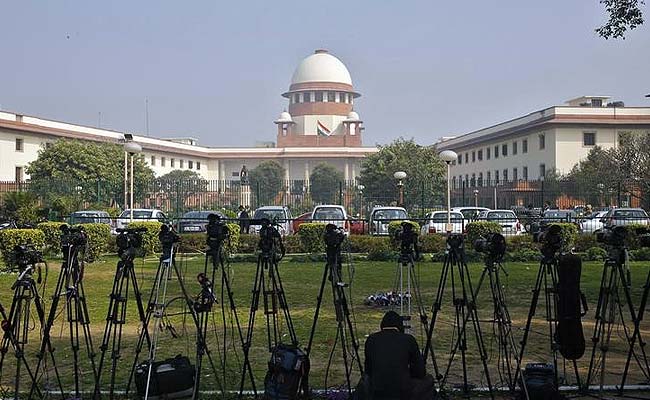
    The Supreme Court sent shockwaves down the spine of the elected executive by declaring the 99th constitutional amendment to set up the National Judicial Appointments Commission (NJAC) as unconstitutional and void as it “violates the basic structure of the constitution”. This comes from the Constitution Bench with a majority – 4:1 in favor of the rejection of NJAC.

    I agree that with only judges-appointing-judges part it does not leave room for something to be added. As the lone dissenting judge Justice J Chelameswar writes: “There is no accountability in this regard. The records are absolutely beyond the reach of any person including the judges of this Court who are not lucky enough to become the Chief Justice of India. Such a state of affairs does not either enhance the credibility of the institution or is good for the people of this country.” The Supreme Court judges are the guardians of our Constitution. What happens if a Collegium turns rogue? As the Roman poet Juvenal wrote: “Quis custodiet ipsos custodes?” (“Who will guard the guards?”)

    Now what the basic structure states in layman language. Judges are to be appointed by the President of India after consultation with the Chief Justice of India and what it has become is that the Chief Justice of India will appoint the Judges and the President of India signs the file. It is worth mentioning here that 90% of the Presidents of India come from the Legislature.

    The five-judge Supreme Court’s verdict did raise some questions on the judiciary. The NJAC law was passed with overwhelming majorities in both houses of parliament and by 20 state assemblies clearly showing the will of the elected, though it may not be the will of the people.

    Is the constitution a subject matter of Individual interpretation or is it a rule book in Black penned by the founding leaders of our Country? 

    What triggered curiosity was the passage by Justice Kehar in the Judgment where he wrote, “It is difficult to hold that the wisdom of appointment of judges can be shared with the political executive. In India, the organic development of civil society has not as yet sufficiently evolved. The expectation from the judiciary, to safeguard the rights of the citizens of this country, can only be ensured, by keeping it absolutely insulated and independent, from the other organs of governance.”

    Does this mean we are a backward civil society or that we simply lack wisdom? I agree with the statement and here is why we need to understand how our society votes when it comes to the elected. 70% of the voters base their decision on caste, party or religious views instead of the right candidate. Yes, we get easily fooled and now the elections seem to be about who not to vote for rather than who to vote for and yes, we can vote an anarchist to absolute majority.

    Arun Jaitley states “democracy can’t be the tyranny of the unelected”. In a Facebook post titled “The NJAC Judgement – An Alternative View”  Mr. Jaitley said the opinion of the Supreme Court is final, but not infallible. Let us ask ourselves, the government can make any rule, any law and the statement only shows legislatures’ unfulfilled ambitions. Mr. Jaitley, Democracy cannot be the tyranny of the elected.

    Citing another important reason for striking down the NJAC law was the Emergency of 1975-77, imposed by the then Congress government. The Constitution Bench opined that it is important that the government does not  have any role in the appointment of judges. It was the imposition of Emergency that gave birth to the collegium system.

    Those opposing the Collegium system say that this kind of a system is  unheard of in most parts of the world in which  judges appoint  judges through a selection process.

    Another comment on collegium system by Jailey creates bias. He tried to elegantly create confusion about the appointment of judges in one sentence: “Collegium is like a Gymkhana club in which existing members appoint new members”.

    What was the 99th amendment (NJAC)?The NJAC will have six members: The Chief Justice of India (CJI), two senior most poise judges of the Supreme Court, the Law Minister and two “eminent persons” selected by a panel comprising the CJI, the PM and the Leader of the largest opposition party (LOP). But then came the crunch. Any two of these six members could veto an appointment.

    The judgment made it clear that it was opposed to the Law Minister being a member of the panel, as his very presence would impinge on the principle of the independence of the judiciary and be contrary to the separation of powers. And the presence of the Prime Minister and the leader of the opposition in the panel to select the judges was also viewed negatively.

    Then, there is another reason which cannot be ignored. The government is the largest litigant in the country and has the dubious distinction of losing 80% of the cases in the Supreme Court. Government presence and interference could pull strings on judiciary.

    What’s Next?  On November 3, a five-judge Constitution Bench will consider suggestions on improving the Collegium system, and has invited submissions from the government and other stakeholders. The Constitution Bench chose to take this route as it quashed the NJAC and ordered revival of the Collegium system.

    Ruling that the primacy of the judiciary in judges’ appointments was embedded in the basic structure of the Constitution, it said these appointments will continue to be made by the Collegium system in which the CJI will have “the last word”.

    read-more

  • Limited H-1B visas may force companies to skip placement season at IITs

    Limited H-1B visas may force companies to skip placement season at IITs

    Facebook may not be coming to the Indian Institutes of Technology (IITs) this year, both for internship and final placement, according to sources from IIT placement cells, reports ET.

    At least five IITs confirmed that the online social networking service, headquartered in Menlo Park, California, was not visiting them this year. Facebook had made about a dozen offers at three of these institutes last year with salaries going upwards of a crore and even touching Rs 2 crore for positions of software engineers in California.

    “Visa is an issue for US based technology companies that hire from India,” said former placement manager at IIT Bombay, Mohak Mehta. The current quota for H1B visas is 65,000 which is exhausted in a matter of days of the annual allocation becoming available at the beginning of April each year. US demand for talent in science, technology, engineering and mathematics (STEM) is estimated to go up to a million by the year 2020.

    “Considering that a million of STEM workers would be needed by the US in some years, they are likely to fall short by almost 50 per cent. India has a good supply of talent in this space, which also includes the young IITians,” said Shivendra Singh, VP, NASSCOM.

    Facebook declined to comment. But sources close to the company said it had visa problems last year too. It was forced to position its IIT hires at the UK for almost a year before getting visas in place for the US.

    “Facebook did not come this year for undergraduate interns at our IIT,” confirmed Atal Ashutosh Agarwal, Vice President, Technology Students’ Gymkhana at IIT Kharagpur. It is the same story at other IITs.


  • Indian-Origin Student among 4 Killed in Oklahoma State homecoming crash

    Indian-Origin Student among 4 Killed in Oklahoma State homecoming crash

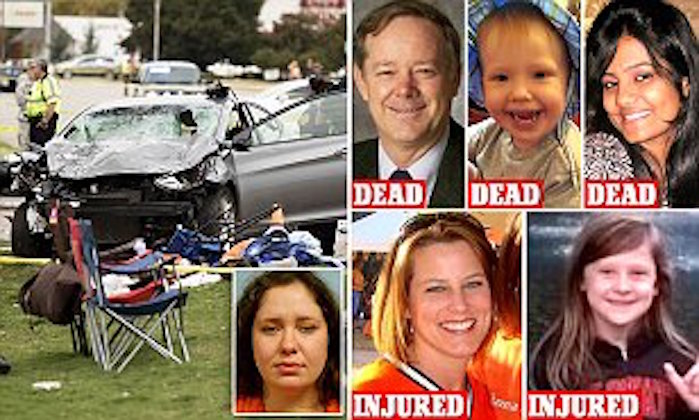
    A ‘drunk driver’ rammed her car into a crowd of spectators at Oklahoma State University homecoming parade, killing at least four people and injuring 47 others, Stillwater police said.

    Adacia Avery ChambersThe accused driver of the vehicle – Adacia Avery Chambers, 25, has been arrested for driving under the influence of alcohol that resulted in the tragic collision in Stillwater, Oklahoma. She is due to appear in court Monday morning.

    Nikita Prabhakar, 23 - Facebook Pic
    Nikita Prabhakar, 23 – Facebook Pic

    Indian-Origin Nikita Prabhakar and married couple Bonnie Jean Stone, 65, and Marvin Lyle Stone, 65 were pronounced dead at the scene. The 4th Victim a two-year-old Nash Lucas’s died from his injuries at Oklahoma University Medical Center Children’s Hospital, according to a Stillwater Police Department statement.

    Nikita Prabhakar, 23, was from Mumbai and was doing her MBA from University of Central Oklahoma.

    “Our students come to Central with their unique goals, hopes and dreams, and Nikita was undoubtedly no different,” the University of Central Oklahoma’s president, Don Betz, said in a statement.

    Of the 47 people treated after the crash, 17 remained hospitalized and five were in critical condition, police said.

    2DC399CD00000578-0-image-a-14_1445779219458

  • 3 Indian Americans earn honorable mentions, Indian teen places 2nd at Action For Nature awards

    3 Indian Americans earn honorable mentions, Indian teen places 2nd at Action For Nature awards

    NEW YORK (TIP): A cadre of Indian American youth was among the winners announced by Action For Nature’s International Young Eco-Hero Awards, with three individuals earning honorable mentions while one youngster of Indian-origin took home a second place prize.

    According to its website, Action For Nature’s award honors the work of young people between the ages of 8 and 16 who have executed creative environmental projects.

    The judges are experts in environmental science, biology, and environmental health, and the winners receive a cash prize and a special certificate.

    Aarushee Nair was the sole prize winner, slotting in at runner-up in the competition’s 13 to 16 age group.

    Nair, of Haryana, India, earned the award for her design of the Blu Pak, a biodegradable container that can hold 350 milliliters of clean drinking water and has a packet of oral rehydration salts pasted on the side. It also has a small beak-shaped outlet so that fluids can be easily administered to infants. She designed the Blu Pak after learning that thousands of Indian children under the age of 5 were dying due to a lack of clean drinking water.

    Sai Sameer Pusapaty, 16, of Texas, received an honorable mention in the 13-16 age group for his efforts in promoting the importance of recycling, according to Action for Nature. After realizing many people don’t understand what can be recycled and how, he developed tools for his community to make recycling easier and more efficient.

    He even developed a mobile app that he calls Recycle Buddy. It can scan a UPC or QR code and display the recycling information for any given product. It can also perform generic lookups for disposal information based on the material and the item type.

    Anuj Sisodiya, 16, of Connecticut also earned an honorable mention for embarking on a project to mitigate the energy waste caused by holiday lighting that is left on during the day.

    He created a project that encouraged the use of an electrical light timer to prevent lights and lighting displays from being left on for extended hours.

    Using social media such as Facebook and Twitter, his Web site, public canvassing, and booths at grocery stores, he distributed free electrical light timers to help save energy across town.

    Furthermore, he formed a team of school volunteers who devoted approximately 500 volunteer hours, and he worked with town leaders, energy company program managers, and vendors to effectively execute his project.

    By creating a sample study of his local community he learned that this campaign had the potential to save about 1 million-kilowatt hours of power in the town of Trumbull, Conn. preventing up to 1.3 million pounds of carbon dioxide being released into the environment.

    Anirudh Suri notched a third honorable mention for Indian Americans after he masterminded a successful recycling program in his local community to cut down on battery waste.

    With the help of his school principal, Anirudh developed the One Cell program. He purchased envelopes for collecting batteries, customized them, and sent them home with students to return with all the used batteries inside their homes.

    Anirudh began the program when he was 9 years old and 5 years later the program is still growing. His goal for One Cell is to expand the program to more schools so that he can collect more batteries.

    In the past three years, he has collected more than 1100 pounds of batteries. This year his goal is to collect over 700 pounds.

  • THE POLITICS OF BEEF

    THE POLITICS OF BEEF

    On Sept. 28, in a village less than 60 miles from New Delhi, a Hindu priest announced in a local temple (under threat by some hot heads, he claims) that a Muslim family was consuming beef.

    Shortly afterward, a frenzied (Hindu) mob, wielding sticks, swords and cheap pistols barged into the family’s house and pulled out Akhlaq & his 22-year-old son, Danish, accusing the family of having slaughtered a cow and consuming it. They beat the men with such rapturous fury that within minutes the father was dead and his son in a coma.

    Times cannot be treated as normal if the President of India feels the need to issue a public advisory. What can explain the inexplicable silence of the otherwise hyper-expressive Narendra Modi.

    While, leaders of the political parties have left no stone unturned in trivializing the issue. PM Modi did not issue a single tweet, nor posted a Facebook statement expressing regret or offering condolence for this dead citizen.

    The Prime Minister finds himself unable to condemn utterances of his own party leaders & ministers. Isn’t this what happened in Godhra, when Modi was the Chief Minister.

    PM Speaks – Only too little too late 

    Less than 24 hours after the President’s subtle reprimand, India’s Prime Minister did speak – Not against the murderers of Akhlaq. Not even on the provocative comments by his party men/women in Dadri. No, not even on the urgent need to put an end to beef politics. All this can wait. After all, elections in Bihar happen just once in five years.

    Its all Politics for Narendra Modi – Why else would he choose an election rally to indirectly mention the incident. What are the compulsions of Narendra Modi who has brought to his party 284 seats in the Lok Sabha?

    Why Laloo alone comes to his mind; and people like Mahesh Sharma, Sanjeev Balyan, Sakshi Maharaj, Yogi Adityanath, Sangeet Som, Azam Khan and AIMIM leader Assaduddin Owaisi are allowed to get away with their shameless statements?

    Akhlaq’s family members can wait. And the President of India should learn to wait. Prime Minister of India is busy consolidating his position. And for this he must win Bihar. India’s core civilizational values can wait too

    While only hinting on the raging row over the Dadri lynching incident, Prime Minister Narendra Modi said Hindus and Muslims should decide whether to fight each other or together overcome poverty while asking the people to ignore “irresponsible” statements of politicians.

    Its to be noted that the above statement comes at his 4th Bihar election rally this week and that too after blowing all the jibes on the beef row towards BJP opponents like Laloo.

    “The country has to stay united,” Modi asserted. “I have said it earlier also. We have to decide whether Hindus should fight Muslims or poverty. Muslims should decide whether to fight Hindus or poverty,” he added.

    The silence does not douse flames, it fans conspiracy theories

    Adding Fuel to the Fire – Our Politicians whom ‘WE’ elected

    Why are these shallow leaders not expelled? Every time a party has been questioned, their answer has been simple -point fingers at the other parties.

    Outrageous Things Leaders Have Said – For the record, BJP leads here. 

    Mahesh Sharma 

    Modi’s Culture Minister & BJP Leader Mahesh Sharma, a moral idiot recently opined that India’s late President Abdul Kalam was patriotic “despite being a Muslim,” and dubbed the vicious beating an “accident.” He consoled the family by noting that at least the 17-year-old daughter of the slain man was untouched!

    Azam Khan
    Uttar Pradesh minister Azam Khan took one step further and wrote to United Nations on the condition of Muslims in India.

    He goes on further to hint on a new partition of India, “There should be a round table conference on what will be the new map of India and how people will live in the country” and “Aaj poori duniya dekh rahi hai ki Babri se le ke Dadri tak ka mansooba kya tha”.

    He clubs the incident with the demolition of Babri Masjid to harness the power of hatred.

    Sangeet Som 

    BJP MLA Sangeet Som, infamous for making controversial speeches during the 2013 Muzaffarnagar riots & one of the accused, declared, “Agar nirdoshon ke khilaf karyawahi ki gayi, to munh-tod jawab hamne pehle bhi diya hai aur abh bhi dena jante hain (If action is taken against innocent, we have given a befitting reply earlier and can do so again). We can give a reply whenever we want.” He made this statement at a temple on the outskirts of Bisara, near where the incident occurred.

    Asaduddin Owaisi

    “This murder was premeditated. He has been killed in the name of religion. It is an attack on our community. It cannot be an accident. All of this is being propagated by the state and central governments,” Owaisi says. The Hyderabad MP also questioned Prime Minister Narendra Modi’s silence on the killing. “This mother has seen her son getting beaten to death in front of her. Where are his condolences?”

    Owaisi also slammed Union Minister Mahesh Sharma for describing the killing in the Dadri village as “an accident”. “He is the country’s Culture Minister. It is unfortunate that a minister who has taken an oath on the Constitution does not have the courage and intellectual honesty to condemn the incident unconditionally.”

    Tarun Vijay 

    BJP MP Tarun Vijay said, it wasn’t the Hindu community’s responsibility to maintain peace and the Muslim community should remain mute.

    “Why responsibility to keep peace and maintain calm is always put on the Hindus alone? Be a victim and maintain silence in face of assaults!!” tweeted the former editor the Rashtriya Swayamsevak Sangh (RSS) weekly in Hindi, Panchajanya.

    Muslims & Minorities in India – whatever the politicians may think – have a right to live with their heads held high as anyone else. They cannot & must not be ‘dumped’ or ‘subdued’.

    As Indians we need to fix our dysfunctional democracy. The idea of democracy cannot begin and end with elections alone. Until then we will continue to lose lives like Mohammad Akhlaq’s because of let’s call it “the politics of food “.

    Is anyone there listening???

  • Pope meets with family who drove 13,000 miles to see him

    PHILADELPHIA (TIP): Pope Francis met Sunday with a family who made a 13,000-mile trip over 194 days from Argentina to Philadelphia in an old Volkswagen van.

    Francis spent time with fellow Argentinians Catire Walker and Noel Zemborain and their four children, talking about their visit and praying.

    The family, on their Facebook page where they’ve been documenting their journey, said Francis called them “crazy” and laughed.

    Walker and Zemborain quit their jobs in food service and marketing to lead their children on the unforgettable tour of the Americas, using savings and soliciting donations to fund the trip to the World Meeting of Families in Philadelphia.

    Along the way they made 12 border crossings and stayed with dozens of host families, did lots of sightseeing and documented the trip online. They schooled their children _ Cala, 12; Dimas, 8; Mia, 5; and Carmin, 3 _ with the help of a distance learning program.

    The family said they got a call at 6 a.m. Sunday that Francis wanted to meet with them at the Saint Charles Borromeo Seminary, where he stayed this weekend.

    “You are the family who traveled from Buenos Aires?” the family recalled Francis telling them. He told them he had been following their trip.

    Zemborain told the Associated Press that Francis told her that they were crazy to drive so far with their children. She said it was like meeting an old friend and Francis hugged the children.

  • Indian American Prerna Gupta Develops 1000 Words Per Book App – Hooked

    Indian American Prerna Gupta Develops 1000 Words Per Book App – Hooked

    With more and more teenagers giving up books for Facebook and Twitter, an Indian American businesswoman-cum-author has recently launched an app that features short fiction for young readers or what she calls the “Snapchat generation”.

    Each book on the app called Hooked will be roughly 1,000 words and is designed to be read in about five minutes.

    Prerna Gupta, who envisions the app as being like “Twitter for fiction,” turned to some of the top MFA programs to recruit alumni writers.

    “We listed that we had paid creative writing opportunities and the response was overwhelming,” Gupta said.

    While she wouldn’t disclose actual figures, Gupta said pay varied by story but was very “competitive.”

    Initially, the app will only feature content from screened contributors. However, eventually users will be able to submit content of their own.

    The app is free to download and features one free story a day. Readers can unlock more stories with the subscription service. A week of unlimited stories costs $2.99. A month is $7.99 and a year is $39.99.

    There are currently over 200 stories and Gupta said they add more every day.

    Telepathic, the company Gupta founded with her husband, Parag Chordia, has raised $1.9 million and closed its first round of funding.

    Ms Gupta was co-founder and CEO of Khush, the leading developer of intelligent music apps like Songify, an app that turns speech into music. Gupta and Chordia, who met at Stanford in 2004, founded Khu.sh, a startup that built music apps. The duo sold Khu.sh to competitor Smule in 2011 for several million dollars and decided to write a science fiction fantasy trilogy.

  • Facebook hits Milestone: 1 Billion People used it in a Day

    Facebook hits Milestone: 1 Billion People used it in a Day

    NEW YORK (TIP): Facebook CEO Mark Zuckerberg took to Facebook on Thursday, August 27, to announce a momentous record for the social network: 1 billion users in one day.

    “This was the first time we reached this milestone, and it’s just the beginning of connecting the whole world,” Zuckerberg wrote in a post. “Our community stands for giving every person a voice, for promoting understanding and for including everyone in the opportunities of our modern world.”

    The 1 billion number includes anyone who logged into a Facebook service or sent a message on Messenger, so it’s not like 1 out of 7 people in the world spent the whole day scrolling through their News Feed – but it’s still a really big number.

    It seems even bigger when you consider that more than half the world lives without an Internet connection, according to Facebook’s own estimate -so the people on Earth who could access Facebook and did is more like 1 in 3. Don’t worry, though, Facebook is working hard to get everyone else online viaInternet.org, so they can use Facebook too. Data-efficient mobile apps for areas with limited connectivity also help get isolated or marginalized populations on the social network.

    These stats may creep some out -Facebook is also the world’s biggest ad platform, of course – and they may delight others. But it’s hard not to be impressed either way.

  • Indian American cyberbullying expert Sameer Hinduja receives $188,000 Grant from Facebook

    Indian American cyberbullying expert Sameer Hinduja receives $188,000 Grant from Facebook

    Sameer Hinduja, an Indian-American cyberbullying expert has received a grant of $188,000 from Facebook to study cyberbullying and dating violence among teenagers in US.

    The overarching goal of this study is to illuminate the nationwide prevalence, frequency and scope of cyberbullying and electronic dating violence among a population of youth in US.

    “Cyberbullying is a unique form of digital abuse that involves a range of tormenting, humiliating, threatening, embarrassing and harassing behaviours and has gained a lot of attention in recent years,” said Hinduja, co-director of the Cyberbullying Research Centre and a professor of criminology and criminal justice at Florida Atlantic University.

    “Many teens across the United States also experience dating violence that typically consists of various forms of mistreatment from insults and rumour spreads to threats and physical assaults,” said Hinduja, who received the USD 188,776 grant from the Digital Trust Foundation, formed by Facebook.

    Hinduja and his collaborator Justin Patchin, a professor at the University of Wisconsin-Eau Claire and co-director of the Cyberbullying Research Center, will rigorously construct a nationally-representative panel of teens – ages 12 to 17 years old – who will be surveyed with parental consent.

    Apart from descriptive findings by age, gender, grade, and other important demographics, the researchers also will collect data on contributing factors to perpetration and victimisation, as well as the negative outcomes that stem from cyberbullying participation as an aggressor or a target.

    There are a number of similarities between cyberbullying and electronic dating violence. Both naturally employ technology and lead to specific emotional, psychological, physical, and behavioural consequences, researchers said.

    “Most previous studies have focused on local schools or school districts as data sources. This leads to a key methodological limitation – the potential lack of generalisability – which can be addressed with a nationally-representative replication,” said Hinduja.

    “Moreover, the few nationally-representative data sources that have been analysed are woefully out of date,” he said.

    Results of the study will be disseminated through blogs and fact sheets posted on the Cyberbullying Research Centre website, which receives approximately 8,000 unique visitors each day, as well as through peer-reviewed journal articles and academic and professional conference presentations.

    Hinduja has received the Global Anti-Bullying Hero Award for 2015 from Auburn University for his efforts and contributions on the subject.

    He recently spoke on Capitol Hill at a Congressional Briefing about cyberbullying and teen dating violence.

  • Dust-covered woman from iconic 9/11 photograph dies of cancer

    Dust-covered woman from iconic 9/11 photograph dies of cancer

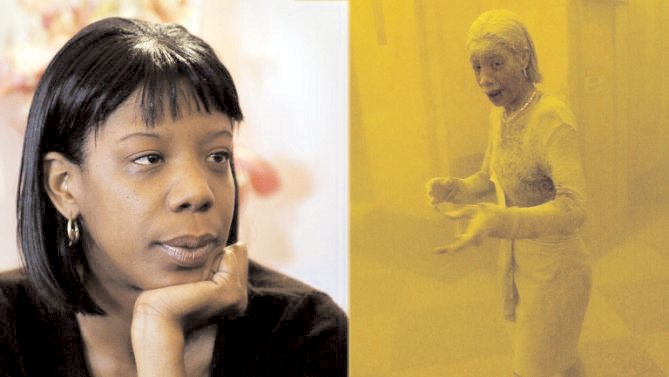
    WASHINGTON (TIP): A survivor of the September 11, 2001 attacks on New York who was featured in one of the most haunting photographs of the outrage has died of stomach cancer. She was 42.

    The family of Marcy Borders first announced her death Monday on Facebook.

    Borders, who was 28 at the time of the attacks, was just one month into a job for Bank of America in one of the Twin Towers.

    As one of the towers collapsed, she took refuge in a nearby office building, where AFP photographer Stan Honda took a haunting photo of her completely covered in a thick layer of ash, which earned her the moniker “The Dust Lady.”

    The air appeared heavy and a distraught Borders was shrouded in a cloud of dust and backlit by an eerie yellow luminescence.

    “I can’t believe my sister is gone,” her brother Michael Borders wrote on Facebook, asking for people’s prayers.

    Her cousin Elnardo Borders wrote: “My emotions are all over the place right now.”

    He later wrote: “She @ peace now!!!”

    After the attacks, Borders spiraled into a decade-long deep depression and alcohol and drug abuse, though she eventually recovered.

    She lost her job at Bank of America, where she ignored repeated offers of a transfer.

    She spent much of her time sequestered in her two-room flat, in one of the poorer parts of Bayonne, a bedroom community in New Jersey over the bridge from Manhattan.

    Something inside of her had died on that fateful day.

    “I still live in fear. I can’t think about being there, in those targets, the bridges, the tunnels, the (subway) stations,” she told media in a whisper in a March 2012 interview.

  • Indian-origin Harvard student who found Privacy Flaw in Facebook , Denied Internship after being confirmed

    Indian-origin Harvard student who found Privacy Flaw in Facebook , Denied Internship after being confirmed

    NEW YORK (TIP): Indian-origin Harvard student, Aran Khanna was denied a chance to intern at Facebook after the company learned that one of his creations exposed a critical flaw in its Messenger service, Boston.com reported.

    In May, Khanna released Marauder’s Map, a browser extension for Google Chrome that used location data to show you exactly where your friends were. It was downloaded 85,000 times in three days, before Facebook asked him to disable it.

    Facebook also disabled location sharing from desktops and subsequently updated Messenger for mobile, giving users the option to control their GPS data. Prior to that, the app had been sharing users’ locations by default since it launched in 2011.

    Khanna was then informed by a Facebook employee that the company was rescinding his summer internship offer, as he had violated its user agreement when he scraped the site for location data.

    He also received an email from Facebook’s head of global human resources and recruiting, who told him that his Medium post didn’t meet the high ethical standards expected of interns.

    A Facebook spokesperson told Boston.com, “This mapping tool scraped Facebook data in a way that violated our terms, and those terms exist to protect people’s privacy and safety. Despite being asked repeatedly to remove the code, the creator of this tool left it up. This is wrong and it’s inconsistent with how we think about serving our community.”

    Khanna accepted another internship with a tech start-up in Silicon Valley and later detailed the experience in a case study titled ‘Facebook’s Privacy Incident Response: A study of geolocation sharing on Facebook Messenger’ in the Harvard Journal of Technology Science.

  • InMobi takes on Google, Facebook in ads

    InMobi takes on Google, Facebook in ads

    SAN FRANCISCO (TIP): In 1999, Infosys brought global attention to Indian IT when it listed on the Nasdaq. It was then software services. Sixteen years later, an Indian software product company, InMobi, has created a similar moment. The Bengaluru-based advertising technology company literally took its battle to its biggest competitors, Facebook and Google. In a prime San Francisco venue overlooking the magnificent Golden Gate bridge and with over 500 people in attendance, including high-profile Silicon Valley investors, entrepreneurs and academicians, InMobi launched a major new product that carries the potential to disrupt mobile advertising as we know it today.

    InMobi co-founder Naveen Tewari described the new platform, called Miip, as revolutionary. Only time will tell how accurate the description is. But the basic premise of the platform lies in one that is increasingly acknowledged as true: Consumers dislike ads, mainly because ads are pushed on them, with no concern about relevance. It becomes worse in mobile phones -the device that’s fast becoming the primary content viewing format -because the ads become particularly intrusive on the small screen.

  • Work Permits For Spouses of H1-B Visa Holders Will Help Families, Economy

    Work Permits For Spouses of H1-B Visa Holders Will Help Families, Economy

    NEW YORK (TIP): The news that the United States has finally decided to amend its regulations to allow the dependent spouses of the specialized H-1B visa holders to work was hailed with jubilation by Indian Americans.

    Effective immediately, US Citizenship and Immigration Services will begin accepting applications for employment (see details at www.uscis.gov).

    Technology companies have lobbied hard for this change, which they say will retain and attract more foreign talent and their educated spouses. This will apparently affect 97,000 people in the first year, and 30,000 per year after that.

    It’s one of a few small changes in immigration policy that the White House can make while comprehensive reform languishes in Congress.

    Rashi Bhatnagar, a former journalist from New Delhi who is currently unemployed, is ecstatic. The 31-year-old Milwaukee resident took a stand seven years ago. She started a Facebook blog H4 Visa, A Curse. It has attracted about 13,000 “likes” and many people routinely log on to commiserate. “We had no financial independence, no identity in this country. I was a voiceless, faceless human being,” she said. She came here to be with her husband Kapil, who works for Cognizant.

    Pallavi Banerjee, a post-doctoral fellow at Vanderbilt University, agrees. She has studied the effects of the visa policy on the domestic affairs of high-skilled immigrants from India, and found that they often regressed to the traditional model of dominant husbands and subservient wives. This led to depression, anxiety, domestic violence and financial difficulties.” As a sociologist, I wanted to discover the stories of people who need their voices heard and who are made invisible. There was no activism or even public discussion,” says Banerjee, who started the project seven years ago. “It affected me as a feminist academic and as an immigrant woman. I was appalled at the US Laws.”

    Ravi Batra, a famous Manhattan attorney also applauds the new development. “A family that is fully and gainfully employed is not only good for that individual unit but good for the entire nation as each working member in our nation is contributing to the country’s economy,” he says.

    By Sonia Chopra
    Journalist – http://www.huffingtonpost.in/sonia-chopra/

    The Indian Panorama News cited: DHS Starts Accepting Work Permit Applications For H4 Visa Holders

  • White House lifts 40-year-old camera ban on tourists

    WASHINGTON (TIP): The White House on Wednesday lifted a 40-year ban on visitors taking photos, and much-prized selfies, on tours of 1600 Pennsylvania Avenue.

    Tourists to “the People’s House” on Wednesday were greeted with a changed sign saying “Photography is Encouraged.”

    The First Lady Michelle Obama announced the decision to the broader public on her Instagram account, ceremoniously ripping up the previous “No Photos” sign.

    But there are a few catches: Flashes and video recording or streaming is still prohibited.

    In the State Dining Room, 47-year-old visitor Korey Richardson, was excited by the new rules.

    “This is my first time here,” he said. “I’m taking tons of pictures, at least 30 so far. I’ve already uploaded some to Facebook friends.”

  • KFC customer ‘finds fried rat’ in meal

    KFC customer ‘finds fried rat’ in meal

    CALIFORNIA (TIP): When most of us share a photo of our dinner on Facebook, it’s usually to show off how delicious it looks – not because it resembles mistakenly deep-fried vermin.

    But that’s exactly why a photo taken by a KFC customer in California has gone viral, after he claimed he found a rat in his meal at the fast-food restaurant.

    Former Child Development and Education student Devorise Dixon shared an image online of what appeared to be a rodent, complete with a long tail, rotund belly, and pointy face.

    Dixon warned his Facebook friends not to eat at KFC, and claimed that the manager had apologised and said it was a rat.

    “It’s time for a lawyer,” he wrote, adding: “Be safe don’t eat fast food!!!”

    Describing the moment he began eating what he believes was a rat, he wrote on Facebook: “As I bit into it I noticed that it was very hard and rubbery which made me look at it.

    “As I looked down at it I noticed that it was was in a shape of a rat with a tail,” he said.

    Dixon also shared a video of the ‘rat’ in an attempt to prove the original photo wasn’t tampered with.

    However, KFC are skeptical and said in a statement on social media that Dixon has not responded to their attempts to contact him.

    The fast food giant said in a statement seen by Yahoo News: “KFC has made various attempts to contact this customer, but he is refusing to talk to us directly or through an attorney.

    “Our chicken tenders often vary in size and shape, and we currently have no evidence to support this allegation. We have extended the opportunity to have an independent lab evaluate the product at our own expense, but the customer refuses to provide the product in question.”

    KFC bosses told the Mirror that an investigation found no evidence to support this claim, however they did not confirm what the food was made of.

  • HOME MINISTRY BRINGS IN TIGHTER NORMS FOR NGOS TO TRACK FOREIGN FUNDS

    NEW DELHI (TIP): Non-governmental organisations will soon have to start furnishing details of foreign funds received and utilised by them for ‘civil rights advocacy’, a new category created by the home ministry to ascertain whether NGOs are using funds specifically for issues such as human rights, democratic rights, natural resources and religious discrimination.

    In addition to this, every NGO in the country will have to put out details on its website within a week of getting foreign contribution of any value while banks will have to report all such receipts to the government within 48 hours of the transfer from abroad.

    These requirements are part of the proposals under an exercise initiated by the Prime Minister’s Office to tighten monitoring of NGOs. A fortnight after ETfirst reported on June 4 the planned move on PMO’s instructions to amend the Foreign Contribution (Regulation) Rules (FCRR), 2011, the home ministry has put in public domain the proposed changes to these rules following the Intelligence Bureau’s inputs to it to “improve oversight and increase transparency” in the working of the NGO sector in India.

    As per existing norms, NGOs are required to inform the government through their annual returns under 55 heads of ‘purposes’ for which foreign aid has been received and utilised by them. There was a 56th ‘purpose’, ‘of activities other’ than the 55 purposes. The home ministry has created a new category of such ‘purposes’, Civil Rights Advocacy, increasing the total number of purposes to 84.

    Under the new category, NGOs will have to specify whether they received any funds and utilised them for purposes such as “human rights, caste/religious discrimination, tribal/indigenous people’s rights, democratic rights, public accountability, issues regarding natural resources, climate change, cyber security, internet freedom, criminal justice system, communication strategy etc”.

    The ministry has created yet another category, ‘Research’, under which NGOs will have to specify spending of foreign funds on research, seminars, conferences, publications and lectures. “The effort is to ascertain specifically for what a NGO is getting foreign funds and what is it being spent on rather than leaving it uncertain,” a senior home ministry official said.

    The government has a provision to act against an NGO if any false information or concealment of material facts comes to light. The ministry had earlier suspended Greenpeace India’s foreign funding saying the NGO derailed the Mahan coal project and would indulge next in “protest-creation” to target eight other plants, potentially impacting 40,000 mw of power generation.

    hat also reflects in another proposed change in FCCR rules in the form which has to be filled up online for registration or renewal of licence for NGOs. The government has introduced a new declaration that NGOs must make that the foreign aid received by them will not be used for any activities “detrimental to national interest, likely to affect public interest, or likely to prejudicially affect the security, scientific, strategic or economic interest of the state”, leaving it to the discretion of the state to determine a violation.

    NGOs will have to also submit details of any social media account on Facebook or Twitter that it is operating, an apparent effort to keep tabs on social media campaigns.

  • White man guns down 9 at black church in US

    White man guns down 9 at black church in US

    WASHINGTON (TIP): A young white gunman opened fire in a historically black church in South Carolina on June 17 night killing nine African-Americans in what was said to be hate crime, one of the worst in US history. The gunman, still at large at the time of writing, reportedly spared one woman so that she could ”go and tell the world what happened.”

    It was little after 9pm on June 17 when the group of African-Americans congregated at the 150-year-old Emanuel African Methodist Episcopal (AME) church for their weekly Bible studies. The gunman, who was described as wearing a gray hoodie, blue jeans, and Timberland boots, is said to have come into the church and sat down with the group before opening fire and fleeing.

    Police teams with sniffer dogs arrived quickly on the scene and cordoned off the area before putting the whole city, which witnessed massive protests following a white cop-killing-a black man case some weeks ago, into a lockdown.

    There are concerns about further violence from the fugitive gunman and possible retaliatory attacks in a state that has a deep history of racism, but yet has successfully elected an Indian-American, Nikki Haley (nee Nimrata Randhawa) as the governor. Haley condoled the tragedy, saying, ”Michael, Rena, Nalin, and I are praying for victims and families touched by tonight’s senseless tragedy” and adding, ”While we do not yet know all of the details, we do know that we’ll never understand what motivates anyone to enter one of our places of worship and take the life of another.”

    But city authorities appeared certain it is a hate crime.

    ”I do believe this is a hate crime,” Charleston Police Chief Greg Mullen said at a news conference, without explaining the basis for his conclusion. ”This is a tragedy that no community should have to experience. It is senseless, unfathomable…we are going to do everything in our power to find this individual, to lock him up, to make sure he does not hurt anyone else…”

    Mayor Joe Riley, who like Mullen is also white in a city that is 25% African-American, backed him, saying, ”The only reason someone could walk into a church and shoot people praying is out of hate. It is the most dastardly act that one could possibly imagine.”

    The shooting came just days ahead of two big back-to-back political rallies in the city, first by Republican Presidential candidate Jeb Bush (which has now been cancelled) and followed by one by Democratic front runner Hillary Clinton, who tweeted her condolences but did not say anything about the rally.

    Police initially apprehended a young white photographer who happened to be in the vicinity because he matched the description of the gunman. But he only happened to be interviewing strangers for a project he was detailing on Facebook.

  • Dallas Teacher Fired After Disturbingly Racist Post

    Dallas Teacher Fired After Disturbingly Racist Post

    A teacher has been “relieved of her teaching duties” after posting a racist Facebook rant in response to recent events at a McKinney, Texas, pool party, according to a statement from Frenship Independent School District.

    Karen Fitzgibbons was a fourth-grade teacher a Bennett Elementary school of Frenship ISD in Wolfforth, Texas. On Tuesday, she posted an article to her page about Eric Casebolt, a police officer who recently resigned after being involved in a racially charged incident last Friday. Casebolt, who is white, was caught on tape throwing a black, bikini-clad teenage girl to the ground when responding to reports of a disturbance at a community pool. He also pointed his gun at other youths.

    “This makes me ANGRY!” reads the post from Fitzgibbons, referring to Casebolt’s resignation, according to Texas outlet the Lubbock Avalanche-Journal. “This officer should not have to resign. I’m going to just go ahead and say it…the blacks are the ones causing the problems and this ‘racial tension.’ I guess that’s what happens when you flunk out of school and have no education.”

    The post continues, “I’m sure their parents are just as guilty for not knowing what their kids were doing; or knew it and didn’t care. I’m almost to the point of wanting them all segregated on one side of town so they can hurt each other and leave the innocent people alone. Maybe the 50s and 60s were really on to something. Now, let the bashing of my true and honest opinion begin….GO! #imnotracist #imsickofthemcausingtrouble #itwasatagedcommunity.”

    The post has since been deleted.

    The statement from Frenship ISD says the district “is deeply disappointed in the thoughtlessness conveyed by this employee’s post. We find these statements to be extremely offensive, insensitive, and disrespectful to our Frenship community and citizens everywhere. These comments in no way represent the educational environment we have created for our students.”

    “Employees are held to the same professional standards in their public use of electronic media as they are for any other public conduct. This recent conduct was unacceptable,” says the statement from the district.

    Spokespeople from Frenship ISD did not respond to further requests for comment.

    Fitzgibbons later issued an apology, according to local outlet KCBD-TV.

    “First, to anyone, of any race, that I have offended, I sincerely apologize. That was not my intent. I let my emotions get the best of me, and instead of taking a deep breath, vented in an inappropriate way. I am truly sorry,” it says in part.

    The apology goes on to say that Fitzgibbons teaches her students to treat others with dignity, and she is now “ashamed” of her previous Facebook post.

  • ‘The Challenge of Journalism is to Survive in the Pressure Cooker of Plutocracy’

    ‘The Challenge of Journalism is to Survive in the Pressure Cooker of Plutocracy’

    Thank you for allowing me to share this evening with you. I’m delighted to meet these exceptional journalists whose achievements you honor with the Helen Bernstein Book Award.

    What happens to a society fed a diet of rushed, re-purposed, thinly reported “content?” Or “branded content” that is really merchandising — propaganda — posing as journalism? But I gulped when [New York Public Library President] Tony Marx asked me to talk about the challenges facing journalism today and gave me 10 to 15 minutes to do so. I seriously thought of taking a powder. Those challenges to journalism are so well identified, so mournfully lamented, and so passionately debated that I wonder if the subject isn’t exhausted. Or if we aren’t exhausted from hearing about it. I wouldn’t presume to speak for journalism or for other journalists or for any journalist except myself. Ted Gup, who teaches journalism at Emerson and Boston College, once bemoaned the tendency to lump all of us under the term “media.” As if everyone with a pen, a microphone, a camera (today, a laptop or smartphone) – or just a loud voice – were all one and the same. I consider myself a journalist. But so does James O’Keefe. Matt Drudge is not E.J. Dionne. The National Review is not The Guardian, or Reuters The Huffington Post. Ann Coulter doesn’t speak for Katrina Vanden Heuvel, or Rush Limbaugh for Ira Glass. Yet we are all “media” and as Ted Gup says, “the media” speaks for us all.

    So I was just about to email Tony to say, “Sorry, you don’t want someone from the Jurassic era to talk about what’s happening to journalism in the digital era,” when I remembered one of my favorite stories about the late humorist Robert Benchley. He arrived for his final exam in international law at Harvard to find that the test consisted of one instruction: “Discuss the international fisheries problem in respect to hatcheries protocol and dragnet and procedure as it affects (a) the point of view of the United States and (b) the point of view of Great Britain.” Benchley was desperate but he was also honest, and he wrote: “I know nothing about the point of view of Great Britain in the arbitration of the international fisheries problem, and nothing about the point of view of the United States. I shall therefore discuss the question from the point of view of the fish.”

    So shall I, briefly. One small fish in the vast ocean of media.

    I look at your honorees this evening and realize they have already won one of the biggest prizes in journalism — support from venerable institutions: The New Yorker, The New York Times, NPR, The Wall Street Journal and The Christian Science Monitor. These esteemed news organizations paid — yes, you heard me, paid — them to report and to report painstakingly, intrepidly, often at great risk. Your honorees then took time — money buys time, perhaps its most valuable purchase — to craft the exquisite writing that transports us, their readers, to distant places – China, Afghanistan, the Great Barrier Reef, even that murky hotbed of conspiracy and secession known as Texas.

    And after we read these stories, when we put down our Kindles and iPads, or — what’s that other device called? Oh yes – when we put down our books – we emerge with a different take on a slice of reality, a more precise insight into some of the forces changing our world.

    Although they were indeed paid for their work, I’m sure that’s not what drove them to spend months based in Beijing, Kabul and Dallas. Their passion was to go find the story, dig up the facts and follow the trail around every bend in the road until they had the evidence. But to do this — to find what’s been overlooked, or forgotten, or hidden; to put their skill and talent and curiosity to work on behalf of their readers — us — they needed funding. It’s an old story: When our oldest son turned 16 he asked for a raise in his allowance, I said: “Don’t you know there are some things more important than money?” And he answered: “Sure, Dad, but it takes money to date them.” Democracy needs journalists, but it takes money to support them. Yet if present trends continue, Elizabeth Kolbert may well have to update her book with a new chapter on how the dinosaurs of journalism went extinct in the Great Age of Disruption.

    You may have read that two Pulitzer Prize winners this year had already left the profession by the time the prize was announced. One had investigated corruption in a tiny, cash-strapped school district for The Daily Breeze of Torrance, California. His story led to changes in California state law. He left journalism for a public relations job that would make it easier to pay his rent. The other helped document domestic violence in South Carolina, which forced the issue onto the state legislative agenda. She left the Charleston Post and Courier for PR, too.

    These are but two of thousands. And we are left to wonder what will happen when the old business models no longer support reporters at local news outlets? There’s an ecosystem out there and if the smaller fish die out, eventually the bigger fish will be malnourished, too.

    A few examples: The New York Times reporter who rattled the city this month with her report on the awful conditions for nail salon workers was given a month just to see whether it was a story, and a year to conduct her investigation. Money bought time. She began, with the help of six translators, by reading several years of back issues of the foreign language press in this country… and began to understand the scope of the problem. She took up her reporting from there. Big fish, like The New York Times, can amplify the work of the foreign language press and wake the rest of us up.

    A free press, you see, doesn’t operate for free at all. Fearless journalism requires a steady stream of independent income. It was the publisher of the Bergen Record, a family-owned paper in New Jersey who got a call from an acquaintance about an unusual traffic jam on the George Washington Bridge. The editor assigned their traffic reporter to investigate. (Can you believe? They had a traffic reporter!) The reporter who covered the Port Authority for the Record joined in and discovered a staggering abuse of power by Governor Chris Christie’s minions. WNYC Radio picked up the story and doggedly stuck to it, helped give it a larger audience and broadened its scope to a pattern of political malfeasance that resulted in high-profile resignations and criminal investigations into the Port Authority. Quite a one-two punch: WNYC won a Peabody Award, the Record won a Polk.

    A Boston Phoenix reporter broke the story about sexual abuse within the city’s Catholic Church nine months before the Boston Globe picked up the thread. The Globe intensified the reporting and gave the story national and international reach. The Boston Phoenix, alas, died from financial malnutrition in 2013 after 47 years in business.

  • Sikh Group Sues Facebook for Banning Website in India

    Sikh Group Sues Facebook for Banning Website in India

    NEW YORK (TIP): A U.S.-based Sikh advocacy group has filed suit against Facebook, accusing the social media giant of blocking access to its Facebook page in India and raising concerns over the company’s censorship policies.

    Sikhs for Justice (SFJ), a non-profit organization with offices in New York City that advocates for issues important to members of the Sikh religious tradition, filed suit in California federal court this week requesting that a judge force Facebook to stop blocking its website in India and release all its communications with national Indian officials. The complaint alleges that the company illegally restricted access to SFJ’s page, presumably at the request of the Indian government, who disagrees with the group’s controversial activism. Among other things, the website criticized Indian Prime Minister Narendra Modi and campaigned against “forced conversions of Christians and Muslims to Hinduism,” an unsettling practice that has been reported to occur throughout India at the hands of Hindu nationalists.

    “In or around the first week of May 1, 2015, the plaintiff learnt the contents of the Plaintiff’s Facebook Page … were blocked completely in India without notice, reason, explanation, or proper and lawful cause,” the complaint, which was provided to Think Progress, read. The group’s lawyer reportedly sent Facebook a cease and desist letter asking for access to the be restored, but only received an automated response.

    “Blocking of SFJ’s page for exposing India with regard to the plight of religious minorities and advocating Sikh referendum in Punjab, Facebook Inc. violates section 2000a of 42 U.S. Code which prohibits discrimination on the grounds of religion, race or national origin,” the complaint argued.

    The lawsuit, which also sought compensatory and punitive damages, is unusual in that it challenges Facebook here in the United States, where free speech laws are well protected. But the digital juggernaut has long endured harsh criticism for helping foreign governments silence free expression. Free speech advocates have blasted Facebook for banning the pages of political rock bands in Pakistan at the urging of government censors, and opposition leaders in Russia lashed out at the company after it removed a website dedicated to organizing a protest against President Vladimir V. Putin in December of last year.

    Facebook has seen a rapid increase in requests to limit content all over the world, but India appears to be the worst offender: the company’s own Global Government Requests Report listed it as the top country asking for webpage takedowns from July to December 2014, with Facebook ultimately restricting 5,832 “pieces of content” on behalf of the Indian government. Although the report did not detail the reasoning for each request, Facebook hinted that many of the inquiries were related to religious issues.

    “We restricted access in India to content reported primarily by law enforcement agencies and the India Computer Emergency Response Team within the Ministry of Communications and Information Technology including anti-religious content and hate speech that could cause unrest and disharmony,” Facebook’s report reads.

    Indeed, while India’s Supreme Court recently struck down a law that allowed the government to jail citizens for posting “controversial” comments on social media, faith remains an especially inflammatory subject in the subcontinent. Hindu, Muslim, Sikh, and Christian groups have long clashed with each other and local authorities in various parts of the country, but the arrival of new political leadership may be escalating tensions: Prime Minister Modi, a hardline Hindu nationalist elected last year, has been accused by various groups — including SFJ — of doing little to stop sectarian riots that led to the deaths of more than a thousand Muslims in 2002.

    “Since the election of Narendra Modi as Prime Minister of India in May 2014, religious minorities especially Christians, Muslims and Sikhs are under increased attacks from the Hindu supremacist groups closely aligned with the ruling party of India,” SFJ’s complaint read.