Tag: Featured

  • Republic Day Parade: Sports stars feature in the Services tableau

    Republic Day Parade: Sports stars feature in the Services tableau

    By Prabhjot Singh

    Olympians Balbir Singh Kular, Tajinder Pal Singh Toor, Jitu Rai, and Paralympian Muralikant Patkar are among 10 defense officers, both serving and retired, feature in the Services tableau during the ceremonial Republic Day parade on Sunday, January 26.
    The Parade assumes special significance this year as it marks the 75th anniversary of the Indian Republic. The President of Indonesia will be the guest of honor at the parade where the President of India, Draupadi Murmu, will unfurl the national flag.
    It is one of the rare occasions when eminent sports heroes of the country participated in the ceremonial parade.
    Several States, Union Territories, government departments and non-government organisations are represented at the parade through specially designed tableaus. The tableaus are approved by a screening committee of the Union Ministries.
    After missing the last two parades, Punjab had its tableau dedicated to Sufi poet Sheikh Farid. Selected slokas of Sheikh Farid, acknowledged as the first Sufi poet of Punjab, were recited during the parade. The tableau also featured a pair of oxen to symbolise its agro economy besides displaying traditional musical instruments, associated with poetic recitation to the State’s rich cultural heritage.
    Another tableau that highlighted the achievements of sportspersons of Punjab will be that of Services. Of 10 defence personnel chosen to be abroad, the tableau were hockey Olympian Col Balbir Singh Kular of Sansarpur, the nursery of hockey.
    Colonel Balbir Singh, who was chosen to represent India in the 1968 Olympic games, was one of the youngest Olympians to get decorated with both Padma Shri and Arjuna awards.
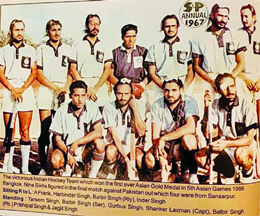
    It was the second time that he represented in the Republic Day Parade. He first appeared in this prestigious parade after the 1966 Asian Games when India won the gold for the first time. A postage stamp issued to commemorate the Bangkok Asiad success carried an action picture of the final against Pakistan featuring four players, including that of Balbir Singh Kular.
    Other officers, both serving and retired, chosen for the 2025 Republic Day Parade, include shot putter Tajinder Pal Singh Toor, also Asian Games gold medallist; handballer Wing Commander Gurmeet Singh Sandhu; shooter Jitu Rai; Veer Nari Lieut-Col Ravinderjeet Randhawa; Paralympian swimmer Muralikant Petkar; Yachter Homi D. Motiwala; kabaddi star Ram Mehar Singh; besides Flt Lieut Ruchi Saha and Naval Lieut-Cdr Mani Aggarwal.

  • Two Kirti Chakras, 14 Shaurya Chakras among 93 Gallantry Awards to Armed Forces, CAPF personnel

    Two Kirti Chakras, 14 Shaurya Chakras among 93 Gallantry Awards to Armed Forces, CAPF personnel

    The President of India and Supreme Commander of the Armed Forces Droupadi Murmu has approved two Kirti Chakras, one of them posthumous, and 14 Shaurya Chakras, three of them posthumous, in a total of 93 Gallantry Awards to personnel of the Armed Forces and Central Armed Police Forces (CAPF), 11 of which are posthumous, on the eve of 76th Republic Day.
    The 93 Gallantry Awards also include 67 Sena Medals, with seven of them awarded posthumously, two Nao Sena Medals, and eight Vayu Sena Medals.
    Major Manjit Kumar of the Punjab Regiment and with 22 Rashtriya Rifles (RR), and Naik Dilwar Khan from the Artillery Regiment and with 28 RR (posthumously) were awarded the Kirti Chakra for counter-terrorist operations in Jammu and Kashmir.
    The President has also approved 305 defence decorations to the Armed Forces and other personnel. These include 30 Param Vishisht Seva Medals; five Uttam Yudh Seva Medals; 57 Ati Vishisht Seva Medals; 10 Yudh Seva Medals; 44 Sena Medals (Devotion to Duty); eight Nao Sena Medals (Devotion to Duty); 15 Vayu Sena Medals (Devotion to Duty); and 136 Vishisht Seva Medals.
    President Murmu also approved 58 Mentioned-in-Despatches to Armed Forces personnel, including four awarded posthumously. These include 55 from the Indian Army — 14 for Operation Rakshak, including four posthumous awards; eight for Operation Snow Leopard; six for Operation Hifazat; two for Operation Sahayta; one for Operation Rhino; one for Operation Meghdoot; two for Operation Gurihajan; one for Operation Mulkhyama; one for Operation Reconnaissance; one for Operation Zokhawthar; one for Operation Falcon; four for Operation CAS Evacuation; one for IS Duty; and 12 for miscellaneous operations. The 58 Mentioned-in-Despatches include three to Indian Air Force personnel for Operation Sankalp.
    In addition, the President also approved the President’s Tatrakshak Medal and Tatrakshak Medal to eight Coast Guard personnel.
    The citation of Major Manjit details that on April 25, 2024, he assiduously trailed the movement of two foreign terrorists in a village in Sopore district through responsive human intelligence as received from a credible source. On localising the probable target complex, the officer established the initial cordon, during which terrorists retaliated and made several attempts to break the cordon throughout the intervening night. On April 26, 2024 at 5.30 a.m., one of the terrorists entered the adjoining orchard favouring natural cover. The officer pinned down the terrorist, and evacuated a trapped civilian and two children. Major Manjit started crawling towards the terrorist and on noticing the movement of the terrorist who was trying to lob a grenade at the scout, the Major engaged him in a fierce firefight and eliminated him, the citation states, adding, “For displaying conspicuous gallantry and exhibiting outstanding leadership Major Manjit is recommended for the award of Kirti Chakra.”
    The other citation of Kirti Chakra, for Naik Dilwar Khan, states that he was part of an ambush in the dense jungles of Lolab Valley, Kupwara district on July 23, 2024. At 11.50 p.m., his party observed two terrorists, one at a very close distance. “Sensing grave threat from the closing-in terrorist to his team, showing complete disregard to personal safety, Naik Dilwar Khan, though under a heavy volume of fire, lunged and grasped the terrorist, engaging him in hand-to-hand combat, while the other terrorist continued to fire indiscriminately from distance,” the citation states. During this action, Naik Khan was grievously injured but did not let go of the terrorist and killed him, firing at point-blank range before succumbing to his wounds. For displaying indomitable courage, utter disregard for personal safety and gallantry of the highest order, Naik Dilwar Khan is recommended for award of Kirti Chakra (Posthumous), the citation said. Source: The Hindu

  • ‘One Nation One Election’ can prevent policy paralysis: President Draupadi Murmu in Republic Day address

    ‘One Nation One Election’ can prevent policy paralysis: President Draupadi Murmu in Republic Day address

    President Droupadi Murmu on Saturday advocated for the “One Nation One Election” initiative, asserting it has the potential to redefine “good governance” in the country by promoting consistency in governance, preventing policy paralysis, mitigating resource diversion, and alleviating financial burdens on the state.
    In her address to the nation ahead of the 76th Republic Day, she emphasised the government’s ongoing efforts to “eliminate remnants of a colonial mindset that have lingered in the country for decades” and cited the replacement of the British-era criminal laws with three new modern laws.
    “We have been witnessing concerted efforts to change that mindset… Reforms of such magnitude require an audacity of vision,” she said.
    Highlighting the significance of the proposed bill aimed at synchronising election schedules across the country, Murmu noted, “The ‘One Nation One Election’ plan can offer numerous benefits, including enhanced governance and reduced financial strain.” In discussing legal reforms, she pointed out the need to replace the Indian Penal Code, the Code of Criminal Procedure, and the Indian Evidence Act with new laws reflective of Indian traditions.
    She mentioned the introduction of the Bharatiya Nyaya Sanhita, the Bharatiya Nagarik Suraksha Sanhita, and the Bharatiya Sakshya Adhiniyam, which prioritise the delivery of justice over mere punishment and place a strong emphasis on addressing crimes against women and children.
    Reflecting on the significance of the Constitution, the President highlighted the progress achieved over the past 75 years. “At the time of Independence, many parts of the country faced extreme poverty and hunger. However, we maintained a belief in ourselves and created conditions for growth,” she said.
    Noting the contributions of farmers and labourers, she said India’s economy now plays a pivotal role in global economic trends, asserting that this transformation is rooted in the framework established by the Constitution.
    The President also pointed to the persistently high economic growth rate in recent years, which has generated job opportunities, increased income for farmers and labourers, and lifted many out of poverty.
    She underscored the importance of inclusive growth and the government’s commitment to welfare, making basic necessities such as housing and access to clean drinking water entitlements for citizens.
    Efforts to support marginalised communities, particularly those belonging to Scheduled Castes (SC), Scheduled Tribes (ST), and Other Backward Classes (OBC), were also highlighted. Murmu mentioned various initiatives, including pre-matric and post-matric scholarships, national fellowships, and dedicated schemes aimed at the socio-economic development of these communities, such as the Pradhan Mantri Anusuchit Jaati Abhyuday Yojana and the Pradhan Mantri Janjati Adivasi Nyaya Maha Abhiyan.
    The President’s address underscored the government’s commitment to fostering inclusive growth and redefining governance standards in the country, creating a vision for a more equitable and prosperous future for all citizens.
    She emphasised that this occasion is a collective celebration of joy and pride for all citizens and remarked that while 75 years may seem like a brief moment in the life of a nation, it has been a significant period for India, marked by the revival of its long-dormant spirit and its journey to reclaim its rightful status among the world’s civilisations.
    Reflecting on India’s historical journey, she urged citizens to remember the brave souls who sacrificed their lives for the nation’s freedom, highlighting the 150th birth anniversary of Bhagwan Birsa Munda, whose contributions to the freedom movement are now receiving due recognition. The President praised the early 20th-century freedom fighters for uniting the nation in a well-organised independence movement and credited iconic figures like Mahatma Gandhi, Rabindranath Tagore, and Babasaheb Ambedkar for helping India rediscover its democratic values.
    Source: PTI

  • First Sikh CJI, Suzuki among 7 picked for Padma Vibhushan, the country’s top civilian honor

    The first Sikh Chief Justice of India, Justice Jagdish Singh Khehar (retd), was on Saturday named one of the seven recipients of Padma Vibhushan, the country’s top civilian honor.
    Others on the list are leading gastroenterologist from Karnataka Duvvur Nageshwar Reddy, late Maruti Suzuki CEO Osamu Suzuki, Kathak dancer Kumudini Rajnikant Lakhia, violinist and composer from Karnataka Lakshminarayana Subramaniam, doyen of Malayalam literature and cinema MT Vasudevan Nair and late folk singer from Bihar Sharda Sinha.
    Former CJI Khehar was chosen in the public affairs segment and Suzuki in trade and industry for igniting the growth of the Indian automobile sector. Suzuki took the risk of joining hands with India to form a joint venture, Maruti Udyog, in 1981, when India was still a closed economy.
    This year, the Padma list comprises seven Padma Vibhushan, 19 Padma Bhushan and 113 Padma Shri awards. Twenty-three awardees are women. The list includes 10 persons from the category of foreigners, NRI, PIO and OCI and 13 posthumous awardees. The awards are conferred by the President at ceremonial functions at Rashtrapati Bhawan in March/April every year. For 2025, the President approved conferment of 139 Padma awards, including one duo case where the award is counted as one.
    Among Padma Bhushan awardees are legendary Indian hockey goalkeeper PR Sreejesh, who helped the Indian men’s hockey team win two Olympic bronze medals at Tokyo 2020 and Paris 2024; A Surya Prakash, former chairperson, Prasar Bharati; late Bibek Debroy, who served as the chairman of the Economic Advisory Council to the PM; Jose Chacko Periappuram, a cardiac surgeon from Kerala; Kailash Nath Dikshit, an archaeologist specialising in prehistoric civilisation of the Indus Valley; Manohar Joshi, former Maharashtra CM and former Lok Sabha Speaker; late ghazal singer Pankaj Udhas; leading filmmaker Shekhar Kapur; late BJP leader Sushil Modi; and spiritual leader Sadhvi Ritambhara.
    Padma Shri awardees include singers Arijit Singh and Jaspinder Narula, AIIMS-Delhi head of gynaecology department Neerja Bhatla and music composer and environmentalist and three-time Grammy Award winner Ricky Kej. From the North region, the following feature among Padma Shri awardees: Farooq Ahmad Mir (J&K) for art; Hariman Sharma (Himachal Pradesh) for inventing an apple variety that can grow at low altitudes; leading Gurbani singer Harjinder Singh Srinagar Wale (Punjab) for art; star para archer Harvinder Singh (Kaithal); Lalit Kumar Mangotra (J&K) for literature; Lama Lobzang for spiritualism; and Onkar Singh Pahwa (Punjab) for trade and industry. Harjinder Singh recently performed at the antim ardas of late PM Manmohan Singh. Source: TNS

  • People who steered India’s Constitution

    People who steered India’s Constitution

    India’s Constitution, the cornerstone of its democratic framework, is among the lengthiest and most comprehensive in the world. Drafted in the aftermath of independence, it embodies the aspirations of a diverse and vibrant nation. The making of the Constitution was a monumental task that involved the contributions of many visionary leaders. Below is a detailed exploration of some of the luminaries who played pivotal roles in shaping India’s Constitution.
    Dr. B.R. Ambedkar: The Chief Architect
    Dr. Bhimrao Ramji Ambedkar, often referred to as the “Father of the Indian Constitution,” was the chairman of the Drafting Committee. A scholar of unparalleled brilliance, Ambedkar had a deep understanding of law, economics, and social justice. His leadership ensured that the Constitution addressed the systemic inequalities that plagued Indian society. Ambedkar’s efforts to enshrine the principles of equality, liberty, and fraternity were particularly aimed at dismantling caste discrimination and empowering marginalized communities. The inclusion of Fundamental Rights and the Directive Principles of State Policy are among his lasting contributions.
    Jawaharlal Nehru: The Visionary Leader
    As the first Prime Minister of independent India and an influential member of the Constituent Assembly, Jawaharlal Nehru’s vision shaped the foundational principles of the Constitution. Nehru was a staunch advocate of democracy, secularism, and a scientific temper. His contributions to the Preamble, which encapsulates the ideals of justice, liberty, equality, and fraternity, were significant. Nehru’s speeches and leadership during the drafting process inspired the Assembly to aim for a progressive and inclusive Constitution.
    Sardar Vallabhbhai Patel: The Integrator
    Sardar Patel, known as the “Iron Man of India,” was instrumental in unifying the princely states and integrating them into the Indian Union. As a member of the Constituent Assembly, Patel emphasized the importance of a strong federal structure with adequate autonomy for states. His pragmatic approach influenced the administrative framework of the Constitution, ensuring a balance between central authority and state powers. Patel’s efforts ensured the smooth functioning of India’s democracy in its formative years.
    Dr. Rajendra Prasad: The Guiding Hand
    Dr. Rajendra Prasad, who later became the first President of India, served as the President of the Constituent Assembly. Renowned for his patience, wisdom, and impartiality, Prasad played a critical role in guiding the debates and discussions within the Assembly. His leadership ensured that diverse viewpoints were respected and incorporated into the Constitution. Prasad’s calm demeanor helped maintain a sense of unity and purpose among the members.
    Alladi Krishnaswamy Iyer: The Legal Luminary
    Alladi Krishnaswamy Iyer, a distinguished lawyer and a member of the Drafting Committee, brought unparalleled legal expertise to the Constitution-making process. His contributions were particularly significant in framing the legal and judicial provisions of the Constitution. Iyer was a strong advocate for a unified judiciary and the rule of law, principles that remain central to India’s governance.
    K.M. Munshi: The Cultural Custodian
    Kanhaiyalal Maneklal Munshi, a lawyer, freedom fighter, and writer, played a key role in ensuring that India’s Constitution reflected its rich cultural heritage. Munshi was instrumental in drafting the Directive Principles of State Policy, which outline the aspirational goals for governance. He also championed the cause of linguistic reorganization and cultural preservation, ensuring that the Constitution acknowledged India’s diversity.
    B.N. Rau: The Constitutional Adviser
    Benegal Narsing Rau, the constitutional adviser to the Constituent Assembly, was a pivotal figure in the initial stages of drafting the Constitution. Rau prepared the first draft of the Constitution and conducted extensive research on global constitutional frameworks. His comparative analysis of constitutions from around the world provided a solid foundation for the Drafting Committee’s work.
    Hansa Mehta, Sarojini Naidu and Other Women Leaders
    Women leaders like Hansa Mehta, Sarojini Naidu, Durgabai Deshmukh, and Rajkumari Amrit Kaur made significant contributions to the Constitution’s framing. Hansa Mehta was a strong advocate for gender equality and played a role in ensuring that the Constitution upheld women’s rights. Sarojini Naidu, known as the “Nightingale of India,” brought her eloquence and commitment to the Assembly’s discussions, emphasizing the importance of inclusivity and social justice.
    The Collective Effort
    The drafting of the Indian Constitution was a collaborative endeavor involving 299 members of the Constituent Assembly. Over 11 sessions spanning nearly three years, these members debated and deliberated on various aspects of governance, rights, and responsibilities. The Assembly drew inspiration from global constitutions while ensuring the document reflected India’s unique socio-political context. The final document, adopted on November 26, 1949, represents the collective wisdom, dedication, and vision of these leaders.

  • The Constitution of India

    The Constitution of India

    The Constitution of India is the supreme law of the land, serving as the framework for governance and the legal foundation of the world’s largest democracy. Enacted on January 26, 1950, it establishes the principles, structures, and powers of the government and delineates the fundamental rights and duties of its citizens. This article provides an in-depth exploration of the Constitution-its origins, structure, features, and significance.
    Historical Context and Drafting
    The journey of the Indian Constitution began with the demand for self-rule during the Indian independence movement. The idea of a constituent assembly was first proposed in 1934 by M.N. Roy, and the process gained momentum after the 1940 August Offer and the Cripps Mission in 1942. Post-independence, the Constituent Assembly was formed in December 1946 to draft a constitution.
    Dr. B.R. Ambedkar, often referred to as the “Architect of the Indian Constitution,” chaired the Drafting Committee. The assembly included prominent leaders like Jawaharlal Nehru, Sardar Vallabhbhai Patel, Maulana Abul Kalam Azad, and Rajendra Prasad. After almost three years of debates and deliberations, the Constitution was adopted on November 26, 1949, and came into effect on January 26, 1950.
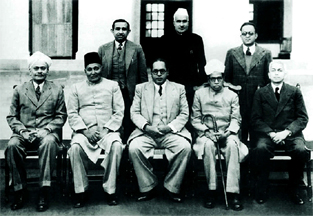
    On the 14 August 1947 meeting of the Assembly, a proposal for forming various committees was presented. Such committees included a Committee on Fundamental Rights, the Union Powers Committee and Union Constitution Committee. On 29 August 1947, the Drafting Committee was appointed, with Dr B. R. Ambedkar as the Chairman along with six other members assisted by a constitutional advisor. These members were Pandit Govind Ballabh Pant, Kanaiyalal Maneklal Munshi (K M Munshi, Ex- Home Minister, Bombay), Alladi Krishnaswamy Iyer (Ex- Advocate General, Madras State), N Gopalaswami Ayengar (Ex-Prime Minister, J&K and later member of Nehru Cabinet), B L Mitter (Ex-Advocate General, India), Md. Saadullah (Ex- Chief Minister of Assam, Muslim League member) and D P Khaitan (Scion of Khaitan Business family and a renowned lawyer). The constitutional advisor was Sir Benegal Narsing Rau (who became First Indian Judge in International Court of Justice, 1950-54). Later B L Mitter resigned and was replaced by Madhav Rao (Legal Advisor of Maharaja of Vadodara). On D P Khaitan’s death, T T Krishnamachari was included in the drafting committee. A draft Constitution was prepared by the committee and submitted to the Assembly on 4 November 1947, which was debated and over 2000 amendments were moved over a period of two years. Finally on 26 November 1949, the process was completed and the Constituent Assembly adopted the Constitution. 284 members signed the document and the process of constitution making was complete. This day is celebrated as National Law Day or Constitution Day.
    The assembly met in sessions open to the public, for 166 days, spread over a period of 2 years, 11 months and 18 days before adopting the Constitution, the 308 members of the assembly signed two copies of the document (one each in Hindi and English) on 24 January 1950. The original Constitution of India is hand-written with beautiful calligraphy, each page beautified and decorated by artists from Shantiniketan including Beohar Rammanohar Sinha and Nandalal Bose. The illustrations on the cover and pages represent styles from the different civilisations of the subcontinent, ranging from the prehistoric Mohenjodaro civilisation, in the Indus Valley, to the present. The calligraphy in the book was done by Prem Behari Narain Raizda. It was published in Dehra Dun, and photolithographed at the offices of Survey of India. The entire exercise to produce the original took nearly five years. Two days later, on 26 January 1950, the Constitution of India became the law of all the States and territories of India. Rs.1,00,00,000 was official estimate of expenditure on constituent assembly. It has undergone many amendments since its enactment.
    The original 1950 Constitution of India is preserved in helium cases in the Parliament house, New Delhi. There are two original versions of this – one in Hindi and the other in English.
    Structure of the Constitution
    The Constitution of India is one of the longest written constitutions in the world, originally consisting of a preamble, 395 articles, 22 parts, and 8 schedules. Over the years, it has been amended multiple times, and as of now, it comprises a preamble, 470 articles, 25 parts, and 12 schedules.
    – Preamble: The preamble declares India to be a sovereign, socialist, secular, and democratic republic. It emphasizes the ideals of justice, liberty, equality, and fraternity.
    – Parts and Articles: The Constitution is divided into various parts, each addressing specific aspects of governance and law. These include fundamental rights (Part III), directive principles of state policy (Part IV), the structure of the government (Parts V-VIII), and more.
    – Schedules: The schedules detail additional provisions like allocation of powers, lists of states and union territories, and other administrative aspects.
    Salient Features of the Indian Constitution
    – Sovereign, Socialist, Secular, and Democratic Republic: India is independent in its decision-making, upholds social and economic equality, maintains secular governance, and operates as a democracy.
    – Federal Structure with Unitary Bias: While the Constitution establishes a federal framework with powers divided between the central and state governments, it also equips the center with overriding powers during emergencies.
    – Fundamental Rights and Duties: Part III guarantees fundamental rights to citizens, including the right to equality, freedom, and protection against exploitation. Part IVA outlines the duties of citizens, fostering a sense of responsibility.
    – Directive Principles of State Policy (DPSP): These principles aim to guide the state in establishing a just society, addressing areas like health, education, and social welfare.
    – Independent Judiciary: The judiciary acts as the guardian of the Constitution and ensures the rule of law. The Supreme Court is the apex court, followed by High Courts and subordinate courts.
    – Parliamentary System of Governance: India follows a parliamentary system where the President is the constitutional head, and the Prime Minister, along with the Council of Ministers, exercises executive powers.
    – Amendment Process: The Constitution provides for flexibility through amendments. Article 368 outlines the procedure, allowing changes to adapt to evolving socio-political needs.
    Significance and Legacy
    The Constitution of India is a living document that has withstood the test of time, adapting to changes while preserving its core values. It has played a vital role in maintaining India’s unity in diversity, safeguarding individual freedoms, and fostering inclusive development. Its principles have inspired other nations and remain a testament to the vision of its framers.

  • Amendments in the Indian Constitution

    Amendments in the Indian Constitution

    The Constitution of India, adopted on January 26, 1950, is the longest written constitution in the world. It provides the fundamental legal framework for the governance of the country, outlining the structure of government, the distribution of powers, and the fundamental rights of citizens. However, like any living document, the Constitution has been subject to changes over time through amendments. Since its adoption, the Indian Constitution has undergone numerous amendments to address emerging issues, evolving political and social landscapes, and changing legal requirements.
    The Amendment Process: Article 368
    The Constitution of India provides a comprehensive mechanism for its own amendment under Article 368. This article allows Parliament to amend the Constitution, subject to certain procedures. Amendments can be initiated in either house of Parliament and must be approved by a two-thirds majority of members present and voting. Some amendments require ratification by at least half of the State Legislatures, especially those affecting federal provisions or the distribution of powers between the Union and the States.
    Over the years, the Constitution of India has been amended over 100 times, reflecting the dynamic nature of Indian democracy and the need for the Constitution to adapt to the changing needs of society.
    Key Amendments in the Indian Constitution
    The First Amendment (1951)
    The First Amendment was introduced in response to several issues arising in the early years of the Republic. The amendment aimed to limit the scope of freedom of speech and expression under Article 19 by imposing restrictions on certain grounds such as public order, decency, and morality. It also provided for the reservation of seats for scheduled castes and scheduled tribes in local bodies and expanded the grounds for restricting freedom of speech.
    The 42nd Amendment (1976)
    Often referred to as the “mini-Constitution,” the 42nd Amendment was one of the most significant overhauls of the Indian Constitution. It was passed during the Emergency period (1975-1977) under the leadership of then-Prime Minister Indira Gandhi. The amendment made sweeping changes, including:
    – Curtailment of the power of judicial review: It attempted to limit the judiciary’s power to review laws passed by Parliament.
    – Introduction of the term ‘Socialist’ and ‘Secular’: The preamble was amended to include the words “Socialist” and “Secular,” reflecting the evolving political ideology.
    – Strengthening the executive: The powers of the President were expanded, while the powers of the judiciary and legislature were diminished.
    – Promoting Fundamental Duties: The amendment introduced Fundamental Duties under Article 51A, emphasizing the moral obligations of citizens towards the nation.
    The 44th Amendment (1978)
    The 44th Amendment was a direct response to the controversial 42nd Amendment. It sought to undo many of the changes made by the earlier amendment, particularly those that limited the powers of the judiciary. Key provisions included:
    – Restoration of the right to property: The amendment reversed the 42nd Amendment’s provisions that had effectively removed the right to property as a fundamental right.
    – Strengthening the judiciary: It ensured the independence of the judiciary and reaffirmed the principle of judicial review.
    The 73rd and 74th Amendments (1992)
    The 73rd Amendment (for rural areas) and the 74th Amendment (for urban areas) introduced significant changes to the Indian system of local governance. These amendments provided for the establishment of Panchayats (rural local bodies) and Municipalities (urban local bodies) at the grassroots level. They included provisions for the direct election of representatives, reservation of seats for women, scheduled castes, and scheduled tribes, and the devolution of powers to local bodies. These amendments sought to promote democratic decentralization and empower local governance institutions.
    The 86th Amendment (2002)
    The 86th Amendment introduced major changes related to education. It made education a fundamental right for children between the ages of 6 and 14 by amending Article 21-A. This amendment provided a legal basis for the Right to Education Act (2009), which aimed to ensure free and compulsory education for all children in this age group.
    The 97th Amendment (2011)
    The 97th Amendment focused on cooperative societies and their functioning. It inserted Article 43-B, which emphasizes the promotion of cooperative societies as a means of economic development. The amendment also provided for the regulation of cooperative societies through legislation at the national level.
    The 101st Amendment (2016)
    The 101st Amendment marked a significant reform in India’s tax system with the introduction of the Goods and Services Tax (GST). The amendment laid the foundation for the implementation of GST, which replaced various indirect taxes levied by the Union and the States, providing a unified tax structure across the country. This reform aimed to simplify the tax system, increase tax compliance, and boost economic growth.
    The 103rd Amendment (2019)
    The 103rd Amendment introduced a provision for economically weaker sections (EWS) of society, allowing them to access 10% reservation in educational institutions and government jobs. This amendment was seen as an effort to provide greater opportunities for disadvantaged groups, particularly those who did not fall under the existing reservation categories based on caste.
    The 104th Amendment (2020)
    The 104th Constitutional Amendment Act of 2020 extends SCs/STs seat reservations in the Lok Sabha and State Assemblies until 2030 while abolishing the Anglo-Indian reserved seats. It also amends Article 334 to reflect these changes.
    The 105th Amendment (2021)
    The 105th Amendment of India, also known as the Constitution (One Hundred and Fifth Amendment) Act, 2021, restored the power of state governments to identify socially and educationally backward classes (SEBCs). The amendment came into effect on August 18, 2021.
    The 106th Amendment (2023)
    The 106th Amendment Act of 2023 was the most recent amendment to the Constitution of India. It reserved one-third of all seats in the Lok Sabha, State Legislative Assemblies, and the Legislative Assembly of Delhi for women.

  • The History of India’s Republic Day

    The History of India’s Republic Day

    India’s Republic Day, celebrated annually on January 26, holds profound historical and cultural significance. This day marks the moment in 1950 when the Constitution of India came into effect, replacing the colonial Government of India Act (1935) and establishing India as a sovereign, socialist, secular, and democratic republic. It is a day of national pride and a tribute to the relentless struggles and sacrifices of the Indian people for self-governance and justice.
    The Road to Republic Day: Independence and Beyond
    India achieved independence from British rule on August 15, 1947. However, the newly independent nation did not have a constitution of its own and continued to be governed under the colonial Government of India Act of 1935. The need for a comprehensive legal framework that would reflect the values, aspirations, and cultural heritage of independent India became evident. To achieve this, the Constituent Assembly of India was formed in 1946, consisting of eminent leaders, thinkers, and visionaries.
    The Assembly’s task of drafting the Constitution was both monumental and meticulous. Chaired by Dr. Rajendra Prasad, the Assembly included stalwarts like Dr. B.R. Ambedkar, Jawaharlal Nehru, Sardar Vallabhbhai Patel, Maulana Abul Kalam Azad, and others. Dr. B.R. Ambedkar, as the chairman of the Drafting Committee, played a pivotal role in shaping the Constitution, earning him the title of the “Architect of the Indian Constitution.”
    After nearly three years of deliberations, debates, and revisions, the Constituent Assembly adopted the Constitution on November 26, 1949. This date is celebrated annually as Constitution Day. However, the Assembly chose January 26, 1950, as the date for the Constitution to come into effect to honor a historic milestone in India’s freedom struggle.
    The Historical Significance of January 26
    The choice of January 26 as Republic Day was deeply symbolic. On this day in 1930, the Indian National Congress, under the leadership of Jawaharlal Nehru, declared Purna Swaraj (complete independence) from British rule during its Lahore Session. This declaration was a turning point in India’s struggle for independence, inspiring millions to join the movement for self-rule. By making January 26 the date for the Constitution’s implementation, India’s leaders established a link between the freedom movement and the birth of the republic.
    The First Republic Day: A Historic Celebration
    India’s first Republic Day on January 26, 1950, was a moment of immense pride and joy. Dr. Rajendra Prasad took the oath as the first President of India, marking the transition of the nation to a fully sovereign republic. The ceremony was held in the Durbar Hall of the Rashtrapati Bhavan, and the event was celebrated with grandeur and enthusiasm across the country.
    The first Republic Day Parade was held at Irwin Amphitheatre (now Major Dhyan Chand National Stadium) in New Delhi. It was a modest affair compared to today’s grand spectacle, but it set the precedent for showcasing India’s cultural diversity and military prowess.
    The Republic Day Parade: A Symbol of Unity and Pride
    The Republic Day Parade at Rajpath in New Delhi has become the centerpiece of the celebrations. It is a vibrant display of India’s cultural heritage, military strength, and technological advancements. The parade includes:
    – Military Display: The parade features regiments of the Indian Army, Navy, and Air Force, as well as paramilitary forces. Tanks, missiles, and other defense equipment highlight India’s defense capabilities.
    – Cultural Tableaux: Each state and union territory presents a tableau depicting its unique cultural traditions, historical landmarks, and achievements.
    – Awards and Honors: The President of India confers prestigious awards such as the Padma Awards, Bharat Ratna, and gallantry awards to individuals and organizations for their exceptional contributions.
    – School Performances: Schoolchildren perform colorful dances and drills, symbolizing the country’s unity and vibrancy.
    – Flypast: The Indian Air Force concludes the parade with a breathtaking flypast, including formations and maneuvers by fighter jets.
    Republic Day Beyond Delhi: Nationwide Celebrations
    While the main event takes place in the capital, Republic Day is celebrated with equal fervor across the country. Schools, colleges, and public institutions organize flag-hoisting ceremonies, cultural programs, and patriotic events. The day begins with the President’s address to the nation, followed by flag-hoisting ceremonies and parades in various states. Local communities and organizations also engage in social and cultural activities, emphasizing national unity and pride.
    International Participation and Diplomatic Significance
    Another unique feature of Republic Day is the presence of a foreign dignitary as the Chief Guest. This tradition began in 1950, with President Sukarno of Indonesia as the first guest of honor. The presence of an international leader highlights India’s diplomatic ties and its growing stature on the global stage. Over the years, leaders from various countries, including the United States, France, Japan, and South Africa, have graced the occasion.
    Indonesian President Prabowo Subianto will be the chief guest for Republic Day 2025, marking a significant milestone in the 75th anniversary of diplomatic relations between India and Indonesia.
    Reflection and Renewal
    Republic Day is more than a celebration; it is a reminder of the responsibilities that come with freedom. The Constitution of India enshrines the principles of justice, liberty, equality, and fraternity, and it is the duty of every citizen to uphold these values. The day also serves as an opportunity to reflect on the progress made by the nation and the challenges that lie ahead. As India continues to progress as the world’s largest democracy, Republic Day serves as a beacon of hope and resilience. It is a day to reflect on the sacrifices made by the nation’s forebears and renew the commitment to building a more equitable, inclusive, and prosperous society.
    India’s Republic Day is a celebration of the nation’s achievements and a tribute to its rich history and diverse culture. It is a testament to the strength and unity of the Indian people, reminding them of their shared heritage and the collective responsibility to uphold the ideals of the Constitution. With its blend of tradition and modernity, Republic Day continues to inspire generations, fostering a sense of pride and belonging among all Indians.
    Beating the Retreat Ceremony: A Symphony of Tradition and Patriotism
    The Beating the Retreat Ceremony is an iconic event that marks the culmination of the Republic Day celebrations in India. Held annually on January 29, this majestic ceremony takes place against the awe-inspiring backdrop of the historic Vijay Chowk in New Delhi. With its grandeur and solemnity, it serves as a fitting finale to the week-long festivities that honor India’s rich heritage and democratic spirit.
    Origins of the Beating the Retreat Ceremony
    The tradition of Beating the Retreat has its roots in the 16th-century military practice of signaling the end of the day’s battle. Drummers and buglers would sound the retreat, signaling troops to disengage, return to their camps, and lower their flags. The ceremony was later adapted by the British, and India retained this tradition post-independence, imbuing it with its own cultural and patriotic essence.
    The Splendor of the Event
    The ceremony begins with the President of India, the Supreme Commander of the Armed Forces, arriving at Vijay Chowk. The area, illuminated by floodlights, is transformed into a visual spectacle. The main attraction is the synchronized performance by the bands of the Indian Army, Navy, and Air Force. These bands perform an array of martial tunes, patriotic songs, and classical Indian music, creating a harmonious blend that resonates with the audience.
    Key highlights include the soulful rendition of classics like “Abide With Me,” a favorite of Mahatma Gandhi, and the stirring strains of ‘Sare Jahan Se Achha.’ The event concludes with the lowering of the National Flag, accompanied by the playing of the National Anthem. As the flag is lowered, the illuminated Rashtrapati Bhavan, North Block, and South Block provide a mesmerizing backdrop, leaving spectators in awe.
    Cultural and Patriotic Significance
    The Beating the Retreat Ceremony is more than just a military tradition; it is a celebration of India’s unity in diversity. The music played during the event often includes compositions that reflect the nation’s varied cultural heritage. The ceremony serves as a reminder of the sacrifices made by the armed forces and instills a sense of pride and patriotism among citizens.

  • Makar Sankranti: A celebration of harvest and renewal

    Makar Sankranti: A celebration of harvest and renewal

    Makar Sankranti, one of the most celebrated festivals in India, marks the transition of the Sun into the zodiac sign of Capricorn (“Makara” in Sanskrit). This celestial event signifies the end of the winter solstice and the beginning of longer days. Observed annually on January 14th or 15th, depending on the solar calendar, Makar Sankranti is deeply rooted in agricultural traditions, astronomical significance, and cultural diversity. Across the country, this festival is celebrated with varied customs, rituals, and regional names, reflecting the rich tapestry of India’s heritage.
    The Astronomical and Agricultural Significance of Makar Sankranti
    Makar Sankranti is an astronomically significant day as it marks the Sun’s northward journey, known as “Uttarayana.” This transition heralds the end of the darkest nights and the arrival of longer days, symbolizing enlightenment, prosperity, and new beginnings. Uttarayana is considered highly auspicious in Hinduism, and many believe it to be a time when divine interventions are more accessible.
    Agriculturally, Makar Sankranti is a harvest festival. It is a time to thank nature and the Sun for a bountiful harvest and pray for future prosperity. This festival is particularly important in agrarian societies where the rabi crop (winter crop) is ready for harvesting. Farmers celebrate the fruits of their labor with joy and gratitude, making it a period of communal festivity.
    Regional Variations in Celebration
    Makar Sankranti is celebrated under various names and with unique customs across India. Despite the differences, the underlying themes of gratitude, renewal, and community bonding remain consistent.
    Pongal in Tamil Nadu
    In Tamil Nadu, Makar Sankranti coincides with the four-day harvest festival of Pongal. Each day has a unique significance:
    – Bhogi: The first day is dedicated to cleaning and discarding old belongings, symbolizing a fresh start.
    – Thai Pongal: The second day, Thai Pongal, involves boiling freshly harvested rice with milk and jaggery in clay pots. This dish, also called Pongal, is offered to the Sun God as a gesture of gratitude.
    – Mattu Pongal: On the third day, cows and bulls, which play a vital role in agriculture, are honored and decorated.
    – Kaanum Pongal: The final day is dedicated to family reunions and social gatherings.
    Lohri in Punjab
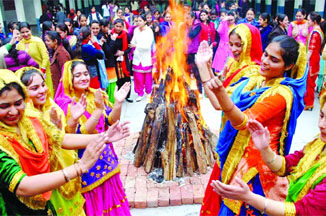
    In Punjab, Makar Sankranti is celebrated as Lohri, a festival primarily associated with the harvesting of sugarcane. The evening before Makar Sankranti, people light bonfires, sing traditional songs, and dance to the beats of dhol. The bonfire symbolizes the burning of negativity, and offerings of sesame seeds, jaggery, and popcorn are made to the fire as a gesture of gratitude.
    Uttarayan in Gujarat
    Gujarat celebrates Makar Sankranti as Uttarayan, a festival known for its vibrant kite-flying tradition. The skies are filled with colorful kites, symbolizing freedom and joy. The International Kite Festival, held in Ahmedabad, attracts participants from around the globe. Special dishes like “undhiyu” (a mixed vegetable dish) and “jalebi” are prepared to mark the occasion.
    Sankranti in Karnataka and Andhra Pradesh
    In Karnataka and Andhra Pradesh, Makar Sankranti is a three-day festival:
    – Bhogi: Similar to Tamil Nadu, Bhogi marks the cleaning of homes and the burning of unwanted items.
    – Sankranti: The main day involves offering prayers, preparing special dishes like “ellu-bella” (a mixture of sesame seeds, jaggery, coconut, and peanuts), and exchanging these with friends and family.
    – Kanuma: On the third day, cattle are honored, and agricultural tools are worshipped.
    Magh Bihu in Assam
    In Assam, Makar Sankranti is celebrated as Magh Bihu or Bhogali Bihu. It is a harvest festival marked by feasting, bonfires, and traditional games. People build temporary huts called “meji” and “bhelaghar” using bamboo and straw, where community feasts are held. The meji is later burned as a ritual to mark the end of the celebrations.
    Poush Sankranti in Bengal
    In West Bengal, Makar Sankranti is known as Poush Sankranti. Devotees take holy dips in the Ganges and other rivers to purify their souls. The famous Ganga Sagar Mela, held at the confluence of the Ganges and the Bay of Bengal, attracts millions of pilgrims. Traditional sweets made from date palm jaggery and coconut, such as “pithe” and “patishapta,” are integral to the celebrations.
    Other Regional Variations
    – Maharashtra: People exchange sweets made of sesame seeds and jaggery, saying, “Tilgul ghya, god god bola” (Take sesame and jaggery, and speak sweetly).
    – Odisha: Makar Sankranti is observed with offerings of rice, jaggery, and sugarcane to deities, and kite flying is a popular activity.
    – Bihar and Jharkhand: People prepare “dahi-chura” (flattened rice with yogurt) and “tilkut” (sesame sweet) to celebrate.
    – Himachal Pradesh: Known as Magha Saaji, this day is marked by community feasts and traditional dances.
    Rituals and Symbolism
    The rituals of Makar Sankranti are steeped in symbolism, reflecting the spiritual and cultural ethos of Indian society.
    Holy Baths and Pilgrimages
    Taking a holy dip in rivers like the Ganges, Yamuna, Godavari, or Krishna is believed to cleanse sins and purify the soul. Pilgrimages to sacred sites such as Ganga Sagar and Prayagraj hold special significance.
    Worship and Offerings
    Devotees offer prayers to the Sun God (Surya) and express gratitude for life-sustaining energy. Special offerings include sesame seeds, jaggery, sugarcane, and rice.
    Charity (Daan)
    Charitable acts are considered highly meritorious during Makar Sankranti. People donate food, clothes, and money to the needy, embodying the spirit of sharing and compassion.
    Kite Flying
    Kite flying, a prominent activity during Makar Sankranti, is a metaphor for soaring aspirations and freedom. It’s also a way to enjoy the outdoors and bask in the Sun’s energy.
    Bonfires
    Lighting bonfires is a tradition observed in northern India. It symbolizes the destruction of evil and the warmth of community bonding.
    Culinary Delights
    Food plays a central role in Makar Sankranti celebrations. Traditional dishes vary by region but often feature sesame seeds, jaggery, and rice. These ingredients are not only nutritious but also hold symbolic significance:
    – Sesame Seeds (Til): Represent warmth and togetherness.
    – Jaggery (Gur): Symbolizes sweetness and prosperity.
    – Rice: Represents fertility and abundance.
    Popular dishes
    – Tilgul Ladoo (Maharashtra): Sweet balls made from sesame seeds and jaggery.
    – Pongal (Tamil Nadu): A sweet or savory rice dish.
    – Pithe (Bengal): Rice flour pancakes stuffed with coconut and jaggery.
    – Undhiyu (Gujarat): A mixed vegetable dish cooked with spices.
    The Global Appeal of Makar Sankranti
    While deeply rooted in Indian traditions, Makar Sankranti’s themes of gratitude, renewal, and community resonate universally. The festival is celebrated by Indian diaspora communities worldwide, bringing together people of diverse backgrounds to share in the joy of the harvest.Makar Sankranti is more than just a festival; it is a celebration of life, nature, and the cosmic order. It bridges the gap between the physical and spiritual, the individual and the community, and the past and the future. As the Sun begins its northward journey, Makar Sankranti serves as a reminder to embrace change, express gratitude, and spread joy. In its myriad forms, this festival captures the essence of India’s unity in diversity, offering a timeless message of hope and renewal.

  • Celebrating Lohri: A night of bonfires, joy and togetherness

    Celebrating Lohri: A night of bonfires, joy and togetherness

    Lohri, one of the most cherished festivals in Northern India, marks the culmination of winter and the onset of the harvest season. Celebrated predominantly in Punjab, Haryana, Himachal Pradesh, and parts of Jammu and Kashmir, this vibrant festival holds immense cultural, social, and spiritual significance. With roots tracing back to agrarian traditions and ancient folklore, Lohri is a joyous occasion that unites communities, honors nature, and celebrates life.
    The Historical and Mythological
    Roots of Lohri
    The origins of Lohri are steeped in history, mythology, and folklore. While the precise genesis of the festival is debated, several narratives offer insights into its rich heritage.
    Agrarian Significance
    Lohri is primarily a harvest festival, celebrated to mark the end of the winter solstice and the beginning of longer days. The festival coincides with the harvesting of rabi crops, particularly sugarcane, wheat, and mustard. Farmers rejoice in the bounty of nature and express gratitude to the Sun God for blessing their fields with abundance.
    Dulla Bhatti’s Heroic Legacy:
    A prominent legend associated with Lohri is that of Dulla Bhatti, a 16th-century folk hero who symbolized resistance against Mughal oppression. Known as the “Robin Hood of Punjab,” Dulla Bhatti was celebrated for his bravery and acts of kindness. He stood up against the injustices of the Mughal empire, particularly the abduction and exploitation of young women.
    Dulla Bhatti is most famously remembered for rescuing girls from being forcibly taken and arranging their marriages. He provided dowries for these girls, ensuring their dignity and safety. Songs sung during Lohri celebrations often honor his deeds. A popular Punjabi Lohri song goes as follows:
    “Sunder mundriye ho!
    Tera kaun vichara ho!
    Dulla Bhatti wala ho!
    Dulle di dhee vyahi ho!
    Ser shakkar payi ho!”
    This song narrates the tale of Dulla Bhatti, highlighting his role in saving young women and arranging their marriages. His legacy is a reminder of the importance of justice, compassion, and community support.
    Mythological Connections
    Some believe that Lohri is linked to tales from Hindu mythology, including the story of Prahlada and Holika. Though primarily associated with Holi, this tale underscores the triumph of devotion and righteousness over evil-values that resonate with Lohri’s spirit.
    The Significance of Fire
    in Lohri Celebrations
    Central to Lohri is the communal bonfire, symbolizing warmth, light, and togetherness. As families and friends gather around the crackling flames, they perform rituals steeped in meaning:
    Gratitude to the Sun God:
    The bonfire is a tribute to Agni (the fire deity) and Surya (the sun deity). Offerings of til (sesame seeds), gur (jaggery), popcorn, and peanuts are made to express gratitude and seek blessings for prosperity.
    Burning Away Negativity
    The fire represents purification, burning away past hardships and negativity while welcoming new beginnings.
    Community Bonding
    Singing traditional songs, dancing, and sharing stories around the bonfire foster a sense of unity and belonging. The ambiance radiates warmth, much like the values Lohri celebrates.
    The Joyful Customs and Traditions of Lohri
    Lohri is not merely a festival but an experience that encapsulates the essence of Punjabi culture. From vibrant attire to foot-tapping music, every aspect of the celebration is steeped in tradition.
    Traditional Attire
    Men don kurta-pajamas paired with colorful turbans, while women wear vibrant salwar suits or lehengas adorned with traditional Phulkari embroidery. The attire reflects the colorful spirit of the festival.
    Folk Music and Dance
    The rhythmic beats of the dhol (drum) set the stage for exuberant performances of Bhangra and Gidda. These dances, characterized by energetic movements and synchronized steps, are expressions of joy and gratitude.
    Singing Lohri Songs
    Children and adults alike sing traditional Lohri songs, many of which pay homage to Dulla Bhatti. Groups visit homes, singing and receiving sweets, grains, and money in return-a practice akin to caroling.
    Festive Delicacies
    A Lohri feast is incomplete without its iconic dishes. Sarson ka saag (mustard greens) and makki di roti (cornbread) take center stage, accompanied by sweets like rewri, gajak, and pinnis. These delicacies celebrate the harvest and the culinary heritage of Punjab.
    Lohri and the Celebration
    of New Beginnings
    Lohri holds special significance for families celebrating new milestones. For newlyweds, the festival marks their first major celebration together, symbolizing the beginning of a prosperous life. Similarly, the birth of a child is celebrated with grandeur, as Lohri embodies fertility, growth, and abundance.
    Regional Variations and Similar Festivals
    While Lohri is predominantly celebrated in Punjab and its neighboring regions, its essence transcends geographical boundaries. Similar festivals are observed across India, each with unique customs and names:
    – Makar Sankranti (celebrated in most parts of India) marks the transition of the sun into Capricorn.
    – Pongal in Tamil Nadu honors the Sun God and includes the boiling of freshly harvested rice.
    – Bihu in Assam celebrates the harvest with dance and music.
    – Uttarayan in Gujarat is marked by kite flying.
    Despite regional differences, these festivals share a common theme of gratitude, renewal, and community.
    The First Lohri
    Lohri, the bonfire harvest festival of Punjab celebrated in the month of Magh, is symbolic of new beginnings. The first time Lohris are especially celebrated with pomp and grandeur. Friends and relatives gather around the fire and perform Gidda and Bhangra to the beat of Dhol, the drums of Punjab.
    The First Lohri of a Bride
    The celebration takes place in the in-law’s house with a grand feast for family and friends. The bride dresses in traditional attire with solah sringar, 16 things that a bride generally wears. The new bride and groom sit in a central place together as people approach them with wishes and gifts. The parents-in-law present the bride with new clothes and jewellery.
    The First Lohri of a New-born
    The first Lohri of a new-born is of immense significance where the family and friends participate to bless the child with a prosperous and a healthy future.
    Many conduct an elaborate get-together at the paternal home, where invitation cards are sent in advance.Family and friends bring along gifts for the child as well as the new mother. The maternal and paternal grandparents shower the child with gifts.
    Lohri Rituals
    Lohri is primarily the harvest festival of the Punjabis. This festival denotes the harvesting of the Rabi crops and hence all the farmers get together in order to thank god for giving them such a wonderful harvest.
    The rituals related to Lohri symbolize the attachment of the people with Mother Nature. A few days before the festival, youngsters get together in groups and go round their localities singing folk songs.
    Doing this they also collect firewood and money for the bonfire that is scheduled on the night of Lohri. On the special day, offerings of phulley (popcorn), moongphali (peanuts) and rewri (a sweet delicacy made out of jaggery and sesame seed) are offered to the fire
    The men and women go round the fire and bow before it in reverence. Lohri holds special importance when there is a special occasion in the family like marriage or childbirth.
    Lohri Traditions
    Lohri is primarily the harvest festival of the Punjabis. This festival denotes the harvesting of the Rabi crops and hence all the farmers get together in order to thank god for giving them such a wonderful harvest.
    The rituals related to Lohri symbolize the attachment of the people with Mother Nature.
    A few days before the festival, youngsters get together in groups and go round their localities singing folk songs.
    Doing this they also collect firewood and money for the bonfire that is scheduled on the night of Lohri. On the special day, offerings of phulley (popcorn), moongphali (peanuts) and rewri (a sweet delicacy made out of jaggery and sesame seed) are offered to the fire.
    The men and women go round the fire and bow before it in reverence. Lohri holds special importance when there is a special occasion in the family like marriage or childbirth.
    Lohri Legends
    Like all Indian festivals, Lohri also has some legends and lore attached to it.
    One of the many interesting legends has it that in a place that lies between Gujaranwala and Sialkot, there was a thick forest known as Rakh.
    The forest was the home of Dulla Bhatti, a dacoit who was considered as the Robin Hood of Punjab. This brave and generous man was always helpful to the needy.
    During the reign of Mughal Emperor Jahangir, a jealous Hindu spread a rumour that his niece was very beautiful and would do credit to the Muslim harem.
    On hearing this, the Mughal officers wanted to carry her off forcibly. The girl’s father was extremely worried and sought the protection of Dulla Bhatti.
    Dulla at once got her married to a young Hindu boy at a simple ceremony in the forest. He lit the sacred fire in keeping with the Hindu custom. Since there was no priest to chant the holy mantras, he broke into a hilarious song composed extempore to add cheer to the occasion. This song is sung even today on the occasion.
    The best way of celebrations in this chilly whether could be to sit around a bonfire and enjoy. Well, Lohri Celebrations would be the best festival to celebrate and spread the warmth of love and happiness among all your near and dear ones in this chilly weather. Lohri is majorly celebrated in Punjab and north Indian states on 13th January and is considered to be the harvesting festival of Punjab. Lohri is not just a festival for people of Punjab but it is a symbol of life. Several hopes of farmers are associated with this festival of Lohri as the fields promise a golden yield to the farmers.
    Newly wed couples and all those couples who have a newborn baby celebrate Lohri but nowadays it is seen that most of the people celebrate this festival of Lohri as an occasion of get together, to spend some time with their near and dear ones and enjoy the celebrations.
    Children start collecting firewoods and wooden twigs one week before the festival that are used for burning Lohri .
    On the Lohri day all the firewoods are arranged in a circular manner in such a way that it makes a huge bonfire.
    Children visit each and every house of their locality inviting all he people for the Lohri celebrations and asking for their contributions. While visiting every house children sing a Lohri song, making everyone feel that the festival of Lohri is around the corner. The traditional food cooked on the Lohri day is sarson ka saag and makki ki roti and rau di kheer is served as a dessert.
    People dress themselves in new clothes and in the night they gather around the bonfire to light it. People pray in front of the burning bonfire and put til (gingelly), moongphali (peanuts), popcorns and chirwa (beaten rice) in it, as all these eatables are considered as the Lohri prasad.People greet each other wishing a very happy Lohri and spread the feeling of love and happiness all around.
    Lohri in Modern Times
    In today’s fast-paced world, Lohri has evolved while retaining its traditional essence. Urban celebrations often include elaborate parties with a mix of traditional and contemporary elements. The festival has also gained recognition on a global scale, with Punjabi communities around the world celebrating Lohri with zeal, bringing a slice of their culture to international shores.
    Environmental Consciousness and Lohri
    As awareness about environmental conservation grows, many communities are rethinking traditional practices associated with Lohri. Eco-friendly celebrations include using sustainable materials for bonfires, reducing waste, and promoting tree planting to counter deforestation.
    The Universal Message of Lohri
    Beyond its cultural and regional significance, Lohri embodies values that resonate universally. It reminds us to cherish our roots, embrace community, and express gratitude for the blessings of life. In a world often divided by differences, Lohri’s message of unity and togetherness serves as a beacon of hope.
    Lohri is more than a festival; it is a celebration of life, heritage, and the eternal bond between humanity and nature. Its customs and traditions are a testament to the resilience and vibrancy of Punjabi culture. Whether through the warmth of the bonfire, the joyous beats of the dhol, or the shared laughter of loved ones, Lohri captures the spirit of a community that knows how to celebrate with heart and soul. As we light the bonfires and sing traditional songs, we honor the past, celebrate the present, and look forward to a future filled with hope, prosperity, and joy.

  • Relevance of Swami Vivekananda as Youth Icon in Modern Time

    Relevance of Swami Vivekananda as Youth Icon in Modern Time

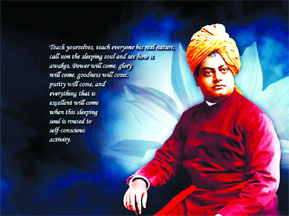
    Swami Vivekananda, a spiritual leader, had a deep insight into modern education and spiritual learning; in simple words, he emphasized the blending of modern education with Indian spirituality.
    Vivekananda was a firm believer in education as a tool for human advancement. His speeches and writings are replete with references to the plight of the masses as a result of the denial of literacy and education to them. He was particularly shocked by the degree of ignorance and superstition prevalent in rural regions due to a lack of literacy and education. He was also harshly critical of the educational system, citing its western slant and a lack of focus on the development of mental capacity and moral character in its students. In addition, he advocated for the universalization of literacy, development, and mass education. He desired a comprehensive reorientation of the educational system to make it an integrated man-making and character-building system, with a focus on national pride, love for the masses, self-confidence, strength, and will power, and cultivation of the intellect rather than simple recollection.
    Swami Vivekananda’s scheme of youth education is comprehensive education that aims to develop body, mind and soul from a socio-economic perspective, which destroys inequality between men and women, casteism and communalism, ethnic and sub-national, regionalism and national differences. When he speaks of ‘body’, he lays stress on physical training, good living conditions, a balanced diet, in a word, complete satisfaction of all physical hunger. All of this is possible only when the youth are employed and earning a stable income. For this, youth need to develop agriculture with the help of Western technology, and the promotion of small-scale and cottage industries with the use of financial assistance from the state to become “Atmanirbhar”.
    Youth must have sound mental health, “Be strong my young friends, that is my advice to you. You will be nearer to heaven through football than through the study of the Gita”. This line reflects a story when a young lad visited Swamiji and asked him to teach meditation. He says, go and play, do some physical exercise, and then I will teach you. He always promotes the physical well-being of youth, as it’s a focus proverb – healthy mind stays in a healthy body. He wants youth to be as soft as Krishna playing the flute and as masculine as Hanuman.
    Vivekananda believes in the dispersion of positive thoughts and values among the youths; he says: “If you can give them positive thoughts, then people will grow up to be a man and learn to stand on their own legs”.
    That’s why in the present time, it is necessary to empower the weakest, most neglected and degraded societies’ youth so that they can contribute to nation-building. Only positive education can do that; however, if seen in the name of empowerment, youths are divided into all sorts of instruments that promote negative thought processes (hatred and enmity between different groups) that are baked inside the universities and schools. As a result, it creates disharmony and conflict, so youth must try to believe in solidarity and cohesion.
    Swamiji says, “Religion deals with the truths of the metaphysical world just as chemistry, and the other natural sciences deal with the truths of the physical world”. Youth should try to read and learn basics from ‘The book of Nature’, i.e. Chemistry and Physics. In modern times youth are often ignorant of technological sciences too as they are busy reading the wrong book, i.e. ‘The book of passing marks’. At the same time, techno-geek youth are often ignorant of religion and its dimensions. They too read the wrong books, i.e. ‘The book without interior knowledge’. The book from which religiosity can be learned is the youth’s mind and heart.
    While speaking of ‘mind’, Swamiji laid stress on discipline, fearlessness, passion for helping others, commitment to human and social values and a continuous effort to realise oneself through social service and meditation. The final stage of education lies in the elevation of the body and mind up to the ‘soul’ when there is the realization of ‘Universal Unity’. So physical and mental stages of the educational curriculum end in the spiritual step. This spiritualism is the final identity of a layman and woman and not that of a monk and seer only. So it is ‘Practical Vedanta’. We notice a two-way dynamic process here: One, is essentially inward, and the other is entirely social. This blending of the two in a harmonious fashion has been possible through a synthesis of religion and philosophy.
    Character Education
    Education is a building block of character. It is not gathering or absorbing knowledge; it is the encapsulation of good values. Character imparts wisdom which results in attaining enlightenment. And the goal of life should be unselfishness and living for others. Life is all about sacrifice. He always connects to youths by: “This life is short, the vanities of the world are transient, but they alone live who live for others, the rest are more dead than alive”. Our life is merely a collection of good or bad habits; these habits enterprise characters as a personality that societies continuously monitor and reflect an impression of oneself. In the 21st century, the modern economic and education system has created an environment of stress, so inculcating one good thought and habit, rather than having dozens of thoughts, and trying to implement it in one’s own life is the best method of achieving enlightenment.
    Right Education
    Right education is critical for youths, as we have been colonised for more than 200 years, creating a mindset of slavery. Swamiji says during his interaction: “Getting by heart the thoughts of others in a foreign language and stuffing your brain with them and taking some universities degree, you consider yourself educated”. As rote learning and sluggish thinking do not produce the mind that a developing nation requires. Such educated youth are a burden on society. They even cannot earn a decent living for themselves and their family. Unskilled youth start depending on the government dole, and the process of man-making gets hampered.
    Science and Religion
    Swami Vivekananda always mentions that: “Science is nothing but the finding of unity”. Once science reaches the state of unity, further progress would stop as it would have reached its goal. ‘Chemistry’ would not progress further when it has discovered a single element out of which others can be made. Progress of ‘Physics’ stops when it finds a single source of energy out of which all the others are made; the manifestation of science and religion becomes unity when the manifestation of unity will discover the ‘God’; who is the only ‘divine’, living in the universe of mortals. The one who is constant in a mortal and ever-changing world is only “Him”. The One “Him” who is the only soul out of which all souls are made the concept of universal religion takes place. Any mischievous manifestations of “Him” will be disastrous for youth and the nation.
    After accumulating the above-mentioned qualities comes a part of religion. Once a youth is physically strong and emotionally intense, then they can preserve the realisation of universal religion where Vedanta and the evolution of peaceful religion can be promoted. This religion is distinct from dogmas, rituals and misconceptions of knowledge. Swamiji believes in religious pluralism with scientific temperament, where Western understanding of science is taught in college and religion at home, society and religious institutions. However, he never wants youth to convert to another religion, and practice the path of Dharma from the eyes of Vedanta.
    Thus, education is a man-making process rather than a life-destroying enterprise; with the right education, characters are built, which help to counter bad habits. For youth, education is not only the development of character but also develops leadership qualities and personalities.
    The youth must advocate for the entire development of physical, mental, emotional, leadership qualities and religiosity which was once the idea of the education system of Vishwaguru. The principle of ‘Vasudhaiva Kutumbakam’, with the blending of modern technology and man-making, must be focused on youth to contribute to nation-building.
    Source: Indica Today

  • Swami Vivekananda: A Visionary Leader and Spiritual Luminary

    Swami Vivekananda: A Visionary Leader and Spiritual Luminary

    SWAMI VIVEKANANDA’S BIRTHDAY FALLS ON JANUARY 12 AND IS CELEBRATED AS NATIONAL YOUTH DAY ACROSS INDIA

    Swami Vivekananda, born Narendranath Datta, was a towering figure in the world of spirituality, philosophy, and Indian nationalism. A disciple of the revered mystic Sri Ramakrishna Paramahamsa, Vivekananda played a pivotal role in introducing Indian philosophies such as Vedanta and Yoga to the Western world. His eloquence, charisma, and vision of a united humanity have left an indelible mark on both the East and the West.
    Early Life and Education
    Swami Vivekananda was born on January 12, 1863, in Calcutta (now Kolkata), India, to Vishwanath Datta, an attorney, and Bhuvaneshwari Devi, a devout homemaker. Narendranath was the couple’s sixth child, and from an early age, he displayed prodigious intelligence and a deep spiritual inclination.
    Education and Early Influences
    Narendranath attended Ishwar Chandra Vidyasagar’s Metropolitan Institution and later pursued a bachelor’s degree in arts from the General Assembly’s Institution (now known as Scottish Church College). He excelled in various subjects, including philosophy, history, and literature. His academic brilliance was complemented by a keen interest in music, gymnastics, and debating.
    During his formative years, he was deeply influenced by the spiritual texts of Hinduism, particularly the Upanishads and the Bhagavad Gita. However, he harbored a skeptical mind and sought logical explanations for religious beliefs, often questioning traditional practices.
    Meeting Sri Ramakrishna
    Narendranath’s life took a profound turn when he met Sri Ramakrishna at the Dakshineswar Kali Temple in 1881. The young seeker was initially skeptical of Ramakrishna’s spiritual experiences and teachings. Nevertheless, he was drawn to the mystic’s simplicity, profound love, and unwavering devotion to the Divine Mother.
    Sri Ramakrishna recognized Narendranath’s potential and saw in him the future leader of his spiritual mission. Under Ramakrishna’s guidance, Narendranath experienced states of deep meditation and spiritual ecstasy. Ramakrishna’s teachings of universal love, harmony among religions, and selfless service became the bedrock of Vivekananda’s philosophy.
    Transformation into Swami Vivekananda
    After Ramakrishna’s passing in 1886, Narendranath renounced worldly life and took the vows of a sannyasi, assuming the name Swami Vivekananda. Along with a group of dedicated disciples, he established a monastic order in Baranagar, near Calcutta. The order became the nucleus of the Ramakrishna Math, dedicated to spiritual practice and the propagation of Ramakrishna’s teachings.
    Journey to the West
    In 1893, Swami Vivekananda traveled to the United States to participate in the Parliament of the World’s Religions in Chicago. His address on September 11, 1893, began with the iconic words, “Sisters and Brothers of America,” which drew a standing ovation from the audience. Vivekananda spoke passionately about the universality of religion, the need for interfaith harmony, and the spiritual wisdom of India.
    Impact of the Chicago Address
    Vivekananda’s speech catapulted him to international fame. He became a sought-after speaker, delivering lectures on Vedanta, Yoga, and the synthesis of science and spirituality. His presence in the West marked the beginning of a cultural exchange that introduced Indian spirituality to a global audience.
    Founding the Ramakrishna Mission
    In 1897, Swami Vivekananda returned to India and founded the Ramakrishna Mission, an organization dedicated to social welfare and spiritual upliftment. The mission’s work encompassed education, healthcare, disaster relief, and the promotion of interfaith harmony.
    Core Ideals
    The Ramakrishna Mission is guided by the principles of selfless service, spiritual practice, and the teachings of Vedanta. Vivekananda emphasized the importance of “service to man as service to God,” advocating for the upliftment of the poor and marginalized.
    Teachings and Philosophy
    Swami Vivekananda’s teachings are a harmonious blend of spirituality, rationality, and practicality. Key aspects of his philosophy include:
    – Universal Religion: Vivekananda believed in the underlying unity of all religions and promoted interfaith dialogue.
    – Vedantic Philosophy: He emphasized the teachings of Advaita Vedanta, which proclaim the oneness of the individual soul (Atman) and the universal soul (Brahman).
    – Karma Yoga: Vivekananda advocated for selfless action as a means of spiritual realization.
    – Education: He stressed the need for holistic education that fosters character development and self-reliance.
    – Empowerment of Women: Vivekananda championed the empowerment of women, viewing them as the cornerstone of a strong society.
    Legacy
    Swami Vivekananda passed away on July 4, 1902, at the young age of 39. Despite his short lifespan, his impact on spirituality, education, and social reform has been immense.
    Influence on Indian Nationalism
    Vivekananda’s call for spiritual awakening and national pride inspired several leaders of the Indian independence movement, including Mahatma Gandhi, Subhas Chandra Bose, and Bal Gangadhar Tilak.
    Global Recognition
    Today, Swami Vivekananda is revered as a global spiritual icon. His teachings continue to inspire millions, and his birthday is celebrated as National Youth Day in India.
    The young monk and his teachings have been an inspiration to many, and his words have become goals of self-improvement especially for the youth of the country.
    National Youth Day (Yuva Diwas or Swami Vivekananda Birthday) is celebrated with the great joy and enthusiasm in India every year on 12th of January. It is celebrated to commemorate the birthday of Swami Vivekananda, maker of the modern India. It was first declared by the Government of India in the year 1984 to celebrate the birthday of Swami Vivekananda as the National Youth Day. Since then (1985), it is started celebrating as the National Youth Day all over the country.
    Swami Vivekananda’s life and teachings transcend the boundaries of time, culture, and geography. He envisioned a world where humanity could rise above narrow divisions and work collectively toward the realization of its highest potential. Through his profound spirituality, unwavering commitment to service, and visionary leadership, Swami Vivekananda has left an indelible legacy that continues to illuminate the path for generations to come.

  • Thanksgiving- A Time to Share And Celebrate

    Thanksgiving- A Time to Share And Celebrate

    Thanksgiving Day, one of the United States’ most celebrated holidays, is here (November 28, 2024). Celebrated annually on the fourth Thursday of November, this day is dedicated to the harvest and other blessings of the past year. The day, associated with fun, food, and football, is mostly celebrated in the United States and Canada. On Thanksgiving Day, traditionally, the farmers thanked God for their autumn harvest.
    The 16th President of the United States, Abraham Lincoln, who guided the nation through the Civil War, originally declared Thanksgiving a holiday and a day off for employees in 1863. Christmas shopping also starts on Thanksgiving Day, which comes before Black Friday.
    Families and friends gather for a meal and play games and have fun on Thanksgiving Day. Pumpkin pie, cranberry sauce, potatoes, stuffing, and roast turkey are all staples. Families spend time together while playing a game or watching football.
    Thanksgiving at Plymouth
    In September 1620, a small ship called the Mayflower left Plymouth, England, carrying 102 passengers—an assortment of religious separatists seeking a new home where they could freely practice their faith and other individuals lured by the promise of prosperity and land ownership in the “New World.” After a treacherous and uncomfortable crossing that lasted 66 days, they dropped anchor near the tip of Cape Cod, far north of their intended destination at the mouth of the Hudson River. One month later, the Mayflower crossed Massachusetts Bay, where the Pilgrims, as they are now commonly known, began the work of establishing a village at Plymouth.
    Throughout that first brutal winter, most of the colonists remained on board the ship, where they suffered from exposure, scurvy and outbreaks of contagious disease. Only half of the Mayflower’s original passengers and crew lived to see their first New England spring. In March, the remaining settlers moved ashore, where they received an astonishing visit from a member of the Abenaki tribe who greeted them in English.
    Several days later, he returned with another Native American, Squanto, a member of the Pawtuxet tribe who had been kidnapped by an English sea captain and sold into slavery before escaping to London and returning to his homeland on an exploratory expedition. Squanto taught the Pilgrims, weakened by malnutrition and illness, how to cultivate corn, extract sap from maple trees, catch fish in the rivers and avoid poisonous plants. He also helped the settlers forge an alliance with the Wampanoag, a local tribe, which endured for more than 50 years and remains one of the few examples of harmony between European colonists and Native Americans.
    When Was the First Thanksgiving?
    In November 1621, after the Pilgrims’ first corn harvest proved successful, Governor William Bradford organized a celebratory feast and invited a group of the fledgling colony’s Native American allies, including the Wampanoag chief Massasoit. Now remembered as America’s “first Thanksgiving”—although the Pilgrims themselves may not have used the term at the time—the festival lasted for three days. While no record exists of the first Thanksgiving’s exact menu, much of what we know about what happened at the first Thanksgiving comes from Pilgrim chronicler Edward Winslow, who wrote:
    “Our harvest being gotten in, our governor sent four men on fowling, that so we might after a special manner rejoice together, after we had gathered the fruits of our labors; they four in one day killed as much fowl, as with a little help beside, served the Company almost a week, at which time amongst other Recreations, we exercised our Arms, many of the Indians coming amongst us, and amongst the rest their greatest king Massasoit, with some ninety men, whom for three days we entertained and feasted, and they went out and killed five Deer, which they brought to the Plantation and bestowed on our Governor, and upon the Captain and others. And although it be not always so plentiful, as it was at this time with us, yet by the goodness of God, we are so far from want, that we often wish you partakers of our plenty.”
    Historians have suggested that many of the dishes were likely prepared using traditional Native American spices and cooking methods. Because the Pilgrims had no oven and the Mayflower’s sugar supply had dwindled by the fall of 1621, the meal did not feature pies, cakes or other desserts, which have become a hallmark of contemporary celebrations
    Origins of Thanksgiving National Holiday
    Pilgrims held their second Thanksgiving celebration in 1623 to mark the end of a long drought that had threatened the year’s harvest and prompted Governor Bradford to call for a religious fast. Days of fasting and thanksgiving on an annual or occasional basis became common practice in other New England settlements as well.
    During the American Revolution, the Continental Congress designated one or more days of thanksgiving a year, and in 1789 George Washington issued the first Thanksgiving proclamation by the national government of the United States; in it, he called upon Americans to express their gratitude for the happy conclusion to the country’s war of independence and the successful ratification of the U.S. Constitution. His successors John Adams and James Madison also designated days of thanks during their presidencies.

    In 1817, New York became the first of several states to officially adopt an annual Thanksgiving holiday; each celebrated it on a different day, however, and the American South remained largely unfamiliar with the tradition.
    In 1827, the noted magazine editor and prolific writer Sarah Josepha Hale—author, among countless other things, of the nursery rhyme “Mary Had a Little Lamb”—launched a campaign to establish Thanksgiving as a national holiday. For 36 years, she published numerous editorials and sent scores of letters to governors, senators, presidents and other politicians, earning her the nickname the “Mother of Thanksgiving.”
    Abraham Lincoln finally heeded her request in 1863, at the height of the Civil War, in a proclamation entreating all Americans to ask God to “commend to his tender care all those who have become widows, orphans, mourners or sufferers in the lamentable civil strife” and to “heal the wounds of the nation.”
    He scheduled Thanksgiving for the final Thursday in November, and it was celebrated on that day every year until 1939 when Franklin D. Roosevelt moved the holiday up a week in an attempt to spur retail sales during the Great Depression. Roosevelt’s plan, known derisively as Franksgiving, was met with passionate opposition, and in 1941 the president reluctantly signed a bill making Thanksgiving the fourth Thursday in November.
    Thanksgiving Food
    In many American households, the Thanksgiving celebration has lost much of its original religious significance; instead, it now centers on cooking and sharing a bountiful meal with family and friends. Turkey, a Thanksgiving staple so ubiquitous it has become all but synonymous with the holiday, may or may not have been on offer when the Pilgrims hosted the inaugural feast in 1621.
    Today, however, nearly 90 percent of Americans eat the bird—whether roasted, baked or deep-fried—on Thanksgiving, according to the National Turkey Federation. Other traditional foods include stuffing, mashed potatoes, cranberry sauce and pumpkin pie. Volunteering is a common Thanksgiving Day activity, and communities often hold food drives and host free dinners for the less fortunate.
    Macy’s Thanksgiving Day Parade
    Parades have also become an integral part of the holiday in cities and towns across the United States. Presented by Macy’s department store since 1924, New York City’s Thanksgiving Day parade is the largest and most famous, attracting more than 3 million spectators along its 2.5-mile route and drawing an enormous television audience. It typically features marching bands, performers, elaborate floats conveying various celebrities and giant balloons shaped like cartoon characters.
    Beginning in the mid-20th century and perhaps even earlier, the president of the United States has “pardoned” one or two Thanksgiving turkeys each year, sparing the birds from slaughter and sending them to a farm for retirement. A number of U.S. governors also perform the annual turkey pardoning ritual.
    Thanksgiving Controversies
    For some scholars, the jury is still out on whether the feast at Plymouth really constituted the first Thanksgiving in the United States. Indeed, historians have recorded other ceremonies of thanks among European settlers in North America that predate the Pilgrims’ celebration.
    In 1565, for instance, the Spanish explorer Pedro Menéndez de Avilé invited members of the local Timucua tribe to a dinner in St. Augustine, Florida, after holding a mass to thank God for his crew’s safe arrival. On December 4, 1619, when 38 British settlers reached a site known as Berkeley Hundred on the banks of Virginia’s James River, they read a proclamation designating the date as “a day of thanksgiving to Almighty God.”
    Some Native Americans and many others take issue with how the Thanksgiving story is presented to the American public, and especially to schoolchildren. In their view, the traditional narrative paints a deceptively sunny portrait of relations between the Pilgrims and the Wampanoag people, masking the long and bloody history of conflict between Native Americans and European settlers that resulted in the deaths of tens of thousands. Since 1970, protesters have gathered on the day designated as Thanksgiving at the top of Cole’s Hill, which overlooks Plymouth Rock, to commemorate a “National Day of Mourning.” Similar events are held in other parts of the country.
    Thanksgiving’s Ancient Origins
    Although the American concept of Thanksgiving developed in the colonies of New England, its roots can be traced both to Native Americans, as well as back to the other side of the Atlantic.
    Both the Separatists who came over on the Mayflower and the Puritans who arrived soon after brought with them a tradition of providential holidays—days of fasting during difficult or pivotal moments and days of feasting and celebration to thank God in times of plenty.
    As an annual celebration of the harvest and its bounty, moreover, Thanksgiving falls under a category of festivals that spans cultures, continents and millennia. In ancient times, the Egyptians, Greeks and Romans feasted and paid tribute to their gods after the fall harvest. Thanksgiving also bears a resemblance to the ancient Jewish harvest festival of Sukkot.
    Finally, historians have noted that Native Americans had a rich tradition of commemorating the fall harvest with feasting and merrymaking long before Europeans set foot on America’s shores.


  • Jawaharlal Nehru Birth Anniversary

    Jawaharlal Nehru Birth Anniversary

    The birth anniversary of Pandit Jawaharlal Nehru, India’s first prime minister, is celebrated as Children’s Day on November 14. A champion of children’s education and rights, Nehru was honored posthumously in 1964 when the government passed a resolution designating this day as Children’s Day. This act aimed to commemorate his significant contribution to the welfare of children in society.

    Jawaharlal Nehru, the first prime minister of independent India (1947–64), was born on November 14, 1889, in Allahabad, India. He established parliamentary government and became noted for his neutralist (nonaligned) policies in foreign affairs. He was also one of the principal leaders of the Indian Independence Movement during the 1930s and ’40s.
    Early years
    Nehru was born to a family of Kashmiri Brahmans, noted for their administrative aptitude and scholarship, who had migrated to Delhi early in the 18th century. He was a son of Motilal Nehru, a renowned lawyer and leader of the Indian independence movement, who became one of Mohandas (Mahatma) Gandhi’s prominent associates. Jawaharlal was the eldest of four children, two of whom were girls. A sister, Vijaya Lakshmi Pandit, later became the first woman president of the United Nations General Assembly.
    Until the age of 16, Nehru was educated at home by a series of English governesses and tutors. Only one of those—a part-Irish, part-Belgian theosophist, Ferdinand Brooks—appears to have made any impression on him. Jawaharlal also had a venerable Indian tutor who taught him Hindi and Sanskrit. In 1905 he went to Harrow, a leading English school, where he stayed for two years. Nehru’s academic career was in no way outstanding. From Harrow he went to Trinity College, Cambridge, where he spent three years earning an honours degree in natural science. On leaving Cambridge he qualified as a barrister after two years at the Inner Temple, London, where in his own words he passed his examinations “with neither glory nor ignominy.”
    The seven years Nehru spent in England left him in a hazy half-world, at home neither in England nor in India. Some years later he wrote, “I have become a queer mixture of East and West, out of place everywhere, at home nowhere.” He went back to India to discover India. The contending pulls and pressures that his experience abroad were to exert on his personality were never completely resolved.
    Four years after his return to India, in March 1916, Nehru married Kamala Kaul, who also came from a Kashmiri family that had settled in Delhi. Their only child, Indira Priyadarshini, was born in 1917; she would later (under her married name of Indira Gandhi) also serve (1966–77 and 1980–84) as prime minister of India. In addition, Indira’s son Rajiv Gandhi succeeded his mother as prime minister (1984–89).
    Political apprenticeship
    On his return to India, Nehru at first had tried to settle down as a lawyer. Unlike his father, however, he had only a desultory interest in his profession and did not relish either the practice of law or the company of lawyers. For that time he might be described, like many of his generation, as an instinctive nationalist who yearned for his country’s freedom, but, like most of his contemporaries, he had not formulated any precise ideas on how it could be achieved.
    Nehru’s autobiography discloses his lively interest in Indian politics during the time he was studying abroad. His letters to his father over the same period reveal their common interest in India’s freedom. But not until father and son met Mahatma Gandhi and were persuaded to follow in his political footsteps did either of them develop any definite ideas on how freedom was to be attained. The quality in Gandhi that impressed the two Nehrus was his insistence on action. A wrong, Gandhi argued, should not only be condemned but be resisted. Earlier, Nehru and his father had been contemptuous of the run of contemporary Indian politicians, whose nationalism, with a few notable exceptions, consisted of interminable speeches and long-winded resolutions. Jawaharlal was also attracted by Gandhi’s insistence on fighting against British rule of India without fear or hate.
    Nehru met Gandhi for the first time in 1916 at the annual meeting of the Indian National Congress (Congress Party) in Lucknow. Gandhi was 20 years his senior. Neither seems to have made any initially strong impression on the other. Gandhi makes no mention of Nehru in an autobiography he dictated while imprisoned in the early 1920s. The omission is understandable, since Nehru’s role in Indian politics was secondary until he was elected president of the Congress Party in 1929, when he presided over the historic session at Lahore (now in Pakistan) that proclaimed complete independence as India’s political goal. Until then the party’s objective had been dominion status.
    Nehru’s close association with the Congress Party dates from 1919 in the immediate aftermath of World War I. That period saw an early wave of nationalist activity and governmental repression, which culminated in the Massacre of Amritsar in April 1919; according to an official report, 379 persons were killed (though other estimates were considerably higher), and at least 1,200 were wounded when the local British military commander ordered his troops to fire on a crowd of unarmed Indians assembled in an almost completely enclosed space in the city.
    When, late in 1921, the prominent leaders and workers of the Congress Party were outlawed in some provinces, Nehru went to prison for the first time. Over the next 24 years he was to serve another eight periods of detention, the last and longest ending in June 1945, after an imprisonment of almost three years. In all, Nehru spent more than nine years in jail. Characteristically, he described his terms of incarceration as normal interludes in a life of abnormal political activity.
    His political apprenticeship with the Congress Party lasted from 1919 to 1929. In 1923 he became general secretary of the party for two years, and he did so again in 1927 for another two years. His interests and duties took him on journeys over wide areas of India, particularly in his native United Provinces (now Uttar Pradesh state), where his first exposure to the overwhelming poverty and degradation of the peasantry had a profound influence on his basic ideas for solving those vital problems. Though vaguely inclined toward socialism, Nehru’s radicalism had set in no definite mold. The watershed in his political and economic thinking was his tour of Europe and the Soviet Union during 1926–27. Nehru’s real interest in Marxism and his socialist pattern of thought stemmed from that tour, even though it did not appreciably increase his knowledge of communist theory and practice. His subsequent sojourns in prison enabled him to study Marxism in more depth. Interested in its ideas but repelled by some of its methods—such as the regimentation and the heresy hunts of the communists—he could never bring himself to accept Karl Marx’s writings as revealed scripture. Yet from then on, the yardstick of his economic thinking remained Marxist, adjusted, where necessary, to Indian conditions.
    Struggle for Indian independence
    After the Lahore session of 1929, Nehru emerged as the leader of the country’s intellectuals and youth. Gandhi had shrewdly elevated him to the presidency of the Congress Party over the heads of some of his seniors, hoping that Nehru would draw India’s youth—who at that time were gravitating toward extreme leftist causes—into the mainstream of the Congress movement. Gandhi also correctly calculated that, with added responsibility, Nehru himself would be inclined to keep to the middle way.
    After his father’s death in 1931, Nehru moved into the inner councils of the Congress Party and became closer to Gandhi. Although Gandhi did not officially designate Nehru his political heir until 1942, the Indian populace as early as the mid-1930s saw in Nehru the natural successor to Gandhi. The Gandhi-Irwin Pact of March 1931, signed between Gandhi and the British viceroy, Lord Irwin (later Lord Halifax), signalized a truce between the two principal protagonists in India. It climaxed one of Gandhi’s more-effective civil disobedience movements, launched the year before as the Salt March, in the course of which Nehru had been arrested.
    Hopes that the Gandhi-Irwin Pact would be the prelude to a more-relaxed period of Indo-British relations were not borne out; Lord Willingdon (who replaced Irwin as viceroy in 1931) jailed Gandhi in January 1932, shortly after Gandhi’s return from the second Round Table Conference in London. He was charged with attempting to mount another civil disobedience movement; Nehru was also arrested and sentenced to two years’ imprisonment.
    The three Round Table Conferences in London, held to advance India’s progress to self-government, eventually resulted in the Government of India Act of 1935, which gave the Indian provinces a system of popular autonomous government. Ultimately, it provided for a federal system composed of the autonomous provinces and princely states. Although federation never came into being, provincial autonomy was implemented. During the mid-1930s Nehru was much concerned with developments in Europe, which seemed to be drifting toward another world war. He was in Europe early in 1936, visiting his ailing wife, shortly before she died in a sanitarium in Lausanne, Switzerland. Even at that time he emphasized that in the event of war India’s place was alongside the democracies, though he insisted that India could fight in support of Great Britain and France only as a free country.
    When the elections following the introduction of provincial autonomy brought the Congress Party to power in a majority of the provinces, Nehru was faced with a dilemma. The Muslim League under Mohammed Ali Jinnah (who was to become the creator of Pakistan) had fared badly at the polls. Congress, therefore, unwisely rejected Jinnah’s plea for the formation of coalition Congress–Muslim League governments in some of the provinces, a decision that Nehru had supported. The subsequent clash between the Congress and the Muslim League hardened into a conflict between Hindus and Muslims that was ultimately to lead to the partition of India and the creation of Pakistan.
    Jawaharlal Nehru: The Architect of Modern India
    Jawaharlal Nehru was the first Prime Minister of independent India. One of the most prominent leaders of India’s Independent Movement, Pandit Nehru is known as the architect of modern India.
    Pandit Nehru or Chacha Nehru as he was affectionately called was a nationalist leader, social democrat, author, and humanist.
    Nehru was known for his vision, administrative aptitude, and scholastic prowess.
    It was Jawaharlal Nehru who set out to realise the dream of a strong and resurgent India. He steered the nation to the path of recovery and modernisation. Nehru had neither the resources or the experience to administer the country. Yet, it was with his patriotism, dedication and commitment that he translated the values of the Congress into the Constitution of India.
    It was Nehru who proposed the idea of fundamental rights and socio-economic equality irrespective of caste, creed, religion and gender. He invariably advocated the abolition of untouchability, right against exploitation, religious tolerance and secularism. He championed the idea of freedom of expression, right to form association, and was of the firm belief that statehood would ensure social and economic justice for labour and peasantry and give voting rights to all adult citizens. These propositions phrased by Jawaharlal Nehru made him the darling of India.
    Here are some big decisions that nicknamed him an architect of modern India:
    Establishing institutions of excellence
    It was Nehru who provided the scientific base for India’s space supremacy and engineering excellence. With the establishment of Indian Space Research Organisation (ISRO), Indian Institutes of Technology (IITs) and universities, it was Nehru who put India on the path of development. Also, the foundation of the dual tack nuclear programme helped India achieve its nuclear enabled status. He also potentially set the pitch for industries, factories and the manufacturing sector paving the way for a journey of sovereign India.
    Beginning of the Five-Year Plan
    With his vision and deep understanding of the pulse of the nation, Nehru introduced the idea of a Five-Year Plan for effective and balanced utilisation of resources, something that India continues to benefit from. The First Five-Year Plan was introduced in 1951 when India, in the backdrop of the Partition, was faced with the influx of refugees, severe food shortage and sky-rocketing inflation. The FYP put the spotlight on agriculture, irrigation and development of the primary sector. The target GDP growth of the First Five-Year Plan was 2.1%, but the country recorded a growth of 3.6% that year under the stewardship of Nehru.
    Institutionalising India’s democratic foundation
    Nehru has always been seen as a true believer of democracy with a strong sense of institutionalisation of democracy where the concept of equal rights of citizens would take precedence over all societal divisions. India had just emerged from the shackles of a dictatorial British establishment and falling into the trappings of another ‘Mai-Baap Sarkar’ could have been a possibility. But Nehru laid up the foundation of a vibrant democratic establishment in India.
    It was Nehru under whose regime the Election Commission of India, an autonomous constitutional body responsible for administering election processes in the country, was set up in accordance with the Constitution on January 25, 1950. The Election Commission of India conducted its first general election for the Lok Sabha which began in October 1951 and ended on till February 1952.
    Making it the largest election held that time, around 173 million people cast their vote, no mean achievement as most of the voters were either uneducated or not familiar with the electoral system. Political leaders led by Nehru played pivotal roles in sensitising people and encouraging them to participate in the first Lok Sabha elections and exercise their franchise.
    Shaping foreign policy
    Pandit Nehru made indefatigable efforts to shape India’s foreign policy. As Prime Minister, Nehru held additional charge of the Ministry of External Affairs until his death. When India became independent, the world was recuperating from the calamitous World War II. It was a big challenge for Nehru to stitch relations with other countries amicably in the face of the changing power of balance in the United Nations.
    Under Nehru’s guidance, India became the first country to adopt the Policy of Non-Alignment. The Asians Relations Conference was organised in Delhi in 1947, where India’s foreign policy was proclaimed. As many as 29 countries attended the conference which strengthened the solidarity of all Asian countries. India still benefits from the Nehruvian foreign policy. It is the country’s robust foreign policy that allows India to keep balance in maintaining foreign relations.
    Nehru’s Panchsheel Agreement also served as the foundation for India-China relations. The Panchsheel Agreement was signed by Prime Minister Jawaharlal Nehru and Premier Zhou Enlai and adopted in December 11 1957. The essence of Panchsheel: To put the emphasis on peaceful co-existence and cooperation for mutual benefit.
    India as welfare state
    Pandit Nehru strongly advocated a welfare state— a blend between a capitalist and socialist system of governance. Nehru had travelled across the world and closely observed the working of various forms of governments that were in existence during that time. He witnessed the exploitation by capitalists during the time when colonialism was at its peak. Having meticulously gone through the pros and cons of the capitalist and communist systems of governance, Nehru came up with the idea of a ‘welfare state’ that India followed. A welfare state ideally provides basic economic security for its citizens by protecting them from market risks associated with unemployment, sickness and other risks connected with old age.

  • ‘Will continue to fight for a better future of America’: Kamala Harris

    ‘Will continue to fight for a better future of America’: Kamala Harris

    US Vice President Kamala Harris while addressing supporters at Howard University appeared emotional at her loss, but expressed hope for the betterment of the country. Harris expressed hope and said that the light of the US’s promise would burn bright as long as people kept fighting.

    Kamala Harris is a leading American politician and attorney, who is currently the Vice President of the United States. In her career, she has made history by being the first woman, the first African American, and the first Asian American to hold this office.
    Kamala Harris Early Life and Education
    Kamala Devi Harris was born on October 20, 1964, in Oakland, California. She was born to immigrant parents. Her father, Donald Harris, is a Jamaican economist, and her mother, Shyamala Gopalan Harris, was an Indian cancer researcher. Harris was raised by her mother and sister, Maya, after her parents’ divorce in 1971. The family went to a Baptist church and a Hindu temple, making her incredibly culturally rich, with strong roots in her African American and South Asian heritage.
    Harris attended Howard University in Washington, D.C., where she graduated in 1986 with a Bachelor of Arts degree in political science and economics. In 1989, she graduated from the University of California, Hastings College of the Law, with a law degree.

    Kamala Harris Career
    Harris began her career as a deputy district attorney between 1990 and 1998 in Alameda County, where she is said to have taken a tough stance on crime. In 2003, she became San Francisco’s first female and African American District Attorney. During her tenure, she introduced progressive reforms to reduce recidivism and provide an opportunity for rehabilitation.
    In 2010, Kamala Harris was elected the first woman and the first person of colour to ever serve as Attorney General of California. In 2014, she won re-election and, focusing on consumer protection, marriage equality, and environmental justice, continued to bring the change she envisioned.
    Political Career
    Kamala Harris’s political ascendency continued as she won a seat in the U.S. Senate from California in 2016. She became the first South Asian American senator and only the second African American woman to ever serve in the Senate.
    Her Senate service included fighting for immigration reform, health care improvement, and criminal justice reform. She made national headlines when she used her sharp questions to expose Trump administration officials during several high-profile hearings.

    Harris declared her candidacy for the Democratic presidential nomination in January 2019 but suspended her bid in December of the same year citing low survey ratings. On August 11, however, she was selected by Joe Biden as his running mate for president. The historic nomination made her the first woman of South Asian and African American descent to be nominated for the major party ticket.
    Kamala Harris Vice Presidency
    During his campaign, Harris and Joe Biden emerged victorious in an election that took place on November 3, 2020. Harris became the U.S. history’s highest-ranking official after being sworn in as vice president on January 20, 2021; her priority issues include helping to spur economic recovery stemming from the COVID-19 pandemic and advocating for and supporting voting rights.
    Kamala Harris Personal Life
    Kamala Harris married Doug Emhoff, an entertainment lawyer, on August 22, 2014. This marriage marked her first and Emhoff’s second; he has two children from his previous marriage, Ella and Cole, who affectionately call Harris “Momala.” The family dynamic is characterized by a strong co-parenting relationship with Emhoff’s ex-wife, Kerstin Emhoff.
    In July 2024, Harris declared her candidacy for the presidency after Biden had withdrawn from the presidential re-election race due to health issues.
    Kamala Harris’s journey symbolizes a commitment to public service as well as breaking the barriers within American politics. Her diverse background coupled with legal expertise has always led her to shape approaches of governance and advocacy in matters of marginalized communities during her life.
    ‘My heart is full today’: Harris
    US Vice President Kamala Harris while addressing supporters at Howard University on November 6 appeared emotional at her loss, but expressed hope for the betterment of the country.
    Harris expressed hope and said that the light of the US’s promise would burn bright as long as people kept fighting.
    “My heart is full today, full of gratitude for the trust you have placed in me, full of love for our country, and full of resolve. The outcome of this election is not what we wanted, not what we fought for, not what we voted for. But hear me when I say, the light of America’s promise will always burn bright as long as we never give up and as long as we keep fighting,” she said.
    Harris thanked her husband, Douglas Emhoff, Second Gentleman of the United States, US President Joe Biden and his family, her running mate Tim Walz and the entire team for their support.
    “To my beloved Doug and our family, I love you so very much. To President Biden and Dr Biden, thank you for your faith and support. To Governor Walz and the Walz family, I know your service to our nation will continue. And to my extraordinary team, to the volunteers who gave so much of themselves, to the poll workers and the local election officials. I thank you all,” she said.
    Choking back her tears, Harris said that she was proud of the way the team ran for the race over the course of the campaign period. She said that the campaign was a reminder of the fact that there was a lot more in common among them than what separated them.
    “I am so proud of the race we ran and the way we ran it. Over the 107 days of this campaign, we have been intentional about building community and building coalitions, bringing people together from every walk of life and background, by the love of country, with enthusiasm and joy in our fight for America’s future. And we did it with the knowledge that we all have so much more in common than what separates us. Now, I know folks are feeling and experiencing a range of emotions right now. I get it. But we must accept the results of this election,” she said.
    Harris added that she spoke to President-elect Donald Trump and congratulated him on his win. She added that what distinguishes a democracy from tyranny or monarchy is to accept the election result.

    Trump’s U.S. election win: How world leaders reacted
    World leaders congratulated Republican Donald Trump on Wednesday after he won the U.S. presidential election, capping a stunning political comeback four years after he left the White House.
    VOLODYMYR ZELENSKIY, PRESIDENT OF UKRAINE
    “I appreciate President Trump’s commitment to the ‘peace through strength’ approach in global affairs. This is exactly the principle that can practically bring just peace in Ukraine closer,” Zelenskiy said on X.

    BENJAMIN NETANYAHU, PRIME MINISTER OF ISRAEL
    “Congratulations on history’s greatest comeback! Your historic return to the White House offers a new beginning for America and a powerful recommitment to the great alliance between Israel and America. This is a huge victory! In true friendship,” Netanyahu wrote on X.
    ANTONIO GUTERRES, U.N. SECRETARY-GENERAL
    “I congratulate President-elect Donald J. Trump and I reaffirm my belief that the cooperation between the United States and the United Nations is an essential pillar of international relations. The United Nations stands ready to work constructively with the incoming administration to address the dramatic challenges our world is facing.”
    NARENDRA MODI, PRIME MINISTER OF INDIA
    “Heartiest congratulations my friend…on your historic election victory. As you build on the successes of your previous term, I look forward to renewing our collaboration to further strengthen the India-US Comprehensive Global and Strategic Partnership. Together, let’s work for the betterment of our people and to promote global peace, stability and prosperity,” Modi said on X.
    EMMANUEL MACRON, PRESIDENT OF FRANCE
    “Congratulations, President Donald Trump. Ready to work together just as we knew how to do during four years. With your convictions and with mine. With respect and ambition. For more peace and prosperity,” Macron wrote on X.
    SHIGERU ISHIBA, PRIME MINISTER OF JAPAN
    “I would like to offer my sincere congratulations on Mr. Trump’s victory, and also pay my respects to the democratic choice of the American people,” he told reporters.”From now on, I would like to work closely with Mr. Trump, who will become the next president, to bring the Japan-U.S. alliance and Japan-U.S. relations to a higher level. We are going to make efforts to quickly establish a point of contact with Mr. Trump in the future.”
    MAO NING, CHINESE FOREIGN MINISTRY SPOKESPERSON
    “Our policy towards the U.S. is consistent. We will continue to view and handle China-U.S. relations in accordance with the principles of mutual respect, peaceful co-existence and win-win cooperation.”
    JUSTIN TRUDEAU, PRIME MINISTER OF CANADA
    “Congratulations to Donald Trump on being elected President of the United States. The friendship between Canada and the U.S. is the envy of the world.
    “I know President Trump and I will work together to create more opportunity, prosperity, and security for both of our nations.”
    TAYYIP ERDOGAN, PRESIDENT OF TURKEY
    “I congratulate my friend Donald Trump, who was elected U.S. President once again after a big fight in the presidential elections in the United States of America. In this new era that will start with the choice of the American people, I hope for Turkish-American ties to strengthen, for regional and global crises and wars, primarily the Palestine issue and the Russia-Ukraine war, to end; I believe more effort will be exerted for a fairer world.”
    OLAF SCHOLZ, GERMAN CHANCELLOR
    “I congratulate Donald Trump on his election as US President. Germany and the U.S. have for a long time successfully worked together to promote prosperity and freedom on both sides of the Atlantic. We will continue to do so for the benefit of our citizens,” he said on X.
    SAUDI ARABIA
    Saudi Arabia’s King Salman and Crown Prince Mohammed bin Salman congratulate Mr. Donald J. Trump on his victory in the presidential elections in the United States of America, the Saudi state news agency posted on X.
    MAHMOUD ABBAS, PRESIDENT OF PALESTINIAN AUTHORITY
    “We will remain steadfast over our commitment to peace, we are confident that the US under your leadership would support the legitimate aspirations of the Palestinian people.”
    KEIR STARMER, BRITISH PRIME MINISTER
    “Congratulations President-elect Trump on your historic election victory. I look forward to working with you in the years ahead. As the closest of allies, we stand shoulder to shoulder in defence of our shared values of freedom, democracy and enterprise.”

    MARK RUTTE, SECRETARY-GENERAL OF NATO
    “I just congratulated Donald Trump on his election as President of the United States. His leadership will again be key to keeping our Alliance strong. I look forward to working with him again to advance peace through strength through NATO”, he said in a post on X.
    LAI CHING-TE, PRESIDENT OF TAIWAN, ON X
    “Sincere congratulations to President-elect @realDonaldTrump on your victory. I’m confident that the longstanding #Taiwan-#US partnership, built on shared values & interests, will continue to serve as a cornerstone for regional stability & lead to greater prosperity for us all.”
    GIORGIA MELONI, PRIME MINISTER OF ITALY
    In a post on X Meloni offered her “most sincere congratulations” to Trump, and said Italy and the United States had an “unshakeable alliance”. “It is a strategic bond, which I am certain we will now strengthen even further,” she said.
    PEDRO SANCHEZ, SPANISH PRIME MINISTER
    “Congratulations @realDonaldTrump on your victory and your election as 47th President of the US. We will work on our strategic bilateral relations and on a strong transatlantic partnership”, Sanchez said on X.
    URSULA VON DER LEYEN, EU COMMISSION PRESIDENT
    “I warmly congratulate Donald J. Trump on his election as the 47th President of the United States of America. I look forward to working with President Trump again to advance a strong transatlantic agenda.
    “Let us work together on a transatlantic partnership that continues to deliver for our citizens. Millions of jobs and billions in trade and investment on each side of the Atlantic depend on the dynamism and stability of our economic relationship.”
    KING ABDULLAH II OF JORDAN
    “Warmest congratulations to President Donald Trump on winning the US presidential election. Looking forward to working with you again to bolster Jordan’s longstanding partnership with the United States, in service of regional and global peace and stability for all.”
    LUIZ INACIO LULA DA SILVA, PRESIDENT OF BRAZIL
    “My congratulations to President Donald Trump on his electoral victory and return to the presidency of the United States. “Democracy is the voice of the people and it must always be respected. The world needs dialogue and joint work to have more peace, development and prosperity. I wish the new government luck and success.”
    CYRIL RAMAPHOSA, PRESIDENT OF SOUTH AFRICA
    “I look forward to continuing the close and mutually beneficial partnership between our two nations across all domains of our cooperation.
    “In the global arena, we look forward to our Presidency of the G20 in 2025, where we will work closely with the US who will succeed us in the G20 Presidency in 2026.”
    PANAMA PRESIDENT JOSE RAUL MULINO
    “I congratulate @realDonaldTrump on his victory in the US presidential election and the people of the United States for strengthening democracy. We will continue to work together on migration, security and international trade.”
    ANTHONY ALBANESE, PRIME MINISTER OF AUSTRALIA
    “The election of the President of the United States is always an important moment for the world, for our region and for Australia.
    “The United States has long played a leadership role in the stability and security of the Indo-Pacific. Australia will strive to strengthen the co-operation between our two nations in the region.”
    FERDINAND MARCOS JR, PRESIDENT OF THE PHILIPPINES
    “President Trump has won, and the American people triumphed, and I congratulate them for their victory in an exercise which showed the world the strength of American values.
    “I have personally met President Trump as a young man, so I know that his robust leadership will result in a better future for all of us.” Source: Reuters

  • Donald Trump, President-Elect of USA

    Donald Trump, President-Elect of USA

    Donald Trump rewrote history on Wednesday, Nov 6, as he was elected America’s next president in a sweeping win that gave him a comfortable majority in America’s electoral college as well as a majority of the popular vote. Trump, who will take office on January 20, 2025, and preside over the 250th anniversary celebrations of the founding of America in 2026, is only the second president to win non-successive terms. He is the first former president who is a convicted felon to win the presidency again.

    Donald Trump, who defeated Vice President Kamala Harris in the 2024 US election, winning a second, non-consecutive term as president, is making headlines not only for his stance on the Russia-Ukraine war but also due to his ongoing legal battles and past actions.
    78-year-old Trump emerged victorious in key swing states, including North Carolina, Pennsylvania, and Georgia, defeating Democratic opponent Kamala Harris to become the 47th president of the US.
    Known for his rise from a real estate mogul to a political figure, Trump’s journey to the presidency in 2016 was marked by controversial decisions and unprecedented legal cases.
    Trump’s first term saw major domestic and international decisions, including the relocation of the US Embassy to Jerusalem, withdrawal from international agreements such as the Paris Climate Accord, and implementation of high tariffs on Chinese imports.
    His administration was also embroiled in the aftermath of the Capitol insurrection on Jan. 6, 2021, when his supporters stormed the US Capitol, deepening political divisions in the country. Despite losing the 2020 election to Joe Biden, Trump continued to claim widespread election fraud, a claim that fueled numerous legal challenges. Trump is now back, overcoming legal hurdles, including an attempted disqualification linked to his role in the Capitol riots.
    From real estate mogul to president
    Born on June 14, 1946, in Queens, New York, Trump was the fourth child of real estate tycoon Fred Trump. After attending the New York Military Academy, he earned a business degree from the University of Pennsylvania.
    Taking over the family business from his father in 1971, Trump grew the company significantly, becoming prominent in business, entertainment, and media, even hosting his own TV show The Apprentice, gaining worldwide recognition.
    In 2000, he briefly entered politics as a candidate for the Reform Party but withdrew quickly. It wasn’t until 2016 that he made a serious run for the presidency, winning the Republican nomination and defeating Democratic nominee Hillary Clinton despite long odds.
    Controversial first term
    Trump’s first term was marked by a series of contentious decisions and foreign policy moves.
    He had prolonged disputes with agencies like the FBI and CIA, and some Pentagon generals. Trump declined certain aspects of Secret Service advice and announced decisions via social media without consulting his advisors.
    On the international stage, Trump’s policies were equally divisive, including his trade war with China, support for Israel, and calls for stricter immigration controls.
    The decision to pull the US out of the Iran nuclear deal and the Paris Climate Agreement were some of his administration’s most controversial moves.
    While trying to curb China’s market dominance through high import taxes, Trump stirred controversy with his friendly meetings with North Korean leader Kim Jong-un and his attempt to fortify the US-Mexico border with metal barriers.
    Trump-Putin relationship
    Trump also made headlines for his interactions with Russian President Vladimir Putin.
    After the crash of flight MH17 in 2014 in eastern Ukraine, with Kyiv blaming Moscow, Trump said Russian President Vladimir Putin told him in 2015, when he was not yet the president of the US, that Russia was not behind this.
    During his 2016 presidential campaign, Trump said he had contact with Putin, and the Russian leader called him a “genius.”
    In 2018, Trump and Putin held a two-hour meeting in Helsinki with only interpreters present.
    In a press conference afterward, Trump expressed confidence in US intelligence reports but also described Putin’s denial of Russian interference as “incredibly strong.”
    This stance drew criticism from the US press, with Trump being accused of conceding too much to Putin. Moreover, It is claimed that Trump maintained contact with Putin even after losing the 2020 presidential election.
    Plans for 2nd term
    In his campaigns, Trump reiterated his promise to bring an end to the ongoing war in Ukraine.
    He has stated that, if reelected, he would end the war “the day after” his reelection.
    Trump also continued to criticize the US government’s financial support for Ukraine, calling Ukrainian President Volodymyr Zelenskyy “the greatest salesman in history” for securing billions in US aid. “Every time he (Zelenskyy) comes into the country, he walks away with 60 billion dollars,” he had said. In addition to foreign policy, Trump’s domestic agenda includes tackling abortion rights and illegal immigration.
    Previously advocating a nationwide ban after 15 weeks, he later expressed opposition to endorsing a national abortion ban, saying he believes abortion should be left to the states.
    Regarding immigration, Trump has repeatedly criticized President Biden’s handling of border security and has promised to crack down on illegal immigration, framing it as a national security threat.
    Trump’s economic promises
    Criticizing the Democratic administration’s management of the economy, Trump announced plans to tackle inflation from day one if elected. In his second term, he plans to impose new tariffs, reduce taxes, and increase fossil fuel production.
    Known for his “America First” approach, Trump aims to protect US interests through a protectionist stance in trade. In 2018, during his presidency, Trump imposed tariffs on products imported from China and additional customs duties on steel and aluminum from other countries, including the US allies.
    Upon returning to the White House for a second term, he signaled that he would apply further tariffs.
    Trump plans to impose a 60% customs tax on goods from China and a 10-20% tax on goods imported from other countries.
    With his return to office, Trump faces the risk of heightened trade tensions not only with China but also with the EU. The aluminum and steel tariffs, along with the Digital Services Tax, could reignite trade disputes with Europe.
    Trump also aims to make permanent provisions of the 2017 Tax Cuts and Jobs Act, set to expire next year, and is calling for additional tax cuts.
    Under the current law, individuals receiving Social Security benefits must pay taxes on 50-85% of their benefits, with low-income retirees paying a lower rate than high-income ones. Trump seeks to eliminate taxes on Social Security benefits for all individuals.
    Additionally, Trump plans to reduce the federal corporate tax rate from 21% to 15% during his new term and has pledged to allow interest on car loans to be deducted from taxes.
    He believes this will stimulate domestic car production and has promised tax cuts for Americans living abroad to end double taxation.
    Trump also stated he would cancel unused funds from the Biden administration’s “Inflation Reduction Act,” which has been called “the biggest step taken so far on climate.”
    Trump, who supports the fossil fuel industry, including oil, natural gas, and coal, criticized the Biden administration’s climate policies as “a new green scam.” He opposes many clean energy policies, believing they hinder energy production and fuel inflation.
    Like during his previous presidency, Trump plans to withdraw from the Paris Climate Agreement and believes the US president should have a say in the Federal Reserve’s monetary policy decisions.
    Trump, who nominated Jerome Powell as Fed Chairman in 2017, criticized Powell for his monetary policy decisions. Trump argues that inflation can be reduced without raising interest rates and advocates for lowering them instead.
    During his new term, Trump is expected to allow Powell to complete his term as Fed Chairman, which runs until 2026. During his presidential campaign, Trump was careful with his language regarding foreign policy.
    Repeatedly calling Biden a bad president, Trump accused him of driving the world into chaos with his handling of Ukraine and the Middle East.
    Although he moved to recognize Jerusalem as the capital of Israel during his first term, Trump campaigned in swing states like Michigan, home to a large American Muslim and Arab population, during his reelection bid.
    He also claimed that his administration would be more supportive of Israel than the Democratic Party. At his rallies, Trump frequently voiced his support for Israel and suggested that, if elected president, Iran would not dare attack Israel.
    He also subtly criticized Israel’s targeting of civilians and settlements in Gaza.
    Legal challenges and controversies
    Trump has been involved in several legal battles stemming from his time in office and beyond. In the incident known as the “Capitol Riot,” thousands of Trump supporters stormed the Capitol on Jan. 6, 2021, resulting in five deaths.
    For the first time in US history, an assault on Congress took place, and Trump faced two impeachment trials in the House but was acquitted in the Senate.
    Trump also became the first president to ever pose for a mug shot as part of Georgia’s election interference case. He also faces legal challenges related to alleged hush money payments to adult film actress Stormy Daniels and charges of financial misconduct related to his business practices.
    Turbulent course of Türkiye-US ties during Trump era
    During Trump’s presidency from 2016 to 2020, his close personal ties with Turkish President Recep Tayyip Erdogan stood out. However, despite these connections, deep fractures emerged in Turkish-American relations, influenced by the US bureaucracy and Congress.
    Trump and Erdogan met several times on various platforms and held two face-to-face meetings at the White House.
    In their 2019 meeting in Japan, Trump stated that relations between both countries were improving, with the goal of quadrupling trade.
    At the 72nd United Nations General Assembly in 2017, Trump expressed: “It’s a great honor and privilege — because he’s become a friend of mine — to introduce President Erdogan of Turkey. He’s running a very difficult part of the world. He’s involved very, very strongly and, frankly, he’s getting very high marks. And he’s also been working with the United States.
    “We have a great friendship as countries. I think we’re, right now, as close as we have ever been. And a lot of that has to do with the personal relationship.”
    The personal and direct communication between the two leaders facilitated dialogue on strategic issues. However, one of the biggest challenges inherited from Barack Obama was US support for the YPG/PKK terrorist organization in Syria, justified by the fight against the Daesh/ISIS terror group.
    Differences emerged over the close cooperation between the Pentagon, US Central Command (CENTCOM), and the YPG/PKK. Despite Trump’s repeated calls to withdraw US troops from Syria, the Pentagon and CENTCOM’s resistance to this plan frequently made headlines. After a phone call between Trump and Erdogan on Oct. 6, 2019, Türkiye launched Operation Peace Spring, leading to accusations that Trump had greenlit the operation.
    Moreover, a letter Trump wrote to Erdogan, seen as undiplomatic, left a negative impact on relations. Following this, the US imposed some sanctions due to Türkiye’s operations in Syria.
    Additionally, when Türkiye purchased an air defense system from Russia, something the Obama administration had opposed, the Countering America’s Adversaries Through Sanctions Act (CAATSA), passed in 2017, was applied to Türkiye during the final days of Trump’s presidency.
    Under Congressional pressure, Türkiye was later removed from the F-35 fighter jet program.
    In 2019, Trump voiced frustration with the CAATSA sanctions process, stating Türkiye was treated unfairly during the Obama administration, despite Türkiye’s request.
    The case of US citizen Pastor Andrew Craig Brunson was one of the points that soured bilateral relations.
    The Trump administration imposed sanctions on Turkish officials and doubled tariffs on Türkiye’s steel and aluminum. While the issue was later resolved and the sanctions were lifted, the tariffs remained in place.
    Ankara’s request for the extradition of Fetullah Terrorist Organization (FETO) ringleader Fetullah Gulen, who died last month in Pennsylvania, and senior members of the organization after the 2016 coup attempt went unaddressed during both Obama’s and Trump’s terms.


  • Lal Bahadur Shastri Jayanti

    Lal Bahadur Shastri Jayanti

    ‘Jai Jawan, Jai Kisan’ – a phrase that resonates with every Indian, was coined by a man whose legacy continues to inspire us all — Lal Bahadur Shastri, a name synonymous with humility and dedication. Every year, on the 2nd of October, we come together to celebrate his birth anniversary, known as Lal Bahadur Shastri Jayanti.
    In this article, you will learn a little more about his life, accomplishments, the profound impact he had on the nation and how his legacy continues to inspire generations.
    Born on 2nd October 1904, Shastri Ji came from humble beginnings, deeply influenced by the values of honesty and hard work instilled by his mother, Ramdulari Devi, as his father, Sharada Prasad Srivastava, passed away only two years after Shastri Ji was born. He was born in the town of Mughalsarai, nestled within the Varanasi district of Uttar Pradesh, India.
    His academic pursuits at Kashi Vidyapeeth earned him the title ‘Shastri’ in 1925, and he obtained degrees in philosophy and ethics, reflecting his commitment to intellectual growth.
    Lal Bahadur Shastri’s Political Career
    Shastri Ji’s political awakening was profoundly influenced by the likes of Mahatma Gandhi, Bal Gangadhar Tilak, Annie Besant, and other stalwarts of the freedom struggle. Their unwavering dedication to India’s cause inspired Shastri Ji to actively participate in the fight for independence. His deep admiration for Swami Vivekananda’s teachings further fueled his passion for nation-building.
    In 1928, Shastri Ji joined the Indian National Congress, and two years later, in 1930, he took part in the historic Salt Satyagraha — a defining moment in the struggle for India’s freedom. His commitment to the cause saw him endure imprisonment several times, collectively amounting to seven years.
    As India moved towards independence, Shastri Ji’s dedication and competence were recognised, leading to his appointment as a Cabinet Minister in the Nehru Ministry in 1952. He was entrusted with significant portfolios, including railways and transport. His tenure was marked by a strong sense of integrity.
    However, in August 1956, a devastating railway accident struck Mahbubnagar, Andhra Pradesh, claiming the lives of over 100 people. Taking moral responsibility for the tragedy, Shastri Ji tendered his resignation to Prime Minister Jawaharlal Nehru. However, Nehru, recognising Lal Bahadur Shastri’s commitment and leadership, persuaded him to withdraw his resignation, believing in his ability to address the challenges that had arisen.
    Tragically, just a few months later, in November 1956, another heart-wrenching railway accident occurred, this time in Ariyalur, Tamil Nadu, again, resulting in the loss of over 100 lives. Deeply affected by the recurring railway accidents and their devastating toll on human lives, Shastri Ji once again submitted his resignation to the Prime Minister. He pleaded for its early acceptance, emphasising the importance of accountability and responsibility in public service.
    The second resignation, tendered by Lal Bahadur Shastri in the wake of the Ariyalur railway accident, garnered significant attention nationwide. The Pioneer, in its editorial on November 26, 1956, shortly after the Ariyalur tragedy, emphasised that while accidents could occur even in the best-regulated railways, they should be exceptions rather than the rule. The editorial did not place blame on the railway minister, recognising the complexity of the railway system’s operation and safety.
    In his resignation letter, Shastri Ji expressed his belief that it would be beneficial for both him and the government if he quietly stepped down from the office he held. Notably, he used the word ‘quietly,’ underscoring his modest and unassuming nature.
    Jawaharlal Nehru, addressing the dilemma he faced, acknowledged in the Lok Sabha that it was a difficult decision for him to accept Shastri Ji’s resignation. He went on to affirm his highest regard for Lal Bahadur Shastri and stressed the importance of setting an example of constitutional propriety.
    Jawaharlal Nehru hinted that if he did accept the resignation, it would be based on the grounds of constitutional propriety. This aspect is noteworthy, as justifying the acceptance of the resignation on the principle of constitutional propriety faced significant scrutiny and criticism in the media.
    This sequence of events reflects the depth of character and dedication to principles demonstrated by both Lal Bahadur Shastri and Jawaharlal Nehru during a critical juncture in India’s governance.
    After India gained its hard-fought independence in 1947, Lal Bahadur Shastri continued his dedication to public service. He held various important positions in the Indian government, including the Minister of Police and Transport in Uttar Pradesh, which helped him understand the intricacies of governance.
    In 1964, he ascended to the highest office in the country, becoming the Prime Minister of India, succeeding Jawaharlal Nehru. His leadership came at a crucial juncture in India’s history, marked by various challenges, including food scarcity and the looming threat of war with Pakistan. Shastri’s tenure was a testament to his unwavering commitment to the welfare of the nation and its people.
    During his tenure, India faced one of its most challenging crises, the Indo-Pak War of 1965. Shastri Ji’s leadership during this period demonstrated his resolve and his dedication to peace.
    His famous slogan, ‘Jai Jawan, Jai Kisan’ (Hail the Soldier, Hail the Farmer), captured the essence of his approach to the crisis. This slogan encapsulated the essence of his approach to the crisis and carried profound significance on multiple fronts.
    – Honoring the Soldiers: ‘Jai Jawan’ hailed the soldiers on the front lines who displayed unwavering bravery and resilience in the face of adversity. It was an acknowledgement of their sacrifices and an expression of solidarity with those defending the nation’s borders.
    – Recognising the Farmers: ‘Jai Kisan’ paid tribute to the farmers, emphasising the vital role they played in supporting the war effort. Shastri Ji recognised that self-sufficiency in food production was not only an economic necessity but also a strategic imperative during times of conflict. The slogan encouraged farmers to work tirelessly to ensure India had a steady supply of food.
    – Unity and Resilience: Together, Jai Jawan Jai Kisan’ conveyed a powerful message of national unity and resilience. It underscored the idea that the entire nation stood as one, with soldiers and farmers working hand in hand to defend the country’s integrity and secure its future.
    Lal Bahadur Shastri’s slogan not only boosted the morale of Indian soldiers but also inspired a sense of duty and patriotism among citizens from all walks of life. It highlighted the interdependence of security and sustenance, reinforcing the idea that a strong nation must be both well-defended and self-reliant.
    In the midst of the conflict, Lal Bahadur Shastri’s leadership, encapsulated by this iconic slogan, steered India towards a position of strength and resilience.
    Lal Bahadur Shastri’s death
    Lal Bahadur Shastri’s passing remains shrouded in mystery and intrigue. On the night of January 11, 1966, while in Tashkent, Uzbekistan, for peace talks with Pakistan following the Indo-Pak War of 1965, the world was shocked to learn of his sudden demise. Shastri, then Prime Minister of India, had been engaged in intense negotiations with Pakistan’s President, Ayub Khan, to secure a lasting peace between the two nations.
    The cause of his death was officially stated as a heart attack, but doubts and questions surrounding the circumstances persist to this day.
    Despite the controversies surrounding his death, Lal Bahadur Shastri’s legacy endures as a symbol of unwavering commitment to the nation and its people. His sudden and untimely passing left the nation in mourning, and he was cremated with full state honours at Vijay Ghat in Delhi. Posthumously, he was awarded the Bharat Ratna in recognition of his exceptional service and leadership.

  • Mission accomplished, says Dr. Gurinderpal Singh Josan

    Mission accomplished, says Dr. Gurinderpal Singh Josan

    Saragarhi Park is now open to tourists

    “Our mission has been accomplished,” says Dr Gurinderpal Singh Josan, Chairman of the Saragarhi Foundation, holding “now tourists can walk down the park created on the battlefield of Saragarhi. It is open to the public.

    By Prabhjot Singh

    “On July 8, 2019, the Foundation hoisted ‘Nishan Sahib’ at Saragarhi. With the help of the British, American, Canadian and Indian Army and the support of the Government of Pakistan, we have been able to recapture the ethos and spirit of one of the eight most historic battles recognized and published by UNESCO,” adds Dr Josan.

    A gurdwara has also been set up at Hangu in the Khyber Pakhtoon region where the battle was fought on September 12, 1897.

    Dr Josan talks about Prem Nagar, a fenced locality at the foothills of Saragarhi where Hindu, Sikh and Christian families live. Incidentally, Indians and Americans are prohibited from visiting this belt of Pakhtoon area which is known to be the Taliban’s belt. He says he has been to Hangu valley, where the battle of Saragarhi was fought, several times. “With the help of locals, I have been able to revive some of the historic sites, including the “pyramid” where gallant Sikh soldiers were cremated. A “minar” (tower) was raised at the venue with the names of all 21 soldiers inscribed on it in 1901 by the British was reduced to ruins in the absence of any upkeep and maintenance.

    A ceremonial marchpast by Sikh officers of the British Army at Wolverhampton.

    “We have been successful in re-enacting the ‘Minar’ with the names of the heroes of the battle written on it. Because of our efforts and work, the historic battlefield is now fenced and protected. With the start of the Gurdwara at Hangu, our first mission of revisiting the epic battlefield has been completed.

    New York-based Dr Josan has taken upon himself the onerous task of not only tracing the families of all those gallant soldiers from 36 Sikh, now the 4th battalion of the Sikh Regiment, who while holding a small fortress atop Samana ridge between two forts, decided to fight to their last then desert the battlefield.

    Gurdwara Guru Nanak Sahib at Wednesfield in the Midlands in the UK.

    He set up the Saragarhi Foundation in Amritsar in 1987. Now 56 galleries in the world carry the portraits of all 21 Sikh soldiers.

    The 127th anniversary of the epic Battle of Saragarhi falls on September 12 (Thursday). Fought on September 12, 1897, in the Tirah region of Northwest Frontier Province, then part of British India, 21 Sikh soldiers made their last stand against thousands of Pathans.

    Overwhelming odds notwithstanding, the soldiers held off repeated enemy attacks on the fortress. The tribesmen finally set fire to the bushes and shrubs surrounding the post and under the cover of smoke managed to breach the wall. This was followed by fierce hand-to-hand combat.

    When the British Parliament heard of the battle, its members stood in unison to give an ovation to the defenders of Saragarhi. The story of the heroic deeds of these men was also placed before Queen Victoria. The account was received all over the world with awe and admiration.

    All 21 soldiers were awarded the Indian Order of Merit (posthumously) then the highest gallantry award applicable to Indian troops. It was considered equivalent to the Victoria Cross. The battle is included in the school curriculum in Punjab, and Haryana may also do the same.

    The Sikh Regiment carries the Battle Honour Saragarhi 1897 and Saragarhi Day is observed in India, the USA, Canada, Great Britain and many other countries. The battle has also been featured in a Bollywood film that Dr Josan claims is based on his coffee table book on the Saragarhi battle.

    Saragarhi Memorial at Wednesfield in the Midlands in the UK.

    Dr Josan was recently in the UK where the 127th anniversary celebrations marked the holding of Sri Akhand path sahib at Gurdwara Wednesfield in the midlands. There is a memorial raised in front of the Gurdwara carrying the statue of Havildar Ishar Singh, who led the Sikh soldiers.

    A ceremonial band and march by the Sikh Regiment of the British Army marked the event.

    In November, Dr Josan says, Saragarhi Stadium will be inaugurated at Dumanda village, near Adampur. Surrey-based Co-Chairman of the Saragarhi Foundation, J. Minhas, is from Dumanda. Two Saragarhi heroes – Gurmukh Singh and Jeewan Singh – belonged to his village. In June this year, one of the commemorative galleries of the Saragarhi battle was inaugurated in Surrey.

    The Stadium will have football, basketball and volleyball playfields of international standards. There will be the latest gymnasium hall in the Stadium whose gate will be the replica of the Saragarhi fort in Pakistan.

    A day before the 127th anniversary, a musical tribute to Saragarhi, by Satnam Punjabi, was released.

    (Prabhjot Paul Singh is a Toronto-based award-winning independent journalist, He was celebrated by AIPS, the international body of sports journalists, for covering ten Olympics at its centennial celebrations held at UNESCO Centre in Paris during the 2024 Olympic Games. Besides, he has written extensively about business and the financial markets, the health industry, the public and private sectors, and aviation. He has worked as a political reporter besides covering Sikh and Punjab politics. He is particularly interested in Indian Diaspora and Sikh Diaspora in particular. His work has also appeared in various international and national newspapers, magazines and journals.)

  • Happy 4th of July!

    Jay Mandal

    Americans are celebrating the 248th year of Independence today. Parades and fireworks are part of the celebrations. Here are a few pictures of fireworks in New York. Our ace photographer Jay Mandal presents these beautiful pictures and  his greetings to the readers of The Indian Panorama

  • Eminent Yoga gurus

    Eminent Yoga gurus

    Yoga is an ancient practice is has been known for thousands of years for healing people. India is a country where this ancient practice was born 5000 years ago and a place where lord Adiyogi shiva has started this practice and later on our great Indian masters has kept the lineages of traditional yoga alive and passed to their students and the rest of the world. Those were the yoga teacher who has kept the tradition of yoga alive and spread the light of this ancient art and transformed the whole dimension of yoga teacher training courses in India with their teachings. All of these yoga gurus has followed the path of yoga but it all lead to one goal that was to spread the light of traditional yoga and connect them with their inner consciousness through the practice of yoga.
    Here are the most insiring yoga gurus in India who has changes the whole dimension of yoga all over the globe:
    Patanjali (Sage Maharshi Patanjali)
    Gonardiya, or Gonikaputra, also known as Patanjali, was a Hindu scholar, author, philosopher, and yoga guru. He is called the “Father of Moder Yoga” because he standardised and organised yogic principles that existed during his time.
    It is believed that Patanjali lived between the 2nd and 4th centuries BCE, based on the yogic texts written and compiled by him. He wrote the book “”Patanjali Yoga Sutras” by compiling all the yogic knowledge contained in ancient Indian scriptures and his own yoga knowledge.
    Patanjali’s work is mainly dedicated to the practice of Ashtanga Yoga.
    Tirumalai Krishnamacharya
    Tirumalai Krishamacharya (1888–1989) was an Indian yoga guru and scholar of Ayurveda. He is also called the “Father of Modern Yoga” because he promoted other forms of modern yoga, including postural yoga and hatha yoga.
    Krishnamacharya is responsible for the hatha yoga. Under the patronage of the King of Mysore, Krishna Raja Wadiyar IV, he travelled across India and taught yogic principles and practices to people in different regions of the country.
    Swami Sivananda
    Sivananda Saraswati, a.k.a. Swami Sivananda (1887–1963) was a prominent yoga teacher in India who was born in Tamil Nadu and worked as a physician in British Malaya (an island in Singapore) during his young adulthood. Later, he learned yoga, achieved mastery in it, and became a yoga teacher.
    Swami Sivananda founded the Divine Life Society (1936) and the Vedanta Forest Academy (148). These organisations have many branches in India and western countries that teach yoga asanas and meditations. He also wrote more than 200 books about yoga and spirituality, which are leaving a significant impact on people about the importance of yoga and spirituality.
    B. K. S. Iyengar
    Bellur Krishnamachar Sundaraja Iyengar, a.k.a. B. K. S. Iyengar (1918–2014), was an Indian yoga teacher and author who promoted yoga as a physical exercise. Guru Iyengar emphasised the importance of precision, alignment, and details related to yoga asanas or yoga postures. The methods he describes are called “Iyengar Yoga.”
    B. K. S. wrote many books about yoga, including “Light on Yoga,” “The Tree of Yoga,” “Light on Pranayama” and many others, which inspired people of western nations to learn Iyengar yoga. The first Iyengar yoga institute in India, Ramamani Iyengar Memorial Institute, Pune, was founded by Guru Iyengar in 1975. Later on, Iyengar yoga institutes were also founded by his disciples in western countries, such as the United States, Canada, Australia, Argentina, France, Belgium, Italy, Germany, Poland, and many others.
    K. Pattabhi Jois
    Kowshika Pattabhi Jois, or K. Pattabhi, was also a famous Indian yoga guru. He was contemporary to B. K. S. Iyengar and founded the Ashtanga Vinyasa form of yoga. Guru Pattabhi played a vital role in promoting Indian yogic practice in the United States of America.
    Paramahansa Yogendra
    Mukunda Lal Ghosh, a.k.a. Paramahansa Yogendra (1893–1952), was one of the most influential Indian yoga gurus. He played a vital role in reviving “Kriya Yoga,” which is a yogic practice consisting of pranayamas, mudras (gestures), and mantras (sacred utterances). This yogic practice aims to help individuals spiritually develop and provides peace of mind.
    Kriya Yoga was first mentioned in Paramahansa Yogendra’s book, “Autobiography of a Yogi.” Paramahansa Yogendra was the first Indian yoga guru who introduced the western world to yoga. He founded two organisations, the Yogendra Satsanga Society of India (1970) and the Seld-Realization Fellowship (1920), in Los Angeles, United States, to teach yoga to eastern and western people.
    Swami Vivekananda
    Narendranath Datta, a.k.a. Swami Vivekananda, was an Indian scholar, philosopher, and Hindu monk who is one of the most renowned personalities in the world because of his incredible knowledge about various subjects. Swami Vivekananda travelled to different parts of India and other nations and supported different social reforms. He also taught “Raja Yoga” to people across the world, which is a yogic practice that helps individuals become the best version of themselves.
    Baba Ramdev
    Ramkrishna Yadav, a.k.a. Baba Ramdev is the most famous Indian yoga teacher of modern times. He teaches yoga asanas and yoga pranayamas through his yoga school, Patanjali Yogapeeth, which has many branches in India, the United Kingdom, the United States, Canada, Nepal, and Mauritius.
    Baba Ramdev played a vital role in the revival of yoga and Ayurveda in India.
    Sadhguru
    Jagdish Vasudev, also known as Sadhguru, is also a modern Indian yoga teacher and spiritual leader. He promotes yoga worldwide through his organisation, the Isha Foundation, which was founded in 1992. He has been teaching yoga since 1982. His famous work based on yoga is his book, “Inner Engineering: A Yogi’s Guide to Crafting Your Destiny.” Sadhguru’s yoga courses are available online and offline in different yoga centres of the Isha Foundation worldwide.

  • Yoga: Its origin, history and development

    Yoga: Its origin, history and development

    Yoga is essentially a spiritual discipline based on an extremely subtle science, which focuses on bringing harmony between mind and body. It is an art and scince of healthy living. The word ‘Yoga’ is derived from the Sanskrit root ‘Yuj’, meaning ‘to join’ or ‘to yoke’ or ‘to unite’. As per Yogic scriptures the practice of Yoga leads to the union of individual consciousness with that of the Universal Consciousness, indicating a perfect harmony between the mind and body, Man & Nature. According to modern scientists, everything in the universe is just a manifestation of the same quantum firmament. One who experiences this oneness of existence is said to be in yoga, and is termed as a yogi, having attained to a state of freedom referred to as mukti, nirvana or moksha. Thus the aim of Yoga is Self-realization, to overcome all kinds of sufferings leading to ‘the state of liberation’ (Moksha) or ‘freedom’ (Kaivalya). Living with freedom in all walks of life, health and harmony shall be the main objectives of Yoga practice.”Yoga” also refers to an inner science comprising of a variety of methods through which human beings can realize this union and achieve mastery over their destiny.Yoga, being widely considered as an ‘immortal cultural outcome’ of Indus Saraswati Valley civilization – dating back to 2700 B.C., has proved itself catering to both material and spiritual upliftment of humanity.Basic humane values are the very identity of Yoga Sadhana.
    The practice of Yoga is believed to have started with the very dawn of civilization. The science of yoga has its origin thousands of years ago, long before the first religions or belief systems were born. In the yogic lore, Shiva is seen as the first yogi or Adiyogi, and the first Guru or Adi Guru.
    Several thousand years ago, on the banks of the lake Kantisarovar in the Himalayas, Adiyogi poured his profound knowledge into the legendary Saptarishis or “seven sages”. The sages carried this powerful yogic science to different parts of the world, including Asia, the Middle East, Northern Africa and South America. Interestingly, modern scholars have noted and marvelled at the close parallels found between ancient cultures across the globe. However, it was in India that the yogic system found its fullest expression. Agastya, the Saptarishi who travelled across the Indian subcontinent, crafted this culture around a core yogic way of life.
    The Number of seals and fossil remains of Indus Saraswati valley civilization with Yogic motives and figures performing Yoga Sadhana suggest the presence of Yoga in ancient India. The phallic symbols, seals of idols of mother Goddess are suggestive of Tantra Yoga. Presence of Yoga is available in folk traditions, Indus valley civilization, Vedic and Upanishadic heritage, Buddhist and Jain traditions, Darshanas, epics of Mahabharat and Ramayana, theistic traditions of Shaivas, Vaishnavas, and Tantric traditions. In addition, there was a primordial or pure Yoga which has been manifested in mystical traditions of South Asia. This was the time when Yoga was being practised under the direct guidance of Guru and its spritual value was given special importance. It was a part of Upasana and yoga sadhana was inbuilt in their rituals. Sun was given highest importance during the vedic period. The practice of ‘Surya namaskara’ may have been invented later due to this influence. Pranayama was a part of daily ritual and to offer the oblation. Though Yoga was being practiced in the pre-Vedic period, the great Sage Maharshi Patanjali systematized and codified the then existing practices of Yoga, its meaning and its related knowledge through his Yoga Sutras. After Patanjali, many Sages and Yoga Masters contributed greatly for the preservation and development of the field through their well documented practices and literature.
    Historical evidences of the existence of Yoga were seen in the pre-Vedic period (2700 B.C.), and thereafter till Patanjali’s period. The main sources, from which we get the information about Yoga practices and the related literature during this period, are available in Vedas (4), Upanishads(108), Smritis, teachings of Buddhism, Jainism, Panini, Epics (2), Puranas (18) etc.
    Tentatively, the period between 500 BC – 800 A.D. is considered as the Classical period which is also considered as the most fertile and prominent period in the history and development of Yoga. During this period, commentaries of Vyasa on Yoga Sutras and Bhagawadgita etc. came into existence.This period can be mainly dedicated to two great religious teachers of India –Mahavir and Buddha. The concept of Five great vows – Pancha mahavrata- by Mahavir and Ashta Magga or eightfold path by Buddha – can be well considered as early nature of Yoga sadhana. We find its more explicit explanation in Bhagawadgita which has elaborately presented the concept of Gyan yoga, Bhakti yoga and Karma Yoga. These three types of yoga are still the highest example of human wisdom and and even to day people find peace by following the methods as shown in Gita. Patanjali’s yoga sutra besides containing various aspects of yoga, is mainly identified with eight fold path of Yoga. The very important commentary on Yoga sutra by Vyasa was also written. During this very period the aspect of mind was given importance and it was clearly brought out through Yoga sadhana, Mind and body both can be brought under control to experience equanimity.The period between 800 A.D. – 1700 A.D. has been recognized as the Post Classical period wherein the teachings of great Acharyatrayas-Adi Shankracharya, Ramanujacharya, Madhavacharya-were prominent during this period. The teachings of Suradasa, Tulasidasa, Purandardasa, Mirabai were the great contributors during this period. The Natha Yogis of Hathayoga Tradition like Matsyendaranatha, Gorkshanatha, Cauranginatha, Swatmaram Suri, Gheranda, Shrinivasa Bhatt are some of the great personalities who popularized the Hatha Yoga practices during this period.
    The period between 1700 – 1900 A.D. is considered as Modern period in which the great Yogacharyas- Ramana Maharshi, Ramakrishna Paramhansa, Paramhansa Yogananda, Vivekananda etc. have contributed for the development of Raja Yoga.This was the period when Vedanta, Bhakti yoga, Nathayoga or Hatha-yoga flourished. The Shadanga-yoga of Gorakshashatakam, Chaturanga-yoga of Hathayogapradipika, Saptanga-yoga of Gheranda Samhita, were the main tenents of Hatha-yoga.
    Now in the contemporary times, everybody has conviction about yoga practices towards the preservation, maintenance and promotion of health. Yoga has spread all over the world by the teachings of great personalities like Swami Shivananda, Shri T.Krishnamacharya, Swami Kuvalayananda, Shri Yogendara, Swami Rama, Sri Aurobindo, Maharshi Mahesh Yogi, Acharya Rajanish, Pattabhijois, BKS. Iyengar, Swami Satyananda Sarasvati and the like.
    Clearing Misconceptions
    For many, the practice of yoga is restricted to Hatha Yoga and Asanas (postures). However, among the Yoga Sutras, just three sutrasare dedicated to asanas. fundamentally, hatha yoga is a preparatory process so that the body can sustain higher levels of energy. The process begins with the body, then the breath, the mind, and the inner self.
    Yoga is also commonly understood as a therapy or exercise system for health and fitness. While physical and mental health are natural consequences of yoga, the goal of yoga is more far-reaching. “Yoga is about harmonizing oneself with the universe. It is the technology of aligning individual geometry with the cosmic, to achieve the highest level of perception and harmony.”
    Yoga does not adhere to any particular religion, belief system or community; it has always been approached as a technology for inner wellbeing. Anyone who practices yoga with involvement can reap its benefits, irrespective of one’s faith, ethnicity or culture.Traditional Schools of Yoga :These different Philosophies, Traditions, lineages and Guru-shishya paramparas of Yoga lead to the emergence of differnt Traditional Schools of Yoga e.g. Jnana-yoga, Bhakti-yoga, Karma-yoga, Dhyana-yoga, Patanjala-yoga, Kundalini-yoga, Hatha-yoga, Mantra-yoga, Laya-yoga, Raja-yoga, Jain-yoga, Bouddha-yoga etc. Each school has its own principles and practices leading to altimate aim and objectives of Yoga.
    Yogic Practices for Health and Wellness
    The widely practiced Yoga Sadhanas (Practices) are: Yama, Niyama, Asana, Pranayama, Pratyahara, Dharana, Dhyana (Meditation), Samadhi /Samyama, Bandhas & Mudras, Shat-karmas, Yukta-ahara, Yukta karma, Mantra japa, etc.Yama’s are restraints and Niyama’s are observances. These are considered to be pre-requisits for the Yoga Sadhanas (Practices). Asanas, capable of bringing about stability of body and mind ‘ kuryat-tad-asanam-sthairyam…’ , consists in adopting various body (psycho-physical) patterns, giving ability to maintain a body position (a stable awareness of one’s structural existence) for a considerable length and period of time as well.
    Pranayama consists in developing awareness of one’s breathing followed by willful regulation of respiration as the functional or vital basis of one’s existence. It helps in developing awareness of one’s mind and helps to establish control over the mind. In the initial stages, this is done by developing awareness of the ‘flow of in-breath and out-breath’ (svasa-prasvasa) through nostrils, mouth and other body openings, its internal and external pathways and destinations. Later, this phenomenan is modified, through regulated, controlled and monitored inhalation (svasa) leading to the awareness of the body space/s getting filled (puraka), the space/s remaning in a filled state (kumbhaka) and it’s getting emptied (rechaka) during regulated, controlled and monitored exhalation (prasvasa).
    Pratyhara indicates dissociation of one’s consciousness (withdrawal) from the sense organs which helps one to remain connected with the external objects. Dharana indicates broad based field of attetion (inside the body and mind) which is usually understood as concentration. Dhyana (Meditation) is contemplation (focussed attention inside the body and mind) and Samadhi – integration.
    Bandhas and Mudras are practices associated with pranayama. They are viewed as (the) higher Yogic practices mainly consisting on adopting certain body (psycho-physical) patterns along with control over respiration.This further facilitates control over mind and paves way for higher yogic attainment. Shat-karmas are de-toxification procedures, help to remove the toxins acumalated in the body and are clinical in nature.
    Yuktahara (Right Food and other inputs) advocates appropriate food and food habits for healthy living. However practice of Dhyana (Meditation) helping in self-realization leading to transcendence is considered as the esssence of Yoga Sadhana (The Practice of Yoga).
    The Fundamentals of Yoga Sadhana
    Yoga works on the level of one’s body, mind, emotion and energy. This has given rise to four broad classifications of Yoga: karma yoga, where we utilize the body; bhakti yoga, where we utilize the emotions; gyana yoga, where we utilize the mind and intelect; and kriya yoga, where we utilize the energy.
    Each system of Yoga we practice would fall within the gamut of one or more of these categories. Every individual is a unique combination of these four factors. “All the ancient commentaries on Yoga have stressed that it is essential to work under the direction of a Guru.” The reason being that only a Guru can mix the appropriate combination of the four fundamental paths, as is necessary for each seeker.Yoga Education:Tradiitionally, Yoga Education was imparted by knowledgeable, experienced, and wise persons in the families (comparable with the education imparted in convents in the west) and then by the Seers (Rishis/Munis/Acharyas) in Ashramas (compared with monastries). Yoga Education, on the other hand, aims at taking care of the individual, the ‘Being’. It is presumed that a good, balanced, integrated, truthful, clean, transparent person will be more useful to oneself, family, society, nation, nature and humanity at large. Yoga education is ‘Being oriented’. Details of working with ‘being oriented’ aspect have been outlined in various living traditions and texts and the method contributing to this important field is known as ‘Yoga’.
    Present days, Yoga Education is being imparted by many eminent Yoga Institutions, Yoga Colleges, Yoga Universites, Yoga Departments in the Universities, Naturopathy colleges and Private trusts & societies. Many Yoga Clinics, Yoga Therapy and Training Centers, Preventive Health Care Units of Yoga, Yoga Research Centers etc. have been established in Hospitals, Dispensories, Medical Institiutions and Therapetical setups.
    Different social customs and rituals in India, the land of Yoga, reflect a love for ecological balance, tolerance towards other systems of thought and a compassionate outlook towards all creations.Yoga Sadhana of all hues and colours is considered panacea for a meaningful life and living. Its orientation to a comprehensive health, both individual and social, makes it a worthy practice for the people of all religions, races and nationalities.
    Now-a-days, millions and millions of people across the globe have benefitted by the practice of Yoga which has been preserved and promoted by the great eminent Yoga Masters from ancient time to this date.The practice of Yoga is blossoming, and growing more vibrant every day.

  • International Yoga Day

    International Yoga Day

    International Yoga Day is observed on June 21, the longest day of the year in the Northern Hemisphere, symbolising the significance of light and the transition to Dakshinayana, an auspicious period in Indian tradition.

    Yoga, which has its roots in India, is a physical and mental health-enhancing activity. The 10th International Yoga Day 2024 will be celebrated around the world on June 21. The day aims to raise awareness about the numerous benefits of yoga, right from physical, mental, and spiritual. The term “Yoga” comes from the Sanskrit root “yuj,” which means “to join,” “to yoke,” or “to unite.” Yoga reflects the union of mind and body, thoughts and actions, restraint and fulfillment, and harmony between humans and nature.
    International Yoga Day 2024 Theme
    Each year, International Yoga Day adopts a specific theme to focus the celebrations and activities around a particular aspect of yoga. The theme for 2024 is “Yoga for Self and Society.”
    International Yoga Day 2024 History
    Though the origin of yoga dates back to ancient India, however, in September 2014, Prime Minister Narendra Modi proposed to observe the International Day of Yoga during his address to the United Nations General Assembly (UNGA). While addressing the 69th session of the UNGA, the prime minister had said, “Yoga is an invaluable gift from our ancient tradition. Yoga embodies unity of mind and body, thought and action … a holistic approach [that] is valuable to our health and our well-being. Yoga is not just about exercise; it is a way to discover the sense of oneness with yourself, the world and the nature.”
    After which, the UNGA on 11 December 2014, proclaimed 21 June as the International Day of Yoga.
    International Yoga Day 2024 Significance
    Over the years, yoga has become widely popular worldwide, with millions embracing it to enhance their overall health and mental well-being. Yoga is not only about physical excercises but includes breathing exercises and mediation. It not only helps to reduce stress, anxiety and depression but also improves flexibility, strength, balance, and endurance. International Yoga Day holds multifaceted significance, centered on promoting the practice of yoga and its associated benefits. Key aspects of its importance include:
    Global awareness: The day aims to educate people worldwide about the extensive health benefits of yoga. By fostering a global community of practitioners, it encourages individuals to incorporate yoga into their daily routines.
    Physical health
    Yoga is renowned for enhancing flexibility, strength, and endurance. Regular practice can prevent and manage various physical ailments, including back pain and cardiovascular issues.
    Mental well-being
    Beyond physical health, yoga significantly benefits mental well-being. It aids in stress reduction, enhances concentration, and promotes mental clarity. Practices such as pranayama (breath control) and meditation are crucial for managing anxiety and depression.
    Spiritual growth
    Rooted in spirituality, yoga fosters inner peace and harmony, guiding individuals toward self-awareness and self-realization. This spiritual aspect helps practitioners connect with themselves on a deeper level.
    Community and unity
    The theme “Yoga for Self and Society” emphasises yoga’s role in creating a harmonious society. It promotes a sense of unity and collective consciousness, transcending cultural and geographical barriers.
    Importance
    Yoga is more than just an exercise. It is a method for empowering oneself, along with the body and psyche. With today’s life, which is going so fast, everybody should integrate yoga into their everyday daily practice.


  • World Press Freedom Day

    World Press Freedom Day

    Observed on May 3 every year, The United Nations created this day to highlight the basic principles of press freedom worldwide. By celebrating World Press Freedom Day, journalists and supporters of democracy help protect freedom of speech, access to information, and media independence, which are constantly under attack globally.

    World Press Freedom Day is observed annually on May 3rd. Established by the United Nations General Assembly in 1993, this day serves to celebrate the fundamental principles of press freedom, assess the state of press freedom throughout the world, defend the media from attacks on their independence, and pay tribute to journalists who have lost their lives in the line of duty.
    The day also acts as a reminder to governments of the need to respect and uphold the right to freedom of expression as enshrined in Article 19 of the Universal Declaration of Human Rights. It highlights the importance of a free, independent, and pluralistic media in fostering transparency, accountability, and democracy.
    World Press Freedom Day provides an opportunity to raise awareness about the importance of press freedom and the challenges faced by journalists worldwide, including censorship, harassment, imprisonment, and violence. It also encourages dialogue and collaboration among media professionals, policymakers, civil society organizations, and the public to promote and protect press freedom around the globe.
    World Press Freedom Day History
    On the recommendation of the twenty-sixth session of UNESCO’s General Conference, World Press Freedom Day was proclaimed by the UN General Assembly in December 1993.
    May 3 acts as a reminder for the Governments to respect their commitments to press freedom. This day is a reflection for media professionals on issues of press freedom and professionals.
    World Press Freedom Day is a support day for media persons who are involved in press freedom, Journalists, media, etc.
    World Press Freedom Day 2024 Theme
    World Press Freedom Day is observed every year on May 3. It is significant for the press which deals with the information of the public on the Global Scale.
    The Theme of World Press Freedom Day 2024 is “A Press for the Planet: Journalism in the Face of the environmental crisis”.
    Significance
    The Significance of World Press Freedom Day was to celebrate the principles of press freedom, to prevent the media from attacks, and to assess the state of press freedom.
    The main aim of World Press Freedom Day was to raise awareness of the freedom of the press and freedom of expression. This day also represents a day of reflection for media professionals about issues of press freedom.
    The Global Conference provides an opportunity for journalists, civil society representatives, national authorities, and to work together for identifying solutions.
    The United Nations has celebrated World Press Freedom Day before 1993. In 1948, Article 19 said that everyone has the Right to Freedom of opinion, everyone has the right to say their opinion without fear, and everyone has the right to receive and impart their ideas through the Press and Media to the people.
    Prizes
    UNESCO marks World Press Freedom Day by conferring the UNESCO/Guillermo Cano World Press Freedom Prize on a deserving individual, organisation or institution that has made an outstanding contribution to the defence and/or promotion of press freedom anywhere in the world, especially when this has been achieved in the face of danger. Created in 1997, the prize is awarded on the recommendation of an independent jury of 14 news professionals. Names are submitted by regional and international non-governmental organisations working for press freedom, and by UNESCO member states.
    The Prize is named in honour of Guillermo Cano Isaza, a Colombian journalist who was assassinated in front of the offices of his newspaper, El Espectador, in Bogotá, on 17 December 1986. Cano’s writings had offended Colombia’s powerful drug barons.
    UNESCO also marks World Press Freedom Day each year by bringing together media professionals, press freedom organisations and UN agencies to assess the state of press freedom worldwide and discuss solutions for addressing challenges. Each conference is centred on a theme related to press freedom, including good governance, media coverage of terrorism, impunity and the role of media in post-conflict countries.
    UNESCO to host 2024 World Press Freedom Day in Chile
    The United Nations Educational, Scientific and Cultural Organization (UNESCO) will host 2024 World Press Freedom Day ceremonies in Santiago, Chile, from May 2 to 4, 2024. Celebrated every May 3, theme for this year is “A Press for the Planet: Journalism in the face of the Environmental Crisis” and focuses on the importance of journalism and freedom of expression in the context of the current global environmental crisis The 31st edition of World Press Freedom Day aims to highlight the significant role played by the press, journalism, access, and dissemination of information to ensure and secure a sustainable future that respects the rights of individuals and their diversity of voices, as well as gender equality.
    World Press Freedom Day 2024 is an important opportunity for the international community to collectively reflect on these multidimensional challenges, the fundamental role of journalism, and the transformative power that reliable information has to protect our planet, achieve sustainable development, and consolidate democracies. Partners from the media, academia, and civil society will also organize events in Santiago and around the world centered on this year’s theme.
    The Day will serve as a platform to bring together key actors and to reflect on the fundamental role of journalism and reliable information in protecting our planet, and discuss topics, including the importance of reliable and accurate information, especially that which denounces and investigates the environmental crisis and its effects.
    The conference will touch on the following
    The importance of reliable and accurate information, especially that which denounces and investigates the environmental crisis and its effects.
    Violence faced by journalists and communication workers when promoting sustainable development and environmental protection, encouraging a gender-responsive perspective that promotes non-sexist journalistic discourse.
    Support for the media to strengthen their institutional capacities to report on climate change and environmental crises, paying special attention to the viability of the media.
    Dis- and misinformation about environmental issues and its impact on public and political support for climate action, effective policies, and the protection of vulnerable communities affected by climate change.
    Use the occasion to recall the Santiago Declaration, which stresses the importance of respecting media pluralism and cultural, linguistic, and gender diversity as a fundamental factor of our democratic societies and which should be reflected in all media.

    The role of other critical voices, such as scientists and artists, will also be discussed. The urgency of tackling the massive waves of dis and misinformation about the current global environmental crisis will occupy a prominent space in next year’s agenda.
    World Press Freedom Day 2024 promises to be a pivotal moment for reflection, dialogue, and concerted action towards ensuring a press that is truly dedicated to safeguarding our planet and promoting a sustainable future for all.
    Persecution of Journalists
    Latin America and the Caribbean continues to be the region with the highest number of murders of journalists, according to the 2022 UNESCO Director-General’s Report on the Safety of Journalists and the Danger of Impunity.
    Since 1993, more than 1,600 journalists have been killed for reporting the news and bringing information to the public. In nine out of ten cases the killers go unpunished, according to the UNESCO observatory of killed journalists. Impunity leads to more killings and is often a symptom of worsening conflict and the breakdown of law and judicial systems.
    While killings are the most extreme form of media censorship, journalists are also subjected to countless threats – ranging from kidnapping, torture and other physical attacks to harassment, particularly in the digital sphere. Threats of violence and attacks against journalists, in particular, create a climate of fear for media professionals, impeding the free circulation of information, opinions and ideas for all citizens. Women journalists are particularly impacted by threats and attacks, notably by those made online. According to UNESCO’s discussion paper, The Chilling: Global trends in online violence against women journalists, 73 percent of the women journalists surveyed said they had been threatened, intimidated and insulted online in connection with their work.
    In many cases, threats of violence and attacks against journalists are not properly investigated. This impunity emboldens the perpetrators of the crimes and at the same time has a chilling effect on society, including journalists themselves. UNESCO is concerned that impunity damages whole societies by covering up serious human rights abuses, corruption, and crime.
    Journalists who were murdered
    From high-profile deaths like Jamal Khashoggi’s killing inside Istanbul’s Saudi consulate, to a shooting outside a journalist’s home in Yemen, to an attack on a convoy in South Sudan that killed five, such targeted acts to silence the press reflect government corruption and suppression of people’s rights and weaken public trust in a country’s judiciary.
    Jamal Khashoggi (Saudi Arabia)
    Jamal Khashoggi, former editor-in-chief of the Saudi newspaper Al-Watan and columnist for The Washington Post, was killed by a team of Saudi military and intelligence officials on October 2, 2018, shortly after entering the Saudi consulate in Istanbul. Turkish and Saudi courts have tried and sentenced several suspects in the case. It was revealed in September 2020 that, after Khashoggi’s murder, U.S. President Donald Trump admitted to helping shield Crown Prince Mohammed bin Salman, who ordered the journalist’s murder according to a report released by the CIA. A current lawsuit against the U.S. intelligence community seeks the release of documents that may provide information on its awareness of threats to Khashoggi’s life.
    Ahmed Hussein-Suale Divela (Ghana)
    In 2018, a member of parliament during a TV appearance threatened and encouraged violence against Ahmed Hussein-Suale Divela, and Divela had said he feared for his life. A member of the investigative journalism outlet Tiger Eye Private Investigations, 33-year-old Divela was shot and killed by two men on a motorbike in January 2019. He was driving in the Madina neighborhood of Ghana’s capital, Accra, and had been assisting government prosecutors with an investigation into corruption within the country’s soccer leagues. A Tiger Eye lawyer has called for charges to be brought upon the member of parliament, in addition to the two suspects.
    Dalia Marko (South Sudan)
    Dalia Marko, a reporter for the local radio station Raja FM, was among five journalists killed when unidentified gunmen ambushed an official convoy in South Sudan in 2015. There were 11 victims in total. According to reports, the convoy was returning from Sepo to Raja, having visited families of individuals killed in another attack by unidentified gunmen, when it was attacked with gunfire and machetes and set on fire. The motive for the attack remains unclear, and government spokesmen pointed blame at the time at different rebel groups. This is the deadliest attack on journalists in South Sudan since CPJ began collecting data in 1992.
    Natalia Estemirova (Russia)
    Since 2000, at least five journalists from independent Moscow newspaper Novaya Gazeta have been killed, including Natalia Estemirova. She also contributed to Caucasus news website Kavkazsky Uzel, served as a consultant for Human Rights Watch and was one of few people reporting on human rights abuses in Chechnya. In 2009, four men forced the 50-year-old into a car in Grozny, the capital of Chechnya, as she was leaving her apartment for work. According to press reports, the journalist shouted that she was being kidnapped as the car sped away, and later that day her body was found in the neighboring region of Ingushetia with gunshot wounds in her head and chest. A colleague believes Chechen authorities were behind the murder, condemned by former Russian President Dmitry Medvedev.
    Larry Que (Philippines)
    Publisher of weekly community newspaper Catanduanes News Now and owner of a local insurance company, Larry Que was entering an office building in December 2016 when a gunman fatally shot him in the head at close range and escaped on a motorcycle driven by an accomplice. The newspaper had recently published a column by Que alleging “official negligence” over an illegal methamphetamine laboratory and naming Catanduanes Governor Joseph Cua as responsible. Que’s wife believes Cua hired a hitman to “silence” Que. She filed a murder complaint, which police said is still under investigation as of August 2020. She also pursued charges of graft and misconduct against Cua; they were dismissed for lack of evidence.
    Nabil Hasan al-Quaety (Yemen)
    Secessionist conflict threatens justice in journalist’s murder. Journalist Nabil Hasan al-Quaety, 34, whose wife was expecting their fourth child, was killed in the southern port city of Aden on June 2, 2020. A group of men in military uniforms attempted to hit al-Quaety with their car as he exited his home and opened fire when he ran, shooting him in the head, chest and hand. The assailants then fled. A freelance reporter, videographer and photographer, al-Quaety had worked with the news outlet Agence France-Presse since 2015. The Yemeni government claims sole authority in Aden, but the city is effectively run by the Southern Transitional Council fighting for separation from the country. Both have condemned the killing, but an official investigation could prove difficult due to this makeup. A spokesman for the secessionist group said it recently embedded al-Quaety as a photographer and speculated that forces within the government may be responsible for his death.
    Danilo López (Guatemala)
    Two gunmen shot Danilo López in March 2015, while the reporter for Guatemala City daily Prensa Libre was walking in a park with a fellow journalist. In more than a decade with the newspaper, López had often written about corruption and misuse of public funds and had received threats in connection to his reporting. The case awaits a murder trial against Julio Juárez Ramírez, a former lawmaker who has been charged with orchestrating the attack and sanctioned by the U.S. Treasury Department under the Global Magnitsky Act. Courts sentenced the getaway driver to 30 years in prison, charged but have not arrested the alleged gunman and acquitted two other suspects. Authorities believe the case may be linked to an organized crime network working with a drug cartel and transferred the case in 2015 to a special court in the capital after local prosecutors investigating the crime received threats.
    Shujaat Bukhari (India)
    Four suspects are yet to be charged in the June 2018 killing of Shujaat Bukhari, founding editor of Rising Kashmir newspaper. Several unidentified gunmen fired at him as he was leaving his office for an iftar party. He suffered injuries to the head and abdomen and died, as did two police officers who had been assigned to protect him after an attack in 2000. In the days preceding the incident, Bukhari had requested additional security amid the conflict-ridden situation in Kashmir. Police claimed that Lashkar-e-Taiba, a Pakistan-based militant group was responsible, but the group has denied involvement. In November 2018, police and the army killed one of the prime suspects in a shootout. There have been no updates in the case since.
    Norma Sarabia Garduza (Mexico)
    In June last year, unknown attackers shot and killed reporter Norma Sarabia, 46, at the front door of her residence in Huimanguillo, in the southern state of Tabasco. She had received frequent death threats as a correspondent for newspapers Diario Presente and Tabasco HOY and had recently reported on a series of violent crimes, including murders and a kidnapping. Soon after her death, the Tabasco state attorney general’s office said in a statement released on Twitter that it had opened an investigation. To date, however, there has still been little movement in the investigation. Sarabia is one of 56 journalists killed in Mexico since 1992.
    Daphne Caruana Galizia (Malta)
    Daphne Caruana Galizia, a prominent journalist who reported on corruption and helped cover the Panama Papers, was killed in Malta in October 2017 by a car bomb near her house. Her widely read blog, Running Commentary, included investigative reports and commentary on politicians. Former Maltese Prime Minister Joseph Muscat considered Galizia a harsh critic of his but condemned the “barbaric” attack and stepped down in January 2020 over the political crisis sparked after the case. Four men have been in detention—some since December 2017—but no trial date has been set. CPJ and 18 other organizations have called on authorities to prevent political interference in the investigation.
    Gauri Lankesh (India)
    She was an Indian activist and journalist from Bangalore, Karnataka. She worked as an editor in Lankesh Patrike, a Kannada weekly started by her father P. Lankesh, and ran her own weekly called Gauri Lankesh Patrike. She was murdered outside her home in Rajarajeshwari Nagar on 5 September 2017. At the time of her death, Gauri was known for being a critic of right-wing Hindu extremism. She was honoured with Anna Politkovskaya Award for speaking against right-wing Hindu extremism, campaigning for women’s rights and opposing caste based discrimination.

  • India Elections 2024: 19 April 2024 to 1 June 2024

    India Elections 2024: 19 April 2024 to 1 June 2024

    Polling to be held in 7 phases, result on June 4

    As India braces itself for what is anticipated to be the largest and longest general election in its history, the significance of the democratic process reverberates not only within the nation’s borders but resonates globally. With the Election Commission’s notification for the 18th Lok Sabha elections, slated to span from 19th April 2024 to 1st June 2024, India is poised to witness a monumental exercise in democratic participation. The sheer scale of these elections is unprecedented. Covering a vast electorate of approximately 960 million eligible voters out of a population of 1.4 billion, this election surpasses any previous in terms of sheer magnitude. Seven phases will unfold over 44 days, excluding the first general election in 1951-52, marking a testament to the democratic ethos entrenched within the Indian polity.The Indian Panorama will be covering the elaborate election exercise every week, starting from the April 5, 2024 edition.

    Polling for 543 Lok Sabha constituencies will be conducted in seven phases, between April 19 and June 1, followed by counting of votes on June 4.
    According to The Election Commission of India, Phase I will be held on April 19, Phase II on April 26, Phase III on May 7, Phase IV on May 13, Phase V on May 20, Phase VI on May 25, and Phase VII on June 1.
    Here is a breakup of the phases
    – Phase 1: Elections will be held on April 19 in 102 constituencies. This will be held in 21 States and Union Territories.
    – Phase 2: Elections will be held on April 26 in 89 constituencies. Second phase will cover 12 States and Union Territories.
    – Phase 3: Elections will be held on May 7 in 94 constituencies. The third phase will cover 12 States and Union Territories.
    – Phase 4: Elections will be held on May 13 in 96 constituencies. Fourth phase will cover 10 States and Union Territories.
    – Phase 5: Elections will be held on May 20 in 49 constituencies. The fifth phase will cover 8 States and Union Territories.
    – Phase 6: Elections will be held on May 25 in 57 constituencies. The sixth phase will cover 7 States and Union territories.
    – Phase 7: Elections will be held on June 1 in 57 constituencies. The seventh phase will cover 8 States and Union Territories.
    The model code of conduct has come into force starting the evening of March 16 and will remain in force even after the polling on June 1 till the entire process of counting is completed on June 4.
    Assembly elections in Andhra Pradesh, Sikkim, Arunachal Pradesh, and Odisha will also take place simultaneously, as will assembly bypolls for 26 vacant seats, ECI said.
    “After assessment in all states, we are confident of ensuring memorable, independent and impartial polls,” chief election commissioner Rajiv Kumar said at a press briefing. He said the body was determined to tackle the use of muscle, money, misinformation and violations of the poll code. “From wherever we receive the information of violence, we will take action against them.”
    The number of eligible voters stands at nearly 969 million, more than the population of the US, Russia and the European Union. The polls will take place in seven phases – on April 19, 26, May 7, 13, 20, 25 and June 1 – a testament to the daunting logistical and security challenges in overseeing an electorate stretching from the Himalayas in the north to deserts in the west, insurgent-infested tropical jungles in the centre and the coastal plains in the south.
    Three of India’s biggest states, Uttar Pradesh, Bihar and West Bengal will see elections across all seven phases. Two states – Maharashtra and Jammu and Kashmir – will vote in five phases, three states in four phases, two states in three phases, four in two phases, and 22 in a single phase.
    The first phase, on April 19, will be the biggest, across 102 seats and 21 states, and the fifth phase, across 49 seats and eight states on May 20, will be the smallest.
    “I urge parties to refrain from personal attacks and foul language. No-go areas in speeches are defined to maintain civility. Let us not cross lines in our rivalry,” Kumar said.
    The elections will see Prime Minister Narendra Modi seek a third consecutive term, which will make him only the second person in independent India after Jawaharlal Nehru to achieve the feat. He said the Bharatiya Janata Party (BJP) and the National Democratic Alliance (NDA) were fully prepared for elections.
    “The last decade was about filling gaps created by those who ruled for seventy years. It was also about instilling a spirit of self-confidence that yes, India can become prosperous and self-reliant. We will build on this spirit,” he said on X.
    The PM also took potshots at the Opposition, dubbing it “rudderless and issueless”.
    “Ten years ago, before we assumed office, the people of India were feeling betrayed and disillusioned thanks to INDI Alliance’s pathetic governance. No sector was left untouched from scams and policy paralysis. The world had given up on India. From there, it’s been a glorious turnaround,” he said.
    Opposition hits back
    “2024 Lok Sabha elections will open the ‘Door of NYAY’ for India. This would be perhaps the last chance to save democracy and our Constitution from dictatorship. We the people of India will together fight against hatred, loot, unemployment, price rise and atrocities,” said Congress chief Mallikarjun Kharge.
    Lok Sabha elections in India are a mind-boggling affair where leaders wrestle to weave narratives that bridge deep and complex divisions of caste, class, religion and region. In the last general elections in 2019, the BJP rode on a wave of Modi’s pan-Indian popularity and nationalistic fervour to a once-in-a-generation majority. The party won 303 seats, and along with its allies comprising the National Democratic Alliance (NDA) captured 336 seats in the 543-member Lower House. The Congress, saddled by the weight of past corruption and the lack of a charismatic leader, was reduced to 52 seats.
    This time, the BJP has set a target of 370 seats and 400 for the NDA on the back of welfare politics, development, and the Hindutva plank. Former allies have returned to the NDA ahead of the polls, as the BJP looks to defend its fortress in northern India and make inroads in eastern and southern India.
    The Opposition’s Indian National Democratic Inclusive Alliance (INDIA) hopes to cut into the BJP’s electoral track record and broad social coalition. But it is saddled with internal contradictions and still-deadlocked seat talks in key states.
    In 2019, the general elections recorded a turnout of 67%, the highest since the first election in 1951-52. The first election process in independent India in 1951 was a months-long process that spilled over into 1952. The turnout was just 45% as the authorities struggled to reach remote areas in a country where the vast majority of the electorate was illiterate. Since then, ECI has instituted a number of innovations, becoming a model for major democracies and extending its expertise to help conduct polls in countries such as Cameroon, Afghanistan and the Philippines.
    The women’s turnout in 2019 outstripped that of men – 67.18% to 67.01% – for the first time.
    A total of 26.3 million new electors – nearly the population of Australia – were added ahead of the 2024 national polls. Around 14.1 million new women voters surpassed the newly enrolled male voters (12.2 million) by 15%.
    “There are 12 such states where the gender ratio is over 1000 which means that number of women voters is more than males,” Kumar said.
    The number of third-gender voters increased from 39,680 in 2014 to a little over 48,000. Over 20 million young electors in the 18-19 and 20-29 age groups were added to the electoral rolls. At least 18.5 million voters were above 80. The number of centenarians (those who are 100 and above) stood at 238,000. Uttar Pradesh had the maximum number of voters at 153 million as of February 8 and Lakshadweep had the lowest – 57,000.
    Highlights of 7-phase voting 1.89 Cr first-time voters
    About 96.8 crore voters, comprising 49.7 crore men and 47.1 crore women, are eligible to cast their franchise across 543 constituencies at over 10.5 lakh polling stations in the country to elect the 18th Lok Sabha. The voters include 1.89 crore first time voters, including 85 lakh women. The term of incumbent 17th Lok Sabha is ending on June 16.The Bharatiya Janata Party, led by PM Modi, is seeking a record third term in the upcoming elections. Only Jawaharlal Nehru, the first Prime Minister, has had three back-to-back terms in office in India’s independent history so far.
    Target 370 for BJP, 400+ for NDA
    The BJP, and PM Modi, has kept a target of 370 seats for the party and 400+ seats for the National Democratic Alliance (NDA) for the upcoming polls. The ruling alliance is up against the INDIA bloc, an amalgamation of several opposition parties including the Congress.
    In 2019, the Lok Sabha poll dates were announced on March 10. The polling was held in seven phases from April 11 to May 19 to elect the members of the 17th Lok Sabha. Then the result, declared on May 23, 2019, saw a landslide victory for the Bharatiya Janata Party (BJP) under Prime Minister Narendra Modi, with 303 seats in the 543-member Lok Sabha.
    Assembly Elections
    The poll panel said that the elections to four state assemblies will also be held along the Lok Sabha elections. These include 175-member Andhra Pradesh assembly, 147-member Odisha assembly, 60-member Arunachal Pradesh assembly and 32-member Sikkim assembly. The term of these four assemblies also expires in June. The results of state assembly elections will also be declared on June 4. Jammu and Kashmir, which has been under President’s Rule since 2018, was not on the list of assembly elections, however.
    The commission also announced the schedule of by-elections to the 26 assembly seats to be held along the general elections.
    Vote-from home
    Senior citizens aged 85 years and above and persons with disabilities can opt for postal ballots and cast their votes from homes, Chief Election Commissioner Rajiv Kumar said on Saturday while announcing the schedule for the polls beginning April 19. As on March 10, 2024, there are 81,87,999 senior citizen electors above 85 years and 2,18,442 electors above 100 years in the country.
    Opinion poll predicts INDIA bloc’s debacle, Congress’ seats may fall even more
    Opposition bloc INDIA including Congress may fail to dent Prime Minister Narendra Modi’s bid for a third term in the upcoming Lok Sabha elections that are scheduled in seven phases beginning on April 19. Recent opinion polls predicted that the INDI alliance is expected to end up with 94 seats, while the BJP-led NDA can win 399 constituencies.
    According to India TV-CNX Opinion Poll, BJP is likely to secure 342 seats, Congress 38, Trinamool Congress 19 Lok Sabha seats, Dravida Munnetra Kazhagam (DMK) 18 constituencies, Janata Dal (United) 14, Aam Aadmi Party (AAP) 6, Samajwadi Party (SP) 3, Telugu Desam Party (TDP) 12, and others 91 seats. The Congress’ seat count can fall even more this time as the party has won 52 Lok Sabha seats in the 2019 general elections.
    The pre-poll survey stated that Congress and Bahujan Samaj Party (BJP) may draw a blank in Uttar Pradesh, while the BJP can win 73 seats and its alliance partners RLD and Apna Dal (S) are expected to secure two seats each.
    Congress can only win one seat in various states like Bihar, Chhattisgarh, Maharashtra, Manipur, Meghalaya, West Bengal, and Lakshadweep. The opinion poll predicted that the grand old party may also come empty-handed in Jammu and Kashmir, Uttar Pradesh, and Assam.
    The regional parties including TMC, DMK, YSRCP, TDP, and BJD can win a significant number of seats in their respective states. TMC may win 19 seats in West Bengal, DMK 18 seats in Tamil Nadu, BJD 11 seats in Odisha, and YSRCP and TDP may win 10 and 12 seats respectively in Andhra Pradesh.
    However, Sonia Gandhi-led Congress is expected to perform better in other states. It can win 7 seats in Kerala, 4 in Karnataka, 3 in Punjab, 8 in Tamil Nadu, and 9 in Telangana.
    A political party or coalition needs to secure at least 272 seats s in the 543-member Lok Sabha elections. In the 2019 general elections, the Bharatiya Janata Pary won 290 seats, and the NDA’s total seat count stood at 346 constituencies.

  • November 27 New York & Dallas E-Edition

    [vc_row][vc_column][vc_column_text]

    E-Edition

    [/vc_column_text][/vc_column][/vc_row][vc_row][vc_column width=”2/3″][vc_custom_heading text=”Guru Nanak Dev Ji Anniversary Special Edition” font_container=”tag:h2|text_align:center” google_fonts=”font_family:Istok%20Web%3Aregular%2Citalic%2C700%2C700italic|font_style:700%20bold%20regular%3A700%3Anormal” link=”url:https%3A%2F%2Fwww.theindianpanorama.news%2Fwp-content%2Fuploads%2F2020%2F11%2FTIP-November-27-Guru-Nanak-Dev-Ji-Special-Edition.pdf|||”][vc_single_image image=”103105″ img_size=”full” add_caption=”yes” alignment=”center” onclick=”custom_link” link=”https://www.theindianpanorama.news/wp-content/uploads/2020/11/TIP-November-27-Guru-Nanak-Dev-Ji-Special-Edition.pdf”][/vc_column][vc_column width=”1/3″][vc_single_image image=”82828″ img_size=”medium” alignment=”center” onclick=”custom_link” link=”https://www.theindianpanorama.news/advertising-media-kit-portal-indian-panorama/”][vc_single_image image=”82829″ img_size=”medium” alignment=”center” onclick=”custom_link” link=”https://www.theindianpanorama.news/advertising-media-kit-portal-indian-panorama/”][/vc_column][/vc_row][vc_row][vc_column width=”2/3″][vc_custom_heading text=”Lead Stories This Week” font_container=”tag:h2|text_align:center” google_fonts=”font_family:Istok%20Web%3Aregular%2Citalic%2C700%2C700italic|font_style:700%20bold%20regular%3A700%3Anormal” link=”url:https%3A%2F%2Fwww.theindianpanorama.news%2F%20|||”][/vc_column][vc_column width=”1/3″][vc_widget_sidebar sidebar_id=”mh-sidebar”][/vc_column][/vc_row]