Tag: Francois Hollande

  • EU moves towards travel bans, asset freezes for Russians

    EU moves towards travel bans, asset freezes for Russians

    BRUSSELS/SIMFEROPOL, UKRAINE (TIP): The EU agreed a framework on Thursday for its first sanctions on Russia since the cold war, a stronger response to the Ukraine crisis than many had expected and a mark of solidarity with Washington in the effort to make Moscow pay for seizing Crimea.

    The EU sanctions, outlined in a document seen by Reuters, would slap travel bans and asset freezes on an as-yet-undecided list of people and firms accused by Brussels of violating the territorial integrity of Ukraine. German chancellor Angela Merkel said the measures would be imposed on Monday unless diplomatic progress was made. Shares in Moscow dropped 2.6% and the central bank was forced to spend $1.5 billion to prop up the rouble as investors confronted the prospect that Russia could face unexpectedly serious consequences for its plans to annex Crimea.

    Russian troops have seized control of the Black Sea peninsula, where separatists have taken over the provincial government and are preparing for a referendum on Sunday to make the region part of Russia, which the West calls illegal. The measures outlined by the EU are similar to steps already announced by Washington, but would have far greater impact because Europe buys most of Russia’s oil and gas exports, while the United States is only a minor trade partner. The EU’s 335 billion euros of trade with Russia in 2012 was worth around 10 times that of the United States.

    The travel bans and asset freezes could cut members of Russia’s elite off from the European cities that provide their second homes and the European banks that hold their cash. The fast pace of Russian moves to annex Crimea appears to have galvanised the leaders of a 28-member bloc whose consensus rules often slow down its decisions. Merkel herself had initially expressed reservations about sanctions but has been frustrated by Moscow’s refusal to form a “contact group” to seek a diplomatic solution over Crimea. “Almost a week ago, we said that if that wasn’t successful within a few days, we’d have to consider a second stage of sanctions,” Merkel said. “Six days have gone by since then and we have to recognise, even though we will continue our efforts to form a contact group, that we haven’t made any progress.”

    PREPARATIONS
    In Crimea, the regional government is led by a Russian separatist businessman whose party received just 4% of the vote in the last provincial election in 2010 but who took power on February 27 after gunmen seized the assembly building. Two days later, President Vladimir Putin announced Russia had the right to invade Ukraine to protect Russian citizens. Preparations for Sunday’s referendum are in full swing. Banners hang in the centre of Crimea’s capital, reading “Spring — Crimea — Russia!” and “Referendum — Crimea with Russia!” Crimea has a narrow ethnic Russian majority, and many in the province of 2 million people clearly favour rule from Moscow.

    Opinion has been whipped up by state-run media that broadcast exaggerated reports of a threat from “fascist thugs” in Kiev. “Enough with Ukraine, that unnatural creation of the Soviet Union, we have to go back to our motherland,” said Anatoly, 38, from Simferopol, dressed in camouflage uniform and a Cossack traditional fur cap. But a substantial, if quieter, part of the population still favours being part of Ukraine. They include many ethnic Russians as well as Ukrainians and members of the peninsula’s indigenous Tatar community, who were brutally repressed under Soviet rule. “Crimea has been with Ukraine since the 1950s and I want to know how they will cut it off from what was our mainland,” said Musa, a Tatar. “If the referendum is free and fair, at least a little bit, I will vote against Crimean independence.”

    The referendum seems to leave no such choice: voters will have to pick between joining Russia or adopting an earlier constitution that described Crimea as sovereign. The regional assembly says that if Crimea becomes sovereign, it will sever ties with Ukraine and join Russia anyway. Still, with the streets firmly in control of pro- Russian militiamen and Russian troops, there is little doubt that the separatist authorities will get the pro-Russian result they seek. Many opponents, including Tatar leaders, plan to boycott. There will be no Western observers. Election officials have openly said they proudly support union with Russia. Journalists seeking accreditation for the vote are required to promise not to report “negative news”.

    While tightening his grip on Crimea, Putin seems to have rowed back from his March 1 threat to invade other parts of eastern and southern Ukraine, where most of the population, though ethnically Ukrainian, speak Russian as a first language. That threat exposed the limits of Ukraine’s military, which would be little match for the superpower next door and has seen its detachments in Crimea surrounded. The authorities in Kiev announced the formation of a new national guard on Wednesday.

    But if Putin had expected to be able to seize Crimea without facing any consequences — as he did when he captured parts of tiny Georgia after a war in 2008 — the push towards sanctions suggests he may have miscalculated. In a statement, the leaders of the G7 – the United States, Britain, France, Germany, Italy, Japan and Canada — called on Russia to stop the referendum from taking place. “In addition to its impact on the unity, sovereignty and territorial integrity of Ukraine, the annexation of Crimea could have grave implications for the legal order that protects the unity and sovereignty of all states,” they said. “Should the Russian Federation take such a step, we will take further action, individually and collectively.”

    TALK BUT NO BREAKTHROUGH
    There has been a lot of diplomatic contact between Russia and the West – on Thursday Putin spoke to French President Francois Hollande, while U.S. Secretary of State John Kerry is due to meet foreign minister Sergei Lavrov on Friday in London — but so far no sign of any breakthrough. Russia has pledged to retaliate for any sanctions, but EU leaders seem to be betting that Moscow has more to lose than they do. Merkel’s finance minister,Wolfgang Schaeuble, said any potential impact on Germany’s economy was likely to be limited. Storage tanks for natural gas across much of Europe are full after a mild season, and the peak of winter demand is over. Europe’s trade volume with Russia accounts for just 1 percent of EU gross domestic product but 15 percent of Russia’s, said the German trade lobby group BGA.

    “A trade conflict would be painful for the German economy, but for the Russian economy it would be life-threatening,” said its president, Anton Boerner. Many investors still believe sanctions are unlikely to be severe enough to damage ‘business as usual’ for Moscow, but say the risk of serious disruption has grown. “Talk of very tough sanctions is probably a negotiating tool and at this stage the impact will be limited. But it’s the anticipation of stronger action that could potentially be more harmful,” said Neal Shearing, head of emerging markets research at Capital Economics.

    While the EU has agreed wording for its sanctions, it is still working on a target list. Talks took place in London this week between officials from Britain, the United States, Italy, France, Germany, Poland, Switzerland, Turkey and Japan. “My understanding is that there was detailed discussion of names at the meeting,” an EU official said. “No definitive list has been drawn up, but it will be ready by Monday.”European officials have indicated that Putin and Lavrov will not be on the list, in order to keep channels of communication open. The list is expected to focus on targets close to Putin in the security services and military, as well as lawmakers.

  • Tunisia shines amid gloom

    Tunisia shines amid gloom

    Arab Spring protests not in vain
    After three years of turmoil and bloodshed in the Middle East and North Africa, where is the Arab Spring? Apart from the relatively tiny state of Tunisia, where it all started, the picture in the rest of the region that had been swept away by the storm looks bleak today. Egypt, the largest of the Arab world, seems to be retracing its steps to three decades of the Mubarak era, with the Army flexing its muscles.

    Libya, which never had recognized governing institutions during the long Gaddafi era, is seeking to emancipate itself from the unofficial rule of militias armed to the teeth. Nor is there encouraging news from elsewhere. Yemen has still a long way to go to achieve stability. Although the former ruler Saleh was pushed aside by a group of neighbors, he retains influence. And in Syria, in the throes of civil war, negotiations of a sort seem to be going nowhere. President Basher al-Assad is disinclined to give up power as his country is literally being destroyed.

    It is clear that he cannot remain the ruler of a united country, yet it is uncertain when circumstances will compel him to go. Obviously, he does not accept the agenda of Geneva I leading to an inauspicious start to Geneva II requiring an effective transitional authority to govern Syria by replacing the present leader. Amidst this deep gloom, it is instructive to examine the causes of the Tunisian success, tentative as it is. A key to the reconciliation in the country was the sagacity of the major Islamic party Ennahda and its leader Rached Ghannouchi, in recognizing the fact that although it was the dominant political force, it would have to meet the aspirations of others, particularly the secularists.

    In fact, it took the murder of two Socialist leaders to bring to the Islamists the truth that their philosophy must be brought into the national consensus. Going for Tunisia were its secular traditions and the freedoms women enjoyed. Significantly, the new constitution passed by Parliament as a technocratic government was formed is the most gender liberal in the Arab world. No wonder France’s President Francois Hollande graced the ceremony marking the birth of new Tunisia while the European Union gave its own blessings. Much work remains to be done, but Tunisia is showing the way to the future in the entire region. The starkly different picture in Egypt is more representative of the region.

    For a time after the Arab Spring, it seemed that the country was trying to break away from its military-dominated past. A president was freely elected for the first time in the country’s history, with the military allowing him to take office. But the task for Mohamed Morsi and his Muslim Brotherhood proved too arduous to manage. In short, he botched it, and as political dissent against Morsi and the Brotherhood mounted, a relieved Army under then General el-Sisi dethroned him. Although Sisi, now elevated to the rank of Field Marshal, is being coy in announcing his decision to contest the presidency, it is a matter of time before the announcement is made.

    The administration has taken draconian steps to try to crush the Brotherhood, calling it a terrorist organization and trying Mr. Morsi. The Brotherhood is no stranger to suppression in its 85-year history, but it has survived by its grassroots support through its long tradition of charity work in feeding and caring for the poor. And Egypt is in dire economic straits, thanks to the three years of political turmoil despite the attractive aid package the Gulf monarchies have given the military dispensation to express their relief at the end of the Brotherhood experiment.

    The Egyptian story is very much in the making because although the military will bask for a time in the popularity of Field Marshal Sisi, who is being presented as something of a new Nasser, the modern Arab hero, disillusionment will set in as he is crowned. Bred on military rule for more than half a century after the dethronement of Kung Farouq, there are few genuine democratic institutions for people to bank upon. Fattened on generous American military aid to further its own reasons and to protect Israel, the military has a vast economic empire. It is interesting that even during the yearlong Morsi presidency, the defense portfolio was given to Sisi and the defense budget was beyond prying civilian eyes.

    In short, the region of the Middle East and North Africa will remain turbulent for years and decades because the Arab Spring has broken the somnolence of at least half a century. It seems a matter of time before popular revolts will break out again. As it is, the continuing civil war in Syria is roiling the whole neighborhood as its neighbors and others are seeking to cope with more than two millions of Syrian refugees, and that weathervane of the Arab world, Lebanon, is increasingly being subjected to the storms raging all around it. The time frame for future events will be determined in part by how long it will take to douse the flames of war in Syria. The Basher al-Assad regime shows no inclination of leaving office, having bought time to accept the Russian-sponsored deal to divest itself of its deadly chemical arms.

    Russia has an obvious stake in retaining its foothold in Syria but there will come a time when Russian support for the Assad regime will prove too expensive. For the Tunisian street fruit seller who set off the Arab Spring by protesting against his suppression by the authorities through publicly ending his own life, it was a tragedy. But the larger tragedy has been the havoc and changes brought about by protestors leading thus far to a reassertion of the military in Egypt, thanks to the Muslim Brotherhood’s fumbling in seeking to buttress its own position, instead of giving good governance. But for the bright spot represented by Tunisia, the Middle East and North Africa will continue to roil until the US and Russia and the regional powers will make a genuine attempt to seek peace, instead of merely feathering their own nests.

    The Middle East and North Africa will remain turbulent for years and decades because the Arab Spring has broken the somnolence of at least half a century. It seems a matter of time before popular revolts will break out again. As it is, the continuing civil war in Syria is roiling the whole neighborhood as its neighbors and others are seeking to cope with more than two millions of Syrian refugees, and that weathervane of the Arab world, Lebanon, is increasingly being subjected to the storms raging all around it”, warns the author.

  • Hollande’s ‘dullest hour’ disappoints British press

    Hollande’s ‘dullest hour’ disappoints British press

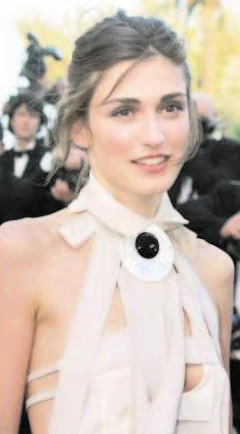
    LONDON (TIP): Britain’s newspapers were on Wednesday left mystified by their French counterparts’ reluctance to quiz President Francois Hollande over claims of an affair, concluding “they do things differently” across the Channel. Britain’s rowdy media was gleefully awaiting an inquisition over his reported affair with actress Julie Gayet as he arrived to deliver a press conference at the Elysee Palace in Paris. But they were left disappointed when “deferent” journalists largely left Hollande free to explain a series of economic reforms. “How odd it all felt,” said the Daily Telegraph’s Michael Deacon. “For centuries we had mockingly stereotyped the French as sex-mad. When, in reality, these spotlessly abstemious souls have so little interest in sex that when their own head of state is caught up in the juiciest scandal to hit politics since Clinton- Lewinsky, they only want to ask about social security,” he joked.

    He asked whether the French “were mad, or are we?” The left-wing Guardian, generally supportive of Hollande’s claims to a private life, admitted that “they do things differently in France”. “Would he get away with this in Britain or America? Possibly not,” said the paper’s columnist Jon Henley. “But, outraged tweets by Anglo-Saxon hacks notwithstanding, this was France.” He praised the general quality of French journalism, but argued “there is a certain undeniable deference to the president, the living embodiment of the republic.” The paper carried a front-page photograph of the beleaguered leader under the headline “A very French affair”.

    The Times compared the developing story to the Profumo Affair, the 1963 British sexscandal that forced the resignation of secretary for war John Profumo. The Rupert Murdoch-owned paper said it was “clear that the big topic of the day would be treated with kid gloves by the French press corps.” “When Mr Hollande’s speech ended, Alain Barluet, a political correspondent for Le Figaro and the chairman of the Presidential Press Association, seized the microphone and rose to his feet with the look of a man facing a firing squad,” wrote the paper’s Adam Sage. The couple of other French journalists did broach the issue again, but that was pretty much that.

    In short, they ensured that the peace had been safeguarded in the republic once again.” Quentin Letts from the centre-right Daily Mail mocked those charged with quizzing Hollande, who he called the “most unlikely swordsman since Inspector Clouseau”. “Before him sat a salon of oyster munchers, the powdered, poodling, truthsmothering trusties of polite Parisian opinion,” he wrote. “They are aghast that the peasants should be told about presidential legeauver (sic). No wonder they never tell their people the truth about the European Commission,” he added. Popular tabloid the Sun slammed Hollande’s performance as “the dullest hour of anyone’s life”. It also said his insistence on privacy was a technique used “by elites worldwide since the dawn of democracy” to “let them be seen as they want to be seen — not as they are”.

  • Nuclear talks begin, Iran warns of limits

    Nuclear talks begin, Iran warns of limits

    GENEVA (TIP): A new round of Iran nuclear talks began in fits and starts November 10, with the two sides ending a first session just minutes after it began amid warnings from Iran’s supreme leader of “red lines” beyond which his country will not compromise. Still, both sides indicated a first-step agreement was possible on a deal to roll back Iran’s nuclear program in exchange for limited sanctions relief, despite strong opposition from Israel and unease in both Congress and among Iranian hard-liners. President Barack Obama appears determined to reach such an agreement, which could be a major step toward reconciliation between the United States and a former ally that turned adversary after the Islamic Revolution of 1979. But America’s longtime allies Israel and Saudi Arabia fear a deal will fall short of ending the Iranian threat and that a resurgent Iran will transform the balance of power in the Middle East.

    A senior US official said Wednesday’s brief plenary was only a formality and that bilateral meetings would continue through the evening to try to hammer out the first steps of a deal. She demanded anonymity under US government briefing rules. However, there was also tough talk, reflecting tensions from nearly a decade of negotiations that have begun to make headway only recently. While voicing support for the talks, Iran’s supreme leader, Ayatollah Ali Khamenei, insisted there are limits to the concessions Tehran will make.

    And he blasted Israel as “the rabid dog of the region” comments rejected by French President Francois Hollande as “unacceptable.” French spokeswoman Najat Vallaud-Belkacem told reporters in Paris that such statements complicate the talks, but France still hopes for a deal and its position has not changed. At the previous round earlier this month, France said it wanted tough conditions in any preliminary deal with Iran, and those negotiations then ended with both sides speaking of progress but continued differences on a final agreement. Khamenei gave no further details in a speech to a paramilitary group aimed at both placating hard-liners and showing his backing for the Iranian officials meeting with international negotiators in Geneva.

    But his mention of Iran’s “nuclear rights” was widely interpreted as a reference to uranium enrichment. For his part, Israeli Prime Minister Benjamin Netanyahu pushed ahead with criticism of what he asserts is a deal in the making that will give Iran too much for too little in return. Netanyahu, in Moscow to meet with President Vladimir Putin, renewed his demand for a full stop to all Iranian nuclear programs that could be turned from peaceful uses to making weapons. He said that Israel wants to see a negotiated settlement, but added that it must be “genuine and real.” “Israel believes that the international community must unequivocally ensure the fulfillment of the UN security council’s decisions so that uranium enrichment ends, centrifuges are dismantled, enriched material is taken out of Iran and the reactor in Arak is dismantled,” Netanyahu said, referring to Iran’s plutonium reactor under construction. Putin had no public reaction to Netanyahu’s comments.

    “We expect that mutually acceptable solutions will be found shortly,” he told reporters. If the talks produce a deal to freeze Iran’s nuclear efforts, negotiators will pursue a more comprehensive agreement that would ensure that Tehran’s program is solely for civilian purposes. Iran would get some sanctions relief under such a first-step deal, without any easing of the harshest measures, those crippling its ability to sell oil, its main revenue maker. Iran has suggested it could curb its highest-known level of enrichment, at 20%, in a possible deal that could ease the US-led economic sanctions. But Iranian leaders have made clear that their country will not consider giving up its ability to make nuclear fuel, the centerpiece of the talks since the same process used to make reactor stock can be used to make weapons-grade material.

    Details of sanctions relief being discussed have not been revealed. But a member of Congress and legislative aides on Wednesday put the figure at $6 billion to $10 billion, based on what they said were estimates from the US administration. The aides and the member of Congress demanded anonymity because they weren’t authorized to divulge the estimate publicly.The senior US administration official declined comment beyond saying that envisaged sanctions would give Iran only limited relief and they could be rolled back if Iran reneges on terms of any initial deal.

    “We will not allow this agreement, should it be reached … to buy time or to allow for the acceptance of an agreement that does not properly address our core, fundamental concerns,” Secretary of state John Kerry told reporters in Washington The talks are being convened by Catherine Ashton, the European Union’s top diplomat. Her spokesman, Michael Man, said there is “room for flexibility” on sanctions relief if Iran’s concessions warrant it. In Washington, department spokeswoman Jen Psaki expressed optimism, saying the Obama administration believes “we have an opportunity to move forward on a diplomatic path with the Iranians.”

  • Thirty Hostages Reported Killed In Algeria Assault

    Thirty Hostages Reported Killed In Algeria Assault

    ALGIERS (TIP)- Thirty hostages and at least 11 Islamist militants were killed on Thursday when Algerian forces stormed a desert gas plant in a bid to free many dozens of Western and local captives, an Algerian security source said. Details remained scant – including for Western governments, some of which did little to disguise irritation at being kept in the dark by Algeria before the raid and its bloody outcome. Two Japanese, two Britons and a French national were among at least seven foreigners killed, the source told Reuters.

    Eight of the dead hostages were Algerian. The nationalities of the rest, as well as of perhaps dozens more who escaped, were unclear. Americans, Norwegians, Romanians and an Austrian have also been mentioned by their governments as having been captured. Underlining the view of African and Western leaders that they face a multinational, al Qaeda-linked insurgency across the Sahara – a conflict that prompted France to send troops to neighbouring Mali last week – the official source said only two of the 11 dead militants were Algerian, including their leader. After an operation that appeared to go on for some eight hours, after Algeria refused the kidnappers’ demand to leave the country with their hostages, the bodies of three Egyptians, two Tunisians, two Libyans, a Malian and a Frenchman were found.

    So too was that of Taher Ben Cheneb, an Algerian whom the security official described as a prominent jihadist commander in the Sahara. The gunmen who seized the important gas facility deep in the desert before dawn on Wednesday had been demanding France halt its week-old offensive against Islamist rebels in Mali. French President Francois Hollande said the hostage drama, which has raised fears of further militant attacks, showed that he was right to send more than 1,000 French troops to Mali to back up a West African force in support of Mali’s government. Algerian government spokesman, who confirmed only that an unspecified number of hostages had died, said the tough response to a “diehard” attitude by the militants showed that, as during its bloody civil war against Islamists in the 1990s, Algiers would not negotiate or stand for “blackmail” from “terrorists”.

    SECURITY IN QUESTION
    The apparent ease with which the fighters swooped in from the dunes to take control of an important energy facility, which produces some 10 percent of the natural gas on which Algeria depends for its export income, has raised questions, however, over the reliability of what was thought to be strong security. Foreign companies said they were pulling non-essential staff out of the country, which has only in recent years begun to seem stable after a decade of blood-letting. “The embarrassment for the government is great,” said Azzedine Layachi, an Algerian political scientist at New York’s St John’s University.

    “The heart of Algeria’s economy is in the south. where the oil and gas fields are. For this group to have attacked there, in spite of tremendous security, is remarkable.” Algiers, whose leaders have long had frosty relations with the former colonial power France and other Western countries, may also have some explaining to do over its tactics in putting an end to a hostage crisis whose scale was comparable to few in recent decades bar those involving Chechen militants in Russia. Communication Minister Mohamed Said sounded unapologetic, however. “When the terrorist group insisted on leaving the facility, taking the foreign hostages with them to neighbouring states, the order was issued to special units to attack the position where the terrorists were entrenched,” he told state news agency APS, which said some 600 local workers were freed.

    A local source told Reuters six foreign hostages had been killed along with eight of their captors when troops fired on a vehicle being used by the gunmen at the Tigantourine plant. The standoff began when gunmen calling themselves the Battalion of Blood stormed the facility early on Wednesday morning. They said they were holding 41 foreigners. In a rare eyewitness account of Wednesday’s raid, a local man who had escaped from the facility told Reuters the militants appeared to have inside knowledge of the layout of the complex and used the language of radical Islam. “The terrorists told us at the very start that they would not hurt Muslims but were only interested in the Christians and infidels,” Abdelkader, 53, said by telephone from his home in the nearby town of In Amenas. “‘We will kill them,’ they said.” Mauritanian agency ANI and Qatarbased Al Jazeera said earlier that 34 captives and 15 militants had been killed when government forces fired at a vehicle from helicopters.

    BAD NEWS EXPECTED
    British Prime Minister David Cameron said people should prepare for bad news about the hostages. He earlier called his Algerian counterpart to express his concern at what he called a “very grave and serious” situation, his spokesman said. “The Algerians are aware that we would have preferred to have been consulted in advance,” the spokesman added. Norwegian Prime Minister Jens Stoltenberg said he had been told by his Algerian counterpart that the action had started at around noon.

    He said they had tried to find a solution through the night, but that it had not worked. “The Algerian prime minister said they felt they had no choice but to go in now,” he said. The incident dramatically raises the stakes in the French military campaign in neighbouring Mali, where hundreds of French paratroopers and marines are launching a ground offensive against Islamist rebels after air strikes began last week. “What is happening in Algeria justifies all the more the decision I made in the name of France to intervene in Mali in line with the U.N. charter,” Hollande said, adding that things seemed to have taken a “dramatic” turn. He said earlier that an unspecified number of French nationals were among the hostages. A French national was also among the hostage takers, a local source told Reuters. A large number of people from the former French colony live in France.

    Algerian Interior Minister Daho Ould Kablia said the kidnappers were loyal to Mokhtar Belmokhtar, a veteran Islamist guerrilla who fought in Afghanistan and set up his own group in the Sahara after falling out with other local al Qaeda leaders. A holy warrior-cum-smuggler dubbed “The Uncatchable” by French intelligence and “Mister Marlboro” by some locals for his illicit cigarette-running business, Belmokhtar’s links to those who seized towns across northern Mali last year are unclear. Britain said one of its citizens was killed in the initial storming on Wednesday and “a number” of others were held. The militants had said seven Americans were among their hostages. The White House said it believed Americans were among those held but U.S. officials could not confirm the number. “This is an ongoing situation and we are seeking clarity,” White House spokesman Jay Carney told reporters.

    FOREIGN FIRMS
    Norway’s Statoil , which runs the plant with BP of Britain and Algeria’s state energy company, said it had no word on nine of its Norwegian staff who had been held, but that three Algerian employees were now free. BP said some of its staff were being held but would not say how many or their nationalities. Japanese media said five workers from Japanese engineering firm JGC Corp. were held, a number the company did not confirm. The Irish government said one Irish hostage was freed. Hollande has received public backing from Western and African allies who fear that al Qaeda, flush with men and arms from the defeated forces of Libya’s Muammar Gaddafi, is building a desert haven in Mali, a poor country helpless to combat fighters who seized its northern oasis towns last year.

    However, there is also some concern in Washington and other capitals that the French action in Mali could provoke a backlash worse than the initial threat by militants in the remote Sahara. The militants, communicating through established contacts with media in neighbouring Mauritania, said on Wednesday they had dozens of men armed with mortars and anti-aircraft missiles in the compound and had rigged it with explosives. They condemned Algeria’s secularist government for letting French warplanes fly over its territory to Mali and shutting its border to Malian refugees. The attack in Algeria did not stop France from pressing on with its campaign in Mali.

    It said on Thursday it now had 1,400 troops on the ground there, and combat was under way against the rebels that it first began targeting from the air last week. The French action last week came as a surprise but received widespread public international support. Neighbouring African countries planning to provide ground troops for a U.N. force by September have said they will move faster to deploy them. Nigeria, the strongest regional power, sent 162 soldiers, the first of an anticipated 906. A day after launching the campaign in Mali, Hollande also ordered a commando raid in Somalia, which failed to free a French hostage held by al Qaeda-linked al Shabaab militants since 2009. Al Shabaab said it had executed the hostage, Denis Allex. France said it believed he had died in the raid.