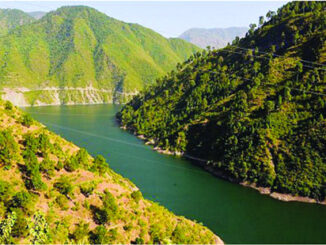
Tag: Gangotri

  • Nelong Valley: Most thrilling mountaineering treks

    Nelong Valley: Most thrilling mountaineering treks

    Nelong Valley lies 45km away from the Indo-Tibetan border, around 256km from Dehradun, Uttarakhand. It is considered to be one of the most thrilling mountaineering treks in India. At a height of 11,000ft, the view from here is breathtaking. The valley offers a clear and surreal view of the Tibetan Plateau. Gartang Gali, a wooden walkway, is a main attraction of the valley said to have been built in the 17th Century. It was known as one of the main routes for trade between India & China in 1962.

    About Nelong Valley

    The valley, situated at an altitude of around 11,000 feet above the sea level, falls under the Gangotri National Park in Uttarkashi district, is around 315 km from Dehradun. It is also only 23 kms away from Bhaironghati, a place just eight kms ahead of the famous Gangotri shrine.

    This rocky region looks exactly like Ladakh, Spiti, and Tibet and features high altitude peaks having similar weather and landscape. Hence, it is becoming one of the most popular places to explore in Uttarakhand. Since the valley is situated under the Gangotri National Park, it is not allowed to spend the night within 25 kilometers of the region but still, it is no less than a treasure trove for the explorers.

    History Of Nelong Valley

    The grueling Nelong Valley is located near the Indo-China border, which was closed to tourists after the Indo-China war in 1962. The valley was reopened in 2015 to promote travel and tourism in Uttarakhand. Once a part of the ancient trade route between India and Tibet, Nelong Valley got affected by the 1962 war. The indigenous population living in the valley, known as Rongpas or Bhotiyas, was forced to migrate to Bagori village in the Uttarkashi district of Uttarakhand.

    After the valley was vacated, the Indo-Tibetan Border Police took charge of the region and set up their checkpoints. Visitors can still see the ruins of the ancient trade route and the narrow wooden bridge erected along the gorge.

    Places To Visit In Nelong Valley

    Nelong Valley is one of the best places to visit in Uttarakhand. Here’s the list of the tourist places you can explore in Nelong Valley.

    Nelong Valley

    Famously deemed as Spiti of Uttarakhand, the valley is an attraction in itself. The view of the Tibetan Plateau will leave you speechless. Built in the 17th century, Gartang Gali, a wooden walkway, that was used for trade between countries is one of the main attractions of the valley.

    Gartang Gali

    Gartang Gali is a wooden bridge said to be built by the Pathans of Peshawar in the 17th century. The 105-meter bridge is famous amongst adventure seekers. The bridge got damaged over the year after it fell into disuse during the Indo-China war in 1962 after it was declared off-limits for civilians. After being reopened by Uttarakhand Tourism in 2015, travelers require special permission to visit Gartan Gali.

    How To Reach Nelong Valley

    Best kept secret of Dev Bhoomi, Nelong Valley is nestled in the Uttarkashi district of Uttarakhand and is well-connected by motorable roads. However, you would require to book a gipsy provided by the forest department as they are the only vehicles allowed to go further towards the valley.

    Nearest Metropolitan City – New Delhi

    • Distance From Dehradun – 258 kilometers
    • Distance From Uttarkashi – 100 kilometers
    • Distance From Jolly Grant Airport – 271 kilometers
    • Distance From New Delhi – 534 kilometers

    By Road

    The roads leading to the Nelong Valley are quite dangerous and aren’t for the faint-hearted, however, they offer the gobsmackingly beautiful views. The best route is via Delhi-Dehradun-Bhairav Ghati.

    Bus Service – Delhi To Dehradun. It takes six hours to reach Dehradun via bus from Delhi and then, you can board local buses to reach Bharav Ghati. You can’t go further towards Nelong Valley via bus.

    Cab Service – There are plenty of cab services available that can take you to Bhairav Ghati but only registered providers and forest department’s vehicles are allowed to go all the way to Nelong.

    By Train

    Several trains are available that will take you to the nearest railheads to Nelong Valley. Spend the night in Rishikesh or Haridwar or Dehradun and then get a cab till Bhairav Ghati which is located a few kilometers away from the Gangotri shrine.

    Nearest Railway Station – Harrawala railway station in Dehradun is the nearest railhead which is about 256 kilometers away from the valley.

    By Air

    Frequent flights are available from Indira Gandhi International in Delhi to Jolly Grant in Dehradun.

    Nearest Airport – Dehradun’s Jolly Grant Airport is the nearest airport to Nelong Valley and 258 kilometers away from the destination. Buses and private cabs are easily available from the Airport.

    Second Nearest Airport – Indira Gandhi International Airport, New Delhi.

  • Char Dham Yatra

    Char Dham Yatra

    There are four holy shrines in Uttarakhand dedicated to Hindu Gods and holy rivers of India. The four shrines are situated within the Garhwal Region. These are collectively referred as “Char Dhaam of Uttarakhand” . Pilgrims from all over India and abroad visit the shrines as “Char Dhaam Yatra”. In Hindu religion, Char Dhaam Yatra holds has great importance and sanctity. It is believed that every Hindu should undertake Char Dhaam Yatra at least once in a life time to avail the blessings of gods adorning the shrines.

    Char Dham Yatra 2021

    As per Covid-19 pandemic guidelines, pilgrims/devotees cannot visit Uttarakhand Char Dham yatra-2021 in person till further notice. But they can book online for Puja / Path / Archna /Arti / Bhog etc with online payment through this portal, which will be performed on their behalf by chief priest of temple on the given date with their name and gotra.

    The Char Dham (meaning four abodes) is a set of four pilgrimage sites in India. It is believed that visiting these sites helps achieve moksha (salvation). The four Dhams are Badrinath, Dwaraka, Puri and Rameswaram.

    It is believed that every Hindu should visit the Char Dhams during one’s lifetime. The Char Dham as defined by Adi Shankaracharya consists of four Hindu pilgrimage sites. Another small circuit in Uttarakhand of four pilgrimage sites: Yamunotri, Gangotri, Kedarnath, and Badrinath is referred to as Chota Char Dham.

    Yamunotri

    The Shrine of Yamunotri at the source of river Yamuna. Atop is a flank of Bandar Poonch peak (3615 meters). The actual source, a frozen lake of ice and glacier (Champasar Glacier) located on the Kalind Mountain at the height of 4421 m above sea level is about 1 km further up is not easily accessible. Hence the shrine has been located on the foot of the hill. The Temple of divine mother Yamuna was built by Maharaja Pratap Shah of Tehri Garhwal. The tiny Yamuna has icy cold water and its absolute innocence and the infantile purity heightens that deep feeling of reverence, which Yamunotri has for the devout. According to the legend ancient sage Asit Muni had his hermitage here. The trek to Yamunotri is truly spectacular, dominated by a panorama of rugged peaks and dense forests.

    The deity or Goddess Yamuna is made of black marble. The temple is dedicated to the river Yamuna, who is represented in the form of a silver idol, bedecked with garlands.

    Close to the temple are hot water springs gushing out from the mountain cavities. Suryakund is the most important Kund. Near the Suryakund there is a shila called Divya Shila, which is worshipped before puja is offered to the deity. Pilgrims prepare rice and potatoes to offer at the shrine by dipping them in these hot water springs, tied in muslin cloth. Rice so cooked is taken back home as prasadam.

    Gangotri

    Gangotri is one of the origin sources of Holy River Ganga (Ganges), and one of the important Char Dham pilgrimage in Hindu Religion. The main origin of the river is Gaumukh which is a glacier located 19 km away from gangotri temple. Ganga river is the longest and most sacred river in world.

    The Gangotri temple was built by the Gorkha General Amar Singh Thapa, in the 18th century and is situated on the left bank of Bhagirathi river. The temple is nested amidst the beautiful surroundings of deodars and pine trees. It lies close to the holy rock or the Bhagirath Shila where King Bhagirath had worshiped Lord Shiva. The Gangotri temple is dedicated to Goddess Ganga.

    The Pujaris and Priests who perform in the temple belong to the village of Mukhwa. The water from Gangotri is carried to offer to Lord Shiva. It is believed that this water has nectar in it and will soothe the throat of Shiva who gulps the poison.

    Kedarnath

    Kedarnath temple is one of the sacred pilgrimage centre in Northern India, located on the bank of Mandakini river at an altitude of 3584 meters above sea level. The historical name of this region is “Kedar Khand”. Kedarnath temple is a part of Char Dhams and Panch Kedar in Uttarakhand and one of the 12 Jyotirlingas of Lord Shiva in India.

    There are more than 200 shrines dedicated to Lord Shiva in Chamoli district of Uttarakhand itself, the most important one is Kedarnath. According to legend, the Pandavas after having won over the Kauravas in the Kurukshetra war, felt guilty of having killed their own Kith and Kin and sought blessings of Lord Shiva for redemption. He eluded them repeatedly and while fleeing took refuge at Kedarnath in the form of a bafellow.

    On being followed, the Lord dived into the ground, leaving his hump on the surface at Kedarnath. The remaining portions of Lord Shiva appeared at four other places and are worshipped there as his manifestations. The arms of the Lord appeared at Tungnath, the face at Rudranath, the belly at Madmaheshwar and his locks (hair) with head at Kalpeshwar. The Kedarnath and four above mentioned shrines are treated as Panch Kedar (Panch means Five in Sanskrit). The Temple at Kedarnath presents an imposing sight, standing in middle of a wide plateau surrounded by lofty snow covered peaks. The temple was originally built in 8th century A.D. by Jagad Guru Adi Shankaracharya and stands adjacent to site of an even earlier temple built by the Pandavas. The inner walls of the assembly hall are decorated with figures of various deities and scenes from mythology. Outside the temple door a large statue of the Nandi Bafellow stands as guard.

    Dedicated to Lord Shiva, the Kedarnath temple has exquisite architecture Built of extremely large, heavy and evenly cut grey slabs of stones, it evokes wonder as to how these heavy slabs were moved and handled in the earlier centuries. The temple has a Garbha Griha for worship and a Mandap, apt for assemblies of pilgrims and visitors. A conical rock formation inside the temple is worshipped as Lord Shiva in his Sadashiva form.

    Badarinath

    Badarinath is one of the holy shrines for Vaishnavites among the 108 divya desams incarnation of Lord Vishnu. Badrinath town is also the part of Panch Badri temples including Yog Dhyan Badri, Bhavishya Badri, Adi Badri and Vriddha Badri, along with Badrinath temple.

    The main entrance gate of Badarinath temple is colourful and imposing popularly known as Singhdwar. The temple is approximately 50 feet tall with a small cupola on top, covered with a gold gilt roof. The Badarinath temple is divided into three parts (a) The Garbha Griha or the sanctum sanctorum (b) The Darshan Mandap where rituals are conducted and (c) The Sabha Mandap where pilgrims assemble.

    At the Badarinath Mandir Gate, directly opposite the main Idol of Lord himself, is seated idol of Bird Garud, vehicle / carrier of Lord Badarinarayan. Garud os seen is sitting position and in prayer with his hands folded. The walls and pillars of the mandapa are covered with intricate carvings.

    The Garbha Griha portion has its canopy covered with a sheet of gold and houses Lord Badari Narayan, Kuber (God of wealth), Narad rishi, Udhava, Nar and Narayan. The complex has 15 idols. Especially attractive is the one-metre high image of lord Badarinath, finely sculpted in black stone. According to legend Shankara discovered a black stone image of Lord Badarinarayan made of Saligram stone in the Alaknanda River. He originally enshrined it in a cave near the Tapt Kund hot springs. In the sixteenth century, the King of Garhwal moved the murti to the present loction of the temple. It represents Lord Vishnu seated in a meditative pose called Padmasan.