Tag: Goa

  • Dallas hospitals among nation’s most expensive

    Dallas hospitals among nation’s most expensive

    On Wednesday, the U.S. Government Accountability Office reported Dallas has some of the most expensive hospitals in the country. GOA reported some hospitals in the Dallas-Fort Worth-Arlington metropolitan area  charging above-average for heart artery stents, total hip replacements and appendectomies.

    GAO found that more than 90 percent of the difference in spending across the country for the above three surgeries was due to hospital charges and the difference in charges vary by upto three times in the case of total hip replacements.

    Government Accountability Office (GAO) is  an independent arm of the federal government

  • PBD 2015 ROUND-UP

    PBD 2015 ROUND-UP

    Chief Ministers beckon overseas Indians to cash in on Investment opportunities in States

    GANDHINAGAR (GUJARAT) (TIP), January 9, 2015. Chief Ministers of as many as 9 States made a strong pitch for investments by overseas Indians as they laid bare the opportunities and facilities for investors here today at the CMs session on the concluding day of the three-day Pravasi Bharatiya Divas. Presiding over the session, Mr. Rajnath Singh, Union Home Minister, said that the real Bharat was the villages of India and therefore it was important to develop villages to ensure a balanced and an inclusive growth.

    He added that every state in India has a success story to tell and have been able to make a mark in one sector or the other. The Central government, he said, believed in promoting cooperative federalism and therefore the States and the Centre have to work in tandem to make India an economic super power. NRIs, he said, will have to play an important role in fulfilling the Centre’s

    ‘Make in India’ vision.

    GUJARAT: ‘Smart State’ is the mantra of the State Government for which a five-point agenda has been adopted. These are smart schemes for welfare, smart economy, smart governance, smart energy and smart human resources. These schemes are expected to help the Indian diaspora to channelize the flow of investments into the State, set up industrial units and contribute to the social sector schemes to light up the lives of the common man. Kerala: Some of the path-breaking projects being undertaken by the State Government are: e Kochi Metro Rail project, Smart City Project, Vizhinjam port development, Light Metro Rail, Kannur Airport Project, Surface Transport Development, National Waterway and a Student Entrepreneurship Programme. These projects demonstrate that this is the right time to invest in the State and be part of the overall growth of the State. The State Government will offer full support to all who extend their help in further developing the State. Kerala has seen a rapid increase in its growth performance. The state has the highest literacy rate, best human development indicators and has many structural advantages such as a vast coastal line and high productivity due to historical reasons.

    PUNJAB: The immediate investment opportunities in the State are in the fields of IT, bio-sciences and healthcare and futuristic development of 147 cities and towns. The focus areas of the government are agro and food processing, education & skills, electronics manufacturing, textiles & garments and infrastructure development. The top five reasons for investing in Punjab are: easiest place to do business, robust infrastructure, abundant skills and enterprise,responsive, accountable & transparent governance and fiscal incentives. A lot of facilities have been initiated for the NRIs in the State of Punjab. A special court has been set for NRIs in the State to expedite the process of litigation, special police thanas have been put in place and a special commission has been set up to address property related issues of the NRIs.Jharkhand: The State Government offers ample opportunities to investors to partner in sectors such as industry and industrial infrastructure, electronics & IT/ITeS, road & road transport infrastructure, skill development, knowledge & education, healthcare, power generation & distribution, tourism, hospitality, leisure & entertainment and urban infrastructure. The key enablers for attracting investments are nearness to natural resources, skilled manpower due to existing industrial base, investor friendly policies and land bank. To leverage these enablers through a comprehensive and partnering module, the Government of Jharkhand has focused on industrial and economic development of the state through implementation of various infrastructure projects on PPP format.

    MADHYA PRADESH: The State has come a long way from being counted amongst the BIMARU states. It has state-of-the-art infrastructure including roads, power, railways etc. The state has been witnessing double digit growth and has the most investment friendly environment. The industrial policy of the state is investor friendly, the state is very peaceful and there are no man day losses and has single window clearances. The State houses India’s best national parks and world heritage sites.

    ANDHRA PRADESH: The state of Andhra Pradesh has a long coast line and is the gateway to India and south east Asia, has 30 urban centres, extensive road and rail network, natural gas and 24X7 power, young and skilled population and deposits. The state is looking at building five grids- water, gas, power, road and fibre. It has a very strong agriculture and marine and diary sector besides having a niche in high technology sectors like information technology. The state has formulated specific policies to give customised impetus for thrust sectors like industry, port, electronics, textile and agro processing. Also, a land bank has been created with 400 thousandhectares of land. The state is ideally poised for river linking and has the potential to become a drought proof state in the next 5 years.

    MAHARASHTRA: The state of Maharashtra is a land of investment opportunities. The State Government has started fast tracking approvals, simplifying processes and initiated the process of reducing timelines to facilitate investors, inflow of FDIs and make the state conducive for ease of doing business. The state has commenced work in full earnest to take ahead Prime Minister Narendra Modi’s call for ‘Make in India’. The State offers immense opportunities for infrastructure development as the government is planning to create a new urban city which would be bigger than the city of Mumbai. Also, the Government looks forward to providing affordable housing to middle and lower strata of society, and hence the State invited the Pravasis to take advantage of these investment opportunities.

    GOA: The State possesses talented human resource, natural reserves, captivating beauty which makes a great tourism destination. The Goa Government has now identified thrust areas such as creation of knowledge hub, focus on R&D, pharmaceuticals, biotechnology, aviation, aerospace, defence, IT, agro-based & food processing industries, to synergize its efforts with the ‘Make in India’ campaign of the Prime Minister. The aim is that the fruits of development percolate to the underprivileged of the society.

    HARYANA: The state of Haryana witnessed rapid growth in various sectors and is also an integral part of Delhi’s National Capital Region. Earlier, known as an agricultural state, Haryana has come a long way and now witnesses the presence of some of the well-known multinational companies. Haryana is focusing on skill development for both its urban and rural population toprovide them with employment opportunities, particularly, in MSMEs. Known for achieving milestones in sports, the Government desires to establish Haryana as a ‘Sports Hub’.

  • Vistara airline to launch on January 9

    Vistara airline to launch on January 9

    MUMBAI (TIP): Tata Group is set to launch its full-service Vistara airline on 9 January, more than 60 years after the Indian government nationalised the group’s airline business and following two previous aborted attempts to start an airline. The airline said in a statement it will start accepting bookings for tickets from January 8 night. Vistara will start with the Mumbai-Ahemedabad route and expand to other cities later.

    The name Vistara comes from Vistaar in Sanskrit, which means limitless expanse, and draws inspiration from the brand’s domain—the limitless sky. Headquartered in New Delhi, Vistara will begin operations with its fleet of brand new Airbus A 320-200s with 148 seats. Vistara aircraft will have a three-class configuration with 16 business class seats, 36 premium economy class seats and remaining economy class.

    There will also be a frequent flyer programme—Club Vistara—based on money spent by passengers, not on miles. In 2000, Tata Sons and Singapore Airlines Ltd abandoned a joint attempt to buy a 40% stake in full service airline Air India—an airline which the group founded as Tata Airlines in the 1930s before it was nationalized in 1953. Political resistance and corporate rivalries were blamed for the Tata group abandoning the project. An earlier attempt by the two companies to start an Indian airline with 40%equity contribution by SIA was also aborted. On Monday, Vistara received the air operating permit from the Directorate General of Civil Aviation (DGCA), which was the last regulatory approval needed by Vistara to operate in India.

    TATA SIA Airlines Ltd, known by the brand name Vistara, is a joint venture between Tata Sons Ltd and Singapore Airlines with Tata Sons holding the majority stake of 51% in the company and SIA holding the remaining 49%. Tata Sons has an ongoing joint venture with AirAsia Bhd for a low-fare airline AirAsia India, which is already flying. Vistara’s takeoff comes at time when its potential rival airline SpiceJet Ltd had briefly ground its fleet owing to financial crisis. Early this week, as a temporary relief, the ministry of civil aviation had permitted SpiceJet to accept bookings till March-end, asked banks to give short-term working capital loans worth Rs.600 crore and requested state-owned oil companies to extend a credit line for jet fuel for two more weeks. With Delhi as its hub, Vistara will initially offer flights to Mumbai and Ahmedabad, Vistara said in a statement. Seats for all three classes are on sales and there will not be a separate fuel surcharge, the statement said. Phee Teik Yeoh, chief executive officer, Vistara, said, “I am very excited as this day is the culmination of many months of hard work. The activation of distribution channels is our first interface with our customer and with this, we embark on a journey to fulfill our brand promise of seamless travel experience”. Vistara’s technology partners—Tata Consultancy Services Ltd (TCS), Wipro Ltd and Amadeus—will be responsible for its customer support system and IT services, it added. Meanwhile on Thursday, India’s second largest airline by passengers carried Jet Airways (India) Ltd said it is introducing over 12 additional daily flights on domestic routes as part of its winter schedule effective 23 December 2014.

    Jet Airways capacity expansion comes at a time when rival SpiceJet Ltd cut its fleet by one-third and gave its airport slots to other airlines owing financial crisis. Naresh Goyal promoted Jet Airways said it will deploy wide body Airbus A330 and narrow body Boeing 737 aircraft to meet the heavy demand during the ensuing festive season. The airline is operating additional frequencies on the routes such as Delhi-Bengaluru, Chennai-Kochi, Delhi-Udaipur, Goa-Mumbai and Mumbai-Kolkata.

  • 22 STATES, UTS SUPPORT BILL TO PREVENT ‘HONOUR KILLINGS’

    22 STATES, UTS SUPPORT BILL TO PREVENT ‘HONOUR KILLINGS’

    NEW DELHI (TIP): The government has initiated the process of drafting a law against honour killings by treating crimes in the name of honour as a separate category of offences. The moves comes after 22 states, including Punjab, Haryana, Himachal Pradesh and Chandigarh (UT), supported the recommendations of the Law Commission of India to treat honour crimes as a standalone offence. Law Minister Sadananda Gowda said in Parliament today that the government would, after considering the comments from states, hold consultations on the enactment of the legislation against honour crimes. “After considering the responses of all states and UTs and consultations with stakeholders, the policy decision to enact the legislation on the subject will be taken. It would be difficult to fix a timeline but the department has initiated the process of implementation of the report of the Law Commission in this respect,” Gowda said.

    The Law Commission had in its 242nd Report on “Prevention of Interference with the Freedom of Matrimonial Alliances in the Name of Honour and Tradition” recommended a strict law against honour crimes being perpetuated by community panchayats working by different names in different parts of the country. The proposal to bring the law was first initiated during Congress-led UPA-II which had formed a Group of Ministers to make recommendations. The GOM never presented its report and was disbanded once its chairman – Pranab Mukherjee – proceeded to become President. At that time, Haryana had opposed the move. The BJP government, after coming to power, circulated the proposal again and 22 states, including Haryana (which now has a BJP government), have supported the recommendations of the Law Commission.

    Apart from Punjab, Haryana, Himachal and Chandigarh, the states that have backed the law are: Andhra, Assam, Chhattisgarh, Goa, Jharkhand, Karnataka, Kerala, Meghalaya, Mizoram, Nagaland, Odisha, Uttar Pradesh, West Bengal and the UTs of Dadra and Nagar Haveli; Daman and Diu, Lakshadweep and Puducherry. The responses of the remaining states are awaited. Consensus of states on the law to curb honour crimes is critical because the subject falls in List III (Concurrent List) of the Seventh Schedule of the Constitution and the Centre alone cannot legislate on it.

  • A mixed Blessing for India

    A mixed Blessing for India

    Lower petroleum prices hold obvious advantages for Indian consumers, but a bearish global oil market could also hurt several segments of the country’s economy

    The Oil Ministers of 12 member states of Organization of the Petroleum Exporting Countries (OPEC) concluded their meeting in Vienna on November 27 by deciding to continue with their three-year-old production quota of 30 million barrels per day (mbpd). Thus, they calculatingly ignored nearly one mbpd oversupply in the global oil market which has pushed the crude prices down by over 30 per cent since June 2014.

    The global oil glut, in turn, has been caused by a number of factors which include OPEC’s own overproduction, rising non-OPEC production (particularly by the U.S.- based “Shale Revolutionaries”) and lower demand from China and Europe. By declining to cut their output to shore up the prices, OPEC in general, and Saudi Arabia in particular, have refused to play the role of global “swing producer.” As most factors responsible for the current global demand-supply disequilibrium are systemic in nature, the world faces prospects for relatively bearish oil prices over the foreseeable future.

    Indeed, the prices have continued to fall with the Indian basket touching $72.51/barrel on November 27 – a decline of nearly $9 from the average during the first fortnight of the month. As the world’s fourth largest importer of crude, India can afford to exult at this precipitous crude price decline. Still, given the strategic importance of this development, a more comprehensive analysis is desirable.

    A virtuous cycle in the economy From the limited perspective of India’s consumer economy, lower global oil prices undoubtedly augur well. Lower pump prices reduce pressure on the consumer who can spend the savings elsewhere, spurring the demand side of the economy. As petroleum products form a large part of the consumer price indices, lower crude prices result in reduced inflation, which in turn paves the way for lower interest rates and greater buoyancy in investments.

    Thus, lower oil prices can trigger a virtuous cycle in the Indian economy. After all, with India’s imports running at an estimated 3.7 mbpd in 2013, a $30/barrel decline in oil prices amounts to a $40 billion savings bonanza on annual imports. The impact would be best felt on the petroleum sector where marketers have been groaning under subsidy burden. The transport sector would also be a direct beneficiary. If we widen the impact analysis to consider the totality of the Indian economy, some challenges also appear.

    First, as oil producers are India’s major markets and investment destinations, their economic decline may affect the country. Recent decline in the share prices of Bharti Airtel and Bajaj Auto due to the devaluation of the Nigerian Naira illustrates this more complex trend. Second, apart from being the fourth largest oil importer, India is also the world’s sixth largest petroleum product exporter earning over $60 billion annually – nearly a fifth of global exports.

    A bearish oil market would hurt this segment with reduced demand, lower unit prices and lower margins. Third, the oil price decline coincides with resumed foreign interest in investing in India. It is difficult to assess their mutual correlation, but lower oil revenues may attenuate arrival of petrodollars into India. Fourth, whenever oil revenues decline, countries that export Gulf oil try to tighten their belts by emphasizing local production and downsizing their foreign labor force in which Indians dominate. Thanks largely to over five million Indian expatiates there, India was the world’s largest recipient of remittances which topped $70 billion in 2013. The possibility of these remittances being reduced cannot be ruled out. This would have a serious impact on remittance-dependent States such as Kerala and Goa.

    Fifth, lower crude prices may cast a shadow over the sputtering controversy over natural gas pricing norms in India as the latter generally follow the oil prices. Future investment decisions in oil-related sectors may get delayed. Sixth, lower pump prices may cause higher fuel consumption as sales of automotive products soar. This would worsen commuter woes as well as cause increased urban pollution. Finally, a decline in oil prices generally accompanies a global decline in commodity prices, particularly those of minerals and agricultural products. India remains a major exporter of these and would see lower realization, particularly of Guar Gum, a critical input for the shale industry.

    The long-term impact of lower oil prices is likely to be felt beyond the economic domain. Geopolitically, persistent lower oil revenue could propel a number of emerging exporters towards domestic political instability as the ruling elites lose their capacity to provide “stomach infrastructure” to the common man. Countries with lower per capita oil revenue such as Nigeria, Iran, Algeria and Venezuela may be more at risk. In general, however, lower oil revenues may have a dampening effect on regional or domestic disputes. Measures to leverage oil prices India can leverage the current low oil prices for long-term gains. To this end, the following measures can be considered.

    One, it can foster long-term crude supply relationships with exporters in return for stable prices, upstream engagements, inbound investments, etc.

    Two, it can enter into oil-for-infrastructure barter deals to boost project exports.

    Three, it can restructure public sector oil companies to make them more productive and globally proactive for leaner times ahead.

    Four, it can channel some of the oil bonanza to mitigate the increased cost disadvantage of renewable and alternative energy sources.

    Five, it can build its own strategic oil reserves. The current downturn in oil prices underlines the cyclic nature of commodity trade and illustrates OPEC’s reduced regulatory capacity consequent to it supplying only a third of global demand.

    While Shale Revolution may be a new and price-sensitive factor, it is unlikely to vanish with time or with lower prices. During past oil bear-hugs in 1986, 1993-99 and 2008, the lower prices invariably spurred consumption and the oil bounced back.

    There is no reason to believe that the oil prices shall not rise again. India would do well to recall an old oil adage, “The cure for high oil price is high oil price itself” – and use this rare, cyclic opportunity for long-term gains.

    (The author has served as Indian ambassador to Algeria, Norway and Nigeria – all major oil exporting countries.)

  • Pope Francis may declare Sri Lanka’s first Roman Catholic saint

    Pope Francis may declare Sri Lanka’s first Roman Catholic saint

    COLOMBO (TIP): Pope Francis may make a 17th century priest Sri Lanka’s first Roman Catholic saint during his trip next year, making good on his promise to give Asia more saints as models for the faithful, Sri Lankan and Vatican officials said on October 23. Francis plans to visit the island nation from January 13- 15 and then travel onto the Philippines to meet with survivors of Typhoon Haiyan. The archbishop of Colombo, Cardinal Malcolm Ranjith, said he hoped that the Vatican would give final approval to the sainthood case of India-born Reverend Joseph Vaz so that Francis himself could celebrate the canonisation Mass at Colombo’s Galle Face Green. “We are hopeful,” Ranjith said. Vaz was born in Goa, India, in 1651 but chose to work in Sri Lanka amid persecution of Catholics by Dutch colonial rulers, who were Calvinists. Vaz is credited with having revived the Catholic faith in the country, using disguises and learning the local Sinhala and Tamil languages to meet secretly with underground Catholics. He died in 1711.

  • E-VISA SYSTEM LIKELY TO BE ROLLED OUT NEXT

    E-VISA SYSTEM LIKELY TO BE ROLLED OUT NEXT

    NEW DELHI (TIP): The Government will roll out by next week the muchawaited electronic-visa system for tourists from select countries including US and Japan. Home minister Rajnath Singh along with tourism minister Sripad Naik will unveil the first phase of e-visa system for tourists from two dozens countries including US and Japan at a function here shortly, a senior Tourism Ministry official said.

    While Australia is likely to be accorded the e-visa facility during Prime Minister Narendra Modi’s visit Down Under, some countries belonging to BRICS and African region are likely to be announced in the first phase. The e-visa is expected to give a big boost to the foreign tourist arrivals in the country. While in January about 4.95 lakh foreign tourists arrived in India, there were a total of 51.79 lakh during January-September this year. All the arrangements including the software for this system is ready now and will be operational at nine international airports including Delhi, Mumbai, Chennai, Kolkata, Hyderabad, Bengaluru, Kochi, Thiruvananthapuram, and Goa.

    The official said though there are certain issues yet to be resolved for the Goa Airport, the Government has decided in principle to extend it to Goa as well. According to the official, about 25 countries including the 13 countries which are currently having the Visaon- Arrival (VoA) facility in India to be covered under e-visa regime. US, Japan, South Korea, Thailand, Vietnam, the Philippines, Singapore are among the countries which will be given e-visa facility in the first phase. Barring a few countries like Pakistan, Sudan, Afghanistan, Iran, Iraq, Nigeria, Sri Lanka and Somalia, all 180 countries will be covered under e-visa regime in phases, the official said.

    He said China is definitely on the list of countries to be provided e-visa facility, but not in the first list. China is a big-thrust market for India and Tourism Ministry has taken various steps to woo maximum Chinese tourists. While the Incredible India website is being translated into the Chinese language and an infoline will also be established in that language. Besides guides are being trained in Chinese language to help tourists from that country. In order to get e-visa, one would need to apply in the designated website along the required fees. They would be granted an electronic version of the visa within 96 hours.

  • BHAI DOOJ: THE BOND OF BROTHERLY-SISTERLY LOVE

    BHAI DOOJ: THE BOND OF BROTHERLY-SISTERLY LOVE

    Nowhere is the bond of brotherly-sisterly love glorified with such grandeur as in India. Hindus celebrate this special relationship twice every year, with the festivals of Raksha Bandhan and Bhai Dooj.

    What, When & How

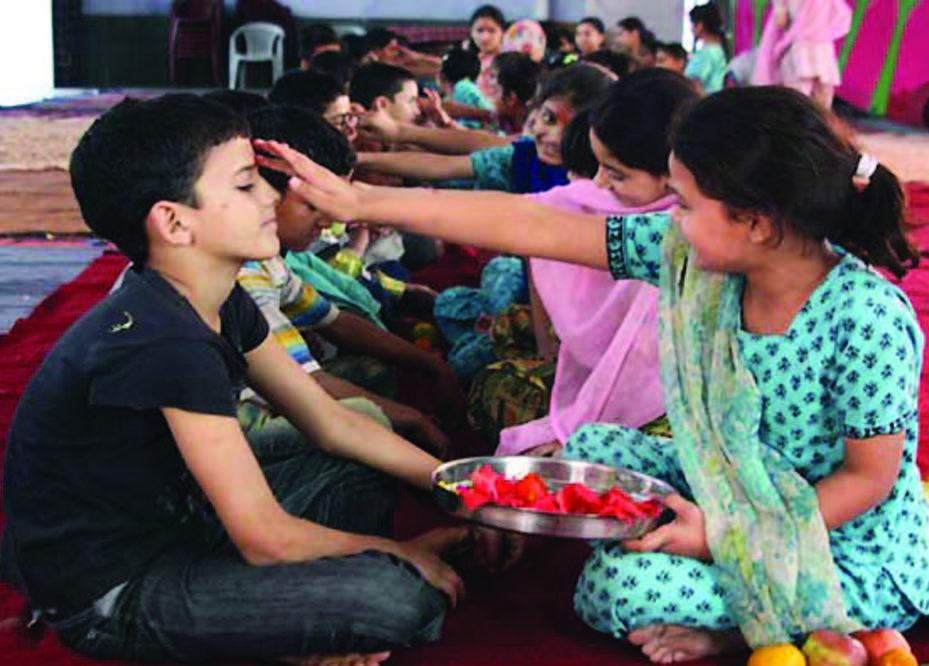
    After the high voltage celebrations of Diwali , the festival of lights and fire-crackers, sisters all over India get ready for ‘Bhai Dooj’ – when sisters ceremonize their love by putting an auspicious tilak or a vermilion mark on the forehead of their brothers and perform an aarti of him by showing him the light of the holy flame as a mark of love and protection from evil forces. Sisters are lavished with gifts, goodies and blessings from their brothers. Bhai Dooj comes every year on the fifth and last day of Diwali, which falls on a new moon night. The name ‘Dooj’ means the second day after the new moon, the day of the festival, and ‘Bhai’ means brother.

    Myths & Legends

    Bhai Dooj is also called ‘Yama Dwiteeya’ as it’s believed that on this day, Yamaraj, the Lord of Death and the Custodian of Hell, visits his sister Yami, who puts the auspicious mark on his forehead and prays for his well being. So it’s held that anyone who receives a tilak from his sister on this day would never be hurled into hell. According to one legend, on this day, Lord Krishna, after slaying the Narakasura demon, goes to his sister Subhadra who welcomes him the lamp, flowers and sweets, and puts the holy protective spot on her brother’s forehead. Yet another story behind the origin of Bhai Dooj says that when Mahavir, the founder of Jainism, attained nirvana, his brother King Nandivardhan was distressed because he missed him and was comforted by his sister Sudarshana. Since then, women have been revered during Bhai Dooj.


    22


    Bhai Phota

    In Bengal this event is called ‘Bhai Phota’, which is performed by the sister who religiously fasts until she applies a ‘phota’ or mark with sandal wood paste on her brother’s forehead, offers him sweets and gifts and prays for his long and healthy life. Every brother eagerly awaits this occasion that reinforces the bond between brothers and sisters and their affectionate relationship. It’s an opportunity for a good feast at the sister’s place, coupled with an enthusiastic exchange of gifts, and merriment amid the resounding of conch shells in every Bengali household.

    Underlying Significance

    Like all other Hindu festivals , Bhai Dooj too has got a lot to do with family ties and social attachments. It serves as a good time, especially for a married girl, to get together with her own family, and share the post- Diwali glee. Nowadays, sisters who are unable to meet their brothers send their tika – the spot of protection – in an envelope by post. Virtual tilaks and Bhai Dooj e-cards have made it even easier for brothers and sisters, who’re far away from each other, specially remember their siblings on this propitious occasion.

    Bhai Dooj In Uttar Pradesh

    In Uttar Pradesh, at first, sisters give a piece of cloth, knotted into a circular shape, full of batashas (sugar balls) to their brothers. This piece of cloth is called as ‘aabf’. For each brother, there are two aabf. After all the rituals, sisters apply a tika of roli and rice on the forehead of the brothers and then perform aarti, praying for the long and happy life of their brothers. At last, they offer sweets to them and then the story of Bhai Dooj is narrated.

    Bengal

    In Bengal this festival is called Bhai Phota. On this day, sisters observe fast till the time all the traditional customs have been performed. After this, they apply tika made of sandalwood paste, ghee and kohl (kajal) on their brothers’ forehead. Then the aarti is performed and sisters give sweets to their brothers to eat. Kheer and coconut laddus are the traditional sweets which are prepared on this day. At the time of applying tika, the sister chants the mantra which is as follows: “Bhratus tabaa grajaataaham Bhunksa bhaktamidam shuvam Preetaye yama raajasya Yamunaah Visheshatah.” This mantras means “I, your sister making you eat this holy rice for the pleasure of Yama and Yamuna”. In this way she prays God to bless her brother with the best in life.

    Bihar

    In the Bihar, the festival of Bhai Dooj is celebrated in the most unique way. The sisters curse their brothers in order to keep the evil spirits and dangers away from them. At first, they say very bad things to their brothers and then prick their own tongue with a wild prickly fruit as a punishment. By doing this, they ask their brothers to forgive them for the ill behaviour and mistakes which they have done till the date. Besides this, there is a unique custom in which brothers eat grains of bajri with water, from the hands of their sisters.

    Punjab

    In Punjab, the day after Diwali is celebrated as tika and on this day, sisters make a paste with saffron and rice and apply tika on their brothers’ forehead to keep away all the difficulties and dangers from them. After this, they exchange gifts and sweets among each other.

    Gujarat

    Bhai Dooj in Gujarat is known as Bhai Beej and on this auspicious occasion, sisters get up early in the morning and then the traditional tilak ceremony is held. After this, they perform aarti of their brothers and pray for their good fortune and life. Then they offer sweets to their brothers and in return the brothers bless them and exchange gifts.

    Maharashtra & Goa

    Marathi communities in Maharashtra and Goa called this festival as Bhav Bij. On this day, sisters draw a square on the floor in within the boundaries of which the brothers have to sit. After they are seated, it is a custom for to have a bitter fruit named Karith. After this, the rituals and applying the Tilak, traditional sweets such as Shrikhand Puri and Basundi Puri are served.

  • NSG chief warns of multi-city terror attacks

    NSG chief warns of multi-city terror attacks

    MANESAR (TIP): The chief of the National Security Guard (NSG), the country’s elite counter-terror force, warned on October 16 of possible “multi-city multiple attacks” on India from a combine of global terror groups like al-Qaeda and ISIS and outfits like IM and LeT already active here.

    This is the first time a top ranking official from the Indian security establishment has spoken about the country being in specific danger of potential attacks from such a sweeping terror alliance. “We are preparing ourselves for multi-city multiple attacks along with anti-terrorists squads of the state police,” said JN Choudhury, who had a long stint in the Intelligence Bureau and as director general of police in Assam before heading the NSG.

    The anti-terror, anti-hijack commando force, which flushed out terrorists holed up in Mumbai hotels and Nariman House during the 26/11 attacks, celebrated its 30th raising day on Thursday. “The apprehension we have is that if they do have a combined kind of strategy or combined operations, we have to be prepared and be alert if a combined (terrorist) group takes action,” said Choudhury.

    Al-Qaeda chief Ayman al-Zawahri released a video last month announcing the establishment of a new branch on the Indian subcontinent, vowing that its militants would bring Islamic law to the entire region. Choudhury added that this was not the first time al-Qaeda had displayed intentions of carrying out attacks in India. About 10 years ago, operatives from the terror group had explored Goa and parts of Bengaluru.

    NSG to shed VVIP load

    The NSG, which protects some of the most ‘vulnerable’ VVIPs of the country, is set to reduce its load in this area and transfer some of these protectees to other paramilitary forces after an inprinciple nod from the Union home ministry. “We are working towards a system where we will have only 10 or 11 VVIPs to secure. We have 15 at present which is an all-time low number for us,” NSG chief JN Choudhury told reporters.

  • Nine airports to have e-visa facility this month

    Nine airports to have e-visa facility this month

    New Delhi (TIP): In a move to boost tourism, nine airports equipped with e-visa facilities will be operational for 13 countries including USA and South Korea and Prime Minister Narendra Modi is likely to launch it this month.

    In order to give a major boost to tourism in India, the facility of Electronic Travel Authorisation (e-Visa) would be introduced at nine airports in the country where necessary infrastructure are being put in place, sources in government said.

    The authorisation facility would be operational at Delhi, Mumbai, Kolkata, Chennai, Goa, Hyderabad, Bangalore, Trivandrum and Kochi airports in the first phase and will be extended to other airports later.

    The date of its launch will be decided shortly, they said. In the 2014-15 Union Budget, Finance Minister Arun Jaitley acknowledged the importance of tourism as a major job creator and announced the government’s intention to relax the existing visa regime.Besides tourists from USA and South Korea, visitors from all 11 countries which have been given visa on arrival facility are being covered under the e-visa scheme.

  • BJP TO ROLL OUT BIG GUNS FOR ASSEMBLY POLLS

    BJP TO ROLL OUT BIG GUNS FOR ASSEMBLY POLLS

    NEW DELHI (TIP): With Dussehra over, BJP will get into campaign mode for the Haryana and Maharashtra assembly polls on a war footing.

    Prime Minister Narendra Modi and his senior ministers will have little time for anything else, criss-crossing the two states over the next two weeks, addressing rallies. BJP plans to hold at least four big rallies a day in each state till campaign ends for the October 15 polls.

    Modi will begin his charge on Saturday morning from Karnal in Haryana and move to Maharashtra to address three rallies in Beed, Aurangabad and Mahalakshmi (Mumbai). The PM will address 8-10 rallies in Haryana and around 22 in Maharashtra.

    Two senior ministers — home minister Rajnath Singh and external affairs minister Sushma Swaraj — will be all over Haryana on Saturday, holding four rallies each in the state. Singh will be at Radaur, Kalayat, Julana and Jakholi Rai while Swaraj will address rallies in Kalka, Thanachhapar, Shahbad and Gohana. Singh will address about 15 rallies in each state.

    The party has decided to have Swaraj, who belongs to Haryana, focus on the state where BJP is contesting on its own and is aiming to replace the Congress government. Similarly, road transport minister Nitin Gadkari has been asked to concentrate on Maharashtra, his home state, where BJP is contesting without its 25-year-old partner Shiv Sena this time.

    Swaraj is scheduled to address about 22 rallies in Haryana and will be in Maharashtra only for a day on October 6, attending three rallies. She will take a break from campaigning as she is travelling abroad between October 8 and 10. Gadkari is expected to address about 36 rallies in Maharashtra.

    Party veteran L K Advani will address six rallies in Maharashtra and two in Haryana, while Murli Manohar Joshi will address two rallies in Maharashtra and one in Haryana.

    Urban development minister M Venkaiah Naidu is slated to spend four days in Maharashtra and two in Haryana. Other ministers who will address a few rallies in both states are chemical and fertilizer minister Ananth Kumar, HRD minister Smriti Irani and social justice minister Thawar Chand Gehlot. Party chief Amit Shah will address about 15 rallies in each state.

    The party has roped in all its chief ministers to ensure its good governance campaign is showcased. Goa CM Manohar Parikkar will focus on Maharashtra while Madhya Pradesh CM Shivraj Singh Chouhan will spare three days for Maharashtra and one for Haryana. Rajasthan CM Vasundhara Raje has three days in Maharashtra and two days in Haryana, Chhattisgarh CM Raman Singh and Gujarat CM Anandiben Patel will each spend two days in Maharashtra. On an average, the chief ministers will address three rallies a day, party vice-president M A Naqvi said.

    Not to forget its star power, BJP has roped in actor-turned-MPs Hema Malini, Vinod Khanna and Shatrughan Sinha to campaign in both states.

  • The Making of NAMO

    The Making of NAMO

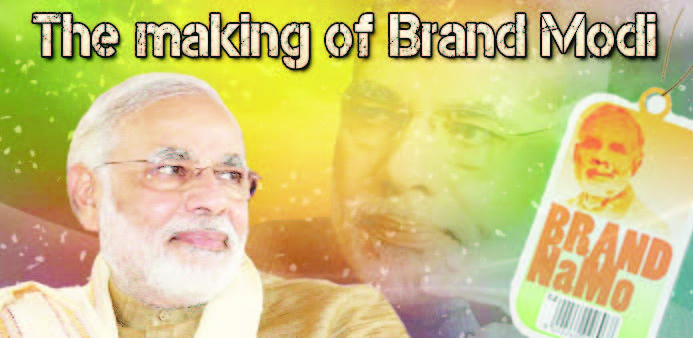
    A Hindu pracharak becomes Prime Minister of India. Here are milestones in his journey of ascension to the pinnacle of power through landslide election victory in the 16th General Election of the world’s largest democracy.


    arendra Modi was born on 17th Sept 1950 in a middle class family of grocers in the small town of Vadnagar- the Temple Town of ancient India which is Varanasi of Gujarat. The town has a long and varied history. Sharmistha Lake, Hatkeshvar Mahdev and artistic Toran Gate are hallmarks of the past glory of the capital of Anart Province. Chinese traveler Yuan Swang visited this town in the sixth century. Akbar’s music maestro Tansen came to normalcy after listening to perfect Meghmalhar singing of Naggar girls Tana and Riri. Poet Narsinh Mehta ‘s son got married to Vadnagar Naggar Community’s bride here. Small town boy Narendra Modi imbibed the past glory of his birth place in Mehsana district of Gayakwad princely state in Gujarat. Modi became a member of RSS in childhood and acquired deep understanding of Hinduism, reading Hindu Scriptures and literature of Swami Vivekananda. He left home with the consent of his parents at a young age of 17 in search of his life’s mission. He traveled extensively and spent some time in the Himalaya , meditating in the tradition of Buddha who has influenced his life and thought considerably. Returning home after some time, he became a PRACHARAK with Rashtriya Swayamsevak Sangh in 1972. He stayed with his maternal uncle in Ahmedabad and helped him selling common people’s popular drink, tea, a job which he had done before in his father’s tea stall at the Vadanagar Railway station. One astrologer who was dinner guest at their family house in Vadnagar predicted to his mother that some day her son Narendra will either be a great sage of Shankaracharya’s caliber or supreme commander of the nation if he enters politics. Jawaharlal Nehru was supreme commander in Prime Minister’s position in those days in India. Savarkar’s message to Hinduise politics and militarise Hinduism appealed to young Narendra. He worked underground during the emergency period 1975-1977 and went jail briefly.
     

    Then, Jan Sangh adopted a new name BJP after losing partnership in the government with the collapse of Prime Minister Morarji Desai’s government . Narendra Modi actively participated in all activities of BJP especially Advani’s Rath Yatra and Unity pilgrimage of Murli Manohar in 1989-90. He was assigned the responsibilities of General Secretary in Gujarat and subsequently at the national level. Modi acquired mastery in public relations and party organization. His contribution in the capacity of General Secretary was well noticed by party stalwarts Advani and Vajpayee. He did not contest any legislative election and had no experience in any capacity in government when one day in the first week of October, 2001, Prime Minister Vajpayee asked him to be the Chief Minister of Gujarat in replacement of Keshubhai Patel who had received more complaints than complements in his handling of problems in the aftermath of earthquake in Kutch -Bhuj area on the Republic Day in January, 2001.

    A Timeline : 
    October 7,2001 Modi takes oath of office of Chief Minister. He is not a member of the legislative body.
    ● Feb.24,2002 : He is elected from Rajkot constituency . Next day he is officially admitted into membership of Gujarat Assembly.
    ● Feb 27,2002 . At Godhara Station in South Gujarat 59 passengers including women and children are burned down by the terrorist group which praised Bin Laden and his methods of terrorism. Those killed were active members and volunteers of Hindu organizations .In retaliation riots spread in Ahmedabad and elsewhere in Gujarat. Both Hindus and Muslims became targets of each others’ wrath for weeks .Media all over the world gave coverage of these events in their own ways.
    ● April 12,2002 BJP High Command meeting in Goa where discussion on the riots remained major issue, some demanded removal of Modi . Narendra Modi offered his resignation . Prime Minister Vajpayee was not soft towards Modi but Advani was firm on not accepting Modi’s resignation.
    ● July 19, 2002 C.M. Modi dissolved assembly and opted to seek new mandate
    ● December 15, 2002 . Favorable election results: BJP won 127 seats out of 182 assembly seats. Modi took oath for the second time in the presence of the Prime Minister. First time in India, a Prime Minister attended oath ceremony of a state chief minister. The Modi Government received national and international praise for restoration programs of earthquake disaster. Seminars for continuing education for elected assembly members and EGovernance were Modi’s new initiatives. Prime Minister Vajpaiyee invited the dynamic C.M. Modi to be in his entourage of Russia visit. Modi observed keenly Russian growth model . He vowed to make Gujarat a shining super state in India . The first vibrant Gujarat festivity program in 2003 attracted attention of investors . Progress
    Person Modi visited China, Japan and other countries to promote investment in Gujarat.
    ● May 21,2005. Rajiv Gandhi Foundation awarded Modi Government for the most well managed State.
    ● December 25,2007: Modi takes oath for the 3rd time after election victory.

    2012: 

    Modi became Chief Minister of Gujarat for the fourth time. In a lighter vein, he stated: ‘ I will remain CM for ever’.
    But Modi was destined for a higher position, as the stranger had once predicted.
    In September, 2013, Bharatiya Janata Party named him the party’s candidate for prime
    Minister’s position. Modi had already nominated to lead the election campaign. With every passing day, it became clearer that Modi had succeeded in convincing voters of India that BJP could bring about a change to their advantage. Some doubted BJP could have the numbers to forma government with its allies, not to speak of forming a government on their own.
    Some simply could not bear to see BJP in power. Eminent Economist Nobel Laureate A.K. Sen wrote: “I do not want Modi to be my Prime Minister “.
    However, voters of the largest democracy in the world countered him : “WE WANT MODI TO BE
    OUR PRIME MINISTER.”
    And there he is. Let us wait and watch his work.

  • COURT ISSUES ARREST WARRANT AGAINST RAILWAY MINISTER’S SON

    COURT ISSUES ARREST WARRANT AGAINST RAILWAY MINISTER’S SON

    Karthik Gowda, accused of rape and cheating by Kannada actress Maithreyi, had earlier failed to appear for the hearing

    BANGALORE (TIP): In a blow for Karthik Gowda, son of Railway Minister D.V. Sadananda Gowda, a Bangalore court issued arrest warrant and lookout notice for him after he failed to appear in a trial against him. “As Karthik failed to appear before our investigation team despite repeated summons since Aug 29 for questioning on the charges alleged against him by Maithreyi, the eighth additional city metropolitan magistrate issued the warrant to arrest him,” Deputy Commissioner of Police (East) T.R. Suresh said.

    Police have formed two teams to look for 30-year-old Karthik in Bangalore and across the state. Police in Goa and Kerala have also been alerted to look out for him. A search team has left for Madikeri in Kodagu district, about 230 km from here, as he got engaged there Aug 27 and was later seen in Mangalore. “Once arrested, we will present him (Karthik) in the court and seek his custody for interrogation.

    The case is booked against him Aug 27 under Sections 376 (rape) and 420 (cheating) of the IPC (Indian Penal Court) on the basis of complaint filed by Maithreyi,” said Suresh. arthik was accused of rape and cheating by Kannada actress Maithreyi.Maithreyi has claimed that Karthik tied the wedding knot with her June 5 at his other house in Mangalore, about 350 km from Bangalore, and that they consummated the informal marriage after he forced himself upon her.

    On September 30, Karthik moved a court for anticipatory bail in the case. The city sessions court, however, adjourned the case for further hearing to Sep 4 after issuing notice to the R.T. Nagar police station where the complaint was filed on September 3. The court also asked the police station if it would file objections to Karthik’s anticipatory bail plea.

  • India must never be a ‘Hindu Pakistan’

    India must never be a ‘Hindu Pakistan’

    By Inder Malhotra

    Modi should restrain Bhagwat & others

    Mr. Bhagwat at first propounded the strange theory that since every citizen of America is called American and that of Germany is known as German, every citizen of Hindustan “must be called a Hindu”. Someone should explain to this learned gentleman that by his own logic citizens of Hindustan should be known as Hindustanis, not Hindus”, says the author

    When Narendra Modi was swept to power spectacularly just over three months ago high hopes of an early improvement in both development and governance were accompanied by some fears that Hindutva hotheads and other extremists in the Sangh Parivar might try to queer the pitch by promoting the cult of “Hindu Rashtra”. Sadly, this seems to be coming to pass, not by the efforts of only foot soldiers and fringe elements.

    The minister of state in the Prime Minister’s Office (PMO) was the first to talk of repealing Article 370 of the Constitution that gives the state of Jammu and Kashmir a special status. This produced a reaction in the sensitive state so vehement that the state’s Chief Minister, Omar Abdullah, and his father and then Union Cabinet minister Farooq Abdullah, even threatened secession.

    This did not deter another minister to propose that it was time to have a uniform civil code, inviting another furore. Then something startling happened, of all places, in Goa. A BJP leader there announced that Mr. Modi would make India a “Hindu State” before the end of his first term. He was upstaged by the state’s Deputy Chief Minister, who blandly stated that this was already the case. Obviously, no one took him seriously because the international president of the Vishwa Hindu Parishad, Ashok Singhal, mounted the rostrum to declare that the Muslims had citizenship rights in this “Hindu” country, but they also had the duty to accept Hindutva’s doctrines and demands.

    One specific demand he made was that, the Babri Masjid at Ayodhya out of the way, “the Muslim community should willingly give up two other mosques in the holy cities of Varanasi and Mathura”. In Parliament and elsewhere Opposition members and people continued to ask Prime Minister Modi to say something about these “objectionable and divisive” declarations but he continued to maintain his eloquent silence.

    A few of those who claimed to know him pointed out that to remain silent was both his strategy and style. This reading seemed to be correct. For Parliament’s first session ended on a very sharp note just before Independence Day. The Congress and other Opposition parties condemned his government for having encouraged both polarisation and increasing communal violence since its very formation. His ministers retorted that the greatest communalist in the country was the Congress. But while speaking from the ramparts of the Red Fort, the Prime Minister dealt with the burning issue very briefly.

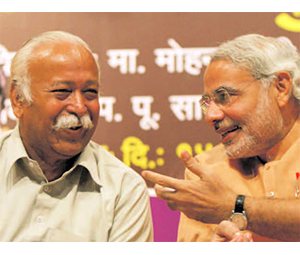
    He appealed to everyone to embark on a ten-year moratorium on all violence whether the “poison” be casteism, communalism, regionalism or discrimination of any kind because all these “are obstructions in our way forward”. This attracted no criticism although some did ask: “Why should there be a moratorium for a limited number of years? Why not get rid of all these evils permanently”? Ironically, it was at this precise moment that the leadership of the campaign to Hinduise the Indian state – that under the Constitution has to be secular – was taken over by the chief of the Rashtriya Swayamsevak Sangh (RSS), Mohan Bhagwat.

    He is the head of the entire Sangh Parivar of which the Bharatiya Janata Party is but one member. Nor has it gone unnoticed that the new BJP president, Amit Shah, who is also the right-hand man of Mr. Modi, has given the RSS representation in his team that is greater than ever before. Mr. Bhagwat at first propounded the strange theory that since every citizen of America is called American and that of Germany is known as German, every citizen of Hindustan “must be called a Hindu”.

    Someone should explain to this learned gentleman that by his own logic citizens of Hindustan should be known as Hindustanis, not Hindus. No America would call himself/herself as an “Am” or the German as “Ger”. If every Indian is called a Hindustani there would be no problem. Followers of the Hindu religion in this country are a huge majority of over 80 per cent. But the rest are Muslims, Christians, Sikhs, Jews, Parsis and so on. To call them Hindus would be an invitation not to a disaster but to a catastrophe.

    Probably for this reason the RSS chief changed his tune. “Hindustan (he has stopped using the names India or Bharat)”, he proclaimed, “is a Hindu state and Hidutva is the identity of our nation … and it (Hinduism) can incorporate in itself other religions”. No fewer than seven political parties, including the Congress, the Samajwadi Party and the CPM, have lambasted Mr. Bhagwat for planning to “impose Hindu majoritarianism” on the country. Several Opposition leaders have called him “Hitler” and a radical Sikh organisation, Dal Khalsa, has declared that it would not allow the RSS to “foist its fascist agenda on Punjab”.

    This said, one must add that communalism of every religious community is equally dangerous and deplorable. The entire Kashmiri Pandit minority was hounded out of the Kashmir valley two decades ago. The Pandits have become refugees in their own country, and their return to their homes remains problematic. Some Sikhs in Punjab have made a film glorifying the assassins of Indira Gandhi that cannot but cause trouble.

    In all fairness, it must also be recognised that the Congress that ruled the country for the last 10 years must accept its share of responsibility for encouraging the votaries of Hindutva. It always declared that its fight against the BJP was a contest between secularism and communalism. But, as former Defence Minister A. K. Antony, who investigated the causes of the Congress party’s electoral debacle has admitted, the Congress’ practice of secularism was more rhetorical than real.

    The country perceived it as the “appeasement of Muslim minority”. Whatever might have happened in the past, the two sides must learn a lesson from what the Pakistani Taliban have done to that Islamic country in the name of Islam. India doesn’t deserve that.

  • PLACES TO VISIT NEAR AHMEDABAD

    PLACES TO VISIT NEAR AHMEDABAD

    From glimpses of wildlife at Gir National Park to exploring the architectural marvels of Ajanta and Ellora to the charming hill town of Mount Abu, there are a range of places to visit near Ahmedabad. Offering a respite from the daily bustle of Gujarat’s commercial hub, these rejuvenating long weekend escapes will compel you to pack your bags and hit the road.

    SURAT

    From by-lanes lined with quaint eateries offering the most delectable Gujarati snacks to upscale markets housing massive jewellery showrooms, Surat is a city that offers almost everything you can ask for. One of the most rapidly growing cities in India, Surat is the second largest city in Gujarat and also known as the Diamond City. With the majestic Surat Fort and the Mughal-era monument Mughal Sarai for history buffs, the Lake Garden on the banks of Tapi River for those who want to take it easy, and a line-up of street markets for shoppers—Surat has a range of options for all kinds of travellers.


    25

    Baroda

    Formerly the seat of the Gaekwad dynasty, a Maratha clan which ruled over it from the mid-18th century till 1947, the erstwhile princely state of Baroda (also known as Vadodara), is today best known for its heritage and historic university. Often described as the cultural capital of Gujarat, much of modern Baroda was shaped by Sayajirao III, a far-sighted ruler in the late 19th century who patronised art and music, introduced free primary education, and established institutions such as the Bank of Baroda, a railway system and the university.

    The city’s beautiful old quarter filled with heritage buildings, and the historical city of Champaner – a UNESCO World Heritage Site – located an hour’s drive out of town, provide a fascinating insight into the past and will prove irresistible for history and culture buffs.

    Daman

    A short three-hour-long drive from Mumbai, the Union Territory of Daman (no, it’s not in Gujarat, which also means you’re good for a tipple) offers all the perks of a Goa vacation sans the teeming crowds. There are two beaches—Devka and Jampore—of which the latter is infinitely better for sun and sand.

    The Mirasol Lake Garden—replete with an artificial lake, swan boats and even a toy train chugging along the periphery—is a good spot if you’re travelling with kids in tow. For the more culturally inclined, this former Portuguese colony is dotted with architectural remains (Fort of Nani Daman, the lighthouse, Our Lady of Rosary Church) that speak of its bygone glory.

    Rann of Kutch

    Currently under consideration as a biosphere reserve, this salt wetland is abundant in biodiversity, and shrimp farming is one of the chief means of a livelihood in the area. With a host of wildlife sanctuaries, and rich presence of rare animals, this is one of Gujarat’s major tourist draws. Occupying about 4,953 square kilometres spread across the districts of Surendranagar, Banasakantha, Patan, Kutch and Rajkot, the topography of the Little Rann of Kutch features large marshlands interspersed with patches of soil supporting shrubbery. While you’re there, be sure to pay a visit to the Indian Wild Ass Sanctuary, which is one of the largest wildlife reserves in the country, and keep aside a morning to go bird spotting at Banjana Creek.

    Gir National Park

    No trip to Gujarat is complete without a visit to the Gir national Park. Sprawling across a vast expanse of 1412 square kilometres of dense forest, it is the natural abode of the lion – the only place outside of Africa where you get to experience the wild cats in their natural habitat. Take in the experience in its entirety by exploring everything, from the 250 species of chirping birds darting out of the thick canopy of trees overhead, to the crocs in the marsh waters.

    Spot the leopard, nilgai, hyenas, chinkara and antelopes, including the world’s only four-horned antelopes known as chousingha. Additionally, the Gir is the homeland of a tribe called the Maldharis, that thrives on pasturing and livestock. Spend a few days to really take it all in. We suggest a visit to the Crocodile Breeding Farm, and both the morning and evening safaris – the forest tells a different story after sundown.

    Ajanta and Ellora

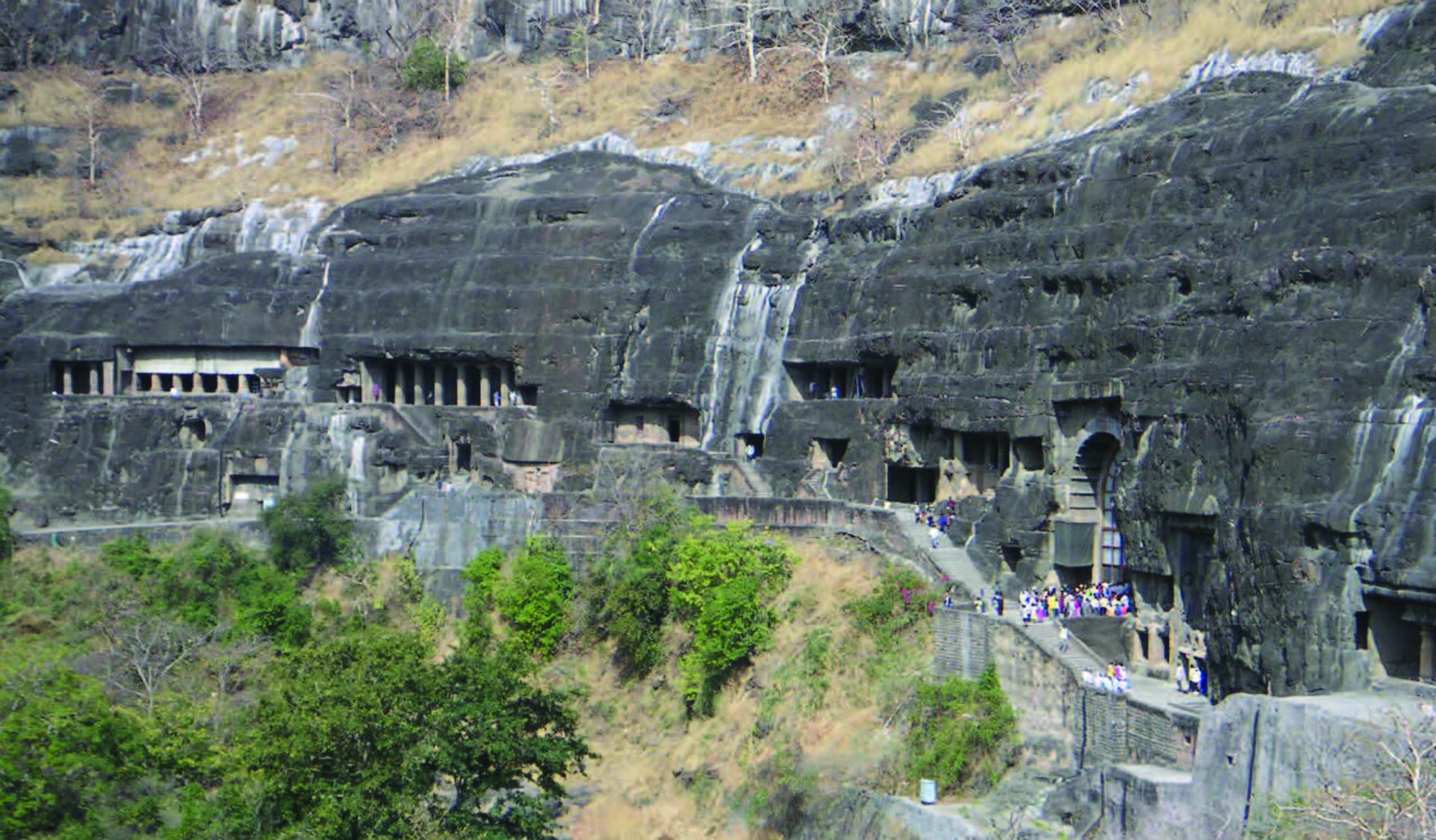
    Ajanta and Ellora are two monumental rock-cut caves that define Indian art and architectural accomplishment. Though these two monuments are separated by a distance of approximately 100 km, they are often mentioned together since their aesthetics and importance are at par and the fact that both are situated in the Aurangabad district of Maharashtra.

    While Ajanta is mostly about beautiful paintings made on cave walls on the theme of Buddhism, Ellora is all about sculpture and architecture belonging to three different religions prevailing in the country during those times—Buddhism, Hinduism and Jainism. Ajanta is a cluster of 30 caves of different sizes excavated in a horseshoe shaped stretch of rock embedded in a hill facing a narrow stream called Waghora. Each cave was connected to the stream by a flight of steps, which are now demolished with few remnants left behind. These caves are named after a nearby village called Ajanta.

    It includes masterpiece paintings of Buddhist religious art, with figures of the Buddha and depictions of the stories that tell about the previous lives of Buddha. The caves were built in two phases— starting around the 2nd century BC, with the second group of caves built around 400- 650 AD. Buddhist monks used to retreat to this serene place during the monsoon, and as they had plenty of time during such retreats, they used it for deepening their religious quest through prayer and discussion.

    Jodhpur

    The second largest city (after Jaipur) in Rajasthan, Jodhpur is an architecturelover’s feast for sore eyes. The older historic section of the city of Jodhpur is located around the grand Mehrangarh Fort which is bounded by a wall and several gates. Winding streets and unending bazaars run throughout the city that are littered with shops and thronged by visitors throughout the year.

    Also referred to as the Blue City, Jodhpur is home to the magnificent Umaid Bhawan Palace. A fivehour- drive from the hill-station of Mount Abu, Jodhpur makes for a perfect getaway once the hill station’s charms stop making an impression on you.

  • MR. MODI’S BAGGAGE IN OFFICE

    MR. MODI’S BAGGAGE IN OFFICE

    S Nihal Singh

    There are obvious contradictions between Mr. Modi’s concept of tapping the very best in technology for the greater good and obscurantist and ludicrous beliefs that defy logic. The great danger is that the very constituency – the urban aspirational middle class that brought Mr. Modi to power – will be increasingly disillusioned with a ruling party still living in an imaginary ancient world”, says the author

    With the Modi government settling down to its new responsibilities, it is becoming increasingly clear that it comes with its baggage. And each day brings a new gem of wisdom from the Bharatiya Janata Party’s (BJP’s) ranks and its allies to offer a concept of India and the world that is part medieval, part gauche. Judging by our six years of experience of the Vajpayee government, we had come to expect our education and allied ministries to be packed with Rashtriya Swayamsevak Sangh (RSS) ranks or sympathizers.

    We have seen an obscure historian with pronounced RSS sympathies take over the Indian Council of Historical Research. In the ministry dealing with education and allied subjects, instead of an ideologue, the Modi Government has done better: appointing a novice and school leaver to provide the RSS a sheet of blank paper to write on. Indeed, the oratory of BJP ranks and allies has been in full flow in welcoming a Hindu India of Mr. Modi’s concept and in dilating upon the evils of such peril as bikinis and bars in Goa. On the sensitive issue of rape, very much in the public eye, BJP party men’s views are as conservative and retrograde as those of many other parties such as the Samajwadi Party.

    The world’s gender revolution has still to catch up with the bulk of our male politicians who still live in a male-dominated society, with the country’s traditional and mythical tales reinforcing a chauvinist mindset. There are obvious contradictions between Mr. Modi’s concept of tapping the very best in technology for the greater good and obscurantist and ludicrous beliefs that defy logic. The great danger is that the very constituency – the urban aspirational middle class that brought Mr. Modi to power – will be increasingly disillusioned with a ruling party still living in an imaginary ancient world.

    The fact that the scale of the BJP’s victory in the Lok Sabha election that brought the party to power, much to its own surprise, meant that many candidates were given the ticket indiscriminately without proper scrutiny and comprise a large element of the lumpen class. Some of the BJP’s allies are, of course, a class by themselves. We are therefore treated to the dubious entertainment of honorable members of Parliament stuffing rotis into the unwilling mouths of the catering staff.

    Another aspect of Mr. Modi’s Gujarat model has made its appearance in Delhi. Indeed, the Prime Minister appears to be part sanitary inspector, part micromanager, part strict headmaster in running the national government. And such conduct must lead to serious doubt whether what would work in one state can be replicated nationally. If ministers cannot appoint their own private secretaries, it must leave question marks. Perhaps the quality most sought after by a majority of people who voted for him is the expectation of his decisiveness.

    After the United Progressive Alliance II experiment with a dual key arrangement kicking problems to a bewildering array of committees, the people took Mr. Modi as advertised and voted for him. Many problems are too complex to be resolved instantly, but those who voted the BJP expect those that can be promptly dealt with to be attended forthwith. Language has proved to be another deal breaker, with an ambiguous government note on compulsory noting in files in Hindi riling non-Hindi speakers.

    In any event, the missionary zeal with which the new government is promoting Hindi is counterproductive. One problem, of course, is that many of the BJP leaders are not fluent in English and choose to speak a Sanskrit’s Hindi hard to understand because it abandons commonly spoken Hindustani espoused by Mahatma Gandhi. The danger, of course, is that by using Hindi in their discourse, the BJP government is cutting out non-Hindi speakers from the South and the East in particular from the national dialogue.

    Indeed, one delegate made known his predicament after a Hindidominated conference because he simply could not comprehend what was being said. There was no translation offered, whether of simultaneous or subsequent variety. The Gujarat model of governance can therefore lead Mr. Modi to go off at a tangent. India is not peopled by one homogeneous people or language. Language, as preceding upheavals have shown, strikes at the heart of a people’s being and deeply affects their outlook.

    One hopes the brand new Modi government will learn its lesson in desisting from forcing Hindi on unwilling peoples. One conclusion one can draw from these early days of the Modi government is that scale makes an immense difference between how problems can be looked at and resolved. As Chief Minister, Mr. Modi was able to subdue the Opposition and largely govern the state as a single-party government, even worsting the Governor in diluting the Lokpal’s role.

    The Opposition, singly or collectively, cannot be thus subdued at the national level. And in conducting parliamentary or other business, there has to be an element of give and take. Whatever decision the Speaker of the Lok Sabha takes on giving the official status of Leader of the Opposition to the Congress, the BJP lost an opportunity in not being immediately generous, instead of hiding behind precedents. Mr. Modi demonstrated in Gujarat that he could keep fringe and extremist elements of the Sangh Parivar at bay in his state.

    His task is immensely more complicated at the national level because the RSS backed him to the hilt for leadership and will now demand its pound of flesh not only in appointing pliable or ideologues as ministers but also in doing its bidding on issues it considers important. Against Mr. Modi’s eloquence and vitriol on the election campaign, his silence on major issues of the day has been much commented upon.

    The tasks of governance are, of course, quite distinct. Responsibilities of government impose restrictions on the free flow of ideas, but interactions with media restricted to short tweets or terse official press notes will prove to be a handicap in running the country. Mr. Modi is a quick learner and one hopes he will change course in some areas as he moves forward.

  • GIRLS NOT SAFE ON UP ROADS AFTER SUNSET, SAYS GOA CM

    GIRLS NOT SAFE ON UP ROADS AFTER SUNSET, SAYS GOA CM

    PANAJI (TIP):

    In potentially controversial remarks, Goa chief minister Manohar Parrikar on Thursday said girls would “disappear” if they walk on the roads in Uttar Pradesh in the evening and invoked the legendary Bhagat Singh to justify foreign study trips by his cabinet colleagues. “Any girl can walk without fear on Goa streets even at midnight. But in Uttar Pradesh, if a girl walks at 6 in the evening, she will disappear,” he said in the assembly while seeking to address worries expressed by the ppposition on the law and order situation in the BJP-ruled coastal state.

    He claimed some states with interest in tourism were busy spoiling the name of Goa which attracts millions of holiday-makers, both domestic and international, every year. Parrikar also alleged “a big news channel” has vested interest in “defaming” Goa. “There is a big news channel which has vested interest in defaming Goa. They act as if they have the right over Goa. I have stopped watching the channel, let them carry what they want”, he said. A beach in Goa visited by thousands of tourists every year Parrikar cited the life of revolutionary patriot Bhagat Singh to argue that there were two ways of looking at things.

    His remark was in context of some ministers going abroad to study garbage disposal systems. “It was not a junket, it was a preoperative expense. If I had not sent them, I would have been accused of constructing (waste treatment) plants without studying them,” he said. “There are two ways of looking at anything. We look at Bhagat Singh as a martyr but Britishers used to look at him at as a terrorist. We need proper prospective to look at everything,” Parrikar added.

  • WHEN IT RAINS, IT POURS IN SOUTH INDIA

    WHEN IT RAINS, IT POURS IN SOUTH INDIA

    The long hot summer comes to an end as the month of June elapses, and the parched Earth cools down with the incessant downpour which rides in on the Monsoon winds. If you are one of those who don’t mind getting a wee bit wet, then there’s really no place like South India to truly enjoy the Monsoon. From sipping a cup of hot tea and enjoying hot pakoras at a roadside stall to taking a walk under the umbrella in cool breezy weather, these destinations in the southern part of the country will mesmerise you during the rainy season.

    Goa

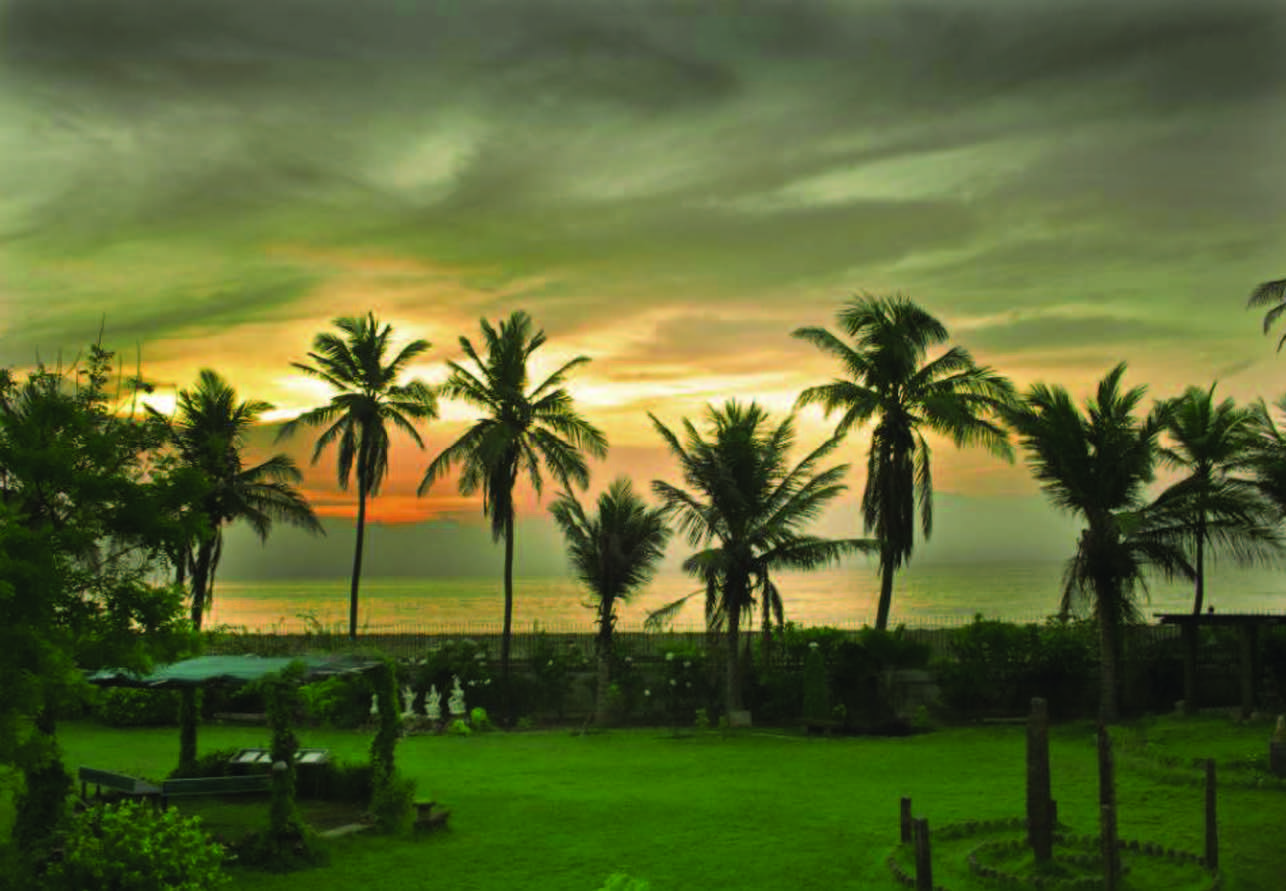
    Swaying palms, white sands and swirling waters coupled with torrential rains make Goa a must-visit during the rainy months. While swimming is not advisable as the waves can be dangerously big, and the water can get murky, there’s no reason not to take a walk along the beach with wet sand between your toes and a gaze at the cloudy horizon over the ocean.

    Sip on a hot cup of tea, sample delectable Goan cuisine in a roadside cafe, or go biking in the meandering pathways of the state while the rain pours down. Even better, head into the forested hinterland of Goa where the jungle comes alive during the monsoon. Since it’s the lean season, don’t be surprised if you get some great deals and offers too.


    9

    Coorg

    Nestled amidst verdant landscapes, acres of coffee plantations, and rugged mountain terrain interspersed with cardamom-growing fields, Coorg is one of the wettest places in southern India during the monsoons. A sixhour- drive from the Bangalore airport, Coorg is often praised as ‘Scotland of India’ on account of its unending green slopes.

    While a thin layer of mist that haunts over the lush valleys of Coorg, the hill town transforms into a palette comprising many shades of green when the rain comes down. The majestic beauty of this hill town with its cascading waterfalls and cool ambience make Coorg a perfect destination to visit provided you’ve got your rain gear and are prepared to step out in a downpour.

    Pondicherry

    Mustard-yellow tinted villas, old colonial houses, cobble-stoned streets and a surfeit of seafront restaurants, cafes and bars-the postcard-perfect city of Pondicherry lures you in with its old-world beauty and quaint charm. The wet months of August to December add a dash of romance and create a cool ambience in the city, with its scenic wet trails, cloudy skyline, and water dripping down the sloping roofs.

    Take a walk under your umbrella, hire a bicycle to explore this picturesque town or hop on a ferry to get to the beaches nearby-Pondicherry is anything but dull and grey during the monsoon season.


    8

    Munnar

    Carpeted with emerald-green tea plantations, the valleys of Munnar get even more mesmerising when dark clouds come rolling in and engulf the hilltops in the months of June to November. Those who want to witness nature at its best can go hiking in the Periyar National Park where a rich variety of flora comes alive during the monsoon.

    So does the fauna, and it’s best to be protected against insects and other creepy crawlies which abound in the forest. The rain-drenched greenery is especially captivating around the many waterfalls around Munnar which become deluged during the monsoon.

  • Goa MLAs to ‘Study’ World Cup in Brazil, Congress Cries Foul

    Goa MLAs to ‘Study’ World Cup in Brazil, Congress Cries Foul

    PANAJI (TIP): Football fever is running high and the BJP government in Goa has scripted a controversy by sanctioning a Rs. 90 lakh junket for six MLAs, including the sports minister, to Brazil, where the FIFA World Cup began on June 12 night. It has been pegged as a “study tour.” The Congress has alleged that Chief Minister Manohar Parrikar is misusing public funds and has demanded that the trip be scrapped.

    “Yesterday Narendra Modi spoke in Parliament about sanitation, house, water for poor people and today his own government in Goa is investing 89 lakhs so that his MLAs can go and watch a football match,” said the party’s Rashid Alvi. A livid Goa Congress leader Durgadas Kamat called it an “utter loot of the state treasury.” Sources in the Goa government argued that the trip is a “study tour” for politicians of a state that regularly holds sporting events. They pointed out that no bureaucrats were being sent. Only politicians who “bring the vision.”

    “The decision has been taken in the interest of Goa, football is our state sport. Some MLAs on the team are exfootballers,” explained Chief Minister Manohar Parrikar. The delegation has no sportsman or anyone connected with football either, though the tiny state has given India some of its leading national football stars. Two of Goa’s former footballers, Bruno Coutinho, and Brahmanand Shankhwalkar, both Arjuna award winners, had reportedly asked if they could be sent to Brazil to watch the tournament.

    Bruno Coutinho a former India captain, said, “I am hurt, if MLAs can go, why not a sportsman. I am not just any footballer, am an Arjuna Awardee. I have captained the Indian football team.” Sources said Mr Coutinho’s name was on an initial list for the trip but was dropped. Apart from Goa sports minister Ramesh Tawadkar, two other ministers and three MLAs will now watch matches to be held at the end of this month. The final of the tournament will be played in Rio on July 13. India is ranked a poor 154 in world football, but lakhs of fans eagerly await the World Cup held every four years. The first match was played between Brazil and Croatia.

  • PANCHAMUKHA HANUMAN

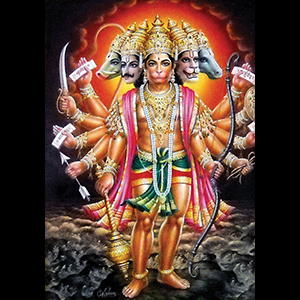
    PANCHAMUKHA HANUMAN

    Both of Keshari’s wives welcomed the unexpected guest and served him whole heartedly. Agastya was highly satisfied and told the wives to ask for any boon they wished. “I want the mightiest son, who will be highly bold and strong in the world. Totally devoted to universe welfare,” Anjana requested. “So be it,” Maharishi Agastya approved the wish for both of them, and in due course of time, Anjana gave birth to Sri Hanuman Ji who became all powerful and Adrika gave birth to a son, Adri by name, who became governor of all the goblins. Soon after Maharishi granted the boon, Maharishi Agastya realized that Lord Shiva himself was going to be born as the son of Anjana. He ordered her to go to meditate on the hill Venkatadri in Vrishabhachal on the bank of Akashaganga. This was the most appropriate place to materialize her desire.

    Thus, one day, she was absorbed in a long meditation, the wind God appeared and said, “Adorable devi, I am pleased with you. You will attain a mighty son, one who will not be affected by any weapons whatsoever. I shall become your son myself. He will be equal to me in power and speed. Thus saying, the wind God infused his light into mother Anjana. Great souls seldom move from their celestial abodes unless there is a mission for them to fulfill. Then the whole creation awaits their advent.

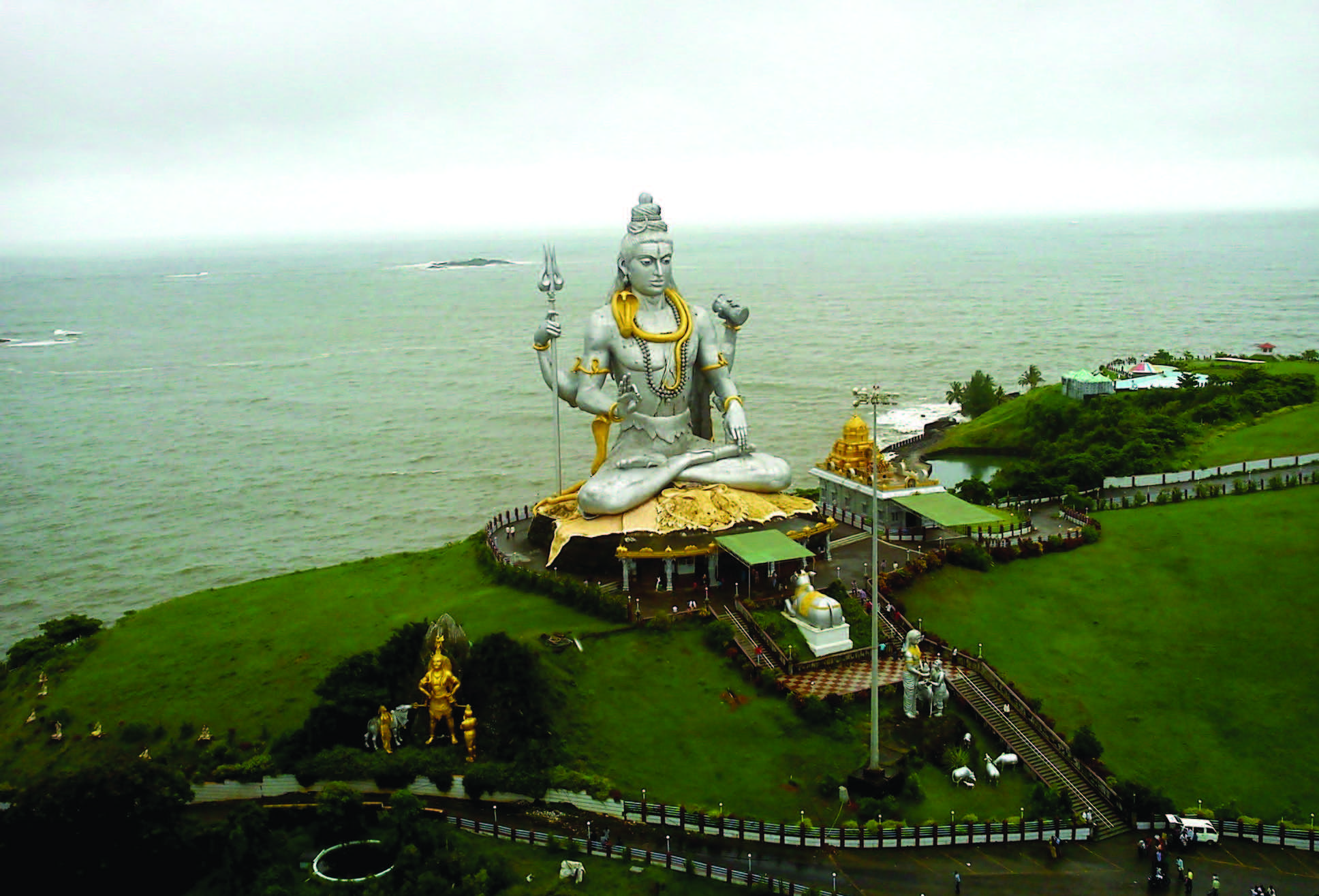
    In the same way, there were do many reasons for the advent of Sri Hanuman ji. The natural instinct of Keshari was to wander around to different holy places, and when ever found a scenic garden he used to sit in long meditation. Once, while he was residing in Gokarna (a holy place of Lord Shiva near Goa), he found a great monster, Shambasadana, continuously persecuting the holy saints who were residing there. Keshari confronted this monster and hit him forcefully with his fist.

    There was a great wrestling match and at last Keshari was successful in slaying him. All of the rishis were extremely happy with Keshari’s feat and blessed him so that he might attain an almighty, enlightened son, who would become very hot tempered to any unjust act. They then offered a very powerful mantra of Lord Shiva. After Keshari had been repeating this powerful mantra, Lord Shiva appeared and blessed him, and Lord Shiva’s light entered into Keshari’s body. Keshari felt as if he was no longer a mortal. When the rishis saw him full of effulgence they suggested that he return to his home.

    At the same moment, Anjana returned home after receiving her boon from the wind God. When she saw her husband after such a long time she was filled with rapturous joy and fell down at his feet. Keshari was overwhelmed with love. He raised her u with his two arms and embraced her, and for some time they became one in that universal silence. Keshari did not remain Keshari and Anjana was no longer Anjana, they became one in love trance and in that love trance Shiva’s light, which was abiding in Keshari was transmitted to Anjana. She felt as if bathed in effulgent bliss, light, and grace.

    Now Keshari became as he was before the visit of Lord Shiva. All of Lord Siva’s effulgence was transmitted to Anjana. Anjana abandoned that special simple dress which she had adopted in the time of separation from her dear husband. She wore instead a gorgeous silk sari, golden necklaces, a crown earrings embedded with gems and jewels. She was adorned beautifully! The husband and wife began to enjoy in the groves on the top of the mountain. On the planet Bramha, which is situated about one hundred and sixteen million miles above polestar, there was a nymph whose name was Suvarchala.

    She was very fond of blossoming, fragrant flowers. Once she rushed to some flowers in the assembly of Bramha. The creator, Brahma, is found of good manners and certain formalities and was not pleased with Suvarchal’s impulsive action he cursed her saying. “You, being born into the race of gods, possess no patience, so you will become a crow”, Suvarchala repented and, falling at his feet, asked for a pardon from Lord Brahma, He mercifully forgave her and said, “In the silver age, on planer Earth, king Dasjaratha will receive a bowl of diving rice pudding after his ceremony of putreshthi yajna.

    He will then distribute it among his three queens. You woll take away queen Sumitra’s share, and then by the touch of that divine, blesses rice pudding you will attain your original form and come to my planet again.” The time described by Brahma arrived and king Dashatatha was performing his fire sacrifices festivity on the bank of the holy Sarayu river. It was definitely an interplanetary festivity.

    King Dasharatha fed millions of guests. He offered almost all of his property and empire to enlightened rishis, which they, in turn, gave back to him after accepting a small exchange. A huge masculine form then arose from the sacrificial fire with a bowl of celestial rice pudding in his hand. His body was red like ultraviolet rays. He had long golden hair, a long beard, and large eyes. He spoke like a rumbling cloud, saying, “My dear king Dasharatha, the gods of higher planets are highly satisfied with you because of your sacrificial festivity, and they have sent you this rice pudding, let the queens respectfully eat it and then they will give birth to four incomparable babies who will redeem the earth from all the evil forces.”

    The whole assembly of saints, kings, and rishis were all silent while the king was distributing the rice pudding among his queens. As soon as the king placed a protion in the open palms of Sumitra, Suvarchala, in her form as a crow, jumped as it. She held it fast with her legs and beak and flew away high into the sky. Kousalya ans Kaikeyi, the other two queens, shared their porting of pudding with Sumitra. Thus Sumitra gave birth to two babies. As soon as the crow rushed to the open sky there arose a heavy wind and hurricane.

    The bird stumbled and the rice pudding was touched by her body. Immediately she regained her celestial form and the body of the crow fell down to earth. The wind god then took the bowl pudding and appeared on the hill top groves where the couple, Anjana and Keshari, was wandering. The wind told Keshari and Anjana that he had come there to offer them with celestial rice pudding, “Allow Anjana to eat it and she will give birth to the mightiest child, a boon I was granted her some time ago.”

    After receiving the order from her dear husband, Anjana accepted the bowl of rice pudding. Feeling much joy she put it against her heart and head and then wind God disappeared. Anjana ate the pudding and became pregnant. Soon after, as demigod races do not require the full nine months in womb, she gave birth to Sri Hanuman ji on Tuesday, in the month of October. This is why all great devotees of Sri Hanuman ji observe a fast on Tuesdays.

  • Act against BJP, Congress over foreign funds: Delhi HC

    Act against BJP, Congress over foreign funds: Delhi HC

    NEW DELHI (TIP): The Delhi High Court on March 28 asked the central government and the Election Commission to take appropriate actions against the Congress and the BJP for taking foreign funds in violation of law.

    Justice Pradeep Nandrajog and Justice Jayant Nath allowed the plea of an NGO filed by advocate Prashant Bhushan seeking directions for a probe into donations allegedly taken by the parties from subsidiaries of the Britain-based Vedanta group. The bench said the concerned authority should act within six months in accordance with the law. The Bharatiya Janata Party and the Congress had claimed that Vedanta Resources was not a foreign company and therefore no law had been violated.

    The PIL filed by the Association for Democratic Reforms through Bhushan said the Britain-based Vedanta Resources and its subsidiary companies in India – including Sterlite Industries, Sesa Goa and Malco – “have donated several crores of rupees to major political parties like the Congress and the BJP”. The two parties breached the Representation of the People Act, 1951, and the Foreign Contribution (Regulation) Act (FCRA), the PIL alleged.

  • BJP DECLARES 54 LOK SABHA CANDIDATES

    BJP DECLARES 54 LOK SABHA CANDIDATES

    NEW DELHI (TIP): The Bharatiya Janata Party (BJP) Thursday announced its first list of 54 candidates for the Lok Sabha elections and fielded former party president Nitin Gadkari from Nagpur. The list was announced after a meeting of the party’s central election committee.

    It includes candidates for Jammu and Kashmir, Arunchal Pradesh, Goa, Manipur, West Bengal, Odisha, Maharashtra and Himachal Pradesh and has several sitting and former parliamentarians. Former union minister Shanta Kumar has been fielded from Kangra in Himachal Pradesh while Anurag Thakur, president of Bharatiya Janata Yuva Morcha, has been retained as candidate from Hamirpur.

    In Jammu and Kashmir, the BJP fielded state chief Jugal Kishore Sharma from Jammu and state spokesman Jitender Singh from Udhampur. Other candidates from Jammu and Kashmir include Thunpsthan Chhweang (Ladakh), Mushtaq Ahmad Malik (Anantnag) and G.M. Meer (Baramulla). The BJP declared 17 candidates from West Bengal, including former lawmaker Tapan Sikadar (Dum Dum), state party president Rahul Sinha (Kolkata Uttar), and magician P.C. Sorcar Jr. (Barasat).

    Apart from Gadkari, 17 candidates declared from Maharashtra include sitting parliamentarians Gopinath Munde (Beed), Hansraj Ahir (Chandrapur), Dilip Gandhi (Ahmadnagar) and former MP Kirit Somaiya (Mumbai North East). The party fielded former lawmaker Kiren Rijiju from Arunachal West and another former parliamentarian Tapir Gao from Arunachal East. Shripad Y. Naik was retained from North Goa and Narendra K. Sawaikar has been fielded from South Goa. In Odisha, the BJP has fielded Jual Oram from Sundargarh and Sangeeta Kumari Singh Deo from Bolangir. The party declared six candidates from Odisha. The party retained Virender Kashyap as its candidate from Shimla.

  • MAMATA AND ANNA TO CAMPAIGN TOGETHER FOR LOK SABHA ELECTIONS

    MAMATA AND ANNA TO CAMPAIGN TOGETHER FOR LOK SABHA ELECTIONS

    KOLKATA/PUNE (TIP): Mamata Banerjee’s ambition to play a key role in the national politics is taking shape after plans of sharing the dias with Anna Hazare in a joint campaign for the forthcoming Lok Sabha elections. A meeting between Banerjee and Hazare, scheduled to take place in New Delhi on February 18, is likely to give shape to an all-India campaign tentatively dubbed “Fight for India”.

    Mamata has reportedly agreed to give an affidavit “to people” that she would “resign” from the post (of Prime Minister) if she failed to implement Hazare’s 17-point charter. “We need a simple Prime Minister like Mamata Banerjee. I will campaign for her and appeal to voters to elect her,” Hazare said after an hour-long meeting with Trinamool Congress national general secretary Mukul Roy at Ralegan Siddhi on February 13.

    “Mamata stays in a 12X8 ft home. She still wears slippers and simple saris. She doesn’t avail an (official) car and takes no salary. She offers a ray of hope and if people stand by her, then the country will change in no time,” he said. “I had earlier sent a 17-point agenda to all parties. Only Mamataji replied. She agreed to give an affidavit to people. I will go to Delhi on February 18. We will have a detailed discussion and the path ahead will be decided then.”

    But earlier Hazare’s had said he would not support any political party. “We don’t want a Prime Minister who operates on a remote control, even if he has an unblemished character,” Hazare added. Roy said he has come to meet Hazare as a respected senior and elderly statesman and convey Banerjee’s highest regard for him. Hazare also praised Goa chief minister Manohar Parrikar and Tripura chief minister Manik Sarkar, saying he was happy with the way these chief ministers were running their governments and maintaining a “simple lifestyle” despite being in power.

    Sources said “Fight for India” campaign will be targeting the approximate 90-crore people with cellphones. It would be apolitical to allow Hazare and Banerjee to share same space and also to enable them to target young voters (65% of voters in India is below 35 years of age). The campaign is likely to kick-start soon. Trinamool was the first political party to accept Anna’s 17-point charter of demands. Roy on January 16 had written to Hazare that most of these have been incorporated and some even implemented by the party during the 2009 Lok Sabha polls and 2011 Assembly polls.

    “I would like to assure you that we are wholeheartedly working to incorporate many more such ideas in our party’s 2014 election manifesto as well. We accept your 17- point economic agenda and need your guidance,” Roy had said. Hazare had indicated that acceptance of his 17-point agenda isn’t enough and that he wanted Banerjee should also sign an affidavit that if she can’t implement them she should resign. Agencies quoted Hazare saying, “…For the people, we want an affidavit from her that she would resign from the post if the 17 issues are not implemented. Affidavit is very important.

    And if this affidavit happens then I will tell people to stand behind her in order to change the country.” Hazare also said that he recently sent the same agenda to Aam Adami Party leader and Delhi chief minister Arvind Kejriwal and was waiting for his response. “Arvind’s party did not exist when I had sent the letter. So I will give him some time to respond. If he accepts the agenda and gives an affidavit I will think about supporting him,” he said.

  • MURUDESHWAR: THE OFFBEAT BEACH GETAWAY

    MURUDESHWAR: THE OFFBEAT BEACH GETAWAY

    Asmall coastal town in Karnataka, it used to be highly unlikely that Murudeshwar was on the travel wish-list for any one other than the inhabitants of Karnataka state. But the times are a changing now. Coupled with accessibility and the increased desire of visiting off-beat destinations, people have started venturing further south of beach haven, Goa, to Murudeshwar. Scuba diving has been another reason for this destination becoming popular over the past couple of years.

    Climate
    The summers in Murudeshwar are hot and extend from March to May. The winters are quite pleasant and do get as chilly as it can possibly get on the Indian west coast.This makes the months of Oct to Mar the perfect time to visit Murudeshwar. Leaving aside the monsoon months of July to September, anytime is a great time to visit here.

    Food
    Being a religious town, it is not easy to come by non-vegetarian restaurants in Murudeshwar. The Sea Lounge at RNS Residency is a great place to sit and have a meal given its ambience and view but does not serve non-veg or alcohol. You can however come down here for a juice or milkshake in the morning or afternoon. Naveen Beach Resort is probably the only one in the main town where you get both alcohol as well as non-veg food and is therefore the one most popular amongst tourists. Definitely go here for seafood.Naveen Beach Restaurant is a great place to have breakfast with its traditional south indian fare. They have amazing dosa, upma, meduwada, etc.


    21

    Places of interest
    Murudeshwar is a small little beautiful beach town with loads of tourists visiting to see the temples and to take a dip in the holy waters of this town. The town is in fact named after Lord Shiva.

    Shiva temple
    Murudeshwar is home to the second tallest Shiva statue in the world. Standing enormously tall at 123 ft, this statue is the main reason thousands of tourists throng to Murudeshwar.

    Raja Gopura
    At 18 to 20 storeys high, this tower was built by Mr R.N Shetty, a very well known businessman and philanthropist in Murudeshwar. To me it seemed like he practically owns the town. This Raja Gopura was built with a viewing gallery on the 18th floor so that everyone could witness the spectacular views from a height as well as get a great view of the statue of Lord Shiva.

    Murudeshwar beach
    While the beach is beautiful just as any other beach is to me, it is lined with small, cheap food stalls, crabs, garbage and locals who stare at you enough to make you uncomfortable. So Murudeshwar beach is preferably best scene from afar. However a trip to the beach really early in the morning might not be a bad idea.

    Netrani Island – Scuba diving & snorkelling
    A boat ride of around an hour and fifteen minutes from Murudeshwar beach gets you to Netrani Island. This is a small island, one that you don’t really need to get down on to. The boatmen will keep the boat parked close by to the island and you can jump in with a snorkel mask and have some fun. I’d recommend giving scuba diving a try. It is probably the next best thing to travelling into outer space as a lot of people say.

    How to get there
    By air
    The nearest airport is Mangalore at 165 kms away. It probably doesn’t make sense for people to fly in to Mangalore and then drive to Murudeshwar unless they’re coming from far up north and are really constrained on time.

    By rail
    Murudeshwar is well connected on the Konkan railway line with a few trains daily connecting it to Goa and onwards to Mumbai.

    By road
    The journey from Pune to Murudeshwar is over 600 kilometres. We left in a friend’s car at 7:45am, not bad considering our targeted time of departure was to be 6:30am. While getting out of Pune, head in the general direction that you would to go to Goa. You could go up till Goa and then drive southwards but it is a better idea to travel through the interiors of Karnataka via Hubli and reach Murudeshwar directly. The time taken for this journey was around 11 hours with enough leisurely tea and eats stops.

  • Challenges in Indo-Pacific Region

    Challenges in Indo-Pacific Region

    INDIA MUST PLAY A PROACTIVE ROLE FOR LONG-TERM SECURITY AND STABILITY

    It would be in India’s interest to readily join cooperative efforts aimed at maintaining stability. India has acquired robust military intervention capabilities and is formulating a suitable doctrine for intervention”, says the author.

    The security environment in the Indo- Pacific region has been vitiated by territorial disputes on land in the South China Sea and the East China Sea as well as terrorism, the proliferation of small arms and piracy in the Malacca Strait. Freedom of navigation on the high seas is of critical importance for the economies of most Asian countries.

    Maintaining peace and stability and ensuring the unfettered flow of trade and energy supplies through the sea lanes of communications will pose major challenges for the Asian powers as well as the United States. Only cooperative security architecture can provide long-term stability and mutual reassurance. Through its forward military presence and its abiding military alliances, the US has played a key role in providing stability in the Indo-Pacific region through many decades of turbulence during and after the cold war.

    The US is now re-balancing or ‘pivoting’ from the Euro-Atlantic zone to the Indo-Pacific in tune with its changing geo-strategic priorities and the rise of emerging powers. It is also simultaneously downsizing its forces and will need new strategic partners to help it maintain order and stability. According to Rory Medcalf, Senior Fellow, Brookings Institution, Washington, “the choreography of this geopolitical interplay will depend on the quality of leadership and decisionmaking in Beijing, New Delhi and Washington.”

    As C Raja Mohan has averred in his book “Samudra Manthan: Sino-Indian Rivalry in the Indo-Pacific”, the major powers in the region, including Australia, China, India, Indonesia, Japan and the US, need to work creatively to frame acceptable rules for the commons in the Indo-Pacific. Unless such realization comes about, subterranean tensions will continue to hamper stability. China has so far been ambivalent in seeking to join a cooperative framework and has preferred to stand apart. It has failed to realize that its growing trade and massive dependence on energy imports through the Indian Ocean make it imperative for it to join the efforts being made to establish such a framework.

    It would be in India’s interest to readily join cooperative efforts aimed at maintaining stability. India has acquired robust military intervention capabilities and is formulating a suitable doctrine for intervention. Though India has a pacifist strategic culture rather than a proactive one that nips emerging challenges in the bud through pre-emption, it has not hesitated to intervene militarily when its national interests warranted intervention, both internally and beyond the shores. The Army was asked to forcibly integrate the states of Goa, Hyderabad and Junagadh into the Indian Union soon after Independence as part of the nation-building process. The Indian armed forces created the new nation of Bangladesh after the Pakistan army conducted genocide in East Pakistan in 1971.

    India intervened in the Maldives and Sri Lanka at the behest of the governments of these countries and was ready to do so in Mauritius in 1983 when the threat to the government there passed. India had airlifted 150,000 civilian workers from Iraq through Jordan during Gulf War I in what became known as the largest airlift after the Berlin airlift. Also, almost 5,000 civilian workers were evacuated by ship from Lebanon in 2006. After the 2004 South-East Asian tsunami, 72 naval ships had set sail within three days to join the international rescue and relief operations even though India’s eastern sea board had itself suffered extensive loss of life and damage. India’s limited military presence overseas has been mostly benign.

    According to Shyam Saran, a former Foreign Secretary, “…most South-East Asian countries and Japan welcome a larger presence of Indian naval assets in the region.” As part of the Indo-US defense cooperation, joint patrolling of the SLOCs in the Indian Ocean is already being undertaken up to the western mouth of the Malacca Strait as part of joint naval exercises. Other military exercises have led to a broad understanding of each other’s military capabilities and limitations and many interoperability challenges have been ironed out. The Indian Army has designated one infantry division as a rapid reaction division, with an amphibious brigade, an air assault brigade and an infantry brigade. The Army also has an independent parachute brigade that can be deployed at short notice.

    The Indian Navy now possesses the INS Jalashva (USS Trenton) that can carry one infantry battalion with full operational loads and is in the process of acquiring additional landing ships. Besides long-range fighter-bomber aircraft with air-to-air refueling capability like the SU-30MKI, the Indian Air Force has acquired fairly substantive strategic airlift capabilities, including six C-130 Super Hercules aircraft for the Special Forces. A permanent corps-level tri-Service planning HQ with all-weather reconnaissance and surveillance capabilities needs to be set up under the aegis of the HQ Integrated Defense Staff to monitor emerging situations on a regular basis and act as a control HQ for intervention operations.

    In future, India may undertake joint military operations in its area of strategic interest if the country’s major national interests are at stake. Such a campaign may take the form of an intervention under the UN flag – something that India would prefer – or even a “coalition of the willing” in a contingency in which India’s vital national interests are threatened. There will naturally be several caveats to such cooperation as India will not join any military alliance. It will also be necessary to work with other strategic partners and friendly countries in India’s extended neighborhood and with organizations like the Gulf Cooperation Council (GCC), the ASEAN Regional Forum (ARF) and, when possible, even the Shanghai Cooperation Organization (SCO). The aim should be to establish consultative mechanisms through diplomatic channels for the exchange of ideas, and conduct joint training and reconnaissance. Small-scale joint military exercises with likely coalition partners help eliminate interoperability and command and control challenges and enable strategic partners to operate together during crises.