Tag: Goa

  • Get Set For A Seaplane Ride in Kerala

    Get Set For A Seaplane Ride in Kerala

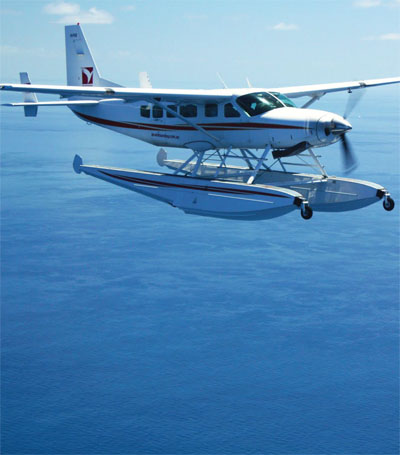
    Kerala will soon start a seaplane service for tourists, the first of its kind in the country. Houseboat cruises are passe. Take a trip on a seaplane instead! By the end of this month, tourists visiting Kerala can take a flight cruise, which will have landing points at water dromes in Bakel, Bolghatty, Punnamada, Ashtamudi and Kumarakom, besides the three airports in the state. More landing points are in the pipeline, say officials. “It was after an extensive research that the state government concluded that the water bodies here are ideal for seaplanes. It is very popular in foreign countries where there is water connectivity. And of course, there is no other state in India which is so well connected through water,” says Umesh Kammath, GM of a private company with which the government has tied up. Two planes, a six-seater and a 10-seater, will be introduced in the first stage, after which they plan to introduce an 18-seater as well. The authorities are planning to set up floating jetties at the landing points for a safe landing. “Tourists will have to take houseboats and speedboats to reach the land,” says Umesh and adds that foreign pilots will be helming the planes initially, after which the company plans to train and recruit Indian pilots. If all goes well, the service will be functional by the end of April, after a trial run and other safety and security checks. However, the trip will be a bit expensive. The charges are expected to be around `5000 per person for an hour. “Tourists can avail themselves of extra facilities, like landing near the resort they stay in or take a customised trip to their preferred destination,” says Umesh.

    The officials say they are particularly targeting cruise ship passengers. “Usually, cruise ships dock in Kochi for just about a day, and hence the passengers are not able to do much sight-seeing. But with the seaplane, they can take a trip around the whole of Kerala in a day,” says Umesh. Apparently, Goa and other tourist destinations in the country are eyeing the seaplane, and are watching out its viability in Kerala.

  • UK issues travel  advisory for female  travelers in India

    UK issues travel advisory for female travelers in India

    LONDON (TIP): Britain has advised its female tourists to be cautious while traveling in India in the wake of the rape of a Swiss tourist in Madhya Pradesh last week. “Our travel advice states that women should use caution if traveling alone in India. Reported cases of sexual assault against women and young girls are increasing; recent sexual attacks against female visitors in tourist areas and cities show that foreign women are also at risk,” a Foreign and Commonwealth Office (FCO) spokesperson said.

    Though the advice has not been modified following last week’s sexual assault on a foreign tourist, the government’s travel advisory remains under constant review in view of the situation on the ground, it added. “British women have been the victims of sexual assault in Goa, Delhi, Bangalore and Rajasthan and women travelers often receive unwanted attention in the form of verbal and physical harassment by individuals or groups of men. If you are a woman traveling in India you should respect local dress codes and customs and avoid isolated areas, including beaches, when alone at any time of day,” said the FCO’s current advisory under the section of ‘Crime’. Six men accused of raping the 39-yearold Swiss tourist, who was camping with her husband in a forest in MP, have been remanded in custody. The woman has since been discharged from hospital.

  • A Deep-Dive Into The Secrets Of Andamans

    A Deep-Dive Into The Secrets Of Andamans

    The charming, astonishingly diverse archipelago of the Andaman and Nicobar Islands is far removed from the excesses and gloss of the coastal hotspots of Goa, Seychelles and Mauritius. Here are 10 things in the Andamans, including its capital Port Blair, that are likely to make your trip one for the memory-books:
    Barefoot Scuba Resort
    Havelock Island is the Andamans’ Holy Grail, a magnet for those in search of some spiritual and scuba manna. A twohour journey from Port Blair’s Phoenix Bay Jetty on a rickety ferry takes me there. I land up at the Barefoot Scuba Resort on Beach No 3, and am met by a parade of divers, kayakers, snorkellers and random bohemians. The vibe here is lazily hypnotic, helped along by sea-facing duplex cottages, the rustic Café Del Mar and, if you really must exert yourself, a fantastic water sports facility that ticks all the boxes. Budget and bohemia don’t often make such amiable bedfellows.
    Festival Fever
    Come festival time and everyone’s game for one united party. I land bang in the heart of Durga Puja and am privy to an island-wide spectacle of colour, flavour and splendour.
    ANET
    A chance encounter leads me to the Andaman Nicobar Environment Team (ANET), a grassroots NGO focussed on research and education in the Andamans’ rich environmental sphere. ANET’s assistant director Tasneem Khan takes me through their initiatives, including a collaborative programme that gives school kids first-hand knowledge of physics, biology and botany, all through scuba-diving. ANET’s base in South Andamans’ verdant majesty of Wandoor sports several thatched huts, a large twostoreyed wooden library / presentation centre and a transient community of volunteers, interns, staff and core ANET officials.
    Mandalay Restaurant
    Picture this: a gorgeously overcast day, with a breeze blowing in from the sea, miles of ocean spread out before you and ahead, a plate of excellently grilled lobster. As dining experiences go, you could do much worse than Mandalay at the Fortune Resort Bay Island, up on Marine Hill in Port Blair. One of the island’s few rarefied cuisine options, Mandalay scores with its spectacular setting overlooking the Bay of Bengal, with the North Bay lighthouse in the distance.
    Collinpur Beach
    Some things stay with you endlessly, irrespective of whether you have them on camera/film or not. The vision of Collinpur Beach stretched out in front of my eyes, with not a soul to disturb the picture, is now burned on my mind forever. This sandy white beauty lies southwest of the main island and getting there from Port Blair (a roughly hourlong journey through lush mangrove forests) is an experience in itself.
    Megapode Nest
    One of Port Blair’s oldest addresses, this resort guesthouse lies up in the hilly Haddo locale. It’s usually the go-to place for government officials, but don’t fret. You don’t need to be staying here to visit their restaurant and enjoy the view: miles of blue, punctuated by distant hills and the odd yacht, dinghy or sailboat. And if you do decide to splurge on one of their Rs8,000-a-night cottage villas, you’ll have balcony (and bathtub) seats to the sky and ocean playing off of each other in an unforgettable dance.
    Wildgrass
    A forest lodge situated deep in the forests of South Andamans, on the southernmost tip of the main island Chidiya Tapu, Wildgrass comes fresh off the oven. The resort is so new, it doesn’t even have a website yet. But what it lacks in finesse, it makes up for in intimate uniqueness. You’ll stay in one of four wooden chalet-cottages, basic but comfy; you’ll look out from a raised balcony onto acres of lush wilderness; you’ll tuck into fish caught that very evening, and you’ll often have the resort’s amiable owners, retired Navy Commander Baath and his wife Mona, for company.
    Grub Island
    A tiny, secluded gem that it doesn’t even feature on the average traveller’s map, Grub Island is a protected reserve— due to its habitat and fragile ecosystem— and is out of bounds for almost everyone. But if you’re fortunate enough to get invited by a forest official or some such, you’ll have front-row seats to a Robinson Crusoe-type scenario, complete with white sandy beaches, utter seclusion, mangrove forests, caves, limestone rocks and snorkelling. Time your visit here so that you’re making your way back from Grub to Wandoor as the sun begins its descent. The result: a stunning sunset as the island is rendered a dark silhouette, framed by manic orange skies and mysteriously calm waters.
    Corbyn’s Cove
    This beach, located seven kilometres from Port Blair, wouldn’t figure too high on most locals’ recommendations. The beach itself is just a tiny, curvaceous speck of brown sand framed by palm trees, ideal for a spot of lazy sunbathing. But it’s the drive along Marine Shore Road from the heart of the city that will keep you coming back for more. You’ll have the breeze in your face, an endless ocean at your disposal and a constant audience with swaying palms, rolling clouds and the distantly ominous Ross Island.

  • President Pranab Mukherjee May Turn Down 5 More Mercy Pleas

    President Pranab Mukherjee May Turn Down 5 More Mercy Pleas

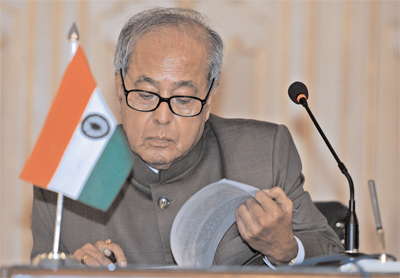
    NEW DELHI (TIP): The Union homeministry is learnt to have recommendedrejection of mercy petitions in five morecases as it seeks to speedily dispose of allthe cases of death row convicts pendingwith it.Seeking to have a swift closure on thecases of those who have filed mercy pleasagainst capital punishment awarded tothem, the ministry has sent all the pendingfiles to President Pranab Mukherjee for afinal call.Sources said that seven cases involvingthe fate of nine people have been sent to thePresident, with the ministryrecommending rejection of the mercy pleasin five cases. It has and left the tworemaining ones open for commutation ofdeath sentence to life imprisonment withthe rider that the life term means jail forthe entire life of the convict and not just 20years or 14 years in prison.

    The President had sent the files to Unionhome minister Sushilkumar Shinde onOctober 30 for his review and opinion.Shinde sent the files back within 100 daysin a major shift from the pattern wheredecisions on mercy petitions wereindefinitely delayed with files shuttlingbetween the home ministry and theRashtrapati Bhavan.Though the case-wise recommendationsfor convicts were not known as both thehome ministry and Rashtrapati Bhavancontinue to remain tightlipped on mercypetition files, the seven cases relate tomultiple murders, including one in which arape convict out on bail killed five membersof the victim’s family.

    While two files were sent to RashtrapatiBhavan on February 9 (the day ParliamentHouse attack case convict Afzal Guru washanged), the remaining five files weredispatched last month.The mercy files, which have beenpending for years while moving to and frobetween Rashtrapati Bhavan and the homeministry, saw unprecedented movement oflate, resulting in two quick hangings(Ajmal Kasab and Afzal Guru) within lessthan three months. Mukherjee had rejectedthe mercy plea of Kasab on November 5,and Guru on February 3.The files, which are now with PresidentMukherjee, include the longest pendingcase of Gurmeet Singh of Uttar Pradesh,who was convicted for killing 13 membersof a family on August 17, 1986.

    The otherscases are of Suresh and Ramji, also fromUP, who were convicted for killing fivemembers of their brother’s family andDharampal from Haryana, who hadmurdered five members of the family of agirl he had raped in 1993. He had murderedthe family while on bail in the rape case.The other cases are of Sonia, daughter ofa former Haryana MLA, and her husbandSanjeev, who drugged and killed eight ofher family in Hisar in 2001, including herparents. Sunder Singh from Uttarakhand isconvicted for rape and murder on June 30,1989, Jafar Ali from Uttar Pradesh who wasconvicted for killing wife and five daughterin 2002 and Praveen Kumar of Karnataka,convicted for killing four members of afamily on February 23, 1994.

    Mukherjee has so far disposed of mercypetitions of eight death row convicts in fivecases.The President has also rejected themercy petitions of Saibanna NingappaNatikar (Karnataka: convicted for killingwife and daughter) and mercy petitions ofslain forest brigand Veerappan’s associatesGnanaprakash, Simon, ‘Meesai’ Madaianand Pilavendran, who were sentenced todeath for killing 22 police personnel in 1993.However, the mercy petition of Atbir(Delhi), who was convicted for murder ofhis step-mother, step-sister and step-brotherover property, was commuted to lifeimprisonment by the President.

    Strained mercy:
    1,455 persons awarded death penaltyin India from 2001 to 2011Sentences for 4,321 persons werecommuted from death penalty to lifeimprisonment during the same period.Highest number of death penalty wasimposed in Uttar Pradesh (370)followed by Bihar (132), Maharashtra(125), Karnataka and Tamil Nadu (95each), Madhya Pradesh (87),Jharkhand (81), West Bengal (79),Delhi (71), Gujarat (57), Rajasthan (38),Kerala (34), Odisha (33), Haryana (31),Assam (21), Jammu & Kashmir (20),Punjab (19), Chhattisgarh (18),Uttarakhand (16), Andhra Pradesh (8),Meghalaya (6), Chandigarh and Daman& Diu (4 each), Manipur and HimachalPradesh (3 each), Tripura andPondicherry (2 each) and Goa (1)No death penalty imposed inArunachal Pradesh, Mizoram,Nagaland and Sikkim and UnionTerritories of Andaman & NicobarIslands, Dadra & Nagar Haveli andLakshadweepSentences of 4,321 persons werecommuted from death penalty to lifeimprisonment in the country during2001-11.

  • As I See It : Hindu Terrorism

    As I See It : Hindu Terrorism

    Is there such a thing as ‘Hinduterrorism’, as Home MinisterShinde is heavily hinting at?Well, I am one of that rare breed offoreign correspondents – a lover ofHindus! A born Frenchman, Catholiceducatedand non-Hindu, I do hope I’llbe given some credit for my opinions,which are not the product of myparents’ ideas, my education or myatavism, but garnered from 25 years ofreporting in South Asia (for LeJournal de Geneve and Le Figaro).

    In the early 1980s, when I startedfreelancing in south India, doing photofeatures on Kalaripayattu, theAyyappa festival, or the Ayyanars, Islowly realized that the genius of thiscountry lies in its Hindu ethos, in thetrue spirituality behind Hinduism.The average Hindu you meet in amillion villages possesses this simple,innate spirituality and accepts yourdiversity, whether you are Christian orMuslim, Jain or Arab, French orChinese.

    It is this Hinduness thatmakes the Indian Christian differentfrom, say, a French Christian, or theIndian Muslim unlike a Saudi Muslim.I also learnt that Hindus not onlybelieved that the divine could manifestitself at different times, underdifferent names, using differentscriptures (not to mention thewonderful avatar concept, the perfectanswer to 21st century religious strife)but that they had also given refuge topersecuted minorities from across theworld-Syrian Christians, Parsis, Jews,Armenians, and today, Tibetans.

    In 3,500 years of existence, Hindushave never militarily invaded anothercountry, never tried to impose theirreligion on others by force or inducedconversions. You cannot find anybodyless fundamentalist than a Hindu inthe world and it saddens me when I seethe Indian and western press equatingterrorist groups like SIMI, which blowup innocent civilians, with ordinary,angry Hindus who burn churcheswithout killing anybody. We know alsothat most of these communalincidents often involve persons fromthe same groups-often Dalits andtribals-some of who have converted toChristianity and others not.

    However reprehensible thedestruction of Babri Masjid, noMuslim was killed in the process;compare this to the ‘vengeance’bombings of 1993 in Bombay, whichwiped out hundreds of innocents,mostly Hindus. Yet the Babri Masjiddestruction is often described byjournalists as the more horrible act ofthe two.We also remember how SharadPawar, when he was chief minister ofMaharashtra in 1993, lied about abomb that was supposed to have goneoff in a Muslim locality of Bombay.

    I have never been politicallycorrect, but have always written whatI have discovered while reporting. Letme then be straightforward about thisso-called Hindu terror. Hindus, sincethe first Arab invasions, have been atthe receiving end of terrorism,whether it was by Timur, who killed1,00,000 Hindus in a single day in 1399,or by the Portuguese Inquisitionwhich crucified Brahmins in Goa.Today, Hindus are still being targeted:there were one million Hindus in theKashmir valley in 1900; only a fewhundred remain, the rest having fledin terror.

    Blasts after blasts havekilled hundreds of innocent Hindusall over India in the last four years.Hindus, the overwhelming majoritycommunity of this country, are beingmade fun of, are despised, aredeprived of the most basic facilitiesfor one of their most sacredpilgrimages in Amarnath while theirgovernment heavily sponsors the Haj..They see their brothers and sistersconverted to Christianity throughinducements and financial traps, see aharmless 84-year-old swami and asadhvi brutally murdered. Their godsare blasphemed. So sometimes,enough is enough.At some point, after years or evencenturies of submitting like sheep toslaughter, Hindus-whom the Mahatmaonce gently called cowards-erupt inuncontrolled fury.

    And it hurts badly.It happened in Gujarat. It happened inJammu, then in Kandhamal,Mangalore, Malegaon, or Ajmer.It may happen again elsewhere.What should be understood is that thisis a spontaneous revolution on theground, by ordinary Hindus, withoutany planning from the politicalleadership. Therefore, the BJP, insteadof fighting over each other as to whomshould be the next party president, orwho will be their PM candidate for the2014 elections, should do well to put itshouse together.

    For, it’s evident that the Congresshas decided on this absurd strategy ofthe absurd, the untrue, the unjust, thetreacherous, only to target Mr.Narendra Modi, their enemy numberOne.It should also fight the Untrue withTruth: there are about a billionHindus, one in every six persons onthis planet. They form one of the mostsuccessful, law-abiding and integratedcommunities in the world today. Canyou call them terrorists? Let the BJPcompile a statistics of how manyHindus were killed by Muslims since1947 and how many Muslims byHindus. These statistics will speak bythemselves.

    (The author can be reached atfgautier26@gmail.com)

  • 2014 strategy: BJP sticks to politics, dumps Hindutava

    2014 strategy: BJP sticks to politics, dumps Hindutava

    NEW DELHI (TIP): Defining the battlelines for 2014 Lok Sabha elections, the Sangh Parivar has decided that the BJP will focus on development and decisive leader agenda, while the affiliated groups — such as the VHP — will help revive the “Hindu Identity” through Ram Janmabhoomi movement and the UPA charge of saffron terrorism.

    While the BJP core group met on Feb 1 to work out the reconstitution of its Parliamentary Board, Central Election Committee and the National Executive by the end of this month, top RSS, BJP and VHP leaders met at the residence of Goa LS MP Shripad Naik on Thursday to chalk out the future strategy and coordination among the Sangh affiliates. The meeting was attended by top BJP, RSS and VHP leaders.

    Party sources said it was decided at the meeting that Sangh affiliates would work to revive and bring back the focus on Hindutva issues with Ram Janmabhoomi movement, which is being re-launched at Kumbh Mela at Sant Mahasammelan on February 7 a day after the VHP Kendriya Marg Darshak Mandal meets in Allahabad. The BJP, on its part, will concentrate on the political agenda ofattacking the “rudderless” UPA government and showcase the development achieved in states ruled by the party, particularly Gujarat.

    Besides discussion on giving Gujarat chief minister Narendra Modi a larger role at the national level, the party also talked of the possibility of including Madhya Pradesh chief minister Shivraj Singh in the BJP Parliamentary Board, the larger issue was coordination among the Sangh affiliates. With the Sangh Parivar determined to project a united face for 2014 elections, differences between BJP and VHP were ironed out to rule out possibility of any conflicting statements in the future on core issues.

    At Thursday’s meeting, the Sangh leadersalso decided to target the UPA on socalled saffron terrorism with the aim of polarizing voters on the grounds that the UPA ministers — P Chidambaram and Sushilkumar Shinde — were deliberately “hurting” Hindu sentiments. “Further fine-tuning will be done at the Akhil Bhartiya Pratinidhi Sabha of the RSS on March 15-17, 2013 at Jaipur after reviewing the response to Ramjanambhoomi movement revival,” a party leader said.

  • Panchgani The Switzerland Of India

    Panchgani The Switzerland Of India

    Panchgani, literally mean the place of five hills, is a renowned hill station in Maharashtra. This majestic hill resort is located at 1,334 mt altitude. Panchgani is a vibrant scenic destination and its beauty multiplies with the backdrop of hilly terrains at one side and coastal plains at the other side. This place had been used by the British officials as their summer resort. The Panchgani hill station is known for its unpolluted air and it is believed that the oxygen content in atmosphere is more here compared to other regions. Due to this many people select this for convalescing from diseases. The ambience is very cool and calm and the exquisite environment is a perfect background for rejuvenation.

    Panchgani is spotted with many attractive colonial period cottages with all luxurious facilities for the tourists to spend their vacation in perfect seclusion and enjoyment. This place is bestowed with buildings of British architecture, Parsi houses and the boarding schools. The town, a natural relaxation spot, adds its comforts with the soothing effect of cool breeze rustling through the thick woody regions. Panchgani has many western plant species including poinsettia and silver oaks, which are originally planted by British people. Fresh air, unspoiled natural beauty, breathtaking panoramic views and lush greeneries make this place one of the most sought hill station in Maharashtra. This place is renowned for international quality education and there are at least three dozen schools offering high standard facilities for the children. The Mahabaleshwar Hill Station and Venna Lake are some attractions nearby.

    ATTRACTIONS
    Devil’s Kitchen

    The Devil’s Kitchen is situated to the south of Table Land with a bit of mythological interest attached to it. It is believed that the Pandavas stayed here for a while and used this place to cook their food. There are some legends regarding this, though most of them appear to be mere tall tales. Some people claim that Pandavgad Caves (near Wai) are also built by them and bear their name.

    Rajapuri Caves
    Rajapuri Caves is situated at a distance of 7 km from Panchgani. The cave is a virtual delight for adventure lovers and is famous for the beautiful Lord Karthikeya Temple. The temple itself is constructed out of the sand taken from the caves. The journeys to the Rajapuri caves from Panchgani through serene, greenish villages will rejuvenate the mind of the visitors. The several water kunds in the premises resemble the Tiveni Sangam Temple at Prayag. It is said that the water kunds have curative powers.

    Table Land
    Privilege of being Asia s second longest mountain Plateau, the Table Land has a mythological story attached to it. It is believed that the Pandavas halted here and used it as a cooking place for themselves.

    Lord Karthikeya Temple
    The Lord Karthikeya temple is located at Rajapuri Caves in Panchgani. The temple is dedicated to Lord Karthikeya (Lord Muruga, Son of Lord Shiva). The temple premise is a calm and cool place and is best suited for people looking for serene environment for relaxation and meditation. The spiritual atmosphere adds impetus to relaxing moments. Rajapuri caves got the religious importance due to this famous temple. Thaipooyam festival during January- February month is celebrated here with lots of enthusiasm. Thousands of devotees visit this temple during this period.

    Bhilar Water Falls
    The Bhilar Waterfalls are named after the village where it is located. It descends from a height of 4500 feet with mist. During the monsoons, you can enjoy the full force of the water gushing down.

    Dhom Dam
    Dhom Dam near Panchgani is an amazing tourist spot for water sport lovers. The elegant Krishna River along with its green environs augments the pleasure of adventure water sports. A beautiful boating spot where one can enjoy with Scooter and Speed boats. Sporting in Krishna river stream with the beautiful natural surrounding is a wonderful experience in itself.

    Sherbaug
    Sherbaug is a panoramic destination in Panchgani with well laid out gardens, mini zoo that showcases small animals for children s amusement. Children s Park and a landscaped Rose Garden add elegance to the place. One can also visit the Parsi Point and Table Land that are close by.

    View Points At Panchgani
    Panchgani has quite a few renowned view spots that offer panoramic views of the picturesque lush green mountains and valley.

    How To Reach
    By Air- Pune is the nearest airport which is 100 km away from Panchgani. Pune is connected to Mumbai, Goa and Bangalore by air. Tourist taxis cost about Rs. 2000 from Pune to Panchgani. Railway route- The nearest railway station is Wathar, 45 km from Panchgani on the Miraj-Kolhapur section of South Central Railway. However, convenient railhead is Pune from where you hire tourist taxis and buses to reach Panchgani. Bus route- Panchgani is well connected by state road transport public bus services. Regular bus services are available from Pune to Panchgani. Super fast and Deluxe A/C buses are also available on this route. Road route- Panchgani is very well connected with Pune and Mumbai. NH4 and NH17 are popular routes to reach the place.

  • Kochi Beckons

    Kochi Beckons

    Formerly known as Cochin, Kochi is a major sea port on the west coast of India, in the state of Kerala. The city’s coastal location resulted in it becoming an important spice trading centre and by the 14th century Kochi was known as the ‘Queen of the Arabian Sea’. The city was occupied by the Portuguese in 1503 and remained the capital of Portuguese India until 1530 when Goa was selected instead. Kochi’s strategic location has welcomed many visitors of differing nationalities over the past six centuries, and this diversity is evident in everything from cuisine and nightlife, to architecture and even religion. Although primarily a commercial hub, modern-day Kochi – as with much of Kerala – is also a tourist hot spot and the city’s population of over one million swells significantly with foreign visitors who flock to the state’s beaches and tourist attractions. Also known as the Gateway to South India, Kochi provides a convenient starting point for further Indian travel.

    Attractions

    There are numerous sights and attractions in and around Kochi, but most visitors flock straight to Fort Kochi. This ‘tourist enclave’ is on a peninsula, southwest of mainland Kochi, and often referred to as Old Kochi. On Fort Kochi beach you’ll find the photogenic Chinese Fishing Nets (Cheena Vala); huge cantilevered contraptions which are operated from the shore by a team of up to six fishermen and were believed to have been first introduced by Chinese traders in the 14th century.

    Other landmarks in Fort Kochi include St Francis Church, a national monument which was once the burial place of Vasco da Gama; the Portuguese explorer who founded Portuguese India. Nearby is Santa Cruz Basilica, a 16th century gothic-style Portuguese church which was destroyed by the British in 1795 before being rebuilt in 1887. Visit Princess Street for a lovely walk; the narrow stone alleys are lined with Portuguese, Dutch and British colonial architecture. Fort Kochi is also home to Kochi’s version of Wall Street – the International Pepper Exchange in Jewtown – where you can learn ancient spice trading practices

    Inland from Kochi are the backwaters which separate Ernakulam on the mainland from Fort Kochi. The backwaters are dotted with many islands and boat ride is an unforgettable experience. Bolgatty Island’s Dutch Palace is now instead a five-star hotel complete with golf course, marina and panoramic views, while Vypin Island is known for its fishing villages and coconut palm-lined Cherai Beach..

    Dining and Nightlife

    Kochi has welcomed Arabs, Chinese, Portuguese, French, English, Dutch, Russians and Japanese over the centuries and this diversity has manifested itself in the cuisine. Streetside Arabic restaurants are popular and serve shawarma and roasted chicken, while Americanized fast food chains are also present across Kochi. As a coastal city, seafood is the local specialty. A typically Kochiite experience is to buy fresh fish caught from the Chinese Fishing Nets at Fort Kochi beach, and take it straight to one of the nearby food stalls where you can have it cooked in front of you. The choice is yours but Fish Molly (coconut milk curry), Alleppey Fish Curry (curry with tomato sauce and fish tamarind) and Fish Peera (chunks of fish toasted with grated coconuts with fish tamarind sauce) are recommended. Kochi’s expansive backwaters also ensure that freshwater fish is widely available, and one of Kochi’s most well-known dishes is Meen Molagitta Curry (smoked freshwater fish with chilli and coconut milk).

    Nightlife in Kochi is excellent and the city is dotted with bars with the most high-end ones to be found around Fort Kochi. As per Kerala laws, all bars and pubs will be closed on the first and second day of every month – known as ‘dry days’. Curiously this does not apply to nightclubs which are a recent phenomenon in Kochi. Ask around and consult current guidebooks for suggestions.

    Beyond Kochi Alapuzha (Alleppey)

    Seventy kilometers south of Kochi is Alappuzha, also known as Alleppey. The very heart of Kochi’s backwaters, Alappuzha is an incredible maze of natural lagoons, rivers and canals and is known locally as the Venice of the East. Enjoy a houseboat cruise along the channels, and relax as you watch the world and its wildlife go by. Every year the villagers hold Snake Boat Race in which traditional snake boats, each manned by over a hundred people, compete for the Nehru Trophy. The race is extremely popular with locals and makes for a fascinating excursion.

    Aluva

    An important commercial and pilgrim center. The Udyogmandal, Ambulamugal, Kalamaserry and Periyar rivers runs through Aluva. The Shivarathri Festival is celebrated on the banks of the Periyar every March/April. At other times, this river bank proves to be an excellent picnic and bathing spot.Aluva is considered the outskirts of Kochi and is connected by road and rail.Angamali (10 km on NH 47)The fastest growing town in Kerala Angamali is the gateway to many places of tourist and religious interest like Kaladi, Malayattur etc. The Little Flower Hospital, the largest eye hospital in South India, is located here

    Angamali

    It is connected to Kochi by road and rail.Cheruthuruthi (110 km) Home of Kerala Kalamandalam, a famed arts academy. Training in various dance forms, but especially in Kathakali, is imparted here The nearest railhead and bus terminus is at Shoranur, 3 km away.

    Guruvayur

    This temple town is a pilgrim center famed for its Lord Krishna temple. Guruvayur is connected with Kochi by road and rail.

    Kaladi

    This important pilgrimage centre, is on the banks of the River Periyar. It was here the Bhakti Saint Sri Sankaracharya was born. The Sri Ramakrishna Adwaitha Ashram is located here. Kaladi is connected to Kochi by road.

    Kodungallur (Cranganore)

    A famous port before nature destroyed it and formed Kochi harbor. St. Thomas the Apostle landed here. The Kodungallur Bagwat Temple is very famous for its ‘special payers’. Kodungallur also has the first mosque in India, a shrine built in the form of a Hindu temple. Kodungallur is connected to Kochi by road and water.

    Kottyam

    An important commercial area, it is the gateway to the famed rubber and tea plantations of Kerala. The Mahatma Gandhi University is located here. It is the home of Malayalam Journalism. Kottayam is connected with Kochi by road and rail.

    Munnar

    A hill resort famous for its lush green tea and cardamom plantations. An ideal holiday spot, it has a cool and stimulating climate. The Mist Valley Resorts, overlooking Munnar town is a ideal place to spend the hot summer months. The rare species of Nilgiri Tahr can be seen in the Ernakulam game Sanctuary not far from here. Anaimudi, the highest peak in South India, is in these hills. The Munnar – Kodaikkanal Road is the steepest road in South East Asia.

    Thrissur

    An important cultural and commercial centre. Thrissur, the largest town in Kerala is called the cultural capital of Kerala. The famous Pooram festival is celebrated here every April / May. The Museums, and the Vaddakkuntham Temple are all worth visiting. After Kochi, Thrissur is the most important commercial town in Kerala.Thrissur is connected with Kochi by road and rail. The Peechi Dam, 26 km from Thrissur, is a good picnic spot and is ideal for a holiday

  • Kovalam

    Kovalam

    Kovalam is famous for its beaches, among the most pristine in India. Kovalam is extremely popular among westerners due to shallow waters and low tidal waves. It is also one of the oldest tourist enclave in India, which known among tourist circuit right in 1930s. Kovalam shot into limelight in the early seventies with arrivals of the masses of hippies. That started the transformation of a casual fishing village of Kerala into one of the most important tourist destinations in all India- the Kovalam beach.

    Kovalam was brought to the public eye by Her Highness The Queen of Travancore Maharani Sethu Lakshmi Bai decided to build a palace for herself at a rock top near the beach, as her private residence better known as Haylcon Castle. Later, in 1936, the next Queen, HH Karthika Thirunal choose this palace for her honeymoon with her newly wed husband, 1st Prince GV Raja. It was Prince G.V Raja who found immense tourist potentiality of the region and decided promote the region among state guests, by inviting Thomas Cook & Sons- UK to develop the region. The Maharaja of Travancore soon started hosting regular state banquets and accommodation of his European guests in Kovalam Haylcon Palace. This made the beach popular among European families living in nearby Madras and Bombay Presidencies as well as elite Travancore families to spend their holidays. Thus, the move helped to lay foundations of modern tourism industry in South India. Post independent India, the beach was popular among Indians and few tourists. It was 1970s, the hippie culture helped to revive the beach, with vast influx of tourists, spending their wild holidays here. When Kerala government thought of making tourism as a major industry, towards 1990s, Kovalam was the first tourist destination to be highlighted and promoted. Today its an intentionally renowned beach.

    Kovalam has 3 major beaches in its 17 km coastline. The southernmost, known as the Lighthouse Beach is the most popular of the three. Many hotels, restaurants, lodges and shops are located here.

    It is frequented by outsiders who stay and enjoy Kovalam. The Northern most crescent, (with the different names Main Beach/Leela Beach/Samudra Beach) – is crowded on weekends, is very popular with the locals, day-travelers, and passing-by tourist buses.

    During the week it’s quiet. Hawa Beach inbetween is among one of the beaches in India where top-less sunbathing is tolerated and well appreciated by the locals.

    The tourism department provides a vigilant life guard service on both Lighthouse and Hawa beach. Note that many tourists in Kovalam are between the ages of 40 and 60 years young. Those expecting a replica of Goa will be pleasantly surprised by the more relaxed atmosphere, a bit more laid back, the food a touch softer and lighter. Kovalam is about 16 km (20 minutes in a taxi) from Trivandrum.

    Taxis can charge around 400-500 rupees to get to Kovalam. When asked where you want to go, say Hawa Beach, Leela Beach/Main Beach or Lighthouse Beach in Kovalam.

    In an auto-rickshaw 150 – 170 rupees is a fair price, avoid going above 170 rupees. If in doubt ask to use the meter, but in reality they really don’t work at all. Advice being if they are trying to rip you off go to leave for another rickshaw and they will often back down and offer you a fair price, if not, get in a different rickshaw. Even if India is a cheap country, the prices for gasoline are international standard, so don’t expect super cheap private transportation.

    If you go by public bus from Trivandrum-East Fort to Kovalam Beach you only pay 8 Rps. for the half hour trip. Buses to Trivandrum can also be caught from Kovalum Junction as well as Ambassador taxis and Autos to pretty much anywhere. Be very careful walking around the junction, especially at night, as there are no traffic lights and the street lighting is very minimal. The intersection can be busy.

    Get around
    Tourist taxis are the most convenient way to travel around attractions, especially while travelling in a group. Most airports and railway stations have tourist taxi services that would take you anywhere you would want to go. The rate should be around 15Rs per kilometer on auto rickshaw but some drivers may try to overcharge up to 100Rs for 1km. A more adventurous option is to get a bike on hire.

    The highway is a pleasure to drive on, with the cool breeze and coconut palms lined along the way. Once on the highway, drive north for the plains, drive south for the hills. Avoid driving through Thiruvananthapuram city, it’s congested. The old highway, also called MC road, is also good to drive on. The MC road can take you deep into the hills. Try out the throaty Enfield 350 CC bikes for a truly vintage experience, check your fuel levels before you leave.

    Two wheelers do not have to pay the highway toll, simply ride through the side lane. The beaches are the star attractions here. Kovalam has three crescent shaped beaches separated by rocky outcroppings. The larger of the beaches is called Lighthouse Beachknown for its 35 metre high lighthouse which towers over it atop Kurumkal hillock. Most of the foreigner’s stay on Lighthouse Beach, which is more developed. There are some vendors on the beach, but they are not too pushy.

    It takes less than five minutes to walk from Lighthouse Beach to the second largest beach, Hawah Beach. This beach is named thus for the topless European women who used to throng there.

    It was the first topless beach in India. However topless bathing is banned now. The northern part of the beach is known as Samudra Beach.

    A large promontory separates this part from the southern side. Samudra Beach doesn’t have tourists thronging there or hectic business. The local fishermen ply their trade on this part.

    What to do
    Surfing – Some fine waves from time to time (0.5 – 2 meters). You can hire surf boards and body boards on the beach from $6USD a day. During peak season they will try and charge more unreasonable amounts but just say no. Body boarding can be enjoyed by anyone. Surfing takes a bit more skill.

    It is wise to follow the life-guards’ instructions as there are some strong currents that can suddenly whisk the unwary out to sea. Wooden Boat Ride – At Kovalam’s Main Beach/Leela Beach you can go out on the ocean with a traditional Catamaran. These ancient boats are rowed with a bamboo paddle and maneuvered by experienced local fishermen.

    There are 11 registered boats available. Rides last from about 15 to 120 minutes and cost between Rps. 300 to 600 p.p. .The best time for going snorkeling from the boat is in the early morning. Most romantic are the “sunset cruises”. No advance booking necessary. First come – first served.

    Motor Boat Ride – In 2009 local fishermen/catamaran people added a few motor boats to their fleet, destroying the peace and serenity of the coves. They hope to make some extra money from Indian tourists, but are not aware of the impact on the environment and Western tourism.

  • Vijay Mallya’s last stand: Selling  his crown jewel United Spirits

    Vijay Mallya’s last stand: Selling his crown jewel United Spirits

    BANGALORE/MUMBAI (TIP): “I feel sorry for him” or “he has my sympathies” are not the phrases you would ordinarily associate with as flamboyant a person as Vijay Mallya. But, indeed, they cropped up often when talking to a large number of people who have known him personally and professionally for this story.

    Sympathy that less than two weeks after publicly, almost defiantly, proclaiming that he would not sell family silver to fund his grounded airline Kingfisher, he had to do precisely that. A sense of sorrow for a man who has been felled by hubris. Or, as an associate memorably put it, through “nasha.”

    Mallya was always a high-stakes business operator. He built the liquor and beer businesses he inherited from his father, the late Vittal Mallya, at the young age of 28 in 1983, not only into dominant market players in India but in the case of the former into the world’s largest drinks company by volume. Much of the growth was fuelled by debt. His heavily leveraged balance sheets would have felled a lesser mortal but Mallya sailed through with minor hiccups though ‘Is Mallya broke?’ has been a constant refrain among the chatterati and corporate chieftains for two decades now. Alas, a similar tactic did not work in the airline that he launched with much fanfare on his son Sidhartha’s 18th birthday in May 2005.

    Standing personal guarantee to the debt raised by the airline and pledging much of his stake in other businesses to keep the airline afloat have today pushed him to sell the crown jewel in his portfolio: the liquor company, United Spirits, which has 50% of the Indian market and was the source of Mallya’s clout: economic and political, and his flamboyant lifestyle.

    “Vijay has an emotional and rational side to him. But somewhere in recent times he lost the sense of proportion allowing the Kingfisher crisis to spiral out of hand. He’s extremely passionate about the businesses he built, not that he loved the inherited ones less. That’s what made him stick out for a company (KFA) which was beyond any reasonable sense of business,” says Ravi Jain, a joint venture partner and former managing director of Mallya’s brewing unit, who used to drive Mallya and his ex-wife Sameera around Kolkata in his old fiat car.

    Ramesh Vangal, who was outbid by Mallya for Shaw Wallace, believes, “This is the end of an era. He built an enormous business with great potential. Allowing it to fall into the hands of an MNC is a little of a regret. But it’s the practical thing to do.” Vangal, the former Pepsi senior executive who has interests in the Indian liquor industry, points out, “It’s Karma actually. Vijay has seen the best of times. Now he’s facing the most challenging. It’s part of the circle of which we are all in. We learn as we go around.”

    Nobody doubts Mallya’s intelligence or his ability to build a business or a brand. Especially the latter. Even the ill-starred KFA is a testimony to his brand-building prowess. “He had this terrific grasp of any situation and could talk straight however difficult it was,” UB Bhat, a senior executive who worked with him in the 1980s, reminisces how the young Mallya flew into Bangalore from the United States 48 hours after his father’s sudden demise. “He was hardly 28 then, and there were whispers that his father’s close aides H P Bhagat or Srinivasa Rao could be considered for the role of chairman. He recovered swiftly to take charge of the affairs and went to create a strong corporate identity for the diversified businesses ( Herbertsons, Phipson, Kissan Foods, etc) his father had built. In the process, he brought several chieftains under his direct control just like what Ratan Tata managed within Tata Group,” says Bhat, who was involved in organizing Mallya’s first marriage to Sameera (formerly Sakina), sometimes doubling up as a priest, at a temple in Goa.

    Jain argues, “He would have done this (Diageo) deal in the ordinary course, but now it’s unfortunately seen as him being forced to sell the family business. The liquor market is changing and his own operations have become too big for him to manage alone. One can philosophically argue this is the beginning of retirement, and why not? He was at the top of his energy for thirty years.”

    Mallya’s often described by those close to him as proverbially a man with nine lives. He’s been in umpteen scrapes before and come out of it. While the general consensus is that his luck finally ran out, there are others who think by doing this deal with Diageo he’s actually doing a smart thing, getting the 10th life perhaps.

    K P Balasubramaniam, former chairman of Mysore Breweries (now SAB-Miller India) and an old Mallya friend from Bangalore believes, “It’s a smart thing he’s done. Diageo is a well run, profitable company. His 15% stake will appreciate in value and he will get good dividends. Same is the case with the beer business (where Heineken is the equal owner).”

    A sentiment echoed by Kishore Chhabria with whom he settled long-standing disputes recently. Said he, “The good thing about him is that he continues to be lucky. He would have been gone without this deal, but he has pulled it off. A lot of people might say bechara mar gaya but watch out. His 15% stake will be worth far more in three years than 29% he had. This was a pragmatic deal to do. Good for him and good for the industry.” Chhabria, the chairman of Allied Blenders & Distillers, the largest Indian-owned spirits company now, added, “I am sure he will enjoy playing the investor role from now on. People move on like the Singh brothers of Ranbaxy. There’s no need to be emotional.”
    And emotional Mallya has never been about business. He’s bought and sold businesses whenever he’s seen value. He sold Kissan to Hindustan Lever, after dallying with Nestle a bit. Berger Paintswas sold for a huge profit. He offloaded the brilliant portfolio he inherited from his dad – large stakes in Cabdury and Hoechst – saying there were not core to his business.

    Nobody also disputes Mallya’s generosity, large heartedness to his family and friends. Says a Bangalore corporate chieftain, “He’s a very nice guy. Very generous. Never malicious. Unfortunately, a lot of people misuse that. There are lots of people who take advantage of his hospitality, fly in his planes, attend his parties and then snigger behind his back.” His flamboyant lifestyle – close associates say his personal life was never as colourful as made out by the media – the yachts, the planes, the cars, the horses, the girls, the islands, FI and IPL teams, multiple homes – in the end damned him in the public eye.

    But all agree that the very expensive lifestyle – an apocryphal story has it that a big, global PE which did a due diligence when it was looking to invest in Kingfisher put the cost of the lifestyle at $60 million annually – would have to be piped down. Perhaps Mallya was readying for such a life with his recent tweets which suggested happiness at his loss of billionaire status.

  • Himachal polls Nov 4, Gujarat Dec 13 and 17

    Himachal polls Nov 4, Gujarat Dec 13 and 17

    EW DELHI (TIP): Himachal Pradesh and Gujarat will pick new assemblies in elections on November 4 and December 13 and 17, respectively, in what will be a virtual straight fight between the ruling BJP and the Congress in both states.
    Chief election commissioner (CEC) VS Sampath told reporters here that votes in both states will be counted on December 20.

    These will be the most important state elections since Uttar Pradesh, India’s most populous state, voted in February-March this year, along with Goa, Punjab, Uttarakhand and Manipur.

    Both Himachal Pradesh (68 seats) and Gujarat (182 seats) are ruled by the Bharatiya Janata Party (BJP), with the Congress desperate to dislodge it.

    The announcement came hours after Congress president Sonia Gandhi unleashed the party’s campaign in Gujarat with a stinging attack on the BJP.

    The Congress welcomed the polls and said these would not be a referendum on the performance of the central government.

    “We welcome poll dates. Every election is a local election, even parliamentary elections are decided by local issues. No state poll is a referendum on the performance of the national government,” Congress spokesperson Manish Tewari told reporters later.

    “The only one is the Lok Sabha poll, which we won decisively,” he said.

    BJP spokesperson Rajiv Pratap Rudy said, “We are sure of victory in the two states. Our workers have worked hard.”
    “We are making foolproof security arrangements in both states by deploying adequate strength of central police forces,” said Sampath.

    Armed police forces from other states would also be deployed in the two states for peaceful conduct of elections.
    Sampath said there would be strict monitoring of expenditure by political parties and candidates as well as of “paid news”.

    “Paid news is a learning process for us,” said Sampath, adding that “it will be monitored at the district, state and commission level”.

    He said all candidates would be required to open separate bank accounts and incur expenditure only from these accounts.

    The Election Commission, Sampath said, expects “the highest standards” of conduct and neutrality in election work from officials.

    “Their work will be under constant watch and scrutiny,” he said, and added that the model code of conduct for political parties would be strictly enforced.

    Sampath said the polling dates have been determined after taking into account climatic conditions, particularly in Himachal Pradesh, academic calendar, festivals, law and order, and availability of security forces.

    The number of eligible voters in Himachal Pradesh is 45.16 lakh against 3.78 crore in Gujarat. The electors will be given their voting slips a few days before the polling dates, said Sampath.

    To facilitate voting, the poll panel has increased the number of polling stations by 10 percent to 44,496 in Gujarat and by 16 percent in Himachal Pradesh to 7,252, he said. The CEC said the candidates will have to file only one affidavit, from two required earlier, to provide information if they have been charged or convicted in any criminal case and declaring their assets and educational qualifications.

  • Crime against children up by 24% in 2010-11

    Crime against children up by 24% in 2010-11

    NEW DELHI (TIP): India is fast earning the label of a country unsafe for children, with an alarming 24% increase in crimes against children in 2011 compared to the previous year. Nearly 33,100 cases were reported in 2011 against 26,694 cases in 2010.

    Uttar Pradesh accounted for 16.6% of total crimes against children in 2011, followed by Madhya Pradesh (13.2%), Delhi (12.8%), Maharashtra (10.2%), Bihar (6.7%) and Andhra Pradesh (6.7%).

    Maharashtra accounted for 74% of the total 27 cases of “buying of girls for prostitution” while West Bengal accounted for 77% of the total 113 cases of “selling of girls for prostitution”.

    Last year also saw a 43% increase in cases abduction, while cases of rape increased by 30%. UP and Delhi together accounted for 47.6% abduction of children while MP, UP and Maharashtra together made up 44.5% of child rape cases in 2011.

    These are the findings of the latest ‘Children in India 2012’ report brought out by the ministry of statistics and programme implementation. The last time such a report on the state of India’s children came out was in 2008.

    Feticide cases increased by 19% a year

    Feticide cases increased by 19% over 2010 to 132 cases in 2011, most of which were registered from Madhya Pradesh, followed by Chhattisgarh and Punjab, says a ministerial report. The three states together reported 56% of the foeticide cases last year.

    The report said, “The analysis of crime and children as presented here, puts forward a few upsetting revelations about the child victims as well as child offenders, which points out to the vulnerable conditions of children that need to be addressed urgently especially poverty.”

    India’s chief statistician T C A Anant said in the report, “Even today, after six decades of independence, the condition of children remains a cause of concern in the country. As the statistics speaks out loudly, we have miles to go to ensure a bright future for the children in all spheres of their life.” According to the report, procurement of minor girls saw a 27% spike—862 cases in 2011 compared to 679 cases in 2010. West Bengal reported the highest chunk of these cases (298) —a share of 34.6% followed by Bihar (183), Assam (142) and Andhra (106).

    The average chargesheeting rate for all crimes against children was 82.5% in 2011, which was the same in 2010 as well.

    The highest chargesheet rate was observed in cases under ‘buying of girls for prostitution’ (100%) followed by ‘rape’ (97.3%) in comparison to the prevailing national level chargesheeting rate of 78.8% for the IPC crimes. The lowest charge sheet rate was found in cases of feticide.

    The conviction rate at national level for the crimes committed against children stood at 34.6%. The conviction rate for ‘infanticide (other than murder)’ was highest at 46.9% followed by cases under ‘murder’ (45.5%).

    When taking all the crimes against children into account, the crime rate (ratio of number of crimes to population) saw a marginal increased from 2.3 in 2009 to 2.7 in 2011. Delhi, however, topped the crime rate (25.4) followed by Andaman and Nicobar Islands (20.3), Chandigarh (7) and Chhattisgarh (7), Madhya Pradesh (6) and Goa (5.1).

    The 2012 data showed that juvenile IPC crimes in 2011 increased by 10.5% over 2010 as 22,740 IPC crimes by juveniles were registered during 2010 which increased to 25,125 cases in 2011. Out of the total 888 juvenile murder cases reported in the country in 2011, Maharashtra and Madhya Pradesh reported 16.3% and 12.6% cases.

    The highest incidence of the juvenile rape cases was reported from Madhya Pradesh (23.6%) followed by UP (12.7%) and Maharashtra (10.9%). Among such disturbing trends, the report also had some good news. In 2011, buying of girls for prostitution showed a decline of 65%, and selling of girls for prostitution reported a decline of 13% compared to 2010. Cases of infanticide too showed a decline of 37 points during this period.

  • OFBJP-USA mourns the sad demise of  Kedar Nath Sahani

    OFBJP-USA mourns the sad demise of Kedar Nath Sahani

    The OFBJP-USA has mourned the leader’s sad demise. In a condolence resolution it says,” We are really shocked to learn this morning the sad demise of Shri Kedar Nath Sahani, a committed and dedicated BJP leader and RSS swayamsevak. The entire OFBJP parivar expresses its profound grief on the departure of this veteran BJP leader who spent his entire life in the service of the mother India. We pray to God almighty to rest his soul in peace and grant enough strength to his family to bear this loss.

    “Shri Sahaniji was one of the founding members of Bharatiya Jana Sangh, an honest politician and a successful administrator. He held various senior positions in the RSS, the Jana Sangh and the BJP and also occupied the prestigious posts of the Mayor and the Chief Executive Councillor of Delhi. He also served as governor of Sikkim and Goa. He was also the convener of OFBJP during 2005-2010.”

    The resolution was circulated to the media by OFBJP-USA President Jayesh Patel.

  • IAF choppers collide mid-air, 9 dead

    IAF choppers collide mid-air, 9 dead

    IN the first ever mid-air helicopter collision involving the Indian Air Force (IAF), nine defence personnel, including five officers, were killed when two MI-17 choppers crashed into each other minutes after taking off from the Jamnagar air base on August 30 afternoon.
    While the IAF has ordered a court of inquiry into the incident, initial reports suggest that the crash took place after the rotor wings of the two choppers came into contact during a close formation flying mission. Both helicopters were fully armed for a rocket firing mission and crashed just five minutes after taking off, indicating that they had just “paired up” after take-off when the collision occurred.
    While the IAF has not officially released the names of the personnel killed, the casualty list includes three wing commanders, a squadron leader, a flying officer and four other ranks. The crash took place just outside the Sarmat firing range.
    According to eye-witnesses, the choppers were flying very close to each other when their rotor blades came in contact, causing both to lose control. The tail rotor of one of the choppers also snapped.
    Eyewitnesses said that after the rotor blades collided, one of the two choppers veered into an 11 KV electricity transmission line, which resulted in it catching fire.
    The second chopper, witnesses said, crashed into the ground and disintegrated due to the impact.
    “We were at a small tea stall just a few metres away from the site when we saw the blades of the two choppers colliding with each other,” said Dosabhai Boraiya, the owner of the farm where the choppers crashed. “I saw that one of choppers later touched the electricity transmission wire passing from there and caught fire,” he added.
    His brother Jasabhai, who was also present at the site, said they ran towards the chopper that had not caught fire and rescued three of the four IAF personnel who were on board. While all were rushed to a nearby IAF hospital, none of the personnel are believed to have survived the crash. The other chopper had five personnel on board.
    Initial reports indicated that the choppers collided with each other just off the ground level and were flying in close formation for a firing practice mission. The distance between the two choppers at this point is usually just over 25 metres, requiring extreme concentration by the pilots. However, in this case all the four pilots were extremely qualified and belonged to the elite Tactics and Air Combat Development Establishment (TACDE) that is based in Gwalior.
    While there is no word yet on the reason for the collision, a technical fault is not ruled out as some accounts suggested that one of the two choppers veered off-course in what seemed like a technical hitch. A final word on the crash would, however, take time as investigators will have to comb through the debris, radio conversations and flight data recorders to piece together the cause behind the accident.
    The rare accident — the last mid-air collision for the Armed Forces took place in 2002 when two IL 38 Naval aircraft crashed during a demonstration flight in Goa with 12 casualties — has evoked concern as the helicopters involved are the backbone of the IAF’s transport fleet.
    The last fatal crash involving an Mi-17 took place in November 2010 in Tawang in which 12 service personnel were killed. The IAF has entrusted its confidence in the Mi-17 fleet and currently has 80 new variants of the chopper on order