Tag: Google

  • Iran-Pakistan faceoff : Both nations at fault for backing terrorists

    Iranian missile strikes on terror bases in Balochistan have triggered a fierce retaliation from Pakistan, which targeted purported terrorist hideouts in Iran’s Sistan-Baluchestan province on Thursday. The Inter-Services Public Relations, the Pakistan military’s media wing, stated that hideouts used by two Baloch terrorist organizations were ‘successfully struck in an intelligence-based operation’. It said Pakistan’s armed forces were in a perpetual state of readiness to ensure the safety of its citizens against acts of terrorism. According to Pakistan’s Foreign Office, Islamabad has been sharing its concerns with Tehran about the havens for Pakistan-origin terrorists in Iran, but to no avail.

    The tit-for-tat attacks are a new low in the relations between Iran and Pakistan. Ironically, both nations — notorious for harboring or supporting terrorists as well as militia groups — are playing the victim card. They are desperately trying to make the international community buy their argument that they are more sinned against than sinning. Undoubtedly, Iran and Pakistan have been scorched by terrorism at times, but the onus is on them to first set their own house in order. Collaborative efforts are needed to fight the ‘snakes in the backyard’, which have started biting the very hand that fed them.

    Terrorism is a global threat requiring a multilateral, multipronged strategy. Unilateral actions by Tehran and Islamabad are adding fuel to the raging fire in West Asia. The wider the conflagration spreads, the worse it will get for peace and economic progress in the region. Commenting on the Iranian strikes, India has said that it understands actions that countries take in self-defense, while reasserting its ‘uncompromising position of zero tolerance’ to terrorism. New Delhi should make it a point to condemn terrorism unequivocally, no matter which country sponsors it. At the same time, it is vital to emphasize the importance of diplomatic parleys for defusing tensions.
    (Tribune, India)

  • Guru Gobind Singh’s teachings are relevant to modern times

    Remembering the Saint-Soldier and Creator of Khalsa on his birth anniversary which is being celebrated on January 19

    Guru Gobind Singh, the tenth Sikh Guru, stands as a towering figure in Sikh history. Born on December 22, 1666, in Patna, India, he played a pivotal role in shaping Sikhism and reinforcing its principles. Guru Gobind Singh is renowned not only for his spiritual teachings but also for his unwavering commitment to justice and the defense of the oppressed. His legacy revolves around the creation of Khalsa, a community of saint-soldiers, embodying the harmonious balance between spirituality and martial prowess.

    Guru Gobind Singh was the son of Guru Tegh Bahadur, the ninth Sikh Guru, and Mata Gujri. Early in his life, he faced the harsh realities of religious persecution when his father sacrificed his life defending the rights of non-Muslims. This early exposure to adversity shaped Guru Gobind Singh’s worldview and set the stage for his future role as a leader and warrior.

    At the tender age of nine, Guru Gobind Singh assumed the mantle of Guruship after the martyrdom of his father. His leadership was marked by a determination to fortify the Sikh community against external threats and persecution. His teachings emphasized the equality of all humans, irrespective of caste or creed, and the need for Sikhs to stand up against injustice.

    One of Guru Gobind Singh’s most significant contributions was the establishment of the Khalsa in 1699. Recognizing the need for a community of warriors dedicated to defending justice, he called upon his followers to gather at Anandpur Sahib during the Baisakhi festival. There, he performed the Amrit Sanchar, a sacred ceremony that initiated the Sikhs into the Khalsa Brotherhood.

    During the ceremony, Guru Gobind Singh infused the Amrit (sacred nectar) with the Five Ks, which are the distinctive symbols of the Khalsa: Kesh (uncut hair), Kara (steel bracelet), Kanga (wooden comb), Kachera (cotton undergarments), and Kirpan (ceremonial sword). These symbols served as a constant reminder of the Khalsa’s commitment to Sikh values and the readiness to defend righteousness.

    Guru Gobind Singh’s teachings embodied a unique blend of spirituality and martial valor. He propagated the idea of the “Sant-Sipahi,” a saint-soldier who combines spiritual discipline with the readiness to take up arms when peaceful means fail. This philosophy emphasized the importance of selfless service, justice, and fearlessness in the face of oppression.

    The Guru himself led by example, actively participating in battles against tyranny. His military campaigns aimed not at conquest but at safeguarding the principles of righteousness and freedom. Guru Gobind Singh’s commitment to the defense of the oppressed set a precedent for Sikhs, inspiring them to resist injustice with courage and determination.

    Guru Gobind Singh’s legacy extends far beyond his lifetime. His creation of the Khalsa not only provided Sikhs with a distinct identity but also fostered a sense of community and shared purpose. The Khalsa became a symbol of resilience and strength, standing against injustice and promoting the values of equality and justice.

    The Guru’s poetic compositions, collected in the Guru Granth Sahib, continue to inspire millions of Sikhs around the world. His writings, including the Zafarnama (Letter of Victory) written to Emperor Aurangzeb, reflect his unyielding spirit and commitment to justice.

    Guru Gobind Singh, the saint-soldier and creator of Khalsa, left an indelible mark on Sikhism and the broader tapestry of Indian history. His life exemplified the harmonious coexistence of spirituality and martial prowess, and his teachings continue to guide Sikhs in navigating the challenges of the modern world. Guru Gobind Singh’s legacy is a testament to the enduring power of courage, justice, and the unwavering commitment to defending the oppressed.


  • British-Indian dentist fined for dodging over 53K pounds in tax

    A person or business is named publicly if they have deliberately defaulted on more than 25,000 pounds in tax

    LONDON (TIP): An Indian-origin dentist in England’s West Midlands region has been ordered to pay 22,654 pounds by His Majesty’s Revenue and Customs (HMRC) for evading tax worth 53,528 pounds.

    Jasbinder Singh, a resident of Coventry, was named publicly by the HMRC for deliberately defaulting on tax from April 6, 2012 to April 5, 2015 and April 6, 2015 to April 5, 2018, the Coventry Telegraph reported recently.

    A person or business is named publicly if they have deliberately defaulted on more than 25,000 pounds in tax, according to HMRC. In the West Midlands, the biggest amount of tax avoided by a company was a whopping 243,647 pounds. It was said to have been owned by Daily Drinks 007 Ltd in Smethwick, Birmingham. Golden City Limited in Selly Oak, Matthew Electronics Limited in Birmingham and Solihull Financial Services Limited are some of the other companies in the West Midlands that have failed to pay tax.

    Last year, an Indian-origin manufacturer was found guilty in what the HMRC described as one of the country’s largest ever “carousel” tax frauds.

    Arif Patel was sentenced to 20 years’ imprisonment for false accounting, conspiracy to cheat the public revenue, the onward sale of counterfeit clothing and money laundering. He was accused of trying to steal around 97 million pounds via VAT repayment claims on false exports of textiles and mobile phones. In 2019, two Indian-origin restaurateurs were banned from the formation, promotion or management of a company over tax evasion, which caused the UK tax department losses of more than 4 million pounds.

    Sukdev Gill admitted that he caused companies he was a director of to conceal value-added tax (VAT) over six years, resulting in a loss of 1.97 million pounds to HMRC.

    His business partner Inderjit Singh was disqualified for nine years for trading through successor companies, while also concealing VAT, resulting in a loss of 4.37 million pounds.
    (Source: IANS)

  • Two Indian students found dead in Connecticut under suspicious circumstances

    Two Indian students found dead in Connecticut under suspicious circumstances

    HARTFORD, CT (TIP): Two students–one from Wanaparthy in Telangana and another from Srikakulam in Andhra Pradesh–were found dead in their Connecticut accommodation, a family member said on Monday, January 15. The students were identified as G Dinesh (22) from Wanaparthy in Telangana and Nikesh (21) from Srikakulam in Andhra Pradesh.
    Family members of the Telangana student are clueless about the cause of his death and also of his roommate’s.
    “Dinesh’s friends who live in a nearby room called us on Saturday night and informed us about his death and his roommate’s. We have no clue as to how he died,” Dinesh’s family members said.
    According to a family member, Dinesh went to Hartford, Connecticut in the US for higher studies on December 28, 2023, while Nikesh reached a few days later.
    Incidentally, they were mutual friends of some common friends and became roommates after going to the US.
    A member of Dinesh’s family noted that they have sought the help of Union Tourism Minister G Kishan Reddy and Telangana Chief Minister A Revanth Reddy to bring back Dinesh’s mortal remains.
    Wanaparthy MLA Megha Reddy has also chipped in to help bring back Dinesh’s body. He called on the family members of the deceased student and comforted them.
    Further, a member of Dinesh’s family said they had no contact with Nikesh’s family members as the two went to the US only recently.
    Similarly, even the Srikakulam district administration does not have any information on Nikesh yet.
    Srikakulam Police Special Branch DSP K Balaraju noted that even the district collectorate did not receive information on Nikesh or his family members.
    Expressing grief over the death of the student, Wanaparthy MLA T Megha Reddy met the deceased student’s family members in Wanaparthy town and conveyed his condolences.
    The MLA spoke to Telangana Chief Minister A Revanth Reddy with regard to bringing the student’s dead body to India from the United States.
    The Chief Minister responded positively and stated that arrangements would be made to bring back the body to his native place.
    The student from Wanarpathy had gone to US on December 28, 2023 for higher studies, the MLA was informed.

  • Sixteen Indian Americans elected fellows of National Academy of Inventors 2023 Class

    Sixteen Indian Americans elected fellows of National Academy of Inventors 2023 Class

    WASHINGTON, D.C. (TIP): As many as 16 Indian American inventors figure among 162 academic inventors in the National Academy of Inventors (NAI) 2023 Class of Fellows. Election as an Academy Fellow is the highest professional distinction awarded solely to inventors.
    The 2023 class of Fellows will be honored and presented their medals by a senior official of the United States Patent and Trademark Office (USPTO) at the NAI 13th Annual Meeting on June 18, 2024, in Raleigh, North Carolina.
    The Indian American inventors in the list are: Arvind Agarwal, Florida International University; Sanjoy Banerjee, City University of New York; Ashok Gadgil, University of California, Berkeley; Balakrishna Haridas, Texas A&M University; M. N. V. Ravi Kumar, The University of Alabama; Prashant Kumta, University of Pittsburgh; Prashant Mali, University of California, San Diego; Dinesh Manocha, University of Maryland, College Park; Arumugam Manthiram, The University of Texas at Austin; Seemantini Nadkarni, Massachusetts General Hospital; Jagjit Nanda, Stanford University; Ravindra Pandey, University at Buffalo, The State University of New York; Niketa Patel, University of South Florida; Anil Sood, The University of Texas MD Anderson Cancer Center; Srinivas Sridhar, Northeastern University; and Karthikeyan Sundaresan, Georgia Institute of Technology.
    The 2023 class of Fellows represents NAI’s foundational and continuing commitment to diversifying innovation on all levels, with underrepresented inventors comprising 33% of this year’s class, according to a media release.
    This year’s class also showcases regional diversity with Fellows representing 35 US states and 10 countries, exemplifying the Academy’s belief that great innovators can be found everywhere.
    “This year’s class of NAI Fellows showcases the caliber of researchers that are found within the innovation ecosystem. Each of these individuals are making significant contributions to both science and society through their work,” said Dr. Paul R. Sanberg, FNAI, President of the NAI.
    “This new class, in conjunction with our existing Fellows, are creating innovations that are driving crucial advancements across a variety of disciplines and are stimulating the global and national economy in immeasurable ways as they move these technologies from lab to marketplace. We are honored to welcome these highly regarded innovators to the Academy and look forward to formally inducting them at our 2024 Annual Conference in the Research Triangle of North Carolina.”
    The 2023 Fellow class hails from 118 research universities, and governmental and non-profit research institutions worldwide. This class includes 89 individuals from the Association of American Universities (AAU) institutions and 128 individuals from R1 universities that boast very high research activity.
    Collectively, the 2023 Fellows hold over 4,600 issued U.S. patents. This year’s class includes 2 Nobel Laureates, 3 National Inventors Hall of Fame inductees, 22 members of the National Academies of Sciences, Engineering, and Medicine, and individuals holding other honors and distinctions as well as senior leadership from universities and research institutions.
    Their work spans across disciplines and exemplifies their dedication and inspiration to translating research into commercial technologies that benefit society, the release stated.
    Since its inception in 2012, the NAI Fellows program has grown to include 1,898 exceptional researchers and innovators, who hold over 63,000 US patents and 13,000 licensed technologies. NAI Fellows are known for the societal and economic impact of their inventions, contributing to major advancements in science and consumer technologies. Their innovations have generated over $3 trillion in revenue and generated one million jobs.

  • Indian man gets 4 years jail, six strokes of cane for molesting British woman: Report

    SINGAPORE (TIP): A 25-year-old Indian national has been sentenced to four years of jail and six strokes of the cane for molesting a British woman at a night club in Singapore in 2022, according to a media report on Friday.

    The incident happened in August 2022 when Erugula Eswara Reddy, who is in Singapore on a student pass, met the victim at a Turf Club road restaurant while she was intoxicated and waiting for her friends, The Straits Times reported. Taking advantage of the situation, Reddy forcibly lifted the victim from the chair and took her to a nearby field even though she constantly kept asking him to let her go.

    He then molested the victim, laid her on the ground and undressed himself, the report said.

    However, one of the male friends of the woman who was searching for her reached the spot after he heard screams of the victim calling for help. The victim’s friend on reaching the spot saw that Reddy was naked with the partially dressed victim lying face up and weeping. The friend then alerted the police. Officers arrived at the scene to arrest the offender. During the hearing, Deputy Public Prosecutor John Lu told the court, “While Reddy was forcibly taking the victim to the field, she constantly told him to stop and stay away from her”.

    Reddy took away the mobile phone and molested the woman before undressing himself.

    On Friday, Lu urged the court to sentence Reddy to four years’ jail and six strokes of the cane, adding, “During his interaction with the victim, the accused must have noticed that the victim was drunk, alone, and vulnerable, which is why the accused chose to take advantage of her.”

    For committing the offence, Reddy could have been jailed for two to 10 years and caned.
    (Source: PTI)

  • Indian American official Sanjay Virmani to lead FBI counterterrorism division in DC

    Indian American official Sanjay Virmani to lead FBI counterterrorism division in DC

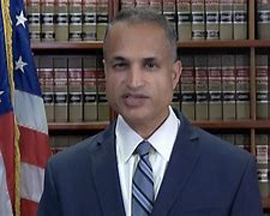
    WASHINGTON, D.C. (TIP): : Sanjay Virmani, a senior Indian American FBI official, has been named the special agent in charge of the Federal Bureau of Investigation’s (FBI) Counterterrorism Division of the Washington Field Office by Director Christopher Wray.
    He most recently served as deputy assistant director in the Counterterrorism Division at FBI Headquarters in Washington, DC, according to an FBI press release.
    Virmani joined the FBI as a special agent in 2003 and was assigned to the San Francisco Field Office where he worked on cyber and counterterrorism matters. In 2007, he was promoted to supervisory special agent in the Counterterrorism Division.
    In 2010, he was selected as the supervisory special agent to lead the San Francisco Field Office’s Joint Terrorism Task Force in the Oakland Resident Agency. In that role, he led a squad of agents, analysts, and task force officers working on international terrorism investigations.
    In 2013, Virmani was selected to serve as Director of the INTERPOL Digital Crime Center at the INTERPOL Global Complex for Innovation in Singapore. In this role, he led the directorate in providing operational support to INTERPOL’s 190 member countries to address cybercrime threats.
    In 2016, Virmani returned to FBI Headquarters as a unit chief of the Cyberterrorism unit, which was focused on identifying, obtaining intelligence on, and disrupting cyberterrorists and their networks globally.
    In 2018, he was promoted to assistant section chief of the Counterterrorism Division’s Internet Operations Section, where he worked to foster partnerships within the US intelligence community and with international partners. In 2018, he also returned to the San Francisco Field Office as the supervisory special agent of the Private Sector Engagement squad, then was promoted to assistant special agent in charge over the Cyber Branch.
    In 2021, Virmani returned to the Counterterrorism Division as section chief of the Strategic Partner Engagement Section, where he oversaw the FBI’s liaison efforts with the law enforcement community, US interagency, and private sector partners on counterterrorism-related matters.
    In 2022, he served as the acting special agent in charge of the Tampa Field Office. The same year, he was promoted to deputy assistant director in the Counterterrorism Division.
    He earned a bachelor’s in industrial engineering from California State Polytechnic University in San Luis Obispo and received a master’s in business administration from the Naval Post Graduate School in Monterey, California.

  • Indian American community leader Tara Sreekrishnan running for California State Assembly

    Indian American community leader Tara Sreekrishnan running for California State Assembly

    SACRAMENTO (TIP): Indian American community leader Tara Sreekrishnan, currently serving on the Santa Clara County Board of Education, is running for California State Assembly from District 26.
    “Silicon Valley fosters innovation and attracts the world’s brightest,” she stated announcing her run. “I believe in Silicon Valley, yet it’s crucial to acknowledge the challenges our residents face: housing affordability, climate change, traffic congestion, and an education system that needs strengthening.”
    “Addressing these challenges – and spending tax dollars efficiently and effectively – is why I’m running for State Assembly,” Sreekrishnan added.
    Sreekrishnan, 30, has served on the county board of education since 2021. She currently serves as state Sen Dave Cortese’s deputy chief of staff and legislative director. She was previously Cortese’s chief of staff when he was a county supervisor.
    She is also the co-founder of Silicon Valley Youth Climate Action—a nonprofit that seeks to combat climate change through education and public policy initiatives.
    Sreekrishnan is endorsed by State Sen. Dave Cortese, state Sen. Nancy Skinner, Assembly Majority Leader Cecilia Aguiar-Curry, Cupertino community leader Mahesh Nihlani, Ajay Bhutoria, White House Commissioner on Asian American, Native Hawaiian, and Pacific Islander Affairs, among others.
    “As a child of immigrants growing up here, I benefited from the diversity and energy in this District,” she states on her website. “With an aim to pay it forward, I founded a non-profit organization that has empowered hundreds of students across Cupertino, San Jose, Santa Clara, and Sunnyvale to actively engage in the environmental sciences and conservation.”
    “Connecting good schools to jobs of the future is why I serve our children as a Trustee on the Santa Clara County Board of Education – overseeing 270,000 students and balancing a budget of $300 million. I earned the confidence of our families and was re-elected in 2022,” Sreekrishnan stated.
    “With professional experience across all levels of local government – school district, city, county, and state – I’ve written and passed legislation that developed housing for the homeless, modernized our schools, curbed youth drug overdoses, and expanded job training and apprenticeship programs,” she added.
    “I’m running for Assembly because I understand what it takes to make California financially responsible, improve our education system so that our children have future career opportunities, and to make sure our communities are safe, clean and affordable,” Sreekrishnan stated.
    Her inspiration for public service came from her immigrant parents: they taught her the value of education and to give back to her community, according to her website.
    She carries on the legacy of her mother, who worked hard in our schools as a librarian and volunteer fundraiser. Tara herself is a former piano teacher at a Cupertino music academy.
    Sreekrishnan graduated from Mills College, the oldest women’s college on the West Coast. After college, she set out to work as a community and political organizer for grassroots campaigns in the community and across the Bay Area.

  • Indian-origin man, his girlfriend sentenced for their “wicked conspiracy” in London

    Indian-origin man, his girlfriend sentenced for their “wicked conspiracy” in London

    LONDON (TIP): An Indian-origin man and his partner have been sentenced for breaking into gym lockers and stealing bank cards to pay for their lavish lifestyles in southeast London.
    Ashley Singh (39) and Sophie Bruyea (20) of Widmore Road in Bromley, would visit gyms and rifle through victims’ lockers as they got busy in their workouts, the Metropolitan Police said on Monday.
    The pair would then max out their victims’ credit cards on expensive tech and designer gear, before selling them on and using the cash to buy bags, shoes, holidays and a pedigree puppy.
    The duo was sentenced at Croydon Crown Court on January 10 to conspiracy to commit fraud by false representation between January 2022 and January 2023 with a total value of 250,000 pounds.
    Singh was sentenced to three years’ imprisonment while Bruyea received a 20-month sentence at a young offenders’ institute, suspended for two years.
    The court also asked her to undergo a rehabilitation program and complete 120 hours of unpaid work.
    The pair’s spree was noticed by a local officer, who realized there was a pattern and flagged it to detectives who are experts in economic crime.
    A Lewisham-based team traced the pair’s phones, cars, and faces on CCTV and linked them all together.
    Officers from the Metropolitan Police arrested them at Gatwick Airport on January 27, 2023, as they returned from Paris with 2,000 euros worth of designer goods.
    At least 18 people were targeted in what the sentencing judge branded a “wicked conspiracy”.
    The judge described the impact the pair’s “wide-ranging spree” had had on people, including instances where people no longer felt safe around strangers, or had suffered professionally due to the stress.
    DC Luis Da Silva, from the Met’s economic crime team that investigated this case, said: “We know Londoners are worried about theft. It’s a horrible crime, and it causes a lot of stress, pain, and financial loss. That’s why we take this crime seriously and a whole team of us were committed to catching Singh and Bruyea.
    “You couldn’t fail to be moved by the devastating impact their callous behavior had on people, and we hope that by catching them this offers victims a little bit of solace.” He urged anyone who has had something stolen to get in touch and said that the proceeds of the duo’s crimes will be used to help compensate the victims.
    There were 18 fraud reports in total, with 14 in the Metropolitan area, one from Sussex, one from Hertfordshire and two reports from Cambridgeshire.

  • Indian-origin Singapore lawyer Kasturibai Manickam suspended for falsely attesting documents

    Indian-origin Singapore lawyer Kasturibai Manickam suspended for falsely attesting documents

    SINGAPORE (TIP): An Indian-origin lawyer who falsely attested that she had witnessed the signing of several property-related documents despite those not being signed in her presence was handed a one-year suspension.
    The Law Society of Singapore argued for a 30 months’ suspension for Kasturibai Manickam—a lawyer with more than 25 years’ experience—acting for two siblings who were the registered owners of a condominium unit.
    However, the Court of Three Judges, led by Chief Justice Sundaresh Menon, said this was an instance of a “grave error of judgement” rather than a character defect, according to a media report.
    There was no dispute that the documents were signed by the intended signatories, Chief Justice Menon said.
    Kasturibai’s error was to decide to attest that she witnessed the signing because she knew the parties and thought no harm would ensue, he said.
    Santha Devi V Puthenveetil Kesava Pillay and her brother Raman Puthenveetil Kesava Pillay had sold the property in September 2020 to two individuals.
    Kasturibai’s firm—East Asia Law Corporation—had acted for the siblings in several matters prior to the sale of the property. Raman’s wife was also a long-time employee of the firm.
    In the course of acting for the siblings, Kasturibai prepared six documents for the transaction, all of which were signed by Santha Devi.
    Between September 7, 2020, and November 5, 2020, Kasturibai signed as a witness to Santha Devi’s signature, even though the lawyer did not witness the signing.
    Five of the documents, including a transfer instrument, were sent to the law firm acting for the purchasers.
    Santha Devi later lodged a complaint with the Law Society of Singapore against Kasturibai and a disciplinary tribunal was appointed in May 2022 to formally investigate the matter.
    The tribunal’s report, issued in October 2022, did not elaborate on the events leading to the complaint.
    During the tribunal hearing, Kasturibai admitted that she signed as a witness to Santha Devi’s signature despite not having witnessed the signing.
    Senior Counsel N Sreenivasan, Kasturibai’s lawyer, argued that she did not act for her personal benefit and that her motivation was to help her elderly clients avoid travel during the Covid pandemic.
    He also argued that there was very little harm caused as the transaction was legitimate.
    The tribunal found that Kasturibai’s act involved an element of dishonesty and constituted grossly improper conduct. The tribunal found that the case was serious enough to be referred to the court, which has the power to suspend or disbar lawyers. During the hearing on January 16, Sreenivasan said Kasturibai wanted to tender her deepest apologies to the court and to the profession.The court allowed the suspension to take effect on March 7 to give Kasturibai time to find another lawyer to take over her files.

  • Indian-origin student in London dies after ‘psycho’ Tunisian boyfriend ‘nearly beheads’ her for ‘rejecting him’

    Indian-origin student in London dies after ‘psycho’ Tunisian boyfriend ‘nearly beheads’ her for ‘rejecting him’

    LONDON (TIP): A Tunisian national has been locked up indefinitely in a psychiatric hospital for killing and nearly beheading a 19-year-old Indian-origin student at her university accommodation in London in 2022.
    Maher Maaroufe, 24, stabbed his girlfriend Sabita Thanwani, an aspiring psychologist, in the neck at Arbour House student flats in Clerkenwell area of London on March 19, 2022.
    Appearing before the Old Bailey last year, Maaroufe, of no fixed address, admitted manslaughter by means of diminished responsibility, saying he was suffering from schizoaffective disorder at that time.
    He also pleaded guilty to a charge of assault by beating an emergency worker.
    While sentencing him on Monday, Judge Nigel Lickley KC said Maaroufe carried out the attack during the “height” of a psychotic episode, the media reported. He said Maaroufe had been “aggressive” and “controlling” towards Thanwani during their relationship and hit her at least once, and that his behavior may have been part of his “emerging illness”. “Sabita had her whole life ahead of her. You ended her life. Your actions will continue to cause enduring pain and suffering,” the judge told Maaroufe.
    The Old Bailey heard that Maaroufe, who entered the UK legally on an unknown date but had overstayed, was in the process of claiming asylum at the time of the incident. According to the prosecution, during his psychotic episodes, Maaroufe smoked cannabis and thought that Thanwani was a “male devil”.
    The evening before the attack, they met outside a mosque and spent time in central London.
    After they had returned to Thanwani’s accommodation, other students heard her shouting “stop”, “I can’t breathe” and “I beg you, don’t kill me”, following which emergency services were alerted.
    Police saw blood stains around the bed, as well as blankets and duvets on the floor of Thanwani’s room.
    She was pronounced dead at the scene at 6 am, and a post-mortem examination gave her cause of death as sharp force trauma to the neck. Maaroufe was found by police asleep under a tarpaulin in a garden shed, and allegedly head-butted a police officer while trying to evade arrest. Thanwani’s family, in a statement released at the time of her death, described her as “our angel” and said she had a “radiant smile and incredible heart”.
    The family described Maaroufe as an “evil, sadistic murderer, his actions were calculated to kill her because she rejected him”.

  • India beat Afghanistan after two superovers for 3-0 sweep

    India beat Afghanistan after two superovers for 3-0 sweep

    Bengaluru (TIP)- India overcame Afghanistan in a second Super Over in a heart-stopping T20 International to complete a 3-0 series sweep on a night of high drama on January 17. The home side had bagged the series with back-to-back wins in Mohali and Indore, rendering the result of the match academic.
    But the final match of the three-match series provided the most drama as Afghanistan, replying to India’s mammoth 212/4, racked up 212/6 resulting in deadlock. In the first Super Over, Afghanistan managed 16/1, which India matched as the stalemate continued.
    India scored 11/2 in the second Super Over before spinner Ravi Bishnoi sealed their victory in three deliveries, conceding just one run and taking two wickets. “My heart rate was high, but we had a lot of fun,” leg-spinner Bishnoi said. “The moment we saw two right-handers come out, I was given the ball. The idea was to bowl back of length to begin with from a little behind the crease.”
    Earlier, India looked in trouble after they slumped to 22/4 inside five overs after electing to bat. Skipper Rohit Sharma smashed an unbeaten 121 off 69 balls as he and Rinku Singh, who hammered 69 not out, rescued India with an unbroken fifth-wicket stand of 190 off just 95 balls. Karim Janat bled 36 runs in the final over of the Indian innings conceding five sixes in that seven-ball over that included a no-ball.
    Nice to see we have some options ahead T20 World Cup: Dravid
    India head coach Rahul Dravid was a pleased man after the 3-0 series win over Afghanistan as few fringe players performed well to give the team more options for the T20 World Cup in June. India played 11 T20s after the ODI World Cup last year and the thinktank was able to have a closer look at some contenders such as Jitesh Sharma and Shivam Dube after frontline players were given a rest. Dravid was quite chuffed at their efforts.
    “We’ve had different people play after the last ODI World Cup for a variety of reasons. But I think it’s just nice to see that there are some options (ahead of World Cup) who have put their hand up, and certainly shown that they’ve got skills to address.

  • India shot down by Germany, to face Japan for Paris berth

    India shot down by Germany, to face Japan for Paris berth

    Ranchi (TIP)- The Indian women’s hockey team fought with determination but lost its nerves in the most crucial phase of the penalty shootout, going down to Germany in the second semifinal of the FIH Olympic Qualifier on January 18. The match was stretched to a penalty shootout, which Germany won 4-3 in sudden death, after the teams were tied at 2-2 in regulation time. With this win, Germany secured a berth in the Paris Olympics. India will have another chance to seal a berth if they beat Japan in the third place match tomorrow. World No. 5 Germany will take on the USA in the final.
    Deepika (15th minute) and Ishika Chaudhary (59th) were the goal-scorers for India in the regular time, while Germany’s both goals were scored by Charlotte Stapenhorst (27th, 57th).
    As expected, the Germans came out attacking from the onset and exerted continuous pressure on the Indian defence on a foggy night, where visibility was a problem. Just 55 seconds from the end of the first quarter, India secured their first penalty corner and Deepika slammed home with a powerful drag-flick to stun the Germans. Lack of coordination from the Indian midfield and inability to clear loose balls cost the hosts dearly as Germany equalised three minutes from half-time when Stapenhorst scored from a field effort.
    The Germans continued their relentless efforts after the change of ends but the Indian defence stood tall. Eventually, it became too much to handle for the Indian defence as Stapenhorst scored her second goal to stun the capacity crowd. The Indians, however, did not give up and secured back-to-back penalty corners in the 59th minute, the second of which was put into the goal by Ishika from a rebound, forcing the match into the shootout.
    “We will discuss it again. We need to give time to the disappointment,” India coach Janneke Schopman said. “We have to rest tomorrow morning and I know they will be ready. Some of them are already ready but we need some time,” she added.
    “They get a little bit impatient and when they get impatient… but I can’t always blame them for it. It was great that we could manage a large part of the game today. I know we can play but we have to show up and have to keep fighting. We don’t have a guarantee tomorrow. Japan also wants to go to Paris, so we have a fight in our hands,” she added.
    Source: PTI

  • Asian cup: Uzbekistan hammer India 3-0

    Bereft of ideas, a lacklustre India’s woes were compounded by their defensive lapses, resulting in a 3-0 drubbing by a dominant Uzbekistan in the AFC Asian Cup at Doha on January 18. This was India’s second successive defeat in Group B, having started their campaign with a 0-2 loss to title contenders Australia. In their opener, India’s spirited performance earned them plaudits. However, against the central Asian nation, India’s performance was a far cry from their display against the Socceroos.
    Uzbekistan scored through Abbosbek Fayzullaev (4th minute), Igor Sergeev (18th) and Nasrullaev (45th+3rd) to register their first win in the competition after being held to a stalemate by Syria in their tournament opener. Hoping to start on a positive note barely days after their promising show against Australia, India, instead, found themselves on the back foot straightaway and conceded a soft goal early on.
    The lightning quick Fayzullaev, placed in a favourable position, found the target with a header past the hapless Gurpreet Singh Sandhu. Ranked 102 in the world as against their 68-ranked opponents, Igor Stimac’s men found the going tough as Uzbekistan looked to rattle the Indian defence with their attacking play. In a mood to stamp their authority further, Uzbekistan again benefitted from sloppy defending from their opponents. Rahul Bheke gave the ball away at the halfway line. Akash Mishra’s clearance hit the post before returning to the field of play, and Sergeev did the rest to put his side 2-0 ahead.

  • Ajmer: The abode of saint Muin-ud-din Chishti

    Ajmer: The abode of saint Muin-ud-din Chishti

    Surrounded by Aravali ranges, the city of Ajmer is most famous for the Ajmer Sharif Dargah of saint Muin-ud-din Chishti. This makes Ajmer one of the most significant places of Islamic pilgrimage in the world. Located at a distance of 130 km from Jaipur and 14 kms from Pushkar in Rajasthan, the city is firmly bound by its traditions and culture. Ajmer has a unique charm that lies in the ethos and craftsmanship practised over centuries.
    Visit Ajmer to witness the exquisite Mughal architecture set in an aura of spirituality. The city is also a renowned religious spot for Jains because of Golden Jain Temple. During the festival of Urs, commemorating the death anniversary of Saint Moinuddin Chishti, believers from across the globe throng the city. A lot of travellers visiting Pushkar stop by Ajmer and make a day trip. Ajmer has also been selected as one of the heritage cities for the HRIDAY (Heritage City Development and Augmentation Yojana) scheme of the Government of India.
    Apart from Ajmer Sharif Dargah and the Jain Temple, there are some other tourist attractions in Ajmer as well. Adhai Din ka Jhopra, Ana Sagar Lake, Foy Sagar Lake, Ajmer Government Museum and Taragarh Fort are some of them. Ajmer is also home to Mayo College, one of the most prestigious boarding schools in India.
    Ajmer Sharif Dargah
    Ajmer Sharif Dargah, also known as Ajmer Dargah, is the tomb of Moinuddin Chishti is one of the holiest places of worship in India not only for the Muslims but followers of every faith. Being the final resting place of the Khwaja Moin-ud-din Chisti, it has had an enormous contribution in spreading the ethical and spiritual values of Islam amongst masses.
    Khwaja Moin-ud-din Chisti was a great Sufi Saint and dedicated his entire life to the upliftment of the poor and downtrodden. The shrine is visited by millions of people every year, as it is considered very sacred by people of all religions. Ajmer Sharif was built by the Mughal Emperor Humayun, hence justifying the rich Mughal Architecture. The Dargah has various constituents like tombs, courtyards and Daalaans. The major among these structures are- Nizam Gate, Buland Darwaza, Jama Masjid, Aulia Masjid, Dargah Shrine, Mehfilkhana and about a dozen of other prominent establishments.
    One can spot two huge cauldrons in the inner courtyard of the shrine. These containers have a capacity of 2240 kg and 4480 kg and are used during special occasions to cook sweet delicacies like Kheer.
    Ana Sagar Lake
    The gorgeous Ana Sagar Lake is a magnificent artificial lake that is located in the city of Ajmer in Rajasthan, India. This lake is best visited during the sunsets when the views are extraordinarily marvellous to look at. The sight of the lake from the nearby temple is particularly enchanting. Do not forget to take a camera to capture the fantastic and heavenly views that you behold here. However, the lake may dry up during the summers.
    The Ana Sagar Lake is surrounded by Daulat Bagh Gardens, which is a splendid garden full of vast open spaces and lush greenery, and the Khobra Behroon temple- two popular attractions of Ajmer that tourists prefer to visit along with a day trip to the beautiful lake. The lake is only 13 kilometres away from the main city of Ajmer. An island can be spotted in the centre of the lake. Tourists love to indulge in boating or water scooter rides here. The lake is about 4.4 metres deep and spreads over an area of 12 kilometres.
    Akbar’s Palace
    Akbar’s palace, constructed in 1570AD is the place where he and his troops stayed in at Ajmer whenever he visited the Ajmer Sharif Dargah. It is well known for the museum which portrays the age-old military weapons and exquisite sculptures, paintings and other artefacts of the Mughal era. The museum showcases various aspects of the Rajput and Mughal style of living and fighting. The large black marble statue of Goddess Kali situated in the palace is quite famous.
    Ajmer Jain Temple
    Ajmer Jain Temple or Soniji Ki Nasiyan is a Digambar Jain temple dedicated to Lord Rishabhdev (Agnidev), the first of the 24 Tirthankara of Jainism. The temple is made of red sandstone which is why it is also called the Red Temple. The main attraction of the temple is the main chamber, known as the Swarna Nagari “City of Gold”, which has several gold-plated wooden figures, depicting several figures in Jainism.

  • Red Sea unrest is bad news for world’s fragile food supply

    Chaos in the Red Sea is starting to disrupt shipments of produce from coffee to fruit — and threatening to halt a slowdown in food inflation that brought some relief to strained consumers. Vessels loaded with foodstuffs are among those avoiding Houthi attacks in the key waterway by sailing around Africa, a longer and costlier route. But unlike gas, oil and consumer goods cargoes that have also been affected, lengthier shipping times risk making perishable foods unsellable. That’s spooking the industry. Italian exporters fear kiwi and citrus fruits will spoil on the way, Chinese ginger is getting pricier and some African coffee cargoes were briefly delayed. Grain is being diverted from the Suez Canal and a livestock carrier bound for the Middle East has changed course.
    While the impact is so far limited, it’s a reminder of how fragile food supply chains can be. If disruptions worsen, they could stall the slump in food-commodity costs that had started to filter through to cheaper grocery bills.
    “Everyone is a loser here,” said Nitin Agrawal, managing director of Euro Fruits, a major Indian grape exporter. The company usually ships to Europe via the Red Sea, but now uses the longer route that’s more than quadrupling freight costs and doubling transit times.
    That means grape quality will suffer, and most European importers have agreed to higher prices of Indian grapes, which will make them more expensive for consumers, Agrawal said. The European Union generally relies on India for about a seventh of its table grapes, and more than 35% at the crop’s peak in March-April, according to European fresh produce association Freshfel. Italian exporters, which sell about $4.4 billion of agricultural produce to Asia, are worried that going around Africa will hurt freshness and add to costs for fruit like apples, kiwi and citrus, said Massimiliano Giansanti, president of farm group Confagricoltura.
    It’s also a headache for farmers who could have to cut their prices to make up for higher shipping costs. “We have to sell even if prices fall as we can’t prolong the harvesting period,” said Sandeep Dagu Sandhan, a grape grower in India’s state of Maharashtra, where harvesting has started in some areas. “Exporters always manage to cover their costs. It will be our losses if prices crash.”
    Source: Bloomberg

  • Apple overtakes Samsung as top seller of smartphones

    Apple overtakes Samsung as top seller of smartphones

    Apple ended Samsung Electronics’ 12-year run as the largest seller of smartphones in the world, after commanding a 20% market share in 2023, according to a report from International Data Corp. Samsung ended the year with a 19.4% share, followed by China’s Xiaomi, Oppo and Transsion, preliminary data from IDC’s Worldwide Quarterly Mobile Phone Tracker showed. The change in ranking comes after a tough year that saw consumers going slow on smartphone upgrades and choosing cheaper handsets due to high inflation and economic uncertainties. A slower-than-expected recovery in China, the world’s largest smartphone market, also weighed on overall phone sales.
    Apple and Transsion, which sells Tecno, Infinix and itel brands, were the only two of the top five smartphone vendors to record sales growth last year, even though the overall market declined 3.2% to 1.17 billion units and hit a decade low.
    “While we saw some strong growth from low-end Android players like Transsion and Xiaomi in the second half of 2023, stemming from rapid growth in emerging markets, the biggest winner is clearly Apple,” said Nabila Popal, research director at IDC’s Worldwide Tracker team. Phone shipments from Samsung were down 13.6%, while iPhone shipments were up 3.7% last year, according to IDC data.
    Samsung focused on the mid- to high-end segment for profitability but lost share in the low-end segment, said Amber Liu of research firm Canalys.
    Apple, however, is facing pressure in China from a resurgent Huawei as well as from budget Chinese brands. The iPhone maker is offering discounts of as much as 5% on some models in the country to attract customers.
    Microsoft on Friday overtook Apple as the world’s most valuable public company, as Wall Street grew more concerned over the demand for its iPhones and other high-end gadgets. Source: Reuters

  • Akasa Air says ‘confident’ about Boeing, orders 150 MAX aircraft

    Akasa Air says ‘confident’ about Boeing, orders 150 MAX aircraft

    India’s Akasa Air said on Thursday, January 18, it had ordered 150 Boeing 737 MAX narrowbody planes, showcasing its confidence in the troubled planemaker as the budget carrier seeks to fly to more destinations at home and abroad. This is the first major order announcement for Boeing’s MAX jetliner programme since a mid-air cabin panel blowout in the United States early this month, although Akasa’s order does not include the 737 Max 9 version which is in the spotlight after the incident.
    The order was announced at the “Wings India” air show in the southern city of Hyderabad, which has attracted planemakers, airlines and government officials as they make the most of India’s travel boom, with a greater focus on international routes. “We feel very confident about the aircraft type that we have … even seeing Boeing’s commitment to the way they’ve handled this problem,” Priya Mehra, Akasa’s chief legal, regulatory and strategic relations officer, said. Akasa’s order for 737 MAX 10 and MAX 8-200 does not include the MAX 9 version, which has been largely grounded over the Alaska Airlines cabin panel blowout incident. Mehra said the airline was not looking at diversifying its fleet. Source: Reuters
    India to grow at 7% in FY25: RBI
    Indian economy should record a growth rate of 7% in the next fiscal and inflation is likely to ease further, RBI Governor Shaktikanta Das said on Wednesday, January 17.
    He also credited the government for structural reforms undertaken in recent years, saying they have boosted the medium and long-term growth prospects of the Indian economy. He said amid a challenging global macroeconomic environment, India presents a picture of growth and stability. Speaking at a CII session on ‘High growth, low risk: The India story’ here during the World Economic Forum Annual Meeting, Das said recent information on the global economic front has been reassuring with inflation falling, though growth remains low.

  • Inauguration of Ayodhya Ram Mandir: Astro-numerological significance of January 22

    Inauguration of Ayodhya Ram Mandir: Astro-numerological significance of January 22

    The inauguration of the Ram Mandir in Ayodhya on January 22, 2024, is a historic event that is being celebrated by millions of Hindus around the world. The date of the inauguration holds special significance as per various astro-numerological factors. Let us have a look at the divine forces at play on this auspicious day as per the Hindu tradition.
    Pausha Hindu Month
    The inauguration of the pious Ram Temple is being held during the Pausha month, which is the tenth month in the Hindu lunar calendar and is considered highly auspicious in Hindu traditions. This month holds special significance due to various religious, cultural, and spiritual events that are organised during this period, such as the Kumbh Mela and the Mahakumbh.
    Makar Sankranti and Uttarayana
    January 22 falls just after Makar Sankranti, a significant Hindu festival that marks the Sun’s northward movement into Capricorn (Makar). Uttarayana, as this period is known, is considered a time of auspiciousness, growth, and new beginnings. It is an ideal time for undertaking auspicious tasks like inaugurating the Ram Mandir.
    Dwadashi Tithi of Shukla Paksha
    The choice of an auspicious date for the inauguration of the Ayodhya Ram Temple, particularly during Shukla Paksha and Dwadashi Tithi, adds a layer of divine favour and positivity to this historic occasion. Shukla Paksha is the waxing phase of the moon. It is associated with the increasing illumination of the moon and symbolises growth, prosperity, and positive energy. Shukla Paksha is considered highly auspicious for beginning new ventures, projects, or ceremonies. In addition, the Dwadashi Tithi is associated with Lord Vishnu, the preserver in the Hindu Trinity. Inaugurating the Ayodhya Ram Temple on this Tithi is symbolic of invoking the divine presence of Lord Vishnu, seeking his blessings for the success and sanctity of the temple. Lord Rama is believed to be the seventh and the most popular avatar of Lord Vishnu.
    Moon in Mrigashirsha Nakshatra
    On January 22, the Moon will be in Taurus sign in Mrigashira Nakshatra. Taurus is a fixed earth sign associated with stability, security, and material wealth. This is a positive sign for the inauguration of the Ram Mandir, as it suggests that the temple will be a stable and prosperous institution. On this day, the Moon will be placed in Mrigashira Nakshatra. It’s seen as a powerful nakshatra for undertaking new ventures and achieving success. It is ruled by the fiery and energetic planet Mars, signifying the beginning of life.
    Sun in Uttara Ashadha Nakshatra
    The Sun will be in Uttara Ashadha Nakshatra and Capricorn sign on January 22nd. Uttara Ashadha is a Nakshatra associated with leadership, strength, and success. This is a highly auspicious sign for the inauguration, as it suggests that the temple will project India as a global spiritual leader.
    Sarvartha Siddhi and Amrita Siddhi Yoga
    Both these yogas are considered highly auspicious astrological combinations in Hindu tradition, and their presence on January 22nd, 2024, further enhances the significance of the Ram Temple inauguration in Ayodhya. They represent longevity, prosperity, and the attainment of blessings. They are also associated with good health, abundance, and divine grace.
    Importance of Numbers
    The day number, derived from the day of the month, is 22. In numerology, 22 is referred to as the “Master Builder” or the “Master Teacher” number. It symbolises the ability to turn dreams into reality, manifesting ideas on a grand scale. Individuals associated with the number 22 are believed to possess a strong sense of purpose and the capability to bring about positive change in the world. Further, the total sum of the date (22 + 1 + 2024) is 31, which is further reduced to 4 (3 + 1). Number 4 is associated with stability, practicality, and building strong foundations. It is considered a number of hard work, diligence, and the manifestation of goals through disciplined efforts.
    January 22 and Manifestation
    With the reduced total sum being 4, the numerological energy of January 22, 2024, encourages grounded and practical manifestations. It’s a day where attention to detail, organisation, and methodical planning can lead to tangible and enduring outcomes. Additionally, the vibration of 4 suggests a focus on building not just in the material sense but also in terms of personal and spiritual growth. It’s a day where individuals may find strength and support in their spiritual pursuits.
    Completion and Foundation
    Considering that the total sum of the date is 4, it also carries the essence of completion and laying a strong foundation. The number 4 is often associated with completion. In numerology, it represents a sense of wholeness and the conclusion of a cycle. It suggests that a certain phase or aspect of life is coming to an end, and it’s time to take stock of the achievements and lessons learned during that period. Additionally, the number 4 is linked to the concept of building a solid foundation. This implies that after completing a cycle, it’s an opportune time to lay the groundwork for future undertakings. This could involve reflecting on past experiences, understanding the challenges faced, and using the gained wisdom to establish a strong base for future success.
    (The author, Neeraj Dhankher, is Vedic Astrologer, Founder – Astro Zindagi)
    Source: HT

  • Oldest black hole is ‘eating’ its host galaxy to death

    Oldest black hole is ‘eating’ its host galaxy to death

    Researchers have discovered the oldest black hole ever observed, dating from the dawn of the universe, and found that it is ‘eating’ its host galaxy to death. The research, published in the journal Nature, used the James Webb Space Telescope (JWST) to detect the black hole, which dates from 400 million years after the Big Bang, more than 13 billion years ago. That this surprisingly massive black hole—a few million times the mass of our sun—even exists so early in the universe challenges the assumptions about how black holes form and grow, the researchers said. Astronomers believe that the supermassive black holes found at the centre of galaxies like the Milky Way grew to their current size over billions of years. However, the size of this newly-discovered black hole suggests that they might form in other ways. According to standard models, supermassive black holes form from the remnants of dead stars, which collapse and may form a black hole about a hundred times the mass of the Sun. If it grew in an expected way, this newly detected black hole would take about a billion years to grow to its observed size. However, the universe was not yet a billion years old when this black hole was detected. “It’s very early in the universe to see a black hole this massive, so we’ve got to consider other ways they might form,” said lead author Roberto Maiolino, Professor at Cambridge University, UK.
    Source: PTI

  • Google removes 17 ‘underutilised’ features from its Assistant app

    Google removes 17 ‘underutilised’ features from its Assistant app

    Google has announced that it is removing some underutilised features in Google Assistant “to focus on delivering the best possible user experience”. As per the list shared by the company, Google will be removing 17 features.
    Starting January 26, the company said when users ask for one of the removed features, they may get a notification that it won’t be available after a certain date. “As we continue to make Google Assistant more helpful, we’re prioritising the experiences you love and investing in the underlying technology to make them even better — which means that some underutilised features will no longer be supported.”
    Some features being removed include — the functionality that allows users to use their voice to send an email, video, or audio message. Users will also not be able to use their voice to perform tasks such as making a reservation, sending a payment, or posting on social media. Users also will not be able to manage a stopwatch on Smart Displays and Speakers. Voice control for activities will no longer be available on Fitbit Sense and Versa 3 devices. Calls made from speakers and Smart Displays will not show up with a caller ID unless you’re using Duo. Moreover, the tech giant said that it is bringing a more consistent experience within the Google app.
    According to the company, the microphone icon will now trigger Search results in response to your queries. This change won’t let you use the Search bar microphone to do things like turn on the lights or send a message.Google said that Pixel devices will also be affected, as the microphone in the Pixel Search bar will now activate Voice Search instead of Assistant.
    Meanwhile, Google has confirmed that it has cut several hundred jobs across hardware, core engineering and Google Assistant teams.
    The layoffs will impact employees in Google’s hardware and central engineering teams, as well as workers across Google Assistant, reports CNBC.
    Google introduces Circle to Search on Android
    Google has been experimenting with ways to search on smartphones since the dawn of Android and the latest attempt involves drawing circles. Circle to Search allows users to draw a circle around information on their device screen to search for the highlighted item. While the feature is officially called Circle to Search, you can also highlight text and scribble on items instead of drawing oval shapes to trigger the new search option.
    Circle to Search works anywhere on your device but you’ll have to long press the home button or the navigation bar for those using gestures to activate the feature before you start circling items. Google is advertising this feature as more convenient alternative to switching between various apps like screenshotting items and then using Google Lens.

  • Soon, watch videos on mobile without SIM card or Internet connection

    Mobile users may soon be able to stream videos without a SIM card or an internet connection as Direct-to-Mobile broadcasting could become a reality in the near future.
    Addressing a Broadcasting Summit, Information and Broadcasting Secretary Apurva Chandra said trials of the home-grown Direct-to-Mobile (D2M) technology would soon be held in 19 cities and made a strong pitch for reserving the 470-582 MHz spectrum for this emerging technology.
    Chandra said a 25-30 per cent shift of video traffic to D2M would unclog the 5G networks, accelerating the nation’s digital evolution and democratising content delivery.
    Last year, pilot projects to test the D2M technology were carried out in Bengaluru, Kartavya Path and Noida. Chandra said the D2M technology would help reach nearly 8-9 crore “TV Dark” homes across the country. Of the 280 million households in the country, only 190 million have television sets.
    He said there were 80 crore smartphones in the country and 69 per cent of content accessed by users was in the video format. Chandra said heavy use of video led to the clogging of mobile networks, which resulted in the buffering of content. Developed by Saankhya Labs and IIT Kanpur, the D2M broadcasting technology leverages terrestrial telecommunications infrastructure and public broadcaster-assigned spectrum to transmit video, audio, and data signals directly to compatible mobile and smart devices.
    With the potential to reach over a billion mobile devices, the adoption of D2M technology promises transformative benefits, including cost reductions in data transmission and access, improvements in network efficiency and resilience, and potentially leading to the establishment of a nationwide emergency alert system. Source: PTI

  • Novel contact lenses to diagnose glaucoma developed

    Novel contact lenses to diagnose glaucoma developed

    Researchers have developed new contact lenses to diagnose glaucoma, an eye condition that can cause irreversible loss of vision if not treated. Glaucoma effects around 70 million people worldwide, but around half of those living with the condition are not aware of it.
    Usually developing slowly over time, many cases of glaucoma are only picked up during routine eye tests, by which time lasting damage may already have been caused, the researchers said.
    The new contact lens developed by researchers at the Northumbria University in UK, and Bogazici University in Turkey, can detect changes in eye pressure, which signals possible glaucoma.
    Glaucoma occurs when the optic nerve, which connects the eye to the brain, becomes damaged, usually by a build-up of fluid in the front part of the eye, which increases pressure inside the eye—known as Intra-Ocular Pressure (IOP). The new contact lenses contain micro-sensors that monitor changes in IOP over a period of several hours, sending the data collected wirelessly so it can be analysed by an ophthalmologist and a diagnosis given, the researchers said.
    The research, published in the journal Contact Lens and Anterior Eye, sets out the findings from an initial pilot study of six participants. Having determined that the technology works successfully, the researchers now plan to carry out a further study with a larger group of participants, which would take place over the next year. The lenses would then be made commercially available through their spin-off company GlakoLens, they said.
    One of the benefits of using the GlakoLens contact lenses to diagnose glaucoma instead of carrying out a traditional examination is that measurements can be taken more easily over a longer period of time, giving a more accurate diagnosis, according to the researchers. Source: PTI

  • First human trial for deadly Nipah virus vaccine begins in UK

    First human trial for deadly Nipah virus vaccine begins in UK

    Scientists at the University of Oxford in the UK have launched the first-in-human clinical trial to test a vaccine to protect people against deadly Nipah virus. Fifty-one people aged 18 to 55 will participate in the trial of the ChAdOx1 NipahB vaccine, developed by researchers at the University of Oxford’s Pandemic Sciences Institute, the varsity said in a statement. Nipah virus is a devastating disease that can be fatal in around 75 per cent of cases. Outbreaks have occurred in countries in South-East Asia, including Singapore, Malaysia, Bangladesh and India, with a recent outbreak in Kerala, India in September 2023.

    Despite the first outbreaks of Nipah virus occurring 25 years ago in Malaysia and Singapore, there are currently no approved vaccines or treatments.
    “Nipah virus was first identified in 1998, and yet 25 years on the global health community still has no approved vaccines or treatments for this devastating disease,” said Professor Brian Angus, the trial’s Principal Investigator and Professor in the varsity’s Nuffield Department of Medicine.
    “Due to the high mortality rate and the nature of Nipah virus transmission, the disease is identified as a priority pandemic pathogen. This vaccine trial is an important milestone in identifying a solution that could prevent local outbreaks occurring, while also helping the world prepare for a future global pandemic.”
    The Nipah virus, which is recognised by the World Health Organisation (WHO) as a priority disease requiring urgent research, belongs to the same family of paramyxoviruses as more well-known pathogens like measles. Source: IANS

  • Obesity may raise risk of blood cancer by over 70 percent: Study

    Researchers find that obesity may increase the risk of developing multiple myeloma — a blood cancer of the plasma cells — by more than 70 percent. Smoking habits and exercise may also impact one’s likelihood of developing multiple myeloma, said the team from Massachusetts General Hospital in the US.
    The research published in Blood Advances revealed that individuals with obesity are more likely to have monoclonal gammopathy of undetermined significance (MGUS) — a benign blood condition that often precedes multiple myeloma.
    “While significant advancements have been made in therapeutics for multiple myeloma, it remains an incurable disease, often diagnosed after patients have already experienced end-organ damage,” explained David Lee, from Massachusetts General Hospital.
    The team enrolled 2,628 individuals from across the US who were at elevated risk of developing multiple myeloma, based on self-identified race and family history of hematologic malignancies, between February 2019 and March 2022.
    They found that being obese was associated with 73 per cent higher odds of having MGUS, compared to individuals with normal weights. This association remained unchanged when accounting for physical activity.
    However, highly active individuals (defined as doing the equivalent of running or jogging 45-60 minutes per day or more) were less likely to have MGUS even after adjusting for BMI class, whereas those who reported heavy smoking and short sleep were more likely to also have detectable levels of MGUS.
    MGUS, characterised by an abnormal protein produced by plasma cells, is a known precursor to multiple myeloma. Most people with MGUS exhibit no significant symptoms and are not immediately ill. Rather, the presence of MGUS serves as a warning to monitor for the potential development of more critical conditions, like multiple myeloma, that MGUS can turn into.
    “These results guide our future research in understanding the influence of modifiable risk factors, such as weight, exercise, and smoking, on cancer risk,” explained Lee.
    “Before we can develop effective preventative health strategies to lower the risk of serious diseases like multiple myeloma, we first need to better understand the relationship between MGUS and potentially modifiable risk factors like obesity.” Source: IANS