Tag: Gov. Kathy Hochul

  • Gov Hochul fends of RFK Jr. COVID vaccine limits for New Yorkers with executive order

    Gov Hochul fends of RFK Jr. COVID vaccine limits for New Yorkers with executive order

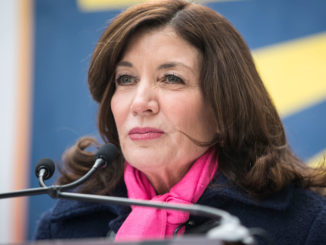
    NEW YORK (TIP): Gov. Hochul Friday signed an executive order ensuring continued access to COVID-19 vaccines in New York after Health Secretary Robert F. Kennedy Jr. took steps to limit availability of the shots. The governor’s measure declares a health emergency and authorizes pharmacists to continue providing the vaccines to anyone who wants them at their local drug stores in the Empire State. “In the absence of federal leadership, we must do everything we can to ensure that New Yorkers have access to the vaccines and preventative healthcare they have come to rely on,” Hochul said in a statement.

    Hochul’s order permits New York pharmacists and doctors to prescribe the new version of the COVID-19 vaccine for the upcoming season to anyone over three years old, even if they don’t have any underlying conditions.

    Top Videos RFK Jr. gets grilled by U.S. senators over vaccine policies, CDC firings.

    Even though the worst of the COVID-19 pandemic is past, state health officials say the shots still provide important and potentially life-saving protection for those who get them, and help to defend immunocompromised fellow New Yorkers.

    “Vaccination remains one of the most effective tools we have to prevent serious illness, hospitalization, and death from COVID,” said New York State Health Commissioner Dr. James McDonald.

    The order will be in effect valid for 30 days while the state comes up with a permanent policy framework, possibly in coordination with other state governments.

    Hochul acted just a day after RFK Jr. sparred with senators on both sides of the political aisle at a tense Senate committee hearing over his steps to restrict vaccine access.

    He denies the charges, saying all Americans who need protection of the shots can still get them.

    The executive order is intended to undo significant limits that federal health authorities imposed at the behest of RFK Jr., a longtime skeptic of vaccines in general and the COVID shots in particular.

    Under Kennedy’s authority, the Food and Drug Administration recently approved updated versions of the COVID vaccine, but only for people over 65 or those with underlying medical conditions. Children are only eligible for the shots if a medical provider gives the go-ahead.

    Those federal restrictions are tighter than in past years, when the COVID vaccine was generally available to any adult who wanted it.

    Public health experts say the shift is part of a broader campaign against vaccines inspired by RFK Jr., especially the mRNA vaccines like those that effectively ended the global pandemic.

    (Source: Daily News)

  • Gov. Kathy Hochul approves proposal allowing asylum seekers to get temporary state government jobs

    Gov. Kathy Hochul approves proposal allowing asylum seekers to get temporary state government jobs

    NEW YORK (TIP): Gov. Kathy Hochul has approved a proposal to reform New York’s workforce, including allowing asylum seekers to get temporary jobs in state government. The initiative is open to anyone in New York who has legal work authorization from the federal government, including American citizens, Green Card holders and migrants. It only applies to temporary positions. The governor says there are currently 40,000 jobs listed on New York state’s migrant work portal. The governor’s action is likely to invite criticism and opposition from Republicans.

  • Hochul celebrates federal green light for congestion pricing

    Hochul celebrates federal green light for congestion pricing

    The long-delayed road tolling program is set to start in Manhattan next year

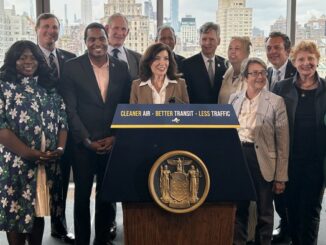
    NEW YORK (TIP): If Gov. Kathy Hochul drove to her press conference near Washington Square Park on Tuesday, June 27, she – along with nearly everyone else driving into Manhattan’s Central Business District – could owe as much as $23 under a congestion pricing program that is set to go into effect as early as next spring. In an address at New York University on Tuesday, June 27, Hochul celebrated the clearing of the final federal hurdle for the city to implement congestion pricing. “More vehicles have come back than we had even before the pandemic,” said Hochul. “These vehicles have an alternative – an incredible alternative – called public transportation.” Hochul was joined by Metropolitan Transportation Authority CEO Janno Lieber and officials including Bronx Rep. Ritchie Torres, Manhattan state Sen. Brad Hoylman-Sigal and New York City Transportation Commissioner Ydanis Rodriguez. New York City Mayor Eric Adams, who has said that he supports congestion pricing but also expressed frustration about some of its specifics, was not present. The state Legislature passed congestion pricing back in 2019, but a long federal approval process – slowed by former President Donald Trump – is wrapping up four years later.

    The goals of congestion pricing are twofold. The program is expected to generate $1 billion in annual revenue for the MTA – sorely needed cash for the agency to fund capital improvements like station accessibility upgrades and signal modernization. But it’s also meant to reduce traffic in the heavily congested streets of Manhattan south of 60th Street and improve air quality.

    The final approval from the Federal Highway Administration found that the program will not have a significant environmental impact and that further environmental reviews aren’t necessary.

    The approval for congestion pricing is also well-timed, as Hochul announced that the state is again expected to experience unhealthy and even hazardous air quality over the next few days due to traveling smoke from Canadian wildfires. Urging vulnerable New Yorkers to take health precautions as air quality deteriorates, Hochul linked the wildfires to congestion pricing’s goal of mitigating other effects of climate change. Congestion pricing has enemies in New York – and commuter states New Jersey and Connecticut – but some of the most fervent recent pushback has come from New Jersey lawmakers, including Gov. Phil Murphy and members of the state’s congressional delegation. With federal approvals locked up, an appointed board will come up with recommendations for some of the nuts and bolts of the program – including the price of tolls and possible carve outs. The congestion pricing law includes just three exemptions to the toll for emergency vehicles, vehicles carrying people with disabilities, and residents of the congestion zone who earn less than $60,000 a year. It’s possible that the board will recommend additional exemptions, though transit advocacy groups have warned against too many exemptions. The more exemptions, the higher the toll price would be.

    Tolls are expected to fall somewhere between $9 and $23, but exactly how much – including variations for peak and off-peak hours – is yet to be determined. The Traffic Mobility Review Board will make recommendations on those details to the Triborough Bridge and Tunnel Authority. As chair of the MTA, Lieber doesn’t usually have a lot to dance about. But Lieber did a little jig as he walked up to the podium to celebrate the coming implementation of the landmark tolling program. “Congestion pricing means less traffic, better transit, cleaner air and safer streets,” Lieber said.

  • Lt. Gov. Brian Benjamin arrested

    Lt. Gov. Brian Benjamin arrested

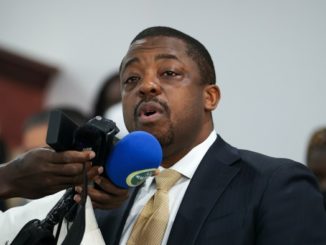
    NEW YORK (TIP): Lt. Gov. Brian Benjamin has joined the ranks of New York politicians arrested for alleged corruption, creating a big headache for Gov. Kathy Hochul as she and Benjamin run for full terms this year.

    Prosecutors say Benjamin, while still serving as a state senator representing Harlem, was involved in a bribery conspiracy that involved using state money to indirectly benefit his unsuccessful 2021 campaign for New York City comptroller, The New York Times reported Tuesday, April 12 morning. Benjamin has surrendered to authorities after being indicted on a federal charge. A spokesperson for the lieutenant governor, who was appointed to his position last August, could not be reached for immediate contact Tuesday.

    “Brian Benjamin, the defendant, and others acting at his direction or on his behalf, also engaged in a series of lies and deceptions to cover up his scheme, including by falsifying campaign donor forms, misleading municipal regulators, and providing false information in vetting forms Benjamin submitted while under consideration to be appointed the next lieutenant governor of New York state,” reads an indictment from the Southern District of New York, which oversees federal prosecutions in Manhattan. A noon press conference has also been scheduled.

    The federal charge represents a turning point for Benjamin, who has been accused of numerous ethical misdeeds over the years – none of which involved a criminal charge up to today. The City first reported on shady donations allegedly involved in that scheme last year. A real estate developer who backed Benjamin’s 2021 bid for New York City comptroller had already been arrested in relation to the alleged scheme. Hochul recently expressed confidence in her nominal number two following revelations, first reported by the Daily News, that the lieutenant governor had not informed her of subpoenas from Manhattan prosecutors prior to his appointment as lieutenant governor. A spokesperson for Hochul could not immediately be reached for comment. Immediately, Republicans began piling on criticism of Hochul over the arrest for her choice of second in command. “Proof that Kathy Hochul picked a dirty politician as her running mate,” state GOP Chair Nick Langworthy said in a tweet about the arrest.

  • Woman pushed onto Subway tracks dies; elected officials express concern and indignation

    Woman pushed onto Subway tracks dies; elected officials express concern and indignation

    NEW YORK CITY (TIP): A woman was killed on Saturday, January 15 morning after she was pushed in front of an oncoming subway train at the Times Square station, the police said.The woman was standing on the platform around 9:30 a.m. waiting for the train to arrive at the station at 42nd Street in Manhattan, the police said. As a Brooklyn-bound R train pulled into the station, she was pushed onto the tracks and struck by it.

    She died at the scene, the police said. Her name was not immediately released. Officers took a man who they said may be homeless into custody shortly afterward, and he was still being questioned at around 11 a.m., the police said. A second man was also being interviewed, the police said. The woman who was killed was Asian, though it was unclear whether she was targeted because of her race or ethnicity.

    Unprovoked attacks on Asian Americans during the pandemic, including several in the subway system, have stoked fear and anger in New York and elsewhere, with activists and elected officials pointing both to mental illness and the impact of rhetoric blaming the coronavirus on China.

    The killing on Saturday lies at the crux of several issues that have spurred concerns from some New Yorkers over subway safety since the pandemic began. It came after state and city officials this month announced changes to how the police would operate in the transit system and work with homeless people as they aim to lure back more riders.

    Gov. Kathy Hochul and Mr. Adams have said that the more than 2,000 officers who are assigned to patrol the system will lead more regular sweeps of subway platforms and trains as they attempt to ease broad concerns of crime.

    Elected officials said the killing on Saturday underscored the importance of a more well-rounded approach to matters of safety and homelessness in the subway system. “We need to implement better policies to protect New Yorkers riding mass transit and to get people the proper help that they need — mental and social services,” Representative Grace Meng wrote on Twitter after the killing. The state plans to develop small teams of social workers and medical professionals to provide services as homelessness on the streets and subways persist for thousands. Officials said that transit officers would make referrals to the teams, with an aim to better address the needs of people who are homeless or who have mental illnesses. Mr. Adams said that he believed an underlying “perception of crime” had prompted worries among some subway riders.

    New York State Senator John C. Liu commenting on the incidents of attacks on Asians across New York City, said in a statement issued to media: “It’s 2022 and Asians in New York City and around America still suffer from relentless and hate-fueled attacks on a regular basis. Just this week, there have been at least three despicable and high-profile attacks on Asians – one on the eve of Korean American Day when a good Samaritan was assaulted as he attempted to help a man shivering in the cold, then an elderly woman was viciously shoved to the ground in Queens resulting in serious injuries, and finally today’s horrific and fatal attack in the subway. In addition, Yao Pan Ma, a 61-year-old who was collecting cans when he was attacked eight months ago, sadly succumbed to his injuries this week. Mayor Adams has shown tremendous promise in his commitment to address public safety, but hatred doesn’t care about who’s in office. Our city clearly needs to act immediately to address these unending attacks; do more to connect mental health services to those who so desperately need them and redouble our efforts to improve and expand education about the Asian American community and experience.”

    Transit officials have emphasized that serious crimes in the system are at their lowest in decades, and major felonies were at their lowest combined total in 25 years through November. However, ridership was also much lower, and the rate of several crimes per million riders has risen since 2019.

    High-profile attacks throughout the pandemic against Asian New Yorkers, along with other episodes, such as assaults, stabbings and the shoving of people onto tracks, have also generated a flurry of news reports about violence that transit officials say have fed the fears. Three murders were reported in 2019 in the system; that the number doubled to six in 2020. Through November, six murders were also reported in 2021.

  • New York State Takes Action to Address School Bus Driver Shortage

    New York State Takes Action to Address School Bus Driver Shortage

    ALBANY, NY (TIP):  New York officials are taking immediate steps to tackle a school bus driver shortage statewide. Governor Kathy Hochul announced a multi-agency plan this weekend to address the shortage: The plan includes steps to remove barriers and recruit people with traditional and non-traditional commercial driver’s licenses; expanding CDL testing opportunities and expediting processes designed to get more drivers into school buses, she said.

    New York State is launching outreach to more than 550,000 CDL license holders, she said.

    According to NY1.com, the shortages were sparked by the pandemic; many drivers who are older left their positions over COVID-19 fears; districts are now facing shortages of 15 to 20 percent. The post added that many did not know until recently that a state mandate to vaccinate or test school employees would include school bus drivers. The shortages have forced schools who have routes uncovered to seek alternatives, including asking parents to pick up their kids, the NY1 report said.

    Steps for the long term include changes in regard to the training and licensing of drivers, as well as broader recruitment efforts, Hochul said. “Our schools and public health officials have moved mountains to ensure our children receive an in-person education this year, and we are leaving no stone unturned to make sure schools have adequate bus service to bring students to school and back,” Hochul said.

    The shortage of school bus drivers is not unique to New York State, but the goal is to use “creative approaches” to get bus drivers into place as soon as possible, she said.

    Creative approaches to recruitment include signing and retention bonuses, expansion of benefits to the drivers, and other options to recruit drivers in a nationally competitive market, Hochul said; schools can use federal funds to provide the benefits.

    Interested drivers will be surveyed and their information then shared with local school districts seeking drivers; the schools will work through lists to recruit interested drivers in their areas, Hochul said.

    The state will also target currently unemployed drivers through the Department of Labor and work with law enforcement, firefighters, military, and other organizations that have trained drivers in order to find more school bus drivers, Hochul said.

    The New York State Department of Motor Vehicles is also removing the 14-day waiting period between the permit test and the road tests; through cooperation with county-run DMVs the state will also help to increase capacity to administer written exams and road tests. New York State is also opening new CDL driver testing sites by partnering with the State University of New York, the Thruway Authority, the New York Racing Association, and the Office of General Services to use large lots on their various sites for the road test. For school staff who currently hold a CDL, the state will set up expedited testing to obtain a permit to drive vans and buses temporarily, Hochul said.

    Other plans include exploring alternative licensing entities and expanded partnerships with other state agencies, Hochul said.

    Many school districts receive a significant percentage of those funds in reimbursement from the state and can therefore offer more competitive pay without absorbing the full cost at the local level, she said.