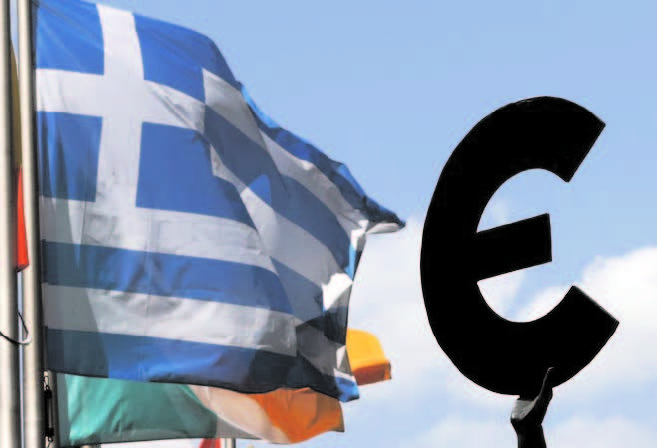
Tag: Greece

  • Greece sends reform plan to EU promising new tax hikes

    Greece sends reform plan to EU promising new tax hikes

    ATHENS/FRANKFURT (TIP): The Greek government sent a package of reform proposals to its euro zone creditors on July 9 in a race to win new funds to avert bankruptcy and will seek a parliamentary vote on Friday to endorse immediate actions.

    In the latest proposals, Greece has asked for 53.5 billion euros ($59 billion) to help cover its debts until 2018, a review of primary surplus targets and “reprofiling” the country’s long-term debt.

    In turn, Athens bowed to demands to phase out tax breaks for its islands –cash cows for the tourism industry –and to hike taxes on shipping companies.

    The chairman of Eurogroup finance ministers confirmed receiving the documents but will not comment until they have been assessed by experts from the European Commission, European Central Bank and International Monetary Fund. US stock futures jumped 1 percent in early Asian trade on the announced measures.

    Greek lawmakers will be asked on Friday to authorise the leftist government to negotiate a list of “prior actions” it would take before any fresh aid funds are disbursed, a key step to convince sceptical lenders of its serious intent.

    Leftist Prime Minister Alexis Tsipras spent the day with his cabinet drafting a last-ditch package of measures on which Greece’s survival in the euro zone hinges.

    A further vote would be needed to turn them into law if euro zone leaders agree at a summit on Sunday that the proposals are a basis for starting negotiations on a three-year loan and releasing some bridging funds to keep Greece afloat.

    In a sign of possible trouble ahead, the head of Tsipras’s junior coalition ally — which has threatened to pull the plug on the government if the island tax breaks were scrapped — did not add his signature to the reform proposals. Neither did Energy Minister Panagiotis Lafazanis, who leads the far-left flank of the ruling Syriza party.

    The latest offer also included defence spending cuts, a firm timetable for privatising state assets such as Piraeus port and regional airports, hikes in VAT for hotels and restaurants and slashing a top-up payment for poorer pensioners.

    Greek banks have been closed since June 29, when capital controls were imposed and cash withdrawals rationed after the collapse of previous bailout talks. Greece defaulted on an IMF loan repayment the following day and now faces a critical July 20 bond redemption to the ECB of 3.49 billion euros, which it cannot make without aid.

    The country has had two bailouts worth 240 billion euros from the euro zone and the IMF since 2010, but its economy has shrunk by a quarter, unemployment is more than 25 percent and one in two young people is out of work.

    Germany, Athens biggest creditor, meanwhile made a small concession by acknowledging that Greece will need some debt restructuring as part of the new programme to make its public finances viable in the medium-term.

    The admission by hardline German Finance Minister Wolfgang Schaeuble came hours before the midnight deadline for Athens to submit its reform plan.

    Schaeuble, who makes no secret of his doubts about Greece’s fitness to remain in the currency area, told a conference in Frankfurt: “Debt sustainability is not feasible without a haircut and I think the IMF is correct in saying that.”

    But he added: “There cannot be a haircut because it would infringe the system of the European Union.”

    He offered no solution to the conundrum, which implied that Greece’s debt problem might not be soluble within the euro zone.

    But he did say there was limited scope for “reprofiling” Greek debt by extending loan maturities, shaving interest rates and lengthening a moratorium on debt service payments.

  • ASIA MARKETS ON BACK FOOT AHEAD OF GREECE VOTE

    ASIA MARKETS ON BACK FOOT AHEAD OF GREECE VOTE

    HONG KONG (TIP): Asian markets retreated on July 3  ahead of the weekend’s Greek referendum that could decide its eurozone future, while Shanghai plunged more than seven percent, at the end of a torrid week for mainland investors.

    Wall Street ended in the red as a strong increase in US jobs was overshadowed by the Greek crisis and stagnant wage growth.

    Tokyo eased 0.36 percent as the yen edged back up against the dollar, Hong Kong eased 0.12 percent and Sydney slipped 1.27 percent, while Seoul dropped 0.16 percent.

    Shanghai tumbled 7.13 percent, with the mainland market pummelled by profit-taking and margin traders calling in their bets. The Shenzhen Composite Index, which tracks stocks on China’s second exchange, dived 6.96 percent.

    With Greeks heading to the polls Sunday, analysts said investors were in a holding pattern until they had a better idea about the country’s future.

    Greek Prime Minister Alexis Tsipras broke off debt reform talks Saturday and called the plebiscite on creditors’ proposals — leading it to default on a loan repayment on Tuesday.

    European leaders have warned that the poll is effectively an in-out vote on Greece’s future in the eurozone.

    “There could be some hesitation from investors” ahead of the Greek vote, Chris Weston, chief market strategist at IG in Melbourne, said.

    “Markets just want to see it getting solved so the contagion effect can be mitigated and we can move on to other things.”

    The EU and IMF added to pressure Thursday, slashing Greece’s growth forecasts for this year and warning it will need tens of billions of euros over the next three years to stabilise its finances.

    US data showed the economy created a solid 223,000 jobs in June and the unemployment rate fell to 5.3 percent from 5.5 percent. However, the report also said hourly earnings were flat compared with May, while the estimates for job growth in April and May were cut.

    The Dow dipped 0.18 percent, the S&P 500 eased 0.06 percent and the Nasdaq dropped 0.10 percent.

    The soft wage data led investors to ease back on their bets for a September Federal Reserve interest rate rise, with speculation now for a December lift-off.

    That pushed the dollar lower, buying 122.95 yen in Asia, against 123.07 yen in New York and well off the 123.54 yen earlier Thursday in Tokyo.

    The euro fetched $1.1089 and 136.32 yen against $1.1086 and 136.43 yen Mainland Chinese markets resumed their sharp downward spiral, with Shanghai now down almost 30 percent from its June 12 peak.

    It had risen more than 150 percent over the previous year but economists say it has been hit by fears stocks were overvalued, profit-taking and margin traders unwinding their positions.

    Interventions by authorities including a surprise interest rate cut at the weekend — the fourth since November — and relaxing rules on margin trading have failed to arrest the declines.

    “Chinese brokers may still be looking at reducing their risk exposure by closing more margin debt,” Bernard Aw, Singapore-based strategist at IG Asia, said.

    Gold fetched $1,166.37 compared with$1,161.50 late on June 2.


  • Greek Debt Mess: Uncertainty over Europe

    On Monday, June 29, global stock markets were reeling from the news out of Greece. Dow Jones was down by 350 points. With many global crises like Ukraine, ISIS, Syria, Iran nuclear deal already threatening to tip the world into chaos, the one crisis that could undermine not only the Eurozone itself but international financial structure is Greece and its monstrous debt crisis.

    While the Wall Street collapse of 2008 is supposed to have impacted many economies driving them into recession, the main reason for the Greece debt is the structural imbalance in the Greek economy in the form of high debt to GDP ratio.

    The implosion of the Greek economy in 2009 led to the fear that the Greek government would not be able to service its high debt obligations thus leading to sovereign debt crisis. As a result, Greece was unable to borrow on the international markets and had to turn to International Monetary Fund, European Central Bank and the European Commission to seek the bailout to avoid the impending financial crisis.

    But the bailouts did not come cheaply. Too many strings were attached to it. The Greek government was required to carry out numerous painful reforms: pensions were supposed to be reduced, tax receipts were to be streamlined by curbing tax evasions, steep tax hikes were required to be implemented to generate more revenue, and deep budget cuts were to be put in place.

    The result of all these attached conditions was the absolute impoverishment of the population which was already reeling under the hardships due to ongoing recession.

    This caused resentment among the population and resulted in the resounding victory of anti-austerity Syriza party in January which campaigned on the promise of ending painful bailout agreement.

    The two sides – EU and Syriza – are now at loggerheads. Syriza wants significant reduction in debt and more leeway in how it raises its tax revenues while protecting the pensions and other public obligations while EU is demanding significant reduction in pensions and steep VAT tax hike to increase the revenue. This has led to an impasse.

    The deadline for the loan repayment program that was extended in February has expired on June 30th, and given the fact that Greece is already on the verge of bankruptcy, missing the deadline means Greece would be held in default of IMF loan – a first developed nation to do so. How the dominoes would fall as a result of its default, nobody knows.

    And, this is driving the markets and the central banks all over the world nervous: How to prevent the contagion from spreading if Greek economy and banking system collapses?

    On top of it, Syriza has decided to seek referendum of the people – which will be held on July 5th – whether to accept the bailout agreement or leave euro. As of now, the mood of both Syriza and EU towards each other has become more hardened.

    Even though Greek Prime Minister Tsipras has now sent another letter to EU accepting lenders’ conditions but with modifications, given the fact that the deadline for agreeing to the new debt program has already expired, the letter seems to be too little, too late.

    Since there is no debt deal to talk about, July 5th’s referendum has become moot. It would be seen as nothing but a referendum on whether to stay in EU or not. EU has taken note of the letter submitted by the Greek government but has decided to stick to its guns and is waiting for the outcome of July 5th referendum before commenting on the contents of the letter.

    As of now, the “No” vote to the “troika” proposed bailout deal is in majority. And, if “No” vote wins in the referendum, then it would be anybody’s guess how the resulting scenario would unfold for Eurozone and its banking system.

    Quite a mess and a very big dark cloud over Eurozone and its economy.

  • Greece crisis hits India – may trigger outflows : Finance Secretary Rajiv Mehrishi

    Greece crisis hits India – may trigger outflows : Finance Secretary Rajiv Mehrishi

    With Greece witnessing a full-blown economic crisis, India’s software and engineering exports may take a hit and the country may also face larger capital outflows due to a weaker euro, industry and government officials warned today.

    Worried that the Greek crisis may trigger capital outflows, Finance Secretary Rajiv Mehrishi today said the government is in touch with the Reserve Bank which will take necessary steps to deal with the issue.

    “Obviously we are in touch with the RBI but they will do what they have to do,” he told reporters here as uncertainty over Greece pulled down the BSE index, Sensex, by over 500 points in early trade though it recovered in the afternoon today, June 29.

    The situation in Greece has no direct impact on India, he said but added that there may be some indirect effect via Europe on capital inflows and outflows here.

    The Greece situation battered the stock markets globally today, June 29, including in India, as foreign investors looked to re-allocate their portfolios in the wake of weakness in euro against various other currencies, while the companies with direct exposure to Eurozone markets were hit hardest.

    This is contrast to RBI governor’s Raghuram Rajan comments last week that India may be able to withstand the impact. Commerce Secretary Rajeev Kher said exports from India would be impacted negatively if the European Union is hit from the Greece crisis, although he ruled out any major direct impact of the prevailing Greek situation.


  • GREEK PM TEARS INTO LENDERS AS EURO ZONE PREPARES FOR ‘GREXIT’

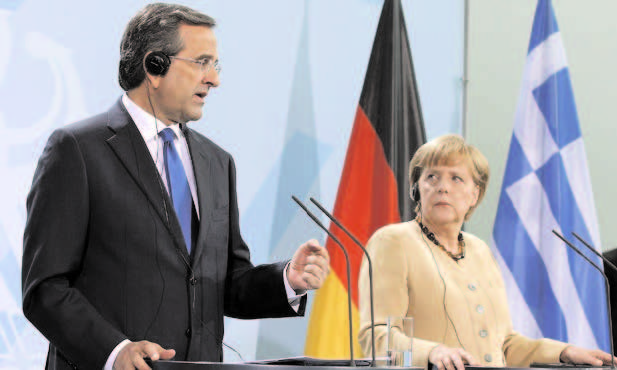
    ATHENS (TIP): Prime Minister Alexis Tsipras accused Greece’s creditors of trying to “humiliate” Greeks with more cuts as he defied a growing drumbeat of warnings that Europe was preparing for his country to leave the euro.

    The unrepentant address to lawmakers after the collapse of talks with European and IMF lenders at the weekend was the clearest sign yet that the leftist leader has no intention of making a last-minute U-turn and accepting austerity cuts needed to unlock frozen aid and avoid a debt default within two weeks.

    Financial markets, for months indifferent to wrangling over releasing billions of euros of aid for Greece, reacted with mounting alarm.

    European stock markets hit their lowest level since February and the risk premium on bonds of other vulnerable euro zone states leapt in one of the sharpest episodes of contagion since the height of Europe’s debt crisis
    in 2012.

    The White House warned that agreement was needed to avoid shaking financial markets further and Tsipras assured U.S. Treasury Secretary Jack Lew that Athens aimed to bridge the differences with creditors.

    But with senior German lawmakers now openly discussing the once-taboo prospect of a “Grexit” from the single currency area, his fiery words suggested confrontation rather than reconciliation.”I’m certain future historians will recognize that little Greece, with its little power, is today fighting a battle beyond its capacity not just on its own behalf but on behalf of the people of Europe,” he said in a televised speech to legislators in his Syriza party, drawing loud applause.

    Tsipras charged that the lenders were politically motivated in demanding pension cuts and tax hikes that hurt the poor, and their aim was to “humiliate not only the Greek government – this would be the least important – but humiliate an entire people”.

    European Commission President Jean-Claude Juncker reacted angrily, accusing the Greek prime minister of misleading the public and insisting that he had made clear that he was personally against hiking taxes on power and pharmaceuticals. “And the prime minister knows that,” he said.

  • European officials sing ‘we are the world’ at Nato meeting

    ANTALYA (TIP): In a distinctly different note for a military alliance meeting, European officials ended a Nato meeting with a spirited rendition of “we are the world.”

    Taking a break from issues such as the war in Ukraine and instability in the Middle East, Nato and other officials accepted an invitation by a Turkish band to sing a “last song for peace” at a dinner Wednesday hosted by Turkey as the alliance’s foreign ministers met near the Mediterranean city of Antalya.

    The foreign ministers of Greece and Turkey — Mevlut Cavusoglu and Nikos Kotzias — were seen singing and swaying arm-in-arm to the tune of the 1985 charity song. Nato secretary-general Jens Stoltenberg, EU foreign policy chief Federica Mogherini and others also joined in the sing-along.

  • Court denies Pachauri permission to travel abroad

    NEW DELHI (TIP): The Delhi High Court on April 23 denied permission to environmentalist RK Pachauri, accused in a sexual harassment case, to travel abroad to attend the Global Water Summit.

    Pachauri had moved the court seeking permission to go to Greece on April 26-29 for the summit.

    Justice SP Garg denied relief to Pachauri after the Delhi Police vehemently opposed his plea and said his presence was not required at the summit and he may abuse the process of law if allowed to go abroad.

    “I don’t think Pachauri’s presence is required there (at the summit),” Justice Garg said after which the plea was withdrawn by Pachauri’s counsel.

    Pachauri was granted anticipatory bail on March 21 but was directed not to leave the country without the court’s permission.

    He was also directed not to visit the premises of The Energy and Resources Institute (TERI). The allegation against Pachauri was made by a woman research analyst.

    Citing several SMS texts, e-mails and WhatsApp messages as evidence, the woman has accused Pachauri of sexually harassing her soon after she joined TERI in September 2013.

    Pachauri stepped down as chairperson of the UN Intergovernmental Panel on Climate Change (IPCC) in February and proceeded on leave from TERI, where he was the director general. But he has denied the allegations of sexual harassment levelled against him.

    During the hearing, Delhi police said the investigation was at a crucial stage and his visit abroad would hamper the probe.

  • Indian-American Parents of ‘Abducted’ Children Seek US Help

    Indian-American Parents of ‘Abducted’ Children Seek US Help

    WASHINGTON:  Around 60 Indian-Americans have asked the US government and the Congress to consider imposing sanctions on India, alleging that they have “not been able to get justice” from the Indian system in reuniting with their kids who have been “abducted” by their spouses there.

    In all the cases, the “abduction” is by their spouses, who fled to India after marital dispute and got court orders against them.

    All these “abducted” kids are American citizens and in the past few months American lawmakers have joined hands in urging the Obama Administration to consider imposing sanctions on countries like India where the government is not helping them getting back the abducted US kids.

    Nearly a dozen of these Indian-American parents from various parts of the US last week held a series of meetings with officials from the State Department, testified before a Congressional committee, met a large number of lawmakers urging to help them get their kids back to the US.

    They held a candle light vigil at the White House and also went to the Indian Embassy to submit a memorandum to the Indian Government.

    These Indian-American parents are part of the larger group – Bring Our Kids Home – which consists of parents facing the same traumatic problem of “abducted children” in other countries like Pakistan, Russia, Japan  and Greece.

    International Parental Child Abduction (IPCA) is a form of child abuse and a violation of US and International law.

    Several nations have signed the Hague Convention on Civil Aspects of International Parental Child Abductions (“Hague Convention”), India is not a signatory to it. As per State Department reports, between 2012-13 India ranked as the number one non-Hague signatory country, said Ravi Parmar, one of the Indian-American parents.

    A law was passed by US Congress last year after years of inaction on the part of successive US Administrations to enforce existing US laws and Hague Convention obligations.

    “This new law could result in sanctions on those countries that don’t cooperate in returning US children, victims of IPCA,” said Vikram Jagtiani, another parent.

    Most of these Indian-American parents have written multiple letters to both Prime Minister Narendra Modi and External Affairs Minister Sushma Swaraj, but have received no response so far.

    “Why I am not getting my children back. They need to be me,” Bindu Philip, who testified before a Congressional committee last week, told PTI.

    National Center for Missing and Exploited Children (NCMEC) says 86 per cent of all active cases of abductions to India are open two years or more and 51 per cent of all active India related cases are open five years or more. 21 per cent of all India related cases close without the child returning or child turning 18 years.

     
  • GERMANY REJECTS GREECE’S LOAN PLEA

    GERMANY REJECTS GREECE’S LOAN PLEA

    ATHENS (TIP): Greece sent its European creditors a last-moment proposal on february 19  meant to unfreeze talks on its bailout program and end uncertainty over its future in the euro. But hopes of a deal at an emergency meeting of eurozone finance ministers on Friday were dampened by Germany, the main creditor.

    The Greek government offered to extend its rescue loan agreement by six months, as the 19-country eurozone had demanded in order to give all sides more time to hash out a more permanent deal.

    It held back, however, on offering to continue in full a series of budget cuts and reforms that the eurozone has required since 2010 in exchange for loans, but that Greece blames for devastating its economy.

    German finance ministry spokesman Martin Jaeger said in a statement it ”is not a substantial proposal for a solution.” 

    He said it amounts to a request ”for bridge financing without fulfilling the demands of the (bailout) program,” namely the budget measures. It does not, he added, correspond to what the eurozone countries had demanded of Greece before talks broke down on Monday.

    The European executive commission was somewhat more upbeat.

    Spokesman Margaritis Schinas said Commission President Jean-Claude Juncker ”sees in this letter a positive sign which, in his assessment, could pave the way for a reasonable compromise in the interest of financial stability in the euro area as a whole.” 

    He said Juncker held talks yesterday, overnight and this morning with Greek Prime Minister Alexis Tspiras and Dutch Finance Minister Jeroen Dijsselbloem, who heads meetings of eurozone finance ministers.

  • Eurozone crisis is back

    Eurozone crisis is back

    Greece headed toward a dangerous confrontation with Germany 


    Athens, Greece is headed toward a dangerous confrontation with Germany and other European powers which could mean the country stumbling out of the euro.

    Greece’s new leader  Prime Minister Alexis Tsipras moved quickly to reverse the Austerity reforms. Syriza keeps its election promise of ending the Austerity measures imposed on Greece. EU, ECB & IMF gave a €240 billion bailout program to Greece during the bailout period of 2010- 2014

    Within hours of taking office, government officials announced that they would stop the planned sale of the state’s majority stake in Greece’s largest port and dominant utility. They further pledged to rehire thousands of public-sector workers and reopen the country’s state broadcaster, which had been shut down by the previous government.

    “We are not going to continue the politics of subjugation,” Mr. Tsipras said at his first cabinet meeting. “We are coming to radically change the way that policies and the administration are conducted in this country.”

    Many believed that such talk was campaign-talk and that Mr. Tsipras would change tack once in office So far, there has been no sign he will.

    Greece’s new finance minister, Yanis Varoufakis, a strident bailout critic, warned that negotiations with the creditors “will not be easy.”

    Europe has shown no indication that it is even willing to begin talks. “The real economy hasn’t changed after the elections. The situation is still the same,” said Jyrki Katainen, a former Finnish prime minister who is now vice president for jobs and growth at the EU’s executive arm in Brussels. “I don’t expect that many changes from our part.” For Germany and other northern countries, the issue of Greece’s debt is a long-closed chapter. They insist Greece fulfill its obligations and say they have already done enough.

  • DEFENSE CONTRACTOR PLEADS GUILTY IN MASSIVE BRIBERY CASE

    DEFENSE CONTRACTOR PLEADS GUILTY IN MASSIVE BRIBERY CASE

    WASHINGTON (TIP): A Malaysian defense contractor pleaded guilty Thursday, January 15, in a corruption scandal of epic proportions, admitting that he bribed “scores” of U.S. Navy officials with $500,000 in cash, six figures’ worth of sex from prostitutes, lavish hotel stays, spa treatments, Cuban cigars, Kobe beef, Spanish suckling pigs and an array of other luxury goods.

    Leonard Glenn Francis, a businessman who charmed a generation of Navy officers while resupplying their ships in Asia, admitted in federal court in San Diego to presiding over a decade-long corruption scheme involving his Singapore-based firm, Glenn Defense Marine Asia. The investigation has steadily escalated into the biggest corruption case in the Navy’s history, with Francis admitting that he bilked the service out of tens of millions of dollars by overcharging for food, fuel and basic services. Five current and former Navy officials have pleaded guilty so far, and prosecutors have made it clear they are targeting others. The Navy has also stripped security clearances from two admirals, including the chief of naval intelligence, for their alleged involvement with Francis, although they have not been charged with a crime. Known in Navy circles as “Fat Leonard” for his girth, Francis, 50, agreed to forfeit $35 million in ill-gotten proceeds and could face up to 25 years in prison. But the most severe impact may turn out to be the blow to the Navy’s reputation, given the array of evidence that so many officers were corrupted so easily by a foreign defense contractor.

    “It is astounding that Leonard Francis was able to purchase the integrity of Navy officials by offering them meaningless material possessions and the satisfaction of selfish indulgences,” said Laura Duffy, the U.S. attorney for the Southern District of California, whose office has led the investigation. “In sacrificing their honor,these officers helped Francis defraud their country out of tens of millions of dollars. Now they will be held to account.” The criminal investigation has spanned eight states and eight Asian countries, with more than 100 law enforcement agents involved, court records show. In his plea agreement, Francis admitted that he and his firm defrauded the Navy by overcharging for hundreds of Asian port visits by U.S. ships and submarines. To ensure he didn’t get caught, he plied Navy officials with an array of temptations, including lavish meals, “top-shelf” alcohol, designer handbags, fountain pens, ornamental swords, computers, furniture and handmade ship models.

    Federal prosecutors disclosed Thursday that Francis has provided evidence against two more Navy officials who have yet to be charged: a lieutenant commander and a contract specialist whose names have not been made public. The unnamed contract specialist, a female civilian official based in Singapore for 20 years, was given a bottomless travel expense account, which she used to visit Bali, Bangkok, Dubai, Turkey and Greece, according to Francis’s plea agreement. In exchange, she worked as a mole for Glenn Defense Marine, handing over proprietary contracting information and advocating on the firm’s behalf. The scandal erupted into public view in September 2013, when federal agents lured Francis to a San Diego hotel and arrested him in a sting operation. The Navy says that it began scrutinizing Francis in May 2010 but that he was repeatedly able to thwart criminal investigators by bribing a senior agent with the Naval Criminal Investigative Service, who fed him sensitive files and helped to cover his tracks.

    Although Francis initially fought the charges against him, he agreed to cooperate with prosecutors in recent weeks.”Today Mr. Leonard Francis has taken accountability for his actions. He looks forward to a brighter future,” said Ethan M. Posner, one of his attorneys. Navy leaders have condemned the unethical behavior of officers involved in the case and have acknowledged that the scandal could grow even worse. Navy Secretary Ray Mabus has pledged to set up a special disciplinary process, led by a four-star admiral, to review allegations against Navy personnel who avoid federal criminal charges but may have run afoul of ethical regulations. “The Navy holds its personnel to the highest standards and those who fall short are held accountable,” Rear Adm. Dawn Cutler, a Navy spokeswoman, said in a statement. “NCIS uncovered the criminal activity associated with this case and continues to cooperate with the Justice Department.”

    Hours before Francis pleaded guilty Thursday, federal prosecutors won another conviction when a Navy captain, Daniel Dusek, admitted to disclosing military secrets to Francis and his firm in exchange for prostitutes, cash, and visits to luxury hotels in Hawaii, Hong Kong and the Philippines. According to a copy of his plea agreement, Dusek provided classified information about Navy ship schedules dozens of times to Glenn Defense Marine, which held contracts worth more than $200 million to supply Navy vessels throughout Asia. Dusek’s attorney, Douglas L. Applegate, did not respond to a phone call seeking comment. The Navy announced in October 2013 that it had relieved Dusek of command of the Bonhomme Richard for his alleged involvement in the scandal, but his appearance in court Thursday was the first sign that he had been under criminal investigation. According to court records, in October 2010, Dusek persuaded the Navy to send an aircraft carrier, the USS Abraham Lincoln, and its strike group to visit a port in Malaysia that was largely controlled by Glenn Defense Marine. As a result, the company was able to easily inflate invoices and overcharge the Navy for a variety of services. Dusek, then working as deputy director of operations for the 7th Fleet, provided the contractor with classified information about ship movements on dozens of occasions, further aiding the company in its scheme to gouge the Navy during port visits, the records show. Francis prized the arrangement so much that he called Dusek “a golden asset” in an email to another company executive, noting that he could “drive the big decks” – or aircraft carriers – “into our fat revenue” ports,” according to the records

    (Source: The Washington Post)

  • GIR: THE LAND OF THE LION

    GIR: THE LAND OF THE LION

    In Gir you touch the history of India before humanity itself. Before monuments, temples, mosques and palaces. Or rather, a history as humanity was emerging, when humans coexisted with lions, before the former had overrun the continent (and the world) and pushed the latter to the brink of extinction. Many come to Gir because, outside of Africa, it is the only place with wild lions. But to truly experience Gir and the lions, you must explore their natural habitat, with everything from tiny wild birds, not easily seen, but heard singing in the forest canopy, to crocodiles floating in the marsh waters.

    Driving around, you are uncommonly aware you are in someone else’s territory. You stay in your vehicle because you are in the home of lions, leopards, hyenas, crocodiles; you remember that humans do not rule the world, and however “advanced” we think we are, most of us would not survive very long on our own in a place like Gir. That is not to say that all humans are out of place. The local Maldhari community has lived here for generations and coexists magnifcently with the wilderness. They sustain themselves by grazing their livestock and harvesting what they need from the forest. The sizeable portion of their herds lost to lions and other predators is considered prasad, offered in exchange for living in another’s homeland.

    Flora

    Most of the area is rugged hills, with high ridges and densely forested valleys, wide grassland plateaus, and isolated hilltops. Around half of the forested area of the park is teak forest, with other trees such as khair, dhavdo, timru, amla, and many others. The other half is non-teak forest, with samai, simal, khakhro and asundro jambu, umro, amli, vad and kalam; mostly broadleaf and evergreen trees. The river Hiran is the only one to flow year-round; the rest are seasonal. There are also areas of the park with open scrub and savannah-type grassland.

    Deer and Antelope

    This variety of vegetation provides for a huge array of animals. The most-sighted animal in the park, the chital, or Indian spotted deer, inhabits the dry and mixed deciduous forest, with a population of over 32,000. The more reclusive sambar, the largest of the Indian deer species, weighing 300-500 kg, lives in the wetter western part of the park. Both the sambar and the chausingha, the world’s only 4- horned antelope (chau= four, singha= horns), are very dependent on water, and rarely found far from a water source. Another one-of-a-kind is the chinkara, the only gazelle in the world with horns in both males and females. The fastest of the Indian antelopes, the blackbuck, also lives in Gir, but has a relatively small population here compared to Velavadar National Park (near Bhavnagar), as it prefers open grasslands to forests.

    Wild Cats

    Along with the famous lions, who number around 350, the park is also home to four other wild cats. There are around 300 leopards, though they are nocturnal and thus harder to spot. Of the three smaller wildcats, the jungle cat is the most widespread, and lives in deciduous scrub and riverine areas. The mysterious desert cat is almost never seen. The rusty spotted cat, previously thought to only live in the Dangs of southeast Gujarat, has only recently been found in Gir.

    Other animals and reptiles

    The top and middle canopies of the dry, mixed and riverine decidous forests are home to troops of hanuman langur monkeys. The striped hyena is usually seen scavenging alone in the grasslands and scrub forest, far more solitary than the African hyena.Wild boars rooting into the ground for tuber provide aeration of the soil. If you look closer, you may see smaller mammals like pangolins, pale hedgehogs, Indian hares, or grey musk shrews. The ratel or honey badger is renowned for its snake-killing exploits, earning it the “most fearless animal” title in the Guinness Book of World Records. Another snake-killer in Gir is the ruddy mongoose; the snakes they contend with include the common krait, russell’s viper, and the saw-scaled viper. The Kamaleshwar reservoir now houses the largest population of marsh crocodiles in the country. Other reptiles include the soft-shelled turtle, star tortoise, Indian rock python and monitor lizard (which grows to over 1.5 m long; don’t look for the lizards that live in your yard.)

    Birds

    Gir is also home to more kinds of birds than any other park in Gujarat, yet somehow is not known for its birdlife. While it may not have the half-million flamingoes found in Kutch during breeding season, Gir is home to over 300 species of birds, many of which can be seen yearround, from the Malabar whistling thrush to the Paradise flycatcher, from the crested serpent eagle to the king vulture, from pelicans to painted storks. The noted ornithologist Dr. Salim Ali said that if there were no lions here, Gir would be well-known as one of the best bird sanctuaries in western India.

    The Asiatic Lion

    Until the early 19th century, Asiatic lions roamed an immense area of South and Southwest Asia, as far east as Greece and as far west as modern Bangladesh. As humanity has lived in this region for millennia, people coexisted with lions for thousands of years, but in the last few centuries, the growth of the human population has come at the cost of the lions’ habitat. Like the Bengal Tiger and the Asiatic Cheetah, lions saw a dramatic decline in population as their preferred habitat of grasslands and semi-forested areas became overrun with humans. Beyond just habitat reduction, though, once guns arrived and became widespread, from 1800-1860, nearly all the lions remaining outside Gujarat were hunted and killed.

    The last Asiatic lions in India outside of Gir forest were killed in 1886 at Rewah, and the last wild lion sighted the world outside Gir was in Iran in 1941. In 1901, Lord Curzon was offered to be taken lion hunting while visiting Junagadh. Noting that these were the only lions left in Asia, he declined, and reportedly suggested to the Nawab of Junagadh that it would be better to conserve the lion population than to hunt it. The Nawab began what was probably the first institutional wildlife conservation effort in India and one of the earliest in the world (though various human societies have been operating in ways that conserve wildlife throughout the ages), banning all lion hunting entirely.

    From a population reported to be as low as 20 in 1913 (considered exaggerated by some wildlife experts, noting that the first official census in the 1930s found over 200 lions), the lions have rebounded to now number 359 in the most recent census of 2005. This is due almost entirely to the Nawab’s conservation efforts, and the Indian Government’s post-independence ban on lion killing in 1955. Though the lions have maintained a small healthy population, their habitat continues to shrink, and they remain a critically endangered species.

    The Gir forest area, which covered over 3000 square km in 1880, was reduced to just over 2500 square km by the mid-20th century, and only 1400 square km today. Of that, a mere 258 square km make up the National Park itself. While the population has grown due to successful conservation programs in the park, the park is too small for the number of lions it now houses, and lions are straying outside to seek further living space, often not surviving well in the other areas. Locally called sher or sinh, the Asiatic lion is over two and a half meters long, weighs 115 to 200 kg, and can run short distances at 65 km/h to chase down the sambar, chital, nilgai, and chinkara that are its preferred prey.

    However, when not hungry, it will never attack an animal; after a lion makes a kill, it will gorge itself on up to 75 kg of meat, and then not worry about eating for a few days, so it is not unusual to see a well-fed lion lounging calmly beside a herd of grazing deer. The lions prefer open scrub and deciduous forest areas, and are very bold, not shy around humans. So even if they seem tame or timid, do not approach them, they are still very powerful wild animals.

  • Commemorative Event hosted by India at the United Nations to mark the contribution of Indian soldiers in the First World War

    Commemorative Event hosted by India at the United Nations to mark the contribution of Indian soldiers in the First World War

    UNITED NATIONS (TIP):
    The Permanent Mission of India to the United Nations organized a Special Commemorative Event to highlight the sacrifices of Indian soldiers who lost their lives in the First World War. Ten other Missions to the United Nations including the Missions of Belgium, Egypt, France, Greece, Iraq, Jamaica, Kenya, Nigeria, South Africa and Tanzania joined as co hosts of the special event.

    The immense sacrifices and widespread destruction caused by the War resulted in the decision of the participants in the Paris Peace Conference of 1919 to establish the world’s first intergovernmental organization, the League of Nations. As a signatory of the Treaty of Versailles, India became a founder – member of the League of Nations, the precursor of today’s United Nations. The Event featured an audio visual presentation of the various War Memorials in Europe, West Asia and Africa where Indian soldiers are commemorated.

    On the occasion, the UN Secretary General H.E. Ban ki Moon and the President of the UN General Assembly H.E. John Ashe jointly released a publication “Indian War Memorials of the First World War”, which was conceived and edited by the Permanent Representative of India to the United Nations, Ambassador Asoke K Mukerji. Speaking on the occasion, Mr. Ban kimoon, UN Secretary General reminded the distinguished audience to “never forget the roll call of carnage” of the First World War.

    Quoting excerpts from an Indian Garhwali solider, the UNSG recounted the sacrifices of more than 60000 Indian soldiers who had given their lives, and stated “history often ignores such sacrifices”. Full text of his remarks at Ambassador John Ashe, President of the 68th UN General Assembly in his remarks highlighted the key lessons from the First World War, which had impacted on people across the world, primarily that of loss, and termed the war as being a “great tragedy”.

    Ambassadors of over 60 countries, senior UN officials, and members of civil society attended the Event, which was followed by a Photo Exhibition of the First World War Memorials attended by Mr. Jan Eliasson, Deputy Secretary-General of the United Nations.

    The Event was organized on the eve of the hundredth anniversary of Mahatma Gandhi’s historic letter of 14 August 1914 to the British Government in which Gandhiji had stated that India’s assistance to the War effort was guided by the idea “to share the responsibilities of membership of this great Empire, if we would share its privileges.”

  • WORLD CUP FIRST ROUND LEAVES EUROPE ALL AT SEA

    WORLD CUP FIRST ROUND LEAVES EUROPE ALL AT SEA

    RIO DE JANEIRO (TIP): Cristiano Ronaldo, Wayne Rooney, Andrea Pirlo and Xavi have left Brazil with their tails between their legs highlighting the hard times for Europe at the World Cup. Having provided seven of the last eight World Cup semifinalists, Europe’s dominance appears to be on the wane after a brutal group phase for the continent’s teams.

    Where Latin American sides such as Chile and Costa Rica created sensations, Europe’s powerhouses flopped, with Italy, England, Portugal and defending champions Spain among seven teams from the UEFA zone eliminated in the first round. European superstars disappointed. In sharp contrast, World Cup crowds have thrilled to the virtuoso performances of Neymar and Lionel Messi, the swashbuckling football of Chile and Colombia, and the daring displays of giant-killing Costa Rica.

    While France, Netherlands, Germany, Belgium, Switzerland and Greece remain in contention for glory, the tournament has done little to encourage hope of a first European World Cup success in the Americas. “It cannot be a coincidence that a European team couldn’t win a World Cup held in South America,” declared Switzerland’s decorated German coach Ottmar Hitzfeld before the tournament. “Not in Uruguay, not in Mexico, not in Argentina, and for sure not in Brazil.”

    Europe’s World Cup difficulties may be part of an emerging trend. Whereas European teams filled 10 of the last-16 places in five of the first six tournaments after the round was introduced in 1986 (with nine getting there in 2002), only six made it in 2010 and this year. With tens of thousands of fans from neighbouring countries flooding into Brazil, the South American teams have clearly benefited from home advantage.

    Supporters from Argentina and Chile took over Rio de Janeiro’s Maracana when their sides played there in the group phase and France coach Didier Deschamps believes such mass support can make a difference. “We are in Brazil, so the South American teams certainly acclimatise better, and maybe the fact that they are playing so close to home and have so many supporters with them gives them added strength and energy,” he said on June 14. Developing Deschamps’s theme, Brazil striker Fred said: “I think the climate can make a bit of a difference, because we are better adapted to it.

    “The tactical aspect makes a difference, too. We see Colombia, Ecuador, Uruguay, Chile all playing technically good football. And as they are used to the very hot climate, it can end up helping a bit.” England manager Roy Hodgson feels that European sides are hindered by the strengths of their respective domestic championships. Citing the examples of Costa Rica and Iran, who almost held Argentina to a goalless draw in Group F, he said that it is easier for the tournament’s supposed weaker sides to gather together for pre-competition training camps, making them more well-drilled and tactically flexible. “Iran and Costa Rica have been together for months, so they’ve really had a chance to do the type of work that we’ve been happy to do for three or four weeks with our players,” he said after his side’s groupphase exit.

    “We’ll never get the access to our players that an Iran or a Costa Rica get.” One consolation for the Europeans is that only one of Brazil, Chile, Colombia and Uruguay can reach the semi-finals due to the configuration of the draw.

    And although only six teams from Europe reached the last 16 in 2010, three of those went on to reach the semi-finals, while the final between Spain and Holland was the second all-European affair in a row after France and Italy in 2006. France, Germany and the Dutch are again looking strong and confident. While it has been a chastening first fortnight for the old continent, the cream of European football can still rise to the top.

  • Cristiano Ronaldo joins Portugal training camp

    Cristiano Ronaldo joins Portugal training camp

    LISBON (TIP): Real Madrid trio Cristiano Ronaldo, Pepe and Fabio Coentrao joined Portugal’s World Cup training camp in Obidos on Thursday, bringing the squad up to its full contingent of 23 players. The three players had been granted a few extra days to recover before linking up with the national team following Saturday’s Champions League final in Lisbon where Real defeated city rivals Atletico 4-1. Ronaldo, who was still feeling the effects of a thigh injury sustained late in the season, was not expected to take part in a late afternoon training session and remains a doubt for Saturday’s friendly against Greece in Lisbon. The Portugal captain instead carried out rehab work at the team’s hotel, the Portuguese Football Federation (FPF) said in its daily medical report. Having played 120 minutes in Saturday’s Champions League final, Ronaldo had admitted he “wasn’t at 100 percent” having struggled with muscle problems towards the end of the La Liga season.

  • Austerity blame-game dominates EU candidates’ debate

    Austerity blame-game dominates EU candidates’ debate

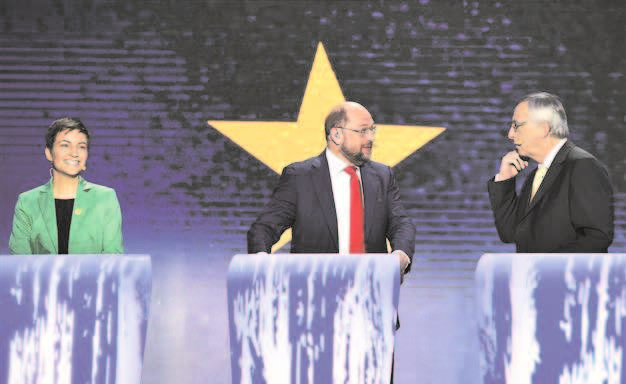
    BRUSSELS (TIP): The five top candidates to head the European Commission swapped accusations on Thursday over the impact of Europe’s austerity measures and the role played by banks in sparking the economic and financial crisis. In an often heated debate in Brussels, several candidates were forced onto the backfoot by Greek radical-left leader Alex Tsipras, who wasted no time in denouncing “catastrophic austerity policies” and demanding an exit from “debt paranoia”.

    Conservative leader Jean-Claude Juncker, the former prime minister of Luxembourg who headed the single-currency Eurogroup for eight years, pounced on Tsipras’s remarks, rejecting the suggestion he had not acted in the best interests of Greece. “I worked for years, day and night, to prevent Greece leaving the eurozone,” Juncker said, adding that he had done everything in his power to help the ailing country while endeavouring to get its public finances in order.

    Guy Verhofstadt, the candidate from the centre-right liberal grouping ALDE, mocked Tsipras’s suggestion that banks and EU banking policies were to blame for southern Europe’s economic woes. “In Greece, in Italy, it wasn’t a matter of banking, but bad policies on the part of your political parties,” Verhofstadt told Tsipras, defending the need for fiscal discipline in the EU as it struggles to move out of recession.

    “You need fiscal discipline, otherwise you cannot have growth… and that means making no new debt,” Verhofstadt said, adding that the best way forward was to make the most of the EU’s common market by removing economic barriers within the 28-member bloc. Greens leader Ska Keller, the only woman in the race to become the next president of the European Commission, said that more austerity in the EU would “worsen the situation”, but called on member states to do more to invest in “sustainable jobs” in renewable energy.

    Socialist leader Martin Schulz, the outgoing president of the European Parliament, agreed the EU had made a mistake in “unilaterally cutting” spending, but pointed to the fight against tax fraud and tax evasion as the best way of providing relief to state coffers. The debate was the first of its kind to include all five parties in the running for the Commission presidency, which is the highest executive position in the EU.

    In a break from earlier formats, three of the candidates spoke English, while Juncker chose French and Tsipras used Greek. The event, broadcast from the European Parliament building in Brussels by 50 TV stations and a variety of radio stations and websites across Europe, was moderated in English by an Italian journalist. With 10 days left in the European parliamentary election campaign, all eyes had been on Tsipras, the former communist who had previously eschewed public debates.

    – Call for a common immigration policy –

    One of the only two moments of policy agreement in the debate came when discussing the EU’s policy setting on asylumseekers, following another shipwreck off the coasts of Italy this week which claimed 17 lives. Verhofstadt, a former Belgian prime minister, said that part of the problem was the EU’s lack of a common legal immigration policy, which in turn exacerbated the problem of illegal arrivals.

    Tsipras argued it was “unacceptable… to allow the Mediterranean to turn into a graveyard”, saying Europe needed to become “synonymous with solidarity”. Keller called the absence of a coordinated immigration policy a “scandal”, while Juncker agreed that the time had come for “a European law dealing with migration”, urging EU members not to cut their aid budgets to better assist people before they undertook the perilous journey across the Mediterranean.

    The candidates also concurred on the responsibility on the part of EU member states to appoint one of them, as the leaders of political groupings in the European Parliament, to replace current Commission President Jose Manuel Barroso after the May 22-25 poll. Under new rules, member states are required to “take into account” the results of parliamentary elections in appointing the new Commission chief. However, it remains unclear whether that amounts to a legal obligation to appoint party leaders.

    “It is finished the idea that the Commission president would be the result of a backroom deal — this is finished,” Schulz said. “If they really dare to nominate another (candidate), the answer is quite clear: you will get no majority in the European Parliament.” Juncker agreed, saying that to not appoint a party leader would be a “denial of democracy” and would imply that European citizens no longer mattered in the EU.

  • GIIR:: THE LAND OF THE LIION

    GIIR:: THE LAND OF THE LIION

    In Gir you touch the history of India before humanity itself. Before monuments, temples, mosques and palaces. Or rather, a history as humanity was emerging, when humans coexisted with lions, before the former had overrun the continent (and the world) and pushed the latter to the brink of extinction. Many come to Gir because, outside of Africa, it is the only place with wild lions.

    But to truly experience Gir and the lions, you must explore their natural habitat, with everything from tiny wild birds, not easily seen, but heard singing in the forest canopy, to crocodiles floating in the marsh waters. Driving around, you are uncommonly aware you are in someone else’s territory. You stay in your vehicle because you are in the home of lions, leopards, hyenas, crocodiles; you remember that humans do not rule the world, and however “advanced” we think we are, most of us would not survive very long on our own in a place like Gir.

    That is not to say that all humans are out of place. The local Maldhari community has lived here for generations and coexists magnifcently with the wilderness. They sustain themselves by grazing their livestock and harvesting what they need from the forest. The sizeable portion of their herds lost to lions and other predators is considered prasad, offered in exchange for living in another’s homeland.

    Flora Most of the area is rugged hills, with high ridges and densely forested valleys, wide grassland plateaus, and isolated hilltops. Around half of the forested area of the park is teak forest, with other trees such as khair, dhavdo, timru, amla, and many others. The other half is non-teak forest, with samai, simal, khakhro and asundro jambu, umro, amli, vad and kalam; mostly broadleaf and evergreen trees. The river Hiran is the only one to flow year-round; the rest are seasonal. There are also areas of the park with open scrub and savannah-type grassland.

    Deer and Antelope

    This variety of vegetation provides for a huge array of animals. The most-sighted animal in the park, the chital, or Indian spotted deer, inhabits the dry and mixed deciduous forest, with a population of over 32,000. The more reclusive sambar, the largest of the Indian deer species, weighing 300- 500 kg, lives in the wetter western part of the park.

    Both the sambar and the chausingha, the world’s only 4-horned antelope (chau= four, singha= horns), are very dependent on water, and rarely found far from a water source. Another one-of-a-kind is the chinkara, the only gazelle in the world with horns in both males and females. The fastest of the Indian antelopes, the blackbuck, also lives in Gir, but has a relatively small population here compared to Velavadar National Park (near Bhavnagar), as it prefers open grasslands to forests.

    Wild Cats

    Along with the famous lions, who number around 350, the park is also home to four other wild cats. There are around 300 leopards, though they are nocturnal and thus harder to spot. Of the three smaller wildcats, the jungle cat is the most widespread, and lives in deciduous scrub and riverine areas. The mysterious desert cat is almost never seen. The rusty spotted cat, previously thought to only live in the Dangs of southeast Gujarat, has only recently been found in Gir.


    10

    Other animals and reptiles The top and middle canopies of the dry, mixed and riverine decidous forests are home to troops of hanuman langur monkeys. The striped hyena is usually seen scavenging alone in the grasslands and scrub forest, far more solitary than the African hyena. Wild boars rooting into the ground for tuber provide aeration of the soil. If you look closer, you may see smaller mammals like pangolins, pale hedgehogs, Indian hares, or grey musk shrews. The ratel or honey badger is renowned for its snake-killing exploits, earning it the “most fearless animal” title in the Guinness Book of World Records. Another snake-killer in Gir is the ruddy mongoose; the snakes they contend with include the common krait, russell’s viper, and the saw-scaled viper. The Kamaleshwar reservoir now houses the largest population of marsh crocodiles in the country. Other reptiles include the soft-shelled turtle, star tortoise, Indian rock python and monitor lizard (which grows to over 1.5 m long; don’t look for the lizards that live in your yard.)

    Birds Gir

    is also home to more kinds of birds than any other park in Gujarat, yet somehow is not known for its birdlife. While it may not have the half-million flamingoes found in Kutch during breeding season, Gir is home to over 300 species of birds, many of which can be seen year-round, from the Malabar whistling thrush to the Paradise flycatcher, from the crested serpent eagle to the king vulture, from pelicans to painted storks. The noted ornithologist Dr. Salim Ali said that if there were no lions here, Gir would be well-known as one of the best bird sanctuaries in western India.


    9

    The Asiatic Lion

    Until the early 19th century, Asiatic lions roamed an immense area of South and Southwest Asia, as far east as Greece and as far west as modern Bangladesh. As humanity has lived in this region for millennia, people coexisted with lions for thousands of years, but in the last few centuries, the growth of the human population has come at the cost of the lions’ habitat.

    Like the Bengal Tiger and the Asiatic Cheetah, lions saw a dramatic decline in population as their preferred habitat of grasslands and semi-forested areas became overrun with humans. Beyond just habitat reduction, though, once guns arrived and became widespread, from 1800- 1860, nearly all the lions remaining outside Gujarat were hunted and killed. The last Asiatic lions in India outside of Gir forest were killed in 1886 at Rewah, and the last wild lion sighted the world outside Gir was in Iran in 1941. In 1901, Lord Curzon was offered to be taken lion hunting while visiting Junagadh. Noting that these were the only lions left in Asia, he declined, and reportedly suggested to the Nawab of Junagadh that it would be better to conserve the lion population than to hunt it.

    The Nawab began what was probably the first institutional wildlife conservation effort in India and one of the earliest in the world (though various human societies have been operating in ways that conserve wildlife throughout the ages), banning all lion hunting entirely. From a population reported to be as low as 20 in 1913 (considered exaggerated by some wildlife experts, noting that the first official census in the 1930s found over 200 lions), the lions have rebounded to now number 359 in the most recent census of 2005.

    This is due almost entirely to the Nawab’s conservation efforts, and the Indian Government’s post-independence ban on lion killing in 1955. Though the lions have maintained a small healthy population, their habitat continues to shrink, and they remain a critically endangered species. The Gir forest area, which covered over 3000 square km in 1880, was reduced to just over 2500 square km by the mid-20th century, and only 1400 square km today. Of that, a mere 258 square km make up the National Park itself.

    While the population has grown due to successful conservation programs in the park, the park is too small for the number of lions it now houses, and lions are straying outside to seek further living space, often not surviving well in the other areas. Locally called sher or sinh, the Asiatic lion is over two and a half meters long, weighs 115 to 200 kg, and can run short distances at 65 km/h to chase down the sambar, chital, nilgai, and chinkara that are its preferred prey. However, when not hungry, it will never attack an animal; after a lion makes a kill, it will gorge itself on up to 75 kg of meat, and then not worry about eating for a few days, so it is not unusual to see a well-fed lion lounging calmly beside a herd of grazing deer. The lions prefer open scrub and deciduous forest areas, and are very bold, not shy around humans. So even if they seem tame or timid, do not approach them, they are still very powerful wild animals.

  • Pak to beat India to associate membership to Cern

    Pak to beat India to associate membership to Cern

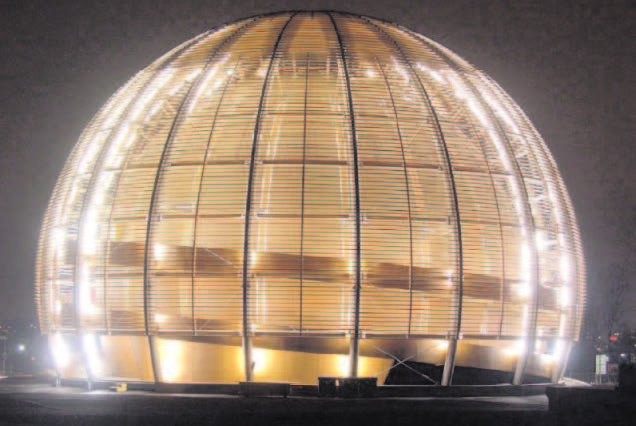
    LONDON (TIP): Pakistan is all set to beat India in becoming an associate member at Cern ( European Organization for Nuclear Research), the world’s largest particle physics laboratory that recently found the God Particle.

    A senior official of Cern told the mediaperson in London that bureaucratic red tape in India had slowed down the country’s intentions of joining Cern as an associate member. The official said, “Cern is very keen that India becomes an associate member and takes up a larger role in the experiments at Cern.

    But the final documents which India needed to submit have been stuck at the Prime Minister’s Office (PMO) for months now.” According to the official, Pakistan on the other hand moved swiftly to put “all documents in place” and “is all set to become an associate member before India”. To be an associate member, India will have to pay $10.7 million annually.

    The status of associate member is also the pre-stage to full membership. As an associate member, India would have been entitled to attend open and restricted sessions of the organization. Rolf Dieter Heuer, Director-General of Cern had recently said that Cern had become highly popular in India. Cern receives the highest number of applications for summer internships from India. Cern discovered the Higgs Boson popularly known as the god particle.

    The associate membership will open the doors of mega science experiments for Indian scientists and will also allow Indian industry to participate in bids for Cern contracts across various sectors. India was given “Observer” status in Cern in 2002. The Cern convention was signed in 1953 by the 12 founding states Belgium, Denmark, France, the Federal Republic of Germany, Greece, Italy, the Netherlands, Norway, Sweden, Switzerland, the United Kingdom and Yugoslavia, and entered into force on 29 September 1954.

    The organization was subsequently joined by Austria (1959), Spain (1961-1969, re-joined 1983), Portugal (1985), Finland (1991), Poland (1991), Czechoslovak Republic (1992), Hungary (1992), Bulgaria (1999) and Israel (2014). The Czech Republic and Slovak Republic re-joined Cern after their mutual independence in 1993.

    Cern now has 21 member states and Romania is a candidate to become a member state. Serbia is an associate member in the pre-stage to membership. “Observer” status allows non-member states to attend council meetings and to receive council documents, without taking part in the decision-making procedures of the organization. Over 600 institutes and universities around the world use Cern’s facilities. High-energy physicists from India mainly from the Tata Institute of Fundamental Research (TIFR) have been participating in experiments at Cern since the 1970s.

    Subsequently the TIFR-EHEP Group joined the L3 experiment contributing hardware for the endcap hadron calorimeter making major contributions to core software and participating in important physics analyses such as the line shape analysis, Higgs searches, QCD and b-quark physics. Some 10,000 visiting scientists from over 113 countries – half of the world’s particle physicists – come to Cern for their research.

  • SOME INTERESTING FACTS

    SOME INTERESTING FACTS

    ● It takes glass one million years to decompose, which means it never wears out and can be recycled an infinite amount of times!
    ● Gold is the only metal that doesn’t rust, even if it’s buried in the ground for thousands of years .
    ● Your tongue is the only muscle in your body that is attached at only one end .
    ● If you stop getting thirsty, you need to drink more water. When a human body is dehydrated, its thirst mechanism shuts off.
    ● Each year 2,000,000 smokers either quit smoking or die of tobacco-related diseases.
    ● Zero is the only number that cannot be represented by Roman numerals.
    ● Kites were used in the American Civil War to deliver letters and newspapers.
    ● The song, Auld Lang Syne, is sung at the stroke of midnight in almost every English-speaking country in the world to bring in the new year.
    ● Drinking water after eating reduces the acid in your mouth by 61 percent.
    ● Peanut oil is used for cooking in submarines because it doesn’t smoke unless it’s heated above 450F.
    ● The roar that we hear when we place a seashell next to our ear is not the ocean, but rather the sound of blood surging through the veins in the ear.
    ● Nine out of every 10 living things live in the ocean.
    ● The banana cannot reproduce itself. It can be propagated only by the hand of man.
    ● Airports at higher altitudes require a longer airstrip due to lower air density.
    ● The University of Alaska spans four time zones.
    ● The tooth is the only part of the human body that cannot heal itself.
    ● In ancient Greece , tossing an apple to a girl was a traditional proposal of marriage. Catching it meant she accepted.
    ● Warner Communications paid $28 million for the copyright to the song Happy Birthday.
    ● Intelligent people have more zinc and copper in their hair.
    ● A comet’s tail always points away from the sun.
    ● The Swine Flu vaccine in 1976 caused more death and illness than the disease it was intended to prevent.

  • Unemployment & Inequality

    Unemployment & Inequality

    Social safety net for jobless and sick needed

    Even if GDP growth rises, there will be growing inequalities unless there are strong policies aimed at the uplift of the vulnerable sections and the rich are taxed in an efficient and judicious manner. There should be some insurance against unemployment and sickness which will enable low income families to live with dignity”, suggests the author.
    The Indian economy is faltering even though there are some rays of hope. Exports are rising again due to the weakened rupee and agricultural growth is poised to be higher after a good monsoon. But one bad news is that unemployment has risen in the last one year from 3.8 per cent to 4.7 per cent, according to the Labor Bureau’s survey. This is hardly surprising because there has been a slackening of manufacturing growth to unprecedented levels and it is the manufacturing sector which creates jobs for the semi-skilled labor force. Agricultural growth has not been high either and it is the paucity of nonagricultural jobs that is causing an increase in unemployment in the villages. India’s unemployment rate, however, is lower than some of the member countries of the EU, such as Spain, Portugal, Greece and France. In India, even part-time workers call themselves ’employed’, so there is always an underestimation involved. Even if unemployment has risen to 4.7 per cent, it is still much lower than the unemployment in European countries, the US or UK. But unlike in the EU, the Indian unemployed do not get any dole.

    The unemployed youth in India pose a big problem for the future. There are going to be 423 million jobseekers by 2030. Only rigorous skill training of youth will enable them to get jobs. Unemployment, especially in the lower income groups, is a personal disaster and people with meager savings recede into debt rapidly. One illness in the family can reduce the family to penury and push it below the poverty line. The lack of any kind of social insurance or security is what is lacking in India and has to be corrected. We are wasting millions of rupees on unnecessary expenditure like foreign travel of ministers and dignitaries but we still do not have in place a social safety net that may provide a minimum income to the poorest families to tide over their education and health expenditure. Families with low incomes, and who are without job guarantee or pension, are most vulnerable today, yet no one is talking of a universal social safety net. On the other hand, an increase in unemployment will only widen the income inequalities in the country. Already the inequalities are rising as is evident from an increase in the Gini coefficient (a number between 0 and 1) which has risen in recent years from 0.34 to 0.38 (at perfect equality of incomes, Gini is 0). But according to experts, India’s Gini coefficient is not a proper indicator of rising inequalities because it takes into account the expenditure data rather than income data.

    According to them, the Gini coefficient is much higher at 0.54 when it is measured by income levels. Inequalities are rising because in every sector there is wide disparity between the big players and the small ones. In agriculture, 80 per cent are small and marginal farmers and the disparity of income between the big farmers and the small ones is huge. This disparity is increasing further with fall in agricultural incomes and inflation. Also as has been pointed out, the agricultural subsidies like free power and low priced fertilizers are cornered by big farmers rather than the small and marginal. In manufacturing sector too, most units are small or medium scale. There is a profusion of micro units and the small-scale sector contributes to 45 per cent of exports and employs 60 million people. Their productivity and incomes are low. Around 40 per cent of the employees in the manufacturing sector are in the lowpaying food, beverages, textiles, leather, and garment units. The large industrialists have big incomes and capability to invest and earn high profits. Their deep pockets enable them to undersell their products and wean away competitors. In the service sector, too, only 2 per cent are high earners, who are in the finance, insurance or real estate sectors.

    Most of the service sector employees are in the informal or unorganized sector and are low-income earners. All domestic servants, guards, cleaners, street vendors, construction workers are in the service sector, but the difference in income between the top earners and the bottom ones is huge. This widening income disparity is evident everywhere – in towns, villages and big cities. The ultra-high net worth Indians are growing at the fastest rate among BRICS. They are worth $30 million and their number is at 7,850 in India. Counting in dollars, there are 69 billionaires and 2 lakh millionaires in India who can afford the lifestyle of the richest in the world. There is inequality in every country and Joseph Stiglitz in his book “The Price of Inequality” describes the growing inequality in the US. But in India, the contrast is glaring and unpalatable. People living without basic needs and human dignity are within a stone’s throw of big mansions of the rich. The fatalistic nature of Indians enables them to tolerate such contrasts with stoic silence. There are few protests in India, considering the way the poor live and how they are treated. In the past, Indian industrialists were known for their simple living and philanthropic acts. Unfortunately, that era is gone and today only 19 per cent of the rich engage in philanthropic deeds. If we go deeper we find that government policies have been somewhat pro poor since Independence but have been diluted over the years.

    With the latest food security Bill as an example of equitable distribution, the UPA government can earn kudos for thinking about the poor. But on the whole, the government has not been able to eradicate corruption or establish better governance so that expenditure meant for the poor reaches them. All we hear of is how the middle men have pocketed the food grain meant for the poor or the money meant for the welfare of the downtrodden. Every country has had problems after the global financial crisis but many have tried to provide for the low income population in a humane and efficient manner. Hopefully with the news of rising unemployment there will be some action taken for the benefit of those in the lowest income bracket. Even if GDP growth rises, there will be growing inequalities unless there are strong policies aimed at the uplift of the vulnerable sections and the rich are taxed in an efficient and judicious manner. There should be some insurance against unemployment and sickness which will enable low income families to live with dignity.

  • About Dr. Prem C. Goel

    About Dr. Prem C. Goel

    Dr. Prem C. Goel was born in 1944 in Taraori, a small town in Haryana. He earned a medal of honor for standing first in Kurukshetra University in premedical and graduated from the prestigious All India Institute of Medical Sciences, New Delhi in 1969. After completing the compulsory Internship at AIIMS, Dr. Goel embarked on a journey to the land of opportunities and touched the shores of the city that never sleeps on June 23, 1971. He completed a residency in internal medicine and a fellowship in cardiology at the Brookdale University Hospital Medical Center in Brooklyn, New York. He was soon appointed director of critical care unit at the hospital. It is here that he was offered a teaching appointment as an assistant professor of medicine at the Cornell-Weil medical college in 1977 but the fear of administrative hierarchy and insecurities and the lure of independence took him away from academics to private practice but only for a short while. His heart and soul belonged to teaching the residents and fellows which he continues without being on the institutional salary. He maintained a faculty position briefly at Down State Medical Center in Brooklyn, New York . He was first acknowledged with an award for social service while still in high school.

    He received an award of community service from the well known Nargis Dutt Memorial Foundation of which he subsequently became the President and served it extremely successfully with dedication and devotion. Former prime minister Mr. Inder Kumar Gujral bestowed upon him an award in 1997 for “his commitment, outstanding contribution and fierce dedication.” It is very befitting to state that Prem is a kind hearted doctor with a Midas touch and a mind set for diligent service to the humanity. Philanthropy was first coined 2500 years ago in ancient Greece by the playwright Aeschylus but the modern philanthropy with its entire previous history means, “private initiatives for public good, focusing on quality of life.” Prem befits this very meaning and it is for this very reason that we are honoring him this evening. He is married to the shy and religious but equally kind-hearted and loving sweetheart, Shashi. She has been the proverbial woman behind Dr. Goel’s success.

    They have a daughter, Kavita and two sons, Paresh and Amit. Kavita, who finished at the top of her class in medical school, is an internist and provided the most compassionate, dedicated and high quality patient care alongside her father for five years. She is married to Naveen, a highly successful and respected attorney. Since the birth of their second child, Kavita chose to pay fulltime attention to raising their two beautiful daughters, Naiya and Riya. Paresh along with his wife, Usha, both very astute and dedicated physicians, have also followed the family foot steps and joined Prem in his private practice. Amit, the genius with independent mind that he is, chose a modern path of information technology and is a computer consultant. Goels live in Muttontown, Long Island. We wish Prem and his family continued achievements, happiness and peace as they continue to travel the path of humanitarian services.

  • Mike Bloomberg’s Legacy: Greek God Zeus

    Mike Bloomberg’s Legacy: Greek God Zeus

    How can anyone not love Mayor Mike? I do. He has tried his best to make NYC the very best it can be, and make the life of every New Yorker the very best possible. Indeed, he sought mayoral control of the schools, which I happily supported in Albany and helped get it for him, because I believe that Mike is genuinely passionate about what he believes in: be it wanting to do the right thing or to punish those who disagree with him. He loves New York, and has spent nearly a billion dollars, out of his pocket in campaign and charity dollars, to be the 108th Mayor.

    Frankly, I wish he had run for president, as he promised, at Eliot Spitzer’s swearing-in as governor in Albany. Imagine, how America would improve with President Bloomberg curbing “K Street.” Politics, media and money-to-spend makes a power-trifecta. Nobody is perfect, and neither is Bloomberg – but his heart, passion and pocket are all lined up in his effort, as he sees as “doing the right thing,” with some not “so right people” he has to deal with. The issue, however, maybe that his “baseline” for context in all things may, well, not be in sync with those he wishes to help. His view is more akin to the Greek God Zeus. And, it is recalled that Greece gave us benevolent dictators. All good efforts: No smoking, no transfats, no soda, no salt, and soon to come in a 4th term with a Quinn and Vito Lopez: 2000 caloric intake a day, no alcohol, and no separation of powers, and no judges – who are banned if they disagree with him.

  • European Union leaders clinch deals on banks, budget

    European Union leaders clinch deals on banks, budget

    BRUSSELS (TIP): European leaders agreed on new steps to fight youth unemployment and promote lending to credit-starved small business on Thursday after deals on banking resolution and the long-term EU budget gave their summit a much needed lift. The 27 leaders resolved to spend 6 billion euros over the next two years to support job creation, training and apprenticeships for young people, and to raid unspent EU budget funds to keep the effort going thereafter.

    Critics say the money is a drop in the ocean with more than 19 million people unemployed in the EU, and more than half of all young people under 25 without a job in Spain and Greece. Leaders also approved plans for the European Investment Bank to lend hundreds of billions of euros to small and medium-sized enterprises (SMEs) particularly in southern EU states where bank finance has largely dried up due to the euro zone’s debt crisis. “The last 24 hours have been a great success,” European Commission President Jose Manuel Barroso told a news conference. “Today we have agreed the money to back up our words.” After late-night talks in Luxembourg, European Union finance ministers agreed how to share the cost of future bank failures among investors and wealthy savers as far as possible. Separately, negotiators for the European Parliament, the European Commission and EU member governments clinched a deal on a 960 billion euro ($1.25 trillion) seven-year budget for the bloc for the period 2014-20, ending months of squabbling.

    The leaders unanimously endorsed the agreement, EU Council President Herman Van Rompuy said, overcoming a last minute snag over Britain’s rebate, which will remain intact. The European Parliament must approve the deal next month so the new budget can take effect next January. The banking resolution agreement designed to shield European taxpayers from having to foot the bill for rescuing troubled banks will be implemented on a national basis from 2018. It lays the ground for a single system to resolve failed banks in the euro zone and the 27-nation EU, the second stage of what policymakers call a European banking union, meant to strengthen supervision and stability of the financial sector.

    The European Commission, the EU’s executive, will put forward proposals for a single resolution mechanism next week, but any deal on it is a long way off because EU paymaster Germany opposes taking any liability for other countries’ banks. German Chancellor Angela Merkel welcomed the EU budget breakthrough, saying it would allow new spending on everything from agriculture to research, roads, bridges and development aid to move ahead, promoting economic growth in Europe.

  • One barefoot step, a giant administrative leap

    One barefoot step, a giant administrative leap

    As the world observed U.N. Public Service Day on June 23, it was hard to miss the perfect storm brewing across the globe. Disenchantment with public service delivery has engulfed Brazil, Greece, Turkey and South Africa. Closer home, the disaster in Uttarakhand has highlighted the potential of public service to make or mar thousands of lives. Critically, public management is seen as failing the disadvantaged, especially those who have no choice but to resign to its inadequacies.

    In response to trenchant criticism, the global development discourse has focused on devising numerous policies, structures and strategies. But, inevitably, the front line, institutional mechanism has not received the kind of analytical attention it warrants. Across the world, public organizations are typically characterized by rigid weberian structures with minimal space for individual innovation or creativity. Governance frameworks exhibit command and control characterized by top-down leadership and delegation upwards.

    Employees are adept at both overly respecting and exercising power, suppressing values of self in deference to those of the system. Not surprisingly, World Bank studies show that public service reform programs are the most intractable. The recurrent challenge is to bring about changes in people and system performance.

    Harvard’s Frauke de Weijer associates these failures with treating such socio-human resource challenges as mere technical ones to be tamed by procedures and bureaucratic structures. Essentially, preoccupations with form need to be replaced by an understanding that development is predicated on an uninhibited rejection of the status quo – that is, understanding development as a change endeavor focused on facilitating those at the bottom of the pyramid towards higher satisfaction levels.

    What this means is that change should necessarily begin at the bottom, the site of frequent interaction between citizens and the monolithic state. It is the experience of this interface that determines the quality of the service and how citizens subsequently view the state. This front line actuality epitomizes the concept of Barefoot Bureaucracy – a construct that is bureaucratic in its regulatory behavior yet barefoot in its proximity with the citizen and their shared socio-cultural and economic milieu.

    Barefoot bureaucracies reflect this personality paradox in the wide gamut of their choice, ranging from the whimsical bureaucratic gatekeeping in routine implementation, to yeoman barefoot service during disasters. In a world of scarce resources, who is granted access to free medicines, the water tap or the destitute pension? These are the many moral judgments they make everyday. Yet, there is potential in this paradox.

    Research has shown that successful public organizations are characterized by unusual dedication of ground-level employees to their jobs, with a strong sense of mission, purpose and the capacity to build relationships based on trust and ownership with communities. Globally, public services are under intense pressure to improve performance. While many structural reforms have been tried, barefoot bureaucracy has been consistently bypassed.

    Undeniably, sustained development can only be achieved by triggering the value creating potential at the bottom of the public service environment. Global policymakers should repose faith in these subalterns and reap the benefit of silent evolutionary change. With just mundane means they can generate spectacular ends. The tiger will change its stripes.

  • Greek Political Impasse Deepens After Coalition Talks Fail

    Greek Political Impasse Deepens After Coalition Talks Fail

    ATHENS (TIP): Greece’s coalition leaders failed to agree to on how to resume state television broadcasts during their third round of talks this week, deepening a nine-day impasse that has renewed fears of political instability in the country. Prime Minister Antonis Samaras had appeared close to a compromise earlier this week with his two leftist coalition partners over the sudden closure of the ERT state broadcaster, until the three party talks collapsed again on June 20.

    The leader of the smallest party in the coalition, Fotis Kouvelis of the Democratic Left, attacked Samaras for failing to comply with a court ruling ordering ERT back on air and rejecting his proposal for a reformed broadcaster. “No common ground was reached at the political leaders’ meeting with regards to the issue of ERT,” Kouvelis said. Democratic Left party officials were due to meet on Friday morning to discuss their stance on the issue, officials said.

    The leader of the other junior coalition partner, Evangelos Venizelos, warned the country’s ruling coalition was in trouble and called on Kouvelis to stay in the government.”The situation for the country, the economy and its citizens is especially grave,” said Venizelos, who heads PASOK, the second-biggest party in the government.”We want the government to continue as a threeparty government and we are asking Democratic Left to participate in re-establishing cooperation.”Centre-right leader Samaras has ruled in fragile coalition with the two centre-left parties since coming to power a year ago.

    The latest crisis was sparked by Samaras abruptly yanking ERT off air last week, triggering an outcry from his allies, unions and journalists. ERT remains off air despite a court ruling on Monday ordering it back on. Samaras wants a transitional broadcaster run by only a few staff that will air a few ready-made programmes while his allies want ERT to reopen exactly as it was before until the smaller version is launched. Venizelos said Samaras had accepted a proposal to resume public broadcasts and re-hire about 2,000 workers, but that the junior partners were not satisfied. “There have been steps to repair this but we are not fully satisfied,” he said.