Tag: Greece

  • Dev Ratnam-Integrity, Charity, Modesty Propel This Visionary

    Dev Ratnam-Integrity, Charity, Modesty Propel This Visionary

    I am passionate about doing well not only in career but also in my community. I won’t say it’s a passion but I am very keen on being an honorable member in our community. I believe in being a good representative of India. Whatever obligations I have with the government, banks, other financial institutions of US and other countries, I want to deal with them with honor. I never want to escape from that. I never want to fail India, or my state. Life will always force you to deal with breaks, be it good breaks or bad breaks. How you deal with it is your legacy.

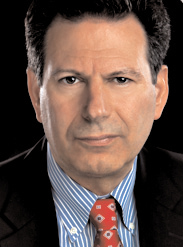
    Dev Ratnam began his career as a scientist. But he never wanted to be master at just one trick. He wanted to explore all the opportunities around him before settling into one. He tells us, “In true spirit, I am an entrepreneur, so I try many businesses. Though my education and experience is as a scientist from Penn state in 1977, I still wanted to venture beyond my degrees.” Dev graduated from Indian Institute of Science, Bangalore in Engineering and completed Masters in Engineering from Queens University, Canada and got a Ph.D. in Solid State Science from Penn State University in 1971. Yet, his dream was to always go back to India and set up his own business there. He tried his true best to fulfill that dream. Dev explains, “I was planning to buy a factory from Australia. The agent from Melbourne belonged to a big family.


    img12

    He used to be the Governor of Maharashtra and his son was my partner. We wanted to buy that factory and bring it to Chennai and set it up in India. But somehow the politics played its part after I reached Melbourne. I realized that I would be a minority party. And I had to walk away from my dream of setting up business in India. Of course, I tried to buy a factory from here and take the technology and equipment to India, but that never materialized. But in that search for a factory, I found a company in Long Island called Poly Mag Ink.

    A couple of partners and me bought it, but unforeseen factors didn’t allow it to be a big company. It still exists and it does have big clients like GM, Kodak, etc. Perhaps the location in Long Island was a disadvantage.” While many would give up and try to move on to something else, Dev Ratnam never stopped believing in himself. He defines himself as an eternal optimist and does not think giving up is an option. “I just never wanted to give up. In my years of experience, I have come through all the time. Yes, I did not perhaps see bright successes all over.

    But I have seen spurts of success and it was good with me.” Never to give up, even Dev Ratnam had to let go his dream of establishing business in India. But the blame for that lies on the political system of India. “I don’t want to sound negative, but in 40 years I have never succeeded with one project in India. But in China, South Korea or United States, it is entirely different. That does not make India bad.

    But I cannot recall one fruitful project, be in charity or investment in India.” His passion is what perhaps distinguishes him the most. He is a firm believer in the thought that a successful man is only successful enough if he can give back to his community. Dev explains, “I am passionate about doing not only well in career but also in my community.

    I won’t say it’s a passion but I am very keen on being an honorable member in our community. I believe in being a good representative of India. Whatever obligations I have with the government, banks, other financial institutions of US and other countries, I want to deal with them with honor. I never want to escape from that. I never want to fail India, or my state. Life will always force you to deal with breaks, be it good breaks or bad breaks. How you deal with it, is your legacy.” Dev Ratnam’s dreams and ambitions are just as extraordinary. His dream of helping others has paved the way for success in many people’s lives. He is on the Board of Interfaith Nutrition Network since 1995; had been a voice on the board on behalf of Indian community.

    He charts out a few of his projects. “I just want to do good things in life at this point. I have seen a couple of charitable programs that I want to take up. There is one in particular called Shri Chakra, which is an organization that concentrates on providing electricity through bicycle pedaling. It is on hold for now, due to some real-estate issues, but it’s a temporary hold. I want to provide electricity to rural parts of countries such as India, Afghanistan, Nepal, etc.

    That is my dream for sure. I am working with many major organizations. I am also working on some projects in my village in India too. My daughter is running for the marathon in Rwanda to commemorate the victims of the Rwandan massacre. I am helping her in this project through Rotary Hicksville. So I have a couple of such projects that I am extremely involved in.” Dev Ratnam was born in West Godavari in a small village in Andhra Pradesh and was the eldest son in his family. His father was the biggest influence on his life.


    img13

    Dev explains, “My father’s upbringing had a great impact on me. When he was 14, he had bought a car for marriage. He was a socialist. He too was involved in many ventures. He moved to Chennai with us and I completed my education there. I got a scholarship and went to Canada. From there, I moved here to the US and finished my PhD at Penn State. My father also had a tremendous passion to help people. He never had a formal education.

    Yet he went to Chennai and learnt English and began helping people in many ways. When he came to the US, he hand-drew the map of the US with all the 50 states and began learning about each state. Even before he came here, he knew about Edgar Allan Poe, an American writer and poet most Indians living here now don’t know about.

    But his thinking is what inspired me. Besides being a Socialist, he was able to understand the land of opportunity that United States really is.” Dev Ratnam’s biggest passion after social causes is perhaps traveling. His wife and he share a common interest in visiting and paying homage to the ancient civilizations of the world. “I am a citizen of the world. My wife and I love to travel. We have explored civilizations in Turkey, Greece, Cambodia and other places. We love to go to those places.

    Recently we went to Greece for a vacation. It was astounding to see the civilization there. We stood there and marveled at how the human culture evolved. We paid homage to all these cultures.” Dev admits that his ventures have not been a continual forerunner in their field. He only wishes that he had done his due diligence before beginning the investments. “Do I regret anything I have done? Well, maybe I was not too thorough. My son is 25 and he works for a venture cap holding. And when I see his company work, the immaculate attention to detail, I believe I did not do my due diligence. I guess that is my only regret. But on the other hand, almost all the real estate companies and other companies did just as bad since 2006. So I don’t know if it was just my choices.” He has a lot of praise for our community and believes that there is just as much misconduct in our community as in any other.

    But he commends our community’s foresight and achievements too. “They all belong to different strata. The ones who came in 70s came through education. They got good jobs and earned very well. So they are well adjusted in US. The ones who came in 80s came as immigrants, who basically were brought into the country by mainly extended relatives. They began setting up businesses. Now the people who belong to this group are becoming the core Indian community. They are aggressive, motivated and passionate about their ventures and see them succeeding. I believe they are easily the more successful than any other group of Indian community. So I would say this for our community, that we have an impeccable foresight. We know what can make us prosperous.” Dev Ratnam has an outstanding family too. His wife Prof.

    Runi Mukerji Ratnam is a dynamic leader in academics at SUNY in the entire New York State and a leader in several professional and social organizations. His daughter Romola Ratnam is an NYU graduate and is well known in the sports marketing field in Manhattan. She has also initiated several charity programs much like her father. His son Basudev graduated from Brown University and is an excellent tennis player. Dev Ratnam had ambitions to make his son a national level tennis player but unfortunately Basudev suffered a few injuries that dissuaded him from playing on national levels.

    At present, Basudev is working with a private equity company in Manhattan. Before I take leave, I ask him if he still has plans to move to India and realize his long lost dream. And to that he replies. “No it’s too late now. This is our home now.” From all the readers of The Indian Panorama we wish Mr. Dev Ratnam success in all his professional and social ventures.

  • As I See It : The Origin Of Wars

    As I See It : The Origin Of Wars

    Just as Herodotus is the father ofhistory, Thucydides is the father ofrealism. To understand thegeopolitical conflict zones of the 21stcentury, you must begin with the ancientGreeks. Among the many importantlessons Thucydides teaches in his Historyof the Peloponnesian War is that whatstarts a war is different from what causesit.Thucydides chronicles how thePeloponnesian War began in the latterpart of the late fifth century B.C. withdisputes over the island of Corcyra innorthwestern Greece and Potidaea innortheastern Greece. These places werenot very strategically crucial in and ofthemselves. To think that wars must startover important places is to misreadThucydides.

    Corcyra and Potidaea, amongother locales, were only where thePeloponnesian War started; not whatcaused it. What caused it, he writes in thefirst book of his eight-book history, wasthe growth of perceived maritime powerin Athens and the alarm that it inspiredin Sparta and among Sparta’s allies.Places like Corcyra and Potidaea, and thecomplex alliance systems that theyrepresented, were in and of themselvesnot worth fighting a war over — a war thatwould last more than a quarter century,no less. That didn’t matter. They werepretexts.No one understood this distinction,which was perhaps made first inliterature by Thucydides, better thanThucydides’ most distinguishedtranslator, the 17th century Englishphilosopher Thomas Hobbes.

    Hobbeswrites that a pretext for war over someworthless place “is always an injuryreceived, or pretended to be received.”Whereas the “inward motive to hostility isbut conjectural; and not of the evidence.”In other words, the historian or journalistmight find it hard to find literaldocumentation for the real reasons statesgo to war; thus, he often must infer them.He often must tease them out of thepattern of events, and still in many casesbe forced to speculate.In applying the wisdom of Thucydidesand Hobbes to conflict zones across Asia,a number of insights may be obtained.The South China Sea conflict, forexample, becomes understandable.

    Hereare geographical features which, in theirown right, are valuable because of themeasurable energy deposits insurrounding waters. They also fall in thepath of sea lines of communications vitalfor access to the Indian Ocean in onedirection, and the East China Sea and Seaof Japan in the other, making the SouthChina Sea part of the word’s globalenergy interstate. Nevertheless, let’sassume one is somewhat dismissive ofthese facts and says such specks of dryland in the middle of a great sea are inany case not worth fighting a war over.Thucydides and Hobbes would pronouncehim wrong. They would say that it is theperceived rise of Chinese sea power — andthe alarm that it inspires amongAmerica’s formal allies and de facto allies– that, in turn, could be the real cause ofconflict sometime over the coming decade.

    Thus, the features in the South China Sea,as important as they might be, wouldmerely be the pretext.Indeed, nobody would prefer to say theyare provoking a conflict because of risingChinese sea power; rather, they would saythey are doing so because of this or thatinfringement of maritime sovereigntyover this or that islet. All the rest mighthave to be conjectured.The same is true with the conflictbetween China and Japan over theSenkaku/Diaoyu islands in the EastChina Sea. Even if one argues that theseislets are worthless, he or she would missthe point. Rather, the dispute over theseislets is a pretext for the rise of Chinesesea power and the fear that it inspires inJapan, helping to ease Japan out of itsquasi-pacifistic shell and rediscovernationalism and military power. (And bythe way, the rise of Chinese sea powerdoes not mean that China is able toengage the U.S. Navy in fleet-on-fleetbattle.

    It only means, for example, thatChina can use the placement of warshippatrols, along with economic anddiplomatic pressure and the staging ofprotests at home, all together in a seriesof “combination punches” to underminethe Japanese and other East Asian rivals.)Then there is North Korea. With a grossdomestic product of only that of Latvia orTurkmenistan, it might be assumed to beanother worthless piece of real estate.Geography tells a different story. Juttingout from Manchuria, the KoreanPeninsula commands all maritime trafficin northeastern China and traps in itsarmpit the Bohai Sea, home to China’slargest offshore oil reserve.

    China, as I’vepreviously written, favors an economictakeover of the Tumen River region –where China, North Korea and Russiaintersect, with good port facilitiesfronting Japan. The fate of the northernhalf of the Korean Peninsula will helpdetermine power relationshipsthroughout northeastern Asia, therefore.Of course, all of this, as Thucydides andHobbes would say, would have to beinferred, conjectured. North Korea’serratic behavior could start a conflict, butthe causes might also lie elsewhere.India and China have territorialtripwires in the Himalayan foothills, anarea which, again, might be judged bysome as worthless. But these tripwiresbecome more meaningful as Indiapartially shifts its defense procurementsaway from confronting Pakistan andtowards confronting China.

    It is doing sobecause the advance of technology hascreated a new and claustrophobicstrategic geography uniting India andChina, with warships, fighter jets andspace satellites allowing each country toinfringe on the other’s battle space. If aconflict ever does erupt between these twodemographic and economic behemoths, itprobably will not be because of thespecific reasons stated but because ofthese deeper geographical andtechnological causes.As for India and Pakistan, I rememberdecades ago sitting with a group ofjournalists in Peshawar, reading aboutPakistani and Indian troops confrontingeach other on the Siachen Glacier inKashmir, terrain so high the troops had towear oxygen masks.

    Could such territorybe worth fighting over? Again, theconflicting claims were merelysymptomatic of a deeper dispute over thevery legitimacy of these states arising outof the partition of the subcontinent in1947.Of course, Israel fears for its ownsurvival, were Iran to develop adeployable nuclear bomb. This is a casewhere the start of a conflict (by theUnited States, acting as Israel’s proxy)may largely overlap with its cause.Nevertheless, Israel has other fears thatare less frequently expressed.

    Forexample, a nuclear Iran would make everycrisis between Israel and Hezbollah,between Israel and Hamas, and betweenIsrael and the West Bank Palestiniansmore fraught with risk. Israel cannotaccept such augmentation of Iranianpower. That could signal the real cause ofa conflict, were Israel ever able to dragthe United States into a war with Iran.In all these cases, and others, the mostprofound lesson of Thucydides andHobbes is to concentrate on what goesunstated in crises, on what can only bededuced. For the genius of analysis lies inquiet deductions, not in the mereparroting of public statements. Whatstarts conflicts is public, and thereforemuch less interesting — and less crucial –than the causes of conflicts, which arenot often public.

    (The author is Chief GeopoliticalAnalyst for Stratfor, a private globalintelligence firm, and a non-residentsenior fellow at the Center for a NewAmerican Security in Washington. Hehas been a foreign correspondent forThe Atlantic for over a quartercentury. He is the author of 14 bookson foreign affairs and traveltranslated into many languages.)

  • Passion and Adventure Propelled Bobby Kalotee to Success

    Passion and Adventure Propelled Bobby Kalotee to Success

    New York based businessman and philanthropist Bobby Kalotee has lately been in the news for his appointment by Government of Malawi as Liaison Envoy to India, Pakistan and Bangladesh. His charity work in Malawi did not go unnoticed and the government of Malawi conferred on him the rare honor. He is the first Non Malawi to be appointed to the prestigious position. Our readers would obviously like to know more about this gentleman who has done India and all Indians proud.Well, to begin with, Bobby was not born with a silver spoon in his mouth. He is a self-made man. A father of five children Bobby is a living example of courage and entrepreneurship. Born in Jalandhar, India, he left his home in early 1980 when he was still a teenager to begin the journey of his life. Supported by his family and his father, Bobby set off on a path to an alien worldobserving life and learning from experience.

    Working in a Greek owned merchant shipping company he landed in America and stayed here by chance. He also found his love in USA and married to an Irish lady who helped him fight the obstacles of life. A curious Bobby got interested in politics. He joined Republican Party in New York in 1983, observed the functioning of democratic institutions and learned to mobilize public support for various causes. Today, he not only runs his business but also is engaged in a variety of social work and activities, such as, shipping soccer balls to Latin American countries and raising funds for the earthquake victims of Gujarat. A firm believer in destiny and God Bobby remains deeply attached to his Indian roots. In spite of a busy and successful life in USA he cares about his native land and works hard to help his community. A man who denied himself a formal education learned everything from life.

    “I met at least 50 people from whom I learned a variety of lessonslessons that helped me become prosperous and successful”, he says. Currently National Chairman of All American Political Party. Chairman Independence Party of Nassau County, Vice Chairman of New York State Independence Party Committee and National Executive Director of the Independence Party of America, Bobby is associated with a number of political, social, cultural and financial institutions and organizations; and has profusely been awarded and honored. His offices in Long Island are a veritable museum of pictures with dignitaries from across the world, the charity work done by him and his organizations in Africa, Latin Ameerica, India and of course, USA, and scores of proclamations, citations, certificates and trophies. One man and so much, one begins to wonder.

    The Indian Panorama spoke with Bobby about his life and work.

    Here are the excerpts: Indian Panorama: How do you describe yourself?
    Bobby: I am a God fearing man, a happy father of five children and a compassionate community friend. I am thankful to God and my parents for their love and blessings because of which I accomplished great success in life. I believe in helping others and follow the path shown by Guru Nanak Dev ji, who said: ‘There is nothing greater than being
    humble and nothing worse than being proud of yourself’. I try to live a simple life following these thoughts.

    Q. How do you define success?
    Ans: You are successful if you reach the goal you set in your life. I always felt that I could accomplish the goal of my life with the blessings of God who writes the destiny of everyone. I used my brain and common sense to learn new trades. I was fortunate to get help from friends. I learned to deal with people. In America these things happened
    fast. I launched a number of successful businesses in the past and continued to do innovative things. Currently I am finalizing the launch of an electronic voting machine called EZ voting. I am confident about success of my new product.

    Q. Are you passionate about anything?
    Ans: I am very passionate about life. I am passionate about helping people. I have been very keen to help my community folks. I reach out to people who need me. I want to help more people.

    Q: Who in your family influenced you most?What was your family’s contribution in shaping your life?
    Ans: I was raised in a large family with 27 cousins and a number of uncles. My father influenced me most. He and a number of my family members served in the Indian Defense Forces. Dad was an independent minded man. He didn’t interfere in my life but always encouraged me. Because of his generosity I could leave home for abroad.

    Q: Tell me about your education?
    Ans: I didn’t receive a formal education. I didn’t want to go to school. I got my education in the Gurudwara and at home. I think the best education one gets is from life’s experience. I traveled a lot. I left home when I was a teen-ager and roamed around selling toys and household things. I worked in restaurant. After seven years of traveling in
    many parts of India I returned home.

    Q. How did you compensate for lack of education?
    Ans: I always learned from life. Any thing new I saw I wished to know about it. A number of friends helped me in life. Some taught me to do business. Others taught me how to deal with people. I learned a variety of lessons from at least 50 such people in my life.

    Q. Did you ever regret for not having a formal education?
    Ans: When I was in India lack of education was not a big issue. I knew many people who were helpful. It is an interdependent society so education doesn’t always matter. But I felt the need to be educated when I came to America and had to deal with people. At that time I realized that lack of education hampered my ability to communicate with
    others. I regretted not having a formal education.

    Q: How did you arrive in America? What challenges you faced here?
    Ans: I was working in a Greek owned shipping company and had to travel from USA to Greece quite a few times. Once, in
    1982, I missed my flight in New York. I stayed here and decided to make New York my home. It has been a long journey since then. I established my business, got involved in politics and then philanthropy.

    Q: Are you contented with your life? Do you miss something?
    Ans: I am very content with life I found my Irish wife in New York who gave me five wonderful kids. My businesses grew, so didmy network with people. In politics I worked in Republican and Independent parties. I mobilized votes for a number of politicians. I am involved in many charitable organizations in the fields of medicine, social welfare and
    community service due to which I was honored at various occasions and events.

    Q: How do you help your community?
    Ans: I have raised funds for a number of events on many occasions, especially to help the victims of earthquake in Gujarat. I worked with Jack Brewery Foundation to donate 50 thousand indestructible soccer balls for kids who could learn team building. This project was implemented in Latin America where 10 thousands such balls were distributed. Now we are going to do it in India.

    Q: What is your future plan?
    Ans: I want to continue helping people. I am planning to launch my electronic voting machine soon on which my staff is working since 2005.

    Q: What is your message for the younger generation?
    Ans: I want to tell the younger generation to focus on noble ideas. Set a goal for yourself and work hard to achieve that. One shouldn’t be deterred by anything as long as you have passion and courage to reach your goal.

    Bobby Kalotee can be reached at : bobby@apparty.com

  • The rise and fall of the euro

    The rise and fall of the euro

    LONDON (TIP): Just one decade after the European single currency was launched amid fanfare and fireworks, its future looks uncertain as the debt crisis that engulfed Greece, Ireland and Portugal threatens the entire bloc — and the wider global economy.

    Spain, the bloc’s fourth-largest economy, is the latest country to be swept. In June, it was forced to seek up to €100 billion in aid from its eurozone peers to shore up its banking sector, says a CNN report.
    Spanish Prime Minister Mariano Rajoy said the deal had demonstrated the advantages of cooperation within the bloc and meant “European credibility won, the future of the euro won [and] Europe won.”

    But the markets have remained skeptical, pushing up the costs of Spain’s borrowings despite the bailout. Italian borrowing costs have also gone up as investors fret the problems will spread. Greece, meanwhile, faces its second election on June 17 and risks being ejected from the bloc.

    Many analysts saw it all coming of course, arguing that one fiscal system could never work for 17 EU countries that adopted the euro, serving more than 330 million people.

    The flaws were exacerbated after some countries were suspected of fudging their numbers, including Greece which in 2004 admitted it gave misleading information to gain admission to the eurozone. The crisis exploded after Greece revised its figures to show its 2009 budget deficit would be 12.7% of gross domestic product — far higher than the eurozone limit of 3%.
    The bloc — whose financial fractures may not have been apparent during the boom years — then began to unravel.
    After Greece’s dire numbers were revealed, investors panicked and the country was unable to raise money to fund itself. The country was forced to take a €110 billion bailout from its eurozone peers and the International Monetary Fund.

    But Greece’s bailout, rather than stemming the panic, served as a harbinger to the debt crisis.
    The European Financial Stability Facility, or European bailout fund — set up to deal with further financial stumbles — was quickly tapped again..

    Ireland, felled by a black hole in its banking system, was forced to take a €67.5 billion bailout package in November 2010. After the markets then closed their doors to Portugal, it was also forced to take a €78 billion bailout.
    The troubled nations implemented austerity measures to try to rein in their hefty piles of debt, but confidence in the bloc’s ability to stabilize itself continued to fall.

    The crisis may yet engulf Italy, which makes up 17% of the eurozone economy. Greece, Ireland and Portugal make up less than 6% between them.

    And so Europe’s politicians and officials have desperately tried to sort out the mess by coming up with ideas including boosting the bailout fund, bringing the disparate economies closer financially, and tapping other markets for funds.

    Their previous measures proved ineffective, as the markets — and the world — remained unconvinced at the bloc’s ability to survive in its existing form