Tag: Gujarat

  • In dry Gujarat, booze demand soars before polls

    In dry Gujarat, booze demand soars before polls

    EC’s largest liquor seizure in India was made in state

    AHMEDABAD (TIP): In Gujarat, liquor is banned — but prohibition seemed to be on the rocks when the biggest volume of alcohol seizures in India was made in the state after the model code of conduct for elections came into force. The liquor recovery in Gujarat was announced by chief election commissioner V S Sampath on April 21 at a press meeting in Ahmedabad.

    So far, Indian-Made Foreign Liquor (IMFL) worth Rs 12.57 crore have been seized by Election Commission teams in the state, in the run-up to the polls. So what is the nature of the booze flow in the state — which put prohibition in place since its formation in 1960 — when the Election Commission is not looking? According to government figures declared in the last assembly session in February 2014, the state police registered 35,058 cases pertaining to seizures of country liquor and IMFL over the past three years ending May 2013.

    The financial year 2012-13 registered the highest number (12,344) of cases.In all, police seized 4.07 lakh litres of country liquor and 13.21 lakh bottles of IMFL in these cases — the stock wa s worth more than Rs 36 crore. The same data shows that Ahmedabad topped the chart with 9,200 cases followed by Rajkot with 6,499 cases. Booze for ballot, reality in state While no police official was willing to be quoted on record about the flow of liquor to specific pockets in the state ahead of elections, sources said that ‘liquor for vote’ was a reality in several places.

    During polls, the quantum of seizures made by the Election Commission remains higher than that of the police. Interestingly, the transport of liquor from outside to Gujarat diminishes during the election period as no major consignments are sent to the state fearing seizures and losses. Bootleggers generally stock up goods before the estimated poll date and release them slowly at higher prices. Does the liquor affect voter turnout? History says that it has not swung the voting pattern significantly for any seat.

    “At the most, it can be used as a tool to lure voters to cast their votes,” a police official said. “But most constituencies are so diverse that inducements seldom work. The booze tactic is used mostly in urban peripheries, and tribal and rural areas.” Poll-eve high, and revolt It is estimated that liquor demand increases manifold during the election season as many parties resort to supplying liquor to people anticipating favourable voting.

    In a recent development though, many communities — like the Thakors of Ahmedabad district and Central Gujarat — have opposed the practice and have even decided to abstain from voting for candidates who offer liquor. Police sources say that cops, for their part, have been told to become more vigilant. “As the Election Commission is keeping a close eye on liquor supplies, police have no option but to monitor bootlegging hotspots,” a source said.

  • GIIR:: THE LAND OF THE LIION

    GIIR:: THE LAND OF THE LIION

    In Gir you touch the history of India before humanity itself. Before monuments, temples, mosques and palaces. Or rather, a history as humanity was emerging, when humans coexisted with lions, before the former had overrun the continent (and the world) and pushed the latter to the brink of extinction. Many come to Gir because, outside of Africa, it is the only place with wild lions.

    But to truly experience Gir and the lions, you must explore their natural habitat, with everything from tiny wild birds, not easily seen, but heard singing in the forest canopy, to crocodiles floating in the marsh waters. Driving around, you are uncommonly aware you are in someone else’s territory. You stay in your vehicle because you are in the home of lions, leopards, hyenas, crocodiles; you remember that humans do not rule the world, and however “advanced” we think we are, most of us would not survive very long on our own in a place like Gir.

    That is not to say that all humans are out of place. The local Maldhari community has lived here for generations and coexists magnifcently with the wilderness. They sustain themselves by grazing their livestock and harvesting what they need from the forest. The sizeable portion of their herds lost to lions and other predators is considered prasad, offered in exchange for living in another’s homeland.

    Flora Most of the area is rugged hills, with high ridges and densely forested valleys, wide grassland plateaus, and isolated hilltops. Around half of the forested area of the park is teak forest, with other trees such as khair, dhavdo, timru, amla, and many others. The other half is non-teak forest, with samai, simal, khakhro and asundro jambu, umro, amli, vad and kalam; mostly broadleaf and evergreen trees. The river Hiran is the only one to flow year-round; the rest are seasonal. There are also areas of the park with open scrub and savannah-type grassland.

    Deer and Antelope

    This variety of vegetation provides for a huge array of animals. The most-sighted animal in the park, the chital, or Indian spotted deer, inhabits the dry and mixed deciduous forest, with a population of over 32,000. The more reclusive sambar, the largest of the Indian deer species, weighing 300- 500 kg, lives in the wetter western part of the park.

    Both the sambar and the chausingha, the world’s only 4-horned antelope (chau= four, singha= horns), are very dependent on water, and rarely found far from a water source. Another one-of-a-kind is the chinkara, the only gazelle in the world with horns in both males and females. The fastest of the Indian antelopes, the blackbuck, also lives in Gir, but has a relatively small population here compared to Velavadar National Park (near Bhavnagar), as it prefers open grasslands to forests.

    Wild Cats

    Along with the famous lions, who number around 350, the park is also home to four other wild cats. There are around 300 leopards, though they are nocturnal and thus harder to spot. Of the three smaller wildcats, the jungle cat is the most widespread, and lives in deciduous scrub and riverine areas. The mysterious desert cat is almost never seen. The rusty spotted cat, previously thought to only live in the Dangs of southeast Gujarat, has only recently been found in Gir.


    10

    Other animals and reptiles The top and middle canopies of the dry, mixed and riverine decidous forests are home to troops of hanuman langur monkeys. The striped hyena is usually seen scavenging alone in the grasslands and scrub forest, far more solitary than the African hyena. Wild boars rooting into the ground for tuber provide aeration of the soil. If you look closer, you may see smaller mammals like pangolins, pale hedgehogs, Indian hares, or grey musk shrews. The ratel or honey badger is renowned for its snake-killing exploits, earning it the “most fearless animal” title in the Guinness Book of World Records. Another snake-killer in Gir is the ruddy mongoose; the snakes they contend with include the common krait, russell’s viper, and the saw-scaled viper. The Kamaleshwar reservoir now houses the largest population of marsh crocodiles in the country. Other reptiles include the soft-shelled turtle, star tortoise, Indian rock python and monitor lizard (which grows to over 1.5 m long; don’t look for the lizards that live in your yard.)

    Birds Gir

    is also home to more kinds of birds than any other park in Gujarat, yet somehow is not known for its birdlife. While it may not have the half-million flamingoes found in Kutch during breeding season, Gir is home to over 300 species of birds, many of which can be seen year-round, from the Malabar whistling thrush to the Paradise flycatcher, from the crested serpent eagle to the king vulture, from pelicans to painted storks. The noted ornithologist Dr. Salim Ali said that if there were no lions here, Gir would be well-known as one of the best bird sanctuaries in western India.


    9

    The Asiatic Lion

    Until the early 19th century, Asiatic lions roamed an immense area of South and Southwest Asia, as far east as Greece and as far west as modern Bangladesh. As humanity has lived in this region for millennia, people coexisted with lions for thousands of years, but in the last few centuries, the growth of the human population has come at the cost of the lions’ habitat.

    Like the Bengal Tiger and the Asiatic Cheetah, lions saw a dramatic decline in population as their preferred habitat of grasslands and semi-forested areas became overrun with humans. Beyond just habitat reduction, though, once guns arrived and became widespread, from 1800- 1860, nearly all the lions remaining outside Gujarat were hunted and killed. The last Asiatic lions in India outside of Gir forest were killed in 1886 at Rewah, and the last wild lion sighted the world outside Gir was in Iran in 1941. In 1901, Lord Curzon was offered to be taken lion hunting while visiting Junagadh. Noting that these were the only lions left in Asia, he declined, and reportedly suggested to the Nawab of Junagadh that it would be better to conserve the lion population than to hunt it.

    The Nawab began what was probably the first institutional wildlife conservation effort in India and one of the earliest in the world (though various human societies have been operating in ways that conserve wildlife throughout the ages), banning all lion hunting entirely. From a population reported to be as low as 20 in 1913 (considered exaggerated by some wildlife experts, noting that the first official census in the 1930s found over 200 lions), the lions have rebounded to now number 359 in the most recent census of 2005.

    This is due almost entirely to the Nawab’s conservation efforts, and the Indian Government’s post-independence ban on lion killing in 1955. Though the lions have maintained a small healthy population, their habitat continues to shrink, and they remain a critically endangered species. The Gir forest area, which covered over 3000 square km in 1880, was reduced to just over 2500 square km by the mid-20th century, and only 1400 square km today. Of that, a mere 258 square km make up the National Park itself.

    While the population has grown due to successful conservation programs in the park, the park is too small for the number of lions it now houses, and lions are straying outside to seek further living space, often not surviving well in the other areas. Locally called sher or sinh, the Asiatic lion is over two and a half meters long, weighs 115 to 200 kg, and can run short distances at 65 km/h to chase down the sambar, chital, nilgai, and chinkara that are its preferred prey. However, when not hungry, it will never attack an animal; after a lion makes a kill, it will gorge itself on up to 75 kg of meat, and then not worry about eating for a few days, so it is not unusual to see a well-fed lion lounging calmly beside a herd of grazing deer. The lions prefer open scrub and deciduous forest areas, and are very bold, not shy around humans. So even if they seem tame or timid, do not approach them, they are still very powerful wild animals.

  • Dr. Sudhir M. Parikh

    Dr. Sudhir M. Parikh

    Dear Prof. Saluja, It was great to be a part of the Vaisakhi celebration at the Consulate. Vaisakhi celebration is the celebration of Indian cultural heritage and the beginning of a brighter New Year. It coincides with Telugu, Kannada Maharashtra and Malayalam New Years.

    It also coincides with the Holi Celebrations in Gujarat. This is the time of jubilation for various ethnic groups in India, and all of them observe these holidays with great joy and fun. I wish everybody Happy Vaisakhi.

  • Mounting pressure on USA

    Mounting pressure on USA

    “With BJP declaring Modi as its prime ministerial candidate and the nation turning in his favor; US is trying to find an escape route”, says the author.

    There has been a buzz in the diplomatic circles, after sudden resignation of US Ambassador to India, Nancy Powell. It is not the first time that US Ambassador to India, has been removed. However, present incidence of the resignation of the US ambassador, cannot be considered a normal occurrence. In diplomatic circles, this resignation is being linked with the emerging situation in wake of general elections in India and the possibility of Narendra Modi taking over the charge as Prime Minister of India.

    BJP’s Prime Ministerial candidate Modi had been denied US Visa a number of times and India and the US have been at loggerheads over this issue in the past. Denial of US visa to Gujarat chief minister Narendra Modi, being in the constitutional position, was considered inappropriate in diplomatic terms. However, many people believe that, now in the event of Narendra Modi becoming the Prime Minister of India, it will not be good for US to continue with this stand.

    It is notable that despite denial of visa by US administration, nothing could bar Modi to address the American gatherings, he was supposed to attend; by way of video conferencing. In recent months, with the BJP announcing Modi as its candidate for prime minister, heat on this issue has multiplied. Reportedly some parliamentarians from India had written to the US President to continue with the policy of denial of US visa to Modi; however, after facing criticism for this act of taking up the matter internationally, against a person holding constitutional post of Chief Minister; they had to eat their words and some of them even denied to have signed this controversial letter to US President.

    Even Congress Party led UPA government also had to contest this policy of the United States. Nancy Powell, US ambassador in India for 5 years, was regarded to be close to the current government and the Congress party. She was obviously considered linked with this episode for denial of visa to Narendra Modi. However, relations between the United States of America and the Government of India have apparently been strained for several other reasons, including diplomatic row over Devyani Khobragade issue. Clearly India’s silent support to recent takeover of Crimea by Russia would not have been liked by USA. Thus Indo-US relations have been stressful in the recent past; and USA would not like to have an adversary in the PM position.

    Now, when mood of the Indian people is very much clear, USA would obviously like to buy peace with Modi. By not assigning any reason for Nancy Powell’s resignation, USA itself has given air to such speculation. It is well known that the US government has always strived to protect the business interests of companies. In this context, the recent visit of a delegation consisting of USA’s lawmakers to Gujarat was an attempt to improve relations with Modi. It is notable that America denied visa to Modi on the pretext that a section of the Immigration and Nationality Act makes any foreign government official who was responsible or “directly carried out, at any time, particularly severe violations of religious freedom” ineligible for the visa. USA did not do it alone; England had also supported her by refusing visa to Modi.

    England’s resolve
    However, England ended this controversy in October, 2012 and granted visa to Modi and instructed English High Commissioner to India to meet him. UK government issued a press statement and said that England has strong economic interests linked to Gujarat. Modi in return tweeted to welcome UK government’s decision. After England’s resolve to grant visa to Modi, pressure has been mounting on USA to end its Modi boycott policy; and now, BJP declaring him as its prime ministerial candidate and the mood of the nation in his favor; USA is trying to find an escape route to come out of this controversy. In February 2014, USA’s ambassador Nancy Powell visited Gujarat to meet Modi. People who used to consider Modi as a controversial personality are now praising him. With chances of new government under Modi’s leadership getting brighter, attitude of people around the world is changing fast. Those who were referring to Gujarat riots are now referring to Gujarat development model.

    They are also talking about Modi’s initiative to boost industry, be it land allotment for Tata’s Nano or facilitating Maruti Suzuki. American agencies are also contemplating that once Modi becomes Prime Minister, US policy of denying American visa to Modi would be unsustainable, as he would enjoy all diplomatic rights. Though, not much is known about Modi’s foreign policy; looking at the public utterances of Modi, there would not be any acceptance or lackluster approach against expansionary policy of China. China will have to keep its aggression at back burner, in order to protect its economic interests in India.

    If Pak TV channels or media is any guide, it is clear that Pakistan is extremely afraid of the emergence of a strong national leadership under Modi. Pak intelligence agencies are equally under stress. Modi has publicly expressed his unhappiness over the ill treatment of Hindus in Pakistan and Bangladesh. He has publicly said that if voted to power, his government would help Hindu migrants from Pakistan and Bangladesh settle in India. International and domestic agencies and defense experts have been critical of Prime Minister Manmohan Singh’s lame approach.

    After Modi taking over the reign of power, it is expected that terrorist activities from across the border or from within would be dealt with sternly. On the one hand USA, European Countries and Japan are trying to improve ties with Modi, enemy nations are keeping a close eye on the developments in India. Although change in attitude of USA, should not surprise us, looking at its commercial interests; however US dilemma in this regard, also cannot be overlooked.

  • Congress puts Vajpayee’s photo on website, stirs controversy

    Congress puts Vajpayee’s photo on website, stirs controversy

    NEW DELHI (TIP): The Congress party stirred a controversy by putting Bharatiya Janata Party leader and former prime minister Atal Bihari Vajpayee’s photo on its official website. The photo was published with a caption that read: “Atal had said Modi did not follow Raj Dharma.

    How can a person whom Atal Bihari Vajpayee had thought unfit to be even a chief minister expected to be given the reigns of the country (PM).” The Congress defended using Vajayee’s photo even in its official briefings. But the BJP asked the Congress to remove Vajpayee’s picture from its website. No leader in the BJP can match the stature of former Prime Minister Shri Atal Bihari Vajpayee. The founding president of the party, Shri Vajpayee was the Prime Minister of India from 1998 until the NDA was defeated by the Congress-led United Progressive Alliance in 2004.

    Shri Vajpayee was clear what was the reason for the defeat: Gujarat Chief Minister Shri Narendra Modi’s failure to control the communal pogrom in his state in 2002. He believed that the party will lose its credibility unless it took action against Shri Modi. “Some people wanted to remove him. I was of the same opinion,” said Shri Vajpayee in Manali. This is confirmed by Shri Jaswant Singh, who held key portfolios in the NDA government. He states that in 2002 Shri Vajpayee had even threatened to resign unless the BJP took action against Shri Modi.

    The fundamental cause of Shri Vajpayee’s pain was that Shri Modi didn’t perform his Rajdharma. He did not fulfil his fundamental duty as the chief minister: protecting the lives of the people of Gujarat. Towards the last ebb of the Gujarat riots, Shri Vajpayee urged Shri Modi to “observe Rajdharma and not discriminate on the basis of caste, creed or religion”. It is evident that Shri Vajpayee believed that the Gujarat CM had been not only inept but downright partisan in his handling of the riots. He wrote a series of letters to Shri Modi instructing him to do all that is necessary for the riot victims, but to no avail.

    This raises the question that how can a person whom the tallest leader of the BJP wanted removed as chief minister, be the party’s Prime Ministerial candidate? Will a chief minister who failed to protect his citizens, who discriminated between people on the basis of religion, who made a mockery of people’s suffering, ever make a good Prime Minister? How can a person who failed in his Rajdharma as chief minister ever ensure a peaceful and prosperous future for the people of India? Having found a new icon in Shri Modi, the BJP is working hard to distance itself from the Vajpayee legacy.

    Consider this. Shri Vajpayee’s niece, Smt Karuna Shukla was forced to leave the party. She is presently with the Congress. Shri Jaswant Singh, a close confidante of Shri Vajpayee, has been expelled from the party. And Dr Subramainan Swamy, a known adversary of Shri Vajpayee who is even reported to have masterminded the downfall of the Vajpayee government in 1998, has been given a prominent place in the BJP! The BJP might forget Shri Atal Bihari Vajpayee. But every Indian must ponder over the questions he raised on the man who is now the BJP’s Prime Ministerial candidate.Not just the handling of the riots, Shri Vajpayee believed that the Modi government wasn’t doing enough to provide relief and rehabilitation to those who had been displaced during the riots.

  • PARKASH SINGH BADAL MAKES LIGHT OF GUJARAT’S DEVELOPMENT MODEL

    PARKASH SINGH BADAL MAKES LIGHT OF GUJARAT’S DEVELOPMENT MODEL

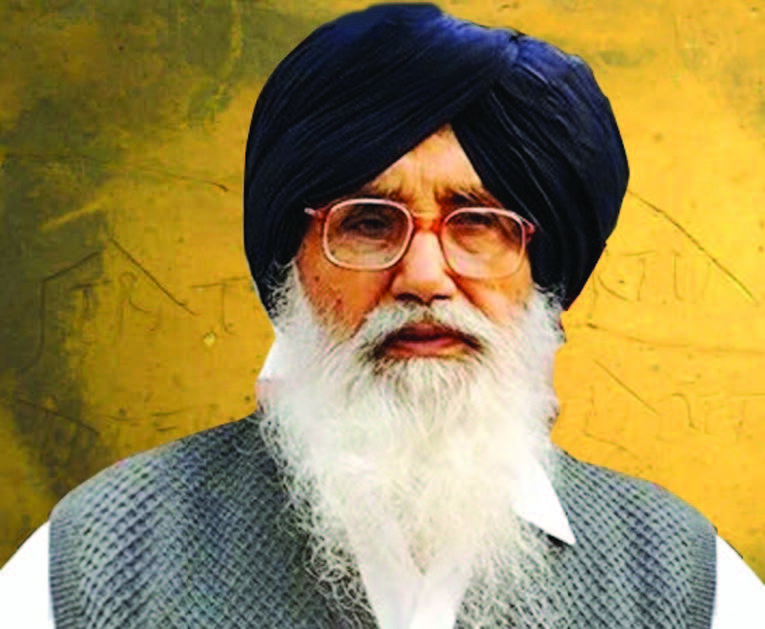
    JALANDHAR (TIP): Punjab chief minister Parkash Singh Badal on April 10 said work in Gujarat was visible more as it started from a very low level on development index while Punjab had already reached a saturation point. Trying to explain reasons for Punjab not emerging as a model, Badal said, “Gujarat started from a very low level on development index while Punjab had already reached a saturation point.”

    He was reacting to a question on if Gujarat could develop despite Congress government at the Centre, why not Punjab as the CM was blaming Congress government at the Centre for all ills of Punjab. Asked if the talk of Gujarat model was hollow in that case, Badal said he (Modi) did a good job but the main reason for visible development was that it started from a low level.

    But he added Gujarat was always considered among the better states in the country on industrialization and development fronts and was never considered very low like Bihar, MP, Rajasthan and UP. Addressing a meeting of industrialists, he blamed Congress government at the centre for all ills of Punjab which was discriminating against Punjab and was not giving enough funds. He had said that if Modi became PM there would be no dearth of funds.

  • BJP and the great communal divide

    BJP and the great communal divide

    Unless the leaders of India, especially from the secular parties show some courage to stand up to fundamentalism that may emanate from any quarters whether it is Hindu, Muslim, Sikh or Christian and stop exploiting religion and caste for vote bank politics, India’s democracy is headed for serious trouble”, says the author who visited Muzaffarnagar, last month, and got reactions of people there.

    On my recent visit to Muzaffarnagar in Uttar Pradesh, at the refugee camp of the September 2013 riot victims, the name of Amit Shah often came up during discussions. Mr. Shah is the newly appointed Campaign manager for Narendra Modi in Western U.P. For those who are keeping a close tab on the human rights situation in India, Amit Shah’s name rings an alarm bell. The appointment of Amit Shah appears to have a lot of political underpinnings.

    How this man who is charged with murder in Gujarat end up being the campaign manger in U.P? Sajjad, an aid worker to the riot victims wondered aloud in disbelief ! Uttar Pradesh has become a pivotal ground for BJP’s election strategy and Mr. Shah, who has a winning track record in Gujarat has the full confidence of Modi and the BJP. In order for Modi to become the Prime Minister, UP’s share of BJP seats has to be substantially increased from nine seats at present. Amit Shah, who has been charged with murder, extortion, kidnapping and five other sections under IPC for the killing of Sohrabuddin and his wife Kausar Bi in 2005.

    He was minister of state for Home in the Gujarat government under Chief Minister Narendra Modi, but had to resign in 2010 after he was arrested on charges of having ordered a series of “encounter” killings by the State Police. Currently on judicial bail, the Supreme Court has directed that he may not enter his home state of Gujarat where he may influence the investigations of the encounter killings. In Muzaffarnagar, they would all agree that it is the first time in history of the region that Jats and Muslims have killed each other. They are culturally the same people and the Muley Jats are converts from the Hindu Jat community. For instance, both communities observe the custom of pagri rasam ritual which consecrates a new head of a family, lineage or clan. The worship of Goga Pir, a local saint is common among both communities, remembering of ancestors.

    In a recent incident when an Imam issued a Fatwa against the use of cell phones by Muslim women, the entire community got together and filed an FIR and thereby forcing the withdrawal of such a dictate. The community is primarily known as owner cultivators who also tend cattle and raise chicken farms. The Jat-Muslim combine was first formed by Charan Singh and was efficiently used fielding Jat and Muslim candidates for a great win that catapulted him to become the Prime Minister of the country in 1979. The BSP in 2009 followed the same strategy and got encouraging results. For BJP and Samajawadi party, the Jat-Muslim combine has become an obstacle for 2014 election strategy and had to be broken and thereby breaking the hold of BSP.

    Two Jat youths named Sachin and Gaurav Singh had first killed Mohammed Shahnawaz, a Muslim youth of the village of Kawal after a traffic incident. Later a Muslim mob lynched to death the killers. It looks like it was a perfect situation handed down on a silver platter to these political operatives to put together a game plan and score for their party. The rest of the events are there for the record. For BJP, it presented an opportunity to consolidate the Hindu vote overriding caste divisions in U.P. They went on an overdrive even directly involving Members of the Legislative Assemblies to aggravate the situation by inciting the rioters. FIRs are filed against 19 MLAs though only 4 were arrested and all of them were shortly released.

    For Samajawadi party, the slow response to the worsening situation in Muzaffarnagar was alleged to be a calculated move as well. They were determined to break the supremacy of BSP in the region in order to add additional seats as SP President Mulayam Singh Yadav who is eyeing the post of Prime Minister in the upcoming election. Seema Mustafa, Director of Center for Policy Analysis doesn’t mince words when naming the perpetrators behind the violence. ‘The BJP, RSS and VHP, supported by the Bharatiya Kisan Union (BKU), were behind the violence. Moreover, the Samajwadi Party government did not do anything to prevent or control the violence, nor did it rehabilitate the displaced’.

    BJP seems to have accomplished its goal by fracturing the Jat-Muslim combine and their support for the Lok Dal and BSP. Samajawadi may be biggest loser in this whole affair as they have alienated Muslims who voted with them (40%) in the past. Jats who live not only in U.P. but also in Haryana and Rajasthan are indeed tilting towards BJP as the strategy of divisive politics beginning to pay dividends. To add insult to injury, those BJP MLAs who incited the community into violence are now rewarded with tickets to run for the Parliament. That includes Mr. Sangeet Som who created a fake video which is blamed for much of the anger and frustrations by the Hindu mob that participated in the melee.

    Sadhvi Prachi, a BJP leader was also arrested for violation of prohibitory orders and inciting communal violence by speeches in meetings at Nagala Madore area of Muzaffarnagar is heralded as a great champion for the promoting the Hindutva agenda. If one looks back at the history, Babri Masjid demolition and subsequent riots were results of careful and intensive strategizing by the Hindutva leadership. The demolition of the ancient Mosque in 1992 is the one incident in India’s social and political history that marks the climax of the politics of religious identity, and is the source from which caste identity politics originated and became powerful .

    There were 24 riots that happened last year alone and the public might even have missed noticing those reports. Soon after assuming responsibility for UP campaign, Amit Shah reportedly visited the Babri Masjid site and said the temple should be built there. Although he said it was not an election campaign issue, many observers made the connection as soon as the riots broke out, with minority affairs minister Rahman Khan telling India Today magazine that Shah had been sent expressly to stir up communal tension. ‘Any polarization along the religious lines would naturally help BJP’ another observer pointed out.

    Riots seem to be engineered for political purposes and BJP is mastering the art of creating communal tension for the sole purpose of political leverage or electoral gains. By driving own citizens from their homes to refugee camps, these parties are in gross violation of their oath to safeguard the life and property of all its citizens guaranteed by the constitution. Unless the leaders of India, especially from the secular parties show some courage to stand up to fundamentalism that may emanate from any quarters whether it is Hindu, Muslim, Sikh or Christian and stop exploiting religion and caste for vote bank politics, India’s democracy is headed for serious trouble.

  • SAURASHTRA

    SAURASHTRA

    The name has a musical ring. Saurashtra, literally a region of one hundred kingdoms. Undoubtedly, the past of this princely area is rich in antiquity and history, as it is in lores and legends. One of Gujarat’s most picturesque regions, modern day settlements still pay homage to the glories of yesteryear. Here, there were glittering palaces with all the wealth of the world contained within. Here, there were temples and mosques, rich not only architecturally, but also in sheer wealth.

    Here, there were gardens and sparkling fountains, beautifully sculpted step-wells and imposing forts. And knitting them together is a warm people known for their hospitality, and for their love of art in daily life. But while the past endures beautifully in the state, Gujarat has also moved with the times, and Saurashtra has played an important role in the pace of development that characterises many of its towns. Here is a blend of the finest meeting of centuries that is at once exciting and picturesque.

    The plateau in central Saurashtra slopes towards the narrow coastal plains ending at sea-port settlements, while on the other side lie dense forests. The region attracts an average annual rainfall of 75 cms. Its inhabitants combine a martial past with maritime skills. Their love for colour and artistry has touched every aspect of their lifestyle, and the handicrafts of the region enjoy the patronage of all the states of India.

    Romantic literature has flowered in the region, as have religious texts. The wealth of the natural countryside has been the backdrop to it all. Saurashtra finds mention in ancient Indian epics and treatises, as well as in the writings of early travellers such as Ptolemy and Hieun Tsang.

    Bhavnagar
    An 18th century city, Bhavnagar was the capital of an erstwhile princely state. It’s business today is vastly different, for it is a premier cotton-exporting sea-port on the south-eastern Saurashtra coast. Among its many attractions is Samaldas College, just over a hundred years old, a frontline institution that claims Mahatma Gandhi as one of its students.

    In fact, Bhavnagar treasures its association with the Mahatma and at Gandhi Smriti a memorial to him has been constructed that consists of a very fine library with a museum of photographs depicting every facet of Bapu’s life. Gandhi Smriti aims at keeping Gandhian thought alive, and to this end it also houses a Khadi Gramodyog Bhandar for the sale of hand-spun, cotton khadi cloth.

    Old books, manuscripts, rare coins, arms and armour used by the Bhavnagar rulers are on display at the Burton Library and Museum The more-scientifically inclined may enjoy their visit to the Central Salt and Marine Research Institute. The city is dotted with gardens that make it very pleasant if you should choose to stroll around in the evenings or mornings. On the outskirts of the city is Victoria Park, a 500- acre expanse that has been developed as a botanical garden, and has a deer park in it.

    Dwarka
    Known in Puranic days as Kushasthali or Dwaravati, Dwarka on the west coast of Gujarat lies by the Arabian Sea and is the cradle of the Krishna legends. It is here that Lord Krishna is supposed to have ruled, and excavations have revealed that the present settlement is the sixth here, five others having been obliterated by the sea.

    Jagat Mandir or Nij Mandir forms the sanctum of Dwarkadish temple and dates back to 2500 years. Jagat Mandir has its own hall of audience and a conical spire. The roof of the hall is supported by 60 columns and the main temple rises five storeys high. The spire rises to a height of 157 feet and is richly carved.

    There are a very large number of temples in Dwarka of varying antiquity, most associated with some anecdote from the Puranas or the Mahabharata. One of the most popular temples is that of Rukmini, Krishna’s wife, considered an incarnation of Lakshmi, the goddess of wealth and beauty. The Sharad Peetha is one of the four Maths established by Jagatguru Shankaracharya.

    The Puranas mention 12 Jyotirlingas or columns of light representing Lord Shiva that manifested itself in different parts of the country. The one located in Dwarka is known as Nageshwar Mahadev and is a popular place of pilgrimage. The place where Lord Krishna is believed to have lived, Bet Dwarka is also sanctified as the place where Vishnu slew the demon Shankhasura.

    Junagadh
    Located at the base of Girnar Hill, Junagadh is the home of many legends which in turn have been responsible for the large number of shrines in the city. The Fort of Uppar Kot is an imposing reminder of the city’s medieval past. Within, are two wells called Adi-Kadi after the names of two girls. Another well, the Naughan has been dug to a great depth out of soft stone and has a very imposing staircase descending down to water-level.

    On the way to Girnar from the fort are the ancient Wagheswari temples and the Ashokan stone edicts with their 250 BC Pali inscriptions. Visitors can go up Mount Girnar in dolis or chair lifts. On top of the hill are beautiful Jain temples. The biggest among them is Neminath, the shrine of the 22nd Jain teerthankara. Another temple of significance is one dedicated to Goddess Amba. The adjoining hill of Datar has a Muslim shrine dedicated to Jaimal Shah Pir who is believed to have come from Sind at the behest of his preceptor, Pir Patta. It is interesting to note the presence of Buddhist caves here.

    Back in Junagadh, there is the Silehkhana and Darbar Hall, the armoury and the audience hall, both containing the royal regalia of former days, along with ancient weapons. The Sakerbag garden comprises of a small zoo, its proudest inhabitants being the Asiatic lions from the Gir forests.

    Palitana
    This is one of India’s most picturesque pilgrim centres. Located on Shetrunjaya hill are 863 temples built over an impressive span of nine hundred years. The temples are exquisitely carved in marble, veritable prayers in stone. To an observer, these appear to be ivory miniatures when seen from a distance.

    Created by master craftsmen, the most important temple is that of the first teerthankara, Shri Adishwar. It has ornate architectural motifs, though in its overall plan it is simpler than the Choumukh. Other notable temples are those of Kumarpal, Vimalshah and Sampriti Raja. The earliest temple was probably built by Kumarpal Solanki, a great Jain patron. The temple has a fabulous collection of jewels, and these can be seen with special permission.

    Porbandar
    A small port town that is linked with India’s history through its association with Mahatma Gandhi who was born here. The ancestral Gandhi house where Gandhi was born was purchased by the family in the 18th century, and the Mahatma’s father was the hereditary Dewan of Rajkot. The home of Gandhi’s childhood is now open to visitors.

    Known by the name of Kirti Mandir, it contains a Gandhian library, his personal effects, a photo-exhibition on his life and times, a hall for spinning cotton thread and a prayer hall. Porbandar is also the place where Gandhi’s wife, Kasturba, was born. A chronological history on the life of the Mahatma is listed here. Porbandar, in olden days, had a flourishing trade with Arabia, Africa and the Persian Gulf.

    It was then known as Sudamapuri in the memory of Lord Krishna’s friend, and there is a temple dedicated to Sudama here. Among institutions worth paying a visit are the Arya Kanya Gurukul and Bharat Smriti. The planetarium nearby is a great attraction. Porbandar today is also an industrial town with cement and chemical units. It has a fine beach and beautiful villas on the seacoast.

    Sasan Gir
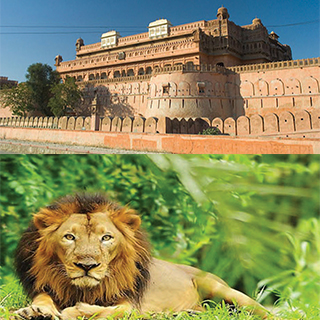
    The home of the Asiatic Lion, and its retreat, Sasan Gir is a wildlife sanctuary for the protection of this rare species, and other animal and bird life. Sasan Gir is one of the country’s largest wildlife parks with a core area that spreads over 258.71 sq km. According to the 1989 census, the lion population in the park is 255.

    The forest also harbours a variety of other animals and birds, including predators such as the panther and the hyena. The deer family is adequately represented by sambar, chital, chousinga, nilgai and chinkara. Also found are the bear and long-tailed langur. The peacock is the most commonly seen bird here. A crocodile farm has been developed within the sanctuary. The park is open from mid- October to mid-June.

  • Lalu’s daughter hires IITians, doctors to manage her campaign

    Lalu’s daughter hires IITians, doctors to manage her campaign

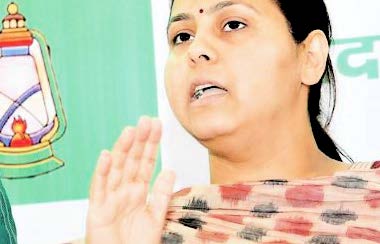
    PATNA (TIP): Misa Bharti, daughter of RJD chief Lalu Prasad, is taking all the help she needs and has hired two IITians and doctors to manage her campaign for the Lok Sabha polls in Bihar. Her husband Shailesh Kumar, an IT professional, is also working as her shadow during the campaign.

    Misa, a doctor, is contesting from the Patliputra constituency in Patna. She has hired two IITians — Pankaj Sudan and Perween Tyagi — to manage her campaign and help her in reaching out to voters through social media. “Both of them are also giving her important tips and providing suggestions on how to meet people from different classes,” a leader close to her said.

    Sudan works with a Gurgaon-based MNC, while Tyagi runs his own company in Delhi. Thanks to them, Misa’s Facebook page is getting support of youths in Patna. She has also hired two doctor colleagues — one of them an NRI and the other based in Gujarat — to finalize strategy and to understand pulse of the people, particularly those in rural areas.

    Jamil Akhtar, a New York-based doctor, is helping her in finalizing her poll speeches and Azad Kumar is helping her understand the rural voters. She is pitted against JD(U) candidate and sitting MP Ranjan Prasad Yadav and BJP’s Ram Kripal Yadav in the contest for the seat. Ram Kripal Yadav was a close associate of her father, Lalu Prasad, and left the RJD after Lalu decided to field Misa from Patliputra constituency.

  • REFORMS TO GIVE 110 MILLION JOBS BOOST TO ECONOMY IN 10 YEARS

    REFORMS TO GIVE 110 MILLION JOBS BOOST TO ECONOMY IN 10 YEARS

    NEW YORK (TIP): As general elections draw closer in India, global financial major Goldman Sachs has said 40 million new manufacturing jobs can be created in a decade if states follow flexible labor laws like in Gujarat.

    Besides labor laws, implementation of proper reforms in other areas such as subsidies can lead to overall job gains rising to 110 million over the next 10 years – the largest for any major economy, Goldman Sachs said. The observations assume significance as they come at a time when a political debate is underway on the comparison between growth model of Narendra Modi-led Gujarat and that of other states ruled by Congress and other parties.

    Modi is the prime ministerial candidate of BJP, which is trying to wrestle power from Congress at the Centre. The report said the Gujarat government amended the Industrial Disputes Act in 2004 to allow for greater flexibility in the labor market for Special Economic Zones (SEZ). It allowed for companies within SEZs to lay off workers, without seeking the permission of the government, by simply giving a 1-month notice to the worker.

    In contrast, the West Bengal government, made several pro-worker changes. It changed the laws to make it virtually impossible to shut down a loss-making factory.Accordingly, Gujarat has witnessed a 60 per cent growth in manufacturing employment between 2000 and 2012 while West Bengal has seen only a 22 per cent increase.Goldman Sachs said as a new government takes charge from mid- 2014, it sees labor market reforms as a critical ingredient to accelerate India’s economic growth rate.

    “If India were to undertake significant reforms in the labor market, the benefits could be quite large,” Goldman Sachs said. In a bull scenario, it projected that India could add some 110 million workers over the next decade. At this level, the number of jobs that India could create would be larger than that of the US, China, Russia, and Brazil combined, Goldman Sachs said.

    According to the financial services firm, India’s stringent labor laws are a key factor constraining employment growth and the reforms like simpler labor laws, more flexibility to hire and fire, self-certification by the employers, amendment in the Trade Union Act and faster dispute settlement, are likely to increase flexibility and boost employment.India’s employment growth in recent years has been anemic. The economy added only about 2 million jobs each year between FY05 to FY12, compared to 12 million a year in the 5 years before this period, it said.

    “As a labor abundant country, India should be generating jobs in laborintensive manufacturing,” the report said.India has some 44 labor laws which are enacted by the central government and enforced by both the central as well as state governments. In addition, there are also labor laws enacted and enforced by the various state governments. Some laws date back to the colonial era. The Trade Unions Act is from 1926, the Workmen’s Compensation Act is from 1923, and the Factories Act from 1948.

  • Babri demolition planned

    Babri demolition planned

    Advani, P V Narasimha Rao knew of plot: Cobrapost sting

    NEW DELHI (TIP): An elaborate sting operation, conducted on 23 key people of the Ram Janambhoomi movement, claims that the demolition of the Babri Masjid on December 6, 1992, was elaborately planned by the various wings of the Sangh parivar and executed with precision by trained volunteers.

    It wasn’t, as it is claimed, a case of mob frenzy going out of control, leading to the fall of the disputed 16th century structure. The investigation, carried out by Cobrapost, claims that by piecing together the versions given by the top Ram Janambhhomi players, among them Sakshi Maharaj, Acharya Dharmendra, Uma Bharti, Mahant Vedanti and Vinay Katiyar, it is apparent that top BJP leaders like L K Advani and the then UP chief minister Kalyan Singh, as well the former Congress PM, P V Narasimha Rao, were aware of the planned demolition of Babri Masjid.

    Posing as a would-beauthor researching his book on the Ayodhya movement, Cobrapost associate editor K Ashish travelled to Ayodhya,Faizabad, Tanda, Lucknow, Gorakhpur, Mathura, Moradabad in UP, Jaipur, Aurangabad, Mumbai and Gwalior interviewing 23 of those who participated in the operation. He clandestinely recorded conversations with them. If what they claim is true, the Ram Janambhoomi leaders and activists toiled secretly for months on a plan codenamed ‘Operation Janmabhoomi’ and executed it with military precision. Volunteers were trained, logistics painstakingly put in place and the assault on the disputed shrine launched using large surging crowds with volunteers skilled in demolishing structures embedded in it.

    Not only do those interviewed spell out details of the planning, they also allegedly reveal how enthusiastic young participants were deliberately used as cannon fodder by provoking a police firing on kar sevaks in 1990 because of the belief of some leaders that the movement would not gather steam unless ‘some Hindus die’. Many of those interviewed by the makebelieve author are accused in CBI cases pertaining to the demolition. Yet, they seemed to have no qualms in “confessing” (or boasting) about their role in the episode that left a deep communal schism in India.

    Some of those interviewed were, B L Sharma Prem, Dharmendra Singh Gurjar, Jai Bhagwan Goel, Pawan Pandey, Santosh Dubey, Ramji Gupta, Ramesh Pratap Singh, Sadhavi Ritambhara, Kalyan Singh, Prakash Sharma, Champat Rai Bansal, Satish Pradhan, Mahant Avaidyanath, Moreshwar Save, Lallu Singh, Brij Bhushan Sharan Singh and Swami Nritya Gopal Das. Their versions make it appear that the plot to demolish the mosque was hatched amid utmost secrecy. Those recruited for training weren’t told their mission till a month ahead of Babri’s fall. At Sarkhej, Gujarat, Bajrang Dal conducted a month-long training in June 1992 for 38 of its cadre from different regions. The trainers were retired high-ranking military officers, while Acharya Giriraj Kishore, Acharya Dharmendra, Praveen Togadia, Jaibhan Paweya and Ashok Singhal held indoctrination sessions.

    In subsequent drills at Neela Teela the cadre learnt skills such as climbing tall structures using grappling hooks and ropes. At a top-secret meeting in the basement of Ram Katha Manch, top VHP office bearers asked this band of 38 to form a Laxman Sena specifically to tear down the disputed structure. Ramesh Pratap Singh recalls, “Five of those who trained at these camps attended this meeting. The sixth person was Ramji Gupta and there was Durg Singh Chauhan. After the meeting, this office bearer told us Durg Singh will be our contact point and he’ll coordinate all meetings. Decide what you want, how you will form it (Laxman Sena). Thereafter, the office bearer disappeared.” The VHP office bearer he mentions was Champat Rai Bansal.

    While the VHP and Bajrang Dal were holding a secret meeting at Ayodhya to plan the Babri assault, Sena leaders too were deliberating on the fate of the shrine in North Avenue. Save and Pradhan, among others, attended the meeting. If everything failed, Sena had a plan B: Dynamite Babri. Claims Goel: “Humare paas dynamite bhi thha, hum dynamite bhi lekar gaye thhe wahan par agar zaroorat padti usko bhi chala dete iss taiyari se gaye the hum (We were carrying dynamite. If the need arose, we had gone prepared to use it).” In 1990, Sena’s Suresh Baghel had tried this, but his attempt was foiled and he was arrested with 28 dynamite sticks. In the end, petrol bombs were apparently used. Former BJP MP Brij Bhushan Sharan Singh was seen planting a petrol bomb by fellow karsevak Jaibhan Singh Paweya.

    Here’s what Paweya claims: “Ek petrol bomb do baje koi lekar aaya jo eent mein lagane ke baad dhuan nikal kar reh gaya uske baad hila bhi nahi … Brij Bhushan laya thha arre petrol bomb (Somebody brought a petrol bomb around 2 pm and planted it between the bricks. It didn’t work, only released some smoke. Brij Bhushan brought the petrol bomb).” Apart from petrol bombs, the Bajrang Dal forward squad used chisels, hammers, pickaxes, spades and grappling ropes to bring down the shrine. There were two determined attempts to demolish the shrine – first in October 1990 and the second in December 1992. The first attempt ended in police firing in which karsevaks died. Recounting the incident, Sakshi Maharaj says VHP leader Ashok Singhal was to blame for it.

    “In front of me, Singhal told Maharaj (Vamdev), the movement won’t gain momentum unless some people die. Maharaj Vamdev said it’d be disastrous if children die. Singhal again said the movement won’t get a fillip until they die.” Sakshi claims wellknown karsevaks like the Kothari brothers from Bengal and Mahendra Singh of Rajastan were targeted by police at the behest of vested interests spearheading the Ram Janmabhoomi movement. Uma Bharti blames Vinay Katiyar for the killing of Kothari brothers: “Jo log marey thhe wo Vinay ki galti se. Galti bhi nahi wo bhagdar machi, wo gali chhoti thhi. Galti matlab wo bhag gaya chhodkar bhag gaya (They got killed because of Vinay’s mistake. A stampede began and the lane was narrow…I mean he fled the scene abandoning his group). Sensing the do-or-die mood of Ram bhakts in Ayodhya, a sankalp, or oath was administered.

    The task of initiating the oath fell on Ram Vilas Vedanti. The vow said: “On this day of December 6 we Ram bhakts take this oath on the premises of Ram Lalla that it is necessary to remove the structure from where it stands to make a grand temple. It is necessary to remove the structure to make a Ram Janmabhoomi Temple. We take this oath for Ram Lalla.” Immediately after the oath, the Babri assault began. Some leaders at the forefront of the movement, like Vinay Katiyar, B L Sharma, Santosh Dubey, Sakshi Maharaj and Mahant Ram Vilas Vedanti openly acknowledge the then prime minister Narasimha Rao’s ‘supportive role’.

    The then CM Kalyan Singh apparently knew of the demolition plan. Mahant Vedanti claims to have informed him about it a day before: “Paanch December ki raat ko hi Kalyan Singh ke paas samachar bhej diya gaya thha aur usmein ye kaha gaya tha ki yadi awashayakta padti hai toh dhancha bhi tod diya jayega aapko kya bhoomika nirwah karni hai vichar kar lijye (On the night of December 5 Kalyan was informed. He was told that if need be the structure would be felled. You decide what you’d do).” Apparently, Kalyan Singh made up his mind to resign on December 6 morning, when he came to know the assault on the structure had begun, but senior leaders like H V Sheshadri and Murli Manohar Joshi dissuaded him, while BJP leaders in Lucknow made him captive the whole day until a clean job of the mosque had been made.

  • Modi’s Stance on Foreign Policy Remains a Mystery

    Modi’s Stance on Foreign Policy Remains a Mystery

    Modi has made some stray remarks on foreign affairs, but they should be seen more as obiter dicta rather than a considered judgment.

    Little interest has been shown domestically about possible new orientations in foreign policy under a Modi-led NDA government. Modi’s single-minded focus on the development agenda has dominated political and media discourse, barring, of course, the 2002 Gujarat riots. The slowdown of the economy, the negative investor sentiment, price rise, corruption, the perceived lack of leadership have been issues of public concern, not foreign policy. Modi has been a state leader, with no stint in Delhi, and hence a relatively unknown entity for foreign interlocutors except those who have traveled to Gujarat for business reasons.

    Economic focus
    For our foreign partners who see India’s economic rise as opening up enormous prospects for their own economies by way of trade and investment and who are disappointed by India’s lacklustre economic performance under UPA II because of slowdown of reforms, indecision and delays in implementation, Modi’s economic agenda is alluring. But they are equally interested in assessing the possible differences in foreign policy between a possible Modi-led government and the UPA governments.

    Modi has been a state leader, with no stint in Delhi, and hence a relatively unknown entity for foreign interlocutors except those who have traveled to Gujarat for business reasons. Moreover, because he has been politically boycotted by western countries until recently for human rights reasons, the opportunities to assess him through personal contact have been that much less available. China and Japan, who have received him in their countries, have been wiser in this regard. Modi has not been grilled on foreign policy issues either by the opposition or the media. He has made some stray remarks on foreign affairs, but they should be seen more as obiter dicta rather than a considered judgment.

    His view, for instance, that the Ministry of External Affairs should focus on “trade treaties” rather than strategic issues may fit in with his “development” focus, but would get revised when faced with the reality of India’s challenges once in power at the Centre. If his meaning was that our missions should give priority to commercial/economic work, that would be unexceptionable in the context of economic performance increasingly determining a country’s international role and influence. Towards Pakistan, one hopes, Modi will not be counseled to adopt a soft face in order to attenuate his anti-Muslim image, both at home and abroad.

    The economic argument should not be exaggerated though, as our most severe external challenges are driven not by economics but politics, relating to our territorial integrity, the threats to us from terrorism and religious extremism, the nuclear dangers emanating from nuclear collaboration between China and Pakistan which the West tolerates despite its readiness to take military action to stop proliferation in Pakistan’s neighborhood, and China’s attempts to politically and strategically box us in the subcontinent while simultaneously eroding our influence there by its deep incursions into our neighborhood. If China and Pakistan have been hostile to us for decades it is not on account of economic issues. India’s role in the Indian Ocean has a major strategic aspect that goes beyond ensuring the safety of the sea lanes of communication for trade flows.

    Status Quo
    How much the foreign policy of former Prime Minister Vajpayee, who enjoys an iconic status within and even without the BJP, will guide that of an hypothetical Modi-led government is a pertinent question. If Vajpayee’s decision to take a plunge on the nuclear question was an act of strategic defiance, he was also a man of dialogue who made major overtures to US, China and Pakistan. With a strong nuclear card in his hand, his strategy of building a relationship with the US “as a natural ally” made sense, as did his outreach to China to explore the possibility of resolving the border issue on a political basis. His conciliatory approach towards Pakistan, however, seemed based less on a cold power calculus and more on inchoate hopes and sentimentalism. Prime Minister Manmohan Singh built on Vajpayee’s policy on all these fronts, pointing to the essential continuity of our foreign policy under governments of different political complexions.

    The ‘Next Steps in the Strategic Partnership’ under Vajpayee led to the nuclear deal under Manmohan Singh; the Special Representatives mechanism with China set up under Vajpayee has been the principal platform for political engagement with China on the vexed border issue under his successor; the obsession to have a dialogue with Pakistan under Vajpayee continued its confusing course after him. In visiting the Arunachal border with Tibet and vowing not to yield an inch of Indian territory, Modi has sent an important signal to Beijing.Is there a major course correction in foreign policy that a Modi-led NDA government would need to make? Tough stance Not really, as our geo-political compulsions, our economic needs and our security calculus dictate our fundamental foreign policy choices, with limited wiggle room available.

    We need a stable relationship with all power centers. Despite the difficulties of dealing with the US, our economic and people-to-people links with it are of key importance. The US has treated Modi with gross political ineptitude, giving him, if he becomes Prime Minister, room to extract a price for engaging him, though it is clear that his relationship with Obama will be uncomfortable. China’s Xi Jinping has already indicated his desire to visit India later this year. In visiting the Arunachal border with Tibet and vowing not to yield an inch of Indian territory, Modi has sent an important signal to Beijing. A visit to Tawang before Xi’s visit would change our psychological equation with China by boosting national morale.

    Towards Pakistan, one hopes, Modi will not be counseled to adopt a soft face in order to attenuate his anti-Muslim image, both at home and abroad. Pakistan will construe this as the “taming” of Modi without cost. Because uncertainties in Afghanistan and religious radicalization sweeping Pakistan could aggravate India’s terrorism problem, the new government should be in no hurry to resume the dialogue with Pakistan even if the bait of MFN is offered as a tactical move. Whether or not a Modi-led government changes the course of our foreign policy, because of the perception that he is strong and decisive leader will be a foreign policy forcemultiplier in itself.

  • AAP counters Pak slur with disputed map on BJP site

    AAP counters Pak slur with disputed map on BJP site

    NEW DELHI (TIP): The war of words between BJP and AAP escalated on March 27 with the saffron party accusing Arvind Kejriwal of being an expert in “dumping issues halfway” while AAP retaliated with jeers that a “scared” BJP was diverting people’s attention from real issues.

    A day after BJP’s prime ministerial candidate Narendra Modi called Kejriwal a Pakistani agent and charged AAP with misrepresenting Kashmir on the map, AAP’s social media unit tweeted a grab of BJP’s official website that hosted a Google map indicating Kashmir as “disputed territory”. Dubbing AAP as “Arvind Apna Propaganda”, BJP accused Kejriwal of “dumping issues halfway” and running away from answering questions. “Kejriwal is known for dumping things halfway.

    His IRS (Indian Revenue Service) was dumped halfway. His India Against Corruption (IAC) was dumped halfway. Anna Hazare was dumped halfway. People of Delhi were dumped halfway. Now his candidates from all over the country are also dumped halfway,” BJP spokesperson Nirmala Sitharaman said. “Kejriwal said there are only two constituencies from AAP perspective — Varanasi and Amethi. So what happened to other candidates who are contesting all over the country? He has distanced himself from the rest of the candidates,” she said. “You have given away Jammu and Kashmir in your website.

    You have dumped people of J&K. Besides dumping of issues, he also ran away from answering our questions,” she added. Accusing Kejriwal and his party colleague Prashant Bhushan of going against the official line on Kashmir, BJP also screened video footage at the party briefing, simultaneously showing Modi’s speech in Jammu on Wednesday where he referred to Kejriwal as AK-49 and Bhushan’s earlier speeches. Responding to the attack, AAP leader Manish Sisodia said, “A scared BJP is trying to divert attention from real issues ever since AAP exposed its lie on gas pricing yesterday and made public the letter in which Gujarat government sought a $16 hike. AAP categorically denies that it has shown Kashmir as disputed on its official website.

    The party’s stand on the issue is clear. However, it is for BJP to clarify how Kashmir has been shown on its official website.” Earlier, AAP’s social media unit had tweeted a grab of the BJP website showing Kashmir as disputed on the map. BJP also raked up the controversy involving former Delhi law minister Somnath Bharti and his alleged misbehaviour with some African women residing in the capital. Sitharaman asked for whom did Kejriwal sit on dharna. “He sat on dharna for a person who had misbehaved with women, who misused his official position forcing Delhi Police to conduct a raid at midnight,” she said.

  • IPL action set for May 1 return to India

    IPL action set for May 1 return to India

    CHENNAI (TIP): The seventh edition of the IPL will be flagged off in the UAE, which will host the first 20 matches, but the tournament is likely to come back to India from May 1.

    In March 18 IPL governing council meeting, six affiliated units – Karnataka, Gujarat, Kochi, Hyderabad, Orissa and Jharkhand – assured the BCCI that they have received clearances from the respective state governments to host IPL matches from May 1-15. “They have submitted letters to the BCCI stating they are ready to host IPL matches during this 15-day window.

    That’s why we’re planning to get the league back to India after the first 15 days in UAE,” a source told mediaperson. BCCI secretary Sanjay Patel, too, confirmed the development. “Pursuant to the initiative taken by the Union ministry of home affairs, many state governments have indicated that IPL matches can be conducted in their respective states,” Patel said in a statement after the meeting here.

    “Based on the responses received so far, the BCCI believes that the IPL can be conducted in India from the first week of May.” Bangladesh was kept on standby for this second phase of the tournament but it seems the need may not arise. IPL franchises, too, are happy with the development because they want the least number of matches to move out of India. “The franchises are relieved. But we’re still awaiting the final clearance, which will probably come very soon,” the source added.It is also learnt that the BCCI will bear the cost of acquiring the grounds for the UAE leg.

    “That amount will be paid to the UAE board by BCCI. The rest of the expenses will have to be shouldered by the franchises,” the source added.The BCCI will also restrict the number of persons in the dug-out following the spot-fixing saga last year. The board will also monitor the movements of players after the match. “We’re in constant touch with the Anti-Corruption Unit officials and every step will be taken to avoid any controversy,” the source added.There won’t be any home-away system either once the matches are back in India. “It is impossible to allot a specific number of home and away games for a certain franchise. It has to be according to the availability of the grounds.”

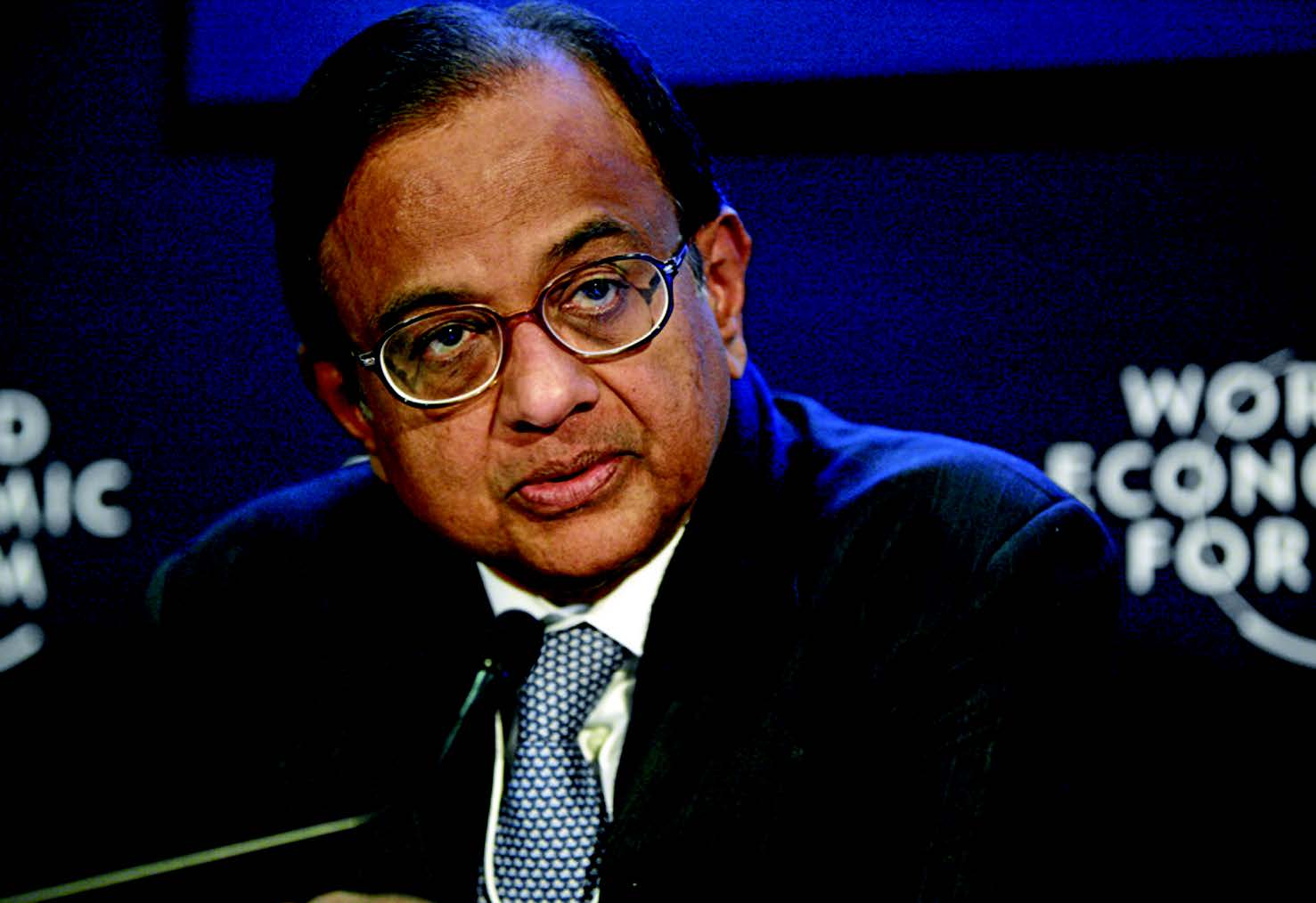
  • Running scared? Chidambaram opts out of Lok Sabha battle, Congress fields his son

    Running scared? Chidambaram opts out of Lok Sabha battle, Congress fields his son

    NEW DELHI (TIP): Finance minister P Chidambaram has opted out of the Lok Sabha contest, with Congress announcing his son Karthi as the candidate from Sivaganga constituency in Tamil Nadu. Kirit Patel will take on BJP patriarch LK Advani in Gandhinagar in Gujarat.

    The passing of baton in Sivaganga caps the intense speculation on Chidambaram’s candidature in the wake of Congress’s bleak prospects in the state owing to its failure to find an ally. Congress fought the last two elections with DMK and reaped a rich tally, disproportionate to its weak organizational muscle in the state.

    The leg-up for the GenNext extends to another of the state’s political family. Mohan Kumaramangalam, son of former Union minister Rangarajan Kumaramangalam, is the rookie to contest from Salem. In what may have the making of an interesting contest, Laxman Singh has been named from Vidisha to take on leader of opposition in Lok Sabha Sushma Swaraj in Madhya Pradesh. Singh is a former MP and the brother of AICC general secretary Digvijay Singh.

    Congress announced sitting MPs Ramesh Kumar and Mahabal Mishra from South Delhi and West Delhi, a decision which means that all seven party MPs from the capital would be taking the field in the Lok Sabha polls. The names of Kumar and Mishra were held back in the earlier list which gave the go ahead to five other MPs, raising the possibility of their being replaced. However, the party leadership has settled for the status quo, finding that any attempt to change the candidate would skew the caste balance it wants in its representation in the apital.

    The reprieve for the two comes after Congress mulled possible options to sitting MPs. The Central Election Committee of the party had taken exception to the routine manner in which the MPs were recommended for renomination and had asked the Delhi managers to submit a panel of possible candidates. Union health minister and senior Congress leader Ghulam Nabi Azad would contest from Udhampur in Jammu and Kashmir. He replaces MP Lal Singh Chaudhary. Congress has also replaced Paranjayadityasinh Parmar from Panchmahals in Gujarat with Ramsingh Parmar.

    Paranjayaditya is the son-in-law of Congress general secretary Digvijay Singh and his nomination in the previous list of candidates had sparked unrest, leading to clarification from the state leadership that it was an oversight. Rajya Sabha MP and former union minister Mani Shankar Aiyer will contest from Mayiladuthurai that he represented in Lok Sabha before losing in 2009. Expelled JD(U) MP Purnmasi Ram will be the Congress candidate from Gopalganj reserved seat in Bihar. Also, Congress’s Tsering Samphel will contest from Ladakh seat in J&K.

  • RIL takes YouTube route to refute AAP allegations

    RIL takes YouTube route to refute AAP allegations

    NEW DELHI: From deep sea to You Tube. After battling geographical bumps to keep its Andhra offshore field going, Reliance Industries Ltd is now engaged a bitter fight for eyeballs. India’s biggest private oil company on March 20 launched its counter-attack on You Tube to drill holes in allegations made by detractors such as AAP leader Arvind Kejriwal that was uploaded on the social media.

    The company sent out mailers with a link to a You Tube presentation that described allegations made at a media event earlier this month as “strange and irresponsible statement”. The mailer did not name Kejriwal or any other leader. “The statement is fraught with poor knowledge of the constitutional scheme and is aimed only to misinform… It is, therefore, incumbent upon us to place the record straight,” the company mailer said.

    The video clip shows an anchor giving point-by-point rebuttal in Hindi to allegations that the Narendra Modi government in Gujarat had extended undue benefit to the company and its gas project. The You Tube video clearly demonstrates that RIL is no longer willing to take, what it calls, “unfound allegations” lying down. The choice of language, Hindi, also displays the company broad-basing its public communication to the hinterland — ostensibly Kejriwal’s constituency. Earlier this month, the company had launched a mobile message campaign to counter AAP. Clearly, it’s a fight for eyeballs now.

  • CBI ARRESTS 5 WITH FAKE MEDICAL DEGREES

    CBI ARRESTS 5 WITH FAKE MEDICAL DEGREES

    NEW DELHI (TIP): In a countrywide crackdown, the Central Bureau of Investigation on Thursday arrested five people possessing medical degrees from Russia and China and obtaining recognition from Medical Council of India through allegedly fraudulent means. CBI said based on information gathered, FIR had been filed against eight people who claimed they had medical degrees from Russia and China.

    At least three of the doctors, who had allegedly got a forged registration from MCI, were working in government hospitals in Gujarat, West Bengal and Chhattisgarh. The CBI has also registered case against unnamed officials of MCI and some other individuals. CBI conducted raids at the premises of a Meerut medical practitioner who was allegedly a conduit between MCI officials and the potential candidates coming from these countries.

    According to CBI, those arrested told the agency that they paid upto Rs 20 lakh for getting registration from MCI. Government has made it mandatory for screening test of medical students from erstwhile USSR countries and China to be eligible for medical practice in India. CBI alleged these candidates had colluded with MCI officials who gave them permission to practice in return for illegal gratification even as the doctors did not fulfill the necessary parameters.

    CBI sources said they would interrogate the accused on the role of officials in MCI, who are giving these fake registrations. Sources said more arrests are likely. The registration documents recovered during searches on Thursday would be sent for CFSL examination and files would also be taken from MCI. CBI Director Ranjit Sinha, who is personally monitoring the case, said, “This is a very important case as such people were playing with the lives of patients.”

  • NRI Perspective of Muzaffarnagar Refugee Camps

    NRI Perspective of Muzaffarnagar Refugee Camps

    INOC and NRI-SAHI Team cite deplorable conditions upon visiting the Muzaffarnagar refugee camps

    Ateam consisting of George Abraham, Chairman and Harbachan Singh, General Secretary of the INOC (I) (Indian National Overseas Congress (I), USA) along with Mohammed Imran, Joint Coordinator of the NRI-SAHI (Non-resident Indians for a Secular and Harmonious India) visited the Malakpura refugee camp for the Muzaffarnagar riot victims and learned first hand the deplorable conditions under which those victims are forced to live.

    ‘It is a shame on our great democracy when we let these riots happen and then disregard the plight of the innocent victims to live in such a wretched condition without basic necessities and growing threat of diseases’ said George Abraham, who headed the team to visit Muzaffarnagar. ‘This is the height of incivility and indecency and a responsible system of governance has to be held accountable’ he added.

    ‘It is shocking to see the inaction by a Government that is supposed to protect the lives and properties of its citizens’ said Mohammad Imran who also vowed to do his very best in getting the information across to the authorities and the media. The team first visited Muzaffarnagar where a legal team is doing their best to assist the victims. The team met with Rahimuddin, Sajjad Hussain and Saifan who briefed us on the events leading to the riots and the political motives and the players behind the scenes.

    These volunteers are working with an NGO called ‘Popular Front of India Civil Rights Movement’ to get justice for the victims including compensation for resettlement. In our discussions, we were told that FIRs were filed against 19 politicians for inciting riots and three of them have been arrested for a short time and then released. The team repeatedly heard of the criticism of the appointment of Amit Shah, the former home minister of Gujarat who was arrested on charges of encounter killings in Gujarat as the Modi Campaign Coordinator for the Western U.P. before the riots.

    The Muzaffarnagar riots took place in September 2013 that killed about 67 people, injured 150 and displaced about 45000 people to the refugee camps. In addition, several women were raped and scores of houses were looted and torched including places of worship and items. Although 566 FIRs were filed, very few cases are currently being heard in the courts. It is alleged that the State Government headed by the Samajawadi party is more interested in pushing people out of camps for a Public Relations exercise than hearing their complaints of settling the claims.

    ‘The Jats and the Muslims are the same people culturally who have lived in peace over the years’ said one of the volunteers who is involved with relief efforts. ‘When an Imam issued a fatwa over the use of cell phone by Muslim women, the whole community, including the Jats and Muslims went to the Police Station and filed an FIR against such an illegal action. Breaking up of that unity was politically motivated’ The team traveled another 52 Km to the village of Malakpura to visit the largest camp where about 5000 victims are housed.

    It took almost 3.5 hours to cover that distance where the roads are of such bad conditions that one couldn’t help but to think that these camps were deliberately put in remote places where people would not dare to travel thereby leaving the victims without proper support from NGOs or Civil Society groups. The mere sight of the camp looked dusty and dirty with numerous tents covered with sheets of tarpaulin providing protection from scorching sun and severe cold temperature at night. The Children were running around barefoot while others were huddled indoors hoping to stay warm. Tents were torn and some looked collapsed barely surviving the winter months.

    The family belongings are scattered across and few bricks put together made up of a cooking facility outside the tent. Except for some hand pumps providing water, there was no steady supply of milk for the infants or fuel for cooking other than cut leaves from nearby sugar canes, They have lived through one of the harshest winters in history and often at nights, we were told, freezing water would be seeping down through the tarp and causing many children to fall ill and succumb to deaths right at the camp. We met a woman who is grieving for two of her children who recently died at the camp.

    We were also shown the freshly dug grave sites where many of these bodies of the children were recently buried. The men we met at the camp were eager to get back to work however; there was very little opportunity to find jobs around the camp. The children are deprived of their education as there are no logistics to send them to nearby schools. The refugees are afraid to go back to their own villages as they fear for their lives and the authorities are doing very little either to assure their safety or resettle them in other parts of the State where they could possibly resume normal lives. It is a great tragedy that is heart breaking and yet still unfolding.

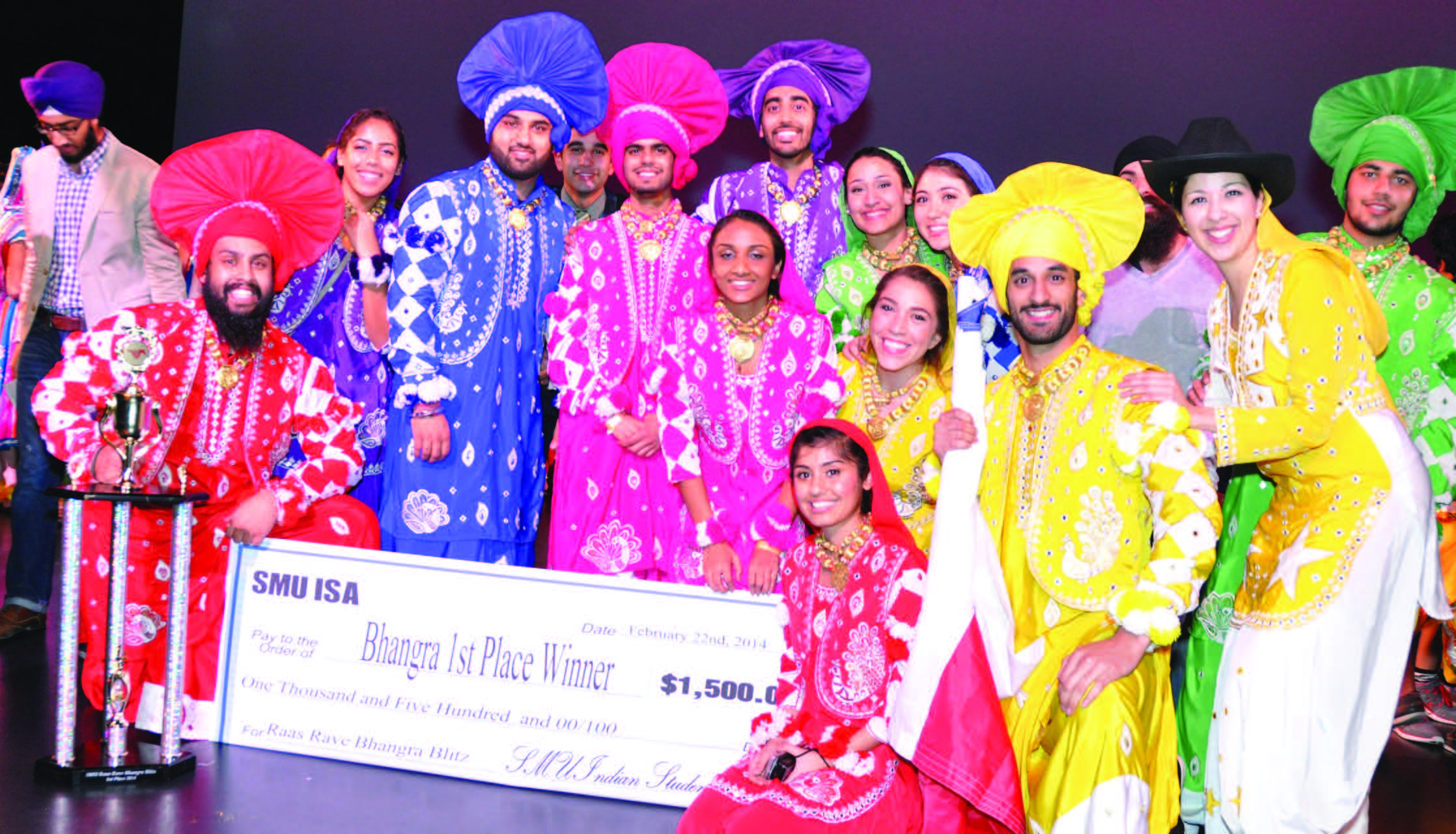
  • University of Texas, San Antonio wins Bhangra competition

    University of Texas, San Antonio wins Bhangra competition

    DALLAS (TIP): As in the past, competitions in Bhangra- the folk dance of Punjab- and Garba- the folk dance of Gujarat- were held at Southern Methodist University of Dallas. It was a kind of a record breaking event in which a large number of organizations participated and a very large number of audiences turned up.

    The event was jointly managed by Indian Punjabi Students’ Association and Punjabi Cultural Association of Dallas. 7 Bhangra teams and 6 Garba teams vied for honors. It is worth mentioning that spectators were thrilled to watch the Bhangra performances in which the local youth participated who presented the folk dance of Punjab in different styles.

    5

    The performances were so good that the three judges had a great difficulty in deciding their order of merit. However, the three judges unanimously decided that University of Texas, San Antonio Bhangra team was the best performer. The second position went to the Massachusetts team.

    In a joint statement, the PCANT group members Gurinder Daula, Manjit Johal, chairman Kuldip Dhillon and president Jasmel Sandhu, said that the quality of performances was excellent and that the young participants must be encouraged in every way. The ceremonies were conducted by Parminder Singh Deo, Javin Malli, Osama Siddiqui and Nimesh Patel. The organizers had a special word of appreciation and gratitude for Radio Wasda Rahe Punjab and Fun Asia.

  • POLICE QUIZ AAP’S ASHUTOSH, SHAZIA

    POLICE QUIZ AAP’S ASHUTOSH, SHAZIA

    NEW DELHI (TIP):
    The BJP-AAP confrontation escalated on March 6 with the BJP accusing its opponent of waging a surrogate battle on behalf of the Congress that wanted to deflect focus from allegations of corruption and scams. Adding to the political attack, the police questioned senior AAP leaders Shazia Ilmi and Ashutosh and party workers after they were named in an FIR and accused of instigating violence outside the BJP headquarters on Wednesday.

    It promised to take action if “sufficient” evidence was found against them. Both Aushtosh and Ilmi were among 14 named in the FIR. They were charged with obstructing a public servant from doing his duty, unlawful assembly and under the Prevention of Damage to Public Property. “We found that prima facie, these 14 persons were part of unlawful assembly and indulged in violence,” a police officer said. The BJP moved the Election Commission demanding strict action — including de-recognition — against the fledgling party. AAP, too,moved the EC calling for an independent probe into the matter and alleged intimidation of its volunteers and members by the BJP.

    Soon after approaching the Election Commission, BJP spokesperson Meenakshi Lekhi said: “AAP happens to be the latest goon squad hired by the Congress’ dirty tricks department. A minor issue with Kejriwal in Gujarat has been blown up as if it impacts national security.Why? Simply because the practised deception of Congress is to create a diversion each time one of its scams starts unravelling. AAP is not a threat to the BJP or Modi. They are not even a national party of consequence. Everything about them is murky, including their funding sources.” Lekhi sought to draw attention to a statement made by an AAP council member suspecting the source of the party’s foreign funding. She also likened the tactics of the AAP with those adopted by Maoists in the country.

  • AAP-BJP clashes- Police failure, bias to the fore

    AAP-BJP clashes- Police failure, bias to the fore

    Almost every newspaper headline on March 6 said the same thing: “Kejriwal’s detention sparks AAP-BJP clashes”. The media, including TV channels, focused on three things: the detention of Arvind Kejriwal and attack on his car in Gujarat; AAP workers’ protests outside the BJP offices in Delhi and elsewhere leading to violent clashes.

    In Delhi 13 AAP activists and 10 BJP supporters were injured. Jhansi, Kanpur and Allahabad also witnessed a similar backlash. This was the day when the Election Commission announced the Lok Sabha poll schedule. It is an ominous beginning. Violence in any form by anyone is unacceptable.

    Arvind Kejriwal’s Gujarat visit would not have attracted the media attention that it did had the Gujarat police not detained his cavalcade. There were protests against his visit to Narendra Modi’s home state and his car was attacked.

    Why was no police protection provided to the former Chief Minister of Delhi? Yet the detention and the attack gave AAP workers no right to resort to protests, that too violent, without prior permission of the authorities when the code of conduct had come into force. The police in Delhi, Lucknow and elsewhere waited for clashes to happen before taking action.

    Why were the workers allowed to gather outside the centrally located BJP office in Delhi? Finally, since the clashes involved workers of both parties, why did the police single out AAP workers for registering cases of rioting and damage to public property against them? Obviously, the police in Delhi, Uttar Pradesh and Gujarat have a lot to answer.

    In the war of words that followed Wednesday’s developments BJP spokespersons were all full of sound and fury, while Arvind Kejriwal, a cool-headed master media strategist, apologized and asked his party workers to maintain calm. Narendra Modi, who is still the Chief Minister of Gujarat, has preferred to keep quiet. Perhaps, he does not want to involve himself in a slanging match with a challenger he calls too small to matter.

  • Paswan, BJP seal deal, change Bihar equations

    Paswan, BJP seal deal, change Bihar equations

    NEW DELHI (TIP): BJP and LJP leader Ram Vilas Paswan sealed a seat-sharing pact in Bihar that will see Paswan’s group contesting seven Lok Sabha seats, a development that marks the much-travelled politician’s return to the NDA-fold. Paswan surfaced on February 26 after keeping Congress, RJD and BJP on tenterhooks for the last few days and announced that his options are open.

    “Opinion in LJP is not against going with BJP. In our party’s interests we need to take tough decisions,” he said. The nitty gritty of the pact saw Paswan agree to contest on seats that are not currently being held by the BJP. The decision is bound to cause heart burn among BJP hopefuls, but the party is pleased with the bargain. Paswan is seen to command the loyalty of a dalit community that is assertive and can add three-four per cent votes to BJP’s base that includes upper castes and some middle castes as well. Paswan prepared the ground for breaking with Congress and RJD by saying he was made a measly offer of a few seats.

    But his decision to make up with BJP after having quit the NDA cabinet over the Gujarat 2002 riots seems driven by the assessment that saffron PM hopefulNarendra Modi is gaining traction in Bihar. Paswan’s switch helps BJP counter criticism that Modi’s projection as PM has isolated the party as sources point to Asom Gana Parishad leader Prafulla Mahanta’s statement on February 26 that he does not rule in or rule out a tie-up with BJP. Mahanta along with BJD leader Naveen Patnaik stayed away from a third front inaugural on Tuesday and the Odisha CM’s posture is seen to reflect a convergence with BJP on seeing Congress as the common enemy.

    “There is no seat sharing with BJD, but we can work in our own ways to contain Congress,” said a BJP leader about the Odisha scene. BJP leaders feel the party has a satisfactory understanding with Paswan, and talks have centred around the need to select “clean” candidates. Though CBI is threatening to question Paswan in an appointments scam, the process will not be complete until the elections. In Tamil Nadu, BJP is striving to stitch up an alliance with smaller parties like PMK and DMDK besides MDMK leader Vaiko who is already in NDA. Paswan’s return is significant as he had quit the NDA over the Gujarat 2002 riots, although he was also unhappy over being removed from the telecom ministry when he was in the Vajpayee government.

    A party leader close to Paswan said, “We have reached an understanding but have had to cede the choice to BJP. It’s a last minute alliance and BJP has already finalised candidates for more seats. We did not have much room to negotiate on the choice of seats. But we are not disappointed, the allocation is respectable.” Sources, however, said there is an agreement on LJP contesting from Vaishali, Hajipur, Jamui, Samastipur and Khagaria. Paswan’s son Chirag who is also the chairman of party’s Parliamentary board, said, “LJP Parliamentary Board has passed a resolution that all steps, even if they are strong ones, should be taken in the interest of the party and if an alternative alliance is to be firmed up, party chief Ram Vilas Paswan should take the decision.”

    Party leaders harped on the fact that the BJP alliance has come about because of Congress and RJD not giving the respect LJP deserved. Ram Vilas Paswan said :”We had our grievances with RJD for a long time. I had even gone to meet Lalu Prasad in jail. But soon after he was out, RJD leaders started saying LJP should be given three seats. That is why we left to Congress to decide the seat sharing. I waited for months, but there was no decision. “They assumed that LJP is nothing, it is irrelevant. If one takes 25 seats (RJD) and the other 15 (Cong). It means they do not treat LJP as part of the alliance…. That is why the party has authorised me to explore new alternative,” he said. With BJP also having tied up with a Kushwaha community leader Upendra Kushwaha, the party confirmed that it will give away three seats to them. The three likely seats are Jehanabad, Seohar and Sitamarhi Lok Sabha seats.

  • NO CHANGE IN US STAND ON THE COMMUNAL VIOLENCE IN GUJARAT, JEN PSAKI SAYS

    NO CHANGE IN US STAND ON THE COMMUNAL VIOLENCE IN GUJARAT, JEN PSAKI SAYS

    WASHINGTON (TIP): The United States continues to express concern about communal violence in India, the Obama administration has said, strongly refuting reports that it has gone soft on the Gujarat communal riots in 2002 and the alleged role of its chief minister Narendra Modi.

    “I wouldn’t characterize our assessment that way. I think you’ll find if you review the text that we’re very clear about our concerns about several episodes of communal violence across India,” US state department spokesperson Jen Psaki told reporters on Thursday. Psaki was responding to a question on the latest annual Country Reports on Human Rights Practices released by secretary of state John Kerry. “If Modi was mentioned in previous human rights reports for India by name, then (why) he is not mentioned in this one,” she was asked. Paski said that there is no change in the US policy on the communal riots that took place in Gujarat about a decade ago.

    Both the annual reports of the 2011 and 2012 mentions Modi in its report but it in no way refers to his role in the communal riots. The latest report said that, “Civil society activists continued to express concern about the Gujarat government’s failure to protect the population or arrest many of those responsible for communal violence in 2002 that resulted in the killings of more than 1,200 persons, the majority of whom were Muslim, although there was progress in several court cases,” the report said. “The Gujarat government appointed the Nanavati-Mehta Commission to investigate the 2002 violence.

    In December the Gujarat government granted an extension for the 21st time, extending the commission to June 30, 2014,” it said. The state department said the Gujarat government withdrew its consent to seek death penalty for former minister Maya Kodnani and others convicted in the 2002 Naroda Patiya violence that killed 97 Muslims. The investigating agency questioned the Gujarat government’s move in a petition in the Supreme Court in June. Kodnani, the first senior politician to be convicted for 2002 violence, was sentenced to a 28-year jail term for her involvement in the post- Godhra riots case.

    The report also talked about last year’s communal violence in the Muzaffarnagar area of Uttar Pradesh that led to 65 reported deaths, and left 42,000 people displaced, and led to hundreds of injuries during the months of August and September. “The violence started with a sexual harassment incident between a Muslim man and a Hindu Jat woman and escalated following a political meeting of officials and others from more than 300 local villages during the weekend of September 7-8,” it said.

  • Paswan, BJP seal deal, change Bihar equations

    Paswan, BJP seal deal, change Bihar equations

    NEW DELHI (TIP): BJP and LJP leader Ram Vilas Paswan sealed a seat-sharing pact in Bihar that will see Paswan’s group contesting seven Lok Sabha seats, a development that marks the much-travelled politician’s return to the NDA-fold. Paswan surfaced on February 26 after keeping Congress, RJD and BJP on tenterhooks for the last few days and announced that his options are open.

    “Opinion in LJP is not against going with BJP. In our party’s interests we need to take tough decisions,” he said. The nitty gritty of the pact saw Paswan agree to contest on seats that are not currently being held by the BJP. The decision is bound to cause heart burn among BJP hopefuls, but the party is pleased with the bargain. Paswan is seen to command the loyalty of a dalit community that is assertive and can add three-four per cent votes to BJP’s base that includes upper castes and some middle castes as well. Paswan prepared the ground for breaking with Congress and RJD by saying he was made a measly offer of a few seats.

    But his decision to make up with BJP after having quit the NDA cabinet over the Gujarat 2002 riots seems driven by the assessment that saffron PM hopefulNarendra Modi is gaining traction in Bihar. Paswan’s switch helps BJP counter criticism that Modi’s projection as PM has isolated the party as sources point to Asom Gana Parishad leader Prafulla Mahanta’s statement on February 26 that he does not rule in or rule out a tie-up with BJP.

    Mahanta along with BJD leader Naveen Patnaik stayed away from a third front inaugural on Tuesday and the Odisha CM’s posture is seen to reflect a convergence with BJP on seeing Congress as the common enemy. “There is no seat sharing with BJD, but we can work in our own ways to contain Congress,” said a BJP leader about the Odisha scene. BJP leaders feel the party has a satisfactory understanding with Paswan, and talks have centred around the need to select “clean” candidates.

    Though CBI is threatening to question Paswan in an appointments scam, the process will not be complete until the elections. In Tamil Nadu, BJP is striving to stitch up an alliance with smaller parties like PMK and DMDK besides MDMK leader Vaiko who is already in NDA. Paswan’s return is significant as he had quit the NDA over the Gujarat 2002 riots, although he was also unhappy over being removed from the telecom ministry when he was in the Vajpayee government.

    A party leader close to Paswan said, “We have reached an understanding but have had to cede the choice to BJP. It’s a last minute alliance and BJP has already finalised candidates for more seats. We did not have much room to negotiate on the choice of seats. But we are not disappointed, the allocation is respectable.” Sources, however, said there is an agreement on LJP contesting from Vaishali, Hajipur, Jamui, Samastipur and Khagaria.

    Paswan’s son Chirag who is also the chairman of party’s Parliamentary board, said, “LJP Parliamentary Board has passed a resolution that all steps, even if they are strong ones, should be taken in the interest of the party and if an alternative alliance is to be firmed up, party chief Ram Vilas Paswan should take the decision.” Party leaders harped on the fact that the BJP alliance has come about because of Congress and RJD not giving the respect LJP deserved.

    Ram Vilas Paswan said :”We had our grievances with RJD for a long time. I had even gone to meet Lalu Prasad in jail. But soon after he was out, RJD leaders started saying LJP should be given three seats. That is why we left to Congress to decide the seat sharing. I waited for months, but there was no decision. “They assumed that LJP is nothing, it is irrelevant. If one takes 25 seats (RJD) and the other 15 (Cong). It means they do not treat LJP as part of the alliance….

    That is why the party has authorised me to explore new alternative,” he said. With BJP also having tied up with a Kushwaha community leader Upendra Kushwaha, the party confirmed that it will give away three seats to them. The three likely seats are Jehanabad, Seohar and Sitamarhi Lok Sabha seats.

  • Strong Indian American challenge in US Congressional election in Silicon Valley

    Strong Indian American challenge in US Congressional election in Silicon Valley

    SAN JOSE (TIP): US Congressional election in Silicon Valley this year was being seen as a two-person race between incumbent Congressman Mike Honda (Democrat) and his main challenger Rohit “Ro” Khanna (Democrat) until recently. It all changed when Dr. Vanilla Mathur Singh (Republican), a member of Hindu American Foundation (HAF), entered the race in December 2013.

    The HAF first made headlines in 2005 with its failed attempt in California state to “improve 6th grade textbooks so that these books actually reflect their (Hindu) beliefs and their religious practices.” Media reports indicate that Singh was recruited to run by Shalabh “Shalli” Kumar, a Chicagobased Indian-American businessman and Republican fundraiser. Kumar is the founder of a super PAC, Indian Americans for Freedom, with close ties to Hindu Nationalists. He has been lobbying members of US Congress to help rehabilitate his “idol” Narendra Modi of India’s Hindu Nationalist Bharatiya Janata Party (BJP).

    Modi has been denied US visa multiple times by the State Department because of his widely suspected role in the killing of thousands of Muslims in 2002 Gujarat riots. Singh said that she raised $100,000 in the five days after declaring her candidacy, including $25,000 of her own money. The rest, she said, came from about “20 family and friends.” Kumar’s super PAC could change the dynamics of the South Bay race if he chooses to back Singh financially. In 2002, his super PAC spent $500,000 in an unsuccessful attempt to defeat Rep. Tammy Duckworth, D-Ill., including producing an ad set to Middle Eastern music that showed the double amputee Iraq war veteran wearing a headscarf during a visit to a local Muslim community center.

    Ro Khanna, a Silicon Valley patent attorney of Indian origin, is backed by many of Silicon Valley’s top VCs and executives at Google, Facebook, Yahoo and other tech companies. Other Notables include Marc Andreessen, the Netscape cofounder; John Doerr, the venture capitalist; and Randi Zuckerberg, the chief executive of Zuckerberg Media and the sister of Mark Zuckerberg and Sean Parker, former President pf Facebook. Four months before the primary, Khanna has $1,975,000 in cash on hand, or more than triple the incumbent’s $623,000, according to campaign finance records filed last Friday as reported by the New York Times.

    Khanna supporters expect him to win to push legislation in Congress to liberalize US visas for foreign workers needed to fill Silicon Valley tech jobs. He supports raising the number of H1-B visas, keeping a lid on capital gains taxes and cracking down on patent trolls while charting a progressive agenda on most social issues. Faced with the surprise new challenge from the Hindu Right, Ro Khanna has refused to denounce Narendra Modi for fear of alienating a significant chunk of the substantial pro-BJP Indian- American voters in Silicon Valley. Mike Honda, the incumbent congressman from 17th district, is a Japanese-American who was put by the United States in an internment camp as a child during World War II.

    He has been a featured speaker at many Muslim- American events where he has spoken out for American Muslims’ civil rights since the terrorist attacks of September 11, 2001. During a 2009 keynote speech at Human Development Foundation fund-raiser that I attended, Congressman Honda said the US foreign policy should have the same goals that the HDF has in Pakistan. Drawing from his experience as a US peace corps volunteer to support education and infrastructure development in Central America in the 1960s, he proposed a similar effort in restoring US credibility in Pakistan and Afghanistan. Honda praised the US emphasis on economic aid and said he supports the 80/20 rule that General Petraeus had outlined, with 80% emphasis on the political/economic effort backed by 20% military component to fight the Taliban insurgency.

    Honda says he has been a strong advocate for the tech industry in Congress. As a member of the House Appropriations Committee, he helped get millions of dollars in funding for BART extension to San Jose, a top priority for Valley leaders, as well as federal investment in nanotechnology research. His strong backing from organized labor and veteran Democrats reflects the decades he’s spent in public service. Honda also supports an increase in H1-B visas, although he’s also expressed concerns about its potential harm to the local labor pool.

    A number of polls in 17th district so far show that Honda enjoys a healthy lead over his challenger Khanna. Honda’s lead could increase if Singh takes a significant chunk of Indian-American votes away from Khanna. In spite of a powerful tech industry funded challenge by Ro Khanna, Honda remains a favorite to win. Honda also enjoys the strong endorsement of President Obama and Democratic Party’s establishment. Singh’s entry in the race could further help Honda extend his lead and keep his seat in Congress. I intend to vote for Mike Honda based on the Congressman’s strong record of service to Silicon Valley and his unambiguous procivil rights stance